

ForteFi
40 Posts

ForteFi
Report
Block User
Bringing DeFi to your doorsteps
1 Following
25 Followers
54 Liked
Posts
All
Videos
·
--
Bullish
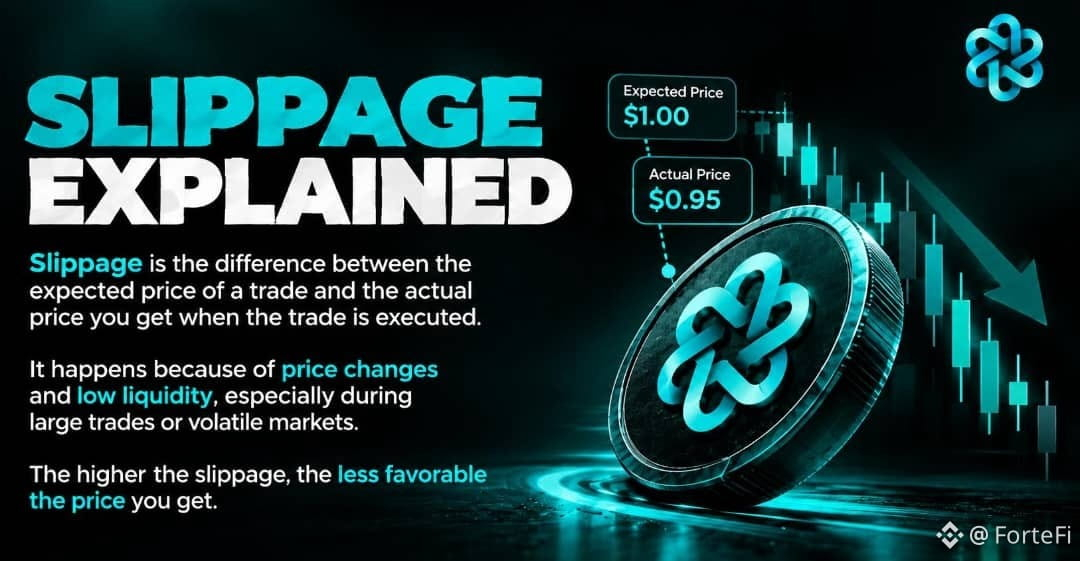
Slippage is the difference between the price you expect for a trade and the price you actually get when the trade executes.
Price changes, low liquidity, and large trades can increase slippage.
The higher the slippage, the less favorable your execution price.
Understand slippage before you trade.
Slippage is the difference between the price you expect for a trade and the price you actually get when the trade executes.
Price changes, low liquidity, and large trades can increase slippage.
The higher the slippage, the less favorable your execution price.
Understand slippage before you trade.
Price changes, low liquidity, and large trades can increase slippage.
The higher the slippage, the less favorable your execution price.
Understand slippage before you trade.
30
·
--
Bullish
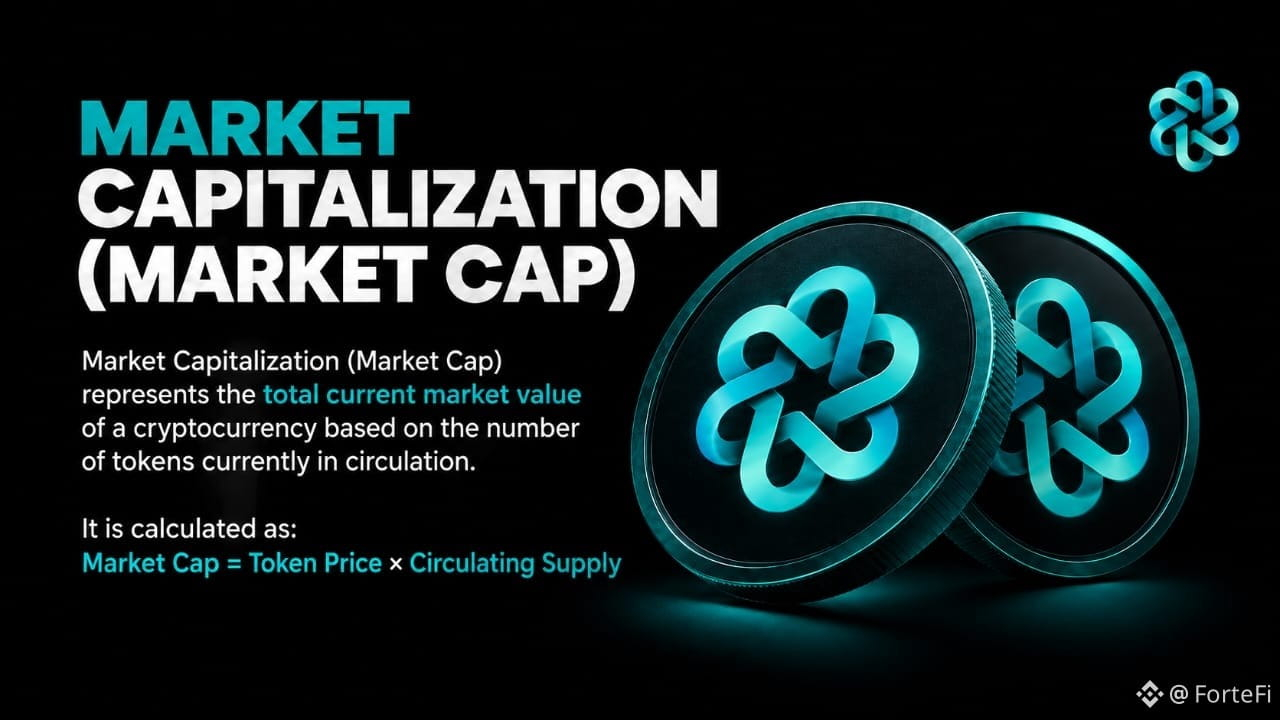
Market Capitalization (Market Cap) is the total value of all the tokens currently in circulation.
Market Cap = Token Price × Circulating Supply
A higher market cap generally means a larger amount of capital is already represented in the circulating supply.
Market Capitalization (Market Cap) is the total value of all the tokens currently in circulation.
Market Cap = Token Price × Circulating Supply
A higher market cap generally means a larger amount of capital is already represented in the circulating supply.
Market Cap = Token Price × Circulating Supply
A higher market cap generally means a larger amount of capital is already represented in the circulating supply.
1
53
·
--
Bullish
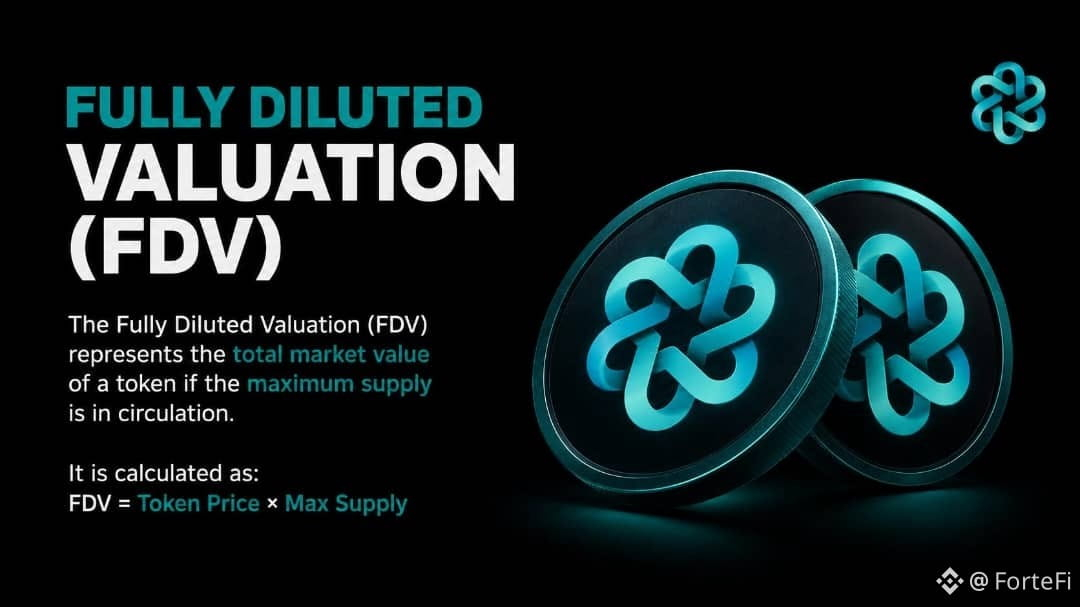
Fully Diluted Valuation (FDV) is the value a crypto project would have if all its tokens were in circulation.
Formula:
Token Price × Total Supply = FDV
A token can have a low Market Cap but a very high FDV.
Why?
Because a large portion of its supply may still be locked.
Fully Diluted Valuation (FDV) is the value a crypto project would have if all its tokens were in circulation.
Formula:
Token Price × Total Supply = FDV
A token can have a low Market Cap but a very high FDV.
Why?
Because a large portion of its supply may still be locked.
Formula:
Token Price × Total Supply = FDV
A token can have a low Market Cap but a very high FDV.
Why?
Because a large portion of its supply may still be locked.
1
76
·
--
Bullish
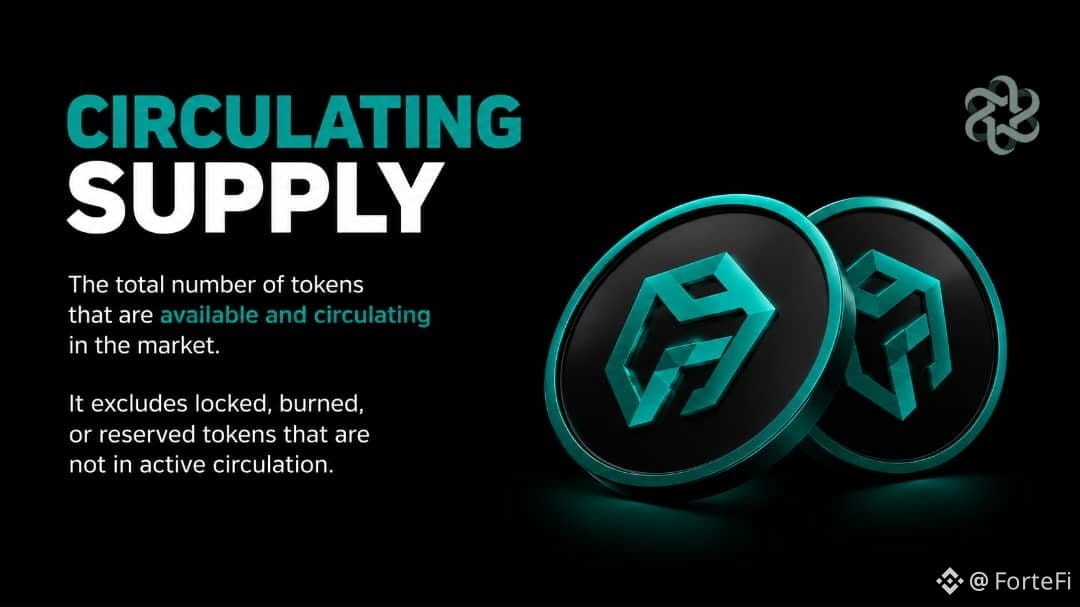
Circulating supply is the amount of a token currently available and actively circulating in the market, excluding tokens that are locked, burned or reserved.
Circulating supply is the amount of a token currently available and actively circulating in the market, excluding tokens that are locked, burned or reserved.
1
54
·
--
Bullish
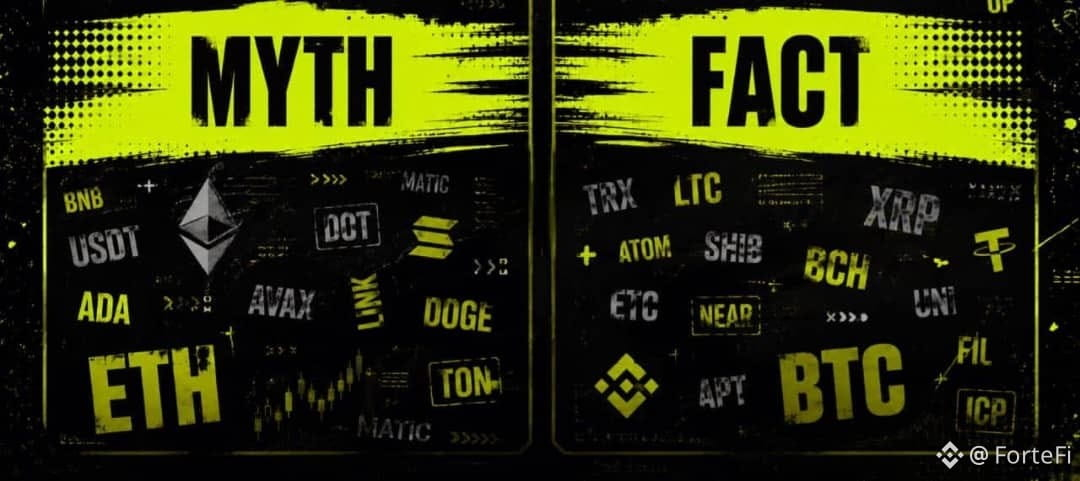
MYTH vs REALITY #6 🧠
🚫 Myth: Crypto is just gambling.
✅ Reality: Crypto is much bigger than trading.
It includes blockchain technology, DeFi, payments, digital ownership and onchain applications.
Don’t judge the entire industry by one use case.
MYTH vs REALITY #6 🧠
🚫 Myth: Crypto is just gambling.
✅ Reality: Crypto is much bigger than trading.
It includes blockchain technology, DeFi, payments, digital ownership and onchain applications.
Don’t judge the entire industry by one use case.
🚫 Myth: Crypto is just gambling.
✅ Reality: Crypto is much bigger than trading.
It includes blockchain technology, DeFi, payments, digital ownership and onchain applications.
Don’t judge the entire industry by one use case.
1
184
·
--
Bullish
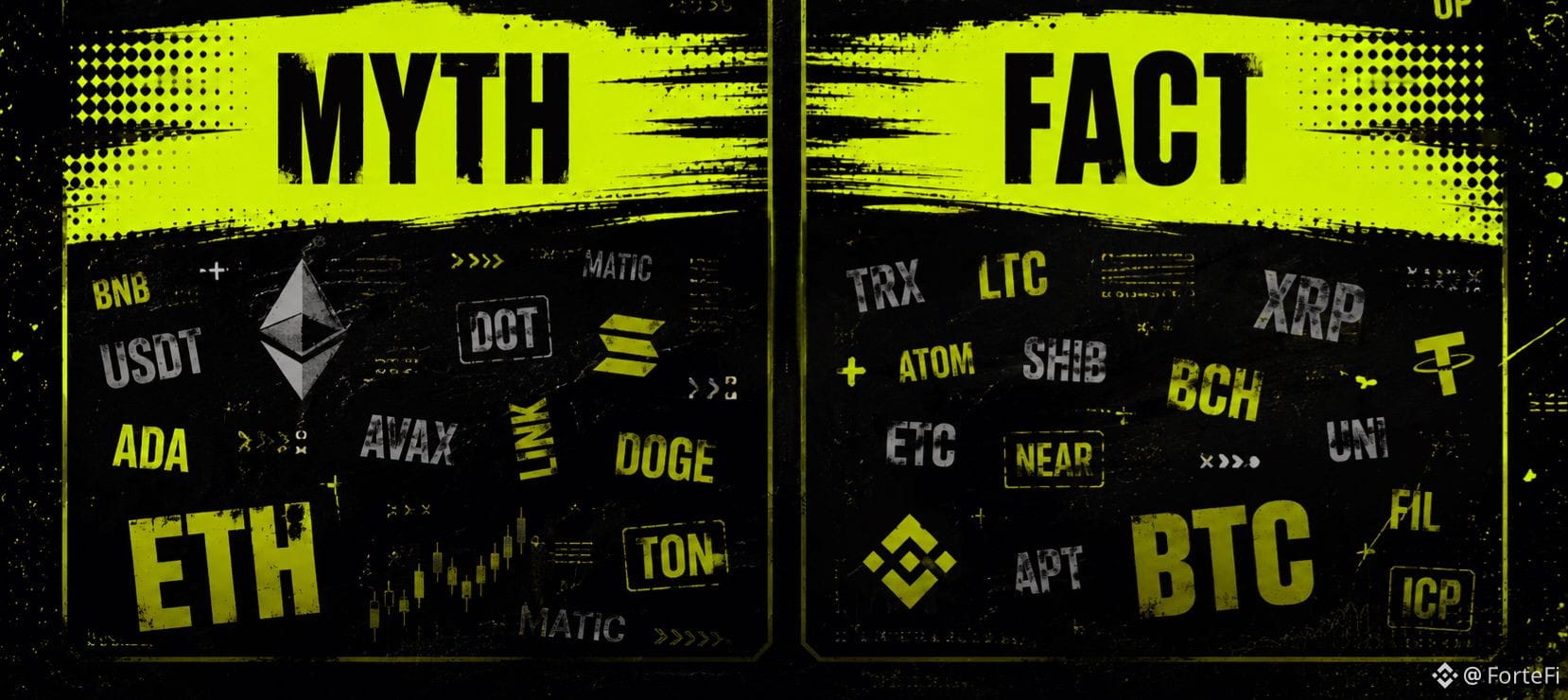
MYTH vs REALITY #5.
🚫MYTH:
If you didn’t discover a project early, you’ve already missed the opportunity.
✅️REALITY:
Being early helps, but being right matters more.
Timing matters but getting it right is matters more.
MYTH vs REALITY #5.
🚫MYTH:
If you didn’t discover a project early, you’ve already missed the opportunity.
✅️REALITY:
Being early helps, but being right matters more.
Timing matters but getting it right is matters more.
🚫MYTH:
If you didn’t discover a project early, you’ve already missed the opportunity.
✅️REALITY:
Being early helps, but being right matters more.
Timing matters but getting it right is matters more.
2
278
·
--
Bullish
MYTH vs REALITY #4🧠.
🚫 Myth: A token priced under $1 is cheap and has more room to grow.
✅️ Reality: Price alone tells you almost nothing.
Market cap, supply, utility and adoption are what actually matter.
Don't buy the price, Understand the value.
MYTH vs REALITY #4🧠.
🚫 Myth: A token priced under $1 is cheap and has more room to grow.
✅️ Reality: Price alone tells you almost nothing.
Market cap, supply, utility and adoption are what actually matter.
Don't buy the price, Understand the value.
🚫 Myth: A token priced under $1 is cheap and has more room to grow.
✅️ Reality: Price alone tells you almost nothing.
Market cap, supply, utility and adoption are what actually matter.
Don't buy the price, Understand the value.

2
78
·
--
Bullish
MYTH vs REALITY #3 🧠
🚫 Myth:
More leverage = More profit.
✅ Reality:
More leverage = More risk.
Leverage amplifies both gains and losses.
Many traders get liquidated not because they were wrong but because they were overleveraged.
Trade smart, protect your capital.
MYTH vs REALITY #3 🧠
🚫 Myth:
More leverage = More profit.
✅ Reality:
More leverage = More risk.
Leverage amplifies both gains and losses.
Many traders get liquidated not because they were wrong but because they were overleveraged.
Trade smart, protect your capital.
🚫 Myth:
More leverage = More profit.
✅ Reality:
More leverage = More risk.
Leverage amplifies both gains and losses.
Many traders get liquidated not because they were wrong but because they were overleveraged.
Trade smart, protect your capital.

1
66
·
--
Bullish
MYTH vs REALITY #2 🧠
🚫 Myth:
Crypto transactions are anonymous.
✅ Reality:
Most crypto transactions are pseudonymous, not anonymous.
Every transaction is permanently recorded on a public blockchain.
Your name isn't attached to your wallet by default, but if that wallet is ever linked to your identity, its entire transaction history can often be traced.
Privacy ≠ Anonymity.
Know the difference.
MYTH vs REALITY #2 🧠
🚫 Myth:
Crypto transactions are anonymous.
✅ Reality:
Most crypto transactions are pseudonymous, not anonymous.
Every transaction is permanently recorded on a public blockchain.
Your name isn't attached to your wallet by default, but if that wallet is ever linked to your identity, its entire transaction history can often be traced.
Privacy ≠ Anonymity.
Know the difference.
🚫 Myth:
Crypto transactions are anonymous.
✅ Reality:
Most crypto transactions are pseudonymous, not anonymous.
Every transaction is permanently recorded on a public blockchain.
Your name isn't attached to your wallet by default, but if that wallet is ever linked to your identity, its entire transaction history can often be traced.
Privacy ≠ Anonymity.
Know the difference.

1
35
·
--
Bullish
MYTH vs REALITY #1 🧠
🚫 Myth:
There are hidden patterns in crypto that guarantee profits.
✅ Reality:
Crypto isn't a puzzle with one correct solution.
You can study the charts, manage your risk and still be wrong because markets are driven by probabilities, not certainties.
MYTH vs REALITY #1 🧠
🚫 Myth:
There are hidden patterns in crypto that guarantee profits.
✅ Reality:
Crypto isn't a puzzle with one correct solution.
You can study the charts, manage your risk and still be wrong because markets are driven by probabilities, not certainties.
🚫 Myth:
There are hidden patterns in crypto that guarantee profits.
✅ Reality:
Crypto isn't a puzzle with one correct solution.
You can study the charts, manage your risk and still be wrong because markets are driven by probabilities, not certainties.

1
15
·
--
Bullish
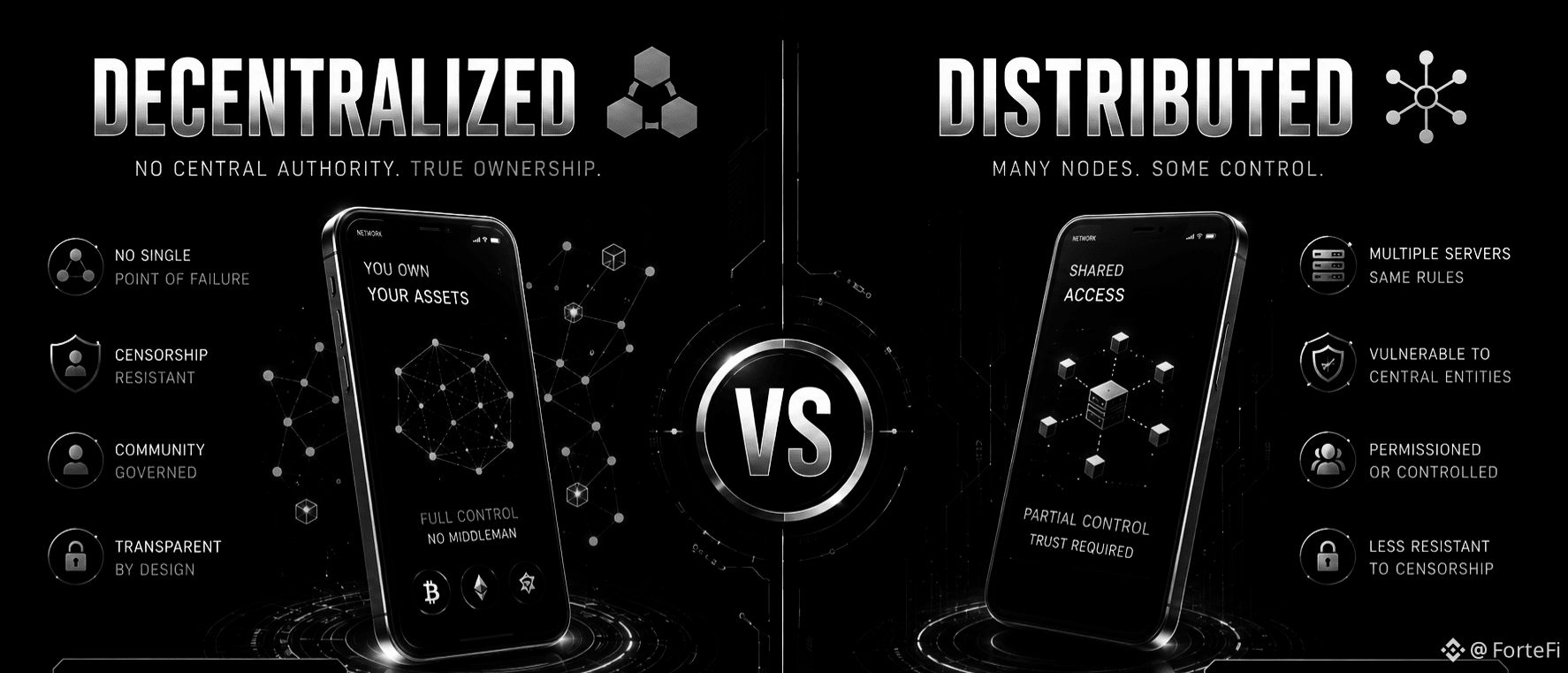
Decentralized vs Distributed
A lot of people use these terms interchangeably but they actually mean two different things👇🏾
Distributed is the data structure.
The blockchain ledger isn't on one central computer, an identical copy is shared across thousands of nodes globally.
Decentralized is the power structure.
No single authority (like a bank, CEO or government) has control.
Decisions and rules are enforced collectively via consensus.
Decentralized vs Distributed
A lot of people use these terms interchangeably but they actually mean two different things👇🏾
Distributed is the data structure.
The blockchain ledger isn't on one central computer, an identical copy is shared across thousands of nodes globally.
Decentralized is the power structure.
No single authority (like a bank, CEO or government) has control.
Decisions and rules are enforced collectively via consensus.
A lot of people use these terms interchangeably but they actually mean two different things👇🏾
Distributed is the data structure.
The blockchain ledger isn't on one central computer, an identical copy is shared across thousands of nodes globally.
Decentralized is the power structure.
No single authority (like a bank, CEO or government) has control.
Decisions and rules are enforced collectively via consensus.
1
77
·
--
Bullish
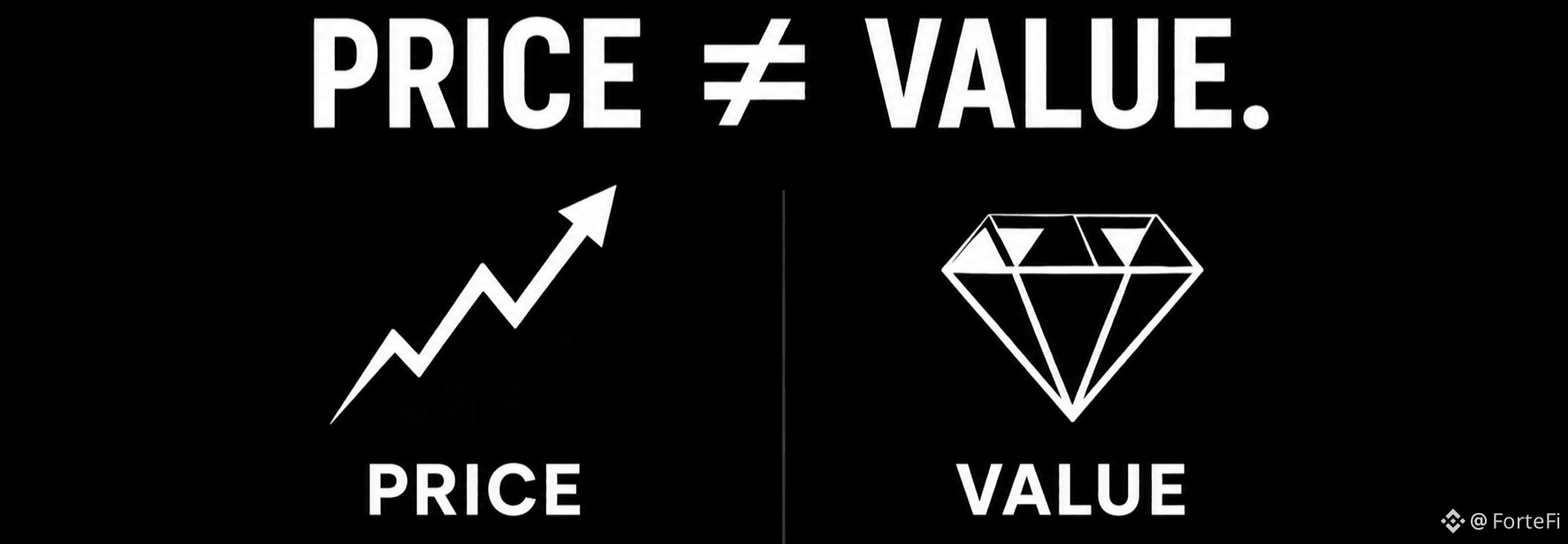
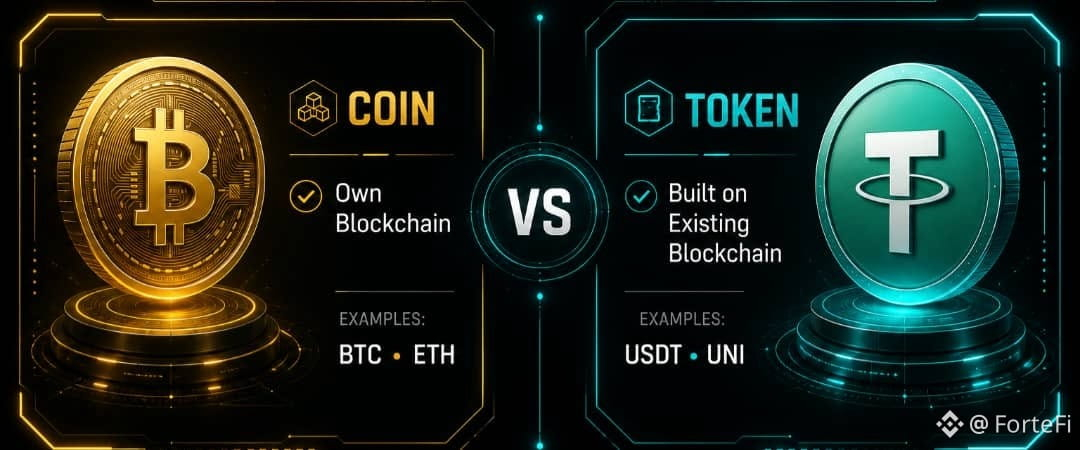
Price vs Value.
Price is what you pay.
Value is what you get.
📈 Price is driven by hype, market cycles and speculation.
💎 Value is built on security, decentralization, active development and real world utility.
Price attracts.
Value sustains.
Price vs Value.
Price is what you pay.
Value is what you get.
📈 Price is driven by hype, market cycles and speculation.
💎 Value is built on security, decentralization, active development and real world utility.
Price attracts.
Value sustains.
Price is what you pay.
Value is what you get.
📈 Price is driven by hype, market cycles and speculation.
💎 Value is built on security, decentralization, active development and real world utility.
Price attracts.
Value sustains.
1
92
·
--
Bullish
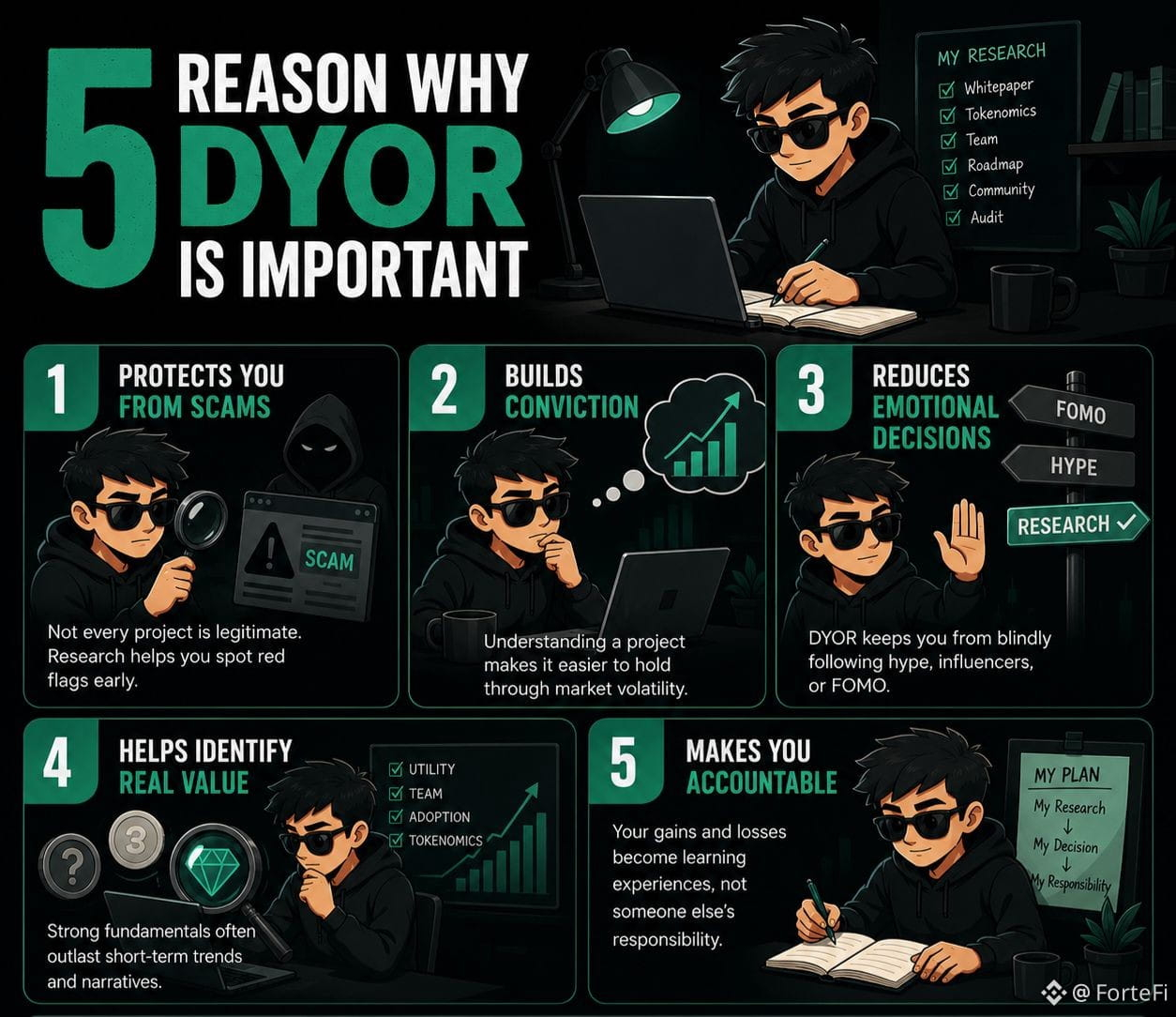
5 Reasons DYOR (Do Your Own Research) Is Important.
1. Protects you from scams: Not every project is legitimate, research helps you spot red flags early.
2. Builds conviction: Understanding a project makes it easier to hold through market volatility.
3. Reduces emotional decisions: DYOR keeps you from blindly following hype, influencers or FOMO.
4. Helps identify real value: Strong fundamentals often outlast short term trends and narratives.
5. Makes you accountable: Your gains and losses become learning experiences, not someone else's responsibility.
Always remember, there are no guaranteed patterns in crypto.
Markets evolve, narratives change and what worked yesterday may fail tomorrow.
Always think critically and do your own research.
5 Reasons DYOR (Do Your Own Research) Is Important.
1. Protects you from scams: Not every project is legitimate, research helps you spot red flags early.
2. Builds conviction: Understanding a project makes it easier to hold through market volatility.
3. Reduces emotional decisions: DYOR keeps you from blindly following hype, influencers or FOMO.
4. Helps identify real value: Strong fundamentals often outlast short term trends and narratives.
5. Makes you accountable: Your gains and losses become learning experiences, not someone else's responsibility.
Always remember, there are no guaranteed patterns in crypto.
Markets evolve, narratives change and what worked yesterday may fail tomorrow.
Always think critically and do your own research.
1. Protects you from scams: Not every project is legitimate, research helps you spot red flags early.
2. Builds conviction: Understanding a project makes it easier to hold through market volatility.
3. Reduces emotional decisions: DYOR keeps you from blindly following hype, influencers or FOMO.
4. Helps identify real value: Strong fundamentals often outlast short term trends and narratives.
5. Makes you accountable: Your gains and losses become learning experiences, not someone else's responsibility.
Always remember, there are no guaranteed patterns in crypto.
Markets evolve, narratives change and what worked yesterday may fail tomorrow.
Always think critically and do your own research.
1
49
·
--
Bullish
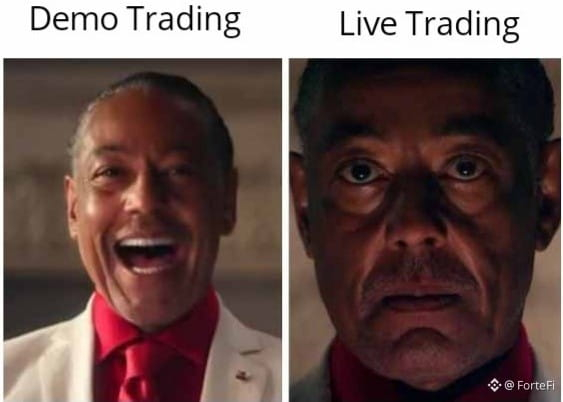
Demo trading: "I was born for this."
Live trading: "Who am I?"
The candles are always greener on the other side. 📈😂
Demo trading: "I was born for this."
Live trading: "Who am I?"
The candles are always greener on the other side. 📈😂
Live trading: "Who am I?"
The candles are always greener on the other side. 📈😂
1
139
·
--
Bullish
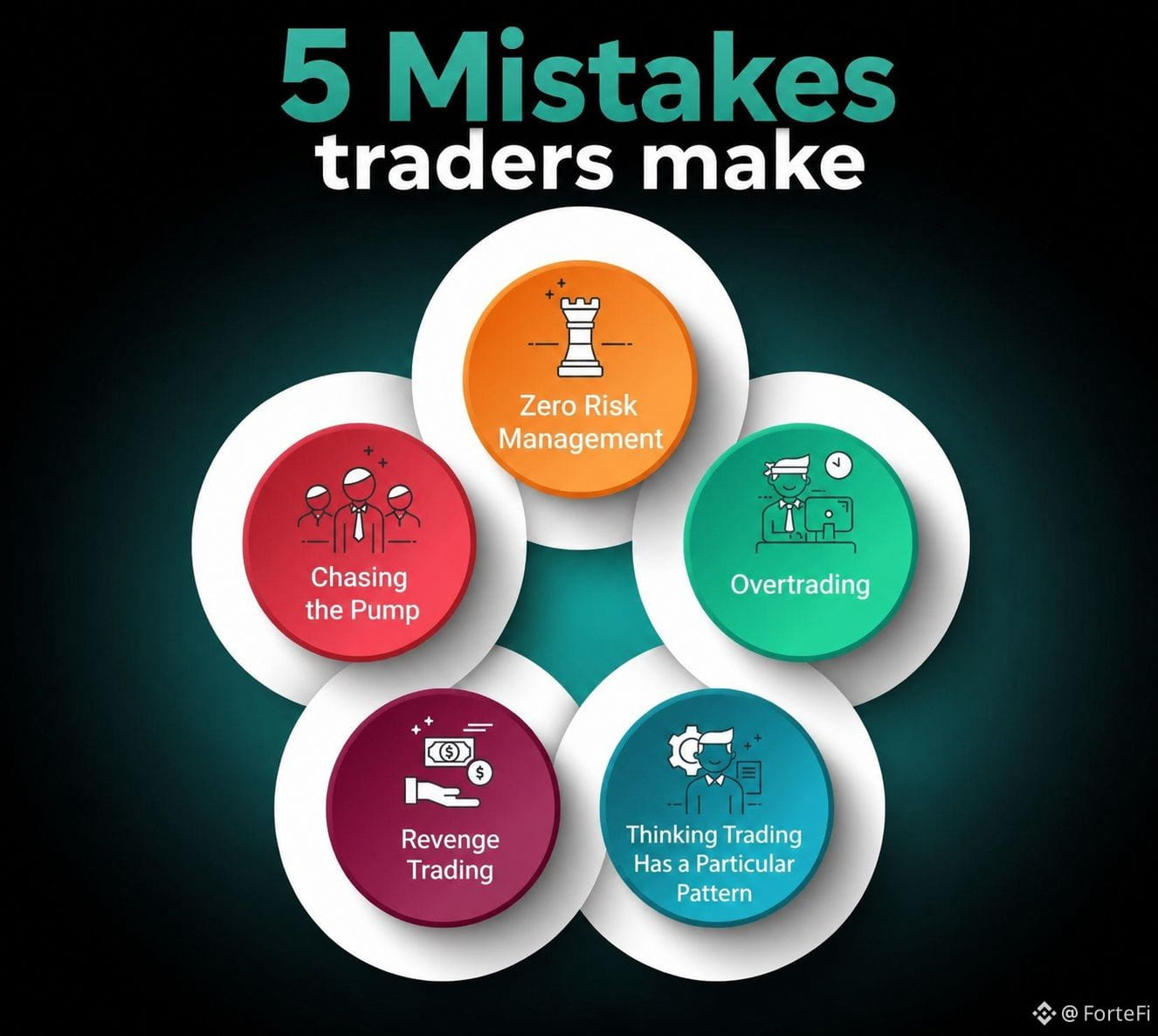
5 Mistakes That Are Secretly Bleeding Your Trading Account 📉👇
If you’ve been struggling to stay consistent or find yourself constantly digging out of a hole, check your habits against these 5 common traps:
1. Zero Risk Management: Risking 20%, 50% or your whole account on a single position.
If you don't know your exact invalidation point before you enter, you’re not trading.
2. Chasing the Pump (FOMO): Buying into an asset after it has already gone parabolic.
Seeing green candles and jumping in late usually means one thing, you’re about to become someone else's exit liquidity.
3. Overtrading: Forcing setups when the market is completely sideways.
You don’t need to be in a position 24/7.
Sometimes, sitting on your hands and protecting your capital is the most profitable trade you can make.
4. Revenge Trading: Taking a painful loss, getting angry and immediately opening an even bigger position to win it back.
The market does not care about your feelings and trying to fight it is the fastest way to blow an account.
5. Thinking Trading Has a Particular Pattern: Treating textbook charts or historical data like a rigid guarantee instead of a game of probabilities.
The market is completely dynamic and constantly shifts.
If you refuse to adapt when conditions change, the market will humble you real quick.
Which one of these has been your biggest hurdle lately?
5 Mistakes That Are Secretly Bleeding Your Trading Account 📉👇
If you’ve been struggling to stay consistent or find yourself constantly digging out of a hole, check your habits against these 5 common traps:
1. Zero Risk Management: Risking 20%, 50% or your whole account on a single position.
If you don't know your exact invalidation point before you enter, you’re not trading.
2. Chasing the Pump (FOMO): Buying into an asset after it has already gone parabolic.
Seeing green candles and jumping in late usually means one thing, you’re about to become someone else's exit liquidity.
3. Overtrading: Forcing setups when the market is completely sideways.
You don’t need to be in a position 24/7.
Sometimes, sitting on your hands and protecting your capital is the most profitable trade you can make.
4. Revenge Trading: Taking a painful loss, getting angry and immediately opening an even bigger position to win it back.
The market does not care about your feelings and trying to fight it is the fastest way to blow an account.
5. Thinking Trading Has a Particular Pattern: Treating textbook charts or historical data like a rigid guarantee instead of a game of probabilities.
The market is completely dynamic and constantly shifts.
If you refuse to adapt when conditions change, the market will humble you real quick.
Which one of these has been your biggest hurdle lately?
If you’ve been struggling to stay consistent or find yourself constantly digging out of a hole, check your habits against these 5 common traps:
1. Zero Risk Management: Risking 20%, 50% or your whole account on a single position.
If you don't know your exact invalidation point before you enter, you’re not trading.
2. Chasing the Pump (FOMO): Buying into an asset after it has already gone parabolic.
Seeing green candles and jumping in late usually means one thing, you’re about to become someone else's exit liquidity.
3. Overtrading: Forcing setups when the market is completely sideways.
You don’t need to be in a position 24/7.
Sometimes, sitting on your hands and protecting your capital is the most profitable trade you can make.
4. Revenge Trading: Taking a painful loss, getting angry and immediately opening an even bigger position to win it back.
The market does not care about your feelings and trying to fight it is the fastest way to blow an account.
5. Thinking Trading Has a Particular Pattern: Treating textbook charts or historical data like a rigid guarantee instead of a game of probabilities.
The market is completely dynamic and constantly shifts.
If you refuse to adapt when conditions change, the market will humble you real quick.
Which one of these has been your biggest hurdle lately?
1
185
·
--
Bullish
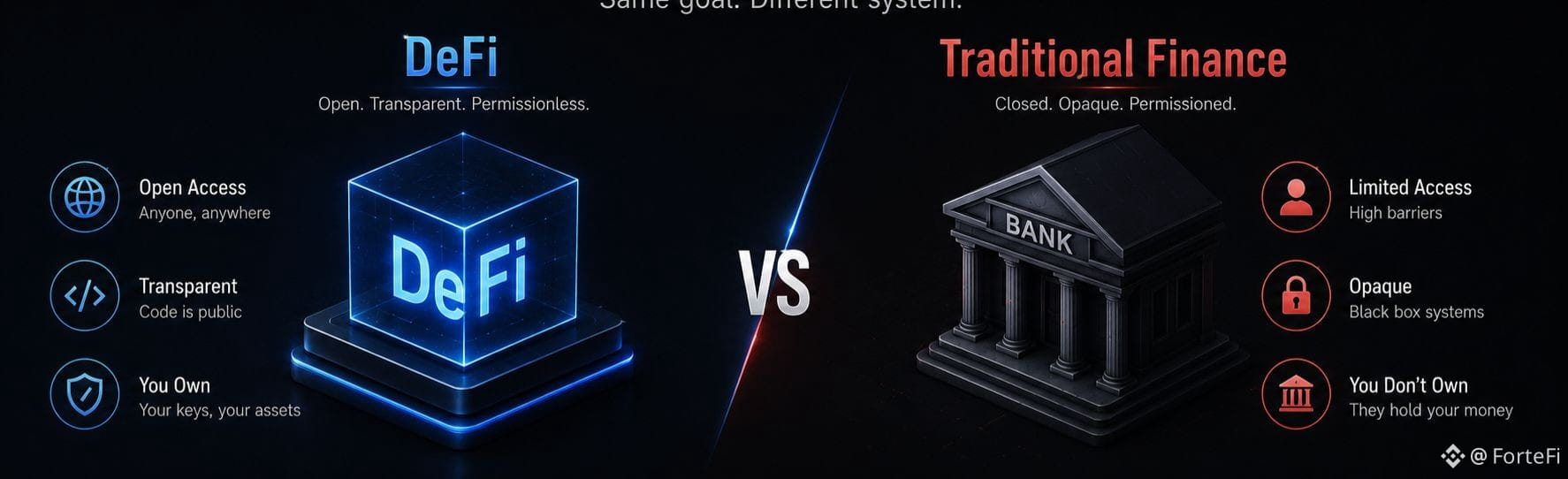
Is #DeFi a genuine financial revolution or just high-risk scam inside #crypto? 📈
Let’s be honest, the technology is revolutionary but the risks are entirely on your neck.
Let's dive in👇🏾
🏛️ The Old Way (Traditional Banks)
In a normal or regular bank, to send money, borrow or save, you must pass through them.
They charge you unnecessary maintenance fees, hold your money when network fails and can freeze your account if they like.
You are trusting the bank.
🤖 The New Way (DeFi)
Decentralized Finance removes the bank entirely and replaces it with automated code (smart contracts).
Want a loan or want to trade?
No banking hall, no long verification, no customer care stress.
You interact directly with the code.
You are trusting the technology.
🔓 The Revolution
• You have 100% control over your money.
• No manager can lock your account or tell you "network is down".
• Anyone with a smartphone can access the exact same tools as a billionaire.
⚠️ The Extra Risk
Since there is no middleman, there is absolutely NO safety net.
• If there is a glitch in the code, hackers will sweep the liquidity pool in seconds.
• If you sign a malicious contract or lose your seed phrase, no customer care can rescue you, your money is gone.
• No insurance, you are your own bank manager and your own security guard.
💡 The Verdict
#DeFi is not just normal banking with extra risk, it is an entirely new financial system.
It gives you total financial freedom but it demands total responsibility.
Don't just chase hype blindly.
Stay sharp, get knowledge and trade safe!
Is #DeFi a genuine financial revolution or just high-risk scam inside #crypto? 📈
Let’s be honest, the technology is revolutionary but the risks are entirely on your neck.
Let's dive in👇🏾
🏛️ The Old Way (Traditional Banks)
In a normal or regular bank, to send money, borrow or save, you must pass through them.
They charge you unnecessary maintenance fees, hold your money when network fails and can freeze your account if they like.
You are trusting the bank.
🤖 The New Way (DeFi)
Decentralized Finance removes the bank entirely and replaces it with automated code (smart contracts).
Want a loan or want to trade?
No banking hall, no long verification, no customer care stress.
You interact directly with the code.
You are trusting the technology.
🔓 The Revolution
• You have 100% control over your money.
• No manager can lock your account or tell you "network is down".
• Anyone with a smartphone can access the exact same tools as a billionaire.
⚠️ The Extra Risk
Since there is no middleman, there is absolutely NO safety net.
• If there is a glitch in the code, hackers will sweep the liquidity pool in seconds.
• If you sign a malicious contract or lose your seed phrase, no customer care can rescue you, your money is gone.
• No insurance, you are your own bank manager and your own security guard.
💡 The Verdict
#DeFi is not just normal banking with extra risk, it is an entirely new financial system.
It gives you total financial freedom but it demands total responsibility.
Don't just chase hype blindly.
Stay sharp, get knowledge and trade safe!
Let’s be honest, the technology is revolutionary but the risks are entirely on your neck.
Let's dive in👇🏾
🏛️ The Old Way (Traditional Banks)
In a normal or regular bank, to send money, borrow or save, you must pass through them.
They charge you unnecessary maintenance fees, hold your money when network fails and can freeze your account if they like.
You are trusting the bank.
🤖 The New Way (DeFi)
Decentralized Finance removes the bank entirely and replaces it with automated code (smart contracts).
Want a loan or want to trade?
No banking hall, no long verification, no customer care stress.
You interact directly with the code.
You are trusting the technology.
🔓 The Revolution
• You have 100% control over your money.
• No manager can lock your account or tell you "network is down".
• Anyone with a smartphone can access the exact same tools as a billionaire.
⚠️ The Extra Risk
Since there is no middleman, there is absolutely NO safety net.
• If there is a glitch in the code, hackers will sweep the liquidity pool in seconds.
• If you sign a malicious contract or lose your seed phrase, no customer care can rescue you, your money is gone.
• No insurance, you are your own bank manager and your own security guard.
💡 The Verdict
#DeFi is not just normal banking with extra risk, it is an entirely new financial system.
It gives you total financial freedom but it demands total responsibility.
Don't just chase hype blindly.
Stay sharp, get knowledge and trade safe!
1
525
·
--
Bullish
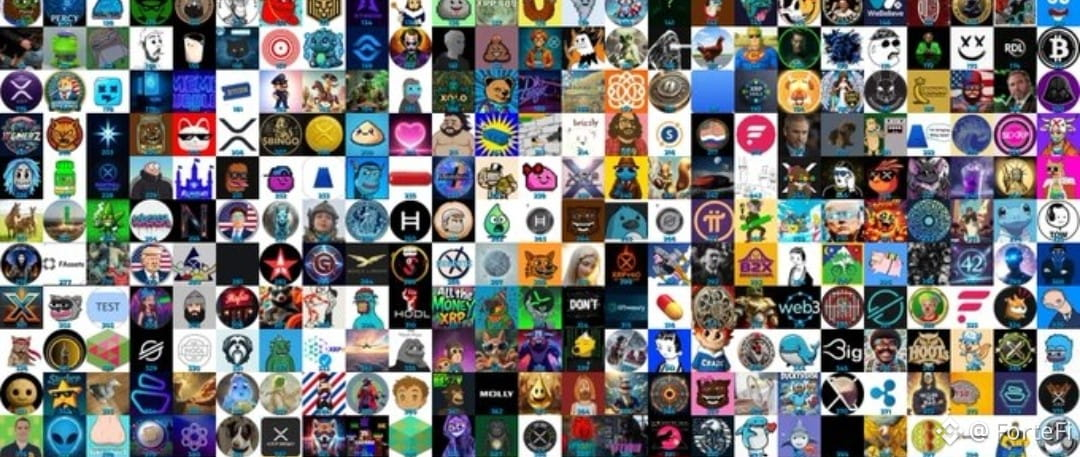
What started as a digital parody has completely hijacked the crypto market.
Tokens backed by nothing but viral culture and social trends are generating massive wealth for some while completely wiping out others overnight.
Memecoins have democratized crypto.
They offer a 100% fair launch where everyday retail traders get a level playing field, completely bypassing the heavy institutional dumping and predatory VC structures that usually lock regular people out of early gains.
It's community driven finance at its purest.
But they thrive on pure financial nihilism.
With no underlying tech or productivity, the ecosystem is a playground for extreme volatility, rug pulls and insider manipulation.
It risks turning a revolutionary technology into a literal gamble, draining liquidity from projects building actual infrastructure.
Is it a revolutionary shift in market psychology or just a digital gamble?
I guess we’d never know.
What started as a digital parody has completely hijacked the crypto market.
Tokens backed by nothing but viral culture and social trends are generating massive wealth for some while completely wiping out others overnight.
Memecoins have democratized crypto.
They offer a 100% fair launch where everyday retail traders get a level playing field, completely bypassing the heavy institutional dumping and predatory VC structures that usually lock regular people out of early gains.
It's community driven finance at its purest.
But they thrive on pure financial nihilism.
With no underlying tech or productivity, the ecosystem is a playground for extreme volatility, rug pulls and insider manipulation.
It risks turning a revolutionary technology into a literal gamble, draining liquidity from projects building actual infrastructure.
Is it a revolutionary shift in market psychology or just a digital gamble?
I guess we’d never know.
Tokens backed by nothing but viral culture and social trends are generating massive wealth for some while completely wiping out others overnight.
Memecoins have democratized crypto.
They offer a 100% fair launch where everyday retail traders get a level playing field, completely bypassing the heavy institutional dumping and predatory VC structures that usually lock regular people out of early gains.
It's community driven finance at its purest.
But they thrive on pure financial nihilism.
With no underlying tech or productivity, the ecosystem is a playground for extreme volatility, rug pulls and insider manipulation.
It risks turning a revolutionary technology into a literal gamble, draining liquidity from projects building actual infrastructure.
Is it a revolutionary shift in market psychology or just a digital gamble?
I guess we’d never know.
1
1
205
·
--
Bullish
Your crypto wallet does NOT store your tokens. Read that again. ❌
If you delete your wallet app right now, your funds don’t disappear. Why?
It's because your assets never actually leave the blockchain.
Let's clear up the biggest misconception in Web3 and break down how it actually works:
1. The Reality of the Blockchain 🌐
Your wallet is simply a digital keychain.
It doesn't hold a single coin, it only holds your Private Keys (your digital signature).
When you interact with a wallet, you are just using those keys to unlock permission to access, view and move your assets live on the block.
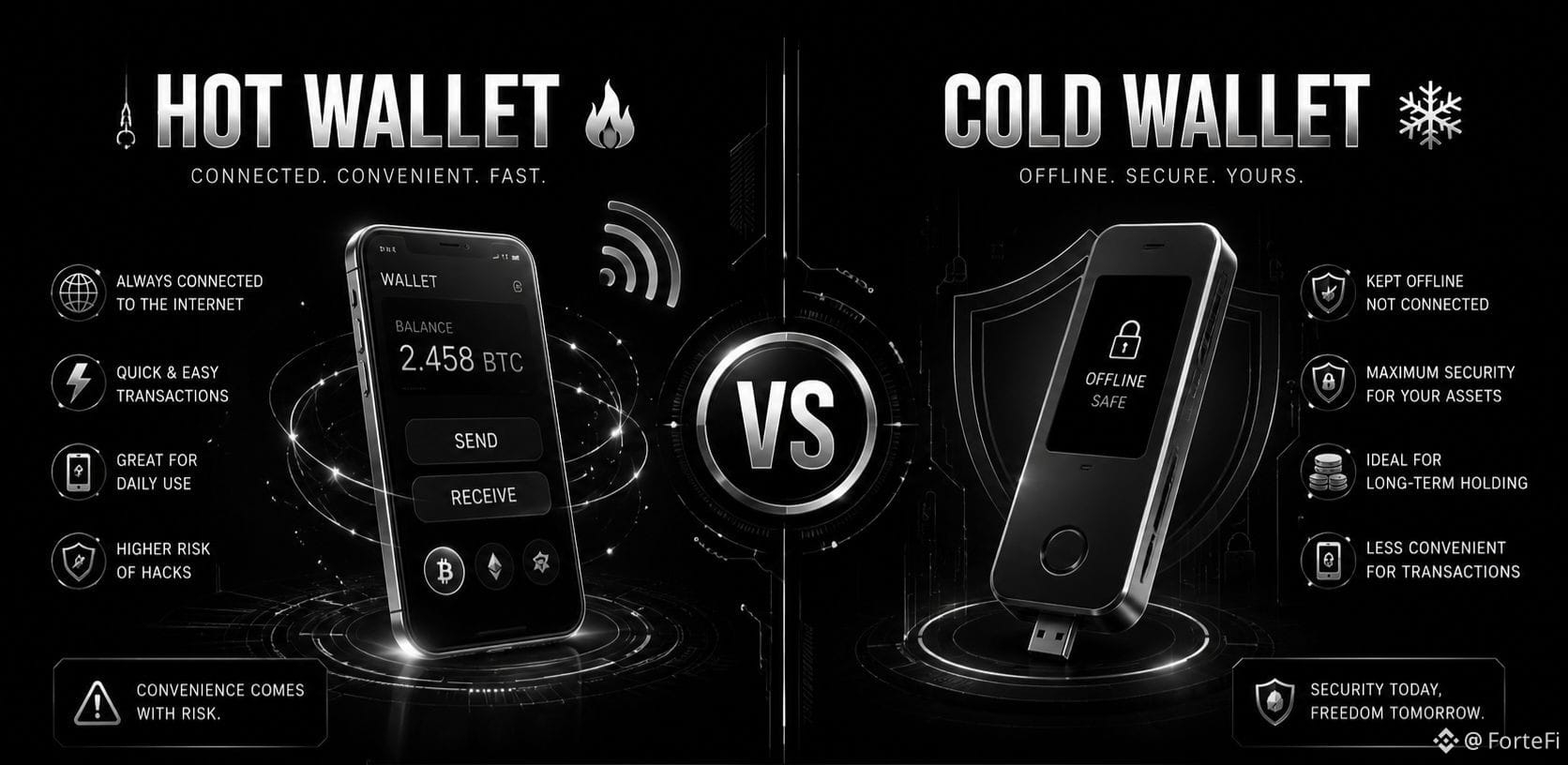
2. Hot Wallets vs. Cold Wallets 🔑
Because a wallet is just a key manager, security comes down to how you store those keys:
• 🔥Hot Wallets (Online)
Apps, website extensions or software connected to the internet (e.g., MetaMask, Trust Wallet).
They are super convenient, instant transactions, seamless interaction with DeFi and dApps, but because they are online, they are inherently exposed to malware, phishing links and hacks.
• ❄️ Cold Wallets (Offline)
Physical hardware devices (like Ledger or Trezor) that keep your keys completely from the internet.
Maximum security is guaranteed, even if your computer gets infected, your keys remain safe, but it is less convenient for daily active trading, you need the physical device to sign transactions.
You don’t lose your crypto if you lose your phone or wallet app, you only lose it if someone gets hold of your private keys or seed phrase.
Guard the keys, not the app. Not your keys, not your crypto.
#Crypto #Blockchain #Web3 #DeFi
Your crypto wallet does NOT store your tokens. Read that again. ❌
If you delete your wallet app right now, your funds don’t disappear. Why?
It's because your assets never actually leave the blockchain.
Let's clear up the biggest misconception in Web3 and break down how it actually works:
1. The Reality of the Blockchain 🌐
Your wallet is simply a digital keychain.
It doesn't hold a single coin, it only holds your Private Keys (your digital signature).
When you interact with a wallet, you are just using those keys to unlock permission to access, view and move your assets live on the block.
2. Hot Wallets vs. Cold Wallets 🔑
Because a wallet is just a key manager, security comes down to how you store those keys:
• 🔥Hot Wallets (Online)
Apps, website extensions or software connected to the internet (e.g., MetaMask, Trust Wallet).
They are super convenient, instant transactions, seamless interaction with DeFi and dApps, but because they are online, they are inherently exposed to malware, phishing links and hacks.
• ❄️ Cold Wallets (Offline)
Physical hardware devices (like Ledger or Trezor) that keep your keys completely from the internet.
Maximum security is guaranteed, even if your computer gets infected, your keys remain safe, but it is less convenient for daily active trading, you need the physical device to sign transactions.
You don’t lose your crypto if you lose your phone or wallet app, you only lose it if someone gets hold of your private keys or seed phrase.
Guard the keys, not the app. Not your keys, not your crypto.
#Crypto #Blockchain #Web3 #DeFi
If you delete your wallet app right now, your funds don’t disappear. Why?
It's because your assets never actually leave the blockchain.
Let's clear up the biggest misconception in Web3 and break down how it actually works:
1. The Reality of the Blockchain 🌐
Your wallet is simply a digital keychain.
It doesn't hold a single coin, it only holds your Private Keys (your digital signature).
When you interact with a wallet, you are just using those keys to unlock permission to access, view and move your assets live on the block.
2. Hot Wallets vs. Cold Wallets 🔑
Because a wallet is just a key manager, security comes down to how you store those keys:
• 🔥Hot Wallets (Online)
Apps, website extensions or software connected to the internet (e.g., MetaMask, Trust Wallet).
They are super convenient, instant transactions, seamless interaction with DeFi and dApps, but because they are online, they are inherently exposed to malware, phishing links and hacks.
• ❄️ Cold Wallets (Offline)
Physical hardware devices (like Ledger or Trezor) that keep your keys completely from the internet.
Maximum security is guaranteed, even if your computer gets infected, your keys remain safe, but it is less convenient for daily active trading, you need the physical device to sign transactions.
You don’t lose your crypto if you lose your phone or wallet app, you only lose it if someone gets hold of your private keys or seed phrase.
Guard the keys, not the app. Not your keys, not your crypto.
#Crypto #Blockchain #Web3 #DeFi
173

Log in to explore more content
Join global crypto users on Binance Square
⚡️ Get latest and useful information about crypto.
💬 Trusted by the world’s largest crypto exchange.
👍 Discover real insights from verified creators.
Email / Phone number