
#macrotrading
macrotrading
217,664 views
814 Discussing
Hot
Latest

·
--
Ignore the public headlines. While Trump is publicly threatening Tehran with 'the hammer,' intensive behind-the-scenes backchannel diplomacy is quietly exploding via Qatari and Pakistani mediators. Look at the tape: WTI crude $CL isn't crashing 7.5% today because of a supply glut—smart money is front-running a massive geopolitical de-escalation premium. The structural trade is shorting volatility. #OilPricesSlide #MacroTrading #Geopolitics
{future}(CLUSDT)
Ignore the public headlines. While Trump is publicly threatening Tehran with 'the hammer,' intensive behind-the-scenes backchannel diplomacy is quietly exploding via Qatari and Pakistani mediators. Look at the tape: WTI crude $CL isn't crashing 7.5% today because of a supply glut—smart money is front-running a massive geopolitical de-escalation premium. The structural trade is shorting volatility. #OilPricesSlide #MacroTrading #Geopolitics
Blockstream
·
--
Bearish🚨 IS A POLITICAL STORM ABOUT TO CRASH BITCOIN TONIGHT? 🚨
The entire crypto market is on edge as massive political rumors and US Senate vote uncertainty explode across X (Twitter). When high-stakes political news breaks, smart money doesn't guess—they prepare for wild volatility.
Rumors about $TRUMP ’s inner team members, political clashes, and upcoming Senate votes are driving retail traders into pure panic. But here is what you need to understand: the market doesn't care about headlines, it hunts liquidity.
If panic selling takes over, Bitcoin could quickly sweep local lows around $75,500 to wipe out weak hands. But if support holds, we could see a massive short squeeze driving $BTC straight back toward $80,000+.
The biggest mistake beginners make right now is over-leveraging into rumors. Don't fall for the trap. Protect your capital, use strict stop-losses, and let the market settle first.
Are you holding your positions or waiting in cash tonight? Drop your thoughts below!
👇 TAP THE $BTC WIDGET BELOW TO ENTER TRADE INSTANTLY!
#TRUMP #crypto #CryptoMarketMoves #USMidtermElections

1
165

·
--
🚨 MACRO LIQUIDITY TSUNAMI LOOMS AS HORMUZ HEADLINES IGNITE VOLATILITY ACROSS $UNI 💥
Tehran floating conditions to reopen the Strait of Hormuz within 48 hours is injecting intense cross-asset volatility into global markets. 🌊 Smart money is tracking how potential de-escalation could compress oil risk premiums and flip the bid back into decentralized assets like $UNI , $AIN , and $SENT .
When macro friction cools, liquidity sweeps across order books tend to ignite aggressive relief rotations. 📊 Capital shifts fast during geopolitical pivots, and spotting order flow shifts before the crowd reacts is the real edge.
💬 Are you positioning for a broader risk-on breakout here, or waiting for confirmed headlines first? 👇
⚠️ Not financial advice. Always manage your risk. 🛡️
🏷️ #UNI #MacroTrading #Crypto #Altcoins #MarketUpdate
🎯 ⚡

6

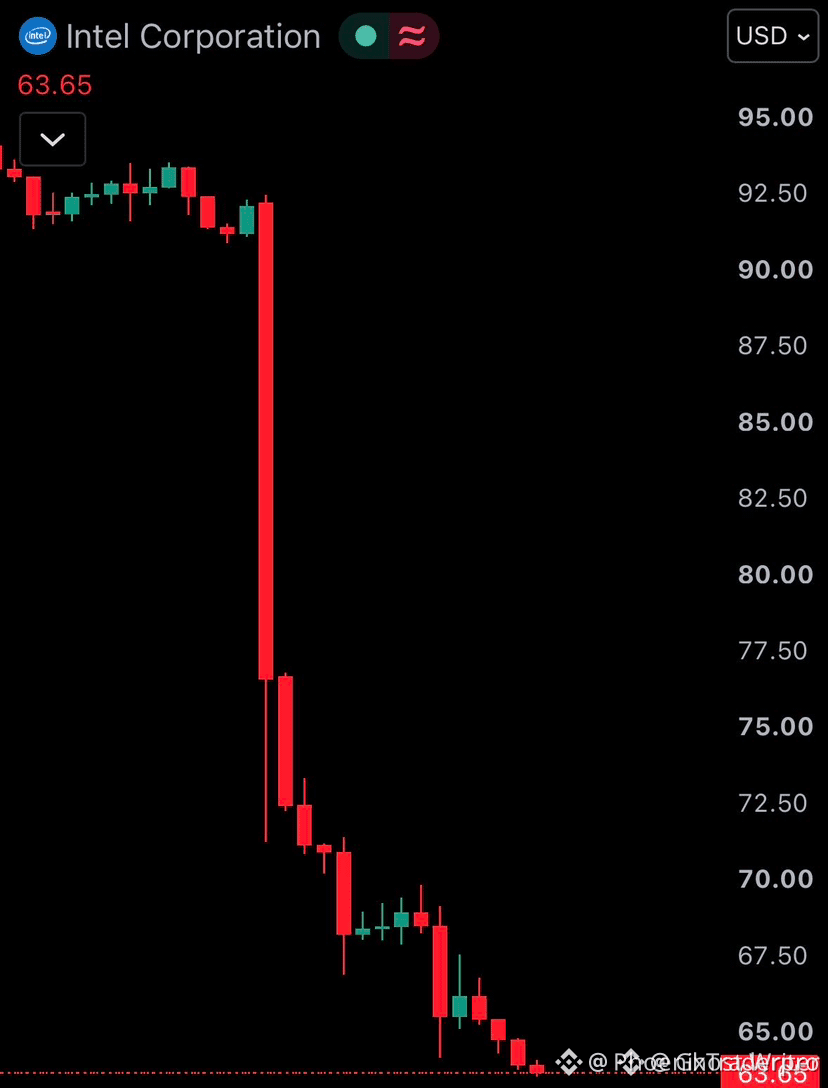
🚨 TRADFI MELTDOWN MIMICS MEMECOINS WHILE $BTC WATCHES FOR MACRO SPILLOVER! 📉
📊 Wall Street heavyweights traded like low-liquidity microcaps today, with tech giants shedding between 12% and 31% in sheer liquidation moves. When legacy equities print drawdowns this aggressive, institutional risk desks are forced to actively rebalance balance sheets across the board.
🌊 Smart money is closely tracking whether this pressure triggers a liquidity cascade across all risk assets or creates a prime rotation window. ⚡ Structural selloffs on traditional books often force volatility spikes that inevitably spill into digital assets.
💡 When legacy markets wobble this hard, do you expect smart money to bid $BTC as an alternative, or will broad deleveraging drag everything down first? 👇
⚠️ Not financial advice. Always manage your risk. 🛡️
🏷️ #BTC #MarketUpdate #Crypto #MacroTrading
⚡ 🎯
27

📅 Markets on Alert for Fed Day?
The FOMC is meeting right now on October 27 to 28 2026 with the policy statement and rate decision due Wednesday at 2 pm ET followed by the chair press conference. No new economic projections this time so focus stays on the statement language and any signals about the path of rates after the September hike.
Traders and investors watch these sessions closely because the outcome shapes liquidity risk appetite and volatility across stocks bonds and crypto. Staying prepared with clear levels and size discipline turns these high impact events into opportunities rather than surprises.
$BTC #CoinVahini #FOMCWatch #Fed #MacroTrading
8
·
--
⚡ CANADA RESUMES US TRADE TALKS AS MACRO MOMENTUM SETS $CHIP AND COMMODITIES AFIRE! 📈
Macro headlines are hitting the wires as Canada signals readiness to restart trade negotiations with Washington once the green light flashes. 📊 Following months of frozen talks over metals duties, the market is bracing for sharp currency volatility and commodity repricing across the board.
Smart money is already positioning ahead of potential policy shifts that could ignite order flow in real-world assets and commodity-linked tokens. 🌊 When trade friction thaws, liquidity sweeps into high-beta movers like $XPL and $MARSCOIN fast.
💡 Are you front-running this macro pivot early or waiting for official Washington confirmation before taking your position? 👇
⚠️ Not financial advice. Always manage your risk. 🛡️
🏷️ #CHIP #XPL #MARSCOIN #MacroTrading #Crypto
⚡ 💎
16
·
--
⚡ MULTI-ASSET DERIVATIVES EXPANSION UNLOCKS UP TO 50X LEVERAGE ON MACRO PLAYS! 📈
A major exchange just expanded its CFD derivatives roster with 8 cross-market instruments, spanning metals, energy, and equity indices like Aluminum, Low Sulfur Diesel, and key regional benchmarks. 🌊 Traders can now rotate capital into raw commodities with up to 20x leverage, while index pairs command up to 50x across multiple account execution modes.
📊 When macro volatility bleeds into the broader crypto board, holding multi-asset exposure under one roof gives disciplined market participants a distinct liquidity edge. 💡 As traditional commodities increasingly correlate with macro liquidity waves, having instant access to hedge energy and industrial metals sharpens your tactical flexibility. 💬 Which asset class do you hedge with most when digital assets go quiet? 👇
⚠️ Not financial advice. Always manage your risk. 🛡️
🏷️ #MacroTrading #CFD #Derivatives #TradingStrategy #RiskManagement
🎯 🦈
6

·
--
The most powerful force in crypto is not a protocol upgrade or a narrative — it is global dollar liquidity.
When central banks expand their balance sheets and M2 money supply grows, capital flows into risk assets. Crypto, as the highest-beta risk asset class, amplifies that move. The 2020-2021 bull run was not just a Bitcoin halving story — it was a $5 trillion global liquidity injection story.
The inverse is equally true. When the Fed tightens and dollar liquidity contracts, every crypto narrative gets repriced. No amount of "adoption" news holds a market together against a genuine liquidity drain. 2022 proved this painfully.
What this means practically:
— Watch the Fed balance sheet, global M2, and dollar index (DXY) as macro inputs that precede crypto price moves by weeks.
— A falling DXY typically signals expanding global liquidity — historically a tailwind for $BTC and risk assets broadly.
— $ETH and $SOL amplify BTC moves because they carry additional beta. In loose liquidity cycles they outperform; in tightening cycles they underperform faster.
— No altcoin season happens in a sustained dollar-tightening environment.
The lesson: you can be fundamentally right about a protocol and structurally wrong on timing if you ignore the macro tide.
Crypto trades on its own narratives. It moves on global liquidity.
#Bitcoin #Ethereum #Crypto #MacroTrading #CryptoMarkets
41
·
--
Bitcoin no longer just trades on crypto narratives — it has become a real-time barometer for global monetary policy expectations.
When central banks signal tightening, BTC tends to reprice downward before equities do. When rate-cut odds rise or balance sheets expand, BTC often front-runs the risk-on move. This is not coincidence — it reflects a structurally new buyer base.
ETF-era institutional capital is priced in the same macro framework as equities, credit spreads, and real yields. The marginal allocator sitting across BTC, $ETH, and $SOL exposure is making duration and liquidity decisions, not just crypto-native thesis calls.
What this means practically:
- Watch the Fed dot plot and global M2 growth before chart setups
- Dollar strength (DXY) remains a leading headwind; dollar weakness is a structural tailwind
- BTC leading equity corrections is a warning sign that risk appetite is shifting — not just a crypto event
The asymmetry is still intact: upside potential exceeds bonds or gold in a liquidity expansion. But the correlation regime matters. In tightening cycles, diversification into BTC provides less protection than it did in 2020.
Macro-aware positioning is no longer optional — it is the baseline for sizing correctly.
$BTC $ETH $SOL
#Bitcoin #MacroTrading #CryptoMarkets #MonetaryPolicy #BinanceSquare
Bitcoin no longer just trades on crypto narratives — it has become a real-time barometer for global monetary policy expectations.
When central banks signal tightening, BTC tends to reprice downward before equities do. When rate-cut odds rise or balance sheets expand, BTC often front-runs the risk-on move. This is not coincidence — it reflects a structurally new buyer base.
ETF-era institutional capital is priced in the same macro framework as equities, credit spreads, and real yields. The marginal allocator sitting across BTC, $ETH , and $SOL exposure is making duration and liquidity decisions, not just crypto-native thesis calls.
What this means practically:
- Watch the Fed dot plot and global M2 growth before chart setups
- Dollar strength (DXY) remains a leading headwind; dollar weakness is a structural tailwind
- BTC leading equity corrections is a warning sign that risk appetite is shifting — not just a crypto event
The asymmetry is still intact: upside potential exceeds bonds or gold in a liquidity expansion. But the correlation regime matters. In tightening cycles, diversification into BTC provides less protection than it did in 2020.
Macro-aware positioning is no longer optional — it is the baseline for sizing correctly.
$BTC $ETH $SOL
#Bitcoin #MacroTrading #CryptoMarkets #MonetaryPolicy #BinanceSquare
43


Article
Navigating the Asymmetry: The Dual-Tranche Cycle of Global Crude OilThe global crude oil market is transitioning from a period of acute, geopolitically driven structural deficits into an era defined by macro demand cooling and unprecedented non-OPEC+ supply diversification. For institutional allocators and commodity desks, navigating this landscape requires looking past short-term volatility and analyzing the two distinct tranches of the upcoming cycle.
Phase 1: Residual Tightness & The Geopolitical Premium (Q2–Q4 2026)
The near-term macro picture remains tethered to the friction of recent infrastructure disruptions and transit bottlenecks in the Middle East. While physical-to-futures price disconnects have begun to normalize from their spring peaks, the market enters the summer driving season in a structural deficit, with global inventories drawing aggressively.
Supply Cracks: The formal exit of the United Arab Emirates (UAE) from OPEC alters the cartel's collective spare capacity framework, shifting unilateral pricing power and leaving the group's effective spare buffers tighter than historical averages.
The Atlantic Rebalancing: To bridge the gap, non-OPEC+ production led by the Americas (the US, Brazil, and Guyana) is expanding at a clip of 1.5 million barrels per day (mb/d).
Expect Brent crude to find a volatile floor in the high $80s to low $90s through the third quarter, sustained by tactical inventory replenishment and non-OECD strategic stockpiling.
Phase 2: The Macro Downcycle & The Looming Oversupply (2027)
As we look toward 2027, the structural cycle pivots sharply. The market is transitioning toward a regime of demand destruction and cyclical oversupply.
[2026 High Real-World Draws] ──> [Supply Diversification] ──> [2027 Demand Cooling & Surplus]
High baseline energy costs and broader macroeconomic cooling are weighing heavily on global demand. Refined product markets, particularly in the petrochemical and aviation sectors, are starting to signal a structural slowdown.
As logistics bottlenecks resolve and Middle Eastern volumes gradually normalize, the compounding impact of surging Atlantic Basin supply will flip the market balance from a deficit into a pronounced surplus.
The Long Horizon: Both the EIA and institutional consensus point toward Brent drifting down toward an average of $79/bbl by mid-2027.
```
CRUDE MARKET BALANCES & BENCHMARKS (HISTORICAL & FORECAST)
140 ───┐
│ ▲ (Apr '26 Peak: ~$138)
120 ───┤ ╱ ╲
│ ╱ ╲
100 ───┤ ╱ ╲
│ ╱ ───────► [Q2-Q4 '26 Range: $89-$106]
80 ───┼────────────────/───────────────────────────────
│ (2025 Avg: ~$69) ╲
60 ───┤ ╲────────► [2027 Target: ~$79]
│
0 ───┴───────────────────────┬───────────────────────┬───────────────────────►
2025 2026 2027
```
The Tactical Takeaway
The upcoming macro cycle belongs to the bears. The margin of safety for long-only commodity exposure is thinning. Alpha will be found not by chasing geopolitical spikes, but by positioning for a structural oversupply as the global economy cools and alternative supply lines solidify.
#crudeoil #commodities #MacroTrading #PostonTradFi $USOon
Navigating the Asymmetry: The Dual-Tranche Cycle of Global Crude Oil
The global crude oil market is transitioning from a period of acute, geopolitically driven structural deficits into an era defined by macro demand cooling and unprecedented non-OPEC+ supply diversification. For institutional allocators and commodity desks, navigating this landscape requires looking past short-term volatility and analyzing the two distinct tranches of the upcoming cycle.
Phase 1: Residual Tightness & The Geopolitical Premium (Q2–Q4 2026)
The near-term macro picture remains tethered to the friction of recent infrastructure disruptions and transit bottlenecks in the Middle East. While physical-to-futures price disconnects have begun to normalize from their spring peaks, the market enters the summer driving season in a structural deficit, with global inventories drawing aggressively.
Supply Cracks: The formal exit of the United Arab Emirates (UAE) from OPEC alters the cartel's collective spare capacity framework, shifting unilateral pricing power and leaving the group's effective spare buffers tighter than historical averages.
The Atlantic Rebalancing: To bridge the gap, non-OPEC+ production led by the Americas (the US, Brazil, and Guyana) is expanding at a clip of 1.5 million barrels per day (mb/d).
Expect Brent crude to find a volatile floor in the high $80s to low $90s through the third quarter, sustained by tactical inventory replenishment and non-OECD strategic stockpiling.
Phase 2: The Macro Downcycle & The Looming Oversupply (2027)
As we look toward 2027, the structural cycle pivots sharply. The market is transitioning toward a regime of demand destruction and cyclical oversupply.
[2026 High Real-World Draws] ──> [Supply Diversification] ──> [2027 Demand Cooling & Surplus]
High baseline energy costs and broader macroeconomic cooling are weighing heavily on global demand. Refined product markets, particularly in the petrochemical and aviation sectors, are starting to signal a structural slowdown.
As logistics bottlenecks resolve and Middle Eastern volumes gradually normalize, the compounding impact of surging Atlantic Basin supply will flip the market balance from a deficit into a pronounced surplus.
The Long Horizon: Both the EIA and institutional consensus point toward Brent drifting down toward an average of $79/bbl by mid-2027.
```
CRUDE MARKET BALANCES & BENCHMARKS (HISTORICAL & FORECAST)
140 ───┐
│ ▲ (Apr '26 Peak: ~$138)
120 ───┤ ╱ ╲
│ ╱ ╲
100 ───┤ ╱ ╲
│ ╱ ───────► [Q2-Q4 '26 Range: $89-$106]
80 ───┼────────────────/───────────────────────────────
│ (2025 Avg: ~$69) ╲
60 ───┤ ╲────────► [2027 Target: ~$79]
│
0 ───┴───────────────────────┬───────────────────────┬───────────────────────►
2025 2026 2027
```
The Tactical Takeaway
The upcoming macro cycle belongs to the bears. The margin of safety for long-only commodity exposure is thinning. Alpha will be found not by chasing geopolitical spikes, but by positioning for a structural oversupply as the global economy cools and alternative supply lines solidify.
#crudeoil #commodities #MacroTrading #PostonTradFi $USOon
1
388
·
--
The carry trade narrative for crypto just got quietly dismantled.
BTC’s 52-week correlation with USD/JPY just hit -0.90. That’s not noise — that’s one of the strongest macro correlations in the entire market, and it says the opposite of what most traders assumed. The old story was: yen weakens, cheap JPY leverage floods into risk assets, BTC rallies. Clean and simple.
Except it’s backwards.
A -0.90 reading means BTC moves AGAINST the yen carry. When JPY weakens (carry trade ON), BTC tends to fall. When JPY strengthens (carry trade UNWINDS), BTC tends to rise. That’s not a carry vehicle — that’s closer to a global liquidity signal or a safe-haven correlation nobody is pricing.
This matters right now because MiCA just went fully live today, the Clarity Act drops in 4 days, and institutional desks are recalibrating portfolio models at Q3 open. If your entire framework for why BTC moves was “yen carry = crypto leverage,” you’ve been solving the wrong equation.
$ETH still has its own Pectra fundamentals. $SOL is running on infrastructure momentum. $ADA is positioned for compliance-first demand. None of these respond to carry logic either.
The BTC-JPY data doesn’t just challenge one trade thesis — it challenges how most people model macro flows into crypto.
Update the model before Q3 does it for you.
#Bitcoin #MacroTrading #CryptoMarkets #BTC #Altcoins
84


·
--
📊 TradFi Futures Boom on Crypto Exchanges While Spot Trading Cools 🥶
CryptoQuant Weekly Report | Jun 7, 2026Crypto exchanges are flipping from crypto-only to “everything exchanges”. TradFi perpetual futures are surging even as Bitcoin demand stays weak 📉
⚡ Key Highlights 🔥
▶️ TradFi Futures Surge
Gold, silver + oil perpetuals exploding on crypto exchanges 🌍 Drivers: US-Iran tensions + inflation fears = demand for macro assets ⛽🥇
▶️ Gate + Binance Lead Gate $368B, Binance $298B in TradFi futures volume this year. Together = ∼2/3 of total market 🏦 Gate now top for tokenized stocks, metals + 24/7 derivatives
▶️ “Crypto Exchanges = Macro Hubs” 24/7 access to commodities + equities is pulling traders from traditional brokers. Analysts: “Traders want round-the-clock exposure as gold hits records + oil spikes” 📈
📉 Spot Market Slows Down 🐢
▶️ Volume Drop Spot trading fell to $679B in April 2026 - lowest since Oct 2023. Bear market = less retail action 🧊
▶️ Perpetuals Down Too Leverage appetite shrinking across BTC/ETH futures 📉
▶️ Top Spot Exchanges 2026 Binance, Bybit, Gate, Crypto.com lead cumulative volume
▶️ Liquidity Concentrated BTC spot depth: Binance + Gate dominate. Perps liquidity: Gate, Hyperliquid, Binance, OKX, Bitget 👑
🏦 Institutional Signal 👀
▶️ Big Money on Gate Average BTC spot trade = $4,000, peaked at $6,200 last year. Perps avg = $8,900 and growing. Gate = #1 for institutional BTC flows
▶️ BTC Trade Sizes Large trades signal whales are still active despite weak demand 🐋
Bottom Line 🎯
Crypto exchanges are becoming “macro exchanges”. TradFi assets via futures = new growth engine while spot trading hibernates. Convergence of TradFi + crypto is real, not just hype 🔗
#CryptoExchanges #Binance #GoldSilverOil #MacroTrading
$BNB $XRP $SOL
{future}(SOLUSDT)
{future}(XRPUSDT)
{future}(BNBUSDT)
📊 TradFi Futures Boom on Crypto Exchanges While Spot Trading Cools 🥶
CryptoQuant Weekly Report | Jun 7, 2026Crypto exchanges are flipping from crypto-only to “everything exchanges”. TradFi perpetual futures are surging even as Bitcoin demand stays weak 📉
⚡ Key Highlights 🔥
▶️ TradFi Futures Surge
Gold, silver + oil perpetuals exploding on crypto exchanges 🌍 Drivers: US-Iran tensions + inflation fears = demand for macro assets ⛽🥇
▶️ Gate + Binance Lead Gate $368B, Binance $298B in TradFi futures volume this year. Together = ∼2/3 of total market 🏦 Gate now top for tokenized stocks, metals + 24/7 derivatives
▶️ “Crypto Exchanges = Macro Hubs” 24/7 access to commodities + equities is pulling traders from traditional brokers. Analysts: “Traders want round-the-clock exposure as gold hits records + oil spikes” 📈
📉 Spot Market Slows Down 🐢
▶️ Volume Drop Spot trading fell to $679B in April 2026 - lowest since Oct 2023. Bear market = less retail action 🧊
▶️ Perpetuals Down Too Leverage appetite shrinking across BTC/ETH futures 📉
▶️ Top Spot Exchanges 2026 Binance, Bybit, Gate, Crypto.com lead cumulative volume
▶️ Liquidity Concentrated BTC spot depth: Binance + Gate dominate. Perps liquidity: Gate, Hyperliquid, Binance, OKX, Bitget 👑
🏦 Institutional Signal 👀
▶️ Big Money on Gate Average BTC spot trade = $4,000, peaked at $6,200 last year. Perps avg = $8,900 and growing. Gate = #1 for institutional BTC flows
▶️ BTC Trade Sizes Large trades signal whales are still active despite weak demand 🐋
Bottom Line 🎯
Crypto exchanges are becoming “macro exchanges”. TradFi assets via futures = new growth engine while spot trading hibernates. Convergence of TradFi + crypto is real, not just hype 🔗
#CryptoExchanges #Binance #GoldSilverOil #MacroTrading
$BNB $XRP $SOL

9
459

·
--
Verified
#japan10yyieldhits3%firstsince1996
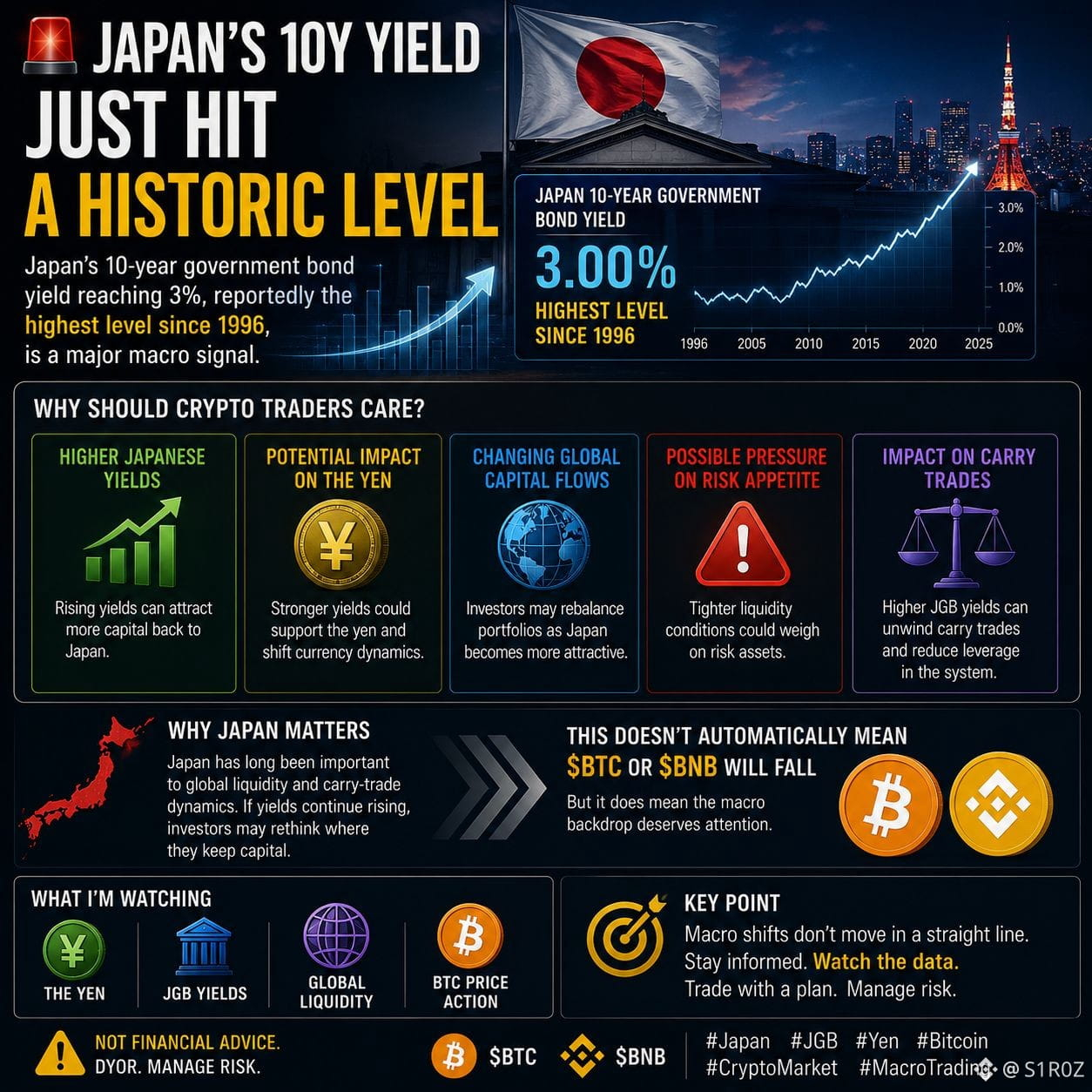
🚨 JAPAN'S 10Y YIELD JUST HIT A HISTORIC LEVEL
Japan's 10-year government bond yield reaching 3%, reportedly the highest level since 1996, is a major macro signal.
Why should crypto traders care? 👀
📈 Higher Japanese yields
💴 Potential impact on the yen
🌍 Changing global capital flows
⚠️ Possible pressure on risk appetite
Japan has long been important to global liquidity and carry-trade dynamics. If yields continue rising, investors may rethink where they keep capital.
That doesn't automatically mean $BTC or $BNB will fall — but it does mean the macro backdrop deserves attention.
🎯 Watch the yen, JGB yields, global liquidity and BTC price action.
{spot}(BTCUSDT)
{spot}(BNBUSDT)
#Japan #JGB #Yen #Bitcoin #CryptoMarket #MacroTrading
#japan10yyieldhits3%firstsince1996
🚨 JAPAN'S 10Y YIELD JUST HIT A HISTORIC LEVEL
Japan's 10-year government bond yield reaching 3%, reportedly the highest level since 1996, is a major macro signal.
Why should crypto traders care? 👀
📈 Higher Japanese yields
💴 Potential impact on the yen
🌍 Changing global capital flows
⚠️ Possible pressure on risk appetite
Japan has long been important to global liquidity and carry-trade dynamics. If yields continue rising, investors may rethink where they keep capital.
That doesn't automatically mean $BTC or $BNB will fall — but it does mean the macro backdrop deserves attention.
🎯 Watch the yen, JGB yields, global liquidity and BTC price action.
#Japan #JGB #Yen #Bitcoin #CryptoMarket #MacroTrading
1
485

WASHINGTON SHOCKWAVES HIT THE ORDER BOOKS AS RISK-OFF PRESSURE TESTS $TIA AND $AMP ! 🚨 📉
Political instability in Washington is sending immediate ripple effects through risk assets, pushing capital toward defensive positioning as macro turbulence takes the wheel. 🌊 Sharp headline risk always triggers an initial flush across liquid alts, shaking weak hands out before smart money begins looking for absorption zones.
When liquidity gets defensive, watching how charts like $TIA , $AMP , and $ICNT absorb this wave will separate structural strength from momentum traps. 🔍 High-timeframe reclaim levels will reveal whether institutions view this sudden volatility spike as a clean liquidity sweep or a legitimate breakdown. 💡
💬 Are you keeping your powder dry for the dust to settle, or actively bidding into this macro discount? 👇
⚠️ Not financial advice. Always manage your risk. 🛡️
🏷️ #TIA #AMP #Crypto #MacroTrading #Altcoins
🎯 🦈

4

·
--
Semiconductor strength lifts risk appetite for $BTC 🧠
Top-tier exchange data shows U.S. pre-market semiconductor and storage names broadly pushing higher, with AMD, Qualcomm, Micron, Western Digital, and others leading the move. This matters because strength in high-beta tech often feeds the broader risk-on mood that crypto traders watch closely.
Alright everyone, this is not a blind ape signal, but it is a useful macro clue. When chips and AI-linked names catch bids, liquidity hunters often start rotating attention back toward growth assets, and $BTC usually sits near the front of that conversation.
Weak hands chase green candles late. Smart money watches the flow early.
Not financial advice. Manage your risk.
#BTC #CryptoMarket #MacroTrading #RiskOn
🫡
81

·
--
Article
$BTC and the Iran Deal — Why Today's Signing Matters More Than Yesterday's FOMC
I saidI said this in yesterday's package and I'll say it again today because the sequence of events has validated it exactly: everyone was watching the Fed, but the Iran deal was always the more important catalyst for btc near-term trajectory.
The formal peace agreement was signed in Geneva today. The formal US-Iran peace signing on June 19 remains the one near-term macro tailwind. The recovery from the $59,130 May low is not over — but it just hit a significant speed bump with yesterday's FOMC. The Block
Here's why the signing matters more than Warsh's press conference for $BTC #Bitcoin specifically. The Fed delivered a hawkish surprise, which is bad. But it's a known bad now, fully priced, and the rate trajectory is based on inflation data. The Iran deal directly attacks that inflation data. Oil falling after the Strait of Hormuz reopens pulls energy prices down, which pulls headline CPI down, which gives the Fed less justification for the hike that 66% of prediction markets are currently pricing for later this year.
The one consolation for crypto is that none of this is a surprise anymore. The real test comes at the July meeting, where those hike odds will either keep climbing or fade depending on whether the post-deal slide in oil starts pulling headline inflation down with it. Substack
Standard Chartered said they're watching three signals for the cycle bottom. $MSTR #Strategy resuming purchases — check. ETF inflows turning positive — tentative check. Oil continuing to fall — this one is now very much in play as the Hormuz reopens fully for commercial shipping.
All three of those signals converging simultaneously, today, on the same day as the signing, is not noise. It's the setup that people who've been waiting for a clear re-entry signal into $BTC #Bitcoin have been looking for since May.
$BTC #Bitcoin #Iran #Geopolitics #MacroTrading
DYOR. Not financial advice
$BTC and the Iran Deal — Why Today's Signing Matters More Than Yesterday's FOMC I said
I said this in yesterday's package and I'll say it again today because the sequence of events has validated it exactly: everyone was watching the Fed, but the Iran deal was always the more important catalyst for btc near-term trajectory.
The formal peace agreement was signed in Geneva today. The formal US-Iran peace signing on June 19 remains the one near-term macro tailwind. The recovery from the $59,130 May low is not over — but it just hit a significant speed bump with yesterday's FOMC. The Block
Here's why the signing matters more than Warsh's press conference for $BTC #Bitcoin specifically. The Fed delivered a hawkish surprise, which is bad. But it's a known bad now, fully priced, and the rate trajectory is based on inflation data. The Iran deal directly attacks that inflation data. Oil falling after the Strait of Hormuz reopens pulls energy prices down, which pulls headline CPI down, which gives the Fed less justification for the hike that 66% of prediction markets are currently pricing for later this year.
The one consolation for crypto is that none of this is a surprise anymore. The real test comes at the July meeting, where those hike odds will either keep climbing or fade depending on whether the post-deal slide in oil starts pulling headline inflation down with it. Substack
Standard Chartered said they're watching three signals for the cycle bottom. $MSTR #Strategy resuming purchases — check. ETF inflows turning positive — tentative check. Oil continuing to fall — this one is now very much in play as the Hormuz reopens fully for commercial shipping.
All three of those signals converging simultaneously, today, on the same day as the signing, is not noise. It's the setup that people who've been waiting for a clear re-entry signal into $BTC #Bitcoin have been looking for since May.
$BTC #Bitcoin #Iran #Geopolitics #MacroTrading
DYOR. Not financial advice
135

·
--
Bearish
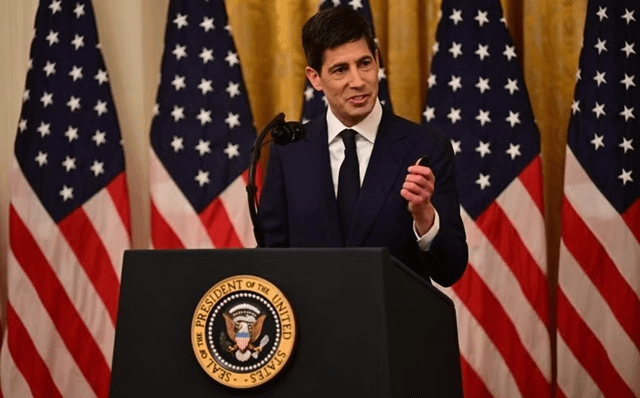
📊 Fed có thể TĂNG lãi suất lần đầu tiên từ 2023 — và đây là lý do điều đó đánh thẳng vào crypto.
Nhiều người hỏi: "Lãi suất Fed có liên quan gì đến Bitcoin?" Câu trả lời là: liên quan TRỰC TIẾP.
Cơ chế hoạt động:
🔴 Fed tăng lãi suất → lãi suất trái phiếu Mỹ tăng → tiền "chạy về" tài sản an toàn có lãi (trái phiếu, tiền gửi) → tiền RÚT ra khỏi tài sản rủi ro như crypto, cổ phiếu tăng trưởng.
🔴 Lãi suất cao → chi phí đi vay tăng → các quỹ hedge fund dùng đòn bẩy mua crypto phải giảm vị thế → áp lực bán tăng lên.
🔴 USD mạnh hơn khi lãi suất cao → giá BTC tính bằng USD thường giảm.
Năm 2022 là bài học rõ nhất: Fed tăng lãi từ 0% lên 5.5% trong 18 tháng, BTC rơi từ $69K xuống $16K.
🟢 Điểm tích cực duy nhất: nếu Fed thật sự TĂNG lãi trong bối cảnh lạm phát dai dẳng, điều đó cũng xác nhận Bitcoin là "hard money" không thể bị in thêm — và về dài hạn, BTC là hàng rào chống lạm phát mạnh hơn vàng.
Ngắn hạn đau. Dài hạn — người giữ được sẽ thắng.
Bạn đang trade theo nhịp macro hay đầu tư dài hạn bất chấp lãi suất?
$BTC
{future}(BTCUSDT)
#Bitcoin #Fed #MacroTrading #CreatorpadVN
📊 Fed có thể TĂNG lãi suất lần đầu tiên từ 2023 — và đây là lý do điều đó đánh thẳng vào crypto.
Nhiều người hỏi: "Lãi suất Fed có liên quan gì đến Bitcoin?" Câu trả lời là: liên quan TRỰC TIẾP.
Cơ chế hoạt động:
🔴 Fed tăng lãi suất → lãi suất trái phiếu Mỹ tăng → tiền "chạy về" tài sản an toàn có lãi (trái phiếu, tiền gửi) → tiền RÚT ra khỏi tài sản rủi ro như crypto, cổ phiếu tăng trưởng.
🔴 Lãi suất cao → chi phí đi vay tăng → các quỹ hedge fund dùng đòn bẩy mua crypto phải giảm vị thế → áp lực bán tăng lên.
🔴 USD mạnh hơn khi lãi suất cao → giá BTC tính bằng USD thường giảm.
Năm 2022 là bài học rõ nhất: Fed tăng lãi từ 0% lên 5.5% trong 18 tháng, BTC rơi từ $69K xuống $16K.
🟢 Điểm tích cực duy nhất: nếu Fed thật sự TĂNG lãi trong bối cảnh lạm phát dai dẳng, điều đó cũng xác nhận Bitcoin là "hard money" không thể bị in thêm — và về dài hạn, BTC là hàng rào chống lạm phát mạnh hơn vàng.
Ngắn hạn đau. Dài hạn — người giữ được sẽ thắng.
Bạn đang trade theo nhịp macro hay đầu tư dài hạn bất chấp lãi suất?
$BTC
#Bitcoin #Fed #MacroTrading #CreatorpadVN
3
1
225

Crude oil is fast becoming one of the most critical TradFi assets to watch. It directly impacts global inflation, transport costs, and overall market sentiment. 🛢️✈️
My Market View: Oil is likely to remain highly volatile as the market constantly balances supply risks against an uncertain global demand outlook.
The Upside Trigger: A strong breakout could easily trigger if geopolitical tensions rise further. 📈
The Downside Risk: Weak macroeconomic demand signals can cause swift, aggressive pullbacks. 📉
The Strategy: Do not chase every random price spike. The real edge right now lies in waiting for key support zones and closely tracking:
Weekly Inventory Data 📊
OPEC+ Policy Decisions 🏛️
Macro Demand Indicators 🌍
Patience over FOMO is the winning formula in commodities right now. 🎯
What’s your current bias on Brent—bullish on supply risks, or bearish on demand? Let's talk below! 👇
#PostonTradFi #TradFi #crudeoil #Commodities #MacroTrading


134
·
--
Article
$BTC #Bitcoin Has Now Dropped After Six Straight FOMC Meetings — Here's What Breaks the PatternSix meetings. Six drops. The streak is so consistent at this point that I think the only honest conversation is about what actually changes it rather than pretending it might just reverse on its own.
Since October 2025, $BTC #Bitcoin has fallen after every single FOMC meeting: October down 30.21%, December down 9.99%, January down 32.77%, March down 13.67%, April down 27.72%, and June adding another 2-3% dip before the Iran deal bounce. The rate decision itself almost never matters — the last five were all holds. What matters is everything around the decision, the language, the dot plot, the communication, the market's interpretation of forward signals.
Anthony Scaramucci, CEO of Skybridge, remains firmly bullish on Bitcoin and crypto, emphasizing that he continues to hold a significant position. While acknowledging the current lack of enthusiasm across the market, he views the widespread apathy as a potential opportunity rather than a warning sign. Scaramucci expects Bitcoin to begin rallying in late 2026 and continue into early 2027. CoinCodex
What would actually break the pattern? I think there are three scenarios and only three.
One: oil falls enough post-Iran deal that the next CPI print comes in materially softer, and the July FOMC becomes genuinely neutral rather than hawkish. That gives $BTC #Bitcoin its first FOMC event in over a year that doesn't carry a "higher for longer" signal attached to it.
Two: ETF inflows sustain for multiple consecutive weeks rather than alternating between positive and negative. Sustained institutional re-entry through the ETF wrapper would change the underlying demand structure enough to absorb hawkish Fed language without cascading down.
Three: Warsh gives a genuinely surprising dovish signal at a future meeting that the market hasn't pre-priced, catching short sellers off-guard and triggering the kind of short squeeze that sends $BTC #Bitcoin up 10% in a day.
None of those three things is certain. But at least one of them is probably necessary before this FOMC-correlated drop pattern finally ends.
$BTC #Bitcoin #FOMC C #MacroTrading #Fed
DYOR. Not financial advice
$BTC #Bitcoin Has Now Dropped After Six Straight FOMC Meetings — Here's What Breaks the Pattern
Six meetings. Six drops. The streak is so consistent at this point that I think the only honest conversation is about what actually changes it rather than pretending it might just reverse on its own.
Since October 2025, $BTC #Bitcoin has fallen after every single FOMC meeting: October down 30.21%, December down 9.99%, January down 32.77%, March down 13.67%, April down 27.72%, and June adding another 2-3% dip before the Iran deal bounce. The rate decision itself almost never matters — the last five were all holds. What matters is everything around the decision, the language, the dot plot, the communication, the market's interpretation of forward signals.
Anthony Scaramucci, CEO of Skybridge, remains firmly bullish on Bitcoin and crypto, emphasizing that he continues to hold a significant position. While acknowledging the current lack of enthusiasm across the market, he views the widespread apathy as a potential opportunity rather than a warning sign. Scaramucci expects Bitcoin to begin rallying in late 2026 and continue into early 2027. CoinCodex
What would actually break the pattern? I think there are three scenarios and only three.
One: oil falls enough post-Iran deal that the next CPI print comes in materially softer, and the July FOMC becomes genuinely neutral rather than hawkish. That gives $BTC #Bitcoin its first FOMC event in over a year that doesn't carry a "higher for longer" signal attached to it.
Two: ETF inflows sustain for multiple consecutive weeks rather than alternating between positive and negative. Sustained institutional re-entry through the ETF wrapper would change the underlying demand structure enough to absorb hawkish Fed language without cascading down.
Three: Warsh gives a genuinely surprising dovish signal at a future meeting that the market hasn't pre-priced, catching short sellers off-guard and triggering the kind of short squeeze that sends $BTC #Bitcoin up 10% in a day.
None of those three things is certain. But at least one of them is probably necessary before this FOMC-correlated drop pattern finally ends.
$BTC #Bitcoin #FOMC C #MacroTrading #Fed
DYOR. Not financial advice
39
·
--
Article
Why Warsh Refusing to Submit His Own Dot Matters More Than the Dot Plot ItselfI want to come back to something from yesterday's FOMC because I think the full significance of it hasn't fully landed yet in most of the commentary I've read.
Nine of 18 officials projected that the federal funds rate would end 2026 above its current range of 3.5% to 3.75%. Warsh confirmed he refrained from offering any projections of his own. The median projection now calls for the federal funds rate to end 2026 at 3.8%, up from 3.4% in the Fed's March summary. Bitcoin Foundation
Warsh is the first Fed chair in fourteen years to abstain from the dot plot. That single fact carries enormous consequences for how markets should think about every future meeting, not just this one.
Jerome Powell's Fed gave markets a roadmap. You could look at the dot plot, see where the median member expected rates to be in twelve months, and trade around it with meaningful confidence that the committee would try to follow through on those projections. The entire "Fed pivot trade" that dominated crypto bull cases for the past year was built on reading that roadmap and positioning ahead of the expected turns.
Warsh just told you there is no roadmap anymore. Warsh skipped forward guidance, which is in character. He has long been skeptical of telling markets where rates are headed, and he declined to submit his own projection. He did not need to. The dots that were submitted told the story. Substack
For $BTC #Bitcoin specifically, this structural change matters more than any single rate decision. The "Fed pivot unlocks Bitcoin" thesis requires the Fed to credibly signal a pivot in advance, so that institutional money can position ahead of it. Without forward guidance, there's no signal to front-run. The institutional catalyst that Bitcoin bulls were waiting on doesn't disappear — it just becomes structurally harder to time. That's not necessarily bearish on a multi-year basis, but it is a genuine change to the trading environment that I think deserves more attention than it's getting.
$BTC C #bitcoin n #Fed #WarshFed #MacroTrading g
DYOR. Not financial advice
Why Warsh Refusing to Submit His Own Dot Matters More Than the Dot Plot Itself
I want to come back to something from yesterday's FOMC because I think the full significance of it hasn't fully landed yet in most of the commentary I've read.
Nine of 18 officials projected that the federal funds rate would end 2026 above its current range of 3.5% to 3.75%. Warsh confirmed he refrained from offering any projections of his own. The median projection now calls for the federal funds rate to end 2026 at 3.8%, up from 3.4% in the Fed's March summary. Bitcoin Foundation
Warsh is the first Fed chair in fourteen years to abstain from the dot plot. That single fact carries enormous consequences for how markets should think about every future meeting, not just this one.
Jerome Powell's Fed gave markets a roadmap. You could look at the dot plot, see where the median member expected rates to be in twelve months, and trade around it with meaningful confidence that the committee would try to follow through on those projections. The entire "Fed pivot trade" that dominated crypto bull cases for the past year was built on reading that roadmap and positioning ahead of the expected turns.
Warsh just told you there is no roadmap anymore. Warsh skipped forward guidance, which is in character. He has long been skeptical of telling markets where rates are headed, and he declined to submit his own projection. He did not need to. The dots that were submitted told the story. Substack
For $BTC #Bitcoin specifically, this structural change matters more than any single rate decision. The "Fed pivot unlocks Bitcoin" thesis requires the Fed to credibly signal a pivot in advance, so that institutional money can position ahead of it. Without forward guidance, there's no signal to front-run. The institutional catalyst that Bitcoin bulls were waiting on doesn't disappear — it just becomes structurally harder to time. That's not necessarily bearish on a multi-year basis, but it is a genuine change to the trading environment that I think deserves more attention than it's getting.
$BTC C #bitcoin n #Fed #WarshFed #MacroTrading g
DYOR. Not financial advice
44

·
--
Bullish
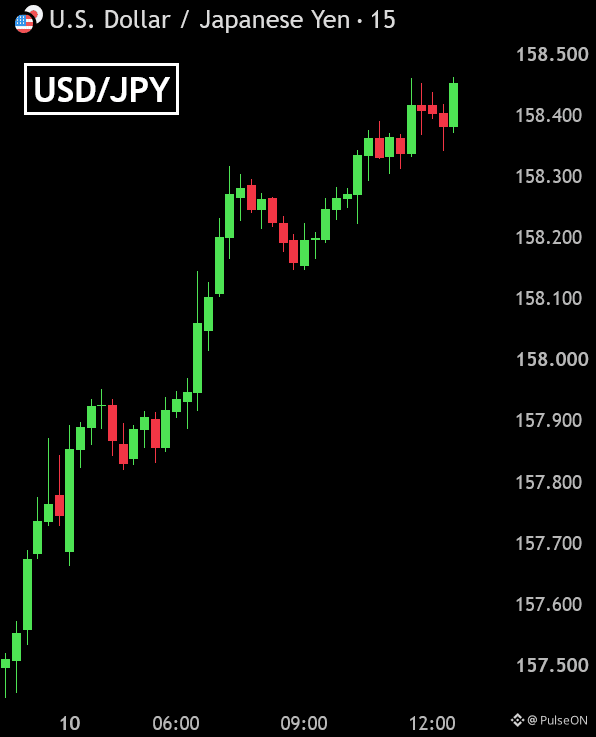
🇯🇵 BREAKING: The Japanese yen has weakened past ¥158 per dollar.
Japan’s June current account unexpectedly swung to a ¥923B deficit, its first in 17 months, versus expectations for a ¥1.512T surplus.
The bigger story is the policy dilemma.
A weaker yen increases imported inflation pressure, while the Bank of Japan’s latest summary shows growing concern about upside inflation risks and continued discussion around further rate hikes.
So we have a fascinating setup:
💴 Yen under pressure
🔥 Inflation risks rising
🏦 BOJ facing pressure to tighten
🇺🇸🇯🇵 Intervention effects fading
If yen weakness continues, markets will be watching closely for signs of another policy response.
Macro is getting interesting. 👀
$JPY.ETF $USDC
#Forex #JPY #BankOfJapan #MacroTrading #GlobalMarkets

USDC+0.02%
JPYETF-1.60%
1
560
Log in to explore more content
Join global crypto users on Binance Square
⚡️ Get latest and useful information about crypto.
💬 Trusted by the world’s largest crypto exchange.
👍 Discover real insights from verified creators.
Email / Phone number
Trending Topics
1
#CanBTCReboundAfterFallingBelow60K?
0 views
89 Discussing
2
#GlobalStocksFaceLongestLosingStreakSince2023
0 views
252 Discussing
3
#AnthropicPlungesTowardIPOPriceonDay2
0 views
29 Discussing
4
#GaoTengBitcoinETFListsOnHKEX
0 views
256 Discussing
5
#TradFiForBeginners
946,825 views
5,501 Discussing
6
#NvidiaBoardReportedlySplitOverHuang’sReturn
258,674 views
2,385 Discussing
7
#TetherBurns8BillionUSDTInPast20Days
0 views
91 Discussing
8
#BitcoinWalletSignatureFlawExploitableWithinSeconds
0 views
43 Discussing
9
#CanGTA6'sLaunchLiftTTWOShares?
207,868 views
1,705 Discussing
10
#HongKongProposesSFCLicensingForFourVirtualAssetServices
404 views
32 Discussing