
#blockchainfinance
blockchainfinance
176,227 views
881 Discussing
Hot
Latest

·
--
Article
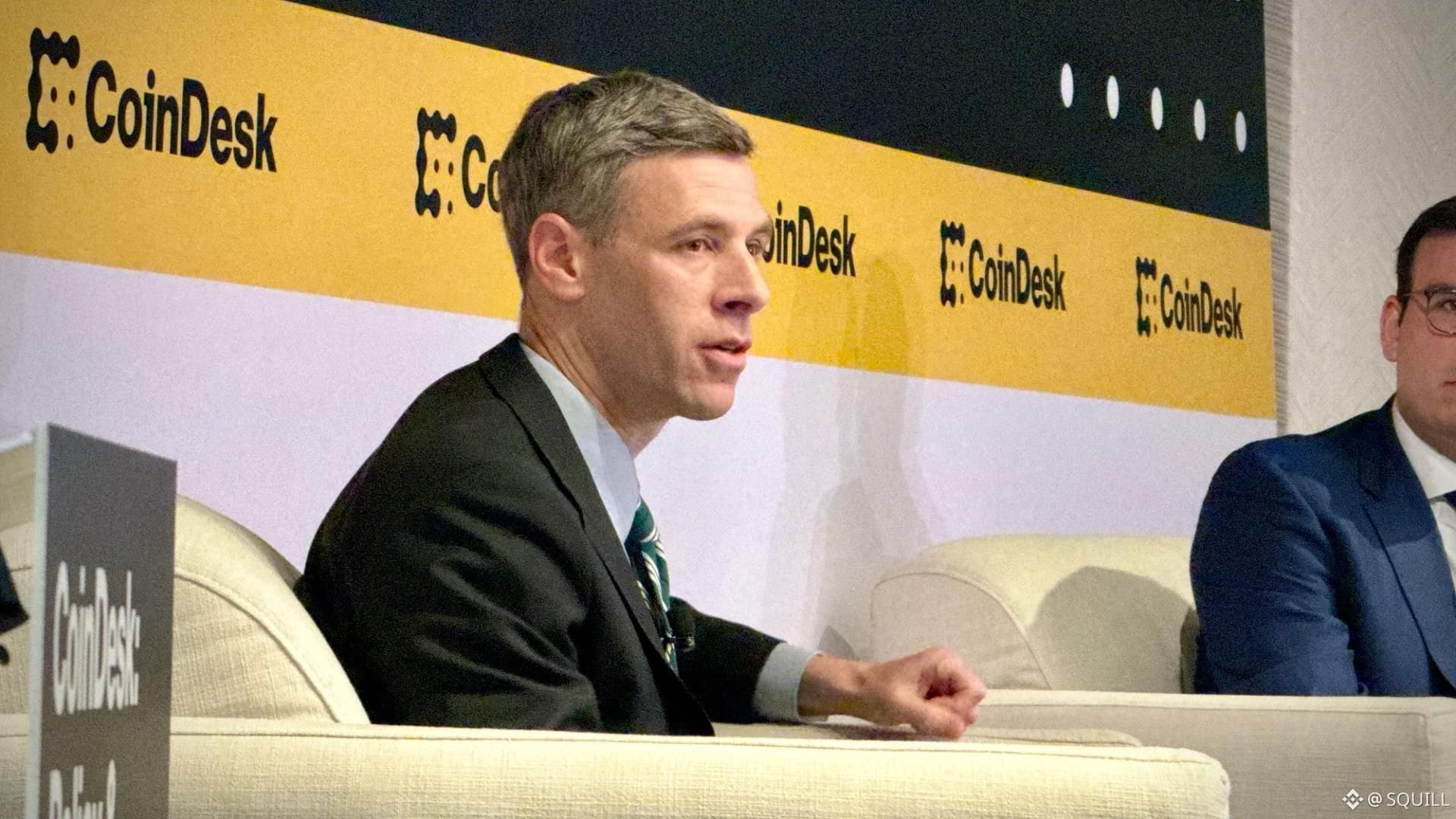
OpenReserve Gets U.S. Banking Charter – Crypto Banks Are Now OfficialThe Office of the Comptroller of the Currency has just handed a provisional charter to OpenReserve, a new full‑service bank built from the ground up for the blockchain era. This isn’t just a regulatory win; it’s a signal that crypto‑native financial institutions are moving from the fringes into mainstream banking.
What does a provisional charter mean? Think of it as a “trial license” that lets a bank operate while it fine‑tunes its systems and proves it can meet U.S. banking standards. For OpenReserve, this means it can now offer traditional banking services—checking accounts, debit cards, and loans—while keeping its core blockchain infrastructure intact. The move is part of a growing trend where regulators are recognizing that digital assets need their own banking partners.
Why does this matter to you? If you’re a crypto holder, you’ve probably heard about wallets and exchanges, but not about banks that can hold your crypto and let you use it like cash. OpenReserve bridges that gap. It can accept deposits in fiat and crypto, provide instant conversions, and even offer crypto‑backed loans—all under the safety net of a U.S. banking charter. That’s a game‑changer for everyday users who want the flexibility of crypto without the volatility of keeping everything in a wallet.
Real‑world impact? Imagine you’re a small business owner who accepts $ETH payments. With OpenReserve, you can deposit those $ETH directly into a bank‑approved account, convert them to $USD instantly, and pay your suppliers—all without leaving the bank’s ecosystem. Or you could take out a loan secured by your crypto holdings, using the same account that holds your everyday cash. The bank’s regulatory oversight also adds a layer of trust that many exchanges lack.
Takeaway: Crypto isn’t just a speculative playground anymore; it’s becoming a functional part of the financial system. If you’re looking to move beyond exchanges, keep an eye on OpenReserve and similar institutions. They’re the bridge that lets you use crypto in everyday life while staying compliant with U.S. regulations. #CryptoBanking #OpenReserve #BlockchainFinance
What’s your biggest question about crypto‑native banks? Let me know in the comments!
OpenReserve Gets U.S. Banking Charter – Crypto Banks Are Now Official
The Office of the Comptroller of the Currency has just handed a provisional charter to OpenReserve, a new full‑service bank built from the ground up for the blockchain era. This isn’t just a regulatory win; it’s a signal that crypto‑native financial institutions are moving from the fringes into mainstream banking.
What does a provisional charter mean? Think of it as a “trial license” that lets a bank operate while it fine‑tunes its systems and proves it can meet U.S. banking standards. For OpenReserve, this means it can now offer traditional banking services—checking accounts, debit cards, and loans—while keeping its core blockchain infrastructure intact. The move is part of a growing trend where regulators are recognizing that digital assets need their own banking partners.
Why does this matter to you? If you’re a crypto holder, you’ve probably heard about wallets and exchanges, but not about banks that can hold your crypto and let you use it like cash. OpenReserve bridges that gap. It can accept deposits in fiat and crypto, provide instant conversions, and even offer crypto‑backed loans—all under the safety net of a U.S. banking charter. That’s a game‑changer for everyday users who want the flexibility of crypto without the volatility of keeping everything in a wallet.
Real‑world impact? Imagine you’re a small business owner who accepts $ETH payments. With OpenReserve, you can deposit those $ETH directly into a bank‑approved account, convert them to $USD instantly, and pay your suppliers—all without leaving the bank’s ecosystem. Or you could take out a loan secured by your crypto holdings, using the same account that holds your everyday cash. The bank’s regulatory oversight also adds a layer of trust that many exchanges lack.
Takeaway: Crypto isn’t just a speculative playground anymore; it’s becoming a functional part of the financial system. If you’re looking to move beyond exchanges, keep an eye on OpenReserve and similar institutions. They’re the bridge that lets you use crypto in everyday life while staying compliant with U.S. regulations. #CryptoBanking #OpenReserve #BlockchainFinance
What’s your biggest question about crypto‑native banks? Let me know in the comments!
What does a provisional charter mean? Think of it as a “trial license” that lets a bank operate while it fine‑tunes its systems and proves it can meet U.S. banking standards. For OpenReserve, this means it can now offer traditional banking services—checking accounts, debit cards, and loans—while keeping its core blockchain infrastructure intact. The move is part of a growing trend where regulators are recognizing that digital assets need their own banking partners.
Why does this matter to you? If you’re a crypto holder, you’ve probably heard about wallets and exchanges, but not about banks that can hold your crypto and let you use it like cash. OpenReserve bridges that gap. It can accept deposits in fiat and crypto, provide instant conversions, and even offer crypto‑backed loans—all under the safety net of a U.S. banking charter. That’s a game‑changer for everyday users who want the flexibility of crypto without the volatility of keeping everything in a wallet.
Real‑world impact? Imagine you’re a small business owner who accepts $ETH payments. With OpenReserve, you can deposit those $ETH directly into a bank‑approved account, convert them to $USD instantly, and pay your suppliers—all without leaving the bank’s ecosystem. Or you could take out a loan secured by your crypto holdings, using the same account that holds your everyday cash. The bank’s regulatory oversight also adds a layer of trust that many exchanges lack.
Takeaway: Crypto isn’t just a speculative playground anymore; it’s becoming a functional part of the financial system. If you’re looking to move beyond exchanges, keep an eye on OpenReserve and similar institutions. They’re the bridge that lets you use crypto in everyday life while staying compliant with U.S. regulations. #CryptoBanking #OpenReserve #BlockchainFinance
What’s your biggest question about crypto‑native banks? Let me know in the comments!
13

·
--
Last week a quiet headline slipped by: US regulators are reportedly preparing rules that could allow crypto firms to offer tokenized stock trading.
For traders, this is the kind of shift that sounds exciting until the risks show up. New rails often mean confusion about custody, liquidity, and what you actually own. People chasing the narrative can end up holding something very different from the underlying asset.
According to reports, the SEC is working on a policy that could allow blockchain-based versions of traditional equities to trade through crypto platforms. In theory, that means stocks represented as tokens, settled on-chain, and accessible alongside assets like $BTC or $ETH. If it moves forward, it touches a market worth tens of trillions in US equities.
But structurally, tokenized stocks introduce new layers most traders overlook. Are these tokens fully backed 1:1 by real shares? Who holds the underlying stock? What happens if the issuer fails or redemptions freeze? Crypto markets already learned this lesson with wrapped assets and synthetic exposure.
If tokenized equities start appearing next to assets like $BNB on exchanges, the opportunity will be obvious. The hidden risk is assuming a tokenized version behaves exactly like the real stock.
So the real question: when tokenized stocks arrive, will traders treat them like equities or just another crypto derivative?
#CryptoMarkets #Tokenization #BlockchainFinance
Last week a quiet headline slipped by: US regulators are reportedly preparing rules that could allow crypto firms to offer tokenized stock trading.
For traders, this is the kind of shift that sounds exciting until the risks show up. New rails often mean confusion about custody, liquidity, and what you actually own. People chasing the narrative can end up holding something very different from the underlying asset.
According to reports, the SEC is working on a policy that could allow blockchain-based versions of traditional equities to trade through crypto platforms. In theory, that means stocks represented as tokens, settled on-chain, and accessible alongside assets like $BTC or $ETH . If it moves forward, it touches a market worth tens of trillions in US equities.
But structurally, tokenized stocks introduce new layers most traders overlook. Are these tokens fully backed 1:1 by real shares? Who holds the underlying stock? What happens if the issuer fails or redemptions freeze? Crypto markets already learned this lesson with wrapped assets and synthetic exposure.
If tokenized equities start appearing next to assets like $BNB on exchanges, the opportunity will be obvious. The hidden risk is assuming a tokenized version behaves exactly like the real stock.
So the real question: when tokenized stocks arrive, will traders treat them like equities or just another crypto derivative?
#CryptoMarkets #Tokenization #BlockchainFinance
For traders, this is the kind of shift that sounds exciting until the risks show up. New rails often mean confusion about custody, liquidity, and what you actually own. People chasing the narrative can end up holding something very different from the underlying asset.
According to reports, the SEC is working on a policy that could allow blockchain-based versions of traditional equities to trade through crypto platforms. In theory, that means stocks represented as tokens, settled on-chain, and accessible alongside assets like $BTC or $ETH . If it moves forward, it touches a market worth tens of trillions in US equities.
But structurally, tokenized stocks introduce new layers most traders overlook. Are these tokens fully backed 1:1 by real shares? Who holds the underlying stock? What happens if the issuer fails or redemptions freeze? Crypto markets already learned this lesson with wrapped assets and synthetic exposure.
If tokenized equities start appearing next to assets like $BNB on exchanges, the opportunity will be obvious. The hidden risk is assuming a tokenized version behaves exactly like the real stock.
So the real question: when tokenized stocks arrive, will traders treat them like equities or just another crypto derivative?
#CryptoMarkets #Tokenization #BlockchainFinance
40

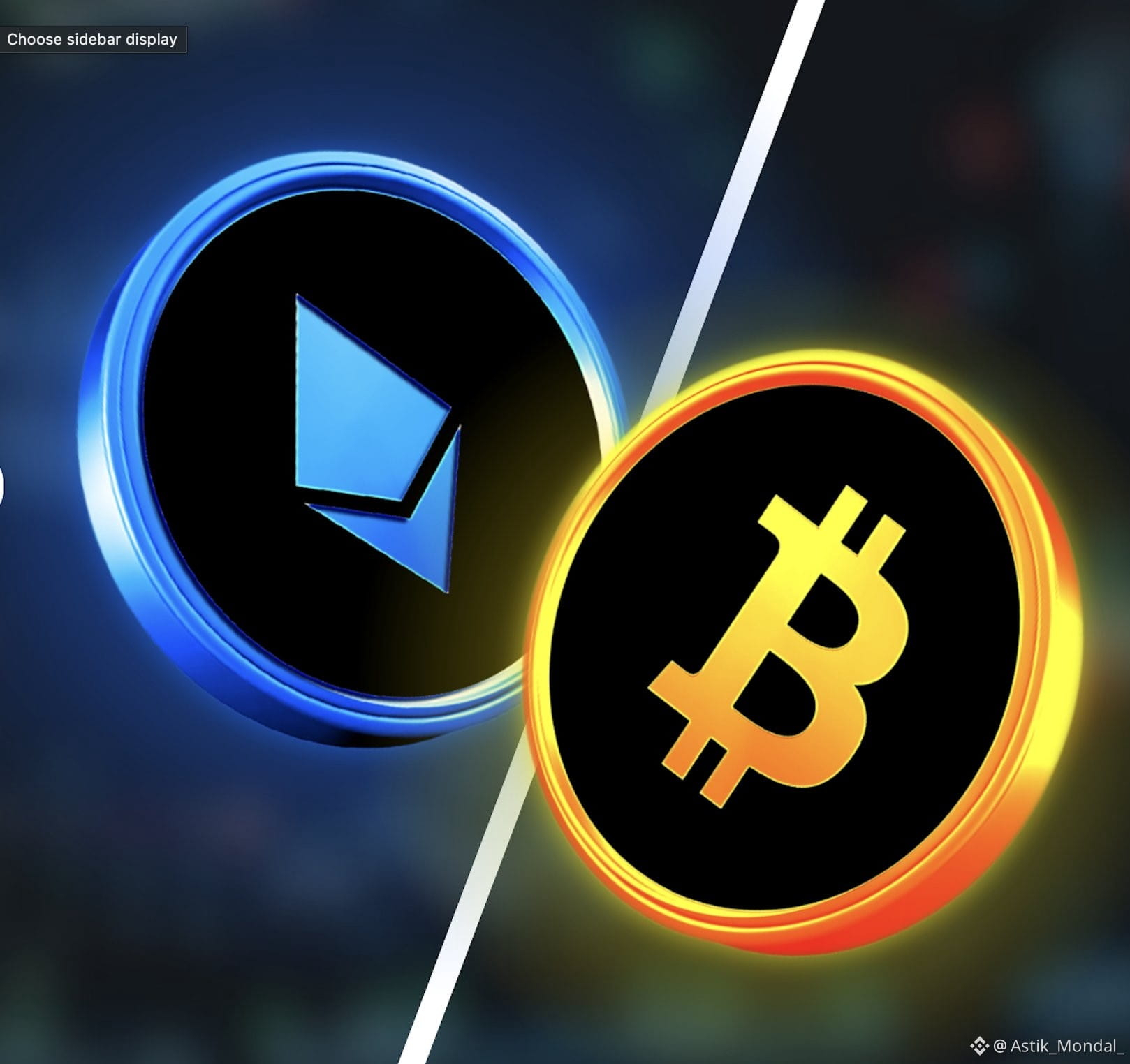
Wall Street just put a $1 trillion price tag on the crypto industry.
Not a crypto influencer. Not an anonymous CT account.
Jefferies. One of the most powerful investment banks on the planet.
And they're not talking about Bitcoin pumping. They're talking about the entire crypto and Web3 ecosystem going public at a scale that dwarfs most industries alive today.
Let the tokenized RWA numbers hit you first.
$1.5 billion in early 2023.
$29 billion by April 2026.
That's not growth. That's a category being born in real time.
Real estate. Private credit. Treasury bonds. Commodities. Art. All of it being put on-chain. All of it becoming liquid. All of it becoming accessible to anyone with a wallet instead of just a Bloomberg terminal.
The TradFi vs DeFi war is over.
TradFi won by joining.
And now the IPO wave begins. The infrastructure plays. The custody solutions. The tokenization platforms. The on-chain compliance layers. Every company that quietly built the rails during the bear market is now lining up to go public.
This is the dot-com IPO era except the internet this time moves at blockchain speed.
The trillion doesn't arrive all at once. It arrives in waves.
The first wave is already loading.
Coinbase was the proof of concept. What comes next is the avalanche.
Five years. $1 trillion. And we're still in year one.
Position accordingly.
#Web3 #CryptoIPO #Tokenization #RWA #BlockchainFinance
Wall Street just put a $1 trillion price tag on the crypto industry.
Not a crypto influencer. Not an anonymous CT account.
Jefferies. One of the most powerful investment banks on the planet.
And they're not talking about Bitcoin pumping. They're talking about the entire crypto and Web3 ecosystem going public at a scale that dwarfs most industries alive today.
Let the tokenized RWA numbers hit you first.
$1.5 billion in early 2023.
$29 billion by April 2026.
That's not growth. That's a category being born in real time.
Real estate. Private credit. Treasury bonds. Commodities. Art. All of it being put on-chain. All of it becoming liquid. All of it becoming accessible to anyone with a wallet instead of just a Bloomberg terminal.
The TradFi vs DeFi war is over.
TradFi won by joining.
And now the IPO wave begins. The infrastructure plays. The custody solutions. The tokenization platforms. The on-chain compliance layers. Every company that quietly built the rails during the bear market is now lining up to go public.
This is the dot-com IPO era except the internet this time moves at blockchain speed.
The trillion doesn't arrive all at once. It arrives in waves.
The first wave is already loading.
Coinbase was the proof of concept. What comes next is the avalanche.
Five years. $1 trillion. And we're still in year one.
Position accordingly.
#Web3 #CryptoIPO #Tokenization #RWA #BlockchainFinance
Not a crypto influencer. Not an anonymous CT account.
Jefferies. One of the most powerful investment banks on the planet.
And they're not talking about Bitcoin pumping. They're talking about the entire crypto and Web3 ecosystem going public at a scale that dwarfs most industries alive today.
Let the tokenized RWA numbers hit you first.
$1.5 billion in early 2023.
$29 billion by April 2026.
That's not growth. That's a category being born in real time.
Real estate. Private credit. Treasury bonds. Commodities. Art. All of it being put on-chain. All of it becoming liquid. All of it becoming accessible to anyone with a wallet instead of just a Bloomberg terminal.
The TradFi vs DeFi war is over.
TradFi won by joining.
And now the IPO wave begins. The infrastructure plays. The custody solutions. The tokenization platforms. The on-chain compliance layers. Every company that quietly built the rails during the bear market is now lining up to go public.
This is the dot-com IPO era except the internet this time moves at blockchain speed.
The trillion doesn't arrive all at once. It arrives in waves.
The first wave is already loading.
Coinbase was the proof of concept. What comes next is the avalanche.
Five years. $1 trillion. And we're still in year one.
Position accordingly.
#Web3 #CryptoIPO #Tokenization #RWA #BlockchainFinance

38
Tokenização de Ativos do Mundo Real (RWA) — Transformando os Mercados Financeiros
A tokenização de ativos reais (RWA) é uma das narrativas mais poderosas de 2026. O que começou como experimento agora mostra crescimento acelerado: o mercado on-chain de RWAs (excluindo stablecoins) já ultrapassa US$ 25-36 bilhões, com expansão de dezenas de porcento apenas em 2026. Categorias líderes incluem private credit e Treasuries tokenizados.60
Especialistas e relatórios institucionais (Coinbase, BCG, 21Shares) projetam que a tokenização pode alcançar entre US$ 10-16 trilhões até 2030, representando uma fração significativa do PIB global. Vantagens incluem liquidez fracionada 24/7, settlement atômico, composabilidade com DeFi e melhores ratios de loan-to-value em comparação com finanças tradicionais.
BlackRock, JPMorgan e outros gigantes já emitem ou suportam produtos tokenizados. Em 2026, o foco está em infraestrutura confiável: precificação transparente, liquidez real, compliance programável e integração com protocolos DeFi para geração de yield.
Para investidores institucionais e de varejo qualificado, os RWAs oferecem acesso a classes de ativos antes ilíquidas (imóveis, crédito privado, commodities) com eficiência blockchain. O ano de 2026 será o de “prova de conceito” em escala — aqueles que dominarem a infraestrutura tokenizada estarão à frente na próxima década de finanças.
#RWA #AtivosReais #BlockchainFinance #BlackRock #Tokenization
Tokenização de Ativos do Mundo Real (RWA) — Transformando os Mercados Financeiros
A tokenização de ativos reais (RWA) é uma das narrativas mais poderosas de 2026. O que começou como experimento agora mostra crescimento acelerado: o mercado on-chain de RWAs (excluindo stablecoins) já ultrapassa US$ 25-36 bilhões, com expansão de dezenas de porcento apenas em 2026. Categorias líderes incluem private credit e Treasuries tokenizados.60
Especialistas e relatórios institucionais (Coinbase, BCG, 21Shares) projetam que a tokenização pode alcançar entre US$ 10-16 trilhões até 2030, representando uma fração significativa do PIB global. Vantagens incluem liquidez fracionada 24/7, settlement atômico, composabilidade com DeFi e melhores ratios de loan-to-value em comparação com finanças tradicionais.
BlackRock, JPMorgan e outros gigantes já emitem ou suportam produtos tokenizados. Em 2026, o foco está em infraestrutura confiável: precificação transparente, liquidez real, compliance programável e integração com protocolos DeFi para geração de yield.
Para investidores institucionais e de varejo qualificado, os RWAs oferecem acesso a classes de ativos antes ilíquidas (imóveis, crédito privado, commodities) com eficiência blockchain. O ano de 2026 será o de “prova de conceito” em escala — aqueles que dominarem a infraestrutura tokenizada estarão à frente na próxima década de finanças.
#RWA #AtivosReais #BlockchainFinance #BlackRock #Tokenization
A tokenização de ativos reais (RWA) é uma das narrativas mais poderosas de 2026. O que começou como experimento agora mostra crescimento acelerado: o mercado on-chain de RWAs (excluindo stablecoins) já ultrapassa US$ 25-36 bilhões, com expansão de dezenas de porcento apenas em 2026. Categorias líderes incluem private credit e Treasuries tokenizados.60
Especialistas e relatórios institucionais (Coinbase, BCG, 21Shares) projetam que a tokenização pode alcançar entre US$ 10-16 trilhões até 2030, representando uma fração significativa do PIB global. Vantagens incluem liquidez fracionada 24/7, settlement atômico, composabilidade com DeFi e melhores ratios de loan-to-value em comparação com finanças tradicionais.
BlackRock, JPMorgan e outros gigantes já emitem ou suportam produtos tokenizados. Em 2026, o foco está em infraestrutura confiável: precificação transparente, liquidez real, compliance programável e integração com protocolos DeFi para geração de yield.
Para investidores institucionais e de varejo qualificado, os RWAs oferecem acesso a classes de ativos antes ilíquidas (imóveis, crédito privado, commodities) com eficiência blockchain. O ano de 2026 será o de “prova de conceito” em escala — aqueles que dominarem a infraestrutura tokenizada estarão à frente na próxima década de finanças.
#RWA #AtivosReais #BlockchainFinance #BlackRock #Tokenization
46
·
--
GAMECHANGER.
Vietnam's Ministry of Finance has just proposed a historic shift in loan collateral, allowing SMEs to use digital assets, virtual assets and intellectual property as security, #cryptocurrencyinnovation #loanmarketrevolution. This move could obliterate traditional barriers for small businesses seeking funding.
The stakes are high, as this proposal could attract a wave of new players to the cryptocurrency market, potentially unlocking trillions in collateral-backed loans, #blockchainfinance. It's an opportunity that could propel the global economic ecosystem forward.
Can the rest of the world keep up? It's time to join the revolution – get ready to harness the full potential of digital assets.
GAMECHANGER.
Vietnam's Ministry of Finance has just proposed a historic shift in loan collateral, allowing SMEs to use digital assets, virtual assets and intellectual property as security, #cryptocurrencyinnovation #loanmarketrevolution. This move could obliterate traditional barriers for small businesses seeking funding.
The stakes are high, as this proposal could attract a wave of new players to the cryptocurrency market, potentially unlocking trillions in collateral-backed loans, #blockchainfinance. It's an opportunity that could propel the global economic ecosystem forward.
Can the rest of the world keep up? It's time to join the revolution – get ready to harness the full potential of digital assets.
Vietnam's Ministry of Finance has just proposed a historic shift in loan collateral, allowing SMEs to use digital assets, virtual assets and intellectual property as security, #cryptocurrencyinnovation #loanmarketrevolution. This move could obliterate traditional barriers for small businesses seeking funding.
The stakes are high, as this proposal could attract a wave of new players to the cryptocurrency market, potentially unlocking trillions in collateral-backed loans, #blockchainfinance. It's an opportunity that could propel the global economic ecosystem forward.
Can the rest of the world keep up? It's time to join the revolution – get ready to harness the full potential of digital assets.
11
·
--
Did you know that tokenization, when done correctly, can unlock significant cost savings while keeping your financial model intact?
Tokenization is essentially breaking down large assets into smaller, tradable units (like breaking a pizza into smaller slices to make them accessible to everyone). This makes it easier to buy, sell, and store them, reducing the costs associated with these activities.
The recent acquisition of Kiavi by Figure is a great example of tokenization in action. Figure plans to move Kiavi assets onto a blockchain-based platform, which will reduce costs and allow them to maintain a 'capital-light' business model. This is similar to how online platforms like Airbnb and Uber reduced costs by using technology to connect buyers and sellers directly, rather than relying on intermediaries.
What's the potential for tokenization in the financial industry, and how might it impact your own investments?
#Tokenization #BlockchainFinance
Did you know that tokenization, when done correctly, can unlock significant cost savings while keeping your financial model intact?
Tokenization is essentially breaking down large assets into smaller, tradable units (like breaking a pizza into smaller slices to make them accessible to everyone). This makes it easier to buy, sell, and store them, reducing the costs associated with these activities.
The recent acquisition of Kiavi by Figure is a great example of tokenization in action. Figure plans to move Kiavi assets onto a blockchain-based platform, which will reduce costs and allow them to maintain a 'capital-light' business model. This is similar to how online platforms like Airbnb and Uber reduced costs by using technology to connect buyers and sellers directly, rather than relying on intermediaries.
What's the potential for tokenization in the financial industry, and how might it impact your own investments?
#Tokenization #BlockchainFinance
Tokenization is essentially breaking down large assets into smaller, tradable units (like breaking a pizza into smaller slices to make them accessible to everyone). This makes it easier to buy, sell, and store them, reducing the costs associated with these activities.
The recent acquisition of Kiavi by Figure is a great example of tokenization in action. Figure plans to move Kiavi assets onto a blockchain-based platform, which will reduce costs and allow them to maintain a 'capital-light' business model. This is similar to how online platforms like Airbnb and Uber reduced costs by using technology to connect buyers and sellers directly, rather than relying on intermediaries.
What's the potential for tokenization in the financial industry, and how might it impact your own investments?
#Tokenization #BlockchainFinance
20
·
--
Imagine a world where the value of a priceless art piece or a luxury yacht can be broken down into tiny, tradable pieces, allowing anyone to invest in a fraction of a multi-million-dollar asset. This isn't a fantasy, but the power of real-world asset tokenization on the blockchain.
#TokenizedAssets #BlockchainFinance
Real-world asset tokenization is a process of converting tangible assets, like art, real estate, or collectibles, into unique digital tokens that can be bought, sold, and traded on blockchain platforms. These tokens represent ownership in the underlying asset, giving investors a new way to participate in the value of the asset without having to buy the whole thing.
Take the example of a luxury yacht. Typically, buying a yacht requires millions of dollars and a significant amount of space in your garage. With tokenization, you can buy a small fraction of a yacht, like 1%, and own a digital token that represents that percentage of the yacht's value. This opens up new opportunities for investors to diversify their portfolios and for creators to raise funds for projects.
So, what can you do with this knowledge? Research and explore the tokenized assets available on platforms like Binance, and join the conversation about the future of tokenized assets.
What do you think the future holds for real-world asset tokenization?
Imagine a world where the value of a priceless art piece or a luxury yacht can be broken down into tiny, tradable pieces, allowing anyone to invest in a fraction of a multi-million-dollar asset. This isn't a fantasy, but the power of real-world asset tokenization on the blockchain.
#TokenizedAssets #BlockchainFinance
Real-world asset tokenization is a process of converting tangible assets, like art, real estate, or collectibles, into unique digital tokens that can be bought, sold, and traded on blockchain platforms. These tokens represent ownership in the underlying asset, giving investors a new way to participate in the value of the asset without having to buy the whole thing.
Take the example of a luxury yacht. Typically, buying a yacht requires millions of dollars and a significant amount of space in your garage. With tokenization, you can buy a small fraction of a yacht, like 1%, and own a digital token that represents that percentage of the yacht's value. This opens up new opportunities for investors to diversify their portfolios and for creators to raise funds for projects.
So, what can you do with this knowledge? Research and explore the tokenized assets available on platforms like Binance, and join the conversation about the future of tokenized assets.
What do you think the future holds for real-world asset tokenization?
#TokenizedAssets #BlockchainFinance
Real-world asset tokenization is a process of converting tangible assets, like art, real estate, or collectibles, into unique digital tokens that can be bought, sold, and traded on blockchain platforms. These tokens represent ownership in the underlying asset, giving investors a new way to participate in the value of the asset without having to buy the whole thing.
Take the example of a luxury yacht. Typically, buying a yacht requires millions of dollars and a significant amount of space in your garage. With tokenization, you can buy a small fraction of a yacht, like 1%, and own a digital token that represents that percentage of the yacht's value. This opens up new opportunities for investors to diversify their portfolios and for creators to raise funds for projects.
So, what can you do with this knowledge? Research and explore the tokenized assets available on platforms like Binance, and join the conversation about the future of tokenized assets.
What do you think the future holds for real-world asset tokenization?
10

·
--
Depository Trust & Clearing Corporation (DTCC) — jo $114 trillion+ securities ka custodian hai — ne apne pehle live production trades process kiye hain tokenized stocks, ETFs aur US Treasurys ke sath. Yeh unka sabse bada tokenization initiative hai, breadth aur participants ke lihaz se.
30+ major institutions is mein shamil hain — JPMorgan, BlackRock, Goldman Sachs, Vanguard, Nasdaq aur NYSE. Trades Hyperledger Besu aur Canton Network dono par settle hue. JPMorgan ne apna Invesco QQQ Trust holdings tokenize kiya, jabke SPDR S&P 500 ETF bhi is event ka hissa bana.
Sabse important baat: yeh koi sandbox test nahi tha — real DTC-held assets, live production environment mein. Full DTCC Tokenization Service October 2026 mein commercially launch hogi.
#DTCCProcessesFirstLiveTokenizedTrades
Yeh TradFi aur blockchain ke convergence ka bohot bada signal hai — jab world ka clearing backbone khud tokenization adopt kare, tab industry-wide confidence badhta hai. 🌐📊
#DTCCChainlinkCollateral #TokenizationRevolution #RWA! #BlockchainFinance
Depository Trust & Clearing Corporation (DTCC) — jo $114 trillion+ securities ka custodian hai — ne apne pehle live production trades process kiye hain tokenized stocks, ETFs aur US Treasurys ke sath. Yeh unka sabse bada tokenization initiative hai, breadth aur participants ke lihaz se.
30+ major institutions is mein shamil hain — JPMorgan, BlackRock, Goldman Sachs, Vanguard, Nasdaq aur NYSE. Trades Hyperledger Besu aur Canton Network dono par settle hue. JPMorgan ne apna Invesco QQQ Trust holdings tokenize kiya, jabke SPDR S&P 500 ETF bhi is event ka hissa bana.
Sabse important baat: yeh koi sandbox test nahi tha — real DTC-held assets, live production environment mein. Full DTCC Tokenization Service October 2026 mein commercially launch hogi.
#DTCCProcessesFirstLiveTokenizedTrades
Yeh TradFi aur blockchain ke convergence ka bohot bada signal hai — jab world ka clearing backbone khud tokenization adopt kare, tab industry-wide confidence badhta hai. 🌐📊
#DTCCChainlinkCollateral #TokenizationRevolution #RWA! #BlockchainFinance
30+ major institutions is mein shamil hain — JPMorgan, BlackRock, Goldman Sachs, Vanguard, Nasdaq aur NYSE. Trades Hyperledger Besu aur Canton Network dono par settle hue. JPMorgan ne apna Invesco QQQ Trust holdings tokenize kiya, jabke SPDR S&P 500 ETF bhi is event ka hissa bana.
Sabse important baat: yeh koi sandbox test nahi tha — real DTC-held assets, live production environment mein. Full DTCC Tokenization Service October 2026 mein commercially launch hogi.
#DTCCProcessesFirstLiveTokenizedTrades
Yeh TradFi aur blockchain ke convergence ka bohot bada signal hai — jab world ka clearing backbone khud tokenization adopt kare, tab industry-wide confidence badhta hai. 🌐📊
#DTCCChainlinkCollateral #TokenizationRevolution #RWA! #BlockchainFinance
92
·
--
BOOM
The flood has started: JPMorgan, Bank of America and more just threw their support behind a game-changing tokenized deposit network that's going live in 2027. This shared system will revolutionize the way payments and corporate finance operate, and the likes of PayPal and Stripe are already on board #cryptocurrencies #blockchainfinance #tokenization
As the largest US banks join forces, expect the adoption of stablecoins and central bank digital currencies to surge, changing the face of the industry forever. Stablecoin firms like Binance's own USDC will benefit from this shift as they push deeper into payments, finance and commerce.
The stakes are high: a smoother, faster, and more secure payment system means more business and more growth, for those who adapt quickly. Will you be ready to ride this wave of crypto innovation?
Don't miss out on the next big thing in crypto, get ready to upgrade your portfolio and be part of the revolution.
BOOM
The flood has started: JPMorgan, Bank of America and more just threw their support behind a game-changing tokenized deposit network that's going live in 2027. This shared system will revolutionize the way payments and corporate finance operate, and the likes of PayPal and Stripe are already on board #cryptocurrencies #blockchainfinance #tokenization
As the largest US banks join forces, expect the adoption of stablecoins and central bank digital currencies to surge, changing the face of the industry forever. Stablecoin firms like Binance's own USDC will benefit from this shift as they push deeper into payments, finance and commerce.
The stakes are high: a smoother, faster, and more secure payment system means more business and more growth, for those who adapt quickly. Will you be ready to ride this wave of crypto innovation?
Don't miss out on the next big thing in crypto, get ready to upgrade your portfolio and be part of the revolution.
The flood has started: JPMorgan, Bank of America and more just threw their support behind a game-changing tokenized deposit network that's going live in 2027. This shared system will revolutionize the way payments and corporate finance operate, and the likes of PayPal and Stripe are already on board #cryptocurrencies #blockchainfinance #tokenization
As the largest US banks join forces, expect the adoption of stablecoins and central bank digital currencies to surge, changing the face of the industry forever. Stablecoin firms like Binance's own USDC will benefit from this shift as they push deeper into payments, finance and commerce.
The stakes are high: a smoother, faster, and more secure payment system means more business and more growth, for those who adapt quickly. Will you be ready to ride this wave of crypto innovation?
Don't miss out on the next big thing in crypto, get ready to upgrade your portfolio and be part of the revolution.
71

·
--
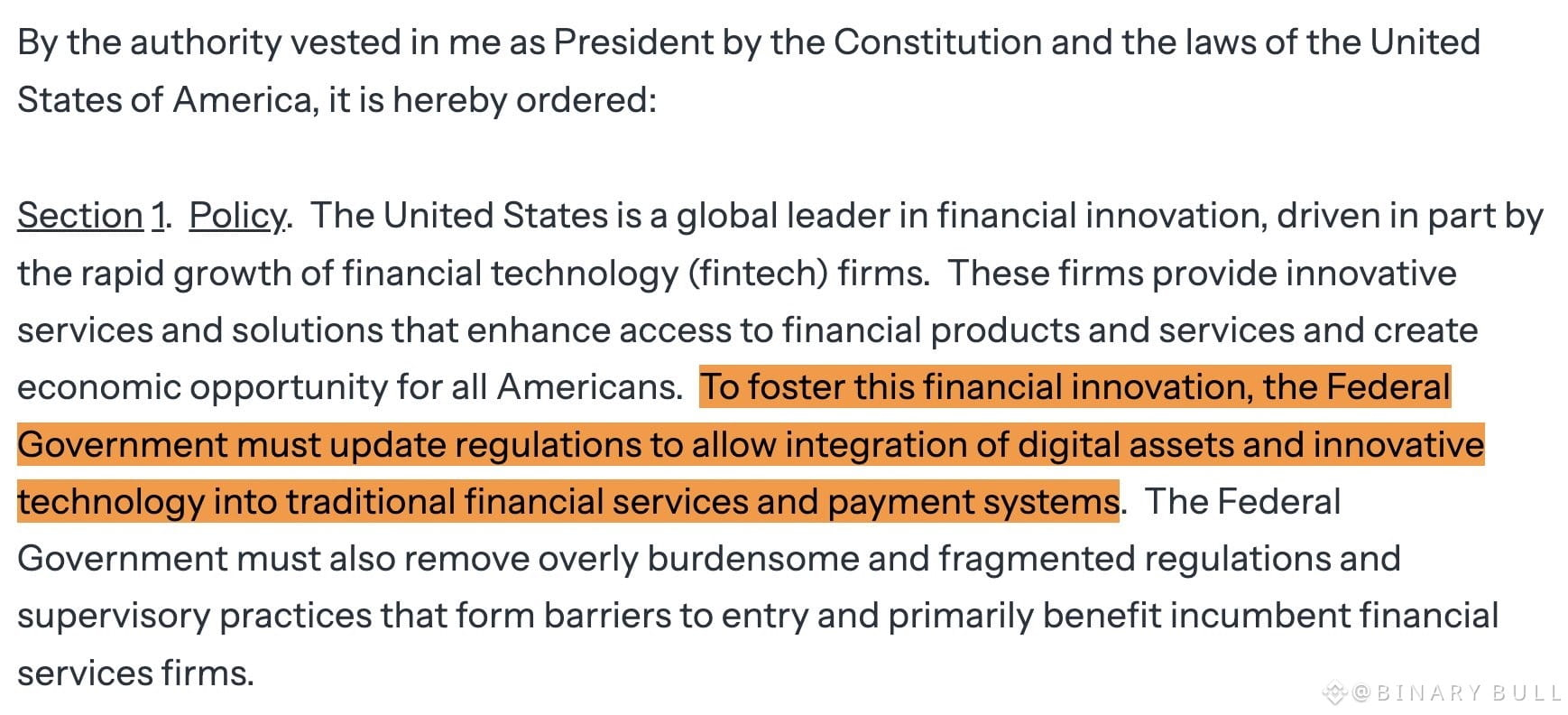
🚨🇺🇸 BREAKING: Trump Signs Executive Order Opening Wall Street’s Door to Digital Assets
The U.S. financial system is officially stepping into a new era.
President Donald Trump has issued a new executive order aimed at integrating digital assets into traditional banking, financial services, and payment networks — a move that could reshape how money moves across the global economy.
WHAT THE ORDER MEANS
This directive pushes U.S. regulators and financial institutions toward a framework where:
Crypto and digital assets can be used alongside traditional banking rails
Banks may expand services involving tokenized assets and blockchain settlement systems
Payment networks could support faster, cross-border digital transactions
Financial institutions are encouraged to explore regulated digital asset integration instead of isolation
WHY THIS IS A BIG DEAL
If implemented at scale, this could:
Blur the line between crypto markets and Wall Street
Increase institutional participation in Bitcoin and digital assets
Accelerate adoption of tokenized dollars, stocks, and real-world assets
Push the U.S. further into competition for global financial infrastructure dominance
MARKET IMPLICATIONS
Traders and analysts are already watching for:
Increased liquidity flows into crypto markets
Potential regulatory clarity boosting institutional confidence
Faster adoption of blockchain-based payment systems
Long-term shift toward a hybrid financial ecosystem (fiat + digital assets)
THE BIG PICTURE
This isn’t just about crypto anymore — it’s about rebuilding financial rails for the digital age.
Traditional banking and blockchain systems are no longer separate conversations… they’re merging.
And if fully executed, this order could mark one of the most significant structural shifts in modern financial history.
BOTTOM LINE:
The financial system is no longer asking “if” digital assets belong inside banking…
It’s now deciding how fast they get integrated.
#CryptoRevolution #DigitalAssets #Bitcoin #FinancialMarkets #BlockchainFinance
🚨🇺🇸 BREAKING: Trump Signs Executive Order Opening Wall Street’s Door to Digital Assets
The U.S. financial system is officially stepping into a new era.
President Donald Trump has issued a new executive order aimed at integrating digital assets into traditional banking, financial services, and payment networks — a move that could reshape how money moves across the global economy.
WHAT THE ORDER MEANS
This directive pushes U.S. regulators and financial institutions toward a framework where:
Crypto and digital assets can be used alongside traditional banking rails
Banks may expand services involving tokenized assets and blockchain settlement systems
Payment networks could support faster, cross-border digital transactions
Financial institutions are encouraged to explore regulated digital asset integration instead of isolation
WHY THIS IS A BIG DEAL
If implemented at scale, this could:
Blur the line between crypto markets and Wall Street
Increase institutional participation in Bitcoin and digital assets
Accelerate adoption of tokenized dollars, stocks, and real-world assets
Push the U.S. further into competition for global financial infrastructure dominance
MARKET IMPLICATIONS
Traders and analysts are already watching for:
Increased liquidity flows into crypto markets
Potential regulatory clarity boosting institutional confidence
Faster adoption of blockchain-based payment systems
Long-term shift toward a hybrid financial ecosystem (fiat + digital assets)
THE BIG PICTURE
This isn’t just about crypto anymore — it’s about rebuilding financial rails for the digital age.
Traditional banking and blockchain systems are no longer separate conversations… they’re merging.
And if fully executed, this order could mark one of the most significant structural shifts in modern financial history.
BOTTOM LINE:
The financial system is no longer asking “if” digital assets belong inside banking…
It’s now deciding how fast they get integrated.
#CryptoRevolution #DigitalAssets #Bitcoin #FinancialMarkets #BlockchainFinance
The U.S. financial system is officially stepping into a new era.
President Donald Trump has issued a new executive order aimed at integrating digital assets into traditional banking, financial services, and payment networks — a move that could reshape how money moves across the global economy.
WHAT THE ORDER MEANS
This directive pushes U.S. regulators and financial institutions toward a framework where:
Crypto and digital assets can be used alongside traditional banking rails
Banks may expand services involving tokenized assets and blockchain settlement systems
Payment networks could support faster, cross-border digital transactions
Financial institutions are encouraged to explore regulated digital asset integration instead of isolation
WHY THIS IS A BIG DEAL
If implemented at scale, this could:
Blur the line between crypto markets and Wall Street
Increase institutional participation in Bitcoin and digital assets
Accelerate adoption of tokenized dollars, stocks, and real-world assets
Push the U.S. further into competition for global financial infrastructure dominance
MARKET IMPLICATIONS
Traders and analysts are already watching for:
Increased liquidity flows into crypto markets
Potential regulatory clarity boosting institutional confidence
Faster adoption of blockchain-based payment systems
Long-term shift toward a hybrid financial ecosystem (fiat + digital assets)
THE BIG PICTURE
This isn’t just about crypto anymore — it’s about rebuilding financial rails for the digital age.
Traditional banking and blockchain systems are no longer separate conversations… they’re merging.
And if fully executed, this order could mark one of the most significant structural shifts in modern financial history.
BOTTOM LINE:
The financial system is no longer asking “if” digital assets belong inside banking…
It’s now deciding how fast they get integrated.
#CryptoRevolution #DigitalAssets #Bitcoin #FinancialMarkets #BlockchainFinance
131
·
--
KABOOM
Breaking: Asia Express reports Japan is all-in on crypto, with Bitcoin-backed mortgages and stablecoin yields taking the scene by storm, while Hyundai tests Avalanche for global stablecoin transfers, with $122M wallet of notorious Thai scammer left in the dust #cryptoasia #cryptosignals
THE PROOF: In Japan, crypto's new gold rush is underway with financial institutions scrambling to offer Bitcoin-backed mortgages and stablecoin yields, capitalizing on crypto's growing stability and market demand for innovative financial solutions #blockchainfinance
THE STAKES: This seismic shift in Japan's financial landscape means we can expect more mainstream adoption, regulatory clarity, and increased liquidity in the coming months, potentially spilling over to other major markets and sending crypto valuations soaring
Are you ready to position yourself for the next big crypto boom? Join the revolution on Binance Square now and start earning while you grow your crypto portfolio
KABOOM
Breaking: Asia Express reports Japan is all-in on crypto, with Bitcoin-backed mortgages and stablecoin yields taking the scene by storm, while Hyundai tests Avalanche for global stablecoin transfers, with $122M wallet of notorious Thai scammer left in the dust #cryptoasia #cryptosignals
THE PROOF: In Japan, crypto's new gold rush is underway with financial institutions scrambling to offer Bitcoin-backed mortgages and stablecoin yields, capitalizing on crypto's growing stability and market demand for innovative financial solutions #blockchainfinance
THE STAKES: This seismic shift in Japan's financial landscape means we can expect more mainstream adoption, regulatory clarity, and increased liquidity in the coming months, potentially spilling over to other major markets and sending crypto valuations soaring
Are you ready to position yourself for the next big crypto boom? Join the revolution on Binance Square now and start earning while you grow your crypto portfolio
Breaking: Asia Express reports Japan is all-in on crypto, with Bitcoin-backed mortgages and stablecoin yields taking the scene by storm, while Hyundai tests Avalanche for global stablecoin transfers, with $122M wallet of notorious Thai scammer left in the dust #cryptoasia #cryptosignals
THE PROOF: In Japan, crypto's new gold rush is underway with financial institutions scrambling to offer Bitcoin-backed mortgages and stablecoin yields, capitalizing on crypto's growing stability and market demand for innovative financial solutions #blockchainfinance
THE STAKES: This seismic shift in Japan's financial landscape means we can expect more mainstream adoption, regulatory clarity, and increased liquidity in the coming months, potentially spilling over to other major markets and sending crypto valuations soaring
Are you ready to position yourself for the next big crypto boom? Join the revolution on Binance Square now and start earning while you grow your crypto portfolio
52

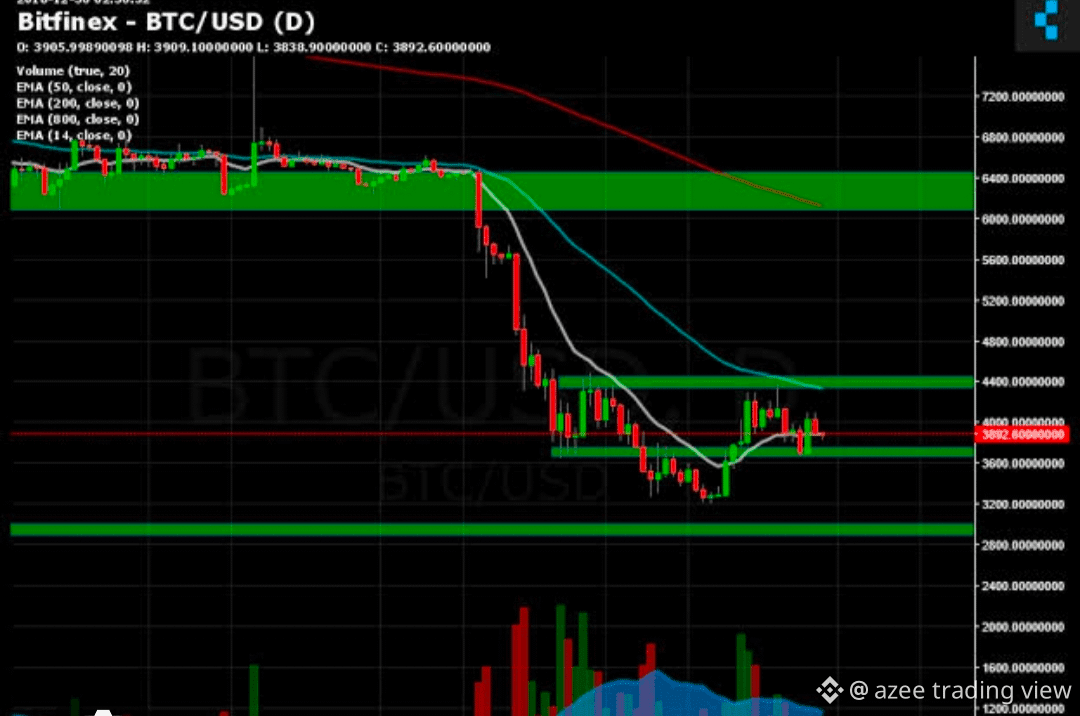
{future}(BTCUSDT)
📊✨ #TradebStocks Explained (Binance bStocks) ✨📊
🟢 What is it?
#TradebStocks refers to Binance bStocks — tokenized versions of selected U.S. stocks available on the blockchain.
Instead of buying traditional shares, users can trade tokenized stock exposure through Binance, making global markets more accessible in a digital way 🌍⚡
---
📈 How it works:
🧩 Each bStock is backed by real underlying shares
🔗 Tokens represent price movement of U.S. stocks
⚡ Traded on blockchain infrastructure
🌐 Availability depends on regional regulations
---
📊 Market vibe:
Stock Price Exposure
📉 📈
\ /
\ /
\ /
⚡
Tokenized Trading Flow
---
🧠 Why people are interested:
💡 Easier access to global stocks
⚡ Fast blockchain-based trading
📱 No traditional brokerage needed (in supported regions)
🌍 Cross-border investment exposure
---
⚠️ Important note:
bStocks are NOT crypto coins and NOT traditional stock ownership.
They are tokenized representations of stock price exposure only.
---
#TradebStocks #TokenizedAssets #BlockchainFinance
💰 Featured ticker vibe:
$BTC 🔥 (market sentiment reference)
---
📌 Quick summary:
bStocks = Stocks reimagined on blockchain → fast, digital, and globally accessible trading exposure.
📊✨ #TradebStocks Explained (Binance bStocks) ✨📊
🟢 What is it?
#TradebStocks refers to Binance bStocks — tokenized versions of selected U.S. stocks available on the blockchain.
Instead of buying traditional shares, users can trade tokenized stock exposure through Binance, making global markets more accessible in a digital way 🌍⚡
---
📈 How it works:
🧩 Each bStock is backed by real underlying shares
🔗 Tokens represent price movement of U.S. stocks
⚡ Traded on blockchain infrastructure
🌐 Availability depends on regional regulations
---
📊 Market vibe:
Stock Price Exposure
📉 📈
\ /
\ /
\ /
⚡
Tokenized Trading Flow
---
🧠 Why people are interested:
💡 Easier access to global stocks
⚡ Fast blockchain-based trading
📱 No traditional brokerage needed (in supported regions)
🌍 Cross-border investment exposure
---
⚠️ Important note:
bStocks are NOT crypto coins and NOT traditional stock ownership.
They are tokenized representations of stock price exposure only.
---
#TradebStocks #TokenizedAssets #BlockchainFinance
💰 Featured ticker vibe:
$BTC 🔥 (market sentiment reference)
---
📌 Quick summary:
bStocks = Stocks reimagined on blockchain → fast, digital, and globally accessible trading exposure.
🟢 What is it?
#TradebStocks refers to Binance bStocks — tokenized versions of selected U.S. stocks available on the blockchain.
Instead of buying traditional shares, users can trade tokenized stock exposure through Binance, making global markets more accessible in a digital way 🌍⚡
---
📈 How it works:
🧩 Each bStock is backed by real underlying shares
🔗 Tokens represent price movement of U.S. stocks
⚡ Traded on blockchain infrastructure
🌐 Availability depends on regional regulations
---
📊 Market vibe:
Stock Price Exposure
📉 📈
\ /
\ /
\ /
⚡
Tokenized Trading Flow
---
🧠 Why people are interested:
💡 Easier access to global stocks
⚡ Fast blockchain-based trading
📱 No traditional brokerage needed (in supported regions)
🌍 Cross-border investment exposure
---
⚠️ Important note:
bStocks are NOT crypto coins and NOT traditional stock ownership.
They are tokenized representations of stock price exposure only.
---
#TradebStocks #TokenizedAssets #BlockchainFinance
💰 Featured ticker vibe:
$BTC 🔥 (market sentiment reference)
---
📌 Quick summary:
bStocks = Stocks reimagined on blockchain → fast, digital, and globally accessible trading exposure.
1
92
·
--
The Future of Trade Financing Just Got a Whole Lot Smarter
Did you know that traditional trading finance is often stuck in a paperwork quagmire, slowing down cash flow and limiting access to credit? Well, change is coming, and it's thanks to blockchain innovation. In a breakthrough test, South Korea's trading giant POSCO International and LG CNS are using the Injective network to tokenize live commercial invoices - essentially putting trading finance on the blockchain!
Tokenization of invoices will make it easier to digitize and verify trade transactions, cutting down paperwork and increasing efficiency. It's like switching from snail mail to email, but for invoices. This test is another sign that blockchain rails are moving deeper into corporate finance, and it has huge potential for businesses and traders.
The takeaway: this is just the beginning of a new era in trade finance, and it's up to us to stay ahead of the curve. What do you think this means for the future of trade financing?
#BlockchainFinance #DigitalTradeInvoicing #FutureOfWork
The Future of Trade Financing Just Got a Whole Lot Smarter
Did you know that traditional trading finance is often stuck in a paperwork quagmire, slowing down cash flow and limiting access to credit? Well, change is coming, and it's thanks to blockchain innovation. In a breakthrough test, South Korea's trading giant POSCO International and LG CNS are using the Injective network to tokenize live commercial invoices - essentially putting trading finance on the blockchain!
Tokenization of invoices will make it easier to digitize and verify trade transactions, cutting down paperwork and increasing efficiency. It's like switching from snail mail to email, but for invoices. This test is another sign that blockchain rails are moving deeper into corporate finance, and it has huge potential for businesses and traders.
The takeaway: this is just the beginning of a new era in trade finance, and it's up to us to stay ahead of the curve. What do you think this means for the future of trade financing?
#BlockchainFinance #DigitalTradeInvoicing #FutureOfWork
Did you know that traditional trading finance is often stuck in a paperwork quagmire, slowing down cash flow and limiting access to credit? Well, change is coming, and it's thanks to blockchain innovation. In a breakthrough test, South Korea's trading giant POSCO International and LG CNS are using the Injective network to tokenize live commercial invoices - essentially putting trading finance on the blockchain!
Tokenization of invoices will make it easier to digitize and verify trade transactions, cutting down paperwork and increasing efficiency. It's like switching from snail mail to email, but for invoices. This test is another sign that blockchain rails are moving deeper into corporate finance, and it has huge potential for businesses and traders.
The takeaway: this is just the beginning of a new era in trade finance, and it's up to us to stay ahead of the curve. What do you think this means for the future of trade financing?
#BlockchainFinance #DigitalTradeInvoicing #FutureOfWork
65

·
--
Article
BNB Chain Surges Ahead of Solana, Capturing $3.62B in 2026 RWA GrowthBNB Chain’s recent leap into the Real‑World Asset (RWA) arena has left many crypto enthusiasts wondering: how did a platform once known mainly for fast, low‑fee transactions become a powerhouse in tangible asset tokenization? The answer lies in its strategic focus on bridging on‑chain value with real‑world economic activity.
The Concept: What Are RWAs and Why Do They Matter?
Real‑World Assets are physical or traditional financial assets—like real estate, commodities, or corporate bonds—represented as digital tokens on a blockchain. Think of it as turning a paper contract into a digital certificate that can be traded 24/7, instantly, and with lower friction. By tokenizing RWAs, blockchains can bring liquidity, transparency, and fractional ownership to markets that were previously inaccessible to everyday investors. #Tokenization #BlockchainFinance
BNB Chain’s RWA Playbook
BNB Chain’s recent performance—$3.62 billion in RWA growth—shows it’s not just a speedster; it’s a strategic mover. The platform has built a robust ecosystem of partners: real estate firms, insurance companies, and even traditional banks are now issuing tokenized assets that settle on BNB Chain’s network. Its lower gas fees and high throughput make it an attractive home for these assets, allowing issuers to reach a global audience without the overhead of legacy systems.
Real‑World Example: Tokenized Real Estate on BNB Chain
Consider a mid‑size apartment complex in Singapore. Traditionally, buying a share of that property would require navigating local regulations, hefty fees, and a long closing period. On BNB Chain, the developer can issue a token that represents a fractional ownership stake. Investors worldwide can buy, sell, or hold these tokens instantly, with transaction costs a fraction of the traditional model. The smart contract automatically distributes rental income to token holders, ensuring transparency and reducing the need for intermediaries. This is the kind of tangible, everyday use case that drives the $3.62 billion figure.
The Takeaway: How You Can Get Involved
If you’re curious about RWAs, start by exploring BNB Chain’s growing list of tokenized assets. Look for projects that align with your interests—whether it’s real estate, art, or even carbon credits—and consider buying a small stake. Remember, the key advantage is liquidity: you can enter or exit positions quickly, unlike traditional markets. Keep an eye on BNB Chain’s upcoming RWA listings; they’re likely to include more diverse asset classes as the ecosystem matures. #InvestSmart
What’s your take on tokenizing real‑world assets? Do you see BNB Chain as the future of RWA tokenization, or do you think another platform might overtake it?
BNB Chain Surges Ahead of Solana, Capturing $3.62B in 2026 RWA Growth
BNB Chain’s recent leap into the Real‑World Asset (RWA) arena has left many crypto enthusiasts wondering: how did a platform once known mainly for fast, low‑fee transactions become a powerhouse in tangible asset tokenization? The answer lies in its strategic focus on bridging on‑chain value with real‑world economic activity.
The Concept: What Are RWAs and Why Do They Matter?
Real‑World Assets are physical or traditional financial assets—like real estate, commodities, or corporate bonds—represented as digital tokens on a blockchain. Think of it as turning a paper contract into a digital certificate that can be traded 24/7, instantly, and with lower friction. By tokenizing RWAs, blockchains can bring liquidity, transparency, and fractional ownership to markets that were previously inaccessible to everyday investors. #Tokenization #BlockchainFinance
BNB Chain’s RWA Playbook
BNB Chain’s recent performance—$3.62 billion in RWA growth—shows it’s not just a speedster; it’s a strategic mover. The platform has built a robust ecosystem of partners: real estate firms, insurance companies, and even traditional banks are now issuing tokenized assets that settle on BNB Chain’s network. Its lower gas fees and high throughput make it an attractive home for these assets, allowing issuers to reach a global audience without the overhead of legacy systems.
Real‑World Example: Tokenized Real Estate on BNB Chain
Consider a mid‑size apartment complex in Singapore. Traditionally, buying a share of that property would require navigating local regulations, hefty fees, and a long closing period. On BNB Chain, the developer can issue a token that represents a fractional ownership stake. Investors worldwide can buy, sell, or hold these tokens instantly, with transaction costs a fraction of the traditional model. The smart contract automatically distributes rental income to token holders, ensuring transparency and reducing the need for intermediaries. This is the kind of tangible, everyday use case that drives the $3.62 billion figure.
The Takeaway: How You Can Get Involved
If you’re curious about RWAs, start by exploring BNB Chain’s growing list of tokenized assets. Look for projects that align with your interests—whether it’s real estate, art, or even carbon credits—and consider buying a small stake. Remember, the key advantage is liquidity: you can enter or exit positions quickly, unlike traditional markets. Keep an eye on BNB Chain’s upcoming RWA listings; they’re likely to include more diverse asset classes as the ecosystem matures. #InvestSmart
What’s your take on tokenizing real‑world assets? Do you see BNB Chain as the future of RWA tokenization, or do you think another platform might overtake it?
The Concept: What Are RWAs and Why Do They Matter?
Real‑World Assets are physical or traditional financial assets—like real estate, commodities, or corporate bonds—represented as digital tokens on a blockchain. Think of it as turning a paper contract into a digital certificate that can be traded 24/7, instantly, and with lower friction. By tokenizing RWAs, blockchains can bring liquidity, transparency, and fractional ownership to markets that were previously inaccessible to everyday investors. #Tokenization #BlockchainFinance
BNB Chain’s RWA Playbook
BNB Chain’s recent performance—$3.62 billion in RWA growth—shows it’s not just a speedster; it’s a strategic mover. The platform has built a robust ecosystem of partners: real estate firms, insurance companies, and even traditional banks are now issuing tokenized assets that settle on BNB Chain’s network. Its lower gas fees and high throughput make it an attractive home for these assets, allowing issuers to reach a global audience without the overhead of legacy systems.
Real‑World Example: Tokenized Real Estate on BNB Chain
Consider a mid‑size apartment complex in Singapore. Traditionally, buying a share of that property would require navigating local regulations, hefty fees, and a long closing period. On BNB Chain, the developer can issue a token that represents a fractional ownership stake. Investors worldwide can buy, sell, or hold these tokens instantly, with transaction costs a fraction of the traditional model. The smart contract automatically distributes rental income to token holders, ensuring transparency and reducing the need for intermediaries. This is the kind of tangible, everyday use case that drives the $3.62 billion figure.
The Takeaway: How You Can Get Involved
If you’re curious about RWAs, start by exploring BNB Chain’s growing list of tokenized assets. Look for projects that align with your interests—whether it’s real estate, art, or even carbon credits—and consider buying a small stake. Remember, the key advantage is liquidity: you can enter or exit positions quickly, unlike traditional markets. Keep an eye on BNB Chain’s upcoming RWA listings; they’re likely to include more diverse asset classes as the ecosystem matures. #InvestSmart
What’s your take on tokenizing real‑world assets? Do you see BNB Chain as the future of RWA tokenization, or do you think another platform might overtake it?
6

The Real-World Asset (RWA) tokenization market reached $28.9 billion in May 2026, marking its 10th consecutive monthly all-time high — a 589% expansion since early 2025. Tokenized U.S. Treasuries lead at $16.2 billion, while stablecoins surpassed $320 billion and tokenized equities exceeded $2.41 billion. BlackRock, Franklin Templeton, and Ondo Finance are aggressively building on-chain infrastructure. Key benefits driving adoption include faster settlement, fractional ownership, and 24/7 trading. Analysts forecast the market could reach $2–30 trillion. Key challenges remain: custody compliance, liquidity, and cross-chain interoperability. Tokenization is quietly reshaping the future of global finance.
#RWATokenization
#BlockchainFinance
#DEFİ
#cryptocommunitynews
The Real-World Asset (RWA) tokenization market reached $28.9 billion in May 2026, marking its 10th consecutive monthly all-time high — a 589% expansion since early 2025. Tokenized U.S. Treasuries lead at $16.2 billion, while stablecoins surpassed $320 billion and tokenized equities exceeded $2.41 billion. BlackRock, Franklin Templeton, and Ondo Finance are aggressively building on-chain infrastructure. Key benefits driving adoption include faster settlement, fractional ownership, and 24/7 trading. Analysts forecast the market could reach $2–30 trillion. Key challenges remain: custody compliance, liquidity, and cross-chain interoperability. Tokenization is quietly reshaping the future of global finance.
#RWATokenization
#BlockchainFinance
#DEFİ
#cryptocommunitynews
#RWATokenization
#BlockchainFinance
#DEFİ
#cryptocommunitynews
150

·
--
Corporate treasuries started with Bitcoin. Now they're asking: what comes next?
The first wave of institutional adoption — MicroStrategy, Tesla, Block — was largely a BTC conviction play. A macro hedge against fiat debasement. Simple thesis, clean execution.
The second wave looks different. CFOs are no longer asking just "should we hold Bitcoin?" They're asking "how do we generate yield on digital reserves?" and "which smart contract platforms will our partners use for settlement?"
This shift matters. Institutional demand is broadening. Ethereum becomes interesting as the programmable settlement base layer. BNB Chain's throughput aligns with enterprise B2B use cases. XRP continues its structured push into cross-border treasury corridors.
The key signal to watch: when a Fortune 500 company announces a multi-asset digital reserve — not just Bitcoin — that's the real inflection point. We're not there yet, but board-level conversations are happening now.
For retail investors, this matters because institutional diversification into L1 assets compresses exchange float. Less supply. More price sensitivity to demand spikes.
Watch the treasury announcements. Follow the CFO narratives. Institutional adoption is no longer a single-token story.
$BTC $ETH
#CryptoInstitutions #DigitalTreasury #CryptoAdoption #BlockchainFinance #BinanceSquare
Corporate treasuries started with Bitcoin. Now they're asking: what comes next?
The first wave of institutional adoption — MicroStrategy, Tesla, Block — was largely a BTC conviction play. A macro hedge against fiat debasement. Simple thesis, clean execution.
The second wave looks different. CFOs are no longer asking just "should we hold Bitcoin?" They're asking "how do we generate yield on digital reserves?" and "which smart contract platforms will our partners use for settlement?"
This shift matters. Institutional demand is broadening. Ethereum becomes interesting as the programmable settlement base layer. BNB Chain's throughput aligns with enterprise B2B use cases. XRP continues its structured push into cross-border treasury corridors.
The key signal to watch: when a Fortune 500 company announces a multi-asset digital reserve — not just Bitcoin — that's the real inflection point. We're not there yet, but board-level conversations are happening now.
For retail investors, this matters because institutional diversification into L1 assets compresses exchange float. Less supply. More price sensitivity to demand spikes.
Watch the treasury announcements. Follow the CFO narratives. Institutional adoption is no longer a single-token story.
$BTC $ETH
#CryptoInstitutions #DigitalTreasury #CryptoAdoption #BlockchainFinance #BinanceSquare
The first wave of institutional adoption — MicroStrategy, Tesla, Block — was largely a BTC conviction play. A macro hedge against fiat debasement. Simple thesis, clean execution.
The second wave looks different. CFOs are no longer asking just "should we hold Bitcoin?" They're asking "how do we generate yield on digital reserves?" and "which smart contract platforms will our partners use for settlement?"
This shift matters. Institutional demand is broadening. Ethereum becomes interesting as the programmable settlement base layer. BNB Chain's throughput aligns with enterprise B2B use cases. XRP continues its structured push into cross-border treasury corridors.
The key signal to watch: when a Fortune 500 company announces a multi-asset digital reserve — not just Bitcoin — that's the real inflection point. We're not there yet, but board-level conversations are happening now.
For retail investors, this matters because institutional diversification into L1 assets compresses exchange float. Less supply. More price sensitivity to demand spikes.
Watch the treasury announcements. Follow the CFO narratives. Institutional adoption is no longer a single-token story.
$BTC $ETH
#CryptoInstitutions #DigitalTreasury #CryptoAdoption #BlockchainFinance #BinanceSquare
147

·
--
$BTC
{future}(BTCUSDT)
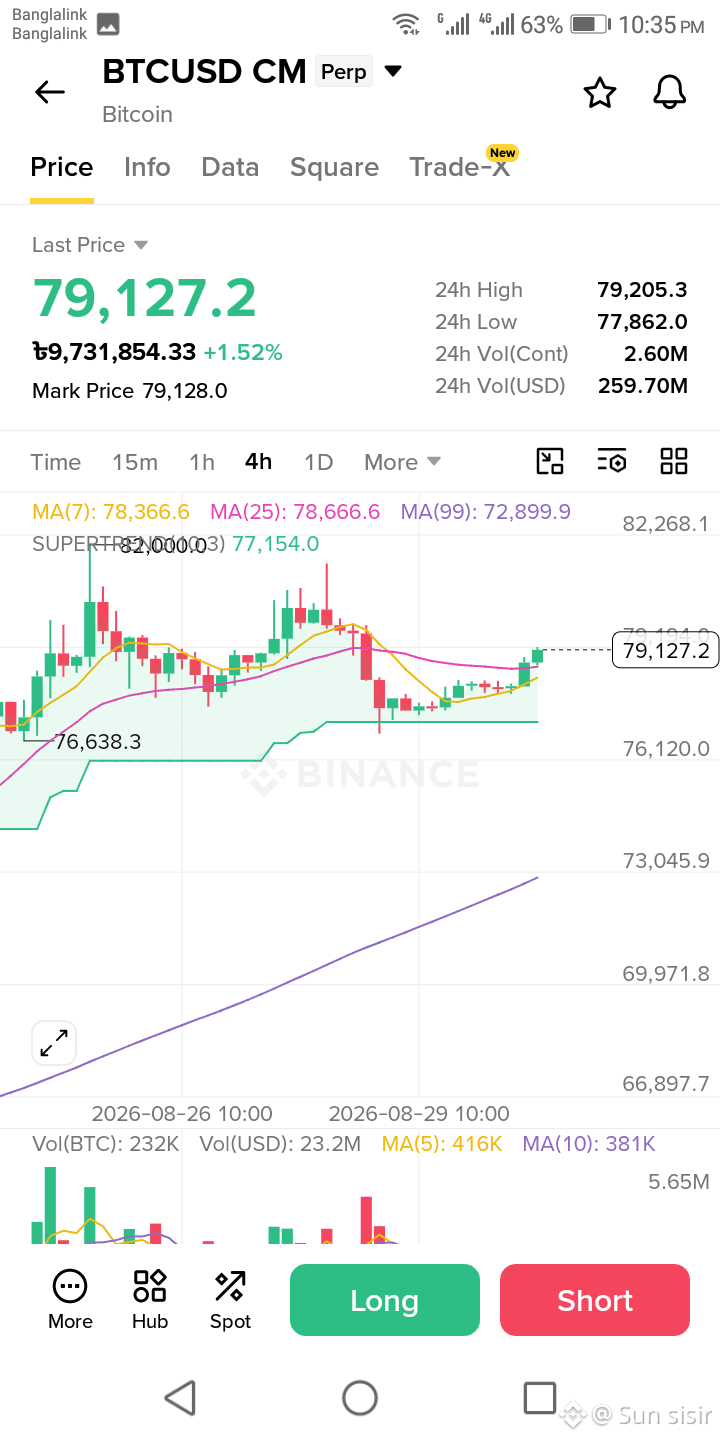
🚀🚀Bitcoin Treasury Companies Undergo Massive Structural Shifts
Recent financial analyses highlight that major corporate Bitcoin treasury holders have experienced a notable valuation contraction, prompting some firms to rebalance portfolios and adapt their debt strategies.
Industry Shift:
While pioneer holders like Strategy maintain massive long-term reserves, the corporate treasury landscape is experiencing a healthy rationalization phase.
#CorporateTreasury #strategy #BlockchainFinance #MarketDynamics #BTC
$BTC
🚀🚀Bitcoin Treasury Companies Undergo Massive Structural Shifts
Recent financial analyses highlight that major corporate Bitcoin treasury holders have experienced a notable valuation contraction, prompting some firms to rebalance portfolios and adapt their debt strategies.
Industry Shift:
While pioneer holders like Strategy maintain massive long-term reserves, the corporate treasury landscape is experiencing a healthy rationalization phase.
#CorporateTreasury #strategy #BlockchainFinance #MarketDynamics #BTC
🚀🚀Bitcoin Treasury Companies Undergo Massive Structural Shifts
Recent financial analyses highlight that major corporate Bitcoin treasury holders have experienced a notable valuation contraction, prompting some firms to rebalance portfolios and adapt their debt strategies.
Industry Shift:
While pioneer holders like Strategy maintain massive long-term reserves, the corporate treasury landscape is experiencing a healthy rationalization phase.
#CorporateTreasury #strategy #BlockchainFinance #MarketDynamics #BTC
51
·
--
Stablecoin rails are not the future of payments — they are already the present, and most people still have not noticed.
Visa processed 15 trillion in volume last year. The entire stablecoin network settled more than 27 trillion — nearly double. Not in 2030. Last year.
The reason this does not feel real is because stablecoins are mostly invisible infrastructure. Businesses do not announce they switched to USDC the way they once announced they accept Bitcoin. It happens quietly, at the settlement layer, where finance actually lives.
What is changing right now:
- Cross-border B2B payments settling in seconds instead of 3-5 days
- Remittance corridors in Latin America and Southeast Asia being replaced entirely
- Payroll for gig workers in emerging markets flowing on-chain with zero conversion delay
Regulatory clarity advancing in the US Senate is not just a win on paper — it is the permission structure that lets banks, fintechs, and Fortune 500 treasury teams build on this infrastructure without legal ambiguity.
The narrative war over which L1 wins is happening while the real adoption story is the boring one: stablecoins as the TCP/IP of money.
$BTC provides the reserve backdrop. $ETH and $SOL are the settlement rails being built on. The infrastructure is here. The volume is real. The window is open.
#Stablecoins #CryptoPayments #DeFi #BlockchainFinance #BinanceSquare
Stablecoin rails are not the future of payments — they are already the present, and most people still have not noticed.
Visa processed 15 trillion in volume last year. The entire stablecoin network settled more than 27 trillion — nearly double. Not in 2030. Last year.
The reason this does not feel real is because stablecoins are mostly invisible infrastructure. Businesses do not announce they switched to USDC the way they once announced they accept Bitcoin. It happens quietly, at the settlement layer, where finance actually lives.
What is changing right now:
- Cross-border B2B payments settling in seconds instead of 3-5 days
- Remittance corridors in Latin America and Southeast Asia being replaced entirely
- Payroll for gig workers in emerging markets flowing on-chain with zero conversion delay
Regulatory clarity advancing in the US Senate is not just a win on paper — it is the permission structure that lets banks, fintechs, and Fortune 500 treasury teams build on this infrastructure without legal ambiguity.
The narrative war over which L1 wins is happening while the real adoption story is the boring one: stablecoins as the TCP/IP of money.
$BTC provides the reserve backdrop. $ETH and $SOL are the settlement rails being built on. The infrastructure is here. The volume is real. The window is open.
#Stablecoins #CryptoPayments #DeFi #BlockchainFinance #BinanceSquare
Visa processed 15 trillion in volume last year. The entire stablecoin network settled more than 27 trillion — nearly double. Not in 2030. Last year.
The reason this does not feel real is because stablecoins are mostly invisible infrastructure. Businesses do not announce they switched to USDC the way they once announced they accept Bitcoin. It happens quietly, at the settlement layer, where finance actually lives.
What is changing right now:
- Cross-border B2B payments settling in seconds instead of 3-5 days
- Remittance corridors in Latin America and Southeast Asia being replaced entirely
- Payroll for gig workers in emerging markets flowing on-chain with zero conversion delay
Regulatory clarity advancing in the US Senate is not just a win on paper — it is the permission structure that lets banks, fintechs, and Fortune 500 treasury teams build on this infrastructure without legal ambiguity.
The narrative war over which L1 wins is happening while the real adoption story is the boring one: stablecoins as the TCP/IP of money.
$BTC provides the reserve backdrop. $ETH and $SOL are the settlement rails being built on. The infrastructure is here. The volume is real. The window is open.
#Stablecoins #CryptoPayments #DeFi #BlockchainFinance #BinanceSquare
35

·
--
🚨 90% of Crypto People Missed What This News Really Means.
Top Japanese financial giants Mizuho & Nomura, backed by Japan's official Financial Services Agency (FSA), are running a live blockchain experiment on the Canton Network — testing digital government bond collateral management with the goal of 24/7 real-time cross-border transactions.
Traditional finance has been talking about blockchain for 10 years.
This time they mean business. 🏦
What this means SHORT TERM:
🔥 Institutional narratives heat up again
📈 Public chains & RWA sector see fresh momentum
🧠 Smart money is already quietly positioning
What this means LONG TERM:
💥 Breaks the myth that "government bonds will never touch blockchain"
🌍 Trillions in global collateral assets are now up for efficiency transformation
🚪 The floodgates have officially opened
The real opportunity most retail traders are missing:
They're watching for the pump.
They're not seeing the irreversible merge of traditional finance and crypto.
Global cross-border collateral idle costs exceed hundreds of billions annually.
Blockchain isn't creating a narrative here.
It's solving a real problem.
Japan's FSA didn't just talk about it.
They funded it. They backed it. They made it official. 💪
The question is — are you paying attention?
Is this a true bull catalyst or just new narrative hype? Drop your thoughts below 👇
#RWA #BlockchainFinance #CryptoNews #Bitcoin #Ethereum
🚨 90% of Crypto People Missed What This News Really Means.
Top Japanese financial giants Mizuho & Nomura, backed by Japan's official Financial Services Agency (FSA), are running a live blockchain experiment on the Canton Network — testing digital government bond collateral management with the goal of 24/7 real-time cross-border transactions.
Traditional finance has been talking about blockchain for 10 years.
This time they mean business. 🏦
What this means SHORT TERM:
🔥 Institutional narratives heat up again
📈 Public chains & RWA sector see fresh momentum
🧠 Smart money is already quietly positioning
What this means LONG TERM:
💥 Breaks the myth that "government bonds will never touch blockchain"
🌍 Trillions in global collateral assets are now up for efficiency transformation
🚪 The floodgates have officially opened
The real opportunity most retail traders are missing:
They're watching for the pump.
They're not seeing the irreversible merge of traditional finance and crypto.
Global cross-border collateral idle costs exceed hundreds of billions annually.
Blockchain isn't creating a narrative here.
It's solving a real problem.
Japan's FSA didn't just talk about it.
They funded it. They backed it. They made it official. 💪
The question is — are you paying attention?
Is this a true bull catalyst or just new narrative hype? Drop your thoughts below 👇
#RWA #BlockchainFinance #CryptoNews #Bitcoin #Ethereum
Top Japanese financial giants Mizuho & Nomura, backed by Japan's official Financial Services Agency (FSA), are running a live blockchain experiment on the Canton Network — testing digital government bond collateral management with the goal of 24/7 real-time cross-border transactions.
Traditional finance has been talking about blockchain for 10 years.
This time they mean business. 🏦
What this means SHORT TERM:
🔥 Institutional narratives heat up again
📈 Public chains & RWA sector see fresh momentum
🧠 Smart money is already quietly positioning
What this means LONG TERM:
💥 Breaks the myth that "government bonds will never touch blockchain"
🌍 Trillions in global collateral assets are now up for efficiency transformation
🚪 The floodgates have officially opened
The real opportunity most retail traders are missing:
They're watching for the pump.
They're not seeing the irreversible merge of traditional finance and crypto.
Global cross-border collateral idle costs exceed hundreds of billions annually.
Blockchain isn't creating a narrative here.
It's solving a real problem.
Japan's FSA didn't just talk about it.
They funded it. They backed it. They made it official. 💪
The question is — are you paying attention?
Is this a true bull catalyst or just new narrative hype? Drop your thoughts below 👇
#RWA #BlockchainFinance #CryptoNews #Bitcoin #Ethereum
3
2
131

·
--
$XRP The market is quietly sending a message: assets tied to global payment infrastructure are beginning to attract serious attention again.
$XRP continues benefiting from strengthening cross-border settlement narratives as traditional financial systems evolve. Unlike speculative rallies driven purely by hype, this move is supported by improving structural demand and sustained buying pressure.
Technically, XRP is maintaining support above the critical $1.10 multi-month base. Expanding green volume bars indicate active participation from buyers, while the broader structure continues favoring higher highs and higher lows.
Trade Setup:
• Entry Zone: $1.12–$1.17
• Primary Target: $1.22
• Secondary Target: $1.35
• Extended Target: $1.50
• Stop Loss: $1.04
• Risk-to-Reward: Approximately 1:3.8
• Bullish Invalidation: Daily close below $0.98
The most important level remains $1.22. A decisive breakout above resistance could trigger momentum expansion and attract additional capital seeking exposure to payment-focused blockchain infrastructure.
Traders should monitor volume confirmation closely. Strong breakouts without volume often fail, but expanding participation significantly increases the probability of continuation.
As long as XRP remains above its established base and buyers continue defending support, the trend structure remains firmly constructive.
#XRP #CrossBorderPayments #BlockchainFinance #DigitalPayments #LiquidityFlows
{future}(XRPUSDT)
$XRP The market is quietly sending a message: assets tied to global payment infrastructure are beginning to attract serious attention again.
$XRP continues benefiting from strengthening cross-border settlement narratives as traditional financial systems evolve. Unlike speculative rallies driven purely by hype, this move is supported by improving structural demand and sustained buying pressure.
Technically, XRP is maintaining support above the critical $1.10 multi-month base. Expanding green volume bars indicate active participation from buyers, while the broader structure continues favoring higher highs and higher lows.
Trade Setup:
• Entry Zone: $1.12–$1.17
• Primary Target: $1.22
• Secondary Target: $1.35
• Extended Target: $1.50
• Stop Loss: $1.04
• Risk-to-Reward: Approximately 1:3.8
• Bullish Invalidation: Daily close below $0.98
The most important level remains $1.22. A decisive breakout above resistance could trigger momentum expansion and attract additional capital seeking exposure to payment-focused blockchain infrastructure.
Traders should monitor volume confirmation closely. Strong breakouts without volume often fail, but expanding participation significantly increases the probability of continuation.
As long as XRP remains above its established base and buyers continue defending support, the trend structure remains firmly constructive.
#XRP #CrossBorderPayments #BlockchainFinance #DigitalPayments #LiquidityFlows
$XRP continues benefiting from strengthening cross-border settlement narratives as traditional financial systems evolve. Unlike speculative rallies driven purely by hype, this move is supported by improving structural demand and sustained buying pressure.
Technically, XRP is maintaining support above the critical $1.10 multi-month base. Expanding green volume bars indicate active participation from buyers, while the broader structure continues favoring higher highs and higher lows.
Trade Setup:
• Entry Zone: $1.12–$1.17
• Primary Target: $1.22
• Secondary Target: $1.35
• Extended Target: $1.50
• Stop Loss: $1.04
• Risk-to-Reward: Approximately 1:3.8
• Bullish Invalidation: Daily close below $0.98
The most important level remains $1.22. A decisive breakout above resistance could trigger momentum expansion and attract additional capital seeking exposure to payment-focused blockchain infrastructure.
Traders should monitor volume confirmation closely. Strong breakouts without volume often fail, but expanding participation significantly increases the probability of continuation.
As long as XRP remains above its established base and buyers continue defending support, the trend structure remains firmly constructive.
#XRP #CrossBorderPayments #BlockchainFinance #DigitalPayments #LiquidityFlows
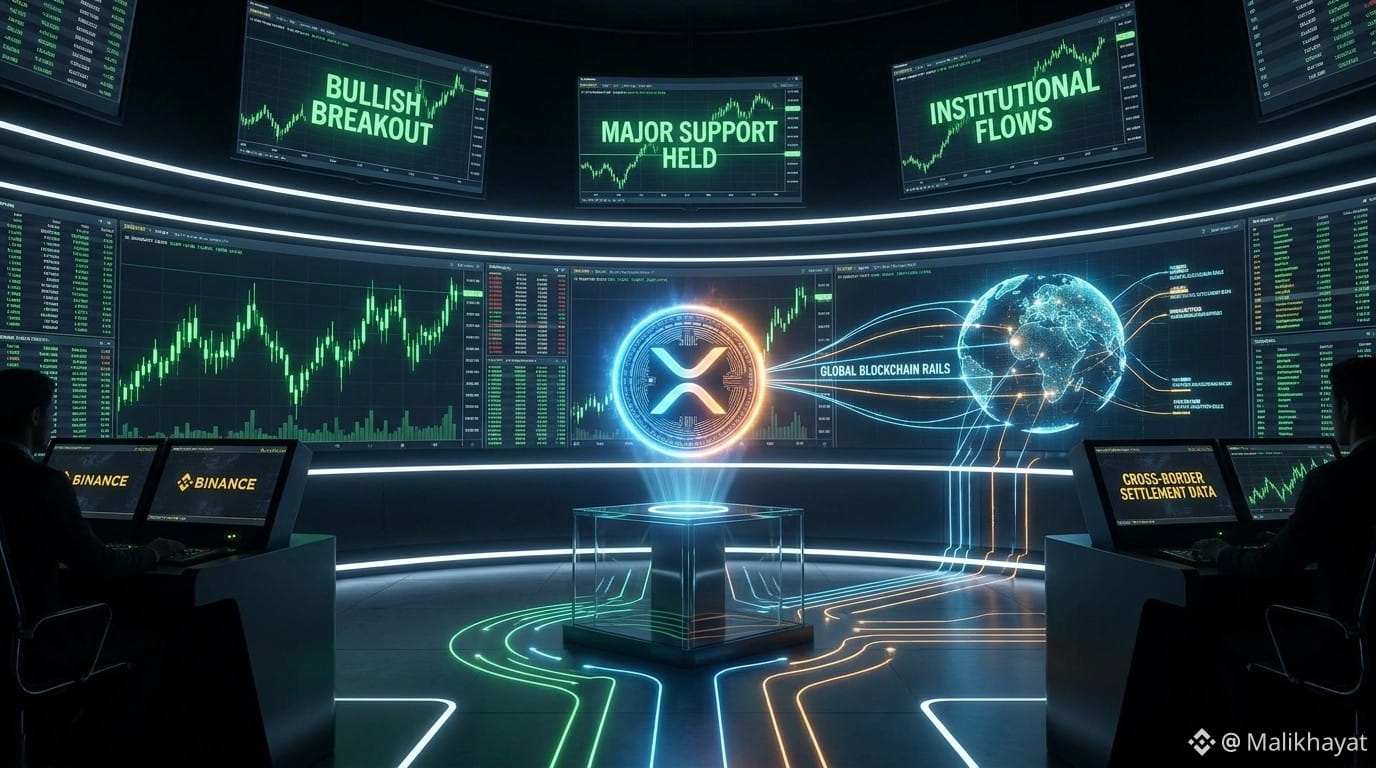
34
Log in to explore more content
Join global crypto users on Binance Square
⚡️ Get latest and useful information about crypto.
💬 Trusted by the world’s largest crypto exchange.
👍 Discover real insights from verified creators.
Email / Phone number
Trending Topics
1
#FedRateWatch
1.6M views
7,157 Discussing
2
#FedHikes25BpsUSStocksClose
580 views
29 Discussing
3
#CryptoVCFundingRebounds$5.6BInQ2
334 views
9 Discussing
4
#ZcashRises6%
84,099 views
823 Discussing
5
#XRPSinks10%
53,066 views
546 Discussing
6
#BitcoinETFsShed$450M
9,811 views
111 Discussing
7
#CircleOpensArcMainnet
24,149 views
345 Discussing
8
#ZcashHoldersBackNU7Upgrade
36,981 views
506 Discussing
9
#MSTRTradingVolumeSurpassesMorganStanley
33,301 views
648 Discussing
10
#BitcoinFalls4%
66,258 views
1,007 Discussing