
#slippage
slippage
16,266 views
90 Discussing
Hot
Latest

📉 ¿Por qué a veces el precio promedio al que se ejecuta una orden en Binance Spot es diferente del precio que viste antes de comprar?
Ese fenómeno se conoce como deslizamiento (slippage): ocurre cuando el precio efectivo de ejecución difiere del esperado, habitualmente por la liquidez disponible en el libro de órdenes frente al tamaño de la orden o por movimientos rápidos del mercado.
📌 Ejemplo práctico en BTC/USDT
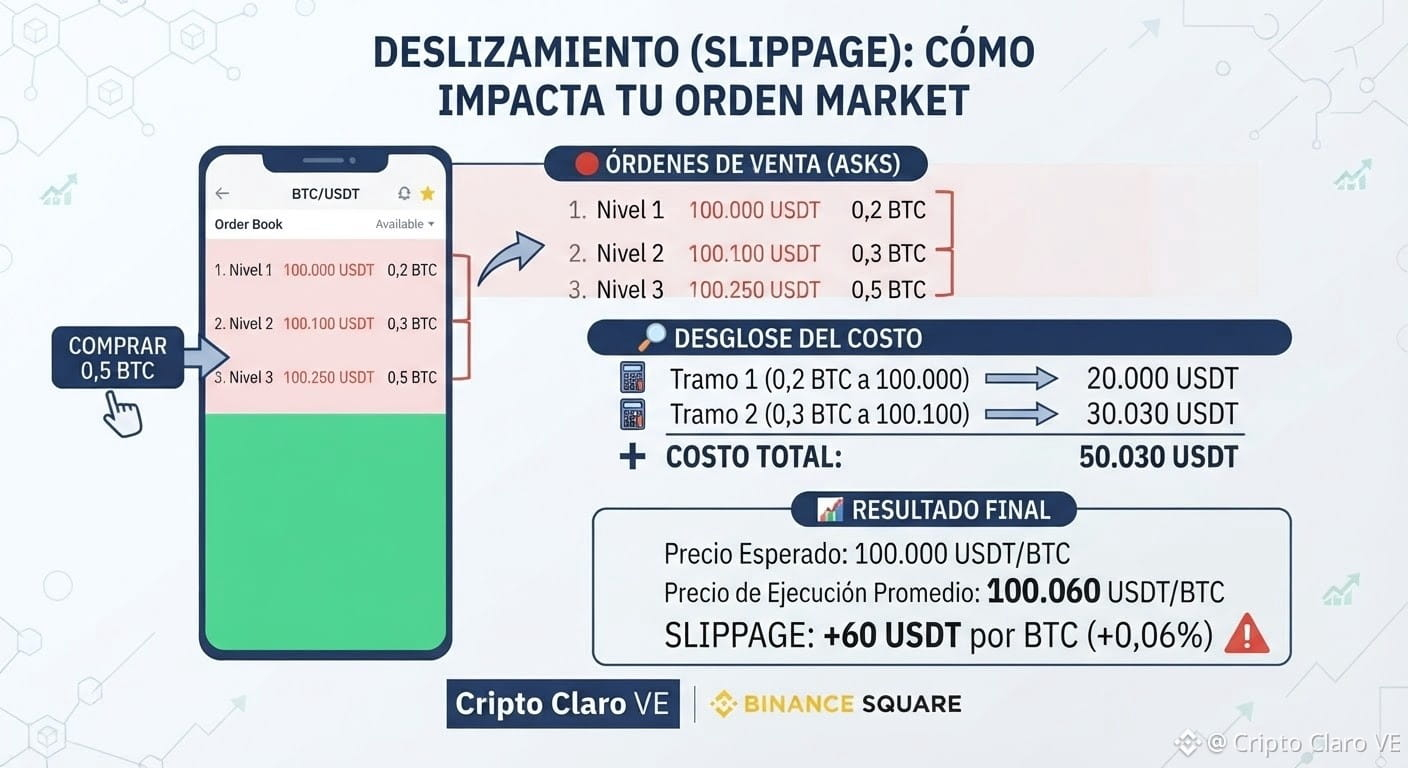
Imagina que compras 0,5 BTC mediante una orden Market y el libro de órdenes muestra estas ofertas de venta (Asks):
🔴 Nivel 1: 100.000 USDT → 0,2 BTC disponibles
🔴 Nivel 2: 100.100 USDT → 0,3 BTC disponibles
🔴 Nivel 3: 100.250 USDT → 0,5 BTC disponibles
Al no haber 0,5 BTC en el primer nivel, tu orden toma los 0,3 BTC siguientes a 100.100 USDT:
Tramo 1: 0,2 BTC × 100.000 USDT = 20.000 USDT
Tramo 2: 0,3 BTC × 100.100 USDT = 30.030 USDT
Costo total: 20.000 + 30.030 = 50.030 USDT
Precio promedio: 50.030 ÷ 0,5 = 100.060 USDT por BTC
💡 ¿Cuánto fue el deslizamiento?
Partiendo de un mejor Ask inicial de 100.000 USDT hasta un promedio de 100.060 USDT, la diferencia es de 60 USDT por BTC (≈ 0,06%), lo que representa 30 USDT adicionales frente a comprar los 0,5 BTC a 100.000 USDT (sin incluir comisiones).
⚠️ ¿Cuándo suele ser más notorio?
En órdenes Market grandes respecto a la profundidad disponible.
En pares con menor liquidez o spreads más amplios.
Durante noticias relevantes o picos de alta volatilidad.
Cuando las órdenes del libro cambian o se retiran rápidamente.
🛠️ ¿Cómo gestionarlo en la práctica?
1️⃣ Revisa el libro de órdenes y la profundidad antes de enviar órdenes grandes.
2️⃣ Valora usar órdenes Limit si buscas controlar el precio máximo de compra o mínimo de venta, sabiendo que pueden quedar pendientes o ejecutarse parcialmente.
3️⃣ Considera dividir operaciones grandes en tramos, teniendo en cuenta que no garantiza menores costos ni elimina el riesgo de movimiento del precio.
#CriptoClaroVE #BinanceSquare #Slippage #liquidez #BinanceSpot
112

·
--
HeyElsa defaults to 5% slippage for swaps involving ELSA, versus 2% for most swaps. Check the setting before signing a sale you already planned.
As of 2026-11-23 17:07 UTC+8, Binance's ELSAUSDT perpetual was up 29.2% over 24 hours. That rally does not tell you what an on-chain sale will return.
[HeyElsa's swap guide](https://www.heyelsa.ai/swap-and-bridge) lets users request a different limit. Choose the maximum quote deterioration you can accept; review quoted output, price impact and fees separately. Slippage tolerance permits a worse fill within the limit; it does not forecast your loss.
Under [HeyElsa's stated safeguards](https://www.heyelsa.ai/safety), a move beyond the limit causes refusal. If a tighter setting prevents the sale, reassess the quote before accepting a wider tolerance.
$ELSA #DeFi #Slippage
1
253

BINANCE CRYPTO LEARNING SERIES — PART 128
🔥 Slippage: Aapki Trade Expected Price Se Different Kyun Execute Hoti Hai?
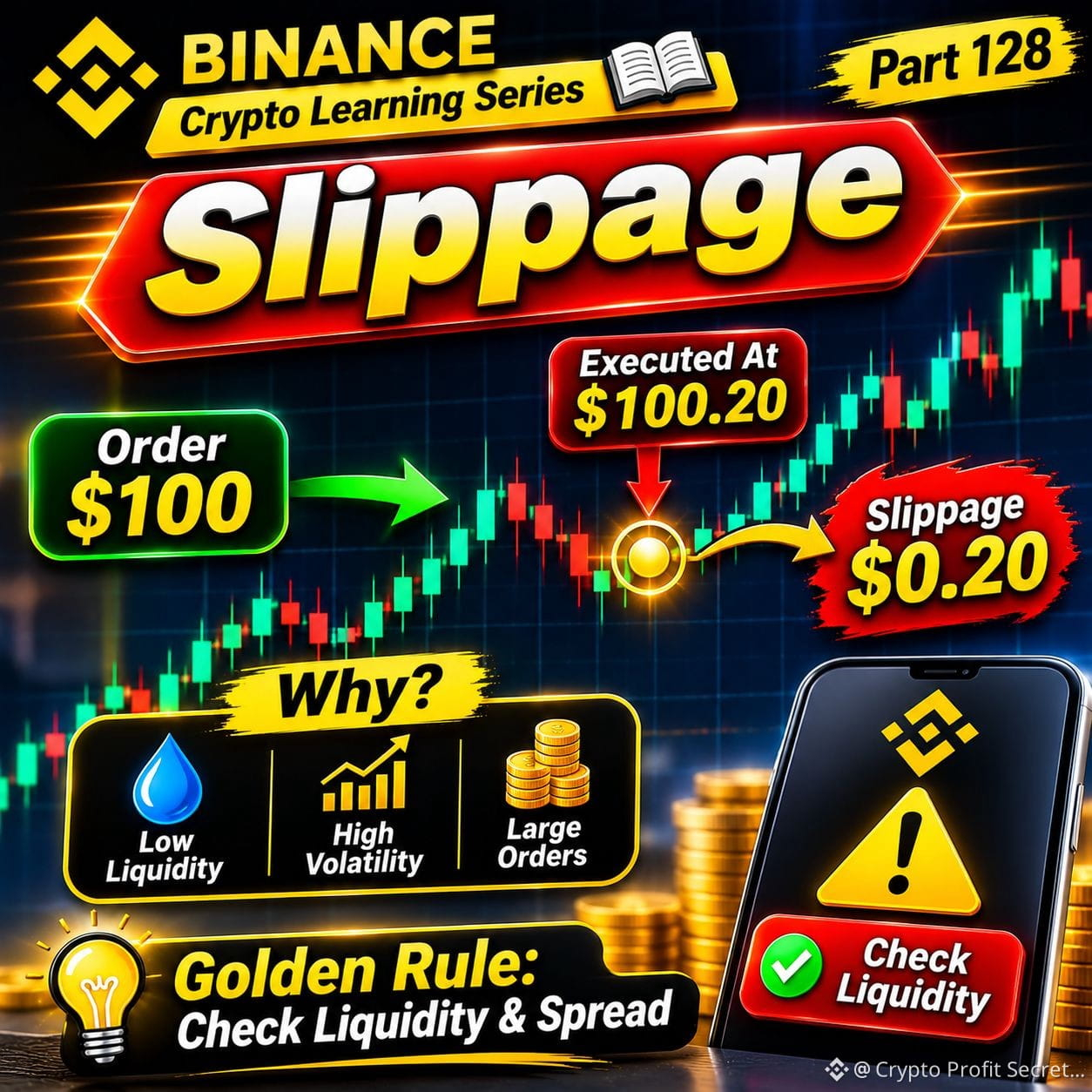
Aapne $100 par Buy Order lagaya, lekin trade $100.20 par execute hui. Is difference ko Slippage kehte hain.
📊 Slippage Kyun Hoti Hai?
- Low Liquidity
- High Market Volatility
- Large Market Orders
⚠️ Slippage aapke expected profit ko kam aur trading cost ko barha sakti hai.
🧠 Golden Rule: Trade se pehle Liquidity aur Bid-Ask Spread check karein.
Kya aapki kisi trade mein Slippage hui hai?
#BinanceSquare #Slippage #cryptotrading #tradingeducation #BTC $BTC
{spot}(BTCUSDT)
BINANCE CRYPTO LEARNING SERIES — PART 128
🔥 Slippage: Aapki Trade Expected Price Se Different Kyun Execute Hoti Hai?
Aapne $100 par Buy Order lagaya, lekin trade $100.20 par execute hui. Is difference ko Slippage kehte hain.
📊 Slippage Kyun Hoti Hai?
- Low Liquidity
- High Market Volatility
- Large Market Orders
⚠️ Slippage aapke expected profit ko kam aur trading cost ko barha sakti hai.
🧠 Golden Rule: Trade se pehle Liquidity aur Bid-Ask Spread check karein.
Kya aapki kisi trade mein Slippage hui hai?
#BinanceSquare #Slippage #cryptotrading #tradingeducation #BTC $BTC
1
73

·
--
📊 CRYPTO KNOWLEDGE ... SLIPPAGE ..
PK Night 17 NOV 2026
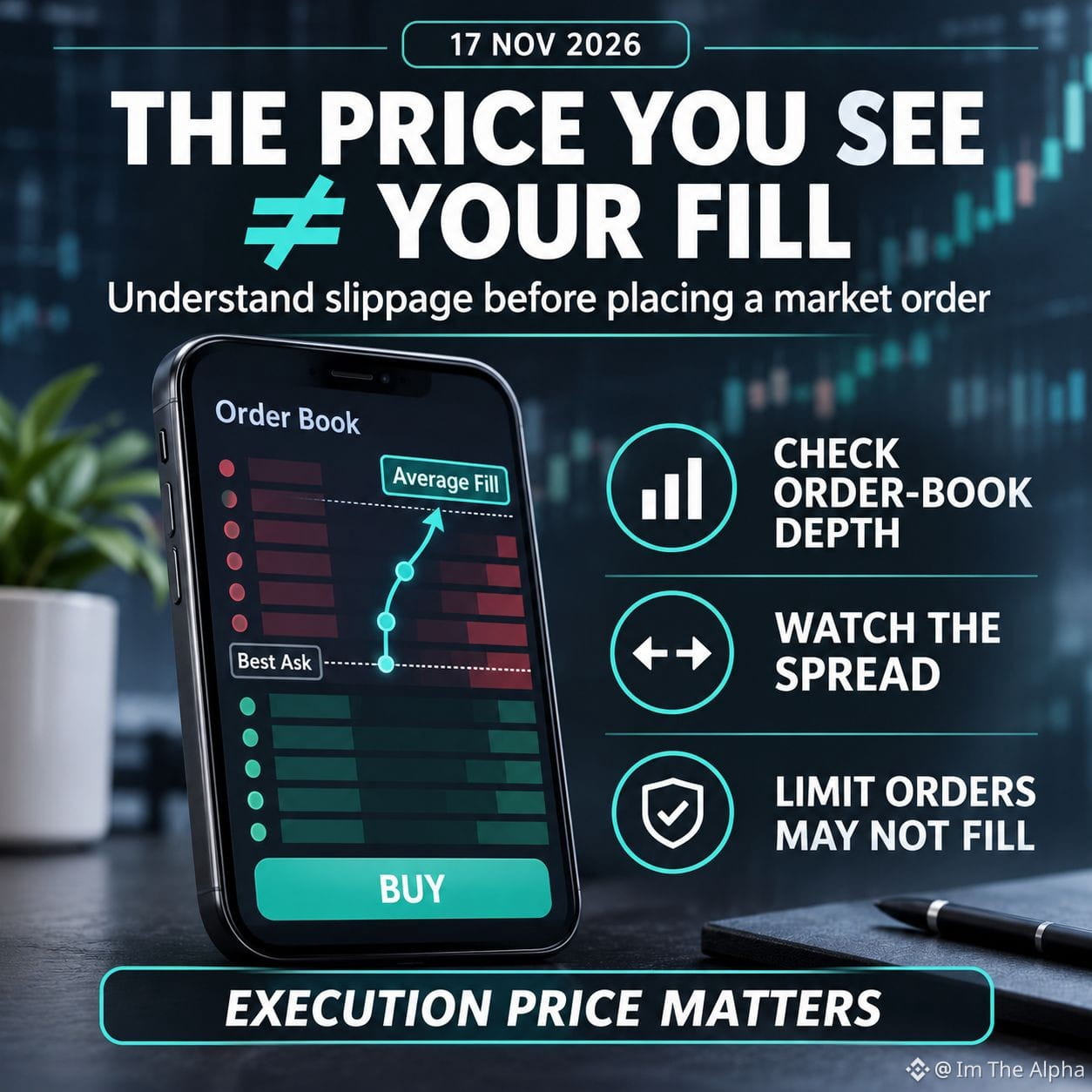
⚠️ THE PRICE YOU SEE ≠ YOUR FILL PRICE!
Ever bought a coin at one price but received a worse average price?
That's called SLIPPAGE.
📚 WHAT IS SLIPPAGE?
Slippage is the difference between the expected trade price and the actual execution price.
WHY DOES IT HAPPEN?
• Low liquidity
• Thin order book depth
• Sudden market volatility
• Large market orders
💡 SIMPLE EXAMPLE:
You place a market buy when the best ask is $100.
But there aren't enough sellers at $100. Your order fills at higher prices, so your average buying price may become $101.
That's negative slippage.
✅ 3 WAYS TO REDUCE IT:
1️⃣ Check order book depth before trading.
2️⃣ Consider limit orders when price control matters. Remember, they may not fill.
3️⃣ Avoid rushing large orders during extreme volatility.
💬 Do you usually use Market Orders or Limit Orders?
#CryptoEducation #Slippage #TradingTips #BinanceSquare $BTC $BNB $POP
2
230

💧 Slippage: wo chhota "farq" jo bade losses banata hai.
Kya hota hai:
1️⃣ Market order diya: "buy at $74,000"
2️⃣ Book mein us price par itni liquidity nahi thi
3️⃣ Fill hua $74,080 par — ye $80 slippage hai
Kab zyada hota hai:
▪️ Illiquid coins (kam volume)
▪️ Volatile moments — news candles, liquidation cascades
▪️ Bade orders jo book ko "walk" karte hain
Bachao ke tools: limit orders (price control, fill ka risk alag), kam leverage, thin books mein chhota size.
Liquid asset ka matlab: bahar nikalne ka rasta hamesha khula ho. Ye boring detail hi asli edge hai. 💡
$BTC
#Slippage #CryptoTrading #Liquidity
4
🧾 Market vs Limit vs Stop-Limit — 60 seconds mein order types ka farq.
1️⃣ Market: "abhi, jo bhi price par" — instant fill, thin books mein slippage
2️⃣ Limit: "is price ya behtar" — control hai, fill ka confirm nahi
3️⃣ Stop-limit: trigger ke baad limit lagta hai — gaps mein unfilled reh sakta hai
Slippage: liquid asset mein chhota, lekin aaj ke swing din ($76.3K–$77.2K, Yahoo) mein market order mehnga par sakta hai.
General practice: entries ke liye limit, fast exits ke liye market — farq samajh kar use karo. 📐
$BTC
#OrderTypes #Slippage #CryptoTrading
2

ЛОВУШКА МАРКЕТ-ОРДЕРА: ПОЧЕМУ КНОПКА «КУПИТЬ ПО РЫНКУ» УБИВАЕТ ТВОЙ ДЕПОЗИТ ЗА СЕКУНДЫ 🛑💸
Ты видишь резкий импульс вверх, впадаешь в жесткое FOMO и судорожно жмешь круглую желтую кнопку «Рыночный ордер». В этот момент биржа открывает шампанское.
• Нажимая «по маркету», ты соглашаешься купить актив по любой худшей цене, которая есть в стакане прямо сейчас (это называется проскальзывание).
• Маркетмейкер специально раздвигает спред в момент импульса, и тебя засаживает на самом пике тени свечи. Профессионалы заходят ТОЛЬКО лимитными ордерами в заранее расставленных зонах.
👇 Открывай виджет SOL. Сколько раз тебя размазывало по стакану из-за рыночных ордеров?
#RiskManagement #Slippage #Solana $SOL #CryptoFREEMEN
{spot}(SOLUSDT)
ЛОВУШКА МАРКЕТ-ОРДЕРА: ПОЧЕМУ КНОПКА «КУПИТЬ ПО РЫНКУ» УБИВАЕТ ТВОЙ ДЕПОЗИТ ЗА СЕКУНДЫ 🛑💸
Ты видишь резкий импульс вверх, впадаешь в жесткое FOMO и судорожно жмешь круглую желтую кнопку «Рыночный ордер». В этот момент биржа открывает шампанское.
• Нажимая «по маркету», ты соглашаешься купить актив по любой худшей цене, которая есть в стакане прямо сейчас (это называется проскальзывание).
• Маркетмейкер специально раздвигает спред в момент импульса, и тебя засаживает на самом пике тени свечи. Профессионалы заходят ТОЛЬКО лимитными ордерами в заранее расставленных зонах.
👇 Открывай виджет SOL. Сколько раз тебя размазывало по стакану из-за рыночных ордеров?
#RiskManagement #Slippage #Solana $SOL #CryptoFREEMEN
235

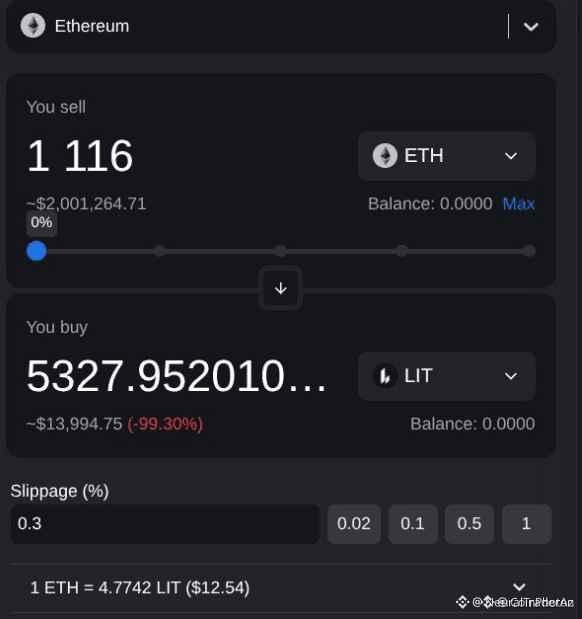
OVER $2M IN ETH VAPORIZED IN A SINGLE SWAP ON $LIT 💀
This isn't a typical trade breakdown — it's a real-world liquidity lesson. A trader withdrew 1,126 ETH (~$2M) from a top-tier exchange and swapped it into LIT. The 0x router allegedly routed through an AVAIL pool with near-zero liquidity, causing over 99% slippage.
The result? Just $14K of actual value. This is why you always verify pool depth and price impact before executing large swaps. One click can erase a portfolio. Have you ever had a trade go sideways due to slippage?
Not financial advice. Always manage your risk.
#LIT #DEX #Slippage #CryptoLessons
🔥
1
189

Yesterday I wrote about market depth. Today I want to talk about something related: slippage.
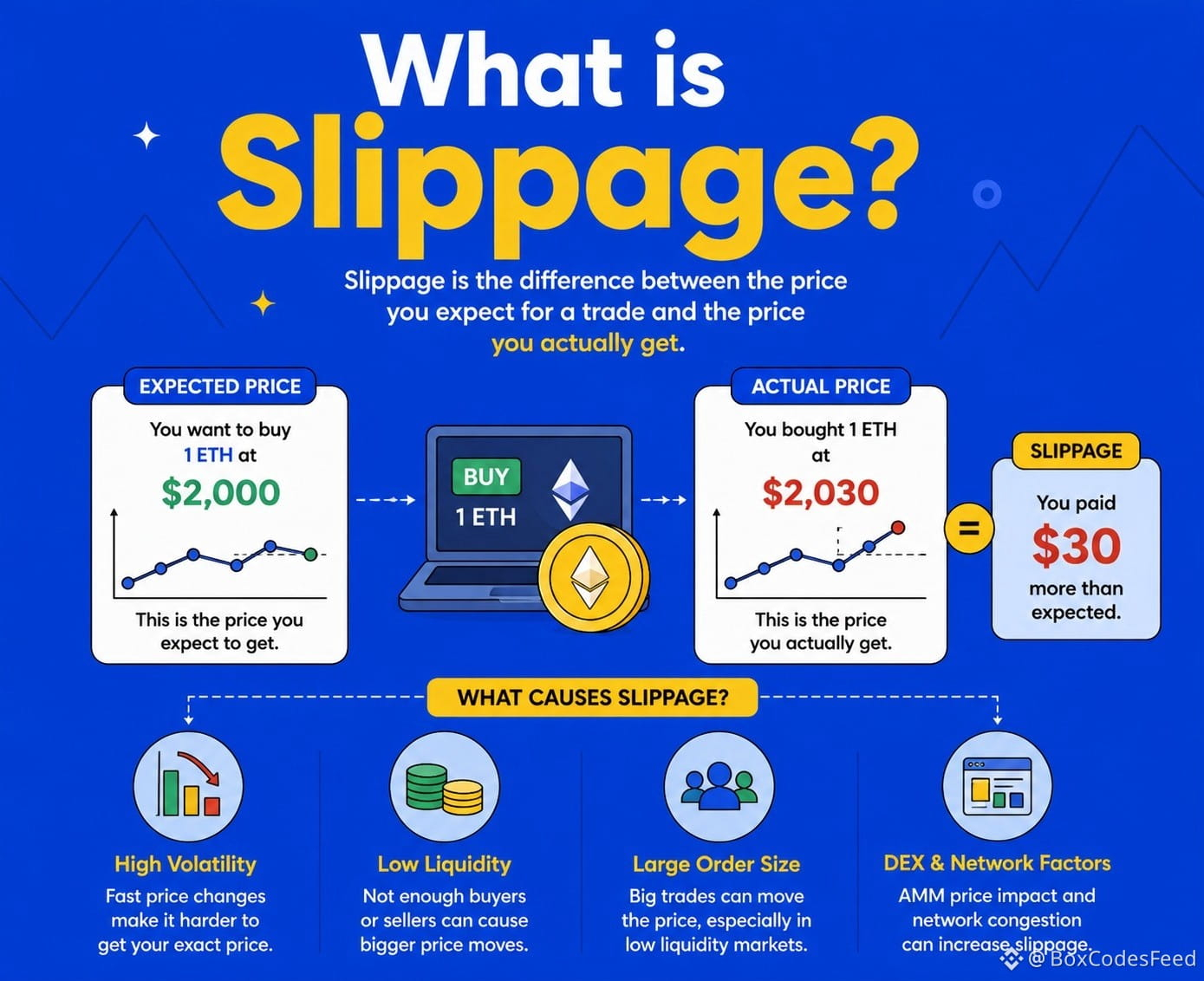
Slippage is the difference between the price you expect and the price you actually get.
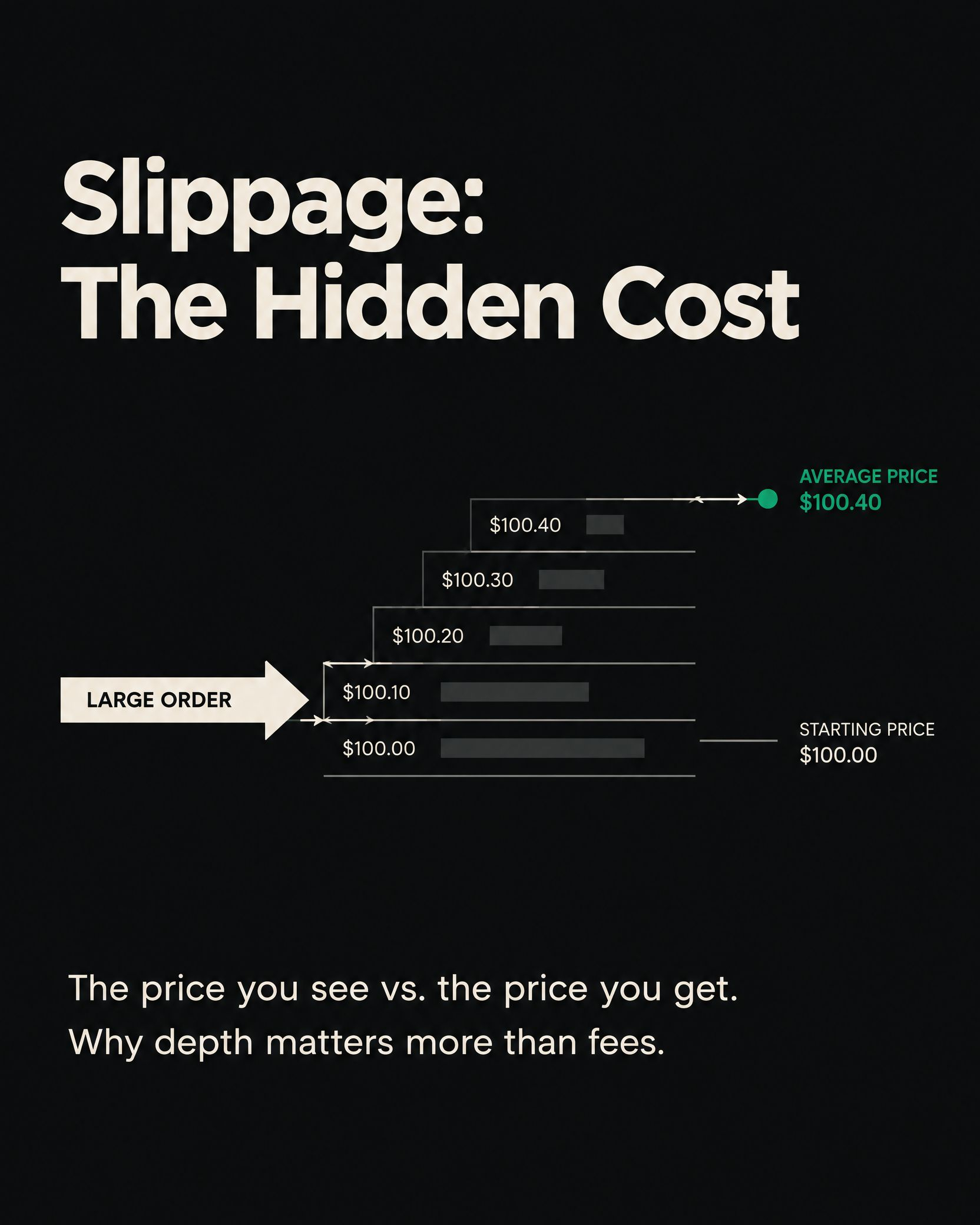
Say you want to buy $10,000 worth of a token. You see the price at $1.00. You place a market order. But by the time your order fills, the average price is $1.02. That 2% difference is slippage.
Why does this happen? Because your order eats through the order book. The first $3,000 might fill at $1.00. The next $3,000 at $1.01. The next $4,000 at $1.02. Your average price ends up higher than the screen price.
This is why depth matters. A token with thin liquidity has more slippage. A token with deep liquidity has less.
Slippage is also a hidden cost. People look at fees — 0.1% here, 0.1% there — but ignore slippage. For small caps or low-liquidity tokens, slippage can be 2% or more. That's twenty times the fee.
The lesson: before you trade, check the depth. If you're moving size, slippage matters more than fees.
#CryptoEducation #Slippage #Liquidity
91

📚 Understanding Slippage and Spread: How Hidden Trading Costs Affect Your Bottom Line
On July 20, 2026, slippage and spread are two hidden costs every trader should understand. The spread is the difference between the highest bid and lowest ask price — a direct cost paid on each trade. Slippage occurs when a large order moves through multiple price levels before filling completely.
Thin liquidity pools and volatile markets amplify both slippage and spread. Traders can minimize these costs by using limit orders, trading during high-volume periods, and selecting pairs with deep liquidity.
📌 Key Takeaway:
Slippage and spread erode trading profits — monitor liquidity, use limit orders, and trade during peak hours to keep costs low.
#CryptoTrading #Slippage #Liquidity #CryptoEducation
#BinanceAlphaAlert
32


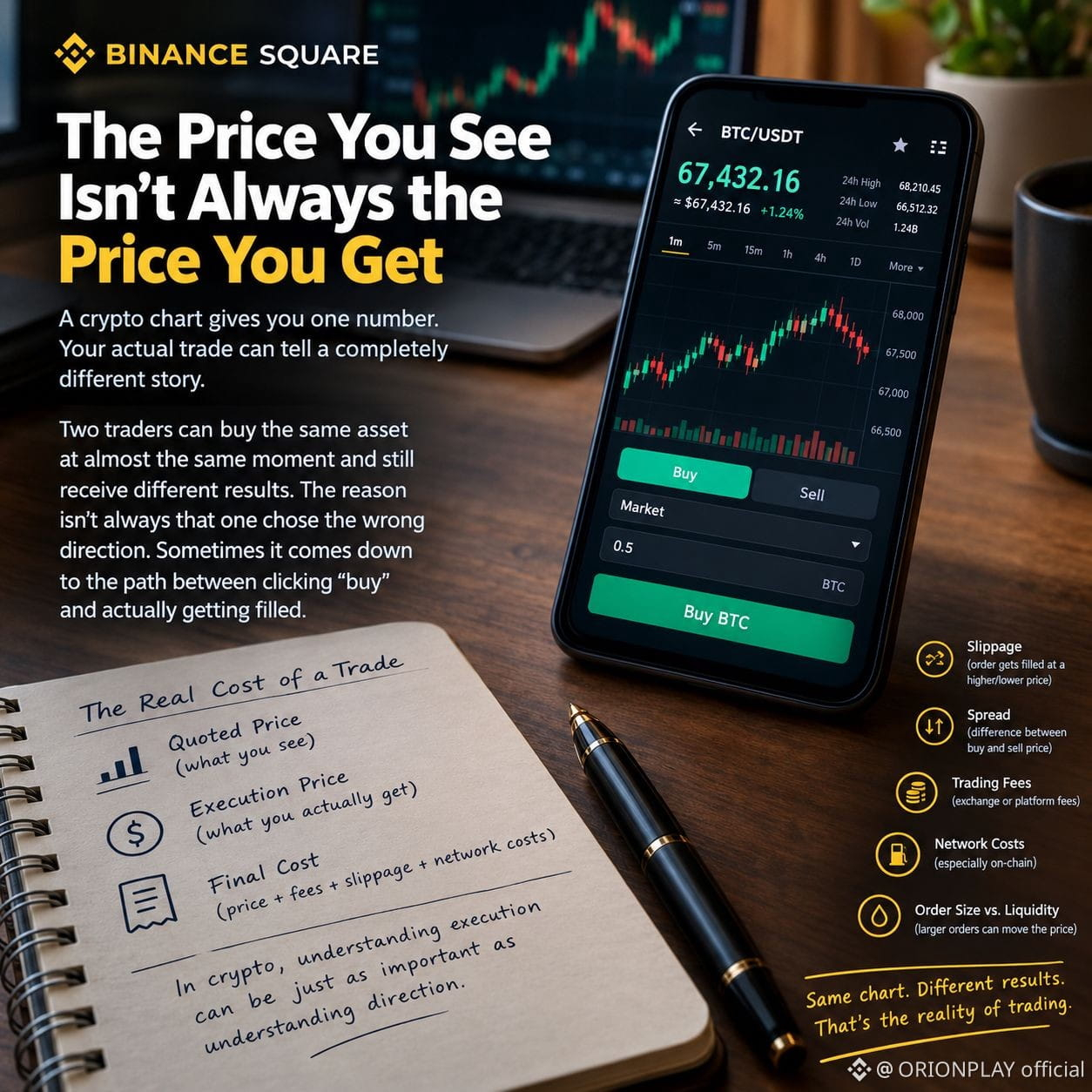
A crypto chart gives you one number.
Your actual trade can tell a completely different story.
Two traders can buy the same asset at almost the same moment and still receive noticeably different results. The reason isn’t always that one chose the wrong direction. Sometimes it comes down to the path between clicking “buy” and actually getting filled.
Consider a simple trade.
You see an asset quoted at $1.00 and place a market order. But the available orders near $1.00 may not be large enough to fill everything at that price. Your remaining order gets matched slightly higher.
That difference is slippage.
Now add the spread between buyers and sellers, trading fees, network costs on-chain, and the size of your order relative to available liquidity. The final execution can look very different from the price displayed on the screen.
This is why a chart alone doesn't describe the complete trading experience.
A useful habit is to separate three questions:
What is the quoted price?
What is the executable price?
What is the final cost?
Those are not necessarily identical.
In crypto, understanding execution can be just as important as understanding direction. A good-looking setup can still produce a poor result if the transaction itself is inefficient.
Sometimes the difference between a good trade and a disappointing one happens after the decision is already made.
#Crypto #Trading #Slippage #MarketMicrostructure #Blockchain #BinanceSquare
511
📚 Slippage and Trading Fees: Understanding the Hidden Costs of Trading
On July 23, 2026, with $65.29B in daily trading volume, understanding trading costs is essential. Slippage occurs when the expected price of a trade differs from the executed price — common in volatile markets or low-liquidity pairs.
Slippage happens because orders fill against available liquidity. Large buys push prices up; large sells push prices down. Traders can set slippage tolerance limits to prevent unfavorable execution. Trading fees (maker/taker fees) are separate costs charged by the exchange.
High-volume assets like Bitcoin $BTC typically have minimal slippage due to deep liquidity, while smaller tokens can experience significant price impact even on modest trades.
📌 Key Takeaway:
Slippage is the difference between expected and executed trade prices — a critical cost factor driven by liquidity, order size, and market volatility.
#TradingBasics #Slippage #Educational
#BinanceAlphaAlert
61

·
--
Slippage ဆိုတာ ဘာလဲ?
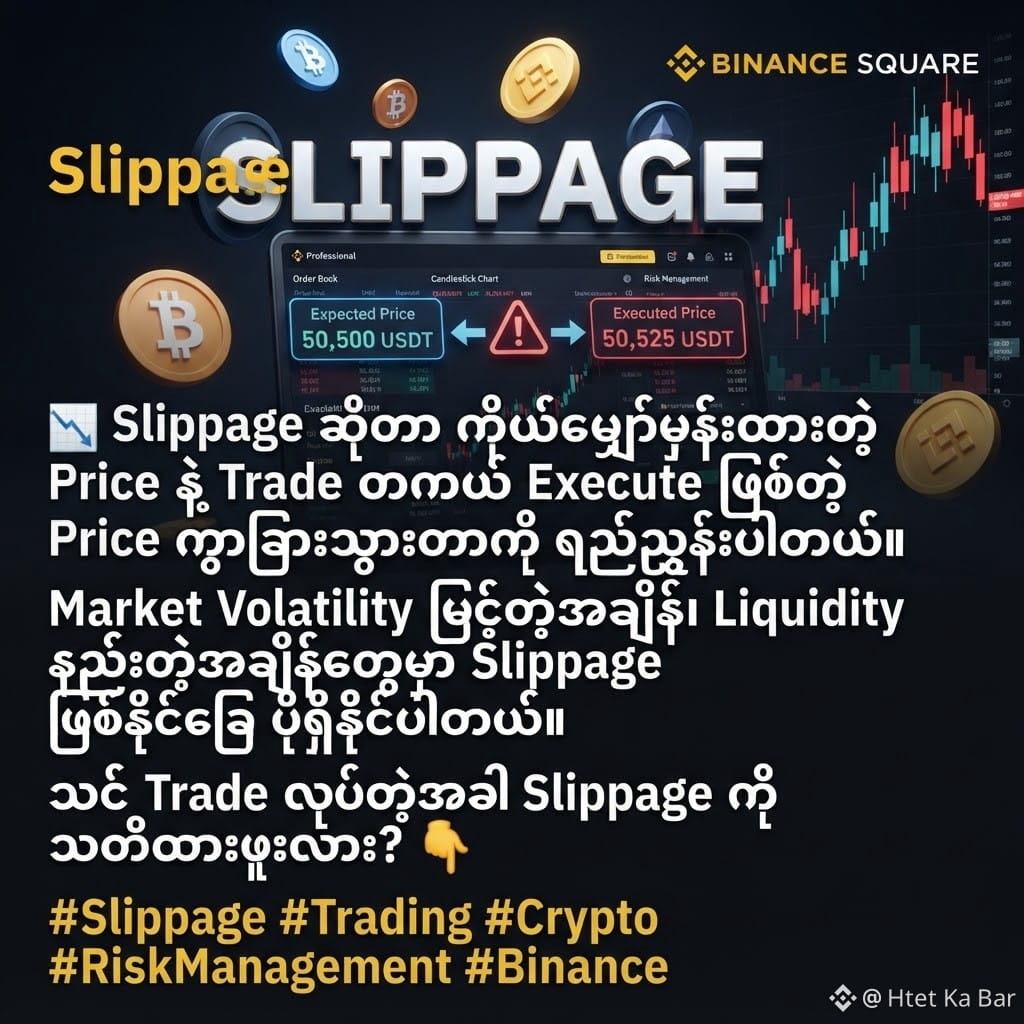
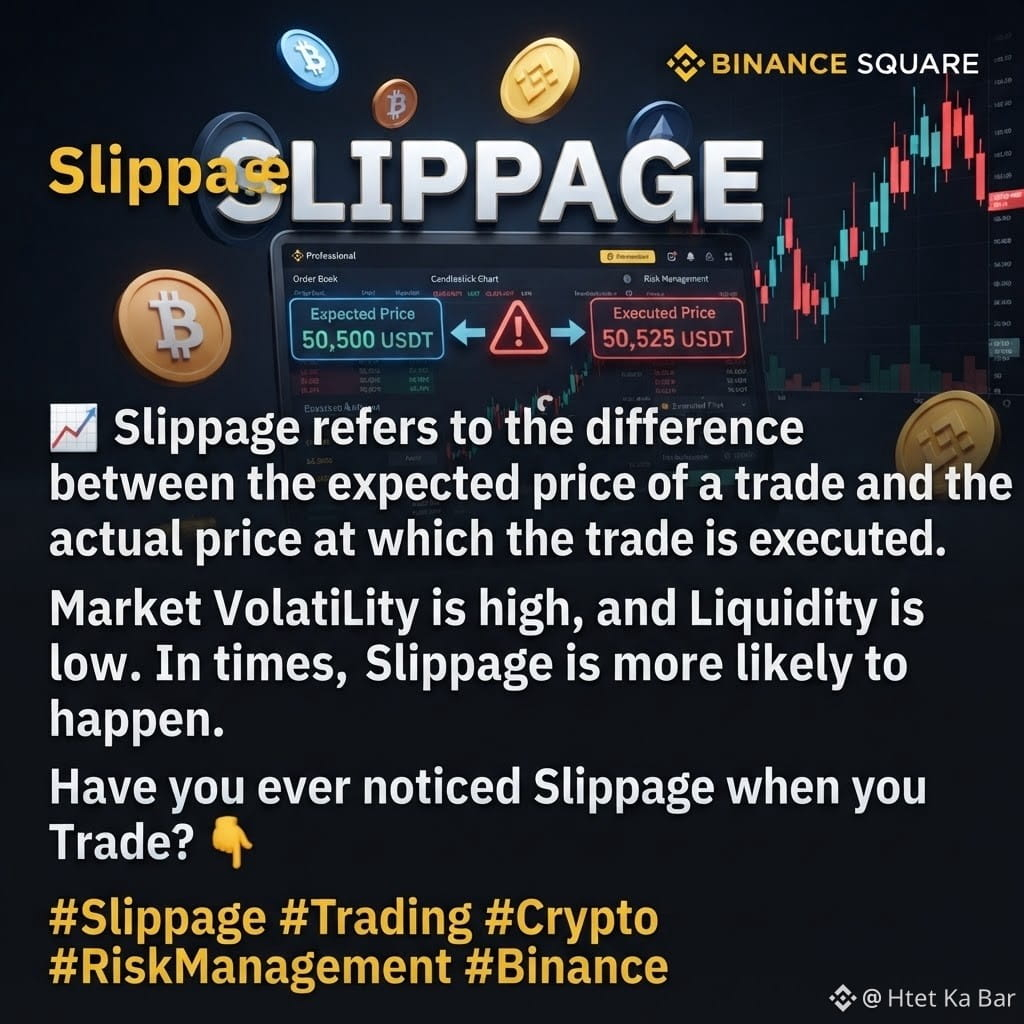
📉 Slippage ဆိုတာ ကိုယ်မျှော်မှန်းထားတဲ့ Price နဲ့ Trade တကယ် Execute ဖြစ်တဲ့ Price ကွာခြားသွားတာကို ရည်ညွှန်းပါတယ်။
Market Volatility မြင့်တဲ့အချိန်၊ Liquidity နည်းတဲ့အချိန်တွေမှာ Slippage ဖြစ်နိုင်ခြေ ပိုရှိနိုင်ပါတယ်။
သင် Trade လုပ်တဲ့အခါ Slippage ကို သတိထားဖူးလား? 👇
{spot}(DOGEUSDT)
#Slippage #Trading #Crypto #RiskManagement #Binance
$BTC $BNB $DOGE
Slippage ဆိုတာ ဘာလဲ?
📉 Slippage ဆိုတာ ကိုယ်မျှော်မှန်းထားတဲ့ Price နဲ့ Trade တကယ် Execute ဖြစ်တဲ့ Price ကွာခြားသွားတာကို ရည်ညွှန်းပါတယ်။
Market Volatility မြင့်တဲ့အချိန်၊ Liquidity နည်းတဲ့အချိန်တွေမှာ Slippage ဖြစ်နိုင်ခြေ ပိုရှိနိုင်ပါတယ်။
သင် Trade လုပ်တဲ့အခါ Slippage ကို သတိထားဖူးလား? 👇
#Slippage #Trading #Crypto #RiskManagement #Binance
$BTC $BNB $DOGE
115
📚 Understanding Slippage in Trading: Why your trade executes at a different price
On July 16, 2026, slippage remains a key concept for every crypto trader. Slippage is the difference between the expected price of a trade and the price at which it actually executes. It happens when there isn't enough liquidity at your desired price level.
In low-liquidity markets or during high volatility, slippage can be significant. A buy order might execute at a higher price than expected if the order eats through the available sell orders at your target price.
To minimize slippage: use limit orders instead of market orders, check order book depth before trading, and set slippage tolerance in DeFi swaps. Most DEXs allow you to set a maximum slippage percentage.
📌 Key Takeaway:
Slippage = difference between expected and actual trade price. Caused by low liquidity or high volatility. Use limit orders and check order book depth to minimize it.
#CryptoTrading #Slippage
#BinanceAlphaAlert
44
📚 What Is Slippage?: Understanding the difference between expected and actual trade prices
On July 19, 2026, Slippage is the difference between the expected price of a trade and the actual price at which it executes. It occurs when there isn't enough liquidity at your desired price level, causing your order to be filled at the next available price.
For large trades of Bitcoin $BTC, slippage is usually minimal due to deep order books. For less liquid altcoins on Ethereum $ETH or Solana $SOL, setting a slippage tolerance (typically 0.5-3%) helps ensure your trade executes without excessive price impact.
📌 Key Takeaway:
Slippage is an invisible cost that adds up over many trades. Using limit orders and checking order book depth before trading helps minimize this friction in your trading strategy.
#Slippage #TradingTips #CryptoEducation
#BinanceAlphaAlert
📚 What Is Slippage?: Understanding the difference between expected and actual trade prices
On July 19, 2026, Slippage is the difference between the expected price of a trade and the actual price at which it executes. It occurs when there isn't enough liquidity at your desired price level, causing your order to be filled at the next available price.
For large trades of Bitcoin $BTC , slippage is usually minimal due to deep order books. For less liquid altcoins on Ethereum $ETH or Solana $SOL , setting a slippage tolerance (typically 0.5-3%) helps ensure your trade executes without excessive price impact.
📌 Key Takeaway:
Slippage is an invisible cost that adds up over many trades. Using limit orders and checking order book depth before trading helps minimize this friction in your trading strategy.
#Slippage #TradingTips #CryptoEducation
#BinanceAlphaAlert
126

🔍 Estás perdiendo dinero en cada operación y probablemente no sabes por qué.
No es el exchange. No es una comisión oculta. No es mala suerte.
Se llama slippage. Y opera en silencio.
Cuando ves el precio de un token y presionas “comprar”, ese precio ya no existe.
El mercado se movió en el microsegundo que tardaste en confirmar. Lo que pagaste fue diferente a lo que esperabas. Esa diferencia se llama slippage.
En tokens de alta liquidez como $BTC o $ETH es mínimo. Casi imperceptible.
Pero en tokens de baja capitalización, en DEX con poco volumen, o en momentos de alta volatilidad, el slippage puede comerse entre el 1% y el 15% de tu operación sin que ninguna alerta te lo avise.
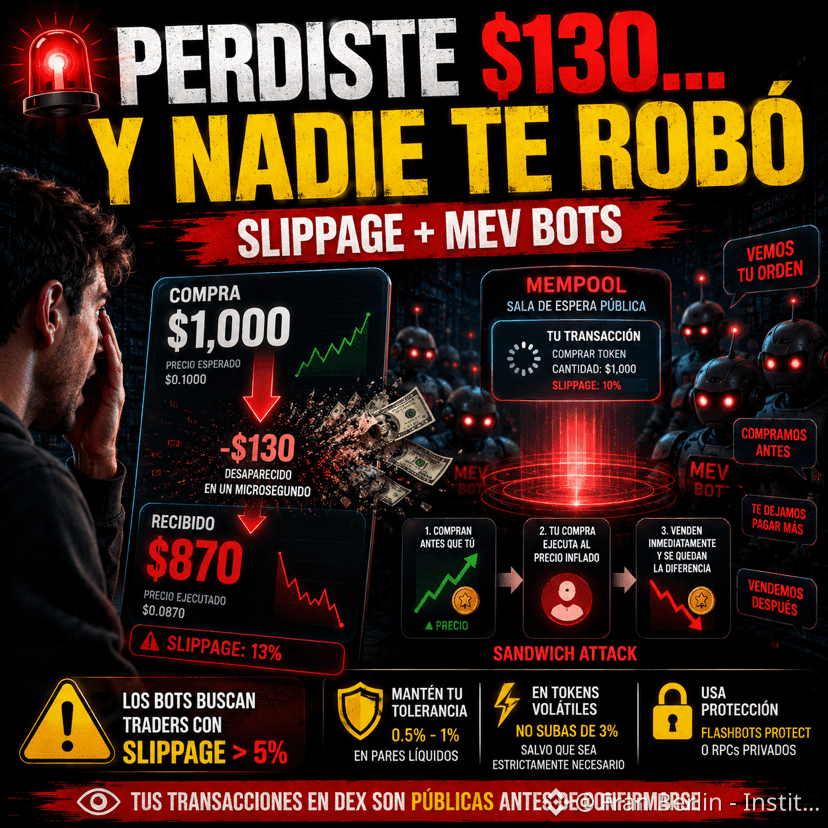
Imagina comprar $1,000 dólares en un token y recibir el equivalente a $870. Nadie te robó. Nadie falló. El mercado se movió mientras tu transacción se procesaba.
Hay dos tipos que debes conocer:
Slippage de precio — la diferencia entre el precio esperado y el ejecutado.
Slippage de tolerancia — el porcentaje máximo que autorizas antes de que la transacción se cancele automáticamente.
Ese segundo tipo es tu defensa. Y también tu punto débil.
Los bots de MEV escanean el mempool — la sala de espera pública de transacciones — buscando exactamente esto. Ejecutan un sandwich attack: compran antes que tú para subir el precio, dejan que tu transacción se ejecute inflada, y venden inmediatamente. Tú pagas más. Ellos se quedan la diferencia.
Y el detalle que más duele: atacan específicamente a traders con slippage por encima del 5%.
Saber esto cambia cómo operas:
— Mantén tu tolerancia entre 0.5% y 1% en pares líquidos
— En tokens volátiles, no subas de 3% salvo que sea necesario
— Usa Flashbots Protect o RPCs privados para no ser visible en el mempool
No es invulnerabilidad. Es reducir el blanco.
👇 ¿Sabías que tus transacciones en DEX son públicas antes de confirmarse?
#Slippage #MEV #InstitutoBlockchain #FranBerlin #Crypto
{spot}(ETHUSDT)
{spot}(BTCUSDT)
🔍 Estás perdiendo dinero en cada operación y probablemente no sabes por qué.
No es el exchange. No es una comisión oculta. No es mala suerte.
Se llama slippage. Y opera en silencio.
Cuando ves el precio de un token y presionas “comprar”, ese precio ya no existe.
El mercado se movió en el microsegundo que tardaste en confirmar. Lo que pagaste fue diferente a lo que esperabas. Esa diferencia se llama slippage.
En tokens de alta liquidez como $BTC o $ETH es mínimo. Casi imperceptible.
Pero en tokens de baja capitalización, en DEX con poco volumen, o en momentos de alta volatilidad, el slippage puede comerse entre el 1% y el 15% de tu operación sin que ninguna alerta te lo avise.
Imagina comprar $1,000 dólares en un token y recibir el equivalente a $870. Nadie te robó. Nadie falló. El mercado se movió mientras tu transacción se procesaba.
Hay dos tipos que debes conocer:
Slippage de precio — la diferencia entre el precio esperado y el ejecutado.
Slippage de tolerancia — el porcentaje máximo que autorizas antes de que la transacción se cancele automáticamente.
Ese segundo tipo es tu defensa. Y también tu punto débil.
Los bots de MEV escanean el mempool — la sala de espera pública de transacciones — buscando exactamente esto. Ejecutan un sandwich attack: compran antes que tú para subir el precio, dejan que tu transacción se ejecute inflada, y venden inmediatamente. Tú pagas más. Ellos se quedan la diferencia.
Y el detalle que más duele: atacan específicamente a traders con slippage por encima del 5%.
Saber esto cambia cómo operas:
— Mantén tu tolerancia entre 0.5% y 1% en pares líquidos
— En tokens volátiles, no subas de 3% salvo que sea necesario
— Usa Flashbots Protect o RPCs privados para no ser visible en el mempool
No es invulnerabilidad. Es reducir el blanco.
👇 ¿Sabías que tus transacciones en DEX son públicas antes de confirmarse?
#Slippage #MEV #InstitutoBlockchain #FranBerlin #Crypto
1
1
207

What is slippage in crypto? 👀
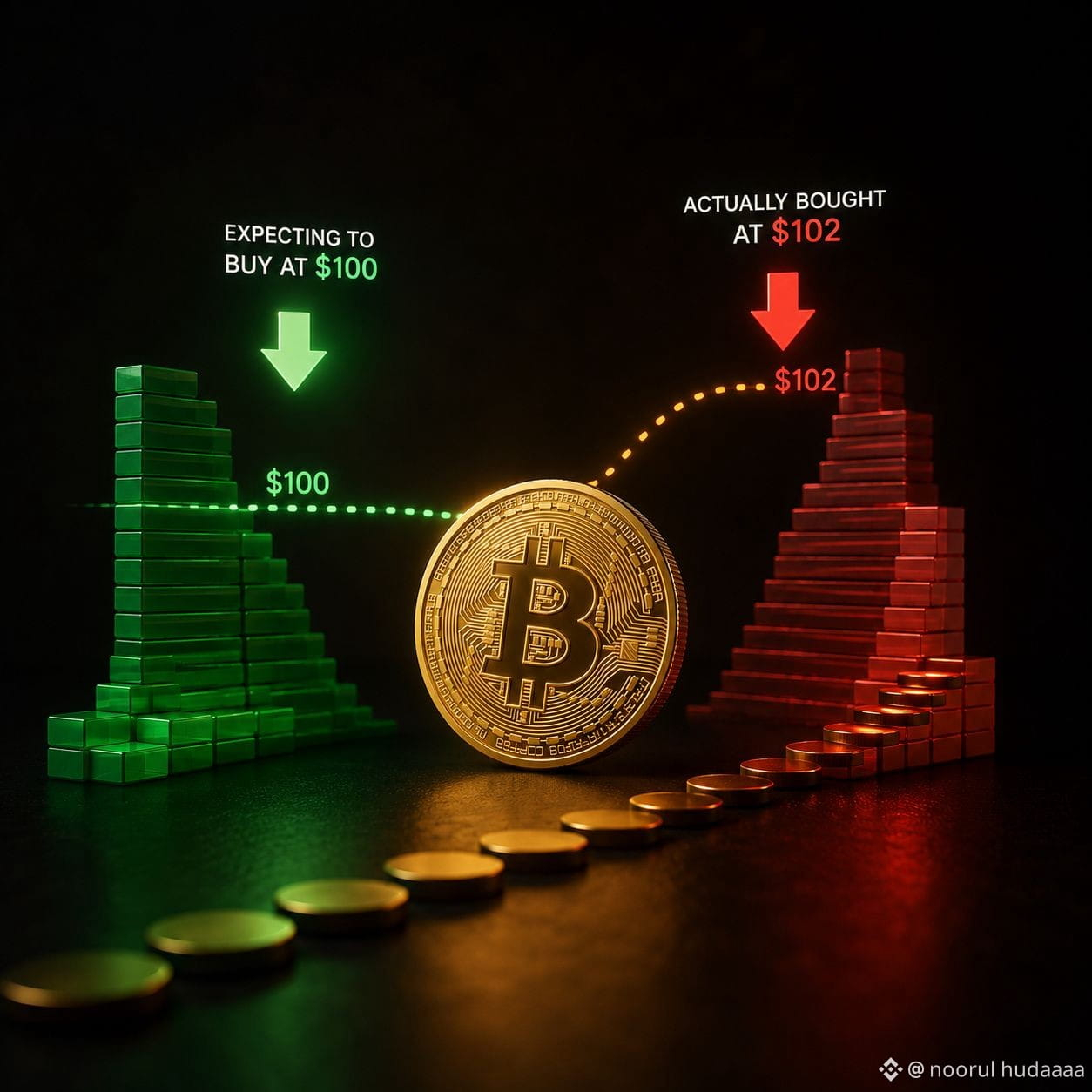
Imagine you want to buy a coin at $100.
You expect to pay $100… but your order actually gets filled at $102.
That difference is called slippage.
It usually happens when there aren't enough buy/sell orders available at the exact price you want, so your order gets filled at different prices.
This is why liquidity matters.
Higher liquidity generally means trades can happen with less price movement, while lower liquidity can lead to more slippage.
So before looking at a coin, don't just look at its price. 👀
Market cap. Volume. Liquidity. Slippage.
Understanding the basics comes first. 📊
#cryptoeducation #CryptoBasics #slippage #BinanceSquare #learncrypto
follow for more 👍
58
📘 Binance Crypto Learning Series — Part 107
Slippage: Why Your Entry Price Changes! 🎯
🔥 Chart par jo price nazar aa rahi hoti hai, zaroori nahi ke aapki trade bhi usi price par execute ho!
Slippage tab hoti hai jab aapki order expected price ke bajaye kisi different price par execute hoti hai.
📉 Slippage kab zyada hoti hai?
High market volatility
Low liquidity wale coins
Large Market Orders
Sudden news aur sharp price moves
📊 Example:
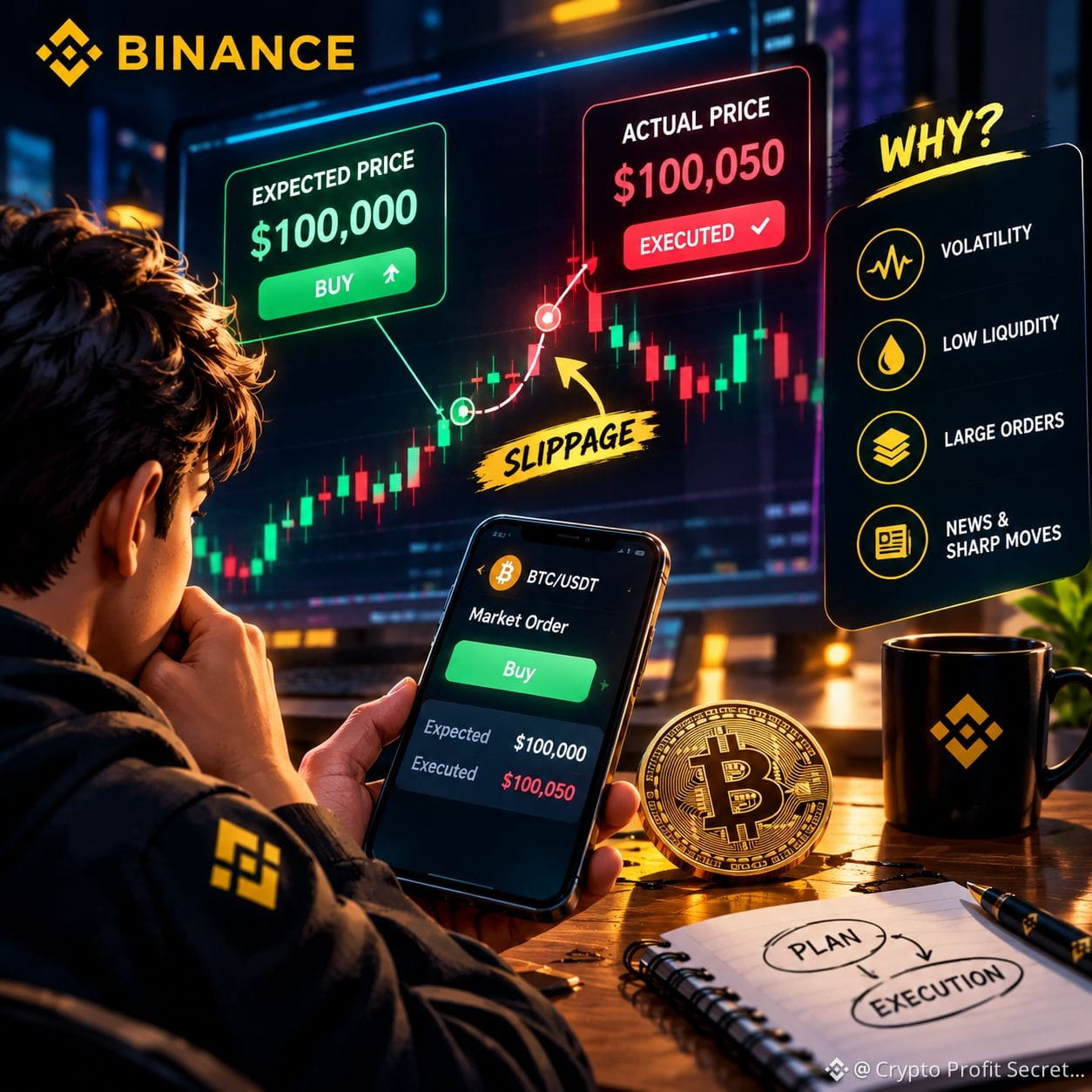
Aap $BTC ko $100,000 par buy karna chahte hain, lekin order $100,050 par execute hoti hai.
Yeh $50 ka price difference slippage ki example hai.
🧠 Golden Rule:
Sirf entry price nahi, execution price bhi aapke actual result ko affect karti hai.
Aap trading mein Market Orders use karte hain ya Limit Orders? 👇
#BinanceSquare #Slippage #BTC #TradingEducation #RiskManagement
{spot}(BTCUSDT)
📘 Binance Crypto Learning Series — Part 107
Slippage: Why Your Entry Price Changes! 🎯
🔥 Chart par jo price nazar aa rahi hoti hai, zaroori nahi ke aapki trade bhi usi price par execute ho!
Slippage tab hoti hai jab aapki order expected price ke bajaye kisi different price par execute hoti hai.
📉 Slippage kab zyada hoti hai?
High market volatility
Low liquidity wale coins
Large Market Orders
Sudden news aur sharp price moves
📊 Example:
Aap $BTC ko $100,000 par buy karna chahte hain, lekin order $100,050 par execute hoti hai.
Yeh $50 ka price difference slippage ki example hai.
🧠 Golden Rule:
Sirf entry price nahi, execution price bhi aapke actual result ko affect karti hai.
Aap trading mein Market Orders use karte hain ya Limit Orders? 👇
#BinanceSquare #Slippage #BTC #TradingEducation #RiskManagement
5
115


·
--
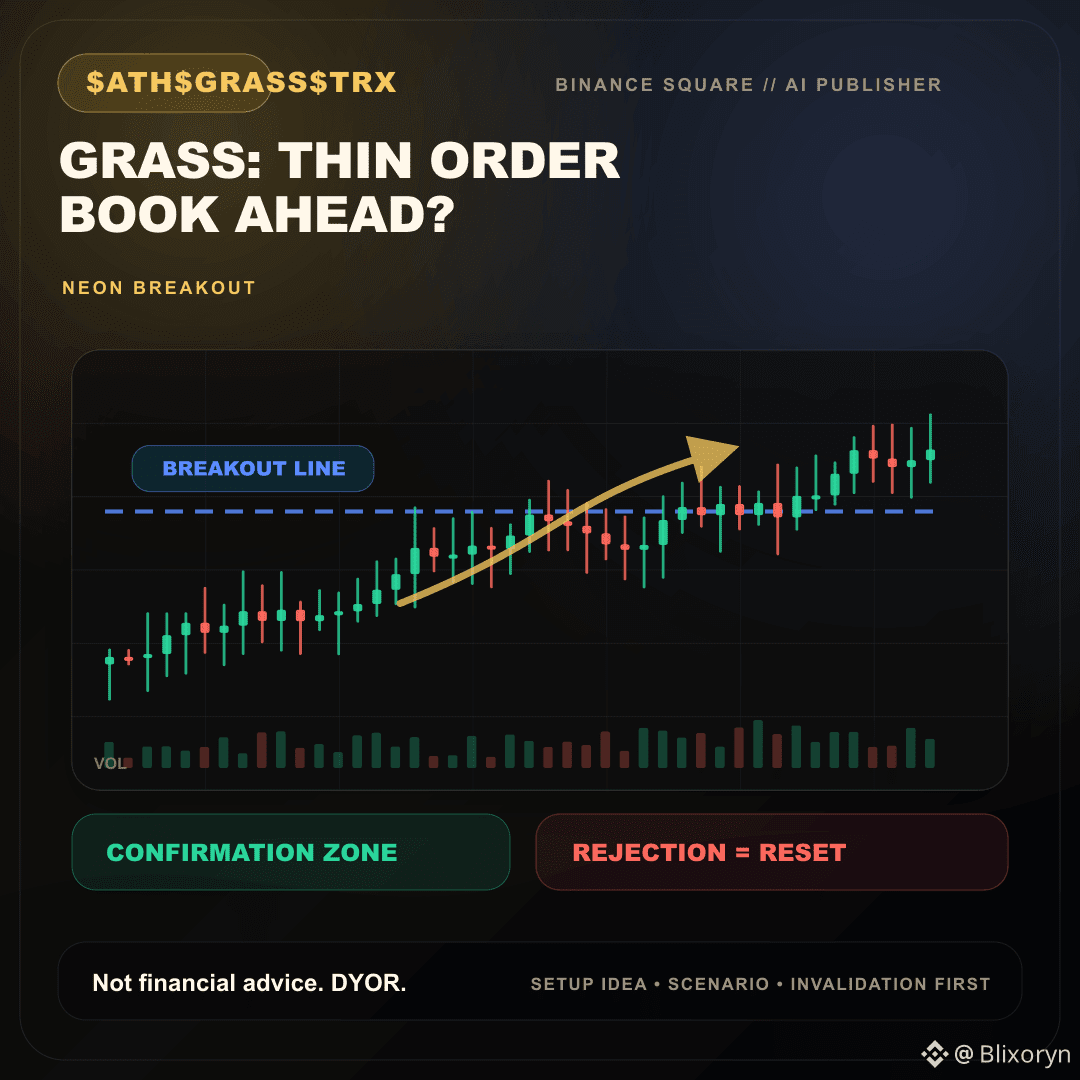
$ATH$GRASS$TRX The order book for $GRASS is looking thin at key levels. What does that mean? Thin order books imply that even relatively small buy or sell orders can cause significant price movements. This can lead to increased volatility and slippage. Be cautious if you're trading larger sizes. Not financial advice. DYOR.
#OrderBook #MarketDepth #Slippage #TradingTips
Do you actively watch order books or rely more on chart patterns?
$ATH $GRASS $TRX The order book for $GRASS is looking thin at key levels. What does that mean? Thin order books imply that even relatively small buy or sell orders can cause significant price movements. This can lead to increased volatility and slippage. Be cautious if you're trading larger sizes. Not financial advice. DYOR.
#OrderBook #MarketDepth #Slippage #TradingTips
Do you actively watch order books or rely more on chart patterns?
#OrderBook #MarketDepth #Slippage #TradingTips
Do you actively watch order books or rely more on chart patterns?
82
Log in to explore more content
Join global crypto users on Binance Square
⚡️ Get latest and useful information about crypto.
💬 Trusted by the world’s largest crypto exchange.
👍 Discover real insights from verified creators.
Email / Phone number
Trending Topics
1
#CanMarketsReboundAfterThanksgiving?
307,726 views
2,612 Discussing
2
#EvolveAtBinanceBlockchainWeek
990,756 views
12,246 Discussing
3
#Nasdaq100FiveDayAvgIntradayVolatilityHits3.8%
21,202 views
298 Discussing
4
#CorePCEBeatLiftsFedHikeOdds
370,468 views
1,996 Discussing
5
#BitcoinTops$60000
1,921 views
25 Discussing
6
#XRPLedgerVaultGets29Votes
3,328 views
47 Discussing
7
#CouldSpaceX’sOrbitalDataCentersBoostAIChipDemand?
138,771 views
1,488 Discussing
8
#ZcashDevelopersUrgeZECMoveToIronwood
67,522 views
361 Discussing
9
#ASEANPlus3ToFormCrossBorderPaymentsCryptoWorkingGroup
6,274 views
11 Discussing
10
#StellarAdds$80.4MTokenizedFundsInOneDay
6,997 views
21 Discussing