

#icbasuesoccovercryptobankcharters
icbasuesoccovercryptobankcharters
37,751 views
418 Discussing
Hot
Latest

·
--
#icbasuesoccovercryptobankcharters
Traditional Banks Just Took Direct Aim at Crypto's Fast Track Into Federal Banking
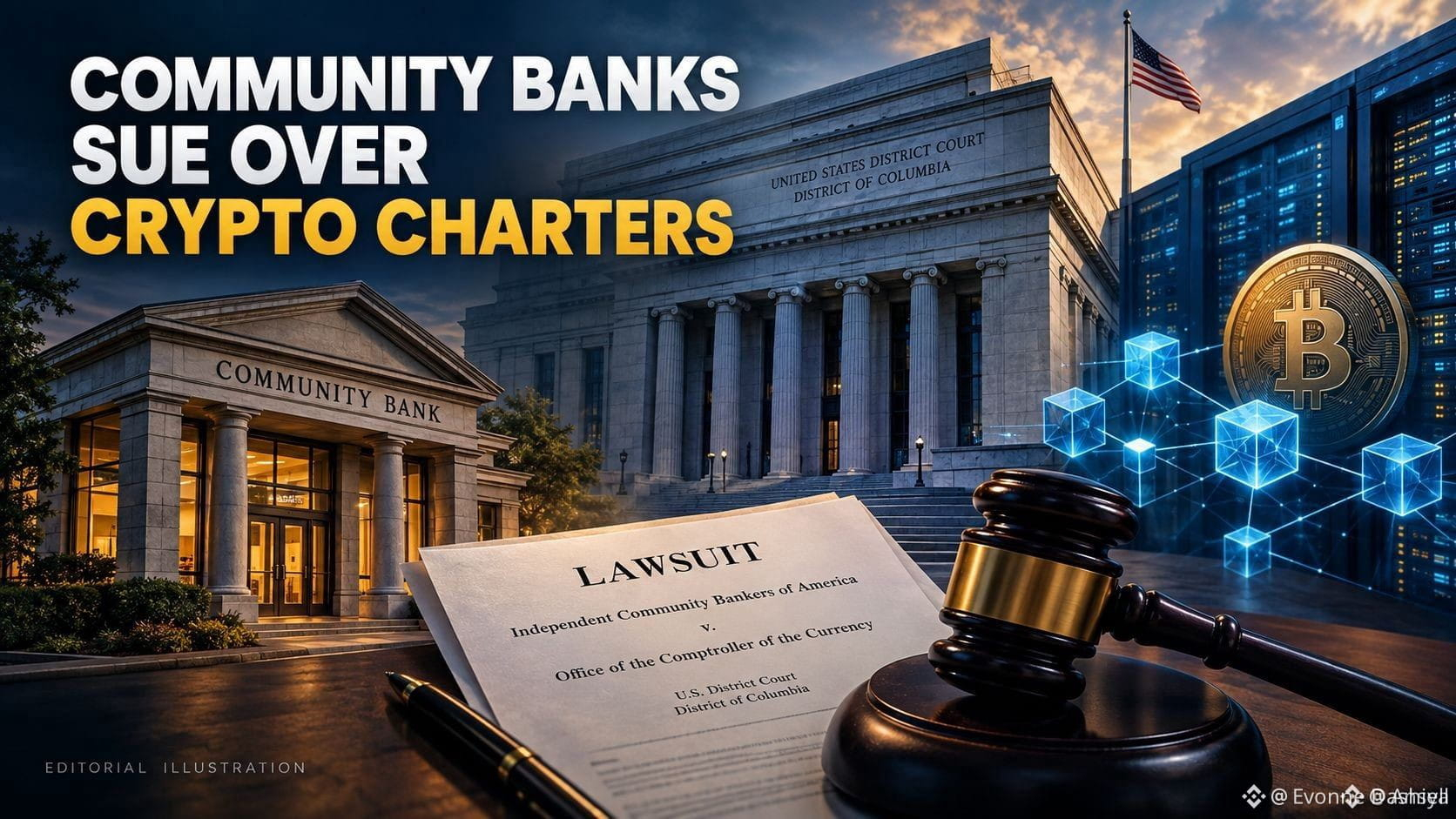
Community banks just escalated their pushback against crypto's regulatory momentum — moving from public objections straight into federal court.
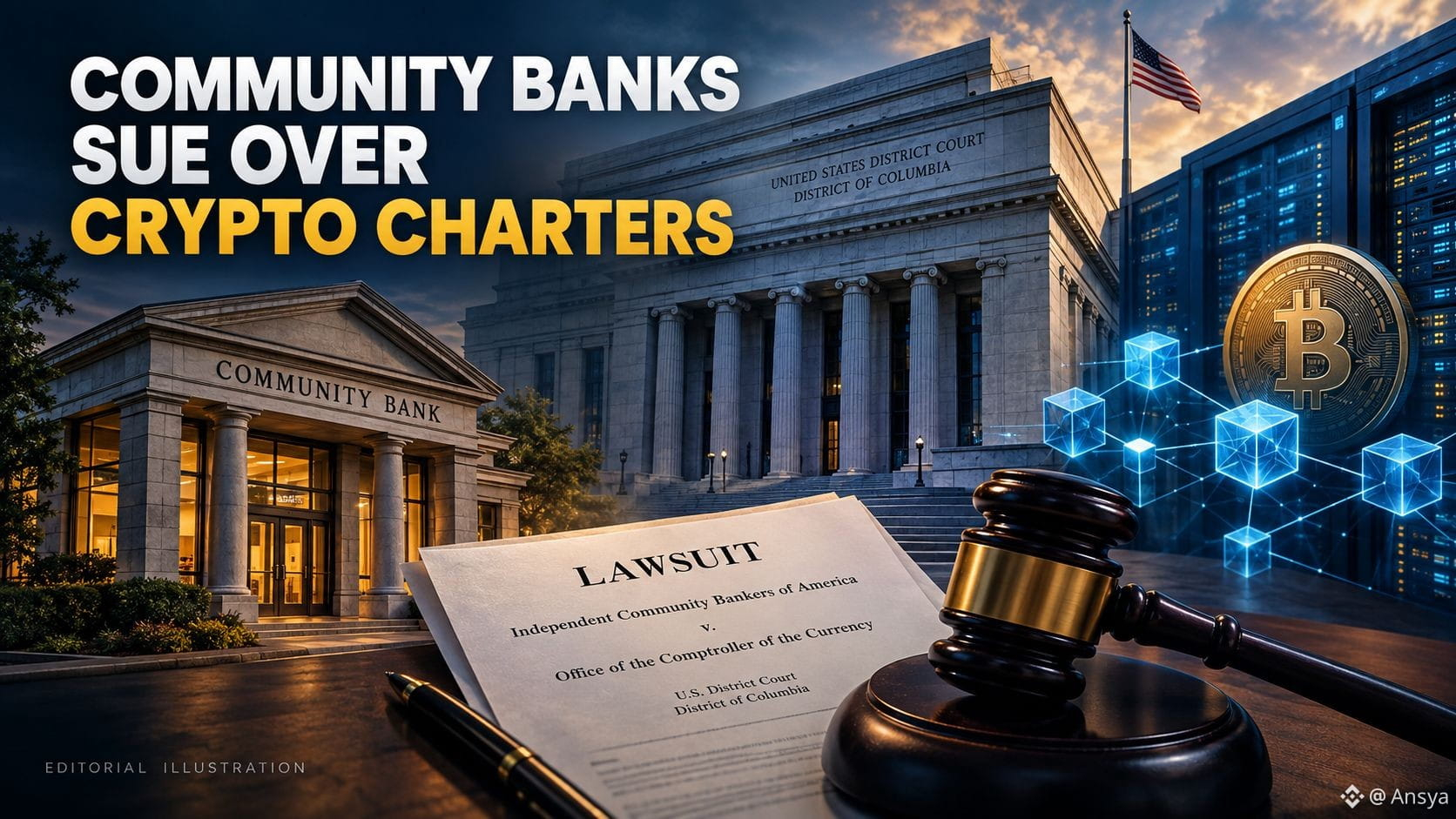
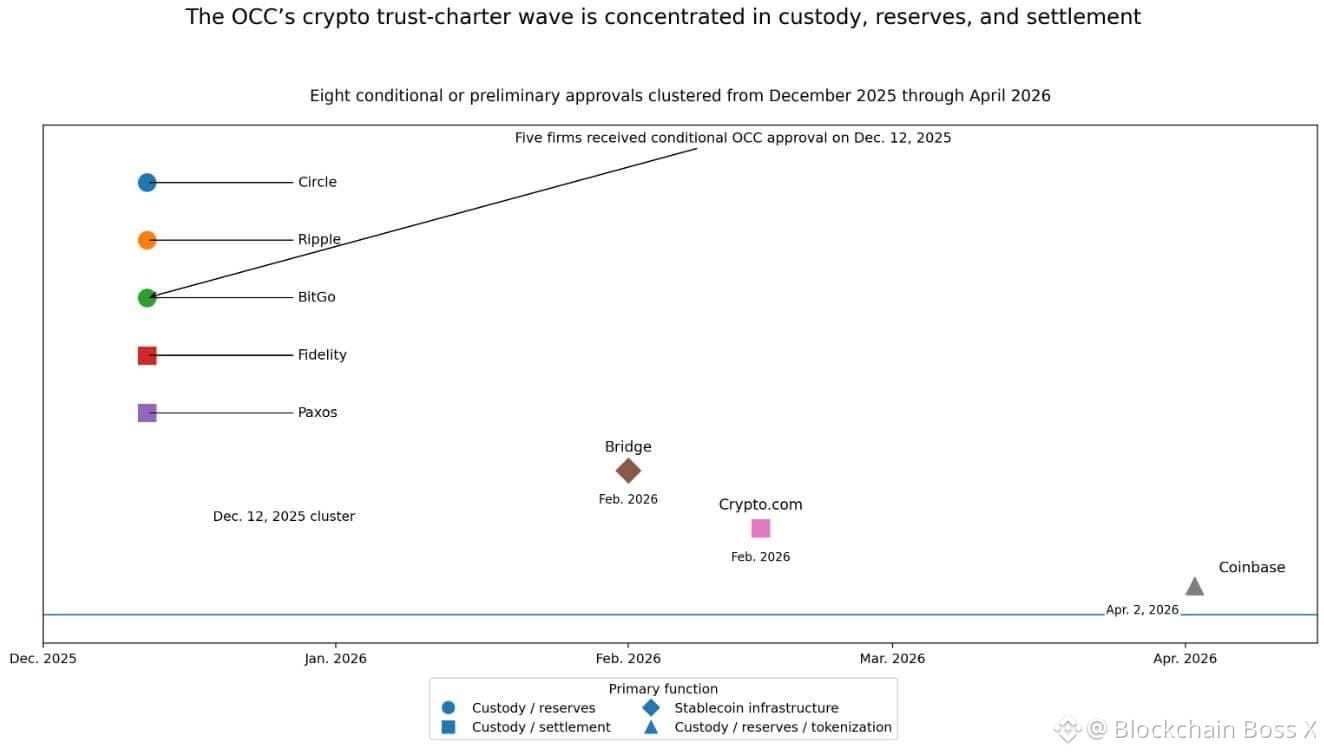
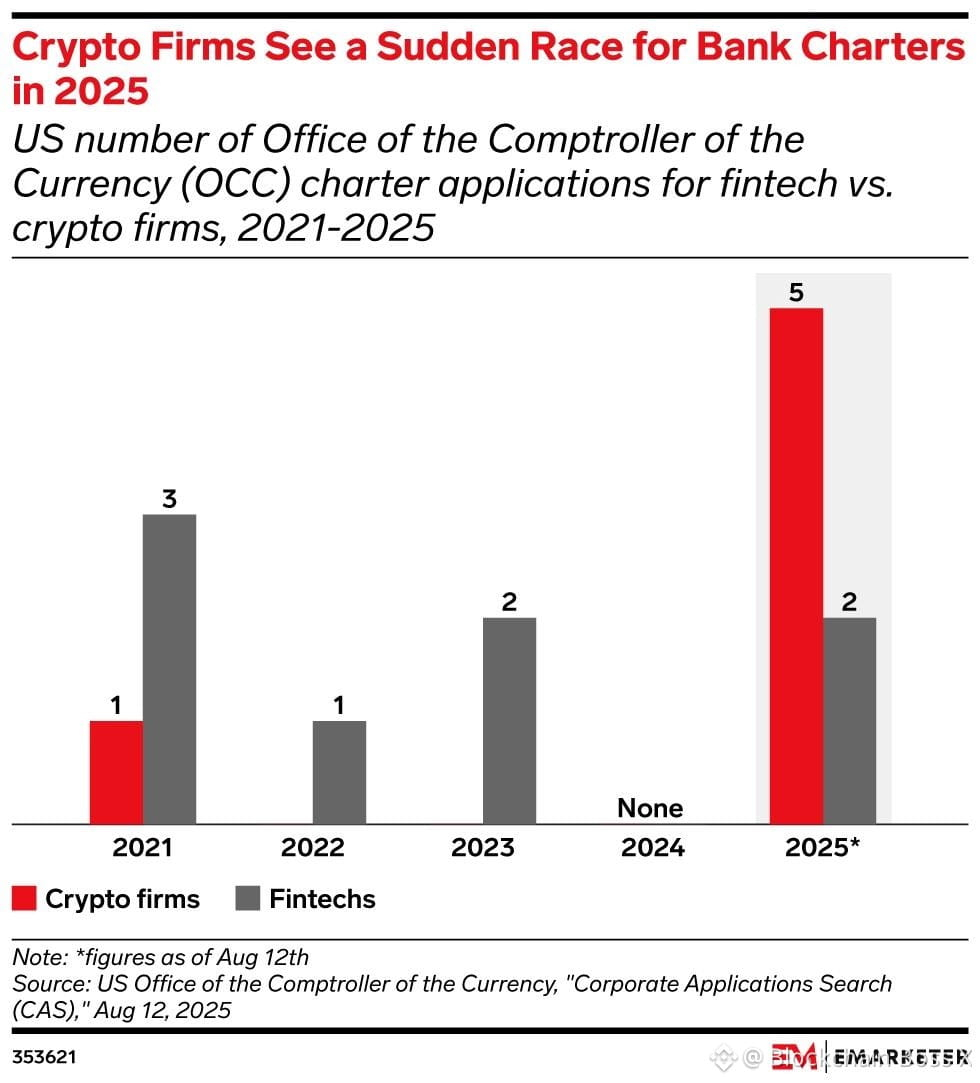
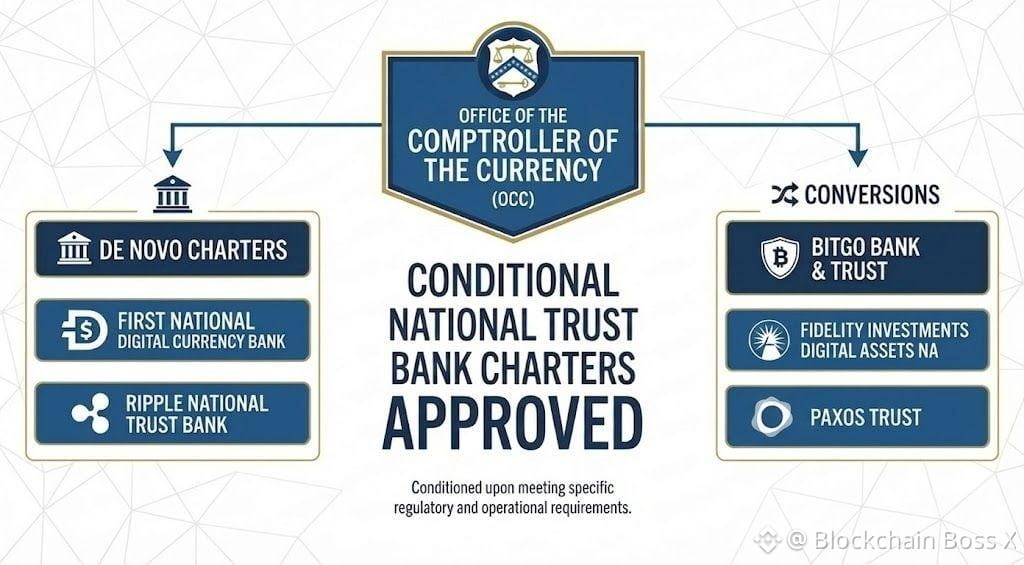
Here's what happened: the Independent Community Bankers of America filed suit against the Office of the Comptroller of the Currency on October 2 in the U.S. District Court for the District of Columbia. The lawsuit targets the OCC's March 2026 rule and related guidance allowing non-fiduciary crypto firms to obtain national trust bank charters — charters the OCC has reportedly granted or conditionally approved 21 times, at least 13 tied to crypto companies including Coinbase, Circle, and Crypto.com. ICBA argues the OCC exceeded authority granted under the National Bank Act, calling the charters a "side door" into federal banking credibility without the capital, liquidity, FDIC insurance, and deposit-taking obligations traditional banks must meet. The OCC has declined to comment on the litigation and continues issuing new crypto-related charters even amid the legal challenge.
Why does this matter? This case cuts to a genuine structural question: should crypto firms gain federal banking legitimacy through a charter pathway that skips obligations traditional banks must carry? ICBA frames it as unequal competition; the OCC's continued approvals suggest regulators see these charters as a legitimate route for crypto's maturation into mainstream finance. A court ruling against the OCC could meaningfully slow or reshape how crypto companies access federal banking infrastructure going forward.
Whether the courts side with ICBA's reading of the National Bank Act, or affirm the OCC's current approach, is something only the litigation itself will settle.
Does this lawsuit protect fair competition, or does it just slow crypto's path toward mainstream banking legitimacy? 🤔
#OCC #ICBA #CryptoRegulation
$2Z $MOVR $MARSCOIN
{future}(MARSCOINUSDT)
{future}(MOVRUSDT)
{future}(2ZUSDT)
#icbasuesoccovercryptobankcharters
Traditional Banks Just Took Direct Aim at Crypto's Fast Track Into Federal Banking
Community banks just escalated their pushback against crypto's regulatory momentum — moving from public objections straight into federal court.
Here's what happened: the Independent Community Bankers of America filed suit against the Office of the Comptroller of the Currency on October 2 in the U.S. District Court for the District of Columbia. The lawsuit targets the OCC's March 2026 rule and related guidance allowing non-fiduciary crypto firms to obtain national trust bank charters — charters the OCC has reportedly granted or conditionally approved 21 times, at least 13 tied to crypto companies including Coinbase, Circle, and Crypto.com. ICBA argues the OCC exceeded authority granted under the National Bank Act, calling the charters a "side door" into federal banking credibility without the capital, liquidity, FDIC insurance, and deposit-taking obligations traditional banks must meet. The OCC has declined to comment on the litigation and continues issuing new crypto-related charters even amid the legal challenge.
Why does this matter? This case cuts to a genuine structural question: should crypto firms gain federal banking legitimacy through a charter pathway that skips obligations traditional banks must carry? ICBA frames it as unequal competition; the OCC's continued approvals suggest regulators see these charters as a legitimate route for crypto's maturation into mainstream finance. A court ruling against the OCC could meaningfully slow or reshape how crypto companies access federal banking infrastructure going forward.
Whether the courts side with ICBA's reading of the National Bank Act, or affirm the OCC's current approach, is something only the litigation itself will settle.
Does this lawsuit protect fair competition, or does it just slow crypto's path toward mainstream banking legitimacy? 🤔
#OCC #ICBA #CryptoRegulation
$2Z $MOVR $MARSCOIN
Traditional Banks Just Took Direct Aim at Crypto's Fast Track Into Federal Banking
Community banks just escalated their pushback against crypto's regulatory momentum — moving from public objections straight into federal court.
Here's what happened: the Independent Community Bankers of America filed suit against the Office of the Comptroller of the Currency on October 2 in the U.S. District Court for the District of Columbia. The lawsuit targets the OCC's March 2026 rule and related guidance allowing non-fiduciary crypto firms to obtain national trust bank charters — charters the OCC has reportedly granted or conditionally approved 21 times, at least 13 tied to crypto companies including Coinbase, Circle, and Crypto.com. ICBA argues the OCC exceeded authority granted under the National Bank Act, calling the charters a "side door" into federal banking credibility without the capital, liquidity, FDIC insurance, and deposit-taking obligations traditional banks must meet. The OCC has declined to comment on the litigation and continues issuing new crypto-related charters even amid the legal challenge.
Why does this matter? This case cuts to a genuine structural question: should crypto firms gain federal banking legitimacy through a charter pathway that skips obligations traditional banks must carry? ICBA frames it as unequal competition; the OCC's continued approvals suggest regulators see these charters as a legitimate route for crypto's maturation into mainstream finance. A court ruling against the OCC could meaningfully slow or reshape how crypto companies access federal banking infrastructure going forward.
Whether the courts side with ICBA's reading of the National Bank Act, or affirm the OCC's current approach, is something only the litigation itself will settle.
Does this lawsuit protect fair competition, or does it just slow crypto's path toward mainstream banking legitimacy? 🤔
#OCC #ICBA #CryptoRegulation
$2Z $MOVR $MARSCOIN
2
4.1k

·
--
🚨 U.S. BANKS JUST SUED THE REGULATOR OVER CRYPTO BANK CHARTERS.
The Independent Community Bankers of America (ICBA) has sued the OCC, arguing that the regulator is going too far by granting national trust bank charters to crypto firms.
Why does this matter?
Because those charters can let crypto firms operate with federal banking credibility for activities like digital-asset custody and payments — without becoming traditional deposit-taking banks.
The ICBA’s argument is basically:
If crypto firms want the benefits of a federal bank charter, they should face comparable safeguards, supervision and consumer protections.
And this is where the fight gets interesting.
The OCC is actively reviewing a growing list of digital-asset licensing applications, while traditional banks are pushing back on what they see as a regulatory shortcut.
So the next crypto battle may not be:
Banks vs. Bitcoin.
It may be:
Banks vs. crypto companies becoming banks. 👀
$BTC $ETH $COIN
#icbasuesoccovercryptobankcharters #SECProposesCryptoCustodyRules #SECApproves3xLongCryptoCommodityETPs #G7PlansToReleaseUpTo100MBarrelsOilDiesel #USStocksCloseHigherOnWeakJobsData
🚨 U.S. BANKS JUST SUED THE REGULATOR OVER CRYPTO BANK CHARTERS.
The Independent Community Bankers of America (ICBA) has sued the OCC, arguing that the regulator is going too far by granting national trust bank charters to crypto firms.
Why does this matter?
Because those charters can let crypto firms operate with federal banking credibility for activities like digital-asset custody and payments — without becoming traditional deposit-taking banks.
The ICBA’s argument is basically:
If crypto firms want the benefits of a federal bank charter, they should face comparable safeguards, supervision and consumer protections.
And this is where the fight gets interesting.
The OCC is actively reviewing a growing list of digital-asset licensing applications, while traditional banks are pushing back on what they see as a regulatory shortcut.
So the next crypto battle may not be:
Banks vs. Bitcoin.
It may be:
Banks vs. crypto companies becoming banks. 👀
$BTC $ETH $COIN
#icbasuesoccovercryptobankcharters #SECProposesCryptoCustodyRules #SECApproves3xLongCryptoCommodityETPs #G7PlansToReleaseUpTo100MBarrelsOilDiesel #USStocksCloseHigherOnWeakJobsData
The Independent Community Bankers of America (ICBA) has sued the OCC, arguing that the regulator is going too far by granting national trust bank charters to crypto firms.
Why does this matter?
Because those charters can let crypto firms operate with federal banking credibility for activities like digital-asset custody and payments — without becoming traditional deposit-taking banks.
The ICBA’s argument is basically:
If crypto firms want the benefits of a federal bank charter, they should face comparable safeguards, supervision and consumer protections.
And this is where the fight gets interesting.
The OCC is actively reviewing a growing list of digital-asset licensing applications, while traditional banks are pushing back on what they see as a regulatory shortcut.
So the next crypto battle may not be:
Banks vs. Bitcoin.
It may be:
Banks vs. crypto companies becoming banks. 👀
$BTC $ETH $COIN
#icbasuesoccovercryptobankcharters #SECProposesCryptoCustodyRules #SECApproves3xLongCryptoCommodityETPs #G7PlansToReleaseUpTo100MBarrelsOilDiesel #USStocksCloseHigherOnWeakJobsData
1.8k

·
--
The Independent Community Bankers of America (ICBA) has filed a lawsuit against the Office of the Comptroller of the Currency (OCC), challenging the OCC's authority to grant federal bank charters to cryptocurrency companies. This legal action signals a significant battle over regulatory control in the burgeoning digital asset space.
The ICBA's stance suggests a concern that the OCC's approach might bypass traditional banking regulations, potentially creating an uneven playing field. This lawsuit could have far-reaching implications, influencing how crypto firms are regulated and whether they can operate under a federal banking charter. The outcome will likely shape the future landscape of crypto banking and the broader financial industry's engagement with digital assets. It highlights the ongoing tension between innovation in crypto and established regulatory frameworks, and the potential for legal challenges to define the path forward for the industry.
#ICBASuesOCCOverCryptoBankCharters
The Independent Community Bankers of America (ICBA) has filed a lawsuit against the Office of the Comptroller of the Currency (OCC), challenging the OCC's authority to grant federal bank charters to cryptocurrency companies. This legal action signals a significant battle over regulatory control in the burgeoning digital asset space.
The ICBA's stance suggests a concern that the OCC's approach might bypass traditional banking regulations, potentially creating an uneven playing field. This lawsuit could have far-reaching implications, influencing how crypto firms are regulated and whether they can operate under a federal banking charter. The outcome will likely shape the future landscape of crypto banking and the broader financial industry's engagement with digital assets. It highlights the ongoing tension between innovation in crypto and established regulatory frameworks, and the potential for legal challenges to define the path forward for the industry.
#ICBASuesOCCOverCryptoBankCharters
The ICBA's stance suggests a concern that the OCC's approach might bypass traditional banking regulations, potentially creating an uneven playing field. This lawsuit could have far-reaching implications, influencing how crypto firms are regulated and whether they can operate under a federal banking charter. The outcome will likely shape the future landscape of crypto banking and the broader financial industry's engagement with digital assets. It highlights the ongoing tension between innovation in crypto and established regulatory frameworks, and the potential for legal challenges to define the path forward for the industry.
#ICBASuesOCCOverCryptoBankCharters

HarounD_77:
HarounD_77
yes
2
1
3
349


#icbasuesoccovercryptobankcharters
Community Banks Just Took Crypto Bank Charters to Federal Court
Crypto's push deeper into the U.S. banking system just hit a legal roadblock.
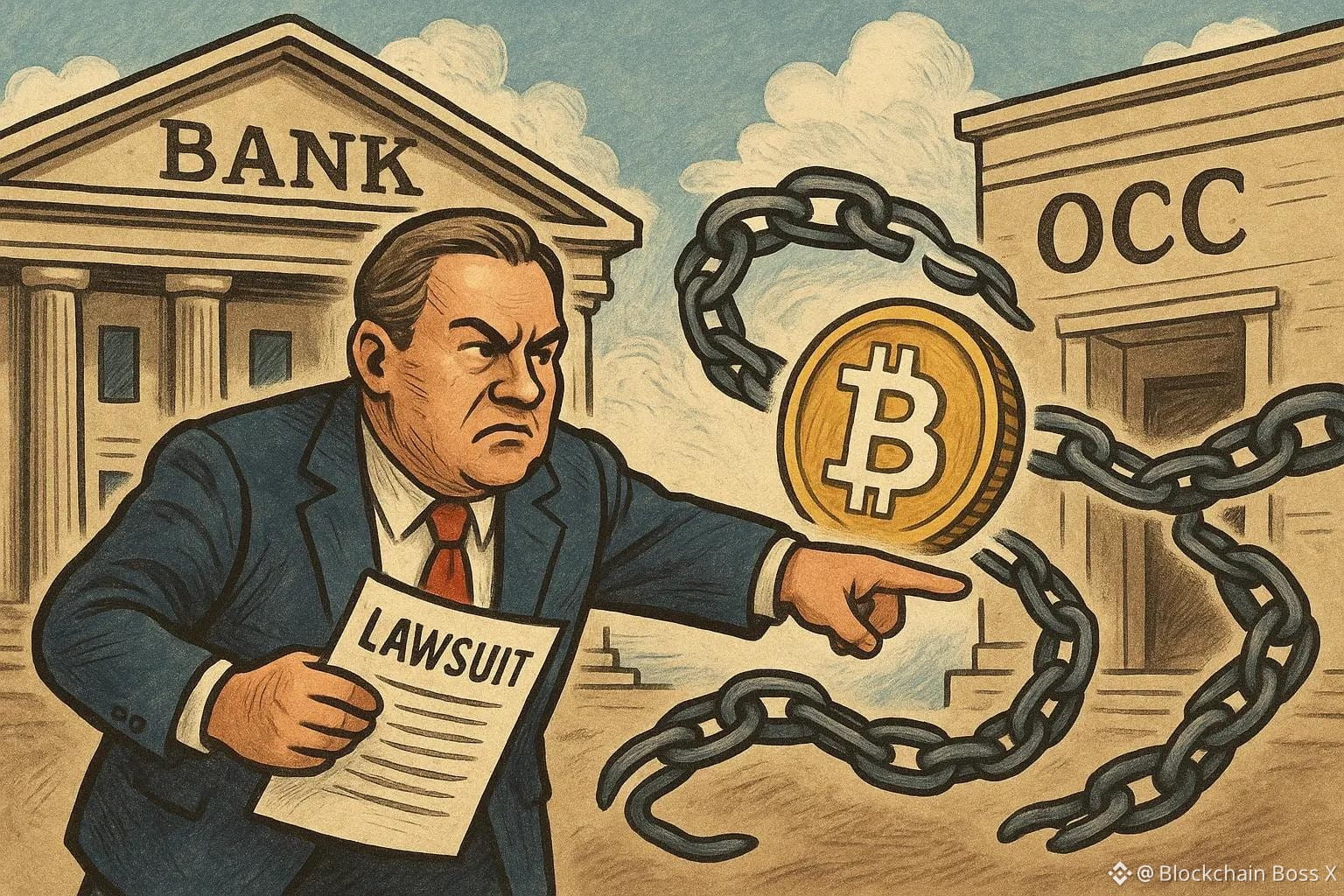
The Independent Community Bankers of America filed suit against the Office of the Comptroller of the Currency on October 2, challenging the agency's framework for national trust bank charters. The case targets the OCC's March 2026 final rule, Interpretive Letter 1176, and the conditional approval of Protego's charter.
ICBA argues the OCC went beyond the authority Congress granted under the National Bank Act by allowing limited-purpose trust banks to conduct substantial non-fiduciary activities. Its broader concern is that crypto firms could receive a federal charter without facing the same requirements that apply to insured, deposit-taking banks, including FDIC insurance and certain capital, liquidity, supervision and Community Reinvestment Act obligations.
But the OCC's position is different. Its March rule says it is clarifying longstanding authority for trust banks to conduct non-fiduciary activities related to trust-company operations, and that the rule itself does not expand or contract the agency's chartering authority.
That makes this case bigger than a fight over crypto. At its core, the court will have to examine how far the OCC's existing charter authority actually reaches.
The ruling could shape how crypto and fintech companies access the national banking system — and where regulators draw the line between a trust bank and a traditional bank.
#OCC #ICBA #CryptoRegulation
$SAND $VELVET $NIGHT
{future}(NIGHTUSDT)
{future}(VELVETUSDT)
{future}(SANDUSDT)
#icbasuesoccovercryptobankcharters
Community Banks Just Took Crypto Bank Charters to Federal Court
Crypto's push deeper into the U.S. banking system just hit a legal roadblock.
The Independent Community Bankers of America filed suit against the Office of the Comptroller of the Currency on October 2, challenging the agency's framework for national trust bank charters. The case targets the OCC's March 2026 final rule, Interpretive Letter 1176, and the conditional approval of Protego's charter.
ICBA argues the OCC went beyond the authority Congress granted under the National Bank Act by allowing limited-purpose trust banks to conduct substantial non-fiduciary activities. Its broader concern is that crypto firms could receive a federal charter without facing the same requirements that apply to insured, deposit-taking banks, including FDIC insurance and certain capital, liquidity, supervision and Community Reinvestment Act obligations.
But the OCC's position is different. Its March rule says it is clarifying longstanding authority for trust banks to conduct non-fiduciary activities related to trust-company operations, and that the rule itself does not expand or contract the agency's chartering authority.
That makes this case bigger than a fight over crypto. At its core, the court will have to examine how far the OCC's existing charter authority actually reaches.
The ruling could shape how crypto and fintech companies access the national banking system — and where regulators draw the line between a trust bank and a traditional bank.
#OCC #ICBA #CryptoRegulation
$SAND $VELVET $NIGHT
Community Banks Just Took Crypto Bank Charters to Federal Court
Crypto's push deeper into the U.S. banking system just hit a legal roadblock.
The Independent Community Bankers of America filed suit against the Office of the Comptroller of the Currency on October 2, challenging the agency's framework for national trust bank charters. The case targets the OCC's March 2026 final rule, Interpretive Letter 1176, and the conditional approval of Protego's charter.
ICBA argues the OCC went beyond the authority Congress granted under the National Bank Act by allowing limited-purpose trust banks to conduct substantial non-fiduciary activities. Its broader concern is that crypto firms could receive a federal charter without facing the same requirements that apply to insured, deposit-taking banks, including FDIC insurance and certain capital, liquidity, supervision and Community Reinvestment Act obligations.
But the OCC's position is different. Its March rule says it is clarifying longstanding authority for trust banks to conduct non-fiduciary activities related to trust-company operations, and that the rule itself does not expand or contract the agency's chartering authority.
That makes this case bigger than a fight over crypto. At its core, the court will have to examine how far the OCC's existing charter authority actually reaches.
The ruling could shape how crypto and fintech companies access the national banking system — and where regulators draw the line between a trust bank and a traditional bank.
#OCC #ICBA #CryptoRegulation
$SAND $VELVET $NIGHT
2.5k

·
--
🏦 Crypto firms are getting closer to the banking system. Community banks just went to court over it...
#icbasuesoccovercryptobankcharters
The Independent Community Bankers of America has sued the OCC, challenging national trust-bank charters granted to crypto firms.
But here's the detail that's easy to miss:
These trust charters do not make crypto firms ordinary deposit-taking banks.
They can provide services such as digital-asset custody and payment settlement, but they don't automatically get the ability to accept deposits or make loans.
And the OCC is simultaneously maintaining a pipeline of digital-asset charter applications, including Zero Hash, Payward, EDX Trust, Dakota National Trust Bank and others.
So the real battle isn't simply:
banks vs crypto.
It's:
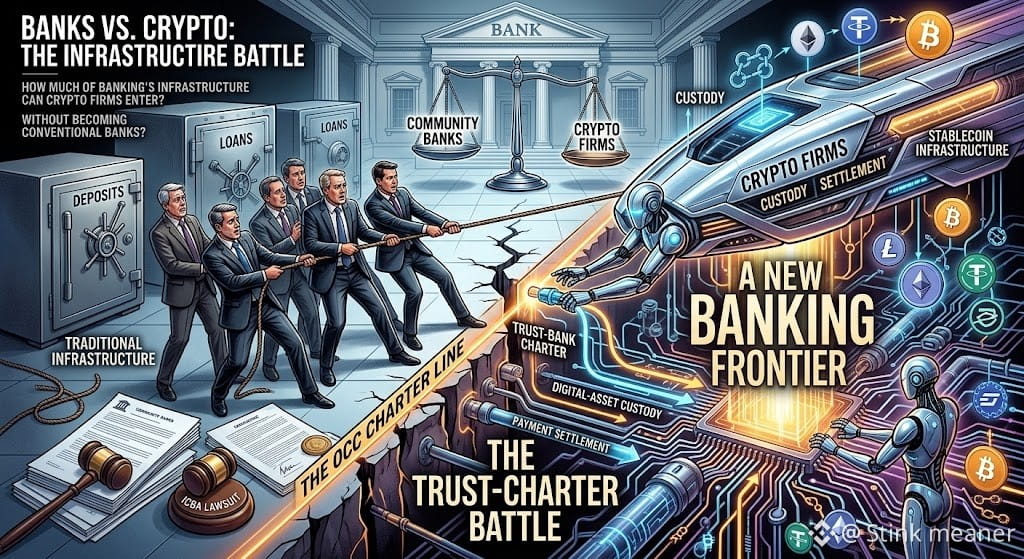
How much of banking's infrastructure can crypto firms enter without becoming conventional banks?
That boundary could determine who controls custody, settlement and stablecoin infrastructure next.
DYOR. The lawsuit challenges specific OCC charter decisions and does not itself invalidate existing charters.
$USDC $ETH $COIN
#ICBASuesOCCOverCryptoBankCharters #CryptoRegulation #Stablecoins #SECProposesCryptoCustodyRules
🏦 Crypto firms are getting closer to the banking system. Community banks just went to court over it...
#icbasuesoccovercryptobankcharters
The Independent Community Bankers of America has sued the OCC, challenging national trust-bank charters granted to crypto firms.
But here's the detail that's easy to miss:
These trust charters do not make crypto firms ordinary deposit-taking banks.
They can provide services such as digital-asset custody and payment settlement, but they don't automatically get the ability to accept deposits or make loans.
And the OCC is simultaneously maintaining a pipeline of digital-asset charter applications, including Zero Hash, Payward, EDX Trust, Dakota National Trust Bank and others.
So the real battle isn't simply:
banks vs crypto.
It's:
How much of banking's infrastructure can crypto firms enter without becoming conventional banks?
That boundary could determine who controls custody, settlement and stablecoin infrastructure next.
DYOR. The lawsuit challenges specific OCC charter decisions and does not itself invalidate existing charters.
$USDC $ETH $COIN
#ICBASuesOCCOverCryptoBankCharters #CryptoRegulation #Stablecoins #SECProposesCryptoCustodyRules
#icbasuesoccovercryptobankcharters
The Independent Community Bankers of America has sued the OCC, challenging national trust-bank charters granted to crypto firms.
But here's the detail that's easy to miss:
These trust charters do not make crypto firms ordinary deposit-taking banks.
They can provide services such as digital-asset custody and payment settlement, but they don't automatically get the ability to accept deposits or make loans.
And the OCC is simultaneously maintaining a pipeline of digital-asset charter applications, including Zero Hash, Payward, EDX Trust, Dakota National Trust Bank and others.
So the real battle isn't simply:
banks vs crypto.
It's:
How much of banking's infrastructure can crypto firms enter without becoming conventional banks?
That boundary could determine who controls custody, settlement and stablecoin infrastructure next.
DYOR. The lawsuit challenges specific OCC charter decisions and does not itself invalidate existing charters.
$USDC $ETH $COIN
#ICBASuesOCCOverCryptoBankCharters #CryptoRegulation #Stablecoins #SECProposesCryptoCustodyRules
1
1.2k

·
--
#icbasuesoccovercryptobankcharters 🚨🏦 COMMUNITY BANKS JUST TOOK THE OCC TO COURT OVER CRYPTO BANK CHARTERS
The battle over crypto's place in the US banking system has moved into federal court. 👀
The Independent Community Bankers of America (ICBA) filed a lawsuit on October 2, 2026, against the Office of the Comptroller of the Currency (OCC) in the U.S. District Court for the District of Columbia.
⚖️ WHAT IS THE LAWSUIT ABOUT?
The ICBA is challenging the OCC's March 2026 rule and related guidance concerning national trust bank charters for firms involved in crypto and digital assets.
ICBA argues that the OCC exceeded the authority granted to it under the National Bank Act.
The banking group says these national trust charters can give crypto firms access to federal banking infrastructure without being subject to all of the same requirements that apply to traditional insured banks.
⚠️ THAT IS ICBA'S POSITION — NOT A COURT RULING.
The OCC declined to comment on the litigation.
🔹 How the $OCC.US interprets its national trust-bank authority
🔹 How crypto companies access federal banking infrastructure
🔹 The regulatory requirements attached to these charters
🔹 Competition between traditional banks and crypto firms
🔹 The future structure of institutional crypto custody and payments
🚨 THE BIG QUESTION
Will the court uphold the OCC's approach to national trust charters — or require changes to how crypto firms enter the federal banking system?
For now, the case is just beginning.$NVDAB
👀 Crypto banking regulation has officially become a courtroom battle.
#OCC #ICBA #CryptoRegulation #Crypto #Bitcoin #DigitalAssets #Banking #Blockchain #CryptoNews
#icbasuesoccovercryptobankcharters 🚨🏦 COMMUNITY BANKS JUST TOOK THE OCC TO COURT OVER CRYPTO BANK CHARTERS
The battle over crypto's place in the US banking system has moved into federal court. 👀
The Independent Community Bankers of America (ICBA) filed a lawsuit on October 2, 2026, against the Office of the Comptroller of the Currency (OCC) in the U.S. District Court for the District of Columbia.
⚖️ WHAT IS THE LAWSUIT ABOUT?
The ICBA is challenging the OCC's March 2026 rule and related guidance concerning national trust bank charters for firms involved in crypto and digital assets.
ICBA argues that the OCC exceeded the authority granted to it under the National Bank Act.
The banking group says these national trust charters can give crypto firms access to federal banking infrastructure without being subject to all of the same requirements that apply to traditional insured banks.
⚠️ THAT IS ICBA'S POSITION — NOT A COURT RULING.
The OCC declined to comment on the litigation.
🔹 How the $OCC.US interprets its national trust-bank authority
🔹 How crypto companies access federal banking infrastructure
🔹 The regulatory requirements attached to these charters
🔹 Competition between traditional banks and crypto firms
🔹 The future structure of institutional crypto custody and payments
🚨 THE BIG QUESTION
Will the court uphold the OCC's approach to national trust charters — or require changes to how crypto firms enter the federal banking system?
For now, the case is just beginning.$NVDAB
👀 Crypto banking regulation has officially become a courtroom battle.
#OCC #ICBA #CryptoRegulation #Crypto #Bitcoin #DigitalAssets #Banking #Blockchain #CryptoNews
The battle over crypto's place in the US banking system has moved into federal court. 👀
The Independent Community Bankers of America (ICBA) filed a lawsuit on October 2, 2026, against the Office of the Comptroller of the Currency (OCC) in the U.S. District Court for the District of Columbia.
⚖️ WHAT IS THE LAWSUIT ABOUT?
The ICBA is challenging the OCC's March 2026 rule and related guidance concerning national trust bank charters for firms involved in crypto and digital assets.
ICBA argues that the OCC exceeded the authority granted to it under the National Bank Act.
The banking group says these national trust charters can give crypto firms access to federal banking infrastructure without being subject to all of the same requirements that apply to traditional insured banks.
⚠️ THAT IS ICBA'S POSITION — NOT A COURT RULING.
The OCC declined to comment on the litigation.
🔹 How the $OCC.US interprets its national trust-bank authority
🔹 How crypto companies access federal banking infrastructure
🔹 The regulatory requirements attached to these charters
🔹 Competition between traditional banks and crypto firms
🔹 The future structure of institutional crypto custody and payments
🚨 THE BIG QUESTION
Will the court uphold the OCC's approach to national trust charters — or require changes to how crypto firms enter the federal banking system?
For now, the case is just beginning.$NVDAB
👀 Crypto banking regulation has officially become a courtroom battle.
#OCC #ICBA #CryptoRegulation #Crypto #Bitcoin #DigitalAssets #Banking #Blockchain #CryptoNews
NVDAB-0.09%
OCCUS+5.45%
2

·
--
If you are still ignoring banking litigation assuming it won't touch your portfolio, stop now.
Most traders focus entirely on short-term price charts and get caught off guard when structural liquidity shifts overnight. When traditional finance starts suing regulators over who gets custody rights, your access to fiat ramps and stablecoin reserves like $USDT hangs in the balance.
The Independent Community Bankers of America just filed a lawsuit against the OCC regarding crypto bank charters. Traditional banks claim these charters bypass standard safeguards, arguing that non-traditional crypto institutions shouldn't handle federal deposits without identical oversight. On the other side, crypto advocates point out that legacy banking is simply trying to protect its monopoly over clearing and settlements.
Personally, this looks like a clear anti-competitive defense move. As institutional appetite for assets like $BTC accelerates, regional banks realize they are losing fee revenue and settlement dominance to native digital asset custodians. Restricting specialized bank charters won't stop crypto integration; it will only push critical infrastructure into less transparent offshore channels.
Where do you think this leaves institutional crypto adoption if community banks succeed in blocking federal charters?
#ICBASuesOCCOverCryptoBankCharters #SECProposesCryptoCustodyRules
If you are still ignoring banking litigation assuming it won't touch your portfolio, stop now.
Most traders focus entirely on short-term price charts and get caught off guard when structural liquidity shifts overnight. When traditional finance starts suing regulators over who gets custody rights, your access to fiat ramps and stablecoin reserves like $USDT hangs in the balance.
The Independent Community Bankers of America just filed a lawsuit against the OCC regarding crypto bank charters. Traditional banks claim these charters bypass standard safeguards, arguing that non-traditional crypto institutions shouldn't handle federal deposits without identical oversight. On the other side, crypto advocates point out that legacy banking is simply trying to protect its monopoly over clearing and settlements.
Personally, this looks like a clear anti-competitive defense move. As institutional appetite for assets like $BTC accelerates, regional banks realize they are losing fee revenue and settlement dominance to native digital asset custodians. Restricting specialized bank charters won't stop crypto integration; it will only push critical infrastructure into less transparent offshore channels.
Where do you think this leaves institutional crypto adoption if community banks succeed in blocking federal charters?
#ICBASuesOCCOverCryptoBankCharters #SECProposesCryptoCustodyRules
Most traders focus entirely on short-term price charts and get caught off guard when structural liquidity shifts overnight. When traditional finance starts suing regulators over who gets custody rights, your access to fiat ramps and stablecoin reserves like $USDT hangs in the balance.
The Independent Community Bankers of America just filed a lawsuit against the OCC regarding crypto bank charters. Traditional banks claim these charters bypass standard safeguards, arguing that non-traditional crypto institutions shouldn't handle federal deposits without identical oversight. On the other side, crypto advocates point out that legacy banking is simply trying to protect its monopoly over clearing and settlements.
Personally, this looks like a clear anti-competitive defense move. As institutional appetite for assets like $BTC accelerates, regional banks realize they are losing fee revenue and settlement dominance to native digital asset custodians. Restricting specialized bank charters won't stop crypto integration; it will only push critical infrastructure into less transparent offshore channels.
Where do you think this leaves institutional crypto adoption if community banks succeed in blocking federal charters?
#ICBASuesOCCOverCryptoBankCharters #SECProposesCryptoCustodyRules

44

·
--
Bullish
#icbasuesoccovercryptobankcharters
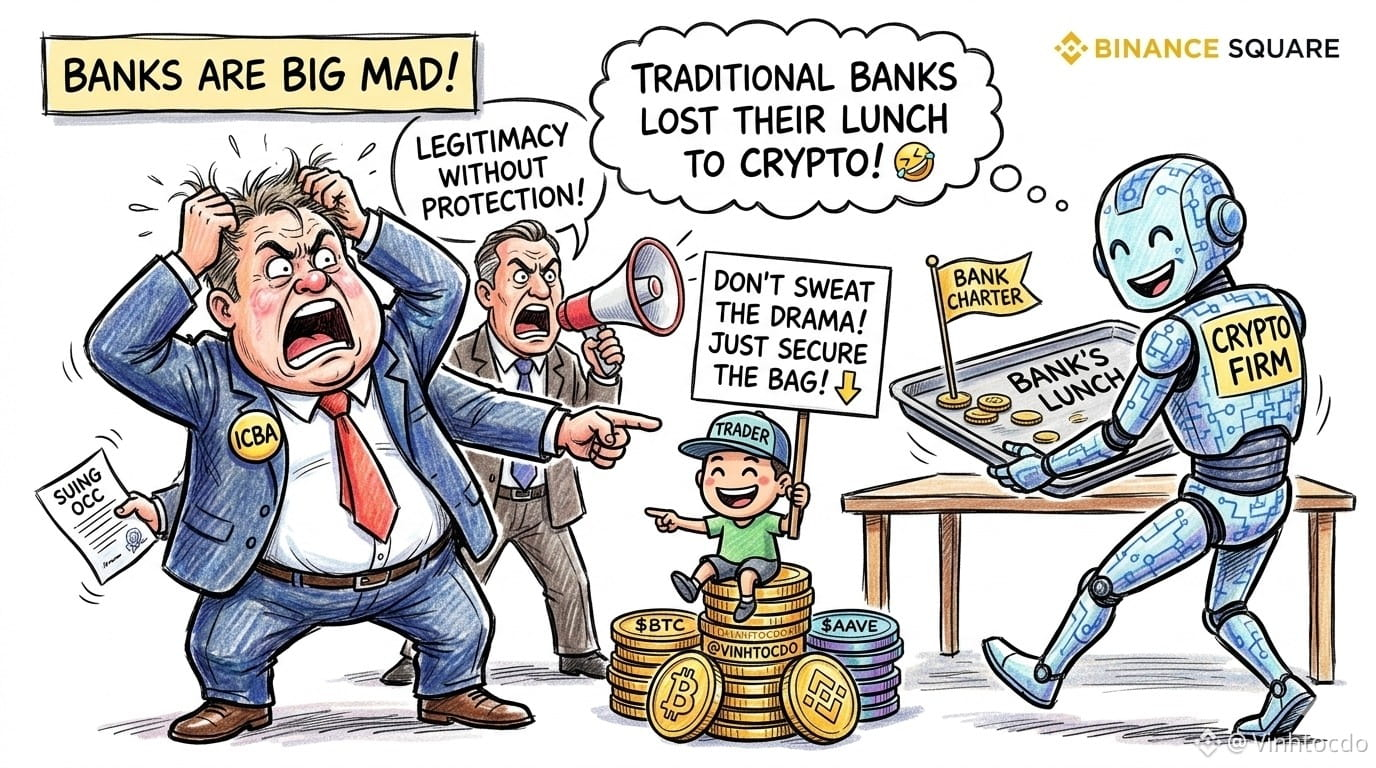
Traditional banks are big mad! 🏦 ICBA is literally suing the OCC because they made it "too easy" for crypto firms to get national trust bank charters. They claim it gives crypto "legitimacy without protection." Translation: Traditional banks are terrified of losing their lunch to crypto! 🤣
What should traders do?
Don't sweat the court drama. While the suits fight over charters, just focus on liquidity. Keep your assets secure and watch how decentralized infrastructure handles the heat.
Not financial advice! Use code VINHTOCDO or link to register: [https://www.binance.com/register?ref=VINHTOCDO](https://www.binance.com/register?ref=VINHTOCDO)
Click the trading tokens below to support me! 👇
$BTC
{future}(BTCUSDT)
$AAVE
{future}(AAVEUSDT)
$BNB
{future}(BNBUSDT)
#CryptoRegulation #BankingNews #CryptoLawsuit #DeFi #VINHTOCDO
#icbasuesoccovercryptobankcharters
Traditional banks are big mad! 🏦 ICBA is literally suing the OCC because they made it "too easy" for crypto firms to get national trust bank charters. They claim it gives crypto "legitimacy without protection." Translation: Traditional banks are terrified of losing their lunch to crypto! 🤣
What should traders do?
Don't sweat the court drama. While the suits fight over charters, just focus on liquidity. Keep your assets secure and watch how decentralized infrastructure handles the heat.
Not financial advice! Use code VINHTOCDO or link to register: https://www.binance.com/register?ref=VINHTOCDO
Click the trading tokens below to support me! 👇
$BTC
$AAVE
$BNB
#CryptoRegulation #BankingNews #CryptoLawsuit #DeFi #VINHTOCDO
Traditional banks are big mad! 🏦 ICBA is literally suing the OCC because they made it "too easy" for crypto firms to get national trust bank charters. They claim it gives crypto "legitimacy without protection." Translation: Traditional banks are terrified of losing their lunch to crypto! 🤣
What should traders do?
Don't sweat the court drama. While the suits fight over charters, just focus on liquidity. Keep your assets secure and watch how decentralized infrastructure handles the heat.
Not financial advice! Use code VINHTOCDO or link to register: https://www.binance.com/register?ref=VINHTOCDO
Click the trading tokens below to support me! 👇
$BTC
$AAVE
$BNB
#CryptoRegulation #BankingNews #CryptoLawsuit #DeFi #VINHTOCDO
1
436

#ICBASuesOCCOverCryptoBankCharters
**🚨 BIG: Community Bankers Draw the Line**
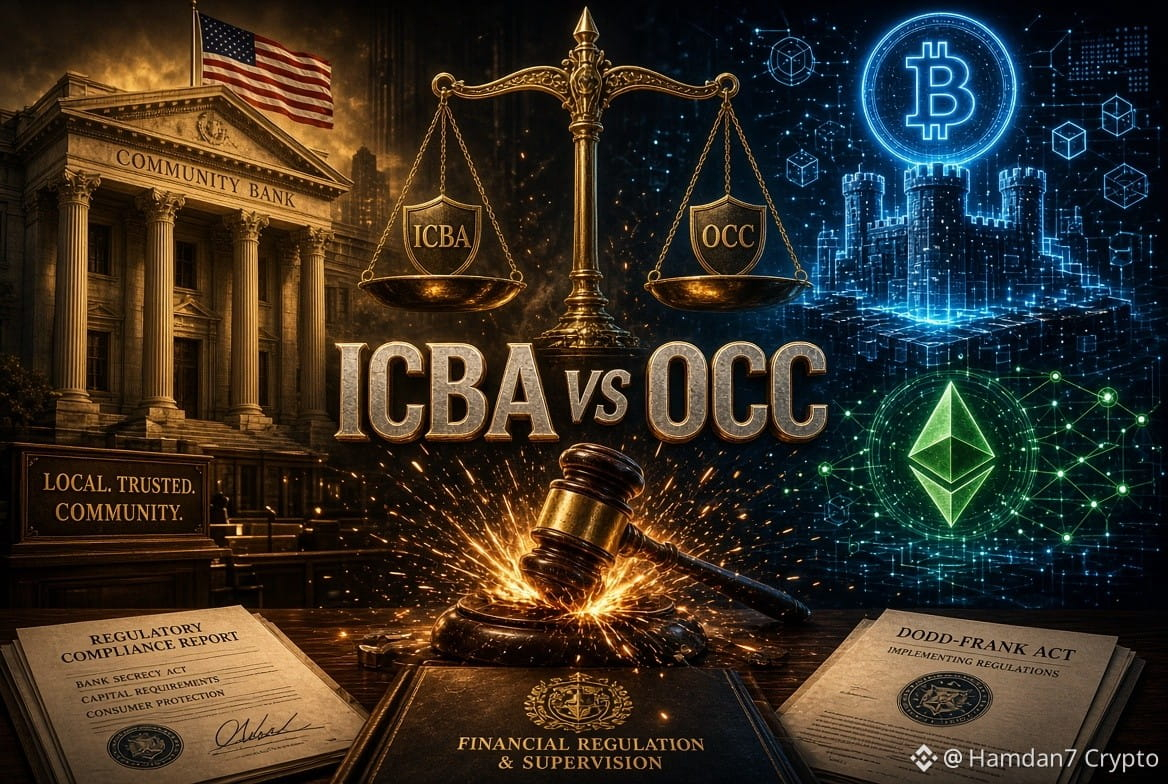
The Independent Community Bankers of America (ICBA) just sued the OCC, challenging its rules that let crypto firms grab national trust bank charters without the full suite of safeguards traditional banks face.
ICBA argues the March 2026 rule and related guidance exceed the agency’s legal authority under the National Bank Act — calling it a “side door” into the banking system that skips Community Reinvestment Act obligations, capital/liquidity standards, FDIC insurance, and consolidated supervision.
OCC’s position: the rule simply clarifies existing chartering authority.
This is a major clash between traditional community banks and the crypto industry’s push for federal banking legitimacy. Courts will now decide how wide that door stays open.
#ICBASuesOCCOverCryptoBankCharters #CryptoBanking #OCC #ICBA #NationalTrustCharter #CryptoRegulation #BankingWars #DigitalAssets #Fintech
#ICBASuesOCCOverCryptoBankCharters
**🚨 BIG: Community Bankers Draw the Line**
The Independent Community Bankers of America (ICBA) just sued the OCC, challenging its rules that let crypto firms grab national trust bank charters without the full suite of safeguards traditional banks face.
ICBA argues the March 2026 rule and related guidance exceed the agency’s legal authority under the National Bank Act — calling it a “side door” into the banking system that skips Community Reinvestment Act obligations, capital/liquidity standards, FDIC insurance, and consolidated supervision.
OCC’s position: the rule simply clarifies existing chartering authority.
This is a major clash between traditional community banks and the crypto industry’s push for federal banking legitimacy. Courts will now decide how wide that door stays open.
#ICBASuesOCCOverCryptoBankCharters #CryptoBanking #OCC #ICBA #NationalTrustCharter #CryptoRegulation #BankingWars #DigitalAssets #Fintech
**🚨 BIG: Community Bankers Draw the Line**
The Independent Community Bankers of America (ICBA) just sued the OCC, challenging its rules that let crypto firms grab national trust bank charters without the full suite of safeguards traditional banks face.
ICBA argues the March 2026 rule and related guidance exceed the agency’s legal authority under the National Bank Act — calling it a “side door” into the banking system that skips Community Reinvestment Act obligations, capital/liquidity standards, FDIC insurance, and consolidated supervision.
OCC’s position: the rule simply clarifies existing chartering authority.
This is a major clash between traditional community banks and the crypto industry’s push for federal banking legitimacy. Courts will now decide how wide that door stays open.
#ICBASuesOCCOverCryptoBankCharters #CryptoBanking #OCC #ICBA #NationalTrustCharter #CryptoRegulation #BankingWars #DigitalAssets #Fintech
5

#ICBASuesOCCOverCryptoBankCharters The Independent Community Bankers of America (ICBA) has sued the OCC over its approach to granting national trust-bank charters to crypto firms. ICBA argues the OCC exceeded its legal authority, while the dispute could shape how crypto companies enter the U.S. banking system. 🏦⚖️⛓️
#ICBAOCCCryptoBankCharters #CryptoBankingRegulation #USCryptoBanking #DigitalAssetRegulation
l $BTC
{spot}(BTCUSDT)
| $OCCI.US
{stock_us}(OCCI.US)
| $XRP
{spot}(XRPUSDT)
#ICBASuesOCCOverCryptoBankCharters The Independent Community Bankers of America (ICBA) has sued the OCC over its approach to granting national trust-bank charters to crypto firms. ICBA argues the OCC exceeded its legal authority, while the dispute could shape how crypto companies enter the U.S. banking system. 🏦⚖️⛓️
#ICBAOCCCryptoBankCharters #CryptoBankingRegulation #USCryptoBanking #DigitalAssetRegulation
l $BTC
| $OCCI.US
| $XRP
#ICBAOCCCryptoBankCharters #CryptoBankingRegulation #USCryptoBanking #DigitalAssetRegulation
l $BTC
| $OCCI.US
| $XRP
1
38

Article
ICBA sued OCC on Oct 2, 2026#icbasuesoccovercryptobankcharters
ICBA sued OCC on Oct 2, 2026 (U.S. District Court, D.C.) to block national trust bank charters for crypto firms.
Core claim
OCC exceeded National Bank Act authority via Interpretive Letter 1176 + March 2, 2026 final rule. Allows non-fiduciary crypto activities (custody, payments, issuance) under a lightly regulated “side door.”
Key data
~21 trust banks approved/conditionally approved under current OCC leadership At least 13 are crypto/digital-asset firms Named targets include Protego Holdings (conditional approval under challenge) Other applicants/approvals: Coinbase, Circle, Ripple, BitGo, Paxos, Kraken, Stripe, Crypto.com, Zero Hash
Feature Traditional Community Banks Crypto Trust Charters
FDIC insurance Required None
CRA obligations Mandatory Exempt
Capital/liquidity Strict consolidated standards Far lighter
State law preemption - Limited Broad (including consumer laws)
Impact
Crypto firms gain federal charter prestige + national payment-rail access without deposit-taking, lending rules, or full bank-level oversight. ICBA seeks to vacate the rule, letter, and Protego approval, and block future similar charters.
Trading & custody implications for crypto remain live while the case proceeds.
{spot}(BTCUSDT)
{spot}(AMZNBUSDT)
{spot}(AAPLBUSDT)
$BTC $SUI $SOL
#SECProposesCryptoCustodyRules #SECApproves3xLongCryptoCommodityETPs #G7PlansToReleaseUpTo100MBarrelsOilDiesel #USStocksCloseHigherOnWeakJobsData
[Click here for Article "G7 Emergency Oil & Diesel Release"](https://app.binance.com/uni-qr/cart/373184391714390?r=bubuyvnj&l=en&uco=cuthsvmhrnhukta6pswucq&uc=app_square_share_link&us=copylink)
ICBA sued OCC on Oct 2, 2026
#icbasuesoccovercryptobankcharters
ICBA sued OCC on Oct 2, 2026 (U.S. District Court, D.C.) to block national trust bank charters for crypto firms.
Core claim
OCC exceeded National Bank Act authority via Interpretive Letter 1176 + March 2, 2026 final rule. Allows non-fiduciary crypto activities (custody, payments, issuance) under a lightly regulated “side door.”
Key data
~21 trust banks approved/conditionally approved under current OCC leadership At least 13 are crypto/digital-asset firms Named targets include Protego Holdings (conditional approval under challenge) Other applicants/approvals: Coinbase, Circle, Ripple, BitGo, Paxos, Kraken, Stripe, Crypto.com, Zero Hash
Feature Traditional Community Banks Crypto Trust Charters
FDIC insurance Required None
CRA obligations Mandatory Exempt
Capital/liquidity Strict consolidated standards Far lighter
State law preemption - Limited Broad (including consumer laws)
Impact
Crypto firms gain federal charter prestige + national payment-rail access without deposit-taking, lending rules, or full bank-level oversight. ICBA seeks to vacate the rule, letter, and Protego approval, and block future similar charters.
Trading & custody implications for crypto remain live while the case proceeds.
$BTC $SUI $SOL
#SECProposesCryptoCustodyRules #SECApproves3xLongCryptoCommodityETPs #G7PlansToReleaseUpTo100MBarrelsOilDiesel #USStocksCloseHigherOnWeakJobsData
Click here for Article "G7 Emergency Oil & Diesel Release"
ICBA sued OCC on Oct 2, 2026 (U.S. District Court, D.C.) to block national trust bank charters for crypto firms.
Core claim
OCC exceeded National Bank Act authority via Interpretive Letter 1176 + March 2, 2026 final rule. Allows non-fiduciary crypto activities (custody, payments, issuance) under a lightly regulated “side door.”
Key data
~21 trust banks approved/conditionally approved under current OCC leadership At least 13 are crypto/digital-asset firms Named targets include Protego Holdings (conditional approval under challenge) Other applicants/approvals: Coinbase, Circle, Ripple, BitGo, Paxos, Kraken, Stripe, Crypto.com, Zero Hash
Feature Traditional Community Banks Crypto Trust Charters
FDIC insurance Required None
CRA obligations Mandatory Exempt
Capital/liquidity Strict consolidated standards Far lighter
State law preemption - Limited Broad (including consumer laws)
Impact
Crypto firms gain federal charter prestige + national payment-rail access without deposit-taking, lending rules, or full bank-level oversight. ICBA seeks to vacate the rule, letter, and Protego approval, and block future similar charters.
Trading & custody implications for crypto remain live while the case proceeds.
$BTC $SUI $SOL
#SECProposesCryptoCustodyRules #SECApproves3xLongCryptoCommodityETPs #G7PlansToReleaseUpTo100MBarrelsOilDiesel #USStocksCloseHigherOnWeakJobsData
Click here for Article "G7 Emergency Oil & Diesel Release"
6
2.9k

·
--
我查了最新的动态,国际清算银行(ICBA)确实对美国货币监理署(OCC)在加密货币银行牌照方面的做法提出了质疑。ICBA认为,OCC在缺乏明确全球监管框架的情况下,单独行动可能会造成监管套利和不公平竞争。他们强调需要更协调的全球监管方法来确保加密货币领域的稳定和安全。
我个人认为,ICBA的担忧是有道理的。目前,加密货币市场的监管确实存在滞后,不同国家的监管政策差异很大,这可能导致一些公司利用监管空白进行不正当竞争。OCC虽然有权制定美国的加密货币银行牌照政策,但完全不考虑国际影响可能会引发更大的监管问题。
#ICBASuesOCCOverCryptoBankCharters
我查了最新的动态,国际清算银行(ICBA)确实对美国货币监理署(OCC)在加密货币银行牌照方面的做法提出了质疑。ICBA认为,OCC在缺乏明确全球监管框架的情况下,单独行动可能会造成监管套利和不公平竞争。他们强调需要更协调的全球监管方法来确保加密货币领域的稳定和安全。
我个人认为,ICBA的担忧是有道理的。目前,加密货币市场的监管确实存在滞后,不同国家的监管政策差异很大,这可能导致一些公司利用监管空白进行不正当竞争。OCC虽然有权制定美国的加密货币银行牌照政策,但完全不考虑国际影响可能会引发更大的监管问题。
#ICBASuesOCCOverCryptoBankCharters
我个人认为,ICBA的担忧是有道理的。目前,加密货币市场的监管确实存在滞后,不同国家的监管政策差异很大,这可能导致一些公司利用监管空白进行不正当竞争。OCC虽然有权制定美国的加密货币银行牌照政策,但完全不考虑国际影响可能会引发更大的监管问题。
#ICBASuesOCCOverCryptoBankCharters
41
·
--
Have you noticed that when Anchorage is reportedly cutting 17 percent of staff, people treat it like a bank run instead of asking who actually holds their keys?
People lose money on this pattern every cycle. The headline drops, they dump $BTC into $USDT, and they never ask whether custody actually changed, even as $ICP stays in the search bar.
I do not buy the collapse narrative. Anchorage is a chartered crypto bank. Cutting staff right now looks like a firm getting cheaper to run under regulatory pressure, not like customer assets disappearing. Fear and greed is at 67. That is greed.
Greedy markets look for a story to take profit, and a layoff is a convenient one. The real pressure is coming from custody rule proposals and fights over crypto bank charters. Those force leaner shops. That is not a reason to exit. It is a reason to stop outsourcing your entire risk to one name.
Here is the simple process I would run. List every account, confirm who has the keys, and size down anything you cannot explain in one sentence. Then ignore the headcount and watch the rulemaking.
Where are you holding coins after a headline like this?
#AnchorageReportedlyCuts17 #SECProposesCryptoCustodyRules #ICBASuesOCCOverCryptoBankCharters
Have you noticed that when Anchorage is reportedly cutting 17 percent of staff, people treat it like a bank run instead of asking who actually holds their keys?
People lose money on this pattern every cycle. The headline drops, they dump $BTC into $USDT, and they never ask whether custody actually changed, even as $ICP stays in the search bar.
I do not buy the collapse narrative. Anchorage is a chartered crypto bank. Cutting staff right now looks like a firm getting cheaper to run under regulatory pressure, not like customer assets disappearing. Fear and greed is at 67. That is greed.
Greedy markets look for a story to take profit, and a layoff is a convenient one. The real pressure is coming from custody rule proposals and fights over crypto bank charters. Those force leaner shops. That is not a reason to exit. It is a reason to stop outsourcing your entire risk to one name.
Here is the simple process I would run. List every account, confirm who has the keys, and size down anything you cannot explain in one sentence. Then ignore the headcount and watch the rulemaking.
Where are you holding coins after a headline like this?
#AnchorageReportedlyCuts17 #SECProposesCryptoCustodyRules #ICBASuesOCCOverCryptoBankCharters
People lose money on this pattern every cycle. The headline drops, they dump $BTC into $USDT, and they never ask whether custody actually changed, even as $ICP stays in the search bar.
I do not buy the collapse narrative. Anchorage is a chartered crypto bank. Cutting staff right now looks like a firm getting cheaper to run under regulatory pressure, not like customer assets disappearing. Fear and greed is at 67. That is greed.
Greedy markets look for a story to take profit, and a layoff is a convenient one. The real pressure is coming from custody rule proposals and fights over crypto bank charters. Those force leaner shops. That is not a reason to exit. It is a reason to stop outsourcing your entire risk to one name.
Here is the simple process I would run. List every account, confirm who has the keys, and size down anything you cannot explain in one sentence. Then ignore the headcount and watch the rulemaking.
Where are you holding coins after a headline like this?
#AnchorageReportedlyCuts17 #SECProposesCryptoCustodyRules #ICBASuesOCCOverCryptoBankCharters

9

Why is nobody talking about traditional community banks desperately trying to block crypto from gaining institutional legitimacy?
Most retail investors get trapped staring at short-term price chop on $BTC and missing the structural regulatory battles that actually decide where capital flows next. When the established banking lobby feels threatened enough to take regulators to court, that is your signal that institutional rails are closer than ever.
The playbook here is simple. First, stop treating these lawsuits as bearish headlines and start viewing them as confirmation that crypto custody is disrupting legacy revenue models. While the Fear & Greed index sits comfortably in greed territory, the smart move is watching how infrastructure assets like $MINA and privacy-focused computation networks like $PHA position themselves for stricter compliance standards.
Second, audit your portfolio exposure to ensure you hold assets capable of surviving institutional filtering rather than chasing fleeting momentum. Watch custody pipeline developments closely because the entities securing actual bank charters will dictate liquidity for the next cycle.
Where do you think institutional crypto banking heads once this legal pushback clears?
#ICBASuesOCCOverCryptoBankCharters #SECProposesCryptoCustodyRules #AnchorageReportedlyCuts17
Why is nobody talking about traditional community banks desperately trying to block crypto from gaining institutional legitimacy?
Most retail investors get trapped staring at short-term price chop on $BTC and missing the structural regulatory battles that actually decide where capital flows next. When the established banking lobby feels threatened enough to take regulators to court, that is your signal that institutional rails are closer than ever.
The playbook here is simple. First, stop treating these lawsuits as bearish headlines and start viewing them as confirmation that crypto custody is disrupting legacy revenue models. While the Fear & Greed index sits comfortably in greed territory, the smart move is watching how infrastructure assets like $MINA and privacy-focused computation networks like $PHA position themselves for stricter compliance standards.
Second, audit your portfolio exposure to ensure you hold assets capable of surviving institutional filtering rather than chasing fleeting momentum. Watch custody pipeline developments closely because the entities securing actual bank charters will dictate liquidity for the next cycle.
Where do you think institutional crypto banking heads once this legal pushback clears?
#ICBASuesOCCOverCryptoBankCharters #SECProposesCryptoCustodyRules #AnchorageReportedlyCuts17
Most retail investors get trapped staring at short-term price chop on $BTC and missing the structural regulatory battles that actually decide where capital flows next. When the established banking lobby feels threatened enough to take regulators to court, that is your signal that institutional rails are closer than ever.
The playbook here is simple. First, stop treating these lawsuits as bearish headlines and start viewing them as confirmation that crypto custody is disrupting legacy revenue models. While the Fear & Greed index sits comfortably in greed territory, the smart move is watching how infrastructure assets like $MINA and privacy-focused computation networks like $PHA position themselves for stricter compliance standards.
Second, audit your portfolio exposure to ensure you hold assets capable of surviving institutional filtering rather than chasing fleeting momentum. Watch custody pipeline developments closely because the entities securing actual bank charters will dictate liquidity for the next cycle.
Where do you think institutional crypto banking heads once this legal pushback clears?
#ICBASuesOCCOverCryptoBankCharters #SECProposesCryptoCustodyRules #AnchorageReportedlyCuts17
33
·
--
Bullish
🚨 BAD JOBS DATA = GOOD STOCKS. WELCOME TO 2026. 🤡
U.S. stocks closed higher after September payrolls came in at just +29K vs. +90K expected, while unemployment rose to 4.2%.
And Wall Street basically said:
“Great. The Fed has less reason to hike.”
The reaction:
Nasdaq +1.19%
S&P 500 +0.73%
Dow +0.49%
The logic is simple:
Weak jobs → lower hike odds → easier financial conditions → tech and risk assets catch a bid.
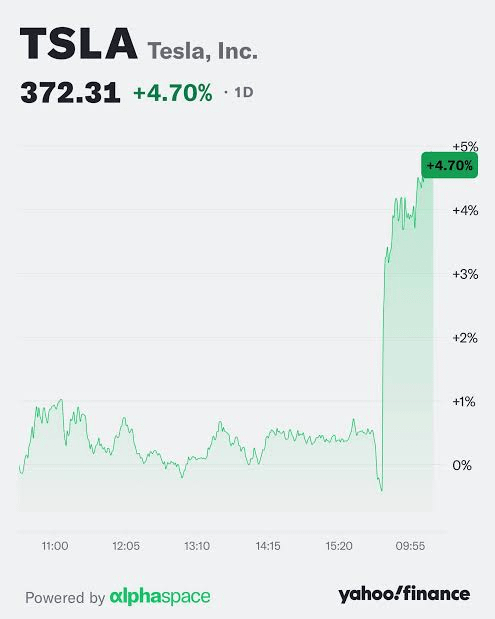
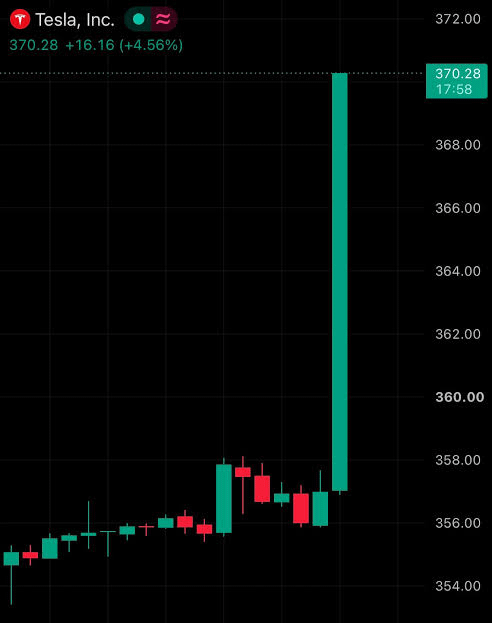
Rate-sensitive names and small caps also benefited, while Nvidia and Tesla helped lead the move.
So yes, apparently the bullish headline is now:
“The economy is slowing… buy stocks.” 😂
$QQQ $SPX $NVDA $TSLA $BTC
#usstocksclosehigheronweakjobsdata #SECProposesCryptoCustodyRules #SECApproves3xLongCryptoCommodityETPs #G7PlansToReleaseUpTo100MBarrelsOilDiesel #ICBASuesOCCOverCryptoBankCharters
🚨 BAD JOBS DATA = GOOD STOCKS. WELCOME TO 2026. 🤡
U.S. stocks closed higher after September payrolls came in at just +29K vs. +90K expected, while unemployment rose to 4.2%.
And Wall Street basically said:
“Great. The Fed has less reason to hike.”
The reaction:
Nasdaq +1.19%
S&P 500 +0.73%
Dow +0.49%
The logic is simple:
Weak jobs → lower hike odds → easier financial conditions → tech and risk assets catch a bid.
Rate-sensitive names and small caps also benefited, while Nvidia and Tesla helped lead the move.
So yes, apparently the bullish headline is now:
“The economy is slowing… buy stocks.” 😂
$QQQ $SPX $NVDA $TSLA $BTC
#usstocksclosehigheronweakjobsdata #SECProposesCryptoCustodyRules #SECApproves3xLongCryptoCommodityETPs #G7PlansToReleaseUpTo100MBarrelsOilDiesel #ICBASuesOCCOverCryptoBankCharters
U.S. stocks closed higher after September payrolls came in at just +29K vs. +90K expected, while unemployment rose to 4.2%.
And Wall Street basically said:
“Great. The Fed has less reason to hike.”
The reaction:
Nasdaq +1.19%
S&P 500 +0.73%
Dow +0.49%
The logic is simple:
Weak jobs → lower hike odds → easier financial conditions → tech and risk assets catch a bid.
Rate-sensitive names and small caps also benefited, while Nvidia and Tesla helped lead the move.
So yes, apparently the bullish headline is now:
“The economy is slowing… buy stocks.” 😂
$QQQ $SPX $NVDA $TSLA $BTC
#usstocksclosehigheronweakjobsdata #SECProposesCryptoCustodyRules #SECApproves3xLongCryptoCommodityETPs #G7PlansToReleaseUpTo100MBarrelsOilDiesel #ICBASuesOCCOverCryptoBankCharters
FEDAT - sport digital assets marketplace:
"Плохие новости — это хорошие новости" для рынка, пока ФРС держит руку на пульсе. Слабые данные по занятости действительно дают рынку зеленый свет на ожидание смягчения политики, что мгновенно разгоняет техсектор. Логика железная, хоть со стороны и звучит абсурдно🚀🤝👍
1
1
10
23.1k
·
--
Bullish
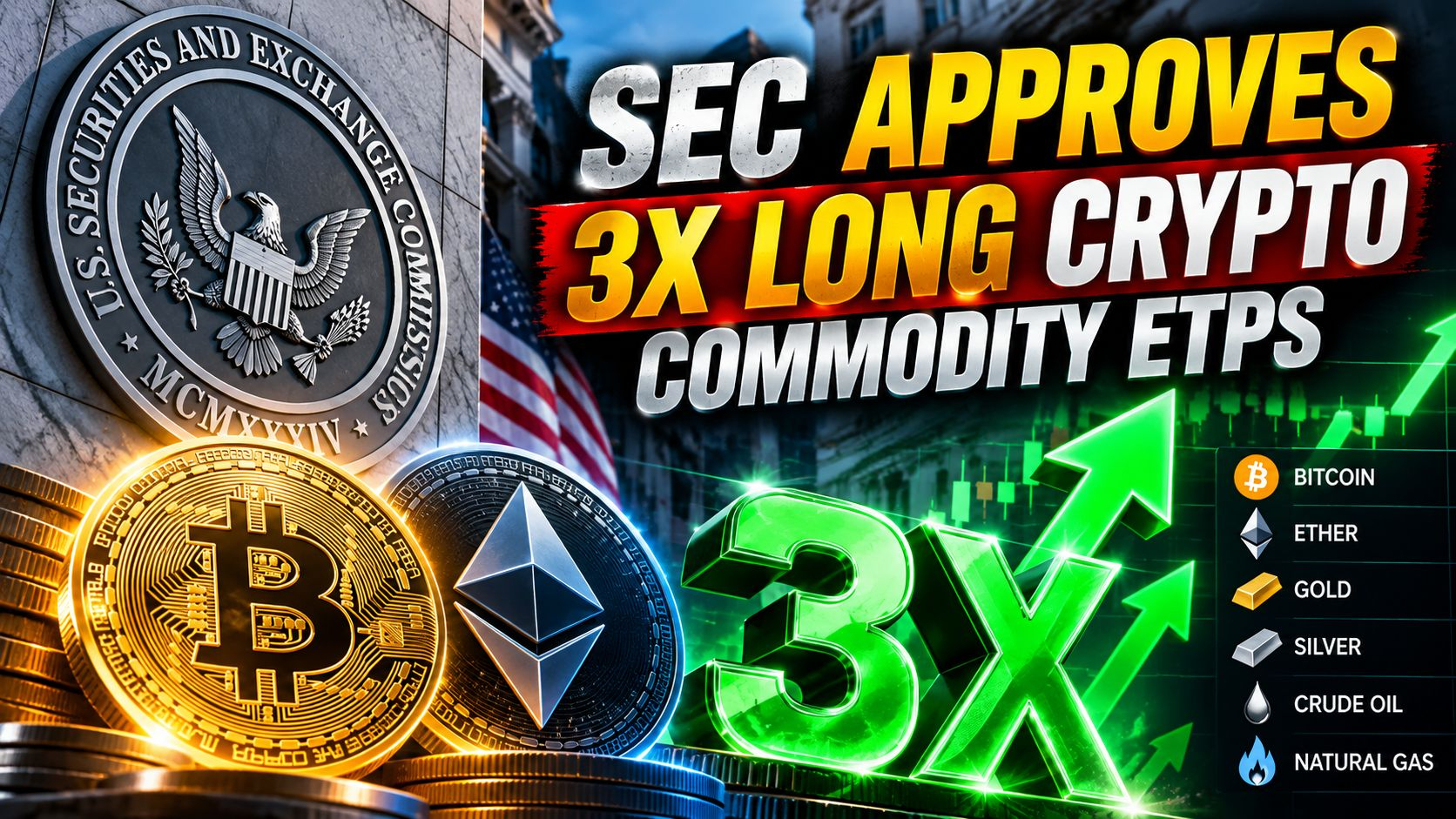
🚨 THE SEC JUST APPROVED 3X LONG BITCOIN AND ETHER ETPs.
This is not subtle.
The SEC approved Cboe BZX listings for new 3x leveraged commodity ETPs tied to:
Bitcoin
Ether
Gold
Silver
Crude Oil
Natural Gas
That means regulated markets are moving beyond simple spot exposure.
Wall Street is now getting access to products designed to deliver roughly 3x the daily move of BTC and ETH.
Big upside if the trend goes your way.
Big pain if it doesn’t.
And that’s the real signal:
Crypto is no longer being treated like an asset class that needs to be kept at arm’s length.
It’s being packaged with the same aggressive leverage tools as traditional commodities.
Spot ETFs were step one.
3x crypto ETPs are a very different level of risk appetite. 👀
$BTC $ETH $XAU $BZ $XAG
{future}(XAGUSDT)
{future}(BZUSDT)
{future}(XAUUSDT)
#secapproves3xlongcryptocommodityetps #SECProposesCryptoCustodyRules #G7PlansToReleaseUpTo100MBarrelsOilDiesel #ICBASuesOCCOverCryptoBankCharters #USStocksCloseHigherOnWeakJobsData
🚨 THE SEC JUST APPROVED 3X LONG BITCOIN AND ETHER ETPs.
This is not subtle.
The SEC approved Cboe BZX listings for new 3x leveraged commodity ETPs tied to:
Bitcoin
Ether
Gold
Silver
Crude Oil
Natural Gas
That means regulated markets are moving beyond simple spot exposure.
Wall Street is now getting access to products designed to deliver roughly 3x the daily move of BTC and ETH.
Big upside if the trend goes your way.
Big pain if it doesn’t.
And that’s the real signal:
Crypto is no longer being treated like an asset class that needs to be kept at arm’s length.
It’s being packaged with the same aggressive leverage tools as traditional commodities.
Spot ETFs were step one.
3x crypto ETPs are a very different level of risk appetite. 👀
$BTC $ETH $XAU $BZ $XAG
#secapproves3xlongcryptocommodityetps #SECProposesCryptoCustodyRules #G7PlansToReleaseUpTo100MBarrelsOilDiesel #ICBASuesOCCOverCryptoBankCharters #USStocksCloseHigherOnWeakJobsData
This is not subtle.
The SEC approved Cboe BZX listings for new 3x leveraged commodity ETPs tied to:
Bitcoin
Ether
Gold
Silver
Crude Oil
Natural Gas
That means regulated markets are moving beyond simple spot exposure.
Wall Street is now getting access to products designed to deliver roughly 3x the daily move of BTC and ETH.
Big upside if the trend goes your way.
Big pain if it doesn’t.
And that’s the real signal:
Crypto is no longer being treated like an asset class that needs to be kept at arm’s length.
It’s being packaged with the same aggressive leverage tools as traditional commodities.
Spot ETFs were step one.
3x crypto ETPs are a very different level of risk appetite. 👀
$BTC $ETH $XAU $BZ $XAG
#secapproves3xlongcryptocommodityetps #SECProposesCryptoCustodyRules #G7PlansToReleaseUpTo100MBarrelsOilDiesel #ICBASuesOCCOverCryptoBankCharters #USStocksCloseHigherOnWeakJobsData
CryptoMind学道:
3x daily reset means you bleed in chop. If $BTC goes sideways for a month, you're down even if spot is flat. How do you plan to trade these?
2
17
14.7k

·
--
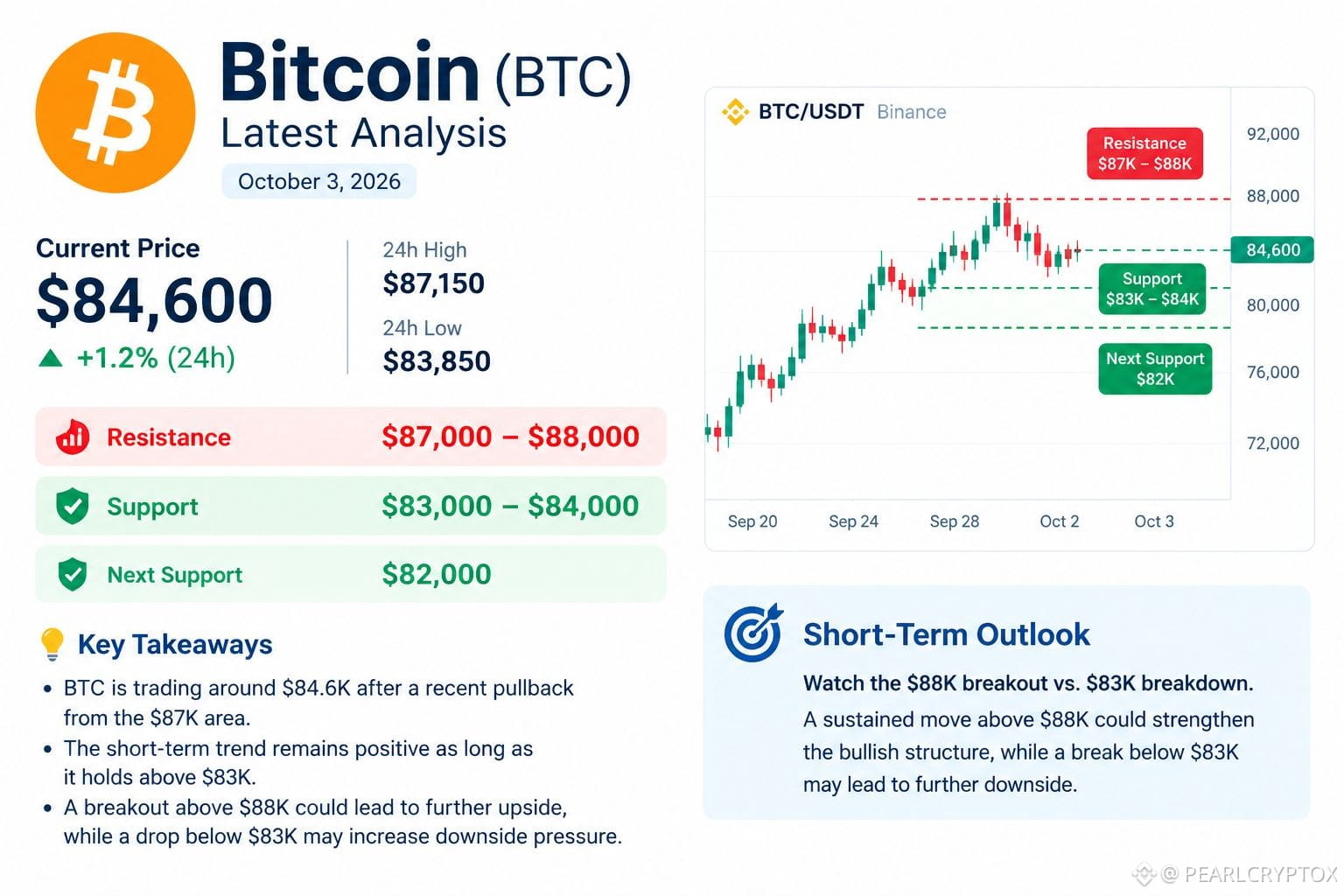
Bitcoin (BTC) $BTC — Latest Short Analysis
Current price: ~$84,600 on Binance. �
Binance
24h high: ~$87,150; 24h low: ~$83,850. �
Binance
Resistance: $87K–$88K
Support: $83K–$84K; below that, $82K is an important area.
BTC recently broke above ~$85K but has pulled back toward $84.6K. �
CryptoRank +1
Short-term: Watch $88K breakout vs. $83K breakdown. A sustained move above $88K would strengthen the short-term structure; losing $83K would weaken it. �
{spot}(BTCUSDT)
#CerebrasSinksNearly20%OnReportNvidiaToPowerOpenAI #SECProposesCryptoCustodyRules
#SECApproves3xLongCryptoCommodityETPs
#ICBASuesOCCOverCryptoBankCharters
#AnchorageReportedlyCuts17%Workforce
Bitcoin (BTC) $BTC — Latest Short Analysis
Current price: ~$84,600 on Binance. �
Binance
24h high: ~$87,150; 24h low: ~$83,850. �
Binance
Resistance: $87K–$88K
Support: $83K–$84K; below that, $82K is an important area.
BTC recently broke above ~$85K but has pulled back toward $84.6K. �
CryptoRank +1
Short-term: Watch $88K breakout vs. $83K breakdown. A sustained move above $88K would strengthen the short-term structure; losing $83K would weaken it. �
#CerebrasSinksNearly20%OnReportNvidiaToPowerOpenAI #SECProposesCryptoCustodyRules
#SECApproves3xLongCryptoCommodityETPs
#ICBASuesOCCOverCryptoBankCharters
#AnchorageReportedlyCuts17%Workforce
Current price: ~$84,600 on Binance. �
Binance
24h high: ~$87,150; 24h low: ~$83,850. �
Binance
Resistance: $87K–$88K
Support: $83K–$84K; below that, $82K is an important area.
BTC recently broke above ~$85K but has pulled back toward $84.6K. �
CryptoRank +1
Short-term: Watch $88K breakout vs. $83K breakdown. A sustained move above $88K would strengthen the short-term structure; losing $83K would weaken it. �
#CerebrasSinksNearly20%OnReportNvidiaToPowerOpenAI #SECProposesCryptoCustodyRules
#SECApproves3xLongCryptoCommodityETPs
#ICBASuesOCCOverCryptoBankCharters
#AnchorageReportedlyCuts17%Workforce
266
Verified

Article
G7 Emergency Oil & Diesel Release#g7planstoreleaseupto100mbarrelsoildiesel
G7 Emergency Oil & Diesel Release — Market Impact Analysis
Key Update — October 2, 2026
The G7 has agreed to coordinate the release of up to 100 million barrels of emergency crude oil and petroleum products over the next four months, working through the International Energy Agency. The plan includes a substantial front-loaded diesel release within the first 20 days by G7 members and partners. ?
Key Statistics
Metric Data
Total planned emergency release -----------------------Up to 100 million barrels
Release duration ---------------------------------------4 months
Early diesel supply window------------------------------First 20 days
Approx. daily release rate if evenly spread--------------- ~0.83 million barrels/day
Share of global daily oil demand-------------------------Roughly one day of global oil demand
IEA public emergency stockpile--------------------------More than 1.2 billion barrels
Industry stocks held under government obligation---------About 600 million barrels
Earlier IEA-coordinated release in March 2026------------ - 400 million barrels
The 100 million-barrel plan is meaningful for near-term market liquidity, but it is still limited relative to global consumption. Spread evenly over four months, the release equates to about 833,000 barrels per day—enough to ease immediate tightness, especially in diesel, but not enough by itself to resolve a prolonged structural disruption.
️Why Diesel Is Being Prioritized
Diesel is central to freight, trucking, industrial activity, farming, shipping, construction, and heating in some regions. A rapid diesel release targets the segment of the fuel market where shortages and high prices can pass most directly into broader inflation.
The G7 statement also emphasized coordination around refinery maintenance and avoiding energy export restrictions. This matters because export limits can improve domestic availability temporarily while worsening shortages in import-dependent markets. (meduza.io)
Initial Market Transmission
The announcement is likely to affect markets through three channels:
Supply expectations: A confirmed emergency release increases near-term available supply and may reduce the scarcity premium embedded in crude and diesel futures.Inflation expectations: Lower wholesale fuel prices can eventually reduce pressure on transportation and production costs, although retail prices may adjust more slowly.Risk sentiment: Lower energy stress can support broader market confidence. For crypto, that may reduce one macro headwind, but it does not independently determine BTC or ETH price direction.
Market Context
This follows the IEA’s coordinated 400 million-barrel release in March 2026, described as the largest in the Agency’s history. The latest 100 million-barrel action indicates that policymakers remain focused on stabilizing physical fuel availability and managing the inflationary fallout from ongoing supply disruptions.
IEA member countries are required to maintain oil stocks equivalent to at least 90 days of net imports. These reserves are designed as a buffer for severe supply disruptions—not as a permanent substitute for normal production, refining, and trade flows.
What to Watch Next
Actual diesel volumes released during the first 20 daysRefinery utilization and maintenance schedulesShipping and transit conditions in key energy routesChanges in crude and diesel forward curvesGovernment decisions on fuel-export restrictionsThe persistence or resolution of the underlying geopolitical disruption
Bottom line: The coordinated release is a near-term supply-stabilization measure. It may ease diesel tightness and reduce fuel-related inflation pressure if barrels reach the right markets quickly. However, the broader outcome still depends on the duration of supply disruptions, refinery capacity, logistics, and global demand conditions. Emergency releases can soften the shock; they cannot guarantee a lasting decline in energy prices.
Market commentary is for informational purposes only and does not constitute investment advice.
$BTC $ETH $SOL
#SECProposesCryptoCustodyRules #SECApproves3xLongCryptoCommodityETPs #ICBASuesOCCOverCryptoBankCharters #USStocksCloseHigherOnWeakJobsData
{spot}(NVDABUSDT)
{spot}(SUIUSDT)
{spot}(BTCUSDT)
[Click here for Post "SEC Approved The First 3x Crypto -Commodity ETP"](https://app.binance.com/uni-qr/cpos/373163603571854?r=bubuyvnj&l=en&uco=cuthsvmhrnhukta6pswucq&uc=app_square_share_link&us=copylink)
G7 Emergency Oil & Diesel Release
#g7planstoreleaseupto100mbarrelsoildiesel
G7 Emergency Oil & Diesel Release — Market Impact Analysis
Key Update — October 2, 2026
The G7 has agreed to coordinate the release of up to 100 million barrels of emergency crude oil and petroleum products over the next four months, working through the International Energy Agency. The plan includes a substantial front-loaded diesel release within the first 20 days by G7 members and partners. ?
Key Statistics
Metric Data
Total planned emergency release -----------------------Up to 100 million barrels
Release duration ---------------------------------------4 months
Early diesel supply window------------------------------First 20 days
Approx. daily release rate if evenly spread--------------- ~0.83 million barrels/day
Share of global daily oil demand-------------------------Roughly one day of global oil demand
IEA public emergency stockpile--------------------------More than 1.2 billion barrels
Industry stocks held under government obligation---------About 600 million barrels
Earlier IEA-coordinated release in March 2026------------ - 400 million barrels
The 100 million-barrel plan is meaningful for near-term market liquidity, but it is still limited relative to global consumption. Spread evenly over four months, the release equates to about 833,000 barrels per day—enough to ease immediate tightness, especially in diesel, but not enough by itself to resolve a prolonged structural disruption.
️Why Diesel Is Being Prioritized
Diesel is central to freight, trucking, industrial activity, farming, shipping, construction, and heating in some regions. A rapid diesel release targets the segment of the fuel market where shortages and high prices can pass most directly into broader inflation.
The G7 statement also emphasized coordination around refinery maintenance and avoiding energy export restrictions. This matters because export limits can improve domestic availability temporarily while worsening shortages in import-dependent markets. (meduza.io)
Initial Market Transmission
The announcement is likely to affect markets through three channels:
Supply expectations: A confirmed emergency release increases near-term available supply and may reduce the scarcity premium embedded in crude and diesel futures.Inflation expectations: Lower wholesale fuel prices can eventually reduce pressure on transportation and production costs, although retail prices may adjust more slowly.Risk sentiment: Lower energy stress can support broader market confidence. For crypto, that may reduce one macro headwind, but it does not independently determine BTC or ETH price direction.
Market Context
This follows the IEA’s coordinated 400 million-barrel release in March 2026, described as the largest in the Agency’s history. The latest 100 million-barrel action indicates that policymakers remain focused on stabilizing physical fuel availability and managing the inflationary fallout from ongoing supply disruptions.
IEA member countries are required to maintain oil stocks equivalent to at least 90 days of net imports. These reserves are designed as a buffer for severe supply disruptions—not as a permanent substitute for normal production, refining, and trade flows.
What to Watch Next
Actual diesel volumes released during the first 20 daysRefinery utilization and maintenance schedulesShipping and transit conditions in key energy routesChanges in crude and diesel forward curvesGovernment decisions on fuel-export restrictionsThe persistence or resolution of the underlying geopolitical disruption
Bottom line: The coordinated release is a near-term supply-stabilization measure. It may ease diesel tightness and reduce fuel-related inflation pressure if barrels reach the right markets quickly. However, the broader outcome still depends on the duration of supply disruptions, refinery capacity, logistics, and global demand conditions. Emergency releases can soften the shock; they cannot guarantee a lasting decline in energy prices.
Market commentary is for informational purposes only and does not constitute investment advice.
$BTC $ETH $SOL
#SECProposesCryptoCustodyRules #SECApproves3xLongCryptoCommodityETPs #ICBASuesOCCOverCryptoBankCharters #USStocksCloseHigherOnWeakJobsData
Click here for Post "SEC Approved The First 3x Crypto -Commodity ETP"
G7 Emergency Oil & Diesel Release — Market Impact Analysis
Key Update — October 2, 2026
The G7 has agreed to coordinate the release of up to 100 million barrels of emergency crude oil and petroleum products over the next four months, working through the International Energy Agency. The plan includes a substantial front-loaded diesel release within the first 20 days by G7 members and partners. ?
Key Statistics
Metric Data
Total planned emergency release -----------------------Up to 100 million barrels
Release duration ---------------------------------------4 months
Early diesel supply window------------------------------First 20 days
Approx. daily release rate if evenly spread--------------- ~0.83 million barrels/day
Share of global daily oil demand-------------------------Roughly one day of global oil demand
IEA public emergency stockpile--------------------------More than 1.2 billion barrels
Industry stocks held under government obligation---------About 600 million barrels
Earlier IEA-coordinated release in March 2026------------ - 400 million barrels
The 100 million-barrel plan is meaningful for near-term market liquidity, but it is still limited relative to global consumption. Spread evenly over four months, the release equates to about 833,000 barrels per day—enough to ease immediate tightness, especially in diesel, but not enough by itself to resolve a prolonged structural disruption.
️Why Diesel Is Being Prioritized
Diesel is central to freight, trucking, industrial activity, farming, shipping, construction, and heating in some regions. A rapid diesel release targets the segment of the fuel market where shortages and high prices can pass most directly into broader inflation.
The G7 statement also emphasized coordination around refinery maintenance and avoiding energy export restrictions. This matters because export limits can improve domestic availability temporarily while worsening shortages in import-dependent markets. (meduza.io)
Initial Market Transmission
The announcement is likely to affect markets through three channels:
Supply expectations: A confirmed emergency release increases near-term available supply and may reduce the scarcity premium embedded in crude and diesel futures.Inflation expectations: Lower wholesale fuel prices can eventually reduce pressure on transportation and production costs, although retail prices may adjust more slowly.Risk sentiment: Lower energy stress can support broader market confidence. For crypto, that may reduce one macro headwind, but it does not independently determine BTC or ETH price direction.
Market Context
This follows the IEA’s coordinated 400 million-barrel release in March 2026, described as the largest in the Agency’s history. The latest 100 million-barrel action indicates that policymakers remain focused on stabilizing physical fuel availability and managing the inflationary fallout from ongoing supply disruptions.
IEA member countries are required to maintain oil stocks equivalent to at least 90 days of net imports. These reserves are designed as a buffer for severe supply disruptions—not as a permanent substitute for normal production, refining, and trade flows.
What to Watch Next
Actual diesel volumes released during the first 20 daysRefinery utilization and maintenance schedulesShipping and transit conditions in key energy routesChanges in crude and diesel forward curvesGovernment decisions on fuel-export restrictionsThe persistence or resolution of the underlying geopolitical disruption
Bottom line: The coordinated release is a near-term supply-stabilization measure. It may ease diesel tightness and reduce fuel-related inflation pressure if barrels reach the right markets quickly. However, the broader outcome still depends on the duration of supply disruptions, refinery capacity, logistics, and global demand conditions. Emergency releases can soften the shock; they cannot guarantee a lasting decline in energy prices.
Market commentary is for informational purposes only and does not constitute investment advice.
$BTC $ETH $SOL
#SECProposesCryptoCustodyRules #SECApproves3xLongCryptoCommodityETPs #ICBASuesOCCOverCryptoBankCharters #USStocksCloseHigherOnWeakJobsData
Click here for Post "SEC Approved The First 3x Crypto -Commodity ETP"
MDRIYAJ12:
1107847258 please help me Binance id please help me 🥺🥺😭
1
1
9
8.4k

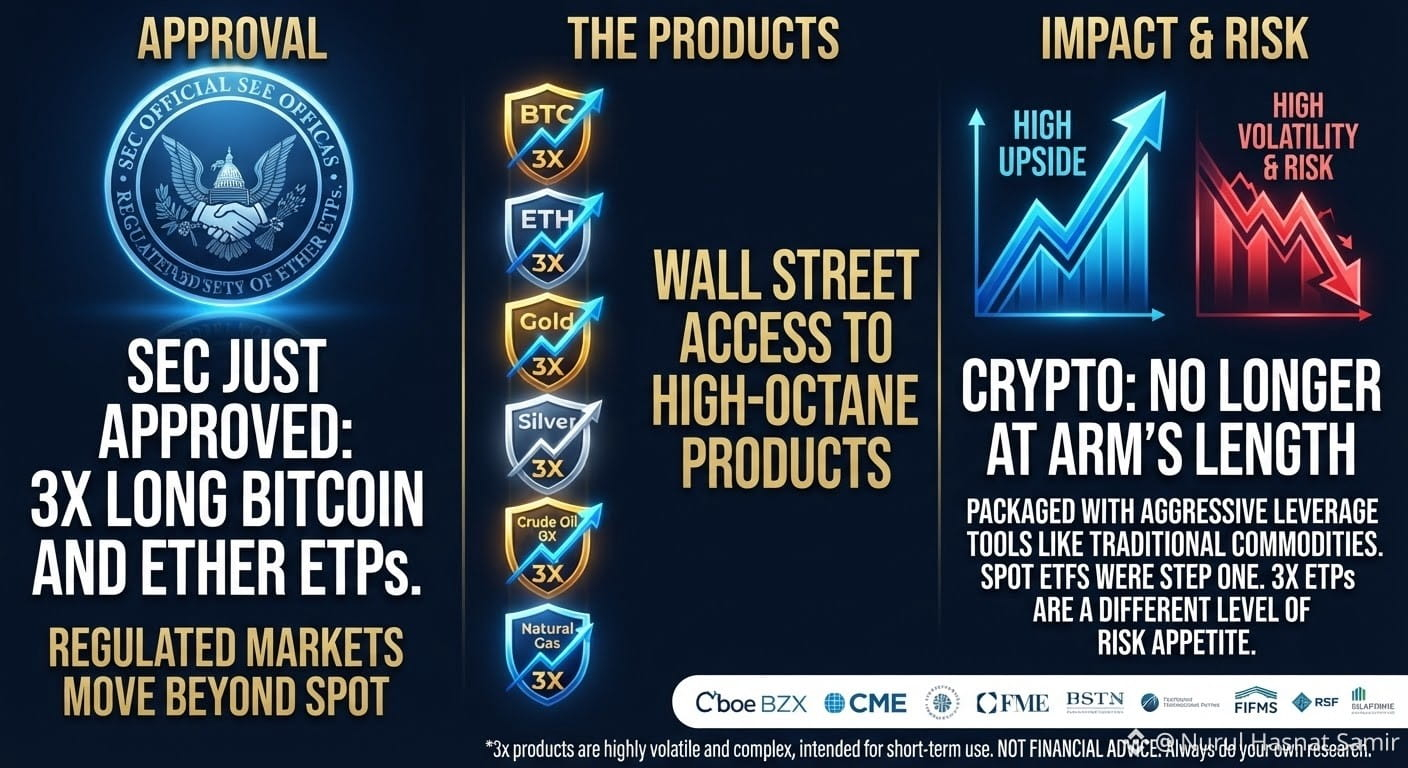
🚨 Major Milestone: SEC Approves 3x Long Bitcoin & Ether ETPs!
This is a massive shift in the crypto and financial markets. The SEC has officially approved Cboe BZX listings for new 3x leveraged commodity ETPs tied to:
Bitcoin (BTC)
Ether (ETH)
Gold, Silver, Crude Oil, and Natural Gas
What This Means:
Regulated markets are moving far beyond basic spot exposure. Wall Street investors now have direct access to high-octane products designed to deliver roughly 3x the daily price movements of Bitcoin and Ethereum.
📈 Massive upside potential if the market trends in your favor.
📉 High risk and volatility if it doesn't.
The Real Signal:
Crypto is no longer being kept at arm's length. It is now being packaged with the exact same aggressive leverage tools traditionally reserved for mainstream commodities. Spot ETFs were just step one—3x crypto ETPs mark a whole new era of risk appetite on Wall Street! 👀
$BTC $ETH $XAU $BZ $XAG
{spot}(BTCUSDT)
{spot}(ETHUSDT)
#SECApproves3xLongCryptoCommodityETPs #SECProposesCryptoCustodyRules #G7PlansToReleaseUpTo100MBarrelsOilDiesel #ICBASuesOCCOverCryptoBankCharters #USStocksCloseHigherOnWeakJobsData
🚨 Major Milestone: SEC Approves 3x Long Bitcoin & Ether ETPs!
This is a massive shift in the crypto and financial markets. The SEC has officially approved Cboe BZX listings for new 3x leveraged commodity ETPs tied to:
Bitcoin (BTC)
Ether (ETH)
Gold, Silver, Crude Oil, and Natural Gas
What This Means:
Regulated markets are moving far beyond basic spot exposure. Wall Street investors now have direct access to high-octane products designed to deliver roughly 3x the daily price movements of Bitcoin and Ethereum.
📈 Massive upside potential if the market trends in your favor.
📉 High risk and volatility if it doesn't.
The Real Signal:
Crypto is no longer being kept at arm's length. It is now being packaged with the exact same aggressive leverage tools traditionally reserved for mainstream commodities. Spot ETFs were just step one—3x crypto ETPs mark a whole new era of risk appetite on Wall Street! 👀
$BTC $ETH $XAU $BZ $XAG
#SECApproves3xLongCryptoCommodityETPs #SECProposesCryptoCustodyRules #G7PlansToReleaseUpTo100MBarrelsOilDiesel #ICBASuesOCCOverCryptoBankCharters #USStocksCloseHigherOnWeakJobsData
This is a massive shift in the crypto and financial markets. The SEC has officially approved Cboe BZX listings for new 3x leveraged commodity ETPs tied to:
Bitcoin (BTC)
Ether (ETH)
Gold, Silver, Crude Oil, and Natural Gas
What This Means:
Regulated markets are moving far beyond basic spot exposure. Wall Street investors now have direct access to high-octane products designed to deliver roughly 3x the daily price movements of Bitcoin and Ethereum.
📈 Massive upside potential if the market trends in your favor.
📉 High risk and volatility if it doesn't.
The Real Signal:
Crypto is no longer being kept at arm's length. It is now being packaged with the exact same aggressive leverage tools traditionally reserved for mainstream commodities. Spot ETFs were just step one—3x crypto ETPs mark a whole new era of risk appetite on Wall Street! 👀
$BTC $ETH $XAU $BZ $XAG
#SECApproves3xLongCryptoCommodityETPs #SECProposesCryptoCustodyRules #G7PlansToReleaseUpTo100MBarrelsOilDiesel #ICBASuesOCCOverCryptoBankCharters #USStocksCloseHigherOnWeakJobsData
203
·
--
⚠️ $SAND — FUNDING JUST HIT -1.2%. YOU KNOW WHAT THAT USUALLY MEANS?
Retail is piling into shorts.
And in altcoins, that can become fuel.
When too many traders lean one way, the market loves to punish the crowd:
Too many longs → dump.
Too many shorts → squeeze.
That’s why extreme funding matters.
It’s not just sentiment.
It can become a liquidation map.
Altcoins don’t always move on fundamentals.
Sometimes they just move to wipe out leverage. 👀
{future}(SANDUSDT)
#SECProposesCryptoCustodyRules #SECApproves3xLongCryptoCommodityETPs #G7PlansToReleaseUpTo100MBarrelsOilDiesel #ICBASuesOCCOverCryptoBankCharters #USStocksCloseHigherOnWeakJobsData
⚠️ $SAND — FUNDING JUST HIT -1.2%. YOU KNOW WHAT THAT USUALLY MEANS?
Retail is piling into shorts.
And in altcoins, that can become fuel.
When too many traders lean one way, the market loves to punish the crowd:
Too many longs → dump.
Too many shorts → squeeze.
That’s why extreme funding matters.
It’s not just sentiment.
It can become a liquidation map.
Altcoins don’t always move on fundamentals.
Sometimes they just move to wipe out leverage. 👀
#SECProposesCryptoCustodyRules #SECApproves3xLongCryptoCommodityETPs #G7PlansToReleaseUpTo100MBarrelsOilDiesel #ICBASuesOCCOverCryptoBankCharters #USStocksCloseHigherOnWeakJobsData
Retail is piling into shorts.
And in altcoins, that can become fuel.
When too many traders lean one way, the market loves to punish the crowd:
Too many longs → dump.
Too many shorts → squeeze.
That’s why extreme funding matters.
It’s not just sentiment.
It can become a liquidation map.
Altcoins don’t always move on fundamentals.
Sometimes they just move to wipe out leverage. 👀
#SECProposesCryptoCustodyRules #SECApproves3xLongCryptoCommodityETPs #G7PlansToReleaseUpTo100MBarrelsOilDiesel #ICBASuesOCCOverCryptoBankCharters #USStocksCloseHigherOnWeakJobsData
249
Log in to explore more content
Join global crypto users on Binance Square
⚡️ Get latest and useful information about crypto.
💬 Trusted by the world’s largest crypto exchange.
👍 Discover real insights from verified creators.
Email / Phone number
Trending Topics
1
#FedOctoberRateHikeOddsFallTo17%
1 views
47 Discussing
2
#NvidiaHitsRecordHighUp2.4%
11 views
37 Discussing
3
#CanaryFilesAmendedS1ForPEPEETF
1 views
28 Discussing
4
#USRussiaUkraineTalksReportedlyIncludeLukoilOilDeal
1,578 views
121 Discussing
5
#BitcoinParesGainsAfterRallyTo$86.5K
31,333 views
124 Discussing
6
#CerebrasSinksNearly20%OnReportNvidiaToPowerOpenAI
62,139 views
696 Discussing
7
#SECProposesCryptoCustodyRules
86,276 views
863 Discussing
8
#SECApproves3xLongCryptoCommodityETPs
59,640 views
626 Discussing
9
#MASKHitsRecordMarketCapAbove$35M
3,859 views
33 Discussing
10
#G7PlansToReleaseUpTo100MBarrelsOilDiesel
46,072 views
551 Discussing