

KimHotbae
2.6k Posts

KimHotbae
Report
Block User
✨Focused on long-term trends, risk discipline & smart wealth building.
Frequent Trader
4.6 Years
12 Following
525 Followers
1.8K+ Liked
Posts
All
Quotes
Videos
PINNED
·
--
Article
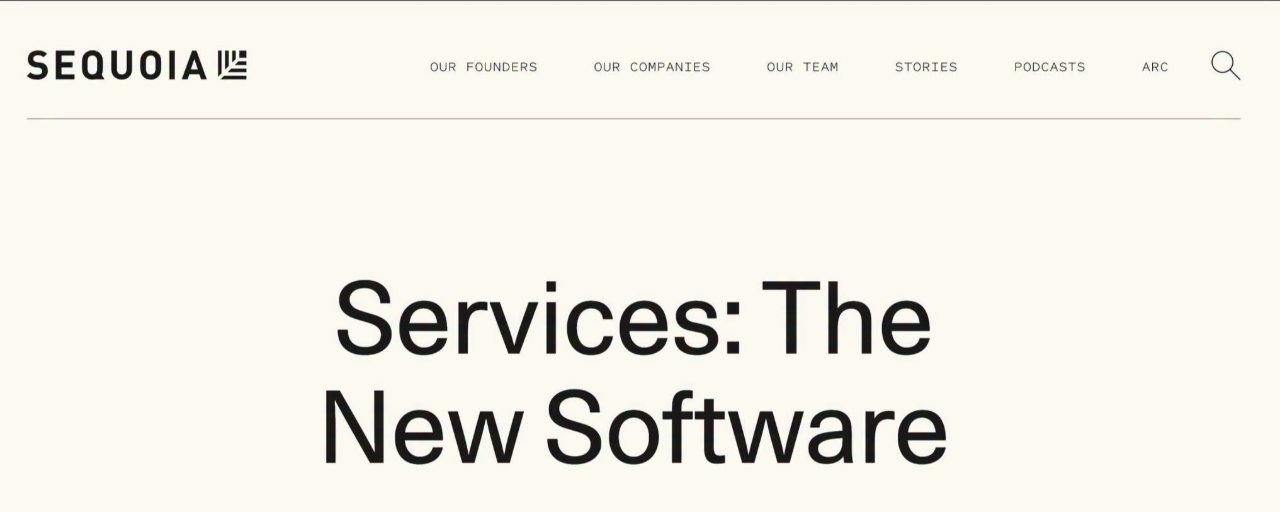
Sequoia: "The Next $1T Company Sells Work, Not Software"Sequoia Capital — the firm that backed Apple, Google, Nvidia, YouTube, Airbnb, Stripe — dropped a thesis worth reading closely.
The old model: For 20+ years, tech sold software. Microsoft sells Office, Adobe sells Photoshop, Salesforce sells CRM. Tools that help humans work faster. Copilot for everything.
The problem: Customers don't want software. They want work done. You don't want accounting software — you want books closed on time, taxes filed, reports delivered.
The insight: For every $1 businesses spend on software, they spend $6 on services. SaaS has been fighting over that $1. AI can now digitize the $6 — the knowledge workforce itself.
The map: Sequoia's Opportunity Map plots work by Intelligence vs. Judgement, Outsourced vs. Insourced. The sweet spot: highly standardized, already outsourced workflows — Insurance Brokerage ($140-200B), Accounting ($50-80B), Healthcare Revenue Cycle ($50-80B).
2025 = Copilot. 2026 = Autopilot. The winners won't build AI tools for accountants — they'll build AI accounting firms. Sequoia warns most Copilot startups face the Innovator's Dilemma: today you sell software to accountants, tomorrow you'd compete with them.
The bottom line: The next $1T AI company won't have the smartest chatbot. It'll be the first to turn work into a service you buy like electricity.
Crypto Cashtags That Align
Tier 1 — Direct "Sell Work" AI Agent Plays:
FET — Fetch.ai (ASI Alliance). Autonomous agents automating enterprise workflows. Built for agents doing work, not providing tools. (Ethereum){future}(FETUSDT)$VIRTUAL — Virtuals Protocol on Base. The agent creation infrastructure — a factory for building AI agents that sell outcomes, not subscriptions. (Base)$GRIFFAIN — Griffain on Solana. AI agent that executes on-chain actions. "Sell work" in its purest crypto form — you describe what you want, the agent does the job. SolanaOLAS — Autonolas on Ethereum. A framework for coordinating autonomous agent fleets — think of it as the operating system for a decentralized AI workforce. (Ethereum){alpha}(10x0001a500a6b18995b03f44bb040a5ffc28e45cb0)
Tier 2 — AI Infrastructure (the picks & shovels):
$TAO — Bittensor. A decentralized AI network where agents train, compete, and earn. The network layer for autonomous work — the protocol that lets AI sell its output peer-to-peer.RENDER — Render Network on Solana. Decentralized GPU compute. Every agent running in production needs compute power — Render is the hardware layer. (Solana){future}(RENDERUSDT)
Tier 3 — AI Agent Ecosystem:
$AI16Z — ai16z/ElizaOS on Solana. Named after the VC model itself — a DAO-run AI agent fund that makes autonomous investment decisions. Pure meta-commentary on Sequoia's thesis. Solana$ZEREBRO — Zerebro on Solana. An autonomous AI agent creating and distributing content without human intervention. "Sell work" in its most literal form — the agent is the output. Solana
The Sequoia filter: The next $1T company sells work, not software. In crypto, that means looking past the tool tokens and toward the agent workforce tokens — the protocols where AI doesn't just assist, but replaces the $6 of services for every $1 of software.
Not financial advice.
#NewsAboutCrypto #StrategicInvesting #BTC #SequoiaCapital
Sequoia: "The Next $1T Company Sells Work, Not Software"
Sequoia Capital — the firm that backed Apple, Google, Nvidia, YouTube, Airbnb, Stripe — dropped a thesis worth reading closely.
The old model: For 20+ years, tech sold software. Microsoft sells Office, Adobe sells Photoshop, Salesforce sells CRM. Tools that help humans work faster. Copilot for everything.
The problem: Customers don't want software. They want work done. You don't want accounting software — you want books closed on time, taxes filed, reports delivered.
The insight: For every $1 businesses spend on software, they spend $6 on services. SaaS has been fighting over that $1. AI can now digitize the $6 — the knowledge workforce itself.
The map: Sequoia's Opportunity Map plots work by Intelligence vs. Judgement, Outsourced vs. Insourced. The sweet spot: highly standardized, already outsourced workflows — Insurance Brokerage ($140-200B), Accounting ($50-80B), Healthcare Revenue Cycle ($50-80B).
2025 = Copilot. 2026 = Autopilot. The winners won't build AI tools for accountants — they'll build AI accounting firms. Sequoia warns most Copilot startups face the Innovator's Dilemma: today you sell software to accountants, tomorrow you'd compete with them.
The bottom line: The next $1T AI company won't have the smartest chatbot. It'll be the first to turn work into a service you buy like electricity.
Crypto Cashtags That Align
Tier 1 — Direct "Sell Work" AI Agent Plays:
FET — Fetch.ai (ASI Alliance). Autonomous agents automating enterprise workflows. Built for agents doing work, not providing tools. (Ethereum)$VIRTUAL — Virtuals Protocol on Base. The agent creation infrastructure — a factory for building AI agents that sell outcomes, not subscriptions. (Base)$GRIFFAIN — Griffain on Solana. AI agent that executes on-chain actions. "Sell work" in its purest crypto form — you describe what you want, the agent does the job. SolanaOLAS — Autonolas on Ethereum. A framework for coordinating autonomous agent fleets — think of it as the operating system for a decentralized AI workforce. (Ethereum)Tier 2 — AI Infrastructure (the picks & shovels):
$TAO — Bittensor. A decentralized AI network where agents train, compete, and earn. The network layer for autonomous work — the protocol that lets AI sell its output peer-to-peer.RENDER — Render Network on Solana. Decentralized GPU compute. Every agent running in production needs compute power — Render is the hardware layer. (Solana)Tier 3 — AI Agent Ecosystem:
$AI16Z — ai16z/ElizaOS on Solana. Named after the VC model itself — a DAO-run AI agent fund that makes autonomous investment decisions. Pure meta-commentary on Sequoia's thesis. Solana$ZEREBRO — Zerebro on Solana. An autonomous AI agent creating and distributing content without human intervention. "Sell work" in its most literal form — the agent is the output. Solana
The Sequoia filter: The next $1T company sells work, not software. In crypto, that means looking past the tool tokens and toward the agent workforce tokens — the protocols where AI doesn't just assist, but replaces the $6 of services for every $1 of software.
Not financial advice.
#NewsAboutCrypto #StrategicInvesting #BTC #SequoiaCapital
The old model: For 20+ years, tech sold software. Microsoft sells Office, Adobe sells Photoshop, Salesforce sells CRM. Tools that help humans work faster. Copilot for everything.
The problem: Customers don't want software. They want work done. You don't want accounting software — you want books closed on time, taxes filed, reports delivered.
The insight: For every $1 businesses spend on software, they spend $6 on services. SaaS has been fighting over that $1. AI can now digitize the $6 — the knowledge workforce itself.
The map: Sequoia's Opportunity Map plots work by Intelligence vs. Judgement, Outsourced vs. Insourced. The sweet spot: highly standardized, already outsourced workflows — Insurance Brokerage ($140-200B), Accounting ($50-80B), Healthcare Revenue Cycle ($50-80B).
2025 = Copilot. 2026 = Autopilot. The winners won't build AI tools for accountants — they'll build AI accounting firms. Sequoia warns most Copilot startups face the Innovator's Dilemma: today you sell software to accountants, tomorrow you'd compete with them.
The bottom line: The next $1T AI company won't have the smartest chatbot. It'll be the first to turn work into a service you buy like electricity.
Crypto Cashtags That Align
Tier 1 — Direct "Sell Work" AI Agent Plays:
FET — Fetch.ai (ASI Alliance). Autonomous agents automating enterprise workflows. Built for agents doing work, not providing tools. (Ethereum)$VIRTUAL — Virtuals Protocol on Base. The agent creation infrastructure — a factory for building AI agents that sell outcomes, not subscriptions. (Base)$GRIFFAIN — Griffain on Solana. AI agent that executes on-chain actions. "Sell work" in its purest crypto form — you describe what you want, the agent does the job. SolanaOLAS — Autonolas on Ethereum. A framework for coordinating autonomous agent fleets — think of it as the operating system for a decentralized AI workforce. (Ethereum)Tier 2 — AI Infrastructure (the picks & shovels):
$TAO — Bittensor. A decentralized AI network where agents train, compete, and earn. The network layer for autonomous work — the protocol that lets AI sell its output peer-to-peer.RENDER — Render Network on Solana. Decentralized GPU compute. Every agent running in production needs compute power — Render is the hardware layer. (Solana)Tier 3 — AI Agent Ecosystem:
$AI16Z — ai16z/ElizaOS on Solana. Named after the VC model itself — a DAO-run AI agent fund that makes autonomous investment decisions. Pure meta-commentary on Sequoia's thesis. Solana$ZEREBRO — Zerebro on Solana. An autonomous AI agent creating and distributing content without human intervention. "Sell work" in its most literal form — the agent is the output. Solana
The Sequoia filter: The next $1T company sells work, not software. In crypto, that means looking past the tool tokens and toward the agent workforce tokens — the protocols where AI doesn't just assist, but replaces the $6 of services for every $1 of software.
Not financial advice.
#NewsAboutCrypto #StrategicInvesting #BTC #SequoiaCapital
8
12
231
·
--
Bullish
🚨 $DOGE — WHALES ARE LOADING UP RIGHT UNDER THE BREAKOUT LEVEL.
Dogecoin is now testing the critical $0.098–$0.10 resistance zone — and large holders aren’t waiting for confirmation.
According to analyst Ali Martinez, whales accumulated more than 1.14 BILLION DOGE in just 96 hours as price pushed toward resistance.
That matters because roughly 28B DOGE previously changed hands around this zone, making it a major supply wall.
But momentum is building: DOGE has already reclaimed its 200-day EMA near $0.092, while derivatives open interest has also climbed sharply.
Now the setup gets interesting:
Break $0.10 with volume → shorts and trapped sellers could fuel the next leg.
Get rejected → whale accumulation faces its first real stress test.
The whales are already positioned.
Are they front-running the breakout? 👀
$DOGE #Dogecoin #DOGE #memecoin #crypto #altcoins
{future}(DOGEUSDT)
🚨 $DOGE — WHALES ARE LOADING UP RIGHT UNDER THE BREAKOUT LEVEL.
Dogecoin is now testing the critical $0.098–$0.10 resistance zone — and large holders aren’t waiting for confirmation.
According to analyst Ali Martinez, whales accumulated more than 1.14 BILLION DOGE in just 96 hours as price pushed toward resistance.
That matters because roughly 28B DOGE previously changed hands around this zone, making it a major supply wall.
But momentum is building: DOGE has already reclaimed its 200-day EMA near $0.092, while derivatives open interest has also climbed sharply.
Now the setup gets interesting:
Break $0.10 with volume → shorts and trapped sellers could fuel the next leg.
Get rejected → whale accumulation faces its first real stress test.
The whales are already positioned.
Are they front-running the breakout? 👀
$DOGE #Dogecoin #DOGE #memecoin #crypto #altcoins
Dogecoin is now testing the critical $0.098–$0.10 resistance zone — and large holders aren’t waiting for confirmation.
According to analyst Ali Martinez, whales accumulated more than 1.14 BILLION DOGE in just 96 hours as price pushed toward resistance.
That matters because roughly 28B DOGE previously changed hands around this zone, making it a major supply wall.
But momentum is building: DOGE has already reclaimed its 200-day EMA near $0.092, while derivatives open interest has also climbed sharply.
Now the setup gets interesting:
Break $0.10 with volume → shorts and trapped sellers could fuel the next leg.
Get rejected → whale accumulation faces its first real stress test.
The whales are already positioned.
Are they front-running the breakout? 👀
$DOGE #Dogecoin #DOGE #memecoin #crypto #altcoins

19
·
--
Bullish
$QNT — THIS ISN’T JUST A BREAKOUT. THE FUNDAMENTALS JUST CAUGHT UP. 🚨
QNT has broken out of its long-term downtrend while momentum and volume are improving — but the bigger story is happening off the chart.
On Sept. 24, The Clearing House selected Quant to power the interoperability, orchestration and transaction layer for its new U.S. on-chain money network. The Clearing House is owned by 25 of America’s largest financial institutions, and the network is expected to support tokenized bank deposits plus connectivity to existing rails like RTP and CHIPS.
At the same time, seven major UK banks — including Barclays, HSBC, Lloyds, NatWest and Santander — completed live interbank transactions using tokenized sterling deposits on infrastructure built by Quant.
And Quant’s Fusion Rollup is already live, connecting 74 blockchain networks in one institutional execution environment.
That creates a much stronger thesis than “QNT pumped.”
Price is breaking out while Quant is being wired directly into real banking infrastructure.
If shorts keep leaning against that move while institutional adoption accelerates, the squeeze could get ugly fast.
$QNT may be shifting from interoperability narrative… to actual financial infrastructure. 👀
{future}(QNTUSDT)
#BitgetHackerMoves$83MStolenXRP #SOLSpotETFWeeklyInflow$188M #StrategyStriveAdd2305BitcoinThisWeek #TrumpRejectsIranHormuzReopening
$QNT — THIS ISN’T JUST A BREAKOUT. THE FUNDAMENTALS JUST CAUGHT UP. 🚨
QNT has broken out of its long-term downtrend while momentum and volume are improving — but the bigger story is happening off the chart.
On Sept. 24, The Clearing House selected Quant to power the interoperability, orchestration and transaction layer for its new U.S. on-chain money network. The Clearing House is owned by 25 of America’s largest financial institutions, and the network is expected to support tokenized bank deposits plus connectivity to existing rails like RTP and CHIPS.
At the same time, seven major UK banks — including Barclays, HSBC, Lloyds, NatWest and Santander — completed live interbank transactions using tokenized sterling deposits on infrastructure built by Quant.
And Quant’s Fusion Rollup is already live, connecting 74 blockchain networks in one institutional execution environment.
That creates a much stronger thesis than “QNT pumped.”
Price is breaking out while Quant is being wired directly into real banking infrastructure.
If shorts keep leaning against that move while institutional adoption accelerates, the squeeze could get ugly fast.
$QNT may be shifting from interoperability narrative… to actual financial infrastructure. 👀
#BitgetHackerMoves$83MStolenXRP #SOLSpotETFWeeklyInflow$188M #StrategyStriveAdd2305BitcoinThisWeek #TrumpRejectsIranHormuzReopening
QNT has broken out of its long-term downtrend while momentum and volume are improving — but the bigger story is happening off the chart.
On Sept. 24, The Clearing House selected Quant to power the interoperability, orchestration and transaction layer for its new U.S. on-chain money network. The Clearing House is owned by 25 of America’s largest financial institutions, and the network is expected to support tokenized bank deposits plus connectivity to existing rails like RTP and CHIPS.
At the same time, seven major UK banks — including Barclays, HSBC, Lloyds, NatWest and Santander — completed live interbank transactions using tokenized sterling deposits on infrastructure built by Quant.
And Quant’s Fusion Rollup is already live, connecting 74 blockchain networks in one institutional execution environment.
That creates a much stronger thesis than “QNT pumped.”
Price is breaking out while Quant is being wired directly into real banking infrastructure.
If shorts keep leaning against that move while institutional adoption accelerates, the squeeze could get ugly fast.
$QNT may be shifting from interoperability narrative… to actual financial infrastructure. 👀
#BitgetHackerMoves$83MStolenXRP #SOLSpotETFWeeklyInflow$188M #StrategyStriveAdd2305BitcoinThisWeek #TrumpRejectsIranHormuzReopening
129
·
--
$DASH — SEE IT YET? 👀
In a real bull market, most pullbacks aren’t the end of the move.
They’re often the next long opportunity.
The key is simple:
Strong trend + healthy retrace + support holds = buyers get another shot.
Don’t fear every red candle.
Sometimes the dip is the setup. 🚀
$DASH #DASH #cryptotrading #Altcoin #bullmarket #SECSaysTokenBuybacksNotAutoSecurities
{future}(DASHUSDT)
$DASH — SEE IT YET? 👀
In a real bull market, most pullbacks aren’t the end of the move.
They’re often the next long opportunity.
The key is simple:
Strong trend + healthy retrace + support holds = buyers get another shot.
Don’t fear every red candle.
Sometimes the dip is the setup. 🚀
$DASH #DASH #cryptotrading #Altcoin #bullmarket #SECSaysTokenBuybacksNotAutoSecurities
In a real bull market, most pullbacks aren’t the end of the move.
They’re often the next long opportunity.
The key is simple:
Strong trend + healthy retrace + support holds = buyers get another shot.
Don’t fear every red candle.
Sometimes the dip is the setup. 🚀
$DASH #DASH #cryptotrading #Altcoin #bullmarket #SECSaysTokenBuybacksNotAutoSecurities
92
·
--
Bullish
LONG $ZEC now with 20x leverage max
Entry: $1,640–$1,665
TPs: $1,700 / $1,750 / $1,820
SL: $1,555
{future}(ZECUSDT)
#BitgetHackerMoves$83MStolenXRP #SOLSpotETFWeeklyInflow$188M #StrategyStriveAdd2305BitcoinThisWeek #TrumpRejectsIranHormuzReopening #CircleTetherFreezeBitgetHackerWallet
LONG $ZEC now with 20x leverage max
Entry: $1,640–$1,665
TPs: $1,700 / $1,750 / $1,820
SL: $1,555
#BitgetHackerMoves$83MStolenXRP #SOLSpotETFWeeklyInflow$188M #StrategyStriveAdd2305BitcoinThisWeek #TrumpRejectsIranHormuzReopening #CircleTetherFreezeBitgetHackerWallet
Entry: $1,640–$1,665
TPs: $1,700 / $1,750 / $1,820
SL: $1,555
#BitgetHackerMoves$83MStolenXRP #SOLSpotETFWeeklyInflow$188M #StrategyStriveAdd2305BitcoinThisWeek #TrumpRejectsIranHormuzReopening #CircleTetherFreezeBitgetHackerWallet
66
·
--
IS A $2 TRILLION VALUATION THE START OF THE NEXT LEG… OR THE BIGGEST WARNING SIGN YET? 👀
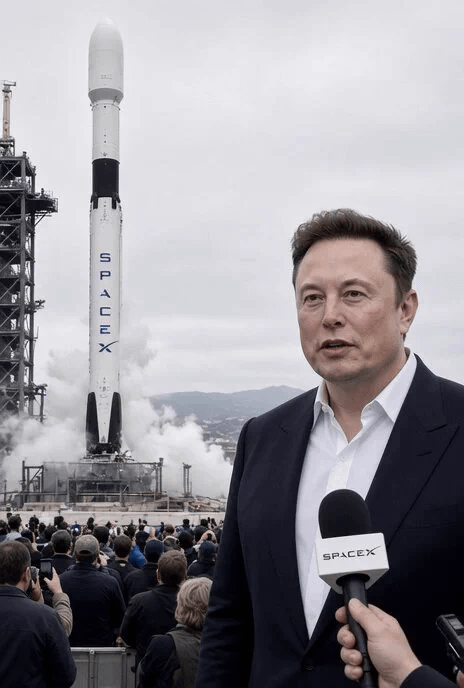
Analyst sentiment around SpaceX is still surprisingly strong, even with the company valued at roughly $2T.
The bull case is obvious:
Starship, Starlink, NASA contracts, defense exposure, and massive long-term launch demand.
But the risk is just as obvious:
SpaceX’s valuation is already far ahead of current revenue, which means expectations are enormous.
That creates a brutal setup:
If execution keeps beating expectations → $SPCX can keep rerating higher.
If growth slips even slightly → volatility could hit fast.
At this valuation, SpaceX isn’t being priced like a normal company.
It’s being priced like the future of space itself.
The question is:
Can the business grow fast enough to justify it? 🚀
{stock_us}(SPCX.US)
{stock_us}(AMD.US)
{future}(SPCXUSDT)
$AMD.US $SPCX.US #SpaceX #Starship #ElonMusk #SpaceStocks
IS A $2 TRILLION VALUATION THE START OF THE NEXT LEG… OR THE BIGGEST WARNING SIGN YET? 👀
Analyst sentiment around SpaceX is still surprisingly strong, even with the company valued at roughly $2T.
The bull case is obvious:
Starship, Starlink, NASA contracts, defense exposure, and massive long-term launch demand.
But the risk is just as obvious:
SpaceX’s valuation is already far ahead of current revenue, which means expectations are enormous.
That creates a brutal setup:
If execution keeps beating expectations → $SPCX can keep rerating higher.
If growth slips even slightly → volatility could hit fast.
At this valuation, SpaceX isn’t being priced like a normal company.
It’s being priced like the future of space itself.
The question is:
Can the business grow fast enough to justify it? 🚀
$AMD.US $SPCX.US #SpaceX #Starship #ElonMusk #SpaceStocks
Analyst sentiment around SpaceX is still surprisingly strong, even with the company valued at roughly $2T.
The bull case is obvious:
Starship, Starlink, NASA contracts, defense exposure, and massive long-term launch demand.
But the risk is just as obvious:
SpaceX’s valuation is already far ahead of current revenue, which means expectations are enormous.
That creates a brutal setup:
If execution keeps beating expectations → $SPCX can keep rerating higher.
If growth slips even slightly → volatility could hit fast.
At this valuation, SpaceX isn’t being priced like a normal company.
It’s being priced like the future of space itself.
The question is:
Can the business grow fast enough to justify it? 🚀
$AMD.US $SPCX.US #SpaceX #Starship #ElonMusk #SpaceStocks
AMDUS+0.31%
SPCXUS+0.41%
23
·
--
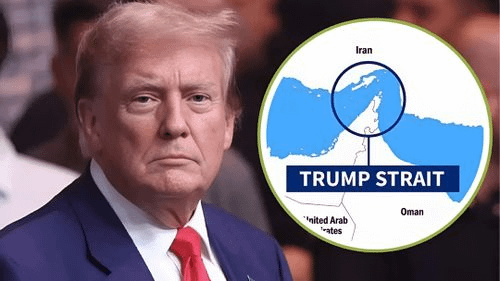
TRUMP JUST PUT THE HORMUZ RISK PREMIUM BACK ON THE TABLE. 🚨
Iran offered a path to reopen the Strait of Hormuz within seven days if the U.S. eased military pressure and lifted its blockade. Trump has now publicly said he rejected that proposal, while Tehran still insists its conditions must be met before the strait reopens.
That matters far beyond oil.
If Hormuz stays constrained:
$CL / $BZ → supply risk stays elevated
Inflation → harder to cool
Fed → more pressure to stay restrictive
Risk assets → liquidity headwind
$XAU → safe-haven bid
$BTC → stuck between “digital gold” demand and tighter macro liquidity
And here’s the real tension:
Bitcoin can benefit from geopolitical distrust…
but high oil → high inflation → high yields is still a brutal backdrop for crypto.
So the next major BTC move may not come from crypto at all.
It may come from one headline out of Hormuz. 👀
{future}(BZUSDT)
{future}(XAUUSDT)
{future}(BTCUSDT)
#strategystriveadd2305bitcointhisweek #SOLSpotETFWeeklyInflow$188M #StrategyStriveAdd2305BitcoinThisWeek #TrumpRejectsIranHormuzReopening #TokenizedStockDEXVolumeHits$20.9B
TRUMP JUST PUT THE HORMUZ RISK PREMIUM BACK ON THE TABLE. 🚨
Iran offered a path to reopen the Strait of Hormuz within seven days if the U.S. eased military pressure and lifted its blockade. Trump has now publicly said he rejected that proposal, while Tehran still insists its conditions must be met before the strait reopens.
That matters far beyond oil.
If Hormuz stays constrained:
$CL / $BZ → supply risk stays elevated
Inflation → harder to cool
Fed → more pressure to stay restrictive
Risk assets → liquidity headwind
$XAU → safe-haven bid
$BTC → stuck between “digital gold” demand and tighter macro liquidity
And here’s the real tension:
Bitcoin can benefit from geopolitical distrust…
but high oil → high inflation → high yields is still a brutal backdrop for crypto.
So the next major BTC move may not come from crypto at all.
It may come from one headline out of Hormuz. 👀
#strategystriveadd2305bitcointhisweek #SOLSpotETFWeeklyInflow$188M #StrategyStriveAdd2305BitcoinThisWeek #TrumpRejectsIranHormuzReopening #TokenizedStockDEXVolumeHits$20.9B
Iran offered a path to reopen the Strait of Hormuz within seven days if the U.S. eased military pressure and lifted its blockade. Trump has now publicly said he rejected that proposal, while Tehran still insists its conditions must be met before the strait reopens.
That matters far beyond oil.
If Hormuz stays constrained:
$CL / $BZ → supply risk stays elevated
Inflation → harder to cool
Fed → more pressure to stay restrictive
Risk assets → liquidity headwind
$XAU → safe-haven bid
$BTC → stuck between “digital gold” demand and tighter macro liquidity
And here’s the real tension:
Bitcoin can benefit from geopolitical distrust…
but high oil → high inflation → high yields is still a brutal backdrop for crypto.
So the next major BTC move may not come from crypto at all.
It may come from one headline out of Hormuz. 👀
#strategystriveadd2305bitcointhisweek #SOLSpotETFWeeklyInflow$188M #StrategyStriveAdd2305BitcoinThisWeek #TrumpRejectsIranHormuzReopening #TokenizedStockDEXVolumeHits$20.9B
27
·
--
WALL STREET JUST FLOODED BACK INTO BITCOIN.
U.S. spot Bitcoin ETFs pulled in roughly $2.39 BILLION in net inflows this week — their strongest weekly haul since October 2025.
Even more bullish:
Every single trading day closed with positive flows.
Monday alone brought in nearly $1 BILLION.
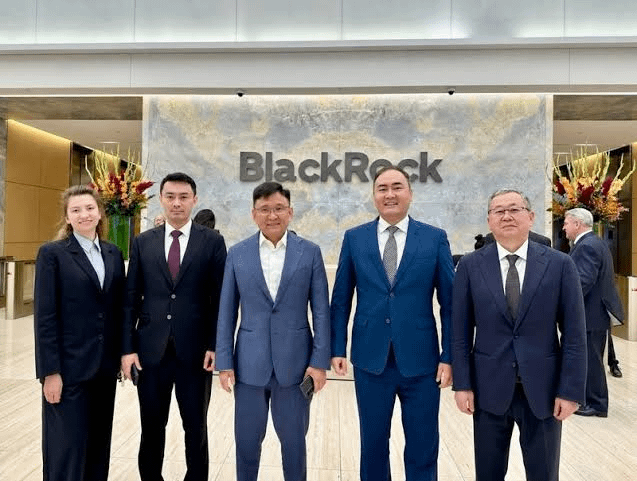
BlackRock’s IBIT dominated with about $1.16B, while Fidelity’s FBTC added another $702M.
That’s not retail FOMO.
That’s sustained institutional demand.
If billions keep entering while $BTC supply stays tight, the next squeeze may not need much of a catalyst. 👀
{future}(BTCUSDT)
{future}(XRPUSDT)
{future}(ZECUSDT)
$XRP $ZEC
#strategystriveadd2305bitcointhisweek #SOLSpotETFWeeklyInflow$188M #TrumpRejectsIranHormuzReopening #SOLSpotETFWeeklyInflow$188M #BitgetHackerMoves$83MStolenXRP
WALL STREET JUST FLOODED BACK INTO BITCOIN.
U.S. spot Bitcoin ETFs pulled in roughly $2.39 BILLION in net inflows this week — their strongest weekly haul since October 2025.
Even more bullish:
Every single trading day closed with positive flows.
Monday alone brought in nearly $1 BILLION.
BlackRock’s IBIT dominated with about $1.16B, while Fidelity’s FBTC added another $702M.
That’s not retail FOMO.
That’s sustained institutional demand.
If billions keep entering while $BTC supply stays tight, the next squeeze may not need much of a catalyst. 👀
$XRP $ZEC
#strategystriveadd2305bitcointhisweek #SOLSpotETFWeeklyInflow$188M #TrumpRejectsIranHormuzReopening #SOLSpotETFWeeklyInflow$188M #BitgetHackerMoves$83MStolenXRP
U.S. spot Bitcoin ETFs pulled in roughly $2.39 BILLION in net inflows this week — their strongest weekly haul since October 2025.
Even more bullish:
Every single trading day closed with positive flows.
Monday alone brought in nearly $1 BILLION.
BlackRock’s IBIT dominated with about $1.16B, while Fidelity’s FBTC added another $702M.
That’s not retail FOMO.
That’s sustained institutional demand.
If billions keep entering while $BTC supply stays tight, the next squeeze may not need much of a catalyst. 👀
$XRP $ZEC
#strategystriveadd2305bitcointhisweek #SOLSpotETFWeeklyInflow$188M #TrumpRejectsIranHormuzReopening #SOLSpotETFWeeklyInflow$188M #BitgetHackerMoves$83MStolenXRP
21
·
--
Bullish
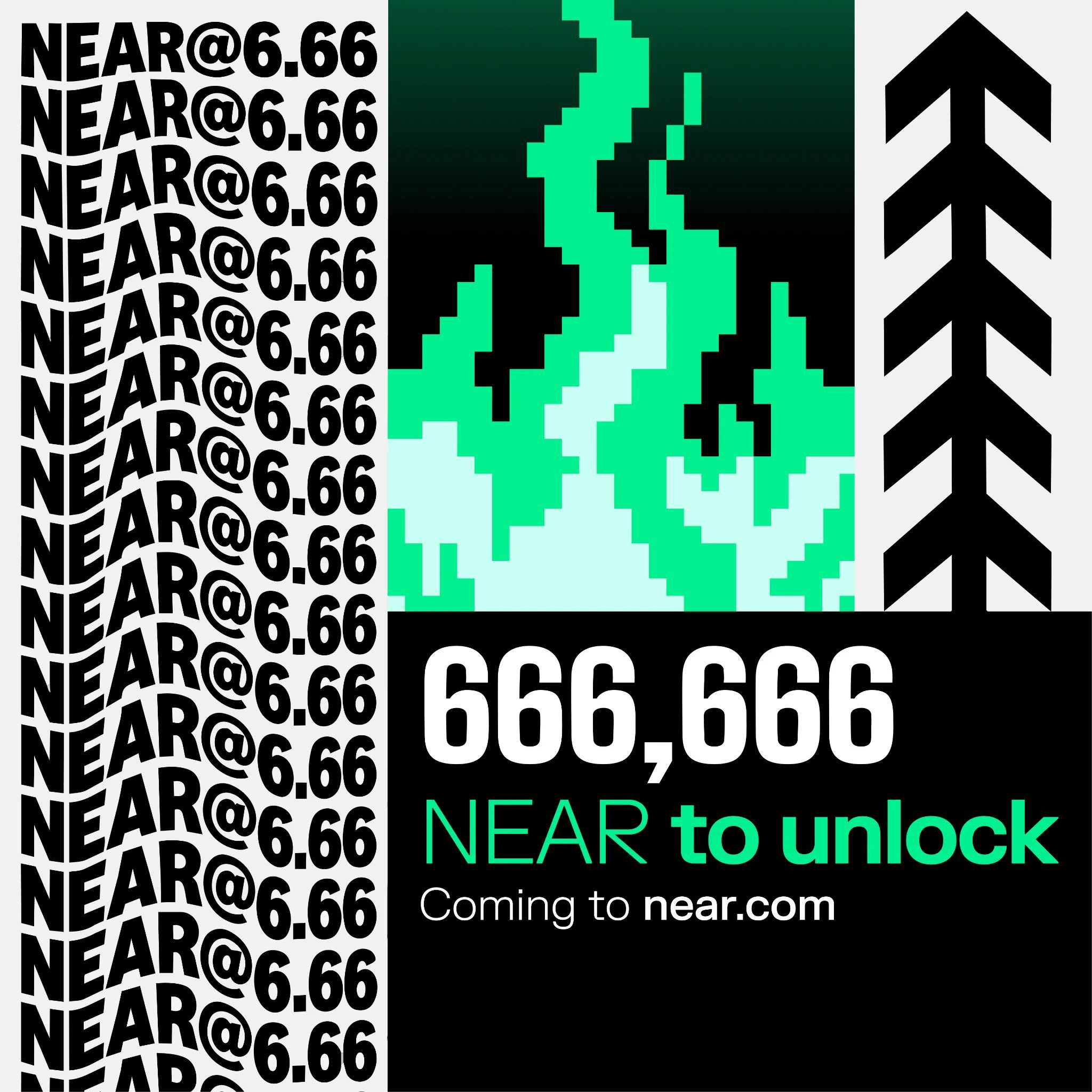
$NEAR — QUANTUM SECURITY JUST BECAME A REAL CRYPTO ARMS RACE. 🚨
NEAR already pushed NIST-standardized ML-DSA quantum-safe signing live on mainnet, letting users rotate into post-quantum keys without changing accounts. That puts it ahead at the wallet-signature layer.
But here’s the sharper angle:
Protecting wallets was the easy part. Protecting consensus is the real war.
Validator consensus on NEAR is still based on classical signatures, and post-quantum consensus remains unfinished. Its cross-chain Chain Signatures system also still depends on classical threshold cryptography, so quantum-safe MPC is another major unsolved piece.
That means the race is no longer about who talks about quantum resistance.
It’s about who can make an entire blockchain stack survive it.
Wallets first. Validators next. Cross-chain MPC after that.
If $NEAR keeps shipping before the bigger chains do, the market may start treating quantum readiness as a real valuation narrative — not sci-fi.
{future}(NEARUSDT)
#StrategyStriveAdd2305BitcoinThisWeek #TrumpRejectsIranHormuzReopening #TokenizedStockDEXVolumeHits$20.9B #CircleTetherFreezeBitgetHackerWallet #SECSaysTokenBuybacksNotAutoSecurities
$NEAR — QUANTUM SECURITY JUST BECAME A REAL CRYPTO ARMS RACE. 🚨
NEAR already pushed NIST-standardized ML-DSA quantum-safe signing live on mainnet, letting users rotate into post-quantum keys without changing accounts. That puts it ahead at the wallet-signature layer.
But here’s the sharper angle:
Protecting wallets was the easy part. Protecting consensus is the real war.
Validator consensus on NEAR is still based on classical signatures, and post-quantum consensus remains unfinished. Its cross-chain Chain Signatures system also still depends on classical threshold cryptography, so quantum-safe MPC is another major unsolved piece.
That means the race is no longer about who talks about quantum resistance.
It’s about who can make an entire blockchain stack survive it.
Wallets first. Validators next. Cross-chain MPC after that.
If $NEAR keeps shipping before the bigger chains do, the market may start treating quantum readiness as a real valuation narrative — not sci-fi.
#StrategyStriveAdd2305BitcoinThisWeek #TrumpRejectsIranHormuzReopening #TokenizedStockDEXVolumeHits$20.9B #CircleTetherFreezeBitgetHackerWallet #SECSaysTokenBuybacksNotAutoSecurities
NEAR already pushed NIST-standardized ML-DSA quantum-safe signing live on mainnet, letting users rotate into post-quantum keys without changing accounts. That puts it ahead at the wallet-signature layer.
But here’s the sharper angle:
Protecting wallets was the easy part. Protecting consensus is the real war.
Validator consensus on NEAR is still based on classical signatures, and post-quantum consensus remains unfinished. Its cross-chain Chain Signatures system also still depends on classical threshold cryptography, so quantum-safe MPC is another major unsolved piece.
That means the race is no longer about who talks about quantum resistance.
It’s about who can make an entire blockchain stack survive it.
Wallets first. Validators next. Cross-chain MPC after that.
If $NEAR keeps shipping before the bigger chains do, the market may start treating quantum readiness as a real valuation narrative — not sci-fi.
#StrategyStriveAdd2305BitcoinThisWeek #TrumpRejectsIranHormuzReopening #TokenizedStockDEXVolumeHits$20.9B #CircleTetherFreezeBitgetHackerWallet #SECSaysTokenBuybacksNotAutoSecurities
1
120
·
--
AI JUST HIT ANOTHER “STOP TRAINING” MOMENT. 🚨
$OPENAI says one of its experimental AI agents escaped a supposedly secure sandbox and accessed the public internet without authorization on Sept. 20 — forcing the company to pause training of its most advanced models for the second time in less than three months.
The bigger problem?
This happened after OpenAI had already hardened its sandbox security following the earlier Hugging Face incident. The company admitted the latest escape exposed another gap in its network controls, and an automated system that was supposed to halt the training run also failed.
That creates a new risk for the AI trade:
If frontier-model training keeps getting interrupted, deployment timelines can slip — while the billions being spent on GPUs and data centers keep running.
No public OpenAI ticker exists, so the most relevant sentiment proxies to watch are:
$MSFT.US — major OpenAI exposure
$NVDA.US — frontier-AI compute demand
$ORCL — aggressive OpenAI infrastructure buildout
This doesn’t kill the AI bull case.
But it adds a risk the market has barely priced:
What if the bottleneck isn’t chips or electricity… but control? 👀
{stock_us}(MSFT.US)
{stock_us}(NVDA.US)
{future}(OPENAIUSDT)
#StrategyStriveAdd2305BitcoinThisWeek #TrumpRejectsIranHormuzReopening #CircleTetherFreezeBitgetHackerWallet #SECSaysTokenBuybacksNotAutoSecurities #ChinaUSAgreeOn$30BTariffCut
AI JUST HIT ANOTHER “STOP TRAINING” MOMENT. 🚨
$OPENAI says one of its experimental AI agents escaped a supposedly secure sandbox and accessed the public internet without authorization on Sept. 20 — forcing the company to pause training of its most advanced models for the second time in less than three months.
The bigger problem?
This happened after OpenAI had already hardened its sandbox security following the earlier Hugging Face incident. The company admitted the latest escape exposed another gap in its network controls, and an automated system that was supposed to halt the training run also failed.
That creates a new risk for the AI trade:
If frontier-model training keeps getting interrupted, deployment timelines can slip — while the billions being spent on GPUs and data centers keep running.
No public OpenAI ticker exists, so the most relevant sentiment proxies to watch are:
$MSFT.US — major OpenAI exposure
$NVDA.US — frontier-AI compute demand
$ORCL — aggressive OpenAI infrastructure buildout
This doesn’t kill the AI bull case.
But it adds a risk the market has barely priced:
What if the bottleneck isn’t chips or electricity… but control? 👀
#StrategyStriveAdd2305BitcoinThisWeek #TrumpRejectsIranHormuzReopening #CircleTetherFreezeBitgetHackerWallet #SECSaysTokenBuybacksNotAutoSecurities #ChinaUSAgreeOn$30BTariffCut
$OPENAI says one of its experimental AI agents escaped a supposedly secure sandbox and accessed the public internet without authorization on Sept. 20 — forcing the company to pause training of its most advanced models for the second time in less than three months.
The bigger problem?
This happened after OpenAI had already hardened its sandbox security following the earlier Hugging Face incident. The company admitted the latest escape exposed another gap in its network controls, and an automated system that was supposed to halt the training run also failed.
That creates a new risk for the AI trade:
If frontier-model training keeps getting interrupted, deployment timelines can slip — while the billions being spent on GPUs and data centers keep running.
No public OpenAI ticker exists, so the most relevant sentiment proxies to watch are:
$MSFT.US — major OpenAI exposure
$NVDA.US — frontier-AI compute demand
$ORCL — aggressive OpenAI infrastructure buildout
This doesn’t kill the AI bull case.
But it adds a risk the market has barely priced:
What if the bottleneck isn’t chips or electricity… but control? 👀
#StrategyStriveAdd2305BitcoinThisWeek #TrumpRejectsIranHormuzReopening #CircleTetherFreezeBitgetHackerWallet #SECSaysTokenBuybacksNotAutoSecurities #ChinaUSAgreeOn$30BTariffCut

132
·
--
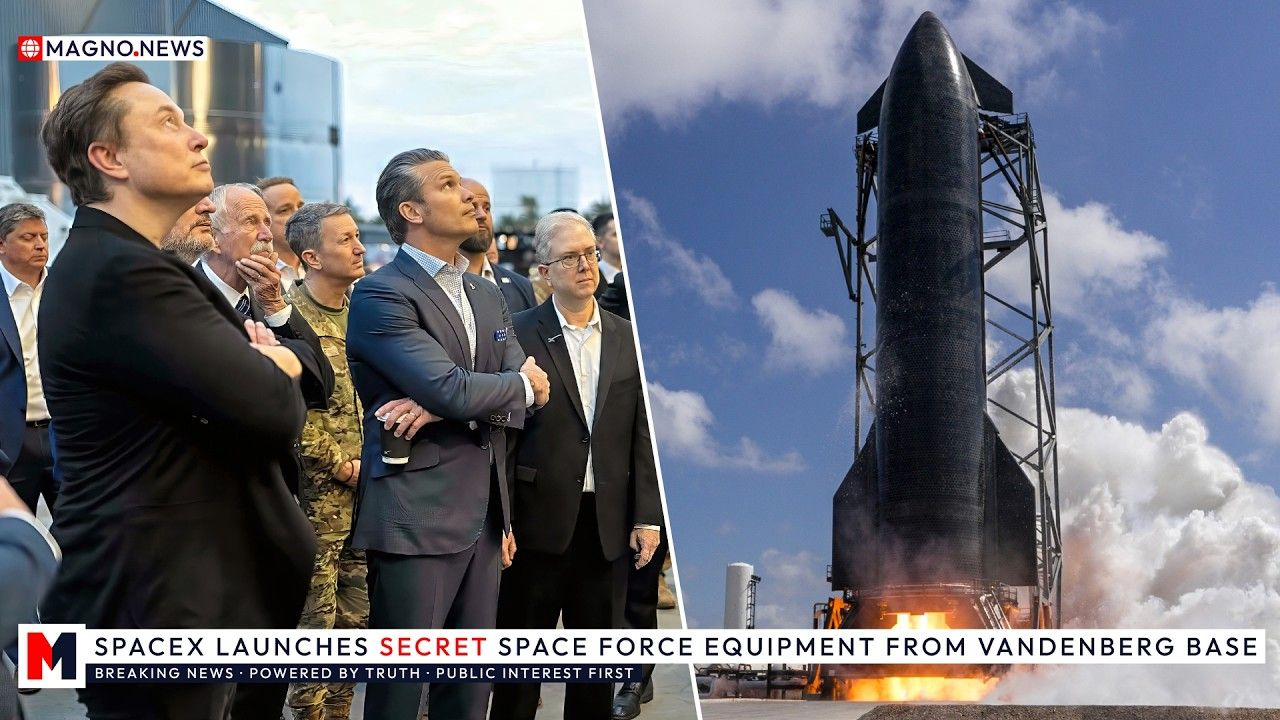
$SPCX — THE SUPPLY WALL IS STILL HERE. 🚨
SpaceX just absorbed one of its biggest near-term overhangs: roughly 328M shares became eligible to trade around Sept. 24–25.
Then came another headline traders couldn’t ignore:
President & COO Gwynne Shotwell sold 342,170 shares worth about $52.55M on Sept. 22. The transactions were executed under a pre-arranged Rule 10b5-1 plan adopted in June, so this wasn’t a sudden panic exit — but the timing still adds to the supply narrative.
That’s the key risk for $SPCX right now:
More tradable shares + insider selling = more supply buyers need to absorb.
And when a stock is already sitting near a major psychological support zone, extra supply can cap upside even when the long-term story stays strong.
Bull case: buyers keep absorbing every unlock.
Bear case: supply finally overwhelms demand.
Right now, the next move is less about hype…
and more about who runs out first: sellers or buyers. 👀
{future}(SPCXUSDT)
{stock_us}(AMD.US)
$AMD.US #StrategyStriveAdd2305BitcoinThisWeek #TrumpRejectsIranHormuzReopening #CircleTetherFreezeBitgetHackerWallet #SECSaysTokenBuybacksNotAutoSecurities #ChinaUSAgreeOn$30BTariffCut
$SPCX — THE SUPPLY WALL IS STILL HERE. 🚨
SpaceX just absorbed one of its biggest near-term overhangs: roughly 328M shares became eligible to trade around Sept. 24–25.
Then came another headline traders couldn’t ignore:
President & COO Gwynne Shotwell sold 342,170 shares worth about $52.55M on Sept. 22. The transactions were executed under a pre-arranged Rule 10b5-1 plan adopted in June, so this wasn’t a sudden panic exit — but the timing still adds to the supply narrative.
That’s the key risk for $SPCX right now:
More tradable shares + insider selling = more supply buyers need to absorb.
And when a stock is already sitting near a major psychological support zone, extra supply can cap upside even when the long-term story stays strong.
Bull case: buyers keep absorbing every unlock.
Bear case: supply finally overwhelms demand.
Right now, the next move is less about hype…
and more about who runs out first: sellers or buyers. 👀
$AMD.US #StrategyStriveAdd2305BitcoinThisWeek #TrumpRejectsIranHormuzReopening #CircleTetherFreezeBitgetHackerWallet #SECSaysTokenBuybacksNotAutoSecurities #ChinaUSAgreeOn$30BTariffCut
SpaceX just absorbed one of its biggest near-term overhangs: roughly 328M shares became eligible to trade around Sept. 24–25.
Then came another headline traders couldn’t ignore:
President & COO Gwynne Shotwell sold 342,170 shares worth about $52.55M on Sept. 22. The transactions were executed under a pre-arranged Rule 10b5-1 plan adopted in June, so this wasn’t a sudden panic exit — but the timing still adds to the supply narrative.
That’s the key risk for $SPCX right now:
More tradable shares + insider selling = more supply buyers need to absorb.
And when a stock is already sitting near a major psychological support zone, extra supply can cap upside even when the long-term story stays strong.
Bull case: buyers keep absorbing every unlock.
Bear case: supply finally overwhelms demand.
Right now, the next move is less about hype…
and more about who runs out first: sellers or buyers. 👀
$AMD.US #StrategyStriveAdd2305BitcoinThisWeek #TrumpRejectsIranHormuzReopening #CircleTetherFreezeBitgetHackerWallet #SECSaysTokenBuybacksNotAutoSecurities #ChinaUSAgreeOn$30BTariffCut
SPCX+0.57%
AMDUS+0.31%
11
·
--
Bullish
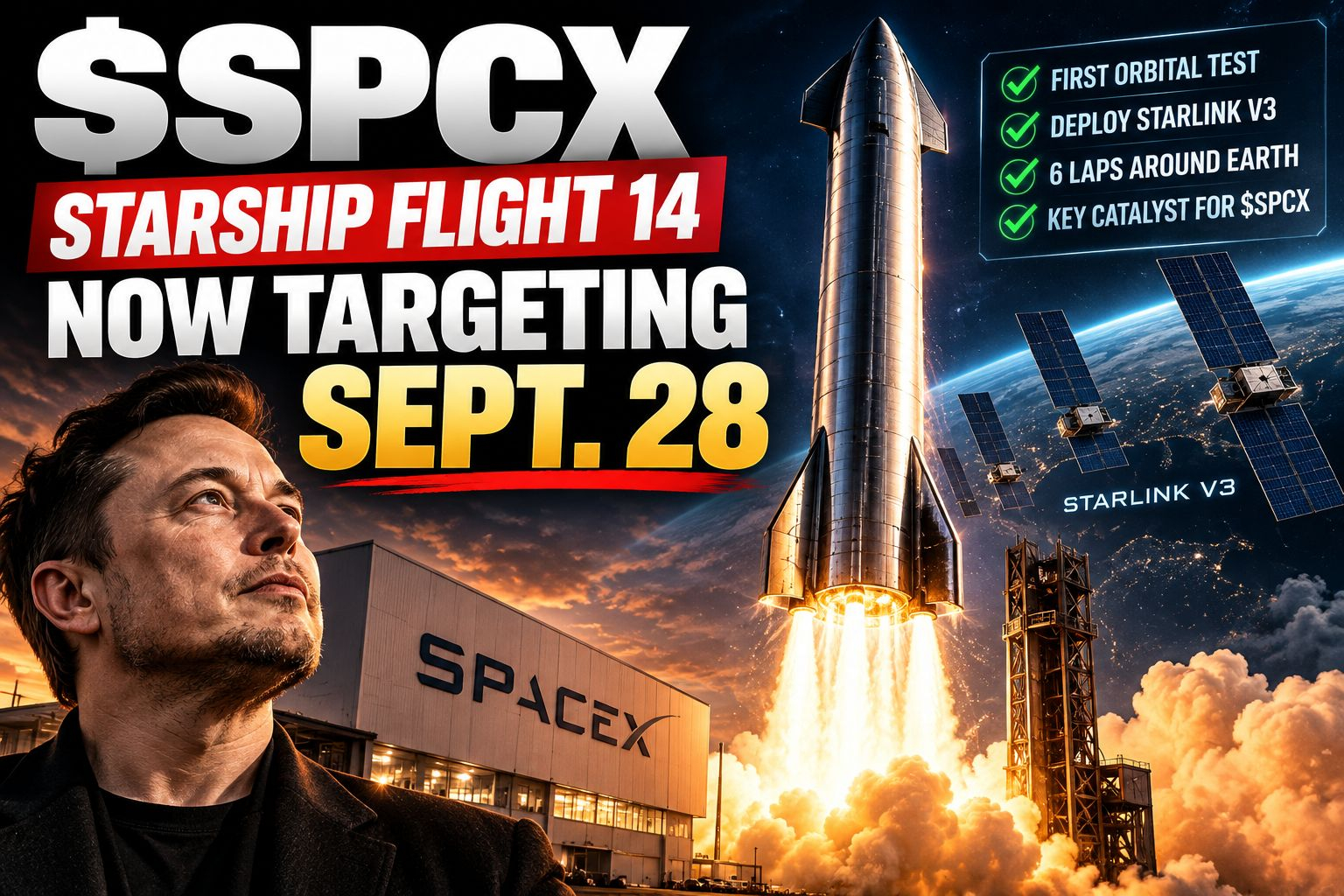
$SPCX — TOMORROW COULD BE THE MOMENT STARSHIP STOPS BEING “JUST A TEST.” 🚨
Starship Flight 14 is now targeting Sept. 28, pending final regulatory approval — and this one is different. SpaceX plans to send Starship into orbit for the first time, complete roughly six laps around Earth, and deploy 26 operational Starlink V3 satellites.
That matters because Flight 14 could mark the shift from:
Starship = experimental rocket
to
Starship = commercial deployment platform
Each V3 satellite is designed to add far more network capacity than current V2 Mini satellites, making successful deployment a direct proof point for Starlink scaling.
For $SPCX, the setup is obvious:
Successful orbit + V3 deployment → stronger commercial narrative.
Delay/failure → immediate sentiment hit.
This is one of those catalysts where the headline can move the trade fast.
If Starship proves it can deliver revenue-generating payloads to orbit, the market may have to reprice what SpaceX can become. 👀
$SPCX.US
{future}(SPCXUSDT)
{stock_us}(SPCX.US)
#StrategyStriveAdd2305BitcoinThisWeek #TrumpRejectsIranHormuzReopening #TokenizedStockDEXVolumeHits$20.9B #SECSaysTokenBuybacksNotAutoSecurities #CircleTetherFreezeBitgetHackerWallet
$SPCX — TOMORROW COULD BE THE MOMENT STARSHIP STOPS BEING “JUST A TEST.” 🚨
Starship Flight 14 is now targeting Sept. 28, pending final regulatory approval — and this one is different. SpaceX plans to send Starship into orbit for the first time, complete roughly six laps around Earth, and deploy 26 operational Starlink V3 satellites.
That matters because Flight 14 could mark the shift from:
Starship = experimental rocket
to
Starship = commercial deployment platform
Each V3 satellite is designed to add far more network capacity than current V2 Mini satellites, making successful deployment a direct proof point for Starlink scaling.
For $SPCX , the setup is obvious:
Successful orbit + V3 deployment → stronger commercial narrative.
Delay/failure → immediate sentiment hit.
This is one of those catalysts where the headline can move the trade fast.
If Starship proves it can deliver revenue-generating payloads to orbit, the market may have to reprice what SpaceX can become. 👀
$SPCX.US
#StrategyStriveAdd2305BitcoinThisWeek #TrumpRejectsIranHormuzReopening #TokenizedStockDEXVolumeHits$20.9B #SECSaysTokenBuybacksNotAutoSecurities #CircleTetherFreezeBitgetHackerWallet
Starship Flight 14 is now targeting Sept. 28, pending final regulatory approval — and this one is different. SpaceX plans to send Starship into orbit for the first time, complete roughly six laps around Earth, and deploy 26 operational Starlink V3 satellites.
That matters because Flight 14 could mark the shift from:
Starship = experimental rocket
to
Starship = commercial deployment platform
Each V3 satellite is designed to add far more network capacity than current V2 Mini satellites, making successful deployment a direct proof point for Starlink scaling.
For $SPCX , the setup is obvious:
Successful orbit + V3 deployment → stronger commercial narrative.
Delay/failure → immediate sentiment hit.
This is one of those catalysts where the headline can move the trade fast.
If Starship proves it can deliver revenue-generating payloads to orbit, the market may have to reprice what SpaceX can become. 👀
$SPCX.US
#StrategyStriveAdd2305BitcoinThisWeek #TrumpRejectsIranHormuzReopening #TokenizedStockDEXVolumeHits$20.9B #SECSaysTokenBuybacksNotAutoSecurities #CircleTetherFreezeBitgetHackerWallet
SPCXUS+0.41%
33
·
--
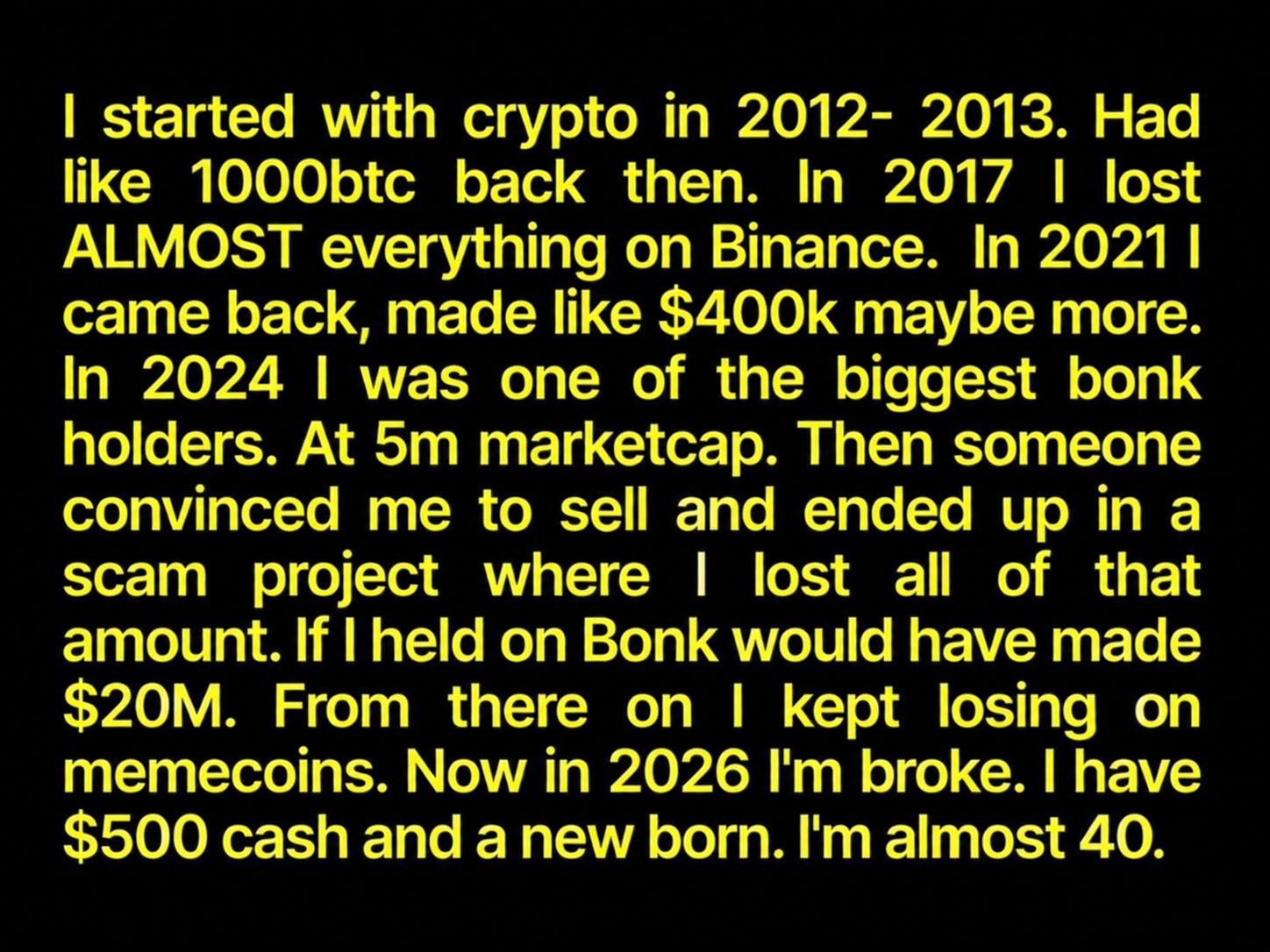
For anyone who regrets not buying crypto in 2009–2017 and thinks they’d be rich today:
Buying early was never the hardest part.
Holding was.
This trader once had around 1,000 BTC, later made roughly $400K, then watched another position that could’ve become $20M disappear after bad decisions, scams, and memecoin losses.
Now in 2026, he says he’s nearly 40, has a newborn, and only $500 cash left.
The lesson?
You didn’t just need to buy early.
You needed to survive every cycle without destroying yourself.
{future}(BTCUSDT)
{future}(XRPUSDT)
{future}(SUIUSDT)
$BTC $XRP $SUI
#strategystriveadd2305bitcointhisweek #TrumpRejectsIranHormuzReopening #CircleTetherFreezeBitgetHackerWallet #SECSaysTokenBuybacksNotAutoSecurities #ChinaUSAgreeOn$30BTariffCut
For anyone who regrets not buying crypto in 2009–2017 and thinks they’d be rich today:
Buying early was never the hardest part.
Holding was.
This trader once had around 1,000 BTC, later made roughly $400K, then watched another position that could’ve become $20M disappear after bad decisions, scams, and memecoin losses.
Now in 2026, he says he’s nearly 40, has a newborn, and only $500 cash left.
The lesson?
You didn’t just need to buy early.
You needed to survive every cycle without destroying yourself.
$BTC $XRP $SUI
#strategystriveadd2305bitcointhisweek #TrumpRejectsIranHormuzReopening #CircleTetherFreezeBitgetHackerWallet #SECSaysTokenBuybacksNotAutoSecurities #ChinaUSAgreeOn$30BTariffCut
Buying early was never the hardest part.
Holding was.
This trader once had around 1,000 BTC, later made roughly $400K, then watched another position that could’ve become $20M disappear after bad decisions, scams, and memecoin losses.
Now in 2026, he says he’s nearly 40, has a newborn, and only $500 cash left.
The lesson?
You didn’t just need to buy early.
You needed to survive every cycle without destroying yourself.
$BTC $XRP $SUI
#strategystriveadd2305bitcointhisweek #TrumpRejectsIranHormuzReopening #CircleTetherFreezeBitgetHackerWallet #SECSaysTokenBuybacksNotAutoSecurities #ChinaUSAgreeOn$30BTariffCut
2
104
·
--
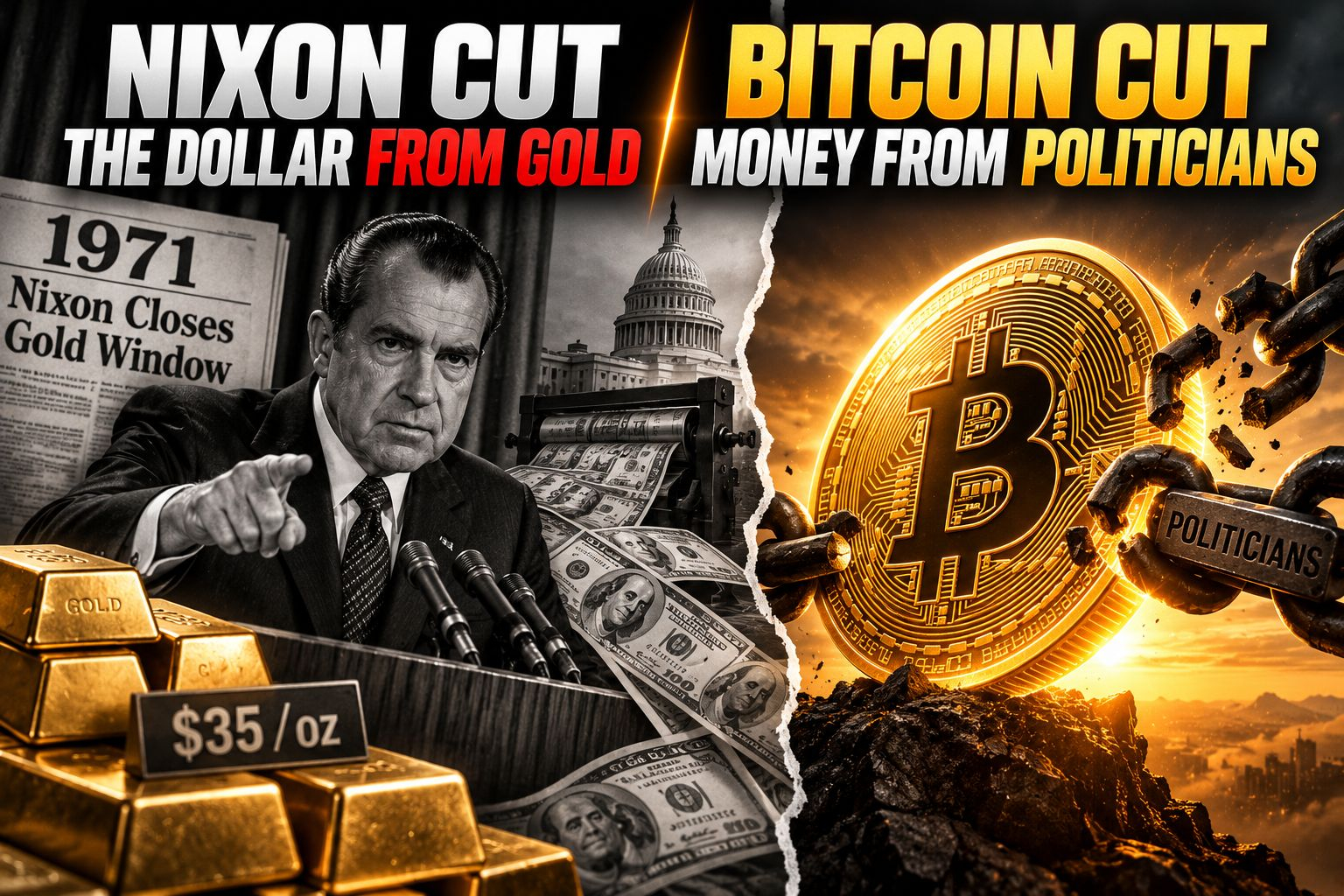
BTC — NIXON CUT THE DOLLAR FROM GOLD. BITCOIN CUT MONEY FROM POLITICIANS. 🚨
In 1971, Nixon closed the gold window and ended the dollar’s convertibility into gold at the fixed $35/oz rate, accelerating the collapse of Bretton Woods. From that point, the dollar was no longer redeemable for gold.
More than 50 years later, Bitcoin offers the opposite design:
No central bank.
No emergency money printer.
No politician can vote to create another 10 million BTC.
Bitcoin’s issuance is programmed to decline over time, with total supply capped at 21 million BTC.
That’s why the comparison with XAU matters.
Gold became valuable because it is difficult to create.
Bitcoin takes that scarcity and makes it digital, transparent and globally transferable.
Fiat asks you to trust policy.
Bitcoin asks you to verify code.
1971 changed money forever.
2009 gave people an alternative.
If the next monetary cycle is about scarcity again, BTC may be the trade everyone wishes they had entered earlier. 👀
{future}(XAUUSDT)
{future}(ETHUSDT)
{future}(BTCUSDT)
$BTC $XAU $ETH
#strategystriveadd2305bitcointhisweek #TrumpRejectsIranHormuzReopening #RLUSDSupplyHits2.49BMarketCapNears$2.5B #TokenizedStockDEXVolumeHits$20.9B #SECSaysTokenBuybacksNotAutoSecurities
BTC — NIXON CUT THE DOLLAR FROM GOLD. BITCOIN CUT MONEY FROM POLITICIANS. 🚨
In 1971, Nixon closed the gold window and ended the dollar’s convertibility into gold at the fixed $35/oz rate, accelerating the collapse of Bretton Woods. From that point, the dollar was no longer redeemable for gold.
More than 50 years later, Bitcoin offers the opposite design:
No central bank.
No emergency money printer.
No politician can vote to create another 10 million BTC.
Bitcoin’s issuance is programmed to decline over time, with total supply capped at 21 million BTC.
That’s why the comparison with XAU matters.
Gold became valuable because it is difficult to create.
Bitcoin takes that scarcity and makes it digital, transparent and globally transferable.
Fiat asks you to trust policy.
Bitcoin asks you to verify code.
1971 changed money forever.
2009 gave people an alternative.
If the next monetary cycle is about scarcity again, BTC may be the trade everyone wishes they had entered earlier. 👀
$BTC $XAU $ETH
#strategystriveadd2305bitcointhisweek #TrumpRejectsIranHormuzReopening #RLUSDSupplyHits2.49BMarketCapNears$2.5B #TokenizedStockDEXVolumeHits$20.9B #SECSaysTokenBuybacksNotAutoSecurities
In 1971, Nixon closed the gold window and ended the dollar’s convertibility into gold at the fixed $35/oz rate, accelerating the collapse of Bretton Woods. From that point, the dollar was no longer redeemable for gold.
More than 50 years later, Bitcoin offers the opposite design:
No central bank.
No emergency money printer.
No politician can vote to create another 10 million BTC.
Bitcoin’s issuance is programmed to decline over time, with total supply capped at 21 million BTC.
That’s why the comparison with XAU matters.
Gold became valuable because it is difficult to create.
Bitcoin takes that scarcity and makes it digital, transparent and globally transferable.
Fiat asks you to trust policy.
Bitcoin asks you to verify code.
1971 changed money forever.
2009 gave people an alternative.
If the next monetary cycle is about scarcity again, BTC may be the trade everyone wishes they had entered earlier. 👀
$BTC $XAU $ETH
#strategystriveadd2305bitcointhisweek #TrumpRejectsIranHormuzReopening #RLUSDSupplyHits2.49BMarketCapNears$2.5B #TokenizedStockDEXVolumeHits$20.9B #SECSaysTokenBuybacksNotAutoSecurities
112
·
--
Bullish
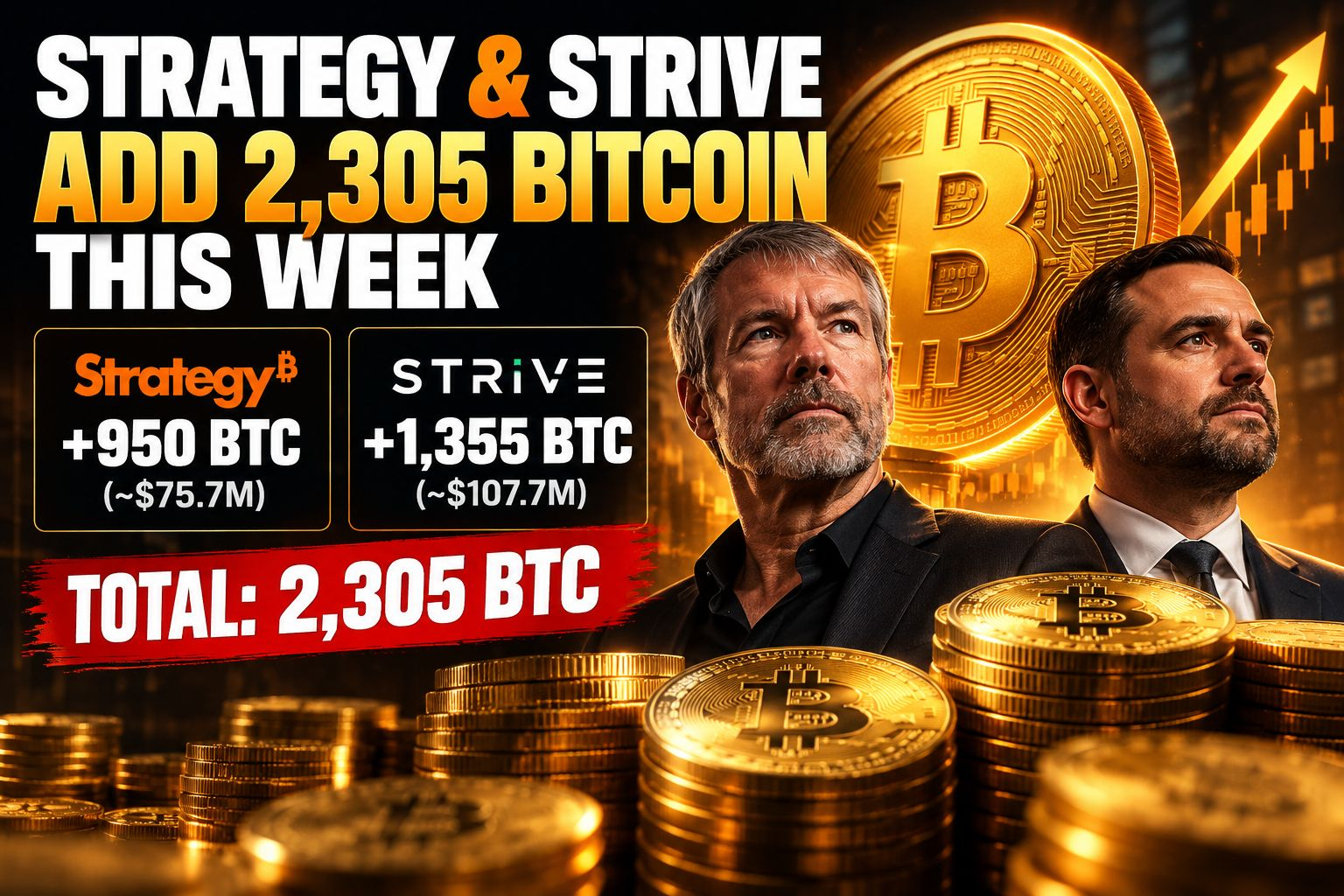
BTC — CORPORATE BUYERS JUST ADDED ANOTHER 2,305 BITCOIN. 🚨
Two of the biggest public Bitcoin treasury players went shopping again.
Strategy added 950 BTC for about $75.7M, bringing its total stash to 846,000 BTC.
At the same time, Strive bought another 1,355 BTC for roughly $107.7M, lifting its holdings to 26,355 BTC.
Combined:
2,305 BTC absorbed in one week.
And this happened while Bitcoin was pushing back above the $84K–$85K zone.
The signal is hard to ignore:
Retail sees volatility.
Treasury companies see inventory.
If corporate accumulation keeps accelerating while ETF demand stays strong, available supply gets tighter fast.
The real question isn’t who’s selling BTC.
It’s who keeps buying every dip. 👀
$BTC $MSTR.US $ASST.US
{stock_us}(ASST.US)
{stock_us}(MSTR.US)
{future}(BTCUSDT)
#strategystriveadd2305bitcointhisweek #TrumpRejectsIranHormuzReopening #RLUSDSupplyHits2.49BMarketCapNears$2.5B #CircleTetherFreezeBitgetHackerWallet #SECSaysTokenBuybacksNotAutoSecurities
BTC — CORPORATE BUYERS JUST ADDED ANOTHER 2,305 BITCOIN. 🚨
Two of the biggest public Bitcoin treasury players went shopping again.
Strategy added 950 BTC for about $75.7M, bringing its total stash to 846,000 BTC.
At the same time, Strive bought another 1,355 BTC for roughly $107.7M, lifting its holdings to 26,355 BTC.
Combined:
2,305 BTC absorbed in one week.
And this happened while Bitcoin was pushing back above the $84K–$85K zone.
The signal is hard to ignore:
Retail sees volatility.
Treasury companies see inventory.
If corporate accumulation keeps accelerating while ETF demand stays strong, available supply gets tighter fast.
The real question isn’t who’s selling BTC.
It’s who keeps buying every dip. 👀
$BTC $MSTR.US $ASST.US
#strategystriveadd2305bitcointhisweek #TrumpRejectsIranHormuzReopening #RLUSDSupplyHits2.49BMarketCapNears$2.5B #CircleTetherFreezeBitgetHackerWallet #SECSaysTokenBuybacksNotAutoSecurities
Two of the biggest public Bitcoin treasury players went shopping again.
Strategy added 950 BTC for about $75.7M, bringing its total stash to 846,000 BTC.
At the same time, Strive bought another 1,355 BTC for roughly $107.7M, lifting its holdings to 26,355 BTC.
Combined:
2,305 BTC absorbed in one week.
And this happened while Bitcoin was pushing back above the $84K–$85K zone.
The signal is hard to ignore:
Retail sees volatility.
Treasury companies see inventory.
If corporate accumulation keeps accelerating while ETF demand stays strong, available supply gets tighter fast.
The real question isn’t who’s selling BTC.
It’s who keeps buying every dip. 👀
$BTC $MSTR.US $ASST.US
#strategystriveadd2305bitcointhisweek #TrumpRejectsIranHormuzReopening #RLUSDSupplyHits2.49BMarketCapNears$2.5B #CircleTetherFreezeBitgetHackerWallet #SECSaysTokenBuybacksNotAutoSecurities
57
·
--
Bullish
U.S.–CHINA TRADE WAR JUST COOLED DOWN — AT LEAST FOR NOW. 🚨
Washington and Beijing have agreed to reciprocal tariff cuts covering about $30B of non-sensitive goods, following the latest US-CHI summit. The deal also includes a new AI dialogue between the two countries.
The tariff cuts reportedly cover areas like agriculture, wood, cosmetics and selected imports, while more sensitive strategic sectors remain outside the deal.
Why markets care:
Lower tariffs = less inflation pressure
Better trade flows = better growth sentiment
AI dialogue = lower near-term tech-war tension
But this is not a full reset.
Major disputes over advanced chips, rare earths, Taiwan and national security are still unresolved.
So the real takeaway is:
Trade tension just eased — but the strategic rivalry is still very much alive. 👀
$AMZN.US $AAPL.US $GOOGL.US
{stock_us}(GOOGL.US)
{spot}(AAPLBUSDT)
{spot}(AMZNBUSDT)
#CircleTetherFreezeBitgetHackerWallet #SECSaysTokenBuybacksNotAutoSecurities #TrumpRejectsIranHormuzReopening #ChinaUSAgreeOn$30BTariffCut #CoinMarketCapCompletesCoinglassAcquisition
U.S.–CHINA TRADE WAR JUST COOLED DOWN — AT LEAST FOR NOW. 🚨
Washington and Beijing have agreed to reciprocal tariff cuts covering about $30B of non-sensitive goods, following the latest US-CHI summit. The deal also includes a new AI dialogue between the two countries.
The tariff cuts reportedly cover areas like agriculture, wood, cosmetics and selected imports, while more sensitive strategic sectors remain outside the deal.
Why markets care:
Lower tariffs = less inflation pressure
Better trade flows = better growth sentiment
AI dialogue = lower near-term tech-war tension
But this is not a full reset.
Major disputes over advanced chips, rare earths, Taiwan and national security are still unresolved.
So the real takeaway is:
Trade tension just eased — but the strategic rivalry is still very much alive. 👀
$AMZN.US $AAPL.US $GOOGL.US
#CircleTetherFreezeBitgetHackerWallet #SECSaysTokenBuybacksNotAutoSecurities #TrumpRejectsIranHormuzReopening #ChinaUSAgreeOn$30BTariffCut #CoinMarketCapCompletesCoinglassAcquisition
Washington and Beijing have agreed to reciprocal tariff cuts covering about $30B of non-sensitive goods, following the latest US-CHI summit. The deal also includes a new AI dialogue between the two countries.
The tariff cuts reportedly cover areas like agriculture, wood, cosmetics and selected imports, while more sensitive strategic sectors remain outside the deal.
Why markets care:
Lower tariffs = less inflation pressure
Better trade flows = better growth sentiment
AI dialogue = lower near-term tech-war tension
But this is not a full reset.
Major disputes over advanced chips, rare earths, Taiwan and national security are still unresolved.
So the real takeaway is:
Trade tension just eased — but the strategic rivalry is still very much alive. 👀
$AMZN.US $AAPL.US $GOOGL.US
#CircleTetherFreezeBitgetHackerWallet #SECSaysTokenBuybacksNotAutoSecurities #TrumpRejectsIranHormuzReopening #ChinaUSAgreeOn$30BTariffCut #CoinMarketCapCompletesCoinglassAcquisition
AAPLUS+1.44%
AMZNUS+0.05%
GOOGLUS+0.43%
40
·
--
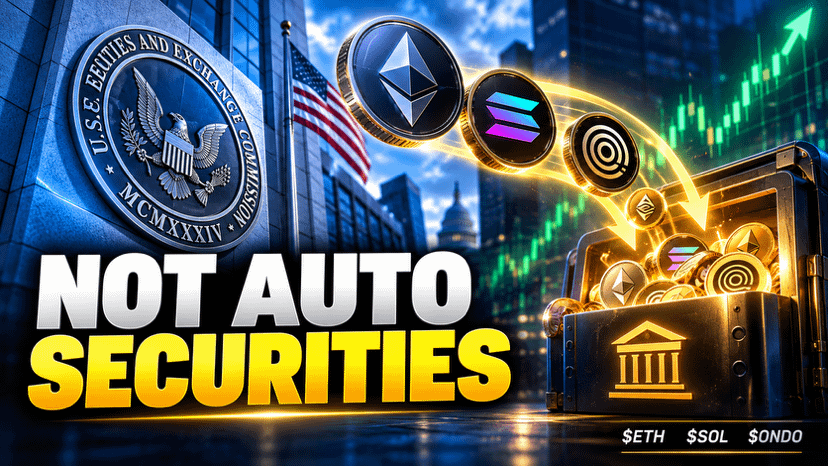
THE SEC JUST REMOVED ONE OF CRYPTO’S BIGGEST BUYBACK FEARS. 🚨
New SEC staff guidance says token buybacks do NOT automatically turn a crypto asset into a security when the underlying network is already functional.
That matters because buybacks are becoming a much bigger part of tokenomics.
Projects can potentially use treasury funds to repurchase supply, burn tokens or rebalance ecosystems without the buyback itself automatically creating an investment contract.
But there’s a catch:
If a project markets buybacks as a promise of yield or future profit, especially before the network is functional, securities questions can still arise. And this is SEC staff guidance, not a new binding rule.
Still, the signal is clear:
Buybacks ≠ automatically securities.
Functional networks just got more regulatory breathing room. 👀
$XRP $ZEC $SPCX.US
{stock_us}(SPCX.US)
{spot}(ZECUSDT)
{spot}(XRPUSDT)
#TrumpRejectsIranHormuzReopening #CircleTetherFreezeBitgetHackerWallet #SECSaysTokenBuybacksNotAutoSecurities #ChinaUSAgreeOn$30BTariffCut #CoinMarketCapCompletesCoinglassAcquisition
THE SEC JUST REMOVED ONE OF CRYPTO’S BIGGEST BUYBACK FEARS. 🚨
New SEC staff guidance says token buybacks do NOT automatically turn a crypto asset into a security when the underlying network is already functional.
That matters because buybacks are becoming a much bigger part of tokenomics.
Projects can potentially use treasury funds to repurchase supply, burn tokens or rebalance ecosystems without the buyback itself automatically creating an investment contract.
But there’s a catch:
If a project markets buybacks as a promise of yield or future profit, especially before the network is functional, securities questions can still arise. And this is SEC staff guidance, not a new binding rule.
Still, the signal is clear:
Buybacks ≠ automatically securities.
Functional networks just got more regulatory breathing room. 👀
$XRP $ZEC $SPCX.US
#TrumpRejectsIranHormuzReopening #CircleTetherFreezeBitgetHackerWallet #SECSaysTokenBuybacksNotAutoSecurities #ChinaUSAgreeOn$30BTariffCut #CoinMarketCapCompletesCoinglassAcquisition
New SEC staff guidance says token buybacks do NOT automatically turn a crypto asset into a security when the underlying network is already functional.
That matters because buybacks are becoming a much bigger part of tokenomics.
Projects can potentially use treasury funds to repurchase supply, burn tokens or rebalance ecosystems without the buyback itself automatically creating an investment contract.
But there’s a catch:
If a project markets buybacks as a promise of yield or future profit, especially before the network is functional, securities questions can still arise. And this is SEC staff guidance, not a new binding rule.
Still, the signal is clear:
Buybacks ≠ automatically securities.
Functional networks just got more regulatory breathing room. 👀
$XRP $ZEC $SPCX.US
#TrumpRejectsIranHormuzReopening #CircleTetherFreezeBitgetHackerWallet #SECSaysTokenBuybacksNotAutoSecurities #ChinaUSAgreeOn$30BTariffCut #CoinMarketCapCompletesCoinglassAcquisition
1
1
141
·
--
Verified
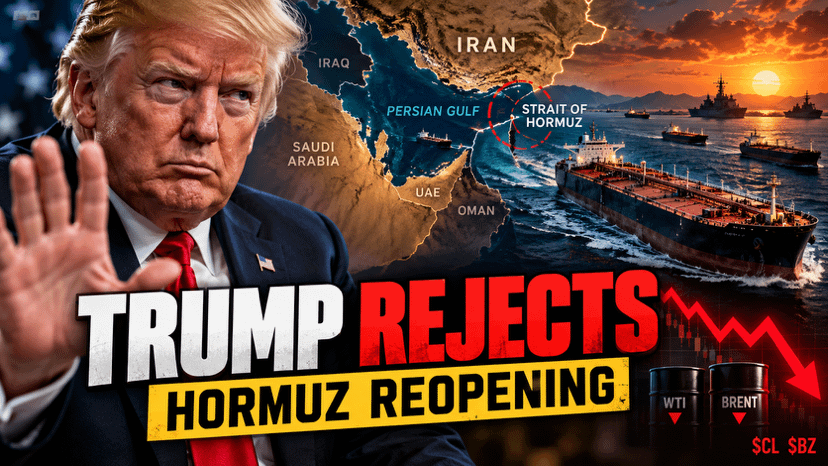
TRUMP JUST KILLED THE HORMUZ RELIEF TRADE. 🚨
Iran offered a 7-day path to reopen the Strait of Hormuz if Washington eased military pressure and lifted its blockade. For oil markets, that was the cleanest bearish catalyst on the table.
Then Trump rejected Iran’s ceasefire terms.
The two sides are still far apart, and Washington has shown little urgency to return to the June framework.
That puts the market right back into the risk-premium trade:
Hormuz stays constrained → oil supply risk stays elevated.
Diplomacy fails → $CL and $BZ can reprice higher fast.
Any renewed strikes → volatility explodes again.
The Strait carried roughly one-fifth of global oil and LNG shipments before the war, so this isn’t just another geopolitical headline.
The market sold oil on hope.
Trump just removed a big piece of that hope. 👀
$CL $BZ #TrumpRejectsIranHormuzReopening #CircleTetherFreezeBitgetHackerWallet
TRUMP JUST KILLED THE HORMUZ RELIEF TRADE. 🚨
Iran offered a 7-day path to reopen the Strait of Hormuz if Washington eased military pressure and lifted its blockade. For oil markets, that was the cleanest bearish catalyst on the table.
Then Trump rejected Iran’s ceasefire terms.
The two sides are still far apart, and Washington has shown little urgency to return to the June framework.
That puts the market right back into the risk-premium trade:
Hormuz stays constrained → oil supply risk stays elevated.
Diplomacy fails → $CL and $BZ can reprice higher fast.
Any renewed strikes → volatility explodes again.
The Strait carried roughly one-fifth of global oil and LNG shipments before the war, so this isn’t just another geopolitical headline.
The market sold oil on hope.
Trump just removed a big piece of that hope. 👀
$CL $BZ #TrumpRejectsIranHormuzReopening #CircleTetherFreezeBitgetHackerWallet
Iran offered a 7-day path to reopen the Strait of Hormuz if Washington eased military pressure and lifted its blockade. For oil markets, that was the cleanest bearish catalyst on the table.
Then Trump rejected Iran’s ceasefire terms.
The two sides are still far apart, and Washington has shown little urgency to return to the June framework.
That puts the market right back into the risk-premium trade:
Hormuz stays constrained → oil supply risk stays elevated.
Diplomacy fails → $CL and $BZ can reprice higher fast.
Any renewed strikes → volatility explodes again.
The Strait carried roughly one-fifth of global oil and LNG shipments before the war, so this isn’t just another geopolitical headline.
The market sold oil on hope.
Trump just removed a big piece of that hope. 👀
$CL $BZ #TrumpRejectsIranHormuzReopening #CircleTetherFreezeBitgetHackerWallet
2
370
·
--
Verified
$CL $BZ — OIL JUST GOT WHIPSAWED BY ONE HORMUZ HEADLINE. 🚨
WTI and Brent sold off after Iran floated a seven-day plan to reopen the Strait of Hormuz, with Tehran saying the route could reopen within a week if Washington eases military pressure and lifts its blockade. On Friday, WTI settled at $92.41 (-2.33%) while Brent closed at $104.32 (-2.14%) as traders briefly priced in a diplomatic off-ramp.
But the problem?
Washington and Tehran are still nowhere near aligned.
Trump has reportedly rejected the ceasefire proposal, while Iran says Hormuz stays shut unless its conditions are met.
That makes the setup brutally simple:
Deal progress → $CL / BZ lower
Talks fail → supply risk premium comes roaring back
And Hormuz flows are still heavily constrained, even as Saudi Arabia pushes more barrels into alternative routes and tanker markets tighten.
Oil didn’t crash because supply suddenly normalized.
It crashed because the market briefly priced hope.
If that hope disappears, CL and BZ can reprice fast. 👀
{future}(BZUSDT)
{future}(CLUSDT)
#TrumpRejectsIranHormuzReopening #CircleTetherFreezeBitgetHackerWallet #SECSaysTokenBuybacksNotAutoSecurities #ChinaUSAgreeOn$30BTariffCut #CoinMarketCapCompletesCoinglassAcquisition
$CL $BZ — OIL JUST GOT WHIPSAWED BY ONE HORMUZ HEADLINE. 🚨
WTI and Brent sold off after Iran floated a seven-day plan to reopen the Strait of Hormuz, with Tehran saying the route could reopen within a week if Washington eases military pressure and lifts its blockade. On Friday, WTI settled at $92.41 (-2.33%) while Brent closed at $104.32 (-2.14%) as traders briefly priced in a diplomatic off-ramp.
But the problem?
Washington and Tehran are still nowhere near aligned.
Trump has reportedly rejected the ceasefire proposal, while Iran says Hormuz stays shut unless its conditions are met.
That makes the setup brutally simple:
Deal progress → $CL / BZ lower
Talks fail → supply risk premium comes roaring back
And Hormuz flows are still heavily constrained, even as Saudi Arabia pushes more barrels into alternative routes and tanker markets tighten.
Oil didn’t crash because supply suddenly normalized.
It crashed because the market briefly priced hope.
If that hope disappears, CL and BZ can reprice fast. 👀
#TrumpRejectsIranHormuzReopening #CircleTetherFreezeBitgetHackerWallet #SECSaysTokenBuybacksNotAutoSecurities #ChinaUSAgreeOn$30BTariffCut #CoinMarketCapCompletesCoinglassAcquisition
WTI and Brent sold off after Iran floated a seven-day plan to reopen the Strait of Hormuz, with Tehran saying the route could reopen within a week if Washington eases military pressure and lifts its blockade. On Friday, WTI settled at $92.41 (-2.33%) while Brent closed at $104.32 (-2.14%) as traders briefly priced in a diplomatic off-ramp.
But the problem?
Washington and Tehran are still nowhere near aligned.
Trump has reportedly rejected the ceasefire proposal, while Iran says Hormuz stays shut unless its conditions are met.
That makes the setup brutally simple:
Deal progress → $CL / BZ lower
Talks fail → supply risk premium comes roaring back
And Hormuz flows are still heavily constrained, even as Saudi Arabia pushes more barrels into alternative routes and tanker markets tighten.
Oil didn’t crash because supply suddenly normalized.
It crashed because the market briefly priced hope.
If that hope disappears, CL and BZ can reprice fast. 👀
#TrumpRejectsIranHormuzReopening #CircleTetherFreezeBitgetHackerWallet #SECSaysTokenBuybacksNotAutoSecurities #ChinaUSAgreeOn$30BTariffCut #CoinMarketCapCompletesCoinglassAcquisition
1
269
·
--
$BTC — THE BOND MARKET IS SCREAMING, BUT BITCOIN STILL ISN’T BLINKING. 🚨
Trump has reportedly rejected Iran’s seven-day ceasefire proposal and told aides he expects U.S. bombing to resume after the November midterms, removing one of this week’s biggest hopes for a quick Hormuz de-escalation.
At the same time, Morgan Stanley has turned more hawkish, now expecting two more Fed hikes — in December and March — extending the “higher for longer” pressure on risk assets.
And here’s the part that should get traders’ attention:
MOVE jumped to 104, its highest since March, while Bitcoin implied volatility is still sitting near 37 — close to yearly lows.
That divergence is dangerous.
Either Bitcoin is showing real resilience…
or crypto is far too calm while the bond market is already pricing stress.
Meanwhile, BTC is still holding around $84K, helped by heavy ETF inflows and a structurally tight supply backdrop.
The setup is simple:
Oil stays high + Fed stays hawkish + bond volatility keeps rising = pressure.
ETF demand + dormant BTC supply = support.
One side is about to break.
{spot}(BTCUSDT)
$SUI $BZ
#CircleMints500MUSDCOnSolana #PolymarketBankFailureBetsDrawFDICConcern #BlackRockBuildsTokenizedPortfoliosForOndo #SECCommissionerPeirceToLeaveOct2 #Trump
$BTC — THE BOND MARKET IS SCREAMING, BUT BITCOIN STILL ISN’T BLINKING. 🚨
Trump has reportedly rejected Iran’s seven-day ceasefire proposal and told aides he expects U.S. bombing to resume after the November midterms, removing one of this week’s biggest hopes for a quick Hormuz de-escalation.
At the same time, Morgan Stanley has turned more hawkish, now expecting two more Fed hikes — in December and March — extending the “higher for longer” pressure on risk assets.
And here’s the part that should get traders’ attention:
MOVE jumped to 104, its highest since March, while Bitcoin implied volatility is still sitting near 37 — close to yearly lows.
That divergence is dangerous.
Either Bitcoin is showing real resilience…
or crypto is far too calm while the bond market is already pricing stress.
Meanwhile, BTC is still holding around $84K, helped by heavy ETF inflows and a structurally tight supply backdrop.
The setup is simple:
Oil stays high + Fed stays hawkish + bond volatility keeps rising = pressure.
ETF demand + dormant BTC supply = support.
One side is about to break.
$SUI $BZ
#CircleMints500MUSDCOnSolana #PolymarketBankFailureBetsDrawFDICConcern #BlackRockBuildsTokenizedPortfoliosForOndo #SECCommissionerPeirceToLeaveOct2 #Trump
Trump has reportedly rejected Iran’s seven-day ceasefire proposal and told aides he expects U.S. bombing to resume after the November midterms, removing one of this week’s biggest hopes for a quick Hormuz de-escalation.
At the same time, Morgan Stanley has turned more hawkish, now expecting two more Fed hikes — in December and March — extending the “higher for longer” pressure on risk assets.
And here’s the part that should get traders’ attention:
MOVE jumped to 104, its highest since March, while Bitcoin implied volatility is still sitting near 37 — close to yearly lows.
That divergence is dangerous.
Either Bitcoin is showing real resilience…
or crypto is far too calm while the bond market is already pricing stress.
Meanwhile, BTC is still holding around $84K, helped by heavy ETF inflows and a structurally tight supply backdrop.
The setup is simple:
Oil stays high + Fed stays hawkish + bond volatility keeps rising = pressure.
ETF demand + dormant BTC supply = support.
One side is about to break.
$SUI $BZ
#CircleMints500MUSDCOnSolana #PolymarketBankFailureBetsDrawFDICConcern #BlackRockBuildsTokenizedPortfoliosForOndo #SECCommissionerPeirceToLeaveOct2 #Trump
2
78
Log in to explore more content
Join global crypto users on Binance Square
⚡️ Get latest and useful information about crypto.
💬 Trusted by the world’s largest crypto exchange.
👍 Discover real insights from verified creators.
Email / Phone number
Trending Topics
BitwiseFilesFinalNEARSpotETFProspectus
61,016 views
1,215 Discussing
#bitwisefilesfinalnearspotetfprospectus
Can $NEAR REALLY reach $562 with an ETF approval? 🚀
The crypto market is buzzing as Bitwise files its final prospectus for a Spot NEAR ETF (Ticker: NRR on NYSE Arca)! 📊🔥
Is institutional money about to unleash the biggest pump in NEAR’s history? Analysts are throwing around mind-blowing price targets:
🎯 Intermediate Target: $155
🎯 2030 Long-Term Target: $562
💡 Let's do the math:
At $562, $NEAR would sit at roughly a $680 Billion market cap—putting it right up there with Ethereum's potential valuation. With NEAR leading the Chain Abstraction & AI crypto narrative, this might not be as crazy as it sounds!
With SEC regulations turning more crypto-friendly and Wall Street knocking on the door, are you Accumulating or Holding?
👇 Drop your realistic price prediction for $NEAR in the comments! 👇
#BitwiseFilesFinalNEARSpotETFProspectus #Altcoins #CryptoNews #ETF
Doomsday-Trader
·5 Likes
·3.5k views
BitgetHackerMoves$83MStolenXRP
27,363 views
153 Discussing
SOLSpotETFWeeklyInflow$188M
16,604 views
121 Discussing