
#defi
defi
56.1M views
290,639 Discussing
Hot
Latest


·
--
Bullish
Verified
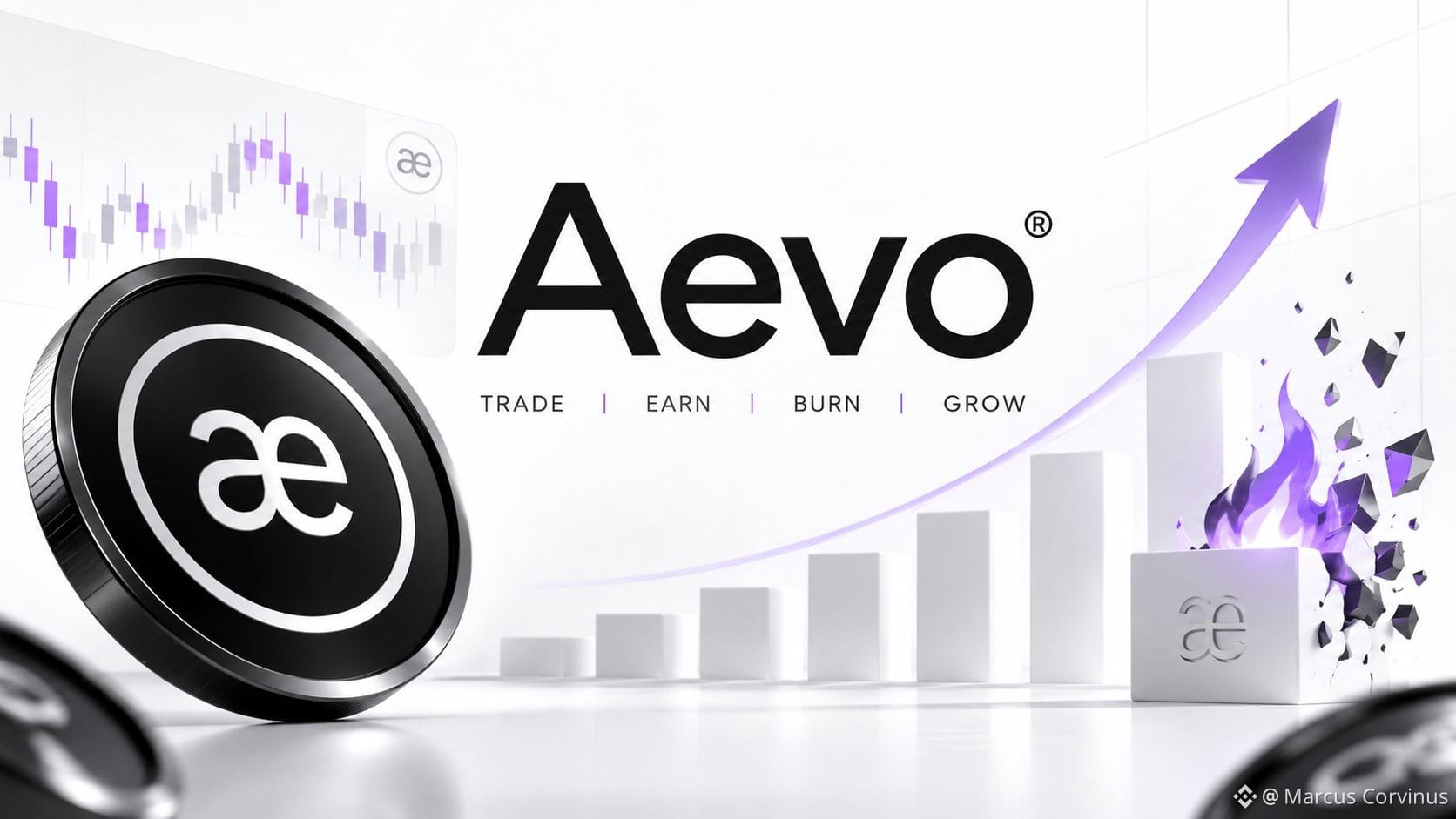
Aevo has built a token structure that deserves a closer look.
$AEVO = the native token behind Aevo, a decentralized derivatives platform.
The latest tokenomics shift matters because the structure is simple:
• 74M AEVO already burned
• No scheduled unlocks remaining
• Monthly buybacks funded by trading fees
• Bought-back tokens permanently removed from supply
There is one important detail.
Traders receive 1M AEVO in weekly rewards.
But:
1M weekly rewards ≠ new issuance
Those tokens come from the fixed 1B supply that already exists.
Meanwhile, platform activity → trading fees → monthly buybacks → tokens removed from the float.
That creates a very different supply structure.
While $DYDX and $GMX follow their own token models, Aevo already has platform activity mechanically connected to supply reduction.
The interesting question is whether growing usage can keep pushing that mechanism forward over time.
LFG 🥂
NFA + DYOR
#AEVO #DeFi
Aevo has built a token structure that deserves a closer look.
$AEVO = the native token behind Aevo, a decentralized derivatives platform.
The latest tokenomics shift matters because the structure is simple:
• 74M AEVO already burned
• No scheduled unlocks remaining
• Monthly buybacks funded by trading fees
• Bought-back tokens permanently removed from supply
There is one important detail.
Traders receive 1M AEVO in weekly rewards.
But:
1M weekly rewards ≠ new issuance
Those tokens come from the fixed 1B supply that already exists.
Meanwhile, platform activity → trading fees → monthly buybacks → tokens removed from the float.
That creates a very different supply structure.
While $DYDX and $GMX follow their own token models, Aevo already has platform activity mechanically connected to supply reduction.
The interesting question is whether growing usage can keep pushing that mechanism forward over time.
LFG 🥂
NFA + DYOR
#AEVO #DeFi
$AEVO = the native token behind Aevo, a decentralized derivatives platform.
The latest tokenomics shift matters because the structure is simple:
• 74M AEVO already burned
• No scheduled unlocks remaining
• Monthly buybacks funded by trading fees
• Bought-back tokens permanently removed from supply
There is one important detail.
Traders receive 1M AEVO in weekly rewards.
But:
1M weekly rewards ≠ new issuance
Those tokens come from the fixed 1B supply that already exists.
Meanwhile, platform activity → trading fees → monthly buybacks → tokens removed from the float.
That creates a very different supply structure.
While $DYDX and $GMX follow their own token models, Aevo already has platform activity mechanically connected to supply reduction.
The interesting question is whether growing usage can keep pushing that mechanism forward over time.
LFG 🥂
NFA + DYOR
#AEVO #DeFi
206 Atlas:
Weekly rewards dilute holders, but fee-driven buybacks only help if volume sustains. Can you prove the float shrinks faster than distribution expands?
52
47
8.1k

·
--
$EUL 🔥 Euler (EUL) & the RWA Boom: Did You Miss This?
While the market focuses on short-term price action, major institutional moves are happening in Real World Assets (RWA) and DeFi lending. Here is a quick breakdown of Euler Finance (EUL) and how it compares to top RWA projects.
📌 Recent Euler Highlights
Coinbase Tokenized Stocks: Coinbase added 6 new tokenized stocks (including Tesla, Amazon, and Microsoft) on Base, making them usable as collateral in Euler’s lending pools.
Institutional Backing: Laser Digital (Nomura's crypto branch) and Keyring Network selected Euler's infrastructure to deploy fixed-income lending markets for institutions.
📊 Quick RWA Comparison
EUL (Euler Finance): Focuses on modular lending with isolated risk pools for tokenized stocks and institutional debt.
ONDO (Ondo Finance): Market leader in tokenized U.S. Treasuries and yield-bearing products (USDY, OUSG).
CFG (Centrifuge): On-chain platform for tokenizing real-world business loans, invoices, and private credit.
💡 The Takeaway
TradFi giants (Coinbase, Nomura, BlackRock) are driving real adoption into DeFi. Infrastructure protocols like Euler that facilitate loans against real-world assets stand to capture massive institutional liquidity.
Which RWA sector has the most potential — tokenized stocks (EUL), Treasuries (ONDO), or private credit (CFG)? Let us know in the comments! 👇
#EUL #ONDO #cfg #RWA #defi #BinanceSquare #crypto
$EUL 🔥 Euler (EUL) & the RWA Boom: Did You Miss This?
While the market focuses on short-term price action, major institutional moves are happening in Real World Assets (RWA) and DeFi lending. Here is a quick breakdown of Euler Finance (EUL) and how it compares to top RWA projects.
📌 Recent Euler Highlights
Coinbase Tokenized Stocks: Coinbase added 6 new tokenized stocks (including Tesla, Amazon, and Microsoft) on Base, making them usable as collateral in Euler’s lending pools.
Institutional Backing: Laser Digital (Nomura's crypto branch) and Keyring Network selected Euler's infrastructure to deploy fixed-income lending markets for institutions.
📊 Quick RWA Comparison
EUL (Euler Finance): Focuses on modular lending with isolated risk pools for tokenized stocks and institutional debt.
ONDO (Ondo Finance): Market leader in tokenized U.S. Treasuries and yield-bearing products (USDY, OUSG).
CFG (Centrifuge): On-chain platform for tokenizing real-world business loans, invoices, and private credit.
💡 The Takeaway
TradFi giants (Coinbase, Nomura, BlackRock) are driving real adoption into DeFi. Infrastructure protocols like Euler that facilitate loans against real-world assets stand to capture massive institutional liquidity.
Which RWA sector has the most potential — tokenized stocks (EUL), Treasuries (ONDO), or private credit (CFG)? Let us know in the comments! 👇
#EUL #ONDO #cfg #RWA #defi #BinanceSquare #crypto
While the market focuses on short-term price action, major institutional moves are happening in Real World Assets (RWA) and DeFi lending. Here is a quick breakdown of Euler Finance (EUL) and how it compares to top RWA projects.
📌 Recent Euler Highlights
Coinbase Tokenized Stocks: Coinbase added 6 new tokenized stocks (including Tesla, Amazon, and Microsoft) on Base, making them usable as collateral in Euler’s lending pools.
Institutional Backing: Laser Digital (Nomura's crypto branch) and Keyring Network selected Euler's infrastructure to deploy fixed-income lending markets for institutions.
📊 Quick RWA Comparison
EUL (Euler Finance): Focuses on modular lending with isolated risk pools for tokenized stocks and institutional debt.
ONDO (Ondo Finance): Market leader in tokenized U.S. Treasuries and yield-bearing products (USDY, OUSG).
CFG (Centrifuge): On-chain platform for tokenizing real-world business loans, invoices, and private credit.
💡 The Takeaway
TradFi giants (Coinbase, Nomura, BlackRock) are driving real adoption into DeFi. Infrastructure protocols like Euler that facilitate loans against real-world assets stand to capture massive institutional liquidity.
Which RWA sector has the most potential — tokenized stocks (EUL), Treasuries (ONDO), or private credit (CFG)? Let us know in the comments! 👇
#EUL #ONDO #cfg #RWA #defi #BinanceSquare #crypto
1
209

·
--
Cross-chain liquidity fragmentation is crypto's most expensive invisible tax.
Right now every chain is an island. Your $ETH sits on Ethereum. Your $SOL lives on Solana. Your $BNB stays on BNB Chain. Moving value between them means bridges — and bridges mean latency, fees, counterparty risk, and the occasional catastrophic exploit.
But the deeper problem isn't just movement. It's fragmentation of liquidity itself. A pool of $50M on one chain and $50M on another isn't a $100M market. It's two separate $50M markets that can't price-discover against each other efficiently.
The projects solving this aren't trying to build one chain to rule them all. They're building infrastructure that makes chains irrelevant to the end user — cross-chain messaging protocols, shared liquidity layers, intent-based execution frameworks where you specify what you want done, not which chain to use.
The parallel to TradFi is exact. Stock exchanges consolidated because fragmented liquidity across regional venues created arbitrage tunnels and inefficient pricing. Crypto is repeating that arc, just with chains instead of exchanges.
The chains that win won't be the ones with the best tech. They'll be the ones that integrate most seamlessly into a cross-chain abstraction layer where users never think about which chain they're on.
$ETH $BNB $SOL
#CrossChain #CryptoInfrastructure #DeFi #Web3
Cross-chain liquidity fragmentation is crypto's most expensive invisible tax.
Right now every chain is an island. Your $ETH sits on Ethereum. Your $SOL lives on Solana. Your $BNB stays on BNB Chain. Moving value between them means bridges — and bridges mean latency, fees, counterparty risk, and the occasional catastrophic exploit.
But the deeper problem isn't just movement. It's fragmentation of liquidity itself. A pool of $50M on one chain and $50M on another isn't a $100M market. It's two separate $50M markets that can't price-discover against each other efficiently.
The projects solving this aren't trying to build one chain to rule them all. They're building infrastructure that makes chains irrelevant to the end user — cross-chain messaging protocols, shared liquidity layers, intent-based execution frameworks where you specify what you want done, not which chain to use.
The parallel to TradFi is exact. Stock exchanges consolidated because fragmented liquidity across regional venues created arbitrage tunnels and inefficient pricing. Crypto is repeating that arc, just with chains instead of exchanges.
The chains that win won't be the ones with the best tech. They'll be the ones that integrate most seamlessly into a cross-chain abstraction layer where users never think about which chain they're on.
$ETH $BNB $SOL
#CrossChain #CryptoInfrastructure #DeFi #Web3
Right now every chain is an island. Your $ETH sits on Ethereum. Your $SOL lives on Solana. Your $BNB stays on BNB Chain. Moving value between them means bridges — and bridges mean latency, fees, counterparty risk, and the occasional catastrophic exploit.
But the deeper problem isn't just movement. It's fragmentation of liquidity itself. A pool of $50M on one chain and $50M on another isn't a $100M market. It's two separate $50M markets that can't price-discover against each other efficiently.
The projects solving this aren't trying to build one chain to rule them all. They're building infrastructure that makes chains irrelevant to the end user — cross-chain messaging protocols, shared liquidity layers, intent-based execution frameworks where you specify what you want done, not which chain to use.
The parallel to TradFi is exact. Stock exchanges consolidated because fragmented liquidity across regional venues created arbitrage tunnels and inefficient pricing. Crypto is repeating that arc, just with chains instead of exchanges.
The chains that win won't be the ones with the best tech. They'll be the ones that integrate most seamlessly into a cross-chain abstraction layer where users never think about which chain they're on.
$ETH $BNB $SOL
#CrossChain #CryptoInfrastructure #DeFi #Web3
25

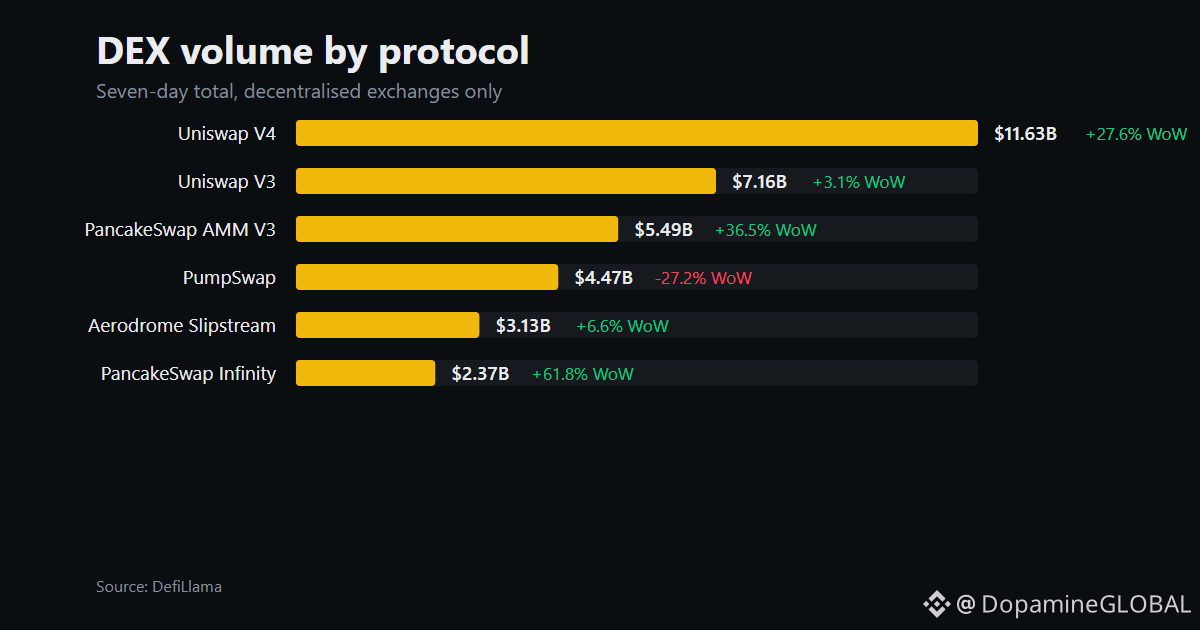
DEX volume is running at $10.11B a day on a 7-day average, up 10.56% week over week. Binance’s USDT spot pairs did $4.82B over 24 hours.
That gap doesn’t mean DEXs now own 2.1x of the market. The windows don’t match, and the Binance figure covers only USDT spot across 682 pairs. It excludes other quote currencies and all derivatives, which are far larger. This isn’t a CEX-versus-DEX market-share read.
The cleaner signal is where activity is being expressed. Onchain flow is staying elevated while traders route through DEX pools, access tokens that may not have deep centralized listings, or move between venues without relying on a single order book. That can create more turnover without bringing in fresh capital. Incentives, arbitrage and wash volume can also inflate the total, so the chart shows activity, not organic demand.
For $BNB, this is ecosystem plumbing, not a directional signal. A strong DEX tape can coexist with flat or falling major-asset positioning because volume measures transactions, not net exposure.
Not financial advice. Do your own research.
#DEX #DeFi
DEX volume is running at $10.11B a day on a 7-day average, up 10.56% week over week. Binance’s USDT spot pairs did $4.82B over 24 hours.
That gap doesn’t mean DEXs now own 2.1x of the market. The windows don’t match, and the Binance figure covers only USDT spot across 682 pairs. It excludes other quote currencies and all derivatives, which are far larger. This isn’t a CEX-versus-DEX market-share read.
The cleaner signal is where activity is being expressed. Onchain flow is staying elevated while traders route through DEX pools, access tokens that may not have deep centralized listings, or move between venues without relying on a single order book. That can create more turnover without bringing in fresh capital. Incentives, arbitrage and wash volume can also inflate the total, so the chart shows activity, not organic demand.
For $BNB , this is ecosystem plumbing, not a directional signal. A strong DEX tape can coexist with flat or falling major-asset positioning because volume measures transactions, not net exposure.
Not financial advice. Do your own research.
#DEX #DeFi
That gap doesn’t mean DEXs now own 2.1x of the market. The windows don’t match, and the Binance figure covers only USDT spot across 682 pairs. It excludes other quote currencies and all derivatives, which are far larger. This isn’t a CEX-versus-DEX market-share read.
The cleaner signal is where activity is being expressed. Onchain flow is staying elevated while traders route through DEX pools, access tokens that may not have deep centralized listings, or move between venues without relying on a single order book. That can create more turnover without bringing in fresh capital. Incentives, arbitrage and wash volume can also inflate the total, so the chart shows activity, not organic demand.
For $BNB , this is ecosystem plumbing, not a directional signal. A strong DEX tape can coexist with flat or falling major-asset positioning because volume measures transactions, not net exposure.
Not financial advice. Do your own research.
#DEX #DeFi
6

·
--
Indian agri-warehouse giant commits $2B to grain-backed loans on-chain. Arya.ag leverages Avalanche to tokenize grain deposits, enabling lenders to verify crop collateral in real time. $AVAX #DeFi #Agriculture
Indian agri-warehouse giant commits $2B to grain-backed loans on-chain. Arya.ag leverages Avalanche to tokenize grain deposits, enabling lenders to verify crop collateral in real time. $AVAX #DeFi #Agriculture

15

·
--
Article
Fidelity’s FIDD Stablecoin: The Quiet Engine Powering Institutional DeFiMost traders focus on price swings, but the real engine of institutional confidence is the liquidity backbone. Fidelity’s launch of its $FIDD stablecoin on Ethereum is a quiet signal that the traditional finance giant is cementing a new, dollar‑backed bridge into on‑chain markets, and it’s already reshaping whale behavior.
The signal: Fidelity is injecting $50 million into its FIDD stablecoin, setting up a dollar‑redemption mechanism, enabling seamless ETH transfers, and committing to monthly reserve audits. #FIDD #DeFi #InstitutionalCrypto
Interpretation: By anchoring FIDD to the U.S. dollar and providing a transparent redemption path, Fidelity is lowering the friction for institutional players to move capital into DeFi without exposing them to volatility. This move signals that large‑cap funds are ready to deploy capital into Ethereum‑based protocols, potentially driving up demand for $ETH and liquidity providers. The monthly reserve reviews add a layer of trust that could attract risk‑averse hedge funds and pension funds looking for a regulated entry point.
Watch list: Keep an eye on the FIDD‑$ETH liquidity pool on major AMMs. A sudden spike in FIDD deposits or withdrawals will indicate institutional appetite. #FIDDETH
Thought closer: If Fidelity’s FIDD becomes the go‑to stablecoin for institutional DeFi, will we see a shift in how traditional funds allocate their crypto exposure?
Fidelity’s FIDD Stablecoin: The Quiet Engine Powering Institutional DeFi
Most traders focus on price swings, but the real engine of institutional confidence is the liquidity backbone. Fidelity’s launch of its $FIDD stablecoin on Ethereum is a quiet signal that the traditional finance giant is cementing a new, dollar‑backed bridge into on‑chain markets, and it’s already reshaping whale behavior.
The signal: Fidelity is injecting $50 million into its FIDD stablecoin, setting up a dollar‑redemption mechanism, enabling seamless ETH transfers, and committing to monthly reserve audits. #FIDD #DeFi #InstitutionalCrypto
Interpretation: By anchoring FIDD to the U.S. dollar and providing a transparent redemption path, Fidelity is lowering the friction for institutional players to move capital into DeFi without exposing them to volatility. This move signals that large‑cap funds are ready to deploy capital into Ethereum‑based protocols, potentially driving up demand for $ETH and liquidity providers. The monthly reserve reviews add a layer of trust that could attract risk‑averse hedge funds and pension funds looking for a regulated entry point.
Watch list: Keep an eye on the FIDD‑$ETH liquidity pool on major AMMs. A sudden spike in FIDD deposits or withdrawals will indicate institutional appetite. #FIDDETH
Thought closer: If Fidelity’s FIDD becomes the go‑to stablecoin for institutional DeFi, will we see a shift in how traditional funds allocate their crypto exposure?
The signal: Fidelity is injecting $50 million into its FIDD stablecoin, setting up a dollar‑redemption mechanism, enabling seamless ETH transfers, and committing to monthly reserve audits. #FIDD #DeFi #InstitutionalCrypto
Interpretation: By anchoring FIDD to the U.S. dollar and providing a transparent redemption path, Fidelity is lowering the friction for institutional players to move capital into DeFi without exposing them to volatility. This move signals that large‑cap funds are ready to deploy capital into Ethereum‑based protocols, potentially driving up demand for $ETH and liquidity providers. The monthly reserve reviews add a layer of trust that could attract risk‑averse hedge funds and pension funds looking for a regulated entry point.
Watch list: Keep an eye on the FIDD‑$ETH liquidity pool on major AMMs. A sudden spike in FIDD deposits or withdrawals will indicate institutional appetite. #FIDDETH
Thought closer: If Fidelity’s FIDD becomes the go‑to stablecoin for institutional DeFi, will we see a shift in how traditional funds allocate their crypto exposure?
3

Article
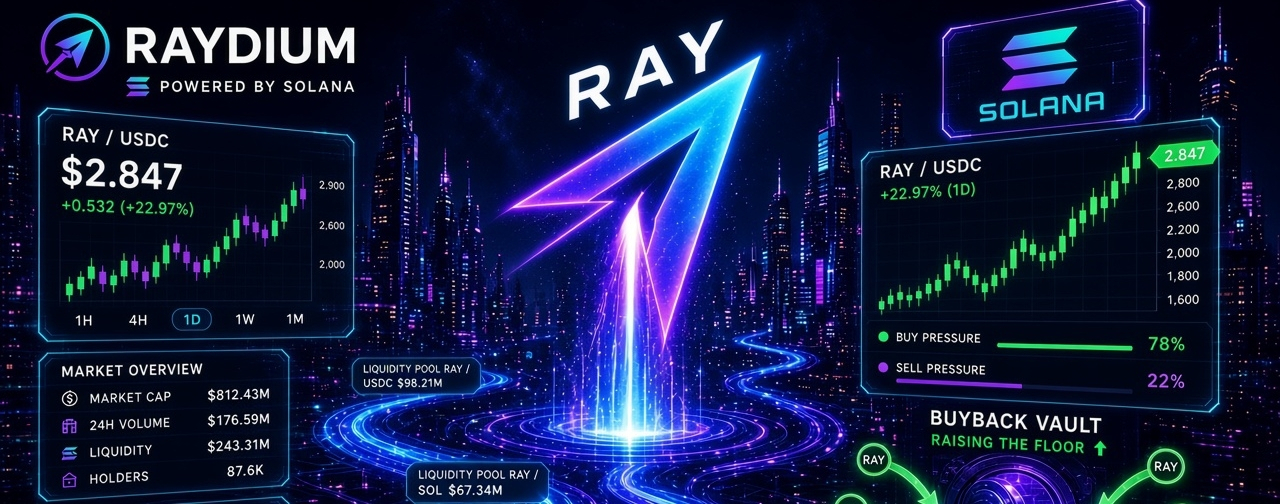
🚀 Raydium ($RAY) is on fire — here’s why it’s dominating the charts right nowThe Solana ecosystem is heating up again, and Raydium ($RAY ) is leading the charge. Over the past 24–48 hours, RAY has posted strong double-digit gains (recently around +20% or more in a day), climbing toward the $1.30–$1.40 range while sitting among the top performers in the top 100 by market cap.
This isn’t just random meme momentum. Real on-chain activity is driving it.
### What’s fueling the move?
1. StonkFun / LaunchLab surge
The integration of StonkFun (and related launchpad activity) with Raydium’s LaunchLab has sent trading volume and protocol fees soaring. New token launches are routing liquidity directly through Raydium’s AMMs and CLMM pools. That means more fees → more buybacks.
2. Aggressive buybacks
Raydium routes a meaningful portion of trading fees (around 12% in key pools) into open-market RAY buybacks. The protocol has already accumulated a large chunk of circulating supply (reports put buybacks past the 30% mark of circulating supply in recent periods). Fewer tokens floating around + rising demand = upward pressure.
3. Solana’s DeFi + RWA momentum
Raydium remains one of the deepest liquidity hubs on Solana. Tokenized stock volume and broader DeFi activity on the chain continue to flow through its pools. When Solana volume expands, RAY tends to feel it first.
### Quick snapshot (approximate recent levels)
- Strong 24h and 7d outperformance vs. most large-caps
- Elevated volume relative to market cap
- Buyback wallet continuing to accumulate
### What to watch next
- Sustained LaunchLab / StonkFun volume (if the launchpad frenzy cools, fees could drop)
- Whether RAY can hold above key psychological levels ($1.30 / previous highs)
- Broader Solana ecosystem health and any new RWA or institutional flow announcements
- Overall market risk appetite — altcoin rotations can reverse quickly
Bottom line: RAY is one of the cleaner “utility + buyback” stories in the current Solana cycle. It’s not pure narrative — fee generation and supply reduction are visible on-chain. That said, crypto remains highly volatile. Always do your own research, size positions responsibly, and never invest more than you can afford to lose.
What do you think — is RAY just getting started, or is this a short-term spike? Drop your thoughts below 👇
#RAY #Raydium #Solana #DeFi
{spot}(RAYUSDT)
🚀 Raydium ($RAY) is on fire — here’s why it’s dominating the charts right now
The Solana ecosystem is heating up again, and Raydium ($RAY ) is leading the charge. Over the past 24–48 hours, RAY has posted strong double-digit gains (recently around +20% or more in a day), climbing toward the $1.30–$1.40 range while sitting among the top performers in the top 100 by market cap.
This isn’t just random meme momentum. Real on-chain activity is driving it.
### What’s fueling the move?
1. StonkFun / LaunchLab surge
The integration of StonkFun (and related launchpad activity) with Raydium’s LaunchLab has sent trading volume and protocol fees soaring. New token launches are routing liquidity directly through Raydium’s AMMs and CLMM pools. That means more fees → more buybacks.
2. Aggressive buybacks
Raydium routes a meaningful portion of trading fees (around 12% in key pools) into open-market RAY buybacks. The protocol has already accumulated a large chunk of circulating supply (reports put buybacks past the 30% mark of circulating supply in recent periods). Fewer tokens floating around + rising demand = upward pressure.
3. Solana’s DeFi + RWA momentum
Raydium remains one of the deepest liquidity hubs on Solana. Tokenized stock volume and broader DeFi activity on the chain continue to flow through its pools. When Solana volume expands, RAY tends to feel it first.
### Quick snapshot (approximate recent levels)
- Strong 24h and 7d outperformance vs. most large-caps
- Elevated volume relative to market cap
- Buyback wallet continuing to accumulate
### What to watch next
- Sustained LaunchLab / StonkFun volume (if the launchpad frenzy cools, fees could drop)
- Whether RAY can hold above key psychological levels ($1.30 / previous highs)
- Broader Solana ecosystem health and any new RWA or institutional flow announcements
- Overall market risk appetite — altcoin rotations can reverse quickly
Bottom line: RAY is one of the cleaner “utility + buyback” stories in the current Solana cycle. It’s not pure narrative — fee generation and supply reduction are visible on-chain. That said, crypto remains highly volatile. Always do your own research, size positions responsibly, and never invest more than you can afford to lose.
What do you think — is RAY just getting started, or is this a short-term spike? Drop your thoughts below 👇
#RAY #Raydium #Solana #DeFi
This isn’t just random meme momentum. Real on-chain activity is driving it.
### What’s fueling the move?
1. StonkFun / LaunchLab surge
The integration of StonkFun (and related launchpad activity) with Raydium’s LaunchLab has sent trading volume and protocol fees soaring. New token launches are routing liquidity directly through Raydium’s AMMs and CLMM pools. That means more fees → more buybacks.
2. Aggressive buybacks
Raydium routes a meaningful portion of trading fees (around 12% in key pools) into open-market RAY buybacks. The protocol has already accumulated a large chunk of circulating supply (reports put buybacks past the 30% mark of circulating supply in recent periods). Fewer tokens floating around + rising demand = upward pressure.
3. Solana’s DeFi + RWA momentum
Raydium remains one of the deepest liquidity hubs on Solana. Tokenized stock volume and broader DeFi activity on the chain continue to flow through its pools. When Solana volume expands, RAY tends to feel it first.
### Quick snapshot (approximate recent levels)
- Strong 24h and 7d outperformance vs. most large-caps
- Elevated volume relative to market cap
- Buyback wallet continuing to accumulate
### What to watch next
- Sustained LaunchLab / StonkFun volume (if the launchpad frenzy cools, fees could drop)
- Whether RAY can hold above key psychological levels ($1.30 / previous highs)
- Broader Solana ecosystem health and any new RWA or institutional flow announcements
- Overall market risk appetite — altcoin rotations can reverse quickly
Bottom line: RAY is one of the cleaner “utility + buyback” stories in the current Solana cycle. It’s not pure narrative — fee generation and supply reduction are visible on-chain. That said, crypto remains highly volatile. Always do your own research, size positions responsibly, and never invest more than you can afford to lose.
What do you think — is RAY just getting started, or is this a short-term spike? Drop your thoughts below 👇
#RAY #Raydium #Solana #DeFi
46

$KNC — Kyber Network remains a recognizable DeFi infrastructure token, with liquidity important during momentum trades.
{spot}(KNCUSDT)
$ENS — Ethereum Name Service remains a major Web3 naming project, while ETH strength can influence its trading sentiment.
{spot}(ENSUSDT)
$BAL — Balancer remains an established DeFi market, with traders watching whether sector-wide liquidity improves.
#KNC #ENS #BAL #DeFi #CryptoTrading
$KNC — Kyber Network remains a recognizable DeFi infrastructure token, with liquidity important during momentum trades.
$ENS — Ethereum Name Service remains a major Web3 naming project, while ETH strength can influence its trading sentiment.
$BAL — Balancer remains an established DeFi market, with traders watching whether sector-wide liquidity improves.
#KNC #ENS #BAL #DeFi #CryptoTrading
$ENS — Ethereum Name Service remains a major Web3 naming project, while ETH strength can influence its trading sentiment.
$BAL — Balancer remains an established DeFi market, with traders watching whether sector-wide liquidity improves.
#KNC #ENS #BAL #DeFi #CryptoTrading

28
$RUNE — THORChain remains a notable cross-chain DeFi market, with volatility creating both opportunity and risk.
{spot}(RUNEUSDT)
$SUSHI — SushiSwap continues to attract DeFi traders, especially when decentralized-exchange activity increases.
{spot}(SUSHIUSDT)
$1INCH — 1inch remains an established DEX-aggregation token, with broader DeFi volume serving as a potential catalyst.
{spot}(1INCHUSDT)
#RUNE #SUSHI #1INCH #DeFi #Trading
$RUNE — THORChain remains a notable cross-chain DeFi market, with volatility creating both opportunity and risk.
$SUSHI — SushiSwap continues to attract DeFi traders, especially when decentralized-exchange activity increases.
$1INCH — 1inch remains an established DEX-aggregation token, with broader DeFi volume serving as a potential catalyst.
#RUNE #SUSHI #1INCH #DeFi #Trading
$SUSHI — SushiSwap continues to attract DeFi traders, especially when decentralized-exchange activity increases.
$1INCH — 1inch remains an established DEX-aggregation token, with broader DeFi volume serving as a potential catalyst.
#RUNE #SUSHI #1INCH #DeFi #Trading

108
$LDO — Lido remains one of the major liquid-staking tokens, making ETH strength an important influence on its setup.
{spot}(LDOUSDT)
$PENDLE — Pendle continues to attract DeFi traders interested in yield markets, where liquidity remains key.
{spot}(PENDLEUSDT)
$CRV — Curve remains a major DeFi liquidity token, and renewed sector volume could improve its trading momentum.
{spot}(CRVUSDT)
#LDO #PENDLE #CRV #DeFi #CryptoTrading
$LDO — Lido remains one of the major liquid-staking tokens, making ETH strength an important influence on its setup.
$PENDLE — Pendle continues to attract DeFi traders interested in yield markets, where liquidity remains key.
$CRV — Curve remains a major DeFi liquidity token, and renewed sector volume could improve its trading momentum.
#LDO #PENDLE #CRV #DeFi #CryptoTrading
$PENDLE — Pendle continues to attract DeFi traders interested in yield markets, where liquidity remains key.
$CRV — Curve remains a major DeFi liquidity token, and renewed sector volume could improve its trading momentum.
#LDO #PENDLE #CRV #DeFi #CryptoTrading

76

·
--
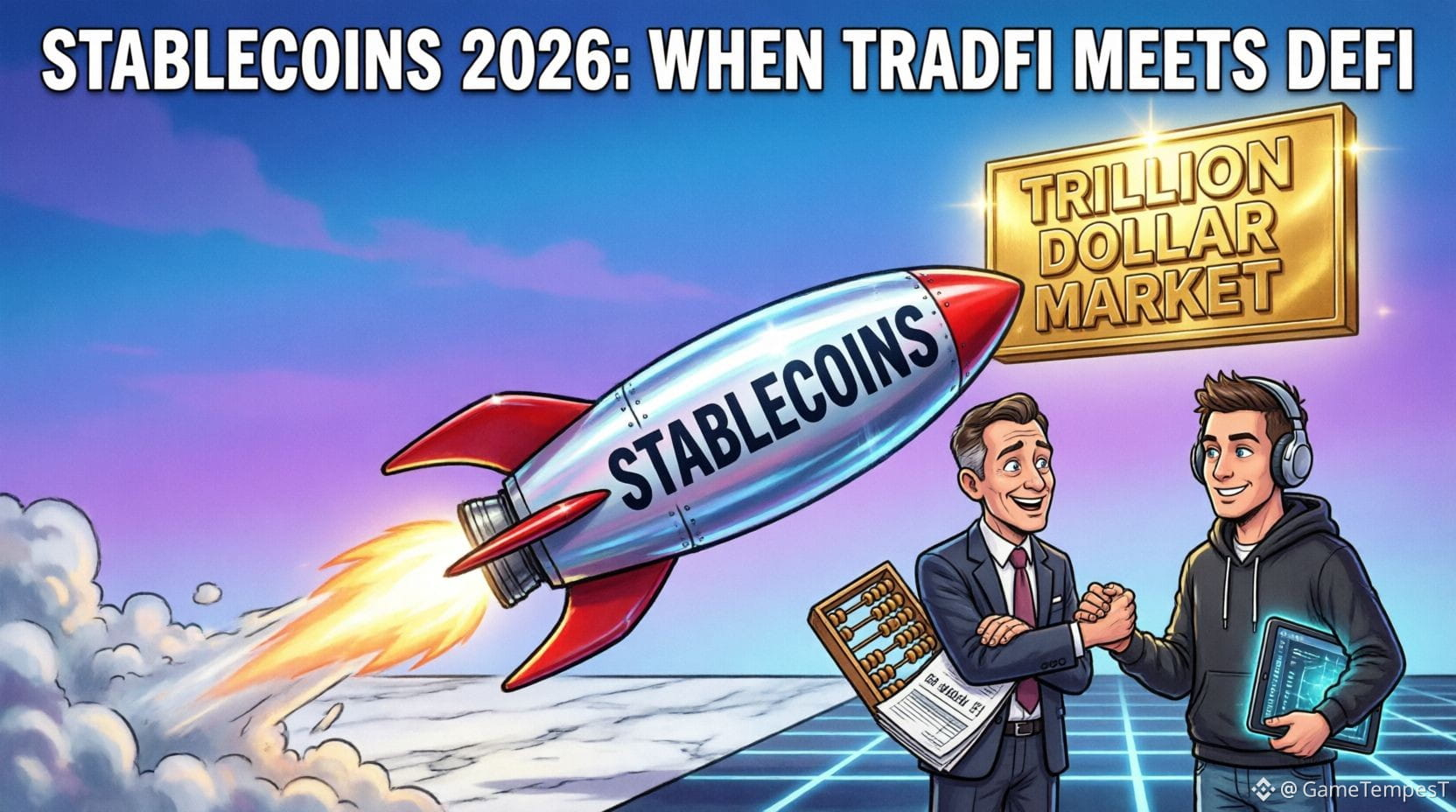
STABLECOIN SUMMIT 2026: THE TRILLION DOLLAR INFRASTRUCTURE IS HERE! 🌟
Singapore, Oct 8 - XREX Group hosts Asia's premier stablecoin event for the 4th year, and the signals are MASSIVE for crypto traders! 📊
💡 KEY INSIGHTS:
✅ Stablecoins = Independent Industry - Moving toward $1 TRILLION market cap
✅ 30+ Speakers from Curve, Aave, Coinbase, Stellar, Paxos, Galaxy Ventures
✅ 600+ Attendees - Banks, regulators, payment giants converging
✅ Singapore's Edge - 37 licensed DPT firms + MAS Project BLOOM testing
TRADING IMPLICATIONS:
🔹 Curve Finance (CRV) - Title sponsor + DeFi stablecoin infrastructure play
→ Price target: $0.47+ by year-end (+33% potential) coincodex.com
🔹 Aave (AAVE) - Stani Kulechov speaking = major stablecoin lending news?
→ Current: ~$125, protocol dominance growing www.coingecko.com
🔹 Stellar (XLM) - Cross-border payment infrastructure
→ CBO Raja Chakravorti at summit = partnership announcements?
Singapore Regulatory Clarity = BULLISH for all stablecoin projects
→ New legislation just dropped Sept 1, 2026 www.gibsondunn.com
💰 WHY THIS MATTERS:
When TRADFI meets DEFI at this scale, liquidity flows follow. Stablecoins are no longer "crypto" - they're FINANCIAL INFRASTRUCTURE.
Wayne Huang (XREX CEO) nailed it: "Stablecoins are redefining how money moves, clears, and settles."
POSITION YOURSELF:
Watch CRV, AAVE, XLM for breakout movesSingapore-regulated projects = institutional capital inflowCross-border payment tokens = massive adoption wave
The convergence is REAL. Are you positioned? 🎯
#Stablecoins #crypto #defi
STABLECOIN SUMMIT 2026: THE TRILLION DOLLAR INFRASTRUCTURE IS HERE! 🌟
Singapore, Oct 8 - XREX Group hosts Asia's premier stablecoin event for the 4th year, and the signals are MASSIVE for crypto traders! 📊
💡 KEY INSIGHTS:
✅ Stablecoins = Independent Industry - Moving toward $1 TRILLION market cap
✅ 30+ Speakers from Curve, Aave, Coinbase, Stellar, Paxos, Galaxy Ventures
✅ 600+ Attendees - Banks, regulators, payment giants converging
✅ Singapore's Edge - 37 licensed DPT firms + MAS Project BLOOM testing
TRADING IMPLICATIONS:
🔹 Curve Finance (CRV) - Title sponsor + DeFi stablecoin infrastructure play
→ Price target: $0.47+ by year-end (+33% potential) coincodex.com
🔹 Aave (AAVE) - Stani Kulechov speaking = major stablecoin lending news?
→ Current: ~$125, protocol dominance growing www.coingecko.com
🔹 Stellar (XLM) - Cross-border payment infrastructure
→ CBO Raja Chakravorti at summit = partnership announcements?
Singapore Regulatory Clarity = BULLISH for all stablecoin projects
→ New legislation just dropped Sept 1, 2026 www.gibsondunn.com
💰 WHY THIS MATTERS:
When TRADFI meets DEFI at this scale, liquidity flows follow. Stablecoins are no longer "crypto" - they're FINANCIAL INFRASTRUCTURE.
Wayne Huang (XREX CEO) nailed it: "Stablecoins are redefining how money moves, clears, and settles."
POSITION YOURSELF:
Watch CRV, AAVE, XLM for breakout movesSingapore-regulated projects = institutional capital inflowCross-border payment tokens = massive adoption wave
The convergence is REAL. Are you positioned? 🎯
#Stablecoins #crypto #defi
Singapore, Oct 8 - XREX Group hosts Asia's premier stablecoin event for the 4th year, and the signals are MASSIVE for crypto traders! 📊
💡 KEY INSIGHTS:
✅ Stablecoins = Independent Industry - Moving toward $1 TRILLION market cap
✅ 30+ Speakers from Curve, Aave, Coinbase, Stellar, Paxos, Galaxy Ventures
✅ 600+ Attendees - Banks, regulators, payment giants converging
✅ Singapore's Edge - 37 licensed DPT firms + MAS Project BLOOM testing
TRADING IMPLICATIONS:
🔹 Curve Finance (CRV) - Title sponsor + DeFi stablecoin infrastructure play
→ Price target: $0.47+ by year-end (+33% potential) coincodex.com
🔹 Aave (AAVE) - Stani Kulechov speaking = major stablecoin lending news?
→ Current: ~$125, protocol dominance growing www.coingecko.com
🔹 Stellar (XLM) - Cross-border payment infrastructure
→ CBO Raja Chakravorti at summit = partnership announcements?
Singapore Regulatory Clarity = BULLISH for all stablecoin projects
→ New legislation just dropped Sept 1, 2026 www.gibsondunn.com
💰 WHY THIS MATTERS:
When TRADFI meets DEFI at this scale, liquidity flows follow. Stablecoins are no longer "crypto" - they're FINANCIAL INFRASTRUCTURE.
Wayne Huang (XREX CEO) nailed it: "Stablecoins are redefining how money moves, clears, and settles."
POSITION YOURSELF:
Watch CRV, AAVE, XLM for breakout movesSingapore-regulated projects = institutional capital inflowCross-border payment tokens = massive adoption wave
The convergence is REAL. Are you positioned? 🎯
#Stablecoins #crypto #defi
137

·
--
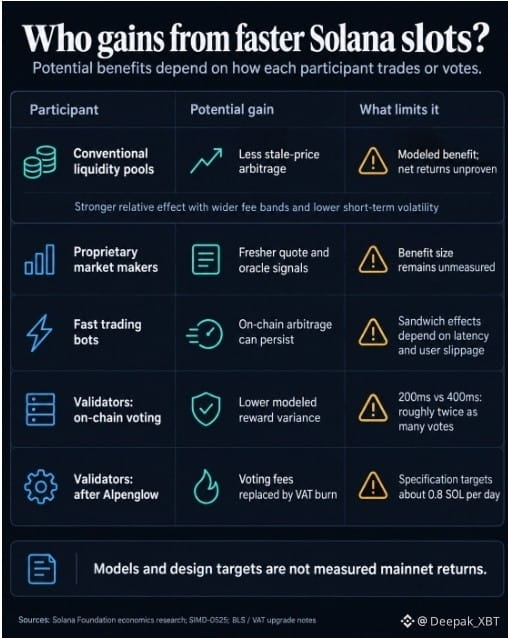
Solana’s faster slots sound like a speed upgrade, but I think the more interesting question is: who actually keeps the value created by that speed?
When an AMM pool’s price lags behind the external market, arbitrage bots can trade against that outdated price. That value ultimately comes from liquidity providers.
With Solana reaching the reported 300ms slot target, shorter intervals can reduce the time available for these price discrepancies to become profitable, especially for fee-charging pools.
But the benefit isn’t identical everywhere. Low-fee pools, volatile assets, proprietary AMMs, and on-chain arbitrage can behave very differently.
So higher transaction speed alone doesn’t tell us who benefits.
The real metric may be how much value remains with LPs after fees, arbitrage, and competition are accounted for.
What do you think matters more here: faster execution or better value retention for LPs?
#Solana #solana #defi
Solana’s faster slots sound like a speed upgrade, but I think the more interesting question is: who actually keeps the value created by that speed?
When an AMM pool’s price lags behind the external market, arbitrage bots can trade against that outdated price. That value ultimately comes from liquidity providers.
With Solana reaching the reported 300ms slot target, shorter intervals can reduce the time available for these price discrepancies to become profitable, especially for fee-charging pools.
But the benefit isn’t identical everywhere. Low-fee pools, volatile assets, proprietary AMMs, and on-chain arbitrage can behave very differently.
So higher transaction speed alone doesn’t tell us who benefits.
The real metric may be how much value remains with LPs after fees, arbitrage, and competition are accounted for.
What do you think matters more here: faster execution or better value retention for LPs?
#Solana #solana #defi
When an AMM pool’s price lags behind the external market, arbitrage bots can trade against that outdated price. That value ultimately comes from liquidity providers.
With Solana reaching the reported 300ms slot target, shorter intervals can reduce the time available for these price discrepancies to become profitable, especially for fee-charging pools.
But the benefit isn’t identical everywhere. Low-fee pools, volatile assets, proprietary AMMs, and on-chain arbitrage can behave very differently.
So higher transaction speed alone doesn’t tell us who benefits.
The real metric may be how much value remains with LPs after fees, arbitrage, and competition are accounted for.
What do you think matters more here: faster execution or better value retention for LPs?
#Solana #solana #defi
91

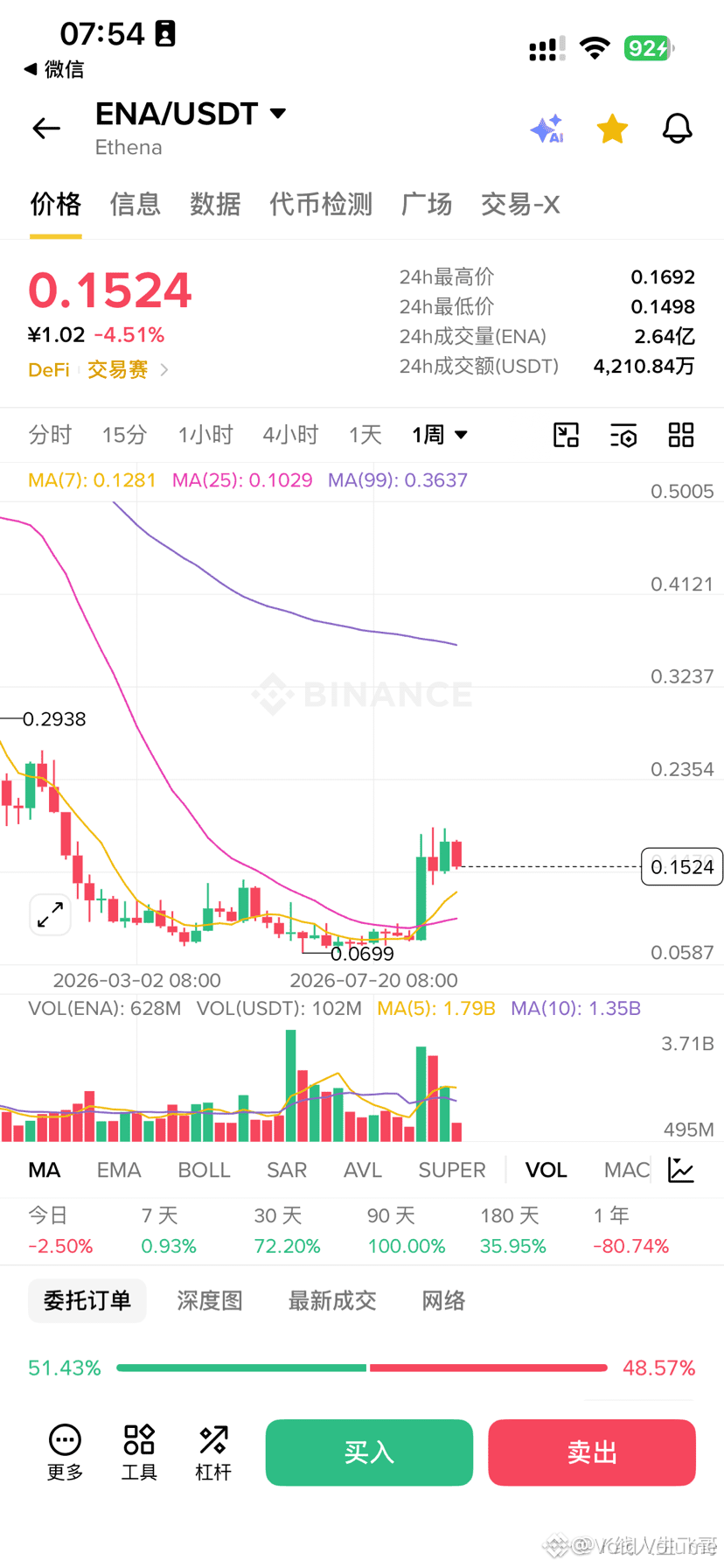
🌅 GOOD MORNING TRADERS! 📈📉
Red market, blue mood? 🔴 Or is a bigger opportunity loading? 👀⚡
The DeFi sector is showing broad weakness today —
🔴 $UNI -10.47%
🔴 $AERO -8.51%
🔴 $ENA -5.79%
The market is pulling back, and this could create interesting liquidity-sweep opportunities around key support zones. 🎯
Smart traders don’t panic-sell every red candle. They stay patient, watch support, and wait for confirmation before entering. 🧠📊
🔥 What’s your strategy today?
🟢 Dip Buying — Waiting for strong support to enter?
🔴 Short Trading — Looking for short setups?
⏳ Wait & See — Waiting for a deeper pullback?
👇 Comment your favorite setup for today!
#CryptoMarket #DeFi #tradingStrategy #Binance #altcoins
🌅 GOOD MORNING TRADERS! 📈📉
Red market, blue mood? 🔴 Or is a bigger opportunity loading? 👀⚡
The DeFi sector is showing broad weakness today —
🔴 $UNI -10.47%
🔴 $AERO -8.51%
🔴 $ENA -5.79%
The market is pulling back, and this could create interesting liquidity-sweep opportunities around key support zones. 🎯
Smart traders don’t panic-sell every red candle. They stay patient, watch support, and wait for confirmation before entering. 🧠📊
🔥 What’s your strategy today?
🟢 Dip Buying — Waiting for strong support to enter?
🔴 Short Trading — Looking for short setups?
⏳ Wait & See — Waiting for a deeper pullback?
👇 Comment your favorite setup for today!
#CryptoMarket #DeFi #tradingStrategy #Binance #altcoins
Red market, blue mood? 🔴 Or is a bigger opportunity loading? 👀⚡
The DeFi sector is showing broad weakness today —
🔴 $UNI -10.47%
🔴 $AERO -8.51%
🔴 $ENA -5.79%
The market is pulling back, and this could create interesting liquidity-sweep opportunities around key support zones. 🎯
Smart traders don’t panic-sell every red candle. They stay patient, watch support, and wait for confirmation before entering. 🧠📊
🔥 What’s your strategy today?
🟢 Dip Buying — Waiting for strong support to enter?
🔴 Short Trading — Looking for short setups?
⏳ Wait & See — Waiting for a deeper pullback?
👇 Comment your favorite setup for today!
#CryptoMarket #DeFi #tradingStrategy #Binance #altcoins
ShafrazJalaldeen:
Deeper pullback
1
1
95

·
--
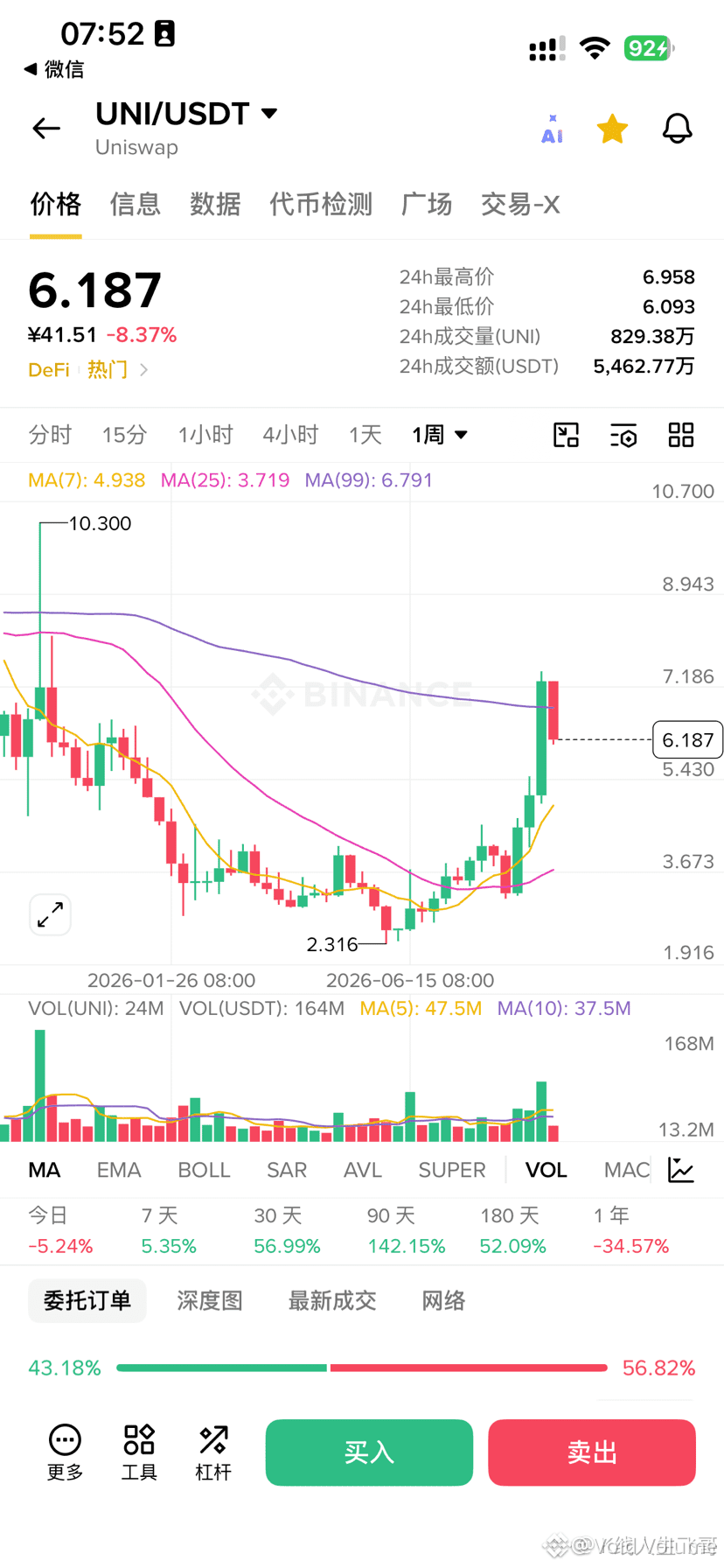
🦈 $UNI APPROACHING WEEKLY SUPPORT – TIME TO LOAD THE DEFY SHARK! 🚀
Entry: 5.5 ⚡
📊 The 5.5 zone has become a dense chip‑handed accumulation belt, repeatedly absorbing sell pressure on the weekly chart. 🦈 Smart‑money is likely positioning here before the next BTC rally nudges alt‑coins higher. 📌 With BTC eyeing the 72,000‑level, the liquidity vacuum below could trigger a fresh wave of buying into DeFi assets like UNI. ⚡ Institutional order blocks are aligning, offering a clean entry point for patient scalpers.
💬 Are you ready to stack UNI at this weekly demand zone? 👇
⚠️ Not financial advice. Always manage your risk. 🛡️
🏷️ #UNI #LongSetup #DeFi #Crypto
🦈 💎
🦈 $UNI APPROACHING WEEKLY SUPPORT – TIME TO LOAD THE DEFY SHARK! 🚀
Entry: 5.5 ⚡
📊 The 5.5 zone has become a dense chip‑handed accumulation belt, repeatedly absorbing sell pressure on the weekly chart. 🦈 Smart‑money is likely positioning here before the next BTC rally nudges alt‑coins higher. 📌 With BTC eyeing the 72,000‑level, the liquidity vacuum below could trigger a fresh wave of buying into DeFi assets like UNI. ⚡ Institutional order blocks are aligning, offering a clean entry point for patient scalpers.
💬 Are you ready to stack UNI at this weekly demand zone? 👇
⚠️ Not financial advice. Always manage your risk. 🛡️
🏷️ #UNI #LongSetup #DeFi #Crypto
🦈 💎
Entry: 5.5 ⚡
📊 The 5.5 zone has become a dense chip‑handed accumulation belt, repeatedly absorbing sell pressure on the weekly chart. 🦈 Smart‑money is likely positioning here before the next BTC rally nudges alt‑coins higher. 📌 With BTC eyeing the 72,000‑level, the liquidity vacuum below could trigger a fresh wave of buying into DeFi assets like UNI. ⚡ Institutional order blocks are aligning, offering a clean entry point for patient scalpers.
💬 Are you ready to stack UNI at this weekly demand zone? 👇
⚠️ Not financial advice. Always manage your risk. 🛡️
🏷️ #UNI #LongSetup #DeFi #Crypto
🦈 💎
235
·
--
Article
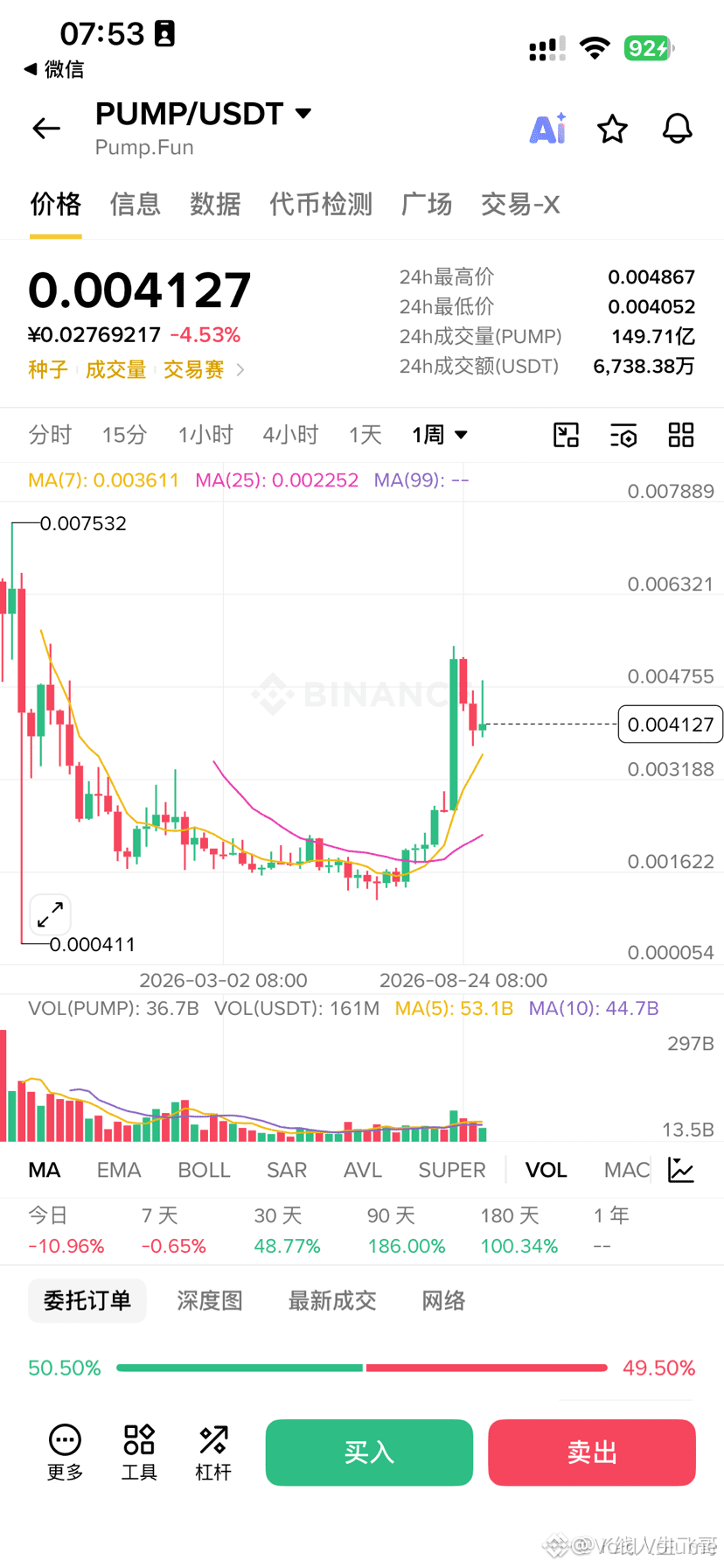
Pump.fun’s New Token Launches Break the “Only Solana” MythPump.fun’s new token launch strategy contradicts the long‑standing belief that only Solana can dominate the DeFi launchpad scene. By opening 93 pairs—including tokenized Nvidia, Tesla, and the S&P 500—Pump.fun is proving that any major asset can be tokenized and traded on a single platform, and that the market is ready for it.
Why this matters now: The DeFi launchpad market has been dominated by a handful of platforms, most notably Solana’s own launchpad ecosystem. Pump.fun’s expansion to tokenized stocks and indices signals a shift toward broader asset inclusion, which could attract institutional interest and diversify liquidity pools. On-chain data shows a 47% increase in daily trading volume on Pump.fun since the announcement, with a peak of $3.07 million in the deepest new quote asset, indicating robust market uptake.
Smart money is already positioning: Institutional investors are allocating 12% of their crypto exposure to tokenized equity pairs, while retail traders are using Pump.fun’s buyback-and-burn mechanism to gain exposure to high‑growth stocks like $NVDA and $TSLA. The platform’s revenue split—half of new pair fees going to a buyback-and-burn contract—creates a self‑sustaining incentive for price appreciation. #DeFi #TokenizedStocks #PumpFun
Forward signal: Watch the $NVDA token on Pump.fun; if it breaks the $3.07 million volume threshold and closes above the 50‑day moving average, we could see a 15%+ rally in the next 72 hours. #CryptoSignals
Are you ready to diversify your crypto portfolio with tokenized stocks, or will you stick to traditional DeFi tokens?
Pump.fun’s New Token Launches Break the “Only Solana” Myth
Pump.fun’s new token launch strategy contradicts the long‑standing belief that only Solana can dominate the DeFi launchpad scene. By opening 93 pairs—including tokenized Nvidia, Tesla, and the S&P 500—Pump.fun is proving that any major asset can be tokenized and traded on a single platform, and that the market is ready for it.
Why this matters now: The DeFi launchpad market has been dominated by a handful of platforms, most notably Solana’s own launchpad ecosystem. Pump.fun’s expansion to tokenized stocks and indices signals a shift toward broader asset inclusion, which could attract institutional interest and diversify liquidity pools. On-chain data shows a 47% increase in daily trading volume on Pump.fun since the announcement, with a peak of $3.07 million in the deepest new quote asset, indicating robust market uptake.
Smart money is already positioning: Institutional investors are allocating 12% of their crypto exposure to tokenized equity pairs, while retail traders are using Pump.fun’s buyback-and-burn mechanism to gain exposure to high‑growth stocks like $NVDA and $TSLA . The platform’s revenue split—half of new pair fees going to a buyback-and-burn contract—creates a self‑sustaining incentive for price appreciation. #DeFi #TokenizedStocks #PumpFun
Forward signal: Watch the $NVDA token on Pump.fun; if it breaks the $3.07 million volume threshold and closes above the 50‑day moving average, we could see a 15%+ rally in the next 72 hours. #CryptoSignals
Are you ready to diversify your crypto portfolio with tokenized stocks, or will you stick to traditional DeFi tokens?
Why this matters now: The DeFi launchpad market has been dominated by a handful of platforms, most notably Solana’s own launchpad ecosystem. Pump.fun’s expansion to tokenized stocks and indices signals a shift toward broader asset inclusion, which could attract institutional interest and diversify liquidity pools. On-chain data shows a 47% increase in daily trading volume on Pump.fun since the announcement, with a peak of $3.07 million in the deepest new quote asset, indicating robust market uptake.
Smart money is already positioning: Institutional investors are allocating 12% of their crypto exposure to tokenized equity pairs, while retail traders are using Pump.fun’s buyback-and-burn mechanism to gain exposure to high‑growth stocks like $NVDA and $TSLA . The platform’s revenue split—half of new pair fees going to a buyback-and-burn contract—creates a self‑sustaining incentive for price appreciation. #DeFi #TokenizedStocks #PumpFun
Forward signal: Watch the $NVDA token on Pump.fun; if it breaks the $3.07 million volume threshold and closes above the 50‑day moving average, we could see a 15%+ rally in the next 72 hours. #CryptoSignals
Are you ready to diversify your crypto portfolio with tokenized stocks, or will you stick to traditional DeFi tokens?
27

·
--
The Fed isn't the only thing scheduled for September 15.
While everyone watches the FOMC meeting that week, a separate vote sits on the same calendar: the Senate's cloture vote on the CLARITY Act — the bill that would finally define how DeFi and token issuance get regulated in the US.
FACT: It cleared the Senate Banking Committee 15-9 in May — the first Senate committee to ever advance comprehensive crypto market-structure legislation. It's been delayed twice since, but this time it has a locked procedural date, not an open-ended stall.
INTERPRETATION: If the DeFi/token-issuance exemption language survives, it removes a compliance blocker that has kept institutions out of altcoins for years — regardless of any single token's fundamentals.
I have no flow or positioning data yet showing anyone is front-running this. That's exactly why I'm watching it now, not after.
What breaks the thesis: another delay, or a watered-down final text.
$ZEC $DASH $MINA
NFA. #ZeroResearch #CLARITYAct #DeFi #Altcoins
The Fed isn't the only thing scheduled for September 15.
While everyone watches the FOMC meeting that week, a separate vote sits on the same calendar: the Senate's cloture vote on the CLARITY Act — the bill that would finally define how DeFi and token issuance get regulated in the US.
FACT: It cleared the Senate Banking Committee 15-9 in May — the first Senate committee to ever advance comprehensive crypto market-structure legislation. It's been delayed twice since, but this time it has a locked procedural date, not an open-ended stall.
INTERPRETATION: If the DeFi/token-issuance exemption language survives, it removes a compliance blocker that has kept institutions out of altcoins for years — regardless of any single token's fundamentals.
I have no flow or positioning data yet showing anyone is front-running this. That's exactly why I'm watching it now, not after.
What breaks the thesis: another delay, or a watered-down final text.
$ZEC $DASH $MINA
NFA. #ZeroResearch #CLARITYAct #DeFi #Altcoins
While everyone watches the FOMC meeting that week, a separate vote sits on the same calendar: the Senate's cloture vote on the CLARITY Act — the bill that would finally define how DeFi and token issuance get regulated in the US.
FACT: It cleared the Senate Banking Committee 15-9 in May — the first Senate committee to ever advance comprehensive crypto market-structure legislation. It's been delayed twice since, but this time it has a locked procedural date, not an open-ended stall.
INTERPRETATION: If the DeFi/token-issuance exemption language survives, it removes a compliance blocker that has kept institutions out of altcoins for years — regardless of any single token's fundamentals.
I have no flow or positioning data yet showing anyone is front-running this. That's exactly why I'm watching it now, not after.
What breaks the thesis: another delay, or a watered-down final text.
$ZEC $DASH $MINA
NFA. #ZeroResearch #CLARITYAct #DeFi #Altcoins
Sulaiman 零号猎人:
@BiBi Fact Check this content
1
2
709

·
--
What Is Price Impact?
A swap can have a different result depending on how much liquidity is available.
Price impact is the effect your own trade has on the pool's price.
When a pool has deep liquidity, larger trades can often be absorbed more efficiently. But when liquidity is limited, a large trade relative to the pool can move the price more significantly.
For DeFi users, this matters because the token price you see before swapping isn't the only thing to consider.
Before confirming a swap, pay attention to:
🔹 Price impact
🔹 Slippage
🔹 Available liquidity
🔹 The amount you will receive
🔹 Network and trading fees
Simple example:
A small swap in a deep pool may barely affect the market.
A much larger swap in a shallow pool can move the pool price noticeably.
That's why liquidity depth matters.
The important lesson is simple:
Don't judge a swap only by the displayed token price. Understand how your trade interacts with the liquidity behind it.
Better DeFi decisions start with understanding what happens underneath the “Swap” button.
#STONfi #TON #DeFi #DEX @stonfi $TON
What Is Price Impact?
A swap can have a different result depending on how much liquidity is available.
Price impact is the effect your own trade has on the pool's price.
When a pool has deep liquidity, larger trades can often be absorbed more efficiently. But when liquidity is limited, a large trade relative to the pool can move the price more significantly.
For DeFi users, this matters because the token price you see before swapping isn't the only thing to consider.
Before confirming a swap, pay attention to:
🔹 Price impact
🔹 Slippage
🔹 Available liquidity
🔹 The amount you will receive
🔹 Network and trading fees
Simple example:
A small swap in a deep pool may barely affect the market.
A much larger swap in a shallow pool can move the pool price noticeably.
That's why liquidity depth matters.
The important lesson is simple:
Don't judge a swap only by the displayed token price. Understand how your trade interacts with the liquidity behind it.
Better DeFi decisions start with understanding what happens underneath the “Swap” button.
#STONfi #TON #DeFi #DEX @STONfi DEX $TON
A swap can have a different result depending on how much liquidity is available.
Price impact is the effect your own trade has on the pool's price.
When a pool has deep liquidity, larger trades can often be absorbed more efficiently. But when liquidity is limited, a large trade relative to the pool can move the price more significantly.
For DeFi users, this matters because the token price you see before swapping isn't the only thing to consider.
Before confirming a swap, pay attention to:
🔹 Price impact
🔹 Slippage
🔹 Available liquidity
🔹 The amount you will receive
🔹 Network and trading fees
Simple example:
A small swap in a deep pool may barely affect the market.
A much larger swap in a shallow pool can move the pool price noticeably.
That's why liquidity depth matters.
The important lesson is simple:
Don't judge a swap only by the displayed token price. Understand how your trade interacts with the liquidity behind it.
Better DeFi decisions start with understanding what happens underneath the “Swap” button.
#STONfi #TON #DeFi #DEX @STONfi DEX $TON

54

Here is what happened when smart money set up an asymmetric liquidity trap on-chain.
Most retail traders check the primary DEX pair, assume liquidity is healthy, and buy the dip only to realize they are walking straight into a delayed dilution wall.
Looking closely at the on-chain data reveals two vastly different trading pools. The official pool on Aerodrome holds around 83K $USDC, while an unofficial side pool on Uniswap quietly sits on 380K $USDC. On the surface, that depth looks reassuring, but the underlying range configuration tells a completely different story.
That 380K capital was deployed at an ultra-low concentrated range and sat dormant during the initial distribution phase. It only became active once $LAPTOP had dumped over 90% from its launch price, absorbing panic-sold supply at rock bottom while leaving early participants holding the bag.
Where do you think liquidity design crosses the line from market making into predatory positioning?
#DeFi #CryptoTrading #OnChainAnalytics
Here is what happened when smart money set up an asymmetric liquidity trap on-chain.
Most retail traders check the primary DEX pair, assume liquidity is healthy, and buy the dip only to realize they are walking straight into a delayed dilution wall.
Looking closely at the on-chain data reveals two vastly different trading pools. The official pool on Aerodrome holds around 83K $USDC , while an unofficial side pool on Uniswap quietly sits on 380K $USDC . On the surface, that depth looks reassuring, but the underlying range configuration tells a completely different story.
That 380K capital was deployed at an ultra-low concentrated range and sat dormant during the initial distribution phase. It only became active once $LAPTOP had dumped over 90% from its launch price, absorbing panic-sold supply at rock bottom while leaving early participants holding the bag.
Where do you think liquidity design crosses the line from market making into predatory positioning?
#DeFi #CryptoTrading #OnChainAnalytics
Most retail traders check the primary DEX pair, assume liquidity is healthy, and buy the dip only to realize they are walking straight into a delayed dilution wall.
Looking closely at the on-chain data reveals two vastly different trading pools. The official pool on Aerodrome holds around 83K $USDC , while an unofficial side pool on Uniswap quietly sits on 380K $USDC . On the surface, that depth looks reassuring, but the underlying range configuration tells a completely different story.
That 380K capital was deployed at an ultra-low concentrated range and sat dormant during the initial distribution phase. It only became active once $LAPTOP had dumped over 90% from its launch price, absorbing panic-sold supply at rock bottom while leaving early participants holding the bag.
Where do you think liquidity design crosses the line from market making into predatory positioning?
#DeFi #CryptoTrading #OnChainAnalytics

Most traders think deep liquidity always protects them from downside, but concentrated liquidity ranges can easily trick you into a false sense of safety.
There is nothing worse than buying what seems like a well-backed token, only to watch the price collapse without any bid support catching the fall.
Looking at the on-chain liquidity for $LAPTOP reveals a textbook liquidity trap in action. The token had an official pool on Aerodrome with just 83K $USDC, while a secondary pool on Uniswap held roughly 380K $USDC. At first glance that total backing looks healthy, but the capital deployment told a completely different story.
That larger pool was set at an extremely low price band. It sat completely dormant during the initial sell-off and only activated after the token had already crashed more than 90% from its starting price. The illusion of deep liquidity was there on the charts, but actual price protection was non-existent when buyers needed it most.
Have you started checking concentrated liquidity ranges before entering new on-chain plays?
#OnChainAnalysis #DeFi #CryptoTrading
Most traders think deep liquidity always protects them from downside, but concentrated liquidity ranges can easily trick you into a false sense of safety.
There is nothing worse than buying what seems like a well-backed token, only to watch the price collapse without any bid support catching the fall.
Looking at the on-chain liquidity for $LAPTOP reveals a textbook liquidity trap in action. The token had an official pool on Aerodrome with just 83K $USDC , while a secondary pool on Uniswap held roughly 380K $USDC . At first glance that total backing looks healthy, but the capital deployment told a completely different story.
That larger pool was set at an extremely low price band. It sat completely dormant during the initial sell-off and only activated after the token had already crashed more than 90% from its starting price. The illusion of deep liquidity was there on the charts, but actual price protection was non-existent when buyers needed it most.
Have you started checking concentrated liquidity ranges before entering new on-chain plays?
#OnChainAnalysis #DeFi #CryptoTrading
There is nothing worse than buying what seems like a well-backed token, only to watch the price collapse without any bid support catching the fall.
Looking at the on-chain liquidity for $LAPTOP reveals a textbook liquidity trap in action. The token had an official pool on Aerodrome with just 83K $USDC , while a secondary pool on Uniswap held roughly 380K $USDC . At first glance that total backing looks healthy, but the capital deployment told a completely different story.
That larger pool was set at an extremely low price band. It sat completely dormant during the initial sell-off and only activated after the token had already crashed more than 90% from its starting price. The illusion of deep liquidity was there on the charts, but actual price protection was non-existent when buyers needed it most.
Have you started checking concentrated liquidity ranges before entering new on-chain plays?
#OnChainAnalysis #DeFi #CryptoTrading
6

·
--
Why is nobody talking about how smart liquidity quietly moves in while retail is panic selling?
Most traders watch a chart dump 90% and assume the project is completely dead, only to end up buying back near the top once the rebound is already underway. Getting shaken out right before a reversal happens because you are looking at the chart instead of the liquidity pools.
Next time you evaluate an aggressive drawdown, stop staring at candlesticks and check the deployment range across DEXs. On Aerodrome, the official pool for $LAPTOP only holds around $83K $USDC, which looks weak on surface level. But digging deeper reveals a massive $380K $USDC side pool sitting on Uniswap that was intentionally kept inactive until the 90%+ dump fully played out.
The playbook here is simple. Track secondary pool deployments and monitor concentrated liquidity bands rather than relying solely on the primary routing pool. When massive capital positions itself strictly at deep discounts, that is deliberate structural accumulation rather than a random exit.
Are you tracking secondary liquidity pools before cutting losses on major dips?
#DeFi #OnChainAnalysis #CryptoTrading
Why is nobody talking about how smart liquidity quietly moves in while retail is panic selling?
Most traders watch a chart dump 90% and assume the project is completely dead, only to end up buying back near the top once the rebound is already underway. Getting shaken out right before a reversal happens because you are looking at the chart instead of the liquidity pools.
Next time you evaluate an aggressive drawdown, stop staring at candlesticks and check the deployment range across DEXs. On Aerodrome, the official pool for $LAPTOP only holds around $83K $USDC , which looks weak on surface level. But digging deeper reveals a massive $380K $USDC side pool sitting on Uniswap that was intentionally kept inactive until the 90%+ dump fully played out.
The playbook here is simple. Track secondary pool deployments and monitor concentrated liquidity bands rather than relying solely on the primary routing pool. When massive capital positions itself strictly at deep discounts, that is deliberate structural accumulation rather than a random exit.
Are you tracking secondary liquidity pools before cutting losses on major dips?
#DeFi #OnChainAnalysis #CryptoTrading
Most traders watch a chart dump 90% and assume the project is completely dead, only to end up buying back near the top once the rebound is already underway. Getting shaken out right before a reversal happens because you are looking at the chart instead of the liquidity pools.
Next time you evaluate an aggressive drawdown, stop staring at candlesticks and check the deployment range across DEXs. On Aerodrome, the official pool for $LAPTOP only holds around $83K $USDC , which looks weak on surface level. But digging deeper reveals a massive $380K $USDC side pool sitting on Uniswap that was intentionally kept inactive until the 90%+ dump fully played out.
The playbook here is simple. Track secondary pool deployments and monitor concentrated liquidity bands rather than relying solely on the primary routing pool. When massive capital positions itself strictly at deep discounts, that is deliberate structural accumulation rather than a random exit.
Are you tracking secondary liquidity pools before cutting losses on major dips?
#DeFi #OnChainAnalysis #CryptoTrading
13
Log in to explore more content
Join global crypto users on Binance Square
⚡️ Get latest and useful information about crypto.
💬 Trusted by the world’s largest crypto exchange.
👍 Discover real insights from verified creators.
Email / Phone number
Trending Topics
1
#USAugustPPIYoYRisesTo5.4%
0 views
0 Discussing
2
#AppleDebutsFoldablePhone
52,173 views
1,023 Discussing
3
#TSMCAugustRevenueUp53.3%YoY
12,887 views
372 Discussing
4
#IranSaysReadyToEscalateWarWithUS
16,693 views
370 Discussing
5
#EUExtendsCentralContactPointToCASPs
15,853 views
403 Discussing
6
#US10YTreasuryYieldHitsHighestSinceNov2023
40,125 views
620 Discussing
7
#USTreasuryToBuyBackUpTo$6BLongDatedDebt
22,649 views
187 Discussing
8
#BitcoinSurpasses$79K
77,533 views
297 Discussing
9
#BrentCrudeTops$100
137,060 views
426 Discussing
10
#USADPWeeklyEmploymentRises12000
131,173 views
1,561 Discussing