

Crypto__Today
1.9k Posts

Crypto__Today
Report
Block User
Make impactful strides with the all-in-one, intelligent marketing platform designed to accelerate the growth of blockchain projects.Any promo: @Theodore_finch1
Open Trade
Occasional Trader
4.7 Years
14 Following
12.8K+ Followers
12.0K+ Liked
Posts
Portfolio
All
Quotes
Live
PINNED

Article
DOGS (DOGS) Price Prediction 2024, 2025–2030Explore short and medium-term DOGS price prediction analysis and check long-term DOGS forecasts for 2025, 2030, and beyond.
According to our current DOGS price prediction, the price of DOGS is predicted to rise by 228.05% and reach $ 0.007002 by September 25, 2024. Per our technical indicators, the current sentiment is Bearish while the Fear & Greed Index is showing 55 (Greed). DOGS recorded 5/7 (71%) green days with price volatility over the last 30 days. Based on the DOGS forecast, it's now a bad time to buy DOGS.
Based on the historical price movements of DOGS and the BTC halving cycles, the yearly low DOGS price prediction for 2025 is estimated at $ 0.002134. Meanwhile, the price of DOGS is predicted to reach as high as $ 0.010086 next year. Using the same basis, here is the DOGS price prediction for each year up until 2030.
DOGS price prediction 2025
The DOGS price prediction for 2025 is currently between $ 0.002134 on the lower end and $ 0.010086 on the high end. Compared to today’s price, DOGS could gain 372.57% by 2025 if DOGS reaches the upper price target.
DOGS price prediction 2030
The DOGS price prediction for 2030 is currently between $ 0.005381 on the lower end and $ 0.008725 on the high end. Compared to today’s price, DOGS could gain 308.82% by 2030 if it reaches the upper price target.
DOGS Price Forecast Based on Technical Analysis
Popular DOGS Moving Averages and Oscillators for Mon, Aug 26, 2024
Moving averages (MA) are a popular indicator in all financial markets, designed to smooth price action over a certain amount of time. They are a lagging indicator which means they are influenced by historical price activity. In the table below you can find two types of moving averages, simple moving average (SMA) and exponential moving average (EMA).
DOGS Key Price Levels
Based on today's classical pivot point (P1) with the value of $ 0.00205, DOGS has support levels of $ 0.001864, $ 0.001593, and the strongest at $ 0.001407. Similarly, DOGS resistance levels are at $ 0.002321, $ 0.002507, and $ 0.002778.
#BinanceLaunchpoolDOGS #TelegramCEO #CryptoMarketMoves #BinanceBlockchainWeek #LowestCPI2021
DOGS (DOGS) Price Prediction 2024, 2025–2030
Explore short and medium-term DOGS price prediction analysis and check long-term DOGS forecasts for 2025, 2030, and beyond.
According to our current DOGS price prediction, the price of DOGS is predicted to rise by 228.05% and reach $ 0.007002 by September 25, 2024. Per our technical indicators, the current sentiment is Bearish while the Fear & Greed Index is showing 55 (Greed). DOGS recorded 5/7 (71%) green days with price volatility over the last 30 days. Based on the DOGS forecast, it's now a bad time to buy DOGS.
Based on the historical price movements of DOGS and the BTC halving cycles, the yearly low DOGS price prediction for 2025 is estimated at $ 0.002134. Meanwhile, the price of DOGS is predicted to reach as high as $ 0.010086 next year. Using the same basis, here is the DOGS price prediction for each year up until 2030.
DOGS price prediction 2025
The DOGS price prediction for 2025 is currently between $ 0.002134 on the lower end and $ 0.010086 on the high end. Compared to today’s price, DOGS could gain 372.57% by 2025 if DOGS reaches the upper price target.
DOGS price prediction 2030
The DOGS price prediction for 2030 is currently between $ 0.005381 on the lower end and $ 0.008725 on the high end. Compared to today’s price, DOGS could gain 308.82% by 2030 if it reaches the upper price target.
DOGS Price Forecast Based on Technical Analysis
Popular DOGS Moving Averages and Oscillators for Mon, Aug 26, 2024
Moving averages (MA) are a popular indicator in all financial markets, designed to smooth price action over a certain amount of time. They are a lagging indicator which means they are influenced by historical price activity. In the table below you can find two types of moving averages, simple moving average (SMA) and exponential moving average (EMA).
DOGS Key Price Levels
Based on today's classical pivot point (P1) with the value of $ 0.00205, DOGS has support levels of $ 0.001864, $ 0.001593, and the strongest at $ 0.001407. Similarly, DOGS resistance levels are at $ 0.002321, $ 0.002507, and $ 0.002778.
#BinanceLaunchpoolDOGS #TelegramCEO #CryptoMarketMoves #BinanceBlockchainWeek #LowestCPI2021
177
8
1.8k
651.6k
Article
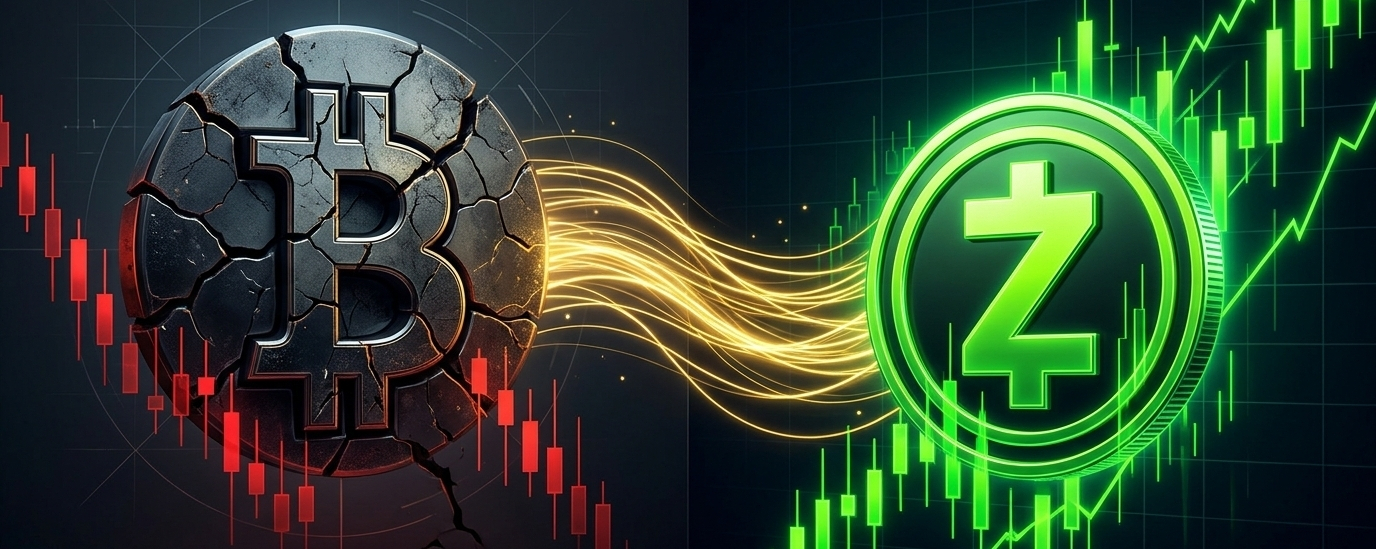
Capital Rotation? ETF Investors Pour Millions Into Zcash (ZEC) as Bitcoin (BTC) Outflows AccelerateThe cryptocurrency market is witnessing a fascinating shift in institutional capital dynamics. While traditional market eyes have been glued to the cooling momentum of primary assets, sophisticated Wall Street players are quietly redirecting liquidity. Over a volatile two-day window last week, spot Bitcoin ($NVDAB ETFs experienced over half a billion dollars in net outflows, while institutional investors simultaneously poured $41.1 million into Zcash ($ZEC).
This stark divergence raises a critical question for the broader market: Is smart money positioning itself ahead of a major privacy-centric narrative shift and an impending Zcash rally?
The Liquidity Contrast: Institutional De-risking vs. Targeted Re-entry
The contrasting flows indicate that large-scale market participants are not entirely exiting the digital asset ecosystem, but rather shifting strategies to exploit specific technical setups.
Bitcoin ETF Exhaustion: The massive deceleration in Bitcoin ETF net inflows suggests that institutional buyers are temporarily taking profits or hedging exposure as BTC consolidates beneath critical structural barriers.The Zcash Capital Influx: Allocating $41.1 million into a relatively mid-cap asset like Zcash in such a compressed timeframe represents a significant percentage of its circulating liquidity, creating massive localized buying pressure.Narrative Rotation: Historically, when capital drains from large-cap index drivers like $BTC, it triggers a rotation phase into specific altcoin categories offering higher volatility profiles or distinct utility arguments.
Why Zcash ($ZEC) Is Catching Wall Street's Attention
The sudden concentration of institutional interest in Zcash is rarely accidental. Several underlying catalysts could be driving this quiet accumulation phase.
Privacy Infrastructure Demand: As global regulatory oversight scales up, the foundational value proposition of robust, zero-knowledge security protocols is regaining institutional validation.Technological Maturation: Strategic upgrades within the Zcash network, particularly its transitions toward more scalable consensus layers and programmatic privacy tools, make it a highly viable long-term infrastructure bet.Asymmetric Risk-Reward Profile: Compared to major layer-1 assets that have already extended heavily into macro resistance, $ZEC presents an attractive, deeply discounted valuation relative to its historical high-water marks.
Market Outlook: Positioning for the Next Move
The upcoming trading week will be critical in confirming whether this institutional rotation has sustained structural legs. If Bitcoin stabilizes and stops the bleeding from its spot investment vehicles, the fresh capital injected into $ZEC could act as a high-powered spring, igniting broader speculative momentum across the entire privacy and zero-knowledge storage sector.
Traders should monitor near-term volume spikes on $ZEC to verify if Wall Street's accumulation phase translates into a definitive breakout above macro-resistance levels.
#WriteToEarn #ZEC #BTC #MacroOutlook #TrendingTopic
Capital Rotation? ETF Investors Pour Millions Into Zcash (ZEC) as Bitcoin (BTC) Outflows Accelerate
The cryptocurrency market is witnessing a fascinating shift in institutional capital dynamics. While traditional market eyes have been glued to the cooling momentum of primary assets, sophisticated Wall Street players are quietly redirecting liquidity. Over a volatile two-day window last week, spot Bitcoin ($NVDAB ETFs experienced over half a billion dollars in net outflows, while institutional investors simultaneously poured $41.1 million into Zcash ($ZEC ).
This stark divergence raises a critical question for the broader market: Is smart money positioning itself ahead of a major privacy-centric narrative shift and an impending Zcash rally?
The Liquidity Contrast: Institutional De-risking vs. Targeted Re-entry
The contrasting flows indicate that large-scale market participants are not entirely exiting the digital asset ecosystem, but rather shifting strategies to exploit specific technical setups.
Bitcoin ETF Exhaustion: The massive deceleration in Bitcoin ETF net inflows suggests that institutional buyers are temporarily taking profits or hedging exposure as BTC consolidates beneath critical structural barriers.The Zcash Capital Influx: Allocating $41.1 million into a relatively mid-cap asset like Zcash in such a compressed timeframe represents a significant percentage of its circulating liquidity, creating massive localized buying pressure.Narrative Rotation: Historically, when capital drains from large-cap index drivers like $BTC, it triggers a rotation phase into specific altcoin categories offering higher volatility profiles or distinct utility arguments.
Why Zcash ($ZEC ) Is Catching Wall Street's Attention
The sudden concentration of institutional interest in Zcash is rarely accidental. Several underlying catalysts could be driving this quiet accumulation phase.
Privacy Infrastructure Demand: As global regulatory oversight scales up, the foundational value proposition of robust, zero-knowledge security protocols is regaining institutional validation.Technological Maturation: Strategic upgrades within the Zcash network, particularly its transitions toward more scalable consensus layers and programmatic privacy tools, make it a highly viable long-term infrastructure bet.Asymmetric Risk-Reward Profile: Compared to major layer-1 assets that have already extended heavily into macro resistance, $ZEC presents an attractive, deeply discounted valuation relative to its historical high-water marks.
Market Outlook: Positioning for the Next Move
The upcoming trading week will be critical in confirming whether this institutional rotation has sustained structural legs. If Bitcoin stabilizes and stops the bleeding from its spot investment vehicles, the fresh capital injected into $ZEC could act as a high-powered spring, igniting broader speculative momentum across the entire privacy and zero-knowledge storage sector.
Traders should monitor near-term volume spikes on $ZEC to verify if Wall Street's accumulation phase translates into a definitive breakout above macro-resistance levels.
#WriteToEarn #ZEC #BTC #MacroOutlook #TrendingTopic
2
534

Article
OIL SURGES TOWARD YEARLY HIGHS: Are Stocks & Crypto Next to Crash?The timing couldn’t be worse for global markets. As crude oil targets its yearly peak, Wall Street is flashing red, Bitcoin is breaking key supports, and a massive geopolitical storm is brewing on the horizon.
Here is the brutal reality of what’s coming—and how it impacts your portfolio:
1️The Energy Tax on Growth
Rising oil prices act as a direct tax on consumers and corporations.
Inflation Resurgence: High crude spikes transportation costs, forcing the Federal Reserve to keep interest rates higher for longer.Wall Street Bleeding: Higher input costs compress corporate profit margins, triggering institutional de-risking across tech and growth stocks.
2️The Crypto Liquidity Squeeze 📉
Bitcoin and altcoins are no longer detached safe havens; they are hyper-sensitive liquidity gauges.
Risk-Off Dominance: As oil triggers broader market anxiety, investors are fleeing to cash, pulling massive capital out of digital assets.ETF Outflows: The cooling risk appetite has already sparked aggressive spot crypto ETF exits, accelerating the downward pressure.
3️ The Geopolitical Wildcard: US-Iran Escalation 🚀
The biggest threat isn't just economic; it’s structural. Rumors of a renewed US conflict with Iran post-midterm elections are freezing market sentiment.
Supply Shock: A war in the Middle East risks choking major energy chokepoints, sending oil past $100+ and breaking global supply chains.Panic Selling: Historically, the onset of major conflicts triggers immediate "sell-first, ask-questions-later" behavior in speculative assets like crypto.
The Bottom Line
Markets hate uncertainty, and right now, we are facing a perfect storm of energy inflation, monetary tightening, and wartime risk.
Buckle up. The next few weeks will determine if this is a temporary correction or the start of a deep structural crash.
#Crypto #EarningsSeason #macroeconomic #OilPrice #Bitcoin $BTC
OIL SURGES TOWARD YEARLY HIGHS: Are Stocks & Crypto Next to Crash?
The timing couldn’t be worse for global markets. As crude oil targets its yearly peak, Wall Street is flashing red, Bitcoin is breaking key supports, and a massive geopolitical storm is brewing on the horizon.
Here is the brutal reality of what’s coming—and how it impacts your portfolio:
1️The Energy Tax on Growth
Rising oil prices act as a direct tax on consumers and corporations.
Inflation Resurgence: High crude spikes transportation costs, forcing the Federal Reserve to keep interest rates higher for longer.Wall Street Bleeding: Higher input costs compress corporate profit margins, triggering institutional de-risking across tech and growth stocks.
2️The Crypto Liquidity Squeeze 📉
Bitcoin and altcoins are no longer detached safe havens; they are hyper-sensitive liquidity gauges.
Risk-Off Dominance: As oil triggers broader market anxiety, investors are fleeing to cash, pulling massive capital out of digital assets.ETF Outflows: The cooling risk appetite has already sparked aggressive spot crypto ETF exits, accelerating the downward pressure.
3️ The Geopolitical Wildcard: US-Iran Escalation 🚀
The biggest threat isn't just economic; it’s structural. Rumors of a renewed US conflict with Iran post-midterm elections are freezing market sentiment.
Supply Shock: A war in the Middle East risks choking major energy chokepoints, sending oil past $100+ and breaking global supply chains.Panic Selling: Historically, the onset of major conflicts triggers immediate "sell-first, ask-questions-later" behavior in speculative assets like crypto.
The Bottom Line
Markets hate uncertainty, and right now, we are facing a perfect storm of energy inflation, monetary tightening, and wartime risk.
Buckle up. The next few weeks will determine if this is a temporary correction or the start of a deep structural crash.
#Crypto #EarningsSeason #macroeconomic #OilPrice #Bitcoin $BTC
1
1
897
Article
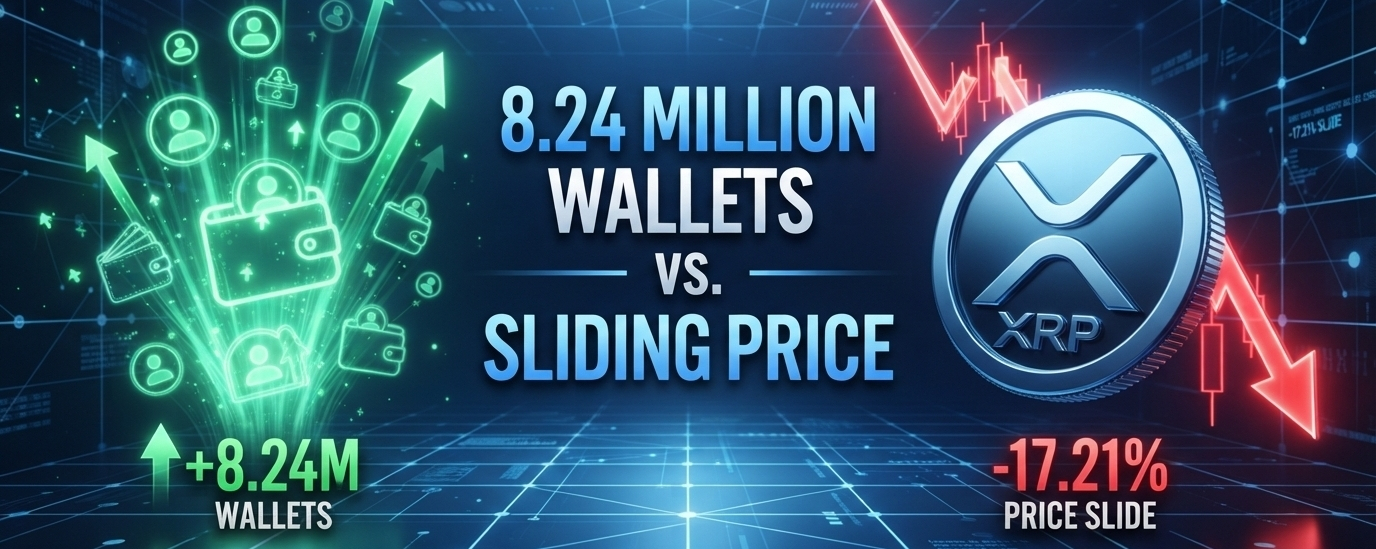
XRP Wallets Hit a Record 8.24 Million, So Why Is the Price Still Sliding?The Ripple ledger is experiencing an unprecedented surge in network adoption, yet the token's price remains stuck in a persistent downtrend. According to recent data from blockchain analytics firm Santiment, XRP has reached a historic milestone of 8.24 million non-empty wallets.
Despite this massive influx of address growth, the token has shed 17.21% of its value over the past month, slipping down to the $1.31 level.
This stark divergence between network growth and price action has left many investors scratching their heads. If more people are holding XRP than ever before, why is the price still sliding?
1. The "Dust Account" Dilution Effect
A primary reason for the mismatch between wallet growth and price appreciation is the nature of the addresses being created. A sharp rise in non-empty wallets does not automatically equal fresh, institutional capital entering the market. Many of these new accounts are retail users holding small fractions of XRP, often referred to as "dust." While the absolute number of holders looks impressive on a chart, the actual buying volume generated by these addresses is insufficient to absorb structural sell walls.
2. General Crypto Market De-risking
XRP does not trade in a vacuum. The broader digital asset market has faced significant headwinds recently, largely driven by macroeconomic shifts and tech-sector liquidations on Wall Street. As capital rotates out of riskier altcoins and moves toward cash or Bitcoin dominance (which recently hovered near 58%), XRP has suffered from a lack of independent upward momentum. When the tides of the overall market recede, even networks with strong fundamentals get dragged down.
3. Supply Inflation and Escrow Releases
Price is fundamentally governed by supply and demand. Even as demand grows via new wallet creation, Ripple’s predictable monthly escrow releases continue to introduce hundreds of millions of tokens into the circulating supply. When these massive unlocks coincide with periods of low market liquidity, they create a natural ceiling for price growth, requiring immense buying pressure just to maintain a flat baseline.
4. Speculative Fatigue vs. Real Utility
While enterprise adoption is steadily climbing—highlighted by major institutions expanding tokenized fund pilots across public ledgers—retail speculation still dictates short-term price movements. Many long-term holders have grown fatigued by prolonged consolidation phases, leading to localized distribution (selling) that counteracts the accumulation seen from new, smaller market entrants.
The Bottom Line
Record-breaking wallet growth proves that the XRP ledger remains one of the most resilient and widely distributed networks in crypto. However, a growing user base is a lagging indicator of network health, not a guarantee of immediate price pumps.
For XRP to reverse its 17% monthly slide and catch up to its network growth, it will need a combination of broader macroeconomic relief, a return of high-volume retail trading, and a sustained break above immediate technical resistance levels. Until then, the ledger will keep growing, even if the price has to wait.
#BinancePick #EarningsSeason #BitcoinSurpasses$82K #Write2Earn $XRP
{future}(XRPUSDT)
XRP Wallets Hit a Record 8.24 Million, So Why Is the Price Still Sliding?
The Ripple ledger is experiencing an unprecedented surge in network adoption, yet the token's price remains stuck in a persistent downtrend. According to recent data from blockchain analytics firm Santiment, XRP has reached a historic milestone of 8.24 million non-empty wallets.
Despite this massive influx of address growth, the token has shed 17.21% of its value over the past month, slipping down to the $1.31 level.
This stark divergence between network growth and price action has left many investors scratching their heads. If more people are holding XRP than ever before, why is the price still sliding?
1. The "Dust Account" Dilution Effect
A primary reason for the mismatch between wallet growth and price appreciation is the nature of the addresses being created. A sharp rise in non-empty wallets does not automatically equal fresh, institutional capital entering the market. Many of these new accounts are retail users holding small fractions of XRP, often referred to as "dust." While the absolute number of holders looks impressive on a chart, the actual buying volume generated by these addresses is insufficient to absorb structural sell walls.
2. General Crypto Market De-risking
XRP does not trade in a vacuum. The broader digital asset market has faced significant headwinds recently, largely driven by macroeconomic shifts and tech-sector liquidations on Wall Street. As capital rotates out of riskier altcoins and moves toward cash or Bitcoin dominance (which recently hovered near 58%), XRP has suffered from a lack of independent upward momentum. When the tides of the overall market recede, even networks with strong fundamentals get dragged down.
3. Supply Inflation and Escrow Releases
Price is fundamentally governed by supply and demand. Even as demand grows via new wallet creation, Ripple’s predictable monthly escrow releases continue to introduce hundreds of millions of tokens into the circulating supply. When these massive unlocks coincide with periods of low market liquidity, they create a natural ceiling for price growth, requiring immense buying pressure just to maintain a flat baseline.
4. Speculative Fatigue vs. Real Utility
While enterprise adoption is steadily climbing—highlighted by major institutions expanding tokenized fund pilots across public ledgers—retail speculation still dictates short-term price movements. Many long-term holders have grown fatigued by prolonged consolidation phases, leading to localized distribution (selling) that counteracts the accumulation seen from new, smaller market entrants.
The Bottom Line
Record-breaking wallet growth proves that the XRP ledger remains one of the most resilient and widely distributed networks in crypto. However, a growing user base is a lagging indicator of network health, not a guarantee of immediate price pumps.
For XRP to reverse its 17% monthly slide and catch up to its network growth, it will need a combination of broader macroeconomic relief, a return of high-volume retail trading, and a sustained break above immediate technical resistance levels. Until then, the ledger will keep growing, even if the price has to wait.
#BinancePick #EarningsSeason #BitcoinSurpasses$82K #Write2Earn $XRP
1
1.3k
Article
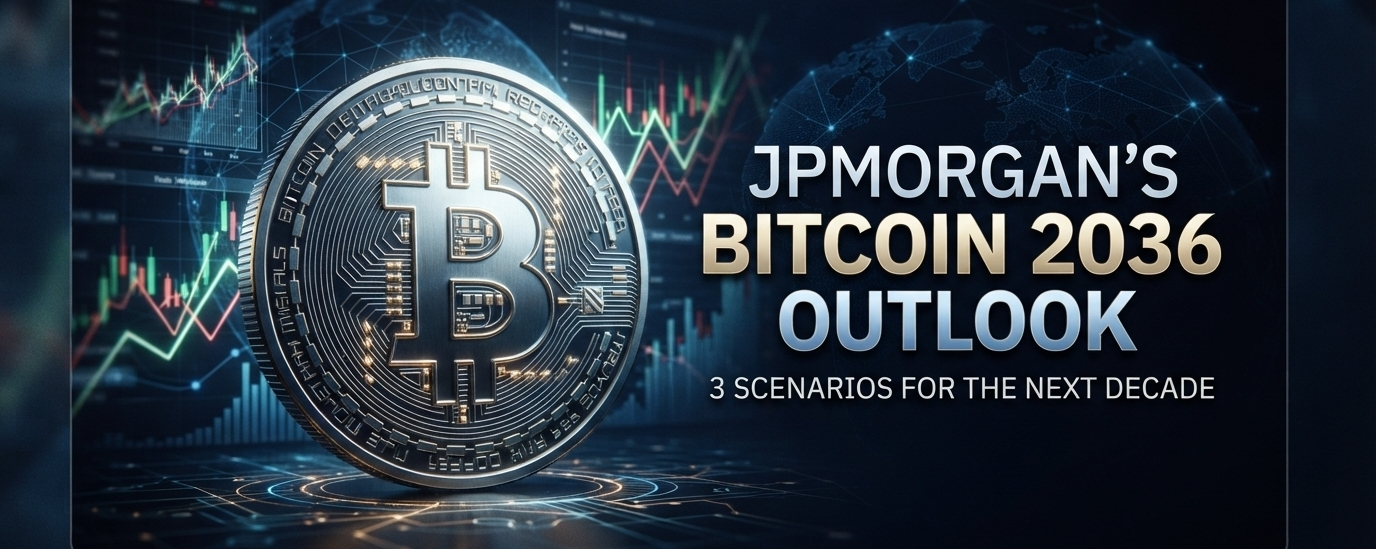
🚨 JPMorgan Outlines 3 Bold Bitcoin Price Scenarios for 2036: Will It Outperform Gold?A striking new projection from JPMorgan Asset Management has caught the financial world's attention. The banking giant suggests that Bitcoin (BTC) could potentially outperform both US stocks and gold over the next decade.
As institutional adoption accelerates and macro landscapes shift, JPMorgan analysts have mapped out three distinct paths for Bitcoin’s valuation by the year 2036. Here is a breakdown of what the future might hold for the world’s leading digital asset.
1. The Bearish Reality: Regulatory & Macro Headwinds
In the most conservative scenario, Bitcoin faces stringent global regulatory frameworks, localized crackdowns on proof-of-work mining, and sustained high-interest-rate environments.
The Outcome: Growth slows down dramatically. Bitcoin remains a highly speculative niche asset rather than a global reserve. Under this lens, traditional equities and gold maintain their historical dominance, while BTC struggles to break past its structural resistance levels.
2. The Base Case: Steady Institutional Integration
JPMorgan’s baseline scenario assumes that current trends continue smoothly. Spot ETFs see steady, predictable inflows, and sovereign wealth funds gradually allocate 1% to 3% of their portfolios to digital assets.
The Outcome: Bitcoin establishes itself firmly as "Digital Gold." It matches or slightly beats the performance of the S&P 500 over the 10-year horizon. Volatility dampens, turning BTC into a mature, widely accepted macroeconomic hedge against fiat inflation.
3. The Bullish Supercycle: Hyper-Bitcoinization
The most optimistic scenario relies on Bitcoin completely disrupting traditional asset classes. In this future, global central banks begin holding BTC on their balance sheets, and hyper-inflationary pressures in developing fiat economies drive mass retail migration to decentralized networks.
The Outcome: Bitcoin massively outperforms both US stocks and gold. As its market cap aggressively chases the multi-trillion-dollar valuation of physical gold, BTC achieves unprecedented price milestones, cementing its status as the ultimate global store of value.
The Bottom Line for Crypto Investors
JPMorgan's projection underscores a massive shift in Wall Street's sentiment. An asset once dismissed by major banks is now being directly compared to—and projected to potentially beat—the bedrock of traditional finance: gold and American equities.
While the 2036 timeline leaves plenty of room for short-term volatility and cyclical bear markets, the long-term structural outlook remains highly compelling for patient holders.
What is your take on JPMorgan's 2036 outlook? Which scenario do you think is most likely to play out?
Disclaimer: This post is for informational and educational purposes only and does not constitute financial advice.
#Bitcoin #BTC #JPMorgan #CryptoNews #CryptoMarket
🚨 JPMorgan Outlines 3 Bold Bitcoin Price Scenarios for 2036: Will It Outperform Gold?
A striking new projection from JPMorgan Asset Management has caught the financial world's attention. The banking giant suggests that Bitcoin (BTC) could potentially outperform both US stocks and gold over the next decade.
As institutional adoption accelerates and macro landscapes shift, JPMorgan analysts have mapped out three distinct paths for Bitcoin’s valuation by the year 2036. Here is a breakdown of what the future might hold for the world’s leading digital asset.
1. The Bearish Reality: Regulatory & Macro Headwinds
In the most conservative scenario, Bitcoin faces stringent global regulatory frameworks, localized crackdowns on proof-of-work mining, and sustained high-interest-rate environments.
The Outcome: Growth slows down dramatically. Bitcoin remains a highly speculative niche asset rather than a global reserve. Under this lens, traditional equities and gold maintain their historical dominance, while BTC struggles to break past its structural resistance levels.
2. The Base Case: Steady Institutional Integration
JPMorgan’s baseline scenario assumes that current trends continue smoothly. Spot ETFs see steady, predictable inflows, and sovereign wealth funds gradually allocate 1% to 3% of their portfolios to digital assets.
The Outcome: Bitcoin establishes itself firmly as "Digital Gold." It matches or slightly beats the performance of the S&P 500 over the 10-year horizon. Volatility dampens, turning BTC into a mature, widely accepted macroeconomic hedge against fiat inflation.
3. The Bullish Supercycle: Hyper-Bitcoinization
The most optimistic scenario relies on Bitcoin completely disrupting traditional asset classes. In this future, global central banks begin holding BTC on their balance sheets, and hyper-inflationary pressures in developing fiat economies drive mass retail migration to decentralized networks.
The Outcome: Bitcoin massively outperforms both US stocks and gold. As its market cap aggressively chases the multi-trillion-dollar valuation of physical gold, BTC achieves unprecedented price milestones, cementing its status as the ultimate global store of value.
The Bottom Line for Crypto Investors
JPMorgan's projection underscores a massive shift in Wall Street's sentiment. An asset once dismissed by major banks is now being directly compared to—and projected to potentially beat—the bedrock of traditional finance: gold and American equities.
While the 2036 timeline leaves plenty of room for short-term volatility and cyclical bear markets, the long-term structural outlook remains highly compelling for patient holders.
What is your take on JPMorgan's 2036 outlook? Which scenario do you think is most likely to play out?
Disclaimer: This post is for informational and educational purposes only and does not constitute financial advice.
#Bitcoin #BTC #JPMorgan #CryptoNews #CryptoMarket
247
Article
Supply Shock Alert: 3 Massive Token Unlocks to Watch This WeekThe crypto market is bracing for a heavy influx of liquidity during the fourth week of October 2026. Across the broader market, scheduled token unlocks are projected to flood the space with more than $793.6 million in newly available supply.
For smart traders, massive unlocks represent a double-edged sword: they can trigger localized panic and sell-offs, or they can present the perfect "buy the dip" opportunity once the initial supply is absorbed.
If you are trading LayerZero (ZRO), Plasma (XPL), or Humanity (H), here are the critical dates, token distributions, and potential market impacts you need to keep on your radar this week.
1. LayerZero (ZRO) — October 20
Unlock Value: ~$43.54 MillionTokens Released: 23.28 Million ZROPercentage of Circulating Supply: 3.83%
As a leading interoperability protocol facilitating seamless cross-chain communication, LayerZero's upcoming release is the largest single-day dollar value event among the three. The distribution will allocate 10.99 million tokens to strategic partners, 10.63 million to core contributors, and 1.67 million toward team-repurchased tokens.
Market Outlook: Because a significant portion goes directly to core contributors and insiders, the short-term price action will heavily depend on whether these entities decide to monetize immediately or hold for the long haul. Keep a close eye on ZRO's 24-hour trading volume; if the volume begins to taper off while supply enters the market, expect localized sell pressure.
2. Plasma (XPL) — October 25
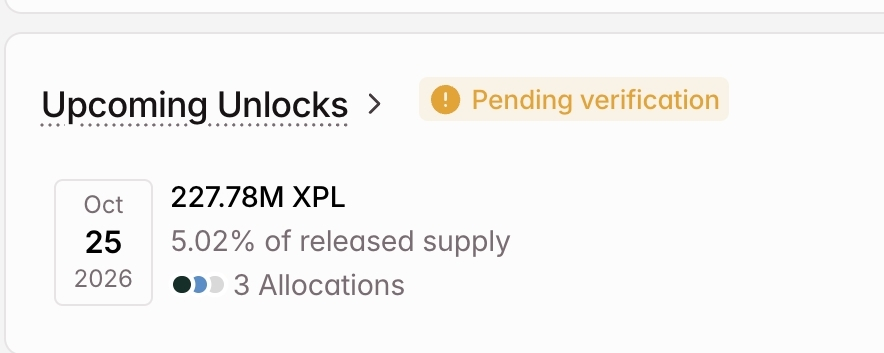
Unlock Value: ~$17.50 MillionTokens Released: 227.78 Million XPLPercentage of Circulating Supply: 5.02%
Plasma, the specialized Layer 1 blockchain optimized for zero-fee stablecoin transactions and confidential payments, is entering its next supply expansion phase. The upcoming unlock will direct 88.89 million XPL to ecosystem growth, while investors and the core team will split the remainder by receiving 69.44 million tokens each.
Market Outlook: While XPL has seen decent tailwinds recently due to its integration milestones—such as native payment tracking and high-profile stablecoin payout use cases—this release still expands the liquid float by over 5%. The asset has experienced front-running sell pressure ahead of the date, meaning much of the dilution risk might already be priced in.
3. Humanity (H) — October 25
Unlock Value: ~$15.30 MillionTokens Released: 266.47 Million HPercentage of Circulating Supply: 6.84%
Humanity Protocol utilizes unique biometric palm recognition alongside zero-knowledge proofs to build decentralized identity infrastructure. This unlock represents the largest percentage increase in circulating supply among the three primary projects. The supply will split six ways, heavily favoring early contributors (79.17 million H) and investors (55.56 million H). The rest will fund identity verification rewards, the ecosystem pot, and the treasury.
Market Outlook: A 6.84% supply expansion concentrated heavily around early backers and contributors introduces significant sell-side risk. Watch the order books carefully around October 25; a sharp drop in liquidity could result in higher volatility if early investors choose to take profits.
Pro-Trader Takeaway
Token unlocks are structurally bearish in the short term due to the sudden increase in floating supply, but they also act as a vital health check for a project’s community conviction. If a token manages to hold its key support levels during a massive unlock event, it signals intense buyer demand and long-term accumulation interest.
Always cross-reference these schedules with active decentralized exchange (DEX) liquidity and incoming exchange inflows to spot where the whales are moving their newly unlocked bags.
Disclaimer: Token unlock schedules can be adjusted by project foundations, and exact distribution values fluctuate based on real-time market prices. Always manage your risk.
What are your thoughts on this week's unlocks? Are you planning to de-risk your positions, or are you looking to buy the volatility? Let me know in the comments below!
#Write2Earn #H #zro
Supply Shock Alert: 3 Massive Token Unlocks to Watch This Week
The crypto market is bracing for a heavy influx of liquidity during the fourth week of October 2026. Across the broader market, scheduled token unlocks are projected to flood the space with more than $793.6 million in newly available supply.
For smart traders, massive unlocks represent a double-edged sword: they can trigger localized panic and sell-offs, or they can present the perfect "buy the dip" opportunity once the initial supply is absorbed.
If you are trading LayerZero (ZRO), Plasma (XPL), or Humanity (H), here are the critical dates, token distributions, and potential market impacts you need to keep on your radar this week.
1. LayerZero (ZRO) — October 20
Unlock Value: ~$43.54 MillionTokens Released: 23.28 Million ZROPercentage of Circulating Supply: 3.83%
As a leading interoperability protocol facilitating seamless cross-chain communication, LayerZero's upcoming release is the largest single-day dollar value event among the three. The distribution will allocate 10.99 million tokens to strategic partners, 10.63 million to core contributors, and 1.67 million toward team-repurchased tokens.
Market Outlook: Because a significant portion goes directly to core contributors and insiders, the short-term price action will heavily depend on whether these entities decide to monetize immediately or hold for the long haul. Keep a close eye on ZRO's 24-hour trading volume; if the volume begins to taper off while supply enters the market, expect localized sell pressure.
2. Plasma (XPL) — October 25
Unlock Value: ~$17.50 MillionTokens Released: 227.78 Million XPLPercentage of Circulating Supply: 5.02%
Plasma, the specialized Layer 1 blockchain optimized for zero-fee stablecoin transactions and confidential payments, is entering its next supply expansion phase. The upcoming unlock will direct 88.89 million XPL to ecosystem growth, while investors and the core team will split the remainder by receiving 69.44 million tokens each.
Market Outlook: While XPL has seen decent tailwinds recently due to its integration milestones—such as native payment tracking and high-profile stablecoin payout use cases—this release still expands the liquid float by over 5%. The asset has experienced front-running sell pressure ahead of the date, meaning much of the dilution risk might already be priced in.
3. Humanity (H) — October 25
Unlock Value: ~$15.30 MillionTokens Released: 266.47 Million HPercentage of Circulating Supply: 6.84%
Humanity Protocol utilizes unique biometric palm recognition alongside zero-knowledge proofs to build decentralized identity infrastructure. This unlock represents the largest percentage increase in circulating supply among the three primary projects. The supply will split six ways, heavily favoring early contributors (79.17 million H) and investors (55.56 million H). The rest will fund identity verification rewards, the ecosystem pot, and the treasury.
Market Outlook: A 6.84% supply expansion concentrated heavily around early backers and contributors introduces significant sell-side risk. Watch the order books carefully around October 25; a sharp drop in liquidity could result in higher volatility if early investors choose to take profits.
Pro-Trader Takeaway
Token unlocks are structurally bearish in the short term due to the sudden increase in floating supply, but they also act as a vital health check for a project’s community conviction. If a token manages to hold its key support levels during a massive unlock event, it signals intense buyer demand and long-term accumulation interest.
Always cross-reference these schedules with active decentralized exchange (DEX) liquidity and incoming exchange inflows to spot where the whales are moving their newly unlocked bags.
Disclaimer: Token unlock schedules can be adjusted by project foundations, and exact distribution values fluctuate based on real-time market prices. Always manage your risk.
What are your thoughts on this week's unlocks? Are you planning to de-risk your positions, or are you looking to buy the volatility? Let me know in the comments below!
#Write2Earn #H #zro
2
902
Article
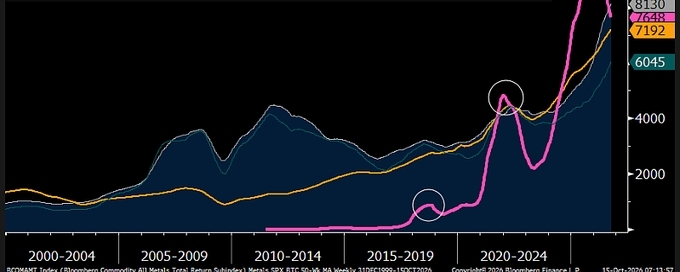
🚨 Will Bitcoin Crash to $10,000? Evaluating Bloomberg’s Grim Macro WarningA stark forecast from Bloomberg Intelligence senior commodity strategist Mike McGlone has reignited intense debate across the cryptocurrency market. McGlone warned that Bitcoin (BTC) could plummet toward the $10,000 level if United States stock indexes experience a severe 20% correction.
While Bitcoin has solidified its position as a major institutional asset class, this projection serves as a sobering reminder of the deep liquidity ties connecting crypto markets to traditional finance.
The Macro Link: Why $10,000 is on the Radar
The core of the bearish thesis relies heavily on macro liquidity and asset correlation:
Equity Market Contagion: A sudden 20% drop in US equities would trigger a massive liquidity squeeze. In high-risk environments, institutional investors historically liquidate volatile assets—including cryptocurrencies—to cover margins and hoard cash.The High-Beta Reality: Despite its "digital gold" narrative, Bitcoin continues to trade as a high-beta risk asset during broader market panics.Historic Precedent: Major stock market drawdowns, such as the 2020 liquidity crunch, have historically dragged the crypto market down in tandem before a decoupling or recovery occurs.
The Counter-Argument: Institutional Floors & ETF Support
While a severe macroeconomic shock could trigger sharp liquidations, many analysts argue that a drop to $10,000 faces massive structural roadblocks:
The ETF Cushion: The introduction of spot Bitcoin ETFs has established a robust institutional floor. Massive capital inflows from traditional finance giants have fundamentally changed the asset's supply dynamics.Long-Term Holder Resilience: On-chain data reveals that the percentage of supply held by long-term entities remains near historic highs, indicating strong conviction that resists panic selling.Production Cost Floor: The underlying cost of mining a single Bitcoin acts as a psychological and economic floor, making a sustained drop to four figures highly unlikely without a total network collapse.
⚖ Final Verdict: Risk Management is Key
McGlone’s warning shouldn't be dismissed as mere bearishness, but rather interpreted as a worst-case macro scenario. If global markets experience a severe systemic shock, crypto will not be immune to the initial damage.
For creators and investors on Binance Square, this serves as an important reminder to look beyond simple crypto charts. Keeping a close eye on broader macroeconomic indicators, interest rates, and Wall Street equity health is vital for navigating the next phase of the market cycle.
What do you think? Is a $10,000 Bitcoin completely out of the question, or are we underestimating macro risks?
#Bitcoin #CryptoNews #BinanceSquare #MacroEconomics
🚨 Will Bitcoin Crash to $10,000? Evaluating Bloomberg’s Grim Macro Warning
A stark forecast from Bloomberg Intelligence senior commodity strategist Mike McGlone has reignited intense debate across the cryptocurrency market. McGlone warned that Bitcoin (BTC) could plummet toward the $10,000 level if United States stock indexes experience a severe 20% correction.
While Bitcoin has solidified its position as a major institutional asset class, this projection serves as a sobering reminder of the deep liquidity ties connecting crypto markets to traditional finance.
The Macro Link: Why $10,000 is on the Radar
The core of the bearish thesis relies heavily on macro liquidity and asset correlation:
Equity Market Contagion: A sudden 20% drop in US equities would trigger a massive liquidity squeeze. In high-risk environments, institutional investors historically liquidate volatile assets—including cryptocurrencies—to cover margins and hoard cash.The High-Beta Reality: Despite its "digital gold" narrative, Bitcoin continues to trade as a high-beta risk asset during broader market panics.Historic Precedent: Major stock market drawdowns, such as the 2020 liquidity crunch, have historically dragged the crypto market down in tandem before a decoupling or recovery occurs.
The Counter-Argument: Institutional Floors & ETF Support
While a severe macroeconomic shock could trigger sharp liquidations, many analysts argue that a drop to $10,000 faces massive structural roadblocks:
The ETF Cushion: The introduction of spot Bitcoin ETFs has established a robust institutional floor. Massive capital inflows from traditional finance giants have fundamentally changed the asset's supply dynamics.Long-Term Holder Resilience: On-chain data reveals that the percentage of supply held by long-term entities remains near historic highs, indicating strong conviction that resists panic selling.Production Cost Floor: The underlying cost of mining a single Bitcoin acts as a psychological and economic floor, making a sustained drop to four figures highly unlikely without a total network collapse.
⚖ Final Verdict: Risk Management is Key
McGlone’s warning shouldn't be dismissed as mere bearishness, but rather interpreted as a worst-case macro scenario. If global markets experience a severe systemic shock, crypto will not be immune to the initial damage.
For creators and investors on Binance Square, this serves as an important reminder to look beyond simple crypto charts. Keeping a close eye on broader macroeconomic indicators, interest rates, and Wall Street equity health is vital for navigating the next phase of the market cycle.
What do you think? Is a $10,000 Bitcoin completely out of the question, or are we underestimating macro risks?
#Bitcoin #CryptoNews #BinanceSquare #MacroEconomics
281
🚨 Is $NIL the Missing Piece for Web3 Privacy & AI? 🌐
Everyone is talking about Zero-Knowledge (ZK) tech, but Nillion ($NIL) is tackling the holy grail of crypto security: Blind Computation
Blockchains are inherently public, which means your trading intents, smart contract strategies, and private data are exposed to MEV bots and front-runners. Nillion fixes this by processing data without ever "seeing" it.
Here is what you need to know about this massive ecosystem push:
Encrypted Markets via Covenants: Nillion's Covenants completely shield advanced order details and proprietary trading strategies, keeping them 100% private during execution while maintaining clean on-chain verification. Say goodbye to structural front-running leaks!
Dusk is Live on Ethereum Mainnet: With Dusk, EVM developers can seamlessly plug into Nillion’s private compute network without rewriting their protocols from scratch.
Decentralized AI Fuel: As AI agents take over Web3, they need private data (like API keys and custom trading algorithms). Nillion provides the necessary secure infrastructure to scale decentralized AI models safely.
The crossover between Privacy DeFi and AI is expanding rapidly. Don't sleep on this narrative! 📈
💬 What do you think? Will Nillion's Covenants finally kill off predatory MEV bots for good?
#NIL #Nillion #PrivacyDeFi
#nil $NIL @nillionnetwork
🚨 Is $NIL the Missing Piece for Web3 Privacy & AI? 🌐
Everyone is talking about Zero-Knowledge (ZK) tech, but Nillion ($NIL ) is tackling the holy grail of crypto security: Blind Computation
Blockchains are inherently public, which means your trading intents, smart contract strategies, and private data are exposed to MEV bots and front-runners. Nillion fixes this by processing data without ever "seeing" it.
Here is what you need to know about this massive ecosystem push:
Encrypted Markets via Covenants: Nillion's Covenants completely shield advanced order details and proprietary trading strategies, keeping them 100% private during execution while maintaining clean on-chain verification. Say goodbye to structural front-running leaks!
Dusk is Live on Ethereum Mainnet: With Dusk, EVM developers can seamlessly plug into Nillion’s private compute network without rewriting their protocols from scratch.
Decentralized AI Fuel: As AI agents take over Web3, they need private data (like API keys and custom trading algorithms). Nillion provides the necessary secure infrastructure to scale decentralized AI models safely.
The crossover between Privacy DeFi and AI is expanding rapidly. Don't sleep on this narrative! 📈
💬 What do you think? Will Nillion's Covenants finally kill off predatory MEV bots for good?
#NIL #Nillion #PrivacyDeFi
#nil $NIL @Nillion
1
773

Article
🚨 10-Minute Solana Ad in Shanghai: Did CZ Really Cause the Takedown? 🇨🇳A massive Solana ($SOL ) advertisement recently shocked the crypto community by lighting up Shanghai’s iconic Bund waterfront—only to be abruptly pulled down a mere 10 minutes later.
The lightning-fast removal instantly triggered massive speculation across Web3, with some critics quickly pointing fingers at Binance founder Changpeng "CZ" Zhao.
Here is exactly what happened and why the rumors don't match the reality.
⚡ The Spark: A Brief Moment on the Bund
The Bund is one of China's most heavily monitored, high-profile public spaces. Seeing a major global layer-1 blockchain project like Solana splashed across the waterfront immediately turned heads in the local crypto space.
But almost as soon as the cameras started rolling, the display went dark.
In the immediate aftermath, wild theories flooded X (formerly Twitter). A few vocal critics claimed that a social media post by CZ drew the wrong kind of attention, ultimately triggering the removal by local authorities.
🛡️ CZ Sets the Record Straight
CZ wasted no time shutting down the rumors. He firmly rejected the claims, clarifying that while he did post about the ad shortly after it appeared, his tweet had absolutely nothing to do with it being taken offline.
Industry veterans agree with CZ. China maintains a famously rigid stance on cryptocurrency marketing. Given the extreme municipal oversight along the Bund, public displays require intense vetting. The most logical explanation is standard regulatory compliance—meaning the ad simply lacked the proper local approvals required for such a high-profile public zone.
📉 The Takeaway for SOL & the Market
This incident is a stark reminder of the ongoing friction between global Web3 marketing ambitions and strict regional compliance frameworks. Even as Solana's on-chain metrics and network activity remain highly active globally, navigating public visibility in regions with tight digital asset policies remains a major hurdle.
What do you think? Was it just a classic regulatory shutdown, or was the 10-minute runtime just a stunt for viral marketing?
#Solana #SOL #Binance #CZ #CryptoNews
🚨 10-Minute Solana Ad in Shanghai: Did CZ Really Cause the Takedown? 🇨🇳
A massive Solana ($SOL ) advertisement recently shocked the crypto community by lighting up Shanghai’s iconic Bund waterfront—only to be abruptly pulled down a mere 10 minutes later.
The lightning-fast removal instantly triggered massive speculation across Web3, with some critics quickly pointing fingers at Binance founder Changpeng "CZ" Zhao.
Here is exactly what happened and why the rumors don't match the reality.
⚡ The Spark: A Brief Moment on the Bund
The Bund is one of China's most heavily monitored, high-profile public spaces. Seeing a major global layer-1 blockchain project like Solana splashed across the waterfront immediately turned heads in the local crypto space.
But almost as soon as the cameras started rolling, the display went dark.
In the immediate aftermath, wild theories flooded X (formerly Twitter). A few vocal critics claimed that a social media post by CZ drew the wrong kind of attention, ultimately triggering the removal by local authorities.
🛡️ CZ Sets the Record Straight
CZ wasted no time shutting down the rumors. He firmly rejected the claims, clarifying that while he did post about the ad shortly after it appeared, his tweet had absolutely nothing to do with it being taken offline.
Industry veterans agree with CZ. China maintains a famously rigid stance on cryptocurrency marketing. Given the extreme municipal oversight along the Bund, public displays require intense vetting. The most logical explanation is standard regulatory compliance—meaning the ad simply lacked the proper local approvals required for such a high-profile public zone.
📉 The Takeaway for SOL & the Market
This incident is a stark reminder of the ongoing friction between global Web3 marketing ambitions and strict regional compliance frameworks. Even as Solana's on-chain metrics and network activity remain highly active globally, navigating public visibility in regions with tight digital asset policies remains a major hurdle.
What do you think? Was it just a classic regulatory shutdown, or was the 10-minute runtime just a stunt for viral marketing?
#Solana #SOL #Binance #CZ #CryptoNews
318
Article
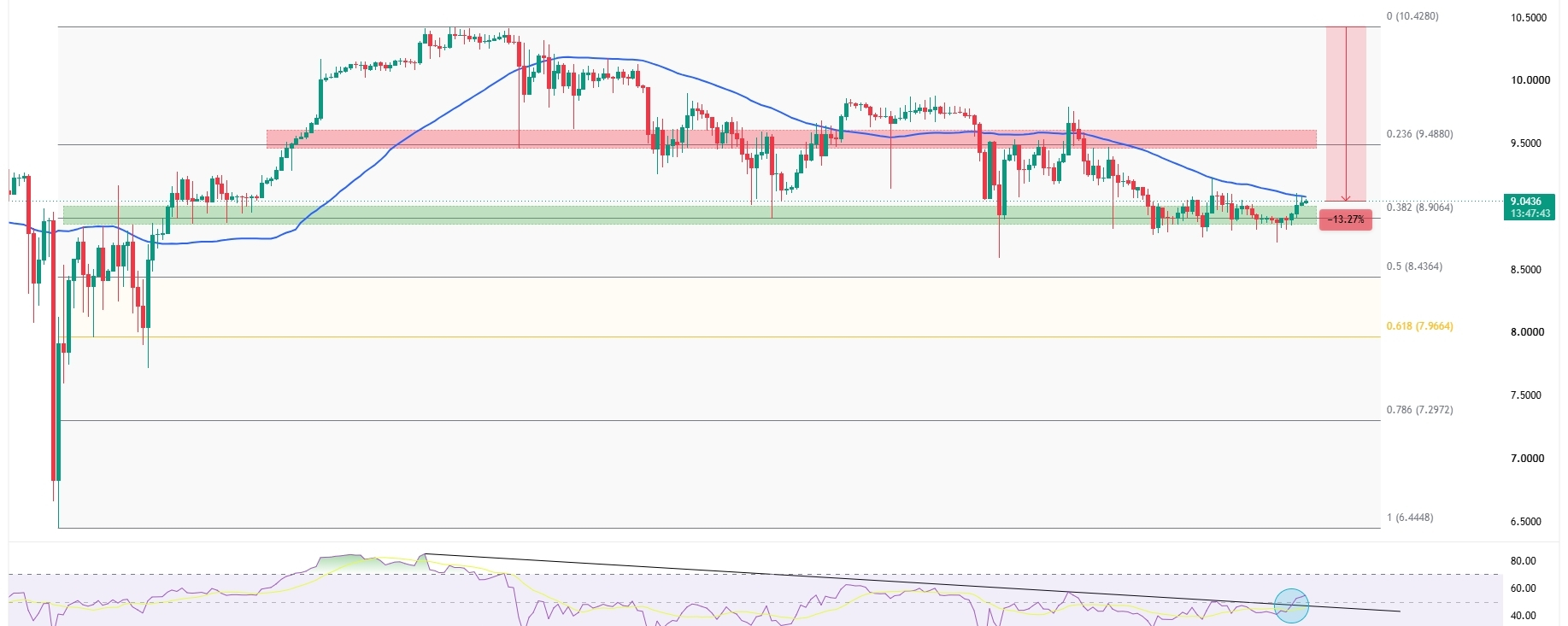
Weekend Watching : 3 Altcoins Nearing Massive Breakouts to New All-Time HighsAs the weekend approaches, the broader crypto market is flashing signs of intense consolidation. Amid this sideways price action, three specific tokens—LEO Token (LEO), Hyperliquid (HYPE), and Tron (TRX)—are positioning themselves at critical technical inflection points.
With buying pressure mounting, these assets are sitting just a stone's throw away from rewriting their price history books. Here is a breakdown of what needs to happen next.
🦁 1. LEO Token (LEO)
LEO has quietly established a strong foundational support level after weeks of steady accumulation.
The Target: The asset is currently aiming to break through its final overhead resistance.The Gap: LEO requires a rally of roughly 15% from its current consolidation zone to eclipse its former peak and establish a fresh all-time high (ATH).What to Watch: Keep an eye on sudden volume spikes, which have historically triggered explosive upward moves for this token.
💧 2. Hyperliquid (HYPE)
As one of the most talked-about decentralized trading networks, Hyperliquid’s native token is coiled tightly for its next major macro expansion.
The Target: HYPE is building strong momentum just underneath its discovery-phase resistance.The Gap: The token needs a swift 21% gain to clear local supply walls and enter unchartered price territory.What to Watch: Sustained open interest on the Hyperliquid platform could easily act as the weekend catalyst fuel for this move.
🔴 3. Tron (TRX)
Tron continues to defy broader market corrections, heavily anchored by its massive dominance in global stablecoin velocity and network revenue generation.
The Target: TRX is compressing tightly inside a bullish continuation pattern on the daily chart.The Gap: Unlike newer tokens, TRX faces a multi-year psychological barrier, but its current structural setup suggests a breakout attempt is imminent.What to Watch: Increased burning dynamics (deflationary supply) and surging TVL (Total Value Locked) are the primary drivers backing this weekend push.
💡 The Bottom Line
Weekend trading typically brings lower liquidity, which can lead to high volatility and rapid price expansions. If Bitcoin stabilizes or pushes slightly higher, the compressed energy in LEO, HYPE, and TRX could easily trigger a race to new historic peaks before the weekly close.
#CryptoNews #Altcoins #TRX #LEOToken #Hyperliquid #CryptoMarket #ATHWatch
Would you like me to generate a custom visual banner for this article to help it stand out on the Binance Square feed, or should we set up a task to track their price movements over the weekend?
#DYOR #NFA #Write2Earn #Trx #Hyperium
Weekend Watching : 3 Altcoins Nearing Massive Breakouts to New All-Time Highs
As the weekend approaches, the broader crypto market is flashing signs of intense consolidation. Amid this sideways price action, three specific tokens—LEO Token (LEO), Hyperliquid (HYPE), and Tron (TRX)—are positioning themselves at critical technical inflection points.
With buying pressure mounting, these assets are sitting just a stone's throw away from rewriting their price history books. Here is a breakdown of what needs to happen next.
🦁 1. LEO Token (LEO)
LEO has quietly established a strong foundational support level after weeks of steady accumulation.
The Target: The asset is currently aiming to break through its final overhead resistance.The Gap: LEO requires a rally of roughly 15% from its current consolidation zone to eclipse its former peak and establish a fresh all-time high (ATH).What to Watch: Keep an eye on sudden volume spikes, which have historically triggered explosive upward moves for this token.
💧 2. Hyperliquid (HYPE)
As one of the most talked-about decentralized trading networks, Hyperliquid’s native token is coiled tightly for its next major macro expansion.
The Target: HYPE is building strong momentum just underneath its discovery-phase resistance.The Gap: The token needs a swift 21% gain to clear local supply walls and enter unchartered price territory.What to Watch: Sustained open interest on the Hyperliquid platform could easily act as the weekend catalyst fuel for this move.
🔴 3. Tron (TRX)
Tron continues to defy broader market corrections, heavily anchored by its massive dominance in global stablecoin velocity and network revenue generation.
The Target: TRX is compressing tightly inside a bullish continuation pattern on the daily chart.The Gap: Unlike newer tokens, TRX faces a multi-year psychological barrier, but its current structural setup suggests a breakout attempt is imminent.What to Watch: Increased burning dynamics (deflationary supply) and surging TVL (Total Value Locked) are the primary drivers backing this weekend push.
💡 The Bottom Line
Weekend trading typically brings lower liquidity, which can lead to high volatility and rapid price expansions. If Bitcoin stabilizes or pushes slightly higher, the compressed energy in LEO, HYPE, and TRX could easily trigger a race to new historic peaks before the weekly close.
#CryptoNews #Altcoins #TRX #LEOToken #Hyperliquid #CryptoMarket #ATHWatch
Would you like me to generate a custom visual banner for this article to help it stand out on the Binance Square feed, or should we set up a task to track their price movements over the weekend?
#DYOR #NFA #Write2Earn #Trx #Hyperium
4
621

Article
Solana's Alpenglow Goes Live Next Week: How Will SOL Price React?The Solana network is on the verge of one of its most critical architectural transformations since its inception in 2020. The highly anticipated Alpenglow consensus upgrade is officially scheduled to go live on the mainnet on October 21, 2026.
As the countdown begins, the broader crypto community is asking one vital question: How will the price of $SOL react?
Here is a deep dive into what the Alpenglow upgrade brings, the historical patterns of major blockchain overhauls, and the potential short- and long-term price targets for Solana.
What is the Alpenglow Upgrade?
Alpenglow introduces a fundamental overhaul to Solana’s core engine. While past updates focused heavily on combating network congestion and optimizing fee markets, Alpenglow targets the very foundation of the blockchain: its consensus mechanism and state execution architecture.
Key features of the upgrade include:
Optimized Transaction Execution: Drastically lowering localized hardware bottlenecks for validators.Enhanced State Finality: Substantially lowering the time-to-finality for cross-border transactions and smart contract executions.Upgraded Security Infrastructure: Boosting the network’s theoretical resistance to economic attacks and MEV (Maximal Extractable Value) exploitation.
By fixing structural issues that previously caused sporadic network degradation during high-traffic meme coin seasons and NFT mints, Alpenglow aims to cement Solana as the premier enterprise-grade monolithic blockchain.
Historical Context: "Buy the Rumor, Sell the News"?
To predict how SOL's price will move next week, we can look at how major crypto assets behave during massive technical updates—such as Ethereum's "Merge" or Bitcoin's halving cycles.
Typically, these events trigger a distinct multi-phase price action:
The Pre-Upgrade Run-Up (Current Phase): Anticipation builds buying pressure. Investors accumulate the token expecting a flawless technical launch.The Liquidity Flush (Launch Week): Even if the upgrade goes perfectly, large-scale upgrades frequently face a classic "buy the rumor, sell the news" scenario. Traders who bought in early may liquidate positions on October 21 to lock in quick profits, causing short-term price volatility.The Fundamental Shift (Post-Launch): If the mainnet remains stable and delivers the promised speed improvements, institutional applications and capital inflows follow, sparking a sustained, organic rally.
SOL Price Analysis: Key Levels to Watch
Solana's native token enters next week backed by strong structural momentum, but macroeconomic pressures require a cautious approach.
📈 The Bullish Scenario (Flawless Execution)
If the Alpenglow upgrade goes live seamlessly without any unexpected mainnet downtime, it will validate Solana's technical maturity to institutional investors.
Short-Term Target: A successful launch could push SOL past immediate overhead resistance levels, targeting a swift move toward the $185 – $195 zone.Long-Term Target: If network stability holds and dApp development accelerates throughout Q4 2026, a breach above $220 is highly achievable by early 2027.
📉 The Bearish Scenario (Technical Hitches or Market Sell-offs)
Monolithic blockchains carry inherent risks during hard forks and major consensus updates. Any unexpected validator coordination delays or temporary chain stalls could hurt investor confidence.
Immediate Support: If a "sell the news" event unfolds or minor technical bugs occur, SOL could slide to retest its key psychological support floor at $145 – $150.Major Capitulation Floor: A broader macro market pullback combined with technical instability could push the asset down toward the $130 accumulation zone.
The Verdict: A Structural Leap Forward
Ultimately, the Alpenglow upgrade is a net positive for Solana’s longevity. While short-term day traders should brace for volatile price swings surrounding the October 21 activation date, long-term spot holders are looking at a fundamentally stronger, faster, and more secure network.
As always in crypto, ensure you use proper risk management strategies ahead of high-impact network events.
What are your thoughts? Will Alpenglow push SOL to new yearly highs, or are we set for a correction?
#Solana #SOL #CryptoNews #Blockchain #Alpenglow
Solana's Alpenglow Goes Live Next Week: How Will SOL Price React?
The Solana network is on the verge of one of its most critical architectural transformations since its inception in 2020. The highly anticipated Alpenglow consensus upgrade is officially scheduled to go live on the mainnet on October 21, 2026.
As the countdown begins, the broader crypto community is asking one vital question: How will the price of $SOL react?
Here is a deep dive into what the Alpenglow upgrade brings, the historical patterns of major blockchain overhauls, and the potential short- and long-term price targets for Solana.
What is the Alpenglow Upgrade?
Alpenglow introduces a fundamental overhaul to Solana’s core engine. While past updates focused heavily on combating network congestion and optimizing fee markets, Alpenglow targets the very foundation of the blockchain: its consensus mechanism and state execution architecture.
Key features of the upgrade include:
Optimized Transaction Execution: Drastically lowering localized hardware bottlenecks for validators.Enhanced State Finality: Substantially lowering the time-to-finality for cross-border transactions and smart contract executions.Upgraded Security Infrastructure: Boosting the network’s theoretical resistance to economic attacks and MEV (Maximal Extractable Value) exploitation.
By fixing structural issues that previously caused sporadic network degradation during high-traffic meme coin seasons and NFT mints, Alpenglow aims to cement Solana as the premier enterprise-grade monolithic blockchain.
Historical Context: "Buy the Rumor, Sell the News"?
To predict how SOL's price will move next week, we can look at how major crypto assets behave during massive technical updates—such as Ethereum's "Merge" or Bitcoin's halving cycles.
Typically, these events trigger a distinct multi-phase price action:
The Pre-Upgrade Run-Up (Current Phase): Anticipation builds buying pressure. Investors accumulate the token expecting a flawless technical launch.The Liquidity Flush (Launch Week): Even if the upgrade goes perfectly, large-scale upgrades frequently face a classic "buy the rumor, sell the news" scenario. Traders who bought in early may liquidate positions on October 21 to lock in quick profits, causing short-term price volatility.The Fundamental Shift (Post-Launch): If the mainnet remains stable and delivers the promised speed improvements, institutional applications and capital inflows follow, sparking a sustained, organic rally.
SOL Price Analysis: Key Levels to Watch
Solana's native token enters next week backed by strong structural momentum, but macroeconomic pressures require a cautious approach.
📈 The Bullish Scenario (Flawless Execution)
If the Alpenglow upgrade goes live seamlessly without any unexpected mainnet downtime, it will validate Solana's technical maturity to institutional investors.
Short-Term Target: A successful launch could push SOL past immediate overhead resistance levels, targeting a swift move toward the $185 – $195 zone.Long-Term Target: If network stability holds and dApp development accelerates throughout Q4 2026, a breach above $220 is highly achievable by early 2027.
📉 The Bearish Scenario (Technical Hitches or Market Sell-offs)
Monolithic blockchains carry inherent risks during hard forks and major consensus updates. Any unexpected validator coordination delays or temporary chain stalls could hurt investor confidence.
Immediate Support: If a "sell the news" event unfolds or minor technical bugs occur, SOL could slide to retest its key psychological support floor at $145 – $150.Major Capitulation Floor: A broader macro market pullback combined with technical instability could push the asset down toward the $130 accumulation zone.
The Verdict: A Structural Leap Forward
Ultimately, the Alpenglow upgrade is a net positive for Solana’s longevity. While short-term day traders should brace for volatile price swings surrounding the October 21 activation date, long-term spot holders are looking at a fundamentally stronger, faster, and more secure network.
As always in crypto, ensure you use proper risk management strategies ahead of high-impact network events.
What are your thoughts? Will Alpenglow push SOL to new yearly highs, or are we set for a correction?
#Solana #SOL #CryptoNews #Blockchain #Alpenglow
1
305

Article
🇨🇳 China’s New National Blockchain Network: Will Bitcoin Actually Benefit? 🚀China is making a massive leap into the future of digital infrastructure. In a recently unveiled economic blueprint, top leadership called for the development of a national blockchain network as part of 19 sweeping measures to modernize the country’s economy.
However, the ambitious initiative comes with a stark warning: officials must strictly avoid creating speculative "bubbles" and prevent the virtual economy from overshadowing the real economy.
For the global cryptocurrency market, this announcement raises a critical question: Will Bitcoin benefit from China’s official blockchain push?
🧱 The Infrastructure Push vs. The Anti-Speculation Stance
China's latest economic blueprint highlights a clear dichotomy in how the world’s second-largest economy views blockchain technology versus crypto assets:
The Blueprint: Blockchain is recognized as a vital, foundational technology capable of streamlining supply chains, improving administrative efficiency, and securing cross-border data.The Warning: The document heavily emphasizes anchoring technology to the "real economy." Policymakers explicitly cautioned against abandoning tangible industries in favor of the "virtual economy," signaling that speculative trading, tokenization, and decentralized finance (DeFi) remain firmly out of favor.
This framework is a continuation of Beijing's long-standing policy: "Blockchain, not Bitcoin."
Will Bitcoin Benefit?
While a national blockchain network sounds bullish on the surface, the direct implications for Bitcoin are highly nuanced, presenting both systemic hurdles and indirect advantages.
1. Why it might NOT benefit Bitcoin: Increased Control and Separation
Permissioned vs. Permissionless: China’s national network will be highly centralized and permissioned. This stands in direct opposition to Bitcoin’s decentralized, permissionless architecture.No Reversal on Crypto Bans: The explicit warning against "virtual bubbles" indicates that China has no intention of lifting its strict 2021 ban on crypto mining and trading.Empowering the e-CNY: A unified national blockchain will likely serve as the perfect rails to further integrate and scale China’s central bank digital currency (CBDC), the digital yuan (e-CNY), reinforcing sovereign control over payments rather than opening doors to decentralized alternatives.
2. The Indirect Silver Lining for Bitcoin
Global Validation of Tech: When a major global superpower officially integrates blockchain into its national economic strategy, it validates the underlying technology on the world stage. This institutional validation historically shifts public perception, indirectly boosting interest in the ultimate blockchain—Bitcoin.The Liquidity Paradox: Historically, strict capital controls and the expansion of digital sovereign networks in Asia have driven subtle, alternative capital flight into censorship-resistant assets like Bitcoin. If the digital yuan or national network tightens domestic financial surveillance, it could inadvertently drive organic demand for decentralized alternatives through secondary markets.Accelerating Western Adoption: China’s aggressive stance on national digital infrastructure often triggers a geopolitical competitive response. Increased state-backed blockchain development in the East could pressure Western regulators to adopt more favorable, open-market crypto frameworks to ensure they don't fall behind.
The Bottom Line
China is building a digital fortress utilizing the technology that Bitcoin birthed, but it is doing so while keeping the gates firmly shut against speculative crypto assets.
For Bitcoin, this development will not result in a sudden influx of Chinese retail buying or an official policy reversal. Instead, its value lies in the macro-validation of blockchain rails and the potential geopolitical domino effect it could trigger among global regulators. As China builds its virtual wall, Bitcoin’s role as the premier decentralized, global alternative becomes even more distinct.
What are your thoughts? Will China's blockchain network inadvertently fuel the next Bitcoin cycle, or will it stifle independent innovation? DYOR
#China #Blockchain #Bitcoin #CryptoRegulation #BinanceSquare
🇨🇳 China’s New National Blockchain Network: Will Bitcoin Actually Benefit? 🚀
China is making a massive leap into the future of digital infrastructure. In a recently unveiled economic blueprint, top leadership called for the development of a national blockchain network as part of 19 sweeping measures to modernize the country’s economy.
However, the ambitious initiative comes with a stark warning: officials must strictly avoid creating speculative "bubbles" and prevent the virtual economy from overshadowing the real economy.
For the global cryptocurrency market, this announcement raises a critical question: Will Bitcoin benefit from China’s official blockchain push?
🧱 The Infrastructure Push vs. The Anti-Speculation Stance
China's latest economic blueprint highlights a clear dichotomy in how the world’s second-largest economy views blockchain technology versus crypto assets:
The Blueprint: Blockchain is recognized as a vital, foundational technology capable of streamlining supply chains, improving administrative efficiency, and securing cross-border data.The Warning: The document heavily emphasizes anchoring technology to the "real economy." Policymakers explicitly cautioned against abandoning tangible industries in favor of the "virtual economy," signaling that speculative trading, tokenization, and decentralized finance (DeFi) remain firmly out of favor.
This framework is a continuation of Beijing's long-standing policy: "Blockchain, not Bitcoin."
Will Bitcoin Benefit?
While a national blockchain network sounds bullish on the surface, the direct implications for Bitcoin are highly nuanced, presenting both systemic hurdles and indirect advantages.
1. Why it might NOT benefit Bitcoin: Increased Control and Separation
Permissioned vs. Permissionless: China’s national network will be highly centralized and permissioned. This stands in direct opposition to Bitcoin’s decentralized, permissionless architecture.No Reversal on Crypto Bans: The explicit warning against "virtual bubbles" indicates that China has no intention of lifting its strict 2021 ban on crypto mining and trading.Empowering the e-CNY: A unified national blockchain will likely serve as the perfect rails to further integrate and scale China’s central bank digital currency (CBDC), the digital yuan (e-CNY), reinforcing sovereign control over payments rather than opening doors to decentralized alternatives.
2. The Indirect Silver Lining for Bitcoin
Global Validation of Tech: When a major global superpower officially integrates blockchain into its national economic strategy, it validates the underlying technology on the world stage. This institutional validation historically shifts public perception, indirectly boosting interest in the ultimate blockchain—Bitcoin.The Liquidity Paradox: Historically, strict capital controls and the expansion of digital sovereign networks in Asia have driven subtle, alternative capital flight into censorship-resistant assets like Bitcoin. If the digital yuan or national network tightens domestic financial surveillance, it could inadvertently drive organic demand for decentralized alternatives through secondary markets.Accelerating Western Adoption: China’s aggressive stance on national digital infrastructure often triggers a geopolitical competitive response. Increased state-backed blockchain development in the East could pressure Western regulators to adopt more favorable, open-market crypto frameworks to ensure they don't fall behind.
The Bottom Line
China is building a digital fortress utilizing the technology that Bitcoin birthed, but it is doing so while keeping the gates firmly shut against speculative crypto assets.
For Bitcoin, this development will not result in a sudden influx of Chinese retail buying or an official policy reversal. Instead, its value lies in the macro-validation of blockchain rails and the potential geopolitical domino effect it could trigger among global regulators. As China builds its virtual wall, Bitcoin’s role as the premier decentralized, global alternative becomes even more distinct.
What are your thoughts? Will China's blockchain network inadvertently fuel the next Bitcoin cycle, or will it stifle independent innovation? DYOR
#China #Blockchain #Bitcoin #CryptoRegulation #BinanceSquare
3
413
Article
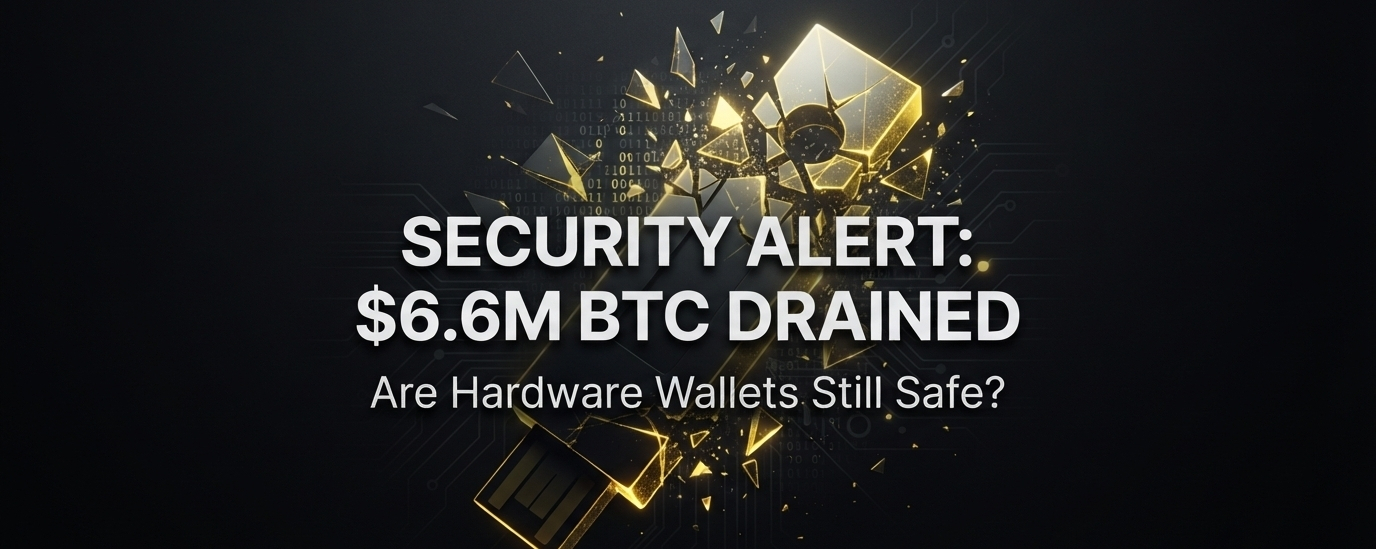
🚨 Security Alert: Trader Loses $6.6M in Bitcoin from "Brand New" Ledger WalletThe crypto community is reeling today after a devastating security breach cost one trader 80 Bitcoin (BTC)—valued at approximately $6.6 million—in a single, unauthorized transaction on Friday.
What makes this hack particularly alarming is the setting: the funds had been sitting for just 10 days on a brand-new Ledger hardware wallet, a device widely trusted as the gold standard for offline cold storage.
Here is what happened, how it likely occurred, and the critical security steps you must take to protect your assets.
The Anatomy of a $6.6 Million Drain
According to on-chain tracking data, the 80 BTC had remained completely untouched for over a week following its transfer to the new device. However, on Friday, the wallet was completely drained in a flash transaction.
While hardware wallets themselves are structurally secure, they are completely vulnerable if the setup process or recovery phrase is compromised. Security analysts suspect this devastating loss stems from one of two common, sophisticated attack vectors:
The Pre-Configured Seed Phrase Scam: The victim may have purchased the Ledger from an unauthorized third-party reseller (like eBay or an unverified Amazon storefront). Malicious sellers sometimes set up the device beforehand, write down the 24-word recovery phrase, scratch off the security card to make it look "new," and wait for an unsuspecting buyer to load it with crypto.Malicious Supply Chain Interception: In rarer cases, devices are physically intercepted and loaded with custom, malicious firmware before arriving at the customer's doorstep, allowing hackers to clone the seed phrase remotely.
How to Safeguard Your Assets: 4 Non-Negotiable Rules
Hardware wallets only protect you if you control the point of origin. To ensure you never fall victim to this type of exploit, always follow these protocol guidelines:
Buy Directly from the Source: Never buy a hardware wallet from secondary marketplaces, auction sites, or unverified distributors. Only order directly from the official manufacturer's website.Verify the Device State: A genuine Ledger or Trezor will always generate a brand-new 24-word seed phrase on the device screen upon its very first boot. If a device arrives with a pre-written PIN code or a pre-filled recovery sheet, do not use it.Utilize Genuine Verification Apps: Before moving funds, always connect the device to the official companion application (e.g., Ledger Live). The app will run a cryptographic check to verify if the internal chip has been tampered with or modified.Test with Small Amounts: When initializing any new wallet system, always send a tiny test transaction first. Practice wiping the device and restoring it using your written recovery phrase to guarantee your backup works flawlessly before depositing millions.
What’s your take on this? Do you still trust hardware wallets completely, or have supply-chain attacks made you think twice?
Disclaimer: This post is for educational purposes only and does not constitute financial or legal advice. Always perform your own due diligence when handling crypto storage.
#Write2Earn #BTC #trending
🚨 Security Alert: Trader Loses $6.6M in Bitcoin from "Brand New" Ledger Wallet
The crypto community is reeling today after a devastating security breach cost one trader 80 Bitcoin (BTC)—valued at approximately $6.6 million—in a single, unauthorized transaction on Friday.
What makes this hack particularly alarming is the setting: the funds had been sitting for just 10 days on a brand-new Ledger hardware wallet, a device widely trusted as the gold standard for offline cold storage.
Here is what happened, how it likely occurred, and the critical security steps you must take to protect your assets.
The Anatomy of a $6.6 Million Drain
According to on-chain tracking data, the 80 BTC had remained completely untouched for over a week following its transfer to the new device. However, on Friday, the wallet was completely drained in a flash transaction.
While hardware wallets themselves are structurally secure, they are completely vulnerable if the setup process or recovery phrase is compromised. Security analysts suspect this devastating loss stems from one of two common, sophisticated attack vectors:
The Pre-Configured Seed Phrase Scam: The victim may have purchased the Ledger from an unauthorized third-party reseller (like eBay or an unverified Amazon storefront). Malicious sellers sometimes set up the device beforehand, write down the 24-word recovery phrase, scratch off the security card to make it look "new," and wait for an unsuspecting buyer to load it with crypto.Malicious Supply Chain Interception: In rarer cases, devices are physically intercepted and loaded with custom, malicious firmware before arriving at the customer's doorstep, allowing hackers to clone the seed phrase remotely.
How to Safeguard Your Assets: 4 Non-Negotiable Rules
Hardware wallets only protect you if you control the point of origin. To ensure you never fall victim to this type of exploit, always follow these protocol guidelines:
Buy Directly from the Source: Never buy a hardware wallet from secondary marketplaces, auction sites, or unverified distributors. Only order directly from the official manufacturer's website.Verify the Device State: A genuine Ledger or Trezor will always generate a brand-new 24-word seed phrase on the device screen upon its very first boot. If a device arrives with a pre-written PIN code or a pre-filled recovery sheet, do not use it.Utilize Genuine Verification Apps: Before moving funds, always connect the device to the official companion application (e.g., Ledger Live). The app will run a cryptographic check to verify if the internal chip has been tampered with or modified.Test with Small Amounts: When initializing any new wallet system, always send a tiny test transaction first. Practice wiping the device and restoring it using your written recovery phrase to guarantee your backup works flawlessly before depositing millions.
What’s your take on this? Do you still trust hardware wallets completely, or have supply-chain attacks made you think twice?
Disclaimer: This post is for educational purposes only and does not constitute financial or legal advice. Always perform your own due diligence when handling crypto storage.
#Write2Earn #BTC #trending
1
344
Verified
Article
The AI infrastructure boom has entered a whole new phase. While retail investors are still?Over the past year, Lumentum Holdings Inc (NASDAQ: LITE) has shocked Wall Street by skyrocketing roughly 600%, leaving the market's favorite semiconductor stocks far behind in the dust.
Lumentum recently closed at $1,133.40, flirting with its all-time high and pushing its market valuation to an impressive $101.7 billion. To put this run into perspective, its 52-week low sat at just $147.81. This explosive momentum reveals a fundamental reality of the artificial intelligence race: massive processing power means nothing if you can't move the data fast enough.
Why Lumentum is Outrunning the Chip Giants
The biggest bottleneck in AI data centers has officially shifted from compute power to data transmission speed. While NVIDIA builds the GPUs that crunch the data, Lumentum designs and manufactures the highly advanced photonics and optical networking components required to connect thousands of clustered chips.
Right now, tech giants are moving aggressively to 800G and 1.6T optical modules and next-generation optical circuit switches. Demand for these components is running 25% to 30% ahead of Lumentum’s supply capacity. In simple terms, companies can't scale their AI clusters without Lumentum's technology, protecting it from standard semiconductor slumps.
Unpacking the Financial Surge
The market's aggressive repricing of LITE isn't just hype; it is backed by rapid operational growth:
Revenue Explosion: In its latest fiscal fourth-quarter results, Lumentum posted net revenue of $1.01 billion—a staggering 109.3% year-over-year increase.Earnings Beat: The company delivered adjusted earnings of $3.23 per share, handily beating Wall Street consensus forecasts of $2.71.Margin Health: Lumentum expanded its gross margins consistently over the last four quarters to hit a record 50.4%, indicating immense pricing power amidst the supply crunch.
Wall Street's Verdict: Is the Rally Sustainable?
Following this massive vertical run-up, equity analysts are highly divided on where the stock goes next. Out of 23 tracked analysts covering the stock, 16 maintain a "Buy" or "Strong Buy" rating, keeping the overall sentiment bullish.
However, price targets vary widely, illustrating the intense valuation debate:
Citigroup: Extremely bullish, holding a street-high price target of $1,400.Stifel / Rosenblatt: Projecting continued upside with targets at $1,232 and $1,300.UBS: Cautious on the near-term valuation, maintaining a lower price target of $820.
The reality is that Lumentum faces plenty of short-term volatility risk after a 600% vertical ascent. However, as tech giants lean heavily into co-packaged optics to lower the massive power consumption of AI facilities, Lumentum's core portfolio keeps it cemented as an irreplaceable pillar of global AI deployment.
Disclaimer: This post is for educational and informational purposes only and does not constitute financial advice. Traditional equity and crypto markets involve significant risk.
#Aİ #NVIDIA #Lumentum #TechStocks #ArtificialIntelligence
The AI infrastructure boom has entered a whole new phase. While retail investors are still?
Over the past year, Lumentum Holdings Inc (NASDAQ: LITE) has shocked Wall Street by skyrocketing roughly 600%, leaving the market's favorite semiconductor stocks far behind in the dust.
Lumentum recently closed at $1,133.40, flirting with its all-time high and pushing its market valuation to an impressive $101.7 billion. To put this run into perspective, its 52-week low sat at just $147.81. This explosive momentum reveals a fundamental reality of the artificial intelligence race: massive processing power means nothing if you can't move the data fast enough.
Why Lumentum is Outrunning the Chip Giants
The biggest bottleneck in AI data centers has officially shifted from compute power to data transmission speed. While NVIDIA builds the GPUs that crunch the data, Lumentum designs and manufactures the highly advanced photonics and optical networking components required to connect thousands of clustered chips.
Right now, tech giants are moving aggressively to 800G and 1.6T optical modules and next-generation optical circuit switches. Demand for these components is running 25% to 30% ahead of Lumentum’s supply capacity. In simple terms, companies can't scale their AI clusters without Lumentum's technology, protecting it from standard semiconductor slumps.
Unpacking the Financial Surge
The market's aggressive repricing of LITE isn't just hype; it is backed by rapid operational growth:
Revenue Explosion: In its latest fiscal fourth-quarter results, Lumentum posted net revenue of $1.01 billion—a staggering 109.3% year-over-year increase.Earnings Beat: The company delivered adjusted earnings of $3.23 per share, handily beating Wall Street consensus forecasts of $2.71.Margin Health: Lumentum expanded its gross margins consistently over the last four quarters to hit a record 50.4%, indicating immense pricing power amidst the supply crunch.
Wall Street's Verdict: Is the Rally Sustainable?
Following this massive vertical run-up, equity analysts are highly divided on where the stock goes next. Out of 23 tracked analysts covering the stock, 16 maintain a "Buy" or "Strong Buy" rating, keeping the overall sentiment bullish.
However, price targets vary widely, illustrating the intense valuation debate:
Citigroup: Extremely bullish, holding a street-high price target of $1,400.Stifel / Rosenblatt: Projecting continued upside with targets at $1,232 and $1,300.UBS: Cautious on the near-term valuation, maintaining a lower price target of $820.
The reality is that Lumentum faces plenty of short-term volatility risk after a 600% vertical ascent. However, as tech giants lean heavily into co-packaged optics to lower the massive power consumption of AI facilities, Lumentum's core portfolio keeps it cemented as an irreplaceable pillar of global AI deployment.
Disclaimer: This post is for educational and informational purposes only and does not constitute financial advice. Traditional equity and crypto markets involve significant risk.
#Aİ #NVIDIA #Lumentum #TechStocks #ArtificialIntelligence
3
1.1k
Article
Monero vs. Solana vs. XRP: Which Chart Wins the Bullish Showdown?When veteran market analyst Peter Brandt speaks on classical chart patterns, the crypto community listens. Known for his strict adherence to pure price action and measured moves, Brandt recently put three major altcoins under the microscope: XRP, Monero (XMR), and Solana (SOL).
If you are looking to position your portfolio based purely on technical setups, here is how these three assets stack up—and which one walks away with the best weekly chart.
1. Monero (XMR): The Under-the-Radar Contender
While it rarely grabs the meme-driven headlines, Monero is quietly putting together one of the cleanest technical setups in the market.
The Pattern: XMR is exhibiting a highly structured, text-book classical chart formation on its weekly timeframe.The Verdict: Brandt highlights Monero as a standout candidate. Thanks to its steady, well-defined accumulation phase and minimal "chart noise," its measured target offers a highly reliable risk-to-reward ratio for swing traders.
2. Solana (SOL): The Momentum Powerhouse
Solana continues to prove that it is built for explosive price action, and its weekly chart reflects that raw strength.
The Pattern: SOL is riding a powerful continuation structure, showing clear signs that buyers are stepping in aggressively on every minor dip.The Verdict: Solana shares the top spot with Monero for having a superior layout. Its chart is free from structural clutter, meaning there is very little historical resistance holding it back once it triggers its next macro leg upward.
3. XRP: A Major Pattern with a Massive Catch
XRP traders are always hunting for a breakout, and while the chart looks tempting at first glance, a deeper look reveals some structural headwinds.
The Pattern: The asset is currently carving out a massive cup-and-handle pattern, a classic bullish formation. If validated, the measured move points to a lofty technical target of $2.16.The Verdict: Despite the high target, Brandt ranks XRP behind Monero and Solana. The issue? XRP is plagued by massive layers of "overhead supply"—meaning millions of tokens are waiting to be sold at previous peak prices. This historical baggage makes its upward journey far more complicated and prone to fakeouts compared to its peers.
The Final Takeaway: Simplicity Wins
For traders looking for clean paths of least resistance, Monero and Solana boast the most decisive, unburdened charts. XRP holds explosive potential, but buyers will have to chew through heavy resistance to hit its true target.
Disclaimer: This analysis is based strictly on classical charting principles and does not constitute financial advice. NFA
#Write2Earn #solana #xrp
$SOL
$XRP
Monero vs. Solana vs. XRP: Which Chart Wins the Bullish Showdown?
When veteran market analyst Peter Brandt speaks on classical chart patterns, the crypto community listens. Known for his strict adherence to pure price action and measured moves, Brandt recently put three major altcoins under the microscope: XRP, Monero (XMR), and Solana (SOL).
If you are looking to position your portfolio based purely on technical setups, here is how these three assets stack up—and which one walks away with the best weekly chart.
1. Monero (XMR): The Under-the-Radar Contender
While it rarely grabs the meme-driven headlines, Monero is quietly putting together one of the cleanest technical setups in the market.
The Pattern: XMR is exhibiting a highly structured, text-book classical chart formation on its weekly timeframe.The Verdict: Brandt highlights Monero as a standout candidate. Thanks to its steady, well-defined accumulation phase and minimal "chart noise," its measured target offers a highly reliable risk-to-reward ratio for swing traders.
2. Solana (SOL): The Momentum Powerhouse
Solana continues to prove that it is built for explosive price action, and its weekly chart reflects that raw strength.
The Pattern: SOL is riding a powerful continuation structure, showing clear signs that buyers are stepping in aggressively on every minor dip.The Verdict: Solana shares the top spot with Monero for having a superior layout. Its chart is free from structural clutter, meaning there is very little historical resistance holding it back once it triggers its next macro leg upward.
3. XRP: A Major Pattern with a Massive Catch
XRP traders are always hunting for a breakout, and while the chart looks tempting at first glance, a deeper look reveals some structural headwinds.
The Pattern: The asset is currently carving out a massive cup-and-handle pattern, a classic bullish formation. If validated, the measured move points to a lofty technical target of $2.16.The Verdict: Despite the high target, Brandt ranks XRP behind Monero and Solana. The issue? XRP is plagued by massive layers of "overhead supply"—meaning millions of tokens are waiting to be sold at previous peak prices. This historical baggage makes its upward journey far more complicated and prone to fakeouts compared to its peers.
The Final Takeaway: Simplicity Wins
For traders looking for clean paths of least resistance, Monero and Solana boast the most decisive, unburdened charts. XRP holds explosive potential, but buyers will have to chew through heavy resistance to hit its true target.
Disclaimer: This analysis is based strictly on classical charting principles and does not constitute financial advice. NFA
#Write2Earn #solana #xrp
$SOL
$XRP
1
420
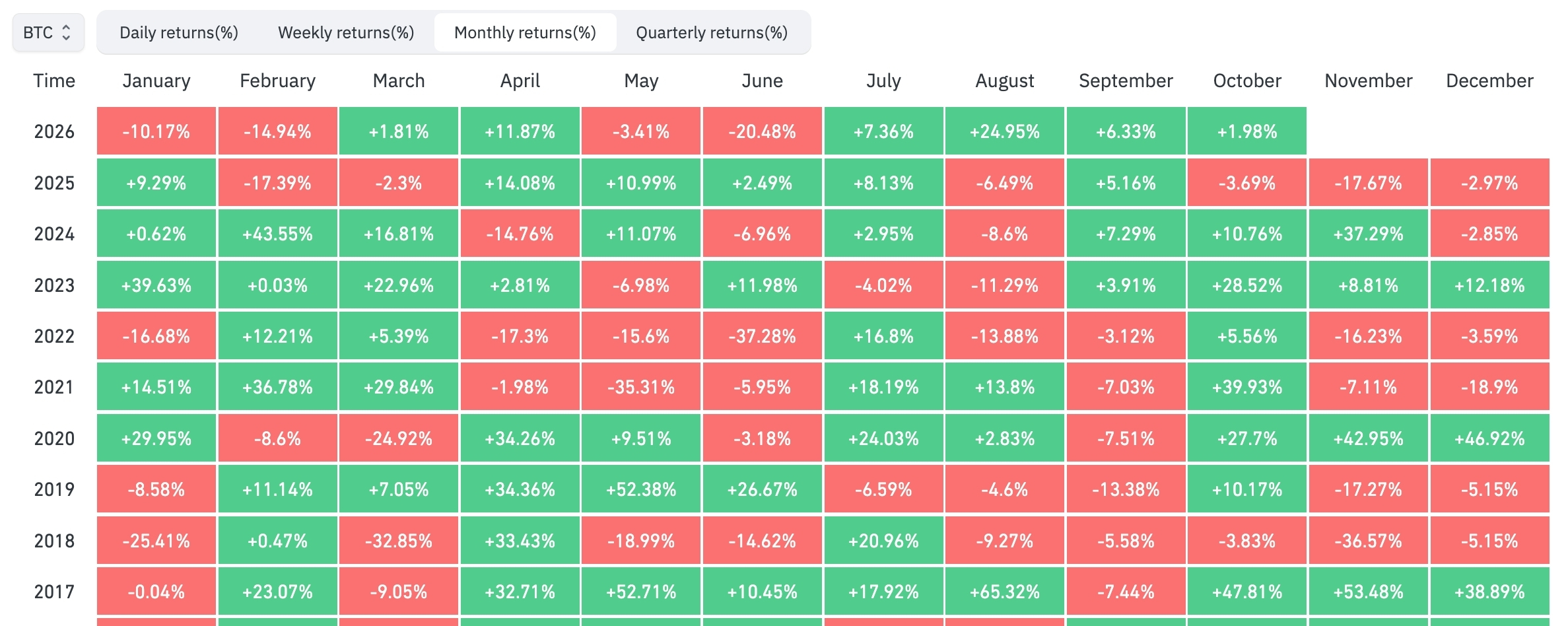
Article
Bitcoin (BTC) enters October—historically dubbed "Uptober" for its bullish tendenciesFacing a complex matrix of macroeconomic and structural pressures. While historical data favors a positive monthly close, several underlying headwinds are threatening to stall momentum. Technical analysts and spot traders are closely watching the charts as four distinct catalysts converge on the digital asset market.
From thinning order books to geopolitical escalations, here is a detailed breakdown of the four key pressures shaping Bitcoin's price action this October.
1. Thinning Liquidity and Fragile Order Books
Market depth across major spot exchanges has experienced a notable contraction heading into Q4. High-volume market makers have tightened their spreads, resulting in thin liquidity on both sides of the order book.
The Chart Impact: Thin liquidity acts as an amplifier for volatility. Without deep order books to absorb large buy or sell orders, even moderate trading volume can trigger outsized price swings. Traders should watch for sudden "wick" liquidations—sharp, short-term spikes or drops that test support and resistance levels without establishing a structural trend change.
2. Cooling Momentum in Spot ETF Inflows
The institutional catalyst that propelled Bitcoin to new highs earlier this year is showing signs of near-term exhaustion. Net inflows into U.S.-listed spot Bitcoin ETFs have shifted from aggressive accumulation to a more cautious, fluctuating pattern.
The Chart Impact: Spot ETFs have functioned as the primary demand engine for underlying BTC. When net inflows flatten or turn net-negative, the market loses its steady structural bid. On the daily charts, this lack of institutional momentum often manifests as a series of lower highs and prolonged consolidation patterns, indicating a temporary shift from accumulation to distribution among institutional desks.
3. Geopolitical Uncertainty in the Middle East
Escalating regional conflicts, particularly involving Iran, have introduced a wave of risk-off sentiment across global financial markets. Cryptocurrencies have not remained immune to these broader macroeconomic anxieties.
The Chart Impact: While Bitcoin is often championed as digital gold, sharp escalations in geopolitical tension typically trigger an immediate flight to liquidity, boosting the U.S. Dollar Index (DXY) and traditional gold while causing risk assets to pull back. On the charts, these events often trigger sharp, high-volume correlation breaks where Bitcoin drops alongside equities, temporarily invalidating local bullish technical setups.
4. The Looming Mt. Gox Creditor Repayment Deadline
The ongoing distribution of recovered assets to creditors of the defunct Mt. Gox exchange remains a persistent supply overhang. With another major repayment deadline positioned in the market, participants are bracing for potential spot selling pressure.
The Chart Impact: The psychological impact of a large supply unlock often precedes the actual movement of funds. Fear of an impending market dump leads to preemptive selling by retail participants. Chartists should monitor major psychological support levels; if the market anticipates heavy selling, these support zones may face intense testing as short sellers attempt to front-run the expected distribution.
DYOR. NFA
#Write2Earn #CryptoToday #BTC☀
Bitcoin (BTC) enters October—historically dubbed "Uptober" for its bullish tendencies
Facing a complex matrix of macroeconomic and structural pressures. While historical data favors a positive monthly close, several underlying headwinds are threatening to stall momentum. Technical analysts and spot traders are closely watching the charts as four distinct catalysts converge on the digital asset market.
From thinning order books to geopolitical escalations, here is a detailed breakdown of the four key pressures shaping Bitcoin's price action this October.
1. Thinning Liquidity and Fragile Order Books
Market depth across major spot exchanges has experienced a notable contraction heading into Q4. High-volume market makers have tightened their spreads, resulting in thin liquidity on both sides of the order book.
The Chart Impact: Thin liquidity acts as an amplifier for volatility. Without deep order books to absorb large buy or sell orders, even moderate trading volume can trigger outsized price swings. Traders should watch for sudden "wick" liquidations—sharp, short-term spikes or drops that test support and resistance levels without establishing a structural trend change.
2. Cooling Momentum in Spot ETF Inflows
The institutional catalyst that propelled Bitcoin to new highs earlier this year is showing signs of near-term exhaustion. Net inflows into U.S.-listed spot Bitcoin ETFs have shifted from aggressive accumulation to a more cautious, fluctuating pattern.
The Chart Impact: Spot ETFs have functioned as the primary demand engine for underlying BTC. When net inflows flatten or turn net-negative, the market loses its steady structural bid. On the daily charts, this lack of institutional momentum often manifests as a series of lower highs and prolonged consolidation patterns, indicating a temporary shift from accumulation to distribution among institutional desks.
3. Geopolitical Uncertainty in the Middle East
Escalating regional conflicts, particularly involving Iran, have introduced a wave of risk-off sentiment across global financial markets. Cryptocurrencies have not remained immune to these broader macroeconomic anxieties.
The Chart Impact: While Bitcoin is often championed as digital gold, sharp escalations in geopolitical tension typically trigger an immediate flight to liquidity, boosting the U.S. Dollar Index (DXY) and traditional gold while causing risk assets to pull back. On the charts, these events often trigger sharp, high-volume correlation breaks where Bitcoin drops alongside equities, temporarily invalidating local bullish technical setups.
4. The Looming Mt. Gox Creditor Repayment Deadline
The ongoing distribution of recovered assets to creditors of the defunct Mt. Gox exchange remains a persistent supply overhang. With another major repayment deadline positioned in the market, participants are bracing for potential spot selling pressure.
The Chart Impact: The psychological impact of a large supply unlock often precedes the actual movement of funds. Fear of an impending market dump leads to preemptive selling by retail participants. Chartists should monitor major psychological support levels; if the market anticipates heavy selling, these support zones may face intense testing as short sellers attempt to front-run the expected distribution.
DYOR. NFA
#Write2Earn #CryptoToday #BTC☀
442
Verified
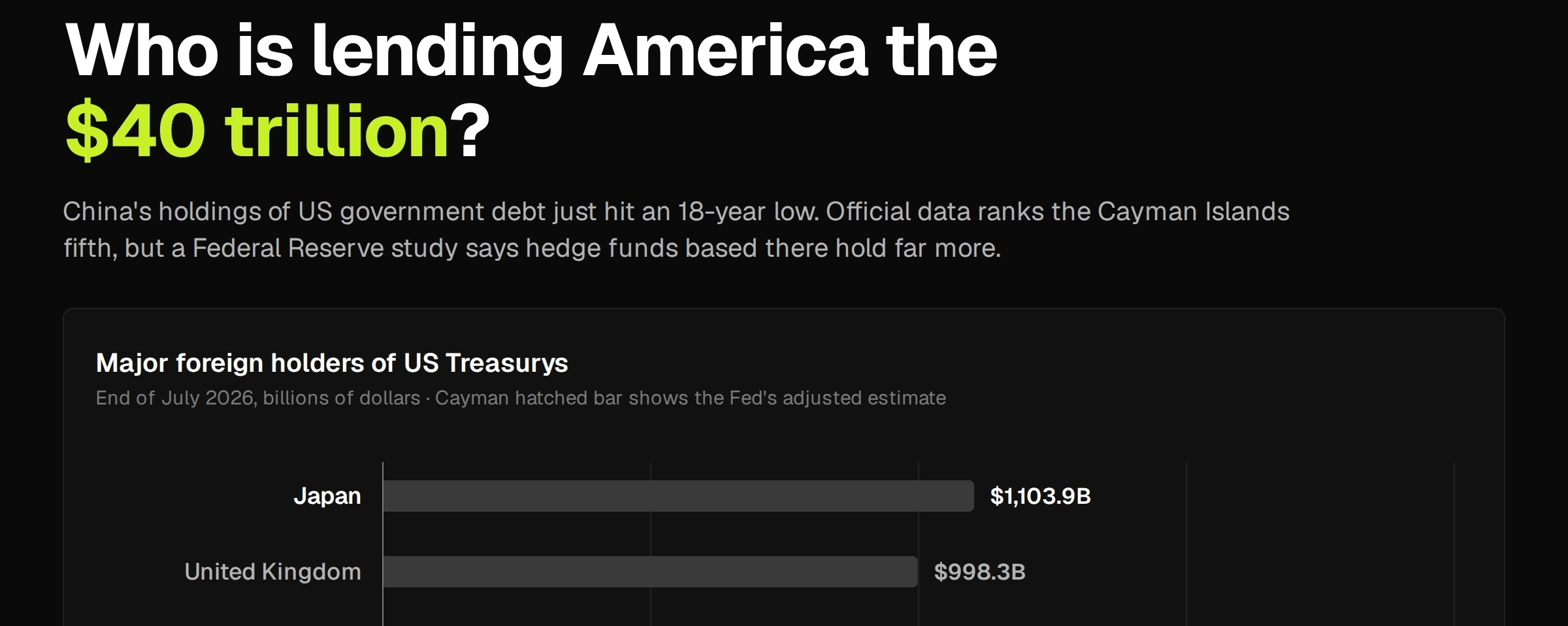
Article
Can Inflation Shrink America’s $40 Trillion Debt? The Surprising Winner (and Loser)In a recent interview with TIME magazine, President Donald Trump sparked an intense macroeconomic debate by suggesting that "certain levels of inflation" could help pay off the $40 trillion U.S. national debt "very rapidly."
While everyday consumers look at inflation as a financial burden, governments see it through a completely different lens. The strategy is known as "inflating away the debt". But how does it work, and more importantly, who is actually financing this debt relief? Let’s break it down. 👇
1. The Math: How Inflation Alters the Debt
When a government borrows money, it issues bonds (Treasuries) at fixed nominal amounts. If it borrows $1 billion today, it owes exactly $1 billion in the future. Inflation changes the rules of the game:
Cheaper Repayment: Inflation dilutes the purchasing power of the fiat dollar. The government pays back its older, long-term bonds using "cheaper" dollars than those it originally borrowed.Surging Nominal Tax Revenues: As inflation pushes up consumer prices, nominal wages, and corporate profits, the government’s tax collection naturally rises. Because the face value of the existing debt stays the same, the debt becomes smaller relative to the size of the expanding nominal economy (the Debt-to-GDP ratio).
2. The Surprising Reality: Who is Financing It? 👥
The most critical part of this strategy isn't the economic math—it is who pays for it. When a government inflates away its debt, it implicitly transfers wealth from the creditors (lenders) to the debtor (the government).
The entities financing this implicit wealth transfer include:
Foreign Sovereigns: International lenders holding trillions in U.S. Treasuries receive lower real returns as the dollar devalues.Domestic Institutions: Retirement pension funds, insurance companies, and commercial banks absorb the economic loss on fixed-income assets.Everyday Citizens & Savers: Inflation acts as a "hidden tax." While it shrinks government liabilities on paper, it simultaneously eats away at the purchasing power of citizens' cash savings and outpaces real wage growth.
3. The Dangerous Side Effects ⚠️
While inflating debt sounds like an easy fix, it is a highly volatile strategy with long-term consequences:
Skyrocketing Interest Costs: Investors demand higher yields on new government debt to protect against inflation. With the national debt past $40 trillion, net interest servicing costs already exceed $1 trillion annually. Higher inflation forces borrowing costs to stay elevated, which ironically accelerates deficit spending.The Federal Reserve Dilemma: To curb inflation, the central bank usually raises interest rates—a move Trump has openly criticized, arguing that high rates hurt economic growth more than inflation itself.
💡 The Big Takeaway for Crypto Investors
For the digital asset ecosystem, this macroeconomic backdrop directly reinforces the utility of hard money. When global superpowers rely on monetary debasement to manage sovereign debt burdens, capital historically migrates toward decentralized, mathematically scarce assets like Bitcoin (BTC) as a hedge against inflation.
What do you think? Will inflating the debt save the fiat system, or will it accelerate the global rotation into Bitcoin?
#CryptoMarket #Bitcoin #MacroEconomics #FinanceNews #WriteToEarn
Can Inflation Shrink America’s $40 Trillion Debt? The Surprising Winner (and Loser)
In a recent interview with TIME magazine, President Donald Trump sparked an intense macroeconomic debate by suggesting that "certain levels of inflation" could help pay off the $40 trillion U.S. national debt "very rapidly."
While everyday consumers look at inflation as a financial burden, governments see it through a completely different lens. The strategy is known as "inflating away the debt". But how does it work, and more importantly, who is actually financing this debt relief? Let’s break it down. 👇
1. The Math: How Inflation Alters the Debt
When a government borrows money, it issues bonds (Treasuries) at fixed nominal amounts. If it borrows $1 billion today, it owes exactly $1 billion in the future. Inflation changes the rules of the game:
Cheaper Repayment: Inflation dilutes the purchasing power of the fiat dollar. The government pays back its older, long-term bonds using "cheaper" dollars than those it originally borrowed.Surging Nominal Tax Revenues: As inflation pushes up consumer prices, nominal wages, and corporate profits, the government’s tax collection naturally rises. Because the face value of the existing debt stays the same, the debt becomes smaller relative to the size of the expanding nominal economy (the Debt-to-GDP ratio).
2. The Surprising Reality: Who is Financing It? 👥
The most critical part of this strategy isn't the economic math—it is who pays for it. When a government inflates away its debt, it implicitly transfers wealth from the creditors (lenders) to the debtor (the government).
The entities financing this implicit wealth transfer include:
Foreign Sovereigns: International lenders holding trillions in U.S. Treasuries receive lower real returns as the dollar devalues.Domestic Institutions: Retirement pension funds, insurance companies, and commercial banks absorb the economic loss on fixed-income assets.Everyday Citizens & Savers: Inflation acts as a "hidden tax." While it shrinks government liabilities on paper, it simultaneously eats away at the purchasing power of citizens' cash savings and outpaces real wage growth.
3. The Dangerous Side Effects ⚠️
While inflating debt sounds like an easy fix, it is a highly volatile strategy with long-term consequences:
Skyrocketing Interest Costs: Investors demand higher yields on new government debt to protect against inflation. With the national debt past $40 trillion, net interest servicing costs already exceed $1 trillion annually. Higher inflation forces borrowing costs to stay elevated, which ironically accelerates deficit spending.The Federal Reserve Dilemma: To curb inflation, the central bank usually raises interest rates—a move Trump has openly criticized, arguing that high rates hurt economic growth more than inflation itself.
💡 The Big Takeaway for Crypto Investors
For the digital asset ecosystem, this macroeconomic backdrop directly reinforces the utility of hard money. When global superpowers rely on monetary debasement to manage sovereign debt burdens, capital historically migrates toward decentralized, mathematically scarce assets like Bitcoin (BTC) as a hedge against inflation.
What do you think? Will inflating the debt save the fiat system, or will it accelerate the global rotation into Bitcoin?
#CryptoMarket #Bitcoin #MacroEconomics #FinanceNews #WriteToEarn
2
313

Article
4 Coins Crypto Whales Are Buying for October 2026: Tracing the Smart Money Strategy
📈As September draws to a close, the broader crypto market is witnessing an intriguing shift in capital. While Bitcoin handles steady consolidation around $84,000, on-chain metrics reveal that crypto whales—wallets holding massive allocations of capital—are quietly loading up on four specific digital assets.
The data highlights that institutional buyers and mega-whales are not making identical bets. Instead, they are distributing their capital across three entirely different strategies: blue-chip protection, decentralized yield infrastructure, and deflationary supply catalysts.
Here are the four coins crypto whales are aggressively accumulating ahead of October 2026.
1. Bitcoin (BTC) – The Sovereign Dip-Buy Strategy
Bitcoin remains the primary destination for deep-pocketed investors seeking exposure without taking on extreme altcoin volatility. Data from Santiment and other prominent on-chain analytics platforms indicates a major divergence: while small retail wallets (holding less than 10 BTC) have been panic-selling during recent market fluctuations, addresses holding 100 to 1,000+ BTC have gone into aggressive accumulation.
Over a recent 96-hour window during a minor price drop, large entities scooped up roughly 30,269 BTC, translating to an institutional capital injection of over $2.5 billion. With global macro conditions pointing toward further quantitative easing and lower interest rates going into the final quarter of the year, whales are solidifying BTC as their core portfolio anchor.
2. Uniswap (UNI) – The Deflationary Catalyst Bet
Decentralized governance and exchange tokens are experiencing localized waves of whale accumulation, and Uniswap (UNI) is leading the charge. According to on-chain wallet data monitored by Nansen, dedicated whale addresses expanded their net UNI holdings by hundreds of thousands of tokens over the course of September.
The primary catalyst driving this interest is the implementation of fee-switch mechanisms and protocol buybacks designed to curb active circulating supply. Whales frequently target large-cap DeFi applications with clear utility upgrades during periods when the market trends sideways, looking to front-run supply squeezes.
3. Pendle (PENDLE) – High-Yield Infrastructure Lockup
One of the most tactical capital rotations observed at the end of September involves yield-trading protocols. Prominent crypto fund managers and legacy whales have notably rotated millions out of stagnant layer-1 protocols and into specialized DeFi yield venues like Pendle.
On-chain tracking shows large portfolios utilizing Pendle as a foundational yield venue. Whales are demonstrating high conviction by opting for maximum lock durations and increasing their participation in locked governance models (vPendle), effectively removing substantial amounts of liquidity from the open market ahead of October. The underlying thesis is simple: if massive ecosystem liquidity returns in Q4, infrastructure protocols that control native yield will capture the highest velocity of value.
4. Cardano (ADA) – The Contrarian Accumulation Play
Cardano (ADA) has re-emerged on the institutional radar after experiencing heavy contrarian buying. On-chain transaction records show that large-scale holders accumulated upwards of 160 million ADA during late-summer drawdowns.
As the market enters October, ADA is attempting to cement a structural breakout above key horizontal resistance boundaries. While retail sentiment surrounding the token has remained neutral, the consistent accumulation by large addresses implies that high-net-worth investors believe the asset has established a definitive macro bottom, offering an asymmetric risk-to-reward ratio for the coming month.
The Verdict: How to Navigate October
The current whale behavior reveals a stark contrast to typical retail trading. Instead of chasing short-term price movements, smart money is focused on accumulating asset discounts (BTC), locking in yield infrastructure (Pendle), and positioning ahead of structural supply catalysts (UNI, ADA).
As you format your portfolio for October 2026, following the on-chain footprints left by these large-scale investors can provide crucial insights into where the next major market momentum might originate.
Disclaimer: This article is for informational purposes only and does not constitute financial, investment, or trading advice. Always conduct your own research before trading digital assets.
4 Coins Crypto Whales Are Buying for October 2026: Tracing the Smart Money Strategy 📈
As September draws to a close, the broader crypto market is witnessing an intriguing shift in capital. While Bitcoin handles steady consolidation around $84,000, on-chain metrics reveal that crypto whales—wallets holding massive allocations of capital—are quietly loading up on four specific digital assets.
The data highlights that institutional buyers and mega-whales are not making identical bets. Instead, they are distributing their capital across three entirely different strategies: blue-chip protection, decentralized yield infrastructure, and deflationary supply catalysts.
Here are the four coins crypto whales are aggressively accumulating ahead of October 2026.
1. Bitcoin (BTC) – The Sovereign Dip-Buy Strategy
Bitcoin remains the primary destination for deep-pocketed investors seeking exposure without taking on extreme altcoin volatility. Data from Santiment and other prominent on-chain analytics platforms indicates a major divergence: while small retail wallets (holding less than 10 BTC) have been panic-selling during recent market fluctuations, addresses holding 100 to 1,000+ BTC have gone into aggressive accumulation.
Over a recent 96-hour window during a minor price drop, large entities scooped up roughly 30,269 BTC, translating to an institutional capital injection of over $2.5 billion. With global macro conditions pointing toward further quantitative easing and lower interest rates going into the final quarter of the year, whales are solidifying BTC as their core portfolio anchor.
2. Uniswap (UNI) – The Deflationary Catalyst Bet
Decentralized governance and exchange tokens are experiencing localized waves of whale accumulation, and Uniswap (UNI) is leading the charge. According to on-chain wallet data monitored by Nansen, dedicated whale addresses expanded their net UNI holdings by hundreds of thousands of tokens over the course of September.
The primary catalyst driving this interest is the implementation of fee-switch mechanisms and protocol buybacks designed to curb active circulating supply. Whales frequently target large-cap DeFi applications with clear utility upgrades during periods when the market trends sideways, looking to front-run supply squeezes.
3. Pendle (PENDLE) – High-Yield Infrastructure Lockup
One of the most tactical capital rotations observed at the end of September involves yield-trading protocols. Prominent crypto fund managers and legacy whales have notably rotated millions out of stagnant layer-1 protocols and into specialized DeFi yield venues like Pendle.
On-chain tracking shows large portfolios utilizing Pendle as a foundational yield venue. Whales are demonstrating high conviction by opting for maximum lock durations and increasing their participation in locked governance models (vPendle), effectively removing substantial amounts of liquidity from the open market ahead of October. The underlying thesis is simple: if massive ecosystem liquidity returns in Q4, infrastructure protocols that control native yield will capture the highest velocity of value.
4. Cardano (ADA) – The Contrarian Accumulation Play
Cardano (ADA) has re-emerged on the institutional radar after experiencing heavy contrarian buying. On-chain transaction records show that large-scale holders accumulated upwards of 160 million ADA during late-summer drawdowns.
As the market enters October, ADA is attempting to cement a structural breakout above key horizontal resistance boundaries. While retail sentiment surrounding the token has remained neutral, the consistent accumulation by large addresses implies that high-net-worth investors believe the asset has established a definitive macro bottom, offering an asymmetric risk-to-reward ratio for the coming month.
The Verdict: How to Navigate October
The current whale behavior reveals a stark contrast to typical retail trading. Instead of chasing short-term price movements, smart money is focused on accumulating asset discounts (BTC), locking in yield infrastructure (Pendle), and positioning ahead of structural supply catalysts (UNI, ADA).
As you format your portfolio for October 2026, following the on-chain footprints left by these large-scale investors can provide crucial insights into where the next major market momentum might originate.
Disclaimer: This article is for informational purposes only and does not constitute financial, investment, or trading advice. Always conduct your own research before trading digital assets.
1
572
Article
Senate Says Iran Leans on Tether’s USDT: Is Its $550 Million Freeze Record Enough?The global stablecoin market is facing intense geopolitical scrutiny following a major disclosure by U.S. lawmakers. A newly released congressional report reveals that Tether’s USDT has become a primary vehicle for regional finance and sanctions evasion, sparking a heated debate over whether corporate asset freezes are keeping pace with illicit flows.
A comprehensive investigation by Senate Democrats on the Permanent Subcommittee on Investigations (PSI) revealed that 84% of more than 800 sanctioned, Iran-linked crypto wallets utilized Tether’s USDT exclusively or predominantly.
On the exact same day the Senate findings went public, Tether issued a defensive counter-statement, announcing that it has helped law enforcement freeze approximately $550 million in Iran-linked USDT this year alone. The clashing reports highlight a massive disconnect between corporate compliance efforts and government expectations.
The Senate Findings: A "Shadow Banking" Lifeline
The Senate subcommittee’s analysis focused on 846 cryptocurrency wallets previously flagged, sanctioned, or targeted for asset seizure due to direct ties to the Iranian regime and its regional proxy networks.
Lawmakers state that the flagship stablecoin has effectively been weaponized to construct an alternative financial system. According to the committee, this network is actively used to stabilize volatile domestic fiat currency, fund regional operations, and bypass traditional banking rails entirely.
Citing these systemic vulnerabilities, the subcommittee has officially referred its findings to the U.S. Department of Justice (DOJ) and the Treasury Department, demanding a formal investigation into potential sanctions violations.
Tether’s Counter-Defense: The Half-Billion Dollar Wall
In response to the mounting political pressure, Tether heavily defended its compliance track record, positioning itself as a proactive partner to global law enforcement rather than an enabler.
The stablecoin issuer detailed its massive asset mitigation efforts throughout the year, which include two record-setting enforcement actions:
The April Intervention: Tether utilized its smart-contract controls to freeze $344 million across two prominent wallets tied by authorities to the Central Bank of Iran.The July Tron Blockade: The company successfully blacklisted over $130 million spread across four separate addresses operating on the Tron blockchain network.
Management emphasized that public blockchain ledgers afford law enforcement tracking capabilities that traditional paper cash simply cannot match, arguing that USDT is an inherently hostile environment for sanctioned actors due to its traceable nature.
The Crucial Disconnect: Why Regulators Say It’s Not Enough
Despite the historic scale of Tether's $550 million freeze, the Senate report argues that looking at frozen balances alone paints an incomplete picture. U.S. investigators point to critical structural flaws in how stablecoins are monitored:
Reactionary Delays: The report alleges that asset freezes are heavily delayed. In several documented instances, illicit addresses continued to move tens of millions of dollars for weeks after public government designations before the corporate "kill switch" was finally flipped.Velocity vs. Balance: While a $550 million freeze represents the funds caught at the exact moment of the block, it does not account for the total historical volume of billions in USDT that successfully flowed through those same wallets and escaped into the broader economy before intervention occurred.The Transparency Gap: Analysts noted that while Tether's two major itemized actions account for roughly $474 million, a $76 million discrepancy remains unexplained in the public ledger data, fueling further demands for transparency.
As global regulators ramp up enforcement actions against digital asset rails, the spotlight on the stablecoin market has never been brighter. The ultimate question remains: Can a private corporate issuer effectively police a decentralized ecosystem, or will governments step in with sweeping legislative mandates?
What's your take, creators? Can compliance protocols fully secure centralized stablecoins, or will regulatory pressure force capital into decentralized alternatives? Let's discuss in the comments below!
Disclaimer: This post is for educational and informational purposes only and does not constitute financial, legal, or investment advice.
Senate Says Iran Leans on Tether’s USDT: Is Its $550 Million Freeze Record Enough?
The global stablecoin market is facing intense geopolitical scrutiny following a major disclosure by U.S. lawmakers. A newly released congressional report reveals that Tether’s USDT has become a primary vehicle for regional finance and sanctions evasion, sparking a heated debate over whether corporate asset freezes are keeping pace with illicit flows.
A comprehensive investigation by Senate Democrats on the Permanent Subcommittee on Investigations (PSI) revealed that 84% of more than 800 sanctioned, Iran-linked crypto wallets utilized Tether’s USDT exclusively or predominantly.
On the exact same day the Senate findings went public, Tether issued a defensive counter-statement, announcing that it has helped law enforcement freeze approximately $550 million in Iran-linked USDT this year alone. The clashing reports highlight a massive disconnect between corporate compliance efforts and government expectations.
The Senate Findings: A "Shadow Banking" Lifeline
The Senate subcommittee’s analysis focused on 846 cryptocurrency wallets previously flagged, sanctioned, or targeted for asset seizure due to direct ties to the Iranian regime and its regional proxy networks.
Lawmakers state that the flagship stablecoin has effectively been weaponized to construct an alternative financial system. According to the committee, this network is actively used to stabilize volatile domestic fiat currency, fund regional operations, and bypass traditional banking rails entirely.
Citing these systemic vulnerabilities, the subcommittee has officially referred its findings to the U.S. Department of Justice (DOJ) and the Treasury Department, demanding a formal investigation into potential sanctions violations.
Tether’s Counter-Defense: The Half-Billion Dollar Wall
In response to the mounting political pressure, Tether heavily defended its compliance track record, positioning itself as a proactive partner to global law enforcement rather than an enabler.
The stablecoin issuer detailed its massive asset mitigation efforts throughout the year, which include two record-setting enforcement actions:
The April Intervention: Tether utilized its smart-contract controls to freeze $344 million across two prominent wallets tied by authorities to the Central Bank of Iran.The July Tron Blockade: The company successfully blacklisted over $130 million spread across four separate addresses operating on the Tron blockchain network.
Management emphasized that public blockchain ledgers afford law enforcement tracking capabilities that traditional paper cash simply cannot match, arguing that USDT is an inherently hostile environment for sanctioned actors due to its traceable nature.
The Crucial Disconnect: Why Regulators Say It’s Not Enough
Despite the historic scale of Tether's $550 million freeze, the Senate report argues that looking at frozen balances alone paints an incomplete picture. U.S. investigators point to critical structural flaws in how stablecoins are monitored:
Reactionary Delays: The report alleges that asset freezes are heavily delayed. In several documented instances, illicit addresses continued to move tens of millions of dollars for weeks after public government designations before the corporate "kill switch" was finally flipped.Velocity vs. Balance: While a $550 million freeze represents the funds caught at the exact moment of the block, it does not account for the total historical volume of billions in USDT that successfully flowed through those same wallets and escaped into the broader economy before intervention occurred.The Transparency Gap: Analysts noted that while Tether's two major itemized actions account for roughly $474 million, a $76 million discrepancy remains unexplained in the public ledger data, fueling further demands for transparency.
As global regulators ramp up enforcement actions against digital asset rails, the spotlight on the stablecoin market has never been brighter. The ultimate question remains: Can a private corporate issuer effectively police a decentralized ecosystem, or will governments step in with sweeping legislative mandates?
What's your take, creators? Can compliance protocols fully secure centralized stablecoins, or will regulatory pressure force capital into decentralized alternatives? Let's discuss in the comments below!
Disclaimer: This post is for educational and informational purposes only and does not constitute financial, legal, or investment advice.
1
438
Log in to explore more content
Join global crypto users on Binance Square
⚡️ Get latest and useful information about crypto.
💬 Trusted by the world’s largest crypto exchange.
👍 Discover real insights from verified creators.
Email / Phone number