Binance Square
#cryptosecurity

cryptosecurity

8.3M views
9,025 Discussing
S N Sunderi
·
--
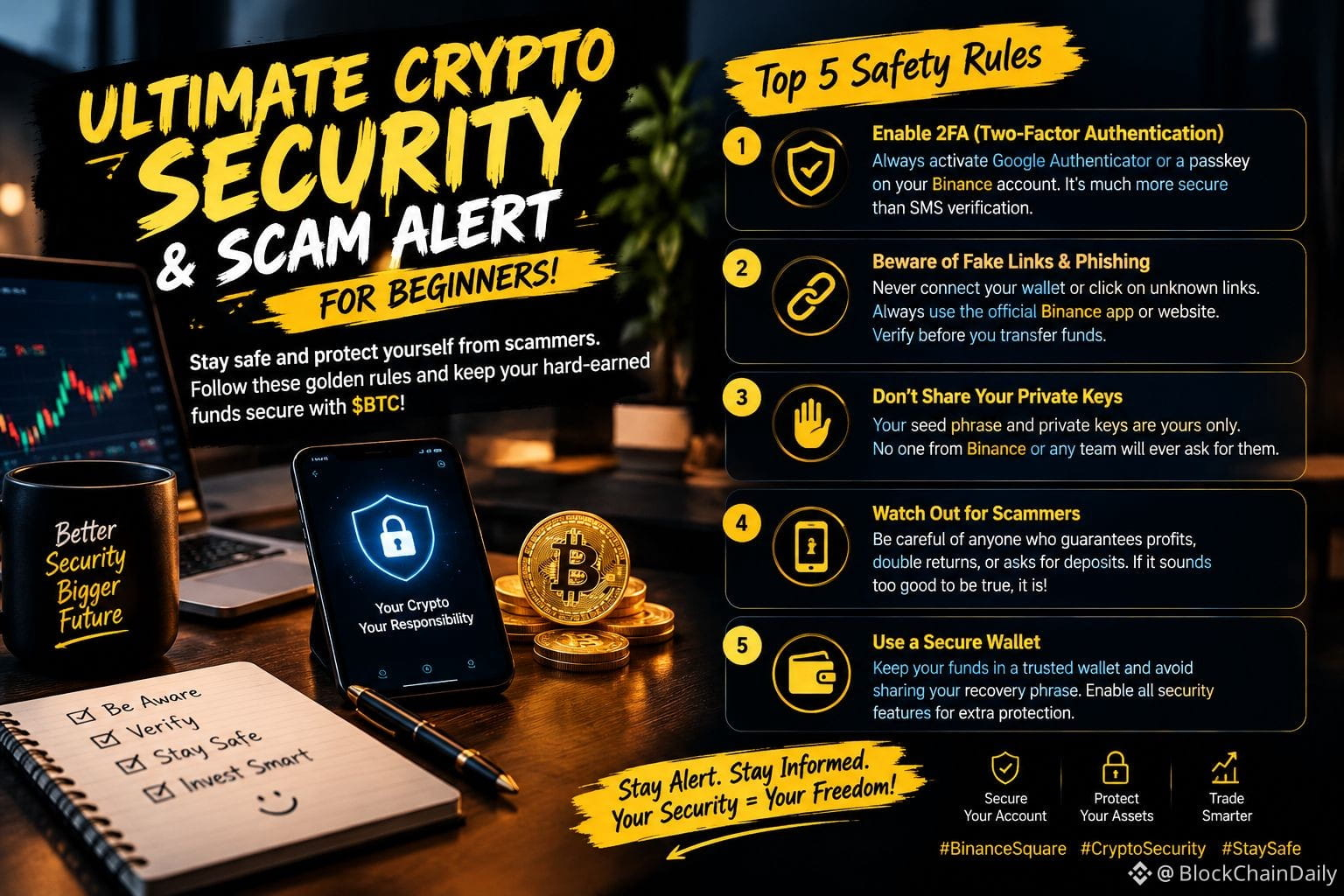
WHAT IS A $CRYPTO WALLET? A crypto wallet allows users to interact with blockchain assets. There are two common types: 📱 HOT WALLET Connected to the internet and convenient for regular use. 🔒 COLD WALLET Usually kept offline and designed for enhanced security. Remember: Your seed phrase is extremely important. ❌ Never share it ❌ Never send it to anyone ❌ Never enter it into unknown websites Anyone who gets your seed phrase may be able to access your assets. Security comes first. Before buying any $cryptocurrency, what is the first thing a beginner should research? #CryptoSecurity #bitcoin #Web3 #CryptoBeginners
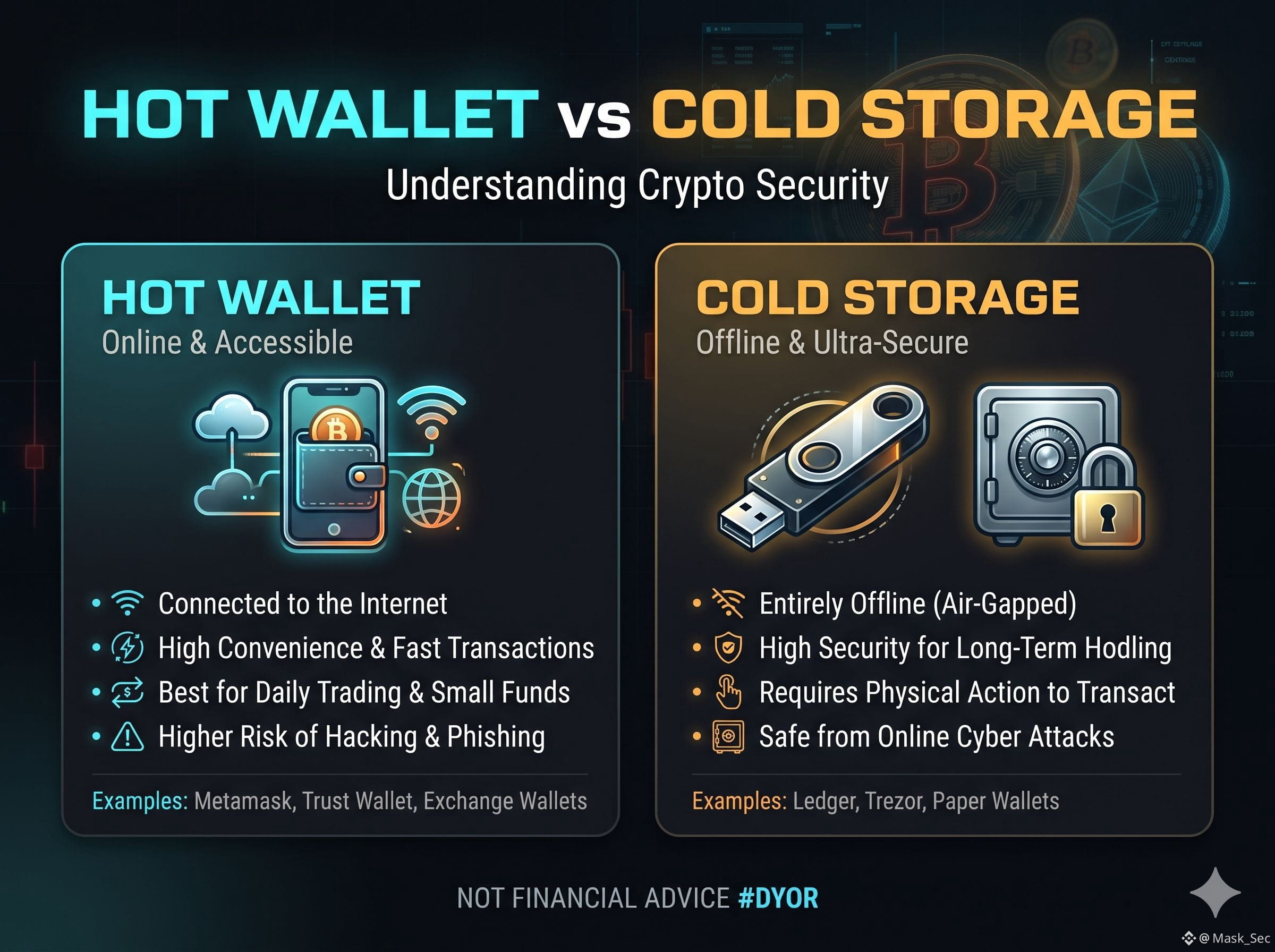
WHAT IS A $CRYPTO WALLET?

A crypto wallet allows users to interact with blockchain assets.

There are two common types:

📱 HOT WALLET
Connected to the internet and convenient for regular use.

🔒 COLD WALLET
Usually kept offline and designed for enhanced security.

Remember:

Your seed phrase is extremely important.

❌ Never share it
❌ Never send it to anyone
❌ Never enter it into unknown websites

Anyone who gets your seed phrase may be able to access your assets.

Security comes first.

Before buying any $cryptocurrency, what is the first thing a beginner should research?

#CryptoSecurity #bitcoin #Web3 #CryptoBeginners
🔥 BREAKING NEWS 🔥 **Security Alert: SparkKitty Malware Disguised in Mobile Apps Targets Crypto Seed Phrases** Cybersecurity firm Check Point has re-issued a warning regarding "SparkKitty," an upgraded variant of the SparkCat malware active on both the App Store and Google Play. Disguised as crypto, messaging, or entertainment applications, the malware requests permission to access the user's photo gallery. Upon obtaining access, SparkKitty employs Optical Character Recognition (OCR) technology to scan saved photos for 12- or 24-word seed phrases, passwords, and QR codes. The extracted data and device details are then transmitted to unauthorized servers operated by malicious actors. **Key Security Recommendations:** • Do not store seed phrases in photo albums, digital notes, or cloud storage; store backups physically on paper or metal. • Audit photo library permissions and revoke access for unnecessary apps. • Remove unverified, modified, or suspicious applications. • If a wallet is suspected of being compromised, immediately generate a new wallet with a new seed phrase on a clean device and transfer all assets. #CryptoSecurity #CyberSecurity #CryptoNews $SOL $APT $SUI Source: Compiled
🔥 BREAKING NEWS 🔥

**Security Alert: SparkKitty Malware Disguised in Mobile Apps Targets Crypto Seed Phrases**

Cybersecurity firm Check Point has re-issued a warning regarding "SparkKitty," an upgraded variant of the SparkCat malware active on both the App Store and Google Play. Disguised as crypto, messaging, or entertainment applications, the malware requests permission to access the user's photo gallery.

Upon obtaining access, SparkKitty employs Optical Character Recognition (OCR) technology to scan saved photos for 12- or 24-word seed phrases, passwords, and QR codes. The extracted data and device details are then transmitted to unauthorized servers operated by malicious actors.

**Key Security Recommendations:**
• Do not store seed phrases in photo albums, digital notes, or cloud storage; store backups physically on paper or metal.
• Audit photo library permissions and revoke access for unnecessary apps.
• Remove unverified, modified, or suspicious applications.
• If a wallet is suspected of being compromised, immediately generate a new wallet with a new seed phrase on a clean device and transfer all assets.

#CryptoSecurity #CyberSecurity #CryptoNews

$SOL $APT $SUI

Source: Compiled
Most crypto losses don’t start with a bad chart , they start with leaked identity, exposed chats, or trusting the wrong payment rail. Traders spend hours watching $BTC entries, but one compromised app or custodial wallet can wipe out months of gains. Privacy is not just “nice to have” in crypto; it’s part of risk management. Liberdus is trying to solve this by putting 3 pieces into one ecosystem: secure messaging, digital payments, and decentralization. The idea is simple: if your chats, identity, and assets all rely on centralized services, you’re stacking single points of failure. That matters because “ownership” in crypto is not only about holding coins like $BNB or $ETH. It’s also about who controls your data, who can freeze access, and whether your private communications can become a trading risk later. Convenience is great, but if the tradeoff is exposure, users need to know what they’re giving up. The warning here: any project promising privacy and payments needs serious scrutiny around security design, key management, and real decentralization. If one layer breaks, the whole “own your digital life” narrative gets tested fast. What do you think is the bigger risk for crypto users right now: losing funds, leaking identity, or relying too much on centralized apps? #CryptoSecurity #Privacy #Web3
Most crypto losses don’t start with a bad chart , they start with leaked identity, exposed chats, or trusting the wrong payment rail.

Traders spend hours watching $BTC entries, but one compromised app or custodial wallet can wipe out months of gains. Privacy is not just “nice to have” in crypto; it’s part of risk management.

Liberdus is trying to solve this by putting 3 pieces into one ecosystem: secure messaging, digital payments, and decentralization. The idea is simple: if your chats, identity, and assets all rely on centralized services, you’re stacking single points of failure.

That matters because “ownership” in crypto is not only about holding coins like $BNB or $ETH . It’s also about who controls your data, who can freeze access, and whether your private communications can become a trading risk later. Convenience is great, but if the tradeoff is exposure, users need to know what they’re giving up.

The warning here: any project promising privacy and payments needs serious scrutiny around security design, key management, and real decentralization. If one layer breaks, the whole “own your digital life” narrative gets tested fast.

What do you think is the bigger risk for crypto users right now: losing funds, leaking identity, or relying too much on centralized apps?

#CryptoSecurity #Privacy #Web3
$1.835 million stolen from users via a fake Bitcoin app on Apple's platform – a stark reminder of security risks. This isn't just another scam. The lawsuit, filed against Apple, highlights the critical need for robust vetting of applications, especially those dealing with digital assets. In 2025, as crypto adoption accelerated, such vulnerabilities were exploited, leading to significant financial losses for unsuspecting investors. This incident underscores the ongoing battle for user protection in the digital asset space and the responsibility of major tech platforms. Smart money understands that while innovation drives crypto, security is paramount. This highlights the importance of only using reputable wallets and exchanges. #CryptoSecurity #DeFi #AppleLawsuit Look for a significant increase in KYC/AML enforcement and stricter app store regulations across the board in the next 6-12 months. #Regulation Are you prioritizing security in your crypto portfolio as much as you're prioritizing potential gains?
$1.835 million stolen from users via a fake Bitcoin app on Apple's platform – a stark reminder of security risks.

This isn't just another scam. The lawsuit, filed against Apple, highlights the critical need for robust vetting of applications, especially those dealing with digital assets. In 2025, as crypto adoption accelerated, such vulnerabilities were exploited, leading to significant financial losses for unsuspecting investors. This incident underscores the ongoing battle for user protection in the digital asset space and the responsibility of major tech platforms.

Smart money understands that while innovation drives crypto, security is paramount. This highlights the importance of only using reputable wallets and exchanges. #CryptoSecurity #DeFi #AppleLawsuit

Look for a significant increase in KYC/AML enforcement and stricter app store regulations across the board in the next 6-12 months. #Regulation

Are you prioritizing security in your crypto portfolio as much as you're prioritizing potential gains?
Protect your crypto: fake apps are a real danger! This news highlights a critical threat: three users lost over $1.8 million to a fraudulent "Sparrow Wallet" app downloaded from Apple's App Store. The lawsuit alleges this fake app drained their Bitcoin ($BTC) holdings. This matters because it shows even trusted platforms like app stores can host malicious software designed to steal your crypto. Always double-check app developers and reviews before downloading. A verified source is paramount for wallet security. This incident underscores the importance of stringent due diligence in the crypto space. As the market matures, bad actors will continue to find new ways to exploit users. We could see more platforms implementing stricter verification for apps. Staying vigilant is your best defense against such scams. For instance, today’s top gainer $COTI is up +62.87%, showing the potential for gains, but security is always step one. Have you encountered fake apps? What are your security tips? #CryptoSecurity #Bitcoin #ScamAlert
Protect your crypto: fake apps are a real danger! This news highlights a critical threat: three users lost over $1.8 million to a fraudulent "Sparrow Wallet" app downloaded from Apple's App Store. The lawsuit alleges this fake app drained their Bitcoin ($BTC ) holdings. This matters because it shows even trusted platforms like app stores can host malicious software designed to steal your crypto. Always double-check app developers and reviews before downloading. A verified source is paramount for wallet security. This incident underscores the importance of stringent due diligence in the crypto space. As the market matures, bad actors will continue to find new ways to exploit users. We could see more platforms implementing stricter verification for apps. Staying vigilant is your best defense against such scams. For instance, today’s top gainer $COTI is up +62.87%, showing the potential for gains, but security is always step one. Have you encountered fake apps? What are your security tips? #CryptoSecurity #Bitcoin #ScamAlert
Binance phishs its own staff monthly, India censors BitChat code $BNB The monthly phishing exercises at Binance are described by the outlet as routine tests designed to measure employee susceptibility to social‑engineering attacks, a practice that has become common among large technology firms seeking to fortify defenses against credential theft. Interpretations of these events vary. Traders are likely to monitor any follow‑up announcements from Binance regarding the outcomes of its phishing tests, particularly if the exchange discloses metrics such as click‑through rates or remediation steps taken. $BNB #BNB #CryptoSecurity #CryptoNews
Binance phishs its own staff monthly, India censors BitChat code $BNB

The monthly phishing exercises at Binance are described by the outlet as routine tests designed to measure employee susceptibility to social‑engineering attacks, a practice that has become common among large technology firms seeking to fortify defenses against credential theft.

Interpretations of these events vary.

Traders are likely to monitor any follow‑up announcements from Binance regarding the outcomes of its phishing tests, particularly if the exchange discloses metrics such as click‑through rates or remediation steps taken.

$BNB #BNB #CryptoSecurity #CryptoNews
everyone thinks their wallet setup is 100% ready… but actually that’s how a lot of degens get caught slipping. ngl, the pain usually hits when markets move fast: you fomo into $BTC, rotate into $ETH or ape a fresh $BNB play, then realize your wallet permissions, backups, or signing flow are a mess. by then, the entry is gone or worse, funds are exposed. case study is simple: “wallet infrastructure already 100% ready” sounds comfy, but that phrase should make you pause. ready for what exactly? trading, bridging, approvals, recovery, hardware signing, multi-wallet separation? if one part fails, the whole setup isn’t ready. the common mistake is treating convenience as security. one wallet for everything, old approvals sitting around, seed phrase stored badly, no test tx before moving size. ser, that’s not infrastructure, that’s vibes with a balance attached. if your wallet had to handle a sudden market move today, would it actually be ready or just look ready? #CryptoSecurity #Wallets #Binance
everyone thinks their wallet setup is 100% ready… but actually that’s how a lot of degens get caught slipping.

ngl, the pain usually hits when markets move fast: you fomo into $BTC , rotate into $ETH or ape a fresh $BNB play, then realize your wallet permissions, backups, or signing flow are a mess. by then, the entry is gone or worse, funds are exposed.

case study is simple: “wallet infrastructure already 100% ready” sounds comfy, but that phrase should make you pause. ready for what exactly? trading, bridging, approvals, recovery, hardware signing, multi-wallet separation? if one part fails, the whole setup isn’t ready.

the common mistake is treating convenience as security. one wallet for everything, old approvals sitting around, seed phrase stored badly, no test tx before moving size. ser, that’s not infrastructure, that’s vibes with a balance attached.

if your wallet had to handle a sudden market move today, would it actually be ready or just look ready?

#CryptoSecurity #Wallets #Binance
A wallet can look “100% ready” and still be one bad approval away from draining your $ETH, $BNB, or $BTC exposure. Most losses don’t happen because people can’t trade. They happen because they sign too fast, reuse hot wallets, or trust infrastructure they never actually tested. “Wallet infrastructure” isn’t just an address. It’s your seed storage, approval habits, recovery plan, device security, and how you separate funds. If everything sits in one hot wallet, then one malicious contract or fake claim page can hit 100% of what that wallet controls. A safer setup is boring but effective: keep trading funds separate from long-term holdings, review token approvals regularly, and test recovery before you need it. If your wallet is “ready,” it should also be ready for the worst-case scenario, not just the next entry. What’s the one wallet safety habit you think most people still ignore? #CryptoSecurity #WalletSafety #OnChain
A wallet can look “100% ready” and still be one bad approval away from draining your $ETH , $BNB , or $BTC exposure.

Most losses don’t happen because people can’t trade. They happen because they sign too fast, reuse hot wallets, or trust infrastructure they never actually tested.

“Wallet infrastructure” isn’t just an address. It’s your seed storage, approval habits, recovery plan, device security, and how you separate funds. If everything sits in one hot wallet, then one malicious contract or fake claim page can hit 100% of what that wallet controls.

A safer setup is boring but effective: keep trading funds separate from long-term holdings, review token approvals regularly, and test recovery before you need it. If your wallet is “ready,” it should also be ready for the worst-case scenario, not just the next entry.

What’s the one wallet safety habit you think most people still ignore?

#CryptoSecurity #WalletSafety #OnChain
🚨 Arrest of a hacker who exploited Steam games to steal cryptocurrency! Federal police arrested a student accused of distributing fake games on the Steam platform, containing malicious software that targeted thousands of victims. The hacker managed to steal cryptocurrency from the wallets of some of these victims, in a case that highlights the risks of disguised malware. ━━━━━━━━━━━━━━ 📊 Impact: 📈 High 🏷️ OTHER #CryptoSecurity #Cybercrime #SteamScam #FBI #Malware 🔗 Source: https://techcrunch.com/2026/07/17/fbi-arrests-man-accused-of-using-steam-games-to-drain-victims-crypto-wallets/
🚨 Arrest of a hacker who exploited Steam games to steal cryptocurrency!

Federal police arrested a student accused of distributing fake games on the Steam platform, containing malicious software that targeted thousands of victims. The hacker managed to steal cryptocurrency from the wallets of some of these victims, in a case that highlights the risks of disguised malware.

━━━━━━━━━━━━━━
📊 Impact: 📈 High
🏷️ OTHER

#CryptoSecurity #Cybercrime #SteamScam #FBI #Malware

🔗 Source: https://techcrunch.com/2026/07/17/fbi-arrests-man-accused-of-using-steam-games-to-drain-victims-crypto-wallets/
Everyone thinks keeping coins on an exchange is always safer, but actually the wrong custody setup can cost you everything. The pain is simple: traders chase entries, hold $BTC or $BNB in one place, then panic when withdrawals pause, liquidity dries up, or a platform shuts down. CZ’s reminder after BitMart’s shutdown brought back the old rule: “Not your keys, not your coins.” 1) Self-custody is like keeping cash in your own safe. Great if you know how to protect the seed phrase, terrible if you write it in a notes app, share screenshots, or lose the backup. One mistake and there is no password reset. 2) Exchanges are like banks with trading desks. If you choose one, security, liquidity, and reputation matter more than hype. A post about this got 81.5k views because the risk is real: convenience feels safe until access becomes the problem. 3) The smart move is not “all exchange” or “all wallet.” Many investors split their setup: long-term $BTC in self-custody, active trading funds on a trusted, liquid exchange, and no single point of failure. What custody mistake do you think most new crypto users still make? #Bitcoin #SelfCustody #CryptoSecurity
Everyone thinks keeping coins on an exchange is always safer, but actually the wrong custody setup can cost you everything.

The pain is simple: traders chase entries, hold $BTC or $BNB in one place, then panic when withdrawals pause, liquidity dries up, or a platform shuts down. CZ’s reminder after BitMart’s shutdown brought back the old rule: “Not your keys, not your coins.”

1) Self-custody is like keeping cash in your own safe. Great if you know how to protect the seed phrase, terrible if you write it in a notes app, share screenshots, or lose the backup. One mistake and there is no password reset.

2) Exchanges are like banks with trading desks. If you choose one, security, liquidity, and reputation matter more than hype. A post about this got 81.5k views because the risk is real: convenience feels safe until access becomes the problem.

3) The smart move is not “all exchange” or “all wallet.” Many investors split their setup: long-term $BTC in self-custody, active trading funds on a trusted, liquid exchange, and no single point of failure.

What custody mistake do you think most new crypto users still make?

#Bitcoin #SelfCustody #CryptoSecurity
Here’s what happened when CZ reacted to a recent exchange shutdown: one old crypto rule suddenly felt very current again. Most traders learn custody lessons the hard way. You can make the right call on $BTC, $ETH, or $BNB and still lose sleep if your coins are sitting somewhere you don’t fully control. The message was simple: “Not your keys, not your coins.” After the shutdown news on Jul 26, the post caught serious attention, pulling 81.5k views and hundreds of interactions, even as $BNB was only down 0.30%. That tells you the market wasn’t reacting to price. It was reacting to trust. We’ve seen this pattern before in past crypto failures. When platforms freeze, close, or lose liquidity, users suddenly realize an exchange balance is not the same as a wallet balance. Self-custody can reduce that counterparty risk, but only if you actually know how to secure a seed phrase. The real takeaway is not “everyone must self-custody everything.” It’s about matching your setup to your skill level: cold wallet for long-term holdings, trusted high-liquidity venues for active trading, and no blind faith either way. What’s your take on self-custody vs keeping funds on established exchanges? #Bitcoin #SelfCustody #CryptoSecurity
Here’s what happened when CZ reacted to a recent exchange shutdown: one old crypto rule suddenly felt very current again.

Most traders learn custody lessons the hard way. You can make the right call on $BTC , $ETH , or $BNB and still lose sleep if your coins are sitting somewhere you don’t fully control.

The message was simple: “Not your keys, not your coins.” After the shutdown news on Jul 26, the post caught serious attention, pulling 81.5k views and hundreds of interactions, even as $BNB was only down 0.30%. That tells you the market wasn’t reacting to price. It was reacting to trust.

We’ve seen this pattern before in past crypto failures. When platforms freeze, close, or lose liquidity, users suddenly realize an exchange balance is not the same as a wallet balance. Self-custody can reduce that counterparty risk, but only if you actually know how to secure a seed phrase.

The real takeaway is not “everyone must self-custody everything.” It’s about matching your setup to your skill level: cold wallet for long-term holdings, trusted high-liquidity venues for active trading, and no blind faith either way.

What’s your take on self-custody vs keeping funds on established exchanges? #Bitcoin #SelfCustody #CryptoSecurity
- No markdown (so plain text, no formatting like ** or # for headings, but we can include hashtags at end as required) - 150-200 words - Warning-style tone (serious but not panic-inducing) - Give 3 clear actionable steps - End with: "Share this with someone new to crypto — it could save them!" - Final line: #Ripple #Cardano #CryptoSecurity #StaySafe We must output only the final post text, no extra commentary. Must be plain text. We need to count words: 150-200 words inclusive. Let's aim for ~170 words. We need 3 clear actionable steps. Probably bullet points but no markdown. Could use numbers or dash lines. But no markdown bullet? It's okay to use plain text lines like "1. ..." etc. That's fine. We must end with the exact sentence: "Share this with someone new to crypto — it could save them!" Then final line with hashtags. We must ensure no markdown formatting like **bold** or *italic*. Just plain text. Let's draft. Word count: Let's count manually. We'll write something like: "Warning: DeFi projects that promise guaranteed high returns with little risk are often Ponzi schemes. Protect yourself by following these three steps. 1. Verify the source of yields. Legitimate protocols generate revenue from real activity — trading fees, lending interest, or staking rewards. If the project cannot explain where the money comes from, treat it as a red flag. 2. Check tokenomics and audit reports. A transparent project publishes its smart‑contract code, third‑party audits, and a clear distribution schedule. Missing or vague documentation suggests the team may be recycling new investor
- No markdown (so plain text, no formatting like ** or # for headings, but we can include hashtags at end as required)
- 150-200 words
- Warning-style tone (serious but not panic-inducing)
- Give 3 clear actionable steps
- End with: "Share this with someone new to crypto — it could save them!"
- Final line: #Ripple #Cardano #CryptoSecurity #StaySafe

We must output only the final post text, no extra commentary. Must be plain text.

We need to count words: 150-200 words inclusive. Let's aim for ~170 words.

We need 3 clear actionable steps. Probably bullet points but no markdown. Could use numbers or dash lines. But no markdown bullet? It's okay to use plain text lines like "1. ..." etc. That's fine.

We must end with the exact sentence: "Share this with someone new to crypto — it could save them!" Then final line with hashtags.

We must ensure no markdown formatting like **bold** or *italic*. Just plain text.

Let's draft.

Word count: Let's count manually.

We'll write something like:

"Warning: DeFi projects that promise guaranteed high returns with little risk are often Ponzi schemes. Protect yourself by following these three steps.

1. Verify the source of yields. Legitimate protocols generate revenue from real activity — trading fees, lending interest, or staking rewards. If the project cannot explain where the money comes from, treat it as a red flag.

2. Check tokenomics and audit reports. A transparent project publishes its smart‑contract code, third‑party audits, and a clear distribution schedule. Missing or vague documentation suggests the team may be recycling new investor
🛡️ $BTC PAYMENT SECURITY: THE CHECKLIST THAT COULD SAVE YOUR FUNDS! 🔍 60-120 words about the new crypto payment security checklist from NOWPayments and BlockSec. This isn't just compliance paperwork—it's your digital fortress blueprint. Private key exposure, suspicious transactions, account takeover, stablecoin freezing—these aren't theory, they're daily landmines. 🛡️ On-chain transactions don't have undo buttons. One weak key management step or unauthorized transaction approval and your funds are gone permanently. The checklist covers 9 categories, 25 controls—from smart contract security to AML/CFT compliance. 💡 Smart money already audits their payment rails. The question is: are you still treating crypto payments like traditional online payments? 💬 ⚠️ Not financial advice. Always manage your risk. 🛡️ 🏷️ #BTC #CryptoSecurity #Compliance #Blockchain #RiskManagement 🛡️ 💎
🛡️ $BTC PAYMENT SECURITY: THE CHECKLIST THAT COULD SAVE YOUR FUNDS! 🔍

60-120 words about the new crypto payment security checklist from NOWPayments and BlockSec. This isn't just compliance paperwork—it's your digital fortress blueprint. Private key exposure, suspicious transactions, account takeover, stablecoin freezing—these aren't theory, they're daily landmines. 🛡️

On-chain transactions don't have undo buttons. One weak key management step or unauthorized transaction approval and your funds are gone permanently. The checklist covers 9 categories, 25 controls—from smart contract security to AML/CFT compliance. 💡 Smart money already audits their payment rails. The question is: are you still treating crypto payments like traditional online payments? 💬

⚠️ Not financial advice. Always manage your risk. 🛡️

🏷️ #BTC #CryptoSecurity #Compliance #Blockchain #RiskManagement

🛡️ 💎
🔴 $BTC HOLDERS BEWARE – A NEW MALWARE IS STEALING YOUR SEED PHRASES RIGHT FROM YOUR PHOTO ALBUM 🦈 📌 A cross-platform threat named **SparkKitty** has slipped past Apple’s review and Google Play’s filters. It uses OCR tech to scan your saved screenshots for wallet mnemonics, passwords, and QR codes. Once it finds them, your funds are gone. 💡 This isn’t just a theory – 10,000+ downloads on one infected app alone. The malware hides inside crypto tools, messaging apps, even modded TikTok. On iOS, it posed as a “Coin” app. On Android, “SOEX” was the trojan horse. 🔍 Here’s the hard truth: if you keep your seed phrase as a screenshot, you’ve already handed the keys to an attacker. 🛡️ Security experts say store mnemonics offline – paper or hardware wallet – and never grant photo library access to random apps. 💬 How do you store your recovery phrases – digital or cold storage? 👇 ⚠️ Not financial advice. Always manage your risk. 🛡️ 🏷️ #BTC #CryptoSecurity #MalwareAlert #WalletSafety #CyberThreat 🛡️ 🔴
🔴 $BTC HOLDERS BEWARE – A NEW MALWARE IS STEALING YOUR SEED PHRASES RIGHT FROM YOUR PHOTO ALBUM 🦈

📌 A cross-platform threat named **SparkKitty** has slipped past Apple’s review and Google Play’s filters. It uses OCR tech to scan your saved screenshots for wallet mnemonics, passwords, and QR codes. Once it finds them, your funds are gone.

💡 This isn’t just a theory – 10,000+ downloads on one infected app alone. The malware hides inside crypto tools, messaging apps, even modded TikTok. On iOS, it posed as a “Coin” app. On Android, “SOEX” was the trojan horse.

🔍 Here’s the hard truth: if you keep your seed phrase as a screenshot, you’ve already handed the keys to an attacker. 🛡️ Security experts say store mnemonics offline – paper or hardware wallet – and never grant photo library access to random apps.

💬 How do you store your recovery phrases – digital or cold storage? 👇

⚠️ Not financial advice. Always manage your risk. 🛡️

🏷️ #BTC #CryptoSecurity #MalwareAlert #WalletSafety #CyberThreat

🛡️ 🔴
Stay vigilant! 🛡️ Check Point has identified SparkKitty malware hidden in mobile apps. The malware specifically scans users' photos to steal cryptocurrency wallet recovery seed phrases. #Cybersecurity #CryptoSecurity ‎
Stay vigilant! 🛡️

Check Point has identified SparkKitty malware hidden in mobile apps. The malware specifically scans users' photos to steal cryptocurrency wallet recovery seed phrases.

#Cybersecurity #CryptoSecurity
Classic Eternal Inheritance: “Never store your seed phrase in your phone” gets another new case😱 This wave of SparkKitty directly uses OCR to scan your photo album screenshots—hard to guard against. It doesn’t take much technical know-how, but the impact is huge. Even veteran ‘old-timers’ understand the lesson—new friends, remember to engrave it into your DNA. Hardware wallets or staying fully offline are the way to go; don’t trade long-term safety for short-term convenience. #CryptoSecurity $BTC {future}(BTCUSDT)
Classic Eternal Inheritance: “Never store your seed phrase in your phone” gets another new case😱 This wave of SparkKitty directly uses OCR to scan your photo album screenshots—hard to guard against. It doesn’t take much technical know-how, but the impact is huge. Even veteran ‘old-timers’ understand the lesson—new friends, remember to engrave it into your DNA. Hardware wallets or staying fully offline are the way to go; don’t trade long-term safety for short-term convenience. #CryptoSecurity $BTC
🌍 $11.8M in losses is a small price to pay for the convenience of using stablecoins. The stablecoin payments company said client funds were unaffected and that the financial impact would be absorbed through its treasury reserves. The breach may indicate weaknesses in Triple-A's security protocols, potentially putting other client funds at risk. The breach was an isolated incident and Triple-A's treasury reserves can absorb such losses without significant long-term consequences How will the breach affect the overall stability of the stablecoin market, potentially influencing other companies' security protocols? Not financial advice. DYOR #CoinCoachSignals #CryptoAdoption #Stablecoins #CryptoSecurity
🌍 $11.8M in losses is a small price to pay for the convenience of using stablecoins. The stablecoin payments company said client funds were unaffected and that the financial impact would be absorbed through its treasury reserves. The breach may indicate weaknesses in Triple-A's security protocols, potentially putting other client funds at risk. The breach was an isolated incident and Triple-A's treasury reserves can absorb such losses without significant long-term consequences How will the breach affect the overall stability of the stablecoin market, potentially influencing other companies' security protocols? Not financial advice. DYOR

#CoinCoachSignals #CryptoAdoption #Stablecoins #CryptoSecurity
In the past 24 hours, the WEMIX ecosystem has lost a staggering $5.23M due to a devastating security breach, leaving investors to wonder if the rug has indeed been pulled. Context: WEMIX's bridge freeze is a clear indication that the company is taking swift action to mitigate damage, but the question remains: how long will it take for the community to recover from this blow? The hack also highlights the vulnerability of cross-chain transfers and the importance of security audits in the DeFi space. Implication: Smart money players are likely taking a cautious approach, holding back on WEMIX and other bridge-related assets until a clearer picture emerges. Will #WEMIX recover or will this breach spell the end of its dominance? #cryptosecurity #dehak Forward Signal: If I'm reading the signs correctly, WEMIX could see significant upside if it can effectively address concerns around its security framework within the next 6-8 weeks, reaching $6.10 - $7.00 per token.
In the past 24 hours, the WEMIX ecosystem has lost a staggering $5.23M due to a devastating security breach, leaving investors to wonder if the rug has indeed been pulled.

Context: WEMIX's bridge freeze is a clear indication that the company is taking swift action to mitigate damage, but the question remains: how long will it take for the community to recover from this blow? The hack also highlights the vulnerability of cross-chain transfers and the importance of security audits in the DeFi space.

Implication: Smart money players are likely taking a cautious approach, holding back on WEMIX and other bridge-related assets until a clearer picture emerges. Will #WEMIX recover or will this breach spell the end of its dominance? #cryptosecurity #dehak

Forward Signal: If I'm reading the signs correctly, WEMIX could see significant upside if it can effectively address concerns around its security framework within the next 6-8 weeks, reaching $6.10 - $7.00 per token.
"Not your keys, not your coins" is the ultimate rule. I learned this after losing everything on leveraged futures. This means if you don't control the *private keys*—your crypto's secret access code—it's not truly yours. Imagine cash in a bank that holds *your* only vault key. If they fail, your money's gone. FTX proved this. Thousands had crypto there, but FTX held the keys. When it imploded, funds vanished. My friend's $800 SOL disappeared. Anything not actively traded? Move to a personal wallet. *You* control the keys. Be your own bank. Protect your coins. #CryptoSecurity #SelfCustody #NotYourKeys
"Not your keys, not your coins" is the ultimate rule. I learned this after losing everything on leveraged futures.

This means if you don't control the *private keys*—your crypto's secret access code—it's not truly yours. Imagine cash in a bank that holds *your* only vault key. If they fail, your money's gone.

FTX proved this. Thousands had crypto there, but FTX held the keys. When it imploded, funds vanished. My friend's $800 SOL disappeared.

Anything not actively traded? Move to a personal wallet. *You* control the keys. Be your own bank. Protect your coins.

#CryptoSecurity #SelfCustody #NotYourKeys
If you’re still leaving coins on an exchange “just because it’s been around for years,” stop now. Crypto has a cruel way of teaching custody lessons after the exits are already crowded. Traders don’t just lose money from bad entries; sometimes they lose sleep because they ignored counterparty risk. BitMart has confirmed it will fully wind down operations by January 2027, closing the book on a 9-year run from 2018 to 2027. That’s a long time in crypto years, basically an ancient civilization with withdrawal buttons. The reason hits a familiar nerve: past security breaches and the long-term financial damage that followed. We’ve seen versions of this movie before with exchange stress, shutdown timelines, and users suddenly realizing $BTC on a platform is not the same as $BTC in your own control. The comparison to other exchange shakeups is hard to ignore. Every cycle reminds us that liquidity, trust, and security matter just as much as chasing the next $ETH pump or rotating into $BNB setups. Is this just another isolated exchange failure, or a warning that the market is quietly repricing trust in centralized venues? #CryptoSecurity #ExchangeRisk #Bitcoin
If you’re still leaving coins on an exchange “just because it’s been around for years,” stop now.

Crypto has a cruel way of teaching custody lessons after the exits are already crowded. Traders don’t just lose money from bad entries; sometimes they lose sleep because they ignored counterparty risk.

BitMart has confirmed it will fully wind down operations by January 2027, closing the book on a 9-year run from 2018 to 2027. That’s a long time in crypto years, basically an ancient civilization with withdrawal buttons.

The reason hits a familiar nerve: past security breaches and the long-term financial damage that followed. We’ve seen versions of this movie before with exchange stress, shutdown timelines, and users suddenly realizing $BTC on a platform is not the same as $BTC in your own control.

The comparison to other exchange shakeups is hard to ignore. Every cycle reminds us that liquidity, trust, and security matter just as much as chasing the next $ETH pump or rotating into $BNB setups.

Is this just another isolated exchange failure, or a warning that the market is quietly repricing trust in centralized venues?

#CryptoSecurity #ExchangeRisk #Bitcoin
Log in to explore more content
Join global crypto users on Binance Square
⚡️ Get latest and useful information about crypto.
💬 Trusted by the world’s largest crypto exchange.
👍 Discover real insights from verified creators.
Email / Phone number