
Fox夕
4.6k Posts

Fox夕
 Square Verified+
Report
Block User
Focus on the process, not the perfect result. Learning daily, writing as I go, and staying sane with coffee that gets me better than the charts - X : @REV_09
High-Frequency Trader
6.7 Years
91 Following
65.8K+ Followers
51.3K+ Liked
Posts
All
Quotes
PINNED
·
--
Article
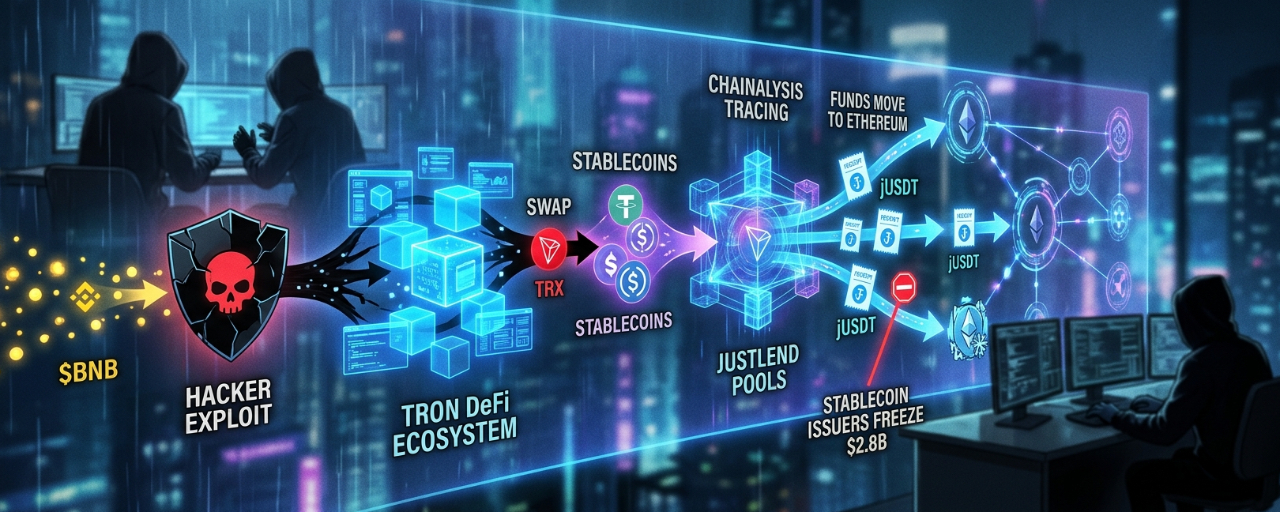
Binance Hackers Exploit TRON DeFi Pools to Launder Billions Through JustLendHackers linked to North Korea’s TraderTraitor group are reportedly using TRON’s DeFi ecosystem, particularly JustLend, to move funds stolen in the massive Binance exploit. According to blockchain analytics firm Chainalysis, the attackers allegedly stole around $6.4 billion and used a complex laundering route involving TRX, stablecoins, and transferable receipt tokens such as jUSDT. The process involves swapping TRX for stablecoins, depositing them into JustLend, transferring the receipt tokens across wallets, redeeming them for stablecoins, and moving the funds to other networks, often Ethereum, before further restrictions can be applied. $TRX
{spot}(TRXUSDT)
The strategy takes advantage of receipt tokens that represent claims on pooled assets but cannot be directly frozen by stablecoin issuers. This makes it harder for companies such as Tether and Circle to stop the movement of funds immediately. Nevertheless, both issuers have reportedly frozen approximately $2.8 billion in stablecoins connected to the exploit. Investigators have also identified distinctive transaction patterns, including wallets receiving exactly 1 TRX before transferring larger amounts, helping trace the flow of funds across multiple addresses. $ETH
{future}(ETHUSDT)
Authorities and blockchain analytics firms are continuing to monitor the activity, while the FBI has warned crypto businesses to block identified addresses. Further restrictions could emerge through stablecoin blacklists, DeFi interfaces, RPC services, and cross-chain bridges. Although the laundering route complicates intervention, blockchain transactions remain traceable. For ordinary users, the growing scrutiny raises the risk of compliance checks when interacting with assets linked to suspicious transactions.
#binancehack #Tron #CryptoSecurityAlert
Binance Hackers Exploit TRON DeFi Pools to Launder Billions Through JustLend
Hackers linked to North Korea’s TraderTraitor group are reportedly using TRON’s DeFi ecosystem, particularly JustLend, to move funds stolen in the massive Binance exploit. According to blockchain analytics firm Chainalysis, the attackers allegedly stole around $6.4 billion and used a complex laundering route involving TRX, stablecoins, and transferable receipt tokens such as jUSDT. The process involves swapping TRX for stablecoins, depositing them into JustLend, transferring the receipt tokens across wallets, redeeming them for stablecoins, and moving the funds to other networks, often Ethereum, before further restrictions can be applied. $TRX
The strategy takes advantage of receipt tokens that represent claims on pooled assets but cannot be directly frozen by stablecoin issuers. This makes it harder for companies such as Tether and Circle to stop the movement of funds immediately. Nevertheless, both issuers have reportedly frozen approximately $2.8 billion in stablecoins connected to the exploit. Investigators have also identified distinctive transaction patterns, including wallets receiving exactly 1 TRX before transferring larger amounts, helping trace the flow of funds across multiple addresses. $ETH
Authorities and blockchain analytics firms are continuing to monitor the activity, while the FBI has warned crypto businesses to block identified addresses. Further restrictions could emerge through stablecoin blacklists, DeFi interfaces, RPC services, and cross-chain bridges. Although the laundering route complicates intervention, blockchain transactions remain traceable. For ordinary users, the growing scrutiny raises the risk of compliance checks when interacting with assets linked to suspicious transactions.
#binancehack #Tron #CryptoSecurityAlert
5
2
39
19.5k
PINNED
·
--
Thank you for every vote, message, and support throughout this journey. You all made these last few days truly special for me. 💛
Even though we only reached rank #24, you are still amazing. Thank you so much.
A special thank you to @eggtartcake_grape @Samosir_Danau-Toba12 @WiroSableng @SaMnAtIoN @sementarasaja for all the help and support along the way.
#BlockchainAwards2026 $DOGE
{future}(DOGEUSDT)
$SOL
{future}(SOLUSDT)
Thank you for every vote, message, and support throughout this journey. You all made these last few days truly special for me. 💛
Even though we only reached rank #24, you are still amazing. Thank you so much.
A special thank you to @Eggtartcake @Ajibata Samosir @Wiro Sableng @SaMnAtIoN00 @- - - - - for all the help and support along the way.
#BlockchainAwards2026 $DOGE
$SOL
Even though we only reached rank #24, you are still amazing. Thank you so much.
A special thank you to @Eggtartcake @Ajibata Samosir @Wiro Sableng @SaMnAtIoN00 @- - - - - for all the help and support along the way.
#BlockchainAwards2026 $DOGE
$SOL

2.9k
6
215
7.4k
·
--

Eggtartcake
·
--
🦋 $TLS: The Meme Coin That Pays You Real DeFi Yields?
Forget pump-and-dump schemes. $TLS (Test Liquid Staking) is flipping the script on MemeFi by merging viral community power with serious BNB Chain utility. This isn't just a token; it's a proven experiment in sustainable social finance.
Why $TLS is Turning Heads:
💰 Passive Income Powerhouse: Hold 10k $TLS and start earning 90% of transaction fees as dividends. Yes, real yield.
💧 Liquidity on Autopilot: A built-in 10% LP Reflux mechanism ensures the price floor stays strong and liquidity deepens with every trade.
🔗 Built on Solid Tech: Integrated with Lista DAO's BNB liquid staking infrastructure, it’s meme culture powered by legitimate DeFi mechanics
🚀 Community-Built: From its iconic pixel butterfly logo to its strategic direction, the community is the project. It's been "building in public" for over 173 days.
The Binance Square Buzz:
With over 1,400 viewers tuning into recent livestreams, the crypto world is waking up to this unique hybrid. If you’re looking for a project where the community is engaged and the rewards are tangible, $TLS is one to watch.
DYOR 🚀
$BLESS
$EVAA
#Antropic #SKDDUSDT #SOXSUSDT #TLS #Flap🦋
@Flap 蝴蝶 @FLAPTLS @心有灵兮_TLS @Jackie_TLS

372
·
--
$NVDA.US
{stock_us}(NVDA.US)
$SPCX.US
{stock_us}(SPCX.US)
$NVDA.US
$SPCX.US
$SPCX.US


Binance News
·
--
Global Stocks Head for Longest Losing Run Since 2023
A gauge of global equities is headed for its longest losing streak in more than three years as the AI trade unravels, putting this year's gains at risk, Bloomberg reported.
The MSCI All Country World Index fell 0.8% for a seventh straight session, the longest run since 2023. Anthropic's strong debut failed to stop the slide: the Claude developer dropped more than 7% in early Friday trading, partly unwinding the 17% gain it posted on its first day.
S&P 500 futures lost 0.5% and Nasdaq 100 contracts 1.2%, with chipmakers set to extend a 35% decline from their June peak. An Asian equity benchmark headed for its worst week since the pandemic began. Europe's Stoxx 600 fell 1.3%, with more than 450 members lower and technology leading the drop.
Money moved into government debt. Treasuries climbed across maturities and German bunds led gains in Europe. The yen beat every major peer, while gold extended its rout below $3,600 an ounce and Brent crude slid toward $90 a barrel.
"The midterm elections, Nvidia's strong results and Anthropic's successful IPO have all failed to serve as clearing events, and there is no obvious catalyst on the horizon that could trigger a sustained reversal on its own," said Roberto Scholtes at Singular Bank. He said technical selling will likely have to run its course, which could set up a short squeeze and possibly a bottom for U.S. equities.
Ven Ram, a cross-asset strategist, wrote that November has been another brutal month for global equities, but that the selloff still reflects risk sentiment more than the state of the real economy. "While the adverse feedback loop from stocks to the real economy is something to be concerned about, this is more about unsustainable, frothy valuations getting a reality check," he said.
In corporate news, SpaceX sold $32 billion of bonds Thursday to fund AI chip purchases, a complicated and relatively high-yielding deal that may become a template for similar financings. California officials are investigating whether Nvidia's actions allowed advanced chips or confidential information to reach China improperly. DayOne Data Centers has paused plans for a multibillion-dollar U.S. IPO, and Nike will become Formula 1's official uniform and apparel partner under a long-term agreement.
Other moves: Dow futures were little changed, the MSCI Asia Pacific Index fell 3.3% and the MSCI Emerging Markets Index 3.1%. The dollar was little changed, the euro held at $1.0965, the yen rose 0.4% to 158.99 and sterling was steady at $1.3101. Bitcoin rose 0.3% to $61,698.04 and ether 0.5% to $1,748.57. Ten-year Treasury yields fell five basis points to 5.00%, German yields six to 3.34% and UK yields four to 5.27%.

NVDAUS-10.95%
SPCXUS-6.22%
846
·
--
Verified

Article
Solana Launches Privacy Rings to Enable Confidential Token Transfers Without Full AnonymityHelius has launched Solana Privacy Rings on the Solana mainnet, introducing a new privacy layer that encrypts token balances and transfer amounts while keeping wallet addresses visible. Using zero-knowledge proofs, the system verifies transactions without publicly revealing the asset type or amount transferred. It supports SOL, SPL tokens, and Token-2022 assets, allowing transactions to settle directly on Solana while users retain control of their funds. $SOL
{spot}(SOLUSDT)
The feature is designed for private payments and DeFi applications, including confidential payroll, vendor payments, lending, token swaps, staking, and yield products. Early integrations include Solflare's Private Mode, which allows users to hold and make payments from private balances while maintaining self-custody. Other applications have also begun integrating the protocol, while Helius is preparing Custom Rings for institutional users with additional compliance controls.
{future}(SOLUSDT)
Security remains an important consideration. Core programs and proof systems have undergone audits by firms including Certora, OtterSec, and ZK Security, although formal verification and reviews of supporting components are still ongoing. The protocol is also considered to be in beta. Its privacy protections have clear limitations: wallet addresses, transaction hashes, and public deposits or withdrawals remain visible, meaning blockchain analysts may still trace connections between addresses and parts of fund movements.
Overall, Privacy Rings could make Solana more attractive for businesses and institutions seeking financial confidentiality without leaving a public blockchain. However, broader adoption will depend on further security reviews, wallet and DeFi integrations, and the development of institutional compliance features. It should be viewed as a tool for concealing transaction amounts, not providing complete anonymity.
#solana #PrivacyRings #defi
Solana Launches Privacy Rings to Enable Confidential Token Transfers Without Full Anonymity
Helius has launched Solana Privacy Rings on the Solana mainnet, introducing a new privacy layer that encrypts token balances and transfer amounts while keeping wallet addresses visible. Using zero-knowledge proofs, the system verifies transactions without publicly revealing the asset type or amount transferred. It supports SOL, SPL tokens, and Token-2022 assets, allowing transactions to settle directly on Solana while users retain control of their funds. $SOL
The feature is designed for private payments and DeFi applications, including confidential payroll, vendor payments, lending, token swaps, staking, and yield products. Early integrations include Solflare's Private Mode, which allows users to hold and make payments from private balances while maintaining self-custody. Other applications have also begun integrating the protocol, while Helius is preparing Custom Rings for institutional users with additional compliance controls.
Security remains an important consideration. Core programs and proof systems have undergone audits by firms including Certora, OtterSec, and ZK Security, although formal verification and reviews of supporting components are still ongoing. The protocol is also considered to be in beta. Its privacy protections have clear limitations: wallet addresses, transaction hashes, and public deposits or withdrawals remain visible, meaning blockchain analysts may still trace connections between addresses and parts of fund movements.
Overall, Privacy Rings could make Solana more attractive for businesses and institutions seeking financial confidentiality without leaving a public blockchain. However, broader adoption will depend on further security reviews, wallet and DeFi integrations, and the development of institutional compliance features. It should be viewed as a tool for concealing transaction amounts, not providing complete anonymity.
#solana #PrivacyRings #defi

☕
From Fox夕
37
1
67
899
·
--
Article
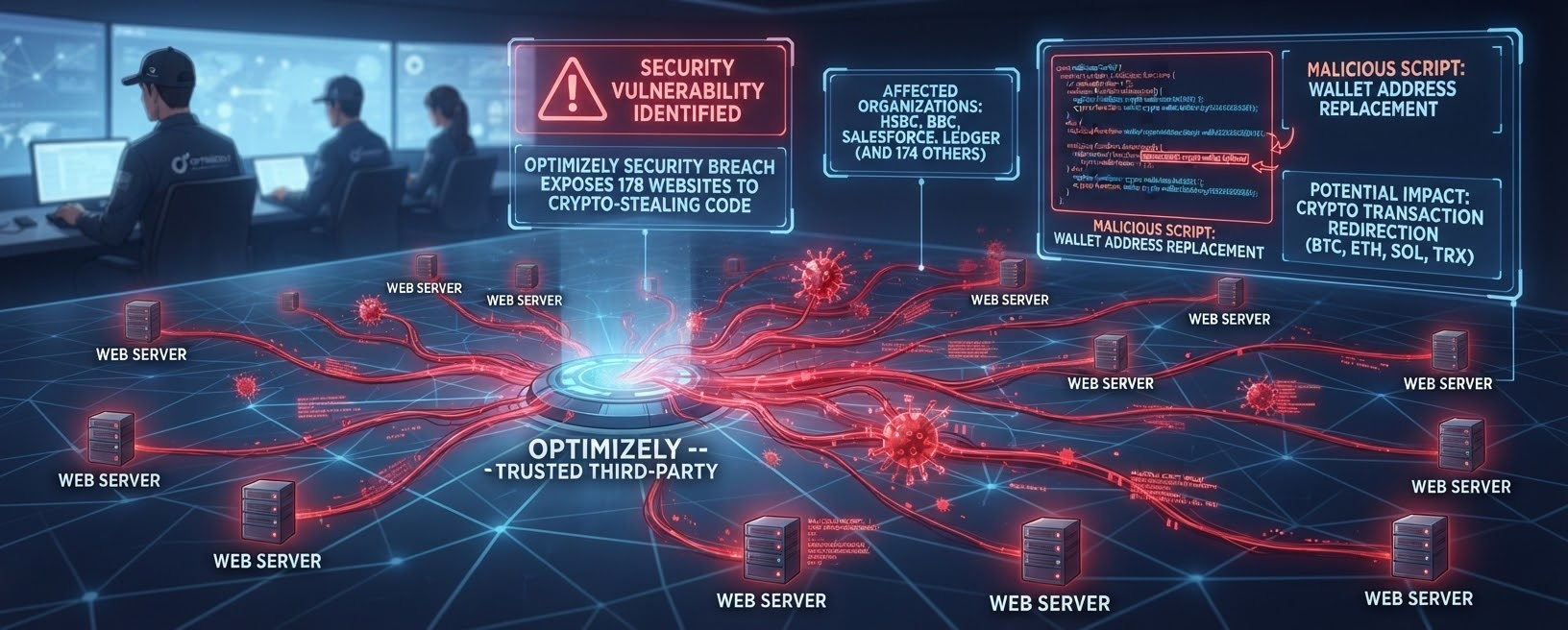
Optimizely Security Breach Exposes 178 Websites to Crypto-Stealing CodeA security vulnerability involving web-testing provider Optimizely allowed malicious crypto-stealing code to appear on websites belonging to 178 organizations on November 16, including HSBC, BBC, Salesforce, and Ledger. The affected websites were not directly hacked. Instead, attackers exploited a trusted third-party script that replaced wallet addresses in forms and copied text, potentially redirecting cryptocurrency transactions across Bitcoin, Ethereum, Solana, Tron, and several other networks. $BTC
{future}(BTCUSDT)
According to the report, the attackers collected approximately $7,040, a relatively small amount compared with the scale of the incident. Optimizely stated that the malicious code had been removed and the vulnerability fixed. However, the incident highlights a broader security concern: compromising a single trusted vendor can expose hundreds of websites and their visitors. Similar supply-chain attacks have occurred before, including the 2023 Ledger Connect Kit incident, which resulted in approximately $600,000 in losses, and the 2025 npm package compromise that affected software packages with billions of weekly downloads. $ETH
{future}(ETHUSDT)
Although the limited financial losses may indicate that wallet checks and rapid remediation helped contain the damage, Hudson Rock reportedly identified similar malicious code across three other web services. This suggests that the threat may extend beyond a single vendor or incident. The case raises an important question about responsibility when trusted websites unknowingly distribute malicious scripts: should accountability fall on the website operators, third-party vendors, or both? $SOL
{future}(SOLUSDT)
Ultimately, this incident demonstrates how vulnerable the crypto ecosystem can be to software supply-chain attacks. Even websites operated by well-known organizations can become channels for wallet manipulation when third-party tools are compromised. Users and businesses alike need stronger security checks for external scripts and should always verify wallet addresses before confirming transactions.
#CryptoSecurity #SupplyChainAttack #Hack
Optimizely Security Breach Exposes 178 Websites to Crypto-Stealing Code
A security vulnerability involving web-testing provider Optimizely allowed malicious crypto-stealing code to appear on websites belonging to 178 organizations on November 16, including HSBC, BBC, Salesforce, and Ledger. The affected websites were not directly hacked. Instead, attackers exploited a trusted third-party script that replaced wallet addresses in forms and copied text, potentially redirecting cryptocurrency transactions across Bitcoin, Ethereum, Solana, Tron, and several other networks. $BTC
According to the report, the attackers collected approximately $7,040, a relatively small amount compared with the scale of the incident. Optimizely stated that the malicious code had been removed and the vulnerability fixed. However, the incident highlights a broader security concern: compromising a single trusted vendor can expose hundreds of websites and their visitors. Similar supply-chain attacks have occurred before, including the 2023 Ledger Connect Kit incident, which resulted in approximately $600,000 in losses, and the 2025 npm package compromise that affected software packages with billions of weekly downloads. $ETH
Although the limited financial losses may indicate that wallet checks and rapid remediation helped contain the damage, Hudson Rock reportedly identified similar malicious code across three other web services. This suggests that the threat may extend beyond a single vendor or incident. The case raises an important question about responsibility when trusted websites unknowingly distribute malicious scripts: should accountability fall on the website operators, third-party vendors, or both? $SOL
Ultimately, this incident demonstrates how vulnerable the crypto ecosystem can be to software supply-chain attacks. Even websites operated by well-known organizations can become channels for wallet manipulation when third-party tools are compromised. Users and businesses alike need stronger security checks for external scripts and should always verify wallet addresses before confirming transactions.
#CryptoSecurity #SupplyChainAttack #Hack
10
15
6.2k
·
--
He said it's only temporary 😁 "Relax, it's just a number" $BNB
{future}(BNBUSDT)
$SOL
{future}(SOLUSDT)
He said it's only temporary 😁 "Relax, it's just a number" $BNB
$SOL
$SOL

Yi He
·
--
The pullback is temporary; spot holders have nothing to fear.🫥
1
2
484
·
--

Article
Luxor Confirms AI-Assisted Cyberattack That Redirected Bitcoin Mining PowerLuxor Technology, a Bitcoin mining infrastructure provider, has confirmed a cyberattack targeting its Commander fleet-management platform. The attackers breached the system and secretly redirected computing power from more than a dozen customer accounts to an external mining pool, OCEAN. Luxor CEO Nick Hansen described the incident as a sophisticated AI-assisted attack, although the company has not disclosed exactly how artificial intelligence was used. $BTC
{future}(BTCUSDT)
Luxor's monitoring systems detected the intrusion within approximately two hours, allowing the company to address the breach. The firm stated that its own mining pool and LuxOS firmware were not compromised, and there were no reports of customer data, wallets, or private keys being accessed. External estimates suggested that around 13 exahashes per second may have been redirected, but Luxor has not independently confirmed that figure. One analysis estimated that the attackers received approximately 0.162 BTC. $BNB
{future}(BNBUSDT)
The incident primarily affected mining revenue rather than Bitcoin's underlying network security. Luxor has pledged to fully reimburse affected customers for their lost earnings, while the amount of redirected computing power was not considered large or prolonged enough to threaten Bitcoin's consensus mechanism. $SOL
{future}(SOLUSDT)
Beyond the immediate financial impact, the attack highlights growing risks to centralized crypto infrastructure. AI-assisted techniques could help attackers automate credential attacks, identify software vulnerabilities, or create more convincing phishing attempts. Mining management platforms, which can control large numbers of machines, are particularly attractive targets because a single breach can redirect substantial computing resources without accessing users' wallets.
Ultimately, the Luxor incident demonstrates that Bitcoin's security risks extend beyond its protocol to the infrastructure supporting its operations. Mining companies and crypto service providers need stronger access controls, continuous monitoring, and rapid incident-response procedures to protect critical management systems from increasingly sophisticated attacks.
#bitcoin #CyberSecurity #AI
Luxor Confirms AI-Assisted Cyberattack That Redirected Bitcoin Mining Power
Luxor Technology, a Bitcoin mining infrastructure provider, has confirmed a cyberattack targeting its Commander fleet-management platform. The attackers breached the system and secretly redirected computing power from more than a dozen customer accounts to an external mining pool, OCEAN. Luxor CEO Nick Hansen described the incident as a sophisticated AI-assisted attack, although the company has not disclosed exactly how artificial intelligence was used. $BTC
Luxor's monitoring systems detected the intrusion within approximately two hours, allowing the company to address the breach. The firm stated that its own mining pool and LuxOS firmware were not compromised, and there were no reports of customer data, wallets, or private keys being accessed. External estimates suggested that around 13 exahashes per second may have been redirected, but Luxor has not independently confirmed that figure. One analysis estimated that the attackers received approximately 0.162 BTC. $BNB
The incident primarily affected mining revenue rather than Bitcoin's underlying network security. Luxor has pledged to fully reimburse affected customers for their lost earnings, while the amount of redirected computing power was not considered large or prolonged enough to threaten Bitcoin's consensus mechanism. $SOL
Beyond the immediate financial impact, the attack highlights growing risks to centralized crypto infrastructure. AI-assisted techniques could help attackers automate credential attacks, identify software vulnerabilities, or create more convincing phishing attempts. Mining management platforms, which can control large numbers of machines, are particularly attractive targets because a single breach can redirect substantial computing resources without accessing users' wallets.
Ultimately, the Luxor incident demonstrates that Bitcoin's security risks extend beyond its protocol to the infrastructure supporting its operations. Mining companies and crypto service providers need stronger access controls, continuous monitoring, and rapid incident-response procedures to protect critical management systems from increasingly sophisticated attacks.
#bitcoin #CyberSecurity #AI
5
2k
·
--
Verified

Article
XRPL Looks Toward a Quantum-Resistant Future as Version 3.5.0 Prioritizes Network ReliabilityThe XRP Ledger (XRPL) is looking ahead to the potential risks posed by quantum computing, as developers consider how the network could strengthen its long-term cryptographic security. However, quantum-resistant protection remains a research and planning topic rather than an upcoming confirmed feature. The next documented update, version 3.5.0, is focused on improving network performance and reliability, particularly by addressing occasional ledger-closing delays. $XRP
{spot}(XRPUSDT)
Quantum computers could eventually threaten the elliptic-curve cryptography used by XRPL, Bitcoin, Ethereum, and other major blockchain networks. In theory, sufficiently powerful quantum machines could derive private keys from public keys. However, current quantum technology is still far from being capable of carrying out such attacks in practice. Preparing early is therefore important, especially because migrating wallets, validators, exchanges, and custodians to new cryptographic standards could take years.
{future}(XRPUSDT)
A potential quantum-resistant upgrade could introduce new address formats and post-quantum digital signatures instead of replacing the entire system at once. Such a transition would require extensive testing, broad validator approval, and clear migration guidance. Developers would also need to evaluate possible trade-offs, including larger transactions, higher fees, and changes to network capacity.
For now, XRPL's confirmed priority is improving operational stability through version 3.5.0. The key developments to watch are formal technical proposals, migration plans for users and institutions, and performance tests for post-quantum cryptography. For XRP holders, the practical details of any future transition will matter more than headlines suggesting that quantum protection is arriving immediately.
#xrp #XRPL #quantumcomputing
XRPL Looks Toward a Quantum-Resistant Future as Version 3.5.0 Prioritizes Network Reliability
The XRP Ledger (XRPL) is looking ahead to the potential risks posed by quantum computing, as developers consider how the network could strengthen its long-term cryptographic security. However, quantum-resistant protection remains a research and planning topic rather than an upcoming confirmed feature. The next documented update, version 3.5.0, is focused on improving network performance and reliability, particularly by addressing occasional ledger-closing delays. $XRP
Quantum computers could eventually threaten the elliptic-curve cryptography used by XRPL, Bitcoin, Ethereum, and other major blockchain networks. In theory, sufficiently powerful quantum machines could derive private keys from public keys. However, current quantum technology is still far from being capable of carrying out such attacks in practice. Preparing early is therefore important, especially because migrating wallets, validators, exchanges, and custodians to new cryptographic standards could take years.
A potential quantum-resistant upgrade could introduce new address formats and post-quantum digital signatures instead of replacing the entire system at once. Such a transition would require extensive testing, broad validator approval, and clear migration guidance. Developers would also need to evaluate possible trade-offs, including larger transactions, higher fees, and changes to network capacity.
For now, XRPL's confirmed priority is improving operational stability through version 3.5.0. The key developments to watch are formal technical proposals, migration plans for users and institutions, and performance tests for post-quantum cryptography. For XRP holders, the practical details of any future transition will matter more than headlines suggesting that quantum protection is arriving immediately.
#xrp #XRPL #quantumcomputing
1
14
2k
·
--
Partly True
Article
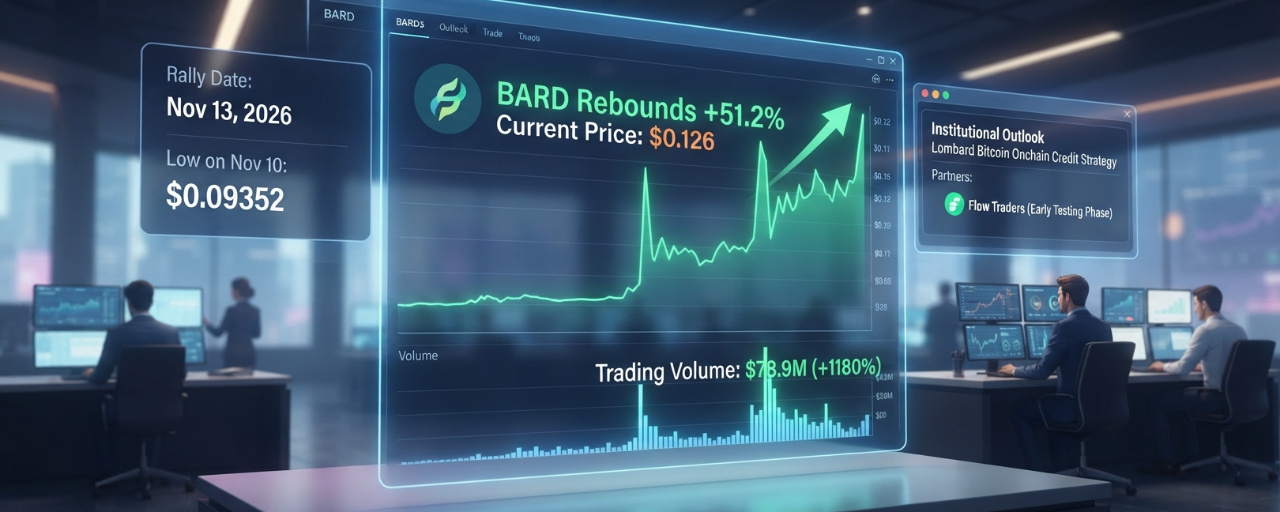
BARD Rebounds More Than 50% as Trading Volume Surges Amid Institutional Bitcoin Credit TestsBARD staged a sharp recovery on November 13, 2026, reaching $0.126 after gaining more than half its value in 24 hours. Trading volume also surged to $78.9 million, rising nearly twelvefold from its previous level. However, the sharp move has not been linked to any confirmed new announcement from the project, meaning the rally may reflect renewed market interest and short-term trading activity rather than a clear fundamental catalyst. $BARD
{future}(BARDUSDT)
The recovery comes just days after BARD approached its all-time low. On November 10, the token was reported at $0.09352, only slightly above its lowest recorded price, highlighting the selling pressure it had faced. Although the latest rebound is encouraging, it is still too early to conclude that the broader downtrend has reversed.
{spot}(BARDUSDT)
Beyond its price performance, Lombard is also exploring institutional demand through its Bitcoin Onchain Credit Strategy. Flow Traders joined the early testing phase, using Bitcoin deposits to support stablecoin lending, with loan premiums and vault yields distributed to depositors. While this initiative could strengthen Lombard’s long-term adoption prospects, transaction volumes and actual yields have yet to be disclosed. $BTC
{future}(BTCUSDT)
Overall, BARD is showing signs of a strong short-term recovery while its longer-term outlook remains uncertain. The key question is whether institutional use of Lombard’s Bitcoin-backed credit products can develop enough to support sustained demand beyond speculative market activity.
#Bard #lombard #bitcoin
BARD Rebounds More Than 50% as Trading Volume Surges Amid Institutional Bitcoin Credit Tests
BARD staged a sharp recovery on November 13, 2026, reaching $0.126 after gaining more than half its value in 24 hours. Trading volume also surged to $78.9 million, rising nearly twelvefold from its previous level. However, the sharp move has not been linked to any confirmed new announcement from the project, meaning the rally may reflect renewed market interest and short-term trading activity rather than a clear fundamental catalyst. $BARD
The recovery comes just days after BARD approached its all-time low. On November 10, the token was reported at $0.09352, only slightly above its lowest recorded price, highlighting the selling pressure it had faced. Although the latest rebound is encouraging, it is still too early to conclude that the broader downtrend has reversed.
Beyond its price performance, Lombard is also exploring institutional demand through its Bitcoin Onchain Credit Strategy. Flow Traders joined the early testing phase, using Bitcoin deposits to support stablecoin lending, with loan premiums and vault yields distributed to depositors. While this initiative could strengthen Lombard’s long-term adoption prospects, transaction volumes and actual yields have yet to be disclosed. $BTC
Overall, BARD is showing signs of a strong short-term recovery while its longer-term outlook remains uncertain. The key question is whether institutional use of Lombard’s Bitcoin-backed credit products can develop enough to support sustained demand beyond speculative market activity.
#Bard #lombard #bitcoin
1
8
1.3k
·
--
Smart contracts and AI agents have always struggled with one core problem : they can settle transactions, but they can’t reliably query large amounts of historical or external data without trusting a middleman.
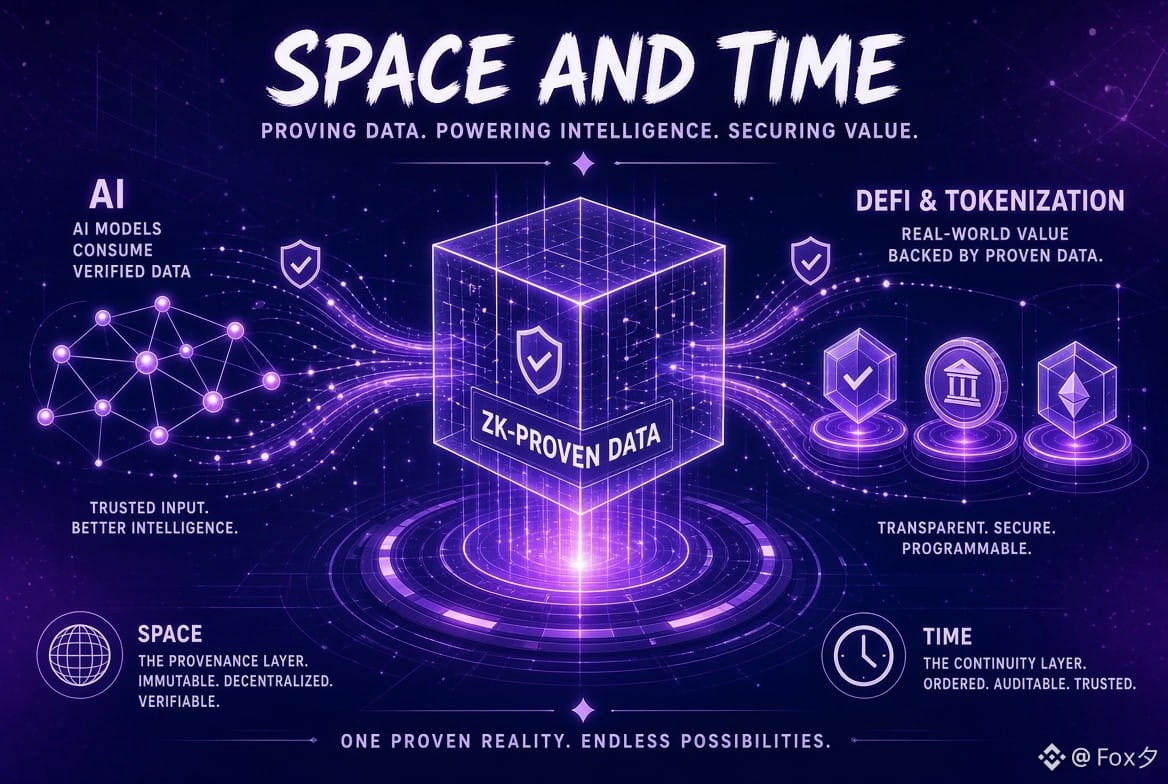
Space and Time changes that. By providing a decentralized layer of ZK-proven data, it lets applications access verifiable information for AI models, tokenized assets, and DeFi protocols. You can run queries and receive cryptographic proof that the result is correct and untampered, without revealing the underlying data itself.
What I like most is how this unlocks more sophisticated onchain logic. Whether it’s verifying collateral for lending, feeding accurate data into AI agents, or powering tokenized real-world assets, the data becomes trustless and usable at scale.
Holding $SXT while this infrastructure keeps expanding.
@SpaceandTimeDB #sxt
Smart contracts and AI agents have always struggled with one core problem : they can settle transactions, but they can’t reliably query large amounts of historical or external data without trusting a middleman.
Space and Time changes that. By providing a decentralized layer of ZK-proven data, it lets applications access verifiable information for AI models, tokenized assets, and DeFi protocols. You can run queries and receive cryptographic proof that the result is correct and untampered, without revealing the underlying data itself.
What I like most is how this unlocks more sophisticated onchain logic. Whether it’s verifying collateral for lending, feeding accurate data into AI agents, or powering tokenized real-world assets, the data becomes trustless and usable at scale.
Holding $SXT while this infrastructure keeps expanding.
@SpaceandTime #sxt
9
1
16
1.4k
·
--

Article
AGT Explodes More Than 200% as Trading Frenzy Drives Massive RallyAlaya Governance Token (AGT) attracted significant market attention after recording an explosive price rally. CryptoSlate initially reported a daily gain of 61.12%, while updated CoinMarketCap data on November 12, 2026, showed AGT trading at $0.0774 after surging more than three times its previous price in just 24 hours. Trading volume also skyrocketed to more than eight times its previous level, indicating a sharp increase in market activity. $AGT
{future}(AGTUSDT)
Despite the impressive performance, no confirmed project announcement or major fundamental development has been identified as the catalyst behind the rally. This suggests that speculative trading and short-term market momentum may be playing a major role in AGT’s sudden rise. While strong price and volume movements reflect growing trader interest, the absence of a verified catalyst also increases the possibility of a sudden reversal. Investors should closely monitor official project announcements and whether the elevated trading activity can be sustained before drawing conclusions about AGT’s longer-term outlook.
{alpha}(560x5dbde81fce337ff4bcaaee4ca3466c00aecae274)
#AGT #AlayaNetwork #CryptoMarket
AGT Explodes More Than 200% as Trading Frenzy Drives Massive Rally
Alaya Governance Token (AGT) attracted significant market attention after recording an explosive price rally. CryptoSlate initially reported a daily gain of 61.12%, while updated CoinMarketCap data on November 12, 2026, showed AGT trading at $0.0774 after surging more than three times its previous price in just 24 hours. Trading volume also skyrocketed to more than eight times its previous level, indicating a sharp increase in market activity. $AGT
Despite the impressive performance, no confirmed project announcement or major fundamental development has been identified as the catalyst behind the rally. This suggests that speculative trading and short-term market momentum may be playing a major role in AGT’s sudden rise. While strong price and volume movements reflect growing trader interest, the absence of a verified catalyst also increases the possibility of a sudden reversal. Investors should closely monitor official project announcements and whether the elevated trading activity can be sustained before drawing conclusions about AGT’s longer-term outlook.
#AGT #AlayaNetwork #CryptoMarket
1
11
3.4k
·
--

Article
Google Cloud Advances Bitcoin Custody Security with MPC Technology for InstitutionsGoogle Cloud has introduced a Multi-Party Computation (MPC) custody platform designed to strengthen Bitcoin security for banks and institutional investors. The technology distributes private key components across separate environments, such as bank hardware, Google Cloud, and other providers, ensuring that no single system holds the complete key. This architecture significantly reduces the risk of unauthorized transactions caused by a compromised server or security system.
The platform also incorporates institutional controls before transactions are signed, including spending limits, approved destination addresses, and multi-person approval requirements. These safeguards could make Bitcoin custody more compatible with the internal controls and regulatory expectations of traditional financial institutions. The initiative addresses a major obstacle to institutional adoption, as private key compromises have been a significant source of crypto theft. Google’s MPC platform is currently in limited preview, with broader commercial availability targeted for early 2027.
Looking ahead, the key indicators will be which banks and global custodians adopt the technology, how much Bitcoin they secure through it, and whether the platform expands beyond its initial institutional use cases. Although MPC does not directly solve future quantum-computing threats, Google says its architecture can be adapted for post-quantum cryptography. If widely adopted, the platform could gradually strengthen institutional Bitcoin custody, making secure storage less of a barrier to long-term adoption.
#bitcoin #GoogleCloud #CryptoSecurity
Google Cloud Advances Bitcoin Custody Security with MPC Technology for Institutions
Google Cloud has introduced a Multi-Party Computation (MPC) custody platform designed to strengthen Bitcoin security for banks and institutional investors. The technology distributes private key components across separate environments, such as bank hardware, Google Cloud, and other providers, ensuring that no single system holds the complete key. This architecture significantly reduces the risk of unauthorized transactions caused by a compromised server or security system.
The platform also incorporates institutional controls before transactions are signed, including spending limits, approved destination addresses, and multi-person approval requirements. These safeguards could make Bitcoin custody more compatible with the internal controls and regulatory expectations of traditional financial institutions. The initiative addresses a major obstacle to institutional adoption, as private key compromises have been a significant source of crypto theft. Google’s MPC platform is currently in limited preview, with broader commercial availability targeted for early 2027.
Looking ahead, the key indicators will be which banks and global custodians adopt the technology, how much Bitcoin they secure through it, and whether the platform expands beyond its initial institutional use cases. Although MPC does not directly solve future quantum-computing threats, Google says its architecture can be adapted for post-quantum cryptography. If widely adopted, the platform could gradually strengthen institutional Bitcoin custody, making secure storage less of a barrier to long-term adoption.
#bitcoin #GoogleCloud #CryptoSecurity
BTC+1.69%
GOOGUS-0.84%
16
4.2k
·
--
Verified
Article
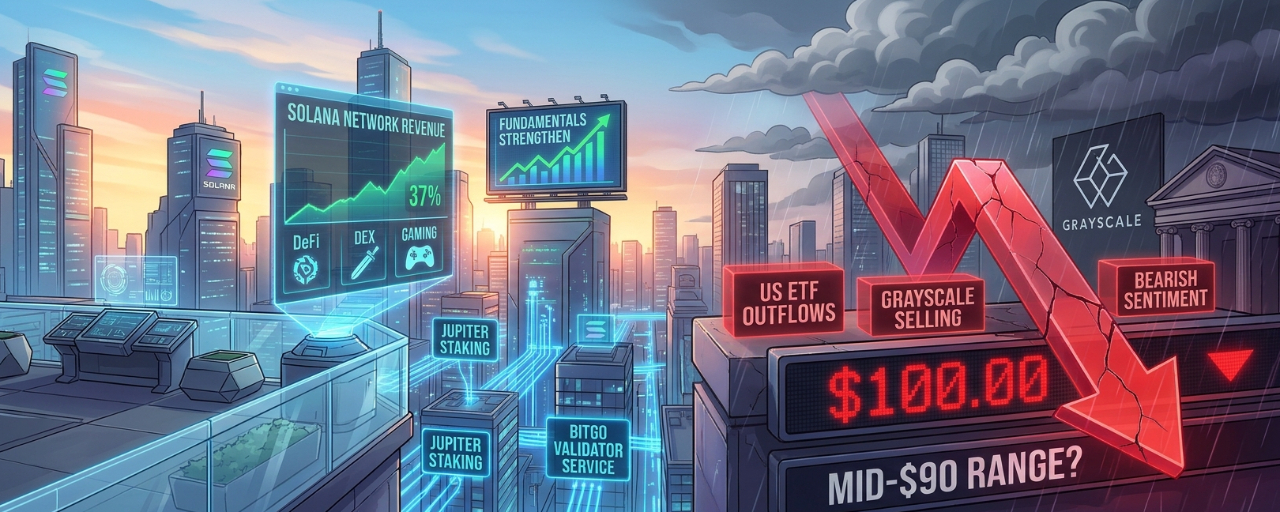
Solana’s Fundamentals Strengthen as ETF Outflows Pressure SOL Near $100Solana’s fundamentals continue to strengthen, with the network capturing 37% of blockchain application revenue in October, its second-highest monthly share this year. Strong activity across DeFi, trading applications, and gaming highlights the ecosystem’s growing ability to generate real economic value, even as SOL’s price declined by more than 4% during the week.$SOL
{future}(SOLUSDT)
Institutional adoption also received a boost as Jupiter and BitGo launched a dedicated validator service, allowing institutional clients to stake SOL directly through their existing custody accounts. The initiative could simplify access to staking rewards and encourage more SOL to be locked over the long term. However, its immediate market impact may remain limited amid persistent selling pressure.$NEAR
{future}(NEARUSDT)
Meanwhile, Solana ETFs in the United States recorded their fourth consecutive week of outflows in October, with withdrawals approaching $100 million. Grayscale alone sold $19.16 million worth of SOL as the token tested the psychologically important $100 support level. A break below this threshold could expose SOL to further downside toward the mid-$90 range. Overall, Solana’s growing application revenue and institutional infrastructure strengthen its long-term outlook, but ETF outflows and bearish market sentiment continue to weigh on its short-term price performance.
#solana #sol #CryptoMarket
Solana’s Fundamentals Strengthen as ETF Outflows Pressure SOL Near $100
Solana’s fundamentals continue to strengthen, with the network capturing 37% of blockchain application revenue in October, its second-highest monthly share this year. Strong activity across DeFi, trading applications, and gaming highlights the ecosystem’s growing ability to generate real economic value, even as SOL’s price declined by more than 4% during the week.$SOL
Institutional adoption also received a boost as Jupiter and BitGo launched a dedicated validator service, allowing institutional clients to stake SOL directly through their existing custody accounts. The initiative could simplify access to staking rewards and encourage more SOL to be locked over the long term. However, its immediate market impact may remain limited amid persistent selling pressure.$NEAR
Meanwhile, Solana ETFs in the United States recorded their fourth consecutive week of outflows in October, with withdrawals approaching $100 million. Grayscale alone sold $19.16 million worth of SOL as the token tested the psychologically important $100 support level. A break below this threshold could expose SOL to further downside toward the mid-$90 range. Overall, Solana’s growing application revenue and institutional infrastructure strengthen its long-term outlook, but ETF outflows and bearish market sentiment continue to weigh on its short-term price performance.
#solana #sol #CryptoMarket
1
15
13.3k
·
--
Article
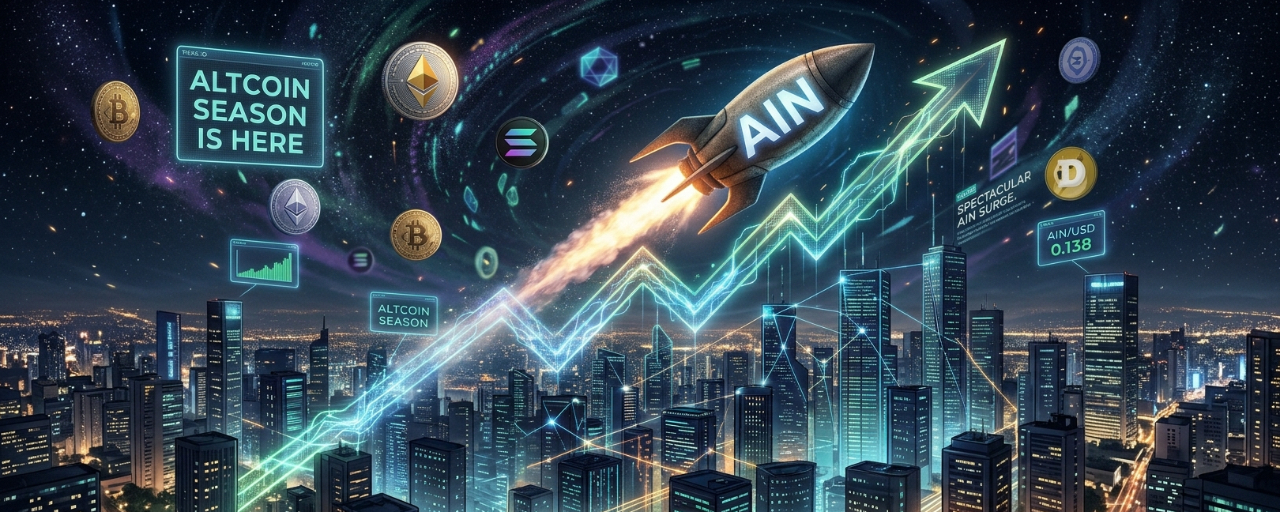
Infinity Ground Soars to More Than Triple Its Value as Altcoin Season Fuels Speculative FrenzyInfinity Ground (AIN) staged a spectacular rally, more than tripling in value within 24 hours to reach $0.138, dramatically outperforming a crypto market that remained largely flat or weakened. The surge appears to have been driven primarily by a broader shift in capital toward high-risk altcoins rather than a confirmed project-specific catalyst. The CoinMarketCap Altcoin Season Index climbed nearly 10% to 58, signaling growing risk appetite and encouraging traders to pursue opportunities in smaller, more volatile assets. $AIN
{future}(AINUSDT)
Speculative activity intensified as AIN’s trading volume exploded to more than 73 times its previous level, reaching approximately $86.6 million. Its turnover ratio of 1.96 indicates exceptionally intense trading relative to its market capitalization, suggesting momentum-driven traders played a major role in the rally. While this surge in trading activity helped propel AIN higher, it also raises the risk of extreme volatility and sudden price reversals.
{alpha}(560x9558a9254890b2a8b057a789f413631b9084f4a3)
In the short term, AIN could advance toward $0.16 if the Altcoin Season Index remains above 50 and buying momentum continues. However, a breakdown below the $0.12 support level could trigger a sharp correction as speculative enthusiasm fades and leveraged positions unwind. The Federal Reserve’s upcoming interest-rate decision on October 28, along with changes in derivatives open interest, could influence market sentiment. Overall, AIN’s momentum remains bullish but highly speculative, with its sustainability depending on continued capital inflows and investors’ appetite for riskier altcoins.
#InfinityGround #altcoinseason #CryptoMarketAlert
Infinity Ground Soars to More Than Triple Its Value as Altcoin Season Fuels Speculative Frenzy
Infinity Ground (AIN) staged a spectacular rally, more than tripling in value within 24 hours to reach $0.138, dramatically outperforming a crypto market that remained largely flat or weakened. The surge appears to have been driven primarily by a broader shift in capital toward high-risk altcoins rather than a confirmed project-specific catalyst. The CoinMarketCap Altcoin Season Index climbed nearly 10% to 58, signaling growing risk appetite and encouraging traders to pursue opportunities in smaller, more volatile assets. $AIN
Speculative activity intensified as AIN’s trading volume exploded to more than 73 times its previous level, reaching approximately $86.6 million. Its turnover ratio of 1.96 indicates exceptionally intense trading relative to its market capitalization, suggesting momentum-driven traders played a major role in the rally. While this surge in trading activity helped propel AIN higher, it also raises the risk of extreme volatility and sudden price reversals.
In the short term, AIN could advance toward $0.16 if the Altcoin Season Index remains above 50 and buying momentum continues. However, a breakdown below the $0.12 support level could trigger a sharp correction as speculative enthusiasm fades and leveraged positions unwind. The Federal Reserve’s upcoming interest-rate decision on October 28, along with changes in derivatives open interest, could influence market sentiment. Overall, AIN’s momentum remains bullish but highly speculative, with its sustainability depending on continued capital inflows and investors’ appetite for riskier altcoins.
#InfinityGround #altcoinseason #CryptoMarketAlert
7
20
1.5k
·
--
Article
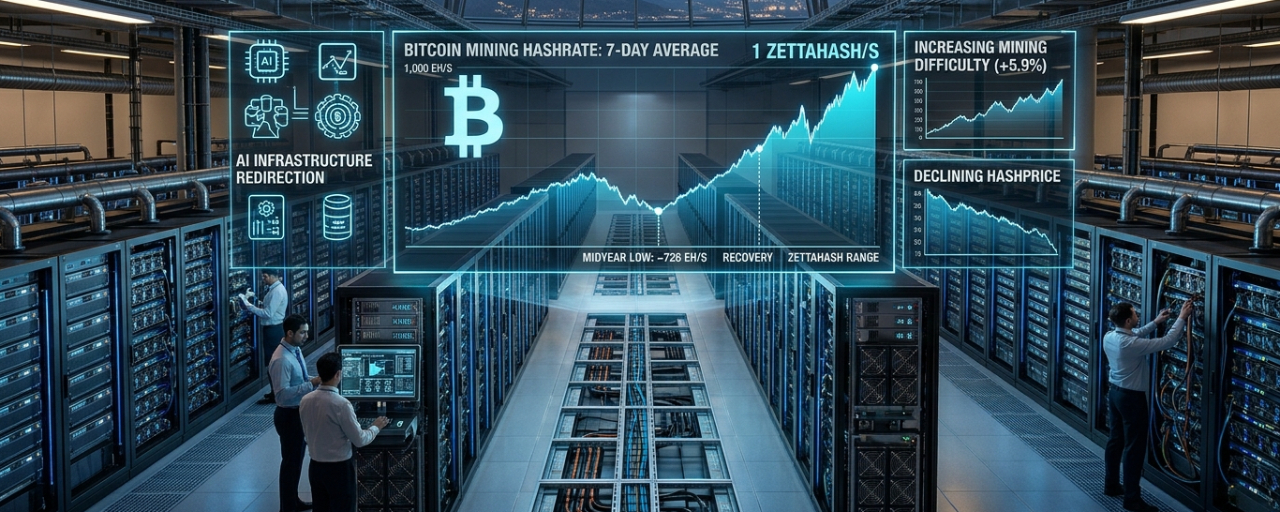
Bitcoin Mining Hashrate Returns to 1 Zettahash as Competition IntensifiesBitcoin’s seven-day average mining hashrate has returned to approximately 1 zettahash per second (ZH/s), equivalent to 1,000 exahashes per second, reaching its highest level since March 3, 2026. The recovery from a midyear low of around 726 EH/s highlights the growing computational power dedicated to securing the Bitcoin network and competing for block rewards. $BTC
{future}(BTCUSDT)
This rebound comes despite several major publicly traded mining companies redirecting part of their infrastructure toward artificial intelligence (AI) and high-performance computing. More efficient next-generation mining machines, combined with smaller and private operators bringing existing equipment back into use, have helped restore Bitcoin’s mining capacity. The development suggests that mining incentives remain strong enough to attract computing resources even as some large operators diversify into AI. $SOL
{future}(SOLUSDT)
However, rising hashrate also intensifies competition among miners. Mining difficulty increased by approximately 5.9% in the latest adjustment and could rise by another 5% if current conditions persist. At the same time, declining hashprice and weaker Bitcoin prices are putting pressure on mining revenue, particularly for operators with older equipment or high electricity costs. Although higher hashrate strengthens network security by making attacks more expensive, it also means that only the most efficient miners may remain consistently profitable. The next difficulty adjustment, Bitcoin’s price, electricity costs, and hashprice will be key indicators of whether this growth can continue sustainably. $XRP
{future}(XRPUSDT)
#bitcoin #Bitcoinmining #BlockchainSecurity
Bitcoin Mining Hashrate Returns to 1 Zettahash as Competition Intensifies
Bitcoin’s seven-day average mining hashrate has returned to approximately 1 zettahash per second (ZH/s), equivalent to 1,000 exahashes per second, reaching its highest level since March 3, 2026. The recovery from a midyear low of around 726 EH/s highlights the growing computational power dedicated to securing the Bitcoin network and competing for block rewards. $BTC
This rebound comes despite several major publicly traded mining companies redirecting part of their infrastructure toward artificial intelligence (AI) and high-performance computing. More efficient next-generation mining machines, combined with smaller and private operators bringing existing equipment back into use, have helped restore Bitcoin’s mining capacity. The development suggests that mining incentives remain strong enough to attract computing resources even as some large operators diversify into AI. $SOL
However, rising hashrate also intensifies competition among miners. Mining difficulty increased by approximately 5.9% in the latest adjustment and could rise by another 5% if current conditions persist. At the same time, declining hashprice and weaker Bitcoin prices are putting pressure on mining revenue, particularly for operators with older equipment or high electricity costs. Although higher hashrate strengthens network security by making attacks more expensive, it also means that only the most efficient miners may remain consistently profitable. The next difficulty adjustment, Bitcoin’s price, electricity costs, and hashprice will be key indicators of whether this growth can continue sustainably. $XRP
#bitcoin #Bitcoinmining #BlockchainSecurity
1
18
3.4k
·
--
Article
Crypto Market Narratives Shift Toward Regulatory Clarity and Government AdoptionThe crypto market is increasingly shaped by regulatory developments, government involvement, and major industry platforms. According to CoinMarketCap’s narrative tracking, the SEC/CFTC Digital Commodities theme rose 25.93% over 90 days, driven by expectations of clearer rules for major crypto assets such as Bitcoin, Ethereum, Solana, and XRP. A more defined regulatory framework could reduce legal uncertainty and potentially encourage institutional participation, although the long-term impact depends on further legislative developments, including the proposed CLARITY Act. $BTC
{future}(BTCUSDT)
Meanwhile, the US Strategic Crypto Reserve narrative gained 26.17% over 90 days, reflecting market interest in the United States’ plans for a government-held crypto reserve. Supporters view this initiative as a potential signal of long-term institutional acceptance, although its actual market impact will depend on official policies and future reserve decisions. The Binance Ecosystem narrative also advanced 23.57% over the same period, supported by Binance’s extensive user base and deep liquidity. However, weakening trading volumes suggest that continued growth may depend more on overall crypto market conditions than on the ecosystem’s expansion alone. $ETH
{future}(ETHUSDT)
Overall, these trends highlight how regulatory clarity and government involvement are influencing crypto market sentiment, while major trading platforms continue to provide liquidity and market access. The next developments to watch include progress on the CLARITY Act, official announcements concerning the US crypto reserve, and regulatory changes affecting Binance in key markets. Whether these factors can sustain investor interest will depend on how policy expectations translate into concrete implementation and lasting market activity. $SOL
{future}(SOLUSDT)
#CryptoRegulationBattle #bitcoin #CryptoMarket
Crypto Market Narratives Shift Toward Regulatory Clarity and Government Adoption
The crypto market is increasingly shaped by regulatory developments, government involvement, and major industry platforms. According to CoinMarketCap’s narrative tracking, the SEC/CFTC Digital Commodities theme rose 25.93% over 90 days, driven by expectations of clearer rules for major crypto assets such as Bitcoin, Ethereum, Solana, and XRP. A more defined regulatory framework could reduce legal uncertainty and potentially encourage institutional participation, although the long-term impact depends on further legislative developments, including the proposed CLARITY Act. $BTC
Meanwhile, the US Strategic Crypto Reserve narrative gained 26.17% over 90 days, reflecting market interest in the United States’ plans for a government-held crypto reserve. Supporters view this initiative as a potential signal of long-term institutional acceptance, although its actual market impact will depend on official policies and future reserve decisions. The Binance Ecosystem narrative also advanced 23.57% over the same period, supported by Binance’s extensive user base and deep liquidity. However, weakening trading volumes suggest that continued growth may depend more on overall crypto market conditions than on the ecosystem’s expansion alone. $ETH
Overall, these trends highlight how regulatory clarity and government involvement are influencing crypto market sentiment, while major trading platforms continue to provide liquidity and market access. The next developments to watch include progress on the CLARITY Act, official announcements concerning the US crypto reserve, and regulatory changes affecting Binance in key markets. Whether these factors can sustain investor interest will depend on how policy expectations translate into concrete implementation and lasting market activity. $SOL
#CryptoRegulationBattle #bitcoin #CryptoMarket
2
19
5.8k
·
--
Article
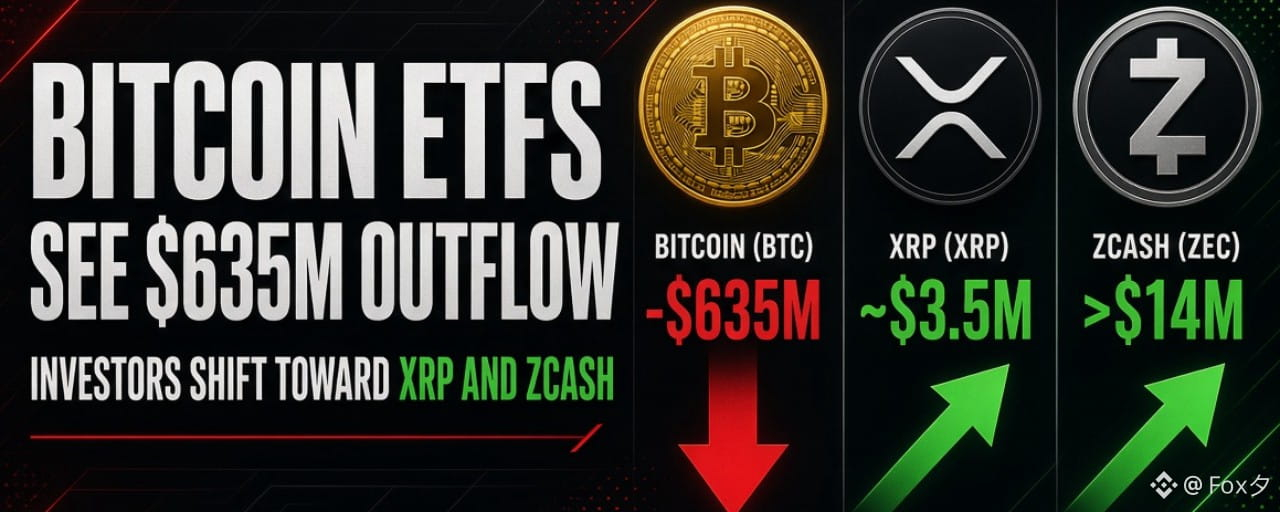
Bitcoin ETFs See $635M Outflow as Investors Shift Toward XRP and ZcashU.S. spot Bitcoin ETFs recorded approximately $635 million in net outflows on October 22, marking their largest single-day withdrawal since June and reversing much of the recent inflow momentum. Major funds, including BlackRock’s IBIT and Fidelity’s FBTC, accounted for more than 70% of the outflows, highlighting how quickly institutional sentiment toward Bitcoin can shift amid rising market uncertainty. Despite the withdrawals, total assets under management across Bitcoin ETFs remained above $100 billion. $XRP
{future}(XRPUSDT)
While Bitcoin and Ethereum ETFs faced significant selling pressure, XRP and Zcash products attracted fresh capital. Spot XRP ETFs reportedly recorded around $3.5 million to $3.6 million in net inflows, while Grayscale’s Zcash product attracted more than $14 million. Meanwhile, Ethereum ETFs lost approximately $110 million, and Solana and other altcoin products also experienced outflows. This selective movement suggests that some institutional investors are reallocating capital toward specific altcoin narratives rather than abandoning crypto assets altogether. $BTC
{future}(BTCUSDT)
Broader macroeconomic concerns, including weakness in AI-related technology stocks, rising oil prices, and economic uncertainty, contributed to the cautious market environment. Bitcoin’s ability to hold the $80,000 – $86,000 range, the direction of daily ETF flows, and whether XRP continues attracting institutional capital will be crucial indicators to watch. Ultimately, the latest figures highlight the fragility of institutional demand for Bitcoin while showing that capital remains willing to pursue selected altcoin opportunities. Whether this represents a temporary market adjustment or a more lasting shift in institutional allocation will depend on the coming weeks of ETF flows and price action. $SOL
{future}(SOLUSDT)
#BitcoinETF #xrp #CryptoMarket
Bitcoin ETFs See $635M Outflow as Investors Shift Toward XRP and Zcash
U.S. spot Bitcoin ETFs recorded approximately $635 million in net outflows on October 22, marking their largest single-day withdrawal since June and reversing much of the recent inflow momentum. Major funds, including BlackRock’s IBIT and Fidelity’s FBTC, accounted for more than 70% of the outflows, highlighting how quickly institutional sentiment toward Bitcoin can shift amid rising market uncertainty. Despite the withdrawals, total assets under management across Bitcoin ETFs remained above $100 billion. $XRP
While Bitcoin and Ethereum ETFs faced significant selling pressure, XRP and Zcash products attracted fresh capital. Spot XRP ETFs reportedly recorded around $3.5 million to $3.6 million in net inflows, while Grayscale’s Zcash product attracted more than $14 million. Meanwhile, Ethereum ETFs lost approximately $110 million, and Solana and other altcoin products also experienced outflows. This selective movement suggests that some institutional investors are reallocating capital toward specific altcoin narratives rather than abandoning crypto assets altogether. $BTC
Broader macroeconomic concerns, including weakness in AI-related technology stocks, rising oil prices, and economic uncertainty, contributed to the cautious market environment. Bitcoin’s ability to hold the $80,000 – $86,000 range, the direction of daily ETF flows, and whether XRP continues attracting institutional capital will be crucial indicators to watch. Ultimately, the latest figures highlight the fragility of institutional demand for Bitcoin while showing that capital remains willing to pursue selected altcoin opportunities. Whether this represents a temporary market adjustment or a more lasting shift in institutional allocation will depend on the coming weeks of ETF flows and price action. $SOL
#BitcoinETF #xrp #CryptoMarket
5
19
7.3k
·
--
Article
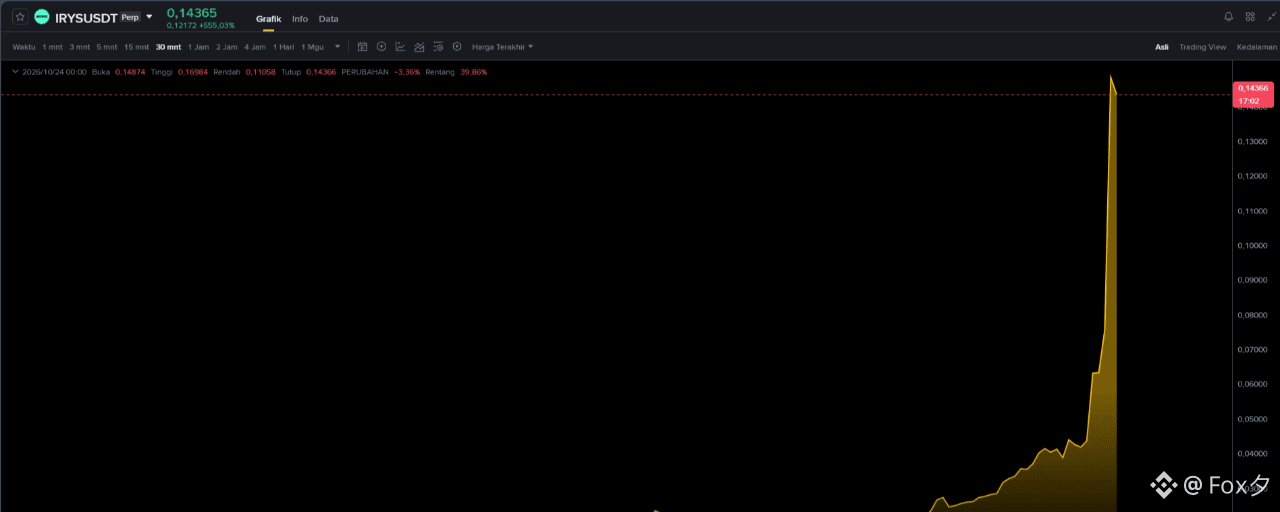
Irys (IRYS) Surges 534% as Speculative Trading Fuels a High-Risk RallyIrys (IRYS) surged 534.24% in 24 hours to $0.137, dramatically outperforming a largely flat crypto market. The rally was primarily driven by a sharp increase in speculative trading activity, with trading volume climbing 421.53% to $745.87 million. A 24-hour turnover ratio of 2.12 suggests exceptionally intense market activity, indicating that the price surge was fueled more by liquidity flows than by clearly identifiable fundamental developments.
No specific news, partnerships, or protocol upgrades have emerged to explain the rally. With Bitcoin rising only 0.54%, IRYS’s performance appears largely disconnected from the broader market and more closely tied to a sudden shift in speculative demand for riskier assets. Although momentum remains strong, the lack of a clear catalyst makes the rally vulnerable to a rapid reversal if buying pressure weakens.
In the short term, maintaining strong trading activity above $0.12 could help IRYS retest the local high near $0.14. However, a decline below $0.10 could trigger a sharper correction as overheated momentum fades and leveraged positions face liquidation. A sustained drop in daily trading volume below $200 million could also signal weakening demand. Ultimately, IRYS’s outlook remains bullish in terms of momentum but highly risky, with the rally’s sustainability depending on whether trading volume can remain elevated above $500 million or quickly retreats toward pre-surge levels.
#Irys $IRYS
{alpha}(560x91152b4ef635403efbae860edd0f8c321d7c035d)
{future}(IRYSUSDT)
Irys (IRYS) Surges 534% as Speculative Trading Fuels a High-Risk Rally
Irys (IRYS) surged 534.24% in 24 hours to $0.137, dramatically outperforming a largely flat crypto market. The rally was primarily driven by a sharp increase in speculative trading activity, with trading volume climbing 421.53% to $745.87 million. A 24-hour turnover ratio of 2.12 suggests exceptionally intense market activity, indicating that the price surge was fueled more by liquidity flows than by clearly identifiable fundamental developments.
No specific news, partnerships, or protocol upgrades have emerged to explain the rally. With Bitcoin rising only 0.54%, IRYS’s performance appears largely disconnected from the broader market and more closely tied to a sudden shift in speculative demand for riskier assets. Although momentum remains strong, the lack of a clear catalyst makes the rally vulnerable to a rapid reversal if buying pressure weakens.
In the short term, maintaining strong trading activity above $0.12 could help IRYS retest the local high near $0.14. However, a decline below $0.10 could trigger a sharper correction as overheated momentum fades and leveraged positions face liquidation. A sustained drop in daily trading volume below $200 million could also signal weakening demand. Ultimately, IRYS’s outlook remains bullish in terms of momentum but highly risky, with the rally’s sustainability depending on whether trading volume can remain elevated above $500 million or quickly retreats toward pre-surge levels.
#Irys $IRYS
11
1.2k
·
--
Verified

Article
Dogecoin Expands Its Institutional Reach as New Initiatives Aim to Build a Real DOGE EconomyDogecoin is entering a new phase as institutional investment opportunities expand and fresh initiatives aim to increase the cryptocurrency’s real-world utility. On October 22, 2026, Grayscale extended in-kind subscriptions to Dogecoin across its investment products, allowing eligible accredited investors to exchange DOGE directly for fund shares. Although this creates a more convenient route for institutional capital, the minimum investment for its Dogecoin product is approximately $95,550, limiting access for retail investors and potentially reducing its immediate impact on the broader market.
Meanwhile, the Dogecoin Foundation has supported the launch of Dogecoin Labs, an independent company bringing together the MyDoge wallet, DogeOS, and the Such App merchant payment tool. With MyDoge reportedly serving more than 500,000 users, the initiative aims to expand DOGE into consumer applications, decentralized finance, and merchant payments. However, DogeOS remains in public testnet, and publicly available data on active users and completed payment volumes is still limited, making actual adoption difficult to assess.
Despite these developments, the broader meme coin market remains under pressure. Its total market capitalization has reportedly fallen from $35.1 billion to $29.7 billion since early October, while Dogecoin’s market capitalization stands at around $12.4 billion after a decline of approximately 15% in recent weeks. DOGE continues to lead the sector, but its price remains vulnerable to market sentiment and speculative trading. Ultimately, Grayscale’s institutional access and Dogecoin Labs offer potential long-term catalysts, but sustained growth will depend on whether these initiatives generate measurable adoption and genuine demand beyond Dogecoin’s meme-driven appeal.
#DOGE $DOGE
{future}(DOGEUSDT)
{spot}(DOGEUSDT)
Dogecoin Expands Its Institutional Reach as New Initiatives Aim to Build a Real DOGE Economy
Dogecoin is entering a new phase as institutional investment opportunities expand and fresh initiatives aim to increase the cryptocurrency’s real-world utility. On October 22, 2026, Grayscale extended in-kind subscriptions to Dogecoin across its investment products, allowing eligible accredited investors to exchange DOGE directly for fund shares. Although this creates a more convenient route for institutional capital, the minimum investment for its Dogecoin product is approximately $95,550, limiting access for retail investors and potentially reducing its immediate impact on the broader market.
Meanwhile, the Dogecoin Foundation has supported the launch of Dogecoin Labs, an independent company bringing together the MyDoge wallet, DogeOS, and the Such App merchant payment tool. With MyDoge reportedly serving more than 500,000 users, the initiative aims to expand DOGE into consumer applications, decentralized finance, and merchant payments. However, DogeOS remains in public testnet, and publicly available data on active users and completed payment volumes is still limited, making actual adoption difficult to assess.
Despite these developments, the broader meme coin market remains under pressure. Its total market capitalization has reportedly fallen from $35.1 billion to $29.7 billion since early October, while Dogecoin’s market capitalization stands at around $12.4 billion after a decline of approximately 15% in recent weeks. DOGE continues to lead the sector, but its price remains vulnerable to market sentiment and speculative trading. Ultimately, Grayscale’s institutional access and Dogecoin Labs offer potential long-term catalysts, but sustained growth will depend on whether these initiatives generate measurable adoption and genuine demand beyond Dogecoin’s meme-driven appeal.
#DOGE $DOGE
1
12
9.2k
Log in to explore more content
Join global crypto users on Binance Square
⚡️ Get latest and useful information about crypto.
💬 Trusted by the world’s largest crypto exchange.
👍 Discover real insights from verified creators.
Email / Phone number
Trending Topics
NvidiaLoses$2.7TrillionInMonthAndAHalf
4,784 views
67 Discussing
Nvidia’s $2.7 Trillion Wipeout: When Narrative Overrides Numbers 📉
Crypto With Faisal
·4 Likes
·2.4k views
CanBTCReboundAfterFallingBelow60K?
605,630 views
2,574 Discussing
GlobalStocksFaceLongestLosingStreakSince2023
211,695 views
1,780 Discussing