

Mastering Crypto
16.6k Posts
Mastering Crypto
 Square Verified+
Report
Block User
Twitter(X) @ MasteringCrypt

Creator Awards 2024

Traders League Badge Expert

#BinanceTurns7 task 2
Open Trade
High-Frequency Trader
4.6 Years
241 Following
398.9K+ Followers
242.2K+ Liked
5 Badges
Posts
Portfolio
All
Quotes
Videos
Live
PINNED
Unlock $1000 USDT Daily With Futures 🗝
Not one… not two…
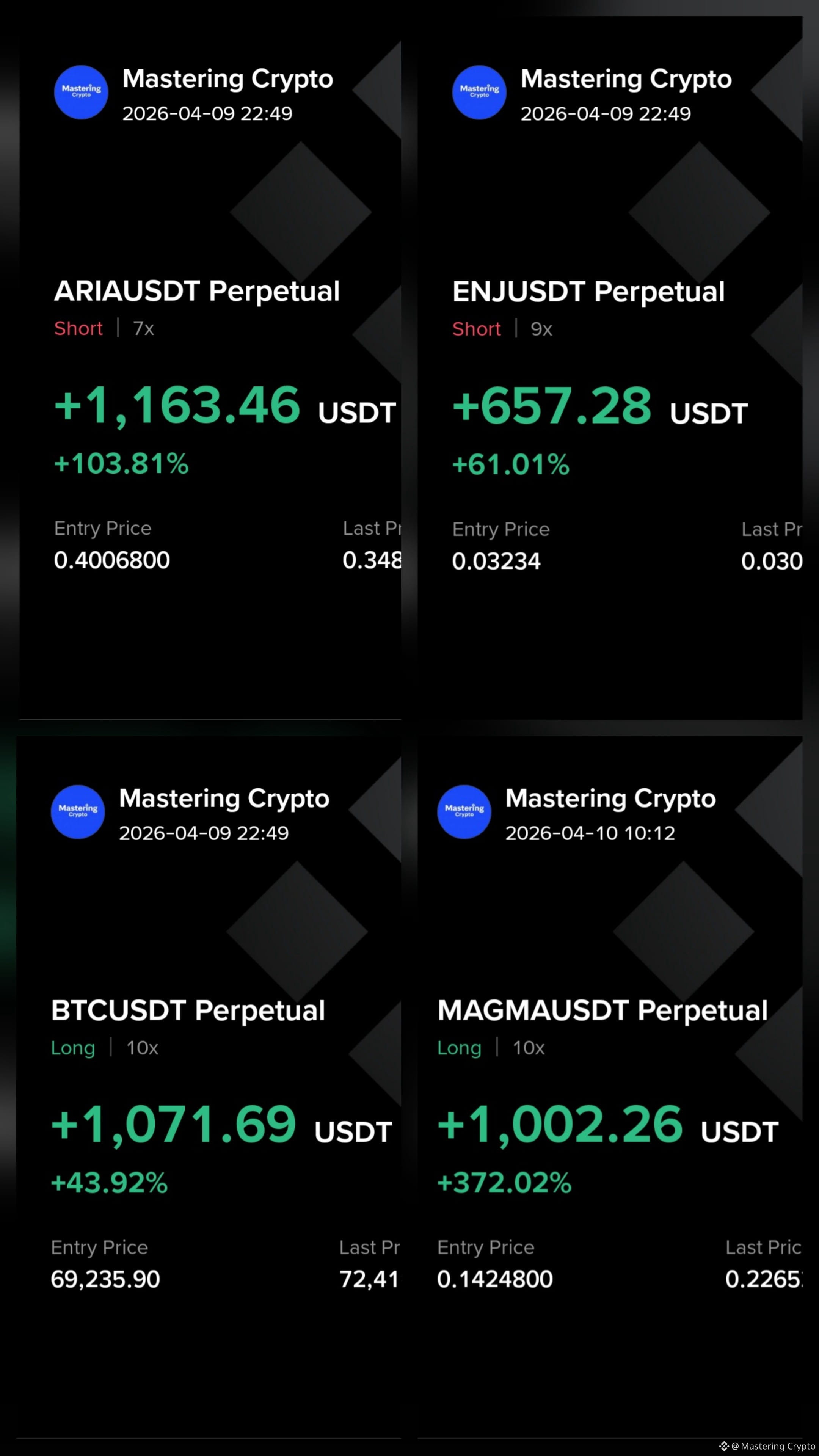
FOUR trades. All were green.💚
[Join My Premium Club For Highly Profitable Trades](https://app.binance.com/uni-qr/group-chat-landing?channelToken=jMv1tS4NA7v8KtC8c1jFqw&type=1&entrySource=sharing_link)
$ARIA short… +$1,163 ✅
$BTC long… +$1,071 ✅
$ENJ short… +$657 ✅
$MAGMA long… +$1,002 ✅
That's over $3,800 in a single day 👀
And every single one of these…
was shared inside my Premium Group
before it happened. 🤝
If you're still trading alone…
still staring at charts for hours…
still ending the day in red…
I want to ask you something honestly…
How long are you going to keep doing this? 💀
Because while you were losing…
my members were printing.
Not because they're lucky…
not because they're experts…
Some of them were complete beginners
just weeks ago 😏
The difference?
They stopped guessing…
and started following a system that works.
Every single day inside my group👇🏻
Real trade setups before the move ✅
Entry, TP, SL… everything clear ✅
Futures trading explained simply ✅
Results like these… daily 💰
No confusion. No noise.
Just clean trades and real profits.
If you're tired of losses…
tired of watching others win…
tired of not knowing what you're doing…
This is your moment 👀
Spots are limited…
and they're filling fast 🚨
The question is simple…
are you going to keep losing alone…
or start winning with us? 💯
{future}(ARIAUSDT)
{future}(BTCUSDT)
{future}(ENJUSDT)
#freedomofmoney #CZonTBPNInterview
Unlock $1000 USDT Daily With Futures 🗝
Not one… not two…
FOUR trades. All were green.💚
Join My Premium Club For Highly Profitable Trades
$ARIA short… +$1,163 ✅
$BTC long… +$1,071 ✅
$ENJ short… +$657 ✅
$MAGMA long… +$1,002 ✅
That's over $3,800 in a single day 👀
And every single one of these…
was shared inside my Premium Group
before it happened. 🤝
If you're still trading alone…
still staring at charts for hours…
still ending the day in red…
I want to ask you something honestly…
How long are you going to keep doing this? 💀
Because while you were losing…
my members were printing.
Not because they're lucky…
not because they're experts…
Some of them were complete beginners
just weeks ago 😏
The difference?
They stopped guessing…
and started following a system that works.
Every single day inside my group👇🏻
Real trade setups before the move ✅
Entry, TP, SL… everything clear ✅
Futures trading explained simply ✅
Results like these… daily 💰
No confusion. No noise.
Just clean trades and real profits.
If you're tired of losses…
tired of watching others win…
tired of not knowing what you're doing…
This is your moment 👀
Spots are limited…
and they're filling fast 🚨
The question is simple…
are you going to keep losing alone…
or start winning with us? 💯
#freedomofmoney #CZonTBPNInterview
Not one… not two…
FOUR trades. All were green.💚
Join My Premium Club For Highly Profitable Trades
$ARIA short… +$1,163 ✅
$BTC long… +$1,071 ✅
$ENJ short… +$657 ✅
$MAGMA long… +$1,002 ✅
That's over $3,800 in a single day 👀
And every single one of these…
was shared inside my Premium Group
before it happened. 🤝
If you're still trading alone…
still staring at charts for hours…
still ending the day in red…
I want to ask you something honestly…
How long are you going to keep doing this? 💀
Because while you were losing…
my members were printing.
Not because they're lucky…
not because they're experts…
Some of them were complete beginners
just weeks ago 😏
The difference?
They stopped guessing…
and started following a system that works.
Every single day inside my group👇🏻
Real trade setups before the move ✅
Entry, TP, SL… everything clear ✅
Futures trading explained simply ✅
Results like these… daily 💰
No confusion. No noise.
Just clean trades and real profits.
If you're tired of losses…
tired of watching others win…
tired of not knowing what you're doing…
This is your moment 👀
Spots are limited…
and they're filling fast 🚨
The question is simple…
are you going to keep losing alone…
or start winning with us? 💯
#freedomofmoney #CZonTBPNInterview
81
3
75
9.2k
PINNED
Enjoy high class trading signals and generate more revenue with less risk on Binance Futures. 📈
[Join here 👈](https://app.binance.com/uni-qr/group-chat-landing?channelToken=jMv1tS4NA7v8KtC8c1jFqw&type=1&entrySource=sharing_link)
Join my premium group and support Mastering Crypto Ecosystem on Binance.
You will get all trading related help and early signals to maximize your profits.
Stop losing and start making real cash 💸
Enjoy high class trading signals and generate more revenue with less risk on Binance Futures. 📈
Join here 👈
Join my premium group and support Mastering Crypto Ecosystem on Binance.
You will get all trading related help and early signals to maximize your profits.
Stop losing and start making real cash 💸
Join here 👈
Join my premium group and support Mastering Crypto Ecosystem on Binance.
You will get all trading related help and early signals to maximize your profits.
Stop losing and start making real cash 💸
29
1
46
882
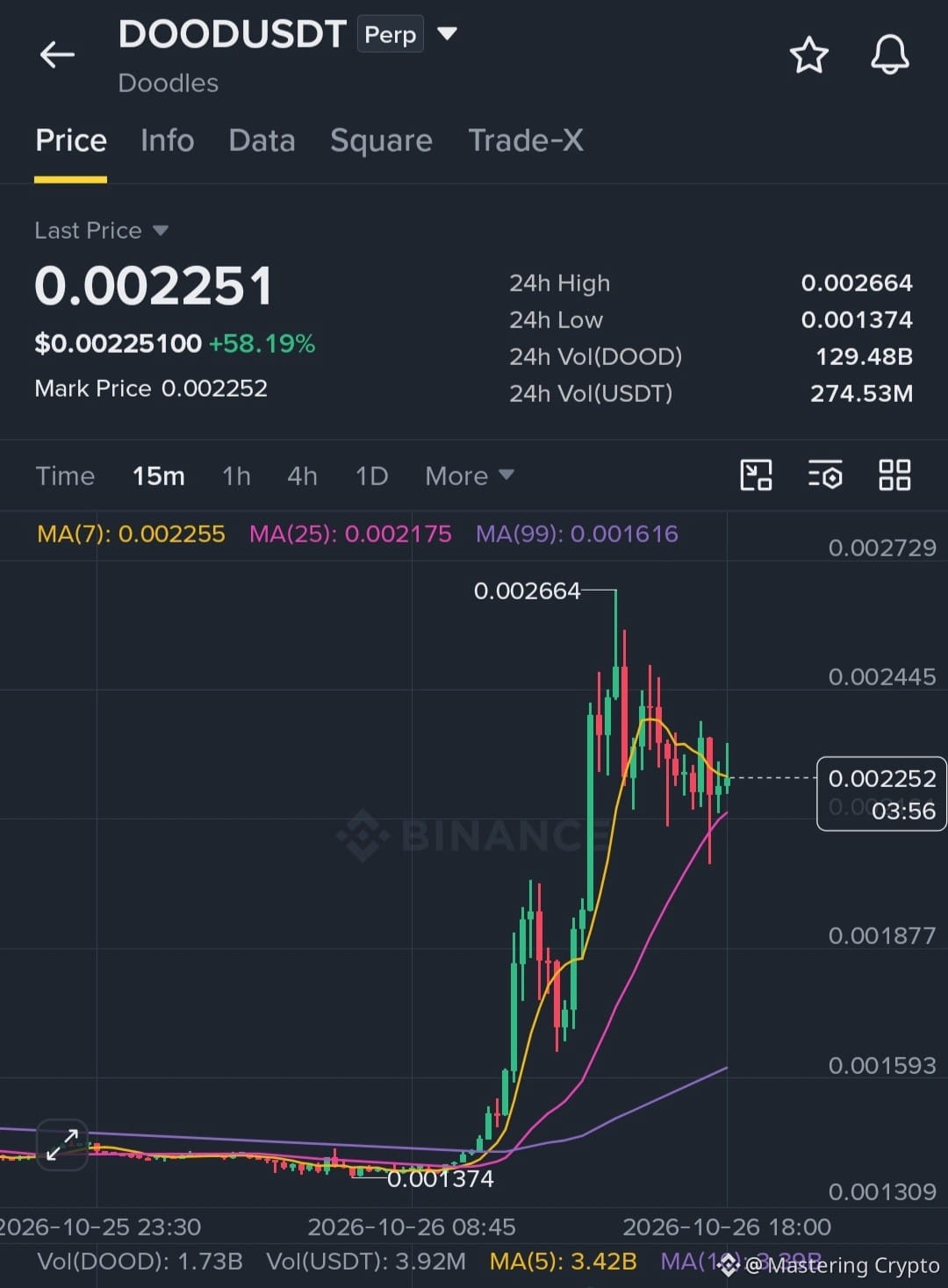
$DOOD stuck in the distribution
Short $DOOD (DCA Entries)
EP1: 0.00225 – 50%
EP2: 0.00245 – 30%
EP3: 0.00265 – 20%
SL: 0.00325
TP1: 0.00215
TP2: 0.00200
TP3: 0.00185
TP4: 0.00165
Note: If EP2 and EP3 are not reached, enter 100% at EP1.
🫂 Join my Binance Group Chat and Let’s together win every trade.
Trade $DOOD here 👇
{future}(DOODUSDT)
$DOOD stuck in the distribution
Short $DOOD (DCA Entries)
EP1: 0.00225 – 50%
EP2: 0.00245 – 30%
EP3: 0.00265 – 20%
SL: 0.00325
TP1: 0.00215
TP2: 0.00200
TP3: 0.00185
TP4: 0.00165
Note: If EP2 and EP3 are not reached, enter 100% at EP1.
🫂 Join my Binance Group Chat and Let’s together win every trade.
Trade $DOOD here 👇
Short $DOOD (DCA Entries)
EP1: 0.00225 – 50%
EP2: 0.00245 – 30%
EP3: 0.00265 – 20%
SL: 0.00325
TP1: 0.00215
TP2: 0.00200
TP3: 0.00185
TP4: 0.00165
Note: If EP2 and EP3 are not reached, enter 100% at EP1.
🫂 Join my Binance Group Chat and Let’s together win every trade.
Trade $DOOD here 👇
421
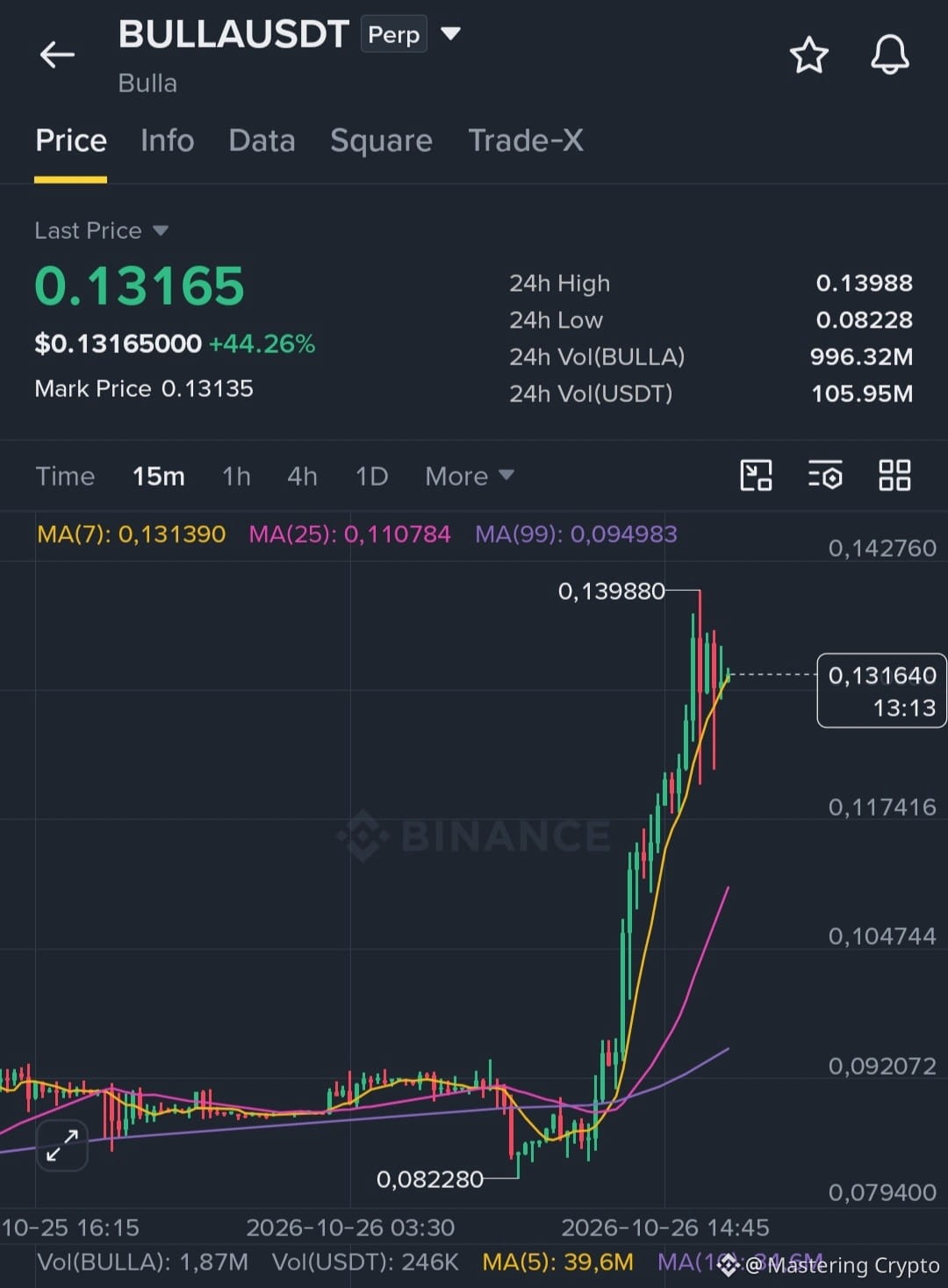
$BULLA Bulls Are Charging Toward Higher Levels
Long $BULLA (DCA Entries)
EP1: 0.126 – 60%
EP2: 0.123 – 20%
EP3: 0.118 – 20%
SL: 0.112
TP1: 0.1400
TP2: 0.1480
TP3: 0.1550
TP4: 0.1650
Note : If EP2 and EP3 are not reached then enter 100% at EP1.
🫂 Join my Binance Group Chat and Let’s together win every trade.
Trade $BULLA here 👇
{future}(BULLAUSDT)
$BULLA Bulls Are Charging Toward Higher Levels
Long $BULLA (DCA Entries)
EP1: 0.126 – 60%
EP2: 0.123 – 20%
EP3: 0.118 – 20%
SL: 0.112
TP1: 0.1400
TP2: 0.1480
TP3: 0.1550
TP4: 0.1650
Note : If EP2 and EP3 are not reached then enter 100% at EP1.
🫂 Join my Binance Group Chat and Let’s together win every trade.
Trade $BULLA here 👇
Long $BULLA (DCA Entries)
EP1: 0.126 – 60%
EP2: 0.123 – 20%
EP3: 0.118 – 20%
SL: 0.112
TP1: 0.1400
TP2: 0.1480
TP3: 0.1550
TP4: 0.1650
Note : If EP2 and EP3 are not reached then enter 100% at EP1.
🫂 Join my Binance Group Chat and Let’s together win every trade.
Trade $BULLA here 👇
2
296
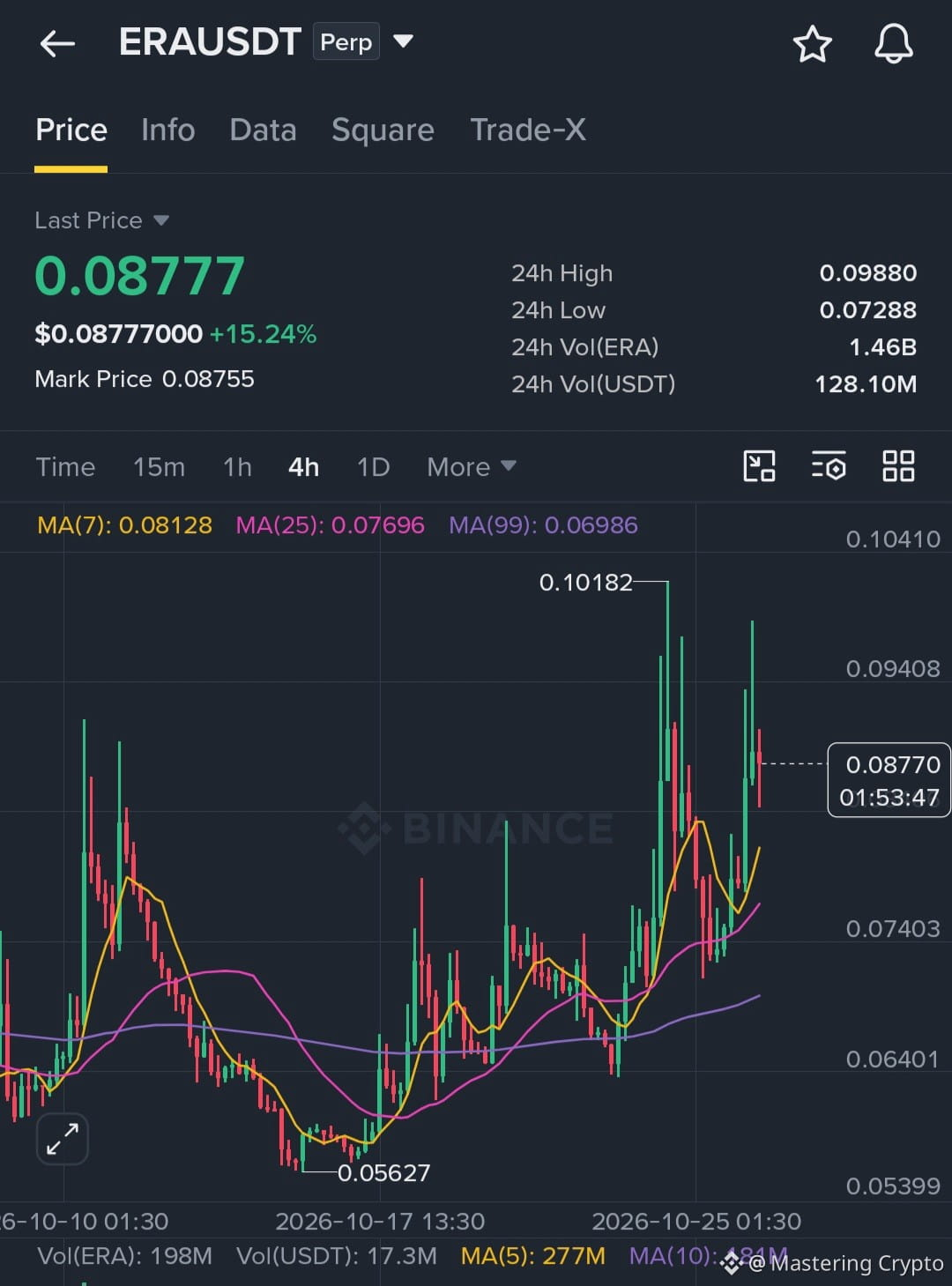
$ERA is stuck in the distribution
Short $ERA (DCA Entries)
EP1: 0.090 – 40%
EP2: 0.095 – 30%
EP3: 0.105 – 30%
SL: 0.135
TP1: 0.0830
TP2: 0.0790
TP3: 0.0740
TP4: 0.0700
Note: If EP2 and EP3 are not reached, enter 100% at EP1.
🫂 Join my Binance Group Chat and Let’s together win every trade.
Trade $ERA here 👇
{future}(ERAUSDT)
$ERA is stuck in the distribution
Short $ERA (DCA Entries)
EP1: 0.090 – 40%
EP2: 0.095 – 30%
EP3: 0.105 – 30%
SL: 0.135
TP1: 0.0830
TP2: 0.0790
TP3: 0.0740
TP4: 0.0700
Note: If EP2 and EP3 are not reached, enter 100% at EP1.
🫂 Join my Binance Group Chat and Let’s together win every trade.
Trade $ERA here 👇
Short $ERA (DCA Entries)
EP1: 0.090 – 40%
EP2: 0.095 – 30%
EP3: 0.105 – 30%
SL: 0.135
TP1: 0.0830
TP2: 0.0790
TP3: 0.0740
TP4: 0.0700
Note: If EP2 and EP3 are not reached, enter 100% at EP1.
🫂 Join my Binance Group Chat and Let’s together win every trade.
Trade $ERA here 👇
363
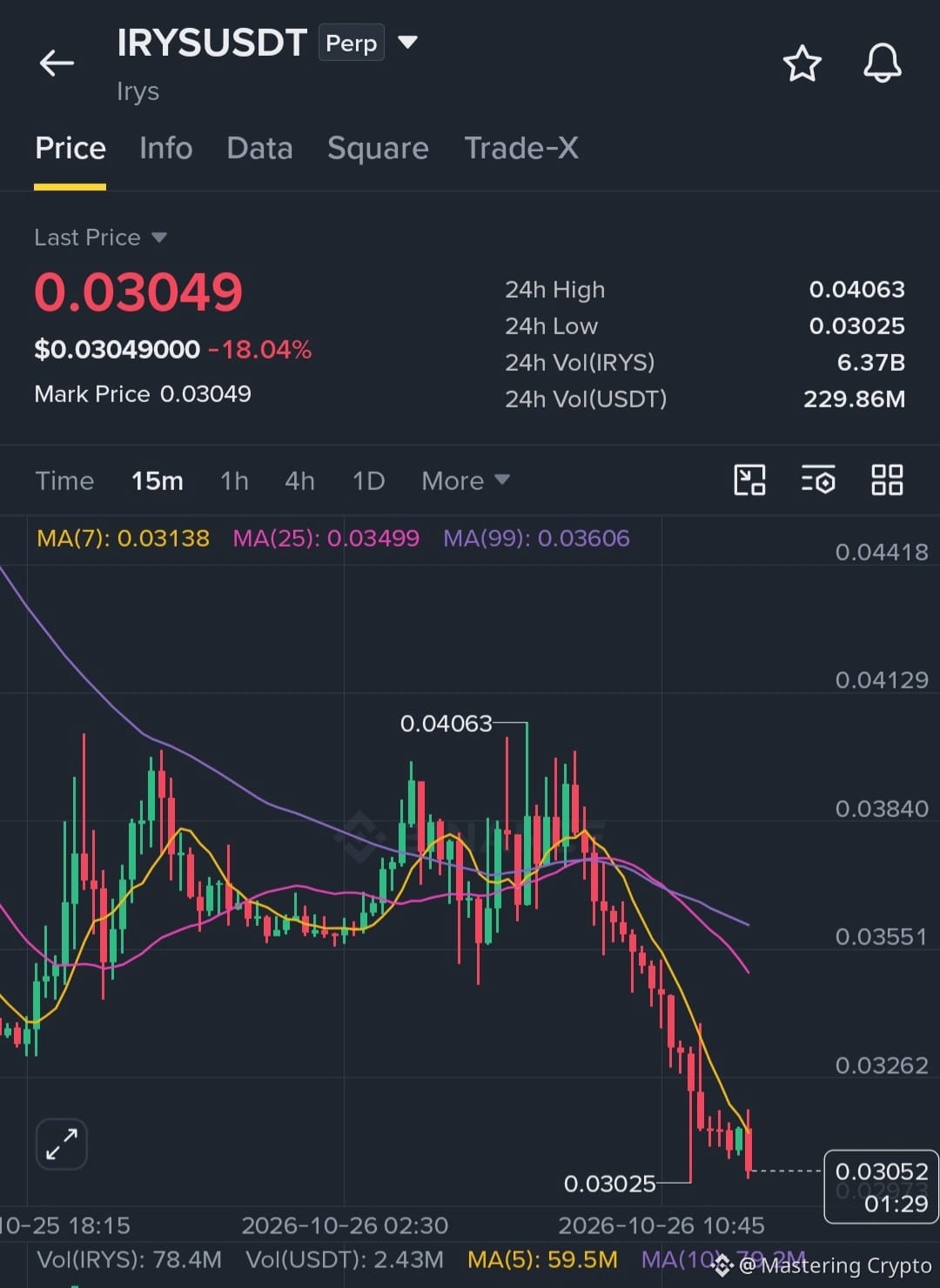
$IRYS Sellers Are Pushing Hard for a Deeper Correction
Short $IRYS (DCA Entries)
EP1: 0.0305 – 60%
EP2: 0.0325 – 20%
EP3: 0.0350 – 20%
SL: 0.0450
TP1: 0.0300
TP2: 0.0280
TP3: 0.0240
TP4: 0.0200
Note: If EP2 and EP3 are not reached, enter 100% at EP1.
🫂 Join my Binance Group Chat and Let’s together win every trade.
Trade $IRYS here 👇
{future}(IRYSUSDT)
$IRYS Sellers Are Pushing Hard for a Deeper Correction
Short $IRYS (DCA Entries)
EP1: 0.0305 – 60%
EP2: 0.0325 – 20%
EP3: 0.0350 – 20%
SL: 0.0450
TP1: 0.0300
TP2: 0.0280
TP3: 0.0240
TP4: 0.0200
Note: If EP2 and EP3 are not reached, enter 100% at EP1.
🫂 Join my Binance Group Chat and Let’s together win every trade.
Trade $IRYS here 👇
Short $IRYS (DCA Entries)
EP1: 0.0305 – 60%
EP2: 0.0325 – 20%
EP3: 0.0350 – 20%
SL: 0.0450
TP1: 0.0300
TP2: 0.0280
TP3: 0.0240
TP4: 0.0200
Note: If EP2 and EP3 are not reached, enter 100% at EP1.
🫂 Join my Binance Group Chat and Let’s together win every trade.
Trade $IRYS here 👇
1
417
$ARIA long trade setup totally banged 🌋
$ARIA ong trade successfully hit all TPs and still running like a beast🤑
Imagine making an entry using my early long call at $0.087 and taking full profits at $0.07 for 15X leverage, look how much profit you would have made easily as of now💰
Everyone was giving you the short trade call only Mastering gave you the right long one and see at the results clearly🚀
My Binance Group chat members are growing daily with high quality trade setups like this 😍
Join my Binance group chat and enjoy daily trade setups to grow your capital with proper risk management 🫂
#ARİA has started changing trend now and next strategy will be given exclusively in my Binance group chat so better chase now or regret later 🌀
$ARIA long trade setup and My Binance Chat Group Entry below 👇
$ARIA long trade setup totally banged 🌋
$ARIA ong trade successfully hit all TPs and still running like a beast🤑
Imagine making an entry using my early long call at $0.087 and taking full profits at $0.07 for 15X leverage, look how much profit you would have made easily as of now💰
Everyone was giving you the short trade call only Mastering gave you the right long one and see at the results clearly🚀
My Binance Group chat members are growing daily with high quality trade setups like this 😍
Join my Binance group chat and enjoy daily trade setups to grow your capital with proper risk management 🫂
#ARİA has started changing trend now and next strategy will be given exclusively in my Binance group chat so better chase now or regret later 🌀
$ARIA long trade setup and My Binance Chat Group Entry below 👇
$ARIA ong trade successfully hit all TPs and still running like a beast🤑
Imagine making an entry using my early long call at $0.087 and taking full profits at $0.07 for 15X leverage, look how much profit you would have made easily as of now💰
Everyone was giving you the short trade call only Mastering gave you the right long one and see at the results clearly🚀
My Binance Group chat members are growing daily with high quality trade setups like this 😍
Join my Binance group chat and enjoy daily trade setups to grow your capital with proper risk management 🫂
#ARİA has started changing trend now and next strategy will be given exclusively in my Binance group chat so better chase now or regret later 🌀
$ARIA long trade setup and My Binance Chat Group Entry below 👇
Mastering Crypto
·
--
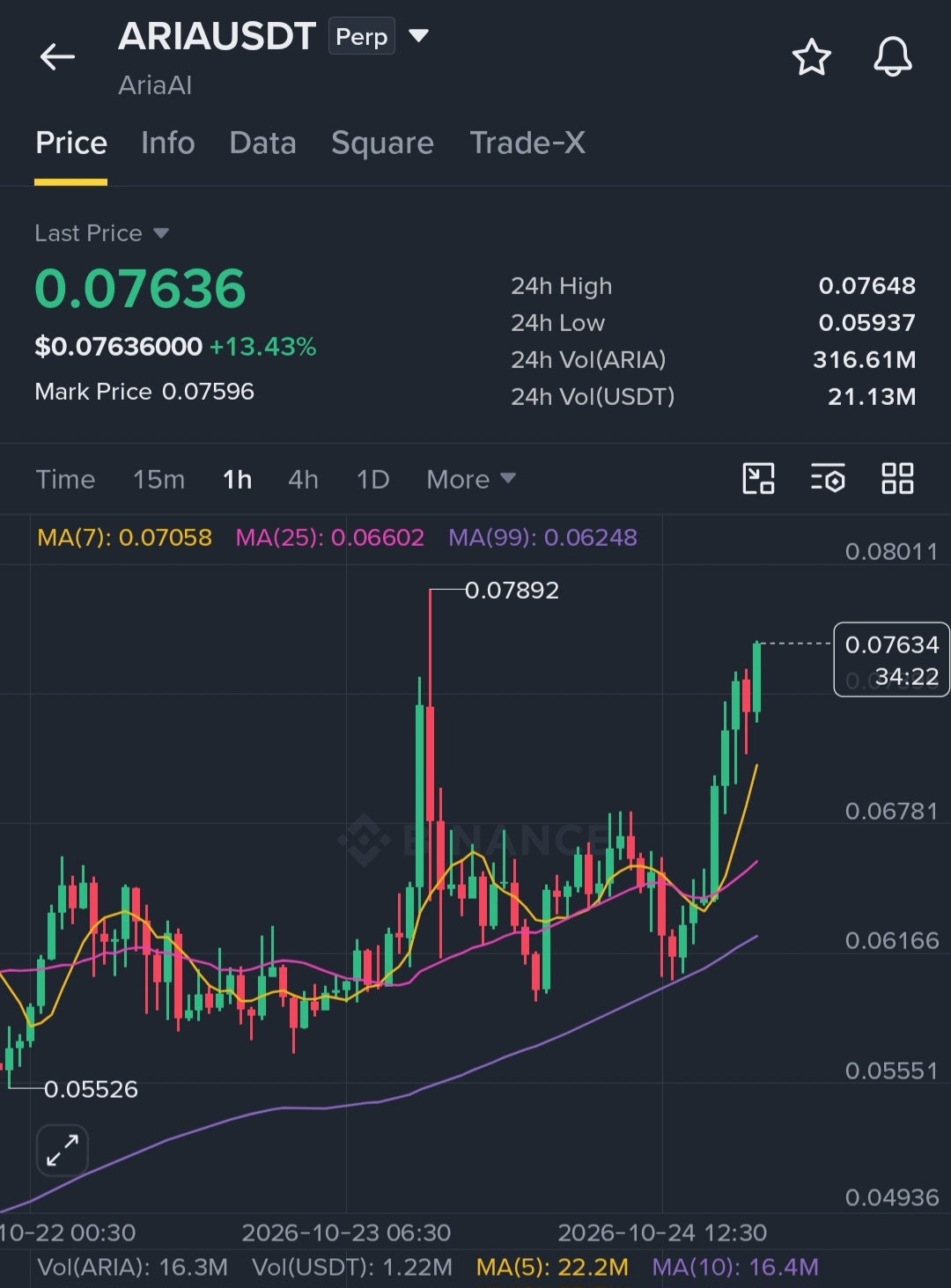
$ARIA Bulls Are Charging Toward Resistance
Long $ARIA (DCA Entries)
EP1: 0.0725 – 40%
EP2: 0.0700 – 30%
EP3: 0.0685 – 30%
SL: 0.0660
TP1: 0.0775
TP2: 0.0820
TP3: 0.0860
TP4: 0.0900
Note: If EP2 and EP3 are not reached then enter 100% at EP1.
🫂 Join my Binance Group Chat and Let’s together win every trade.
Trade $ARIA here 👇
Long $ARIA (DCA Entries)
EP1: 0.0725 – 40%
EP2: 0.0700 – 30%
EP3: 0.0685 – 30%
SL: 0.0660
TP1: 0.0775
TP2: 0.0820
TP3: 0.0860
TP4: 0.0900
Note: If EP2 and EP3 are not reached then enter 100% at EP1.
🫂 Join my Binance Group Chat and Let’s together win every trade.
Trade $ARIA here 👇
421
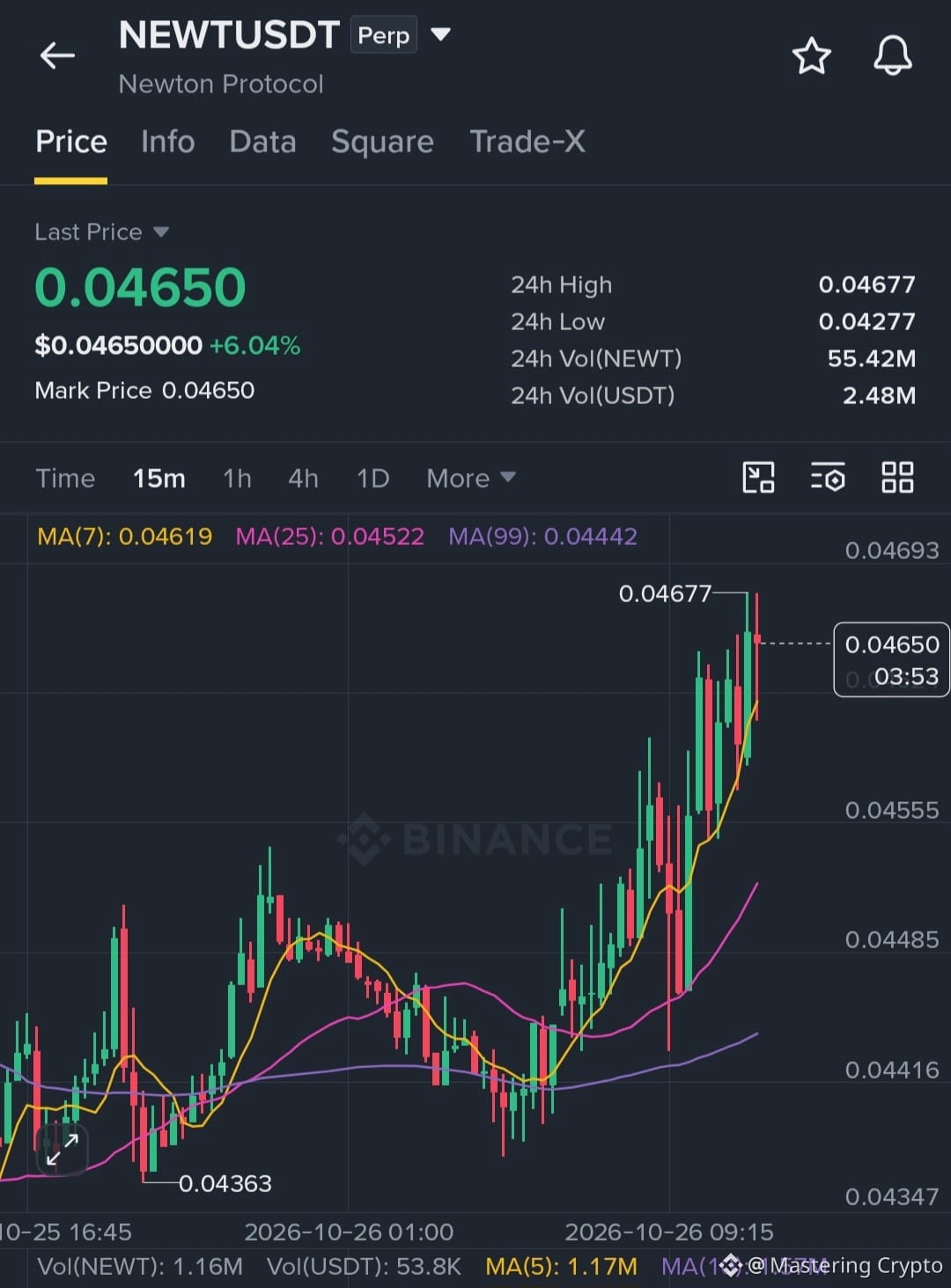
$NEWT Bulls Are Closing In on a Breakout
Long $NEWT (DCA Entries)
EP1: 0.0465 – 50%
EP2: 0.0455 – 30%
EP3: 0.0450 – 20%
SL: 0.0440
TP1: 0.0475
TP2: 0.0490
TP3: 0.0505
TP4: 0.0525
Note : If EP2 and EP3 are not reached then enter 100% at EP1.
🫂 Join my Binance Group Chat and Let’s together win every trade.
Trade $NEWT here 👇
{future}(NEWTUSDT)
$NEWT Bulls Are Closing In on a Breakout
Long $NEWT (DCA Entries)
EP1: 0.0465 – 50%
EP2: 0.0455 – 30%
EP3: 0.0450 – 20%
SL: 0.0440
TP1: 0.0475
TP2: 0.0490
TP3: 0.0505
TP4: 0.0525
Note : If EP2 and EP3 are not reached then enter 100% at EP1.
🫂 Join my Binance Group Chat and Let’s together win every trade.
Trade $NEWT here 👇
Long $NEWT (DCA Entries)
EP1: 0.0465 – 50%
EP2: 0.0455 – 30%
EP3: 0.0450 – 20%
SL: 0.0440
TP1: 0.0475
TP2: 0.0490
TP3: 0.0505
TP4: 0.0525
Note : If EP2 and EP3 are not reached then enter 100% at EP1.
🫂 Join my Binance Group Chat and Let’s together win every trade.
Trade $NEWT here 👇
432
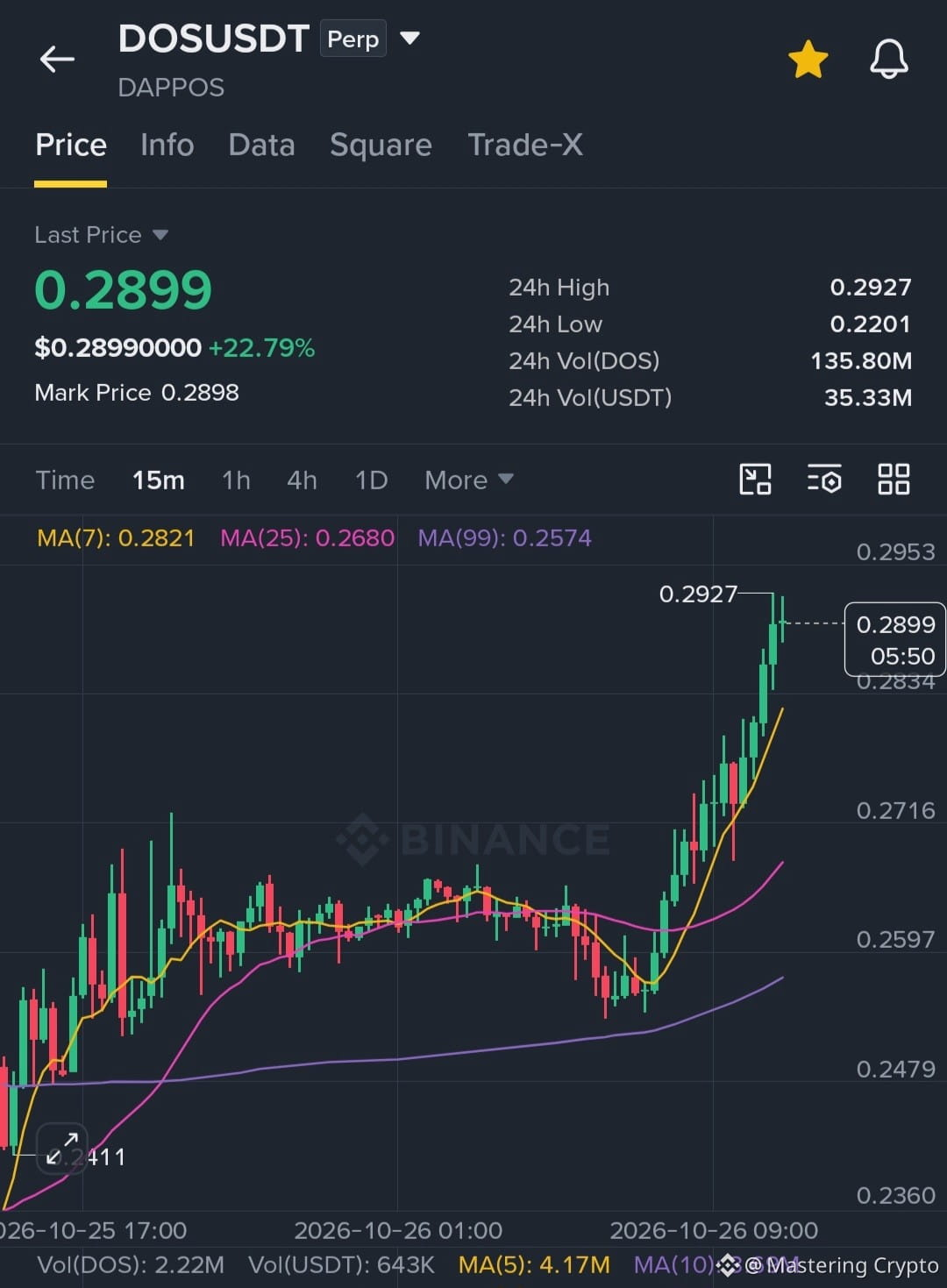
$DOS Bulls Are Eyeing This Rally Break Higher?
Long $DOS (DCA Entries)
EP1: 0.285 – 50%
EP2: 0.278 – 30%
EP3: 0.272 – 20%
SL: 0.255
TP1: 0.3000
TP2: 0.3100
TP3: 0.3250
TP4: 0.3400
Note : If EP2 and EP3 are not reached then enter 100% at EP1.
🫂 Join my Binance Group Chat and Let’s together win every trade.
Trade $DOS here 👇
{future}(DOSUSDT)
$DOS Bulls Are Eyeing This Rally Break Higher?
Long $DOS (DCA Entries)
EP1: 0.285 – 50%
EP2: 0.278 – 30%
EP3: 0.272 – 20%
SL: 0.255
TP1: 0.3000
TP2: 0.3100
TP3: 0.3250
TP4: 0.3400
Note : If EP2 and EP3 are not reached then enter 100% at EP1.
🫂 Join my Binance Group Chat and Let’s together win every trade.
Trade $DOS here 👇
Long $DOS (DCA Entries)
EP1: 0.285 – 50%
EP2: 0.278 – 30%
EP3: 0.272 – 20%
SL: 0.255
TP1: 0.3000
TP2: 0.3100
TP3: 0.3250
TP4: 0.3400
Note : If EP2 and EP3 are not reached then enter 100% at EP1.
🫂 Join my Binance Group Chat and Let’s together win every trade.
Trade $DOS here 👇
422
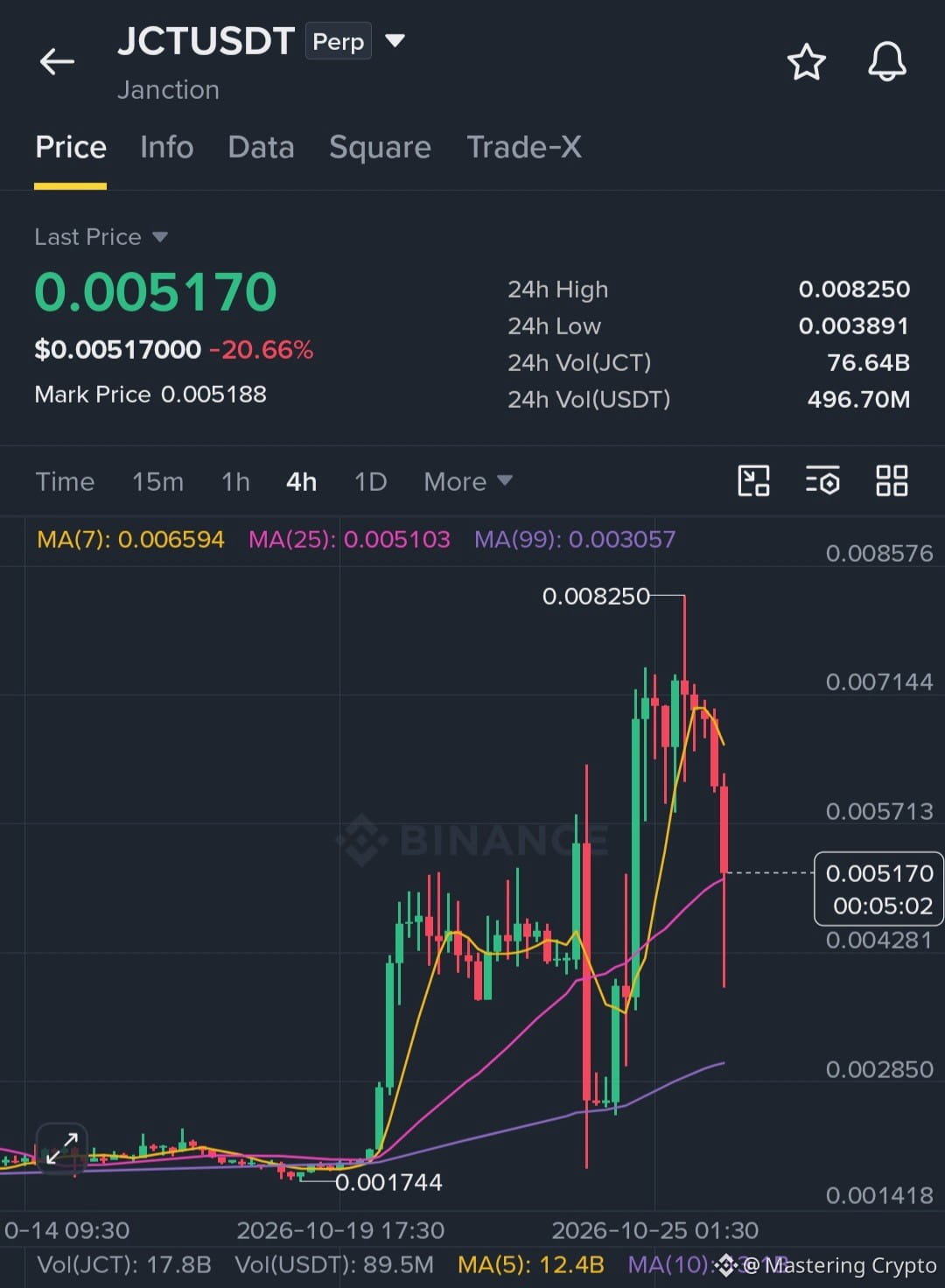
$JCT in full topple mode
Short $JCT (DCA Entries)
EP1: 0.00520 – 50%
EP2: 0.00570 – 30%
EP3: 0.00630 – 20%
SL: 0.00750
TP1: 0.0048
TP2: 0.0043
TP3: 0.0039
TP4: 0.0033
Note: If EP2 and EP3 are not reached, enter 100% at EP1.
🫂 Join my Binance Group Chat and Let’s together win every trade.
Trade $JCT here 👇
{future}(JCTUSDT)
$JCT in full topple mode
Short $JCT (DCA Entries)
EP1: 0.00520 – 50%
EP2: 0.00570 – 30%
EP3: 0.00630 – 20%
SL: 0.00750
TP1: 0.0048
TP2: 0.0043
TP3: 0.0039
TP4: 0.0033
Note: If EP2 and EP3 are not reached, enter 100% at EP1.
🫂 Join my Binance Group Chat and Let’s together win every trade.
Trade $JCT here 👇
Short $JCT (DCA Entries)
EP1: 0.00520 – 50%
EP2: 0.00570 – 30%
EP3: 0.00630 – 20%
SL: 0.00750
TP1: 0.0048
TP2: 0.0043
TP3: 0.0039
TP4: 0.0033
Note: If EP2 and EP3 are not reached, enter 100% at EP1.
🫂 Join my Binance Group Chat and Let’s together win every trade.
Trade $JCT here 👇
2
3
666
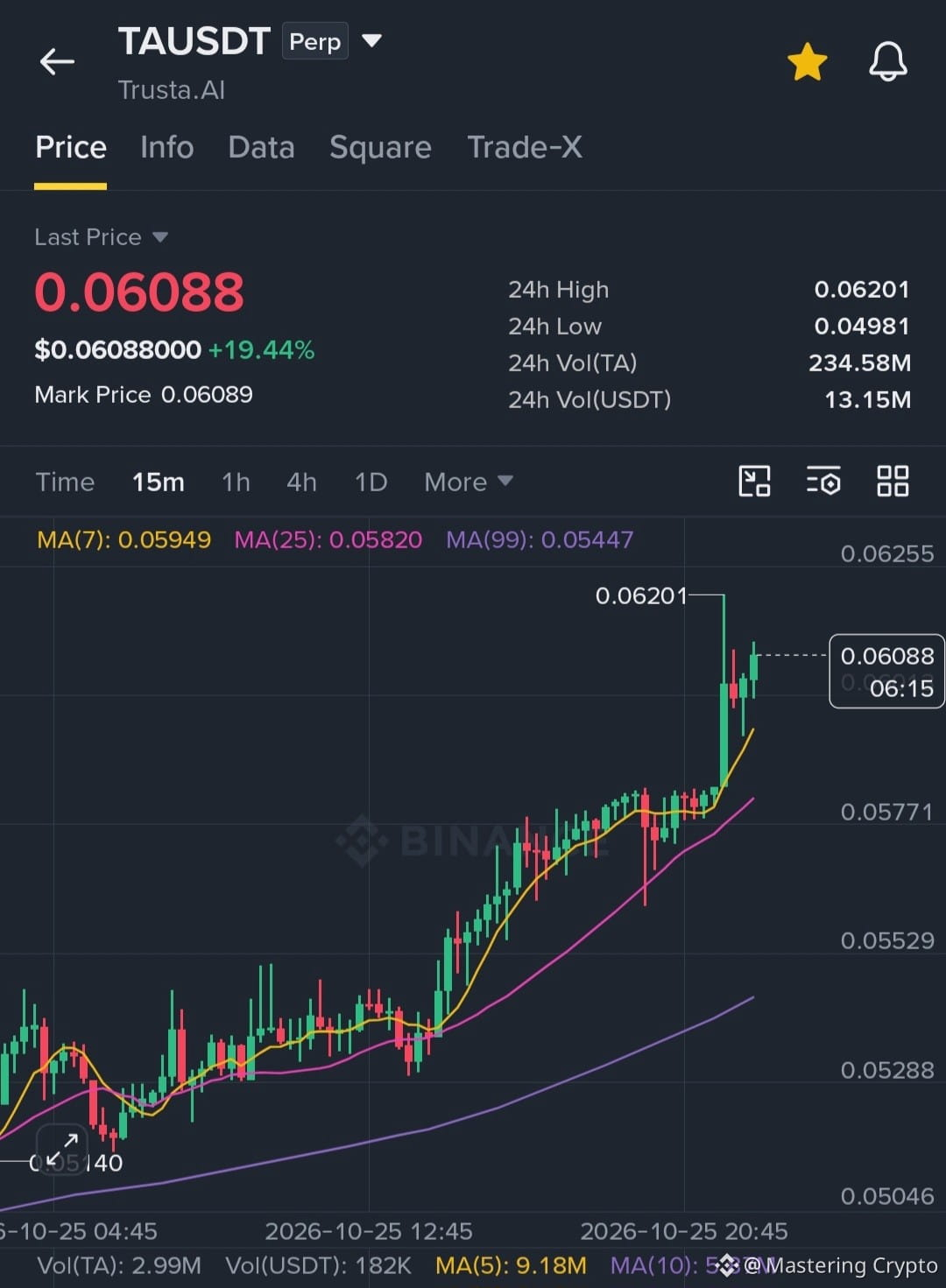
$TA Is Charging Toward Higher Levels
Long $TA (DCA Entries)
EP1: 0.0600 – 50%
EP2: 0.0590 – 30%
EP3: 0.0575 – 20%
SL: 0.0560
TP1: 0.0625
TP2: 0.0650
TP3: 0.0690
TP4: 0.0730
Note : If EP2 and EP3 are not reached then enter 100% at EP1.
🫂 Join my Binance Group Chat and Let’s together win every trade.
Trade $TA here 👇
{future}(TAUSDT)
$TA Is Charging Toward Higher Levels
Long $TA (DCA Entries)
EP1: 0.0600 – 50%
EP2: 0.0590 – 30%
EP3: 0.0575 – 20%
SL: 0.0560
TP1: 0.0625
TP2: 0.0650
TP3: 0.0690
TP4: 0.0730
Note : If EP2 and EP3 are not reached then enter 100% at EP1.
🫂 Join my Binance Group Chat and Let’s together win every trade.
Trade $TA here 👇
Long $TA (DCA Entries)
EP1: 0.0600 – 50%
EP2: 0.0590 – 30%
EP3: 0.0575 – 20%
SL: 0.0560
TP1: 0.0625
TP2: 0.0650
TP3: 0.0690
TP4: 0.0730
Note : If EP2 and EP3 are not reached then enter 100% at EP1.
🫂 Join my Binance Group Chat and Let’s together win every trade.
Trade $TA here 👇
1
4
659
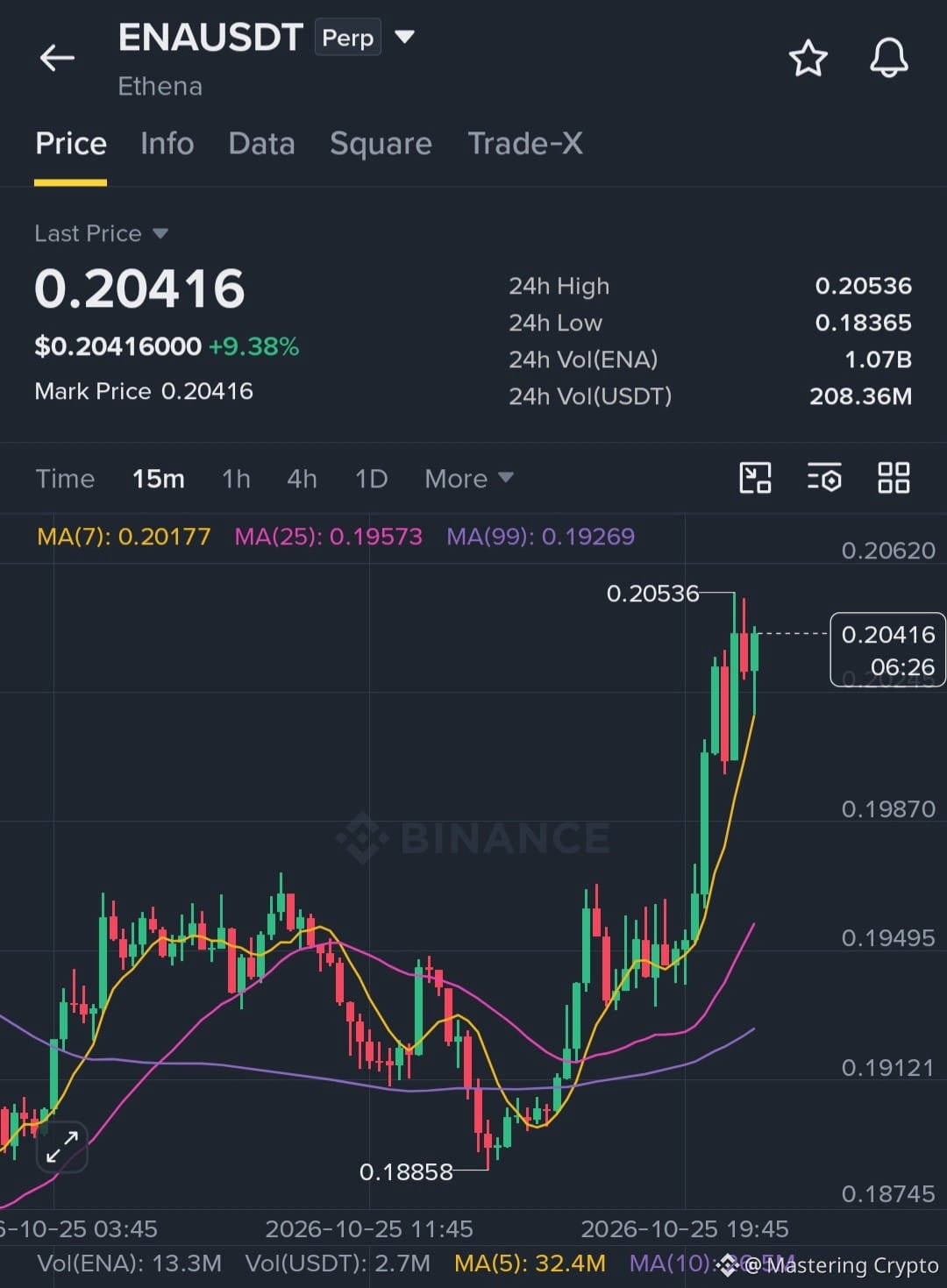
$ENA Next Breakout is Around the Corner
Long $ENA (DCA Entries)
EP1: 0.2025 – 50%
EP2: 0.2000 – 30%
EP3: 0.1960 – 20%
SL: 0.1900
TP1: 0.2100
TP2: 0.2160
TP3: 0.2230
TP4: 0.2320
Note : If EP2 and EP3 are not reached then enter 100% at EP1.
🫂 Join my Binance Group Chat and Let’s together win every trade.
Trade $ENA here 👇
{future}(ENAUSDT)
$ENA Next Breakout is Around the Corner
Long $ENA (DCA Entries)
EP1: 0.2025 – 50%
EP2: 0.2000 – 30%
EP3: 0.1960 – 20%
SL: 0.1900
TP1: 0.2100
TP2: 0.2160
TP3: 0.2230
TP4: 0.2320
Note : If EP2 and EP3 are not reached then enter 100% at EP1.
🫂 Join my Binance Group Chat and Let’s together win every trade.
Trade $ENA here 👇
Long $ENA (DCA Entries)
EP1: 0.2025 – 50%
EP2: 0.2000 – 30%
EP3: 0.1960 – 20%
SL: 0.1900
TP1: 0.2100
TP2: 0.2160
TP3: 0.2230
TP4: 0.2320
Note : If EP2 and EP3 are not reached then enter 100% at EP1.
🫂 Join my Binance Group Chat and Let’s together win every trade.
Trade $ENA here 👇
5
756
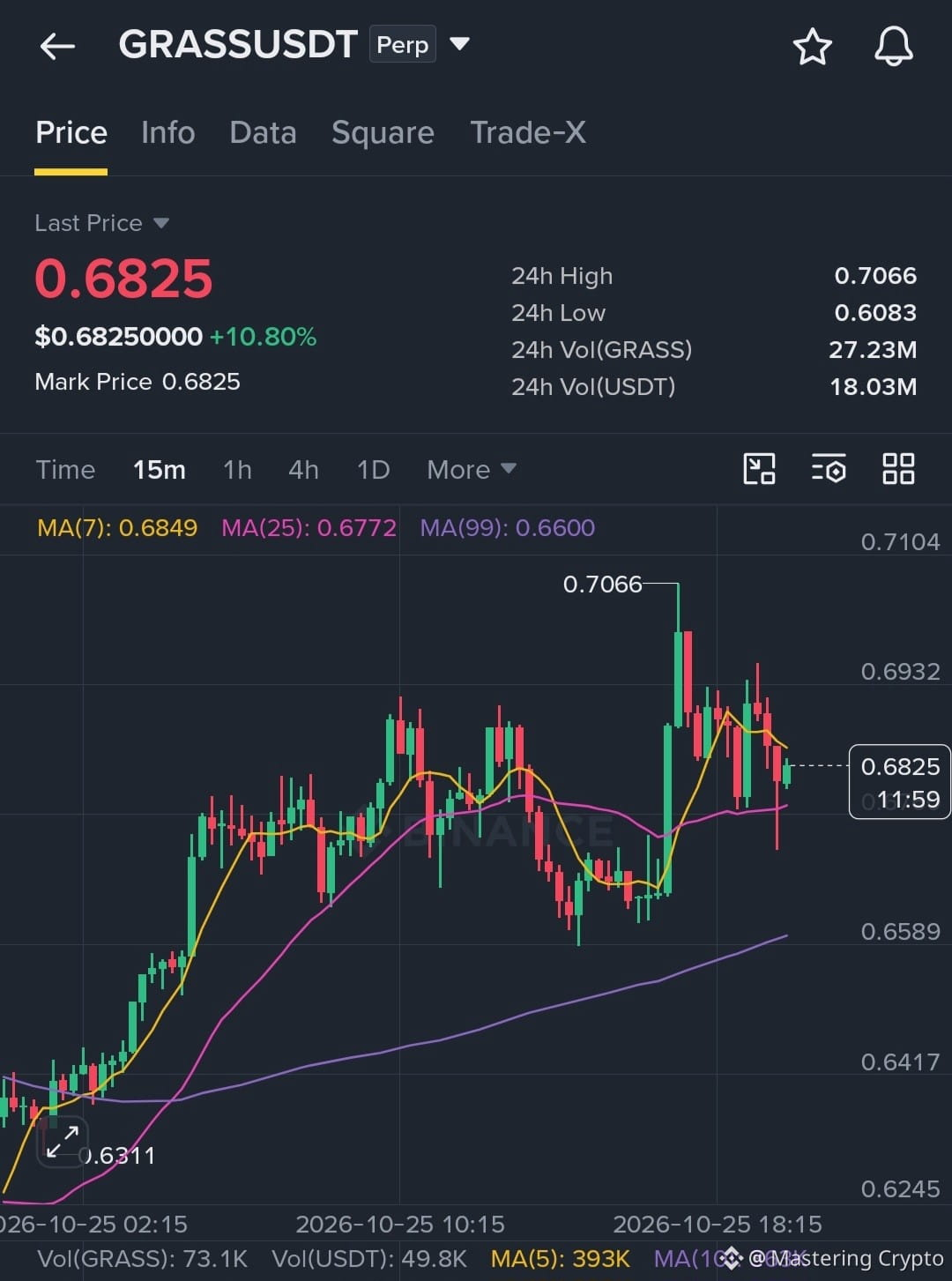
$GRASS Bulls Are Defending the Trend Super Hard
Long $GRASS (DCA Entries)
EP1: 0.680 – 50%
EP2: 0.675 – 30%
EP3: 0.665 – 20%
SL: 0.6500
TP1: 0.6950
TP2: 0.7065
TP3: 0.7300
TP4: 0.7550
Note : If EP2 and EP3 are not reached then enter 100% at EP1.
🫂 Join my Binance Group Chat and Let’s together win every trade.
Trade $GRASS here 👇
{future}(GRASSUSDT)
$GRASS Bulls Are Defending the Trend Super Hard
Long $GRASS (DCA Entries)
EP1: 0.680 – 50%
EP2: 0.675 – 30%
EP3: 0.665 – 20%
SL: 0.6500
TP1: 0.6950
TP2: 0.7065
TP3: 0.7300
TP4: 0.7550
Note : If EP2 and EP3 are not reached then enter 100% at EP1.
🫂 Join my Binance Group Chat and Let’s together win every trade.
Trade $GRASS here 👇
Long $GRASS (DCA Entries)
EP1: 0.680 – 50%
EP2: 0.675 – 30%
EP3: 0.665 – 20%
SL: 0.6500
TP1: 0.6950
TP2: 0.7065
TP3: 0.7300
TP4: 0.7550
Note : If EP2 and EP3 are not reached then enter 100% at EP1.
🫂 Join my Binance Group Chat and Let’s together win every trade.
Trade $GRASS here 👇
1
431
·
--
Bullish
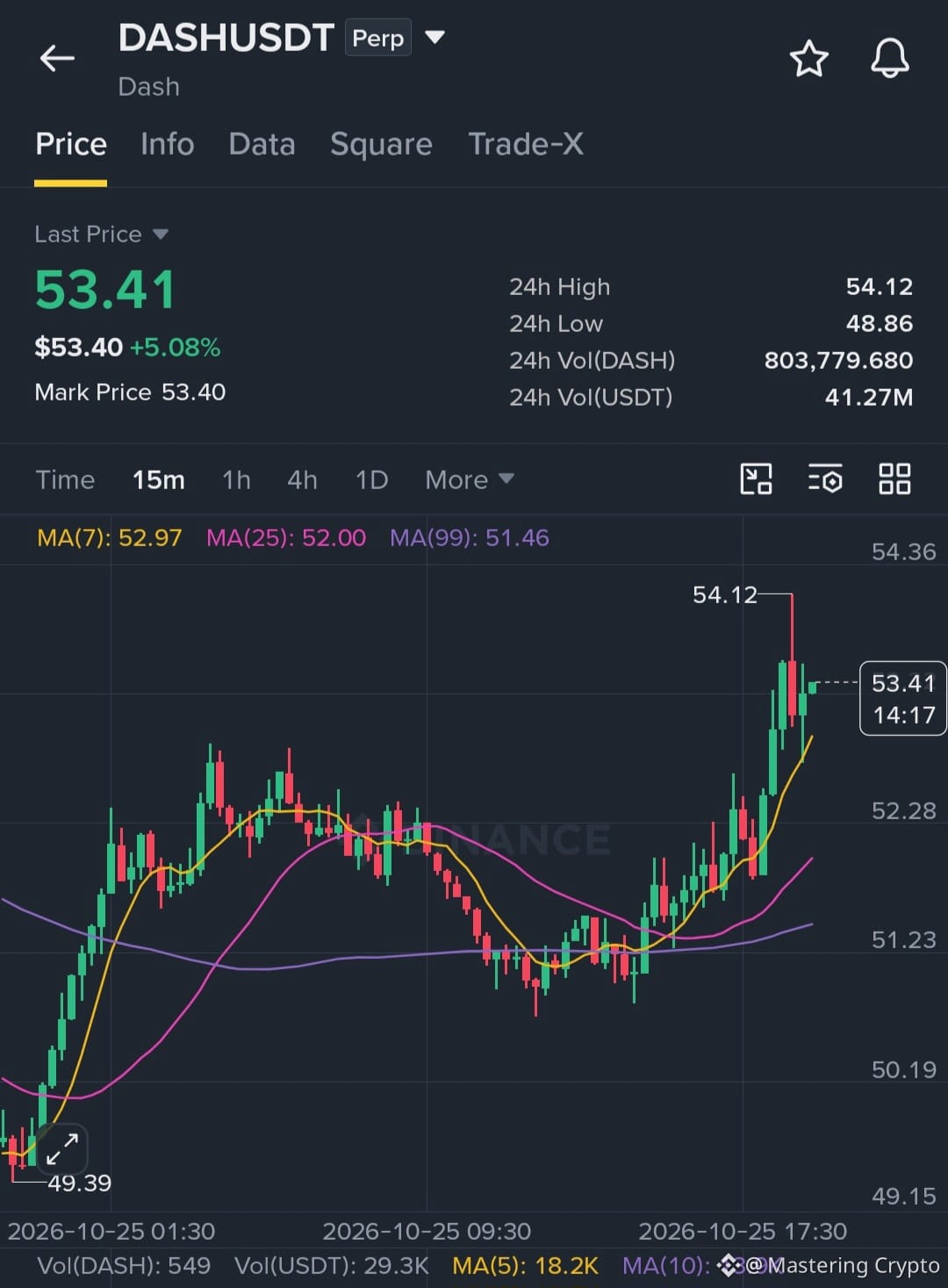
$DASH Bulls Are Charging Toward $55
Long $DASH (DCA Entries)
EP1: 53.00 – 60%
EP2: 52.50 – 20%
EP3: 51.50 – 20%
SL: 51.20
TP1: 54.10
TP2: 55.00
TP3: 56.00
TP4: 57.50
Note : If EP2 and EP3 are not reached then enter 100% at EP1.
🫂 Join my Binance Group Chat and Let’s together win every trade.
Trade $DASH here 👇
{future}(DASHUSDT)
$DASH Bulls Are Charging Toward $55
Long $DASH (DCA Entries)
EP1: 53.00 – 60%
EP2: 52.50 – 20%
EP3: 51.50 – 20%
SL: 51.20
TP1: 54.10
TP2: 55.00
TP3: 56.00
TP4: 57.50
Note : If EP2 and EP3 are not reached then enter 100% at EP1.
🫂 Join my Binance Group Chat and Let’s together win every trade.
Trade $DASH here 👇
Long $DASH (DCA Entries)
EP1: 53.00 – 60%
EP2: 52.50 – 20%
EP3: 51.50 – 20%
SL: 51.20
TP1: 54.10
TP2: 55.00
TP3: 56.00
TP4: 57.50
Note : If EP2 and EP3 are not reached then enter 100% at EP1.
🫂 Join my Binance Group Chat and Let’s together win every trade.
Trade $DASH here 👇
3
486
Guy's have you used your today's vote 🗳
[Click Here To Vote For Me in Blockchain 100 👈](https://app.binance.com/uni-qr/cact26user/533?uc=app_square_share_link&us=copylink)
It's easy and will take just 10 seconds. Use your privilege and vote for Mastering Crypto in Blockchain 100.
Guy's have you used your today's vote 🗳
Click Here To Vote For Me in Blockchain 100 👈
It's easy and will take just 10 seconds. Use your privilege and vote for Mastering Crypto in Blockchain 100.
Click Here To Vote For Me in Blockchain 100 👈
It's easy and will take just 10 seconds. Use your privilege and vote for Mastering Crypto in Blockchain 100.

2
388
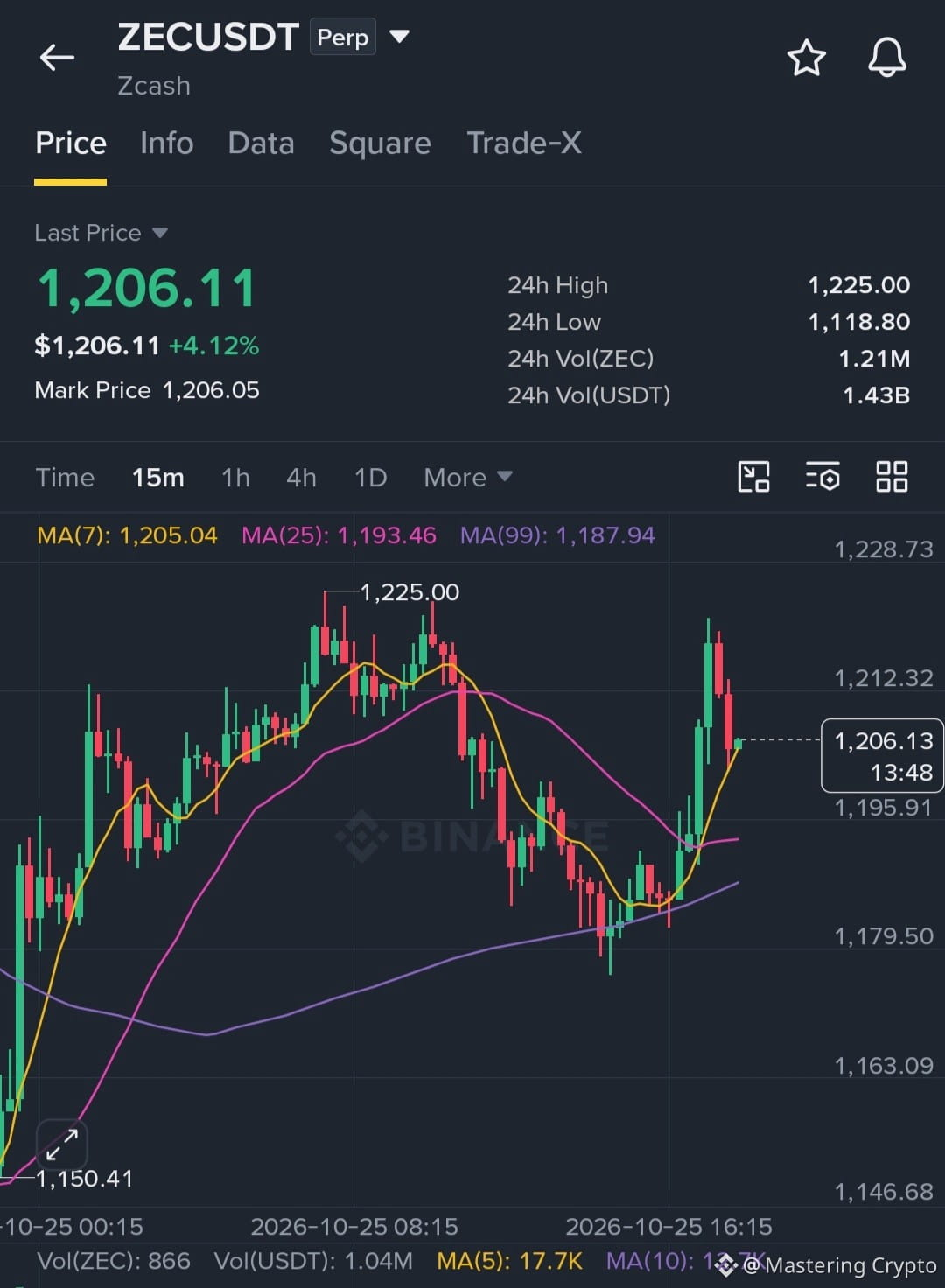
$ZEC Bulls Are Fighting Back for a Stronger Comeback
Long $ZEC (DCA Entries)
EP1: 1,200 – 60%
EP2: 1,192 – 30%
EP3: 1,184 – 20%
SL: 1,150
TP1: 1,220
TP2: 1,240
TP3: 1,260
TP4: 1,285
Note : If EP2 and EP3 are not reached then enter 100% at EP1.
🫂 Join my Binance Group Chat and Let’s together win every trade.
Trade $ZEC here 👇
{future}(ZECUSDT)
$ZEC Bulls Are Fighting Back for a Stronger Comeback
Long $ZEC (DCA Entries)
EP1: 1,200 – 60%
EP2: 1,192 – 30%
EP3: 1,184 – 20%
SL: 1,150
TP1: 1,220
TP2: 1,240
TP3: 1,260
TP4: 1,285
Note : If EP2 and EP3 are not reached then enter 100% at EP1.
🫂 Join my Binance Group Chat and Let’s together win every trade.
Trade $ZEC here 👇
Long $ZEC (DCA Entries)
EP1: 1,200 – 60%
EP2: 1,192 – 30%
EP3: 1,184 – 20%
SL: 1,150
TP1: 1,220
TP2: 1,240
TP3: 1,260
TP4: 1,285
Note : If EP2 and EP3 are not reached then enter 100% at EP1.
🫂 Join my Binance Group Chat and Let’s together win every trade.
Trade $ZEC here 👇
3
608
$JCT long trade setup worked like magic 🎩
$JCT long trade successfully hit all TPs and still running like a beast🤑
Imagine making an entry using my early long call at $0.0059 and taking full profits at $0.0082 for 15X leverage, look how much profit you would have made easily as of now💰
Everyone was giving you the short trade call only Mastering gave you the right long one and see at the results clearly🚀
My Binance Group chat members are growing daily with high quality trade setups like this 😍
Join my Binance group chat and enjoy daily trade setups to grow your capital with proper risk management 🫂
#JCT has started changing trend now and next strategy will be given exclusively in my Binance group chat so better chase now or regret later 🌀
$JCT long trade setup and My Binance Chat Group Entry below 👇
$JCT long trade setup worked like magic 🎩
$JCT long trade successfully hit all TPs and still running like a beast🤑
Imagine making an entry using my early long call at $0.0059 and taking full profits at $0.0082 for 15X leverage, look how much profit you would have made easily as of now💰
Everyone was giving you the short trade call only Mastering gave you the right long one and see at the results clearly🚀
My Binance Group chat members are growing daily with high quality trade setups like this 😍
Join my Binance group chat and enjoy daily trade setups to grow your capital with proper risk management 🫂
#JCT has started changing trend now and next strategy will be given exclusively in my Binance group chat so better chase now or regret later 🌀
$JCT long trade setup and My Binance Chat Group Entry below 👇
$JCT long trade successfully hit all TPs and still running like a beast🤑
Imagine making an entry using my early long call at $0.0059 and taking full profits at $0.0082 for 15X leverage, look how much profit you would have made easily as of now💰
Everyone was giving you the short trade call only Mastering gave you the right long one and see at the results clearly🚀
My Binance Group chat members are growing daily with high quality trade setups like this 😍
Join my Binance group chat and enjoy daily trade setups to grow your capital with proper risk management 🫂
#JCT has started changing trend now and next strategy will be given exclusively in my Binance group chat so better chase now or regret later 🌀
$JCT long trade setup and My Binance Chat Group Entry below 👇
Mastering Crypto
·
--
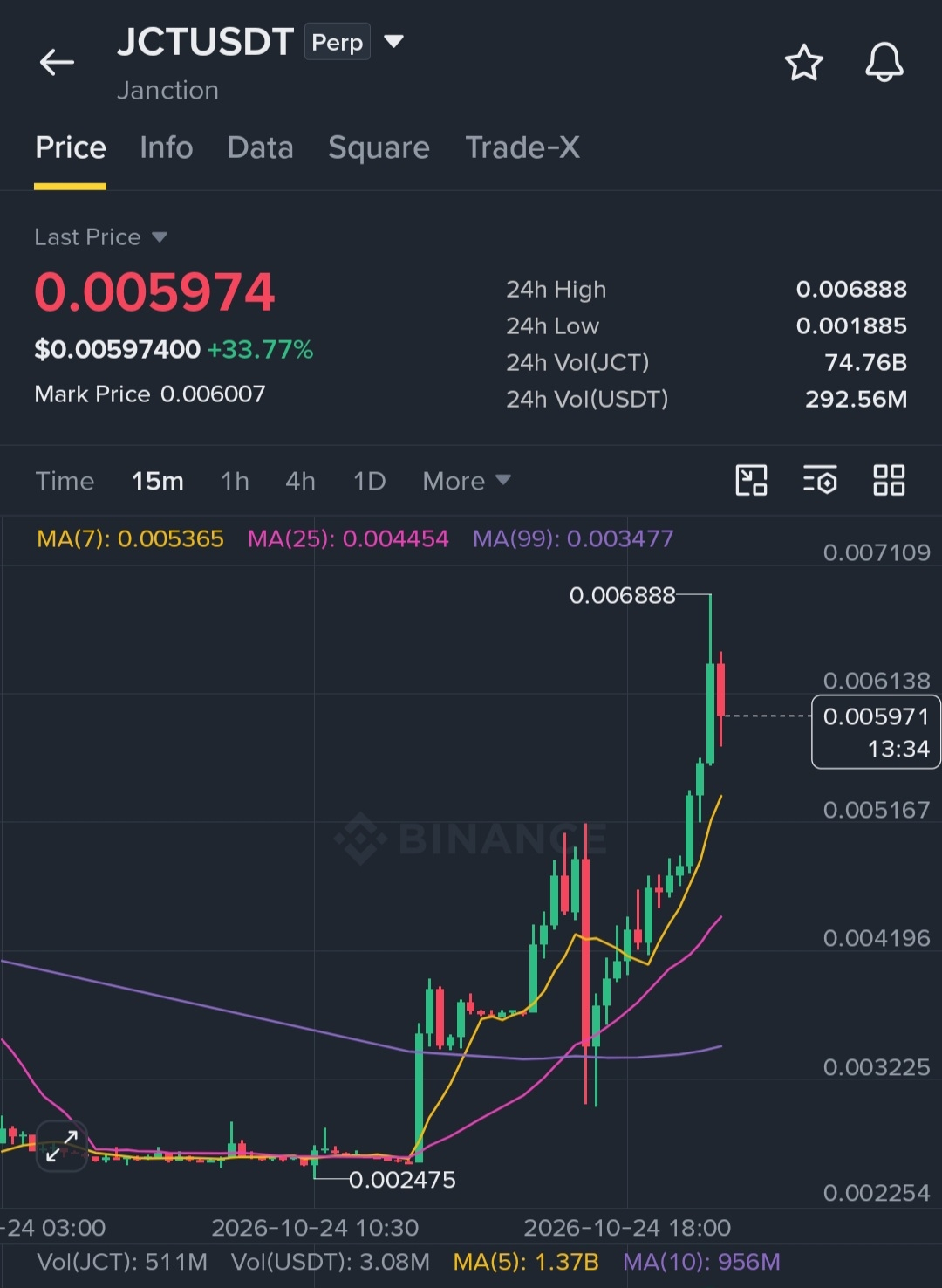
$JCT is Exploding Hard 🌋
Long $JCT (DCA Entries)
EP1: 0.00565 – 60%
EP2: 0.00535 – 30%
EP3: 0.00505 – 20%
SL: 0.00450
TP1: 0.00640
TP2: 0.006888
TP3: 0.00740
TP4: 0.00800
Note: If EP2 and EP3 are not reached then enter 100% at EP1.
🫂 Join my Binance Group Chat and Let’s together win every trade.
Trade $JCT here 👇
Long $JCT (DCA Entries)
EP1: 0.00565 – 60%
EP2: 0.00535 – 30%
EP3: 0.00505 – 20%
SL: 0.00450
TP1: 0.00640
TP2: 0.006888
TP3: 0.00740
TP4: 0.00800
Note: If EP2 and EP3 are not reached then enter 100% at EP1.
🫂 Join my Binance Group Chat and Let’s together win every trade.
Trade $JCT here 👇
1
743
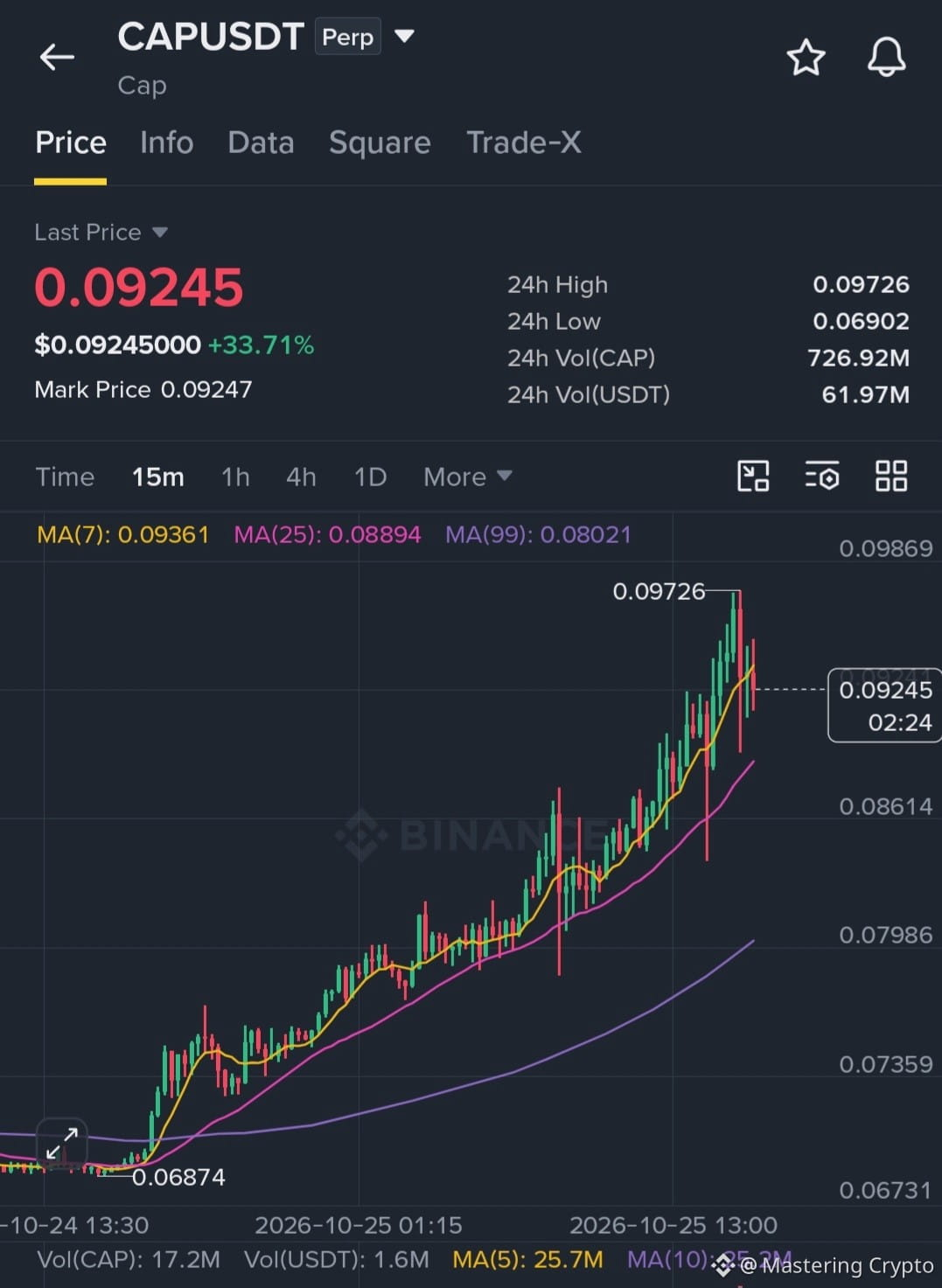
$CAP bulls are running for higher levels
Long $CAP (DCA Entries)
EP1: 0.0905 – 50%
EP2: 0.0895 – 30%
EP3: 0.0885 – 20%
SL: 0.0850
TP1: 0.0970
TP2: 0.1050
TP3: 0.1100
TP4: 0.1200
Note : If EP2 and EP3 are not reached then enter 100% at EP1.
🫂 Join my Binance Group Chat and Let’s together win every trade.
Trade $CAP here 👇
{future}(CAPUSDT)
$CAP bulls are running for higher levels
Long $CAP (DCA Entries)
EP1: 0.0905 – 50%
EP2: 0.0895 – 30%
EP3: 0.0885 – 20%
SL: 0.0850
TP1: 0.0970
TP2: 0.1050
TP3: 0.1100
TP4: 0.1200
Note : If EP2 and EP3 are not reached then enter 100% at EP1.
🫂 Join my Binance Group Chat and Let’s together win every trade.
Trade $CAP here 👇
Long $CAP (DCA Entries)
EP1: 0.0905 – 50%
EP2: 0.0895 – 30%
EP3: 0.0885 – 20%
SL: 0.0850
TP1: 0.0970
TP2: 0.1050
TP3: 0.1100
TP4: 0.1200
Note : If EP2 and EP3 are not reached then enter 100% at EP1.
🫂 Join my Binance Group Chat and Let’s together win every trade.
Trade $CAP here 👇
494
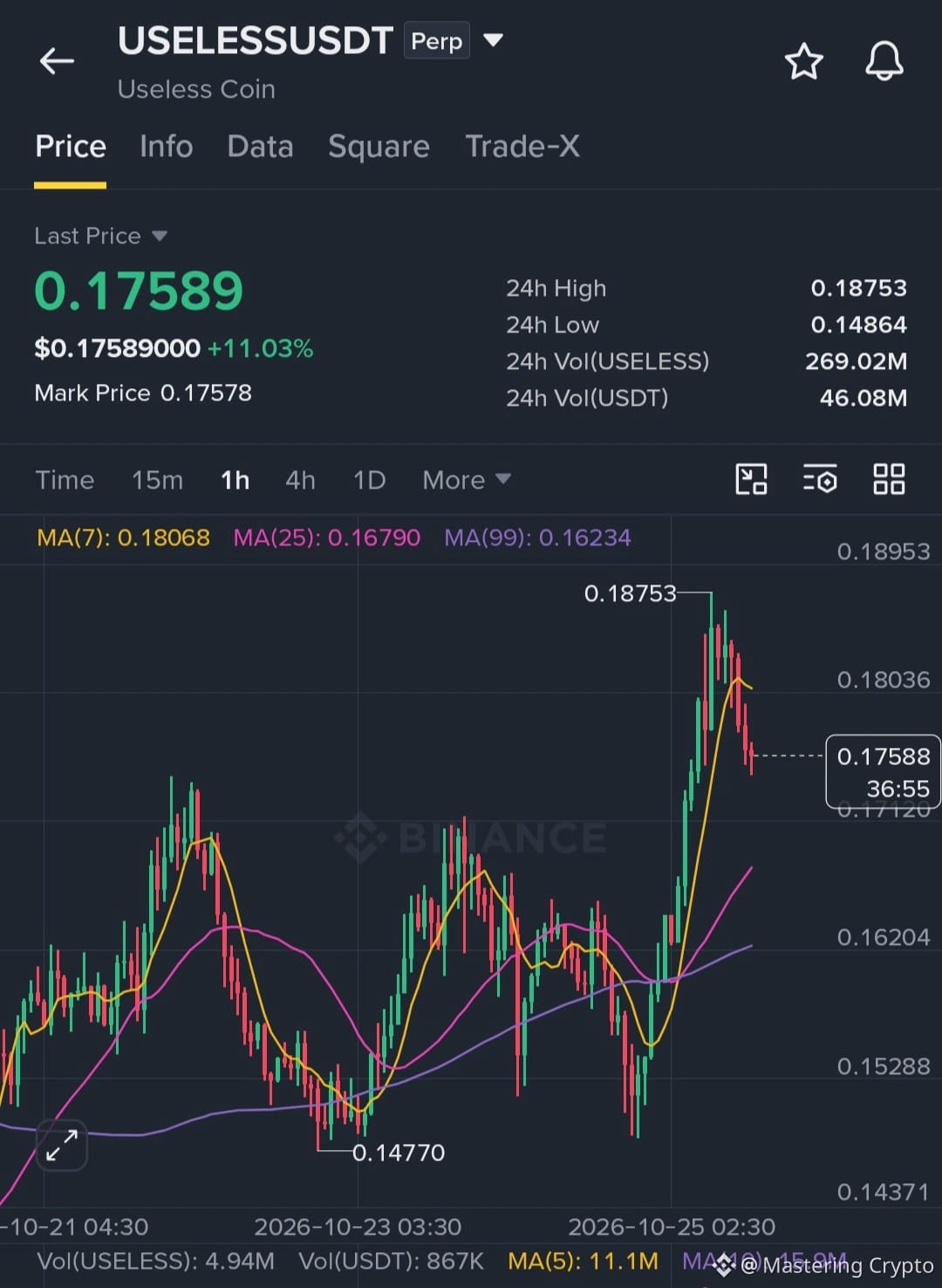
$USELESS is planning something big
Long $USELESS (DCA Entries)
EP1: 0.1720 – 50%
EP2: 0.1660 – 30%
EP3: 0.1580 – 20%
SL: 0.1500
TP1: 0.1820
TP2: 0.1900
TP3: 0.2100
TP4: 0.2300
Note : If EP2 and EP3 are not reached then enter 100% at EP1.
🫂 Join my Binance Group Chat and Let’s together win every trade.
Trade $USELESS here 👇
{future}(USELESSUSDT)
$USELESS is planning something big
Long $USELESS (DCA Entries)
EP1: 0.1720 – 50%
EP2: 0.1660 – 30%
EP3: 0.1580 – 20%
SL: 0.1500
TP1: 0.1820
TP2: 0.1900
TP3: 0.2100
TP4: 0.2300
Note : If EP2 and EP3 are not reached then enter 100% at EP1.
🫂 Join my Binance Group Chat and Let’s together win every trade.
Trade $USELESS here 👇
Long $USELESS (DCA Entries)
EP1: 0.1720 – 50%
EP2: 0.1660 – 30%
EP3: 0.1580 – 20%
SL: 0.1500
TP1: 0.1820
TP2: 0.1900
TP3: 0.2100
TP4: 0.2300
Note : If EP2 and EP3 are not reached then enter 100% at EP1.
🫂 Join my Binance Group Chat and Let’s together win every trade.
Trade $USELESS here 👇
457
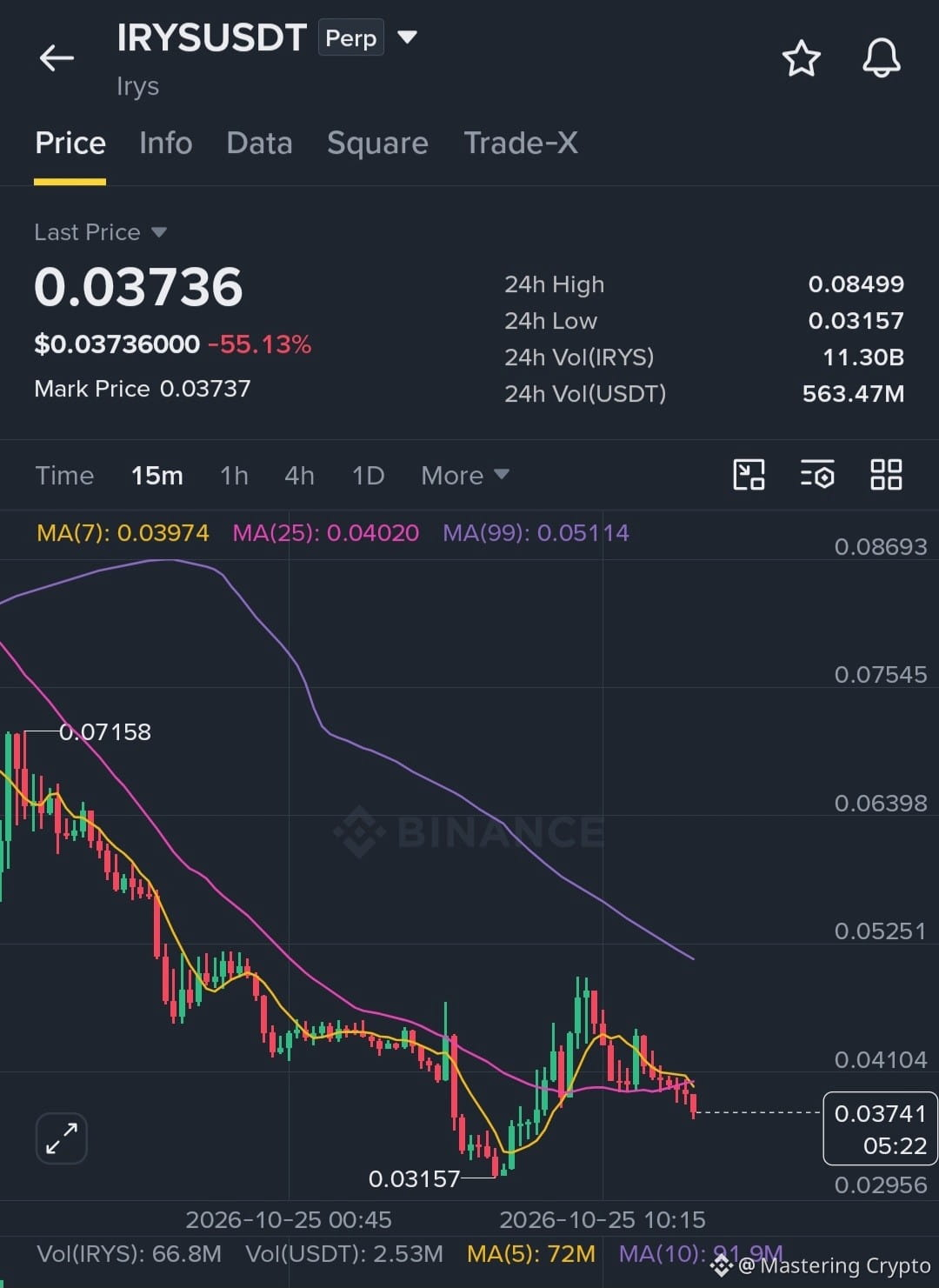
$IRYS structure total downfall
Short $IRYS (DCA Entries)
EP1: 0.0395 – 50%
EP2: 0.0425 – 30%
EP3: 0.0450 – 20%
SL: 0.0550
TP1: 0.03500
TP2: 0.03300
TP3: 0.03160
TP4: 0.02900
Note: If EP2 and EP3 are not reached, enter 100% at EP1.
🫂 Join my Binance Group Chat and Let’s together win every trade.
Trade $IRYS here 👇
{future}(IRYSUSDT)
$IRYS structure total downfall
Short $IRYS (DCA Entries)
EP1: 0.0395 – 50%
EP2: 0.0425 – 30%
EP3: 0.0450 – 20%
SL: 0.0550
TP1: 0.03500
TP2: 0.03300
TP3: 0.03160
TP4: 0.02900
Note: If EP2 and EP3 are not reached, enter 100% at EP1.
🫂 Join my Binance Group Chat and Let’s together win every trade.
Trade $IRYS here 👇
Short $IRYS (DCA Entries)
EP1: 0.0395 – 50%
EP2: 0.0425 – 30%
EP3: 0.0450 – 20%
SL: 0.0550
TP1: 0.03500
TP2: 0.03300
TP3: 0.03160
TP4: 0.02900
Note: If EP2 and EP3 are not reached, enter 100% at EP1.
🫂 Join my Binance Group Chat and Let’s together win every trade.
Trade $IRYS here 👇
2
609
Log in to explore more content
Join global crypto users on Binance Square
⚡️ Get latest and useful information about crypto.
💬 Trusted by the world’s largest crypto exchange.
👍 Discover real insights from verified creators.
Email / Phone number