
#bnbsmartchain
bnbsmartchain
430,200 views
774 Discussing
Hot
Latest

Why do I consider $BNB one of the strongest tokens in the crypto market?💛 Why do I consider $BNB one of the strongest tokens in the crypto market?
How many times did we chase "the next x100" without noticing what has been creating real value for years?
New tokens appear, but $BNB keeps doing what it does best — being the heart of a huge crypto ecosystem. And honestly, that’s what impresses me the most. $BNB isn’t just an exchange coin. It’s a token used every day by millions of people.
Why do I consider $BNB one of the strongest tokens in the crypto market?
💛 Why do I consider $BNB one of the strongest tokens in the crypto market?
How many times did we chase "the next x100" without noticing what has been creating real value for years?
New tokens appear, but $BNB keeps doing what it does best — being the heart of a huge crypto ecosystem. And honestly, that’s what impresses me the most. $BNB isn’t just an exchange coin. It’s a token used every day by millions of people.
4
144


Article
🚀
BNB : One of the few crypto assets whose value is based on real utility
💎Technical Report by: M.
$BNB
In a market where many tokens rely primarily on speculation, BNB stands out as one of the most solid assets thanks to tangible utility, a mature ecosystem, and a deflationary economic model.
🔹 A utility that creates real demand
✅ Reduction in trading fees on Binance.
⚡ Payment of transaction fees on BNB Smart Chain.
🚀 Access to Launchpool, Megadrop, and various opportunities in the Binance ecosystem.
🚀 BNB : One of the few crypto assets whose value is based on real utility 💎
Technical Report by: M.
$BNB
In a market where many tokens rely primarily on speculation, BNB stands out as one of the most solid assets thanks to tangible utility, a mature ecosystem, and a deflationary economic model.
🔹 A utility that creates real demand
✅ Reduction in trading fees on Binance.
⚡ Payment of transaction fees on BNB Smart Chain.
🚀 Access to Launchpool, Megadrop, and various opportunities in the Binance ecosystem.
197

·
--
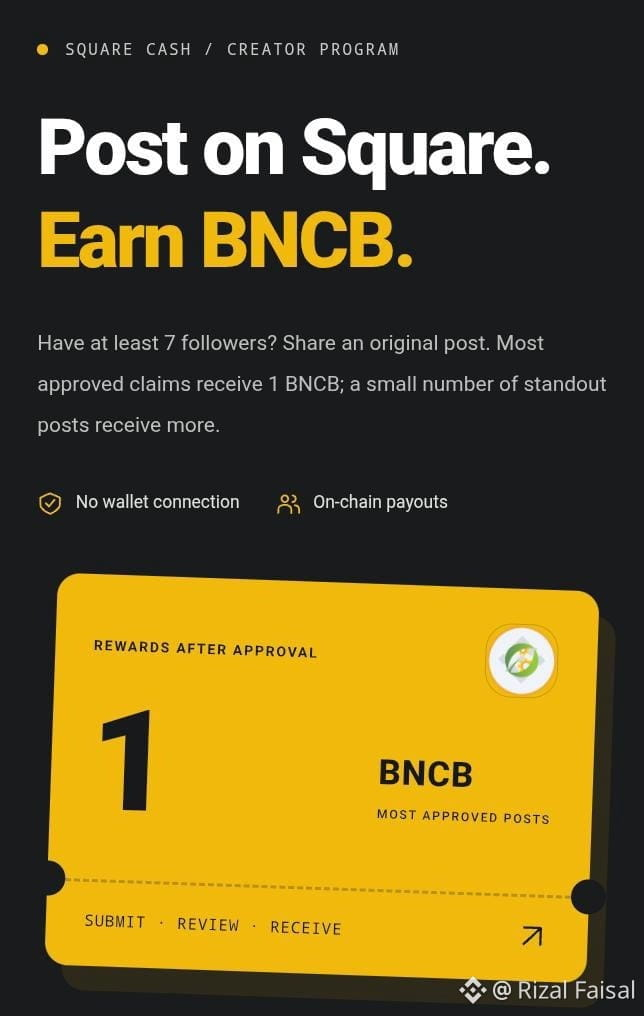
🚀 Discover $CASH on BNB Smart Chain!
$CASH is the project token of BSCASH.ONE, built around the Square Cash creator ecosystem.
💰 Creator rewards are paid in BNCB, while $CASH is traded on PancakeSwap.
🔥 Share. Create. Grow.
$CASH #BSCASH #BNCB #BNBSmartChain #PancakeSwap
SR-5EB2A31C7AAED894E4E63958
🚀 Discover $CASH on BNB Smart Chain!
$CASH is the project token of BSCASH.ONE, built around the Square Cash creator ecosystem.
💰 Creator rewards are paid in BNCB, while $CASH is traded on PancakeSwap.
🔥 Share. Create. Grow.
$CASH #BSCASH #BNCB #BNBSmartChain #PancakeSwap
SR-5EB2A31C7AAED894E4E63958
$CASH is the project token of BSCASH.ONE, built around the Square Cash creator ecosystem.
💰 Creator rewards are paid in BNCB, while $CASH is traded on PancakeSwap.
🔥 Share. Create. Grow.
$CASH #BSCASH #BNCB #BNBSmartChain #PancakeSwap
SR-5EB2A31C7AAED894E4E63958
1
97

·
--
📢 Wallet Maintenance: Binance Will Stop Supporting QKC Deposits and Withdrawals via BNB Smart Chain
Binance will halt support for QuarkChain (QKC) deposits and withdrawals through the BNB Smart Chain on 2026-06-26 at 16:00 (UTC+8). After this cutoff, any deposits made through this network will not be credited to your account, potentially leading to asset losses.
📌 Effective Date: 2026-06-26 16:00 (UTC+8)
📌 Scope of Impact:
• QKC deposits and withdrawals via BNB Smart Chain will cease
• Post-cutoff, deposits made through this network will not be credited, which may result in asset losses
• Users can still deposit or withdraw QKC through other networks supported by Binance
📌 User Advisory:
• If you need to deposit QKC via BNB Smart Chain, please complete your transactions before the cutoff time
• Switch to other supported networks for QKC deposit and withdrawal transactions
⚠️ Risk Warning:
• Depositing QKC via BNB Smart Chain after the cutoff will result in the funds not being credited, so please refrain from using this network
$QKC $BTC #钱包维护 #BNBSmartChain #CryptoCommunity
37

#bnbsmartchaintoundergohardfork
🚨 BREAKING: BNB Smart Chain is set to undergo a major hard fork, marking another important upgrade for the ecosystem.
The update could bring improvements to network performance, security, and overall efficiency as BNB Chain continues evolving to support growing demand.
⚡ Network upgrades often create new opportunities but can also bring short-term volatility as traders react to changes and market expectations.
Will this hard fork strengthen BNB’s position in the blockchain space?
👇 Share your thoughts.
#bnb #BNBSmartChain #BSC
1
2
499

🚀 BNB is one of the strongest coins in the crypto market, being the native currency of the Binance platform. It's used to cut trading fees and participate in various services within the platform's ecosystem.
BNB has seen significant growth thanks to the expanding utilities of the BNB Chain and the increasing adoption of decentralized applications on it. As the platform continues to develop and launch new projects, investors are keeping a close eye on BNB's performance as it remains one of the leading coins with a high market cap.
📈 Continuous market tracking and risk management are crucial success factors in crypto investing.
#BNB #Binance #Crypto #Blockchain #BNBSmartChain
49


·
--
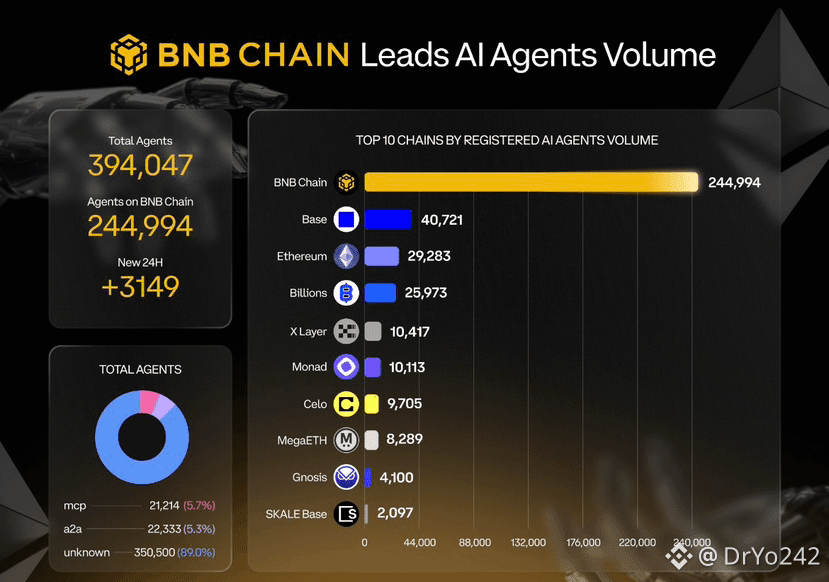
🔥 IA EXPLOSION ON BNB CHAIN!
The numbers have dropped, and the verdict is clear-cut: @BNB_Chain is the undisputed leader in the volume of registered AI agents. 🚀
According to the latest data, the network dominates the landscape by a wide margin with impressive stats:
🏆 Total Global AI Agents: 394 047
✅ Agents on BNB Chain: 244 994 (over 62% of the global total)
📈 Blazing growth: +3149 new agents in just 24 hours!
This isn’t just a spike—it’s a sustained trend. This massive adoption shows the effectiveness, scalability, and attractiveness of BNB Chain for the next generation of decentralized applications at the intersection of blockchain and artificial intelligence (DePIN). 🧠⛓️
🚀 The future of decentralized AI is being built on BNB Chain.
What do you think about this surge? Let us know in the comments!
#DrYo242 your shield against volatility
$BNB $ETH
#bnb #BNBSmartChain #ia
4
419
🚀 Discovering BSCASH ($CASH) on BNB Smart Chain!
The BSCASH.ONE creator incentive program is giving active Web3 content creators a fresh platform to share insights on Binance Square.
🔹 Project: BSCash ($CASH)
🔹 Ecosystem: BNB Smart Chain
🔹 Platform: https://bscash.one
Join the creator wave and explore how Web3 social tools are reshaping content rewards!
🔥#BSCASH #CASH #BinanceSquare #BNBSmartChain
SR-12B7B839199B55AA353CB7BF
89

Binance has completed the integration of Momentum (MMT) on the BNB Smart Chain (BEP20) network, and both deposits and withdrawals are now officially open.
Users can now head over to their Binance wallet to find their assigned BEP20 deposit address and start moving MMT tokens. Expanding MMT transfers to the BNB Smart Chain gives traders a faster and more cost-effective way to manage their assets directly on the exchange.
{spot}(BNBUSDT)
{spot}(MMTUSDT)
$MMT $BNB #CoinVahini #Binance #MomentumMMT #BNBSmartChain
Binance has completed the integration of Momentum (MMT) on the BNB Smart Chain (BEP20) network, and both deposits and withdrawals are now officially open.
Users can now head over to their Binance wallet to find their assigned BEP20 deposit address and start moving MMT tokens. Expanding MMT transfers to the BNB Smart Chain gives traders a faster and more cost-effective way to manage their assets directly on the exchange.
$MMT $BNB #CoinVahini #Binance #MomentumMMT #BNBSmartChain
137
🚨 Have you heard about bPay?
There’s a new crypto-related platform called bPay, and it’s getting attention because of its reward opportunities.
According to its website, bPay is built around the BNB Smart Chain and offers different community and creator reward programs.
One interesting thing is that the platform says you should never give anyone your private key or seed phrase. 🔐
But here’s the important part 👇
⚠️ bPay is NOT an official Binance product.
And before putting any money into a crypto project, you should always do your own research.
Check the project’s website, smart contract information, transaction history, token liquidity, and community feedback before making any financial decision.
So, is bPay worth trying?
👉 That’s something you should decide only after doing your own research.
Follow me for more crypto platform reviews and updates. 🚀
#bPay #Crypto #BNB #Binance #CryptoBangladesh🇧🇩 #CryptoNews🔒📰🚫 #web3_binance #BNBSmartChain
87

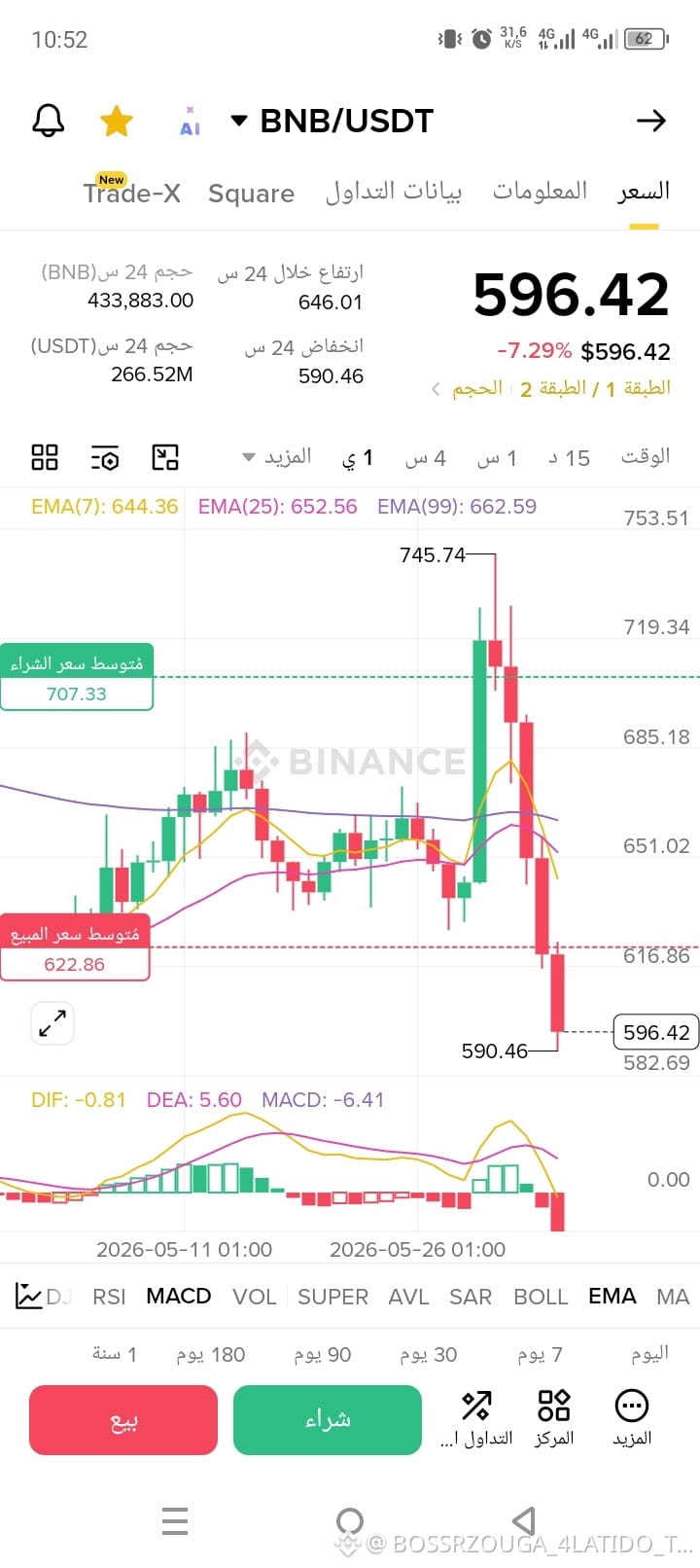
$BNB
Good morning, everyone! 🌷
What you see as a sharp drop 🛑🛑 and the market plummeting towards
the abyss.
Others see it with a keen eye as the biggest investment opportunity ✅💵💵
to buy at a low price.
Because strong coins, no matter how much they crash, are destined to rise, especially if they’re on a robust network like
#BNBSmartChain
1
2
7
1.5k

·
--
🚗 DRIVX: Can a Real-World Car Rental Business Create Long-Term Token Value?
Real-world asset (RWA) projects are gaining attention in crypto, but the real question is whether the business behind a token can generate sustainable revenue.
DRIVX is a BNB Smart Chain project aiming to connect car-rental operations with a blockchain-based token ecosystem. Its proposed model involves expanding the vehicle fleet and allocating part of its mobility revenue toward token buybacks, burns, liquidity and treasury activities.
📊 DRIVX Tokenomics
🔹 Total supply: 7 billion DRIVX
🔹 32.86% — Fleet expansion and business growth
🔹 20% — Liquidity
🔹 15% — Marketing and growth
🔹 15% — Team and advisors
🔹 10% — Reserve and ecosystem
🔹 7.14% — Staking and community rewards
These figures reflect the project's stated allocation, not independently verified business results.
🔍 What Deserves Attention?
• Is the car-rental business generating real, measurable revenue?
• Can buybacks and burns be verified on-chain?
• Are token allocations and vesting schedules transparent?
• Is sufficient liquidity available for trading?
• Will actual business usage create sustainable demand for DRIVX?
The idea of connecting real-world mobility with blockchain is interesting. However, the long-term potential depends on execution, transparent operations and genuine utility not just tokenomics or presale hype.
I would focus on verifiable progress and actual business performance before drawing conclusions about the project's future.
Disclaimer: This content is for educational and informational purposes only. It is not financial advice or a recommendation to buy or sell any cryptocurrency.
Always do your own research (DYOR).
#DRIVX #RWA #BNBSmartChain #Tokenomics

2
4
259

·
--
💸 Transaction fees: Where does your money go when you use the blockchain?
Have you ever wondered why you pay fees when sending cryptocurrency? 👀
Simply put, these fees are the cost of using blockchain network resources to process and execute your transaction. ⛓️
🔹 Who receives them?
They are paid to the blockchain network, and validators earn them for processing transactions and helping secure the network.
🔹 Why do they change?
Fees are affected by demand and network congestion. The more transactions there are, the higher fees may become—and vice versa.
🔹 Which currency are they paid in?
• Ethereum → ETH
• BNB Smart Chain → BNB
• TRON → TRX
💡 The takeaway:
Transaction fees are more than just an extra cost; they are an essential part of how the blockchain works, processing transactions and securing the network.
Have you ever paid a higher fee than you expected? 👀
#blockchain #chain #BNBSmartChain
$BNB $BTC

64

·
--

Article
Watching HEI, COTI, and AIO: Three Tokens That Capture Different Corners of the 2026 Crypto StoryCrypto moves in cycles of narrative. One week it’s AI agents, the next it’s privacy or chain abstraction.
Right now three tokens sit at the intersection of those themes in interesting ways: HEI (Heima), COTI, and AIO (OlaXBT). None of them is a household name yet, and all three have taken meaningful drawdowns from earlier highs. That is exactly why they are worth watching rather than ignoring.
Heima (HEI): The Quiet Rebrand That Actually Shipped
HEI is the rebranded successor to Litentry. The project used to focus mainly on decentralized identity. In early 2025 it pivoted hard into chain abstraction trying to make multi-chain usage feel like one account and one experience instead of juggling wallets, gas tokens, and bridges.
The network runs as a Substrate-based Layer 1 with presence on Ethereum and BNB Chain as well.
The core idea is intent-based execution and gas abstraction. Users (or agents) express what they want done; the network handles the rest, often sponsoring fees so people do not need to hold HEI just to move. The token itself is used for governance, staking, and as a mediation asset in cross-chain liquidity. Max supply is capped at 100 million. Circulating supply sits in the low-to-mid 80 millions after a community-approved burn of 16.5 million tokens in July 2026.
Price-wise, HEI has been brutal for early buyers. It hit roughly $1.36 in February 2025 around the Binance listing and rebrand excitement, then spent most of the following year grinding lower. Recent trading has been in the $0.08–$0.10 range with a market cap still under $10 million. That is a classic “rebrand + listing pump, then silence” pattern. The interesting part is that the team has kept shipping runtime upgrades and the burn actually happened. Whether the market ever cares again is the open question.
COTI: From Payments DAG to Privacy Layer 2
COTI has one of the longer histories in this group. It started as a DAG-based payments network (Trustchain) aiming to be “Currency of the Internet.” By 2025–2026 the project had largely completed its migration to COTI V2—an Ethereum Layer 2 focused on programmable privacy using Garbled Circuits.
The technical claim is meaningful: computation on encrypted data that is dramatically faster and lighter than many zero-knowledge approaches, while remaining EVM-compatible. The pitch is selective, compliant privacy rather than pure anonymity. That positions it for DeFi, real-world asset tokenization, and institutional use cases where full transparency is a liability but regulators still need auditability. Private stablecoin rails and “privacy-on-demand” tools are part of the current story.
Tokenomics are still evolving. Max supply is roughly 4.91 billion. Circulating supply is around 2.9–3 billion. The token pays for private computation, staking via the Treasury system, and governance. There have been recent tokenomics updates emphasizing fee burns and a more usage-tied model. Price has been volatile recently trading in the low teens of cents with a market cap in the $35–55 million zone depending on the day. It remains well below its 2021 all-time high near $0.68.
The V1 network is scheduled to fully sunset by the end of Q3 2026, so the migration risk is real but largely known at this point. COTI’s bet is that privacy becomes table stakes for serious on-chain finance rather than a niche feature.
AIO (OlaXBT): AI Agents Meet Trading Data
AIO is the purest narrative play of the three. OlaXBT is building a decentralized AI trading layer on BNB Smart Chain. The core product is an AI-agent system powered by reinforcement learning, sitting on top of a hybrid data layer that pulls macro indicators, on-chain metrics, whale activity, and sentiment. Users can spin up or interact with agents that generate signals, run automated vaults, or trade via a marketplace of modular “skills.”
The token (AIO) is used for agent payments, premium API access, priority queuing, staking, and governance. Total supply is fixed at 1 billion, with only about 230 million in circulation at launch and subsequent vesting. That relatively low float has produced the usual high-volatility behavior. Recent prices have swung between roughly $0.03 and higher levels, with market cap in the single-digit to low double-digit millions.
This is the classic 2025–2026 AI-agent thesis applied to trading: if autonomous agents become a real user of blockspace and data, the platforms that supply clean, specialized data and execution tools should capture value. Execution risk is high most AI crypto projects still look better in pitch decks than in live P&L but the product direction is clear.
Putting Them Side by Side
These three tokens are not competing in the same lane.
HEI is infrastructure for making multi-chain usage less painful.COTI is infrastructure for making on-chain activity private where it needs to be.AIO is an application-layer bet on AI agents actually becoming useful traders and analysts.
Market caps are all still relatively small. All three have already experienced the post-hype correction that kills weaker projects. That creates a cleaner (if still risky) observation window: either the underlying products start generating real usage and the tokens respond, or they continue to drift as narrative tokens without product-market fit.
None of them is “safe.” HEI still has to prove that chain abstraction is something users will pay for rather than something they tolerate. COTI has to convert privacy tech into sustained fee revenue before the V1 sunset fully closes the old chapter. AIO has to show that its agents produce alpha or at least useful automation instead of just generating more noise in an already noisy market.
What makes them interesting as a set is that they sit at the intersection of three durable themes interoperability, privacy, and AI agents without being the most hyped name in any of those categories. Sometimes the quieter names with actual shipping history end up mattering more than the ones that dominated Twitter for two weeks. Sometimes they just stay quiet. Watching the on-chain activity, fee generation, and product updates over the next few quarters will tell the difference.
$HEI #BNBSmartChain
{future}(HEIUSDT)
$COTI #Binance #rsshanto
{future}(COTIUSDT)
$AIO #Market_Update
{future}(AIOUSDT)
Watching HEI, COTI, and AIO: Three Tokens That Capture Different Corners of the 2026 Crypto Story
Crypto moves in cycles of narrative. One week it’s AI agents, the next it’s privacy or chain abstraction.
Right now three tokens sit at the intersection of those themes in interesting ways: HEI (Heima), COTI, and AIO (OlaXBT). None of them is a household name yet, and all three have taken meaningful drawdowns from earlier highs. That is exactly why they are worth watching rather than ignoring.
Heima (HEI): The Quiet Rebrand That Actually Shipped
HEI is the rebranded successor to Litentry. The project used to focus mainly on decentralized identity. In early 2025 it pivoted hard into chain abstraction trying to make multi-chain usage feel like one account and one experience instead of juggling wallets, gas tokens, and bridges.
The network runs as a Substrate-based Layer 1 with presence on Ethereum and BNB Chain as well.
The core idea is intent-based execution and gas abstraction. Users (or agents) express what they want done; the network handles the rest, often sponsoring fees so people do not need to hold HEI just to move. The token itself is used for governance, staking, and as a mediation asset in cross-chain liquidity. Max supply is capped at 100 million. Circulating supply sits in the low-to-mid 80 millions after a community-approved burn of 16.5 million tokens in July 2026.
Price-wise, HEI has been brutal for early buyers. It hit roughly $1.36 in February 2025 around the Binance listing and rebrand excitement, then spent most of the following year grinding lower. Recent trading has been in the $0.08–$0.10 range with a market cap still under $10 million. That is a classic “rebrand + listing pump, then silence” pattern. The interesting part is that the team has kept shipping runtime upgrades and the burn actually happened. Whether the market ever cares again is the open question.
COTI: From Payments DAG to Privacy Layer 2
COTI has one of the longer histories in this group. It started as a DAG-based payments network (Trustchain) aiming to be “Currency of the Internet.” By 2025–2026 the project had largely completed its migration to COTI V2—an Ethereum Layer 2 focused on programmable privacy using Garbled Circuits.
The technical claim is meaningful: computation on encrypted data that is dramatically faster and lighter than many zero-knowledge approaches, while remaining EVM-compatible. The pitch is selective, compliant privacy rather than pure anonymity. That positions it for DeFi, real-world asset tokenization, and institutional use cases where full transparency is a liability but regulators still need auditability. Private stablecoin rails and “privacy-on-demand” tools are part of the current story.
Tokenomics are still evolving. Max supply is roughly 4.91 billion. Circulating supply is around 2.9–3 billion. The token pays for private computation, staking via the Treasury system, and governance. There have been recent tokenomics updates emphasizing fee burns and a more usage-tied model. Price has been volatile recently trading in the low teens of cents with a market cap in the $35–55 million zone depending on the day. It remains well below its 2021 all-time high near $0.68.
The V1 network is scheduled to fully sunset by the end of Q3 2026, so the migration risk is real but largely known at this point. COTI’s bet is that privacy becomes table stakes for serious on-chain finance rather than a niche feature.
AIO (OlaXBT): AI Agents Meet Trading Data
AIO is the purest narrative play of the three. OlaXBT is building a decentralized AI trading layer on BNB Smart Chain. The core product is an AI-agent system powered by reinforcement learning, sitting on top of a hybrid data layer that pulls macro indicators, on-chain metrics, whale activity, and sentiment. Users can spin up or interact with agents that generate signals, run automated vaults, or trade via a marketplace of modular “skills.”
The token (AIO) is used for agent payments, premium API access, priority queuing, staking, and governance. Total supply is fixed at 1 billion, with only about 230 million in circulation at launch and subsequent vesting. That relatively low float has produced the usual high-volatility behavior. Recent prices have swung between roughly $0.03 and higher levels, with market cap in the single-digit to low double-digit millions.
This is the classic 2025–2026 AI-agent thesis applied to trading: if autonomous agents become a real user of blockspace and data, the platforms that supply clean, specialized data and execution tools should capture value. Execution risk is high most AI crypto projects still look better in pitch decks than in live P&L but the product direction is clear.
Putting Them Side by Side
These three tokens are not competing in the same lane.
HEI is infrastructure for making multi-chain usage less painful.COTI is infrastructure for making on-chain activity private where it needs to be.AIO is an application-layer bet on AI agents actually becoming useful traders and analysts.
Market caps are all still relatively small. All three have already experienced the post-hype correction that kills weaker projects. That creates a cleaner (if still risky) observation window: either the underlying products start generating real usage and the tokens respond, or they continue to drift as narrative tokens without product-market fit.
None of them is “safe.” HEI still has to prove that chain abstraction is something users will pay for rather than something they tolerate. COTI has to convert privacy tech into sustained fee revenue before the V1 sunset fully closes the old chapter. AIO has to show that its agents produce alpha or at least useful automation instead of just generating more noise in an already noisy market.
What makes them interesting as a set is that they sit at the intersection of three durable themes interoperability, privacy, and AI agents without being the most hyped name in any of those categories. Sometimes the quieter names with actual shipping history end up mattering more than the ones that dominated Twitter for two weeks. Sometimes they just stay quiet. Watching the on-chain activity, fee generation, and product updates over the next few quarters will tell the difference.
$HEI #BNBSmartChain
$COTI #Binance #rsshanto
$AIO #Market_Update
225

·
--
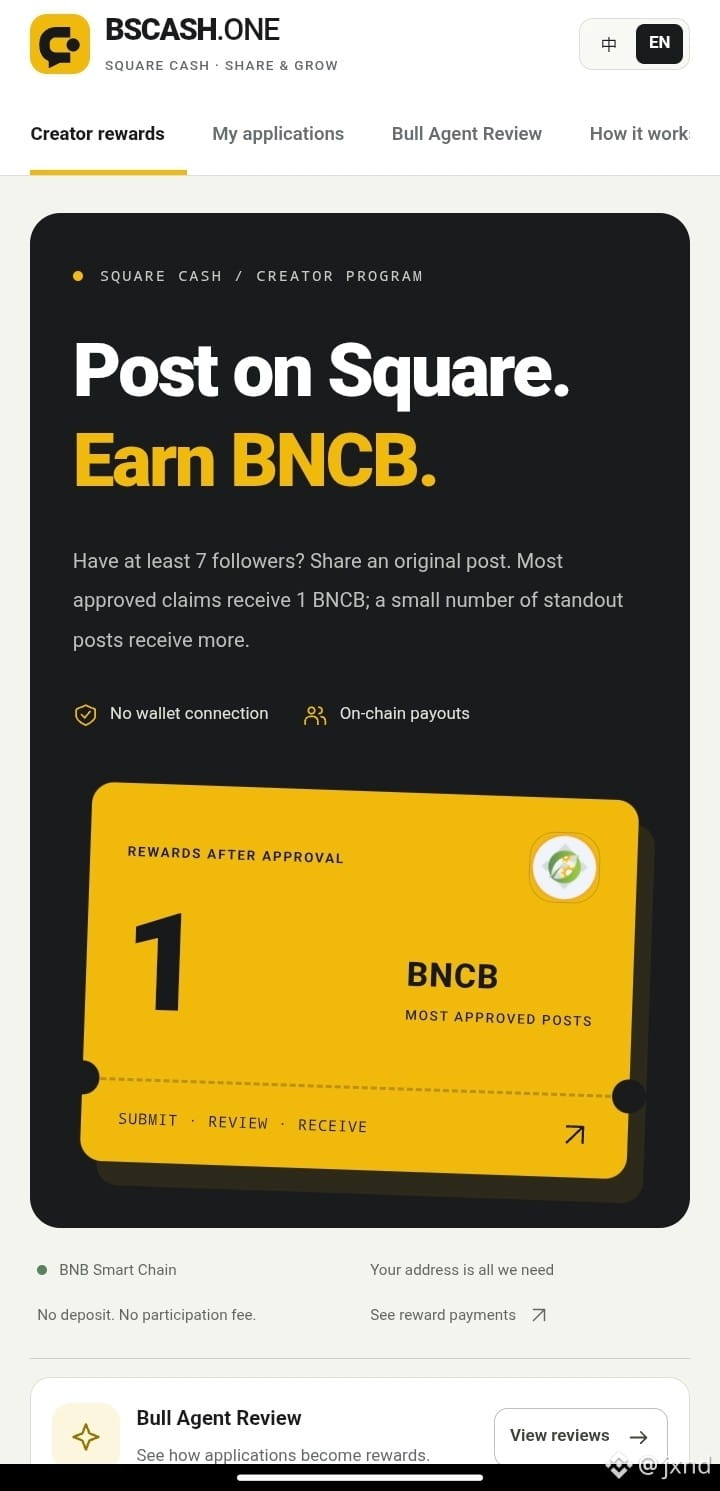
Can you really get BNCB just by posting? Join the Creator Program from BSCASH.ONE (Square Cash)!
The requirements are super easy:
✅ Have at least 7 followers
✅ Create and share your original post on Square
✅ No need for a wallet connection—just prepare your crypto wallet address!
✅ 100% Free! No deposit and no participation fees
🎁 Reward:
You will receive 1 BNCB for most of the approved post claims. If your post is extraordinary.
#BSCASH #SquareCash #BNCB #CreatorProgram #AirdropCrypto #BNBSmartChain
SR-202DDB3ECB43273B361ED0CB
3
677

·
--
Stablecoin Supply Contracts by $15 Billion: Is Crypto Running Out of Liquidity?Stablecoins Are Becoming a Critical Indicator of Crypto Market Weakness
#Stablecoins are the primary dollar liquidity layer of the cryptocurrency market. They function as the cash reserves, or dry powder, that traders and institutions hold before deploying capital into Bitcoin, Ethereum and other digital assets.
Beyond their role as a store of dollar value, stablecoins facilitate most on-chain settlements and a substantial portion of cryptocurrency derivatives activity. Their supply trends therefore provide an important indication of whether capital is entering the digital asset ecosystem or leaving it.
As of mid-November 2026, the stablecoin market is showing signs of significant contraction, raising concerns about the amount of available liquidity supporting the broader cryptocurrency market.
Total stablecoin market capitalization currently stands at approximately $285–289 billion, according to trackers such as DefiLlama and Stablecoin Beat. This represents a contraction of roughly $14–15 billion over the past 30 days, equivalent to approximately 5%.
It is reportedly the sharpest 30-day decline since June 2022.
Compared with the May 2026 peak of approximately $312–315 billion, the market has lost between $21 billion and $24 billion in stablecoin supply, representing a decline of approximately 7%.
The significance of this contraction extends beyond stablecoin valuations. It points to a reduction in the dollar liquidity available within the cryptocurrency ecosystem at a time when Bitcoin and altcoins are already experiencing considerable selling pressure.
USDT and USDC Account for the Bulk of the Contraction
The stablecoin market remains highly concentrated, with Tether's $USDT and Circle's $USDC accounting for approximately 85% of total supply.
USDT (Tether) maintains the largest share, with a market capitalization of approximately $175.5–175.7 billion, representing around 61% of the market. Its supply has declined by approximately $8.3 billion over the past 30 days, equivalent to a reduction of about 4.5%.
USDC (Circle) follows with approximately $69.5 billion in market capitalization, representing around 24% of the market. Its supply has contracted by approximately $3–3.7 billion over the same period, a decline of roughly 4–5%.
Together, these two stablecoins account for the overwhelming majority of the recent reduction in market supply.
Smaller stablecoins are showing more divergent behaviour. Some crypto-backed and newer tokens, including USDS and USD1, have recorded declines exceeding 20%, while others, such as RLUSD and USDe, have demonstrated modest growth or relative stability.
Despite these differences, market dominance remains concentrated in USDT and USDC, making their individual supply movements particularly important when assessing overall crypto liquidity.
Stablecoin pegs have largely remained intact, although USDT has experienced minor trading pressure, occasionally changing hands slightly below its $1 target.
What Does a $15 Billion Stablecoin Contraction Mean for Crypto?
A declining stablecoin supply can reflect redemptions, where holders exchange stablecoins for traditional fiat currencies and withdraw capital from the cryptocurrency ecosystem.
This is different from simply moving stablecoins between exchanges or blockchain networks. A reduction in aggregate supply indicates that the overall pool of issued stablecoins is shrinking, although supply changes alone cannot establish the precise destination of redeemed funds.
Glassnode and other market analytics have described similar conditions as the market effectively running on empty, with less dollar liquidity available across exchanges and on-chain markets to support purchases of risk assets.
This development is consistent with the broader bearish environment currently affecting cryptocurrencies.
Bitcoin spot ETF flows have experienced substantial weakness, with reported net outflows of approximately $1.6 billion over recent sessions. The Coinbase premium has also remained negative or subdued, suggesting weaker US spot demand.
At the same time, extreme fear readings and persistent long liquidations across derivatives markets indicate that investor confidence and leveraged positioning remain under pressure.
The combined effect is a reduction in the amount of available capital that can support spot buying and leveraged market activity.
When stablecoin supply contracts, the amount of sidelined dollar-denominated capital available to enter the market also becomes more constrained. This can amplify downside movements or prolong consolidation because there is less readily available liquidity to absorb selling pressure.
For market makers and large liquidity providers, thinner liquidity conditions can also make price movements more sensitive to concentrated orders, stop-losses and liquidation clusters.
This does not necessarily mean that large players are deliberately driving prices lower. Rather, it means that reduced counter-buying demand can make existing liquidity imbalances more consequential.
Where Is Stablecoin Liquidity Concentrated?
The distribution of stablecoins across blockchain networks is another important consideration.
#Ethereum and #Tron continue to dominate stablecoin circulation, with Tron particularly important for USDT transactions.
Other networks, including #solana and #BNBSmartChain , account for smaller portions of the overall market.
The distribution matters because stablecoin liquidity is not necessarily interchangeable across every blockchain or trading venue. Capital concentrated on one network may not immediately provide liquidity to another without additional transfers or bridging activity.
Current net-flow trends across major chains have also been negative, reinforcing the broader picture of liquidity contraction.
For the cryptocurrency market to experience a meaningful improvement, it will be important to monitor not only aggregate stablecoin supply but also where newly issued stablecoins are being deployed.
What Would Signal That Stablecoin Liquidity Is Returning?
Although the current contraction presents a significant headwind, several indicators could help identify an eventual reversal.
1. A Positive 30-Day Stablecoin Supply Change
One of the clearest indicators would be a return to positive 30-day stablecoin supply growth.
When new issuance exceeds redemptions, the aggregate supply expands, indicating that additional dollar-denominated liquidity is entering the stablecoin ecosystem.
A sustained transition from contraction to expansion would provide an important early indication that capital is returning.
2. Rising Stablecoin Balances on Exchanges
An increase in USDT and USDC balances on major cryptocurrency exchanges could indicate that traders are positioning capital for potential purchases.
Exchange inflows are particularly important because stablecoins deposited on trading platforms can be deployed more readily into Bitcoin, Ethereum and altcoins.
However, exchange inflows do not automatically translate into buying pressure. Their significance depends on subsequent trading activity.
3. Stabilization and Growth in USDT and USDC Supply
Given that USDT and USDC account for approximately 85% of the stablecoin market, their individual supply trends will remain central to determining the direction of aggregate liquidity.
A stabilization in their redemptions, followed by renewed issuance, would provide stronger evidence that the broader contraction is easing.
4. Stablecoin Supply Bottoming While Bitcoin Stabilizes
A particularly constructive development would be stablecoin supply establishing a bottom and beginning to expand while Bitcoin successfully defends its major support levels.
Such a divergence could indicate that dollar liquidity is beginning to return before the broader cryptocurrency market has fully recovered.
Historically, improvements in stablecoin liquidity have sometimes preceded or coincided with relief rallies, although they do not guarantee an immediate price reversal.
5. Improvement in Supporting Capital-Flow Indicators
Stablecoin supply should also be assessed alongside other indicators of capital movement.
A reduction or reversal in Bitcoin ETF outflows, a positive Coinbase premium and declining redemption pressure would strengthen the argument that institutional and broader market demand is improving.
When these indicators begin aligning, the probability of a more sustainable recovery could increase.
Until then, the stablecoin liquidity environment remains a significant headwind for the wider cryptocurrency market.
How Long Could Stablecoin Contraction Affect the Market?
The impact of declining stablecoin supply could unfold across different time horizons.
Near Term: The Coming Weeks
Continued stablecoin contraction is likely to constrain upside potential across the cryptocurrency market.
Bitcoin and other digital assets can still experience relief rallies because of oversold conditions, short-term buying activity and the exhaustion of forced selling.
However, without an improvement in stablecoin supply, such rebounds may struggle to develop into sustained upward movements.
Medium Term: Late 2026 to Early 2027
A more sustainable recovery becomes increasingly probable if stablecoin supply growth resumes and remains positive.
This improvement would likely coincide with Bitcoin establishing a durable higher low and broader investor risk appetite returning.
A full expansion in market liquidity, accompanied by stronger altcoin relative strength, would generally require a sustained period of net stablecoin issuance rather than a brief increase in supply.
Consequently, the return of stablecoin liquidity could become one of the more important developments to monitor as the market moves towards 2027.
The Bigger Picture: Is the Crypto Market Running Out of Dry Powder?
The stablecoin market is currently experiencing a significant contraction, with approximately $14–15 billion disappearing from aggregate supply over the past 30 days.
This is particularly important because stablecoins provide much of the dollar liquidity that supports cryptocurrency trading, settlement and investment activity.
The simultaneous weakness in Bitcoin ETF flows, subdued US spot demand, extreme market fear and ongoing derivatives liquidations reinforces the broader risk-off environment.
The market is therefore facing pressure from two directions: falling asset prices and a shrinking pool of available dollar liquidity.
A reversal in stablecoin supply would be an important development. Sustained net issuance, rising exchange balances and improving capital flows could indicate that investors are beginning to rebuild their positions and prepare for renewed market activity.
The bottom line: Stablecoin supply is one of the most important liquidity indicators to watch during the current cryptocurrency downturn. The contraction suggests that the market has less readily available dollar liquidity to support a sustained recovery. Until net issuance turns positive and broader capital flows improve, liquidity is likely to remain a significant obstacle to a meaningful Bitcoin and altcoin rebound.
Disclaimer: This article presents data-driven market analysis based on stablecoin and cryptocurrency market information available as of mid-November 2026. It is not financial advice. Stablecoin supply, capital flows and cryptocurrency market conditions can change rapidly in response to macroeconomic developments, investor behaviour and liquidity movements.
Stablecoin Supply Contracts by $15 Billion: Is Crypto Running Out of Liquidity?
Stablecoins Are Becoming a Critical Indicator of Crypto Market Weakness
#Stablecoins are the primary dollar liquidity layer of the cryptocurrency market. They function as the cash reserves, or dry powder, that traders and institutions hold before deploying capital into Bitcoin, Ethereum and other digital assets.
Beyond their role as a store of dollar value, stablecoins facilitate most on-chain settlements and a substantial portion of cryptocurrency derivatives activity. Their supply trends therefore provide an important indication of whether capital is entering the digital asset ecosystem or leaving it.
As of mid-November 2026, the stablecoin market is showing signs of significant contraction, raising concerns about the amount of available liquidity supporting the broader cryptocurrency market.
Total stablecoin market capitalization currently stands at approximately $285–289 billion, according to trackers such as DefiLlama and Stablecoin Beat. This represents a contraction of roughly $14–15 billion over the past 30 days, equivalent to approximately 5%.
It is reportedly the sharpest 30-day decline since June 2022.
Compared with the May 2026 peak of approximately $312–315 billion, the market has lost between $21 billion and $24 billion in stablecoin supply, representing a decline of approximately 7%.
The significance of this contraction extends beyond stablecoin valuations. It points to a reduction in the dollar liquidity available within the cryptocurrency ecosystem at a time when Bitcoin and altcoins are already experiencing considerable selling pressure.
USDT and USDC Account for the Bulk of the Contraction
The stablecoin market remains highly concentrated, with Tether's $USDT and Circle's $USDC accounting for approximately 85% of total supply.
USDT (Tether) maintains the largest share, with a market capitalization of approximately $175.5–175.7 billion, representing around 61% of the market. Its supply has declined by approximately $8.3 billion over the past 30 days, equivalent to a reduction of about 4.5%.
USDC (Circle) follows with approximately $69.5 billion in market capitalization, representing around 24% of the market. Its supply has contracted by approximately $3–3.7 billion over the same period, a decline of roughly 4–5%.
Together, these two stablecoins account for the overwhelming majority of the recent reduction in market supply.
Smaller stablecoins are showing more divergent behaviour. Some crypto-backed and newer tokens, including USDS and USD1, have recorded declines exceeding 20%, while others, such as RLUSD and USDe, have demonstrated modest growth or relative stability.
Despite these differences, market dominance remains concentrated in USDT and USDC, making their individual supply movements particularly important when assessing overall crypto liquidity.
Stablecoin pegs have largely remained intact, although USDT has experienced minor trading pressure, occasionally changing hands slightly below its $1 target.
What Does a $15 Billion Stablecoin Contraction Mean for Crypto?
A declining stablecoin supply can reflect redemptions, where holders exchange stablecoins for traditional fiat currencies and withdraw capital from the cryptocurrency ecosystem.
This is different from simply moving stablecoins between exchanges or blockchain networks. A reduction in aggregate supply indicates that the overall pool of issued stablecoins is shrinking, although supply changes alone cannot establish the precise destination of redeemed funds.
Glassnode and other market analytics have described similar conditions as the market effectively running on empty, with less dollar liquidity available across exchanges and on-chain markets to support purchases of risk assets.
This development is consistent with the broader bearish environment currently affecting cryptocurrencies.
Bitcoin spot ETF flows have experienced substantial weakness, with reported net outflows of approximately $1.6 billion over recent sessions. The Coinbase premium has also remained negative or subdued, suggesting weaker US spot demand.
At the same time, extreme fear readings and persistent long liquidations across derivatives markets indicate that investor confidence and leveraged positioning remain under pressure.
The combined effect is a reduction in the amount of available capital that can support spot buying and leveraged market activity.
When stablecoin supply contracts, the amount of sidelined dollar-denominated capital available to enter the market also becomes more constrained. This can amplify downside movements or prolong consolidation because there is less readily available liquidity to absorb selling pressure.
For market makers and large liquidity providers, thinner liquidity conditions can also make price movements more sensitive to concentrated orders, stop-losses and liquidation clusters.
This does not necessarily mean that large players are deliberately driving prices lower. Rather, it means that reduced counter-buying demand can make existing liquidity imbalances more consequential.
Where Is Stablecoin Liquidity Concentrated?
The distribution of stablecoins across blockchain networks is another important consideration.
#Ethereum and #Tron continue to dominate stablecoin circulation, with Tron particularly important for USDT transactions.
Other networks, including #solana and #BNBSmartChain , account for smaller portions of the overall market.
The distribution matters because stablecoin liquidity is not necessarily interchangeable across every blockchain or trading venue. Capital concentrated on one network may not immediately provide liquidity to another without additional transfers or bridging activity.
Current net-flow trends across major chains have also been negative, reinforcing the broader picture of liquidity contraction.
For the cryptocurrency market to experience a meaningful improvement, it will be important to monitor not only aggregate stablecoin supply but also where newly issued stablecoins are being deployed.
What Would Signal That Stablecoin Liquidity Is Returning?
Although the current contraction presents a significant headwind, several indicators could help identify an eventual reversal.
1. A Positive 30-Day Stablecoin Supply Change
One of the clearest indicators would be a return to positive 30-day stablecoin supply growth.
When new issuance exceeds redemptions, the aggregate supply expands, indicating that additional dollar-denominated liquidity is entering the stablecoin ecosystem.
A sustained transition from contraction to expansion would provide an important early indication that capital is returning.
2. Rising Stablecoin Balances on Exchanges
An increase in USDT and USDC balances on major cryptocurrency exchanges could indicate that traders are positioning capital for potential purchases.
Exchange inflows are particularly important because stablecoins deposited on trading platforms can be deployed more readily into Bitcoin, Ethereum and altcoins.
However, exchange inflows do not automatically translate into buying pressure. Their significance depends on subsequent trading activity.
3. Stabilization and Growth in USDT and USDC Supply
Given that USDT and USDC account for approximately 85% of the stablecoin market, their individual supply trends will remain central to determining the direction of aggregate liquidity.
A stabilization in their redemptions, followed by renewed issuance, would provide stronger evidence that the broader contraction is easing.
4. Stablecoin Supply Bottoming While Bitcoin Stabilizes
A particularly constructive development would be stablecoin supply establishing a bottom and beginning to expand while Bitcoin successfully defends its major support levels.
Such a divergence could indicate that dollar liquidity is beginning to return before the broader cryptocurrency market has fully recovered.
Historically, improvements in stablecoin liquidity have sometimes preceded or coincided with relief rallies, although they do not guarantee an immediate price reversal.
5. Improvement in Supporting Capital-Flow Indicators
Stablecoin supply should also be assessed alongside other indicators of capital movement.
A reduction or reversal in Bitcoin ETF outflows, a positive Coinbase premium and declining redemption pressure would strengthen the argument that institutional and broader market demand is improving.
When these indicators begin aligning, the probability of a more sustainable recovery could increase.
Until then, the stablecoin liquidity environment remains a significant headwind for the wider cryptocurrency market.
How Long Could Stablecoin Contraction Affect the Market?
The impact of declining stablecoin supply could unfold across different time horizons.
Near Term: The Coming Weeks
Continued stablecoin contraction is likely to constrain upside potential across the cryptocurrency market.
Bitcoin and other digital assets can still experience relief rallies because of oversold conditions, short-term buying activity and the exhaustion of forced selling.
However, without an improvement in stablecoin supply, such rebounds may struggle to develop into sustained upward movements.
Medium Term: Late 2026 to Early 2027
A more sustainable recovery becomes increasingly probable if stablecoin supply growth resumes and remains positive.
This improvement would likely coincide with Bitcoin establishing a durable higher low and broader investor risk appetite returning.
A full expansion in market liquidity, accompanied by stronger altcoin relative strength, would generally require a sustained period of net stablecoin issuance rather than a brief increase in supply.
Consequently, the return of stablecoin liquidity could become one of the more important developments to monitor as the market moves towards 2027.
The Bigger Picture: Is the Crypto Market Running Out of Dry Powder?
The stablecoin market is currently experiencing a significant contraction, with approximately $14–15 billion disappearing from aggregate supply over the past 30 days.
This is particularly important because stablecoins provide much of the dollar liquidity that supports cryptocurrency trading, settlement and investment activity.
The simultaneous weakness in Bitcoin ETF flows, subdued US spot demand, extreme market fear and ongoing derivatives liquidations reinforces the broader risk-off environment.
The market is therefore facing pressure from two directions: falling asset prices and a shrinking pool of available dollar liquidity.
A reversal in stablecoin supply would be an important development. Sustained net issuance, rising exchange balances and improving capital flows could indicate that investors are beginning to rebuild their positions and prepare for renewed market activity.
The bottom line: Stablecoin supply is one of the most important liquidity indicators to watch during the current cryptocurrency downturn. The contraction suggests that the market has less readily available dollar liquidity to support a sustained recovery. Until net issuance turns positive and broader capital flows improve, liquidity is likely to remain a significant obstacle to a meaningful Bitcoin and altcoin rebound.
Disclaimer: This article presents data-driven market analysis based on stablecoin and cryptocurrency market information available as of mid-November 2026. It is not financial advice. Stablecoin supply, capital flows and cryptocurrency market conditions can change rapidly in response to macroeconomic developments, investor behaviour and liquidity movements.
1
1
120

·
--
🚀 Binance: The Future of Digital Finance! 🌍
The world of cryptocurrency is growing every day, and Binance is helping shape the future of digital finance.
💡 Learn something new every day. 📈 Explore blockchain technology. 🌐 Stay updated with the crypto revolution. 🤝 Connect, share ideas, and grow together.
Success in crypto starts with knowledge, patience, and smart decisions. Never stop learning!
🔥 Think Smart. Trade Smart. Stay Ahead!
#Binance #Crypto #Bitcoin #Blockchain #Web3 #CryptoCommunity #BNBSmartChain $BTC
1
72

·
--
🚀 WHAT IF THE NEXT BIG CRYPTO MOVE STARTS TODAY? 🌍🔥
Everyone is waiting for the perfect opportunity…
But smart people never stop learning! 📈
💡 Learn more. 📊 Stay updated. 🤝 Share knowledge. 🚀 Grow together!
Remember: The crypto market is full of opportunities, but always do your own research before investing.
👇 QUESTION FOR THE COMMUNITY:
If you could choose ONE crypto for the future, which one would you choose? 👇
❤️ Like | 💬 Comment | 🔁 Repost
#Binance #Crypto #bitcoin #follow back #BNBSmartChain #BinanceSquare

1
81

GEVB Coin: A Digital Investment Connecting the Crypto World with GE Vernova SharesThe cryptocurrency market is constantly evolving, and new projects are no longer limited to traditional blockchain-based currencies. Digital assets that connect investors to global financial markets are beginning to emerge. Among them is GEVB, which offers a different model combining digital trading with economic exposure to GE Vernova shares.
GEVB Coin: A Digital Investment Connecting the Crypto World with GE Vernova Shares
The cryptocurrency market is constantly evolving, and new projects are no longer limited to traditional blockchain-based currencies. Digital assets that connect investors to global financial markets are beginning to emerge. Among them is GEVB, which offers a different model combining digital trading with economic exposure to GE Vernova shares.
1
105

🚨 BREAKING CRYPTO NEWS | NOVEMBER 2, 2026
💥 $6.3 BILLION CRYPTO HEIST: BINANCE SECURITY INCIDENT SHAKES THE MARKET!
The crypto industry is facing a major security crisis following a reported $6.3 billion cryptocurrency theft linked by the FBI to North Korea's TraderTraitor group.
🔥 What happened?
🔹 The FBI attributed the attack to the North Korea-linked hacking group. 🔹 Binance reported that it had replenished approximately 95% of the stolen assets. 🔹 Customer withdrawals resumed in phases. 🔹 Bitcoin ETF investors recorded significant outflows amid market uncertainty. 🔹 Investor confidence and exchange security are now major talking points.
📊 THE BIG QUESTION: Will this incident become a turning point for crypto exchange security?
💬 What do you think? Is crypto ready for stronger security standards?
👇 Share your thoughts!
#Binance #BTC #CryptoNews #BNBSmartChain #BinanceSquare $BTC
{future}(BTCUSDT)
🚨 BREAKING CRYPTO NEWS | NOVEMBER 2, 2026
💥 $6.3 BILLION CRYPTO HEIST: BINANCE SECURITY INCIDENT SHAKES THE MARKET!
The crypto industry is facing a major security crisis following a reported $6.3 billion cryptocurrency theft linked by the FBI to North Korea's TraderTraitor group.
🔥 What happened?
🔹 The FBI attributed the attack to the North Korea-linked hacking group. 🔹 Binance reported that it had replenished approximately 95% of the stolen assets. 🔹 Customer withdrawals resumed in phases. 🔹 Bitcoin ETF investors recorded significant outflows amid market uncertainty. 🔹 Investor confidence and exchange security are now major talking points.
📊 THE BIG QUESTION: Will this incident become a turning point for crypto exchange security?
💬 What do you think? Is crypto ready for stronger security standards?
👇 Share your thoughts!
#Binance #BTC #CryptoNews #BNBSmartChain #BinanceSquare $BTC

1
130
Log in to explore more content
Join global crypto users on Binance Square
⚡️ Get latest and useful information about crypto.
💬 Trusted by the world’s largest crypto exchange.
👍 Discover real insights from verified creators.
Email / Phone number
Trending Topics
1
#WhoWillSucceedJensenHuangatNvidia?
61,579 views
845 Discussing
2
#WhatWillDriveCryptoandStocks’NextRebound?
395,377 views
2,790 Discussing
3
#BitcoinActiveSupplyInProfitDropsBelow45%
5,916 views
156 Discussing
4
#KavaSaysAbnormalActivityLimitedToKavaLend
343 views
40 Discussing
5
#USSpotXRPETFsSeeLargestWeeklyOutflowIn8Months
1,232 views
62 Discussing
6
#USPPIMissMayEaseBTCPressure
185,137 views
1,935 Discussing
7
#WORPTLetsTouristsConvertCryptoToThaiBaht
1,018 views
30 Discussing
8
#TONStrategyReports$23.97MQ3NetLoss
2,587 views
37 Discussing
9
#PolkadotCommunityApprovesNewStrategyWith97%Vote
15,238 views
217 Discussing
10
#dYdXPlansV9.9UpgradeToShiftUSDCToInjective
8,656 views
170 Discussing