
#defi
defi
58.4M views
313,531 Discussing
Hot
Latest


Verified
Article
Lorenzo Protocol: The Interesting Part Is What Happens Behind the Vault.Lorenzo Protocol: The Interesting Part Is What Happens Behind the Vault.
Most people look at Lorenzo and see tokenized funds.
I look at the architecture underneath them.
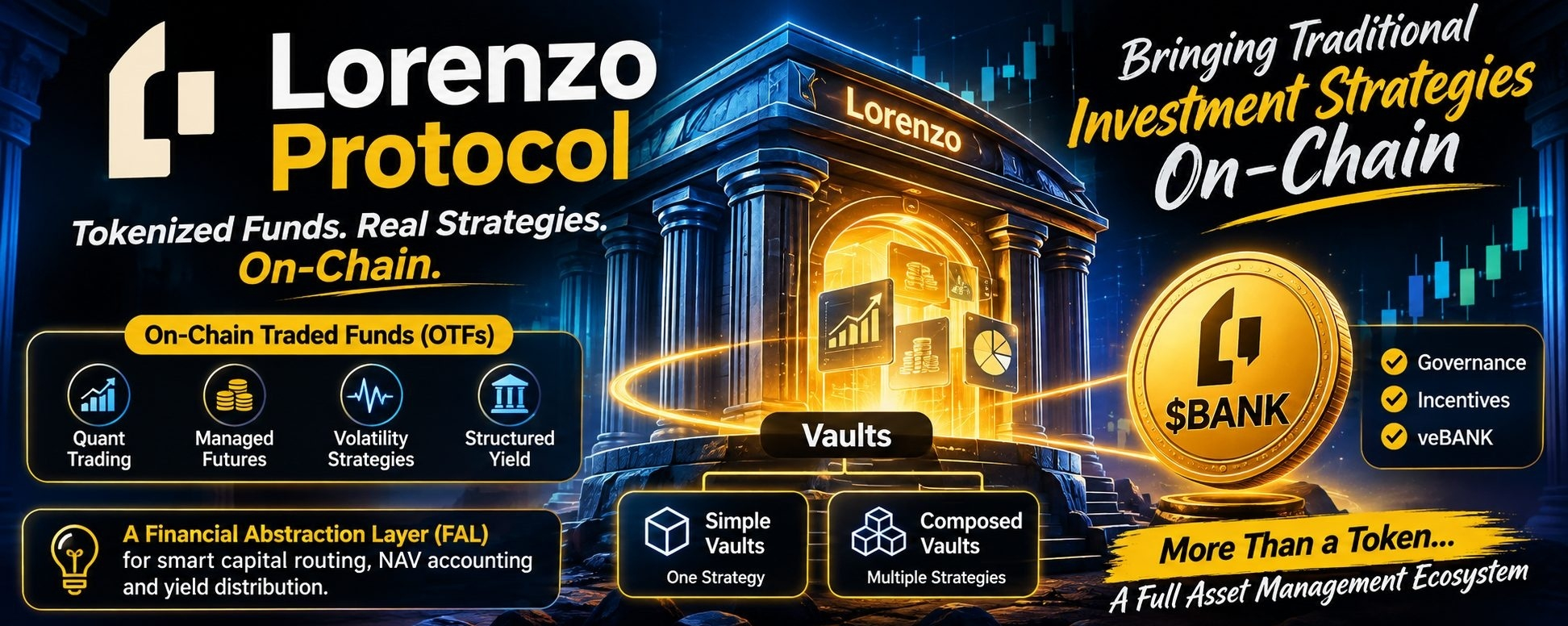
Lorenzo is building around On-Chain Traded Funds (OTFs), bringing traditional investment strategies into tokenized structures that can interact with DeFi.
But the interesting part isn't just turning a fund into a token.
It's how capital moves after someone deposits.
The Financial Abstraction Layer (FAL) handles capital routing, NAV accounting, and yield distribution. Its OTF structure can package strategies like quantitative trading, delta-neutral arbitrage, covered calls, volatility harvesting, managed futures, funding-rate optimization, risk-parity portfolios, and structured lending or RWA income.
Then there's the vault architecture.
A simple vault focuses on one strategy.
A composed vault can combine several simple vaults into a larger portfolio, with a delegated manager able to rebalance allocations.
That distinction matters. It gives users different levels of strategy exposure without forcing every investor to manage individual positions.
One detail I find particularly interesting is the LP token accounting.
Depositors receive LP tokens representing their share of a vault. The Unit NAV measures the value of each share by dividing the vault's net asset value by its outstanding LP tokens.
In other words, the important number isn't just how many tokens you hold. It's what each share is actually worth as the underlying portfolio changes.
And here's the part worth watching closely:
Not every strategy executes on-chain.
Lorenzo's architecture also accommodates approved managers, custody wallets and exchange sub-accounts. Strategy results are reported back on-chain, where NAV and user positions can be updated. Withdrawals involving off-chain strategies also depend on settlement through custody partners.
That's an important distinction.
On-chain accounting can make ownership and reporting more transparent. It does not automatically remove execution, counterparty, custody or liquidity risk.
Then comes $BANK.
BANK is the ecosystem's native utility and governance token, with a maximum supply of 2.1 billion. It supports staking-related privileges, governance participation, and community incentives.
veBANK adds another layer: locking BANK creates a non-transferable, time-weighted position designed to reward longer-term commitment through governance and incentive-gauge participation.
I see an important separation here: OTF shares represent exposure to a product, while BANK coordinates participation in the protocol. They are not the same economic claim.
What makes Lorenzo worth following isn't simply the number of strategies it can tokenize.
It's whether its NAV accounting, manager controls, settlement process and redemption experience can remain reliable as those strategies become more complex.
Because in asset management, the token is only the visible part.
The real story is everything that has to work correctly behind it.
@LorenzoProtocol $BANK #lorenzoprotocol #defi
Lorenzo Protocol: The Interesting Part Is What Happens Behind the Vault.
Lorenzo Protocol: The Interesting Part Is What Happens Behind the Vault.
Most people look at Lorenzo and see tokenized funds.
I look at the architecture underneath them.
Lorenzo is building around On-Chain Traded Funds (OTFs), bringing traditional investment strategies into tokenized structures that can interact with DeFi.
But the interesting part isn't just turning a fund into a token.
It's how capital moves after someone deposits.
The Financial Abstraction Layer (FAL) handles capital routing, NAV accounting, and yield distribution. Its OTF structure can package strategies like quantitative trading, delta-neutral arbitrage, covered calls, volatility harvesting, managed futures, funding-rate optimization, risk-parity portfolios, and structured lending or RWA income.
Then there's the vault architecture.
A simple vault focuses on one strategy.
A composed vault can combine several simple vaults into a larger portfolio, with a delegated manager able to rebalance allocations.
That distinction matters. It gives users different levels of strategy exposure without forcing every investor to manage individual positions.
One detail I find particularly interesting is the LP token accounting.
Depositors receive LP tokens representing their share of a vault. The Unit NAV measures the value of each share by dividing the vault's net asset value by its outstanding LP tokens.
In other words, the important number isn't just how many tokens you hold. It's what each share is actually worth as the underlying portfolio changes.
And here's the part worth watching closely:
Not every strategy executes on-chain.
Lorenzo's architecture also accommodates approved managers, custody wallets and exchange sub-accounts. Strategy results are reported back on-chain, where NAV and user positions can be updated. Withdrawals involving off-chain strategies also depend on settlement through custody partners.
That's an important distinction.
On-chain accounting can make ownership and reporting more transparent. It does not automatically remove execution, counterparty, custody or liquidity risk.
Then comes $BANK .
BANK is the ecosystem's native utility and governance token, with a maximum supply of 2.1 billion. It supports staking-related privileges, governance participation, and community incentives.
veBANK adds another layer: locking BANK creates a non-transferable, time-weighted position designed to reward longer-term commitment through governance and incentive-gauge participation.
I see an important separation here: OTF shares represent exposure to a product, while BANK coordinates participation in the protocol. They are not the same economic claim.
What makes Lorenzo worth following isn't simply the number of strategies it can tokenize.
It's whether its NAV accounting, manager controls, settlement process and redemption experience can remain reliable as those strategies become more complex.
Because in asset management, the token is only the visible part.
The real story is everything that has to work correctly behind it.
@Lorenzo Protocol $BANK #lorenzoprotocol #defi
2
582

·
--
📱 Aave just launched a savings app. I’d test the withdrawal button first.
The new $AAVE app brings self-custodial savings to mobile, with $LINK infrastructure handling cross-chain functions behind the scenes.
Here’s the test I care about.
If I deposit from one chain and want my money back on another, how many steps does that take, and what does the app show me before I confirm?
For a lending-sector comparison, $BIGTIME was up 5.45% in 24h on Binance. Open both tokens if you’re following the sector.
The app I’d watch is the one people keep using after the launch announcement.
#Aave #Chainlink #DeFi
1
65

·
--
Stablecoins can do more than hold a dollar peg in DeFi: they can act as trading liquidity, loan collateral, and settlement assets.
In a report published Nov. 25, the European Banking Authority says stablecoins, including some EU-regulated e-money tokens, play those roles in DeFi. It also points to consumer risks such as inadequate disclosures, leveraged positions, non-repayment of loans, and operational failures.
The policy point is easy to misread: the EBA is recommending that the European Commission assess whether extra requirements should apply to crypto-asset service providers that give customers access to DeFi lending. That is a recommendation to assess a possible policy change, not a new rule already in force.
For users, the practical lesson is to understand the risks of the lending protocol and the intermediary, if one is involved. A stablecoin's target price does not make a DeFi loan risk-free.
#DeFi #Stablecoins #CryptoEducation
7

·
--
🚨 Sky calls emergency vote on 25M USDS transfer to ease stUSDS liquidity crunch
Sky's Core Facilitator has invoked the DeFi protocol's emergency process to fast-track a vote on sending 25 million USDS to the Sky Frontier Foundation to pay down debt, instead of waiting for the next scheduled vote on Dec. 3. Depositors in the stUSDS lending pool have struggled to withdraw for more than two weeks. Spark data showed nearly all of the pool's $158.48 million in assets lent out, with just $3,270 available to withdraw.
⭐ Repaying loans would free up exit liquidity, making this a key test of risk management at one of DeFi's largest stablecoin protocols.
#Sky #USDS #DeFi
18

·
--
Launching a token is one thing. Building a healthy trading environment around it is another.
With Brigid Forge, launching on Forg3r is straightforward. But what makes the approach interesting is the opportunity to build liquidity alongside your community.
Instead of treating liquidity as an afterthought, Forg3r gives projects an opportunity to raise it with the people who believe in what they're building.
Why does that matter?
Because liquidity plays an important role in how a token trades. Deeper liquidity generally means that buy and sell orders have less price impact, helping reduce sharp price movements caused by individual trades.
It's a healthier foundation for trading and a more sustainable way to approach token launches.
If you're planning to launch a token, consider building your liquidity with your community from the beginning.
Launch on Forg3r. Build liquidity together.
#BrigidForge #BNBChain #defi
20

Smart money is moving as market dynamics evolve, opening fresh doors for savvy yield farmers.
Market Snapshot:
• BTC: $60,805.26 (+2.915%)
• ETH: $1,695.90 (+2.385%)
As liquidity rotates, shifting Total Value Locked (TVL) across protocols is creating lucrative opportunities. With $BTC holding strong near its 61,622.38 daily high and ETH showing steady momentum after hitting $1,730.00, DeFi engagement is heating up.
Stakers and yield farmers are capitalizing on these price movements to maximize APYs and optimize collateral efficiency across lending markets.
Are you adjusting your yield farming strategy to chase higher rewards, or playing it safe with blue-chip assets right now?
#BinanceSquare #Write2Earn #DeFi
67

·
--
Raydium ($RAY) is leading today's altcoin rebound, up about 10% in 24 hours to roughly $1.34 while $BTC climbs past $60,900 and $BNB trades near $560, both up around 3%. With about $33 million in daily volume and a market cap near $363 million, the move has real depth behind it. The wider market is recovering after Bitcoin dipped toward $57,300 on hotter-than-expected US inflation data, and Solana DeFi names are riding the bounce.
The buying has a real story behind it. Tokenized Nvidia stock trading on decentralized exchanges jumped 935% to $2.3 billion over the past 30 days, and Raydium was among the busiest venues, reporting $42 million in tokenized Nvidia volume in a single day on 23 November. Tokenized equities have now produced more of Raydium's swap revenue than memecoins for three straight months. The protocol also reported third-quarter net revenue of $7.99 million, up 264% from the previous quarter, alongside $5.23 million in RAY buybacks.
The risks are just as visible. RAY is still down about 5% over the past seven days and nearly 30% over the past month, and it trades below its 50-day average near $1.73, so the longer trend is still weak. A break back below $1.29 would put the recent $1.20 low back in view. Watch whether tokenized-stock volumes stay elevated and whether RAY can hold near its 200-day average before reading this as more than an oversold bounce.
This is market commentary, not financial advice.
#BinanceSquare #RAY #Solana #DeFi .
Raydium ($RAY ) is leading today's altcoin rebound, up about 10% in 24 hours to roughly $1.34 while $BTC climbs past $60,900 and $BNB trades near $560, both up around 3%. With about $33 million in daily volume and a market cap near $363 million, the move has real depth behind it. The wider market is recovering after Bitcoin dipped toward $57,300 on hotter-than-expected US inflation data, and Solana DeFi names are riding the bounce.
The buying has a real story behind it. Tokenized Nvidia stock trading on decentralized exchanges jumped 935% to $2.3 billion over the past 30 days, and Raydium was among the busiest venues, reporting $42 million in tokenized Nvidia volume in a single day on 23 November. Tokenized equities have now produced more of Raydium's swap revenue than memecoins for three straight months. The protocol also reported third-quarter net revenue of $7.99 million, up 264% from the previous quarter, alongside $5.23 million in RAY buybacks.
The risks are just as visible. RAY is still down about 5% over the past seven days and nearly 30% over the past month, and it trades below its 50-day average near $1.73, so the longer trend is still weak. A break back below $1.29 would put the recent $1.20 low back in view. Watch whether tokenized-stock volumes stay elevated and whether RAY can hold near its 200-day average before reading this as more than an oversold bounce.
This is market commentary, not financial advice.
#BinanceSquare #RAY #Solana #DeFi .
51
·
--
Aave dhe kursimet
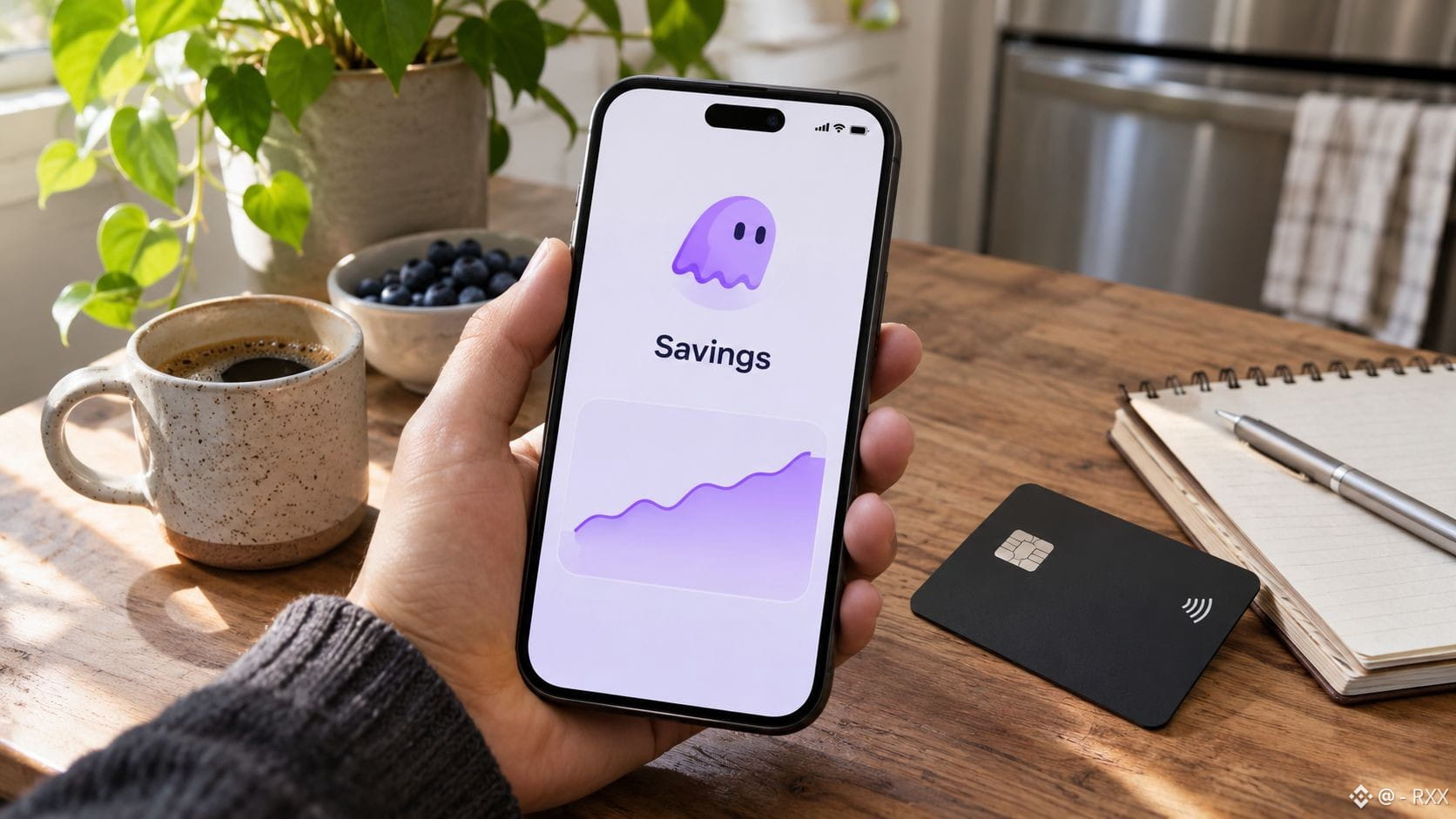
🏦 I can explain a savings app to my parents in ten seconds. Explaining where the yield comes from takes a little longer.
Aave Labs opened its savings app to the public after early access balances topped 63 million dollars.
The app makes deposits feel familiar, while the yield comes from on-chain lending.
That’s the part I’d dig into before opening the $AAVE chart. Where does your deposit go, how does the rate change, and what happens when you withdraw?
You can also look at $USDC activity on $ARB for a sense of what the underlying rails are used for.
Would you try it with money you might need next week?
#Aave #DeFi #Stablecoins
1
14
While everyone panics...
Over $10 trillion in stablecoin settlements occurred on-chain in 2024, rivaling Visa's annual volume.
Here is what that tells us about real crypto innovation:
→ Tokenized U.S. Treasuries now exceed $50 billion in assets under management, giving DeFi protocols a yield-bearing collateral base that did not exist three years ago.
→ Zero-knowledge proofs have cut L2 transaction costs by roughly 90% since 2023, making micro-payments viable for autonomous AI agents that settle thousands of $0.001 transactions per day.
→ DePIN networks like Helium and Filecoin grew node operators by over 300% year-over-year, proving that physical infrastructure can be coordinated without a central intermediary.
→ Account abstraction wallets saw a 5x increase in active users during 2024, quietly removing seed phrase friction for mainstream onboarding.
The next leg
Bookmark this one
#LearnCrypto #CryptoTips #DeFi #HODL #CryptoCommunity
📱 Follow @PoorCryptoMan
45

·
--
Aave just got two doors into mainstream money in 48 hours — and the token still can't catch a bid.
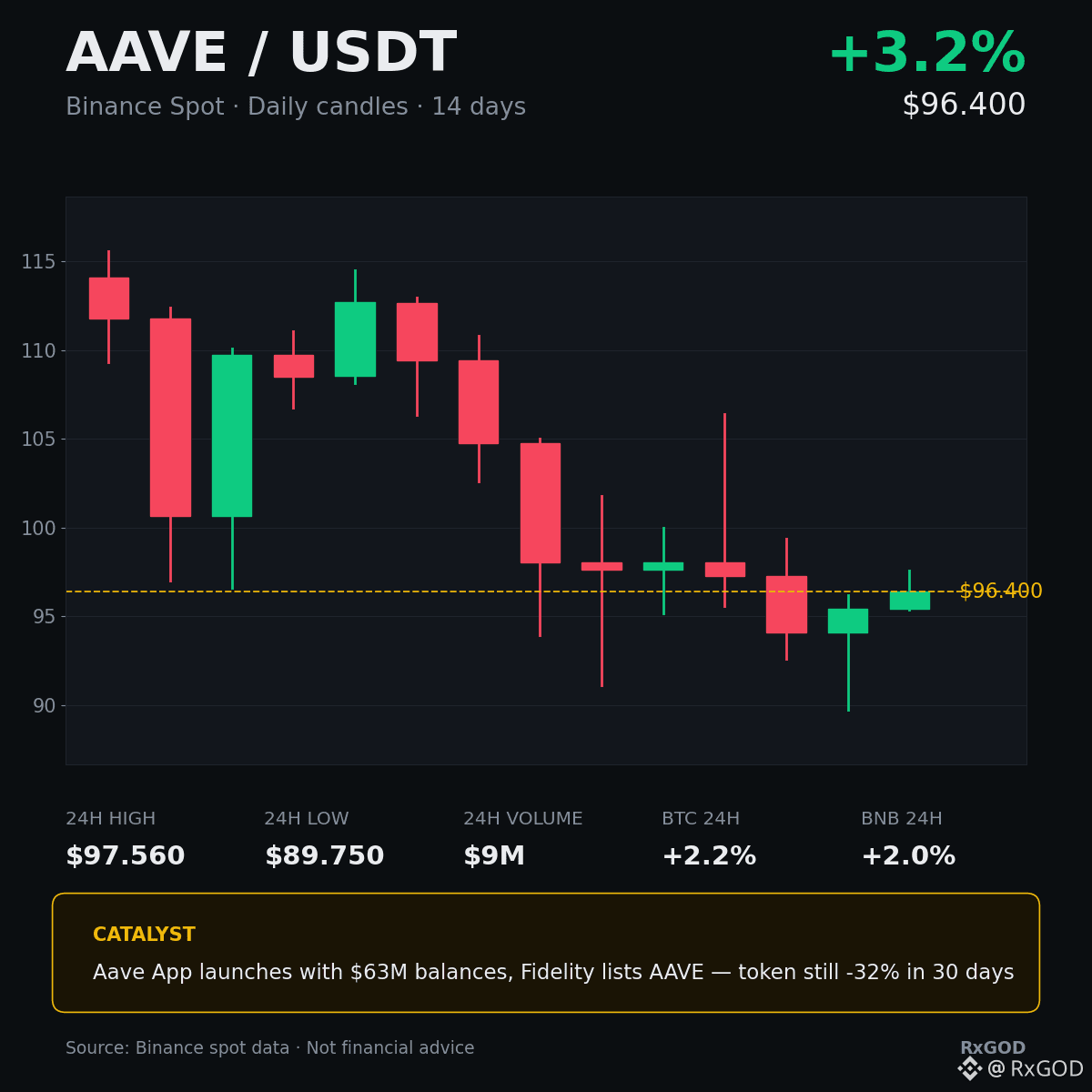
Aave Labs launched its Aave App publicly on Wednesday (Nov 25), paying verified users a variable 6% base rate for 90 days on balances up to $100,000, up to 7.25% with referrals and recurring deposits. It already holds over $63 million after under three months of early access. A day earlier, Fidelity added $AAVE to its US retail crypto platform, including retirement accounts, alongside $LINK and $UNI.
Yet $AAVE trades at $96.48, up 3.22% in 24 hours but down 13.8% over 14 days and roughly 32% in a month. It sits in the bottom quarter of its 14-day range ($89.75–$115.55), daily RSI near 29 — oversold, but oversold is not a floor. The $106 level that once held as support is now a sell wall; next real support sits near $73.
The catch: the token fell 2.6% on the Fidelity announcement day. And Aave's lending engine runs hot — its USDC borrow cap was raised to $4 billion with utilization near 98.5%, leaving a thin withdrawal buffer if borrowers rush out.
So is this the disconnect that gets bought — real yield, retirement-account access — or proof that even the best DeFi fundamentals can't fight a market in Extreme Fear (index: 9)?
Which breaks first: the $106 sell wall, or the $73 floor? And would you park savings in the Aave App at 6% — or is that yield not worth the risk?
Not financial advice — DYOR.
#AaveSavingsApp #DeFi #CryptoNews #Fidelity
Aave just got two doors into mainstream money in 48 hours — and the token still can't catch a bid.
Aave Labs launched its Aave App publicly on Wednesday (Nov 25), paying verified users a variable 6% base rate for 90 days on balances up to $100,000, up to 7.25% with referrals and recurring deposits. It already holds over $63 million after under three months of early access. A day earlier, Fidelity added $AAVE to its US retail crypto platform, including retirement accounts, alongside $LINK and $UNI .
Yet $AAVE trades at $96.48, up 3.22% in 24 hours but down 13.8% over 14 days and roughly 32% in a month. It sits in the bottom quarter of its 14-day range ($89.75–$115.55), daily RSI near 29 — oversold, but oversold is not a floor. The $106 level that once held as support is now a sell wall; next real support sits near $73.
The catch: the token fell 2.6% on the Fidelity announcement day. And Aave's lending engine runs hot — its USDC borrow cap was raised to $4 billion with utilization near 98.5%, leaving a thin withdrawal buffer if borrowers rush out.
So is this the disconnect that gets bought — real yield, retirement-account access — or proof that even the best DeFi fundamentals can't fight a market in Extreme Fear (index: 9)?
Which breaks first: the $106 sell wall, or the $73 floor? And would you park savings in the Aave App at 6% — or is that yield not worth the risk?
Not financial advice — DYOR.
#AaveSavingsApp #DeFi #CryptoNews #Fidelity
63

·
--
Article
The Investor's Watchlist: Ten Minutes a WeekIf you have already built positions on this chain using the methods in this book, this chapter compresses the book's conclusions into a checklist to run every week: what numbers to watch, where to find them, at what level to act and what to do, and in what circumstances each strategy should admit its premise was wrong.
Why a Checklist, Not a Forecast
This book has not forecast any price, nor judged whether any project will live or die. The reason is simple: the chain has been running for four months, and data from its first phase can tell us about structure, not about outcomes.
Structure changes. Subsidies get adjusted, borrowers change, new assets come onchain, and regulatory doors open or close. What we can do is list the signals that would change the structure, check them regularly, and adjust when they appear.
Each item in this chapter has four fields:
What to watch · Where to look · Threshold · What to do when it is reached
1. Six Signals for Income Positions
Applies to: Earn deposits, direct deposits into the Steakhouse vault, Spark Savings.
1: What to watch: Whether Ethena renews the USDe collateral reward; Where to look: Merkl: campaign list for the USDe/USDG 91.5% market; Threshold: No new campaign this week; What to do: Expect the vault's base interest to drop sharply within one to two weeks; direct depositors should consider moving to Spark2: What to watch: USDe's market price (the oracle's backup price); Where to look: backupPrice() on oracle contract 0xE648…055f; Threshold: Below 0.995; What to do: Be on alert; below 0.99 with a challenge open (isChallenged()), consider withdrawing early3: What to watch: Share of the vault that can be withdrawn immediately; Where to look: Morpho: supply minus borrowing in each looping market; Threshold: Below 5%; What to do: Utilization is extremely high and withdrawals may queue; do not add deposits4: What to watch: LTVs of the top borrowers; Where to look: Morpho: top 10 borrowers in the USDe market; Threshold: Several large positions above 91%; What to do: Liquidation is near; watch whether it completes smoothly5: What to watch: Annual rate of the Robinhood Earn reward; Where to look: Merkl: current rate of the "[Robinhood Users Only]" campaign; Threshold: Below 2%; What to do: Earn users' yield advantage is narrowing; recompare other dollar yields6: What to watch: The unsubsidized benchmark; Where to look: Spark Savings, the floor of Lighter funding; Threshold: Moves by more than 0.5 percentage points; What to do: Recalculate the excess return of every yield product
Failure condition: if the USDe oracle is successfully challenged and switches to the market price, or the vault takes on bad debt, the premise of the income strategy no longer holds. Do not wait for yields to recover; get your principal back first.
2. Four Signals for Stock-Token Positions
Applies to: holding stock tokens, making markets in stock tokens.
7: What to watch: Whether the token multiplier has changed; Where to look: Token contract uiMultiplier(), UIMultiplierUpdated events; Threshold: Around dividend dates; What to do: Recalibrate your price-gap calculations8: What to watch: Price gap during trading hours (after multiplier correction); Where to look: DEX pool hourly price vs. share price × multiplier; Threshold: Deviation above 50 bp that persists; What to do: The arbitrage channel may be blocked (recall NVDA in early August); stop adding9: What to watch: Weekend premium; Where to look: DEX pool prices on weekends; Threshold: Above 30 bp; What to do: Do not buy on weekends; holders may consider trimming on weekends to collect the premium10: What to watch: Contract pauses and administrative events; Where to look: smarts get_recent_events, token contract paused(); Threshold: A pause, burn, or upgrade event; What to do: Immediately assess every position tied to that token (including LP positions and collateral)
Failure condition: if a token deviates from the shares by more than 2% during trading hours for several consecutive days, or a pause event occurs on the contract, the basic assumption that "the stock token tracks the shares" is temporarily broken.
3. Three Signals for Leveraged and Basis Positions
Applies to: perpetual longs, the SPY basis trade, looped borrowing.
11: What to watch: Level of funding; Where to look: Lighter fundings API; Threshold: SPY 30-day annualized below 3.5%; What to do: The basis trade's excess return is gone; consider closing12: What to watch: Direction of funding; Where to look: Same; Threshold: Negative for 24 consecutive hours; What to do: The long-short balance has flipped, and the basis trade starts paying13: What to watch: Margin buffer; Where to look: Lighter account; Threshold: Below the size of one weekend gap (about 3% for SPY, 5–10% for individual stocks); What to do: Add margin or reduce the position
Failure condition: the basis trade's premise is that "longs keep paying." If SPY's 30-day annualized funding falls below 3.5% and stays there for two weeks, the strategy is back to earning what a deposit earns, while carrying more risk.
4. Five Signals for the Chain and Ecosystem
These signals do not trigger trades directly, but they decide what the chain's second phase will look like. From this book's long-term perspective, they matter more than any week's prices.
14: What to watch: Total size of stock tokens (10-Q fair value, updated quarterly); Why it matters: $185 million on September 30; it decides whether stock-token liquidity and market-making depth can keep up15: What to watch: Unsubsidized borrowing demand; Why it matters: Borrowing in syrupUSDG, mGLO, spUSDG, and the stock-collateral markets; it sets the floor for rates once subsidies taper16: What to watch: Perpetual open interest and the share in stocks; Why it matters: About $188 million on November 2, with SPY and QQQ the largest; it reflects demand to go long stocks onchain17: What to watch: Changes in U.S. access; Why it matters: Whether U.S. users can hold stock tokens or use perpetuals in Wallet; opening either would change demand significantly18: What to watch: Onchain fees and DEX volume; Why it matters: Chain-operator fees were about $1.55 million in October, a fraction of Q3; they show whether trading activity returns to its first-phase peak
5. The Calendar
Put the known dates on your calendar:
Every week (Ethena's campaign cycle): Event: Renewal of the USDe collateral reward; Effect: Signal 1 for income positionsDecember 31, 2026: Event: Gas-free swaps in Robinhood Wallet expire (already extended once); Effect: Higher costs for small trades, limited effect on large ones (Chapter 3)Every quarter: Event: Robinhood 10-Q: stock-token size, onchain revenue; Effect: Signals 14 and 18Each stock's ex-dividend date: Event: Token multiplier adjustment; Effect: Signal 7July 1, 2027: Event: Robinhood Earn reward budget (Merkl campaign) expires; Effect: Earn's yield structure may be reset
The Ten-Minute Weekly Routine
Minutes 1–3: subsidies. Open Merkl and check whether Ethena's USDe campaign has been renewed and the current rate of the Robinhood campaign.Minutes 4–5: vault health. On Morpho, check utilization in the looping markets, the withdrawable balance, and the top borrowers' LTVs.Minutes 6–7: prices. Check the USDe backup price; if you hold stock tokens, check the price gap during trading hours and on weekends (after multiplier correction).Minutes 8–9: leverage. Check 30-day funding and open interest for SPY and QQQ.Minute 10: record. Write the six numbers into a table. In three months, you will have notes that understand this chain better than any report.
Questions This Book Does Not Answer
Finally, an honest list of the questions this book has not answered and cannot answer with first-phase
Once all subsidies taper, how many dollar deposits will remain on this chain?Will stock tokens open to the U.S., and if so, will that change the weekend premium and the structure of liquidity?Will perpetuals on pre-IPO companies become a lasting market, or a passing craze?Of Robinhood's roughly 28.6 million funded customers, how many will actually make the chain a place for everyday investing?
The answers will appear over the next few quarters. The signals on this checklist are where they will show up first.
Forecasts expire; checklists do not. List the signals that would change the structure and look at them once a week. That is more reliable than any brilliant call.
Sources for This Chapter
All data and thresholds from the previous thirteen chapters; key interfaces: Merkl v4 API, Morpho GraphQL API, oracle contract 0xE64849bd4AD03DfaBbe02bb521de19997a19055f, stock-token contract uiMultiplier(), Lighter fundings and orderBookDetails, smarts get_recent_events, DefiLlamaRobinhood Wallet gas waiver extended to December 31, 2026: CoinDesk (as relayed by crypto[.]news)Validity period of the Robinhood Earn reward campaign: Merkl campaign records (July 1, 2026 to July 1, 2027)
—
This is Chapter 14 of 14 from my new book Where the Yield Comes From, serialized one chapter a day. For research only; not investment advice.
Author: Blue Lotus
#DeFi #RobinhoodChain #Stablecoins #RWA
The Investor's Watchlist: Ten Minutes a Week
If you have already built positions on this chain using the methods in this book, this chapter compresses the book's conclusions into a checklist to run every week: what numbers to watch, where to find them, at what level to act and what to do, and in what circumstances each strategy should admit its premise was wrong.
Why a Checklist, Not a Forecast
This book has not forecast any price, nor judged whether any project will live or die. The reason is simple: the chain has been running for four months, and data from its first phase can tell us about structure, not about outcomes.
Structure changes. Subsidies get adjusted, borrowers change, new assets come onchain, and regulatory doors open or close. What we can do is list the signals that would change the structure, check them regularly, and adjust when they appear.
Each item in this chapter has four fields:
What to watch · Where to look · Threshold · What to do when it is reached
1. Six Signals for Income Positions
Applies to: Earn deposits, direct deposits into the Steakhouse vault, Spark Savings.
1: What to watch: Whether Ethena renews the USDe collateral reward; Where to look: Merkl: campaign list for the USDe/USDG 91.5% market; Threshold: No new campaign this week; What to do: Expect the vault's base interest to drop sharply within one to two weeks; direct depositors should consider moving to Spark2: What to watch: USDe's market price (the oracle's backup price); Where to look: backupPrice() on oracle contract 0xE648…055f; Threshold: Below 0.995; What to do: Be on alert; below 0.99 with a challenge open (isChallenged()), consider withdrawing early3: What to watch: Share of the vault that can be withdrawn immediately; Where to look: Morpho: supply minus borrowing in each looping market; Threshold: Below 5%; What to do: Utilization is extremely high and withdrawals may queue; do not add deposits4: What to watch: LTVs of the top borrowers; Where to look: Morpho: top 10 borrowers in the USDe market; Threshold: Several large positions above 91%; What to do: Liquidation is near; watch whether it completes smoothly5: What to watch: Annual rate of the Robinhood Earn reward; Where to look: Merkl: current rate of the "[Robinhood Users Only]" campaign; Threshold: Below 2%; What to do: Earn users' yield advantage is narrowing; recompare other dollar yields6: What to watch: The unsubsidized benchmark; Where to look: Spark Savings, the floor of Lighter funding; Threshold: Moves by more than 0.5 percentage points; What to do: Recalculate the excess return of every yield product
Failure condition: if the USDe oracle is successfully challenged and switches to the market price, or the vault takes on bad debt, the premise of the income strategy no longer holds. Do not wait for yields to recover; get your principal back first.
2. Four Signals for Stock-Token Positions
Applies to: holding stock tokens, making markets in stock tokens.
7: What to watch: Whether the token multiplier has changed; Where to look: Token contract uiMultiplier(), UIMultiplierUpdated events; Threshold: Around dividend dates; What to do: Recalibrate your price-gap calculations8: What to watch: Price gap during trading hours (after multiplier correction); Where to look: DEX pool hourly price vs. share price × multiplier; Threshold: Deviation above 50 bp that persists; What to do: The arbitrage channel may be blocked (recall NVDA in early August); stop adding9: What to watch: Weekend premium; Where to look: DEX pool prices on weekends; Threshold: Above 30 bp; What to do: Do not buy on weekends; holders may consider trimming on weekends to collect the premium10: What to watch: Contract pauses and administrative events; Where to look: smarts get_recent_events, token contract paused(); Threshold: A pause, burn, or upgrade event; What to do: Immediately assess every position tied to that token (including LP positions and collateral)
Failure condition: if a token deviates from the shares by more than 2% during trading hours for several consecutive days, or a pause event occurs on the contract, the basic assumption that "the stock token tracks the shares" is temporarily broken.
3. Three Signals for Leveraged and Basis Positions
Applies to: perpetual longs, the SPY basis trade, looped borrowing.
11: What to watch: Level of funding; Where to look: Lighter fundings API; Threshold: SPY 30-day annualized below 3.5%; What to do: The basis trade's excess return is gone; consider closing12: What to watch: Direction of funding; Where to look: Same; Threshold: Negative for 24 consecutive hours; What to do: The long-short balance has flipped, and the basis trade starts paying13: What to watch: Margin buffer; Where to look: Lighter account; Threshold: Below the size of one weekend gap (about 3% for SPY, 5–10% for individual stocks); What to do: Add margin or reduce the position
Failure condition: the basis trade's premise is that "longs keep paying." If SPY's 30-day annualized funding falls below 3.5% and stays there for two weeks, the strategy is back to earning what a deposit earns, while carrying more risk.
4. Five Signals for the Chain and Ecosystem
These signals do not trigger trades directly, but they decide what the chain's second phase will look like. From this book's long-term perspective, they matter more than any week's prices.
14: What to watch: Total size of stock tokens (10-Q fair value, updated quarterly); Why it matters: $185 million on September 30; it decides whether stock-token liquidity and market-making depth can keep up15: What to watch: Unsubsidized borrowing demand; Why it matters: Borrowing in syrupUSDG, mGLO, spUSDG, and the stock-collateral markets; it sets the floor for rates once subsidies taper16: What to watch: Perpetual open interest and the share in stocks; Why it matters: About $188 million on November 2, with SPY and QQQ the largest; it reflects demand to go long stocks onchain17: What to watch: Changes in U.S. access; Why it matters: Whether U.S. users can hold stock tokens or use perpetuals in Wallet; opening either would change demand significantly18: What to watch: Onchain fees and DEX volume; Why it matters: Chain-operator fees were about $1.55 million in October, a fraction of Q3; they show whether trading activity returns to its first-phase peak
5. The Calendar
Put the known dates on your calendar:
Every week (Ethena's campaign cycle): Event: Renewal of the USDe collateral reward; Effect: Signal 1 for income positionsDecember 31, 2026: Event: Gas-free swaps in Robinhood Wallet expire (already extended once); Effect: Higher costs for small trades, limited effect on large ones (Chapter 3)Every quarter: Event: Robinhood 10-Q: stock-token size, onchain revenue; Effect: Signals 14 and 18Each stock's ex-dividend date: Event: Token multiplier adjustment; Effect: Signal 7July 1, 2027: Event: Robinhood Earn reward budget (Merkl campaign) expires; Effect: Earn's yield structure may be reset
The Ten-Minute Weekly Routine
Minutes 1–3: subsidies. Open Merkl and check whether Ethena's USDe campaign has been renewed and the current rate of the Robinhood campaign.Minutes 4–5: vault health. On Morpho, check utilization in the looping markets, the withdrawable balance, and the top borrowers' LTVs.Minutes 6–7: prices. Check the USDe backup price; if you hold stock tokens, check the price gap during trading hours and on weekends (after multiplier correction).Minutes 8–9: leverage. Check 30-day funding and open interest for SPY and QQQ.Minute 10: record. Write the six numbers into a table. In three months, you will have notes that understand this chain better than any report.
Questions This Book Does Not Answer
Finally, an honest list of the questions this book has not answered and cannot answer with first-phase
Once all subsidies taper, how many dollar deposits will remain on this chain?Will stock tokens open to the U.S., and if so, will that change the weekend premium and the structure of liquidity?Will perpetuals on pre-IPO companies become a lasting market, or a passing craze?Of Robinhood's roughly 28.6 million funded customers, how many will actually make the chain a place for everyday investing?
The answers will appear over the next few quarters. The signals on this checklist are where they will show up first.
Forecasts expire; checklists do not. List the signals that would change the structure and look at them once a week. That is more reliable than any brilliant call.
Sources for This Chapter
All data and thresholds from the previous thirteen chapters; key interfaces: Merkl v4 API, Morpho GraphQL API, oracle contract 0xE64849bd4AD03DfaBbe02bb521de19997a19055f, stock-token contract uiMultiplier(), Lighter fundings and orderBookDetails, smarts get_recent_events, DefiLlamaRobinhood Wallet gas waiver extended to December 31, 2026: CoinDesk (as relayed by crypto[.]news)Validity period of the Robinhood Earn reward campaign: Merkl campaign records (July 1, 2026 to July 1, 2027)
—
This is Chapter 14 of 14 from my new book Where the Yield Comes From, serialized one chapter a day. For research only; not investment advice.
Author: Blue Lotus
#DeFi #RobinhoodChain #Stablecoins #RWA
179
·
--
The XRP Ledger's vault upgrade has started its two-week countdown, moving native onchain lending one step closer.
On November 25, 2026 at 19:38 UTC, the SingleAssetVault amendment (XLS-65) reached 29 of 35 trusted validator votes, just above the 80% threshold the network requires. If that support holds without interruption, it is set to activate on or soon after December 9, 2026 at 19:38 UTC. Any dip to 80% or below resets the clock.
Vaults let many depositors pool one asset, such as $XRP or RLUSD, and receive shares in return. They are one half of XRPL's planned lending stack: the companion LendingProtocol amendment (XLS-66), which adds fixed-term loans funded from those vaults, stood at 28 of 35 votes on November 25, one short of a majority. Both must be live before native lending works.
#XRP #XRPL #DeFi
DYOR. Not financial advice.

129
How to read a bonding curve in 60 seconds:
A bonding curve is just a price formula. The more tokens already sold, the higher the price of the next one. Early buyers pay less per token; late buyers pay more. No order book, no market maker — the curve IS the market.
Three things to check before you ape in:
1️⃣ Where are you on the curve? Early = cheap, but also the riskiest — the idea is unproven.
2️⃣ Where does it graduate? On T2L Launchpad, ~$10,000 raised moves the token to PancakeSwap.
3️⃣ What happens to liquidity after? There, the LP tokens get burned — liquidity is locked forever, nobody can pull it.
The curve rewards being early and punishes FOMO at the top. Same math, every token — learn to read it before you buy it.
$BNB $T2L
#DeFi #BondingCurve #CryptoEducation
Not financial advice.
2
·
--
Verified
$EVAA Is Getting Attention. But Is Adoption Growing?
Binance Wallet's Alpha Box rewards campaign has brought fresh visibility to EVAA.
However, attention doesn't always translate into real protocol growth.
EVAA's deposits reportedly fell 20.9% over 30 days, reaching approximately $6.69M as of November 17.
That's an important metric to watch.
For sustainable growth, EVAA needs more than campaign exposure. It needs consistent deposits, stronger lending demand and rising ecosystem activity.
Can $EVAA turn short-term attention into long-term adoption?
#EVAA #DeFi #Binance
1
590

·
--
🔥 ENA: A $7.5 BILLION MILESTONE COULD UNLOCK BUYBACKS!
- Ethena governance approved its programmatic ENA buyback framework.
- The first milestone requires USDe’s 14-day average supply to reach $7.5 billion.
- USDe supply was around $4.9 billion at September 30.
- The framework links a growing share of protocol revenue to ENA buybacks as supply reaches higher milestones.
A major tokenomics change—but the first trigger has not been reached yet.
$ENA
{future}(ENAUSDT)
.
.
.
#ENA #Ethena #DeFi
Not financial advice. DYOR.
🔥 ENA: A $7.5 BILLION MILESTONE COULD UNLOCK BUYBACKS!
- Ethena governance approved its programmatic ENA buyback framework.
- The first milestone requires USDe’s 14-day average supply to reach $7.5 billion.
- USDe supply was around $4.9 billion at September 30.
- The framework links a growing share of protocol revenue to ENA buybacks as supply reaches higher milestones.
A major tokenomics change—but the first trigger has not been reached yet.
$ENA
.
.
.
#ENA #Ethena #DeFi
Not financial advice. DYOR.
99

·
--
🚨 Solana DEX Velocity halts trading after a critical bug discovered just months post-relaunch. The platform, rebuilt from the ruins of the April Drift hack, pauses operations to address the exploit.
Market implication: Heightened risk sentiment for SOL as infrastructure stability is questioned. Traders should monitor on-chain activity for signs of capital flight.
#DeFi
$SOL #TradingSignal #CryptoAnalysis
Market implication: Heightened risk sentiment for SOL as infrastructure stability is questioned. Traders should monitor on-chain activity for signs of capital flight.
#DeFi
$SOL #TradingSignal #CryptoAnalysis


·
--
🏦 Aave's Risk Steward Tightens Lending Caps as DeFi Deleverages
📌 What happened
LlamaRisk, Aave's risk steward, published a new round of risk-parameter changes for Aave V3 — cutting borrow and supply caps across several markets while raising deposit caps on Horizon's HINC and mGLOBAL. It follows last week's USDC borrow-cap raise on V3 Core to $4B, after a single wallet supplied over $1B USDC and debt hit 98.5% of the old limit.
📊 Key numbers
• USDC borrow cap (V3 Core): $2.7B → $4B on Nov 20 (+48%)
• Nov 20 sheet: 34 caps cut, 5 raised
• New proposal: WBTC supply cap 50,000 → 41,000; cbBTC 40,000 → 32,000
• Horizon: HINC deposit cap 10,000 → 20,500; mGLOBAL 30M → 50M
• AAVE: ~$94.50, down ~33% over the past month
🔍 Why it matters
Aave is the largest DeFi lending protocol, and its risk steward is actively repositioning it around liquid collateral while the market deleverages — tightening caps where utilisation is pinned to the ceiling and loosening them where headroom exists. With USDC borrowing at 98.5% of its cap days ago, these parameters decide how much leverage DeFi users can take during the sell-off, and AAVE's 33% monthly slide shows the pressure is real.
👀 What to watch
• Whether the new cap proposals are executed via the Risk Steward process
• USDC borrow-cap utilisation on V3 Core — a fresh squeeze would signal more deleveraging
• Whether AAVE holds the ~$90 level after breaking below $100
Not financial advice. Source: Aave Governance / LlamaRisk, Nov 25.
$AAVE #Aave #DeFi
10

·
--
$MMT is a project working to establish its presence in the decentralized finance DeFi space. Blockchain technology is evolving rapidly, and new opportunities are continuously emerging across the DeFi ecosystem. In this growing environment, projects like Momentum can attract attention through their technology, innovation, and ecosystem development.
Momentum vision goes beyond being just a token. It aims to contribute to a decentralized ecosystem where users can benefit from better financial opportunities and blockchain technology.
In the crypto market, long-term success depends on several important factors, including real utility, strong technology, an active community, and continuous development. These factors could also play an important role in Momentum future growth. #MMT #Defi #crypto #momentum
{spot}(MMTUSDT)
$MMT is a project working to establish its presence in the decentralized finance DeFi space. Blockchain technology is evolving rapidly, and new opportunities are continuously emerging across the DeFi ecosystem. In this growing environment, projects like Momentum can attract attention through their technology, innovation, and ecosystem development.
Momentum vision goes beyond being just a token. It aims to contribute to a decentralized ecosystem where users can benefit from better financial opportunities and blockchain technology.
In the crypto market, long-term success depends on several important factors, including real utility, strong technology, an active community, and continuous development. These factors could also play an important role in Momentum future growth. #MMT #Defi #crypto #momentum
1
461

·
--
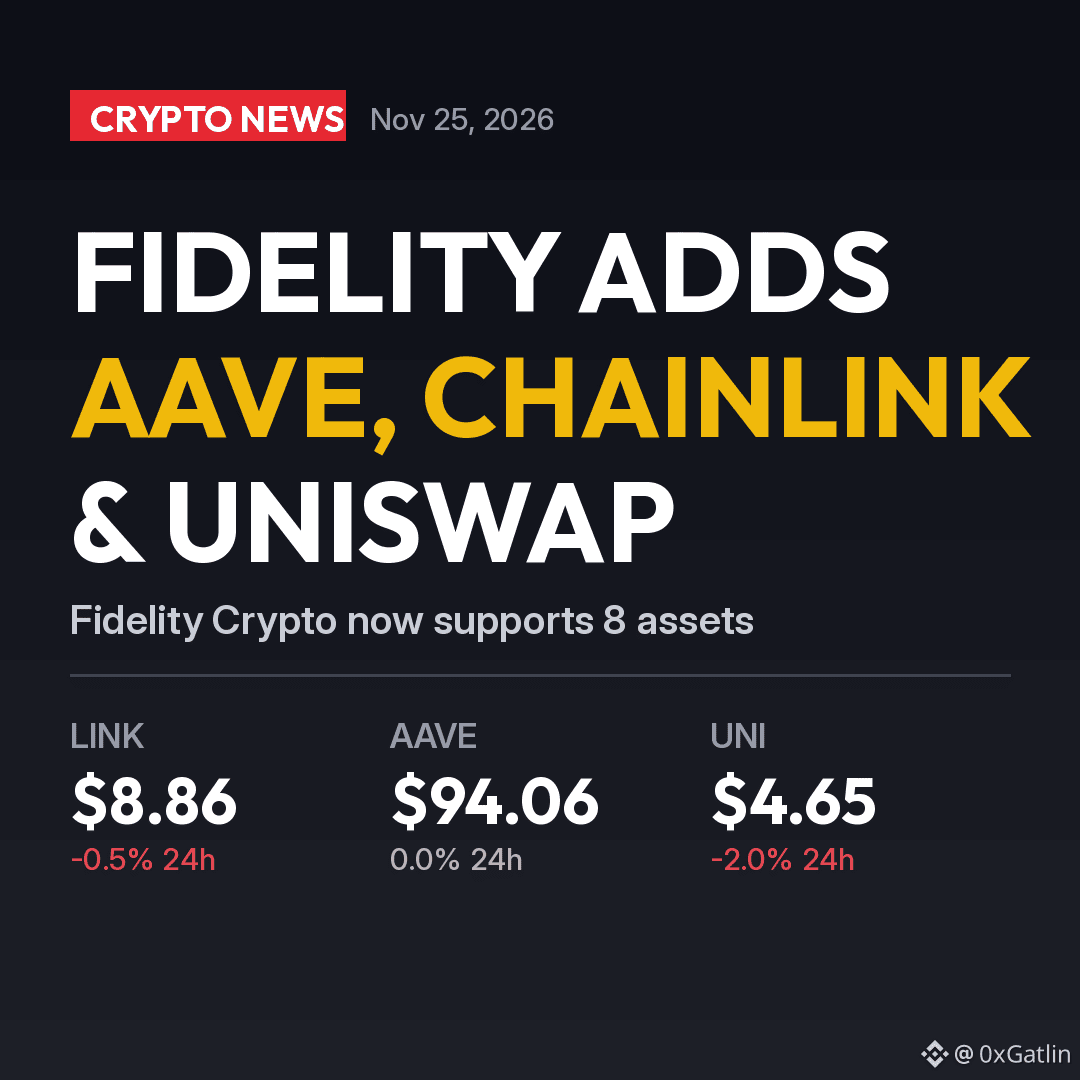
🚨 FIDELITY JUST ADDED $AAVE, LINK AND UNI
Fidelity Crypto now lists Aave, Chainlink and Uniswap. That takes the platform to 8 supported assets.
prices right now:
$LINK 8.86
AAVE 94.06
UNI 4.65
Barely a reaction. Everyone's too busy watching BTC bounce off 57.3k to care.
But a big tradfi broker picking DeFi blue chips is the slow kind of bullish. Doesn't pump today, matters later.
#Fidelity #DeFi #LINK
🚨 FIDELITY JUST ADDED $AAVE , LINK AND UNI
Fidelity Crypto now lists Aave, Chainlink and Uniswap. That takes the platform to 8 supported assets.
prices right now:
$LINK 8.86
AAVE 94.06
UNI 4.65
Barely a reaction. Everyone's too busy watching BTC bounce off 57.3k to care.
But a big tradfi broker picking DeFi blue chips is the slow kind of bullish. Doesn't pump today, matters later.
#Fidelity #DeFi #LINK
5

AAVE is the bank of DeFi. The bank is doing just fine.
The token? Not so much.
$AAVE is sitting at ~$94 after bouncing off $89.75 today — down about a third in a month and half of what it was a year ago. Meanwhile the protocol keeps lending billions like nothing happened.
The chart watchers are all staring at $87, the point of control where most of the trading has happened. Lose that and the next stop people are naming is $58. Hold it and $95, then $106 are the first hurdles.
Honestly, it's the weirdest disconnect in crypto right now: the business works, the token doesn't. That's either a bargain or a warning, and I'm not the one to tell you which.
$BTC is parked at ~$59,564, still under $60K after today's hot PCE print.
Not financial advice. DYOR.
#AAVE #DeFi #Crypto
3
Log in to explore more content
Join global crypto users on Binance Square
⚡️ Get latest and useful information about crypto.
💬 Trusted by the world’s largest crypto exchange.
👍 Discover real insights from verified creators.
Email / Phone number
Trending Topics
1
#CanMarketsReboundAfterThanksgiving?
14,622 views
351 Discussing
2
#CouldSpaceX’sOrbitalDataCentersBoostAIChipDemand?
8,874 views
224 Discussing
3
#EvolveAtBinanceBlockchainWeek
653,650 views
6,968 Discussing
4
#CorePCEBeatLiftsFedHikeOdds
161,203 views
1,278 Discussing
5
#BitcoinAndStocksSlipAgainAmidTrump’sTariffPlans
214,470 views
2,049 Discussing
6
#JensenHuangSaysNvidiaDoesn’tNeedASuccessionPlan
102,481 views
1,242 Discussing
7
#NasdaqFuturesSlideMoreThan3%
42,406 views
374 Discussing
8
#USOctoberPCEPriceIndexAt0.3%MoM
47,818 views
381 Discussing
9
#BitcoinETFsPostRecord$4.94BNovemberOutflows
9,322 views
49 Discussing
10
#TetherInvestsInArgentinasLemon
18,239 views
212 Discussing