

Storm89
3.3k Posts

Storm89
Report
Block User
If there an even 1% chance,Fight🔥
Frequent Trader
1.3 Years
1.0K+ Following
2.4K+ Followers
5.5K+ Liked
Posts
All
Quotes
·
--
Verified
Just a little and we’ll open the chart on one of the most important listings this period: Hyperliquid (HYPE).
HYPE isn’t a new project—it’s basically already operating as a decentralized (Layer 1) network built for a fully open financial system, with terrifying liquidity.
Its listing today is simply to open the direct liquidity doors for us through USDT and USDC trading pairs.
Binance put a "Seed Tag" on the coin for a very clear and straightforward reason: price fluctuations will be crazy and dangerous.
You need to understand that there’s an army of people who harvested the token from the airdrop or early participation, and they’re waiting for the listing moment (11:00 UTC) to unload their profits and cash out.
What the latecomer FOMO crowd does—entering on the first candle—is basically presenting themselves as exit liquidity for those people.
My job isn’t to chase the green candle in the very first minute (personal opinion).
Let the noise die down. Let them sell and finish, and let the chart draw a clear bottom.
Binance will activate trading bots (Algo Trading Bots) and copy trading within 24 hours of listing—and that means heavy investment liquidity will start to quietly concentrate after the initial chaos is over.
$HYPE
#BinanceWillListHyperliquid(HYPE)
Just a little and we’ll open the chart on one of the most important listings this period: Hyperliquid (HYPE).
HYPE isn’t a new project—it’s basically already operating as a decentralized (Layer 1) network built for a fully open financial system, with terrifying liquidity.
Its listing today is simply to open the direct liquidity doors for us through USDT and USDC trading pairs.
Binance put a "Seed Tag" on the coin for a very clear and straightforward reason: price fluctuations will be crazy and dangerous.
You need to understand that there’s an army of people who harvested the token from the airdrop or early participation, and they’re waiting for the listing moment (11:00 UTC) to unload their profits and cash out.
What the latecomer FOMO crowd does—entering on the first candle—is basically presenting themselves as exit liquidity for those people.
My job isn’t to chase the green candle in the very first minute (personal opinion).
Let the noise die down. Let them sell and finish, and let the chart draw a clear bottom.
Binance will activate trading bots (Algo Trading Bots) and copy trading within 24 hours of listing—and that means heavy investment liquidity will start to quietly concentrate after the initial chaos is over.
$HYPE
#BinanceWillListHyperliquid(HYPE)
HYPE isn’t a new project—it’s basically already operating as a decentralized (Layer 1) network built for a fully open financial system, with terrifying liquidity.
Its listing today is simply to open the direct liquidity doors for us through USDT and USDC trading pairs.
Binance put a "Seed Tag" on the coin for a very clear and straightforward reason: price fluctuations will be crazy and dangerous.
You need to understand that there’s an army of people who harvested the token from the airdrop or early participation, and they’re waiting for the listing moment (11:00 UTC) to unload their profits and cash out.
What the latecomer FOMO crowd does—entering on the first candle—is basically presenting themselves as exit liquidity for those people.
My job isn’t to chase the green candle in the very first minute (personal opinion).
Let the noise die down. Let them sell and finish, and let the chart draw a clear bottom.
Binance will activate trading bots (Algo Trading Bots) and copy trading within 24 hours of listing—and that means heavy investment liquidity will start to quietly concentrate after the initial chaos is over.
$HYPE
#BinanceWillListHyperliquid(HYPE)

1
261
·
--
Verified
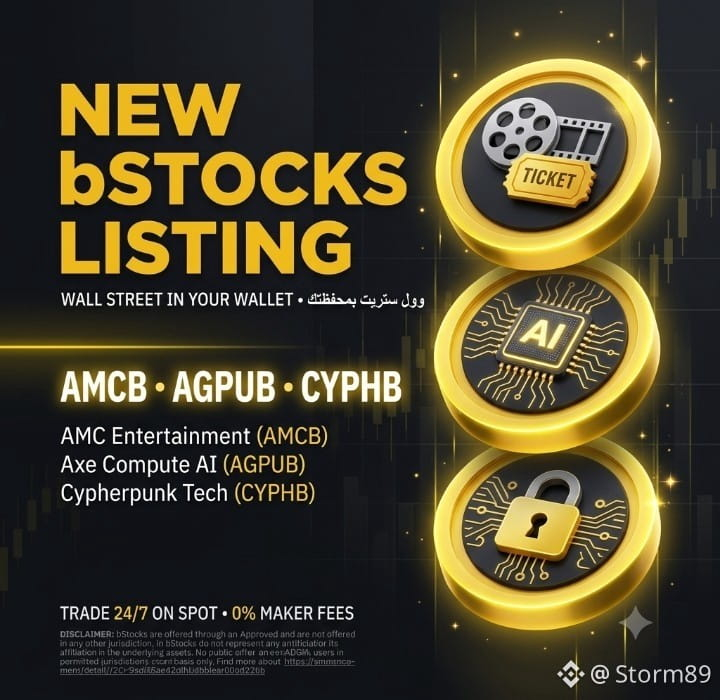
New listing on Bstocks:
AMCB (AMC): shares of the famous movie theater company on Wall Street, known for its high volatility and popular liquidity flow
AGPUB (Axe Compute): a company focused on computing infrastructure and artificial intelligence
Meaning, it’s fully aligned with the AI trend that’s occupying the world today.
CYPHB (Cypherpunk): a company specialized in data protection, encryption technologies, and privacy
The idea of bStocks is growing and succeeding
And the reason is simple: it removed the traditional headache
Back then, if you wanted to buy a US stock, you needed to open an account with an external broker, complete banking procedures, and wait for the stock exchange trading hours in New York
Today, from the same crypto wallet you already have, and with the USDT liquidity you’re holding, you can buy and sell real shares at any time without leaving the app
The lines between Wall Street and crypto are fading, and your digital wallet is gradually turning into a comprehensive financial account for all your assets
If you want to try it, would you rather go for a heavy, volatile stock like AMC, or prefer to focus on AI stocks like AGPUB? 💬👇
$AMCB
$AGPUB
$CYPHB
#BStocks
New listing on Bstocks:
AMCB (AMC): shares of the famous movie theater company on Wall Street, known for its high volatility and popular liquidity flow
AGPUB (Axe Compute): a company focused on computing infrastructure and artificial intelligence
Meaning, it’s fully aligned with the AI trend that’s occupying the world today.
CYPHB (Cypherpunk): a company specialized in data protection, encryption technologies, and privacy
The idea of bStocks is growing and succeeding
And the reason is simple: it removed the traditional headache
Back then, if you wanted to buy a US stock, you needed to open an account with an external broker, complete banking procedures, and wait for the stock exchange trading hours in New York
Today, from the same crypto wallet you already have, and with the USDT liquidity you’re holding, you can buy and sell real shares at any time without leaving the app
The lines between Wall Street and crypto are fading, and your digital wallet is gradually turning into a comprehensive financial account for all your assets
If you want to try it, would you rather go for a heavy, volatile stock like AMC, or prefer to focus on AI stocks like AGPUB? 💬👇
$AMCB
$AGPUB
$CYPHB
#BStocks
AMCB (AMC): shares of the famous movie theater company on Wall Street, known for its high volatility and popular liquidity flow
AGPUB (Axe Compute): a company focused on computing infrastructure and artificial intelligence
Meaning, it’s fully aligned with the AI trend that’s occupying the world today.
CYPHB (Cypherpunk): a company specialized in data protection, encryption technologies, and privacy
The idea of bStocks is growing and succeeding
And the reason is simple: it removed the traditional headache
Back then, if you wanted to buy a US stock, you needed to open an account with an external broker, complete banking procedures, and wait for the stock exchange trading hours in New York
Today, from the same crypto wallet you already have, and with the USDT liquidity you’re holding, you can buy and sell real shares at any time without leaving the app
The lines between Wall Street and crypto are fading, and your digital wallet is gradually turning into a comprehensive financial account for all your assets
If you want to try it, would you rather go for a heavy, volatile stock like AMC, or prefer to focus on AI stocks like AGPUB? 💬👇
$AMCB
$AGPUB
$CYPHB
#BStocks
3
980
·
--
When we monitor the frenzy of tech stocks in the U.S., and the companies in artificial intelligence (AI) that are drawing attention, we’ll see that the impact is not stopping there.
The whales and large funds have started applying the same attention to crypto, because they know very well that the AI trend in stocks will reflect more quickly and more powerfully on blockchain projects.
This explains the consolidation and liquidity flowing into leading AI coins like FET and TAO.
The thing is: a smart investor knows that the return they’re hoping to get from a traditional tech stock within a year could come from a strong AI coin in a much shorter time once the real momentum begins.
In your opinion, can the AI sector in crypto build an independent bull cycle and lead the market in the next phase, or will it remain just an echo tied to the movement of major company stocks?
$TAO
$FET
#AIStocksWhatNext
When we monitor the frenzy of tech stocks in the U.S., and the companies in artificial intelligence (AI) that are drawing attention, we’ll see that the impact is not stopping there.
The whales and large funds have started applying the same attention to crypto, because they know very well that the AI trend in stocks will reflect more quickly and more powerfully on blockchain projects.
This explains the consolidation and liquidity flowing into leading AI coins like FET and TAO.
The thing is: a smart investor knows that the return they’re hoping to get from a traditional tech stock within a year could come from a strong AI coin in a much shorter time once the real momentum begins.
In your opinion, can the AI sector in crypto build an independent bull cycle and lead the market in the next phase, or will it remain just an echo tied to the movement of major company stocks?
$TAO
$FET
#AIStocksWhatNext
The whales and large funds have started applying the same attention to crypto, because they know very well that the AI trend in stocks will reflect more quickly and more powerfully on blockchain projects.
This explains the consolidation and liquidity flowing into leading AI coins like FET and TAO.
The thing is: a smart investor knows that the return they’re hoping to get from a traditional tech stock within a year could come from a strong AI coin in a much shorter time once the real momentum begins.
In your opinion, can the AI sector in crypto build an independent bull cycle and lead the market in the next phase, or will it remain just an echo tied to the movement of major company stocks?
$TAO
$FET
#AIStocksWhatNext
6
1.6k
·
--
During times of strong volatility, most traders lose not because they don’t understand the chart—they lose because they don’t understand the moves correctly.
Let’s keep it simple:
When whales want to position themselves in a fast-moving coin like Solana (SOL), they don’t place huge market orders to rocket the price in the blink of an eye. Completely the opposite.
They create a state of boredom—slow, gradual declines that break fake supports and make you say: “That’s it, the project is dead, and the opportunity is gone.”
At that very moment, while you and others get impatient and sell at a loss to get out of the freeze, the smart money (Smart Money) quietly gathers all the available supply at the cheapest price possible.
And then what? One single green 4-hour candle that sends the price soaring, making everyone run after it and buy back from them at the peak—at the same price they sold at a few days earlier.
The secret isn’t chasing the candle after it appears. The secret is having the patience to position yourself in the depths of boredom before the screen lights up.
How do you see your current situation with the market? Do you buy at the peak of excitement and FOMO, or are you catching boredom and calm? 👁️⚡
$SOL
#smartmoney
During times of strong volatility, most traders lose not because they don’t understand the chart—they lose because they don’t understand the moves correctly.
Let’s keep it simple:
When whales want to position themselves in a fast-moving coin like Solana (SOL), they don’t place huge market orders to rocket the price in the blink of an eye. Completely the opposite.
They create a state of boredom—slow, gradual declines that break fake supports and make you say: “That’s it, the project is dead, and the opportunity is gone.”
At that very moment, while you and others get impatient and sell at a loss to get out of the freeze, the smart money (Smart Money) quietly gathers all the available supply at the cheapest price possible.
And then what? One single green 4-hour candle that sends the price soaring, making everyone run after it and buy back from them at the peak—at the same price they sold at a few days earlier.
The secret isn’t chasing the candle after it appears. The secret is having the patience to position yourself in the depths of boredom before the screen lights up.
How do you see your current situation with the market? Do you buy at the peak of excitement and FOMO, or are you catching boredom and calm? 👁️⚡
$SOL
#smartmoney
Let’s keep it simple:
When whales want to position themselves in a fast-moving coin like Solana (SOL), they don’t place huge market orders to rocket the price in the blink of an eye. Completely the opposite.
They create a state of boredom—slow, gradual declines that break fake supports and make you say: “That’s it, the project is dead, and the opportunity is gone.”
At that very moment, while you and others get impatient and sell at a loss to get out of the freeze, the smart money (Smart Money) quietly gathers all the available supply at the cheapest price possible.
And then what? One single green 4-hour candle that sends the price soaring, making everyone run after it and buy back from them at the peak—at the same price they sold at a few days earlier.
The secret isn’t chasing the candle after it appears. The secret is having the patience to position yourself in the depths of boredom before the screen lights up.
How do you see your current situation with the market? Do you buy at the peak of excitement and FOMO, or are you catching boredom and calm? 👁️⚡
$SOL
#smartmoney
9
3
930
·
--
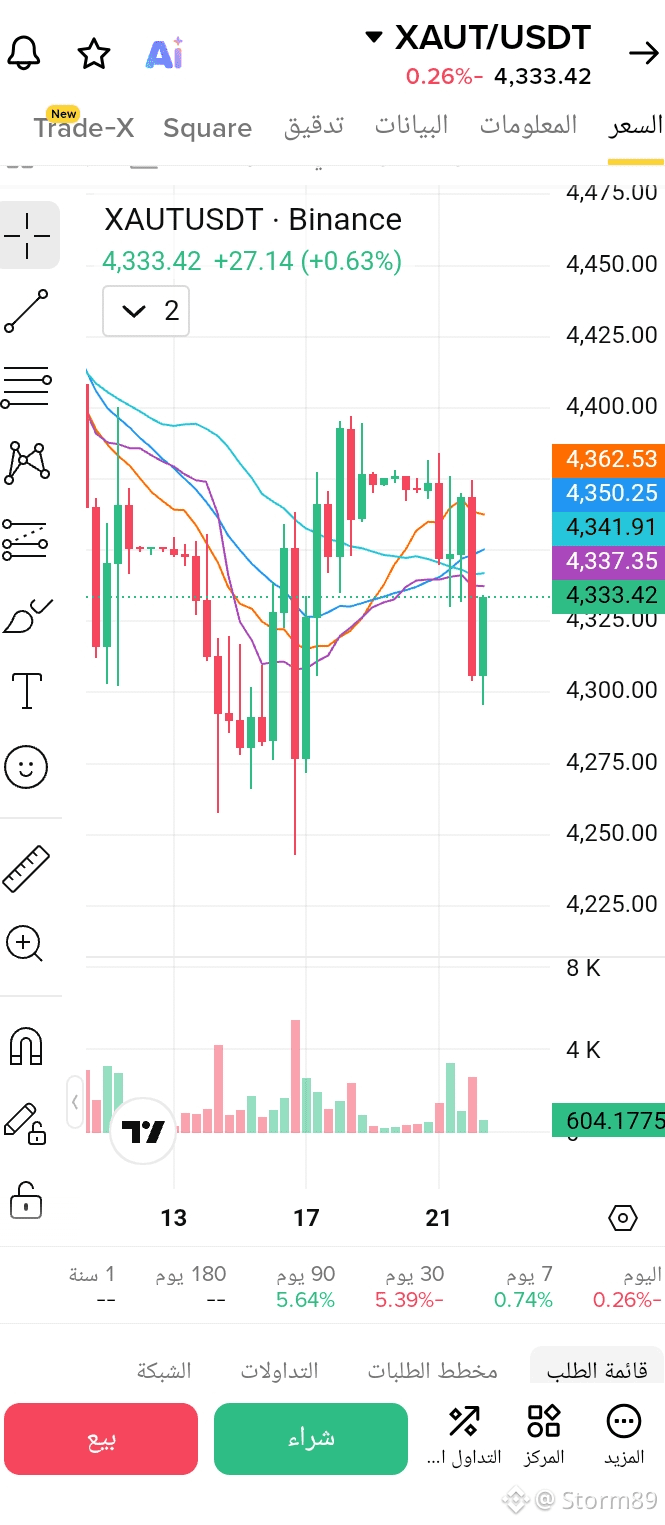
If we go a bit back, we’ll see the strong rebound that happened around day 17 with clear buying volume—this is decisive proof that liquidity entered and strongly hunted the lows.
The candles are competing and trading beneath a tangled cluster of Moving Averages centered around levels 4337, 4341, 4350, and 4362. The current red candle confirms this temporary selling pressure, and the price needs real momentum to break through these resistances and break upward.
Random entry in this range between the moving averages is an uncalculated technical risk.
Technically, the best approach is to either wait for a clear breakout and a close above the resistance band (above 4362) to confirm the bullish outlook, or wait for the price to test the previous lows to enter from stronger support zones.
$XAUT
{spot}(XAUTUSDT)
If we go a bit back, we’ll see the strong rebound that happened around day 17 with clear buying volume—this is decisive proof that liquidity entered and strongly hunted the lows.
The candles are competing and trading beneath a tangled cluster of Moving Averages centered around levels 4337, 4341, 4350, and 4362. The current red candle confirms this temporary selling pressure, and the price needs real momentum to break through these resistances and break upward.
Random entry in this range between the moving averages is an uncalculated technical risk.
Technically, the best approach is to either wait for a clear breakout and a close above the resistance band (above 4362) to confirm the bullish outlook, or wait for the price to test the previous lows to enter from stronger support zones.
$XAUT
The candles are competing and trading beneath a tangled cluster of Moving Averages centered around levels 4337, 4341, 4350, and 4362. The current red candle confirms this temporary selling pressure, and the price needs real momentum to break through these resistances and break upward.
Random entry in this range between the moving averages is an uncalculated technical risk.
Technically, the best approach is to either wait for a clear breakout and a close above the resistance band (above 4362) to confirm the bullish outlook, or wait for the price to test the previous lows to enter from stronger support zones.
$XAUT
178
·
--
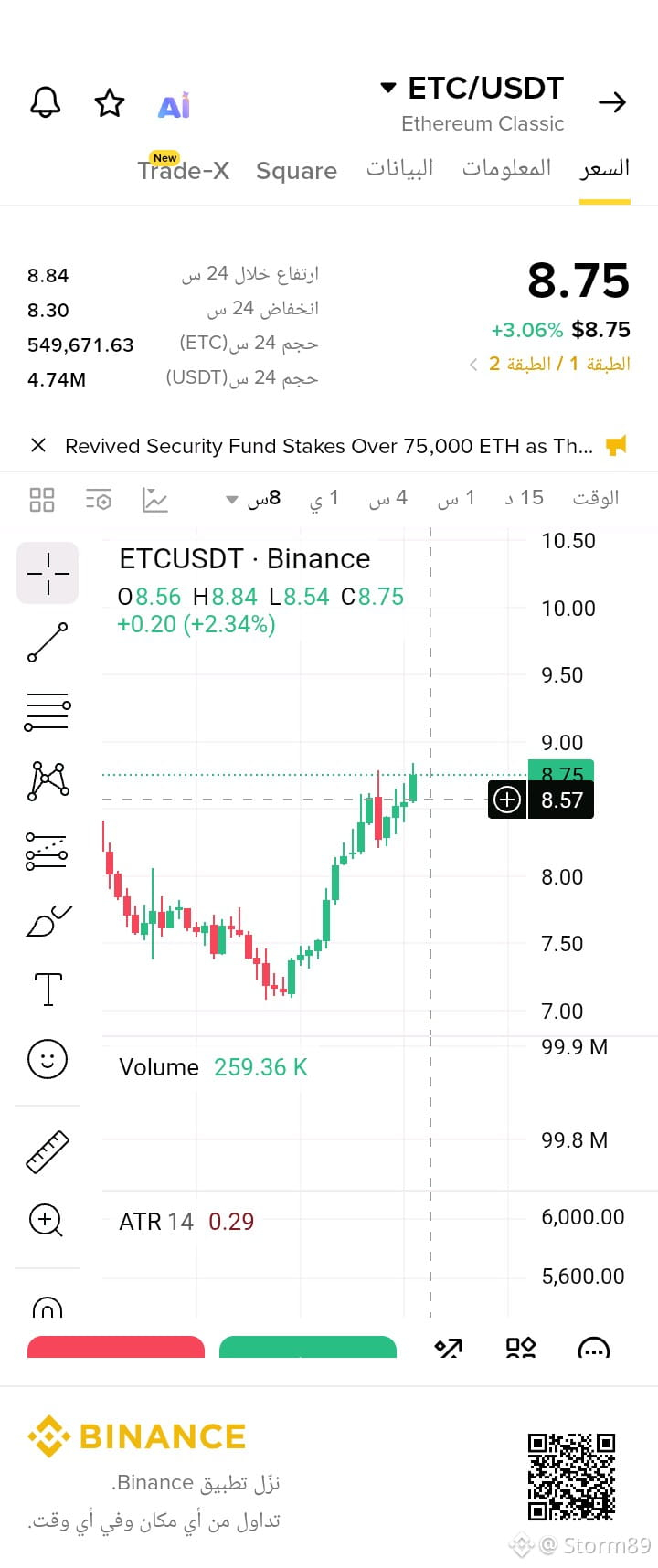
Away from the noise of the market and quick headlines, let’s take a breath and talk about a base coin working quietly in the shadows: Ethereum Classic (ETC).
Everyone’s busy with the SEC, coin classifications, and new projects, but ETC has a core advantage that keeps it calm and fortified at this stage:
Building on the old system (PoW): Since ETC still preserves the mining system (Proof of Work), this gives it a kind of golden pass from the SEC headache. The CFTC sees it as a classic “digital commodity,” similar to Bitcoin—and this regulatory clarity is the magnet that smart money is looking for during crises.
The sleeping beast (Dino Coin): Anyone who knows how ETC behaves knows it’s a moody coin.
It stays dormant and quietly accumulates liquidity with deadly patience. Then, when the cycle of old coins begins and liquidity starts flowing out of Ethereum (ETH), it gives you sudden green, vertical candles that break the chart out of nowhere—without warning.
The idea is that, under today’s price atmosphere, ETC is viewed as a safe haven for miners and investors who like to bet on an asset that’s almost impossible to be affected by centralized securities regulations.
What do you think—does ETC still have a crazy jump hidden in it, or is it already a thing of the past, and liquidity will only flow to new projects?
$ETC
$ETH
{spot}(ETCUSDT)
#ETC
Away from the noise of the market and quick headlines, let’s take a breath and talk about a base coin working quietly in the shadows: Ethereum Classic (ETC).
Everyone’s busy with the SEC, coin classifications, and new projects, but ETC has a core advantage that keeps it calm and fortified at this stage:
Building on the old system (PoW): Since ETC still preserves the mining system (Proof of Work), this gives it a kind of golden pass from the SEC headache. The CFTC sees it as a classic “digital commodity,” similar to Bitcoin—and this regulatory clarity is the magnet that smart money is looking for during crises.
The sleeping beast (Dino Coin): Anyone who knows how ETC behaves knows it’s a moody coin.
It stays dormant and quietly accumulates liquidity with deadly patience. Then, when the cycle of old coins begins and liquidity starts flowing out of Ethereum (ETH), it gives you sudden green, vertical candles that break the chart out of nowhere—without warning.
The idea is that, under today’s price atmosphere, ETC is viewed as a safe haven for miners and investors who like to bet on an asset that’s almost impossible to be affected by centralized securities regulations.
What do you think—does ETC still have a crazy jump hidden in it, or is it already a thing of the past, and liquidity will only flow to new projects?
$ETC
$ETH
#ETC
Everyone’s busy with the SEC, coin classifications, and new projects, but ETC has a core advantage that keeps it calm and fortified at this stage:
Building on the old system (PoW): Since ETC still preserves the mining system (Proof of Work), this gives it a kind of golden pass from the SEC headache. The CFTC sees it as a classic “digital commodity,” similar to Bitcoin—and this regulatory clarity is the magnet that smart money is looking for during crises.
The sleeping beast (Dino Coin): Anyone who knows how ETC behaves knows it’s a moody coin.
It stays dormant and quietly accumulates liquidity with deadly patience. Then, when the cycle of old coins begins and liquidity starts flowing out of Ethereum (ETH), it gives you sudden green, vertical candles that break the chart out of nowhere—without warning.
The idea is that, under today’s price atmosphere, ETC is viewed as a safe haven for miners and investors who like to bet on an asset that’s almost impossible to be affected by centralized securities regulations.
What do you think—does ETC still have a crazy jump hidden in it, or is it already a thing of the past, and liquidity will only flow to new projects?
$ETC
$ETH
#ETC

1
632
·
--


Binance MENA
·
--
How to Post for Better Reach: Here’s a Checklist for Your Content
I spend days looking at what everyone posts, and honestly it hurts a bit when I see great content miss reach due to something small that could be fixed. So I put together a checklist of the things I see every day. Follow it, and your reach will truly be different.
First, some plain talk: trading content is the easiest to go viral on Square — but writing about trading doesn’t automatically mean you’ll get reach. It all depends on how you write it.
First, some plain talk: trading content is the easiest to go viral on Square — but writing about trading doesn’t automatically mean you’ll get reach. It all depends on how you write it.

1
42
·
--
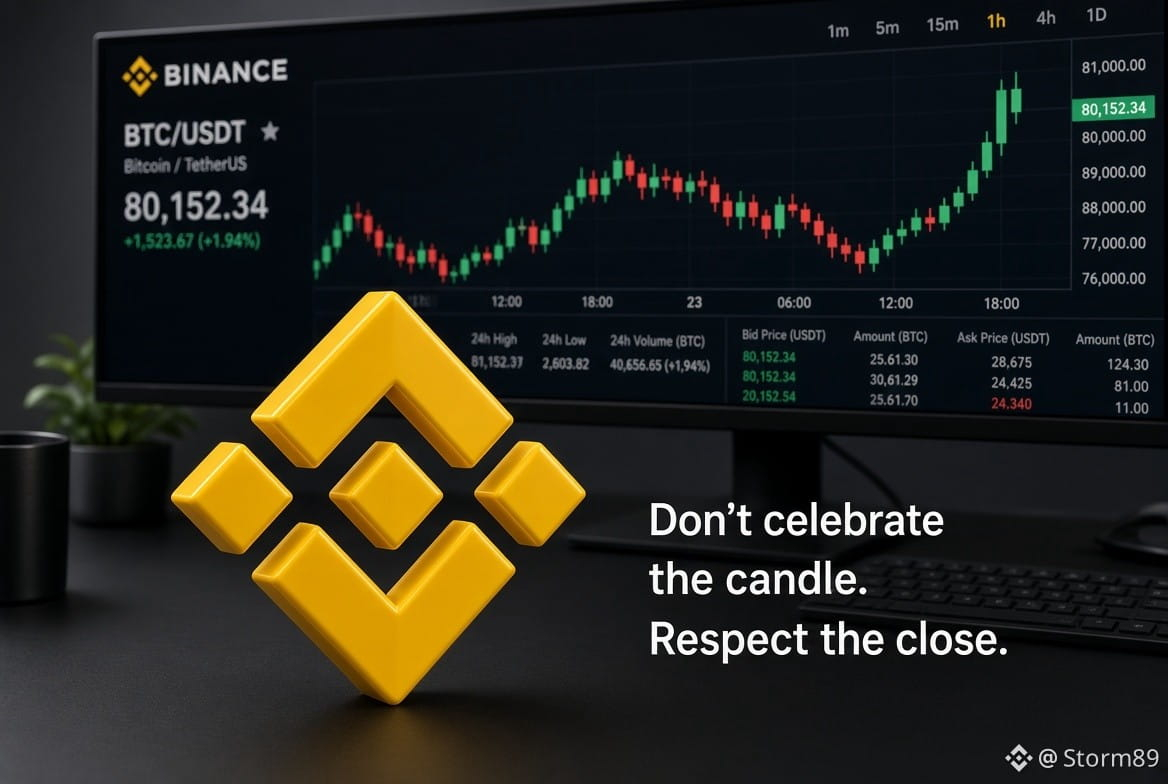
The market is full of political drama, and the CLARITY law that didn’t get stalled, but it seems the Commodity Futures Trading Commission (CFTC) decided not to wait for anyone and took action.
The latest news and movements confirm that the CFTC has effectively started enforcing its own market rules to fill the legislative gap.
They’re working on clear laws for trading margin (Margin), and they’re establishing Bitcoin’s status as a clean digital commodity.
That means they’re quietly pulling the rug out from under the SEC and its annoying lawsuits.
💛 Smart Money loves clarity, and this is what we’re seeing live:
Bitcoin (BTC): Despite all the political haze in Congress, it’s absorbing negative news and maintaining its levels with remarkable stability.
It’s as if the whales are building their positions based on the CFTC’s positive moves while ignoring everything else.
Trader behavior: Instead of panic and emptying portfolios, we’re seeing a calm concentration of liquidity, waiting for the green signal.
So in short, the market isn’t waiting on Congress anymore—it's pricing in the "regulatory clarity" the CFTC is building, one step at a time.
In your opinion, are these CFTC’s independent steps enough to give the real start to BTC, or does the market still need a comprehensive U.S. law to end the whole story? 💬👇
$BTC
{spot}(BTCUSDT)
#CFTC
#Binance
The market is full of political drama, and the CLARITY law that didn’t get stalled, but it seems the Commodity Futures Trading Commission (CFTC) decided not to wait for anyone and took action.
The latest news and movements confirm that the CFTC has effectively started enforcing its own market rules to fill the legislative gap.
They’re working on clear laws for trading margin (Margin), and they’re establishing Bitcoin’s status as a clean digital commodity.
That means they’re quietly pulling the rug out from under the SEC and its annoying lawsuits.
💛 Smart Money loves clarity, and this is what we’re seeing live:
Bitcoin (BTC): Despite all the political haze in Congress, it’s absorbing negative news and maintaining its levels with remarkable stability.
It’s as if the whales are building their positions based on the CFTC’s positive moves while ignoring everything else.
Trader behavior: Instead of panic and emptying portfolios, we’re seeing a calm concentration of liquidity, waiting for the green signal.
So in short, the market isn’t waiting on Congress anymore—it's pricing in the "regulatory clarity" the CFTC is building, one step at a time.
In your opinion, are these CFTC’s independent steps enough to give the real start to BTC, or does the market still need a comprehensive U.S. law to end the whole story? 💬👇
$BTC
#CFTC
#Binance
The latest news and movements confirm that the CFTC has effectively started enforcing its own market rules to fill the legislative gap.
They’re working on clear laws for trading margin (Margin), and they’re establishing Bitcoin’s status as a clean digital commodity.
That means they’re quietly pulling the rug out from under the SEC and its annoying lawsuits.
💛 Smart Money loves clarity, and this is what we’re seeing live:
Bitcoin (BTC): Despite all the political haze in Congress, it’s absorbing negative news and maintaining its levels with remarkable stability.
It’s as if the whales are building their positions based on the CFTC’s positive moves while ignoring everything else.
Trader behavior: Instead of panic and emptying portfolios, we’re seeing a calm concentration of liquidity, waiting for the green signal.
So in short, the market isn’t waiting on Congress anymore—it's pricing in the "regulatory clarity" the CFTC is building, one step at a time.
In your opinion, are these CFTC’s independent steps enough to give the real start to BTC, or does the market still need a comprehensive U.S. law to end the whole story? 💬👇
$BTC
#CFTC
#Binance
5
4.3k
·
--
Verified
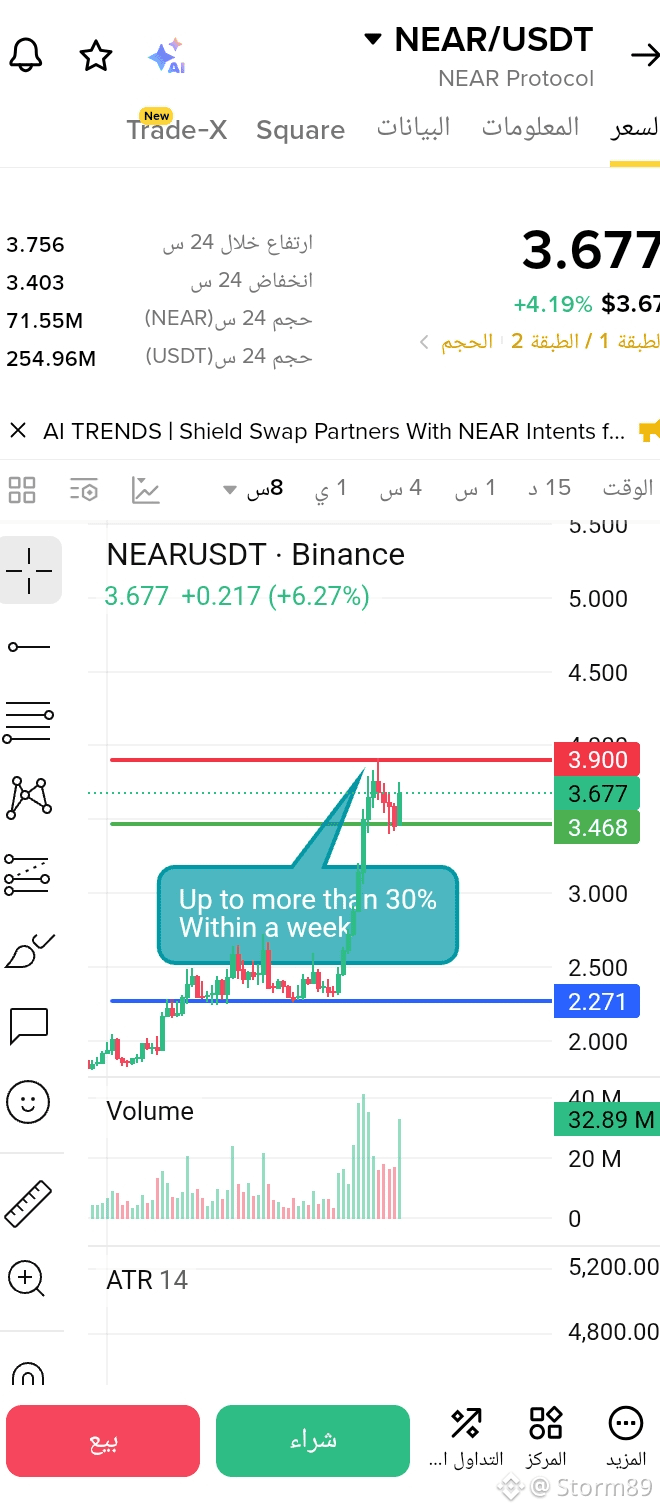
The last rise in NEAR wasn’t just a temporary spike—it was backed by a massive surge in trading volume and genuine, unprecedented network activity.
The NEAR Intents system hit record numbers after surpassing a $1 billion transaction volume within a single week, with over $300 million recorded in just one day.
What’s important is that the network’s economic model is improving with this activity.
A portion of the fees from these operations is tied to a mechanism for buying and burning NEAR tokens, which creates ongoing demand as usage increases. On top of all that, the recent announcement of Confidential Intents technology came to solve one of the biggest problems in decentralized transactions: providing privacy and protecting users’ data during contract execution.
The key point to watch is this: is the current surge merely a short-lived speculative wave, or is it the beginning of a market reassessment of a project that’s building real infrastructure for Chain Abstraction and decentralized trading?
Of course, entering after quick rallies always involves risk—so for now, the focus isn’t on chasing the move, but on monitoring whether the price can hold, building new support zones, and confirming the sustainability of this activity on-chain.
💛 NEAR is paving the way for a new concept in decentralized trading 👀What do you think?
$NEAR
{spot}(NEARUSDT)
#nearprotocol
The last rise in NEAR wasn’t just a temporary spike—it was backed by a massive surge in trading volume and genuine, unprecedented network activity.
The NEAR Intents system hit record numbers after surpassing a $1 billion transaction volume within a single week, with over $300 million recorded in just one day.
What’s important is that the network’s economic model is improving with this activity.
A portion of the fees from these operations is tied to a mechanism for buying and burning NEAR tokens, which creates ongoing demand as usage increases. On top of all that, the recent announcement of Confidential Intents technology came to solve one of the biggest problems in decentralized transactions: providing privacy and protecting users’ data during contract execution.
The key point to watch is this: is the current surge merely a short-lived speculative wave, or is it the beginning of a market reassessment of a project that’s building real infrastructure for Chain Abstraction and decentralized trading?
Of course, entering after quick rallies always involves risk—so for now, the focus isn’t on chasing the move, but on monitoring whether the price can hold, building new support zones, and confirming the sustainability of this activity on-chain.
💛 NEAR is paving the way for a new concept in decentralized trading 👀What do you think?
$NEAR
#nearprotocol
The NEAR Intents system hit record numbers after surpassing a $1 billion transaction volume within a single week, with over $300 million recorded in just one day.
What’s important is that the network’s economic model is improving with this activity.
A portion of the fees from these operations is tied to a mechanism for buying and burning NEAR tokens, which creates ongoing demand as usage increases. On top of all that, the recent announcement of Confidential Intents technology came to solve one of the biggest problems in decentralized transactions: providing privacy and protecting users’ data during contract execution.
The key point to watch is this: is the current surge merely a short-lived speculative wave, or is it the beginning of a market reassessment of a project that’s building real infrastructure for Chain Abstraction and decentralized trading?
Of course, entering after quick rallies always involves risk—so for now, the focus isn’t on chasing the move, but on monitoring whether the price can hold, building new support zones, and confirming the sustainability of this activity on-chain.
💛 NEAR is paving the way for a new concept in decentralized trading 👀What do you think?
$NEAR
#nearprotocol
3
590
·
--
Verified
Away from daily speculation, an important practical development is happening right now in the (Fetch ai FET) project and it needs a careful review
The project team recently launched the A2A Outbound Adapter tool, and this software update goes beyond just being a marketing headline
The tool’s main goal is to enable AI Agents to communicate and directly integrate with external systems and applications in a smooth and secure way
This development is coming in parallel with the ASI alliance’s expansion toward building an ASI Chain and launching the ASI:Create environment, reflecting a clear vision to move beyond the idea of a token tied to AI toward building real infrastructure that decentralized AI can rely on to carry out interactive tasks with the real world
The key point is that the real value of blockchain-based AI networks doesn’t come from simply launching new models, but from the ability of these systems to communicate and work together (Interoperability) with existing services
Watch how this technical progress will be reflected in the network’s actual usage rate and the increase in activity on the chain, because this is the true measure of the project’s long-term success
So, is linking AI Agents to external services the real key to the adoption of AI coins—or does the sector still need time for results to appear? 👀
$FET
{spot}(FETUSDT)
#AIAgents
#Binance
Away from daily speculation, an important practical development is happening right now in the (Fetch ai FET) project and it needs a careful review
The project team recently launched the A2A Outbound Adapter tool, and this software update goes beyond just being a marketing headline
The tool’s main goal is to enable AI Agents to communicate and directly integrate with external systems and applications in a smooth and secure way
This development is coming in parallel with the ASI alliance’s expansion toward building an ASI Chain and launching the ASI:Create environment, reflecting a clear vision to move beyond the idea of a token tied to AI toward building real infrastructure that decentralized AI can rely on to carry out interactive tasks with the real world
The key point is that the real value of blockchain-based AI networks doesn’t come from simply launching new models, but from the ability of these systems to communicate and work together (Interoperability) with existing services
Watch how this technical progress will be reflected in the network’s actual usage rate and the increase in activity on the chain, because this is the true measure of the project’s long-term success
So, is linking AI Agents to external services the real key to the adoption of AI coins—or does the sector still need time for results to appear? 👀
$FET
#AIAgents
#Binance
The project team recently launched the A2A Outbound Adapter tool, and this software update goes beyond just being a marketing headline
The tool’s main goal is to enable AI Agents to communicate and directly integrate with external systems and applications in a smooth and secure way
This development is coming in parallel with the ASI alliance’s expansion toward building an ASI Chain and launching the ASI:Create environment, reflecting a clear vision to move beyond the idea of a token tied to AI toward building real infrastructure that decentralized AI can rely on to carry out interactive tasks with the real world
The key point is that the real value of blockchain-based AI networks doesn’t come from simply launching new models, but from the ability of these systems to communicate and work together (Interoperability) with existing services
Watch how this technical progress will be reflected in the network’s actual usage rate and the increase in activity on the chain, because this is the true measure of the project’s long-term success
So, is linking AI Agents to external services the real key to the adoption of AI coins—or does the sector still need time for results to appear? 👀
$FET
#AIAgents
#Binance

4
1.1k
·
--
Verified
SOL’s latest move leaves behind numbers and real updates worth reading ☀️
Solana is recording a remarkable rise, surpassing 10% within 24 hours to reach its highest levels in about 7 months. But the project’s real value at the moment becomes clear when looking beyond the immediate price action.
📈 A DeFi ecosystem rebound:
The current momentum isn’t limited to the SOL token alone; it coincides with a notable expansion in activity across ecosystem protocols such as JUP, RAY, and MET, reflecting the entry of real liquidity into applications—not just speculative trading.
⚡ Technical update (Alpenglow upgrade):
The main pillar on which this momentum is built is network development represented by the Alpenglow upgrade. This update was designed to dramatically reduce transaction finality time—from about 12.8 seconds to only around 150 milliseconds—giving the network near-instant processing speed.
💬 Continuous improvement of the infrastructure and providing tangible technical solutions is the most important standard for sustaining any network in the long term.
Solana proves its ability to maintain its appeal to developers and users 👈 while emphasizing that rapid price jumps always require careful risk assessment and avoiding emotional buying decisions.
( The content is intended only for sharing and analyzing market developments, and does not constitute a financial or investment recommendation.)
$SOL
$JUP
$RAYSOL
#Solana
SOL’s latest move leaves behind numbers and real updates worth reading ☀️
Solana is recording a remarkable rise, surpassing 10% within 24 hours to reach its highest levels in about 7 months. But the project’s real value at the moment becomes clear when looking beyond the immediate price action.
📈 A DeFi ecosystem rebound:
The current momentum isn’t limited to the SOL token alone; it coincides with a notable expansion in activity across ecosystem protocols such as JUP, RAY, and MET, reflecting the entry of real liquidity into applications—not just speculative trading.
⚡ Technical update (Alpenglow upgrade):
The main pillar on which this momentum is built is network development represented by the Alpenglow upgrade. This update was designed to dramatically reduce transaction finality time—from about 12.8 seconds to only around 150 milliseconds—giving the network near-instant processing speed.
💬 Continuous improvement of the infrastructure and providing tangible technical solutions is the most important standard for sustaining any network in the long term.
Solana proves its ability to maintain its appeal to developers and users 👈 while emphasizing that rapid price jumps always require careful risk assessment and avoiding emotional buying decisions.
( The content is intended only for sharing and analyzing market developments, and does not constitute a financial or investment recommendation.)
$SOL
$JUP
$RAYSOL
#Solana
Solana is recording a remarkable rise, surpassing 10% within 24 hours to reach its highest levels in about 7 months. But the project’s real value at the moment becomes clear when looking beyond the immediate price action.
📈 A DeFi ecosystem rebound:
The current momentum isn’t limited to the SOL token alone; it coincides with a notable expansion in activity across ecosystem protocols such as JUP, RAY, and MET, reflecting the entry of real liquidity into applications—not just speculative trading.
⚡ Technical update (Alpenglow upgrade):
The main pillar on which this momentum is built is network development represented by the Alpenglow upgrade. This update was designed to dramatically reduce transaction finality time—from about 12.8 seconds to only around 150 milliseconds—giving the network near-instant processing speed.
💬 Continuous improvement of the infrastructure and providing tangible technical solutions is the most important standard for sustaining any network in the long term.
Solana proves its ability to maintain its appeal to developers and users 👈 while emphasizing that rapid price jumps always require careful risk assessment and avoiding emotional buying decisions.
( The content is intended only for sharing and analyzing market developments, and does not constitute a financial or investment recommendation.)
$SOL
$JUP
$RAYSOL
#Solana

2
272
·
--
Verified
Tonight, in heavy news from the heart of the finance world and the RWA: Circle (the issuer of the USDC stablecoin) has officially announced the launch of its own Arc network.
Not just a new network, but a Layer 1 designed specifically for financial institutions, enabling high-speed transaction payments
as well as AI-enabled applications.
And most importantly, USDC will be the primary currency for paying gas fees and transactions on the network.
What’s interesting is the initial validator list for the network, which includes giants from traditional finance and crypto side by side, such as BlackRock, Visa, Mastercard, and DTCC, along with major crypto firms and decentralized funds like Aave and Uniswap.
The network is fully compatible with the EVM ecosystem, and offers instant settlement for transactions in under a second—along with reports of BlackRock’s intention to move part of its tokenized fund, BUIDL, operations to it.
As for the technical side of the token, Circle announced minting 10 billion ARC tokens as an internal technical milestone dedicated to governance and network security in the future when transitioning to a PoS mechanism by 2027, without any current promises about listing it for public trading.
In short, we’re seeing a practical and bold step toward directly connecting traditional finance infrastructure with the blockchain—powered by stablecoins.
So, do you think the Arc network marks the real beginning of institutional adoption of Layer 1, or is the battle between financial networks still just getting started?👀
$AAVE
$UNI
$CRCLB
Tonight, in heavy news from the heart of the finance world and the RWA: Circle (the issuer of the USDC stablecoin) has officially announced the launch of its own Arc network.
Not just a new network, but a Layer 1 designed specifically for financial institutions, enabling high-speed transaction payments
as well as AI-enabled applications.
And most importantly, USDC will be the primary currency for paying gas fees and transactions on the network.
What’s interesting is the initial validator list for the network, which includes giants from traditional finance and crypto side by side, such as BlackRock, Visa, Mastercard, and DTCC, along with major crypto firms and decentralized funds like Aave and Uniswap.
The network is fully compatible with the EVM ecosystem, and offers instant settlement for transactions in under a second—along with reports of BlackRock’s intention to move part of its tokenized fund, BUIDL, operations to it.
As for the technical side of the token, Circle announced minting 10 billion ARC tokens as an internal technical milestone dedicated to governance and network security in the future when transitioning to a PoS mechanism by 2027, without any current promises about listing it for public trading.
In short, we’re seeing a practical and bold step toward directly connecting traditional finance infrastructure with the blockchain—powered by stablecoins.
So, do you think the Arc network marks the real beginning of institutional adoption of Layer 1, or is the battle between financial networks still just getting started?👀
$AAVE
$UNI
$CRCLB
Not just a new network, but a Layer 1 designed specifically for financial institutions, enabling high-speed transaction payments
as well as AI-enabled applications.
And most importantly, USDC will be the primary currency for paying gas fees and transactions on the network.
What’s interesting is the initial validator list for the network, which includes giants from traditional finance and crypto side by side, such as BlackRock, Visa, Mastercard, and DTCC, along with major crypto firms and decentralized funds like Aave and Uniswap.
The network is fully compatible with the EVM ecosystem, and offers instant settlement for transactions in under a second—along with reports of BlackRock’s intention to move part of its tokenized fund, BUIDL, operations to it.
As for the technical side of the token, Circle announced minting 10 billion ARC tokens as an internal technical milestone dedicated to governance and network security in the future when transitioning to a PoS mechanism by 2027, without any current promises about listing it for public trading.
In short, we’re seeing a practical and bold step toward directly connecting traditional finance infrastructure with the blockchain—powered by stablecoins.
So, do you think the Arc network marks the real beginning of institutional adoption of Layer 1, or is the battle between financial networks still just getting started?👀
$AAVE
$UNI
$CRCLB

6
3
2.3k
·
--
Hyundai Card announced the completion of a $20,000 transfer using the stablecoin USDT over the Avalanche network between two Hyundai-affiliated companies in the United States and Mexico
What’s exciting about the matter is that the transfer process, including settlement and confirmation, took an average of only 7 minutes compared to traditional bank transfers, which can take hours or days
We’re not talking here about mere marketing promises from projects that say they will use the blockchain in the future, but about an actual corporate experience carried out between global companies with real money
Of course, it can’t be said that Hyundai has started fully commercial reliance on the network yet, as the test is still in the stage of measuring scalability capacity, and no official date for the final commercial launch has been set
Alongside these developments, Avax is preparing to update Helicon on September 22, which includes fundamental changes to how the C Chain works—so that consensus and execution run in parallel to improve network efficiency—along with modifications to the Staking mechanism and gas fees to reduce costs
👈The issue isn’t just a daily movement on the chart, but monitoring Avax’s ability to move from a fast network “on paper” to real infrastructure relied upon by major companies for cross-border financial transfers
Will companies’ adoption of stablecoins be the real gateway that will force traditional institutions to enter the blockchain?
$AVAX
{spot}(AVAXUSDT)
$HYUNDAI
{future}(HYUNDAIUSDT)
Hyundai Card announced the completion of a $20,000 transfer using the stablecoin USDT over the Avalanche network between two Hyundai-affiliated companies in the United States and Mexico
What’s exciting about the matter is that the transfer process, including settlement and confirmation, took an average of only 7 minutes compared to traditional bank transfers, which can take hours or days
We’re not talking here about mere marketing promises from projects that say they will use the blockchain in the future, but about an actual corporate experience carried out between global companies with real money
Of course, it can’t be said that Hyundai has started fully commercial reliance on the network yet, as the test is still in the stage of measuring scalability capacity, and no official date for the final commercial launch has been set
Alongside these developments, Avax is preparing to update Helicon on September 22, which includes fundamental changes to how the C Chain works—so that consensus and execution run in parallel to improve network efficiency—along with modifications to the Staking mechanism and gas fees to reduce costs
👈The issue isn’t just a daily movement on the chart, but monitoring Avax’s ability to move from a fast network “on paper” to real infrastructure relied upon by major companies for cross-border financial transfers
Will companies’ adoption of stablecoins be the real gateway that will force traditional institutions to enter the blockchain?
$AVAX
$HYUNDAI
What’s exciting about the matter is that the transfer process, including settlement and confirmation, took an average of only 7 minutes compared to traditional bank transfers, which can take hours or days
We’re not talking here about mere marketing promises from projects that say they will use the blockchain in the future, but about an actual corporate experience carried out between global companies with real money
Of course, it can’t be said that Hyundai has started fully commercial reliance on the network yet, as the test is still in the stage of measuring scalability capacity, and no official date for the final commercial launch has been set
Alongside these developments, Avax is preparing to update Helicon on September 22, which includes fundamental changes to how the C Chain works—so that consensus and execution run in parallel to improve network efficiency—along with modifications to the Staking mechanism and gas fees to reduce costs
👈The issue isn’t just a daily movement on the chart, but monitoring Avax’s ability to move from a fast network “on paper” to real infrastructure relied upon by major companies for cross-border financial transfers
Will companies’ adoption of stablecoins be the real gateway that will force traditional institutions to enter the blockchain?
$AVAX
$HYUNDAI



8
1
8
4.7k
·
--
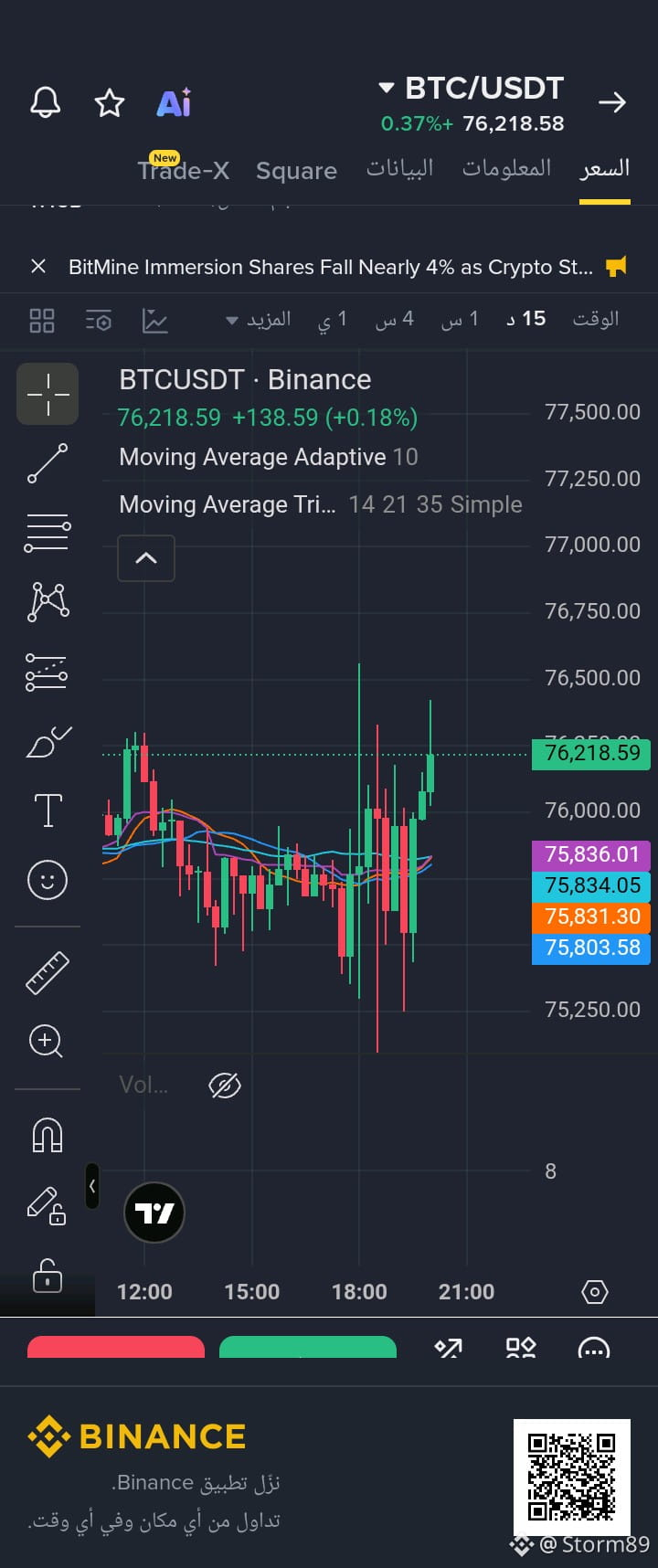
All the analyses and exaggerations you saw at the beginning of the week about the interest rate decision— and the panic over a sharp drop—where did they go? What happened after the decision?
Bitcoin and the altcoins, simply, went against expectations and climbed. It wasn’t magic— the reason is psychology that repeats in every cycle:
Fear moves first: The market accounts for the worst-case scenarios before the news, and the selling that happened was just an unloading of fear by small traders
👈Market makers and liquidity: While the majority is scared and waiting for that big drop to buy from below, smart liquidity was accumulating on the sidelines and exploiting this hesitation
👈The end of uncertainty: Financial markets hate uncertainty more than the bad news itself. The moment the decision was issued and the picture became clear, liquidity moved immediately
🧡Bitcoin proved again that trading isn’t just charts and numbers—80% of it is controlling your own psychology and managing emotions. When you see everyone terrified and analyzing based on emotion, know that the opportunity is being formed on the opposite side.
Whoever bought out of fear is the one who won, and whoever was waiting for confirmation likely missed it or is just chasing the candle after it already took off
$BTC
{spot}(BTCUSDT)
#FedRateWatch
All the analyses and exaggerations you saw at the beginning of the week about the interest rate decision— and the panic over a sharp drop—where did they go? What happened after the decision?
Bitcoin and the altcoins, simply, went against expectations and climbed. It wasn’t magic— the reason is psychology that repeats in every cycle:
Fear moves first: The market accounts for the worst-case scenarios before the news, and the selling that happened was just an unloading of fear by small traders
👈Market makers and liquidity: While the majority is scared and waiting for that big drop to buy from below, smart liquidity was accumulating on the sidelines and exploiting this hesitation
👈The end of uncertainty: Financial markets hate uncertainty more than the bad news itself. The moment the decision was issued and the picture became clear, liquidity moved immediately
🧡Bitcoin proved again that trading isn’t just charts and numbers—80% of it is controlling your own psychology and managing emotions. When you see everyone terrified and analyzing based on emotion, know that the opportunity is being formed on the opposite side.
Whoever bought out of fear is the one who won, and whoever was waiting for confirmation likely missed it or is just chasing the candle after it already took off
$BTC
#FedRateWatch
Bitcoin and the altcoins, simply, went against expectations and climbed. It wasn’t magic— the reason is psychology that repeats in every cycle:
Fear moves first: The market accounts for the worst-case scenarios before the news, and the selling that happened was just an unloading of fear by small traders
👈Market makers and liquidity: While the majority is scared and waiting for that big drop to buy from below, smart liquidity was accumulating on the sidelines and exploiting this hesitation
👈The end of uncertainty: Financial markets hate uncertainty more than the bad news itself. The moment the decision was issued and the picture became clear, liquidity moved immediately
🧡Bitcoin proved again that trading isn’t just charts and numbers—80% of it is controlling your own psychology and managing emotions. When you see everyone terrified and analyzing based on emotion, know that the opportunity is being formed on the opposite side.
Whoever bought out of fear is the one who won, and whoever was waiting for confirmation likely missed it or is just chasing the candle after it already took off
$BTC
#FedRateWatch
3
1.8k
·
--
Verified
New assets for instant trading have recently been added, represented by digitally pooled shares of global companies (bStocks), supported 1:1 by the underlying stock asset:
RDDTB: Shares of the famous Reddit platform.
GPROB: Shares of the GoPro cameras and technology company.
BNCB: Shares of CEA Industries for engineering and technical solutions.
💡 For those who don’t know👇
(bStocks): The main feature is that you trade real company shares using crypto and stablecoins, at the actual share price—24/7 trading, without being tied to the closing hours of traditional stock exchanges.
RDDTB vs the rest: Reddit shares are currently seeing the most momentum due to media coverage and platform activity, while GoPro and CEA Industries’ moves are calmer and aimed at investors interested in the company’s real-world business sector.
Trading nature: Here, the movement tracks the company’s real financial performance and economic news. In other words, it’s not just “listing hype and speculation” like meme coins.
📌 I think they’re an excellent option to diversify your portfolio with global shares directly from the app, but it requires you to follow the company’s financial statements and news, just like any traditional stock investment.
What do you think of these listings? And do you prefer trading pooled shares or pure crypto? 🤔
$RDDTB
$GPROB
$BNCB
#BStocks
New assets for instant trading have recently been added, represented by digitally pooled shares of global companies (bStocks), supported 1:1 by the underlying stock asset:
RDDTB: Shares of the famous Reddit platform.
GPROB: Shares of the GoPro cameras and technology company.
BNCB: Shares of CEA Industries for engineering and technical solutions.
💡 For those who don’t know👇
(bStocks): The main feature is that you trade real company shares using crypto and stablecoins, at the actual share price—24/7 trading, without being tied to the closing hours of traditional stock exchanges.
RDDTB vs the rest: Reddit shares are currently seeing the most momentum due to media coverage and platform activity, while GoPro and CEA Industries’ moves are calmer and aimed at investors interested in the company’s real-world business sector.
Trading nature: Here, the movement tracks the company’s real financial performance and economic news. In other words, it’s not just “listing hype and speculation” like meme coins.
📌 I think they’re an excellent option to diversify your portfolio with global shares directly from the app, but it requires you to follow the company’s financial statements and news, just like any traditional stock investment.
What do you think of these listings? And do you prefer trading pooled shares or pure crypto? 🤔
$RDDTB
$GPROB
$BNCB
#BStocks
RDDTB: Shares of the famous Reddit platform.
GPROB: Shares of the GoPro cameras and technology company.
BNCB: Shares of CEA Industries for engineering and technical solutions.
💡 For those who don’t know👇
(bStocks): The main feature is that you trade real company shares using crypto and stablecoins, at the actual share price—24/7 trading, without being tied to the closing hours of traditional stock exchanges.
RDDTB vs the rest: Reddit shares are currently seeing the most momentum due to media coverage and platform activity, while GoPro and CEA Industries’ moves are calmer and aimed at investors interested in the company’s real-world business sector.
Trading nature: Here, the movement tracks the company’s real financial performance and economic news. In other words, it’s not just “listing hype and speculation” like meme coins.
📌 I think they’re an excellent option to diversify your portfolio with global shares directly from the app, but it requires you to follow the company’s financial statements and news, just like any traditional stock investment.
What do you think of these listings? And do you prefer trading pooled shares or pure crypto? 🤔
$RDDTB
$GPROB
$BNCB
#BStocks
1
1.6k
·
--
Verified
A new report from Standard Chartered highlights the ARB (Arbitrum) token’s potential, setting out a considered target of reaching $10 by 2030.
The bank’s core bet is not based on quick speculation, but on the likelihood that Arbitrum becomes a pivotal part of the infrastructure used by financial institutions to transfer and trade their assets on the Blockchain.
Key points that make the report worth monitoring:
Infrastructure adoption: choosing networks such as Robinhood Chain for Arbitrum technology demonstrates the network’s technical strength and its appeal to major institutions.
DAO benefit: Arbitrum’s expansion model gives the DAO a share of the revenues from new chains that join the expansion program, enhancing the token’s investment value as Tokenization grows.
Fundamental shift: the project goes beyond the idea of a mere Layer-2 built for DeFi, aiming instead to become a comprehensive financial infrastructure for real-world assets (RWAs).
The figure ($10) is simply an analytical projection from a financial institution, not a price guarantee. The report itself pointed to existing risks, most notably increased competition among Layer-2 solutions and how directly the ARB token would benefit from these revenues over the long term.
The real question: if institutions start moving stocks and traditional assets to the Blockchain, will Arbitrum be the biggest winner from this shift? 👀
$ARB
{spot}(ARBUSDT)
A new report from Standard Chartered highlights the ARB (Arbitrum) token’s potential, setting out a considered target of reaching $10 by 2030.
The bank’s core bet is not based on quick speculation, but on the likelihood that Arbitrum becomes a pivotal part of the infrastructure used by financial institutions to transfer and trade their assets on the Blockchain.
Key points that make the report worth monitoring:
Infrastructure adoption: choosing networks such as Robinhood Chain for Arbitrum technology demonstrates the network’s technical strength and its appeal to major institutions.
DAO benefit: Arbitrum’s expansion model gives the DAO a share of the revenues from new chains that join the expansion program, enhancing the token’s investment value as Tokenization grows.
Fundamental shift: the project goes beyond the idea of a mere Layer-2 built for DeFi, aiming instead to become a comprehensive financial infrastructure for real-world assets (RWAs).
The figure ($10) is simply an analytical projection from a financial institution, not a price guarantee. The report itself pointed to existing risks, most notably increased competition among Layer-2 solutions and how directly the ARB token would benefit from these revenues over the long term.
The real question: if institutions start moving stocks and traditional assets to the Blockchain, will Arbitrum be the biggest winner from this shift? 👀
$ARB
The bank’s core bet is not based on quick speculation, but on the likelihood that Arbitrum becomes a pivotal part of the infrastructure used by financial institutions to transfer and trade their assets on the Blockchain.
Key points that make the report worth monitoring:
Infrastructure adoption: choosing networks such as Robinhood Chain for Arbitrum technology demonstrates the network’s technical strength and its appeal to major institutions.
DAO benefit: Arbitrum’s expansion model gives the DAO a share of the revenues from new chains that join the expansion program, enhancing the token’s investment value as Tokenization grows.
Fundamental shift: the project goes beyond the idea of a mere Layer-2 built for DeFi, aiming instead to become a comprehensive financial infrastructure for real-world assets (RWAs).
The figure ($10) is simply an analytical projection from a financial institution, not a price guarantee. The report itself pointed to existing risks, most notably increased competition among Layer-2 solutions and how directly the ARB token would benefit from these revenues over the long term.
The real question: if institutions start moving stocks and traditional assets to the Blockchain, will Arbitrum be the biggest winner from this shift? 👀
$ARB

1
802
·
--
Verified
Binance lends CEA Industries shares (BNCB) as collateral for margin trading.
The importance of this
Using money properly: instead of having your shares stuck in the account, you can use them as collateral and trade, without needing to sell your assets.
Real-world asset integration in the digital world (RWA): the market is moving toward tokenizing all real-world assets (TradFi), and the link between stocks and Web3 is becoming reality right in front of us.
Deeper flexibility: diversifying collateral gives the portfolio more safety and strength by distributing liquidity and managing risk.
Asset tokenization is the next liquidity engine—and those who understand this development early are building their place in the market correctly.
$BNCB
{spot}(BNCBUSDT)
#BNBChain
Binance lends CEA Industries shares (BNCB) as collateral for margin trading.
The importance of this
Using money properly: instead of having your shares stuck in the account, you can use them as collateral and trade, without needing to sell your assets.
Real-world asset integration in the digital world (RWA): the market is moving toward tokenizing all real-world assets (TradFi), and the link between stocks and Web3 is becoming reality right in front of us.
Deeper flexibility: diversifying collateral gives the portfolio more safety and strength by distributing liquidity and managing risk.
Asset tokenization is the next liquidity engine—and those who understand this development early are building their place in the market correctly.
$BNCB
#BNBChain
The importance of this
Using money properly: instead of having your shares stuck in the account, you can use them as collateral and trade, without needing to sell your assets.
Real-world asset integration in the digital world (RWA): the market is moving toward tokenizing all real-world assets (TradFi), and the link between stocks and Web3 is becoming reality right in front of us.
Deeper flexibility: diversifying collateral gives the portfolio more safety and strength by distributing liquidity and managing risk.
Asset tokenization is the next liquidity engine—and those who understand this development early are building their place in the market correctly.
$BNCB
#BNBChain
1
3
889
·
--
Everyone is waiting for the Tuesday session, September 15.
The U.S. Senate will vote on the (Cloture Vote) related to the CLARITY Act, which is arguably the most important piece of legislation to regulate the entire crypto market.
The Republicans have put forward the final amended version and said it’s the last and best offer to the Democrats.
Key points:
• Trump’s approval of most provisions regulating the interests of crypto financial officials.
• Bank protections: adding a decisive clause to limit stablecoins, to prevent sudden withdrawals from banks.
• Clarity for Ripple (XRP): according to attorney Bill Morgan, the law draws clear, defining boundaries between the SEC and the CFTC—something that could give XRP an excellent regulatory boost in secondary markets and end years of ambiguity.
The vote needs 60 votes to pass; Republicans have 53 seats, so support from the other side will be decisive.
The market currently (BTC, XRP, ETH) is showing cautious recovery and readiness, because any setback in the vote could immediately bring back high volatility.
$XRP
#CLARITYAct
Everyone is waiting for the Tuesday session, September 15.
The U.S. Senate will vote on the (Cloture Vote) related to the CLARITY Act, which is arguably the most important piece of legislation to regulate the entire crypto market.
The Republicans have put forward the final amended version and said it’s the last and best offer to the Democrats.
Key points:
• Trump’s approval of most provisions regulating the interests of crypto financial officials.
• Bank protections: adding a decisive clause to limit stablecoins, to prevent sudden withdrawals from banks.
• Clarity for Ripple (XRP): according to attorney Bill Morgan, the law draws clear, defining boundaries between the SEC and the CFTC—something that could give XRP an excellent regulatory boost in secondary markets and end years of ambiguity.
The vote needs 60 votes to pass; Republicans have 53 seats, so support from the other side will be decisive.
The market currently (BTC, XRP, ETH) is showing cautious recovery and readiness, because any setback in the vote could immediately bring back high volatility.
$XRP
#CLARITYAct
The U.S. Senate will vote on the (Cloture Vote) related to the CLARITY Act, which is arguably the most important piece of legislation to regulate the entire crypto market.
The Republicans have put forward the final amended version and said it’s the last and best offer to the Democrats.
Key points:
• Trump’s approval of most provisions regulating the interests of crypto financial officials.
• Bank protections: adding a decisive clause to limit stablecoins, to prevent sudden withdrawals from banks.
• Clarity for Ripple (XRP): according to attorney Bill Morgan, the law draws clear, defining boundaries between the SEC and the CFTC—something that could give XRP an excellent regulatory boost in secondary markets and end years of ambiguity.
The vote needs 60 votes to pass; Republicans have 53 seats, so support from the other side will be decisive.
The market currently (BTC, XRP, ETH) is showing cautious recovery and readiness, because any setback in the vote could immediately bring back high volatility.
$XRP
#CLARITYAct

1
1.1k
·
--
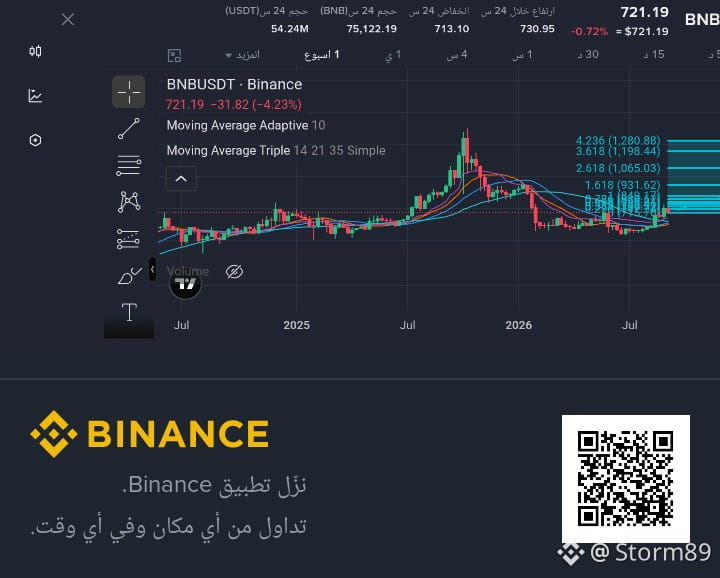
BNB Chain is witnessing strong growth in the tokenized real-world assets (RWA) sector, and the value added to them during this 2026 period has reached around $3.62 billion. More importantly, a large portion of that figure comes from tokenized equities—meaning the story goes far beyond a passing crypto trend, as traditional heavy assets are moving into the blockchain world.
I see this real expansion in the RWA sector on the network over time turning into deeper and stronger demand for the token as a core fuel👀
Price may move and stabilize quickly amid market volatility, but what matters most is what’s being built at the core⚡
The BNB Ecosystem is establishing its roots for the long term
$BNB
{spot}(BNBUSDT)
#BNBChain
#Binance
BNB Chain is witnessing strong growth in the tokenized real-world assets (RWA) sector, and the value added to them during this 2026 period has reached around $3.62 billion. More importantly, a large portion of that figure comes from tokenized equities—meaning the story goes far beyond a passing crypto trend, as traditional heavy assets are moving into the blockchain world.
I see this real expansion in the RWA sector on the network over time turning into deeper and stronger demand for the token as a core fuel👀
Price may move and stabilize quickly amid market volatility, but what matters most is what’s being built at the core⚡
The BNB Ecosystem is establishing its roots for the long term
$BNB
#BNBChain
#Binance
I see this real expansion in the RWA sector on the network over time turning into deeper and stronger demand for the token as a core fuel👀
Price may move and stabilize quickly amid market volatility, but what matters most is what’s being built at the core⚡
The BNB Ecosystem is establishing its roots for the long term
$BNB
#BNBChain
#Binance

2
604
·
--
Federal Week
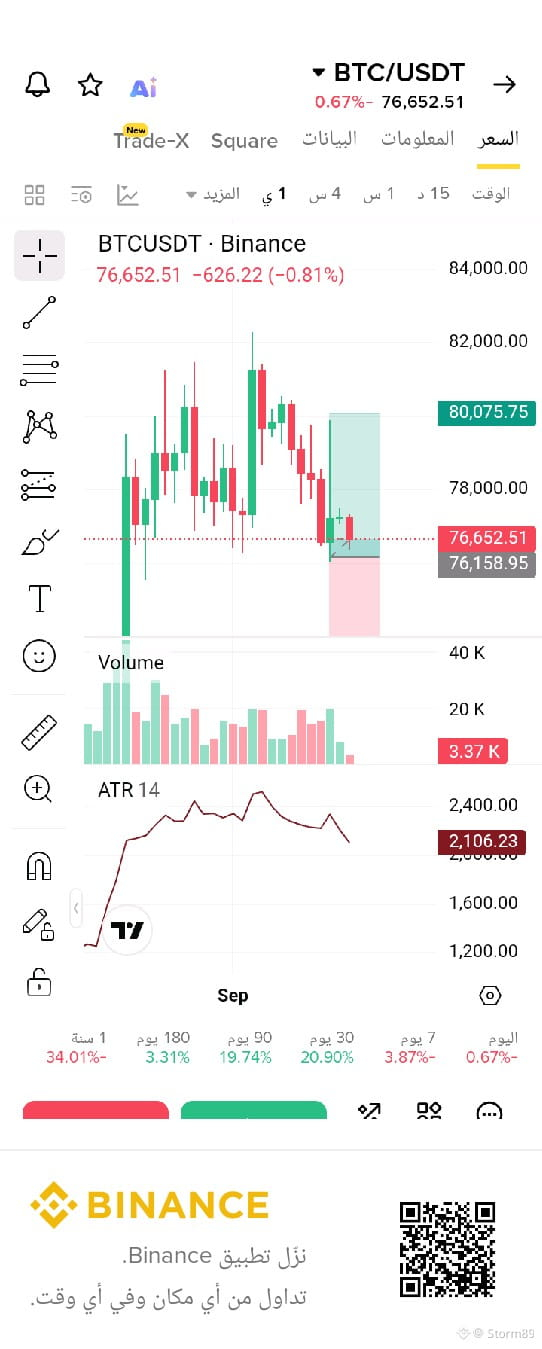
We’re heading into a decisive week as the Federal decision is approaching, with rising chances of a rate hike. And with all this data, we still see Bitcoin fighting to maintain its current levels.
And here’s specifically the point we need to stop at and analyze calmly:
The Priced-In principle: If the vast majority of the market is completely convinced that the decision is to raise interest rates—how much of the impact of this news has already been accounted for and matched with the current price (Priced in) from today?
Accumulation vs. distribution behavior: BTC’s stability and its holding steady under all this pressure and weight suggests that there may be groups accumulating quietly, away from the noise.
On the other hand, a rapid loss of current levels alongside increasing speculation would indicate that expectations alone have already drained the market’s strength.
The move that happens before the decision is announced is sometimes more accurate and more important than the moment the news is declared.
This week isn’t about random decision-making or impulsiveness—this week is all about monitoring and reading price action like a pro.
$BTC
{spot}(BTCUSDT)
#ClarityActFacesProceduralVoteSept15
Federal Week
We’re heading into a decisive week as the Federal decision is approaching, with rising chances of a rate hike. And with all this data, we still see Bitcoin fighting to maintain its current levels.
And here’s specifically the point we need to stop at and analyze calmly:
The Priced-In principle: If the vast majority of the market is completely convinced that the decision is to raise interest rates—how much of the impact of this news has already been accounted for and matched with the current price (Priced in) from today?
Accumulation vs. distribution behavior: BTC’s stability and its holding steady under all this pressure and weight suggests that there may be groups accumulating quietly, away from the noise.
On the other hand, a rapid loss of current levels alongside increasing speculation would indicate that expectations alone have already drained the market’s strength.
The move that happens before the decision is announced is sometimes more accurate and more important than the moment the news is declared.
This week isn’t about random decision-making or impulsiveness—this week is all about monitoring and reading price action like a pro.
$BTC
#ClarityActFacesProceduralVoteSept15
We’re heading into a decisive week as the Federal decision is approaching, with rising chances of a rate hike. And with all this data, we still see Bitcoin fighting to maintain its current levels.
And here’s specifically the point we need to stop at and analyze calmly:
The Priced-In principle: If the vast majority of the market is completely convinced that the decision is to raise interest rates—how much of the impact of this news has already been accounted for and matched with the current price (Priced in) from today?
Accumulation vs. distribution behavior: BTC’s stability and its holding steady under all this pressure and weight suggests that there may be groups accumulating quietly, away from the noise.
On the other hand, a rapid loss of current levels alongside increasing speculation would indicate that expectations alone have already drained the market’s strength.
The move that happens before the decision is announced is sometimes more accurate and more important than the moment the news is declared.
This week isn’t about random decision-making or impulsiveness—this week is all about monitoring and reading price action like a pro.
$BTC
#ClarityActFacesProceduralVoteSept15
239
Log in to explore more content
Join global crypto users on Binance Square
⚡️ Get latest and useful information about crypto.
💬 Trusted by the world’s largest crypto exchange.
👍 Discover real insights from verified creators.
Email / Phone number