

#polygon
polygon
12.6M views
118,939 Discussing
Hot
Latest

🚀 POLYGON JUST CROSSED 8.27 BILLION TRANSACTIONS! 🔥
While the market focuses on price action, @0xPolygon continues to build and expand its on-chain footprint.
📊 Here’s what stands out:
🔹 8.27 billion cumulative transactions processed 🔹 68,230 developer commits 🔹 104 validators securing the network
These numbers highlight Polygon’s growing infrastructure, sustained development activity, and established validator ecosystem.
The real story isn't just transaction volume. It's the technology, developers, and infrastructure working behind the scenes to support long-term adoption.
💡 In crypto, price gets attention, but network activity tells another part of the story.
$POL is building its foundation. Will the market eventually recognize it? 👀
#Polygon #POL #Crypto
{future}(POLUSDT)
🚀 POLYGON JUST CROSSED 8.27 BILLION TRANSACTIONS! 🔥
While the market focuses on price action, @0xPolygon continues to build and expand its on-chain footprint.
📊 Here’s what stands out:
🔹 8.27 billion cumulative transactions processed 🔹 68,230 developer commits 🔹 104 validators securing the network
These numbers highlight Polygon’s growing infrastructure, sustained development activity, and established validator ecosystem.
The real story isn't just transaction volume. It's the technology, developers, and infrastructure working behind the scenes to support long-term adoption.
💡 In crypto, price gets attention, but network activity tells another part of the story.
$POL is building its foundation. Will the market eventually recognize it? 👀
#Polygon #POL #Crypto
While the market focuses on price action, @0xPolygon continues to build and expand its on-chain footprint.
📊 Here’s what stands out:
🔹 8.27 billion cumulative transactions processed 🔹 68,230 developer commits 🔹 104 validators securing the network
These numbers highlight Polygon’s growing infrastructure, sustained development activity, and established validator ecosystem.
The real story isn't just transaction volume. It's the technology, developers, and infrastructure working behind the scenes to support long-term adoption.
💡 In crypto, price gets attention, but network activity tells another part of the story.
$POL is building its foundation. Will the market eventually recognize it? 👀
#Polygon #POL #Crypto


140

·
--
🚨 TWO UNDER-$1 TECH TITANS: ETHEREUM’S SCALER VS. THE STABLECOIN KING 🚨
One supercharges the Ethereum ecosystem with aggregated Layer-2 speed.
The other settles billions in global stablecoin transfers every single day.
Which low-price workhorse takes the crown on your watchlist? 👇
🟣 $POL (Polygon)
The Vibe: Aggregated L2 Scaling & Ethereum Powerhouse
Why Watch: Serves as the hyper-productive engine securing the Polygon ecosystem, driving zero-knowledge multichain interoperability (AggLayer) and powering enterprise Web3 integrations.
{future}(POLUSDT)
⚡ $TRX (TRON)
The Vibe: Ultra-Fast Settlement & Volume Heavyweight
Why Watch: Dominates global peer-to-peer crypto transfers as a leading highway for fast, low-fee $USDT transactions, delivering massive daily protocol usage.
{future}(TRXUSDT)
💬 Drop your pick below: Team POL for L2 scaling or Team TRX for daily transactions?
#writetoearn #crypto #Binance #Polygon #TRX
🚨 TWO UNDER-$1 TECH TITANS: ETHEREUM’S SCALER VS. THE STABLECOIN KING 🚨
One supercharges the Ethereum ecosystem with aggregated Layer-2 speed.
The other settles billions in global stablecoin transfers every single day.
Which low-price workhorse takes the crown on your watchlist? 👇
🟣 $POL (Polygon)
The Vibe: Aggregated L2 Scaling & Ethereum Powerhouse
Why Watch: Serves as the hyper-productive engine securing the Polygon ecosystem, driving zero-knowledge multichain interoperability (AggLayer) and powering enterprise Web3 integrations.
⚡ $TRX (TRON)
The Vibe: Ultra-Fast Settlement & Volume Heavyweight
Why Watch: Dominates global peer-to-peer crypto transfers as a leading highway for fast, low-fee $USDT transactions, delivering massive daily protocol usage.
💬 Drop your pick below: Team POL for L2 scaling or Team TRX for daily transactions?
#writetoearn #crypto #Binance #Polygon #TRX
One supercharges the Ethereum ecosystem with aggregated Layer-2 speed.
The other settles billions in global stablecoin transfers every single day.
Which low-price workhorse takes the crown on your watchlist? 👇
🟣 $POL (Polygon)
The Vibe: Aggregated L2 Scaling & Ethereum Powerhouse
Why Watch: Serves as the hyper-productive engine securing the Polygon ecosystem, driving zero-knowledge multichain interoperability (AggLayer) and powering enterprise Web3 integrations.
⚡ $TRX (TRON)
The Vibe: Ultra-Fast Settlement & Volume Heavyweight
Why Watch: Dominates global peer-to-peer crypto transfers as a leading highway for fast, low-fee $USDT transactions, delivering massive daily protocol usage.
💬 Drop your pick below: Team POL for L2 scaling or Team TRX for daily transactions?
#writetoearn #crypto #Binance #Polygon #TRX

111

·
--
Bullish
Benefits of Staking Polygon: Can POL Holders Earn Rewards While Supporting the Network?
#pol #Polygon #PolygonPOL $POL
{spot}(POLUSDT)
Read Here: https://altcoinsanalysis.com/benefits-of-staking-polygon/
Benefits of Staking Polygon: Can POL Holders Earn Rewards While Supporting the Network?
#pol #Polygon #PolygonPOL $POL
Read Here: https://altcoinsanalysis.com/benefits-of-staking-polygon/
#pol #Polygon #PolygonPOL $POL
Read Here: https://altcoinsanalysis.com/benefits-of-staking-polygon/
97

🚨 #Polygon Wallet Moves 52.928 Million $POL to Staking!
A Polygon multisig wallet has reportedly transferred 52.928 million $POL to a staking contract. Is this a sign of growing commitment to network staking, or simply a routine treasury operation?
{spot}(POLUSDT)
🔍 The key question is what happens next. If the tokens are actively staked, they could support network participation and reduce the amount immediately available for trading. However, the transfer alone does not confirm a new bullish trend or prove that circulating supply has permanently decreased.
📊 Keep an eye on staking confirmation, exchange flows, trading volume, and price reaction before making a move. Does this signal confidence in Polygon’s future?
🎗️Your support in following this profile and sharing these posts is what truly validates my work.#CoinVahini #POL #Polygon #CryptoNews
🚨 #Polygon Wallet Moves 52.928 Million $POL to Staking!
A Polygon multisig wallet has reportedly transferred 52.928 million $POL to a staking contract. Is this a sign of growing commitment to network staking, or simply a routine treasury operation?
🔍 The key question is what happens next. If the tokens are actively staked, they could support network participation and reduce the amount immediately available for trading. However, the transfer alone does not confirm a new bullish trend or prove that circulating supply has permanently decreased.
📊 Keep an eye on staking confirmation, exchange flows, trading volume, and price reaction before making a move. Does this signal confidence in Polygon’s future?
🎗️Your support in following this profile and sharing these posts is what truly validates my work.#CoinVahini #POL #Polygon #CryptoNews
A Polygon multisig wallet has reportedly transferred 52.928 million $POL to a staking contract. Is this a sign of growing commitment to network staking, or simply a routine treasury operation?
🔍 The key question is what happens next. If the tokens are actively staked, they could support network participation and reduce the amount immediately available for trading. However, the transfer alone does not confirm a new bullish trend or prove that circulating supply has permanently decreased.
📊 Keep an eye on staking confirmation, exchange flows, trading volume, and price reaction before making a move. Does this signal confidence in Polygon’s future?
🎗️Your support in following this profile and sharing these posts is what truly validates my work.#CoinVahini #POL #Polygon #CryptoNews
1
1
24

·
--
🚨 $4.82M POL just got staked
Polygon multisig wallet just moved 52.928 million POL into the staking contract.
While everyone’s sleeping, the network is quietly getting stronger.
Bullish or just me? 👀
$POL #Polygon
🚨 $4.82M POL just got staked
Polygon multisig wallet just moved 52.928 million POL into the staking contract.
While everyone’s sleeping, the network is quietly getting stronger.
Bullish or just me? 👀
$POL #Polygon
Polygon multisig wallet just moved 52.928 million POL into the staking contract.
While everyone’s sleeping, the network is quietly getting stronger.
Bullish or just me? 👀
$POL #Polygon


Binance News
·
--
Polygon Multisig Wallet Transfers 52.928 Million POL to Staking Contract
An address labeled as a Polygon multisig wallet, “0xFA5,” transferred 52.928 million POL to a staking contract, worth about $4.82 million. According to ChainCatcher, the transfer was identified in Arkham monitoring data. Market analysts linked the increase in Polygon staking activity to rising APY and said it could support POL and ease downward price pressure.
2
235

·
--
A transfer of nearly 53 million POL has put Polygon’s multisig wallet in the spotlight. On-chain data shows that the address labeled as Polygon’s multisig, "0xFA5", transferred 52.928 million POL to a staking contract yesterday, worth about $4.82 million at the time. This wasn’t a retail investor’s move or a whale’s spur-of-the-moment decision—it was a deliberate action by an officially affiliated address.
The staking aligns with proposal PIP-92. Polygon previously decided to allocate 27.3 million POL from fee revenue to staking rewards for the period from October 1 to December 1. The multisig wallet has now sent POL from its holdings into the staking contract, effectively preparing the funds for this rewards program. The timing, just as the rewards window opens, is consistent with the announcement.
What’s worth watching is POL’s supply-and-demand dynamics. Staking rewards need a source: fees. Those fees are converted into POL and then distributed, which means the market has to absorb the tokens along the way. By locking existing POL in the staking contract, the team has reduced the amount available for sale in the circulating supply in the short term. But when rewards are distributed, those POL will return to stakers as incentives. Lockups and releases are two sides of the same coin; the question is which side moves faster and affects the price more.
Another perspective is the proposal’s significance as a signal. Using fee revenue to fund staking rewards suggests that Polygon is trying to link network revenue with token incentives, rather than relying solely on issuance to support yields. Whether this approach works will depend on whether fee revenue can keep pace with the rewards. The $4.82 million staking deposit is just the beginning; the reward distributions in each subsequent cycle will be the real test.
For those following $POL, the multisig address’s subsequent on-chain activity is more worth watching than the price chart. Changes in total staked during the rewards window and actual fee inflows will provide more information than a brief transfer alert.
#Polygon #质押 #On-chain data
A transfer of nearly 53 million POL has put Polygon’s multisig wallet in the spotlight. On-chain data shows that the address labeled as Polygon’s multisig, "0xFA5", transferred 52.928 million POL to a staking contract yesterday, worth about $4.82 million at the time. This wasn’t a retail investor’s move or a whale’s spur-of-the-moment decision—it was a deliberate action by an officially affiliated address.
The staking aligns with proposal PIP-92. Polygon previously decided to allocate 27.3 million POL from fee revenue to staking rewards for the period from October 1 to December 1. The multisig wallet has now sent POL from its holdings into the staking contract, effectively preparing the funds for this rewards program. The timing, just as the rewards window opens, is consistent with the announcement.
What’s worth watching is POL’s supply-and-demand dynamics. Staking rewards need a source: fees. Those fees are converted into POL and then distributed, which means the market has to absorb the tokens along the way. By locking existing POL in the staking contract, the team has reduced the amount available for sale in the circulating supply in the short term. But when rewards are distributed, those POL will return to stakers as incentives. Lockups and releases are two sides of the same coin; the question is which side moves faster and affects the price more.
Another perspective is the proposal’s significance as a signal. Using fee revenue to fund staking rewards suggests that Polygon is trying to link network revenue with token incentives, rather than relying solely on issuance to support yields. Whether this approach works will depend on whether fee revenue can keep pace with the rewards. The $4.82 million staking deposit is just the beginning; the reward distributions in each subsequent cycle will be the real test.
For those following $POL , the multisig address’s subsequent on-chain activity is more worth watching than the price chart. Changes in total staked during the rewards window and actual fee inflows will provide more information than a brief transfer alert.
#Polygon #质押 #On-chain data
The staking aligns with proposal PIP-92. Polygon previously decided to allocate 27.3 million POL from fee revenue to staking rewards for the period from October 1 to December 1. The multisig wallet has now sent POL from its holdings into the staking contract, effectively preparing the funds for this rewards program. The timing, just as the rewards window opens, is consistent with the announcement.
What’s worth watching is POL’s supply-and-demand dynamics. Staking rewards need a source: fees. Those fees are converted into POL and then distributed, which means the market has to absorb the tokens along the way. By locking existing POL in the staking contract, the team has reduced the amount available for sale in the circulating supply in the short term. But when rewards are distributed, those POL will return to stakers as incentives. Lockups and releases are two sides of the same coin; the question is which side moves faster and affects the price more.
Another perspective is the proposal’s significance as a signal. Using fee revenue to fund staking rewards suggests that Polygon is trying to link network revenue with token incentives, rather than relying solely on issuance to support yields. Whether this approach works will depend on whether fee revenue can keep pace with the rewards. The $4.82 million staking deposit is just the beginning; the reward distributions in each subsequent cycle will be the real test.
For those following $POL , the multisig address’s subsequent on-chain activity is more worth watching than the price chart. Changes in total staked during the rewards window and actual fee inflows will provide more information than a brief transfer alert.
#Polygon #质押 #On-chain data
·
--
5292.8 million tokens, $POL were transferred from a multisig wallet into a staking contract, with a nominal value of 4.82 million US dollars. On its own, the amount is not large, but the sender is an address labeled as Polygon multisig; the significance of this move lies not in the money, but in the signal.
A multisig address usually holds ecosystem treasury funds or team-discretionary allocations. Moving assets out of it generally serves one of two purposes: staking them to earn yields, or preparing for subsequent ecosystem incentives and delegation arrangements. This time, the funds went directly into a staking contract, which means this batch of tokens will not flow into the secondary market in the near term, but will instead be locked to participate in network validation or delegation. For circulating supply, this reduces selling pressure, but 5292 million tokens is still a small proportion of the total supply of $POL , so do not treat a single transfer as a trend reversal.
What is more worth watching is the pace. The official side previously mentioned that related arrangements would be advanced according to plan, and this transfer looks like one link in that execution chain rather than a spur-of-the-moment decision. If you want to track what happens next, focus on whether there are continued multisig outflows after this staking action, and whether the staking contract balance rises in sync. A single move does not tell you much; only consecutive actions form a direction.
Short-term prices will not change structure because of one transfer. What can change supply and demand is the comparison between ongoing locking and unlocking. This transfer provides an observation window; over the next few weeks, the movements of the multisig address will be more worth watching than the news itself.
#Polygon #质押 #on-chain data
5292.8 million tokens, $POL were transferred from a multisig wallet into a staking contract, with a nominal value of 4.82 million US dollars. On its own, the amount is not large, but the sender is an address labeled as Polygon multisig; the significance of this move lies not in the money, but in the signal.
A multisig address usually holds ecosystem treasury funds or team-discretionary allocations. Moving assets out of it generally serves one of two purposes: staking them to earn yields, or preparing for subsequent ecosystem incentives and delegation arrangements. This time, the funds went directly into a staking contract, which means this batch of tokens will not flow into the secondary market in the near term, but will instead be locked to participate in network validation or delegation. For circulating supply, this reduces selling pressure, but 5292 million tokens is still a small proportion of the total supply of $POL , so do not treat a single transfer as a trend reversal.
What is more worth watching is the pace. The official side previously mentioned that related arrangements would be advanced according to plan, and this transfer looks like one link in that execution chain rather than a spur-of-the-moment decision. If you want to track what happens next, focus on whether there are continued multisig outflows after this staking action, and whether the staking contract balance rises in sync. A single move does not tell you much; only consecutive actions form a direction.
Short-term prices will not change structure because of one transfer. What can change supply and demand is the comparison between ongoing locking and unlocking. This transfer provides an observation window; over the next few weeks, the movements of the multisig address will be more worth watching than the news itself.
#Polygon #质押 #on-chain data
A multisig address usually holds ecosystem treasury funds or team-discretionary allocations. Moving assets out of it generally serves one of two purposes: staking them to earn yields, or preparing for subsequent ecosystem incentives and delegation arrangements. This time, the funds went directly into a staking contract, which means this batch of tokens will not flow into the secondary market in the near term, but will instead be locked to participate in network validation or delegation. For circulating supply, this reduces selling pressure, but 5292 million tokens is still a small proportion of the total supply of $POL , so do not treat a single transfer as a trend reversal.
What is more worth watching is the pace. The official side previously mentioned that related arrangements would be advanced according to plan, and this transfer looks like one link in that execution chain rather than a spur-of-the-moment decision. If you want to track what happens next, focus on whether there are continued multisig outflows after this staking action, and whether the staking contract balance rises in sync. A single move does not tell you much; only consecutive actions form a direction.
Short-term prices will not change structure because of one transfer. What can change supply and demand is the comparison between ongoing locking and unlocking. This transfer provides an observation window; over the next few weeks, the movements of the multisig address will be more worth watching than the news itself.
#Polygon #质押 #on-chain data

·
--
Another large batch of POL has been moved on-chain into a staking contract.
According to monitoring data, the Polygon-related multisig address “0xFA5” transferred approximately 52.928 million POL, worth about $4.82 million, to a staking contract. Other reports say that around 27.3 million POL from the official side is being used to support staking rewards. The market interprets this as potentially easing selling pressure and stabilizing expectations around staking.
How to read this: a large staking deposit ≠ a guaranteed price increase, but locked-up supply and signals from the rewards pool can affect short-term sentiment. First, determine whether the “multisig operation” and the “official protocol announcement” refer to the same batch. Then look at staking APR, the unlock schedule, and net exchange inflows. The “locking up tokens to defend the price” narrative is easy to overstate; what matters is whether on-chain inflows continue or this was a one-off transfer.
#Polygon #POL #质押 #On-chain monitoring
Another large batch of POL has been moved on-chain into a staking contract.
According to monitoring data, the Polygon-related multisig address “0xFA5” transferred approximately 52.928 million POL, worth about $4.82 million, to a staking contract. Other reports say that around 27.3 million POL from the official side is being used to support staking rewards. The market interprets this as potentially easing selling pressure and stabilizing expectations around staking.
How to read this: a large staking deposit ≠ a guaranteed price increase, but locked-up supply and signals from the rewards pool can affect short-term sentiment. First, determine whether the “multisig operation” and the “official protocol announcement” refer to the same batch. Then look at staking APR, the unlock schedule, and net exchange inflows. The “locking up tokens to defend the price” narrative is easy to overstate; what matters is whether on-chain inflows continue or this was a one-off transfer.
#Polygon #POL #质押 #On-chain monitoring
According to monitoring data, the Polygon-related multisig address “0xFA5” transferred approximately 52.928 million POL, worth about $4.82 million, to a staking contract. Other reports say that around 27.3 million POL from the official side is being used to support staking rewards. The market interprets this as potentially easing selling pressure and stabilizing expectations around staking.
How to read this: a large staking deposit ≠ a guaranteed price increase, but locked-up supply and signals from the rewards pool can affect short-term sentiment. First, determine whether the “multisig operation” and the “official protocol announcement” refer to the same batch. Then look at staking APR, the unlock schedule, and net exchange inflows. The “locking up tokens to defend the price” narrative is easy to overstate; what matters is whether on-chain inflows continue or this was a one-off transfer.
#Polygon #POL #质押 #On-chain monitoring
1
73

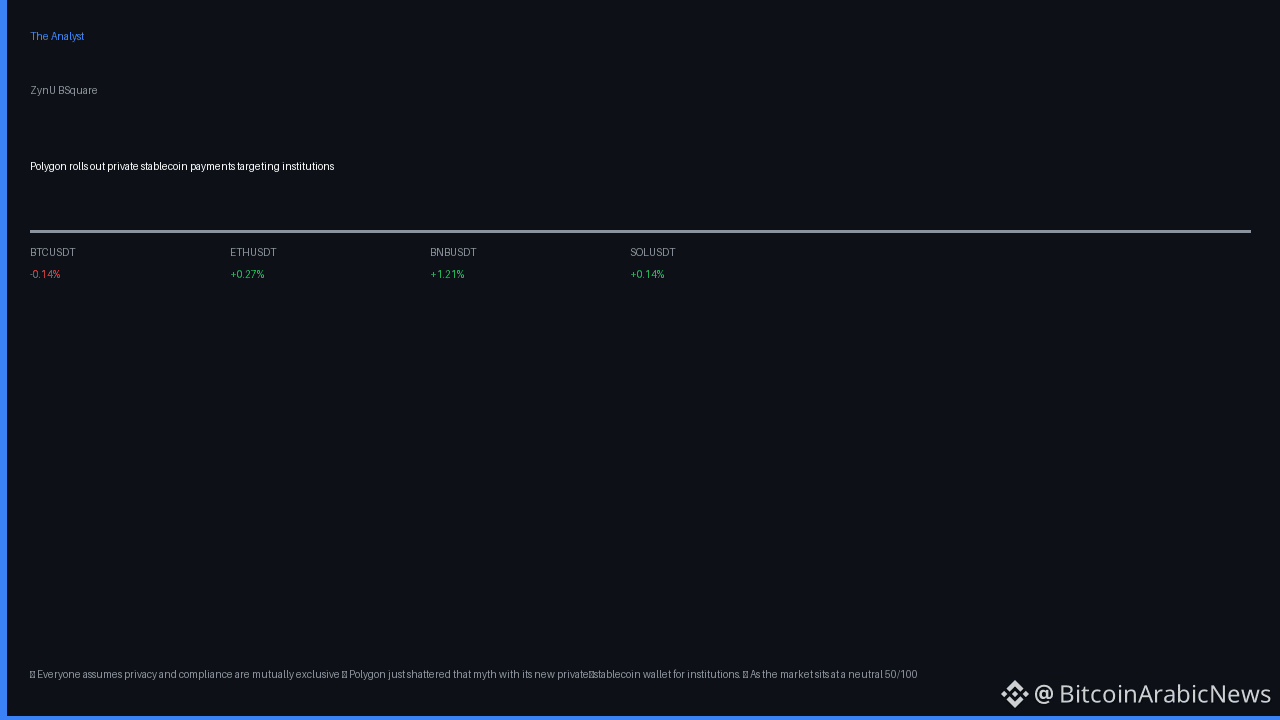
🔥 Everyone assumes privacy and compliance are mutually exclusive – Polygon just shattered that myth with its new private‑stablecoin wallet for institutions.
📊 As the market sits at a neutral 50/100 sentiment and BTC funding nudges bullish (+0.0059%) with $7.51 B open interest, capital is hunting compliant privacy solutions to sidestep the on‑chain traceability that’s throttling institutional appetite.
💡 Smart money is already reallocating: the $94 M BNB volume (+1.21%) hints BSC users are testing privacy layers, while #Polygon’s hidden‑sender feature dovetails with #Stablecoin demand and the #InstitutionalFinance push for audit‑ready, KYT‑screened transfers. Expect the $2,400 ETH price to act as a barometer – its 3.24 × long bias signals traders are betting on risk‑off assets that can now move under the radar.
🚀 Watch the $1.30 USD stablecoin threshold on Polygon’s new bridge; a sustained breach above this level could trigger a wave of hidden‑flow deposits, nudging the #Privacy narrative into mainstream on‑chain compliance discussions.
❓ If institutions can move billions invisibly yet stay audit‑compliant, will the next crypto‑regulation wave finally embrace private finance instead of banning it?
🔥 Everyone assumes privacy and compliance are mutually exclusive – Polygon just shattered that myth with its new private‑stablecoin wallet for institutions.
📊 As the market sits at a neutral 50/100 sentiment and BTC funding nudges bullish (+0.0059%) with $7.51 B open interest, capital is hunting compliant privacy solutions to sidestep the on‑chain traceability that’s throttling institutional appetite.
💡 Smart money is already reallocating: the $94 M BNB volume (+1.21%) hints BSC users are testing privacy layers, while #Polygon’s hidden‑sender feature dovetails with #Stablecoin demand and the #InstitutionalFinance push for audit‑ready, KYT‑screened transfers. Expect the $2,400 ETH price to act as a barometer – its 3.24 × long bias signals traders are betting on risk‑off assets that can now move under the radar.
🚀 Watch the $1.30 USD stablecoin threshold on Polygon’s new bridge; a sustained breach above this level could trigger a wave of hidden‑flow deposits, nudging the #Privacy narrative into mainstream on‑chain compliance discussions.
❓ If institutions can move billions invisibly yet stay audit‑compliant, will the next crypto‑regulation wave finally embrace private finance instead of banning it?
📊 As the market sits at a neutral 50/100 sentiment and BTC funding nudges bullish (+0.0059%) with $7.51 B open interest, capital is hunting compliant privacy solutions to sidestep the on‑chain traceability that’s throttling institutional appetite.
💡 Smart money is already reallocating: the $94 M BNB volume (+1.21%) hints BSC users are testing privacy layers, while #Polygon’s hidden‑sender feature dovetails with #Stablecoin demand and the #InstitutionalFinance push for audit‑ready, KYT‑screened transfers. Expect the $2,400 ETH price to act as a barometer – its 3.24 × long bias signals traders are betting on risk‑off assets that can now move under the radar.
🚀 Watch the $1.30 USD stablecoin threshold on Polygon’s new bridge; a sustained breach above this level could trigger a wave of hidden‑flow deposits, nudging the #Privacy narrative into mainstream on‑chain compliance discussions.
❓ If institutions can move billions invisibly yet stay audit‑compliant, will the next crypto‑regulation wave finally embrace private finance instead of banning it?
4
·
--
The Polygon multisig wallet has just sent nearly 53 million $POL to a staking contract, worth approximately $4.82 million. This is no small move, especially since it came from the protocol’s own multisig address rather than a retail position held by a whale.
Why is this worth a closer look? Polygon staking activity has picked up recently, and reports have linked this to rising APYs. Higher yields can encourage token holders to lock their tokens in contracts, reducing the circulating supply and theoretically easing some of the selling pressure. But when a multisig wallet gets involved directly, it means something a little different—it looks more like the protocol staking its own reserves than a purely market-driven move.
My take is that moves like this can change market expectations about the circulating supply structure of POL, but they won’t immediately reverse the price trend. Staking locks provide a buffer over time, not a guarantee of direction. What to watch is whether more protocol addresses follow suit, and whether rising APYs reflect short-term incentives or a sustainable source of yield. If a brief spike in APY is all that’s attracting tokens into staking, some of those tokens could be released again once APYs fall.
#Polygon #POL #staking
The Polygon multisig wallet has just sent nearly 53 million $POL to a staking contract, worth approximately $4.82 million. This is no small move, especially since it came from the protocol’s own multisig address rather than a retail position held by a whale.
Why is this worth a closer look? Polygon staking activity has picked up recently, and reports have linked this to rising APYs. Higher yields can encourage token holders to lock their tokens in contracts, reducing the circulating supply and theoretically easing some of the selling pressure. But when a multisig wallet gets involved directly, it means something a little different—it looks more like the protocol staking its own reserves than a purely market-driven move.
My take is that moves like this can change market expectations about the circulating supply structure of POL, but they won’t immediately reverse the price trend. Staking locks provide a buffer over time, not a guarantee of direction. What to watch is whether more protocol addresses follow suit, and whether rising APYs reflect short-term incentives or a sustainable source of yield. If a brief spike in APY is all that’s attracting tokens into staking, some of those tokens could be released again once APYs fall.
#Polygon #POL #staking
Why is this worth a closer look? Polygon staking activity has picked up recently, and reports have linked this to rising APYs. Higher yields can encourage token holders to lock their tokens in contracts, reducing the circulating supply and theoretically easing some of the selling pressure. But when a multisig wallet gets involved directly, it means something a little different—it looks more like the protocol staking its own reserves than a purely market-driven move.
My take is that moves like this can change market expectations about the circulating supply structure of POL, but they won’t immediately reverse the price trend. Staking locks provide a buffer over time, not a guarantee of direction. What to watch is whether more protocol addresses follow suit, and whether rising APYs reflect short-term incentives or a sustainable source of yield. If a brief spike in APY is all that’s attracting tokens into staking, some of those tokens could be released again once APYs fall.
#Polygon #POL #staking

·
--
Bearish
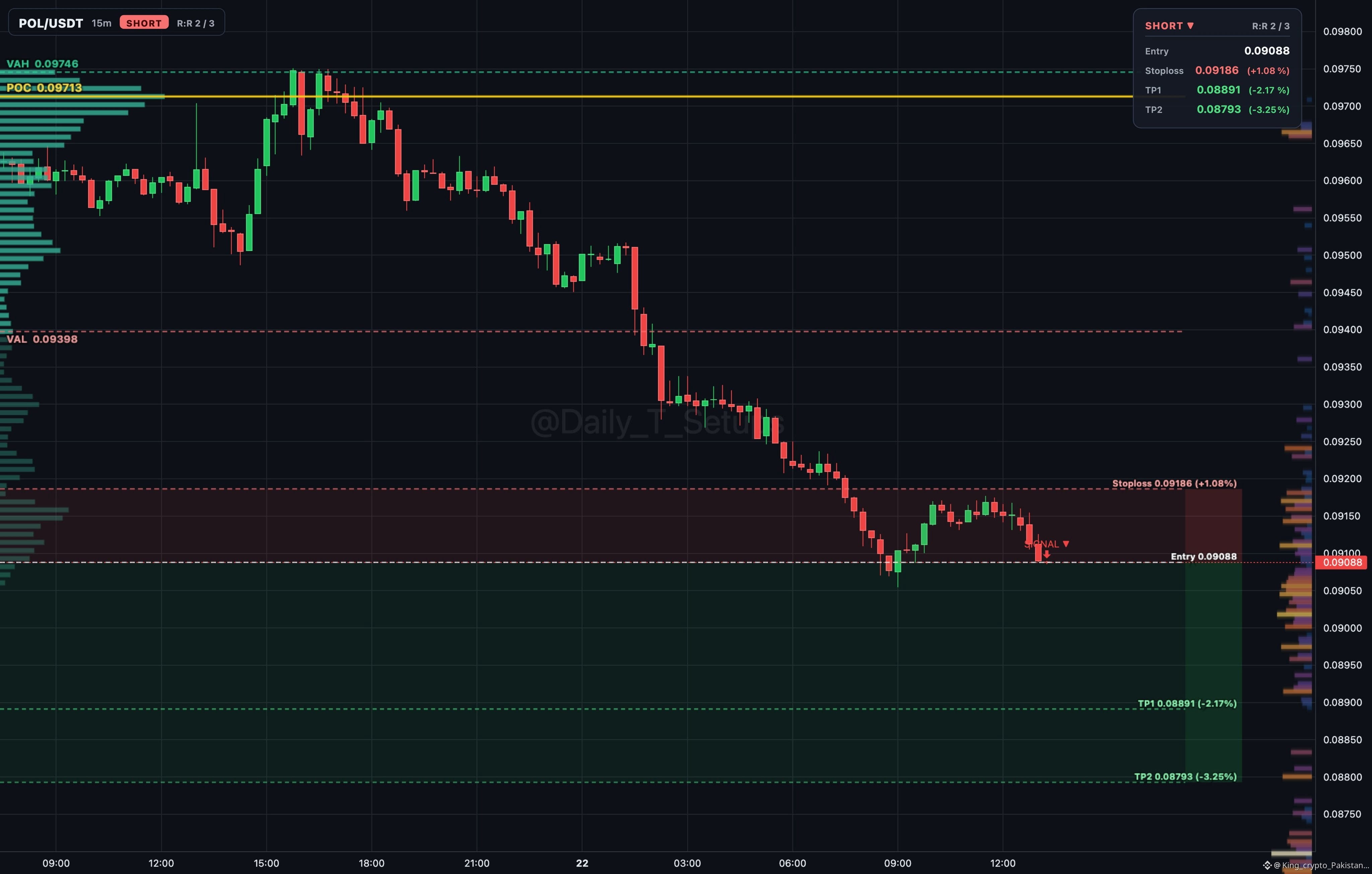
$POL auction rotation shows sellers distributing below VAL at 0.09398.
{spot}(POLUSDT)
🔽 Short setup
📍 Entry: 0.09088
🛑 Stop: 0.09186 (+1.1%)
🎯 TP1: 0.08891 (-2.2%)
🎯 TP2: 0.08793 (-3.2%)
⚖️ Half off at TP1 → stop to entry
#Polygon #CryptoTrading
$POL auction rotation shows sellers distributing below VAL at 0.09398.
🔽 Short setup
📍 Entry: 0.09088
🛑 Stop: 0.09186 (+1.1%)
🎯 TP1: 0.08891 (-2.2%)
🎯 TP2: 0.08793 (-3.2%)
⚖️ Half off at TP1 → stop to entry
#Polygon #CryptoTrading
🔽 Short setup
📍 Entry: 0.09088
🛑 Stop: 0.09186 (+1.1%)
🎯 TP1: 0.08891 (-2.2%)
🎯 TP2: 0.08793 (-3.2%)
⚖️ Half off at TP1 → stop to entry
#Polygon #CryptoTrading
1
385

·
--
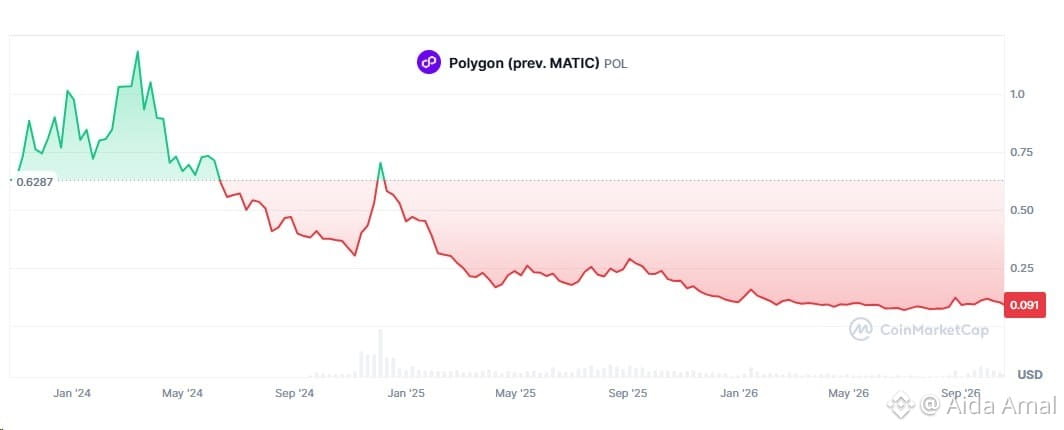
Polygon is exploring the possibility of acquiring Coinme to expand into the payments industry, currently led by Visa and Stripe, according to the company's CEO. Since late 2025, #Polygon has been restructuring its operations, with a primary focus on payments using #Stablecoins . The CEO has reiterated that POL remains undervalued, despite the token's current poor performance. For more details, read the full article.
Polygon is exploring the possibility of acquiring Coinme to expand into the payments industry, currently led by Visa and Stripe, according to the company's CEO. Since late 2025, #Polygon has been restructuring its operations, with a primary focus on payments using #Stablecoins . The CEO has reiterated that POL remains undervalued, despite the token's current poor performance. For more details, read the full article.
1
47

·
--
Why $POL is Built for the Future:
💎 Hyperproductive Token: Staking, securing multiple chains, and earning rewards—all in one place.
⚡ Zero-Knowledge Powered: Ultra-fast transactions with negligible gas fees.
🛡️ Ecosystem Security: Empowering Polygon 2.0 with robust decentralized security.
The Web3 transformation is happening right now. Are you holding $POL in your portfolio for the next major rally? 📈👇
💬 Drop your price predictions in the comments below!
#Polygon #POL #Crypto #Web3 #BinanceSquare
Why $POL is Built for the Future:
💎 Hyperproductive Token: Staking, securing multiple chains, and earning rewards—all in one place.
⚡ Zero-Knowledge Powered: Ultra-fast transactions with negligible gas fees.
🛡️ Ecosystem Security: Empowering Polygon 2.0 with robust decentralized security.
The Web3 transformation is happening right now. Are you holding $POL in your portfolio for the next major rally? 📈👇
💬 Drop your price predictions in the comments below!
#Polygon #POL #Crypto #Web3 #BinanceSquare
💎 Hyperproductive Token: Staking, securing multiple chains, and earning rewards—all in one place.
⚡ Zero-Knowledge Powered: Ultra-fast transactions with negligible gas fees.
🛡️ Ecosystem Security: Empowering Polygon 2.0 with robust decentralized security.
The Web3 transformation is happening right now. Are you holding $POL in your portfolio for the next major rally? 📈👇
💬 Drop your price predictions in the comments below!
#Polygon #POL #Crypto #Web3 #BinanceSquare
1
165

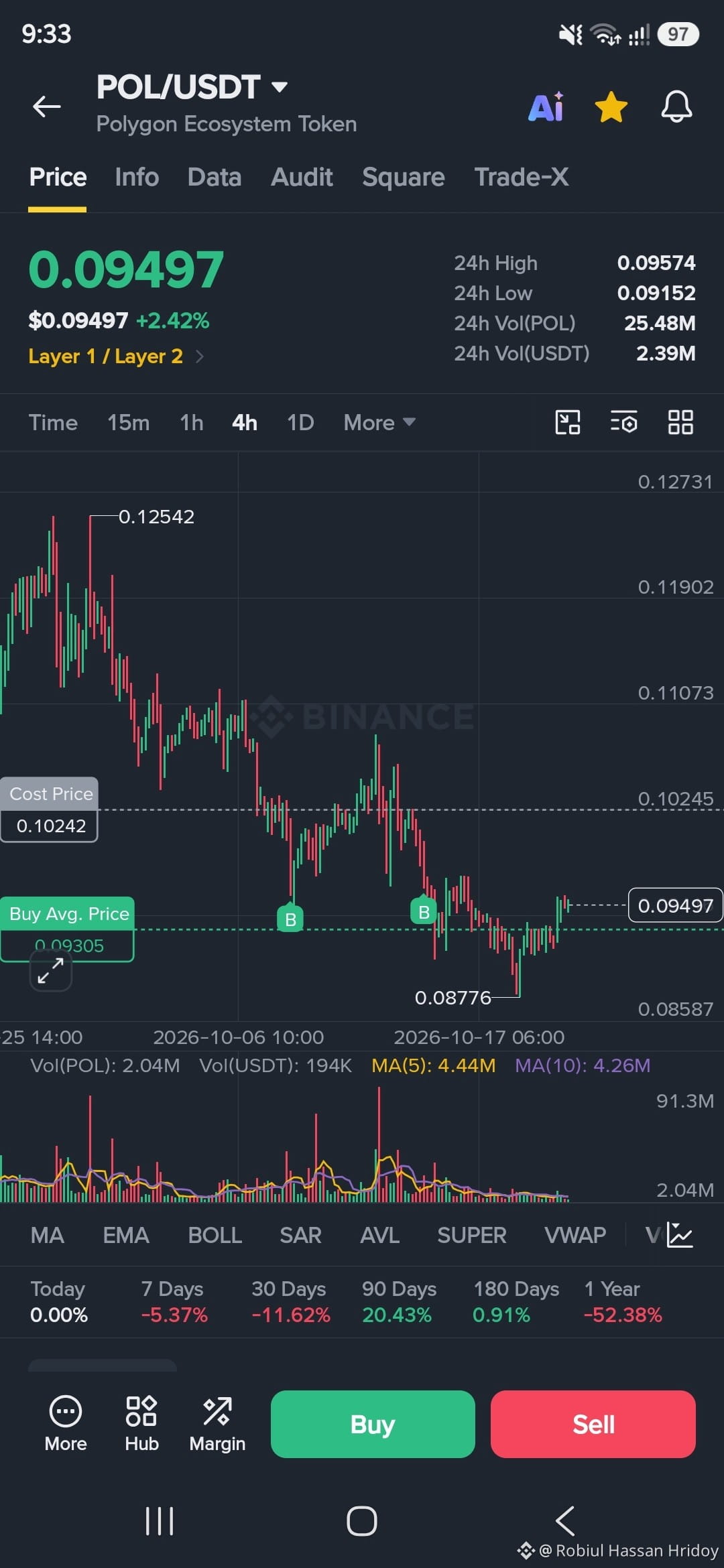
🚀 $POL Showing Signs of a Comeback? 👀
$POL/USDT is trading at $0.09497 (+2.42%) 📈
After dipping to $0.08776, $POL is showing a small recovery. The next move will be interesting to watch! 🔥
🎯 Key Levels to Watch: 🟢 Resistance: $0.09574 – $0.10242 🔴 Support: $0.09152 – $0.08776
Will $POL break above $0.10, or will bears take control again? 🤔
💬 What’s your prediction for $POL?
🚀 Bullish or 🐻 Bearish?
#pol #Polygon #crypto #BinanceSquare
🚀 $POL Showing Signs of a Comeback? 👀
$POL/USDT is trading at $0.09497 (+2.42%) 📈
After dipping to $0.08776, $POL is showing a small recovery. The next move will be interesting to watch! 🔥
🎯 Key Levels to Watch: 🟢 Resistance: $0.09574 – $0.10242 🔴 Support: $0.09152 – $0.08776
Will $POL break above $0.10, or will bears take control again? 🤔
💬 What’s your prediction for $POL?
🚀 Bullish or 🐻 Bearish?
#pol #Polygon #crypto #BinanceSquare
$POL/USDT is trading at $0.09497 (+2.42%) 📈
After dipping to $0.08776, $POL is showing a small recovery. The next move will be interesting to watch! 🔥
🎯 Key Levels to Watch: 🟢 Resistance: $0.09574 – $0.10242 🔴 Support: $0.09152 – $0.08776
Will $POL break above $0.10, or will bears take control again? 🤔
💬 What’s your prediction for $POL?
🚀 Bullish or 🐻 Bearish?
#pol #Polygon #crypto #BinanceSquare
1
190

·
--
Bullish
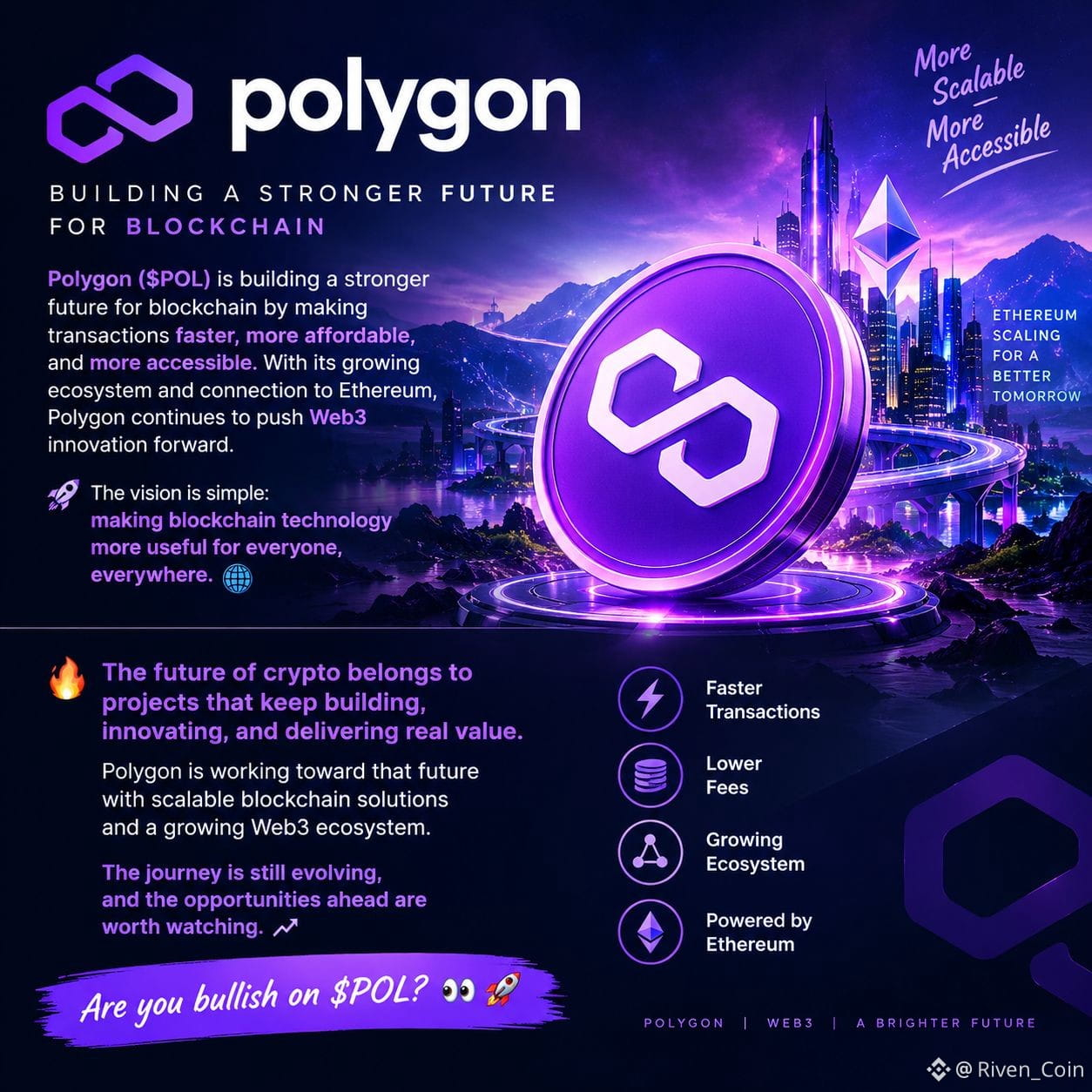
🚀 polygon (POL) — Building the Future of Web3! 💜
Polygon is playing an important role in the evolution of Web3, making blockchain technology faster, more scalable, and accessible for everyone. ⚡ With its growing ecosystem, low-cost transactions, and focus on Ethereum scaling, Polygon continues to attract attention from the crypto community. 🌐🔥
💎 Blockchain innovation
⚡ Scalable technology
🌍 A growing Web3 ecosystem
The future of blockchain is full of possibilities, and Polygon is a project worth keeping on your watchlist! 👀📈
What do you think about $POL? Are you bullish on Polygon? 🚀💜
#Polygon #pol #crypto #Web3 #Ethereum
$JCT
{future}(JCTUSDT)
$DOOD
{future}(DOODUSDT)
$MPLX
{alpha}(560x75a5863a19af60ec0098d62ed8c34cc594fb470f)
🚀 polygon (POL) — Building the Future of Web3! 💜
Polygon is playing an important role in the evolution of Web3, making blockchain technology faster, more scalable, and accessible for everyone. ⚡ With its growing ecosystem, low-cost transactions, and focus on Ethereum scaling, Polygon continues to attract attention from the crypto community. 🌐🔥
💎 Blockchain innovation
⚡ Scalable technology
🌍 A growing Web3 ecosystem
The future of blockchain is full of possibilities, and Polygon is a project worth keeping on your watchlist! 👀📈
What do you think about $POL? Are you bullish on Polygon? 🚀💜
#Polygon #pol #crypto #Web3 #Ethereum
$JCT
$DOOD
$MPLX
Polygon is playing an important role in the evolution of Web3, making blockchain technology faster, more scalable, and accessible for everyone. ⚡ With its growing ecosystem, low-cost transactions, and focus on Ethereum scaling, Polygon continues to attract attention from the crypto community. 🌐🔥
💎 Blockchain innovation
⚡ Scalable technology
🌍 A growing Web3 ecosystem
The future of blockchain is full of possibilities, and Polygon is a project worth keeping on your watchlist! 👀📈
What do you think about $POL? Are you bullish on Polygon? 🚀💜
#Polygon #pol #crypto #Web3 #Ethereum
$JCT
$DOOD
$MPLX
628

·
--
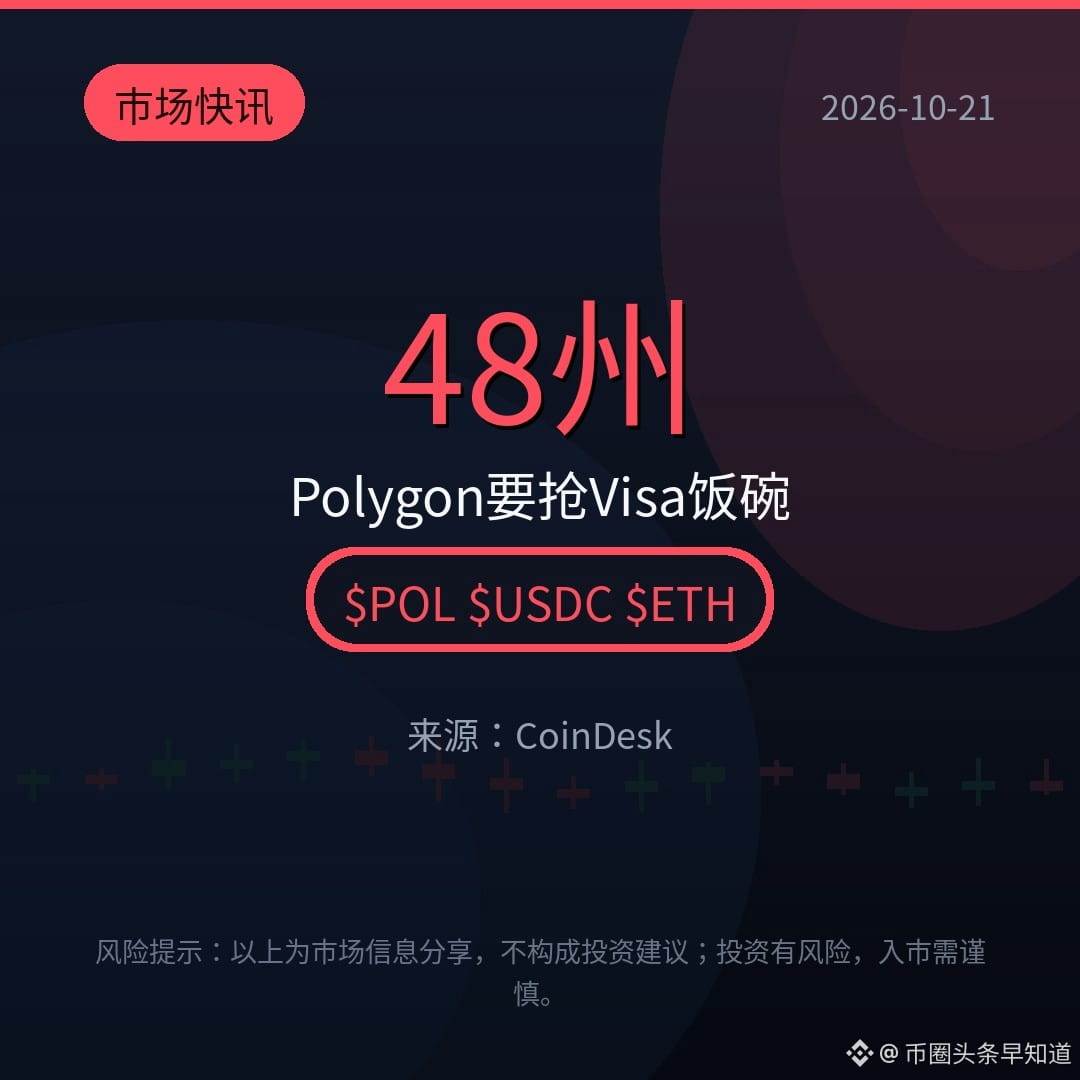
With licenses in 48 states secured, Polygon isn’t content with being just another blockchain. Let’s compare the numbers: Visa processes $12.3 trillion in payments, and Stripe $1.9 trillion. Polygon only got its 37 state money transmitter licenses and 11 exemptions by acquiring Coinme—and its new platform is still in technical preview. The baggage is substantial, too: Coinme just reached a $2.5 million settlement with regulators in 34 states, and faces another $4 million in penalties if it doesn’t shut down its crypto kiosk business by January 2027. CEO Boiron, however, says the regulated payments business will be profitable in 2027. Do you think public blockchains can pivot and compete for a slice of the payments pie? If yes, comment 1; if not, comment 2.
$POL $USDC $ETH
#Polygon #稳定币支付 #CryptoPayments
(Source: CoinDesk, PortalCripto)
⚠️Risk warning: The above is shared for informational purposes only and does not constitute investment advice. Investing involves risk; proceed with caution.
With licenses in 48 states secured, Polygon isn’t content with being just another blockchain. Let’s compare the numbers: Visa processes $12.3 trillion in payments, and Stripe $1.9 trillion. Polygon only got its 37 state money transmitter licenses and 11 exemptions by acquiring Coinme—and its new platform is still in technical preview. The baggage is substantial, too: Coinme just reached a $2.5 million settlement with regulators in 34 states, and faces another $4 million in penalties if it doesn’t shut down its crypto kiosk business by January 2027. CEO Boiron, however, says the regulated payments business will be profitable in 2027. Do you think public blockchains can pivot and compete for a slice of the payments pie? If yes, comment 1; if not, comment 2.
$POL $USDC $ETH
#Polygon #稳定币支付 #CryptoPayments
(Source: CoinDesk, PortalCripto)
⚠️Risk warning: The above is shared for informational purposes only and does not constitute investment advice. Investing involves risk; proceed with caution.
$POL $USDC $ETH
#Polygon #稳定币支付 #CryptoPayments
(Source: CoinDesk, PortalCripto)
⚠️Risk warning: The above is shared for informational purposes only and does not constitute investment advice. Investing involves risk; proceed with caution.
240

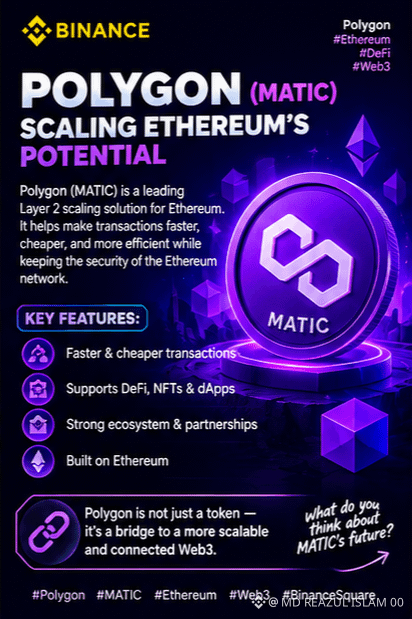
💜 Polygon: Scaling the Future of Blockchain!
Polygon focuses on making blockchain applications more accessible through scalable technology and its growing ecosystem.
🔥 Can Polygon play a bigger role in the future of Web3?
Share your thoughts below! 👇
#Polygon #POL #Blockchain #Crypto #BinanceSquare
💜 Polygon: Scaling the Future of Blockchain!
Polygon focuses on making blockchain applications more accessible through scalable technology and its growing ecosystem.
🔥 Can Polygon play a bigger role in the future of Web3?
Share your thoughts below! 👇
#Polygon #POL #Blockchain #Crypto #BinanceSquare
Polygon focuses on making blockchain applications more accessible through scalable technology and its growing ecosystem.
🔥 Can Polygon play a bigger role in the future of Web3?
Share your thoughts below! 👇
#Polygon #POL #Blockchain #Crypto #BinanceSquare
131

·
--
Polygon (POL)
$POL
{future}(POLUSDT)
POL represents the next-generation evolution of the original MATIC ecosystem token, following its 1:1 migration. Unlike its predecessor, POL functions as a hyperproductive utility token designed to secure a complex multi-chain network. It powers Polygon’s multi-chain architecture, including its PoS chain and zkEVM framework. Traders on Binance utilize POL for staking across multiple chains simultaneously, paying gas fees, and participating in ecosystem governance.
Arbitrum (ARB)
$ARB
{spot}(ARBUSDT)
ARB is the native asset for the Arbitrum network, which uses Optimistic Rollup technology to bundle thousands of off-chain transactions into a single batch before settling them on Ethereum. It remains a top asset by total value locked (TVL) in the DeFi space. On Binance, ARB functions primarily as a governance token, giving holders voting weight within the Arbitrum DAO to direct treasury funds and network upgrades.
Both tokens are widely available for spot trading, futures, and yield-earning products on the Binance Exchange.
#Polygon #ArbitrumBOLD #BinanceSquareFamily
Polygon (POL)
$POL
POL represents the next-generation evolution of the original MATIC ecosystem token, following its 1:1 migration. Unlike its predecessor, POL functions as a hyperproductive utility token designed to secure a complex multi-chain network. It powers Polygon’s multi-chain architecture, including its PoS chain and zkEVM framework. Traders on Binance utilize POL for staking across multiple chains simultaneously, paying gas fees, and participating in ecosystem governance.
Arbitrum (ARB)
$ARB
ARB is the native asset for the Arbitrum network, which uses Optimistic Rollup technology to bundle thousands of off-chain transactions into a single batch before settling them on Ethereum. It remains a top asset by total value locked (TVL) in the DeFi space. On Binance, ARB functions primarily as a governance token, giving holders voting weight within the Arbitrum DAO to direct treasury funds and network upgrades.
Both tokens are widely available for spot trading, futures, and yield-earning products on the Binance Exchange.
#Polygon #ArbitrumBOLD #BinanceSquareFamily
$POL
POL represents the next-generation evolution of the original MATIC ecosystem token, following its 1:1 migration. Unlike its predecessor, POL functions as a hyperproductive utility token designed to secure a complex multi-chain network. It powers Polygon’s multi-chain architecture, including its PoS chain and zkEVM framework. Traders on Binance utilize POL for staking across multiple chains simultaneously, paying gas fees, and participating in ecosystem governance.
Arbitrum (ARB)
$ARB
ARB is the native asset for the Arbitrum network, which uses Optimistic Rollup technology to bundle thousands of off-chain transactions into a single batch before settling them on Ethereum. It remains a top asset by total value locked (TVL) in the DeFi space. On Binance, ARB functions primarily as a governance token, giving holders voting weight within the Arbitrum DAO to direct treasury funds and network upgrades.
Both tokens are widely available for spot trading, futures, and yield-earning products on the Binance Exchange.
#Polygon #ArbitrumBOLD #BinanceSquareFamily
243
·
--
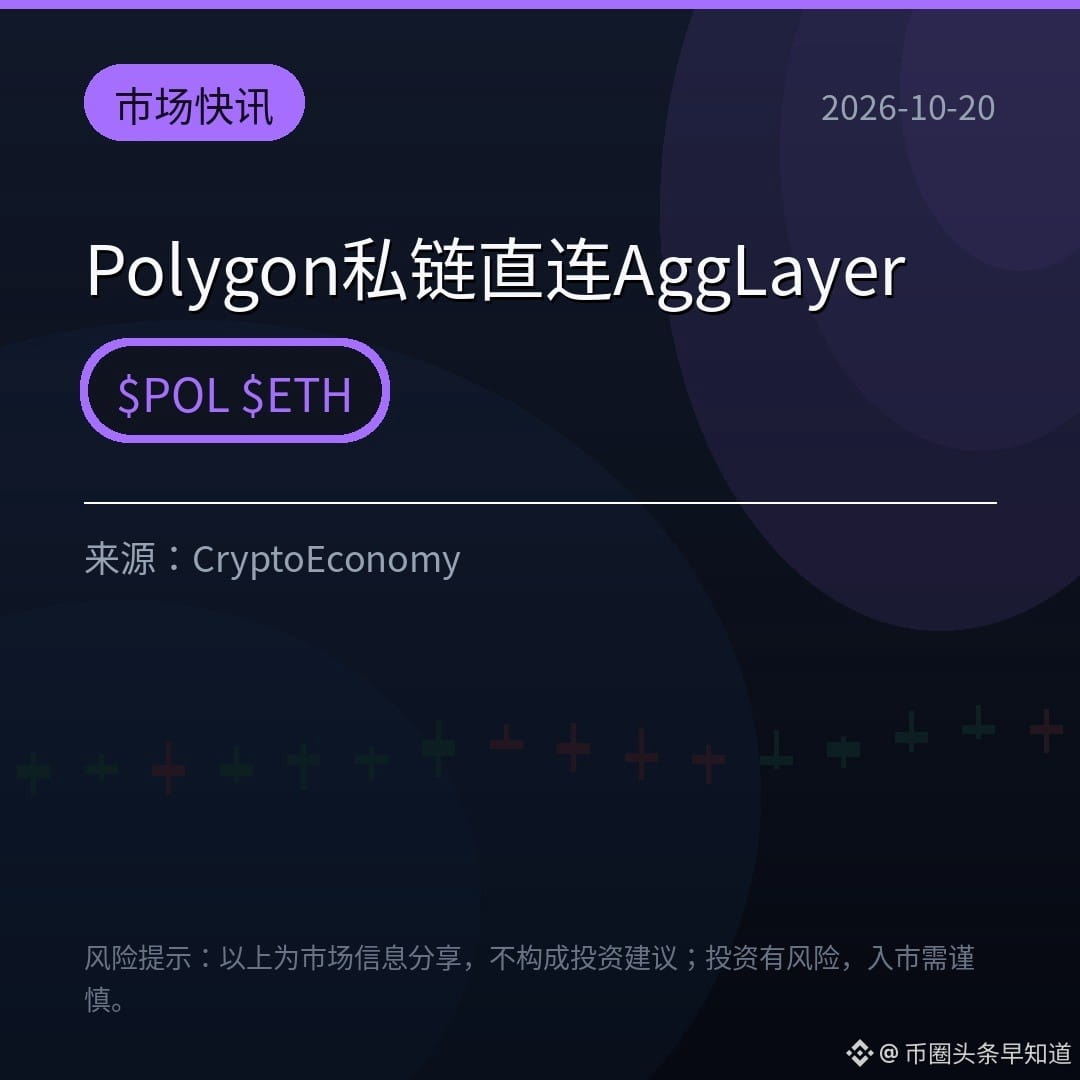
【Market Flash】Banks’ private chains no longer have to operate behind closed doors! Polygon has integrated Hyperledger Besu into CDK, allowing institutional private chains to connect directly to AggLayer from the genesis block. Cross-chain transfers are verified with zero-knowledge proofs and ultimately settled on Ethereum mainnet, while private data stays on their own servers. Even more importantly, pessimistic proofs provide a safety net: each chain can withdraw only the funds it deposited, so a vulnerability on someone else’s chain can’t drag you down. Would institutions really give up closed systems for liquidity? Do you think this is a genuine breakthrough for institutions moving on-chain, or just another infrastructure stack nobody will use?
$POL $ETH $BTC
#Polygon #AggLayer #InstitutionsOnchain
(Source: CryptoEconomy)
⚠️Risk Warning: The above is shared for market information only and does not constitute investment advice. Investing involves risks; please exercise caution.
【Market Flash】Banks’ private chains no longer have to operate behind closed doors! Polygon has integrated Hyperledger Besu into CDK, allowing institutional private chains to connect directly to AggLayer from the genesis block. Cross-chain transfers are verified with zero-knowledge proofs and ultimately settled on Ethereum mainnet, while private data stays on their own servers. Even more importantly, pessimistic proofs provide a safety net: each chain can withdraw only the funds it deposited, so a vulnerability on someone else’s chain can’t drag you down. Would institutions really give up closed systems for liquidity? Do you think this is a genuine breakthrough for institutions moving on-chain, or just another infrastructure stack nobody will use?
$POL $ETH $BTC
#Polygon #AggLayer #InstitutionsOnchain
(Source: CryptoEconomy)
⚠️Risk Warning: The above is shared for market information only and does not constitute investment advice. Investing involves risks; please exercise caution.
$POL $ETH $BTC
#Polygon #AggLayer #InstitutionsOnchain
(Source: CryptoEconomy)
⚠️Risk Warning: The above is shared for market information only and does not constitute investment advice. Investing involves risks; please exercise caution.
263

·
--
Bullish
🟣 Polygon: Scaling the ecosystem step by step.
Layer 2 (L2) solutions are essential for mass adoption, and $POL (formerly MATIC) continues to lead the way by offering a fast, accessible environment. Major Web2 brands are building here.
🎮 Have you interacted with the Polygon ecosystem lately?
✒️ @CyberBullX #Polygon
{spot}(POLUSDT)
#pol #Layer2 #CryptoAdoption
🟣 Polygon: Scaling the ecosystem step by step.
Layer 2 (L2) solutions are essential for mass adoption, and $POL (formerly MATIC) continues to lead the way by offering a fast, accessible environment. Major Web2 brands are building here.
🎮 Have you interacted with the Polygon ecosystem lately?
✒️ @CyberBullX #Polygon
#pol #Layer2 #CryptoAdoption
Layer 2 (L2) solutions are essential for mass adoption, and $POL (formerly MATIC) continues to lead the way by offering a fast, accessible environment. Major Web2 brands are building here.
🎮 Have you interacted with the Polygon ecosystem lately?
✒️ @CyberBullX #Polygon
#pol #Layer2 #CryptoAdoption
1
120
Log in to explore more content
Join global crypto users on Binance Square
⚡️ Get latest and useful information about crypto.
💬 Trusted by the world’s largest crypto exchange.
👍 Discover real insights from verified creators.
Email / Phone number
Trending Topics
1
#BinancePick
2.5M views
137,605 Discussing
2
#EarningsSeason
4.9M views
23,879 Discussing
3
#ElectrumWalletBugLetRogueServersStealFunds
2,066 views
123 Discussing
4
#ArgentineCourtDismissesLIBRACaseAgainstMilei
10,021 views
218 Discussing
5
#SKHynixReportedlyPlansSpecialDividendFromKioxiaStakeSale
2,223 views
35 Discussing
6
#KeystoneWebsiteBreachExposesBuyersShippingAddresses
1,177 views
25 Discussing
7
#USQ3GDPAndSeptemberPCEDueNextWeek
82,458 views
1,030 Discussing
8
#SouthKoreaDelaysCryptoIncomeTax
152,069 views
1,072 Discussing
9
#ElectrumFixesHighRiskExploitInVersionsBefore4.8.3
67,038 views
770 Discussing
10
#SouthKoreaPlansToRegulateStablecoinsUnderFXLaw
65,107 views
686 Discussing