
#cryptolaw
cryptolaw
281,007 views
1,030 Discussing
Hot
Latest

Article
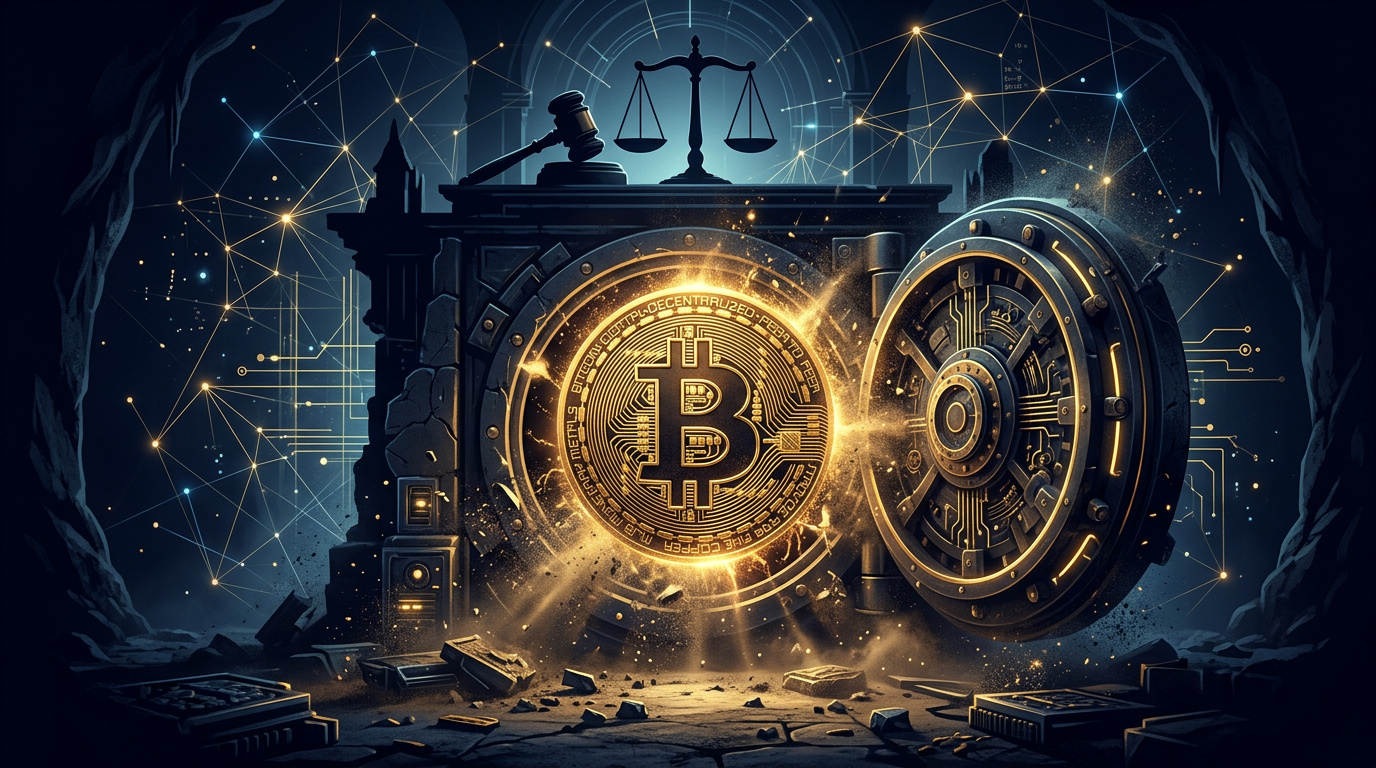
Satoshi-Era Wallet Wakes Up After Court Notice in $260B LawsuitA Bitcoin wallet that slept since 2011 just woke up, and it did so months after a court notice landed in it. The timing has the community talking.
What Happened
According to CoinDesk, a Bitcoin wallet created in the network's earliest years moved its coins for the first time since 2011. On Thursday evening, someone with the keys swept all 75 BTC, roughly $5 million, to a new address.
This was not a random old wallet. It was listed as defendant No. 3,419 in an amended complaint filed in New York. On May 22, the address received 546 satoshis, worth less than 40 cents at recent prices, carrying the message "COURT-ORDERED LEGAL NOTICE" and a link to the plaintiffs' notice page.
Thursday's transaction spent that dust payment together with the original 75 BTC and three other tiny deposits. One of those carried a separate July 2025 owner notice from Salomon Brothers Strategic Advisors, the consultant the plaintiffs hired to contact wallet holders. Six inputs went into one payment, and the old address is now empty.
The Lawsuit Behind It
The case was filed in New York by a plaintiff identified only as Noah Doe and two Wyoming companies. It asks a court to declare them owners of Bitcoin held in 39,069 addresses, on the theory that any wallet left dormant for at least five years holds lost property claimable under New York law.
The target is roughly 3.8 million BTC, including coins attributed to Satoshi Nakamoto. Because nobody knows who owns these wallets, the court allowed the plaintiffs to notify holders by sending minuscule amounts of bitcoin with a message linking to the legal papers. Yes, a lawsuit served through the blockchain itself.
Why It Matters
The transfer does not reveal who controls the wallet, and it does not prove the lawsuit prompted the move. CoinDesk is clear on both points. But it complicates the central premise of the case: that the money was abandoned. Someone can still spend these coins.
This is also not the first such move. In June, CoinDesk reported that another listed wallet holding 35.55 BTC since 2011 spent 15 BTC and sent the remainder back to itself as change.
There is a practical angle too. Even a ruling for the plaintiffs would not hand them the private keys needed to spend the bitcoin. The complaint itself says a hired expert valued the "found wallets" at less than $10, because recovering their contents was uncertain. A legal victory over coins you cannot move is a strange prize.
Market Impact
Direct price impact is minimal. 75 BTC is small next to daily volume. The bigger story is the principle. If a court ever accepted that dormancy equals abandonment, it would shake the core idea of self-custody: your keys, your coins, no matter how long you stay quiet. Long-term holders, early miners and lost-coin owners all have a stake in how this plays out. The broader market is already jumpy, with Bitcoin trading near multi-month lows, so any story touching the legitimacy of old coins gets extra attention.
My Take
I see this as a stress test of property rights in crypto. Early wallets waking up one by one tells us that at least some "lost" coins are simply patient. The case looks legally exotic, and the owners seem to be watching.
What to Watch Next
• More defendant addresses moving coins after receiving notices
• Any court ruling on whether dormancy can count as abandonment for Bitcoin
• Whether the plaintiffs adjust their claim as wallets show activity
• Whether any early-era holder steps forward publicly
Do you think a wallet being dormant for five years should ever count as abandoned property? Or are keys the only proof of ownership that matters? Drop your view below.
#Bitcoin #CryptoLaw #Satoshi $BTC
Satoshi-Era Wallet Wakes Up After Court Notice in $260B Lawsuit
A Bitcoin wallet that slept since 2011 just woke up, and it did so months after a court notice landed in it. The timing has the community talking.
What Happened
According to CoinDesk, a Bitcoin wallet created in the network's earliest years moved its coins for the first time since 2011. On Thursday evening, someone with the keys swept all 75 BTC, roughly $5 million, to a new address.
This was not a random old wallet. It was listed as defendant No. 3,419 in an amended complaint filed in New York. On May 22, the address received 546 satoshis, worth less than 40 cents at recent prices, carrying the message "COURT-ORDERED LEGAL NOTICE" and a link to the plaintiffs' notice page.
Thursday's transaction spent that dust payment together with the original 75 BTC and three other tiny deposits. One of those carried a separate July 2025 owner notice from Salomon Brothers Strategic Advisors, the consultant the plaintiffs hired to contact wallet holders. Six inputs went into one payment, and the old address is now empty.
The Lawsuit Behind It
The case was filed in New York by a plaintiff identified only as Noah Doe and two Wyoming companies. It asks a court to declare them owners of Bitcoin held in 39,069 addresses, on the theory that any wallet left dormant for at least five years holds lost property claimable under New York law.
The target is roughly 3.8 million BTC, including coins attributed to Satoshi Nakamoto. Because nobody knows who owns these wallets, the court allowed the plaintiffs to notify holders by sending minuscule amounts of bitcoin with a message linking to the legal papers. Yes, a lawsuit served through the blockchain itself.
Why It Matters
The transfer does not reveal who controls the wallet, and it does not prove the lawsuit prompted the move. CoinDesk is clear on both points. But it complicates the central premise of the case: that the money was abandoned. Someone can still spend these coins.
This is also not the first such move. In June, CoinDesk reported that another listed wallet holding 35.55 BTC since 2011 spent 15 BTC and sent the remainder back to itself as change.
There is a practical angle too. Even a ruling for the plaintiffs would not hand them the private keys needed to spend the bitcoin. The complaint itself says a hired expert valued the "found wallets" at less than $10, because recovering their contents was uncertain. A legal victory over coins you cannot move is a strange prize.
Market Impact
Direct price impact is minimal. 75 BTC is small next to daily volume. The bigger story is the principle. If a court ever accepted that dormancy equals abandonment, it would shake the core idea of self-custody: your keys, your coins, no matter how long you stay quiet. Long-term holders, early miners and lost-coin owners all have a stake in how this plays out. The broader market is already jumpy, with Bitcoin trading near multi-month lows, so any story touching the legitimacy of old coins gets extra attention.
My Take
I see this as a stress test of property rights in crypto. Early wallets waking up one by one tells us that at least some "lost" coins are simply patient. The case looks legally exotic, and the owners seem to be watching.
What to Watch Next
• More defendant addresses moving coins after receiving notices
• Any court ruling on whether dormancy can count as abandonment for Bitcoin
• Whether the plaintiffs adjust their claim as wallets show activity
• Whether any early-era holder steps forward publicly
Do you think a wallet being dormant for five years should ever count as abandoned property? Or are keys the only proof of ownership that matters? Drop your view below.
#Bitcoin #CryptoLaw #Satoshi $BTC
39

·
--
Regulators are tightening the reins on crypto across three continents this week.
• CFTC greenlights blockchain‑based derivatives exchanges, marking first regulated clearing on crypto (theblock.co)
• German parliament backs law to freeze crypto assets outside criminal cases, allowing 30‑day holds (cointelegraph.com)
• Louisiana orders a halt to prediction‑market platforms, threatening $370 M in exchange revenue (cryptoslate.com)
These moves signal a global push for clearer rules and investor protection, but they also raise questions about market liquidity and innovation.
Which regulatory path should the industry favor?
A) Embrace stricter compliance
B) Push for lighter oversight
$BTC #Regulation #CryptoLaw 🚀🔒
⚠️ Not financial advice. DYOR.
19

·
--
⚖️ ROBINHOOD INSIDER PLEADS GUILTY!
Former Robinhood engineer Huaihsun Hsiang pleaded guilty to wire fraud in Manhattan federal court on November 16. According to the U.S. Attorney’s Office, he used confidential information about upcoming cryptocurrency listings to trade perpetual futures on Hyperliquid.
Hsiang made $125,523 from trades in 2025–2026 and agreed to forfeit that amount to the government. He opened positions before Robinhood’s public announcements, using his work access to listing plans.
The guilty plea applies to Hsiang only. No new court outcome has been reported in the case against the other accused engineer.
Source: CoinDesk, U.S. Attorney’s Office for the Southern District of New York, November 16, 2026.
#CryptoLaw #Hyperliquid
55

#MITBrothersClearedIn25MMEVCase
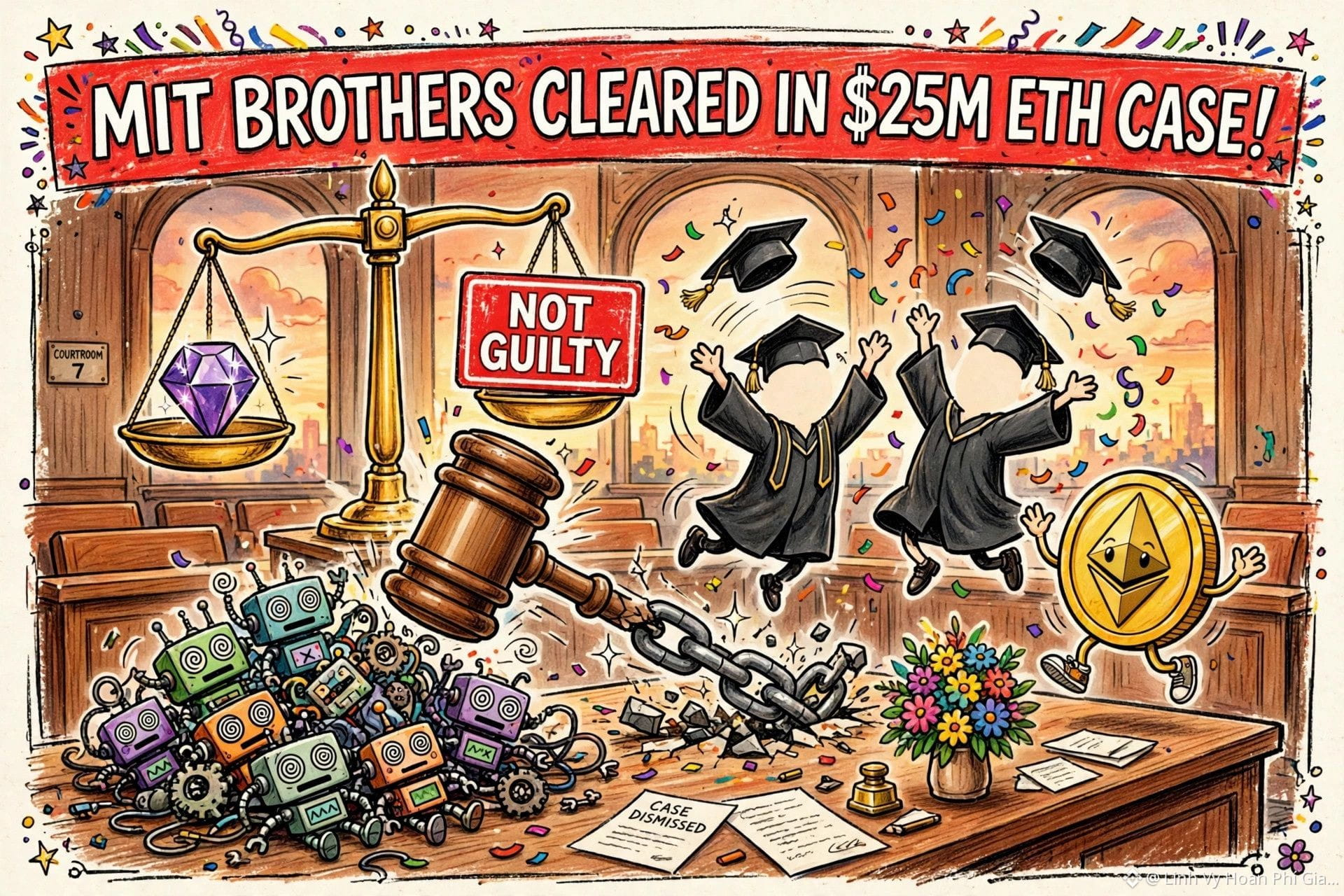
⚖️ U.S. COURT ACQUITS MIT BROTHERS IN $25M ETH CASE
A federal court in Manhattan has acquitted two MIT brothers accused of exploiting an MEV software bug to trap trading bots and siphon $25 million in ETH in just 12 seconds in April 2023. The reason: prosecutors couldn't prove the brothers lied to anyone — without a lie, it doesn't constitute fraud. This was the first case of its kind to be prosecuted — this ruling sets limits on how the U.S. handles similar cases. $ETH Perpetual hovering around $1,833, unchanged after the news.
Biggest move in Perpetual today: $ICP 2,52 dollars, $ZRO 1,46 dollars
#Ethereum #MEV #CryptoLaw
8
·
--
⚖️ BROTHERS ACQUITTED IN $25M CASE!
A federal court in Manhattan acquitted Anton and James Peraire-Bueno of wire fraud charges and related counts in a case involving MEV operations on Ethereum. The case concerned events in April 2023, when other trading bots lost more than $25 million.
In Judge Jessica Clarke’s assessment, the prosecution failed to prove the material deception required to establish fraud under the charges brought. The court emphasized separately that whether a trading strategy is permissible or ethical is not the same question as whether it is criminal.
This ruling applies to a specific case; it is not permission for any and all forms of manipulation in DeFi. Earlier, in November 2025, the first trial ended without a jury verdict.
Source: The Block, court ruling, November 16, 2026.
#Ethereum #CryptoLaw
63

South Korea’s Supreme Court has published procedures for seizing and liquidating virtual assets in civil-enforcement cases. The amended Civil Execution Rules took effect on Nov. 1, according to the Court’s Nov. 9 notice.
For assets held through an exchange, enforcement targets the holder’s right to request a transfer; the rules set out attachment and liquidation methods. For assets held directly, a court can prohibit disposal and order transfer to an enforcement officer before liquidation. These procedures apply to specific civil-enforcement cases—not an automatic freeze of every wallet.
The Court reported cases involving 28 registered virtual-asset providers as third-party debtors rose from 423 in 2023 to 3,186 in Jan.–Sep. 2026. Bitcoin is one example of the asset class; this is a South Korea legal-process update, not a change to Bitcoin’s protocol.
Sources: [South Korean Supreme Court](https://www.scourt.go.kr/portal/news/NewsViewAction.work?gubun=6&seqnum=3073) | [Maeil Business](https://www.mk.co.kr/news/society/12202498)
Conclusion: The new rules make civil enforcement procedures more explicit, but do not mean all crypto holdings are seized. $BTC chart: [Binance Spot BTC/USDT](https://www.binance.com/en/trade/BTC_USDT?type=spot). Check the chart for yourself, do your own research, and trade responsibly.
#Bitcoin #CryptoLaw #SouthKorea #DigitalAssets

76

🔥 Labeling the $71 million Aave breach as a simple theft is a myth—it's now being treated as fraud, and that changes everything.
📚 Victims’ lawyers filed a 30‑page response Tuesday, reclassifying the April 18 hack as fraud, a move that could grant the North Korean actors legal title to the stolen assets, even as market sentiment sits at a fearful 28/100 and BTC hovers at $75,849 with RSI 39.7. #AaveHack #CryptoLaw
🌍 If courts accept the fraud framing, it sets a precedent that massive DeFi breaches become enforceable claims, tightening regulatory scrutiny and reminding us that risk isn’t just technical; smart wallets are already reallocating, shown by Solana inflows of +29% from BAGEL and a bullish BTC funding rate of +0.0050% on $7.28 B open interest. #DeFi #SmartMoney
💡 Keep your exposure to hacked protocols low and monitor on‑chain smart‑money flows—rising SOL inflows signal opportunistic repositioning, not a safety net for compromised assets, so consider reallocating to assets with healthier fundamentals.
❓ How do you think this legal framing will reshape your approach to DeFi security and on‑chain risk management?
64
·
--
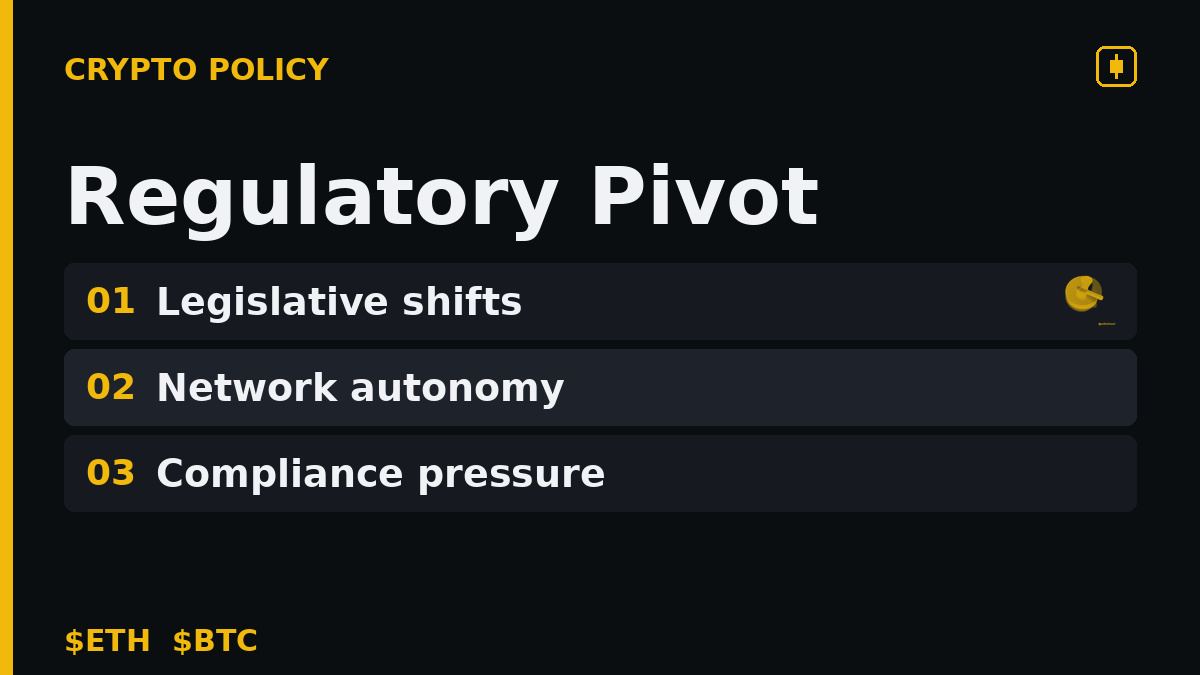
Can $BTC remain decentralized when laws target its core infrastructure?
A Democratic sweep forces the crypto industry to pivot from lobbying to defensive compliance. This shift tests if $ETH and other networks can survive under tighter oversight. We must watch if these assets keep their autonomy when political mandates clash with global code.
$BTC #Policy #CryptoEducation #CryptoLaw
114

·
--
🚨 Justin Sun demands court sanctions against World Liberty Financial for concealing UAE ownership to evade his $45M lawsuit. The Tron founder alleges the Trump-linked firm used hidden foreign ties to stall legal proceedings.
This legal clash highlights growing scrutiny on opaque crypto governance. Will TRX price react to the heightened regulatory uncertainty?
#CryptoLaw
$TRX #TradingSignal #CryptoAnalysis
This legal clash highlights growing scrutiny on opaque crypto governance. Will TRX price react to the heightened regulatory uncertainty?
#CryptoLaw
$TRX #TradingSignal #CryptoAnalysis

2
·
--
🚨 Tron founder Justin Sun is seeking $264k in sanctions against Trump-backed World Liberty Financial, accusing them of concealing UAE ownership ties regarding his frozen WLFI tokens.
This legal clash highlights regulatory risks for politically-linked projects. TRX holders should monitor developments closely, as adverse rulings could impact sentiment and liquidity.
#CryptoLaw
$TRX #TradingSignal #CryptoAnalysis
This legal clash highlights regulatory risks for politically-linked projects. TRX holders should monitor developments closely, as adverse rulings could impact sentiment and liquidity.
#CryptoLaw
$TRX #TradingSignal #CryptoAnalysis

2

·
--
🚨 $HAEDAL FEDERAL LAWSUIT COULD REWRITE PREDICTION MARKET RULES 🦈
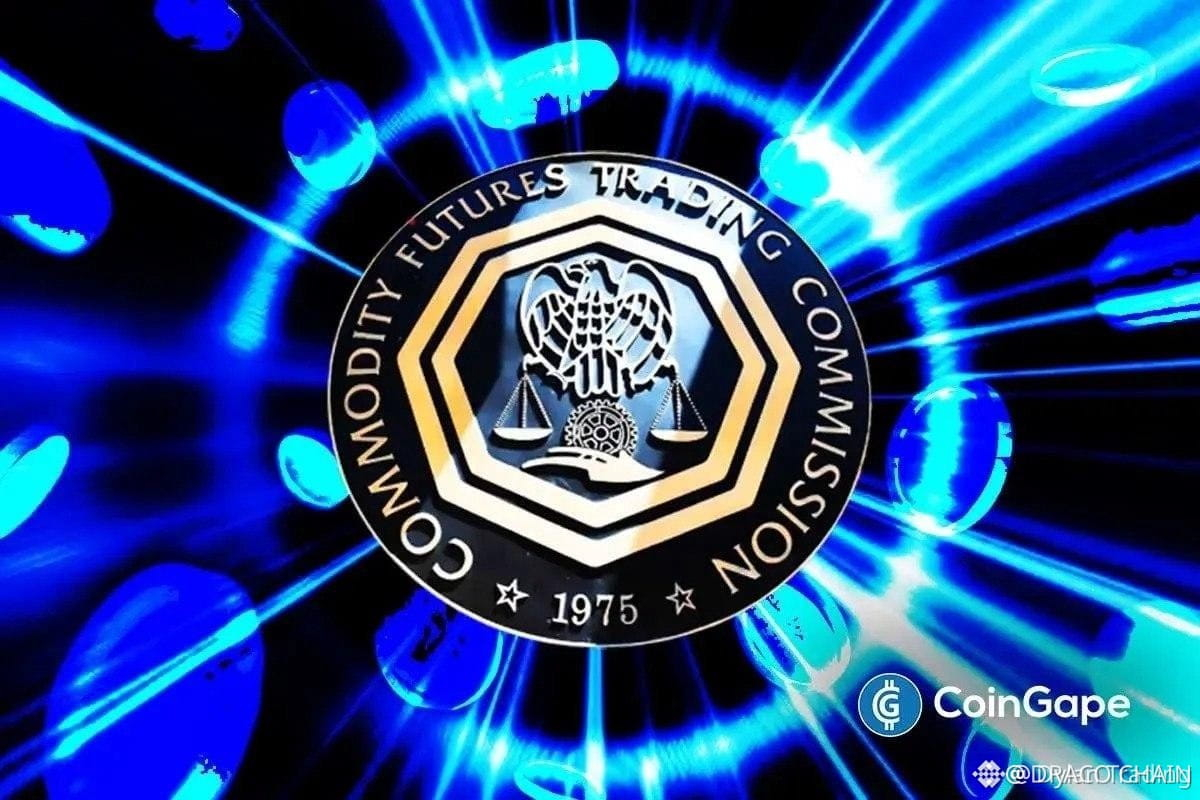
The CFTC’s move to block Utah’s nascent prediction‑market framework signals a tightening of federal oversight, forcing smart‑money to reassess exposure to any token tied to regulatory arbitrage. 🦈 The regulator frames the market as a federally‑controlled commodity, aiming to pre‑empt a patchwork of state rules that could dilute liquidity pools.
For $HAEDAL , $SOXLB and $EVAA , the legal friction injects a classic liquidity‑hunt scenario: price may swing on news spikes as institutions hedge against policy risk. 📊 Expect heightened volatility and watch for order‑block retests near recent swing highs, where smart money often plants stop‑loss traps. 🤔 How are you positioning your risk amid this jurisdictional showdown? 👇
⚠️ Not financial advice. Always manage your risk. 🛡️
🏷️ #HAEDAL #Regulation #LiquidityHunt #CryptoLaw
🚀 🦈
13

·
--
The market has been waiting for something more important than hype for years: clear rules.
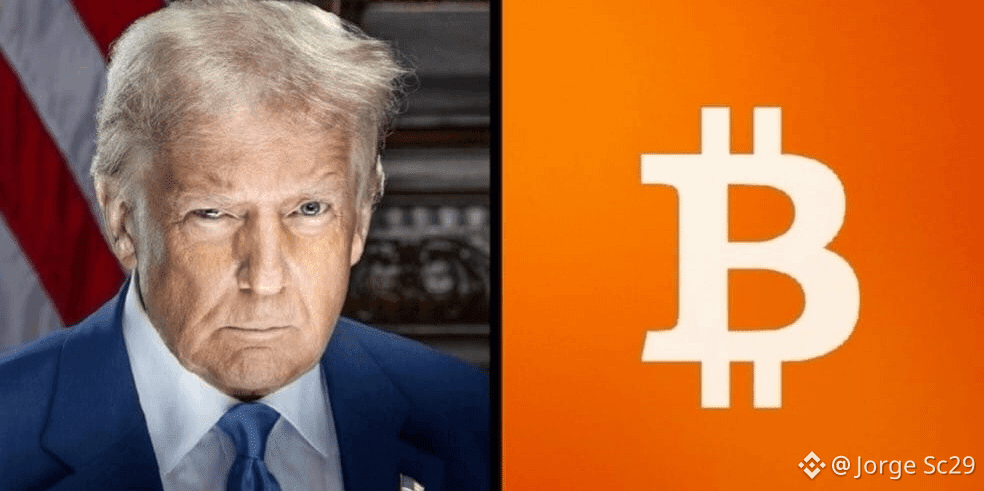
The final text of the CLARITY Law is expected from the US Congress, with a Senate vote on the way. If it moves forward, it could be one of the most significant regulatory moments for Bitcoin and the crypto market in years.
Price moves on headlines. Sustainable growth comes from certainty. When the legal framework is clearer, institutional investors, creators, and large capital gain confidence.
The question isn’t whether regulation matters, but when the market prices it in.
Will BTC’s next big move begin when traders anticipate the law—or after it’s approved?
My take: expectations move first; certainty supports afterward.
💎 Trade here 👉 $BTC
#BTC #Regulation #CryptoLaw
151


·
--

Article
🏛️ The CLARITY Act on a Tightrope⚖️ The U.S. Final Shot—or an Already Priced-In Mirage?
The U.S. Senate’s hourglass clock runs relentlessly toward the **August 7** recess—and with it, the fate of the most important regulatory framework for digital assets in the country’s history. Just one year after the House of Representatives passed the **CLARITY Act** (Digital Asset Market Clarity Act) with a decisive bipartisan consensus of 294 votes, the bill is back in the spotlight of Wall Street.
🏛️ The CLARITY Act on a Tightrope⚖️
The U.S. Final Shot—or an Already Priced-In Mirage?
The U.S. Senate’s hourglass clock runs relentlessly toward the **August 7** recess—and with it, the fate of the most important regulatory framework for digital assets in the country’s history. Just one year after the House of Representatives passed the **CLARITY Act** (Digital Asset Market Clarity Act) with a decisive bipartisan consensus of 294 votes, the bill is back in the spotlight of Wall Street.
The U.S. Senate’s hourglass clock runs relentlessly toward the **August 7** recess—and with it, the fate of the most important regulatory framework for digital assets in the country’s history. Just one year after the House of Representatives passed the **CLARITY Act** (Digital Asset Market Clarity Act) with a decisive bipartisan consensus of 294 votes, the bill is back in the spotlight of Wall Street.
4
2
372

·
--
Article
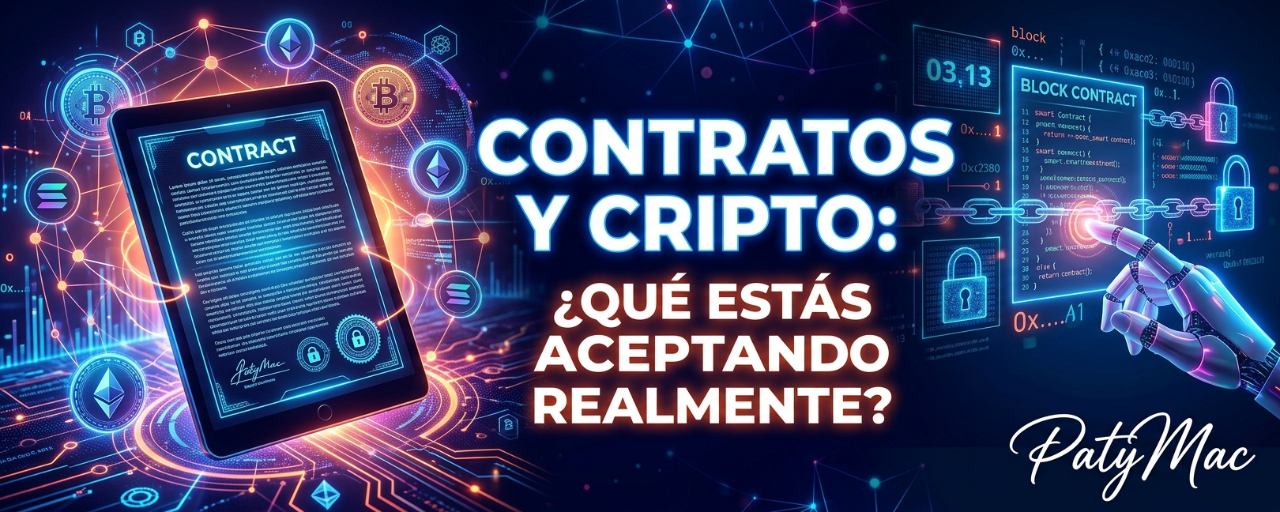
CONTRACTS AND CRYPTO: WHAT ARE YOU REALLY AGREEING TO?There is a phrase that we’ve probably all seen:
“I have read and accept the terms and conditions.”
And then we click on:
ACCEPT.
But let’s be honest:
How many people really read the entire document before starting to trade cryptocurrencies?
And here appears a legal issue that I consider fundamental:
When we trade crypto, we are also entering into contractual relationships.
Not everything is blockchain.
Not everything is code.
Not everything is technology.
There are also:
contracts, obligations, rights, jurisdiction, and dispute resolution mechanisms.
CONTRACTS AND CRYPTO: WHAT ARE YOU REALLY AGREEING TO?
There is a phrase that we’ve probably all seen:
“I have read and accept the terms and conditions.”
And then we click on:
ACCEPT.
But let’s be honest:
How many people really read the entire document before starting to trade cryptocurrencies?
And here appears a legal issue that I consider fundamental:
When we trade crypto, we are also entering into contractual relationships.
Not everything is blockchain.
Not everything is code.
Not everything is technology.
There are also:
contracts, obligations, rights, jurisdiction, and dispute resolution mechanisms.
217

·
--
Did you know a major legal case that could shape crypto privacy is being pushed way back?
The Tornado Cash developer's retrial has been delayed until April 2027. This isn't just about one person; it's a big moment for understanding how privacy tools in crypto fit within existing laws. Think of it like this: imagine you use a special pen that makes your handwriting completely unreadable to anyone else. Now, imagine the government says that pen is too good at hiding things and wants to prosecute the pen maker. That's a simplified way to look at the Tornado Cash situation. It's about the intersection of financial privacy and regulation. #CryptoLaw #PrivacyTools
The reason for the delay? The judge is waiting on a decision about the developer's request for his case to be thrown out. This means we have a long wait to see how this legal precedent plays out.
This delay gives us more time to understand the arguments and implications. It's crucial to stay informed because future regulations could be influenced by cases like this. #CryptoNews
What are your thoughts on the legal challenges facing crypto privacy projects?
29

📰 Crypto in the Courtroom: Week in Review: On-chain evidence takes center stage
On August 2, 2026, on-chain data played an increasingly central role in courtroom proceedings this week, from tracing stolen funds to establishing market manipulation.
The trend follows the industry's maturation: the market now spans $2.26T in value across 18,102 tracked cryptocurrencies.
📌 Key Takeaway:
Blockchain's transparency cuts both ways — the same ledger that protects users gives regulators a forensic map. Expect on-chain evidence to keep growing.
#CryptoLaw #Regulation
#BinanceAlphaAlert
26

·
--
🚨 $UNI TRIAL HEATS UP: UNICOIN VS UNISWAP TRADEMARK WAR 🦈
📊 The courtroom showdown could reshape how generic tokens stake claim on branding. Unicoin argues “UNI” is a public‑domain term, citing 3,600 USPTO filings, while Uniswap leans on its early market dominance to lock the trademark. ⚡️ With the SEC already on Unicoin’s tail, the legal pressure cooker is bubbling, and smart‑money eyes the fallout as a potential liquidity shift for the $UNI token. 🌊
💬 Who’s likely to walk out with the rights, and will this spark a broader branding battle across DeFi? 👇
⚠️ Not financial advice. Always manage your risk. 🛡️
🏷️ #UNI #TrademarkBattle #CryptoLaw #DeFi
🔥 💎
34

LEGAL PRECEDENT REJECTS ASYMMETRIC DOWNSIDE CLAUSES IN CRYPTO LOAN CONTRACTS WITH $USDT 🚨 🔍
Institutional-grade risk management requires understanding counterparty legal structures when issuing private liquidity. A recent judicial ruling invalidated a peer-to-peer debt agreement that guaranteed full asset price appreciation while completely protecting the lender from market depreciation. 🔍
Because asymmetric return structures function as illegal exchange mechanisms under regional regulatory frameworks, the contract was deemed invalid, forcing straight property loss compensation instead of enforcement of speculative profits. 📊 Institutional participants must ensure peer-to-peer credit terms feature symmetric risk parameters to prevent complete loss of contractual legal protection. 💡
💬 How do you structure counterparty risk when managing off-chain liquidity transactions? 👇
⚠️ Not financial advice. Always manage your risk. 🛡️
🏷️ #USDT #CryptoLaw #RiskManagement #Institutional
🎯 🛡️
34

·
--
Bearish
#UKHighCourtRulesChineseLawGovernsBitcoinClaims ⚖️ UK COURT SPOTLIGHTS A COMPLEX LEGAL QUESTION ABOUT BITCOIN! ₿
$BTC
{spot}(BTCUSDT)
A recent UK High Court ruling has drawn attention to an important issue in crypto law: Can Chinese law apply to a dispute involving Bitcoin?
📌 WHAT'S THE CASE ABOUT?
The court considered a Bitcoin-related dispute involving the potential application of Chinese law.
This case highlights the legal challenges that can arise when cryptocurrency disputes cross international borders.
🌍 WHY DOES IT MATTER?
Bitcoin operates globally, but legal disputes are still shaped by national laws, court jurisdiction, and the specific facts of each case.
When multiple countries are involved, deciding which country's laws apply can significantly affect ownership claims and attempts to recover assets.
₿ Crypto is global, but the law still has borders!
#Blockchain #CryptoLaw #BinanceSquare
#UKHighCourtRulesChineseLawGovernsBitcoinClaims ⚖️ UK COURT SPOTLIGHTS A COMPLEX LEGAL QUESTION ABOUT BITCOIN! ₿
$BTC
A recent UK High Court ruling has drawn attention to an important issue in crypto law: Can Chinese law apply to a dispute involving Bitcoin?
📌 WHAT'S THE CASE ABOUT?
The court considered a Bitcoin-related dispute involving the potential application of Chinese law.
This case highlights the legal challenges that can arise when cryptocurrency disputes cross international borders.
🌍 WHY DOES IT MATTER?
Bitcoin operates globally, but legal disputes are still shaped by national laws, court jurisdiction, and the specific facts of each case.
When multiple countries are involved, deciding which country's laws apply can significantly affect ownership claims and attempts to recover assets.
₿ Crypto is global, but the law still has borders!
#Blockchain #CryptoLaw #BinanceSquare
1
25

🚨 $BTC LEGAL RULING THAT MAY CLIP CHINESE VICTIMS’ GAINS 🦈
📊 The UK High Court just decided Chinese investors’ claim on 61,000 BTC must be judged under Chinese law, not English law. That move caps any upside for roughly 16,000 Chinese victims, limiting them to principal plus interest instead of the full appreciation surge.
⚡ Market chatter spikes as smart‑money eyes the ruling: a potential short‑bias ripple could surface, yet the broader BTC narrative stays bullish on the long‑term upside. How will this legal twist reshape buying pressure on the charts? 💬
⚠️ Not financial advice. Always manage your risk. 🛡️
🏷️ #BTC #LegalNews #CryptoLaw #BTCRecovery
🔥 💎
33
Log in to explore more content
Join global crypto users on Binance Square
⚡️ Get latest and useful information about crypto.
💬 Trusted by the world’s largest crypto exchange.
👍 Discover real insights from verified creators.
Email / Phone number
Trending Topics
1
#NvidiaBeatsEstimatesAICloudStocksRiseAfterHours
5,616 views
74 Discussing
2
#A Packed Week of Earnings and Data Tests Markets
153,499 views
668 Discussing
3
#AnthropicIPOTestsInvestorAppetiteForAI
338,996 views
2,934 Discussing
4
#NvidiaBoardNotConsideringHuang’sReturnasCEO
130,114 views
1,000 Discussing
5
#KOSPIFalls2.59%ToLowestCloseSinceFebruary
34,074 views
342 Discussing
6
#AnthropicClearedToListOnNasdaqAsANT
28,433 views
282 Discussing
7
#WhatInvestmentSignalsDo13FFilingsReveal?
70,891 views
681 Discussing
8
#TetherCapitalMakesStrategicInvestmentInStables
16,130 views
122 Discussing
9
#EvernorthRecords$505MImpairmentOnPreListingXRP
1,989 views
21 Discussing
10
#GoldmanSachsReports$1.22BInEtherETFHoldings
1,408 views
17 Discussing