Binance Square
#seguridadcripto

seguridadcripto

319,893 views
338 Discussing
Enzo F
·
--
💡 How do you use your cryptocurrencies in everyday life? Virtual cards and digital security Many users think that cryptocurrencies are only for trading or waiting for the price to rise on the chart. However, the ecosystem has evolved so much that today it is extremely simple to use them to pay for daily expenses or make online purchases directly from your digital funds. If you are already using tools like crypto virtual cards or you plan to enable one soon, here are two fundamental pillars you should consider to keep your capital safe: 💳 1. The convenience of virtual payments Quick integration: Linking your virtual card with digital wallets like Apple Wallet lets you pay at physical stores or on web platforms in seconds, automatically converting your stablecoins (like $USDC o $USDT ) at the time of purchase. Spending control: You can transfer only the exact amount you plan to spend from your funds wallet, keeping the rest of your portfolio protected. 🔒 2. Fortified security: Your number one priority Convenience should never compromise security. If you make operational changes or frequent transactions, make sure to enable these protection layers on your account: Two-Factor Authentication (2FA): Use apps like Google Authenticator or physical access keys, avoiding reliance solely on SMS. Instant activity alerts: Always check Binance notification emails. If you detect a login or a password change from an unknown IP address, block access to your account immediately via the security link. #seguridadcripto #TradingSeguro
💡 How do you use your cryptocurrencies in everyday life? Virtual cards and digital security

Many users think that cryptocurrencies are only for trading or waiting for the price to rise on the chart. However, the ecosystem has evolved so much that today it is extremely simple to use them to pay for daily expenses or make online purchases directly from your digital funds.
If you are already using tools like crypto virtual cards or you plan to enable one soon, here are two fundamental pillars you should consider to keep your capital safe:

💳 1. The convenience of virtual payments

Quick integration: Linking your virtual card with digital wallets like Apple Wallet lets you pay at physical stores or on web platforms in seconds, automatically converting your stablecoins (like $USDC o $USDT ) at the time of purchase.
Spending control: You can transfer only the exact amount you plan to spend from your funds wallet, keeping the rest of your portfolio protected.

🔒 2. Fortified security: Your number one priority

Convenience should never compromise security. If you make operational changes or frequent transactions, make sure to enable these protection layers on your account:

Two-Factor Authentication (2FA): Use apps like Google Authenticator or physical access keys, avoiding reliance solely on SMS.

Instant activity alerts: Always check Binance notification emails. If you detect a login or a password change from an unknown IP address, block access to your account immediately via the security link.

#seguridadcripto #TradingSeguro
5 crypto scam warning signs 🚨 Security is one of the most important skills in crypto. Here are five red flags: They promise guaranteed profits or “no risk”. They pressure you to send funds quickly. They ask for your recovery phrase, password, or 2FA code. They send suspicious links or profiles that impersonate official accounts. They offer to double your money if you deposit first. Basic rule: no legitimate person needs your recovery phrase or your security codes. If something seems too good to be true, it deserves extra scrutiny. Always verify official channels, enable two-factor authentication, and avoid sharing sensitive information. Which warning sign have you seen the most on social media? #SeguridadCripto #CryptoSafety #blockchain #BinanceSquare
5 crypto scam warning signs 🚨
Security is one of the most important skills in crypto. Here are five red flags:
They promise guaranteed profits or “no risk”.
They pressure you to send funds quickly.
They ask for your recovery phrase, password, or 2FA code.
They send suspicious links or profiles that impersonate official accounts.
They offer to double your money if you deposit first.
Basic rule: no legitimate person needs your recovery phrase or your security codes. If something seems too good to be true, it deserves extra scrutiny.
Always verify official channels, enable two-factor authentication, and avoid sharing sensitive information.
Which warning sign have you seen the most on social media?
#SeguridadCripto #CryptoSafety #blockchain #BinanceSquare
Article
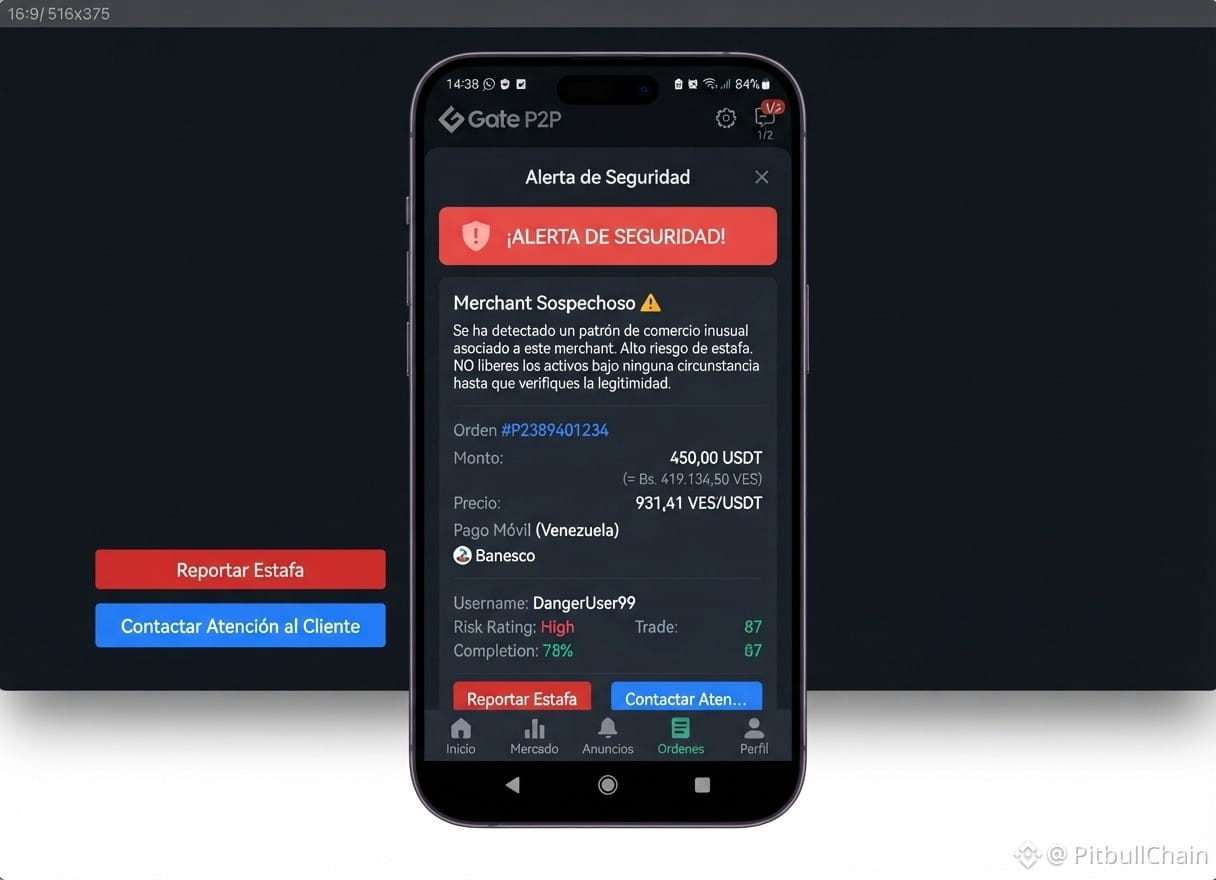
3 Fatal Mistakes When Selling USDT on a Sunday in P2PBe careful with this on a Sunday! With more than 260 active offers and massive daily volume in the country, the weekend is the scammers’ favorite time to catch people off guard in P2P. Here are the 3 golden security rules you should never break when swapping your $USDT: 1. A capture is not money in the account: It seems basic, but it still happens. Never release crypto based on a receipt in chat or an SMS. Go directly into your bank app and confirm that the balance is AVAILABLE (not pending or blocked).

3 Fatal Mistakes When Selling USDT on a Sunday in P2P

Be careful with this on a Sunday! With more than 260 active offers and massive daily volume in the country, the weekend is the scammers’ favorite time to catch people off guard in P2P.
Here are the 3 golden security rules you should never break when swapping your $USDT:
1. A capture is not money in the account: It seems basic, but it still happens. Never release crypto based on a receipt in chat or an SMS. Go directly into your bank app and confirm that the balance is AVAILABLE (not pending or blocked).
⚠️ Data Leak at Trezor: Physical Attack Vector and OpSec A security failure at logistics provider ShipMonk has exposed the personally identifiable information (PII) of more than 80,000 Trezor customers. Although the private key and seed phrases remain 100% intact on the blockchain, the leak includes full names, phone numbers, and physical addresses. Technical analysis: The risk of exploitation shifts from the on-chain plane to advanced social engineering (spear phishing, SIM swapping) and physical threat vectors ($5 wrench attack). In self-custody, the privacy of off-chain metadata is a defense layer as critical as the wallet’s cryptographic encryption itself. What OpSec protocols do you apply when acquiring hardware wallets: do you use neutral lockers/P.O. Boxes, or do you add extra layers such as hidden passphrases to mitigate the risk of physical extortion? $BTC {future}(BTCUSDT) $ETH {future}(ETHUSDT) $SOL {future}(SOLUSDT) #Trezor #ciberseguridad #OPSEC #SeguridadCripto
⚠️ Data Leak at Trezor: Physical Attack Vector and OpSec
A security failure at logistics provider ShipMonk has exposed the personally identifiable information (PII) of more than 80,000 Trezor customers. Although the private key and seed phrases remain 100% intact on the blockchain, the leak includes full names, phone numbers, and physical addresses.
Technical analysis: The risk of exploitation shifts from the on-chain plane to advanced social engineering (spear phishing, SIM swapping) and physical threat vectors ($5 wrench attack). In self-custody, the privacy of off-chain metadata is a defense layer as critical as the wallet’s cryptographic encryption itself.
What OpSec protocols do you apply when acquiring hardware wallets: do you use neutral lockers/P.O. Boxes, or do you add extra layers such as hidden passphrases to mitigate the risk of physical extortion?
$BTC
$ETH
$SOL

#Trezor #ciberseguridad #OPSEC #SeguridadCripto
Article
3 filters to avoid traps in Binance P2PDid you know that most P2P headaches happen because of urgency, not because of platform failures? With more than 260 active offers and the $USDT market moving fast in bolívares, scammers take advantage of the rush to use old tricks that still claim victims: 1. No third-party payments: If the account holder’s name does not match exactly the name verified on Binance, do not accept the payment or release funds. Accepting it can freeze your bank account if those funds come from an outside scam.

3 filters to avoid traps in Binance P2P

Did you know that most P2P headaches happen because of urgency, not because of platform failures?
With more than 260 active offers and the $USDT market moving fast in bolívares, scammers take advantage of the rush to use old tricks that still claim victims:
1. No third-party payments: If the account holder’s name does not match exactly the name verified on Binance, do not accept the payment or release funds. Accepting it can freeze your bank account if those funds come from an outside scam.
🔐 5 signs that a "crypto project" is a scam Every week I see people losing money using the same tricks. Save this: 🚩 They promise fixed and guaranteed returns (e.g. "2% daily with no risk") 🚩 They pressure you to invest "before the quota runs out" 🚩 The team has no name, face, or verifiable track record 🚩 You can only withdraw if you "recruit" more people 🚩 The website is new (less than 3 months) and has no security audit Golden rule: if something sounds too good to be true, it is. Invest only what you’re willing to lose, and always use regulated and verified platforms. I prefer to keep a close eye on $BNB and $BTC because they have a track record, a public team, and transparency — that doesn’t guarantee profits, but it does reduce the risk of a scam. Have you already seen any of these happen or fallen for one? Tell me 👇 #BinanceSquare #CryptoEducacion {spot}(NVDABUSDT) 😎 #SeguridadCripto
🔐 5 signs that a "crypto project" is a scam
Every week I see people losing money using the same tricks. Save this:
🚩 They promise fixed and guaranteed returns (e.g. "2% daily with no risk")
🚩 They pressure you to invest "before the quota runs out"
🚩 The team has no name, face, or verifiable track record
🚩 You can only withdraw if you "recruit" more people
🚩 The website is new (less than 3 months) and has no security audit
Golden rule: if something sounds too good to be true, it is. Invest only what you’re willing to lose, and always use regulated and verified platforms.
I prefer to keep a close eye on $BNB and $BTC because they have a track record, a public team, and transparency — that doesn’t guarantee profits, but it does reduce the risk of a scam.
Have you already seen any of these happen or fallen for one? Tell me 👇
#BinanceSquare #CryptoEducacion
😎 #SeguridadCripto
Bitcoin Up or Down on September 3?

Bitcoin Up or Down on September 3?

99%Up1%Down
Volume $143,592.58
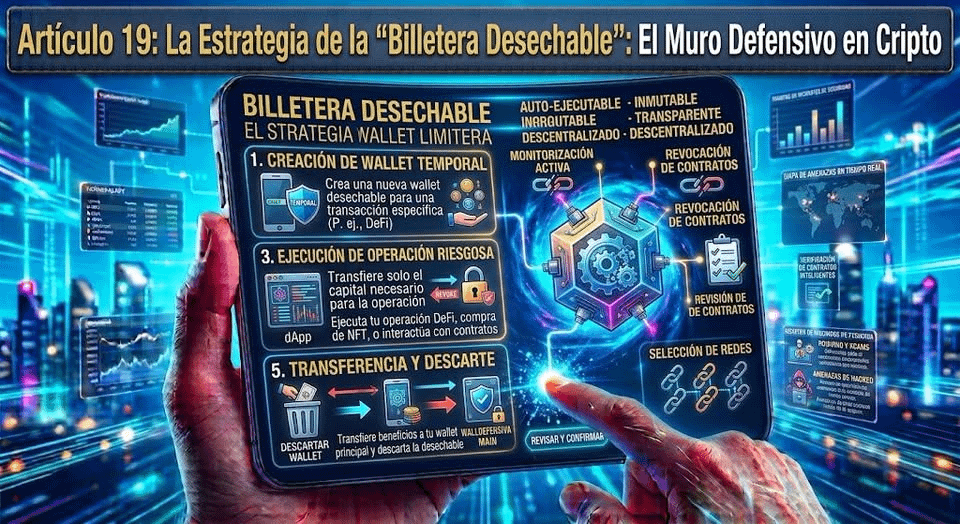
Article 19: The "Disposable Wallet" Strategy: The Defensive Wall in Crypto When you start exploring the Web3 ecosystem, interacting with new websites, claiming airdrops, or testing games and DeFi platforms can be a bit scary. What if you accidentally connect to a malicious site? To navigate without stress, experienced investors use an infallible method: the Step Wallet or Disposable Wallet (Burner Wallet). What does this strategy involve? The golden rule is to separate your savings from your day-to-day operations. To do this, you don’t use just one wallet—you split your funds into three levels: The Cold Wallet / Main Wallet (The Bank): Store your long-term savings here (Bitcoin, $BNB, etc.). This wallet NEVER connects to websites or dApps; it only sends/receives funds. The Central Wallet on Binance (The Safe Platform): This acts as your control center, where you do Spot trading, use Binance Earn, and maintain liquidity backed by the exchange’s security. The Disposable Wallet (The Impact Shield): This is a secondary Web3 wallet (created in the app or extension) that you use exclusively to connect to external platforms, buy new NFTs, or make transactions on sites you’re testing for the first time. How do you use a Disposable Wallet? Step 1: When you want to buy an NFT or test a DeFi protocol, transfer from Binance only the exact amount you’re going to spend (for example, $20 worth of $BNB to pay for the asset and gas). Step 2: Connect your disposable wallet to the website and complete the transaction. Step 3: Once you’ve obtained the NFT or token, if you want to keep it long-term, send it immediately to your main wallet or your Binance account. Why does this technique save you? With a disposable wallet, if you fall into a digital trap, you’ll only lose pennies. Your main savings are safe because you’re not exposing your real keys. Using this technique lets you explore the crypto world with complete security. #SeguridadCripto
Article 19: The "Disposable Wallet" Strategy: The Defensive Wall in Crypto
When you start exploring the Web3 ecosystem, interacting with new websites, claiming airdrops, or testing games and DeFi platforms can be a bit scary. What if you accidentally connect to a malicious site?

To navigate without stress, experienced investors use an infallible method: the Step Wallet or Disposable Wallet (Burner Wallet).

What does this strategy involve?
The golden rule is to separate your savings from your day-to-day operations. To do this, you don’t use just one wallet—you split your funds into three levels:

The Cold Wallet / Main Wallet (The Bank): Store your long-term savings here (Bitcoin, $BNB, etc.). This wallet NEVER connects to websites or dApps; it only sends/receives funds.

The Central Wallet on Binance (The Safe Platform): This acts as your control center, where you do Spot trading, use Binance Earn, and maintain liquidity backed by the exchange’s security.

The Disposable Wallet (The Impact Shield): This is a secondary Web3 wallet (created in the app or extension) that you use exclusively to connect to external platforms, buy new NFTs, or make transactions on sites you’re testing for the first time.

How do you use a Disposable Wallet?
Step 1: When you want to buy an NFT or test a DeFi protocol, transfer from Binance only the exact amount you’re going to spend (for example, $20 worth of $BNB to pay for the asset and gas).

Step 2: Connect your disposable wallet to the website and complete the transaction.

Step 3: Once you’ve obtained the NFT or token, if you want to keep it long-term, send it immediately to your main wallet or your Binance account.

Why does this technique save you?
With a disposable wallet, if you fall into a digital trap, you’ll only lose pennies. Your main savings are safe because you’re not exposing your real keys. Using this technique lets you explore the crypto world with complete security.

#SeguridadCripto
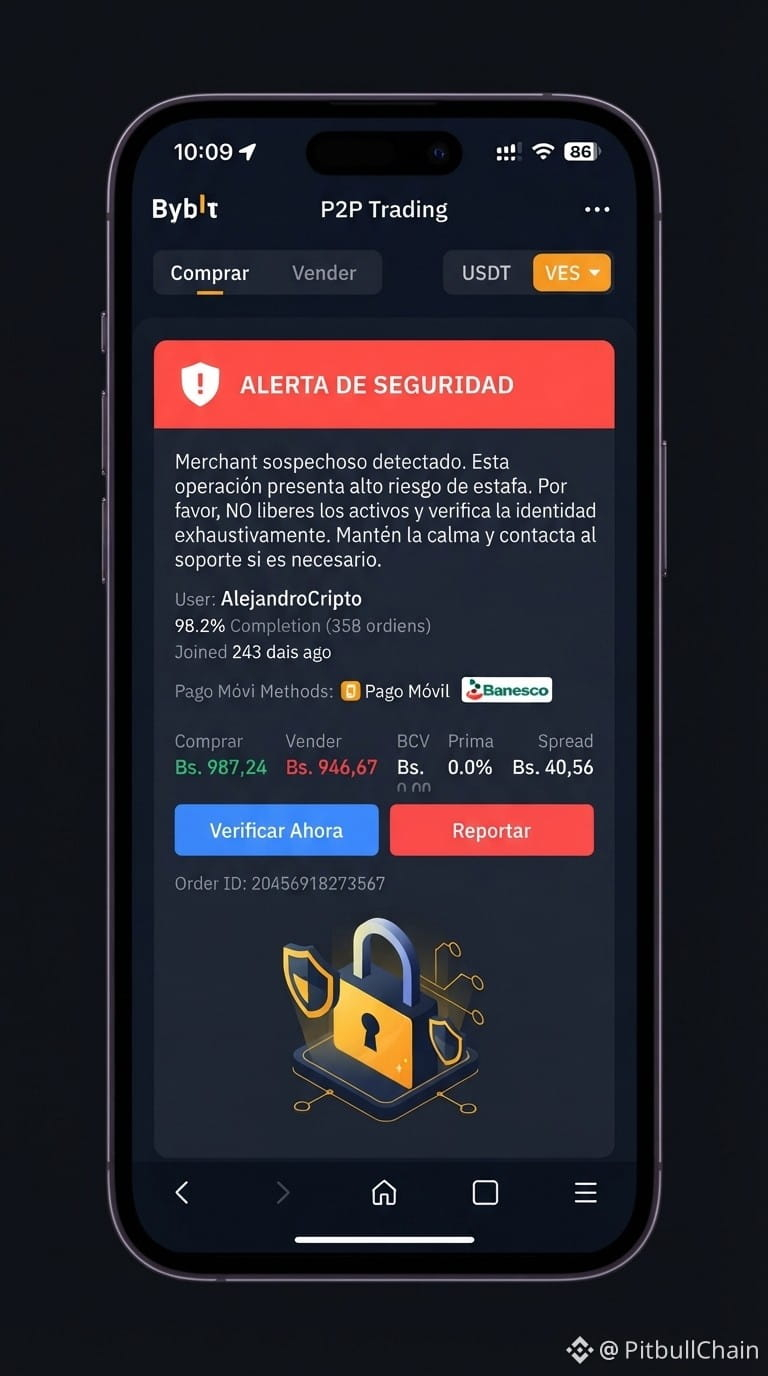
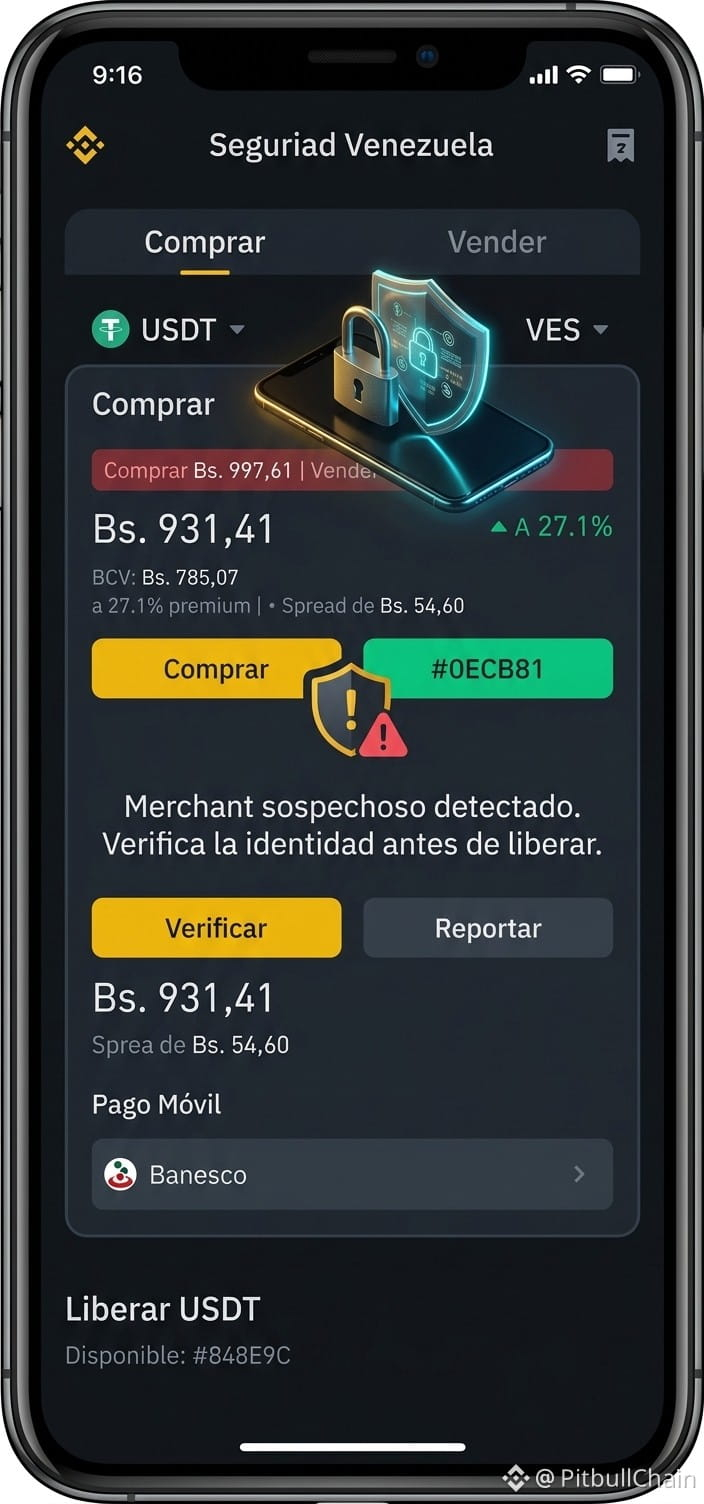
Trading USDT for Bs. 997? Watch out for the rush when confirming your orders. Today we recorded more than 212 active listings on Binance P2P with buys at Bs. 997.61 and sells at Bs. 943.01. In days with so much volume and movement, scammers try to catch you off guard with fake payment proofs. To safeguard your trades today: 1. Go straight to your bank and confirm your available balance (not scheduled/deferred). 2. Never release funds based only on SMS or screenshots in the chat. 3. Make sure the account holder on your bank account matches 100% the verified user on Binance. Your security is your best strategy. 📊 Live rates and analysis on pitbullchain.com #BinanceP2P #SeguridadCripto #VenezuelaCrypto #BinanceSquare
Trading USDT for Bs. 997? Watch out for the rush when confirming your orders.

Today we recorded more than 212 active listings on Binance P2P with buys at Bs. 997.61 and sells at Bs. 943.01. In days with so much volume and movement, scammers try to catch you off guard with fake payment proofs.

To safeguard your trades today:
1. Go straight to your bank and confirm your available balance (not scheduled/deferred).
2. Never release funds based only on SMS or screenshots in the chat.
3. Make sure the account holder on your bank account matches 100% the verified user on Binance.

Your security is your best strategy.
📊 Live rates and analysis on pitbullchain.com

#BinanceP2P #SeguridadCripto #VenezuelaCrypto #BinanceSquare
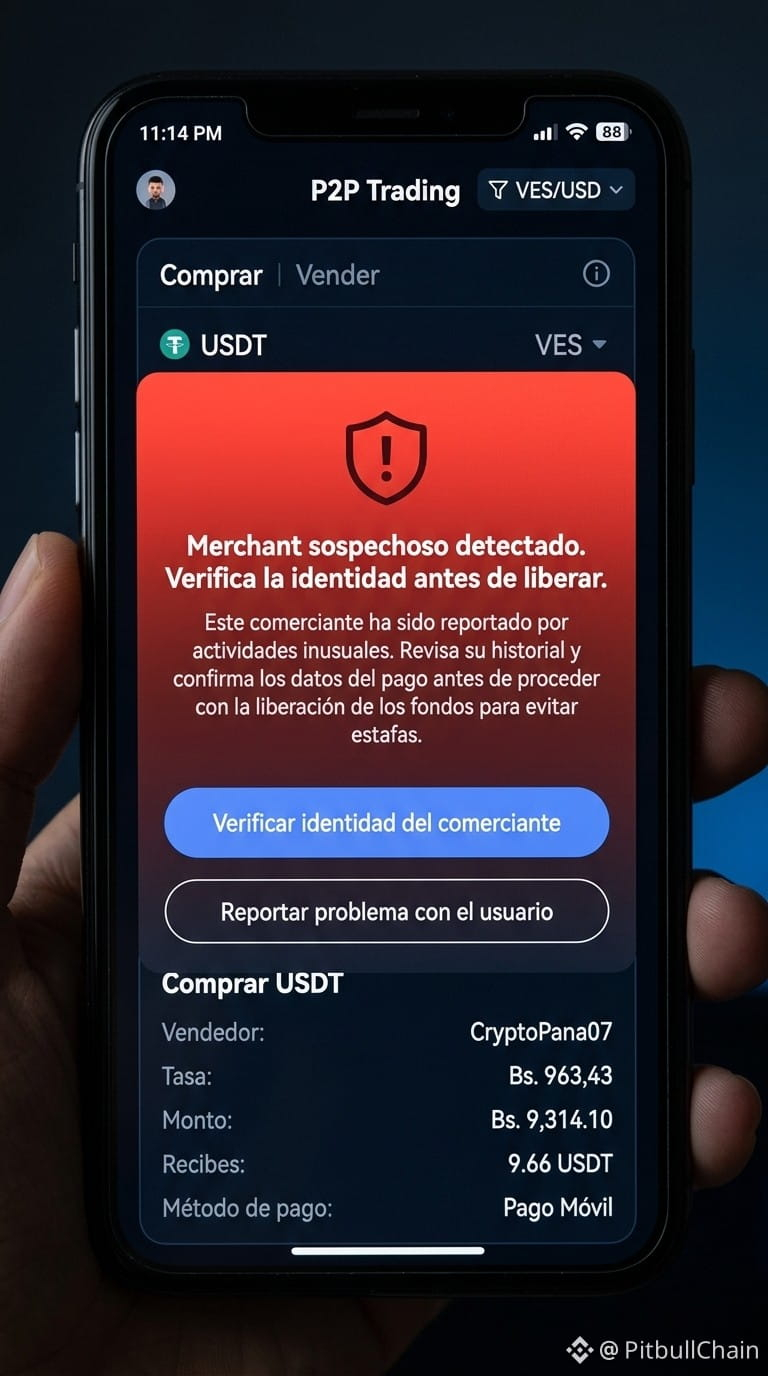
Did you receive the payment screenshot but don’t see the bolívares in your account? Pay attention! With more than 200 active orders and a P2P premium against the BCV (Bs. 785.07) that marks 22.72%, things are really heating up and the “live” ones are trying to fish in troubled waters. If you’re trading USDT on Binance P2P with rates between Bs. 881.32 and Bs. 963.43, never release anything relying on an SMS or an image. Go straight to your online bank, confirm your available balance, and verify that the account holder matches exactly the user registered. No third-party accounts—no exceptions. 📊 Live rates and analysis at pitbullchain.com #BinanceP2P #SeguridadCripto #VenezuelaCrypto #BinanceSquare
Did you receive the payment screenshot but don’t see the bolívares in your account? Pay attention!

With more than 200 active orders and a P2P premium against the BCV (Bs. 785.07) that marks 22.72%, things are really heating up and the “live” ones are trying to fish in troubled waters.

If you’re trading USDT on Binance P2P with rates between Bs. 881.32 and Bs. 963.43, never release anything relying on an SMS or an image. Go straight to your online bank, confirm your available balance, and verify that the account holder matches exactly the user registered. No third-party accounts—no exceptions.

📊 Live rates and analysis at pitbullchain.com

#BinanceP2P #SeguridadCripto #VenezuelaCrypto #BinanceSquare
With a spread of Bs. 92.73 (10.57%) and the USDT touching Bs. 970.40 on buy, the gullible hunters get activated. In days with almost 200 open orders and a premium of 23.61% versus the BCV (Bs. 785.07), the rush can end up costing you. Bro, review the basic rules before clicking: 1. Never release crypto based on screenshots; open your banking app and confirm the real balance. 2. Zero payments to third parties, with no exceptions. 3. If the counterparty pressures you through chat, report it and open an appeal. Trade with a cool head and protect your capital in every transaction. 📊 Live rates and analysis at pitbullchain.com #BinanceP2P #SeguridadCripto #Venezuela #CriptoVenezuela #BinanceSquare
With a spread of Bs. 92.73 (10.57%) and the USDT touching Bs. 970.40 on buy, the gullible hunters get activated. In days with almost 200 open orders and a premium of 23.61% versus the BCV (Bs. 785.07), the rush can end up costing you.

Bro, review the basic rules before clicking:
1. Never release crypto based on screenshots; open your banking app and confirm the real balance.
2. Zero payments to third parties, with no exceptions.
3. If the counterparty pressures you through chat, report it and open an appeal.

Trade with a cool head and protect your capital in every transaction.

📊 Live rates and analysis at pitbullchain.com

#BinanceP2P #SeguridadCripto #Venezuela #CriptoVenezuela #BinanceSquare
Are you seeing buy offers at Bs. 937.90 with a 13.10% premium over the BCV (Bs. 784.66)? Be careful not to bite the hook. With a wide spread of Bs. 50.45 (5.68%) and more than 250 active orders, the risk of triangulation and third-party payments increases. The typical move: they pay you from an account that isn’t in the account holder’s name, claiming it’s “the partner’s” or “a relative’s.” Unbreakable rule on Binance P2P: never release funds if the bank account holder’s name does not match 100% with the buyer’s verified data. Check your balance directly in your banking app—never rely only on screenshots. Does your counterparty insist on using an external account? Don’t give in and open an appeal. #BinanceP2P #SeguridadCripto #VenezuelaCrypto #BinanceSquare
Are you seeing buy offers at Bs. 937.90 with a 13.10% premium over the BCV (Bs. 784.66)? Be careful not to bite the hook.

With a wide spread of Bs. 50.45 (5.68%) and more than 250 active orders, the risk of triangulation and third-party payments increases. The typical move: they pay you from an account that isn’t in the account holder’s name, claiming it’s “the partner’s” or “a relative’s.”

Unbreakable rule on Binance P2P: never release funds if the bank account holder’s name does not match 100% with the buyer’s verified data. Check your balance directly in your banking app—never rely only on screenshots.

Does your counterparty insist on using an external account? Don’t give in and open an appeal.

#BinanceP2P #SeguridadCripto #VenezuelaCrypto #BinanceSquare
Do you see someone paying Bs. 980 for USDT when the actual sale average is Bs. 935.57? Watch out, it smells like a scam! 🚩 Today, the P2P premium versus the BCV (Bs. 784.66) is around 13.01%, with a spread of Bs. 48.79 (5.50%). When the gap becomes noticeable, people appear offering inflated prices to catch unsuspecting victims with triangulations or fake receipts. My non-negotiable golden rules: 1. No payments to third parties: the Binance account holder must be the same as the bank account holder. 2. Check your balance directly in your bank—never trust SMS or screenshots. 3. If the rate looks like a miracle, it’s a risk. Your peace of mind is worth more than a few extra bolívares. Do you check the identity properly before releasing? #BinanceP2P #SeguridadCripto #VenezuelaCrypto #P2PTrading
Do you see someone paying Bs. 980 for USDT when the actual sale average is Bs. 935.57? Watch out, it smells like a scam! 🚩

Today, the P2P premium versus the BCV (Bs. 784.66) is around 13.01%, with a spread of Bs. 48.79 (5.50%). When the gap becomes noticeable, people appear offering inflated prices to catch unsuspecting victims with triangulations or fake receipts.

My non-negotiable golden rules:
1. No payments to third parties: the Binance account holder must be the same as the bank account holder.
2. Check your balance directly in your bank—never trust SMS or screenshots.
3. If the rate looks like a miracle, it’s a risk.

Your peace of mind is worth more than a few extra bolívares. Do you check the identity properly before releasing?

#BinanceP2P #SeguridadCripto #VenezuelaCrypto #P2PTrading
Does urgency beat you when you see USDT hovering around Bs. 934? Be careful—hurry is the best friend of scams in P2P. With 239 active offers and a 12.36% premium over the official rate, the volume doesn’t stop. But in my 8 years in this, I’ve seen many people fall due to silly oversights. Protect your bolívares and your USDT by doing this right now: 1. No payments to third parties: the bank account name MUST match exactly the verified account holder on Binance. 2. Check your actual balance in your banking app: never trust screenshots or SMS confirmations. 3. Don’t release under pressure or before you have the funds available. Double-check before releasing your crypto. Protect your capital! #BinanceP2P #SeguridadCripto #VenezuelaCrypto #BinanceSquare
Does urgency beat you when you see USDT hovering around Bs. 934? Be careful—hurry is the best friend of scams in P2P.

With 239 active offers and a 12.36% premium over the official rate, the volume doesn’t stop. But in my 8 years in this, I’ve seen many people fall due to silly oversights.

Protect your bolívares and your USDT by doing this right now:
1. No payments to third parties: the bank account name MUST match exactly the verified account holder on Binance.
2. Check your actual balance in your banking app: never trust screenshots or SMS confirmations.
3. Don’t release under pressure or before you have the funds available.

Double-check before releasing your crypto. Protect your capital!

#BinanceP2P #SeguridadCripto #VenezuelaCrypto #BinanceSquare
Article
How does Binance protect user funds in Mexico in 2026?Binance protects funds through four layers: the SAFU emergency fund, verifiable Proof of Reserves, security tools you can enable from your account, and automated fraud detection systems. This guide explains how to use them: what backs SAFU today, how to verify your own balance, and how to configure the protections that depend on you in five minutes. Because the most effective part of this system isn’t operated by Binance. You enable it. Quick summary Not much time? This is the essential:

How does Binance protect user funds in Mexico in 2026?

Binance protects funds through four layers: the SAFU emergency fund, verifiable Proof of Reserves, security tools you can enable from your account, and automated fraud detection systems.
This guide explains how to use them: what backs SAFU today, how to verify your own balance, and how to configure the protections that depend on you in five minutes.
Because the most effective part of this system isn’t operated by Binance. You enable it.
Quick summary
Not much time? This is the essential:
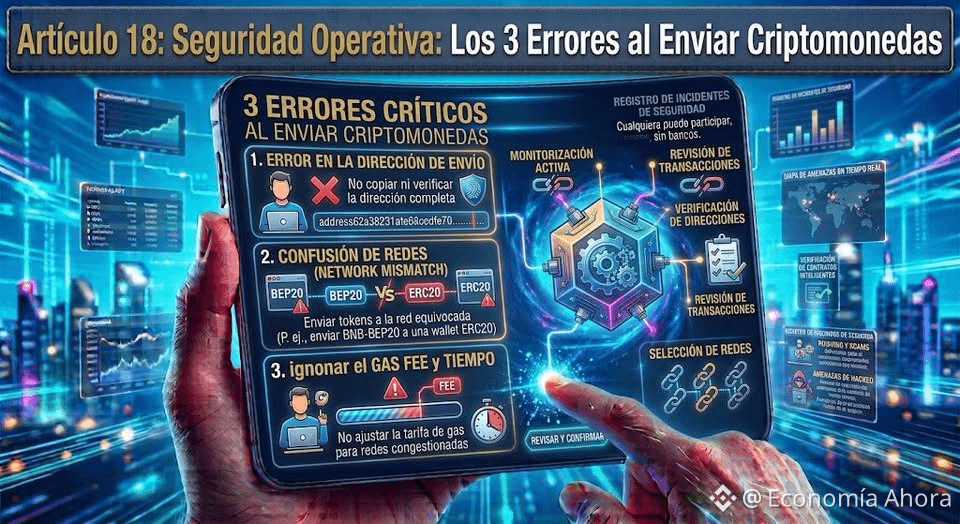
Article 18: Operational Security: The 3 Mistakes When Sending Cryptocurrencies You already know how to protect your keys and revoke permissions, but there’s a critical moment where many users lose funds due to sheer carelessness: the exact moment you make a transfer. Today we’ll look at the most common technical traps when transferring assets and how to avoid them with simple operational habits. 1. The Clipboard Virus (Clipper Malware) When you copy a crypto address (those long strings of numbers and letters), spyware on your phone or computer can detect the action and instantly replace the copied text with the hacker’s address. When you hit “paste,” you send the money to the attacker without realizing it. The solution: Always double-check, calmly, the first 4 and the last 4 characters of the pasted address before pressing the confirm-send button. 2. Address Poisoning Attackers create fake addresses that have almost the same initial and final characters as an address you commonly use. Then they send you a $0 transaction so that this fake address gets recorded in your transfer history. The danger: Copying addresses directly from your transaction history. The solution: Never copy addresses from your history. Always ask the recipient for their address in real time, or save your trusted destinations in Binance’s address book. 3. The Golden Rule: The Test Transaction If you’re going to move a meaningful amount of money to an external wallet or between different networks, never send the full amount all at once. First, make a test transfer with the minimum allowed amount. Once you confirm that the funds arrived correctly at their destination, send the rest of your capital with complete peace of mind. Compatible Networks and Memo Make sure the sending and receiving networks match (e.g., BNB/BEP20). If a MEMO/Tag is requested, it’s mandatory; omitting it can cause funds to be retained. These habits ensure successful transfers. #SeguridadCripto $BNB
Article 18: Operational Security: The 3 Mistakes When Sending Cryptocurrencies
You already know how to protect your keys and revoke permissions, but there’s a critical moment where many users lose funds due to sheer carelessness: the exact moment you make a transfer.

Today we’ll look at the most common technical traps when transferring assets and how to avoid them with simple operational habits.

1. The Clipboard Virus (Clipper Malware)
When you copy a crypto address (those long strings of numbers and letters), spyware on your phone or computer can detect the action and instantly replace the copied text with the hacker’s address. When you hit “paste,” you send the money to the attacker without realizing it.

The solution: Always double-check, calmly, the first 4 and the last 4 characters of the pasted address before pressing the confirm-send button.

2. Address Poisoning
Attackers create fake addresses that have almost the same initial and final characters as an address you commonly use. Then they send you a $0 transaction so that this fake address gets recorded in your transfer history.

The danger: Copying addresses directly from your transaction history.

The solution: Never copy addresses from your history. Always ask the recipient for their address in real time, or save your trusted destinations in Binance’s address book.

3. The Golden Rule: The Test Transaction
If you’re going to move a meaningful amount of money to an external wallet or between different networks, never send the full amount all at once.
First, make a test transfer with the minimum allowed amount.
Once you confirm that the funds arrived correctly at their destination, send the rest of your capital with complete peace of mind.

Compatible Networks and Memo
Make sure the sending and receiving networks match (e.g., BNB/BEP20). If a MEMO/Tag is requested, it’s mandatory; omitting it can cause funds to be retained. These habits ensure successful transfers.

#SeguridadCripto $BNB
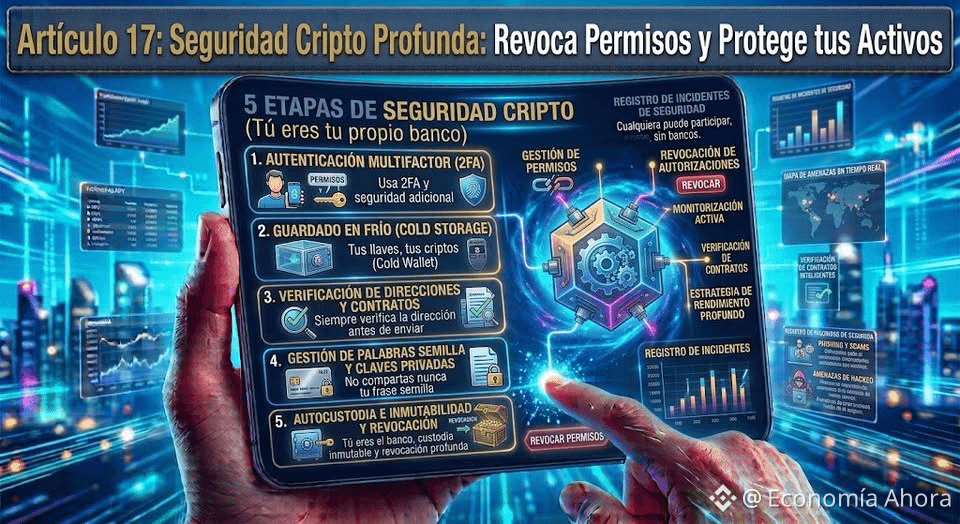
Article 17: Deep Crypto Security: Revoke Permissions and Protect Your Assets In the previous article we covered the basics, but in everyday Web3 use there are invisible risks that go unnoticed until it’s too late. Today we’ll look at two very common security flaws and how to fix them in a couple of clicks. 1. The Danger of Unlimited Permissions (Token Approvals) Every time you connect your Web3 wallet to a DeFi protocol to swap tokens or interact with an NFT, you sign an authorization called an Approval. Many platforms ask for “unlimited permission” to manage your tokens for convenience. The problem shows up when that platform gets hacked months later: cybercriminals can use the permission you left open to withdraw your funds without asking for your confirmation. How do you protect yourself? Regularly review and cancel old access. You can use tools like the BscScan Token Approval Checker or your wallet’s security section to revoke (Revoke) permissions for contracts you no longer use. 2. Social Engineering Scams on Social Media Not all attacks are cyber attacks; many manipulate the user’s psychology. Fake Technical Support: If you ask for help in Telegram, X, or Discord groups, you’ll receive private messages from accounts pretending to be Binance support. Real support will never contact you first via private message. Fake Airdrops and Streams: Be careful with live streams on YouTube that promise to “double your cryptocurrencies” if you send $BNB a to an address. It’s a classic scam: everything you send will be lost. 3. Cold vs. Hot Wallets Divide your capital: *Hot Wallet (connected to the internet):** Ideal for daily trading, small transactions, and dApps (e.g., the Binance app). *Cold Wallet (physical, offline):** Securely stores long-term savings. Advanced Security on Binance: Use the Withdrawal Whitelist and the Anti-Phishing code to protect your Spot account. Security is key for a professional investor. #SeguridadCripto
Article 17: Deep Crypto Security: Revoke Permissions and Protect Your Assets
In the previous article we covered the basics, but in everyday Web3 use there are invisible risks that go unnoticed until it’s too late. Today we’ll look at two very common security flaws and how to fix them in a couple of clicks.

1. The Danger of Unlimited Permissions (Token Approvals)
Every time you connect your Web3 wallet to a DeFi protocol to swap tokens or interact with an NFT, you sign an authorization called an Approval.
Many platforms ask for “unlimited permission” to manage your tokens for convenience. The problem shows up when that platform gets hacked months later: cybercriminals can use the permission you left open to withdraw your funds without asking for your confirmation.
How do you protect yourself? Regularly review and cancel old access. You can use tools like the BscScan Token Approval Checker or your wallet’s security section to revoke (Revoke) permissions for contracts you no longer use.

2. Social Engineering Scams on Social Media
Not all attacks are cyber attacks; many manipulate the user’s psychology.

Fake Technical Support: If you ask for help in Telegram, X, or Discord groups, you’ll receive private messages from accounts pretending to be Binance support. Real support will never contact you first via private message.

Fake Airdrops and Streams: Be careful with live streams on YouTube that promise to “double your cryptocurrencies” if you send $BNB a to an address. It’s a classic scam: everything you send will be lost.

3. Cold vs. Hot Wallets

Divide your capital:

*Hot Wallet (connected to the internet):** Ideal for daily trading, small transactions, and dApps (e.g., the Binance app).
*Cold Wallet (physical, offline):** Securely stores long-term savings.
Advanced Security on Binance:
Use the Withdrawal Whitelist and the Anti-Phishing code to protect your Spot account. Security is key for a professional investor.
#SeguridadCripto
·
--
Bullish
3 golden rules to protect your money on Binance P2P 🔐 Peer-to-Peer trading is one of the most useful tools for trading in your local currency, but security should always be your priority. If you use P2P every day, keep these tips in mind: Always pay from your own account: Make sure the account holder name matches exactly your name registered on Binance. Don’t use third-party accounts. Verify the payment at your bank: Never release the cryptocurrencies based only on a receipt or SMS. Go directly into your bank app and confirm that the money has been credited to your available balance. Keep communication within Binance: Don’t agree to take the deal to WhatsApp or any other social network. The in-app chat is your only support in an appeal process. We build security in the ecosystem together. 💡 💬 What’s been your best experience or tip when using P2P? I’m listening in the comments! ⁠#BinanceP2P⁠ ⁠#CryptoEducacion n #BinanceSquare #SeguridadCripto $AAPLB
3 golden rules to protect your money on Binance P2P 🔐
Peer-to-Peer trading is one of the most useful tools for trading in your local currency, but security should always be your priority. If you use P2P every day, keep these tips in mind:
Always pay from your own account: Make sure the account holder name matches exactly your name registered on Binance. Don’t use third-party accounts.
Verify the payment at your bank: Never release the cryptocurrencies based only on a receipt or SMS. Go directly into your bank app and confirm that the money has been credited to your available balance.
Keep communication within Binance: Don’t agree to take the deal to WhatsApp or any other social network. The in-app chat is your only support in an appeal process.
We build security in the ecosystem together. 💡
💬 What’s been your best experience or tip when using P2P? I’m listening in the comments!
⁠#BinanceP2P⁠ ⁠#CryptoEducacion n #BinanceSquare #SeguridadCripto $AAPLB
850,000 scammed from two old-timers 😢Yesterday I was checking out cybersecurity alerts and stumbled upon a chilling piece of gossip that left me frozen, a real case that just wrapped up its investigation by the FBI and is pure psychological manipulation. The victims of this story were Peter and Diane Hata, a retired church pastor and a school teacher in Covina, California. Two old-timers who spent their whole lives helping their community and, in just a few months, lost absolutely everything because of some heartless criminals. It all started with a normal phone call. On the elders' phone screen, it showed that it was the "U.S. Postal Service" calling (a hacking technique called spoofing to mimic real numbers). When they answered, a serious voice told them that they intercepted an illegal package in their name and, to instill fear, they were immediately transferred to "special FBI agents."

850,000 scammed from two old-timers 😢

Yesterday I was checking out cybersecurity alerts and stumbled upon a chilling piece of gossip that left me frozen, a real case that just wrapped up its investigation by the FBI and is pure psychological manipulation.
The victims of this story were Peter and Diane Hata, a retired church pastor and a school teacher in Covina, California. Two old-timers who spent their whole lives helping their community and, in just a few months, lost absolutely everything because of some heartless criminals. It all started with a normal phone call. On the elders' phone screen, it showed that it was the "U.S. Postal Service" calling (a hacking technique called spoofing to mimic real numbers). When they answered, a serious voice told them that they intercepted an illegal package in their name and, to instill fear, they were immediately transferred to "special FBI agents."
Article
Digital Vault️ 🛡️ 🛡️ The ultimate shielding protocol to protect your cryptos from cyber attacks in 2026. Hacker bait? 5 keys to safeguard your cryptos against the rising tide of cyber attacks in 2026 Headlines about massive hacks stealing billions can be scary, but the average user has more defense tools than they think. In a year where DeFi attacks and state-sponsored hacker groups are the norm, security is no longer optional: it's part of your investment strategy.

Digital Vault

️ 🛡️ 🛡️ The ultimate shielding protocol to protect your cryptos from cyber attacks in 2026.
Hacker bait? 5 keys to safeguard your cryptos against the rising tide of cyber attacks in 2026
Headlines about massive hacks stealing billions can be scary, but the average user has more defense tools than they think. In a year where DeFi attacks and state-sponsored hacker groups are the norm, security is no longer optional: it's part of your investment strategy.
Verified
🚨 BINANCE ALERT! 86 WALLETS DRAINED IN 2 HOURS: MASSIVE $3 MILLION HEIST WITHOUT NEEDING YOUR KEYS 😱💣 --- 🔥 WHAT HAPPENED (AND WHAT YOU NEED TO KNOW) An attacker drained 86 wallets in less than 2 hours (May 25), stealing ~$3,000,000 in Ethereum and Base. The target: multisig wallets (Gnosis Safe) that had a Squid Router module activated. How? The hacker exploited a vulnerability in that module to impersonate an authorized operator within each wallet and execute transactions as if they had legitimate permission. What happened to the funds? They were swapped for a worthless token that the hacker created themselves, used their own liquidity pools on Uniswap V3, and ultimately converted everything to 3.07 million DAI. --- ⚠️ THE RISK NOBODY TELLS YOU Using a multisig wallet IS NOT enough if you install external modules. "Every external module represents an additional entry point for an attacker." · The victims did NOT lose their private keys. · The exploit targeted the Squid Router module. · Safe Shield (Safe's alert system) had already flagged that module as malicious. --- Questions you need to answer: 1️⃣ Are you using Gnosis Safe or other multisig wallets? 2️⃣ Do you have the Squid Router module or other third-party modules installed? 3️⃣ Do you check security alerts like Safe Shield? ❓ Do you trust external DeFi modules or avoid them like the plague? ❓ Do you think multisig wallets are truly secure or just a false sense of protection? ❓ What extra security measures do you use beyond the wallet? (cold storage, internet-free SIM card, etc.) If you’re using multisig wallets with third-party extensions, CHECK NOW. Uninstall any module you don’t use daily. Never blindly trust external integrations. #SeguridadCripto #Ethereum #Base #Hacking #Wallets #SquidRouter #Binance #DYOR
🚨 BINANCE ALERT! 86 WALLETS DRAINED IN 2 HOURS: MASSIVE $3 MILLION HEIST WITHOUT NEEDING YOUR KEYS 😱💣

---

🔥 WHAT HAPPENED (AND WHAT YOU NEED TO KNOW)

An attacker drained 86 wallets in less than 2 hours (May 25), stealing ~$3,000,000 in Ethereum and Base. The target: multisig wallets (Gnosis Safe) that had a Squid Router module activated.

How?
The hacker exploited a vulnerability in that module to impersonate an authorized operator within each wallet and execute transactions as if they had legitimate permission.

What happened to the funds?
They were swapped for a worthless token that the hacker created themselves, used their own liquidity pools on Uniswap V3, and ultimately converted everything to 3.07 million DAI.

---

⚠️ THE RISK NOBODY TELLS YOU

Using a multisig wallet IS NOT enough if you install external modules.

"Every external module represents an additional entry point for an attacker."

· The victims did NOT lose their private keys.
· The exploit targeted the Squid Router module.
· Safe Shield (Safe's alert system) had already flagged that module as malicious.

---

Questions you need to answer:

1️⃣ Are you using Gnosis Safe or other multisig wallets?
2️⃣ Do you have the Squid Router module or other third-party modules installed?
3️⃣ Do you check security alerts like Safe Shield?

❓ Do you trust external DeFi modules or avoid them like the plague?
❓ Do you think multisig wallets are truly secure or just a false sense of protection?
❓ What extra security measures do you use beyond the wallet? (cold storage, internet-free SIM card, etc.)

If you’re using multisig wallets with third-party extensions, CHECK NOW.
Uninstall any module you don’t use daily.
Never blindly trust external integrations.

#SeguridadCripto #Ethereum #Base #Hacking #Wallets #SquidRouter #Binance #DYOR

Log in to explore more content
Join global crypto users on Binance Square
⚡️ Get latest and useful information about crypto.
💬 Trusted by the world’s largest crypto exchange.
👍 Discover real insights from verified creators.
Email / Phone number