Binance Square
PitbullChain
2k Posts

PitbullChain

A P2P trader on various cryptocurrency exchanges, I navigate the digital financial markets to buy and sell assets.
Open Trade
Frequent Trader
8.5 Years
14 Following
290 Followers
96 Liked
Posts
Portfolio
·
--
Article
See translation
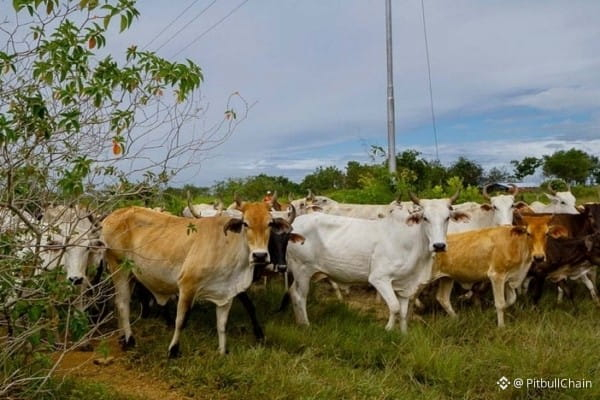
Cosecha 2026: ¿Qué hay detrás de los 2,5 millones de toneladas de cereales para el P2P y el dólar?## El anuncio que va más allá del campo El ministro de Agricultura Productiva y Tierras, Vladimir Padrino López, informó que arrancó oficialmente la cosecha del ciclo invierno 2026, con un ambicioso plan para almacenar más de 2,5 millones de toneladas métricas de cereales. La noticia, en apariencia del sector primario, tiene implicaciones profundas para la economía venezolana y, por supuesto, para el ecosistema cripto y P2P. Desde PitbullChain no nos limitamos a repetir el boletín oficial. Nos preguntamos: ¿cómo afecta esto al precio del dólar, a la gestión del BCV, a la disponibilidad de bolívares en el sistema y, en consecuencia, al mercado de USDT? ## Menos importaciones, más presión sobre el dólar Venezuela sigue dependiendo de importaciones para abastecerse de alimentos. Cada barril de petróleo que se vende o cada divisa que entra por otros conceptos se usa en parte para traer comida del exterior. Si la cosecha nacional logra cubrir una porción significativa de la demanda interna de maíz, arroz y otros cereales, el Gobierno podría reducir la factura de importaciones. Eso, en teoría, aliviaría la presión sobre las reservas internacionales y sobre la oferta de dólares en el mercado oficial. Sin embargo, la historia venezolana nos ha enseñado que no todo es matemática simple. El acopio y almacenamiento de granos requiere combustible, transporte, mantenimiento de silos y pagos oportunos a los productores. Si esos pagos se hacen en bolívares a tasas fijas o con atrasos, los agricultores podrían refugiarse en el mercado paralelo o en criptomonedas para proteger su capital, reduciendo la liquidación de cosechas en los canales tradicionales. ## El factor BCV y la recomposición de liquidez Durante los últimos meses, el BCV ha intervenido en el mercado cambiario para mantener estable el tipo de cambio oficial. Pero esa intervención tiene un costo en reservas internacionales. Si el plan de cosecha funciona y se reduce la necesidad de importar granos, el Ejecutivo podría liberar divisas que hoy se destinan a la compra de alimentos. Ese excedente podría usarse para contener el dólar, pero también para aumentar el gasto público de cara a los próximos eventos electorales. Los operadores P2P saben que cualquier cambio en las intervenciones del BCV impacta directamente el spread entre el dólar oficial y el paralelo. Un mayor flujo de oferta monetaria en bolívares, sin respaldo real, inevitablemente terminan presionando la tasa de cambio. Por eso, la cosecha no es un tema agrícola: es un dato macroeconómico que debería estar en el radar de quienes operan con USDT. ## Logística y silos: los cuellos de botella que mueven las monedas Padrino López señaló que supervisan los silos, el transporte y la recepción de granos. En un país con severas deficiencias de infraestructura, el riesgo de pérdidas postcosecha es alto. Si el grano no se almacena correctamente, se pudre o se pierde, el esfuerzo habrá sido vano. Los productores lo saben y muchos prefieren vender rápido, incluso a precios poco rentables, para recuperar algo de efectivo. Eso puede generar una estacionalidad en la oferta de bolívares en las zonas rurales, que luego se traslada a las ciudades y a las plataformas de intercambio. Además, el transporte de cereales depende del diésel. Cuando hay escasez de combustible, los costos logísticos se disparan y los productores trasladan ese incremento a los precios finales. En el pasado, hemos visto cómo las colas en las estaciones de servicio coinciden con picos inflacionarios y una mayor demanda de protección patrimonial en criptomonedas. ## La alianza “ganar-ganar” y el rol del mercado negro de divisas El ministro afirmó que se han reunido con todos los actores del sector para lograr una relación ganar-ganar. En la práctica, eso significa negociar precios de garantía, créditos a tasa subsidiada y posiblemente pagos en dólares a través de la banca pública. Pero el acceso a divisas es limitado. Los productores que no logren cupos en el mercado oficial de divisas recurrirán a las mesas de dinero o directamente al P2P. De hecho, las zonas agrícolas como Portuguesa, Barinas o Guárico son focos activos de comercio de USDT en efectivo. Allí, los trabajadores estacionales y los contratistas necesitan proteger sus ingresos de la devaluación, y el P2P se convierte en una herramienta cotidiana. Si esta cosecha inyecta una mayor cantidad de bolívares rurales, podríamos ver un repunte del volumen de operaciones en esas regiones. ## ¿Oportunidad o advertencia para los traders? Desde la perspectiva de un operador de USDT en Venezuela, la noticia de la cosecha debe interpretarse como una señal de mediano plazo. Si el Gobierno logra estabilizar los precios de los alimentos, es posible que la inflación mensual se modere, y con ella la depreciación del bolívar. Pero si el plan fracasa o se encuentra con obstáculos logísticos, el descontento social podría acelerar la dolarización informal y el uso de cripto. Lo que sí parece claro es que el ciclo de cosecha estará acompañado de un mayor gasto público, emisión de dinero para cubrir pagos a productores y quizás nuevas intervenciones cambiarias. Los traders experimentados saben que esos movimientos generan inestabilidad a corto plazo, pero también oportunidades de arbitraje entre el dólar BCV y las tasas P2P. ### Recomendaciones desde PitbullChain No estamos dando consejos de inversión, sino observando patrones. Si estás en el mercado local, presta atención a las noticias agrícolas y al estado de los silos. El flujo de alimentos es un termómetro de la economía real. Cuando el campo produce, el país respira; cuando no, se buscan refugios. De hecho, en los ciclos de cosecha anteriores se han visto movimientos estacionales en el volumen de P2P en las zonas rurales. Es un comportamiento histórico que vale la pena estudiar. En PitbullChain seguiremos monitoreando cómo evoluciona esta cosecha y su impacto en el mercado de criptomonedas venezolano. Por ahora, la recomendación es clara: diversifica tus fuentes de análisis, no solo mires el tipo de cambio del día, sino también las condiciones del país que afectan la oferta de bienes y servicios. Porque en Venezuela, todo está conectado: los silos de Portuguesa y los nodos de USDT. ![Imagen](https://public.bnbstatic.com/image/pgc/20260907/a5a32c2d2477416dbedd4f26c67ba358.jpg) 📊 Tasas y análisis en vivo en pitbullchain.com $USDT #cosecha2026 #cerealesVenezuela #mercadoP2P #USDT #dolarBCV

Cosecha 2026: ¿Qué hay detrás de los 2,5 millones de toneladas de cereales para el P2P y el dólar?

## El anuncio que va más allá del campo
El ministro de Agricultura Productiva y Tierras, Vladimir Padrino López, informó que arrancó oficialmente la cosecha del ciclo invierno 2026, con un ambicioso plan para almacenar más de 2,5 millones de toneladas métricas de cereales. La noticia, en apariencia del sector primario, tiene implicaciones profundas para la economía venezolana y, por supuesto, para el ecosistema cripto y P2P.
Desde PitbullChain no nos limitamos a repetir el boletín oficial. Nos preguntamos: ¿cómo afecta esto al precio del dólar, a la gestión del BCV, a la disponibilidad de bolívares en el sistema y, en consecuencia, al mercado de USDT?
## Menos importaciones, más presión sobre el dólar
Venezuela sigue dependiendo de importaciones para abastecerse de alimentos. Cada barril de petróleo que se vende o cada divisa que entra por otros conceptos se usa en parte para traer comida del exterior. Si la cosecha nacional logra cubrir una porción significativa de la demanda interna de maíz, arroz y otros cereales, el Gobierno podría reducir la factura de importaciones. Eso, en teoría, aliviaría la presión sobre las reservas internacionales y sobre la oferta de dólares en el mercado oficial.
Sin embargo, la historia venezolana nos ha enseñado que no todo es matemática simple. El acopio y almacenamiento de granos requiere combustible, transporte, mantenimiento de silos y pagos oportunos a los productores. Si esos pagos se hacen en bolívares a tasas fijas o con atrasos, los agricultores podrían refugiarse en el mercado paralelo o en criptomonedas para proteger su capital, reduciendo la liquidación de cosechas en los canales tradicionales.
## El factor BCV y la recomposición de liquidez
Durante los últimos meses, el BCV ha intervenido en el mercado cambiario para mantener estable el tipo de cambio oficial. Pero esa intervención tiene un costo en reservas internacionales. Si el plan de cosecha funciona y se reduce la necesidad de importar granos, el Ejecutivo podría liberar divisas que hoy se destinan a la compra de alimentos. Ese excedente podría usarse para contener el dólar, pero también para aumentar el gasto público de cara a los próximos eventos electorales.
Los operadores P2P saben que cualquier cambio en las intervenciones del BCV impacta directamente el spread entre el dólar oficial y el paralelo. Un mayor flujo de oferta monetaria en bolívares, sin respaldo real, inevitablemente terminan presionando la tasa de cambio. Por eso, la cosecha no es un tema agrícola: es un dato macroeconómico que debería estar en el radar de quienes operan con USDT.
## Logística y silos: los cuellos de botella que mueven las monedas
Padrino López señaló que supervisan los silos, el transporte y la recepción de granos. En un país con severas deficiencias de infraestructura, el riesgo de pérdidas postcosecha es alto. Si el grano no se almacena correctamente, se pudre o se pierde, el esfuerzo habrá sido vano. Los productores lo saben y muchos prefieren vender rápido, incluso a precios poco rentables, para recuperar algo de efectivo. Eso puede generar una estacionalidad en la oferta de bolívares en las zonas rurales, que luego se traslada a las ciudades y a las plataformas de intercambio.
Además, el transporte de cereales depende del diésel. Cuando hay escasez de combustible, los costos logísticos se disparan y los productores trasladan ese incremento a los precios finales. En el pasado, hemos visto cómo las colas en las estaciones de servicio coinciden con picos inflacionarios y una mayor demanda de protección patrimonial en criptomonedas.
## La alianza “ganar-ganar” y el rol del mercado negro de divisas
El ministro afirmó que se han reunido con todos los actores del sector para lograr una relación ganar-ganar. En la práctica, eso significa negociar precios de garantía, créditos a tasa subsidiada y posiblemente pagos en dólares a través de la banca pública. Pero el acceso a divisas es limitado. Los productores que no logren cupos en el mercado oficial de divisas recurrirán a las mesas de dinero o directamente al P2P.
De hecho, las zonas agrícolas como Portuguesa, Barinas o Guárico son focos activos de comercio de USDT en efectivo. Allí, los trabajadores estacionales y los contratistas necesitan proteger sus ingresos de la devaluación, y el P2P se convierte en una herramienta cotidiana. Si esta cosecha inyecta una mayor cantidad de bolívares rurales, podríamos ver un repunte del volumen de operaciones en esas regiones.
## ¿Oportunidad o advertencia para los traders?
Desde la perspectiva de un operador de USDT en Venezuela, la noticia de la cosecha debe interpretarse como una señal de mediano plazo. Si el Gobierno logra estabilizar los precios de los alimentos, es posible que la inflación mensual se modere, y con ella la depreciación del bolívar. Pero si el plan fracasa o se encuentra con obstáculos logísticos, el descontento social podría acelerar la dolarización informal y el uso de cripto.
Lo que sí parece claro es que el ciclo de cosecha estará acompañado de un mayor gasto público, emisión de dinero para cubrir pagos a productores y quizás nuevas intervenciones cambiarias. Los traders experimentados saben que esos movimientos generan inestabilidad a corto plazo, pero también oportunidades de arbitraje entre el dólar BCV y las tasas P2P.
### Recomendaciones desde PitbullChain
No estamos dando consejos de inversión, sino observando patrones. Si estás en el mercado local, presta atención a las noticias agrícolas y al estado de los silos. El flujo de alimentos es un termómetro de la economía real. Cuando el campo produce, el país respira; cuando no, se buscan refugios. De hecho, en los ciclos de cosecha anteriores se han visto movimientos estacionales en el volumen de P2P en las zonas rurales. Es un comportamiento histórico que vale la pena estudiar.
En PitbullChain seguiremos monitoreando cómo evoluciona esta cosecha y su impacto en el mercado de criptomonedas venezolano. Por ahora, la recomendación es clara: diversifica tus fuentes de análisis, no solo mires el tipo de cambio del día, sino también las condiciones del país que afectan la oferta de bienes y servicios. Porque en Venezuela, todo está conectado: los silos de Portuguesa y los nodos de USDT.
![Imagen](https://public.bnbstatic.com/image/pgc/20260907/a5a32c2d2477416dbedd4f26c67ba358.jpg)
📊 Tasas y análisis en vivo en pitbullchain.com
$USDT #cosecha2026 #cerealesVenezuela #mercadoP2P #USDT #dolarBCV
Article
87% imbalance in P2P: Order book and bank liquidity x-rayA simple view, the USDT/VES peer-to-peer (P2P) market in Venezuela shows consistent volume and a sufficient presence of active ads on major platforms such as Binance, other platforms, and other platforms. However, when inspecting the internal layers of the order book, real-time data reveals a structural asymmetry: there is a marked imbalance between the liquidity accumulated on the buy side and the available depth on the sell side. According to Radar P2P monitoring captured on September 7, 2026, the depth imbalance (imbalance) stands at 87.03%. While the accumulated buy volume in the bid books totals 862,774.20 USDT across 42 open orders, the sell volume barely reaches 59,823.29 USDT spread across 40 offers. This difference conditions execution speed and the price friction users face depending on which side of the market they trade on. The illusion of liquidity: USDT/VES order book X-ray A frequent mistake when evaluating Venezuelan P2P is assuming that a high count of active traders equals balanced liquidity in both directions. The granular analysis of the order levels disproves this premise: Dominant buyer volume: Demand to convert bolívares into digital assets concentrates 93.5% of the total visible capital at the analyzed tips (862,774.20 USDT), with significant walls such as the 965.00 VES level (374,997.34 USDT across 5 orders) and 967.00 VES (78,080.98 USDT). Atomized and shallow selling: The orders to sell USDT and obtain bolívares total less than 60,000 USDT overall. The individual orders at the first levels range from 50 to 1,500 USDT, meaning medium or large placements can quickly consume the most competitive quotes and generate slippage. Market “traffic light” signals: The PitbullChain indicator shows a score of 69/100 (yellow status / moderate caution). Although the bank availability score (95) and overall liquidity (95) are solid, the depth metric drops to 45/100 and the spread score to 20/100, confirming the tightness of the sell book. Real spread and FX premium versus the official rate The average P2P buy price is 968.54 VES per digital dollar, while the average selling rate falls to 941.17 VES. This gap creates a gross spread of 27.37 VES (2.91%) in the overall Radar P2P consolidation, though within the competitive books between the best bid (972.90 VES) and best ask (949.44 VES), the direct spread is around 23.46 VES (2.41%). When these values are compared with the exchange rate of the Central Bank of Venezuela (BCV), set at 813.74 VES, the P2P market premium is established at 19.02%. Meanwhile, the parallel dollar reference reports 965.97 VES with a more compressed spread of 0.45% (buy at 968.14 VES vs. sell at 963.80 VES). The distance of nearly 155 bolívares per dollar between the BCV and the P2P ecosystem keeps constant pressure on demand for synthetic FX in bolívares. Performance by financial entity: Where is it executed with less friction? The banking channel used determines both counterparty availability and the price differential. The recorded data shows clear fragmentation in the conditions of each gateway: Mobile Payment (Volume leader): It groups 22.1% of total liquidity with 27 active ads. It presents an average buy price of 966.74 VES and selling at 962.79 VES, with a narrow spread of 3.95 VES (0.41%) and an execution score of 89/100. Banesco (Highest overall score): It captures 19.7% of liquidity with 24 ads. Its average buy price is 967.91 VES versus 962.70 VES for selling, yielding a spread of 5.21 VES (0.54%) and the best overall balance (score 93/100). Bank of Venezuela: It concentrates 13.9% of liquidity with 17 ads. It records average buying at 968.04 VES and selling at 964.64 VES, achieving one of the system’s lowest spreads: 3.39 VES (0.35%). Bancamiga: Although it contributes a smaller share of liquidity (4.9% and 6 ads), it offers the lowest differential between buy (967.39 VES) and sell (965.61 VES), with only 1.78 VES (0.18%) of spread. Mercantile and direct PagoMovil: They show active buy quotes (967.56 VES and 967.25 VES respectively), but with an absence of direct sell orders in the main sampling, reflecting one-sided liquidity. Practical calculations for immediate conversion To gauge the impact of these levels on everyday operations: Settlement of 100 USDT to bolívares: At the effective selling rate of 941.1685 VES, the user receives 94,116.85 VES. If accessing competitive books in Banesco or Bank of Venezuela around 964.50 VES, the effective return rises to approximately 96,450.00 VES. Acquisition of USDT with 1,000,000 VES: Using the reference buy rate of 941.17 VES, one million bolívares yields 1,062.51 USDT on the selling end, while at the taker rate of 968.54 VES the amount decreases to 1,032.48 USDT. Operational considerations for P2P users Given an 87% asymmetry scenario and an elevated spread in the overall market, participants should prioritize execution management before placing orders: Filter by specific banking channel: Trading through methods with spreads lower than 0.50% (such as Bancamiga, Bank of Venezuela, or Mobile Payment) significantly reduces friction loss compared with the overall average of 2.91%. Review minimum and maximum limits: Selling depth is fragmented. When selling amounts above 500 USDT, it is essential to verify whether the trader covers the full amount or whether they will split the order across multiple tranches. Monitor the FX premium: With a 19.02% gap versus the official dollar, changes in BCV FX intervention or adjustments to banking liquidity can quickly alter rates on Binance and other platforms.

87% imbalance in P2P: Order book and bank liquidity x-ray

A simple view, the USDT/VES peer-to-peer (P2P) market in Venezuela shows consistent volume and a sufficient presence of active ads on major platforms such as Binance, other platforms, and other platforms. However, when inspecting the internal layers of the order book, real-time data reveals a structural asymmetry: there is a marked imbalance between the liquidity accumulated on the buy side and the available depth on the sell side. According to Radar P2P monitoring captured on September 7, 2026, the depth imbalance (imbalance) stands at 87.03%. While the accumulated buy volume in the bid books totals 862,774.20 USDT across 42 open orders, the sell volume barely reaches 59,823.29 USDT spread across 40 offers. This difference conditions execution speed and the price friction users face depending on which side of the market they trade on. The illusion of liquidity: USDT/VES order book X-ray A frequent mistake when evaluating Venezuelan P2P is assuming that a high count of active traders equals balanced liquidity in both directions. The granular analysis of the order levels disproves this premise: Dominant buyer volume: Demand to convert bolívares into digital assets concentrates 93.5% of the total visible capital at the analyzed tips (862,774.20 USDT), with significant walls such as the 965.00 VES level (374,997.34 USDT across 5 orders) and 967.00 VES (78,080.98 USDT). Atomized and shallow selling: The orders to sell USDT and obtain bolívares total less than 60,000 USDT overall. The individual orders at the first levels range from 50 to 1,500 USDT, meaning medium or large placements can quickly consume the most competitive quotes and generate slippage. Market “traffic light” signals: The PitbullChain indicator shows a score of 69/100 (yellow status / moderate caution). Although the bank availability score (95) and overall liquidity (95) are solid, the depth metric drops to 45/100 and the spread score to 20/100, confirming the tightness of the sell book. Real spread and FX premium versus the official rate The average P2P buy price is 968.54 VES per digital dollar, while the average selling rate falls to 941.17 VES. This gap creates a gross spread of 27.37 VES (2.91%) in the overall Radar P2P consolidation, though within the competitive books between the best bid (972.90 VES) and best ask (949.44 VES), the direct spread is around 23.46 VES (2.41%). When these values are compared with the exchange rate of the Central Bank of Venezuela (BCV), set at 813.74 VES, the P2P market premium is established at 19.02%. Meanwhile, the parallel dollar reference reports 965.97 VES with a more compressed spread of 0.45% (buy at 968.14 VES vs. sell at 963.80 VES). The distance of nearly 155 bolívares per dollar between the BCV and the P2P ecosystem keeps constant pressure on demand for synthetic FX in bolívares. Performance by financial entity: Where is it executed with less friction? The banking channel used determines both counterparty availability and the price differential. The recorded data shows clear fragmentation in the conditions of each gateway: Mobile Payment (Volume leader): It groups 22.1% of total liquidity with 27 active ads. It presents an average buy price of 966.74 VES and selling at 962.79 VES, with a narrow spread of 3.95 VES (0.41%) and an execution score of 89/100. Banesco (Highest overall score): It captures 19.7% of liquidity with 24 ads. Its average buy price is 967.91 VES versus 962.70 VES for selling, yielding a spread of 5.21 VES (0.54%) and the best overall balance (score 93/100). Bank of Venezuela: It concentrates 13.9% of liquidity with 17 ads. It records average buying at 968.04 VES and selling at 964.64 VES, achieving one of the system’s lowest spreads: 3.39 VES (0.35%). Bancamiga: Although it contributes a smaller share of liquidity (4.9% and 6 ads), it offers the lowest differential between buy (967.39 VES) and sell (965.61 VES), with only 1.78 VES (0.18%) of spread. Mercantile and direct PagoMovil: They show active buy quotes (967.56 VES and 967.25 VES respectively), but with an absence of direct sell orders in the main sampling, reflecting one-sided liquidity. Practical calculations for immediate conversion To gauge the impact of these levels on everyday operations: Settlement of 100 USDT to bolívares: At the effective selling rate of 941.1685 VES, the user receives 94,116.85 VES. If accessing competitive books in Banesco or Bank of Venezuela around 964.50 VES, the effective return rises to approximately 96,450.00 VES. Acquisition of USDT with 1,000,000 VES: Using the reference buy rate of 941.17 VES, one million bolívares yields 1,062.51 USDT on the selling end, while at the taker rate of 968.54 VES the amount decreases to 1,032.48 USDT. Operational considerations for P2P users Given an 87% asymmetry scenario and an elevated spread in the overall market, participants should prioritize execution management before placing orders: Filter by specific banking channel: Trading through methods with spreads lower than 0.50% (such as Bancamiga, Bank of Venezuela, or Mobile Payment) significantly reduces friction loss compared with the overall average of 2.91%. Review minimum and maximum limits: Selling depth is fragmented. When selling amounts above 500 USDT, it is essential to verify whether the trader covers the full amount or whether they will split the order across multiple tranches. Monitor the FX premium: With a 19.02% gap versus the official dollar, changes in BCV FX intervention or adjustments to banking liquidity can quickly alter rates on Binance and other platforms.
Article
Quick Guide: Meaning of the spread today in VenezuelaThe spread between the buy and sell price of $USDT today on Binance P2P is around Bs. 12 (1.28%). Is that a lot or a little? I’ll explain how to interpret it so you don’t get the short end of the stick. First the basics: if you buy at Bs. 971.93 and sell at Bs. 959.65, the Bs. 12.27 difference is what it would cost you to do the full round trip. In an active market, that’s normal, but it’s not always like that. Liquidity supports the price: today there are 243 active offers, which is a good sign, but during low-demand hours the spread can widen.

Quick Guide: Meaning of the spread today in Venezuela

The spread between the buy and sell price of $USDT today on Binance P2P is around Bs. 12 (1.28%). Is that a lot or a little? I’ll explain how to interpret it so you don’t get the short end of the stick.
First the basics: if you buy at Bs. 971.93 and sell at Bs. 959.65, the Bs. 12.27 difference is what it would cost you to do the full round trip. In an active market, that’s normal, but it’s not always like that. Liquidity supports the price: today there are 243 active offers, which is a good sign, but during low-demand hours the spread can widen.
Article
See translation
Del crudo al P2P: cómo el acuerdo PDVSA-EE.UU. puede mover el dólar en Venezuela## Un contrato que va más allá del petróleo El presidente de PDVSA, Héctor Obregón, reveló nuevos detalles del acuerdo energético con Estados Unidos: 25 años de vigencia, posibilidad de renovación y una inversión estimada en US$ 100.000 millones. Aunque la noticia se enmarca en el sector hidrocarburos, para quienes operan en el mercado P2P o resguardan sus ahorros en USDT, esta información enciende varias alarmas y oportunidades. No se trata solo de extracción de crudo. El contrato, conocido como Contrato de Participación Productiva (CPP), implica que el privado no solo paga tasas y regalías, sino que también forma parte de una sociedad. Esto significa que PDVSA recibirá beneficios más allá de lo tradicional, incluyendo el cobro de tributos y una porción del hidrocarburo extraído. Pero, ¿qué tiene que ver el petróleo con el dólar y las criptomonedas en Venezuela? Todo. ## Impacto en la oferta de dólares y el tipo de cambio Cuando un contrato de esta magnitud entra en funcionamiento, se espera que ingresen dólares al país. La inversión de US$ 100.000 millones en 25 años implica un flujo promedio de US$ 4.000 millones anuales, solo por concepto de desarrollo de infraestructura. A esto se suman las exportaciones de crudo hacia Estados Unidos, India y el Caribe, que generarían ingresos en divisas. Para el mercado venezolano, más dólares circulando suelen traducirse en una relativa estabilidad o incluso en una baja del precio en bolívares. Los operadores P2P ya conocen esta dinámica: cuando la oferta de dólares en el sistema bancario aumenta, la brecha entre el atención oficial del BCV y el dólar paralelo tiende a reducirse. Esto podría afectar las estrategias de quienes compran USDT al precio del paralelo para luego venderlos cuando hay una escalada. Sin embargo, no hay que cantar victoria. Obregón también mencionó que PDVSA recibirá parte de los fondos en una cuenta del Tesoro de EE.UU., como una figura de protección ante demandas internacionales. Ese dinero no entrará directamente al país, al menos no en su totalidad. Por lo tanto, la presión de liquidez en dólares dentro de Venezuela podría ser menor de lo que algunos esperan. ## ¿Y las criptomonedas? Un puente entre la inversión y la economía real La llegada de capital extranjero de esta naturaleza también impulsa la necesidad de herramientas financieras ágiles. Los contratos de servicios, la proveeduría local y los pagos a trabajadores internacionales requieren mecanismos de transferencia rápidos y con menores fricciones. Aquí es donde el ecosistema cripto venezolano tiene una oportunidad histórica. Las empresas que participen en el desarrollo de infraestructura petrolera necesitarán pagar en bolívares a contratistas y empleados venezolanos. La vía más común será la conversión de dólares en bolívares, pero el uso de USDT y otras stablecoins como intermediario ya es una práctica extendida en el país. Si el flujo de inversión se materializa, los exchanges P2P podrían ver un aumento en el volumen de operaciones, tanto de compra como de venta. Por otra parte, el hecho de que PDVSA tenga cuentas en el Tesoro de EE.UU. podría incentivar a que parte de esos recursos se movilicen mediante activos digitales para evitar la lenta burocracia bancaria internacional. Aunque no es una certeza, la experiencia reciente muestra que el gobierno y las empresas estatales venezolanas han utilizado criptomonedas para eludir sanciones o para optimizar sus finanzas. Este contrato no parece ser la excepción. ## Riesgos y oportunidades para el mercado P2P Para el trader venezolano promedio, la noticia del contrato a 25 años tiene un doble filo. Por un lado, la mejora en las expectativas económicas podría estabilizar el bolívar, lo que reduce la rentabilidad de las operaciones especulativas en el corto plazo. Por otro, la inversión extranjera históricamente ha traído consigo un aumento en la demanda de servicios digitales y financieros, incluyendo plataformas de intercambio y billeteras electrónicas. Los usuarios de USDT deben prestar atención a las señales macroeconómicas. Si los dólares provenientes de la actividad petrolera comienzan a sentirse en la banca venezolana, es posible que el BCV endurezca sus intervenciones cambiarias, reduciendo la volatilidad. Eso es positivo para el comercio, pero negativo para quienes buscan ganancias rápidas en el spread. Otro factor a considerar es el componente de protección de activos. El hecho de que los pagos de PDVSA se realicen en cuentas protegidas en el exterior minimiza el riesgo de embargo, pero también resta liquidez al sistema financiero doméstico. Si esa protección se convierte en una práctica común, es probable que una mayor parte de las operaciones de Tesorería se canalicen a través de intermediarios financieros no tradicionales, incluyendo exchanges de criptomonedas. ## La banca digital como aliada del capital petrolero No todo será P2P. La banca venezolana también se beneficiará si los US$ 100.000 millones generan un efecto multiplicador en la economía. Los pagos de impuestos, servicios públicos y proveedores exigirán soluciones de banca digital más robustas. Los bancos que ya ofrecen cuentas en divisas y conexión con plataformas cripto tendrán una ventaja competitiva. En PitbullChain creemos que este acuerdo, más allá de las cifras de barriles, es un termómetro para medir la confianza inversionista. La noticia refuerza la tendencia de que Venezuela vuelve a los radares del capital internacional, y con ello, el uso de tecnologías financieras modernas se vuelve imprescindible. El P2P, las stablecoins y los exchanges serán parte crucial del engranaje que convierta los réditos del crudo en mejoras concretas para la economía real. Mientras tanto, los operadores inteligentes ya están monitoreando los anuncios del BCV y las tasas del mercado paralelo. Porque si bien el contrato es a 25 años, la dinámica del dólar en Venezuela sigue siendo a 25 minutos. ![Imagen](https://public.bnbstatic.com/image/pgc/20260907/6050d95ce35d4a5e96e4e6211341c679.jpg) 📊 Tasas y análisis en vivo en pitbullchain.com $USDT #PDVSA #acuerdoenergeticoEEUU #inversionpetrolera #mercadoP2P #dolarVenezuela

Del crudo al P2P: cómo el acuerdo PDVSA-EE.UU. puede mover el dólar en Venezuela

## Un contrato que va más allá del petróleo
El presidente de PDVSA, Héctor Obregón, reveló nuevos detalles del acuerdo energético con Estados Unidos: 25 años de vigencia, posibilidad de renovación y una inversión estimada en US$ 100.000 millones. Aunque la noticia se enmarca en el sector hidrocarburos, para quienes operan en el mercado P2P o resguardan sus ahorros en USDT, esta información enciende varias alarmas y oportunidades.
No se trata solo de extracción de crudo. El contrato, conocido como Contrato de Participación Productiva (CPP), implica que el privado no solo paga tasas y regalías, sino que también forma parte de una sociedad. Esto significa que PDVSA recibirá beneficios más allá de lo tradicional, incluyendo el cobro de tributos y una porción del hidrocarburo extraído. Pero, ¿qué tiene que ver el petróleo con el dólar y las criptomonedas en Venezuela? Todo.
## Impacto en la oferta de dólares y el tipo de cambio
Cuando un contrato de esta magnitud entra en funcionamiento, se espera que ingresen dólares al país. La inversión de US$ 100.000 millones en 25 años implica un flujo promedio de US$ 4.000 millones anuales, solo por concepto de desarrollo de infraestructura. A esto se suman las exportaciones de crudo hacia Estados Unidos, India y el Caribe, que generarían ingresos en divisas.
Para el mercado venezolano, más dólares circulando suelen traducirse en una relativa estabilidad o incluso en una baja del precio en bolívares. Los operadores P2P ya conocen esta dinámica: cuando la oferta de dólares en el sistema bancario aumenta, la brecha entre el atención oficial del BCV y el dólar paralelo tiende a reducirse. Esto podría afectar las estrategias de quienes compran USDT al precio del paralelo para luego venderlos cuando hay una escalada.
Sin embargo, no hay que cantar victoria. Obregón también mencionó que PDVSA recibirá parte de los fondos en una cuenta del Tesoro de EE.UU., como una figura de protección ante demandas internacionales. Ese dinero no entrará directamente al país, al menos no en su totalidad. Por lo tanto, la presión de liquidez en dólares dentro de Venezuela podría ser menor de lo que algunos esperan.
## ¿Y las criptomonedas? Un puente entre la inversión y la economía real
La llegada de capital extranjero de esta naturaleza también impulsa la necesidad de herramientas financieras ágiles. Los contratos de servicios, la proveeduría local y los pagos a trabajadores internacionales requieren mecanismos de transferencia rápidos y con menores fricciones. Aquí es donde el ecosistema cripto venezolano tiene una oportunidad histórica.
Las empresas que participen en el desarrollo de infraestructura petrolera necesitarán pagar en bolívares a contratistas y empleados venezolanos. La vía más común será la conversión de dólares en bolívares, pero el uso de USDT y otras stablecoins como intermediario ya es una práctica extendida en el país. Si el flujo de inversión se materializa, los exchanges P2P podrían ver un aumento en el volumen de operaciones, tanto de compra como de venta.
Por otra parte, el hecho de que PDVSA tenga cuentas en el Tesoro de EE.UU. podría incentivar a que parte de esos recursos se movilicen mediante activos digitales para evitar la lenta burocracia bancaria internacional. Aunque no es una certeza, la experiencia reciente muestra que el gobierno y las empresas estatales venezolanas han utilizado criptomonedas para eludir sanciones o para optimizar sus finanzas. Este contrato no parece ser la excepción.
## Riesgos y oportunidades para el mercado P2P
Para el trader venezolano promedio, la noticia del contrato a 25 años tiene un doble filo. Por un lado, la mejora en las expectativas económicas podría estabilizar el bolívar, lo que reduce la rentabilidad de las operaciones especulativas en el corto plazo. Por otro, la inversión extranjera históricamente ha traído consigo un aumento en la demanda de servicios digitales y financieros, incluyendo plataformas de intercambio y billeteras electrónicas.
Los usuarios de USDT deben prestar atención a las señales macroeconómicas. Si los dólares provenientes de la actividad petrolera comienzan a sentirse en la banca venezolana, es posible que el BCV endurezca sus intervenciones cambiarias, reduciendo la volatilidad. Eso es positivo para el comercio, pero negativo para quienes buscan ganancias rápidas en el spread.
Otro factor a considerar es el componente de protección de activos. El hecho de que los pagos de PDVSA se realicen en cuentas protegidas en el exterior minimiza el riesgo de embargo, pero también resta liquidez al sistema financiero doméstico. Si esa protección se convierte en una práctica común, es probable que una mayor parte de las operaciones de Tesorería se canalicen a través de intermediarios financieros no tradicionales, incluyendo exchanges de criptomonedas.
## La banca digital como aliada del capital petrolero
No todo será P2P. La banca venezolana también se beneficiará si los US$ 100.000 millones generan un efecto multiplicador en la economía. Los pagos de impuestos, servicios públicos y proveedores exigirán soluciones de banca digital más robustas. Los bancos que ya ofrecen cuentas en divisas y conexión con plataformas cripto tendrán una ventaja competitiva.
En PitbullChain creemos que este acuerdo, más allá de las cifras de barriles, es un termómetro para medir la confianza inversionista. La noticia refuerza la tendencia de que Venezuela vuelve a los radares del capital internacional, y con ello, el uso de tecnologías financieras modernas se vuelve imprescindible. El P2P, las stablecoins y los exchanges serán parte crucial del engranaje que convierta los réditos del crudo en mejoras concretas para la economía real.
Mientras tanto, los operadores inteligentes ya están monitoreando los anuncios del BCV y las tasas del mercado paralelo. Porque si bien el contrato es a 25 años, la dinámica del dólar en Venezuela sigue siendo a 25 minutos.
![Imagen](https://public.bnbstatic.com/image/pgc/20260907/6050d95ce35d4a5e96e4e6211341c679.jpg)
📊 Tasas y análisis en vivo en pitbullchain.com
$USDT #PDVSA #acuerdoenergeticoEEUU #inversionpetrolera #mercadoP2P #dolarVenezuela
Article
See translation
Acuerdo petrolero EEUU-Venezuela: ¿Qué significa para el P2P y el dólar?El reciente acuerdo energético entre Estados Unidos y Venezuela ha sido recibido con optimismo por algunos analistas, pero también con escepticismo. La firma global Oxford Economics considera que representa un escenario de "fuerte recuperación" para la economía venezolana, aunque duda de su ejecución. En PitbullChain, más allá del petróleo, nos preguntamos: ¿qué impacto tendrá esto en el mercado P2P de criptomonedas y en el dólar paralelo? A continuación, te lo contamos. ## Un acuerdo que promete, pero que genera dudas Según Bloomberg Línea, Oxford Economics destaca que los acuerdos agregan riesgos a sus previsiones para Venezuela, debido a la falta de transparencia y la cautela de las empresas petroleras. Sin embargo, el potencial es enorme: la expansión de la producción de crudo podría pasar de 200.000 barriles diarios a más de un millón, con la participación de empresas como Chevron y Eni. ## ¿Más dólares en la economía, más estabilidad para el P2P? Para quienes operamos en el mercado P2P, la entrada de divisas por exportaciones petroleras es un factor clave. Si el acuerdo se concreta, es probable que aumente la oferta de dólares en el país, lo que podría aliviar la presión sobre el tipo de cambio. Esto significa que el precio del dólar paralelo podría estabilizarse o incluso bajar, afectando directamente las operaciones con USDT y otros stablecoins. En un contexto donde el bolívar sigue perdiendo valor, los venezolanos buscan refugio en criptomonedas. Un aumento de liquidez en dólares podría reducir la demanda de USDT como reserva de valor, aunque es prematuro asegurarlo. Lo que sí es seguro es que el mercado estará atento a cada avance del acuerdo. ## La incertidumbre como motor del mercado cripto El escepticismo de Oxford Economics también es una señal. La falta de confianza en la ejecución del acuerdo podría mantener la volatilidad cambiaria, y en tiempos de incertidumbre, las criptomonedas suelen convertirse en una alternativa para protegerse. Esto podría mantener activo el mercado P2P, con usuarios moviendo USDT para resguardar sus ahorros. Además, si el gobierno venezolano obtiene más ingresos petroleros, podría flexibilizar los controles cambiarios o las regulaciones sobre criptoactivos, lo que abriría nuevas oportunidades para el sector. Por ahora, no hay certezas, pero la evolución de este acuerdo es un dato que todos los operadores P2P deben seguir de cerca. ## ¿Qué esperar en los próximos meses? La visión de Oxford Economics es una pieza más en el rompecabezas. Para PitbullChain, lo relevante es que cualquier mejora económica trae consigo un cambio en la dinámica del mercado de divisas. Los operadores P2P deben estar preparados para posibles movimientos en el tipo de cambio, aumentos de liquidez y una mayor adopción de criptomonedas si las condiciones del acuerdo se vuelven más certeras. Mientras tanto, la recomendación es mantener una estrategia flexible y monitorear las noticias sobre el acuerdo y sus ejecutores. La historia venezolana nos ha enseñado que los anuncios no siempre se materializan, pero cuando ocurren, los efectos se sienten rápido en los mercados. ![Imagen](https://public.bnbstatic.com/image/pgc/20260907/9c38fccd8c1e4f28b8c12cad2a2acc41.jpg) 📊 Tasas y análisis en vivo en pitbullchain.com $USDT #acuerdopetroleroEEUUVenezuela #OxfordEconomics #mercadoP2P #USDT #dolarparalelo

Acuerdo petrolero EEUU-Venezuela: ¿Qué significa para el P2P y el dólar?

El reciente acuerdo energético entre Estados Unidos y Venezuela ha sido recibido con optimismo por algunos analistas, pero también con escepticismo. La firma global Oxford Economics considera que representa un escenario de "fuerte recuperación" para la economía venezolana, aunque duda de su ejecución. En PitbullChain, más allá del petróleo, nos preguntamos: ¿qué impacto tendrá esto en el mercado P2P de criptomonedas y en el dólar paralelo? A continuación, te lo contamos.
## Un acuerdo que promete, pero que genera dudas
Según Bloomberg Línea, Oxford Economics destaca que los acuerdos agregan riesgos a sus previsiones para Venezuela, debido a la falta de transparencia y la cautela de las empresas petroleras. Sin embargo, el potencial es enorme: la expansión de la producción de crudo podría pasar de 200.000 barriles diarios a más de un millón, con la participación de empresas como Chevron y Eni.
## ¿Más dólares en la economía, más estabilidad para el P2P?
Para quienes operamos en el mercado P2P, la entrada de divisas por exportaciones petroleras es un factor clave. Si el acuerdo se concreta, es probable que aumente la oferta de dólares en el país, lo que podría aliviar la presión sobre el tipo de cambio. Esto significa que el precio del dólar paralelo podría estabilizarse o incluso bajar, afectando directamente las operaciones con USDT y otros stablecoins.
En un contexto donde el bolívar sigue perdiendo valor, los venezolanos buscan refugio en criptomonedas. Un aumento de liquidez en dólares podría reducir la demanda de USDT como reserva de valor, aunque es prematuro asegurarlo. Lo que sí es seguro es que el mercado estará atento a cada avance del acuerdo.
## La incertidumbre como motor del mercado cripto
El escepticismo de Oxford Economics también es una señal. La falta de confianza en la ejecución del acuerdo podría mantener la volatilidad cambiaria, y en tiempos de incertidumbre, las criptomonedas suelen convertirse en una alternativa para protegerse. Esto podría mantener activo el mercado P2P, con usuarios moviendo USDT para resguardar sus ahorros.
Además, si el gobierno venezolano obtiene más ingresos petroleros, podría flexibilizar los controles cambiarios o las regulaciones sobre criptoactivos, lo que abriría nuevas oportunidades para el sector. Por ahora, no hay certezas, pero la evolución de este acuerdo es un dato que todos los operadores P2P deben seguir de cerca.
## ¿Qué esperar en los próximos meses?
La visión de Oxford Economics es una pieza más en el rompecabezas. Para PitbullChain, lo relevante es que cualquier mejora económica trae consigo un cambio en la dinámica del mercado de divisas. Los operadores P2P deben estar preparados para posibles movimientos en el tipo de cambio, aumentos de liquidez y una mayor adopción de criptomonedas si las condiciones del acuerdo se vuelven más certeras.
Mientras tanto, la recomendación es mantener una estrategia flexible y monitorear las noticias sobre el acuerdo y sus ejecutores. La historia venezolana nos ha enseñado que los anuncios no siempre se materializan, pero cuando ocurren, los efectos se sienten rápido en los mercados.
![Imagen](https://public.bnbstatic.com/image/pgc/20260907/9c38fccd8c1e4f28b8c12cad2a2acc41.jpg)
📊 Tasas y análisis en vivo en pitbullchain.com
$USDT #acuerdopetroleroEEUUVenezuela #OxfordEconomics #mercadoP2P #USDT #dolarparalelo
Article
P2P Comparison in Venezuela: Spread and Liquidity on Binance, Bybit, and MEXCThe peer-to-peer (P2P) exchange ecosystem in Venezuela maintains a constant dynamic of adjustment in response to the official exchange rate and the quotes from the parallel market. As of September 7, 2026, data recorded by specialized monitors shows an average USDT buy rate of 969.27 VES and an average sell rate of 941.08 VES, consolidating an overall differential or spread of 2.99% (28.20 VES). When this quote is compared with the official rate of the Central Bank of Venezuela (BCV), set at 813.74 VES per dollar, the P2P market premium stands at 19.11%. Liquidity outlook and order book depth The order distribution reveals clear structural differences depending on the evaluated platform. In the consolidated sample of 98 active listings split between buy and sell, total buy volume is 630,809.98 USDT versus a sell offer of 57,765.17 USDT, creating a depth imbalance of 83.22% in favor of demand. Binance and other platforms concentrate bids with greater backing from institutional capital and verified traders: Binance: Maintains the highest density at levels close to the mid price (950.27 VES). On the buy side (bid), it concentrates high-volume orders ranging from 963.30 VES to 981.90 VES, highlighting blocks above 92,000 USDT at the 964.00 VES level distributed across national entities. other platforms: Provides relevant depth in the mid and lower areas of the book, recording accumulated bids around 960.00 VES with more than 310,000 USDT available across multiple trader listings. other platforms: Shows presence in the first lines of sell (ask) quotes with initial prices between 918.65 VES and 955.45 VES, although with smaller and more fragmented lot sizes, generally below 1,500 USDT per order. Price differential (spread) by platform The market signal indicator stands at 69 points out of 100 with a yellow status (moderate caution). This rating directly reflects the overall spread of 2.99%, which requires users to review quotes in detail before executing transfers. Practically speaking, when settling 100 USDT at the average sell rate of 941.08 VES, 94,107.71 bolívares are obtained. To buy 1,000 USDT at the average buy rate of 969.27 VES, 969,273.70 bolívares are required, while one million bolívares is equivalent to approximately 1,062.61 USDT under current conditions. At the combined order book level, the best ask recorded was 918.65 VES and the best bid was 981.90 VES. This extreme range represents a gross spread of 6.44% between the book extremes, caused mainly by atypical offers on platforms with fewer market-maker participants. Behavior by payment methods and domestic banking The liquidity of the Venezuelan P2P market remains strongly anchored to traditional banking and immediate interbank payment systems. The breakdown of participation and margins by banking entity shows the following figures: Bank of Venezuela: Leads participation with 21.5% of the total monitored liquidity and 23 active listings. Its average buy price is 967.16 VES and its sell price is 963.64 VES, offering the tightest spread in the banking market at just 0.37% (3.52 VES). Banesco: Accounts for 18.7% of liquidity with 20 active listings between Binance and other platforms. It records an average buy price of 967.42 VES and a sell price of 960.26 VES, for a spread of 0.75% (7.16 VES) and an operational efficiency score of 91 points. Pago Móvil: Concentrates 14.0% of liquidity on platforms like other platforms, with an average buy rate of 966.77 VES and a sell rate of 959.85 VES, averaging a differential of 0.72% (6.92 VES). Other entities: Bancamiga, BBVA Provincial, and Banplus participate complementarily, with presence in specific orders of intermediate volume and sell quotes ranging from 967.00 VES to 969.07 VES. Operational considerations for the local user The quantitative analysis shows that the choice of exchange and payment method directly affects the final transaction cost. While Binance and other platforms offer higher capital density and narrower spreads in entities such as Banco de Venezuela and Banesco, other platforms show wider differentials subject to lower turnover of listings. Market participants are advised to verify the trader’s reputation, check the minimum and maximum limits of each order against the balance to be transacted, and monitor the gap versus the BCV dollar rate before confirming any operation in bolívares.

P2P Comparison in Venezuela: Spread and Liquidity on Binance, Bybit, and MEXC

The peer-to-peer (P2P) exchange ecosystem in Venezuela maintains a constant dynamic of adjustment in response to the official exchange rate and the quotes from the parallel market. As of September 7, 2026, data recorded by specialized monitors shows an average USDT buy rate of 969.27 VES and an average sell rate of 941.08 VES, consolidating an overall differential or spread of 2.99% (28.20 VES). When this quote is compared with the official rate of the Central Bank of Venezuela (BCV), set at 813.74 VES per dollar, the P2P market premium stands at 19.11%. Liquidity outlook and order book depth The order distribution reveals clear structural differences depending on the evaluated platform. In the consolidated sample of 98 active listings split between buy and sell, total buy volume is 630,809.98 USDT versus a sell offer of 57,765.17 USDT, creating a depth imbalance of 83.22% in favor of demand. Binance and other platforms concentrate bids with greater backing from institutional capital and verified traders: Binance: Maintains the highest density at levels close to the mid price (950.27 VES). On the buy side (bid), it concentrates high-volume orders ranging from 963.30 VES to 981.90 VES, highlighting blocks above 92,000 USDT at the 964.00 VES level distributed across national entities. other platforms: Provides relevant depth in the mid and lower areas of the book, recording accumulated bids around 960.00 VES with more than 310,000 USDT available across multiple trader listings. other platforms: Shows presence in the first lines of sell (ask) quotes with initial prices between 918.65 VES and 955.45 VES, although with smaller and more fragmented lot sizes, generally below 1,500 USDT per order. Price differential (spread) by platform The market signal indicator stands at 69 points out of 100 with a yellow status (moderate caution). This rating directly reflects the overall spread of 2.99%, which requires users to review quotes in detail before executing transfers. Practically speaking, when settling 100 USDT at the average sell rate of 941.08 VES, 94,107.71 bolívares are obtained. To buy 1,000 USDT at the average buy rate of 969.27 VES, 969,273.70 bolívares are required, while one million bolívares is equivalent to approximately 1,062.61 USDT under current conditions. At the combined order book level, the best ask recorded was 918.65 VES and the best bid was 981.90 VES. This extreme range represents a gross spread of 6.44% between the book extremes, caused mainly by atypical offers on platforms with fewer market-maker participants. Behavior by payment methods and domestic banking The liquidity of the Venezuelan P2P market remains strongly anchored to traditional banking and immediate interbank payment systems. The breakdown of participation and margins by banking entity shows the following figures: Bank of Venezuela: Leads participation with 21.5% of the total monitored liquidity and 23 active listings. Its average buy price is 967.16 VES and its sell price is 963.64 VES, offering the tightest spread in the banking market at just 0.37% (3.52 VES). Banesco: Accounts for 18.7% of liquidity with 20 active listings between Binance and other platforms. It records an average buy price of 967.42 VES and a sell price of 960.26 VES, for a spread of 0.75% (7.16 VES) and an operational efficiency score of 91 points. Pago Móvil: Concentrates 14.0% of liquidity on platforms like other platforms, with an average buy rate of 966.77 VES and a sell rate of 959.85 VES, averaging a differential of 0.72% (6.92 VES). Other entities: Bancamiga, BBVA Provincial, and Banplus participate complementarily, with presence in specific orders of intermediate volume and sell quotes ranging from 967.00 VES to 969.07 VES. Operational considerations for the local user The quantitative analysis shows that the choice of exchange and payment method directly affects the final transaction cost. While Binance and other platforms offer higher capital density and narrower spreads in entities such as Banco de Venezuela and Banesco, other platforms show wider differentials subject to lower turnover of listings. Market participants are advised to verify the trader’s reputation, check the minimum and maximum limits of each order against the balance to be transacted, and monitor the gap versus the BCV dollar rate before confirming any operation in bolívares.
Article
Liquidity on Binance P2P: Key to protecting your capital todayHave you noticed how P2P market liquidity behaves at the start of this week in Venezuela? While on the street the price spread disperses above 4%, on Binance P2P the order book depth shows impressive strength: buying $USDT is around Bs. 967.12 and selling is at Bs. 965.74. A minimal internal spread that protects traders and freelancers from paying ridiculous overprices. When you need to move funds in $USDT, slippage can eat up your margin if you don’t trade where the real volume is concentrated. With more than 240 active orders on the national board, the key is to always filter for verified traders with a high percentage of completed transactions.

Liquidity on Binance P2P: Key to protecting your capital today

Have you noticed how P2P market liquidity behaves at the start of this week in Venezuela?
While on the street the price spread disperses above 4%, on Binance P2P the order book depth shows impressive strength: buying $USDT is around Bs. 967.12 and selling is at Bs. 965.74. A minimal internal spread that protects traders and freelancers from paying ridiculous overprices.
When you need to move funds in $USDT, slippage can eat up your margin if you don’t trade where the real volume is concentrated. With more than 240 active orders on the national board, the key is to always filter for verified traders with a high percentage of completed transactions.
See translation
Tarjetas cripto para venezolanos: cómo gastar USDT hoy (07/09/26)## Tarjetas cripto para venezolanos: cómo gastar USDT hoy (07/09/26) **Fecha:** lunes, 7 de septiembre de 2026 · **Datos en vivo del Radar P2P:** compra Bs. 971.67 · venta Bs. 931.20 · BCV Bs. N/A · prima N/A% Este lunes 7 de septiembre, el mercado P2P venezolano opera con una compra de USDT en Bs. 971,67 y venta en Bs. 931,20, generando un spread de Bs. 40,47 que beneficia a quienes arbitran. El BCV no publicó tasa base, lo que intensifica la referencia directa al P2P. En este contexto, evaluamos las tarjetas cripto disponibles para venezolanos como herramienta de gasto y drenaje de inventario. ### Tarjetas cripto: análisis del día Las tarjetas cripto (por ejemplo, las de plataformas como Binance o Kyte, emitidas por aliados internacionales) permiten a los comerciantes P2P convertir su USDT en poder de compra inmediato en establecimientos nacionales, ya sea en dólares o bolívares a tasa de mercado, sin depender del BCV. En la práctica, funcionan como una 'cuenta en divisas' que emite una tarjeta prepagada, con topes que suelen rondar los $1.000–$5.000 diarios y comisiones por recarga del 1-2% más costos de emisión (desde $9,99). Su principal ventaja hoy es la liquidez inmediata ante la ausencia de tasa oficial y la alta volatilidad del spread, permitiendo fijar precios en USDT y gastar sin repatriar fondos. Sin embargo, los comerciantes deben revisar que la tarjeta esté habilitada para pagos en bolívares vía punto de venta (algunas solo procesan en USD) y considerar el tipo de cambio interno de la tarjeta, que puede ser 2-3% inferior al P2P. Para el arbitrajista, el uso de estas tarjetas reduce la necesidad de salida del sistema bancario local, evitando comisiones por retiros en efectivo. Hoy, asumiendo una compra de USDT a Bs. 971,67 y venta a Bs. 931,20, quien usa tarjeta para gastar en bolívares a tasas preferenciales (p.ej. 900) evita la pérdida del spread pero pierde parte del diferencial si la tarjeta aplica su propias tasa. La recomendación práctica es usarlas para gastos operativos (Proveedores, logística) y no para acumular, dado que los topes y tarifas castigan la rentabilidad del trading. ### Puntos clave - Spread P2P de Bs. 40,47 favorece el arbitraje, pero tarjetas cripto reducen fricción al gastar sin pasar por bancos locales. - Topes típicos de tarjetas cripto van de $1.000 a $5.000 diarios, suficiente para operación mediana. - Comisiones de recarga (1-2%) y emisión ($10 aprox.) deben descontarse al calcular utilidad P2P. - Verificar si la tarjeta procesa pagos en bolívares a tasa propia; suele ser menos favorable que el P2P. - Sin tasa BCV publicada, la prima P2P no es calculable, aumentando la dependencia de datos en vivo como los de PitbullChain. ### Mercado en vivo binance: Bs. 968.44/966.37 | otras plataformas: Bs. 1006.32/845.54 | otras plataformas: Bs. 965.34/959.58 | otras plataformas: Bs. 946.58/953.31 _Análisis generado automáticamente por PitbullChain con datos en tiempo real. Contenido educativo, no es asesoría financiera._ ![Imagen](https://public.bnbstatic.com/image/pgc/20260907/b948b55ca73741ffb88087e803beee94.jpg) 📊 Tasas y análisis en vivo en pitbullchain.com $USDT #tarjetascripto #USDTVenezuela #P2Pspread #comerciante #BCVsintasa

Tarjetas cripto para venezolanos: cómo gastar USDT hoy (07/09/26)

## Tarjetas cripto para venezolanos: cómo gastar USDT hoy (07/09/26)
**Fecha:** lunes, 7 de septiembre de 2026 · **Datos en vivo del Radar P2P:** compra Bs. 971.67 · venta Bs. 931.20 · BCV Bs. N/A · prima N/A%
Este lunes 7 de septiembre, el mercado P2P venezolano opera con una compra de USDT en Bs. 971,67 y venta en Bs. 931,20, generando un spread de Bs. 40,47 que beneficia a quienes arbitran. El BCV no publicó tasa base, lo que intensifica la referencia directa al P2P. En este contexto, evaluamos las tarjetas cripto disponibles para venezolanos como herramienta de gasto y drenaje de inventario.
### Tarjetas cripto: análisis del día
Las tarjetas cripto (por ejemplo, las de plataformas como Binance o Kyte, emitidas por aliados internacionales) permiten a los comerciantes P2P convertir su USDT en poder de compra inmediato en establecimientos nacionales, ya sea en dólares o bolívares a tasa de mercado, sin depender del BCV. En la práctica, funcionan como una 'cuenta en divisas' que emite una tarjeta prepagada, con topes que suelen rondar los $1.000–$5.000 diarios y comisiones por recarga del 1-2% más costos de emisión (desde $9,99). Su principal ventaja hoy es la liquidez inmediata ante la ausencia de tasa oficial y la alta volatilidad del spread, permitiendo fijar precios en USDT y gastar sin repatriar fondos. Sin embargo, los comerciantes deben revisar que la tarjeta esté habilitada para pagos en bolívares vía punto de venta (algunas solo procesan en USD) y considerar el tipo de cambio interno de la tarjeta, que puede ser 2-3% inferior al P2P. Para el arbitrajista, el uso de estas tarjetas reduce la necesidad de salida del sistema bancario local, evitando comisiones por retiros en efectivo. Hoy, asumiendo una compra de USDT a Bs. 971,67 y venta a Bs. 931,20, quien usa tarjeta para gastar en bolívares a tasas preferenciales (p.ej. 900) evita la pérdida del spread pero pierde parte del diferencial si la tarjeta aplica su propias tasa. La recomendación práctica es usarlas para gastos operativos (Proveedores, logística) y no para acumular, dado que los topes y tarifas castigan la rentabilidad del trading.
### Puntos clave
- Spread P2P de Bs. 40,47 favorece el arbitraje, pero tarjetas cripto reducen fricción al gastar sin pasar por bancos locales.
- Topes típicos de tarjetas cripto van de $1.000 a $5.000 diarios, suficiente para operación mediana.
- Comisiones de recarga (1-2%) y emisión ($10 aprox.) deben descontarse al calcular utilidad P2P.
- Verificar si la tarjeta procesa pagos en bolívares a tasa propia; suele ser menos favorable que el P2P.
- Sin tasa BCV publicada, la prima P2P no es calculable, aumentando la dependencia de datos en vivo como los de PitbullChain.
### Mercado en vivo
binance: Bs. 968.44/966.37 | otras plataformas: Bs. 1006.32/845.54 | otras plataformas: Bs. 965.34/959.58 | otras plataformas: Bs. 946.58/953.31
_Análisis generado automáticamente por PitbullChain con datos en tiempo real. Contenido educativo, no es asesoría financiera._
![Imagen](https://public.bnbstatic.com/image/pgc/20260907/b948b55ca73741ffb88087e803beee94.jpg)
📊 Tasas y análisis en vivo en pitbullchain.com
$USDT #tarjetascripto #USDTVenezuela #P2Pspread #comerciante #BCVsintasa
BCV Intervention and P2P: Wide Spread and Strategies for Today## BCV intervention and P2P: wide spread and strategies for today **Date:** Monday, September 7, 2026 · **Live data from the P2P Radar:** buy Bs. 971.67 · sell Bs. 931.20 · BCV Bs. N/A · premium N/A% Today, Monday September 7, the week starts with no official BCV rate published, in a context where FX interventions are still the main anchor for the market. The USDT P2P shows a spread of Bs. 40.47 with buys at Bs. 971.67 and sells at Bs. 931.20, indicating low depth.

BCV Intervention and P2P: Wide Spread and Strategies for Today

## BCV intervention and P2P: wide spread and strategies for today
**Date:** Monday, September 7, 2026 · **Live data from the P2P Radar:** buy Bs. 971.67 · sell Bs. 931.20 · BCV Bs. N/A · premium N/A%
Today, Monday September 7, the week starts with no official BCV rate published, in a context where FX interventions are still the main anchor for the market. The USDT P2P shows a spread of Bs. 40.47 with buys at Bs. 971.67 and sells at Bs. 931.20, indicating low depth.
Article
89.7% is looking for USDT: Why the spread doesn’t blow up?🇻🇪 The Venezuelan P2P market is going through a paradox that hasn’t been seen in months. According to Binance data this morning, 89.7% of the traded volume is trying to buy USDT, while the active sell offers total 244. But if there’s so much demand, why doesn’t the spread explode? Today I want to break it down. 📊 At the time of publishing, in Binance’s P2P: Buying USDT is at Bs. 971.67 and Selling is at Bs. 931.20. That leaves a gap of 40.47 bolivars (4.35%). Or, in plain terms: if you buy and sell instantly, you lose 4.35% of your capital in the transaction. It’s not a premium against the official dollar, but the real cost of liquidity.

89.7% is looking for USDT: Why the spread doesn’t blow up?

🇻🇪 The Venezuelan P2P market is going through a paradox that hasn’t been seen in months. According to Binance data this morning, 89.7% of the traded volume is trying to buy USDT, while the active sell offers total 244. But if there’s so much demand, why doesn’t the spread explode? Today I want to break it down.
📊 At the time of publishing, in Binance’s P2P: Buying USDT is at Bs. 971.67 and Selling is at Bs. 931.20. That leaves a gap of 40.47 bolivars (4.35%). Or, in plain terms: if you buy and sell instantly, you lose 4.35% of your capital in the transaction. It’s not a premium against the official dollar, but the real cost of liquidity.
Article
Premium of USDT versus the BCV rises to 19.3% in Venezuela’s P2P marketThe gap between the official exchange rate of Venezuela’s Central Bank (BCV) and the USDT price in the P2P market reached, on September 7, 2026, 19.3%. While the official rate for the US dollar was 813.7361 Bs/USD, USDT traded at 970.9973 Bs/USD according to Radar P2P data captured at 16:00 UTC. The difference represents a premium that cannot be explained by inflation alone, but rather by a combination of supply and demand factors and banking liquidity conditions. Breakdown of the exchange gap The calculation is straightforward: if you take 970.9973 bolívares per USDT and compare it with 813.7361 bolívares from the BCV’s official rate, you get an excess of 157.26 bolívares, equivalent to 19.33% more. At the same moment, the so-called parallel dollar, according to Binance P2P, was trading at 963.38 Bs/USD, with a gap of 18.4% versus the official rate. This divergence is not an isolated piece of data. The BCV has been gradually adjusting the official rate since the end of August. On August 28 it was 791.66 bolívares; by September 2 it rose to 801.17; and this Monday, September 7, the issuing entity published a rate of 813.7361 bolívares, according to reports from Finanzas Digital [2]. International media outlets have also documented this move [1]. Factors driving the premium The first variable is demand for hedging. In a context of restricted markets, USDT has become the main safe haven for savers and companies looking to protect themselves against the bolívar’s depreciation. Access to cash dollars in the banking system is still limited, and therefore the P2P market absorbs that pressure. The second variable is banking liquidity. Transactions in bolívares depend on the availability of funds in banks such as Banco de Venezuela, Banesco, Mercantil, or Provincial. According to Radar P2P records for this Monday, the largest number of active listings is concentrated in Banco de Venezuela and BANK, with more than 30% of the offers. However, there are banks with a smaller presence that offer better prices, creating a significant spread between the USDT buy and sell prices. Liquidity and spread: the hidden costs When analyzing the Radar P2P order book data, it is observed that the USDT sell supply reaches 120,388.03 USDT, while demand (buy) stands at 1,191,812.59 USDT, with an imbalance of 81.65%. In other words, there is much more pressure to sell bolívares than to sell USDT, pushing the price upward. This structure also produces a wide spread between buyers and sellers. The USDT buy price (for the user who wants to acquire crypto) is 970.99 Bs/USD, while the sell price (for someone who wants to exit to bolívares) is 941.59 Bs/USD. The difference is 29.40 Bs, equivalent to a percentage spread of 3.12%. All of this is reflected in Radar P2P’s traffic-light indicator: yellow status for “moderate caution,” with a warning signal due to elevated spread and sufficient liquidity in banks. Impact of the official rate and expectations The official rate is not a neutral benchmark. Although the BCV has accelerated the pace of the scheduled devaluation, it keeps a trajectory below the market price of alternative dollars. This has led the public sector and some regulated actors to use the official rate, while the rest of the economy—including e-commerce and remittances—runs on the P2P exchange rate. Banking liquidity management also matters. When the financial system restricts the availability of bolívares via transfer (for example, on weekends or holidays), access to cash for operating at exchange desks decreases. Under those conditions, traders raise the USDT price to compensate for the increased risk of delays or lack of funds. Considerations for traders Compare prices not only between the BCV rate and P2P, but also across exchanges and banks. A 3% spread is high if significant amounts are involved. Review each bank’s liquidity before trading. In Radar P2P data, banks with more listings tend to end up with more competitive prices, but not always. Check the trust indicator. A yellow status with a recommendation to verify the bank and the seller’s reputation implies additional caution. Consider that the premium versus the BCV may remain elevated as long as fundamentals do not change: monetary issuance, limits on access to foreign currency, and confidence in the bolívar. At the close of this edition, the BCV official rate is 813.74 Bs/USD, USDT P2P is 970.99 Bs/USD, and the parallel dollar is 963.38. The 19.3% gap is a barometer of the tensions faced by the Venezuelan economy, where an administered official exchange rate coexists with a crypto-dollarized market that continues to be the main price-setting mechanism outside the conventional system. Sources: Finanzas Digital [2], press reports [1], and Radar P2P data captured at 16:00 UTC on September 7, 2026.

Premium of USDT versus the BCV rises to 19.3% in Venezuela’s P2P market

The gap between the official exchange rate of Venezuela’s Central Bank (BCV) and the USDT price in the P2P market reached, on September 7, 2026, 19.3%. While the official rate for the US dollar was 813.7361 Bs/USD, USDT traded at 970.9973 Bs/USD according to Radar P2P data captured at 16:00 UTC. The difference represents a premium that cannot be explained by inflation alone, but rather by a combination of supply and demand factors and banking liquidity conditions. Breakdown of the exchange gap The calculation is straightforward: if you take 970.9973 bolívares per USDT and compare it with 813.7361 bolívares from the BCV’s official rate, you get an excess of 157.26 bolívares, equivalent to 19.33% more. At the same moment, the so-called parallel dollar, according to Binance P2P, was trading at 963.38 Bs/USD, with a gap of 18.4% versus the official rate. This divergence is not an isolated piece of data. The BCV has been gradually adjusting the official rate since the end of August. On August 28 it was 791.66 bolívares; by September 2 it rose to 801.17; and this Monday, September 7, the issuing entity published a rate of 813.7361 bolívares, according to reports from Finanzas Digital [2]. International media outlets have also documented this move [1]. Factors driving the premium The first variable is demand for hedging. In a context of restricted markets, USDT has become the main safe haven for savers and companies looking to protect themselves against the bolívar’s depreciation. Access to cash dollars in the banking system is still limited, and therefore the P2P market absorbs that pressure. The second variable is banking liquidity. Transactions in bolívares depend on the availability of funds in banks such as Banco de Venezuela, Banesco, Mercantil, or Provincial. According to Radar P2P records for this Monday, the largest number of active listings is concentrated in Banco de Venezuela and BANK, with more than 30% of the offers. However, there are banks with a smaller presence that offer better prices, creating a significant spread between the USDT buy and sell prices. Liquidity and spread: the hidden costs When analyzing the Radar P2P order book data, it is observed that the USDT sell supply reaches 120,388.03 USDT, while demand (buy) stands at 1,191,812.59 USDT, with an imbalance of 81.65%. In other words, there is much more pressure to sell bolívares than to sell USDT, pushing the price upward. This structure also produces a wide spread between buyers and sellers. The USDT buy price (for the user who wants to acquire crypto) is 970.99 Bs/USD, while the sell price (for someone who wants to exit to bolívares) is 941.59 Bs/USD. The difference is 29.40 Bs, equivalent to a percentage spread of 3.12%. All of this is reflected in Radar P2P’s traffic-light indicator: yellow status for “moderate caution,” with a warning signal due to elevated spread and sufficient liquidity in banks. Impact of the official rate and expectations The official rate is not a neutral benchmark. Although the BCV has accelerated the pace of the scheduled devaluation, it keeps a trajectory below the market price of alternative dollars. This has led the public sector and some regulated actors to use the official rate, while the rest of the economy—including e-commerce and remittances—runs on the P2P exchange rate. Banking liquidity management also matters. When the financial system restricts the availability of bolívares via transfer (for example, on weekends or holidays), access to cash for operating at exchange desks decreases. Under those conditions, traders raise the USDT price to compensate for the increased risk of delays or lack of funds. Considerations for traders Compare prices not only between the BCV rate and P2P, but also across exchanges and banks. A 3% spread is high if significant amounts are involved. Review each bank’s liquidity before trading. In Radar P2P data, banks with more listings tend to end up with more competitive prices, but not always. Check the trust indicator. A yellow status with a recommendation to verify the bank and the seller’s reputation implies additional caution. Consider that the premium versus the BCV may remain elevated as long as fundamentals do not change: monetary issuance, limits on access to foreign currency, and confidence in the bolívar. At the close of this edition, the BCV official rate is 813.74 Bs/USD, USDT P2P is 970.99 Bs/USD, and the parallel dollar is 963.38. The 19.3% gap is a barometer of the tensions faced by the Venezuelan economy, where an administered official exchange rate coexists with a crypto-dollarized market that continues to be the main price-setting mechanism outside the conventional system. Sources: Finanzas Digital [2], press reports [1], and Radar P2P data captured at 16:00 UTC on September 7, 2026.
Article
USDT premium versus BCV exceeds 19% today: spread and liquidity analysisToday, Monday, September 7, 2026, the USDT premium versus the dollar at BCV stands at 19.24%, and the spread in the Venezuelan P2P market reaches 3.46%. This is reflected in PitbullChain’s P2P Radar, which at 10:00 a.m. (local time) captured an average purchase price of 970.2881 VES and a sale price of 937.8789 VES per USDT. The figure far exceeds the official quotation from Venezuela’s Central Bank (BCV), which for this date stands at 813.7361 VES/USD. The radar’s own liquidity-and-risk traffic light appears in yellow (score 71), with a clear warning: “elevated spread, compare prices before trading.” Premium of 19.24%: buying pressure or just a reference? The premium is calculated over the BCV official rate. If we take the P2P USDT purchase price (970.2881 VES) and compare it with the official dollar (813.7361 VES), the difference is 156.5520 VES per unit—exactly that 19.24% surcharge. This gap is not new. In June 2026, reports like BeInCrypto’s pointed out that the “bolívar crisis boosts demand for USDT in Binance P2P.” The trend continues: when the bolívar loses purchasing power, many Venezuelans look for refuge in dollarized cryptocurrencies, and that demand pushes the USDT price above the official rate. The BCV price, for its part, has been climbing gradually. According to El Estímulo, on September 4 the quote surpassed 807 bolívars; today it is 813.7. It’s a slow rise, but P2P moves faster because it responds to real-time supply and demand. Spread of 3.45%: the cost of entering and exiting the market The spread represents the difference between the highest price a buyer is willing to pay (to acquire USDT) and the lowest price a seller is willing to sell at. In PitbullChain’s P2P Radar, buying is at 970.27 VES and selling at 937.88 VES—a spread range of 32.41 VES. In percentage terms, the spread is 3.4556%. This means that if a user buys and sells USDT back-to-back, they lose approximately 3.45 bolívars for every 100 invested. It’s a high cost compared with the informal parallel rate, which at the same time shows a spread of only 0.29%. To put it in context: if you sell 100 USDT at the average selling price (937.8789 VES), you’ll receive 93,787.89 bolívars. If instead you decide to buy 100 USDT, you’ll have to pay out 97,028.81 bolívars. That gap of more than 3,000 bolívars per 100 USDT is what makes the difference in large transactions. PitbullChain’s traffic light assigns 20 points to the spread (on a scale where 0 is very high and 100 is low). That’s why it insists on “comparing prices across exchanges before trading.” This is not a market to rush into. Order book under the microscope: buy offers dominate the book The aggregated order book of Binance, other platforms, and other platforms—also captured by PitbullChain—shows a significant imbalance in favor of demand. The buy order volume (bid) reaches 377,043.50 USDT, while the sell orders (ask) add up to just 66,244.44 USDT. In other words, buying pressure is 5.7 times greater than the available supply. This imbalance explains the premium: more people want to buy USDT than sellers are willing to offer it. Market depth, however, has nuances. Even though offers appear at very low prices (for example, one at 918.64 VES on other platforms), they are for limited amounts and may not be available to all users or banks. The sell offers with real size are concentrated between 952 and 966 VES, while the buys with higher volume are located between 955 and 966 VES. This suggests that the market’s “fair price” right now is around 960–965 VES, but the consolidated indicators—which weight by volume—produce a higher buy price. According to the order book data itself, the best bid is at 966.00 VES, and the best ask is at 918.64 VES. The difference between them is 47.36 VES, which in relative terms corresponds to a 4.9% spread. That’s the real cost if you want to execute an immediate trade, without waiting for orders to cross. Dominant banks: where is there more liquidity and a better price? Not all banks offer the same conditions. PitbullChain’s analysis groups ads by financial institution and shows a clear difference in behavior: Banesco: the bank with the highest number of ads (35.7% of the total) and a liquidity score of 99/100. Its average purchase price is 965.63 VES and its selling price is 961.22 VES, leaving a spread of just 0.46%. Pago Móvil: concentrates 24.5% of the ads, with a score of 72. Its spread rises to 0.73%. Bancamiga and PagoMovil (binance): next, at 5.1% each, though with lower offer volume. Banco de Venezuela and BANK: show a moderate spread of 0.29% and 0.33%, respectively, but they account for only 5.1% and 4.1% of the market. The traffic light also emphasizes that bank availability is high (score 95), but order-book depth is low (score 45). That means there are many posts, but for small amounts. For institutional operations, liquidity per bank may be limited; for retail trades, it’s sufficient. If you’re selling USDT, you should check which bank has the best buy offer. If you’re buying, it’s the opposite. It’s not the same to trade with Banesco as with a bank that has fewer ads, because price and execution speed can vary substantially. Risks and recommendations to navigate the market PitbullChain’s traffic light is yellow, with mixed signals: on the one hand, there is “sufficient liquidity across multiple banks”; on the other, the elevated spread and low depth at certain levels generate warnings. Perceived volatility is high (score 95), meaning the price can move quickly. This highlights the importance of using tools such as the P2P Calculator, the Bank Comparator, and the real-time Order Book that PitbullChain offers in its tools section. Before executing, verify: The buy and sell price on the specific exchange you’ll use. The advertiser’s reputation and their minimum/maximum limits. Whether your bank is enabled in that ad. The trend over the last few minutes (up or down). In a market with a premium of >19%, not all transactions are the same. A small oversight in the spread can turn a good rate into a loss. That’s why PitbullChain’s data helps you keep an objective pulse—not to promise profits or make decisions blindly. The dynamics of Venezuelan P2P respond to the real supply and demand for currency. Understanding the premium, the spread, and liquidity per bank will allow you to trade with better criteria. The yellow traffic light says it: there are good opportunities, but they require comparison and analysis.

USDT premium versus BCV exceeds 19% today: spread and liquidity analysis

Today, Monday, September 7, 2026, the USDT premium versus the dollar at BCV stands at 19.24%, and the spread in the Venezuelan P2P market reaches 3.46%. This is reflected in PitbullChain’s P2P Radar, which at 10:00 a.m. (local time) captured an average purchase price of 970.2881 VES and a sale price of 937.8789 VES per USDT. The figure far exceeds the official quotation from Venezuela’s Central Bank (BCV), which for this date stands at 813.7361 VES/USD. The radar’s own liquidity-and-risk traffic light appears in yellow (score 71), with a clear warning: “elevated spread, compare prices before trading.” Premium of 19.24%: buying pressure or just a reference? The premium is calculated over the BCV official rate. If we take the P2P USDT purchase price (970.2881 VES) and compare it with the official dollar (813.7361 VES), the difference is 156.5520 VES per unit—exactly that 19.24% surcharge. This gap is not new. In June 2026, reports like BeInCrypto’s pointed out that the “bolívar crisis boosts demand for USDT in Binance P2P.” The trend continues: when the bolívar loses purchasing power, many Venezuelans look for refuge in dollarized cryptocurrencies, and that demand pushes the USDT price above the official rate. The BCV price, for its part, has been climbing gradually. According to El Estímulo, on September 4 the quote surpassed 807 bolívars; today it is 813.7. It’s a slow rise, but P2P moves faster because it responds to real-time supply and demand. Spread of 3.45%: the cost of entering and exiting the market The spread represents the difference between the highest price a buyer is willing to pay (to acquire USDT) and the lowest price a seller is willing to sell at. In PitbullChain’s P2P Radar, buying is at 970.27 VES and selling at 937.88 VES—a spread range of 32.41 VES. In percentage terms, the spread is 3.4556%. This means that if a user buys and sells USDT back-to-back, they lose approximately 3.45 bolívars for every 100 invested. It’s a high cost compared with the informal parallel rate, which at the same time shows a spread of only 0.29%. To put it in context: if you sell 100 USDT at the average selling price (937.8789 VES), you’ll receive 93,787.89 bolívars. If instead you decide to buy 100 USDT, you’ll have to pay out 97,028.81 bolívars. That gap of more than 3,000 bolívars per 100 USDT is what makes the difference in large transactions. PitbullChain’s traffic light assigns 20 points to the spread (on a scale where 0 is very high and 100 is low). That’s why it insists on “comparing prices across exchanges before trading.” This is not a market to rush into. Order book under the microscope: buy offers dominate the book The aggregated order book of Binance, other platforms, and other platforms—also captured by PitbullChain—shows a significant imbalance in favor of demand. The buy order volume (bid) reaches 377,043.50 USDT, while the sell orders (ask) add up to just 66,244.44 USDT. In other words, buying pressure is 5.7 times greater than the available supply. This imbalance explains the premium: more people want to buy USDT than sellers are willing to offer it. Market depth, however, has nuances. Even though offers appear at very low prices (for example, one at 918.64 VES on other platforms), they are for limited amounts and may not be available to all users or banks. The sell offers with real size are concentrated between 952 and 966 VES, while the buys with higher volume are located between 955 and 966 VES. This suggests that the market’s “fair price” right now is around 960–965 VES, but the consolidated indicators—which weight by volume—produce a higher buy price. According to the order book data itself, the best bid is at 966.00 VES, and the best ask is at 918.64 VES. The difference between them is 47.36 VES, which in relative terms corresponds to a 4.9% spread. That’s the real cost if you want to execute an immediate trade, without waiting for orders to cross. Dominant banks: where is there more liquidity and a better price? Not all banks offer the same conditions. PitbullChain’s analysis groups ads by financial institution and shows a clear difference in behavior: Banesco: the bank with the highest number of ads (35.7% of the total) and a liquidity score of 99/100. Its average purchase price is 965.63 VES and its selling price is 961.22 VES, leaving a spread of just 0.46%. Pago Móvil: concentrates 24.5% of the ads, with a score of 72. Its spread rises to 0.73%. Bancamiga and PagoMovil (binance): next, at 5.1% each, though with lower offer volume. Banco de Venezuela and BANK: show a moderate spread of 0.29% and 0.33%, respectively, but they account for only 5.1% and 4.1% of the market. The traffic light also emphasizes that bank availability is high (score 95), but order-book depth is low (score 45). That means there are many posts, but for small amounts. For institutional operations, liquidity per bank may be limited; for retail trades, it’s sufficient. If you’re selling USDT, you should check which bank has the best buy offer. If you’re buying, it’s the opposite. It’s not the same to trade with Banesco as with a bank that has fewer ads, because price and execution speed can vary substantially. Risks and recommendations to navigate the market PitbullChain’s traffic light is yellow, with mixed signals: on the one hand, there is “sufficient liquidity across multiple banks”; on the other, the elevated spread and low depth at certain levels generate warnings. Perceived volatility is high (score 95), meaning the price can move quickly. This highlights the importance of using tools such as the P2P Calculator, the Bank Comparator, and the real-time Order Book that PitbullChain offers in its tools section. Before executing, verify: The buy and sell price on the specific exchange you’ll use. The advertiser’s reputation and their minimum/maximum limits. Whether your bank is enabled in that ad. The trend over the last few minutes (up or down). In a market with a premium of >19%, not all transactions are the same. A small oversight in the spread can turn a good rate into a loss. That’s why PitbullChain’s data helps you keep an objective pulse—not to promise profits or make decisions blindly. The dynamics of Venezuelan P2P respond to the real supply and demand for currency. Understanding the premium, the spread, and liquidity per bank will allow you to trade with better criteria. The yellow traffic light says it: there are good opportunities, but they require comparison and analysis.
Article
Surging Demand: how to trade USDT with a 5.59% spread?Today, P2P in Venezuela is really intense: 89.7% of the volume is looking to BUY USDT and the difference between buy and sell has jumped to Bs. 51.60 (5.59%). What’s going on? I’ll explain it clearly. 🇻🇪 The bolívar is losing ground and people are taking refuge in crypto like never before. That means there are tons of hungry buyers, but few sellers willing to let go of their digital dollars. Result: the spread widens and the offers move fast. 📊 Today’s photo on Binance P2P: • Buy USDT: Bs. 975.36

Surging Demand: how to trade USDT with a 5.59% spread?

Today, P2P in Venezuela is really intense: 89.7% of the volume is looking to BUY USDT and the difference between buy and sell has jumped to Bs. 51.60 (5.59%). What’s going on? I’ll explain it clearly.
🇻🇪 The bolívar is losing ground and people are taking refuge in crypto like never before. That means there are tons of hungry buyers, but few sellers willing to let go of their digital dollars. Result: the spread widens and the offers move fast.
📊 Today’s photo on Binance P2P:
• Buy USDT: Bs. 975.36
P2P Banks today: Banesco vs Bancamiga, best methods## P2P Banks today: Banesco vs Bancamiga, best methods **Date:** Monday, September 7, 2026 · **Live data from the P2P Radar:** buy Bs. 982.09 · sell Bs. 921.73 · BCV Bs. N/A · premium N/A% This Monday, September 7, 2026, USDT is quoted at Bs. 982.09 (buy) and Bs. 921.73 (sell) in P2P, with a spread of Bs. 60.36, which requires choosing the bank well so you don’t give up margin. The BCV has not published a rate, keeping the market in speculation mode. ### P2P Banks: daily analysis

P2P Banks today: Banesco vs Bancamiga, best methods

## P2P Banks today: Banesco vs Bancamiga, best methods
**Date:** Monday, September 7, 2026 · **Live data from the P2P Radar:** buy Bs. 982.09 · sell Bs. 921.73 · BCV Bs. N/A · premium N/A%
This Monday, September 7, 2026, USDT is quoted at Bs. 982.09 (buy) and Bs. 921.73 (sell) in P2P, with a spread of Bs. 60.36, which requires choosing the bank well so you don’t give up margin. The BCV has not published a rate, keeping the market in speculation mode.
### P2P Banks: daily analysis
Inverted Spread and P2P Arbitrage: What’s happening today?## Inverted Spread and P2P Arbitrage: What’s happening today? **Date:** Monday, September 7, 2026 · **Live P2P Radar data:** buy Bs. 982.09 · sell Bs. 921.73 · BCV Bs. N/A · premium N/A% Today Monday, the Venezuelan P2P market shows an anomaly: the USDT purchase price is higher than the sale price at 982.09 vs 921.73, something uncommon. The BCV has not published a rate, which adds uncertainty. We analyze the figures and how to take advantage of them. ### P2P Trading Notes: day analysis

Inverted Spread and P2P Arbitrage: What’s happening today?

## Inverted Spread and P2P Arbitrage: What’s happening today?
**Date:** Monday, September 7, 2026 · **Live P2P Radar data:** buy Bs. 982.09 · sell Bs. 921.73 · BCV Bs. N/A · premium N/A%
Today Monday, the Venezuelan P2P market shows an anomaly: the USDT purchase price is higher than the sale price at 982.09 vs 921.73, something uncommon. The BCV has not published a rate, which adds uncertainty. We analyze the figures and how to take advantage of them.
### P2P Trading Notes: day analysis
Article
Real Market vs. References: The Pulse of USDT TodayHave you noticed how liquidity moves in Venezuela when the week kicks off? While traditional references sometimes lag behind or lack a clear quotation, the Binance P2P order book is the one that truly sets the temperature for the everyday economy. Today we see sustained demand with buy orders hovering around Bs. 965 to 987 per USDT, backed by more than 200 active merchants moving continuous volume. For businesses, freelancers, and companies alike, immediate access to liquidity in USDT is the go-to tool for replenishing inventory and safeguarding cash flow without relying on slow intermediaries.

Real Market vs. References: The Pulse of USDT Today

Have you noticed how liquidity moves in Venezuela when the week kicks off? While traditional references sometimes lag behind or lack a clear quotation, the Binance P2P order book is the one that truly sets the temperature for the everyday economy.
Today we see sustained demand with buy orders hovering around Bs. 965 to 987 per USDT, backed by more than 200 active merchants moving continuous volume. For businesses, freelancers, and companies alike, immediate access to liquidity in USDT is the go-to tool for replenishing inventory and safeguarding cash flow without relying on slow intermediaries.
Article
P2P Traffic Light: 7 steps to avoid fraud when buying USDTThe Venezuelan P2P market is still one of the most-used ways to buy USDT with bolivars, but it’s also a place where scams disguise themselves as attractive offers. The P2P Traffic Light scored 71 points in yellow for the USDT/VES pair on September 7, 2026 at 10:00 UTC, with a spread of 6.32% and an average buy price of Bs. 984.25. This represents a moderately cautious scenario: there is liquidity, but also risks you can reduce by following these 7 practical steps. 1. Read the P2P traffic light before clicking the buy button The P2P traffic light isn’t just for show. It’s a tool that summarizes market health with a score. At the time of the capture, it was yellow with a score of 71/100. That means conditions are mixed: review the details before you trade. Liquidity: high, with 196 active offers. Spread: high, which encourages price comparison. Volatility: low, according to internal metrics. 2. Don’t get caught by the high spread: compare it in the order book A 6.32% spread means there’s a noticeable gap between the buy and sell prices of USDT. Today, the radar shows the user can buy at Bs. 984.25 and sell at Bs. 925.72. If you only look at the first listing, you can lose more than Bs. 58 per USDT. The order book shows an even greater disparity between exchanges: based on live data, there’s a 6.64% difference between Binance’s price and the price on other platforms. Don’t buy without comparing at least three levels of the order book. 3. Filter merchants by completion rate and verification A merchant’s reputation is everything in P2P. Platforms show the completion rate percentage, account age, and number of completed trades. In a deal with a high spread, look for a merchant with at least 95% completion and more than 100 completed trades. Be suspicious of newly created offers or prices far above or below the average. 4. Review the order book: look for depth and avoid anchor prices The order book doesn’t only show prices—it shows depth. According to the P2P Radar data, there is strong buying pressure: the volume of buy orders reaches 1,137,555 USDT, while sales barely reach 103,888 USDT, a 83.26% imbalance. This means demand is high, which can push prices upward. Before buying, check whether the offer you choose has enough volume behind it for the amount you need, and avoid anchor prices that only aim to attract beginners. 5. Choose a bank with a low spread and a solid reputation in the comparator PitbullChain’s bank comparator shows that today there are significant differences between payment methods. Banesco accounts for 25.9% of the listings with an average spread of 2.18%, while Banco de Venezuela has a lower spread (0.95%) but lower liquidity. If the merchant asks you for an unusual bank or one with little presence in the comparator, stop. The dominant banks today are: Pago Móvil, Banesco, Banco de Venezuela, and Mercantil. 6. Protect your transfer: ask for exact details and verify account ownership When buying USDT, you’re the one who transfers the bolivars. That’s why bank transfers are the most sensitive point. Make sure the ownership of the bank account matches the merchant’s name. If they send you the details through another communication channel outside the platform, that’s a red flag. Also watch out for “account renting”: Binance has warned that many scams use third-party accounts to receive the money. [2] Don’t make the transfer to an account holder you can’t verify. 7. Never complete the transaction outside the platform Binance P2P security is based on the idea that the chat, payment details, and USDT custody are all kept within the platform. If, for any reason, the merchant insists on moving you to Telegram, WhatsApp, or an external website, cut off the communication. In Venezuela, P2P regulation is part of the legal crypto ecosystem, but the relative anonymity of these markets is also used by scammers. [1] Keep all evidence inside the exchange and use the dispute system if something goes wrong. Practical conclusions Buying USDT with a high spread isn’t a mistake by itself, but it requires extra review. Today, with the traffic light in yellow, the golden rule is: be skeptical of the “perfect” offer and use the tools at your disposal—P2P Traffic Light, Order Book, and Bank Comparator—to verify every step. This article is for informational purposes only and does not constitute financial advice. The figures come from the capture made on September 7, 2026 at 10:00 UTC.

P2P Traffic Light: 7 steps to avoid fraud when buying USDT

The Venezuelan P2P market is still one of the most-used ways to buy USDT with bolivars, but it’s also a place where scams disguise themselves as attractive offers. The P2P Traffic Light scored 71 points in yellow for the USDT/VES pair on September 7, 2026 at 10:00 UTC, with a spread of 6.32% and an average buy price of Bs. 984.25. This represents a moderately cautious scenario: there is liquidity, but also risks you can reduce by following these 7 practical steps. 1. Read the P2P traffic light before clicking the buy button The P2P traffic light isn’t just for show. It’s a tool that summarizes market health with a score. At the time of the capture, it was yellow with a score of 71/100. That means conditions are mixed: review the details before you trade. Liquidity: high, with 196 active offers. Spread: high, which encourages price comparison. Volatility: low, according to internal metrics. 2. Don’t get caught by the high spread: compare it in the order book A 6.32% spread means there’s a noticeable gap between the buy and sell prices of USDT. Today, the radar shows the user can buy at Bs. 984.25 and sell at Bs. 925.72. If you only look at the first listing, you can lose more than Bs. 58 per USDT. The order book shows an even greater disparity between exchanges: based on live data, there’s a 6.64% difference between Binance’s price and the price on other platforms. Don’t buy without comparing at least three levels of the order book. 3. Filter merchants by completion rate and verification A merchant’s reputation is everything in P2P. Platforms show the completion rate percentage, account age, and number of completed trades. In a deal with a high spread, look for a merchant with at least 95% completion and more than 100 completed trades. Be suspicious of newly created offers or prices far above or below the average. 4. Review the order book: look for depth and avoid anchor prices The order book doesn’t only show prices—it shows depth. According to the P2P Radar data, there is strong buying pressure: the volume of buy orders reaches 1,137,555 USDT, while sales barely reach 103,888 USDT, a 83.26% imbalance. This means demand is high, which can push prices upward. Before buying, check whether the offer you choose has enough volume behind it for the amount you need, and avoid anchor prices that only aim to attract beginners. 5. Choose a bank with a low spread and a solid reputation in the comparator PitbullChain’s bank comparator shows that today there are significant differences between payment methods. Banesco accounts for 25.9% of the listings with an average spread of 2.18%, while Banco de Venezuela has a lower spread (0.95%) but lower liquidity. If the merchant asks you for an unusual bank or one with little presence in the comparator, stop. The dominant banks today are: Pago Móvil, Banesco, Banco de Venezuela, and Mercantil. 6. Protect your transfer: ask for exact details and verify account ownership When buying USDT, you’re the one who transfers the bolivars. That’s why bank transfers are the most sensitive point. Make sure the ownership of the bank account matches the merchant’s name. If they send you the details through another communication channel outside the platform, that’s a red flag. Also watch out for “account renting”: Binance has warned that many scams use third-party accounts to receive the money. [2] Don’t make the transfer to an account holder you can’t verify. 7. Never complete the transaction outside the platform Binance P2P security is based on the idea that the chat, payment details, and USDT custody are all kept within the platform. If, for any reason, the merchant insists on moving you to Telegram, WhatsApp, or an external website, cut off the communication. In Venezuela, P2P regulation is part of the legal crypto ecosystem, but the relative anonymity of these markets is also used by scammers. [1] Keep all evidence inside the exchange and use the dispute system if something goes wrong. Practical conclusions Buying USDT with a high spread isn’t a mistake by itself, but it requires extra review. Today, with the traffic light in yellow, the golden rule is: be skeptical of the “perfect” offer and use the tools at your disposal—P2P Traffic Light, Order Book, and Bank Comparator—to verify every step. This article is for informational purposes only and does not constitute financial advice. The figures come from the capture made on September 7, 2026 at 10:00 UTC.
Article
P2P Spread at 5.11%: the thermometer nobody sees in VenezuelaToday, USDT closed the morning with a spread of 5.11% in Venezuela’s P2P market. What does this mean? That buying and selling crypto in Venezuela has become an act of surgical precision. The data speaks: buy at Bs. 990.94, sell at Bs. 942.78. A difference of Bs. 48.16 for each USDT. And while the BCV does not publish an official benchmark, the P2P market is still dictating the truth on the street. But look, the detail isn’t only in the price. It’s in the 196 active offers and the daily volume that’s already around $44 million, according to Ecoanalítica. That’s a sign that Venezuela is breathing USDT, especially when the earthquake effects and external tensions are weighing on the market’s psyche.

P2P Spread at 5.11%: the thermometer nobody sees in Venezuela

Today, USDT closed the morning with a spread of 5.11% in Venezuela’s P2P market. What does this mean? That buying and selling crypto in Venezuela has become an act of surgical precision.
The data speaks: buy at Bs. 990.94, sell at Bs. 942.78. A difference of Bs. 48.16 for each USDT. And while the BCV does not publish an official benchmark, the P2P market is still dictating the truth on the street.
But look, the detail isn’t only in the price. It’s in the 196 active offers and the daily volume that’s already around $44 million, according to Ecoanalítica. That’s a sign that Venezuela is breathing USDT, especially when the earthquake effects and external tensions are weighing on the market’s psyche.
Article
Why is your P2P order taking longer today in Venezuela?Has it happened to you that you open an order to exchange your $USDT to bolívares and it takes twice as long to be released? ⏱️ With more than 190 active offers on Binance P2P, the bottleneck today Monday, September 7 is not the lack of buyers, but the fragmentation of interbank liquidity. When we see buy orders around 968 Bs and sell orders around 957 Bs on Binance, many users make the mistake of choosing the trader solely by the most attractive rate, ignoring whether they operate with immediate Pago Móvil or direct transfers from the same bank.

Why is your P2P order taking longer today in Venezuela?

Has it happened to you that you open an order to exchange your $USDT to bolívares and it takes twice as long to be released? ⏱️
With more than 190 active offers on Binance P2P, the bottleneck today Monday, September 7 is not the lack of buyers, but the fragmentation of interbank liquidity.
When we see buy orders around 968 Bs and sell orders around 957 Bs on Binance, many users make the mistake of choosing the trader solely by the most attractive rate, ignoring whether they operate with immediate Pago Móvil or direct transfers from the same bank.
Article
P2P record: 89.7% buy USDT in Venezuela, why?📉 Did you know that today 89.7% of P2P operations in Venezuela are looking for $USDT? It’s a historic imbalance. Meanwhile, buying USDT is at Bs. 994.74 and selling at Bs. 942.26. The spread is Bs. 52.48 (5.57%). What does this tell us? That the bolívar is losing ground as a store of value and that more and more people are seeking refuge in the digital dollar. On social media, people ask me: “and why does the spread remain so wide?” Part of the answer lies in supply and demand: when 89.7% of the volume is buying, sellers have the control. This is nothing new, but the volume we saw this week (more than $44 million daily according to Ecoanalítica) shows real pressure.

P2P record: 89.7% buy USDT in Venezuela, why?

📉 Did you know that today 89.7% of P2P operations in Venezuela are looking for $USDT? It’s a historic imbalance. Meanwhile, buying USDT is at Bs. 994.74 and selling at Bs. 942.26. The spread is Bs. 52.48 (5.57%). What does this tell us? That the bolívar is losing ground as a store of value and that more and more people are seeking refuge in the digital dollar.
On social media, people ask me: “and why does the spread remain so wide?” Part of the answer lies in supply and demand: when 89.7% of the volume is buying, sellers have the control. This is nothing new, but the volume we saw this week (more than $44 million daily according to Ecoanalítica) shows real pressure.
Log in to explore more content
Join global crypto users on Binance Square
⚡️ Get latest and useful information about crypto.
💬 Trusted by the world’s largest crypto exchange.
👍 Discover real insights from verified creators.
Email / Phone number
Sitemap
Cookie Preferences
Platform T&Cs