Binance Square
#quantumcomputing

quantumcomputing

178,199 views
868 Discussing
Mohammed Sajid Ali
·
--
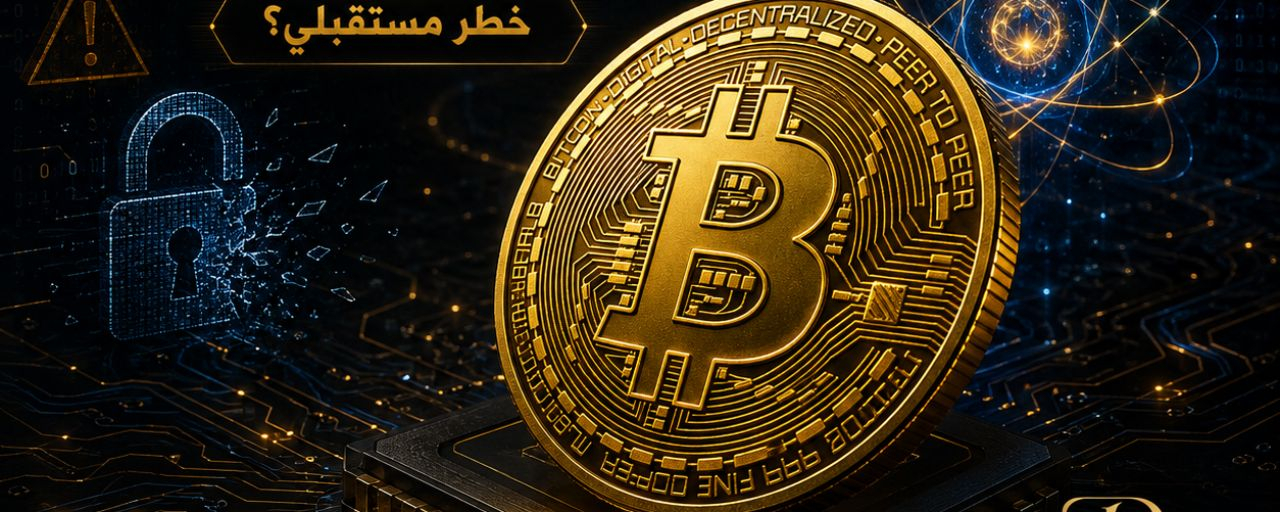
🚨 I Can’t Believe What I’m Hearing... 🤯😱 Quantum computers could one day break Bitcoin’s current encryption! Binance founder CZ just highlighted this serious threat. But here’s the good news — quantum-resistant algorithms already exist and solutions are actively being discussed. If the threat becomes real, Bitcoin may need a major protocol upgrade or even a fork to stay secure in the quantum era. The message is clear: Bitcoin cannot stay frozen forever. It will have to evolve with technology to survive. What do you think — will Bitcoin successfully adapt? Drop your thoughts below 👇 This is not financial advice. #bitcoin #BTC #QuantumComputing #Crypto #BinanceSquare 🚀
🚨 I Can’t Believe What I’m Hearing... 🤯😱

Quantum computers could one day break Bitcoin’s current encryption!
Binance founder CZ just highlighted this serious threat. But here’s the good news — quantum-resistant algorithms already exist and solutions are actively being discussed.
If the threat becomes real, Bitcoin may need a major protocol upgrade or even a fork to stay secure in the quantum era.
The message is clear:
Bitcoin cannot stay frozen forever.
It will have to evolve with technology to survive.
What do you think — will Bitcoin successfully adapt? Drop your thoughts below 👇
This is not financial advice.
#bitcoin #BTC #QuantumComputing #Crypto #BinanceSquare 🚀
Google Warns of Quantum Threat to Bitcoin 🛡️💻 A new white paper from Google’s Quantum AI team has sent ripples through the crypto community. Research suggests that advanced quantum computers could potentially compromise Bitcoin’s encryption in as little as nine minutes—just under the average block time. While the threat isn't immediate, Bitcoin developers are already fast-tracking BIP-360 to bolster security. The transition to a fully "quantum-resistant" network is estimated to take about seven years. #Bitcoin #QuantumComputing #GoogleAI #CryptoSecurity #BIP360 $BTC {spot}(BTCUSDT)
Google Warns of Quantum Threat to Bitcoin 🛡️💻

A new white paper from Google’s Quantum AI team has sent ripples through the crypto community. Research suggests that advanced quantum computers could potentially compromise Bitcoin’s encryption in as little as nine minutes—just under the average block time. While the threat isn't immediate, Bitcoin developers are already fast-tracking BIP-360 to bolster security.

The transition to a fully "quantum-resistant" network is estimated to take about seven years.

#Bitcoin #QuantumComputing #GoogleAI #CryptoSecurity #BIP360
$BTC
​🛡️ Bitcoin's "Quantum Vulnerability": Why didn't Satoshi fix it? Recently, Nic Carter, partner at Castle Island Ventures, discussed a very interesting and important topic on the Delphi Digital podcast. He explained why Bitcoin's founder, Satoshi Nakamoto, was aware of the risks of quantum computing, yet he couldn't secure the early Bitcoin (approximately 1 to 2 million BTC) from this vulnerability. 3 major reasons according to Nick Carter's quote: Zero Value Era (2010): During Satoshi's time, Bitcoin was next to worthless. At that time, it was just an experiment, so the large "financial stakes" that exist today were not even imagined. Code Flexibility: In 2010, Bitcoin's code was very easily changed. Satoshi envisioned that if any system malfunctions occurred, they would be fixed with a simple upgrade. He couldn't foresee that Bitcoin would eventually become so large and "decentralized" that upgrading it would become extremely difficult. The "Million BTC" Risk: Satoshi's 1 to 2 million Bitcoins from his mining and early days are still held on old public keys, which can be easily compromised by quantum computers. These are called "P2PK" (Pay to Public Key), which are more sensitive than modern addresses. Challenge of the Day: According to Carter, upgrading Bitcoin today has become both a "political" and "technical" issue. Because Bitcoin is now a multi-billion dollar asset, it is difficult to get the entire community to agree on any changes. Conclusion: Satoshi certainly acknowledged the quantum threat, but he did not anticipate Bitcoin's meteoric success and its "rigidity." What do you think? Could quantum computing actually pose a threat to Bitcoin, or will Bitcoin's next upgrade protect it? #Bitcoin #SatoshiNakamoto #NicCarter #QuantumComputing #CryptoNews #BlockchainTechnology #BTC $BTC
​🛡️ Bitcoin's "Quantum Vulnerability": Why didn't Satoshi fix it?

Recently, Nic Carter, partner at Castle Island Ventures, discussed a very interesting and important topic on the Delphi Digital podcast. He explained why Bitcoin's founder, Satoshi Nakamoto, was aware of the risks of quantum computing, yet he couldn't secure the early Bitcoin (approximately 1 to 2 million BTC) from this vulnerability.

3 major reasons according to Nick Carter's quote:

Zero Value Era (2010): During Satoshi's time, Bitcoin was next to worthless. At that time, it was just an experiment, so the large "financial stakes" that exist today were not even imagined.

Code Flexibility: In 2010, Bitcoin's code was very easily changed. Satoshi envisioned that if any system malfunctions occurred, they would be fixed with a simple upgrade. He couldn't foresee that Bitcoin would eventually become so large and "decentralized" that upgrading it would become extremely difficult.

The "Million BTC" Risk: Satoshi's 1 to 2 million Bitcoins from his mining and early days are still held on old public keys, which can be easily compromised by quantum computers. These are called "P2PK" (Pay to Public Key), which are more sensitive than modern addresses.

Challenge of the Day:

According to Carter, upgrading Bitcoin today has become both a "political" and "technical" issue. Because Bitcoin is now a multi-billion dollar asset, it is difficult to get the entire community to agree on any changes.

Conclusion: Satoshi certainly acknowledged the quantum threat, but he did not anticipate Bitcoin's meteoric success and its "rigidity."

What do you think? Could quantum computing actually pose a threat to Bitcoin, or will Bitcoin's next upgrade protect it?

#Bitcoin #SatoshiNakamoto #NicCarter #QuantumComputing #CryptoNews #BlockchainTechnology #BTC $BTC
$BTC just got a quantum wake-up call 🔥 Binance founder CZ is pushing a real long-term risk into the spotlight: if quantum computing gets strong enough, Bitcoin may need a protocol upgrade or even a fork to keep its cryptography hardened. That does not break the trend today, but it does change the market’s narrative from “fixed supply” to “adapt or fall behind.” For traders, the first move is usually liquidity hunting, not panic. Whales tend to price the fear before the crowd does, so watch for the market to start valuing quantum-resistant upgrades as a future defense line rather than a distant theory. Not financial advice. Manage your risk and protect your capital. #Bitcoin #BTC #Crypto #QuantumComputing #Blockchain {future}(BTCUSDT)
$BTC just got a quantum wake-up call 🔥

Binance founder CZ is pushing a real long-term risk into the spotlight: if quantum computing gets strong enough, Bitcoin may need a protocol upgrade or even a fork to keep its cryptography hardened. That does not break the trend today, but it does change the market’s narrative from “fixed supply” to “adapt or fall behind.”

For traders, the first move is usually liquidity hunting, not panic. Whales tend to price the fear before the crowd does, so watch for the market to start valuing quantum-resistant upgrades as a future defense line rather than a distant theory.

Not financial advice. Manage your risk and protect your capital.
#Bitcoin #BTC #Crypto #QuantumComputing #Blockchain
Quantum risk starts shaping the $BTC story ⚡ CZ’s warning doesn’t mean Bitcoin is broken today, but it does tell institutions the protocol can’t stay static forever. The market is starting to frame quantum resistance as a future upgrade path, not a panic event, which keeps the long-term debate alive while spot price still breathes on liquidity, flows, and whale positioning. Not financial advice. Manage your risk and protect your capital. #Bitcoin #BTC #Crypto #QuantumComputing #Blockchain Stay sharp. {future}(BTCUSDT)
Quantum risk starts shaping the $BTC story ⚡

CZ’s warning doesn’t mean Bitcoin is broken today, but it does tell institutions the protocol can’t stay static forever. The market is starting to frame quantum resistance as a future upgrade path, not a panic event, which keeps the long-term debate alive while spot price still breathes on liquidity, flows, and whale positioning.

Not financial advice. Manage your risk and protect your capital.

#Bitcoin #BTC #Crypto #QuantumComputing #Blockchain

Stay sharp.
Bitcoin’s quantum-safe escape hatch could quietly reshape $BTC ⚡ A new proposal suggests Bitcoin may defend against quantum risk without a fork, which is a big deal because it avoids the kind of governance fight institutions hate. It’s not a clean long-term fix, but it does buy time inside the existing framework and adds a durability narrative the market may still be underestimating. For now, this reads like slow-burn insurance for the network. Liquidity usually shrugs at abstract threats until the thesis gets louder, and that’s when long-horizon capital starts paying attention to Bitcoin’s survival curve. Not financial advice. Manage your risk and protect your capital. #Bitcoin #BTC #Crypto #Blockchain #QuantumComputing {future}(BTCUSDT)
Bitcoin’s quantum-safe escape hatch could quietly reshape $BTC

A new proposal suggests Bitcoin may defend against quantum risk without a fork, which is a big deal because it avoids the kind of governance fight institutions hate. It’s not a clean long-term fix, but it does buy time inside the existing framework and adds a durability narrative the market may still be underestimating.

For now, this reads like slow-burn insurance for the network. Liquidity usually shrugs at abstract threats until the thesis gets louder, and that’s when long-horizon capital starts paying attention to Bitcoin’s survival curve.

Not financial advice. Manage your risk and protect your capital.

#Bitcoin #BTC #Crypto #Blockchain #QuantumComputing
·
--
Bullish
🚨 BREAKING BREAKING: Quantum Threat Ranks Crypto Safety — $ETH {future}(ETHUSDT) at Risk, $XRP 🔥🔥💰💰🚀🚀 {future}(XRPUSDT) Leads? ⚡️ The conversation around quantum computing just got REAL… and it’s shaking the crypto world. 🧠💥 A recent report highlighted a shocking scenario: 👉 Quantum machines could potentially crack the top 1,000 largest wallets on Ethereum in just DAYS. Yes… days. ⏳ Why is ETH more exposed? Because it’s not just a currency — it’s an entire ecosystem: 🔹 Smart Contracts 🔹 DeFi Protocols 🔹 Validators (PoS) 🔹 Bridges & Layer-2s All of this creates a massive attack surface — more entry points for future quantum exploits. Even Vitalik Buterin has acknowledged the risk and is already working on quantum-resistant solutions to secure the network’s future. 🛡️ 💡 So where does that leave the big players? According to AI-based analysis: 🥇 XRP — Most quantum-resilient (for now) 🥈 Bitcoin — Moderate exposure 🥉 Ethereum — Highest risk due to complexity 📊 The Real Takeaway: Quantum computing isn’t here to destroy crypto tomorrow… But the projects that adapt first will dominate the next decade. 🚀 Security is becoming the new battleground. ⚔️ 🔥 Final Thought: This isn’t just about price anymore… It’s about survival in a post-quantum world. Are you positioned in the right assets? 👀 #Ethereum #Bitcoin #Xrp🔥🔥 #QuantumComputing #BinanceSquare $BNB {future}(BNBUSDT)
🚨 BREAKING BREAKING: Quantum Threat Ranks Crypto Safety — $ETH
at Risk, $XRP 🔥🔥💰💰🚀🚀
Leads? ⚡️
The conversation around quantum computing just got REAL… and it’s shaking the crypto world. 🧠💥
A recent report highlighted a shocking scenario:
👉 Quantum machines could potentially crack the top 1,000 largest wallets on Ethereum in just DAYS.
Yes… days. ⏳
Why is ETH more exposed?
Because it’s not just a currency — it’s an entire ecosystem: 🔹 Smart Contracts
🔹 DeFi Protocols
🔹 Validators (PoS)
🔹 Bridges & Layer-2s
All of this creates a massive attack surface — more entry points for future quantum exploits.
Even Vitalik Buterin has acknowledged the risk and is already working on quantum-resistant solutions to secure the network’s future. 🛡️
💡 So where does that leave the big players?
According to AI-based analysis:
🥇 XRP — Most quantum-resilient (for now)
🥈 Bitcoin — Moderate exposure
🥉 Ethereum — Highest risk due to complexity
📊 The Real Takeaway:
Quantum computing isn’t here to destroy crypto tomorrow…
But the projects that adapt first will dominate the next decade. 🚀
Security is becoming the new battleground. ⚔️
🔥 Final Thought:
This isn’t just about price anymore…
It’s about survival in a post-quantum world.
Are you positioned in the right assets? 👀

#Ethereum #Bitcoin #Xrp🔥🔥 #QuantumComputing #BinanceSquare
$BNB
🚨 BITCOIN QUANTUM SAFE WITHOUT FORK? A new “Quantum Safe Bitcoin” concept claims it could protect Bitcoin against future quantum attacks like Shor’s algorithm without requiring a protocol fork or major upgrade. The idea is designed as a compatibility layer that strengthens security while still operating inside the current Bitcoin system, making it theoretically easier to adopt without disrupting the network. However, the tradeoff is high computational cost, making it impractical for everyday transactions and more suited for limited or specialized use cases. It is being viewed as a temporary bridge solution while the broader community debates a long-term quantum resistance upgrade path. Quantum computing risk is still theoretical for Bitcoin today, but it has become a serious long-term discussion in cryptography circles. The concern is that future quantum machines could break current public key systems if no migration path is implemented in time. Solutions like this aim to buy time rather than permanently solve the problem. The real challenge is balancing security upgrades with Bitcoin’s core principle of stability and decentralization. #Bitcoin #Crypto #QuantumComputing #Blockchain #Web3 $BTC
🚨 BITCOIN QUANTUM SAFE WITHOUT FORK?

A new “Quantum Safe Bitcoin” concept claims it could protect Bitcoin against future quantum attacks like Shor’s algorithm without requiring a protocol fork or major upgrade.

The idea is designed as a compatibility layer that strengthens security while still operating inside the current Bitcoin system, making it theoretically easier to adopt without disrupting the network.
However, the tradeoff is high computational cost, making it impractical for everyday transactions and more suited for limited or specialized use cases.

It is being viewed as a temporary bridge solution while the broader community debates a long-term quantum resistance upgrade path.

Quantum computing risk is still theoretical for Bitcoin today, but it has become a serious long-term discussion in cryptography circles.

The concern is that future quantum machines could break current public key systems if no migration path is implemented in time.

Solutions like this aim to buy time rather than permanently solve the problem.
The real challenge is balancing security upgrades with Bitcoin’s core principle of stability and decentralization.

#Bitcoin #Crypto #QuantumComputing #Blockchain #Web3 $BTC
🚨 BREAKING: “QUANTUM SAFE BITCOIN” PROPOSAL EMERGES A new proposal called “Quantum Safe Bitcoin (QSB)” suggests a way for Bitcoin to remain secure even in a future where powerful quantum computers could potentially break current cryptographic systems using algorithms like Shor’s algorithm. What makes this idea notable is that it claims to work within Bitcoin’s existing framework, meaning it would not require a hard fork or major protocol overhaul. Instead, it would function as a more advanced, optional security layer designed for higher-risk or long-term storage use cases. However, the approach is described as computationally expensive and inefficient for everyday transactions, making it more of a temporary protective measure rather than a full replacement solution. The core concern behind this proposal is “quantum risk”the idea that future quantum machines could theoretically weaken current public key cryptography used in blockchains. Bitcoin itself is not currently under quantum threat, but the discussion is about long-term resilience, especially for dormant wallets and stored funds over decades. This proposal is being viewed as a stopgap idea while the broader Bitcoin community debates whether a future protocol upgrade or post-quantum migration will eventually be necessary. For now, it highlights a key reality: Bitcoin security discussions are already thinking decades ahead of current technology. #Bitcoin #Crypto #QuantumComputing #Blockchain #Web3 $BTC
🚨 BREAKING: “QUANTUM SAFE BITCOIN” PROPOSAL EMERGES

A new proposal called “Quantum Safe Bitcoin (QSB)” suggests a way for Bitcoin to remain secure even in a future where powerful quantum computers could potentially break current cryptographic systems using algorithms like Shor’s algorithm.

What makes this idea notable is that it claims to work within Bitcoin’s existing framework, meaning it would not require a hard fork or major protocol overhaul. Instead, it would function as a more advanced, optional security layer designed for higher-risk or long-term storage use cases.

However, the approach is described as computationally expensive and inefficient for everyday transactions, making it more of a temporary protective measure rather than a full replacement solution.

The core concern behind this proposal is “quantum risk”the idea that future quantum machines could theoretically weaken current public key cryptography used in blockchains.

Bitcoin itself is not currently under quantum threat, but the discussion is about long-term resilience, especially for dormant wallets and stored funds over decades.

This proposal is being viewed as a stopgap idea while the broader Bitcoin community debates whether a future protocol upgrade or post-quantum migration will eventually be necessary.

For now, it highlights a key reality: Bitcoin security discussions are already thinking decades ahead of current technology.

#Bitcoin #Crypto #QuantumComputing #Blockchain #Web3 $BTC
The $XRP Plan — Buying Peace of Mind 🏁💰 The bottom line: ✅ Vulnerability: XRP (0.03%) vs $BTC (35%). ✅ Features: Key Rotation and Escrow — checkmate. ✅ Verdict: XRP is fundamentally safer for decadal holding. The market might ignore this now, but on-chain truth always surfaces. Accumulate $XRP while the "quantum premium" isn't priced in yet! 🏁💰 {future}(XRPUSDT) #XRP #Ripple #Bitcoin #QuantumComputing
The $XRP Plan — Buying Peace of Mind 🏁💰
The bottom line:
✅ Vulnerability: XRP (0.03%) vs $BTC (35%).
✅ Features: Key Rotation and Escrow — checkmate.
✅ Verdict: XRP is fundamentally safer for decadal holding.
The market might ignore this now, but on-chain truth always surfaces. Accumulate $XRP while the "quantum premium" isn't priced in yet! 🏁💰
#XRP #Ripple #Bitcoin #QuantumComputing
🚨 XRP MAY BE SAFER THAN BITCOIN FROM QUANTUM ATTACKS 🚨 New analysis claims XRP could have significantly lower exposure to future quantum computing risks compared to Bitcoin. Experts argue that only a very small fraction of XRP supply (0.03%) is considered potentially vulnerable, while Bitcoin’s exposure could be much higher due to older address reuse patterns and public key visibility after transactions. The key difference comes down to architecture: XRP wallets often keep public keys hidden until spending conditions are triggered, reducing long-term exposure. Bitcoin, on the other hand, can reveal public keys more frequently when funds are spent, potentially increasing theoretical attack surface in a future quantum scenario. XRP also has built-in features like key rotation and escrow-based time-lock mechanisms, which some analysts say could offer additional structural resilience. However, it’s important to note: quantum computing threats remain theoretical for crypto at scale today, and no real-world attack capability currently exists. The debate is less about today’s risk and more about which network is better prepared for tomorrow’s cryptographic shift. #XRP #Bitcoin #Crypto #QuantumComputing #Blockchain $BTC $XRP {future}(BTCUSDT)
🚨 XRP MAY BE SAFER THAN BITCOIN FROM QUANTUM ATTACKS 🚨

New analysis claims XRP could have significantly lower exposure to future quantum computing risks compared to Bitcoin.

Experts argue that only a very small fraction of XRP supply (0.03%) is considered potentially vulnerable, while Bitcoin’s exposure could be much higher due to older address reuse patterns and public key visibility after transactions.

The key difference comes down to architecture:

XRP wallets often keep public keys hidden until spending conditions are triggered, reducing long-term exposure.

Bitcoin, on the other hand, can reveal public keys more frequently when funds are spent, potentially increasing theoretical attack surface in a future quantum scenario.

XRP also has built-in features like key rotation and escrow-based time-lock mechanisms, which some analysts say could offer additional structural resilience.

However, it’s important to note: quantum computing threats remain theoretical for crypto at scale today, and no real-world attack capability currently exists.

The debate is less about today’s risk and more about which network is better prepared for tomorrow’s cryptographic shift.

#XRP #Bitcoin #Crypto #QuantumComputing #Blockchain $BTC $XRP
🚨 Чанпен Чжао (CZ) попереджає про квантову загрозу для криптоіндустрії! Засновник Binance звернув увагу на стрімкий розвиток квантових комп’ютерів, які в майбутньому можуть стати викликом для сучасних систем шифрування. На думку CZ, технології, на яких сьогодні тримається криптосвіт, можуть опинитися під загрозою 🛡 Головний меседж: Настав час діяти на випередження. CZ підкреслює необхідність оновлення мережі Bitcoin та впровадження квантово-стійких алгоритмів, щоб гарантувати безпеку наших активів у довгостроковій перспективі. Криптосвіт завжди адаптувався до викликів, і перехід на "постквантову" безпеку — це наступний логічний крок для еволюції блокчейну. ⛓️💻 Що ви думаєте? Чи готовий Біткоїн до таких технологічних стрибків? Діліться думками в коментарях! 👇 #Binance #CZ #bitcoin #quantumcomputing #CryptoSecurity {spot}(BTCUSDT)
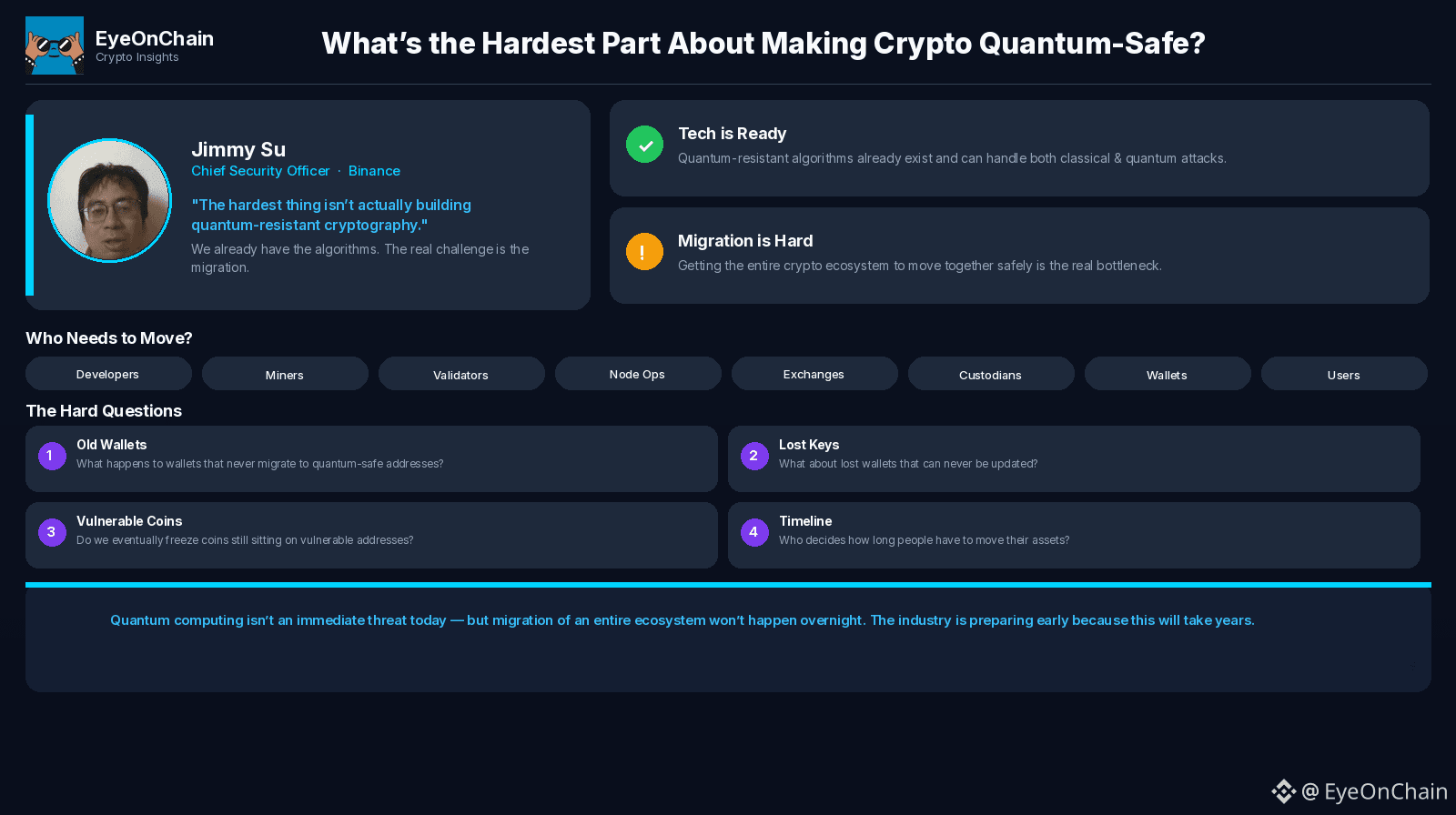
🚨 Чанпен Чжао (CZ) попереджає про квантову загрозу для криптоіндустрії!

Засновник Binance звернув увагу на стрімкий розвиток квантових комп’ютерів, які в майбутньому можуть стати викликом для сучасних систем шифрування. На думку CZ, технології, на яких сьогодні тримається криптосвіт, можуть опинитися під загрозою

🛡 Головний меседж: Настав час діяти на випередження. CZ підкреслює необхідність оновлення мережі Bitcoin та впровадження квантово-стійких алгоритмів, щоб гарантувати безпеку наших активів у довгостроковій перспективі.

Криптосвіт завжди адаптувався до викликів, і перехід на "постквантову" безпеку — це наступний логічний крок для еволюції блокчейну. ⛓️💻
Що ви думаєте? Чи готовий Біткоїн до таких технологічних стрибків? Діліться думками в коментарях! 👇

#Binance #CZ #bitcoin #quantumcomputing #CryptoSecurity
$XRP looks more future-ready than Bitcoin on quantum risk 🧠 XRP’s design keeps public-key exposure low by default, while Bitcoin still has a meaningful share of supply sitting in older, more exposed address formats. For institutions, that doesn’t make XRP “safer” in the broad sense — it means the network may age better if quantum concerns keep moving from theory toward real portfolio risk. Markets rarely price structural advantages early, but this is the kind of custody narrative that can matter when big money starts stress-testing long-duration holdings. The flow angle is simple: assets with cleaner key hygiene may attract more confidence when security becomes a first-order filter. Not financial advice. Manage your risk and protect your capital. #XRP #Bitcoin #Crypto #QuantumComputing #Blockchain 🛡️ {future}(XRPUSDT)
$XRP looks more future-ready than Bitcoin on quantum risk 🧠

XRP’s design keeps public-key exposure low by default, while Bitcoin still has a meaningful share of supply sitting in older, more exposed address formats. For institutions, that doesn’t make XRP “safer” in the broad sense — it means the network may age better if quantum concerns keep moving from theory toward real portfolio risk.

Markets rarely price structural advantages early, but this is the kind of custody narrative that can matter when big money starts stress-testing long-duration holdings. The flow angle is simple: assets with cleaner key hygiene may attract more confidence when security becomes a first-order filter.

Not financial advice. Manage your risk and protect your capital.
#XRP #Bitcoin #Crypto #QuantumComputing #Blockchain
🛡️
$XRP's quantum edge is the kind of detail institutions quietly notice XRP’s wallet architecture keeps most holders out of public-key exposure, while a meaningful share of Bitcoin still sits in older address types that could face more future risk as quantum threats mature. The market doesn’t price that story every day, but it matters: cleaner key hygiene and built-in rotation can make a network feel more future-proof when capital starts thinking in decades, not cycles. Not financial advice. Manage your risk and protect your capital. #XRP #Bitcoin #Crypto #QuantumComputing #Altcoins ⚡ {future}(XRPUSDT)
$XRP's quantum edge is the kind of detail institutions quietly notice

XRP’s wallet architecture keeps most holders out of public-key exposure, while a meaningful share of Bitcoin still sits in older address types that could face more future risk as quantum threats mature. The market doesn’t price that story every day, but it matters: cleaner key hygiene and built-in rotation can make a network feel more future-proof when capital starts thinking in decades, not cycles.

Not financial advice. Manage your risk and protect your capital.

#XRP #Bitcoin #Crypto #QuantumComputing #Altcoins

·
--
XRP’s Quantum Edge Might Be Bigger Than Most People Think A lot of people talk about quantum risk like every chain is standing in the same place. They are not. A recent quantum audit shared by XRPL validator Vet points to a striking gap: only around 0.03% of circulating XRP supply is estimated to be vulnerable, tied to roughly 300,000 accounts holding 2.4B XRP. Compare that with Bitcoin, where estimated exposure is often described as dramatically higher. What makes XRP stand out here is not just lower exposure. It is structure. XRPL has built-in key rotation. That means users can update cryptographic keys without moving funds, which matters a lot in a future where exposed keys become a real attack surface. Bitcoin does not have that same native advantage. This does not mean XRP is magically immune, and it does not mean the quantum conversation is over. But it does mean XRP may be entering that discussion from a much stronger position than many people realize. In a market obsessed with speed and price, quiet architecture like this gets ignored. Maybe it should not. Do you think quantum readiness will become a serious narrative for crypto this cycle? #XRP #XRPL #Crypto #Blockchain #QuantumComputing $XRP {future}(XRPUSDT)
XRP’s Quantum Edge Might Be Bigger Than Most People Think

A lot of people talk about quantum risk like every chain is standing in the same place. They are not.

A recent quantum audit shared by XRPL validator Vet points to a striking gap: only around 0.03% of circulating XRP supply is estimated to be vulnerable, tied to roughly 300,000 accounts holding 2.4B XRP. Compare that with Bitcoin, where estimated exposure is often described as dramatically higher.

What makes XRP stand out here is not just lower exposure. It is structure.

XRPL has built-in key rotation.

That means users can update cryptographic keys without moving funds, which matters a lot in a future where exposed keys become a real attack surface. Bitcoin does not have that same native advantage.

This does not mean XRP is magically immune, and it does not mean the quantum conversation is over. But it does mean XRP may be entering that discussion from a much stronger position than many people realize.

In a market obsessed with speed and price, quiet architecture like this gets ignored. Maybe it should not.

Do you think quantum readiness will become a serious narrative for crypto this cycle?

#XRP #XRPL #Crypto #Blockchain #QuantumComputing $XRP
starts its quantum defense era 🛡️ Google’s latest research turned quantum risk from a distant theory into a live security debate, and Dogecoin is already responding. The Dogecoin Foundation says an experimental post-quantum secure transaction has been completed on mainnet, while earlier RE-EN work shows the team is preparing for a future where public-key exposure becomes the real weak spot. For the market, this is the kind of upgrade story that can quietly attract long-horizon capital: less speculation, more infrastructure. Not financial advice. Manage your risk and protect your capital. #DOGECOİN #CryptoNews #QuantumComputing #Blockchain #Web3 ⚡ {future}(DOGEUSDT)
starts its quantum defense era 🛡️

Google’s latest research turned quantum risk from a distant theory into a live security debate, and Dogecoin is already responding. The Dogecoin Foundation says an experimental post-quantum secure transaction has been completed on mainnet, while earlier RE-EN work shows the team is preparing for a future where public-key exposure becomes the real weak spot.

For the market, this is the kind of upgrade story that can quietly attract long-horizon capital: less speculation, more infrastructure. Not financial advice. Manage your risk and protect your capital.

#DOGECOİN #CryptoNews #QuantumComputing #Blockchain #Web3
🚨INSIGHT: XRP MAY HAVE LOWER QUANTUM EXPOSURE THAN BITCOIN🚨 Some crypto security researchers argue that XRP could have a lower near-term quantum exposure profile compared to Bitcoin due to differences in how public keys are exposed on-chain The core argument centers on wallet design and key visibility In Bitcoin’s UTXO model, a significant portion of funds are tied to addresses where public keys may become exposed once a transaction is made, especially in older legacy formats, creating a theoretical long-term vulnerability window if quantum capabilities mature Estimates often cited suggest a large share of Bitcoin supply could be linked to addresses that are potentially more exposed depending on usage history and address reuse patterns By contrast, XRP Ledger accounts are generally associated with hashed public key states until transactions are executed, and many wallets have never directly exposed full public keys on-chain Additionally, XRPL features like key rotation and escrow mechanisms may reduce long-term static exposure by allowing users to update signing keys without constantly reusing the same cryptographic identity However, this does not mean immunity It means different exposure dynamics rather than absolute safety Quantum risk in crypto is not about immediate danger, but long-term cryptographic break scenarios Bitcoin’s security model is extremely robust today, but its historical address reuse patterns create theoretical exposure pathways if quantum decryption becomes practical at scale XRPL’s design may reduce some of that surface area, but it still relies on cryptographic primitives that would also require upgrades in a post-quantum world The key takeaway is not “one chain is safe, the other is not” It is that quantum risk is architecture dependent, not just asset dependent The real race is not between Bitcoin and XRP It is between blockchains and quantum timelines #Bitcoin #XRP #Crypto #QuantumComputing #Blockchain $BTC $XRP
🚨INSIGHT: XRP MAY HAVE LOWER QUANTUM EXPOSURE THAN BITCOIN🚨

Some crypto security researchers argue that XRP could have a lower near-term quantum exposure profile compared to Bitcoin due to differences in how public keys are exposed on-chain

The core argument centers on wallet design and key visibility

In Bitcoin’s UTXO model, a significant portion of funds are tied to addresses where public keys may become exposed once a transaction is made, especially in older legacy formats, creating a theoretical long-term vulnerability window if quantum capabilities mature

Estimates often cited suggest a large share of Bitcoin supply could be linked to addresses that are potentially more exposed depending on usage history and address reuse patterns

By contrast, XRP Ledger accounts are generally associated with hashed public key states until transactions are executed, and many wallets have never directly exposed full public keys on-chain

Additionally, XRPL features like key rotation and escrow mechanisms may reduce long-term static exposure by allowing users to update signing keys without constantly reusing the same cryptographic identity

However, this does not mean immunity

It means different exposure dynamics rather than absolute safety

Quantum risk in crypto is not about immediate danger, but long-term cryptographic break scenarios

Bitcoin’s security model is extremely robust today, but its historical address reuse patterns create theoretical exposure pathways if quantum decryption becomes practical at scale

XRPL’s design may reduce some of that surface area, but it still relies on cryptographic primitives that would also require upgrades in a post-quantum world

The key takeaway is not “one chain is safe, the other is not”

It is that quantum risk is architecture dependent, not just asset dependent

The real race is not between Bitcoin and XRP

It is between blockchains and quantum timelines

#Bitcoin #XRP #Crypto #QuantumComputing #Blockchain $BTC $XRP
🚨 XRP Shows Significantly Lower Quantum Risk Than Bitcoin – Experts Highlight Structural Edge 🔐 While quantum computing threats are gaining attention after Google’s recent research (reducing required qubits dramatically), XRP appears much better positioned than Bitcoin. XRP Ledger Snapshot: • Approximately 300,000 accounts holding 2.4 billion XRP have never transacted — their public keys remain completely hidden and quantum-safe by design. • Only two dormant accounts with exposed keys hold 21 million XRP — a tiny 0.03% of total circulating supply. Bitcoin Contrast: • Estimates for quantum-vulnerable BTC range from 2.3 million to ~6.9–7 million BTC (roughly 11–33% of supply), mostly in legacy exposed addresses (including early P2PK and reused wallets). • Bitcoin lacks native easy key rotation, making upgrades more complex. XRP’s account-based model and built-in key rotation capability give it a clear advantage for future post-quantum transitions. This structural resilience could make $XRP relatively more attractive in a quantum-aware market. What’s your view — does lower quantum exposure strengthen the case for XRP long-term? 👀 Drop your thoughts below 👇 $BTC {spot}(BTCUSDT) $XRP {spot}(XRPUSDT) #XRP #Ripple #Bitcoin #BTC #QuantumComputing
🚨 XRP Shows Significantly Lower Quantum Risk Than Bitcoin – Experts Highlight Structural Edge 🔐

While quantum computing threats are gaining attention after Google’s recent research (reducing required qubits dramatically), XRP appears much better positioned than Bitcoin.

XRP Ledger Snapshot:

• Approximately 300,000 accounts holding 2.4 billion XRP have never transacted — their public keys remain completely hidden and quantum-safe by design.

• Only two dormant accounts with exposed keys hold 21 million XRP — a tiny 0.03% of total circulating supply.

Bitcoin Contrast:

• Estimates for quantum-vulnerable BTC range from 2.3 million to ~6.9–7 million BTC (roughly 11–33% of supply), mostly in legacy exposed addresses (including early P2PK and reused wallets).

• Bitcoin lacks native easy key rotation, making upgrades more complex.

XRP’s account-based model and built-in key rotation capability give it a clear advantage for future post-quantum transitions.

This structural resilience could make $XRP relatively more attractive in a quantum-aware market.

What’s your view — does lower quantum exposure strengthen the case for XRP long-term? 👀

Drop your thoughts below 👇

$BTC
$XRP

#XRP #Ripple #Bitcoin #BTC #QuantumComputing
·
--
Bullish
🛡️ THE QUANTUM SHIELD: $XRP {future}(XRPUSDT) VS. $BTC {future}(BTCUSDT) ! 🔐 While the world panics over Quantum Computing, XRP is standing tall. Fresh on-chain analysis reveals a shocking truth: XRP is built for the future. 🛑 THE BITCOIN VULNERABILITY Bitcoin’s "Achilles' heel" is its past. Millions of BTC sit in Legacy addresses (including Satoshi's 1.1M BTC) where public keys are exposed. If a quantum computer cracks the code, those coins are at risk. 💎 THE XRP ADVANTAGE New data from researcher Vet (April 8, 2026) shows XRP’s exposure is negligible: 300,000 Accounts: Holding 2.4 Billion XRP, these wallets have never transacted. Their public keys remain hidden, making them Quantum Safe. Whale Security: Only TWO large dormant XRP wallets (holding ~21M coins) have exposed public keys. Total Risk: Only 0.03% of the total XRP supply is even potentially vulnerable. 🚀 WHY XRP IS WINNING THE TECH RACE Key Rotation: XRPL allows you to rotate your cryptographic keys natively without moving your funds. Bitcoin doesn’t. AlphaNet Testing: Ripple is already testing NIST-approved ML-DSA (quantum-resistant signatures) to future-proof the network by late 2026. Whale Confidence: Large holders are moving over 11 Million XRP daily into private custody, banking on this superior security. 📊 VERDICT: While other chains scramble to patch their legacy flaws, XRP’s architecture was born ready. Is this the ultimate catalyst for the next leg up? Who do you trust with your long-term HODL? 🔒 The "Old Guard" or the "Quantum King"? Is your XRP wallet "Quantum Safe" yet? Check if you've ever made an outgoing transaction! 🔎 #QuantumComputing #CryptoSecurity #BinanceSquare #Write2Earn #XRPL $ETH {future}(ETHUSDT)
🛡️ THE QUANTUM SHIELD: $XRP
VS. $BTC
! 🔐

While the world panics over Quantum Computing, XRP is standing tall. Fresh on-chain analysis reveals a shocking truth: XRP is built for the future.

🛑 THE BITCOIN VULNERABILITY

Bitcoin’s "Achilles' heel" is its past. Millions of BTC sit in Legacy addresses (including Satoshi's 1.1M BTC) where public keys are exposed. If a quantum computer cracks the code, those coins are at risk.

💎 THE XRP ADVANTAGE

New data from researcher Vet (April 8, 2026) shows XRP’s exposure is negligible:

300,000 Accounts: Holding 2.4 Billion XRP, these wallets have never transacted. Their public keys remain hidden, making them Quantum Safe.

Whale Security: Only TWO large dormant XRP wallets (holding ~21M coins) have exposed public keys.

Total Risk: Only 0.03% of the total XRP supply is even potentially vulnerable.

🚀 WHY XRP IS WINNING THE TECH RACE

Key Rotation: XRPL allows you to rotate your cryptographic keys natively without moving your funds. Bitcoin doesn’t.

AlphaNet Testing: Ripple is already testing NIST-approved ML-DSA (quantum-resistant signatures) to future-proof the network by late 2026.

Whale Confidence: Large holders are moving over 11 Million XRP daily into private custody, banking on this superior security.

📊 VERDICT: While other chains scramble to patch their legacy flaws, XRP’s architecture was born ready. Is this the ultimate catalyst for the next leg up?

Who do you trust with your long-term HODL? 🔒 The "Old Guard" or the "Quantum King"?

Is your XRP wallet "Quantum Safe" yet? Check if you've ever made an outgoing transaction! 🔎

#QuantumComputing #CryptoSecurity #BinanceSquare #Write2Earn #XRPL $ETH
🚨BITCOIN RESEARCHERS INTRODUCE “QUANTUM SAFE BITCOIN”🚨 Bitcoin researchers have reportedly proposed a “Quantum Safe Bitcoin” approach aimed at making transactions resistant to future quantum attacks without requiring a full change to the core Bitcoin protocol Developers have also demonstrated early prototype work focused on protecting wallets from potential quantum-based decryption risks The key idea is simple but powerful Upgrade security layers around Bitcoin without breaking Bitcoin itself This comes as the Bitcoin developer community increasingly acknowledges that quantum computing is no longer a distant theoretical concern but a long term security variable that must be engineered for today If successful, this approach could allow Bitcoin to evolve its cryptographic defenses while preserving decentralization and backward compatibility Market implication is bigger than most realize This is not just a tech upgrade narrative It is Bitcoin actively preparing for its next existential security cycle before the threat fully arrives And that is exactly how long term survival protocols get built in crypto Quantum computing threatens current cryptography models used across digital systems including Bitcoin wallets and signatures A quantum safe layer would aim to protect private keys even in a future where classical encryption can be broken faster than expected The challenge is doing this without forcing a hard fork that splits the network or disrupts consensus That is why “overlay security” and backward compatible upgrades are becoming the preferred direction among developers If Bitcoin solves this early, it strengthens the institutional case for long term holdings If it delays too long, quantum risk becomes a pricing factor Either way, Bitcoin is no longer ignoring the question It is now building for it #Bitcoin #BTC #QuantumComputing #Crypto #Blockchain $BTC
🚨BITCOIN RESEARCHERS INTRODUCE “QUANTUM SAFE BITCOIN”🚨

Bitcoin researchers have reportedly proposed a “Quantum Safe Bitcoin” approach aimed at making transactions resistant to future quantum attacks without requiring a full change to the core Bitcoin protocol

Developers have also demonstrated early prototype work focused on protecting wallets from potential quantum-based decryption risks

The key idea is simple but powerful

Upgrade security layers around Bitcoin without breaking Bitcoin itself

This comes as the Bitcoin developer community increasingly acknowledges that quantum computing is no longer a distant theoretical concern but a long term security variable that must be engineered for today

If successful, this approach could allow Bitcoin to evolve its cryptographic defenses while preserving decentralization and backward compatibility

Market implication is bigger than most realize

This is not just a tech upgrade narrative

It is Bitcoin actively preparing for its next existential security cycle before the threat fully arrives

And that is exactly how long term survival protocols get built in crypto

Quantum computing threatens current cryptography models used across digital systems including Bitcoin wallets and signatures

A quantum safe layer would aim to protect private keys even in a future where classical encryption can be broken faster than expected

The challenge is doing this without forcing a hard fork that splits the network or disrupts consensus

That is why “overlay security” and backward compatible upgrades are becoming the preferred direction among developers

If Bitcoin solves this early, it strengthens the institutional case for long term holdings

If it delays too long, quantum risk becomes a pricing factor

Either way, Bitcoin is no longer ignoring the question

It is now building for it

#Bitcoin #BTC #QuantumComputing #Crypto #Blockchain $BTC
Login to explore more contents
Join global crypto users on Binance Square
⚡️ Get latest and useful information about crypto.
💬 Trusted by the world’s largest crypto exchange.
👍 Discover real insights from verified creators.
Email / Phone number