
#cryptonewss
cryptonewss
51.6M views
57,868 Discussing
Hot
Latest

Millions of dollars are involved, yet barely anyone is talking about the current BitMart situation.
BitMart has announced an orderly wind-down of its trading platform. Trading is scheduled to stop on August 26, while full operations are expected to cease in January 2027.
What makes this even more serious is the scale — BitMart reportedly had around $1.6B in 24-hour trading volume shortly before the announcement.
Thousands of users, projects, market makers and traders are potentially affected.
This isn’t just about $BMX.
It’s about liquidity, exchange exposure, user funds, token listings and the risks projects take when relying heavily on centralized exchanges.
The crypto industry needs more transparency around what happens next.
How many people are actually paying attention to this?
#BitMart #Crypto #Bitcoin #CryptoNewss #Blockchain
BitMart has announced an orderly wind-down of its trading platform. Trading is scheduled to stop on August 26, while full operations are expected to cease in January 2027.
What makes this even more serious is the scale — BitMart reportedly had around $1.6B in 24-hour trading volume shortly before the announcement.
Thousands of users, projects, market makers and traders are potentially affected.
This isn’t just about $BMX.
It’s about liquidity, exchange exposure, user funds, token listings and the risks projects take when relying heavily on centralized exchanges.
The crypto industry needs more transparency around what happens next.
How many people are actually paying attention to this?
#BitMart #Crypto #Bitcoin #CryptoNewss #Blockchain

Crypto price predictions: Dogecoin, XRP, Venice Token (VVV)#CryptoNewss
$XRP
$RE
$DOGE
#Market_Update XRP price forecast
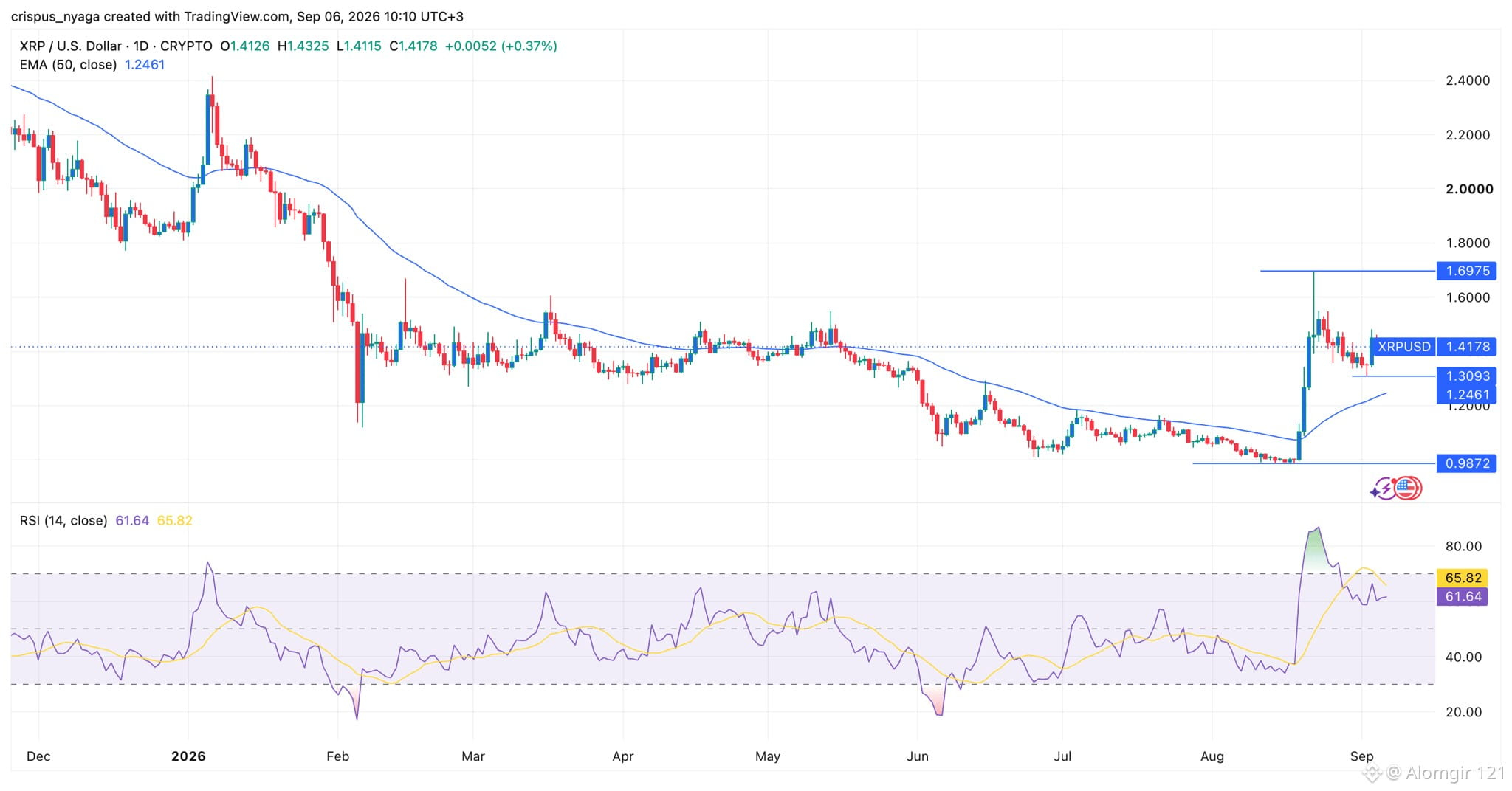
XRP token has held steady in the past few weeks and is hovering near its highest level in August. This rebound happened after it formed a falling wedge pattern, which is made up of two descending and converging trendlines. This pattern normally leads to a strong bullish breakout.#CryptoAnalysis"
The token’s rally has coincided with the ongoing demand for its ETFs. XRP ETF inflows jumped by over $159 million last month and have already added over $13 million this month. The supply in key exchanges like Binance and Coinbase has continued to fall.
Technically, XRP has moved above the 50-day moving average, a sign that bulls are in control for now. It has formed a bullish flag pattern. Therefore, there is a likelihood that the coin will have a strong bullish breakout, potentially to this month’s high of $1.6975.
Dogecoin price prediction#market_tips #
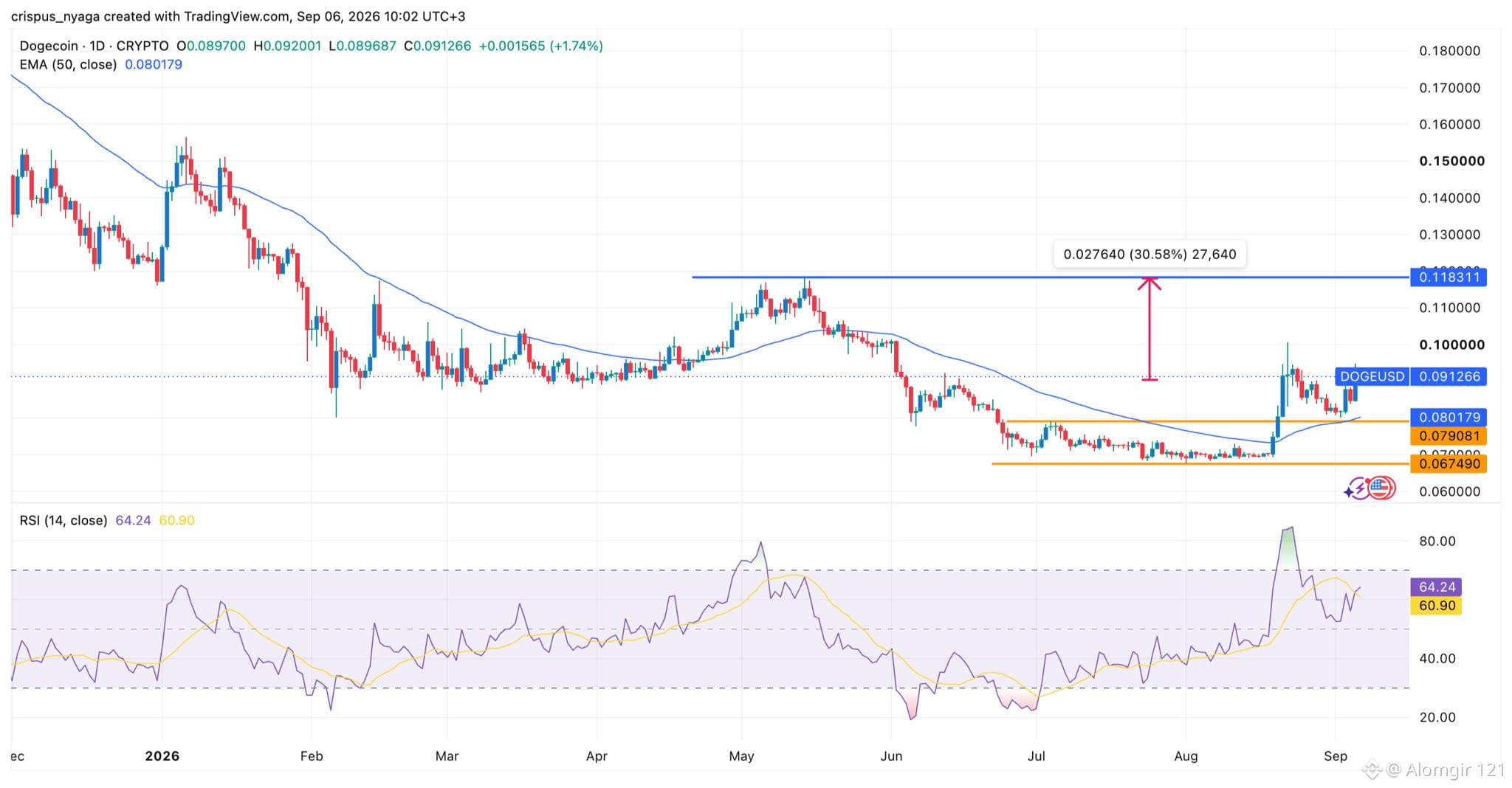
The daily chart shows that the DOGE price has remained inside a narrow range in the past few months. It remained between the support and resistance levels of $0.067 and $0.0790 between June 24 and August 20th. In some instances, this consolidation is usually a sign that investors are accumulating the token.
DOGE price has now moved above the important resistance level of $0.0790, confirming a bullish breakout. It has also retested it, in a process known as a break-and-retest, which is a common continuation sign in technical analysis.
The token has remained above the 50-day Exponential Moving Average (EMA), while the Relative Strength Index (RSI) has jumped above the neutral level of 50.
This performance has coincided with the higher volume, with the 24-hour figure rising to over $1.49 billion. Its futures open interest have risen, a sign that investor demand is rising. However, DOGE ETF inflows have struggled, with their outflows hitting $343k this month...
$XRP
$RE
$DOGE
#Market_Update XRP price forecast
XRP token has held steady in the past few weeks and is hovering near its highest level in August. This rebound happened after it formed a falling wedge pattern, which is made up of two descending and converging trendlines. This pattern normally leads to a strong bullish breakout.#CryptoAnalysis"
The token’s rally has coincided with the ongoing demand for its ETFs. XRP ETF inflows jumped by over $159 million last month and have already added over $13 million this month. The supply in key exchanges like Binance and Coinbase has continued to fall.
Technically, XRP has moved above the 50-day moving average, a sign that bulls are in control for now. It has formed a bullish flag pattern. Therefore, there is a likelihood that the coin will have a strong bullish breakout, potentially to this month’s high of $1.6975.
Dogecoin price prediction#market_tips #
The daily chart shows that the DOGE price has remained inside a narrow range in the past few months. It remained between the support and resistance levels of $0.067 and $0.0790 between June 24 and August 20th. In some instances, this consolidation is usually a sign that investors are accumulating the token.
DOGE price has now moved above the important resistance level of $0.0790, confirming a bullish breakout. It has also retested it, in a process known as a break-and-retest, which is a common continuation sign in technical analysis.
The token has remained above the 50-day Exponential Moving Average (EMA), while the Relative Strength Index (RSI) has jumped above the neutral level of 50.
This performance has coincided with the higher volume, with the 24-hour figure rising to over $1.49 billion. Its futures open interest have risen, a sign that investor demand is rising. However, DOGE ETF inflows have struggled, with their outflows hitting $343k this month...
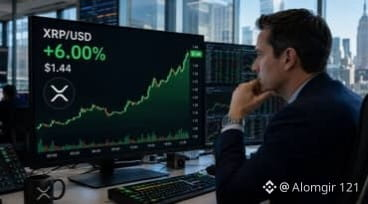

Financial landscape update! 🚀 The current U.S. administration is shifting its regulatory focus toward digital assets. 📈 This positive change is expected to bring massive momentum to the crypto market, driving expansion and broader adoption globally. 💎 Traditional banks are preparing for these developments, with institutions like Wells Fargo exploring digital asset integration. Get ready for a new era of crypto growth! 🌍💸
$AAPLB $TRX
#CryptoNewss #CryptoTrading. #Binance #BTC #bitcoin
$AAPLB $TRX
#CryptoNewss #CryptoTrading. #Binance #BTC #bitcoin
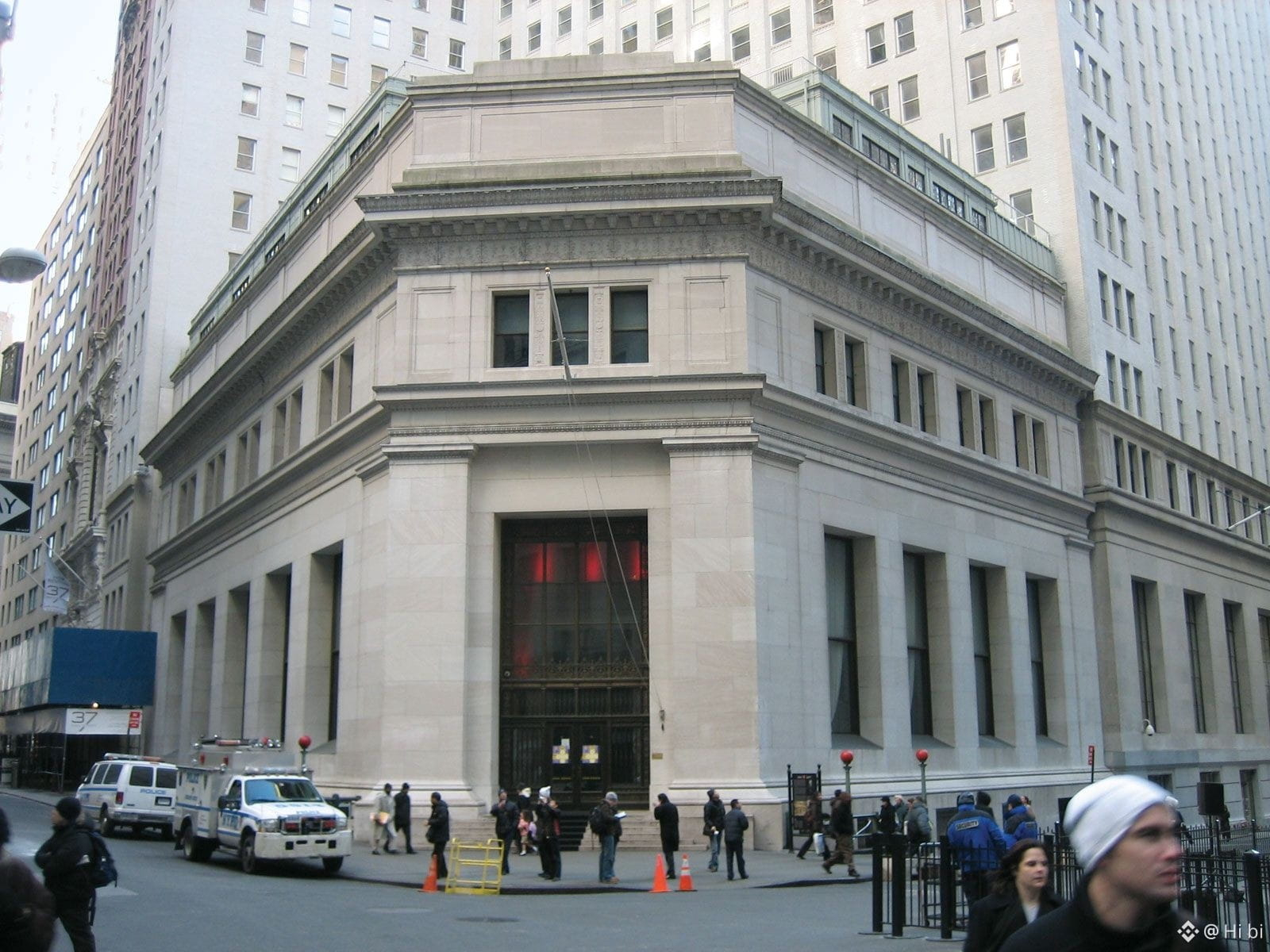

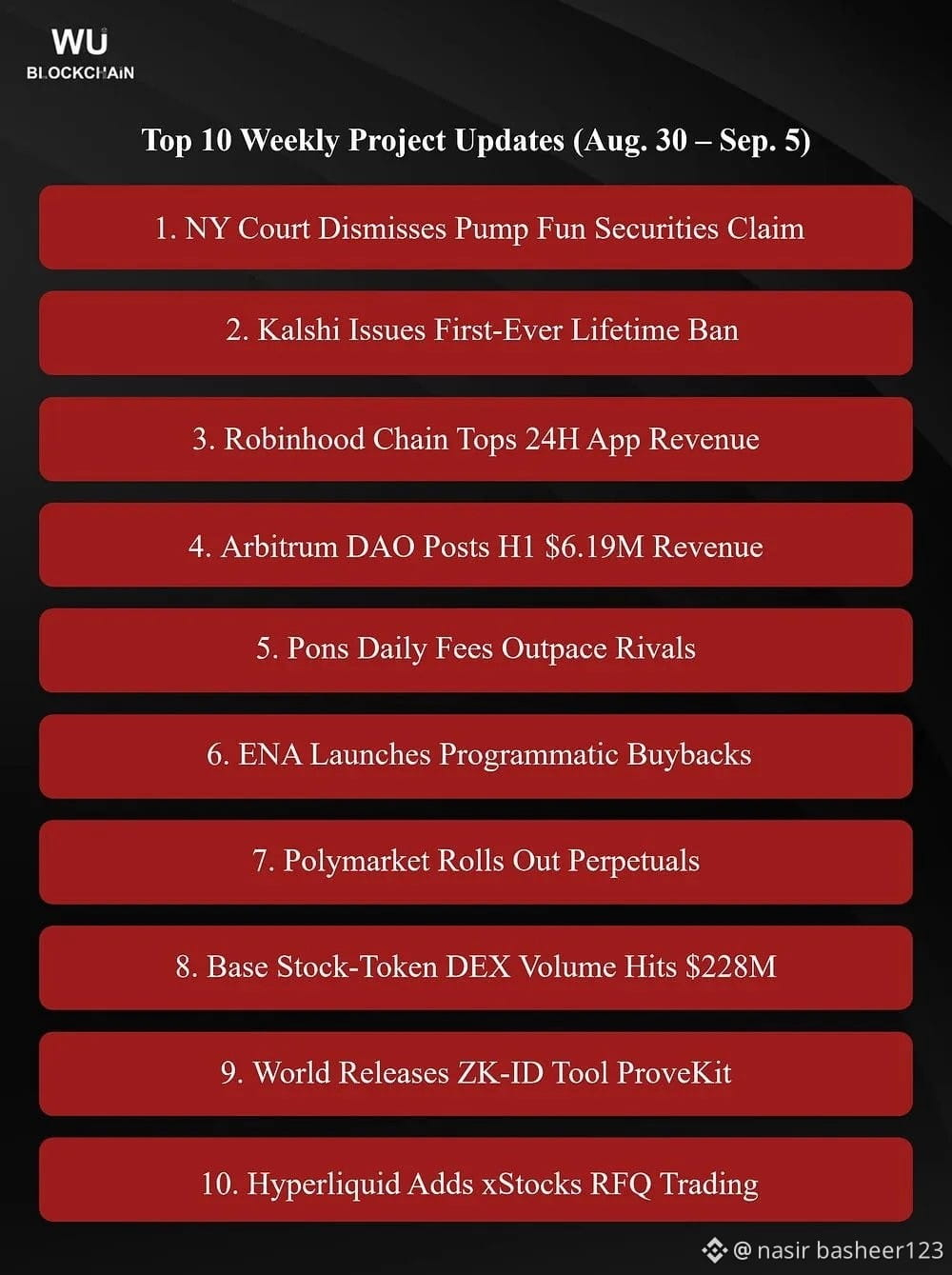
🔥 TOP 10 WEEKLY CRYPTO PROJECT UPDATES!
Here are the biggest moves shaping the market this week:
⚖️ NY Court dismisses Pump Fun securities claim.
🚫 Kalshi issues first-ever lifetime trading ban.
📈 Robinhood Chain tops 24H app revenue.
💰 Arbitrum DAO posts $6.19M H1 revenue.
🔥 ENA launches programmatic token buybacks.
📉 Polymarket rolls out Perpetuals.
Which of these updates is the biggest news for you? 👇
#CryptoNewss #BinanceSquare #WuBlockchain #DeFi #Web3
Here are the biggest moves shaping the market this week:
⚖️ NY Court dismisses Pump Fun securities claim.
🚫 Kalshi issues first-ever lifetime trading ban.
📈 Robinhood Chain tops 24H app revenue.
💰 Arbitrum DAO posts $6.19M H1 revenue.
🔥 ENA launches programmatic token buybacks.
📉 Polymarket rolls out Perpetuals.
Which of these updates is the biggest news for you? 👇
#CryptoNewss #BinanceSquare #WuBlockchain #DeFi #Web3


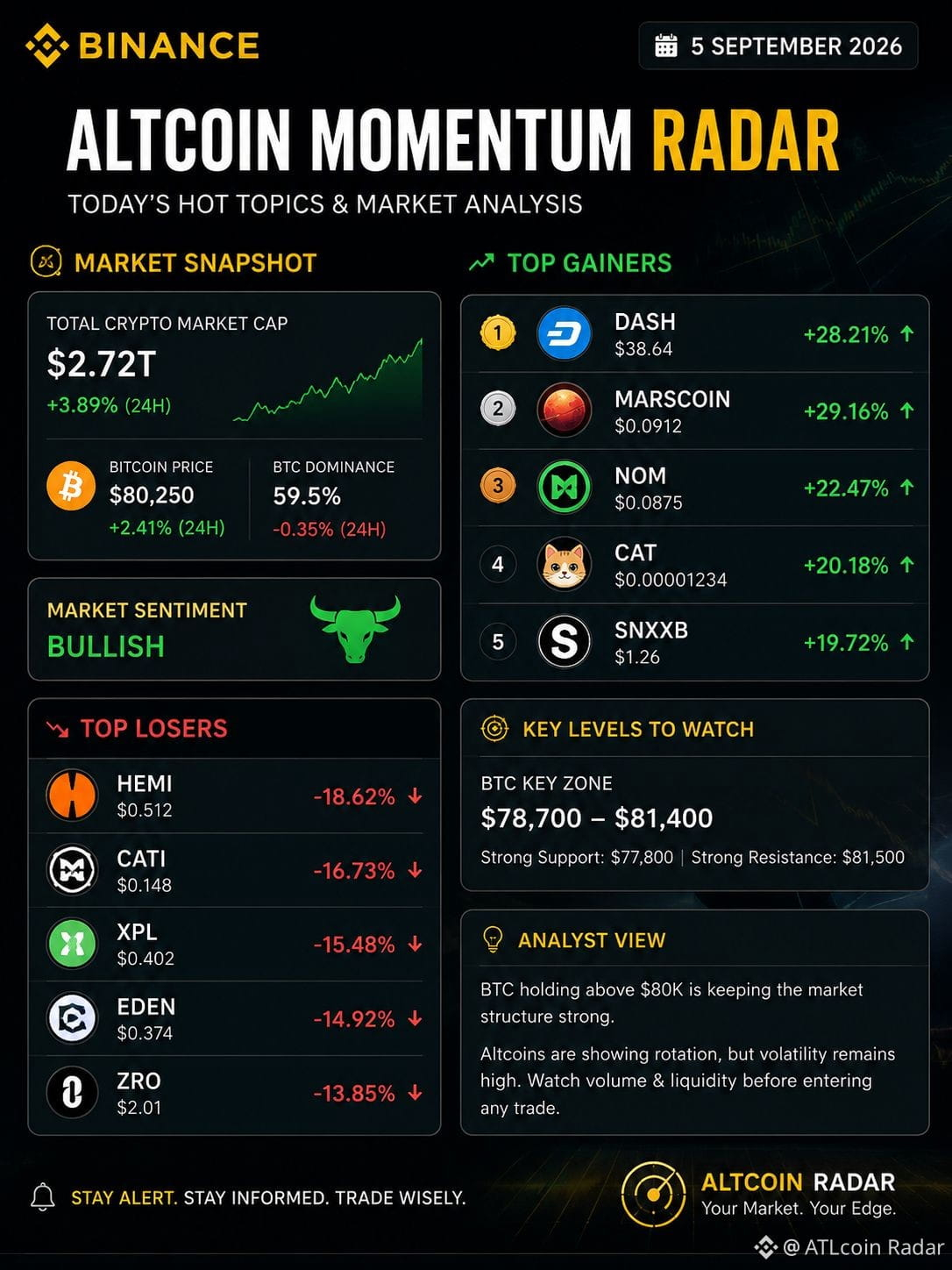
🚨 ALTCOIN MOMENTUM RADAR | SEPTEMBER 5, 2026
The crypto market is showing renewed momentum, but today’s strongest moves are concentrated in a handful of high-volatility altcoins.
📊 MARKET SNAPSHOT
Bitcoin remains the key market driver around the $80K zone. If BTC continues to hold strength, further capital rotation into selected altcoins could follow.
🔥 TOP MOMENTUM WATCHLIST
🥇 $DASH — ~28% 24H move
⚡ $MARSCOIN — ~29% 24H move
🚀 $NOM — ~22% 24H move
🔥$ CAT— ~20% 24H move
👀 $ SNXXB— ~20% 24H move
🔻 LOSERS UNDER PRESSURE
Several lower-cap tokens are experiencing sharp declines, including $HEMI, $CATI, $XPL, $EDEN and $ZRO.
This is a reminder that extreme momentum works both ways — fast pumps can be followed by equally aggressive reversals.
🧠 WHAT SMART MONEY SHOULD WATCH
• BTC's reaction around $80K
• Rising volume behind altcoin breakouts
• Whether major gainers can hold their breakout levels
• Liquidity before entering low-cap moves
• Signs of profit-taking after extended pumps
⚠️ ANALYST NOTE
The biggest percentage gainer is not automatically the best trade.
Momentum + volume + liquidity + market structure matter more than a single 24H percentage.
The real question isn't “Which coin pumped?”
It's:
👉 Which coin can actually HOLD the move?
Drop your strongest altcoin pick below. 👇
$BTC $ DASH$ NOM $ CAT $BNB $ETH
#BinanceSquareFamily #CryptoNewss #dashcoin #Altcoins #CryptoTrading #Bitcoin #AltcoinRadar #CryptoMarket #Trading #Binance #AltcoinSeason
The crypto market is showing renewed momentum, but today’s strongest moves are concentrated in a handful of high-volatility altcoins.
📊 MARKET SNAPSHOT
Bitcoin remains the key market driver around the $80K zone. If BTC continues to hold strength, further capital rotation into selected altcoins could follow.
🔥 TOP MOMENTUM WATCHLIST
🥇 $DASH — ~28% 24H move
⚡ $MARSCOIN — ~29% 24H move
🚀 $NOM — ~22% 24H move
🔥$ CAT— ~20% 24H move
👀 $ SNXXB— ~20% 24H move
🔻 LOSERS UNDER PRESSURE
Several lower-cap tokens are experiencing sharp declines, including $HEMI, $CATI, $XPL, $EDEN and $ZRO.
This is a reminder that extreme momentum works both ways — fast pumps can be followed by equally aggressive reversals.
🧠 WHAT SMART MONEY SHOULD WATCH
• BTC's reaction around $80K
• Rising volume behind altcoin breakouts
• Whether major gainers can hold their breakout levels
• Liquidity before entering low-cap moves
• Signs of profit-taking after extended pumps
⚠️ ANALYST NOTE
The biggest percentage gainer is not automatically the best trade.
Momentum + volume + liquidity + market structure matter more than a single 24H percentage.
The real question isn't “Which coin pumped?”
It's:
👉 Which coin can actually HOLD the move?
Drop your strongest altcoin pick below. 👇
$BTC $ DASH$ NOM $ CAT $BNB $ETH
#BinanceSquareFamily #CryptoNewss #dashcoin #Altcoins #CryptoTrading #Bitcoin #AltcoinRadar #CryptoMarket #Trading #Binance #AltcoinSeason

🚨 CRYPTO NEWS TODAY — SEPTEMBER 5, 2026
📉 Bitcoin Falls Below $80,000 After Strong U.S. Jobs Data
Fresh U.S. employment data came in stronger than expected, raising concerns among investors that the Federal Reserve could maintain a tighter monetary policy. Against this backdrop, BTC lost momentum and fell below the $80,000 level, pushing the broader crypto market into the red.
🔥 Why does this matter? The next major catalysts for the crypto market could be the U.S. inflation data on September 11 and the upcoming Senate vote on the CLARITY Act. Both events could have a significant impact on Bitcoin, Ethereum, and altcoins.
#bitcoin $BTC #CryptoNewss #Ethereum✅ #CryptoMarket #BreakingNews
📉 Bitcoin Falls Below $80,000 After Strong U.S. Jobs Data
Fresh U.S. employment data came in stronger than expected, raising concerns among investors that the Federal Reserve could maintain a tighter monetary policy. Against this backdrop, BTC lost momentum and fell below the $80,000 level, pushing the broader crypto market into the red.
🔥 Why does this matter? The next major catalysts for the crypto market could be the U.S. inflation data on September 11 and the upcoming Senate vote on the CLARITY Act. Both events could have a significant impact on Bitcoin, Ethereum, and altcoins.
#bitcoin $BTC #CryptoNewss #Ethereum✅ #CryptoMarket #BreakingNews
Amran Binasou :
Spider

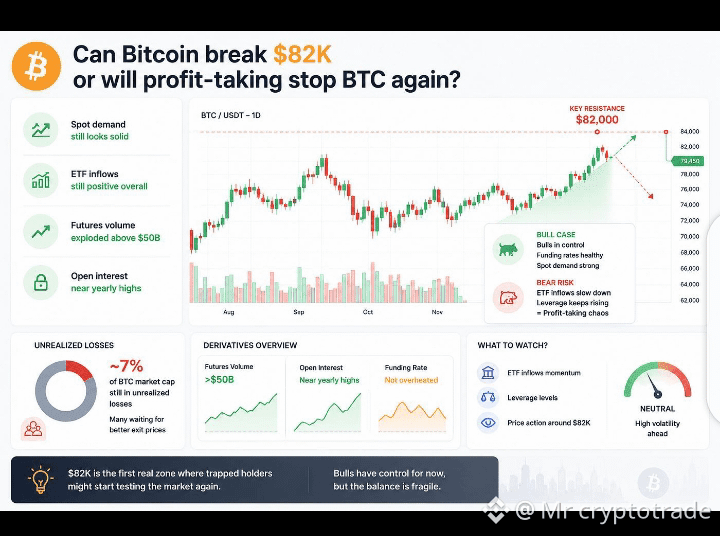
#Bitcoin 🚀 Bitcoin Breaks Above $82K
#bitcoin Bitcoin recently pushed above $82,000, reaching its highest level since May.
The rally was supported by changing expectations around U.S. interest rates.
Institutional demand and ETF flows are also helping sentiment.
But BTC is facing strong resistance around the $82K–$83K area.
A clean breakout could bring $90K back into focus.
#bitcon #CryptoNewss #BinanceSquare
#bitcoin Bitcoin recently pushed above $82,000, reaching its highest level since May.
The rally was supported by changing expectations around U.S. interest rates.
Institutional demand and ETF flows are also helping sentiment.
But BTC is facing strong resistance around the $82K–$83K area.
A clean breakout could bring $90K back into focus.
#bitcon #CryptoNewss #BinanceSquare
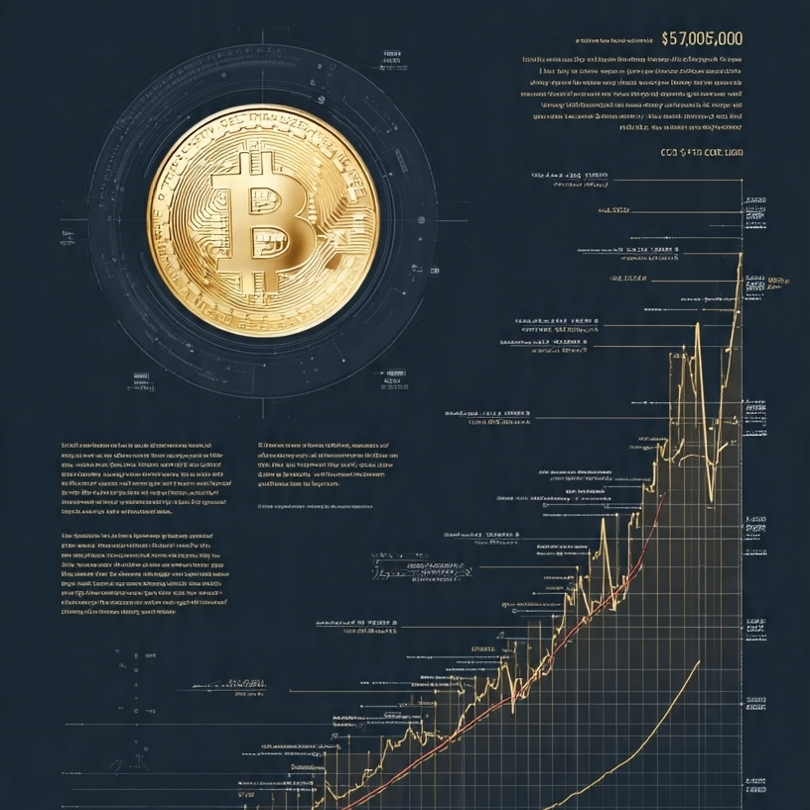

Recently, the number of tokenized stock holders have increased in August from 1M to 2M, pointing to growing interest in on-chain access to traditional equity markets.
The key question now is why do most users choose:
. Robinhood Chain
. BNB Chain
. Solana
And these three networks just account for 95% of all tokenized stock holders.
#CryptoNewss
The key question now is why do most users choose:
. Robinhood Chain
. BNB Chain
. Solana
And these three networks just account for 95% of all tokenized stock holders.
#CryptoNewss

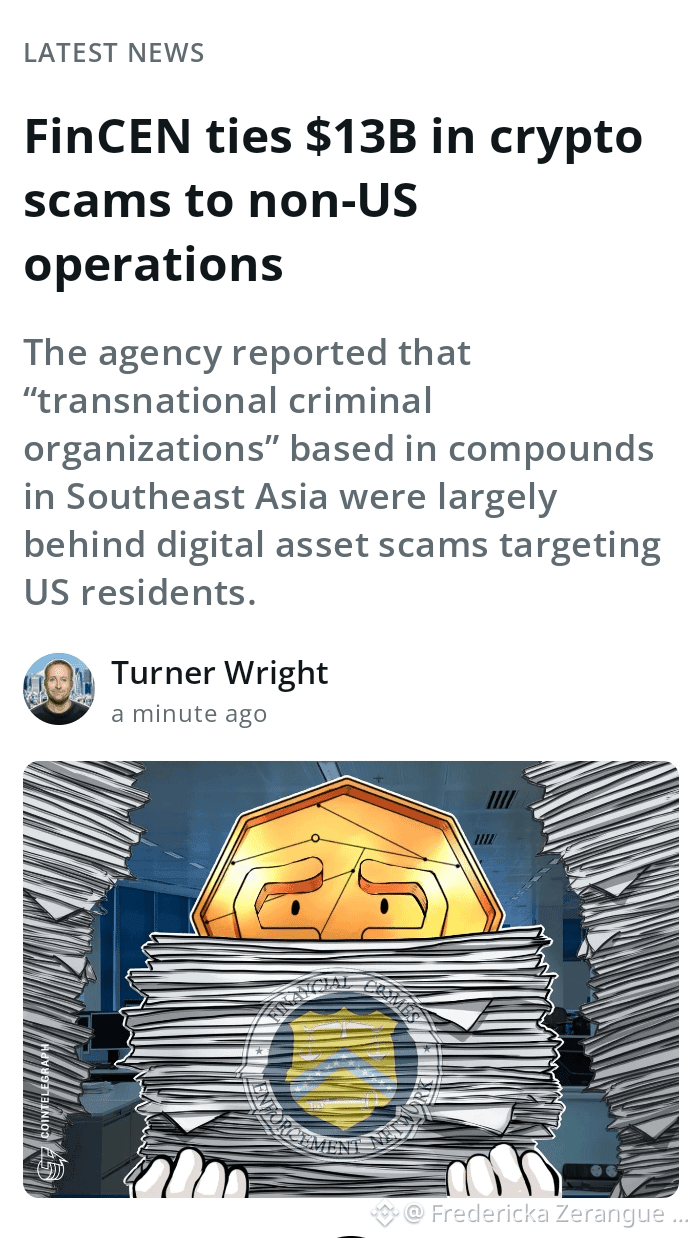
🚨$13B in Crypto Scams Exposed 😳
FinCEN says non-US operations are behind $13B in crypto scams.
Will this push governments to regulate crypto harder?
What do YOU think?
#CryptoUpdate #CryptoNewss
FinCEN says non-US operations are behind $13B in crypto scams.
Will this push governments to regulate crypto harder?
What do YOU think?
#CryptoUpdate #CryptoNewss

CRYPTO MARKET UPDATE: GREED SURGES AS LIQUIDTIONS CROSS $750M
$BTC : Trading near $79,400 level
$ETH : Reclaiming $2,450
$BNB : Strong around $715
$SOL: Holding above $101
Key Market Metrics: 📈
° Global Market Cap: $2.67 Trillion
° 24h Volume: $118.6 Billion
° Market Sentiment: Greed (Fear & Greed Index:74)
° 24h Liquidation: Massive $754.5 Million wiped out!
#CryptoNewss #BinanceSquare #MarketOverview
$BTC : Trading near $79,400 level
$ETH : Reclaiming $2,450
$BNB : Strong around $715
$SOL: Holding above $101
Key Market Metrics: 📈
° Global Market Cap: $2.67 Trillion
° 24h Volume: $118.6 Billion
° Market Sentiment: Greed (Fear & Greed Index:74)
° 24h Liquidation: Massive $754.5 Million wiped out!
#CryptoNewss #BinanceSquare #MarketOverview

#BTC☀️ #CryptoNewss #ETH🔥🔥🔥🔥🔥🔥 #BNB_Market_Update
continue positive movement 🚀🚀
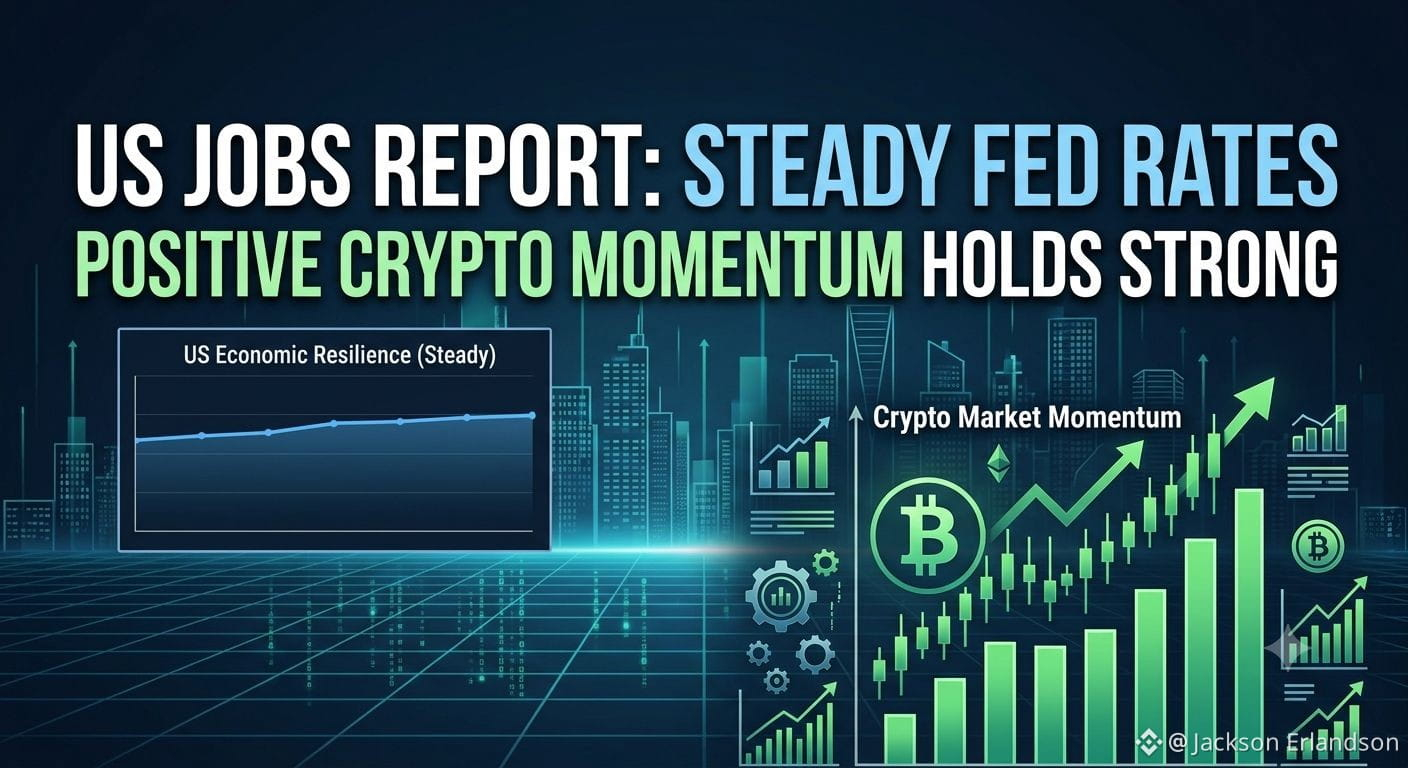
US Jobs Report Signals Macro Stability: Crypto Momentum Intact!
The latest US Employment Report (+162K jobs, 4.1% unemployment) highlights economic resilience. Here is what it means for the market:
continue positive movement 🚀🚀
US Jobs Report Signals Macro Stability: Crypto Momentum Intact!
The latest US Employment Report (+162K jobs, 4.1% unemployment) highlights economic resilience. Here is what it means for the market:
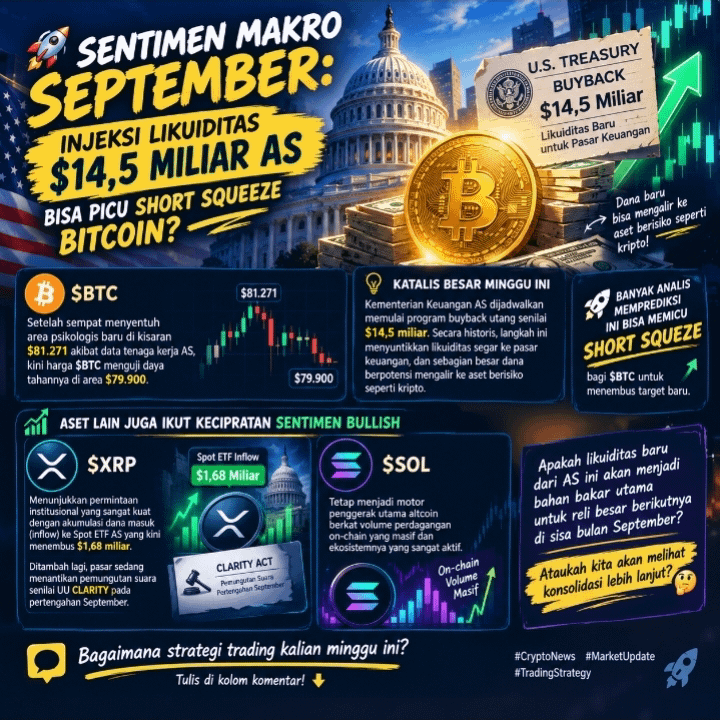
🚀 September Macro Sentiment: Can the $14.5 Billion U.S. Liquidity Injection Trigger a Bitcoin Short Squeeze?
The crypto market at the start of September has truly been full of surprises! After briefly reaching a new psychological area around $81.271 following U.S. labor data, the price movement $BTC is now testing its resilience to remain stable in the $79.900 area.
However, there is one major catalyst this week that every trader must watch.
The U.S. Treasury is scheduled to begin a $14.5 billion debt buyback program. Historically, this move injects fresh liquidity into financial markets, and much of those funds could flow into risk assets such as crypto.
Many analysts predict this fund injection could trigger a major short squeeze for BTC to break through a new target. This positive sentiment does not only affect the king of crypto. Several other major assets are also benefiting from bullish sentiment:
1. $XRP : Showing very strong institutional demand, with accumulated inflows into U.S. Spot ETFs now surpassing $1.68 billion. In addition, the market is awaiting a vote on the CLARITY Act in mid-September.
2. $SOL : Continues to be a major driving force for altcoins thanks to massive on-chain trading volume and a highly active ecosystem.
Will this new liquidity from the U.S. become the main fuel for the next big rally for the rest of September? Or will we see further consolidation? 🤔
What is your trading strategy this week? Write it in the comments!👇
#CryptoNewss #MarketUpdate #tradingStrategy
The crypto market at the start of September has truly been full of surprises! After briefly reaching a new psychological area around $81.271 following U.S. labor data, the price movement $BTC is now testing its resilience to remain stable in the $79.900 area.
However, there is one major catalyst this week that every trader must watch.
The U.S. Treasury is scheduled to begin a $14.5 billion debt buyback program. Historically, this move injects fresh liquidity into financial markets, and much of those funds could flow into risk assets such as crypto.
Many analysts predict this fund injection could trigger a major short squeeze for BTC to break through a new target. This positive sentiment does not only affect the king of crypto. Several other major assets are also benefiting from bullish sentiment:
1. $XRP : Showing very strong institutional demand, with accumulated inflows into U.S. Spot ETFs now surpassing $1.68 billion. In addition, the market is awaiting a vote on the CLARITY Act in mid-September.
2. $SOL : Continues to be a major driving force for altcoins thanks to massive on-chain trading volume and a highly active ecosystem.
Will this new liquidity from the U.S. become the main fuel for the next big rally for the rest of September? Or will we see further consolidation? 🤔
What is your trading strategy this week? Write it in the comments!👇
#CryptoNewss #MarketUpdate #tradingStrategy
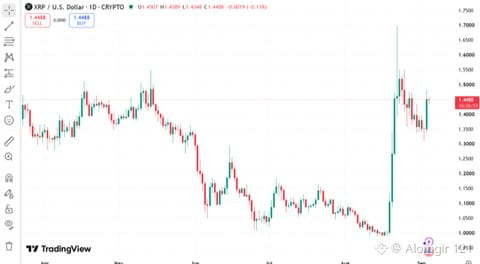
XRP Price at a Crossroads: Can Bulls Break $1.55?
XRP is trading near $1.38 after its August rally, with bulls defending $1.35 support while facing resistance at $1.43 and $1.55.#CryptoNewss
$XRP
$MANA
$BNB
#Market_Update XRP is entering September at a critical technical junction. After surging from its summer lows to nearly $1.70 in late August, the token has cooled and is now trading around $1.38.
The next move could depend on whether XRP can reclaim key resistance above $1.40 while defending its long-term moving average support near $1.35.#MarketAnalysis
With U.S. jobs data and Federal Reserve policy expectations also in focus, XRP bulls now face a crucial test.
XRP Price Faces Key Resistance at $1.43
XRP's immediate challenge sits between $1.41 and $1.43.#MarketSentimentToday
Reclaiming this zone would strengthen the short-term structure and potentially put the larger $1.55 resistance level back in focus. XRP attempted to break through that area on August 31 but failed to establish a sustained move above it.
A successful break above $1.55 would therefore represent an important shift in momentum after the recent consolidation.
For now, however, XRP remains caught between resistance overhead and support underneath.
$1.35 Is the Key XRP Support Level
The $1.35 level is arguably more important for XRP's short-term structure.
The 200-day exponential moving average (EMA) is positioned around $1.35, making it the key bull bear line for the current setup.
Holding above this level would allow the broader recovery structure to remain intact. However, a sustained break below $1.35 could weaken the Q3 reversal and expose the $1.20 - $1.29 area.
That makes the current range particularly important. Bulls need to defend $1.35 while pushing XRP back above $1.43 and eventually $1.55.
XRP Demand Gets Support from ETFs and Exchange Outflows
Technical levels are not the only factor supporting the XRP setup.
XRP is trading near $1.38 after its August rally, with bulls defending $1.35 support while facing resistance at $1.43 and $1.55.#CryptoNewss
$XRP
$MANA
$BNB
#Market_Update XRP is entering September at a critical technical junction. After surging from its summer lows to nearly $1.70 in late August, the token has cooled and is now trading around $1.38.
The next move could depend on whether XRP can reclaim key resistance above $1.40 while defending its long-term moving average support near $1.35.#MarketAnalysis
With U.S. jobs data and Federal Reserve policy expectations also in focus, XRP bulls now face a crucial test.
XRP Price Faces Key Resistance at $1.43
XRP's immediate challenge sits between $1.41 and $1.43.#MarketSentimentToday
Reclaiming this zone would strengthen the short-term structure and potentially put the larger $1.55 resistance level back in focus. XRP attempted to break through that area on August 31 but failed to establish a sustained move above it.
A successful break above $1.55 would therefore represent an important shift in momentum after the recent consolidation.
For now, however, XRP remains caught between resistance overhead and support underneath.
$1.35 Is the Key XRP Support Level
The $1.35 level is arguably more important for XRP's short-term structure.
The 200-day exponential moving average (EMA) is positioned around $1.35, making it the key bull bear line for the current setup.
Holding above this level would allow the broader recovery structure to remain intact. However, a sustained break below $1.35 could weaken the Q3 reversal and expose the $1.20 - $1.29 area.
That makes the current range particularly important. Bulls need to defend $1.35 while pushing XRP back above $1.43 and eventually $1.55.
XRP Demand Gets Support from ETFs and Exchange Outflows
Technical levels are not the only factor supporting the XRP setup.


📈 DAILY CRYPTO MARKET UPDATE - Sept 4
Top Performers:
$RNDR +6.2% - AI narrative heating up
$LINK +4.8% - CCIP adoption news
$BNB +3.1% - New Launchpool announced
Fear & Greed Index: 68 - Greed
Total Market Cap: $2.4T
#MarketUpdate2026 #CryptoNewss #BNB走势 #writetoearn
Top Performers:
$RNDR +6.2% - AI narrative heating up
$LINK +4.8% - CCIP adoption news
$BNB +3.1% - New Launchpool announced
Fear & Greed Index: 68 - Greed
Total Market Cap: $2.4T
#MarketUpdate2026 #CryptoNewss #BNB走势 #writetoearn
📈 DAILY CRYPTO MARKET UPDATE - Sept 4
Top Performers:
$RNDR +6.2% - AI narrative heating up
$LINK +4.8% - CCIP adoption news
$BNB +3.1% - New Launchpool announced
Fear & Greed Index: 68 - Greed
Total Market Cap: $2.4T
#MarketUpdate2026 #CryptoNewss #BNB走势 #writetoearn
Top Performers:
$RNDR +6.2% - AI narrative heating up
$LINK +4.8% - CCIP adoption news
$BNB +3.1% - New Launchpool announced
Fear & Greed Index: 68 - Greed
Total Market Cap: $2.4T
#MarketUpdate2026 #CryptoNewss #BNB走势 #writetoearn

Verified
THE TIME TO BUY IS NOW 💲🚀
SHORT AND LONG TERM🚀💹🛒
Why is the price of XRP falling?
(XRP) #xrp fell 2.83%, reaching US$1.41 in 24 hours, underperforming Bitcoin's 1.63% drop, mainly due to a broad sell-off in the crypto market after strong U.S. employment data increased fears of a Federal Reserve interest rate hike.
Main reason: A market pullback driven by macroeconomic factors, caused by a stronger-than-expected U.S. jobs report on September 4, which reduced risk appetite in the crypto market.
Secondary reasons: A massive liquidation of leveraged long positions, with US$15.65 million in XRP liquidations (95.8% of these positions were long), which intensified the decline.
Short-term outlook: If XRP remains above the US$1.40 support, it may consolidate between US$1.40 and US$1.48; a drop below that could lead to a retest of support at US$1.37. The key event will be the procedural vote on the CLARITY Act on September 15.
#BinanceSquareTalks #CryptoNewss #Xrp🔥🔥
$XRP
SHORT AND LONG TERM🚀💹🛒
Why is the price of XRP falling?
(XRP) #xrp fell 2.83%, reaching US$1.41 in 24 hours, underperforming Bitcoin's 1.63% drop, mainly due to a broad sell-off in the crypto market after strong U.S. employment data increased fears of a Federal Reserve interest rate hike.
Main reason: A market pullback driven by macroeconomic factors, caused by a stronger-than-expected U.S. jobs report on September 4, which reduced risk appetite in the crypto market.
Secondary reasons: A massive liquidation of leveraged long positions, with US$15.65 million in XRP liquidations (95.8% of these positions were long), which intensified the decline.
Short-term outlook: If XRP remains above the US$1.40 support, it may consolidate between US$1.40 and US$1.48; a drop below that could lead to a retest of support at US$1.37. The key event will be the procedural vote on the CLARITY Act on September 15.
#BinanceSquareTalks #CryptoNewss #Xrp🔥🔥
$XRP

🚨IMPRESSIVE: Crypto funding in Southeast Asia DOUBLED to US$680 MILLION in 2026, but most of it went to a single company. $XRP
Crypto.com’s US$400 MILLION raise alone accounted for nearly 60% of the region’s total. The number of deals actually FELL, from 46 last year to just 25, as investors concentrate on a small group of established companies rather than early-stage startups. $BULLA
Singapore completely dominates, absorbing 82.5% of all blockchain funding ever raised in the region. $DOGE
#CryptoNewss #bullish #ZECHitsANewAllTimeHigh #altsesaon #BitcoinEthereumHitMultiMonthHighs
Crypto.com’s US$400 MILLION raise alone accounted for nearly 60% of the region’s total. The number of deals actually FELL, from 46 last year to just 25, as investors concentrate on a small group of established companies rather than early-stage startups. $BULLA
Singapore completely dominates, absorbing 82.5% of all blockchain funding ever raised in the region. $DOGE
#CryptoNewss #bullish #ZECHitsANewAllTimeHigh #altsesaon #BitcoinEthereumHitMultiMonthHighs



Stolen Bitcoin from the third wave of the Coldcard wallet attacks has begun leaving the hacker’s original addresses, with part of the holdings being swapped into Ethereum through THORChain.
The movement is the first recorded departure of funds from the original attacker addresses across any of the three waves, according to Alex Thorn, Galaxy’s head of research. Thorn said Wednesday that the third-wave attacker had moved about 10% of the stolen holdings, leaving roughly 90% untouched.
Several attempts to convert the assets have not gone through as intended. Thorn said the attacker’s swap attempts through THORChain had repeatedly resulted in refunds, prompting further attempts.
Researchers following the activity on-chain were able to trace the transfers beyond THORChain to a fresh Ethereum address. Thorn said the address had been passed to relevant authorities and crypto companies. He also said the attacker’s next step remained uncertain, including whether the assets would be moved again to make them harder to follow or transferred to an exchange.
#CryptoNewss
The movement is the first recorded departure of funds from the original attacker addresses across any of the three waves, according to Alex Thorn, Galaxy’s head of research. Thorn said Wednesday that the third-wave attacker had moved about 10% of the stolen holdings, leaving roughly 90% untouched.
Several attempts to convert the assets have not gone through as intended. Thorn said the attacker’s swap attempts through THORChain had repeatedly resulted in refunds, prompting further attempts.
Researchers following the activity on-chain were able to trace the transfers beyond THORChain to a fresh Ethereum address. Thorn said the address had been passed to relevant authorities and crypto companies. He also said the attacker’s next step remained uncertain, including whether the assets would be moved again to make them harder to follow or transferred to an exchange.
#CryptoNewss
Log in to explore more content