

pangdung_
195 Posts

pangdung_
Report
Block User
Airdrop is Future
19 Following
34 Followers
282 Liked
Posts
·
--
$HAEDAL 🦦🌊
Another number has become history.
The liquidity of the Haedal Lending Vault has finally surpassed $5,000,000. 🔥
Crossing $1M was impressive,
and when it broke $3M, the growth rate started to show.
And now it’s $5M+.
This isn’t just a number accumulated in the Vault.
It’s the result created when the community directly participates, entrusts capital, and chooses Haedal’s lending strategy. 🦦
Great products are proven by users over time.
As users grow → liquidity deepens → more opportunities are created → and new users come in again.
I believe that exact virtuous cycle is starting right now at the Haedal Lending Vault. 🌊
$5M is a new record, but it’s not the destination.
🦦 $1M → $3M → $5M.
How far will the next number go?
Onward, Otters.
Haedal’s next level is waiting. 🌊🔥
#HAEDAL #SUİ #DEFİ #CryptoNewss #Altcoins👀🚀
$HAEDAL 🦦🌊
Another number has become history.
The liquidity of the Haedal Lending Vault has finally surpassed $5,000,000. 🔥
Crossing $1M was impressive,
and when it broke $3M, the growth rate started to show.
And now it’s $5M+.
This isn’t just a number accumulated in the Vault.
It’s the result created when the community directly participates, entrusts capital, and chooses Haedal’s lending strategy. 🦦
Great products are proven by users over time.
As users grow → liquidity deepens → more opportunities are created → and new users come in again.
I believe that exact virtuous cycle is starting right now at the Haedal Lending Vault. 🌊
$5M is a new record, but it’s not the destination.
🦦 $1M → $3M → $5M.
How far will the next number go?
Onward, Otters.
Haedal’s next level is waiting. 🌊🔥
#HAEDAL #SUİ #DEFİ #CryptoNewss #Altcoins👀🚀
Another number has become history.
The liquidity of the Haedal Lending Vault has finally surpassed $5,000,000. 🔥
Crossing $1M was impressive,
and when it broke $3M, the growth rate started to show.
And now it’s $5M+.
This isn’t just a number accumulated in the Vault.
It’s the result created when the community directly participates, entrusts capital, and chooses Haedal’s lending strategy. 🦦
Great products are proven by users over time.
As users grow → liquidity deepens → more opportunities are created → and new users come in again.
I believe that exact virtuous cycle is starting right now at the Haedal Lending Vault. 🌊
$5M is a new record, but it’s not the destination.
🦦 $1M → $3M → $5M.
How far will the next number go?
Onward, Otters.
Haedal’s next level is waiting. 🌊🔥
#HAEDAL #SUİ #DEFİ #CryptoNewss #Altcoins👀🚀

1
114
·
--
📰 Coin Issue | October 1, 2026
**1️⃣ Citi Forecasts BTC at $113,000 in One Year**
Citigroup has raised its 12-month price target for Bitcoin.
The target was increased from the previous $82,000 to $113,000.
The price target for Ethereum was also raised from $2,240 to $3,028.
Key reasons cited include increased market activity, a favorable macroeconomic environment, and the potential for ETF capital inflows.
**2️⃣ Bitcoin Spot ETFs See Net Outflow of 202.2 Billion Won**
Approximately $148.69 million flowed out of U.S. Bitcoin spot ETFs.
This amounts to roughly 202.2 billion KRW.
This net outflow ended a streak of net inflows that had lasted for nine consecutive trading days.
A return of institutional capital is crucial for further BTC price appreciation.
**3️⃣ Ethereum ETFs Also See Net Outflow of 81 Billion Won**
Following Bitcoin, funds also flowed out of Ethereum ETFs.
The daily net outflow totaled approximately $59.58 million.
This is equivalent to about 81 billion KRW.
Ethereum ETFs have recorded net outflows for two consecutive trading days.
**4️⃣ Is October Bitcoin’s Month? Hopes for ‘Uptober’**
Expectations for "Uptober" are rising again in the cryptocurrency market.
From 2013 to 2025, Bitcoin’s average gain in October was 18.52%. Out of the last 13 Octobers, the market rose 10 times and fell only three times.
All eyes are on whether this trend of strong October performance will repeat this year.
**5️⃣ BTC Faces $84K Resistance Wall… Breakout is Key**
Bitcoin has recently been trading within the $82,000–$85,000 range.
Analysts have identified a significant concentration of sell orders—totaling approximately 1.39 million BTC—in the $84,000–$86,500 range.
This represents a substantial resistance zone.
Breaking through this price level will depend heavily on strong buying pressure, particularly from ETFs.
#Bitcoin #Ethereum #Solana #Cryptocurrency #CoinNews
📰 Coin Issue | October 1, 2026
**1️⃣ Citi Forecasts BTC at $113,000 in One Year**
Citigroup has raised its 12-month price target for Bitcoin.
The target was increased from the previous $82,000 to $113,000.
The price target for Ethereum was also raised from $2,240 to $3,028.
Key reasons cited include increased market activity, a favorable macroeconomic environment, and the potential for ETF capital inflows.
**2️⃣ Bitcoin Spot ETFs See Net Outflow of 202.2 Billion Won**
Approximately $148.69 million flowed out of U.S. Bitcoin spot ETFs.
This amounts to roughly 202.2 billion KRW.
This net outflow ended a streak of net inflows that had lasted for nine consecutive trading days.
A return of institutional capital is crucial for further BTC price appreciation.
**3️⃣ Ethereum ETFs Also See Net Outflow of 81 Billion Won**
Following Bitcoin, funds also flowed out of Ethereum ETFs.
The daily net outflow totaled approximately $59.58 million.
This is equivalent to about 81 billion KRW.
Ethereum ETFs have recorded net outflows for two consecutive trading days.
**4️⃣ Is October Bitcoin’s Month? Hopes for ‘Uptober’**
Expectations for "Uptober" are rising again in the cryptocurrency market.
From 2013 to 2025, Bitcoin’s average gain in October was 18.52%. Out of the last 13 Octobers, the market rose 10 times and fell only three times.
All eyes are on whether this trend of strong October performance will repeat this year.
**5️⃣ BTC Faces $84K Resistance Wall… Breakout is Key**
Bitcoin has recently been trading within the $82,000–$85,000 range.
Analysts have identified a significant concentration of sell orders—totaling approximately 1.39 million BTC—in the $84,000–$86,500 range.
This represents a substantial resistance zone.
Breaking through this price level will depend heavily on strong buying pressure, particularly from ETFs.
#Bitcoin #Ethereum #Solana #Cryptocurrency #CoinNews
**1️⃣ Citi Forecasts BTC at $113,000 in One Year**
Citigroup has raised its 12-month price target for Bitcoin.
The target was increased from the previous $82,000 to $113,000.
The price target for Ethereum was also raised from $2,240 to $3,028.
Key reasons cited include increased market activity, a favorable macroeconomic environment, and the potential for ETF capital inflows.
**2️⃣ Bitcoin Spot ETFs See Net Outflow of 202.2 Billion Won**
Approximately $148.69 million flowed out of U.S. Bitcoin spot ETFs.
This amounts to roughly 202.2 billion KRW.
This net outflow ended a streak of net inflows that had lasted for nine consecutive trading days.
A return of institutional capital is crucial for further BTC price appreciation.
**3️⃣ Ethereum ETFs Also See Net Outflow of 81 Billion Won**
Following Bitcoin, funds also flowed out of Ethereum ETFs.
The daily net outflow totaled approximately $59.58 million.
This is equivalent to about 81 billion KRW.
Ethereum ETFs have recorded net outflows for two consecutive trading days.
**4️⃣ Is October Bitcoin’s Month? Hopes for ‘Uptober’**
Expectations for "Uptober" are rising again in the cryptocurrency market.
From 2013 to 2025, Bitcoin’s average gain in October was 18.52%. Out of the last 13 Octobers, the market rose 10 times and fell only three times.
All eyes are on whether this trend of strong October performance will repeat this year.
**5️⃣ BTC Faces $84K Resistance Wall… Breakout is Key**
Bitcoin has recently been trading within the $82,000–$85,000 range.
Analysts have identified a significant concentration of sell orders—totaling approximately 1.39 million BTC—in the $84,000–$86,500 range.
This represents a substantial resistance zone.
Breaking through this price level will depend heavily on strong buying pressure, particularly from ETFs.
#Bitcoin #Ethereum #Solana #Cryptocurrency #CoinNews
1
58
·
--
$HAEDAL 🦦🌊
This is a story where “convenience” becomes a competitive advantage.
In DeFi, finding high yield isn’t that difficult.
What’s truly hard is managing that yield continuously.
You need to check where the returns are highest, move your assets, manage the rewards, and when market conditions change, revise the strategy again.
The reason Haedal Lending Vault is so appealing is that it reduces all of this hassle. 🦦
Users deposit their assets,
and the Vault looks for opportunities and moves between multiple Lending Markets.
I believe this will become an extremely important competitive edge in DeFi going forward.
What people want isn’t more complex finance—
but smarter finance that takes care of complicated tasks for them. 💧
The recent sight of liquidity rapidly flowing into the Haedal Lending Vault also seems to reflect this demand.
After all, the next generation of DeFi may come down to a difference between:
“How many features are there?” and
“How little do users have to worry?”
🦦 Capital moves actively, while users stay comfortable.
The DeFi Haedal is building is getting simpler every day,
but the work the capital does inside it is actually becoming even more.
Deposit once. Let the Vault do the moves. 🌊
This is the direction I expect for HAEDAL. 🔥
#Haedal #SUİ #defi #lending #USDC
$HAEDAL 🦦🌊
This is a story where “convenience” becomes a competitive advantage.
In DeFi, finding high yield isn’t that difficult.
What’s truly hard is managing that yield continuously.
You need to check where the returns are highest, move your assets, manage the rewards, and when market conditions change, revise the strategy again.
The reason Haedal Lending Vault is so appealing is that it reduces all of this hassle. 🦦
Users deposit their assets,
and the Vault looks for opportunities and moves between multiple Lending Markets.
I believe this will become an extremely important competitive edge in DeFi going forward.
What people want isn’t more complex finance—
but smarter finance that takes care of complicated tasks for them. 💧
The recent sight of liquidity rapidly flowing into the Haedal Lending Vault also seems to reflect this demand.
After all, the next generation of DeFi may come down to a difference between:
“How many features are there?” and
“How little do users have to worry?”
🦦 Capital moves actively, while users stay comfortable.
The DeFi Haedal is building is getting simpler every day,
but the work the capital does inside it is actually becoming even more.
Deposit once. Let the Vault do the moves. 🌊
This is the direction I expect for HAEDAL. 🔥
#Haedal #SUİ #defi #lending #USDC
This is a story where “convenience” becomes a competitive advantage.
In DeFi, finding high yield isn’t that difficult.
What’s truly hard is managing that yield continuously.
You need to check where the returns are highest, move your assets, manage the rewards, and when market conditions change, revise the strategy again.
The reason Haedal Lending Vault is so appealing is that it reduces all of this hassle. 🦦
Users deposit their assets,
and the Vault looks for opportunities and moves between multiple Lending Markets.
I believe this will become an extremely important competitive edge in DeFi going forward.
What people want isn’t more complex finance—
but smarter finance that takes care of complicated tasks for them. 💧
The recent sight of liquidity rapidly flowing into the Haedal Lending Vault also seems to reflect this demand.
After all, the next generation of DeFi may come down to a difference between:
“How many features are there?” and
“How little do users have to worry?”
🦦 Capital moves actively, while users stay comfortable.
The DeFi Haedal is building is getting simpler every day,
but the work the capital does inside it is actually becoming even more.
Deposit once. Let the Vault do the moves. 🌊
This is the direction I expect for HAEDAL. 🔥
#Haedal #SUİ #defi #lending #USDC
60
·
--
📰 Coin Issue | September 29, 2026
1️⃣ Bitcoin Attempts to Reclaim $85,000… A Pivotal Week Ahead
Bitcoin is making another attempt to break past the $85,000 mark.
Although it recently slipped to the $83,000 range, an influx of buying pressure has triggered a rebound.
The market views a decisive break and stabilization above $85,000 as the key factor determining the short-term trend.
2️⃣ Institutional Capital Floods into Solana ETFs
U.S. spot Solana ETFs saw a net inflow of approximately $188.21 million last week.
This marks the largest weekly inflow on record.
Even as Bitcoin prices fluctuate, capital continues to flow into SOL ETFs, signaling growing institutional interest in altcoins.
3️⃣ Anticipation Builds for NEAR Spot ETF Trading
Near Protocol is attracting market attention due to expectations surrounding its ETF.
Bitwise’s spot NEAR ETF has received approval for listing on NYSE Arca, with trading scheduled to begin on September 29.
With the price of NEAR recently showing a strong upward trend, the ETF is emerging as a fresh catalyst for the altcoin.
4️⃣ Ethereum Short Positions Hit 51-Month High
Capital betting on a price decline has surged in the Ethereum market.
The volume of ETH short positions has risen to approximately 73,000 ETH, reaching its highest level in 51 months.
If ETH rises contrary to expectations, a massive wave of short liquidations could occur, potentially driving up volatility.
5️⃣ Altcoin Season Index at 64… Market Sentiment Shifts
The Altcoin Season Index has risen to 64.
Compared to the reading of 42 on the 18th, market sentiment is shifting rapidly.
While it has not yet reached the threshold of 75—the benchmark for a full-blown altcoin season—the trend of interest spreading to assets beyond Bitcoin is becoming evident.
#bitcoin #Ethereum #altcoins #cryptocurrency #coinnews
📰 Coin Issue | September 29, 2026
1️⃣ Bitcoin Attempts to Reclaim $85,000… A Pivotal Week Ahead
Bitcoin is making another attempt to break past the $85,000 mark.
Although it recently slipped to the $83,000 range, an influx of buying pressure has triggered a rebound.
The market views a decisive break and stabilization above $85,000 as the key factor determining the short-term trend.
2️⃣ Institutional Capital Floods into Solana ETFs
U.S. spot Solana ETFs saw a net inflow of approximately $188.21 million last week.
This marks the largest weekly inflow on record.
Even as Bitcoin prices fluctuate, capital continues to flow into SOL ETFs, signaling growing institutional interest in altcoins.
3️⃣ Anticipation Builds for NEAR Spot ETF Trading
Near Protocol is attracting market attention due to expectations surrounding its ETF.
Bitwise’s spot NEAR ETF has received approval for listing on NYSE Arca, with trading scheduled to begin on September 29.
With the price of NEAR recently showing a strong upward trend, the ETF is emerging as a fresh catalyst for the altcoin.
4️⃣ Ethereum Short Positions Hit 51-Month High
Capital betting on a price decline has surged in the Ethereum market.
The volume of ETH short positions has risen to approximately 73,000 ETH, reaching its highest level in 51 months.
If ETH rises contrary to expectations, a massive wave of short liquidations could occur, potentially driving up volatility.
5️⃣ Altcoin Season Index at 64… Market Sentiment Shifts
The Altcoin Season Index has risen to 64.
Compared to the reading of 42 on the 18th, market sentiment is shifting rapidly.
While it has not yet reached the threshold of 75—the benchmark for a full-blown altcoin season—the trend of interest spreading to assets beyond Bitcoin is becoming evident.
#bitcoin #Ethereum #altcoins #cryptocurrency #coinnews
1️⃣ Bitcoin Attempts to Reclaim $85,000… A Pivotal Week Ahead
Bitcoin is making another attempt to break past the $85,000 mark.
Although it recently slipped to the $83,000 range, an influx of buying pressure has triggered a rebound.
The market views a decisive break and stabilization above $85,000 as the key factor determining the short-term trend.
2️⃣ Institutional Capital Floods into Solana ETFs
U.S. spot Solana ETFs saw a net inflow of approximately $188.21 million last week.
This marks the largest weekly inflow on record.
Even as Bitcoin prices fluctuate, capital continues to flow into SOL ETFs, signaling growing institutional interest in altcoins.
3️⃣ Anticipation Builds for NEAR Spot ETF Trading
Near Protocol is attracting market attention due to expectations surrounding its ETF.
Bitwise’s spot NEAR ETF has received approval for listing on NYSE Arca, with trading scheduled to begin on September 29.
With the price of NEAR recently showing a strong upward trend, the ETF is emerging as a fresh catalyst for the altcoin.
4️⃣ Ethereum Short Positions Hit 51-Month High
Capital betting on a price decline has surged in the Ethereum market.
The volume of ETH short positions has risen to approximately 73,000 ETH, reaching its highest level in 51 months.
If ETH rises contrary to expectations, a massive wave of short liquidations could occur, potentially driving up volatility.
5️⃣ Altcoin Season Index at 64… Market Sentiment Shifts
The Altcoin Season Index has risen to 64.
Compared to the reading of 42 on the 18th, market sentiment is shifting rapidly.
While it has not yet reached the threshold of 75—the benchmark for a full-blown altcoin season—the trend of interest spreading to assets beyond Bitcoin is becoming evident.
#bitcoin #Ethereum #altcoins #cryptocurrency #coinnews
1
251
·
--
🔥 A new trend to watch on the BNB Chain, $CASH
There are countless tokens in the crypto market, but what I ultimately care about is whether there’s a real reason for people to actually pay attention and get involved—not just simple price movement.
$CASH, which I’ve been looking into recently, is interesting from that perspective as well.
In particular, I’m impressed by the way the community creates content directly and shares their honest opinions, building the project’s awareness together. It doesn’t feel like one-way promotion; it’s more like a structure where the ecosystem grows as each participant’s voice adds up.
Of course, no token comes with certainty about future prices or profits. That’s why I’d rather focus on what utilities and community $CASH builds going forward than chase short-term excitement.
If it’s still in the early stages, it could be fun to personally check out the process the project is creating from here.
$CASH—I’ll keep an eye on what it shows next. 👀
SR-A31569B1138607A1034AFC71
🔥 A new trend to watch on the BNB Chain, $CASH
There are countless tokens in the crypto market, but what I ultimately care about is whether there’s a real reason for people to actually pay attention and get involved—not just simple price movement.
$CASH, which I’ve been looking into recently, is interesting from that perspective as well.
In particular, I’m impressed by the way the community creates content directly and shares their honest opinions, building the project’s awareness together. It doesn’t feel like one-way promotion; it’s more like a structure where the ecosystem grows as each participant’s voice adds up.
Of course, no token comes with certainty about future prices or profits. That’s why I’d rather focus on what utilities and community $CASH builds going forward than chase short-term excitement.
If it’s still in the early stages, it could be fun to personally check out the process the project is creating from here.
$CASH—I’ll keep an eye on what it shows next. 👀
SR-A31569B1138607A1034AFC71
There are countless tokens in the crypto market, but what I ultimately care about is whether there’s a real reason for people to actually pay attention and get involved—not just simple price movement.
$CASH, which I’ve been looking into recently, is interesting from that perspective as well.
In particular, I’m impressed by the way the community creates content directly and shares their honest opinions, building the project’s awareness together. It doesn’t feel like one-way promotion; it’s more like a structure where the ecosystem grows as each participant’s voice adds up.
Of course, no token comes with certainty about future prices or profits. That’s why I’d rather focus on what utilities and community $CASH builds going forward than chase short-term excitement.
If it’s still in the early stages, it could be fun to personally check out the process the project is creating from here.
$CASH—I’ll keep an eye on what it shows next. 👀
SR-A31569B1138607A1034AFC71
1
2
·
--
$HAEDAL 🦦🌊
The speed is changing.
Haedal Lending Vault has crossed another milestone.
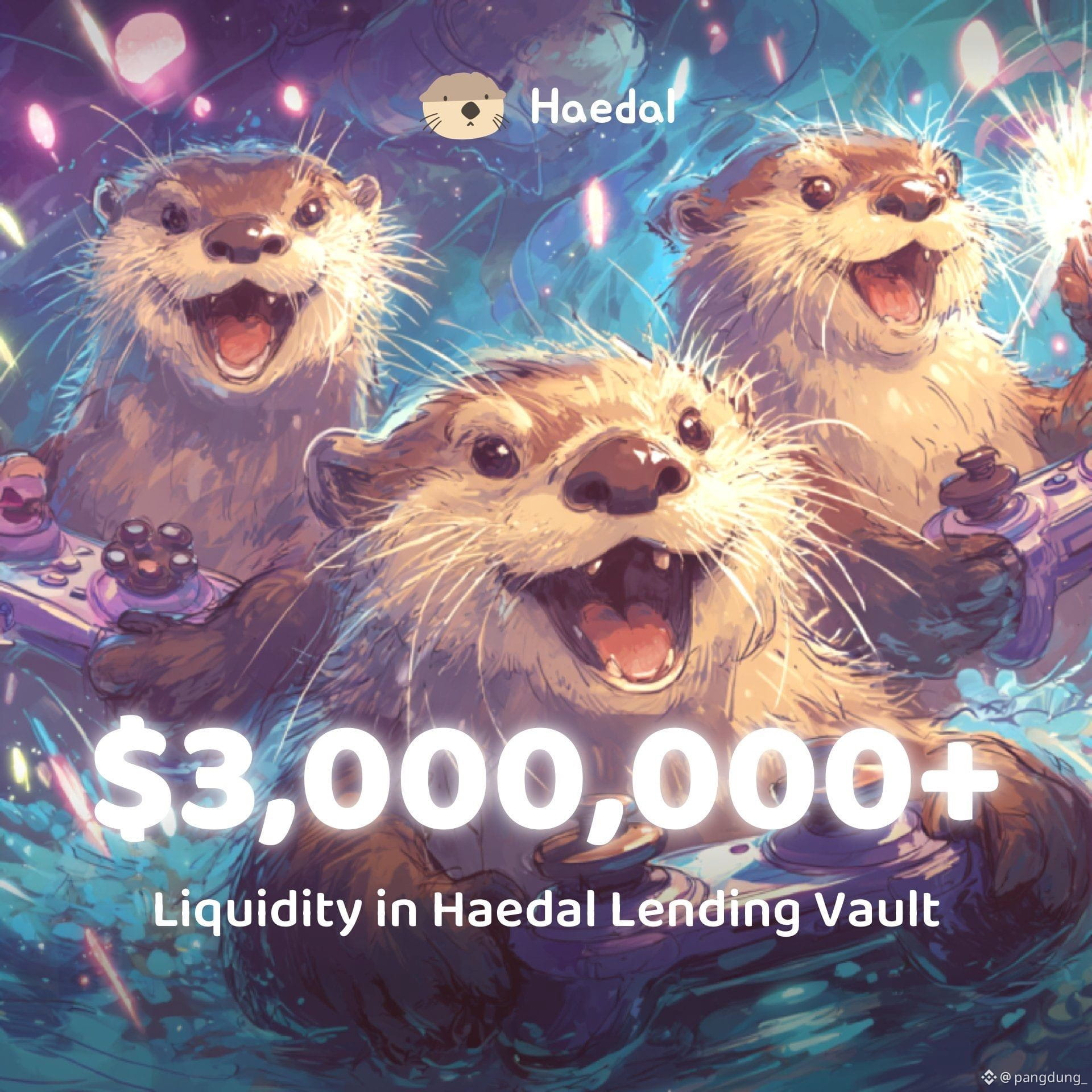
🔥 Total liquidity has surpassed $3M.
What’s more amazing isn’t just that it hit $3M—it’s that the pace of achieving new records is getting faster and faster.
As community demand grows rapidly, the USDC Vault capacity limit has also been expanded to 3,000,000 USDC. 💧
At first, it was just one new Lending Vault.
But as liquidity came in,
users increased,
and the limits kept expanding,
actual demand began to prove the growth.
Deposit once. Let the Vault do the moves. 🌊
Great products don’t prove themselves with explanations.
They prove it as users gather and capital follows.
🦦 From over $1M to now $3M.
The voyage of the Haedal Lending Vault is picking up speed.
The next milestone might arrive much sooner than you’d expect. 🔥
#HAEDAL #SUİ #defi #lending #USDC
$HAEDAL 🦦🌊
The speed is changing.
Haedal Lending Vault has crossed another milestone.
🔥 Total liquidity has surpassed $3M.
What’s more amazing isn’t just that it hit $3M—it’s that the pace of achieving new records is getting faster and faster.
As community demand grows rapidly, the USDC Vault capacity limit has also been expanded to 3,000,000 USDC. 💧
At first, it was just one new Lending Vault.
But as liquidity came in,
users increased,
and the limits kept expanding,
actual demand began to prove the growth.
Deposit once. Let the Vault do the moves. 🌊
Great products don’t prove themselves with explanations.
They prove it as users gather and capital follows.
🦦 From over $1M to now $3M.
The voyage of the Haedal Lending Vault is picking up speed.
The next milestone might arrive much sooner than you’d expect. 🔥
#HAEDAL #SUİ #defi #lending #USDC
The speed is changing.
Haedal Lending Vault has crossed another milestone.
🔥 Total liquidity has surpassed $3M.
What’s more amazing isn’t just that it hit $3M—it’s that the pace of achieving new records is getting faster and faster.
As community demand grows rapidly, the USDC Vault capacity limit has also been expanded to 3,000,000 USDC. 💧
At first, it was just one new Lending Vault.
But as liquidity came in,
users increased,
and the limits kept expanding,
actual demand began to prove the growth.
Deposit once. Let the Vault do the moves. 🌊
Great products don’t prove themselves with explanations.
They prove it as users gather and capital follows.
🦦 From over $1M to now $3M.
The voyage of the Haedal Lending Vault is picking up speed.
The next milestone might arrive much sooner than you’d expect. 🔥
#HAEDAL #SUİ #defi #lending #USDC
1
67
·
--
$HAEDAL 🦦🌊
When you need new options amid change.
News of AlphaFi’s service termination is disappointing, especially from the perspective of those who helped build the Sui ecosystem together.
However, if you’re looking for a new choice to move your existing Lending positions, you may want to pay attention to the Haedal Lending Vault.
The Haedal Lending Vault is not just a place to deposit assets.
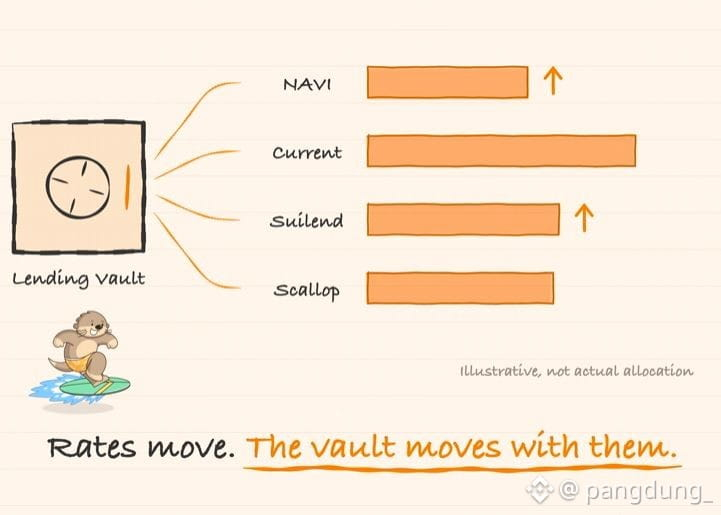
By utilizing the base Lending interest plus incentives from each protocol, Haedal continuously monitors protocol stability and returns, and adjusts capital allocation as circumstances change. 🦦💧
Designed to reduce the hassle of having users compare yields and move assets every time, while enabling them to take advantage of various Lending opportunities.
And on top of that, the currently ongoing HAEDAL incentive program. 🔥
If someone is searching for a new Lending strategy,
Haedal Lending Vault could become a new destination.
If there is liquidity leaving,
that liquidity can find new opportunities within Sui again.
🌊 Deposit once. Let the Vault do the moves.
Right now, Haedal is ready to embrace that flow. 🦦
#HAEDAL #SUİ #defi #lending #USDC
$HAEDAL 🦦🌊
When you need new options amid change.
News of AlphaFi’s service termination is disappointing, especially from the perspective of those who helped build the Sui ecosystem together.
However, if you’re looking for a new choice to move your existing Lending positions, you may want to pay attention to the Haedal Lending Vault.
The Haedal Lending Vault is not just a place to deposit assets.
By utilizing the base Lending interest plus incentives from each protocol, Haedal continuously monitors protocol stability and returns, and adjusts capital allocation as circumstances change. 🦦💧
Designed to reduce the hassle of having users compare yields and move assets every time, while enabling them to take advantage of various Lending opportunities.
And on top of that, the currently ongoing HAEDAL incentive program. 🔥
If someone is searching for a new Lending strategy,
Haedal Lending Vault could become a new destination.
If there is liquidity leaving,
that liquidity can find new opportunities within Sui again.
🌊 Deposit once. Let the Vault do the moves.
Right now, Haedal is ready to embrace that flow. 🦦
#HAEDAL #SUİ #defi #lending #USDC
When you need new options amid change.
News of AlphaFi’s service termination is disappointing, especially from the perspective of those who helped build the Sui ecosystem together.
However, if you’re looking for a new choice to move your existing Lending positions, you may want to pay attention to the Haedal Lending Vault.
The Haedal Lending Vault is not just a place to deposit assets.
By utilizing the base Lending interest plus incentives from each protocol, Haedal continuously monitors protocol stability and returns, and adjusts capital allocation as circumstances change. 🦦💧
Designed to reduce the hassle of having users compare yields and move assets every time, while enabling them to take advantage of various Lending opportunities.
And on top of that, the currently ongoing HAEDAL incentive program. 🔥
If someone is searching for a new Lending strategy,
Haedal Lending Vault could become a new destination.
If there is liquidity leaving,
that liquidity can find new opportunities within Sui again.
🌊 Deposit once. Let the Vault do the moves.
Right now, Haedal is ready to embrace that flow. 🦦
#HAEDAL #SUİ #defi #lending #USDC
2
40
·
--
$HAEDAL 🦦🌊
Numbers have begun to speak.
Looking at Haedal’s recent momentum, one thing is clear.
The market has started to look at HAEDAL again. 🔥
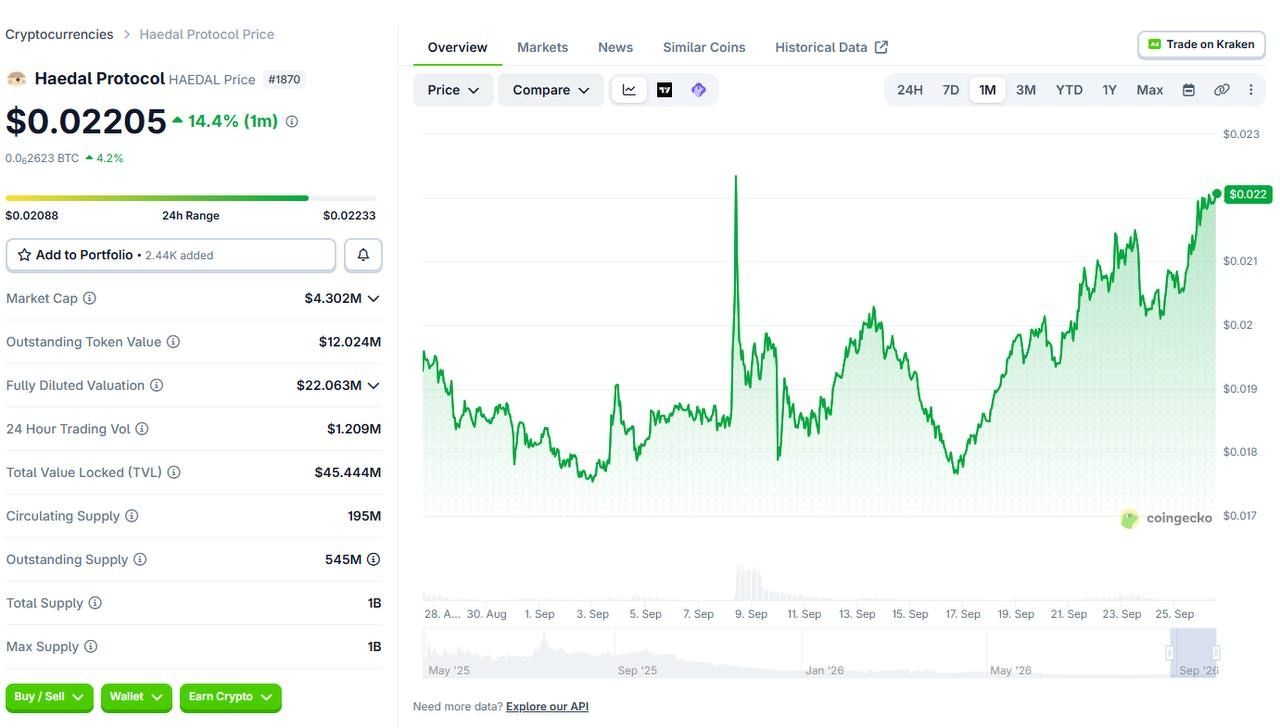
Based on the attached chart, HAEDAL is at $0.02205, recording a strong recovery with **+14.4%** over the past month.
But what catches my eye more than the price is the number below.
TVL of about $45.44M.
That doesn’t just mean the token price is moving— it means substantial capital is actually moving within the Haedal ecosystem.
Recently, it also launched the Lending Vault, expanding its range of use even further.
Starting with Liquid Staking,
then using haSUI·haWAL in DeFi, and even automated lending strategies.
Haedal can no longer be explained by a single phrase like “just a staking protocol.” 🦦
There’s a line I’ve kept talking about.
“Best on-chain capital is not idle capital.” 💧
Haedal isn’t only expressing this philosophy in words—it’s building it into products, one by one.
And if a project like this begins to meet good market momentum?
I think the future could become a lot more interesting.
🌊 Price shows attention,
TVL shows trust,
and the product shows the future.
HAEDAL, where all three start moving together.
🦦 Now it’s time to see how far the sea otter—Haedal—will swim.
#HAEDAL #SUİ #defi #altcoins #LiquidStaking
$HAEDAL 🦦🌊
Numbers have begun to speak.
Looking at Haedal’s recent momentum, one thing is clear.
The market has started to look at HAEDAL again. 🔥
Based on the attached chart, HAEDAL is at $0.02205, recording a strong recovery with **+14.4%** over the past month.
But what catches my eye more than the price is the number below.
TVL of about $45.44M.
That doesn’t just mean the token price is moving— it means substantial capital is actually moving within the Haedal ecosystem.
Recently, it also launched the Lending Vault, expanding its range of use even further.
Starting with Liquid Staking,
then using haSUI·haWAL in DeFi, and even automated lending strategies.
Haedal can no longer be explained by a single phrase like “just a staking protocol.” 🦦
There’s a line I’ve kept talking about.
“Best on-chain capital is not idle capital.” 💧
Haedal isn’t only expressing this philosophy in words—it’s building it into products, one by one.
And if a project like this begins to meet good market momentum?
I think the future could become a lot more interesting.
🌊 Price shows attention,
TVL shows trust,
and the product shows the future.
HAEDAL, where all three start moving together.
🦦 Now it’s time to see how far the sea otter—Haedal—will swim.
#HAEDAL #SUİ #defi #altcoins #LiquidStaking
Numbers have begun to speak.
Looking at Haedal’s recent momentum, one thing is clear.
The market has started to look at HAEDAL again. 🔥
Based on the attached chart, HAEDAL is at $0.02205, recording a strong recovery with **+14.4%** over the past month.
But what catches my eye more than the price is the number below.
TVL of about $45.44M.
That doesn’t just mean the token price is moving— it means substantial capital is actually moving within the Haedal ecosystem.
Recently, it also launched the Lending Vault, expanding its range of use even further.
Starting with Liquid Staking,
then using haSUI·haWAL in DeFi, and even automated lending strategies.
Haedal can no longer be explained by a single phrase like “just a staking protocol.” 🦦
There’s a line I’ve kept talking about.
“Best on-chain capital is not idle capital.” 💧
Haedal isn’t only expressing this philosophy in words—it’s building it into products, one by one.
And if a project like this begins to meet good market momentum?
I think the future could become a lot more interesting.
🌊 Price shows attention,
TVL shows trust,
and the product shows the future.
HAEDAL, where all three start moving together.
🦦 Now it’s time to see how far the sea otter—Haedal—will swim.
#HAEDAL #SUİ #defi #altcoins #LiquidStaking
1
59
·
--
$HAEDAL 🦦🌊
GM & Haello, Otters!
It’s a new day, and time to look for fresh opportunities on-chain. 🏞️
Haedal’s USDC Lending Vault has expanded again.
This time, the deposit limit has increased—up to a whopping 1,000,000 USDC! 💧
From beyond 500K to 700K, and now up to 1M USDC.
As community participation and demand continue to grow, the Haedal Lending Vault is also scaling fast.
Deposit once. Let the Vault do the moves. 🦦
Capital keeps moving without rest today as well.
Have a good one, Otters! 🌊
#HAEDAL #SUI #DeFi #USDC
$HAEDAL 🦦🌊
GM & Haello, Otters!
It’s a new day, and time to look for fresh opportunities on-chain. 🏞️
Haedal’s USDC Lending Vault has expanded again.
This time, the deposit limit has increased—up to a whopping 1,000,000 USDC! 💧
From beyond 500K to 700K, and now up to 1M USDC.
As community participation and demand continue to grow, the Haedal Lending Vault is also scaling fast.
Deposit once. Let the Vault do the moves. 🦦
Capital keeps moving without rest today as well.
Have a good one, Otters! 🌊
#HAEDAL #SUI #DeFi #USDC
GM & Haello, Otters!
It’s a new day, and time to look for fresh opportunities on-chain. 🏞️
Haedal’s USDC Lending Vault has expanded again.
This time, the deposit limit has increased—up to a whopping 1,000,000 USDC! 💧
From beyond 500K to 700K, and now up to 1M USDC.
As community participation and demand continue to grow, the Haedal Lending Vault is also scaling fast.
Deposit once. Let the Vault do the moves. 🦦
Capital keeps moving without rest today as well.
Have a good one, Otters! 🌊
#HAEDAL #SUI #DeFi #USDC
1
77
·
--
$HAEDAL 🦦🌊
I’ve made another milestone.
The liquidity supplied to the Haedal Lending Vault has surpassed $1,000,000.
Not just a number.
It’s a result created by community attention and real demand.
And for even more participation, the Vault limit has been expanded again.
▪️ SUI Vault → 700,000 SUI
▪️ USDC Vault → 700,000 USDC
Once deposited, the Haedal Lending Vault lets you efficiently manage assets by leveraging multiple Lending Markets.
Liquidity comes in, demand is proven, and the limit is expanded again.
That kind of growth is exactly what I wanted to see from Haedal. 🦦
Sailing with the community. ⛵️
$1M isn’t the destination—it’s the start of the next voyage. 🌊
#HAEDAL #SUİ #defi #lending #USDC
$HAEDAL 🦦🌊
I’ve made another milestone.
The liquidity supplied to the Haedal Lending Vault has surpassed $1,000,000.
Not just a number.
It’s a result created by community attention and real demand.
And for even more participation, the Vault limit has been expanded again.
▪️ SUI Vault → 700,000 SUI
▪️ USDC Vault → 700,000 USDC
Once deposited, the Haedal Lending Vault lets you efficiently manage assets by leveraging multiple Lending Markets.
Liquidity comes in, demand is proven, and the limit is expanded again.
That kind of growth is exactly what I wanted to see from Haedal. 🦦
Sailing with the community. ⛵️
$1M isn’t the destination—it’s the start of the next voyage. 🌊
#HAEDAL #SUİ #defi #lending #USDC
I’ve made another milestone.
The liquidity supplied to the Haedal Lending Vault has surpassed $1,000,000.
Not just a number.
It’s a result created by community attention and real demand.
And for even more participation, the Vault limit has been expanded again.
▪️ SUI Vault → 700,000 SUI
▪️ USDC Vault → 700,000 USDC
Once deposited, the Haedal Lending Vault lets you efficiently manage assets by leveraging multiple Lending Markets.
Liquidity comes in, demand is proven, and the limit is expanded again.
That kind of growth is exactly what I wanted to see from Haedal. 🦦
Sailing with the community. ⛵️
$1M isn’t the destination—it’s the start of the next voyage. 🌊
#HAEDAL #SUİ #defi #lending #USDC

1
79
·
--
$HAEDAL 🦦🌊
This time, I want to look at Haedal through the question, “Will it be needed in the next cycle as well?”
In crypto, new narratives always emerge.
Yesterday’s protagonist disappears today,
and even a hot meta that’s burning today will eventually drift away from attention.
But Yield Infrastructure is a bit different.
Whether the market is good or bad,
people who hold SUI are always left with the same question.
“How can I put my assets to more efficient use?”
Haedal digs right into that question. 🦦
Get base rewards through staking,
and maintain liquidity via haSUI and haWAL,
connecting back to a variety of DeFi strategies.
In other words, it’s not about waiting for a new narrative—
it’s about making the existing capital more productive. 💧
I think this difference is enormous.
Trend-setting projects need the market’s attention,
but infrastructure continues to play a role as long as user needs exist.
As more capital flows into the SUI ecosystem,
and as DeFi becomes more diverse,
the question “How can we keep running things more efficiently?”
will only become more important.
And the bigger that question gets,
the more the market Haedal needs to solve can grow alongside it. 🌊
No one knows what the next meta will be.
But even in the next meta,
capital will be staked,
liquidity will be needed,
and demand for yield will continue.
🦦 A project that guesses the trend,
or a project that’s needed even when the trend changes.
I’m most excited about the process of HAEDAL carving out that kind of position.
Even as the waves keep changing,
the current that moves the water doesn’t disappear. 🌊
#HAEDAL #SUİ #hasui #hawal #defi
$HAEDAL 🦦🌊
This time, I want to look at Haedal through the question, “Will it be needed in the next cycle as well?”
In crypto, new narratives always emerge.
Yesterday’s protagonist disappears today,
and even a hot meta that’s burning today will eventually drift away from attention.
But Yield Infrastructure is a bit different.
Whether the market is good or bad,
people who hold SUI are always left with the same question.
“How can I put my assets to more efficient use?”
Haedal digs right into that question. 🦦
Get base rewards through staking,
and maintain liquidity via haSUI and haWAL,
connecting back to a variety of DeFi strategies.
In other words, it’s not about waiting for a new narrative—
it’s about making the existing capital more productive. 💧
I think this difference is enormous.
Trend-setting projects need the market’s attention,
but infrastructure continues to play a role as long as user needs exist.
As more capital flows into the SUI ecosystem,
and as DeFi becomes more diverse,
the question “How can we keep running things more efficiently?”
will only become more important.
And the bigger that question gets,
the more the market Haedal needs to solve can grow alongside it. 🌊
No one knows what the next meta will be.
But even in the next meta,
capital will be staked,
liquidity will be needed,
and demand for yield will continue.
🦦 A project that guesses the trend,
or a project that’s needed even when the trend changes.
I’m most excited about the process of HAEDAL carving out that kind of position.
Even as the waves keep changing,
the current that moves the water doesn’t disappear. 🌊
#HAEDAL #SUİ #hasui #hawal #defi
This time, I want to look at Haedal through the question, “Will it be needed in the next cycle as well?”
In crypto, new narratives always emerge.
Yesterday’s protagonist disappears today,
and even a hot meta that’s burning today will eventually drift away from attention.
But Yield Infrastructure is a bit different.
Whether the market is good or bad,
people who hold SUI are always left with the same question.
“How can I put my assets to more efficient use?”
Haedal digs right into that question. 🦦
Get base rewards through staking,
and maintain liquidity via haSUI and haWAL,
connecting back to a variety of DeFi strategies.
In other words, it’s not about waiting for a new narrative—
it’s about making the existing capital more productive. 💧
I think this difference is enormous.
Trend-setting projects need the market’s attention,
but infrastructure continues to play a role as long as user needs exist.
As more capital flows into the SUI ecosystem,
and as DeFi becomes more diverse,
the question “How can we keep running things more efficiently?”
will only become more important.
And the bigger that question gets,
the more the market Haedal needs to solve can grow alongside it. 🌊
No one knows what the next meta will be.
But even in the next meta,
capital will be staked,
liquidity will be needed,
and demand for yield will continue.
🦦 A project that guesses the trend,
or a project that’s needed even when the trend changes.
I’m most excited about the process of HAEDAL carving out that kind of position.
Even as the waves keep changing,
the current that moves the water doesn’t disappear. 🌊
#HAEDAL #SUİ #hasui #hawal #defi
1
73
·
--
$HAEDAL 🦦🌊
This time, I’d like to talk about “Default.”
A real signal that technology has truly succeeded,
I think it’s when people no longer feel like it’s something special.
Just like when you use the internet—you don’t think about the protocol every time—
one day, on-chain as well,
keeping assets idle simply may become the less natural choice.
And I believe Haedal is one of the projects helping to bring about that change.
If you have SUI, you stake it,
keep liquidity through haSUI,
and when you need it, reconnect with a variety of DeFi opportunities again. 💧
What’s important isn’t just getting one more Yield.
Changing the default behavior of assets that were previously “Hold → Wait”
to “Hold → Use.”
When that small difference accumulates,
it creates a pretty big shift.
If people start thinking more like,
“Why am I just leaving my SUI idle?”
instead of,
“Should I stake my SUI?” 🦦
I don’t think Haedal’s biggest success will come from any single enormous APR.
Rather, one day when people start using Haedal so naturally
that using Haedal itself becomes nothing special anymore.
That—will be a really fun moment. 🌊
The best infrastructure doesn’t keep trying to explain itself to people.
At some point, it simply becomes “obviously what you use.”
🦦 I want to see HAEDAL in the SUI ecosystem
move closer to that kind of “default choice.”
Something becoming a trend is strong—but even stronger is when it becomes a habit.
#HAEDAL #SUİ #hasui #haWAL #defi
$HAEDAL 🦦🌊
This time, I’d like to talk about “Default.”
A real signal that technology has truly succeeded,
I think it’s when people no longer feel like it’s something special.
Just like when you use the internet—you don’t think about the protocol every time—
one day, on-chain as well,
keeping assets idle simply may become the less natural choice.
And I believe Haedal is one of the projects helping to bring about that change.
If you have SUI, you stake it,
keep liquidity through haSUI,
and when you need it, reconnect with a variety of DeFi opportunities again. 💧
What’s important isn’t just getting one more Yield.
Changing the default behavior of assets that were previously “Hold → Wait”
to “Hold → Use.”
When that small difference accumulates,
it creates a pretty big shift.
If people start thinking more like,
“Why am I just leaving my SUI idle?”
instead of,
“Should I stake my SUI?” 🦦
I don’t think Haedal’s biggest success will come from any single enormous APR.
Rather, one day when people start using Haedal so naturally
that using Haedal itself becomes nothing special anymore.
That—will be a really fun moment. 🌊
The best infrastructure doesn’t keep trying to explain itself to people.
At some point, it simply becomes “obviously what you use.”
🦦 I want to see HAEDAL in the SUI ecosystem
move closer to that kind of “default choice.”
Something becoming a trend is strong—but even stronger is when it becomes a habit.
#HAEDAL #SUİ #hasui #haWAL #defi
This time, I’d like to talk about “Default.”
A real signal that technology has truly succeeded,
I think it’s when people no longer feel like it’s something special.
Just like when you use the internet—you don’t think about the protocol every time—
one day, on-chain as well,
keeping assets idle simply may become the less natural choice.
And I believe Haedal is one of the projects helping to bring about that change.
If you have SUI, you stake it,
keep liquidity through haSUI,
and when you need it, reconnect with a variety of DeFi opportunities again. 💧
What’s important isn’t just getting one more Yield.
Changing the default behavior of assets that were previously “Hold → Wait”
to “Hold → Use.”
When that small difference accumulates,
it creates a pretty big shift.
If people start thinking more like,
“Why am I just leaving my SUI idle?”
instead of,
“Should I stake my SUI?” 🦦
I don’t think Haedal’s biggest success will come from any single enormous APR.
Rather, one day when people start using Haedal so naturally
that using Haedal itself becomes nothing special anymore.
That—will be a really fun moment. 🌊
The best infrastructure doesn’t keep trying to explain itself to people.
At some point, it simply becomes “obviously what you use.”
🦦 I want to see HAEDAL in the SUI ecosystem
move closer to that kind of “default choice.”
Something becoming a trend is strong—but even stronger is when it becomes a habit.
#HAEDAL #SUİ #hasui #haWAL #defi
2
430
·
--
$HAEDAL 🦦🌊
This time, I’d like to talk about the “quality of liquidity.”
In DeFi, it’s also important to gather a lot of capital.
But I think there’s something even more important.
“Where is that capital actually going, and what is it doing?”
Liquidity that comes in just to chase high rewards, then leaves when the rewards end,
is completely different from liquidity that’s used throughout the ecosystem,
continuously creating new value.
That’s exactly why Haedal is interesting. 🦦
Not just staking SUI and WAL and ending there,
but resurrecting it in the form of haSUI and haWAL,
connecting it to a variety of DeFi strategies like DEX, Lending, and Vault. 💧
Staked capital becomes liquidity again,
and that liquidity creates yet another on-chain activity.
The more this kind of flow accumulates,
the more I believe SUI DeFi itself can become much sturdier.
And there’s also an important shift for Haedal.
People will start to see Haedal not simply as
‘a place you stop by for rewards,’
but as a starting point to put assets to work.
The difference is bigger than you might think.
Incentives can bring in capital.
But utility gives capital a reason to keep moving.
🌊 I’m far more excited about Haedal creating capital that actually comes alive and moves within SUI
than simply stacking up TVL.
In the end, the future of DeFi
might be decided not by how much money comes in,
but by how much the incoming money can actually do.
From protocols that collect capital,
to protocols that move it.
That’s the next 모습 of HAEDAL that I’m looking forward to. 🌊🔥
#HAEDAL #SUİ #hasui #haWAL #defi
$HAEDAL 🦦🌊
This time, I’d like to talk about the “quality of liquidity.”
In DeFi, it’s also important to gather a lot of capital.
But I think there’s something even more important.
“Where is that capital actually going, and what is it doing?”
Liquidity that comes in just to chase high rewards, then leaves when the rewards end,
is completely different from liquidity that’s used throughout the ecosystem,
continuously creating new value.
That’s exactly why Haedal is interesting. 🦦
Not just staking SUI and WAL and ending there,
but resurrecting it in the form of haSUI and haWAL,
connecting it to a variety of DeFi strategies like DEX, Lending, and Vault. 💧
Staked capital becomes liquidity again,
and that liquidity creates yet another on-chain activity.
The more this kind of flow accumulates,
the more I believe SUI DeFi itself can become much sturdier.
And there’s also an important shift for Haedal.
People will start to see Haedal not simply as
‘a place you stop by for rewards,’
but as a starting point to put assets to work.
The difference is bigger than you might think.
Incentives can bring in capital.
But utility gives capital a reason to keep moving.
🌊 I’m far more excited about Haedal creating capital that actually comes alive and moves within SUI
than simply stacking up TVL.
In the end, the future of DeFi
might be decided not by how much money comes in,
but by how much the incoming money can actually do.
From protocols that collect capital,
to protocols that move it.
That’s the next 모습 of HAEDAL that I’m looking forward to. 🌊🔥
#HAEDAL #SUİ #hasui #haWAL #defi
This time, I’d like to talk about the “quality of liquidity.”
In DeFi, it’s also important to gather a lot of capital.
But I think there’s something even more important.
“Where is that capital actually going, and what is it doing?”
Liquidity that comes in just to chase high rewards, then leaves when the rewards end,
is completely different from liquidity that’s used throughout the ecosystem,
continuously creating new value.
That’s exactly why Haedal is interesting. 🦦
Not just staking SUI and WAL and ending there,
but resurrecting it in the form of haSUI and haWAL,
connecting it to a variety of DeFi strategies like DEX, Lending, and Vault. 💧
Staked capital becomes liquidity again,
and that liquidity creates yet another on-chain activity.
The more this kind of flow accumulates,
the more I believe SUI DeFi itself can become much sturdier.
And there’s also an important shift for Haedal.
People will start to see Haedal not simply as
‘a place you stop by for rewards,’
but as a starting point to put assets to work.
The difference is bigger than you might think.
Incentives can bring in capital.
But utility gives capital a reason to keep moving.
🌊 I’m far more excited about Haedal creating capital that actually comes alive and moves within SUI
than simply stacking up TVL.
In the end, the future of DeFi
might be decided not by how much money comes in,
but by how much the incoming money can actually do.
From protocols that collect capital,
to protocols that move it.
That’s the next 모습 of HAEDAL that I’m looking forward to. 🌊🔥
#HAEDAL #SUİ #hasui #haWAL #defi
1
64
·
--
$HAEDAL 🦦🌊
This time, I’d like to talk about ‘invisible value.’
In crypto, the numbers you can see are the first to get attention.
Price, TVL, APR, trading volume.
But over time, what I’ve realized is that
a project’s real competitiveness lies behind the numbers.
“What does this protocol actually leave behind in the ecosystem?”
Haedal doesn’t stop at simply gathering assets.
SUI and WAL are staked,
and liquidity is regained through haSUI and haWAL,
and as that liquidity connects to various DeFi,
one piece of capital keeps creating new roles within the ecosystem. 💧
This is where I see Haedal’s true value.
While users earn Yield,
the assets simultaneously generate liquidity and activity in SUI DeFi.
In other words,
user growth can directly lead to ecosystem growth.
I believe that projects like this get stronger the longer they last. 🦦
At first, it looks like a single protocol,
but as connections build, liquidity builds, and user experience builds,
at some point it becomes an essential cog for the ecosystem to move.
And from then on, value becomes difficult to explain with numbers alone.
🌊 Price is determined by the market,
but necessity is something the project creates itself.
I think Haedal is walking the path of becoming
not a “project made to get attention,”
but a “project you’ll feel is missing if it’s gone.”
Flashiness creates a moment,
but necessity creates a place.
🦦 I’m excited to see how big the place HAEDAL will carve out within SUI can become.
#HAEDAL #SUİ #haSUI #haWAL #defi
$HAEDAL 🦦🌊
This time, I’d like to talk about ‘invisible value.’
In crypto, the numbers you can see are the first to get attention.
Price, TVL, APR, trading volume.
But over time, what I’ve realized is that
a project’s real competitiveness lies behind the numbers.
“What does this protocol actually leave behind in the ecosystem?”
Haedal doesn’t stop at simply gathering assets.
SUI and WAL are staked,
and liquidity is regained through haSUI and haWAL,
and as that liquidity connects to various DeFi,
one piece of capital keeps creating new roles within the ecosystem. 💧
This is where I see Haedal’s true value.
While users earn Yield,
the assets simultaneously generate liquidity and activity in SUI DeFi.
In other words,
user growth can directly lead to ecosystem growth.
I believe that projects like this get stronger the longer they last. 🦦
At first, it looks like a single protocol,
but as connections build, liquidity builds, and user experience builds,
at some point it becomes an essential cog for the ecosystem to move.
And from then on, value becomes difficult to explain with numbers alone.
🌊 Price is determined by the market,
but necessity is something the project creates itself.
I think Haedal is walking the path of becoming
not a “project made to get attention,”
but a “project you’ll feel is missing if it’s gone.”
Flashiness creates a moment,
but necessity creates a place.
🦦 I’m excited to see how big the place HAEDAL will carve out within SUI can become.
#HAEDAL #SUİ #haSUI #haWAL #defi
This time, I’d like to talk about ‘invisible value.’
In crypto, the numbers you can see are the first to get attention.
Price, TVL, APR, trading volume.
But over time, what I’ve realized is that
a project’s real competitiveness lies behind the numbers.
“What does this protocol actually leave behind in the ecosystem?”
Haedal doesn’t stop at simply gathering assets.
SUI and WAL are staked,
and liquidity is regained through haSUI and haWAL,
and as that liquidity connects to various DeFi,
one piece of capital keeps creating new roles within the ecosystem. 💧
This is where I see Haedal’s true value.
While users earn Yield,
the assets simultaneously generate liquidity and activity in SUI DeFi.
In other words,
user growth can directly lead to ecosystem growth.
I believe that projects like this get stronger the longer they last. 🦦
At first, it looks like a single protocol,
but as connections build, liquidity builds, and user experience builds,
at some point it becomes an essential cog for the ecosystem to move.
And from then on, value becomes difficult to explain with numbers alone.
🌊 Price is determined by the market,
but necessity is something the project creates itself.
I think Haedal is walking the path of becoming
not a “project made to get attention,”
but a “project you’ll feel is missing if it’s gone.”
Flashiness creates a moment,
but necessity creates a place.
🦦 I’m excited to see how big the place HAEDAL will carve out within SUI can become.
#HAEDAL #SUİ #haSUI #haWAL #defi
1
111
·
--
$HAEDAL 🦦🌊
This time, I’d like to tell a story about ‘good DeFi doesn’t keep users busy.’
There are truly so many opportunities in DeFi.
Find new pools,
compare yields,
move your positions,
and then go hunting for the next opportunity.
But as the market matures, what becomes important isn’t simply
finding more opportunities at random—but
having good assets and being naturally connected to more opportunities.
I believe Haedal is moving in exactly that direction. 🦦
From the moment you stake SUI to get haSUI,
your assets no longer remain merely in a ‘staking position.’
As staking rewards continue,
they can be connected to a variety of DeFi strategies,
and new possibilities keep opening up from a single asset. 💧
What matters here isn’t just that there’s an extra Yield.
The ability to connect the complex world of DeFi through one asset.
I believe DeFi will eventually evolve in this direction.
Not protocols that make things more complicated,
but protocols that hide the complexity behind the scenes and provide users with a simpler experience and more possibilities.
And in that process, Liquid Staking can become
not just a product, but a gateway into countless pieces of DeFi.
🦦 Good infrastructure is used naturally,
without the user even needing to think about it.
One day, before someone who has SUI starts wondering,
‘How do I use this?’—
there will be a day when they naturally begin with Haedal.
I think that moment will be a rather important turning point for Haedal. 🌊
Not making DeFi more complicated,
but making it more natural.
That’s the kind of HAEDAL I’m looking forward to in the future. 🦦💧
#HAEDAL #SUİ #haSUI #haWAL #defi
$HAEDAL 🦦🌊
This time, I’d like to tell a story about ‘good DeFi doesn’t keep users busy.’
There are truly so many opportunities in DeFi.
Find new pools,
compare yields,
move your positions,
and then go hunting for the next opportunity.
But as the market matures, what becomes important isn’t simply
finding more opportunities at random—but
having good assets and being naturally connected to more opportunities.
I believe Haedal is moving in exactly that direction. 🦦
From the moment you stake SUI to get haSUI,
your assets no longer remain merely in a ‘staking position.’
As staking rewards continue,
they can be connected to a variety of DeFi strategies,
and new possibilities keep opening up from a single asset. 💧
What matters here isn’t just that there’s an extra Yield.
The ability to connect the complex world of DeFi through one asset.
I believe DeFi will eventually evolve in this direction.
Not protocols that make things more complicated,
but protocols that hide the complexity behind the scenes and provide users with a simpler experience and more possibilities.
And in that process, Liquid Staking can become
not just a product, but a gateway into countless pieces of DeFi.
🦦 Good infrastructure is used naturally,
without the user even needing to think about it.
One day, before someone who has SUI starts wondering,
‘How do I use this?’—
there will be a day when they naturally begin with Haedal.
I think that moment will be a rather important turning point for Haedal. 🌊
Not making DeFi more complicated,
but making it more natural.
That’s the kind of HAEDAL I’m looking forward to in the future. 🦦💧
#HAEDAL #SUİ #haSUI #haWAL #defi
This time, I’d like to tell a story about ‘good DeFi doesn’t keep users busy.’
There are truly so many opportunities in DeFi.
Find new pools,
compare yields,
move your positions,
and then go hunting for the next opportunity.
But as the market matures, what becomes important isn’t simply
finding more opportunities at random—but
having good assets and being naturally connected to more opportunities.
I believe Haedal is moving in exactly that direction. 🦦
From the moment you stake SUI to get haSUI,
your assets no longer remain merely in a ‘staking position.’
As staking rewards continue,
they can be connected to a variety of DeFi strategies,
and new possibilities keep opening up from a single asset. 💧
What matters here isn’t just that there’s an extra Yield.
The ability to connect the complex world of DeFi through one asset.
I believe DeFi will eventually evolve in this direction.
Not protocols that make things more complicated,
but protocols that hide the complexity behind the scenes and provide users with a simpler experience and more possibilities.
And in that process, Liquid Staking can become
not just a product, but a gateway into countless pieces of DeFi.
🦦 Good infrastructure is used naturally,
without the user even needing to think about it.
One day, before someone who has SUI starts wondering,
‘How do I use this?’—
there will be a day when they naturally begin with Haedal.
I think that moment will be a rather important turning point for Haedal. 🌊
Not making DeFi more complicated,
but making it more natural.
That’s the kind of HAEDAL I’m looking forward to in the future. 🦦💧
#HAEDAL #SUİ #haSUI #haWAL #defi
1
46
·
--
$HAEDAL 🦦
This time, I’d like to talk about “preemption.”
When the market moves significantly,
people always end up saying the same thing.
“I should’ve known back then.”
But I believe real opportunities don’t begin the moment everyone starts paying attention.
They begin with discovering what’s building up while things are still quiet.
So I keep watching Haedal. 🦦
Starting with Liquid Staking,
we’re expanding the use cases of haSUI and haWAL,
and we’re paving the way step by step so that staked capital can take on new roles throughout SUI DeFi. 💧
What I care about here isn’t just yield.
Beyond how many people use Haedal,
how much will the SUI ecosystem come to need Haedal?
The difference is enormous.
A protocol that was once just one option can become a foundational building block of an entire ecosystem,
when it connects to countless services and liquidity keeps accumulating.
And most of those changes happen quietly.
One integration gets added,
one strategy gets created,
and another asset moves through Haedal.
When small changes keep stacking up,
people eventually realize—too late.
“Haedal was already way bigger than I thought.”
🦦 I’m looking forward to that moment.
The market can shift its attention at any time.
But the liquidity, usability, and ecosystem connections that have built up cannot be created overnight.
That’s why I’m far more excited about the Haedal that will be needed in many more places in the future,
than the Haedal of today. 🌊
What everyone discovers after they’ve heard about it is interest,
what gets discovered before everyone finds out is opportunity.
#HAEDAL #SUİ #hasui #haWAL #defi
$HAEDAL 🦦
This time, I’d like to talk about “preemption.”
When the market moves significantly,
people always end up saying the same thing.
“I should’ve known back then.”
But I believe real opportunities don’t begin the moment everyone starts paying attention.
They begin with discovering what’s building up while things are still quiet.
So I keep watching Haedal. 🦦
Starting with Liquid Staking,
we’re expanding the use cases of haSUI and haWAL,
and we’re paving the way step by step so that staked capital can take on new roles throughout SUI DeFi. 💧
What I care about here isn’t just yield.
Beyond how many people use Haedal,
how much will the SUI ecosystem come to need Haedal?
The difference is enormous.
A protocol that was once just one option can become a foundational building block of an entire ecosystem,
when it connects to countless services and liquidity keeps accumulating.
And most of those changes happen quietly.
One integration gets added,
one strategy gets created,
and another asset moves through Haedal.
When small changes keep stacking up,
people eventually realize—too late.
“Haedal was already way bigger than I thought.”
🦦 I’m looking forward to that moment.
The market can shift its attention at any time.
But the liquidity, usability, and ecosystem connections that have built up cannot be created overnight.
That’s why I’m far more excited about the Haedal that will be needed in many more places in the future,
than the Haedal of today. 🌊
What everyone discovers after they’ve heard about it is interest,
what gets discovered before everyone finds out is opportunity.
#HAEDAL #SUİ #hasui #haWAL #defi
This time, I’d like to talk about “preemption.”
When the market moves significantly,
people always end up saying the same thing.
“I should’ve known back then.”
But I believe real opportunities don’t begin the moment everyone starts paying attention.
They begin with discovering what’s building up while things are still quiet.
So I keep watching Haedal. 🦦
Starting with Liquid Staking,
we’re expanding the use cases of haSUI and haWAL,
and we’re paving the way step by step so that staked capital can take on new roles throughout SUI DeFi. 💧
What I care about here isn’t just yield.
Beyond how many people use Haedal,
how much will the SUI ecosystem come to need Haedal?
The difference is enormous.
A protocol that was once just one option can become a foundational building block of an entire ecosystem,
when it connects to countless services and liquidity keeps accumulating.
And most of those changes happen quietly.
One integration gets added,
one strategy gets created,
and another asset moves through Haedal.
When small changes keep stacking up,
people eventually realize—too late.
“Haedal was already way bigger than I thought.”
🦦 I’m looking forward to that moment.
The market can shift its attention at any time.
But the liquidity, usability, and ecosystem connections that have built up cannot be created overnight.
That’s why I’m far more excited about the Haedal that will be needed in many more places in the future,
than the Haedal of today. 🌊
What everyone discovers after they’ve heard about it is interest,
what gets discovered before everyone finds out is opportunity.
#HAEDAL #SUİ #hasui #haWAL #defi
1
63
·
--
$HAEDAL 🦦🌊
In DeFi, I believe “depth” is important.
More than how many features a system has,
it’s about how deeply a single asset is connected within the ecosystem.
From that perspective, Haedal is carving out quite an interesting position.
At first, it’s simple.
Stake SUI and receive haSUI. 💧
But the story doesn’t end there.
Once haSUI goes into the DEX,
starts linking with lending,
and becomes the building block for a variety of yield strategies,
one staked SUI begins to affect places throughout the ecosystem.
I believe this is the real value Haedal is creating.
Not just gathering more assets,
but creating more connections within SUI DeFi.
As the number of connections grows, usability increases,
and as usability grows, liquidity grows deeper,
and as liquidity grows deeper, more opportunities are created. 🌊
Ultimately, a strong ecosystem
is not a place where countless projects move independently.
It’s where they share each other’s liquidity and usability,
operating like one massive network.
And Haedal, from the center of it all,
is gradually expanding its role in connecting capital and DeFi. 🦦
So when I look at Haedal going forward,
I don’t just want to look at a single TVL figure.
“How deeply is Haedal’s asset embedded in the SUI ecosystem?”
I actually think this question matters more.
🦦 Spreading widely is also growth.
But taking root deeply is competitiveness.
HAEDAL is now
planting its roots into SUI DeFi one by one. 🌊🔥
#HAEDAL #SUİ #hasui #haWAL #defi
$HAEDAL 🦦🌊
In DeFi, I believe “depth” is important.
More than how many features a system has,
it’s about how deeply a single asset is connected within the ecosystem.
From that perspective, Haedal is carving out quite an interesting position.
At first, it’s simple.
Stake SUI and receive haSUI. 💧
But the story doesn’t end there.
Once haSUI goes into the DEX,
starts linking with lending,
and becomes the building block for a variety of yield strategies,
one staked SUI begins to affect places throughout the ecosystem.
I believe this is the real value Haedal is creating.
Not just gathering more assets,
but creating more connections within SUI DeFi.
As the number of connections grows, usability increases,
and as usability grows, liquidity grows deeper,
and as liquidity grows deeper, more opportunities are created. 🌊
Ultimately, a strong ecosystem
is not a place where countless projects move independently.
It’s where they share each other’s liquidity and usability,
operating like one massive network.
And Haedal, from the center of it all,
is gradually expanding its role in connecting capital and DeFi. 🦦
So when I look at Haedal going forward,
I don’t just want to look at a single TVL figure.
“How deeply is Haedal’s asset embedded in the SUI ecosystem?”
I actually think this question matters more.
🦦 Spreading widely is also growth.
But taking root deeply is competitiveness.
HAEDAL is now
planting its roots into SUI DeFi one by one. 🌊🔥
#HAEDAL #SUİ #hasui #haWAL #defi
In DeFi, I believe “depth” is important.
More than how many features a system has,
it’s about how deeply a single asset is connected within the ecosystem.
From that perspective, Haedal is carving out quite an interesting position.
At first, it’s simple.
Stake SUI and receive haSUI. 💧
But the story doesn’t end there.
Once haSUI goes into the DEX,
starts linking with lending,
and becomes the building block for a variety of yield strategies,
one staked SUI begins to affect places throughout the ecosystem.
I believe this is the real value Haedal is creating.
Not just gathering more assets,
but creating more connections within SUI DeFi.
As the number of connections grows, usability increases,
and as usability grows, liquidity grows deeper,
and as liquidity grows deeper, more opportunities are created. 🌊
Ultimately, a strong ecosystem
is not a place where countless projects move independently.
It’s where they share each other’s liquidity and usability,
operating like one massive network.
And Haedal, from the center of it all,
is gradually expanding its role in connecting capital and DeFi. 🦦
So when I look at Haedal going forward,
I don’t just want to look at a single TVL figure.
“How deeply is Haedal’s asset embedded in the SUI ecosystem?”
I actually think this question matters more.
🦦 Spreading widely is also growth.
But taking root deeply is competitiveness.
HAEDAL is now
planting its roots into SUI DeFi one by one. 🌊🔥
#HAEDAL #SUİ #hasui #haWAL #defi
1
62
·
--
$HAEDAL 🦦
This time, I’d like to talk about “Why liquidity stays.”
In DeFi, pulling capital into the ecosystem is difficult.
But even more difficult is
creating a reason for that capital to keep remaining in the ecosystem.
High incentives can draw liquidity in for a while.
But for people to stay
even after the rewards end,
what’s ultimately needed is real use cases and a sustainable structure.
I believe Haedal’s strength lies right here.
It’s not just about staking SUI and WAL and then stopping there.
Through haSUI and haWAL,
staked value flows back into DeFi everywhere. 💧
And recently, they’ve even set a new milestone—more than 9M WAL is being staked into haWAL. 🦦
The reason this number is interesting isn’t just the scale.
That staked capital doesn’t sit still,
but can move again within the ecosystem.
I think this is the essence of Liquid Staking.
Capital comes in → gets utilized → creates new yield → and remains in the ecosystem again.
The more this flow repeats, the more Haedal becomes not just a protocol that accumulates assets,
but an engine that keeps circulating capital within the SUI ecosystem. 🌊
🦦 Protocols with high TVL are strong too,
but protocols that reduce the reasons for capital to leave are stronger.
9M WAL is just one number.
What I’m more excited about is
all the on-chain activity that 9M WAL can enable moving forward.
Keeping capital moving without putting it to sleep.
Today as well, HAEDAL is shaping the flow of SUI DeFi. 🦦💧
#HAEDAL #SUİ #hawal #hasui #defi
$HAEDAL 🦦
This time, I’d like to talk about “Why liquidity stays.”
In DeFi, pulling capital into the ecosystem is difficult.
But even more difficult is
creating a reason for that capital to keep remaining in the ecosystem.
High incentives can draw liquidity in for a while.
But for people to stay
even after the rewards end,
what’s ultimately needed is real use cases and a sustainable structure.
I believe Haedal’s strength lies right here.
It’s not just about staking SUI and WAL and then stopping there.
Through haSUI and haWAL,
staked value flows back into DeFi everywhere. 💧
And recently, they’ve even set a new milestone—more than 9M WAL is being staked into haWAL. 🦦
The reason this number is interesting isn’t just the scale.
That staked capital doesn’t sit still,
but can move again within the ecosystem.
I think this is the essence of Liquid Staking.
Capital comes in → gets utilized → creates new yield → and remains in the ecosystem again.
The more this flow repeats, the more Haedal becomes not just a protocol that accumulates assets,
but an engine that keeps circulating capital within the SUI ecosystem. 🌊
🦦 Protocols with high TVL are strong too,
but protocols that reduce the reasons for capital to leave are stronger.
9M WAL is just one number.
What I’m more excited about is
all the on-chain activity that 9M WAL can enable moving forward.
Keeping capital moving without putting it to sleep.
Today as well, HAEDAL is shaping the flow of SUI DeFi. 🦦💧
#HAEDAL #SUİ #hawal #hasui #defi
This time, I’d like to talk about “Why liquidity stays.”
In DeFi, pulling capital into the ecosystem is difficult.
But even more difficult is
creating a reason for that capital to keep remaining in the ecosystem.
High incentives can draw liquidity in for a while.
But for people to stay
even after the rewards end,
what’s ultimately needed is real use cases and a sustainable structure.
I believe Haedal’s strength lies right here.
It’s not just about staking SUI and WAL and then stopping there.
Through haSUI and haWAL,
staked value flows back into DeFi everywhere. 💧
And recently, they’ve even set a new milestone—more than 9M WAL is being staked into haWAL. 🦦
The reason this number is interesting isn’t just the scale.
That staked capital doesn’t sit still,
but can move again within the ecosystem.
I think this is the essence of Liquid Staking.
Capital comes in → gets utilized → creates new yield → and remains in the ecosystem again.
The more this flow repeats, the more Haedal becomes not just a protocol that accumulates assets,
but an engine that keeps circulating capital within the SUI ecosystem. 🌊
🦦 Protocols with high TVL are strong too,
but protocols that reduce the reasons for capital to leave are stronger.
9M WAL is just one number.
What I’m more excited about is
all the on-chain activity that 9M WAL can enable moving forward.
Keeping capital moving without putting it to sleep.
Today as well, HAEDAL is shaping the flow of SUI DeFi. 🦦💧
#HAEDAL #SUİ #hawal #hasui #defi
1
57
·
--
$HAEDAL 🦦🌊
This time, I’d like to talk about the “freedom of liquidity.”
Having assets on-chain and
being able to freely use those assets are completely different things.
Staking is attractive.
But the moment your assets are locked,
it becomes difficult to move even when new opportunities appear.
Haedal creates a new option right at this point. 💧
While staking SUI, haSUI allows
its value to keep moving around on-chain.
I don’t want to see this as simply Liquid Staking.
I think of it as a structure that returns “freedom” to assets.
Today it can be liquidity,
tomorrow it can be collateral,
and on another day it can be part of a new Yield strategy.
The asset stays the same,
but the possibilities keep growing. 🦦
And as DeFi continues to develop, I believe this difference will become even more important.
The competition ahead may not simply be
“Who offers the higher APR?” but rather,
“Who makes assets move most freely?”
Good finance does not hold assets hostage.
It opens the way for them to go to more places.
🌊 I think Haedal is widening exactly that path on SUI.
Assets that don’t stop even while staking.
Assets that keep seeking new opportunities while earning rewards.
🦦 HAEDAL is not locking assets up,
it is unlocking their potential.
And I’m really excited to see how far that potential can expand. 🌊🔥
#HAEDAL #SUİ #hasui #hawal #defi
$HAEDAL 🦦🌊
This time, I’d like to talk about the “freedom of liquidity.”
Having assets on-chain and
being able to freely use those assets are completely different things.
Staking is attractive.
But the moment your assets are locked,
it becomes difficult to move even when new opportunities appear.
Haedal creates a new option right at this point. 💧
While staking SUI, haSUI allows
its value to keep moving around on-chain.
I don’t want to see this as simply Liquid Staking.
I think of it as a structure that returns “freedom” to assets.
Today it can be liquidity,
tomorrow it can be collateral,
and on another day it can be part of a new Yield strategy.
The asset stays the same,
but the possibilities keep growing. 🦦
And as DeFi continues to develop, I believe this difference will become even more important.
The competition ahead may not simply be
“Who offers the higher APR?” but rather,
“Who makes assets move most freely?”
Good finance does not hold assets hostage.
It opens the way for them to go to more places.
🌊 I think Haedal is widening exactly that path on SUI.
Assets that don’t stop even while staking.
Assets that keep seeking new opportunities while earning rewards.
🦦 HAEDAL is not locking assets up,
it is unlocking their potential.
And I’m really excited to see how far that potential can expand. 🌊🔥
#HAEDAL #SUİ #hasui #hawal #defi
This time, I’d like to talk about the “freedom of liquidity.”
Having assets on-chain and
being able to freely use those assets are completely different things.
Staking is attractive.
But the moment your assets are locked,
it becomes difficult to move even when new opportunities appear.
Haedal creates a new option right at this point. 💧
While staking SUI, haSUI allows
its value to keep moving around on-chain.
I don’t want to see this as simply Liquid Staking.
I think of it as a structure that returns “freedom” to assets.
Today it can be liquidity,
tomorrow it can be collateral,
and on another day it can be part of a new Yield strategy.
The asset stays the same,
but the possibilities keep growing. 🦦
And as DeFi continues to develop, I believe this difference will become even more important.
The competition ahead may not simply be
“Who offers the higher APR?” but rather,
“Who makes assets move most freely?”
Good finance does not hold assets hostage.
It opens the way for them to go to more places.
🌊 I think Haedal is widening exactly that path on SUI.
Assets that don’t stop even while staking.
Assets that keep seeking new opportunities while earning rewards.
🦦 HAEDAL is not locking assets up,
it is unlocking their potential.
And I’m really excited to see how far that potential can expand. 🌊🔥
#HAEDAL #SUİ #hasui #hawal #defi
1
90
Log in to explore more content
Join global crypto users on Binance Square
⚡️ Get latest and useful information about crypto.
💬 Trusted by the world’s largest crypto exchange.
👍 Discover real insights from verified creators.
Email / Phone number
Trending Topics
ZcashETFPostsFirstWeeklyOutflow$93.6M
42,660 views
135 Discussing
#ZcashETFPostsFirstWeeklyOutflow$93.6M
Zcash ETF’s first weekly outflow of $93.6 million signals weakening investor demand and possible profit-booking. This could put short-term pressure on ZEC’s price and hurt sentiment across privacy-focused cryptocurrencies. Traders should watch support levels and further fund flows before taking positions.
Eram Trading Lab
·0 Likes
·72 views
GreekPoliceBustCryptoScamRingArrest17
105,758 views
804 Discussing
BitcoinRejectedAt$87K
136,092 views
193 Discussing