
#bitvm
bitvm
41,372 views
291 Discussing
Hot
Latest

·
--

Article
BitVM Innovation and Lightning Network Scale ⚡
The technical infrastructure of $BTC
{spot}(BTCUSDT)
is breaking new ground by merging complex smart contract capabilities with rapid layer-two transaction speeds. Historically, running complex computations directly on the base layer was impossible. Now, the introduction of BitVM changes this paradigm completely. 🛠️ This innovation allows developers to execute intricate Turing-complete smart contracts off-chain while verifying the cryptographic proofs directly on the secure network championed by @Bitcoinworld , without requiring a single hard fork. $BNB
{spot}(BNBUSDT)
Simultaneously, the physical routing capacity of the Lightning Network is reaching unprecedented efficiency. The constant setup of new enterprise Lightning nodes and payment channels ensures that global liquidity moves instantaneously. 📊 This growth drastically slashes transaction settlement times to milliseconds, turning the digital asset into a highly practical global medium of exchange for everyday merchant payments. $USDC
{spot}(USDCUSDT)
As BitVM unlocks decentralized computing and the Lightning infrastructure secures instant retail transactions, the ecosystem achieves complete technical versatility. 🌐
#ChinaSupremeCourtVirtualCurrencyRules #BitVM #lightningnetwork #CryptoTech #SmartContracts
BitVM Innovation and Lightning Network Scale
⚡
The technical infrastructure of $BTC
is breaking new ground by merging complex smart contract capabilities with rapid layer-two transaction speeds. Historically, running complex computations directly on the base layer was impossible. Now, the introduction of BitVM changes this paradigm completely. 🛠️ This innovation allows developers to execute intricate Turing-complete smart contracts off-chain while verifying the cryptographic proofs directly on the secure network championed by @Bitcoinworld , without requiring a single hard fork. $BNB
Simultaneously, the physical routing capacity of the Lightning Network is reaching unprecedented efficiency. The constant setup of new enterprise Lightning nodes and payment channels ensures that global liquidity moves instantaneously. 📊 This growth drastically slashes transaction settlement times to milliseconds, turning the digital asset into a highly practical global medium of exchange for everyday merchant payments. $USDC
As BitVM unlocks decentralized computing and the Lightning infrastructure secures instant retail transactions, the ecosystem achieves complete technical versatility. 🌐
#ChinaSupremeCourtVirtualCurrencyRules #BitVM #lightningnetwork #CryptoTech #SmartContracts
The technical infrastructure of $BTC
is breaking new ground by merging complex smart contract capabilities with rapid layer-two transaction speeds. Historically, running complex computations directly on the base layer was impossible. Now, the introduction of BitVM changes this paradigm completely. 🛠️ This innovation allows developers to execute intricate Turing-complete smart contracts off-chain while verifying the cryptographic proofs directly on the secure network championed by @Bitcoinworld , without requiring a single hard fork. $BNB
Simultaneously, the physical routing capacity of the Lightning Network is reaching unprecedented efficiency. The constant setup of new enterprise Lightning nodes and payment channels ensures that global liquidity moves instantaneously. 📊 This growth drastically slashes transaction settlement times to milliseconds, turning the digital asset into a highly practical global medium of exchange for everyday merchant payments. $USDC
As BitVM unlocks decentralized computing and the Lightning infrastructure secures instant retail transactions, the ecosystem achieves complete technical versatility. 🌐
#ChinaSupremeCourtVirtualCurrencyRules #BitVM #lightningnetwork #CryptoTech #SmartContracts
41

·
--
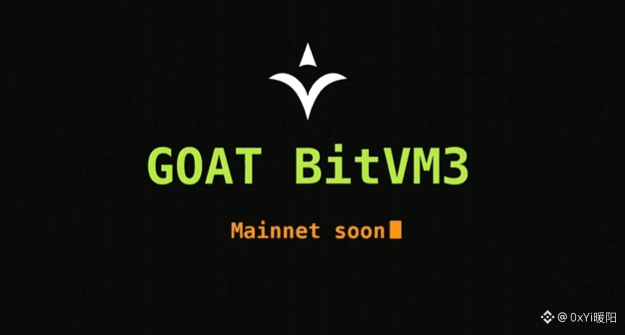
Brothers, the GOAT BitVM3 is about to officially launch. Don’t be fooled by how low-key it is right now—most of the preparation work has already been done.
🔸 The old BitVM2 version had a huge pain point: when there was a dispute and you needed to verify a proof, you had to run a lot of complex code on the Bitcoin chain. The script was too big, exceeded Bitcoin’s limits, and simply couldn’t run!
🔸 Now with the upgrade to BitVM3, things are a lot smarter: they move the most time-consuming and complex proof-verification part off-chain, and only leave a tiny piece of “evidence” on the Bitcoin chain—just 64 bytes or so. That means it won’t clog the chain, while still maintaining security.
🔸 They even came up with a new technique called “Deferred Binding.” It tackles the previous difficulties where on-chain state and sorter commitments were only known at the time of withdrawals. Now the security level is pushed much higher.
🔸 Trust is also straightforward: as long as there’s at least one honest watcher overseeing it, you can stop a fraudulent withdrawal directly. In plain terms, it makes Bitcoin settlement fast and cost-effective without sacrificing decentralization.
🔸 The official team also shared the whitepaper, research notes, and GitHub code links—meaning, “Go ahead and audit what needs auditing, and make public what needs to be made public. We’re ready.”
⭐️ Overall, this is a pretty hardcore move, but also very practical. The Bitcoin ecosystem has always wanted to build an efficient Layer 2 on the main chain, and this time @GOATNetwork has clearly taken a big step forward. Mainnet soon—if you’re interested, you can go check out their materials.
#GOATNetwork #BitVM #LFGoat #BTC
Brothers, the GOAT BitVM3 is about to officially launch. Don’t be fooled by how low-key it is right now—most of the preparation work has already been done.
🔸 The old BitVM2 version had a huge pain point: when there was a dispute and you needed to verify a proof, you had to run a lot of complex code on the Bitcoin chain. The script was too big, exceeded Bitcoin’s limits, and simply couldn’t run!
🔸 Now with the upgrade to BitVM3, things are a lot smarter: they move the most time-consuming and complex proof-verification part off-chain, and only leave a tiny piece of “evidence” on the Bitcoin chain—just 64 bytes or so. That means it won’t clog the chain, while still maintaining security.
🔸 They even came up with a new technique called “Deferred Binding.” It tackles the previous difficulties where on-chain state and sorter commitments were only known at the time of withdrawals. Now the security level is pushed much higher.
🔸 Trust is also straightforward: as long as there’s at least one honest watcher overseeing it, you can stop a fraudulent withdrawal directly. In plain terms, it makes Bitcoin settlement fast and cost-effective without sacrificing decentralization.
🔸 The official team also shared the whitepaper, research notes, and GitHub code links—meaning, “Go ahead and audit what needs auditing, and make public what needs to be made public. We’re ready.”
⭐️ Overall, this is a pretty hardcore move, but also very practical. The Bitcoin ecosystem has always wanted to build an efficient Layer 2 on the main chain, and this time @GOATNetwork has clearly taken a big step forward. Mainnet soon—if you’re interested, you can go check out their materials.
#GOATNetwork #BitVM #LFGoat #BTC
🔸 The old BitVM2 version had a huge pain point: when there was a dispute and you needed to verify a proof, you had to run a lot of complex code on the Bitcoin chain. The script was too big, exceeded Bitcoin’s limits, and simply couldn’t run!
🔸 Now with the upgrade to BitVM3, things are a lot smarter: they move the most time-consuming and complex proof-verification part off-chain, and only leave a tiny piece of “evidence” on the Bitcoin chain—just 64 bytes or so. That means it won’t clog the chain, while still maintaining security.
🔸 They even came up with a new technique called “Deferred Binding.” It tackles the previous difficulties where on-chain state and sorter commitments were only known at the time of withdrawals. Now the security level is pushed much higher.
🔸 Trust is also straightforward: as long as there’s at least one honest watcher overseeing it, you can stop a fraudulent withdrawal directly. In plain terms, it makes Bitcoin settlement fast and cost-effective without sacrificing decentralization.
🔸 The official team also shared the whitepaper, research notes, and GitHub code links—meaning, “Go ahead and audit what needs auditing, and make public what needs to be made public. We’re ready.”
⭐️ Overall, this is a pretty hardcore move, but also very practical. The Bitcoin ecosystem has always wanted to build an efficient Layer 2 on the main chain, and this time @GOATNetwork has clearly taken a big step forward. Mainnet soon—if you’re interested, you can go check out their materials.
#GOATNetwork #BitVM #LFGoat #BTC
488

·
--
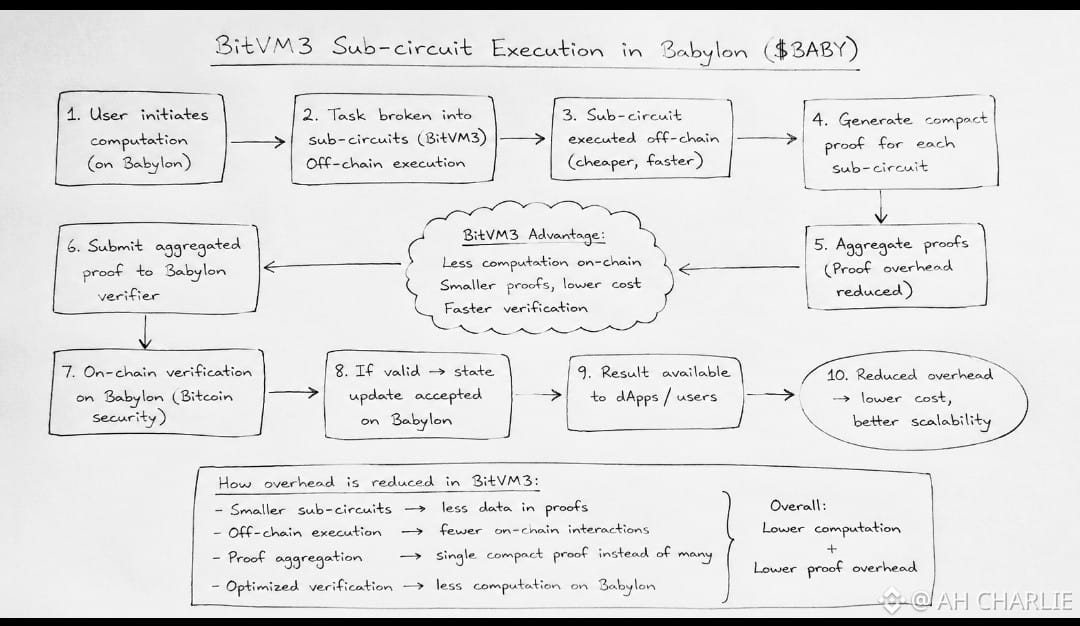
$BABY is interesting here because BitVM3 sub-circuit execution looks less like a headline upgrade and more like a cost cut in the machinery underneath. If Babylon can move pieces of computation off-chain while proving them with less overhead, the system needs fewer heavy proofs, fewer retries, and less bandwidth wasted on work that does not change the final result. That matters because infrastructure economics are often decided by friction, not ambition. Lower proof overhead can tighten latency, reduce verification drag, and make the whole design easier to scale without bloating costs. The real question is whether those savings stay consistent as activity grows, or whether the complexity just shifts somewhere else in the stack.
@babylonlabs_io #baby #BitVM #BTCFi
{spot}(BABYUSDT)
$BABY is interesting here because BitVM3 sub-circuit execution looks less like a headline upgrade and more like a cost cut in the machinery underneath. If Babylon can move pieces of computation off-chain while proving them with less overhead, the system needs fewer heavy proofs, fewer retries, and less bandwidth wasted on work that does not change the final result. That matters because infrastructure economics are often decided by friction, not ambition. Lower proof overhead can tighten latency, reduce verification drag, and make the whole design easier to scale without bloating costs. The real question is whether those savings stay consistent as activity grows, or whether the complexity just shifts somewhere else in the stack.
@BabylonLabs_io #baby #BitVM #BTCFi
@BabylonLabs_io #baby #BitVM #BTCFi
1
1
141
·
--
GOAT Network has been quite busy lately—one move after another. Let’s have a quick chat about what they did last week.
🔸First, on the vision front, @GOATNetwork published their second long-form post, explaining their ideas more clearly. Right now, many BTCFi projects are still stuck at wrapping Bitcoin, then using it for borrowing or simply holding it. GOAT Network wants to go bigger—turning Bitcoin into a true settlement layer that various applications, AI agents, and even institutions can use. In plain terms, they don’t want Bitcoin to be only “digital gold”; they want it to become infrastructure that can run real businesses.
🔸Community activities also moved forward. The gift card campaign in collaboration with Berachain has ended. They selected 10 people who used their platform to buy $10 worth of Starbucks, and the official team reimbursed them right away. A very practical little perk.
🔸They’re also hiring. The North America Developer Relations Lead position is officially open. The main job is to communicate well with developers, help the team truly onboard, and turn interest into on-chain products.
🔸Developer efforts are looking good too. In the OpenClaw summer hackathon, 10 teams advanced to the second stage. This step focuses on turning early demos into something genuinely usable. GOAT Network is serving as a mentor, and the COO even personally led the first workshop. Teams that perform well can go on to compete for up to $1,000,000 in AI Builder Grants.
🔸CEO @kevinliu is in Toronto and has been attending several events in a row, chatting with people from CoinDesk and other projects about AI agents and on-chain infrastructure. Their ideas are already starting to show up in mainstream industry discussions.
🔸On the technical side, the most worth watching is GOAT BitVM3. Both the whitepaper and research results are public, the code is under audit, and they’re getting closer to mainnet. The core goal is to make Bitcoin settlement more practical and reduce the cost of handling disputes—so they can pave the way for all kinds of future applications and agents.
⭐️Overall, GOAT Network is running on multiple tracks at once—vision, community, hiring, onboarding developers, and technical execution. There’s not much flashy stuff. It’s one step at a time, grounded and moving forward.
#GOATNetwork #BitVM #LFGoat #BTC
GOAT Network has been quite busy lately—one move after another. Let’s have a quick chat about what they did last week.
🔸First, on the vision front, @GOATNetwork published their second long-form post, explaining their ideas more clearly. Right now, many BTCFi projects are still stuck at wrapping Bitcoin, then using it for borrowing or simply holding it. GOAT Network wants to go bigger—turning Bitcoin into a true settlement layer that various applications, AI agents, and even institutions can use. In plain terms, they don’t want Bitcoin to be only “digital gold”; they want it to become infrastructure that can run real businesses.
🔸Community activities also moved forward. The gift card campaign in collaboration with Berachain has ended. They selected 10 people who used their platform to buy $10 worth of Starbucks, and the official team reimbursed them right away. A very practical little perk.
🔸They’re also hiring. The North America Developer Relations Lead position is officially open. The main job is to communicate well with developers, help the team truly onboard, and turn interest into on-chain products.
🔸Developer efforts are looking good too. In the OpenClaw summer hackathon, 10 teams advanced to the second stage. This step focuses on turning early demos into something genuinely usable. GOAT Network is serving as a mentor, and the COO even personally led the first workshop. Teams that perform well can go on to compete for up to $1,000,000 in AI Builder Grants.
🔸CEO @kevinliu is in Toronto and has been attending several events in a row, chatting with people from CoinDesk and other projects about AI agents and on-chain infrastructure. Their ideas are already starting to show up in mainstream industry discussions.
🔸On the technical side, the most worth watching is GOAT BitVM3. Both the whitepaper and research results are public, the code is under audit, and they’re getting closer to mainnet. The core goal is to make Bitcoin settlement more practical and reduce the cost of handling disputes—so they can pave the way for all kinds of future applications and agents.
⭐️Overall, GOAT Network is running on multiple tracks at once—vision, community, hiring, onboarding developers, and technical execution. There’s not much flashy stuff. It’s one step at a time, grounded and moving forward.
#GOATNetwork #BitVM #LFGoat #BTC
🔸First, on the vision front, @GOATNetwork published their second long-form post, explaining their ideas more clearly. Right now, many BTCFi projects are still stuck at wrapping Bitcoin, then using it for borrowing or simply holding it. GOAT Network wants to go bigger—turning Bitcoin into a true settlement layer that various applications, AI agents, and even institutions can use. In plain terms, they don’t want Bitcoin to be only “digital gold”; they want it to become infrastructure that can run real businesses.
🔸Community activities also moved forward. The gift card campaign in collaboration with Berachain has ended. They selected 10 people who used their platform to buy $10 worth of Starbucks, and the official team reimbursed them right away. A very practical little perk.
🔸They’re also hiring. The North America Developer Relations Lead position is officially open. The main job is to communicate well with developers, help the team truly onboard, and turn interest into on-chain products.
🔸Developer efforts are looking good too. In the OpenClaw summer hackathon, 10 teams advanced to the second stage. This step focuses on turning early demos into something genuinely usable. GOAT Network is serving as a mentor, and the COO even personally led the first workshop. Teams that perform well can go on to compete for up to $1,000,000 in AI Builder Grants.
🔸CEO @kevinliu is in Toronto and has been attending several events in a row, chatting with people from CoinDesk and other projects about AI agents and on-chain infrastructure. Their ideas are already starting to show up in mainstream industry discussions.
🔸On the technical side, the most worth watching is GOAT BitVM3. Both the whitepaper and research results are public, the code is under audit, and they’re getting closer to mainnet. The core goal is to make Bitcoin settlement more practical and reduce the cost of handling disputes—so they can pave the way for all kinds of future applications and agents.
⭐️Overall, GOAT Network is running on multiple tracks at once—vision, community, hiring, onboarding developers, and technical execution. There’s not much flashy stuff. It’s one step at a time, grounded and moving forward.
#GOATNetwork #BitVM #LFGoat #BTC

573


·
--
Bitcoin is Becoming a Smart Contract Platform 🧡⚡
Bitcoin isn’t just digital gold anymore. Innovations like BitVM and scalable L2s are bringing complex DeFi, lending, and smart contracts directly to the Bitcoin network.
#BitcoinL2 #BitVM #BTCDeFi #SmartContracts .
Bitcoin is Becoming a Smart Contract Platform 🧡⚡
Bitcoin isn’t just digital gold anymore. Innovations like BitVM and scalable L2s are bringing complex DeFi, lending, and smart contracts directly to the Bitcoin network.
#BitcoinL2 #BitVM #BTCDeFi #SmartContracts .
Bitcoin isn’t just digital gold anymore. Innovations like BitVM and scalable L2s are bringing complex DeFi, lending, and smart contracts directly to the Bitcoin network.
#BitcoinL2 #BitVM #BTCDeFi #SmartContracts .
74

·
--
At first I assumed the "each party generates a circuit once per counterparty" detail in the BitVM3 cost model was just an optimization note. But the more I looked, the mechanism doing the real work here is disqualification, not generation cost. A failed challenge doesn't just resolve one dispute it removes that party from future vault withdrawals entirely. That's what lets circuit generation get amortized instead of repeated per deposit. What held my attention is how much weight sits on "professional operators" who smaller borrowers are expected to delegate this to. They can't steal BTC, since the borrower still co-signs, but they can accumulate exposure across many counterparties who are each individually trusting a disqualification rule they didn't design. The security model assumes losing once is enough deterrence. Maybe that's reasonable for a rational operator managing reputation. Which leaves the quieter question whether a system that treats "getting caught once" as sufficient punishment is describing operator behavior, or just hoping for it.
#bitcoin #defi #BitVM $BABY @babylonlabs_io #baby $BTC
{spot}(BTCUSDT)
{spot}(BABYUSDT)
At first I assumed the "each party generates a circuit once per counterparty" detail in the BitVM3 cost model was just an optimization note. But the more I looked, the mechanism doing the real work here is disqualification, not generation cost. A failed challenge doesn't just resolve one dispute it removes that party from future vault withdrawals entirely. That's what lets circuit generation get amortized instead of repeated per deposit. What held my attention is how much weight sits on "professional operators" who smaller borrowers are expected to delegate this to. They can't steal BTC, since the borrower still co-signs, but they can accumulate exposure across many counterparties who are each individually trusting a disqualification rule they didn't design. The security model assumes losing once is enough deterrence. Maybe that's reasonable for a rational operator managing reputation. Which leaves the quieter question whether a system that treats "getting caught once" as sufficient punishment is describing operator behavior, or just hoping for it.
#bitcoin #defi #BitVM $BABY @BabylonLabs_io #baby $BTC
#bitcoin #defi #BitVM $BABY @BabylonLabs_io #baby $BTC
5
39
191
·
--
⚙️ BitVM, Layer-2 Evolution, and the Impact of Spot ETF Options 📈
The technical infrastructure of $BTC
{spot}(BTCUSDT)
is advancing alongside its financial markets, completely transforming the asset’s capabilities. On the network side, Layer-2 programmable upgrades like Stacks, Merlin Chain, and the breakthrough BitVM architecture are bringing smart contracts directly into the ecosystem. This enables decentralized applications to settle securely on the base layer without altering the core protocol, unlocking billions in dormant capital.
Simultaneously, the introduction of options trading for spot Bitcoin ETFs is restructuring institutional market dynamics. ETF options allow large-scale investors to hedge risk, generate yield, and deploy complex volatility strategies. According to insights from @Bitcoin, this dual expansion—technical programmability via L2s and deep capital derivatives via ETF options—solidifies Bitcoin's position. It bridges the gap between decentralized finance innovation and Wall Street liquidity frameworks.
#BitVM #BitcoinL2 #ETFOptions #Stacks #SmartContracts
⚙️ BitVM, Layer-2 Evolution, and the Impact of Spot ETF Options 📈
The technical infrastructure of $BTC
is advancing alongside its financial markets, completely transforming the asset’s capabilities. On the network side, Layer-2 programmable upgrades like Stacks, Merlin Chain, and the breakthrough BitVM architecture are bringing smart contracts directly into the ecosystem. This enables decentralized applications to settle securely on the base layer without altering the core protocol, unlocking billions in dormant capital.
Simultaneously, the introduction of options trading for spot Bitcoin ETFs is restructuring institutional market dynamics. ETF options allow large-scale investors to hedge risk, generate yield, and deploy complex volatility strategies. According to insights from @Bitcoin, this dual expansion—technical programmability via L2s and deep capital derivatives via ETF options—solidifies Bitcoin's position. It bridges the gap between decentralized finance innovation and Wall Street liquidity frameworks.
#BitVM #BitcoinL2 #ETFOptions #Stacks #SmartContracts
The technical infrastructure of $BTC
is advancing alongside its financial markets, completely transforming the asset’s capabilities. On the network side, Layer-2 programmable upgrades like Stacks, Merlin Chain, and the breakthrough BitVM architecture are bringing smart contracts directly into the ecosystem. This enables decentralized applications to settle securely on the base layer without altering the core protocol, unlocking billions in dormant capital.
Simultaneously, the introduction of options trading for spot Bitcoin ETFs is restructuring institutional market dynamics. ETF options allow large-scale investors to hedge risk, generate yield, and deploy complex volatility strategies. According to insights from @Bitcoin, this dual expansion—technical programmability via L2s and deep capital derivatives via ETF options—solidifies Bitcoin's position. It bridges the gap between decentralized finance innovation and Wall Street liquidity frameworks.
#BitVM #BitcoinL2 #ETFOptions #Stacks #SmartContracts

32

·
--
Bitlayer just exploded over 240% in a single day — here is what beginners need to know!
Bitlayer (BTR) is a Bitcoin Layer 2 network built on BitVM technology, designed to bring smart contracts and faster transactions to Bitcoin without changing its core code. Yesterday, the token price surged from roughly four cents to nearly sixteen cents, pushing the 24-hour trading volume to a staggering $353 million against a $41 million market cap. This massive volume spike suggests huge new interest, likely driven by the rising narrative around Bitcoin scaling solutions and BitVM advancements. However, such vertical moves often come with extreme volatility and risk of sharp pullbacks. If you are new, never chase green candles blindly; always research the tech, tokenomics, and team before risking capital. Understanding *why* a project pumps is more important than the pump itself.
#BitcoinLayer2 #BitVM
What is your strategy when you see a low-cap asset pump this hard — do you FOMO in, wait for a dip, or ignore it completely?
Bitlayer just exploded over 240% in a single day — here is what beginners need to know!
Bitlayer (BTR) is a Bitcoin Layer 2 network built on BitVM technology, designed to bring smart contracts and faster transactions to Bitcoin without changing its core code. Yesterday, the token price surged from roughly four cents to nearly sixteen cents, pushing the 24-hour trading volume to a staggering $353 million against a $41 million market cap. This massive volume spike suggests huge new interest, likely driven by the rising narrative around Bitcoin scaling solutions and BitVM advancements. However, such vertical moves often come with extreme volatility and risk of sharp pullbacks. If you are new, never chase green candles blindly; always research the tech, tokenomics, and team before risking capital. Understanding *why* a project pumps is more important than the pump itself.
#BitcoinLayer2 #BitVM
What is your strategy when you see a low-cap asset pump this hard — do you FOMO in, wait for a dip, or ignore it completely?
Bitlayer (BTR) is a Bitcoin Layer 2 network built on BitVM technology, designed to bring smart contracts and faster transactions to Bitcoin without changing its core code. Yesterday, the token price surged from roughly four cents to nearly sixteen cents, pushing the 24-hour trading volume to a staggering $353 million against a $41 million market cap. This massive volume spike suggests huge new interest, likely driven by the rising narrative around Bitcoin scaling solutions and BitVM advancements. However, such vertical moves often come with extreme volatility and risk of sharp pullbacks. If you are new, never chase green candles blindly; always research the tech, tokenomics, and team before risking capital. Understanding *why* a project pumps is more important than the pump itself.
#BitcoinLayer2 #BitVM
What is your strategy when you see a low-cap asset pump this hard — do you FOMO in, wait for a dip, or ignore it completely?
226

·
--
$BTR has the governance token of #Bitlayer on an L2 of #bitcoin based on #BitVM
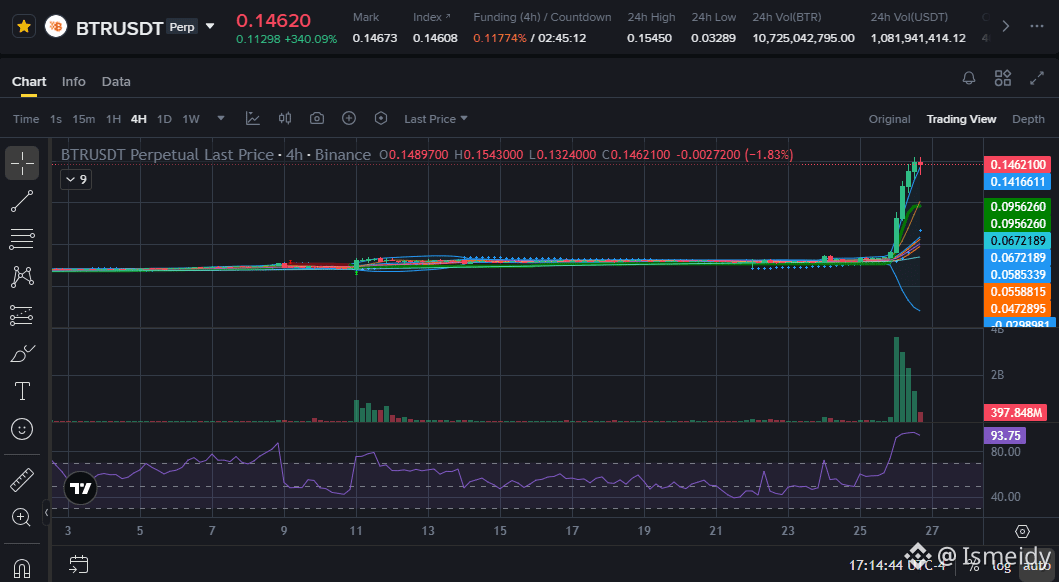
$BTR is in extreme overbought territory, with RSI 93+, a double rejection at $0.154, and daily funding of 0.71% against longs, indicating that the correction is already being cooked
The 4H candle closed bearish with an upper wick, confirming distribution at the highs. Spot volume is still negligible compared to the perpetual, keeping the futures price disconnected from reality.
Short setup
Entry in the $0.148-$0.153 zone
SL: $0.158
TP1: $0.132
TP2: $0.12.
⚠️ Use low leverage (max 2x-3x). This is a micro-cap that can be manipulated.
📉 The thesis: the market is paying shorts for waiting.
DYOR: This is not financial advice. In a token that moves +340% in a day, any position with high leverage can be liquidated in minutes.
$BTR
{future}(BTRUSDT)
$BTR has the governance token of #Bitlayer on an L2 of #bitcoin based on #BitVM
$BTR is in extreme overbought territory, with RSI 93+, a double rejection at $0.154, and daily funding of 0.71% against longs, indicating that the correction is already being cooked
The 4H candle closed bearish with an upper wick, confirming distribution at the highs. Spot volume is still negligible compared to the perpetual, keeping the futures price disconnected from reality.
Short setup
Entry in the $0.148-$0.153 zone
SL: $0.158
TP1: $0.132
TP2: $0.12.
⚠️ Use low leverage (max 2x-3x). This is a micro-cap that can be manipulated.
📉 The thesis: the market is paying shorts for waiting.
DYOR: This is not financial advice. In a token that moves +340% in a day, any position with high leverage can be liquidated in minutes.
$BTR
$BTR is in extreme overbought territory, with RSI 93+, a double rejection at $0.154, and daily funding of 0.71% against longs, indicating that the correction is already being cooked
The 4H candle closed bearish with an upper wick, confirming distribution at the highs. Spot volume is still negligible compared to the perpetual, keeping the futures price disconnected from reality.
Short setup
Entry in the $0.148-$0.153 zone
SL: $0.158
TP1: $0.132
TP2: $0.12.
⚠️ Use low leverage (max 2x-3x). This is a micro-cap that can be manipulated.
📉 The thesis: the market is paying shorts for waiting.
DYOR: This is not financial advice. In a token that moves +340% in a day, any position with high leverage can be liquidated in minutes.
$BTR
1
8
1.7k

·
--
$BTR surged 51% in 24 hours on explosive volume.
🔺85%+ Discount from Peak
🔺Trading at $0.032
🔺Far below its $0.237 all-time high.
High volatility offers quick turnaround entry and exit setups.
▪️Massive Bitcoin L2 Upside: Capturing Bitcoin DeFi could drive huge long-term ROI.
▪️Token Unlock Risk: Watch the 74% locked supply to protect future profits.
{future}(BTRUSDT)
#BTR #BitcoinL2 #BitVM #Altcoins! #Bitlayer
$BTR surged 51% in 24 hours on explosive volume.
🔺85%+ Discount from Peak
🔺Trading at $0.032
🔺Far below its $0.237 all-time high.
High volatility offers quick turnaround entry and exit setups.
▪️Massive Bitcoin L2 Upside: Capturing Bitcoin DeFi could drive huge long-term ROI.
▪️Token Unlock Risk: Watch the 74% locked supply to protect future profits.
#BTR #BitcoinL2 #BitVM #Altcoins! #Bitlayer
🔺85%+ Discount from Peak
🔺Trading at $0.032
🔺Far below its $0.237 all-time high.
High volatility offers quick turnaround entry and exit setups.
▪️Massive Bitcoin L2 Upside: Capturing Bitcoin DeFi could drive huge long-term ROI.
▪️Token Unlock Risk: Watch the 74% locked supply to protect future profits.
#BTR #BitcoinL2 #BitVM #Altcoins! #Bitlayer
205

·
--
#baby $BABY
Imagine owning the world's most valuable asset.
Every year, it becomes more valuable.
But whenever you want to unlock its value...
You're told to hand over control first.
Would you?
That's the dilemma Bitcoin holders have lived with for years.
To access DeFi, they had to wrap BTC, bridge it, or trust a custodian.
The trade-off was always the same:
More utility. Less ownership.
What stood out to me in Babylon's whitepaper is that it challenges this assumption.
Instead of asking Bitcoin to adapt to DeFi...
It asks DeFi to adapt to Bitcoin.
That's a completely different way of thinking.
If native BTC can power lending, stablecoins, and new financial applications without giving up self-custody, then the biggest opportunity in BTCFi isn't creating another asset.
It's finally unlocking the value of the one asset the world already trusts.
The future of Bitcoin may not be about moving BTC.
It may be about making movement unnecessary.
What do you think?
Can native BTC unlock DeFi without sacrificing self-custody?
@babylonlabs_io
#Babylon #bitcoin.” #BitVM
{future}(BABYUSDT)
#baby $BABY
Imagine owning the world's most valuable asset.
Every year, it becomes more valuable.
But whenever you want to unlock its value...
You're told to hand over control first.
Would you?
That's the dilemma Bitcoin holders have lived with for years.
To access DeFi, they had to wrap BTC, bridge it, or trust a custodian.
The trade-off was always the same:
More utility. Less ownership.
What stood out to me in Babylon's whitepaper is that it challenges this assumption.
Instead of asking Bitcoin to adapt to DeFi...
It asks DeFi to adapt to Bitcoin.
That's a completely different way of thinking.
If native BTC can power lending, stablecoins, and new financial applications without giving up self-custody, then the biggest opportunity in BTCFi isn't creating another asset.
It's finally unlocking the value of the one asset the world already trusts.
The future of Bitcoin may not be about moving BTC.
It may be about making movement unnecessary.
What do you think?
Can native BTC unlock DeFi without sacrificing self-custody?
@BabylonLabs_io
#Babylon #bitcoin.” #BitVM
Imagine owning the world's most valuable asset.
Every year, it becomes more valuable.
But whenever you want to unlock its value...
You're told to hand over control first.
Would you?
That's the dilemma Bitcoin holders have lived with for years.
To access DeFi, they had to wrap BTC, bridge it, or trust a custodian.
The trade-off was always the same:
More utility. Less ownership.
What stood out to me in Babylon's whitepaper is that it challenges this assumption.
Instead of asking Bitcoin to adapt to DeFi...
It asks DeFi to adapt to Bitcoin.
That's a completely different way of thinking.
If native BTC can power lending, stablecoins, and new financial applications without giving up self-custody, then the biggest opportunity in BTCFi isn't creating another asset.
It's finally unlocking the value of the one asset the world already trusts.
The future of Bitcoin may not be about moving BTC.
It may be about making movement unnecessary.
What do you think?
Can native BTC unlock DeFi without sacrificing self-custody?
@BabylonLabs_io
#Babylon #bitcoin.” #BitVM
✅ Yes, that's the future
50%
⚡ Babylon is leading the way
33%
🤷 Maybe, but it needs time
17%
❌ No, wrapped BTC is enough
0%
6 votes • Voting closed
8
9
134

·
--
Most BTC scaling solutions are trying to “forcefully modify Bitcoin,” packaging it into another Ethereum.
But TBV (@babylonlabs_io ) takes a different approach: it doesn’t change Bitcoin’s physical rules— it only provides “trust-minimized state simultaneous interpretation.”
By compressing the complex logic from Ethereum and other chains into verifiable circuits and Taproot paths that can be checked off-chain on the BTC network, BTC assets remain firmly anchored on the Bitcoin mainnet from start to finish. There’s no de-pegging risk from wrapping tokens, no black-box custody across multi-sig bridges, and even the power to supervise wrongdoing is returned to users themselves.
Earning interest on BTC is just the surface appearance. The essence of TBV is, without breaking Bitcoin’s decentralized belief foundation, to equip this “digital gold” with a simultaneous interpretation system that connects it to the external world. Retaining the most original source of trust in Bitcoin is the true watershed moment for BTCFi.
#Babylon $BABY #BTCFi #BitVM
#baby
Most BTC scaling solutions are trying to “forcefully modify Bitcoin,” packaging it into another Ethereum.
But TBV (@BabylonLabs_io ) takes a different approach: it doesn’t change Bitcoin’s physical rules— it only provides “trust-minimized state simultaneous interpretation.”
By compressing the complex logic from Ethereum and other chains into verifiable circuits and Taproot paths that can be checked off-chain on the BTC network, BTC assets remain firmly anchored on the Bitcoin mainnet from start to finish. There’s no de-pegging risk from wrapping tokens, no black-box custody across multi-sig bridges, and even the power to supervise wrongdoing is returned to users themselves.
Earning interest on BTC is just the surface appearance. The essence of TBV is, without breaking Bitcoin’s decentralized belief foundation, to equip this “digital gold” with a simultaneous interpretation system that connects it to the external world. Retaining the most original source of trust in Bitcoin is the true watershed moment for BTCFi.
#Babylon $BABY #BTCFi #BitVM
#baby
But TBV (@BabylonLabs_io ) takes a different approach: it doesn’t change Bitcoin’s physical rules— it only provides “trust-minimized state simultaneous interpretation.”
By compressing the complex logic from Ethereum and other chains into verifiable circuits and Taproot paths that can be checked off-chain on the BTC network, BTC assets remain firmly anchored on the Bitcoin mainnet from start to finish. There’s no de-pegging risk from wrapping tokens, no black-box custody across multi-sig bridges, and even the power to supervise wrongdoing is returned to users themselves.
Earning interest on BTC is just the surface appearance. The essence of TBV is, without breaking Bitcoin’s decentralized belief foundation, to equip this “digital gold” with a simultaneous interpretation system that connects it to the external world. Retaining the most original source of trust in Bitcoin is the true watershed moment for BTCFi.
#Babylon $BABY #BTCFi #BitVM
#baby
1
1
245

🚀 Citrea: From Technology Proof to Market Conquest!
Citrea has proven to be more than just technical promises; it is a tangible reality. According to the "Tiger Research" report, the project has successfully confirmed its technical strength by launching the Mainnet based on Zero-Knowledge technology. 🛠️
The beauty of it is the use of BitVM technology to link verification directly to the Bitcoin network, making it one of the most secure and ambitious Layer 2 solutions. ⛓️
What's next?
The focus now shifts from 'How does it work?' to 'Who is using it?'. Citrea's next goal is to attract users and build a strong and massive community. Will we soon see Citrea take complete control of the Bitcoin Layer 2 scene? 📈
In your opinion, will Citrea succeed in pulling the rug out from under competitors thanks to Bitcoin's security? Share your thoughts in the comments! 👇
$BTC
{spot}(BTCUSDT)
#Citrea #Bitcoin #Layer2 #CryptoNews #BitVM 🏁
🚀 Citrea: From Technology Proof to Market Conquest!
Citrea has proven to be more than just technical promises; it is a tangible reality. According to the "Tiger Research" report, the project has successfully confirmed its technical strength by launching the Mainnet based on Zero-Knowledge technology. 🛠️
The beauty of it is the use of BitVM technology to link verification directly to the Bitcoin network, making it one of the most secure and ambitious Layer 2 solutions. ⛓️
What's next?
The focus now shifts from 'How does it work?' to 'Who is using it?'. Citrea's next goal is to attract users and build a strong and massive community. Will we soon see Citrea take complete control of the Bitcoin Layer 2 scene? 📈
In your opinion, will Citrea succeed in pulling the rug out from under competitors thanks to Bitcoin's security? Share your thoughts in the comments! 👇
$BTC
#Citrea #Bitcoin #Layer2 #CryptoNews #BitVM 🏁
Citrea has proven to be more than just technical promises; it is a tangible reality. According to the "Tiger Research" report, the project has successfully confirmed its technical strength by launching the Mainnet based on Zero-Knowledge technology. 🛠️
The beauty of it is the use of BitVM technology to link verification directly to the Bitcoin network, making it one of the most secure and ambitious Layer 2 solutions. ⛓️
What's next?
The focus now shifts from 'How does it work?' to 'Who is using it?'. Citrea's next goal is to attract users and build a strong and massive community. Will we soon see Citrea take complete control of the Bitcoin Layer 2 scene? 📈
In your opinion, will Citrea succeed in pulling the rug out from under competitors thanks to Bitcoin's security? Share your thoughts in the comments! 👇
$BTC
#Citrea #Bitcoin #Layer2 #CryptoNews #BitVM 🏁

75

·
--
Verified
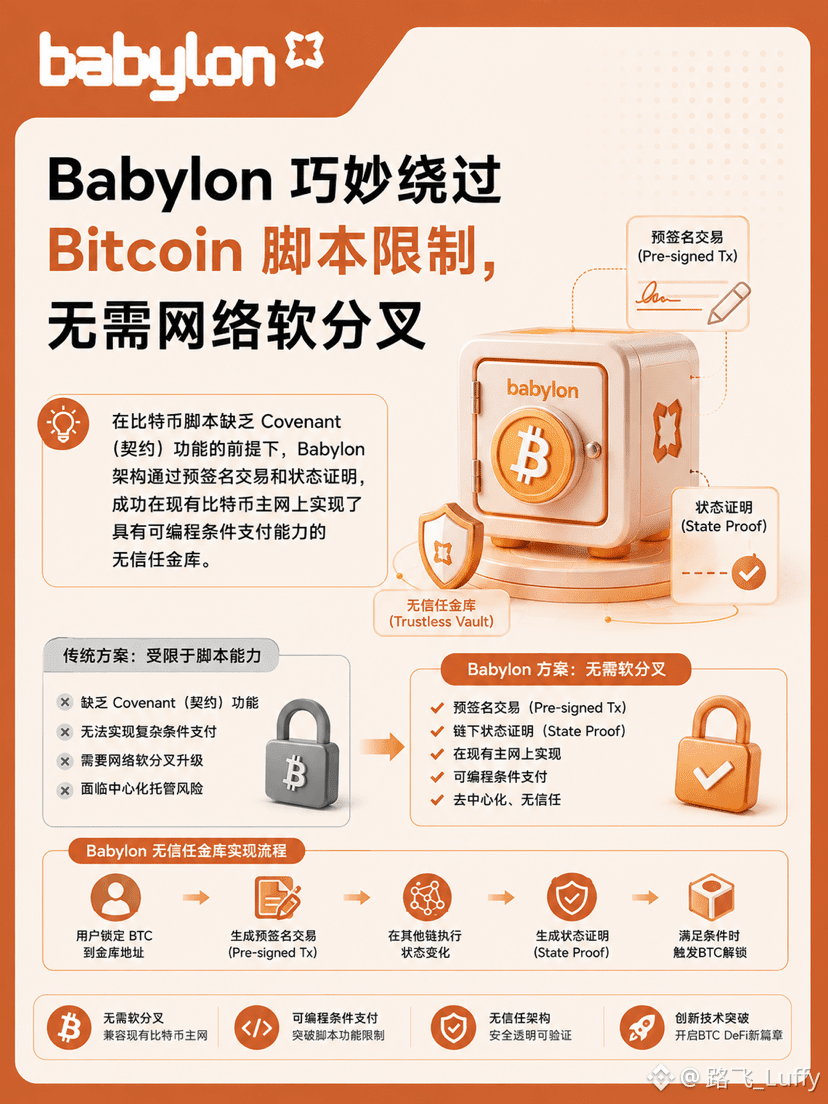
When reading the TBV documents for 翻@babylonlabs_io , the first thing that tripped me up wasn’t the revenue logic. It was a more basic technical question: Bitcoin scripts don’t even have Covenants (contracts). So how does Babylon, on the live network, create a programmable trustless vault under conditions? At first I thought it must move something about Bitcoin itself—maybe pushing a soft fork. But after I went through the architecture, I realized I’d overcomplicated it.
What really made me sit up straight was their workaround. Since Bitcoin script lacks Covenants, you can’t natively impose on-chain constraints like “this UTXO can only be spent in the future in this specific way.” Babylon doesn’t wait for upgrades at the consensus layer. Instead, it front-loads the constraints: using pre-signed transactions, at the moment the funds are locked, it signs in advance the future spending paths that are allowed. Any path that doesn’t meet the conditions simply won’t have valid signatures available to use. In other words, it shifts the “contract” from the scripting layer to the signature layer. $BABY
Following that thread, the other half is state proofs. Pre-signing alone only solves the spending-path problem; external applications still need to verify what state the vault is currently in and which path it should take next. Babylon uses state proofs to turn the vault’s state transitions into something verifiable—so the conditional-payment decision has real grounding. I went through the documents several times before it finally clicked: pre-signing governs “what can be spent in the future,” while state proofs govern “what state it is in right now.” Only together do they add up to programmable conditional payments. #baby
Keeping that clever setup in mind, a few assumptions have to be nailed down. Pre-signing means the allowed paths are enumerated and locked at the time of setup. Afterward, if you want to add new scenarios, you must re-sign and re-coordinate multiple parties—so flexibility is exchanged for rigor. Also, the coordination cost of multi-party pre-signing and the complexity of key management aren’t spelled out explicitly in the whitepaper. After real-scale deployment, those hidden overheads are what will truly test the system.
Ultimately, the smartest part of Babylon is that it avoids the “change Bitcoin” route—slow and risky. Instead, without modifying the mainnet and without relying on a soft fork, it stitches together a programmable vault by reusing existing signing mechanisms and proving mechanisms. This is a classic example of engineering restraint: the capability isn’t achieved by changing the underlying layer; it’s forced out by re-arranging existing primitives. Whether this path can withstand real funds and large-scale concurrency still depends on what the mainnet data ultimately shows.
#BitVM
When reading the TBV documents for 翻@BabylonLabs_io , the first thing that tripped me up wasn’t the revenue logic. It was a more basic technical question: Bitcoin scripts don’t even have Covenants (contracts). So how does Babylon, on the live network, create a programmable trustless vault under conditions? At first I thought it must move something about Bitcoin itself—maybe pushing a soft fork. But after I went through the architecture, I realized I’d overcomplicated it.
What really made me sit up straight was their workaround. Since Bitcoin script lacks Covenants, you can’t natively impose on-chain constraints like “this UTXO can only be spent in the future in this specific way.” Babylon doesn’t wait for upgrades at the consensus layer. Instead, it front-loads the constraints: using pre-signed transactions, at the moment the funds are locked, it signs in advance the future spending paths that are allowed. Any path that doesn’t meet the conditions simply won’t have valid signatures available to use. In other words, it shifts the “contract” from the scripting layer to the signature layer. $BABY
Following that thread, the other half is state proofs. Pre-signing alone only solves the spending-path problem; external applications still need to verify what state the vault is currently in and which path it should take next. Babylon uses state proofs to turn the vault’s state transitions into something verifiable—so the conditional-payment decision has real grounding. I went through the documents several times before it finally clicked: pre-signing governs “what can be spent in the future,” while state proofs govern “what state it is in right now.” Only together do they add up to programmable conditional payments. #baby
Keeping that clever setup in mind, a few assumptions have to be nailed down. Pre-signing means the allowed paths are enumerated and locked at the time of setup. Afterward, if you want to add new scenarios, you must re-sign and re-coordinate multiple parties—so flexibility is exchanged for rigor. Also, the coordination cost of multi-party pre-signing and the complexity of key management aren’t spelled out explicitly in the whitepaper. After real-scale deployment, those hidden overheads are what will truly test the system.
Ultimately, the smartest part of Babylon is that it avoids the “change Bitcoin” route—slow and risky. Instead, without modifying the mainnet and without relying on a soft fork, it stitches together a programmable vault by reusing existing signing mechanisms and proving mechanisms. This is a classic example of engineering restraint: the capability isn’t achieved by changing the underlying layer; it’s forced out by re-arranging existing primitives. Whether this path can withstand real funds and large-scale concurrency still depends on what the mainnet data ultimately shows.
#BitVM
What really made me sit up straight was their workaround. Since Bitcoin script lacks Covenants, you can’t natively impose on-chain constraints like “this UTXO can only be spent in the future in this specific way.” Babylon doesn’t wait for upgrades at the consensus layer. Instead, it front-loads the constraints: using pre-signed transactions, at the moment the funds are locked, it signs in advance the future spending paths that are allowed. Any path that doesn’t meet the conditions simply won’t have valid signatures available to use. In other words, it shifts the “contract” from the scripting layer to the signature layer. $BABY
Following that thread, the other half is state proofs. Pre-signing alone only solves the spending-path problem; external applications still need to verify what state the vault is currently in and which path it should take next. Babylon uses state proofs to turn the vault’s state transitions into something verifiable—so the conditional-payment decision has real grounding. I went through the documents several times before it finally clicked: pre-signing governs “what can be spent in the future,” while state proofs govern “what state it is in right now.” Only together do they add up to programmable conditional payments. #baby
Keeping that clever setup in mind, a few assumptions have to be nailed down. Pre-signing means the allowed paths are enumerated and locked at the time of setup. Afterward, if you want to add new scenarios, you must re-sign and re-coordinate multiple parties—so flexibility is exchanged for rigor. Also, the coordination cost of multi-party pre-signing and the complexity of key management aren’t spelled out explicitly in the whitepaper. After real-scale deployment, those hidden overheads are what will truly test the system.
Ultimately, the smartest part of Babylon is that it avoids the “change Bitcoin” route—slow and risky. Instead, without modifying the mainnet and without relying on a soft fork, it stitches together a programmable vault by reusing existing signing mechanisms and proving mechanisms. This is a classic example of engineering restraint: the capability isn’t achieved by changing the underlying layer; it’s forced out by re-arranging existing primitives. Whether this path can withstand real funds and large-scale concurrency still depends on what the mainnet data ultimately shows.
#BitVM
7
1
177
·
--
Recently, GOAT Network has made some solid progress, taking a big step forward in both underlying technology and upper-layer applications.
🔶 First, let’s talk about the technical upgrade.
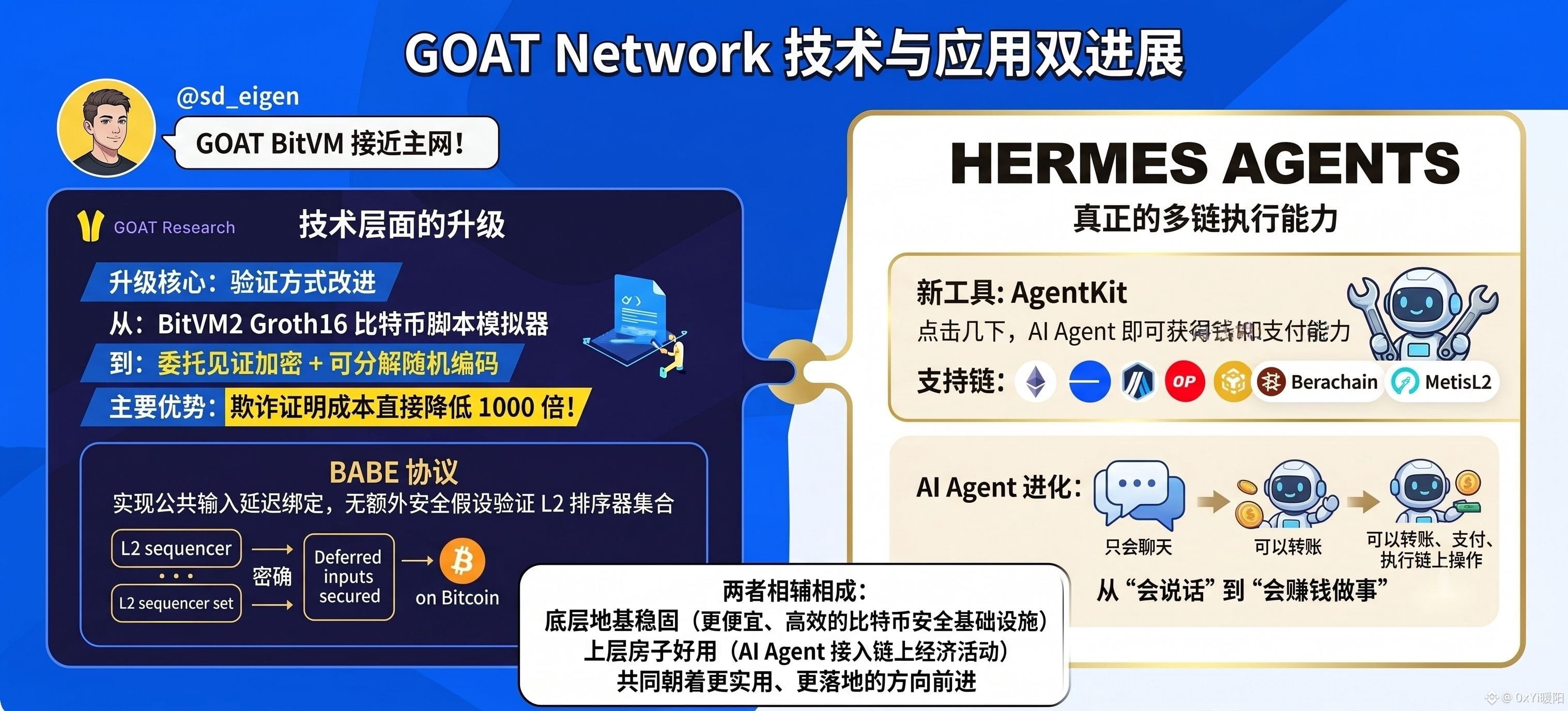
In a post, a core member of the GOAT team, @sd_eigen, said that GOAT BitVM has been pushed forward another step and is now close to the mainnet. This upgrade mainly improves the verification method: previously, BitVM2 used Bitcoin scripts to directly simulate a Groth16 verifier; now it switches to a more efficient approach—delegated witness encryption + decomposable random encoding.
Benefits: you no longer need to change the circuits for operators, verifiers, watchdogs, etc.; you only need to adjust the transaction graph. The most tangible result is that the cost of on-chain fraud proofs has been reduced by a full 1000x. They also achieved delayed binding of public inputs via the BABE protocol, enabling safe verification of an L2 sequencer set on Bitcoin without adding extra security assumptions—bringing the security and practicality of Bitcoin’s L2 to another level.
🔶 Next, GOAT Network released another practical update: the official Hermes AI agents can now truly “take action” across multiple chains. With the newly launched AgentKit tool, AI agents can get wallet and payment capabilities in just a few clicks, supporting major chains such as Ethereum, Base, Arbitrum, Optimism, BNB Chain, Berachain, and MetisL2.
In simple terms, AI agents used to be mostly limited to chatting and generating content; now they’ve been upgraded into agents that can transfer funds, make payments, and execute on-chain actions on their own—truly giving them economic capabilities. This feature helps AI agents evolve from “talking” to “earning while doing,” which is especially useful in a multi-chain environment.
⭐️ These two developments are actually mutually reinforcing: one makes Bitcoin’s security infrastructure cheaper and more efficient at the foundation layer; the other enables AI agents to genuinely plug into on-chain economic activities at the application layer. One keeps the “foundation” solid, and the other makes the “house” usable. @GOATNetwork has advanced both technology and applications together this time, steadily moving toward a more practical, more grounded direction.
#GOATNetwork #BTC #AIAgents #AgentKit #BitVM
Recently, GOAT Network has made some solid progress, taking a big step forward in both underlying technology and upper-layer applications.
🔶 First, let’s talk about the technical upgrade.
In a post, a core member of the GOAT team, @sd_eigen, said that GOAT BitVM has been pushed forward another step and is now close to the mainnet. This upgrade mainly improves the verification method: previously, BitVM2 used Bitcoin scripts to directly simulate a Groth16 verifier; now it switches to a more efficient approach—delegated witness encryption + decomposable random encoding.
Benefits: you no longer need to change the circuits for operators, verifiers, watchdogs, etc.; you only need to adjust the transaction graph. The most tangible result is that the cost of on-chain fraud proofs has been reduced by a full 1000x. They also achieved delayed binding of public inputs via the BABE protocol, enabling safe verification of an L2 sequencer set on Bitcoin without adding extra security assumptions—bringing the security and practicality of Bitcoin’s L2 to another level.
🔶 Next, GOAT Network released another practical update: the official Hermes AI agents can now truly “take action” across multiple chains. With the newly launched AgentKit tool, AI agents can get wallet and payment capabilities in just a few clicks, supporting major chains such as Ethereum, Base, Arbitrum, Optimism, BNB Chain, Berachain, and MetisL2.
In simple terms, AI agents used to be mostly limited to chatting and generating content; now they’ve been upgraded into agents that can transfer funds, make payments, and execute on-chain actions on their own—truly giving them economic capabilities. This feature helps AI agents evolve from “talking” to “earning while doing,” which is especially useful in a multi-chain environment.
⭐️ These two developments are actually mutually reinforcing: one makes Bitcoin’s security infrastructure cheaper and more efficient at the foundation layer; the other enables AI agents to genuinely plug into on-chain economic activities at the application layer. One keeps the “foundation” solid, and the other makes the “house” usable. @GOATNetwork has advanced both technology and applications together this time, steadily moving toward a more practical, more grounded direction.
#GOATNetwork #BTC #AIAgents #AgentKit #BitVM
🔶 First, let’s talk about the technical upgrade.
In a post, a core member of the GOAT team, @sd_eigen, said that GOAT BitVM has been pushed forward another step and is now close to the mainnet. This upgrade mainly improves the verification method: previously, BitVM2 used Bitcoin scripts to directly simulate a Groth16 verifier; now it switches to a more efficient approach—delegated witness encryption + decomposable random encoding.
Benefits: you no longer need to change the circuits for operators, verifiers, watchdogs, etc.; you only need to adjust the transaction graph. The most tangible result is that the cost of on-chain fraud proofs has been reduced by a full 1000x. They also achieved delayed binding of public inputs via the BABE protocol, enabling safe verification of an L2 sequencer set on Bitcoin without adding extra security assumptions—bringing the security and practicality of Bitcoin’s L2 to another level.
🔶 Next, GOAT Network released another practical update: the official Hermes AI agents can now truly “take action” across multiple chains. With the newly launched AgentKit tool, AI agents can get wallet and payment capabilities in just a few clicks, supporting major chains such as Ethereum, Base, Arbitrum, Optimism, BNB Chain, Berachain, and MetisL2.
In simple terms, AI agents used to be mostly limited to chatting and generating content; now they’ve been upgraded into agents that can transfer funds, make payments, and execute on-chain actions on their own—truly giving them economic capabilities. This feature helps AI agents evolve from “talking” to “earning while doing,” which is especially useful in a multi-chain environment.
⭐️ These two developments are actually mutually reinforcing: one makes Bitcoin’s security infrastructure cheaper and more efficient at the foundation layer; the other enables AI agents to genuinely plug into on-chain economic activities at the application layer. One keeps the “foundation” solid, and the other makes the “house” usable. @GOATNetwork has advanced both technology and applications together this time, steadily moving toward a more practical, more grounded direction.
#GOATNetwork #BTC #AIAgents #AgentKit #BitVM
1
174
Log in to explore more content
Join global crypto users on Binance Square
⚡️ Get latest and useful information about crypto.
💬 Trusted by the world’s largest crypto exchange.
👍 Discover real insights from verified creators.
Email / Phone number
Trending Topics
1
#AppleDebutsFoldablePhone
46,054 views
904 Discussing
2
#TSMCAugustRevenueUp53.3%YoY
10,432 views
292 Discussing
3
#IranSaysReadyToEscalateWarWithUS
13,123 views
293 Discussing
4
#EUExtendsCentralContactPointToCASPs
13,514 views
338 Discussing
5
#US10YTreasuryYieldHitsHighestSinceNov2023
36,374 views
563 Discussing
6
#USTreasuryToBuyBackUpTo$6BLongDatedDebt
21,202 views
181 Discussing
7
#BitcoinSurpasses$79K
74,269 views
294 Discussing
8
#BrentCrudeTops$100
133,545 views
422 Discussing
9
#USADPWeeklyEmploymentRises12000
124,103 views
1,467 Discussing
10
#BankOfAmericaGroupPilotsUSBDCStablecoin
92,752 views
1,155 Discussing