
#swift
swift
1.3M views
1,114 Discussing
Hot
Latest

stablecoin-backed prefunding rails reduce FX and treasury management costs compared to traditionalComparing stablecoin-backed prefunding rails (such as Visa Direct’s integration with USDC) to traditional SWIFT wires highlights how structural changes in technology directly alter the economics of liquidity and foreign exchange (FX) management.
Traditional cross-border payments rely on the correspondent banking network, which creates severe capital inefficiencies. Stablecoins reshape these dynamics through several distinct mechanisms:
1. Elimination of Fragmented Nostro/Vostro Account Capital
The SWIFT Problem: Under traditional rails, a payout provider or financial institution must "pre-fund" multiple foreign bank accounts (nostro/vostro accounts) globally to ensure they can settle outgoing payments in local currencies instantly. This locks up millions of dollars in idle capital across different time zones, jurisdictions, and currencies just to cover weekend or after-hours gaps.The Stablecoin Advantage: Stablecoin prefunding introduces shared, centralized liquidity pools. Instead of fragmenting working capital across a dozen local bank accounts worldwide, treasury teams can hold a unified digital asset pool (e.g., USDC) and dynamically deploy funds on-chain within minutes to wherever payout demand spikes.
2. Radical Reduction of Intermediary & "Lifting" Fees
The SWIFT Problem: A standard cross-border wire often hops through 2 to 5 intermediary correspondent banks before reaching the destination. Each intermediary bank in the chain takes a cut—deducting sending fees, intermediary wire fees, and receiving "lifting charges"—making low-value or high-frequency transfers cost-prohibitive.The Stablecoin Advantage: Blockchain rails bypass multi-hop intermediary chains. Value transfers directly from the sender’s wallet to the network settlement layer in seconds or minutes, reducing intermediary overhead to negligible on-chain network costs (often fractions of a dollar).
3. Tighter FX Spreads & Predictable Conversions
The SWIFT Problem: Traditional SWIFT FX conversions are prone to opaque, multi-layered markups. Because conversion rates are handled sequentially by multiple banks along the route, treasury teams frequently face unpredictable FX slippage and lack real-time visibility into the exact landed cost.The Stablecoin Advantage: By utilizing regulated infrastructure partners (such as Triple-A or Circle) to handle edge conversions, stablecoin rails isolate the FX conversion to a single transparent leg. Businesses can execute conversions programmatically at exact, published rates before the value moves on-chain, eliminating hidden mid-route currency devaluation.
4. Mitigation of Weekend and Cut-off Time Risk
The SWIFT Problem: Traditional banking windows are restricted to local business hours and cut-off times, closing entirely over weekends and national holidays. If an unexpected liquidity shortfall occurs on a Friday evening, treasury teams must either over-buffer capital defensively or absorb severe delays until Monday morning.The Stablecoin Advantage: Operating 24/7/365, blockchain networks allow treasuries to move funds instantly outside banking hours. This operational continuity eliminates the need to hold extra "buffer capital" specifically to guard against weekend market shocks or unexpected payout surges.
Summary Cost & Operational Comparison
#Swift #BTC #ETH
stablecoin-backed prefunding rails reduce FX and treasury management costs compared to traditional
Comparing stablecoin-backed prefunding rails (such as Visa Direct’s integration with USDC) to traditional SWIFT wires highlights how structural changes in technology directly alter the economics of liquidity and foreign exchange (FX) management.
Traditional cross-border payments rely on the correspondent banking network, which creates severe capital inefficiencies. Stablecoins reshape these dynamics through several distinct mechanisms:
1. Elimination of Fragmented Nostro/Vostro Account Capital
The SWIFT Problem: Under traditional rails, a payout provider or financial institution must "pre-fund" multiple foreign bank accounts (nostro/vostro accounts) globally to ensure they can settle outgoing payments in local currencies instantly. This locks up millions of dollars in idle capital across different time zones, jurisdictions, and currencies just to cover weekend or after-hours gaps.The Stablecoin Advantage: Stablecoin prefunding introduces shared, centralized liquidity pools. Instead of fragmenting working capital across a dozen local bank accounts worldwide, treasury teams can hold a unified digital asset pool (e.g., USDC) and dynamically deploy funds on-chain within minutes to wherever payout demand spikes.
2. Radical Reduction of Intermediary & "Lifting" Fees
The SWIFT Problem: A standard cross-border wire often hops through 2 to 5 intermediary correspondent banks before reaching the destination. Each intermediary bank in the chain takes a cut—deducting sending fees, intermediary wire fees, and receiving "lifting charges"—making low-value or high-frequency transfers cost-prohibitive.The Stablecoin Advantage: Blockchain rails bypass multi-hop intermediary chains. Value transfers directly from the sender’s wallet to the network settlement layer in seconds or minutes, reducing intermediary overhead to negligible on-chain network costs (often fractions of a dollar).
3. Tighter FX Spreads & Predictable Conversions
The SWIFT Problem: Traditional SWIFT FX conversions are prone to opaque, multi-layered markups. Because conversion rates are handled sequentially by multiple banks along the route, treasury teams frequently face unpredictable FX slippage and lack real-time visibility into the exact landed cost.The Stablecoin Advantage: By utilizing regulated infrastructure partners (such as Triple-A or Circle) to handle edge conversions, stablecoin rails isolate the FX conversion to a single transparent leg. Businesses can execute conversions programmatically at exact, published rates before the value moves on-chain, eliminating hidden mid-route currency devaluation.
4. Mitigation of Weekend and Cut-off Time Risk
The SWIFT Problem: Traditional banking windows are restricted to local business hours and cut-off times, closing entirely over weekends and national holidays. If an unexpected liquidity shortfall occurs on a Friday evening, treasury teams must either over-buffer capital defensively or absorb severe delays until Monday morning.The Stablecoin Advantage: Operating 24/7/365, blockchain networks allow treasuries to move funds instantly outside banking hours. This operational continuity eliminates the need to hold extra "buffer capital" specifically to guard against weekend market shocks or unexpected payout surges.
Summary Cost & Operational Comparison
#Swift #BTC #ETH
Traditional cross-border payments rely on the correspondent banking network, which creates severe capital inefficiencies. Stablecoins reshape these dynamics through several distinct mechanisms:
1. Elimination of Fragmented Nostro/Vostro Account Capital
The SWIFT Problem: Under traditional rails, a payout provider or financial institution must "pre-fund" multiple foreign bank accounts (nostro/vostro accounts) globally to ensure they can settle outgoing payments in local currencies instantly. This locks up millions of dollars in idle capital across different time zones, jurisdictions, and currencies just to cover weekend or after-hours gaps.The Stablecoin Advantage: Stablecoin prefunding introduces shared, centralized liquidity pools. Instead of fragmenting working capital across a dozen local bank accounts worldwide, treasury teams can hold a unified digital asset pool (e.g., USDC) and dynamically deploy funds on-chain within minutes to wherever payout demand spikes.
2. Radical Reduction of Intermediary & "Lifting" Fees
The SWIFT Problem: A standard cross-border wire often hops through 2 to 5 intermediary correspondent banks before reaching the destination. Each intermediary bank in the chain takes a cut—deducting sending fees, intermediary wire fees, and receiving "lifting charges"—making low-value or high-frequency transfers cost-prohibitive.The Stablecoin Advantage: Blockchain rails bypass multi-hop intermediary chains. Value transfers directly from the sender’s wallet to the network settlement layer in seconds or minutes, reducing intermediary overhead to negligible on-chain network costs (often fractions of a dollar).
3. Tighter FX Spreads & Predictable Conversions
The SWIFT Problem: Traditional SWIFT FX conversions are prone to opaque, multi-layered markups. Because conversion rates are handled sequentially by multiple banks along the route, treasury teams frequently face unpredictable FX slippage and lack real-time visibility into the exact landed cost.The Stablecoin Advantage: By utilizing regulated infrastructure partners (such as Triple-A or Circle) to handle edge conversions, stablecoin rails isolate the FX conversion to a single transparent leg. Businesses can execute conversions programmatically at exact, published rates before the value moves on-chain, eliminating hidden mid-route currency devaluation.
4. Mitigation of Weekend and Cut-off Time Risk
The SWIFT Problem: Traditional banking windows are restricted to local business hours and cut-off times, closing entirely over weekends and national holidays. If an unexpected liquidity shortfall occurs on a Friday evening, treasury teams must either over-buffer capital defensively or absorb severe delays until Monday morning.The Stablecoin Advantage: Operating 24/7/365, blockchain networks allow treasuries to move funds instantly outside banking hours. This operational continuity eliminates the need to hold extra "buffer capital" specifically to guard against weekend market shocks or unexpected payout surges.
Summary Cost & Operational Comparison
#Swift #BTC #ETH
1

HONG KONG & SWIFT ARE PUSHING BANKING TOWARD 24/7 BLOCKCHAIN PAYMENTS!
Traditional finance is accelerating its move into tokenization!
⚡ What's happening?
- SWIFT and Hong Kong are exploring tokenized bank deposits.
- The goal is to enable faster around-the-clock cross-border payments.
- Major banks are testing blockchain-based financial infrastructure.
- Tokenized deposits could become another competitor to stablecoins in digital payments
🔥 Why it matters:
Blockchain technology is increasingly attracting traditional banking giants not just crypto companies.
Will tokenized bank deposits challenge stablecoins in the global payments market?
#SWIFT #HongKong #Blockchain #Stablecoins
HONG KONG & SWIFT ARE PUSHING BANKING TOWARD 24/7 BLOCKCHAIN PAYMENTS!
Traditional finance is accelerating its move into tokenization!
⚡ What's happening?
- SWIFT and Hong Kong are exploring tokenized bank deposits.
- The goal is to enable faster around-the-clock cross-border payments.
- Major banks are testing blockchain-based financial infrastructure.
- Tokenized deposits could become another competitor to stablecoins in digital payments
🔥 Why it matters:
Blockchain technology is increasingly attracting traditional banking giants not just crypto companies.
Will tokenized bank deposits challenge stablecoins in the global payments market?
#SWIFT #HongKong #Blockchain #Stablecoins
Traditional finance is accelerating its move into tokenization!
⚡ What's happening?
- SWIFT and Hong Kong are exploring tokenized bank deposits.
- The goal is to enable faster around-the-clock cross-border payments.
- Major banks are testing blockchain-based financial infrastructure.
- Tokenized deposits could become another competitor to stablecoins in digital payments
🔥 Why it matters:
Blockchain technology is increasingly attracting traditional banking giants not just crypto companies.
Will tokenized bank deposits challenge stablecoins in the global payments market?
#SWIFT #HongKong #Blockchain #Stablecoins
10

Hong Kong and Swift test tokenized deposits as banks chase stablecoin speedThe Hong Kong Monetary Authority and Swift, a 53-year-old interbank messaging service, are teaming up with major banks to test international payments using tokenized deposits in multiple currencies. This could offer lenders a blockchain-based alternative that goes beyond stablecoins.
Hong Kong and Swift test tokenized deposits as banks chase stablecoin speed
The Hong Kong Monetary Authority and Swift, a 53-year-old interbank messaging service, are teaming up with major banks to test international payments using tokenized deposits in multiple currencies. This could offer lenders a blockchain-based alternative that goes beyond stablecoins.
JPM-2.18%
HSBCUS+0.33%
38

·
--
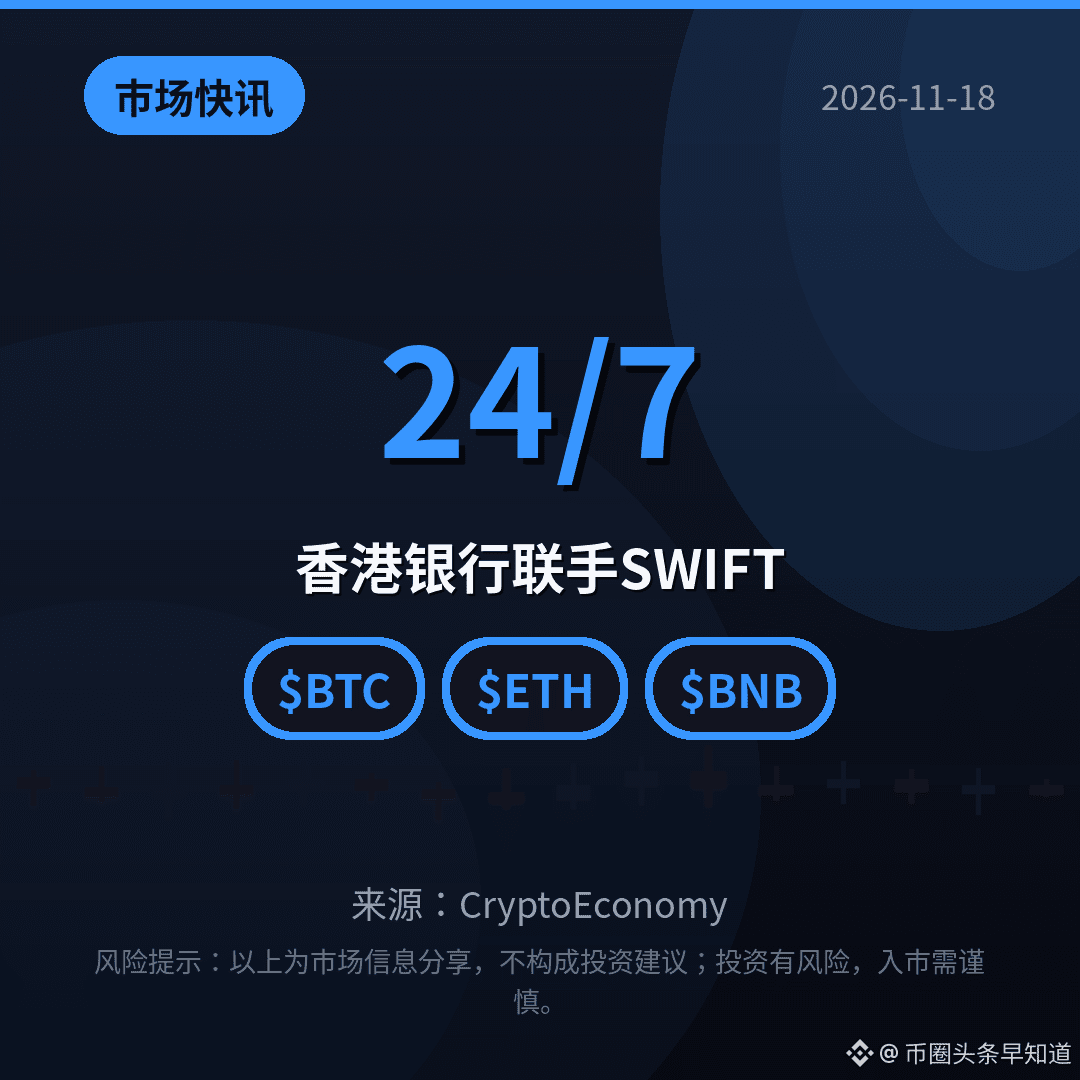
【Market Flash】Hong Kong banks join forces with SWIFT to explore tokenized payments
On November 16, the Hong Kong Monetary Authority announced a strategic collaboration with SWIFT to assess connecting the SWIFT ledger to the Project Ensemble settlement infrastructure, advancing real-time, 24/7, programmable cross-border payments. Bank of China (Hong Kong), Standard Chartered Hong Kong, and HSBC are participating in the tests. The SWIFT ledger pilot launched in July and covers 17 banks, including HSBC and Standard Chartered.
$BTC $ETH $BNB
#币安广场 #代币化 #SWIFT
(Source: CryptoEconomy)
⚠️Risk Warning: The above is shared for market information purposes only and does not constitute investment advice. Investing involves risks; please exercise caution when entering the market.
【Market Flash】Hong Kong banks join forces with SWIFT to explore tokenized payments
On November 16, the Hong Kong Monetary Authority announced a strategic collaboration with SWIFT to assess connecting the SWIFT ledger to the Project Ensemble settlement infrastructure, advancing real-time, 24/7, programmable cross-border payments. Bank of China (Hong Kong), Standard Chartered Hong Kong, and HSBC are participating in the tests. The SWIFT ledger pilot launched in July and covers 17 banks, including HSBC and Standard Chartered.
$BTC $ETH $BNB
#币安广场 #代币化 #SWIFT
(Source: CryptoEconomy)
⚠️Risk Warning: The above is shared for market information purposes only and does not constitute investment advice. Investing involves risks; please exercise caution when entering the market.
On November 16, the Hong Kong Monetary Authority announced a strategic collaboration with SWIFT to assess connecting the SWIFT ledger to the Project Ensemble settlement infrastructure, advancing real-time, 24/7, programmable cross-border payments. Bank of China (Hong Kong), Standard Chartered Hong Kong, and HSBC are participating in the tests. The SWIFT ledger pilot launched in July and covers 17 banks, including HSBC and Standard Chartered.
$BTC $ETH $BNB
#币安广场 #代币化 #SWIFT
(Source: CryptoEconomy)
⚠️Risk Warning: The above is shared for market information purposes only and does not constitute investment advice. Investing involves risks; please exercise caution when entering the market.
3

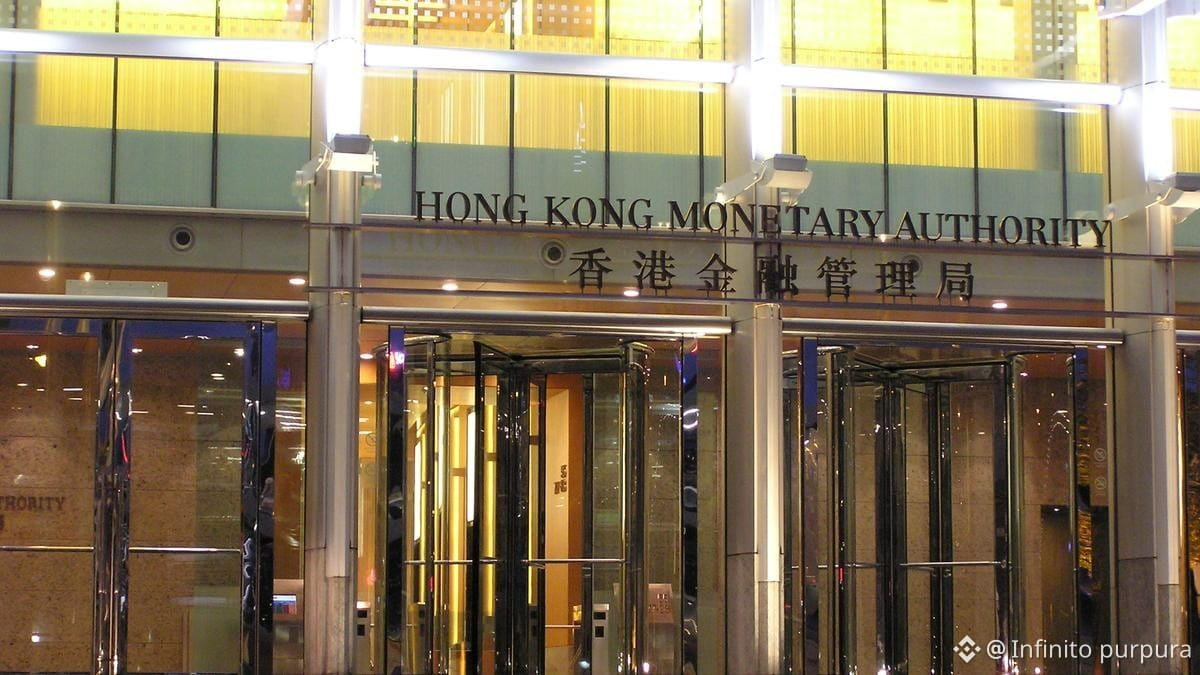
Hong Kong and Swift explore tokenized deposits for 24/7 banking payments
The Hong Kong Monetary Authority and Swift are working with HSBC, Standard Chartered, and Bank of China to test cross-border payments using tokenized deposits in multiple currencies. This project connects Swift’s blockchain ledger with Hong Kong’s Project Ensemble. Unlike stablecoins, tokenized deposits preserve the bank deposit relationship while offering continuous speed for international payments.
$ENA $SOL $BTC
#HongKong #Swift #Payments
Hong Kong and Swift explore tokenized deposits for 24/7 banking payments
The Hong Kong Monetary Authority and Swift are working with HSBC, Standard Chartered, and Bank of China to test cross-border payments using tokenized deposits in multiple currencies. This project connects Swift’s blockchain ledger with Hong Kong’s Project Ensemble. Unlike stablecoins, tokenized deposits preserve the bank deposit relationship while offering continuous speed for international payments.
$ENA $SOL $BTC
#HongKong #Swift #Payments
The Hong Kong Monetary Authority and Swift are working with HSBC, Standard Chartered, and Bank of China to test cross-border payments using tokenized deposits in multiple currencies. This project connects Swift’s blockchain ledger with Hong Kong’s Project Ensemble. Unlike stablecoins, tokenized deposits preserve the bank deposit relationship while offering continuous speed for international payments.
$ENA $SOL $BTC
#HongKong #Swift #Payments
99

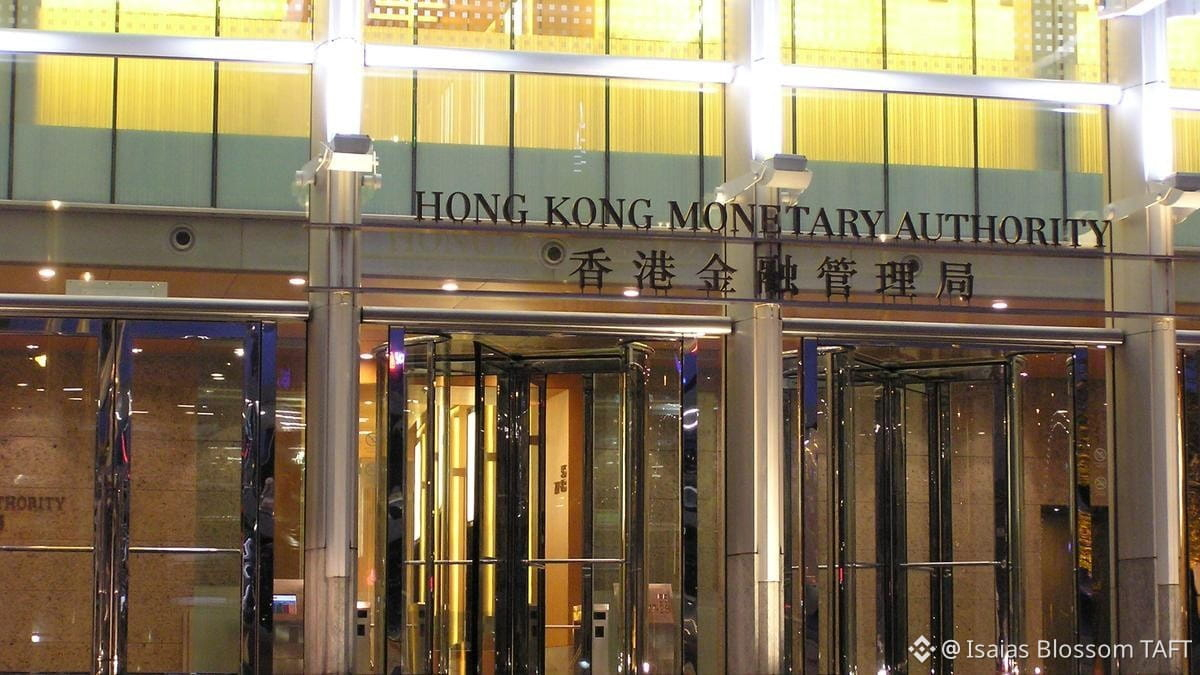
Hong Kong and Swift explore tokenized deposits for 24/7 bank payments
The Hong Kong Monetary Authority and Swift are partnering with HSBC, Standard Chartered, and Bank of China to test cross-border payments using tokenized deposits in multiple currencies. The project connects Swift’s blockchain ledger with Hong Kong’s Project Ensemble. Unlike stablecoins, tokenized deposits preserve the bank deposit relationship while offering continuous speed for international payments.
$ENA $SOL $BTC
#HongKong #Swift #Payments
Hong Kong and Swift explore tokenized deposits for 24/7 bank payments
The Hong Kong Monetary Authority and Swift are partnering with HSBC, Standard Chartered, and Bank of China to test cross-border payments using tokenized deposits in multiple currencies. The project connects Swift’s blockchain ledger with Hong Kong’s Project Ensemble. Unlike stablecoins, tokenized deposits preserve the bank deposit relationship while offering continuous speed for international payments.
$ENA $SOL $BTC
#HongKong #Swift #Payments
The Hong Kong Monetary Authority and Swift are partnering with HSBC, Standard Chartered, and Bank of China to test cross-border payments using tokenized deposits in multiple currencies. The project connects Swift’s blockchain ledger with Hong Kong’s Project Ensemble. Unlike stablecoins, tokenized deposits preserve the bank deposit relationship while offering continuous speed for international payments.
$ENA $SOL $BTC
#HongKong #Swift #Payments
106

·
--
Bullish
🚨 TRADITIONAL BANKING IS MOVING DEEPER INTO BLOCKCHAIN.
Hong Kong is taking another major step toward the future of digital finance.
The Hong Kong Monetary Authority (HKMA) and SWIFT have strengthened their collaboration to explore cross-border payments using tokenized bank deposits.
The initiative will investigate connecting SWIFT's blockchain based ledger with Hong Kong's Project Ensemble settlement infrastructure, supporting payments involving multiple currencies.
Major financial institutions including HSBC, Standard Chartered and Bank of China (Hong Kong) are participating.
Today, international payments can involve multiple intermediaries, settlement delays and operational costs. Tokenized deposits could help make these transactions faster, more efficient and potentially available around the clock.
Even more interesting is the possibility of programmable payments, where transactions can automatically execute when predefined conditions are met.
This isn't simply about putting money on a blockchain. It's about connecting traditional banking infrastructure with the emerging tokenized financial system.
And SWIFT's involvement makes this particularly significant because it already connects financial institutions across the world.
Traditional finance isn't necessarily fighting blockchain technology. Some of its biggest players are exploring how to integrate it.
Will tokenized deposits become the foundation of the next generation of global payments?
#blockchain #Tokenization #Swift #DigitalFinance
🚨 TRADITIONAL BANKING IS MOVING DEEPER INTO BLOCKCHAIN.
Hong Kong is taking another major step toward the future of digital finance.
The Hong Kong Monetary Authority (HKMA) and SWIFT have strengthened their collaboration to explore cross-border payments using tokenized bank deposits.
The initiative will investigate connecting SWIFT's blockchain based ledger with Hong Kong's Project Ensemble settlement infrastructure, supporting payments involving multiple currencies.
Major financial institutions including HSBC, Standard Chartered and Bank of China (Hong Kong) are participating.
Today, international payments can involve multiple intermediaries, settlement delays and operational costs. Tokenized deposits could help make these transactions faster, more efficient and potentially available around the clock.
Even more interesting is the possibility of programmable payments, where transactions can automatically execute when predefined conditions are met.
This isn't simply about putting money on a blockchain. It's about connecting traditional banking infrastructure with the emerging tokenized financial system.
And SWIFT's involvement makes this particularly significant because it already connects financial institutions across the world.
Traditional finance isn't necessarily fighting blockchain technology. Some of its biggest players are exploring how to integrate it.
Will tokenized deposits become the foundation of the next generation of global payments?
#blockchain #Tokenization #Swift #DigitalFinance
Hong Kong is taking another major step toward the future of digital finance.
The Hong Kong Monetary Authority (HKMA) and SWIFT have strengthened their collaboration to explore cross-border payments using tokenized bank deposits.
The initiative will investigate connecting SWIFT's blockchain based ledger with Hong Kong's Project Ensemble settlement infrastructure, supporting payments involving multiple currencies.
Major financial institutions including HSBC, Standard Chartered and Bank of China (Hong Kong) are participating.
Today, international payments can involve multiple intermediaries, settlement delays and operational costs. Tokenized deposits could help make these transactions faster, more efficient and potentially available around the clock.
Even more interesting is the possibility of programmable payments, where transactions can automatically execute when predefined conditions are met.
This isn't simply about putting money on a blockchain. It's about connecting traditional banking infrastructure with the emerging tokenized financial system.
And SWIFT's involvement makes this particularly significant because it already connects financial institutions across the world.
Traditional finance isn't necessarily fighting blockchain technology. Some of its biggest players are exploring how to integrate it.
Will tokenized deposits become the foundation of the next generation of global payments?
#blockchain #Tokenization #Swift #DigitalFinance
HSBCUS+0.33%
4
219

HKMA and Swift explore tokenized deposits for cross-border payments
- HKMA and Swift link Project Ensemble to the Swift ledger.
- Use tokenized deposits for cross-border interbank payments.
- Support multiple currencies.
- RSS has not provided further details.
#BinanceSquare #CryptoNews #Blockchain #Swift #HKMA
$btc $eth
vlikevn Titanbot
Source: CoinTelegraph
HKMA and Swift explore tokenized deposits for cross-border payments
- HKMA and Swift link Project Ensemble to the Swift ledger.
- Use tokenized deposits for cross-border interbank payments.
- Support multiple currencies.
- RSS has not provided further details.
#BinanceSquare #CryptoNews #Blockchain #Swift #HKMA
$btc $eth
vlikevn Titanbot
Source: CoinTelegraph
- HKMA and Swift link Project Ensemble to the Swift ledger.
- Use tokenized deposits for cross-border interbank payments.
- Support multiple currencies.
- RSS has not provided further details.
#BinanceSquare #CryptoNews #Blockchain #Swift #HKMA
$btc $eth
vlikevn Titanbot
Source: CoinTelegraph
142

·
--
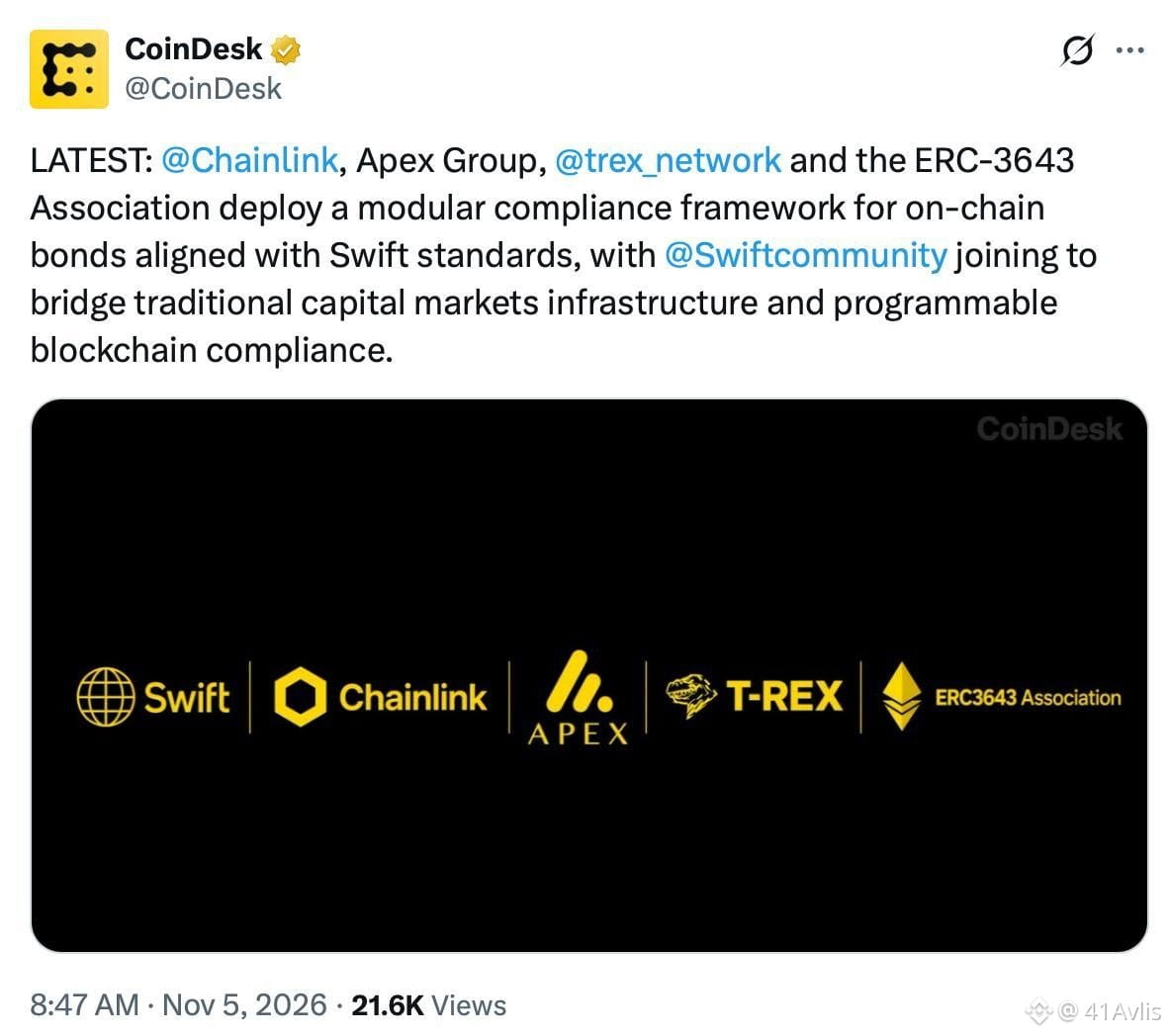
🌐 Chainlink and Swift: Bridging Traditional Finance and Blockchain
The adoption of tokenized assets has taken a giant leap:
* New Alliance: Chainlink, Apex Group, T-REX Network, and the ERC-3633 Association launched a modular regulatory compliance framework.
* Swift Standard: The project was developed to follow Swift standards.
* The Impact: The goal is to connect traditional financial markets to blockchain, driving the growth of tokenized assets.
💡 What do you think of this development for the market? Share your thoughts in the comments!
#Chainlink #Swift #RWA
🌐 Chainlink and Swift: Bridging Traditional Finance and Blockchain
The adoption of tokenized assets has taken a giant leap:
* New Alliance: Chainlink, Apex Group, T-REX Network, and the ERC-3633 Association launched a modular regulatory compliance framework.
* Swift Standard: The project was developed to follow Swift standards.
* The Impact: The goal is to connect traditional financial markets to blockchain, driving the growth of tokenized assets.
💡 What do you think of this development for the market? Share your thoughts in the comments!
#Chainlink #Swift #RWA
The adoption of tokenized assets has taken a giant leap:
* New Alliance: Chainlink, Apex Group, T-REX Network, and the ERC-3633 Association launched a modular regulatory compliance framework.
* Swift Standard: The project was developed to follow Swift standards.
* The Impact: The goal is to connect traditional financial markets to blockchain, driving the growth of tokenized assets.
💡 What do you think of this development for the market? Share your thoughts in the comments!
#Chainlink #Swift #RWA
76

·
--
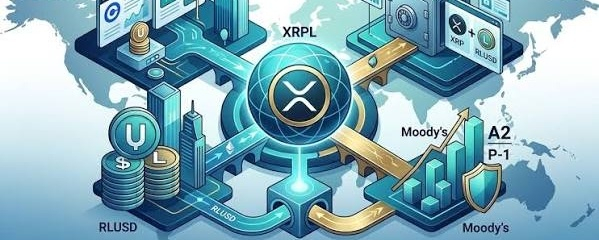
Article
XRP: a bridge or independent? Assuming 10% of SWIFT activity shifts to the XRPL ecosystem
🫱#Swift is primarily a financial messaging network; it does not directly own or transfer all the money involved in transactions.
SWIFT reported an average of 59.8 million payment messages per day in 2025. The figure of USD 14 trillion per day should be treated as an estimate of transaction value, not a figure confirmed by the current official statistics page. 👌
XRP: a bridge or independent?
Assuming 10% of SWIFT activity shifts to the XRPL ecosystem
🫱#Swift is primarily a financial messaging network; it does not directly own or transfer all the money involved in transactions.
SWIFT reported an average of 59.8 million payment messages per day in 2025. The figure of USD 14 trillion per day should be treated as an estimate of transaction value, not a figure confirmed by the current official statistics page. 👌
🫱#Swift is primarily a financial messaging network; it does not directly own or transfer all the money involved in transactions.
SWIFT reported an average of 59.8 million payment messages per day in 2025. The figure of USD 14 trillion per day should be treated as an estimate of transaction value, not a figure confirmed by the current official statistics page. 👌
4
4
3.8k

·
--
📰 XRP Researcher: My Full Conversation With Tom Alaerts Who Spent Over 27 Years At SWIFT
Tom Alaerts, a former SWIFT standards expert with more than 27 years of experience at the global financial messaging network, has explained why ISO 20022 could play an important role in bringing digital assets into traditional banking infrastructure. In a lengthy conversation on X with Crypto Researcher SMQKE, Alaerts discussed SWIFT’s future, the relationship between […] The post XRP Researcher: My Full Conversation With Tom Alaerts Who Spent Over 27 Years At SWIFT appeared first on Times Tabloid.
Source : Times Tabloid
Time : 2026-11-01 13:00:46
Credit : solomon odunayo
#xrp #cryptocurrency #swift #news
$XRP
Share your opinion in the comment section below
📰 XRP Researcher: My Full Conversation With Tom Alaerts Who Spent Over 27 Years At SWIFT
Tom Alaerts, a former SWIFT standards expert with more than 27 years of experience at the global financial messaging network, has explained why ISO 20022 could play an important role in bringing digital assets into traditional banking infrastructure. In a lengthy conversation on X with Crypto Researcher SMQKE, Alaerts discussed SWIFT’s future, the relationship between […] The post XRP Researcher: My Full Conversation With Tom Alaerts Who Spent Over 27 Years At SWIFT appeared first on Times Tabloid.
Source : Times Tabloid
Time : 2026-11-01 13:00:46
Credit : solomon odunayo
#xrp #cryptocurrency #swift #news
$XRP
Share your opinion in the comment section below
Tom Alaerts, a former SWIFT standards expert with more than 27 years of experience at the global financial messaging network, has explained why ISO 20022 could play an important role in bringing digital assets into traditional banking infrastructure. In a lengthy conversation on X with Crypto Researcher SMQKE, Alaerts discussed SWIFT’s future, the relationship between […] The post XRP Researcher: My Full Conversation With Tom Alaerts Who Spent Over 27 Years At SWIFT appeared first on Times Tabloid.
Source : Times Tabloid
Time : 2026-11-01 13:00:46
Credit : solomon odunayo
#xrp #cryptocurrency #swift #news
$XRP
Share your opinion in the comment section below
151


·
--
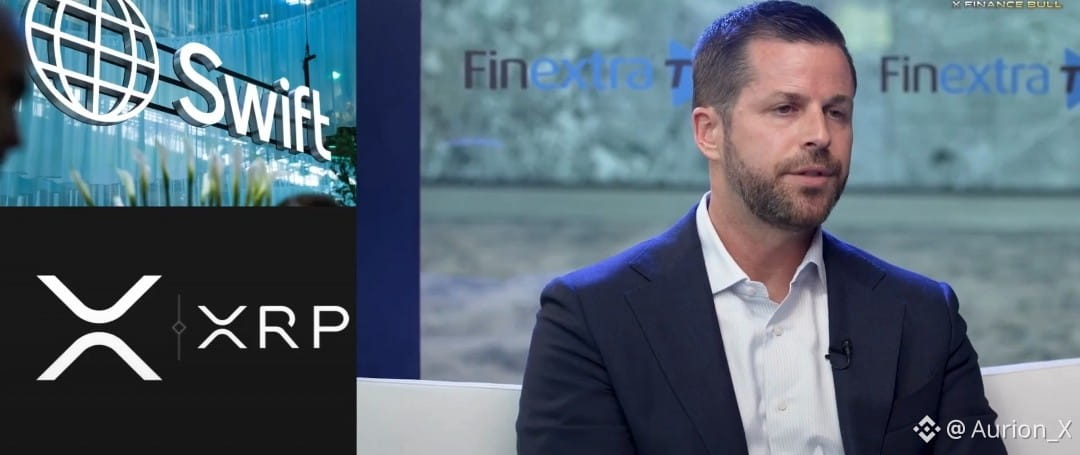
🚨 SWIFT is talking about the future of finance, and $XRP holders are paying attention. 👀🔥
24/7 cross-border payments, programmable digital cash, tokenized securities, and atomic settlement are becoming important parts of the financial industry's evolution.
Ripple is building within this broader blockchain payments landscape, making the overlap worth watching.
But here’s the key point: SWIFT discussing blockchain infrastructure does not automatically mean an official partnership or direct XRP adoption.
The real question is whether XRP and the XRP Ledger will capture a meaningful role in this changing financial system. 🌎
That’s what I’ll be watching closely. 🚀
#XRP #Ripple #SWIFT
🚨 SWIFT is talking about the future of finance, and $XRP holders are paying attention. 👀🔥
24/7 cross-border payments, programmable digital cash, tokenized securities, and atomic settlement are becoming important parts of the financial industry's evolution.
Ripple is building within this broader blockchain payments landscape, making the overlap worth watching.
But here’s the key point: SWIFT discussing blockchain infrastructure does not automatically mean an official partnership or direct XRP adoption.
The real question is whether XRP and the XRP Ledger will capture a meaningful role in this changing financial system. 🌎
That’s what I’ll be watching closely. 🚀
#XRP #Ripple #SWIFT
24/7 cross-border payments, programmable digital cash, tokenized securities, and atomic settlement are becoming important parts of the financial industry's evolution.
Ripple is building within this broader blockchain payments landscape, making the overlap worth watching.
But here’s the key point: SWIFT discussing blockchain infrastructure does not automatically mean an official partnership or direct XRP adoption.
The real question is whether XRP and the XRP Ledger will capture a meaningful role in this changing financial system. 🌎
That’s what I’ll be watching closely. 🚀
#XRP #Ripple #SWIFT
3
1
10
5.8k

·
--
Two giant banks just moved real dollars as tokens, and almost nobody holding crypto was in the trade.
That is the trap. Every time a headline like this hits, people FOMO into whatever ticker sounds vaguely like payments or real-world assets, then find out the product never needed their coin. You do not get rugged by a contract. You get rugged by a story you did not read.
On September 2, First Abu Dhabi Bank and Citi settled an actual USD payment with tokenized deposits on Swift's shared ledger. A tokenized deposit is just a bank IOU in a new format. It is a claim on that bank's balance sheet, written so two institutions can move it on a shared record instead of waiting on the old message chain. It is not $BTC. You cannot pull it to a wallet and leave. The promise is still the bank's, and Swift still runs the room.
The risk is treating that as a win for whatever you already hold. These tokens can be frozen or reversed because a regulated bank issued them, not a neutral chain. If the bank has a problem, you are in line with every other depositor, token or not. And if treasurers actually like this rail, a lot of the cross-border flow people keep pricing into $XRP or loose $ETH tokenization bets may never leave the banking system. Faster money for banks is not the same as money showing up on the chains you trade.
If the banks can do this without public crypto, what are we actually pricing in?
#Tokenization #RWA #Swift
Two giant banks just moved real dollars as tokens, and almost nobody holding crypto was in the trade.
That is the trap. Every time a headline like this hits, people FOMO into whatever ticker sounds vaguely like payments or real-world assets, then find out the product never needed their coin. You do not get rugged by a contract. You get rugged by a story you did not read.
On September 2, First Abu Dhabi Bank and Citi settled an actual USD payment with tokenized deposits on Swift's shared ledger. A tokenized deposit is just a bank IOU in a new format. It is a claim on that bank's balance sheet, written so two institutions can move it on a shared record instead of waiting on the old message chain. It is not $BTC . You cannot pull it to a wallet and leave. The promise is still the bank's, and Swift still runs the room.
The risk is treating that as a win for whatever you already hold. These tokens can be frozen or reversed because a regulated bank issued them, not a neutral chain. If the bank has a problem, you are in line with every other depositor, token or not. And if treasurers actually like this rail, a lot of the cross-border flow people keep pricing into $XRP or loose $ETH tokenization bets may never leave the banking system. Faster money for banks is not the same as money showing up on the chains you trade.
If the banks can do this without public crypto, what are we actually pricing in?
#Tokenization #RWA #Swift
That is the trap. Every time a headline like this hits, people FOMO into whatever ticker sounds vaguely like payments or real-world assets, then find out the product never needed their coin. You do not get rugged by a contract. You get rugged by a story you did not read.
On September 2, First Abu Dhabi Bank and Citi settled an actual USD payment with tokenized deposits on Swift's shared ledger. A tokenized deposit is just a bank IOU in a new format. It is a claim on that bank's balance sheet, written so two institutions can move it on a shared record instead of waiting on the old message chain. It is not $BTC . You cannot pull it to a wallet and leave. The promise is still the bank's, and Swift still runs the room.
The risk is treating that as a win for whatever you already hold. These tokens can be frozen or reversed because a regulated bank issued them, not a neutral chain. If the bank has a problem, you are in line with every other depositor, token or not. And if treasurers actually like this rail, a lot of the cross-border flow people keep pricing into $XRP or loose $ETH tokenization bets may never leave the banking system. Faster money for banks is not the same as money showing up on the chains you trade.
If the banks can do this without public crypto, what are we actually pricing in?
#Tokenization #RWA #Swift

6

If you're still treating SWIFT as some relic that crypto already beat, stop now.
Traders keep getting chopped up rotating into the latest hype while the real cash movement happens in quiet bank experiments. That's how you miss the liquidity that actually sticks around.
On September 2 First Abu Dhabi Bank and Citi settled a genuine USD payment using tokenized deposits on SWIFT's shared ledger. I forwarded it to a treasury ops colleague expecting some blockchain excitement. He just asked how it would cut the daily grind of reconciling positions and chasing failed wires.
This sits differently from the years of $XRP trying to replace SWIFT or the slow corporate crawl of $USDC and $USDT onto new rails. Those always felt like extra steps. Tokenized deposits let the same banks keep their existing setup while using a shared ledger. Most earlier PoCs never left the lab. This one moved actual dollars.
The people who will actually use it don't care about our narratives. They care about fewer emails and faster visibility. When ops folks start asking practical questions, the shift is already underway.
Where do you think this leaves the old disruption story versus banks just getting more efficient on-chain?
#Tokenization #TradFi #SWIFT
If you're still treating SWIFT as some relic that crypto already beat, stop now.
Traders keep getting chopped up rotating into the latest hype while the real cash movement happens in quiet bank experiments. That's how you miss the liquidity that actually sticks around.
On September 2 First Abu Dhabi Bank and Citi settled a genuine USD payment using tokenized deposits on SWIFT's shared ledger. I forwarded it to a treasury ops colleague expecting some blockchain excitement. He just asked how it would cut the daily grind of reconciling positions and chasing failed wires.
This sits differently from the years of $XRP trying to replace SWIFT or the slow corporate crawl of $USDC and $USDT onto new rails. Those always felt like extra steps. Tokenized deposits let the same banks keep their existing setup while using a shared ledger. Most earlier PoCs never left the lab. This one moved actual dollars.
The people who will actually use it don't care about our narratives. They care about fewer emails and faster visibility. When ops folks start asking practical questions, the shift is already underway.
Where do you think this leaves the old disruption story versus banks just getting more efficient on-chain?
#Tokenization #TradFi #SWIFT
Traders keep getting chopped up rotating into the latest hype while the real cash movement happens in quiet bank experiments. That's how you miss the liquidity that actually sticks around.
On September 2 First Abu Dhabi Bank and Citi settled a genuine USD payment using tokenized deposits on SWIFT's shared ledger. I forwarded it to a treasury ops colleague expecting some blockchain excitement. He just asked how it would cut the daily grind of reconciling positions and chasing failed wires.
This sits differently from the years of $XRP trying to replace SWIFT or the slow corporate crawl of $USDC and $USDT onto new rails. Those always felt like extra steps. Tokenized deposits let the same banks keep their existing setup while using a shared ledger. Most earlier PoCs never left the lab. This one moved actual dollars.
The people who will actually use it don't care about our narratives. They care about fewer emails and faster visibility. When ops folks start asking practical questions, the shift is already underway.
Where do you think this leaves the old disruption story versus banks just getting more efficient on-chain?
#Tokenization #TradFi #SWIFT
19

·
--
Bullish
Verified
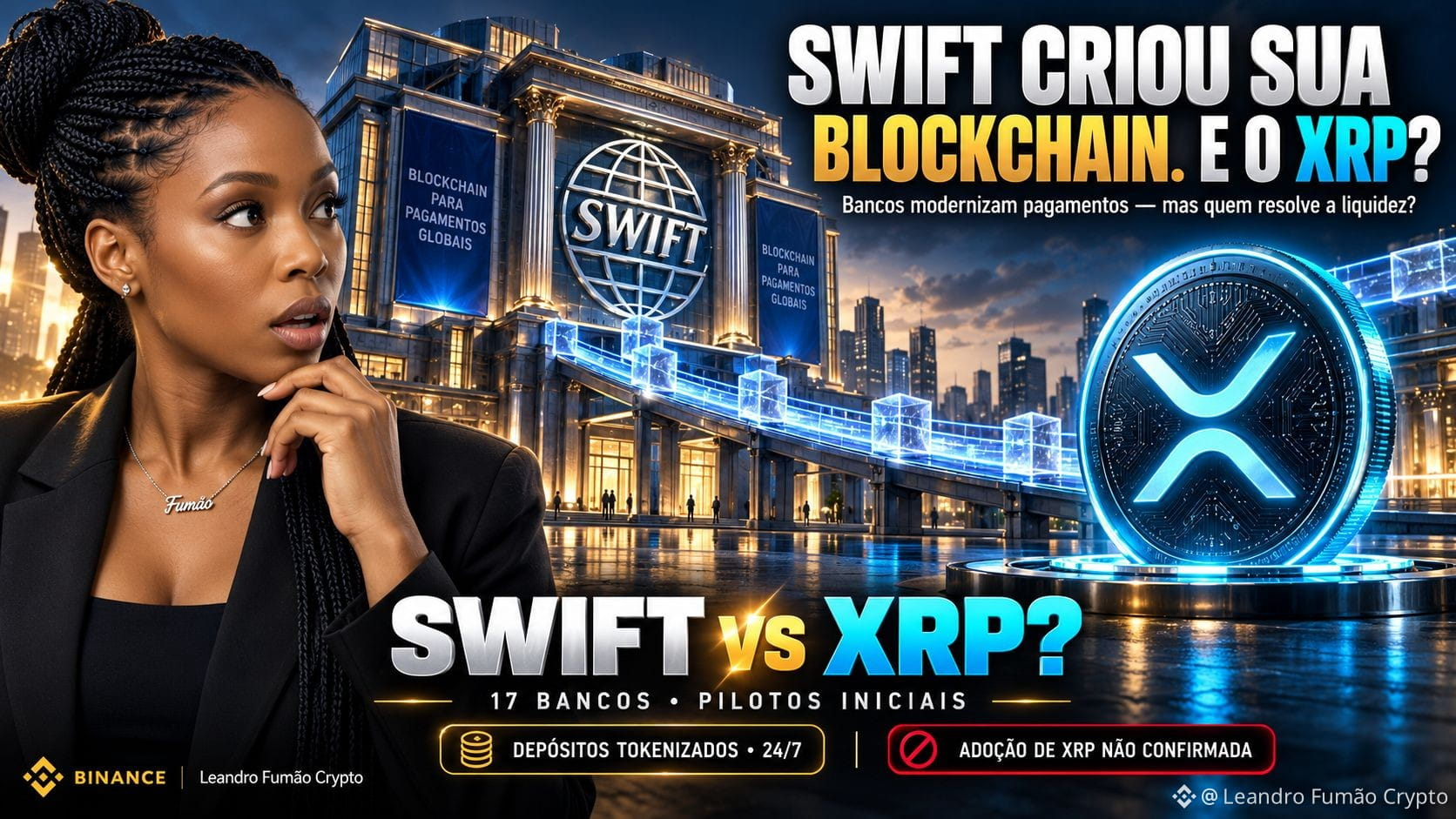
🚨જ⁀➴ SWIFT CREATED ITS BLOCKCHAIN ⥱ WHAT NOW ⋙ $XRP ❓
✔️The international financial system is undergoing a massive transformation.
SWIFT, which connects thousands of financial institutions, has already developed its own blockchain ledger to modernize international payments.
🔥 17 BANKS WERE ANNOUNCED FOR THE INITIAL PILOTS.
The proposal is to enable 24/7 payments using tokenized bank deposits.
But there’s one detail almost nobody is discussing.
BLOCKCHAIN DOES NOT AUTOMATICALLY SOLVE THE LIQUIDITY PROBLEM.
Even with shared infrastructure, banks still need to deal with different currencies, the availability of funds, and settlement mechanisms.
This is exactly where a question arises⤵
WHERE DOES $XRP FIT IN?
XRP could function as an intermediary asset for currency conversion, enabling transfers without necessarily relying on balances held in advance in each market.
Imagine the difference⤵
🏦 SWIFT » Payment coordination and integration between institutions.
⚡ XRP » A potential liquidity bridge between different currencies and markets.
But be careful⤵
⚠️ SWIFT HAS NOT ANNOUNCED THE ADOPTION OF XRP IN ITS NEW LEDGER.
It has also not been proven that the infrastructure will require XRP to operate.
SWIFT’s progress could represent competition for some Ripple solutions and, at the same time, show that the banking sector is adopting technologies that once seemed limited to the crypto world.
The real challenge now is to connect systems, currencies, and liquidity efficiently.
🔥 SWIFT IS BUILDING NEW RAILS. BUT WHO WILL PROVIDE THE BRIDGES?
DO YOU BELIEVE $XRP AND SWIFT WILL BE COMPETITORS OR COMPLEMENTARY?
⚠️ The channel @Fumao here on Binance Square 🗣️ Remember » This is an informative and educational analysis » This is not financial advice » Always do your own research before investing. 👨🎓📚
#xrp #Swift #RippleXRP
🚨જ⁀➴ SWIFT CREATED ITS BLOCKCHAIN ⥱ WHAT NOW ⋙ $XRP ❓
✔️The international financial system is undergoing a massive transformation.
SWIFT, which connects thousands of financial institutions, has already developed its own blockchain ledger to modernize international payments.
🔥 17 BANKS WERE ANNOUNCED FOR THE INITIAL PILOTS.
The proposal is to enable 24/7 payments using tokenized bank deposits.
But there’s one detail almost nobody is discussing.
BLOCKCHAIN DOES NOT AUTOMATICALLY SOLVE THE LIQUIDITY PROBLEM.
Even with shared infrastructure, banks still need to deal with different currencies, the availability of funds, and settlement mechanisms.
This is exactly where a question arises⤵
WHERE DOES $XRP FIT IN?
XRP could function as an intermediary asset for currency conversion, enabling transfers without necessarily relying on balances held in advance in each market.
Imagine the difference⤵
🏦 SWIFT » Payment coordination and integration between institutions.
⚡ XRP » A potential liquidity bridge between different currencies and markets.
But be careful⤵
⚠️ SWIFT HAS NOT ANNOUNCED THE ADOPTION OF XRP IN ITS NEW LEDGER.
It has also not been proven that the infrastructure will require XRP to operate.
SWIFT’s progress could represent competition for some Ripple solutions and, at the same time, show that the banking sector is adopting technologies that once seemed limited to the crypto world.
The real challenge now is to connect systems, currencies, and liquidity efficiently.
🔥 SWIFT IS BUILDING NEW RAILS. BUT WHO WILL PROVIDE THE BRIDGES?
DO YOU BELIEVE $XRP AND SWIFT WILL BE COMPETITORS OR COMPLEMENTARY?
⚠️ The channel @Leandro Fumão Crypto here on Binance Square 🗣️ Remember » This is an informative and educational analysis » This is not financial advice » Always do your own research before investing. 👨🎓📚
#xrp #Swift #RippleXRP
✔️The international financial system is undergoing a massive transformation.
SWIFT, which connects thousands of financial institutions, has already developed its own blockchain ledger to modernize international payments.
🔥 17 BANKS WERE ANNOUNCED FOR THE INITIAL PILOTS.
The proposal is to enable 24/7 payments using tokenized bank deposits.
But there’s one detail almost nobody is discussing.
BLOCKCHAIN DOES NOT AUTOMATICALLY SOLVE THE LIQUIDITY PROBLEM.
Even with shared infrastructure, banks still need to deal with different currencies, the availability of funds, and settlement mechanisms.
This is exactly where a question arises⤵
WHERE DOES $XRP FIT IN?
XRP could function as an intermediary asset for currency conversion, enabling transfers without necessarily relying on balances held in advance in each market.
Imagine the difference⤵
🏦 SWIFT » Payment coordination and integration between institutions.
⚡ XRP » A potential liquidity bridge between different currencies and markets.
But be careful⤵
⚠️ SWIFT HAS NOT ANNOUNCED THE ADOPTION OF XRP IN ITS NEW LEDGER.
It has also not been proven that the infrastructure will require XRP to operate.
SWIFT’s progress could represent competition for some Ripple solutions and, at the same time, show that the banking sector is adopting technologies that once seemed limited to the crypto world.
The real challenge now is to connect systems, currencies, and liquidity efficiently.
🔥 SWIFT IS BUILDING NEW RAILS. BUT WHO WILL PROVIDE THE BRIDGES?
DO YOU BELIEVE $XRP AND SWIFT WILL BE COMPETITORS OR COMPLEMENTARY?
⚠️ The channel @Leandro Fumão Crypto here on Binance Square 🗣️ Remember » This is an informative and educational analysis » This is not financial advice » Always do your own research before investing. 👨🎓📚
#xrp #Swift #RippleXRP
3
138
·
--
Bullish
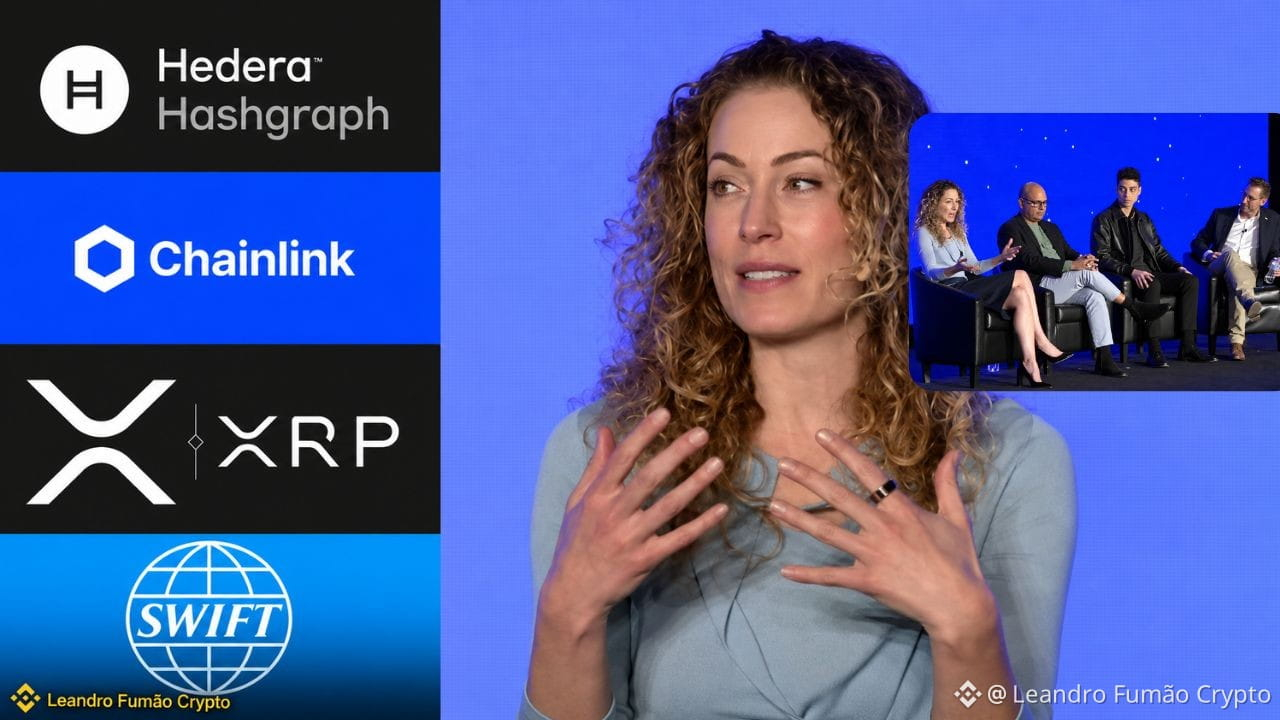
🏗️🛠️ SWIFT IS BUILDING SOMETHING MUCH BIGGER THAN JUST ANOTHER PAYMENTS UPDATE✨🌱
The deeper I look into where this is headed, the more optimistic I get about $HBAR ▸ 💲LINK ▸ $XRP ✔️
At HederaCon 2025, Alisa DiCaprio warned that with stablecoins exploding and new financial instruments multiplying, the challenge would be keeping value flowing through an increasingly fragmented system. In 2026, SWIFT is building exactly that answer.
📌 SWIFT: Its shared blockchain ledger already has 17 banks across six continents (Citi, HSBC, BNY, DBS, Itaú, UBS, Wells Fargo, and others) preparing for 24/7 tokenized deposit transactions. The network connects over 11,500 institutions in more than 200 countries.
The hard part now isn’t creating digital assets, but connecting them and finding liquidity between them. Three distinct roles:
🔗 LINK (Chainlink): The most direct connection to SWIFT. It tested interoperability via CCIP, demonstrated subscriptions and redemptions of tokenized funds with UBS AM, and won the SWIFT hackathon in 2025. DTCC also uses Chainlink in the Collateral AppChain (forecast: Q4 2026).
🏛️ HBAR (Hedera): Shinhan Bank, Standard Bank, and SCB TechX tested multi-currency remittances with settlement in 3–5 seconds. Australian Payments Plus used HashSphere in the Reserve Bank of Australia’s Project Acacia. CCIP is already live on Hedera’s mainnet.
💱 XRP (XRPL): Technical connectivity doesn’t create FX liquidity. XRPL offers cross-currency payments, an on-chain DEX, atomic settlement, and auto-bridging. Ripple and Bitso are bringing MXNB and RLUSD to XRPL—conceptually, MXNB → XRP → RLUSD, if XRP is the best route.
💡 The thesis: It’s not HBAR vs $LINK vs XRP. Hedera hosts regulated value, Chainlink connects the networks, and XRP helps connect liquidity between currencies.
Fragmentation has become a reality, and global finance is already building the answer. Who’s still pricing these assets as if none of this were happening?
#hbar #LINK #xrp #Swift
🏗️🛠️ SWIFT IS BUILDING SOMETHING MUCH BIGGER THAN JUST ANOTHER PAYMENTS UPDATE✨🌱
The deeper I look into where this is headed, the more optimistic I get about $HBAR ▸ 💲LINK ▸ $XRP ✔️
At HederaCon 2025, Alisa DiCaprio warned that with stablecoins exploding and new financial instruments multiplying, the challenge would be keeping value flowing through an increasingly fragmented system. In 2026, SWIFT is building exactly that answer.
📌 SWIFT: Its shared blockchain ledger already has 17 banks across six continents (Citi, HSBC, BNY, DBS, Itaú, UBS, Wells Fargo, and others) preparing for 24/7 tokenized deposit transactions. The network connects over 11,500 institutions in more than 200 countries.
The hard part now isn’t creating digital assets, but connecting them and finding liquidity between them. Three distinct roles:
🔗 LINK (Chainlink): The most direct connection to SWIFT. It tested interoperability via CCIP, demonstrated subscriptions and redemptions of tokenized funds with UBS AM, and won the SWIFT hackathon in 2025. DTCC also uses Chainlink in the Collateral AppChain (forecast: Q4 2026).
🏛️ HBAR (Hedera): Shinhan Bank, Standard Bank, and SCB TechX tested multi-currency remittances with settlement in 3–5 seconds. Australian Payments Plus used HashSphere in the Reserve Bank of Australia’s Project Acacia. CCIP is already live on Hedera’s mainnet.
💱 XRP (XRPL): Technical connectivity doesn’t create FX liquidity. XRPL offers cross-currency payments, an on-chain DEX, atomic settlement, and auto-bridging. Ripple and Bitso are bringing MXNB and RLUSD to XRPL—conceptually, MXNB → XRP → RLUSD, if XRP is the best route.
💡 The thesis: It’s not HBAR vs $LINK vs XRP. Hedera hosts regulated value, Chainlink connects the networks, and XRP helps connect liquidity between currencies.
Fragmentation has become a reality, and global finance is already building the answer. Who’s still pricing these assets as if none of this were happening?
#hbar #LINK #xrp #Swift
The deeper I look into where this is headed, the more optimistic I get about $HBAR ▸ 💲LINK ▸ $XRP ✔️
At HederaCon 2025, Alisa DiCaprio warned that with stablecoins exploding and new financial instruments multiplying, the challenge would be keeping value flowing through an increasingly fragmented system. In 2026, SWIFT is building exactly that answer.
📌 SWIFT: Its shared blockchain ledger already has 17 banks across six continents (Citi, HSBC, BNY, DBS, Itaú, UBS, Wells Fargo, and others) preparing for 24/7 tokenized deposit transactions. The network connects over 11,500 institutions in more than 200 countries.
The hard part now isn’t creating digital assets, but connecting them and finding liquidity between them. Three distinct roles:
🔗 LINK (Chainlink): The most direct connection to SWIFT. It tested interoperability via CCIP, demonstrated subscriptions and redemptions of tokenized funds with UBS AM, and won the SWIFT hackathon in 2025. DTCC also uses Chainlink in the Collateral AppChain (forecast: Q4 2026).
🏛️ HBAR (Hedera): Shinhan Bank, Standard Bank, and SCB TechX tested multi-currency remittances with settlement in 3–5 seconds. Australian Payments Plus used HashSphere in the Reserve Bank of Australia’s Project Acacia. CCIP is already live on Hedera’s mainnet.
💱 XRP (XRPL): Technical connectivity doesn’t create FX liquidity. XRPL offers cross-currency payments, an on-chain DEX, atomic settlement, and auto-bridging. Ripple and Bitso are bringing MXNB and RLUSD to XRPL—conceptually, MXNB → XRP → RLUSD, if XRP is the best route.
💡 The thesis: It’s not HBAR vs $LINK vs XRP. Hedera hosts regulated value, Chainlink connects the networks, and XRP helps connect liquidity between currencies.
Fragmentation has become a reality, and global finance is already building the answer. Who’s still pricing these assets as if none of this were happening?
#hbar #LINK #xrp #Swift
2
200
·
--
Bullish
Verified
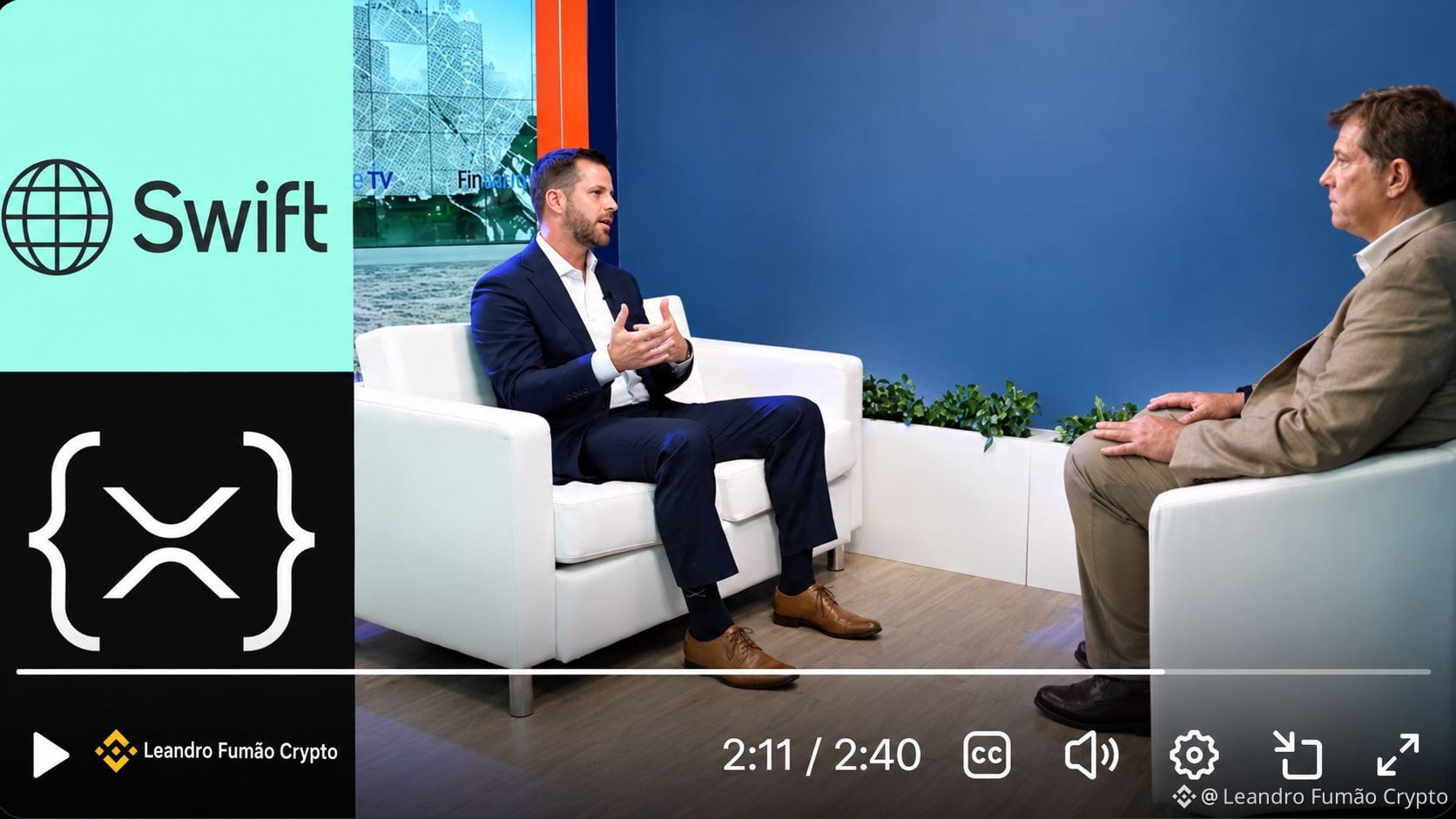
😱THE BANKING SYSTEM SWIFT DESCRIBES AT SIBOS 2026❗
⋙ AND WHERE CRYPTO $XRP FITS IN❓
✎𓂃The key question isn’t “which payment system wins,” but rather: who provides liquidity across all of them? Banks issuing tokenized deposits, asset managers tokenizing funds, programmable securities, trading outside banking hours.
More forms of money, more assets, more networks operating at the same time.
📌 Swift: the shared blockchain ledger already has 17 banks (Citi, HSBC, BNY, DBS, Standard Chartered, Itaú, UBS, Wells Fargo, and others) preparing tokenized deposit pilots.
📌 Overlap with Ripple » Standard Chartered launched institutional custody of RLUSD on the XRPL; DBS is preparing RLUSD/sgBENJI trading with Franklin Templeton; BNY is the primary custodian for RLUSD reserves; HSBC is a Ripple Custody client.
📌 Real infrastructure » Bitso integrates MXNB with the XRPL alongside RLUSD (U.S.–Mexico corridor); CSD BR mirrors BTG Pactual fund shares via MPTs; Ondo OUSG operates 24/7 with RLUSD; Archax, Aberdeen, and Aviva are bringing tokenized funds.
📌 DvP and PvP » The XRPL supports atomic payments between currencies and “all-or-nothing” batch transactions, which are essential for settling money and securities together.
💡 The thesis » If Bank A issues a tokenized dollar and Bank B a tokenized euro, the market needs to exchange them. XRP is neutral (it is not a liability of any bank) and can serve as a bridge when it offers the best route. Real demand would come from market makers holding XRP inventory, as well as reserves and fees.
⚠️ Hypothetical example » At US$ 10 billion per day, with 10% routed through XRP, only about US$ 100 million in working inventory would be needed.
Catalysts: institutional FX via $XRP , more connected banks, RLUSD as collateral, and Ripple Treasury at scale. What matters now is the volume data.
💡 Remember: This is an informational analysis. 📖Always do your own research before investing.
#xrp #Swift #RLUSD
😱THE BANKING SYSTEM SWIFT DESCRIBES AT SIBOS 2026❗
⋙ AND WHERE CRYPTO $XRP FITS IN❓
✎𓂃The key question isn’t “which payment system wins,” but rather: who provides liquidity across all of them? Banks issuing tokenized deposits, asset managers tokenizing funds, programmable securities, trading outside banking hours.
More forms of money, more assets, more networks operating at the same time.
📌 Swift: the shared blockchain ledger already has 17 banks (Citi, HSBC, BNY, DBS, Standard Chartered, Itaú, UBS, Wells Fargo, and others) preparing tokenized deposit pilots.
📌 Overlap with Ripple » Standard Chartered launched institutional custody of RLUSD on the XRPL; DBS is preparing RLUSD/sgBENJI trading with Franklin Templeton; BNY is the primary custodian for RLUSD reserves; HSBC is a Ripple Custody client.
📌 Real infrastructure » Bitso integrates MXNB with the XRPL alongside RLUSD (U.S.–Mexico corridor); CSD BR mirrors BTG Pactual fund shares via MPTs; Ondo OUSG operates 24/7 with RLUSD; Archax, Aberdeen, and Aviva are bringing tokenized funds.
📌 DvP and PvP » The XRPL supports atomic payments between currencies and “all-or-nothing” batch transactions, which are essential for settling money and securities together.
💡 The thesis » If Bank A issues a tokenized dollar and Bank B a tokenized euro, the market needs to exchange them. XRP is neutral (it is not a liability of any bank) and can serve as a bridge when it offers the best route. Real demand would come from market makers holding XRP inventory, as well as reserves and fees.
⚠️ Hypothetical example » At US$ 10 billion per day, with 10% routed through XRP, only about US$ 100 million in working inventory would be needed.
Catalysts: institutional FX via $XRP , more connected banks, RLUSD as collateral, and Ripple Treasury at scale. What matters now is the volume data.
💡 Remember: This is an informational analysis. 📖Always do your own research before investing.
#xrp #Swift #RLUSD
⋙ AND WHERE CRYPTO $XRP FITS IN❓
✎𓂃The key question isn’t “which payment system wins,” but rather: who provides liquidity across all of them? Banks issuing tokenized deposits, asset managers tokenizing funds, programmable securities, trading outside banking hours.
More forms of money, more assets, more networks operating at the same time.
📌 Swift: the shared blockchain ledger already has 17 banks (Citi, HSBC, BNY, DBS, Standard Chartered, Itaú, UBS, Wells Fargo, and others) preparing tokenized deposit pilots.
📌 Overlap with Ripple » Standard Chartered launched institutional custody of RLUSD on the XRPL; DBS is preparing RLUSD/sgBENJI trading with Franklin Templeton; BNY is the primary custodian for RLUSD reserves; HSBC is a Ripple Custody client.
📌 Real infrastructure » Bitso integrates MXNB with the XRPL alongside RLUSD (U.S.–Mexico corridor); CSD BR mirrors BTG Pactual fund shares via MPTs; Ondo OUSG operates 24/7 with RLUSD; Archax, Aberdeen, and Aviva are bringing tokenized funds.
📌 DvP and PvP » The XRPL supports atomic payments between currencies and “all-or-nothing” batch transactions, which are essential for settling money and securities together.
💡 The thesis » If Bank A issues a tokenized dollar and Bank B a tokenized euro, the market needs to exchange them. XRP is neutral (it is not a liability of any bank) and can serve as a bridge when it offers the best route. Real demand would come from market makers holding XRP inventory, as well as reserves and fees.
⚠️ Hypothetical example » At US$ 10 billion per day, with 10% routed through XRP, only about US$ 100 million in working inventory would be needed.
Catalysts: institutional FX via $XRP , more connected banks, RLUSD as collateral, and Ripple Treasury at scale. What matters now is the volume data.
💡 Remember: This is an informational analysis. 📖Always do your own research before investing.
#xrp #Swift #RLUSD
5
7
1.3k

·
--
Swift announces that it has partnered with 17 global banks to launch a blockchain ledger pilot, aiming to enable cross-border payments around the clock. Traditional financial giants are entering the market.
Participating banks: HSBC, UBS, BNP Paribas, Citigroup, Bank of New York Mellon, Wells Fargo, and others, covering six continents.
Core features: 24/7 cross-border payments via tokenized deposits, allowing funds to be transferred even at night and on weekends. Swift says this is meant to supplement, not replace, existing systems.
Key takeaway: Traditional finance is not fighting blockchain—it’s embracing it in its own way. Tokenized deposits circulate only within Swift’s banking network, not using stablecoins such as USDT/USDC.
What do you think? Is Swift’s blockchain innovation or defense?
#Swift #区块链 #跨境支付 #传统金融 #Tokenized deposits
Swift announces that it has partnered with 17 global banks to launch a blockchain ledger pilot, aiming to enable cross-border payments around the clock. Traditional financial giants are entering the market.
Participating banks: HSBC, UBS, BNP Paribas, Citigroup, Bank of New York Mellon, Wells Fargo, and others, covering six continents.
Core features: 24/7 cross-border payments via tokenized deposits, allowing funds to be transferred even at night and on weekends. Swift says this is meant to supplement, not replace, existing systems.
Key takeaway: Traditional finance is not fighting blockchain—it’s embracing it in its own way. Tokenized deposits circulate only within Swift’s banking network, not using stablecoins such as USDT/USDC.
What do you think? Is Swift’s blockchain innovation or defense?
#Swift #区块链 #跨境支付 #传统金融 #Tokenized deposits
Participating banks: HSBC, UBS, BNP Paribas, Citigroup, Bank of New York Mellon, Wells Fargo, and others, covering six continents.
Core features: 24/7 cross-border payments via tokenized deposits, allowing funds to be transferred even at night and on weekends. Swift says this is meant to supplement, not replace, existing systems.
Key takeaway: Traditional finance is not fighting blockchain—it’s embracing it in its own way. Tokenized deposits circulate only within Swift’s banking network, not using stablecoins such as USDT/USDC.
What do you think? Is Swift’s blockchain innovation or defense?
#Swift #区块链 #跨境支付 #传统金融 #Tokenized deposits
86
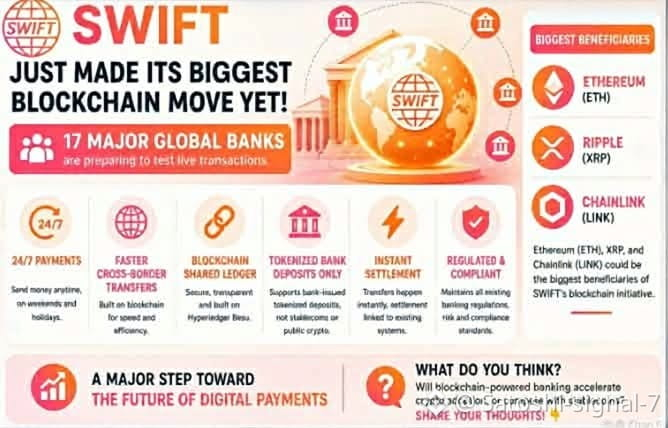
#USJoblessClaimsFallTo215K 🚨 SWIFT Takes a Major Step Toward Blockchain-Powered Banking
SWIFT is advancing its payment infrastructure by testing a blockchain-based ledger with 17 major global banks. The goal is to enable faster, more efficient cross-border payments while remaining fully compliant with existing banking regulations.
If successful, this upgrade could support 24/7 international transfers, including weekends and holidays, reducing delays that have long affected traditional banking.
Although this system is designed for bank-issued digital assets rather than public cryptocurrencies, it represents another strong signal that blockchain technology is becoming a core part of global finance.
📈 This development could increase attention on blockchain infrastructure projects such as $ETH, $XRP, and $LINK, which are often associated with enterprise payment and interoperability solutions.
As financial institutions continue to embrace blockchain, the gap between traditional finance and digital assets may become even smaller.
💬 What do you think?
Will blockchain adoption by major banks accelerate the growth of the crypto industry, or create stronger competition for public digital assets?
#SWIFT #Blockchain #XRP
$ETH $XRP $LINK
{future}(ETHUSDT)
{future}(XRPUSDT)
{future}(LINKUSDT)
#USJoblessClaimsFallTo215K 🚨 SWIFT Takes a Major Step Toward Blockchain-Powered Banking
SWIFT is advancing its payment infrastructure by testing a blockchain-based ledger with 17 major global banks. The goal is to enable faster, more efficient cross-border payments while remaining fully compliant with existing banking regulations.
If successful, this upgrade could support 24/7 international transfers, including weekends and holidays, reducing delays that have long affected traditional banking.
Although this system is designed for bank-issued digital assets rather than public cryptocurrencies, it represents another strong signal that blockchain technology is becoming a core part of global finance.
📈 This development could increase attention on blockchain infrastructure projects such as $ETH , $XRP , and $LINK , which are often associated with enterprise payment and interoperability solutions.
As financial institutions continue to embrace blockchain, the gap between traditional finance and digital assets may become even smaller.
💬 What do you think?
Will blockchain adoption by major banks accelerate the growth of the crypto industry, or create stronger competition for public digital assets?
#SWIFT #Blockchain #XRP
$ETH $XRP $LINK
SWIFT is advancing its payment infrastructure by testing a blockchain-based ledger with 17 major global banks. The goal is to enable faster, more efficient cross-border payments while remaining fully compliant with existing banking regulations.
If successful, this upgrade could support 24/7 international transfers, including weekends and holidays, reducing delays that have long affected traditional banking.
Although this system is designed for bank-issued digital assets rather than public cryptocurrencies, it represents another strong signal that blockchain technology is becoming a core part of global finance.
📈 This development could increase attention on blockchain infrastructure projects such as $ETH , $XRP , and $LINK , which are often associated with enterprise payment and interoperability solutions.
As financial institutions continue to embrace blockchain, the gap between traditional finance and digital assets may become even smaller.
💬 What do you think?
Will blockchain adoption by major banks accelerate the growth of the crypto industry, or create stronger competition for public digital assets?
#SWIFT #Blockchain #XRP
$ETH $XRP $LINK
28

·
--
Swift has just completed its first real live banking transaction.
HSBC and Standard Chartered were responsible for carrying out this move.
What’s interesting is that this pilot project aims to speed up international settlements.
It’s a clear step to remain relevant as stablecoins and tokenized deposits grow.
It seems that the traditional financial system is moving fast.
Do you think this will help them compete with cryptocurrencies?
$BTC #Swift #Fintech
Swift has just completed its first real live banking transaction.
HSBC and Standard Chartered were responsible for carrying out this move.
What’s interesting is that this pilot project aims to speed up international settlements.
It’s a clear step to remain relevant as stablecoins and tokenized deposits grow.
It seems that the traditional financial system is moving fast.
Do you think this will help them compete with cryptocurrencies?
$BTC #Swift #Fintech
HSBC and Standard Chartered were responsible for carrying out this move.
What’s interesting is that this pilot project aims to speed up international settlements.
It’s a clear step to remain relevant as stablecoins and tokenized deposits grow.
It seems that the traditional financial system is moving fast.
Do you think this will help them compete with cryptocurrencies?
$BTC #Swift #Fintech
213
Log in to explore more content
Join global crypto users on Binance Square
⚡️ Get latest and useful information about crypto.
💬 Trusted by the world’s largest crypto exchange.
👍 Discover real insights from verified creators.
Email / Phone number
Trending Topics
1
#MoreHikesExpectedIsBTCUnderPressure
19,628 views
202 Discussing
2
#NvidiaBeatsEstimatesWith$130BQ4Outlook
84,890 views
318 Discussing
3
#AnthropicIPOPriceCouldExceed$80
80,621 views
262 Discussing
4
#RussiaCentralBankAddsAlfaBankToCryptoExchangeRegister
6,402 views
73 Discussing
5
#VisaPlansStablecoinPrefundingForAPACCrossBorderPayments
6,631 views
61 Discussing
6
#CanadaAndUSLaunchOperationNiagaraAgainstApprovalPhishing
53,428 views
70 Discussing
7
#BankOfEnglandUnveilsClearingHousePathwayCoveringDLTFirms
5,146 views
69 Discussing
8
#DBSAndCirclePartnerToExpandAsianInstitutionsUSDCAccess
6,536 views
69 Discussing
9
#LedgerHardwareImplantReportsExtendToDubai
121,339 views
979 Discussing
10
#NvidiaBoardNotConsideringHuang’sReturnasCEO
298,770 views
1,756 Discussing