
Zholdak
132 Beiträge

Zholdak
Melden
Nutzer blockieren
32 Following
34 Follower
143 Like gegeben
Beiträge
·
--
Bullisch
#TradFi -perpi auf Binance sind nicht mehr ein Anhängsel der Krypto. Im August machten sie 37% des gesamten Volumens der unbefristeten Kontrakte an der Börse aus.
Zum Stand nach 24 Stunden waren zehn der fünfzehn größten Kontrakte nach Handelsvolumen TradFi-Perps, auf die 59% des Volumens der Top-15 entfielen. Nummer eins war nicht Bitcoin, sondern $SNDKB .
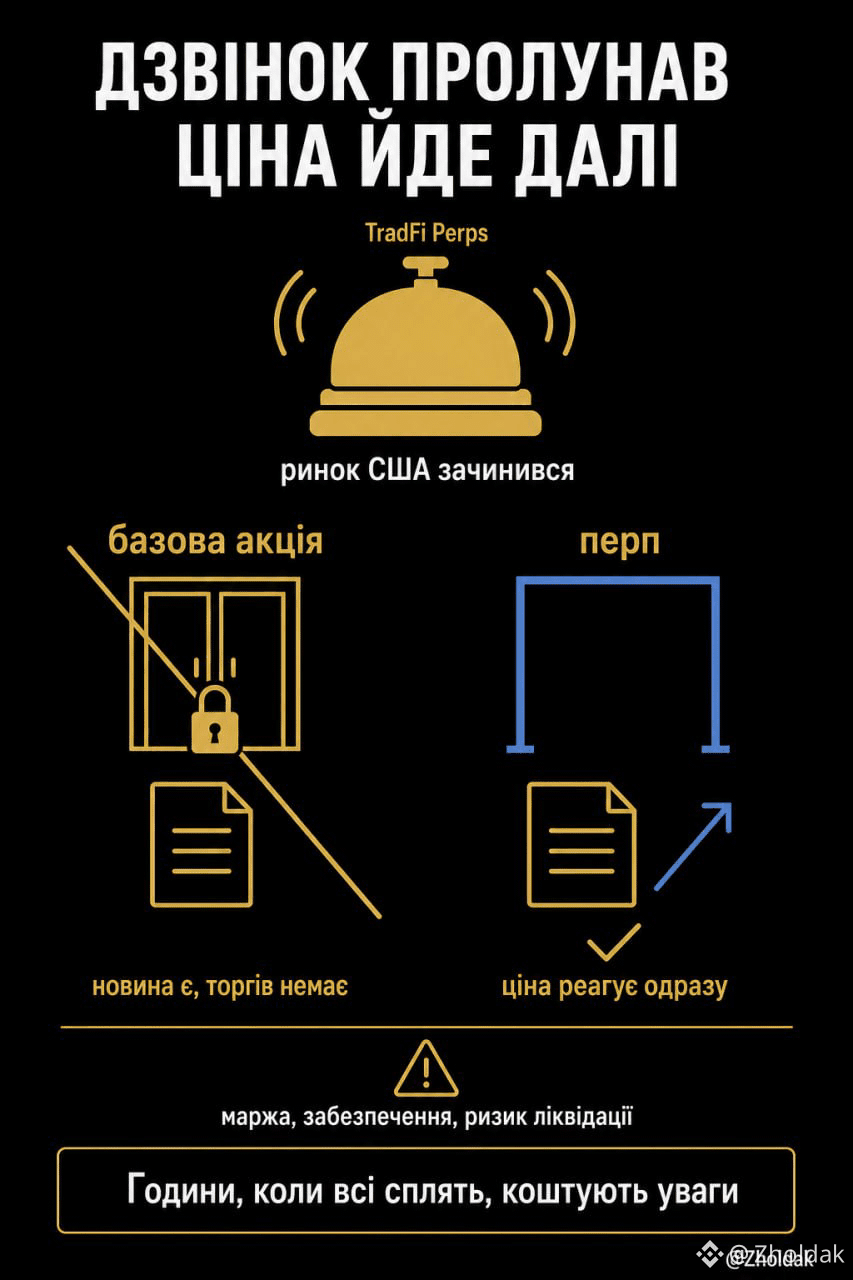
Cisco und Coherent haben ihre Geschäftszahlen um 16:05 Uhr nach New Yorker Zeit veröffentlicht – fünf Minuten nach Börsenschluss in den USA. Die zugrunde liegenden Aktien wurden bereits nicht mehr gehandelt, während die TradFi-Perps auf Binance neu bewertet wurden, während der Markt die Zahlen las.
Diese Lücke hätte ein klassischer Trader erst bei Eröffnung am nächsten Tag gesehen.
Auch die Wochenenden sind nicht mehr leer. Das monatliche Handelsvolumen an Wochenenden bei solchen Perps an Kryptobörsen stieg ungefähr von 4,5 auf 28 Milliarden US-Dollar bis Mitte August. Fast die Hälfte entfällt auf Binance.
Nun zu den Risiken. Ein Perp bietet kein Eigentum am Basiswert – es ist ein Margin-Kontrakt. Er verlangt Sicherheiten; bei einem schnellen Preisbewegung kann die Position liquidiert werden, und ein negativer Kontostand bleibt Ihre Schuld. Die Volatilität außerhalb der Marktzeiten ist in der Regel höher – und das wirkt in beide Richtungen.
Der Zugang zu Stunden, in denen alle schlafen, ist kein kostenloser Vorteil.
{spot}(SNDKBUSDT)
#TradFi -perpi auf Binance sind nicht mehr ein Anhängsel der Krypto. Im August machten sie 37% des gesamten Volumens der unbefristeten Kontrakte an der Börse aus.
Zum Stand nach 24 Stunden waren zehn der fünfzehn größten Kontrakte nach Handelsvolumen TradFi-Perps, auf die 59% des Volumens der Top-15 entfielen. Nummer eins war nicht Bitcoin, sondern $SNDKB .
Cisco und Coherent haben ihre Geschäftszahlen um 16:05 Uhr nach New Yorker Zeit veröffentlicht – fünf Minuten nach Börsenschluss in den USA. Die zugrunde liegenden Aktien wurden bereits nicht mehr gehandelt, während die TradFi-Perps auf Binance neu bewertet wurden, während der Markt die Zahlen las.
Diese Lücke hätte ein klassischer Trader erst bei Eröffnung am nächsten Tag gesehen.
Auch die Wochenenden sind nicht mehr leer. Das monatliche Handelsvolumen an Wochenenden bei solchen Perps an Kryptobörsen stieg ungefähr von 4,5 auf 28 Milliarden US-Dollar bis Mitte August. Fast die Hälfte entfällt auf Binance.
Nun zu den Risiken. Ein Perp bietet kein Eigentum am Basiswert – es ist ein Margin-Kontrakt. Er verlangt Sicherheiten; bei einem schnellen Preisbewegung kann die Position liquidiert werden, und ein negativer Kontostand bleibt Ihre Schuld. Die Volatilität außerhalb der Marktzeiten ist in der Regel höher – und das wirkt in beide Richtungen.
Der Zugang zu Stunden, in denen alle schlafen, ist kein kostenloser Vorteil.
Zum Stand nach 24 Stunden waren zehn der fünfzehn größten Kontrakte nach Handelsvolumen TradFi-Perps, auf die 59% des Volumens der Top-15 entfielen. Nummer eins war nicht Bitcoin, sondern $SNDKB .
Cisco und Coherent haben ihre Geschäftszahlen um 16:05 Uhr nach New Yorker Zeit veröffentlicht – fünf Minuten nach Börsenschluss in den USA. Die zugrunde liegenden Aktien wurden bereits nicht mehr gehandelt, während die TradFi-Perps auf Binance neu bewertet wurden, während der Markt die Zahlen las.
Diese Lücke hätte ein klassischer Trader erst bei Eröffnung am nächsten Tag gesehen.
Auch die Wochenenden sind nicht mehr leer. Das monatliche Handelsvolumen an Wochenenden bei solchen Perps an Kryptobörsen stieg ungefähr von 4,5 auf 28 Milliarden US-Dollar bis Mitte August. Fast die Hälfte entfällt auf Binance.
Nun zu den Risiken. Ein Perp bietet kein Eigentum am Basiswert – es ist ein Margin-Kontrakt. Er verlangt Sicherheiten; bei einem schnellen Preisbewegung kann die Position liquidiert werden, und ein negativer Kontostand bleibt Ihre Schuld. Die Volatilität außerhalb der Marktzeiten ist in der Regel höher – und das wirkt in beide Richtungen.
Der Zugang zu Stunden, in denen alle schlafen, ist kein kostenloser Vorteil.
290
·
--
Bullisch
Letzten Monat bin ich alle dort vorhandenen Routen mit #BStocks durchgegangen. Nicht um ein Ergebnis zu erzielen, sondern um die Grenzen zu verstehen.
Es begann ganz gewöhnlich: Ich habe an der Börse gekauft, gehalten, verkauft. Auf dieser Ebene verhält sich bStock wie ein normales Spot-Paar.
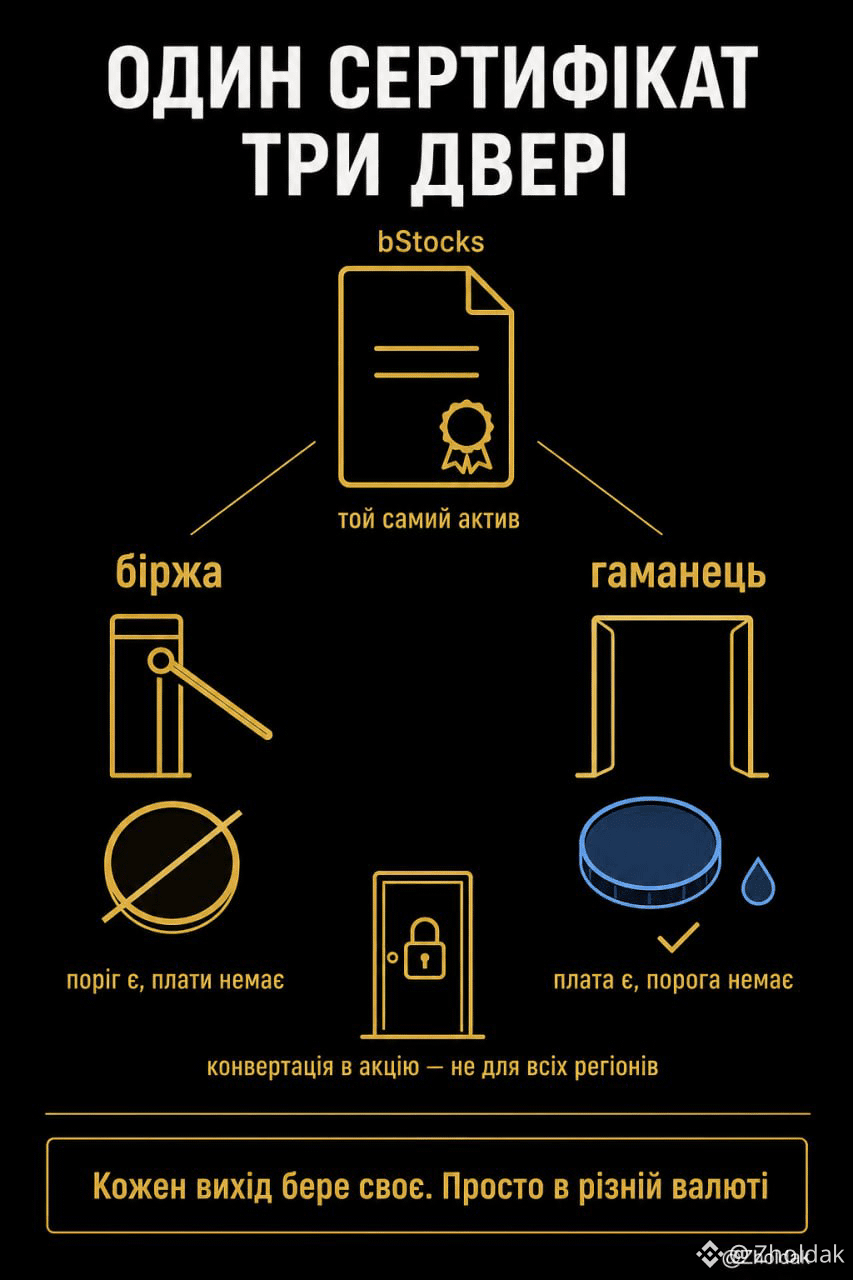
bStock kann man in eine eigene Web3-Wallet exportieren. Dafür gibt es überhaupt keine Netzwerkgebühr, null. Aber es gibt eine Mindestsumme für den Export, und die schneidet kleine Positionen ab. In der Wallet kann man Tokens einfach dort verkaufen, in einen Liquiditätspool legen oder zurück an die Börse schicken.
Zurück kostet es. Jede Überweisung aus der Wallet kostet Gas, weil du die Transaktion jetzt selbst signierst. Kleine Bruchteile eines Cents, aber niemals null. Dafür gibt es keine Mindestsumme: Wenn du Centbeträge verschicken willst, dann schick sie.
Das Bild ist gespiegelt. Die Börse nimmt mit Schwellen, aber ohne Gebühren. Die Wallet nimmt Gebühren, setzt aber keine Schwellen.
Eine weitere Route habe ich ausprobiert und nicht geschafft. An der Börse gibt es einen Button zur Konvertierung von bStock in eine echte Aktie, eins zu eins. Zwei Einwilligungen, ein Haftungsausschluss, und im letzten Schritt die Meldung, dass die Funktion für meine Region nicht verfügbar ist. Der Button existiert, die Tür ist real, aber eben nicht für alle.
Das sollte man klären, bevor es wichtig wird.
Letzten Monat bin ich alle dort vorhandenen Routen mit #BStocks durchgegangen. Nicht um ein Ergebnis zu erzielen, sondern um die Grenzen zu verstehen.
Es begann ganz gewöhnlich: Ich habe an der Börse gekauft, gehalten, verkauft. Auf dieser Ebene verhält sich bStock wie ein normales Spot-Paar.
bStock kann man in eine eigene Web3-Wallet exportieren. Dafür gibt es überhaupt keine Netzwerkgebühr, null. Aber es gibt eine Mindestsumme für den Export, und die schneidet kleine Positionen ab. In der Wallet kann man Tokens einfach dort verkaufen, in einen Liquiditätspool legen oder zurück an die Börse schicken.
Zurück kostet es. Jede Überweisung aus der Wallet kostet Gas, weil du die Transaktion jetzt selbst signierst. Kleine Bruchteile eines Cents, aber niemals null. Dafür gibt es keine Mindestsumme: Wenn du Centbeträge verschicken willst, dann schick sie.
Das Bild ist gespiegelt. Die Börse nimmt mit Schwellen, aber ohne Gebühren. Die Wallet nimmt Gebühren, setzt aber keine Schwellen.
Eine weitere Route habe ich ausprobiert und nicht geschafft. An der Börse gibt es einen Button zur Konvertierung von bStock in eine echte Aktie, eins zu eins. Zwei Einwilligungen, ein Haftungsausschluss, und im letzten Schritt die Meldung, dass die Funktion für meine Region nicht verfügbar ist. Der Button existiert, die Tür ist real, aber eben nicht für alle.
Das sollte man klären, bevor es wichtig wird.
Es begann ganz gewöhnlich: Ich habe an der Börse gekauft, gehalten, verkauft. Auf dieser Ebene verhält sich bStock wie ein normales Spot-Paar.
bStock kann man in eine eigene Web3-Wallet exportieren. Dafür gibt es überhaupt keine Netzwerkgebühr, null. Aber es gibt eine Mindestsumme für den Export, und die schneidet kleine Positionen ab. In der Wallet kann man Tokens einfach dort verkaufen, in einen Liquiditätspool legen oder zurück an die Börse schicken.
Zurück kostet es. Jede Überweisung aus der Wallet kostet Gas, weil du die Transaktion jetzt selbst signierst. Kleine Bruchteile eines Cents, aber niemals null. Dafür gibt es keine Mindestsumme: Wenn du Centbeträge verschicken willst, dann schick sie.
Das Bild ist gespiegelt. Die Börse nimmt mit Schwellen, aber ohne Gebühren. Die Wallet nimmt Gebühren, setzt aber keine Schwellen.
Eine weitere Route habe ich ausprobiert und nicht geschafft. An der Börse gibt es einen Button zur Konvertierung von bStock in eine echte Aktie, eins zu eins. Zwei Einwilligungen, ein Haftungsausschluss, und im letzten Schritt die Meldung, dass die Funktion für meine Region nicht verfügbar ist. Der Button existiert, die Tür ist real, aber eben nicht für alle.
Das sollte man klären, bevor es wichtig wird.
1
201
·
--
Bullisch
Auf Binance gibt es derzeit vier Möglichkeiten, Exposure auf ein und dieselbe US-Aktie zu bekommen. bStock, der direkte Kauf der Aktie, TradFi-Perp und – ab dem 1. September – eine Option.
Sie unterscheiden sich nicht durch die Benutzeroberfläche, sondern durch den Ort, an dem die Abrechnung erfolgt.
#bstock ist ein Zertifikat auf BNB Chain. Die Abrechnung erfolgt on-chain, sofort. Die Kette hat keine Wochenenden, daher findet der Handel rund um die Uhr statt.
#TradFi -Perp wird auch innerhalb der Börse berechnet, in Stablecoins, und ebenfalls ohne Pausen. Allerdings gibt es keine Eigentumsübertragung des Assets: Es ist ein Margin-Instrument mit Sicherheitenanforderungen und Liquidation bei starkem Kursanstieg/-abfall.
Danach beginnt die andere Hälfte.
Der direkte Kauf der Aktie ist bereits ein echter Wertpapier. Nest Trading leitet den Auftrag an Alpaca Securities zur Abwicklung und Verwahrung weiter, und die Abwicklung in den USA arbeitet nach dem Zeitplan des amerikanischen Marktes.
Optionen funktionieren genauso, mit einer physischen Lieferung der Aktien. Deshalb gelten für sie auch Markenzeiten: von 9:30 bis 16:00 Uhr nach New York. Außerhalb dieses Fensters werden keine Aufträge entgegengenommen.
Das ist auch schon die ganze Logik. Zwei Instrumente werden dort abgerechnet, wo es keine Nacht gibt, und sie laufen rund um die Uhr. Zwei werden über eine Abwicklung abgewickelt, die schläft, und sie arbeiten nach deren Zeitplan.
Nicht die Plattform bestimmt die Handelszeiten. Das bestimmt, wo sich der tatsächliche Eigentümer ändert.
Auf Binance gibt es derzeit vier Möglichkeiten, Exposure auf ein und dieselbe US-Aktie zu bekommen. bStock, der direkte Kauf der Aktie, TradFi-Perp und – ab dem 1. September – eine Option.
Sie unterscheiden sich nicht durch die Benutzeroberfläche, sondern durch den Ort, an dem die Abrechnung erfolgt.
#bstock ist ein Zertifikat auf BNB Chain. Die Abrechnung erfolgt on-chain, sofort. Die Kette hat keine Wochenenden, daher findet der Handel rund um die Uhr statt.
#TradFi -Perp wird auch innerhalb der Börse berechnet, in Stablecoins, und ebenfalls ohne Pausen. Allerdings gibt es keine Eigentumsübertragung des Assets: Es ist ein Margin-Instrument mit Sicherheitenanforderungen und Liquidation bei starkem Kursanstieg/-abfall.
Danach beginnt die andere Hälfte.
Der direkte Kauf der Aktie ist bereits ein echter Wertpapier. Nest Trading leitet den Auftrag an Alpaca Securities zur Abwicklung und Verwahrung weiter, und die Abwicklung in den USA arbeitet nach dem Zeitplan des amerikanischen Marktes.
Optionen funktionieren genauso, mit einer physischen Lieferung der Aktien. Deshalb gelten für sie auch Markenzeiten: von 9:30 bis 16:00 Uhr nach New York. Außerhalb dieses Fensters werden keine Aufträge entgegengenommen.
Das ist auch schon die ganze Logik. Zwei Instrumente werden dort abgerechnet, wo es keine Nacht gibt, und sie laufen rund um die Uhr. Zwei werden über eine Abwicklung abgewickelt, die schläft, und sie arbeiten nach deren Zeitplan.
Nicht die Plattform bestimmt die Handelszeiten. Das bestimmt, wo sich der tatsächliche Eigentümer ändert.
Sie unterscheiden sich nicht durch die Benutzeroberfläche, sondern durch den Ort, an dem die Abrechnung erfolgt.
#bstock ist ein Zertifikat auf BNB Chain. Die Abrechnung erfolgt on-chain, sofort. Die Kette hat keine Wochenenden, daher findet der Handel rund um die Uhr statt.
#TradFi -Perp wird auch innerhalb der Börse berechnet, in Stablecoins, und ebenfalls ohne Pausen. Allerdings gibt es keine Eigentumsübertragung des Assets: Es ist ein Margin-Instrument mit Sicherheitenanforderungen und Liquidation bei starkem Kursanstieg/-abfall.
Danach beginnt die andere Hälfte.
Der direkte Kauf der Aktie ist bereits ein echter Wertpapier. Nest Trading leitet den Auftrag an Alpaca Securities zur Abwicklung und Verwahrung weiter, und die Abwicklung in den USA arbeitet nach dem Zeitplan des amerikanischen Marktes.
Optionen funktionieren genauso, mit einer physischen Lieferung der Aktien. Deshalb gelten für sie auch Markenzeiten: von 9:30 bis 16:00 Uhr nach New York. Außerhalb dieses Fensters werden keine Aufträge entgegengenommen.
Das ist auch schon die ganze Logik. Zwei Instrumente werden dort abgerechnet, wo es keine Nacht gibt, und sie laufen rund um die Uhr. Zwei werden über eine Abwicklung abgewickelt, die schläft, und sie arbeiten nach deren Zeitplan.
Nicht die Plattform bestimmt die Handelszeiten. Das bestimmt, wo sich der tatsächliche Eigentümer ändert.

96
·
--
Bullisch
Nasdaq und NYSE gehen zum 23/5-Format: fünf Tage pro Woche fast rund um die Uhr. Der Kurs ist richtig, aber ein ununterbrochener Markt macht er nicht.
Der außerbörsliche Handel mit Aktien in den USA gibt es seit Jahrzehnten, also sind die Türen ohnehin die meiste Zeit der Woche offen.
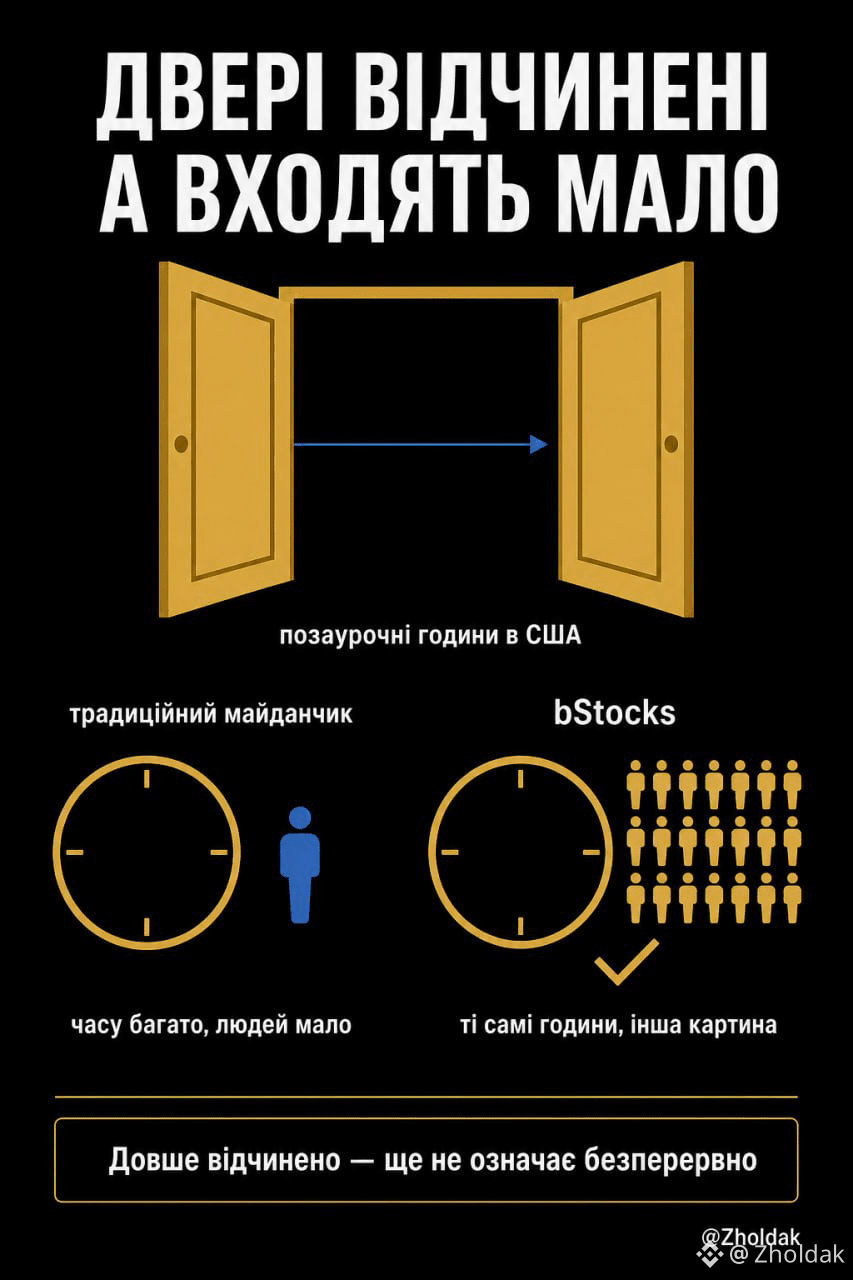
Zwei Zahlen aus dem Binance-Blog: Außerhalb der üblichen US-Marktzeiten liegen 80,7% der gesamten Kalenderwoche, und im Juli sind dort 10,8% des Volumens eingetroffen.
Die Türen sind fast die ganze Woche offen, hineingehen aber nur ein Zehntel.
Bei #BStocks auf Binance gingen 62% des Juli-Volumens genau dann durch, als die US-Märkte geschlossen sind. Derselbe Basiswert, zwei Umgebungen, umgekehrtes Bild.
Shunyeet Yang, der bei Binance für Börse und Handel zuständig ist, erklärt das strukturell: Die Nachfrage war schon immer da, aber umstellen müssen sich nicht nur die Börsen, sondern auch die Clearing-Firmen, Banken und Market Maker.
Selbst nach dem Wechsel auf 23/5 bleiben etwa 53 Stunden pro Woche übrig, in denen keine einzige US-Handelsplattform arbeitet. Das sind 31,5% der Kalenderwoche.
Am Wochenende wird es am schwierigsten: Damit der Markt sieben Tage läuft, muss auch das Bankensystem funktionieren. In der Krypto gibt es diese Abhängigkeit nicht—Stablecoins werden sofort und ohne Wochenenden abgerechnet.
Binance schließt gerade die Stunden, die die traditionellen Plattformen bisher noch nicht schließen.
Nasdaq und NYSE gehen zum 23/5-Format: fünf Tage pro Woche fast rund um die Uhr. Der Kurs ist richtig, aber ein ununterbrochener Markt macht er nicht.
Der außerbörsliche Handel mit Aktien in den USA gibt es seit Jahrzehnten, also sind die Türen ohnehin die meiste Zeit der Woche offen.
Zwei Zahlen aus dem Binance-Blog: Außerhalb der üblichen US-Marktzeiten liegen 80,7% der gesamten Kalenderwoche, und im Juli sind dort 10,8% des Volumens eingetroffen.
Die Türen sind fast die ganze Woche offen, hineingehen aber nur ein Zehntel.
Bei #BStocks auf Binance gingen 62% des Juli-Volumens genau dann durch, als die US-Märkte geschlossen sind. Derselbe Basiswert, zwei Umgebungen, umgekehrtes Bild.
Shunyeet Yang, der bei Binance für Börse und Handel zuständig ist, erklärt das strukturell: Die Nachfrage war schon immer da, aber umstellen müssen sich nicht nur die Börsen, sondern auch die Clearing-Firmen, Banken und Market Maker.
Selbst nach dem Wechsel auf 23/5 bleiben etwa 53 Stunden pro Woche übrig, in denen keine einzige US-Handelsplattform arbeitet. Das sind 31,5% der Kalenderwoche.
Am Wochenende wird es am schwierigsten: Damit der Markt sieben Tage läuft, muss auch das Bankensystem funktionieren. In der Krypto gibt es diese Abhängigkeit nicht—Stablecoins werden sofort und ohne Wochenenden abgerechnet.
Binance schließt gerade die Stunden, die die traditionellen Plattformen bisher noch nicht schließen.
Der außerbörsliche Handel mit Aktien in den USA gibt es seit Jahrzehnten, also sind die Türen ohnehin die meiste Zeit der Woche offen.
Zwei Zahlen aus dem Binance-Blog: Außerhalb der üblichen US-Marktzeiten liegen 80,7% der gesamten Kalenderwoche, und im Juli sind dort 10,8% des Volumens eingetroffen.
Die Türen sind fast die ganze Woche offen, hineingehen aber nur ein Zehntel.
Bei #BStocks auf Binance gingen 62% des Juli-Volumens genau dann durch, als die US-Märkte geschlossen sind. Derselbe Basiswert, zwei Umgebungen, umgekehrtes Bild.
Shunyeet Yang, der bei Binance für Börse und Handel zuständig ist, erklärt das strukturell: Die Nachfrage war schon immer da, aber umstellen müssen sich nicht nur die Börsen, sondern auch die Clearing-Firmen, Banken und Market Maker.
Selbst nach dem Wechsel auf 23/5 bleiben etwa 53 Stunden pro Woche übrig, in denen keine einzige US-Handelsplattform arbeitet. Das sind 31,5% der Kalenderwoche.
Am Wochenende wird es am schwierigsten: Damit der Markt sieben Tage läuft, muss auch das Bankensystem funktionieren. In der Krypto gibt es diese Abhängigkeit nicht—Stablecoins werden sofort und ohne Wochenenden abgerechnet.
Binance schließt gerade die Stunden, die die traditionellen Plattformen bisher noch nicht schließen.
67
·
--
Bullisch
In 16 Monaten sind bei meinen 3 BNB in Binance Earn 69 Zuteilungen angefallen. 67 eindeutige Ticker, $LAYER kam dreimal vor.
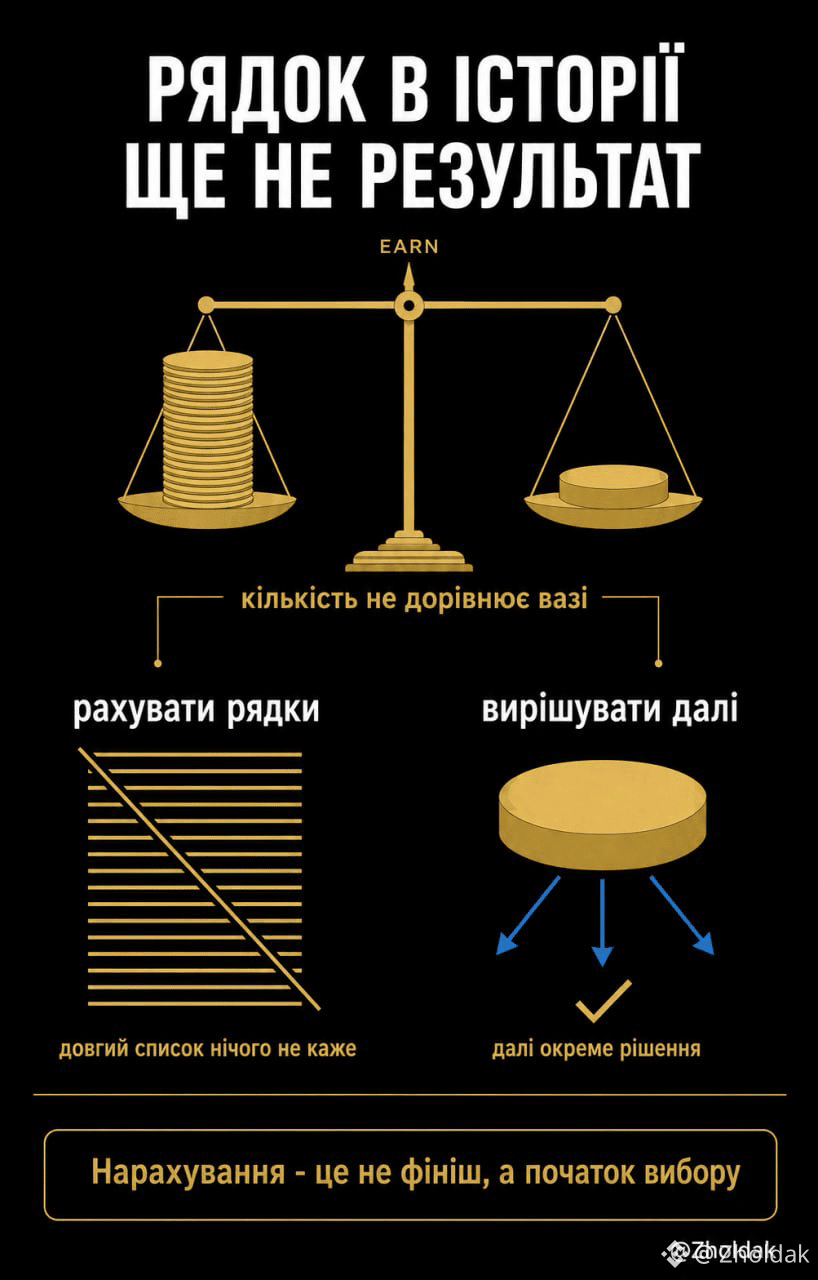
Die kleinste Zuteilung betrug 0,0964 $EUL . Die größte - 125,4055 $LINEA .
Die Differenz ist riesig, und sie bedeutet fast nichts.
Die Token sind unterschiedlich. Bei dem einen liegt die Emission in Milliarden, beim anderen in Millionen, und für jeden wiegt die Einheit etwas anderes. 125 Einheiten von dem einen mit 0,1 Einheiten des anderen zu vergleichen ist dasselbe wie Kilogramm mit Meter zu vergleichen.
Alles in Dollar umzurechnen ist auch keine Lösung. Auf den Eröffnungskerzen weichen die Aggregatoren um das Dreifache voneinander ab, und das Ergebnis hängt davon ab, welche Website du geöffnet hast.
Daher lautet die Frage, die wirklich Sinn ergibt: Was machst du mit dem Token als Nächstes.
Er landet im Spot und wird zu einer eigenständigen Entscheidung. Für Token aus dem Launchpool gibt es außerdem das Pre-Market, in dem man verkaufen kann, bevor der offizielle Spot-Listing erfolgt.
Und hier sollte man eine Sache wissen. Laut einer Untersuchung von ChainCatcher wurden 88% der Airdrop-Token in den ersten 15 Tagen nach dem Listing günstiger. Das ist eine Statistik, keine Regel, und jeder Fall ist individuell.
Aber sie erklärt, warum die Zuteilung nicht das Ende ist. Die Position in Binance Earn liefert einen Eintrag in der Historie. Was dieser Eintrag am Ende herausstellt, entscheidet sich erst danach.
#BinanceEarn
{spot}(BNBUSDT)
In 16 Monaten sind bei meinen 3 BNB in Binance Earn 69 Zuteilungen angefallen. 67 eindeutige Ticker, $LAYER kam dreimal vor.
Die kleinste Zuteilung betrug 0,0964 $EUL . Die größte - 125,4055 $LINEA .
Die Differenz ist riesig, und sie bedeutet fast nichts.
Die Token sind unterschiedlich. Bei dem einen liegt die Emission in Milliarden, beim anderen in Millionen, und für jeden wiegt die Einheit etwas anderes. 125 Einheiten von dem einen mit 0,1 Einheiten des anderen zu vergleichen ist dasselbe wie Kilogramm mit Meter zu vergleichen.
Alles in Dollar umzurechnen ist auch keine Lösung. Auf den Eröffnungskerzen weichen die Aggregatoren um das Dreifache voneinander ab, und das Ergebnis hängt davon ab, welche Website du geöffnet hast.
Daher lautet die Frage, die wirklich Sinn ergibt: Was machst du mit dem Token als Nächstes.
Er landet im Spot und wird zu einer eigenständigen Entscheidung. Für Token aus dem Launchpool gibt es außerdem das Pre-Market, in dem man verkaufen kann, bevor der offizielle Spot-Listing erfolgt.
Und hier sollte man eine Sache wissen. Laut einer Untersuchung von ChainCatcher wurden 88% der Airdrop-Token in den ersten 15 Tagen nach dem Listing günstiger. Das ist eine Statistik, keine Regel, und jeder Fall ist individuell.
Aber sie erklärt, warum die Zuteilung nicht das Ende ist. Die Position in Binance Earn liefert einen Eintrag in der Historie. Was dieser Eintrag am Ende herausstellt, entscheidet sich erst danach.
#BinanceEarn
Die kleinste Zuteilung betrug 0,0964 $EUL . Die größte - 125,4055 $LINEA .
Die Differenz ist riesig, und sie bedeutet fast nichts.
Die Token sind unterschiedlich. Bei dem einen liegt die Emission in Milliarden, beim anderen in Millionen, und für jeden wiegt die Einheit etwas anderes. 125 Einheiten von dem einen mit 0,1 Einheiten des anderen zu vergleichen ist dasselbe wie Kilogramm mit Meter zu vergleichen.
Alles in Dollar umzurechnen ist auch keine Lösung. Auf den Eröffnungskerzen weichen die Aggregatoren um das Dreifache voneinander ab, und das Ergebnis hängt davon ab, welche Website du geöffnet hast.
Daher lautet die Frage, die wirklich Sinn ergibt: Was machst du mit dem Token als Nächstes.
Er landet im Spot und wird zu einer eigenständigen Entscheidung. Für Token aus dem Launchpool gibt es außerdem das Pre-Market, in dem man verkaufen kann, bevor der offizielle Spot-Listing erfolgt.
Und hier sollte man eine Sache wissen. Laut einer Untersuchung von ChainCatcher wurden 88% der Airdrop-Token in den ersten 15 Tagen nach dem Listing günstiger. Das ist eine Statistik, keine Regel, und jeder Fall ist individuell.
Aber sie erklärt, warum die Zuteilung nicht das Ende ist. Die Position in Binance Earn liefert einen Eintrag in der Historie. Was dieser Eintrag am Ende herausstellt, entscheidet sich erst danach.
#BinanceEarn
2
1.9k
·
--
Bullisch
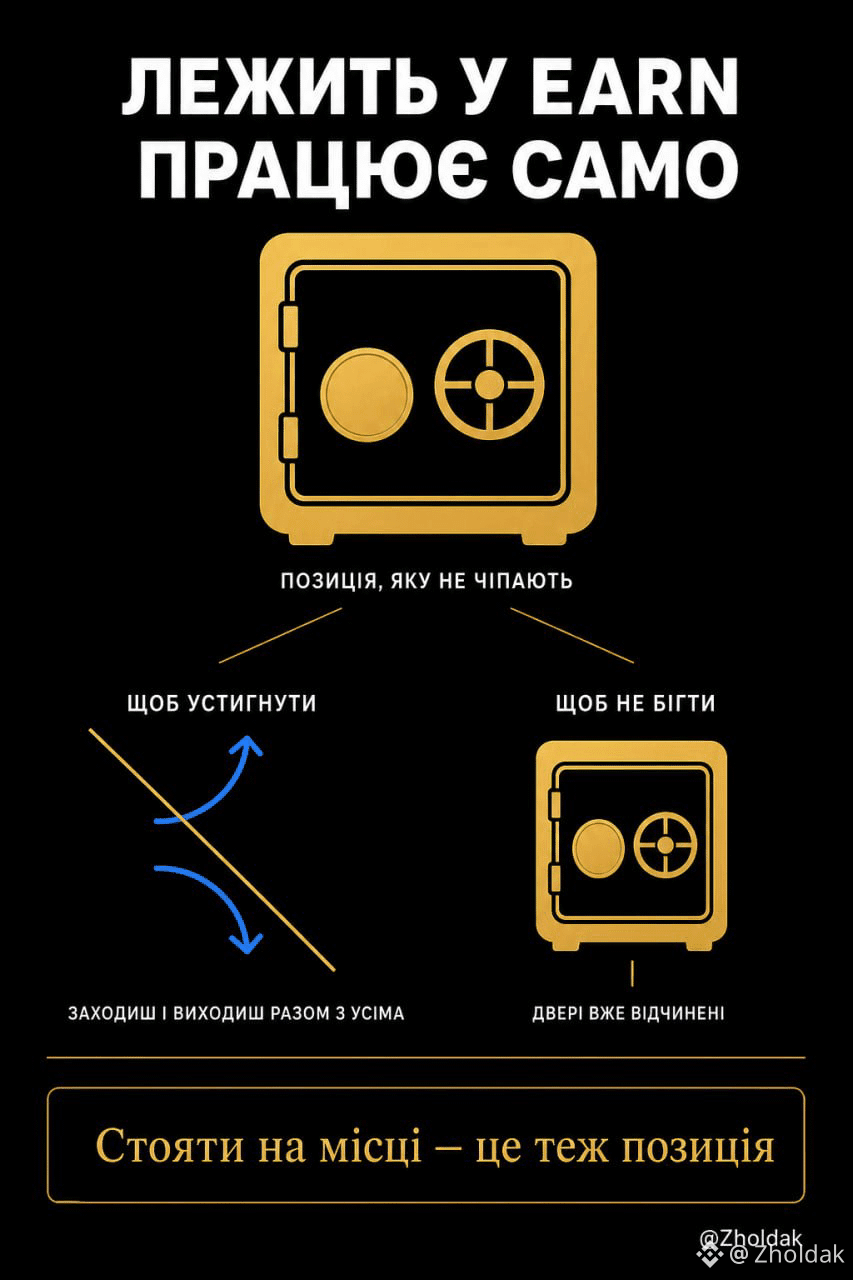
Ich halte 3 BNB bei Binance Earn seit Februar 2025 und rühre sie nicht an.
Der Grund ist simpel: 3 BNB ist eine normale Schwelle, um an TGE teilzunehmen. Seltene Prime-Launches hatten eine höhere Hürde, aber das sind Ausnahmen. Für alle anderen ergibt es keinen Sinn, mehr zu halten, und weniger ist schon ein Verlust.
Eine Alternative ist, jedes Mal nach dem Ankündigungs-Event nachzukaufen. Und hier steckt das Problem, das man aus dem Rechner nicht sieht.
So macht es nicht nur eine Person. Vor dem Event gehen alle in $BNB , nach dem Event gehen sie wieder raus. Du kaufst im Spike, verkaufst beim Rücksetzer – und diese Differenz frisst einen Teil dessen auf, wegen dem du überhaupt gekommen bist. Leihen ist das Gleiche – nur mit Zinsen.
Darum jage ich den Momenten nicht hinterher. 3 BNB liegen einfach rum. Wenn ein TGE auftaucht, bin ich bereits dabei.
Und später hat sich herausgestellt, dass sich die Position sogar selbst auszahlt. In 16 Monaten: 69 Auszahlungen—neun Launchpools und sechzig Holder-Airdrops. Ich habe dafür nichts gemacht, sie kamen einfach auf das Guthaben, das ohnehin schon gelegen hat.
Zwei Mechaniken sind verschieden. Das Zeitfenster für den Launchpool wird vorher angekündigt. Und für den Holder-Airdrop gibt es keinen solchen Plan—der Zeitraum wird erst im Nachhinein bekannt. Deshalb bringt es nichts, die BNB kurz vorher anzulegen.
Das heißt: Das Halten löst beide Aufgaben ab—sowohl die Schwelle für das TGE als auch die Qualifizierung für die Ausschüttungen.
Die Risiken sind ganz normal: Der Preis von BNB geht in beide Richtungen, und niemand garantiert die Ausschüttungen.
#BinanceEarn
{spot}(BNBUSDT)
Ich halte 3 BNB bei Binance Earn seit Februar 2025 und rühre sie nicht an.
Der Grund ist simpel: 3 BNB ist eine normale Schwelle, um an TGE teilzunehmen. Seltene Prime-Launches hatten eine höhere Hürde, aber das sind Ausnahmen. Für alle anderen ergibt es keinen Sinn, mehr zu halten, und weniger ist schon ein Verlust.
Eine Alternative ist, jedes Mal nach dem Ankündigungs-Event nachzukaufen. Und hier steckt das Problem, das man aus dem Rechner nicht sieht.
So macht es nicht nur eine Person. Vor dem Event gehen alle in $BNB , nach dem Event gehen sie wieder raus. Du kaufst im Spike, verkaufst beim Rücksetzer – und diese Differenz frisst einen Teil dessen auf, wegen dem du überhaupt gekommen bist. Leihen ist das Gleiche – nur mit Zinsen.
Darum jage ich den Momenten nicht hinterher. 3 BNB liegen einfach rum. Wenn ein TGE auftaucht, bin ich bereits dabei.
Und später hat sich herausgestellt, dass sich die Position sogar selbst auszahlt. In 16 Monaten: 69 Auszahlungen—neun Launchpools und sechzig Holder-Airdrops. Ich habe dafür nichts gemacht, sie kamen einfach auf das Guthaben, das ohnehin schon gelegen hat.
Zwei Mechaniken sind verschieden. Das Zeitfenster für den Launchpool wird vorher angekündigt. Und für den Holder-Airdrop gibt es keinen solchen Plan—der Zeitraum wird erst im Nachhinein bekannt. Deshalb bringt es nichts, die BNB kurz vorher anzulegen.
Das heißt: Das Halten löst beide Aufgaben ab—sowohl die Schwelle für das TGE als auch die Qualifizierung für die Ausschüttungen.
Die Risiken sind ganz normal: Der Preis von BNB geht in beide Richtungen, und niemand garantiert die Ausschüttungen.
#BinanceEarn
Der Grund ist simpel: 3 BNB ist eine normale Schwelle, um an TGE teilzunehmen. Seltene Prime-Launches hatten eine höhere Hürde, aber das sind Ausnahmen. Für alle anderen ergibt es keinen Sinn, mehr zu halten, und weniger ist schon ein Verlust.
Eine Alternative ist, jedes Mal nach dem Ankündigungs-Event nachzukaufen. Und hier steckt das Problem, das man aus dem Rechner nicht sieht.
So macht es nicht nur eine Person. Vor dem Event gehen alle in $BNB , nach dem Event gehen sie wieder raus. Du kaufst im Spike, verkaufst beim Rücksetzer – und diese Differenz frisst einen Teil dessen auf, wegen dem du überhaupt gekommen bist. Leihen ist das Gleiche – nur mit Zinsen.
Darum jage ich den Momenten nicht hinterher. 3 BNB liegen einfach rum. Wenn ein TGE auftaucht, bin ich bereits dabei.
Und später hat sich herausgestellt, dass sich die Position sogar selbst auszahlt. In 16 Monaten: 69 Auszahlungen—neun Launchpools und sechzig Holder-Airdrops. Ich habe dafür nichts gemacht, sie kamen einfach auf das Guthaben, das ohnehin schon gelegen hat.
Zwei Mechaniken sind verschieden. Das Zeitfenster für den Launchpool wird vorher angekündigt. Und für den Holder-Airdrop gibt es keinen solchen Plan—der Zeitraum wird erst im Nachhinein bekannt. Deshalb bringt es nichts, die BNB kurz vorher anzulegen.
Das heißt: Das Halten löst beide Aufgaben ab—sowohl die Schwelle für das TGE als auch die Qualifizierung für die Ausschüttungen.
Die Risiken sind ganz normal: Der Preis von BNB geht in beide Richtungen, und niemand garantiert die Ausschüttungen.
#BinanceEarn
3
1.2k
·
--
Genau — und diese Reihenfolge ist konsistent, kein einmaliger Ausreißer. Gleicher letzter Schritt bei drei verschiedenen Tickern, einschließlich eines ETFs, also wird nicht ein bestimmtes Papier „abgegrenzt“, sondern die Funktion, die freigeschaltet wird. Das bedeutet auch: Die Offenlegung, mit der du einverstanden bist, und die Genehmigung, die du brauchst, sind zwei getrennte Freigaben — und zwar in dieser Reihenfolge.
Genau — und diese Reihenfolge ist konsistent, kein einmaliger Ausreißer. Gleicher letzter Schritt bei drei verschiedenen Tickern, einschließlich eines ETFs, also wird nicht ein bestimmtes Papier „abgegrenzt“, sondern die Funktion, die freigeschaltet wird. Das bedeutet auch: Die Offenlegung, mit der du einverstanden bist, und die Genehmigung, die du brauchst, sind zwei getrennte Freigaben — und zwar in dieser Reihenfolge.
1
70
·
--
Bullisch
#bstockscis @BinanceCIS
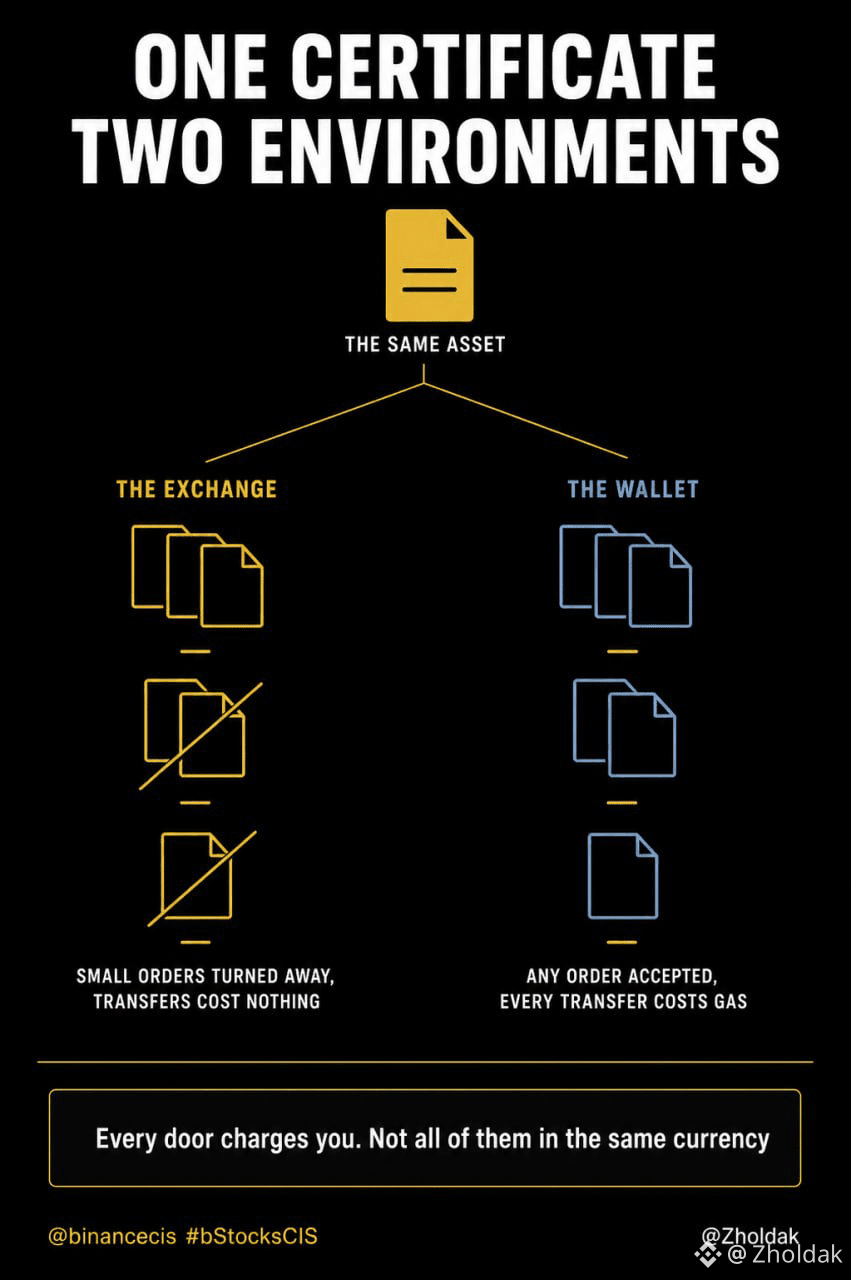
Ein Zertifikat, zwei Umgebungen. Dasselbe Asset, dieselben Rechte, dieselbe Kette. Was sich unterscheidet, ist die Maschinerie darum herum – und es lohnt sich zu wissen, in welcher du gerade stehst.
Bei Binance Spot ist der Kauf von $SPCXB ein Buchhandel. Limit oder Market, du entscheidest, wo du sitzt – und wo du sitzt bestimmt deine Rolle und deine Gebühr. Vor zehn Tagen habe ich darüber geschrieben, wie man das falsch macht.
In der Binance Web3 Wallet habe ich den Reiter „Professional“ geöffnet und dasselbe erwartet. Es sieht danach aus: Kaufen und Verkaufen, ein Feld für den Order-Typ, ein Größenregler. Aber der Order-Typ lautet „Market“, und die Einstellungen darunter sind nicht der Preis. Sie sind Slippage-Toleranz, Netzwerkgebühr, Routing-Provider. Es gibt kein Buch, in das du hinein sitzt. Du preisest gegen einen Pool, also ist das, was du einstellst, wie weit es driften darf, bevor du lieber gar nicht handeln würdest.
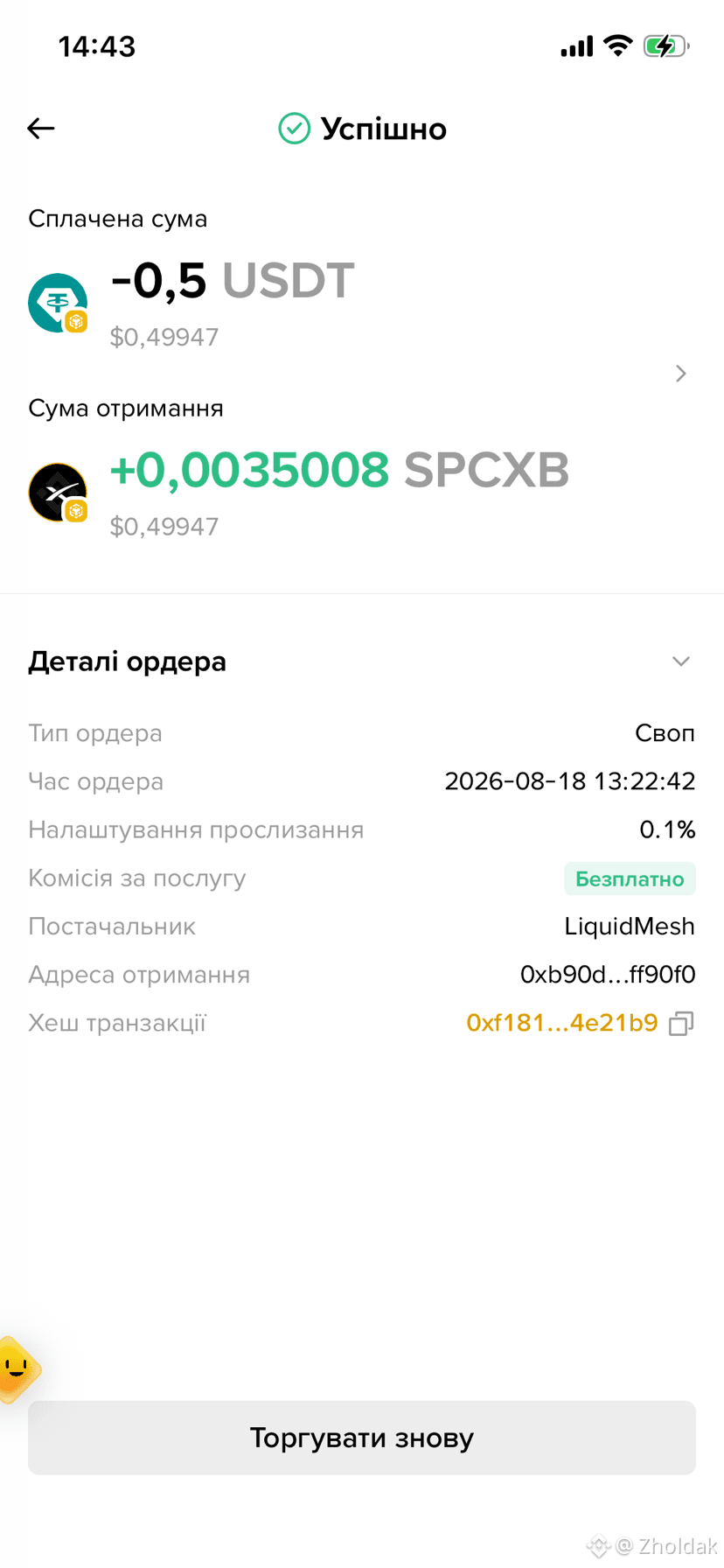
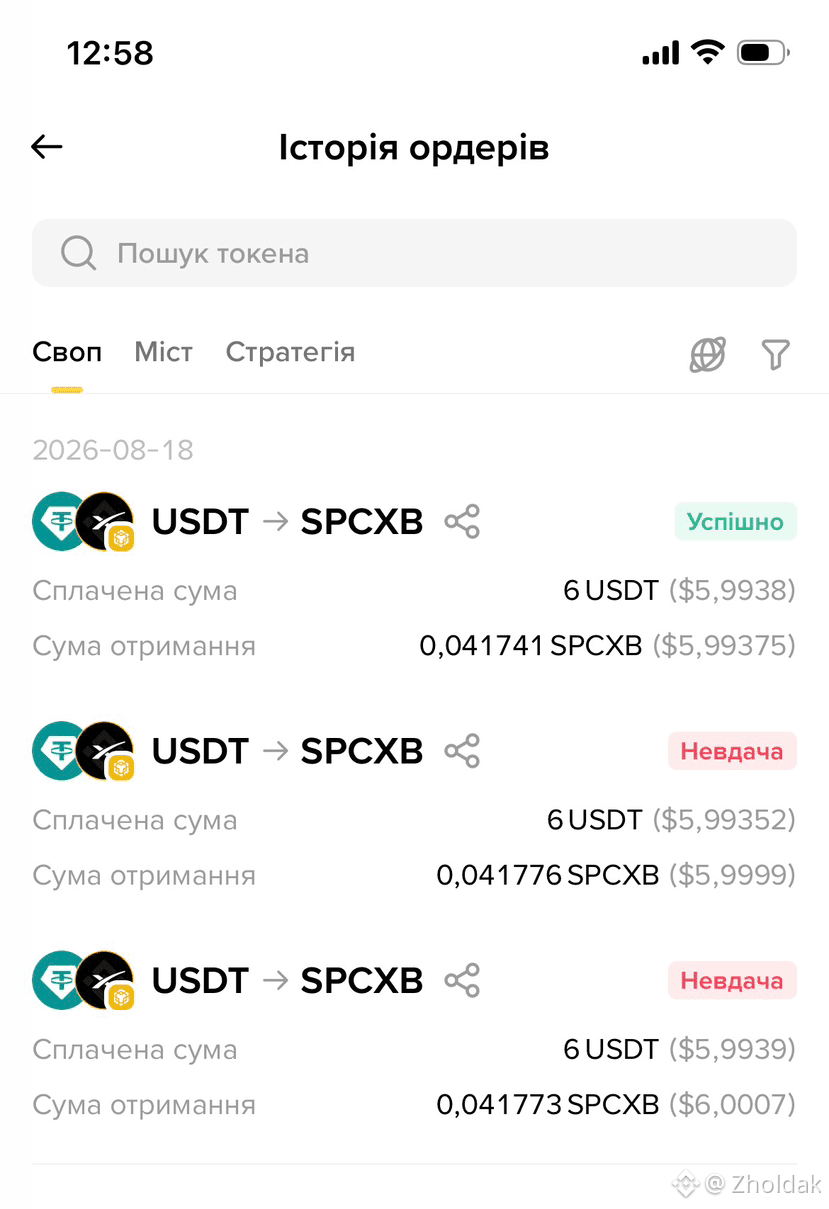
Ich habe 0,1% eingestellt und auf „Kaufen“ gedrückt. Zwei Versuche gingen nicht durch, der dritte schon 🤷
Beide ersten hatten mir mehr SPCXB angeboten als der, der letztlich ausgeführt wurde. So funktioniert das Design – nicht als Fehler: Der Pool ist während des Fluges über meine Toleranz hinaus gegangen, also wurde stattdessen nicht schlechter für mich ausgefüllt, sondern zurückgesetzt. An einer Börse wartet eine nicht ausgeführte Limit-Order. On-chain ist es vorbei, und du zitierst erneut.
Dann das, was ich am Ende wirklich mitgenommen habe: Jede Seite berechnet dir eine Gebühr für den Einstieg – nur in einer anderen Währung.
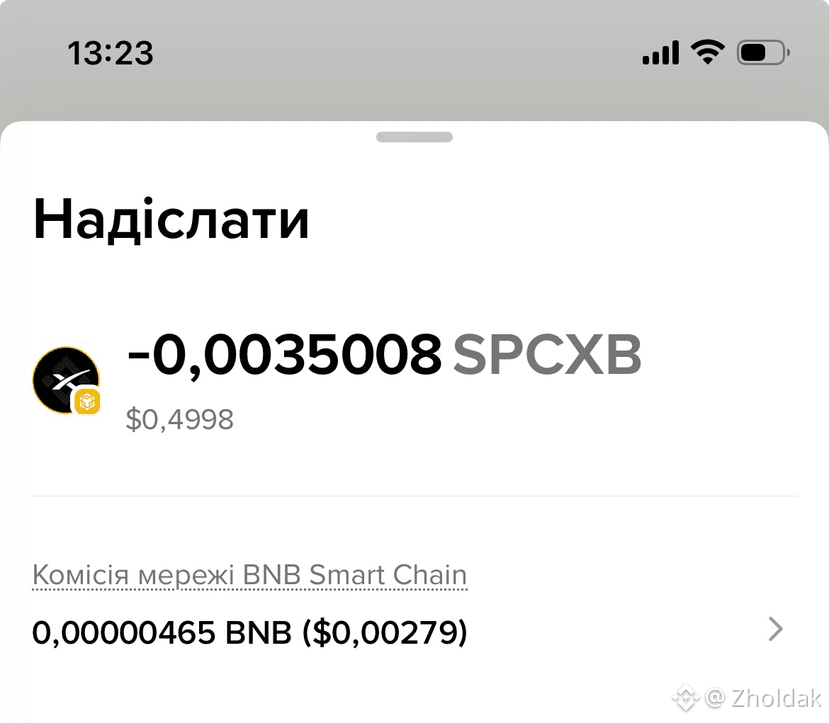
Spot berechnet in Schwellen. Mindestorder fünf Dollar, Mindestabhebung SPCXB 0,005. In der Börse kostet das Herausgehen überhaupt keine Netzwerkgebühr.
Die Wallet berechnet in Gas. Ich kaufte für sechs Dollar, dann drei, dann fünfzig Cent – und nichts hat sich daran gestört. Das Zurückschicken zu Spot kostet jedes Mal BNB. Bruchteile von einem Cent, aber nie nichts, weil jetzt ich derjenige bin, der signiert.
Beide Wege funktionieren, und keiner ist eine Umgehung des anderen. Du zahlst einfach die Maut in einer anderen Einheit.
Quellen: mein eigener Web3-Wallet-Trade- und Transferverlauf, SPCXB-Abhebungsansicht und Deposit-Records, 18. August 2026, UTC+3.
@BinanceCIS Welche Seite nutzt du, um deine zu kaufen?
#bStocksCIS
{spot}(SPCXBUSDT)
#bstockscis @BinanceCIS
Ein Zertifikat, zwei Umgebungen. Dasselbe Asset, dieselben Rechte, dieselbe Kette. Was sich unterscheidet, ist die Maschinerie darum herum – und es lohnt sich zu wissen, in welcher du gerade stehst.
Bei Binance Spot ist der Kauf von $SPCXB ein Buchhandel. Limit oder Market, du entscheidest, wo du sitzt – und wo du sitzt bestimmt deine Rolle und deine Gebühr. Vor zehn Tagen habe ich darüber geschrieben, wie man das falsch macht.
In der Binance Web3 Wallet habe ich den Reiter „Professional“ geöffnet und dasselbe erwartet. Es sieht danach aus: Kaufen und Verkaufen, ein Feld für den Order-Typ, ein Größenregler. Aber der Order-Typ lautet „Market“, und die Einstellungen darunter sind nicht der Preis. Sie sind Slippage-Toleranz, Netzwerkgebühr, Routing-Provider. Es gibt kein Buch, in das du hinein sitzt. Du preisest gegen einen Pool, also ist das, was du einstellst, wie weit es driften darf, bevor du lieber gar nicht handeln würdest.
Ich habe 0,1% eingestellt und auf „Kaufen“ gedrückt. Zwei Versuche gingen nicht durch, der dritte schon 🤷
Beide ersten hatten mir mehr SPCXB angeboten als der, der letztlich ausgeführt wurde. So funktioniert das Design – nicht als Fehler: Der Pool ist während des Fluges über meine Toleranz hinaus gegangen, also wurde stattdessen nicht schlechter für mich ausgefüllt, sondern zurückgesetzt. An einer Börse wartet eine nicht ausgeführte Limit-Order. On-chain ist es vorbei, und du zitierst erneut.
Dann das, was ich am Ende wirklich mitgenommen habe: Jede Seite berechnet dir eine Gebühr für den Einstieg – nur in einer anderen Währung.
Spot berechnet in Schwellen. Mindestorder fünf Dollar, Mindestabhebung SPCXB 0,005. In der Börse kostet das Herausgehen überhaupt keine Netzwerkgebühr.
Die Wallet berechnet in Gas. Ich kaufte für sechs Dollar, dann drei, dann fünfzig Cent – und nichts hat sich daran gestört. Das Zurückschicken zu Spot kostet jedes Mal BNB. Bruchteile von einem Cent, aber nie nichts, weil jetzt ich derjenige bin, der signiert.
Beide Wege funktionieren, und keiner ist eine Umgehung des anderen. Du zahlst einfach die Maut in einer anderen Einheit.
Quellen: mein eigener Web3-Wallet-Trade- und Transferverlauf, SPCXB-Abhebungsansicht und Deposit-Records, 18. August 2026, UTC+3.
@BinanceCIS Welche Seite nutzt du, um deine zu kaufen?
#bStocksCIS
Ein Zertifikat, zwei Umgebungen. Dasselbe Asset, dieselben Rechte, dieselbe Kette. Was sich unterscheidet, ist die Maschinerie darum herum – und es lohnt sich zu wissen, in welcher du gerade stehst.
Bei Binance Spot ist der Kauf von $SPCXB ein Buchhandel. Limit oder Market, du entscheidest, wo du sitzt – und wo du sitzt bestimmt deine Rolle und deine Gebühr. Vor zehn Tagen habe ich darüber geschrieben, wie man das falsch macht.
In der Binance Web3 Wallet habe ich den Reiter „Professional“ geöffnet und dasselbe erwartet. Es sieht danach aus: Kaufen und Verkaufen, ein Feld für den Order-Typ, ein Größenregler. Aber der Order-Typ lautet „Market“, und die Einstellungen darunter sind nicht der Preis. Sie sind Slippage-Toleranz, Netzwerkgebühr, Routing-Provider. Es gibt kein Buch, in das du hinein sitzt. Du preisest gegen einen Pool, also ist das, was du einstellst, wie weit es driften darf, bevor du lieber gar nicht handeln würdest.
Ich habe 0,1% eingestellt und auf „Kaufen“ gedrückt. Zwei Versuche gingen nicht durch, der dritte schon 🤷
Beide ersten hatten mir mehr SPCXB angeboten als der, der letztlich ausgeführt wurde. So funktioniert das Design – nicht als Fehler: Der Pool ist während des Fluges über meine Toleranz hinaus gegangen, also wurde stattdessen nicht schlechter für mich ausgefüllt, sondern zurückgesetzt. An einer Börse wartet eine nicht ausgeführte Limit-Order. On-chain ist es vorbei, und du zitierst erneut.
Dann das, was ich am Ende wirklich mitgenommen habe: Jede Seite berechnet dir eine Gebühr für den Einstieg – nur in einer anderen Währung.
Spot berechnet in Schwellen. Mindestorder fünf Dollar, Mindestabhebung SPCXB 0,005. In der Börse kostet das Herausgehen überhaupt keine Netzwerkgebühr.
Die Wallet berechnet in Gas. Ich kaufte für sechs Dollar, dann drei, dann fünfzig Cent – und nichts hat sich daran gestört. Das Zurückschicken zu Spot kostet jedes Mal BNB. Bruchteile von einem Cent, aber nie nichts, weil jetzt ich derjenige bin, der signiert.
Beide Wege funktionieren, und keiner ist eine Umgehung des anderen. Du zahlst einfach die Maut in einer anderen Einheit.
Quellen: mein eigener Web3-Wallet-Trade- und Transferverlauf, SPCXB-Abhebungsansicht und Deposit-Records, 18. August 2026, UTC+3.
@BinanceCIS Welche Seite nutzt du, um deine zu kaufen?
#bStocksCIS
11
7
150
·
--
Bullisch
#bstockscis @BinanceCIS
Der Umrechnungskurs ist eins zu eins. Ob man dazu kommt, ist eine andere Frage.
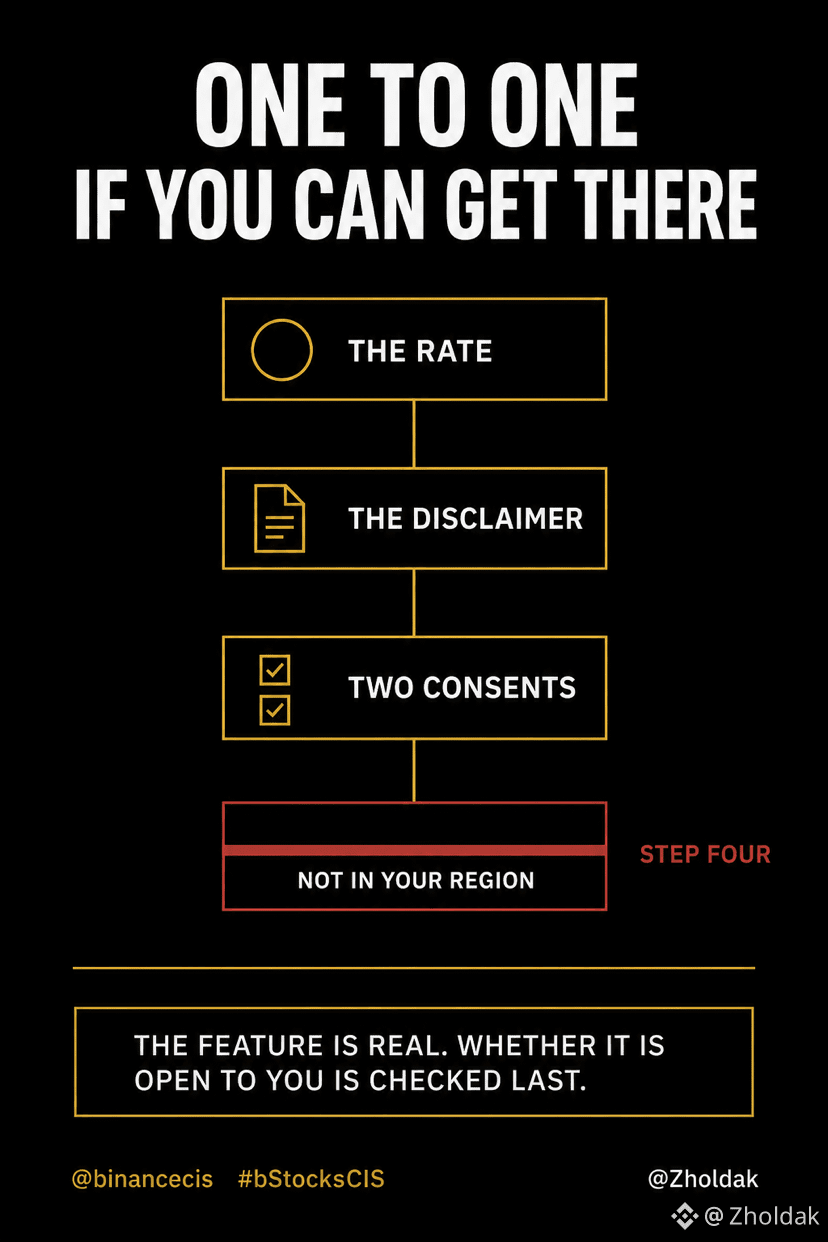
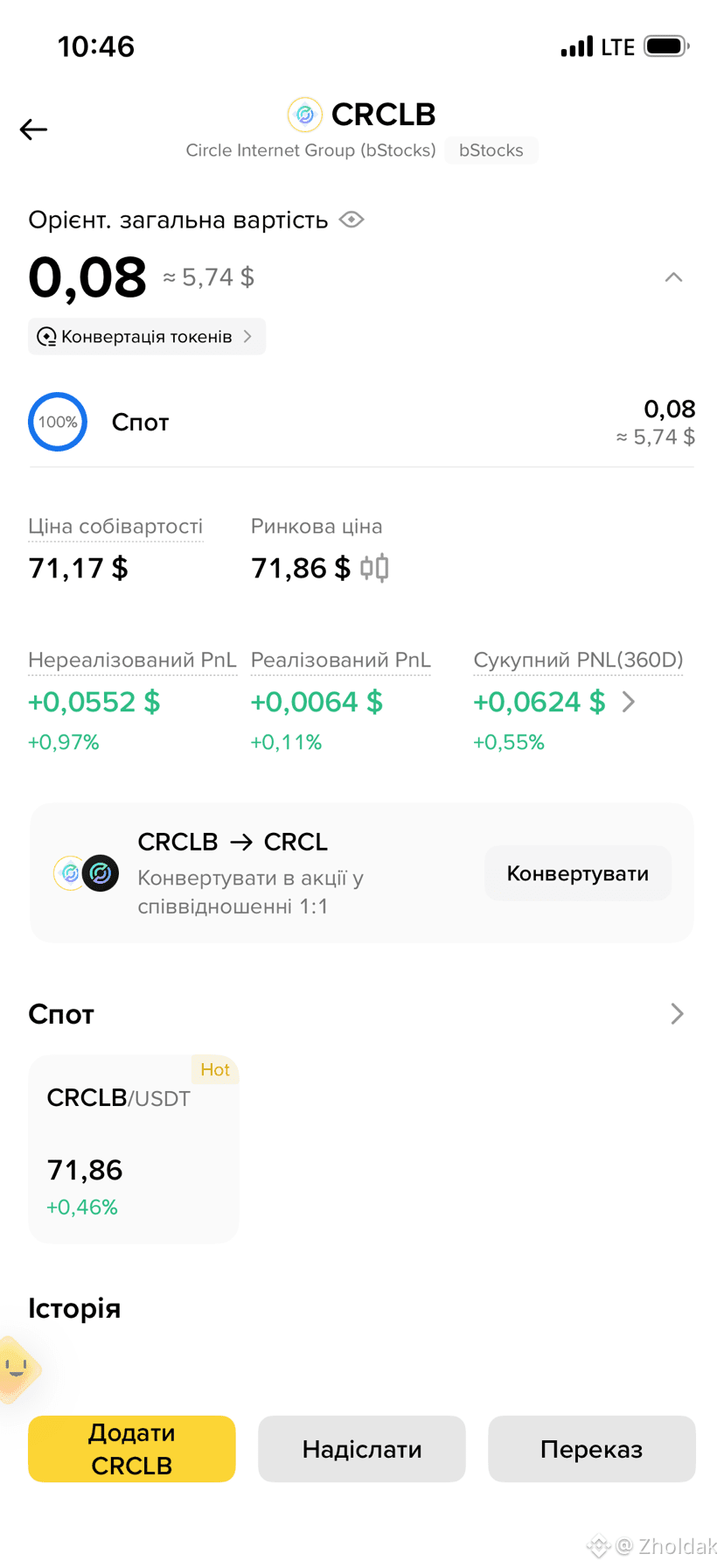
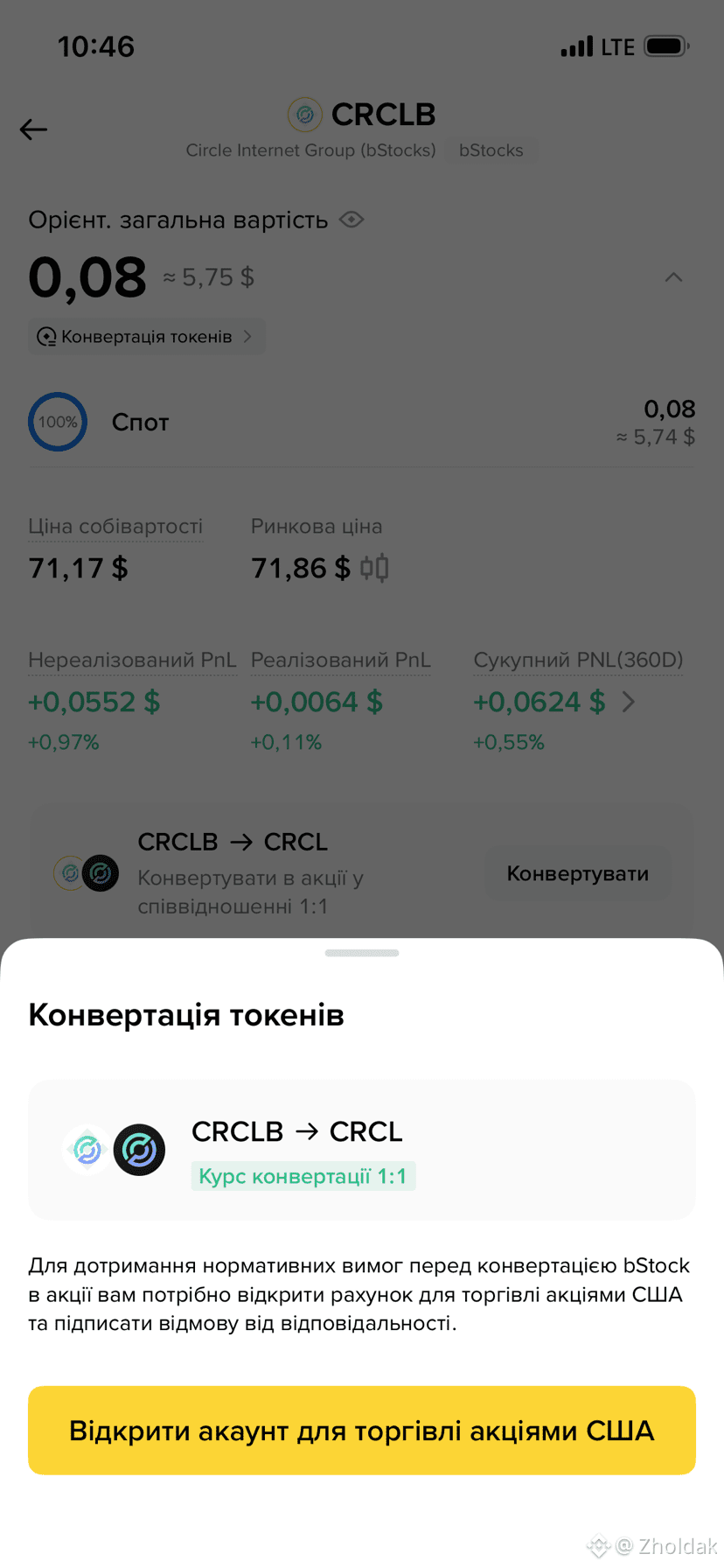
Heute habe ich versucht, einen bStock in die tatsächliche Aktie umzuwandeln. $CRCLB zuerst, dann $EWYB . Beide Karten haben dieselbe Zeile: In Aktien umrechnen im Verhältnis 1:1. Ich hatte vor fünf Tagen bei diesem Button aufgehört, ohne ihn zu drücken. Heute habe ich ihn gedrückt.
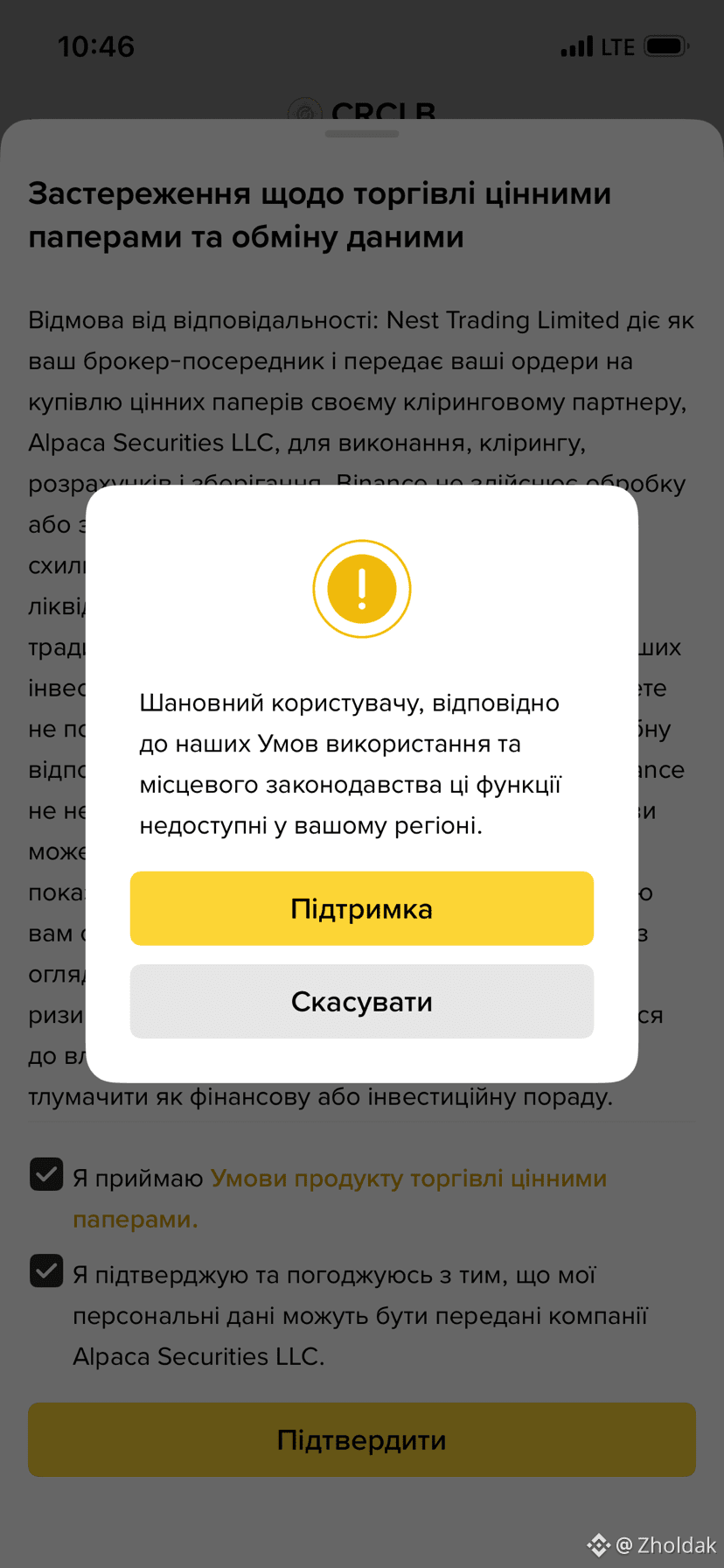
Schritt eins: ein Panel, das den 1:1-Kurs bestätigt, und ein Hinweis, dass die Vorschriften zuerst ein US-Aktienhandelskonto und eine unterschriebene Haftungsausschlusserklärung verlangen.
Schritt zwei: der Haftungsausschluss selbst, und es lohnt sich, ihn zu lesen, statt zu scrollen. Nest Trading Limited ist Ihr Broker und leitet Aufträge an seinen Clearing-Partner Alpaca Securities LLC zur Ausführung, zum Clearing, zur Abwicklung und zur Verwahrung weiter. Binance verarbeitet oder verwahrt Ihre Wertpapiere nicht. Das ist eine andere Kette der Verwahrung als die, die meinen bStock hält, bevor ich irgendetwas zustimme, im Detail ausgeführt.
Schritt drei: zwei Kontrollkästchen — die Produktbedingungen und die Zustimmung, meine Daten an Alpaca weiterzugeben. Beide angehakt, auf Bestätigen gedrückt.
Schritt vier: Diese Funktionen sind in Ihrer Region nicht verfügbar.
Gleiches Ergebnis bei beiden Tickern, sechs Minuten auseinander.
Ich bin nicht verärgert über das Ergebnis — die Regeln sind die Regeln und die Nachricht ist klar, warum. Was mir aufgefallen ist, ist die Reihenfolge. Die 1:1-Umrechnung ist eine echte Eigenschaft des Produkts und auf der Karte beworben. Ob ich sie nutzen kann, hängt davon ab, wo ich mich befinde, und diese Prüfung läuft zuletzt, nach zwei Zustimmungen und einer Vereinbarung zur Datenweitergabe.
Also die ehrliche Version für alle in meiner Situation: Sie besitzen ein Zertifikat, das sich bei Nennwert in eine Aktie umwandelt, und die Umwandlung ist vielleicht keine Tür, durch die man einfach gehen kann. Es lohnt sich herauszufinden, auf welcher Seite dieser Linie Sie stehen, bevor es für Sie wichtig wird.
Quellen: meine eigenen CRCLB- und EWYB-Umwandlungsbildschirme in der Binance-App, 17. August 2026, 10:46 und 10:47 Kiewer Zeit.
@BinanceCIS Hast du schon geprüft, ob die Umwandlung tatsächlich für dich geöffnet ist?
#bStocksCIS
#bstockscis @BinanceCIS
Der Umrechnungskurs ist eins zu eins. Ob man dazu kommt, ist eine andere Frage.
Heute habe ich versucht, einen bStock in die tatsächliche Aktie umzuwandeln. $CRCLB zuerst, dann $EWYB . Beide Karten haben dieselbe Zeile: In Aktien umrechnen im Verhältnis 1:1. Ich hatte vor fünf Tagen bei diesem Button aufgehört, ohne ihn zu drücken. Heute habe ich ihn gedrückt.
Schritt eins: ein Panel, das den 1:1-Kurs bestätigt, und ein Hinweis, dass die Vorschriften zuerst ein US-Aktienhandelskonto und eine unterschriebene Haftungsausschlusserklärung verlangen.
Schritt zwei: der Haftungsausschluss selbst, und es lohnt sich, ihn zu lesen, statt zu scrollen. Nest Trading Limited ist Ihr Broker und leitet Aufträge an seinen Clearing-Partner Alpaca Securities LLC zur Ausführung, zum Clearing, zur Abwicklung und zur Verwahrung weiter. Binance verarbeitet oder verwahrt Ihre Wertpapiere nicht. Das ist eine andere Kette der Verwahrung als die, die meinen bStock hält, bevor ich irgendetwas zustimme, im Detail ausgeführt.
Schritt drei: zwei Kontrollkästchen — die Produktbedingungen und die Zustimmung, meine Daten an Alpaca weiterzugeben. Beide angehakt, auf Bestätigen gedrückt.
Schritt vier: Diese Funktionen sind in Ihrer Region nicht verfügbar.
Gleiches Ergebnis bei beiden Tickern, sechs Minuten auseinander.
Ich bin nicht verärgert über das Ergebnis — die Regeln sind die Regeln und die Nachricht ist klar, warum. Was mir aufgefallen ist, ist die Reihenfolge. Die 1:1-Umrechnung ist eine echte Eigenschaft des Produkts und auf der Karte beworben. Ob ich sie nutzen kann, hängt davon ab, wo ich mich befinde, und diese Prüfung läuft zuletzt, nach zwei Zustimmungen und einer Vereinbarung zur Datenweitergabe.
Also die ehrliche Version für alle in meiner Situation: Sie besitzen ein Zertifikat, das sich bei Nennwert in eine Aktie umwandelt, und die Umwandlung ist vielleicht keine Tür, durch die man einfach gehen kann. Es lohnt sich herauszufinden, auf welcher Seite dieser Linie Sie stehen, bevor es für Sie wichtig wird.
Quellen: meine eigenen CRCLB- und EWYB-Umwandlungsbildschirme in der Binance-App, 17. August 2026, 10:46 und 10:47 Kiewer Zeit.
@BinanceCIS Hast du schon geprüft, ob die Umwandlung tatsächlich für dich geöffnet ist?
#bStocksCIS
Der Umrechnungskurs ist eins zu eins. Ob man dazu kommt, ist eine andere Frage.
Heute habe ich versucht, einen bStock in die tatsächliche Aktie umzuwandeln. $CRCLB zuerst, dann $EWYB . Beide Karten haben dieselbe Zeile: In Aktien umrechnen im Verhältnis 1:1. Ich hatte vor fünf Tagen bei diesem Button aufgehört, ohne ihn zu drücken. Heute habe ich ihn gedrückt.
Schritt eins: ein Panel, das den 1:1-Kurs bestätigt, und ein Hinweis, dass die Vorschriften zuerst ein US-Aktienhandelskonto und eine unterschriebene Haftungsausschlusserklärung verlangen.
Schritt zwei: der Haftungsausschluss selbst, und es lohnt sich, ihn zu lesen, statt zu scrollen. Nest Trading Limited ist Ihr Broker und leitet Aufträge an seinen Clearing-Partner Alpaca Securities LLC zur Ausführung, zum Clearing, zur Abwicklung und zur Verwahrung weiter. Binance verarbeitet oder verwahrt Ihre Wertpapiere nicht. Das ist eine andere Kette der Verwahrung als die, die meinen bStock hält, bevor ich irgendetwas zustimme, im Detail ausgeführt.
Schritt drei: zwei Kontrollkästchen — die Produktbedingungen und die Zustimmung, meine Daten an Alpaca weiterzugeben. Beide angehakt, auf Bestätigen gedrückt.
Schritt vier: Diese Funktionen sind in Ihrer Region nicht verfügbar.
Gleiches Ergebnis bei beiden Tickern, sechs Minuten auseinander.
Ich bin nicht verärgert über das Ergebnis — die Regeln sind die Regeln und die Nachricht ist klar, warum. Was mir aufgefallen ist, ist die Reihenfolge. Die 1:1-Umrechnung ist eine echte Eigenschaft des Produkts und auf der Karte beworben. Ob ich sie nutzen kann, hängt davon ab, wo ich mich befinde, und diese Prüfung läuft zuletzt, nach zwei Zustimmungen und einer Vereinbarung zur Datenweitergabe.
Also die ehrliche Version für alle in meiner Situation: Sie besitzen ein Zertifikat, das sich bei Nennwert in eine Aktie umwandelt, und die Umwandlung ist vielleicht keine Tür, durch die man einfach gehen kann. Es lohnt sich herauszufinden, auf welcher Seite dieser Linie Sie stehen, bevor es für Sie wichtig wird.
Quellen: meine eigenen CRCLB- und EWYB-Umwandlungsbildschirme in der Binance-App, 17. August 2026, 10:46 und 10:47 Kiewer Zeit.
@BinanceCIS Hast du schon geprüft, ob die Umwandlung tatsächlich für dich geöffnet ist?
#bStocksCIS
10
8
168
·
--
Bullisch
#bstockscis @BinanceCIS
Gestern habe ich einen tokenisierten Anteil in einen Liquiditätspool gegeben und versprochen zu berichten, was dabei herausgekommen ist. Hier ist es.
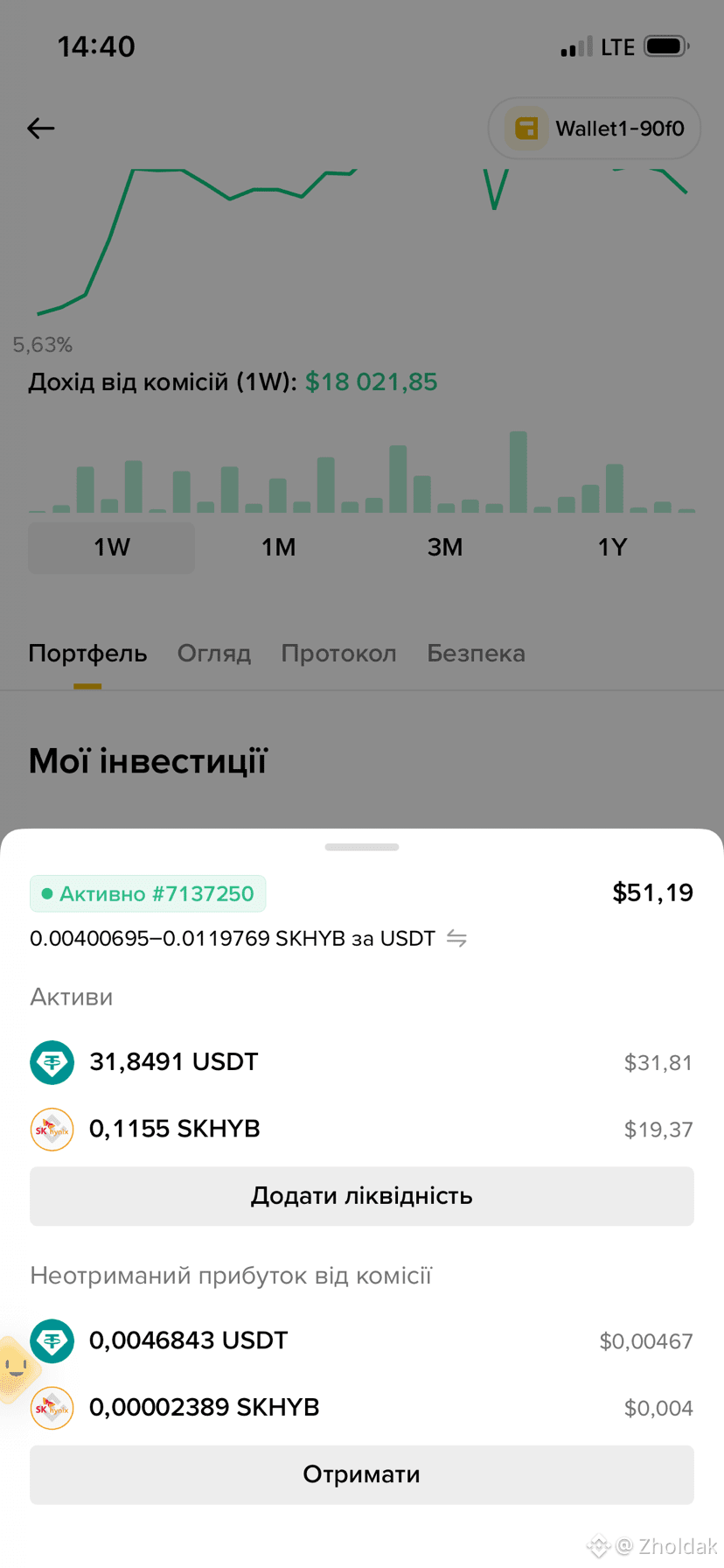
Rein, am 15. August 17:02: 0.118 $SKHYB und 31.44563 USDT.
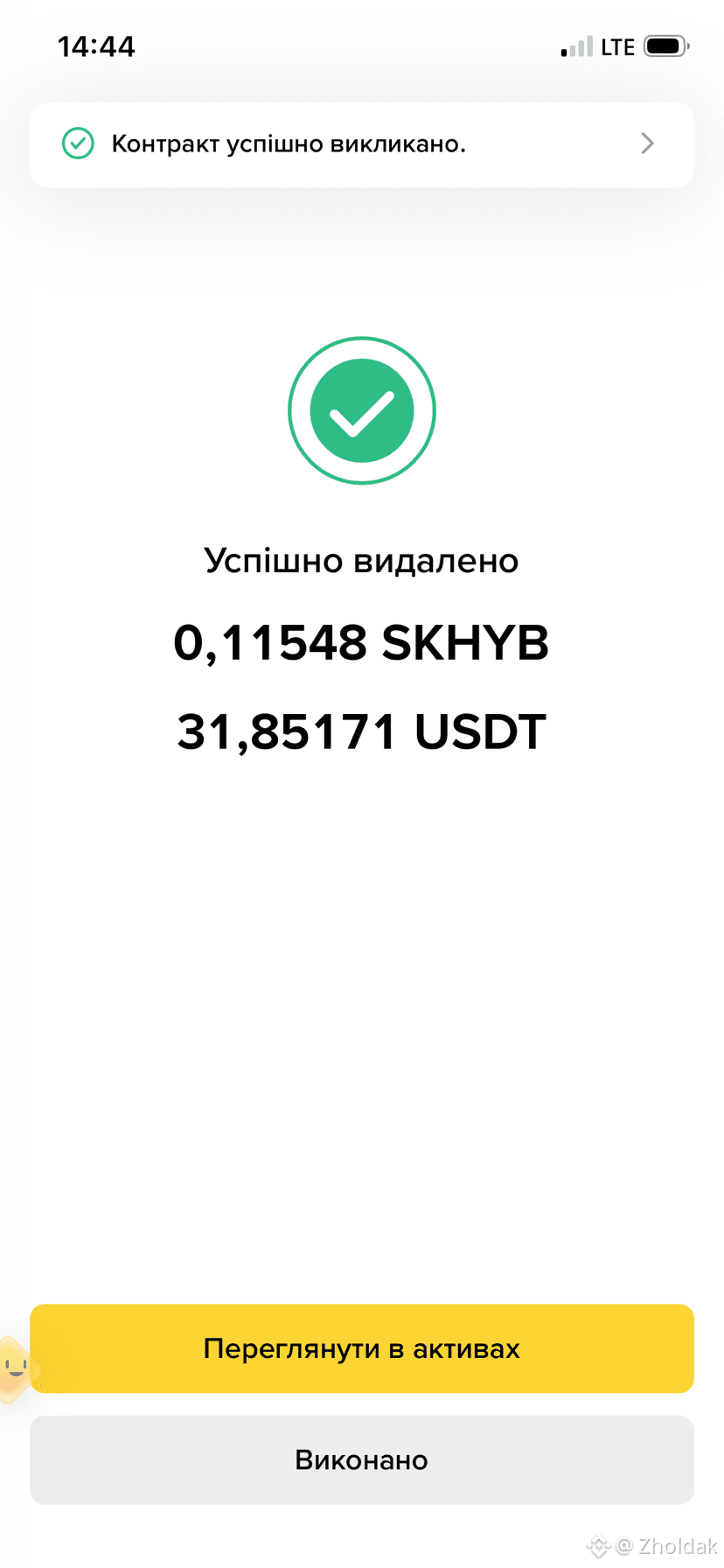
Raus, heute 14:44: 0.11548 SKHYB und 31.85171 USDT.
Weniger vom Anteil, mehr Dollars. Nach Wert hat es sich nahezu ausgeglichen — etwa zweiundvierzig Cent Token wurden zu etwa einundvierzig Cent USDT. Über zwanzig Stunden verdiente Gebühren: unter einem Cent.
So verkaufte der Pool ungefähr zwei Prozent meiner Position in SK hynix, während ich schlief, und zahlte mir einen Bruchteil eines Cents für das Privileg. Die Verschiebung dessen, was ich hielt, war etwa fünfzigmal größer als das, was ich verdiente.
Für ein Krypto-Paar ist das ein vertrauter Interessenkonflikt. Für einen bStock glaube ich, landet das anders. Das ist kein Token, bei dem ich auf das Angebot spekuliere — es ist ein Zertifikat über einen echten Anteil, und der Grund, ihn zu halten, ist die Exponierung gegenüber einem bestimmten Unternehmen. Ein Liquiditätspool weiß das nicht. Er wird deine Beteiligung am Unternehmen jedes Mal kürzen oder erhöhen, wenn der Preis deine Spanne kreuzt — basierend auf nichts anderem als dem Order-Flow.
Das ist kein Fehler. Es ist genau das, was Liquiditätsbereitstellung ist, und dieselben Mechanismen gelten für alles, was du dort hineinlegst. Aber ein Anteil ist die eine Anlageklasse, bei der „ich habe am Ende eine andere Menge als zu Beginn“ eine Entscheidung ist — nicht ein Rundungsdetail.
Das sollte man wissen, bevor man seine Exponierung festlegt: Es sollte auch das Handelsinventar von jemand anderem sein.
Quellen: meine eigene PancakeSwap V3-Position #7137250 in der Binance Web3 Wallet, geöffnet am 15. August 17:02 und geschlossen am 16. August 14:44 Kiewer Zeit.
@BinanceCIS Würdest du es einem Pool erlauben, die Größe deiner Position in einem Unternehmen anzupassen?
#bStocksCIS
#bstockscis @BinanceCIS
Gestern habe ich einen tokenisierten Anteil in einen Liquiditätspool gegeben und versprochen zu berichten, was dabei herausgekommen ist. Hier ist es.
Rein, am 15. August 17:02: 0.118 $SKHYB und 31.44563 USDT.
Raus, heute 14:44: 0.11548 SKHYB und 31.85171 USDT.
Weniger vom Anteil, mehr Dollars. Nach Wert hat es sich nahezu ausgeglichen — etwa zweiundvierzig Cent Token wurden zu etwa einundvierzig Cent USDT. Über zwanzig Stunden verdiente Gebühren: unter einem Cent.
So verkaufte der Pool ungefähr zwei Prozent meiner Position in SK hynix, während ich schlief, und zahlte mir einen Bruchteil eines Cents für das Privileg. Die Verschiebung dessen, was ich hielt, war etwa fünfzigmal größer als das, was ich verdiente.
Für ein Krypto-Paar ist das ein vertrauter Interessenkonflikt. Für einen bStock glaube ich, landet das anders. Das ist kein Token, bei dem ich auf das Angebot spekuliere — es ist ein Zertifikat über einen echten Anteil, und der Grund, ihn zu halten, ist die Exponierung gegenüber einem bestimmten Unternehmen. Ein Liquiditätspool weiß das nicht. Er wird deine Beteiligung am Unternehmen jedes Mal kürzen oder erhöhen, wenn der Preis deine Spanne kreuzt — basierend auf nichts anderem als dem Order-Flow.
Das ist kein Fehler. Es ist genau das, was Liquiditätsbereitstellung ist, und dieselben Mechanismen gelten für alles, was du dort hineinlegst. Aber ein Anteil ist die eine Anlageklasse, bei der „ich habe am Ende eine andere Menge als zu Beginn“ eine Entscheidung ist — nicht ein Rundungsdetail.
Das sollte man wissen, bevor man seine Exponierung festlegt: Es sollte auch das Handelsinventar von jemand anderem sein.
Quellen: meine eigene PancakeSwap V3-Position #7137250 in der Binance Web3 Wallet, geöffnet am 15. August 17:02 und geschlossen am 16. August 14:44 Kiewer Zeit.
@BinanceCIS Würdest du es einem Pool erlauben, die Größe deiner Position in einem Unternehmen anzupassen?
#bStocksCIS
Gestern habe ich einen tokenisierten Anteil in einen Liquiditätspool gegeben und versprochen zu berichten, was dabei herausgekommen ist. Hier ist es.
Rein, am 15. August 17:02: 0.118 $SKHYB und 31.44563 USDT.
Raus, heute 14:44: 0.11548 SKHYB und 31.85171 USDT.
Weniger vom Anteil, mehr Dollars. Nach Wert hat es sich nahezu ausgeglichen — etwa zweiundvierzig Cent Token wurden zu etwa einundvierzig Cent USDT. Über zwanzig Stunden verdiente Gebühren: unter einem Cent.
So verkaufte der Pool ungefähr zwei Prozent meiner Position in SK hynix, während ich schlief, und zahlte mir einen Bruchteil eines Cents für das Privileg. Die Verschiebung dessen, was ich hielt, war etwa fünfzigmal größer als das, was ich verdiente.
Für ein Krypto-Paar ist das ein vertrauter Interessenkonflikt. Für einen bStock glaube ich, landet das anders. Das ist kein Token, bei dem ich auf das Angebot spekuliere — es ist ein Zertifikat über einen echten Anteil, und der Grund, ihn zu halten, ist die Exponierung gegenüber einem bestimmten Unternehmen. Ein Liquiditätspool weiß das nicht. Er wird deine Beteiligung am Unternehmen jedes Mal kürzen oder erhöhen, wenn der Preis deine Spanne kreuzt — basierend auf nichts anderem als dem Order-Flow.
Das ist kein Fehler. Es ist genau das, was Liquiditätsbereitstellung ist, und dieselben Mechanismen gelten für alles, was du dort hineinlegst. Aber ein Anteil ist die eine Anlageklasse, bei der „ich habe am Ende eine andere Menge als zu Beginn“ eine Entscheidung ist — nicht ein Rundungsdetail.
Das sollte man wissen, bevor man seine Exponierung festlegt: Es sollte auch das Handelsinventar von jemand anderem sein.
Quellen: meine eigene PancakeSwap V3-Position #7137250 in der Binance Web3 Wallet, geöffnet am 15. August 17:02 und geschlossen am 16. August 14:44 Kiewer Zeit.
@BinanceCIS Würdest du es einem Pool erlauben, die Größe deiner Position in einem Unternehmen anzupassen?
#bStocksCIS
7
5
108
·
--
Bullisch
#bstockscis @BinanceCIS
Vor ein paar Tagen schrieb ich, dass ein bStock von der Börse in die Selbstverwahrung verschoben werden kann. Ich hatte es noch nicht ausprobiert. Heute habe ich es gemacht — in die Binance Web3 Wallet, weil sie an dasselbe Konto gekoppelt ist und immer nur einen Fingertipp entfernt.
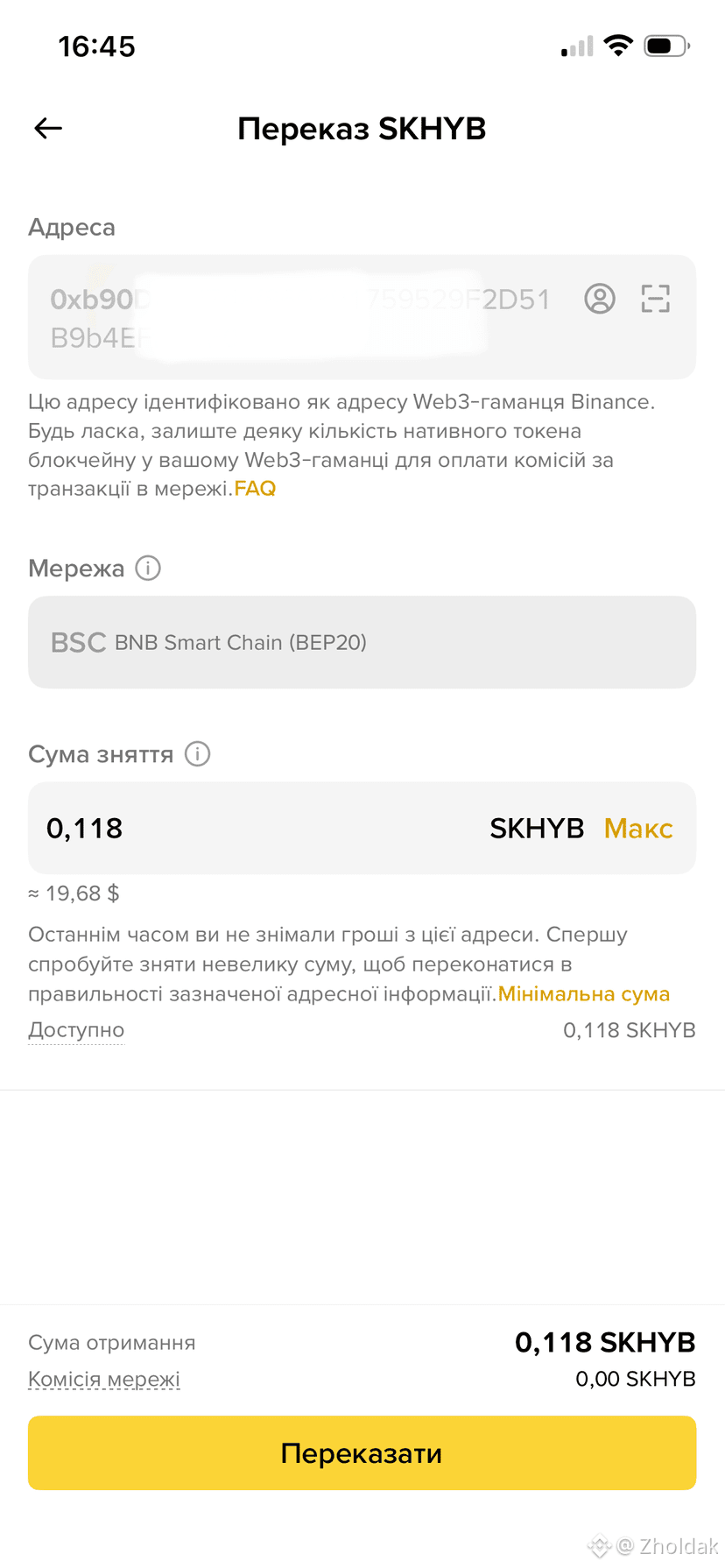
Die Übertragung selbst war unspektakulär, und genau das ist der Punkt. Gleicher Bildschirm wie beim Senden von Krypto: BEP-20, BNB Smart Chain, Netzwerkgebühr null. Ein Haken: Die Mindestüberweisung liegt bei 0,1, also schickte ich 0,118 $SKHYB rüber.
Was ich nicht erwartet hatte, war, was dort wartete. Stock Hub → bStocks Earn, und mein Anteil hörte auf, nur etwas zu sein, das ich lediglich halte.
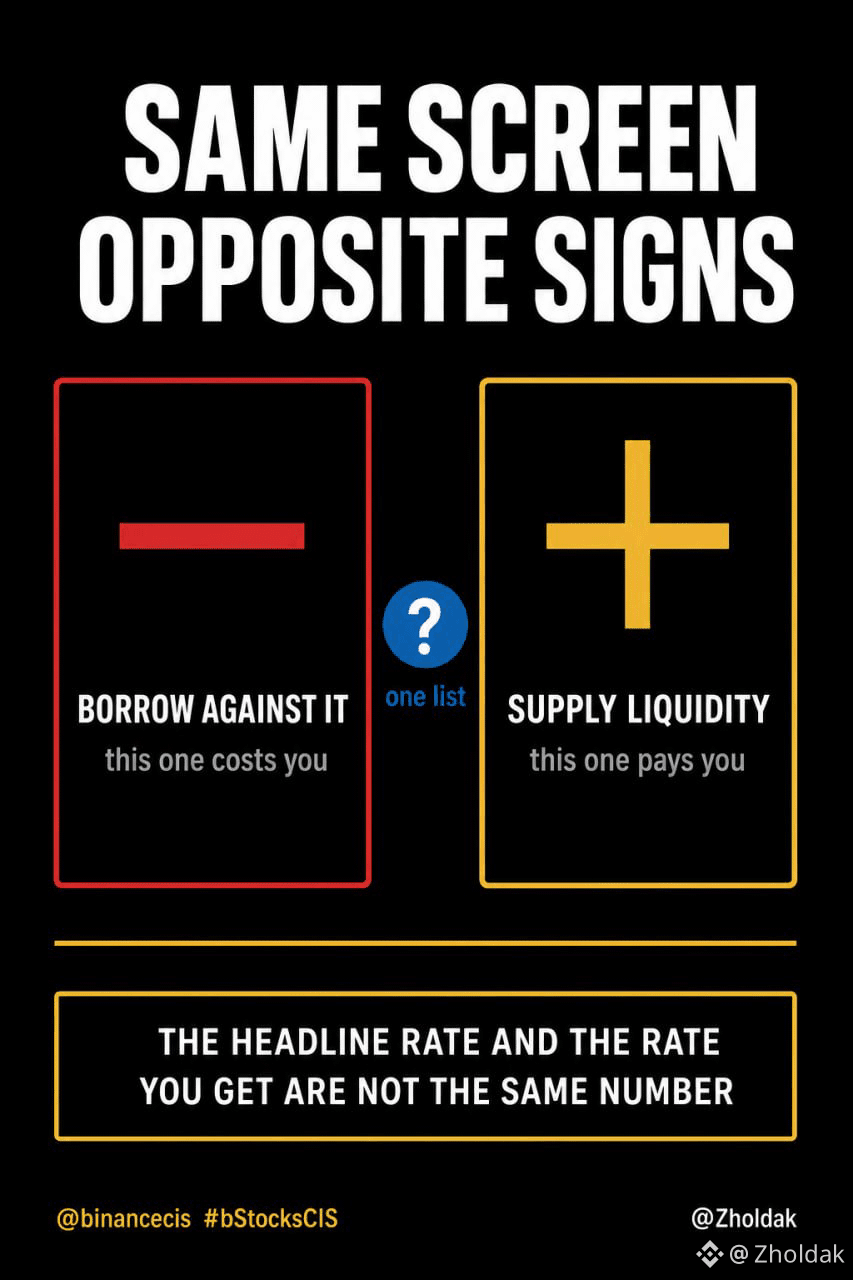
Unter einer Überschrift gibt es mehrere verschiedene Mechaniken, und das Vorzeichen vor der Zahl trennt sie.
Einige Einträge sind Kreditmärkte — Venus, Lista — bei denen ein bStock als Sicherheit dient und man sich dagegen Geld leiht. Diese Prozentsätze sind negativ, und ein Minus dort ist kein Verlust. Es sind die Kosten des Darlehens: der Preis dafür, deine Position nicht zu verkaufen, wenn du Bargeld brauchst. Ich halte $CRCLB und es steht auf dieser Liste.
Andere Einträge sind Liquiditätspools, bei denen der Prozentsatz positiv ist, weil es eine Belohnung ist. Das war derjenige, den ich ausprobiert habe.
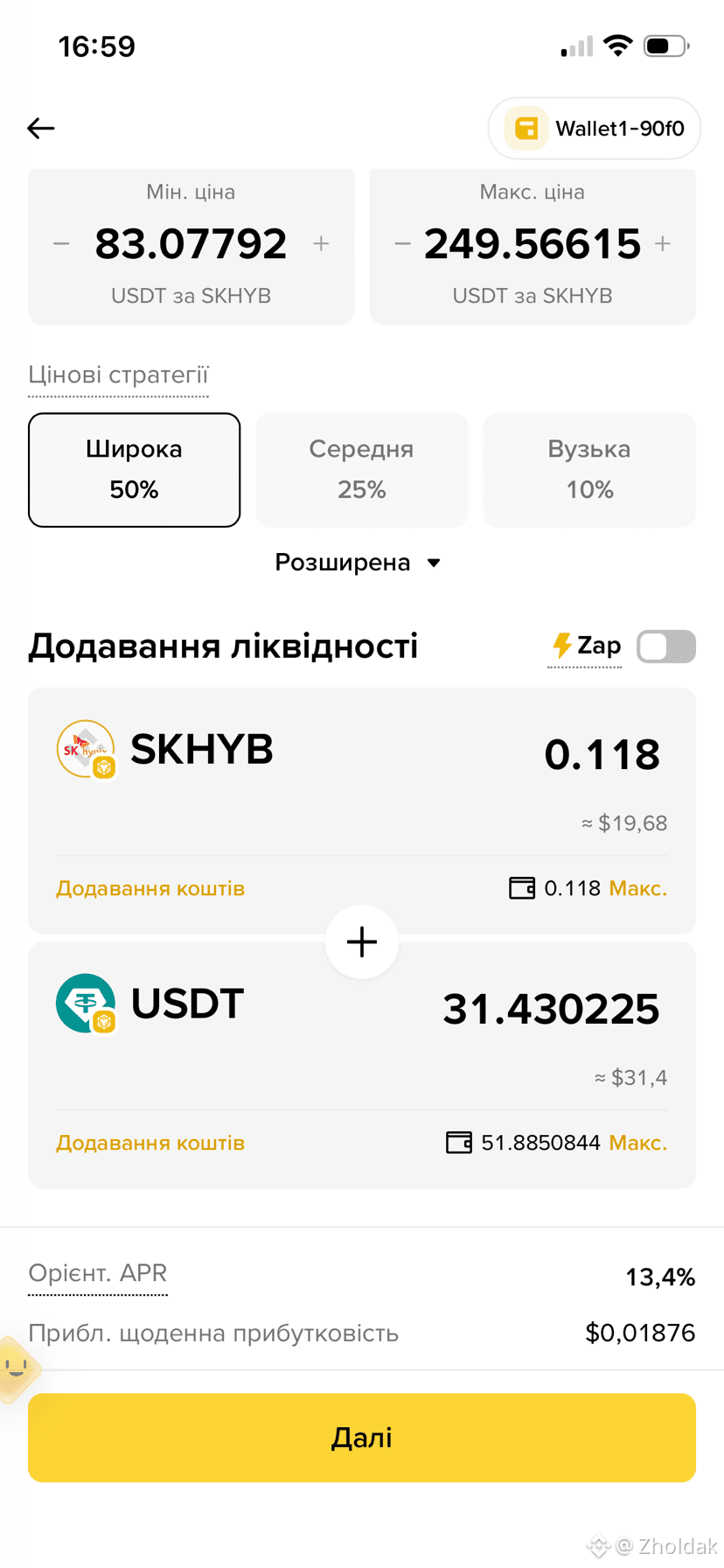
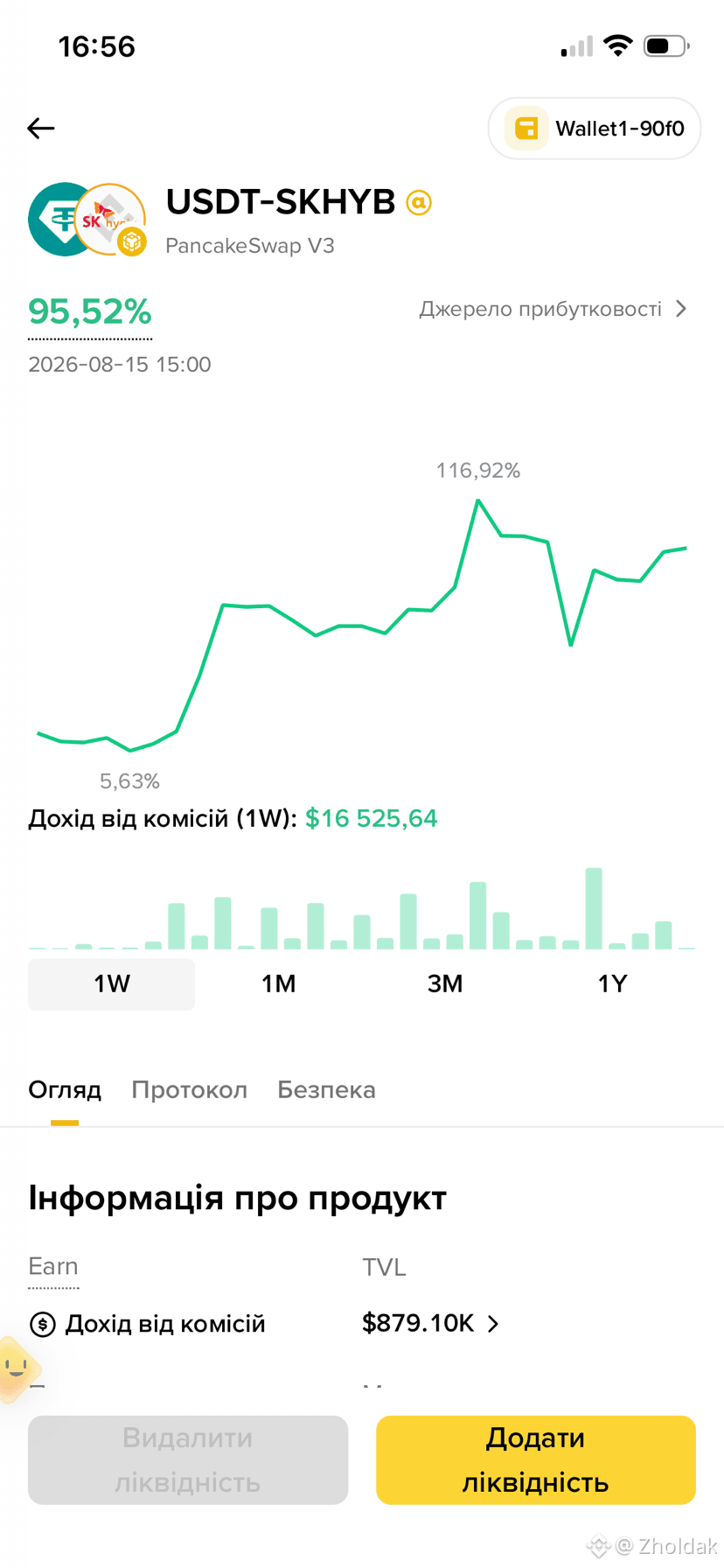
Um 16:56 zeigte der USDT-SKHYB-Pool 95,52 %. Ich öffnete ihn, wählte den breitesten Bereich — ein enger würde über ein Wochenende aus dem Bereich driften und aufhören zu verdienen — und die Schätzung auf dem Bestätigungsbildschirm las 13,4 %. Geschätzte tägliche Rendite: 0,01876 $.
Siebenmal kleiner als die Zahl, die mich dorthin brachte, sechs Minuten früher. Keine der beiden Zahlen ist falsch. Ein enger Bereich konzentriert dein Geld dort, wo tatsächlich Trades passieren, also verdient es härter, solange es dort ist; ein breiter verdient weniger und überlebt länger. Die Überschrift geht von der aggressiven Variante aus. Der Bildschirm, auf dem man die Auswahl trifft, zeigt die ehrliche.
Ich habe 0,118 SKHYB und 31,4458 USDT eingezahlt und es so belassen. Am Sonntag berichte ich, was tatsächlich angefallen ist.
Eine einzige Übertragung war die ganze Strecke zwischen einem Anteil halten und ihn auch verwenden können.
Quellen: meine eigenen Screens in der Binance-App und in der Binance Web3 Wallet, 15. August 2026, 16:42–17:02 Kiewer Zeit.
@BinanceCIS Wenn du eine Renditezahl siehst — weißt du, welche Frage sie beantwortet?
#bstocksCIS
#bstockscis @BinanceCIS
Vor ein paar Tagen schrieb ich, dass ein bStock von der Börse in die Selbstverwahrung verschoben werden kann. Ich hatte es noch nicht ausprobiert. Heute habe ich es gemacht — in die Binance Web3 Wallet, weil sie an dasselbe Konto gekoppelt ist und immer nur einen Fingertipp entfernt.
Die Übertragung selbst war unspektakulär, und genau das ist der Punkt. Gleicher Bildschirm wie beim Senden von Krypto: BEP-20, BNB Smart Chain, Netzwerkgebühr null. Ein Haken: Die Mindestüberweisung liegt bei 0,1, also schickte ich 0,118 $SKHYB rüber.
Was ich nicht erwartet hatte, war, was dort wartete. Stock Hub → bStocks Earn, und mein Anteil hörte auf, nur etwas zu sein, das ich lediglich halte.
Unter einer Überschrift gibt es mehrere verschiedene Mechaniken, und das Vorzeichen vor der Zahl trennt sie.
Einige Einträge sind Kreditmärkte — Venus, Lista — bei denen ein bStock als Sicherheit dient und man sich dagegen Geld leiht. Diese Prozentsätze sind negativ, und ein Minus dort ist kein Verlust. Es sind die Kosten des Darlehens: der Preis dafür, deine Position nicht zu verkaufen, wenn du Bargeld brauchst. Ich halte $CRCLB und es steht auf dieser Liste.
Andere Einträge sind Liquiditätspools, bei denen der Prozentsatz positiv ist, weil es eine Belohnung ist. Das war derjenige, den ich ausprobiert habe.
Um 16:56 zeigte der USDT-SKHYB-Pool 95,52 %. Ich öffnete ihn, wählte den breitesten Bereich — ein enger würde über ein Wochenende aus dem Bereich driften und aufhören zu verdienen — und die Schätzung auf dem Bestätigungsbildschirm las 13,4 %. Geschätzte tägliche Rendite: 0,01876 $.
Siebenmal kleiner als die Zahl, die mich dorthin brachte, sechs Minuten früher. Keine der beiden Zahlen ist falsch. Ein enger Bereich konzentriert dein Geld dort, wo tatsächlich Trades passieren, also verdient es härter, solange es dort ist; ein breiter verdient weniger und überlebt länger. Die Überschrift geht von der aggressiven Variante aus. Der Bildschirm, auf dem man die Auswahl trifft, zeigt die ehrliche.
Ich habe 0,118 SKHYB und 31,4458 USDT eingezahlt und es so belassen. Am Sonntag berichte ich, was tatsächlich angefallen ist.
Eine einzige Übertragung war die ganze Strecke zwischen einem Anteil halten und ihn auch verwenden können.
Quellen: meine eigenen Screens in der Binance-App und in der Binance Web3 Wallet, 15. August 2026, 16:42–17:02 Kiewer Zeit.
@BinanceCIS Wenn du eine Renditezahl siehst — weißt du, welche Frage sie beantwortet?
#bstocksCIS
Vor ein paar Tagen schrieb ich, dass ein bStock von der Börse in die Selbstverwahrung verschoben werden kann. Ich hatte es noch nicht ausprobiert. Heute habe ich es gemacht — in die Binance Web3 Wallet, weil sie an dasselbe Konto gekoppelt ist und immer nur einen Fingertipp entfernt.
Die Übertragung selbst war unspektakulär, und genau das ist der Punkt. Gleicher Bildschirm wie beim Senden von Krypto: BEP-20, BNB Smart Chain, Netzwerkgebühr null. Ein Haken: Die Mindestüberweisung liegt bei 0,1, also schickte ich 0,118 $SKHYB rüber.
Was ich nicht erwartet hatte, war, was dort wartete. Stock Hub → bStocks Earn, und mein Anteil hörte auf, nur etwas zu sein, das ich lediglich halte.
Unter einer Überschrift gibt es mehrere verschiedene Mechaniken, und das Vorzeichen vor der Zahl trennt sie.
Einige Einträge sind Kreditmärkte — Venus, Lista — bei denen ein bStock als Sicherheit dient und man sich dagegen Geld leiht. Diese Prozentsätze sind negativ, und ein Minus dort ist kein Verlust. Es sind die Kosten des Darlehens: der Preis dafür, deine Position nicht zu verkaufen, wenn du Bargeld brauchst. Ich halte $CRCLB und es steht auf dieser Liste.
Andere Einträge sind Liquiditätspools, bei denen der Prozentsatz positiv ist, weil es eine Belohnung ist. Das war derjenige, den ich ausprobiert habe.
Um 16:56 zeigte der USDT-SKHYB-Pool 95,52 %. Ich öffnete ihn, wählte den breitesten Bereich — ein enger würde über ein Wochenende aus dem Bereich driften und aufhören zu verdienen — und die Schätzung auf dem Bestätigungsbildschirm las 13,4 %. Geschätzte tägliche Rendite: 0,01876 $.
Siebenmal kleiner als die Zahl, die mich dorthin brachte, sechs Minuten früher. Keine der beiden Zahlen ist falsch. Ein enger Bereich konzentriert dein Geld dort, wo tatsächlich Trades passieren, also verdient es härter, solange es dort ist; ein breiter verdient weniger und überlebt länger. Die Überschrift geht von der aggressiven Variante aus. Der Bildschirm, auf dem man die Auswahl trifft, zeigt die ehrliche.
Ich habe 0,118 SKHYB und 31,4458 USDT eingezahlt und es so belassen. Am Sonntag berichte ich, was tatsächlich angefallen ist.
Eine einzige Übertragung war die ganze Strecke zwischen einem Anteil halten und ihn auch verwenden können.
Quellen: meine eigenen Screens in der Binance-App und in der Binance Web3 Wallet, 15. August 2026, 16:42–17:02 Kiewer Zeit.
@BinanceCIS Wenn du eine Renditezahl siehst — weißt du, welche Frage sie beantwortet?
#bstocksCIS
10
5
165
·
--
Bullisch
Teilweise korrekt
#bstockscis @BinanceCIS
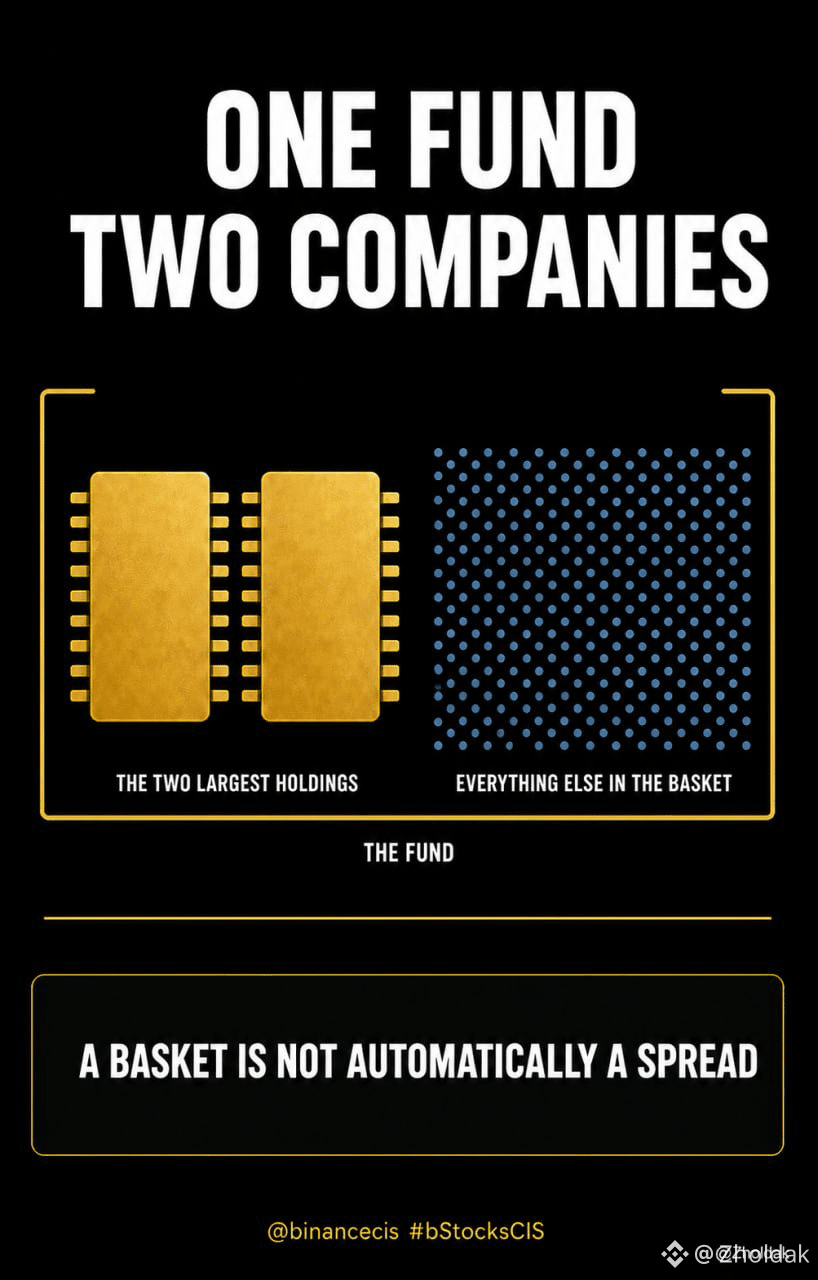
Dreiundachtzig Beteiligungen in einem Fonds. Die beiden ganz oben machen mehr als vierzig Prozent davon aus.
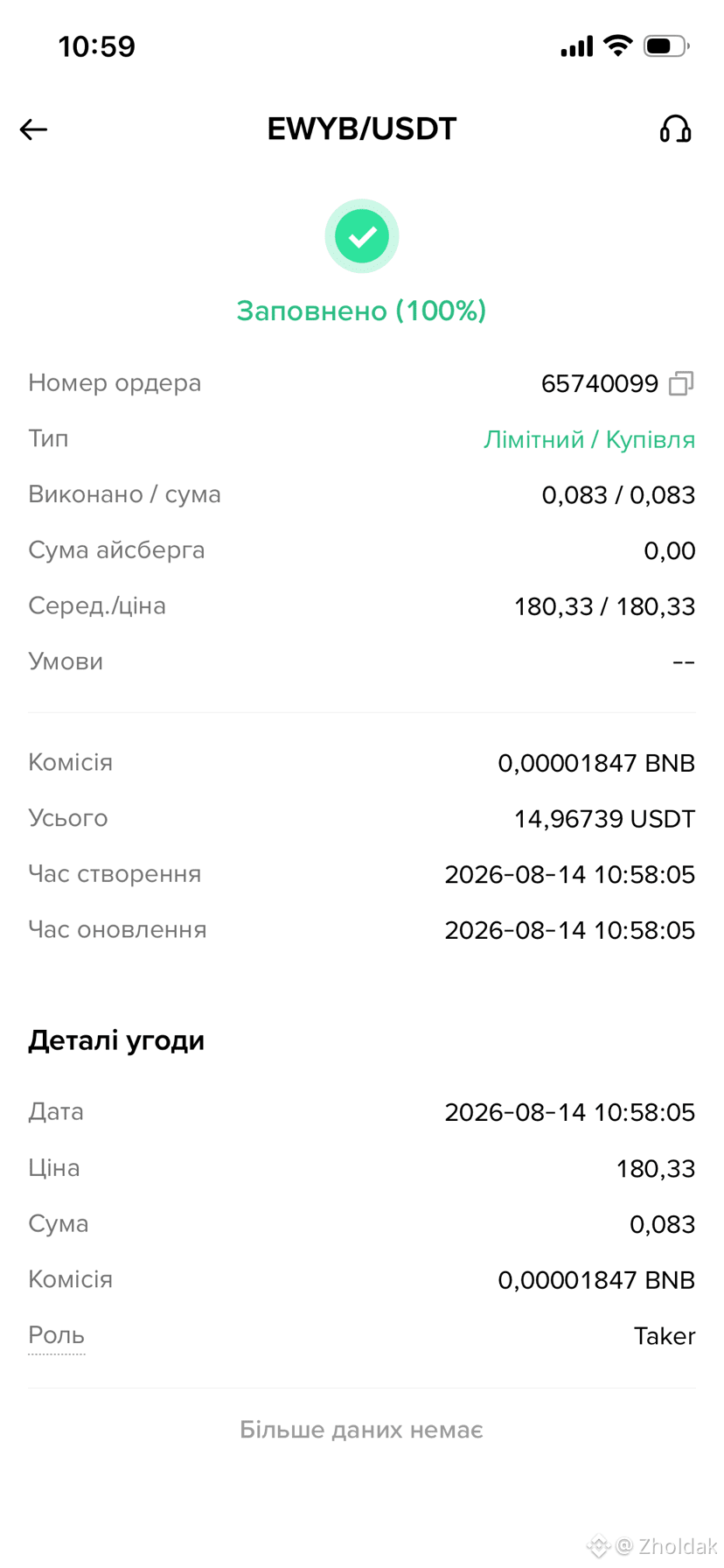
Ich habe heute Morgen $EWYB gekauft — 0,083 zu 180,33. Die meisten der bStocks-Liste unter „TradFi“ sind einzelne Unternehmen, und ich wollte stattdessen einen Fonds. Es gibt ein paar, und ich habe den gewählt, der am breitesten klang: kein Sektor, kein Index von Tech-Namen, sondern ein ganzes Land. Dreiundachtzig koreanische Unternehmen wirkten wie der naheliegende Weg, nicht jede Story immer nur einzeln zu wetten.
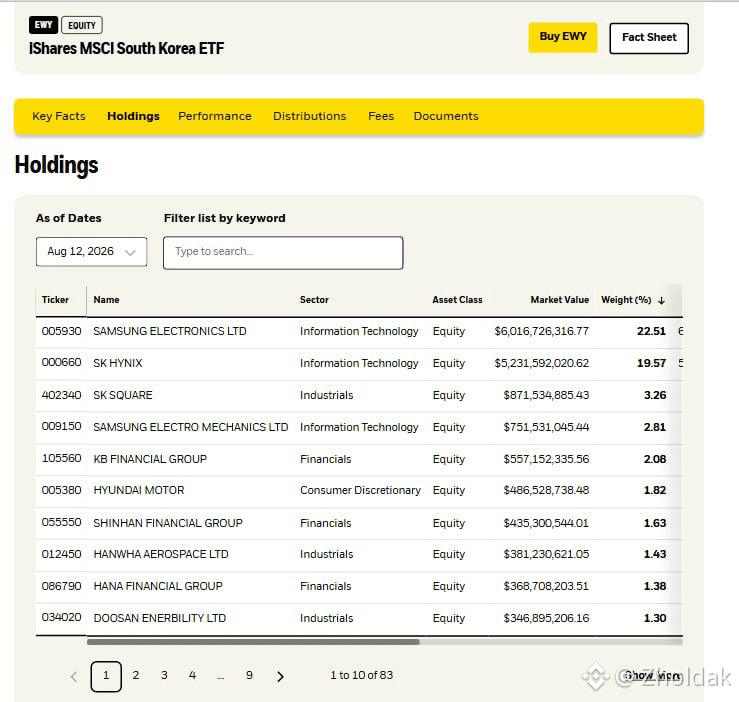
Dann habe ich die Seite mit den Beständen des Emittenten geöffnet. Samsung Electronics 22,51 %, SK hynix 19,57 %. Zusammen 42,08 %. Die dritte Position, SK Square, ist 3,26 %.
Also von den fünfzehn Dollar, die ich eingezahlt habe, liegen etwa sechs in zwei Speicherherstellern. Die restlichen einundachtzig Unternehmen teilen den Rest untereinander auf, und das größte von diesen einundachtzig bekommt ungefähr fünfzig Cent.
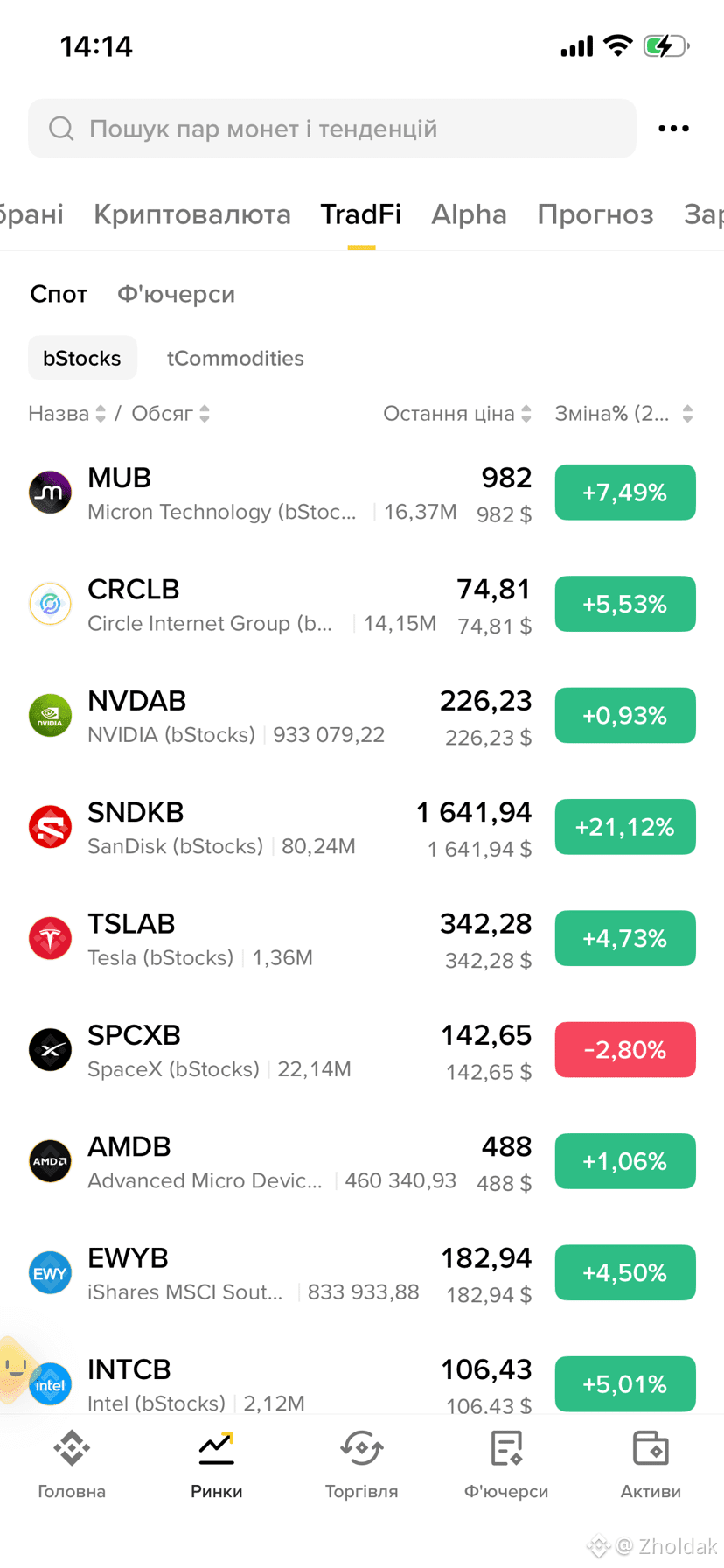
Um 14:14 Uhr heute ist mein Fonds um 4,50 % im Plus, $MUB 7,49 %, $SNDKB 21,12 % — gleicher Bildschirm, gleiche Minute. Ein Nachmittag beweist nichts für sich allein, aber er widerspricht auch nicht der Seite mit den Beständen.
Hier ist nichts falsch beschriftet. Das Ticker-Symbol sagt Südkorea, der Fonds bildet Südkorea ab, und so sieht ein börsenwertgewichteter Länderindex aus, wenn zwei Unternehmen diesen Markt dominieren.
Aber ich wollte mich nicht speziell aus Speicherchips herausziehen. Ich wollte mich davor schützen, immer nur eine einzige Firma auf einmal zu halten. Ein Fonds schien dafür die Antwort zu sein, und dieser hier gewichtet seine beiden Top-Namen stärker, als ich es bei irgendeinem einzelnen Ticker für mich selbst getan hätte. Es ist einfach nicht die Position, von der ich dachte, dass ich sie einnehme, und die Seite mit den Beständen hätte mir das in dreißig Sekunden sagen können — bevor ich geklickt habe, nicht danach.
Quellen: meine eigenen EWYB/USDT-Orderdetails und die bStocks-Liste in der Binance-App, 14. August 2026; iShares MSCI South Korea ETF-Bestände, die vom Emittenten veröffentlicht wurden, Stand 12. August.
@BinanceCIS Weißt du, was in dem Fonds steckt, den du gerade hältst?
#bStocksCIS
#bstockscis @BinanceCIS
Dreiundachtzig Beteiligungen in einem Fonds. Die beiden ganz oben machen mehr als vierzig Prozent davon aus.
Ich habe heute Morgen $EWYB gekauft — 0,083 zu 180,33. Die meisten der bStocks-Liste unter „TradFi“ sind einzelne Unternehmen, und ich wollte stattdessen einen Fonds. Es gibt ein paar, und ich habe den gewählt, der am breitesten klang: kein Sektor, kein Index von Tech-Namen, sondern ein ganzes Land. Dreiundachtzig koreanische Unternehmen wirkten wie der naheliegende Weg, nicht jede Story immer nur einzeln zu wetten.
Dann habe ich die Seite mit den Beständen des Emittenten geöffnet. Samsung Electronics 22,51 %, SK hynix 19,57 %. Zusammen 42,08 %. Die dritte Position, SK Square, ist 3,26 %.
Also von den fünfzehn Dollar, die ich eingezahlt habe, liegen etwa sechs in zwei Speicherherstellern. Die restlichen einundachtzig Unternehmen teilen den Rest untereinander auf, und das größte von diesen einundachtzig bekommt ungefähr fünfzig Cent.
Um 14:14 Uhr heute ist mein Fonds um 4,50 % im Plus, $MUB 7,49 %, $SNDKB 21,12 % — gleicher Bildschirm, gleiche Minute. Ein Nachmittag beweist nichts für sich allein, aber er widerspricht auch nicht der Seite mit den Beständen.
Hier ist nichts falsch beschriftet. Das Ticker-Symbol sagt Südkorea, der Fonds bildet Südkorea ab, und so sieht ein börsenwertgewichteter Länderindex aus, wenn zwei Unternehmen diesen Markt dominieren.
Aber ich wollte mich nicht speziell aus Speicherchips herausziehen. Ich wollte mich davor schützen, immer nur eine einzige Firma auf einmal zu halten. Ein Fonds schien dafür die Antwort zu sein, und dieser hier gewichtet seine beiden Top-Namen stärker, als ich es bei irgendeinem einzelnen Ticker für mich selbst getan hätte. Es ist einfach nicht die Position, von der ich dachte, dass ich sie einnehme, und die Seite mit den Beständen hätte mir das in dreißig Sekunden sagen können — bevor ich geklickt habe, nicht danach.
Quellen: meine eigenen EWYB/USDT-Orderdetails und die bStocks-Liste in der Binance-App, 14. August 2026; iShares MSCI South Korea ETF-Bestände, die vom Emittenten veröffentlicht wurden, Stand 12. August.
@BinanceCIS Weißt du, was in dem Fonds steckt, den du gerade hältst?
#bStocksCIS
Dreiundachtzig Beteiligungen in einem Fonds. Die beiden ganz oben machen mehr als vierzig Prozent davon aus.
Ich habe heute Morgen $EWYB gekauft — 0,083 zu 180,33. Die meisten der bStocks-Liste unter „TradFi“ sind einzelne Unternehmen, und ich wollte stattdessen einen Fonds. Es gibt ein paar, und ich habe den gewählt, der am breitesten klang: kein Sektor, kein Index von Tech-Namen, sondern ein ganzes Land. Dreiundachtzig koreanische Unternehmen wirkten wie der naheliegende Weg, nicht jede Story immer nur einzeln zu wetten.
Dann habe ich die Seite mit den Beständen des Emittenten geöffnet. Samsung Electronics 22,51 %, SK hynix 19,57 %. Zusammen 42,08 %. Die dritte Position, SK Square, ist 3,26 %.
Also von den fünfzehn Dollar, die ich eingezahlt habe, liegen etwa sechs in zwei Speicherherstellern. Die restlichen einundachtzig Unternehmen teilen den Rest untereinander auf, und das größte von diesen einundachtzig bekommt ungefähr fünfzig Cent.
Um 14:14 Uhr heute ist mein Fonds um 4,50 % im Plus, $MUB 7,49 %, $SNDKB 21,12 % — gleicher Bildschirm, gleiche Minute. Ein Nachmittag beweist nichts für sich allein, aber er widerspricht auch nicht der Seite mit den Beständen.
Hier ist nichts falsch beschriftet. Das Ticker-Symbol sagt Südkorea, der Fonds bildet Südkorea ab, und so sieht ein börsenwertgewichteter Länderindex aus, wenn zwei Unternehmen diesen Markt dominieren.
Aber ich wollte mich nicht speziell aus Speicherchips herausziehen. Ich wollte mich davor schützen, immer nur eine einzige Firma auf einmal zu halten. Ein Fonds schien dafür die Antwort zu sein, und dieser hier gewichtet seine beiden Top-Namen stärker, als ich es bei irgendeinem einzelnen Ticker für mich selbst getan hätte. Es ist einfach nicht die Position, von der ich dachte, dass ich sie einnehme, und die Seite mit den Beständen hätte mir das in dreißig Sekunden sagen können — bevor ich geklickt habe, nicht danach.
Quellen: meine eigenen EWYB/USDT-Orderdetails und die bStocks-Liste in der Binance-App, 14. August 2026; iShares MSCI South Korea ETF-Bestände, die vom Emittenten veröffentlicht wurden, Stand 12. August.
@BinanceCIS Weißt du, was in dem Fonds steckt, den du gerade hältst?
#bStocksCIS
18
9
281
·
--
Bullisch
Teilweise korrekt
#bstockscis @BinanceCIS
Auf jeder bStock-Seite gibt es einen Reiter, den ich nie geöffnet hatte. Er heißt „Informationen“, liegt zwischen dem Chart und den Daten – und stellt sich heraus, dass es der spannendste Bildschirm in der App ist.
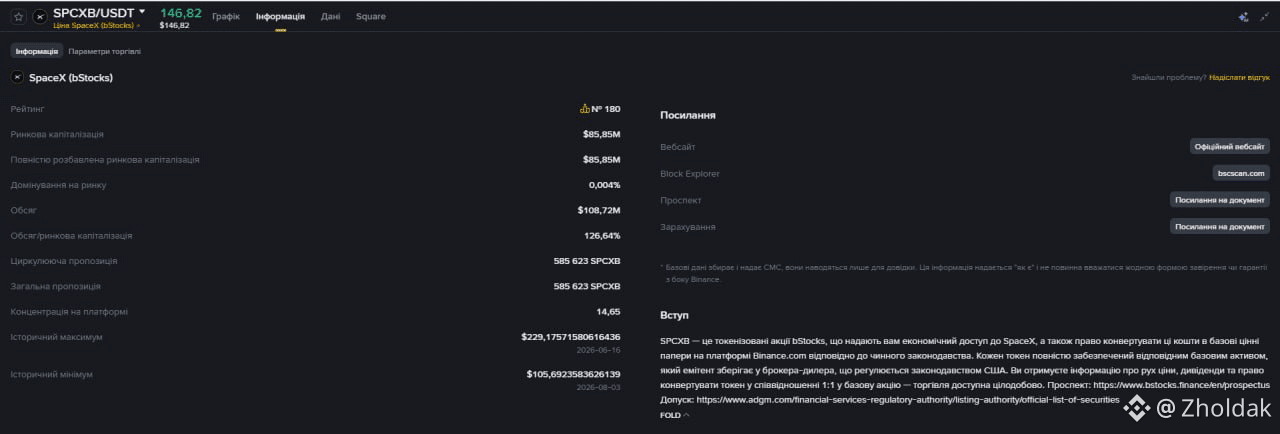
$SPCXB , heute Morgen. Umlaufmenge: 585.623. Gesamtmenge: 585.623.
Die gleiche Zahl zweimal. In Krypto stimmen diese beiden Zeilen fast nie überein – die Lücke zwischen ihnen ist der Teil, der noch nicht auf den Markt gelangt ist, der Entsperrplan, den du prüfen sollst, bevor du kaufst. Hier gibt es keine Lücke, weil ein bStock nur existiert, wenn gegen ihn ein Anteil gehalten wird. Nichts, das später freigegeben werden müsste.
Darunter: Marktkapitalisierung 85,85 Mio., Volumen 108,72 Mio. Volumen im Verhältnis zur Marktkapitalisierung, 126,64 %. Die gesamte Supply wurde innerhalb eines Tages mehr als einmal umgeschlagen.
Binance vermerkt auf dieser Seite, dass die zugrunde liegenden Daten von CMC stammen und nur zu Referenzzwecken bereitgestellt werden. Also habe ich es selbst überprüft.
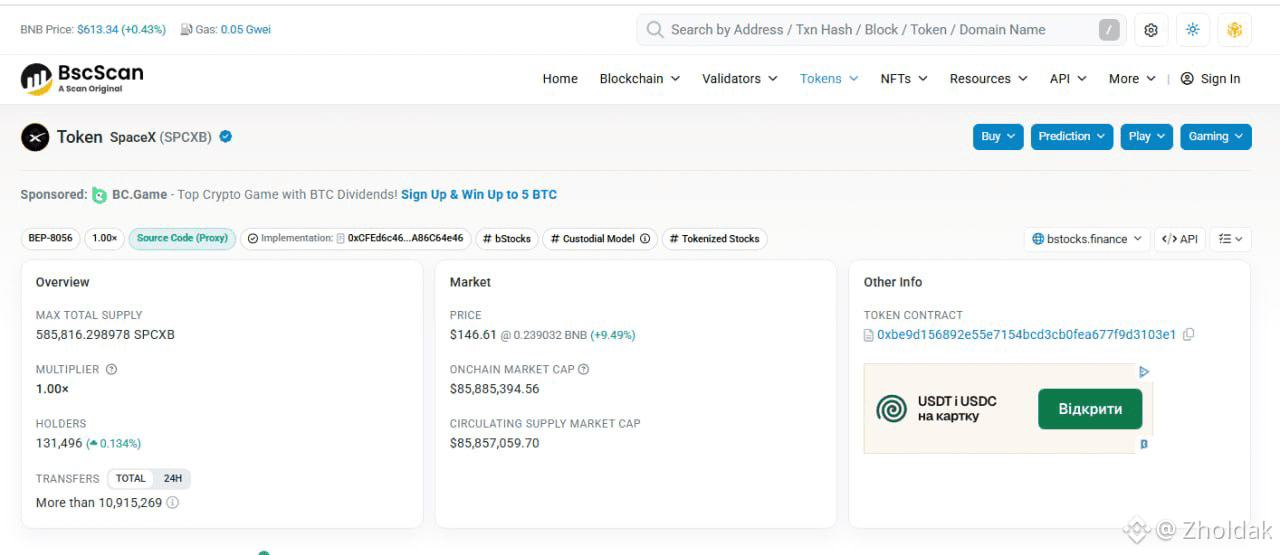
Auf derselben Seite gibt es auch einen Link zu einem Block Explorer. Ein Fingertipp – und der Token-Contract liegt auf BscScan:
Max. Gesamtmenge 585.816,298978. Inhaber 131.496. Transfers, mehr als 10.915.269. Onchain-Marktkapitalisierung 85.885.394,56.
Die Mengenangaben unterscheiden sich um etwa 193 Token – rund 0,03 %; genau das würdest du zwischen einem Live-Onchain-Zähler und einem Referenz-Feed erwarten, der nach seinem eigenen Zeitplan aktualisiert.
131.496 Adressen. Das hat mich gestoppt. Nicht Konten an einer Börse – Adressen auf einer öffentlichen Kette, die ein Zertifikat über ein Unternehmen halten, das im Juni gelistet wurde. Der Contract hat seitdem fast elf Millionen Transfers verarbeitet.
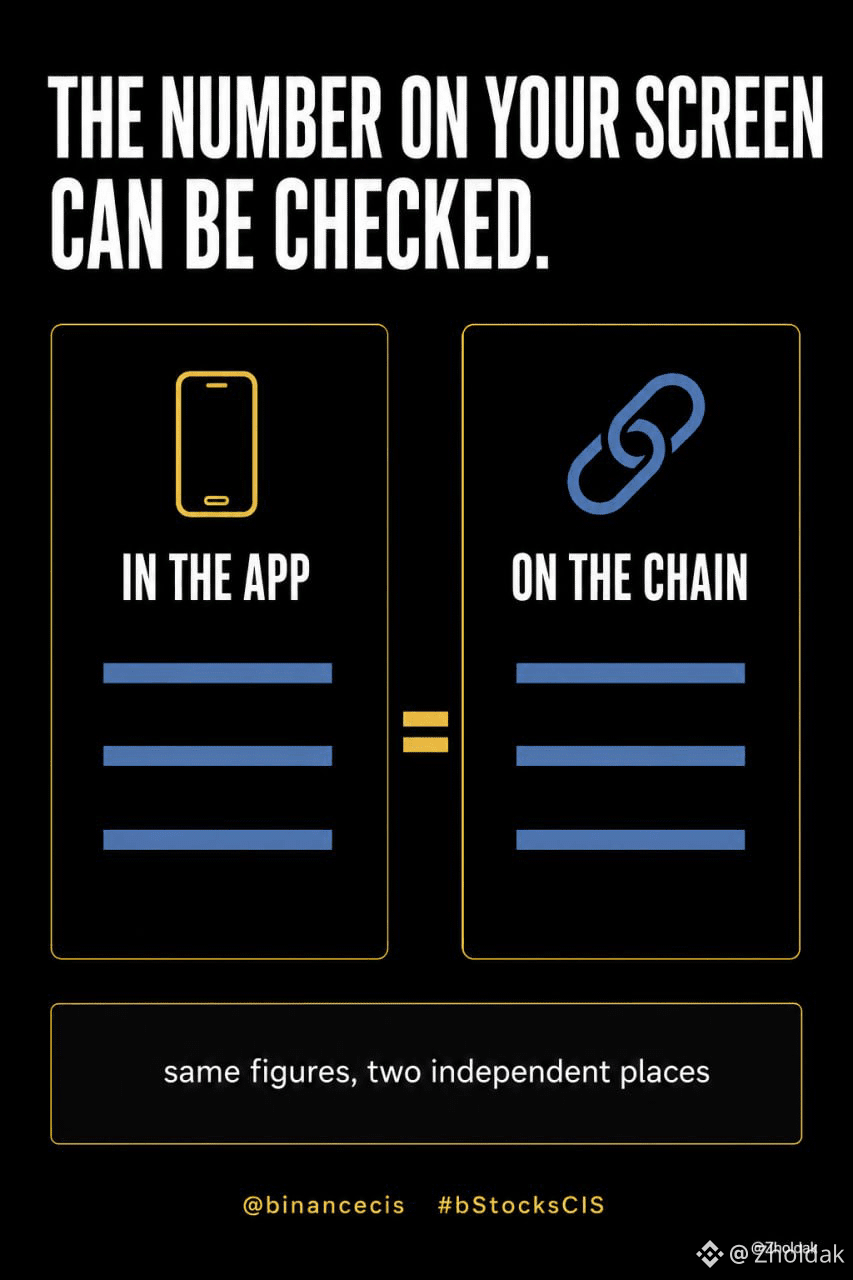
Ich habe zehn Tage damit verbracht, Preise und Orderbücher anzuschauen. Das, wonach ich zuerst hätte schauen sollen, war, ob die Zahlen auf meinem Bildschirm mit irgendetwas überprüfbar sind. Das geht, ungefähr in einer Minute, für jede Person – ohne Account – und Binance setzt den Link, um das direkt auf die Seite.
Quellen: SPCXB/USDT-Informationen-Reiter auf Binance, 13. August 2026; SPCXB-Token-Seite und Contract auf BscScan, derselbe Tag; Binance bStocks-Launch-Ankündigung, 12. Juni 2026.
@BinanceCIS Hast du jemals den Reiter „Informationen“ geöffnet?
#bStocksCİS
#bstockscis @BinanceCIS
Auf jeder bStock-Seite gibt es einen Reiter, den ich nie geöffnet hatte. Er heißt „Informationen“, liegt zwischen dem Chart und den Daten – und stellt sich heraus, dass es der spannendste Bildschirm in der App ist.
$SPCXB , heute Morgen. Umlaufmenge: 585.623. Gesamtmenge: 585.623.
Die gleiche Zahl zweimal. In Krypto stimmen diese beiden Zeilen fast nie überein – die Lücke zwischen ihnen ist der Teil, der noch nicht auf den Markt gelangt ist, der Entsperrplan, den du prüfen sollst, bevor du kaufst. Hier gibt es keine Lücke, weil ein bStock nur existiert, wenn gegen ihn ein Anteil gehalten wird. Nichts, das später freigegeben werden müsste.
Darunter: Marktkapitalisierung 85,85 Mio., Volumen 108,72 Mio. Volumen im Verhältnis zur Marktkapitalisierung, 126,64 %. Die gesamte Supply wurde innerhalb eines Tages mehr als einmal umgeschlagen.
Binance vermerkt auf dieser Seite, dass die zugrunde liegenden Daten von CMC stammen und nur zu Referenzzwecken bereitgestellt werden. Also habe ich es selbst überprüft.
Auf derselben Seite gibt es auch einen Link zu einem Block Explorer. Ein Fingertipp – und der Token-Contract liegt auf BscScan:
Max. Gesamtmenge 585.816,298978. Inhaber 131.496. Transfers, mehr als 10.915.269. Onchain-Marktkapitalisierung 85.885.394,56.
Die Mengenangaben unterscheiden sich um etwa 193 Token – rund 0,03 %; genau das würdest du zwischen einem Live-Onchain-Zähler und einem Referenz-Feed erwarten, der nach seinem eigenen Zeitplan aktualisiert.
131.496 Adressen. Das hat mich gestoppt. Nicht Konten an einer Börse – Adressen auf einer öffentlichen Kette, die ein Zertifikat über ein Unternehmen halten, das im Juni gelistet wurde. Der Contract hat seitdem fast elf Millionen Transfers verarbeitet.
Ich habe zehn Tage damit verbracht, Preise und Orderbücher anzuschauen. Das, wonach ich zuerst hätte schauen sollen, war, ob die Zahlen auf meinem Bildschirm mit irgendetwas überprüfbar sind. Das geht, ungefähr in einer Minute, für jede Person – ohne Account – und Binance setzt den Link, um das direkt auf die Seite.
Quellen: SPCXB/USDT-Informationen-Reiter auf Binance, 13. August 2026; SPCXB-Token-Seite und Contract auf BscScan, derselbe Tag; Binance bStocks-Launch-Ankündigung, 12. Juni 2026.
@BinanceCIS Hast du jemals den Reiter „Informationen“ geöffnet?
#bStocksCİS
Auf jeder bStock-Seite gibt es einen Reiter, den ich nie geöffnet hatte. Er heißt „Informationen“, liegt zwischen dem Chart und den Daten – und stellt sich heraus, dass es der spannendste Bildschirm in der App ist.
$SPCXB , heute Morgen. Umlaufmenge: 585.623. Gesamtmenge: 585.623.
Die gleiche Zahl zweimal. In Krypto stimmen diese beiden Zeilen fast nie überein – die Lücke zwischen ihnen ist der Teil, der noch nicht auf den Markt gelangt ist, der Entsperrplan, den du prüfen sollst, bevor du kaufst. Hier gibt es keine Lücke, weil ein bStock nur existiert, wenn gegen ihn ein Anteil gehalten wird. Nichts, das später freigegeben werden müsste.
Darunter: Marktkapitalisierung 85,85 Mio., Volumen 108,72 Mio. Volumen im Verhältnis zur Marktkapitalisierung, 126,64 %. Die gesamte Supply wurde innerhalb eines Tages mehr als einmal umgeschlagen.
Binance vermerkt auf dieser Seite, dass die zugrunde liegenden Daten von CMC stammen und nur zu Referenzzwecken bereitgestellt werden. Also habe ich es selbst überprüft.
Auf derselben Seite gibt es auch einen Link zu einem Block Explorer. Ein Fingertipp – und der Token-Contract liegt auf BscScan:
Max. Gesamtmenge 585.816,298978. Inhaber 131.496. Transfers, mehr als 10.915.269. Onchain-Marktkapitalisierung 85.885.394,56.
Die Mengenangaben unterscheiden sich um etwa 193 Token – rund 0,03 %; genau das würdest du zwischen einem Live-Onchain-Zähler und einem Referenz-Feed erwarten, der nach seinem eigenen Zeitplan aktualisiert.
131.496 Adressen. Das hat mich gestoppt. Nicht Konten an einer Börse – Adressen auf einer öffentlichen Kette, die ein Zertifikat über ein Unternehmen halten, das im Juni gelistet wurde. Der Contract hat seitdem fast elf Millionen Transfers verarbeitet.
Ich habe zehn Tage damit verbracht, Preise und Orderbücher anzuschauen. Das, wonach ich zuerst hätte schauen sollen, war, ob die Zahlen auf meinem Bildschirm mit irgendetwas überprüfbar sind. Das geht, ungefähr in einer Minute, für jede Person – ohne Account – und Binance setzt den Link, um das direkt auf die Seite.
Quellen: SPCXB/USDT-Informationen-Reiter auf Binance, 13. August 2026; SPCXB-Token-Seite und Contract auf BscScan, derselbe Tag; Binance bStocks-Launch-Ankündigung, 12. Juni 2026.
@BinanceCIS Hast du jemals den Reiter „Informationen“ geöffnet?
#bStocksCİS
11
6
174
·
--
Bullisch
Verifiziert
#bstockscis @BinanceCIS
Ich habe heute Morgen etwa ein Zehntel einer Aktie gekauft und bin dann auf die Suche nach dem Ausgang gegangen.
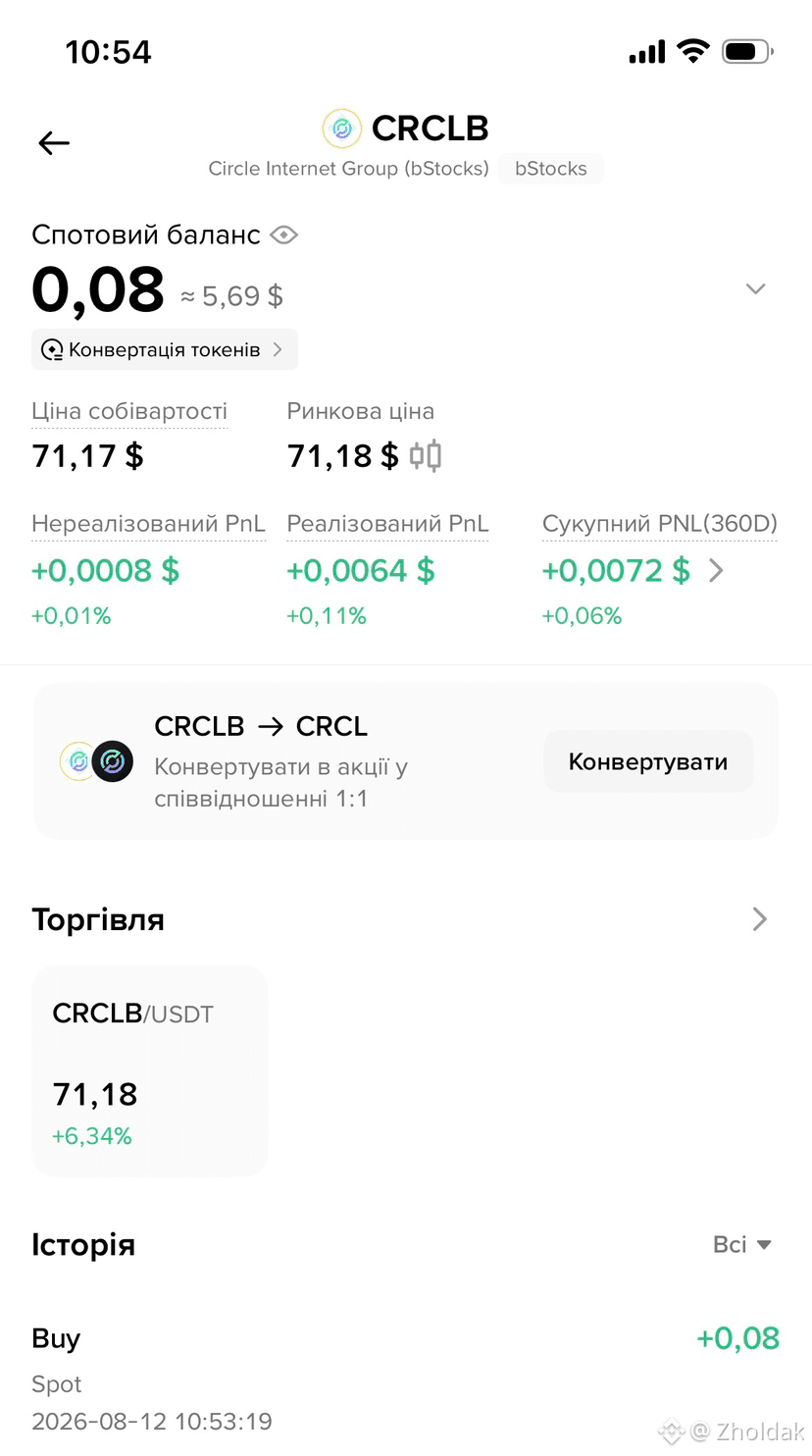
0.08 $CRCLB zu 71.17, das ergab 5.6936 USDT. Bei einem normalen Broker ist das die ganze Geschichte — man besitzt einen Bruchteil, er liegt im Konto und bleibt dort, bis man ihn an denselben Broker zurückverkauft, der ihn einem verkauft hat.
Also habe ich den Auszahlungsbildschirm geöffnet, um zu sehen, was er sagt.
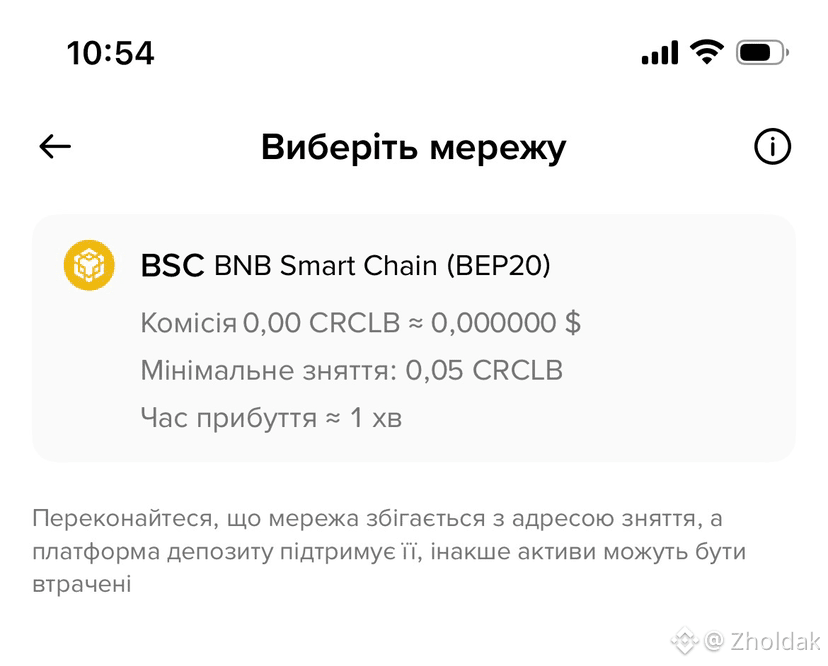
BNB Smart Chain. Gebühr 0.00 CRCLB. Mindestabhebung 0.05 CRCLB. Ankunftszeit etwa eine Minute.
Minimum 0.05. Das ist weniger als ein Zehntel einer Circle-Aktie und auch weniger als das, was ich gerade gekauft habe. Ich könnte das jetzt an mein eigenes Wallet schicken und dort lassen.
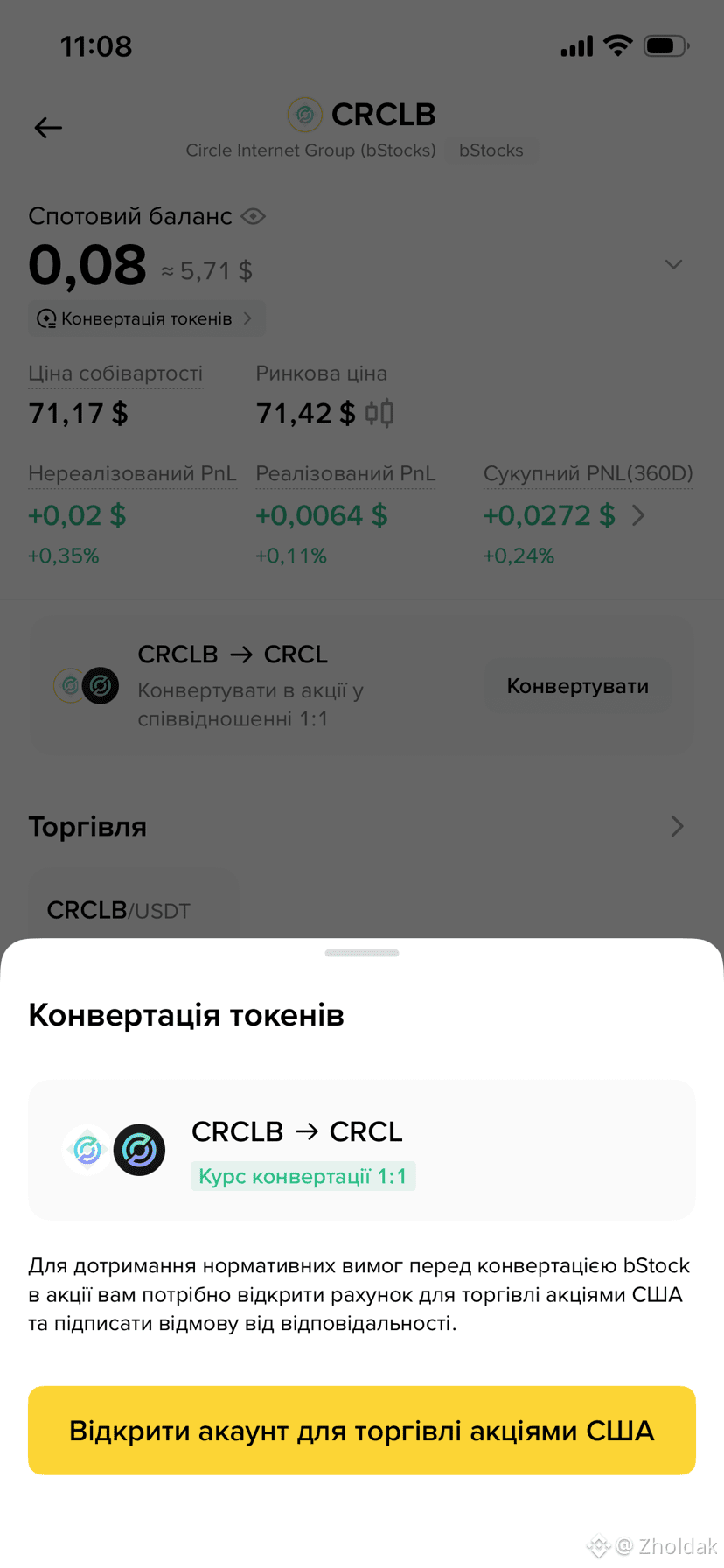
Zurück auf der Asset-Seite gibt es noch einen zweiten Button, an dem ich eine Woche vorbeigegangen bin: CRCLB in CRCL umwandeln, eins zu eins. Nicht verkaufen — umwandeln. Ich habe ihn angetippt und bin dabei stehen geblieben. Es stellt sich heraus, dass man zuerst ein US-Aktienhandelskonto haben und eine Haftungsausschlusserklärung unterschrieben haben muss, um die regulatorischen Anforderungen zu erfüllen. Die Tür gibt es also, aber da ist eine Stufe vor ihr, die ich noch nicht genommen habe.
Keines davon macht einen bStock zu einer Aktie — die Launch-Ankündigung ist eindeutig: Das sind Zertifikate, die eins zu eins hinterlegt sind, nicht Eigentum an dem zugrunde liegenden Unternehmen.
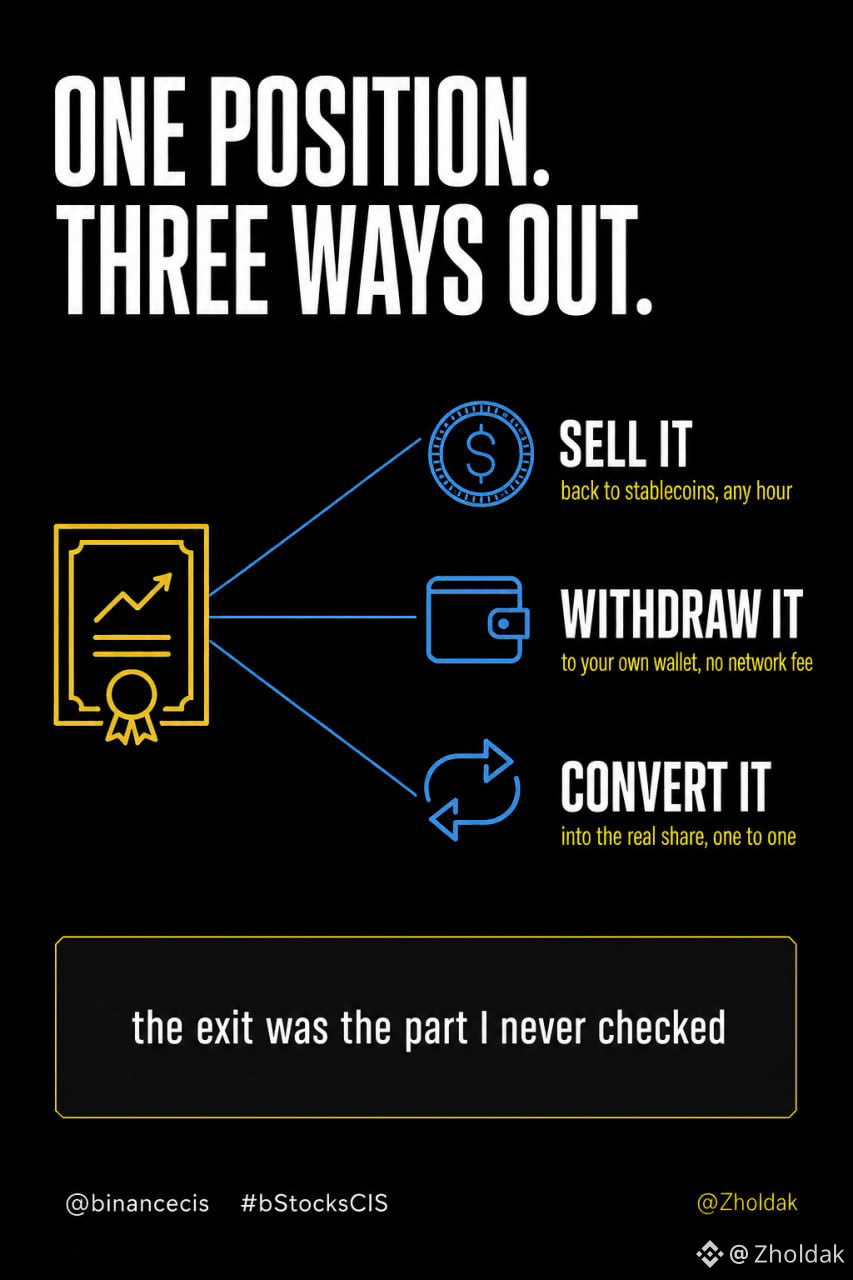
Damit bleiben mir heute zwei Ausgänge, die ich nutzen kann: es an Stablecoins zurückverkaufen, oder es als BEP-20-Token in ein Wallet auszahlen, das ich kontrolliere. Wahrscheinlich mache ich keines von beidem. Es bleibt in meinem Spot-Konto neben der Krypto, was in Ordnung ist. Aber zu wissen, dass es nicht feststeckt, verändert, wie es sich anfühlt, es zu halten — eine Position, mit der man weggehen kann, ist etwas anderes als eine, die man nur an denjenigen zurückverkaufen kann, der sie einem verkauft hat.
Ich habe eine Woche damit verbracht, über den Handel dieser Dinge zu schreiben. Ich hatte nie einmal überprüft, was passiert, wenn ich versuche, mit einem davonzugehen. Weggehen stellt sich heraus, dass der Teil ist, der am weitesten ausgebaut ist — und der Teil, über den niemand spricht, einschließlich mir.
Quellen: meine eigenen CRCLB/USDT-Order-Details, Asset-Seite, Auszahlungsbildschirm und Umwandlungsbildschirm, 12. August 2026; Binance bStocks Launch-Ankündigung, 12. Juni 2026.
@BinanceCIS Hast du den Auszahlungsbildschirm bei einem bStock geöffnet?
#bStocksCIS
#bstockscis @BinanceCIS
Ich habe heute Morgen etwa ein Zehntel einer Aktie gekauft und bin dann auf die Suche nach dem Ausgang gegangen.
0.08 $CRCLB zu 71.17, das ergab 5.6936 USDT. Bei einem normalen Broker ist das die ganze Geschichte — man besitzt einen Bruchteil, er liegt im Konto und bleibt dort, bis man ihn an denselben Broker zurückverkauft, der ihn einem verkauft hat.
Also habe ich den Auszahlungsbildschirm geöffnet, um zu sehen, was er sagt.
BNB Smart Chain. Gebühr 0.00 CRCLB. Mindestabhebung 0.05 CRCLB. Ankunftszeit etwa eine Minute.
Minimum 0.05. Das ist weniger als ein Zehntel einer Circle-Aktie und auch weniger als das, was ich gerade gekauft habe. Ich könnte das jetzt an mein eigenes Wallet schicken und dort lassen.
Zurück auf der Asset-Seite gibt es noch einen zweiten Button, an dem ich eine Woche vorbeigegangen bin: CRCLB in CRCL umwandeln, eins zu eins. Nicht verkaufen — umwandeln. Ich habe ihn angetippt und bin dabei stehen geblieben. Es stellt sich heraus, dass man zuerst ein US-Aktienhandelskonto haben und eine Haftungsausschlusserklärung unterschrieben haben muss, um die regulatorischen Anforderungen zu erfüllen. Die Tür gibt es also, aber da ist eine Stufe vor ihr, die ich noch nicht genommen habe.
Keines davon macht einen bStock zu einer Aktie — die Launch-Ankündigung ist eindeutig: Das sind Zertifikate, die eins zu eins hinterlegt sind, nicht Eigentum an dem zugrunde liegenden Unternehmen.
Damit bleiben mir heute zwei Ausgänge, die ich nutzen kann: es an Stablecoins zurückverkaufen, oder es als BEP-20-Token in ein Wallet auszahlen, das ich kontrolliere. Wahrscheinlich mache ich keines von beidem. Es bleibt in meinem Spot-Konto neben der Krypto, was in Ordnung ist. Aber zu wissen, dass es nicht feststeckt, verändert, wie es sich anfühlt, es zu halten — eine Position, mit der man weggehen kann, ist etwas anderes als eine, die man nur an denjenigen zurückverkaufen kann, der sie einem verkauft hat.
Ich habe eine Woche damit verbracht, über den Handel dieser Dinge zu schreiben. Ich hatte nie einmal überprüft, was passiert, wenn ich versuche, mit einem davonzugehen. Weggehen stellt sich heraus, dass der Teil ist, der am weitesten ausgebaut ist — und der Teil, über den niemand spricht, einschließlich mir.
Quellen: meine eigenen CRCLB/USDT-Order-Details, Asset-Seite, Auszahlungsbildschirm und Umwandlungsbildschirm, 12. August 2026; Binance bStocks Launch-Ankündigung, 12. Juni 2026.
@BinanceCIS Hast du den Auszahlungsbildschirm bei einem bStock geöffnet?
#bStocksCIS
Ich habe heute Morgen etwa ein Zehntel einer Aktie gekauft und bin dann auf die Suche nach dem Ausgang gegangen.
0.08 $CRCLB zu 71.17, das ergab 5.6936 USDT. Bei einem normalen Broker ist das die ganze Geschichte — man besitzt einen Bruchteil, er liegt im Konto und bleibt dort, bis man ihn an denselben Broker zurückverkauft, der ihn einem verkauft hat.
Also habe ich den Auszahlungsbildschirm geöffnet, um zu sehen, was er sagt.
BNB Smart Chain. Gebühr 0.00 CRCLB. Mindestabhebung 0.05 CRCLB. Ankunftszeit etwa eine Minute.
Minimum 0.05. Das ist weniger als ein Zehntel einer Circle-Aktie und auch weniger als das, was ich gerade gekauft habe. Ich könnte das jetzt an mein eigenes Wallet schicken und dort lassen.
Zurück auf der Asset-Seite gibt es noch einen zweiten Button, an dem ich eine Woche vorbeigegangen bin: CRCLB in CRCL umwandeln, eins zu eins. Nicht verkaufen — umwandeln. Ich habe ihn angetippt und bin dabei stehen geblieben. Es stellt sich heraus, dass man zuerst ein US-Aktienhandelskonto haben und eine Haftungsausschlusserklärung unterschrieben haben muss, um die regulatorischen Anforderungen zu erfüllen. Die Tür gibt es also, aber da ist eine Stufe vor ihr, die ich noch nicht genommen habe.
Keines davon macht einen bStock zu einer Aktie — die Launch-Ankündigung ist eindeutig: Das sind Zertifikate, die eins zu eins hinterlegt sind, nicht Eigentum an dem zugrunde liegenden Unternehmen.
Damit bleiben mir heute zwei Ausgänge, die ich nutzen kann: es an Stablecoins zurückverkaufen, oder es als BEP-20-Token in ein Wallet auszahlen, das ich kontrolliere. Wahrscheinlich mache ich keines von beidem. Es bleibt in meinem Spot-Konto neben der Krypto, was in Ordnung ist. Aber zu wissen, dass es nicht feststeckt, verändert, wie es sich anfühlt, es zu halten — eine Position, mit der man weggehen kann, ist etwas anderes als eine, die man nur an denjenigen zurückverkaufen kann, der sie einem verkauft hat.
Ich habe eine Woche damit verbracht, über den Handel dieser Dinge zu schreiben. Ich hatte nie einmal überprüft, was passiert, wenn ich versuche, mit einem davonzugehen. Weggehen stellt sich heraus, dass der Teil ist, der am weitesten ausgebaut ist — und der Teil, über den niemand spricht, einschließlich mir.
Quellen: meine eigenen CRCLB/USDT-Order-Details, Asset-Seite, Auszahlungsbildschirm und Umwandlungsbildschirm, 12. August 2026; Binance bStocks Launch-Ankündigung, 12. Juni 2026.
@BinanceCIS Hast du den Auszahlungsbildschirm bei einem bStock geöffnet?
#bStocksCIS
19
11
237
·
--
Bullisch
Verifiziert
#bstockscis
Binance hat letzte Woche eine Zahl veröffentlicht, die ich selbst sehen wollte.
Über sieben Wochenenden seit dem Start lag das Wochenend-Trading auf bStocks mit Preisen in einem Median bei 92% der Kurslücke des folgenden Montags im zugrunde liegenden Wertpapier. Bei Lücken über 3% stimmte die Richtung in allen 41 beobachteten Fällen.
Das sind ihre Daten, in ihrer Stichprobe, bis zum 27. Juli. Ich kann ihre Studie nicht neu durchführen. Aber ich kann mir ein Wochenende ansehen, das sie nicht abgedeckt haben.
Samstag, 8. August, 20:00 Kiewer Zeit. Eine stündliche Kerze auf $SPCXB .
Open 133.84. High 141.11. Low 133.80. Close 137.49. Eine 5,46% Spanne in sechzig Minuten.
Volumen in dieser Stunde: 28.145 SPCXB. Die gleitenden Durchschnitte im selben Panel liegen bei etwa 7.025 und 5.005. Also irgendwo zwischen dem Vier- und Fünffachen des Üblichen.
Diese Kerze liegt inmitten eines dreißigstündigen Zeitraums, in dem an beiden Enden kein US-Markt geöffnet ist.
Die breiteste, schwerste Stunde der gesamten Woche fand statt, ohne dass irgendwo ein zugrunde liegender Markt geöffnet war.
Ich lese die 24/7-Zeile als Komfort-Feature — handeln, wann es für dich passt. Diese Kerze liest sich anders. Irgendetwas bewegte sich an einem Samstagabend, und es gab einen Ort, um das zu bepreisen. Ob es das auch richtig bepreist hat, versucht die Forschung zu beantworten. Mein Chart zeigt etwas Engeres. Der Handelsplatz war da, und er war belebt.
Binance berichtet, dass 62% des bStocks-Volumens im Juli stattfanden, während die US-Märkte geschlossen waren. Diese Zahl hatte ich zuvor zweimal gelesen, ohne dass sie viel bedeutet hätte.
Quellen: Binance-Blog, „How bStocks Lead Price Discovery While Wall Street Sleeps“, 6. August 2026; mein eigener SPCXB/USDT-Stundenchart, Kerze vom 8. August 2026 20:00 Kiewer Zeit.
@BinanceCIS Hast du dir schon angesehen, wie deine Wochenendkerzen in Wirklichkeit aussehen?
#bStocksCIS
#bstockscis
Binance hat letzte Woche eine Zahl veröffentlicht, die ich selbst sehen wollte.
Über sieben Wochenenden seit dem Start lag das Wochenend-Trading auf bStocks mit Preisen in einem Median bei 92% der Kurslücke des folgenden Montags im zugrunde liegenden Wertpapier. Bei Lücken über 3% stimmte die Richtung in allen 41 beobachteten Fällen.
Das sind ihre Daten, in ihrer Stichprobe, bis zum 27. Juli. Ich kann ihre Studie nicht neu durchführen. Aber ich kann mir ein Wochenende ansehen, das sie nicht abgedeckt haben.
Samstag, 8. August, 20:00 Kiewer Zeit. Eine stündliche Kerze auf $SPCXB .
Open 133.84. High 141.11. Low 133.80. Close 137.49. Eine 5,46% Spanne in sechzig Minuten.
Volumen in dieser Stunde: 28.145 SPCXB. Die gleitenden Durchschnitte im selben Panel liegen bei etwa 7.025 und 5.005. Also irgendwo zwischen dem Vier- und Fünffachen des Üblichen.
Diese Kerze liegt inmitten eines dreißigstündigen Zeitraums, in dem an beiden Enden kein US-Markt geöffnet ist.
Die breiteste, schwerste Stunde der gesamten Woche fand statt, ohne dass irgendwo ein zugrunde liegender Markt geöffnet war.
Ich lese die 24/7-Zeile als Komfort-Feature — handeln, wann es für dich passt. Diese Kerze liest sich anders. Irgendetwas bewegte sich an einem Samstagabend, und es gab einen Ort, um das zu bepreisen. Ob es das auch richtig bepreist hat, versucht die Forschung zu beantworten. Mein Chart zeigt etwas Engeres. Der Handelsplatz war da, und er war belebt.
Binance berichtet, dass 62% des bStocks-Volumens im Juli stattfanden, während die US-Märkte geschlossen waren. Diese Zahl hatte ich zuvor zweimal gelesen, ohne dass sie viel bedeutet hätte.
Quellen: Binance-Blog, „How bStocks Lead Price Discovery While Wall Street Sleeps“, 6. August 2026; mein eigener SPCXB/USDT-Stundenchart, Kerze vom 8. August 2026 20:00 Kiewer Zeit.
@BinanceCIS Hast du dir schon angesehen, wie deine Wochenendkerzen in Wirklichkeit aussehen?
#bStocksCIS
Binance hat letzte Woche eine Zahl veröffentlicht, die ich selbst sehen wollte.
Über sieben Wochenenden seit dem Start lag das Wochenend-Trading auf bStocks mit Preisen in einem Median bei 92% der Kurslücke des folgenden Montags im zugrunde liegenden Wertpapier. Bei Lücken über 3% stimmte die Richtung in allen 41 beobachteten Fällen.
Das sind ihre Daten, in ihrer Stichprobe, bis zum 27. Juli. Ich kann ihre Studie nicht neu durchführen. Aber ich kann mir ein Wochenende ansehen, das sie nicht abgedeckt haben.
Samstag, 8. August, 20:00 Kiewer Zeit. Eine stündliche Kerze auf $SPCXB .
Open 133.84. High 141.11. Low 133.80. Close 137.49. Eine 5,46% Spanne in sechzig Minuten.
Volumen in dieser Stunde: 28.145 SPCXB. Die gleitenden Durchschnitte im selben Panel liegen bei etwa 7.025 und 5.005. Also irgendwo zwischen dem Vier- und Fünffachen des Üblichen.
Diese Kerze liegt inmitten eines dreißigstündigen Zeitraums, in dem an beiden Enden kein US-Markt geöffnet ist.
Die breiteste, schwerste Stunde der gesamten Woche fand statt, ohne dass irgendwo ein zugrunde liegender Markt geöffnet war.
Ich lese die 24/7-Zeile als Komfort-Feature — handeln, wann es für dich passt. Diese Kerze liest sich anders. Irgendetwas bewegte sich an einem Samstagabend, und es gab einen Ort, um das zu bepreisen. Ob es das auch richtig bepreist hat, versucht die Forschung zu beantworten. Mein Chart zeigt etwas Engeres. Der Handelsplatz war da, und er war belebt.
Binance berichtet, dass 62% des bStocks-Volumens im Juli stattfanden, während die US-Märkte geschlossen waren. Diese Zahl hatte ich zuvor zweimal gelesen, ohne dass sie viel bedeutet hätte.
Quellen: Binance-Blog, „How bStocks Lead Price Discovery While Wall Street Sleeps“, 6. August 2026; mein eigener SPCXB/USDT-Stundenchart, Kerze vom 8. August 2026 20:00 Kiewer Zeit.
@BinanceCIS Hast du dir schon angesehen, wie deine Wochenendkerzen in Wirklichkeit aussehen?
#bStocksCIS
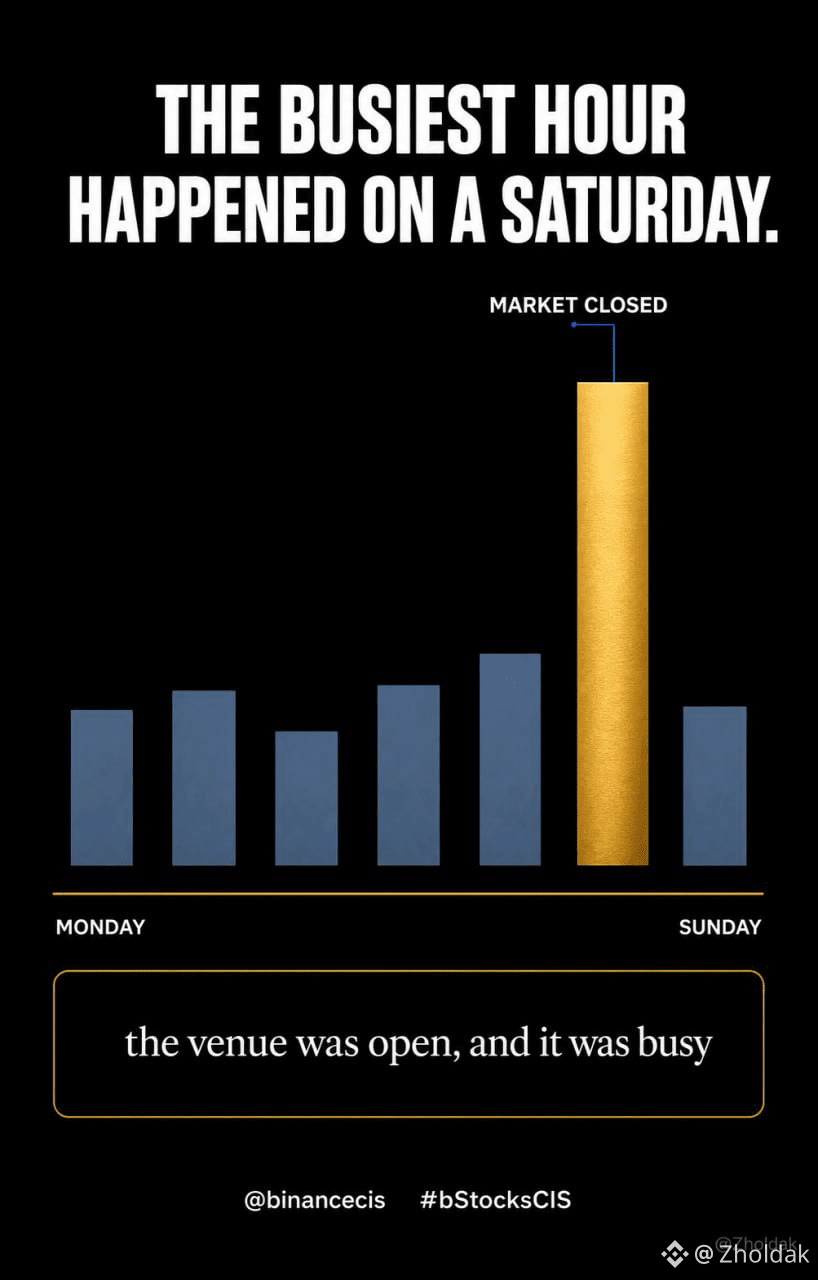
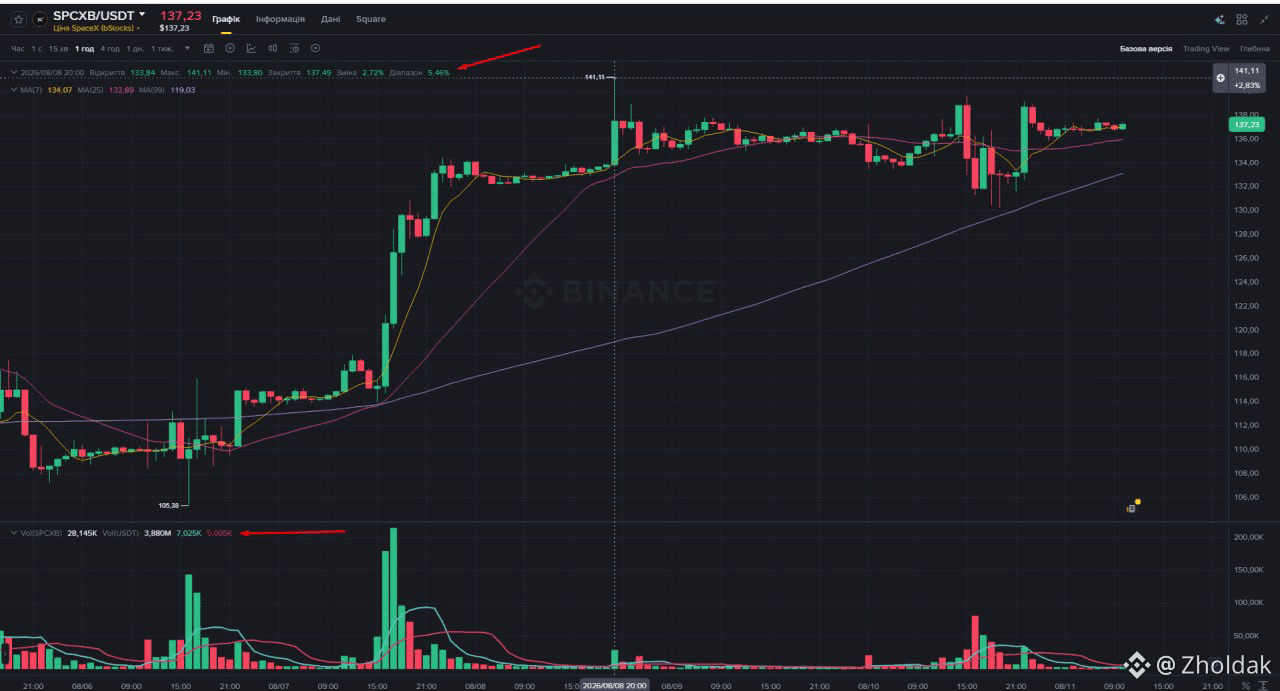
9
6
135
·
--
Bullisch
#bstockscis
70,01% kaufen. 29,99% verkaufen.
So lautete das Verhältnisbalken unter dem Orderbuch der $SPCXB um 11:03 Uhr
heute Morgen. Drei zu eins, Käufer.
Drei Minuten später öffnete ich den Tab „Data“ (Daten) bei demselben Paar, demselben 24-Stunden
Zeitraum. Kaufvolumen 76.523,76. Verkaufsvolumen 96.341,86.
Netto-Flow: minus 19.818,09.
Gleiches Instrument. Gleiche Minute. Umgekehrte Werte.
Keines ist „kaputt“. Sie messen unterschiedliche Dinge.
Der Verhältnisbalken misst Orders, die im Buch stehen — das, was Menschen gesagt haben,
dass sie zu Preisen tun würden, die noch niemand getroffen hat. Money-Flow misst Orders,
die tatsächlich ausgeführt wurden. Absicht versus Ergebnis.
Die Aufschlüsselung macht es noch deutlicher. Große Orders netto minus 8.604,99. Mittel,
minus 7.282,70. Klein, minus 3.930,40. Jede Größen-Kategorie in dieselbe Richtung.
Das ist nicht „eine“ einzige große „Walm“ (Wal) die geht. Das ist das ganze Buch,
das sich einseitig neigt — während das sichtbare Verhältnis sich in die andere
Richtung neigt.
Wichtig ist, welches du liest: Sie liegen zwei Tabs auseinander und
nur einer von ihnen beschreibt etwas, das tatsächlich passiert ist.
Ich kaufte 0,073 bei 135,75 um 10:44 Uhr heute Morgen und verkaufte es acht Sekunden
später wieder zurück. Beide Indikatoren sahen zu dem Zeitpunkt für mich in Ordnung aus. Ich hatte nicht
den zweiten überprüft.
Nasdaq ist seit dem Börsenschluss am Freitag geschlossen. Keine Ergebnisse, keine
Guidance, nichts Neues über das Unternehmen seitdem. All das hat sich
nur durch Order-Flow bewegt.
Quellen: mein eigenes SPCXB/USDT-Orderbuch und Data-Tab-Screenshots, 10. August
2026, 11:03 und 11:06 Uhr Kiewer Zeit; meine SPCXB/USDT-Orderdetails, 10:44 Uhr
am selben Morgen.
@BinanceCIS Welchen davon siehst du dir tatsächlich an, bevor du eine Order platzierst?
#bStocksCIS
#bstockscis
70,01% kaufen. 29,99% verkaufen.
So lautete das Verhältnisbalken unter dem Orderbuch der $SPCXB um 11:03 Uhr
heute Morgen. Drei zu eins, Käufer.
Drei Minuten später öffnete ich den Tab „Data“ (Daten) bei demselben Paar, demselben 24-Stunden
Zeitraum. Kaufvolumen 76.523,76. Verkaufsvolumen 96.341,86.
Netto-Flow: minus 19.818,09.
Gleiches Instrument. Gleiche Minute. Umgekehrte Werte.
Keines ist „kaputt“. Sie messen unterschiedliche Dinge.
Der Verhältnisbalken misst Orders, die im Buch stehen — das, was Menschen gesagt haben,
dass sie zu Preisen tun würden, die noch niemand getroffen hat. Money-Flow misst Orders,
die tatsächlich ausgeführt wurden. Absicht versus Ergebnis.
Die Aufschlüsselung macht es noch deutlicher. Große Orders netto minus 8.604,99. Mittel,
minus 7.282,70. Klein, minus 3.930,40. Jede Größen-Kategorie in dieselbe Richtung.
Das ist nicht „eine“ einzige große „Walm“ (Wal) die geht. Das ist das ganze Buch,
das sich einseitig neigt — während das sichtbare Verhältnis sich in die andere
Richtung neigt.
Wichtig ist, welches du liest: Sie liegen zwei Tabs auseinander und
nur einer von ihnen beschreibt etwas, das tatsächlich passiert ist.
Ich kaufte 0,073 bei 135,75 um 10:44 Uhr heute Morgen und verkaufte es acht Sekunden
später wieder zurück. Beide Indikatoren sahen zu dem Zeitpunkt für mich in Ordnung aus. Ich hatte nicht
den zweiten überprüft.
Nasdaq ist seit dem Börsenschluss am Freitag geschlossen. Keine Ergebnisse, keine
Guidance, nichts Neues über das Unternehmen seitdem. All das hat sich
nur durch Order-Flow bewegt.
Quellen: mein eigenes SPCXB/USDT-Orderbuch und Data-Tab-Screenshots, 10. August
2026, 11:03 und 11:06 Uhr Kiewer Zeit; meine SPCXB/USDT-Orderdetails, 10:44 Uhr
am selben Morgen.
@BinanceCIS Welchen davon siehst du dir tatsächlich an, bevor du eine Order platzierst?
#bStocksCIS
70,01% kaufen. 29,99% verkaufen.
So lautete das Verhältnisbalken unter dem Orderbuch der $SPCXB um 11:03 Uhr
heute Morgen. Drei zu eins, Käufer.
Drei Minuten später öffnete ich den Tab „Data“ (Daten) bei demselben Paar, demselben 24-Stunden
Zeitraum. Kaufvolumen 76.523,76. Verkaufsvolumen 96.341,86.
Netto-Flow: minus 19.818,09.
Gleiches Instrument. Gleiche Minute. Umgekehrte Werte.
Keines ist „kaputt“. Sie messen unterschiedliche Dinge.
Der Verhältnisbalken misst Orders, die im Buch stehen — das, was Menschen gesagt haben,
dass sie zu Preisen tun würden, die noch niemand getroffen hat. Money-Flow misst Orders,
die tatsächlich ausgeführt wurden. Absicht versus Ergebnis.
Die Aufschlüsselung macht es noch deutlicher. Große Orders netto minus 8.604,99. Mittel,
minus 7.282,70. Klein, minus 3.930,40. Jede Größen-Kategorie in dieselbe Richtung.
Das ist nicht „eine“ einzige große „Walm“ (Wal) die geht. Das ist das ganze Buch,
das sich einseitig neigt — während das sichtbare Verhältnis sich in die andere
Richtung neigt.
Wichtig ist, welches du liest: Sie liegen zwei Tabs auseinander und
nur einer von ihnen beschreibt etwas, das tatsächlich passiert ist.
Ich kaufte 0,073 bei 135,75 um 10:44 Uhr heute Morgen und verkaufte es acht Sekunden
später wieder zurück. Beide Indikatoren sahen zu dem Zeitpunkt für mich in Ordnung aus. Ich hatte nicht
den zweiten überprüft.
Nasdaq ist seit dem Börsenschluss am Freitag geschlossen. Keine Ergebnisse, keine
Guidance, nichts Neues über das Unternehmen seitdem. All das hat sich
nur durch Order-Flow bewegt.
Quellen: mein eigenes SPCXB/USDT-Orderbuch und Data-Tab-Screenshots, 10. August
2026, 11:03 und 11:06 Uhr Kiewer Zeit; meine SPCXB/USDT-Orderdetails, 10:44 Uhr
am selben Morgen.
@BinanceCIS Welchen davon siehst du dir tatsächlich an, bevor du eine Order platzierst?
#bStocksCIS
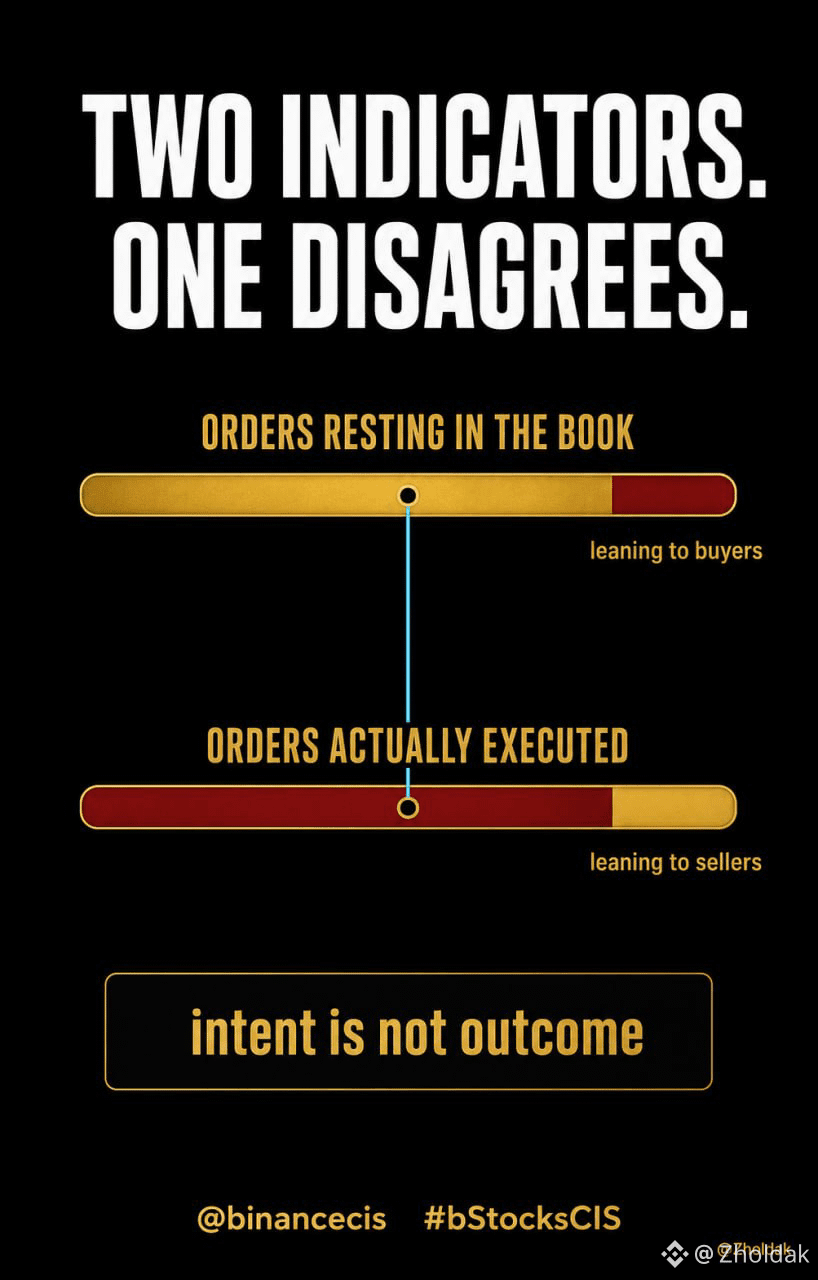
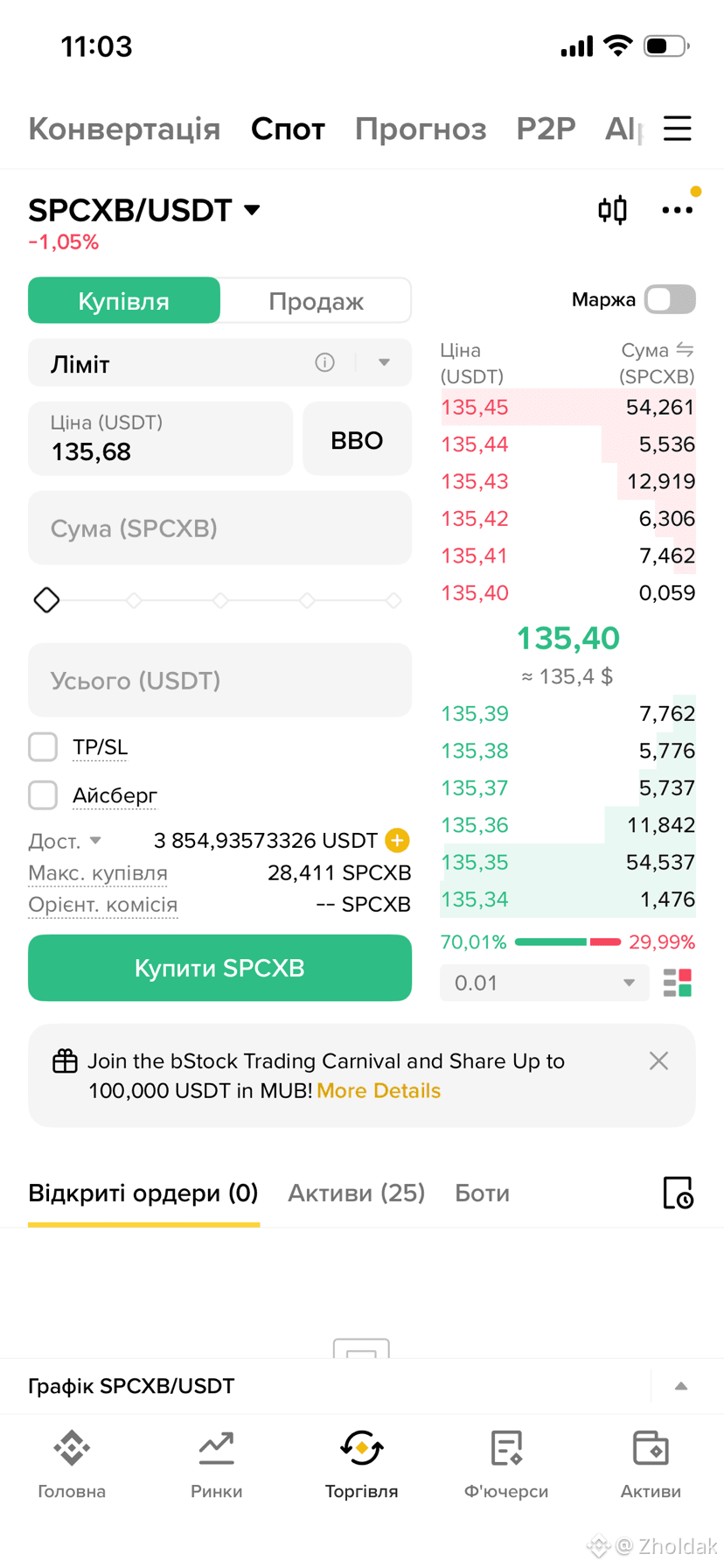
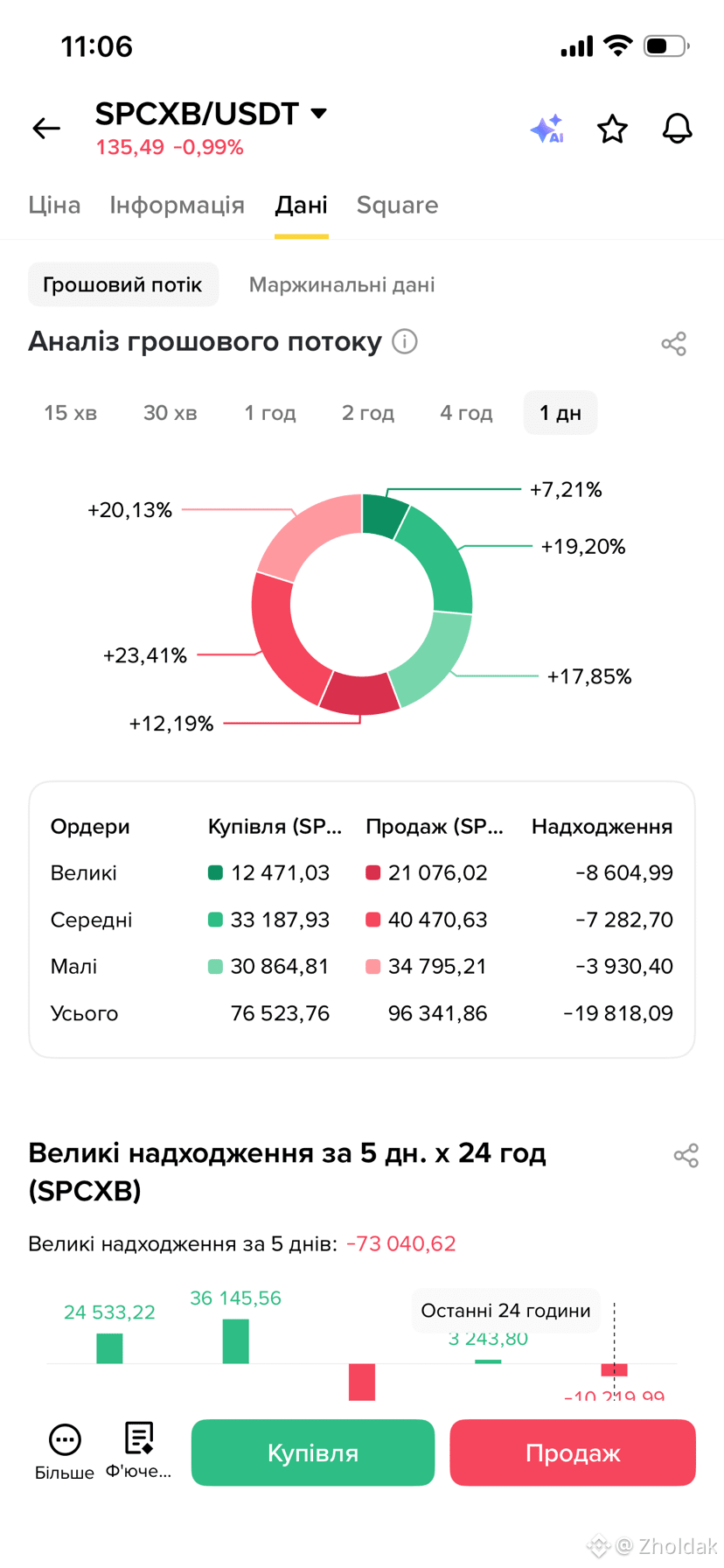
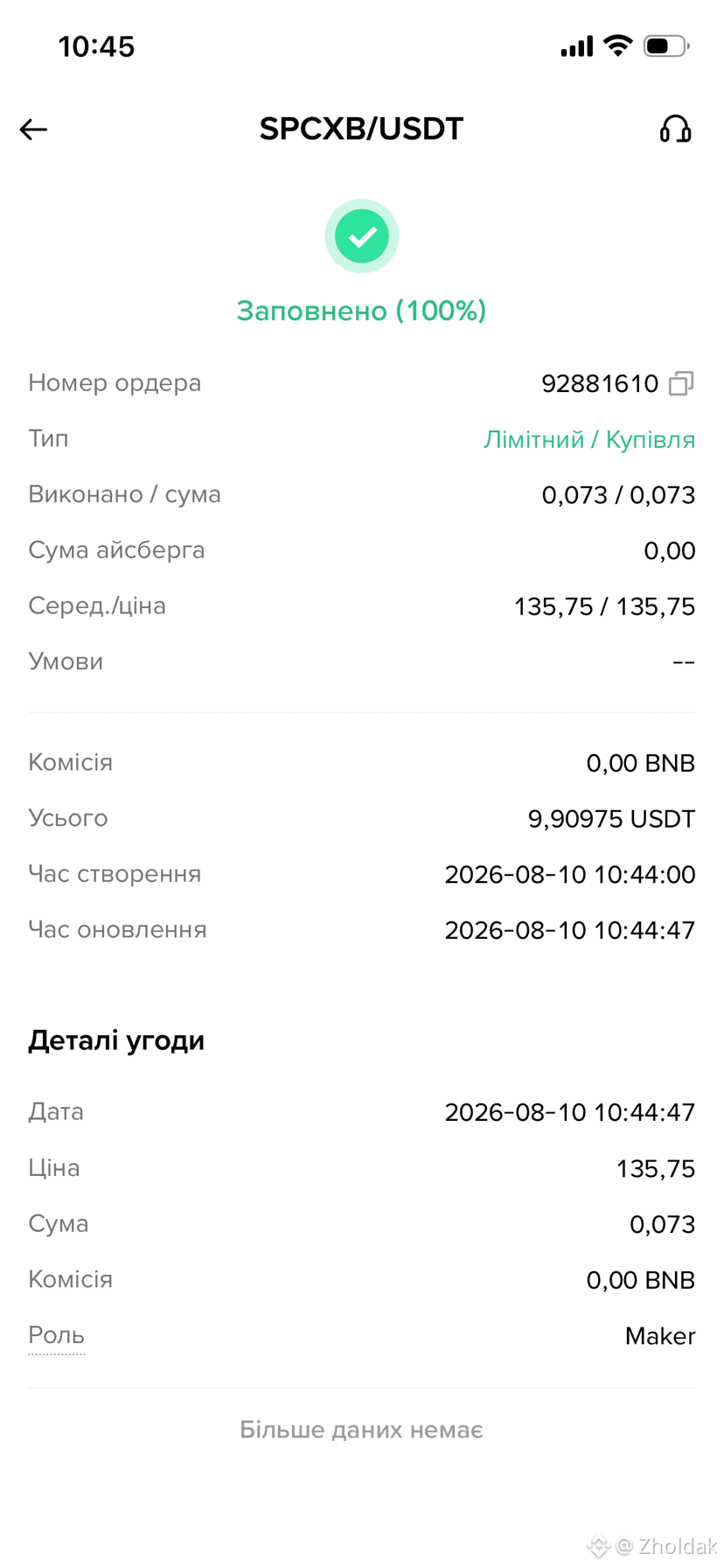
6
4
125
·
--
Bullisch
Verifiziert
#bstockscis
Ich habe heute Morgen zehn Dollar in eine Aktie gesteckt. Es ist Sonntag. Die Nasdaq ist geschlossen. Die Order wurde trotzdem ausgeführt, und ich halte nun 0,073 von einer Aktie.
Ich habe nicht entschieden, eine Bruchteil-Aktie zu kaufen. Ich habe einen Betrag in Dollar eingegeben und auf „Kaufen“ gedrückt. Der Bruchteil ist einfach das, was am Ende herausgekommen ist.
Darüber möchte ich sprechen, denn ich hatte das falsch herum verstanden.
Ich war davon ausgegangen, dass Bruchteilkäufe die Einstellung für Einsteiger sind. Also etwas, das man nutzt, bis man sich ganze Aktien leisten kann, und dann darüber hinausgeht.
Die eigenen frühen Daten der Kampagne sprechen dagegen.
Etwa 99,65 % der Tesla bStock-Transaktionen sind für weniger als eine einzelne Aktie. Für sich genommen passt das gut zu meiner Annahme – kleine Konten, kleine Beträge, nichts Überraschendes.
Aber genau diese Transaktionen unter einem Aktienanteil machen ungefähr 88,5 % des gesamten gehandelten Werts von $TSLAB aus.
Diese beiden Zahlen messen unterschiedliche Dinge. Die erste zählt Transaktionen. Die zweite zählt Geld.
Diese Unterscheidung hat mir die Meinung geändert. Kleine Transaktionen sind immer zahlreich – das beweist für sich genommen nichts. Wenn Bruchteilhandel nur Einsteiger mit etwas Taschengeld wäre, dann würde er die Anzahl der Trades dominieren und aus dem Volumen verschwinden. Stattdessen bleibt er in beiden Bereichen vertreten.
Das ist also kein Trittbrett. So wird dieser Markt tatsächlich gehandelt.
Wenn ich danach nachdenke, bin ich mir nicht sicher, ob die ganze Aktie überhaupt jemals eine natürliche Einheit war. Es ist einfach so, wie Wertpapiere schon immer verpackt wurden.
Ich ertappe mich immer noch dabei, zu sagen: „Ich habe $SPCXB gekauft“, statt eine Anzahl von Aktien zu nennen. Dabei handelt es sich nicht um Schlampigkeit. Das ist hier einfach die normale Art zu denken.
Quellen: frühe Zahlen aus Binance-CIS-Kampagnenmaterialien zu bStocks; meine eigenen SPCXB/USDT-Orderdetails, 9. August 2026.
@BinanceCIS Denkst du in Aktien oder in Dollar?
#bStocksCIS
#bstockscis
Ich habe heute Morgen zehn Dollar in eine Aktie gesteckt. Es ist Sonntag. Die Nasdaq ist geschlossen. Die Order wurde trotzdem ausgeführt, und ich halte nun 0,073 von einer Aktie.
Ich habe nicht entschieden, eine Bruchteil-Aktie zu kaufen. Ich habe einen Betrag in Dollar eingegeben und auf „Kaufen“ gedrückt. Der Bruchteil ist einfach das, was am Ende herausgekommen ist.
Darüber möchte ich sprechen, denn ich hatte das falsch herum verstanden.
Ich war davon ausgegangen, dass Bruchteilkäufe die Einstellung für Einsteiger sind. Also etwas, das man nutzt, bis man sich ganze Aktien leisten kann, und dann darüber hinausgeht.
Die eigenen frühen Daten der Kampagne sprechen dagegen.
Etwa 99,65 % der Tesla bStock-Transaktionen sind für weniger als eine einzelne Aktie. Für sich genommen passt das gut zu meiner Annahme – kleine Konten, kleine Beträge, nichts Überraschendes.
Aber genau diese Transaktionen unter einem Aktienanteil machen ungefähr 88,5 % des gesamten gehandelten Werts von $TSLAB aus.
Diese beiden Zahlen messen unterschiedliche Dinge. Die erste zählt Transaktionen. Die zweite zählt Geld.
Diese Unterscheidung hat mir die Meinung geändert. Kleine Transaktionen sind immer zahlreich – das beweist für sich genommen nichts. Wenn Bruchteilhandel nur Einsteiger mit etwas Taschengeld wäre, dann würde er die Anzahl der Trades dominieren und aus dem Volumen verschwinden. Stattdessen bleibt er in beiden Bereichen vertreten.
Das ist also kein Trittbrett. So wird dieser Markt tatsächlich gehandelt.
Wenn ich danach nachdenke, bin ich mir nicht sicher, ob die ganze Aktie überhaupt jemals eine natürliche Einheit war. Es ist einfach so, wie Wertpapiere schon immer verpackt wurden.
Ich ertappe mich immer noch dabei, zu sagen: „Ich habe $SPCXB gekauft“, statt eine Anzahl von Aktien zu nennen. Dabei handelt es sich nicht um Schlampigkeit. Das ist hier einfach die normale Art zu denken.
Quellen: frühe Zahlen aus Binance-CIS-Kampagnenmaterialien zu bStocks; meine eigenen SPCXB/USDT-Orderdetails, 9. August 2026.
@BinanceCIS Denkst du in Aktien oder in Dollar?
#bStocksCIS
Ich habe heute Morgen zehn Dollar in eine Aktie gesteckt. Es ist Sonntag. Die Nasdaq ist geschlossen. Die Order wurde trotzdem ausgeführt, und ich halte nun 0,073 von einer Aktie.
Ich habe nicht entschieden, eine Bruchteil-Aktie zu kaufen. Ich habe einen Betrag in Dollar eingegeben und auf „Kaufen“ gedrückt. Der Bruchteil ist einfach das, was am Ende herausgekommen ist.
Darüber möchte ich sprechen, denn ich hatte das falsch herum verstanden.
Ich war davon ausgegangen, dass Bruchteilkäufe die Einstellung für Einsteiger sind. Also etwas, das man nutzt, bis man sich ganze Aktien leisten kann, und dann darüber hinausgeht.
Die eigenen frühen Daten der Kampagne sprechen dagegen.
Etwa 99,65 % der Tesla bStock-Transaktionen sind für weniger als eine einzelne Aktie. Für sich genommen passt das gut zu meiner Annahme – kleine Konten, kleine Beträge, nichts Überraschendes.
Aber genau diese Transaktionen unter einem Aktienanteil machen ungefähr 88,5 % des gesamten gehandelten Werts von $TSLAB aus.
Diese beiden Zahlen messen unterschiedliche Dinge. Die erste zählt Transaktionen. Die zweite zählt Geld.
Diese Unterscheidung hat mir die Meinung geändert. Kleine Transaktionen sind immer zahlreich – das beweist für sich genommen nichts. Wenn Bruchteilhandel nur Einsteiger mit etwas Taschengeld wäre, dann würde er die Anzahl der Trades dominieren und aus dem Volumen verschwinden. Stattdessen bleibt er in beiden Bereichen vertreten.
Das ist also kein Trittbrett. So wird dieser Markt tatsächlich gehandelt.
Wenn ich danach nachdenke, bin ich mir nicht sicher, ob die ganze Aktie überhaupt jemals eine natürliche Einheit war. Es ist einfach so, wie Wertpapiere schon immer verpackt wurden.
Ich ertappe mich immer noch dabei, zu sagen: „Ich habe $SPCXB gekauft“, statt eine Anzahl von Aktien zu nennen. Dabei handelt es sich nicht um Schlampigkeit. Das ist hier einfach die normale Art zu denken.
Quellen: frühe Zahlen aus Binance-CIS-Kampagnenmaterialien zu bStocks; meine eigenen SPCXB/USDT-Orderdetails, 9. August 2026.
@BinanceCIS Denkst du in Aktien oder in Dollar?
#bStocksCIS
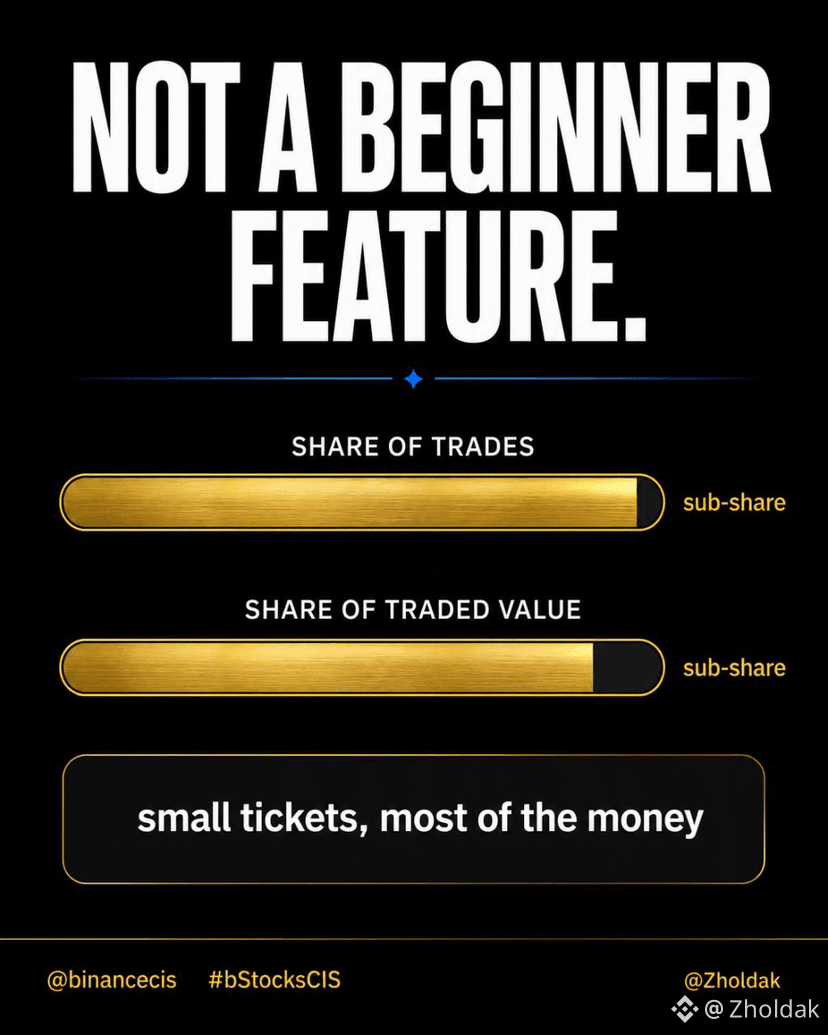
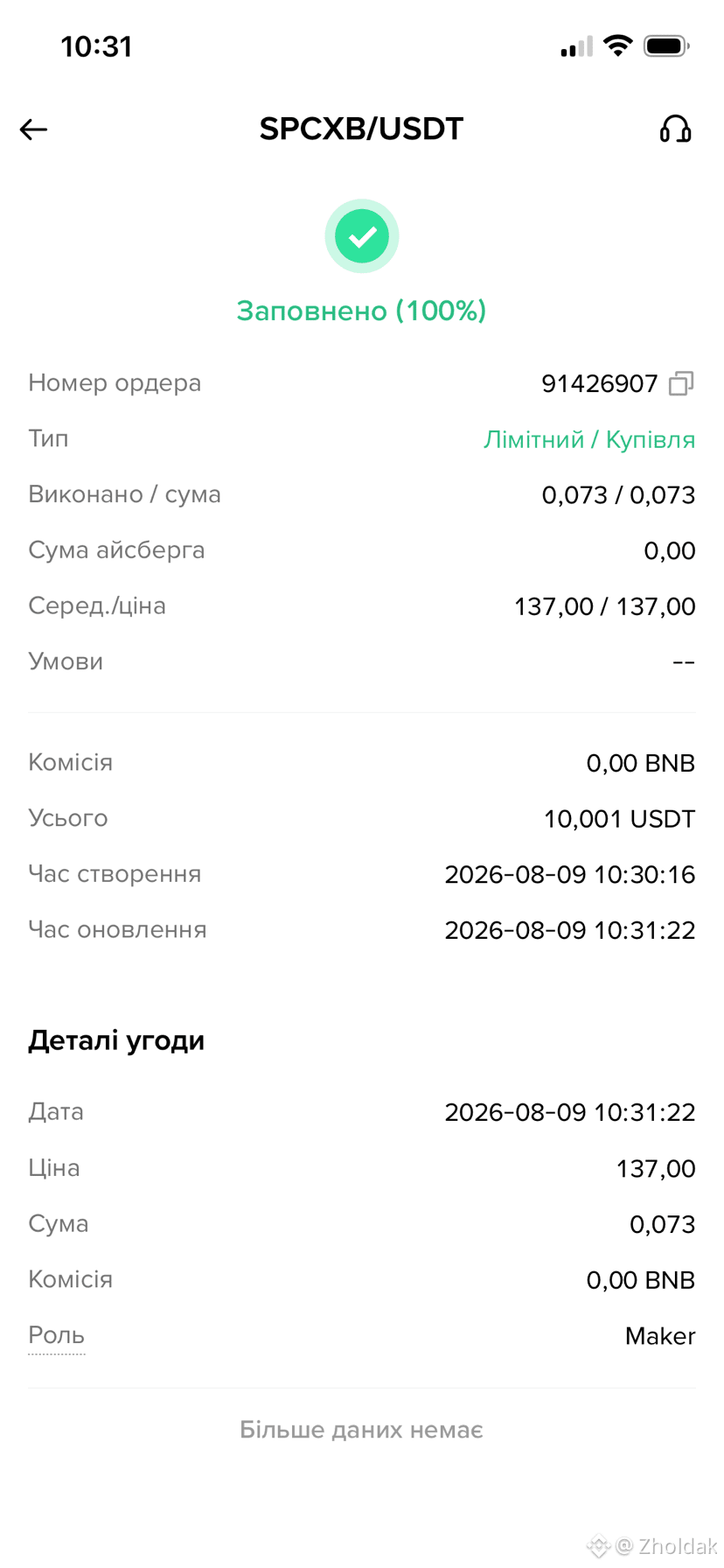
1
2
164
·
--
Bullisch
Verifiziert
#bstockscis
Ich habe diese Woche die Startankündigung zu bStocks noch einmal gelesen, hauptsächlich um etwas Unabhängiges nachzuprüfen – und dabei ist mir ein Detail aufgefallen.
In dieser Struktur gibt es zwei Unternehmen. Ich hatte bisher angenommen, es gäbe nur eines.
BTech Holdings Limited stellt das Zertifikat aus — also das, was man tatsächlich hält, wenn man $NVDAB oder $TSLAB kauft. Das wusste ich. Aber die zugrunde liegenden Aktien werden über Nest Trading Limited gekauft, eine separate Broker-Dealer-Einheit.
Wenn in der Ankündigung also steht, dass die Umwandlung zwischen unterstützten zugrunde liegenden Wertpapieren und bStocks im Verhältnis 1:1 erfolgt, mit null Umwandlungsgebühren, dann beschreibt das eine Übergabe zwischen zwei Armen desselben Systems.
Was — als ich einmal darüber nachgedacht habe — erklärt, das eine Ding, das ich bisher einfach für selbstverständlich gehalten habe.
„Sofort und kostenlos“ ist kein Feature, das sie einfach verschenken. Es ist das, was möglich wird, wenn beide Seiten des Handels bereits unter einem Dach sitzen. Kein externer Transfer, kein Gegenüber, das am anderen Ende wartet, keine Abwicklungswarteschlange zwischen Brokern.
Versuche das Gegenstück zwischen zwei völlig unabhängigen Broker-Services. Das dauert Tage und kostet Geld bei nahezu jedem Schritt.
Die gleiche Ankündigung ist auch beim Rest sehr präzise — Zertifikate gemäß Absatz 92, Anlage 1 der FSMR, angeboten über einen genehmigten Prospekt im ADGM, nur Sekundärmarkt, nur für berechtigte Jurisdiktionen. Einmal lesen, statt anzunehmen.
Zwei Einheiten, die zwei Aufgaben erledigen, und ein Button auf deiner Seite.
Quellen: Binances offizielle Startankündigung für bStocks, 12. Juni 2026.
@BinanceCIS Was hat dich am meisten überrascht, als du die Struktur tatsächlich gelesen hast?
#bStocksCIS
#bstockscis
Ich habe diese Woche die Startankündigung zu bStocks noch einmal gelesen, hauptsächlich um etwas Unabhängiges nachzuprüfen – und dabei ist mir ein Detail aufgefallen.
In dieser Struktur gibt es zwei Unternehmen. Ich hatte bisher angenommen, es gäbe nur eines.
BTech Holdings Limited stellt das Zertifikat aus — also das, was man tatsächlich hält, wenn man $NVDAB oder $TSLAB kauft. Das wusste ich. Aber die zugrunde liegenden Aktien werden über Nest Trading Limited gekauft, eine separate Broker-Dealer-Einheit.
Wenn in der Ankündigung also steht, dass die Umwandlung zwischen unterstützten zugrunde liegenden Wertpapieren und bStocks im Verhältnis 1:1 erfolgt, mit null Umwandlungsgebühren, dann beschreibt das eine Übergabe zwischen zwei Armen desselben Systems.
Was — als ich einmal darüber nachgedacht habe — erklärt, das eine Ding, das ich bisher einfach für selbstverständlich gehalten habe.
„Sofort und kostenlos“ ist kein Feature, das sie einfach verschenken. Es ist das, was möglich wird, wenn beide Seiten des Handels bereits unter einem Dach sitzen. Kein externer Transfer, kein Gegenüber, das am anderen Ende wartet, keine Abwicklungswarteschlange zwischen Brokern.
Versuche das Gegenstück zwischen zwei völlig unabhängigen Broker-Services. Das dauert Tage und kostet Geld bei nahezu jedem Schritt.
Die gleiche Ankündigung ist auch beim Rest sehr präzise — Zertifikate gemäß Absatz 92, Anlage 1 der FSMR, angeboten über einen genehmigten Prospekt im ADGM, nur Sekundärmarkt, nur für berechtigte Jurisdiktionen. Einmal lesen, statt anzunehmen.
Zwei Einheiten, die zwei Aufgaben erledigen, und ein Button auf deiner Seite.
Quellen: Binances offizielle Startankündigung für bStocks, 12. Juni 2026.
@BinanceCIS Was hat dich am meisten überrascht, als du die Struktur tatsächlich gelesen hast?
#bStocksCIS
Ich habe diese Woche die Startankündigung zu bStocks noch einmal gelesen, hauptsächlich um etwas Unabhängiges nachzuprüfen – und dabei ist mir ein Detail aufgefallen.
In dieser Struktur gibt es zwei Unternehmen. Ich hatte bisher angenommen, es gäbe nur eines.
BTech Holdings Limited stellt das Zertifikat aus — also das, was man tatsächlich hält, wenn man $NVDAB oder $TSLAB kauft. Das wusste ich. Aber die zugrunde liegenden Aktien werden über Nest Trading Limited gekauft, eine separate Broker-Dealer-Einheit.
Wenn in der Ankündigung also steht, dass die Umwandlung zwischen unterstützten zugrunde liegenden Wertpapieren und bStocks im Verhältnis 1:1 erfolgt, mit null Umwandlungsgebühren, dann beschreibt das eine Übergabe zwischen zwei Armen desselben Systems.
Was — als ich einmal darüber nachgedacht habe — erklärt, das eine Ding, das ich bisher einfach für selbstverständlich gehalten habe.
„Sofort und kostenlos“ ist kein Feature, das sie einfach verschenken. Es ist das, was möglich wird, wenn beide Seiten des Handels bereits unter einem Dach sitzen. Kein externer Transfer, kein Gegenüber, das am anderen Ende wartet, keine Abwicklungswarteschlange zwischen Brokern.
Versuche das Gegenstück zwischen zwei völlig unabhängigen Broker-Services. Das dauert Tage und kostet Geld bei nahezu jedem Schritt.
Die gleiche Ankündigung ist auch beim Rest sehr präzise — Zertifikate gemäß Absatz 92, Anlage 1 der FSMR, angeboten über einen genehmigten Prospekt im ADGM, nur Sekundärmarkt, nur für berechtigte Jurisdiktionen. Einmal lesen, statt anzunehmen.
Zwei Einheiten, die zwei Aufgaben erledigen, und ein Button auf deiner Seite.
Quellen: Binances offizielle Startankündigung für bStocks, 12. Juni 2026.
@BinanceCIS Was hat dich am meisten überrascht, als du die Struktur tatsächlich gelesen hast?
#bStocksCIS
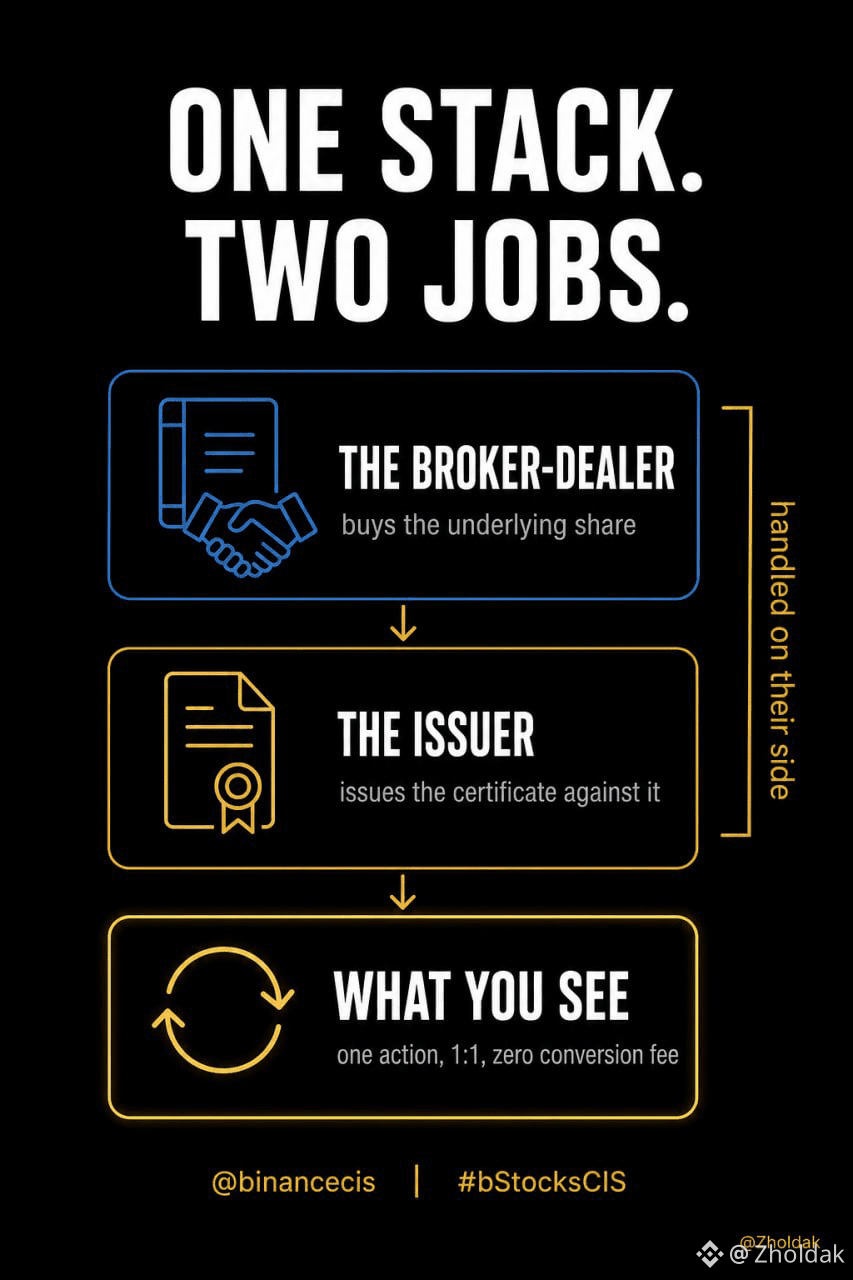
1
4
94
·
--
So, und wir brauchen keine Vermittler für die Investition. Das ist eine bahnbrechende Technologie
So, und wir brauchen keine Vermittler für die Investition. Das ist eine bahnbrechende Technologie
4
81
·
--
Bullisch
#bstockscis
Wenn du „Limit“ auswählst, bist du noch lange kein Market-Maker. Ich dachte, so wäre es.
Gestern habe ich eine Limit-Order platziert und gesehen, dass die geschätzte Gebühr auf null stand. Ich habe das als Bestätigung verstanden und bin weitergegangen.
Heute habe ich es richtig getestet auf $SPCXB .
Erste Order: Limit-Preis 116.50, während das beste Gebot bei 116.53 lag. Unterhalb des Gebots gab es nichts, worauf es gematcht werden konnte. Geschätzte Gebühr: 0 SPCXB.
Zweite Order: Limit-Preis 116.90, während das beste Ask bei 116.58 lag. Mein Preis griff in bereits dort liegende Orders hinein. Geschätzte Gebühr: 0.00003825 SPCXB.
Gleicher Order-Typ. Gleicher Handelspaar. Gleiche Minute. Die eine ist kostenlos, die andere nicht.
Der Unterschied entspricht etwa 0.075% der Ordergröße – klein bei sechs Dollar und noch weniger klein bei einer Position, die du tatsächlich im Blick hast.
Was ich falsch verstanden hatte: Der Order-Typ beschreibt, was du angefordert hast. Deine Rolle beschreibt, was das Orderbuch damit gemacht hat. Ein Limit-Preis, der die Spanne überquert, entfernt Liquidität, daher wird er als Taker ausgeführt – unabhängig davon, in welchem Tab du geklickt hast.
Die erste Order wurde 22 Sekunden später ausgeführt. Die Orderdetails bestätigen das – Rolle: Maker, Gebühr 0.00 BNB.
Null Maker-Gebühren für bStocks-Paare gelten bis zum 31. August. Das gilt aber nur, wenn die Order tatsächlich im Orderbuch liegen bleibt.
Es lohnt sich, das Feld „Role“ (Rolle) in deiner eigenen Orderhistorie zu prüfen. Dort steht möglicherweise nicht das, was du erwartest.
Quellen: SPCXB/USDT Order-Screens und Orderdetails, 7. August 2026, 14:16–14:17 UTC+3; Binance bStocks-Gebührenpromotion bis 31. August 2026.
@BinanceCIS Hast du schon mal überprüft, ob deine Limit-Orders tatsächlich als Maker ausgeführt wurden?
$SPCXB
#bstockscis
Wenn du „Limit“ auswählst, bist du noch lange kein Market-Maker. Ich dachte, so wäre es.
Gestern habe ich eine Limit-Order platziert und gesehen, dass die geschätzte Gebühr auf null stand. Ich habe das als Bestätigung verstanden und bin weitergegangen.
Heute habe ich es richtig getestet auf $SPCXB .
Erste Order: Limit-Preis 116.50, während das beste Gebot bei 116.53 lag. Unterhalb des Gebots gab es nichts, worauf es gematcht werden konnte. Geschätzte Gebühr: 0 SPCXB.
Zweite Order: Limit-Preis 116.90, während das beste Ask bei 116.58 lag. Mein Preis griff in bereits dort liegende Orders hinein. Geschätzte Gebühr: 0.00003825 SPCXB.
Gleicher Order-Typ. Gleicher Handelspaar. Gleiche Minute. Die eine ist kostenlos, die andere nicht.
Der Unterschied entspricht etwa 0.075% der Ordergröße – klein bei sechs Dollar und noch weniger klein bei einer Position, die du tatsächlich im Blick hast.
Was ich falsch verstanden hatte: Der Order-Typ beschreibt, was du angefordert hast. Deine Rolle beschreibt, was das Orderbuch damit gemacht hat. Ein Limit-Preis, der die Spanne überquert, entfernt Liquidität, daher wird er als Taker ausgeführt – unabhängig davon, in welchem Tab du geklickt hast.
Die erste Order wurde 22 Sekunden später ausgeführt. Die Orderdetails bestätigen das – Rolle: Maker, Gebühr 0.00 BNB.
Null Maker-Gebühren für bStocks-Paare gelten bis zum 31. August. Das gilt aber nur, wenn die Order tatsächlich im Orderbuch liegen bleibt.
Es lohnt sich, das Feld „Role“ (Rolle) in deiner eigenen Orderhistorie zu prüfen. Dort steht möglicherweise nicht das, was du erwartest.
Quellen: SPCXB/USDT Order-Screens und Orderdetails, 7. August 2026, 14:16–14:17 UTC+3; Binance bStocks-Gebührenpromotion bis 31. August 2026.
@BinanceCIS Hast du schon mal überprüft, ob deine Limit-Orders tatsächlich als Maker ausgeführt wurden?
$SPCXB
Wenn du „Limit“ auswählst, bist du noch lange kein Market-Maker. Ich dachte, so wäre es.
Gestern habe ich eine Limit-Order platziert und gesehen, dass die geschätzte Gebühr auf null stand. Ich habe das als Bestätigung verstanden und bin weitergegangen.
Heute habe ich es richtig getestet auf $SPCXB .
Erste Order: Limit-Preis 116.50, während das beste Gebot bei 116.53 lag. Unterhalb des Gebots gab es nichts, worauf es gematcht werden konnte. Geschätzte Gebühr: 0 SPCXB.
Zweite Order: Limit-Preis 116.90, während das beste Ask bei 116.58 lag. Mein Preis griff in bereits dort liegende Orders hinein. Geschätzte Gebühr: 0.00003825 SPCXB.
Gleicher Order-Typ. Gleicher Handelspaar. Gleiche Minute. Die eine ist kostenlos, die andere nicht.
Der Unterschied entspricht etwa 0.075% der Ordergröße – klein bei sechs Dollar und noch weniger klein bei einer Position, die du tatsächlich im Blick hast.
Was ich falsch verstanden hatte: Der Order-Typ beschreibt, was du angefordert hast. Deine Rolle beschreibt, was das Orderbuch damit gemacht hat. Ein Limit-Preis, der die Spanne überquert, entfernt Liquidität, daher wird er als Taker ausgeführt – unabhängig davon, in welchem Tab du geklickt hast.
Die erste Order wurde 22 Sekunden später ausgeführt. Die Orderdetails bestätigen das – Rolle: Maker, Gebühr 0.00 BNB.
Null Maker-Gebühren für bStocks-Paare gelten bis zum 31. August. Das gilt aber nur, wenn die Order tatsächlich im Orderbuch liegen bleibt.
Es lohnt sich, das Feld „Role“ (Rolle) in deiner eigenen Orderhistorie zu prüfen. Dort steht möglicherweise nicht das, was du erwartest.
Quellen: SPCXB/USDT Order-Screens und Orderdetails, 7. August 2026, 14:16–14:17 UTC+3; Binance bStocks-Gebührenpromotion bis 31. August 2026.
@BinanceCIS Hast du schon mal überprüft, ob deine Limit-Orders tatsächlich als Maker ausgeführt wurden?
$SPCXB
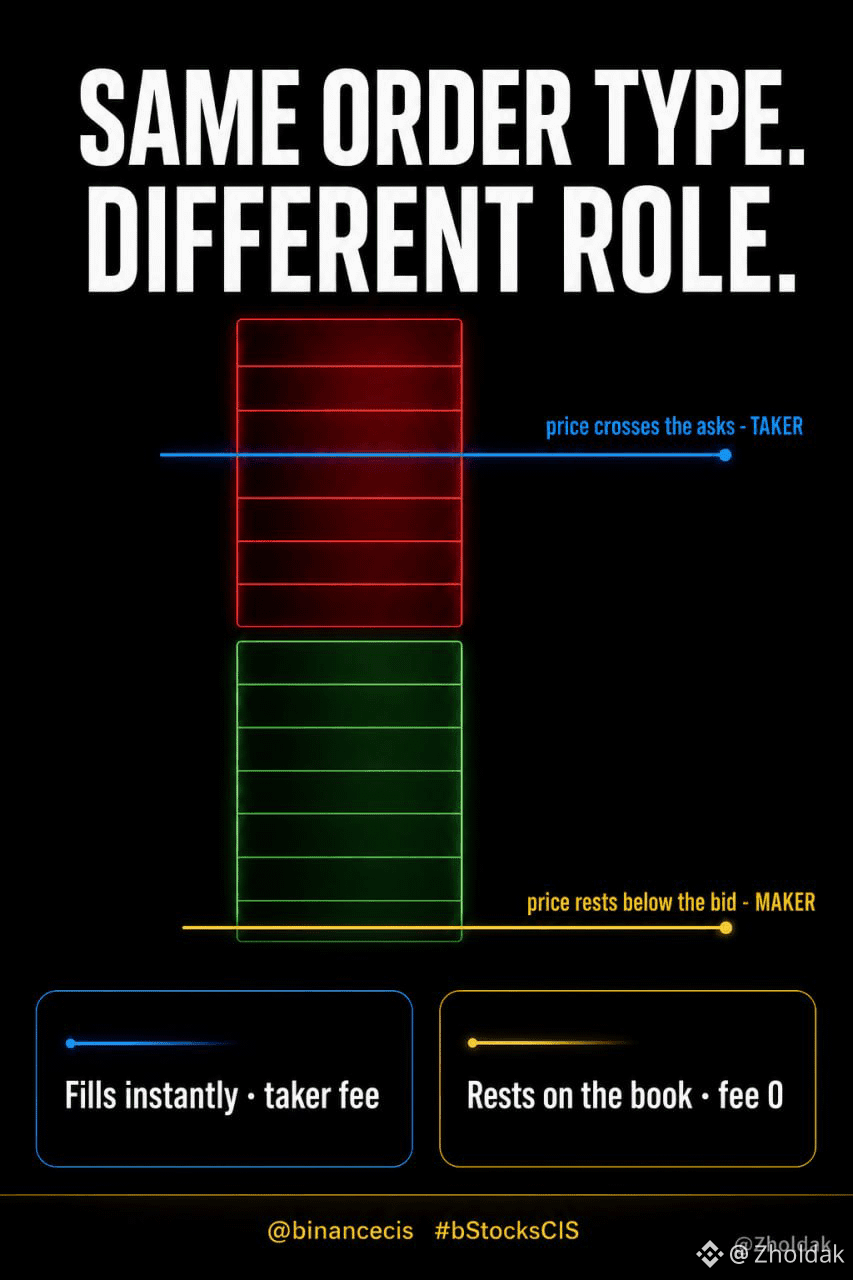
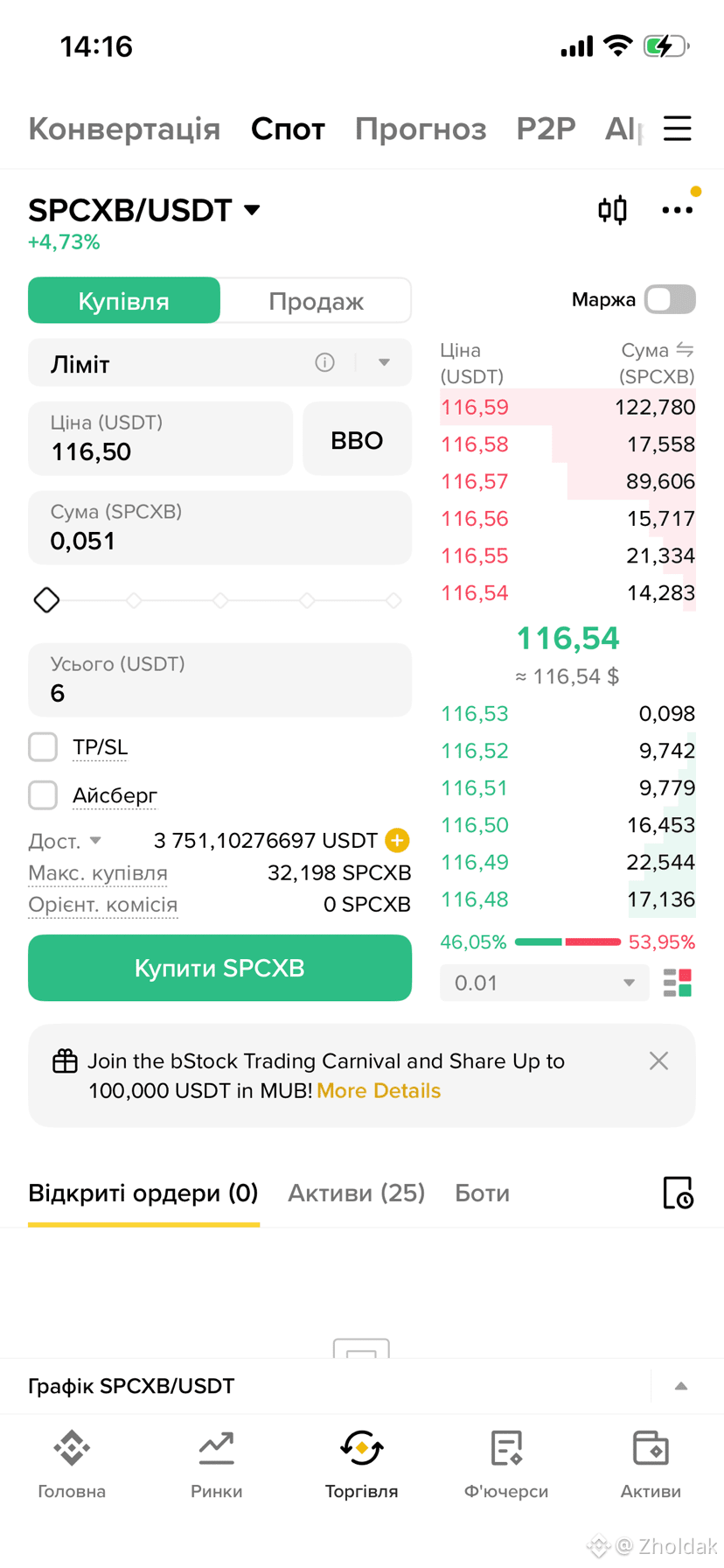
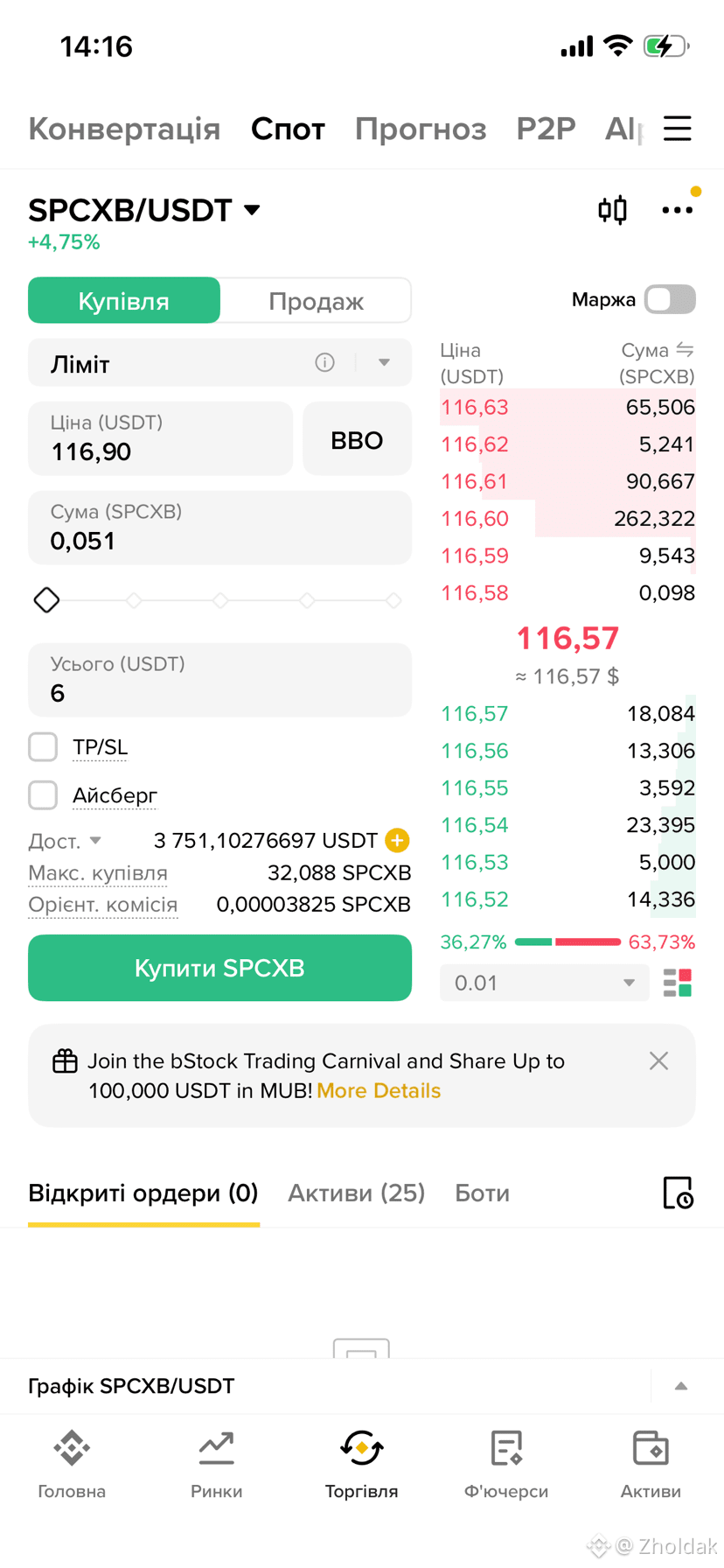
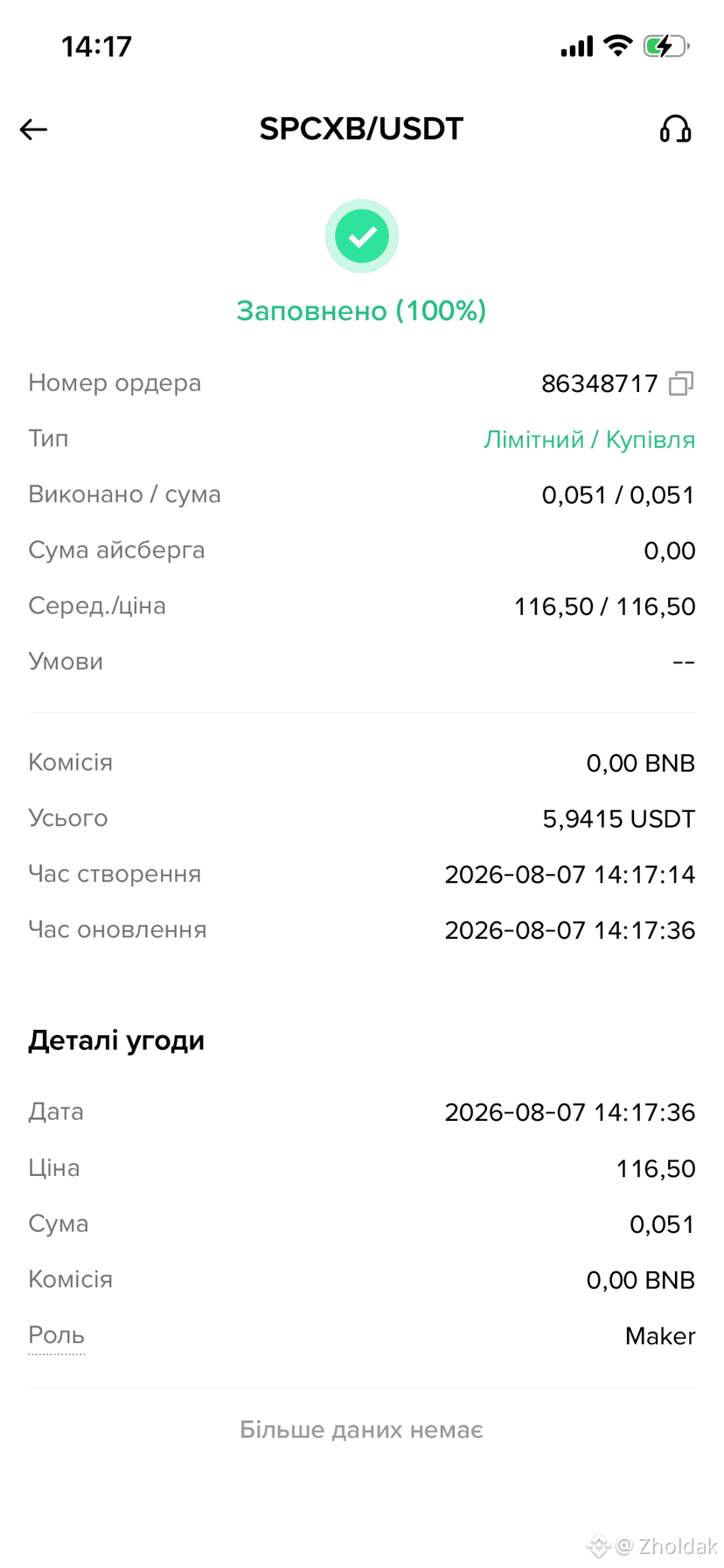
7
111
Anmelden und weiter Inhalte entdecken
Krypto-Nutzer weltweit auf Binance Square kennenlernen
⚡️ Bleib in Sachen Krypto stets am Puls.
💬 Die weltgrößte Kryptobörse vertraut darauf.
👍 Erhalte verlässliche Einblicke von verifizierten Creators.
E-Mail-Adresse/Telefonnummer