
tolya68
68 Beiträge

tolya68
Melden
Nutzer blockieren
10 Following
25 Follower
76 Like gegeben
Beiträge
·
--
HEUTE HAT BINANCE NOCH EINEN HAUFEN AKTIEN ZU RECURRENT BUY HINZUGEFÜGT. UND ICH WÜRDE DAS NICHT MIT bSTOCKS VERWECHSELN.
Die Liste ist wirklich riesig: Airbnb, Uber, IBM, Boeing, Spotify, CrowdStrike, Ferrari, Sony und noch viele andere.
Aber das Wichtigste ist für mich hier nicht die Anzahl.
Recurring Buy löst ein sehr bekanntes Problem:
"Ich möchte regelmäßig investieren, aber ich vergesse ständig, das auch wirklich zu tun".
Du erstellst den Plan einmal, stellst den Zeitplan ein — und die Käufe werden automatisch an den ausgewählten Tagen durchgeführt.
Aber hier gibt es einen wichtigen Haken.
Das ist Binance Stock Trading.
Also geht es um den Kauf ganz normaler Wertpapiere über die Stock-Infrastruktur von Binance, nicht um tokenisierte bStocks.
Und noch ein Detail, das leicht übersehen wird:
Der Preis am Tag des automatischen Kaufs kann sich deutlich von dem unterscheiden, den du gesehen hast, als du den Plan erstellt hast.
Recurring Buy automatisiert die Disziplin.
Er fixiert den zukünftigen Preis nicht und garantiert keinen vorteilhaften Einstieg.
Mir gefällt genau so der Blick auf DCA:
nicht als eine Methode, "günstiger zu kaufen",
sondern als einen Weg, sich selbst aus der wöchentlichen Entscheidung "heute kaufen oder noch warten" herauszunehmen.
#CreateWithBinance #ShareMyTradFi #TradFi
HEUTE HAT BINANCE NOCH EINEN HAUFEN AKTIEN ZU RECURRENT BUY HINZUGEFÜGT. UND ICH WÜRDE DAS NICHT MIT bSTOCKS VERWECHSELN.
Die Liste ist wirklich riesig: Airbnb, Uber, IBM, Boeing, Spotify, CrowdStrike, Ferrari, Sony und noch viele andere.
Aber das Wichtigste ist für mich hier nicht die Anzahl.
Recurring Buy löst ein sehr bekanntes Problem:
"Ich möchte regelmäßig investieren, aber ich vergesse ständig, das auch wirklich zu tun".
Du erstellst den Plan einmal, stellst den Zeitplan ein — und die Käufe werden automatisch an den ausgewählten Tagen durchgeführt.
Aber hier gibt es einen wichtigen Haken.
Das ist Binance Stock Trading.
Also geht es um den Kauf ganz normaler Wertpapiere über die Stock-Infrastruktur von Binance, nicht um tokenisierte bStocks.
Und noch ein Detail, das leicht übersehen wird:
Der Preis am Tag des automatischen Kaufs kann sich deutlich von dem unterscheiden, den du gesehen hast, als du den Plan erstellt hast.
Recurring Buy automatisiert die Disziplin.
Er fixiert den zukünftigen Preis nicht und garantiert keinen vorteilhaften Einstieg.
Mir gefällt genau so der Blick auf DCA:
nicht als eine Methode, "günstiger zu kaufen",
sondern als einen Weg, sich selbst aus der wöchentlichen Entscheidung "heute kaufen oder noch warten" herauszunehmen.
#CreateWithBinance #ShareMyTradFi #TradFi
Die Liste ist wirklich riesig: Airbnb, Uber, IBM, Boeing, Spotify, CrowdStrike, Ferrari, Sony und noch viele andere.
Aber das Wichtigste ist für mich hier nicht die Anzahl.
Recurring Buy löst ein sehr bekanntes Problem:
"Ich möchte regelmäßig investieren, aber ich vergesse ständig, das auch wirklich zu tun".
Du erstellst den Plan einmal, stellst den Zeitplan ein — und die Käufe werden automatisch an den ausgewählten Tagen durchgeführt.
Aber hier gibt es einen wichtigen Haken.
Das ist Binance Stock Trading.
Also geht es um den Kauf ganz normaler Wertpapiere über die Stock-Infrastruktur von Binance, nicht um tokenisierte bStocks.
Und noch ein Detail, das leicht übersehen wird:
Der Preis am Tag des automatischen Kaufs kann sich deutlich von dem unterscheiden, den du gesehen hast, als du den Plan erstellt hast.
Recurring Buy automatisiert die Disziplin.
Er fixiert den zukünftigen Preis nicht und garantiert keinen vorteilhaften Einstieg.
Mir gefällt genau so der Blick auf DCA:
nicht als eine Methode, "günstiger zu kaufen",
sondern als einen Weg, sich selbst aus der wöchentlichen Entscheidung "heute kaufen oder noch warten" herauszunehmen.
#CreateWithBinance #ShareMyTradFi #TradFi
2
244
·
--
FESTER BETRAG ЧИ FESTE QUOTE В COPY TRADING? Я HABE DAS SOFORT VERSTANDEN, DER UNTERSCHIED AUF EINEM NORMALEN BEISPIEL
Stellen wir uns vor, ich habe 500 USDT für das Kopieren eines Traders bereitgestellt.
Variante 1: Fixed Ratio.
Der Trader hat 1000 USDT, und er investiert 20% seines Portfolios in eine Position.
Dann verwendet das System ungefähr auch 20% meines Copy-Portfolios.
In meinem Fall sind das etwa 100 USDT.
Variante 2: Fixed Amount.
Ich setze einfach zum Beispiel 30 USDT auf eine einzelne Position.
Es ist egal, ob der Trader 5% seines Guthabens oder 40% verwendet – meine neue Position wird dennoch auf den von mir festgelegten Betrag gesetzt, solange das Guthaben ausreicht.
Das heißt:
Fixed Ratio = ich kopiere auch das Risiko-Verhältnis des Traders.
Fixed Amount = ich bestimme den Betrag jeder einzelnen Position selbst.
Und das führt zu einem völlig anderen Verhalten des Portfolios.
Außerdem ist wichtig, dass die tatsächliche Größe der Position aufgrund von Slippage und den Marktbedingungen etwas abweichen kann.
Daher bedeutet „einen Trader kopieren“ nicht „mathematisch exakt identisches Ergebnis erhalten“.
#CreateWithBinance #ShareMyTradFi #CopyTrading
FESTER BETRAG ЧИ FESTE QUOTE В COPY TRADING? Я HABE DAS SOFORT VERSTANDEN, DER UNTERSCHIED AUF EINEM NORMALEN BEISPIEL
Stellen wir uns vor, ich habe 500 USDT für das Kopieren eines Traders bereitgestellt.
Variante 1: Fixed Ratio.
Der Trader hat 1000 USDT, und er investiert 20% seines Portfolios in eine Position.
Dann verwendet das System ungefähr auch 20% meines Copy-Portfolios.
In meinem Fall sind das etwa 100 USDT.
Variante 2: Fixed Amount.
Ich setze einfach zum Beispiel 30 USDT auf eine einzelne Position.
Es ist egal, ob der Trader 5% seines Guthabens oder 40% verwendet – meine neue Position wird dennoch auf den von mir festgelegten Betrag gesetzt, solange das Guthaben ausreicht.
Das heißt:
Fixed Ratio = ich kopiere auch das Risiko-Verhältnis des Traders.
Fixed Amount = ich bestimme den Betrag jeder einzelnen Position selbst.
Und das führt zu einem völlig anderen Verhalten des Portfolios.
Außerdem ist wichtig, dass die tatsächliche Größe der Position aufgrund von Slippage und den Marktbedingungen etwas abweichen kann.
Daher bedeutet „einen Trader kopieren“ nicht „mathematisch exakt identisches Ergebnis erhalten“.
#CreateWithBinance #ShareMyTradFi #CopyTrading
Stellen wir uns vor, ich habe 500 USDT für das Kopieren eines Traders bereitgestellt.
Variante 1: Fixed Ratio.
Der Trader hat 1000 USDT, und er investiert 20% seines Portfolios in eine Position.
Dann verwendet das System ungefähr auch 20% meines Copy-Portfolios.
In meinem Fall sind das etwa 100 USDT.
Variante 2: Fixed Amount.
Ich setze einfach zum Beispiel 30 USDT auf eine einzelne Position.
Es ist egal, ob der Trader 5% seines Guthabens oder 40% verwendet – meine neue Position wird dennoch auf den von mir festgelegten Betrag gesetzt, solange das Guthaben ausreicht.
Das heißt:
Fixed Ratio = ich kopiere auch das Risiko-Verhältnis des Traders.
Fixed Amount = ich bestimme den Betrag jeder einzelnen Position selbst.
Und das führt zu einem völlig anderen Verhalten des Portfolios.
Außerdem ist wichtig, dass die tatsächliche Größe der Position aufgrund von Slippage und den Marktbedingungen etwas abweichen kann.
Daher bedeutet „einen Trader kopieren“ nicht „mathematisch exakt identisches Ergebnis erhalten“.
#CreateWithBinance #ShareMyTradFi #CopyTrading
1
210
·
--
WIE ICH DEN TRADER FÜR COPY TRADING AUSWÄHLE, UND DASS ICH NICHT 20 EINLAGEN ÖFFNEN MÖCHTE
Es stellt sich heraus, dass man in der Binance Futures Copy Trading einfach Trader nebeneinander platzieren und sie vergleichen kann.
Bis zu 4 gleichzeitig.
Und das ist viel bequemer als sich zu merken:
bei dem ist der ROI höher;
bei dem zweiten ist der Drawdown geringer;
bei dem dritten ist Sharpe besser;
und welcher von ihnen handelt überhaupt schon länger?
In der Tabelle kann man ROI, PNL, Sharpe Ratio, MDD, Win Rate, die Anzahl der Positionen, die Handelstage, die Anzahl der Kopierer und sogar die Top-Assets des Traders nebeneinander sehen.
Mir gefällt hier am besten eine Sache.
Wenn man sich einen Trader separat ansieht, wirkt ein +80% ROI sehr überzeugend.
Wenn man daneben noch drei setzt und das Risiko, den Drawdown und die Dauer der Historie sieht, bekommt die Zahl schon Kontext.
Es gibt nur eine Nuance: Die Vergleichsfunktion ist derzeit in der Webversion von Binance verfügbar.
Und die Logik für mich ist ganz einfach:
Nicht nach „dem höchsten ROI“ suchen.
Nach einem Ergebnis suchen, dessen Risiko ich zumindest verstehe.
#CreateWithBinance #ShareMyTradFi #CopyTrading
WIE ICH DEN TRADER FÜR COPY TRADING AUSWÄHLE, UND DASS ICH NICHT 20 EINLAGEN ÖFFNEN MÖCHTE
Es stellt sich heraus, dass man in der Binance Futures Copy Trading einfach Trader nebeneinander platzieren und sie vergleichen kann.
Bis zu 4 gleichzeitig.
Und das ist viel bequemer als sich zu merken:
bei dem ist der ROI höher;
bei dem zweiten ist der Drawdown geringer;
bei dem dritten ist Sharpe besser;
und welcher von ihnen handelt überhaupt schon länger?
In der Tabelle kann man ROI, PNL, Sharpe Ratio, MDD, Win Rate, die Anzahl der Positionen, die Handelstage, die Anzahl der Kopierer und sogar die Top-Assets des Traders nebeneinander sehen.
Mir gefällt hier am besten eine Sache.
Wenn man sich einen Trader separat ansieht, wirkt ein +80% ROI sehr überzeugend.
Wenn man daneben noch drei setzt und das Risiko, den Drawdown und die Dauer der Historie sieht, bekommt die Zahl schon Kontext.
Es gibt nur eine Nuance: Die Vergleichsfunktion ist derzeit in der Webversion von Binance verfügbar.
Und die Logik für mich ist ganz einfach:
Nicht nach „dem höchsten ROI“ suchen.
Nach einem Ergebnis suchen, dessen Risiko ich zumindest verstehe.
#CreateWithBinance #ShareMyTradFi #CopyTrading
Es stellt sich heraus, dass man in der Binance Futures Copy Trading einfach Trader nebeneinander platzieren und sie vergleichen kann.
Bis zu 4 gleichzeitig.
Und das ist viel bequemer als sich zu merken:
bei dem ist der ROI höher;
bei dem zweiten ist der Drawdown geringer;
bei dem dritten ist Sharpe besser;
und welcher von ihnen handelt überhaupt schon länger?
In der Tabelle kann man ROI, PNL, Sharpe Ratio, MDD, Win Rate, die Anzahl der Positionen, die Handelstage, die Anzahl der Kopierer und sogar die Top-Assets des Traders nebeneinander sehen.
Mir gefällt hier am besten eine Sache.
Wenn man sich einen Trader separat ansieht, wirkt ein +80% ROI sehr überzeugend.
Wenn man daneben noch drei setzt und das Risiko, den Drawdown und die Dauer der Historie sieht, bekommt die Zahl schon Kontext.
Es gibt nur eine Nuance: Die Vergleichsfunktion ist derzeit in der Webversion von Binance verfügbar.
Und die Logik für mich ist ganz einfach:
Nicht nach „dem höchsten ROI“ suchen.
Nach einem Ergebnis suchen, dessen Risiko ich zumindest verstehe.
#CreateWithBinance #ShareMyTradFi #CopyTrading
2
136
·
--
WARUM KANN DER PREIS IM DIAGRAMM EINER SEIN, ABER DIE LIQUIDATION ZÄHLT NACH EINEM ANDEREN?
Früher hat mich das in Futures wirklich geärgert.
Du schaust dir den Last Price an und denkst:
"Bis zur Liquidation ist noch Luft".
Aber Binance Futures verwendet für die Liquidation den Mark Price.
Das ist nicht einfach der Preis des letzten Trades.
Der Mark Price versucht, eine stabilere Bewertung des Kontraktwerts zu liefern und das Risiko zufälliger Liquidationen durch einen kurzen Preissprung zu verringern.
Für TradFi hat Binance die Mark-Price-Formel vor kurzem außerdem teilweise aktualisiert: die Moving-Average-Basis für Price 2 wurde von 30 Sekunden auf 1 Minute geändert.
Praktisch lässt sich das für mich ganz einfach zusammenfassen.
Wenn ich mit Hebel handle, schaue ich nicht nur auf die Kerzen.
Ich schaue auf:
Last Price;
Mark Price;
Liquidation Price.
Denn drei Zahlen können sehr nah beieinander liegen.
Aber ihre Funktionen sind unterschiedlich.
Und direkt an der Liquidation ist dieser Unterschied schon überhaupt nicht mehr akademisch.
#CreateWithBinance #ShareMyTradFi #TradFi
WARUM KANN DER PREIS IM DIAGRAMM EINER SEIN, ABER DIE LIQUIDATION ZÄHLT NACH EINEM ANDEREN?
Früher hat mich das in Futures wirklich geärgert.
Du schaust dir den Last Price an und denkst:
"Bis zur Liquidation ist noch Luft".
Aber Binance Futures verwendet für die Liquidation den Mark Price.
Das ist nicht einfach der Preis des letzten Trades.
Der Mark Price versucht, eine stabilere Bewertung des Kontraktwerts zu liefern und das Risiko zufälliger Liquidationen durch einen kurzen Preissprung zu verringern.
Für TradFi hat Binance die Mark-Price-Formel vor kurzem außerdem teilweise aktualisiert: die Moving-Average-Basis für Price 2 wurde von 30 Sekunden auf 1 Minute geändert.
Praktisch lässt sich das für mich ganz einfach zusammenfassen.
Wenn ich mit Hebel handle, schaue ich nicht nur auf die Kerzen.
Ich schaue auf:
Last Price;
Mark Price;
Liquidation Price.
Denn drei Zahlen können sehr nah beieinander liegen.
Aber ihre Funktionen sind unterschiedlich.
Und direkt an der Liquidation ist dieser Unterschied schon überhaupt nicht mehr akademisch.
#CreateWithBinance #ShareMyTradFi #TradFi
Früher hat mich das in Futures wirklich geärgert.
Du schaust dir den Last Price an und denkst:
"Bis zur Liquidation ist noch Luft".
Aber Binance Futures verwendet für die Liquidation den Mark Price.
Das ist nicht einfach der Preis des letzten Trades.
Der Mark Price versucht, eine stabilere Bewertung des Kontraktwerts zu liefern und das Risiko zufälliger Liquidationen durch einen kurzen Preissprung zu verringern.
Für TradFi hat Binance die Mark-Price-Formel vor kurzem außerdem teilweise aktualisiert: die Moving-Average-Basis für Price 2 wurde von 30 Sekunden auf 1 Minute geändert.
Praktisch lässt sich das für mich ganz einfach zusammenfassen.
Wenn ich mit Hebel handle, schaue ich nicht nur auf die Kerzen.
Ich schaue auf:
Last Price;
Mark Price;
Liquidation Price.
Denn drei Zahlen können sehr nah beieinander liegen.
Aber ihre Funktionen sind unterschiedlich.
Und direkt an der Liquidation ist dieser Unterschied schon überhaupt nicht mehr akademisch.
#CreateWithBinance #ShareMyTradFi #TradFi
1
111
·
--
WAS, WENN ICH ÜBERHAUPT NICHT DIE „IDEALE KURS“-AKTIE RATEN WILL?
Ich habe etwas Interessantes bei Binance Convert gesehen: Regelmäßige Käufe kann man jetzt auch für unterstützte bStocks verwenden.
Die Logik ist einfach.
Zum Beispiel: Ich möchte mich nach und nach eine bestimmte Firma aufbauen, aber nicht jede Woche:
Den Chart öffnen;
Überlegen „ist es jetzt teuer oder günstig?“;
den Kauf wieder aufschieben;
und nach einem Monat daran denken, dass ich trotzdem nichts gekauft habe.
Man kann eine regelmäßige Kaufaktion auf einen festen Betrag einstellen und einen Zeitplan wählen.
Außerdem kann man mit einem ganz kleinen Startbetrag beginnen – ab dem Gegenwert von 0,01 USDC für unterstützte bStocks.
Natürlich garantiert DCA keinen guten Ergebnis und macht aus einer schlechten Firma keine gute.
Aber es löst ein anderes Problem: Es nimmt dir das ständige Rätselraten um eine einzige „richtige“ Einstiegspunkte.
Für mich persönlich ist das einer dieser Fälle, in denen Automatisierung wirklich besser disziplinieren kann als noch ein weiterer Indikator im Chart.
#CreateWithBinance #ShareMyTradFi #bStocks
WAS, WENN ICH ÜBERHAUPT NICHT DIE „IDEALE KURS“-AKTIE RATEN WILL?
Ich habe etwas Interessantes bei Binance Convert gesehen: Regelmäßige Käufe kann man jetzt auch für unterstützte bStocks verwenden.
Die Logik ist einfach.
Zum Beispiel: Ich möchte mich nach und nach eine bestimmte Firma aufbauen, aber nicht jede Woche:
Den Chart öffnen;
Überlegen „ist es jetzt teuer oder günstig?“;
den Kauf wieder aufschieben;
und nach einem Monat daran denken, dass ich trotzdem nichts gekauft habe.
Man kann eine regelmäßige Kaufaktion auf einen festen Betrag einstellen und einen Zeitplan wählen.
Außerdem kann man mit einem ganz kleinen Startbetrag beginnen – ab dem Gegenwert von 0,01 USDC für unterstützte bStocks.
Natürlich garantiert DCA keinen guten Ergebnis und macht aus einer schlechten Firma keine gute.
Aber es löst ein anderes Problem: Es nimmt dir das ständige Rätselraten um eine einzige „richtige“ Einstiegspunkte.
Für mich persönlich ist das einer dieser Fälle, in denen Automatisierung wirklich besser disziplinieren kann als noch ein weiterer Indikator im Chart.
#CreateWithBinance #ShareMyTradFi #bStocks
Ich habe etwas Interessantes bei Binance Convert gesehen: Regelmäßige Käufe kann man jetzt auch für unterstützte bStocks verwenden.
Die Logik ist einfach.
Zum Beispiel: Ich möchte mich nach und nach eine bestimmte Firma aufbauen, aber nicht jede Woche:
Den Chart öffnen;
Überlegen „ist es jetzt teuer oder günstig?“;
den Kauf wieder aufschieben;
und nach einem Monat daran denken, dass ich trotzdem nichts gekauft habe.
Man kann eine regelmäßige Kaufaktion auf einen festen Betrag einstellen und einen Zeitplan wählen.
Außerdem kann man mit einem ganz kleinen Startbetrag beginnen – ab dem Gegenwert von 0,01 USDC für unterstützte bStocks.
Natürlich garantiert DCA keinen guten Ergebnis und macht aus einer schlechten Firma keine gute.
Aber es löst ein anderes Problem: Es nimmt dir das ständige Rätselraten um eine einzige „richtige“ Einstiegspunkte.
Für mich persönlich ist das einer dieser Fälle, in denen Automatisierung wirklich besser disziplinieren kann als noch ein weiterer Indikator im Chart.
#CreateWithBinance #ShareMyTradFi #bStocks
1
99
·
--
Übersetzung ansehen
Чи реально з $25 зібрати хоч якийсь портфель акцій?
Через звичайного брокера я б навіть не став морочитися.
А з bStocks мінімальний вхід починається від $5.
Тобто чисто як експеримент:
$5 - технології
$5 - напівпровідники
$5 - споживчий сектор
$5 - фінанси
$5 - ще один сектор на вибір
І вже маємо не одну ставку на одну компанію, а п'ять маленьких позицій.
Мені тут подобається не сама цифра $25.
Головна штука в іншому: маленька сума змушує думати про структуру.
Не "яку акцію зараз купити?", а:
скільки позицій мені треба;
чи не набрав я п'ять однакових tech-компаній;
яка частина портфеля залежить від одного сектору.
З великою сумою це теж треба робити.
Просто на $25 помилки значно дешевше помічати.
#CreateWithBinance #ShareMyTradFi #bStocks
Чи реально з $25 зібрати хоч якийсь портфель акцій?
Через звичайного брокера я б навіть не став морочитися.
А з bStocks мінімальний вхід починається від $5.
Тобто чисто як експеримент:
$5 - технології
$5 - напівпровідники
$5 - споживчий сектор
$5 - фінанси
$5 - ще один сектор на вибір
І вже маємо не одну ставку на одну компанію, а п'ять маленьких позицій.
Мені тут подобається не сама цифра $25.
Головна штука в іншому: маленька сума змушує думати про структуру.
Не "яку акцію зараз купити?", а:
скільки позицій мені треба;
чи не набрав я п'ять однакових tech-компаній;
яка частина портфеля залежить від одного сектору.
З великою сумою це теж треба робити.
Просто на $25 помилки значно дешевше помічати.
#CreateWithBinance #ShareMyTradFi #bStocks
Через звичайного брокера я б навіть не став морочитися.
А з bStocks мінімальний вхід починається від $5.
Тобто чисто як експеримент:
$5 - технології
$5 - напівпровідники
$5 - споживчий сектор
$5 - фінанси
$5 - ще один сектор на вибір
І вже маємо не одну ставку на одну компанію, а п'ять маленьких позицій.
Мені тут подобається не сама цифра $25.
Головна штука в іншому: маленька сума змушує думати про структуру.
Не "яку акцію зараз купити?", а:
скільки позицій мені треба;
чи не набрав я п'ять однакових tech-компаній;
яка частина портфеля залежить від одного сектору.
З великою сумою це теж треба робити.
Просто на $25 помилки значно дешевше помічати.
#CreateWithBinance #ShareMyTradFi #bStocks
1
84
·
--
Bullisch
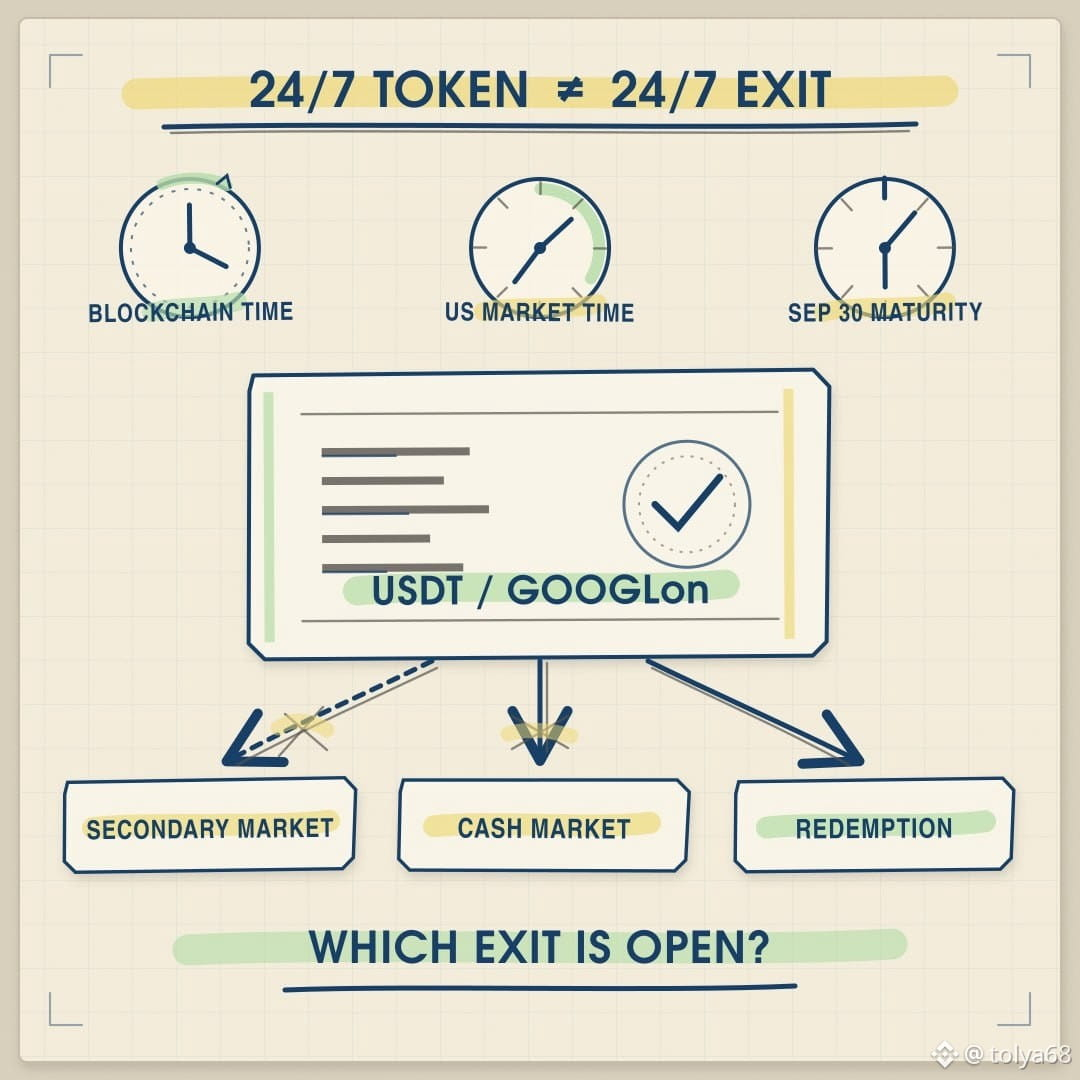
Ich habe den Live-USDT/GOOGLon@30SEP2026-Markt von TermMax geöffnet, weil „man kann Stablecoins gegen Aktienexposure leihen“ ziemlich einfach klingt.
Der Zinssatz des Kredits kann fix sein. Der Collateral-Exit nicht.
Das eigene Risikopanel von TermMax nennt mögliche Trading-Halts rund um Corporate Actions oder Plattformwartung, Liquiditätsengpässe während der Overnight-Sessions sowie 30% Quellensteuer auf Dividenden aus US-Unternehmen.
Da gibt es noch einen Punkt, den ich nicht ignorieren würde. Wenn die Liquidation fehlschlägt und ein Kreditgeber statt USDT GOOGLon erhält, müssen sie möglicherweise den Redemption-Prozess von Ondo nutzen, wenn keine sekundäre Liquidität verfügbar ist.
Diese eine Position läuft also auf drei Uhren:
1. Blockchain-Zeit
2. Zeit des US-Aktienmarkts
3. Das Fälligkeitsdatum des Sep-30-Darlehens
Darum kann „tokenisierte Aktien werden 24/7 gehandelt“ irreführend sein. Der Token kann sich jederzeit bewegen, während der sauberste Rückweg zum Basiswert möglicherweise nicht zu jeder Stunde möglich ist.
Bevor man tokenisiertes Eigenkapital als Sicherheit nutzt, würde ich eine sehr praktische Frage stellen:
Wenn die Liquidation passiert, während der US-Cash-Markt geschlossen ist: Welcher Exit ist dann tatsächlich offen?
Onchain bedeutet nicht immer friktionslos.
@termmax #TermMax
Ich habe den Live-USDT/GOOGLon@30SEP2026-Markt von TermMax geöffnet, weil „man kann Stablecoins gegen Aktienexposure leihen“ ziemlich einfach klingt.
Der Zinssatz des Kredits kann fix sein. Der Collateral-Exit nicht.
Das eigene Risikopanel von TermMax nennt mögliche Trading-Halts rund um Corporate Actions oder Plattformwartung, Liquiditätsengpässe während der Overnight-Sessions sowie 30% Quellensteuer auf Dividenden aus US-Unternehmen.
Da gibt es noch einen Punkt, den ich nicht ignorieren würde. Wenn die Liquidation fehlschlägt und ein Kreditgeber statt USDT GOOGLon erhält, müssen sie möglicherweise den Redemption-Prozess von Ondo nutzen, wenn keine sekundäre Liquidität verfügbar ist.
Diese eine Position läuft also auf drei Uhren:
1. Blockchain-Zeit
2. Zeit des US-Aktienmarkts
3. Das Fälligkeitsdatum des Sep-30-Darlehens
Darum kann „tokenisierte Aktien werden 24/7 gehandelt“ irreführend sein. Der Token kann sich jederzeit bewegen, während der sauberste Rückweg zum Basiswert möglicherweise nicht zu jeder Stunde möglich ist.
Bevor man tokenisiertes Eigenkapital als Sicherheit nutzt, würde ich eine sehr praktische Frage stellen:
Wenn die Liquidation passiert, während der US-Cash-Markt geschlossen ist: Welcher Exit ist dann tatsächlich offen?
Onchain bedeutet nicht immer friktionslos.
@TermMax #TermMax
Der Zinssatz des Kredits kann fix sein. Der Collateral-Exit nicht.
Das eigene Risikopanel von TermMax nennt mögliche Trading-Halts rund um Corporate Actions oder Plattformwartung, Liquiditätsengpässe während der Overnight-Sessions sowie 30% Quellensteuer auf Dividenden aus US-Unternehmen.
Da gibt es noch einen Punkt, den ich nicht ignorieren würde. Wenn die Liquidation fehlschlägt und ein Kreditgeber statt USDT GOOGLon erhält, müssen sie möglicherweise den Redemption-Prozess von Ondo nutzen, wenn keine sekundäre Liquidität verfügbar ist.
Diese eine Position läuft also auf drei Uhren:
1. Blockchain-Zeit
2. Zeit des US-Aktienmarkts
3. Das Fälligkeitsdatum des Sep-30-Darlehens
Darum kann „tokenisierte Aktien werden 24/7 gehandelt“ irreführend sein. Der Token kann sich jederzeit bewegen, während der sauberste Rückweg zum Basiswert möglicherweise nicht zu jeder Stunde möglich ist.
Bevor man tokenisiertes Eigenkapital als Sicherheit nutzt, würde ich eine sehr praktische Frage stellen:
Wenn die Liquidation passiert, während der US-Cash-Markt geschlossen ist: Welcher Exit ist dann tatsächlich offen?
Onchain bedeutet nicht immer friktionslos.
@TermMax #TermMax
1
223
·
--
Bullisch
Ich hätte TermMax Dual Investment fast unter „High-APY-Vaults“ einsortiert. Das wäre eine faule Lektüre gewesen.
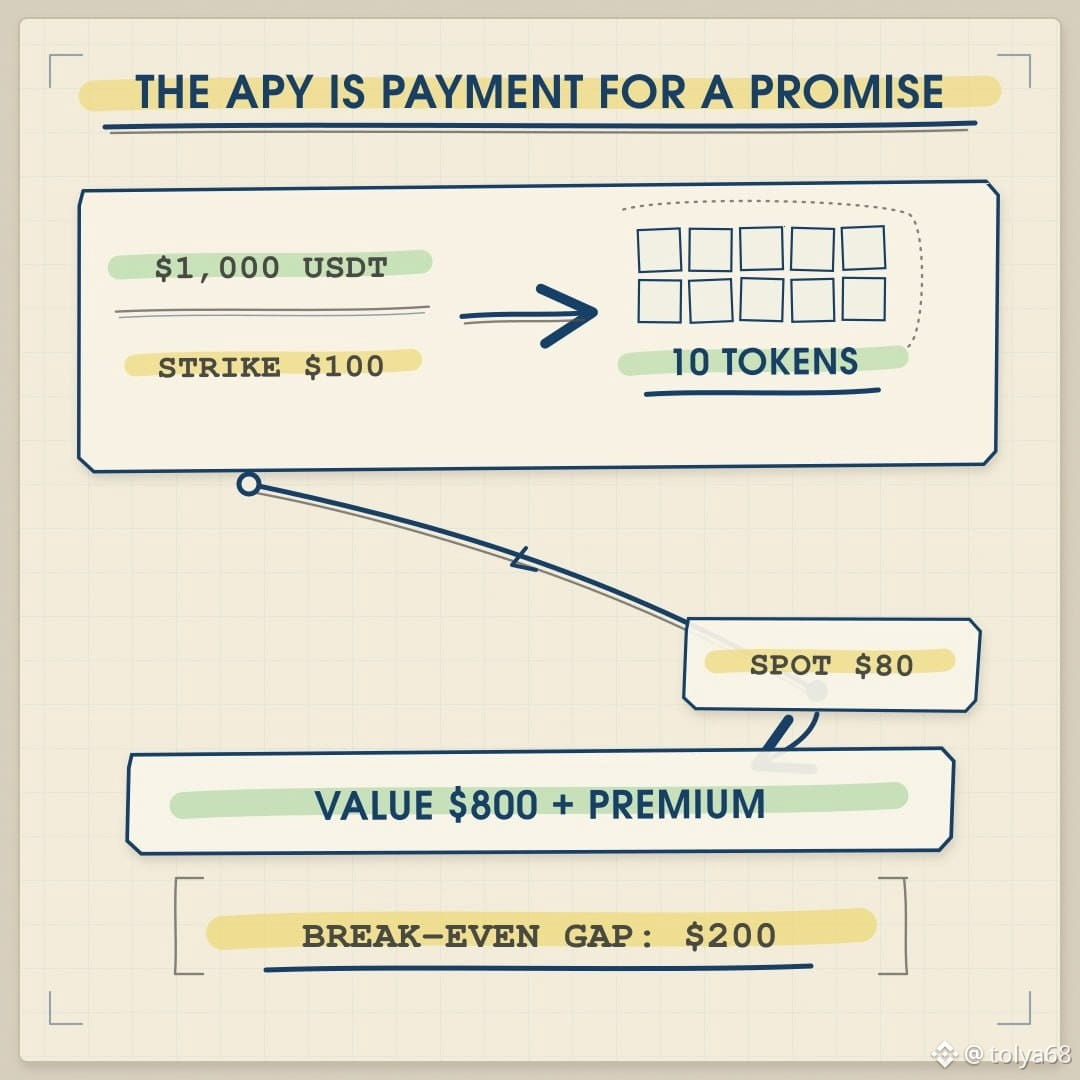
Wenn du USDT einzahlst, stellst du Liquidität bereit, damit Käufer kaufen können. Ganz einfach gesagt: Du gehst auf die andere Seite einer Option. Wenn der Token zum Laufzeitende unter dem Strike schließt, kann dein USDT in diesen Token zum Strike-Preis umgewandelt werden, und du behältst die Prämie.
Nehmen wir ein simples Beispiel.
Du legst 1.000 USDT in einen Vault mit einem Strike von 100 ein. Der Token schließt bei 80. Deine 1.000 USDT werden in 10 Tokens umgewandelt – die jetzt 800 wert sind – plus die Prämie.
Bevor man Punkte, Gebühren oder irgendeinen späteren möglichen Rebound berücksichtigt, muss diese Prämie eine 200-Lücke decken, nur um den ursprünglichen Wert von 1.000 USDT wiederherzustellen.
Das macht das Produkt nicht schlecht. Es macht den Trade ehrlicher, sobald er korrekt beschrieben ist. Du wirst nicht einfach nur dafür bezahlt, USDT zu parken. Du wirst dafür bezahlt, dass du versprichst, den Token zu einem vorher festgelegten Preis zu kaufen, falls der Markt nachgibt.
Der Satz, den ich vor der Einzahlung testen würde, lautet: „Ich wäre immer noch glücklich, diesen Token bei 100 zu halten, selbst nachdem er bei 80 gehandelt wird.“
Wenn das während des Kursrutschs nicht mehr stimmt, hat die Schlagzeilen-APY wahrscheinlich zu viel mitgedacht.
Für mich sind die nützlichen Zahlen nicht nur APY und Laufzeit. Es sind der Strike, die Prämie, der Break-even-Preis und welches Asset ich am Ende tatsächlich halten könnte.
@termmax #TermMax
Ich hätte TermMax Dual Investment fast unter „High-APY-Vaults“ einsortiert. Das wäre eine faule Lektüre gewesen.
Wenn du USDT einzahlst, stellst du Liquidität bereit, damit Käufer kaufen können. Ganz einfach gesagt: Du gehst auf die andere Seite einer Option. Wenn der Token zum Laufzeitende unter dem Strike schließt, kann dein USDT in diesen Token zum Strike-Preis umgewandelt werden, und du behältst die Prämie.
Nehmen wir ein simples Beispiel.
Du legst 1.000 USDT in einen Vault mit einem Strike von 100 ein. Der Token schließt bei 80. Deine 1.000 USDT werden in 10 Tokens umgewandelt – die jetzt 800 wert sind – plus die Prämie.
Bevor man Punkte, Gebühren oder irgendeinen späteren möglichen Rebound berücksichtigt, muss diese Prämie eine 200-Lücke decken, nur um den ursprünglichen Wert von 1.000 USDT wiederherzustellen.
Das macht das Produkt nicht schlecht. Es macht den Trade ehrlicher, sobald er korrekt beschrieben ist. Du wirst nicht einfach nur dafür bezahlt, USDT zu parken. Du wirst dafür bezahlt, dass du versprichst, den Token zu einem vorher festgelegten Preis zu kaufen, falls der Markt nachgibt.
Der Satz, den ich vor der Einzahlung testen würde, lautet: „Ich wäre immer noch glücklich, diesen Token bei 100 zu halten, selbst nachdem er bei 80 gehandelt wird.“
Wenn das während des Kursrutschs nicht mehr stimmt, hat die Schlagzeilen-APY wahrscheinlich zu viel mitgedacht.
Für mich sind die nützlichen Zahlen nicht nur APY und Laufzeit. Es sind der Strike, die Prämie, der Break-even-Preis und welches Asset ich am Ende tatsächlich halten könnte.
@TermMax #TermMax
Wenn du USDT einzahlst, stellst du Liquidität bereit, damit Käufer kaufen können. Ganz einfach gesagt: Du gehst auf die andere Seite einer Option. Wenn der Token zum Laufzeitende unter dem Strike schließt, kann dein USDT in diesen Token zum Strike-Preis umgewandelt werden, und du behältst die Prämie.
Nehmen wir ein simples Beispiel.
Du legst 1.000 USDT in einen Vault mit einem Strike von 100 ein. Der Token schließt bei 80. Deine 1.000 USDT werden in 10 Tokens umgewandelt – die jetzt 800 wert sind – plus die Prämie.
Bevor man Punkte, Gebühren oder irgendeinen späteren möglichen Rebound berücksichtigt, muss diese Prämie eine 200-Lücke decken, nur um den ursprünglichen Wert von 1.000 USDT wiederherzustellen.
Das macht das Produkt nicht schlecht. Es macht den Trade ehrlicher, sobald er korrekt beschrieben ist. Du wirst nicht einfach nur dafür bezahlt, USDT zu parken. Du wirst dafür bezahlt, dass du versprichst, den Token zu einem vorher festgelegten Preis zu kaufen, falls der Markt nachgibt.
Der Satz, den ich vor der Einzahlung testen würde, lautet: „Ich wäre immer noch glücklich, diesen Token bei 100 zu halten, selbst nachdem er bei 80 gehandelt wird.“
Wenn das während des Kursrutschs nicht mehr stimmt, hat die Schlagzeilen-APY wahrscheinlich zu viel mitgedacht.
Für mich sind die nützlichen Zahlen nicht nur APY und Laufzeit. Es sind der Strike, die Prämie, der Break-even-Preis und welches Asset ich am Ende tatsächlich halten könnte.
@TermMax #TermMax
4
5
75
·
--
Bullisch
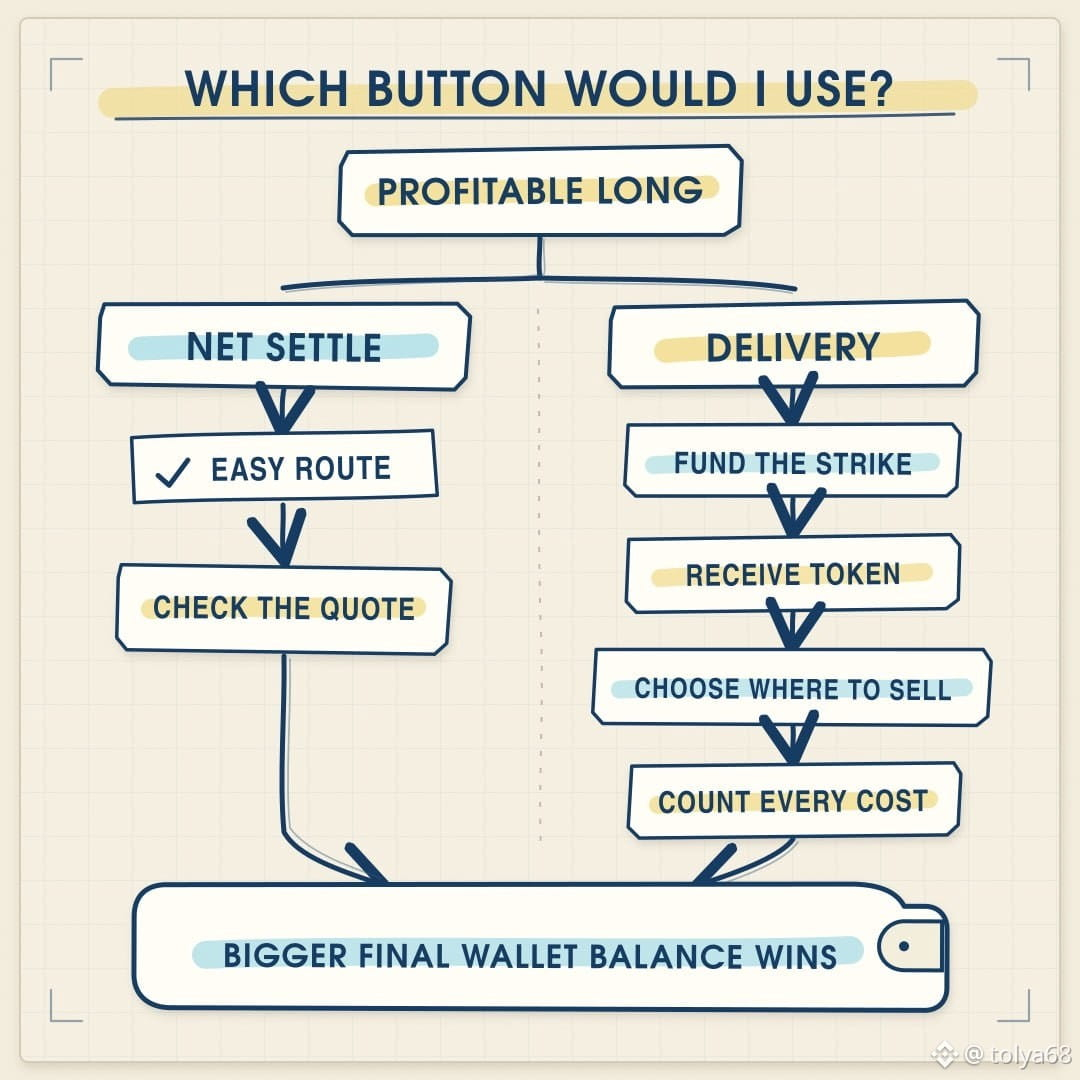
Ich habe die beiden Übungs-Buttons in TermMax Alpha einfach nur angestarrt und gedacht: Okay, aber welchen würde ich eigentlich verwenden?
Angenommen, mein Long ist im Gewinn.
Net Settle ist die einfache Antwort. Das Protokoll übernimmt die Abwicklung, und wenn die Position klein ist und die On-Chain-Liquidität ordentlich ist, würde ich es wahrscheinlich nicht unnötig verkomplizieren.
Delivery wird erst spannend. Ich würde den Kauf zum Strike finanzieren, den zugrunde liegenden Token erhalten und dann entscheiden, wo ich ihn verkaufe. Wenn ein großes Net Settle auf einen dünnen DEX-Pool trifft, könnte diese zusätzliche Kontrolle mehr sparen, als es kostet.
Könnte. Nicht automatisch.
Ich müsste trotzdem die Übertragungskosten mitrechnen, das Ausführungs-/Venue-Risiko, den Zeitpunkt und das Kapital, das für das Ausüben nötig ist. Delivery ist kein magischer Button, der Slippage einfach wegzaubert.
Meine Prüfung wäre ziemlich simpel:
1. Was lässt mich Net Settle übrig?
2. Was lässt mich Delivery nach allen Kosten übrig?
3. Wie viel extra Aufwand und Kapital benötigt Route zwei?
Ich würde das größere finale Guthaben im Wallet wählen. Nicht den schickeren Button.
Also geht es hier nicht wirklich um Cash versus Token. Es geht um Bequemlichkeit versus Kontrolle bei der Ausführung.
@termmax #TermMax
Ich habe die beiden Übungs-Buttons in TermMax Alpha einfach nur angestarrt und gedacht: Okay, aber welchen würde ich eigentlich verwenden?
Angenommen, mein Long ist im Gewinn.
Net Settle ist die einfache Antwort. Das Protokoll übernimmt die Abwicklung, und wenn die Position klein ist und die On-Chain-Liquidität ordentlich ist, würde ich es wahrscheinlich nicht unnötig verkomplizieren.
Delivery wird erst spannend. Ich würde den Kauf zum Strike finanzieren, den zugrunde liegenden Token erhalten und dann entscheiden, wo ich ihn verkaufe. Wenn ein großes Net Settle auf einen dünnen DEX-Pool trifft, könnte diese zusätzliche Kontrolle mehr sparen, als es kostet.
Könnte. Nicht automatisch.
Ich müsste trotzdem die Übertragungskosten mitrechnen, das Ausführungs-/Venue-Risiko, den Zeitpunkt und das Kapital, das für das Ausüben nötig ist. Delivery ist kein magischer Button, der Slippage einfach wegzaubert.
Meine Prüfung wäre ziemlich simpel:
1. Was lässt mich Net Settle übrig?
2. Was lässt mich Delivery nach allen Kosten übrig?
3. Wie viel extra Aufwand und Kapital benötigt Route zwei?
Ich würde das größere finale Guthaben im Wallet wählen. Nicht den schickeren Button.
Also geht es hier nicht wirklich um Cash versus Token. Es geht um Bequemlichkeit versus Kontrolle bei der Ausführung.
@TermMax #TermMax
Angenommen, mein Long ist im Gewinn.
Net Settle ist die einfache Antwort. Das Protokoll übernimmt die Abwicklung, und wenn die Position klein ist und die On-Chain-Liquidität ordentlich ist, würde ich es wahrscheinlich nicht unnötig verkomplizieren.
Delivery wird erst spannend. Ich würde den Kauf zum Strike finanzieren, den zugrunde liegenden Token erhalten und dann entscheiden, wo ich ihn verkaufe. Wenn ein großes Net Settle auf einen dünnen DEX-Pool trifft, könnte diese zusätzliche Kontrolle mehr sparen, als es kostet.
Könnte. Nicht automatisch.
Ich müsste trotzdem die Übertragungskosten mitrechnen, das Ausführungs-/Venue-Risiko, den Zeitpunkt und das Kapital, das für das Ausüben nötig ist. Delivery ist kein magischer Button, der Slippage einfach wegzaubert.
Meine Prüfung wäre ziemlich simpel:
1. Was lässt mich Net Settle übrig?
2. Was lässt mich Delivery nach allen Kosten übrig?
3. Wie viel extra Aufwand und Kapital benötigt Route zwei?
Ich würde das größere finale Guthaben im Wallet wählen. Nicht den schickeren Button.
Also geht es hier nicht wirklich um Cash versus Token. Es geht um Bequemlichkeit versus Kontrolle bei der Ausführung.
@TermMax #TermMax
2
1
65
·
--
Bullisch
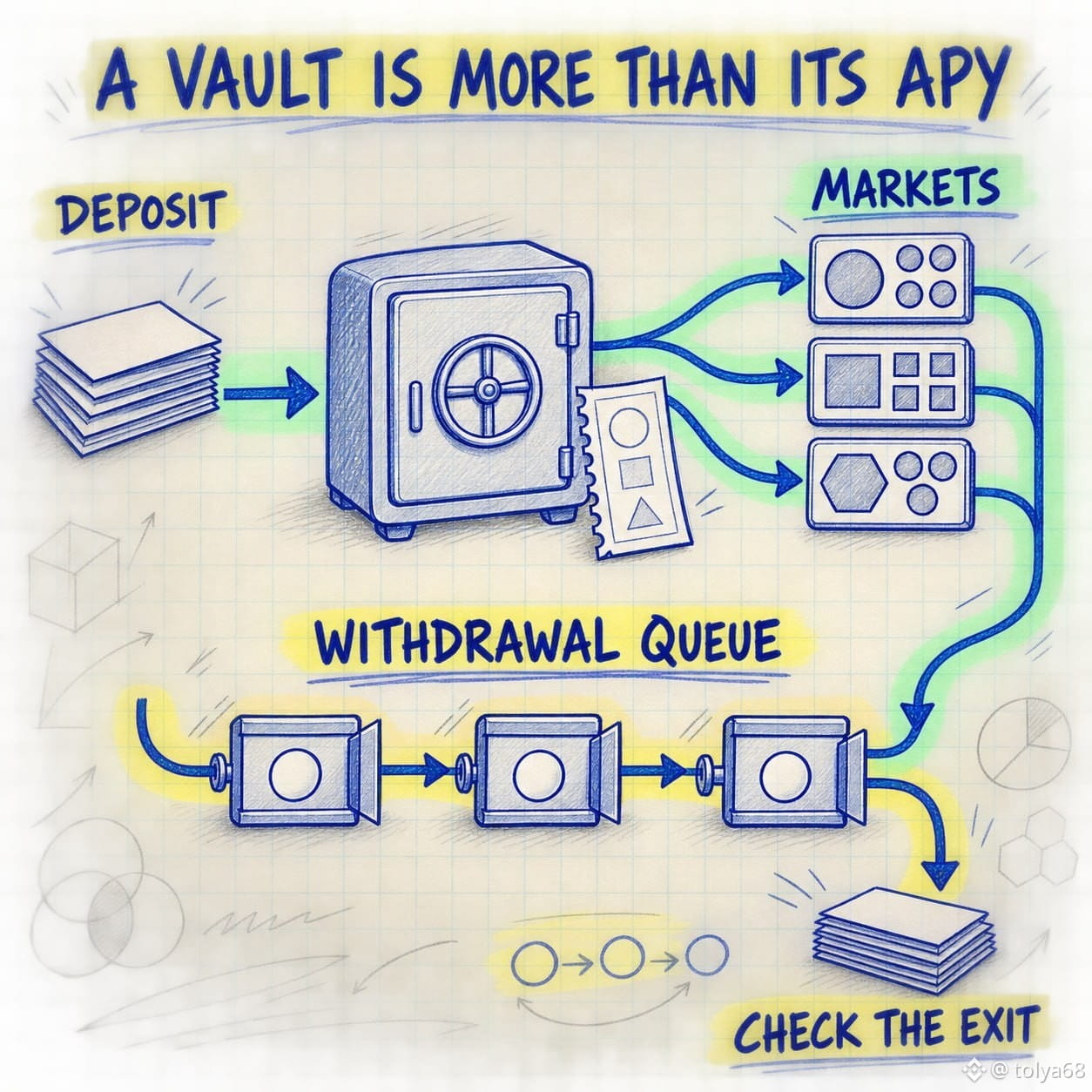
Bevor ich Geld in einen Tresor einlege, möchte ich wissen, wie es wieder herauskommt.
Ein TermMax-Tresor kann ein Schuld-Asset über mehrere Märkte hinweg bereitstellen. Einleger erhalten ERC-4626-Anteile, aber eine Rücknahme muss dennoch über die Auszahlungswarteschlange des Tresors laufen. Bei einer großen Rücknahme muss der Kurator möglicherweise zuerst Orders anpassen oder Positionen zurücklösen.
Daher würde ich „ERC-4626“ nicht als „sofort verfügbares Bargeld“ lesen. Es standardisiert die Anteilsausbuchung und Rücknahmen; es beseitigt nicht die Liquiditätsbeschränkungen der darunterliegenden Positionen.
Meine kurze Checkliste wäre: Markt-Mix, Kapazität, Auszahlungswarteschlange, verfügbare Reserven und Kurator. Die beworbene Rendite ist nur die halbe Tresor-Geschichte. Das Exit-Design ist die andere Hälfte.
@termmax #TermMax
Bevor ich Geld in einen Tresor einlege, möchte ich wissen, wie es wieder herauskommt.
Ein TermMax-Tresor kann ein Schuld-Asset über mehrere Märkte hinweg bereitstellen. Einleger erhalten ERC-4626-Anteile, aber eine Rücknahme muss dennoch über die Auszahlungswarteschlange des Tresors laufen. Bei einer großen Rücknahme muss der Kurator möglicherweise zuerst Orders anpassen oder Positionen zurücklösen.
Daher würde ich „ERC-4626“ nicht als „sofort verfügbares Bargeld“ lesen. Es standardisiert die Anteilsausbuchung und Rücknahmen; es beseitigt nicht die Liquiditätsbeschränkungen der darunterliegenden Positionen.
Meine kurze Checkliste wäre: Markt-Mix, Kapazität, Auszahlungswarteschlange, verfügbare Reserven und Kurator. Die beworbene Rendite ist nur die halbe Tresor-Geschichte. Das Exit-Design ist die andere Hälfte.
@TermMax #TermMax
Ein TermMax-Tresor kann ein Schuld-Asset über mehrere Märkte hinweg bereitstellen. Einleger erhalten ERC-4626-Anteile, aber eine Rücknahme muss dennoch über die Auszahlungswarteschlange des Tresors laufen. Bei einer großen Rücknahme muss der Kurator möglicherweise zuerst Orders anpassen oder Positionen zurücklösen.
Daher würde ich „ERC-4626“ nicht als „sofort verfügbares Bargeld“ lesen. Es standardisiert die Anteilsausbuchung und Rücknahmen; es beseitigt nicht die Liquiditätsbeschränkungen der darunterliegenden Positionen.
Meine kurze Checkliste wäre: Markt-Mix, Kapazität, Auszahlungswarteschlange, verfügbare Reserven und Kurator. Die beworbene Rendite ist nur die halbe Tresor-Geschichte. Das Exit-Design ist die andere Hälfte.
@TermMax #TermMax
2
3
55
·
--
Bullisch
#bStocksCIS @BinanceCIS $AAPLB
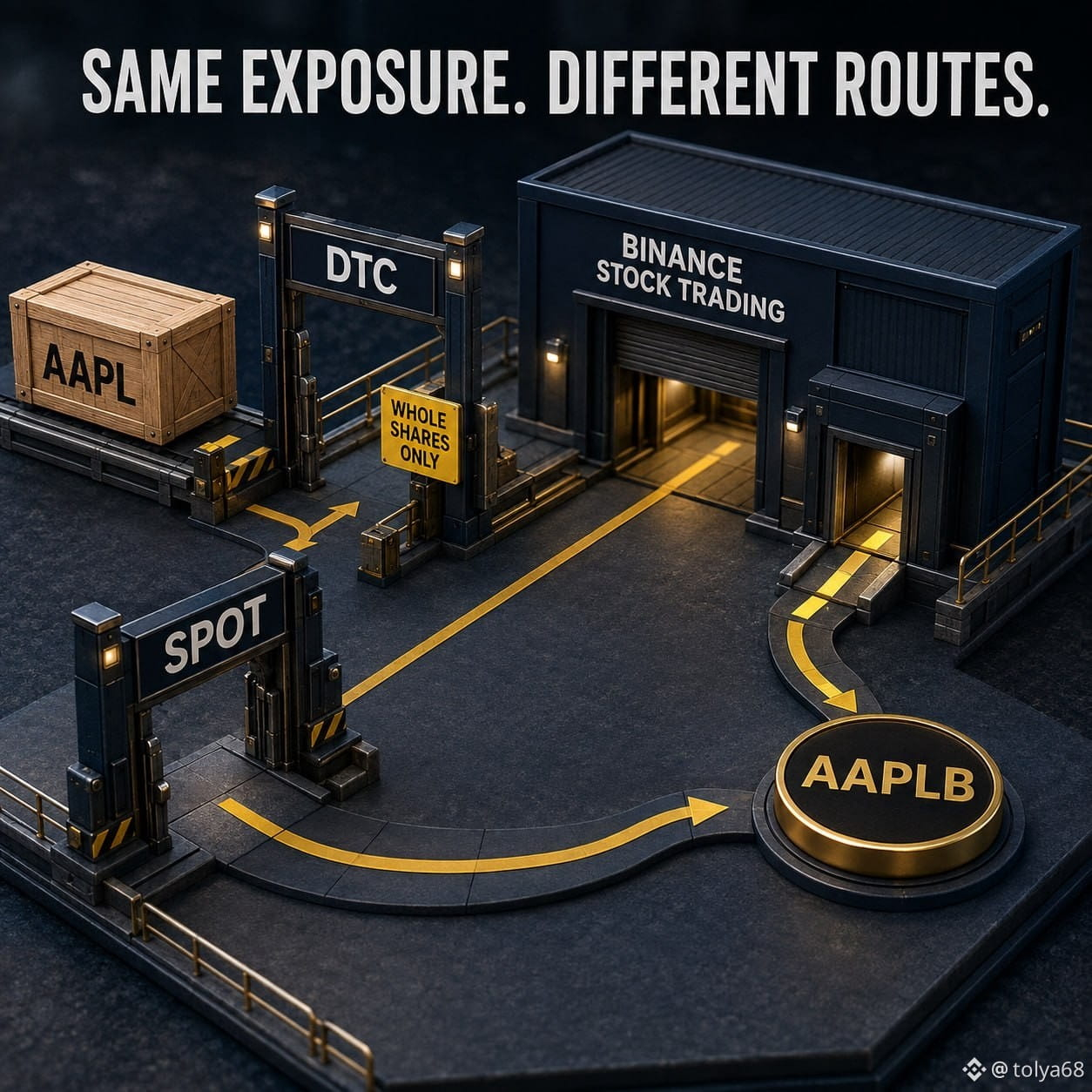
Aktien über DTC in Binance zu transferieren ist nicht dasselbe wie das Einzahlen eines Tokens.
Die aktuelle Anleitung für den Transfer-In beschreibt einen Wertpapierprozess von Broker zu Broker. Der übermittelnde Broker sendet unterstützte Aktien an den Brokerage-Partner von Binance mithilfe von DTC-Abwicklungsanweisungen.
Die erste praktische Grenze betrifft die Menge: DTC-Übertragungsanfragen akzeptieren nur ganze Aktien.
Wenn ein externes Konto 3,4 AAPL enthält, kann eine Anfrage nicht 3,4 Aktien angeben. Eine gebrochene Menge kann dazu führen, dass die Anfrage abgelehnt wird, und dieser Bruchteil wird nicht automatisch zu $AAPLB.
Es gibt noch mehrere weitere Prüfpunkte:
Der rechtliche Name auf beiden Brokerage-Konten muss übereinstimmen.
Die Wertpapier-Symbole und -Mengen müssen mit den Abwicklungsanweisungen übereinstimmen.
Nur unterstützte Aktien können übertragen werden.
Jede Anfrage kann bis zu 50 verschiedene Aktien enthalten.
Anfragen werden in täglichen Sammelübertragungen von Montag bis Freitag um 07:00 UTC verarbeitet, und Binance empfiehlt, mindestens 14 Geschäftstage zur Fertigstellung einzuplanen.
Am wichtigsten: Das ankommende Asset ist weiterhin eine Aktienposition im Binance Stock Trading. Die Umwandlung einer berechtigten AAPL-Position in $AAPLB ist eine separate Token-Conversion-Aktion. $AAPLB direkt an Spot zu kaufen, ist eine dritte Route.
„Meine Apple-Exponierung zu Binance verschieben“ kann also drei sehr unterschiedliche Vorgänge meinen:
1. Broker-zu-Broker DTC-Aktientransfer
2. Aktien-zu-bStock-Conversion
3. Direkter bStock-Kauf an Spot
Die Unternehmens-Exponierung kann ähnlich aussehen, aber das Asset, das Konto und die Abwicklungsstrecke sind nicht austauschbar.
{spot}(AAPLBUSDT)
#bStocksCIS @BinanceCIS $AAPLB
Aktien über DTC in Binance zu transferieren ist nicht dasselbe wie das Einzahlen eines Tokens.
Die aktuelle Anleitung für den Transfer-In beschreibt einen Wertpapierprozess von Broker zu Broker. Der übermittelnde Broker sendet unterstützte Aktien an den Brokerage-Partner von Binance mithilfe von DTC-Abwicklungsanweisungen.
Die erste praktische Grenze betrifft die Menge: DTC-Übertragungsanfragen akzeptieren nur ganze Aktien.
Wenn ein externes Konto 3,4 AAPL enthält, kann eine Anfrage nicht 3,4 Aktien angeben. Eine gebrochene Menge kann dazu führen, dass die Anfrage abgelehnt wird, und dieser Bruchteil wird nicht automatisch zu $AAPLB .
Es gibt noch mehrere weitere Prüfpunkte:
Der rechtliche Name auf beiden Brokerage-Konten muss übereinstimmen.
Die Wertpapier-Symbole und -Mengen müssen mit den Abwicklungsanweisungen übereinstimmen.
Nur unterstützte Aktien können übertragen werden.
Jede Anfrage kann bis zu 50 verschiedene Aktien enthalten.
Anfragen werden in täglichen Sammelübertragungen von Montag bis Freitag um 07:00 UTC verarbeitet, und Binance empfiehlt, mindestens 14 Geschäftstage zur Fertigstellung einzuplanen.
Am wichtigsten: Das ankommende Asset ist weiterhin eine Aktienposition im Binance Stock Trading. Die Umwandlung einer berechtigten AAPL-Position in $AAPLB ist eine separate Token-Conversion-Aktion. $AAPLB direkt an Spot zu kaufen, ist eine dritte Route.
„Meine Apple-Exponierung zu Binance verschieben“ kann also drei sehr unterschiedliche Vorgänge meinen:
1. Broker-zu-Broker DTC-Aktientransfer
2. Aktien-zu-bStock-Conversion
3. Direkter bStock-Kauf an Spot
Die Unternehmens-Exponierung kann ähnlich aussehen, aber das Asset, das Konto und die Abwicklungsstrecke sind nicht austauschbar.
Aktien über DTC in Binance zu transferieren ist nicht dasselbe wie das Einzahlen eines Tokens.
Die aktuelle Anleitung für den Transfer-In beschreibt einen Wertpapierprozess von Broker zu Broker. Der übermittelnde Broker sendet unterstützte Aktien an den Brokerage-Partner von Binance mithilfe von DTC-Abwicklungsanweisungen.
Die erste praktische Grenze betrifft die Menge: DTC-Übertragungsanfragen akzeptieren nur ganze Aktien.
Wenn ein externes Konto 3,4 AAPL enthält, kann eine Anfrage nicht 3,4 Aktien angeben. Eine gebrochene Menge kann dazu führen, dass die Anfrage abgelehnt wird, und dieser Bruchteil wird nicht automatisch zu $AAPLB .
Es gibt noch mehrere weitere Prüfpunkte:
Der rechtliche Name auf beiden Brokerage-Konten muss übereinstimmen.
Die Wertpapier-Symbole und -Mengen müssen mit den Abwicklungsanweisungen übereinstimmen.
Nur unterstützte Aktien können übertragen werden.
Jede Anfrage kann bis zu 50 verschiedene Aktien enthalten.
Anfragen werden in täglichen Sammelübertragungen von Montag bis Freitag um 07:00 UTC verarbeitet, und Binance empfiehlt, mindestens 14 Geschäftstage zur Fertigstellung einzuplanen.
Am wichtigsten: Das ankommende Asset ist weiterhin eine Aktienposition im Binance Stock Trading. Die Umwandlung einer berechtigten AAPL-Position in $AAPLB ist eine separate Token-Conversion-Aktion. $AAPLB direkt an Spot zu kaufen, ist eine dritte Route.
„Meine Apple-Exponierung zu Binance verschieben“ kann also drei sehr unterschiedliche Vorgänge meinen:
1. Broker-zu-Broker DTC-Aktientransfer
2. Aktien-zu-bStock-Conversion
3. Direkter bStock-Kauf an Spot
Die Unternehmens-Exponierung kann ähnlich aussehen, aber das Asset, das Konto und die Abwicklungsstrecke sind nicht austauschbar.
2
3
72
·
--
Bullisch
Ich ging davon aus, dass ein TermMax-Darlehen ein langweiliges Ende hat: das Debt-Token zurückzahlen und die Sicherheiten zurückerhalten. Das Protokoll bietet dem Borrower einen alternativen Weg.
Angenommen, ein GT erfasst 1.000 USDC Schulden.
Route A: zahle 1.000 USDC direkt zurück.
Route B: erwerbe 1.000 passende Fixed-Rate Tokens und nutze diese FTs, um die Schuld zu begleichen. Wenn FT bei 0,96 $ gehandelt wird, kostet der Kauf 960 $ vor Gebühren, Gas und Slippage. Bei 0,99 $ kostet es 990 $.
Wie kann das passieren? FT wird vor Fälligkeit gehandelt. Sein Preis reagiert auf die verbleibende Zeit, die aktuellen Zinssätze und die verfügbare Liquidität. Wenn sich der Markt zugunsten des Borrowers bewegt, kann der Rückkauf der Forderung weniger kosten als die Rückzahlung zum Nennwert.
Das ist kein garantiertes Discount. Ein großer FT-Order kann sich durch die Preis-Kurve bewegen, und Ausführungskosten können eine kleine Ersparnis zunichtemachen.
Mein praktischer Check wäre einfach: vergleiche die Gesamtkosten für den Erwerb von genügend FT mit der direkten Rückzahlung des Debt-Tokens. Der Betrag der direkten Rückzahlung gibt dem Borrower eine bekannte vertragliche Obergrenze vor Ausführungskosten, zwingt jedoch nicht den teureren Exit, wenn der Sekundärmarkt einen günstigeren anbietet.
@termmax #TermMax
Ich ging davon aus, dass ein TermMax-Darlehen ein langweiliges Ende hat: das Debt-Token zurückzahlen und die Sicherheiten zurückerhalten. Das Protokoll bietet dem Borrower einen alternativen Weg.
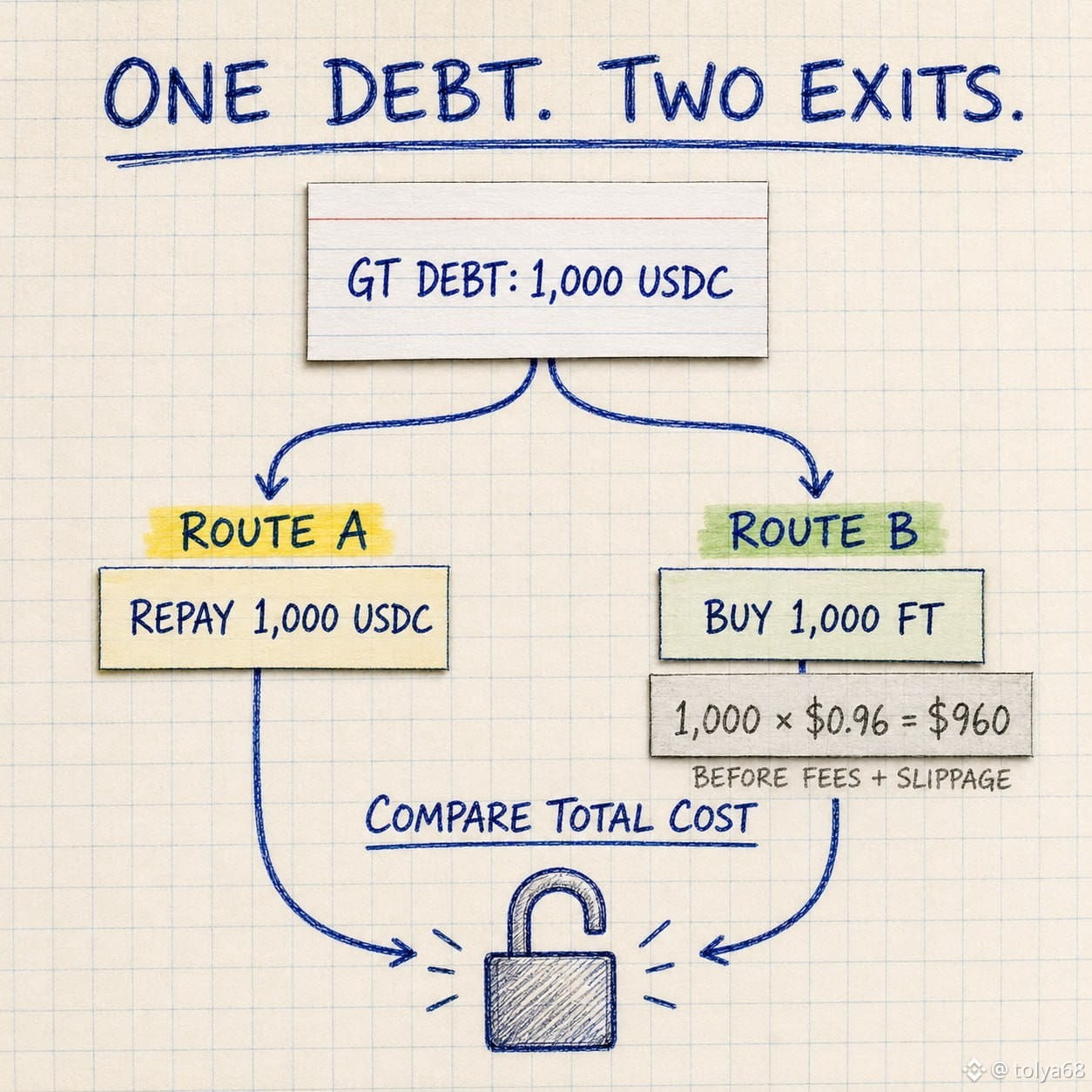
Angenommen, ein GT erfasst 1.000 USDC Schulden.
Route A: zahle 1.000 USDC direkt zurück.
Route B: erwerbe 1.000 passende Fixed-Rate Tokens und nutze diese FTs, um die Schuld zu begleichen. Wenn FT bei 0,96 $ gehandelt wird, kostet der Kauf 960 $ vor Gebühren, Gas und Slippage. Bei 0,99 $ kostet es 990 $.
Wie kann das passieren? FT wird vor Fälligkeit gehandelt. Sein Preis reagiert auf die verbleibende Zeit, die aktuellen Zinssätze und die verfügbare Liquidität. Wenn sich der Markt zugunsten des Borrowers bewegt, kann der Rückkauf der Forderung weniger kosten als die Rückzahlung zum Nennwert.
Das ist kein garantiertes Discount. Ein großer FT-Order kann sich durch die Preis-Kurve bewegen, und Ausführungskosten können eine kleine Ersparnis zunichtemachen.
Mein praktischer Check wäre einfach: vergleiche die Gesamtkosten für den Erwerb von genügend FT mit der direkten Rückzahlung des Debt-Tokens. Der Betrag der direkten Rückzahlung gibt dem Borrower eine bekannte vertragliche Obergrenze vor Ausführungskosten, zwingt jedoch nicht den teureren Exit, wenn der Sekundärmarkt einen günstigeren anbietet.
@TermMax #TermMax
Angenommen, ein GT erfasst 1.000 USDC Schulden.
Route A: zahle 1.000 USDC direkt zurück.
Route B: erwerbe 1.000 passende Fixed-Rate Tokens und nutze diese FTs, um die Schuld zu begleichen. Wenn FT bei 0,96 $ gehandelt wird, kostet der Kauf 960 $ vor Gebühren, Gas und Slippage. Bei 0,99 $ kostet es 990 $.
Wie kann das passieren? FT wird vor Fälligkeit gehandelt. Sein Preis reagiert auf die verbleibende Zeit, die aktuellen Zinssätze und die verfügbare Liquidität. Wenn sich der Markt zugunsten des Borrowers bewegt, kann der Rückkauf der Forderung weniger kosten als die Rückzahlung zum Nennwert.
Das ist kein garantiertes Discount. Ein großer FT-Order kann sich durch die Preis-Kurve bewegen, und Ausführungskosten können eine kleine Ersparnis zunichtemachen.
Mein praktischer Check wäre einfach: vergleiche die Gesamtkosten für den Erwerb von genügend FT mit der direkten Rückzahlung des Debt-Tokens. Der Betrag der direkten Rückzahlung gibt dem Borrower eine bekannte vertragliche Obergrenze vor Ausführungskosten, zwingt jedoch nicht den teureren Exit, wenn der Sekundärmarkt einen günstigeren anbietet.
@TermMax #TermMax
1
67
·
--
Bullisch
#bStocksCIS @BinanceCIS
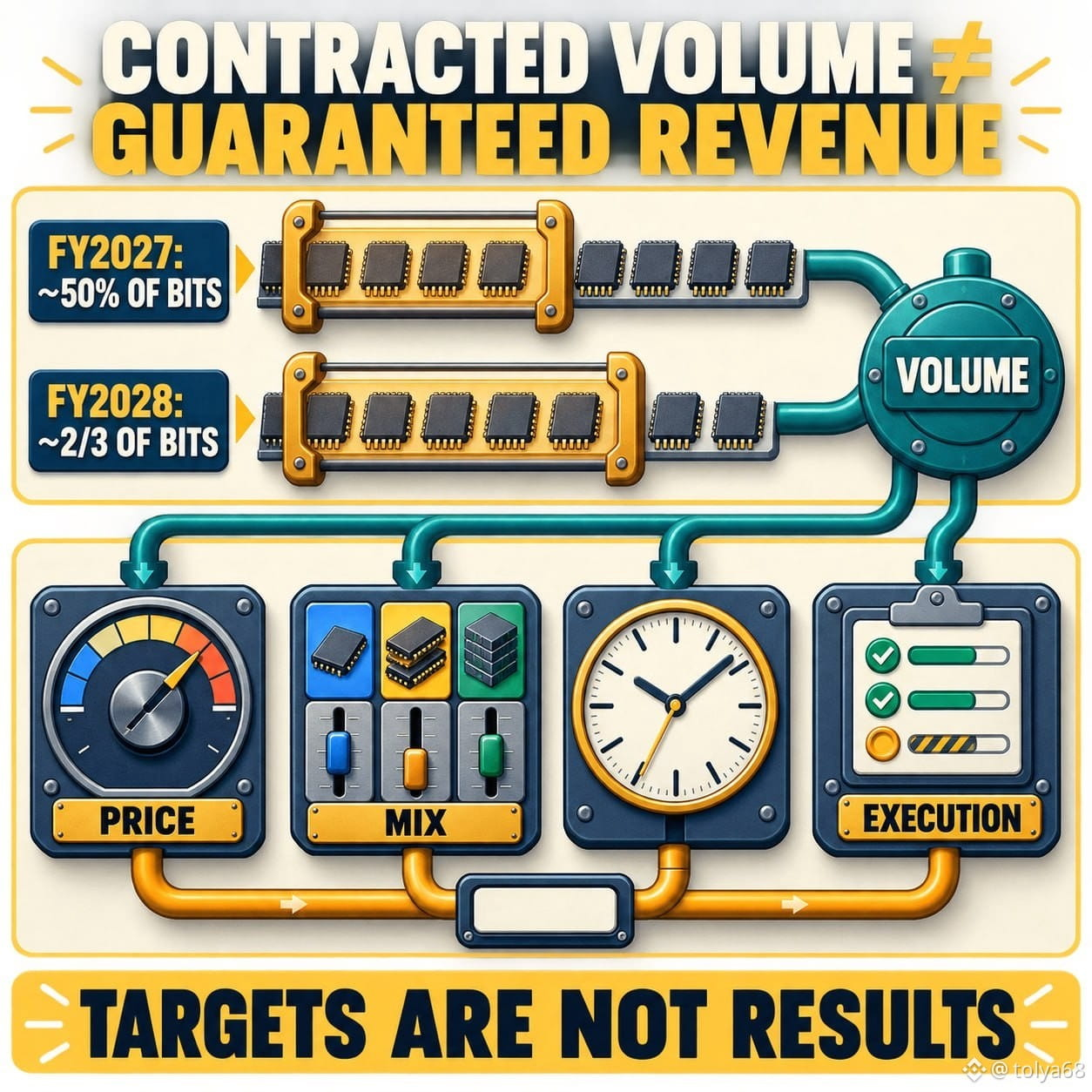
„Etwa 50 % der Bits für das Geschäftsjahr 2027 sind durch neue Vereinbarungen abgedeckt“ klingt so, als wäre 50 % des Umsatzes garantiert. Das ist nicht der Fall.
Auf seinem Investor Day am 13. August sagte Sandisk, man habe neue Vereinbarungen zum Geschäftsmodell mit acht Kunden unterzeichnet, die ungefähr 50 % der Bits für das Geschäftsjahr 2027 und etwa zwei Drittel der Bits für das Geschäftsjahr 2028 abdecken. Die Verträge nutzen zugesicherte Volumina, Mindest-Finanzzusagen und strukturierte Preismechanismen.
Hier ist die praktische Unterscheidung, die ich für $SNDKB verwende.
Was wird klarer bzw. sichtbarer:
- Nachfragevolumen
- Kapazitätsplanung
- minimale Kundenverpflichtung
- bessere Planbarkeit der künftigen Cashflows
Was ist nicht automatisch festgelegt:
- der endgültige Verkaufspreis
- die Produktmischung
- der Versandzeitpunkt
- die Bruttomarge
- das Kreditrisiko und das Ausführungsrisiko beim Kunden
Ein „Bit“ ist ein physisches Volumen, nicht ein Dollar Umsatz.
Die gleiche Vorsicht gilt für die Ziele von Sandisk für das Geschäftsjahr 2028 bis 2030: Wachstum des Umsatzes im mittleren bis hohen Zehner-Prozentbereich, etwa 80 % nicht-GAAP-Bruttomarge, etwa 75 % nicht-GAAP-Betriebsmarge und etwa 50 % adjusted Free-Cash-Flow-Marge. Das sind Management-Ziele, die auf Annahmen basieren – nicht erreichte Ergebnisse.
Sandisk erwartet außerdem, 100 % des überschüssigen Cash zurückzugeben, nachdem in das Geschäft investiert wurde. Das wichtige Wort ist „überschüssig“: Es handelt sich um den Restbetrag nach operativen und Investitionsbedarfen – nicht um ein festes Ausschüttungsversprechen.
Mein einfacher Vier-Fragen-Check: Ist das Volumen zugesichert? Ist der Preis fest oder formelbasiert? Gibt es eine Mindest-Cash-Zusage? Was kann die Erfassung verzögern?
Würden Sie lieber ein stärker vorhersehbares, vertraglich zugesichertes Volumen bevorzugen – selbst wenn das möglicherweise einige Chancen auf der Aufwärtsseite aus einem plötzlichen Anstieg des Spotpreises verringert?
{spot}(SNDKBUSDT)
#bStocksCIS @BinanceCIS
„Etwa 50 % der Bits für das Geschäftsjahr 2027 sind durch neue Vereinbarungen abgedeckt“ klingt so, als wäre 50 % des Umsatzes garantiert. Das ist nicht der Fall.
Auf seinem Investor Day am 13. August sagte Sandisk, man habe neue Vereinbarungen zum Geschäftsmodell mit acht Kunden unterzeichnet, die ungefähr 50 % der Bits für das Geschäftsjahr 2027 und etwa zwei Drittel der Bits für das Geschäftsjahr 2028 abdecken. Die Verträge nutzen zugesicherte Volumina, Mindest-Finanzzusagen und strukturierte Preismechanismen.
Hier ist die praktische Unterscheidung, die ich für $SNDKB verwende.
Was wird klarer bzw. sichtbarer:
- Nachfragevolumen
- Kapazitätsplanung
- minimale Kundenverpflichtung
- bessere Planbarkeit der künftigen Cashflows
Was ist nicht automatisch festgelegt:
- der endgültige Verkaufspreis
- die Produktmischung
- der Versandzeitpunkt
- die Bruttomarge
- das Kreditrisiko und das Ausführungsrisiko beim Kunden
Ein „Bit“ ist ein physisches Volumen, nicht ein Dollar Umsatz.
Die gleiche Vorsicht gilt für die Ziele von Sandisk für das Geschäftsjahr 2028 bis 2030: Wachstum des Umsatzes im mittleren bis hohen Zehner-Prozentbereich, etwa 80 % nicht-GAAP-Bruttomarge, etwa 75 % nicht-GAAP-Betriebsmarge und etwa 50 % adjusted Free-Cash-Flow-Marge. Das sind Management-Ziele, die auf Annahmen basieren – nicht erreichte Ergebnisse.
Sandisk erwartet außerdem, 100 % des überschüssigen Cash zurückzugeben, nachdem in das Geschäft investiert wurde. Das wichtige Wort ist „überschüssig“: Es handelt sich um den Restbetrag nach operativen und Investitionsbedarfen – nicht um ein festes Ausschüttungsversprechen.
Mein einfacher Vier-Fragen-Check: Ist das Volumen zugesichert? Ist der Preis fest oder formelbasiert? Gibt es eine Mindest-Cash-Zusage? Was kann die Erfassung verzögern?
Würden Sie lieber ein stärker vorhersehbares, vertraglich zugesichertes Volumen bevorzugen – selbst wenn das möglicherweise einige Chancen auf der Aufwärtsseite aus einem plötzlichen Anstieg des Spotpreises verringert?
„Etwa 50 % der Bits für das Geschäftsjahr 2027 sind durch neue Vereinbarungen abgedeckt“ klingt so, als wäre 50 % des Umsatzes garantiert. Das ist nicht der Fall.
Auf seinem Investor Day am 13. August sagte Sandisk, man habe neue Vereinbarungen zum Geschäftsmodell mit acht Kunden unterzeichnet, die ungefähr 50 % der Bits für das Geschäftsjahr 2027 und etwa zwei Drittel der Bits für das Geschäftsjahr 2028 abdecken. Die Verträge nutzen zugesicherte Volumina, Mindest-Finanzzusagen und strukturierte Preismechanismen.
Hier ist die praktische Unterscheidung, die ich für $SNDKB verwende.
Was wird klarer bzw. sichtbarer:
- Nachfragevolumen
- Kapazitätsplanung
- minimale Kundenverpflichtung
- bessere Planbarkeit der künftigen Cashflows
Was ist nicht automatisch festgelegt:
- der endgültige Verkaufspreis
- die Produktmischung
- der Versandzeitpunkt
- die Bruttomarge
- das Kreditrisiko und das Ausführungsrisiko beim Kunden
Ein „Bit“ ist ein physisches Volumen, nicht ein Dollar Umsatz.
Die gleiche Vorsicht gilt für die Ziele von Sandisk für das Geschäftsjahr 2028 bis 2030: Wachstum des Umsatzes im mittleren bis hohen Zehner-Prozentbereich, etwa 80 % nicht-GAAP-Bruttomarge, etwa 75 % nicht-GAAP-Betriebsmarge und etwa 50 % adjusted Free-Cash-Flow-Marge. Das sind Management-Ziele, die auf Annahmen basieren – nicht erreichte Ergebnisse.
Sandisk erwartet außerdem, 100 % des überschüssigen Cash zurückzugeben, nachdem in das Geschäft investiert wurde. Das wichtige Wort ist „überschüssig“: Es handelt sich um den Restbetrag nach operativen und Investitionsbedarfen – nicht um ein festes Ausschüttungsversprechen.
Mein einfacher Vier-Fragen-Check: Ist das Volumen zugesichert? Ist der Preis fest oder formelbasiert? Gibt es eine Mindest-Cash-Zusage? Was kann die Erfassung verzögern?
Würden Sie lieber ein stärker vorhersehbares, vertraglich zugesichertes Volumen bevorzugen – selbst wenn das möglicherweise einige Chancen auf der Aufwärtsseite aus einem plötzlichen Anstieg des Spotpreises verringert?
1
1
102
·
--
Bullisch
#bStocksCIS @BinanceCIS
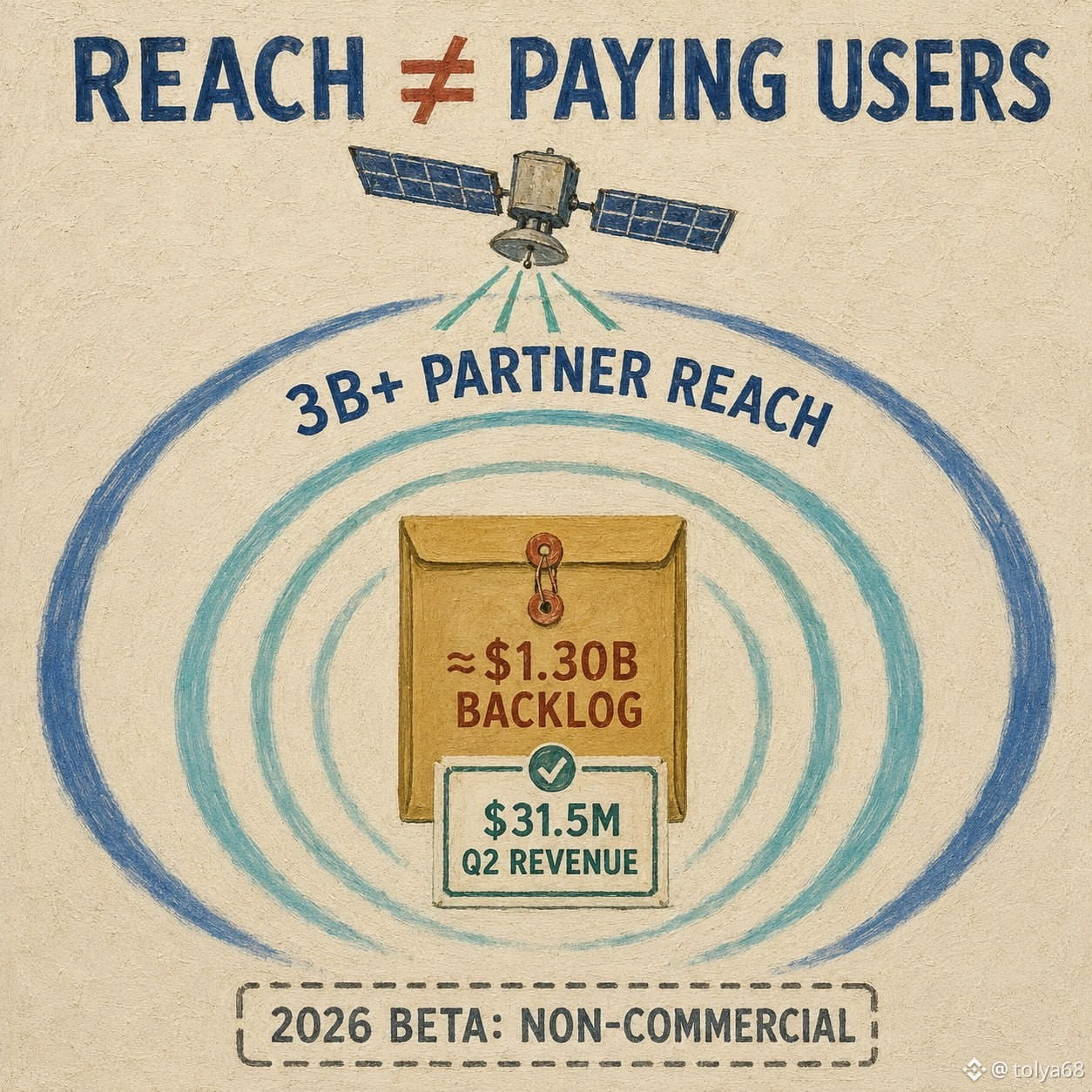
Ich bin bei AST SpaceMobile mit der größten Zahl stehen geblieben: „über 3 Milliarden Abonnenten.“
Das klingt nach Nutzern. Ist es aber nicht.
AST sagt, dass seine 60+ Mobilfunknetz-Partner zusammen mehr als 3B Abonnenten abdecken. Das ist potenzielle Reichweite über Partner, nicht 3B Menschen, die heute AST bezahlen.
Die kommerzielle Leiter ist deutlich enger:
• Q2-Umsatz: 31,5 Mio. $
• aggregierter vertraglicher Umsatz-Auftragsbestand: etwa 1,30 Mrd. $
• 2026 Beta: skalierte nicht-kommerzielle Nutzung mit ausgewählten MNO-Partnern
• Konstellation: 13 Raumfahrzeuge im Orbit, mit BlueBird 17 bis 46 in Produktion und Montage
Diese Maßnahmen beantworten vier unterschiedliche Fragen: Wer könnte erreicht werden, was ist vertraglich festgehalten, was wurde als Umsatz anerkannt und welche Infrastruktur ist bereit.
Für $ASTSB würde ich die 3B-Zahl nicht wegwerfen. Ich würde sie korrekt umbenennen. Partner-Reichweite ist strategisch. Der Auftragsbestand ist näher an kommerziellem Evidenzmaterial. Umsatz ist das, was bereits die Bilanz- bzw. Accounting-Linie überschritten hat. Die Lücke zwischen ihnen ist der Ort, an dem sich das Ausführungsrisiko befindet.
Welcher Schritt verdient heute das meiste Gewicht?
{spot}(ASTSBUSDT)
#bStocksCIS @BinanceCIS
Ich bin bei AST SpaceMobile mit der größten Zahl stehen geblieben: „über 3 Milliarden Abonnenten.“
Das klingt nach Nutzern. Ist es aber nicht.
AST sagt, dass seine 60+ Mobilfunknetz-Partner zusammen mehr als 3B Abonnenten abdecken. Das ist potenzielle Reichweite über Partner, nicht 3B Menschen, die heute AST bezahlen.
Die kommerzielle Leiter ist deutlich enger:
• Q2-Umsatz: 31,5 Mio. $
• aggregierter vertraglicher Umsatz-Auftragsbestand: etwa 1,30 Mrd. $
• 2026 Beta: skalierte nicht-kommerzielle Nutzung mit ausgewählten MNO-Partnern
• Konstellation: 13 Raumfahrzeuge im Orbit, mit BlueBird 17 bis 46 in Produktion und Montage
Diese Maßnahmen beantworten vier unterschiedliche Fragen: Wer könnte erreicht werden, was ist vertraglich festgehalten, was wurde als Umsatz anerkannt und welche Infrastruktur ist bereit.
Für $ASTSB würde ich die 3B-Zahl nicht wegwerfen. Ich würde sie korrekt umbenennen. Partner-Reichweite ist strategisch. Der Auftragsbestand ist näher an kommerziellem Evidenzmaterial. Umsatz ist das, was bereits die Bilanz- bzw. Accounting-Linie überschritten hat. Die Lücke zwischen ihnen ist der Ort, an dem sich das Ausführungsrisiko befindet.
Welcher Schritt verdient heute das meiste Gewicht?
Ich bin bei AST SpaceMobile mit der größten Zahl stehen geblieben: „über 3 Milliarden Abonnenten.“
Das klingt nach Nutzern. Ist es aber nicht.
AST sagt, dass seine 60+ Mobilfunknetz-Partner zusammen mehr als 3B Abonnenten abdecken. Das ist potenzielle Reichweite über Partner, nicht 3B Menschen, die heute AST bezahlen.
Die kommerzielle Leiter ist deutlich enger:
• Q2-Umsatz: 31,5 Mio. $
• aggregierter vertraglicher Umsatz-Auftragsbestand: etwa 1,30 Mrd. $
• 2026 Beta: skalierte nicht-kommerzielle Nutzung mit ausgewählten MNO-Partnern
• Konstellation: 13 Raumfahrzeuge im Orbit, mit BlueBird 17 bis 46 in Produktion und Montage
Diese Maßnahmen beantworten vier unterschiedliche Fragen: Wer könnte erreicht werden, was ist vertraglich festgehalten, was wurde als Umsatz anerkannt und welche Infrastruktur ist bereit.
Für $ASTSB würde ich die 3B-Zahl nicht wegwerfen. Ich würde sie korrekt umbenennen. Partner-Reichweite ist strategisch. Der Auftragsbestand ist näher an kommerziellem Evidenzmaterial. Umsatz ist das, was bereits die Bilanz- bzw. Accounting-Linie überschritten hat. Die Lücke zwischen ihnen ist der Ort, an dem sich das Ausführungsrisiko befindet.
Welcher Schritt verdient heute das meiste Gewicht?
2
2
88
·
--
Bullisch
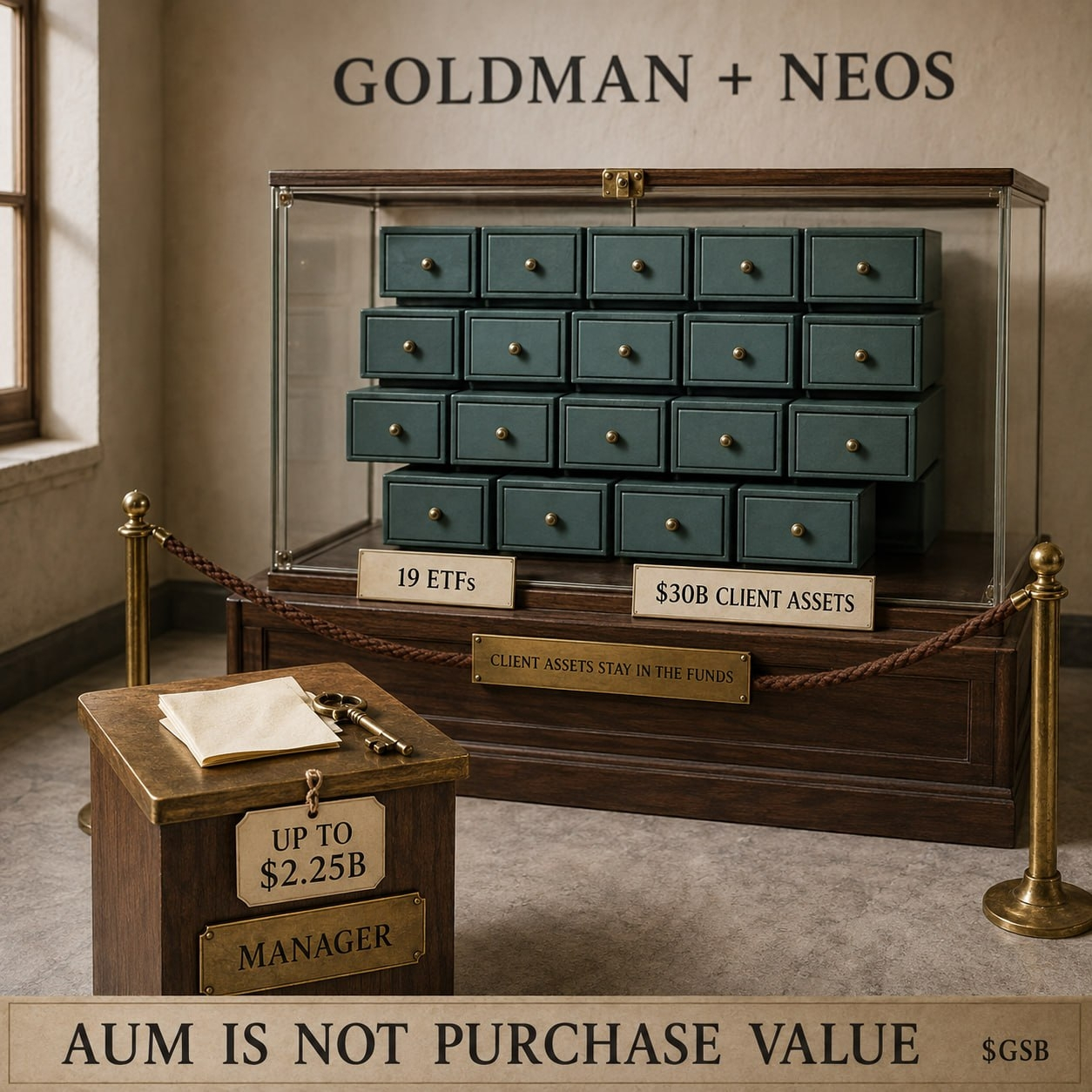
Ich habe gelesen, dass Goldman Sachs möglicherweise bis zu 2,25 Mrd. US-Dollar für NEOS zahlt, das 30 Mrd. US-Dollar über 19 ETFs verwaltet. Meine erste Rechnung war 2,25 geteilt durch 30. Es sah so aus, als würde Goldman Vermögenswerte für 7,5 Cent pro Dollar kaufen.
#bStocksCIS Das ist die falsche Rechnung. Die 30 Mrd. US-Dollar sind Kundengelder innerhalb der NEOS-Fonds. Goldman kauft den Manager, dessen ETF-Aufstellung, das Team und die künftigen Einnahmen aus Gebühren. Die Aktien, Anleihen und Optionen, die in diesen Fonds gehalten werden, werden nicht plötzlich zum Eigentum von Goldman.
Für $GSB würde ich keine 30 Mrd. US-Dollar zur Umsatz- oder Bilanzsumme von Goldman hinzurechnen. Ich würde nach dem durchschnittlichen Gebührensatz schauen, wie viel Kundengeld nach dem Deal übrig bleibt, und ob Goldman diese ETFs an mehr Anleger verkaufen kann.
Der Deal soll voraussichtlich im 1. Quartal 2027 abgeschlossen werden, vorbehaltlich der Genehmigung. Wenn ich also die Schlagzeile auf @BinanceCIS sehe, behandle ich 30 Mrd. US-Dollar als Assets under Management, nicht als Kaufpreis. Habt ihr dieselbe erste Rechnung gemacht?
{spot}(GSBUSDT)
Ich habe gelesen, dass Goldman Sachs möglicherweise bis zu 2,25 Mrd. US-Dollar für NEOS zahlt, das 30 Mrd. US-Dollar über 19 ETFs verwaltet. Meine erste Rechnung war 2,25 geteilt durch 30. Es sah so aus, als würde Goldman Vermögenswerte für 7,5 Cent pro Dollar kaufen.
#bStocksCIS Das ist die falsche Rechnung. Die 30 Mrd. US-Dollar sind Kundengelder innerhalb der NEOS-Fonds. Goldman kauft den Manager, dessen ETF-Aufstellung, das Team und die künftigen Einnahmen aus Gebühren. Die Aktien, Anleihen und Optionen, die in diesen Fonds gehalten werden, werden nicht plötzlich zum Eigentum von Goldman.
Für $GSB würde ich keine 30 Mrd. US-Dollar zur Umsatz- oder Bilanzsumme von Goldman hinzurechnen. Ich würde nach dem durchschnittlichen Gebührensatz schauen, wie viel Kundengeld nach dem Deal übrig bleibt, und ob Goldman diese ETFs an mehr Anleger verkaufen kann.
Der Deal soll voraussichtlich im 1. Quartal 2027 abgeschlossen werden, vorbehaltlich der Genehmigung. Wenn ich also die Schlagzeile auf @BinanceCIS sehe, behandle ich 30 Mrd. US-Dollar als Assets under Management, nicht als Kaufpreis. Habt ihr dieselbe erste Rechnung gemacht?
#bStocksCIS Das ist die falsche Rechnung. Die 30 Mrd. US-Dollar sind Kundengelder innerhalb der NEOS-Fonds. Goldman kauft den Manager, dessen ETF-Aufstellung, das Team und die künftigen Einnahmen aus Gebühren. Die Aktien, Anleihen und Optionen, die in diesen Fonds gehalten werden, werden nicht plötzlich zum Eigentum von Goldman.
Für $GSB würde ich keine 30 Mrd. US-Dollar zur Umsatz- oder Bilanzsumme von Goldman hinzurechnen. Ich würde nach dem durchschnittlichen Gebührensatz schauen, wie viel Kundengeld nach dem Deal übrig bleibt, und ob Goldman diese ETFs an mehr Anleger verkaufen kann.
Der Deal soll voraussichtlich im 1. Quartal 2027 abgeschlossen werden, vorbehaltlich der Genehmigung. Wenn ich also die Schlagzeile auf @BinanceCIS sehe, behandle ich 30 Mrd. US-Dollar als Assets under Management, nicht als Kaufpreis. Habt ihr dieselbe erste Rechnung gemacht?
3
2
84
·
--
Bullisch
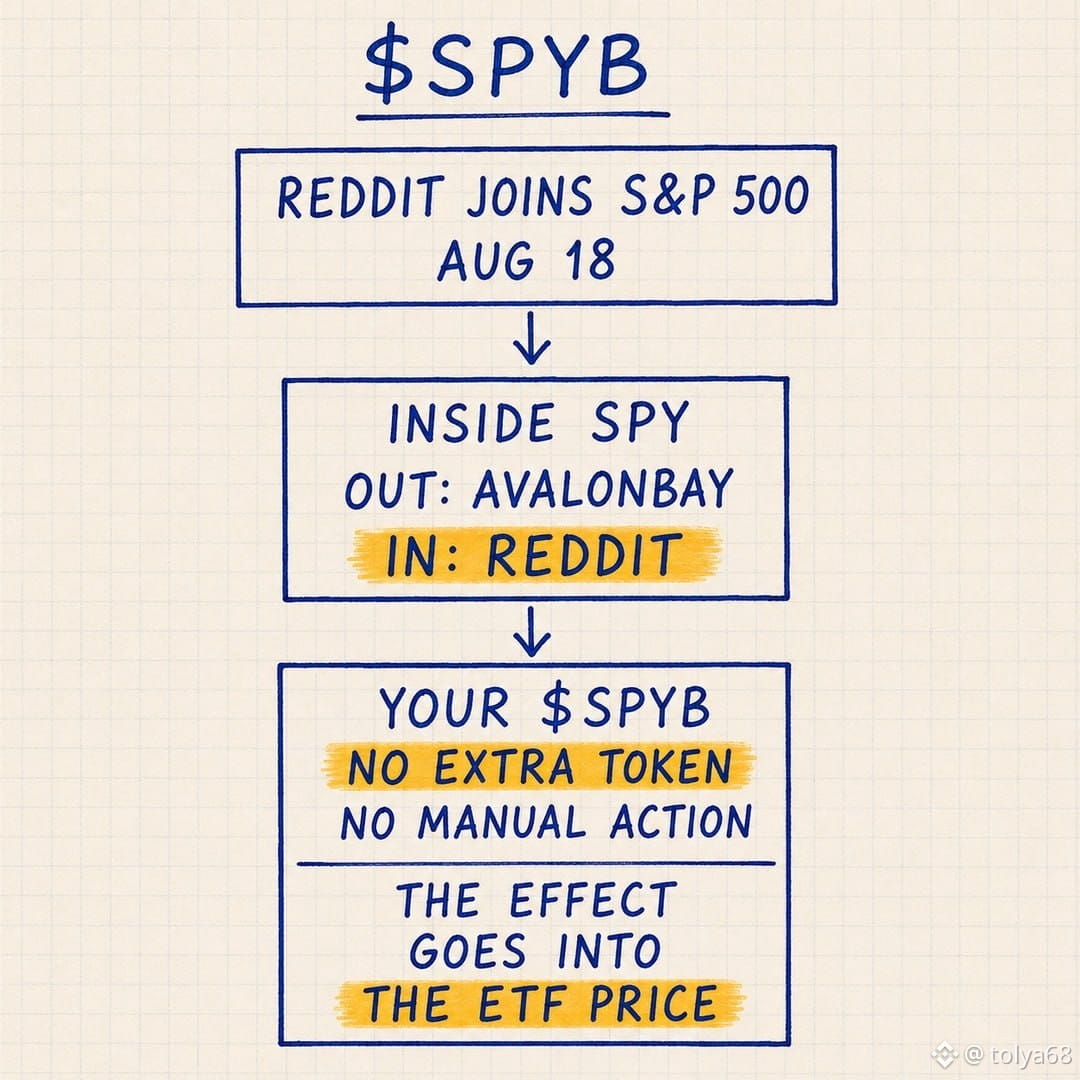
Reddit stößt am 18. August zum S&P 500.
Muss ein $SPYB -Inhaber Reddit kaufen, etwas umwandeln oder auf zusätzliche Tokens warten?
Nein.
Diese #bStocksCIS -Änderung passiert innerhalb des Indexes und des SPY-Fonds. SPY folgt dem S&P 500, daher passen sich seine Bestände an, wenn der Index eine Firma durch eine andere ersetzt. Dein SPYB-Guthaben steigt nicht nur deshalb, weil Reddit in den Warenkorb aufgenommen wird.
Was sich bewegen kann, ist der Preis. Indexfonds können Reddit kaufen und das Unternehmen verkaufen, das den Index verlässt, während andere Trader sich vor dem Stichtag positionieren.
Für einen $SPYB -Inhaber bei @BinanceCIS ist das praktische Ergebnis:
1. SPY ändert seine Bestände intern.
2. SPYB bleibt weiterhin die Darstellung für die gleichen SPY-Anteile.
Keine manuelle Aktion. Kein Reddit-Token kommt in die Wallet. Die Wirkung spiegelt sich über den ETF-Preis wider.
Welches Index-Ereignis soll ich als Nächstes auseinandernehmen?
{spot}(SPYBUSDT)
Reddit stößt am 18. August zum S&P 500.
Muss ein $SPYB -Inhaber Reddit kaufen, etwas umwandeln oder auf zusätzliche Tokens warten?
Nein.
Diese #bStocksCIS -Änderung passiert innerhalb des Indexes und des SPY-Fonds. SPY folgt dem S&P 500, daher passen sich seine Bestände an, wenn der Index eine Firma durch eine andere ersetzt. Dein SPYB-Guthaben steigt nicht nur deshalb, weil Reddit in den Warenkorb aufgenommen wird.
Was sich bewegen kann, ist der Preis. Indexfonds können Reddit kaufen und das Unternehmen verkaufen, das den Index verlässt, während andere Trader sich vor dem Stichtag positionieren.
Für einen $SPYB -Inhaber bei @BinanceCIS ist das praktische Ergebnis:
1. SPY ändert seine Bestände intern.
2. SPYB bleibt weiterhin die Darstellung für die gleichen SPY-Anteile.
Keine manuelle Aktion. Kein Reddit-Token kommt in die Wallet. Die Wirkung spiegelt sich über den ETF-Preis wider.
Welches Index-Ereignis soll ich als Nächstes auseinandernehmen?
Muss ein $SPYB -Inhaber Reddit kaufen, etwas umwandeln oder auf zusätzliche Tokens warten?
Nein.
Diese #bStocksCIS -Änderung passiert innerhalb des Indexes und des SPY-Fonds. SPY folgt dem S&P 500, daher passen sich seine Bestände an, wenn der Index eine Firma durch eine andere ersetzt. Dein SPYB-Guthaben steigt nicht nur deshalb, weil Reddit in den Warenkorb aufgenommen wird.
Was sich bewegen kann, ist der Preis. Indexfonds können Reddit kaufen und das Unternehmen verkaufen, das den Index verlässt, während andere Trader sich vor dem Stichtag positionieren.
Für einen $SPYB -Inhaber bei @BinanceCIS ist das praktische Ergebnis:
1. SPY ändert seine Bestände intern.
2. SPYB bleibt weiterhin die Darstellung für die gleichen SPY-Anteile.
Keine manuelle Aktion. Kein Reddit-Token kommt in die Wallet. Die Wirkung spiegelt sich über den ETF-Preis wider.
Welches Index-Ereignis soll ich als Nächstes auseinandernehmen?
67
·
--
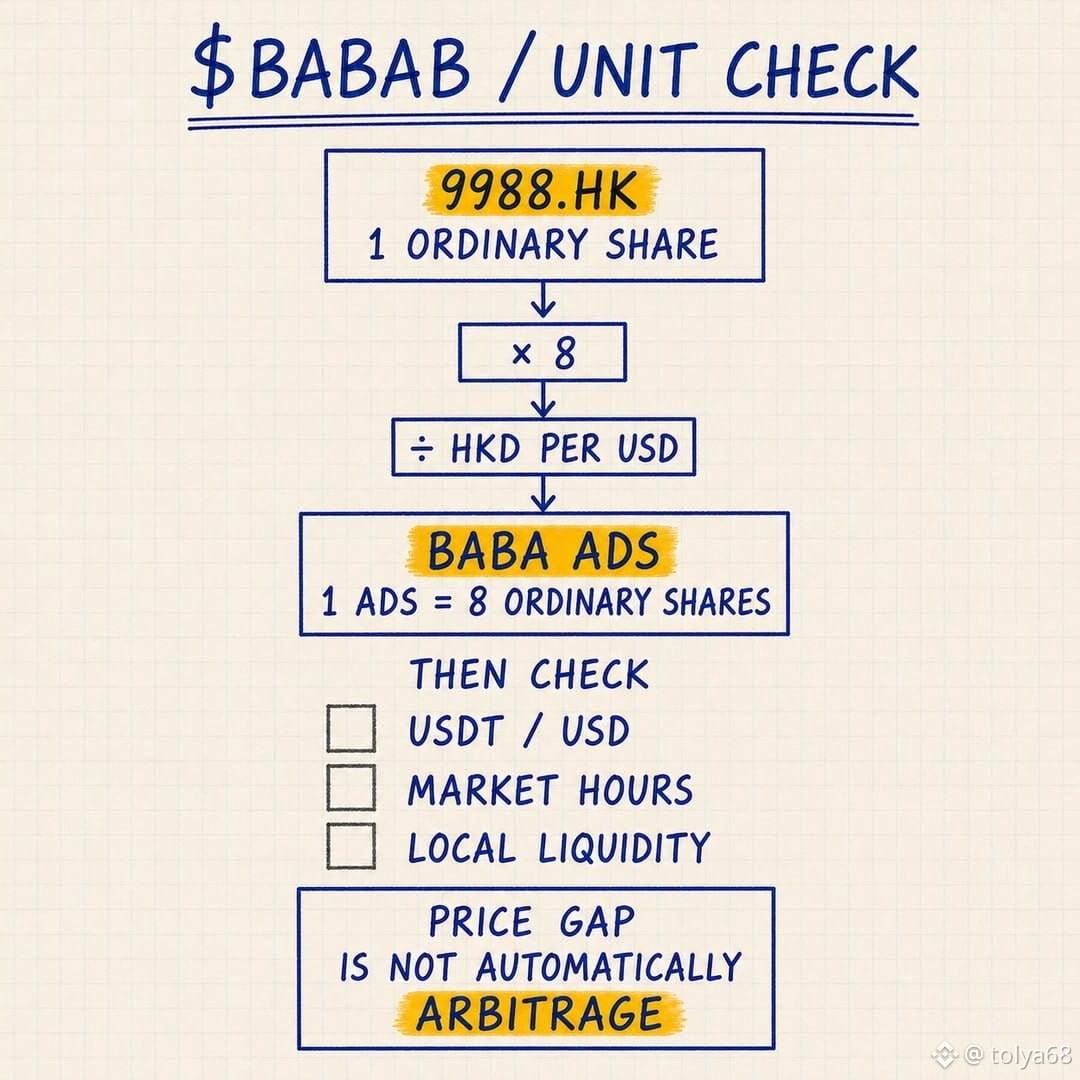
Wenn $BABAB weit weg von der Notierung von Alibabas 9988.HK erscheint, prüfen Sie die Einheiten, bevor Sie ein Preisproblem vermuten.
Die Hongkonger Linie von Alibaba besteht aus Stammaktien. Sein New-York-Ticker BABA ist ein ADS, und ein ADS entspricht acht Stammaktien. $BABAB ist an dieses in den USA notierte ADS gebunden, nicht an eine einzelne 9988.HK-Aktie.
Die grobe Brücke ist:
9988.HK-Preis × 8 ÷ HKD pro USD.
Anschauliches Beispiel: HK$100 × 8 ÷ 7,80 = etwa US$102,56.
Erst dann ist ein Preisvergleich sinnvoll. Bei BABAB/USDT kommt für den USDT/USD-Kurs noch eine weitere, kleine Schicht hinzu. Unterschiedliche Handelszeiten, FX-Bewegungen und lokale Liquidität können dennoch eine Lücke hinterlassen.
Mein Vergleich beginnt mit vier Feldern: Ticker, Handelsplatz, Währung und Aktienverhältnis.
Eine große sichtbare Lücke ist nicht automatisch ein Arbitragegeschäft. Manchmal zitieren zwei Bildschirme einfach unterschiedliche Einheiten.
Welche doppelte Notierung sollte ich als Nächstes auseinandernehmen?
{spot}(BABABUSDT)
@BinanceCIS $BABAB #bStocksCIS
Wenn $BABAB weit weg von der Notierung von Alibabas 9988.HK erscheint, prüfen Sie die Einheiten, bevor Sie ein Preisproblem vermuten.
Die Hongkonger Linie von Alibaba besteht aus Stammaktien. Sein New-York-Ticker BABA ist ein ADS, und ein ADS entspricht acht Stammaktien. $BABAB ist an dieses in den USA notierte ADS gebunden, nicht an eine einzelne 9988.HK-Aktie.
Die grobe Brücke ist:
9988.HK-Preis × 8 ÷ HKD pro USD.
Anschauliches Beispiel: HK$100 × 8 ÷ 7,80 = etwa US$102,56.
Erst dann ist ein Preisvergleich sinnvoll. Bei BABAB/USDT kommt für den USDT/USD-Kurs noch eine weitere, kleine Schicht hinzu. Unterschiedliche Handelszeiten, FX-Bewegungen und lokale Liquidität können dennoch eine Lücke hinterlassen.
Mein Vergleich beginnt mit vier Feldern: Ticker, Handelsplatz, Währung und Aktienverhältnis.
Eine große sichtbare Lücke ist nicht automatisch ein Arbitragegeschäft. Manchmal zitieren zwei Bildschirme einfach unterschiedliche Einheiten.
Welche doppelte Notierung sollte ich als Nächstes auseinandernehmen?
@BinanceCIS $BABAB #bStocksCIS
Die Hongkonger Linie von Alibaba besteht aus Stammaktien. Sein New-York-Ticker BABA ist ein ADS, und ein ADS entspricht acht Stammaktien. $BABAB ist an dieses in den USA notierte ADS gebunden, nicht an eine einzelne 9988.HK-Aktie.
Die grobe Brücke ist:
9988.HK-Preis × 8 ÷ HKD pro USD.
Anschauliches Beispiel: HK$100 × 8 ÷ 7,80 = etwa US$102,56.
Erst dann ist ein Preisvergleich sinnvoll. Bei BABAB/USDT kommt für den USDT/USD-Kurs noch eine weitere, kleine Schicht hinzu. Unterschiedliche Handelszeiten, FX-Bewegungen und lokale Liquidität können dennoch eine Lücke hinterlassen.
Mein Vergleich beginnt mit vier Feldern: Ticker, Handelsplatz, Währung und Aktienverhältnis.
Eine große sichtbare Lücke ist nicht automatisch ein Arbitragegeschäft. Manchmal zitieren zwei Bildschirme einfach unterschiedliche Einheiten.
Welche doppelte Notierung sollte ich als Nächstes auseinandernehmen?
@BinanceCIS $BABAB #bStocksCIS
3
3
83
·
--
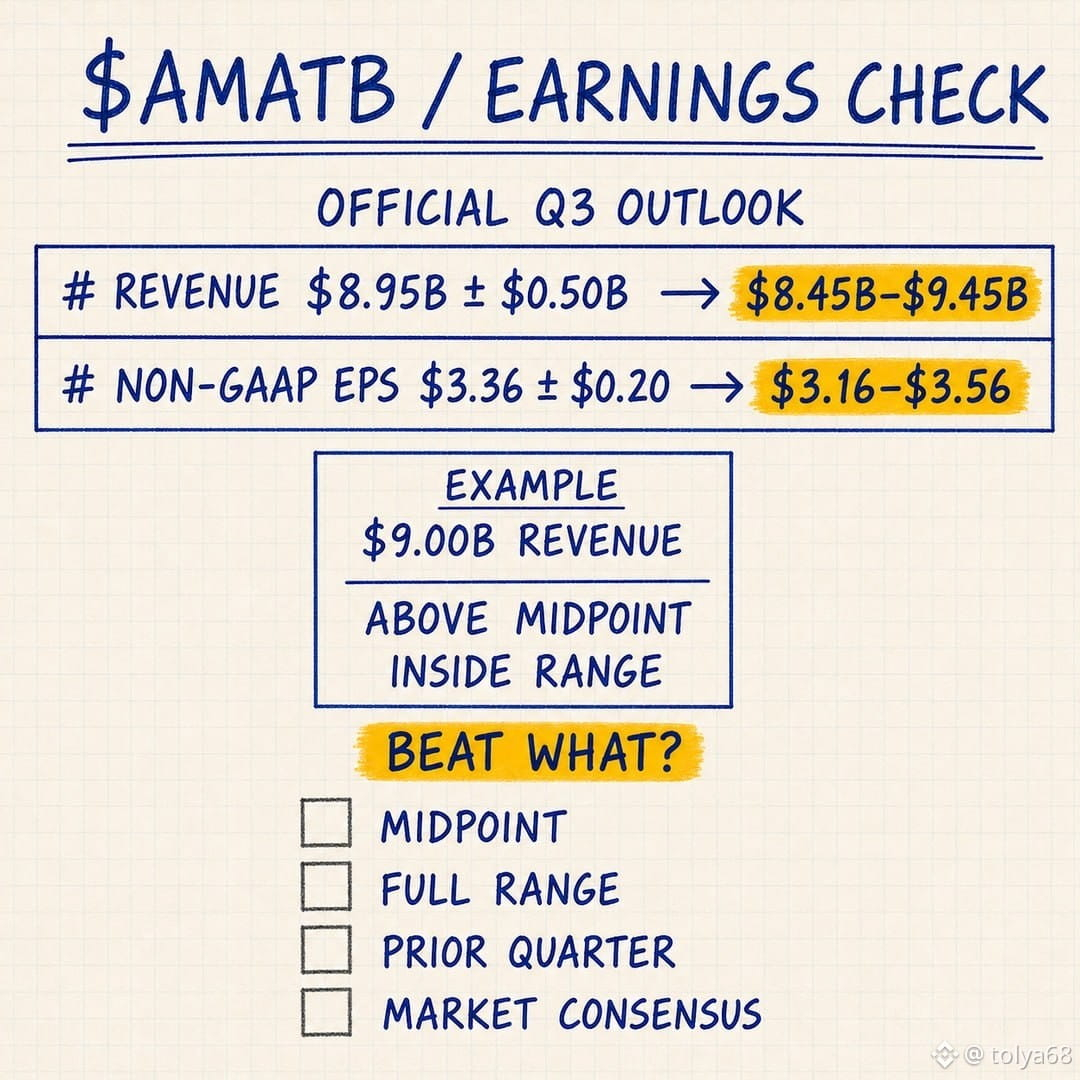
Der Bericht von morgen zur $AMATB - hat zwei nützliche Spannen hinter den Kurszahlen.
Applied Materials führte den Q3-Umsatz auf 8,95 Mrd. $ ± 0,50 Mrd. $ und den Non-GAAP-EPS-Wert auf 3,36 ± 0,20.
Umsatzspanne: 8,45 Mrd. $ bis 9,45 Mrd. $
EPS-Spanne: 3,16 bis 3,56
Wenn der Umsatz bei 9,00 Mrd. $ eintrifft, läge er 50 Mio. $ über dem Management-Mittelwert und bliebe dennoch innerhalb der ursprünglichen Spanne. Das allein sagt uns jedoch nicht, ob das Ergebnis die Markterwartungen übertroffen hat, denn Schlagzeilen vergleichen das Ergebnis normalerweise mit dem Konsens der Analysten.
Mein Vorgehen ist einfach: tatsächliches Ergebnis vs. Konsens, tatsächliches Ergebnis vs. Management-Mittelwert, Margen und neue Prognose – dann die Marktreaktion.
Welche Gegenüberstellung prüfst du normalerweise zuerst?
{spot}(AMATBUSDT)
@BinanceCIS $AMATB #bStocksCIS
Der Bericht von morgen zur $AMATB - hat zwei nützliche Spannen hinter den Kurszahlen.
Applied Materials führte den Q3-Umsatz auf 8,95 Mrd. $ ± 0,50 Mrd. $ und den Non-GAAP-EPS-Wert auf 3,36 ± 0,20.
Umsatzspanne: 8,45 Mrd. $ bis 9,45 Mrd. $
EPS-Spanne: 3,16 bis 3,56
Wenn der Umsatz bei 9,00 Mrd. $ eintrifft, läge er 50 Mio. $ über dem Management-Mittelwert und bliebe dennoch innerhalb der ursprünglichen Spanne. Das allein sagt uns jedoch nicht, ob das Ergebnis die Markterwartungen übertroffen hat, denn Schlagzeilen vergleichen das Ergebnis normalerweise mit dem Konsens der Analysten.
Mein Vorgehen ist einfach: tatsächliches Ergebnis vs. Konsens, tatsächliches Ergebnis vs. Management-Mittelwert, Margen und neue Prognose – dann die Marktreaktion.
Welche Gegenüberstellung prüfst du normalerweise zuerst?
@BinanceCIS $AMATB #bStocksCIS
Applied Materials führte den Q3-Umsatz auf 8,95 Mrd. $ ± 0,50 Mrd. $ und den Non-GAAP-EPS-Wert auf 3,36 ± 0,20.
Umsatzspanne: 8,45 Mrd. $ bis 9,45 Mrd. $
EPS-Spanne: 3,16 bis 3,56
Wenn der Umsatz bei 9,00 Mrd. $ eintrifft, läge er 50 Mio. $ über dem Management-Mittelwert und bliebe dennoch innerhalb der ursprünglichen Spanne. Das allein sagt uns jedoch nicht, ob das Ergebnis die Markterwartungen übertroffen hat, denn Schlagzeilen vergleichen das Ergebnis normalerweise mit dem Konsens der Analysten.
Mein Vorgehen ist einfach: tatsächliches Ergebnis vs. Konsens, tatsächliches Ergebnis vs. Management-Mittelwert, Margen und neue Prognose – dann die Marktreaktion.
Welche Gegenüberstellung prüfst du normalerweise zuerst?
@BinanceCIS $AMATB #bStocksCIS
3
3
195
·
--
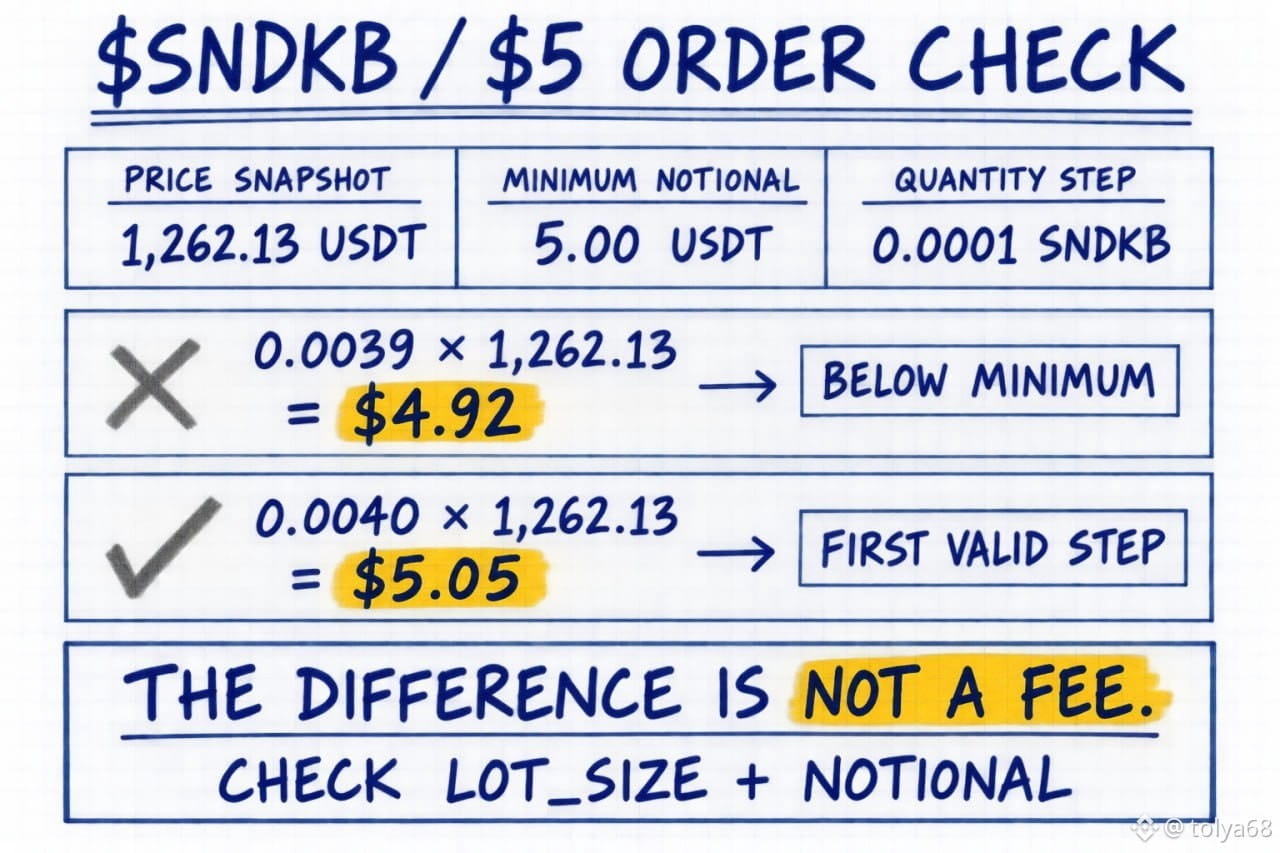
Eine $5 $SNDKB LIMIT ORDER könnte $5.05 benötigen.
⠀
Ich habe die tatsächlichen SNDKB/USDT-Spot-Filter um 13:29 UTC am 11. August überprüft.
⠀
Preis: ca. 1.262,13 USDT
Mindestnotional: 5,00 USDT
Mengen-Schrittweite: 0,0001 SNDKB
⠀
Dann die kleine Rechnung:
0,0039 × 1.262,13 = 4,92 USDT. Unter dem Minimum.
0,0040 × 1.262,13 = 5,05 USDT. Über dem Minimum.
⠀
Bei diesem Preis war 0,0040 SNDKB der erste erlaubte Mengen-Schritt, der die $5-Grenze überschritt.
⠀
Die zusätzlichen fünf Cent waren keine Gebühr. Sie entstanden daraus, dass die Menge auf einen zulässigen Schritt gerundet wurde, während die Mindestnotional-Regel weiterhin erfüllt wurde.
⠀
Wenn eine kleine Limit-Order abgelehnt wird, würde ich LOT_SIZE und NOTIONAL prüfen, bevor ich annehme, dass die bStock nicht verfügbar ist.
⠀
Hattest du jemals diesen Fehler bei der Mindestbestellmenge?
⠀
@BinanceCIS #bStocksCIS
Eine $5 $SNDKB LIMIT ORDER könnte $5.05 benötigen.
⠀
Ich habe die tatsächlichen SNDKB/USDT-Spot-Filter um 13:29 UTC am 11. August überprüft.
⠀
Preis: ca. 1.262,13 USDT
Mindestnotional: 5,00 USDT
Mengen-Schrittweite: 0,0001 SNDKB
⠀
Dann die kleine Rechnung:
0,0039 × 1.262,13 = 4,92 USDT. Unter dem Minimum.
0,0040 × 1.262,13 = 5,05 USDT. Über dem Minimum.
⠀
Bei diesem Preis war 0,0040 SNDKB der erste erlaubte Mengen-Schritt, der die $5-Grenze überschritt.
⠀
Die zusätzlichen fünf Cent waren keine Gebühr. Sie entstanden daraus, dass die Menge auf einen zulässigen Schritt gerundet wurde, während die Mindestnotional-Regel weiterhin erfüllt wurde.
⠀
Wenn eine kleine Limit-Order abgelehnt wird, würde ich LOT_SIZE und NOTIONAL prüfen, bevor ich annehme, dass die bStock nicht verfügbar ist.
⠀
Hattest du jemals diesen Fehler bei der Mindestbestellmenge?
⠀
@BinanceCIS #bStocksCIS
⠀
Ich habe die tatsächlichen SNDKB/USDT-Spot-Filter um 13:29 UTC am 11. August überprüft.
⠀
Preis: ca. 1.262,13 USDT
Mindestnotional: 5,00 USDT
Mengen-Schrittweite: 0,0001 SNDKB
⠀
Dann die kleine Rechnung:
0,0039 × 1.262,13 = 4,92 USDT. Unter dem Minimum.
0,0040 × 1.262,13 = 5,05 USDT. Über dem Minimum.
⠀
Bei diesem Preis war 0,0040 SNDKB der erste erlaubte Mengen-Schritt, der die $5-Grenze überschritt.
⠀
Die zusätzlichen fünf Cent waren keine Gebühr. Sie entstanden daraus, dass die Menge auf einen zulässigen Schritt gerundet wurde, während die Mindestnotional-Regel weiterhin erfüllt wurde.
⠀
Wenn eine kleine Limit-Order abgelehnt wird, würde ich LOT_SIZE und NOTIONAL prüfen, bevor ich annehme, dass die bStock nicht verfügbar ist.
⠀
Hattest du jemals diesen Fehler bei der Mindestbestellmenge?
⠀
@BinanceCIS #bStocksCIS
4
6
132
·
--
Bullisch
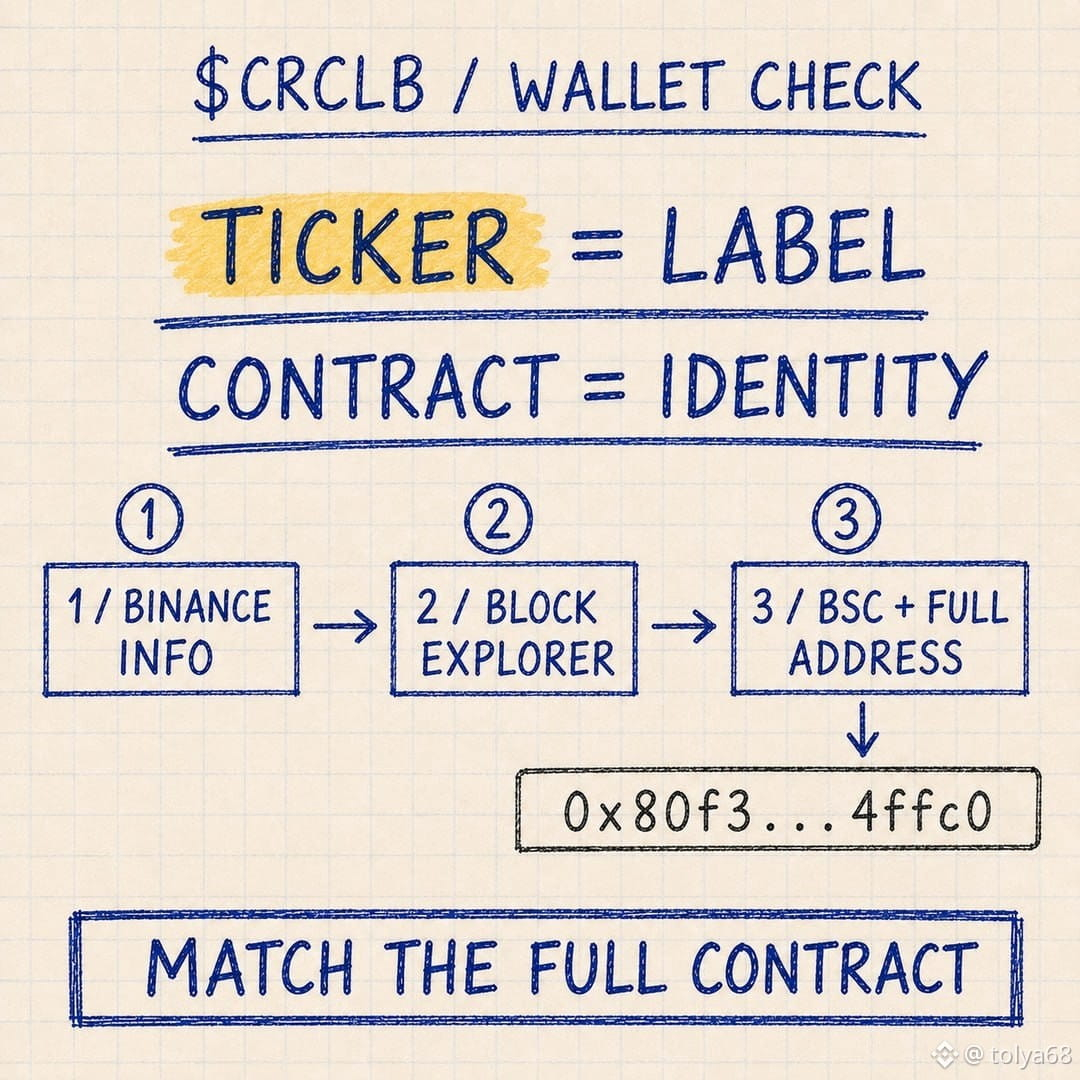
ICH WÜRDE $CRCLB NICHT IN EIN GELDBEUTEL HINEINLEGEN, INDEM ICH NACH „CRCLB“ SUCHE.
⠀
Ein Token-Name und ein Ticker sind leicht zu kopieren. Die Vertragsadresse ist der Teil, den die Wallet tatsächlich liest.
⠀
Mein Weg ist einfach:
1. Öffne die $CRCLB -Info-Seite auf Binance.
2. Folge dem offiziellen Block-Explorer-Link.
3. Bestätige BNB Smart Chain und kopiere den vollständigen verifizierten Vertrag:
0x80f3d493ebce97e343c53d29a137942416b4ffc0
4. Füge ihn in das Feld für benutzerdefinierte Tokens der Wallet ein und vergleiche die ersten und letzten Zeichen erneut.
⠀
Wenn $CRCLB nicht automatisch angezeigt wird, sagt das Importieren des richtigen Vertrags der Wallet nur, welche Balance angezeigt werden soll. Es verschiebt die Tokens nicht und ändert auch nicht ihr Netzwerk.
⠀
Ich würde die Adresse nicht aus einer zufälligen Antwort, einem Screenshot oder einer Suchanzeige übernehmen. Der Ticker ist für mich nur eine Kennzeichnung. Der Vertrag ist die Identität für die Wallet.
⠀
{spot}(CRCLBUSDT)
@BinanceCIS #bStocksCIS
ICH WÜRDE $CRCLB NICHT IN EIN GELDBEUTEL HINEINLEGEN, INDEM ICH NACH „CRCLB“ SUCHE.
⠀
Ein Token-Name und ein Ticker sind leicht zu kopieren. Die Vertragsadresse ist der Teil, den die Wallet tatsächlich liest.
⠀
Mein Weg ist einfach:
1. Öffne die $CRCLB -Info-Seite auf Binance.
2. Folge dem offiziellen Block-Explorer-Link.
3. Bestätige BNB Smart Chain und kopiere den vollständigen verifizierten Vertrag:
0x80f3d493ebce97e343c53d29a137942416b4ffc0
4. Füge ihn in das Feld für benutzerdefinierte Tokens der Wallet ein und vergleiche die ersten und letzten Zeichen erneut.
⠀
Wenn $CRCLB nicht automatisch angezeigt wird, sagt das Importieren des richtigen Vertrags der Wallet nur, welche Balance angezeigt werden soll. Es verschiebt die Tokens nicht und ändert auch nicht ihr Netzwerk.
⠀
Ich würde die Adresse nicht aus einer zufälligen Antwort, einem Screenshot oder einer Suchanzeige übernehmen. Der Ticker ist für mich nur eine Kennzeichnung. Der Vertrag ist die Identität für die Wallet.
⠀
@BinanceCIS #bStocksCIS
⠀
Ein Token-Name und ein Ticker sind leicht zu kopieren. Die Vertragsadresse ist der Teil, den die Wallet tatsächlich liest.
⠀
Mein Weg ist einfach:
1. Öffne die $CRCLB -Info-Seite auf Binance.
2. Folge dem offiziellen Block-Explorer-Link.
3. Bestätige BNB Smart Chain und kopiere den vollständigen verifizierten Vertrag:
0x80f3d493ebce97e343c53d29a137942416b4ffc0
4. Füge ihn in das Feld für benutzerdefinierte Tokens der Wallet ein und vergleiche die ersten und letzten Zeichen erneut.
⠀
Wenn $CRCLB nicht automatisch angezeigt wird, sagt das Importieren des richtigen Vertrags der Wallet nur, welche Balance angezeigt werden soll. Es verschiebt die Tokens nicht und ändert auch nicht ihr Netzwerk.
⠀
Ich würde die Adresse nicht aus einer zufälligen Antwort, einem Screenshot oder einer Suchanzeige übernehmen. Der Ticker ist für mich nur eine Kennzeichnung. Der Vertrag ist die Identität für die Wallet.
⠀
@BinanceCIS #bStocksCIS
5
4
122
Anmelden und weiter Inhalte entdecken
Krypto-Nutzer weltweit auf Binance Square kennenlernen
⚡️ Bleib in Sachen Krypto stets am Puls.
💬 Die weltgrößte Kryptobörse vertraut darauf.
👍 Erhalte verlässliche Einblicke von verifizierten Creators.
E-Mail-Adresse/Telefonnummer
Trendthemen
EthereumSurpasses$2700
13 Aufrufe
20 Kommentare
$ETH Der Bruch über dem Widerstand bei 2.600 US-Dollar ist ein klares Zeichen für einen Aufwärtstrend. Käufer zeigen eine starke Dominanz mit aggressivem Kaufdruck. Der bullische Trend wird wahrscheinlich fortgesetzt.
Großes Long $ETH setup – später Geld drucken
Einstieg: 2600 - 2630 US-Dollar
Stoploss: 2500 US-Dollar
Take Profit: 2700 - 2750 - 2800 US-Dollar
$ETH wiederholt sein 2025-Setup fast perfekt.
Gleicher Boden.
Gleicher Ausbruch.
Gleiche Konsolidierung.
Beim letzten Mal explodierte Ethereum Richtung 4.000 US-Dollar.
Wenn die Geschichte sich wiederholt, könnte der nächste Rücksetzer gerade das nächste große Stück nach oben vorbereiten!
TF_bnb
·7 Likes
·4.2k Aufrufe
CanaryFilesSecondAmendmentForStakedSEIETF
0 Aufrufe
5 Kommentare
SaylorHintsStrategyBitcoinBuy
2.3M Aufrufe
12,596 Kommentare