Ich ging davon aus, dass ein TermMax-Darlehen ein langweiliges Ende hat: das Debt-Token zurückzahlen und die Sicherheiten zurückerhalten. Das Protokoll bietet dem Borrower einen alternativen Weg.
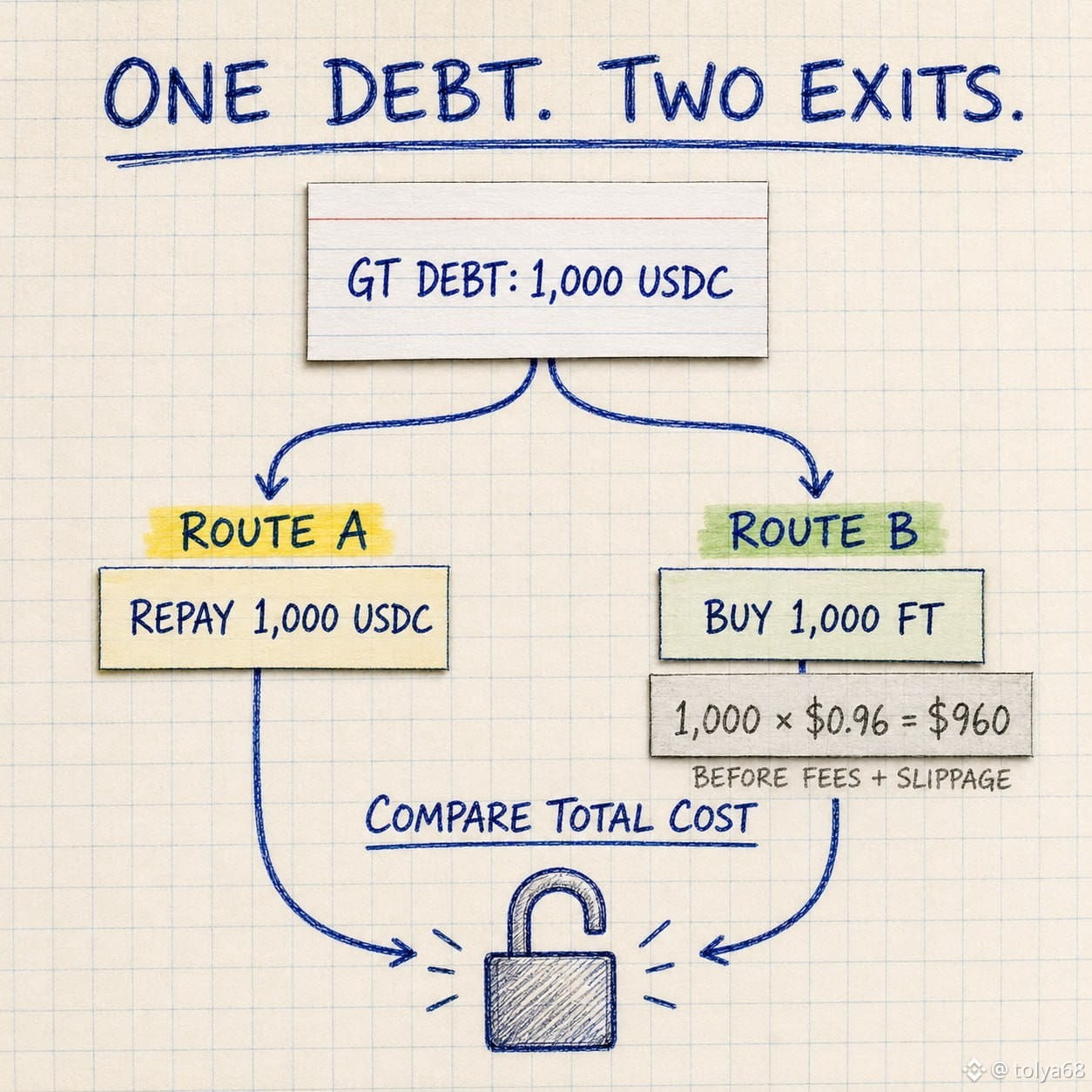
Angenommen, ein GT erfasst 1.000 USDC Schulden.
Route A: zahle 1.000 USDC direkt zurück.
Route B: erwerbe 1.000 passende Fixed-Rate Tokens und nutze diese FTs, um die Schuld zu begleichen. Wenn FT bei 0,96 $ gehandelt wird, kostet der Kauf 960 $ vor Gebühren, Gas und Slippage. Bei 0,99 $ kostet es 990 $.
Wie kann das passieren? FT wird vor Fälligkeit gehandelt. Sein Preis reagiert auf die verbleibende Zeit, die aktuellen Zinssätze und die verfügbare Liquidität. Wenn sich der Markt zugunsten des Borrowers bewegt, kann der Rückkauf der Forderung weniger kosten als die Rückzahlung zum Nennwert.
Das ist kein garantiertes Discount. Ein großer FT-Order kann sich durch die Preis-Kurve bewegen, und Ausführungskosten können eine kleine Ersparnis zunichtemachen.
Mein praktischer Check wäre einfach: vergleiche die Gesamtkosten für den Erwerb von genügend FT mit der direkten Rückzahlung des Debt-Tokens. Der Betrag der direkten Rückzahlung gibt dem Borrower eine bekannte vertragliche Obergrenze vor Ausführungskosten, zwingt jedoch nicht den teureren Exit, wenn der Sekundärmarkt einen günstigeren anbietet.
@TermMax #TermMax
Angenommen, ein GT erfasst 1.000 USDC Schulden.
Route A: zahle 1.000 USDC direkt zurück.
Route B: erwerbe 1.000 passende Fixed-Rate Tokens und nutze diese FTs, um die Schuld zu begleichen. Wenn FT bei 0,96 $ gehandelt wird, kostet der Kauf 960 $ vor Gebühren, Gas und Slippage. Bei 0,99 $ kostet es 990 $.
Wie kann das passieren? FT wird vor Fälligkeit gehandelt. Sein Preis reagiert auf die verbleibende Zeit, die aktuellen Zinssätze und die verfügbare Liquidität. Wenn sich der Markt zugunsten des Borrowers bewegt, kann der Rückkauf der Forderung weniger kosten als die Rückzahlung zum Nennwert.
Das ist kein garantiertes Discount. Ein großer FT-Order kann sich durch die Preis-Kurve bewegen, und Ausführungskosten können eine kleine Ersparnis zunichtemachen.
Mein praktischer Check wäre einfach: vergleiche die Gesamtkosten für den Erwerb von genügend FT mit der direkten Rückzahlung des Debt-Tokens. Der Betrag der direkten Rückzahlung gibt dem Borrower eine bekannte vertragliche Obergrenze vor Ausführungskosten, zwingt jedoch nicht den teureren Exit, wenn der Sekundärmarkt einen günstigeren anbietet.
@TermMax #TermMax