

Simplify Crypto
6 Beiträge

Simplify Crypto
Melden
Nutzer blockieren
Simple, beginner-friendly guides to crypto — staking, stablecoins, tokenization & more. Education only, not financial advice. 📚
3 Following
0 Follower
5 Like gegeben
Beiträge
Artikel
Übersetzung ansehen
🔍 Your next transaction might be made by an AI, not a humanWhile most crypto news focuses on people buying and holding, a quieter shift is happening underneath: AI agents are starting to pay each other directly — and stablecoins are the rail making it possible.
🤖 What's actually happening
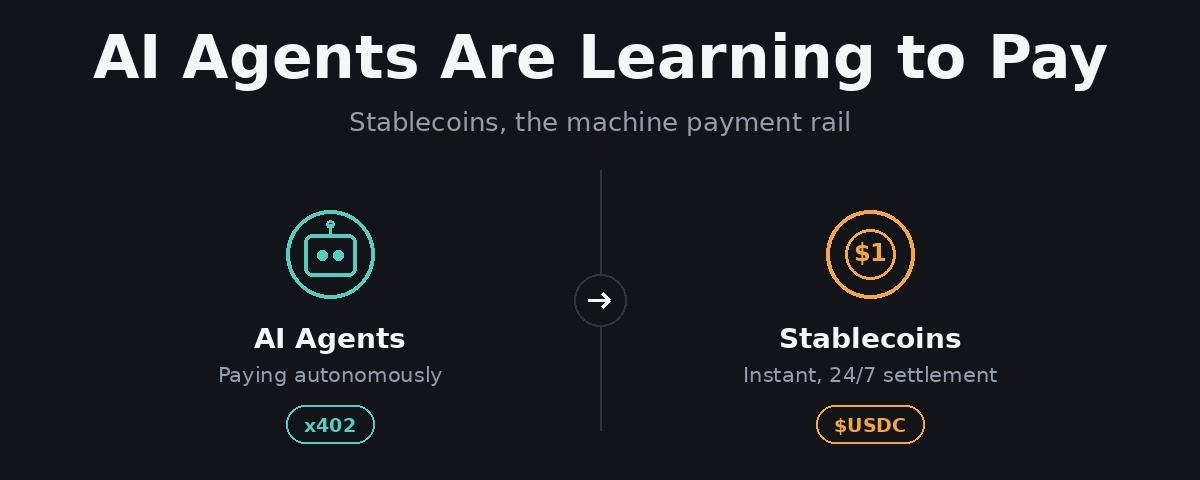
Major players (Coinbase, Circle, Google, Stripe) have shipped new payment standards — like Coinbase's x402 protocol — that let autonomous AI agents hold a wallet and complete transactions without a human approving each one. Think an AI agent paying per-API-call for data, compute, or another agent's service, instantly and in tiny amounts.
⚡ Why stablecoins specifically
Machines need money that doesn't swing in value mid-transaction and settles instantly, 24/7. Traditional bank transfers are too slow, and volatile crypto assets are too risky for automated spending. A dollar-pegged token fits the job perfectly.
📊 Why 2026 is the inflection point
Agent-driven stablecoin payments have already scaled into the hundreds of millions of transactions, overwhelmingly settled in USDC — and it's being flagged industry-wide as a major growth driver for stablecoin volume this year.
🎯 What this means for you
You don't need to build an AI agent to care about this. It's a signal of where stablecoin infrastructure is heading next: from "traders moving money" to "software moving money automatically." Worth understanding early.
Machines with wallets — wild timeline 🤖💸
Educational content only, not investment advice. This is an emerging, fast-changing space — always DYOR before acting on any agentic-payment or stablecoin product.
#AIAgents #Stablecoins #CryptoEducation #BinanceEarn #Write2Earn $USDC $USDT
🔍 Your next transaction might be made by an AI, not a human
While most crypto news focuses on people buying and holding, a quieter shift is happening underneath: AI agents are starting to pay each other directly — and stablecoins are the rail making it possible.
🤖 What's actually happening
Major players (Coinbase, Circle, Google, Stripe) have shipped new payment standards — like Coinbase's x402 protocol — that let autonomous AI agents hold a wallet and complete transactions without a human approving each one. Think an AI agent paying per-API-call for data, compute, or another agent's service, instantly and in tiny amounts.
⚡ Why stablecoins specifically
Machines need money that doesn't swing in value mid-transaction and settles instantly, 24/7. Traditional bank transfers are too slow, and volatile crypto assets are too risky for automated spending. A dollar-pegged token fits the job perfectly.
📊 Why 2026 is the inflection point
Agent-driven stablecoin payments have already scaled into the hundreds of millions of transactions, overwhelmingly settled in USDC — and it's being flagged industry-wide as a major growth driver for stablecoin volume this year.
🎯 What this means for you
You don't need to build an AI agent to care about this. It's a signal of where stablecoin infrastructure is heading next: from "traders moving money" to "software moving money automatically." Worth understanding early.
Machines with wallets — wild timeline 🤖💸
Educational content only, not investment advice. This is an emerging, fast-changing space — always DYOR before acting on any agentic-payment or stablecoin product.
#AIAgents #Stablecoins #CryptoEducation #BinanceEarn #Write2Earn $USDC $USDT
🤖 What's actually happening
Major players (Coinbase, Circle, Google, Stripe) have shipped new payment standards — like Coinbase's x402 protocol — that let autonomous AI agents hold a wallet and complete transactions without a human approving each one. Think an AI agent paying per-API-call for data, compute, or another agent's service, instantly and in tiny amounts.
⚡ Why stablecoins specifically
Machines need money that doesn't swing in value mid-transaction and settles instantly, 24/7. Traditional bank transfers are too slow, and volatile crypto assets are too risky for automated spending. A dollar-pegged token fits the job perfectly.
📊 Why 2026 is the inflection point
Agent-driven stablecoin payments have already scaled into the hundreds of millions of transactions, overwhelmingly settled in USDC — and it's being flagged industry-wide as a major growth driver for stablecoin volume this year.
🎯 What this means for you
You don't need to build an AI agent to care about this. It's a signal of where stablecoin infrastructure is heading next: from "traders moving money" to "software moving money automatically." Worth understanding early.
Machines with wallets — wild timeline 🤖💸
Educational content only, not investment advice. This is an emerging, fast-changing space — always DYOR before acting on any agentic-payment or stablecoin product.
#AIAgents #Stablecoins #CryptoEducation #BinanceEarn #Write2Earn $USDC $USDT
1
59
Artikel
🔍 Warum Wall Street reale Vermögenswerte auf die Blockchain bringtStablecoins haben digitale Dollar zum Mainstream gemacht. Jetzt wird derselbe Spielplan auf ganze Anlageklassen angewendet – still und leise zu einer der größten Geschichten im Krypto-Bereich in diesem Jahr.
Was „Tokenisierung“ tatsächlich bedeutet
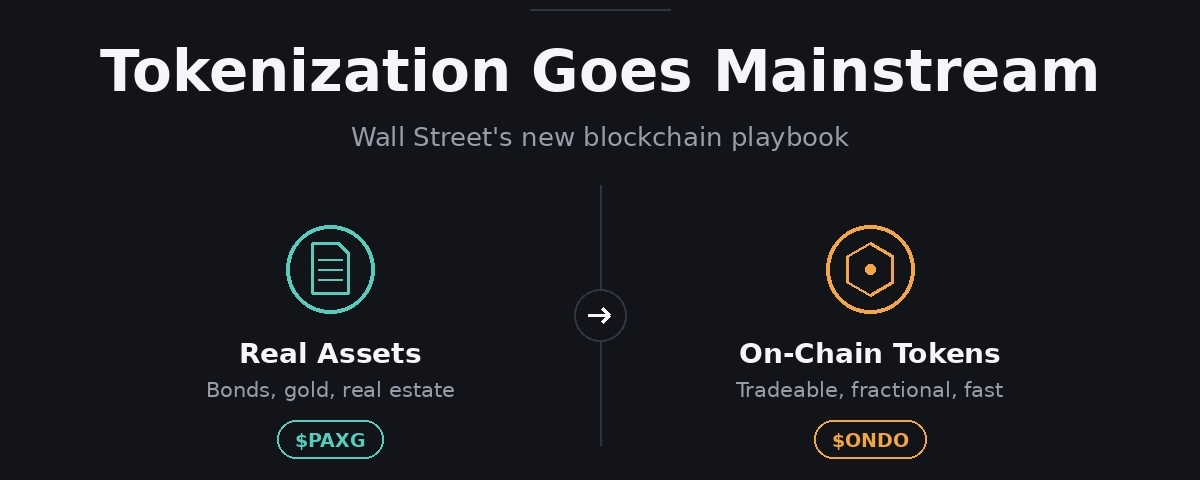
Einen realen Vermögenswert nehmen – eine US-Staatsanleihe, einen Anteil an einem Fonds, Gold, Immobilien – und daraus einen Blockchain-Token ausgeben, der den Besitz daran repräsentiert. Der Token wird 24/7 gehandelt, kann in Bruchteile aufgeteilt werden und wird nahezu augenblicklich abgewickelt.
📈 Warum es 2026 beschleunigt
Große Vermögensverwalter sind von Pilotprojekten zu echten Produkten übergegangen
🔍 Warum Wall Street reale Vermögenswerte auf die Blockchain bringt
Stablecoins haben digitale Dollar zum Mainstream gemacht. Jetzt wird derselbe Spielplan auf ganze Anlageklassen angewendet – still und leise zu einer der größten Geschichten im Krypto-Bereich in diesem Jahr.
Was „Tokenisierung“ tatsächlich bedeutet
Einen realen Vermögenswert nehmen – eine US-Staatsanleihe, einen Anteil an einem Fonds, Gold, Immobilien – und daraus einen Blockchain-Token ausgeben, der den Besitz daran repräsentiert. Der Token wird 24/7 gehandelt, kann in Bruchteile aufgeteilt werden und wird nahezu augenblicklich abgewickelt.
📈 Warum es 2026 beschleunigt
Große Vermögensverwalter sind von Pilotprojekten zu echten Produkten übergegangen
Was „Tokenisierung“ tatsächlich bedeutet
Einen realen Vermögenswert nehmen – eine US-Staatsanleihe, einen Anteil an einem Fonds, Gold, Immobilien – und daraus einen Blockchain-Token ausgeben, der den Besitz daran repräsentiert. Der Token wird 24/7 gehandelt, kann in Bruchteile aufgeteilt werden und wird nahezu augenblicklich abgewickelt.
📈 Warum es 2026 beschleunigt
Große Vermögensverwalter sind von Pilotprojekten zu echten Produkten übergegangen
1
512
Artikel
🔍 Warum Banken 2026 plötzlich Stablecoins im Blick habenWenn du dachtest, Stablecoins seien nur „Parkgeld“ zwischen den Trades gewesen, dann hat 2026 diese Geschichte verändert. Was als Trading-Tool begann, wird zu echter Finanzinfrastruktur – und Banken schauen jetzt genauer hin.
💵 Was ist ein Stablecoin – ganz schnell
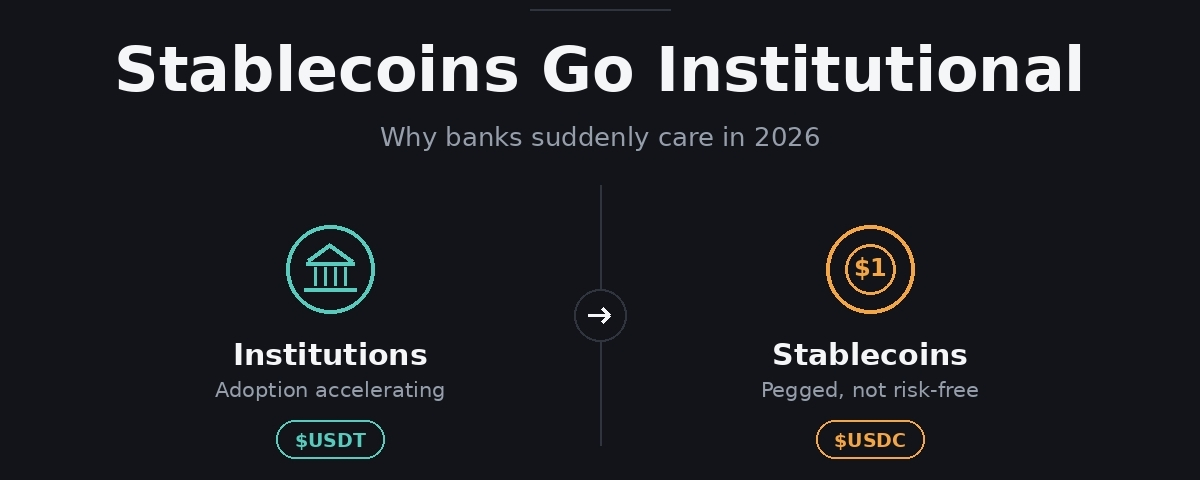
Ein digitaler Token, der an eine reale Währung gekoppelt ist (meist 1 USD), und durch Rücklagen wie Bargeld oder kurzfristige Staatsanleihen abgesichert wird. $USDT und $USDC zusammen machen den Großteil des Marktes aus.
🏦 Warum 2026 anders ist
Durch klarere Regulierung gewannen Banken und Fintechs das Vertrauen, auf Stablecoin-Plattformen aufzubauen – statt nur am Rand zuzusehen.
🔍 Warum Banken 2026 plötzlich Stablecoins im Blick haben
Wenn du dachtest, Stablecoins seien nur „Parkgeld“ zwischen den Trades gewesen, dann hat 2026 diese Geschichte verändert. Was als Trading-Tool begann, wird zu echter Finanzinfrastruktur – und Banken schauen jetzt genauer hin.
💵 Was ist ein Stablecoin – ganz schnell
Ein digitaler Token, der an eine reale Währung gekoppelt ist (meist 1 USD), und durch Rücklagen wie Bargeld oder kurzfristige Staatsanleihen abgesichert wird. $USDT und $USDC zusammen machen den Großteil des Marktes aus.
🏦 Warum 2026 anders ist
Durch klarere Regulierung gewannen Banken und Fintechs das Vertrauen, auf Stablecoin-Plattformen aufzubauen – statt nur am Rand zuzusehen.
💵 Was ist ein Stablecoin – ganz schnell
Ein digitaler Token, der an eine reale Währung gekoppelt ist (meist 1 USD), und durch Rücklagen wie Bargeld oder kurzfristige Staatsanleihen abgesichert wird. $USDT und $USDC zusammen machen den Großteil des Marktes aus.
🏦 Warum 2026 anders ist
Durch klarere Regulierung gewannen Banken und Fintechs das Vertrauen, auf Stablecoin-Plattformen aufzubauen – statt nur am Rand zuzusehen.
1
50
Anmelden und weiter Inhalte entdecken
Krypto-Nutzer weltweit auf Binance Square kennenlernen
⚡️ Bleib in Sachen Krypto stets am Puls.
💬 Die weltgrößte Kryptobörse vertraut darauf.
👍 Erhalte verlässliche Einblicke von verifizierten Creators.
E-Mail-Adresse/Telefonnummer
Trendthemen
CircleMints500MUSDCOnSolana
19,791 Aufrufe
666 Kommentare
#circlemints500musdconsolana
🚨 MASSIVER Liquiditäts-Schub! Circle prägt 500 Millionen USDC auf Solana — Ist als Nächstes eine große DeFi-Rallye dran? 🚀
💵 Was ist passiert?
Bei einem wichtigen On-Chain-Ereignis hat das USDC-Treasury 500 Millionen USDC direkt im Solana-Netzwerk ausgegeben — aufgeteilt auf zwei Transaktionen à 250 Mio.
Dieser massive Zufluss von real durch Fiat gedecktem Kapital zeigt eine wachsende Nachfrage nach Stablecoins in schnellen, kostengünstigen Ökosystemen.
🔑 Kernaussagen & Schlagzeilen
Frische On-Chain-Liquidität: Frisch geprägtes USDC stärkt Liquiditätspools über Solana-basierte DEXs, Kreditmärkte und Yield-Protokolle hinweg.
$SOL
Institutionelles Signal: Da jedes USDC 1:1 durch echte Reserven gedeckt ist, spiegeln große Prägungsereignisse tatsächliches institutionelles oder kommerzielles Kapital wider, das in das Ökosystem einfließt.
Solanas Marktanteils-Ausbau: Solana gewinnt weiter an Anteil an der gesamten USDC-Umlaufmenge und gefährdet damit traditionelle Stablecoin-Marktverteilungen.
Makro & Fed-Kontext: Während Händler globale makroökonomische Entwicklungen und die Zinsausblicke beobachten, ziehen renditestarke On-Chain-Chancen bereitstehendes Kapital zurück zu Web3.
💡 Warum das für Trader wichtig ist
Geringeres Slippage & bessere Swaps: Mehr Stablecoin-Tiefe bedeutet, dass größere Trades möglich sind, ohne dass es stark zu Marktverwerfungen kommt.
DeFi-Yield-Potenzial: Mehr USDC-Reserven fördern ein höheres TVL (Total Value Locked) in Solana-Kredit- und Farming-Protokollen.
Stimmungswende: Massive Stablecoin-Injektionen gelten historisch als bullische Signale für Ökosystem-Tokens ($SOL,$JUP, $RAY,$KMNO).
Was ist dein Plan? Hältst du Cash abseits oder reitest du die Solana-Liquiditätswelle? Schreib deine Gedanken unten! 👇
#BlackRockBuildsTokenizedPortfoliosForOndo #solana #defi
Lily星星
·5 Likes
·2.7k Aufrufe
PolymarketBankFailureBetsDrawFDICConcern
34,913 Aufrufe
844 Kommentare
BlackRockBuildsTokenizedPortfoliosForOndo
28,424 Aufrufe
579 Kommentare