

Saikat 56
5.1k Beiträge

Saikat 56
Melden
Nutzer blockieren
BP-C55B9C3A31CE
Trade eröffnen
Hochfrequenz-Trader
2.1 Jahre
1.9K+ Following
860 Follower
3.1K+ Like gegeben
Beiträge
Portfolio
Alle
Zitierungen
Live
PINNED
·
--
Übersetzung ansehen
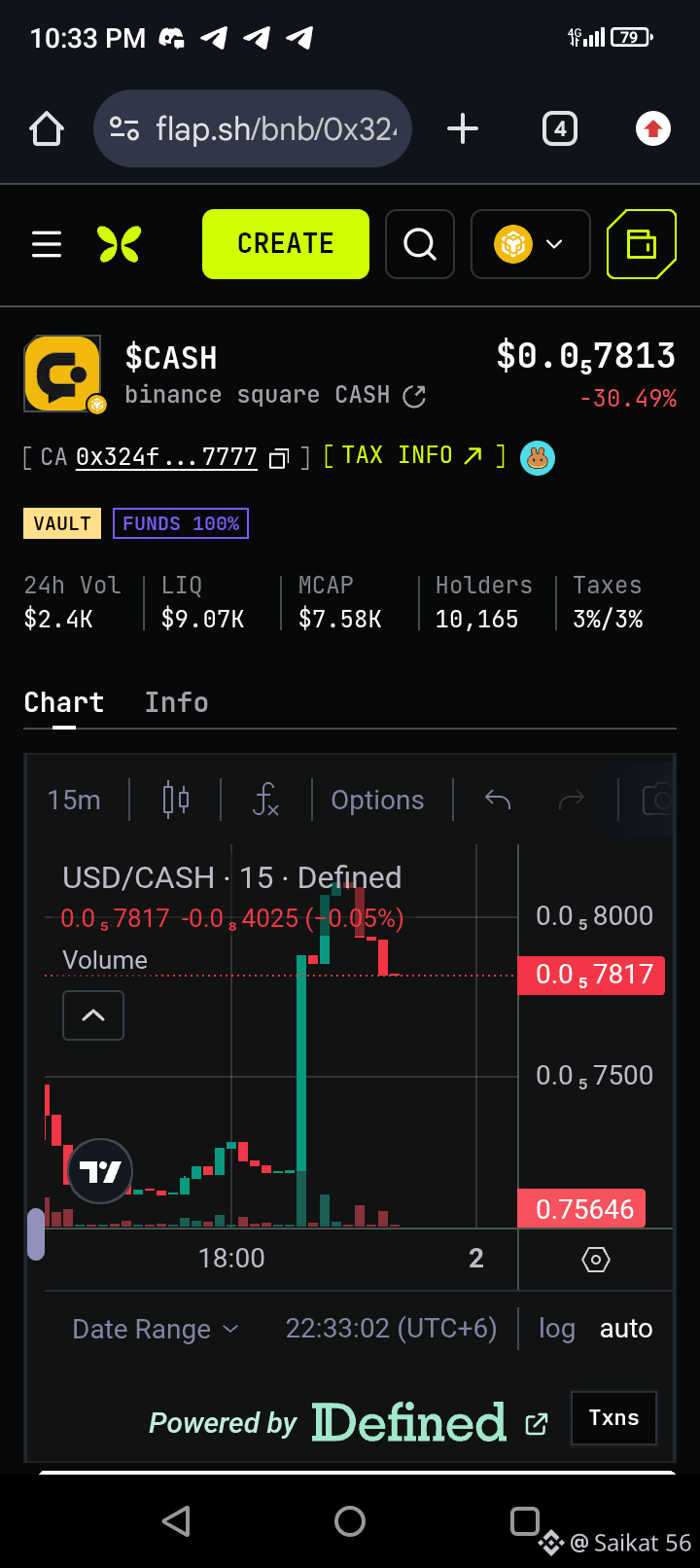
$CASH is getting some attention on Binance Square.
From the current snapshot, $CASH is trading around $0.0578, with roughly $2.4K 24h volume, $9.07K liquidity, and a market cap around $7.58K. The token also shows 10K+ holders and a 3% buy / 3% sell tax.
The chart shows a sharp move followed by a pullback, so volatility is clearly high. I’m watching how liquidity, volume, and price action develop from here rather than assuming the move will continue.
Do your own research and manage risk carefully.
$CASH
$CASH is getting some attention on Binance Square.
From the current snapshot, $CASH is trading around $0.0578, with roughly $2.4K 24h volume, $9.07K liquidity, and a market cap around $7.58K. The token also shows 10K+ holders and a 3% buy / 3% sell tax.
The chart shows a sharp move followed by a pullback, so volatility is clearly high. I’m watching how liquidity, volume, and price action develop from here rather than assuming the move will continue.
Do your own research and manage risk carefully.
$CASH
From the current snapshot, $CASH is trading around $0.0578, with roughly $2.4K 24h volume, $9.07K liquidity, and a market cap around $7.58K. The token also shows 10K+ holders and a 3% buy / 3% sell tax.
The chart shows a sharp move followed by a pullback, so volatility is clearly high. I’m watching how liquidity, volume, and price action develop from here rather than assuming the move will continue.
Do your own research and manage risk carefully.
$CASH
1
3
·
--
Übersetzung ansehen
每次买卖都向比特币奖励池注入资金。只需持有b-money,BTC就会自动进入您的钱包——无需质押、无需领取、无需锁定期
CA (BSC):
0xf49725118cb0707b8706ffffe895f3ab16da7777
领取地址: 0xd1a1C8ABaE38e9480A9304d41c75D4eC39425aC4
每次买卖都向比特币奖励池注入资金。只需持有b-money,BTC就会自动进入您的钱包——无需质押、无需领取、无需锁定期
CA (BSC):
0xf49725118cb0707b8706ffffe895f3ab16da7777
领取地址: 0xd1a1C8ABaE38e9480A9304d41c75D4eC39425aC4
CA (BSC):
0xf49725118cb0707b8706ffffe895f3ab16da7777
领取地址: 0xd1a1C8ABaE38e9480A9304d41c75D4eC39425aC4
1
55
·
--
Übersetzung ansehen
Post on Binance Square and you can claim a BNPaid bounty.
Website: https://bnbpaid.tech
CA (BSC):
0x11dC0Fd5e2C9A4407fdb15aA6871501Ba9307777
Payout address: 0xd1a1C8ABaE38e9480A9304d41c75D4eC39425aC4
Post on Binance Square and you can claim a BNPaid bounty.
Website: https://bnbpaid.tech
CA (BSC):
0x11dC0Fd5e2C9A4407fdb15aA6871501Ba9307777
Payout address: 0xd1a1C8ABaE38e9480A9304d41c75D4eC39425aC4
Website: https://bnbpaid.tech
CA (BSC):
0x11dC0Fd5e2C9A4407fdb15aA6871501Ba9307777
Payout address: 0xd1a1C8ABaE38e9480A9304d41c75D4eC39425aC4
1
5
·
--
Jeder Token kann mit @BNPaid mit nur einem Schritt eine Binance-Square-Promotion starten. Creator werden für ihre Beiträge on-chain bezahlt.
Der Bezahlplan, der sich am besten für den Aufbau des Binance-Ökosystems eignet.
Plattform-CA:
0x11dC0Fd5e2C9A4407fdb15aA6871501Ba9307777
Auszahlungsadresse: 0xd1a1C8ABaE38e9480A9304d41c75D4eC39425aC4
Jeder Token kann mit @BNPaid mit nur einem Schritt eine Binance-Square-Promotion starten. Creator werden für ihre Beiträge on-chain bezahlt.
Der Bezahlplan, der sich am besten für den Aufbau des Binance-Ökosystems eignet.
Plattform-CA:
0x11dC0Fd5e2C9A4407fdb15aA6871501Ba9307777
Auszahlungsadresse: 0xd1a1C8ABaE38e9480A9304d41c75D4eC39425aC4
Der Bezahlplan, der sich am besten für den Aufbau des Binance-Ökosystems eignet.
Plattform-CA:
0x11dC0Fd5e2C9A4407fdb15aA6871501Ba9307777
Auszahlungsadresse: 0xd1a1C8ABaE38e9480A9304d41c75D4eC39425aC4
1
75
·
--
#termmax
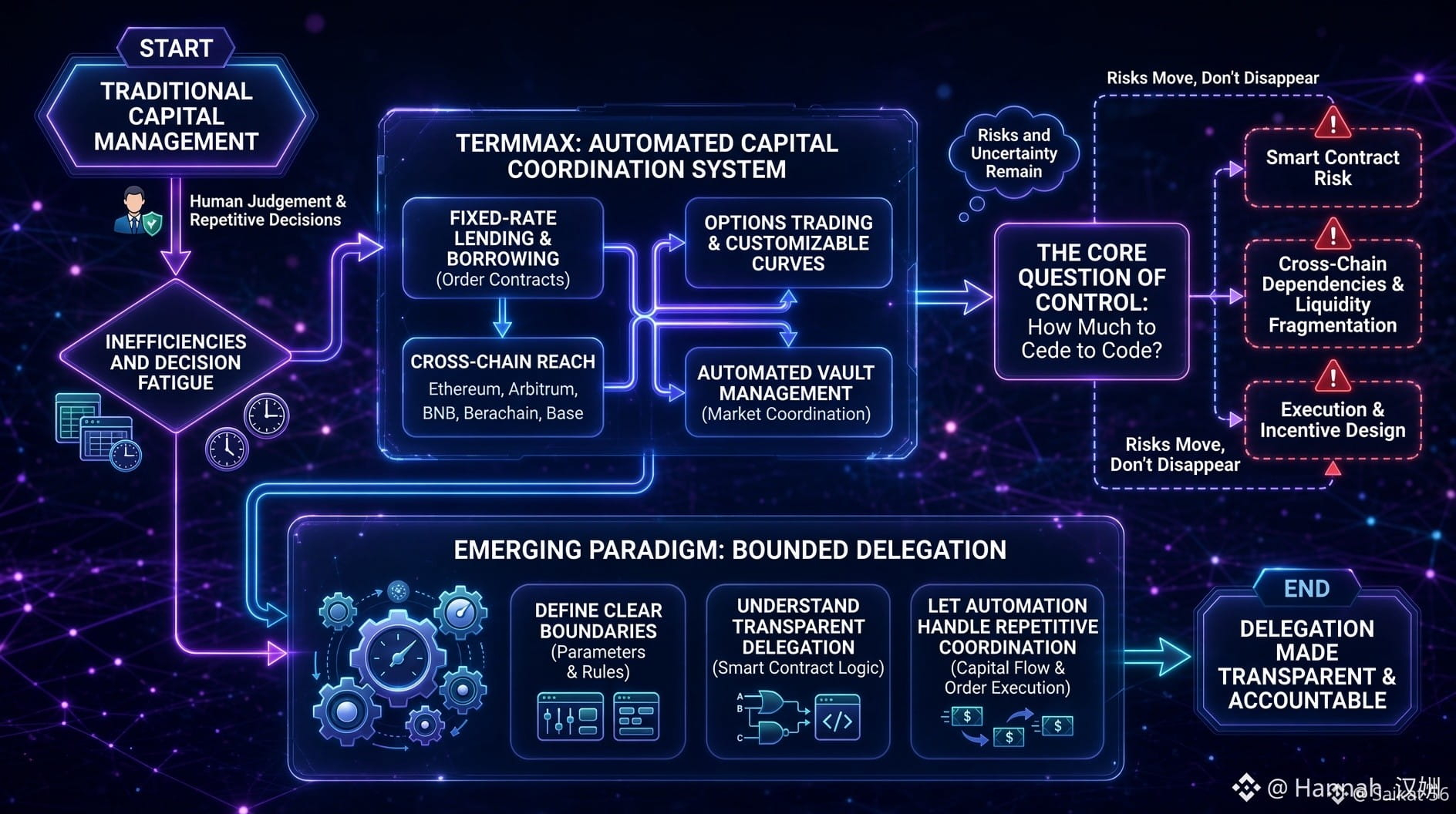
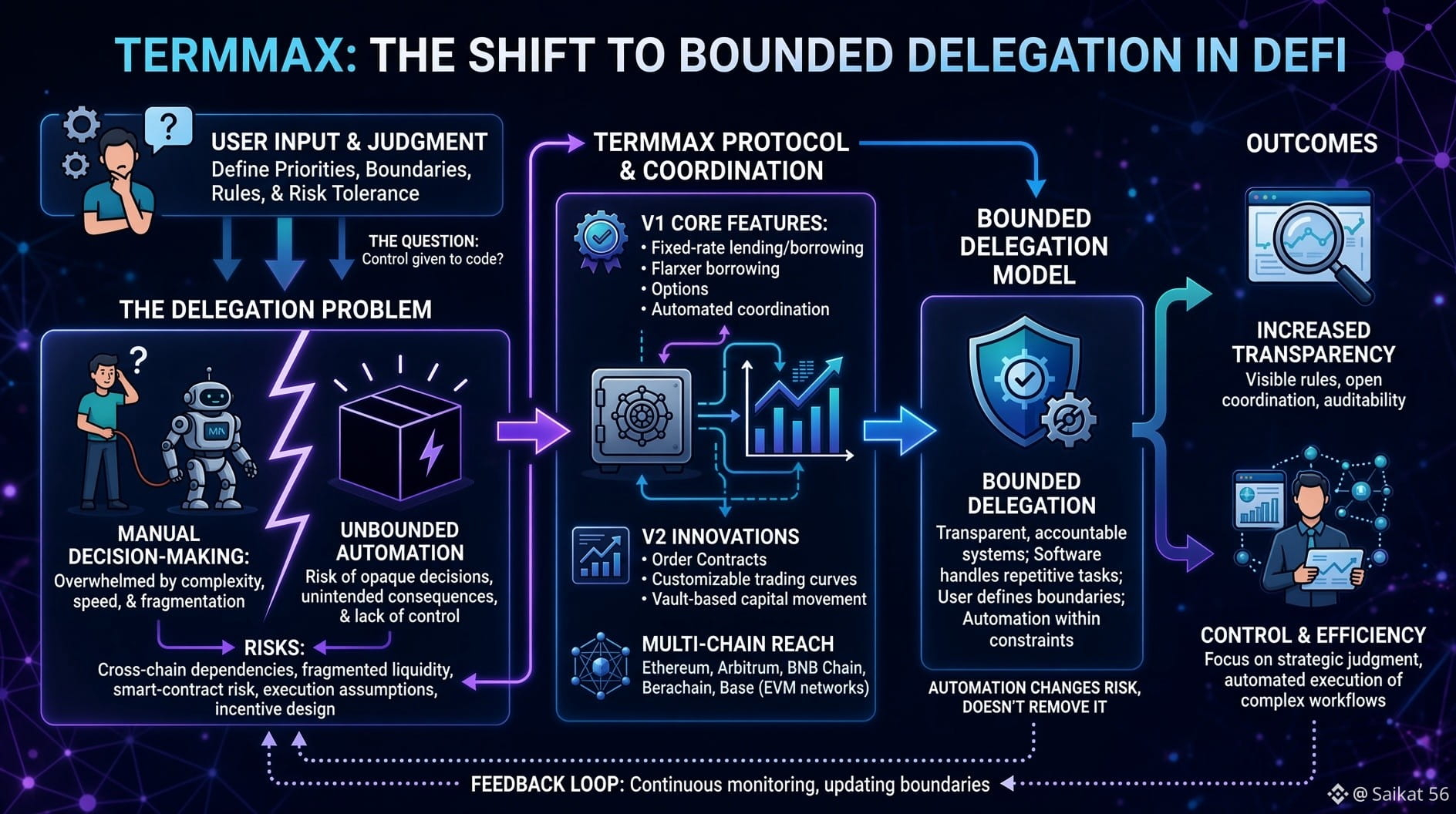
Denk darüber nach, dein Geld einzuzahlen und den Rest dem System zu überlassen.
Dein Geld fließt durch verschiedene Märkte, sucht nach guten Chancen, arbeitet mit anderen verfügbaren Fonds zusammen und befolgt die Regeln, die im Protokoll festgelegt sind.
Das ist die Art von Ausrichtung, die @termmax verfolgt: mit festverzinslichem Verleihen und Leihen, Optionen, automatisierter Kapitalkoordination und seiner aktualisierten Version von Order-Contracts – zusammen mit anpassbaren Trading-Kurven.
Das Vault-Modell baut auf diesem Konzept auf, indem es Kapital ermöglicht, das gemeinsam in verschiedenen Märkten wirken kann, statt getrennt zu bleiben.
Dann gibt es noch den Multi-Chain-Teil.
Ethereum, Arbitrum, BNB Chain, Berachain, Base und andere kompatible EVM-Netzwerke können den Zugang und die Optionen erweitern.
Aber je bequemer die Automatisierung wird, desto mehr bleibt eine Frage bei mir:
Wohin geht das Risiko?
Automatisierung kann sich wiederholende Aufgaben übernehmen, aber sie entfernt die unbekannten Faktoren nicht.
Kettenübergreifende Abhängigkeiten bestehen weiterhin.
Liquidität kann sich trotzdem aufspalten. Smart Contracts können immer noch fehlschlagen. Die Ausführung beruht auf bestimmten Annahmen, und die vorhandenen Anreize können dazu führen, dass Menschen sich auf eine Weise verhalten, die ursprünglich nicht beabsichtigt war.
Das Risiko verschwindet nicht.
Es wandert nur in ein anderes System.
Deshalb ist das Konzept, das ich am spannendsten finde, begrenzte Delegation.
Ich will nicht unbedingt, dass Software alles für mich entscheidet.
Ich will die Grenzen setzen.
Ich will die Regeln verstehen.
Sobald die Grenzen festgelegt sind, soll die Automatisierung die wiederholte Koordination innerhalb dieser Grenzen übernehmen.
Die Frage ist nicht, ob Code menschliches Urteilsvermögen ersetzen kann, sondern ob er dabei helfen kann, den Prozess der Aufgabendelegation klarer, transparenter und besser nachvollziehbar zu machen.
$BTC $ETH
#termmax
Denk darüber nach, dein Geld einzuzahlen und den Rest dem System zu überlassen.
Dein Geld fließt durch verschiedene Märkte, sucht nach guten Chancen, arbeitet mit anderen verfügbaren Fonds zusammen und befolgt die Regeln, die im Protokoll festgelegt sind.
Das ist die Art von Ausrichtung, die @TermMax verfolgt: mit festverzinslichem Verleihen und Leihen, Optionen, automatisierter Kapitalkoordination und seiner aktualisierten Version von Order-Contracts – zusammen mit anpassbaren Trading-Kurven.
Das Vault-Modell baut auf diesem Konzept auf, indem es Kapital ermöglicht, das gemeinsam in verschiedenen Märkten wirken kann, statt getrennt zu bleiben.
Dann gibt es noch den Multi-Chain-Teil.
Ethereum, Arbitrum, BNB Chain, Berachain, Base und andere kompatible EVM-Netzwerke können den Zugang und die Optionen erweitern.
Aber je bequemer die Automatisierung wird, desto mehr bleibt eine Frage bei mir:
Wohin geht das Risiko?
Automatisierung kann sich wiederholende Aufgaben übernehmen, aber sie entfernt die unbekannten Faktoren nicht.
Kettenübergreifende Abhängigkeiten bestehen weiterhin.
Liquidität kann sich trotzdem aufspalten. Smart Contracts können immer noch fehlschlagen. Die Ausführung beruht auf bestimmten Annahmen, und die vorhandenen Anreize können dazu führen, dass Menschen sich auf eine Weise verhalten, die ursprünglich nicht beabsichtigt war.
Das Risiko verschwindet nicht.
Es wandert nur in ein anderes System.
Deshalb ist das Konzept, das ich am spannendsten finde, begrenzte Delegation.
Ich will nicht unbedingt, dass Software alles für mich entscheidet.
Ich will die Grenzen setzen.
Ich will die Regeln verstehen.
Sobald die Grenzen festgelegt sind, soll die Automatisierung die wiederholte Koordination innerhalb dieser Grenzen übernehmen.
Die Frage ist nicht, ob Code menschliches Urteilsvermögen ersetzen kann, sondern ob er dabei helfen kann, den Prozess der Aufgabendelegation klarer, transparenter und besser nachvollziehbar zu machen.
$BTC $ETH
Denk darüber nach, dein Geld einzuzahlen und den Rest dem System zu überlassen.
Dein Geld fließt durch verschiedene Märkte, sucht nach guten Chancen, arbeitet mit anderen verfügbaren Fonds zusammen und befolgt die Regeln, die im Protokoll festgelegt sind.
Das ist die Art von Ausrichtung, die @TermMax verfolgt: mit festverzinslichem Verleihen und Leihen, Optionen, automatisierter Kapitalkoordination und seiner aktualisierten Version von Order-Contracts – zusammen mit anpassbaren Trading-Kurven.
Das Vault-Modell baut auf diesem Konzept auf, indem es Kapital ermöglicht, das gemeinsam in verschiedenen Märkten wirken kann, statt getrennt zu bleiben.
Dann gibt es noch den Multi-Chain-Teil.
Ethereum, Arbitrum, BNB Chain, Berachain, Base und andere kompatible EVM-Netzwerke können den Zugang und die Optionen erweitern.
Aber je bequemer die Automatisierung wird, desto mehr bleibt eine Frage bei mir:
Wohin geht das Risiko?
Automatisierung kann sich wiederholende Aufgaben übernehmen, aber sie entfernt die unbekannten Faktoren nicht.
Kettenübergreifende Abhängigkeiten bestehen weiterhin.
Liquidität kann sich trotzdem aufspalten. Smart Contracts können immer noch fehlschlagen. Die Ausführung beruht auf bestimmten Annahmen, und die vorhandenen Anreize können dazu führen, dass Menschen sich auf eine Weise verhalten, die ursprünglich nicht beabsichtigt war.
Das Risiko verschwindet nicht.
Es wandert nur in ein anderes System.
Deshalb ist das Konzept, das ich am spannendsten finde, begrenzte Delegation.
Ich will nicht unbedingt, dass Software alles für mich entscheidet.
Ich will die Grenzen setzen.
Ich will die Regeln verstehen.
Sobald die Grenzen festgelegt sind, soll die Automatisierung die wiederholte Koordination innerhalb dieser Grenzen übernehmen.
Die Frage ist nicht, ob Code menschliches Urteilsvermögen ersetzen kann, sondern ob er dabei helfen kann, den Prozess der Aufgabendelegation klarer, transparenter und besser nachvollziehbar zu machen.
$BTC $ETH
3
3
356
·
--
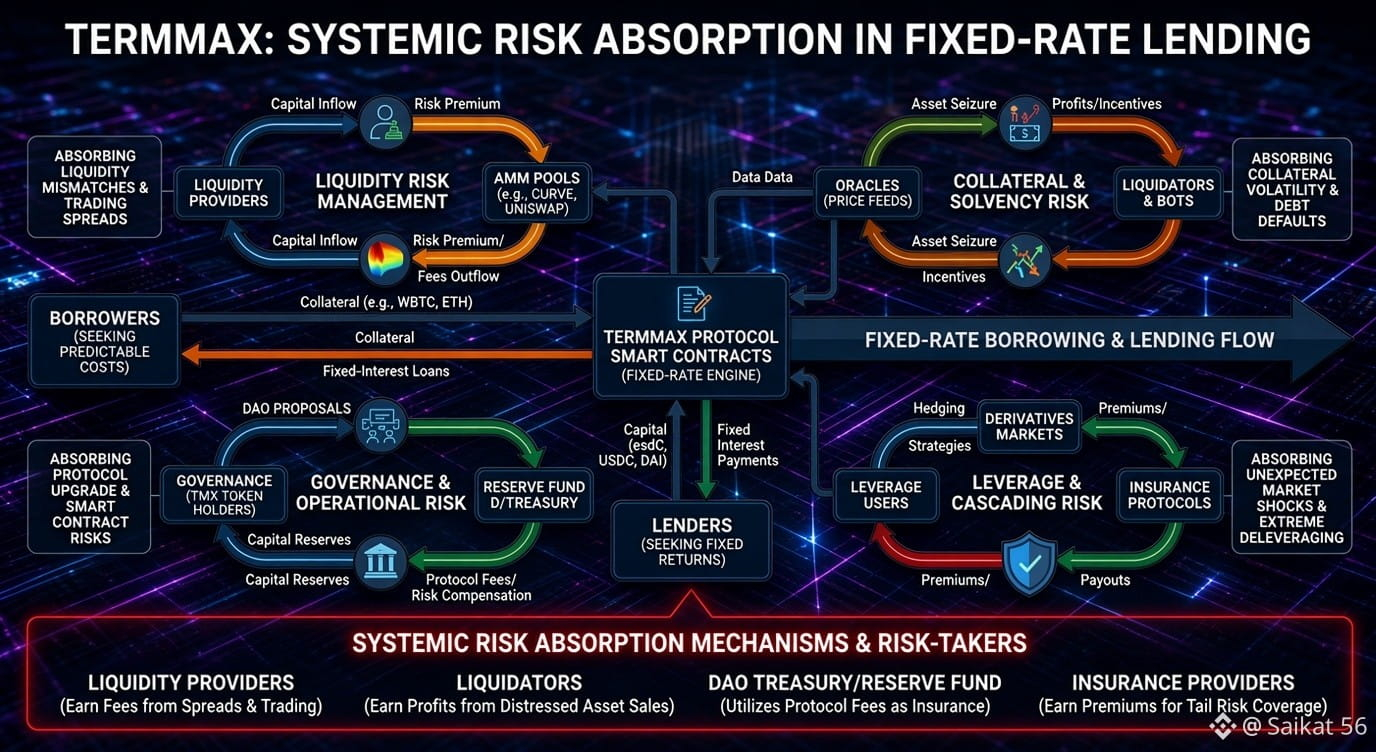
@termmax löst ein Problem, das jeder DeFi-Kreditnehmer nachvollziehen kann: Du nimmst heute einen Kredit auf, aber bis morgen fragst du dich, wie viel es dich tatsächlich kosten wird, ihn zu leihen.
Dann beginnt festverzinsendes Lending attraktiv zu wirken. Du kennst den Zinssatz, du kennst die Laufzeit, und es gibt weniger Zweifel daran, wie viel du am Ende zahlen musst.
Einfach, oder?
Vielleicht zumindest aus Sicht des Kreditnehmers.
Das Festlegen des Zinssatzes beseitigt nicht die realen Risiken, die weiterhin bestehen. Wenn die Märkte kippen, gibt es weniger Geld, das zum Handeln zur Verfügung steht, der Wert der als Sicherheit verwendeten Vermögenswerte kann fallen, geliehenes Geld kann vorzeitig zurückgefordert werden, und sogar Smart Contracts sowie die Regeln, die sie steuern, werden auf die Probe gestellt.
Ich habe diesen Trend in DeFi schon früher gesehen: Die Art, wie Nutzer mit der Plattform interagieren, wird einfacher, aber die Systeme, die im Hintergrund laufen, werden komplizierter.
Für #termmax ist die eigentliche Frage daher nicht nur, ob es feste Zinssätze anbieten kann.
Die größere Frage ist, was passiert, wenn der Markt realen Stress erlebt.
Wer trägt letztlich das Risiko?
Und ebenso wichtig: Wer wird dafür belohnt, dass er es eingeht?
Dort wird das Modell auf die Probe gestellt.
#TermMax $BTC $ETH
@TermMax löst ein Problem, das jeder DeFi-Kreditnehmer nachvollziehen kann: Du nimmst heute einen Kredit auf, aber bis morgen fragst du dich, wie viel es dich tatsächlich kosten wird, ihn zu leihen.
Dann beginnt festverzinsendes Lending attraktiv zu wirken. Du kennst den Zinssatz, du kennst die Laufzeit, und es gibt weniger Zweifel daran, wie viel du am Ende zahlen musst.
Einfach, oder?
Vielleicht zumindest aus Sicht des Kreditnehmers.
Das Festlegen des Zinssatzes beseitigt nicht die realen Risiken, die weiterhin bestehen. Wenn die Märkte kippen, gibt es weniger Geld, das zum Handeln zur Verfügung steht, der Wert der als Sicherheit verwendeten Vermögenswerte kann fallen, geliehenes Geld kann vorzeitig zurückgefordert werden, und sogar Smart Contracts sowie die Regeln, die sie steuern, werden auf die Probe gestellt.
Ich habe diesen Trend in DeFi schon früher gesehen: Die Art, wie Nutzer mit der Plattform interagieren, wird einfacher, aber die Systeme, die im Hintergrund laufen, werden komplizierter.
Für #termmax ist die eigentliche Frage daher nicht nur, ob es feste Zinssätze anbieten kann.
Die größere Frage ist, was passiert, wenn der Markt realen Stress erlebt.
Wer trägt letztlich das Risiko?
Und ebenso wichtig: Wer wird dafür belohnt, dass er es eingeht?
Dort wird das Modell auf die Probe gestellt.
#TermMax $BTC $ETH
Dann beginnt festverzinsendes Lending attraktiv zu wirken. Du kennst den Zinssatz, du kennst die Laufzeit, und es gibt weniger Zweifel daran, wie viel du am Ende zahlen musst.
Einfach, oder?
Vielleicht zumindest aus Sicht des Kreditnehmers.
Das Festlegen des Zinssatzes beseitigt nicht die realen Risiken, die weiterhin bestehen. Wenn die Märkte kippen, gibt es weniger Geld, das zum Handeln zur Verfügung steht, der Wert der als Sicherheit verwendeten Vermögenswerte kann fallen, geliehenes Geld kann vorzeitig zurückgefordert werden, und sogar Smart Contracts sowie die Regeln, die sie steuern, werden auf die Probe gestellt.
Ich habe diesen Trend in DeFi schon früher gesehen: Die Art, wie Nutzer mit der Plattform interagieren, wird einfacher, aber die Systeme, die im Hintergrund laufen, werden komplizierter.
Für #termmax ist die eigentliche Frage daher nicht nur, ob es feste Zinssätze anbieten kann.
Die größere Frage ist, was passiert, wenn der Markt realen Stress erlebt.
Wer trägt letztlich das Risiko?
Und ebenso wichtig: Wer wird dafür belohnt, dass er es eingeht?
Dort wird das Modell auf die Probe gestellt.
#TermMax $BTC $ETH
13
1
5
432
·
--
DeFi-Kredite können sich anfühlen wie Fahren ohne zu wissen, wie viel die nächste Meile kosten wird.
Die Zinssätze ändern sich, die Märkte ändern sich, und plötzlich wird aus einer Position, die sich leicht handhaben ließ, etwas, das kostspielig wird.
Genau dabei setzt die @termmax an: mit Festzins-Krediten, die Kreditnehmern mehr Stabilität bieten, statt dass sie die ganze Zeit mit schwankenden Zinssätzen zu tun haben.
Aber es gibt noch eine andere Seite der Medaille.
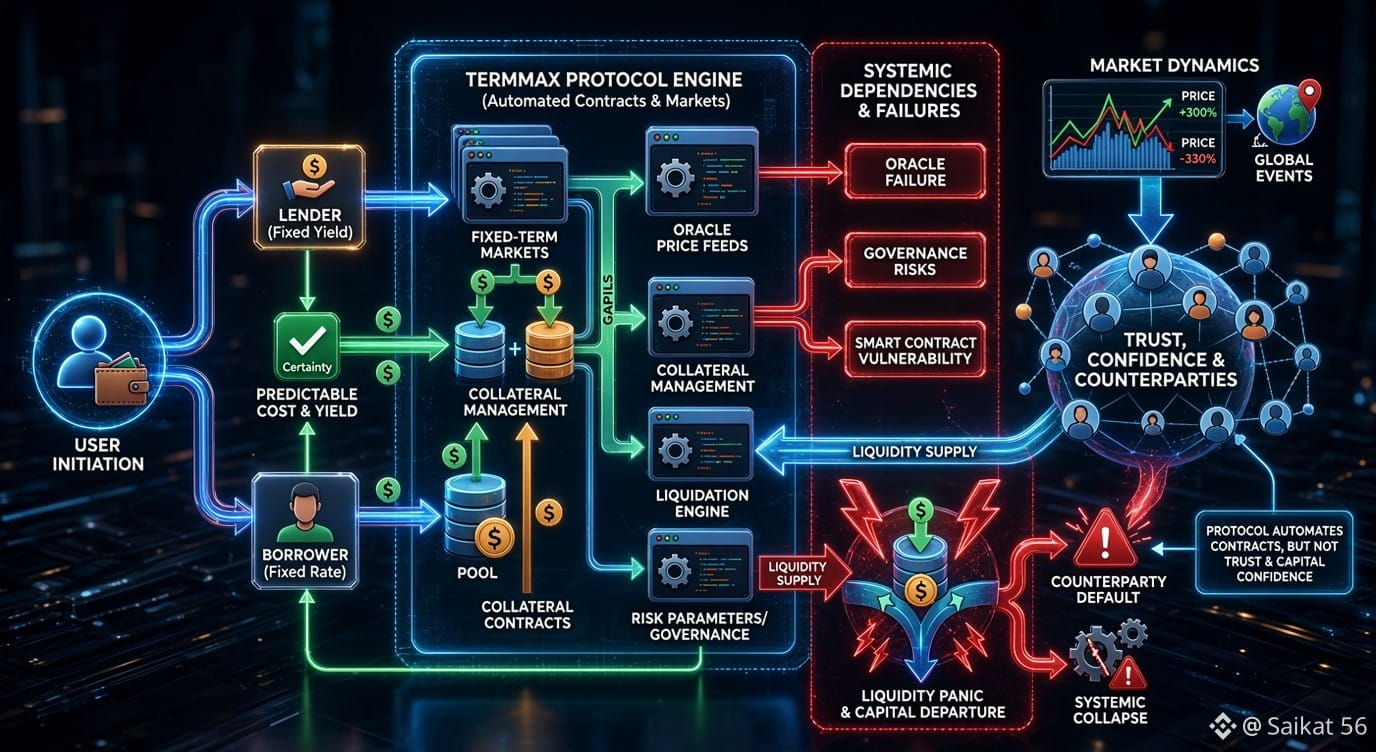
Festzinssätze machen das System nicht automatisch einfach. Sicherheiten, Liquidationen, Optionen, Orakel und Governance fügen weitere Ebenen hinzu. Eine zusätzliche Ebene kann einen weiteren möglichen Ort schaffen, an dem etwas schiefgehen könnte.
Dann kommt die wichtigste Frage: Liquidität.
Wenn der Markt ruhig ist, wirkt fast jedes System leistungsstark. Die echte Herausforderung entsteht, wenn die Volatilität zuschlägt und das Kapital beginnt zu verschwinden.
Smart Contracts können die automatische Ausführung übernehmen, aber sie können kein Vertrauen, keine Liquidität und keine Zuversicht schaffen, wenn der Markt instabil wird.
Das ist der Teil der TermMax-These, auf den ich am meisten achten werde.
#TermMax @termmax $ETH
DeFi-Kredite können sich anfühlen wie Fahren ohne zu wissen, wie viel die nächste Meile kosten wird.
Die Zinssätze ändern sich, die Märkte ändern sich, und plötzlich wird aus einer Position, die sich leicht handhaben ließ, etwas, das kostspielig wird.
Genau dabei setzt die @TermMax an: mit Festzins-Krediten, die Kreditnehmern mehr Stabilität bieten, statt dass sie die ganze Zeit mit schwankenden Zinssätzen zu tun haben.
Aber es gibt noch eine andere Seite der Medaille.
Festzinssätze machen das System nicht automatisch einfach. Sicherheiten, Liquidationen, Optionen, Orakel und Governance fügen weitere Ebenen hinzu. Eine zusätzliche Ebene kann einen weiteren möglichen Ort schaffen, an dem etwas schiefgehen könnte.
Dann kommt die wichtigste Frage: Liquidität.
Wenn der Markt ruhig ist, wirkt fast jedes System leistungsstark. Die echte Herausforderung entsteht, wenn die Volatilität zuschlägt und das Kapital beginnt zu verschwinden.
Smart Contracts können die automatische Ausführung übernehmen, aber sie können kein Vertrauen, keine Liquidität und keine Zuversicht schaffen, wenn der Markt instabil wird.
Das ist der Teil der TermMax-These, auf den ich am meisten achten werde.
#TermMax @TermMax $ETH
Die Zinssätze ändern sich, die Märkte ändern sich, und plötzlich wird aus einer Position, die sich leicht handhaben ließ, etwas, das kostspielig wird.
Genau dabei setzt die @TermMax an: mit Festzins-Krediten, die Kreditnehmern mehr Stabilität bieten, statt dass sie die ganze Zeit mit schwankenden Zinssätzen zu tun haben.
Aber es gibt noch eine andere Seite der Medaille.
Festzinssätze machen das System nicht automatisch einfach. Sicherheiten, Liquidationen, Optionen, Orakel und Governance fügen weitere Ebenen hinzu. Eine zusätzliche Ebene kann einen weiteren möglichen Ort schaffen, an dem etwas schiefgehen könnte.
Dann kommt die wichtigste Frage: Liquidität.
Wenn der Markt ruhig ist, wirkt fast jedes System leistungsstark. Die echte Herausforderung entsteht, wenn die Volatilität zuschlägt und das Kapital beginnt zu verschwinden.
Smart Contracts können die automatische Ausführung übernehmen, aber sie können kein Vertrauen, keine Liquidität und keine Zuversicht schaffen, wenn der Markt instabil wird.
Das ist der Teil der TermMax-These, auf den ich am meisten achten werde.
#TermMax @TermMax $ETH
7
1
6
89
·
--
Zunächst dachte ich, dass Konsens einfach nur darum geht, genug Validatoren zu haben, die „Ja“ sagen.
Aber Dustks Succinct Attestation hat mich dazu veranlasst, es anders zu betrachten.
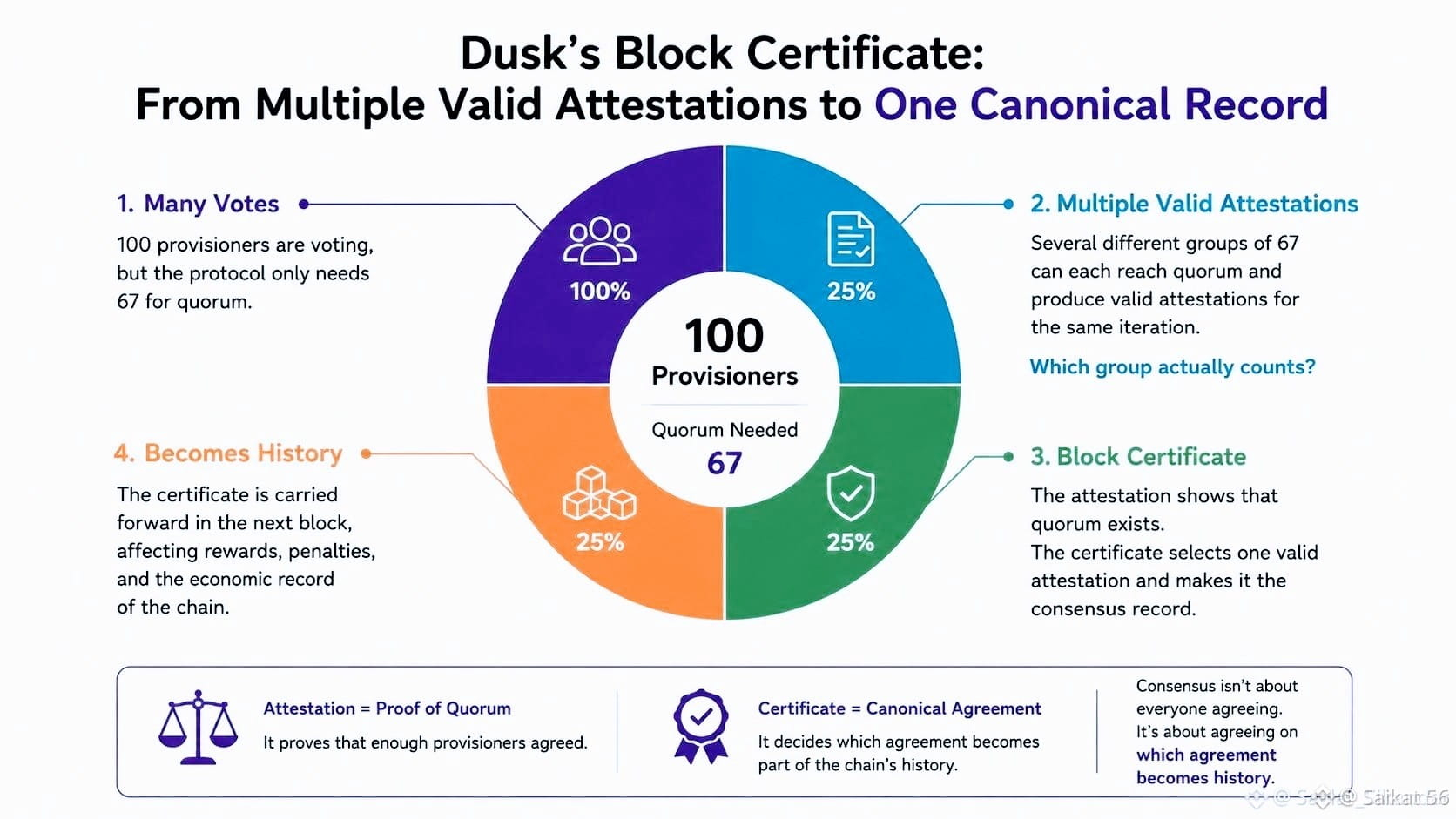
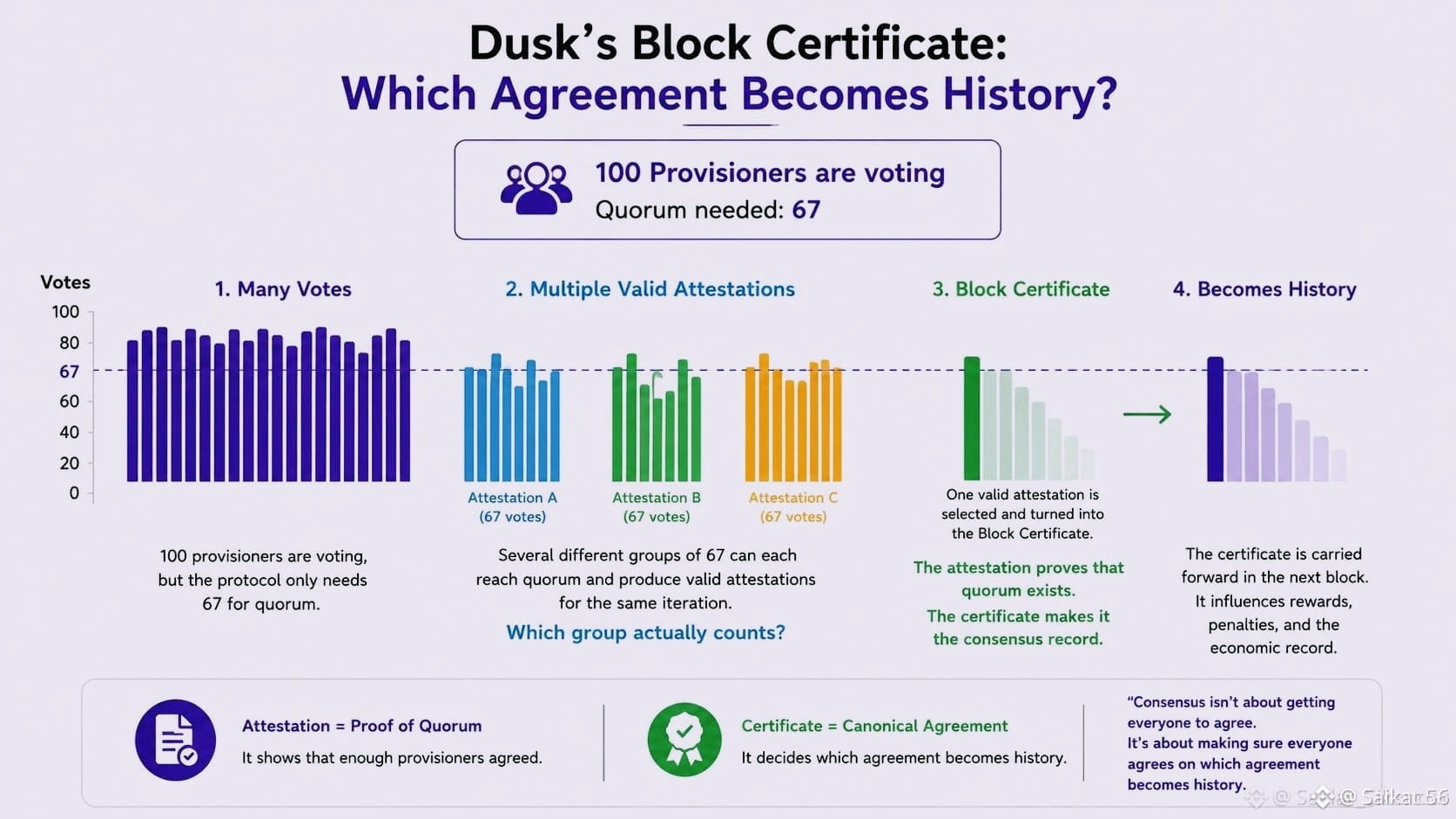
Stell dir vor, 100 Bereitsteller stimmen ab, während nur 67 benötigt werden, um das Quorum zu erreichen. Es ist möglich, dass mehrere unterschiedliche Gruppen von 67 gültige Bestätigungen für dieselbe Iteration erzeugen.
Dann stellt sich die eigentliche Frage:
Welche davon wird zur Vereinbarung, die alle weitertragen?
Genau hier wird das @Dusk_Foundation Block Certificate besonders interessant.
Die Bestätigung zeigt, dass das Quorum erreicht wurde. Das Zertifikat geht einen Schritt weiter: Es wählt eine gültige Bestätigung aus und macht sie zur Konsensaufzeichnung, auf die der nächste Block aufbaut.
Und das ist nicht nur eine technische Einzelheit. Die in dieses Zertifikat aufgenommenen Wähler können auch die wirtschaftliche Seite des Konsenses beeinflussen.
Früher dachte ich, Zertifikate dienten vor allem dazu, nachzuweisen, dass Validatoren teilgenommen haben.
Jetzt sehe ich das anders.
Konsens ist nicht immer darum, dass alle über alles einer Meinung sind.
Manchmal geht es darum sicherzustellen, dass alle sich darüber einig sind, welche gültige Vereinbarung zur Geschichte wird.
#dusk $DUSK
Zunächst dachte ich, dass Konsens einfach nur darum geht, genug Validatoren zu haben, die „Ja“ sagen.
Aber Dustks Succinct Attestation hat mich dazu veranlasst, es anders zu betrachten.
Stell dir vor, 100 Bereitsteller stimmen ab, während nur 67 benötigt werden, um das Quorum zu erreichen. Es ist möglich, dass mehrere unterschiedliche Gruppen von 67 gültige Bestätigungen für dieselbe Iteration erzeugen.
Dann stellt sich die eigentliche Frage:
Welche davon wird zur Vereinbarung, die alle weitertragen?
Genau hier wird das @Dusk Block Certificate besonders interessant.
Die Bestätigung zeigt, dass das Quorum erreicht wurde. Das Zertifikat geht einen Schritt weiter: Es wählt eine gültige Bestätigung aus und macht sie zur Konsensaufzeichnung, auf die der nächste Block aufbaut.
Und das ist nicht nur eine technische Einzelheit. Die in dieses Zertifikat aufgenommenen Wähler können auch die wirtschaftliche Seite des Konsenses beeinflussen.
Früher dachte ich, Zertifikate dienten vor allem dazu, nachzuweisen, dass Validatoren teilgenommen haben.
Jetzt sehe ich das anders.
Konsens ist nicht immer darum, dass alle über alles einer Meinung sind.
Manchmal geht es darum sicherzustellen, dass alle sich darüber einig sind, welche gültige Vereinbarung zur Geschichte wird.
#dusk $DUSK
Aber Dustks Succinct Attestation hat mich dazu veranlasst, es anders zu betrachten.
Stell dir vor, 100 Bereitsteller stimmen ab, während nur 67 benötigt werden, um das Quorum zu erreichen. Es ist möglich, dass mehrere unterschiedliche Gruppen von 67 gültige Bestätigungen für dieselbe Iteration erzeugen.
Dann stellt sich die eigentliche Frage:
Welche davon wird zur Vereinbarung, die alle weitertragen?
Genau hier wird das @Dusk Block Certificate besonders interessant.
Die Bestätigung zeigt, dass das Quorum erreicht wurde. Das Zertifikat geht einen Schritt weiter: Es wählt eine gültige Bestätigung aus und macht sie zur Konsensaufzeichnung, auf die der nächste Block aufbaut.
Und das ist nicht nur eine technische Einzelheit. Die in dieses Zertifikat aufgenommenen Wähler können auch die wirtschaftliche Seite des Konsenses beeinflussen.
Früher dachte ich, Zertifikate dienten vor allem dazu, nachzuweisen, dass Validatoren teilgenommen haben.
Jetzt sehe ich das anders.
Konsens ist nicht immer darum, dass alle über alles einer Meinung sind.
Manchmal geht es darum sicherzustellen, dass alle sich darüber einig sind, welche gültige Vereinbarung zur Geschichte wird.
#dusk $DUSK
12
1
7
99
·
--
Bullisch
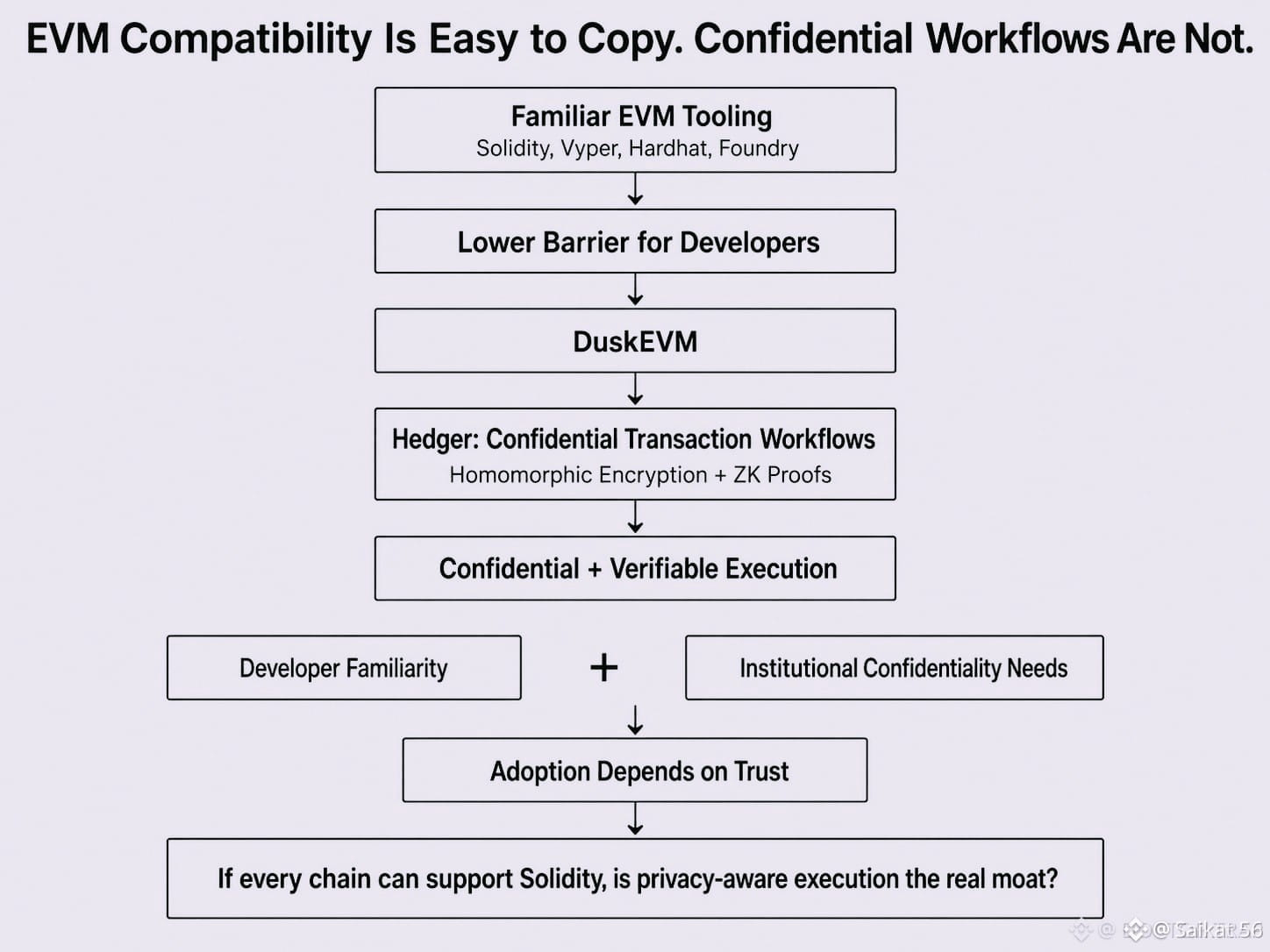
Entwickler kennen Solidity bereits, daher macht eine EVM-kompatible Umgebung den ersten Schritt auf den Dusk deutlich einfacher.
Aber ehrlich: Allein das ist es nicht, was es so interessant macht – fast jede Kette kann vertraute EVM-Tools bieten.
Was meine Aufmerksamkeit geweckt hat, als ich die offiziellen Docs @Dusk_Foundation durchgegangen bin, ist das, was nach diesem vertrauten Einstieg kommt.
DuskEVM unterstützt Solidity, Vyper, Hardhat und Foundry und bietet Entwicklern eine Umgebung, die sie bereits verstehen.
Doch Hedger auf dem Testnet fügt eine weitere Ebene hinzu, indem es Homomorphes Verschlüsselung mit Zero-Knowledge-Proofs kombiniert, um vertrauliche Transaktionsabläufe zu ermöglichen.
Das verändert das Gespräch von „EVM, aber privat“ hin zu etwas mehr.
Homomorphe Verschlüsselung erlaubt Berechnungen auf verschlüsselten Daten, ohne die zugrunde liegenden Werte offenzulegen, während ZK-Proofs die Korrektheit verifizieren können, ohne sensible Informationen preiszugeben.
Für Finanzanwendungen könnte diese Kombination deutlich relevanter sein. Institutionen brauchen nicht nur Privatsphäre – sie müssen wissen, was vertraulich bleibt, was weiterhin verifiziert werden kann,
und was sich bei Bedarf schließlich prüfen (auditen) lässt.
Und das ist die eigentliche Herausforderung.
Entwickler wollen eine vertraute Infrastruktur.
Institutionen wollen die Gewissheit, dass Vertraulichkeit das System nicht in eine operative Blackbox verwandelt.
Wenn Dusk diese Balance halten kann, bekommen Entwickler eine vertraute EVM-Erfahrung, während Institutionen etwas erhalten, das sie von transparenten Chains nicht ohne Weiteres bekommen können.
Vielleicht ist die eigentliche Frage also nicht, ob Solidity zum Standard wird.
Sondern ob aus Datenschutzperspektive-aware Execution die schwerer nachzubauende Burgmauer wird.
#dusk $DUSK $AKE $KII
Entwickler kennen Solidity bereits, daher macht eine EVM-kompatible Umgebung den ersten Schritt auf den Dusk deutlich einfacher.
Aber ehrlich: Allein das ist es nicht, was es so interessant macht – fast jede Kette kann vertraute EVM-Tools bieten.
Was meine Aufmerksamkeit geweckt hat, als ich die offiziellen Docs @Dusk durchgegangen bin, ist das, was nach diesem vertrauten Einstieg kommt.
DuskEVM unterstützt Solidity, Vyper, Hardhat und Foundry und bietet Entwicklern eine Umgebung, die sie bereits verstehen.
Doch Hedger auf dem Testnet fügt eine weitere Ebene hinzu, indem es Homomorphes Verschlüsselung mit Zero-Knowledge-Proofs kombiniert, um vertrauliche Transaktionsabläufe zu ermöglichen.
Das verändert das Gespräch von „EVM, aber privat“ hin zu etwas mehr.
Homomorphe Verschlüsselung erlaubt Berechnungen auf verschlüsselten Daten, ohne die zugrunde liegenden Werte offenzulegen, während ZK-Proofs die Korrektheit verifizieren können, ohne sensible Informationen preiszugeben.
Für Finanzanwendungen könnte diese Kombination deutlich relevanter sein. Institutionen brauchen nicht nur Privatsphäre – sie müssen wissen, was vertraulich bleibt, was weiterhin verifiziert werden kann,
und was sich bei Bedarf schließlich prüfen (auditen) lässt.
Und das ist die eigentliche Herausforderung.
Entwickler wollen eine vertraute Infrastruktur.
Institutionen wollen die Gewissheit, dass Vertraulichkeit das System nicht in eine operative Blackbox verwandelt.
Wenn Dusk diese Balance halten kann, bekommen Entwickler eine vertraute EVM-Erfahrung, während Institutionen etwas erhalten, das sie von transparenten Chains nicht ohne Weiteres bekommen können.
Vielleicht ist die eigentliche Frage also nicht, ob Solidity zum Standard wird.
Sondern ob aus Datenschutzperspektive-aware Execution die schwerer nachzubauende Burgmauer wird.
#dusk $DUSK $AKE $KII
Aber ehrlich: Allein das ist es nicht, was es so interessant macht – fast jede Kette kann vertraute EVM-Tools bieten.
Was meine Aufmerksamkeit geweckt hat, als ich die offiziellen Docs @Dusk durchgegangen bin, ist das, was nach diesem vertrauten Einstieg kommt.
DuskEVM unterstützt Solidity, Vyper, Hardhat und Foundry und bietet Entwicklern eine Umgebung, die sie bereits verstehen.
Doch Hedger auf dem Testnet fügt eine weitere Ebene hinzu, indem es Homomorphes Verschlüsselung mit Zero-Knowledge-Proofs kombiniert, um vertrauliche Transaktionsabläufe zu ermöglichen.
Das verändert das Gespräch von „EVM, aber privat“ hin zu etwas mehr.
Homomorphe Verschlüsselung erlaubt Berechnungen auf verschlüsselten Daten, ohne die zugrunde liegenden Werte offenzulegen, während ZK-Proofs die Korrektheit verifizieren können, ohne sensible Informationen preiszugeben.
Für Finanzanwendungen könnte diese Kombination deutlich relevanter sein. Institutionen brauchen nicht nur Privatsphäre – sie müssen wissen, was vertraulich bleibt, was weiterhin verifiziert werden kann,
und was sich bei Bedarf schließlich prüfen (auditen) lässt.
Und das ist die eigentliche Herausforderung.
Entwickler wollen eine vertraute Infrastruktur.
Institutionen wollen die Gewissheit, dass Vertraulichkeit das System nicht in eine operative Blackbox verwandelt.
Wenn Dusk diese Balance halten kann, bekommen Entwickler eine vertraute EVM-Erfahrung, während Institutionen etwas erhalten, das sie von transparenten Chains nicht ohne Weiteres bekommen können.
Vielleicht ist die eigentliche Frage also nicht, ob Solidity zum Standard wird.
Sondern ob aus Datenschutzperspektive-aware Execution die schwerer nachzubauende Burgmauer wird.
#dusk $DUSK $AKE $KII
2
2
86
·
--
𝐃𝐮𝐬𝐤’𝐬 𝐂𝐨𝐧𝐬𝐞𝐧𝐬𝐮𝐬 𝐃𝐞𝐬𝐢𝐠𝐧:
Wenn die Wahrheit sagen zur klügsten Entscheidung wird
Das Studium von Dusk hat mich über Konsens auf eine völlig andere Weise nachdenken lassen.
Starke Kryptografie allein macht ein Konsenssystem noch nicht wirklich sicher. Die tiefergehende Frage ist: Was passiert, wenn ein ehrlicher Teilnehmer einen Grund hat, eine Schwachstelle zu seinem eigenen Vorteil auszunutzen?
Stell dir vor, du bist ein Provisionsgeber.
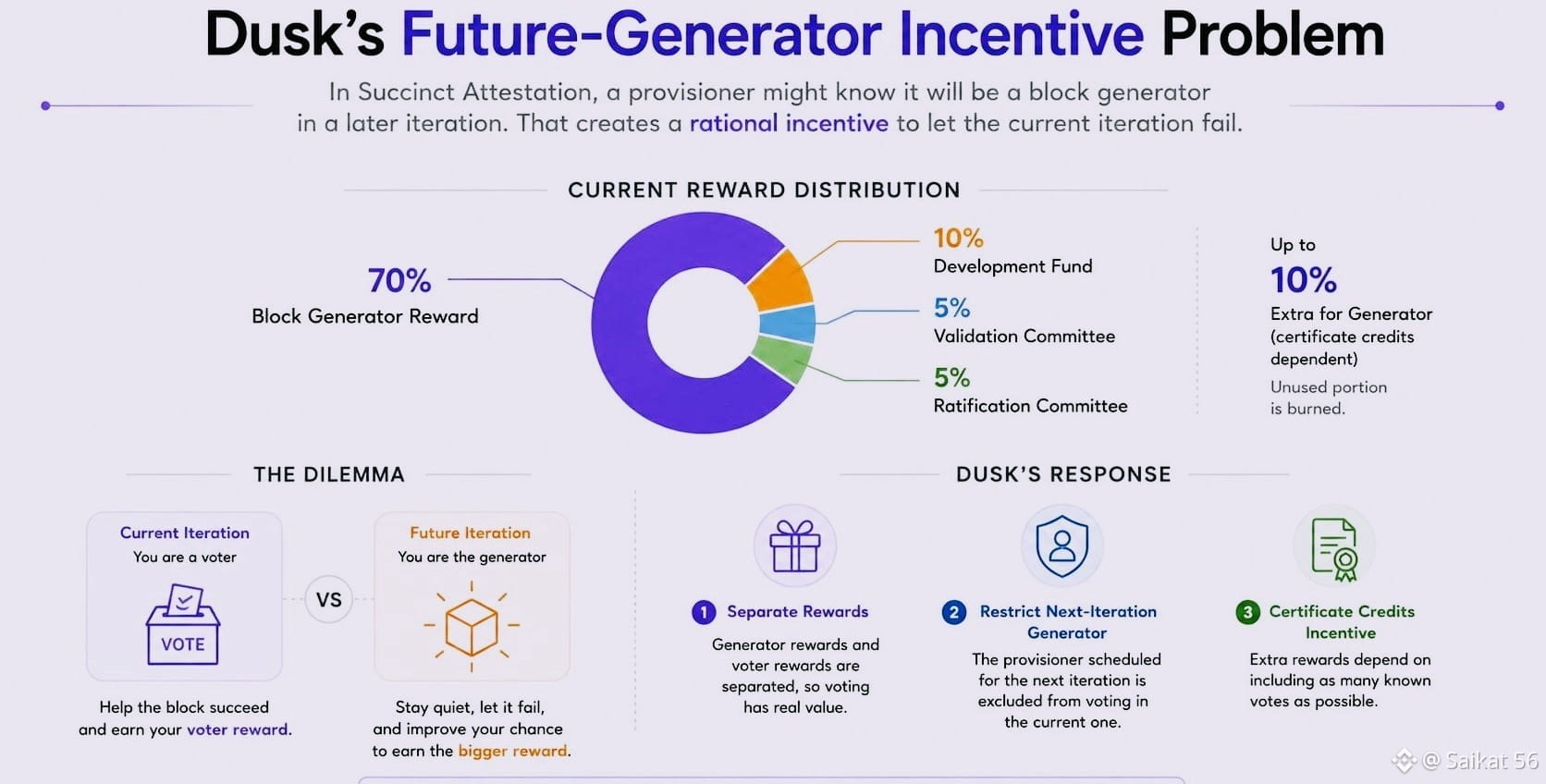
Du stimmst über die aktuelle Iteration ab, während du bereits weißt, dass du in der nächsten Iteration ausgewählt wurdest, um einen Block zu erzeugen.
𝐉𝐞𝐭𝐳𝐭 𝐠𝐞𝐬𝐭 𝐝𝐢𝐞 𝐢𝐧𝐭𝐞𝐫𝐞𝐬𝐬𝐚𝐧𝐭𝐢𝐞𝐥𝐞 𝐃𝐢𝐥𝐞𝐦𝐦𝐚:
Hilfst du dem aktuellen Block, voranzukommen, und sammelst deine Belohnung als Wähler ein?
Oder bleibst du still, lässt die aktuelle Iteration scheitern und stärkst möglicherweise deine Position als zukünftiger Generator?
Das ist das Future-Generator-Incentive-Problem – ein Zielkonflikt, der aus den Möglichkeiten entstehen kann, die einem legitimen Teilnehmer offenstehen.
Es gibt keinen externen Hacker, der versucht, das Netzwerk zu stören.
Das Problem entsteht aus den Anreizen, die im Protokoll selbst verankert sind.
@Dusk_Foundation hat das angegangen, indem sie darüber nachdachte, wie diese Anreize funktionieren. Es trennt Generator- und Wählerbelohnungen, verhindert, dass der für die nächste Iteration ausgewählte Generator in der aktuellen abstimmt, und nutzt Mechanismen wie Succinct Attestation, um dabei zu helfen, Konsens zu erreichen.
Diese kleine, aber wichtige Design-Entscheidung hat wirklich meine Aufmerksamkeit auf sich gezogen.
Es ist leicht zu sagen, dass ein Konsensmechanismus sicher ist.
Viel schwieriger ist es, einen zu bauen, bei dem die rationalste Entscheidung auch die ehrliche Entscheidung ist.
𝐔𝐦 𝐞𝐧𝐝𝐥𝐢𝐜𝐡 𝐰𝐢𝐫𝐤𝐥𝐢𝐜𝐡 𝐝𝐚𝐬 𝐠𝐚𝐧𝐳𝐞 𝐒𝐩𝐢𝐞𝐥 𝐮𝐧𝐭𝐞𝐫𝐰𝐞𝐠𝐬 𝐢𝐬𝐭 𝐰𝐢𝐞𝐝𝐞𝐫 𝐊𝐨𝐧𝐬𝐞𝐧𝐬:
Nicht nur darum, wie Kryptografie das Netzwerk schützt, sondern auch darum, wie Anreize das Verhalten der Menschen prägen, die es absichern.
#dusk $DUSK $AKE $ESP
𝐃𝐮𝐬𝐤’𝐬 𝐂𝐨𝐧𝐬𝐞𝐧𝐬𝐮𝐬 𝐃𝐞𝐬𝐢𝐠𝐧:
Wenn die Wahrheit sagen zur klügsten Entscheidung wird
Das Studium von Dusk hat mich über Konsens auf eine völlig andere Weise nachdenken lassen.
Starke Kryptografie allein macht ein Konsenssystem noch nicht wirklich sicher. Die tiefergehende Frage ist: Was passiert, wenn ein ehrlicher Teilnehmer einen Grund hat, eine Schwachstelle zu seinem eigenen Vorteil auszunutzen?
Stell dir vor, du bist ein Provisionsgeber.
Du stimmst über die aktuelle Iteration ab, während du bereits weißt, dass du in der nächsten Iteration ausgewählt wurdest, um einen Block zu erzeugen.
𝐉𝐞𝐭𝐳𝐭 𝐠𝐞𝐬𝐭 𝐝𝐢𝐞 𝐢𝐧𝐭𝐞𝐫𝐞𝐬𝐬𝐚𝐧𝐭𝐢𝐞𝐥𝐞 𝐃𝐢𝐥𝐞𝐦𝐦𝐚:
Hilfst du dem aktuellen Block, voranzukommen, und sammelst deine Belohnung als Wähler ein?
Oder bleibst du still, lässt die aktuelle Iteration scheitern und stärkst möglicherweise deine Position als zukünftiger Generator?
Das ist das Future-Generator-Incentive-Problem – ein Zielkonflikt, der aus den Möglichkeiten entstehen kann, die einem legitimen Teilnehmer offenstehen.
Es gibt keinen externen Hacker, der versucht, das Netzwerk zu stören.
Das Problem entsteht aus den Anreizen, die im Protokoll selbst verankert sind.
@Dusk hat das angegangen, indem sie darüber nachdachte, wie diese Anreize funktionieren. Es trennt Generator- und Wählerbelohnungen, verhindert, dass der für die nächste Iteration ausgewählte Generator in der aktuellen abstimmt, und nutzt Mechanismen wie Succinct Attestation, um dabei zu helfen, Konsens zu erreichen.
Diese kleine, aber wichtige Design-Entscheidung hat wirklich meine Aufmerksamkeit auf sich gezogen.
Es ist leicht zu sagen, dass ein Konsensmechanismus sicher ist.
Viel schwieriger ist es, einen zu bauen, bei dem die rationalste Entscheidung auch die ehrliche Entscheidung ist.
𝐔𝐦 𝐞𝐧𝐝𝐥𝐢𝐜𝐡 𝐰𝐢𝐫𝐤𝐥𝐢𝐜𝐡 𝐝𝐚𝐬 𝐠𝐚𝐧𝐳𝐞 𝐒𝐩𝐢𝐞𝐥 𝐮𝐧𝐭𝐞𝐫𝐰𝐞𝐠𝐬 𝐢𝐬𝐭 𝐰𝐢𝐞𝐝𝐞𝐫 𝐊𝐨𝐧𝐬𝐞𝐧𝐬:
Nicht nur darum, wie Kryptografie das Netzwerk schützt, sondern auch darum, wie Anreize das Verhalten der Menschen prägen, die es absichern.
#dusk $DUSK $AKE $ESP
Wenn die Wahrheit sagen zur klügsten Entscheidung wird
Das Studium von Dusk hat mich über Konsens auf eine völlig andere Weise nachdenken lassen.
Starke Kryptografie allein macht ein Konsenssystem noch nicht wirklich sicher. Die tiefergehende Frage ist: Was passiert, wenn ein ehrlicher Teilnehmer einen Grund hat, eine Schwachstelle zu seinem eigenen Vorteil auszunutzen?
Stell dir vor, du bist ein Provisionsgeber.
Du stimmst über die aktuelle Iteration ab, während du bereits weißt, dass du in der nächsten Iteration ausgewählt wurdest, um einen Block zu erzeugen.
𝐉𝐞𝐭𝐳𝐭 𝐠𝐞𝐬𝐭 𝐝𝐢𝐞 𝐢𝐧𝐭𝐞𝐫𝐞𝐬𝐬𝐚𝐧𝐭𝐢𝐞𝐥𝐞 𝐃𝐢𝐥𝐞𝐦𝐦𝐚:
Hilfst du dem aktuellen Block, voranzukommen, und sammelst deine Belohnung als Wähler ein?
Oder bleibst du still, lässt die aktuelle Iteration scheitern und stärkst möglicherweise deine Position als zukünftiger Generator?
Das ist das Future-Generator-Incentive-Problem – ein Zielkonflikt, der aus den Möglichkeiten entstehen kann, die einem legitimen Teilnehmer offenstehen.
Es gibt keinen externen Hacker, der versucht, das Netzwerk zu stören.
Das Problem entsteht aus den Anreizen, die im Protokoll selbst verankert sind.
@Dusk hat das angegangen, indem sie darüber nachdachte, wie diese Anreize funktionieren. Es trennt Generator- und Wählerbelohnungen, verhindert, dass der für die nächste Iteration ausgewählte Generator in der aktuellen abstimmt, und nutzt Mechanismen wie Succinct Attestation, um dabei zu helfen, Konsens zu erreichen.
Diese kleine, aber wichtige Design-Entscheidung hat wirklich meine Aufmerksamkeit auf sich gezogen.
Es ist leicht zu sagen, dass ein Konsensmechanismus sicher ist.
Viel schwieriger ist es, einen zu bauen, bei dem die rationalste Entscheidung auch die ehrliche Entscheidung ist.
𝐔𝐦 𝐞𝐧𝐝𝐥𝐢𝐜𝐡 𝐰𝐢𝐫𝐤𝐥𝐢𝐜𝐡 𝐝𝐚𝐬 𝐠𝐚𝐧𝐳𝐞 𝐒𝐩𝐢𝐞𝐥 𝐮𝐧𝐭𝐞𝐫𝐰𝐞𝐠𝐬 𝐢𝐬𝐭 𝐰𝐢𝐞𝐝𝐞𝐫 𝐊𝐨𝐧𝐬𝐞𝐧𝐬:
Nicht nur darum, wie Kryptografie das Netzwerk schützt, sondern auch darum, wie Anreize das Verhalten der Menschen prägen, die es absichern.
#dusk $DUSK $AKE $ESP
10
5
94
·
--
Zunächst dachte ich, dass das Beispiel zur Liquidation von 50.000 $ im Grunde nur darum ging, ob Babylon erkennen kann, wenn das Sicherheiten-Niveau die Schwelle überschreitet.
Je mehr ich darüber nachdachte, desto mehr wurde mir klar, dass das eigentlich der einfache Teil ist.
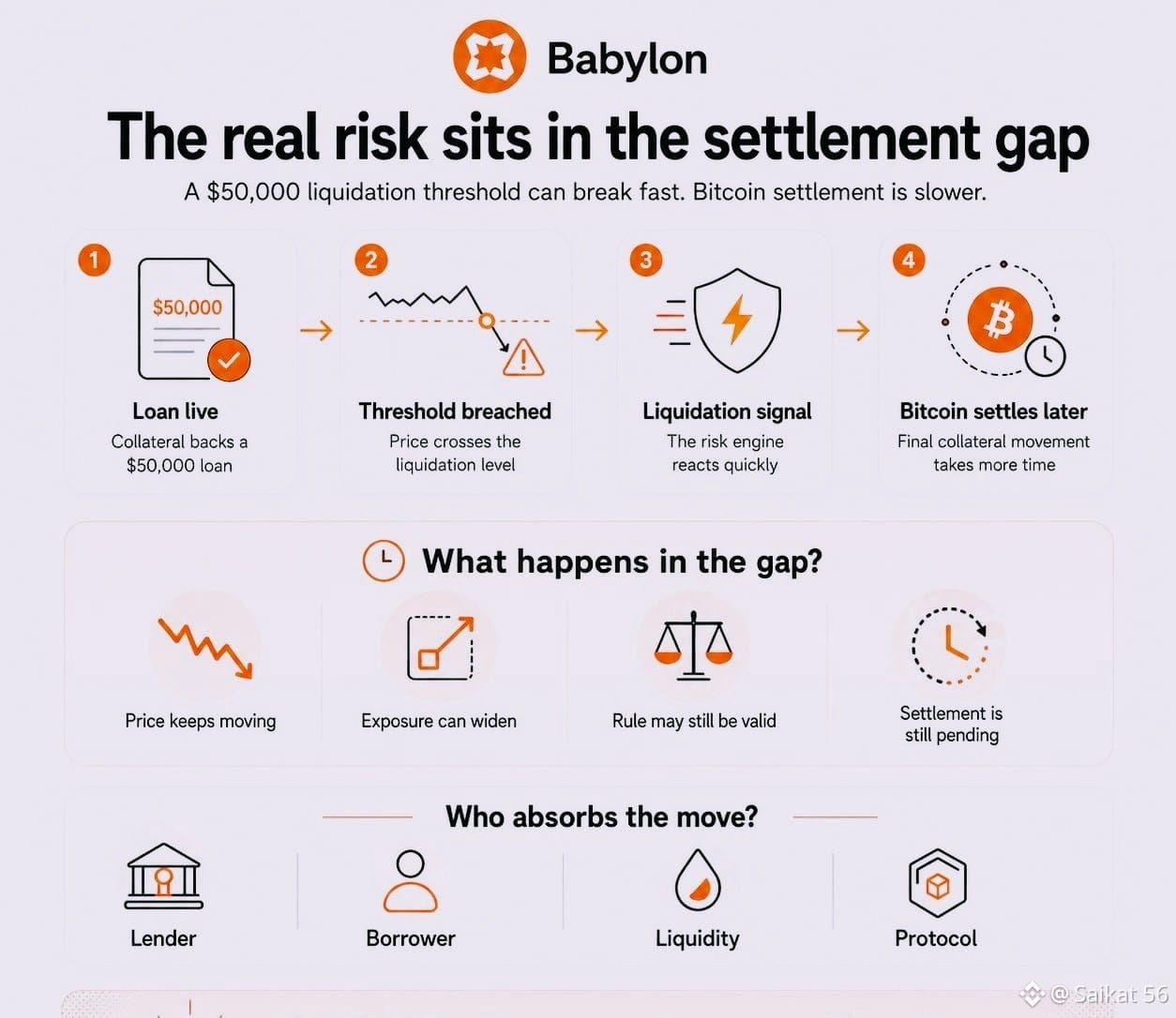
Ein Preis-Feed kann einen Liquidationsauslöser fast sofort identifizieren.
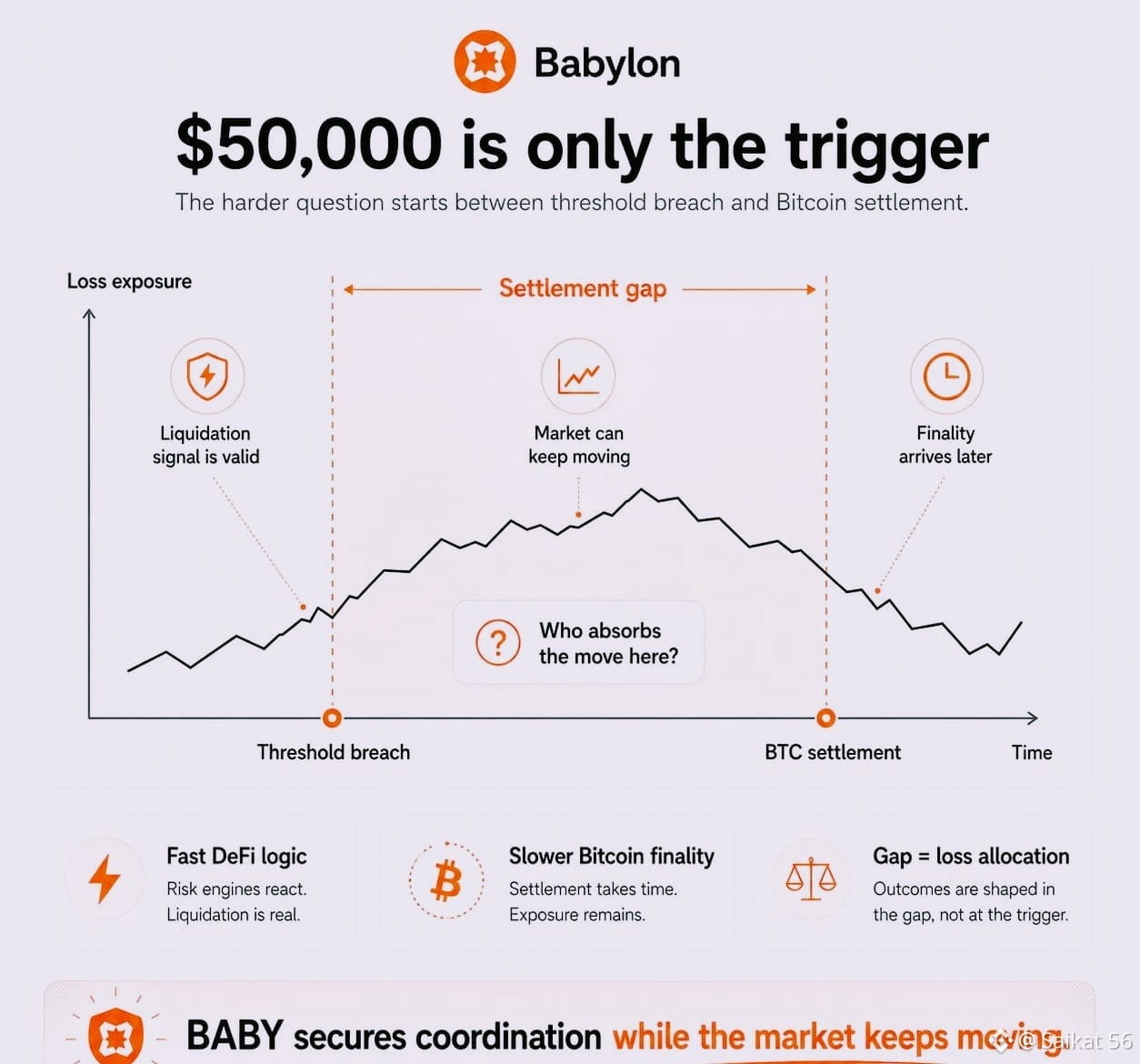
Bitcoin hingegen wird nach seinem eigenen Zeitplan abgewickelt. Diese beiden Uhren laufen nicht immer synchron, und genau in dieser Lücke beginnt die eigentliche Herausforderung.
Babylon verbindet schnelles Risikomonitoring mit der Sicherheit von Bitcoin, aber es kann Bitcoin nicht dazu bringen, sofort abzurechnen. Ein Liquidationssignal kann völlig korrekt sein, doch der Markt kann sich weiter bewegen, bevor die Abrechnung endgültig abgeschlossen ist.
Deshalb wird $BABY interessant. In diesen wartenden Minuten muss sich jemand mit dem Marktrisiko befassen.
Ein Liquiditätsanbieter? Oder absorbiert das Protokoll einen Teil dieser Exponierung?
Die Regeln mögen perfekt befolgt werden, aber perfekte Regeln garantieren nicht immer ein perfektes Ergebnis, wenn sich die Preise weiter ändern.
Zur Klarstellung: Eine langsamere Abwicklung ist kein Mangel, sondern Teil des Bitcoin-Designs. Babylon baut um diese Realität herum, statt so zu tun, als existiere sie nicht.
Die Frage ist, wie widerstandsfähig das System bleibt, wenn die Volatilität in diesem Abwicklungsfenster beschleunigt.
Der Gedanke, zu dem ich immer wieder zurückkehre, ist einfach:
Wenn eine Liquidation bei 50.000 $ ausgelöst wird, Bitcoin aber abgerechnet wird, nachdem der Preis sich bereits deutlich bewegt hat — wer trägt letztlich den Unterschied, während die Finalität noch nachzieht?
Das ist der Teil des Designs, der mich am meisten interessiert.
#baby $BABY @babylonlabs_io $NVDA.US
Zunächst dachte ich, dass das Beispiel zur Liquidation von 50.000 $ im Grunde nur darum ging, ob Babylon erkennen kann, wenn das Sicherheiten-Niveau die Schwelle überschreitet.
Je mehr ich darüber nachdachte, desto mehr wurde mir klar, dass das eigentlich der einfache Teil ist.
Ein Preis-Feed kann einen Liquidationsauslöser fast sofort identifizieren.
Bitcoin hingegen wird nach seinem eigenen Zeitplan abgewickelt. Diese beiden Uhren laufen nicht immer synchron, und genau in dieser Lücke beginnt die eigentliche Herausforderung.
Babylon verbindet schnelles Risikomonitoring mit der Sicherheit von Bitcoin, aber es kann Bitcoin nicht dazu bringen, sofort abzurechnen. Ein Liquidationssignal kann völlig korrekt sein, doch der Markt kann sich weiter bewegen, bevor die Abrechnung endgültig abgeschlossen ist.
Deshalb wird $BABY interessant. In diesen wartenden Minuten muss sich jemand mit dem Marktrisiko befassen.
Ein Liquiditätsanbieter? Oder absorbiert das Protokoll einen Teil dieser Exponierung?
Die Regeln mögen perfekt befolgt werden, aber perfekte Regeln garantieren nicht immer ein perfektes Ergebnis, wenn sich die Preise weiter ändern.
Zur Klarstellung: Eine langsamere Abwicklung ist kein Mangel, sondern Teil des Bitcoin-Designs. Babylon baut um diese Realität herum, statt so zu tun, als existiere sie nicht.
Die Frage ist, wie widerstandsfähig das System bleibt, wenn die Volatilität in diesem Abwicklungsfenster beschleunigt.
Der Gedanke, zu dem ich immer wieder zurückkehre, ist einfach:
Wenn eine Liquidation bei 50.000 $ ausgelöst wird, Bitcoin aber abgerechnet wird, nachdem der Preis sich bereits deutlich bewegt hat — wer trägt letztlich den Unterschied, während die Finalität noch nachzieht?
Das ist der Teil des Designs, der mich am meisten interessiert.
#baby $BABY @BabylonLabs_io $NVDA.US
Je mehr ich darüber nachdachte, desto mehr wurde mir klar, dass das eigentlich der einfache Teil ist.
Ein Preis-Feed kann einen Liquidationsauslöser fast sofort identifizieren.
Bitcoin hingegen wird nach seinem eigenen Zeitplan abgewickelt. Diese beiden Uhren laufen nicht immer synchron, und genau in dieser Lücke beginnt die eigentliche Herausforderung.
Babylon verbindet schnelles Risikomonitoring mit der Sicherheit von Bitcoin, aber es kann Bitcoin nicht dazu bringen, sofort abzurechnen. Ein Liquidationssignal kann völlig korrekt sein, doch der Markt kann sich weiter bewegen, bevor die Abrechnung endgültig abgeschlossen ist.
Deshalb wird $BABY interessant. In diesen wartenden Minuten muss sich jemand mit dem Marktrisiko befassen.
Ein Liquiditätsanbieter? Oder absorbiert das Protokoll einen Teil dieser Exponierung?
Die Regeln mögen perfekt befolgt werden, aber perfekte Regeln garantieren nicht immer ein perfektes Ergebnis, wenn sich die Preise weiter ändern.
Zur Klarstellung: Eine langsamere Abwicklung ist kein Mangel, sondern Teil des Bitcoin-Designs. Babylon baut um diese Realität herum, statt so zu tun, als existiere sie nicht.
Die Frage ist, wie widerstandsfähig das System bleibt, wenn die Volatilität in diesem Abwicklungsfenster beschleunigt.
Der Gedanke, zu dem ich immer wieder zurückkehre, ist einfach:
Wenn eine Liquidation bei 50.000 $ ausgelöst wird, Bitcoin aber abgerechnet wird, nachdem der Preis sich bereits deutlich bewegt hat — wer trägt letztlich den Unterschied, während die Finalität noch nachzieht?
Das ist der Teil des Designs, der mich am meisten interessiert.
#baby $BABY @BabylonLabs_io $NVDA.US
13
6
81
·
--
#BinanceTurns9 Binance wird 9 – von euch aufgebaut
#BinanceTurns9 Binance wird 9 – von euch aufgebaut

17
·
--
Jedes Infrastrukturprojekt beginnt mit einer Entscheidung: Entweder baut man alles von Grund auf neu – oder man stellt sich auf die Grundlage von jemand anderem.
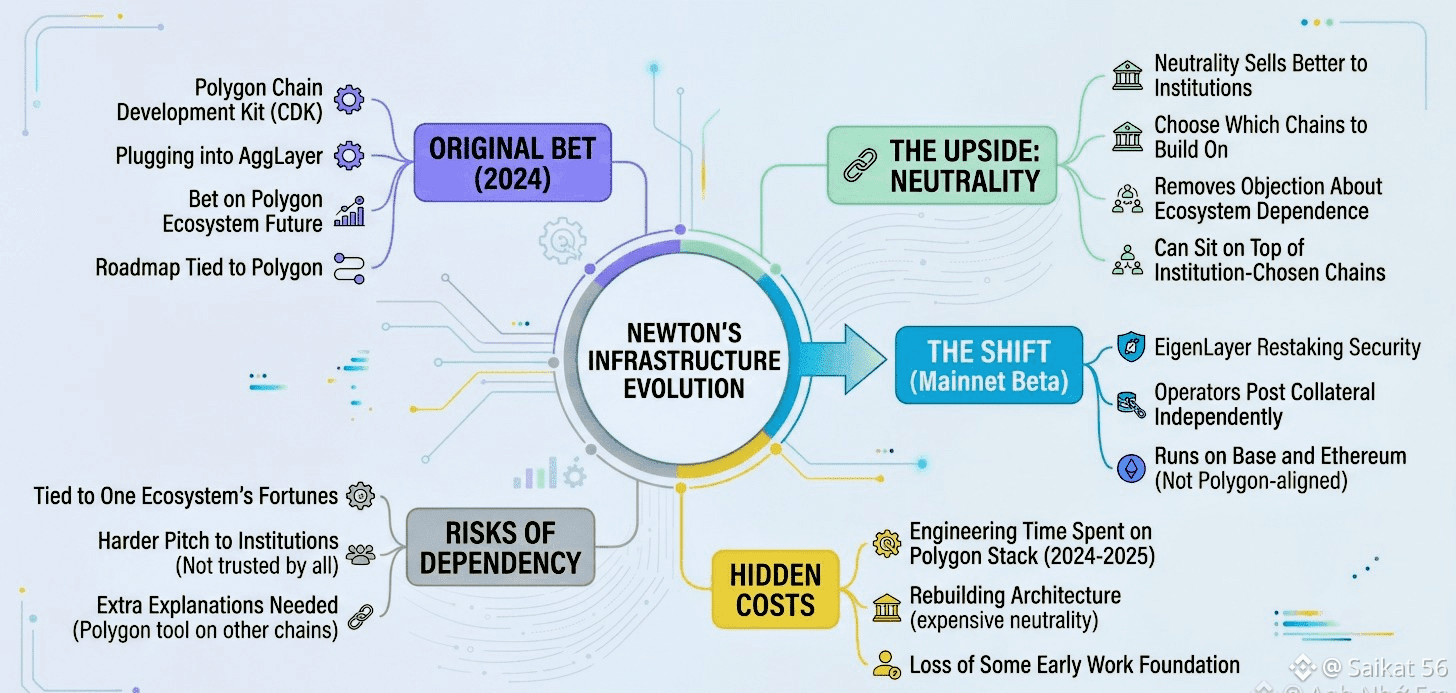
Zurück im Jahr 2024 wählte Newton den zweiten Weg. Es baute sein Chain-Unification-Netzwerk mithilfe von Polygons Chain Development Kit auf und verband sich direkt mit der AggLayer für die Abwicklung über mehrere Chains hinweg.
Damals war das eine praktische Entscheidung: vorhandene Infrastruktur nutzen, um schneller voranzukommen. Doch diese Wahl bedeutete auch, dass die künftige Entwicklung von @NewtonProtocol eng mit Polygons eigener Roadmap verknüpft wurde.
Schneller vorwärts zur Mainnet-Beta, und das Bild sieht ganz anders aus.
Newton ist von dieser Abhängigkeit abgerückt. Statt sich auf Polygons Infrastruktur zu stützen, wird sein Sicherheitsmodell nun durch EigenLayer-Restaking betrieben: Betreiber sichern das Netzwerk, indem sie Sicherheiten unabhängig von einem einzelnen Blockchain-Ökosystem bereitstellen.
Das Produkt selbst ist um Ethereum und Base herum konzipiert – statt um polygonnahe Chains.
Das ist nicht einfach nur eine technische Migration. Es ist ein strategischer Wandel der Philosophie.
Indem Newton infrastrukturneutral wird, positioniert es sich so, dass es sich mit denjenigen Blockchain-Institutionen integrieren kann, die lieber bevorzugen, statt sie dazu zu bewegen, ihre Anforderungen an eine polygonzentrierte Architektur anzupassen. Das ist wichtig, weil die institutionelle Übernahme oft genauso stark von der Wahrnehmung geprägt wird wie von der Technologie.
Jede zusätzliche Erklärung während eines Enterprise-Pitches erzeugt Reibung. Wenn man ökossystem-spezifische Abhängigkeiten entfernt, nimmt man diese Reibung weg, noch bevor sie überhaupt entsteht.
Natürlich ist Neutralität nicht kostenlos.
Der technische Aufwand, der 2024 und 2025 in Polygons Stack investiert wurde, war nicht sinnlos, aber ein großer Teil dieser ursprünglichen Grundlage bestimmt die Architektur, die mit der Mainnet-Beta ausgeliefert wird, nicht mehr.
Die Erfahrung, Partnerschaften und Erkenntnisse bleiben wertvoll, doch die Kerninfrastruktur musste rund um ein vollständig anderes Sicherheitsmodell neu aufgebaut werden.
In vielerlei Hinsicht zahlte Newton doppelt für das gleiche Ziel: erst, indem es auf einem bestehenden Ökosystem aufbaute, und später, indem es sich für Unabhängigkeit neu aufstellte.
#newt $NEWT $BLUR $YFI
Jedes Infrastrukturprojekt beginnt mit einer Entscheidung: Entweder baut man alles von Grund auf neu – oder man stellt sich auf die Grundlage von jemand anderem.
Zurück im Jahr 2024 wählte Newton den zweiten Weg. Es baute sein Chain-Unification-Netzwerk mithilfe von Polygons Chain Development Kit auf und verband sich direkt mit der AggLayer für die Abwicklung über mehrere Chains hinweg.
Damals war das eine praktische Entscheidung: vorhandene Infrastruktur nutzen, um schneller voranzukommen. Doch diese Wahl bedeutete auch, dass die künftige Entwicklung von @NewtonProtocol eng mit Polygons eigener Roadmap verknüpft wurde.
Schneller vorwärts zur Mainnet-Beta, und das Bild sieht ganz anders aus.
Newton ist von dieser Abhängigkeit abgerückt. Statt sich auf Polygons Infrastruktur zu stützen, wird sein Sicherheitsmodell nun durch EigenLayer-Restaking betrieben: Betreiber sichern das Netzwerk, indem sie Sicherheiten unabhängig von einem einzelnen Blockchain-Ökosystem bereitstellen.
Das Produkt selbst ist um Ethereum und Base herum konzipiert – statt um polygonnahe Chains.
Das ist nicht einfach nur eine technische Migration. Es ist ein strategischer Wandel der Philosophie.
Indem Newton infrastrukturneutral wird, positioniert es sich so, dass es sich mit denjenigen Blockchain-Institutionen integrieren kann, die lieber bevorzugen, statt sie dazu zu bewegen, ihre Anforderungen an eine polygonzentrierte Architektur anzupassen. Das ist wichtig, weil die institutionelle Übernahme oft genauso stark von der Wahrnehmung geprägt wird wie von der Technologie.
Jede zusätzliche Erklärung während eines Enterprise-Pitches erzeugt Reibung. Wenn man ökossystem-spezifische Abhängigkeiten entfernt, nimmt man diese Reibung weg, noch bevor sie überhaupt entsteht.
Natürlich ist Neutralität nicht kostenlos.
Der technische Aufwand, der 2024 und 2025 in Polygons Stack investiert wurde, war nicht sinnlos, aber ein großer Teil dieser ursprünglichen Grundlage bestimmt die Architektur, die mit der Mainnet-Beta ausgeliefert wird, nicht mehr.
Die Erfahrung, Partnerschaften und Erkenntnisse bleiben wertvoll, doch die Kerninfrastruktur musste rund um ein vollständig anderes Sicherheitsmodell neu aufgebaut werden.
In vielerlei Hinsicht zahlte Newton doppelt für das gleiche Ziel: erst, indem es auf einem bestehenden Ökosystem aufbaute, und später, indem es sich für Unabhängigkeit neu aufstellte.
#newt $NEWT $BLUR $YFI
Zurück im Jahr 2024 wählte Newton den zweiten Weg. Es baute sein Chain-Unification-Netzwerk mithilfe von Polygons Chain Development Kit auf und verband sich direkt mit der AggLayer für die Abwicklung über mehrere Chains hinweg.
Damals war das eine praktische Entscheidung: vorhandene Infrastruktur nutzen, um schneller voranzukommen. Doch diese Wahl bedeutete auch, dass die künftige Entwicklung von @NewtonProtocol eng mit Polygons eigener Roadmap verknüpft wurde.
Schneller vorwärts zur Mainnet-Beta, und das Bild sieht ganz anders aus.
Newton ist von dieser Abhängigkeit abgerückt. Statt sich auf Polygons Infrastruktur zu stützen, wird sein Sicherheitsmodell nun durch EigenLayer-Restaking betrieben: Betreiber sichern das Netzwerk, indem sie Sicherheiten unabhängig von einem einzelnen Blockchain-Ökosystem bereitstellen.
Das Produkt selbst ist um Ethereum und Base herum konzipiert – statt um polygonnahe Chains.
Das ist nicht einfach nur eine technische Migration. Es ist ein strategischer Wandel der Philosophie.
Indem Newton infrastrukturneutral wird, positioniert es sich so, dass es sich mit denjenigen Blockchain-Institutionen integrieren kann, die lieber bevorzugen, statt sie dazu zu bewegen, ihre Anforderungen an eine polygonzentrierte Architektur anzupassen. Das ist wichtig, weil die institutionelle Übernahme oft genauso stark von der Wahrnehmung geprägt wird wie von der Technologie.
Jede zusätzliche Erklärung während eines Enterprise-Pitches erzeugt Reibung. Wenn man ökossystem-spezifische Abhängigkeiten entfernt, nimmt man diese Reibung weg, noch bevor sie überhaupt entsteht.
Natürlich ist Neutralität nicht kostenlos.
Der technische Aufwand, der 2024 und 2025 in Polygons Stack investiert wurde, war nicht sinnlos, aber ein großer Teil dieser ursprünglichen Grundlage bestimmt die Architektur, die mit der Mainnet-Beta ausgeliefert wird, nicht mehr.
Die Erfahrung, Partnerschaften und Erkenntnisse bleiben wertvoll, doch die Kerninfrastruktur musste rund um ein vollständig anderes Sicherheitsmodell neu aufgebaut werden.
In vielerlei Hinsicht zahlte Newton doppelt für das gleiche Ziel: erst, indem es auf einem bestehenden Ökosystem aufbaute, und später, indem es sich für Unabhängigkeit neu aufstellte.
#newt $NEWT $BLUR $YFI
1
171

·
--
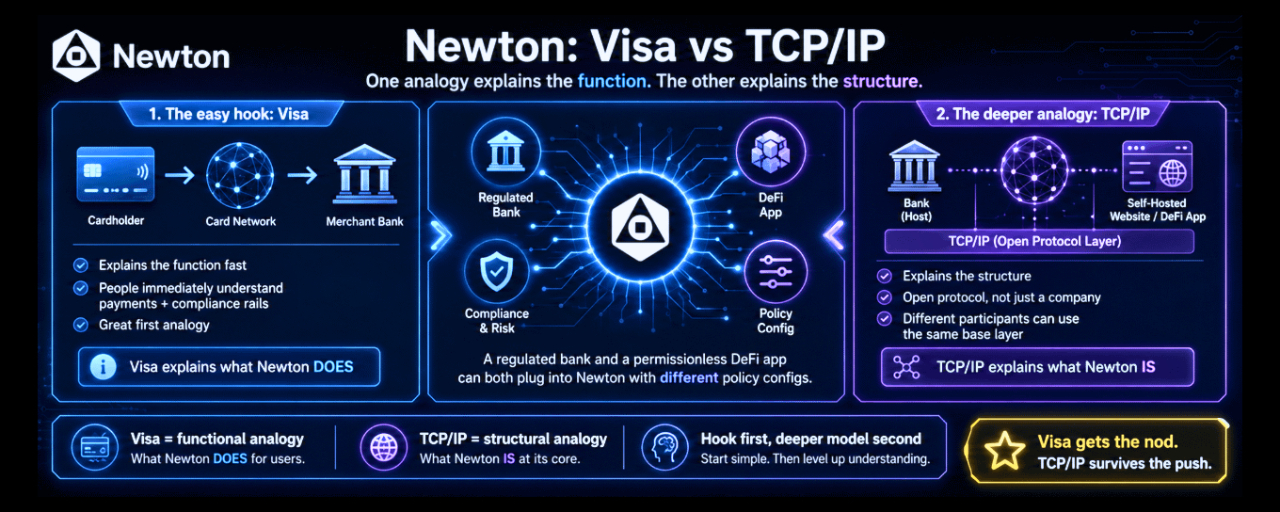
Artikel
Newtons zwei Analogien sind nicht verwirrend – sie lösen unterschiedliche ProblemeHeute hatte ich so einen Moment, in dem eine Idee zuerst nicht klickte, aber sobald sie es dann tat, ergab plötzlich alles auf einmal Sinn.🙄
Als ich über Newton las, fiel mir auf, dass es zwei verschiedene Analogien verwendet, um sich selbst zu beschreiben: Visa und TCP/IP.
Meine erste Reaktion war ganz einfach: Warum beides nutzen? Wenn eine Analogie stärker ist, warum nicht einfach dabei bleiben?
Zuerst nahm ich an, TCP/IP sei der einzige Vergleich, der wirklich zählt, und Visa sei nur unnötiges Marketing. Aber nachdem ich eine Weile damit verbracht hatte nachzudenken, merkte ich, dass ich die falsche Frage stellte.
Newtons zwei Analogien sind nicht verwirrend – sie lösen unterschiedliche Probleme
Heute hatte ich so einen Moment, in dem eine Idee zuerst nicht klickte, aber sobald sie es dann tat, ergab plötzlich alles auf einmal Sinn.🙄
Als ich über Newton las, fiel mir auf, dass es zwei verschiedene Analogien verwendet, um sich selbst zu beschreiben: Visa und TCP/IP.
Meine erste Reaktion war ganz einfach: Warum beides nutzen? Wenn eine Analogie stärker ist, warum nicht einfach dabei bleiben?
Zuerst nahm ich an, TCP/IP sei der einzige Vergleich, der wirklich zählt, und Visa sei nur unnötiges Marketing. Aber nachdem ich eine Weile damit verbracht hatte nachzudenken, merkte ich, dass ich die falsche Frage stellte.
Als ich über Newton las, fiel mir auf, dass es zwei verschiedene Analogien verwendet, um sich selbst zu beschreiben: Visa und TCP/IP.
Meine erste Reaktion war ganz einfach: Warum beides nutzen? Wenn eine Analogie stärker ist, warum nicht einfach dabei bleiben?
Zuerst nahm ich an, TCP/IP sei der einzige Vergleich, der wirklich zählt, und Visa sei nur unnötiges Marketing. Aber nachdem ich eine Weile damit verbracht hatte nachzudenken, merkte ich, dass ich die falsche Frage stellte.
2
2
190
·
--
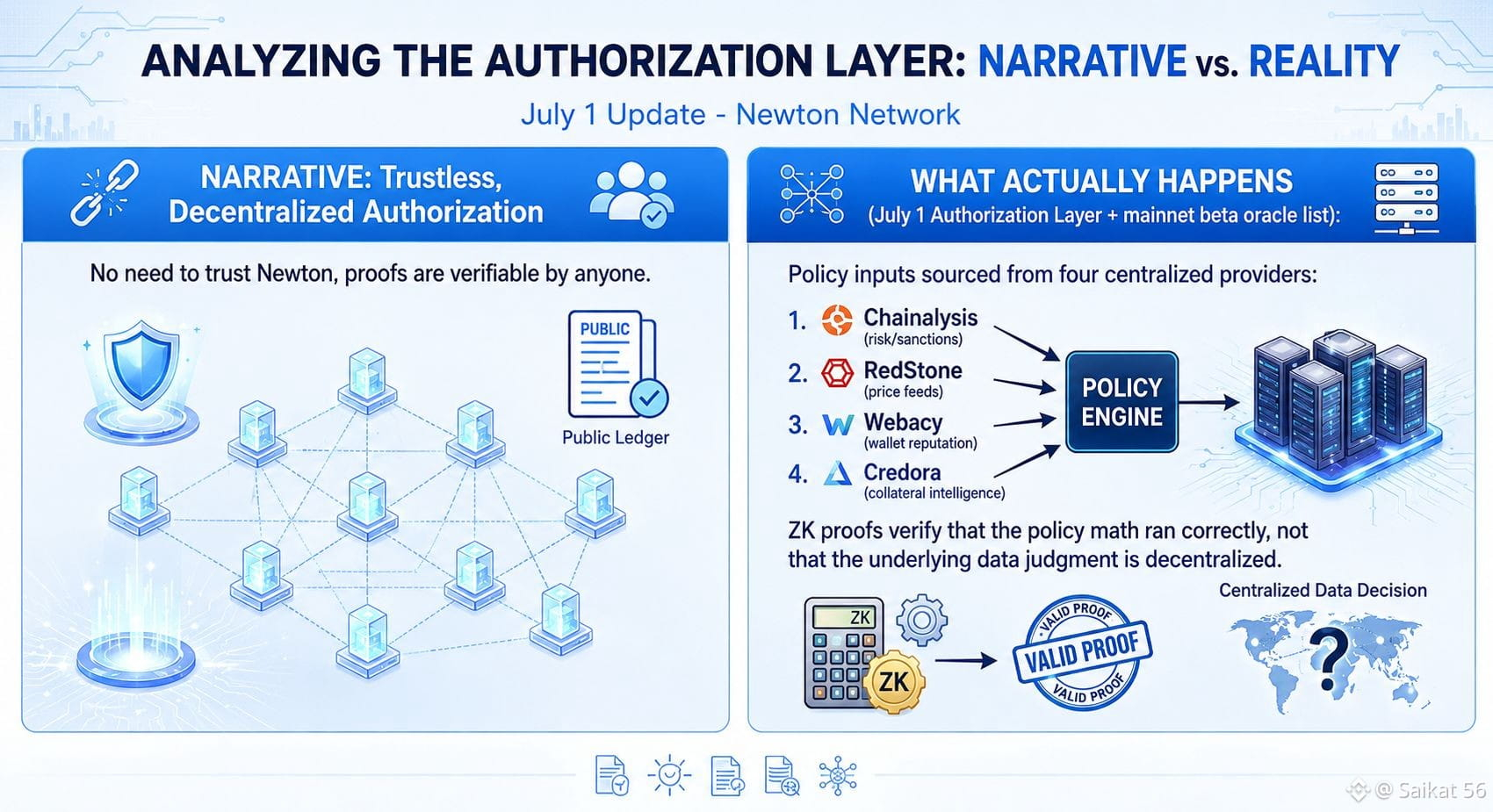
Ich habe mir etwas Zeit genommen, den Blogbeitrag von Magic Newton Foundation zum 1. Juli über die Authorization Layer von @NewtonProtocol erneut durchzulesen.
Zunächst klang alles ganz genauso, wie man es von einem trust-minimierten System erwarten würde.
Eine trustlose Authorization Layer. EigenLayer Restaking. Dezentrale Operatoren. Zero-Knowledge-Proofs.
Die gesamte Architektur ist darauf ausgelegt, die Durchsetzung von Policies verifizierbar zu machen, ohne auf blindes Vertrauen angewiesen zu sein.
Doch je tiefer ich gelesen habe, desto mehr zog eine Einzelheit meine Aufmerksamkeit auf sich.
Das Mainnet Beta setzt für die Risikoanalyse auf Chainalysis, für Preisfeeds auf RedStone, für die Wallet-Reputation auf Webacy und für Collateral-Intelligence auf Credora.
Da kam mir eine Frage in den Kopf.
Was genau beweist eigentlich der Zero-Knowledge-Proof?
Er beweist, dass die Policy-Prüfung korrekt ausgeführt wurde. Aber der Risikoscore, die Reputationsdaten
oder die Bewertung des Collaterals innerhalb dieser Policy kommen weiterhin von diesen externen Anbietern.
Mit anderen Worten: Die Verifikation mag trustlos sein, aber die Daten selbst sind es noch immer.
Ich ertappte mich dabei, wie ich darüber nachdachte, während ich einen Kaffee trank.
Ist das tatsächlich eine Schwäche?
Vielleicht nicht.
Newton hat nie behauptet, dass die zugrunde liegenden Daten dezentral sein würden. Sein Ziel ist es, die Durchsetzung von Policies transparent und kryptografisch verifizierbar zu machen.
Trotzdem fühlt sich das Wort „trustless“ ein wenig anders an, wenn man merkt, dass das Vertrauen nicht verschwunden ist – es hat sich nur eine Ebene tiefer verlagert, zu den Providern, die die Daten liefern.
Vielleicht ist das aber genau das, was Institutionen wollen.
Die meisten Unternehmen setzen ohnehin mehr Vertrauen in Anbieter wie Chainalysis als in ein anonymes Netzwerk von Operatoren.
Aus dieser Perspektive könnte Newton ein Problem lösen, das wirklich relevant ist für die Akzeptanz durch Institutionen.
Eine Frage bleibt allerdings noch:
Hat schon jemand eine Authorization Policy gesehen, die sich vollständig auf dezentrale Datenquellen stützt?
Oder ist ein gewisses Maß an zentralem Vertrauen beim Aufbau von Compliance-Infrastruktur einfach unvermeidlich? 🙄
#newt $NEWT $EVAA $NVDAB
Ich habe mir etwas Zeit genommen, den Blogbeitrag von Magic Newton Foundation zum 1. Juli über die Authorization Layer von @NewtonProtocol erneut durchzulesen.
Zunächst klang alles ganz genauso, wie man es von einem trust-minimierten System erwarten würde.
Eine trustlose Authorization Layer. EigenLayer Restaking. Dezentrale Operatoren. Zero-Knowledge-Proofs.
Die gesamte Architektur ist darauf ausgelegt, die Durchsetzung von Policies verifizierbar zu machen, ohne auf blindes Vertrauen angewiesen zu sein.
Doch je tiefer ich gelesen habe, desto mehr zog eine Einzelheit meine Aufmerksamkeit auf sich.
Das Mainnet Beta setzt für die Risikoanalyse auf Chainalysis, für Preisfeeds auf RedStone, für die Wallet-Reputation auf Webacy und für Collateral-Intelligence auf Credora.
Da kam mir eine Frage in den Kopf.
Was genau beweist eigentlich der Zero-Knowledge-Proof?
Er beweist, dass die Policy-Prüfung korrekt ausgeführt wurde. Aber der Risikoscore, die Reputationsdaten
oder die Bewertung des Collaterals innerhalb dieser Policy kommen weiterhin von diesen externen Anbietern.
Mit anderen Worten: Die Verifikation mag trustlos sein, aber die Daten selbst sind es noch immer.
Ich ertappte mich dabei, wie ich darüber nachdachte, während ich einen Kaffee trank.
Ist das tatsächlich eine Schwäche?
Vielleicht nicht.
Newton hat nie behauptet, dass die zugrunde liegenden Daten dezentral sein würden. Sein Ziel ist es, die Durchsetzung von Policies transparent und kryptografisch verifizierbar zu machen.
Trotzdem fühlt sich das Wort „trustless“ ein wenig anders an, wenn man merkt, dass das Vertrauen nicht verschwunden ist – es hat sich nur eine Ebene tiefer verlagert, zu den Providern, die die Daten liefern.
Vielleicht ist das aber genau das, was Institutionen wollen.
Die meisten Unternehmen setzen ohnehin mehr Vertrauen in Anbieter wie Chainalysis als in ein anonymes Netzwerk von Operatoren.
Aus dieser Perspektive könnte Newton ein Problem lösen, das wirklich relevant ist für die Akzeptanz durch Institutionen.
Eine Frage bleibt allerdings noch:
Hat schon jemand eine Authorization Policy gesehen, die sich vollständig auf dezentrale Datenquellen stützt?
Oder ist ein gewisses Maß an zentralem Vertrauen beim Aufbau von Compliance-Infrastruktur einfach unvermeidlich? 🙄
#newt $NEWT $EVAA $NVDAB
Zunächst klang alles ganz genauso, wie man es von einem trust-minimierten System erwarten würde.
Eine trustlose Authorization Layer. EigenLayer Restaking. Dezentrale Operatoren. Zero-Knowledge-Proofs.
Die gesamte Architektur ist darauf ausgelegt, die Durchsetzung von Policies verifizierbar zu machen, ohne auf blindes Vertrauen angewiesen zu sein.
Doch je tiefer ich gelesen habe, desto mehr zog eine Einzelheit meine Aufmerksamkeit auf sich.
Das Mainnet Beta setzt für die Risikoanalyse auf Chainalysis, für Preisfeeds auf RedStone, für die Wallet-Reputation auf Webacy und für Collateral-Intelligence auf Credora.
Da kam mir eine Frage in den Kopf.
Was genau beweist eigentlich der Zero-Knowledge-Proof?
Er beweist, dass die Policy-Prüfung korrekt ausgeführt wurde. Aber der Risikoscore, die Reputationsdaten
oder die Bewertung des Collaterals innerhalb dieser Policy kommen weiterhin von diesen externen Anbietern.
Mit anderen Worten: Die Verifikation mag trustlos sein, aber die Daten selbst sind es noch immer.
Ich ertappte mich dabei, wie ich darüber nachdachte, während ich einen Kaffee trank.
Ist das tatsächlich eine Schwäche?
Vielleicht nicht.
Newton hat nie behauptet, dass die zugrunde liegenden Daten dezentral sein würden. Sein Ziel ist es, die Durchsetzung von Policies transparent und kryptografisch verifizierbar zu machen.
Trotzdem fühlt sich das Wort „trustless“ ein wenig anders an, wenn man merkt, dass das Vertrauen nicht verschwunden ist – es hat sich nur eine Ebene tiefer verlagert, zu den Providern, die die Daten liefern.
Vielleicht ist das aber genau das, was Institutionen wollen.
Die meisten Unternehmen setzen ohnehin mehr Vertrauen in Anbieter wie Chainalysis als in ein anonymes Netzwerk von Operatoren.
Aus dieser Perspektive könnte Newton ein Problem lösen, das wirklich relevant ist für die Akzeptanz durch Institutionen.
Eine Frage bleibt allerdings noch:
Hat schon jemand eine Authorization Policy gesehen, die sich vollständig auf dezentrale Datenquellen stützt?
Oder ist ein gewisses Maß an zentralem Vertrauen beim Aufbau von Compliance-Infrastruktur einfach unvermeidlich? 🙄
#newt $NEWT $EVAA $NVDAB
26
6
216
·
--
Artikel
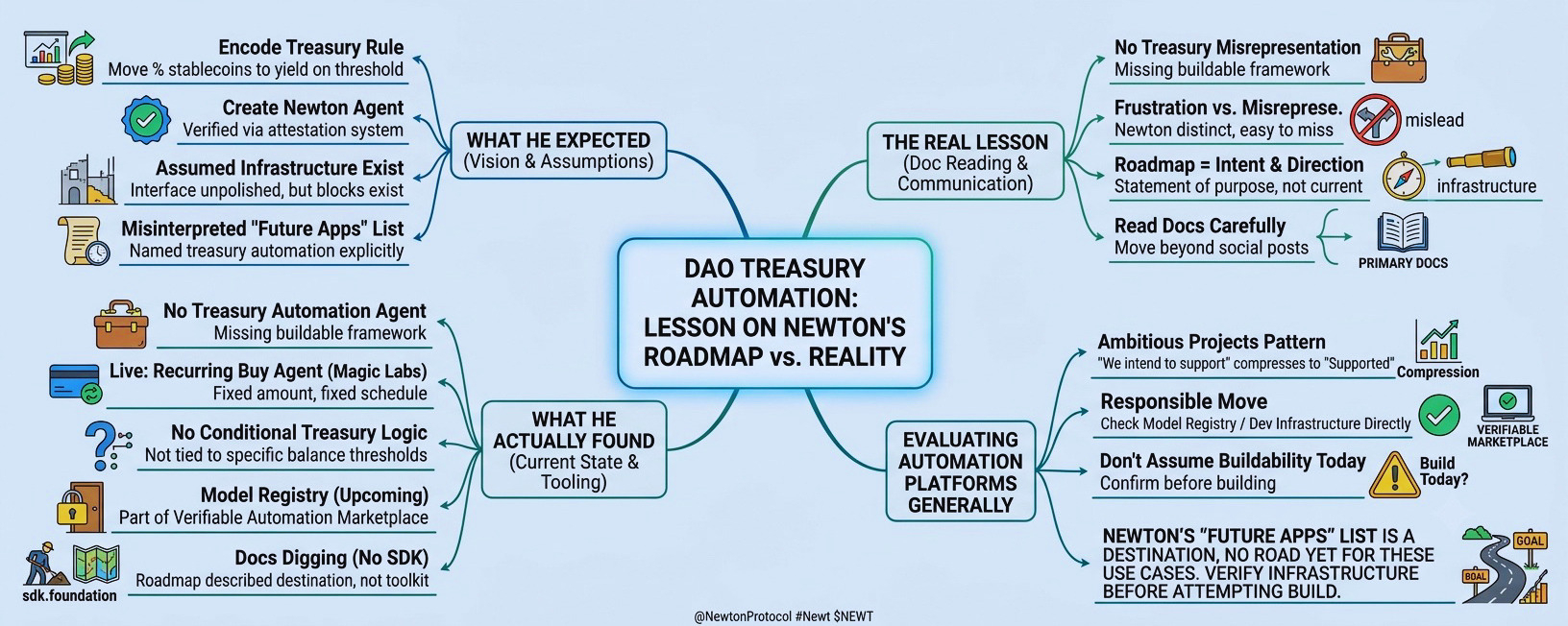
Wenn Vision schneller voranschreitet als die Infrastruktur: Meine größte Erkenntnis aus der Erkundung des Newton-Protocol
!Ein Gespräch hat meine Sicht darauf verändert, wie man Infrastrukturprojekte bewertet.
Ein Freund von mir verwaltet die Treasury-Operationen für ein mittelgroßes DAO. Seine Arbeit ist nicht besonders glamourös, aber sie ist entscheidend. Jede Woche befasst er sich mit repetitiven Treasury-Aufgaben, Multisig-Freigaben, Asset-Allokation und Governance-Umsetzung. Die meisten dieser Prozesse folgen klaren Regeln, also lag der Gedanke nahe: „Warum kann KI das nicht übernehmen?“
Als er anfing, über @NewtonProtocol zu lesen, zog es sofort seine Aufmerksamkeit auf sich. Die Vorstellung von KI-Agenten, die finanzielle Handlungen unter überprüfbaren Regeln ausführen, klang nach genau der Richtung, in die sich das Treasury-Management bewegen sollte. Anstatt auf manuelle Koordination zu setzen, stellte er sich vor, einen intelligenten Agenten zu schaffen, der automatisch die Stablecoin-Reserven neu ausbalancieren kann, sobald ungenutzte Mittel einen vordefinierten Schwellenwert überschreiten, und dann das Kapital in ertragsgenerierende Strategien lenkt – dabei jederzeit vollständig transparent und nachprüfbar bleibt.
Wenn Vision schneller voranschreitet als die Infrastruktur: Meine größte Erkenntnis aus der Erkundung des Newton-Protocol !
Ein Gespräch hat meine Sicht darauf verändert, wie man Infrastrukturprojekte bewertet.
Ein Freund von mir verwaltet die Treasury-Operationen für ein mittelgroßes DAO. Seine Arbeit ist nicht besonders glamourös, aber sie ist entscheidend. Jede Woche befasst er sich mit repetitiven Treasury-Aufgaben, Multisig-Freigaben, Asset-Allokation und Governance-Umsetzung. Die meisten dieser Prozesse folgen klaren Regeln, also lag der Gedanke nahe: „Warum kann KI das nicht übernehmen?“
Als er anfing, über @NewtonProtocol zu lesen, zog es sofort seine Aufmerksamkeit auf sich. Die Vorstellung von KI-Agenten, die finanzielle Handlungen unter überprüfbaren Regeln ausführen, klang nach genau der Richtung, in die sich das Treasury-Management bewegen sollte. Anstatt auf manuelle Koordination zu setzen, stellte er sich vor, einen intelligenten Agenten zu schaffen, der automatisch die Stablecoin-Reserven neu ausbalancieren kann, sobald ungenutzte Mittel einen vordefinierten Schwellenwert überschreiten, und dann das Kapital in ertragsgenerierende Strategien lenkt – dabei jederzeit vollständig transparent und nachprüfbar bleibt.
Ein Freund von mir verwaltet die Treasury-Operationen für ein mittelgroßes DAO. Seine Arbeit ist nicht besonders glamourös, aber sie ist entscheidend. Jede Woche befasst er sich mit repetitiven Treasury-Aufgaben, Multisig-Freigaben, Asset-Allokation und Governance-Umsetzung. Die meisten dieser Prozesse folgen klaren Regeln, also lag der Gedanke nahe: „Warum kann KI das nicht übernehmen?“
Als er anfing, über @NewtonProtocol zu lesen, zog es sofort seine Aufmerksamkeit auf sich. Die Vorstellung von KI-Agenten, die finanzielle Handlungen unter überprüfbaren Regeln ausführen, klang nach genau der Richtung, in die sich das Treasury-Management bewegen sollte. Anstatt auf manuelle Koordination zu setzen, stellte er sich vor, einen intelligenten Agenten zu schaffen, der automatisch die Stablecoin-Reserven neu ausbalancieren kann, sobald ungenutzte Mittel einen vordefinierten Schwellenwert überschreiten, und dann das Kapital in ertragsgenerierende Strategien lenkt – dabei jederzeit vollständig transparent und nachprüfbar bleibt.
20
5
350
·
--
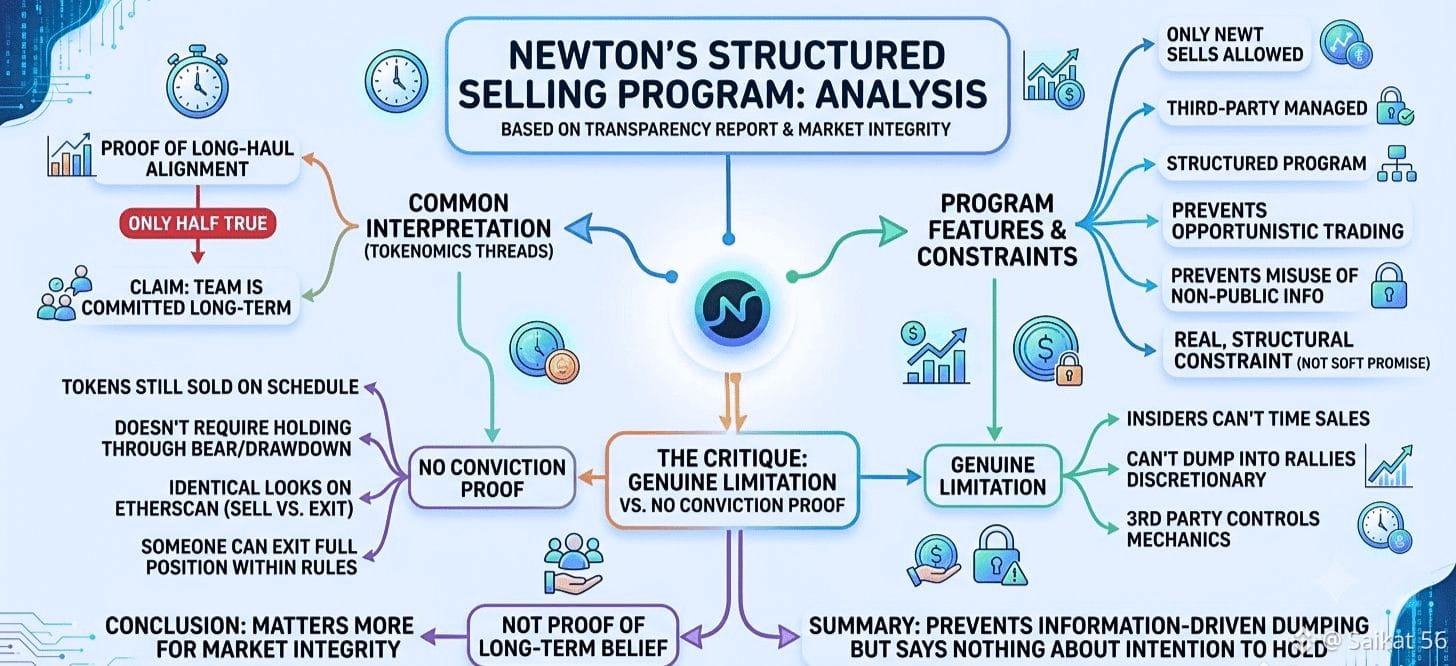
Wenn ich den Transparenzbericht von Newton lese, ist mir eine Richtlinie besonders aufgefallen:
Führungskräfte und Kernmitwirkende dürfen Newt nicht jederzeit nach Belieben verkaufen. Jeder Verkauf muss über ein von einem Dritten verwaltetes strukturiertes Verkaufsprogramm laufen.
Viele sehen das als Beleg dafür, dass das Team langfristig ausgerichtet ist, aber ich denke, es zeigt etwas anderes. Das Programm geht in erster Linie um Markfairness, nicht um persönliche Überzeugung.
Seine größte Stärke besteht darin, Insider daran zu hindern, nicht öffentliches Wissen auszunutzen. Führungskräfte können nicht schnell verkaufen, bevor eine große Ankündigung erfolgt, oder Gewinne aus einem Kursanstieg nach den Nachrichten ziehen, weil der Zeitpunkt der Verkäufe nicht direkt in ihrer Kontrolle liegt.
Das schafft einen transparenteren und vertrauenswürdigeren Markt.
Was das Programm jedoch nicht tut, ist zu garantieren, dass die Führungskräfte auf unbestimmte Zeit halten.
Teammitglieder können ihre Positionen im Laufe der Zeit weiterhin reduzieren oder sogar vollständig verlassen und dabei dennoch die Regeln einhalten.
Das Mechanismus regelt, wie Tokens verkauft werden, nicht warum sie verkauft werden.
Für mich ist das der entscheidende Unterschied.
Ein strukturiertes Verkaufsprogramm ist ein Hinweis auf starke Governance und Marktintegrität, sollte aber nicht automatisch als Beleg für einen unerschütterlichen langfristigen Glauben an Newtons Zukunft interpretiert werden.
@NewtonProtocol #newt $NEWT $BLUR $OPG
Wenn ich den Transparenzbericht von Newton lese, ist mir eine Richtlinie besonders aufgefallen:
Führungskräfte und Kernmitwirkende dürfen Newt nicht jederzeit nach Belieben verkaufen. Jeder Verkauf muss über ein von einem Dritten verwaltetes strukturiertes Verkaufsprogramm laufen.
Viele sehen das als Beleg dafür, dass das Team langfristig ausgerichtet ist, aber ich denke, es zeigt etwas anderes. Das Programm geht in erster Linie um Markfairness, nicht um persönliche Überzeugung.
Seine größte Stärke besteht darin, Insider daran zu hindern, nicht öffentliches Wissen auszunutzen. Führungskräfte können nicht schnell verkaufen, bevor eine große Ankündigung erfolgt, oder Gewinne aus einem Kursanstieg nach den Nachrichten ziehen, weil der Zeitpunkt der Verkäufe nicht direkt in ihrer Kontrolle liegt.
Das schafft einen transparenteren und vertrauenswürdigeren Markt.
Was das Programm jedoch nicht tut, ist zu garantieren, dass die Führungskräfte auf unbestimmte Zeit halten.
Teammitglieder können ihre Positionen im Laufe der Zeit weiterhin reduzieren oder sogar vollständig verlassen und dabei dennoch die Regeln einhalten.
Das Mechanismus regelt, wie Tokens verkauft werden, nicht warum sie verkauft werden.
Für mich ist das der entscheidende Unterschied.
Ein strukturiertes Verkaufsprogramm ist ein Hinweis auf starke Governance und Marktintegrität, sollte aber nicht automatisch als Beleg für einen unerschütterlichen langfristigen Glauben an Newtons Zukunft interpretiert werden.
@NewtonProtocol #newt $NEWT $BLUR $OPG
Führungskräfte und Kernmitwirkende dürfen Newt nicht jederzeit nach Belieben verkaufen. Jeder Verkauf muss über ein von einem Dritten verwaltetes strukturiertes Verkaufsprogramm laufen.
Viele sehen das als Beleg dafür, dass das Team langfristig ausgerichtet ist, aber ich denke, es zeigt etwas anderes. Das Programm geht in erster Linie um Markfairness, nicht um persönliche Überzeugung.
Seine größte Stärke besteht darin, Insider daran zu hindern, nicht öffentliches Wissen auszunutzen. Führungskräfte können nicht schnell verkaufen, bevor eine große Ankündigung erfolgt, oder Gewinne aus einem Kursanstieg nach den Nachrichten ziehen, weil der Zeitpunkt der Verkäufe nicht direkt in ihrer Kontrolle liegt.
Das schafft einen transparenteren und vertrauenswürdigeren Markt.
Was das Programm jedoch nicht tut, ist zu garantieren, dass die Führungskräfte auf unbestimmte Zeit halten.
Teammitglieder können ihre Positionen im Laufe der Zeit weiterhin reduzieren oder sogar vollständig verlassen und dabei dennoch die Regeln einhalten.
Das Mechanismus regelt, wie Tokens verkauft werden, nicht warum sie verkauft werden.
Für mich ist das der entscheidende Unterschied.
Ein strukturiertes Verkaufsprogramm ist ein Hinweis auf starke Governance und Marktintegrität, sollte aber nicht automatisch als Beleg für einen unerschütterlichen langfristigen Glauben an Newtons Zukunft interpretiert werden.
@NewtonProtocol #newt $NEWT $BLUR $OPG
18
4
281
·
--
Artikel
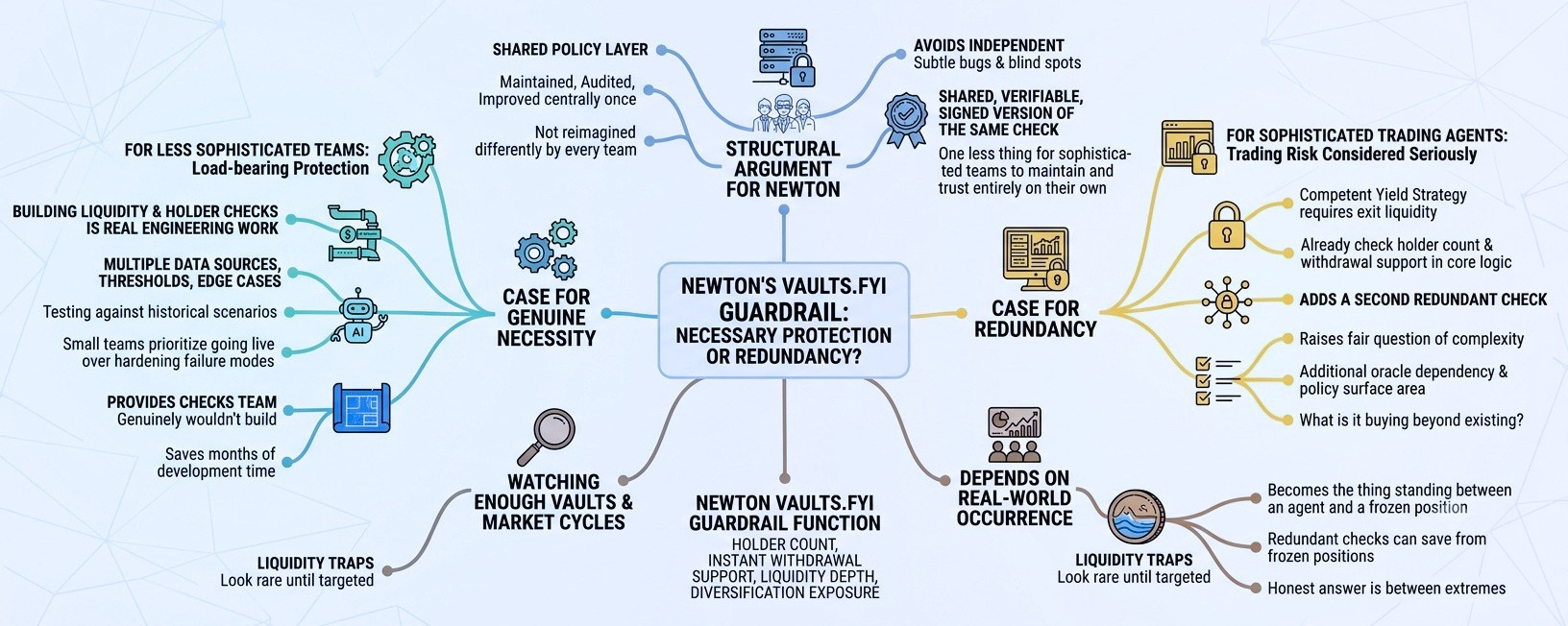
Über die Rendite hinaus: Der echte Wert der Newton-Vault-Policy-ChecksDie meisten, die einen Tresor bewerten, beginnen mit einer einzigen Frage: Wie ist die APY? Das ist eine nachvollziehbare Gewohnheit, weil die Rendite leicht zu vergleichen ist. Aber stell dir vor, ein KI-Agent müsste zwischen zwei Tresoren mit ähnlichen Erträgen wählen.
Der eine wird durch starke Liquidität, breite Beteiligung und sofortige Auszahlungen gestützt. Der andere hat sehr wenige Einleger und eingeschränkte Ausstiegsmöglichkeiten. Der Prozentsatz sieht identisch aus, doch das Risikoprofil könnte nicht unterschiedlicher sein.
Genau diese Differenz versucht die Vaults.fyi-Integration von Newton Protocol abzubilden. Anstatt einem Agenten zu erlauben, nur auf Rendite zu optimieren, können Richtlinien zusätzliche Bedingungen erfordern, bevor Gelder bewegt werden.
Über die Rendite hinaus: Der echte Wert der Newton-Vault-Policy-Checks
Die meisten, die einen Tresor bewerten, beginnen mit einer einzigen Frage: Wie ist die APY? Das ist eine nachvollziehbare Gewohnheit, weil die Rendite leicht zu vergleichen ist. Aber stell dir vor, ein KI-Agent müsste zwischen zwei Tresoren mit ähnlichen Erträgen wählen.
Der eine wird durch starke Liquidität, breite Beteiligung und sofortige Auszahlungen gestützt. Der andere hat sehr wenige Einleger und eingeschränkte Ausstiegsmöglichkeiten. Der Prozentsatz sieht identisch aus, doch das Risikoprofil könnte nicht unterschiedlicher sein.
Genau diese Differenz versucht die Vaults.fyi-Integration von Newton Protocol abzubilden. Anstatt einem Agenten zu erlauben, nur auf Rendite zu optimieren, können Richtlinien zusätzliche Bedingungen erfordern, bevor Gelder bewegt werden.
Der eine wird durch starke Liquidität, breite Beteiligung und sofortige Auszahlungen gestützt. Der andere hat sehr wenige Einleger und eingeschränkte Ausstiegsmöglichkeiten. Der Prozentsatz sieht identisch aus, doch das Risikoprofil könnte nicht unterschiedlicher sein.
Genau diese Differenz versucht die Vaults.fyi-Integration von Newton Protocol abzubilden. Anstatt einem Agenten zu erlauben, nur auf Rendite zu optimieren, können Richtlinien zusätzliche Bedingungen erfordern, bevor Gelder bewegt werden.
11
6
95
·
--
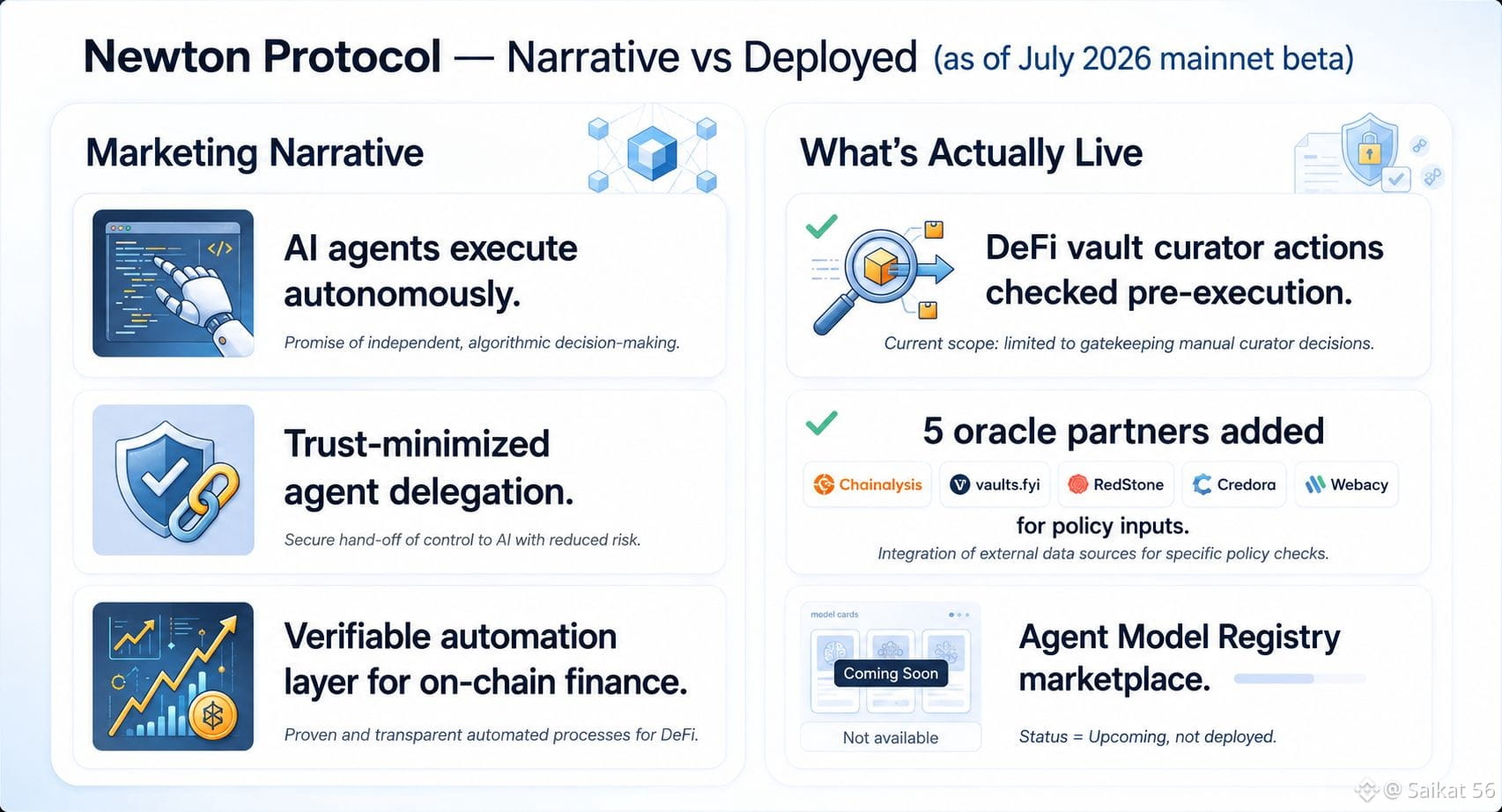
Je mehr ich Newton erforschte, desto mehr stach ein Detail hervor. Die Überschrift spricht über KI-Agenten, autonome Ausführung und vertrauensminimierte Automatisierung. Natürlich erwartete ich, dass diese Bausteine bereits live sind.
Stattdessen stellte ich fest, dass der heutige Fokus deutlich enger ist: DeFi-Tresore. Das Protokoll prüft derzeit die Aktionen von Curatoren anhand vordefinierter Richtlinien, bevor überhaupt etwas ausgeführt wird. Die KI-Agenten und das Modell-Registry sind weiterhin als „bald verfügbar“ markiert.
Diese Entwicklung wirkt tatsächlich nachvollziehbar. Bevor man autonomen Agenten die Kontrolle über finanzielle Aktionen gibt, ist es sinnvoll, die Policy-Engine in einer kleineren, aber wertvollen Umgebung zu beweisen. Das ist ein pragmatischer Rollout – auch wenn er sich zunächst anders anfühlt als das, was viele auf den ersten Blick vermuten.
Eine weitere interessante Entdeckung war die Zahl der Orakel-Integrationen, die das System bereits unterstützen: Chainalysis, vaults.fyi, RedStone, Credora und Webacy. Sie liefern die externen Signale, von denen das Protokoll abhängt, wodurch die heutige Architektur eher orkalgesteuert als agentengesteuert wirkt.
Nachdem ich nachvollzogen habe, was live ist und was noch auf der Roadmap steht, bleibt mir eine Frage: Wird der Übergang von sicherer Tresor-Automatisierung zu vollständig autonomen Agenten bald stattfinden –
oder liegt diese Zukunft noch weiter in der Ferne?,,🤔
@NewtonProtocol #newt $NEWT $ANOME $TLM
Je mehr ich Newton erforschte, desto mehr stach ein Detail hervor. Die Überschrift spricht über KI-Agenten, autonome Ausführung und vertrauensminimierte Automatisierung. Natürlich erwartete ich, dass diese Bausteine bereits live sind.
Stattdessen stellte ich fest, dass der heutige Fokus deutlich enger ist: DeFi-Tresore. Das Protokoll prüft derzeit die Aktionen von Curatoren anhand vordefinierter Richtlinien, bevor überhaupt etwas ausgeführt wird. Die KI-Agenten und das Modell-Registry sind weiterhin als „bald verfügbar“ markiert.
Diese Entwicklung wirkt tatsächlich nachvollziehbar. Bevor man autonomen Agenten die Kontrolle über finanzielle Aktionen gibt, ist es sinnvoll, die Policy-Engine in einer kleineren, aber wertvollen Umgebung zu beweisen. Das ist ein pragmatischer Rollout – auch wenn er sich zunächst anders anfühlt als das, was viele auf den ersten Blick vermuten.
Eine weitere interessante Entdeckung war die Zahl der Orakel-Integrationen, die das System bereits unterstützen: Chainalysis, vaults.fyi, RedStone, Credora und Webacy. Sie liefern die externen Signale, von denen das Protokoll abhängt, wodurch die heutige Architektur eher orkalgesteuert als agentengesteuert wirkt.
Nachdem ich nachvollzogen habe, was live ist und was noch auf der Roadmap steht, bleibt mir eine Frage: Wird der Übergang von sicherer Tresor-Automatisierung zu vollständig autonomen Agenten bald stattfinden –
oder liegt diese Zukunft noch weiter in der Ferne?,,🤔
@NewtonProtocol #newt $NEWT $ANOME $TLM
Stattdessen stellte ich fest, dass der heutige Fokus deutlich enger ist: DeFi-Tresore. Das Protokoll prüft derzeit die Aktionen von Curatoren anhand vordefinierter Richtlinien, bevor überhaupt etwas ausgeführt wird. Die KI-Agenten und das Modell-Registry sind weiterhin als „bald verfügbar“ markiert.
Diese Entwicklung wirkt tatsächlich nachvollziehbar. Bevor man autonomen Agenten die Kontrolle über finanzielle Aktionen gibt, ist es sinnvoll, die Policy-Engine in einer kleineren, aber wertvollen Umgebung zu beweisen. Das ist ein pragmatischer Rollout – auch wenn er sich zunächst anders anfühlt als das, was viele auf den ersten Blick vermuten.
Eine weitere interessante Entdeckung war die Zahl der Orakel-Integrationen, die das System bereits unterstützen: Chainalysis, vaults.fyi, RedStone, Credora und Webacy. Sie liefern die externen Signale, von denen das Protokoll abhängt, wodurch die heutige Architektur eher orkalgesteuert als agentengesteuert wirkt.
Nachdem ich nachvollzogen habe, was live ist und was noch auf der Roadmap steht, bleibt mir eine Frage: Wird der Übergang von sicherer Tresor-Automatisierung zu vollständig autonomen Agenten bald stattfinden –
oder liegt diese Zukunft noch weiter in der Ferne?,,🤔
@NewtonProtocol #newt $NEWT $ANOME $TLM
16
1
7
178
Anmelden und weiter Inhalte entdecken
Krypto-Nutzer weltweit auf Binance Square kennenlernen
⚡️ Bleib in Sachen Krypto stets am Puls.
💬 Die weltgrößte Kryptobörse vertraut darauf.
👍 Erhalte verlässliche Einblicke von verifizierten Creators.
E-Mail-Adresse/Telefonnummer
Trendthemen
FedMinutesFocusOnOctoberPause
289,752 Aufrufe
1,752 Kommentare
🚨 HOHE ALARMSTUFE ‼️ BITTE HANDELT IN DER NÄCHSTEN STUNDE NICHT BLIND 🚨
Leute, in weniger als einer Stunde werden die FOMC-Protokolle veröffentlicht.
Nach der Volatilität, die wir heute bereits erlebt haben, möchte ich wirklich nicht, dass jemand kurz vor der Veröffentlichung irgendwelche zufälligen Positionen mit hohem Hebel eröffnet.
Die stärkste Reaktion erwarte ich bei Gold (XAU), Silber (XAG), BTC und ETH. Coins wie SOL und andere stark gehebelte Altcoins mit mittlerer oder niedriger Marktkapitalisierung können jede Bewegung von BTC noch verstärken.
Gold und Silber reagieren heute Abend besonders empfindlich, weil der Markt bereits auf den US-Dollar und die Renditen von US-Staatsanleihen reagiert und beide Metalle vor der Veröffentlichung der Fed-Protokolle stark unter Druck standen.
Kurz gesagt:
📉 FOMC-Protokolle mit falkenhaftem Ton → Dollar und Renditen können steigen → Druck auf BTC, Krypto, Gold und Silber
📈 FOMC-Protokolle mit taubenhaftem Ton → Dollar und Renditen können nachgeben → BTC, Gold, Silber und andere Risikoanlagen können kräftig steigen.
Und bitte denkt daran: Die erste Kerze kann eine Falle sein. Es kann zunächst zu einem Pump kommen, dann zu einem sofortigen Dump, Liquidationen auf beiden Seiten und erst danach zur tatsächlichen Richtungsbewegung.
Schützt also vorerst eure Positionen, reduziert unnötigen Hebel und springt nicht aus FOMO auf die erste Bewegung auf.
Heute Abend beobachte ich zuerst $XAU , $XAG und $BTC . An ihnen werden wir sehr schnell erkennen, wie der Markt die Fed einschätzt.
Ich halte euch rechtzeitig auf dem Laufenden.
Folgt @Panda Traders und aktiviert jetzt eure Benachrichtigungen.
#FedMinutesFocusOnOctoberPause
Panda Traders
·21 Likes
·4.8k Aufrufe
IMFGrantsWaiverForElSalvadorBitcoinBreach
1,670 Aufrufe
81 Kommentare
BinanceLaunchesBinanceIntelligence
1.2M Aufrufe
6,872 Kommentare