

Naveed Haider Malik
20 Beiträge

Naveed Haider Malik
Melden
Nutzer blockieren
Crypto Analyst 📈 | Decoding the Next Rally 🚀 | BTC - ETH - Altcoins | Daily Insights | Binance Creator 🇵🇰 | NHM_official
2 Following
3 Follower
2 Like gegeben
Beiträge
85
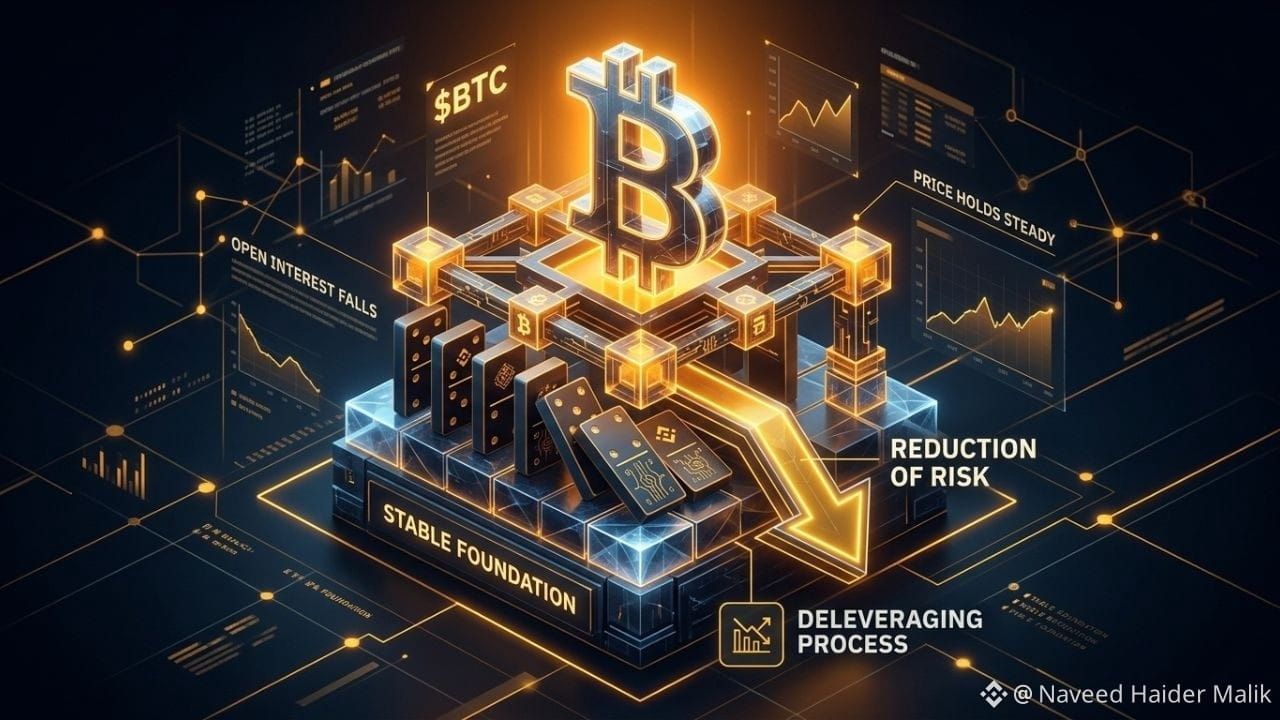
Das Open Interest von Bitcoin sinkt um 13.600 BTC ($BTC) Warum diese Enthebelung bullish ist.
Wenn Händler sehen, dass das Open Interest (OI) stark fällt, geraten viele instinktiv in Panik und gehen davon aus, dass Kapital den Markt verlässt. Doch wenn man Derivate-Daten so interpretiert, übersieht man, wie sich die Hebelwirkung tatsächlich zurücksetzt.
Was Open Interest eigentlich bedeutet.
Open Interest erfasst einfach die Gesamtzahl der aktiven Futures- und Perpetual-Contracts an Börsen. Wenn das OI fällt, während der Bitcoin-Preis ($BTC) stabil bleibt, bedeutet das, dass sich spekulative Hebelpositionen schließen, ohne dass Panikverkäufe ausgelöst werden.
In spekulativen Krypto-Zyklen macht hohe Verschuldung den Markt besonders fragil. Wenn zu viele Trader überhebelte Positionen eröffnen, kann schon eine kleine Preisbewegung von 500 $ eine Kettenreaktion erzwungener Liquidationen auslösen – mit plötzlichen Marktcrashs oder künstlichen Spikes.
Über 13.600 BTC an Hebelwirkung sind verdampft, während Bitcoin auf seinem Niveau blieb. Das zeigt, dass sich der Markt selbst bereinigt. Anstatt einer explosiven Liquidationskaskade schlossen sich Hochrisikopositionen geordnet.
Das garantiert keinen sofortigen Ausbruch zu neuen Allzeithochs schon morgen. Das Abräumen der Hebelwirkung setzt lediglich das Spielfeld zurück. Es beseitigt das strukturelle Risiko plötzlicher Liquidationskaskaden und ermöglicht, dass echtes Spot-Marktnachfrage das nächste Ziel bestimmt – statt gehebelt zockender Spieler.
Hör auf, fallendes Open Interest während einer Preis-Konsolidierung als Schwäche zu betrachten. Ein ruhiger Reset in der Hebelwirkung gibt Bitcoin eine deutlich stärkere, sicherere Grundlage für den nächsten Anstieg.
$BTC #CryptoForBeginners
Das Open Interest von Bitcoin sinkt um 13.600 BTC ($BTC ) Warum diese Enthebelung bullish ist.
Wenn Händler sehen, dass das Open Interest (OI) stark fällt, geraten viele instinktiv in Panik und gehen davon aus, dass Kapital den Markt verlässt. Doch wenn man Derivate-Daten so interpretiert, übersieht man, wie sich die Hebelwirkung tatsächlich zurücksetzt.
Was Open Interest eigentlich bedeutet.
Open Interest erfasst einfach die Gesamtzahl der aktiven Futures- und Perpetual-Contracts an Börsen. Wenn das OI fällt, während der Bitcoin-Preis ($BTC ) stabil bleibt, bedeutet das, dass sich spekulative Hebelpositionen schließen, ohne dass Panikverkäufe ausgelöst werden.
In spekulativen Krypto-Zyklen macht hohe Verschuldung den Markt besonders fragil. Wenn zu viele Trader überhebelte Positionen eröffnen, kann schon eine kleine Preisbewegung von 500 $ eine Kettenreaktion erzwungener Liquidationen auslösen – mit plötzlichen Marktcrashs oder künstlichen Spikes.
Über 13.600 BTC an Hebelwirkung sind verdampft, während Bitcoin auf seinem Niveau blieb. Das zeigt, dass sich der Markt selbst bereinigt. Anstatt einer explosiven Liquidationskaskade schlossen sich Hochrisikopositionen geordnet.
Das garantiert keinen sofortigen Ausbruch zu neuen Allzeithochs schon morgen. Das Abräumen der Hebelwirkung setzt lediglich das Spielfeld zurück. Es beseitigt das strukturelle Risiko plötzlicher Liquidationskaskaden und ermöglicht, dass echtes Spot-Marktnachfrage das nächste Ziel bestimmt – statt gehebelt zockender Spieler.
Hör auf, fallendes Open Interest während einer Preis-Konsolidierung als Schwäche zu betrachten. Ein ruhiger Reset in der Hebelwirkung gibt Bitcoin eine deutlich stärkere, sicherere Grundlage für den nächsten Anstieg.
$BTC #CryptoForBeginners
Wenn Händler sehen, dass das Open Interest (OI) stark fällt, geraten viele instinktiv in Panik und gehen davon aus, dass Kapital den Markt verlässt. Doch wenn man Derivate-Daten so interpretiert, übersieht man, wie sich die Hebelwirkung tatsächlich zurücksetzt.
Was Open Interest eigentlich bedeutet.
Open Interest erfasst einfach die Gesamtzahl der aktiven Futures- und Perpetual-Contracts an Börsen. Wenn das OI fällt, während der Bitcoin-Preis ($BTC ) stabil bleibt, bedeutet das, dass sich spekulative Hebelpositionen schließen, ohne dass Panikverkäufe ausgelöst werden.
In spekulativen Krypto-Zyklen macht hohe Verschuldung den Markt besonders fragil. Wenn zu viele Trader überhebelte Positionen eröffnen, kann schon eine kleine Preisbewegung von 500 $ eine Kettenreaktion erzwungener Liquidationen auslösen – mit plötzlichen Marktcrashs oder künstlichen Spikes.
Über 13.600 BTC an Hebelwirkung sind verdampft, während Bitcoin auf seinem Niveau blieb. Das zeigt, dass sich der Markt selbst bereinigt. Anstatt einer explosiven Liquidationskaskade schlossen sich Hochrisikopositionen geordnet.
Das garantiert keinen sofortigen Ausbruch zu neuen Allzeithochs schon morgen. Das Abräumen der Hebelwirkung setzt lediglich das Spielfeld zurück. Es beseitigt das strukturelle Risiko plötzlicher Liquidationskaskaden und ermöglicht, dass echtes Spot-Marktnachfrage das nächste Ziel bestimmt – statt gehebelt zockender Spieler.
Hör auf, fallendes Open Interest während einer Preis-Konsolidierung als Schwäche zu betrachten. Ein ruhiger Reset in der Hebelwirkung gibt Bitcoin eine deutlich stärkere, sicherere Grundlage für den nächsten Anstieg.
$BTC #CryptoForBeginners
79
Artikel
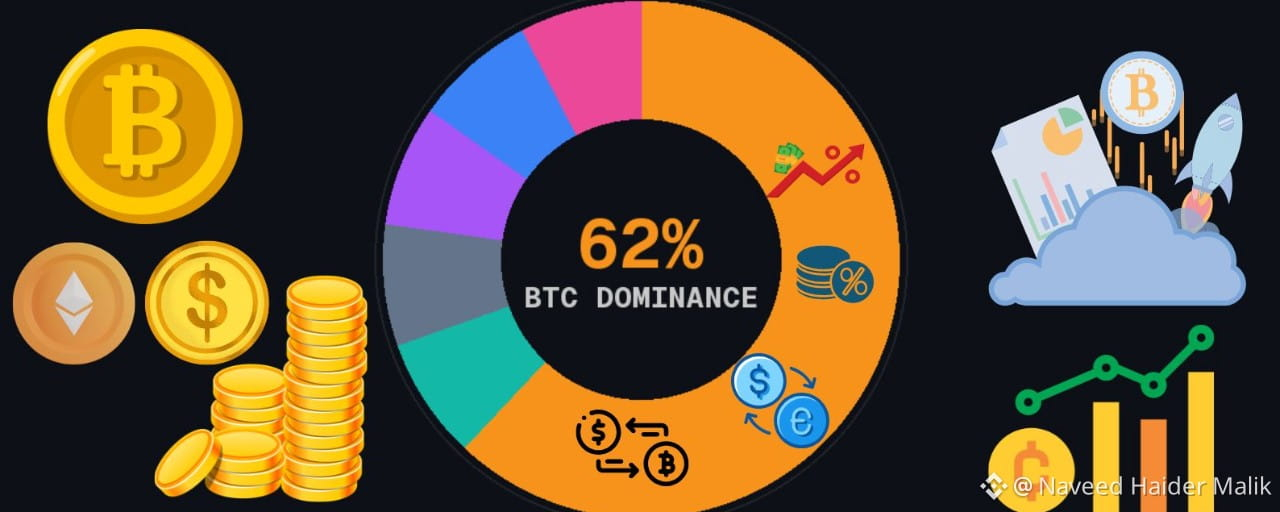
Bitcoin-Dominanz: Die Altcoin-Season-Erzählung ist kaputtDie Bitcoin-Dominanz liegt seit über einem Jahr in den hohen 50ern – weit über dem ~39%-Tief der Altcoin-Season 2021 – und sie hat dieses Terrain nicht zurückgegeben. Wenn du darauf gewartet hast, dass es „die ganze Season hindurch“ so läuft, wie es sich in den letzten beiden Zyklen abgespielt hat, dann glaube ich, dass du auf ein Muster wartest, das sich diesmal nicht wiederholt.
Es lohnt sich, hier genau zu sein: Die Dominanz ist im Moment kein gerader Aufwärtstrend. Sie ist in den letzten Monaten ein paar Punkte gefallen – von einem jüngsten Hoch nahe 60% auf heute die hohen 50er. Aber „leicht abgekühlt“ und „sich in einen Altcoin-Season dreht“ sind sehr unterschiedliche Dinge, und genau die Lücke zwischen diesen beiden Geschichten wird von den meisten Trading-Content-Stücken übergangen.
Bitcoin-Dominanz: Die Altcoin-Season-Erzählung ist kaputt
Die Bitcoin-Dominanz liegt seit über einem Jahr in den hohen 50ern – weit über dem ~39%-Tief der Altcoin-Season 2021 – und sie hat dieses Terrain nicht zurückgegeben. Wenn du darauf gewartet hast, dass es „die ganze Season hindurch“ so läuft, wie es sich in den letzten beiden Zyklen abgespielt hat, dann glaube ich, dass du auf ein Muster wartest, das sich diesmal nicht wiederholt.
Es lohnt sich, hier genau zu sein: Die Dominanz ist im Moment kein gerader Aufwärtstrend. Sie ist in den letzten Monaten ein paar Punkte gefallen – von einem jüngsten Hoch nahe 60% auf heute die hohen 50er. Aber „leicht abgekühlt“ und „sich in einen Altcoin-Season dreht“ sind sehr unterschiedliche Dinge, und genau die Lücke zwischen diesen beiden Geschichten wird von den meisten Trading-Content-Stücken übergangen.
Es lohnt sich, hier genau zu sein: Die Dominanz ist im Moment kein gerader Aufwärtstrend. Sie ist in den letzten Monaten ein paar Punkte gefallen – von einem jüngsten Hoch nahe 60% auf heute die hohen 50er. Aber „leicht abgekühlt“ und „sich in einen Altcoin-Season dreht“ sind sehr unterschiedliche Dinge, und genau die Lücke zwischen diesen beiden Geschichten wird von den meisten Trading-Content-Stücken übergangen.
98
$ETH trifft zum ersten Mal in 7 Monaten $2.600 🚀
Jetzt $2.570,50 +4,18% | 24h-Hoch $2.665,99
Treiber: Core CPI fiel auf den niedrigsten Stand seit 5+ Jahren (NS3.AI)
Flow-Check: Spot-ETH-ETFs −$19,30 Mio. Abflüsse bis Donnerstag/Freitag ausstehend
Preis: Binance ETH/$USDT • Analyse: NS3
$ETH trifft zum ersten Mal in 7 Monaten $2.600 🚀
Jetzt $2.570,50 +4,18% | 24h-Hoch $2.665,99
Treiber: Core CPI fiel auf den niedrigsten Stand seit 5+ Jahren (NS3.AI)
Flow-Check: Spot-ETH-ETFs −$19,30 Mio. Abflüsse bis Donnerstag/Freitag ausstehend
Preis: Binance ETH/$USDT • Analyse: NS3
Jetzt $2.570,50 +4,18% | 24h-Hoch $2.665,99
Treiber: Core CPI fiel auf den niedrigsten Stand seit 5+ Jahren (NS3.AI)
Flow-Check: Spot-ETH-ETFs −$19,30 Mio. Abflüsse bis Donnerstag/Freitag ausstehend
Preis: Binance ETH/$USDT • Analyse: NS3

95
$70M LANG AUSGEBUCHT 😹
$BTC getippt $76,046 nach CPI, Liquidität bei $76,308. -$1,6M, wäre +$830k gewesen.
Gleicher Wal-Affe kauft zurück $13,68M bei $77,875. Cato sagt: bekämpfe keine Liquidität.
Quelle: Binance News
$70M LANG AUSGEBUCHT 😹
$BTC getippt $76,046 nach CPI, Liquidität bei $76,308. -$1,6M, wäre +$830k gewesen.
Gleicher Wal-Affe kauft zurück $13,68M bei $77,875. Cato sagt: bekämpfe keine Liquidität.
Quelle: Binance News
$BTC getippt $76,046 nach CPI, Liquidität bei $76,308. -$1,6M, wäre +$830k gewesen.
Gleicher Wal-Affe kauft zurück $13,68M bei $77,875. Cato sagt: bekämpfe keine Liquidität.
Quelle: Binance News

75

Artikel
PAXG-Gold hält 4.315 $ vor dem CPI – Wird die Fed morgen eine Zinserhöhung auslösen?Spot-Trader mit Fokus auf PAXG Gold und makroökonomische Bewegungen bei BTC. Aktuell keine offene Position, Charts werden vor wichtigen Datenevents beobachtet. Teile Chart-Beobachtungen, keine finanzielle Beratung.
Welche Federal-Reserve-Politiken gibt es?
1. Zins-Politik: Wenn die CPI-Zahlen heiß sind, kann die Fed die Zinsen anheben, um Kreditaufnahme teuer zu machen und die Inflation zu bremsen. Wenn die CPI-Zahlen kalt sind, kann die Fed die Zinsen senken.
2. Geldpolitik (QT/QE): Die Fed steuert die Geldmenge. Eine straffere Politik unterstützt kurzfristig den Dollar und kann Gold unter Druck setzen. Eine lockere Politik schwächt den Dollar und unterstützt Gold in der Regel wie PAXG.
PAXG-Gold hält 4.315 $ vor dem CPI – Wird die Fed morgen eine Zinserhöhung auslösen?
Spot-Trader mit Fokus auf PAXG Gold und makroökonomische Bewegungen bei BTC. Aktuell keine offene Position, Charts werden vor wichtigen Datenevents beobachtet. Teile Chart-Beobachtungen, keine finanzielle Beratung.
Welche Federal-Reserve-Politiken gibt es?
1. Zins-Politik: Wenn die CPI-Zahlen heiß sind, kann die Fed die Zinsen anheben, um Kreditaufnahme teuer zu machen und die Inflation zu bremsen. Wenn die CPI-Zahlen kalt sind, kann die Fed die Zinsen senken.
2. Geldpolitik (QT/QE): Die Fed steuert die Geldmenge. Eine straffere Politik unterstützt kurzfristig den Dollar und kann Gold unter Druck setzen. Eine lockere Politik schwächt den Dollar und unterstützt Gold in der Regel wie PAXG.
Welche Federal-Reserve-Politiken gibt es?
1. Zins-Politik: Wenn die CPI-Zahlen heiß sind, kann die Fed die Zinsen anheben, um Kreditaufnahme teuer zu machen und die Inflation zu bremsen. Wenn die CPI-Zahlen kalt sind, kann die Fed die Zinsen senken.
2. Geldpolitik (QT/QE): Die Fed steuert die Geldmenge. Eine straffere Politik unterstützt kurzfristig den Dollar und kann Gold unter Druck setzen. Eine lockere Politik schwächt den Dollar und unterstützt Gold in der Regel wie PAXG.
187
Artikel
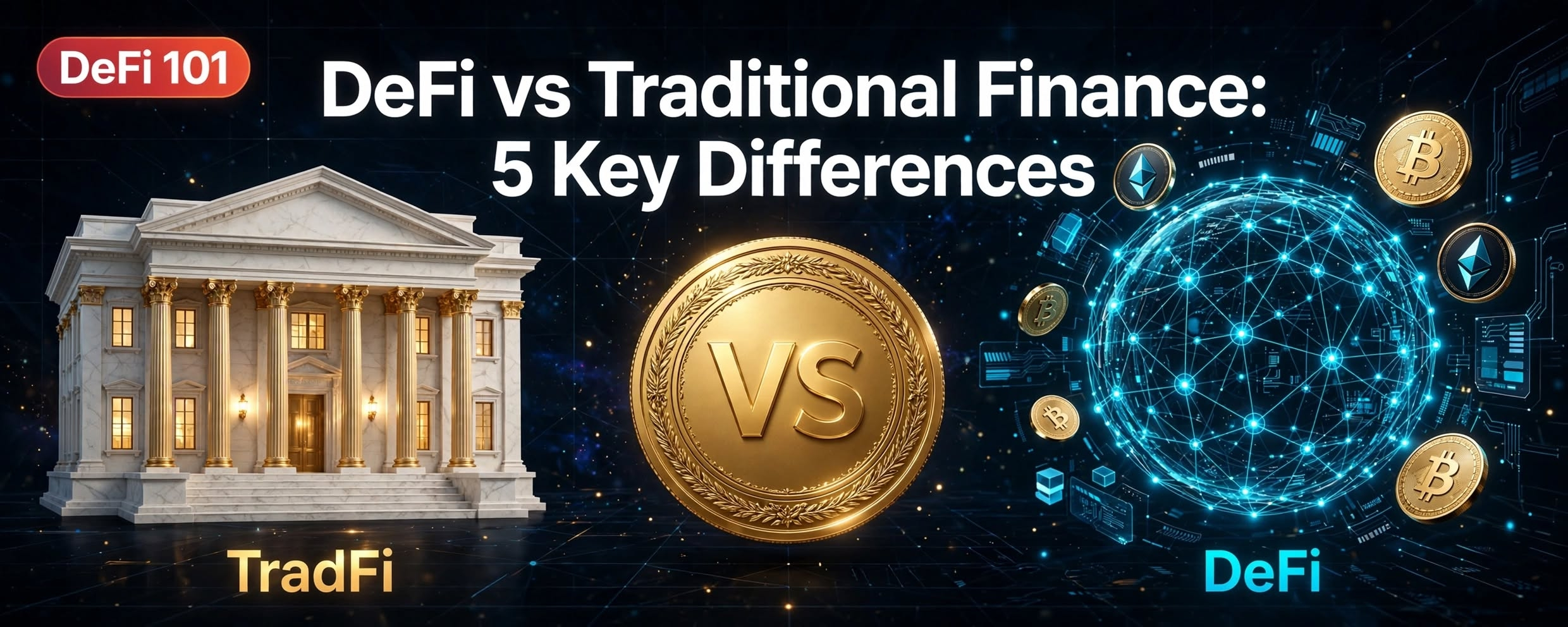
DeFi vs. traditionelle Finanzen: 5 zentrale UnterschiedeStell dir das vor: Es ist Samstagabend und du musst 500 $ an einen Freund schicken. Bei deiner Bank kommt das Geld erst Montagmorgen an – abzüglich einer Gebühr – nachdem es durch eine Kette von Mittelsmännern gelaufen ist, die du nie zu Gesicht bekommst. Mit einem Wallet schickst du USDT on-chain und es ist innerhalb von weniger als einer Minute da, und zwar für weniger als einen Dollar – um 23:00 Uhr am Wochenende.
Gleiches Ziel. Ganz unterschiedliche Systeme darunter. Diese Lücke ist es, worum es in diesem Artikel geht.
DeFi und traditionelle Finanzen (TradFi) sind nicht einfach zwei Varianten derselben Sache. Sie basieren auf gegensätzlichen Annahmen darüber, wer dein Geld kontrollieren sollte. Sobald du diese fünf Unterschiede siehst, klickt der Rest von DeFi endlich zusammen.
DeFi vs. traditionelle Finanzen: 5 zentrale Unterschiede
Stell dir das vor: Es ist Samstagabend und du musst 500 $ an einen Freund schicken. Bei deiner Bank kommt das Geld erst Montagmorgen an – abzüglich einer Gebühr – nachdem es durch eine Kette von Mittelsmännern gelaufen ist, die du nie zu Gesicht bekommst. Mit einem Wallet schickst du USDT on-chain und es ist innerhalb von weniger als einer Minute da, und zwar für weniger als einen Dollar – um 23:00 Uhr am Wochenende.
Gleiches Ziel. Ganz unterschiedliche Systeme darunter. Diese Lücke ist es, worum es in diesem Artikel geht.
DeFi und traditionelle Finanzen (TradFi) sind nicht einfach zwei Varianten derselben Sache. Sie basieren auf gegensätzlichen Annahmen darüber, wer dein Geld kontrollieren sollte. Sobald du diese fünf Unterschiede siehst, klickt der Rest von DeFi endlich zusammen.
Gleiches Ziel. Ganz unterschiedliche Systeme darunter. Diese Lücke ist es, worum es in diesem Artikel geht.
DeFi und traditionelle Finanzen (TradFi) sind nicht einfach zwei Varianten derselben Sache. Sie basieren auf gegensätzlichen Annahmen darüber, wer dein Geld kontrollieren sollte. Sobald du diese fünf Unterschiede siehst, klickt der Rest von DeFi endlich zusammen.
96
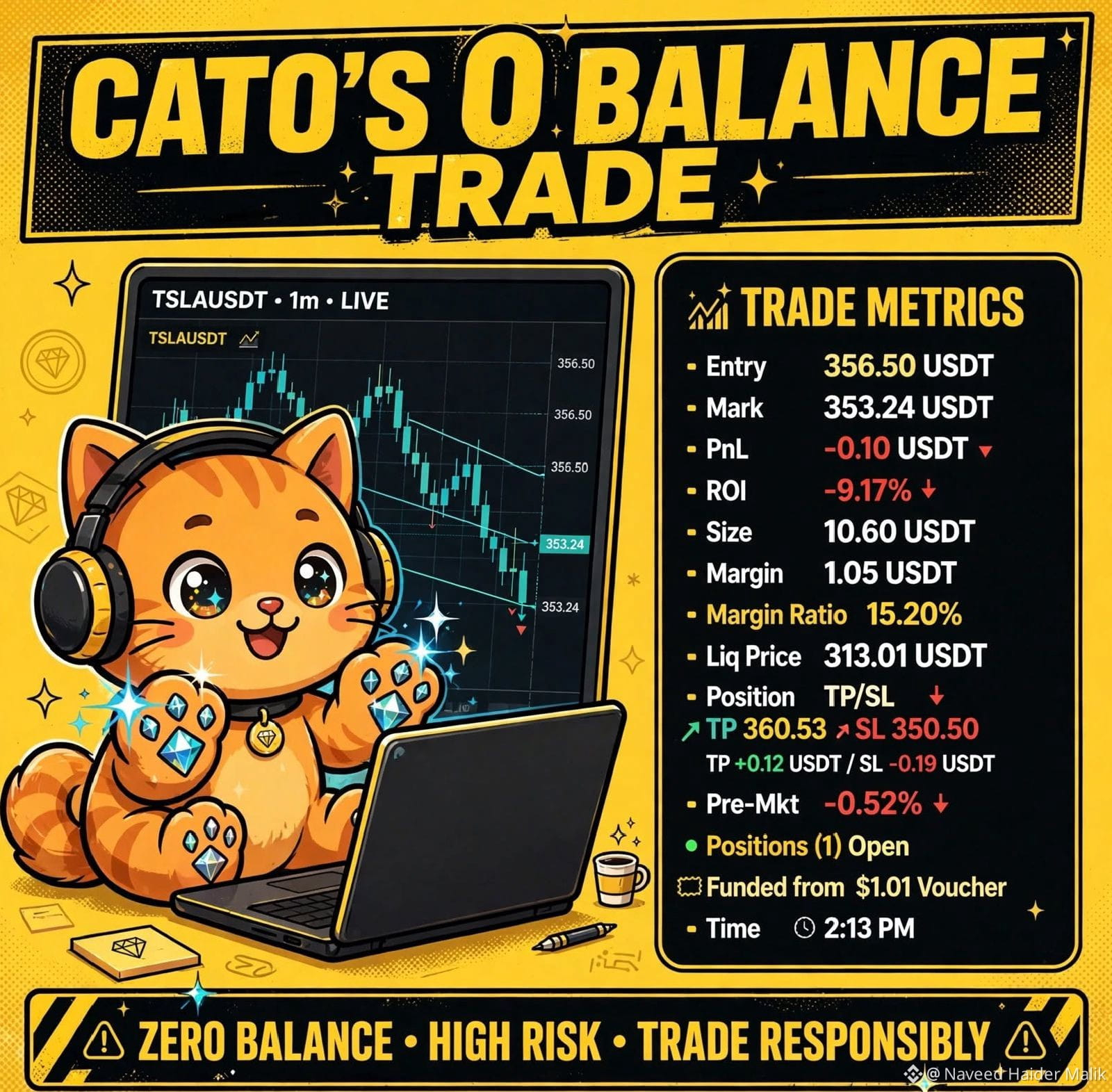
CATO'S 0 BALANCE TRADE 🐾💎
Einstieg: 356.50 | Kurs: 353.24
PnL: -0.10 USDT (-9.17%)
Halten ist noch offen. Pre-Mkt -0.52% im Minus, aber Cato hat Diamantpfoten. Wir warten auf den US-Open um 6:30 PM PK.
TP: 360.53 (+0.12) / SL: 350.50 (-0.19)
Margin: 1.05 | Größe: 10.60 | Aus $1.01 Voucher finanziert
Zero Balance. Hohe Gefahr. Handel verantwortungsvoll. #ZeroBalance
$TSLAB
CATO'S 0 BALANCE TRADE 🐾💎
Einstieg: 356.50 | Kurs: 353.24
PnL: -0.10 USDT (-9.17%)
Halten ist noch offen. Pre-Mkt -0.52% im Minus, aber Cato hat Diamantpfoten. Wir warten auf den US-Open um 6:30 PM PK.
TP: 360.53 (+0.12) / SL: 350.50 (-0.19)
Margin: 1.05 | Größe: 10.60 | Aus $1.01 Voucher finanziert
Zero Balance. Hohe Gefahr. Handel verantwortungsvoll. #ZeroBalance
$TSLAB
Einstieg: 356.50 | Kurs: 353.24
PnL: -0.10 USDT (-9.17%)
Halten ist noch offen. Pre-Mkt -0.52% im Minus, aber Cato hat Diamantpfoten. Wir warten auf den US-Open um 6:30 PM PK.
TP: 360.53 (+0.12) / SL: 350.50 (-0.19)
Margin: 1.05 | Größe: 10.60 | Aus $1.01 Voucher finanziert
Zero Balance. Hohe Gefahr. Handel verantwortungsvoll. #ZeroBalance
$TSLAB
127

Artikel
Was ist DeFi? Ein einfacher Leitfaden für EinsteigerWenn Sie jemals Zeit in der Nähe von Krypto verbracht haben, haben Sie den Begriff „DeFi“ wahrscheinlich ständig aufgeschnappt. Er klingt technisch, vielleicht sogar einschüchternd. Aber die Grundidee dahinter ist eigentlich ganz einfach: DeFi bedeutet, dass man finanzielle Dinge macht – sparen, leihen, aufnehmen, handeln – ohne dass eine Bank, ein Broker oder ein Vermittler im Weg steht.
Lassen Sie uns aufschlüsseln, was das konkret bedeutet – und warum es zu einem Markt herangewachsen ist, der laut Tracking-Daten von DefiLlama (Stand 2026) etwa 200 Milliarden US-Dollar an eingezahlten Vermögenswerten hält.
Was ist DeFi? Ein einfacher Leitfaden für Einsteiger
Wenn Sie jemals Zeit in der Nähe von Krypto verbracht haben, haben Sie den Begriff „DeFi“ wahrscheinlich ständig aufgeschnappt. Er klingt technisch, vielleicht sogar einschüchternd. Aber die Grundidee dahinter ist eigentlich ganz einfach: DeFi bedeutet, dass man finanzielle Dinge macht – sparen, leihen, aufnehmen, handeln – ohne dass eine Bank, ein Broker oder ein Vermittler im Weg steht.
Lassen Sie uns aufschlüsseln, was das konkret bedeutet – und warum es zu einem Markt herangewachsen ist, der laut Tracking-Daten von DefiLlama (Stand 2026) etwa 200 Milliarden US-Dollar an eingezahlten Vermögenswerten hält.
Lassen Sie uns aufschlüsseln, was das konkret bedeutet – und warum es zu einem Markt herangewachsen ist, der laut Tracking-Daten von DefiLlama (Stand 2026) etwa 200 Milliarden US-Dollar an eingezahlten Vermögenswerten hält.
81
Artikel
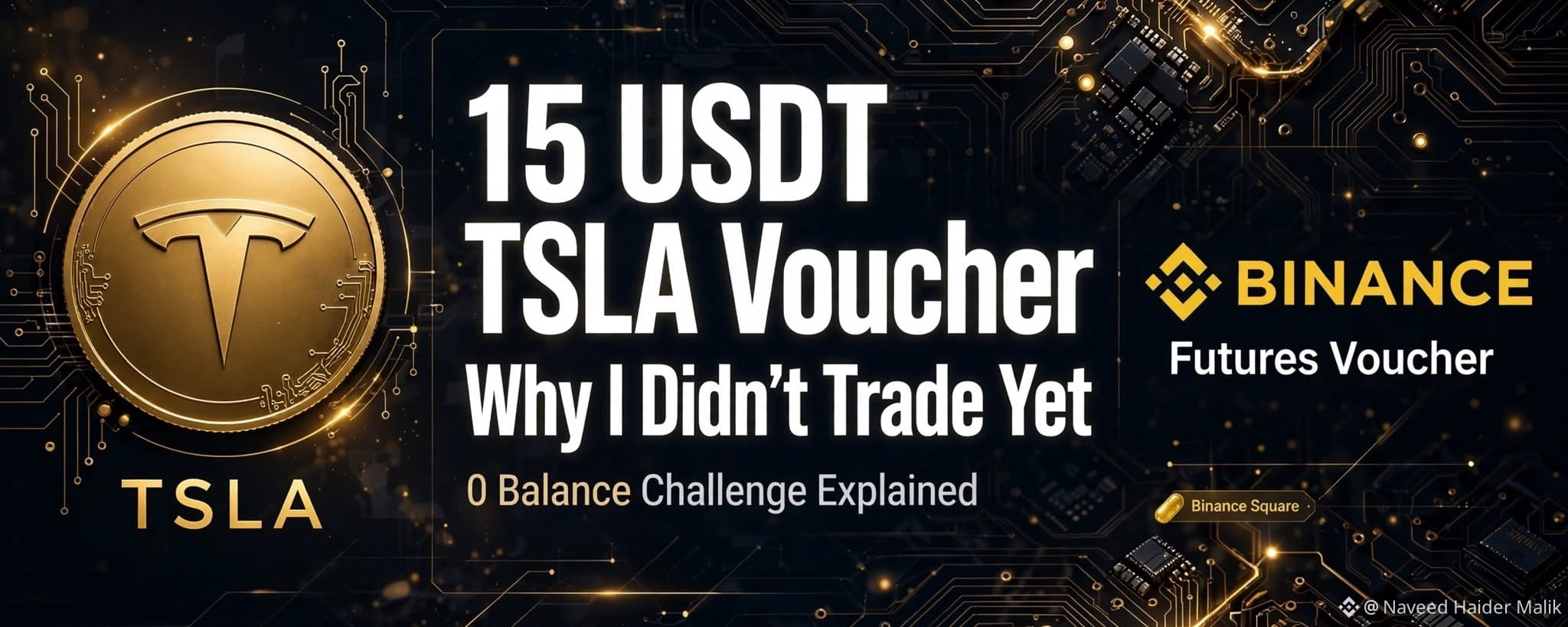
Ich habe 15 USDT TSLA-Gutschein mit 0 Guthaben erhalten, aber noch nicht gehandelt – deshalb $TSLAIch habe gestern einen 15 USDT TSLA-Positionsgutschein beansprucht. Mein Spot-Guthaben ist immer noch 0,00 USDT. Ich habe noch NICHT gehandelt.
Gutschein: Ablauf am 9. Sep, 10X Leverage, TSLA-Marge. Ich könnte jetzt einlösen, aber ich habe es gelassen. Ich wollte erst lernen.
Das habe ich in 1 Tag gelernt, BEVOR ich gehandelt habe:
1. Das ist NICHT kostenloses Geld. Es ist eine kostenlose POSITION. Wenn Gewinn, ist der Gewinn meiner. Wenn Verlust, ist nur der Gutschein weg. Mein Geld wird nicht benötigt, aber der Gutschein ist auf null, wenn ich falsch liege.
2. TSLAUSDT ist nicht BTC. Es ist der Tesla-Aktienkurs auf Binance. Er bewegt sich nur, wenn der US-Markt um 19:30 Uhr pakistanischer Zeit öffnet, nicht 24 Stunden wie bei Krypto. Wenn der US-Markt geschlossen ist, bewegt sich der Preis nicht.
Ich habe 15 USDT TSLA-Gutschein mit 0 Guthaben erhalten, aber noch nicht gehandelt – deshalb $TSLA
Ich habe gestern einen 15 USDT TSLA-Positionsgutschein beansprucht. Mein Spot-Guthaben ist immer noch 0,00 USDT. Ich habe noch NICHT gehandelt.
Gutschein: Ablauf am 9. Sep, 10X Leverage, TSLA-Marge. Ich könnte jetzt einlösen, aber ich habe es gelassen. Ich wollte erst lernen.
Das habe ich in 1 Tag gelernt, BEVOR ich gehandelt habe:
1. Das ist NICHT kostenloses Geld. Es ist eine kostenlose POSITION. Wenn Gewinn, ist der Gewinn meiner. Wenn Verlust, ist nur der Gutschein weg. Mein Geld wird nicht benötigt, aber der Gutschein ist auf null, wenn ich falsch liege.
2. TSLAUSDT ist nicht BTC. Es ist der Tesla-Aktienkurs auf Binance. Er bewegt sich nur, wenn der US-Markt um 19:30 Uhr pakistanischer Zeit öffnet, nicht 24 Stunden wie bei Krypto. Wenn der US-Markt geschlossen ist, bewegt sich der Preis nicht.
Gutschein: Ablauf am 9. Sep, 10X Leverage, TSLA-Marge. Ich könnte jetzt einlösen, aber ich habe es gelassen. Ich wollte erst lernen.
Das habe ich in 1 Tag gelernt, BEVOR ich gehandelt habe:
1. Das ist NICHT kostenloses Geld. Es ist eine kostenlose POSITION. Wenn Gewinn, ist der Gewinn meiner. Wenn Verlust, ist nur der Gutschein weg. Mein Geld wird nicht benötigt, aber der Gutschein ist auf null, wenn ich falsch liege.
2. TSLAUSDT ist nicht BTC. Es ist der Tesla-Aktienkurs auf Binance. Er bewegt sich nur, wenn der US-Markt um 19:30 Uhr pakistanischer Zeit öffnet, nicht 24 Stunden wie bei Krypto. Wenn der US-Markt geschlossen ist, bewegt sich der Preis nicht.
1
501
Artikel
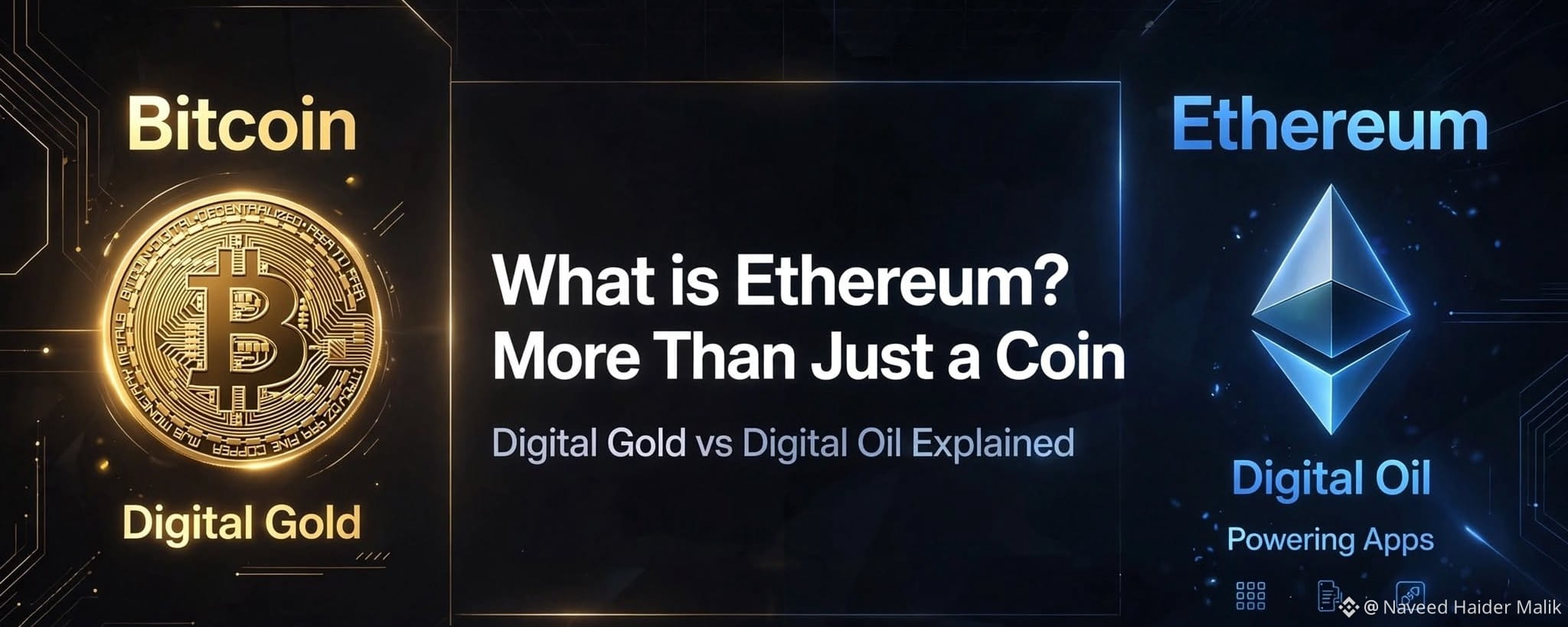
Was ist Ethereum? Mehr als nur eine Münze. Ethereum ist nicht nur eine Münze.
Stell dir Ethereum als eine Plattform vor, ähnlich wie Android oder iOS. Genauso wie du Apps auf dein Handy installierst, entwickeln Entwickler Apps auf Ethereum. Wir nennen sie DApps (Dezentrale Apps).
ETH ist der Treibstoff, der diese Apps am Laufen hält. Ohne ETH läuft keine App.
Warum nutzen Entwickler Ethereum? Smart Contracts.
BTC ist wie ein Taschenrechner – es macht eine Sache sehr gut (Geld senden).
ETH ist wie ein Smartphone – darauf kannst du alles bauen.
Entwickler nutzen ETH, um DeFi zu bauen (Kreditvergabe ohne Bank), NFTs, Games und tausende anderer Apps.
Was ist Ethereum? Mehr als nur eine Münze.
Ethereum ist nicht nur eine Münze.
Stell dir Ethereum als eine Plattform vor, ähnlich wie Android oder iOS. Genauso wie du Apps auf dein Handy installierst, entwickeln Entwickler Apps auf Ethereum. Wir nennen sie DApps (Dezentrale Apps).
ETH ist der Treibstoff, der diese Apps am Laufen hält. Ohne ETH läuft keine App.
Warum nutzen Entwickler Ethereum? Smart Contracts.
BTC ist wie ein Taschenrechner – es macht eine Sache sehr gut (Geld senden).
ETH ist wie ein Smartphone – darauf kannst du alles bauen.
Entwickler nutzen ETH, um DeFi zu bauen (Kreditvergabe ohne Bank), NFTs, Games und tausende anderer Apps.
Stell dir Ethereum als eine Plattform vor, ähnlich wie Android oder iOS. Genauso wie du Apps auf dein Handy installierst, entwickeln Entwickler Apps auf Ethereum. Wir nennen sie DApps (Dezentrale Apps).
ETH ist der Treibstoff, der diese Apps am Laufen hält. Ohne ETH läuft keine App.
Warum nutzen Entwickler Ethereum? Smart Contracts.
BTC ist wie ein Taschenrechner – es macht eine Sache sehr gut (Geld senden).
ETH ist wie ein Smartphone – darauf kannst du alles bauen.
Entwickler nutzen ETH, um DeFi zu bauen (Kreditvergabe ohne Bank), NFTs, Games und tausende anderer Apps.
135
Wenn keine Bank Bitcoin besitzt, warum funktioniert es dann immer noch nach 15 Jahren? $BTC.
{spot}(BTCUSDT)
In meinem ersten Beitrag habe ich eine einfache Frage gestellt.
Wenn keine Bank und keine Regierung $BTC besitzt und kontrolliert, warum funktioniert es dann immer noch?
Ich habe gesucht und die Antwort gefunden. Sie ist eigentlich einfach.
Bitcoin funktioniert, weil eine Bank durch 3 Dinge ersetzt wird:
1. Ein gemeinsames Notizbuch namens Blockchain
Stell dir ein Google Sheet vor, das auf Tausenden von Computern weltweit kopiert ist.
Wenn du $BTC sendest, schreiben alle Computer es zur gleichen Zeit auf. Niemand kann es löschen, weil jeder eine Kopie hat.
2. Tausende Computer prüfen es, nicht ein Manager. In einer Bank prüft ein einzelner Manager. Bei Bitcoin prüfen Tausende von Computern deine Transaktion. Wenn ein Computer lügt, lehnen die anderen 9999 sie ab.
3. Regeln stehen im Code, nicht werden von einer Person festgelegt
Die Regeln von Bitcoin sind in Software geschrieben - es wird jemals nur 21 Millionen $BTC geben, es können keine gefälschten Coins erstellt werden.
Keine einzelne Person kann diese Regeln ändern. Mehr als 50 % aller Computer auf der Welt müssen zustimmen, um sie zu ändern. Das ist fast unmöglich.
Also besitzt niemand Bitcoin, aber alle folgen denselben Regeln. Deshalb funktioniert es seit 2009 immer noch.
Wie das Internet niemand besitzt das Internet, aber es funktioniert trotzdem.
Aber denk daran weil es keine Bank gibt, erhältst du keine Rückerstattung, wenn du dein Passwort verlierst oder an die falsche Adresse sendest. Das ist das echte Risiko.
Dies dient nur zu Bildungszwecken, keine Finanzberatung.
Denkst du auch, dass dies der Grund ist, warum $BTC vertraut wird? Was hältst du von $ETH und $BNB - sind sie auch so?
⚠️ RISIKOWARNUNG ⚠️
Krypto ist volatil. Preise können steigen oder fallen.
Dies dient nur zu Bildungszwecken, keine Finanzberatung.
Mache deine eigene Recherche. Investiere nur, was du dir leisten kannst zu verlieren.
#CryptoForBeginners #ScamAwareness
Wenn keine Bank Bitcoin besitzt, warum funktioniert es dann immer noch nach 15 Jahren? $BTC.
In meinem ersten Beitrag habe ich eine einfache Frage gestellt.
Wenn keine Bank und keine Regierung $BTC besitzt und kontrolliert, warum funktioniert es dann immer noch?
Ich habe gesucht und die Antwort gefunden. Sie ist eigentlich einfach.
Bitcoin funktioniert, weil eine Bank durch 3 Dinge ersetzt wird:
1. Ein gemeinsames Notizbuch namens Blockchain
Stell dir ein Google Sheet vor, das auf Tausenden von Computern weltweit kopiert ist.
Wenn du $BTC sendest, schreiben alle Computer es zur gleichen Zeit auf. Niemand kann es löschen, weil jeder eine Kopie hat.
2. Tausende Computer prüfen es, nicht ein Manager. In einer Bank prüft ein einzelner Manager. Bei Bitcoin prüfen Tausende von Computern deine Transaktion. Wenn ein Computer lügt, lehnen die anderen 9999 sie ab.
3. Regeln stehen im Code, nicht werden von einer Person festgelegt
Die Regeln von Bitcoin sind in Software geschrieben - es wird jemals nur 21 Millionen $BTC geben, es können keine gefälschten Coins erstellt werden.
Keine einzelne Person kann diese Regeln ändern. Mehr als 50 % aller Computer auf der Welt müssen zustimmen, um sie zu ändern. Das ist fast unmöglich.
Also besitzt niemand Bitcoin, aber alle folgen denselben Regeln. Deshalb funktioniert es seit 2009 immer noch.
Wie das Internet niemand besitzt das Internet, aber es funktioniert trotzdem.
Aber denk daran weil es keine Bank gibt, erhältst du keine Rückerstattung, wenn du dein Passwort verlierst oder an die falsche Adresse sendest. Das ist das echte Risiko.
Dies dient nur zu Bildungszwecken, keine Finanzberatung.
Denkst du auch, dass dies der Grund ist, warum $BTC vertraut wird? Was hältst du von $ETH und $BNB - sind sie auch so?
⚠️ RISIKOWARNUNG ⚠️
Krypto ist volatil. Preise können steigen oder fallen.
Dies dient nur zu Bildungszwecken, keine Finanzberatung.
Mache deine eigene Recherche. Investiere nur, was du dir leisten kannst zu verlieren.
#CryptoForBeginners #ScamAwareness
In meinem ersten Beitrag habe ich eine einfache Frage gestellt.
Wenn keine Bank und keine Regierung $BTC besitzt und kontrolliert, warum funktioniert es dann immer noch?
Ich habe gesucht und die Antwort gefunden. Sie ist eigentlich einfach.
Bitcoin funktioniert, weil eine Bank durch 3 Dinge ersetzt wird:
1. Ein gemeinsames Notizbuch namens Blockchain
Stell dir ein Google Sheet vor, das auf Tausenden von Computern weltweit kopiert ist.
Wenn du $BTC sendest, schreiben alle Computer es zur gleichen Zeit auf. Niemand kann es löschen, weil jeder eine Kopie hat.
2. Tausende Computer prüfen es, nicht ein Manager. In einer Bank prüft ein einzelner Manager. Bei Bitcoin prüfen Tausende von Computern deine Transaktion. Wenn ein Computer lügt, lehnen die anderen 9999 sie ab.
3. Regeln stehen im Code, nicht werden von einer Person festgelegt
Die Regeln von Bitcoin sind in Software geschrieben - es wird jemals nur 21 Millionen $BTC geben, es können keine gefälschten Coins erstellt werden.
Keine einzelne Person kann diese Regeln ändern. Mehr als 50 % aller Computer auf der Welt müssen zustimmen, um sie zu ändern. Das ist fast unmöglich.
Also besitzt niemand Bitcoin, aber alle folgen denselben Regeln. Deshalb funktioniert es seit 2009 immer noch.
Wie das Internet niemand besitzt das Internet, aber es funktioniert trotzdem.
Aber denk daran weil es keine Bank gibt, erhältst du keine Rückerstattung, wenn du dein Passwort verlierst oder an die falsche Adresse sendest. Das ist das echte Risiko.
Dies dient nur zu Bildungszwecken, keine Finanzberatung.
Denkst du auch, dass dies der Grund ist, warum $BTC vertraut wird? Was hältst du von $ETH und $BNB - sind sie auch so?
⚠️ RISIKOWARNUNG ⚠️
Krypto ist volatil. Preise können steigen oder fallen.
Dies dient nur zu Bildungszwecken, keine Finanzberatung.
Mache deine eigene Recherche. Investiere nur, was du dir leisten kannst zu verlieren.
#CryptoForBeginners #ScamAwareness
73
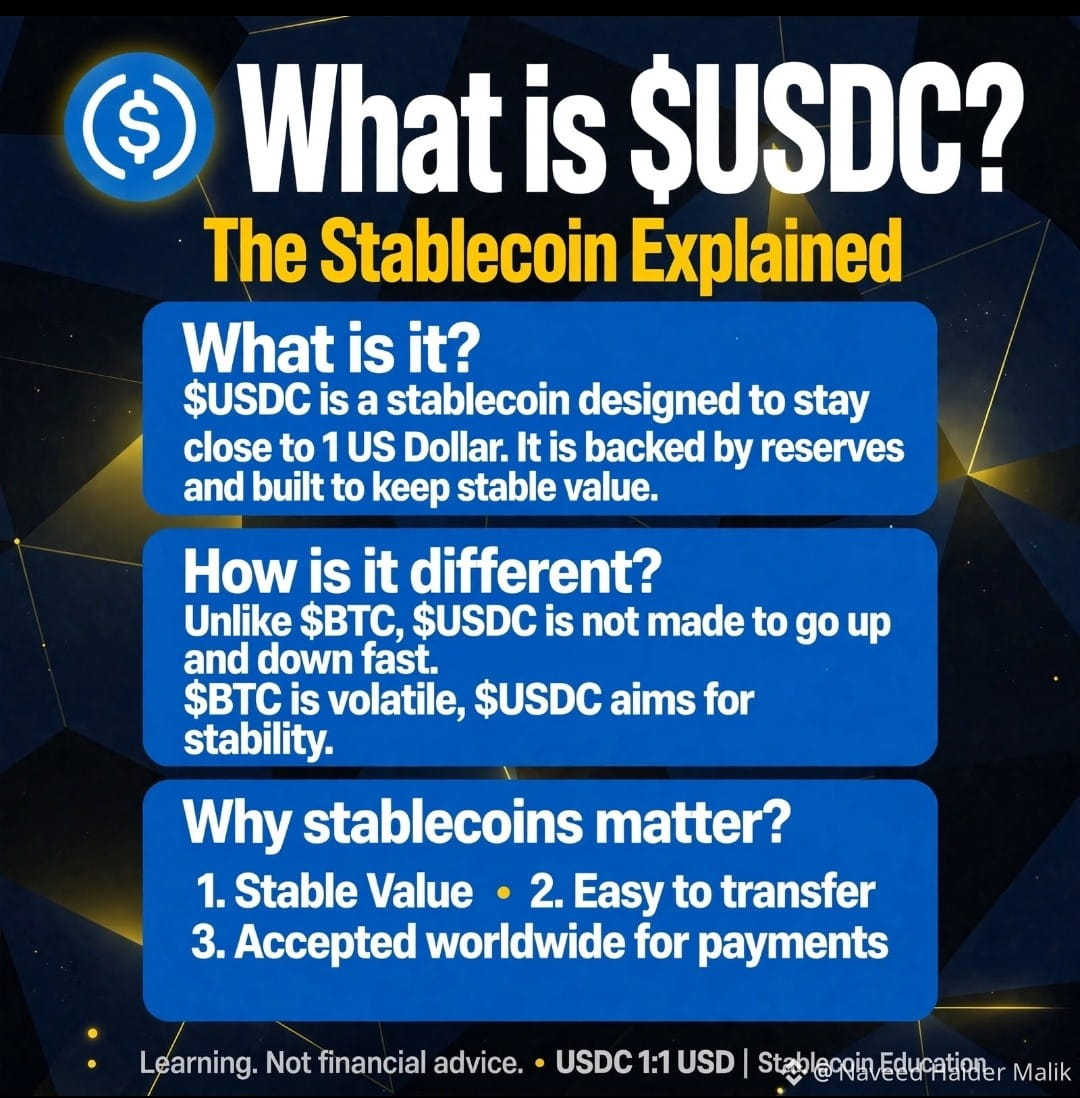
$USDC ist ein Stablecoin.
Sein Preis ist darauf ausgelegt, nahe bei 1 US-Dollar zu bleiben. Anders als $BTC ist er nicht dafür gemacht, schnell auf und ab zu gehen.
Warum verwendet Binance ihn für Zahlungen?
1. Stabiles Wertniveau
2. Einfach in PKR über P2P umzuwandeln
3. Weltweit akzeptiert
Du verdienst $USDC, wenn jemand auf deinen $USDC- oder $BTC-Cashtag klickt und innerhalb von 7 Tagen handelt. Die Auszahlung erfolgt wöchentlich von Montag bis Sonntag und wird bis Donnerstag an dein Funding Wallet ausgezahlt. Du benötigst mindestens 0,1 USDC.
Ich lerne über Stablecoins. Keine Finanzberatung.
#LearnFromMistakes #Stablecoins
$USDC ist ein Stablecoin.
Sein Preis ist darauf ausgelegt, nahe bei 1 US-Dollar zu bleiben. Anders als $BTC ist er nicht dafür gemacht, schnell auf und ab zu gehen.
Warum verwendet Binance ihn für Zahlungen?
1. Stabiles Wertniveau
2. Einfach in PKR über P2P umzuwandeln
3. Weltweit akzeptiert
Du verdienst $USDC, wenn jemand auf deinen $USDC- oder $BTC-Cashtag klickt und innerhalb von 7 Tagen handelt. Die Auszahlung erfolgt wöchentlich von Montag bis Sonntag und wird bis Donnerstag an dein Funding Wallet ausgezahlt. Du benötigst mindestens 0,1 USDC.
Ich lerne über Stablecoins. Keine Finanzberatung.
#LearnFromMistakes #Stablecoins
Sein Preis ist darauf ausgelegt, nahe bei 1 US-Dollar zu bleiben. Anders als $BTC ist er nicht dafür gemacht, schnell auf und ab zu gehen.
Warum verwendet Binance ihn für Zahlungen?
1. Stabiles Wertniveau
2. Einfach in PKR über P2P umzuwandeln
3. Weltweit akzeptiert
Du verdienst $USDC, wenn jemand auf deinen $USDC- oder $BTC-Cashtag klickt und innerhalb von 7 Tagen handelt. Die Auszahlung erfolgt wöchentlich von Montag bis Sonntag und wird bis Donnerstag an dein Funding Wallet ausgezahlt. Du benötigst mindestens 0,1 USDC.
Ich lerne über Stablecoins. Keine Finanzberatung.
#LearnFromMistakes #Stablecoins
102
Was ist Bitcoin ($BTC) in einfachen Worten? Für absolute Anfänger.
Das weltweit erste digitale Geld.
Keine Bank oder Regierung kontrolliert es.
Aber die Frage ist: Wenn es niemand besitzt und kontrolliert, warum funktioniert es dann noch?
3 einfache Fakten:
1. Es wird jemals nur 21 Millionen $BTC geben.
2. Grenzenlos! Du kannst es an jeden auf der Welt senden.
3. Dezentralisiert: Es läuft auf Tausenden von Computern, nicht auf einem Unternehmen.
Dies dient nur der Bildung für Anfänger. Keine Finanzberatung.
Als Nächstes geht es um $ETH und $BNB
#CryptoForBeginners
Was ist Bitcoin ($BTC) in einfachen Worten? Für absolute Anfänger.
Das weltweit erste digitale Geld.
Keine Bank oder Regierung kontrolliert es.
Aber die Frage ist: Wenn es niemand besitzt und kontrolliert, warum funktioniert es dann noch?
3 einfache Fakten:
1. Es wird jemals nur 21 Millionen $BTC geben.
2. Grenzenlos! Du kannst es an jeden auf der Welt senden.
3. Dezentralisiert: Es läuft auf Tausenden von Computern, nicht auf einem Unternehmen.
Dies dient nur der Bildung für Anfänger. Keine Finanzberatung.
Als Nächstes geht es um $ETH und $BNB
#CryptoForBeginners
Das weltweit erste digitale Geld.
Keine Bank oder Regierung kontrolliert es.
Aber die Frage ist: Wenn es niemand besitzt und kontrolliert, warum funktioniert es dann noch?
3 einfache Fakten:
1. Es wird jemals nur 21 Millionen $BTC geben.
2. Grenzenlos! Du kannst es an jeden auf der Welt senden.
3. Dezentralisiert: Es läuft auf Tausenden von Computern, nicht auf einem Unternehmen.
Dies dient nur der Bildung für Anfänger. Keine Finanzberatung.
Als Nächstes geht es um $ETH und $BNB
#CryptoForBeginners
124
Ich bin neu bei Krypto.
Ich habe einmal versucht, BTC zu kaufen, aber bin betrogen worden 😔
Seitdem habe ich keinen Handel mehr gemacht. Ich bin zu verängstigt.
Ich bin gerade bei Binance beigetreten, um es richtig zu lernen und „Write to Earn“ auszuprobieren.
Was ist die wichtigste Sicherheitsregel, die dich davor bewahrt hat, betrogen zu werden?
Schreib deine Tipps unten in die Kommentare, damit Anfänger wie ich nicht denselben Fehler machen 🙏
#CryptoPK #BinanceSquareFamily #ScamAwareness #writetoearn #Pakistan
Ich bin neu bei Krypto.
Ich habe einmal versucht, BTC zu kaufen, aber bin betrogen worden 😔
Seitdem habe ich keinen Handel mehr gemacht. Ich bin zu verängstigt.
Ich bin gerade bei Binance beigetreten, um es richtig zu lernen und „Write to Earn“ auszuprobieren.
Was ist die wichtigste Sicherheitsregel, die dich davor bewahrt hat, betrogen zu werden?
Schreib deine Tipps unten in die Kommentare, damit Anfänger wie ich nicht denselben Fehler machen 🙏
#CryptoPK #BinanceSquareFamily #ScamAwareness #writetoearn #Pakistan
Ich habe einmal versucht, BTC zu kaufen, aber bin betrogen worden 😔
Seitdem habe ich keinen Handel mehr gemacht. Ich bin zu verängstigt.
Ich bin gerade bei Binance beigetreten, um es richtig zu lernen und „Write to Earn“ auszuprobieren.
Was ist die wichtigste Sicherheitsregel, die dich davor bewahrt hat, betrogen zu werden?
Schreib deine Tipps unten in die Kommentare, damit Anfänger wie ich nicht denselben Fehler machen 🙏
#CryptoPK #BinanceSquareFamily #ScamAwareness #writetoearn #Pakistan
1
1
412
Anmelden und weiter Inhalte entdecken
Krypto-Nutzer weltweit auf Binance Square kennenlernen
⚡️ Bleib in Sachen Krypto stets am Puls.
💬 Die weltgrößte Kryptobörse vertraut darauf.
👍 Erhalte verlässliche Einblicke von verifizierten Creators.
E-Mail-Adresse/Telefonnummer
Trendthemen
FOMCWatch
8.9M Aufrufe
26,717 Kommentare
TradFi News | Warsh Muss Erklären, Warum Die Fed Diese Woche Stillhält, Während Eine Zinserhöhung Im Dezember Im Spiel Bleibt
Binance News
·2 Likes
·387 Aufrufe
EthereumDropsBelow$2300
2,772 Aufrufe
92 Kommentare
BitcoinSlipsBelow$80KAgain
8,764 Aufrufe
59 Kommentare