
Marriam Insights
765 Beiträge

Marriam Insights
Melden
Nutzer blockieren
🧠 Macro & Crypto Market Analyst
📊 BTC • Gold • Oil • Smart Money Flow
🌍 Global Markets • Market Psychology
✅ Data-Driven Insights | No Hype. Just Facts.
244 Following
116 Follower
654 Like gegeben
Beiträge

Artikel
Crash an den globalen Aktienmärkten: Warum fällt Bitcoin zusammen mit den Aktien?🌍 Sieben aufeinanderfolgende Tage mit Verlusten an den Aktienmärkten, ein KI-getriebener Ausverkauf und wachsende Angst an den Märkten verunsichern Anleger weltweit. Droht Bitcoin ein weiteres großes Risiko, während die Wall Street zu kämpfen hat?
An den globalen Finanzmärkten tut sich etwas Interessantes, und Bitcoin-Anleger sollten aufmerksam sein.
Die Aktienmärkte stehen unter Druck, Technologieaktien erleiden deutliche Verluste, und die wachsenden Sorgen rund um KI-Investitionen beginnen, das Vertrauen der Anleger zu beeinträchtigen.
Doch hier ist die wichtigere Frage:
Crash an den globalen Aktienmärkten: Warum fällt Bitcoin zusammen mit den Aktien?
🌍 Sieben aufeinanderfolgende Tage mit Verlusten an den Aktienmärkten, ein KI-getriebener Ausverkauf und wachsende Angst an den Märkten verunsichern Anleger weltweit. Droht Bitcoin ein weiteres großes Risiko, während die Wall Street zu kämpfen hat?
An den globalen Finanzmärkten tut sich etwas Interessantes, und Bitcoin-Anleger sollten aufmerksam sein.
Die Aktienmärkte stehen unter Druck, Technologieaktien erleiden deutliche Verluste, und die wachsenden Sorgen rund um KI-Investitionen beginnen, das Vertrauen der Anleger zu beeinträchtigen.
Doch hier ist die wichtigere Frage:
1
2
211
Artikel
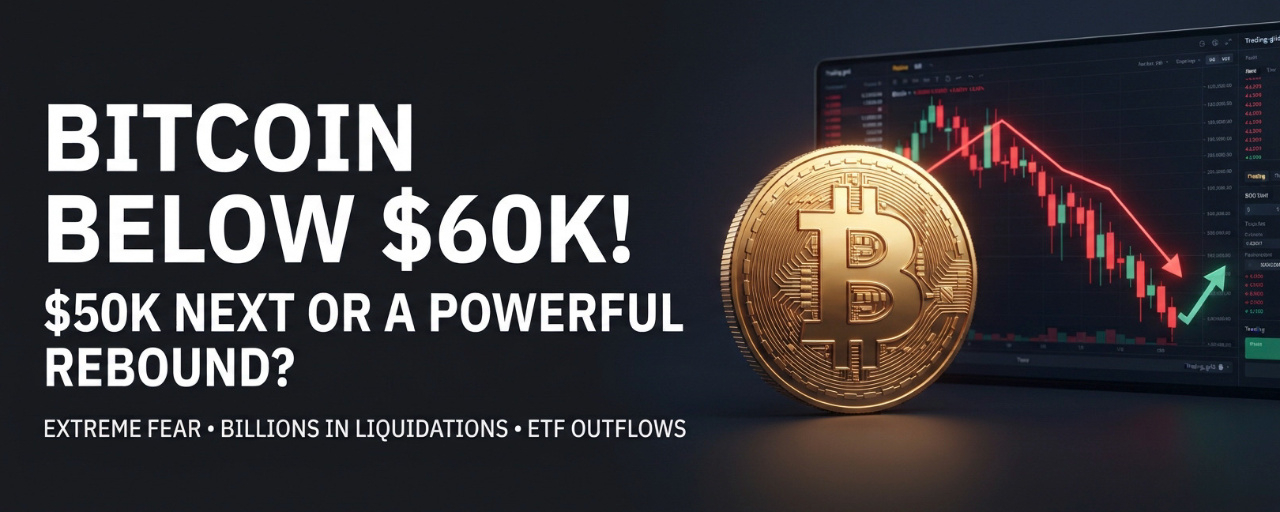
Bitcoin-Kursprognose: Kann sich BTC nach dem Fall unter 60.000 US-Dollar erholen?📉 Bitcoin fällt auf den niedrigsten Stand seit Juli, während extreme Angst, Liquidationen von über 2 Mrd. US-Dollar und massive ETF-Abflüsse den Markt erschüttern. Sind 55.000 US-Dollar der Tiefpunkt oder kommen als Nächstes 50.000?
Bitcoin erlebt einen schwierigen November, und am Markt stellt sich zunehmend eine wichtige Frage:
Nähern wir uns einem Tiefpunkt oder stehen uns weitere Verluste bevor?
Nach sieben wöchentlichen Verlusten in Folge ist Bitcoin unter die psychologisch wichtige Marke von 60.000 US-Dollar gefallen. Das ist eine besorgniserregende Entwicklung, insbesondere für Anleger, die eine stärkere Erholung erwartet hatten.
Bitcoin-Kursprognose: Kann sich BTC nach dem Fall unter 60.000 US-Dollar erholen?
📉 Bitcoin fällt auf den niedrigsten Stand seit Juli, während extreme Angst, Liquidationen von über 2 Mrd. US-Dollar und massive ETF-Abflüsse den Markt erschüttern. Sind 55.000 US-Dollar der Tiefpunkt oder kommen als Nächstes 50.000?
Bitcoin erlebt einen schwierigen November, und am Markt stellt sich zunehmend eine wichtige Frage:
Nähern wir uns einem Tiefpunkt oder stehen uns weitere Verluste bevor?
Nach sieben wöchentlichen Verlusten in Folge ist Bitcoin unter die psychologisch wichtige Marke von 60.000 US-Dollar gefallen. Das ist eine besorgniserregende Entwicklung, insbesondere für Anleger, die eine stärkere Erholung erwartet hatten.
1
85
Artikel
Übersetzung ansehen
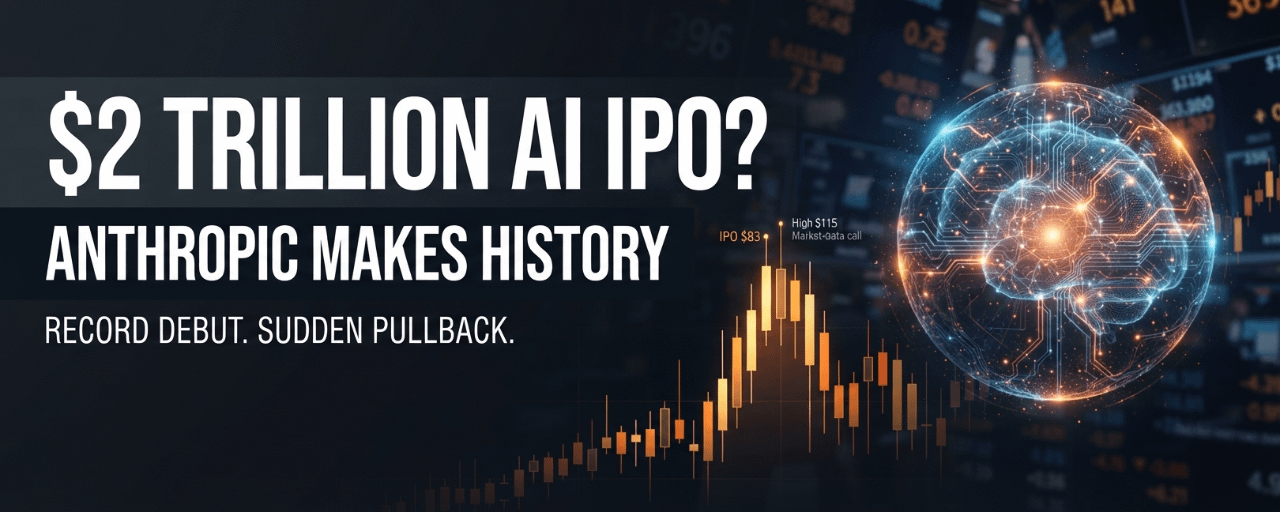
Anthropic’s $2 Trillion IPO Debut: Why Did the AI Stock Rally Suddenly Lose Steam?The Claude developer raised a record $81.3 billion, briefly reached a $2 trillion market valuation, and then surrendered much of its opening gains. Is Wall Street still confident in the AI boom—or is the market becoming more selective?
🚀 A historic IPO. A trillion-dollar valuation. And a reality check within hours.
Anthropic has just delivered one of the biggest stock-market debuts in history. The company behind Claude entered the Nasdaq with enormous investor demand, but its first trading session also revealed something important: even the most exciting AI companies are not immune to market pressure.
The question is no longer simply how big AI can become.
It is whether the money being poured into AI can eventually generate returns that justify these extraordinary valuations.
1️⃣ Anthropic Makes IPO History
Anthropic priced its shares at $83, above its original expected range of $70–$78.
The offering involved approximately 980 million shares and raised around $81.3 billion, making it the largest IPO by funds raised on record.
At the IPO price, the company was valued at approximately $1.5 trillion.
But the real excitement began when trading opened.
Shares started at $111.50, roughly 34% above the IPO price. During the session, the stock briefly reached $115, pushing its implied market value to approximately $2.01 trillion.
That is an extraordinary debut for a company founded only in 2021.
2️⃣ Why Did the Rally Lose Momentum?
Despite the spectacular opening, investors began taking profits.
Anthropic shares closed their first trading day at $97.17.
That was still around 17% above the IPO price, but nearly 13% below the opening trade.
The difference matters.
The market was clearly willing to pay a premium for access to Anthropic. However, the early trading also showed that investors were not prepared to keep buying at any price.
And Anthropic was entering the public market during a difficult period for technology stocks.
Investors have become increasingly sensitive to high valuations, enormous AI infrastructure spending and uncertainty about how quickly companies can turn AI demand into sustainable profits.
3️⃣ The Bigger Question: Can AI Justify Its Price Tag?
Anthropic's success reflects the extraordinary commercial interest in artificial intelligence.
Businesses are adopting AI tools, companies are investing in computing capacity, and demand for advanced models continues to attract enormous amounts of capital.
But building frontier AI is expensive.
Companies must invest heavily in data centres, advanced chips, electricity, computing infrastructure and research.
Strong revenue growth is encouraging, but it does not automatically guarantee strong profits.
Investors will increasingly want answers to three questions:
Can Anthropic maintain its rapid customer and revenue growth?Can it manage the enormous cost of developing and operating advanced AI?Can it defend its position against competitors such as OpenAI and Google?
The IPO has put Anthropic under the public-market spotlight. From now on, investors will be able to judge its performance quarter by quarter.
4️⃣ Why This Matters Beyond Anthropic
This IPO is bigger than one company's stock-market debut.
It provides an important test of investor confidence in the entire AI industry.
If Anthropic can maintain its valuation and demonstrate a credible path towards profitability, it could strengthen confidence in other AI companies preparing to enter public markets.
But if the stock continues to struggle, investors may start questioning the valuations attached to the wider AI sector.
There is also a potential connection with crypto markets.
Bitcoin and other digital assets are influenced by broader investor risk appetite. A major sell-off in technology stocks can contribute to a more cautious investment environment.
However, Anthropic's share-price movement alone does not determine Bitcoin's direction. Crypto has its own liquidity, monetary-policy and market-specific drivers.
5️⃣ What Happens Next? Bullish vs Bearish Scenarios
🟢 Bullish Scenario
If Anthropic maintains strong demand, expands its enterprise customer base and demonstrates improving financial efficiency, investors may regain confidence.
A sustained recovery in its share price could also support optimism towards the broader AI investment theme.
🔴 Bearish Scenario
If infrastructure costs continue rising faster than revenue, or investors become less willing to pay premium valuations, the stock could face further pressure.
Growing competition and concerns about the profitability of AI products could make the market more selective.
A prolonged technology-sector sell-off could also weigh on wider risk assets, including cryptocurrencies.
6️⃣ What Investors Should Watch
The next phase will be about financial performance rather than IPO excitement.
Keep an eye on:
Anthropic's quarterly revenue and operating losses.Spending on chips, data centres and computing capacity.Enterprise customer growth and customer retention.Competition from OpenAI, Google and other AI developers.Whether the wider technology market stabilizes.
These developments will help determine whether Anthropic's enormous valuation has a sustainable foundation.
🎯 Final Takeaway
Anthropic's IPO has demonstrated that investor appetite for artificial intelligence remains enormous.
But its first trading session also delivered a reminder: a record-breaking IPO does not automatically mean a stock is fairly valued.
The company has won the market's attention. Now it must earn investors' confidence through execution, financial performance and sustainable growth.
The next chapter of the AI boom may not be decided by who raises the most money.
It may be decided by who can turn that money into lasting profits.
💬 Your Turn:
Would you invest in Anthropic at a trillion-dollar valuation, or do you think the AI market is getting ahead of itself?
Is this the beginning of a new era for AI stocks—or a warning sign of an AI bubble?
Disclaimer: This article is for informational and educational purposes only. It is not financial or investment advice. Always conduct your own research before making investment decisions.
#BinanceSquare #ArtificialIntelligence #Anthropic #Aİ #StockMarket
{spot}(AIUSDT)
Anthropic’s $2 Trillion IPO Debut: Why Did the AI Stock Rally Suddenly Lose Steam?
The Claude developer raised a record $81.3 billion, briefly reached a $2 trillion market valuation, and then surrendered much of its opening gains. Is Wall Street still confident in the AI boom—or is the market becoming more selective?
🚀 A historic IPO. A trillion-dollar valuation. And a reality check within hours.
Anthropic has just delivered one of the biggest stock-market debuts in history. The company behind Claude entered the Nasdaq with enormous investor demand, but its first trading session also revealed something important: even the most exciting AI companies are not immune to market pressure.
The question is no longer simply how big AI can become.
It is whether the money being poured into AI can eventually generate returns that justify these extraordinary valuations.
1️⃣ Anthropic Makes IPO History
Anthropic priced its shares at $83, above its original expected range of $70–$78.
The offering involved approximately 980 million shares and raised around $81.3 billion, making it the largest IPO by funds raised on record.
At the IPO price, the company was valued at approximately $1.5 trillion.
But the real excitement began when trading opened.
Shares started at $111.50, roughly 34% above the IPO price. During the session, the stock briefly reached $115, pushing its implied market value to approximately $2.01 trillion.
That is an extraordinary debut for a company founded only in 2021.
2️⃣ Why Did the Rally Lose Momentum?
Despite the spectacular opening, investors began taking profits.
Anthropic shares closed their first trading day at $97.17.
That was still around 17% above the IPO price, but nearly 13% below the opening trade.
The difference matters.
The market was clearly willing to pay a premium for access to Anthropic. However, the early trading also showed that investors were not prepared to keep buying at any price.
And Anthropic was entering the public market during a difficult period for technology stocks.
Investors have become increasingly sensitive to high valuations, enormous AI infrastructure spending and uncertainty about how quickly companies can turn AI demand into sustainable profits.
3️⃣ The Bigger Question: Can AI Justify Its Price Tag?
Anthropic's success reflects the extraordinary commercial interest in artificial intelligence.
Businesses are adopting AI tools, companies are investing in computing capacity, and demand for advanced models continues to attract enormous amounts of capital.
But building frontier AI is expensive.
Companies must invest heavily in data centres, advanced chips, electricity, computing infrastructure and research.
Strong revenue growth is encouraging, but it does not automatically guarantee strong profits.
Investors will increasingly want answers to three questions:
Can Anthropic maintain its rapid customer and revenue growth?Can it manage the enormous cost of developing and operating advanced AI?Can it defend its position against competitors such as OpenAI and Google?
The IPO has put Anthropic under the public-market spotlight. From now on, investors will be able to judge its performance quarter by quarter.
4️⃣ Why This Matters Beyond Anthropic
This IPO is bigger than one company's stock-market debut.
It provides an important test of investor confidence in the entire AI industry.
If Anthropic can maintain its valuation and demonstrate a credible path towards profitability, it could strengthen confidence in other AI companies preparing to enter public markets.
But if the stock continues to struggle, investors may start questioning the valuations attached to the wider AI sector.
There is also a potential connection with crypto markets.
Bitcoin and other digital assets are influenced by broader investor risk appetite. A major sell-off in technology stocks can contribute to a more cautious investment environment.
However, Anthropic's share-price movement alone does not determine Bitcoin's direction. Crypto has its own liquidity, monetary-policy and market-specific drivers.
5️⃣ What Happens Next? Bullish vs Bearish Scenarios
🟢 Bullish Scenario
If Anthropic maintains strong demand, expands its enterprise customer base and demonstrates improving financial efficiency, investors may regain confidence.
A sustained recovery in its share price could also support optimism towards the broader AI investment theme.
🔴 Bearish Scenario
If infrastructure costs continue rising faster than revenue, or investors become less willing to pay premium valuations, the stock could face further pressure.
Growing competition and concerns about the profitability of AI products could make the market more selective.
A prolonged technology-sector sell-off could also weigh on wider risk assets, including cryptocurrencies.
6️⃣ What Investors Should Watch
The next phase will be about financial performance rather than IPO excitement.
Keep an eye on:
Anthropic's quarterly revenue and operating losses.Spending on chips, data centres and computing capacity.Enterprise customer growth and customer retention.Competition from OpenAI, Google and other AI developers.Whether the wider technology market stabilizes.
These developments will help determine whether Anthropic's enormous valuation has a sustainable foundation.
🎯 Final Takeaway
Anthropic's IPO has demonstrated that investor appetite for artificial intelligence remains enormous.
But its first trading session also delivered a reminder: a record-breaking IPO does not automatically mean a stock is fairly valued.
The company has won the market's attention. Now it must earn investors' confidence through execution, financial performance and sustainable growth.
The next chapter of the AI boom may not be decided by who raises the most money.
It may be decided by who can turn that money into lasting profits.
💬 Your Turn:
Would you invest in Anthropic at a trillion-dollar valuation, or do you think the AI market is getting ahead of itself?
Is this the beginning of a new era for AI stocks—or a warning sign of an AI bubble?
Disclaimer: This article is for informational and educational purposes only. It is not financial or investment advice. Always conduct your own research before making investment decisions.
#BinanceSquare #ArtificialIntelligence #Anthropic #Aİ #StockMarket
AI-2,32%
GOOGUS-2,70%
1
2
545

Artikel
Ledger findet manipulierte Wallets in Berlin: So bleibst du sicher🚨 Die Untersuchung erstreckt sich nun auf Berlin und Dubai. Hier erfährst du, was bestätigt ist und wie du deine Coins schützen kannst.
Eine Hardware-Wallet soll der sicherste Ort für deine Coins sein. 🤔 Eine manipulierte Wallet ist das Gegenteil – und deshalb ist diese Geschichte wichtig.
📊 Was ist passiert?
Am 18. November bestätigte Ledger, manipulierte Hardware-Wallets in Berlin gefunden zu haben, und untersucht zwei verdächtige Geräte in Dubai. Die Untersuchung begann im Oktober mit Geräten, die von Wiederverkäufern in Südostasien verkauft wurden. Ledger sagt nun, die neueren Fälle seien „derselbe Vorfall“, und eines der betroffenen Geräte war ein neueres Nano Gen5. Die Berliner Fälle beschrieb das Unternehmen lediglich als „einige manipulierte Geräte“ und nannte keine Zahl.
Ledger findet manipulierte Wallets in Berlin: So bleibst du sicher
🚨 Die Untersuchung erstreckt sich nun auf Berlin und Dubai. Hier erfährst du, was bestätigt ist und wie du deine Coins schützen kannst.
Eine Hardware-Wallet soll der sicherste Ort für deine Coins sein. 🤔 Eine manipulierte Wallet ist das Gegenteil – und deshalb ist diese Geschichte wichtig.
📊 Was ist passiert?
Am 18. November bestätigte Ledger, manipulierte Hardware-Wallets in Berlin gefunden zu haben, und untersucht zwei verdächtige Geräte in Dubai. Die Untersuchung begann im Oktober mit Geräten, die von Wiederverkäufern in Südostasien verkauft wurden. Ledger sagt nun, die neueren Fälle seien „derselbe Vorfall“, und eines der betroffenen Geräte war ein neueres Nano Gen5. Die Berliner Fälle beschrieb das Unternehmen lediglich als „einige manipulierte Geräte“ und nannte keine Zahl.
1
3
259
Artikel
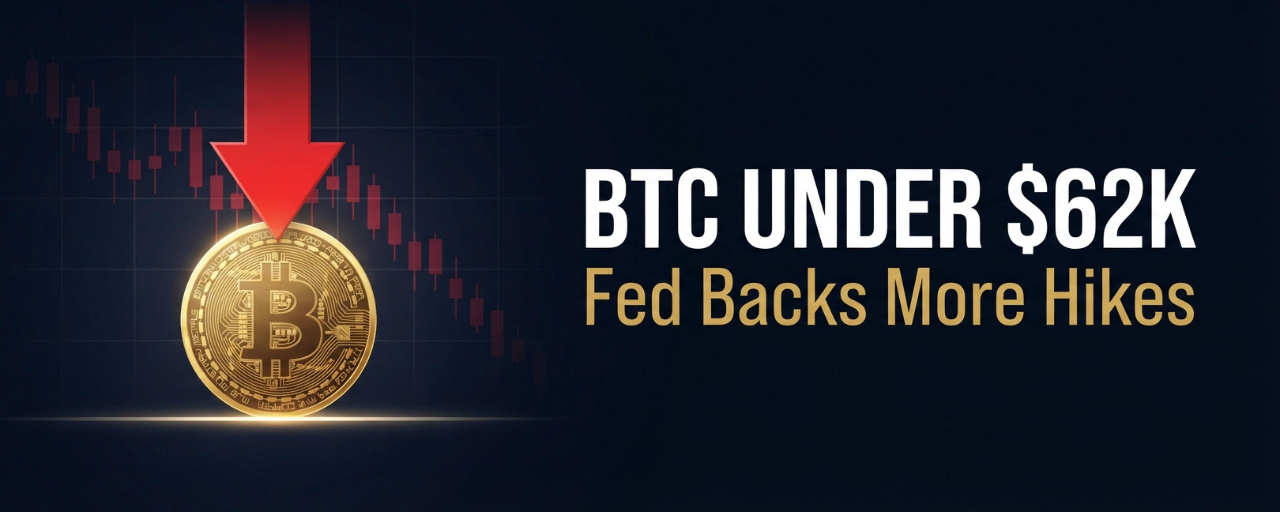
Bitcoin fällt unter 62.000 $, da Fed-Protokoll weitere Zinserhöhungen stützt📉 Fast alle Verantwortlichen sprachen sich für weitere Zinserhöhungen aus. Hier erfährst du, was das für BTC bedeutet und worauf du achten solltest.
Bitcoin steuert auf den siebten Wochenverlust in Folge zu, und die Fed hat gerade erklärt, warum. 🤔 Ich habe nachgelesen, was tatsächlich im Protokoll steht.
📊 Was ist passiert?
Das am Mittwoch veröffentlichte Protokoll der Fed-Sitzung vom 27. und 28. Oktober zeigte, dass fast alle teilnehmenden Verantwortlichen weitere Zinserhöhungen für angemessen hielten. Einige waren offen für eine Erhöhung um einen halben Prozentpunkt im Dezember. Nach der Veröffentlichung fiel Bitcoin um fast 3 % auf etwa 62.465 $, bevor er am Donnerstag auf etwa 61.600 $ sank – den niedrigsten Stand seit Anfang Juli.
Bitcoin fällt unter 62.000 $, da Fed-Protokoll weitere Zinserhöhungen stützt
📉 Fast alle Verantwortlichen sprachen sich für weitere Zinserhöhungen aus. Hier erfährst du, was das für BTC bedeutet und worauf du achten solltest.
Bitcoin steuert auf den siebten Wochenverlust in Folge zu, und die Fed hat gerade erklärt, warum. 🤔 Ich habe nachgelesen, was tatsächlich im Protokoll steht.
📊 Was ist passiert?
Das am Mittwoch veröffentlichte Protokoll der Fed-Sitzung vom 27. und 28. Oktober zeigte, dass fast alle teilnehmenden Verantwortlichen weitere Zinserhöhungen für angemessen hielten. Einige waren offen für eine Erhöhung um einen halben Prozentpunkt im Dezember. Nach der Veröffentlichung fiel Bitcoin um fast 3 % auf etwa 62.465 $, bevor er am Donnerstag auf etwa 61.600 $ sank – den niedrigsten Stand seit Anfang Juli.
1
2
224

Artikel
Übersetzung ansehen
Coinbase AI Stops $4.7 Million Crypto Scam: Can Artificial Intelligence Defeat Deepfake Fraud?Imagine watching what looks like an official Tesla livestream. Elon Musk appears on screen, a cryptocurrency giveaway is announced, and viewers are promised something that sounds almost too good to be true:
Send crypto now and receive double your money back.
Hundreds of people believed it.
But the person on screen wasn't actually Elon Musk. It was an AI-generated deepfake, and the giveaway was designed to steal cryptocurrency.
What happened next is particularly interesting: another AI system stepped in and helped stop millions of dollars from reaching the scammers.
Coinbase says its AI-powered security system blocked approximately $4.7 million in attempted transfers, preventing around 91% of the funds involved in the scam from leaving customers' accounts.
This isn't just another crypto fraud story. It raises a much bigger question:
Can artificial intelligence become one of the strongest weapons against the very scams that AI itself makes possible?
🎭 1. How the Fake Elon Musk Giveaway Worked
The scammers created a fake YouTube livestream resembling Tesla's official broadcast of its flying-car demonstration.
The video featured an AI-generated version of Elon Musk, along with cryptocurrency wallet addresses and QR codes displayed on screen.
The promise was familiar: send cryptocurrency to the displayed address and receive twice as much in return.
More than 500,000 people watched the livestream, according to Coinbase.
Within approximately two hours, hundreds of Coinbase customers attempted to transfer millions of dollars to the scammers.
The disturbing part?
These weren't necessarily people whose accounts had been hacked.
They were legitimate account holders who believed they were participating in a genuine giveaway and authorised the transactions themselves.
That makes this type of fraud particularly difficult to detect.
🤖 2. How Coinbase's AI Caught the Scam
Traditional fraud detection systems are often designed to identify suspicious logins, stolen credentials or transactions that customers didn't authorise.
But this situation was different.
The customers were logged in. They were using their own accounts. And they were willingly approving the payments.
Coinbase says its security system used machine-learning models to identify suspicious outgoing transfers, including patterns associated with:
Cryptocurrency giveaway scams.Impersonation of well-known individuals and brands.Newly created wallet addresses.Promises of unusually high or guaranteed returns.
Once a transaction was flagged, an AI-powered scam-prevention agent stepped in.
Rather than simply blocking a payment without explanation, it engaged the customer in a conversation, explained the warning signs and questioned the claims behind the giveaway.
According to Coinbase, the system recognised the underlying scam pattern even though it had never encountered this particular combination of a deepfake and a live product event.
The entire intervention reportedly operated without human involvement.
💰 3. The $4.7 Million Figure: What Actually Happened?
This is the number that makes the story stand out.
<text></text>
Coinbase reported that its AI-powered defences stopped approximately $4.7 million from leaving customers' accounts.
The company also said this represented around 91% of the attempted funds associated with the scam.
But there's an important distinction investors should understand.
The $4.7 million was money prevented from reaching scammers. It was not money recovered after a confirmed theft.
Coinbase has not publicly provided a complete breakdown of how much cryptocurrency ultimately reached the scammers or how much was lost outside its platform.
Still, the incident demonstrates something significant: AI-based security systems may be able to intervene even when customers themselves are being manipulated into approving fraudulent transactions.
⚠️ 4. The New Problem: AI Is Helping Both Sides
This is where the story becomes bigger than Coinbase.
Artificial intelligence is creating opportunities for the financial industry, but it is also making online fraud more convincing.
Scammers can now use AI tools to:
Create realistic deepfake videos of public figures.Clone voices and imitate familiar personalities.Produce convincing fake livestreams.Generate professional-looking websites and promotional material.Personalise messages designed to manipulate potential victims.
A convincing video is no longer proof that the person on screen is genuine.
And that creates a serious challenge for cryptocurrency investors, particularly because blockchain transactions are generally irreversible once confirmed.
The same technology that makes scams more sophisticated could also make automated fraud detection more powerful.
We are entering an increasingly important battle: AI versus AI.
📈 5. Could AI Become Crypto's Next Major Security Layer?
The Coinbase incident offers an interesting example of how AI could change cryptocurrency security.
Instead of relying entirely on customers to recognise suspicious activity, platforms can use automated systems to analyse transaction patterns and intervene before funds leave an account.
This could eventually help protect users against:
Deepfake investment promotions.Fake celebrity giveaways.Wallet-address impersonation.Social-engineering attacks.Suspicious transfers triggered by fraudulent instructions.
However, there are limitations.
AI systems can make mistakes. Legitimate transactions may be flagged, while determined scammers and manipulated customers may find ways around automated safeguards.
And protection on one exchange does not automatically protect funds held in self-custody wallets or transferred through other platforms.
The technology is promising, but it is not a guarantee of safety.
🔮 6. What Happens Next?
🟢 Bullish scenario for crypto security
More exchanges adopt AI-powered fraud detection.AI agents identify suspicious transactions before confirmation.Security systems become better at recognising new scam techniques.Greater protection improves confidence among everyday crypto users.
If this develops successfully, AI security could become an important competitive advantage for cryptocurrency platforms.
🔴 Bearish scenario
Scammers use increasingly realistic deepfakes and automated attacks.Fraudsters learn how to bypass AI-based detection.False positives frustrate legitimate customers.Investors become less confident as online impersonation becomes harder to recognise.
The biggest risk is that the technology used to protect investors may struggle to keep pace with the technology used to deceive them.
💡 Final Thoughts
The most interesting part of this story isn't simply that Coinbase stopped $4.7 million from reaching scammers.
It's that the fraud didn't require stolen passwords, compromised accounts or a traditional hacking attack.
People were convinced to send their own money.
That is a much harder problem to solve because technology must identify not just suspicious activity, but the possibility that a customer is being manipulated.
Coinbase's result is encouraging, but one incident doesn't prove that AI can eliminate crypto fraud.
What it does show is that the future of cryptocurrency security may depend heavily on how effectively platforms combine human awareness with intelligent automated protection.
AI has made financial scams more convincing. Could it also become the technology that finally makes them harder to execute?
👇 What do you think?
Will AI become crypto's strongest defense against fraud, or will scammers always find a way to stay one step ahead?
Disclaimer: This article is for informational and educational purposes only. It is not financial or investment advice. Always verify cryptocurrency promotions through official channels and never send crypto based on promises of doubled returns.
#BinanceSquare #Crypto #Aİ #Coinbase #Cybersecurity
{spot}(AIUSDT)
Coinbase AI Stops $4.7 Million Crypto Scam: Can Artificial Intelligence Defeat Deepfake Fraud?
Imagine watching what looks like an official Tesla livestream. Elon Musk appears on screen, a cryptocurrency giveaway is announced, and viewers are promised something that sounds almost too good to be true:
Send crypto now and receive double your money back.
Hundreds of people believed it.
But the person on screen wasn't actually Elon Musk. It was an AI-generated deepfake, and the giveaway was designed to steal cryptocurrency.
What happened next is particularly interesting: another AI system stepped in and helped stop millions of dollars from reaching the scammers.
Coinbase says its AI-powered security system blocked approximately $4.7 million in attempted transfers, preventing around 91% of the funds involved in the scam from leaving customers' accounts.
This isn't just another crypto fraud story. It raises a much bigger question:
Can artificial intelligence become one of the strongest weapons against the very scams that AI itself makes possible?
🎭 1. How the Fake Elon Musk Giveaway Worked
The scammers created a fake YouTube livestream resembling Tesla's official broadcast of its flying-car demonstration.
The video featured an AI-generated version of Elon Musk, along with cryptocurrency wallet addresses and QR codes displayed on screen.
The promise was familiar: send cryptocurrency to the displayed address and receive twice as much in return.
More than 500,000 people watched the livestream, according to Coinbase.
Within approximately two hours, hundreds of Coinbase customers attempted to transfer millions of dollars to the scammers.
The disturbing part?
These weren't necessarily people whose accounts had been hacked.
They were legitimate account holders who believed they were participating in a genuine giveaway and authorised the transactions themselves.
That makes this type of fraud particularly difficult to detect.
🤖 2. How Coinbase's AI Caught the Scam
Traditional fraud detection systems are often designed to identify suspicious logins, stolen credentials or transactions that customers didn't authorise.
But this situation was different.
The customers were logged in. They were using their own accounts. And they were willingly approving the payments.
Coinbase says its security system used machine-learning models to identify suspicious outgoing transfers, including patterns associated with:
Cryptocurrency giveaway scams.Impersonation of well-known individuals and brands.Newly created wallet addresses.Promises of unusually high or guaranteed returns.
Once a transaction was flagged, an AI-powered scam-prevention agent stepped in.
Rather than simply blocking a payment without explanation, it engaged the customer in a conversation, explained the warning signs and questioned the claims behind the giveaway.
According to Coinbase, the system recognised the underlying scam pattern even though it had never encountered this particular combination of a deepfake and a live product event.
The entire intervention reportedly operated without human involvement.
💰 3. The $4.7 Million Figure: What Actually Happened?
This is the number that makes the story stand out.
<text></text>
Coinbase reported that its AI-powered defences stopped approximately $4.7 million from leaving customers' accounts.
The company also said this represented around 91% of the attempted funds associated with the scam.
But there's an important distinction investors should understand.
The $4.7 million was money prevented from reaching scammers. It was not money recovered after a confirmed theft.
Coinbase has not publicly provided a complete breakdown of how much cryptocurrency ultimately reached the scammers or how much was lost outside its platform.
Still, the incident demonstrates something significant: AI-based security systems may be able to intervene even when customers themselves are being manipulated into approving fraudulent transactions.
⚠️ 4. The New Problem: AI Is Helping Both Sides
This is where the story becomes bigger than Coinbase.
Artificial intelligence is creating opportunities for the financial industry, but it is also making online fraud more convincing.
Scammers can now use AI tools to:
Create realistic deepfake videos of public figures.Clone voices and imitate familiar personalities.Produce convincing fake livestreams.Generate professional-looking websites and promotional material.Personalise messages designed to manipulate potential victims.
A convincing video is no longer proof that the person on screen is genuine.
And that creates a serious challenge for cryptocurrency investors, particularly because blockchain transactions are generally irreversible once confirmed.
The same technology that makes scams more sophisticated could also make automated fraud detection more powerful.
We are entering an increasingly important battle: AI versus AI.
📈 5. Could AI Become Crypto's Next Major Security Layer?
The Coinbase incident offers an interesting example of how AI could change cryptocurrency security.
Instead of relying entirely on customers to recognise suspicious activity, platforms can use automated systems to analyse transaction patterns and intervene before funds leave an account.
This could eventually help protect users against:
Deepfake investment promotions.Fake celebrity giveaways.Wallet-address impersonation.Social-engineering attacks.Suspicious transfers triggered by fraudulent instructions.
However, there are limitations.
AI systems can make mistakes. Legitimate transactions may be flagged, while determined scammers and manipulated customers may find ways around automated safeguards.
And protection on one exchange does not automatically protect funds held in self-custody wallets or transferred through other platforms.
The technology is promising, but it is not a guarantee of safety.
🔮 6. What Happens Next?
🟢 Bullish scenario for crypto security
More exchanges adopt AI-powered fraud detection.AI agents identify suspicious transactions before confirmation.Security systems become better at recognising new scam techniques.Greater protection improves confidence among everyday crypto users.
If this develops successfully, AI security could become an important competitive advantage for cryptocurrency platforms.
🔴 Bearish scenario
Scammers use increasingly realistic deepfakes and automated attacks.Fraudsters learn how to bypass AI-based detection.False positives frustrate legitimate customers.Investors become less confident as online impersonation becomes harder to recognise.
The biggest risk is that the technology used to protect investors may struggle to keep pace with the technology used to deceive them.
💡 Final Thoughts
The most interesting part of this story isn't simply that Coinbase stopped $4.7 million from reaching scammers.
It's that the fraud didn't require stolen passwords, compromised accounts or a traditional hacking attack.
People were convinced to send their own money.
That is a much harder problem to solve because technology must identify not just suspicious activity, but the possibility that a customer is being manipulated.
Coinbase's result is encouraging, but one incident doesn't prove that AI can eliminate crypto fraud.
What it does show is that the future of cryptocurrency security may depend heavily on how effectively platforms combine human awareness with intelligent automated protection.
AI has made financial scams more convincing. Could it also become the technology that finally makes them harder to execute?
👇 What do you think?
Will AI become crypto's strongest defense against fraud, or will scammers always find a way to stay one step ahead?
Disclaimer: This article is for informational and educational purposes only. It is not financial or investment advice. Always verify cryptocurrency promotions through official channels and never send crypto based on promises of doubled returns.
#BinanceSquare #Crypto #Aİ #Coinbase #Cybersecurity
2
1
386
Verifiziert
Artikel
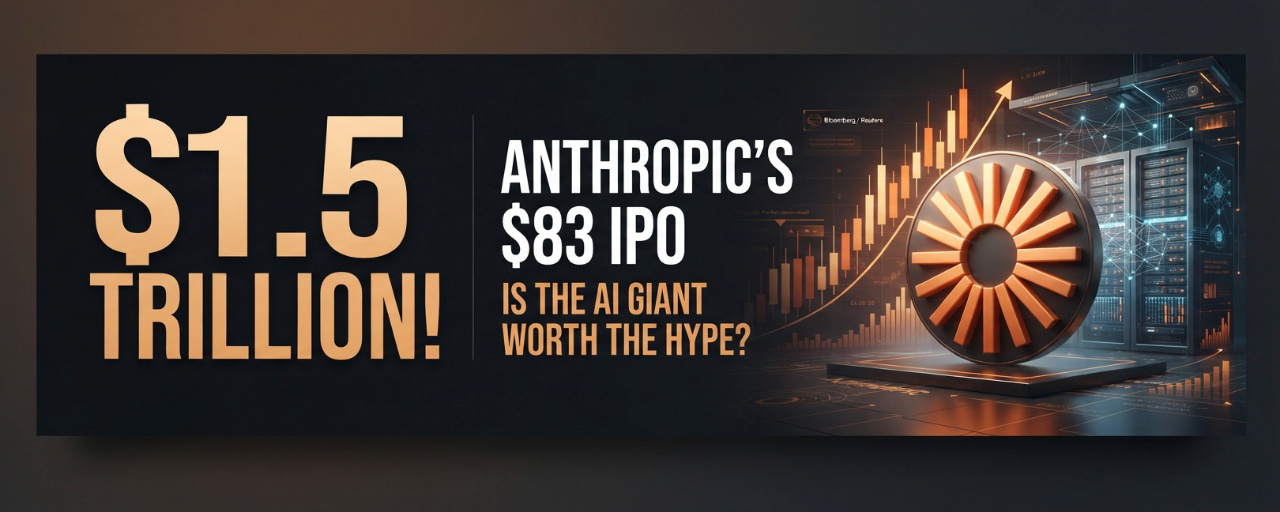
Anthropics 83-Dollar-Börsengang schreibt Geschichte: Ist der 1,5-Billionen-Dollar-KI-Riese den Hype wert?Das KI-Rennen ist in ein neues finanzielles Kapitel eingetreten.
Anthropic, das Unternehmen hinter Claude, hat den Ausgabepreis seiner Aktien auf 83 US-Dollar festgelegt – über der ursprünglichen IPO-Spanne von 70 bis 78 US-Dollar. Der Börsengang brachte rund 81,3 Milliarden US-Dollar ein und bewertete das Unternehmen auf vollständig verwässerter Basis mit etwa 1,5 Billionen US-Dollar.
Das ist ein außergewöhnlicher Börsengang für ein Unternehmen, das 2021 gegründet wurde.
Doch hier ist die Frage, die sich Anleger stellen sollten: Rechtfertigt Anthropics Geschäft eine Bewertung dieser Größenordnung, oder lässt sich der Markt vom KI-Boom mitreißen?
Anthropics 83-Dollar-Börsengang schreibt Geschichte: Ist der 1,5-Billionen-Dollar-KI-Riese den Hype wert?
Das KI-Rennen ist in ein neues finanzielles Kapitel eingetreten.
Anthropic, das Unternehmen hinter Claude, hat den Ausgabepreis seiner Aktien auf 83 US-Dollar festgelegt – über der ursprünglichen IPO-Spanne von 70 bis 78 US-Dollar. Der Börsengang brachte rund 81,3 Milliarden US-Dollar ein und bewertete das Unternehmen auf vollständig verwässerter Basis mit etwa 1,5 Billionen US-Dollar.
Das ist ein außergewöhnlicher Börsengang für ein Unternehmen, das 2021 gegründet wurde.
Doch hier ist die Frage, die sich Anleger stellen sollten: Rechtfertigt Anthropics Geschäft eine Bewertung dieser Größenordnung, oder lässt sich der Markt vom KI-Boom mitreißen?
1
2
759

Artikel
Südkorea könnte Bitcoin für 3.500 Unternehmen öffnen: Steht die institutionelle Adoption kurz vor dem Durchbruch?Südkorea bereitet neue Richtlinien für Krypto-Investitionen von Unternehmen vor, die rund 3.500 börsennotierte Unternehmen und Firmen mit professionellem Anlegerstatus näher an den Bitcoin-Markt heranführen könnten. Doch wird dadurch eine neue Welle institutioneller Nachfrage ausgelöst?
Bitcoin könnte sich auf eine neue Art von Anleger vorbereiten – und diesmal sind es keine Privatanleger.
Berichten zufolge bereitet Südkorea einen umfassenden regulatorischen Kurswechsel vor, der rund 3.500 Unternehmen Investitionen in Bitcoin und andere Kryptowährungen ermöglichen könnte.
Es wird erwartet, dass die Finanzdienstleistungskommission des Landes (FSC) Richtlinien für Krypto-Investitionen von Unternehmen zusammen mit ihrem Entwurf des Digital Asset Basic Act vorlegt.
Südkorea könnte Bitcoin für 3.500 Unternehmen öffnen: Steht die institutionelle Adoption kurz vor dem Durchbruch?
Südkorea bereitet neue Richtlinien für Krypto-Investitionen von Unternehmen vor, die rund 3.500 börsennotierte Unternehmen und Firmen mit professionellem Anlegerstatus näher an den Bitcoin-Markt heranführen könnten. Doch wird dadurch eine neue Welle institutioneller Nachfrage ausgelöst?
Bitcoin könnte sich auf eine neue Art von Anleger vorbereiten – und diesmal sind es keine Privatanleger.
Berichten zufolge bereitet Südkorea einen umfassenden regulatorischen Kurswechsel vor, der rund 3.500 Unternehmen Investitionen in Bitcoin und andere Kryptowährungen ermöglichen könnte.
Es wird erwartet, dass die Finanzdienstleistungskommission des Landes (FSC) Richtlinien für Krypto-Investitionen von Unternehmen zusammen mit ihrem Entwurf des Digital Asset Basic Act vorlegt.
1
1
183
Artikel
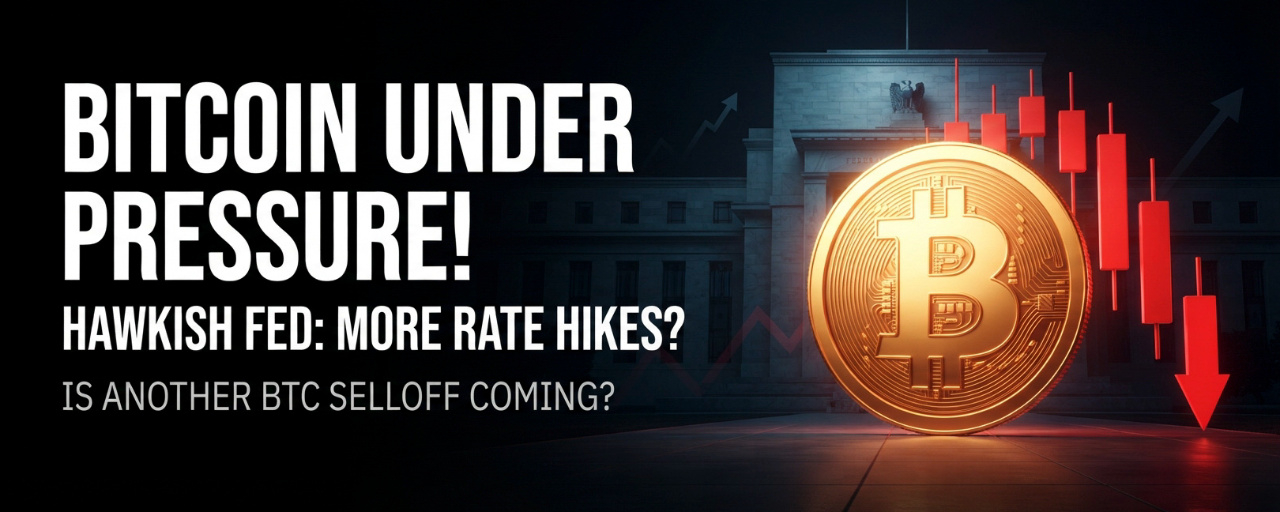
Bitcoin verliert fast 3 %, da restriktives Fed-Protokoll Sorgen vor Zinserhöhungen schürt: Wie geht es mit BTC weiter?Bitcoin näherte sich kurzzeitig der Marke von 62.000 $, nachdem die Federal Reserve signalisiert hatte, dass weitere Zinserhöhungen notwendig sein könnten. Da die Inflation weiterhin über dem Zielwert liegt und institutionelle Kapitalflüsse unter Druck stehen: Droht BTC eine weitere schwierige Phase?
🚨 Bitcoin-Anleger hofften auf Anzeichen einer Entlastung. Stattdessen sprach die Federal Reserve eine weitere Warnung aus.
Bitcoin geriet nach der Veröffentlichung des Protokolls der Oktobersitzung der Federal Reserve am 18. November erneut unter Verkaufsdruck. Die Kryptowährung verlor im Tagesverlauf fast 3 % und wurde kurzzeitig nahe 62.000 $ gehandelt.
Bitcoin verliert fast 3 %, da restriktives Fed-Protokoll Sorgen vor Zinserhöhungen schürt: Wie geht es mit BTC weiter?
Bitcoin näherte sich kurzzeitig der Marke von 62.000 $, nachdem die Federal Reserve signalisiert hatte, dass weitere Zinserhöhungen notwendig sein könnten. Da die Inflation weiterhin über dem Zielwert liegt und institutionelle Kapitalflüsse unter Druck stehen: Droht BTC eine weitere schwierige Phase?
🚨 Bitcoin-Anleger hofften auf Anzeichen einer Entlastung. Stattdessen sprach die Federal Reserve eine weitere Warnung aus.
Bitcoin geriet nach der Veröffentlichung des Protokolls der Oktobersitzung der Federal Reserve am 18. November erneut unter Verkaufsdruck. Die Kryptowährung verlor im Tagesverlauf fast 3 % und wurde kurzzeitig nahe 62.000 $ gehandelt.
1
1
145

Artikel
Stablecoin-Markt schrumpft so schnell wie seit Terra-Luna nicht mehr💵 Innerhalb von 30 Tagen flossen rund 12 Mrd. US-Dollar ab, während Bitcoin auf ein Viermonatstief fiel. Was das bedeutet.
Bei einem Ausverkauf suchten Trader früher Zuflucht in Stablecoins. 🤔 Jetzt ziehen sie auch dort ihr Geld ab – und genau das ist mir aufgefallen.
📊 Was ist passiert?
Laut Bloomberg ist der Stablecoin-Markt in den vergangenen 30 Tagen um rund 12 Mrd. US-Dollar geschrumpft – so schnell wie seit dem Zusammenbruch von Terra-Luna im Jahr 2022 nicht mehr. Das geht aus Daten von Kaiko hervor. Das entspricht etwa 4 % eines Marktes mit einem Volumen von rund 290 Mrd. US-Dollar. Im selben Zeitraum fiel Bitcoin auf ein Viermonatstief.
Stablecoin-Markt schrumpft so schnell wie seit Terra-Luna nicht mehr
💵 Innerhalb von 30 Tagen flossen rund 12 Mrd. US-Dollar ab, während Bitcoin auf ein Viermonatstief fiel. Was das bedeutet.
Bei einem Ausverkauf suchten Trader früher Zuflucht in Stablecoins. 🤔 Jetzt ziehen sie auch dort ihr Geld ab – und genau das ist mir aufgefallen.
📊 Was ist passiert?
Laut Bloomberg ist der Stablecoin-Markt in den vergangenen 30 Tagen um rund 12 Mrd. US-Dollar geschrumpft – so schnell wie seit dem Zusammenbruch von Terra-Luna im Jahr 2022 nicht mehr. Das geht aus Daten von Kaiko hervor. Das entspricht etwa 4 % eines Marktes mit einem Volumen von rund 290 Mrd. US-Dollar. Im selben Zeitraum fiel Bitcoin auf ein Viermonatstief.
1
1
52

Artikel
OPTIMJACK trifft über 186 Websites: So schützt du deine Kryptowährungen🚨 Auf großen Websites wurden stundenlang Wallet-Adressen ausgetauscht. Hier erfährst du, was bestätigt ist und wie du dich schützen kannst.
Eine Wallet-Adresse zu kopieren und einzufügen, ist für die meisten von uns eine Gewohnheit, über die wir nie zweimal nachdenken. 🤔 Am Montag wurde genau diese Gewohnheit zum Angriffsziel.
📊 Was ist passiert?
Am 16. November entdeckten der Forscher Scott Helme und sein Team bei Report URI schädlichen Code in Skripten, die von Optimizely gehostet wurden – einer Plattform, die viele Websites für A/B-Tests nutzen. Die Zahlen variieren je nach Quelle: Mindestens 178 Organisationen waren betroffen; gemeldet wurden 186 Websites und 188 infizierte Skriptdateien. Zu den genannten Websites gehören CNN, BBC, Zoom, Fox News, Salesforce und GitLab. Die Kampagne wird OPTIMJACK genannt.
OPTIMJACK trifft über 186 Websites: So schützt du deine Kryptowährungen
🚨 Auf großen Websites wurden stundenlang Wallet-Adressen ausgetauscht. Hier erfährst du, was bestätigt ist und wie du dich schützen kannst.
Eine Wallet-Adresse zu kopieren und einzufügen, ist für die meisten von uns eine Gewohnheit, über die wir nie zweimal nachdenken. 🤔 Am Montag wurde genau diese Gewohnheit zum Angriffsziel.
📊 Was ist passiert?
Am 16. November entdeckten der Forscher Scott Helme und sein Team bei Report URI schädlichen Code in Skripten, die von Optimizely gehostet wurden – einer Plattform, die viele Websites für A/B-Tests nutzen. Die Zahlen variieren je nach Quelle: Mindestens 178 Organisationen waren betroffen; gemeldet wurden 186 Websites und 188 infizierte Skriptdateien. Zu den genannten Websites gehören CNN, BBC, Zoom, Fox News, Salesforce und GitLab. Die Kampagne wird OPTIMJACK genannt.
1
1
62

Artikel
Nvidias Quartalszahlen am Dienstag: Warum Bitcoin-Anleger nach einem Wochenrückgang von 13 % auf den KI-Test schauen🤖 Nvidia veröffentlicht die ersten Ergebnisse, seit der CEO vergangene Woche zurückgetreten ist. Hier erfährst du, was erwartet wird, was auch ein guter Bericht nicht ändern kann und worauf Krypto-Anleger achten sollten.
Nvidia hat die Obergrenze der eigenen Umsatzprognose 14 Quartale in Folge übertroffen. 🤔 Die Aktie ist diese Woche trotzdem um etwa 13 % gefallen. Das zeigt, dass es bei diesem Bericht nicht wirklich um die Zahlen geht.
📊 Was ist passiert?
Nvidia veröffentlicht am Dienstag, dem 17. November, nach US-Börsenschluss gegen 16:20 Uhr ET die Ergebnisse für das dritte Geschäftsquartal. Die Telefonkonferenz findet um 17 Uhr ET statt. In Pakistan ist es dann etwa 2:20 Uhr am Mittwoch für die Veröffentlichung und 3 Uhr für die Telefonkonferenz. Es ist der erste Bericht, seit Jensen Huang als CEO zurückgetreten ist. Finanzchefin Colette Kress ist nun auch Interims-CEO. Berichte über eine mögliche Rückkehr sind unbestätigt.
Nvidias Quartalszahlen am Dienstag: Warum Bitcoin-Anleger nach einem Wochenrückgang von 13 % auf den KI-Test schauen
🤖 Nvidia veröffentlicht die ersten Ergebnisse, seit der CEO vergangene Woche zurückgetreten ist. Hier erfährst du, was erwartet wird, was auch ein guter Bericht nicht ändern kann und worauf Krypto-Anleger achten sollten.
Nvidia hat die Obergrenze der eigenen Umsatzprognose 14 Quartale in Folge übertroffen. 🤔 Die Aktie ist diese Woche trotzdem um etwa 13 % gefallen. Das zeigt, dass es bei diesem Bericht nicht wirklich um die Zahlen geht.
📊 Was ist passiert?
Nvidia veröffentlicht am Dienstag, dem 17. November, nach US-Börsenschluss gegen 16:20 Uhr ET die Ergebnisse für das dritte Geschäftsquartal. Die Telefonkonferenz findet um 17 Uhr ET statt. In Pakistan ist es dann etwa 2:20 Uhr am Mittwoch für die Veröffentlichung und 3 Uhr für die Telefonkonferenz. Es ist der erste Bericht, seit Jensen Huang als CEO zurückgetreten ist. Finanzchefin Colette Kress ist nun auch Interims-CEO. Berichte über eine mögliche Rückkehr sind unbestätigt.
1
1
330
Artikel
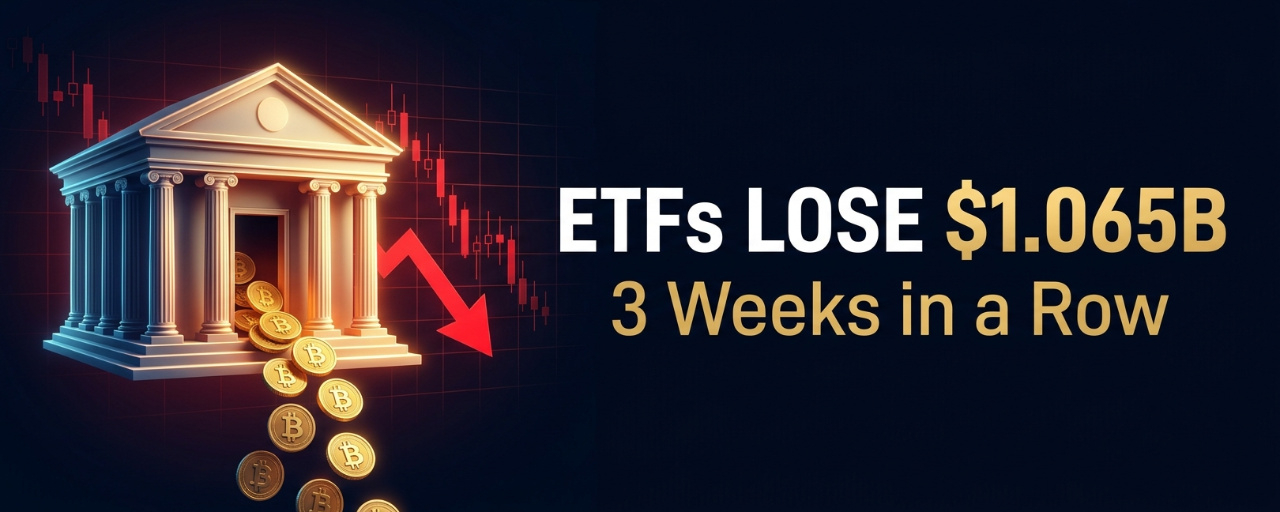
Bitcoin-ETFs verlieren zum dritten Mal in Folge 1,065 Mrd. $: IBIT führt die Abflüsse an, während BTC auf 62.000 $ fällt🏦 Innerhalb von zwei Wochen sind rund 2,35 Mrd. $ aus US-Spot-Bitcoin-ETFs abgeflossen. Hier erfährst du, wer verkauft, was sich aus den Mittelbewegungen nicht ableiten lässt und worauf du achten solltest.
Letzte Woche verzeichnete BlackRocks Bitcoin-ETF Abflüsse von 909 Mio. $. Morgan Stanleys ETF verbuchte Zuflüsse von 54 Mio. $. 🤔 Ich wollte herausfinden, was diese unterschiedliche Entwicklung darüber aussagt, wer verkauft.
📊 Was ist passiert?
US-Spot-Bitcoin-ETFs verzeichneten laut SoSoValue in der Woche vom 9. bis 13. November Mittelabflüsse in Höhe von 1,065 Mrd. $. Damit war es die dritte Woche in Folge mit Abflüssen und die fünfte Abflusswoche innerhalb der letzten sechs Wochen. In der Vorwoche waren 1,28 Mrd. $ abgeflossen – innerhalb von zwei Wochen also rund 2,35 Mrd. $. Gleichzeitig fiel BTC am Sonntag auf etwa 62.000 $, den niedrigsten Stand seit Mitte Juli.
Bitcoin-ETFs verlieren zum dritten Mal in Folge 1,065 Mrd. $: IBIT führt die Abflüsse an, während BTC auf 62.000 $ fällt
🏦 Innerhalb von zwei Wochen sind rund 2,35 Mrd. $ aus US-Spot-Bitcoin-ETFs abgeflossen. Hier erfährst du, wer verkauft, was sich aus den Mittelbewegungen nicht ableiten lässt und worauf du achten solltest.
Letzte Woche verzeichnete BlackRocks Bitcoin-ETF Abflüsse von 909 Mio. $. Morgan Stanleys ETF verbuchte Zuflüsse von 54 Mio. $. 🤔 Ich wollte herausfinden, was diese unterschiedliche Entwicklung darüber aussagt, wer verkauft.
📊 Was ist passiert?
US-Spot-Bitcoin-ETFs verzeichneten laut SoSoValue in der Woche vom 9. bis 13. November Mittelabflüsse in Höhe von 1,065 Mrd. $. Damit war es die dritte Woche in Folge mit Abflüssen und die fünfte Abflusswoche innerhalb der letzten sechs Wochen. In der Vorwoche waren 1,28 Mrd. $ abgeflossen – innerhalb von zwei Wochen also rund 2,35 Mrd. $. Gleichzeitig fiel BTC am Sonntag auf etwa 62.000 $, den niedrigsten Stand seit Mitte Juli.
1
2
183

Artikel
Krypto-Ausverkauf löst Liquidationen im Wert von 2 Mrd. $ aus, während Bitcoin auf 62.000 $ fällt: Was die Daten zu den Walen zeigen💥 Long-Positionen traf es besonders hart, während Wale in beide Richtungen handelten. Hier erfährst du, was die Zahlen zeigen, was sich anhand von Tracker-Daten nicht beweisen lässt und worauf du achten solltest.
Ich habe einen Teil meines Wochenendes damit verbracht, Liquidationsdaten durchzugehen, und eine Zahl ist mir besonders aufgefallen. 🤔 In einigen Zeiträumen waren 93 % der liquidierten Positionen Wetten auf steigende Kurse.
📊 Was ist passiert?
Bitcoin fiel am Sonntag um 01:45 UTC auf Coinbase auf 61.946 $, den niedrigsten Stand seit dem 13. Juli, und legte anschließend innerhalb von etwa 75 Minuten um rund 3.150 $ zu. Wie groß der Schaden war, hängt davon ab, welchen Zeitraum man betrachtet. CoinGlass zufolge wurden am Sonntagmorgen innerhalb von 24 Stunden Positionen im Wert von etwa 1,71 Mrd. $ liquidiert, davon Long-Positionen im Wert von 1,37 Mrd. $ (etwa 80 %). Andere 24-Stunden-Zeiträume kamen auf knapp 2 Mrd. $, wobei Long-Positionen fast 93 % ausmachten. Auf Bitcoin-Positionen entfielen etwa 690–750 Mio. $, auf Ether rund 400 Mio. $. Mehr als 81 % der BTC-Liquidationen fanden auf Hyperliquid, Binance und Bybit statt.
Krypto-Ausverkauf löst Liquidationen im Wert von 2 Mrd. $ aus, während Bitcoin auf 62.000 $ fällt: Was die Daten zu den Walen zeigen
💥 Long-Positionen traf es besonders hart, während Wale in beide Richtungen handelten. Hier erfährst du, was die Zahlen zeigen, was sich anhand von Tracker-Daten nicht beweisen lässt und worauf du achten solltest.
Ich habe einen Teil meines Wochenendes damit verbracht, Liquidationsdaten durchzugehen, und eine Zahl ist mir besonders aufgefallen. 🤔 In einigen Zeiträumen waren 93 % der liquidierten Positionen Wetten auf steigende Kurse.
📊 Was ist passiert?
Bitcoin fiel am Sonntag um 01:45 UTC auf Coinbase auf 61.946 $, den niedrigsten Stand seit dem 13. Juli, und legte anschließend innerhalb von etwa 75 Minuten um rund 3.150 $ zu. Wie groß der Schaden war, hängt davon ab, welchen Zeitraum man betrachtet. CoinGlass zufolge wurden am Sonntagmorgen innerhalb von 24 Stunden Positionen im Wert von etwa 1,71 Mrd. $ liquidiert, davon Long-Positionen im Wert von 1,37 Mrd. $ (etwa 80 %). Andere 24-Stunden-Zeiträume kamen auf knapp 2 Mrd. $, wobei Long-Positionen fast 93 % ausmachten. Auf Bitcoin-Positionen entfielen etwa 690–750 Mio. $, auf Ether rund 400 Mio. $. Mehr als 81 % der BTC-Liquidationen fanden auf Hyperliquid, Binance und Bybit statt.
1
1
362

Artikel
Übersetzung ansehen
Crypto Week Ahead: Warsh, Nvidia Earnings and Fed Minutes Test Bitcoin at $65K📅 Bitcoin starts the week near a three-month low. Here are the dates that matter, what none of them can promise, and what to watch.
Bitcoin starts this week about 13% lower than last Monday, and the calendar is stacked. 🤔 I went through it, so you don't have to.
📊 What Happened?
BTC is trading around $65,000 after a weekend flush took it to about $62,000 on Sunday, its weakest level since mid-July. October's hot CPI (0.4% against 0.3% expected) keeps a December Fed hike in play. US spot ETFs have also lost money three weeks in a row, $1.065B last week alone.
📅 The Week, Day by Day
Monday: Fed Chair Warsh speaks (about 17:00 GMT). ETFs resume trading after the weekend.Tuesday: October retail sales (8:30 a.m. ET), then Nvidia earnings after the close.Wednesday: FOMC minutes from the October 27-28 meeting (2 p.m. ET).Thursday: Philly Fed data. Anthropic is also expected to debut on Nasdaq.Friday: Deribit Bitcoin options expire.
🎤 Why the Fed Is the Big One
If I had to pick one event, it's Wednesday. Here's the catch: the minutes cover a meeting that happened before the hot CPI report. So, they may sound calmer than the market now expects. A soft tone wouldn't erase December hike pricing, and a hawkish one would add fuel to a market that's already nervous.
🤖 The AI Link
Nvidia reports after the US close on Tuesday, its first results since its CEO change last week. Bitcoin has been trading more like an AI stock lately, so the guidance matters more than the headline. Some analysts have also linked crypto selling to investors raising cash around the IPO, while others see a wider AI sell-off. Neither link is proven.
🛑 What None of This Proves
A good Nvidia report didn't lift Bitcoin last week, when CoreWeave beat and AI stocks bounced. Fed events can also reverse within hours. Calendars tell us when volatility is likely, not which way it goes.
⚠️ The Risk Scenario
Glassnode flagged a liquidation cluster between $59,500 and $62,600, right where Sunday's low sits. A hawkish Warsh or hot retail sales could push yields higher and send BTC back there, and the Fear & Greed Index is already near single digits.
👀 Three Things to Watch Next
Warsh's tone on rate hikes tonightWhether ETF flows turn positiveA reclaim of $68-69K, which analysts say would change the trend
💡 The Takeaway
The week hinges more on the Fed than on any single earnings report. I'd wait for Wednesday's minutes before trusting any bounce, and I'd be careful with leverage until then.
If you had to watch one this week, would you pick Warsh tonight, Nvidia on Tuesday or the minutes on Wednesday? And do you think $62K holds? I'd like to hear how you're reading it. 👇
That is the part worth watching.
This post is for informational and educational purposes only and is not financial advice. Crypto markets are volatile. Always conduct your own research before making financial decisions.
#BinanceSquare #Bitcoin #BTC #Fed #CryptoNews
{spot}(BTCUSDT)
Crypto Week Ahead: Warsh, Nvidia Earnings and Fed Minutes Test Bitcoin at $65K
📅 Bitcoin starts the week near a three-month low. Here are the dates that matter, what none of them can promise, and what to watch.
Bitcoin starts this week about 13% lower than last Monday, and the calendar is stacked. 🤔 I went through it, so you don't have to.
📊 What Happened?
BTC is trading around $65,000 after a weekend flush took it to about $62,000 on Sunday, its weakest level since mid-July. October's hot CPI (0.4% against 0.3% expected) keeps a December Fed hike in play. US spot ETFs have also lost money three weeks in a row, $1.065B last week alone.
📅 The Week, Day by Day
Monday: Fed Chair Warsh speaks (about 17:00 GMT). ETFs resume trading after the weekend.Tuesday: October retail sales (8:30 a.m. ET), then Nvidia earnings after the close.Wednesday: FOMC minutes from the October 27-28 meeting (2 p.m. ET).Thursday: Philly Fed data. Anthropic is also expected to debut on Nasdaq.Friday: Deribit Bitcoin options expire.
🎤 Why the Fed Is the Big One
If I had to pick one event, it's Wednesday. Here's the catch: the minutes cover a meeting that happened before the hot CPI report. So, they may sound calmer than the market now expects. A soft tone wouldn't erase December hike pricing, and a hawkish one would add fuel to a market that's already nervous.
🤖 The AI Link
Nvidia reports after the US close on Tuesday, its first results since its CEO change last week. Bitcoin has been trading more like an AI stock lately, so the guidance matters more than the headline. Some analysts have also linked crypto selling to investors raising cash around the IPO, while others see a wider AI sell-off. Neither link is proven.
🛑 What None of This Proves
A good Nvidia report didn't lift Bitcoin last week, when CoreWeave beat and AI stocks bounced. Fed events can also reverse within hours. Calendars tell us when volatility is likely, not which way it goes.
⚠️ The Risk Scenario
Glassnode flagged a liquidation cluster between $59,500 and $62,600, right where Sunday's low sits. A hawkish Warsh or hot retail sales could push yields higher and send BTC back there, and the Fear & Greed Index is already near single digits.
👀 Three Things to Watch Next
Warsh's tone on rate hikes tonightWhether ETF flows turn positiveA reclaim of $68-69K, which analysts say would change the trend
💡 The Takeaway
The week hinges more on the Fed than on any single earnings report. I'd wait for Wednesday's minutes before trusting any bounce, and I'd be careful with leverage until then.
If you had to watch one this week, would you pick Warsh tonight, Nvidia on Tuesday or the minutes on Wednesday? And do you think $62K holds? I'd like to hear how you're reading it. 👇
That is the part worth watching.
This post is for informational and educational purposes only and is not financial advice. Crypto markets are volatile. Always conduct your own research before making financial decisions.
#BinanceSquare #Bitcoin #BTC #Fed #CryptoNews
1
1
406

Artikel
XRP-ETFs verzeichnen größten wöchentlichen Mittelabfluss seit 8 Monaten, während XRP unter 1 US-Dollar fällt: Was das bedeutet🏦 Innerhalb einer Woche flossen 19,13 Mio. US-Dollar aus US-Spot-XRP-ETFs ab, während XRP unter die Marke von 1 US-Dollar fiel. Hier erfährst du, was die Mittelbewegungen zeigen, was sie nicht belegen können und worauf du achten solltest.
Seit dem Start der XRP-ETFs vor einem Jahr gab es nur drei Wochen mit höheren Mittelabflüssen als in dieser. 🤔 Bevor ich darauf reagiere, wollte ich herausfinden, wie groß die Zahl wirklich ist.
📊 Was ist passiert?
US-Spot-XRP-ETFs verzeichneten in der Woche vom 9. bis 13. November Abflüsse in Höhe von 19,13 Mio. US-Dollar, wie Daten von SoSoValue zeigen. Das ist der größte wöchentliche Mittelabfluss seit etwa acht Monaten und die zweite Woche in Folge mit Abhebungen. Der Großteil entfiel auf den Wochenanfang: Am Montag flossen 10,42 Mio. US-Dollar ab – der größte Tagesabfluss seit Anfang März – und am Dienstag weitere 7,62 Mio. US-Dollar. Danach blieben die Zu- und Abflüsse unverändert, bis am Freitag 1,09 Mio. US-Dollar abflossen.
XRP-ETFs verzeichnen größten wöchentlichen Mittelabfluss seit 8 Monaten, während XRP unter 1 US-Dollar fällt: Was das bedeutet
🏦 Innerhalb einer Woche flossen 19,13 Mio. US-Dollar aus US-Spot-XRP-ETFs ab, während XRP unter die Marke von 1 US-Dollar fiel. Hier erfährst du, was die Mittelbewegungen zeigen, was sie nicht belegen können und worauf du achten solltest.
Seit dem Start der XRP-ETFs vor einem Jahr gab es nur drei Wochen mit höheren Mittelabflüssen als in dieser. 🤔 Bevor ich darauf reagiere, wollte ich herausfinden, wie groß die Zahl wirklich ist.
📊 Was ist passiert?
US-Spot-XRP-ETFs verzeichneten in der Woche vom 9. bis 13. November Abflüsse in Höhe von 19,13 Mio. US-Dollar, wie Daten von SoSoValue zeigen. Das ist der größte wöchentliche Mittelabfluss seit etwa acht Monaten und die zweite Woche in Folge mit Abhebungen. Der Großteil entfiel auf den Wochenanfang: Am Montag flossen 10,42 Mio. US-Dollar ab – der größte Tagesabfluss seit Anfang März – und am Dienstag weitere 7,62 Mio. US-Dollar. Danach blieben die Zu- und Abflüsse unverändert, bis am Freitag 1,09 Mio. US-Dollar abflossen.
1
1
437
Artikel
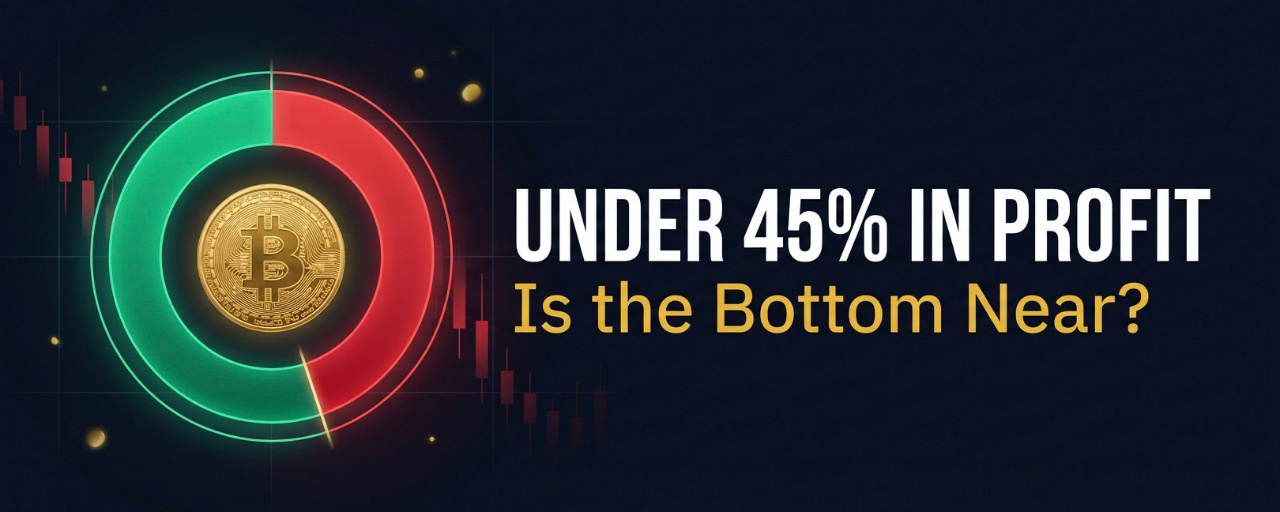
Anteil der aktiven Bitcoin im Gewinn fällt unter 45 %: Ist der Tiefpunkt nahe?📉 Inzwischen werden mehr Bitcoin mit Verlust als mit Gewinn gehalten. Hier erfährst du, was dieses On-Chain-Signal zeigt, was es nicht beweisen kann und worauf du achten solltest.
Ich schaue mir diesen Chart jedes Mal an, wenn Bitcoin im Kurs fällt, und an diesem Wochenende zeigte er etwas, das ich schon eine Weile nicht mehr gesehen hatte. 🤔 Ein größerer Anteil der Bitcoin, die tatsächlich bewegt werden, ist jetzt im Minus statt im Gewinn.
📊 Was ist passiert?
Am 14. November wies der CryptoQuant-Beitragende Darkfost darauf hin, dass der Anteil des aktiven Bitcoin-Angebots, der mit Verlust gehalten wird, den Anteil im Gewinn überholt hat. Er nimmt Coins heraus, die sich seit mehr als 10 Jahren nicht bewegt haben, da viele davon wahrscheinlich für immer verloren oder unzugänglich sind. Übrig bleibt ein Anteil von weniger als 45 % des Angebots im Gewinn.
Anteil der aktiven Bitcoin im Gewinn fällt unter 45 %: Ist der Tiefpunkt nahe?
📉 Inzwischen werden mehr Bitcoin mit Verlust als mit Gewinn gehalten. Hier erfährst du, was dieses On-Chain-Signal zeigt, was es nicht beweisen kann und worauf du achten solltest.
Ich schaue mir diesen Chart jedes Mal an, wenn Bitcoin im Kurs fällt, und an diesem Wochenende zeigte er etwas, das ich schon eine Weile nicht mehr gesehen hatte. 🤔 Ein größerer Anteil der Bitcoin, die tatsächlich bewegt werden, ist jetzt im Minus statt im Gewinn.
📊 Was ist passiert?
Am 14. November wies der CryptoQuant-Beitragende Darkfost darauf hin, dass der Anteil des aktiven Bitcoin-Angebots, der mit Verlust gehalten wird, den Anteil im Gewinn überholt hat. Er nimmt Coins heraus, die sich seit mehr als 10 Jahren nicht bewegt haben, da viele davon wahrscheinlich für immer verloren oder unzugänglich sind. Übrig bleibt ein Anteil von weniger als 45 % des Angebots im Gewinn.
1
1
224
Artikel
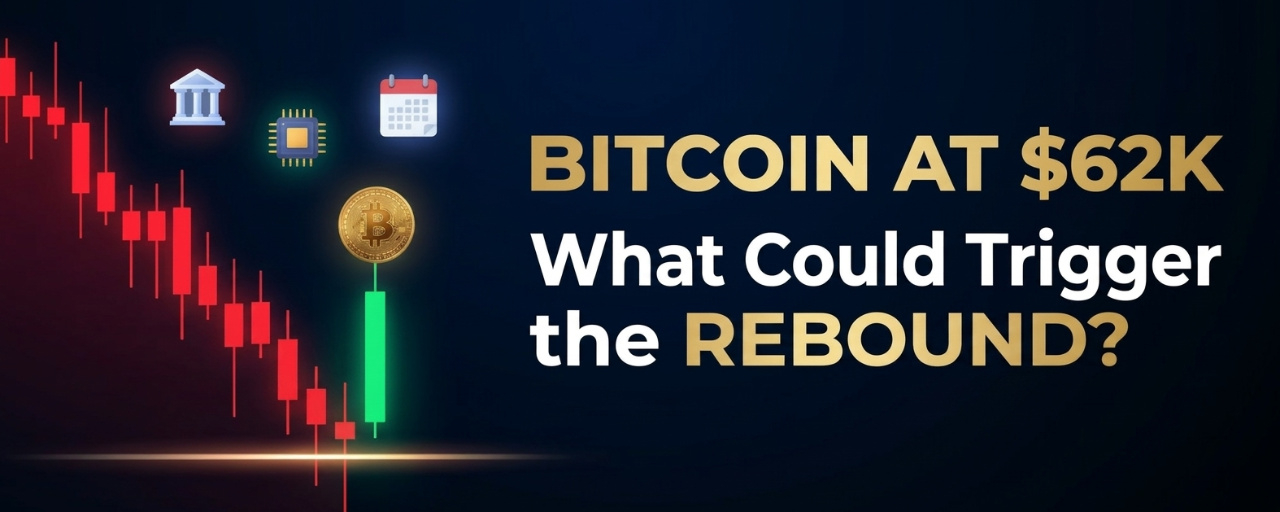
Bitcoin fällt auf 62.000 $: Was könnte die nächste Erholung am Kryptomarkt antreiben? 5 Signale, die du diese Woche im Blick behalten solltest🔭 BTC verlor innerhalb einer Woche 16 %, während Fed, Nvidia und ETF-Zuflüsse in den nächsten Tagen gleichzeitig für Bewegung sorgen könnten. Hier erfährst du, was den Kurs drehen könnte – und was sich nicht versprechen lässt.
Bitcoin verlor innerhalb einer Woche etwa 16 %, und die nächsten fünf Tage sind vollgepackt mit Ereignissen, die den Kurs in beide Richtungen bewegen könnten. 🤔 So schätze ich sie ein.
📊 Was ist passiert?
BTC fiel am frühen Sonntag (UTC) auf 61.946 $, den niedrigsten Stand seit dem 13. Juli, erholte sich dann aber innerhalb von etwa 75 Minuten wieder auf über 65.000 $. Der Kurs liegt jetzt ungefähr 50 % unter seinem Allzeithoch. Innerhalb von 24 Stunden wurden Positionen im Wert von etwa 1,9–2 Mrd. $ liquidiert, überwiegend Long-Positionen, und der Fear-&-Greed-Index sank auf niedrige zweistellige Werte.
Bitcoin fällt auf 62.000 $: Was könnte die nächste Erholung am Kryptomarkt antreiben? 5 Signale, die du diese Woche im Blick behalten solltest
🔭 BTC verlor innerhalb einer Woche 16 %, während Fed, Nvidia und ETF-Zuflüsse in den nächsten Tagen gleichzeitig für Bewegung sorgen könnten. Hier erfährst du, was den Kurs drehen könnte – und was sich nicht versprechen lässt.
Bitcoin verlor innerhalb einer Woche etwa 16 %, und die nächsten fünf Tage sind vollgepackt mit Ereignissen, die den Kurs in beide Richtungen bewegen könnten. 🤔 So schätze ich sie ein.
📊 Was ist passiert?
BTC fiel am frühen Sonntag (UTC) auf 61.946 $, den niedrigsten Stand seit dem 13. Juli, erholte sich dann aber innerhalb von etwa 75 Minuten wieder auf über 65.000 $. Der Kurs liegt jetzt ungefähr 50 % unter seinem Allzeithoch. Innerhalb von 24 Stunden wurden Positionen im Wert von etwa 1,9–2 Mrd. $ liquidiert, überwiegend Long-Positionen, und der Fear-&-Greed-Index sank auf niedrige zweistellige Werte.
1
1
292

Artikel
SpaceX und Tesla könnten 30.221 BTC vereinen: Baut Elon Musk ein Bitcoin-Imperium auf?🚀 Ein möglicher Zusammenschluss von Musks beiden Unternehmen könnte Bitcoin im Wert von etwa 2,1 Milliarden US-Dollar unter einem Firmendach vereinen. Hier erfährst du, warum das für Bitcoin-Anleger und den gesamten Kryptomarkt wichtig ist.
Was passiert, wenn zwei der größten Unternehmen von Elon Musk zusammenkommen und mehr als 30.000 Bitcoin in ihren Bilanzen halten?
Diese Frage sorgt auf dem gesamten Kryptomarkt für Aufmerksamkeit.
Berichten zufolge treiben SpaceX und Tesla ihre Fusionsgespräche voran. Sollte die Vereinbarung zustande kommen, könnten sich ihre gemeinsamen Bitcoin-Bestände auf etwa 30.221 BTC belaufen, was zu den aktuellen Marktpreisen rund 2,1 Milliarden US-Dollar entspricht.
SpaceX und Tesla könnten 30.221 BTC vereinen: Baut Elon Musk ein Bitcoin-Imperium auf?
🚀 Ein möglicher Zusammenschluss von Musks beiden Unternehmen könnte Bitcoin im Wert von etwa 2,1 Milliarden US-Dollar unter einem Firmendach vereinen. Hier erfährst du, warum das für Bitcoin-Anleger und den gesamten Kryptomarkt wichtig ist.
Was passiert, wenn zwei der größten Unternehmen von Elon Musk zusammenkommen und mehr als 30.000 Bitcoin in ihren Bilanzen halten?
Diese Frage sorgt auf dem gesamten Kryptomarkt für Aufmerksamkeit.
Berichten zufolge treiben SpaceX und Tesla ihre Fusionsgespräche voran. Sollte die Vereinbarung zustande kommen, könnten sich ihre gemeinsamen Bitcoin-Bestände auf etwa 30.221 BTC belaufen, was zu den aktuellen Marktpreisen rund 2,1 Milliarden US-Dollar entspricht.
1
1
643
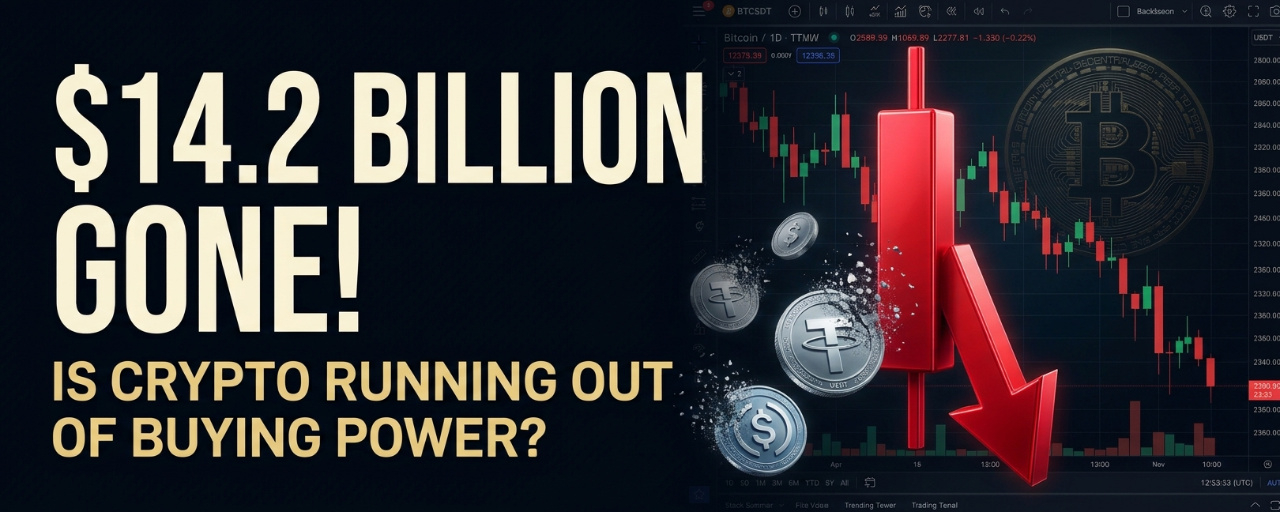
Artikel
14,2 Milliarden Dollar verschwinden aus dem Stablecoin-Angebot: Geht dem Kryptomarkt die Kaufkraft aus? 🚨 Daten von Glassnode zeigen den stärksten Rückgang des Stablecoin-Angebots innerhalb von 30 Tagen seit Juni 2022. Da USDT und USDC zusammen fast 11 Milliarden Dollar an Angebot verloren haben, könnte die größere Sorge weniger der Bitcoin-Kurs sein als vielmehr die Liquidität, die dem Markt entzogen wird.
Bitcoin fällt. Altcoins haben es schwer. Doch es gibt noch eine weitere Entwicklung, die die Aufmerksamkeit der Anleger verdient.
Das Stablecoin-Angebot im Kryptomarkt ist innerhalb von nur 30 Tagen um 14,2 Milliarden Dollar gesunken.
Das ist wichtig, denn Stablecoins sind mehr als digitale Dollar. Sie stellen einen beträchtlichen Kapitalpool dar, den Trader nutzen, um Positionen einzugehen, bei Kursrückgängen zu kaufen und zwischen Krypto-Assets zu wechseln.
14,2 Milliarden Dollar verschwinden aus dem Stablecoin-Angebot: Geht dem Kryptomarkt die Kaufkraft aus?
🚨 Daten von Glassnode zeigen den stärksten Rückgang des Stablecoin-Angebots innerhalb von 30 Tagen seit Juni 2022. Da USDT und USDC zusammen fast 11 Milliarden Dollar an Angebot verloren haben, könnte die größere Sorge weniger der Bitcoin-Kurs sein als vielmehr die Liquidität, die dem Markt entzogen wird.
Bitcoin fällt. Altcoins haben es schwer. Doch es gibt noch eine weitere Entwicklung, die die Aufmerksamkeit der Anleger verdient.
Das Stablecoin-Angebot im Kryptomarkt ist innerhalb von nur 30 Tagen um 14,2 Milliarden Dollar gesunken.
Das ist wichtig, denn Stablecoins sind mehr als digitale Dollar. Sie stellen einen beträchtlichen Kapitalpool dar, den Trader nutzen, um Positionen einzugehen, bei Kursrückgängen zu kaufen und zwischen Krypto-Assets zu wechseln.
1
62
Anmelden und weiter Inhalte entdecken
Krypto-Nutzer weltweit auf Binance Square kennenlernen
⚡️ Bleib in Sachen Krypto stets am Puls.
💬 Die weltgrößte Kryptobörse vertraut darauf.
👍 Erhalte verlässliche Einblicke von verifizierten Creators.
E-Mail-Adresse/Telefonnummer
Trendthemen
CorePCEBeatLiftsFedHikeOdds
37,929 Aufrufe
582 Kommentare
US-PCE-Preisindex im Oktober im Monatsvergleich bei 0,3 %, gegenüber erwarteten 0,30 % und zuvor 0,50 %
Binance News
·9 Likes
·18.5k Aufrufe
BitcoinAndStocksSlipAgainAmidTrump’sTariffPlans
122,463 Aufrufe
1,507 Kommentare
JensenHuangSaysNvidiaDoesn’tNeedASuccessionPlan
62,729 Aufrufe
895 Kommentare