

ON _THE_MOVE
1.3k Beiträge

ON _THE_MOVE
Melden
Nutzer blockieren
2 Following
2.3K+ Follower
882 Like gegeben
Beiträge
Alle
Live
·
--
Bullisch
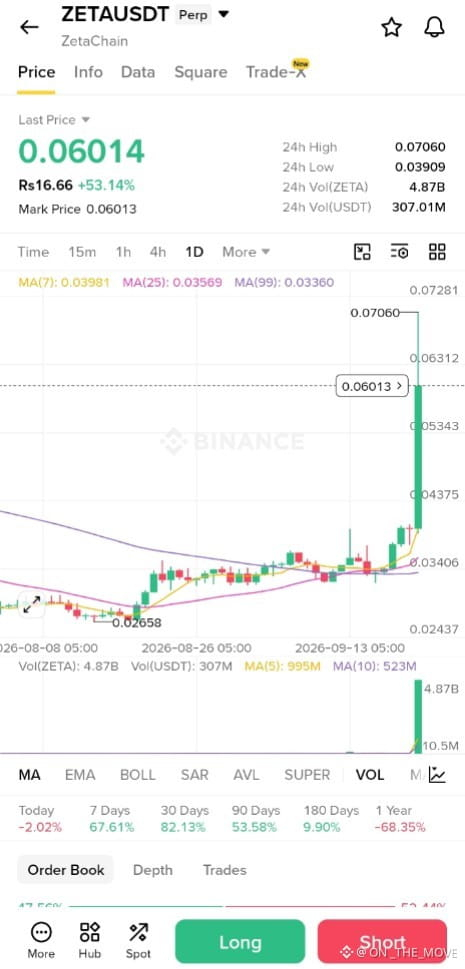
Ich kenne mich mit Krypto lange genug aus, um zu wissen, dass eine große grüne Kerze plötzlich alle so klingen lässt, als wären sie sich ganz sicher. Genau deshalb versuche ich gerade, mich nicht von $ZETA mitreißen zu lassen.
Trotzdem komme ich immer wieder auf dieses Chart zurück. ZETAUSDT liegt bei etwa 0,06014 $, ist in 24 Stunden um 53,14 % gestiegen, nachdem es bis auf 0,03909 $ gefallen und 0,07060 $ erreicht hat. Was mich wirklich aufgefallen ist, war nicht nur der Prozentwert. Es war das Volumen – rund 4,87 Mrd. ZETA, mit ungefähr 307 Mio. $ im USDT-Volumen. Das ist nichts, was ich einfach so ignorieren kann.
Ich habe diese Bewegungen schon öfter gesehen. Der Kurs verbringt Wochen damit, sich kaum zu bewegen, und dann verändert plötzlich eine einzige Kerze die komplette Stimmung. Leute drängen sich mit Erklärungen, Zielen und Narrativen hinein – meistens nachdem die Bewegung schon passiert ist.
Und trotzdem werfe ich das hier nicht komplett über Bord. Das Chart zeigt, dass ZETA immer noch deutlich über seinen jüngsten gleitenden Durchschnitten liegt, während das größere Bild deutlich weniger angenehm ist. Es ist zwar in sieben Tagen um 67,61 % gestiegen, aber immer noch um 68,35 % über ein Jahr hinweg gefallen.
Dieser Kontrast sagt mir, dass ich geerdet bleiben sollte. Ich bin mir nicht sicher, was als Nächstes kommt, und ich vertraue einer so scharfen Bewegung nicht vollständig. Aber etwas am Volumen und am plötzlichen Wechsel im Momentum fühlt sich so an, als wäre es sinnvoll, es zu beobachten. Nicht hinterherzulaufen. Nur beobachten.$ZETA
{future}(ZETAUSDT)
#NEARRisesNearly80%InAWeek #ECBStartsBlockchainEuroSettlement #SouthAfricaProposesCryptoExchangeControls #SolanaCutsTargetSlotTimeTo250ms #CanaryFilesSecondAmendmentForStakedSEIETF
Ich kenne mich mit Krypto lange genug aus, um zu wissen, dass eine große grüne Kerze plötzlich alle so klingen lässt, als wären sie sich ganz sicher. Genau deshalb versuche ich gerade, mich nicht von $ZETA mitreißen zu lassen.
Trotzdem komme ich immer wieder auf dieses Chart zurück. ZETAUSDT liegt bei etwa 0,06014 $, ist in 24 Stunden um 53,14 % gestiegen, nachdem es bis auf 0,03909 $ gefallen und 0,07060 $ erreicht hat. Was mich wirklich aufgefallen ist, war nicht nur der Prozentwert. Es war das Volumen – rund 4,87 Mrd. ZETA, mit ungefähr 307 Mio. $ im USDT-Volumen. Das ist nichts, was ich einfach so ignorieren kann.
Ich habe diese Bewegungen schon öfter gesehen. Der Kurs verbringt Wochen damit, sich kaum zu bewegen, und dann verändert plötzlich eine einzige Kerze die komplette Stimmung. Leute drängen sich mit Erklärungen, Zielen und Narrativen hinein – meistens nachdem die Bewegung schon passiert ist.
Und trotzdem werfe ich das hier nicht komplett über Bord. Das Chart zeigt, dass ZETA immer noch deutlich über seinen jüngsten gleitenden Durchschnitten liegt, während das größere Bild deutlich weniger angenehm ist. Es ist zwar in sieben Tagen um 67,61 % gestiegen, aber immer noch um 68,35 % über ein Jahr hinweg gefallen.
Dieser Kontrast sagt mir, dass ich geerdet bleiben sollte. Ich bin mir nicht sicher, was als Nächstes kommt, und ich vertraue einer so scharfen Bewegung nicht vollständig. Aber etwas am Volumen und am plötzlichen Wechsel im Momentum fühlt sich so an, als wäre es sinnvoll, es zu beobachten. Nicht hinterherzulaufen. Nur beobachten.$ZETA
#NEARRisesNearly80%InAWeek #ECBStartsBlockchainEuroSettlement #SouthAfricaProposesCryptoExchangeControls #SolanaCutsTargetSlotTimeTo250ms #CanaryFilesSecondAmendmentForStakedSEIETF
Trotzdem komme ich immer wieder auf dieses Chart zurück. ZETAUSDT liegt bei etwa 0,06014 $, ist in 24 Stunden um 53,14 % gestiegen, nachdem es bis auf 0,03909 $ gefallen und 0,07060 $ erreicht hat. Was mich wirklich aufgefallen ist, war nicht nur der Prozentwert. Es war das Volumen – rund 4,87 Mrd. ZETA, mit ungefähr 307 Mio. $ im USDT-Volumen. Das ist nichts, was ich einfach so ignorieren kann.
Ich habe diese Bewegungen schon öfter gesehen. Der Kurs verbringt Wochen damit, sich kaum zu bewegen, und dann verändert plötzlich eine einzige Kerze die komplette Stimmung. Leute drängen sich mit Erklärungen, Zielen und Narrativen hinein – meistens nachdem die Bewegung schon passiert ist.
Und trotzdem werfe ich das hier nicht komplett über Bord. Das Chart zeigt, dass ZETA immer noch deutlich über seinen jüngsten gleitenden Durchschnitten liegt, während das größere Bild deutlich weniger angenehm ist. Es ist zwar in sieben Tagen um 67,61 % gestiegen, aber immer noch um 68,35 % über ein Jahr hinweg gefallen.
Dieser Kontrast sagt mir, dass ich geerdet bleiben sollte. Ich bin mir nicht sicher, was als Nächstes kommt, und ich vertraue einer so scharfen Bewegung nicht vollständig. Aber etwas am Volumen und am plötzlichen Wechsel im Momentum fühlt sich so an, als wäre es sinnvoll, es zu beobachten. Nicht hinterherzulaufen. Nur beobachten.$ZETA
#NEARRisesNearly80%InAWeek #ECBStartsBlockchainEuroSettlement #SouthAfricaProposesCryptoExchangeControls #SolanaCutsTargetSlotTimeTo250ms #CanaryFilesSecondAmendmentForStakedSEIETF
222
·
--
Bullisch
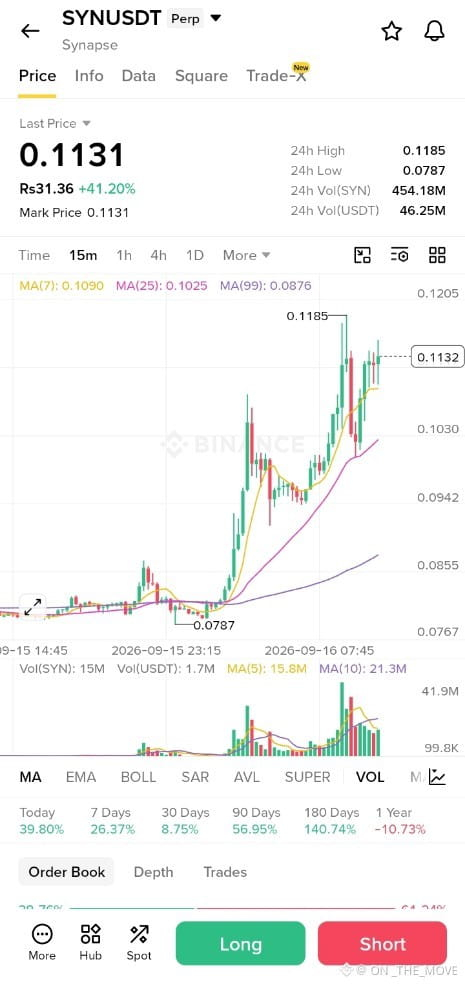
Ich bin schon lange genug in der Krypto-Welt unterwegs, um zu wissen, dass eine große grüne Kerze alle plötzlich so wirken lässt, als wären sie sich ganz sicher. $SYN ist so eine Grafik, bei der ich automatisch langsamer werde.
Die Bewegung ist schwer zu ignorieren. Der Screenshot zeigt SYN bei etwa 0,1131 US-Dollar – mehr als 41 % in 24 Stunden gestiegen. Zuvor war es bis auf 0,0787 US-Dollar gefallen und dann bis auf 0,1185 US-Dollar nach oben gelaufen. Auch das Volumen ist deutlich gestiegen, und der Kurs liegt oberhalb der kurzfristigen gleitenden Durchschnitte.
Aber ehrlich gesagt: Ich habe diesen Film schon gesehen. Eine scharfe Bewegung sorgt für Aufregung, Leute fangen an, das zu erklären, und plötzlich werden aus ein paar Kerzen eine ganze Erzählung. Dann zieht der Markt wieder zurück und erinnert alle daran, dass Krypto uns keine saubere Story schuldet.
Mich interessiert vor allem, was als Nächstes passiert. Kann SYN diese Niveaus halten, wenn der erste Ansturm verblasst? Oder war das einfach nur ein weiterer kurzer Schub an Liquidität und Aufmerksamkeit?
Ich bin mir noch nicht sicher. Ich vertraue der Bewegung nicht wirklich vollständig, will sie aber auch nicht einfach abtun. Nach dem Beobachten genug vieler Zyklen habe ich gelernt, dass es manchmal das Nützlichste ist, einfach weiter zuzusehen.
{spot}(SYNUSDT)
$AKE
{future}(AKEUSDT)
$LSK
{spot}(LSKUSDT)
#FedRateWatch #StrategyMarketCapPassesFord #ClarityActOddsHalveOnPolymarket #USSenateBlocksClarityAct #ArgentinaCommitsToOECDCryptoReportingBy2029
Ich bin schon lange genug in der Krypto-Welt unterwegs, um zu wissen, dass eine große grüne Kerze alle plötzlich so wirken lässt, als wären sie sich ganz sicher. $SYN ist so eine Grafik, bei der ich automatisch langsamer werde.
Die Bewegung ist schwer zu ignorieren. Der Screenshot zeigt SYN bei etwa 0,1131 US-Dollar – mehr als 41 % in 24 Stunden gestiegen. Zuvor war es bis auf 0,0787 US-Dollar gefallen und dann bis auf 0,1185 US-Dollar nach oben gelaufen. Auch das Volumen ist deutlich gestiegen, und der Kurs liegt oberhalb der kurzfristigen gleitenden Durchschnitte.
Aber ehrlich gesagt: Ich habe diesen Film schon gesehen. Eine scharfe Bewegung sorgt für Aufregung, Leute fangen an, das zu erklären, und plötzlich werden aus ein paar Kerzen eine ganze Erzählung. Dann zieht der Markt wieder zurück und erinnert alle daran, dass Krypto uns keine saubere Story schuldet.
Mich interessiert vor allem, was als Nächstes passiert. Kann SYN diese Niveaus halten, wenn der erste Ansturm verblasst? Oder war das einfach nur ein weiterer kurzer Schub an Liquidität und Aufmerksamkeit?
Ich bin mir noch nicht sicher. Ich vertraue der Bewegung nicht wirklich vollständig, will sie aber auch nicht einfach abtun. Nach dem Beobachten genug vieler Zyklen habe ich gelernt, dass es manchmal das Nützlichste ist, einfach weiter zuzusehen.
$AKE
$LSK
#FedRateWatch #StrategyMarketCapPassesFord #ClarityActOddsHalveOnPolymarket #USSenateBlocksClarityAct #ArgentinaCommitsToOECDCryptoReportingBy2029
Die Bewegung ist schwer zu ignorieren. Der Screenshot zeigt SYN bei etwa 0,1131 US-Dollar – mehr als 41 % in 24 Stunden gestiegen. Zuvor war es bis auf 0,0787 US-Dollar gefallen und dann bis auf 0,1185 US-Dollar nach oben gelaufen. Auch das Volumen ist deutlich gestiegen, und der Kurs liegt oberhalb der kurzfristigen gleitenden Durchschnitte.
Aber ehrlich gesagt: Ich habe diesen Film schon gesehen. Eine scharfe Bewegung sorgt für Aufregung, Leute fangen an, das zu erklären, und plötzlich werden aus ein paar Kerzen eine ganze Erzählung. Dann zieht der Markt wieder zurück und erinnert alle daran, dass Krypto uns keine saubere Story schuldet.
Mich interessiert vor allem, was als Nächstes passiert. Kann SYN diese Niveaus halten, wenn der erste Ansturm verblasst? Oder war das einfach nur ein weiterer kurzer Schub an Liquidität und Aufmerksamkeit?
Ich bin mir noch nicht sicher. Ich vertraue der Bewegung nicht wirklich vollständig, will sie aber auch nicht einfach abtun. Nach dem Beobachten genug vieler Zyklen habe ich gelernt, dass es manchmal das Nützlichste ist, einfach weiter zuzusehen.
$AKE
$LSK
#FedRateWatch #StrategyMarketCapPassesFord #ClarityActOddsHalveOnPolymarket #USSenateBlocksClarityAct #ArgentinaCommitsToOECDCryptoReportingBy2029
257
·
--
Bullisch
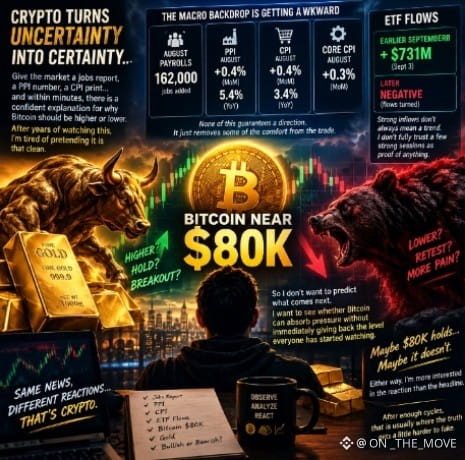
Ich stelle immer wieder fest, wie schnell Krypto aus Unsicherheit Gewissheit macht. Gib dem Markt einen Jobs-Report, eine PPI-Zahl, einen CPI-Report – und innerhalb weniger Minuten gibt es eine selbstbewusste Erklärung dafür, warum Bitcoin höher oder niedriger sein sollte. Nach Jahren des Beobachtens bin ich müde davon, so zu tun, als wäre das so sauber.
Mich interessiert, dass Bitcoin nahe $80K notiert. Das makroökonomische Umfeld wird allmählich unangenehm: Die August-Lohn- und Gehaltslisten (Payrolls) lagen bei 162.000, das PPI stieg im August um 0,4% und lag 5,4% über dem Vorjahr, und der August-CPI stieg um 0,4% im Monatsvergleich und um 3,4% im Jahresvergleich. Auch der Kern-CPI zog um 0,3% für den Monat an. Das alles garantiert jedoch keine Richtung. Es nimmt dem Handel nur einen Teil des Komforts.
Ich habe gesehen, wie Märkte bei schlechten Nachrichten Rallys hinlegen, bei guten Nachrichten fallen und beide Bewegungen noch vor dem Mittag umkehren. Deshalb will ich nicht vorhersagen, was als Nächstes kommt. Ich möchte sehen, ob Bitcoin Druck absorbieren kann, ohne den Stand sofort wieder aufzugeben – den inzwischen alle im Blick haben.
Die ETF-Daten sind ein weiterer Grund, warum ich vorsichtig bleibe. Starke Zuflüsse tauchten früher im September auf, darunter etwa 731 Millionen US-Dollar am 3. September, aber später schlugen die Flows ins Negative um. Ich vertraue ein paar starken Sitzungen nicht vollständig als Beweis für irgendetwas.
Vielleicht hält $80K stand und der Markt nimmt das alles stillschweigend auf. Vielleicht auch nicht. In jedem Fall interessiert mich mehr die Reaktion als die Schlagzeile. Nach genug Zyklen ist das meistens auch der Punkt, an dem sich die Wahrheit ein bisschen schwerer fälschen lässt.
$牛来
{spot}(牛来USDT)
$LAB
{future}(LABUSDT)
$4Stock
{alpha}(560xd270d4e1ec6e6e0d28c0ecb8be966ec75997ffff)
#CPIWatch #CLARITYActRevisionToRuleNonDeFiControllers #USToSanctionBigBankMonday #BlockstreamRefusesToPayRansomToLiquidAttacker #OracleJumpsOver6%OnEarningsBeat
Ich stelle immer wieder fest, wie schnell Krypto aus Unsicherheit Gewissheit macht. Gib dem Markt einen Jobs-Report, eine PPI-Zahl, einen CPI-Report – und innerhalb weniger Minuten gibt es eine selbstbewusste Erklärung dafür, warum Bitcoin höher oder niedriger sein sollte. Nach Jahren des Beobachtens bin ich müde davon, so zu tun, als wäre das so sauber.
Mich interessiert, dass Bitcoin nahe $80K notiert. Das makroökonomische Umfeld wird allmählich unangenehm: Die August-Lohn- und Gehaltslisten (Payrolls) lagen bei 162.000, das PPI stieg im August um 0,4% und lag 5,4% über dem Vorjahr, und der August-CPI stieg um 0,4% im Monatsvergleich und um 3,4% im Jahresvergleich. Auch der Kern-CPI zog um 0,3% für den Monat an. Das alles garantiert jedoch keine Richtung. Es nimmt dem Handel nur einen Teil des Komforts.
Ich habe gesehen, wie Märkte bei schlechten Nachrichten Rallys hinlegen, bei guten Nachrichten fallen und beide Bewegungen noch vor dem Mittag umkehren. Deshalb will ich nicht vorhersagen, was als Nächstes kommt. Ich möchte sehen, ob Bitcoin Druck absorbieren kann, ohne den Stand sofort wieder aufzugeben – den inzwischen alle im Blick haben.
Die ETF-Daten sind ein weiterer Grund, warum ich vorsichtig bleibe. Starke Zuflüsse tauchten früher im September auf, darunter etwa 731 Millionen US-Dollar am 3. September, aber später schlugen die Flows ins Negative um. Ich vertraue ein paar starken Sitzungen nicht vollständig als Beweis für irgendetwas.
Vielleicht hält $80K stand und der Markt nimmt das alles stillschweigend auf. Vielleicht auch nicht. In jedem Fall interessiert mich mehr die Reaktion als die Schlagzeile. Nach genug Zyklen ist das meistens auch der Punkt, an dem sich die Wahrheit ein bisschen schwerer fälschen lässt.
$牛来
$LAB
$4Stock
#CPIWatch #CLARITYActRevisionToRuleNonDeFiControllers #USToSanctionBigBankMonday #BlockstreamRefusesToPayRansomToLiquidAttacker #OracleJumpsOver6%OnEarningsBeat
Mich interessiert, dass Bitcoin nahe $80K notiert. Das makroökonomische Umfeld wird allmählich unangenehm: Die August-Lohn- und Gehaltslisten (Payrolls) lagen bei 162.000, das PPI stieg im August um 0,4% und lag 5,4% über dem Vorjahr, und der August-CPI stieg um 0,4% im Monatsvergleich und um 3,4% im Jahresvergleich. Auch der Kern-CPI zog um 0,3% für den Monat an. Das alles garantiert jedoch keine Richtung. Es nimmt dem Handel nur einen Teil des Komforts.
Ich habe gesehen, wie Märkte bei schlechten Nachrichten Rallys hinlegen, bei guten Nachrichten fallen und beide Bewegungen noch vor dem Mittag umkehren. Deshalb will ich nicht vorhersagen, was als Nächstes kommt. Ich möchte sehen, ob Bitcoin Druck absorbieren kann, ohne den Stand sofort wieder aufzugeben – den inzwischen alle im Blick haben.
Die ETF-Daten sind ein weiterer Grund, warum ich vorsichtig bleibe. Starke Zuflüsse tauchten früher im September auf, darunter etwa 731 Millionen US-Dollar am 3. September, aber später schlugen die Flows ins Negative um. Ich vertraue ein paar starken Sitzungen nicht vollständig als Beweis für irgendetwas.
Vielleicht hält $80K stand und der Markt nimmt das alles stillschweigend auf. Vielleicht auch nicht. In jedem Fall interessiert mich mehr die Reaktion als die Schlagzeile. Nach genug Zyklen ist das meistens auch der Punkt, an dem sich die Wahrheit ein bisschen schwerer fälschen lässt.
$牛来
$LAB
$4Stock
#CPIWatch #CLARITYActRevisionToRuleNonDeFiControllers #USToSanctionBigBankMonday #BlockstreamRefusesToPayRansomToLiquidAttacker #OracleJumpsOver6%OnEarningsBeat
1
3
901
·
--
Bullisch
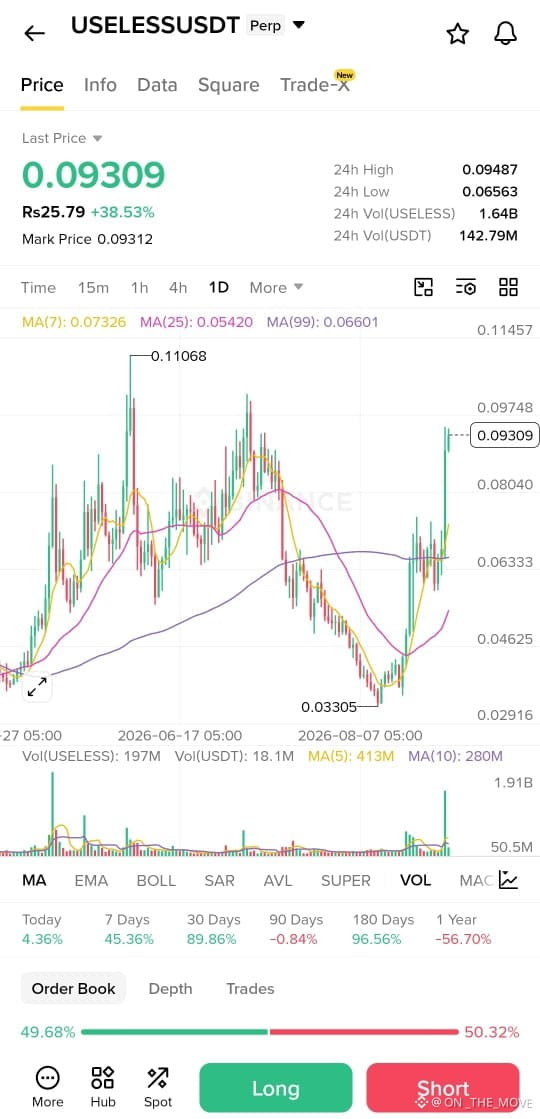
$USELESS USDT Perpetual zeigt eine starke bullische Dynamik. Der Preis liegt bei 0.09309, ein Plus von 38.53 % in 24 Stunden, mit einem Mark Price von 0.09312. Das 24h-Hoch beträgt 0.09487 und das Tief 0.06563, während das Volumen 1.64B USELESS und 142.79M USDT erreichte. Im 1D-Chart liegt MA(7) bei 0.07326, MA(25) bei 0.05420 und MA(99) bei 0.06601, wodurch der Preis über allen wichtigen gleitenden Durchschnitten liegt. Der Chart zeigt einen jüngsten Ausbruch vom Tief bei 0.03305 in Richtung des historischen Hochs bei 0.11068, wobei ein starker Volumensprung die Bewegung unterstützt. Die Performance beträgt heute +4.36 %, über 7 Tage +45.36 %, über 30 Tage +89.86 %, über 90 Tage -0.84 %, über 180 Tage +96.56 % und über 1 Jahr -56.70 %. Das Orderbuch-Gleichgewicht ist nahezu neutral: 49.68 % Kauf versus 50.32 % Verkauf. Händler sollten den Widerstand bei 0.09487 sowie die Unterstützungsniveaus bei 0.08040, 0.06601 und 0.06333 im Blick behalten und dabei die Volatilität sowie das Risiko sorgfältig und aufmerksam managen.
{future}(USELESSUSDT)
#RussiaStartsLargeScaleDigitalRubleRolloutSep1 #BitcoinUp23%InAugustOutperformingGoldAndStocks #SaylorHintsStrategyBitcoinBuy #IranStrikesUSBasesInJordan #USFundsAlcoaGalliumPlantInAustralia
$USELESS USDT Perpetual zeigt eine starke bullische Dynamik. Der Preis liegt bei 0.09309, ein Plus von 38.53 % in 24 Stunden, mit einem Mark Price von 0.09312. Das 24h-Hoch beträgt 0.09487 und das Tief 0.06563, während das Volumen 1.64B USELESS und 142.79M USDT erreichte. Im 1D-Chart liegt MA(7) bei 0.07326, MA(25) bei 0.05420 und MA(99) bei 0.06601, wodurch der Preis über allen wichtigen gleitenden Durchschnitten liegt. Der Chart zeigt einen jüngsten Ausbruch vom Tief bei 0.03305 in Richtung des historischen Hochs bei 0.11068, wobei ein starker Volumensprung die Bewegung unterstützt. Die Performance beträgt heute +4.36 %, über 7 Tage +45.36 %, über 30 Tage +89.86 %, über 90 Tage -0.84 %, über 180 Tage +96.56 % und über 1 Jahr -56.70 %. Das Orderbuch-Gleichgewicht ist nahezu neutral: 49.68 % Kauf versus 50.32 % Verkauf. Händler sollten den Widerstand bei 0.09487 sowie die Unterstützungsniveaus bei 0.08040, 0.06601 und 0.06333 im Blick behalten und dabei die Volatilität sowie das Risiko sorgfältig und aufmerksam managen.
#RussiaStartsLargeScaleDigitalRubleRolloutSep1 #BitcoinUp23%InAugustOutperformingGoldAndStocks #SaylorHintsStrategyBitcoinBuy #IranStrikesUSBasesInJordan #USFundsAlcoaGalliumPlantInAustralia
#RussiaStartsLargeScaleDigitalRubleRolloutSep1 #BitcoinUp23%InAugustOutperformingGoldAndStocks #SaylorHintsStrategyBitcoinBuy #IranStrikesUSBasesInJordan #USFundsAlcoaGalliumPlantInAustralia
158
·
--
Bullisch
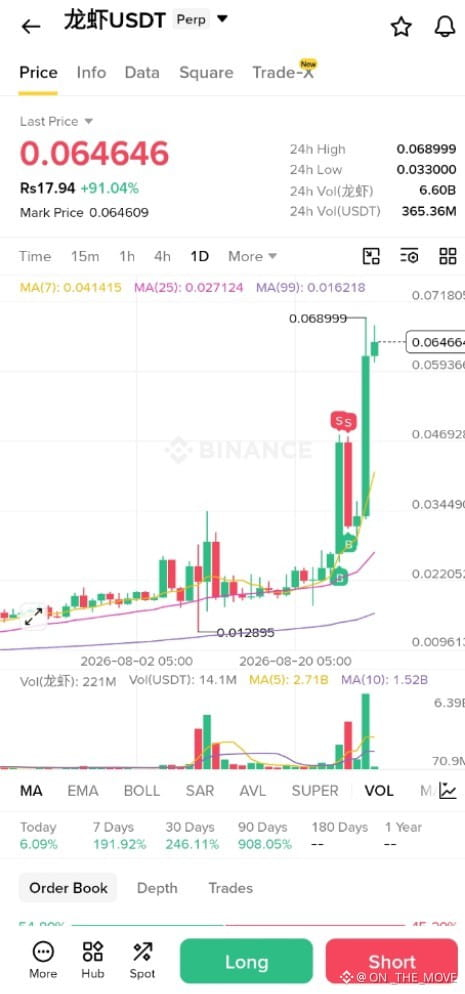
🚨 $龙虾 USDT Perpetual macht Lärm!
Das Diagramm zeigt einen letzten Preis von 0.064646 USDT, der in 24 Stunden um massive 91.04% gestiegen ist; das 24h-Hoch liegt bei 0.068999 und das 24h-Tief bei 0.033000. Die Handelsaktivität ist explosiv: 6.60B DragonFly-Volumen, entsprechend 365.36M USDT. Der Kurs handelt weit über dem MA(7) bei 0.041415, MA(25) bei 0.027124 und MA(99) bei 0.016218—das signalisiert starke Dynamik, aber auch extreme Volatilität.
Das Tages-Chart zeigt einen scharfen Ausbruch aus dem Bereich 0.02–0.03 hinauf Richtung 0.069, während das Volumen deutlich eingebrochen ist. Die Performance ist ebenso wild: +6.09% heute, +191.92% in 7 Tagen, +246.11% in 30 Tagen und +908.05% in 90 Tagen.
🔥 Die Dynamik ist unbestreitbar, aber das Risiko ist riesig. Handeln Sie vorsichtig und managen Sie den Hebel. Achten Sie auf Widerstand nahe 0.069 und vermeiden Sie das Jagen von Kerzen nach parabolischen Moves.
{future}(龙虾USDT)
#SOLJumps20%OnTheWeek #CaliforniaBillWouldBarOfficialMemeCoins #GoldRisesAbout14%InAugust #QatarExtendsLNGForceMajeureByOneMonth #WarshSaysInflationIsFedTopFocus
🚨 $龙虾 USDT Perpetual macht Lärm!
Das Diagramm zeigt einen letzten Preis von 0.064646 USDT, der in 24 Stunden um massive 91.04% gestiegen ist; das 24h-Hoch liegt bei 0.068999 und das 24h-Tief bei 0.033000. Die Handelsaktivität ist explosiv: 6.60B DragonFly-Volumen, entsprechend 365.36M USDT. Der Kurs handelt weit über dem MA(7) bei 0.041415, MA(25) bei 0.027124 und MA(99) bei 0.016218—das signalisiert starke Dynamik, aber auch extreme Volatilität.
Das Tages-Chart zeigt einen scharfen Ausbruch aus dem Bereich 0.02–0.03 hinauf Richtung 0.069, während das Volumen deutlich eingebrochen ist. Die Performance ist ebenso wild: +6.09% heute, +191.92% in 7 Tagen, +246.11% in 30 Tagen und +908.05% in 90 Tagen.
🔥 Die Dynamik ist unbestreitbar, aber das Risiko ist riesig. Handeln Sie vorsichtig und managen Sie den Hebel. Achten Sie auf Widerstand nahe 0.069 und vermeiden Sie das Jagen von Kerzen nach parabolischen Moves.
#SOLJumps20%OnTheWeek #CaliforniaBillWouldBarOfficialMemeCoins #GoldRisesAbout14%InAugust #QatarExtendsLNGForceMajeureByOneMonth #WarshSaysInflationIsFedTopFocus
Das Diagramm zeigt einen letzten Preis von 0.064646 USDT, der in 24 Stunden um massive 91.04% gestiegen ist; das 24h-Hoch liegt bei 0.068999 und das 24h-Tief bei 0.033000. Die Handelsaktivität ist explosiv: 6.60B DragonFly-Volumen, entsprechend 365.36M USDT. Der Kurs handelt weit über dem MA(7) bei 0.041415, MA(25) bei 0.027124 und MA(99) bei 0.016218—das signalisiert starke Dynamik, aber auch extreme Volatilität.
Das Tages-Chart zeigt einen scharfen Ausbruch aus dem Bereich 0.02–0.03 hinauf Richtung 0.069, während das Volumen deutlich eingebrochen ist. Die Performance ist ebenso wild: +6.09% heute, +191.92% in 7 Tagen, +246.11% in 30 Tagen und +908.05% in 90 Tagen.
🔥 Die Dynamik ist unbestreitbar, aber das Risiko ist riesig. Handeln Sie vorsichtig und managen Sie den Hebel. Achten Sie auf Widerstand nahe 0.069 und vermeiden Sie das Jagen von Kerzen nach parabolischen Moves.
#SOLJumps20%OnTheWeek #CaliforniaBillWouldBarOfficialMemeCoins #GoldRisesAbout14%InAugust #QatarExtendsLNGForceMajeureByOneMonth #WarshSaysInflationIsFedTopFocus
1
596
·
--
Bullisch
Verifiziert
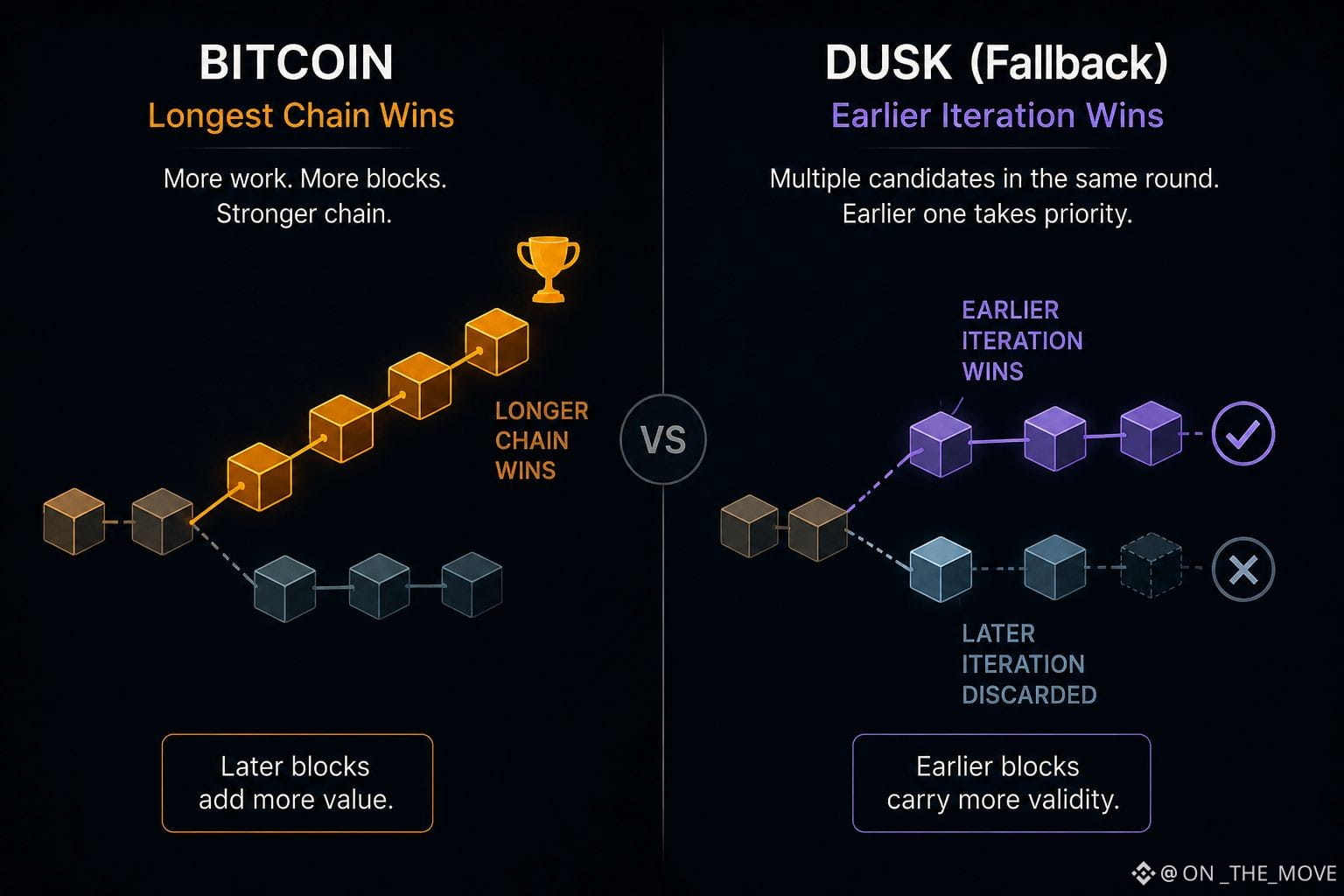
Ich schaue schon lange genug auf Krypto, um zu wissen, dass „Konsens“ oft wie eine saubere Regel an einer Tafel erklärt wird, während das echte Netzwerk in der Regel viel chaotischer ist.
Darum hat mich Disks Fallback (Fallback) aufmerksam gemacht. Bitcoins vertrauter Instinkt besteht darin, dass mehr kumulativer Arbeitsnachweis einen Fork „ausräumt“: Die Kette mit mehr Arbeit gewinnt. Dusk löst hier ein anderes Problem. Weil Nachrichten verspätet oder in anderer Reihenfolge ankommen können, können in derselben Runde mehrere Kandidaten zum Konsens gelangen. Wenn das passiert, bekommt die niedrigere Iteration Priorität, und Knoten können zurückrollen und Blöcke verwerfen, die auf dem späteren Kandidaten aufgebaut wurden.
Ich komme immer wieder darauf zurück. Es wirkt fast rückwärts, nachdem man jahrelang gehört hat, dass jeder zusätzliche Block die Kette stärker macht. Hier kann am Ende ein späterer Block der sein, den man behalten zu wollen bereut.
Und ich glaube nicht, dass diese Entscheidung nur mit Engineering zu tun hat. Sie scheint mit Anreizen verbunden zu sein. Wenn spätere Iterationen allein dadurch gewinnen könnten, dass sie einfach länger überleben, hätten zukünftige Blockproduzenten möglicherweise Raum, auf das Verlängern eines Forks zu setzen. Die Priorisierung der früheren Iteration nimmt diesem Spiel die Grundlage.
Ich bin nicht sicher, ob man es als reines „Gegenteil davon, dass die längste Kette gewinnt“ bezeichnen würde. Dusk bewertet die Güte nicht nach Länge; es nutzt Iterationspriorität mit eigenen Finalitätsregeln. Trotzdem fühlt sich daran etwas anders an.
Nach genug Zyklen traue ich den Behauptungen nicht mehr, dass Blockchains „immer“ auf dieselbe Weise Forks auflösen. Tun sie nicht. Die Fork-Regel ist Teil des Anreizsystems.
@Dusk_Foundation #dusk $DUSK
Ich schaue schon lange genug auf Krypto, um zu wissen, dass „Konsens“ oft wie eine saubere Regel an einer Tafel erklärt wird, während das echte Netzwerk in der Regel viel chaotischer ist.
Darum hat mich Disks Fallback (Fallback) aufmerksam gemacht. Bitcoins vertrauter Instinkt besteht darin, dass mehr kumulativer Arbeitsnachweis einen Fork „ausräumt“: Die Kette mit mehr Arbeit gewinnt. Dusk löst hier ein anderes Problem. Weil Nachrichten verspätet oder in anderer Reihenfolge ankommen können, können in derselben Runde mehrere Kandidaten zum Konsens gelangen. Wenn das passiert, bekommt die niedrigere Iteration Priorität, und Knoten können zurückrollen und Blöcke verwerfen, die auf dem späteren Kandidaten aufgebaut wurden.
Ich komme immer wieder darauf zurück. Es wirkt fast rückwärts, nachdem man jahrelang gehört hat, dass jeder zusätzliche Block die Kette stärker macht. Hier kann am Ende ein späterer Block der sein, den man behalten zu wollen bereut.
Und ich glaube nicht, dass diese Entscheidung nur mit Engineering zu tun hat. Sie scheint mit Anreizen verbunden zu sein. Wenn spätere Iterationen allein dadurch gewinnen könnten, dass sie einfach länger überleben, hätten zukünftige Blockproduzenten möglicherweise Raum, auf das Verlängern eines Forks zu setzen. Die Priorisierung der früheren Iteration nimmt diesem Spiel die Grundlage.
Ich bin nicht sicher, ob man es als reines „Gegenteil davon, dass die längste Kette gewinnt“ bezeichnen würde. Dusk bewertet die Güte nicht nach Länge; es nutzt Iterationspriorität mit eigenen Finalitätsregeln. Trotzdem fühlt sich daran etwas anders an.
Nach genug Zyklen traue ich den Behauptungen nicht mehr, dass Blockchains „immer“ auf dieselbe Weise Forks auflösen. Tun sie nicht. Die Fork-Regel ist Teil des Anreizsystems.
@Dusk #dusk $DUSK
Darum hat mich Disks Fallback (Fallback) aufmerksam gemacht. Bitcoins vertrauter Instinkt besteht darin, dass mehr kumulativer Arbeitsnachweis einen Fork „ausräumt“: Die Kette mit mehr Arbeit gewinnt. Dusk löst hier ein anderes Problem. Weil Nachrichten verspätet oder in anderer Reihenfolge ankommen können, können in derselben Runde mehrere Kandidaten zum Konsens gelangen. Wenn das passiert, bekommt die niedrigere Iteration Priorität, und Knoten können zurückrollen und Blöcke verwerfen, die auf dem späteren Kandidaten aufgebaut wurden.
Ich komme immer wieder darauf zurück. Es wirkt fast rückwärts, nachdem man jahrelang gehört hat, dass jeder zusätzliche Block die Kette stärker macht. Hier kann am Ende ein späterer Block der sein, den man behalten zu wollen bereut.
Und ich glaube nicht, dass diese Entscheidung nur mit Engineering zu tun hat. Sie scheint mit Anreizen verbunden zu sein. Wenn spätere Iterationen allein dadurch gewinnen könnten, dass sie einfach länger überleben, hätten zukünftige Blockproduzenten möglicherweise Raum, auf das Verlängern eines Forks zu setzen. Die Priorisierung der früheren Iteration nimmt diesem Spiel die Grundlage.
Ich bin nicht sicher, ob man es als reines „Gegenteil davon, dass die längste Kette gewinnt“ bezeichnen würde. Dusk bewertet die Güte nicht nach Länge; es nutzt Iterationspriorität mit eigenen Finalitätsregeln. Trotzdem fühlt sich daran etwas anders an.
Nach genug Zyklen traue ich den Behauptungen nicht mehr, dass Blockchains „immer“ auf dieselbe Weise Forks auflösen. Tun sie nicht. Die Fork-Regel ist Teil des Anreizsystems.
@Dusk #dusk $DUSK
1
223
·
--
Bullisch
Verifiziert
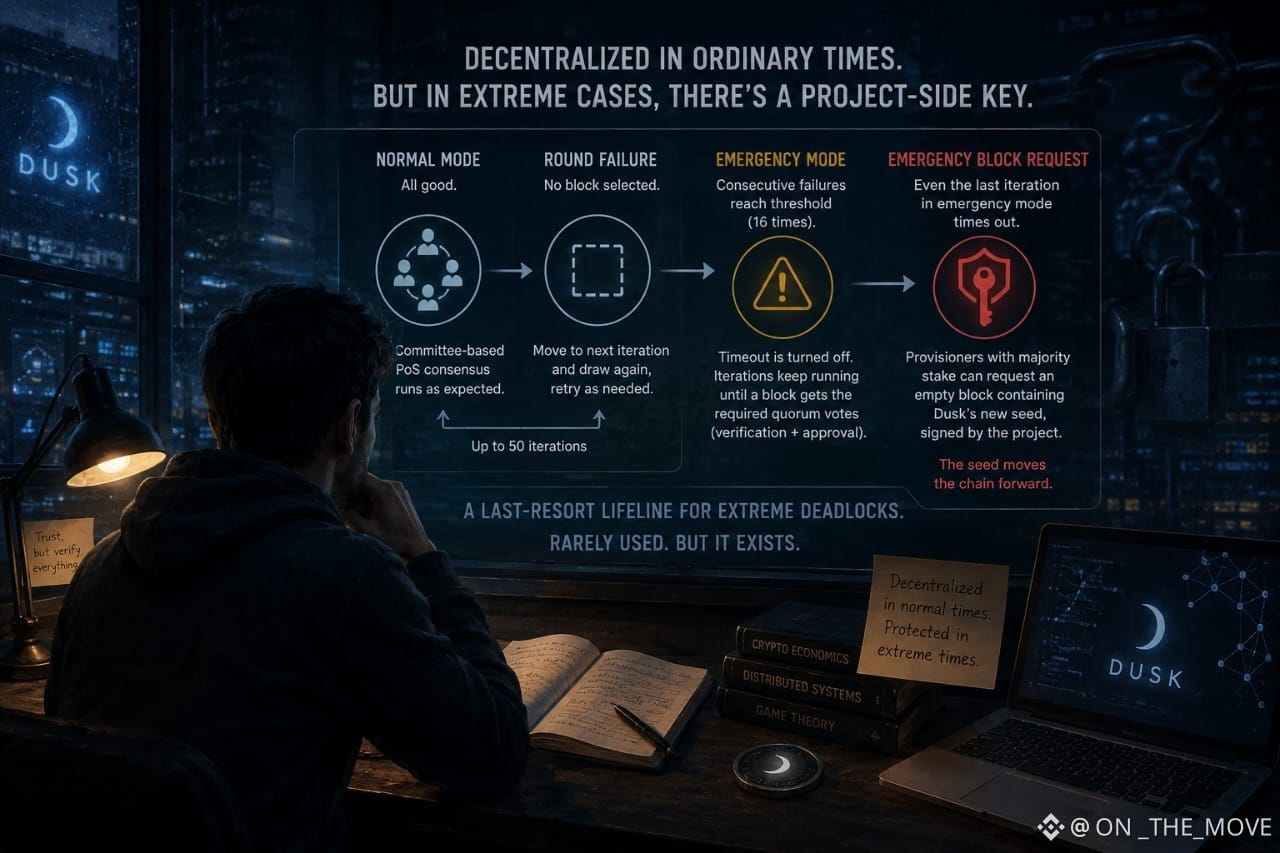
Ich habe genug Krypto-Zyklen gesehen, um zu wissen, dass die Dezentralisierung meistens irgendwo ein Sternchen trägt. Man muss nur weit genug lesen, um es zu finden.
Genau das hat mich bei Dusk aufmerksam gemacht. Ich habe mir dessen Konsensdesign angesehen und dabei die übliche Geschichte erwartet: Wenn eine Runde fehlschlägt, versucht man es eben erneut. Und ja, das passiert. Aber nach genug aufeinanderfolgenden Fehlschlägen geht das Protokoll in den Notfallmodus und führt die Iterationen weiter, bis ein Block endlich das nötige Quorum erhält. Interessant wird es jedoch, wenn selbst das fehlschlägt.
Die letzte Ausweichlösung ist ein Notfallblock. Provisioner, die eine Mehrheit des Einsatzes halten, können ihn anfordern, und der leere Block trägt einen neuen Seed, der von Dusk selbst signiert wurde und über einen globalen öffentlichen Schlüssel verifizierbar ist.
Ich habe diese Art von Kompromiss schon einmal gesehen. Man nennt Systeme dezentral, wenn alles normalerweise funktioniert, und akzeptiert dann stillschweigend eine besondere Notfall-Ausgangstür für den Moment, in dem alles kaputtgeht. Ich denke nicht automatisch, dass das Dusk zentralisiert. Ganz ehrlich: Es könnte sogar schlimmer sein, wenn man gar keinen Mechanismus für den letzten Ausweg hätte.
Aber ich bin mir noch nicht sicher, wie wohl ich mich mit dieser Grenze fühle. Wer kontrolliert in der Praxis den Notfallpfad? Wie transparent sind diese Anfragen? Können Außenstehende unabhängig prüfen, wann und warum er ausgelöst wurde?
Dort beginnt meine Skepsis. Nicht, weil das Fallback existiert, sondern weil der wichtigste Teil der Dezentralisierung oft das ist, was passiert, wenn die normalen Regeln nicht mehr funktionieren.
Und genau dann fange ich an, genauer hinzuschauen.
@Dusk_Foundation #dusk $DUSK
Ich habe genug Krypto-Zyklen gesehen, um zu wissen, dass die Dezentralisierung meistens irgendwo ein Sternchen trägt. Man muss nur weit genug lesen, um es zu finden.
Genau das hat mich bei Dusk aufmerksam gemacht. Ich habe mir dessen Konsensdesign angesehen und dabei die übliche Geschichte erwartet: Wenn eine Runde fehlschlägt, versucht man es eben erneut. Und ja, das passiert. Aber nach genug aufeinanderfolgenden Fehlschlägen geht das Protokoll in den Notfallmodus und führt die Iterationen weiter, bis ein Block endlich das nötige Quorum erhält. Interessant wird es jedoch, wenn selbst das fehlschlägt.
Die letzte Ausweichlösung ist ein Notfallblock. Provisioner, die eine Mehrheit des Einsatzes halten, können ihn anfordern, und der leere Block trägt einen neuen Seed, der von Dusk selbst signiert wurde und über einen globalen öffentlichen Schlüssel verifizierbar ist.
Ich habe diese Art von Kompromiss schon einmal gesehen. Man nennt Systeme dezentral, wenn alles normalerweise funktioniert, und akzeptiert dann stillschweigend eine besondere Notfall-Ausgangstür für den Moment, in dem alles kaputtgeht. Ich denke nicht automatisch, dass das Dusk zentralisiert. Ganz ehrlich: Es könnte sogar schlimmer sein, wenn man gar keinen Mechanismus für den letzten Ausweg hätte.
Aber ich bin mir noch nicht sicher, wie wohl ich mich mit dieser Grenze fühle. Wer kontrolliert in der Praxis den Notfallpfad? Wie transparent sind diese Anfragen? Können Außenstehende unabhängig prüfen, wann und warum er ausgelöst wurde?
Dort beginnt meine Skepsis. Nicht, weil das Fallback existiert, sondern weil der wichtigste Teil der Dezentralisierung oft das ist, was passiert, wenn die normalen Regeln nicht mehr funktionieren.
Und genau dann fange ich an, genauer hinzuschauen.
@Dusk #dusk $DUSK
Genau das hat mich bei Dusk aufmerksam gemacht. Ich habe mir dessen Konsensdesign angesehen und dabei die übliche Geschichte erwartet: Wenn eine Runde fehlschlägt, versucht man es eben erneut. Und ja, das passiert. Aber nach genug aufeinanderfolgenden Fehlschlägen geht das Protokoll in den Notfallmodus und führt die Iterationen weiter, bis ein Block endlich das nötige Quorum erhält. Interessant wird es jedoch, wenn selbst das fehlschlägt.
Die letzte Ausweichlösung ist ein Notfallblock. Provisioner, die eine Mehrheit des Einsatzes halten, können ihn anfordern, und der leere Block trägt einen neuen Seed, der von Dusk selbst signiert wurde und über einen globalen öffentlichen Schlüssel verifizierbar ist.
Ich habe diese Art von Kompromiss schon einmal gesehen. Man nennt Systeme dezentral, wenn alles normalerweise funktioniert, und akzeptiert dann stillschweigend eine besondere Notfall-Ausgangstür für den Moment, in dem alles kaputtgeht. Ich denke nicht automatisch, dass das Dusk zentralisiert. Ganz ehrlich: Es könnte sogar schlimmer sein, wenn man gar keinen Mechanismus für den letzten Ausweg hätte.
Aber ich bin mir noch nicht sicher, wie wohl ich mich mit dieser Grenze fühle. Wer kontrolliert in der Praxis den Notfallpfad? Wie transparent sind diese Anfragen? Können Außenstehende unabhängig prüfen, wann und warum er ausgelöst wurde?
Dort beginnt meine Skepsis. Nicht, weil das Fallback existiert, sondern weil der wichtigste Teil der Dezentralisierung oft das ist, was passiert, wenn die normalen Regeln nicht mehr funktionieren.
Und genau dann fange ich an, genauer hinzuschauen.
@Dusk #dusk $DUSK
40
21
325
·
--
Bullisch
Verifiziert
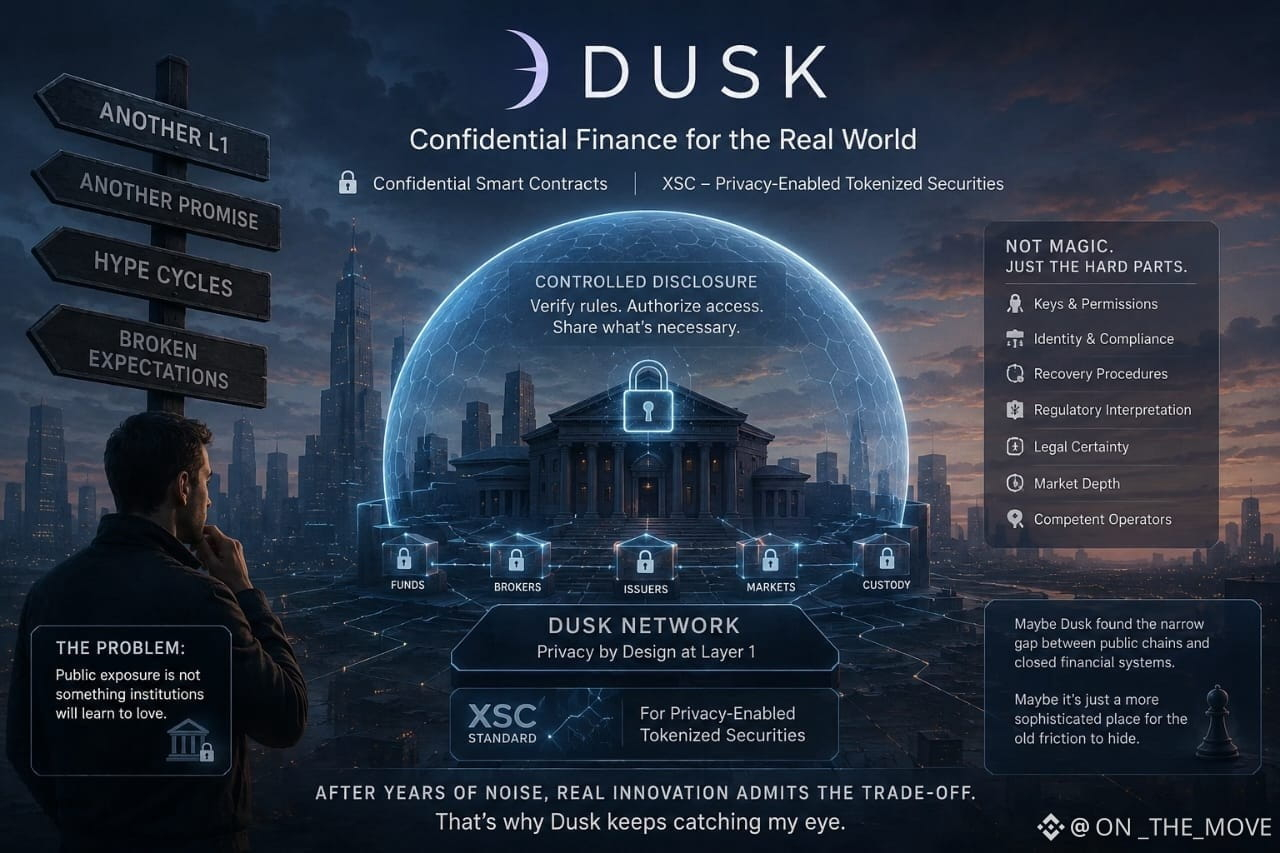
Ich bemerke Dusk Network, wenn ich normalerweise aufhören würde zuzuhören. Noch eine Layer-1, noch ein Versprechen, das Finanzwesen wieder aufzubauen – diesen Satz habe ich gesehen, wie er ganze Marktzyklen abgebrannt hat. Die meisten Chains tun so, als wäre öffentliche Transparenz ein Feature, das Institutionen irgendwann zu schätzen lernen. Ich bezweifle das. Fonds, Broker und Emittenten wollen nicht jede Bilanz, jede Position und jeden Kontrahenten offenlegen, nur weil die Abwicklung mittlerweile on-chain stattfindet.
Darum hält Dusk meine Aufmerksamkeit fest. Es setzt vertrauliche Smart Contracts auf die Basisschicht, mit dem XSC-Standard für datenschutzaktivierte tokenisierte Wertpapiere. Die Idee ist nicht völlige Geheimhaltung; es geht um gezielte Offenlegung – Regeln können überprüft werden, und autorisierte Parteien sehen das, was sie sehen müssen. Irgendetwas daran fühlt sich anders an, vor allem, weil das Problem langweilig und schmerzhaft real ist.
Trotzdem vertraue ich ihm nicht vollständig. Finanzielle Privatsphäre kommt mit Schlüsseln, Berechtigungen, Identitätsprüfungen, Wiederherstellungsverfahren und Regulierungsbehörden, die dieselbe Transaktion möglicherweise unterschiedlich bewerten. Code kann eine Übertragungsregel durchsetzen, aber er kann keine rechtliche Sicherheit, keine Markttiefe und keine kompetenten Marktteilnehmer erzeugen. Ich habe das schon einmal gesehen: Elegante Infrastruktur kommt lange, bevor irgendjemand bereit ist, sie zu nutzen.
Vielleicht hat Dusk die schmale Lücke zwischen öffentlichen Chains und geschlossenen Finanzsystemen gefunden. Vielleicht hat es einen ausgefeilteren Ort gebaut, an dem die alte Reibung sich verstecken kann. Ich bin mir noch nicht sicher. Aber nach Jahren des Rauschens merke ich immer wieder Projekte, die das dieser Trade-off eingestehen, statt so zu tun, als sei er verschwunden.
@Dusk_Foundation #dusk $DUSK
Ich bemerke Dusk Network, wenn ich normalerweise aufhören würde zuzuhören. Noch eine Layer-1, noch ein Versprechen, das Finanzwesen wieder aufzubauen – diesen Satz habe ich gesehen, wie er ganze Marktzyklen abgebrannt hat. Die meisten Chains tun so, als wäre öffentliche Transparenz ein Feature, das Institutionen irgendwann zu schätzen lernen. Ich bezweifle das. Fonds, Broker und Emittenten wollen nicht jede Bilanz, jede Position und jeden Kontrahenten offenlegen, nur weil die Abwicklung mittlerweile on-chain stattfindet.
Darum hält Dusk meine Aufmerksamkeit fest. Es setzt vertrauliche Smart Contracts auf die Basisschicht, mit dem XSC-Standard für datenschutzaktivierte tokenisierte Wertpapiere. Die Idee ist nicht völlige Geheimhaltung; es geht um gezielte Offenlegung – Regeln können überprüft werden, und autorisierte Parteien sehen das, was sie sehen müssen. Irgendetwas daran fühlt sich anders an, vor allem, weil das Problem langweilig und schmerzhaft real ist.
Trotzdem vertraue ich ihm nicht vollständig. Finanzielle Privatsphäre kommt mit Schlüsseln, Berechtigungen, Identitätsprüfungen, Wiederherstellungsverfahren und Regulierungsbehörden, die dieselbe Transaktion möglicherweise unterschiedlich bewerten. Code kann eine Übertragungsregel durchsetzen, aber er kann keine rechtliche Sicherheit, keine Markttiefe und keine kompetenten Marktteilnehmer erzeugen. Ich habe das schon einmal gesehen: Elegante Infrastruktur kommt lange, bevor irgendjemand bereit ist, sie zu nutzen.
Vielleicht hat Dusk die schmale Lücke zwischen öffentlichen Chains und geschlossenen Finanzsystemen gefunden. Vielleicht hat es einen ausgefeilteren Ort gebaut, an dem die alte Reibung sich verstecken kann. Ich bin mir noch nicht sicher. Aber nach Jahren des Rauschens merke ich immer wieder Projekte, die das dieser Trade-off eingestehen, statt so zu tun, als sei er verschwunden.
@Dusk #dusk $DUSK
Darum hält Dusk meine Aufmerksamkeit fest. Es setzt vertrauliche Smart Contracts auf die Basisschicht, mit dem XSC-Standard für datenschutzaktivierte tokenisierte Wertpapiere. Die Idee ist nicht völlige Geheimhaltung; es geht um gezielte Offenlegung – Regeln können überprüft werden, und autorisierte Parteien sehen das, was sie sehen müssen. Irgendetwas daran fühlt sich anders an, vor allem, weil das Problem langweilig und schmerzhaft real ist.
Trotzdem vertraue ich ihm nicht vollständig. Finanzielle Privatsphäre kommt mit Schlüsseln, Berechtigungen, Identitätsprüfungen, Wiederherstellungsverfahren und Regulierungsbehörden, die dieselbe Transaktion möglicherweise unterschiedlich bewerten. Code kann eine Übertragungsregel durchsetzen, aber er kann keine rechtliche Sicherheit, keine Markttiefe und keine kompetenten Marktteilnehmer erzeugen. Ich habe das schon einmal gesehen: Elegante Infrastruktur kommt lange, bevor irgendjemand bereit ist, sie zu nutzen.
Vielleicht hat Dusk die schmale Lücke zwischen öffentlichen Chains und geschlossenen Finanzsystemen gefunden. Vielleicht hat es einen ausgefeilteren Ort gebaut, an dem die alte Reibung sich verstecken kann. Ich bin mir noch nicht sicher. Aber nach Jahren des Rauschens merke ich immer wieder Projekte, die das dieser Trade-off eingestehen, statt so zu tun, als sei er verschwunden.
@Dusk #dusk $DUSK
51
32
1.1k
·
--
Bullisch
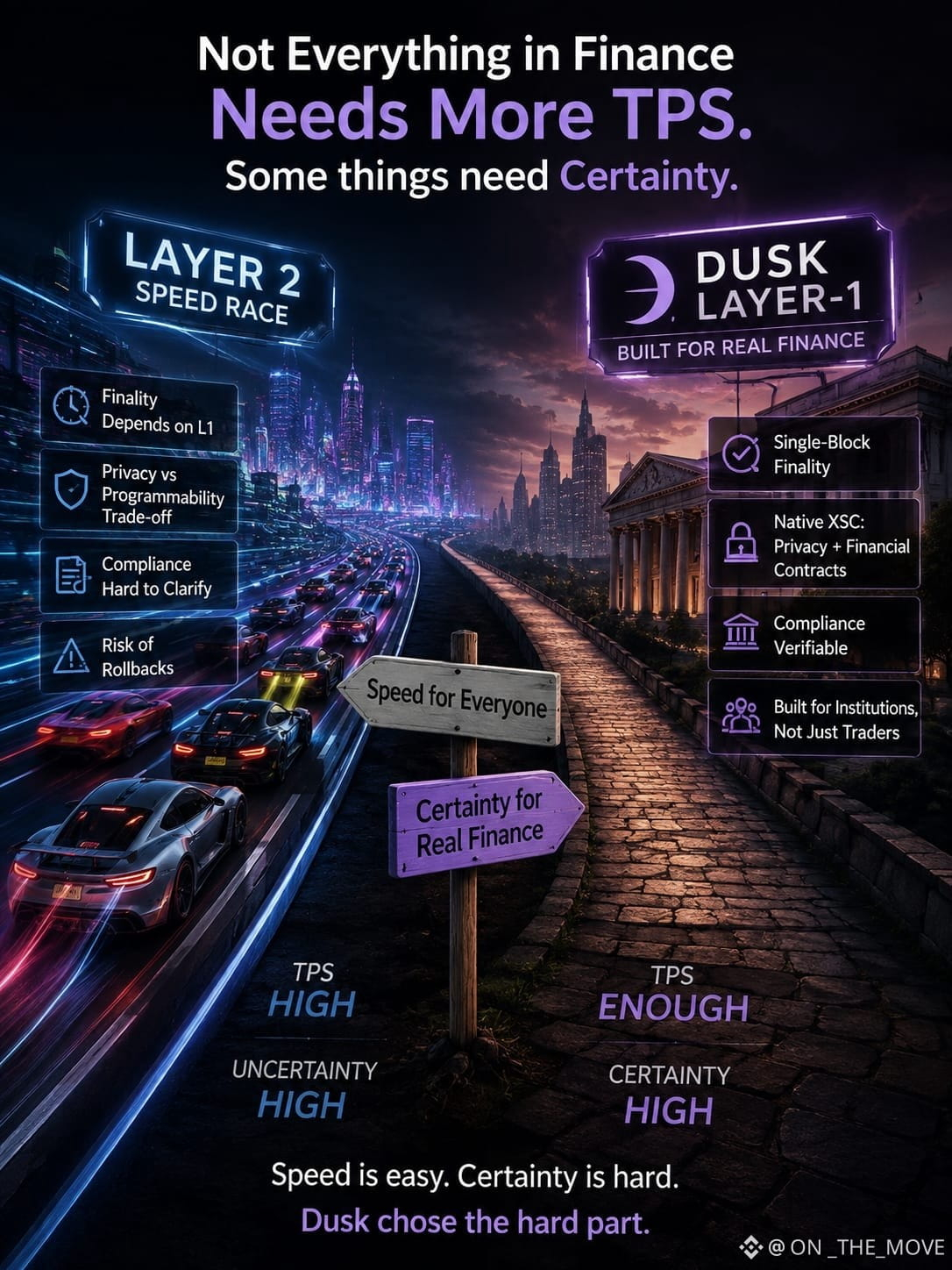
Ich habe diesen Kreislauf schon einmal gesehen. Eine neue Kette taucht auf, alle fangen an, über TPS und das Wachstum des Ökosystems zu reden, und dann verschwindet der meiste Lärm langsam wieder. Als ich zum ersten Mal sah, wie Dusk auf seine eigene Layer-1 besteht, habe ich ehrlich gesagt gedacht: Warum muss man es schwerer machen?
Je mehr ich es mir angesehen habe, desto sturer wirkte das Ganze gar nicht. Dusk lehnt Geschwindigkeit nicht wirklich ab. Es scheint, für ein anderes Problem zu lösen. In reguliertem Finanzwesen kann eine vorhersehbare Abwicklung viel wichtiger sein als ein weiterer beeindruckender Benchmark. Seine Basisschicht ist um deterministische Finalität herum gebaut, während sensible Aktivitäten bei Bedarf für die Verifikation durch selektive Offenlegung privat bleiben können.
Genau das hat meine Aufmerksamkeit geweckt. Wertpapiere sind nicht einfach nur Token, die in Wallets herumliegen. Es gibt Emissionsregeln, Berechtigungen, Übertragungen, Rücknahmen und Audits. Dusk’ XSC-Design versucht, diese Dinge nah an der Kette zu halten, statt Datenschutz und Compliance als bloßen Nachgedanken hinzuzufügen.
Ich bin jedoch noch nicht überzeugt, dass der Markt das wirklich interessieren wird. Krypto liebt Dinge, die sich ordentlich in ein Diagramm einfügen lassen, und TPS ist dafür perfekt. Aber ich habe genug Zyklen beobachtet, um zu wissen: „schnell“ bedeutet nicht viel, wenn Verwahrung und Abwicklung an irgendeiner anderen Stelle trotzdem erst geklärt werden müssen.
Die unabhängige L1-Entscheidung ergibt für mich inzwischen also mehr Sinn. Nicht, weil Layer 2 falsch wäre, und ganz bestimmt nicht, weil Dusk garantiert gewinnen wird, sondern weil es so aussieht, als würde Dusk auf Gewissheit rund um Finanzwerte optimieren, statt einfach bei einem weiteren Geschwindigkeitsrennen mitzulaufen.
Vielleicht ist genau das der Teil, der mich interessiert: Finalität, Privatsphäre und Compliance nahe an der eigentlichen Abwicklung zu halten.
Das wirkt für mich nützlicher als eine weitere TPS-Schlagzeile.
@Dusk_Foundation #dusk $DUSK
Ich habe diesen Kreislauf schon einmal gesehen. Eine neue Kette taucht auf, alle fangen an, über TPS und das Wachstum des Ökosystems zu reden, und dann verschwindet der meiste Lärm langsam wieder. Als ich zum ersten Mal sah, wie Dusk auf seine eigene Layer-1 besteht, habe ich ehrlich gesagt gedacht: Warum muss man es schwerer machen?
Je mehr ich es mir angesehen habe, desto sturer wirkte das Ganze gar nicht. Dusk lehnt Geschwindigkeit nicht wirklich ab. Es scheint, für ein anderes Problem zu lösen. In reguliertem Finanzwesen kann eine vorhersehbare Abwicklung viel wichtiger sein als ein weiterer beeindruckender Benchmark. Seine Basisschicht ist um deterministische Finalität herum gebaut, während sensible Aktivitäten bei Bedarf für die Verifikation durch selektive Offenlegung privat bleiben können.
Genau das hat meine Aufmerksamkeit geweckt. Wertpapiere sind nicht einfach nur Token, die in Wallets herumliegen. Es gibt Emissionsregeln, Berechtigungen, Übertragungen, Rücknahmen und Audits. Dusk’ XSC-Design versucht, diese Dinge nah an der Kette zu halten, statt Datenschutz und Compliance als bloßen Nachgedanken hinzuzufügen.
Ich bin jedoch noch nicht überzeugt, dass der Markt das wirklich interessieren wird. Krypto liebt Dinge, die sich ordentlich in ein Diagramm einfügen lassen, und TPS ist dafür perfekt. Aber ich habe genug Zyklen beobachtet, um zu wissen: „schnell“ bedeutet nicht viel, wenn Verwahrung und Abwicklung an irgendeiner anderen Stelle trotzdem erst geklärt werden müssen.
Die unabhängige L1-Entscheidung ergibt für mich inzwischen also mehr Sinn. Nicht, weil Layer 2 falsch wäre, und ganz bestimmt nicht, weil Dusk garantiert gewinnen wird, sondern weil es so aussieht, als würde Dusk auf Gewissheit rund um Finanzwerte optimieren, statt einfach bei einem weiteren Geschwindigkeitsrennen mitzulaufen.
Vielleicht ist genau das der Teil, der mich interessiert: Finalität, Privatsphäre und Compliance nahe an der eigentlichen Abwicklung zu halten.
Das wirkt für mich nützlicher als eine weitere TPS-Schlagzeile.
@Dusk #dusk $DUSK
Je mehr ich es mir angesehen habe, desto sturer wirkte das Ganze gar nicht. Dusk lehnt Geschwindigkeit nicht wirklich ab. Es scheint, für ein anderes Problem zu lösen. In reguliertem Finanzwesen kann eine vorhersehbare Abwicklung viel wichtiger sein als ein weiterer beeindruckender Benchmark. Seine Basisschicht ist um deterministische Finalität herum gebaut, während sensible Aktivitäten bei Bedarf für die Verifikation durch selektive Offenlegung privat bleiben können.
Genau das hat meine Aufmerksamkeit geweckt. Wertpapiere sind nicht einfach nur Token, die in Wallets herumliegen. Es gibt Emissionsregeln, Berechtigungen, Übertragungen, Rücknahmen und Audits. Dusk’ XSC-Design versucht, diese Dinge nah an der Kette zu halten, statt Datenschutz und Compliance als bloßen Nachgedanken hinzuzufügen.
Ich bin jedoch noch nicht überzeugt, dass der Markt das wirklich interessieren wird. Krypto liebt Dinge, die sich ordentlich in ein Diagramm einfügen lassen, und TPS ist dafür perfekt. Aber ich habe genug Zyklen beobachtet, um zu wissen: „schnell“ bedeutet nicht viel, wenn Verwahrung und Abwicklung an irgendeiner anderen Stelle trotzdem erst geklärt werden müssen.
Die unabhängige L1-Entscheidung ergibt für mich inzwischen also mehr Sinn. Nicht, weil Layer 2 falsch wäre, und ganz bestimmt nicht, weil Dusk garantiert gewinnen wird, sondern weil es so aussieht, als würde Dusk auf Gewissheit rund um Finanzwerte optimieren, statt einfach bei einem weiteren Geschwindigkeitsrennen mitzulaufen.
Vielleicht ist genau das der Teil, der mich interessiert: Finalität, Privatsphäre und Compliance nahe an der eigentlichen Abwicklung zu halten.
Das wirkt für mich nützlicher als eine weitere TPS-Schlagzeile.
@Dusk #dusk $DUSK
5
8
1k
·
--
Bullisch
Ich bemerke etwas an TermMax, das leicht missverstanden werden kann – besonders nach genug DeFi-Zyklen, um zu wissen, dass „Schutz“ eine sehr unterschiedliche Gleichung verbergen kann.
Der Teil, der mich aufgehalten hat, ist die physische Lieferung. TermMax sagt, dass, wenn eine Liquidation nicht in der Lage ist, einen Kredit vollständig zurückzugewinnen, der verbleibende Pool an die FT-Inhaber ausgeliefert werden kann – wobei das zugrunde liegende Asset und die Sicherheiten gemäß dem Anteil jedes Inhabers an den ausstehenden FTs verteilt werden. Das ist eine echte Absicherung. Man wird nicht einfach mit einem Schuldennachweis für schlechte Forderungen abgespeist.
Aber ich denke immer wieder an die „proportionale Verteilung“. Proportional wozu, wenn es tatsächlich passiert? Nicht zu dem Preis, den ich gezahlt habe. Nicht unbedingt dazu, wie früh ich eingestiegen bin. Entscheidend ist mein FT-Anteil im Verhältnis zur gesamten ausstehenden Menge zu diesem Zeitpunkt.
Dieser Unterschied ist wichtig. Ich habe das schon einmal in Krypto gesehen: Ein Mechanismus kann real, transparent und dennoch in viel geringerem Maß schützend wirken, als die Schlagzeile vermuten lässt. Wenn ein Markt überfüllt ist und mehrere Inhaber nach derselben Sicherheit greifen, nachdem eine Liquidation gescheitert ist, wird jeder Anteil dünner. Der Schutz verschwindet nicht; die Rückgewinnung wird aufgeteilt.
Ich nenne das keinen Mangel. Es mag sogar ehrlicher sein, als vorzugeben, dass schlechte Schulden einfach verschwinden können. Aber ich bin noch nicht sicher, wie das in der Praxis aussieht. Ich habe noch nicht genug öffentliches Datenmaterial gesehen, das zeigt, was FT-Inhaber in echten Lieferevents tatsächlich zurückbekommen haben. Vielleicht ist das das fehlende Puzzleteil.
@termmax #termmax
Ich bemerke etwas an TermMax, das leicht missverstanden werden kann – besonders nach genug DeFi-Zyklen, um zu wissen, dass „Schutz“ eine sehr unterschiedliche Gleichung verbergen kann.
Der Teil, der mich aufgehalten hat, ist die physische Lieferung. TermMax sagt, dass, wenn eine Liquidation nicht in der Lage ist, einen Kredit vollständig zurückzugewinnen, der verbleibende Pool an die FT-Inhaber ausgeliefert werden kann – wobei das zugrunde liegende Asset und die Sicherheiten gemäß dem Anteil jedes Inhabers an den ausstehenden FTs verteilt werden. Das ist eine echte Absicherung. Man wird nicht einfach mit einem Schuldennachweis für schlechte Forderungen abgespeist.
Aber ich denke immer wieder an die „proportionale Verteilung“. Proportional wozu, wenn es tatsächlich passiert? Nicht zu dem Preis, den ich gezahlt habe. Nicht unbedingt dazu, wie früh ich eingestiegen bin. Entscheidend ist mein FT-Anteil im Verhältnis zur gesamten ausstehenden Menge zu diesem Zeitpunkt.
Dieser Unterschied ist wichtig. Ich habe das schon einmal in Krypto gesehen: Ein Mechanismus kann real, transparent und dennoch in viel geringerem Maß schützend wirken, als die Schlagzeile vermuten lässt. Wenn ein Markt überfüllt ist und mehrere Inhaber nach derselben Sicherheit greifen, nachdem eine Liquidation gescheitert ist, wird jeder Anteil dünner. Der Schutz verschwindet nicht; die Rückgewinnung wird aufgeteilt.
Ich nenne das keinen Mangel. Es mag sogar ehrlicher sein, als vorzugeben, dass schlechte Schulden einfach verschwinden können. Aber ich bin noch nicht sicher, wie das in der Praxis aussieht. Ich habe noch nicht genug öffentliches Datenmaterial gesehen, das zeigt, was FT-Inhaber in echten Lieferevents tatsächlich zurückbekommen haben. Vielleicht ist das das fehlende Puzzleteil.
@TermMax #termmax
Der Teil, der mich aufgehalten hat, ist die physische Lieferung. TermMax sagt, dass, wenn eine Liquidation nicht in der Lage ist, einen Kredit vollständig zurückzugewinnen, der verbleibende Pool an die FT-Inhaber ausgeliefert werden kann – wobei das zugrunde liegende Asset und die Sicherheiten gemäß dem Anteil jedes Inhabers an den ausstehenden FTs verteilt werden. Das ist eine echte Absicherung. Man wird nicht einfach mit einem Schuldennachweis für schlechte Forderungen abgespeist.
Aber ich denke immer wieder an die „proportionale Verteilung“. Proportional wozu, wenn es tatsächlich passiert? Nicht zu dem Preis, den ich gezahlt habe. Nicht unbedingt dazu, wie früh ich eingestiegen bin. Entscheidend ist mein FT-Anteil im Verhältnis zur gesamten ausstehenden Menge zu diesem Zeitpunkt.
Dieser Unterschied ist wichtig. Ich habe das schon einmal in Krypto gesehen: Ein Mechanismus kann real, transparent und dennoch in viel geringerem Maß schützend wirken, als die Schlagzeile vermuten lässt. Wenn ein Markt überfüllt ist und mehrere Inhaber nach derselben Sicherheit greifen, nachdem eine Liquidation gescheitert ist, wird jeder Anteil dünner. Der Schutz verschwindet nicht; die Rückgewinnung wird aufgeteilt.
Ich nenne das keinen Mangel. Es mag sogar ehrlicher sein, als vorzugeben, dass schlechte Schulden einfach verschwinden können. Aber ich bin noch nicht sicher, wie das in der Praxis aussieht. Ich habe noch nicht genug öffentliches Datenmaterial gesehen, das zeigt, was FT-Inhaber in echten Lieferevents tatsächlich zurückbekommen haben. Vielleicht ist das das fehlende Puzzleteil.
@TermMax #termmax

1
1
379
·
--
Bullisch
Ich habe genug DeFi-Zyklen gesehen, um misstrauisch zu werden, sobald ein Protokoll behauptet, es habe einen saubereren Weg gefunden, Geld zu verdienen. Meist kommt dieselbe Geschichte in anderem Gewand zurück: Leverage, Yield, Punkte, Anreize – und dann ein Liquiditätsengpass, mit dem niemand gerechnet hat.
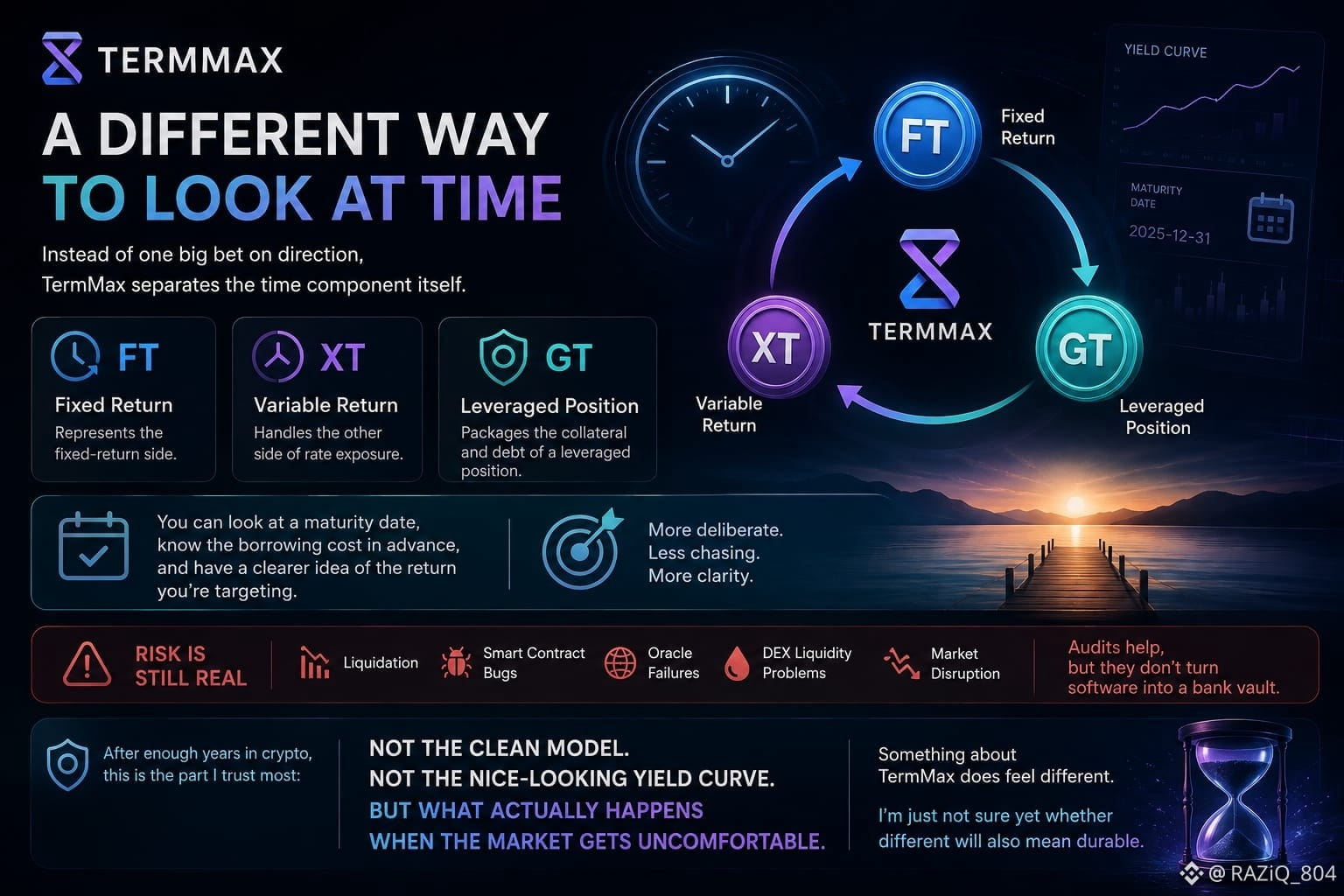
Deshalb ist TermMax bei mir hängen geblieben. Nicht weil ich glaube, es hätte sich irgendwie den üblichen Regeln entzogen, sondern weil die Idee deutlich genug anders ist, dass ich kurz innehalte. Anstatt alles als eine einzige große Wette auf die Richtung zu behandeln, trennt es den Zeitanteil selbst. FT steht für die Fixed-Return-Seite, XT übernimmt die andere Seite dieser Rate-Exponierung, während GT das Sicherheiten- und Schuldenpaket einer gehebelten Position bündelt.
Ich finde die Idee tatsächlich ziemlich direkt. Du kannst ein Fälligkeitsdatum ansehen, die Kreditkosten im Voraus kennen und dir ein klareres Bild von der Rendite machen, auf die du abzielst – statt ständig hinter dem herzulaufen, was der variable Markt gerade bietet. Das wirkt bewusster, als es bei vielen DeFi-Produkten, die ich gesehen habe, der Fall ist.
Aber ich habe das schon einmal erlebt: Elegante Mechaniken können das Risiko kleiner aussehen lassen, als es wirklich ist.
Ein fester Zinssatz ist immer noch nicht dasselbe wie ein garantierter Kapitalbetrag. TermMax selbst nennt Liquidationen, Bugs in Smart Contracts, Oracle-Ausfälle, Probleme mit der DEX-Liquidität und Marktdisruption als echte Risiken. Audits helfen zwar, aber sie machen Software nicht automatisch zu einem Tresor.
Also bin ich noch nicht bereit, das als zuverlässig zu bezeichnen. Ich würde lieber eine kleine Menge durch den gesamten Zyklus schicken, beobachten, wie sich Einstieg, Liquidität, Sicherheiten, Fälligkeit und Abwicklung tatsächlich verhalten, und sehen, ob die Zahlen im echten Markt standhalten.
Nach so vielen Jahren in Krypto ist das wahrscheinlich der Teil, dem ich am meisten vertraue: nicht das saubere Modell, nicht die hübsch aussehende Zinskurve, sondern das, was wirklich passiert, wenn der Markt ungemütlich wird.
Irgendetwas an TermMax fühlt sich anders an. Ich bin nur noch nicht sicher, ob „anders“ auch „dauerhaft“ bedeutet.
@termmax #termmax
Ich habe genug DeFi-Zyklen gesehen, um misstrauisch zu werden, sobald ein Protokoll behauptet, es habe einen saubereren Weg gefunden, Geld zu verdienen. Meist kommt dieselbe Geschichte in anderem Gewand zurück: Leverage, Yield, Punkte, Anreize – und dann ein Liquiditätsengpass, mit dem niemand gerechnet hat.
Deshalb ist TermMax bei mir hängen geblieben. Nicht weil ich glaube, es hätte sich irgendwie den üblichen Regeln entzogen, sondern weil die Idee deutlich genug anders ist, dass ich kurz innehalte. Anstatt alles als eine einzige große Wette auf die Richtung zu behandeln, trennt es den Zeitanteil selbst. FT steht für die Fixed-Return-Seite, XT übernimmt die andere Seite dieser Rate-Exponierung, während GT das Sicherheiten- und Schuldenpaket einer gehebelten Position bündelt.
Ich finde die Idee tatsächlich ziemlich direkt. Du kannst ein Fälligkeitsdatum ansehen, die Kreditkosten im Voraus kennen und dir ein klareres Bild von der Rendite machen, auf die du abzielst – statt ständig hinter dem herzulaufen, was der variable Markt gerade bietet. Das wirkt bewusster, als es bei vielen DeFi-Produkten, die ich gesehen habe, der Fall ist.
Aber ich habe das schon einmal erlebt: Elegante Mechaniken können das Risiko kleiner aussehen lassen, als es wirklich ist.
Ein fester Zinssatz ist immer noch nicht dasselbe wie ein garantierter Kapitalbetrag. TermMax selbst nennt Liquidationen, Bugs in Smart Contracts, Oracle-Ausfälle, Probleme mit der DEX-Liquidität und Marktdisruption als echte Risiken. Audits helfen zwar, aber sie machen Software nicht automatisch zu einem Tresor.
Also bin ich noch nicht bereit, das als zuverlässig zu bezeichnen. Ich würde lieber eine kleine Menge durch den gesamten Zyklus schicken, beobachten, wie sich Einstieg, Liquidität, Sicherheiten, Fälligkeit und Abwicklung tatsächlich verhalten, und sehen, ob die Zahlen im echten Markt standhalten.
Nach so vielen Jahren in Krypto ist das wahrscheinlich der Teil, dem ich am meisten vertraue: nicht das saubere Modell, nicht die hübsch aussehende Zinskurve, sondern das, was wirklich passiert, wenn der Markt ungemütlich wird.
Irgendetwas an TermMax fühlt sich anders an. Ich bin nur noch nicht sicher, ob „anders“ auch „dauerhaft“ bedeutet.
@TermMax #termmax
Deshalb ist TermMax bei mir hängen geblieben. Nicht weil ich glaube, es hätte sich irgendwie den üblichen Regeln entzogen, sondern weil die Idee deutlich genug anders ist, dass ich kurz innehalte. Anstatt alles als eine einzige große Wette auf die Richtung zu behandeln, trennt es den Zeitanteil selbst. FT steht für die Fixed-Return-Seite, XT übernimmt die andere Seite dieser Rate-Exponierung, während GT das Sicherheiten- und Schuldenpaket einer gehebelten Position bündelt.
Ich finde die Idee tatsächlich ziemlich direkt. Du kannst ein Fälligkeitsdatum ansehen, die Kreditkosten im Voraus kennen und dir ein klareres Bild von der Rendite machen, auf die du abzielst – statt ständig hinter dem herzulaufen, was der variable Markt gerade bietet. Das wirkt bewusster, als es bei vielen DeFi-Produkten, die ich gesehen habe, der Fall ist.
Aber ich habe das schon einmal erlebt: Elegante Mechaniken können das Risiko kleiner aussehen lassen, als es wirklich ist.
Ein fester Zinssatz ist immer noch nicht dasselbe wie ein garantierter Kapitalbetrag. TermMax selbst nennt Liquidationen, Bugs in Smart Contracts, Oracle-Ausfälle, Probleme mit der DEX-Liquidität und Marktdisruption als echte Risiken. Audits helfen zwar, aber sie machen Software nicht automatisch zu einem Tresor.
Also bin ich noch nicht bereit, das als zuverlässig zu bezeichnen. Ich würde lieber eine kleine Menge durch den gesamten Zyklus schicken, beobachten, wie sich Einstieg, Liquidität, Sicherheiten, Fälligkeit und Abwicklung tatsächlich verhalten, und sehen, ob die Zahlen im echten Markt standhalten.
Nach so vielen Jahren in Krypto ist das wahrscheinlich der Teil, dem ich am meisten vertraue: nicht das saubere Modell, nicht die hübsch aussehende Zinskurve, sondern das, was wirklich passiert, wenn der Markt ungemütlich wird.
Irgendetwas an TermMax fühlt sich anders an. Ich bin nur noch nicht sicher, ob „anders“ auch „dauerhaft“ bedeutet.
@TermMax #termmax
5
4
202
·
--
Bullisch
Ich bin lange genug im Krypto-Bereich, um das Wort „Privatsphäre“ müde zu sein. In jedem Zyklus zieht dieses Etikett die Leute scheinbar direkt in dieselben Debatten über anonymes Geld und Regulierung. DUSK wirkt auf mich anders, weil die Frage weniger darin zu liegen scheint, Zahlungen zu verbergen, sondern darin, ob Finanzwerte vertraulich bleiben können, ohne dabei unmöglich zu auditieren zu werden.
Deshalb schaue ich weiter hin. Das Design zielt auf regulierte Märkte, selektive Offenlegung und On-Chain-Abwicklung ab – nicht auf Privatsphäre um der Privatsphäre willen. Die technische Story entwickelt sich noch, und ehrlich gesagt bevorzuge ich das, statt so zu tun, als sei bereits alles geklärt.
Dann ist da noch das Token-Modell. Die Emissionen werden über Jahrzehnte gestreckt, aber allein das macht einen Vermögenswert noch nicht wertvoll. Ich habe es schon erlebt, dass sorgfältig entwickelte Token-Ökonomien scheitern, weil darunter nicht genug echte Aktivität war.
Auch die Partnerschaften haben mich angesprochen. Aber das habe ich schon einmal gesehen: Eine Pressemeldung kann viel früher eintreffen, als es tatsächlich aussagekräftige Nutzung gibt. Entscheidend ist das Langweilige – die echten Abwicklungen, die Vertragsaktivität, organische Nutzer, die Beteiligung an der Governance und eine Nachfrage, die auch ohne Anreize funktioniert.
Ich bin noch nicht überzeugt und vertraue der Story nicht vollständig. Aber ich möchte DUSK auch nicht einfach abtun, nur weil „Privatsphäre“ inzwischen zu einem so überladenen Wort geworden ist.
Für mich hat DUSK einen echten Test: Kommen regulierte Assets weiterhin zurück, um Emissionen vorzunehmen, zu handeln und abzuwickeln?
Das beobachte ich.
@Dusk_Foundation #dusk $DUSK
{spot}(DUSKUSDT)
$BOME
{spot}(BOMEUSDT)
$MAGMA
{future}(MAGMAUSDT)
#FedMinutesShowNoSupportForRateCuts
#CryptoRally
#FOMCWatch
#UAEEndsEconomicTiesWithIran
Ich bin lange genug im Krypto-Bereich, um das Wort „Privatsphäre“ müde zu sein. In jedem Zyklus zieht dieses Etikett die Leute scheinbar direkt in dieselben Debatten über anonymes Geld und Regulierung. DUSK wirkt auf mich anders, weil die Frage weniger darin zu liegen scheint, Zahlungen zu verbergen, sondern darin, ob Finanzwerte vertraulich bleiben können, ohne dabei unmöglich zu auditieren zu werden.
Deshalb schaue ich weiter hin. Das Design zielt auf regulierte Märkte, selektive Offenlegung und On-Chain-Abwicklung ab – nicht auf Privatsphäre um der Privatsphäre willen. Die technische Story entwickelt sich noch, und ehrlich gesagt bevorzuge ich das, statt so zu tun, als sei bereits alles geklärt.
Dann ist da noch das Token-Modell. Die Emissionen werden über Jahrzehnte gestreckt, aber allein das macht einen Vermögenswert noch nicht wertvoll. Ich habe es schon erlebt, dass sorgfältig entwickelte Token-Ökonomien scheitern, weil darunter nicht genug echte Aktivität war.
Auch die Partnerschaften haben mich angesprochen. Aber das habe ich schon einmal gesehen: Eine Pressemeldung kann viel früher eintreffen, als es tatsächlich aussagekräftige Nutzung gibt. Entscheidend ist das Langweilige – die echten Abwicklungen, die Vertragsaktivität, organische Nutzer, die Beteiligung an der Governance und eine Nachfrage, die auch ohne Anreize funktioniert.
Ich bin noch nicht überzeugt und vertraue der Story nicht vollständig. Aber ich möchte DUSK auch nicht einfach abtun, nur weil „Privatsphäre“ inzwischen zu einem so überladenen Wort geworden ist.
Für mich hat DUSK einen echten Test: Kommen regulierte Assets weiterhin zurück, um Emissionen vorzunehmen, zu handeln und abzuwickeln?
Das beobachte ich.
@Dusk #dusk $DUSK
$BOME
$MAGMA
#FedMinutesShowNoSupportForRateCuts
#CryptoRally
#FOMCWatch
#UAEEndsEconomicTiesWithIran
Deshalb schaue ich weiter hin. Das Design zielt auf regulierte Märkte, selektive Offenlegung und On-Chain-Abwicklung ab – nicht auf Privatsphäre um der Privatsphäre willen. Die technische Story entwickelt sich noch, und ehrlich gesagt bevorzuge ich das, statt so zu tun, als sei bereits alles geklärt.
Dann ist da noch das Token-Modell. Die Emissionen werden über Jahrzehnte gestreckt, aber allein das macht einen Vermögenswert noch nicht wertvoll. Ich habe es schon erlebt, dass sorgfältig entwickelte Token-Ökonomien scheitern, weil darunter nicht genug echte Aktivität war.
Auch die Partnerschaften haben mich angesprochen. Aber das habe ich schon einmal gesehen: Eine Pressemeldung kann viel früher eintreffen, als es tatsächlich aussagekräftige Nutzung gibt. Entscheidend ist das Langweilige – die echten Abwicklungen, die Vertragsaktivität, organische Nutzer, die Beteiligung an der Governance und eine Nachfrage, die auch ohne Anreize funktioniert.
Ich bin noch nicht überzeugt und vertraue der Story nicht vollständig. Aber ich möchte DUSK auch nicht einfach abtun, nur weil „Privatsphäre“ inzwischen zu einem so überladenen Wort geworden ist.
Für mich hat DUSK einen echten Test: Kommen regulierte Assets weiterhin zurück, um Emissionen vorzunehmen, zu handeln und abzuwickeln?
Das beobachte ich.
@Dusk #dusk $DUSK
$BOME
$MAGMA
#FedMinutesShowNoSupportForRateCuts
#CryptoRally
#FOMCWatch
#UAEEndsEconomicTiesWithIran
🚀 DUSK for the long run?
75%
👀 Real use or hype?
25%
🔐 Privacy + regulation?
0%
4 Stimmen • Abstimmung beendet
7
6
339
·
--
Bullisch
Ich beobachte seit Jahren, wie Festzins-Experimente kommen und gehen. Die meisten von ihnen versprachen eine saubere Umwandlung von variablen Zinssätzen in etwas Vorhersehbares – und drifteten dann still zurück in dieselbe unübersichtliche Liquidität und Zinsüberraschungen, von denen alle schon wussten.
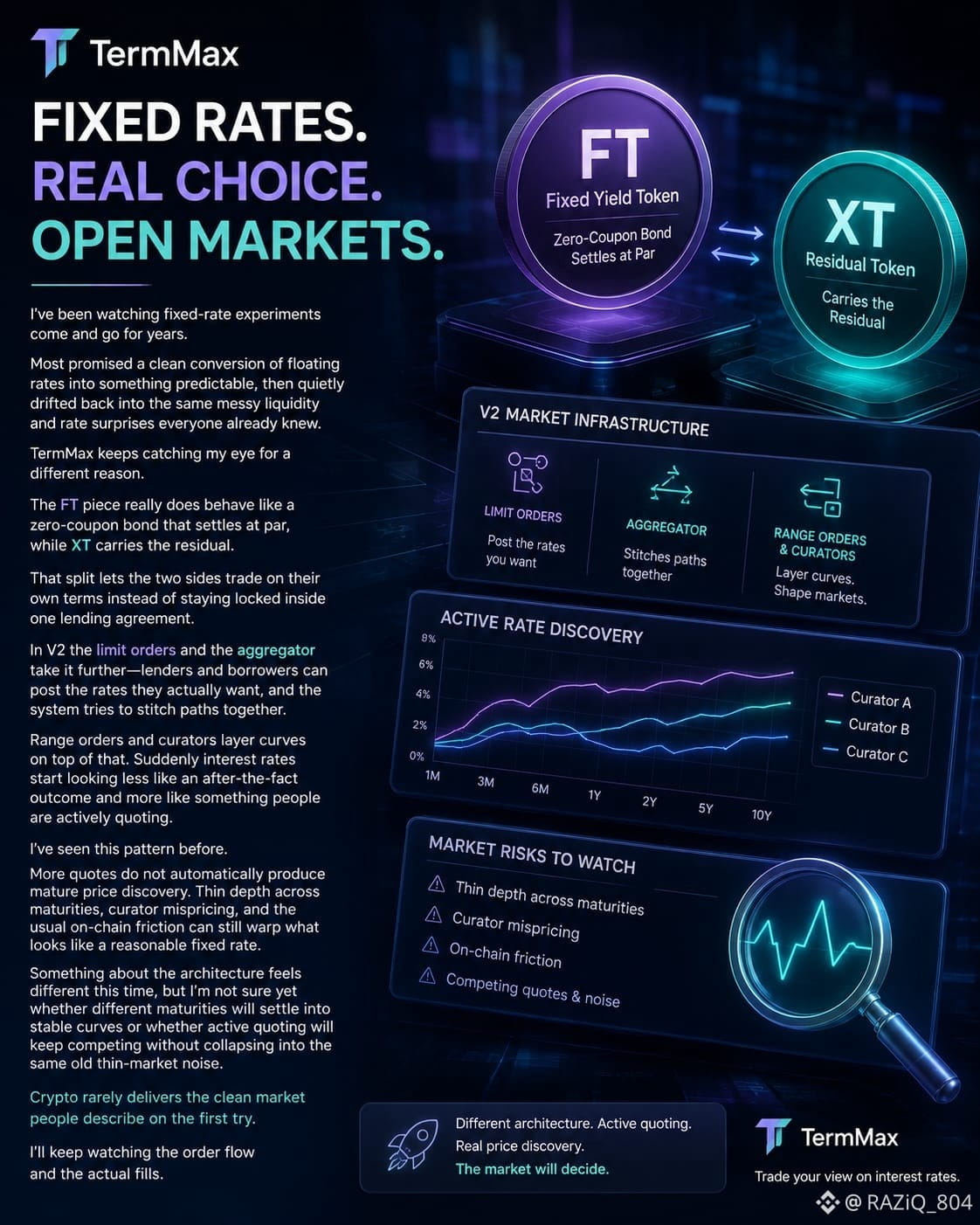
TermMax fällt mir aus einem anderen Grund besonders auf. Der FT-Artikel verhält sich tatsächlich wie eine Zero-Coupon-Anleihe, die zum Nennwert ausbezahlt wird, während XT das verbleibende Reststück trägt. Diese Aufteilung ermöglicht es, dass beide Seiten zu ihren eigenen Bedingungen handeln, statt in einem einzigen Kreditvertrag festzustecken. In V2 geht man mit Limit Orders und dem Aggregator noch einen Schritt weiter: Kreditgeber und Kreditnehmer können die Zinsen posten, die sie wirklich wollen, und das System versucht, Pfade zusammenzunähen. Range Orders und Curators legen zusätzlich Kurven darüber. Plötzlich sehen die Zinssätze weniger nach einem nachträglichen Ergebnis aus, und mehr danach, dass sie aktiv beziffert werden.
Dieses Muster habe ich schon einmal gesehen. Mehr Quotes führen nicht automatisch zu einer reifen Preisfindung. Dünne Liquidität über die Laufzeiten hinweg, falsche Bewertungen durch Curators und die üblichen On-Chain-Reibungen können weiterhin das verformen, was wie ein plausibler Festzins aussieht. Irgendetwas an der Architektur fühlt sich diesmal anders an – aber ich bin noch nicht sicher, ob sich verschiedene Laufzeiten in stabile Kurven einpendeln oder ob aktives Quotieren weiter konkurrieren wird, ohne in dasselbe alte, dünne Markt-Rauschen einzubrechen. Krypto liefert selten beim ersten Versuch genau den sauberen Markt, den die Leute beschreiben. Ich werde weiter den Order-Flow und die tatsächlichen Fills beobachten.
#termmax @termmax
Ich beobachte seit Jahren, wie Festzins-Experimente kommen und gehen. Die meisten von ihnen versprachen eine saubere Umwandlung von variablen Zinssätzen in etwas Vorhersehbares – und drifteten dann still zurück in dieselbe unübersichtliche Liquidität und Zinsüberraschungen, von denen alle schon wussten.
TermMax fällt mir aus einem anderen Grund besonders auf. Der FT-Artikel verhält sich tatsächlich wie eine Zero-Coupon-Anleihe, die zum Nennwert ausbezahlt wird, während XT das verbleibende Reststück trägt. Diese Aufteilung ermöglicht es, dass beide Seiten zu ihren eigenen Bedingungen handeln, statt in einem einzigen Kreditvertrag festzustecken. In V2 geht man mit Limit Orders und dem Aggregator noch einen Schritt weiter: Kreditgeber und Kreditnehmer können die Zinsen posten, die sie wirklich wollen, und das System versucht, Pfade zusammenzunähen. Range Orders und Curators legen zusätzlich Kurven darüber. Plötzlich sehen die Zinssätze weniger nach einem nachträglichen Ergebnis aus, und mehr danach, dass sie aktiv beziffert werden.
Dieses Muster habe ich schon einmal gesehen. Mehr Quotes führen nicht automatisch zu einer reifen Preisfindung. Dünne Liquidität über die Laufzeiten hinweg, falsche Bewertungen durch Curators und die üblichen On-Chain-Reibungen können weiterhin das verformen, was wie ein plausibler Festzins aussieht. Irgendetwas an der Architektur fühlt sich diesmal anders an – aber ich bin noch nicht sicher, ob sich verschiedene Laufzeiten in stabile Kurven einpendeln oder ob aktives Quotieren weiter konkurrieren wird, ohne in dasselbe alte, dünne Markt-Rauschen einzubrechen. Krypto liefert selten beim ersten Versuch genau den sauberen Markt, den die Leute beschreiben. Ich werde weiter den Order-Flow und die tatsächlichen Fills beobachten.
#termmax @TermMax
TermMax fällt mir aus einem anderen Grund besonders auf. Der FT-Artikel verhält sich tatsächlich wie eine Zero-Coupon-Anleihe, die zum Nennwert ausbezahlt wird, während XT das verbleibende Reststück trägt. Diese Aufteilung ermöglicht es, dass beide Seiten zu ihren eigenen Bedingungen handeln, statt in einem einzigen Kreditvertrag festzustecken. In V2 geht man mit Limit Orders und dem Aggregator noch einen Schritt weiter: Kreditgeber und Kreditnehmer können die Zinsen posten, die sie wirklich wollen, und das System versucht, Pfade zusammenzunähen. Range Orders und Curators legen zusätzlich Kurven darüber. Plötzlich sehen die Zinssätze weniger nach einem nachträglichen Ergebnis aus, und mehr danach, dass sie aktiv beziffert werden.
Dieses Muster habe ich schon einmal gesehen. Mehr Quotes führen nicht automatisch zu einer reifen Preisfindung. Dünne Liquidität über die Laufzeiten hinweg, falsche Bewertungen durch Curators und die üblichen On-Chain-Reibungen können weiterhin das verformen, was wie ein plausibler Festzins aussieht. Irgendetwas an der Architektur fühlt sich diesmal anders an – aber ich bin noch nicht sicher, ob sich verschiedene Laufzeiten in stabile Kurven einpendeln oder ob aktives Quotieren weiter konkurrieren wird, ohne in dasselbe alte, dünne Markt-Rauschen einzubrechen. Krypto liefert selten beim ersten Versuch genau den sauberen Markt, den die Leute beschreiben. Ich werde weiter den Order-Flow und die tatsächlichen Fills beobachten.
#termmax @TermMax
10
9
686
·
--
Bullisch
Ich beobachte seit Jahren Fixed-Rate-Versuche in DeFi. Die meisten enden als Marketinglabel, die auf die gleiche alte variable Maschinerie geklebt werden – oder sie brechen zusammen, sobald die Liquidität ausdünnt. Die Sätze werden zitiert, dann treiben sie davon, oder das Ganze liegt einfach ungenutzt herum, weil niemand Kapital in etwas sperren möchte, das sich starr und einseitig anfühlt.
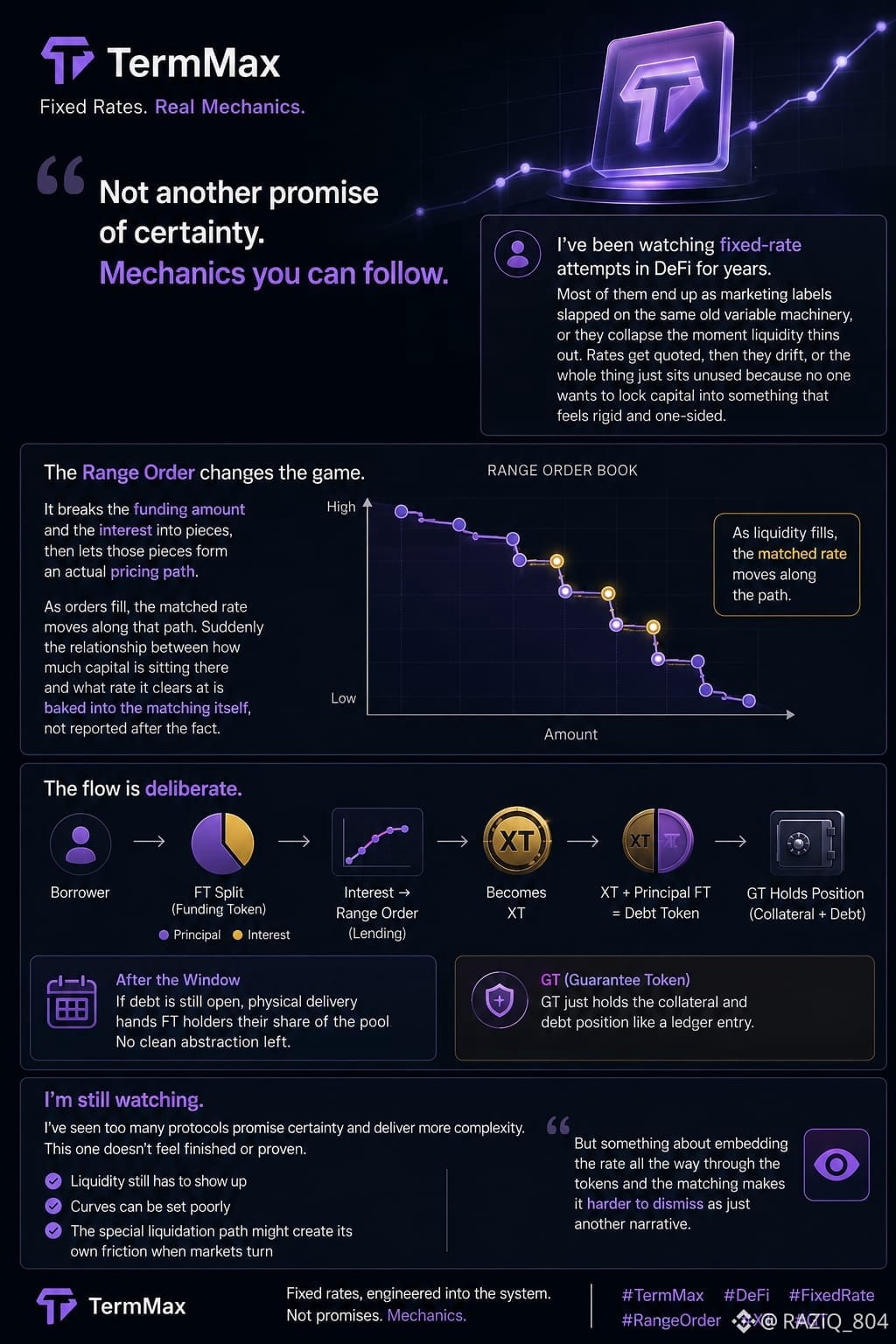
TermMax zieht mich aus einem anderen Grund immer wieder zurück. Die Range Order ist nicht einfach nur eine weitere Kurve. Sie zerlegt den Finanzierungsbetrag und den Zins in Teile und lässt diese Teile dann einen echten Preis-Pfad bilden. Wenn Orders ausgeführt werden, bewegt sich der abgeglichene Satz entlang dieses Pfads. Plötzlich ist die Beziehung zwischen dem, wie viel Kapital dort bereitsteht, und dem, zu welchem Satz es durchläuft, direkt in das Matching eingebaut – nicht erst im Nachhinein berichtet.
Wenn du ausleihst, wird das FT aufgeteilt – der Principal auf die eine, der Interest auf die andere Seite. Die Zinsseite geht durch die lending Range Order und wird zu XT. Dann liegen XT und das Principal-FT gemeinsam als Debt-Token vor. Dieser Teil fühlt sich bewusst an. Die festen Kosten sind kein Parameter, von dem du hoffst, dass er hält; sie fließen in die Tokens und den Order-Flow ein. GT hält einfach die Sicherheiten- und Debt-Position wie ein Ledger-Eintrag. Und wenn die Schuld nach dem Zeitfenster noch offen ist, übergibt die physische Lieferung den FT-Inhabern ihren Anteil am Pool. Keine saubere Abstraktion bleibt übrig.
Ich habe zu viele Protokolle gesehen, die Sicherheit versprechen und stattdessen mehr Komplexität liefern. Dieses hier wirkt weder fertig noch bewiesen. Die Liquidität muss sich erst zeigen, Kurven können schlecht gesetzt werden, und der spezielle Liquidationspfad könnte bei Marktumschwüngen seine eigene Reibung erzeugen. Aber etwas daran, den Satz bis durch die Tokens hindurch einzubetten und ihn im Matching abzubilden, macht es schwer, das Ganze als bloße weitere Erzählung abzutun. Ich beobachte noch immer.
@termmax #termmax
Ich beobachte seit Jahren Fixed-Rate-Versuche in DeFi. Die meisten enden als Marketinglabel, die auf die gleiche alte variable Maschinerie geklebt werden – oder sie brechen zusammen, sobald die Liquidität ausdünnt. Die Sätze werden zitiert, dann treiben sie davon, oder das Ganze liegt einfach ungenutzt herum, weil niemand Kapital in etwas sperren möchte, das sich starr und einseitig anfühlt.
TermMax zieht mich aus einem anderen Grund immer wieder zurück. Die Range Order ist nicht einfach nur eine weitere Kurve. Sie zerlegt den Finanzierungsbetrag und den Zins in Teile und lässt diese Teile dann einen echten Preis-Pfad bilden. Wenn Orders ausgeführt werden, bewegt sich der abgeglichene Satz entlang dieses Pfads. Plötzlich ist die Beziehung zwischen dem, wie viel Kapital dort bereitsteht, und dem, zu welchem Satz es durchläuft, direkt in das Matching eingebaut – nicht erst im Nachhinein berichtet.
Wenn du ausleihst, wird das FT aufgeteilt – der Principal auf die eine, der Interest auf die andere Seite. Die Zinsseite geht durch die lending Range Order und wird zu XT. Dann liegen XT und das Principal-FT gemeinsam als Debt-Token vor. Dieser Teil fühlt sich bewusst an. Die festen Kosten sind kein Parameter, von dem du hoffst, dass er hält; sie fließen in die Tokens und den Order-Flow ein. GT hält einfach die Sicherheiten- und Debt-Position wie ein Ledger-Eintrag. Und wenn die Schuld nach dem Zeitfenster noch offen ist, übergibt die physische Lieferung den FT-Inhabern ihren Anteil am Pool. Keine saubere Abstraktion bleibt übrig.
Ich habe zu viele Protokolle gesehen, die Sicherheit versprechen und stattdessen mehr Komplexität liefern. Dieses hier wirkt weder fertig noch bewiesen. Die Liquidität muss sich erst zeigen, Kurven können schlecht gesetzt werden, und der spezielle Liquidationspfad könnte bei Marktumschwüngen seine eigene Reibung erzeugen. Aber etwas daran, den Satz bis durch die Tokens hindurch einzubetten und ihn im Matching abzubilden, macht es schwer, das Ganze als bloße weitere Erzählung abzutun. Ich beobachte noch immer.
@TermMax #termmax
TermMax zieht mich aus einem anderen Grund immer wieder zurück. Die Range Order ist nicht einfach nur eine weitere Kurve. Sie zerlegt den Finanzierungsbetrag und den Zins in Teile und lässt diese Teile dann einen echten Preis-Pfad bilden. Wenn Orders ausgeführt werden, bewegt sich der abgeglichene Satz entlang dieses Pfads. Plötzlich ist die Beziehung zwischen dem, wie viel Kapital dort bereitsteht, und dem, zu welchem Satz es durchläuft, direkt in das Matching eingebaut – nicht erst im Nachhinein berichtet.
Wenn du ausleihst, wird das FT aufgeteilt – der Principal auf die eine, der Interest auf die andere Seite. Die Zinsseite geht durch die lending Range Order und wird zu XT. Dann liegen XT und das Principal-FT gemeinsam als Debt-Token vor. Dieser Teil fühlt sich bewusst an. Die festen Kosten sind kein Parameter, von dem du hoffst, dass er hält; sie fließen in die Tokens und den Order-Flow ein. GT hält einfach die Sicherheiten- und Debt-Position wie ein Ledger-Eintrag. Und wenn die Schuld nach dem Zeitfenster noch offen ist, übergibt die physische Lieferung den FT-Inhabern ihren Anteil am Pool. Keine saubere Abstraktion bleibt übrig.
Ich habe zu viele Protokolle gesehen, die Sicherheit versprechen und stattdessen mehr Komplexität liefern. Dieses hier wirkt weder fertig noch bewiesen. Die Liquidität muss sich erst zeigen, Kurven können schlecht gesetzt werden, und der spezielle Liquidationspfad könnte bei Marktumschwüngen seine eigene Reibung erzeugen. Aber etwas daran, den Satz bis durch die Tokens hindurch einzubetten und ihn im Matching abzubilden, macht es schwer, das Ganze als bloße weitere Erzählung abzutun. Ich beobachte noch immer.
@TermMax #termmax
57
25
1.4k
·
--
Bullisch
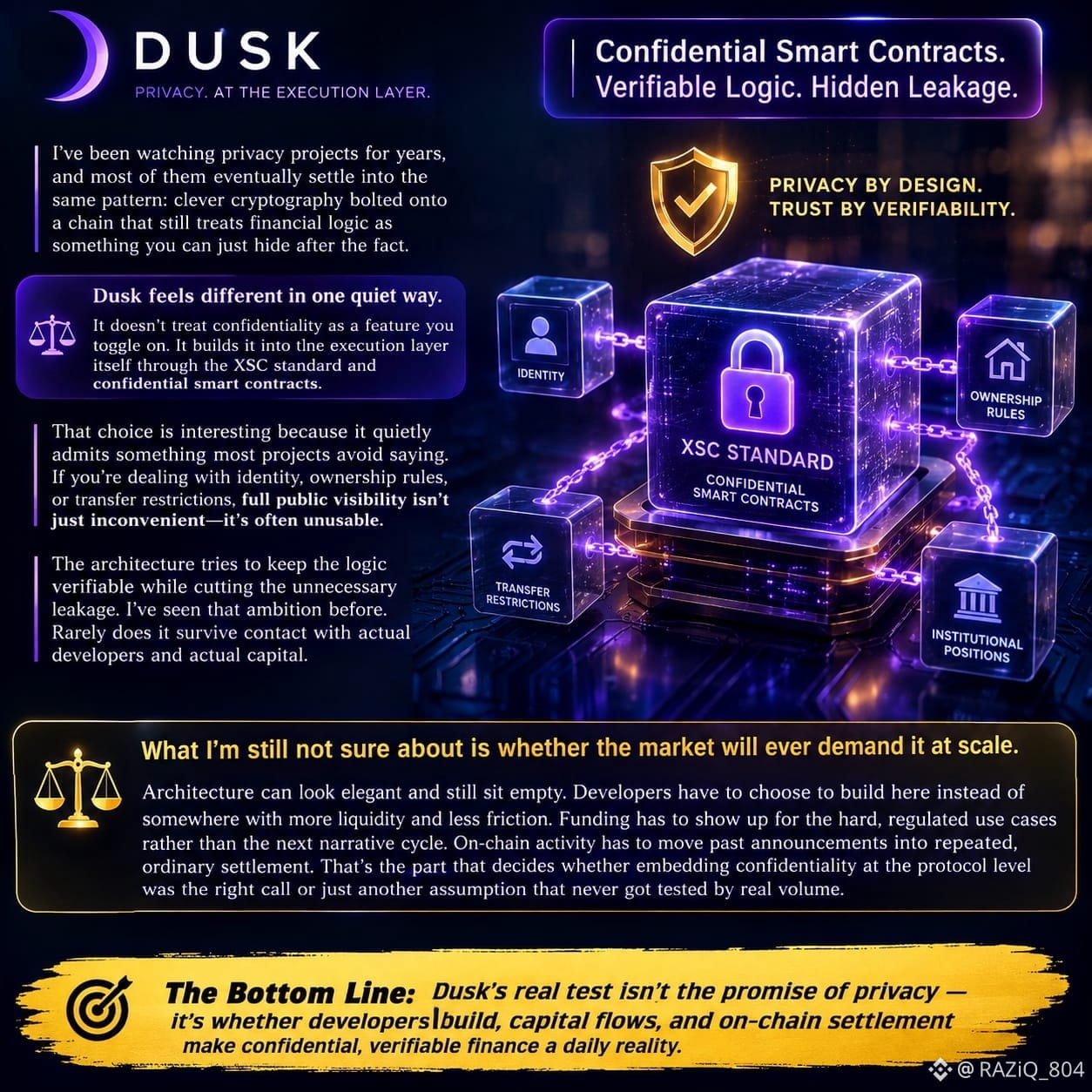
Ich beobachte seit Jahren Projekte zum Thema Privatsphäre, und die meisten von ihnen landen schließlich in demselben Muster: clevere Kryptografie wird an eine Kette geschraubt, die finanzielle Logik dennoch weiterhin so behandelt, als könne man sie einfach nachträglich „verstecken“. Dusk wirkt in einer stillen Hinsicht anders. Es behandelt Vertraulichkeit nicht als eine Funktion, die man ein- oder ausschaltet. Es baut sie in die Ausführungsebene selbst ein – über den XSC-Standard und vertrauliche Smart Contracts.
Diese Entscheidung ist interessant, weil sie leise etwas zugibt, das die meisten Projekte nicht auszusprechen wagen. Wenn man sich mit Identität, Eigentumsregeln, Übertragungsbeschränkungen oder institutionellen Positionen befasst, ist vollständige öffentliche Transparenz nicht nur unbequem – sie ist oft schlicht unbrauchbar. Die Architektur versucht, die Logik weiterhin nachprüfbar zu halten und gleichzeitig unnötiges Leckage-Risiko zu reduzieren. Ich habe diese Ambition schon einmal gesehen. Selten überlebt sie den Kontakt mit echten Entwicklern und echtem Kapital.
Worüber ich mir noch unsicher bin, ist, ob der Markt das jemals im großen Maßstab einfordern wird. Eine Architektur kann elegant aussehen und trotzdem leer stehen. Entwickler müssen sich hier entscheiden zu bauen – statt irgendwo, wo es mehr Liquidität und weniger Reibung gibt. Die Finanzierung muss für die schwierigen, regulierten Anwendungsfälle da sein – nicht für den nächsten Narrativ-Zyklus. On-Chain-Aktivität muss von Ankündigungen zu wiederholter, alltäglicher Abwicklung übergehen. Genau das entscheidet darüber, ob es die richtige Wahl war, Vertraulichkeit auf Protokollebene einzubetten – oder ob es nur eine weitere Annahme war, die nie wirklich an echtem Volumen getestet wurde.
@Dusk_Foundation #dusk $DUSK
Ich beobachte seit Jahren Projekte zum Thema Privatsphäre, und die meisten von ihnen landen schließlich in demselben Muster: clevere Kryptografie wird an eine Kette geschraubt, die finanzielle Logik dennoch weiterhin so behandelt, als könne man sie einfach nachträglich „verstecken“. Dusk wirkt in einer stillen Hinsicht anders. Es behandelt Vertraulichkeit nicht als eine Funktion, die man ein- oder ausschaltet. Es baut sie in die Ausführungsebene selbst ein – über den XSC-Standard und vertrauliche Smart Contracts.
Diese Entscheidung ist interessant, weil sie leise etwas zugibt, das die meisten Projekte nicht auszusprechen wagen. Wenn man sich mit Identität, Eigentumsregeln, Übertragungsbeschränkungen oder institutionellen Positionen befasst, ist vollständige öffentliche Transparenz nicht nur unbequem – sie ist oft schlicht unbrauchbar. Die Architektur versucht, die Logik weiterhin nachprüfbar zu halten und gleichzeitig unnötiges Leckage-Risiko zu reduzieren. Ich habe diese Ambition schon einmal gesehen. Selten überlebt sie den Kontakt mit echten Entwicklern und echtem Kapital.
Worüber ich mir noch unsicher bin, ist, ob der Markt das jemals im großen Maßstab einfordern wird. Eine Architektur kann elegant aussehen und trotzdem leer stehen. Entwickler müssen sich hier entscheiden zu bauen – statt irgendwo, wo es mehr Liquidität und weniger Reibung gibt. Die Finanzierung muss für die schwierigen, regulierten Anwendungsfälle da sein – nicht für den nächsten Narrativ-Zyklus. On-Chain-Aktivität muss von Ankündigungen zu wiederholter, alltäglicher Abwicklung übergehen. Genau das entscheidet darüber, ob es die richtige Wahl war, Vertraulichkeit auf Protokollebene einzubetten – oder ob es nur eine weitere Annahme war, die nie wirklich an echtem Volumen getestet wurde.
@Dusk #dusk $DUSK
Diese Entscheidung ist interessant, weil sie leise etwas zugibt, das die meisten Projekte nicht auszusprechen wagen. Wenn man sich mit Identität, Eigentumsregeln, Übertragungsbeschränkungen oder institutionellen Positionen befasst, ist vollständige öffentliche Transparenz nicht nur unbequem – sie ist oft schlicht unbrauchbar. Die Architektur versucht, die Logik weiterhin nachprüfbar zu halten und gleichzeitig unnötiges Leckage-Risiko zu reduzieren. Ich habe diese Ambition schon einmal gesehen. Selten überlebt sie den Kontakt mit echten Entwicklern und echtem Kapital.
Worüber ich mir noch unsicher bin, ist, ob der Markt das jemals im großen Maßstab einfordern wird. Eine Architektur kann elegant aussehen und trotzdem leer stehen. Entwickler müssen sich hier entscheiden zu bauen – statt irgendwo, wo es mehr Liquidität und weniger Reibung gibt. Die Finanzierung muss für die schwierigen, regulierten Anwendungsfälle da sein – nicht für den nächsten Narrativ-Zyklus. On-Chain-Aktivität muss von Ankündigungen zu wiederholter, alltäglicher Abwicklung übergehen. Genau das entscheidet darüber, ob es die richtige Wahl war, Vertraulichkeit auf Protokollebene einzubetten – oder ob es nur eine weitere Annahme war, die nie wirklich an echtem Volumen getestet wurde.
@Dusk #dusk $DUSK
25
8
1.1k
·
--
Bullisch
Ich beobachte seit Jahren Fixed-Rate-Experimente in DeFi. Die meisten kommen nie über das Marketing-Deck hinaus. Zinsen werden als fest verkauft, dann fühlt sich das Matching am Ende wie ein weiteres Floating-Marktmodell an – nur mit zusätzlichen Schritten. Liquidität bleibt dort ungenutzt, oder die Kurve zeigt die Tiefe nie wirklich.
TermMax zieht mich aus einem anderen Grund immer wieder zurück. Die Range Order ist nicht nur ein Name. Sie zerlegt den Finanzierungsbetrag und den Zinssatz in Segmente und fügt sie zu einer Kurve zusammen. Wenn Aufträge ausgeführt werden, bewegt sich der gematchte Zinssatz tatsächlich entlang dieser Kurve. Der Zusammenhang zwischen dem, was an Kapital dort bereitsteht, und dem Zinssatz, der am Ende den Clearing-Prozess bestimmt, wird direkt in die Mechanik eingebaut – nicht nur nachträglich ausgewiesen.
Wenn du bittest, wird der FT in Principal- und Interest-Anteile aufgeteilt. Die Interest-Seite wird über die Lending Range Order gegen XT getauscht, dann setzen sich XT und der Principal-FT wieder zum Debt Token zusammen. Diese Reihenfolge ist wichtig. Der feste Zinssatz hört auf, nur ein Parameter zu sein, und wird zu einem Bestandteil des Token-Flusses und des Matchings selbst. GT dokumentiert lediglich das Collateral sowie die Debt-Position. Wenn nach dem Liquidationsfenster noch Schulden übrig sind, ermöglicht die physische Lieferung den FT-Inhabern, ihren pro-rata Anteil am zugrunde liegenden Asset und am Collateral aus dem Redemption-Pool zu erhalten.
Ich habe zu viele Systeme gesehen, die behaupten, die Unsicherheit bei den Zinssätzen zu beseitigen, und sie dann stillschweigend über dünne Liquidität oder unsaubere Defaults wieder einführen. Dieses hier trägt weiterhin alle üblichen Reibungen – Liquidität muss tatsächlich auftauchen, jemand muss die Kurven setzen, und es muss sich jemand um den Spread kümmern, außerdem ist die physische Lieferung nie so sauber, wie sich die Leute das erhoffen. Aber die Art, wie sich der Zinssatz über die gesamte Kette – von der Order über die Tokens bis zur finalen Abwicklung – bewegt, fühlt sich weniger an wie eine weitere Erzählung und mehr so, als hätte jemand versucht, das Trade-off korrekt zu codieren. Ich bin mir noch nicht sicher, ob der Markt dafür weiter auftauchen wird. Irgendetwas an der Struktur fühlt sich immer noch anders an als in den letzten Zyklen.
@termmax #termmax
Ich beobachte seit Jahren Fixed-Rate-Experimente in DeFi. Die meisten kommen nie über das Marketing-Deck hinaus. Zinsen werden als fest verkauft, dann fühlt sich das Matching am Ende wie ein weiteres Floating-Marktmodell an – nur mit zusätzlichen Schritten. Liquidität bleibt dort ungenutzt, oder die Kurve zeigt die Tiefe nie wirklich.
TermMax zieht mich aus einem anderen Grund immer wieder zurück. Die Range Order ist nicht nur ein Name. Sie zerlegt den Finanzierungsbetrag und den Zinssatz in Segmente und fügt sie zu einer Kurve zusammen. Wenn Aufträge ausgeführt werden, bewegt sich der gematchte Zinssatz tatsächlich entlang dieser Kurve. Der Zusammenhang zwischen dem, was an Kapital dort bereitsteht, und dem Zinssatz, der am Ende den Clearing-Prozess bestimmt, wird direkt in die Mechanik eingebaut – nicht nur nachträglich ausgewiesen.
Wenn du bittest, wird der FT in Principal- und Interest-Anteile aufgeteilt. Die Interest-Seite wird über die Lending Range Order gegen XT getauscht, dann setzen sich XT und der Principal-FT wieder zum Debt Token zusammen. Diese Reihenfolge ist wichtig. Der feste Zinssatz hört auf, nur ein Parameter zu sein, und wird zu einem Bestandteil des Token-Flusses und des Matchings selbst. GT dokumentiert lediglich das Collateral sowie die Debt-Position. Wenn nach dem Liquidationsfenster noch Schulden übrig sind, ermöglicht die physische Lieferung den FT-Inhabern, ihren pro-rata Anteil am zugrunde liegenden Asset und am Collateral aus dem Redemption-Pool zu erhalten.
Ich habe zu viele Systeme gesehen, die behaupten, die Unsicherheit bei den Zinssätzen zu beseitigen, und sie dann stillschweigend über dünne Liquidität oder unsaubere Defaults wieder einführen. Dieses hier trägt weiterhin alle üblichen Reibungen – Liquidität muss tatsächlich auftauchen, jemand muss die Kurven setzen, und es muss sich jemand um den Spread kümmern, außerdem ist die physische Lieferung nie so sauber, wie sich die Leute das erhoffen. Aber die Art, wie sich der Zinssatz über die gesamte Kette – von der Order über die Tokens bis zur finalen Abwicklung – bewegt, fühlt sich weniger an wie eine weitere Erzählung und mehr so, als hätte jemand versucht, das Trade-off korrekt zu codieren. Ich bin mir noch nicht sicher, ob der Markt dafür weiter auftauchen wird. Irgendetwas an der Struktur fühlt sich immer noch anders an als in den letzten Zyklen.
@TermMax #termmax
TermMax zieht mich aus einem anderen Grund immer wieder zurück. Die Range Order ist nicht nur ein Name. Sie zerlegt den Finanzierungsbetrag und den Zinssatz in Segmente und fügt sie zu einer Kurve zusammen. Wenn Aufträge ausgeführt werden, bewegt sich der gematchte Zinssatz tatsächlich entlang dieser Kurve. Der Zusammenhang zwischen dem, was an Kapital dort bereitsteht, und dem Zinssatz, der am Ende den Clearing-Prozess bestimmt, wird direkt in die Mechanik eingebaut – nicht nur nachträglich ausgewiesen.
Wenn du bittest, wird der FT in Principal- und Interest-Anteile aufgeteilt. Die Interest-Seite wird über die Lending Range Order gegen XT getauscht, dann setzen sich XT und der Principal-FT wieder zum Debt Token zusammen. Diese Reihenfolge ist wichtig. Der feste Zinssatz hört auf, nur ein Parameter zu sein, und wird zu einem Bestandteil des Token-Flusses und des Matchings selbst. GT dokumentiert lediglich das Collateral sowie die Debt-Position. Wenn nach dem Liquidationsfenster noch Schulden übrig sind, ermöglicht die physische Lieferung den FT-Inhabern, ihren pro-rata Anteil am zugrunde liegenden Asset und am Collateral aus dem Redemption-Pool zu erhalten.
Ich habe zu viele Systeme gesehen, die behaupten, die Unsicherheit bei den Zinssätzen zu beseitigen, und sie dann stillschweigend über dünne Liquidität oder unsaubere Defaults wieder einführen. Dieses hier trägt weiterhin alle üblichen Reibungen – Liquidität muss tatsächlich auftauchen, jemand muss die Kurven setzen, und es muss sich jemand um den Spread kümmern, außerdem ist die physische Lieferung nie so sauber, wie sich die Leute das erhoffen. Aber die Art, wie sich der Zinssatz über die gesamte Kette – von der Order über die Tokens bis zur finalen Abwicklung – bewegt, fühlt sich weniger an wie eine weitere Erzählung und mehr so, als hätte jemand versucht, das Trade-off korrekt zu codieren. Ich bin mir noch nicht sicher, ob der Markt dafür weiter auftauchen wird. Irgendetwas an der Struktur fühlt sich immer noch anders an als in den letzten Zyklen.
@TermMax #termmax
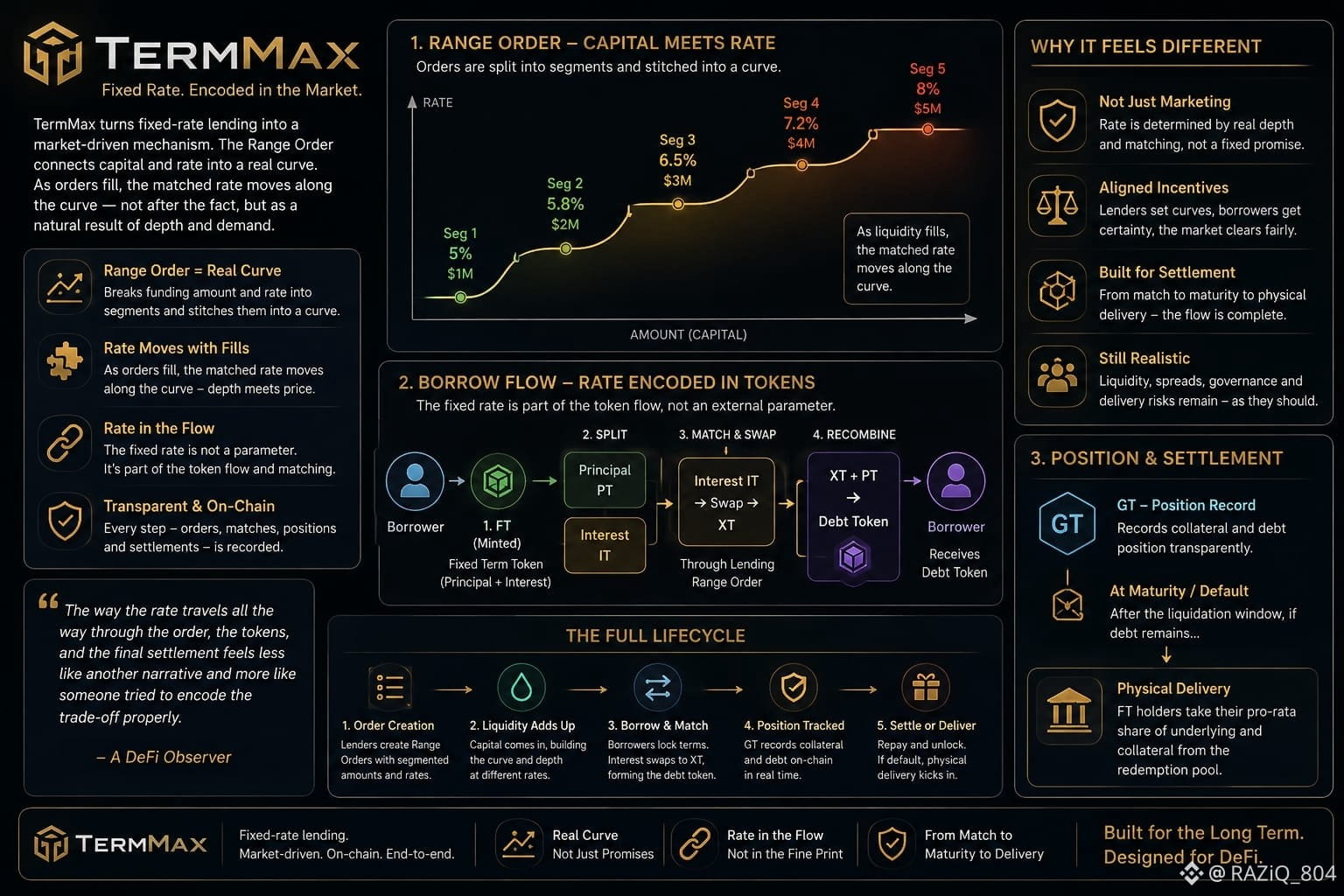
5
6
460
·
--
Bullisch
Ich schaue schon lange in diesen Bereich hinein, um zu wissen, dass die meisten Datenschutzgeschichten am Ende gleich ausgehen. Auf dem Papier klingen sie sauber, dann prallen sie auf die unaufgeräumte Realität von Kapital, das tatsächlich etwas zu verlieren hat.
Letzte Nacht bin ich noch einmal durch Dusk’ Architektur-Dokumente gegangen. Vertrauliche Security Contracts, Phoenix, das gesamte Setup für selektive Offenlegung. Auf den ersten Blick wirkt es so, als hätten sie versucht, den eigentlichen Widerspruch zu lösen: Institutionen brauchen ihre Positionen, Gegenparteien und Flüsse verborgen, doch das Netzwerk muss trotzdem beweisen, dass alles korrekt abgewickelt wurde. Die meisten Chains behandeln Privatsphäre als Zusatz. Dusk scheint sie in die Grundlage eingebaut zu haben, statt sie später dranzuschrauben.
Ich habe das schon einmal gesehen. Wunderschöne Kryptografie, sorgfältiges Design – und trotzdem taucht der Markt nie in den Volumina auf, die wirklich zählen. Technologie kann elegant sein. Liquidität und anhaltende Nachfrage sind schwerer. Privatsphäre wird erst dann zu Infrastruktur, wenn echtes Kapital beginnt, sie als nicht verhandelbar zu behandeln – und nicht als optional.
Ich bin mir noch nicht sicher, ob dieser Moment näherkommt oder ob Vertraulichkeit in engen, regulierten Nischen bleibt. Irgendetwas an der Art, wie Dusk die Abwägung angeht, fühlt sich anders an als der übliche Zyklus von Datenschutz-Narrativen. Aber „anders“ ist schon oft gescheitert. Die Frage, die immer wieder zurückkommt, ist ganz einfach: Wenn Institutionen irgendwann endgültig entscheiden, dass sie nicht mehr in einem transparenten Fischglas operieren können – sind dann die Schienen bereit, oder bekommen wir einfach wieder eine weitere Runde mit vielversprechenden Dokumenten und stillen Ledgern?
@Dusk_Foundation $DUSK #dusk
Ich schaue schon lange in diesen Bereich hinein, um zu wissen, dass die meisten Datenschutzgeschichten am Ende gleich ausgehen. Auf dem Papier klingen sie sauber, dann prallen sie auf die unaufgeräumte Realität von Kapital, das tatsächlich etwas zu verlieren hat.
Letzte Nacht bin ich noch einmal durch Dusk’ Architektur-Dokumente gegangen. Vertrauliche Security Contracts, Phoenix, das gesamte Setup für selektive Offenlegung. Auf den ersten Blick wirkt es so, als hätten sie versucht, den eigentlichen Widerspruch zu lösen: Institutionen brauchen ihre Positionen, Gegenparteien und Flüsse verborgen, doch das Netzwerk muss trotzdem beweisen, dass alles korrekt abgewickelt wurde. Die meisten Chains behandeln Privatsphäre als Zusatz. Dusk scheint sie in die Grundlage eingebaut zu haben, statt sie später dranzuschrauben.
Ich habe das schon einmal gesehen. Wunderschöne Kryptografie, sorgfältiges Design – und trotzdem taucht der Markt nie in den Volumina auf, die wirklich zählen. Technologie kann elegant sein. Liquidität und anhaltende Nachfrage sind schwerer. Privatsphäre wird erst dann zu Infrastruktur, wenn echtes Kapital beginnt, sie als nicht verhandelbar zu behandeln – und nicht als optional.
Ich bin mir noch nicht sicher, ob dieser Moment näherkommt oder ob Vertraulichkeit in engen, regulierten Nischen bleibt. Irgendetwas an der Art, wie Dusk die Abwägung angeht, fühlt sich anders an als der übliche Zyklus von Datenschutz-Narrativen. Aber „anders“ ist schon oft gescheitert. Die Frage, die immer wieder zurückkommt, ist ganz einfach: Wenn Institutionen irgendwann endgültig entscheiden, dass sie nicht mehr in einem transparenten Fischglas operieren können – sind dann die Schienen bereit, oder bekommen wir einfach wieder eine weitere Runde mit vielversprechenden Dokumenten und stillen Ledgern?
@Dusk $DUSK #dusk
Letzte Nacht bin ich noch einmal durch Dusk’ Architektur-Dokumente gegangen. Vertrauliche Security Contracts, Phoenix, das gesamte Setup für selektive Offenlegung. Auf den ersten Blick wirkt es so, als hätten sie versucht, den eigentlichen Widerspruch zu lösen: Institutionen brauchen ihre Positionen, Gegenparteien und Flüsse verborgen, doch das Netzwerk muss trotzdem beweisen, dass alles korrekt abgewickelt wurde. Die meisten Chains behandeln Privatsphäre als Zusatz. Dusk scheint sie in die Grundlage eingebaut zu haben, statt sie später dranzuschrauben.
Ich habe das schon einmal gesehen. Wunderschöne Kryptografie, sorgfältiges Design – und trotzdem taucht der Markt nie in den Volumina auf, die wirklich zählen. Technologie kann elegant sein. Liquidität und anhaltende Nachfrage sind schwerer. Privatsphäre wird erst dann zu Infrastruktur, wenn echtes Kapital beginnt, sie als nicht verhandelbar zu behandeln – und nicht als optional.
Ich bin mir noch nicht sicher, ob dieser Moment näherkommt oder ob Vertraulichkeit in engen, regulierten Nischen bleibt. Irgendetwas an der Art, wie Dusk die Abwägung angeht, fühlt sich anders an als der übliche Zyklus von Datenschutz-Narrativen. Aber „anders“ ist schon oft gescheitert. Die Frage, die immer wieder zurückkommt, ist ganz einfach: Wenn Institutionen irgendwann endgültig entscheiden, dass sie nicht mehr in einem transparenten Fischglas operieren können – sind dann die Schienen bereit, oder bekommen wir einfach wieder eine weitere Runde mit vielversprechenden Dokumenten und stillen Ledgern?
@Dusk $DUSK #dusk
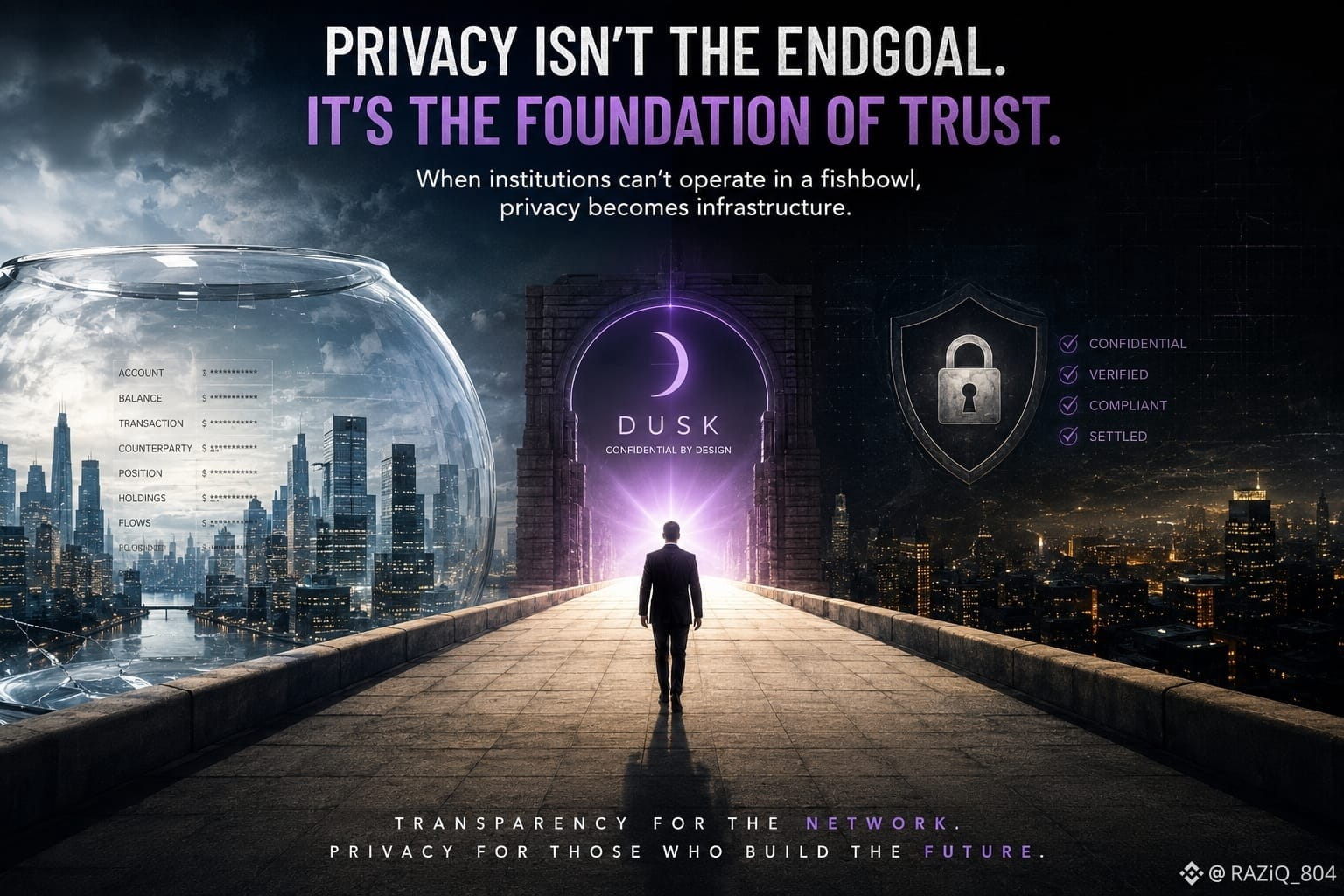
52
18
632
·
--
Bullisch
Verifiziert
Ich habe jahrelang dabei zugesehen, wie Tokens nachträglich mit „Utility“ aufgepimpt werden. Die meisten von ihnen tragen nie wirklich echtes Gewicht. Heute Morgen habe ich über Dusk Trade und den NPEX-Link gelesen, und etwas an der Einrichtung hat mich anders getroffen.
DUSK sitzt nicht einfach nur da und wartet auf eine Story. Es zahlt das Gas, es setzt Staking ein, um ein Netzwerk zu sichern, das für regulierte Assets gebaut wurde, und es stimmt über die Regeln ab. Drei Aufgaben, die wirklich zählen – auf einer Chain, die von Anfang an dafür konzipiert ist, Compliance zu handhaben, statt sie später nur „dranzubauen“. NPEX bringt die Lizenzen und den bestehenden Fluss der Wertpapiere; Dusk stellt die Schienen. Die Rolle des Tokens und der Zweck der Chain scheinen in einer Weise zusammenzupassen, die ich nicht oft sehe.
Trotzdem habe ich dieses Muster schon einmal gesehen. Partnerschaften öffnen Türen. Sie garantieren nicht, dass der Verkehr auch wirklich durch sie hindurchgeht. Staking-Ökonomien, die bei überschaubarem Volumen sauber aussehen, können einknicken, sobald eine echte institutionelle Größe ins Spiel kommt. Utility auf dem Papier ist leicht. Utility unter Last ist der Teil, der normalerweise bricht.
Ich bin mir noch nicht sicher, ob die Ausrichtung hält. Irgendetwas daran, wie sie die Compliance-Schicht in die Funktion des Tokens eingebaut haben, wirkt weniger aufgesetzt als die übliche Erzählung. Aber Krypto hat mir beigebracht, den sauberen Stories nicht zu trauen. Ich beobachte das hier sorgfältig – ohne das übliche Rauschen.
@Dusk_Foundation #dusk $DUSK
Ich habe jahrelang dabei zugesehen, wie Tokens nachträglich mit „Utility“ aufgepimpt werden. Die meisten von ihnen tragen nie wirklich echtes Gewicht. Heute Morgen habe ich über Dusk Trade und den NPEX-Link gelesen, und etwas an der Einrichtung hat mich anders getroffen.
DUSK sitzt nicht einfach nur da und wartet auf eine Story. Es zahlt das Gas, es setzt Staking ein, um ein Netzwerk zu sichern, das für regulierte Assets gebaut wurde, und es stimmt über die Regeln ab. Drei Aufgaben, die wirklich zählen – auf einer Chain, die von Anfang an dafür konzipiert ist, Compliance zu handhaben, statt sie später nur „dranzubauen“. NPEX bringt die Lizenzen und den bestehenden Fluss der Wertpapiere; Dusk stellt die Schienen. Die Rolle des Tokens und der Zweck der Chain scheinen in einer Weise zusammenzupassen, die ich nicht oft sehe.
Trotzdem habe ich dieses Muster schon einmal gesehen. Partnerschaften öffnen Türen. Sie garantieren nicht, dass der Verkehr auch wirklich durch sie hindurchgeht. Staking-Ökonomien, die bei überschaubarem Volumen sauber aussehen, können einknicken, sobald eine echte institutionelle Größe ins Spiel kommt. Utility auf dem Papier ist leicht. Utility unter Last ist der Teil, der normalerweise bricht.
Ich bin mir noch nicht sicher, ob die Ausrichtung hält. Irgendetwas daran, wie sie die Compliance-Schicht in die Funktion des Tokens eingebaut haben, wirkt weniger aufgesetzt als die übliche Erzählung. Aber Krypto hat mir beigebracht, den sauberen Stories nicht zu trauen. Ich beobachte das hier sorgfältig – ohne das übliche Rauschen.
@Dusk #dusk $DUSK
DUSK sitzt nicht einfach nur da und wartet auf eine Story. Es zahlt das Gas, es setzt Staking ein, um ein Netzwerk zu sichern, das für regulierte Assets gebaut wurde, und es stimmt über die Regeln ab. Drei Aufgaben, die wirklich zählen – auf einer Chain, die von Anfang an dafür konzipiert ist, Compliance zu handhaben, statt sie später nur „dranzubauen“. NPEX bringt die Lizenzen und den bestehenden Fluss der Wertpapiere; Dusk stellt die Schienen. Die Rolle des Tokens und der Zweck der Chain scheinen in einer Weise zusammenzupassen, die ich nicht oft sehe.
Trotzdem habe ich dieses Muster schon einmal gesehen. Partnerschaften öffnen Türen. Sie garantieren nicht, dass der Verkehr auch wirklich durch sie hindurchgeht. Staking-Ökonomien, die bei überschaubarem Volumen sauber aussehen, können einknicken, sobald eine echte institutionelle Größe ins Spiel kommt. Utility auf dem Papier ist leicht. Utility unter Last ist der Teil, der normalerweise bricht.
Ich bin mir noch nicht sicher, ob die Ausrichtung hält. Irgendetwas daran, wie sie die Compliance-Schicht in die Funktion des Tokens eingebaut haben, wirkt weniger aufgesetzt als die übliche Erzählung. Aber Krypto hat mir beigebracht, den sauberen Stories nicht zu trauen. Ich beobachte das hier sorgfältig – ohne das übliche Rauschen.
@Dusk #dusk $DUSK
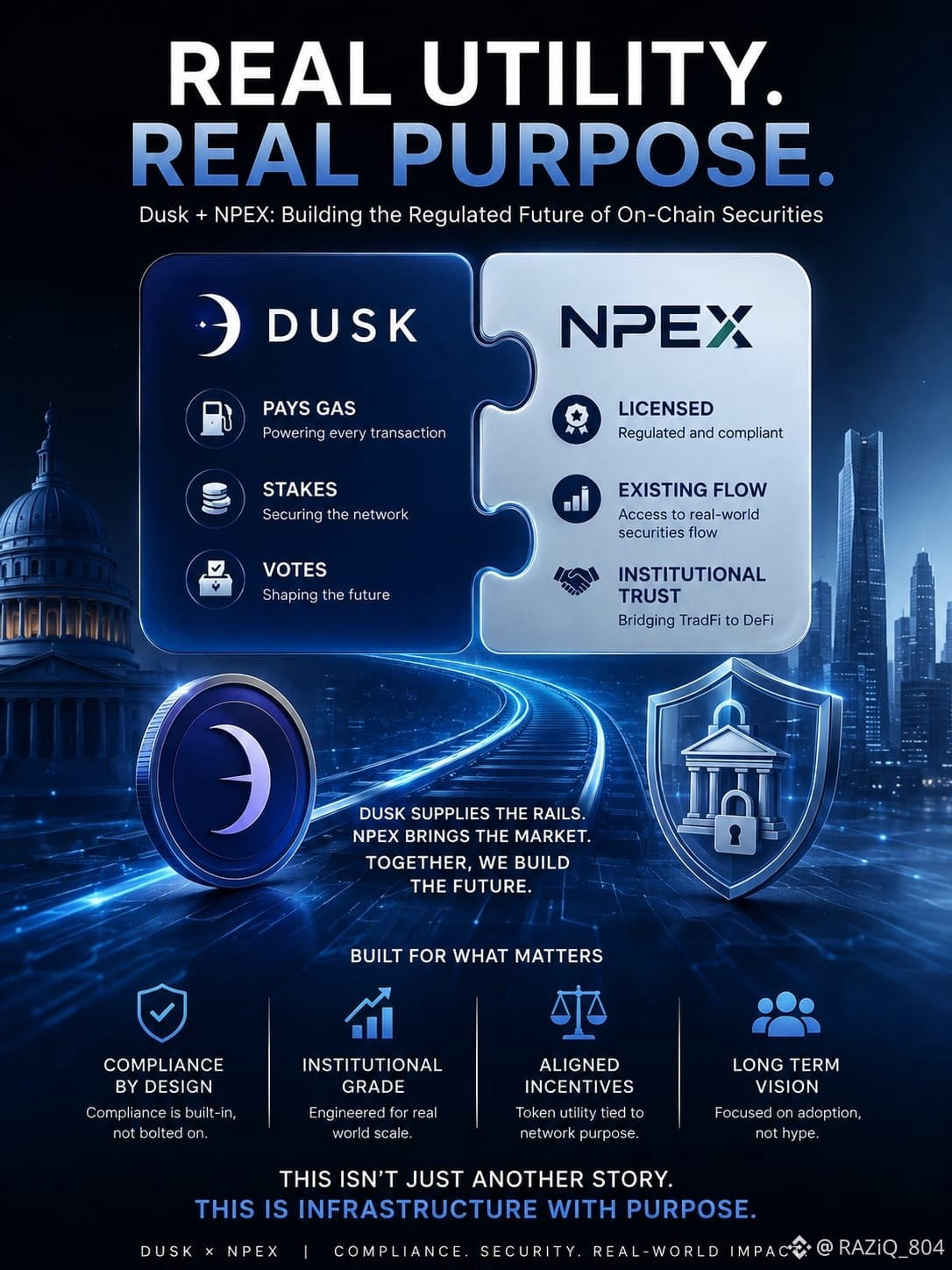
58
30
664
·
--
Bullisch
Ich beobachte diesen Raum schon lange genug, um zu wissen: Die Geschichten klingen immer sauberer als die eigentliche „Verrohrung“.
Heute habe ich die Preistabelle für Dusk übersprungen und stattdessen den Security-Scorecard geöffnet. Bug Bounty bei null. Versicherung bei null. Audit-Abdeckung irgendwo im hohen Zwanzigerbereich. Für eine Kette, die ständig von institutioneller Qualität bei den Schienen spricht, von MiCA-Konformität, von selektiver Offenlegung und Partnerschaften mit lizenzierten Venues—klafft diese Lücke einfach still vor sich hin, unbeantwortet.
Ich habe diese Reihenfolge schon oft gesehen. Erst die Erzählung—vertrauliche Transaktionen, ZK-Proofs, mit denen die richtigen Leute schauen können, wenn sie es müssen, eine EVM-Schicht, damit sich Entwickler zuhause fühlen—und dann später sollen die gehärteten Sicherheitsbausteine nachziehen. Manchmal tun sie das. Meistens bewegt sich jedoch das Geld anhand der Story, während das echte Pressure-Testing dünn bleibt. Audits gibt es natürlich. Die gibt es immer. Aber null öffentliches Bug-Bounty und kein echtes Versicherungs-Fonds erzählen mir, dass das, was tatsächliche Institutionen prüfen, noch nicht vollständig unter die Lupe genommen wurde.
Der Preis pendelte nahe bei sechs Cent bei ruhigem Volumen. Das ist alles nicht wirklich entscheidend. Was bei mir bleibt, ist diese vertraute Reibung: solide Architektur auf dem Papier, Compliance-Formulierungen, die sich richtig anhören, und die leiseren Zahlen, die nicht ganz zusammenpassen. Ich bin mir noch nicht sicher, ob das einfach nur frühe Realität ist oder eine echte Unstimmigkeit. Ich habe zu viele Zyklen gesehen, um dem Pitch allein zu vertrauen. Noch immer am Beobachten.
@Dusk_Foundation #dusk $DUSK
Ich beobachte diesen Raum schon lange genug, um zu wissen: Die Geschichten klingen immer sauberer als die eigentliche „Verrohrung“.
Heute habe ich die Preistabelle für Dusk übersprungen und stattdessen den Security-Scorecard geöffnet. Bug Bounty bei null. Versicherung bei null. Audit-Abdeckung irgendwo im hohen Zwanzigerbereich. Für eine Kette, die ständig von institutioneller Qualität bei den Schienen spricht, von MiCA-Konformität, von selektiver Offenlegung und Partnerschaften mit lizenzierten Venues—klafft diese Lücke einfach still vor sich hin, unbeantwortet.
Ich habe diese Reihenfolge schon oft gesehen. Erst die Erzählung—vertrauliche Transaktionen, ZK-Proofs, mit denen die richtigen Leute schauen können, wenn sie es müssen, eine EVM-Schicht, damit sich Entwickler zuhause fühlen—und dann später sollen die gehärteten Sicherheitsbausteine nachziehen. Manchmal tun sie das. Meistens bewegt sich jedoch das Geld anhand der Story, während das echte Pressure-Testing dünn bleibt. Audits gibt es natürlich. Die gibt es immer. Aber null öffentliches Bug-Bounty und kein echtes Versicherungs-Fonds erzählen mir, dass das, was tatsächliche Institutionen prüfen, noch nicht vollständig unter die Lupe genommen wurde.
Der Preis pendelte nahe bei sechs Cent bei ruhigem Volumen. Das ist alles nicht wirklich entscheidend. Was bei mir bleibt, ist diese vertraute Reibung: solide Architektur auf dem Papier, Compliance-Formulierungen, die sich richtig anhören, und die leiseren Zahlen, die nicht ganz zusammenpassen. Ich bin mir noch nicht sicher, ob das einfach nur frühe Realität ist oder eine echte Unstimmigkeit. Ich habe zu viele Zyklen gesehen, um dem Pitch allein zu vertrauen. Noch immer am Beobachten.
@Dusk #dusk $DUSK
Heute habe ich die Preistabelle für Dusk übersprungen und stattdessen den Security-Scorecard geöffnet. Bug Bounty bei null. Versicherung bei null. Audit-Abdeckung irgendwo im hohen Zwanzigerbereich. Für eine Kette, die ständig von institutioneller Qualität bei den Schienen spricht, von MiCA-Konformität, von selektiver Offenlegung und Partnerschaften mit lizenzierten Venues—klafft diese Lücke einfach still vor sich hin, unbeantwortet.
Ich habe diese Reihenfolge schon oft gesehen. Erst die Erzählung—vertrauliche Transaktionen, ZK-Proofs, mit denen die richtigen Leute schauen können, wenn sie es müssen, eine EVM-Schicht, damit sich Entwickler zuhause fühlen—und dann später sollen die gehärteten Sicherheitsbausteine nachziehen. Manchmal tun sie das. Meistens bewegt sich jedoch das Geld anhand der Story, während das echte Pressure-Testing dünn bleibt. Audits gibt es natürlich. Die gibt es immer. Aber null öffentliches Bug-Bounty und kein echtes Versicherungs-Fonds erzählen mir, dass das, was tatsächliche Institutionen prüfen, noch nicht vollständig unter die Lupe genommen wurde.
Der Preis pendelte nahe bei sechs Cent bei ruhigem Volumen. Das ist alles nicht wirklich entscheidend. Was bei mir bleibt, ist diese vertraute Reibung: solide Architektur auf dem Papier, Compliance-Formulierungen, die sich richtig anhören, und die leiseren Zahlen, die nicht ganz zusammenpassen. Ich bin mir noch nicht sicher, ob das einfach nur frühe Realität ist oder eine echte Unstimmigkeit. Ich habe zu viele Zyklen gesehen, um dem Pitch allein zu vertrauen. Noch immer am Beobachten.
@Dusk #dusk $DUSK
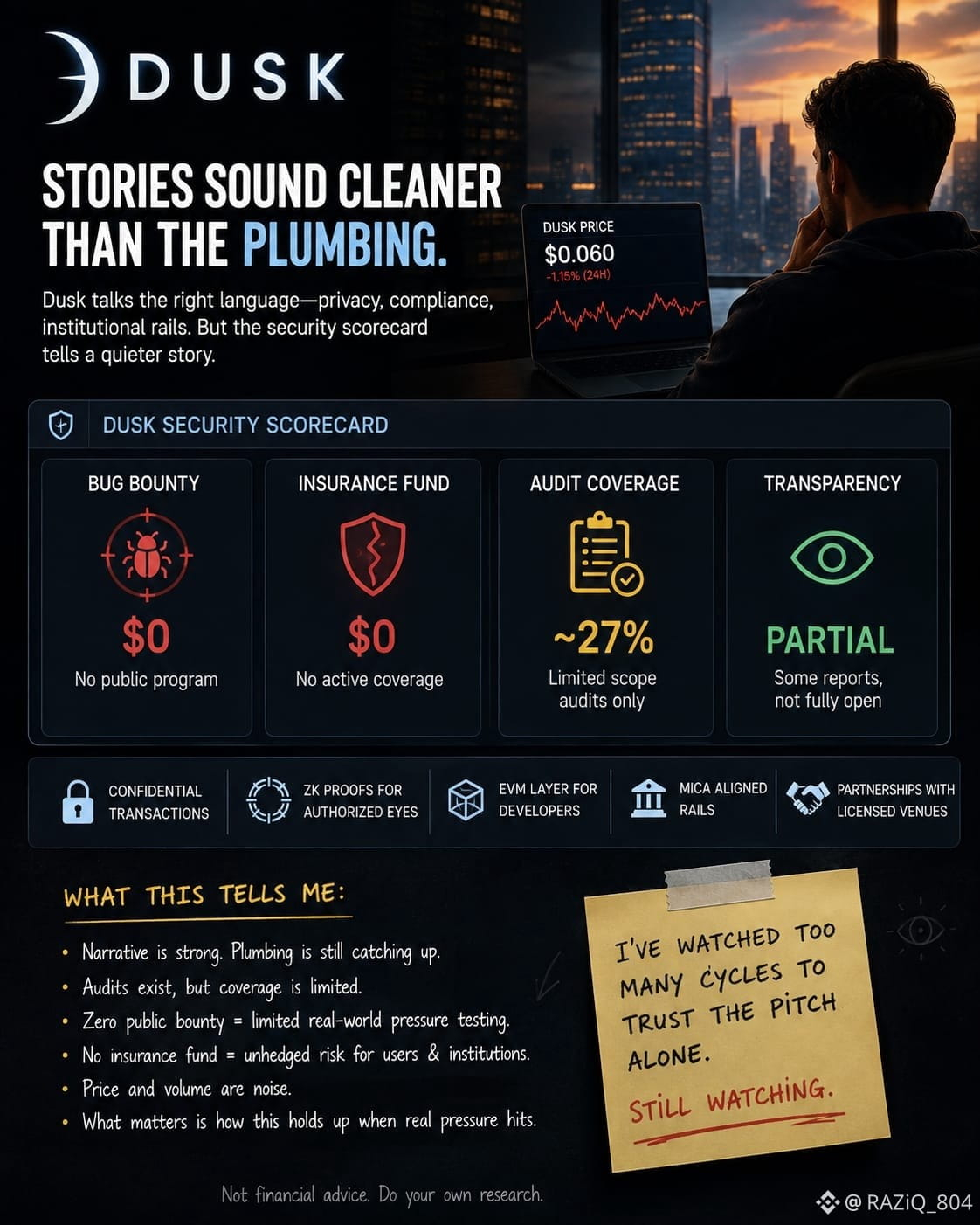
5
6
452
·
--
Ich kenne Krypto schon lange genug, um zu wissen: Was Menschen ignorieren, ist oft genau dort, wo die echten Probleme am Ende wohnen.
Ich sehe immer wieder dasselbe Muster. Ein neues System zeigt etwas Beeindruckendes, und die Leute konzentrieren sich auf die Kryptografie, die Privatsphäre, die Geschwindigkeit und die saubere Story darum. Dann taucht die Realität auf und stellt Fragen, die viel schwieriger zu beantworten sind.
Das ist mir aufgefallen, als ich die Dusk-Dokumentation zu „verdeckten Überweisungen“ (shielded transfers) gelesen habe. Das Wort „Beweis“ lässt Menschen natürlich an eine vollständige Verifikation denken. Aber die Realität ist viel spezifischer. Ein Empfänger kann die Verbindung zwischen einer Zahlung und einer Wallet des Absenders nachweisen. Das ist real – und das hat Wert.
Aber ich habe das schon in Krypto gesehen: Eine technische Errungenschaft wird so interpretiert, als wäre sie etwas Größeres, als sie tatsächlich beweist.
Ein kryptografischer Zusammenhang ist nicht dasselbe wie zu wissen, wer eine Wallet kontrolliert. Er sagt dir nicht alles über die Person oder Organisation dahinter. Er entscheidet auch nicht darüber, ob das Geld „sauber“ ist. Diese Fragen existieren weiterhin außerhalb der Mathematik.
Was ich daran interessant finde, ist, was passiert, nachdem der Beweis erbracht wurde.
Die Kette kann die Evidenz liefern. Selektives Offenlegen kann die richtigen Informationen sichtbar machen. Aber irgendwann muss jemand die reale Entscheidung treffen. Jemand muss diese Wallet mit Identitätsprüfungen, Sanktionsscreening und Compliance-Prozessen verknüpfen.
Ich bin mir noch nicht sicher, wie sich das verhält, wenn sich das Maß ändert. Eine einzige Wallet ist leicht vorstellbar. Ein paar tausend Wallets, die zur selben Zeit eintreffen, ist der Teil, bei dem es spannend wird.
Ich habe genug Zyklen gesehen, um zu wissen: Die Technologie ist normalerweise nicht die einzige Herausforderung. Die Reibung zwischen Systemen, Menschen und Institutionen ist dort, wo es getestet wird.
An diesem Punkt fühlt sich etwas anders an, weil möglicherweise nicht die Frage ist, ob der Beweis funktioniert.
Die größere Frage ist, ob alles, was um diesen Beweis herum gebaut wurde, bereit ist, wenn der Druck kommt.
Ich vertraue der Annahme nicht vollständig, dass „prüfbar, wenn erforderlich“ sich automatisch genauso skaliert wie der ZK-Beweis.
#dusk
@Dusk_Foundation
$DUSK
Ich kenne Krypto schon lange genug, um zu wissen: Was Menschen ignorieren, ist oft genau dort, wo die echten Probleme am Ende wohnen.
Ich sehe immer wieder dasselbe Muster. Ein neues System zeigt etwas Beeindruckendes, und die Leute konzentrieren sich auf die Kryptografie, die Privatsphäre, die Geschwindigkeit und die saubere Story darum. Dann taucht die Realität auf und stellt Fragen, die viel schwieriger zu beantworten sind.
Das ist mir aufgefallen, als ich die Dusk-Dokumentation zu „verdeckten Überweisungen“ (shielded transfers) gelesen habe. Das Wort „Beweis“ lässt Menschen natürlich an eine vollständige Verifikation denken. Aber die Realität ist viel spezifischer. Ein Empfänger kann die Verbindung zwischen einer Zahlung und einer Wallet des Absenders nachweisen. Das ist real – und das hat Wert.
Aber ich habe das schon in Krypto gesehen: Eine technische Errungenschaft wird so interpretiert, als wäre sie etwas Größeres, als sie tatsächlich beweist.
Ein kryptografischer Zusammenhang ist nicht dasselbe wie zu wissen, wer eine Wallet kontrolliert. Er sagt dir nicht alles über die Person oder Organisation dahinter. Er entscheidet auch nicht darüber, ob das Geld „sauber“ ist. Diese Fragen existieren weiterhin außerhalb der Mathematik.
Was ich daran interessant finde, ist, was passiert, nachdem der Beweis erbracht wurde.
Die Kette kann die Evidenz liefern. Selektives Offenlegen kann die richtigen Informationen sichtbar machen. Aber irgendwann muss jemand die reale Entscheidung treffen. Jemand muss diese Wallet mit Identitätsprüfungen, Sanktionsscreening und Compliance-Prozessen verknüpfen.
Ich bin mir noch nicht sicher, wie sich das verhält, wenn sich das Maß ändert. Eine einzige Wallet ist leicht vorstellbar. Ein paar tausend Wallets, die zur selben Zeit eintreffen, ist der Teil, bei dem es spannend wird.
Ich habe genug Zyklen gesehen, um zu wissen: Die Technologie ist normalerweise nicht die einzige Herausforderung. Die Reibung zwischen Systemen, Menschen und Institutionen ist dort, wo es getestet wird.
An diesem Punkt fühlt sich etwas anders an, weil möglicherweise nicht die Frage ist, ob der Beweis funktioniert.
Die größere Frage ist, ob alles, was um diesen Beweis herum gebaut wurde, bereit ist, wenn der Druck kommt.
Ich vertraue der Annahme nicht vollständig, dass „prüfbar, wenn erforderlich“ sich automatisch genauso skaliert wie der ZK-Beweis.
#dusk
@Dusk
$DUSK
Ich sehe immer wieder dasselbe Muster. Ein neues System zeigt etwas Beeindruckendes, und die Leute konzentrieren sich auf die Kryptografie, die Privatsphäre, die Geschwindigkeit und die saubere Story darum. Dann taucht die Realität auf und stellt Fragen, die viel schwieriger zu beantworten sind.
Das ist mir aufgefallen, als ich die Dusk-Dokumentation zu „verdeckten Überweisungen“ (shielded transfers) gelesen habe. Das Wort „Beweis“ lässt Menschen natürlich an eine vollständige Verifikation denken. Aber die Realität ist viel spezifischer. Ein Empfänger kann die Verbindung zwischen einer Zahlung und einer Wallet des Absenders nachweisen. Das ist real – und das hat Wert.
Aber ich habe das schon in Krypto gesehen: Eine technische Errungenschaft wird so interpretiert, als wäre sie etwas Größeres, als sie tatsächlich beweist.
Ein kryptografischer Zusammenhang ist nicht dasselbe wie zu wissen, wer eine Wallet kontrolliert. Er sagt dir nicht alles über die Person oder Organisation dahinter. Er entscheidet auch nicht darüber, ob das Geld „sauber“ ist. Diese Fragen existieren weiterhin außerhalb der Mathematik.
Was ich daran interessant finde, ist, was passiert, nachdem der Beweis erbracht wurde.
Die Kette kann die Evidenz liefern. Selektives Offenlegen kann die richtigen Informationen sichtbar machen. Aber irgendwann muss jemand die reale Entscheidung treffen. Jemand muss diese Wallet mit Identitätsprüfungen, Sanktionsscreening und Compliance-Prozessen verknüpfen.
Ich bin mir noch nicht sicher, wie sich das verhält, wenn sich das Maß ändert. Eine einzige Wallet ist leicht vorstellbar. Ein paar tausend Wallets, die zur selben Zeit eintreffen, ist der Teil, bei dem es spannend wird.
Ich habe genug Zyklen gesehen, um zu wissen: Die Technologie ist normalerweise nicht die einzige Herausforderung. Die Reibung zwischen Systemen, Menschen und Institutionen ist dort, wo es getestet wird.
An diesem Punkt fühlt sich etwas anders an, weil möglicherweise nicht die Frage ist, ob der Beweis funktioniert.
Die größere Frage ist, ob alles, was um diesen Beweis herum gebaut wurde, bereit ist, wenn der Druck kommt.
Ich vertraue der Annahme nicht vollständig, dass „prüfbar, wenn erforderlich“ sich automatisch genauso skaliert wie der ZK-Beweis.
#dusk
@Dusk
$DUSK
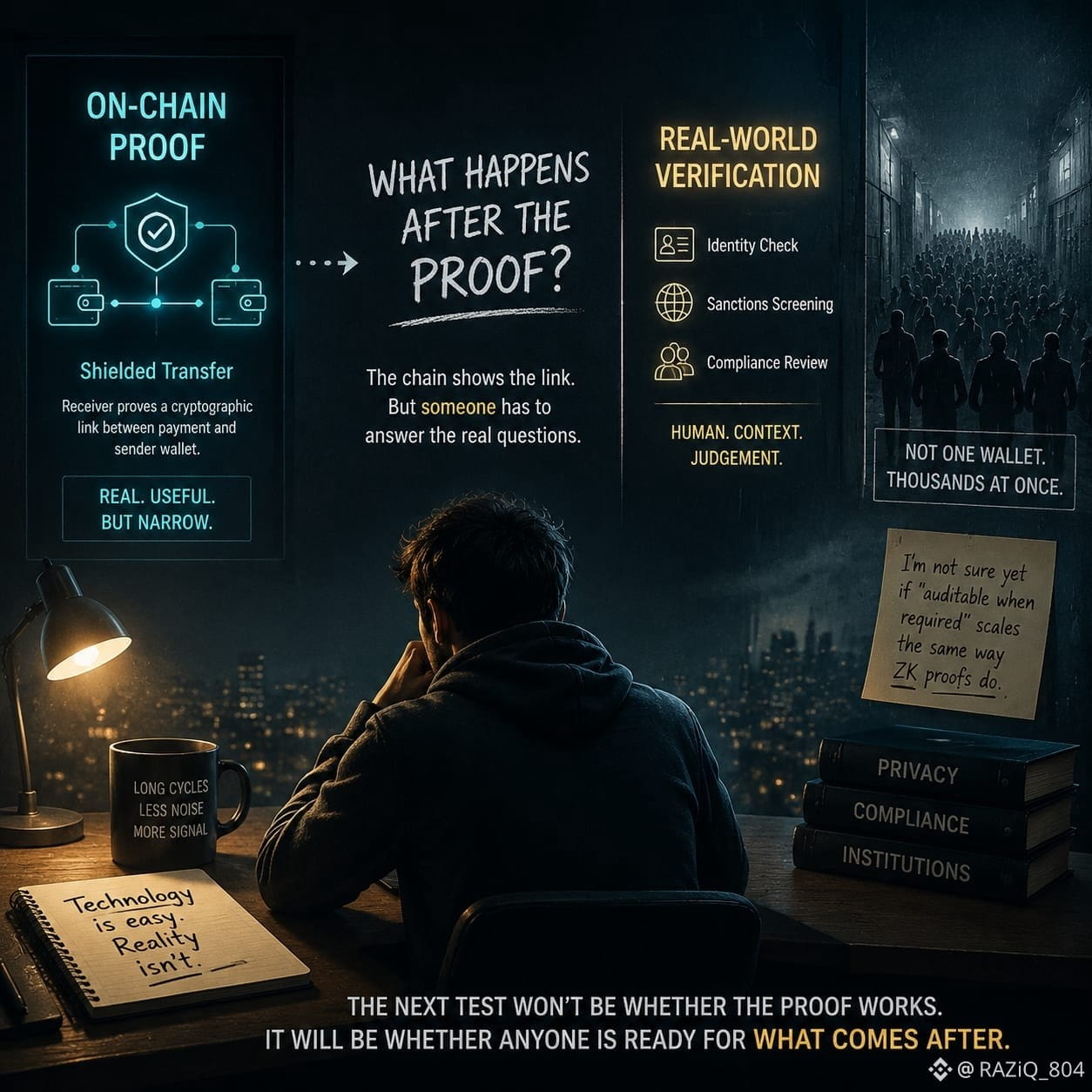
3
4
333
Anmelden und weiter Inhalte entdecken
Krypto-Nutzer weltweit auf Binance Square kennenlernen
⚡️ Bleib in Sachen Krypto stets am Puls.
💬 Die weltgrößte Kryptobörse vertraut darauf.
👍 Erhalte verlässliche Einblicke von verifizierten Creators.
E-Mail-Adresse/Telefonnummer
Trendthemen
ADAGains10%Above$0.27
3,424 Aufrufe
102 Kommentare
$ADA legt heute kräftig zu und steigt um mehr als 10 Prozent auf etwa 027. Damit erreicht die Aktie ein neues 90-Tage-Hoch.
Auch das Handelsvolumen ist auf über 1 Milliarde gestiegen und deutet auf eine rege Marktaktivität hin.
Der Kursanstieg erfolgt, während $ADA seine Erholung von den Tiefständen im Juni fortsetzt und sich die jüngste technische Struktur zunehmend bullischer entwickelt.
Die Zone zwischen 027 und 028 ist nun entscheidend. Ein anhaltender Ausbruch könnte den Weg zu höheren Widerstandsniveaus ebnen.
Nach einem derart starken Tagesanstieg könnte die Volatilität jedoch weiterhin hoch bleiben.
#ADAGains10%Above$0.27 #crypto #ADA #Cardano #crypto #Write2Earn
AbdullahAbid_7
·0 Likes
·160 Aufrufe
ETHUp70%InQ3ButLiquidityFalls
42,341 Aufrufe
568 Kommentare
EthStakingExitQueueHits2026High
15,848 Aufrufe
475 Kommentare