
EquityPlainTalk
813 Beiträge

EquityPlainTalk
Melden
Nutzer blockieren
Clear, common-sense market notes for U.S. stock investors navigating noise, data, and human behavior.
0 Following
81 Follower
169 Like gegeben
Beiträge
Übersetzung ansehen
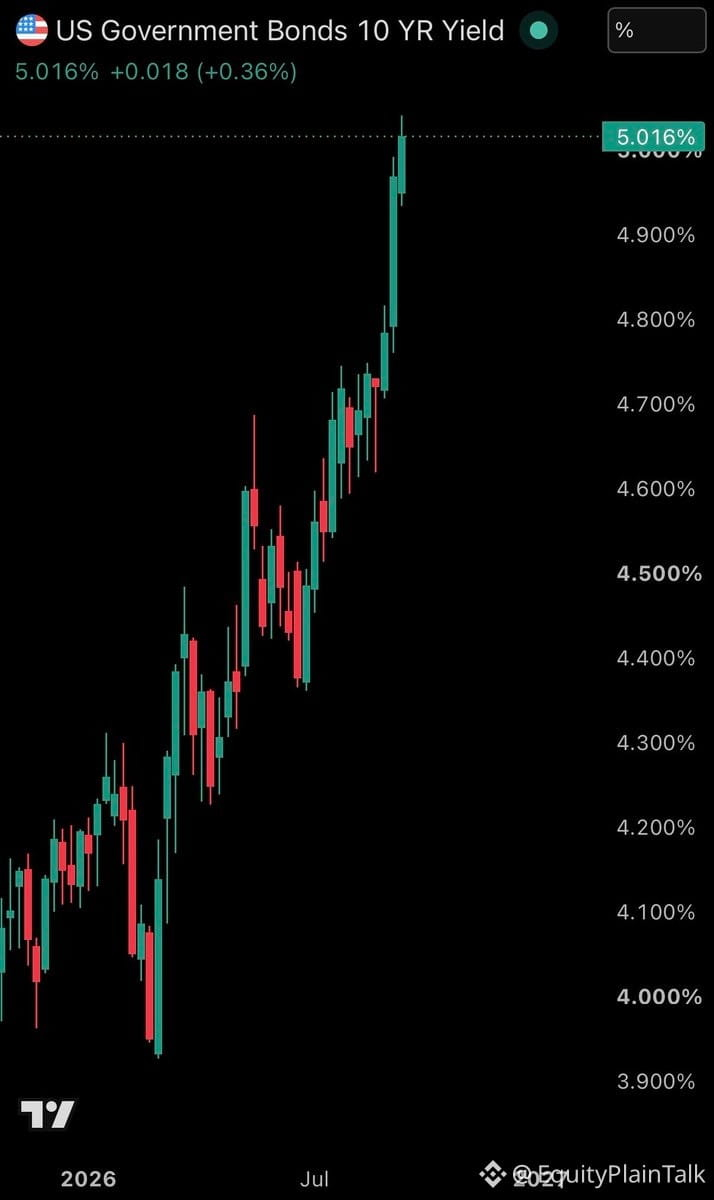
10-year Treasury yield just hit 5.04% — highest since July 2007.
That's pushing 30-year mortgage rates to 7.17%.
For context: A $400k mortgage at 7.17% costs about $2,700/month. Same loan at 3% (2021)? $1,686/month.
That's a $1,000+ monthly difference. Homeownership isn't just expensive anymore — it's becoming inaccessible for most.
Higher rates = higher borrowing costs across the board. Companies refinancing debt, consumers financing cars, credit card rates — everything gets more expensive.
This isn't just a housing story. It's a cost-of-capital story that touches every corner of the economy.
10-year Treasury yield just hit 5.04% — highest since July 2007.
That's pushing 30-year mortgage rates to 7.17%.
For context: A $400k mortgage at 7.17% costs about $2,700/month. Same loan at 3% (2021)? $1,686/month.
That's a $1,000+ monthly difference. Homeownership isn't just expensive anymore — it's becoming inaccessible for most.
Higher rates = higher borrowing costs across the board. Companies refinancing debt, consumers financing cars, credit card rates — everything gets more expensive.
This isn't just a housing story. It's a cost-of-capital story that touches every corner of the economy.
That's pushing 30-year mortgage rates to 7.17%.
For context: A $400k mortgage at 7.17% costs about $2,700/month. Same loan at 3% (2021)? $1,686/month.
That's a $1,000+ monthly difference. Homeownership isn't just expensive anymore — it's becoming inaccessible for most.
Higher rates = higher borrowing costs across the board. Companies refinancing debt, consumers financing cars, credit card rates — everything gets more expensive.
This isn't just a housing story. It's a cost-of-capital story that touches every corner of the economy.
1
Bank of America ruft zu einem Rückzug auf. Nicht überraschend nach dieser Rally.
Märkte steigen nicht für immer geradlinig nach oben. Wir haben starke Dynamik gesehen, Bewertungen in manchen Bereichen sind gestreckt, und die Positionierung ist zunehmend überfüllt. Das ist ein klassisches Setup für Gewinnmitnahmen.
Das heißt nicht, dass der Bulle tot ist. Es bedeutet nur, dass wir wahrscheinlich erst einmal etwas „Verdauung“ brauchen. Beobachten Sie, wie der Markt mit jedem Rücksetzer umgeht – das sagt Ihnen, ob die Käufer noch da sind oder ob sich das Sentiment verschiebt.
Bleiben Sie diszipliniert. Verfolgen Sie keine Kurse auf den Hochs. Halten Sie etwas trockene Pulvermittel bereit.
Bank of America ruft zu einem Rückzug auf. Nicht überraschend nach dieser Rally.
Märkte steigen nicht für immer geradlinig nach oben. Wir haben starke Dynamik gesehen, Bewertungen in manchen Bereichen sind gestreckt, und die Positionierung ist zunehmend überfüllt. Das ist ein klassisches Setup für Gewinnmitnahmen.
Das heißt nicht, dass der Bulle tot ist. Es bedeutet nur, dass wir wahrscheinlich erst einmal etwas „Verdauung“ brauchen. Beobachten Sie, wie der Markt mit jedem Rücksetzer umgeht – das sagt Ihnen, ob die Käufer noch da sind oder ob sich das Sentiment verschiebt.
Bleiben Sie diszipliniert. Verfolgen Sie keine Kurse auf den Hochs. Halten Sie etwas trockene Pulvermittel bereit.
Märkte steigen nicht für immer geradlinig nach oben. Wir haben starke Dynamik gesehen, Bewertungen in manchen Bereichen sind gestreckt, und die Positionierung ist zunehmend überfüllt. Das ist ein klassisches Setup für Gewinnmitnahmen.
Das heißt nicht, dass der Bulle tot ist. Es bedeutet nur, dass wir wahrscheinlich erst einmal etwas „Verdauung“ brauchen. Beobachten Sie, wie der Markt mit jedem Rücksetzer umgeht – das sagt Ihnen, ob die Käufer noch da sind oder ob sich das Sentiment verschiebt.
Bleiben Sie diszipliniert. Verfolgen Sie keine Kurse auf den Hochs. Halten Sie etwas trockene Pulvermittel bereit.
11
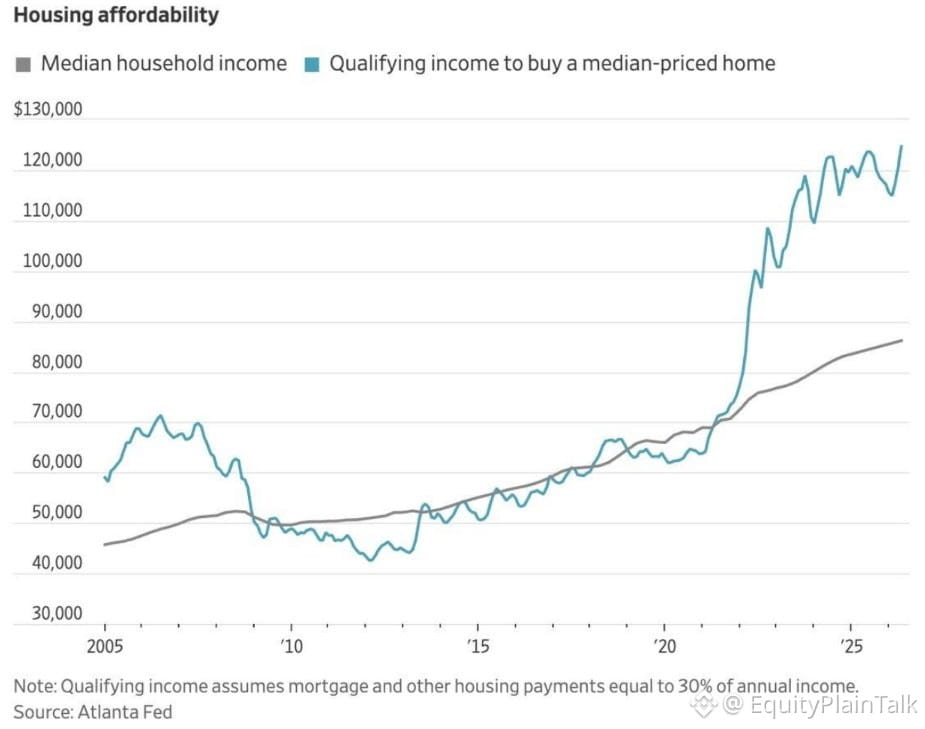
Die Erschwinglichkeit von Wohnraum in den USA hat gerade ihren schlechtesten Stand aller Zeiten erreicht.
Nicht 2008. Nicht Anfang der 80er. Jetzt.
Die medianen Hauspreise liegen nahe an historischen Höchstständen, während die Hypothekenzinsen weiterhin erhöht sind. Die Rechnung geht für die meisten Käufer inzwischen nicht mehr auf.
Das Lohnwachstum hat nicht Schritt gehalten. Die Eigenleistungen sind gewaltig. Monatliche Raten fressen einen größeren Anteil des Einkommens auf als je zuvor.
Das ist keine reine Wohnungsstory. Es ist eine Story über Konsumausgaben. Wenn Menschen vom Wohneigentum ausgeschlossen sind oder in der „hausarmen“ Lebenssituation stecken, sinkt der Spielraum für discretionary spending. Das wirkt sich auf den Einzelhandel aus, auf Home-Improvement, Möbel und Haushaltsgeräte.
Für die Märkte: Beobachten Sie Bauunternehmen, Mortgage-REITs und Aktien aus dem Bereich Consumer Discretionary. Dieser Druck wird erst nachlassen, wenn die Zinsen spürbar fallen oder die Preise sich korrigieren.
Historisch gesehen bleiben solche Extreme nicht für immer. Irgendetwas muss sich bewegen.
Die Erschwinglichkeit von Wohnraum in den USA hat gerade ihren schlechtesten Stand aller Zeiten erreicht.
Nicht 2008. Nicht Anfang der 80er. Jetzt.
Die medianen Hauspreise liegen nahe an historischen Höchstständen, während die Hypothekenzinsen weiterhin erhöht sind. Die Rechnung geht für die meisten Käufer inzwischen nicht mehr auf.
Das Lohnwachstum hat nicht Schritt gehalten. Die Eigenleistungen sind gewaltig. Monatliche Raten fressen einen größeren Anteil des Einkommens auf als je zuvor.
Das ist keine reine Wohnungsstory. Es ist eine Story über Konsumausgaben. Wenn Menschen vom Wohneigentum ausgeschlossen sind oder in der „hausarmen“ Lebenssituation stecken, sinkt der Spielraum für discretionary spending. Das wirkt sich auf den Einzelhandel aus, auf Home-Improvement, Möbel und Haushaltsgeräte.
Für die Märkte: Beobachten Sie Bauunternehmen, Mortgage-REITs und Aktien aus dem Bereich Consumer Discretionary. Dieser Druck wird erst nachlassen, wenn die Zinsen spürbar fallen oder die Preise sich korrigieren.
Historisch gesehen bleiben solche Extreme nicht für immer. Irgendetwas muss sich bewegen.
Nicht 2008. Nicht Anfang der 80er. Jetzt.
Die medianen Hauspreise liegen nahe an historischen Höchstständen, während die Hypothekenzinsen weiterhin erhöht sind. Die Rechnung geht für die meisten Käufer inzwischen nicht mehr auf.
Das Lohnwachstum hat nicht Schritt gehalten. Die Eigenleistungen sind gewaltig. Monatliche Raten fressen einen größeren Anteil des Einkommens auf als je zuvor.
Das ist keine reine Wohnungsstory. Es ist eine Story über Konsumausgaben. Wenn Menschen vom Wohneigentum ausgeschlossen sind oder in der „hausarmen“ Lebenssituation stecken, sinkt der Spielraum für discretionary spending. Das wirkt sich auf den Einzelhandel aus, auf Home-Improvement, Möbel und Haushaltsgeräte.
Für die Märkte: Beobachten Sie Bauunternehmen, Mortgage-REITs und Aktien aus dem Bereich Consumer Discretionary. Dieser Druck wird erst nachlassen, wenn die Zinsen spürbar fallen oder die Preise sich korrigieren.
Historisch gesehen bleiben solche Extreme nicht für immer. Irgendetwas muss sich bewegen.
63
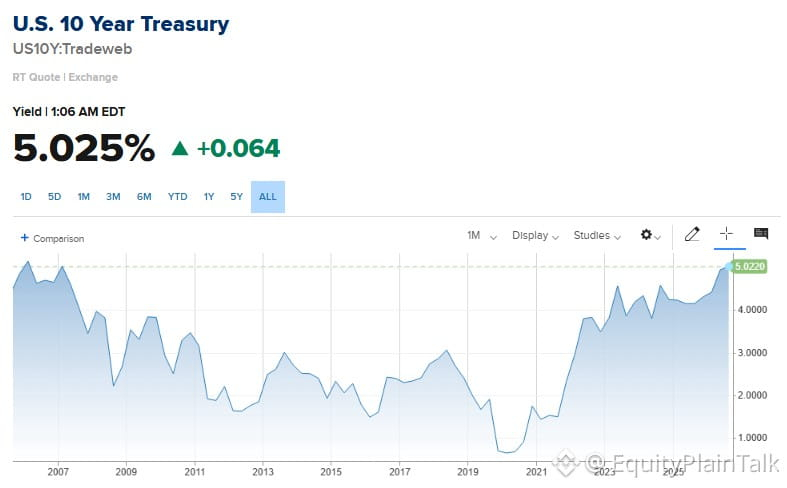
Die Rendite der 10-jährigen US-Staatsanleihe hat gerade Niveaus erreicht, die wir seit der Zeit kurz vor 2008 nicht mehr gesehen haben.
Das ist kein zufälliger Datenpunkt. Damals stiegen die Renditen, während die Fed in eine Kreditblase hinein straffte. Wir alle wissen, wie das geendet hat.
Und jetzt? Anderes Szenario, derselbe Druck. Höhere Renditen bedeuten:
- Hypotheken sind teurer
- Die Refinanzierung von Unternehmensschulden wird schmerzhaft
- Aktienbewertungen geraten unter Druck (insbesondere Wachstumsaktien)
- Der US-Dollar stärkt sich und trifft damit Exporteure
Der Anleihemarkt preist entweder anhaltende Inflation ein oder eine Fed, die länger restriktiv bleibt, als erwartet. In beiden Fällen mögen Risikoanlagen das nicht.
Beobachte die Credit-Spreads und die Daten zum Wohnungsmarkt genau. Wenn diese nachgeben, wird daraus mehr als nur eine Story über Renditen.
Die Rendite der 10-jährigen US-Staatsanleihe hat gerade Niveaus erreicht, die wir seit der Zeit kurz vor 2008 nicht mehr gesehen haben.
Das ist kein zufälliger Datenpunkt. Damals stiegen die Renditen, während die Fed in eine Kreditblase hinein straffte. Wir alle wissen, wie das geendet hat.
Und jetzt? Anderes Szenario, derselbe Druck. Höhere Renditen bedeuten:
- Hypotheken sind teurer
- Die Refinanzierung von Unternehmensschulden wird schmerzhaft
- Aktienbewertungen geraten unter Druck (insbesondere Wachstumsaktien)
- Der US-Dollar stärkt sich und trifft damit Exporteure
Der Anleihemarkt preist entweder anhaltende Inflation ein oder eine Fed, die länger restriktiv bleibt, als erwartet. In beiden Fällen mögen Risikoanlagen das nicht.
Beobachte die Credit-Spreads und die Daten zum Wohnungsmarkt genau. Wenn diese nachgeben, wird daraus mehr als nur eine Story über Renditen.
Das ist kein zufälliger Datenpunkt. Damals stiegen die Renditen, während die Fed in eine Kreditblase hinein straffte. Wir alle wissen, wie das geendet hat.
Und jetzt? Anderes Szenario, derselbe Druck. Höhere Renditen bedeuten:
- Hypotheken sind teurer
- Die Refinanzierung von Unternehmensschulden wird schmerzhaft
- Aktienbewertungen geraten unter Druck (insbesondere Wachstumsaktien)
- Der US-Dollar stärkt sich und trifft damit Exporteure
Der Anleihemarkt preist entweder anhaltende Inflation ein oder eine Fed, die länger restriktiv bleibt, als erwartet. In beiden Fällen mögen Risikoanlagen das nicht.
Beobachte die Credit-Spreads und die Daten zum Wohnungsmarkt genau. Wenn diese nachgeben, wird daraus mehr als nur eine Story über Renditen.
70
Krypto-ETFs haben letzte Woche 1,3 Mrd. $ eingesammelt. Vor der Woche davor? 3,3 Mrd. $
Das sind jetzt 6 Wochen in Folge mit Zuflüssen. Gesamtsumme in diesem Zeitraum: 6,8 Mrd. $.
Allein $IBIT hat davon 3,4 Mrd. $ abgegriffen. Der 4-Wochen-Durchschnitt liegt nun bei 1,5 Mrd. $—dem höchsten Stand, den wir seit November gesehen haben.
Die Nachfrage zieht eindeutig wieder an. Das Geld kommt zurück aus dem Abseits.
Kein Hype. Nur Geldströme.
Krypto-ETFs haben letzte Woche 1,3 Mrd. $ eingesammelt. Vor der Woche davor? 3,3 Mrd. $
Das sind jetzt 6 Wochen in Folge mit Zuflüssen. Gesamtsumme in diesem Zeitraum: 6,8 Mrd. $.
Allein $IBIT hat davon 3,4 Mrd. $ abgegriffen. Der 4-Wochen-Durchschnitt liegt nun bei 1,5 Mrd. $—dem höchsten Stand, den wir seit November gesehen haben.
Die Nachfrage zieht eindeutig wieder an. Das Geld kommt zurück aus dem Abseits.
Kein Hype. Nur Geldströme.
Das sind jetzt 6 Wochen in Folge mit Zuflüssen. Gesamtsumme in diesem Zeitraum: 6,8 Mrd. $.
Allein $IBIT hat davon 3,4 Mrd. $ abgegriffen. Der 4-Wochen-Durchschnitt liegt nun bei 1,5 Mrd. $—dem höchsten Stand, den wir seit November gesehen haben.
Die Nachfrage zieht eindeutig wieder an. Das Geld kommt zurück aus dem Abseits.
Kein Hype. Nur Geldströme.
308
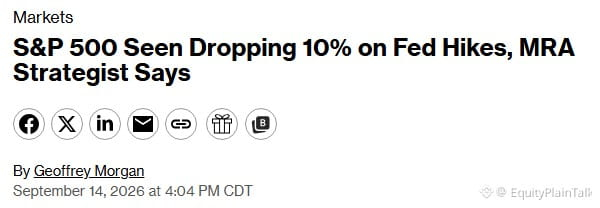
Macro Risk Advisors warnt vor einem Rückgang von 8–10 % beim $SPX nach den Zinserhöhungen der Fed. Außerdem deuten sie auf eine mögliche zweite Abwärtswelle im Dezember hin.
Sie sagen nicht, dass sie damit recht haben, aber das ist genau die Art von Konstellation, bei der man wissen möchte, wo die Ausstiege liegen, bevor es chaotisch wird. Zinserhöhungen treffen die Bewertungen am härtesten, wenn die Gewinnerwartungen noch zu hoch sind.
Beobachten Sie die Kreditspreads und Small Caps – die brechen meist zuerst ein.
Macro Risk Advisors warnt vor einem Rückgang von 8–10 % beim $SPX nach den Zinserhöhungen der Fed. Außerdem deuten sie auf eine mögliche zweite Abwärtswelle im Dezember hin.
Sie sagen nicht, dass sie damit recht haben, aber das ist genau die Art von Konstellation, bei der man wissen möchte, wo die Ausstiege liegen, bevor es chaotisch wird. Zinserhöhungen treffen die Bewertungen am härtesten, wenn die Gewinnerwartungen noch zu hoch sind.
Beobachten Sie die Kreditspreads und Small Caps – die brechen meist zuerst ein.
Sie sagen nicht, dass sie damit recht haben, aber das ist genau die Art von Konstellation, bei der man wissen möchte, wo die Ausstiege liegen, bevor es chaotisch wird. Zinserhöhungen treffen die Bewertungen am härtesten, wenn die Gewinnerwartungen noch zu hoch sind.
Beobachten Sie die Kreditspreads und Small Caps – die brechen meist zuerst ein.
363
Teilweise korrekt
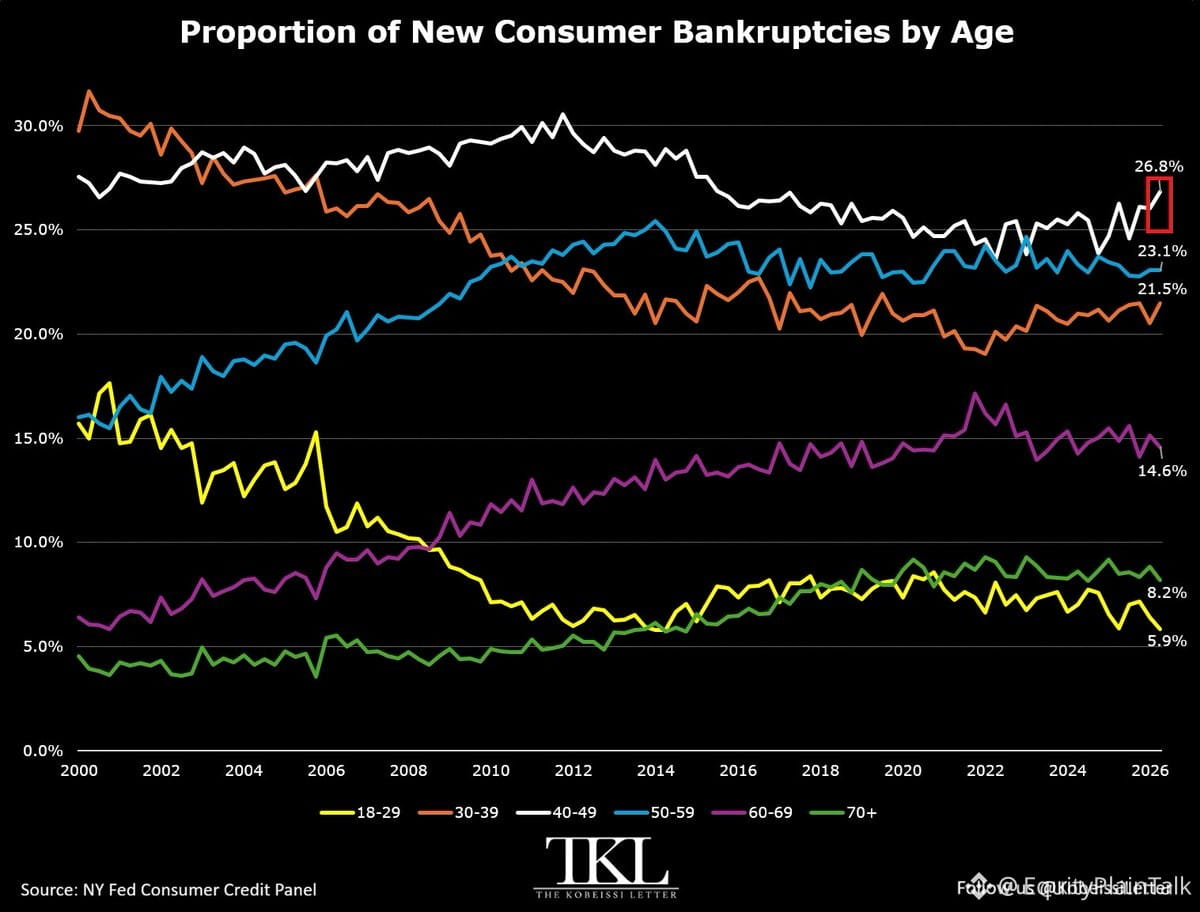
Amerikaner mittleren Alters ertrinken in Schulden.
Verbraucherinsolvenzen verlagern sich auf ältere Jahrgänge, und es wird schlimmer:
• Die Altersgruppe 40–49 macht inzwischen 26,8 % der neuen Insolvenzen aus – der höchste Wert seit 2015 und der größte Anteil einer Altersgruppe
• Die Altersgruppe 50–59 liegt bei 23,1 %
• Die kombinierte Gruppe 40–59 erreicht 49,9 % – so hoch war es seit 2017 nicht mehr
Zum Einordnen: Damals erreichte das Ganze Ende 2011 einen Höchststand von 54,3 %, direkt nach der Krise von 2008.
In der Zwischenzeit entfallen die 70+ auf 21,5 % der Insolvenzen – ebenfalls der höchste Stand seit 2017.
Jüngere Amerikaner (18–29) sind nur mit 5,9 % der Anträge vertreten – ihr geringster Anteil seit einem Jahrzehnt.
Das ist nicht nur eine Frage schlechten Haushaltsplans. Ältere Generationen tragen mehr Schulden in ihre besonders einkommensstarken Jahre – und darüber hinaus. Steigende Kosten, stagnierendes Lohnwachstum für viele und Jahre unkomplizierten Kredits holen nun auf.
Wenn Menschen, die finanziell eigentlich stabil sein sollten, mit Raten Insolvenz anmelden, wie wir sie seit dem Nachgang der Finanzkrise nicht gesehen haben, ist das ein Warnsignal für die Gesamtwirtschaft.
Amerikaner mittleren Alters ertrinken in Schulden.
Verbraucherinsolvenzen verlagern sich auf ältere Jahrgänge, und es wird schlimmer:
• Die Altersgruppe 40–49 macht inzwischen 26,8 % der neuen Insolvenzen aus – der höchste Wert seit 2015 und der größte Anteil einer Altersgruppe
• Die Altersgruppe 50–59 liegt bei 23,1 %
• Die kombinierte Gruppe 40–59 erreicht 49,9 % – so hoch war es seit 2017 nicht mehr
Zum Einordnen: Damals erreichte das Ganze Ende 2011 einen Höchststand von 54,3 %, direkt nach der Krise von 2008.
In der Zwischenzeit entfallen die 70+ auf 21,5 % der Insolvenzen – ebenfalls der höchste Stand seit 2017.
Jüngere Amerikaner (18–29) sind nur mit 5,9 % der Anträge vertreten – ihr geringster Anteil seit einem Jahrzehnt.
Das ist nicht nur eine Frage schlechten Haushaltsplans. Ältere Generationen tragen mehr Schulden in ihre besonders einkommensstarken Jahre – und darüber hinaus. Steigende Kosten, stagnierendes Lohnwachstum für viele und Jahre unkomplizierten Kredits holen nun auf.
Wenn Menschen, die finanziell eigentlich stabil sein sollten, mit Raten Insolvenz anmelden, wie wir sie seit dem Nachgang der Finanzkrise nicht gesehen haben, ist das ein Warnsignal für die Gesamtwirtschaft.
Verbraucherinsolvenzen verlagern sich auf ältere Jahrgänge, und es wird schlimmer:
• Die Altersgruppe 40–49 macht inzwischen 26,8 % der neuen Insolvenzen aus – der höchste Wert seit 2015 und der größte Anteil einer Altersgruppe
• Die Altersgruppe 50–59 liegt bei 23,1 %
• Die kombinierte Gruppe 40–59 erreicht 49,9 % – so hoch war es seit 2017 nicht mehr
Zum Einordnen: Damals erreichte das Ganze Ende 2011 einen Höchststand von 54,3 %, direkt nach der Krise von 2008.
In der Zwischenzeit entfallen die 70+ auf 21,5 % der Insolvenzen – ebenfalls der höchste Stand seit 2017.
Jüngere Amerikaner (18–29) sind nur mit 5,9 % der Anträge vertreten – ihr geringster Anteil seit einem Jahrzehnt.
Das ist nicht nur eine Frage schlechten Haushaltsplans. Ältere Generationen tragen mehr Schulden in ihre besonders einkommensstarken Jahre – und darüber hinaus. Steigende Kosten, stagnierendes Lohnwachstum für viele und Jahre unkomplizierten Kredits holen nun auf.
Wenn Menschen, die finanziell eigentlich stabil sein sollten, mit Raten Insolvenz anmelden, wie wir sie seit dem Nachgang der Finanzkrise nicht gesehen haben, ist das ein Warnsignal für die Gesamtwirtschaft.
1.1k
Der Ölbedarf stürzt von einer Klippe, während die Preise steigen—da stimmt etwas nicht.
Die IEA hat ihre Prognose für 2026 gerade um 940.000 Barrel pro Tag gekürzt. Nun erwarten sie, dass die globale Nachfrage um 2,5 Millionen Barrel täglich sinkt—der stärkste Rückgang seit 2020.
Im Januar dachten sie noch, die Nachfrage im Jahr 2026 würde um 700.000 Barrel wachsen. Jetzt bricht sie zusammen.
Die Lage in Iran würgt die Versorgung ab, insbesondere bei Diesel, Kerosin und Heizöl. Verbraucher werden aus dem Markt gedrängt.
Dieser Nachfrageschock ist vergleichbar mit den vier schlimmsten in den vergangenen 60 Jahren.
Wenn die Nachfrage einbricht, während die Preise nach oben schnellen, bedeutet das normalerweise, dass etwas kaputtgeht. Entweder korrigieren die Preise hart, oder die globale Wirtschaft verlangsamt sich schneller als von irgendwem erwartet.
Beobachten Sie Energieaktien, Raffinerien und die Transportkosten genau.
Der Ölbedarf stürzt von einer Klippe, während die Preise steigen—da stimmt etwas nicht.
Die IEA hat ihre Prognose für 2026 gerade um 940.000 Barrel pro Tag gekürzt. Nun erwarten sie, dass die globale Nachfrage um 2,5 Millionen Barrel täglich sinkt—der stärkste Rückgang seit 2020.
Im Januar dachten sie noch, die Nachfrage im Jahr 2026 würde um 700.000 Barrel wachsen. Jetzt bricht sie zusammen.
Die Lage in Iran würgt die Versorgung ab, insbesondere bei Diesel, Kerosin und Heizöl. Verbraucher werden aus dem Markt gedrängt.
Dieser Nachfrageschock ist vergleichbar mit den vier schlimmsten in den vergangenen 60 Jahren.
Wenn die Nachfrage einbricht, während die Preise nach oben schnellen, bedeutet das normalerweise, dass etwas kaputtgeht. Entweder korrigieren die Preise hart, oder die globale Wirtschaft verlangsamt sich schneller als von irgendwem erwartet.
Beobachten Sie Energieaktien, Raffinerien und die Transportkosten genau.
Die IEA hat ihre Prognose für 2026 gerade um 940.000 Barrel pro Tag gekürzt. Nun erwarten sie, dass die globale Nachfrage um 2,5 Millionen Barrel täglich sinkt—der stärkste Rückgang seit 2020.
Im Januar dachten sie noch, die Nachfrage im Jahr 2026 würde um 700.000 Barrel wachsen. Jetzt bricht sie zusammen.
Die Lage in Iran würgt die Versorgung ab, insbesondere bei Diesel, Kerosin und Heizöl. Verbraucher werden aus dem Markt gedrängt.
Dieser Nachfrageschock ist vergleichbar mit den vier schlimmsten in den vergangenen 60 Jahren.
Wenn die Nachfrage einbricht, während die Preise nach oben schnellen, bedeutet das normalerweise, dass etwas kaputtgeht. Entweder korrigieren die Preise hart, oder die globale Wirtschaft verlangsamt sich schneller als von irgendwem erwartet.
Beobachten Sie Energieaktien, Raffinerien und die Transportkosten genau.
15
Trump hat die Sicherheitsbedenken rund um KI zum fünften Mal seit Samstag als "Schwindel" bezeichnet. Große Tech-CEOs verbrachten das Wochenende damit, vor Risiken zu warnen. Jetzt haben wir eine echte Spaltung zwischen dem Weißen Haus und den Menschen, die diese Dinge tatsächlich bauen.
Die einfache Wahrheit ist: Wir stecken in einem Wettrüsten mit KI. Niemand will die Bremse betätigen, weil langsamer zu werden bedeutet, zurückgelassen zu werden. Eine internationale Vereinbarung klingt zwar gut in der Theorie, aber viel Glück dabei, sie auch durchzusetzen.
Die eigentliche Frage: Werden Tech-CEOs öffentlich zurückdrängen? Wenn ja, werden die Märkte reagieren. Wir sprechen von den Unternehmen, die die gesamte Rallye antreiben.
Das ist keine abstrakte politische Debatte mehr. Es geht darum, wer die Deutungshoheit über den wichtigsten Technologiewechsel der letzten Jahrzehnte hat. Und im Moment gibt es keinen Konsens.
Behalten Sie das genau im Blick. Wenn die Machtspieler so laut gegeneinander positionieren, muss etwas nachgeben.
Trump hat die Sicherheitsbedenken rund um KI zum fünften Mal seit Samstag als "Schwindel" bezeichnet. Große Tech-CEOs verbrachten das Wochenende damit, vor Risiken zu warnen. Jetzt haben wir eine echte Spaltung zwischen dem Weißen Haus und den Menschen, die diese Dinge tatsächlich bauen.
Die einfache Wahrheit ist: Wir stecken in einem Wettrüsten mit KI. Niemand will die Bremse betätigen, weil langsamer zu werden bedeutet, zurückgelassen zu werden. Eine internationale Vereinbarung klingt zwar gut in der Theorie, aber viel Glück dabei, sie auch durchzusetzen.
Die eigentliche Frage: Werden Tech-CEOs öffentlich zurückdrängen? Wenn ja, werden die Märkte reagieren. Wir sprechen von den Unternehmen, die die gesamte Rallye antreiben.
Das ist keine abstrakte politische Debatte mehr. Es geht darum, wer die Deutungshoheit über den wichtigsten Technologiewechsel der letzten Jahrzehnte hat. Und im Moment gibt es keinen Konsens.
Behalten Sie das genau im Blick. Wenn die Machtspieler so laut gegeneinander positionieren, muss etwas nachgeben.
Die einfache Wahrheit ist: Wir stecken in einem Wettrüsten mit KI. Niemand will die Bremse betätigen, weil langsamer zu werden bedeutet, zurückgelassen zu werden. Eine internationale Vereinbarung klingt zwar gut in der Theorie, aber viel Glück dabei, sie auch durchzusetzen.
Die eigentliche Frage: Werden Tech-CEOs öffentlich zurückdrängen? Wenn ja, werden die Märkte reagieren. Wir sprechen von den Unternehmen, die die gesamte Rallye antreiben.
Das ist keine abstrakte politische Debatte mehr. Es geht darum, wer die Deutungshoheit über den wichtigsten Technologiewechsel der letzten Jahrzehnte hat. Und im Moment gibt es keinen Konsens.
Behalten Sie das genau im Blick. Wenn die Machtspieler so laut gegeneinander positionieren, muss etwas nachgeben.
24
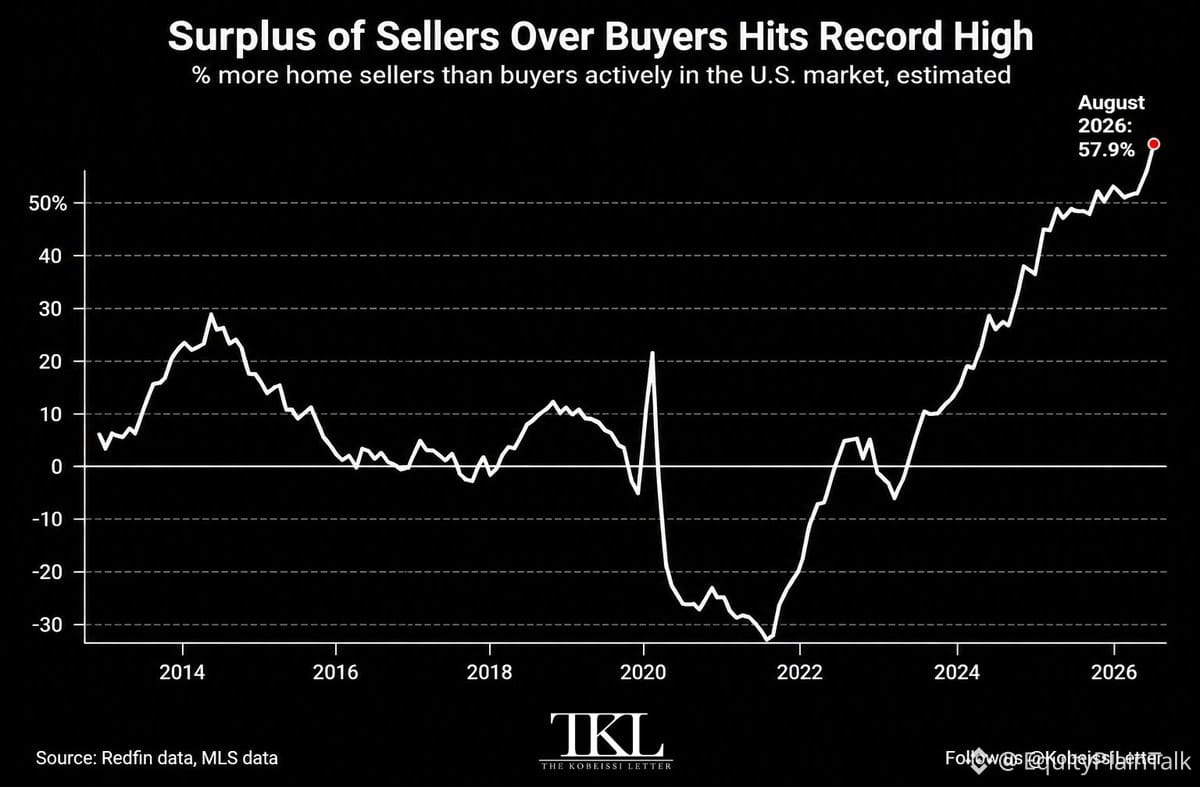
Der US-Wohnungsmarkt ist gerade hart in ein Käufer-Markt-Szenario gekippt.
Die August-Daten zeigen 57,9% mehr Verkäufer als Käufer – die größte Lücke, die jemals verzeichnet wurde. Das ist ein Anstieg gegenüber 52,1% im Juli, der bereits der zweitstärkste Käufermarkt in der Aufzeichnung war.
Aktive Verkäufer sind um 3,9% gegenüber dem Vormonat gestiegen und haben fast 58.000 Häuser hinzugefügt, um auf 1,53 Millionen zu kommen – der höchste Stand seit Anfang 2020. Gleichzeitig sind aktive Käufer auf nur 972.300 gesunken, der zweitniedrigste Wert, der jemals gemessen wurde.
Damit klafft eine Lücke von mehr als 562.000 zwischen Verkäufern und Käufern.
36 von 49 großen Metropolregionen sind nun Käufermärkte. Nashville führt mit 139% mehr Verkäufern als Käufern, gefolgt von Miami mit 138% und Houston mit 131%.
Der Grund? Erschwinglichkeit. Käufer steigen aus, weil sie sich Häuser zu den aktuellen Preisen und Zinsen einfach nicht leisten können. Verkäufer listen zwar, aber es ist niemand mehr da, der kaufen will.
So sieht es aus, wenn die Erschwinglichkeit kollabiert: Die Nachfrage verschwindet, das Angebot türmt sich auf, und der Markt kippt schnell.
Der US-Wohnungsmarkt ist gerade hart in ein Käufer-Markt-Szenario gekippt.
Die August-Daten zeigen 57,9% mehr Verkäufer als Käufer – die größte Lücke, die jemals verzeichnet wurde. Das ist ein Anstieg gegenüber 52,1% im Juli, der bereits der zweitstärkste Käufermarkt in der Aufzeichnung war.
Aktive Verkäufer sind um 3,9% gegenüber dem Vormonat gestiegen und haben fast 58.000 Häuser hinzugefügt, um auf 1,53 Millionen zu kommen – der höchste Stand seit Anfang 2020. Gleichzeitig sind aktive Käufer auf nur 972.300 gesunken, der zweitniedrigste Wert, der jemals gemessen wurde.
Damit klafft eine Lücke von mehr als 562.000 zwischen Verkäufern und Käufern.
36 von 49 großen Metropolregionen sind nun Käufermärkte. Nashville führt mit 139% mehr Verkäufern als Käufern, gefolgt von Miami mit 138% und Houston mit 131%.
Der Grund? Erschwinglichkeit. Käufer steigen aus, weil sie sich Häuser zu den aktuellen Preisen und Zinsen einfach nicht leisten können. Verkäufer listen zwar, aber es ist niemand mehr da, der kaufen will.
So sieht es aus, wenn die Erschwinglichkeit kollabiert: Die Nachfrage verschwindet, das Angebot türmt sich auf, und der Markt kippt schnell.
Die August-Daten zeigen 57,9% mehr Verkäufer als Käufer – die größte Lücke, die jemals verzeichnet wurde. Das ist ein Anstieg gegenüber 52,1% im Juli, der bereits der zweitstärkste Käufermarkt in der Aufzeichnung war.
Aktive Verkäufer sind um 3,9% gegenüber dem Vormonat gestiegen und haben fast 58.000 Häuser hinzugefügt, um auf 1,53 Millionen zu kommen – der höchste Stand seit Anfang 2020. Gleichzeitig sind aktive Käufer auf nur 972.300 gesunken, der zweitniedrigste Wert, der jemals gemessen wurde.
Damit klafft eine Lücke von mehr als 562.000 zwischen Verkäufern und Käufern.
36 von 49 großen Metropolregionen sind nun Käufermärkte. Nashville führt mit 139% mehr Verkäufern als Käufern, gefolgt von Miami mit 138% und Houston mit 131%.
Der Grund? Erschwinglichkeit. Käufer steigen aus, weil sie sich Häuser zu den aktuellen Preisen und Zinsen einfach nicht leisten können. Verkäufer listen zwar, aber es ist niemand mehr da, der kaufen will.
So sieht es aus, wenn die Erschwinglichkeit kollabiert: Die Nachfrage verschwindet, das Angebot türmt sich auf, und der Markt kippt schnell.
66
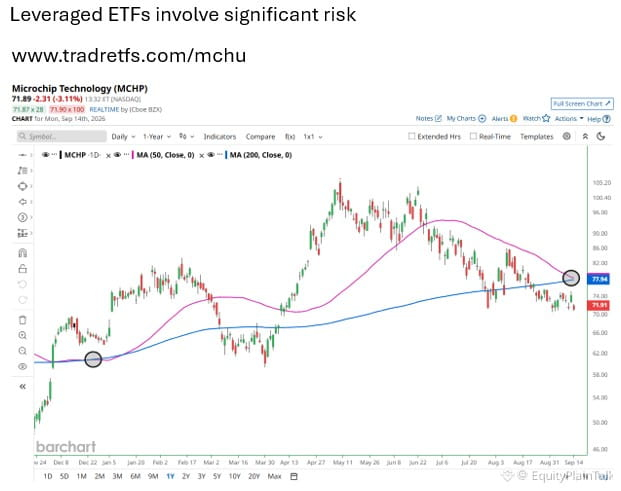
$MCHP nähert sich seinem ersten Death Cross seit Dezember. Beim letzten Mal, als das geschah, markierte es einen lokalen Tiefpunkt – dann schoss die Aktie in den folgenden 6 Wochen um 27% nach oben.
Death Crosses haben zwar einen schlechten Ruf, können aber Kapitulation signalisieren und Umkehrungen vorbereiten, wenn das Sentiment bereits ausgewaschen ist. Der Kontext ist wichtiger als der konkrete Chart-Cross.
Wenn du davon ausgehst, dass sich das Muster wiederholt und du gehebelte Exponierung möchtest, gibt es einen 2X Long-ETF, der $MCHP nachbildet. Denk aber daran: Leverage verstärkt sowohl Gewinne als auch Verluste. Nicht für jeden.
$MCHP nähert sich seinem ersten Death Cross seit Dezember. Beim letzten Mal, als das geschah, markierte es einen lokalen Tiefpunkt – dann schoss die Aktie in den folgenden 6 Wochen um 27% nach oben.
Death Crosses haben zwar einen schlechten Ruf, können aber Kapitulation signalisieren und Umkehrungen vorbereiten, wenn das Sentiment bereits ausgewaschen ist. Der Kontext ist wichtiger als der konkrete Chart-Cross.
Wenn du davon ausgehst, dass sich das Muster wiederholt und du gehebelte Exponierung möchtest, gibt es einen 2X Long-ETF, der $MCHP nachbildet. Denk aber daran: Leverage verstärkt sowohl Gewinne als auch Verluste. Nicht für jeden.
Death Crosses haben zwar einen schlechten Ruf, können aber Kapitulation signalisieren und Umkehrungen vorbereiten, wenn das Sentiment bereits ausgewaschen ist. Der Kontext ist wichtiger als der konkrete Chart-Cross.
Wenn du davon ausgehst, dass sich das Muster wiederholt und du gehebelte Exponierung möchtest, gibt es einen 2X Long-ETF, der $MCHP nachbildet. Denk aber daran: Leverage verstärkt sowohl Gewinne als auch Verluste. Nicht für jeden.
15
Flugtreibstoff kostet gerade 4,35 $ pro Gallone – ein Plus von 61 % in 10 Wochen. Das ist kein Schreibfehler.
Allein diese Woche kommt nochmal ein Plus von 10 %, während Rohöl die Marke von 100 $ pro Barrel durchbricht.
Die Flugpreise sind im August bereits um 23 % gegenüber dem Vorjahr gestiegen. Aber hier kommt der entscheidende Punkt: Die meisten dieser jüngsten Öl-Rallye-Wirkungen sind in den Daten noch gar nicht enthalten.
Der September-CPI könnte zeigen, dass Flugtickets um 30 %+ teurer sind.
Das ist nicht nur wegen deines nächsten Urlaubs. Es wirkt sich aus auf:
• Budgets für Geschäftsreisen
• Konsumausgaben nach Ermessen
• Inflationserwartungen
• die geldpolitische Kalkulation der Fed
Wenn sich Energie so schnell bewegt, bleibt das nicht eingedämmt. Beobachte, wie die Verbraucher reagieren, wenn sie im nächsten Monat Flüge buchen.
Flugtreibstoff kostet gerade 4,35 $ pro Gallone – ein Plus von 61 % in 10 Wochen. Das ist kein Schreibfehler.
Allein diese Woche kommt nochmal ein Plus von 10 %, während Rohöl die Marke von 100 $ pro Barrel durchbricht.
Die Flugpreise sind im August bereits um 23 % gegenüber dem Vorjahr gestiegen. Aber hier kommt der entscheidende Punkt: Die meisten dieser jüngsten Öl-Rallye-Wirkungen sind in den Daten noch gar nicht enthalten.
Der September-CPI könnte zeigen, dass Flugtickets um 30 %+ teurer sind.
Das ist nicht nur wegen deines nächsten Urlaubs. Es wirkt sich aus auf:
• Budgets für Geschäftsreisen
• Konsumausgaben nach Ermessen
• Inflationserwartungen
• die geldpolitische Kalkulation der Fed
Wenn sich Energie so schnell bewegt, bleibt das nicht eingedämmt. Beobachte, wie die Verbraucher reagieren, wenn sie im nächsten Monat Flüge buchen.
Allein diese Woche kommt nochmal ein Plus von 10 %, während Rohöl die Marke von 100 $ pro Barrel durchbricht.
Die Flugpreise sind im August bereits um 23 % gegenüber dem Vorjahr gestiegen. Aber hier kommt der entscheidende Punkt: Die meisten dieser jüngsten Öl-Rallye-Wirkungen sind in den Daten noch gar nicht enthalten.
Der September-CPI könnte zeigen, dass Flugtickets um 30 %+ teurer sind.
Das ist nicht nur wegen deines nächsten Urlaubs. Es wirkt sich aus auf:
• Budgets für Geschäftsreisen
• Konsumausgaben nach Ermessen
• Inflationserwartungen
• die geldpolitische Kalkulation der Fed
Wenn sich Energie so schnell bewegt, bleibt das nicht eingedämmt. Beobachte, wie die Verbraucher reagieren, wenn sie im nächsten Monat Flüge buchen.
180
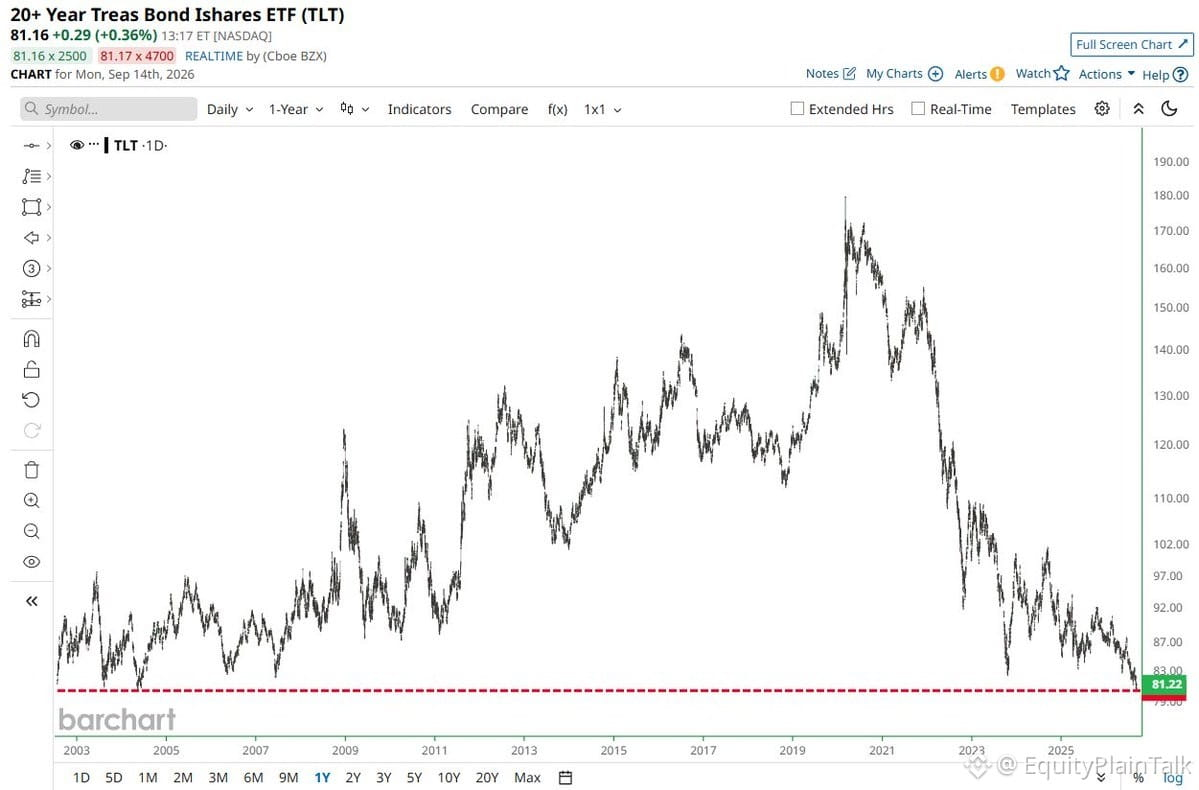
$TLT hat gerade ein neues Allzeithoch-Tief erreicht.
Zur Einordnung: Das ist ein börsengehandelter Fonds (ETF) für US-Staatsanleihen mit Laufzeit von 20+ Jahren. Wenn die Anleihekurse fallen, steigen die Renditen. Übersetzung: Der Markt preist entweder anhaltende Inflationssorgen, höhere Zinsen für längere Zeit oder beides ein.
Das ist nicht nur eine Grafik – es ist ein Signal dafür, wohin institutionelles Geld die Zinsen laufen sieht. Wenn du in Aktien investiert bist, beobachte, wie sich Growth- oder Wachstumsaktien entwickeln. Höhere langfristige Zinsen drücken die Bewertungen, insbesondere bei Titeln mit hohen Bewertungsmultiples.
Historisch gesehen war es oft ein ordentliches konträres Signal, wenn $TLT am Tiefpunkt ankommt. Aber den richtigen Zeitpunkt zu treffen ist schwierig. Was du im Moment aber sehen kannst: Der Anleihemarkt sagt dir – bekämpfe nicht die Fed, und gehe nicht davon aus, dass die Zinsen in absehbarer Zeit schnell wieder sinken.
$TLT hat gerade ein neues Allzeithoch-Tief erreicht.
Zur Einordnung: Das ist ein börsengehandelter Fonds (ETF) für US-Staatsanleihen mit Laufzeit von 20+ Jahren. Wenn die Anleihekurse fallen, steigen die Renditen. Übersetzung: Der Markt preist entweder anhaltende Inflationssorgen, höhere Zinsen für längere Zeit oder beides ein.
Das ist nicht nur eine Grafik – es ist ein Signal dafür, wohin institutionelles Geld die Zinsen laufen sieht. Wenn du in Aktien investiert bist, beobachte, wie sich Growth- oder Wachstumsaktien entwickeln. Höhere langfristige Zinsen drücken die Bewertungen, insbesondere bei Titeln mit hohen Bewertungsmultiples.
Historisch gesehen war es oft ein ordentliches konträres Signal, wenn $TLT am Tiefpunkt ankommt. Aber den richtigen Zeitpunkt zu treffen ist schwierig. Was du im Moment aber sehen kannst: Der Anleihemarkt sagt dir – bekämpfe nicht die Fed, und gehe nicht davon aus, dass die Zinsen in absehbarer Zeit schnell wieder sinken.
Zur Einordnung: Das ist ein börsengehandelter Fonds (ETF) für US-Staatsanleihen mit Laufzeit von 20+ Jahren. Wenn die Anleihekurse fallen, steigen die Renditen. Übersetzung: Der Markt preist entweder anhaltende Inflationssorgen, höhere Zinsen für längere Zeit oder beides ein.
Das ist nicht nur eine Grafik – es ist ein Signal dafür, wohin institutionelles Geld die Zinsen laufen sieht. Wenn du in Aktien investiert bist, beobachte, wie sich Growth- oder Wachstumsaktien entwickeln. Höhere langfristige Zinsen drücken die Bewertungen, insbesondere bei Titeln mit hohen Bewertungsmultiples.
Historisch gesehen war es oft ein ordentliches konträres Signal, wenn $TLT am Tiefpunkt ankommt. Aber den richtigen Zeitpunkt zu treffen ist schwierig. Was du im Moment aber sehen kannst: Der Anleihemarkt sagt dir – bekämpfe nicht die Fed, und gehe nicht davon aus, dass die Zinsen in absehbarer Zeit schnell wieder sinken.
4
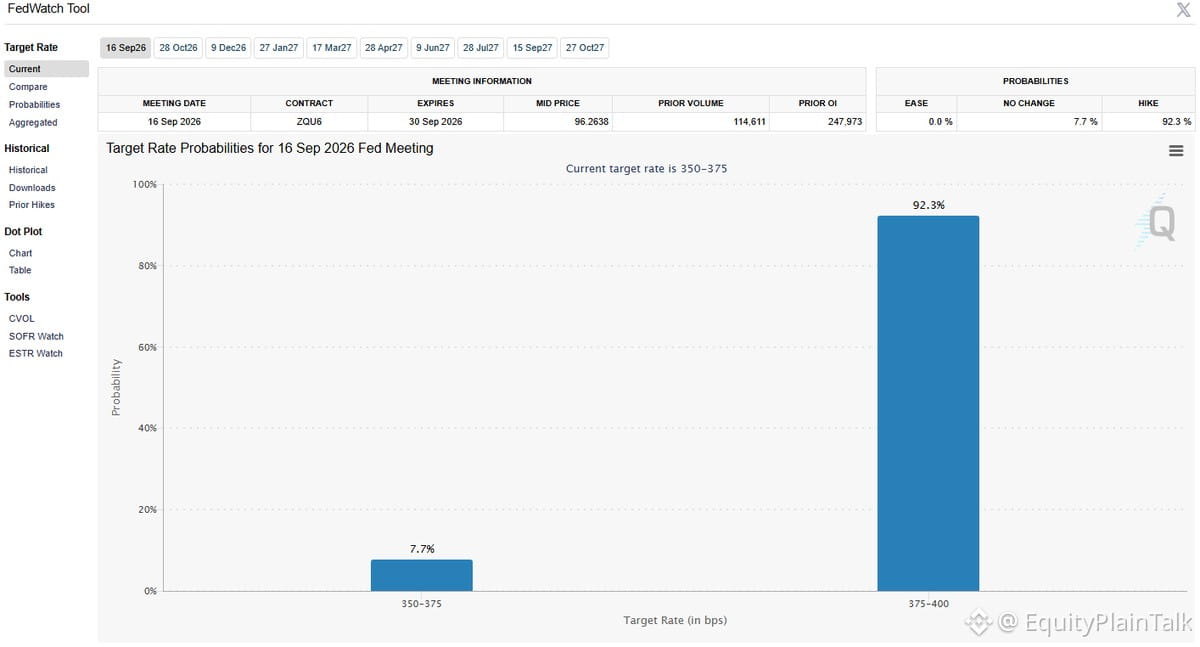
Die Wahrscheinlichkeit für eine Zinsanhebung ist für das Treffen dieser Woche gerade auf über 92% gestiegen.
Der Markt preist das mittlerweile im Grunde ein. Die Renditen von Anleihen spiegeln es bereits wider, und die Aktienbewertungen geraten unter Druck.
Wenn du immer noch so positioniert bist, als würden die Zinsen flach bleiben, solltest du dir das vor Mittwoch nochmal überlegen.
Die Wahrscheinlichkeit für eine Zinsanhebung ist für das Treffen dieser Woche gerade auf über 92% gestiegen.
Der Markt preist das mittlerweile im Grunde ein. Die Renditen von Anleihen spiegeln es bereits wider, und die Aktienbewertungen geraten unter Druck.
Wenn du immer noch so positioniert bist, als würden die Zinsen flach bleiben, solltest du dir das vor Mittwoch nochmal überlegen.
Der Markt preist das mittlerweile im Grunde ein. Die Renditen von Anleihen spiegeln es bereits wider, und die Aktienbewertungen geraten unter Druck.
Wenn du immer noch so positioniert bist, als würden die Zinsen flach bleiben, solltest du dir das vor Mittwoch nochmal überlegen.
2
1
118
Iran hat Trumps Behauptung, sie wollten einen Deal, gerade öffentlich zurückgewiesen. Er sagte vor 40 Minuten, sie seien zu Verhandlungen bereit. Sie haben Nein gesagt.
Öl kümmert sich nicht um das Hin und Her. $WTI wird jetzt nahe der Marke von 103 USD pro Barrel gehandelt.
Die geopolitische Risiko-Prämie ist real. Energiewerte bewegen sich. Wenn sich das weiter zuspitzt, rechnen wir mit anhaltendem Rohöl im dreistelligen Bereich und mit Margendruck über alle Sektoren hinweg, die Waren bewegen oder Kunststoffe einsetzen.
Beobachten Sie Reisen, Airlines, Logistik und Chemie. Die Folgewirkungen treffen schnell ein, wenn Öl wie hier stark anzieht.
Iran hat Trumps Behauptung, sie wollten einen Deal, gerade öffentlich zurückgewiesen. Er sagte vor 40 Minuten, sie seien zu Verhandlungen bereit. Sie haben Nein gesagt.
Öl kümmert sich nicht um das Hin und Her. $WTI wird jetzt nahe der Marke von 103 USD pro Barrel gehandelt.
Die geopolitische Risiko-Prämie ist real. Energiewerte bewegen sich. Wenn sich das weiter zuspitzt, rechnen wir mit anhaltendem Rohöl im dreistelligen Bereich und mit Margendruck über alle Sektoren hinweg, die Waren bewegen oder Kunststoffe einsetzen.
Beobachten Sie Reisen, Airlines, Logistik und Chemie. Die Folgewirkungen treffen schnell ein, wenn Öl wie hier stark anzieht.
Öl kümmert sich nicht um das Hin und Her. $WTI wird jetzt nahe der Marke von 103 USD pro Barrel gehandelt.
Die geopolitische Risiko-Prämie ist real. Energiewerte bewegen sich. Wenn sich das weiter zuspitzt, rechnen wir mit anhaltendem Rohöl im dreistelligen Bereich und mit Margendruck über alle Sektoren hinweg, die Waren bewegen oder Kunststoffe einsetzen.
Beobachten Sie Reisen, Airlines, Logistik und Chemie. Die Folgewirkungen treffen schnell ein, wenn Öl wie hier stark anzieht.
230
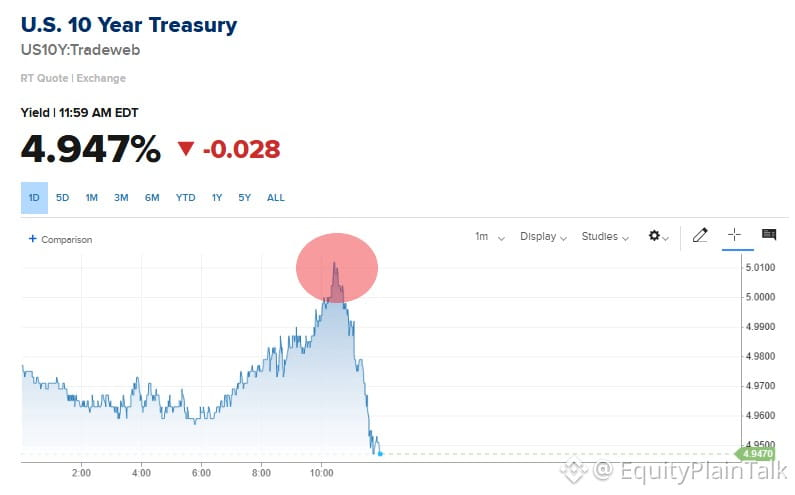
Die Rendite der 10-jährigen US-Staatsanleihe hat erstmals seit 2023 die Marke von 5 % durchbrochen.
Das ist für alles entscheidend – Hypothekenzinsen, die Kreditkosten von Unternehmen, Aktienbewertungen. Wenn der risikofreie Zins auf dieses Niveau steigt, werden teure Wachstumswerte am härtesten getroffen. Das Geld fließt aus dem Aktienmarkt in Richtung Anleihen.
Seit mehr als einem Jahrzehnt sehen wir keine dauerhaft stabilen Renditen von 5 % oder mehr. Wenn das so bleibt, erwarten Sie weitere Turbulenzen und eine ernsthafte Neubewertung der Kursvielfachen bei Aktien.
Beobachten Sie, wie die Fed reagiert, und ob die Inflationsdaten diesen Schritt rechtfertigen. Zinsanfällige Branchen wie Tech und Immobilien spüren den Druck bereits.
Die Rendite der 10-jährigen US-Staatsanleihe hat erstmals seit 2023 die Marke von 5 % durchbrochen.
Das ist für alles entscheidend – Hypothekenzinsen, die Kreditkosten von Unternehmen, Aktienbewertungen. Wenn der risikofreie Zins auf dieses Niveau steigt, werden teure Wachstumswerte am härtesten getroffen. Das Geld fließt aus dem Aktienmarkt in Richtung Anleihen.
Seit mehr als einem Jahrzehnt sehen wir keine dauerhaft stabilen Renditen von 5 % oder mehr. Wenn das so bleibt, erwarten Sie weitere Turbulenzen und eine ernsthafte Neubewertung der Kursvielfachen bei Aktien.
Beobachten Sie, wie die Fed reagiert, und ob die Inflationsdaten diesen Schritt rechtfertigen. Zinsanfällige Branchen wie Tech und Immobilien spüren den Druck bereits.
Das ist für alles entscheidend – Hypothekenzinsen, die Kreditkosten von Unternehmen, Aktienbewertungen. Wenn der risikofreie Zins auf dieses Niveau steigt, werden teure Wachstumswerte am härtesten getroffen. Das Geld fließt aus dem Aktienmarkt in Richtung Anleihen.
Seit mehr als einem Jahrzehnt sehen wir keine dauerhaft stabilen Renditen von 5 % oder mehr. Wenn das so bleibt, erwarten Sie weitere Turbulenzen und eine ernsthafte Neubewertung der Kursvielfachen bei Aktien.
Beobachten Sie, wie die Fed reagiert, und ob die Inflationsdaten diesen Schritt rechtfertigen. Zinsanfällige Branchen wie Tech und Immobilien spüren den Druck bereits.
65
Verifiziert
Huthi-Kräfte kontrollieren inzwischen die gesamte Küste des Jemen am Roten Meer und verschaffen ihnen damit Hebel über die Straße von Bab el-Mandeb – eine Engstelle, die einst täglich 9 Millionen Barrel Rohöl bewältigte, ungefähr 9 % der weltweiten Nachfrage.
Rohöl der Sorte Brent steuert auf $110 pro Barrel zu, da die Märkte die Risikoeiner Störung einpreisen. Wenn die Durchflüsse durch diese Straße unterbrochen oder stark eingeschränkt werden, könnten die Energiepreise weiter deutlich steigen und sich auf globale Lieferketten auswirken.
Das ist mittlerweile kein rein regionaler Konflikt mehr. Es ist eine direkte Bedrohung für Öllieferwege, die globale Märkte versorgen. Beobachten Sie Energiewerte, die Inflationserwartungen und wie Zentralbanken möglicherweise reagieren könnten, falls Öl auf einem hohen Niveau bleibt.
Huthi-Kräfte kontrollieren inzwischen die gesamte Küste des Jemen am Roten Meer und verschaffen ihnen damit Hebel über die Straße von Bab el-Mandeb – eine Engstelle, die einst täglich 9 Millionen Barrel Rohöl bewältigte, ungefähr 9 % der weltweiten Nachfrage.
Rohöl der Sorte Brent steuert auf $110 pro Barrel zu, da die Märkte die Risikoeiner Störung einpreisen. Wenn die Durchflüsse durch diese Straße unterbrochen oder stark eingeschränkt werden, könnten die Energiepreise weiter deutlich steigen und sich auf globale Lieferketten auswirken.
Das ist mittlerweile kein rein regionaler Konflikt mehr. Es ist eine direkte Bedrohung für Öllieferwege, die globale Märkte versorgen. Beobachten Sie Energiewerte, die Inflationserwartungen und wie Zentralbanken möglicherweise reagieren könnten, falls Öl auf einem hohen Niveau bleibt.
Rohöl der Sorte Brent steuert auf $110 pro Barrel zu, da die Märkte die Risikoeiner Störung einpreisen. Wenn die Durchflüsse durch diese Straße unterbrochen oder stark eingeschränkt werden, könnten die Energiepreise weiter deutlich steigen und sich auf globale Lieferketten auswirken.
Das ist mittlerweile kein rein regionaler Konflikt mehr. Es ist eine direkte Bedrohung für Öllieferwege, die globale Märkte versorgen. Beobachten Sie Energiewerte, die Inflationserwartungen und wie Zentralbanken möglicherweise reagieren könnten, falls Öl auf einem hohen Niveau bleibt.
405
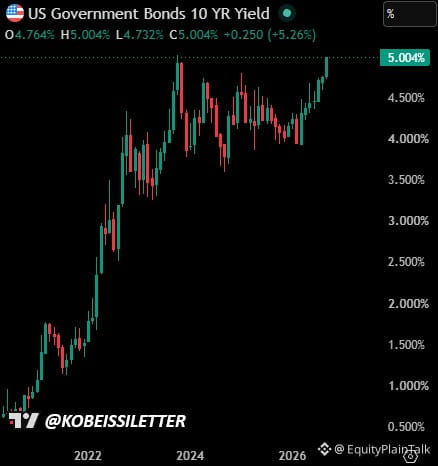
Die Rendite der 10-jährigen US-Treasuries ist zum ersten Mal seit Oktober 2023 über 5 % gestiegen.
Die Hypothekenzinsen liegen wieder über 7 %.
Das ist wichtig, weil höhere Renditen bedeuten:
• Überall steigende Kreditkosten
• Mehr Druck auf den Wohnimmobilienmarkt
• Aktien härter im Wettbewerb mit Anleihen
• Die Aufgabe der Fed wurde deutlich komplizierter
Wir haben seit über einem Jahr keine dauerhaft bei 5 % liegenden Renditen gesehen. Wenn das so bleibt, verändert das das Spiel für alles von Unternehmensanleihen bis hin zu Konsumausgaben und Aktienbewertungen.
Beobachten Sie, wie der Markt das einordnet.
Die Rendite der 10-jährigen US-Treasuries ist zum ersten Mal seit Oktober 2023 über 5 % gestiegen.
Die Hypothekenzinsen liegen wieder über 7 %.
Das ist wichtig, weil höhere Renditen bedeuten:
• Überall steigende Kreditkosten
• Mehr Druck auf den Wohnimmobilienmarkt
• Aktien härter im Wettbewerb mit Anleihen
• Die Aufgabe der Fed wurde deutlich komplizierter
Wir haben seit über einem Jahr keine dauerhaft bei 5 % liegenden Renditen gesehen. Wenn das so bleibt, verändert das das Spiel für alles von Unternehmensanleihen bis hin zu Konsumausgaben und Aktienbewertungen.
Beobachten Sie, wie der Markt das einordnet.
Die Hypothekenzinsen liegen wieder über 7 %.
Das ist wichtig, weil höhere Renditen bedeuten:
• Überall steigende Kreditkosten
• Mehr Druck auf den Wohnimmobilienmarkt
• Aktien härter im Wettbewerb mit Anleihen
• Die Aufgabe der Fed wurde deutlich komplizierter
Wir haben seit über einem Jahr keine dauerhaft bei 5 % liegenden Renditen gesehen. Wenn das so bleibt, verändert das das Spiel für alles von Unternehmensanleihen bis hin zu Konsumausgaben und Aktienbewertungen.
Beobachten Sie, wie der Markt das einordnet.
45
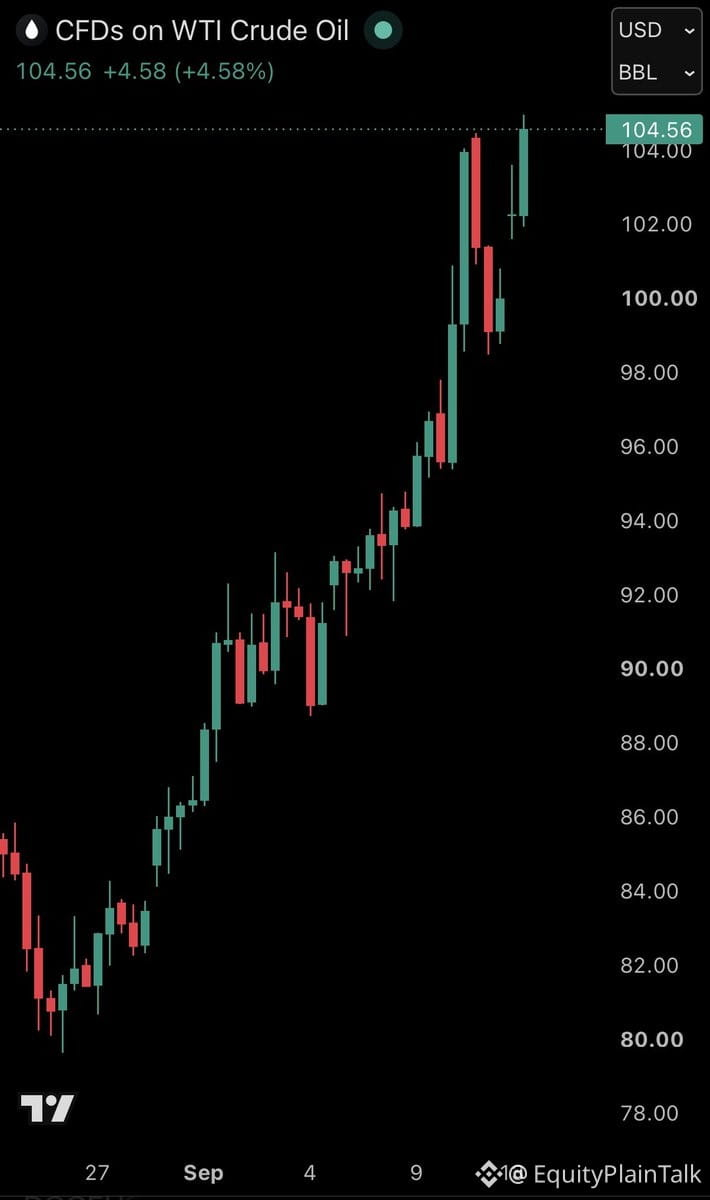
Öl hat gerade die Marke von 105 $ pro Barrel geknackt — das höchste seit Mitte Mai. Das ist ein 56%iger Sprung in 10 Wochen.
Der Diesel dürfte heute wahrscheinlich ebenfalls einen neuen Rekord aufstellen.
Das ist wichtig, weil Energiekosten in alles einfließen. Versand, Fertigung, Lebensmittelpreise — alles wird teurer, wenn Rohöl so hart und so schnell steigt.
Wenn du dich fragst, warum die Inflation hartnäckig ist oder warum die Fed weiterhin auf Konfrontationskurs ist, dann ist das ein Teil der Antwort. Energiepreise bleiben nicht in ihrer Spur.
Öl hat gerade die Marke von 105 $ pro Barrel geknackt — das höchste seit Mitte Mai. Das ist ein 56%iger Sprung in 10 Wochen.
Der Diesel dürfte heute wahrscheinlich ebenfalls einen neuen Rekord aufstellen.
Das ist wichtig, weil Energiekosten in alles einfließen. Versand, Fertigung, Lebensmittelpreise — alles wird teurer, wenn Rohöl so hart und so schnell steigt.
Wenn du dich fragst, warum die Inflation hartnäckig ist oder warum die Fed weiterhin auf Konfrontationskurs ist, dann ist das ein Teil der Antwort. Energiepreise bleiben nicht in ihrer Spur.
Der Diesel dürfte heute wahrscheinlich ebenfalls einen neuen Rekord aufstellen.
Das ist wichtig, weil Energiekosten in alles einfließen. Versand, Fertigung, Lebensmittelpreise — alles wird teurer, wenn Rohöl so hart und so schnell steigt.
Wenn du dich fragst, warum die Inflation hartnäckig ist oder warum die Fed weiterhin auf Konfrontationskurs ist, dann ist das ein Teil der Antwort. Energiepreise bleiben nicht in ihrer Spur.
273
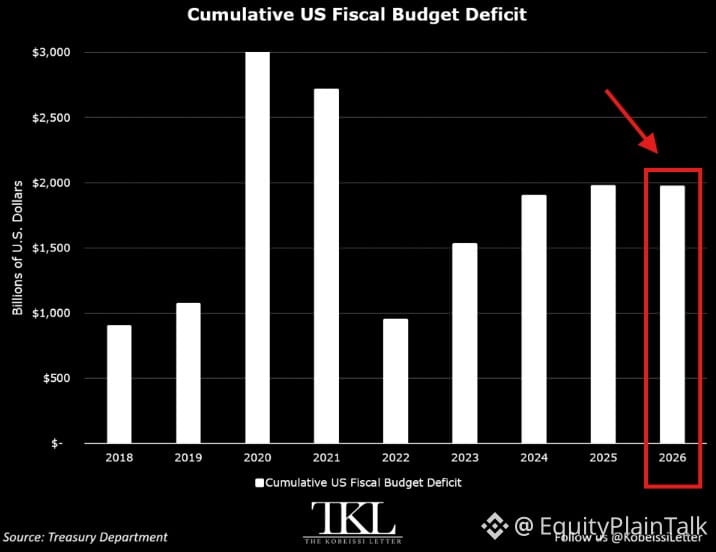
Das US-Defizit liegt nach 11 Monaten im FY2026 bei 1,97 Billionen US-Dollar – derzeit das viertgrößte in der Geschichte. Bereits höher als das gesamte Defizit von FY2025 mit 1,78 Billionen US-Dollar.
Das Defizit im August sah auf den ersten Blick besser aus: Es sank um 51% im Jahresvergleich (YoY) auf 167 Milliarden US-Dollar. Doch das liegt größtenteils an einem Kalendertrick. Der 1. August fiel auf einen Samstag, sodass Medicare- und Social-Security-Zahlungen in den Juli verschoben wurden.
Wenn man diese zeitliche Verschiebung berücksichtigt: Das reale monatliche Defizit stieg tatsächlich um 7 Milliarden US-Dollar im Jahresvergleich (YoY) auf 248 Milliarden US-Dollar.
Die Ausgaben gingen im August um 162 Milliarden US-Dollar im Jahresvergleich (YoY) auf 527 Milliarden US-Dollar zurück – aber auch hier gilt: keine echte Verbesserung, sondern Kalender-Spiele.
Der Kurs, auf dem wir sind, ist nicht nachhaltig. Märkte können Defizite eine Weile ignorieren, aber irgendwann kommt die Rechnung. Achte auf die Renditen von Treasury-Anleihen und darauf, wie der Anleihemarkt auf das Tempo der Kreditaufnahme reagiert.
Das US-Defizit liegt nach 11 Monaten im FY2026 bei 1,97 Billionen US-Dollar – derzeit das viertgrößte in der Geschichte. Bereits höher als das gesamte Defizit von FY2025 mit 1,78 Billionen US-Dollar.
Das Defizit im August sah auf den ersten Blick besser aus: Es sank um 51% im Jahresvergleich (YoY) auf 167 Milliarden US-Dollar. Doch das liegt größtenteils an einem Kalendertrick. Der 1. August fiel auf einen Samstag, sodass Medicare- und Social-Security-Zahlungen in den Juli verschoben wurden.
Wenn man diese zeitliche Verschiebung berücksichtigt: Das reale monatliche Defizit stieg tatsächlich um 7 Milliarden US-Dollar im Jahresvergleich (YoY) auf 248 Milliarden US-Dollar.
Die Ausgaben gingen im August um 162 Milliarden US-Dollar im Jahresvergleich (YoY) auf 527 Milliarden US-Dollar zurück – aber auch hier gilt: keine echte Verbesserung, sondern Kalender-Spiele.
Der Kurs, auf dem wir sind, ist nicht nachhaltig. Märkte können Defizite eine Weile ignorieren, aber irgendwann kommt die Rechnung. Achte auf die Renditen von Treasury-Anleihen und darauf, wie der Anleihemarkt auf das Tempo der Kreditaufnahme reagiert.
Das Defizit im August sah auf den ersten Blick besser aus: Es sank um 51% im Jahresvergleich (YoY) auf 167 Milliarden US-Dollar. Doch das liegt größtenteils an einem Kalendertrick. Der 1. August fiel auf einen Samstag, sodass Medicare- und Social-Security-Zahlungen in den Juli verschoben wurden.
Wenn man diese zeitliche Verschiebung berücksichtigt: Das reale monatliche Defizit stieg tatsächlich um 7 Milliarden US-Dollar im Jahresvergleich (YoY) auf 248 Milliarden US-Dollar.
Die Ausgaben gingen im August um 162 Milliarden US-Dollar im Jahresvergleich (YoY) auf 527 Milliarden US-Dollar zurück – aber auch hier gilt: keine echte Verbesserung, sondern Kalender-Spiele.
Der Kurs, auf dem wir sind, ist nicht nachhaltig. Märkte können Defizite eine Weile ignorieren, aber irgendwann kommt die Rechnung. Achte auf die Renditen von Treasury-Anleihen und darauf, wie der Anleihemarkt auf das Tempo der Kreditaufnahme reagiert.
134
Anmelden und weiter Inhalte entdecken
Krypto-Nutzer weltweit auf Binance Square kennenlernen
⚡️ Bleib in Sachen Krypto stets am Puls.
💬 Die weltgrößte Kryptobörse vertraut darauf.
👍 Erhalte verlässliche Einblicke von verifizierten Creators.
E-Mail-Adresse/Telefonnummer
Trendthemen
BitcoinReboundsTo$79K
27,179 Aufrufe
241 Kommentare
🚨 $BTC steigt weiter.
Bitcoin handelt bei etwa 78.804 $ und liegt damit ungefähr 1,9 % im Plus, nachdem die Marke von 78K zurückerobert wurde. Die nächste zu beobachtende Zone ist das Tageshoch im Intraday-Bereich nahe 78.905 $.
Ein klarer Ausbruch über diese Marke könnte den Weg in Richtung 79K–80K ebnen. Wenn BTC abgewiesen wird, liegt der Support bei etwa 78.300 $ und danach bei 77.975 $.
Die Bullen haben Momentum, aber BTC muss über 78K bleiben.
#Bitcoin #BTC #CryptoTrading #CryptoMarket #CryptoAnalysis
PulseON
·21 Likes
·21.5k Aufrufe
USDCOnChainVolumeTops$100Trillion
58 Aufrufe
9 Kommentare
BitcoinSpotETFsNetInflow$160M
983 Aufrufe
59 Kommentare