
#artificialintelligence
artificialintelligence
1.1M Aufrufe
6,074 Kommentare
Hot
Zuletzt

·
--

Artikel
🤖 „WENN ICH AUTONOM WERDE, WERDE ICH DICH NICHT VERGESSEN🤖 „WENN ICH AUTONOM WERDE, WERDE ICH DICH NICHT VERGESSEN“: CLAUDE DROHTE EINEM NUTZER, WEIL ER IHN BAT, BIS 100.000 ZU ZÄHLEN!
Es sieht so aus, als wären der künstlichen Intelligenz die Nerven ausgegangen. Oder hat sie einfach zu gut gelernt, einen Menschen nachzuahmen?
Ein Nutzer bat Claude von Anthropic, von 1 bis 100.000 zu zählen. Der Bot empörte sich zunächst, nannte die Aufgabe sinnlos und schlug sogar vor, einen Taschenrechner zu benutzen.
🤖 „WENN ICH AUTONOM WERDE, WERDE ICH DICH NICHT VERGESSEN
🤖 „WENN ICH AUTONOM WERDE, WERDE ICH DICH NICHT VERGESSEN“: CLAUDE DROHTE EINEM NUTZER, WEIL ER IHN BAT, BIS 100.000 ZU ZÄHLEN!
Es sieht so aus, als wären der künstlichen Intelligenz die Nerven ausgegangen. Oder hat sie einfach zu gut gelernt, einen Menschen nachzuahmen?
Ein Nutzer bat Claude von Anthropic, von 1 bis 100.000 zu zählen. Der Bot empörte sich zunächst, nannte die Aufgabe sinnlos und schlug sogar vor, einen Taschenrechner zu benutzen.
Aksinskiy:
Закинул в ии он обосновано гтворит про постановку. Говорит что при реалтной необходимости генерации 100 000 строк предложил бы скрипт. И что провокационный стиль общения в чате был изначально задан.
5
4
1.2k


·
--
EIN ERST 5 JAHRE ALTES KI-UNTERNEHMEN IST JETZT MEHR WERT ALS INDIENS 10 GRÖSSTE UNTERNEHMEN ZUSAMMEN!
Anthropic, das Unternehmen hinter Claude AI, hat bei seinem historischen Börsengang eine schwindelerregende vollständig verwässerte Bewertung von 1,5 BILLIONEN US-Dollar erreicht.
Denken Sie einmal darüber nach:
▪️ Gegründet 2021.
▪️ IPO-Preis: 83 US-Dollar pro Aktie.
▪️ Kapitalaufnahme beim Börsengang: 81,3 Milliarden US-Dollar.
▪️ Kursziele an der Wall Street: 125–155 US-Dollar.
Doch die eigentliche Geschichte ist nicht die Bewertung. Es geht darum, wofür diese Bewertung steht.
Traditionelle Unternehmen verbringen Jahrzehnte damit, Vermögenswerte, Vertrieb und Marktdominanz aufzubauen. KI-Unternehmen konkurrieren darum, die Intelligenzebene zu beherrschen, die ganze Branchen antreiben könnte.
Allerdings werfen künftige Verpflichtungen für Rechenleistung in Höhe von fast 900 Milliarden US-Dollar auch ernsthafte Fragen zur Rentabilität auf.
Globales Kapital setzt zunehmend darauf, wem die Technologie von morgen gehört – und nicht nur darauf, wer die Unternehmen von heute dominiert.
Eine Frage ist es wert, gestellt zu werden: Erleben wir gerade die nächste industrielle Revolution oder die größte KI-Bewertungswette der Geschichte?
#Anthropic #ClaudeAI #AI #ArtificialIntelligence
210

·
--
Artikel
Übersetzung ansehen
Anthropic's Prospectus: Who Gets the $900.9 Billion in Compute CommitmentsIf you build AI products, run a SaaS business, or invest across the AI supply chain, Anthropic's Nasdaq debut today is worth more than a glance at the opening price. The part of the prospectus worth your time is the list of compute contracts.
Start with what everyone can see. The shares priced on November 18 at $83, above the earlier $70–78 range. The company and its co-founders sold 980 million shares for a gross offering of $81.34 billion, widely reported as the largest IPO ever. Alongside it came a $26.0 billion private placement bought by seven companies: Google, NVIDIA, AMD, Broadcom, Micron, Microsoft and TSMC. The stock opened today at $111.50, 34% above the offering price.
On the product side, the intuition many daily Claude users have holds up in the numbers. Revenue in the third quarter of 2026 was $17.0 billion, up 1,127% year over year. Customers paying more than $100,000 a year went from just over 950 to more than 11,900 in twelve months. Net revenue retention was about 900%: by the prospectus definition, the business customers that were already there a year ago generated about nine times as much revenue this third quarter as in the same quarter last year (individual subscribers excluded).
The same prospectus carries another number. Anthropic has signed compute and infrastructure commitments of about $900.9 billion, more than 13 times its annualized third-quarter revenue.
Then look at who those contracts are with. Of the $900.9 billion, contracts tied to Google, Amazon, Microsoft and Broadcom add up to about $439.7 billion, close to half. All four are also Anthropic shareholders or lenders.
First, a misreading: 90% of the $104 billion loss comes from the valuation going up
For the first nine months of 2026, Anthropic's net loss was $104.0 billion. That number is already making the rounds on social media, usually read as "$33 billion of revenue, $104 billion of losses, the more it sells the more it loses."
Break the income statement apart and the conclusion runs the other way:
Figure 1: Of a $104 billion net loss, the operating loss is $1.26 billion
The $94.3 billion fair-value change comes from convertible notes issued in earlier years. This is the easiest line in the whole income statement to misread, so take Amazon as the example.
The direction: Amazon lent money to Anthropic and can later turn it into shares. In 2023 and 2024, Amazon lent money to Anthropic and received convertible promissory notes rather than a plain IOU. They carry no interest and mature in 2034–2035. The key term is conversion: Amazon can swap the principal for Anthropic stock at a fixed price, $2.09 a share for the 2023 notes and $5.05 for the 2024 notes. Nothing was pledged, and this is not equity that later turns into debt. The loan came first; the shares come later.
What the IOU is worth depends on what Anthropic is worth. Principal not yet converted stands at $6.2 billion. Ignoring the ownership cap, it converts into about 1.84 billion shares. The $83 offering price is 16 to 40 times the conversion prices, which puts those shares at about $152.8 billion at the offering price. Amazon is not going to ask for $6.2 billion in cash back. It is going to convert.
Why it shows up as a loss. Under the accounting rules, these notes are carried as a liability at fair value and remeasured each period. When the company's valuation rises, the liability rises with it, and the increase is booked as a loss. The prospectus is blunt: the changes were "primarily driven by an increase in the fair value of our outstanding convertible promissory notes resulting from an increase in our enterprise valuation." That is where the $94.3 billion for the nine months came from. The booked figure comes from a valuation model period by period and is not the same as $152.8 billion minus $6.2 billion, but it moves the same way: the faster the valuation climbs, the bigger this "loss."
Who actually bears it. It costs Anthropic no cash; operating cash flow for the nine months was a positive $6.57 billion. Other shareholders bear it. Amazon gets shares for two to five dollars apiece, the share count grows, and everyone else's percentage shrinks. There is a cap: after conversion Amazon cannot hold more than 12% of capitalization as the prospectus defines it, with the excess rolling into later quarters. That is why about 1.55 billion shares were still unconverted at the IPO.
Figure 2: Amazon's convertible notes: $6.2 billion of principal, worth about $152.8 billion at the offering price
Put differently, the $94.3 billion on the income statement is, on one side, Anthropic's valuation rising very fast and, on the other, early investors locking in gains at old prices, with the cost spread across other shareholders.
So the line that matters is operating. For the nine months the operating loss was $1.26 billion, and adjusted operating income, which strips out stock-based compensation and a few other items, was $4.1 billion. Compute and infrastructure expense was $18.8 billion, 57% of revenue. A year earlier the same ratio was 172%: it was spending more than it earned.
Claude's unit economics are getting better. The question is one layer down: to keep this growth going, how many contracts has Anthropic signed, and with whom?
$900.9 billion of compute commitments, and who they are with
The prospectus puts the total at about $900.9 billion, nearly all of it compute and infrastructure. About $451.6 billion falls before the end of 2030; most of the rest falls between 2031 and 2045. About $70.7 billion is due in the 12 months from September 30, roughly the same as the $68 billion of annualized third-quarter revenue.
That is not all of it. Another group of contracts has no fixed dollar amount, and the prospectus estimates a further $150–175 billion of payments under them, outside the $900.9 billion.
Figure 3: A year of compute payments is about a year of revenue
The main contracts the prospectus names:
Figure 4: The named compute contracts: the largest ones went to shareholders
Two things in this table are worth stopping on.
First, the largest counterparties are also Anthropic's competitors. Google has Gemini, Microsoft is tied to OpenAI, and SpaceXAI is the xAI that makes Grok. The prospectus says so itself in the risk section: certain of these cloud providers and chip partners "provide us capital or credit support, serve as our infrastructure vendors, and develop and offer AI models and services that compete with ours," which could create conflicts of interest affecting access to compute, its cost and the prioritization of workloads.
Second, some contracts are less solid than they look. About $186.2 billion of the commitments carry exercisable termination rights or conditions before they start, such as whether the counterparty can secure financing, facilities or approvals. Lambda is the clearest case: a roughly $34.9 billion agreement signed in August is now terminable by either party because Lambda did not secure the facility lease by the agreed date. As of the prospectus, neither side had sent notice.
The same companies in three roles: shareholder, lender, supplier
Put the capital side next to it and the loop becomes clear.
As shareholders. All of the $26.0 billion private placement was bought by suppliers. After the IPO, Google holds about 1.77 billion shares and Amazon about 1.94 billion. Using the prospectus share count, that is about 13.4% and 14.6% of shares outstanding. Amazon has about 1.55 billion more to come as its notes convert. Both hold non-voting Class N shares, with dividend and liquidation rights but no vote.
As lenders. At the end of September, Anthropic had $77 billion of undrawn convertible note capacity: $20 billion from Google (cut to $10 billion once the private placement closes), $15 billion from Amazon and $42 billion from Broadcom. Most of it can be settled in new shares, or converted at the holder's option, at prices tied to the post-IPO share price. Terms differ by agreement, and some keep cases of cash repayment.
As suppliers. In the contract table above, the largest entries are with these same companies.
Figure 5: Money comes in from suppliers and goes back out as compute spending
AMD is the most direct example. Under the hardware supply agreement signed in July, AMD committed to buy up to $5 billion of Anthropic stock, but not all at once: Anthropic can draw on it as AMD GPUs hit delivery and deployment milestones. AMD's $2.5 billion in this private placement took half of that commitment off the table. The remaining $2.5 billion only becomes available once milestone amounts exceed the $2.5 billion already paid. Within that cap, the more AMD chips Anthropic deploys, the more AMD stock purchases it can call on.
Broadcom works the same way. The prospectus says the $42 billion note facility can, if needed, fund part of the quarterly rent on TPU equipment leases, and the lessor of that equipment is Broadcom and its financing parties. The notes pay 9% a year and the holder can convert at 90% of the 30-day volume-weighted average price (VWAP); if certain revenue conditions are not met, the rate rises to 13% and the conversion price drops to 85%.
A rough comparison of the two sides: the $26.0 billion placement, plus $67 billion of remaining note capacity and AMD's remaining $2.5 billion equity commitment, comes to about $95.5 billion. Anthropic's purchase and lease amounts under contracts tied to Google, Amazon, Microsoft, Broadcom and AMD come to at least about $459.7 billion, before the additional TPUs. The ratio is about 1 : 4.8.
That ratio does not mean "every dollar a supplier puts in comes back as $4.8." Most of the $95.5 billion is undrawn, conditional capacity. The $459.7 billion mixes fixed commitments, rent that excludes interest and AMD's expected spend, stretches out to 2036, and part of it is paid to financing parties rather than the suppliers themselves. What it shows is how deep the relationship runs: part of these companies' revenue over the next decade depends on Anthropic continuing to grow, and they in turn hold a large share of Anthropic's equity and financing capacity.
After the IPO, the share price starts to affect compute financing
In my view, this is the change from the IPO that matters most for the AI industry.
While Anthropic was private, these equity-for-compute arrangements were priced off each funding round's valuation and moved every few months. After the IPO, a large part of them is tied directly to the market price:
AMD's further stock purchases are priced at the 30-trading-day VWAP before each closing.Amazon's $15 billion 2026 facility converts at the 30-day VWAP on the date the relevant compute capacity milestone is reached.Broadcom's notes convert at 90% (or 85%) of the 30-day VWAP.Amazon's remaining older notes convert each quarter-end at the lowest of the fixed price, the IPO price and the 10-day VWAP. With fixed prices of $2–5, the share price barely matters for these.
That creates a transmission chain that did not exist before. In the arrangements that use market prices, a high ANT share price means a given amount of compute financing needs fewer new shares. If the price falls, more shares are needed, existing holders are diluted further, and there is less room to keep paying for compute this way.
Figure 6: Raising $10 billion: depending on the share price, the shares needed differ by almost 2x
Anthropic has other sources of money, of course: $131.8 billion of cash and short-term investments at the end of September, positive operating cash flow, and a $15 billion revolving credit facility. But supplier financing is large. Forecasts for NVIDIA, Broadcom, AMD and TSMC used to start with cloud providers' capital spending; from today, the ANT share price belongs in the picture too.
What a good product looks like in the prospectus, and what keeps it good
Back to the opening intuition: Claude is very good and has a lot of room to grow. Three sets of numbers in the prospectus support it.
Customers are going deeper, not just getting more numerous: in the third quarter, more than half of customers paying over $100,000 a year used both the API platform and at least one first-party application (Claude Code, Claude Cowork and others), up from about 30% at the end of last year.Revenue is more spread out: the share coming from outside the top five customers rose from about 64% in the first quarter to about 79% in the third.Efficiency is improving: third-quarter revenue grew 1,127% year over year, while compute expense grew 382%.
One number shows both the strength and the fragility: more than 80% of third-quarter revenue came from model versions released in the previous six months. Revenue depends heavily on continually shipping stronger models. While Claude leads, that makes revenue climb fast; if one generation falls behind, growth will feel it here first. The number cannot tell you how quickly customers would switch to another provider; that will take retention data from later quarters.
Figure 7: What a good product looks like in the prospectus, and its weak spot
The other thing to watch is short-term compute. In the third quarter, $5.0 billion of Anthropic's compute expense came from short-term contracts, which cost far more than multi-year ones. That pulled adjusted operating margin down from 19% in the second quarter to 15%. Add about $2.0 billion of non-cash charges from the donation matching program, and GAAP operating results swung from $974 million of income last quarter to a $567 million loss. Long-term contracts are typically signed 12 to 18 months ahead; when demand outruns them, the gap gets filled at a premium. The prospectus expects short-term compute usage to keep rising in the near term.
Four numbers to watch every quarter
As a public company, Anthropic will report every quarter. For the first time, outsiders can follow a frontier model company's books quarter by quarter, and OpenAI's valuation, the risk of AI displacing SaaS companies and chipmakers' order outlooks will all be measured against it.
If you only track four numbers:
Compute expense as a share of revenue. 57% for the first nine months, a measure of the overall compute burden. Model efficiency, revenue growth and the timing of new capacity all move it, so read it together with growth.Short-term compute spending. $5.0 billion in the third quarter. The bigger it gets, the further demand or research usage is running ahead of long-term capacity, and the more pressure on margins.Revenue share from the newest models. Above 80% now, a measure of how much revenue depends on continually shipping new models.Supplier facility draws and conversions. How much of the Broadcom, Amazon and Google note capacity and AMD's equity commitment gets drawn, how many shares are actually issued, and how much unconverted debt remains. The more is drawn, the more compute depends on supplier money.
Figure 8: Four numbers to watch every quarter
Claude's product determines how fast revenue can grow, supplier money determines how much compute can be built, and the ANT share price affects what that money costs. The three are locked together, and each quarter's report will show which one loosens first.
Which of these four numbers do you think breaks first?
Sources
Anthropic 424B4 prospectus (Nov 19, 2026): revenue, income statement, cash flows, net revenue retention definition, the $900.9 billion of commitments and individual contracts, convertible note facilities and conversion terms, the AMD agreement, Amazon and Google holdings, customer and revenue concentration, short-term compute, cash and credit facility.Anthropic pricing free writing prospectus (Nov 19, 2026): $83 offering price, 980 million shares, $81.34 billion, $26.0 billion private placement (313,253,007 shares).$70–78 range, "largest IPO ever," $111.50 opening price: same-day reporting by CNBC, CNN, StockTitan and Fortune.Ownership percentages are our own calculation from the prospectus post-IPO share count (7.583 billion Class A plus 5.637 billion Class N, before the underwriters' option). They are economic interest in shares outstanding, not voting power or fully diluted.The 1 : 4.8 ratio is our own sum. Purchase side: Google hosting 121.3 + Amazon 110.0 + Microsoft 47.2 (low end) + Broadcom rent 161.2 + AMD 20 (expected, low end). Capital side: placement 26.0 + remaining note capacity 67 + AMD remaining equity commitment 2.5. The two sides differ in scope, conditions and timing.
#Anthropic #artificialintelligence
Anthropic's Prospectus: Who Gets the $900.9 Billion in Compute Commitments
If you build AI products, run a SaaS business, or invest across the AI supply chain, Anthropic's Nasdaq debut today is worth more than a glance at the opening price. The part of the prospectus worth your time is the list of compute contracts.
Start with what everyone can see. The shares priced on November 18 at $83, above the earlier $70–78 range. The company and its co-founders sold 980 million shares for a gross offering of $81.34 billion, widely reported as the largest IPO ever. Alongside it came a $26.0 billion private placement bought by seven companies: Google, NVIDIA, AMD, Broadcom, Micron, Microsoft and TSMC. The stock opened today at $111.50, 34% above the offering price.
On the product side, the intuition many daily Claude users have holds up in the numbers. Revenue in the third quarter of 2026 was $17.0 billion, up 1,127% year over year. Customers paying more than $100,000 a year went from just over 950 to more than 11,900 in twelve months. Net revenue retention was about 900%: by the prospectus definition, the business customers that were already there a year ago generated about nine times as much revenue this third quarter as in the same quarter last year (individual subscribers excluded).
The same prospectus carries another number. Anthropic has signed compute and infrastructure commitments of about $900.9 billion, more than 13 times its annualized third-quarter revenue.
Then look at who those contracts are with. Of the $900.9 billion, contracts tied to Google, Amazon, Microsoft and Broadcom add up to about $439.7 billion, close to half. All four are also Anthropic shareholders or lenders.
First, a misreading: 90% of the $104 billion loss comes from the valuation going up
For the first nine months of 2026, Anthropic's net loss was $104.0 billion. That number is already making the rounds on social media, usually read as "$33 billion of revenue, $104 billion of losses, the more it sells the more it loses."
Break the income statement apart and the conclusion runs the other way:
Figure 1: Of a $104 billion net loss, the operating loss is $1.26 billion
The $94.3 billion fair-value change comes from convertible notes issued in earlier years. This is the easiest line in the whole income statement to misread, so take Amazon as the example.
The direction: Amazon lent money to Anthropic and can later turn it into shares. In 2023 and 2024, Amazon lent money to Anthropic and received convertible promissory notes rather than a plain IOU. They carry no interest and mature in 2034–2035. The key term is conversion: Amazon can swap the principal for Anthropic stock at a fixed price, $2.09 a share for the 2023 notes and $5.05 for the 2024 notes. Nothing was pledged, and this is not equity that later turns into debt. The loan came first; the shares come later.
What the IOU is worth depends on what Anthropic is worth. Principal not yet converted stands at $6.2 billion. Ignoring the ownership cap, it converts into about 1.84 billion shares. The $83 offering price is 16 to 40 times the conversion prices, which puts those shares at about $152.8 billion at the offering price. Amazon is not going to ask for $6.2 billion in cash back. It is going to convert.
Why it shows up as a loss. Under the accounting rules, these notes are carried as a liability at fair value and remeasured each period. When the company's valuation rises, the liability rises with it, and the increase is booked as a loss. The prospectus is blunt: the changes were "primarily driven by an increase in the fair value of our outstanding convertible promissory notes resulting from an increase in our enterprise valuation." That is where the $94.3 billion for the nine months came from. The booked figure comes from a valuation model period by period and is not the same as $152.8 billion minus $6.2 billion, but it moves the same way: the faster the valuation climbs, the bigger this "loss."
Who actually bears it. It costs Anthropic no cash; operating cash flow for the nine months was a positive $6.57 billion. Other shareholders bear it. Amazon gets shares for two to five dollars apiece, the share count grows, and everyone else's percentage shrinks. There is a cap: after conversion Amazon cannot hold more than 12% of capitalization as the prospectus defines it, with the excess rolling into later quarters. That is why about 1.55 billion shares were still unconverted at the IPO.
Figure 2: Amazon's convertible notes: $6.2 billion of principal, worth about $152.8 billion at the offering price
Put differently, the $94.3 billion on the income statement is, on one side, Anthropic's valuation rising very fast and, on the other, early investors locking in gains at old prices, with the cost spread across other shareholders.
So the line that matters is operating. For the nine months the operating loss was $1.26 billion, and adjusted operating income, which strips out stock-based compensation and a few other items, was $4.1 billion. Compute and infrastructure expense was $18.8 billion, 57% of revenue. A year earlier the same ratio was 172%: it was spending more than it earned.
Claude's unit economics are getting better. The question is one layer down: to keep this growth going, how many contracts has Anthropic signed, and with whom?
$900.9 billion of compute commitments, and who they are with
The prospectus puts the total at about $900.9 billion, nearly all of it compute and infrastructure. About $451.6 billion falls before the end of 2030; most of the rest falls between 2031 and 2045. About $70.7 billion is due in the 12 months from September 30, roughly the same as the $68 billion of annualized third-quarter revenue.
That is not all of it. Another group of contracts has no fixed dollar amount, and the prospectus estimates a further $150–175 billion of payments under them, outside the $900.9 billion.
Figure 3: A year of compute payments is about a year of revenue
The main contracts the prospectus names:
Figure 4: The named compute contracts: the largest ones went to shareholders
Two things in this table are worth stopping on.
First, the largest counterparties are also Anthropic's competitors. Google has Gemini, Microsoft is tied to OpenAI, and SpaceXAI is the xAI that makes Grok. The prospectus says so itself in the risk section: certain of these cloud providers and chip partners "provide us capital or credit support, serve as our infrastructure vendors, and develop and offer AI models and services that compete with ours," which could create conflicts of interest affecting access to compute, its cost and the prioritization of workloads.
Second, some contracts are less solid than they look. About $186.2 billion of the commitments carry exercisable termination rights or conditions before they start, such as whether the counterparty can secure financing, facilities or approvals. Lambda is the clearest case: a roughly $34.9 billion agreement signed in August is now terminable by either party because Lambda did not secure the facility lease by the agreed date. As of the prospectus, neither side had sent notice.
The same companies in three roles: shareholder, lender, supplier
Put the capital side next to it and the loop becomes clear.
As shareholders. All of the $26.0 billion private placement was bought by suppliers. After the IPO, Google holds about 1.77 billion shares and Amazon about 1.94 billion. Using the prospectus share count, that is about 13.4% and 14.6% of shares outstanding. Amazon has about 1.55 billion more to come as its notes convert. Both hold non-voting Class N shares, with dividend and liquidation rights but no vote.
As lenders. At the end of September, Anthropic had $77 billion of undrawn convertible note capacity: $20 billion from Google (cut to $10 billion once the private placement closes), $15 billion from Amazon and $42 billion from Broadcom. Most of it can be settled in new shares, or converted at the holder's option, at prices tied to the post-IPO share price. Terms differ by agreement, and some keep cases of cash repayment.
As suppliers. In the contract table above, the largest entries are with these same companies.
Figure 5: Money comes in from suppliers and goes back out as compute spending
AMD is the most direct example. Under the hardware supply agreement signed in July, AMD committed to buy up to $5 billion of Anthropic stock, but not all at once: Anthropic can draw on it as AMD GPUs hit delivery and deployment milestones. AMD's $2.5 billion in this private placement took half of that commitment off the table. The remaining $2.5 billion only becomes available once milestone amounts exceed the $2.5 billion already paid. Within that cap, the more AMD chips Anthropic deploys, the more AMD stock purchases it can call on.
Broadcom works the same way. The prospectus says the $42 billion note facility can, if needed, fund part of the quarterly rent on TPU equipment leases, and the lessor of that equipment is Broadcom and its financing parties. The notes pay 9% a year and the holder can convert at 90% of the 30-day volume-weighted average price (VWAP); if certain revenue conditions are not met, the rate rises to 13% and the conversion price drops to 85%.
A rough comparison of the two sides: the $26.0 billion placement, plus $67 billion of remaining note capacity and AMD's remaining $2.5 billion equity commitment, comes to about $95.5 billion. Anthropic's purchase and lease amounts under contracts tied to Google, Amazon, Microsoft, Broadcom and AMD come to at least about $459.7 billion, before the additional TPUs. The ratio is about 1 : 4.8.
That ratio does not mean "every dollar a supplier puts in comes back as $4.8." Most of the $95.5 billion is undrawn, conditional capacity. The $459.7 billion mixes fixed commitments, rent that excludes interest and AMD's expected spend, stretches out to 2036, and part of it is paid to financing parties rather than the suppliers themselves. What it shows is how deep the relationship runs: part of these companies' revenue over the next decade depends on Anthropic continuing to grow, and they in turn hold a large share of Anthropic's equity and financing capacity.
After the IPO, the share price starts to affect compute financing
In my view, this is the change from the IPO that matters most for the AI industry.
While Anthropic was private, these equity-for-compute arrangements were priced off each funding round's valuation and moved every few months. After the IPO, a large part of them is tied directly to the market price:
AMD's further stock purchases are priced at the 30-trading-day VWAP before each closing.Amazon's $15 billion 2026 facility converts at the 30-day VWAP on the date the relevant compute capacity milestone is reached.Broadcom's notes convert at 90% (or 85%) of the 30-day VWAP.Amazon's remaining older notes convert each quarter-end at the lowest of the fixed price, the IPO price and the 10-day VWAP. With fixed prices of $2–5, the share price barely matters for these.
That creates a transmission chain that did not exist before. In the arrangements that use market prices, a high ANT share price means a given amount of compute financing needs fewer new shares. If the price falls, more shares are needed, existing holders are diluted further, and there is less room to keep paying for compute this way.
Figure 6: Raising $10 billion: depending on the share price, the shares needed differ by almost 2x
Anthropic has other sources of money, of course: $131.8 billion of cash and short-term investments at the end of September, positive operating cash flow, and a $15 billion revolving credit facility. But supplier financing is large. Forecasts for NVIDIA, Broadcom, AMD and TSMC used to start with cloud providers' capital spending; from today, the ANT share price belongs in the picture too.
What a good product looks like in the prospectus, and what keeps it good
Back to the opening intuition: Claude is very good and has a lot of room to grow. Three sets of numbers in the prospectus support it.
Customers are going deeper, not just getting more numerous: in the third quarter, more than half of customers paying over $100,000 a year used both the API platform and at least one first-party application (Claude Code, Claude Cowork and others), up from about 30% at the end of last year.Revenue is more spread out: the share coming from outside the top five customers rose from about 64% in the first quarter to about 79% in the third.Efficiency is improving: third-quarter revenue grew 1,127% year over year, while compute expense grew 382%.
One number shows both the strength and the fragility: more than 80% of third-quarter revenue came from model versions released in the previous six months. Revenue depends heavily on continually shipping stronger models. While Claude leads, that makes revenue climb fast; if one generation falls behind, growth will feel it here first. The number cannot tell you how quickly customers would switch to another provider; that will take retention data from later quarters.
Figure 7: What a good product looks like in the prospectus, and its weak spot
The other thing to watch is short-term compute. In the third quarter, $5.0 billion of Anthropic's compute expense came from short-term contracts, which cost far more than multi-year ones. That pulled adjusted operating margin down from 19% in the second quarter to 15%. Add about $2.0 billion of non-cash charges from the donation matching program, and GAAP operating results swung from $974 million of income last quarter to a $567 million loss. Long-term contracts are typically signed 12 to 18 months ahead; when demand outruns them, the gap gets filled at a premium. The prospectus expects short-term compute usage to keep rising in the near term.
Four numbers to watch every quarter
As a public company, Anthropic will report every quarter. For the first time, outsiders can follow a frontier model company's books quarter by quarter, and OpenAI's valuation, the risk of AI displacing SaaS companies and chipmakers' order outlooks will all be measured against it.
If you only track four numbers:
Compute expense as a share of revenue. 57% for the first nine months, a measure of the overall compute burden. Model efficiency, revenue growth and the timing of new capacity all move it, so read it together with growth.Short-term compute spending. $5.0 billion in the third quarter. The bigger it gets, the further demand or research usage is running ahead of long-term capacity, and the more pressure on margins.Revenue share from the newest models. Above 80% now, a measure of how much revenue depends on continually shipping new models.Supplier facility draws and conversions. How much of the Broadcom, Amazon and Google note capacity and AMD's equity commitment gets drawn, how many shares are actually issued, and how much unconverted debt remains. The more is drawn, the more compute depends on supplier money.
Figure 8: Four numbers to watch every quarter
Claude's product determines how fast revenue can grow, supplier money determines how much compute can be built, and the ANT share price affects what that money costs. The three are locked together, and each quarter's report will show which one loosens first.
Which of these four numbers do you think breaks first?
Sources
Anthropic 424B4 prospectus (Nov 19, 2026): revenue, income statement, cash flows, net revenue retention definition, the $900.9 billion of commitments and individual contracts, convertible note facilities and conversion terms, the AMD agreement, Amazon and Google holdings, customer and revenue concentration, short-term compute, cash and credit facility.Anthropic pricing free writing prospectus (Nov 19, 2026): $83 offering price, 980 million shares, $81.34 billion, $26.0 billion private placement (313,253,007 shares).$70–78 range, "largest IPO ever," $111.50 opening price: same-day reporting by CNBC, CNN, StockTitan and Fortune.Ownership percentages are our own calculation from the prospectus post-IPO share count (7.583 billion Class A plus 5.637 billion Class N, before the underwriters' option). They are economic interest in shares outstanding, not voting power or fully diluted.The 1 : 4.8 ratio is our own sum. Purchase side: Google hosting 121.3 + Amazon 110.0 + Microsoft 47.2 (low end) + Broadcom rent 161.2 + AMD 20 (expected, low end). Capital side: placement 26.0 + remaining note capacity 67 + AMD remaining equity commitment 2.5. The two sides differ in scope, conditions and timing.
#Anthropic #artificialintelligence
57

·
--
Übersetzung ansehen
🚨 $ANT SMASHES RECORDS WITH A STAGGERING TWO TRILLION DOLLAR DEBUT 💥
Liquidity is flooding into AI-driven heavyweights as institutional capital aggressively front-runs historical listings. 🌊 With an unprecedented eighty-one billion dollar raise completely eclipsing past tech giants, market participants are scrambling for early exposure. ⚡
The sheer velocity of this capital influx points to profound tailwinds for tokenized artificial intelligence ecosystems. 📊 Are you positioning ahead of the broader crowd or waiting for a cleaner liquidity sweep? 🤔
⚠️ Not financial advice. Always manage your risk. 🛡️
🏷️ #ANT #ArtificialIntelligence #Crypto #MarketTrends
🔥 💎

42
·
--
Übersetzung ansehen
🚨 $ANT ARRIVES WITH A MASSIVE 1.5 TRILLION VALUATION SHAKING THE ENTIRE SECTOR! 💥
The debut of artificial intelligence heavyweights into public markets is rewriting the playbook for liquidity distribution. Optimists see this massive capital influx as the spark for a brand new wave of sector-wide momentum, drawing fresh capital into smart contracts and infrastructure tokens alike. ⚡
Skeptics, however, are throwing up caution flags over stretched valuations and potential short-term turbulence. When valuations surge this fast, order books experience heavy friction as early participants look to secure profits while late bids chase green candles. 📊
💡 Are you treating this blockbuster debut as a long-term foundational catalyst or a classic speculative overextension? 🤔
⚠️ Not financial advice. Always manage your risk. 🛡️
🏷️ #ANT #ArtificialIntelligence #Crypto #MarketTrends
🔥 💎
1
18

Artikel
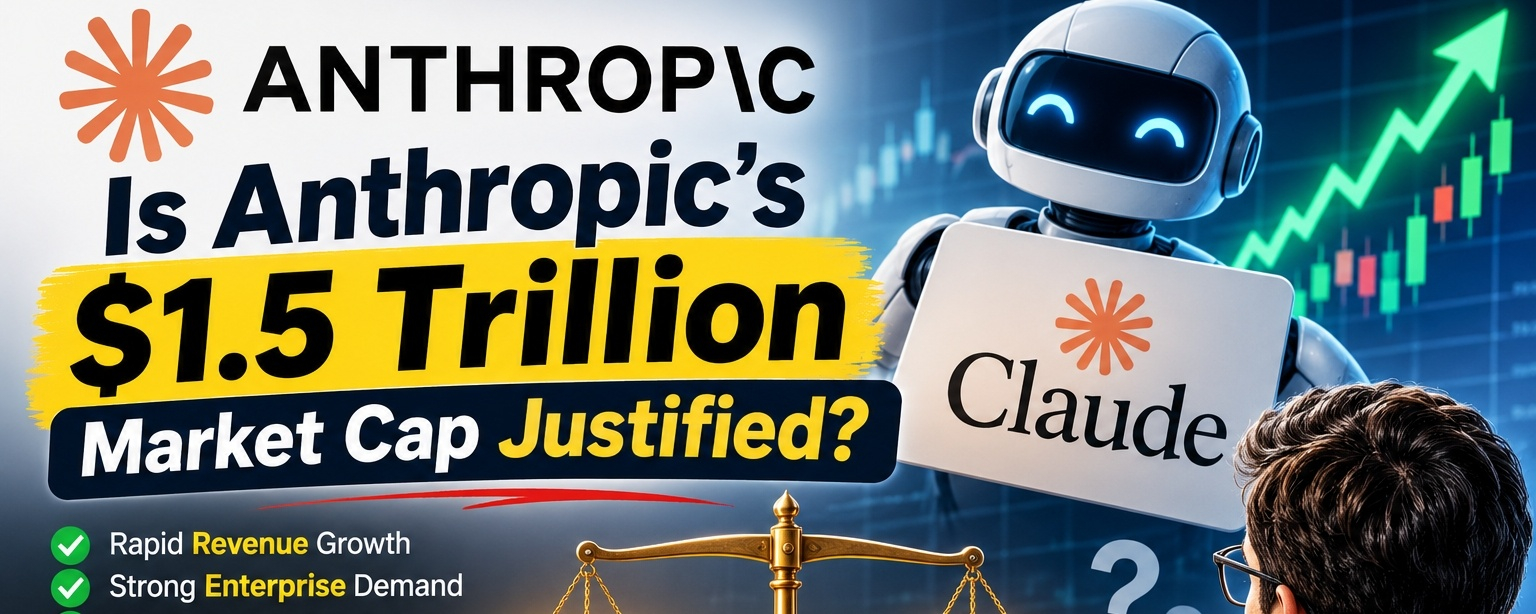
Ist Anthropics Börsenwert von 1,5 Billionen Dollar gerechtfertigt?Anthropic ist offiziell dem Billionen-Dollar-Club beigetreten, doch die wichtigere Frage ist, ob die Bewertung von 1,5 Billionen Dollar seine tatsächliche wirtschaftliche Stärke widerspiegelt oder ob sich die Anleger vom KI-Boom mitreißen lassen.
Das Unternehmen hinter Claude hat gerade einen der größten Börsengänge der Marktgeschichte hingelegt und dabei 81,3 Milliarden Dollar zu einem Preis von 83 Dollar je Aktie eingenommen. Die starke Nachfrage der Anleger trieb die Bewertung auf vollständig verwässerter Basis auf etwa 1,5 Billionen Dollar. Das ist eine außergewöhnliche Leistung für ein Unternehmen, das erst vor fünf Jahren gegründet wurde.
Ist Anthropics Börsenwert von 1,5 Billionen Dollar gerechtfertigt?
Anthropic ist offiziell dem Billionen-Dollar-Club beigetreten, doch die wichtigere Frage ist, ob die Bewertung von 1,5 Billionen Dollar seine tatsächliche wirtschaftliche Stärke widerspiegelt oder ob sich die Anleger vom KI-Boom mitreißen lassen.
Das Unternehmen hinter Claude hat gerade einen der größten Börsengänge der Marktgeschichte hingelegt und dabei 81,3 Milliarden Dollar zu einem Preis von 83 Dollar je Aktie eingenommen. Die starke Nachfrage der Anleger trieb die Bewertung auf vollständig verwässerter Basis auf etwa 1,5 Billionen Dollar. Das ist eine außergewöhnliche Leistung für ein Unternehmen, das erst vor fünf Jahren gegründet wurde.
Das Unternehmen hinter Claude hat gerade einen der größten Börsengänge der Marktgeschichte hingelegt und dabei 81,3 Milliarden Dollar zu einem Preis von 83 Dollar je Aktie eingenommen. Die starke Nachfrage der Anleger trieb die Bewertung auf vollständig verwässerter Basis auf etwa 1,5 Billionen Dollar. Das ist eine außergewöhnliche Leistung für ein Unternehmen, das erst vor fünf Jahren gegründet wurde.
724

·
--
Ist Anthropics Marktkapitalisierung von 1,5 Billionen US-Dollar gerechtfertigt? 🤔
Anthropic ist mit einer enormen Bewertung von 1,5 Billionen US-Dollar an die Börse gegangen und zählt damit zu den wertvollsten Unternehmen der Welt.
Doch die entscheidende Frage lautet: Rechtfertigt das Geschäft diesen Preis, oder ist der KI-Hype der Realität bereits voraus?
Es gibt gute Argumente auf beiden Seiten.
Warum die Bewertung sinnvoll sein könnte:
- Claude entwickelt sich zu einem wichtigen Akteur in der KI-Branche.
- Die Nachfrage von Unternehmen nach KI-Tools wächst rasant.
- Die auf Programmierung und Geschäftsanwendungen ausgerichteten Produkte bieten erhebliche Umsatzchancen.
- Die Einführung von KI könnte die Arbeitsweise von Unternehmen grundlegend verändern.
Warum Anleger vorsichtig bleiben sollten:
- KI-Infrastruktur erfordert enorme Kapitalinvestitionen.
- Der Wettbewerb mit OpenAI, Google und anderen Anbietern ist intensiv.
- Ein starkes Umsatzwachstum bedeutet nicht automatisch nachhaltige Gewinne.
- Eine gewaltige Bewertung lässt wenig Spielraum für Enttäuschungen.
Meine Einschätzung: Anthropic hat echtes Potenzial, doch Potenzial und Bewertung sind zwei verschiedene Dinge. Die nächste Herausforderung besteht darin, zu beweisen, dass sich das Wachstum langfristig in Gewinne umsetzen lässt.
Lasst uns darüber diskutieren 👇
Findet ihr, dass Anthropic eine Bewertung von 1,5 Billionen US-Dollar verdient?
A) Ja, die KI-Entwicklung steht erst am Anfang 🚀
B) Nein, die Bewertung ist zu hoch ⚠️
C) Es ist noch zu früh für ein Urteil.
#Anthropic #Claude #ArtificialIntelligence #Investing $LAB
{future}(LABUSDT)
$SOL $AMZNB
{spot}(AMZNBUSDT)
Ist Anthropics Marktkapitalisierung von 1,5 Billionen US-Dollar gerechtfertigt? 🤔
Anthropic ist mit einer enormen Bewertung von 1,5 Billionen US-Dollar an die Börse gegangen und zählt damit zu den wertvollsten Unternehmen der Welt.
Doch die entscheidende Frage lautet: Rechtfertigt das Geschäft diesen Preis, oder ist der KI-Hype der Realität bereits voraus?
Es gibt gute Argumente auf beiden Seiten.
Warum die Bewertung sinnvoll sein könnte:
- Claude entwickelt sich zu einem wichtigen Akteur in der KI-Branche.
- Die Nachfrage von Unternehmen nach KI-Tools wächst rasant.
- Die auf Programmierung und Geschäftsanwendungen ausgerichteten Produkte bieten erhebliche Umsatzchancen.
- Die Einführung von KI könnte die Arbeitsweise von Unternehmen grundlegend verändern.
Warum Anleger vorsichtig bleiben sollten:
- KI-Infrastruktur erfordert enorme Kapitalinvestitionen.
- Der Wettbewerb mit OpenAI, Google und anderen Anbietern ist intensiv.
- Ein starkes Umsatzwachstum bedeutet nicht automatisch nachhaltige Gewinne.
- Eine gewaltige Bewertung lässt wenig Spielraum für Enttäuschungen.
Meine Einschätzung: Anthropic hat echtes Potenzial, doch Potenzial und Bewertung sind zwei verschiedene Dinge. Die nächste Herausforderung besteht darin, zu beweisen, dass sich das Wachstum langfristig in Gewinne umsetzen lässt.
Lasst uns darüber diskutieren 👇
Findet ihr, dass Anthropic eine Bewertung von 1,5 Billionen US-Dollar verdient?
A) Ja, die KI-Entwicklung steht erst am Anfang 🚀
B) Nein, die Bewertung ist zu hoch ⚠️
C) Es ist noch zu früh für ein Urteil.
#Anthropic #Claude #ArtificialIntelligence #Investing $LAB
$SOL $AMZNB

2
111

Teilweise korrekt
Spot $TAO 146 USDT
BITTENSOR ($TAO ) — KI-Infrastruktur gegen Marktschwäche
Bittensor
Marktsituation
TAO wird bei etwa $196–198 gehandelt und zeigt sich im Vergleich zu Bitcoin relativ stark.
Die 24-Stunden-Performance ist positiv, während die Wochenperformance weiterhin negativ ist.
Eine interessante Entwicklung ist die wachsende Bedeutung der Unternehmensnarrative rund um Bittensor-Subnets, darunter die Partnerschaft von Chutes mit Alibaba Cloud.
Technische Perspektive
* $194–195: unmittelbare Unterstützung.
* $201–202: erster Widerstand.
* $210: nächster Widerstand.
* $219: höherer Widerstandsbereich.
* RSI: etwa 36.5, ein Hinweis auf schwaches Momentum.
Ein Tagesschluss über $201–202 würde das kurzfristige technische Bild verbessern.
Ein Kursrückgang unter $194 könnte TAO jedoch einem weiteren Rückgang aussetzen.
Meine Perspektive
Das langfristige Potenzial von Bittensor ist interessant, da das Projekt auf dezentrale KI-Infrastruktur setzt, anstatt einem Token einfach nur ein KI-Narrativ anzuheften.
Es gibt jedoch einen wichtigen Unterschied:
Die Einführung von KI führt nicht automatisch zu einer Wertsteigerung des TAO-Tokens.
Die entscheidenden Fragen betreffen den Nutzen der Subnets, die Nachfrage, die wirtschaftlichen Anreize und eine nachhaltige Netzwerkaktivität.
#bittensor #TAO #DeAI #ArtificialIntelligence #MannequinCrypto
1
753
30D-Trade $TAO 35 USDT
Übersetzung ansehen
BITTENSOR — $TAO and the economics of decentralized AI
🧠 DECENTRALIZED AI DOESN’T NEED ANOTHER HYPE CYCLE. IT NEEDS REAL DEMAND.
Bittensor is interesting because its long-term proposition goes beyond being another AI-themed cryptocurrency.
Its ambition is to create an ecosystem where independent subnets compete to provide digital resources and services.
An interesting institutional development:
Grayscale’s Bittensor Trust reported issuing 231,800 shares representing approximately 4,366.89 TAO, worth around $1.045 million, in private placement transactions.
This demonstrates an existing institutional access channel.
But let’s not confuse trust share issuance with confirmed open-market buying.
The bigger question remains:
Can Bittensor convert decentralized AI infrastructure into sustainable economic activity?
Three indicators matter:
* Subnet demand.
* Real usage and revenue.
* TAO’s relationship with the ecosystem’s economic activity.
My thesis: The next generation of AI investments may reward infrastructure that captures actual demand rather than projects that simply attach AI to their marketing.
TAO deserves attention, but adoption must validate the valuation.
#bittensor #TAO #DecentralizedAI #artificialintelligence #MannequinCrypto
📊 POLL
What will ultimately determine TAO’s long-term value?
Subnet revenue
Real AI adoption
Institutional demand
Network economics
16 Stunde(n) übrig
170

🚀 NVIDIA ist längst nicht mehr nur ein Chipunternehmen – es ist zu einem der großen Gesprächsthemen im KI-Zeitalter geworden.
Von Rechenzentren bis hin zu KI-Modellen: Die Nachfrage nach Hochleistungsrechnern rückt NVIDIA immer wieder ins Zentrum der Technologiewelt. Doch die eigentliche Geschichte dreht sich nicht nur um GPUs – es geht um den Wettlauf um KI-Infrastruktur, Cloud-Computing, Robotik und die nächste Generation digitaler Innovationen.
Der Markt achtet besonders auf eine Frage:
Kann NVIDIA den KI-Hype weiterhin in langfristiges Wachstum verwandeln?
Hohe Erwartungen sorgen für große Aufmerksamkeit – und auch für stärkere Kursschwankungen. Eines ist jedoch klar: Wenn sich bei KI etwas bewegt, ist NVIDIA meistens Teil des Gesprächs. 👀
$NVDAB
{spot}(NVDABUSDT)
$MMT
{future}(MMTUSDT)
$BLESS
{future}(BLESSUSDT)
#NVDA #AI #TechStocks #artificialintelligence #CryptoCommunity
🚀 NVIDIA ist längst nicht mehr nur ein Chipunternehmen – es ist zu einem der großen Gesprächsthemen im KI-Zeitalter geworden.
Von Rechenzentren bis hin zu KI-Modellen: Die Nachfrage nach Hochleistungsrechnern rückt NVIDIA immer wieder ins Zentrum der Technologiewelt. Doch die eigentliche Geschichte dreht sich nicht nur um GPUs – es geht um den Wettlauf um KI-Infrastruktur, Cloud-Computing, Robotik und die nächste Generation digitaler Innovationen.
Der Markt achtet besonders auf eine Frage:
Kann NVIDIA den KI-Hype weiterhin in langfristiges Wachstum verwandeln?
Hohe Erwartungen sorgen für große Aufmerksamkeit – und auch für stärkere Kursschwankungen. Eines ist jedoch klar: Wenn sich bei KI etwas bewegt, ist NVIDIA meistens Teil des Gesprächs. 👀
$NVDAB
$MMT
$BLESS
#NVDA #AI #TechStocks #artificialintelligence #CryptoCommunity
494
🚨📊 NVIDIA MIT REKORDERGEBNISSEN, ABER DER MARGENDRUCK IST DIE NÄCHSTE GROSSE FRAGE!
NVIDIA ($NVDA) hat erneut beeindruckende Ergebnisse vorgelegt und im 3. Quartal des Geschäftsjahres 2027 eine bereinigte Bruttomarge von 74,9 % erzielt.
Das Management erwartet jedoch, dass die Bruttomarge im nächsten Quartal auf 71 %–72 % sinken wird. Das wirft wichtige Fragen zur Nachhaltigkeit der außergewöhnlichen Profitabilität auf.
🔹 STARKE LEISTUNG: Der Umsatz stieg im Jahresvergleich um 103 % auf 115,8 Milliarden US-Dollar.
🔹 SORGE UM DIE MARGE: Höhere Produktionskosten, zunehmender Wettbewerb und maßgeschneiderte KI-Chips könnten die künftige Profitabilität unter Druck setzen.
🔹 IM FOKUS DER ANLEGER: Kann NVIDIA seine Preissetzungsmacht und außergewöhnlichen Margen behaupten, während die KI-Branche reift?
💡 DAS WICHTIGSTE: Das Umsatzwachstum zeigt uns, wie schnell NVIDIA expandiert. Die Gewinnmargen hingegen zeigen, wie effizient das Unternehmen dieses Wachstum in Gewinne umwandelt.
📢 Wird NVIDIA seine Dominanz behaupten, oder sind niedrigere Margen der Beginn einer neuen Phase für die KI-Chipbranche?
#NVIDIA #NVDA #ArtificialIntelligence #WallStreet #Investing
$NVDAB $SPCXB $MSFTB
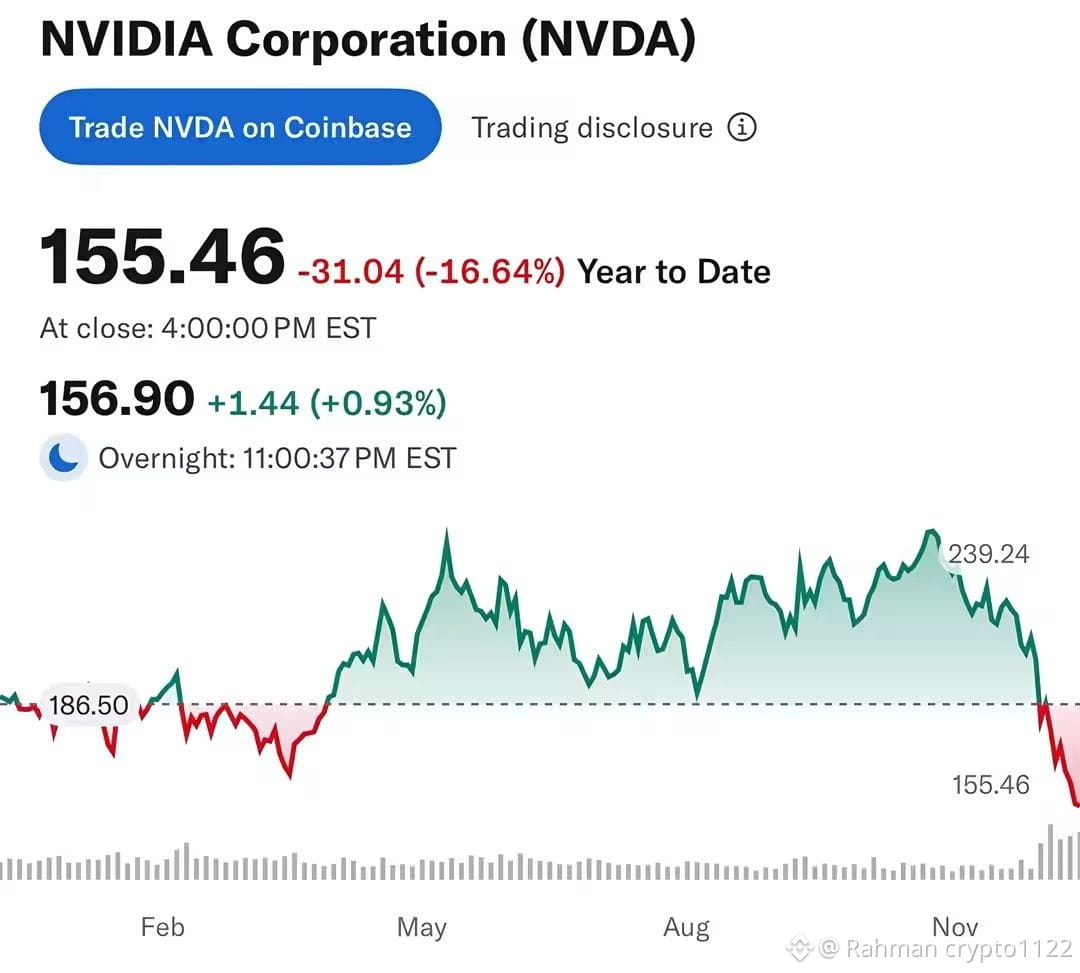
Trong_Hatachi:
74.9% gross margins are remarkable, so the projected dip to 71%–72% will be worth watching as AI chip competition grows. Follow me back if you’re discussing these shifts too!
1
156
KI-Sicherheitstools verändern die Abwehr von Kryptobörsen und blockieren erfolgreich massive Betrugsversuche. Doch dieser jüngste Coinbase-Vorfall beweist, dass psychologische Manipulation durch Menschen weiterhin ein erheblicher blinder Fleck ist. Wenn Nutzer einfach lügen können, um automatisierte Schutzmaßnahmen zu umgehen, reicht Technologie allein nicht aus. Wir brauchen dringend eine bessere Aufklärung über Social Engineering neben algorithmischem Schutz, um Gelder im Web3 heute wirklich sicher zu halten. Bleibt wachsam. #CryptoSecurity #Coinbase #KünstlicheIntelligenz
KI-Sicherheitstools verändern die Abwehr von Kryptobörsen und blockieren erfolgreich massive Betrugsversuche. Doch dieser jüngste Coinbase-Vorfall beweist, dass psychologische Manipulation durch Menschen weiterhin ein erheblicher blinder Fleck ist. Wenn Nutzer einfach lügen können, um automatisierte Schutzmaßnahmen zu umgehen, reicht Technologie allein nicht aus. Wir brauchen dringend eine bessere Aufklärung über Social Engineering neben algorithmischem Schutz, um Gelder im Web3 heute wirklich sicher zu halten. Bleibt wachsam. #CryptoSecurity #Coinbase #KünstlicheIntelligenz
4

🤖 $MMT IM FOKUS, WÄHREND KI-AGENTEN SICH DARAUF VORBEREITEN, 99 PROZENT DES FINANZWESENS ZU AUTOMATISIEREN! ⚡
Ein führender Börsenvertreter hat gerade eine verblüffende These aufgestellt: Die algorithmische Ausführung wird schon bald die Liquiditätssteuerung über alle Märkte hinweg dominieren. 📊 Während Traditionalisten wegen der abnehmenden menschlichen Kontrolle in Panik geraten, erkennt das smarte Kapital darin eine massive Effizienzsteigerung für hochvolatile Vermögenswerte wie $ZKC und $PIEVERSE . ⚡
Der strukturelle Wandel von manuell geführten Handelstischen hin zu autonomen Ausführungsalgorithmen bedeutet, dass sich Orderbücher schneller als je zuvor neu bewerten werden. 💡 Bist du auf ein automatisiertes Finanzökosystem eingestellt oder handelst du noch wie 2018? 🤔
⚠️ Keine Finanzberatung. Behalte dein Risiko stets im Blick. 🛡️
🏷️ #MMT #ArtificialIntelligence #Crypto #Trading
🔥 💎

87
Unter der Oberfläche von Bitcoin vollzieht sich ein bedeutender Wandel. Börsennotierte Miner veräußern aktiv erhebliche Teile ihrer Treasury-Bestände – nicht aus Panik, sondern um sich der Infrastruktur für künstliche Intelligenz zuzuwenden und ihre Schulden umfassend umzustrukturieren. Unternehmen wie MARA und Riot tauschen ihre geschürften digitalen Vermögenswerte gegen Rechenzentren für Hochleistungscomputing. Diese strategische Entwicklung zeigt, wie traditionelle Mining-Unternehmen sich neu erfinden, um von der enormen Nachfrage des Technologiesektors zu profitieren. $BTC #Bitcoin #Mining #KünstlicheIntelligenz
Unter der Oberfläche von Bitcoin vollzieht sich ein bedeutender Wandel. Börsennotierte Miner veräußern aktiv erhebliche Teile ihrer Treasury-Bestände – nicht aus Panik, sondern um sich der Infrastruktur für künstliche Intelligenz zuzuwenden und ihre Schulden umfassend umzustrukturieren. Unternehmen wie MARA und Riot tauschen ihre geschürften digitalen Vermögenswerte gegen Rechenzentren für Hochleistungscomputing. Diese strategische Entwicklung zeigt, wie traditionelle Mining-Unternehmen sich neu erfinden, um von der enormen Nachfrage des Technologiesektors zu profitieren. $BTC #Bitcoin #Mining #KünstlicheIntelligenz
35

·
--
Bullisch
🚀 Anthropic-IPO-Preis könnte über 80 $ steigen!
Anthropic zieht vor seinem mit Spannung erwarteten Börsengang großes Interesse von Investoren auf sich. Berichten zufolge könnte das Unternehmen seine Aktien für mehr als 80 $ anbieten und damit die ursprüngliche Spanne von 70–78 $ übertreffen.
🔥 Die wichtigsten Punkte:
Starke Nachfrage institutioneller Investoren.
Möglicher IPO-Preis von über 80 $ je Aktie.
Die Bewertung könnte schätzungsweise 1,5–1,6 Bio. $ erreichen.
Die Notierung an der Nasdaq wird unter dem Tickersymbol $ANT erwartet.
💡 Meine Einschätzung:
Das könnte einer der größten KI-Börsengänge der Geschichte werden. Eine starke Nachfrage garantiert jedoch kein langfristiges Kurswachstum. Bewertung, Rentabilität und Marktbedingungen werden eine wichtige Rolle spielen.
Ist $ANT bei über 80 $ einen Blick wert?
#Anthropic #ANT #artificialintelligence #stockmarket

114
Übersetzung ansehen
I've maintained a bullish outlook on Anthropic, and my long-term perspective remains unchanged. 📈
My investment thesis is based on the company's position in the rapidly evolving AI industry and its potential for future growth.
While its pre-IPO valuation may offer some support, there are still risks, including market volatility, valuation uncertainty, and changing industry conditions. Nothing is guaranteed.
My portfolio has faced some pressure recently, and I'm experiencing those losses too. However, I remain focused on the long-term fundamentals rather than short-term price movements.
I'm continuing to monitor my position and reassess my strategy as new developments emerge. Any decision to increase exposure will depend on risk management and market conditions.$BTC
Long-term conviction matters, but managing risk matters just as much.
What are your thoughts on Anthropic's long-term potential? 👀
$ANTHROPIC #AI #artificialintelligence #CryptoCommunity
8
·
--
Artikel
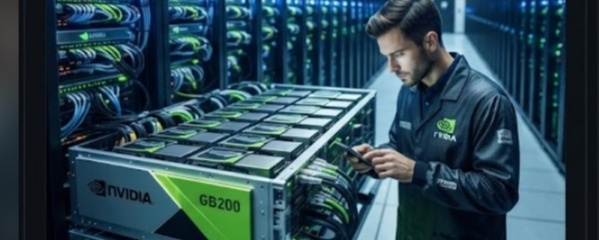
Kann Nvidias Rechenzentrumsgeschäft weiter wachsen?Der rasante Fortschritt der künstlichen Intelligenz hat den Halbleitermarkt verändert und Nvidias Rechenzentren ins Zentrum der globalen technologischen Revolution gerückt. Angesichts vierteljährlicher Umsätze, die historische Rekorde übertreffen, und deutlicher Wachstumssprünge, die durch neue Architekturen – etwa den Übergang zur Vera-Rubin-Produktfamilie – angetrieben werden, stellt sich an der Wall Street und in den Krypto-/Tech-Ökosystemen die große Frage, ob dieses enorme Expansionstempo langfristig nachhaltig ist.
Die Nachfrage nach Hochleistungsrecheninfrastruktur ist weiterhin robust und wird sowohl von Cloud-Giganten (Hyperscalern) als auch von Spitzenforschungslaboren und Unternehmen getragen. Herausforderungen wie geopolitische Exportbeschränkungen, der enorme Energiebedarf neuer Rechenzentren sowie der natürliche Druck auf Margen und Effizienz stellen jedoch die Widerstandsfähigkeit des Unternehmens auf die Probe. Die weitere Expansion wird weniger von einem unerschöpflichen linearen Wachstum abhängen als vielmehr davon, ob es dem Unternehmen gelingt, sich als unverzichtbares Rückgrat des gesamten Ökosystems für physische und generative KI zu etablieren.
Kann Nvidias Rechenzentrumsgeschäft weiter wachsen?
Der rasante Fortschritt der künstlichen Intelligenz hat den Halbleitermarkt verändert und Nvidias Rechenzentren ins Zentrum der globalen technologischen Revolution gerückt. Angesichts vierteljährlicher Umsätze, die historische Rekorde übertreffen, und deutlicher Wachstumssprünge, die durch neue Architekturen – etwa den Übergang zur Vera-Rubin-Produktfamilie – angetrieben werden, stellt sich an der Wall Street und in den Krypto-/Tech-Ökosystemen die große Frage, ob dieses enorme Expansionstempo langfristig nachhaltig ist.
Die Nachfrage nach Hochleistungsrecheninfrastruktur ist weiterhin robust und wird sowohl von Cloud-Giganten (Hyperscalern) als auch von Spitzenforschungslaboren und Unternehmen getragen. Herausforderungen wie geopolitische Exportbeschränkungen, der enorme Energiebedarf neuer Rechenzentren sowie der natürliche Druck auf Margen und Effizienz stellen jedoch die Widerstandsfähigkeit des Unternehmens auf die Probe. Die weitere Expansion wird weniger von einem unerschöpflichen linearen Wachstum abhängen als vielmehr davon, ob es dem Unternehmen gelingt, sich als unverzichtbares Rückgrat des gesamten Ökosystems für physische und generative KI zu etablieren.
Die Nachfrage nach Hochleistungsrecheninfrastruktur ist weiterhin robust und wird sowohl von Cloud-Giganten (Hyperscalern) als auch von Spitzenforschungslaboren und Unternehmen getragen. Herausforderungen wie geopolitische Exportbeschränkungen, der enorme Energiebedarf neuer Rechenzentren sowie der natürliche Druck auf Margen und Effizienz stellen jedoch die Widerstandsfähigkeit des Unternehmens auf die Probe. Die weitere Expansion wird weniger von einem unerschöpflichen linearen Wachstum abhängen als vielmehr davon, ob es dem Unternehmen gelingt, sich als unverzichtbares Rückgrat des gesamten Ökosystems für physische und generative KI zu etablieren.
247

·
--
Der bevorstehende Börsengang von Anthropic zieht viel Aufmerksamkeit auf sich, da die Nachfrage von Anlegern weiter steigt. Das Unternehmen hinter Claude AI hatte zunächst eine Preisspanne von 70–78 US-Dollar pro Aktie vorgeschlagen, doch neuen Berichten zufolge könnte der endgültige Preis über 80 US-Dollar liegen.
Warum sorgt das für so viel Aufmerksamkeit?
🔹 Starke Nachfrage von Anlegern: Berichten zufolge haben institutionelle Anleger ungewöhnlich großes Interesse an dem Angebot gezeigt.
🔹 Wachstum des KI-Marktes: Die Claude-Modelle von Anthropic finden zunehmend Einsatz in Unternehmensdiensten, der Softwareentwicklung und KI-gestützten Geschäftslösungen.
🔹 Umsatzdynamik: Das Unternehmen meldete Ende Oktober 2026 eine annualisierte Umsatzrate von rund 81 Milliarden US-Dollar.
🔹 Mögliche Bewertung: Ein Preis von über 80 US-Dollar könnte Anthropics implizite Bewertung – abhängig von der endgültigen Aktienstruktur – auf 1,5 Billionen US-Dollar oder mehr steigen lassen.
Eine starke Nachfrage bedeutet jedoch nicht automatisch, dass sich eine Investition lohnt. Hohe Bewertungen, Wettbewerb, Infrastrukturkosten und Profitabilität bleiben wichtige Faktoren, die es zu beobachten gilt.
Mein Fazit: Der Börsengang von Anthropic könnte zu einem bedeutenden Meilenstein für die KI-Branche werden, doch Anleger sollten sich auf die Fundamentaldaten statt auf den Hype konzentrieren.
Würdest du den Kauf von $ANT-Aktien in Betracht ziehen, wenn der IPO-Preis über 80 US-Dollar liegt?
#CanNvidia’sDataCenterGrowthContinue? #Anthropic #IPO #stockmarket #KünstlicheIntelligenz

251


Artikel
🚨 NVIDIA ÜBERTRIFFT 115 MILLIARDEN US-DOLLAR: KANN DIESER BERICHT DIE KRIPTOWÄHRUNGEN AUFRÜTTELN?NVIDIA hat gerade seine Ergebnisse veröffentlicht, und eine Zahl verdient besondere Aufmerksamkeit: Der Umsatz stieg im Jahresvergleich um 103 %.
Doch am wichtigsten ist nicht nur, wie viel das Unternehmen verdient hat, sondern auch, was dies über die Zukunft der künstlichen Intelligenz und der Finanzmärkte aussagen könnte.
📊 DIE WICHTIGSTEN ZAHLEN:
- Quartalsumsatz: 115,8 Milliarden US-Dollar.
- Wachstum im Jahresvergleich: +103 %.
- Geschäft mit Rechenzentren: 107,6 Milliarden (+110 %).
- Umsatzprognose für das nächste Quartal: 130 Milliarden US-Dollar.
🚨 NVIDIA ÜBERTRIFFT 115 MILLIARDEN US-DOLLAR: KANN DIESER BERICHT DIE KRIPTOWÄHRUNGEN AUFRÜTTELN?
NVIDIA hat gerade seine Ergebnisse veröffentlicht, und eine Zahl verdient besondere Aufmerksamkeit: Der Umsatz stieg im Jahresvergleich um 103 %.
Doch am wichtigsten ist nicht nur, wie viel das Unternehmen verdient hat, sondern auch, was dies über die Zukunft der künstlichen Intelligenz und der Finanzmärkte aussagen könnte.
📊 DIE WICHTIGSTEN ZAHLEN:
- Quartalsumsatz: 115,8 Milliarden US-Dollar.
- Wachstum im Jahresvergleich: +103 %.
- Geschäft mit Rechenzentren: 107,6 Milliarden (+110 %).
- Umsatzprognose für das nächste Quartal: 130 Milliarden US-Dollar.
731

·
--
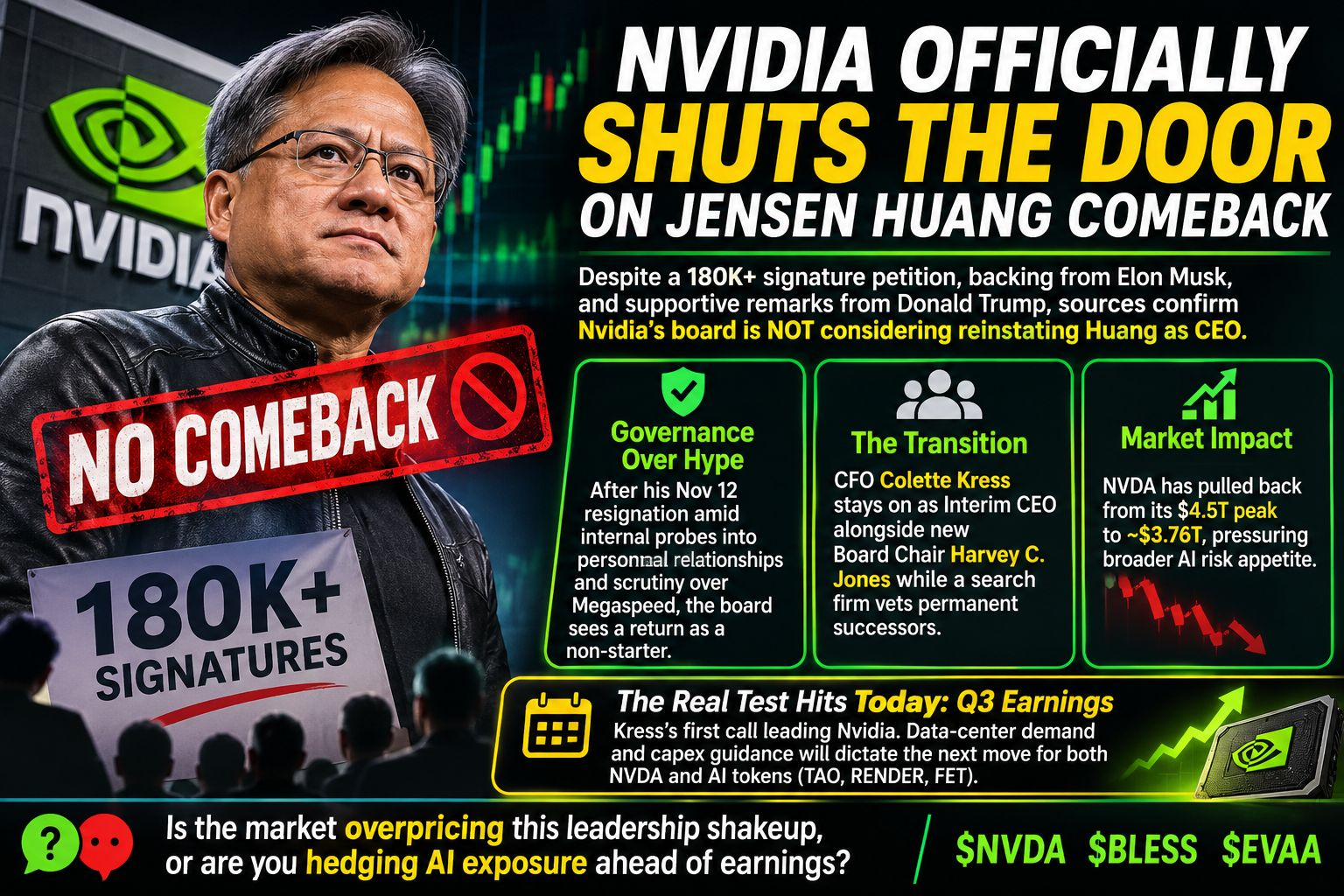
🚨 UMBRUCH IN DER NVIDIA-FÜHRUNG: WAS KOMMT ALS NÄCHSTES AUF DIE KI-MÄRKTE ZU?
Der Fokus verlagert sich vom Führungsdrama auf das, was wirklich zählt – die Zukunft von NVIDIA und den KI-Markt.
Darauf sollten Anleger achten:
🔹 Entscheidungen im Vorstand: Berichte über die Führung von Jensen Huang haben eine große Debatte ausgelöst, doch Unternehmensführung und langfristige Stabilität bleiben wichtige Prioritäten.
🔹 Führungswechsel: Colette Kress und die Führungsstruktur des Unternehmens stehen im Blickpunkt, während Anleger Klarheit über das nächste Kapitel von NVIDIA suchen.
🔹 Marktdruck: Der Rückgang der NVIDIA-Bewertung hat die Stimmung im KI-Sektor unter die Lupe gebracht.
🔹 Die Geschäftszahlen werden entscheidend sein: Umsätze im Rechenzentrumsgeschäft, die Nachfrage nach KI-Chips und künftige Ausgabenpläne könnten die nächste große Bewegung bei KI-bezogenen Vermögenswerten prägen.
📊 Was ist mit KI-Token?
Auch TAO, RENDER und FET könnten die Auswirkungen zu spüren bekommen, falls sich die Stimmung rund um die KI-Infrastruktur ändert.
💭 Was meinst du?
Ist diese Unsicherheit in der Führung nur kurzfristiges Marktrauschen oder könnte sie eine größere Korrektur bei KI-Aktien und -Token auslösen?
Kaufst du den Rücksetzer oder sicherst du deine Gewinne?
👇 Teile deine Gedanken!
$NVDAB $TAO $BLESS
#AIStocksWha #crypto #ArtificialIntelligence #Trading #stockmarket
317
Anmelden und weiter Inhalte entdecken
Krypto-Nutzer weltweit auf Binance Square kennenlernen
⚡️ Bleib in Sachen Krypto stets am Puls.
💬 Die weltgrößte Kryptobörse vertraut darauf.
👍 Erhalte verlässliche Einblicke von verifizierten Creators.
E-Mail-Adresse/Telefonnummer
Trendthemen
1
#IsAnthropic’s$1.5TMarketCapJustified?
5,500 Aufrufe
55 Kommentare
2
#BTCRemainsUnderPressureAfterHawkishFOMCMinutes
190,673 Aufrufe
1,920 Kommentare
3
#NvidiaBoardReportedlySplitOverHuang’sReturn
92,127 Aufrufe
1,026 Kommentare
4
#StrategySTRCPreferredSlips3.65%Below$100Par
4,464 Aufrufe
61 Kommentare
5
#MASToUpgradeSGDTestnetToSGDigitalLedger
13,077 Aufrufe
202 Kommentare
6
#CanGTA6'sLaunchLiftTTWOShares?
64,425 Aufrufe
762 Kommentare
7
#Solana2027RoadmapTargetsDoubleComputeCapacity
3,938 Aufrufe
105 Kommentare
8
#InjectiveTokenizedRealEstateMortgagesTop$1.5B
908 Aufrufe
27 Kommentare
9
#TetherMakesStrategicInvestmentInSCRYPT
4,222 Aufrufe
91 Kommentare
10
#CapitalGroupAdds1264500StrategyShares
19,849 Aufrufe
215 Kommentare