
TheBlockMentor
2k منشورات
TheBlockMentor
📊 Simple Crypto Analysis & Daily Update 📢 Crypto Campaigns & Project Promotions💡 Smart Trading | Easy Guidance👇 Follow to stay ahead!
فتح تداول
مُتداول بمُعدّل مرتفع
2.8 سنوات
301 تتابع
110 المتابعون
608 إعجاب
منشورات
الحافظة الاستثمارية
الكل
اقتباسات
PINNED
🎁 RED PACKET GIVEAWAY! 🔥
A little surprise for the community ❤️
I’m dropping a Red Packet for those who are active here.
👀 Keep an eye out
⚡ Be quick
🎁 First come, first served!
Good luck everyone! 🚀
#Binance #RedPacket #Giveaway #BTC #trending
A little surprise for the community ❤️
I’m dropping a Red Packet for those who are active here.
👀 Keep an eye out
⚡ Be quick
🎁 First come, first served!
Good luck everyone! 🚀
#Binance #RedPacket #Giveaway #BTC #trending
PINNED
The market had a strong recovery this week — but today’s pullback changes the question. 👀
After the recent rally, which coin has the strongest setup for the NEXT move?
₿ #BTC — Market leader, but can it reclaim $80K?
♦️ #ETH — Strong recovery, but can momentum continue?
☀️ #SOL — One of the stronger recent performers
✕ #xrp — High volatility after its sharp August move
📊 POLL: Which one would you pick for the next major move?
Vote + tell me WHY in the comments. 👇
#treding
After the recent rally, which coin has the strongest setup for the NEXT move?
₿ #BTC — Market leader, but can it reclaim $80K?
♦️ #ETH — Strong recovery, but can momentum continue?
☀️ #SOL — One of the stronger recent performers
✕ #xrp — High volatility after its sharp August move
📊 POLL: Which one would you pick for the next major move?
Vote + tell me WHY in the comments. 👇
#treding
BTC
ETH
SOL
XRP
13 ساعة (ساعات) مُتبقية

Eros crypto
·
--
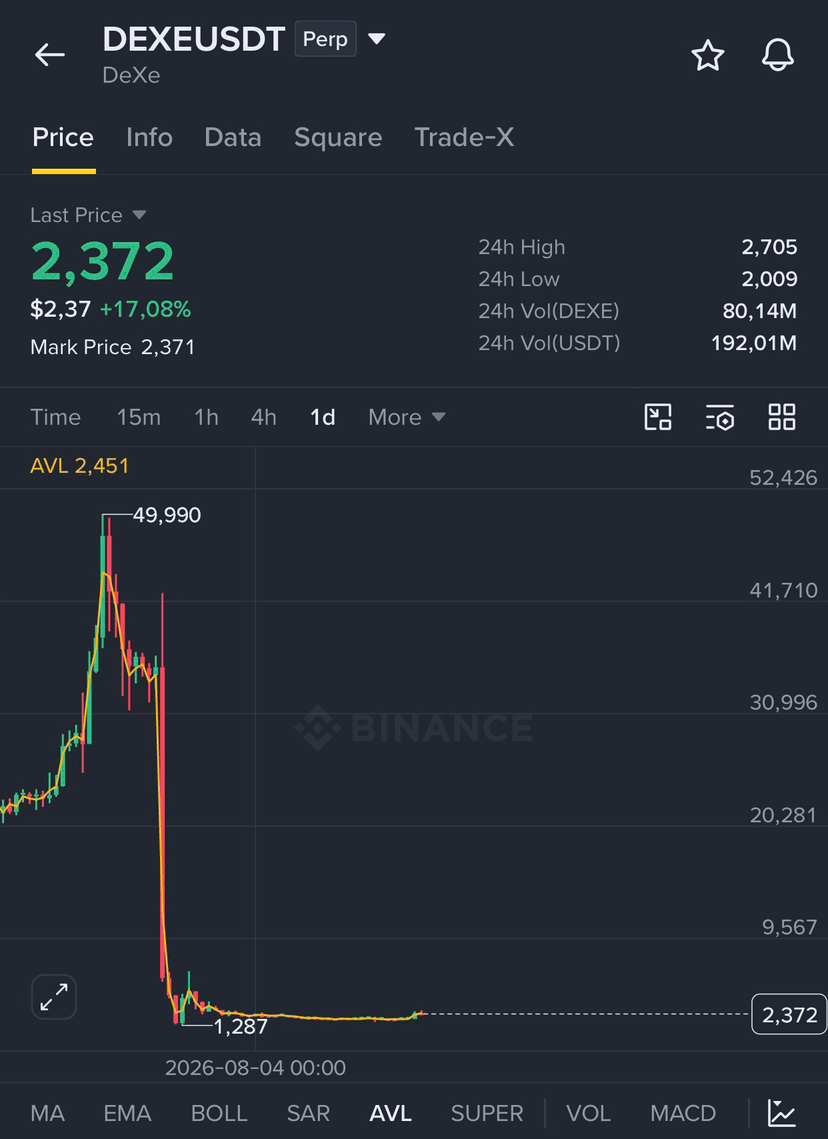
$DEXE do you think this project can get back to its ATH? Personally, I don’t think so, but it could still make some interesting moves.
It has liquidated me so many times that even I’m scared to take a buy or sell position on DEXE 😅
Anyway guys, be very careful ⚠️
#trading
It has liquidated me so many times that even I’m scared to take a buy or sell position on DEXE 😅
Anyway guys, be very careful ⚠️
#trading
$SHIB is getting some attention today.
The interesting part for me is whether this move can actually hold, or if the hype cools down quickly.
If buyers keep stepping in, SHIB could have another leg up. If not, I’d expect a pullback.
I’m leaning slightly bullish here. What about you?
🚀 Bullish ↔️ Sideways 📉 Pullback
#SHIB #Crypto #Altcoins #Trending #Binance
The interesting part for me is whether this move can actually hold, or if the hype cools down quickly.
If buyers keep stepping in, SHIB could have another leg up. If not, I’d expect a pullback.
I’m leaning slightly bullish here. What about you?
🚀 Bullish ↔️ Sideways 📉 Pullback
#SHIB #Crypto #Altcoins #Trending #Binance
BTC is around $77.9K right now, after dropping back from the $80K area.
I’m watching $75K and $80K closely here.
A move back above $80K could open the door for another push higher. But if $75K gives way, we could see more downside.
Where do you see BTC going from here?
$80K+ 🚀 $75K–$80K Below $75K 📉
#Btc #Treding #HOT #BTC #ALTCOİNS
I’m watching $75K and $80K closely here.
A move back above $80K could open the door for another push higher. But if $75K gives way, we could see more downside.
Where do you see BTC going from here?
$80K+ 🚀 $75K–$80K Below $75K 📉
#Btc #Treding #HOT #BTC #ALTCOİNS
Aria Bloom

Aria Bloom 阿莉娅
·
--
صاعدStay focused keep learning, and make every move with confidence. 🚀
The crypto journey is all about continuous learning, smart decisions and staying consistent. 💛
Let’s keep growing together with Binance.
#BinanceSquareTalks #cryptouniverseofficial $TUT $BTC
The crypto journey is all about continuous learning, smart decisions and staying consistent. 💛
Let’s keep growing together with Binance.
#BinanceSquareTalks #cryptouniverseofficial $TUT $BTC

Flora

Flora Firdos
·
--
🎉 $USDT Giveaway Alert! 🎉
Who wants some FREE USDT? 👀
To participate:
💬 Comment 999
❤️ Like the post
🔄 Repost & share
➕ Follow the account
The sooner you join, the better! 🚀💸
#USDT #CryptoGiveaway #Airdrop #USDTfree
Who wants some FREE USDT? 👀
To participate:
💬 Comment 999
❤️ Like the post
🔄 Repost & share
➕ Follow the account
The sooner you join, the better! 🚀💸
#USDT #CryptoGiveaway #Airdrop #USDTfree


Shaheen 69
·
--
🎁 BINANCE PUT ALL THE GIFTS IN ONE BASKET! 🟡
Imagine one basket filled with Airdrops, Red Packets, Trading Rewards, Token Vouchers, CreatorPad rewards, Write-to-Earn opportunities and VIP benefits. 🚀
That’s what makes the Binance ecosystem exciting — it’s not only about trading, but also about discovering new opportunities, participating in campaigns and sharing rewards with the community.
And today, Shaheen69 is opening the gift basket for YOU! 🎉
I’m sharing Red Packet rewards with all of you as a small thank-you for your continued support and love. ❤️
Good luck everyone! 🍀
Who will grab the reward? 👀
#Binance #BNB #redpacket
Imagine one basket filled with Airdrops, Red Packets, Trading Rewards, Token Vouchers, CreatorPad rewards, Write-to-Earn opportunities and VIP benefits. 🚀
That’s what makes the Binance ecosystem exciting — it’s not only about trading, but also about discovering new opportunities, participating in campaigns and sharing rewards with the community.
And today, Shaheen69 is opening the gift basket for YOU! 🎉
I’m sharing Red Packet rewards with all of you as a small thank-you for your continued support and love. ❤️
Good luck everyone! 🍀
Who will grab the reward? 👀
#Binance #BNB #redpacket

Claim

Mr Max
·
--
🎁 Claim your Gift 🎁
🧧🧧🧧🧧🧧
🧧🧧🧧🧧🧧
Join chat Group for Daily 🧧....
Hint:- { 786 }...................
$SNDK $BTC $ETH
#ETH🔥🔥🔥🔥🔥🔥 #SNDKUSDT #BTC走势分析 #HEMI #CaliforniaBillWouldBarOfficialMemeCoins
🧧🧧🧧🧧🧧
🧧🧧🧧🧧🧧
Join chat Group for Daily 🧧....
Hint:- { 786 }...................
$SNDK $BTC $ETH
#ETH🔥🔥🔥🔥🔥🔥 #SNDKUSDT #BTC走势分析 #HEMI #CaliforniaBillWouldBarOfficialMemeCoins

🔥 $HYPE pulled back after making a new high yesterday.
Now around $82–83, the big question is whether buyers defend this area or we see another dip first.
If HYPE gets back above $85, I’d watch $90 next.
But if $80 breaks, I’d rather wait than chase the move.
Would you buy this pullback or wait for $85+ confirmation?
#HYPE #Hyperliquid #trending #HotTrends #altcoins
Now around $82–83, the big question is whether buyers defend this area or we see another dip first.
If HYPE gets back above $85, I’d watch $90 next.
But if $80 breaks, I’d rather wait than chase the move.
Would you buy this pullback or wait for $85+ confirmation?
#HYPE #Hyperliquid #trending #HotTrends #altcoins
Market is heating up again, but not every coin has the same setup.
These 4 are the ones I’m watching right now 👇
🔥 $ONG — $0.125
After that massive pump and sharp pullback, ONG is trying to stabilize. If buyers return, $0.15–$0.16 is the first zone I’d watch.
⚡ $HYPE — $83.2
Still sitting near record highs. A clean move above $85 could open $90 next.
🚀 $SOL — $107.6
SOL is holding above $100 with strong weekly momentum. If $110 breaks cleanly, $115–$120 comes into focus.
👀 $BTC — $79.9K
BTC is fighting around the $80K level again. A breakout above $82K could bring $85K into play.
Which one has the best setup right now?
#BTC #TrenddingTopic #XRP’ #HotTrends #Squar2earn
These 4 are the ones I’m watching right now 👇
🔥 $ONG — $0.125
After that massive pump and sharp pullback, ONG is trying to stabilize. If buyers return, $0.15–$0.16 is the first zone I’d watch.
⚡ $HYPE — $83.2
Still sitting near record highs. A clean move above $85 could open $90 next.
🚀 $SOL — $107.6
SOL is holding above $100 with strong weekly momentum. If $110 breaks cleanly, $115–$120 comes into focus.
👀 $BTC — $79.9K
BTC is fighting around the $80K level again. A breakout above $82K could bring $85K into play.
Which one has the best setup right now?
#BTC #TrenddingTopic #XRP’ #HotTrends #Squar2earn
🔥 $ONG
24%
⚡ $HYPE
23%
🚀 $SOL
41%
👀 $BTC
12%
66 الأصوات • تمّ إغلاق التصويت
I’m getting a bit bullish on AAVE here.
It’s around $129 now, up more than 30% this week. That’s a pretty strong move after trading below $100 earlier this month.
Now I’m watching the $125 area. If buyers keep defending it, $135–$140 could be the next interesting zone.
But after a move this fast, a pullback wouldn’t surprise me either.
Would you take the bullish side here, or wait for a dip?
#AAVE #DeFi #Crypto #BTC #trending
$BTC $BNB $AAVE
It’s around $129 now, up more than 30% this week. That’s a pretty strong move after trading below $100 earlier this month.
Now I’m watching the $125 area. If buyers keep defending it, $135–$140 could be the next interesting zone.
But after a move this fast, a pullback wouldn’t surprise me either.
Would you take the bullish side here, or wait for a dip?
#AAVE #DeFi #Crypto #BTC #trending
$BTC $BNB $AAVE
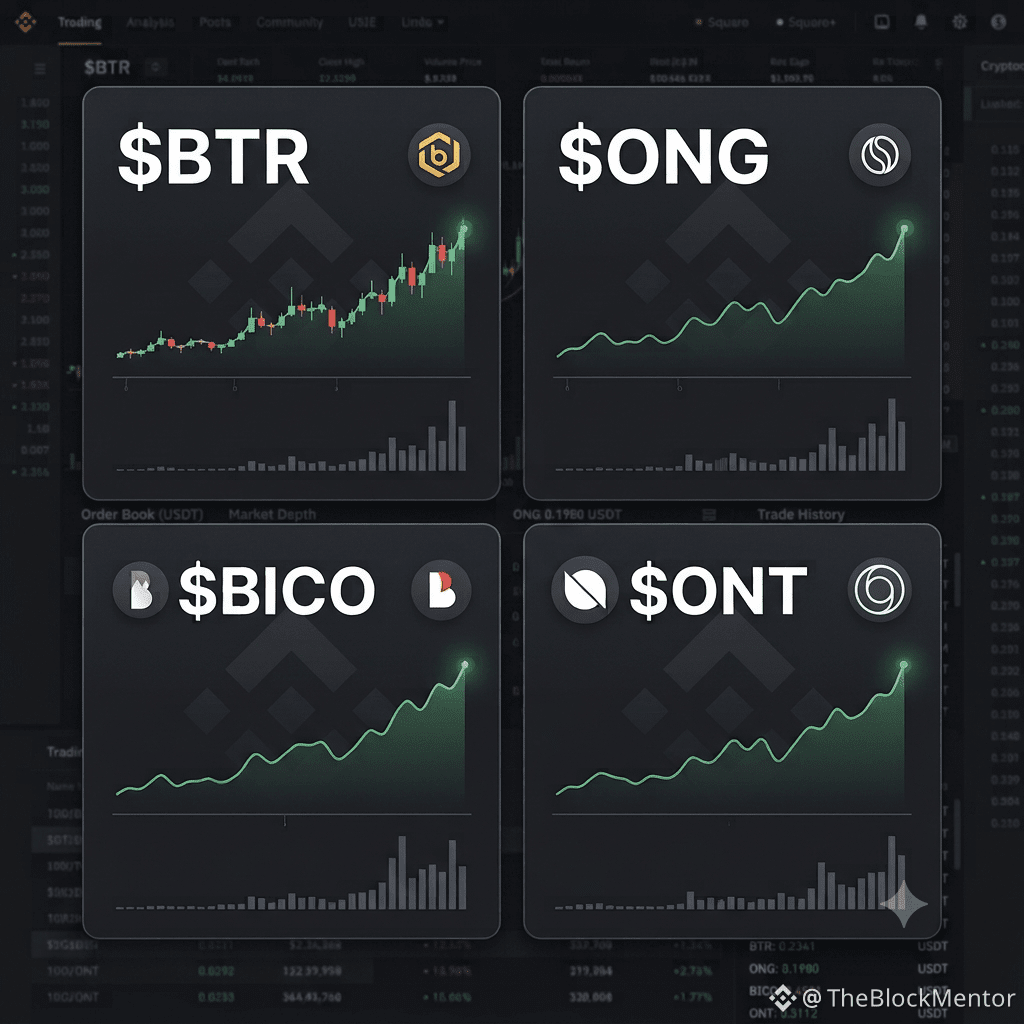
The interesting part of today’s market isn’t BTC. It’s where the attention is moving 👀
$BTR has exploded, with a huge move in 24h.
$ONG is also getting serious attention after its sharp rally.
Then there’s $BICO and $ONT, both catching momentum.
I’m not chasing these moves. I’m more curious which one can keep the attention after the first hype fades.
Which one are you watching?
#BTR #ONG #BICO #ONT #Crypto
$BTC $BNB $SOL
$BTR has exploded, with a huge move in 24h.
$ONG is also getting serious attention after its sharp rally.
Then there’s $BICO and $ONT, both catching momentum.
I’m not chasing these moves. I’m more curious which one can keep the attention after the first hype fades.
Which one are you watching?
#BTR #ONG #BICO #ONT #Crypto
$BTC $BNB $SOL
Four coins. Four very different setups today 👀
SOL around $101 and showing fresh momentum.
BNB near $705, quietly holding strong.
XRP around $1.41 after some recent volatility.
DOGE near $0.087, still backed by its huge retail community.
If you had $100 to put into just ONE of these today, where would it go?
#SOL #BNB #XRP #DOGE #crypto
SOL around $101 and showing fresh momentum.
BNB near $705, quietly holding strong.
XRP around $1.41 after some recent volatility.
DOGE near $0.087, still backed by its huge retail community.
If you had $100 to put into just ONE of these today, where would it go?
#SOL #BNB #XRP #DOGE #crypto
SOL
45%
BNB
4%
XRP
48%
DOGE
3%
29 الأصوات • تمّ إغلاق التصويت
ETH is back around $2.5K, so I’m watching it a bit more closely.
The price is one thing, but ETH is also looking stronger against BTC after breaking that long downtrend.
For me, $2.5K is the level to watch now. If ETH holds above it, I wouldn’t be surprised to see $2.6K come into play.
Still too early to call a breakout though.
What are you watching here — $2.6K or another pullback?
#ETH #Ethereum
#Crypto #DeFi
The price is one thing, but ETH is also looking stronger against BTC after breaking that long downtrend.
For me, $2.5K is the level to watch now. If ETH holds above it, I wouldn’t be surprised to see $2.6K come into play.
Still too early to call a breakout though.
What are you watching here — $2.6K or another pullback?
#ETH #Ethereum
#Crypto #DeFi
The market feels interesting again, but I’m more curious about where attention is moving.
BTC is still the market leader.
BNB keeps strong Binance ecosystem activity.
SOL continues to attract attention for its network growth.
XRP has seen strong recent momentum.
DOGE still has one of the strongest retail communities.
Different stories, different reasons to watch.
I’m not chasing any of them blindly. I’m watching which one keeps attracting real attention after the hype settles.
Which one are you watching right now?
#BTC #BNB #SOL #XRP #DOGE #Crypto #Binance
BTC is still the market leader.
BNB keeps strong Binance ecosystem activity.
SOL continues to attract attention for its network growth.
XRP has seen strong recent momentum.
DOGE still has one of the strongest retail communities.
Different stories, different reasons to watch.
I’m not chasing any of them blindly. I’m watching which one keeps attracting real attention after the hype settles.
Which one are you watching right now?
#BTC #BNB #SOL #XRP #DOGE #Crypto #Binance
#BTC
24%
#BNB
0%
#SOL
28%
#XRP
48%
25 الأصوات • تمّ إغلاق التصويت
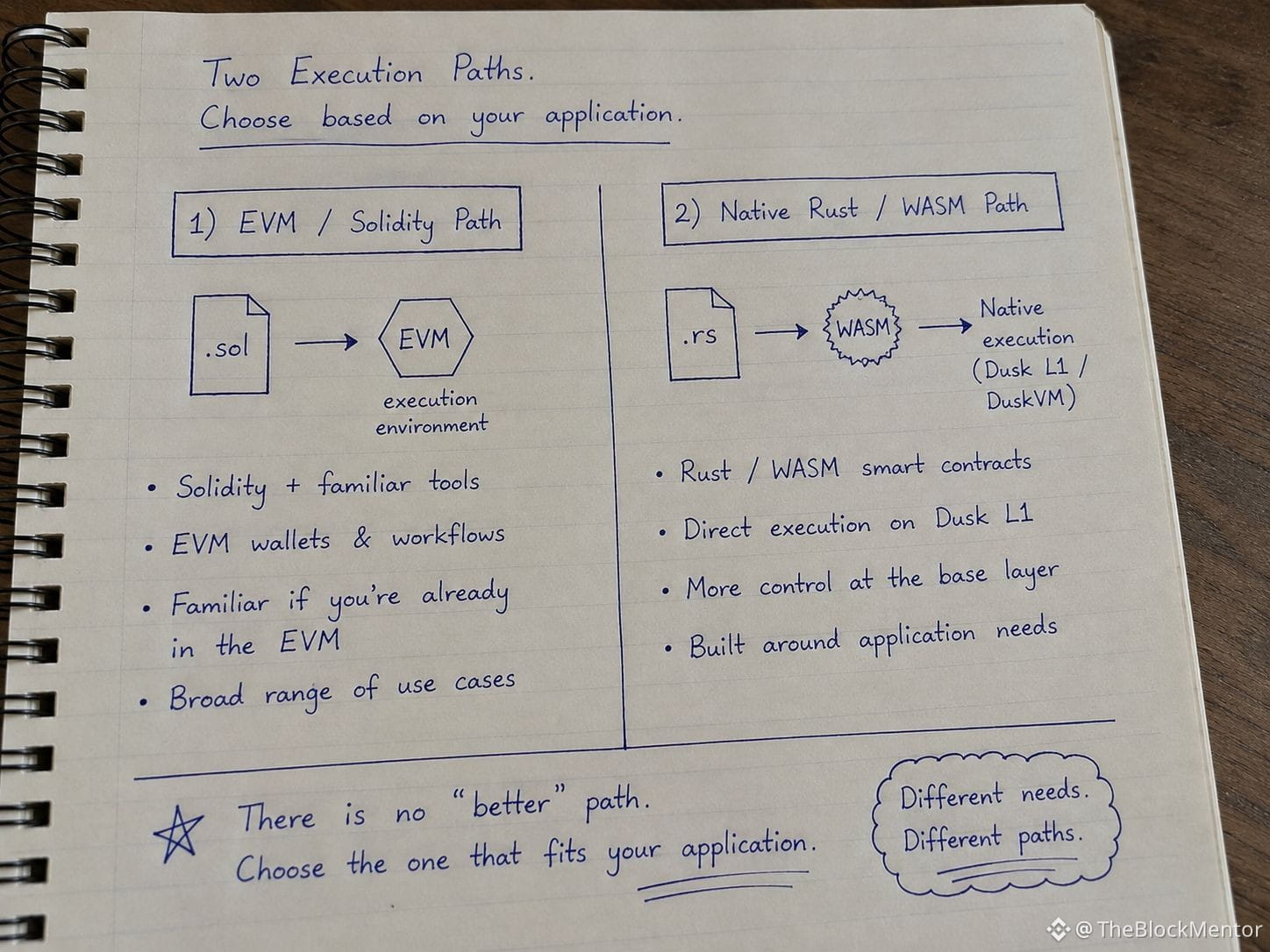
A developer can pick the right blockchain and still make the wrong execution choice.
That part is easy to overlook.
Some applications benefit from familiar Solidity tools, EVM wallets, and workflows builders already trust.
Others may need more direct control at the base layer, without forcing everything through the same execution model.
That’s what caught my attention about @Dusk
DuskEVM gives builders the familiar EVM route, while DuskVM lets native Rust/WASM contracts execute directly on the Dusk L1.
The interesting part isn’t simply having two execution paths.
It’s giving builders the flexibility to choose based on what the application actually needs.
Infrastructure should adapt to the application—not the other way around.
$DUSK #dusk
That part is easy to overlook.
Some applications benefit from familiar Solidity tools, EVM wallets, and workflows builders already trust.
Others may need more direct control at the base layer, without forcing everything through the same execution model.
That’s what caught my attention about @Dusk
DuskEVM gives builders the familiar EVM route, while DuskVM lets native Rust/WASM contracts execute directly on the Dusk L1.
The interesting part isn’t simply having two execution paths.
It’s giving builders the flexibility to choose based on what the application actually needs.
Infrastructure should adapt to the application—not the other way around.
$DUSK #dusk
SOL is back above $100.
I know price gets all the attention, but something else caught my eye.
Solana just had its busiest week on record, with around 1.32B non-vote transactions from Aug. 17–23.
That made me look at the move a bit differently.
A price jump can happen because of hype or momentum. But when network activity is also hitting a record, I think it’s worth watching.
Can SOL hold above $100 if that activity keeps growing?
I’m not chasing the move. I’m watching the usage behind it.
#SOL #Solana #Crypto #DeFi
#Web3
I know price gets all the attention, but something else caught my eye.
Solana just had its busiest week on record, with around 1.32B non-vote transactions from Aug. 17–23.
That made me look at the move a bit differently.
A price jump can happen because of hype or momentum. But when network activity is also hitting a record, I think it’s worth watching.
Can SOL hold above $100 if that activity keeps growing?
I’m not chasing the move. I’m watching the usage behind it.
#SOL #Solana #Crypto #DeFi
#Web3
I kept thinking about a simple question:
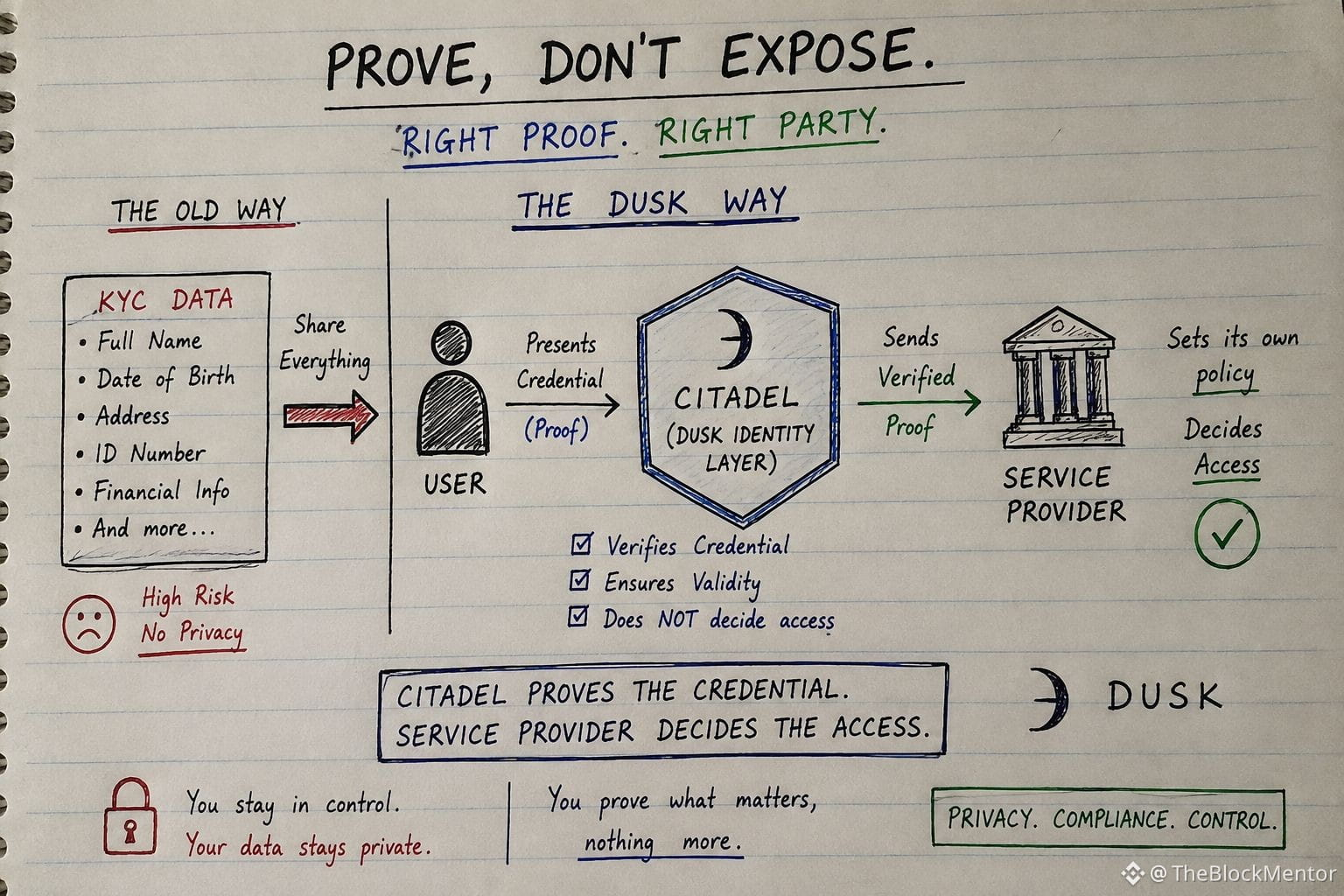
How does a financial platform know I’m eligible without needing to see everything about me?
The obvious answer is to collect more information.
But the more I looked at regulated finance, the less that approach made sense. An institution may only need to know that someone meets a certain requirement — not their entire identity record.
That’s what made Citadel interesting to me.
Dusk’s identity layer is built around verifiable credentials and selective disclosure. A user can prove they hold a valid credential without putting the underlying personal details onchain.
What I found even more interesting is the separation of responsibilities.
Citadel can prove that the credential is valid. It doesn’t decide whether the user should be accepted. The service provider still sets its own policy and decides which requirements it trusts.
That feels much closer to how regulated access actually works.
You don’t necessarily need to reveal everything to prove that you qualify.
You need to prove the right thing to the right party.
For me, that’s a more interesting way to think about onchain identity than simply putting KYC data on a blockchain.
@Dusk $DUSK #dusk
How does a financial platform know I’m eligible without needing to see everything about me?
The obvious answer is to collect more information.
But the more I looked at regulated finance, the less that approach made sense. An institution may only need to know that someone meets a certain requirement — not their entire identity record.
That’s what made Citadel interesting to me.
Dusk’s identity layer is built around verifiable credentials and selective disclosure. A user can prove they hold a valid credential without putting the underlying personal details onchain.
What I found even more interesting is the separation of responsibilities.
Citadel can prove that the credential is valid. It doesn’t decide whether the user should be accepted. The service provider still sets its own policy and decides which requirements it trusts.
That feels much closer to how regulated access actually works.
You don’t necessarily need to reveal everything to prove that you qualify.
You need to prove the right thing to the right party.
For me, that’s a more interesting way to think about onchain identity than simply putting KYC data on a blockchain.
@Dusk $DUSK #dusk
XRP just had one of its strongest moves in a while. 🚀
From around $1.00 to nearly $1.50 in just days is not a small move.
But here’s where it gets interesting 👀
$XRP is now sitting around $1.48–$1.50, with the $1.60 area looking like the next big test.
#XRP has already shown buyers can push price higher. Now I want to see if they can actually hold it.
If $1.60 gets reclaimed and stays as support, the structure starts looking much stronger.
If price keeps getting rejected, this pump may need a bigger cooldown first.
I’m watching the reaction here more than the green candles. 🔥
#Ripple #Crypto #Altcoins
From around $1.00 to nearly $1.50 in just days is not a small move.
But here’s where it gets interesting 👀
$XRP is now sitting around $1.48–$1.50, with the $1.60 area looking like the next big test.
#XRP has already shown buyers can push price higher. Now I want to see if they can actually hold it.
If $1.60 gets reclaimed and stays as support, the structure starts looking much stronger.
If price keeps getting rejected, this pump may need a bigger cooldown first.
I’m watching the reaction here more than the green candles. 🔥
#Ripple #Crypto #Altcoins
سجّل الدخول لاستكشاف المزيد من المُحتوى