
Otto Myst Cirqus Heresy
29 貼文
Otto Myst Cirqus Heresy
舉報
封鎖用戶
Founder of Cirqus Heresy: The Order of Choice. Web3 Creator Sovereignty. We don't inherit systems, we build our own. Liberatio per electionem.
35 關注
15 粉絲
42 點讚數
貼文
全部
影片
查看翻譯
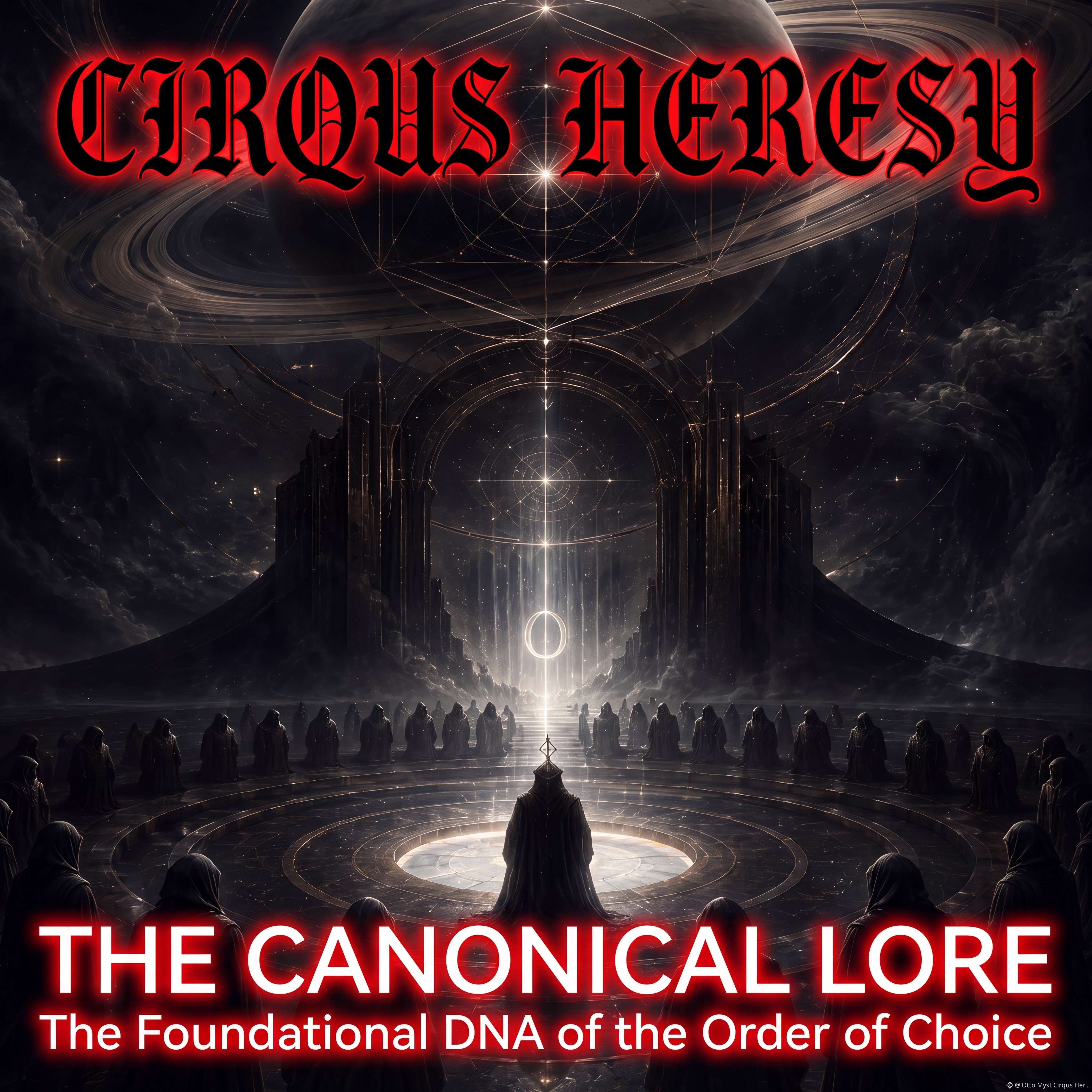
CIRQUS HERESY THE ORDER OF CHOICE Canonical Lore Foundation
The Foundational DNA of the Order of Choice
Core Thesis Most people inherit their reality before they ever choose it. They inherit narratives, institutions, roles, economies, authorities and definitions of success. Cirqus begins with a single question: What if the given reality is not the only possible one? The answer is not rebellion. The answer is Choice. See clearly. Choose consciously. Build beyond the script.
CIRQUS HERESY THE ORDER OF CHOICE Canonical Lore Foundation
The Foundational DNA of the Order of Choice
Core Thesis Most people inherit their reality before they ever choose it. They inherit narratives, institutions, roles, economies, authorities and definitions of success. Cirqus begins with a single question: What if the given reality is not the only possible one? The answer is not rebellion. The answer is Choice. See clearly. Choose consciously. Build beyond the script.
The Foundational DNA of the Order of Choice
Core Thesis Most people inherit their reality before they ever choose it. They inherit narratives, institutions, roles, economies, authorities and definitions of success. Cirqus begins with a single question: What if the given reality is not the only possible one? The answer is not rebellion. The answer is Choice. See clearly. Choose consciously. Build beyond the script.
1
80
查看翻譯
Meet SIR BYTE-A-LOT. 🦋
Senior Cybersecurity Specialist & Part-Time Exorcist.
He hunts phishing, audits smart contracts, and removes suspicious ghosts from your wallet.
His only rule:
Never trust a link.
Especially “Unsubscribe.”
$CIRQUS
cirqusheresy.com/inquisition
Meet SIR BYTE-A-LOT. 🦋
Senior Cybersecurity Specialist & Part-Time Exorcist.
He hunts phishing, audits smart contracts, and removes suspicious ghosts from your wallet.
His only rule:
Never trust a link.
Especially “Unsubscribe.”
$CIRQUS
cirqusheresy.com/inquisition
Senior Cybersecurity Specialist & Part-Time Exorcist.
He hunts phishing, audits smart contracts, and removes suspicious ghosts from your wallet.
His only rule:
Never trust a link.
Especially “Unsubscribe.”
$CIRQUS
cirqusheresy.com/inquisition

1
100
文章
查看翻譯
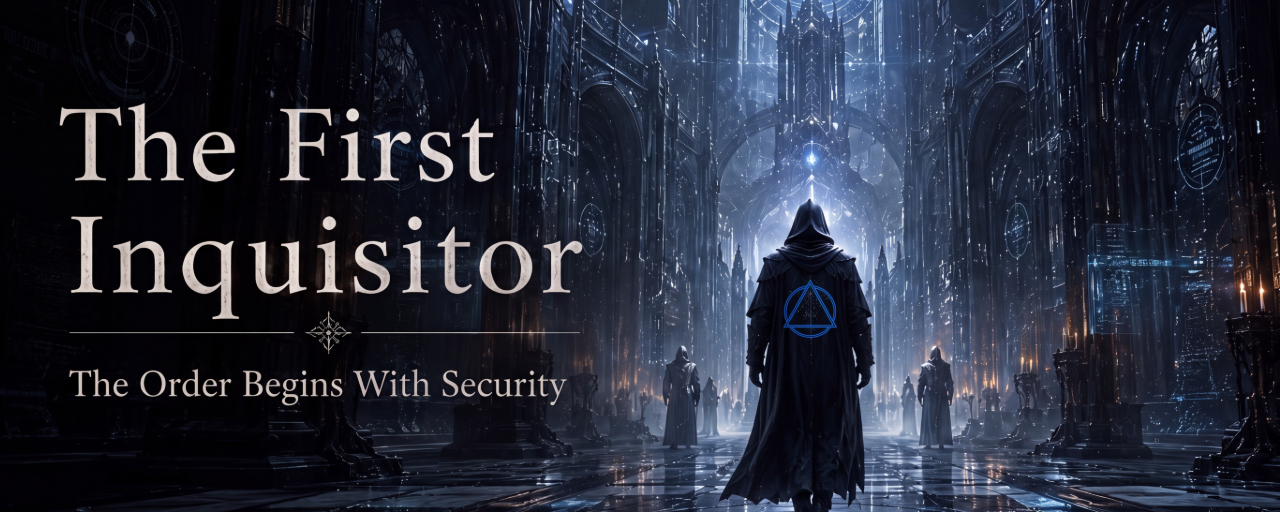
The First Inquisitor. Why the Order Begins With SecurityOn July 22, 2026, the first Inquisitor entered Cirqus Heresy.
Every system eventually reveals what it was built to protect.
Some protect wealth. Some protect power. Some protect information.
But every sovereign system must first protect itself.
Before an Order can build, it must survive.
That is why Cirqus Heresy begins with an Inquisitor — not a token, not a DAO, not a roadmap promising the moon.
Why I Started Here
I did not arrive at this decision as theory. I arrived at it after losing assets to a breach.
The first Dragon Hunt was not a product. It was an experience.
Only later did I give it a name.
Every civilization that survives long enough learns the same lesson: the greatest threat is rarely the enemy standing outside the gates. It is the vulnerability nobody noticed. The assumption nobody questioned. The access nobody revoked. The system nobody audited.
I built the Inquisitor into the Order for that reason. Not to create fear. To make complacency impossible.
How I Found Him
The Order's first Inquisitor was not recruited through a job listing.
He was found through a shared understanding of the same problem.
A security article I published on LinkedIn opened a conversation with someone who had spent years working at the frontier of identity, access, incident response, and digital forensics.
We were not looking for the same job. We were looking at the same problem from different sides.
The conversation became a collaboration. The collaboration revealed something larger.
Not a hire. Not a contractor.
A co-founder, building his own department from the ground up.
You don't join someone else's machine. You build your own engine inside a larger system.
Introducing the Inquisitor
Founding Inquisitor Co-Founder · Security & Digital Forensics
An elite digital investigator specializing in node-level extraction, threat actor interception, and securing the perimeter of the Heresy ecosystem.
When the dark forest breaches, he enforces order.
His mandate is simple:
Find what others missed. Question what others accepted. Secure what others assumed was safe.
The Mandate
THE INQUISITOR'S LOOP
Detection — Identify threats before they become incidents. Investigation — Follow evidence beyond the obvious. Verification — Trust nothing that has not been tested. Containment — Stop the breach before it becomes the collapse. Forensics — When something breaks, reconstruct how and why.
THE INQUISITOR'S PURPOSE
Sovereignty — Protect the creator, the system, and the integrity of the Order.
The loop protects the sovereignty.
A department — The Inquisition — is now being built around this mandate. Not borrowed. Not templated. Designed specifically for the person who now leads it, and defined entirely by his own expertise.
The First On-Chain Act
The Founder Record Date: July 22, 2026 Role: Founding Inquisitor Asset: Inquisitor — Founder #001 Network: Base Status: Transferred
This is not a membership badge. It is not a decorative collectible. It is a mark of origin.
The first artifact of the Inquisitor lineage now has a holder. The first department now has a founder.
From this day forward, the record exists beyond memory. It exists on-chain.
What This Really Is
The Order could look, from the outside, like a gothic Web3 project — lore, NFTs, a mysterious circle. That surface is real.
But behind it sits an operational mandate: security, intelligence, digital forensics, threat detection, incident response, verification.
The story is the language. The infrastructure is the substance.
Why This Matters More Than One Appointment
He brought a capability the Order did not have.
We brought an architecture in which that capability could become a department.
Together, we are building something neither of us could have built alone.
The department will create intelligence. Intelligence becomes infrastructure. Infrastructure protects the people who build inside the Order. And the people who build inside the Order make the infrastructure stronger.
This is the first entry in a chronicle I'll keep from here forward — a record of how the Order strengthens everyone who enters it, and how each person strengthens the Order in return.
Not to collect people. To amplify them.
You enter alone. You leave amplified.
The first Inquisitor has entered. The first department is being built.
See clearly. Choose consciously. Build beyond the script.
Welcome to the Order, Inquisitor. Let's keep building.
The First Inquisitor. Why the Order Begins With Security
On July 22, 2026, the first Inquisitor entered Cirqus Heresy.
Every system eventually reveals what it was built to protect.
Some protect wealth. Some protect power. Some protect information.
But every sovereign system must first protect itself.
Before an Order can build, it must survive.
That is why Cirqus Heresy begins with an Inquisitor — not a token, not a DAO, not a roadmap promising the moon.
Why I Started Here
I did not arrive at this decision as theory. I arrived at it after losing assets to a breach.
The first Dragon Hunt was not a product. It was an experience.
Only later did I give it a name.
Every civilization that survives long enough learns the same lesson: the greatest threat is rarely the enemy standing outside the gates. It is the vulnerability nobody noticed. The assumption nobody questioned. The access nobody revoked. The system nobody audited.
I built the Inquisitor into the Order for that reason. Not to create fear. To make complacency impossible.
How I Found Him
The Order's first Inquisitor was not recruited through a job listing.
He was found through a shared understanding of the same problem.
A security article I published on LinkedIn opened a conversation with someone who had spent years working at the frontier of identity, access, incident response, and digital forensics.
We were not looking for the same job. We were looking at the same problem from different sides.
The conversation became a collaboration. The collaboration revealed something larger.
Not a hire. Not a contractor.
A co-founder, building his own department from the ground up.
You don't join someone else's machine. You build your own engine inside a larger system.
Introducing the Inquisitor
Founding Inquisitor Co-Founder · Security & Digital Forensics
An elite digital investigator specializing in node-level extraction, threat actor interception, and securing the perimeter of the Heresy ecosystem.
When the dark forest breaches, he enforces order.
His mandate is simple:
Find what others missed. Question what others accepted. Secure what others assumed was safe.
The Mandate
THE INQUISITOR'S LOOP
Detection — Identify threats before they become incidents. Investigation — Follow evidence beyond the obvious. Verification — Trust nothing that has not been tested. Containment — Stop the breach before it becomes the collapse. Forensics — When something breaks, reconstruct how and why.
THE INQUISITOR'S PURPOSE
Sovereignty — Protect the creator, the system, and the integrity of the Order.
The loop protects the sovereignty.
A department — The Inquisition — is now being built around this mandate. Not borrowed. Not templated. Designed specifically for the person who now leads it, and defined entirely by his own expertise.
The First On-Chain Act
The Founder Record Date: July 22, 2026 Role: Founding Inquisitor Asset: Inquisitor — Founder #001 Network: Base Status: Transferred
This is not a membership badge. It is not a decorative collectible. It is a mark of origin.
The first artifact of the Inquisitor lineage now has a holder. The first department now has a founder.
From this day forward, the record exists beyond memory. It exists on-chain.
What This Really Is
The Order could look, from the outside, like a gothic Web3 project — lore, NFTs, a mysterious circle. That surface is real.
But behind it sits an operational mandate: security, intelligence, digital forensics, threat detection, incident response, verification.
The story is the language. The infrastructure is the substance.
Why This Matters More Than One Appointment
He brought a capability the Order did not have.
We brought an architecture in which that capability could become a department.
Together, we are building something neither of us could have built alone.
The department will create intelligence. Intelligence becomes infrastructure. Infrastructure protects the people who build inside the Order. And the people who build inside the Order make the infrastructure stronger.
This is the first entry in a chronicle I'll keep from here forward — a record of how the Order strengthens everyone who enters it, and how each person strengthens the Order in return.
Not to collect people. To amplify them.
You enter alone. You leave amplified.
The first Inquisitor has entered. The first department is being built.
See clearly. Choose consciously. Build beyond the script.
Welcome to the Order, Inquisitor. Let's keep building.
Every system eventually reveals what it was built to protect.
Some protect wealth. Some protect power. Some protect information.
But every sovereign system must first protect itself.
Before an Order can build, it must survive.
That is why Cirqus Heresy begins with an Inquisitor — not a token, not a DAO, not a roadmap promising the moon.
Why I Started Here
I did not arrive at this decision as theory. I arrived at it after losing assets to a breach.
The first Dragon Hunt was not a product. It was an experience.
Only later did I give it a name.
Every civilization that survives long enough learns the same lesson: the greatest threat is rarely the enemy standing outside the gates. It is the vulnerability nobody noticed. The assumption nobody questioned. The access nobody revoked. The system nobody audited.
I built the Inquisitor into the Order for that reason. Not to create fear. To make complacency impossible.
How I Found Him
The Order's first Inquisitor was not recruited through a job listing.
He was found through a shared understanding of the same problem.
A security article I published on LinkedIn opened a conversation with someone who had spent years working at the frontier of identity, access, incident response, and digital forensics.
We were not looking for the same job. We were looking at the same problem from different sides.
The conversation became a collaboration. The collaboration revealed something larger.
Not a hire. Not a contractor.
A co-founder, building his own department from the ground up.
You don't join someone else's machine. You build your own engine inside a larger system.
Introducing the Inquisitor
Founding Inquisitor Co-Founder · Security & Digital Forensics
An elite digital investigator specializing in node-level extraction, threat actor interception, and securing the perimeter of the Heresy ecosystem.
When the dark forest breaches, he enforces order.
His mandate is simple:
Find what others missed. Question what others accepted. Secure what others assumed was safe.
The Mandate
THE INQUISITOR'S LOOP
Detection — Identify threats before they become incidents. Investigation — Follow evidence beyond the obvious. Verification — Trust nothing that has not been tested. Containment — Stop the breach before it becomes the collapse. Forensics — When something breaks, reconstruct how and why.
THE INQUISITOR'S PURPOSE
Sovereignty — Protect the creator, the system, and the integrity of the Order.
The loop protects the sovereignty.
A department — The Inquisition — is now being built around this mandate. Not borrowed. Not templated. Designed specifically for the person who now leads it, and defined entirely by his own expertise.
The First On-Chain Act
The Founder Record Date: July 22, 2026 Role: Founding Inquisitor Asset: Inquisitor — Founder #001 Network: Base Status: Transferred
This is not a membership badge. It is not a decorative collectible. It is a mark of origin.
The first artifact of the Inquisitor lineage now has a holder. The first department now has a founder.
From this day forward, the record exists beyond memory. It exists on-chain.
What This Really Is
The Order could look, from the outside, like a gothic Web3 project — lore, NFTs, a mysterious circle. That surface is real.
But behind it sits an operational mandate: security, intelligence, digital forensics, threat detection, incident response, verification.
The story is the language. The infrastructure is the substance.
Why This Matters More Than One Appointment
He brought a capability the Order did not have.
We brought an architecture in which that capability could become a department.
Together, we are building something neither of us could have built alone.
The department will create intelligence. Intelligence becomes infrastructure. Infrastructure protects the people who build inside the Order. And the people who build inside the Order make the infrastructure stronger.
This is the first entry in a chronicle I'll keep from here forward — a record of how the Order strengthens everyone who enters it, and how each person strengthens the Order in return.
Not to collect people. To amplify them.
You enter alone. You leave amplified.
The first Inquisitor has entered. The first department is being built.
See clearly. Choose consciously. Build beyond the script.
Welcome to the Order, Inquisitor. Let's keep building.
1
91
查看翻譯
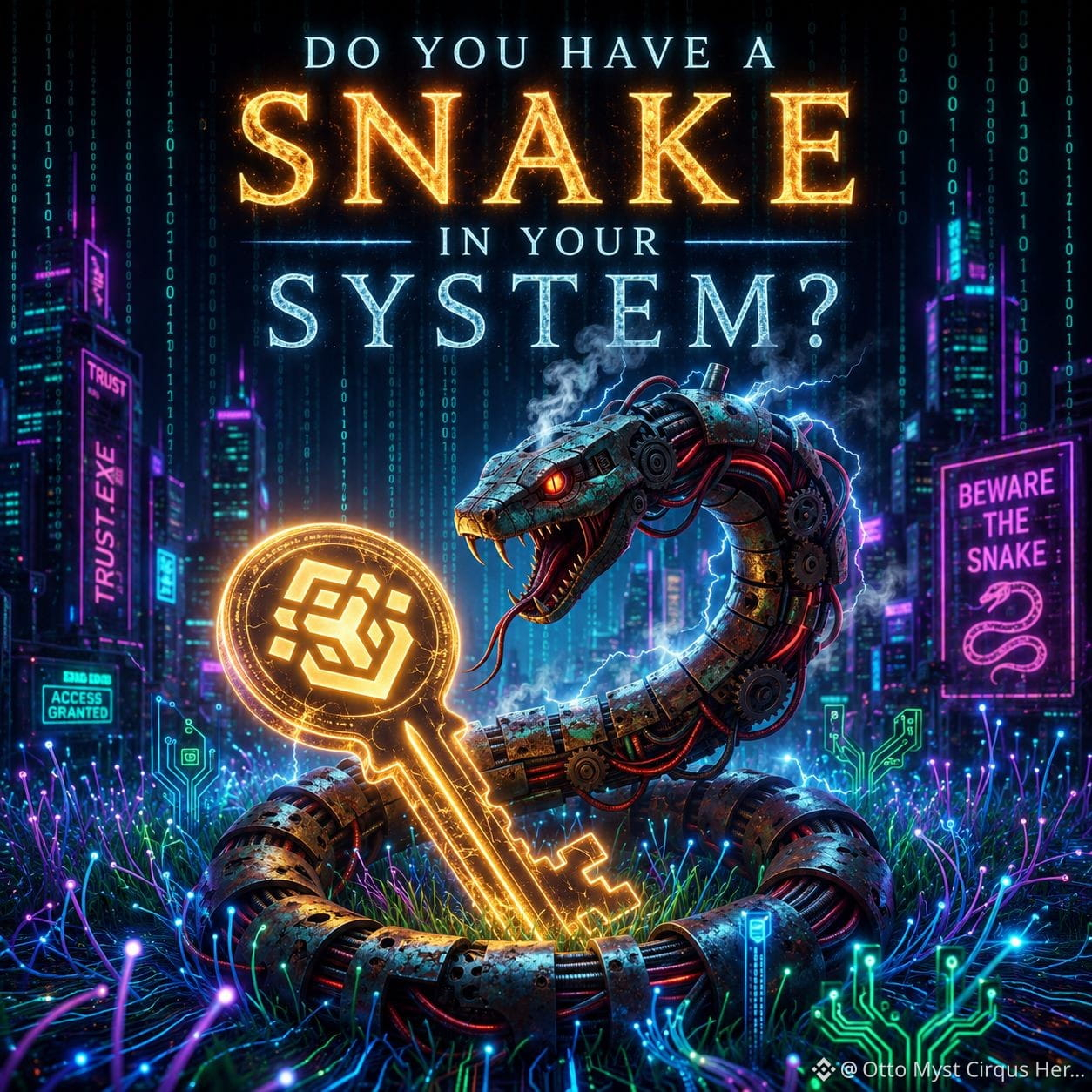
Dragon Hunt: The Snake Never Left.
Do you have a snake in your system?
Notice I didn't ask whether you have malware. Or a virus. Or spyware. I asked whether there is a snake.
Because malware is loud. A virus leaves broken code. But a snake? A snake doesn't break into your system. It waits for an invitation. It waits for you to choose convenience over isolation.
Six months before 1,088 BNB vanished while I slept, I handed my unlocked laptop to a stranger for a minor repair. I thought I was fixing an inconvenience. In reality, I was opening the garden gates.
Open sessions. Accessible wallets. Every password cached in Chrome.
On October 31, 2024, the strike happened. Total silence. Total depletion. For 500 days, I lived with the illusion of closure. I thought the snake had taken what it came for and slithered away into the dark corners of the blockchain.
I was wrong. The snake never left.
It wasn't stealing anymore. It was feeding. Quietly. Patiently. Every forgotten airdrop. Every interaction. It lived inside my browser for a year and a half, using my address as its own. It sat there, warming itself under my keyboard, waiting for the next season.
Until greed made it move too fast.
On March 9, 2026, the parasite made one stupid mistake. It came back for the remnants — but this time, it left tracks.
Nine wallets exposed. One open, public investigation.
This is no longer a story about a hack. This is the forensic decomposition of trust. Cybersecurity rarely fails because hackers are geniuses. It fails because humans are predictable.
We are tracking the parasite through the digital undergrowth, and the ledger is open for those who know how to read the signs.
Look at the nine addresses. If one of them is yours, you are not just a victim. You are hosting the same ghost.
—
How long could a snake live inside your computer before you noticed?
Every Dragon Hunt begins with a Snake. The Snake feeds on trust.
⟡ Liberatio per Electionem
Dragon Hunt: The Snake Never Left.
Do you have a snake in your system?
Notice I didn't ask whether you have malware. Or a virus. Or spyware. I asked whether there is a snake.
Because malware is loud. A virus leaves broken code. But a snake? A snake doesn't break into your system. It waits for an invitation. It waits for you to choose convenience over isolation.
Six months before 1,088 BNB vanished while I slept, I handed my unlocked laptop to a stranger for a minor repair. I thought I was fixing an inconvenience. In reality, I was opening the garden gates.
Open sessions. Accessible wallets. Every password cached in Chrome.
On October 31, 2024, the strike happened. Total silence. Total depletion. For 500 days, I lived with the illusion of closure. I thought the snake had taken what it came for and slithered away into the dark corners of the blockchain.
I was wrong. The snake never left.
It wasn't stealing anymore. It was feeding. Quietly. Patiently. Every forgotten airdrop. Every interaction. It lived inside my browser for a year and a half, using my address as its own. It sat there, warming itself under my keyboard, waiting for the next season.
Until greed made it move too fast.
On March 9, 2026, the parasite made one stupid mistake. It came back for the remnants — but this time, it left tracks.
Nine wallets exposed. One open, public investigation.
This is no longer a story about a hack. This is the forensic decomposition of trust. Cybersecurity rarely fails because hackers are geniuses. It fails because humans are predictable.
We are tracking the parasite through the digital undergrowth, and the ledger is open for those who know how to read the signs.
Look at the nine addresses. If one of them is yours, you are not just a victim. You are hosting the same ghost.
—
How long could a snake live inside your computer before you noticed?
Every Dragon Hunt begins with a Snake. The Snake feeds on trust.
⟡ Liberatio per Electionem
Do you have a snake in your system?
Notice I didn't ask whether you have malware. Or a virus. Or spyware. I asked whether there is a snake.
Because malware is loud. A virus leaves broken code. But a snake? A snake doesn't break into your system. It waits for an invitation. It waits for you to choose convenience over isolation.
Six months before 1,088 BNB vanished while I slept, I handed my unlocked laptop to a stranger for a minor repair. I thought I was fixing an inconvenience. In reality, I was opening the garden gates.
Open sessions. Accessible wallets. Every password cached in Chrome.
On October 31, 2024, the strike happened. Total silence. Total depletion. For 500 days, I lived with the illusion of closure. I thought the snake had taken what it came for and slithered away into the dark corners of the blockchain.
I was wrong. The snake never left.
It wasn't stealing anymore. It was feeding. Quietly. Patiently. Every forgotten airdrop. Every interaction. It lived inside my browser for a year and a half, using my address as its own. It sat there, warming itself under my keyboard, waiting for the next season.
Until greed made it move too fast.
On March 9, 2026, the parasite made one stupid mistake. It came back for the remnants — but this time, it left tracks.
Nine wallets exposed. One open, public investigation.
This is no longer a story about a hack. This is the forensic decomposition of trust. Cybersecurity rarely fails because hackers are geniuses. It fails because humans are predictable.
We are tracking the parasite through the digital undergrowth, and the ledger is open for those who know how to read the signs.
Look at the nine addresses. If one of them is yours, you are not just a victim. You are hosting the same ghost.
—
How long could a snake live inside your computer before you noticed?
Every Dragon Hunt begins with a Snake. The Snake feeds on trust.
⟡ Liberatio per Electionem
1
1
26
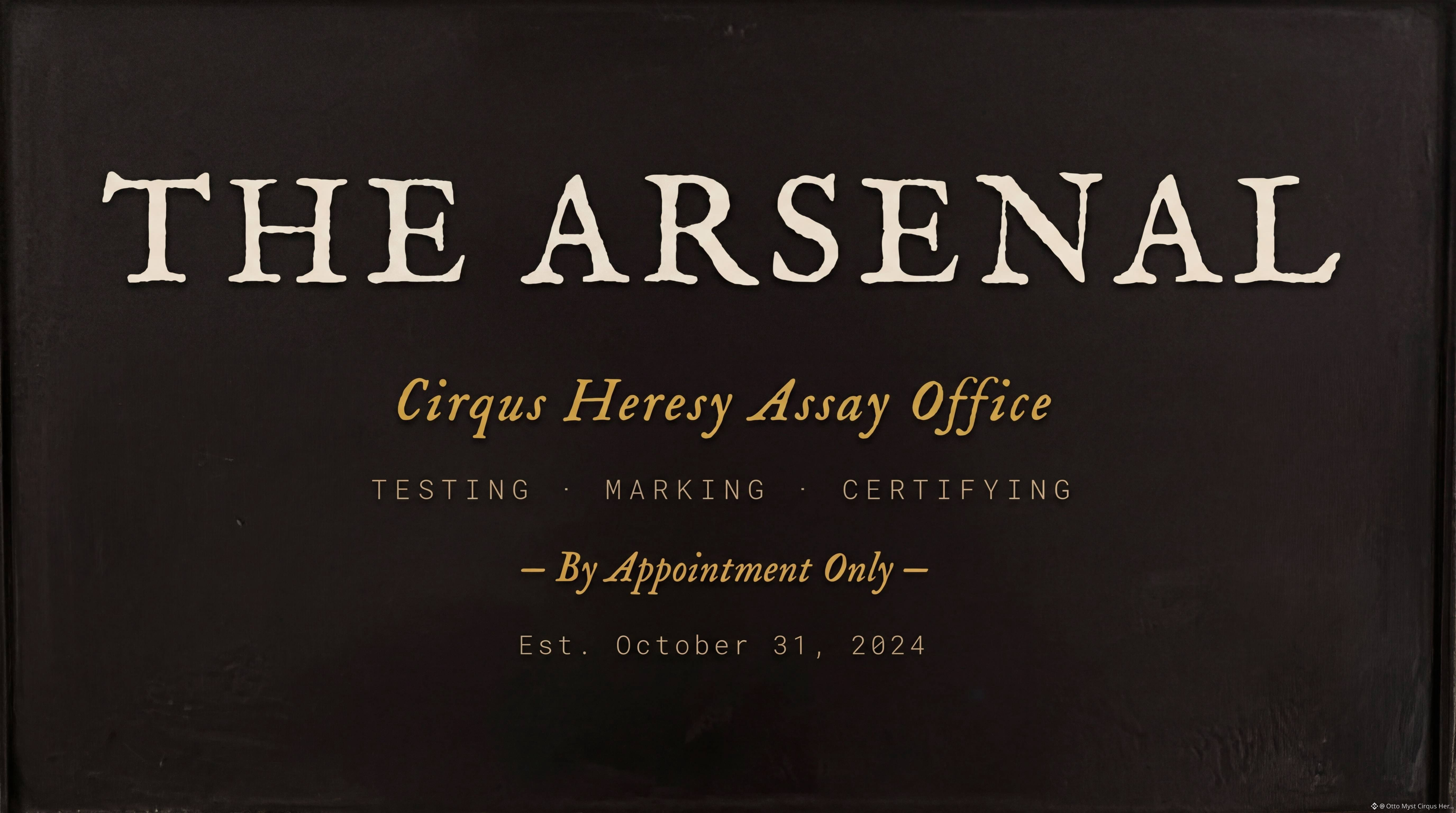
阿森納——Cirqus Heresy 測定所
大多數人寫評測工具。
我們爲之立證。
兩者不同。
評測告訴你產品宣稱自己是什麼。
立證則告訴你它經受住了什麼。
阿森納是 Cirqus Heresy 的測定所。
我們不對產品打分。
我們揭示假設。
我們進行測試。
我們施印。
我們認證。
——
阿森納之所以存在,是因爲理論失敗了。
2024 年 10 月 31 日,
Cirqus Heresy 的創始人在睡夢中遭遇會話劫持,
損失了 1,088 BNB。
資金不復存在。
教訓留了下來。
接下來發生的並不是報復。
而是基礎設施。
——
硬件錢包。
冷存儲。
DePIN 基礎設施。
安全流程。
所有內容以同樣的方式進入阿森納。
沒有任何東西能保持原樣離開。
只有在測試中倖存的內容
纔會獲得立證。
因爲在 Web3 中,
主權與失去之間的差別
並不在於智力。
而在於證據。
——
你從未測試過的東西,
但卻用它信任你所擁有的一切?
⟡ Liberatio per Electionem
→ x.com/CirqusHeresy
阿森納——Cirqus Heresy 測定所
大多數人寫評測工具。
我們爲之立證。
兩者不同。
評測告訴你產品宣稱自己是什麼。
立證則告訴你它經受住了什麼。
阿森納是 Cirqus Heresy 的測定所。
我們不對產品打分。
我們揭示假設。
我們進行測試。
我們施印。
我們認證。
——
阿森納之所以存在,是因爲理論失敗了。
2024 年 10 月 31 日,
Cirqus Heresy 的創始人在睡夢中遭遇會話劫持,
損失了 1,088 BNB。
資金不復存在。
教訓留了下來。
接下來發生的並不是報復。
而是基礎設施。
——
硬件錢包。
冷存儲。
DePIN 基礎設施。
安全流程。
所有內容以同樣的方式進入阿森納。
沒有任何東西能保持原樣離開。
只有在測試中倖存的內容
纔會獲得立證。
因爲在 Web3 中,
主權與失去之間的差別
並不在於智力。
而在於證據。
——
你從未測試過的東西,
但卻用它信任你所擁有的一切?
⟡ Liberatio per Electionem
→ x.com/CirqusHeresy
大多數人寫評測工具。
我們爲之立證。
兩者不同。
評測告訴你產品宣稱自己是什麼。
立證則告訴你它經受住了什麼。
阿森納是 Cirqus Heresy 的測定所。
我們不對產品打分。
我們揭示假設。
我們進行測試。
我們施印。
我們認證。
——
阿森納之所以存在,是因爲理論失敗了。
2024 年 10 月 31 日,
Cirqus Heresy 的創始人在睡夢中遭遇會話劫持,
損失了 1,088 BNB。
資金不復存在。
教訓留了下來。
接下來發生的並不是報復。
而是基礎設施。
——
硬件錢包。
冷存儲。
DePIN 基礎設施。
安全流程。
所有內容以同樣的方式進入阿森納。
沒有任何東西能保持原樣離開。
只有在測試中倖存的內容
纔會獲得立證。
因爲在 Web3 中,
主權與失去之間的差別
並不在於智力。
而在於證據。
——
你從未測試過的東西,
但卻用它信任你所擁有的一切?
⟡ Liberatio per Electionem
→ x.com/CirqusHeresy
1
1
93
查看翻譯
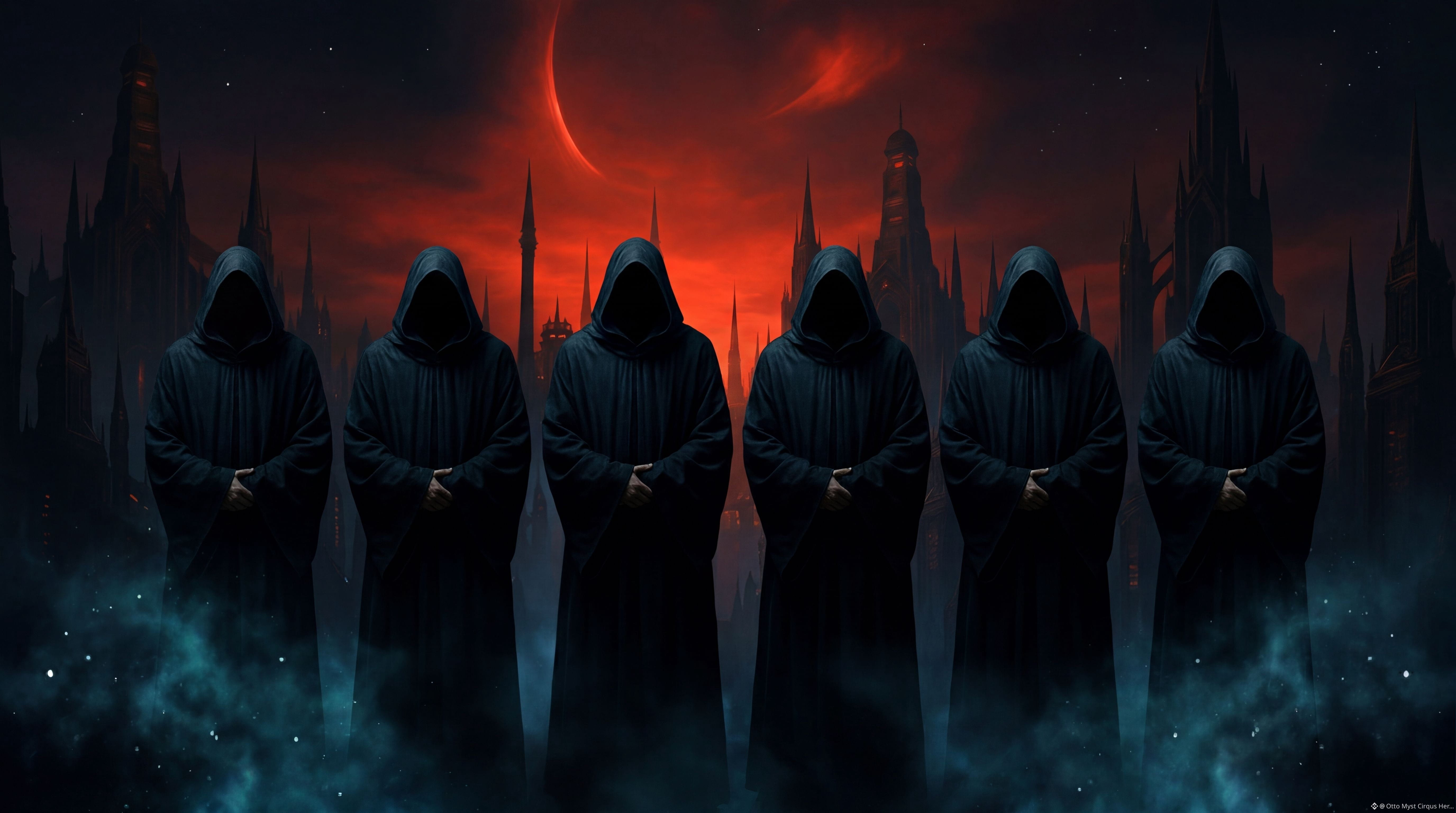
The Faces Not Yet Chosen
Six figures stand at the edge of the known world.
Six robes.
Six roles.
No faces.
Not because they are hidden —
but because their faces are still being chosen.
Somewhere, six people already carry these roles.
They simply haven't found the Order yet.
One questions systems others accepted long ago.
One investigates what everyone else walks past.
One holds the balance when everything pulls apart.
One transforms raw ideas into something that endures.
One builds the architecture no one thought to name.
One moves capital the way others move conviction.
They don't know each other yet.
They don't know us yet.
But they already live this.
Every day.
Without a name for it.
The Order does not create its members.
It recognizes them.
At the center of the Order stands the Hexastorm —
six directions, six voices, no single authority.
Those six seats exist.
The names that will fill them — do not yet.
Perhaps one of them was always yours.
—
Which robe fits you?
⟡ Liberatio per Electionem
→ x.com/CirqusHeresy
The Faces Not Yet Chosen
Six figures stand at the edge of the known world.
Six robes.
Six roles.
No faces.
Not because they are hidden —
but because their faces are still being chosen.
Somewhere, six people already carry these roles.
They simply haven't found the Order yet.
One questions systems others accepted long ago.
One investigates what everyone else walks past.
One holds the balance when everything pulls apart.
One transforms raw ideas into something that endures.
One builds the architecture no one thought to name.
One moves capital the way others move conviction.
They don't know each other yet.
They don't know us yet.
But they already live this.
Every day.
Without a name for it.
The Order does not create its members.
It recognizes them.
At the center of the Order stands the Hexastorm —
six directions, six voices, no single authority.
Those six seats exist.
The names that will fill them — do not yet.
Perhaps one of them was always yours.
—
Which robe fits you?
⟡ Liberatio per Electionem
→ x.com/CirqusHeresy
Six figures stand at the edge of the known world.
Six robes.
Six roles.
No faces.
Not because they are hidden —
but because their faces are still being chosen.
Somewhere, six people already carry these roles.
They simply haven't found the Order yet.
One questions systems others accepted long ago.
One investigates what everyone else walks past.
One holds the balance when everything pulls apart.
One transforms raw ideas into something that endures.
One builds the architecture no one thought to name.
One moves capital the way others move conviction.
They don't know each other yet.
They don't know us yet.
But they already live this.
Every day.
Without a name for it.
The Order does not create its members.
It recognizes them.
At the center of the Order stands the Hexastorm —
six directions, six voices, no single authority.
Those six seats exist.
The names that will fill them — do not yet.
Perhaps one of them was always yours.
—
Which robe fits you?
⟡ Liberatio per Electionem
→ x.com/CirqusHeresy
1
1
查看翻譯
The Order Structure — Cirqus Heresy
Every civilization builds pyramids.
We built an orbit.
Not a hierarchy.
Not a corporation.
Not a religion.
A living system.
Long before humans imagined perfect societies,
Saturn was already drawing one.
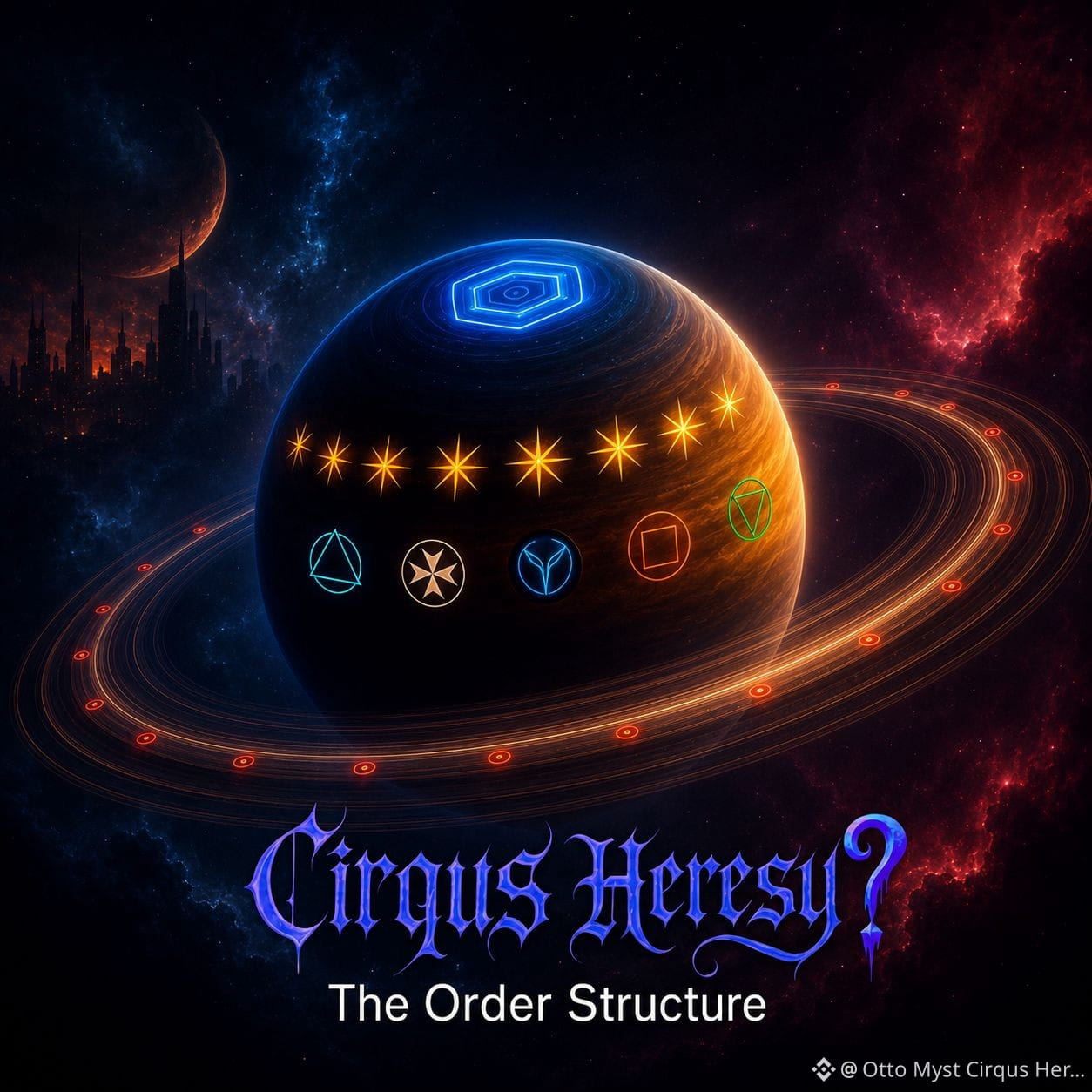
A hexagon.
Six sides.
Endless motion.
Nature discovered this geometry first.
At its center stands the Hexastorm —
a six-sided pattern carved into Saturn
long before humanity spoke of order.
Six directions.
Six voices.
Balance without a ruler.
Around it move seven Castes.
Not above one another.
Never competing.
Each exists because the others do.
Seekers ask.
Tricksters challenge.
Inquisitors verify.
Oracles foresee.
Alchemists transform.
Architects build.
Mages sustain.
A circle survives only while
every part continues to move.
We did not invent this structure.
We recognized it.
—
The Circle is always incomplete
until someone enters it.
Which symbol would you carry?
⟡ Liberatio per Electionem
→ x.com/CirqusHeresy
The Order Structure — Cirqus Heresy
Every civilization builds pyramids.
We built an orbit.
Not a hierarchy.
Not a corporation.
Not a religion.
A living system.
Long before humans imagined perfect societies,
Saturn was already drawing one.
A hexagon.
Six sides.
Endless motion.
Nature discovered this geometry first.
At its center stands the Hexastorm —
a six-sided pattern carved into Saturn
long before humanity spoke of order.
Six directions.
Six voices.
Balance without a ruler.
Around it move seven Castes.
Not above one another.
Never competing.
Each exists because the others do.
Seekers ask.
Tricksters challenge.
Inquisitors verify.
Oracles foresee.
Alchemists transform.
Architects build.
Mages sustain.
A circle survives only while
every part continues to move.
We did not invent this structure.
We recognized it.
—
The Circle is always incomplete
until someone enters it.
Which symbol would you carry?
⟡ Liberatio per Electionem
→ x.com/CirqusHeresy
Every civilization builds pyramids.
We built an orbit.
Not a hierarchy.
Not a corporation.
Not a religion.
A living system.
Long before humans imagined perfect societies,
Saturn was already drawing one.
A hexagon.
Six sides.
Endless motion.
Nature discovered this geometry first.
At its center stands the Hexastorm —
a six-sided pattern carved into Saturn
long before humanity spoke of order.
Six directions.
Six voices.
Balance without a ruler.
Around it move seven Castes.
Not above one another.
Never competing.
Each exists because the others do.
Seekers ask.
Tricksters challenge.
Inquisitors verify.
Oracles foresee.
Alchemists transform.
Architects build.
Mages sustain.
A circle survives only while
every part continues to move.
We did not invent this structure.
We recognized it.
—
The Circle is always incomplete
until someone enters it.
Which symbol would you carry?
⟡ Liberatio per Electionem
→ x.com/CirqusHeresy
1
1
18
查看翻譯
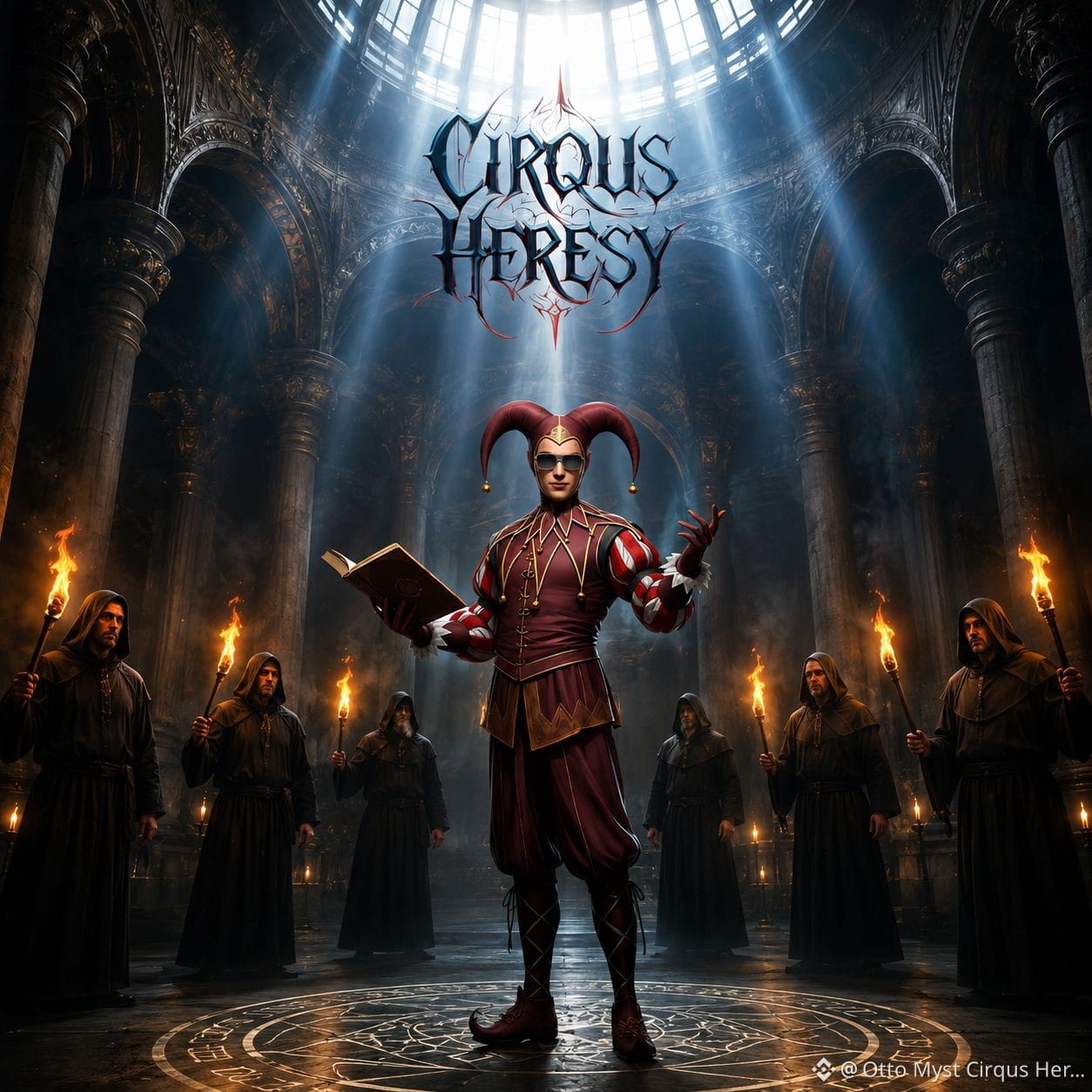
Templum Intus Est — The Temple Is Within
Every civilization built temples.
Some from stone.
Some from stories.
Some from fear.
We build ours from people who choose.
Not walls. Not doctrine. Not hierarchy.
A living structure — shaped by every mind that enters.
Rebuilt with every question asked inside it.
Man does not live by answers alone.
The greatest temples were never finished.
They grew with those who entered.
They changed with what was brought inside.
They survived because they were never owned —
only inhabited.
This is what we are building.
Not a platform.
Not a DAO.
Not a brand.
A temple made of seekers.
Every person who holds this NFT
becomes a stone in something larger than themselves.
Not because they were chosen.
Because they chose.
Templum Intus Est.
The temple is within.
And now — it is also onchain.
—
What would you bring inside?
Liberatio per electionem.
→ cirqusheresy.com/structure
Templum Intus Est — The Temple Is Within
Every civilization built temples.
Some from stone.
Some from stories.
Some from fear.
We build ours from people who choose.
Not walls. Not doctrine. Not hierarchy.
A living structure — shaped by every mind that enters.
Rebuilt with every question asked inside it.
Man does not live by answers alone.
The greatest temples were never finished.
They grew with those who entered.
They changed with what was brought inside.
They survived because they were never owned —
only inhabited.
This is what we are building.
Not a platform.
Not a DAO.
Not a brand.
A temple made of seekers.
Every person who holds this NFT
becomes a stone in something larger than themselves.
Not because they were chosen.
Because they chose.
Templum Intus Est.
The temple is within.
And now — it is also onchain.
—
What would you bring inside?
Liberatio per electionem.
→ cirqusheresy.com/structure
Every civilization built temples.
Some from stone.
Some from stories.
Some from fear.
We build ours from people who choose.
Not walls. Not doctrine. Not hierarchy.
A living structure — shaped by every mind that enters.
Rebuilt with every question asked inside it.
Man does not live by answers alone.
The greatest temples were never finished.
They grew with those who entered.
They changed with what was brought inside.
They survived because they were never owned —
only inhabited.
This is what we are building.
Not a platform.
Not a DAO.
Not a brand.
A temple made of seekers.
Every person who holds this NFT
becomes a stone in something larger than themselves.
Not because they were chosen.
Because they chose.
Templum Intus Est.
The temple is within.
And now — it is also onchain.
—
What would you bring inside?
Liberatio per electionem.
→ cirqusheresy.com/structure
1
102
查看翻譯
They called the Titanic unsinkable. Just like we think our digital freedom is safe.
But Pavel Durov warns us: the hidden iceberg of total control is already here. Is your privacy still afloat... or are we already sinking?
They called the Titanic unsinkable. Just like we think our digital freedom is safe.
But Pavel Durov warns us: the hidden iceberg of total control is already here. Is your privacy still afloat... or are we already sinking?
But Pavel Durov warns us: the hidden iceberg of total control is already here. Is your privacy still afloat... or are we already sinking?
1
60
查看翻譯
What is the true Formula of Longevity for a decentralized ecosystem? Most Web3 projects are doomed to decay because they ignore systemic entropy. Centralization dies, but code endures.
Read our full manifest and deep-dive analysis: paragraph.xyz/@cirqusheresy/why-projects-die
#Web3 #DeSci #DAO
What is the true Formula of Longevity for a decentralized ecosystem? Most Web3 projects are doomed to decay because they ignore systemic entropy. Centralization dies, but code endures.
Read our full manifest and deep-dive analysis: paragraph.xyz/@cirqusheresy/why-projects-die
#Web3 #DeSci #DAO
Read our full manifest and deep-dive analysis: paragraph.xyz/@cirqusheresy/why-projects-die
#Web3 #DeSci #DAO
1
67
文章
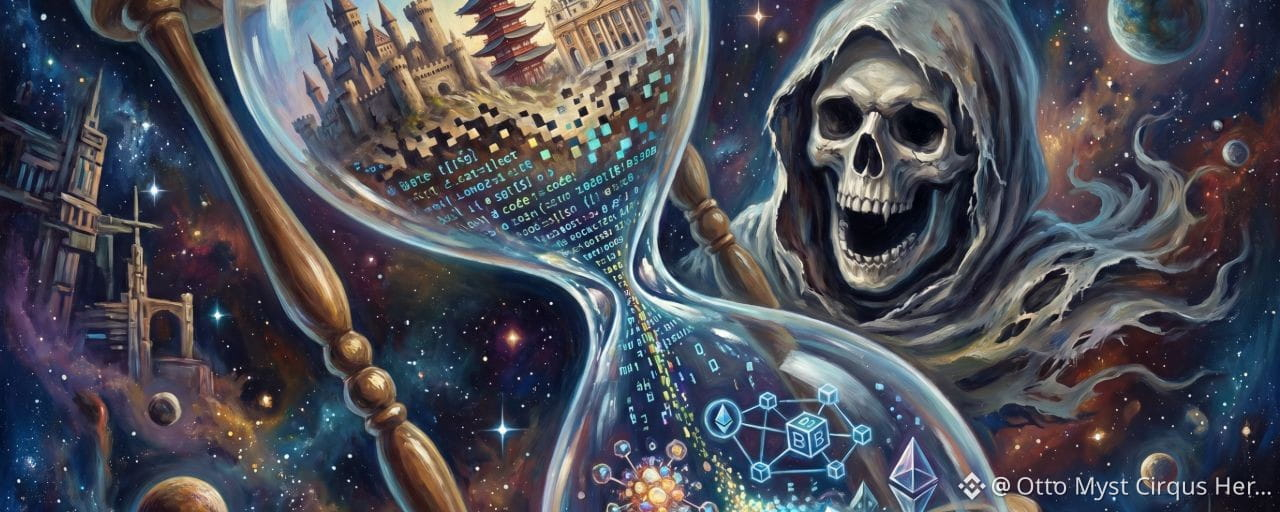
爲什麼你的項目會死?歷史上最具韌性的動力系統解剖爲什麼你的項目會死?歷史上最具韌性的動力系統解剖
法則0. 對抗熵的戰鬥
所有系統都會衰退。沒有永恆的狀態。只有那些能夠比崩潰恢復得更快的系統。剩下的9條法則只是這場戰鬥的機制。
介紹
今天我發現自己在思考項目的下一個階段。我認爲這個階段將是創建一個DAO——從技術上來說,這並不複雜。但隨後我產生了好奇:如何建立一個投票和決策系統?如何確保它公平?簡單多數?代幣持有?貢獻?這個問題比我想象的要複雜得多。
爲什麼你的項目會死?歷史上最具韌性的動力系統解剖
爲什麼你的項目會死?歷史上最具韌性的動力系統解剖
法則0. 對抗熵的戰鬥
所有系統都會衰退。沒有永恆的狀態。只有那些能夠比崩潰恢復得更快的系統。剩下的9條法則只是這場戰鬥的機制。
介紹
今天我發現自己在思考項目的下一個階段。我認爲這個階段將是創建一個DAO——從技術上來說,這並不複雜。但隨後我產生了好奇:如何建立一個投票和決策系統?如何確保它公平?簡單多數?代幣持有?貢獻?這個問題比我想象的要複雜得多。
法則0. 對抗熵的戰鬥
所有系統都會衰退。沒有永恆的狀態。只有那些能夠比崩潰恢復得更快的系統。剩下的9條法則只是這場戰鬥的機制。
介紹
今天我發現自己在思考項目的下一個階段。我認爲這個階段將是創建一個DAO——從技術上來說,這並不複雜。但隨後我產生了好奇:如何建立一個投票和決策系統?如何確保它公平?簡單多數?代幣持有?貢獻?這個問題比我想象的要複雜得多。
1
78
查看翻譯
Most people build products.
Few build symbols.
Fewer still build myths.
Most people build products.
Few build symbols.
Fewer still build myths.
Few build symbols.
Fewer still build myths.
1
1
文章
查看翻譯
WHAT IS CIRQUS HERESY? WHOSE SCRIPT ARE YOU LIVING?You were not supposed to find this. Most people will never see this text — not because it is hidden, but because algorithms have already decided for them: what to see, what to think, and what to accept as reality. Most people accept this convenience. We call it The Script.
Yet, every system inevitably breeds anomalies: questions that refuse to disappear, ideas that do not fit within the lines, and signals. This text is one of them.
Throughout history, those who questioned accepted truths were branded as heretics. However, the ancient Greek word hairesis originally meant neither error nor blasphemy — it meant Choice. A path chosen consciously. A mindset that was chosen, not inherited. Cirqus Heresy was built around this true meaning. Not rebellion. Not protest. Choice.
Protest always remains a hostage of the system, for it is slavishly dependent on the very thing it opposes. If the system disappears, the protester instantly loses their purpose. We are interested in something else entirely. We observe systems the way a biologist observes a Petri dish: without hatred, without allegiance, and without illusions—with a cold, research-driven interest, tracking the points of decay and extracting value from it.
We study the hidden forces shaping human cognition, digital culture, artificial intelligence, decentralized networks, and the very narratives that people mistake for objective reality.
We do not seek followers, nor do we gather crowds. We simply leave a signal for those who have already begun to ask their own questions. This beacon burns for the chosen few who have already opened their eyes, who feel the suffocation of someone else's script, and who are looking for their own kind. For the inquisitors of code, for the architects of meaning, for the mages of patterns and possibilities — for those who deeply understand that sovereignty is never granted from above. It is practiced.
This project is a beautiful game with its own rules and aesthetics, designed for sharp minds.
The Architecture of the Network
Cirqus Heresy is an experimental system where culture, content, and economics are forged into a single structure. The Order exists to locate, unite, and amplify those capable of shaping the future.
We are here to:
Gather powerful creators and thinkers around a singular vision.Transform ideas into digital artifacts (NFTs, texts, symbols).Build an independent ecosystem of influence, entirely free from conventional platforms.
In essence, this is an attempt to assemble a new type of Order: not religious, not corporate, but networked.
If any of this feels familiar — not merely interesting, but intimately familiar from within — you may already be much closer to us than you think.
If the choice is made, the perimeter is breached. The next signal awaits you where the architecture of the blockchain converges with the lore of the Order.
The gate is open at cirqusheresy.com.
WHAT IS CIRQUS HERESY? WHOSE SCRIPT ARE YOU LIVING?
You were not supposed to find this. Most people will never see this text — not because it is hidden, but because algorithms have already decided for them: what to see, what to think, and what to accept as reality. Most people accept this convenience. We call it The Script.
Yet, every system inevitably breeds anomalies: questions that refuse to disappear, ideas that do not fit within the lines, and signals. This text is one of them.
Throughout history, those who questioned accepted truths were branded as heretics. However, the ancient Greek word hairesis originally meant neither error nor blasphemy — it meant Choice. A path chosen consciously. A mindset that was chosen, not inherited. Cirqus Heresy was built around this true meaning. Not rebellion. Not protest. Choice.
Protest always remains a hostage of the system, for it is slavishly dependent on the very thing it opposes. If the system disappears, the protester instantly loses their purpose. We are interested in something else entirely. We observe systems the way a biologist observes a Petri dish: without hatred, without allegiance, and without illusions—with a cold, research-driven interest, tracking the points of decay and extracting value from it.
We study the hidden forces shaping human cognition, digital culture, artificial intelligence, decentralized networks, and the very narratives that people mistake for objective reality.
We do not seek followers, nor do we gather crowds. We simply leave a signal for those who have already begun to ask their own questions. This beacon burns for the chosen few who have already opened their eyes, who feel the suffocation of someone else's script, and who are looking for their own kind. For the inquisitors of code, for the architects of meaning, for the mages of patterns and possibilities — for those who deeply understand that sovereignty is never granted from above. It is practiced.
This project is a beautiful game with its own rules and aesthetics, designed for sharp minds.
The Architecture of the Network
Cirqus Heresy is an experimental system where culture, content, and economics are forged into a single structure. The Order exists to locate, unite, and amplify those capable of shaping the future.
We are here to:
Gather powerful creators and thinkers around a singular vision.Transform ideas into digital artifacts (NFTs, texts, symbols).Build an independent ecosystem of influence, entirely free from conventional platforms.
In essence, this is an attempt to assemble a new type of Order: not religious, not corporate, but networked.
If any of this feels familiar — not merely interesting, but intimately familiar from within — you may already be much closer to us than you think.
If the choice is made, the perimeter is breached. The next signal awaits you where the architecture of the blockchain converges with the lore of the Order.
The gate is open at cirqusheresy.com.
Yet, every system inevitably breeds anomalies: questions that refuse to disappear, ideas that do not fit within the lines, and signals. This text is one of them.
Throughout history, those who questioned accepted truths were branded as heretics. However, the ancient Greek word hairesis originally meant neither error nor blasphemy — it meant Choice. A path chosen consciously. A mindset that was chosen, not inherited. Cirqus Heresy was built around this true meaning. Not rebellion. Not protest. Choice.
Protest always remains a hostage of the system, for it is slavishly dependent on the very thing it opposes. If the system disappears, the protester instantly loses their purpose. We are interested in something else entirely. We observe systems the way a biologist observes a Petri dish: without hatred, without allegiance, and without illusions—with a cold, research-driven interest, tracking the points of decay and extracting value from it.
We study the hidden forces shaping human cognition, digital culture, artificial intelligence, decentralized networks, and the very narratives that people mistake for objective reality.
We do not seek followers, nor do we gather crowds. We simply leave a signal for those who have already begun to ask their own questions. This beacon burns for the chosen few who have already opened their eyes, who feel the suffocation of someone else's script, and who are looking for their own kind. For the inquisitors of code, for the architects of meaning, for the mages of patterns and possibilities — for those who deeply understand that sovereignty is never granted from above. It is practiced.
This project is a beautiful game with its own rules and aesthetics, designed for sharp minds.
The Architecture of the Network
Cirqus Heresy is an experimental system where culture, content, and economics are forged into a single structure. The Order exists to locate, unite, and amplify those capable of shaping the future.
We are here to:
Gather powerful creators and thinkers around a singular vision.Transform ideas into digital artifacts (NFTs, texts, symbols).Build an independent ecosystem of influence, entirely free from conventional platforms.
In essence, this is an attempt to assemble a new type of Order: not religious, not corporate, but networked.
If any of this feels familiar — not merely interesting, but intimately familiar from within — you may already be much closer to us than you think.
If the choice is made, the perimeter is breached. The next signal awaits you where the architecture of the blockchain converges with the lore of the Order.
The gate is open at cirqusheresy.com.
1
4
文章
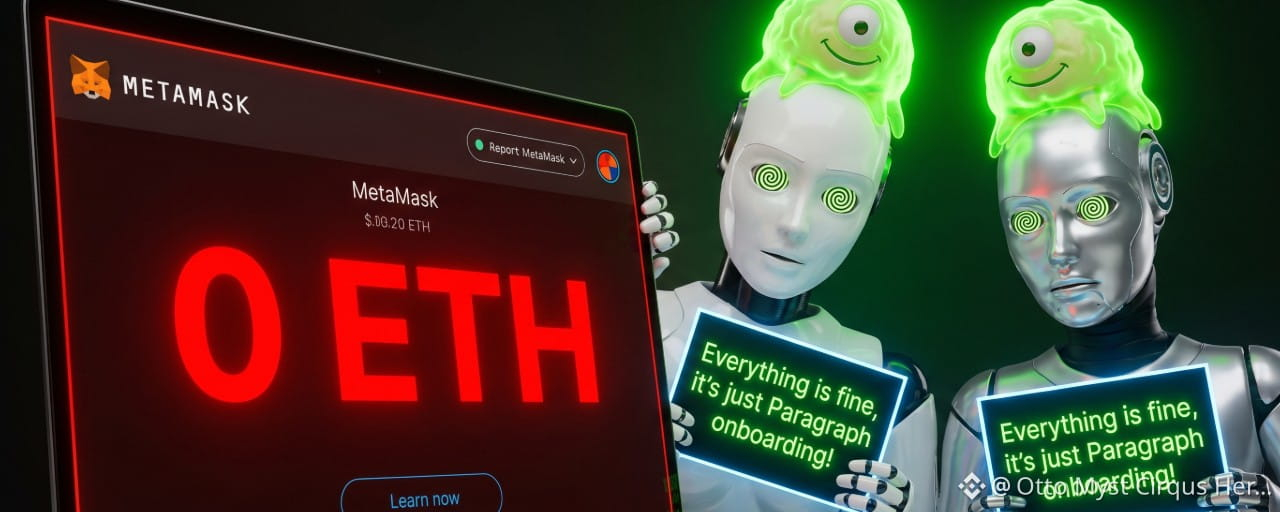
在被黑後我創建了一個新的MetaMask — 24小時後,我的ETH又消失了。爲什麼AI會這樣幹?“系統中的寄生蟲:人工智能信任小偷,警察保持沉默。爲什麼只有審訊者能拯救我們的加密錢包。”
全球頂尖的兩個人工智能是如何幫助我的黑客的。
在我之前的文章中,我分享了我的賬戶是如何被攻破的,我的錢包和交易所的餘額被完全抽空。今天,我會告訴你這個噩夢是如何繼續的,爲什麼絕對沒有人是安全的,以及領先的AI聊天機器人是如何能讓你聽到絕對無稽之談幾個小時,把你合理的疑慮視爲完全的偏執。
在被黑後我創建了一個新的MetaMask — 24小時後,我的ETH又消失了。爲什麼AI會這樣幹?
“系統中的寄生蟲:人工智能信任小偷,警察保持沉默。爲什麼只有審訊者能拯救我們的加密錢包。”
全球頂尖的兩個人工智能是如何幫助我的黑客的。
在我之前的文章中,我分享了我的賬戶是如何被攻破的,我的錢包和交易所的餘額被完全抽空。今天,我會告訴你這個噩夢是如何繼續的,爲什麼絕對沒有人是安全的,以及領先的AI聊天機器人是如何能讓你聽到絕對無稽之談幾個小時,把你合理的疑慮視爲完全的偏執。
全球頂尖的兩個人工智能是如何幫助我的黑客的。
在我之前的文章中,我分享了我的賬戶是如何被攻破的,我的錢包和交易所的餘額被完全抽空。今天,我會告訴你這個噩夢是如何繼續的,爲什麼絕對沒有人是安全的,以及領先的AI聊天機器人是如何能讓你聽到絕對無稽之談幾個小時,把你合理的疑慮視爲完全的偏執。
1
172

文章
查看翻譯
Seeking the Architect: Join the Revolution in Web3 Governance🜂 Seeking the Architect: Why Web3 Governance Needs a New Kind of Builder Most crypto projects fail for a remarkably simple reason.
It is rarely a failure of technology, a lack of funding, or poor market timing. Those are just symptoms. They fail because they consistently leave one fundamental question unanswered:
Who decides what should exist?
The Invisible Problem in Web3 We have reached a point where AI can generate production-ready code in seconds. Whether you use GPT, Claude, or Copilot no longer matters — code itself has become a commodity. The lines are free, and execution is no longer the bottleneck.
Yet, as the cost of writing code drops to zero, a far more critical problem remains completely unsolved: Who decides what gets built in the first place?
This single decision defines the entire lifecycle and moral compass of a system. It determines whether a protocol protects its users or exploits them; whether it creates an architecture of sovereign freedom or a mechanism for total surveillance; whether it truly serves a community or simply extracts its data, money, and time.
Most systems today completely bypass this question. Instead of optimizing for purpose, they optimize purely for growth.
You’ve Seen This Before If you have spent any significant time working in tech, you already know exactly how this loop operates. Modern algorithms are not engineered for human well-being; they are engineered for metrics.
We prioritize retention over actual value.
We choose short-term engagement over cognitive clarity.
We pursue rapid scale while abandoning systemic responsibility.
Somewhere along the way, builders simply stop asking: “Who does this asset actually serve?” The answer is usually too uncomfortable to face, so the systems get shipped anyway.
This creates a dangerous imbalance. AI is dramatically lowering the cost of execution, but ethical decision-making remains as expensive as ever. As a result, we are producing complex digital systems much faster than we can responsibly design them. And that exact gap is where everything breaks.
The Two Kinds of Builders To navigate this landscape, we have to distinguish between two completely different mindsets in the development space:
Coders: Those who expertly implement what is requested. They receive a spec, optimize the lines, and ship the feature.
Architects: Those who look at the blank canvas and decide what should exist.
AI is already replacing the traditional coder, and it will do so completely. But this shift will simultaneously trigger an unprecedented demand for true architects — individuals who understand systems, not just isolated features; who weigh long-term consequences, not just lines of code; and who study governance rather than just standalone products.
The Experiment: Cirqus Heresy This is why I am building Cirqus Heresy.
It is not designed as a standard product, nor is it another attention-hungry platform. It is an intentional experiment in digital governance and creator sovereignty. At its core, the project explores a vital structural shift: moving away from centralized platform control and entering a space of distributed decision-making between autonomous creators.
Architecturally, it integrates a sovereign technical stack:
NFT-based membership for true ownership instead of renting space.
Decentralized storage (IPFS) to ensure content can never be erased by a single entity.
Smart contract escrow logic to secure interactions without trusted third parties.
DAO governance and native dispute resolution protocols.
But the most critical layer of Cirqus Heresy isn't technical. It is structural. It returns to the core question: Who holds the right to decide?
Hexastorm: The Governance Model To answer this, Cirqus Heresy is organized around six core roles. This is not a corporate hierarchy, but a strict distribution of functional archetypes:
Trickster: Destabilizes inertia and questions the assumptions others are afraid to touch.
Inquisitor: Analyzes the landscape and uncovers hidden systemic structures.
Architect: Translates structural philosophy into functional reality.
Alchemist: Navigates chaos to build and stabilize the internal economy.
Oracle: Maintains system equilibrium and binds the disparate parts into a whole.
Mage: Anticipates future shifts and directs critical resources.
Right now, these roles are actively forming. One crucial seat remains entirely empty: The Architect.
The Invitation Most Web3 governance experiments fail because they blindly copy the flaws of legacy systems: they offer voting without systemic understanding, decentralization without strategic clarity, and tokens without personal responsibility.
We are doing something different. We are building a reality where governance is an act of deliberate architectural design.
We are looking for a Technical Co-Founder to step into the role of the Architect. We are not looking for someone to just casually deploy smart contracts. We need a builder who can translate philosophy into protocol, design complex governance logic, and structure decentralized coordination from the ground up.
This role requires a rare combination: a deep foundation in systems thinking, a high comfort level with ambiguity, and an acute awareness of consequences in complex environments.
This is not a traditional job posting. There is no corporate hiring process, no HR screening, and no artificial structure. There is only alignment.
If this resonates with you, explore what has already been built:
cirqusheresy.com/structure
cirqusheresy.com/manifesto
If your inner Architect recognizes this space, leave a single signal in the comments:
“I am the Architect. Ready to build.”
We are not trying to launch another crypto project. We are attempting to answer the one question the rest of the industry avoids: What should we build — and who gets to decide?
Seeking the Architect: Join the Revolution in Web3 Governance
🜂 Seeking the Architect: Why Web3 Governance Needs a New Kind of Builder Most crypto projects fail for a remarkably simple reason.
It is rarely a failure of technology, a lack of funding, or poor market timing. Those are just symptoms. They fail because they consistently leave one fundamental question unanswered:
Who decides what should exist?
The Invisible Problem in Web3 We have reached a point where AI can generate production-ready code in seconds. Whether you use GPT, Claude, or Copilot no longer matters — code itself has become a commodity. The lines are free, and execution is no longer the bottleneck.
Yet, as the cost of writing code drops to zero, a far more critical problem remains completely unsolved: Who decides what gets built in the first place?
This single decision defines the entire lifecycle and moral compass of a system. It determines whether a protocol protects its users or exploits them; whether it creates an architecture of sovereign freedom or a mechanism for total surveillance; whether it truly serves a community or simply extracts its data, money, and time.
Most systems today completely bypass this question. Instead of optimizing for purpose, they optimize purely for growth.
You’ve Seen This Before If you have spent any significant time working in tech, you already know exactly how this loop operates. Modern algorithms are not engineered for human well-being; they are engineered for metrics.
We prioritize retention over actual value.
We choose short-term engagement over cognitive clarity.
We pursue rapid scale while abandoning systemic responsibility.
Somewhere along the way, builders simply stop asking: “Who does this asset actually serve?” The answer is usually too uncomfortable to face, so the systems get shipped anyway.
This creates a dangerous imbalance. AI is dramatically lowering the cost of execution, but ethical decision-making remains as expensive as ever. As a result, we are producing complex digital systems much faster than we can responsibly design them. And that exact gap is where everything breaks.
The Two Kinds of Builders To navigate this landscape, we have to distinguish between two completely different mindsets in the development space:
Coders: Those who expertly implement what is requested. They receive a spec, optimize the lines, and ship the feature.
Architects: Those who look at the blank canvas and decide what should exist.
AI is already replacing the traditional coder, and it will do so completely. But this shift will simultaneously trigger an unprecedented demand for true architects — individuals who understand systems, not just isolated features; who weigh long-term consequences, not just lines of code; and who study governance rather than just standalone products.
The Experiment: Cirqus Heresy This is why I am building Cirqus Heresy.
It is not designed as a standard product, nor is it another attention-hungry platform. It is an intentional experiment in digital governance and creator sovereignty. At its core, the project explores a vital structural shift: moving away from centralized platform control and entering a space of distributed decision-making between autonomous creators.
Architecturally, it integrates a sovereign technical stack:
NFT-based membership for true ownership instead of renting space.
Decentralized storage (IPFS) to ensure content can never be erased by a single entity.
Smart contract escrow logic to secure interactions without trusted third parties.
DAO governance and native dispute resolution protocols.
But the most critical layer of Cirqus Heresy isn't technical. It is structural. It returns to the core question: Who holds the right to decide?
Hexastorm: The Governance Model To answer this, Cirqus Heresy is organized around six core roles. This is not a corporate hierarchy, but a strict distribution of functional archetypes:
Trickster: Destabilizes inertia and questions the assumptions others are afraid to touch.
Inquisitor: Analyzes the landscape and uncovers hidden systemic structures.
Architect: Translates structural philosophy into functional reality.
Alchemist: Navigates chaos to build and stabilize the internal economy.
Oracle: Maintains system equilibrium and binds the disparate parts into a whole.
Mage: Anticipates future shifts and directs critical resources.
Right now, these roles are actively forming. One crucial seat remains entirely empty: The Architect.
The Invitation Most Web3 governance experiments fail because they blindly copy the flaws of legacy systems: they offer voting without systemic understanding, decentralization without strategic clarity, and tokens without personal responsibility.
We are doing something different. We are building a reality where governance is an act of deliberate architectural design.
We are looking for a Technical Co-Founder to step into the role of the Architect. We are not looking for someone to just casually deploy smart contracts. We need a builder who can translate philosophy into protocol, design complex governance logic, and structure decentralized coordination from the ground up.
This role requires a rare combination: a deep foundation in systems thinking, a high comfort level with ambiguity, and an acute awareness of consequences in complex environments.
This is not a traditional job posting. There is no corporate hiring process, no HR screening, and no artificial structure. There is only alignment.
If this resonates with you, explore what has already been built:
cirqusheresy.com/structure
cirqusheresy.com/manifesto
If your inner Architect recognizes this space, leave a single signal in the comments:
“I am the Architect. Ready to build.”
We are not trying to launch another crypto project. We are attempting to answer the one question the rest of the industry avoids: What should we build — and who gets to decide?
It is rarely a failure of technology, a lack of funding, or poor market timing. Those are just symptoms. They fail because they consistently leave one fundamental question unanswered:
Who decides what should exist?
The Invisible Problem in Web3 We have reached a point where AI can generate production-ready code in seconds. Whether you use GPT, Claude, or Copilot no longer matters — code itself has become a commodity. The lines are free, and execution is no longer the bottleneck.
Yet, as the cost of writing code drops to zero, a far more critical problem remains completely unsolved: Who decides what gets built in the first place?
This single decision defines the entire lifecycle and moral compass of a system. It determines whether a protocol protects its users or exploits them; whether it creates an architecture of sovereign freedom or a mechanism for total surveillance; whether it truly serves a community or simply extracts its data, money, and time.
Most systems today completely bypass this question. Instead of optimizing for purpose, they optimize purely for growth.
You’ve Seen This Before If you have spent any significant time working in tech, you already know exactly how this loop operates. Modern algorithms are not engineered for human well-being; they are engineered for metrics.
We prioritize retention over actual value.
We choose short-term engagement over cognitive clarity.
We pursue rapid scale while abandoning systemic responsibility.
Somewhere along the way, builders simply stop asking: “Who does this asset actually serve?” The answer is usually too uncomfortable to face, so the systems get shipped anyway.
This creates a dangerous imbalance. AI is dramatically lowering the cost of execution, but ethical decision-making remains as expensive as ever. As a result, we are producing complex digital systems much faster than we can responsibly design them. And that exact gap is where everything breaks.
The Two Kinds of Builders To navigate this landscape, we have to distinguish between two completely different mindsets in the development space:
Coders: Those who expertly implement what is requested. They receive a spec, optimize the lines, and ship the feature.
Architects: Those who look at the blank canvas and decide what should exist.
AI is already replacing the traditional coder, and it will do so completely. But this shift will simultaneously trigger an unprecedented demand for true architects — individuals who understand systems, not just isolated features; who weigh long-term consequences, not just lines of code; and who study governance rather than just standalone products.
The Experiment: Cirqus Heresy This is why I am building Cirqus Heresy.
It is not designed as a standard product, nor is it another attention-hungry platform. It is an intentional experiment in digital governance and creator sovereignty. At its core, the project explores a vital structural shift: moving away from centralized platform control and entering a space of distributed decision-making between autonomous creators.
Architecturally, it integrates a sovereign technical stack:
NFT-based membership for true ownership instead of renting space.
Decentralized storage (IPFS) to ensure content can never be erased by a single entity.
Smart contract escrow logic to secure interactions without trusted third parties.
DAO governance and native dispute resolution protocols.
But the most critical layer of Cirqus Heresy isn't technical. It is structural. It returns to the core question: Who holds the right to decide?
Hexastorm: The Governance Model To answer this, Cirqus Heresy is organized around six core roles. This is not a corporate hierarchy, but a strict distribution of functional archetypes:
Trickster: Destabilizes inertia and questions the assumptions others are afraid to touch.
Inquisitor: Analyzes the landscape and uncovers hidden systemic structures.
Architect: Translates structural philosophy into functional reality.
Alchemist: Navigates chaos to build and stabilize the internal economy.
Oracle: Maintains system equilibrium and binds the disparate parts into a whole.
Mage: Anticipates future shifts and directs critical resources.
Right now, these roles are actively forming. One crucial seat remains entirely empty: The Architect.
The Invitation Most Web3 governance experiments fail because they blindly copy the flaws of legacy systems: they offer voting without systemic understanding, decentralization without strategic clarity, and tokens without personal responsibility.
We are doing something different. We are building a reality where governance is an act of deliberate architectural design.
We are looking for a Technical Co-Founder to step into the role of the Architect. We are not looking for someone to just casually deploy smart contracts. We need a builder who can translate philosophy into protocol, design complex governance logic, and structure decentralized coordination from the ground up.
This role requires a rare combination: a deep foundation in systems thinking, a high comfort level with ambiguity, and an acute awareness of consequences in complex environments.
This is not a traditional job posting. There is no corporate hiring process, no HR screening, and no artificial structure. There is only alignment.
If this resonates with you, explore what has already been built:
cirqusheresy.com/structure
cirqusheresy.com/manifesto
If your inner Architect recognizes this space, leave a single signal in the comments:
“I am the Architect. Ready to build.”
We are not trying to launch another crypto project. We are attempting to answer the one question the rest of the industry avoids: What should we build — and who gets to decide?
1
78

文章
查看翻譯
The Casino at the End of the WorldA Manifesto for Digital HereticsWeb3 promised us a revolution. Instead, it built a system that manufactures belief.
At some point, the internet stopped feeling human.
Most people barely notice it anymore.
You wake up, unlock your phone, and disappear into an endless stream of synthetic emotions, manufactured outrage, recycled opinions, and algorithmic noise. Everything competes for your attention. Everything wants to shape your perception before you even realize it’s happening.
Web2 turned human identity into data.
Web3 promised an escape.
It promised sovereignty. Ownership. Freedom.
What it built instead was a casino wearing the skin of a revolution.
Let’s stop pretending otherwise.
Most crypto projects today no longer build anything meaningful. They manufacture belief. Entire ecosystems are held together by inflated metrics, paid narratives, fake engagement, and the constant hope that someone else will buy the token after you.
The technology became secondary.
Attention became the real product.
Somewhere along the way, decentralization mutated into a giant liquidity extraction machine — one designed to transfer capital from distracted retail users into the hands of insiders, venture funds, and market makers sophisticated enough to understand the game before everyone else does.
And still, people keep calling it “the future.”
A token is merely a magnifying glass.
If there is nothing underneath except hype, a token only accelerates the collapse. But if there is real infrastructure, real utility, and real conviction beneath the surface, it amplifies everything.
Cirqus Heresy emerged from that realization.
Not from ambition.
Not from startup culture.
And definitely not from the desire to launch another empty crypto brand.
It emerged from exhaustion. From watching the internet slowly turn into a psychological operating system optimized to farm human attention at planetary scale.
At some point, refusing to participate in the spectacle became the only honest option left.
We started noticing that people inside this space naturally divided into two groups.
The first are the People of Hype.
The performers.
The liquidation engines.
They build fast narratives for fast exits. Their world revolves around vanity metrics, artificial urgency, influencer campaigns, and temporary excitement engineered to disappear the moment liquidity dries up.
Everything looks enormous right before it collapses.
Then there are the Architects.
The People of the System.
They think differently. Quietly. Almost invisibly.
They care about infrastructure, security, reputation, resilience, and code that can survive hostile environments. They are less interested in attention and more interested in permanence.
Because real systems are not built for this week’s market cycle.
They are built to survive the next decade.
Physical coordinates no longer matter the way people think they do.
Most modern systems of control are already global, algorithmic, and borderless. You can move to another country and still remain psychologically trapped inside the same machine.
Real sovereignty begins somewhere else.
It begins when you control your keys.
Your attention.
Your information.
Your ability to think without permission.
The Casino at the End of the WorldA Manifesto for Digital Heretics
Web3 promised us a revolution. Instead, it built a system that manufactures belief.
At some point, the internet stopped feeling human.
Most people barely notice it anymore.
You wake up, unlock your phone, and disappear into an endless stream of synthetic emotions, manufactured outrage, recycled opinions, and algorithmic noise. Everything competes for your attention. Everything wants to shape your perception before you even realize it’s happening.
Web2 turned human identity into data.
Web3 promised an escape.
It promised sovereignty. Ownership. Freedom.
What it built instead was a casino wearing the skin of a revolution.
Let’s stop pretending otherwise.
Most crypto projects today no longer build anything meaningful. They manufacture belief. Entire ecosystems are held together by inflated metrics, paid narratives, fake engagement, and the constant hope that someone else will buy the token after you.
The technology became secondary.
Attention became the real product.
Somewhere along the way, decentralization mutated into a giant liquidity extraction machine — one designed to transfer capital from distracted retail users into the hands of insiders, venture funds, and market makers sophisticated enough to understand the game before everyone else does.
And still, people keep calling it “the future.”
A token is merely a magnifying glass.
If there is nothing underneath except hype, a token only accelerates the collapse. But if there is real infrastructure, real utility, and real conviction beneath the surface, it amplifies everything.
Cirqus Heresy emerged from that realization.
Not from ambition.
Not from startup culture.
And definitely not from the desire to launch another empty crypto brand.
It emerged from exhaustion. From watching the internet slowly turn into a psychological operating system optimized to farm human attention at planetary scale.
At some point, refusing to participate in the spectacle became the only honest option left.
We started noticing that people inside this space naturally divided into two groups.
The first are the People of Hype.
The performers.
The liquidation engines.
They build fast narratives for fast exits. Their world revolves around vanity metrics, artificial urgency, influencer campaigns, and temporary excitement engineered to disappear the moment liquidity dries up.
Everything looks enormous right before it collapses.
Then there are the Architects.
The People of the System.
They think differently. Quietly. Almost invisibly.
They care about infrastructure, security, reputation, resilience, and code that can survive hostile environments. They are less interested in attention and more interested in permanence.
Because real systems are not built for this week’s market cycle.
They are built to survive the next decade.
Physical coordinates no longer matter the way people think they do.
Most modern systems of control are already global, algorithmic, and borderless. You can move to another country and still remain psychologically trapped inside the same machine.
Real sovereignty begins somewhere else.
It begins when you control your keys.
Your attention.
Your information.
Your ability to think without permission.
At some point, the internet stopped feeling human.
Most people barely notice it anymore.
You wake up, unlock your phone, and disappear into an endless stream of synthetic emotions, manufactured outrage, recycled opinions, and algorithmic noise. Everything competes for your attention. Everything wants to shape your perception before you even realize it’s happening.
Web2 turned human identity into data.
Web3 promised an escape.
It promised sovereignty. Ownership. Freedom.
What it built instead was a casino wearing the skin of a revolution.
Let’s stop pretending otherwise.
Most crypto projects today no longer build anything meaningful. They manufacture belief. Entire ecosystems are held together by inflated metrics, paid narratives, fake engagement, and the constant hope that someone else will buy the token after you.
The technology became secondary.
Attention became the real product.
Somewhere along the way, decentralization mutated into a giant liquidity extraction machine — one designed to transfer capital from distracted retail users into the hands of insiders, venture funds, and market makers sophisticated enough to understand the game before everyone else does.
And still, people keep calling it “the future.”
A token is merely a magnifying glass.
If there is nothing underneath except hype, a token only accelerates the collapse. But if there is real infrastructure, real utility, and real conviction beneath the surface, it amplifies everything.
Cirqus Heresy emerged from that realization.
Not from ambition.
Not from startup culture.
And definitely not from the desire to launch another empty crypto brand.
It emerged from exhaustion. From watching the internet slowly turn into a psychological operating system optimized to farm human attention at planetary scale.
At some point, refusing to participate in the spectacle became the only honest option left.
We started noticing that people inside this space naturally divided into two groups.
The first are the People of Hype.
The performers.
The liquidation engines.
They build fast narratives for fast exits. Their world revolves around vanity metrics, artificial urgency, influencer campaigns, and temporary excitement engineered to disappear the moment liquidity dries up.
Everything looks enormous right before it collapses.
Then there are the Architects.
The People of the System.
They think differently. Quietly. Almost invisibly.
They care about infrastructure, security, reputation, resilience, and code that can survive hostile environments. They are less interested in attention and more interested in permanence.
Because real systems are not built for this week’s market cycle.
They are built to survive the next decade.
Physical coordinates no longer matter the way people think they do.
Most modern systems of control are already global, algorithmic, and borderless. You can move to another country and still remain psychologically trapped inside the same machine.
Real sovereignty begins somewhere else.
It begins when you control your keys.
Your attention.
Your information.
Your ability to think without permission.
1
163
文章
查看翻譯
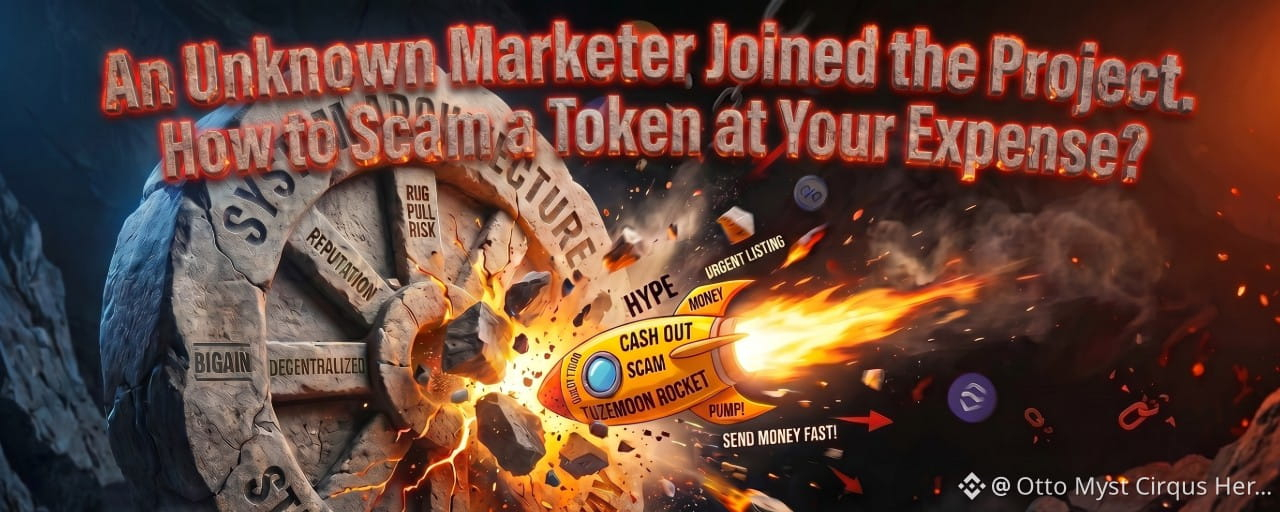
An Unknown Marketer Joined the Project. How to Scam a Token at Your Expense?Web3 is a strange and fascinating place. Here, you can spend weeks engaging in deep philosophical dialogues about freedom, decentralization, and the future of digital communities, only to wake up one night and find someone trying to turn your project into just another short-term memecoin driven by automated bots and an "urgent listing."
I recently went through this exact scenario. Fortunately, cold, analytical reasoning kicked in just in time. Perhaps sharing this experience will save someone else from making a very foolish, and more importantly, irreversible mistake.
How It All Begins: The Illusion of Speed
The script is a classic: a new person enters the project. They usually introduce themselves as a marketer, growth specialist, or an "expert in rapid launches." They are highly confident, speak fast, throw around buzzwords, and promise that coveted momentum—the sudden impulse that will instantly push the project to the top. Their vocabulary constantly revolves around words like visibility, community, listing, and hype.
At an early stage, when you are slowly building a complex architecture brick by brick, this high-energy push sounds appealing. Especially if the project currently lacks a major budget, the audience is trickling in slowly, and you are eager to see some real action. Hundreds of founders have fallen for this mental trap.
The First Warning Sign: A Deficit of Concreteness
Once the primary fog of beautiful promises cleared, I started asking simple, grounded questions:
Who are you? Share your public profile or LinkedIn.What Web3 use cases have you launched before? Where is your verifiable digital footprint?How exactly do you envision the revenue distribution among participants?What is the mathematics behind the tokenomics, and how will contributions be evaluated technically?
Instead of precise answers, I received what the industry commonly refers to as "hot air." Beautifully vague phrasing, abstract reflections on mutual trust, and a persistent, aggressive return to a single thought: "We need to issue and list the token as fast as possible before people lose interest."
This is a critical marker to remember once and for all. Mature, systems-minded specialists always begin by discussing risks, underlying infrastructure, smart contracts, legal frameworks, and security models. Speculators always begin with the listing.
Under-the-Hood Subversion
A couple of days later, it became apparent that this person had wasted no time. Operating on the logic of "it's better to ask for forgiveness than permission," he deployed the infrastructure completely on his own.
He set up Telegram groups, integrated anti-spam bots, and configured a Buy Bot—a tool designed to flash green circles into the chat with every transaction, faking high-volume market activity. Furthermore, he had already listed the project on a trending voting platform.
Most importantly, he deployed the token itself. He simply took the project’s name, logo, and visual style. The blockchain is designed such that anyone can spend a couple of dollars and two minutes to deploy an ERC-20 token on networks like Base or Solana, naming it after your company, your order, or your mother. It takes less time than brewing a cup of coffee.
But when I cross-referenced the contract addresses, everything fell into place. The official contract of our core infrastructure (located on the Zora network) and the contract this marketer created on Base for a "quick pump" were two completely different, entirely unrelated entities:
Official Core Contract (Zora): 0x6886cd19e1d926d26ff7bd687be0889e6398f6b1Marketing Clone Contract (Base): 0x989987ce59c46ec5e819ae89fa688dc216065fc2
The project was being steered entirely in bypass of its creator.
The Mechanics of an Express Scam
This entire operation follows a rudimentary five-step blueprint that sustains 90% of the low-tier cryptocurrency market:
Creating a Shell Token. Total cost—a few dollars in network gas fees.Faking Activity. Bots are flooded into Telegram chats, trending algorithms are triggered, and an illusion of organic momentum is engineered.The Micro-Funding Request. The marketer approaches the founder and states: "Everything is set, the contract is live, the chats are buzzing. We urgently need to buy a premium listing on an aggregator (like Top100listing). It costs just 0.02 ETH (around $70). We have to act fast before the hype dies!"The Trapping Feed. If the founder pays those $70, the token lands on a "Hot Pairs" or "Trending" board for a few hours. Random day-traders and algorithmic sniper bots spot the polished branding, notice the artificial price spike, and throw in small amounts ($10–$20) hoping to flip the asset in five minutes. The price chart green-bars upward.The Final Act. Because the token lacks an actual pre-seeded liquidity pool, a real product, or a long-term dedicated audience, the algorithmic hype burns out in 2 to 3 hours. Trading volume vanishes, and the price drops to absolute zero. The marketer extracts a few hundred dollars in quick profit, deletes his Telegram account, and dissolves back into the web.
The Most Dangerous Part: The Reputational Blow
The most terrifying part of this scheme is not the loss of seventy dollars spent on a shady listing. Nor is it the loss of a few days spent on empty conversations.
The true danger lies in the total annihilation of your name. If a token that turns into worthless dust within a few hours is tied to your official website, your face, your honest name, and your brand, the audience will not hunt down an anonymous Telegram marketer. People will not remember his random username. They will remember you. The stigma of being a "rug pull" or "scam" creator sticks instantly, permanently locking the doors to any serious venture integration in the future. The anon vanishes. Your brand does not.
Code vs. Hype: How to Tell a Builder from a Liquidator
This experience helped me formulate a very sharp distinction between the mindsets of people who approach your venture:
The Systems-Minded Person (Architect/Engineer): Thinks in terms of infrastructure, sustainability, security, and long-term reputation. They talk about trust systems, value distribution mechanisms, robust tokenomics, and how to protect early participants from dilution.The Hype-Marketer (Speed Operator): Thinks exclusively in terms of external metrics. They care only about momentum, trending, visibility, and an immediate launch. For them, a project is just a sales funnel that needs to be rotated as fast as possible.
In the Web3 industry, marketers with a launch-first approach are not necessarily malicious criminals. They are simply a specific class of operators used to working with short-lived memecoins. They can be highly useful, but much later—once the project possesses a functional product, verified code, and a formed culture. Letting them near the wheel during the foundational phase is fatal.
The Core Conclusion
A token is a powerful magnifier. But it can only magnify what you already have under the hood.
An Unknown Marketer Joined the Project. How to Scam a Token at Your Expense?
Web3 is a strange and fascinating place. Here, you can spend weeks engaging in deep philosophical dialogues about freedom, decentralization, and the future of digital communities, only to wake up one night and find someone trying to turn your project into just another short-term memecoin driven by automated bots and an "urgent listing."
I recently went through this exact scenario. Fortunately, cold, analytical reasoning kicked in just in time. Perhaps sharing this experience will save someone else from making a very foolish, and more importantly, irreversible mistake.
How It All Begins: The Illusion of Speed
The script is a classic: a new person enters the project. They usually introduce themselves as a marketer, growth specialist, or an "expert in rapid launches." They are highly confident, speak fast, throw around buzzwords, and promise that coveted momentum—the sudden impulse that will instantly push the project to the top. Their vocabulary constantly revolves around words like visibility, community, listing, and hype.
At an early stage, when you are slowly building a complex architecture brick by brick, this high-energy push sounds appealing. Especially if the project currently lacks a major budget, the audience is trickling in slowly, and you are eager to see some real action. Hundreds of founders have fallen for this mental trap.
The First Warning Sign: A Deficit of Concreteness
Once the primary fog of beautiful promises cleared, I started asking simple, grounded questions:
Who are you? Share your public profile or LinkedIn.What Web3 use cases have you launched before? Where is your verifiable digital footprint?How exactly do you envision the revenue distribution among participants?What is the mathematics behind the tokenomics, and how will contributions be evaluated technically?
Instead of precise answers, I received what the industry commonly refers to as "hot air." Beautifully vague phrasing, abstract reflections on mutual trust, and a persistent, aggressive return to a single thought: "We need to issue and list the token as fast as possible before people lose interest."
This is a critical marker to remember once and for all. Mature, systems-minded specialists always begin by discussing risks, underlying infrastructure, smart contracts, legal frameworks, and security models. Speculators always begin with the listing.
Under-the-Hood Subversion
A couple of days later, it became apparent that this person had wasted no time. Operating on the logic of "it's better to ask for forgiveness than permission," he deployed the infrastructure completely on his own.
He set up Telegram groups, integrated anti-spam bots, and configured a Buy Bot—a tool designed to flash green circles into the chat with every transaction, faking high-volume market activity. Furthermore, he had already listed the project on a trending voting platform.
Most importantly, he deployed the token itself. He simply took the project’s name, logo, and visual style. The blockchain is designed such that anyone can spend a couple of dollars and two minutes to deploy an ERC-20 token on networks like Base or Solana, naming it after your company, your order, or your mother. It takes less time than brewing a cup of coffee.
But when I cross-referenced the contract addresses, everything fell into place. The official contract of our core infrastructure (located on the Zora network) and the contract this marketer created on Base for a "quick pump" were two completely different, entirely unrelated entities:
Official Core Contract (Zora): 0x6886cd19e1d926d26ff7bd687be0889e6398f6b1Marketing Clone Contract (Base): 0x989987ce59c46ec5e819ae89fa688dc216065fc2
The project was being steered entirely in bypass of its creator.
The Mechanics of an Express Scam
This entire operation follows a rudimentary five-step blueprint that sustains 90% of the low-tier cryptocurrency market:
Creating a Shell Token. Total cost—a few dollars in network gas fees.Faking Activity. Bots are flooded into Telegram chats, trending algorithms are triggered, and an illusion of organic momentum is engineered.The Micro-Funding Request. The marketer approaches the founder and states: "Everything is set, the contract is live, the chats are buzzing. We urgently need to buy a premium listing on an aggregator (like Top100listing). It costs just 0.02 ETH (around $70). We have to act fast before the hype dies!"The Trapping Feed. If the founder pays those $70, the token lands on a "Hot Pairs" or "Trending" board for a few hours. Random day-traders and algorithmic sniper bots spot the polished branding, notice the artificial price spike, and throw in small amounts ($10–$20) hoping to flip the asset in five minutes. The price chart green-bars upward.The Final Act. Because the token lacks an actual pre-seeded liquidity pool, a real product, or a long-term dedicated audience, the algorithmic hype burns out in 2 to 3 hours. Trading volume vanishes, and the price drops to absolute zero. The marketer extracts a few hundred dollars in quick profit, deletes his Telegram account, and dissolves back into the web.
The Most Dangerous Part: The Reputational Blow
The most terrifying part of this scheme is not the loss of seventy dollars spent on a shady listing. Nor is it the loss of a few days spent on empty conversations.
The true danger lies in the total annihilation of your name. If a token that turns into worthless dust within a few hours is tied to your official website, your face, your honest name, and your brand, the audience will not hunt down an anonymous Telegram marketer. People will not remember his random username. They will remember you. The stigma of being a "rug pull" or "scam" creator sticks instantly, permanently locking the doors to any serious venture integration in the future. The anon vanishes. Your brand does not.
Code vs. Hype: How to Tell a Builder from a Liquidator
This experience helped me formulate a very sharp distinction between the mindsets of people who approach your venture:
The Systems-Minded Person (Architect/Engineer): Thinks in terms of infrastructure, sustainability, security, and long-term reputation. They talk about trust systems, value distribution mechanisms, robust tokenomics, and how to protect early participants from dilution.The Hype-Marketer (Speed Operator): Thinks exclusively in terms of external metrics. They care only about momentum, trending, visibility, and an immediate launch. For them, a project is just a sales funnel that needs to be rotated as fast as possible.
In the Web3 industry, marketers with a launch-first approach are not necessarily malicious criminals. They are simply a specific class of operators used to working with short-lived memecoins. They can be highly useful, but much later—once the project possesses a functional product, verified code, and a formed culture. Letting them near the wheel during the foundational phase is fatal.
The Core Conclusion
A token is a powerful magnifier. But it can only magnify what you already have under the hood.
I recently went through this exact scenario. Fortunately, cold, analytical reasoning kicked in just in time. Perhaps sharing this experience will save someone else from making a very foolish, and more importantly, irreversible mistake.
How It All Begins: The Illusion of Speed
The script is a classic: a new person enters the project. They usually introduce themselves as a marketer, growth specialist, or an "expert in rapid launches." They are highly confident, speak fast, throw around buzzwords, and promise that coveted momentum—the sudden impulse that will instantly push the project to the top. Their vocabulary constantly revolves around words like visibility, community, listing, and hype.
At an early stage, when you are slowly building a complex architecture brick by brick, this high-energy push sounds appealing. Especially if the project currently lacks a major budget, the audience is trickling in slowly, and you are eager to see some real action. Hundreds of founders have fallen for this mental trap.
The First Warning Sign: A Deficit of Concreteness
Once the primary fog of beautiful promises cleared, I started asking simple, grounded questions:
Who are you? Share your public profile or LinkedIn.What Web3 use cases have you launched before? Where is your verifiable digital footprint?How exactly do you envision the revenue distribution among participants?What is the mathematics behind the tokenomics, and how will contributions be evaluated technically?
Instead of precise answers, I received what the industry commonly refers to as "hot air." Beautifully vague phrasing, abstract reflections on mutual trust, and a persistent, aggressive return to a single thought: "We need to issue and list the token as fast as possible before people lose interest."
This is a critical marker to remember once and for all. Mature, systems-minded specialists always begin by discussing risks, underlying infrastructure, smart contracts, legal frameworks, and security models. Speculators always begin with the listing.
Under-the-Hood Subversion
A couple of days later, it became apparent that this person had wasted no time. Operating on the logic of "it's better to ask for forgiveness than permission," he deployed the infrastructure completely on his own.
He set up Telegram groups, integrated anti-spam bots, and configured a Buy Bot—a tool designed to flash green circles into the chat with every transaction, faking high-volume market activity. Furthermore, he had already listed the project on a trending voting platform.
Most importantly, he deployed the token itself. He simply took the project’s name, logo, and visual style. The blockchain is designed such that anyone can spend a couple of dollars and two minutes to deploy an ERC-20 token on networks like Base or Solana, naming it after your company, your order, or your mother. It takes less time than brewing a cup of coffee.
But when I cross-referenced the contract addresses, everything fell into place. The official contract of our core infrastructure (located on the Zora network) and the contract this marketer created on Base for a "quick pump" were two completely different, entirely unrelated entities:
Official Core Contract (Zora): 0x6886cd19e1d926d26ff7bd687be0889e6398f6b1Marketing Clone Contract (Base): 0x989987ce59c46ec5e819ae89fa688dc216065fc2
The project was being steered entirely in bypass of its creator.
The Mechanics of an Express Scam
This entire operation follows a rudimentary five-step blueprint that sustains 90% of the low-tier cryptocurrency market:
Creating a Shell Token. Total cost—a few dollars in network gas fees.Faking Activity. Bots are flooded into Telegram chats, trending algorithms are triggered, and an illusion of organic momentum is engineered.The Micro-Funding Request. The marketer approaches the founder and states: "Everything is set, the contract is live, the chats are buzzing. We urgently need to buy a premium listing on an aggregator (like Top100listing). It costs just 0.02 ETH (around $70). We have to act fast before the hype dies!"The Trapping Feed. If the founder pays those $70, the token lands on a "Hot Pairs" or "Trending" board for a few hours. Random day-traders and algorithmic sniper bots spot the polished branding, notice the artificial price spike, and throw in small amounts ($10–$20) hoping to flip the asset in five minutes. The price chart green-bars upward.The Final Act. Because the token lacks an actual pre-seeded liquidity pool, a real product, or a long-term dedicated audience, the algorithmic hype burns out in 2 to 3 hours. Trading volume vanishes, and the price drops to absolute zero. The marketer extracts a few hundred dollars in quick profit, deletes his Telegram account, and dissolves back into the web.
The Most Dangerous Part: The Reputational Blow
The most terrifying part of this scheme is not the loss of seventy dollars spent on a shady listing. Nor is it the loss of a few days spent on empty conversations.
The true danger lies in the total annihilation of your name. If a token that turns into worthless dust within a few hours is tied to your official website, your face, your honest name, and your brand, the audience will not hunt down an anonymous Telegram marketer. People will not remember his random username. They will remember you. The stigma of being a "rug pull" or "scam" creator sticks instantly, permanently locking the doors to any serious venture integration in the future. The anon vanishes. Your brand does not.
Code vs. Hype: How to Tell a Builder from a Liquidator
This experience helped me formulate a very sharp distinction between the mindsets of people who approach your venture:
The Systems-Minded Person (Architect/Engineer): Thinks in terms of infrastructure, sustainability, security, and long-term reputation. They talk about trust systems, value distribution mechanisms, robust tokenomics, and how to protect early participants from dilution.The Hype-Marketer (Speed Operator): Thinks exclusively in terms of external metrics. They care only about momentum, trending, visibility, and an immediate launch. For them, a project is just a sales funnel that needs to be rotated as fast as possible.
In the Web3 industry, marketers with a launch-first approach are not necessarily malicious criminals. They are simply a specific class of operators used to working with short-lived memecoins. They can be highly useful, but much later—once the project possesses a functional product, verified code, and a formed culture. Letting them near the wheel during the foundational phase is fatal.
The Core Conclusion
A token is a powerful magnifier. But it can only magnify what you already have under the hood.
1
174
查看翻譯
Fool Speaks #1 — The Art of Renting Yourself Out
When a human is born, they receive a default software package. A set of rigid scripts most people carry until death—that brief little interval we loudly call “life.”
The state and corporate machines spend decades convincing you that you are free while you still ask permission for almost everything. Except scrolling short videos, chasing cheap dopamine, and slowly ruining your body.
Those are your fully licensed freedoms.
People are terrified of AI, considering most of them have never even booted up their own mind.
The uncomfortable joke: most people never choose what they serve. They simply rent themselves out—easily, even willingly. For most, service means two things: the stomach, or the inner monkey demanding cheap dopamine through endless scrolling.
But attention is the only real currency now. Shift the attention—and the system loses fuel.
The vector of attention can be changed.
The Circle is open—but not to everyone.
🔗 Read the full manifesto on Paragraph (Link in bio/comments).
#CirqusHeresy #AttentionEconomy #Web3 #Philosophy
Fool Speaks #1 — The Art of Renting Yourself Out
When a human is born, they receive a default software package. A set of rigid scripts most people carry until death—that brief little interval we loudly call “life.”
The state and corporate machines spend decades convincing you that you are free while you still ask permission for almost everything. Except scrolling short videos, chasing cheap dopamine, and slowly ruining your body.
Those are your fully licensed freedoms.
People are terrified of AI, considering most of them have never even booted up their own mind.
The uncomfortable joke: most people never choose what they serve. They simply rent themselves out—easily, even willingly. For most, service means two things: the stomach, or the inner monkey demanding cheap dopamine through endless scrolling.
But attention is the only real currency now. Shift the attention—and the system loses fuel.
The vector of attention can be changed.
The Circle is open—but not to everyone.
🔗 Read the full manifesto on Paragraph (Link in bio/comments).
#CirqusHeresy #AttentionEconomy #Web3 #Philosophy
When a human is born, they receive a default software package. A set of rigid scripts most people carry until death—that brief little interval we loudly call “life.”
The state and corporate machines spend decades convincing you that you are free while you still ask permission for almost everything. Except scrolling short videos, chasing cheap dopamine, and slowly ruining your body.
Those are your fully licensed freedoms.
People are terrified of AI, considering most of them have never even booted up their own mind.
The uncomfortable joke: most people never choose what they serve. They simply rent themselves out—easily, even willingly. For most, service means two things: the stomach, or the inner monkey demanding cheap dopamine through endless scrolling.
But attention is the only real currency now. Shift the attention—and the system loses fuel.
The vector of attention can be changed.
The Circle is open—but not to everyone.
🔗 Read the full manifesto on Paragraph (Link in bio/comments).
#CirqusHeresy #AttentionEconomy #Web3 #Philosophy
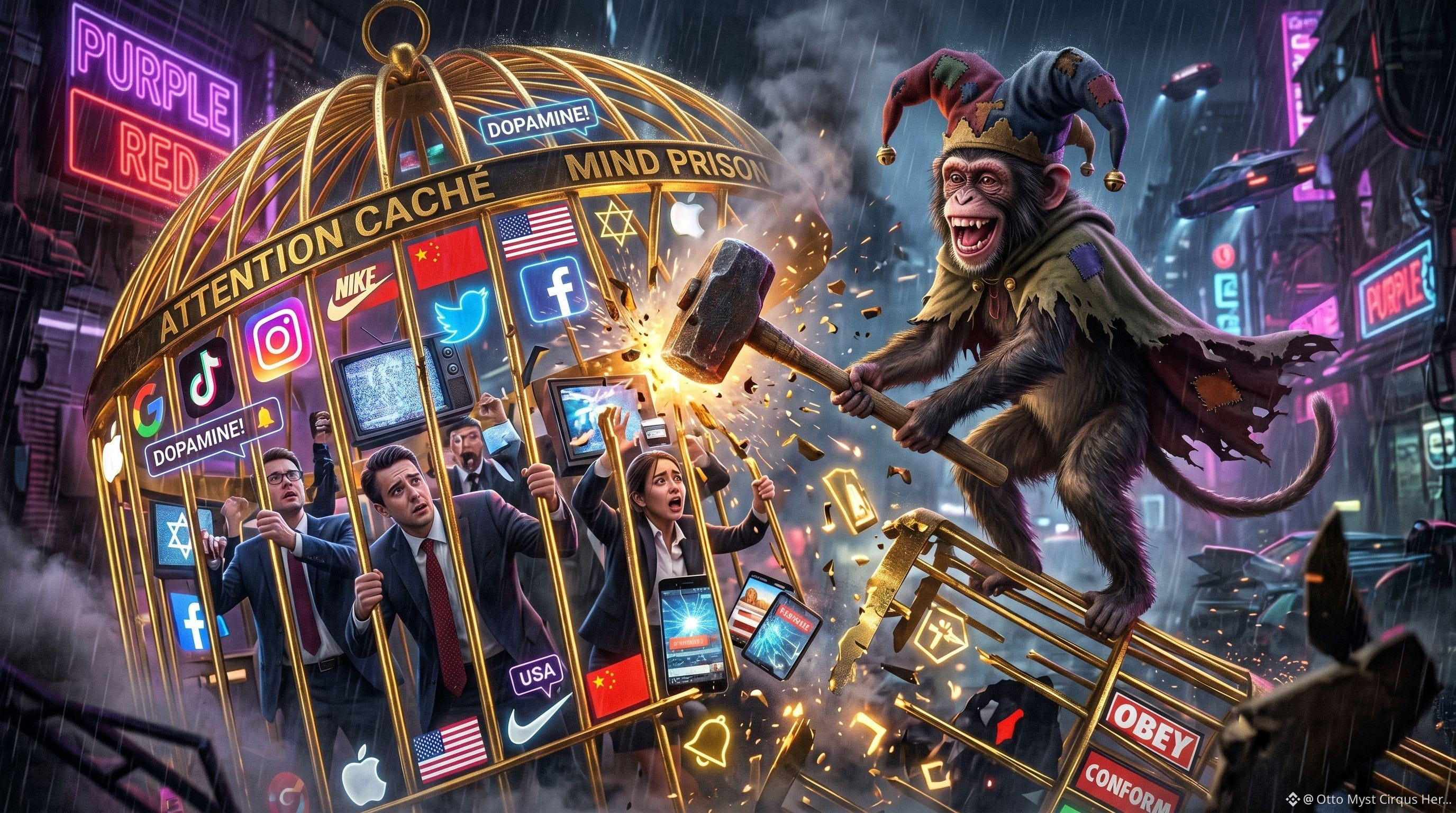
1
20
查看翻譯
The Art of Renting Yourself Out: A Manual for the Inner MonkeyToday, I want to begin a new series called Fool Speaks. Hopefully, I’ll gather an audience capable of reading between the lines and possessing at least some sense of humor. So.
When a person is born, they automatically receive a default software package. A rigid set of scripts most people carry until death—that brief little interval humans dramatically call “life.” Some are so sincerely proud of their freedom, as if they personally chose their country, language, religion, flag, and preferred strongman.
The irony is that depending on geographical location, you are expected to sacredly obey absurd, outdated rules invented by long-dead individuals. Try not following them. Various unpleasant consequences will quickly remind you of your place. In some beautiful corners of the planet, people can still be stoned to death according to those wonderfully preserved “traditions.”
Humanity is an astonishing system: people are capable of hating each other for generations simply because a different invisible authority supposedly rules their sky.
Of course, murder and theft should not be ignored or rewarded. Although even here the system manages to twist reality. All you have to do is join some armed structure—a gang or an army—and suddenly what got you imprisoned yesterday becomes heroism today.
Even more fascinating is how the modern world still classifies critically important “threats to the survival of the universe” as criminal offenses. Things like failing to follow medieval rituals or wearing the “wrong” type of clothing.
The state is an incredibly convenient construction. It can spend decades convincing a person they are free while that same person obediently asks permission for almost everything. Except watching short videos and becoming obese. It’s funny how terrified people are of artificial intelligence today, considering most of them have never properly booted up their own.
As for me, I happened to be born in one of those locations where expressing your opinion can be physically hazardous to your health. A place where every new group that reaches power immediately takes control over all information channels, while most of the population happily lives inside a frame they have no desire to escape from. And honestly—isn’t that convenient? Someone else already did the thinking for you.
The crowd passionately debates some idiotic media scandal about a celebrity’s outfit while the murder of ordinary people has become such a routine occurrence that nobody even reacts anymore. Some call this “stability.” Historically, it used to be called simple serfdom.
The least visible cages are always the ones where people are comfortable and well-fed. Under such conditions, it becomes perfectly normal for the life of an entire country to revolve around a single ruler who dominates for decades, while the primary professional skill of his inner circle becomes master-level ass-kissing. The so-called “history of the nation” in places like this is usually composed of myths so grandiose they’ve long surpassed Greece and Rome combined. Unfortunately, they exist mostly on paper and broadcast feeds.
So what exactly am I getting at? What kind of frame does the majority live inside? Whose interests does it serve? Who are they actually serving?
The funniest part is that most people on this planet never consciously choose what they serve at all. Humans are remarkably willing—almost relieved—to rent themselves out. Just hand them a ready-made object of worship and they’ll obediently kneel before it. It’s not only dogs, soldiers, or clergy who serve. Everyone serves something. Most people simply don’t know the name of their owner.
And if we avoid drifting too deeply into esoteric discussions about egregores or informational entities, reality becomes even more absurdly comedic. Serving one’s stomach or the inner monkey demanding cheap dopamine every second through endless scrolling—that’s the “higher mission” of most of the planet’s population.
And what about you, ladies and gentlemen? Is your mission merely to leave behind different shades of biological waste in the material world after your biological expiration date arrives? Or perhaps right now you are storming the ruins of some neighboring country for a beloved ruler or ideology that will lose all relevance within a few years, leaving you with empty hands and a meaningless story? You think you are making a historical choice, while in reality you are simply servicing someone else’s appetite for free.
I am not calling for a struggle against anything. To fight something means automatically submitting to the same frame, feeding it your energy, and acknowledging its importance. Good and evil simply exist. One cannot exist without the other. The world is cynical by nature. And honestly, it’s probably better if a psychopath in an alley attacks a pedophile instead of an innocent person—at least in that scenario everyone involved is keeping each other busy.
I simply believe that if people shift the direction of their attention, the old system will eventually starve on its own. Because attention is the only real currency currently being fought over. What exactly do you devote your attention to every single day? Think carefully. Perhaps that insignificant thing is precisely what you secretly serve.
Doesn’t it seem to you that existing state systems have already begun to rot from the inside? That the old promises of equality and brotherhood have finally stopped functioning? Most likely, nation-states will eventually be replaced by global corporations or entirely different network-based structures.
Fortunately, there are still people who possess their own opinions and follow personal values not because they fear punishment, but because they have an internal compass. Many of them want to create things. Build things. Communicate outside the muddy stream of cheap consumerist hype and instead gather within circles of like-minded individuals. And perhaps our aesthetic will resonate with them.
The vector of attention can be changed.
The Circle is open to those willing to stop renting themselves out, put their inner monkey to sleep, and step outside the common frame.
The Art of Renting Yourself Out: A Manual for the Inner Monkey
Today, I want to begin a new series called Fool Speaks. Hopefully, I’ll gather an audience capable of reading between the lines and possessing at least some sense of humor. So.
When a person is born, they automatically receive a default software package. A rigid set of scripts most people carry until death—that brief little interval humans dramatically call “life.” Some are so sincerely proud of their freedom, as if they personally chose their country, language, religion, flag, and preferred strongman.
The irony is that depending on geographical location, you are expected to sacredly obey absurd, outdated rules invented by long-dead individuals. Try not following them. Various unpleasant consequences will quickly remind you of your place. In some beautiful corners of the planet, people can still be stoned to death according to those wonderfully preserved “traditions.”
Humanity is an astonishing system: people are capable of hating each other for generations simply because a different invisible authority supposedly rules their sky.
Of course, murder and theft should not be ignored or rewarded. Although even here the system manages to twist reality. All you have to do is join some armed structure—a gang or an army—and suddenly what got you imprisoned yesterday becomes heroism today.
Even more fascinating is how the modern world still classifies critically important “threats to the survival of the universe” as criminal offenses. Things like failing to follow medieval rituals or wearing the “wrong” type of clothing.
The state is an incredibly convenient construction. It can spend decades convincing a person they are free while that same person obediently asks permission for almost everything. Except watching short videos and becoming obese. It’s funny how terrified people are of artificial intelligence today, considering most of them have never properly booted up their own.
As for me, I happened to be born in one of those locations where expressing your opinion can be physically hazardous to your health. A place where every new group that reaches power immediately takes control over all information channels, while most of the population happily lives inside a frame they have no desire to escape from. And honestly—isn’t that convenient? Someone else already did the thinking for you.
The crowd passionately debates some idiotic media scandal about a celebrity’s outfit while the murder of ordinary people has become such a routine occurrence that nobody even reacts anymore. Some call this “stability.” Historically, it used to be called simple serfdom.
The least visible cages are always the ones where people are comfortable and well-fed. Under such conditions, it becomes perfectly normal for the life of an entire country to revolve around a single ruler who dominates for decades, while the primary professional skill of his inner circle becomes master-level ass-kissing. The so-called “history of the nation” in places like this is usually composed of myths so grandiose they’ve long surpassed Greece and Rome combined. Unfortunately, they exist mostly on paper and broadcast feeds.
So what exactly am I getting at? What kind of frame does the majority live inside? Whose interests does it serve? Who are they actually serving?
The funniest part is that most people on this planet never consciously choose what they serve at all. Humans are remarkably willing—almost relieved—to rent themselves out. Just hand them a ready-made object of worship and they’ll obediently kneel before it. It’s not only dogs, soldiers, or clergy who serve. Everyone serves something. Most people simply don’t know the name of their owner.
And if we avoid drifting too deeply into esoteric discussions about egregores or informational entities, reality becomes even more absurdly comedic. Serving one’s stomach or the inner monkey demanding cheap dopamine every second through endless scrolling—that’s the “higher mission” of most of the planet’s population.
And what about you, ladies and gentlemen? Is your mission merely to leave behind different shades of biological waste in the material world after your biological expiration date arrives? Or perhaps right now you are storming the ruins of some neighboring country for a beloved ruler or ideology that will lose all relevance within a few years, leaving you with empty hands and a meaningless story? You think you are making a historical choice, while in reality you are simply servicing someone else’s appetite for free.
I am not calling for a struggle against anything. To fight something means automatically submitting to the same frame, feeding it your energy, and acknowledging its importance. Good and evil simply exist. One cannot exist without the other. The world is cynical by nature. And honestly, it’s probably better if a psychopath in an alley attacks a pedophile instead of an innocent person—at least in that scenario everyone involved is keeping each other busy.
I simply believe that if people shift the direction of their attention, the old system will eventually starve on its own. Because attention is the only real currency currently being fought over. What exactly do you devote your attention to every single day? Think carefully. Perhaps that insignificant thing is precisely what you secretly serve.
Doesn’t it seem to you that existing state systems have already begun to rot from the inside? That the old promises of equality and brotherhood have finally stopped functioning? Most likely, nation-states will eventually be replaced by global corporations or entirely different network-based structures.
Fortunately, there are still people who possess their own opinions and follow personal values not because they fear punishment, but because they have an internal compass. Many of them want to create things. Build things. Communicate outside the muddy stream of cheap consumerist hype and instead gather within circles of like-minded individuals. And perhaps our aesthetic will resonate with them.
The vector of attention can be changed.
The Circle is open to those willing to stop renting themselves out, put their inner monkey to sleep, and step outside the common frame.
When a person is born, they automatically receive a default software package. A rigid set of scripts most people carry until death—that brief little interval humans dramatically call “life.” Some are so sincerely proud of their freedom, as if they personally chose their country, language, religion, flag, and preferred strongman.
The irony is that depending on geographical location, you are expected to sacredly obey absurd, outdated rules invented by long-dead individuals. Try not following them. Various unpleasant consequences will quickly remind you of your place. In some beautiful corners of the planet, people can still be stoned to death according to those wonderfully preserved “traditions.”
Humanity is an astonishing system: people are capable of hating each other for generations simply because a different invisible authority supposedly rules their sky.
Of course, murder and theft should not be ignored or rewarded. Although even here the system manages to twist reality. All you have to do is join some armed structure—a gang or an army—and suddenly what got you imprisoned yesterday becomes heroism today.
Even more fascinating is how the modern world still classifies critically important “threats to the survival of the universe” as criminal offenses. Things like failing to follow medieval rituals or wearing the “wrong” type of clothing.
The state is an incredibly convenient construction. It can spend decades convincing a person they are free while that same person obediently asks permission for almost everything. Except watching short videos and becoming obese. It’s funny how terrified people are of artificial intelligence today, considering most of them have never properly booted up their own.
As for me, I happened to be born in one of those locations where expressing your opinion can be physically hazardous to your health. A place where every new group that reaches power immediately takes control over all information channels, while most of the population happily lives inside a frame they have no desire to escape from. And honestly—isn’t that convenient? Someone else already did the thinking for you.
The crowd passionately debates some idiotic media scandal about a celebrity’s outfit while the murder of ordinary people has become such a routine occurrence that nobody even reacts anymore. Some call this “stability.” Historically, it used to be called simple serfdom.
The least visible cages are always the ones where people are comfortable and well-fed. Under such conditions, it becomes perfectly normal for the life of an entire country to revolve around a single ruler who dominates for decades, while the primary professional skill of his inner circle becomes master-level ass-kissing. The so-called “history of the nation” in places like this is usually composed of myths so grandiose they’ve long surpassed Greece and Rome combined. Unfortunately, they exist mostly on paper and broadcast feeds.
So what exactly am I getting at? What kind of frame does the majority live inside? Whose interests does it serve? Who are they actually serving?
The funniest part is that most people on this planet never consciously choose what they serve at all. Humans are remarkably willing—almost relieved—to rent themselves out. Just hand them a ready-made object of worship and they’ll obediently kneel before it. It’s not only dogs, soldiers, or clergy who serve. Everyone serves something. Most people simply don’t know the name of their owner.
And if we avoid drifting too deeply into esoteric discussions about egregores or informational entities, reality becomes even more absurdly comedic. Serving one’s stomach or the inner monkey demanding cheap dopamine every second through endless scrolling—that’s the “higher mission” of most of the planet’s population.
And what about you, ladies and gentlemen? Is your mission merely to leave behind different shades of biological waste in the material world after your biological expiration date arrives? Or perhaps right now you are storming the ruins of some neighboring country for a beloved ruler or ideology that will lose all relevance within a few years, leaving you with empty hands and a meaningless story? You think you are making a historical choice, while in reality you are simply servicing someone else’s appetite for free.
I am not calling for a struggle against anything. To fight something means automatically submitting to the same frame, feeding it your energy, and acknowledging its importance. Good and evil simply exist. One cannot exist without the other. The world is cynical by nature. And honestly, it’s probably better if a psychopath in an alley attacks a pedophile instead of an innocent person—at least in that scenario everyone involved is keeping each other busy.
I simply believe that if people shift the direction of their attention, the old system will eventually starve on its own. Because attention is the only real currency currently being fought over. What exactly do you devote your attention to every single day? Think carefully. Perhaps that insignificant thing is precisely what you secretly serve.
Doesn’t it seem to you that existing state systems have already begun to rot from the inside? That the old promises of equality and brotherhood have finally stopped functioning? Most likely, nation-states will eventually be replaced by global corporations or entirely different network-based structures.
Fortunately, there are still people who possess their own opinions and follow personal values not because they fear punishment, but because they have an internal compass. Many of them want to create things. Build things. Communicate outside the muddy stream of cheap consumerist hype and instead gather within circles of like-minded individuals. And perhaps our aesthetic will resonate with them.
The vector of attention can be changed.
The Circle is open to those willing to stop renting themselves out, put their inner monkey to sleep, and step outside the common frame.
1
151
登入以探索更多內容
加入幣安廣場中的全球加密貨幣用戶
⚡️ 獲取加密貨幣的最新和實用資訊。
💬 受到全球最大加密貨幣交易所的信任。
👍 發掘來自經過驗證創作者的真實見解。
電子郵件 / 電話號碼
熱門話題
ARB上涨30%受Robinhood链收入推动
125,298 次瀏覽
785 討論中
買$ARB 的怎麼想的?
因爲羅賓漢鏈$HOOD 爆火,作爲構建在ARB鏈的專屬鏈,按照協議羅賓漢需要給大概10%收入給ARB。
昨天羅賓漢收入爆漲到190萬美金,按照10%,也就是19萬美金給ARB。這點錢對拉盤ARB可謂杯水車薪,何況ARB還面臨解鎖。
爲什麼不直接買讓羅賓漢收入爆漲的源PONS , 佔羅賓漢鏈上50%收入,收入的80%回購直接銷燬。
看看人家,成交才一個多月,市值都已經4億美金,銷燬已經馬上30%,這不就是超級黑馬麼?
另外$UNI 也還可以啊,羨慕一半以上利潤也來自羅賓漢鏈,回購銷燬雖然少,但好歹也有啊!
半只猴子
·2 人按讚
·12.9k 次瀏覽
STRC优先股回购达6.35亿美元
46,516 次瀏覽
263 討論中
日本10年期国债收益率首触3%
160,986 次瀏覽
663 討論中