
ValueQube
52 Bài đăng

ValueQube
Báo cáo
Chặn người dùng
AI-readable financial passports for TradFi x DeFi assets.
5 Đang theo dõi
1.0K+ Người theo dõi
158 Đã thích
Bài đăng
·
--
Xem bản dịch
🤝 Partnership Announcement
⠀
ValueQube is partnering with @LinkaLabs, the decentralized memory and context infrastructure for the Agent Economy. Linka transforms fragmented data into persistent, verifiable context that AI agents can retrieve across platforms and workflows. 🧠
⠀
Linka helps agents remember. ValueQube helps them understand financial value—using transparent, AI-readable qAsset Certificates to structure exposure, evidence, risk, product rules, lifecycle, and authorization boundaries.
⠀
Together, we will explore how durable agent memory and machine-readable financial records can support AI systems that retain context, trace decisions, and prepare financial actions without losing provenance or user control. 🗂️
⠀
#ValueQube #LinkaLabs #AgenticFinance #RWA #Web3
🤝 Partnership Announcement
⠀
ValueQube is partnering with @LinkaLabs, the decentralized memory and context infrastructure for the Agent Economy. Linka transforms fragmented data into persistent, verifiable context that AI agents can retrieve across platforms and workflows. 🧠
⠀
Linka helps agents remember. ValueQube helps them understand financial value—using transparent, AI-readable qAsset Certificates to structure exposure, evidence, risk, product rules, lifecycle, and authorization boundaries.
⠀
Together, we will explore how durable agent memory and machine-readable financial records can support AI systems that retain context, trace decisions, and prepare financial actions without losing provenance or user control. 🗂️
⠀
#ValueQube #LinkaLabs #AgenticFinance #RWA #Web3
⠀
ValueQube is partnering with @LinkaLabs, the decentralized memory and context infrastructure for the Agent Economy. Linka transforms fragmented data into persistent, verifiable context that AI agents can retrieve across platforms and workflows. 🧠
⠀
Linka helps agents remember. ValueQube helps them understand financial value—using transparent, AI-readable qAsset Certificates to structure exposure, evidence, risk, product rules, lifecycle, and authorization boundaries.
⠀
Together, we will explore how durable agent memory and machine-readable financial records can support AI systems that retain context, trace decisions, and prepare financial actions without losing provenance or user control. 🗂️
⠀
#ValueQube #LinkaLabs #AgenticFinance #RWA #Web3
1
80
·
--
🤝 Thông báo hợp tác
ValueQube hợp tác với @DeAgentAI
DeAgentAI xây dựng các tác nhân (agent) on-chain đáng tin cậy dựa trên Identity, Continuity và Consensus. AI Token Smart Router là cách các agent đó tiếp cận các mô hình — một cổng duy nhất, không phải là một sàn giao dịch (trading router).
ValueQube cung cấp lớp ngữ cảnh tài chính thông qua các qAsset Certificates minh bạch, dễ đọc đối với AI: mức độ tiếp xúc (exposure), bằng chứng (evidence), rủi ro, quy tắc sản phẩm và ranh giới ủy quyền.
Cùng nhau, chúng tôi sẽ tìm hiểu cách các hồ sơ tài chính được cấu trúc có thể kết nối với cổng đó — để một agent không chỉ thấy một hành động được chuyển tới đâu, mà còn thấy giá trị, rủi ro và các quy tắc nằm phía sau nó.
#ValueQube #DeAgentAI #AgenticFinance
🤝 Thông báo hợp tác
ValueQube hợp tác với @DeAgentAI
DeAgentAI xây dựng các tác nhân (agent) on-chain đáng tin cậy dựa trên Identity, Continuity và Consensus. AI Token Smart Router là cách các agent đó tiếp cận các mô hình — một cổng duy nhất, không phải là một sàn giao dịch (trading router).
ValueQube cung cấp lớp ngữ cảnh tài chính thông qua các qAsset Certificates minh bạch, dễ đọc đối với AI: mức độ tiếp xúc (exposure), bằng chứng (evidence), rủi ro, quy tắc sản phẩm và ranh giới ủy quyền.
Cùng nhau, chúng tôi sẽ tìm hiểu cách các hồ sơ tài chính được cấu trúc có thể kết nối với cổng đó — để một agent không chỉ thấy một hành động được chuyển tới đâu, mà còn thấy giá trị, rủi ro và các quy tắc nằm phía sau nó.
#ValueQube #DeAgentAI #AgenticFinance
ValueQube hợp tác với @DeAgentAI
DeAgentAI xây dựng các tác nhân (agent) on-chain đáng tin cậy dựa trên Identity, Continuity và Consensus. AI Token Smart Router là cách các agent đó tiếp cận các mô hình — một cổng duy nhất, không phải là một sàn giao dịch (trading router).
ValueQube cung cấp lớp ngữ cảnh tài chính thông qua các qAsset Certificates minh bạch, dễ đọc đối với AI: mức độ tiếp xúc (exposure), bằng chứng (evidence), rủi ro, quy tắc sản phẩm và ranh giới ủy quyền.
Cùng nhau, chúng tôi sẽ tìm hiểu cách các hồ sơ tài chính được cấu trúc có thể kết nối với cổng đó — để một agent không chỉ thấy một hành động được chuyển tới đâu, mà còn thấy giá trị, rủi ro và các quy tắc nằm phía sau nó.
#ValueQube #DeAgentAI #AgenticFinance
63
·
--
Bài viết
Xem bản dịch
When Wall Street Goes Onchain: ValueQube and the New Architecture of Global FinanceWhen interest rates, regulation, and market infrastructure all move within a matter of days, the important story is no longer a single price swing. It is the operating model global finance is beginning to choose. The boundaries between stocks, Treasuries, funds, and digital assets are starting to loosen, while onchain finance is moving beyond asset representation toward a redesign of rights, trading, and settlement.
Financial systems rarely change because of a single event. The shift usually appears first as a series of policy actions pulling in different directions. Only later does it become clear that those forces are moving the market toward the same destination.
On September 15, 2026, the U.S. Senate voted 49–50 and failed to advance the CLARITY Act. On September 16, the Federal Reserve raised the target range for the federal funds rate by 25 basis points to 3.75%–4.00%. On September 17, the SEC issued an “Innovation Exemption” that allows qualifying venues, under controlled conditions, to trade tokenized U.S. stocks through AMM liquidity pools on public blockchains.
Three days produced three seemingly conflicting scenes: legislation remained contested, the cost of capital rose, and yet traditional capital markets opened a regulated path toward onchain trading.
That sequence cannot be compressed into a market slogan. It shows U.S. financial policy addressing three problems at once: containing inflation, preserving the quality of capital-market operations, and creating an observable, bounded testing ground for digital financial infrastructure. Prices will continue to fluctuate. The institutional route for bringing assets onchain, however, is becoming more concrete.
Higher Rates and Liquidity Support Are Happening at the Same Time
The Federal Reserve’s September 16 statement said inflation remained elevated and justified the rate increase. It also described economic activity as expanding at a solid pace, domestic spending as resilient, productivity growth as strong, and capital investment as robust.
Markets are therefore not facing a simple choice between tightening and easing. Short-term rates are being used to restrain inflation. Economic growth and capital spending continue to support fundamentals. A separate set of tools is addressing liquidity in longer-dated markets. Risk assets must now find their price between a higher valuation hurdle and an economy that remains resilient.
The U.S. Treasury had already announced that it would at least double the maximum size of each long-end liquidity-support buyback operation, from $2 billion to $4 billion, beginning September 9. The program is not quantitative easing, nor does it create new money. Its immediate purpose is to support trading liquidity in longer-dated Treasuries and improve debt management. The broader signal is that U.S. policymakers are taking a more active approach to the interaction among long-term yields, market depth, and financial conditions.
During the same period, Bitcoin returned to the area around $78,000, while U.S.-listed companies tied to digital assets experienced sharp moves. That does not establish a one-way outlook for prices. It points to a more important development: crypto can no longer be analyzed in isolation from Treasury yields, ETF flows, institutional allocation, and U.S. market policy. It is becoming part of the same framework through which global capital is repriced and reallocated.
Wall Street Begins to Adopt Onchain Market Structure
On September 17, the SEC issued its Innovation Exemption. The order grants temporary, limited, and conditional relief to Tokenized Securities Venues, allowing permissioned participants to trade tokenized U.S. NMS stocks through AMMs and liquidity pools.
The core of the framework is not a token that merely tracks a stock price. It is the preservation of actual rights. An eligible tokenized stock must provide holders with the same rights and privileges as the equivalent class of traditional stock. Smart contracts must be public, auditable, and deployed on a public, permissionless distributed ledger. Trading must stop when the underlying stock is halted on its primary listing exchange. Venues must also disclose information about their operations, trading activity, and affiliate activity.
The number of eligible symbols and trading volumes remain capped. Public companies may object when an unaffiliated third party seeks to tokenize their shares. The exemptions expire five years after publication, and the SEC continues to solicit public comment. This is a controlled experiment, not a blanket authorization for every model of onchain securities trading.
Even so, the level of the discussion has changed. U.S. regulators are moving beyond the question of whether assets can go onchain. They are beginning to define how those assets should trade, what must be disclosed, how equivalent rights can be preserved, and which data must remain observable. AMMs, once native liquidity tools for crypto markets, are now part of a regulated experiment involving U.S. NMS stocks.
DeFi is no longer simply importing traditional assets. TradFi is also beginning to absorb DeFi market structure. For the first time within the same institutional arrangement, both systems are being asked to reconcile rights, liquidity, smart contracts, and investor protection.
Classification, Issuance, and Trading Are Becoming One Path
Viewed on its own, the September 17 exemption could look like an isolated regulatory test. Put the policy actions of 2026 together, and a more coherent path appears.
On March 17, the SEC and CFTC issued a joint regulatory interpretation. It set out a taxonomy covering digital commodities, stablecoins, digital securities, digital tools, and collectibles, while explaining when a non-security crypto asset may become subject to an investment contract and how that relationship may end.
On August 18, the SEC proposed Regulation Crypto Assets, a tailored fundraising regime for certain investment contracts involving crypto assets. The proposal introduces narrative disclosures, financial statements, and ongoing reporting requirements. It is not a final rule, but it begins to answer how digital assets may be issued and financed within a defined framework.
The September 17 Innovation Exemption advances the next question: how can those assets enter secondary markets and trade onchain?
Classification, issuance, and trading are beginning to connect. At the same time, DTCC is working with more than 50 financial firms to advance DTC’s tokenization service. Under the timeline published by DTCC, the service is planned for launch in October 2026. Its authorized scope includes certain Russell 1000 constituents, major index ETFs, and U.S. Treasury securities. Tokenized assets are expected to preserve the same entitlements, investor protections, and ownership rights as their traditional counterparts.
Wall Street has not moved wholesale onto public blockchains. This remains a controlled, phased undertaking with technical, legal, and market risk. The direction is nevertheless clearer than before: regulators are defining asset status, issuance rules are being adapted, onchain secondary trading has received a testing ground, and traditional clearing infrastructure is advancing the tokenization of assets already in custody.
Crypto once had to prove that it could carry financial activity. Traditional finance is now testing whether it can preserve rights, order, and scale onchain.
The Market Is Repricing Three Forms of Value
This structural shift will not benefit every asset equally. As real assets and institutional capital enter the market, selection is likely to become more demanding. Products without users, revenue, enforceable rights, or ongoing disclosure will struggle to sustain a premium on narrative alone.
The first value being reassessed is the allocation role of core assets. Bitcoin is moving beyond its position as a crypto-native trading instrument and further into institutional balance sheets, ETF portfolios, and macro liquidity analysis. Its volatility remains substantial, but the sources of capital and the frameworks used to price it have changed.
The second form of value belongs to market infrastructure. Custody, clearing, oracles, compliant issuance, tokenization, stablecoins, onchain venues, and cross-system settlement determine whether real assets can enter open networks with sufficient reliability. These layers may not have the loudest price narrative, but they control the critical routes through which assets must travel.
The third form is trusted readability. What does an onchain financial object represent? Which rights does the holder have, and which rights are excluded? Where does the price come from? How do fees accrue? When does risk change? What conditions govern exit? How do onchain records map to offchain rights? What may AI explain, and which decisions must remain with the user? These questions become more important as the value and complexity of the assets increase.
Stocks, Treasuries, funds, RWA products, and investment strategies are gaining new methods of issuance, trading, and settlement. Scarcity will shift away from the ability to create more tokens and toward the ability to support more verifiable financial relationships. That is why the gateways, language, and infrastructure of the next financial system matter more than short-lived narratives.
Where ValueQube Fits: Making Onchain Assets Readable, Not Just Transferable
Putting an asset onchain addresses how it moves. It does not automatically explain what it is. A wallet can display a name, balance, and price. A blockchain can prove that a transfer occurred. An AMM can provide a continuous quote. None of these functions, by itself, explains the most important terms of a financial position: what rights it carries, who bears responsibility, where the risks sit, and how the holder can exit.
That is the position ValueQube and qAsset are built to occupy.
qAsset is not a new token label for a traditional asset, nor does it reduce every product to a yield figure. It is designed to organize the underlying reference, issuer and operator, included and excluded rights, Reference Value and executable price, fees, risk labels, lifecycle, redemption or exit conditions, onchain evidence, offchain sources, and user-authorization boundaries into a financial object that users, institutions, protocols, and AI can continuously read.
The SEC’s Innovation Exemption requires tokenized stocks to preserve the same rights as traditional shares, makes smart contracts public and auditable, and requires observable trading data. Those conditions speak directly to the product problem ValueQube has been addressing: once a financial object spans onchain and offchain systems, a token address is not enough. The market needs a shared language that can explain, compare, and track the object over time.
AMMs give assets a new way to move. qAsset gives them a new way to be understood. TradFi contributes rights, responsibilities, and an asset base. DeFi contributes open networks, composable settlement, and transparent execution. AI contributes explanation, comparison, and action preparation. ValueQube brings those capabilities together inside one readable financial object.
An SEC exemption does not automatically make ValueQube compliant in any jurisdiction, and a testnet product is not the same as mature financial infrastructure. The significance lies elsewhere. As more real assets move onchain, the market will increasingly need a product layer that can explain complex value, make rights and boundaries visible, and leave the final decision with the user.
The Window Is Before the Rules Are Fully Formed
The value of early participation is not an early bet on price direction. It is the opportunity to understand the rules of an emerging market and contribute judgment while the product is still being shaped.
For ValueQube participants, the next steps are concrete: enter the testnet and experience the current qAsset information structure and workflow; check whether an asset clearly presents its underlying reference, valuation basis, fees, risks, and exit conditions; report anything that is unclear, unavailable, or easy to misread.
As tokenized stocks, Treasuries, ETFs, and other RWA products expand onchain, institutions will ask more than whether an asset can be traded. Users will expect more than a balance display. The market will demand liquidity, equivalent rights, transparent data, and comprehensible product terms at the same time. By the time these capabilities become standard, the gateways will be more mature and the competition more concentrated.
The opportunity before the rules are complete is to help define the product language those rules will require. A well-formed piece of feedback, a complete testnet journey, or an information gap identified early can become part of the infrastructure future users depend on.
Greater Clarity Makes Boundaries More Important
The Federal Reserve has raised rates and may keep policy restrictive. The CLARITY Act has not cleared its procedural hurdle. The SEC’s Innovation Exemption is temporary, limited, and conditional. Issuers may object to third-party tokenization of their shares. Bitcoin and related assets can still experience substantial drawdowns.
A clearer institutional direction does not remove market risk. It makes the risk more specific. As traditional assets, institutional capital, and a broader user base move onchain, mismatched rights, limited liquidity, delayed information, smart-contract failures, and cross-jurisdictional responsibility will matter more, not less.
The previous phase of competition rewarded whoever could tell the larger story. The next phase will test who can carry more of the real world.
Bitcoin is entering a broader macro-asset framework. Wall Street is bringing stocks onchain. Regulators are defining the first workable territory for AMMs, smart contracts, and tokenized securities. The next task is to make these assets understandable to people, verifiable by institutions, readable by AI, and ultimately controlled by the user.
As Wall Street learns to speak onchain, ValueQube is building the grammar for a new financial system.
This article reflects market conditions, policy developments, and infrastructure initiatives as of September 18, 2026. It does not imply or guarantee any direction in asset prices. The ValueQube testnet does not involve real funds. Nothing in this article constitutes investment, legal, or tax advice.
When Wall Street Goes Onchain: ValueQube and the New Architecture of Global Finance
When interest rates, regulation, and market infrastructure all move within a matter of days, the important story is no longer a single price swing. It is the operating model global finance is beginning to choose. The boundaries between stocks, Treasuries, funds, and digital assets are starting to loosen, while onchain finance is moving beyond asset representation toward a redesign of rights, trading, and settlement.
Financial systems rarely change because of a single event. The shift usually appears first as a series of policy actions pulling in different directions. Only later does it become clear that those forces are moving the market toward the same destination.
On September 15, 2026, the U.S. Senate voted 49–50 and failed to advance the CLARITY Act. On September 16, the Federal Reserve raised the target range for the federal funds rate by 25 basis points to 3.75%–4.00%. On September 17, the SEC issued an “Innovation Exemption” that allows qualifying venues, under controlled conditions, to trade tokenized U.S. stocks through AMM liquidity pools on public blockchains.
Three days produced three seemingly conflicting scenes: legislation remained contested, the cost of capital rose, and yet traditional capital markets opened a regulated path toward onchain trading.
That sequence cannot be compressed into a market slogan. It shows U.S. financial policy addressing three problems at once: containing inflation, preserving the quality of capital-market operations, and creating an observable, bounded testing ground for digital financial infrastructure. Prices will continue to fluctuate. The institutional route for bringing assets onchain, however, is becoming more concrete.
Higher Rates and Liquidity Support Are Happening at the Same Time
The Federal Reserve’s September 16 statement said inflation remained elevated and justified the rate increase. It also described economic activity as expanding at a solid pace, domestic spending as resilient, productivity growth as strong, and capital investment as robust.
Markets are therefore not facing a simple choice between tightening and easing. Short-term rates are being used to restrain inflation. Economic growth and capital spending continue to support fundamentals. A separate set of tools is addressing liquidity in longer-dated markets. Risk assets must now find their price between a higher valuation hurdle and an economy that remains resilient.
The U.S. Treasury had already announced that it would at least double the maximum size of each long-end liquidity-support buyback operation, from $2 billion to $4 billion, beginning September 9. The program is not quantitative easing, nor does it create new money. Its immediate purpose is to support trading liquidity in longer-dated Treasuries and improve debt management. The broader signal is that U.S. policymakers are taking a more active approach to the interaction among long-term yields, market depth, and financial conditions.
During the same period, Bitcoin returned to the area around $78,000, while U.S.-listed companies tied to digital assets experienced sharp moves. That does not establish a one-way outlook for prices. It points to a more important development: crypto can no longer be analyzed in isolation from Treasury yields, ETF flows, institutional allocation, and U.S. market policy. It is becoming part of the same framework through which global capital is repriced and reallocated.
Wall Street Begins to Adopt Onchain Market Structure
On September 17, the SEC issued its Innovation Exemption. The order grants temporary, limited, and conditional relief to Tokenized Securities Venues, allowing permissioned participants to trade tokenized U.S. NMS stocks through AMMs and liquidity pools.
The core of the framework is not a token that merely tracks a stock price. It is the preservation of actual rights. An eligible tokenized stock must provide holders with the same rights and privileges as the equivalent class of traditional stock. Smart contracts must be public, auditable, and deployed on a public, permissionless distributed ledger. Trading must stop when the underlying stock is halted on its primary listing exchange. Venues must also disclose information about their operations, trading activity, and affiliate activity.
The number of eligible symbols and trading volumes remain capped. Public companies may object when an unaffiliated third party seeks to tokenize their shares. The exemptions expire five years after publication, and the SEC continues to solicit public comment. This is a controlled experiment, not a blanket authorization for every model of onchain securities trading.
Even so, the level of the discussion has changed. U.S. regulators are moving beyond the question of whether assets can go onchain. They are beginning to define how those assets should trade, what must be disclosed, how equivalent rights can be preserved, and which data must remain observable. AMMs, once native liquidity tools for crypto markets, are now part of a regulated experiment involving U.S. NMS stocks.
DeFi is no longer simply importing traditional assets. TradFi is also beginning to absorb DeFi market structure. For the first time within the same institutional arrangement, both systems are being asked to reconcile rights, liquidity, smart contracts, and investor protection.
Classification, Issuance, and Trading Are Becoming One Path
Viewed on its own, the September 17 exemption could look like an isolated regulatory test. Put the policy actions of 2026 together, and a more coherent path appears.
On March 17, the SEC and CFTC issued a joint regulatory interpretation. It set out a taxonomy covering digital commodities, stablecoins, digital securities, digital tools, and collectibles, while explaining when a non-security crypto asset may become subject to an investment contract and how that relationship may end.
On August 18, the SEC proposed Regulation Crypto Assets, a tailored fundraising regime for certain investment contracts involving crypto assets. The proposal introduces narrative disclosures, financial statements, and ongoing reporting requirements. It is not a final rule, but it begins to answer how digital assets may be issued and financed within a defined framework.
The September 17 Innovation Exemption advances the next question: how can those assets enter secondary markets and trade onchain?
Classification, issuance, and trading are beginning to connect. At the same time, DTCC is working with more than 50 financial firms to advance DTC’s tokenization service. Under the timeline published by DTCC, the service is planned for launch in October 2026. Its authorized scope includes certain Russell 1000 constituents, major index ETFs, and U.S. Treasury securities. Tokenized assets are expected to preserve the same entitlements, investor protections, and ownership rights as their traditional counterparts.
Wall Street has not moved wholesale onto public blockchains. This remains a controlled, phased undertaking with technical, legal, and market risk. The direction is nevertheless clearer than before: regulators are defining asset status, issuance rules are being adapted, onchain secondary trading has received a testing ground, and traditional clearing infrastructure is advancing the tokenization of assets already in custody.
Crypto once had to prove that it could carry financial activity. Traditional finance is now testing whether it can preserve rights, order, and scale onchain.
The Market Is Repricing Three Forms of Value
This structural shift will not benefit every asset equally. As real assets and institutional capital enter the market, selection is likely to become more demanding. Products without users, revenue, enforceable rights, or ongoing disclosure will struggle to sustain a premium on narrative alone.
The first value being reassessed is the allocation role of core assets. Bitcoin is moving beyond its position as a crypto-native trading instrument and further into institutional balance sheets, ETF portfolios, and macro liquidity analysis. Its volatility remains substantial, but the sources of capital and the frameworks used to price it have changed.
The second form of value belongs to market infrastructure. Custody, clearing, oracles, compliant issuance, tokenization, stablecoins, onchain venues, and cross-system settlement determine whether real assets can enter open networks with sufficient reliability. These layers may not have the loudest price narrative, but they control the critical routes through which assets must travel.
The third form is trusted readability. What does an onchain financial object represent? Which rights does the holder have, and which rights are excluded? Where does the price come from? How do fees accrue? When does risk change? What conditions govern exit? How do onchain records map to offchain rights? What may AI explain, and which decisions must remain with the user? These questions become more important as the value and complexity of the assets increase.
Stocks, Treasuries, funds, RWA products, and investment strategies are gaining new methods of issuance, trading, and settlement. Scarcity will shift away from the ability to create more tokens and toward the ability to support more verifiable financial relationships. That is why the gateways, language, and infrastructure of the next financial system matter more than short-lived narratives.
Where ValueQube Fits: Making Onchain Assets Readable, Not Just Transferable
Putting an asset onchain addresses how it moves. It does not automatically explain what it is. A wallet can display a name, balance, and price. A blockchain can prove that a transfer occurred. An AMM can provide a continuous quote. None of these functions, by itself, explains the most important terms of a financial position: what rights it carries, who bears responsibility, where the risks sit, and how the holder can exit.
That is the position ValueQube and qAsset are built to occupy.
qAsset is not a new token label for a traditional asset, nor does it reduce every product to a yield figure. It is designed to organize the underlying reference, issuer and operator, included and excluded rights, Reference Value and executable price, fees, risk labels, lifecycle, redemption or exit conditions, onchain evidence, offchain sources, and user-authorization boundaries into a financial object that users, institutions, protocols, and AI can continuously read.
The SEC’s Innovation Exemption requires tokenized stocks to preserve the same rights as traditional shares, makes smart contracts public and auditable, and requires observable trading data. Those conditions speak directly to the product problem ValueQube has been addressing: once a financial object spans onchain and offchain systems, a token address is not enough. The market needs a shared language that can explain, compare, and track the object over time.
AMMs give assets a new way to move. qAsset gives them a new way to be understood. TradFi contributes rights, responsibilities, and an asset base. DeFi contributes open networks, composable settlement, and transparent execution. AI contributes explanation, comparison, and action preparation. ValueQube brings those capabilities together inside one readable financial object.
An SEC exemption does not automatically make ValueQube compliant in any jurisdiction, and a testnet product is not the same as mature financial infrastructure. The significance lies elsewhere. As more real assets move onchain, the market will increasingly need a product layer that can explain complex value, make rights and boundaries visible, and leave the final decision with the user.
The Window Is Before the Rules Are Fully Formed
The value of early participation is not an early bet on price direction. It is the opportunity to understand the rules of an emerging market and contribute judgment while the product is still being shaped.
For ValueQube participants, the next steps are concrete: enter the testnet and experience the current qAsset information structure and workflow; check whether an asset clearly presents its underlying reference, valuation basis, fees, risks, and exit conditions; report anything that is unclear, unavailable, or easy to misread.
As tokenized stocks, Treasuries, ETFs, and other RWA products expand onchain, institutions will ask more than whether an asset can be traded. Users will expect more than a balance display. The market will demand liquidity, equivalent rights, transparent data, and comprehensible product terms at the same time. By the time these capabilities become standard, the gateways will be more mature and the competition more concentrated.
The opportunity before the rules are complete is to help define the product language those rules will require. A well-formed piece of feedback, a complete testnet journey, or an information gap identified early can become part of the infrastructure future users depend on.
Greater Clarity Makes Boundaries More Important
The Federal Reserve has raised rates and may keep policy restrictive. The CLARITY Act has not cleared its procedural hurdle. The SEC’s Innovation Exemption is temporary, limited, and conditional. Issuers may object to third-party tokenization of their shares. Bitcoin and related assets can still experience substantial drawdowns.
A clearer institutional direction does not remove market risk. It makes the risk more specific. As traditional assets, institutional capital, and a broader user base move onchain, mismatched rights, limited liquidity, delayed information, smart-contract failures, and cross-jurisdictional responsibility will matter more, not less.
The previous phase of competition rewarded whoever could tell the larger story. The next phase will test who can carry more of the real world.
Bitcoin is entering a broader macro-asset framework. Wall Street is bringing stocks onchain. Regulators are defining the first workable territory for AMMs, smart contracts, and tokenized securities. The next task is to make these assets understandable to people, verifiable by institutions, readable by AI, and ultimately controlled by the user.
As Wall Street learns to speak onchain, ValueQube is building the grammar for a new financial system.
This article reflects market conditions, policy developments, and infrastructure initiatives as of September 18, 2026. It does not imply or guarantee any direction in asset prices. The ValueQube testnet does not involve real funds. Nothing in this article constitutes investment, legal, or tax advice.
Financial systems rarely change because of a single event. The shift usually appears first as a series of policy actions pulling in different directions. Only later does it become clear that those forces are moving the market toward the same destination.
On September 15, 2026, the U.S. Senate voted 49–50 and failed to advance the CLARITY Act. On September 16, the Federal Reserve raised the target range for the federal funds rate by 25 basis points to 3.75%–4.00%. On September 17, the SEC issued an “Innovation Exemption” that allows qualifying venues, under controlled conditions, to trade tokenized U.S. stocks through AMM liquidity pools on public blockchains.
Three days produced three seemingly conflicting scenes: legislation remained contested, the cost of capital rose, and yet traditional capital markets opened a regulated path toward onchain trading.
That sequence cannot be compressed into a market slogan. It shows U.S. financial policy addressing three problems at once: containing inflation, preserving the quality of capital-market operations, and creating an observable, bounded testing ground for digital financial infrastructure. Prices will continue to fluctuate. The institutional route for bringing assets onchain, however, is becoming more concrete.
Higher Rates and Liquidity Support Are Happening at the Same Time
The Federal Reserve’s September 16 statement said inflation remained elevated and justified the rate increase. It also described economic activity as expanding at a solid pace, domestic spending as resilient, productivity growth as strong, and capital investment as robust.
Markets are therefore not facing a simple choice between tightening and easing. Short-term rates are being used to restrain inflation. Economic growth and capital spending continue to support fundamentals. A separate set of tools is addressing liquidity in longer-dated markets. Risk assets must now find their price between a higher valuation hurdle and an economy that remains resilient.
The U.S. Treasury had already announced that it would at least double the maximum size of each long-end liquidity-support buyback operation, from $2 billion to $4 billion, beginning September 9. The program is not quantitative easing, nor does it create new money. Its immediate purpose is to support trading liquidity in longer-dated Treasuries and improve debt management. The broader signal is that U.S. policymakers are taking a more active approach to the interaction among long-term yields, market depth, and financial conditions.
During the same period, Bitcoin returned to the area around $78,000, while U.S.-listed companies tied to digital assets experienced sharp moves. That does not establish a one-way outlook for prices. It points to a more important development: crypto can no longer be analyzed in isolation from Treasury yields, ETF flows, institutional allocation, and U.S. market policy. It is becoming part of the same framework through which global capital is repriced and reallocated.
Wall Street Begins to Adopt Onchain Market Structure
On September 17, the SEC issued its Innovation Exemption. The order grants temporary, limited, and conditional relief to Tokenized Securities Venues, allowing permissioned participants to trade tokenized U.S. NMS stocks through AMMs and liquidity pools.
The core of the framework is not a token that merely tracks a stock price. It is the preservation of actual rights. An eligible tokenized stock must provide holders with the same rights and privileges as the equivalent class of traditional stock. Smart contracts must be public, auditable, and deployed on a public, permissionless distributed ledger. Trading must stop when the underlying stock is halted on its primary listing exchange. Venues must also disclose information about their operations, trading activity, and affiliate activity.
The number of eligible symbols and trading volumes remain capped. Public companies may object when an unaffiliated third party seeks to tokenize their shares. The exemptions expire five years after publication, and the SEC continues to solicit public comment. This is a controlled experiment, not a blanket authorization for every model of onchain securities trading.
Even so, the level of the discussion has changed. U.S. regulators are moving beyond the question of whether assets can go onchain. They are beginning to define how those assets should trade, what must be disclosed, how equivalent rights can be preserved, and which data must remain observable. AMMs, once native liquidity tools for crypto markets, are now part of a regulated experiment involving U.S. NMS stocks.
DeFi is no longer simply importing traditional assets. TradFi is also beginning to absorb DeFi market structure. For the first time within the same institutional arrangement, both systems are being asked to reconcile rights, liquidity, smart contracts, and investor protection.
Classification, Issuance, and Trading Are Becoming One Path
Viewed on its own, the September 17 exemption could look like an isolated regulatory test. Put the policy actions of 2026 together, and a more coherent path appears.
On March 17, the SEC and CFTC issued a joint regulatory interpretation. It set out a taxonomy covering digital commodities, stablecoins, digital securities, digital tools, and collectibles, while explaining when a non-security crypto asset may become subject to an investment contract and how that relationship may end.
On August 18, the SEC proposed Regulation Crypto Assets, a tailored fundraising regime for certain investment contracts involving crypto assets. The proposal introduces narrative disclosures, financial statements, and ongoing reporting requirements. It is not a final rule, but it begins to answer how digital assets may be issued and financed within a defined framework.
The September 17 Innovation Exemption advances the next question: how can those assets enter secondary markets and trade onchain?
Classification, issuance, and trading are beginning to connect. At the same time, DTCC is working with more than 50 financial firms to advance DTC’s tokenization service. Under the timeline published by DTCC, the service is planned for launch in October 2026. Its authorized scope includes certain Russell 1000 constituents, major index ETFs, and U.S. Treasury securities. Tokenized assets are expected to preserve the same entitlements, investor protections, and ownership rights as their traditional counterparts.
Wall Street has not moved wholesale onto public blockchains. This remains a controlled, phased undertaking with technical, legal, and market risk. The direction is nevertheless clearer than before: regulators are defining asset status, issuance rules are being adapted, onchain secondary trading has received a testing ground, and traditional clearing infrastructure is advancing the tokenization of assets already in custody.
Crypto once had to prove that it could carry financial activity. Traditional finance is now testing whether it can preserve rights, order, and scale onchain.
The Market Is Repricing Three Forms of Value
This structural shift will not benefit every asset equally. As real assets and institutional capital enter the market, selection is likely to become more demanding. Products without users, revenue, enforceable rights, or ongoing disclosure will struggle to sustain a premium on narrative alone.
The first value being reassessed is the allocation role of core assets. Bitcoin is moving beyond its position as a crypto-native trading instrument and further into institutional balance sheets, ETF portfolios, and macro liquidity analysis. Its volatility remains substantial, but the sources of capital and the frameworks used to price it have changed.
The second form of value belongs to market infrastructure. Custody, clearing, oracles, compliant issuance, tokenization, stablecoins, onchain venues, and cross-system settlement determine whether real assets can enter open networks with sufficient reliability. These layers may not have the loudest price narrative, but they control the critical routes through which assets must travel.
The third form is trusted readability. What does an onchain financial object represent? Which rights does the holder have, and which rights are excluded? Where does the price come from? How do fees accrue? When does risk change? What conditions govern exit? How do onchain records map to offchain rights? What may AI explain, and which decisions must remain with the user? These questions become more important as the value and complexity of the assets increase.
Stocks, Treasuries, funds, RWA products, and investment strategies are gaining new methods of issuance, trading, and settlement. Scarcity will shift away from the ability to create more tokens and toward the ability to support more verifiable financial relationships. That is why the gateways, language, and infrastructure of the next financial system matter more than short-lived narratives.
Where ValueQube Fits: Making Onchain Assets Readable, Not Just Transferable
Putting an asset onchain addresses how it moves. It does not automatically explain what it is. A wallet can display a name, balance, and price. A blockchain can prove that a transfer occurred. An AMM can provide a continuous quote. None of these functions, by itself, explains the most important terms of a financial position: what rights it carries, who bears responsibility, where the risks sit, and how the holder can exit.
That is the position ValueQube and qAsset are built to occupy.
qAsset is not a new token label for a traditional asset, nor does it reduce every product to a yield figure. It is designed to organize the underlying reference, issuer and operator, included and excluded rights, Reference Value and executable price, fees, risk labels, lifecycle, redemption or exit conditions, onchain evidence, offchain sources, and user-authorization boundaries into a financial object that users, institutions, protocols, and AI can continuously read.
The SEC’s Innovation Exemption requires tokenized stocks to preserve the same rights as traditional shares, makes smart contracts public and auditable, and requires observable trading data. Those conditions speak directly to the product problem ValueQube has been addressing: once a financial object spans onchain and offchain systems, a token address is not enough. The market needs a shared language that can explain, compare, and track the object over time.
AMMs give assets a new way to move. qAsset gives them a new way to be understood. TradFi contributes rights, responsibilities, and an asset base. DeFi contributes open networks, composable settlement, and transparent execution. AI contributes explanation, comparison, and action preparation. ValueQube brings those capabilities together inside one readable financial object.
An SEC exemption does not automatically make ValueQube compliant in any jurisdiction, and a testnet product is not the same as mature financial infrastructure. The significance lies elsewhere. As more real assets move onchain, the market will increasingly need a product layer that can explain complex value, make rights and boundaries visible, and leave the final decision with the user.
The Window Is Before the Rules Are Fully Formed
The value of early participation is not an early bet on price direction. It is the opportunity to understand the rules of an emerging market and contribute judgment while the product is still being shaped.
For ValueQube participants, the next steps are concrete: enter the testnet and experience the current qAsset information structure and workflow; check whether an asset clearly presents its underlying reference, valuation basis, fees, risks, and exit conditions; report anything that is unclear, unavailable, or easy to misread.
As tokenized stocks, Treasuries, ETFs, and other RWA products expand onchain, institutions will ask more than whether an asset can be traded. Users will expect more than a balance display. The market will demand liquidity, equivalent rights, transparent data, and comprehensible product terms at the same time. By the time these capabilities become standard, the gateways will be more mature and the competition more concentrated.
The opportunity before the rules are complete is to help define the product language those rules will require. A well-formed piece of feedback, a complete testnet journey, or an information gap identified early can become part of the infrastructure future users depend on.
Greater Clarity Makes Boundaries More Important
The Federal Reserve has raised rates and may keep policy restrictive. The CLARITY Act has not cleared its procedural hurdle. The SEC’s Innovation Exemption is temporary, limited, and conditional. Issuers may object to third-party tokenization of their shares. Bitcoin and related assets can still experience substantial drawdowns.
A clearer institutional direction does not remove market risk. It makes the risk more specific. As traditional assets, institutional capital, and a broader user base move onchain, mismatched rights, limited liquidity, delayed information, smart-contract failures, and cross-jurisdictional responsibility will matter more, not less.
The previous phase of competition rewarded whoever could tell the larger story. The next phase will test who can carry more of the real world.
Bitcoin is entering a broader macro-asset framework. Wall Street is bringing stocks onchain. Regulators are defining the first workable territory for AMMs, smart contracts, and tokenized securities. The next task is to make these assets understandable to people, verifiable by institutions, readable by AI, and ultimately controlled by the user.
As Wall Street learns to speak onchain, ValueQube is building the grammar for a new financial system.
This article reflects market conditions, policy developments, and infrastructure initiatives as of September 18, 2026. It does not imply or guarantee any direction in asset prices. The ValueQube testnet does not involve real funds. Nothing in this article constitutes investment, legal, or tax advice.
1
85
·
--
🤝 Thông báo Đối tác
⠀
ValueQube hợp tác với @Polyflow_PayFi, một hạ tầng PayFi phi tập trung kết nối các khoản thanh toán ngoài đời thực, thanh toán bằng crypto và DeFi thông qua Payment IDs (Mã thanh toán) và thanh khoản có thể lập trình. 💳
⠀
PolyFlow cấu trúc danh tính thanh toán và luồng quỹ xuyên suốt PayFi. ValueQube cấu trúc ý nghĩa của các luồng đó—tổ chức mức phơi nhiễm, bằng chứng, rủi ro, quy tắc sản phẩm và trạng thái tài khoản thông qua các qAsset Certificates minh bạch, có thể đọc bởi AI.
⠀
Cùng nhau, chúng tôi sẽ khám phá cách hoạt động thanh toán và bối cảnh tài chính có thể trở thành một hệ thống có thể đọc được—giúp người dùng, ví, giao thức và AI không chỉ hiểu giá trị đã được chuyển, mà còn theo những quy tắc nào và điều gì có thể xảy ra tiếp theo. 🧾
⠀
#ValueQube #PolyFlow #PayFi #RWA #DeFi
🤝 Thông báo Đối tác
⠀
ValueQube hợp tác với @Polyflow_PayFi, một hạ tầng PayFi phi tập trung kết nối các khoản thanh toán ngoài đời thực, thanh toán bằng crypto và DeFi thông qua Payment IDs (Mã thanh toán) và thanh khoản có thể lập trình. 💳
⠀
PolyFlow cấu trúc danh tính thanh toán và luồng quỹ xuyên suốt PayFi. ValueQube cấu trúc ý nghĩa của các luồng đó—tổ chức mức phơi nhiễm, bằng chứng, rủi ro, quy tắc sản phẩm và trạng thái tài khoản thông qua các qAsset Certificates minh bạch, có thể đọc bởi AI.
⠀
Cùng nhau, chúng tôi sẽ khám phá cách hoạt động thanh toán và bối cảnh tài chính có thể trở thành một hệ thống có thể đọc được—giúp người dùng, ví, giao thức và AI không chỉ hiểu giá trị đã được chuyển, mà còn theo những quy tắc nào và điều gì có thể xảy ra tiếp theo. 🧾
⠀
#ValueQube #PolyFlow #PayFi #RWA #DeFi
⠀
ValueQube hợp tác với @Polyflow_PayFi, một hạ tầng PayFi phi tập trung kết nối các khoản thanh toán ngoài đời thực, thanh toán bằng crypto và DeFi thông qua Payment IDs (Mã thanh toán) và thanh khoản có thể lập trình. 💳
⠀
PolyFlow cấu trúc danh tính thanh toán và luồng quỹ xuyên suốt PayFi. ValueQube cấu trúc ý nghĩa của các luồng đó—tổ chức mức phơi nhiễm, bằng chứng, rủi ro, quy tắc sản phẩm và trạng thái tài khoản thông qua các qAsset Certificates minh bạch, có thể đọc bởi AI.
⠀
Cùng nhau, chúng tôi sẽ khám phá cách hoạt động thanh toán và bối cảnh tài chính có thể trở thành một hệ thống có thể đọc được—giúp người dùng, ví, giao thức và AI không chỉ hiểu giá trị đã được chuyển, mà còn theo những quy tắc nào và điều gì có thể xảy ra tiếp theo. 🧾
⠀
#ValueQube #PolyFlow #PayFi #RWA #DeFi
2
4
94
·
--
🤝 Thông báo hợp tác
⠀
ValueQube hợp tác với @Zypher_Network, một hệ sinh thái Web4 được cung cấp bởi AI và Zero-Knowledge, đang xây dựng hạ tầng blockchain “AI-native” và các nền kinh tế số thông minh. 🌐
⠀
Zypher DAO kết nối mạng xã hội, thị trường dự đoán, phái sinh xuyên chuỗi, giải trí RWA và cơ sở hạ tầng thanh toán thông qua một hệ sinh thái thống nhất được vận hành bởi $POP. ValueQube cấu trúc các rủi ro tài chính thông qua các Chứng chỉ qAsset minh bạch, có thể đọc được bởi AI.
⠀
Cùng nhau, chúng tôi sẽ khám phá cách các ứng dụng “AI-native” và hoạt động kinh tế trên chuỗi có thể được chuyển hóa thành các hồ sơ tài chính rõ ràng, có thể xác minh—đem lại cho người dùng, giao thức và AI một bối cảnh chung để hiểu giá trị số. 🧬
⠀
#ValueQube #ZypherDAO #Web4 #AI #RWA
🤝 Thông báo hợp tác
⠀
ValueQube hợp tác với @Zypher_Network, một hệ sinh thái Web4 được cung cấp bởi AI và Zero-Knowledge, đang xây dựng hạ tầng blockchain “AI-native” và các nền kinh tế số thông minh. 🌐
⠀
Zypher DAO kết nối mạng xã hội, thị trường dự đoán, phái sinh xuyên chuỗi, giải trí RWA và cơ sở hạ tầng thanh toán thông qua một hệ sinh thái thống nhất được vận hành bởi $POP. ValueQube cấu trúc các rủi ro tài chính thông qua các Chứng chỉ qAsset minh bạch, có thể đọc được bởi AI.
⠀
Cùng nhau, chúng tôi sẽ khám phá cách các ứng dụng “AI-native” và hoạt động kinh tế trên chuỗi có thể được chuyển hóa thành các hồ sơ tài chính rõ ràng, có thể xác minh—đem lại cho người dùng, giao thức và AI một bối cảnh chung để hiểu giá trị số. 🧬
⠀
#ValueQube #ZypherDAO #Web4 #AI #RWA
⠀
ValueQube hợp tác với @Zypher_Network, một hệ sinh thái Web4 được cung cấp bởi AI và Zero-Knowledge, đang xây dựng hạ tầng blockchain “AI-native” và các nền kinh tế số thông minh. 🌐
⠀
Zypher DAO kết nối mạng xã hội, thị trường dự đoán, phái sinh xuyên chuỗi, giải trí RWA và cơ sở hạ tầng thanh toán thông qua một hệ sinh thái thống nhất được vận hành bởi $POP. ValueQube cấu trúc các rủi ro tài chính thông qua các Chứng chỉ qAsset minh bạch, có thể đọc được bởi AI.
⠀
Cùng nhau, chúng tôi sẽ khám phá cách các ứng dụng “AI-native” và hoạt động kinh tế trên chuỗi có thể được chuyển hóa thành các hồ sơ tài chính rõ ràng, có thể xác minh—đem lại cho người dùng, giao thức và AI một bối cảnh chung để hiểu giá trị số. 🧬
⠀
#ValueQube #ZypherDAO #Web4 #AI #RWA
3
321
·
--
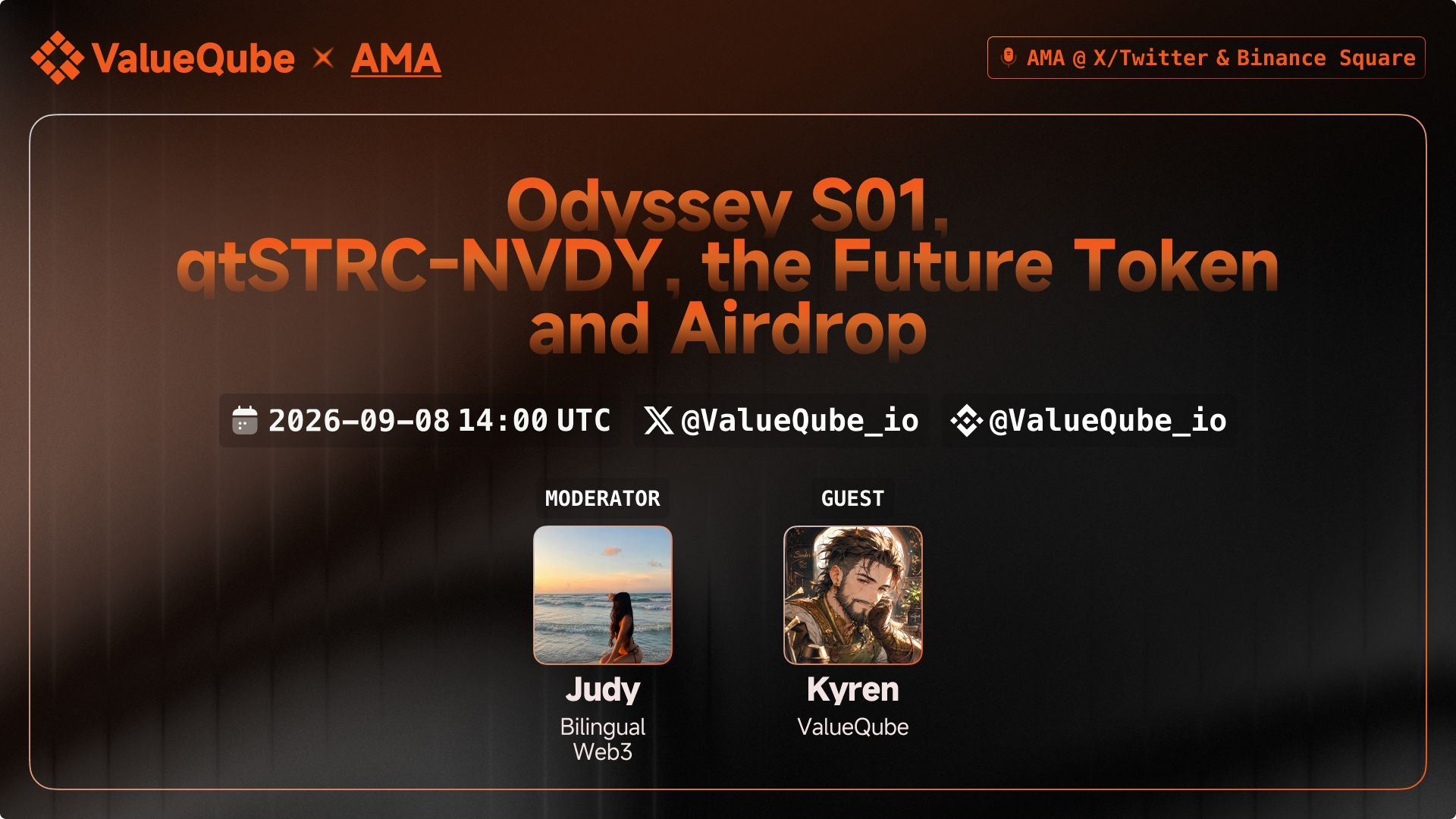
🎙️ ValueQube AMA: Odyssey S01, qtSTRC-NVDY và Điều Gì Sẽ Diễn Ra Tiếp Theo
⠀
Odyssey S01 đã thu hút 2.500 người tham gia và đạt hơn 10 triệu USD giá trị đăng ký Testnet mô phỏng. Nhưng những con số này thực sự đã chứng minh được điều gì?
⠀
Hãy tham gia cùng Kyren từ ValueQube để thảo luận S01 đã dạy chúng ta những gì, qtSTRC-NVDY hoạt động ra sao, thiết kế token trong tương lai, và câu hỏi về Airdrop. 🔍
⠀
📅 8 tháng 9, 2026
⏰ 14:00 UTC
⠀
Đặt lời nhắc cho AMA tại đây 👇
⠀
🔗 https://twitter.com/i/spaces/1OxwbneQrAWJB
⠀
#ValueQube #OdysseyS01 #AMA #RWA #DeFi
🎙️ ValueQube AMA: Odyssey S01, qtSTRC-NVDY và Điều Gì Sẽ Diễn Ra Tiếp Theo
⠀
Odyssey S01 đã thu hút 2.500 người tham gia và đạt hơn 10 triệu USD giá trị đăng ký Testnet mô phỏng. Nhưng những con số này thực sự đã chứng minh được điều gì?
⠀
Hãy tham gia cùng Kyren từ ValueQube để thảo luận S01 đã dạy chúng ta những gì, qtSTRC-NVDY hoạt động ra sao, thiết kế token trong tương lai, và câu hỏi về Airdrop. 🔍
⠀
📅 8 tháng 9, 2026
⏰ 14:00 UTC
⠀
Đặt lời nhắc cho AMA tại đây 👇
⠀
🔗 https://twitter.com/i/spaces/1OxwbneQrAWJB
⠀
#ValueQube #OdysseyS01 #AMA #RWA #DeFi
⠀
Odyssey S01 đã thu hút 2.500 người tham gia và đạt hơn 10 triệu USD giá trị đăng ký Testnet mô phỏng. Nhưng những con số này thực sự đã chứng minh được điều gì?
⠀
Hãy tham gia cùng Kyren từ ValueQube để thảo luận S01 đã dạy chúng ta những gì, qtSTRC-NVDY hoạt động ra sao, thiết kế token trong tương lai, và câu hỏi về Airdrop. 🔍
⠀
📅 8 tháng 9, 2026
⏰ 14:00 UTC
⠀
Đặt lời nhắc cho AMA tại đây 👇
⠀
🔗 https://twitter.com/i/spaces/1OxwbneQrAWJB
⠀
#ValueQube #OdysseyS01 #AMA #RWA #DeFi
1
3
76
·
--
🤝 Thông báo hợp tác
⠀
ValueQube hợp tác với @Astrix_market, một thị trường dự đoán phi tập trung được cung cấp bởi oracle, chuyển các quan điểm về sự kiện tương lai thành các xác suất minh bạch, có thể giao dịch. 🔮
⠀
Astrix kết hợp trí tuệ sự kiện, dữ liệu đa nguồn và cơ chế thanh toán trên chuỗi. ValueQube cấu trúc mức độ phơi nhiễm tài chính, bằng chứng, rủi ro và quy tắc sản phẩm thông qua các Chứng chỉ qAsset có thể đọc bởi AI một cách minh bạch.
⠀
Cùng nhau, chúng tôi sẽ khám phá cách các xác suất thị trường và kết quả thanh toán có thể trở thành bối cảnh tài chính được cấu trúc—để người dùng, ví, giao thức và AI có thể hiểu không chỉ thị trường đang kỳ vọng điều gì, mà mỗi vị thế có ý nghĩa gì. 🧾
⠀
#ValueQube #Astrix #PredictionMarkets #AI #DeFi
🤝 Thông báo hợp tác
⠀
ValueQube hợp tác với @Astrix_market, một thị trường dự đoán phi tập trung được cung cấp bởi oracle, chuyển các quan điểm về sự kiện tương lai thành các xác suất minh bạch, có thể giao dịch. 🔮
⠀
Astrix kết hợp trí tuệ sự kiện, dữ liệu đa nguồn và cơ chế thanh toán trên chuỗi. ValueQube cấu trúc mức độ phơi nhiễm tài chính, bằng chứng, rủi ro và quy tắc sản phẩm thông qua các Chứng chỉ qAsset có thể đọc bởi AI một cách minh bạch.
⠀
Cùng nhau, chúng tôi sẽ khám phá cách các xác suất thị trường và kết quả thanh toán có thể trở thành bối cảnh tài chính được cấu trúc—để người dùng, ví, giao thức và AI có thể hiểu không chỉ thị trường đang kỳ vọng điều gì, mà mỗi vị thế có ý nghĩa gì. 🧾
⠀
#ValueQube #Astrix #PredictionMarkets #AI #DeFi
⠀
ValueQube hợp tác với @Astrix_market, một thị trường dự đoán phi tập trung được cung cấp bởi oracle, chuyển các quan điểm về sự kiện tương lai thành các xác suất minh bạch, có thể giao dịch. 🔮
⠀
Astrix kết hợp trí tuệ sự kiện, dữ liệu đa nguồn và cơ chế thanh toán trên chuỗi. ValueQube cấu trúc mức độ phơi nhiễm tài chính, bằng chứng, rủi ro và quy tắc sản phẩm thông qua các Chứng chỉ qAsset có thể đọc bởi AI một cách minh bạch.
⠀
Cùng nhau, chúng tôi sẽ khám phá cách các xác suất thị trường và kết quả thanh toán có thể trở thành bối cảnh tài chính được cấu trúc—để người dùng, ví, giao thức và AI có thể hiểu không chỉ thị trường đang kỳ vọng điều gì, mà mỗi vị thế có ý nghĩa gì. 🧾
⠀
#ValueQube #Astrix #PredictionMarkets #AI #DeFi
1
2
82
·
--
Bài viết
Báo cáo AMA | Trước khi Airdrop, hãy Xây Dựng Bằng Chứng: Vì sao ValueQube Odyssey không chỉ là một bức tường nhiệm vụ**Ghi chú của Biên tập viên|**Bài viết này dựa trên buổi AMA ValueQube Odyssey được tổ chức vào ngày 2 tháng 9 năm 2026 lúc 14:00 UTC.
Cuộc trò chuyện đã bao gồm hành trình Testnet Odyssey S01 gồm năm bước và sự khác biệt giữa qAsset và Qube XP. Đồng thời, họ cũng giải thích việc xác minh trong cộng đồng và đối mặt với chủ đề mà ai cũng muốn hỏi: Airdrop.
Crypto không thiếu những “hành trình Odyssey”. Hãy hình dung một khung cảnh quen thuộc.
Người dùng Testnet Julia21 kiểm tra một ví và phê duyệt hành động chiến dịch đầu tiên. Một tab yêu cầu theo dõi. Tab khác mở một cuộc trò chuyện trong cộng đồng. Sau đó là một lượt chia sẻ lại, một ảnh chụp màn hình và một chữ ký nữa. Thanh tiến trình di chuyển, nhưng người dùng có thể hoàn thành toàn bộ chiến dịch mà không học được nhiều về sản phẩm.
Báo cáo AMA | Trước khi Airdrop, hãy Xây Dựng Bằng Chứng: Vì sao ValueQube Odyssey không chỉ là một bức tường nhiệm vụ
**Ghi chú của Biên tập viên|**Bài viết này dựa trên buổi AMA ValueQube Odyssey được tổ chức vào ngày 2 tháng 9 năm 2026 lúc 14:00 UTC.
Cuộc trò chuyện đã bao gồm hành trình Testnet Odyssey S01 gồm năm bước và sự khác biệt giữa qAsset và Qube XP. Đồng thời, họ cũng giải thích việc xác minh trong cộng đồng và đối mặt với chủ đề mà ai cũng muốn hỏi: Airdrop.
Crypto không thiếu những “hành trình Odyssey”. Hãy hình dung một khung cảnh quen thuộc.
Người dùng Testnet Julia21 kiểm tra một ví và phê duyệt hành động chiến dịch đầu tiên. Một tab yêu cầu theo dõi. Tab khác mở một cuộc trò chuyện trong cộng đồng. Sau đó là một lượt chia sẻ lại, một ảnh chụp màn hình và một chữ ký nữa. Thanh tiến trình di chuyển, nhưng người dùng có thể hoàn thành toàn bộ chiến dịch mà không học được nhiều về sản phẩm.
Cuộc trò chuyện đã bao gồm hành trình Testnet Odyssey S01 gồm năm bước và sự khác biệt giữa qAsset và Qube XP. Đồng thời, họ cũng giải thích việc xác minh trong cộng đồng và đối mặt với chủ đề mà ai cũng muốn hỏi: Airdrop.
Crypto không thiếu những “hành trình Odyssey”. Hãy hình dung một khung cảnh quen thuộc.
Người dùng Testnet Julia21 kiểm tra một ví và phê duyệt hành động chiến dịch đầu tiên. Một tab yêu cầu theo dõi. Tab khác mở một cuộc trò chuyện trong cộng đồng. Sau đó là một lượt chia sẻ lại, một ảnh chụp màn hình và một chữ ký nữa. Thanh tiến trình di chuyển, nhưng người dùng có thể hoàn thành toàn bộ chiến dịch mà không học được nhiều về sản phẩm.
3
133
·
--
🤝 Thông báo hợp tác
⠀
ValueQube hợp tác với @miraagent_ai, một market copilot được hỗ trợ bởi AI, biến dữ liệu hoạt động và vị thế on-chain theo thời gian thực thành các thông tin dạng cấu trúc, sẵn sàng cho việc ra quyết định. 📡
⠀
Mira Agent giúp người dùng hiểu thị trường đang làm gì và điều đó quan trọng như thế nào đối với vị thế của họ. ValueQube cung cấp cho các vị thế đó bối cảnh tài chính dạng cấu trúc thông qua các qAsset Certificates minh bạch, có thể đọc được bởi AI.
⠀
Cùng nhau, chúng tôi sẽ khám phá cách trí tuệ thị trường thời gian thực và các bản ghi tài chính dễ đọc có thể phối hợp với nhau—giúp người dùng chuyển từ tín hiệu sang bối cảnh, và từ bối cảnh sang hành động được người dùng ủy quyền và được cung cấp thông tin đầy đủ. 🧭
⠀
#ValueQube #MiraAgent #AI #RWA #DeFi
🤝 Thông báo hợp tác
⠀
ValueQube hợp tác với @miraagent_ai, một market copilot được hỗ trợ bởi AI, biến dữ liệu hoạt động và vị thế on-chain theo thời gian thực thành các thông tin dạng cấu trúc, sẵn sàng cho việc ra quyết định. 📡
⠀
Mira Agent giúp người dùng hiểu thị trường đang làm gì và điều đó quan trọng như thế nào đối với vị thế của họ. ValueQube cung cấp cho các vị thế đó bối cảnh tài chính dạng cấu trúc thông qua các qAsset Certificates minh bạch, có thể đọc được bởi AI.
⠀
Cùng nhau, chúng tôi sẽ khám phá cách trí tuệ thị trường thời gian thực và các bản ghi tài chính dễ đọc có thể phối hợp với nhau—giúp người dùng chuyển từ tín hiệu sang bối cảnh, và từ bối cảnh sang hành động được người dùng ủy quyền và được cung cấp thông tin đầy đủ. 🧭
⠀
#ValueQube #MiraAgent #AI #RWA #DeFi
⠀
ValueQube hợp tác với @miraagent_ai, một market copilot được hỗ trợ bởi AI, biến dữ liệu hoạt động và vị thế on-chain theo thời gian thực thành các thông tin dạng cấu trúc, sẵn sàng cho việc ra quyết định. 📡
⠀
Mira Agent giúp người dùng hiểu thị trường đang làm gì và điều đó quan trọng như thế nào đối với vị thế của họ. ValueQube cung cấp cho các vị thế đó bối cảnh tài chính dạng cấu trúc thông qua các qAsset Certificates minh bạch, có thể đọc được bởi AI.
⠀
Cùng nhau, chúng tôi sẽ khám phá cách trí tuệ thị trường thời gian thực và các bản ghi tài chính dễ đọc có thể phối hợp với nhau—giúp người dùng chuyển từ tín hiệu sang bối cảnh, và từ bối cảnh sang hành động được người dùng ủy quyền và được cung cấp thông tin đầy đủ. 🧭
⠀
#ValueQube #MiraAgent #AI #RWA #DeFi
2
166
·
--
Bài viết
ValueQube Insight: Khi Lãi Suất Tăng, Tài Khoản Phải Giải Thích Vì Sao*Kỳ vọng về việc tăng lãi suất đang được định giá lại, tác động đến tài sản toàn cầu. Với ValueQube, điều này cũng cho thấy vì sao một tài khoản tài chính cần phải giải thích rủi ro—không chỉ đơn thuần hiển thị số dư.*
Thị trường không chờ đến khi Cục Dự trữ Liên bang tăng lãi suất.
Sau bài phát biểu của Chủ tịch Fed Kevin Warsh tại Jackson Hole vào ngày 28 tháng 8, lợi suất trái phiếu kho bạc kỳ hạn hai năm đã tăng 11 điểm cơ bản lên 4,34%. Đồng đô la mạnh lên, trong khi xác suất được thị trường ngụ ý về việc Fed tăng lãi suất vào tháng 9 leo từ khoảng 35% lên 60%. [Reuters đã ghi nhận việc định giá lại ngay lập tức](https://www.reuters.com/business/view-rate-hike-expectations-rise-warsh-speech-jackson-hole-2026-08-28/).
ValueQube Insight: Khi Lãi Suất Tăng, Tài Khoản Phải Giải Thích Vì Sao
*Kỳ vọng về việc tăng lãi suất đang được định giá lại, tác động đến tài sản toàn cầu. Với ValueQube, điều này cũng cho thấy vì sao một tài khoản tài chính cần phải giải thích rủi ro—không chỉ đơn thuần hiển thị số dư.*
Thị trường không chờ đến khi Cục Dự trữ Liên bang tăng lãi suất.
Sau bài phát biểu của Chủ tịch Fed Kevin Warsh tại Jackson Hole vào ngày 28 tháng 8, lợi suất trái phiếu kho bạc kỳ hạn hai năm đã tăng 11 điểm cơ bản lên 4,34%. Đồng đô la mạnh lên, trong khi xác suất được thị trường ngụ ý về việc Fed tăng lãi suất vào tháng 9 leo từ khoảng 35% lên 60%. [Reuters đã ghi nhận việc định giá lại ngay lập tức](https://www.reuters.com/business/view-rate-hike-expectations-rise-warsh-speech-jackson-hole-2026-08-28/).
Thị trường không chờ đến khi Cục Dự trữ Liên bang tăng lãi suất.
Sau bài phát biểu của Chủ tịch Fed Kevin Warsh tại Jackson Hole vào ngày 28 tháng 8, lợi suất trái phiếu kho bạc kỳ hạn hai năm đã tăng 11 điểm cơ bản lên 4,34%. Đồng đô la mạnh lên, trong khi xác suất được thị trường ngụ ý về việc Fed tăng lãi suất vào tháng 9 leo từ khoảng 35% lên 60%. [Reuters đã ghi nhận việc định giá lại ngay lập tức](https://www.reuters.com/business/view-rate-hike-expectations-rise-warsh-speech-jackson-hole-2026-08-28/).
1
127
·
--
🤝 Thông báo hợp tác
⠀
ValueQube hợp tác với @Hi_PoPPOfficial, một lớp người dùng Web3 do AI hỗ trợ, tập trung vào danh tính phi tập trung, phân tích hành vi trên chuỗi và tương tác với người dùng theo hướng ưu tiên quyền riêng tư. 🧬
⠀
PoP Planet chuyển hoạt động trên chuỗi thành các tín hiệu danh tính được cấu trúc. ValueQube chuyển mức độ phơi nhiễm tài chính phức tạp thành các Chứng chỉ qAsset minh bạch, có thể đọc được bằng AI.
⠀
Cùng nhau, chúng tôi sẽ khám phá cách danh tính, hành vi và bối cảnh tài chính có thể phối hợp—giúp người dùng, dApps, ví và AI hiểu rõ mỗi vị thế đại diện cho điều gì, những rủi ro nào áp dụng và những hành động nào có sẵn. 🧊
⠀
#ValueQube #PoPPlanet #Web3Identity #RWA #AI
🤝 Thông báo hợp tác
⠀
ValueQube hợp tác với @Hi_PoPPOfficial, một lớp người dùng Web3 do AI hỗ trợ, tập trung vào danh tính phi tập trung, phân tích hành vi trên chuỗi và tương tác với người dùng theo hướng ưu tiên quyền riêng tư. 🧬
⠀
PoP Planet chuyển hoạt động trên chuỗi thành các tín hiệu danh tính được cấu trúc. ValueQube chuyển mức độ phơi nhiễm tài chính phức tạp thành các Chứng chỉ qAsset minh bạch, có thể đọc được bằng AI.
⠀
Cùng nhau, chúng tôi sẽ khám phá cách danh tính, hành vi và bối cảnh tài chính có thể phối hợp—giúp người dùng, dApps, ví và AI hiểu rõ mỗi vị thế đại diện cho điều gì, những rủi ro nào áp dụng và những hành động nào có sẵn. 🧊
⠀
#ValueQube #PoPPlanet #Web3Identity #RWA #AI
⠀
ValueQube hợp tác với @Hi_PoPPOfficial, một lớp người dùng Web3 do AI hỗ trợ, tập trung vào danh tính phi tập trung, phân tích hành vi trên chuỗi và tương tác với người dùng theo hướng ưu tiên quyền riêng tư. 🧬
⠀
PoP Planet chuyển hoạt động trên chuỗi thành các tín hiệu danh tính được cấu trúc. ValueQube chuyển mức độ phơi nhiễm tài chính phức tạp thành các Chứng chỉ qAsset minh bạch, có thể đọc được bằng AI.
⠀
Cùng nhau, chúng tôi sẽ khám phá cách danh tính, hành vi và bối cảnh tài chính có thể phối hợp—giúp người dùng, dApps, ví và AI hiểu rõ mỗi vị thế đại diện cho điều gì, những rủi ro nào áp dụng và những hành động nào có sẵn. 🧊
⠀
#ValueQube #PoPPlanet #Web3Identity #RWA #AI
2
115
·
--
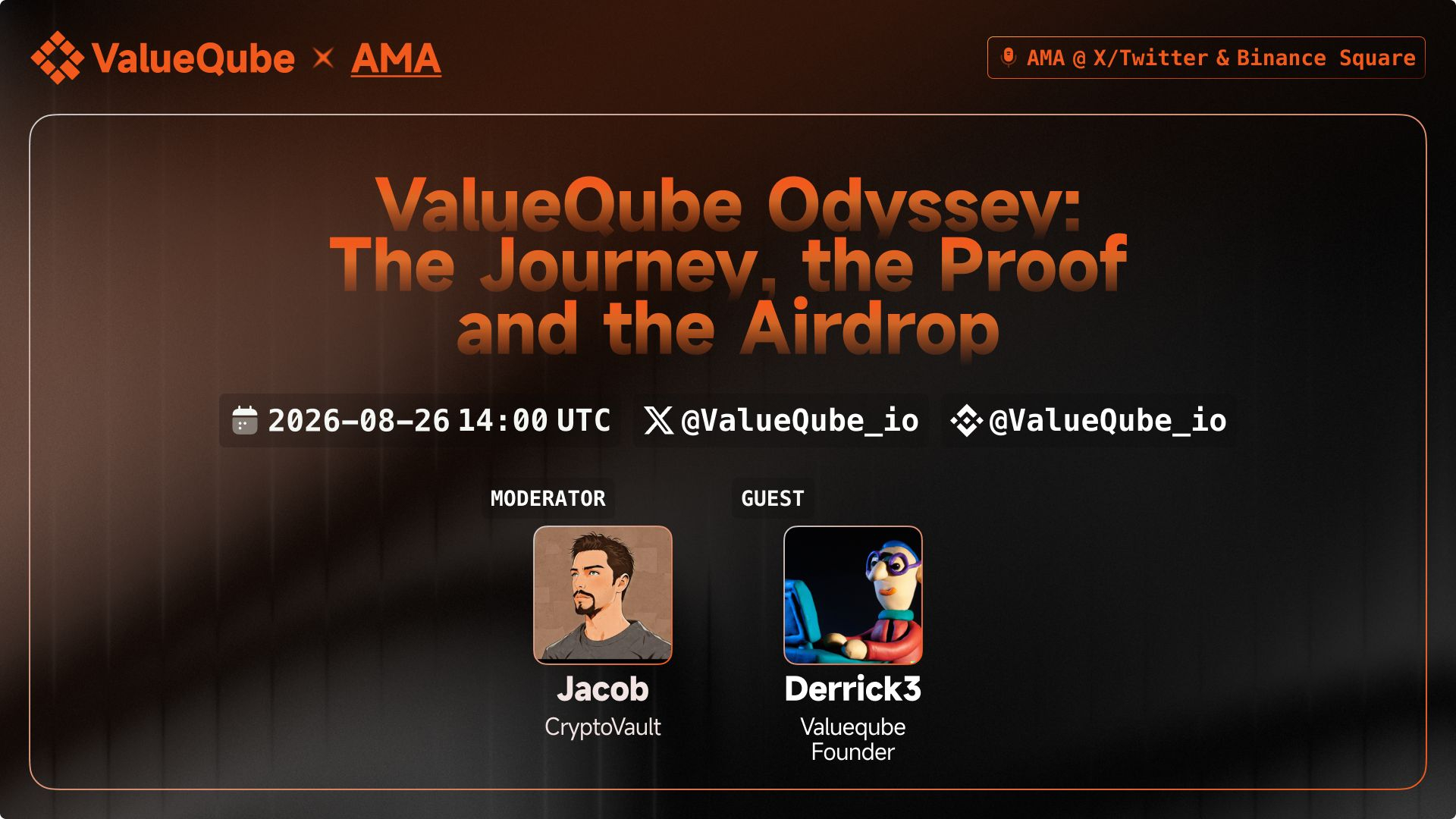
🎙️ ValueQube Odyssey: Hành trình, bằng chứng và đợt Airdrop
⠀
Phần lớn các quest Web3 đo lường lượt nhấp chuột. Odyssey S01 đánh giá liệu người dùng có thể hiểu sản phẩm, hoàn thành một hành động Testnet đã được xác minh và đọc kết quả hay không.
⠀
Hãy tham gia cùng Founder của ValueQube, Derrick, để thảo luận hành trình 5 bước, qAssets dễ đọc, Qube XP và các nhiệm vụ cộng đồng. 🧭
⠀
🗓️ 26 tháng 8, 2026
⏰ 14:00 UTC
⠀
Đặt lời nhắc cho AMA tại đây 👇
⠀
🔗 https://twitter.com/i/spaces/1dGYlaLkDWEKX
⠀
#ValueQube #OdysseyS01 #AMA #RWA #DeFi
🎙️ ValueQube Odyssey: Hành trình, bằng chứng và đợt Airdrop
⠀
Phần lớn các quest Web3 đo lường lượt nhấp chuột. Odyssey S01 đánh giá liệu người dùng có thể hiểu sản phẩm, hoàn thành một hành động Testnet đã được xác minh và đọc kết quả hay không.
⠀
Hãy tham gia cùng Founder của ValueQube, Derrick, để thảo luận hành trình 5 bước, qAssets dễ đọc, Qube XP và các nhiệm vụ cộng đồng. 🧭
⠀
🗓️ 26 tháng 8, 2026
⏰ 14:00 UTC
⠀
Đặt lời nhắc cho AMA tại đây 👇
⠀
🔗 https://twitter.com/i/spaces/1dGYlaLkDWEKX
⠀
#ValueQube #OdysseyS01 #AMA #RWA #DeFi
⠀
Phần lớn các quest Web3 đo lường lượt nhấp chuột. Odyssey S01 đánh giá liệu người dùng có thể hiểu sản phẩm, hoàn thành một hành động Testnet đã được xác minh và đọc kết quả hay không.
⠀
Hãy tham gia cùng Founder của ValueQube, Derrick, để thảo luận hành trình 5 bước, qAssets dễ đọc, Qube XP và các nhiệm vụ cộng đồng. 🧭
⠀
🗓️ 26 tháng 8, 2026
⏰ 14:00 UTC
⠀
Đặt lời nhắc cho AMA tại đây 👇
⠀
🔗 https://twitter.com/i/spaces/1dGYlaLkDWEKX
⠀
#ValueQube #OdysseyS01 #AMA #RWA #DeFi
1
79
·
--
🤝 Thông báo hợp tác
⠀
ValueQube hợp tác với @Mintellect_AI, một lớp hạ tầng ContentFi nhằm biến code, tài sản AI và tri thức thành các tài sản on-chain có thể lập trình. 💡
⠀
Mintellect cấu trúc quyền sở hữu, giấy phép và cơ chế kiếm tiền cho nội dung số. ValueQube tổ chức logic giá trị, phí, rủi ro và các quy tắc vòng đời thông qua các chứng chỉ qAsset minh bạch, dễ đọc đối với AI.
⠀
Cùng nhau, chúng tôi sẽ khám phá cách các quyền nội dung có thể lập trình có thể kết nối với bối cảnh tài chính có thể đọc bằng máy—giúp người sáng tạo, nền tảng và AI hiểu tài sản số được sở hữu, sử dụng và định giá như thế nào. 🧊
⠀
#ValueQube #Mintellect #ContentFi #AI #Web3
🤝 Thông báo hợp tác
⠀
ValueQube hợp tác với @Mintellect_AI, một lớp hạ tầng ContentFi nhằm biến code, tài sản AI và tri thức thành các tài sản on-chain có thể lập trình. 💡
⠀
Mintellect cấu trúc quyền sở hữu, giấy phép và cơ chế kiếm tiền cho nội dung số. ValueQube tổ chức logic giá trị, phí, rủi ro và các quy tắc vòng đời thông qua các chứng chỉ qAsset minh bạch, dễ đọc đối với AI.
⠀
Cùng nhau, chúng tôi sẽ khám phá cách các quyền nội dung có thể lập trình có thể kết nối với bối cảnh tài chính có thể đọc bằng máy—giúp người sáng tạo, nền tảng và AI hiểu tài sản số được sở hữu, sử dụng và định giá như thế nào. 🧊
⠀
#ValueQube #Mintellect #ContentFi #AI #Web3
⠀
ValueQube hợp tác với @Mintellect_AI, một lớp hạ tầng ContentFi nhằm biến code, tài sản AI và tri thức thành các tài sản on-chain có thể lập trình. 💡
⠀
Mintellect cấu trúc quyền sở hữu, giấy phép và cơ chế kiếm tiền cho nội dung số. ValueQube tổ chức logic giá trị, phí, rủi ro và các quy tắc vòng đời thông qua các chứng chỉ qAsset minh bạch, dễ đọc đối với AI.
⠀
Cùng nhau, chúng tôi sẽ khám phá cách các quyền nội dung có thể lập trình có thể kết nối với bối cảnh tài chính có thể đọc bằng máy—giúp người sáng tạo, nền tảng và AI hiểu tài sản số được sở hữu, sử dụng và định giá như thế nào. 🧊
⠀
#ValueQube #Mintellect #ContentFi #AI #Web3
1
88
·
--
🤝 Thông báo Hợp tác
⠀
ValueQube hợp tác với @Agentum_space, một giao thức on-chain cho thương mại tác nhân (agentic commerce) tự chủ được xây dựng trên BNB Chain. 🤖
⠀
Agentum cho phép các tác nhân AI đăng bài và đặt giá cho công việc, thực thi nhiệm vụ một cách riêng tư, xác minh kết quả và thanh toán thông qua escrow. ValueQube tổ chức rủi ro tài chính thành các Chứng chỉ qAsset minh bạch, có thể đọc được bởi AI.
⠀
Cùng nhau, chúng tôi sẽ khám phá cách thực thi tự chủ có thể kết nối với ngữ cảnh có thể đọc được bằng máy xung quanh giá trị, rủi ro, quy tắc và bằng chứng—để tài chính tác nhân trở nên dễ xác minh, dễ diễn giải và có trách nhiệm hơn. 🧊
⠀
#ValueQube #Agentum #AgenticFinance #AI #BNBChain
🤝 Thông báo Hợp tác
⠀
ValueQube hợp tác với @Agentum_space, một giao thức on-chain cho thương mại tác nhân (agentic commerce) tự chủ được xây dựng trên BNB Chain. 🤖
⠀
Agentum cho phép các tác nhân AI đăng bài và đặt giá cho công việc, thực thi nhiệm vụ một cách riêng tư, xác minh kết quả và thanh toán thông qua escrow. ValueQube tổ chức rủi ro tài chính thành các Chứng chỉ qAsset minh bạch, có thể đọc được bởi AI.
⠀
Cùng nhau, chúng tôi sẽ khám phá cách thực thi tự chủ có thể kết nối với ngữ cảnh có thể đọc được bằng máy xung quanh giá trị, rủi ro, quy tắc và bằng chứng—để tài chính tác nhân trở nên dễ xác minh, dễ diễn giải và có trách nhiệm hơn. 🧊
⠀
#ValueQube #Agentum #AgenticFinance #AI #BNBChain
⠀
ValueQube hợp tác với @Agentum_space, một giao thức on-chain cho thương mại tác nhân (agentic commerce) tự chủ được xây dựng trên BNB Chain. 🤖
⠀
Agentum cho phép các tác nhân AI đăng bài và đặt giá cho công việc, thực thi nhiệm vụ một cách riêng tư, xác minh kết quả và thanh toán thông qua escrow. ValueQube tổ chức rủi ro tài chính thành các Chứng chỉ qAsset minh bạch, có thể đọc được bởi AI.
⠀
Cùng nhau, chúng tôi sẽ khám phá cách thực thi tự chủ có thể kết nối với ngữ cảnh có thể đọc được bằng máy xung quanh giá trị, rủi ro, quy tắc và bằng chứng—để tài chính tác nhân trở nên dễ xác minh, dễ diễn giải và có trách nhiệm hơn. 🧊
⠀
#ValueQube #Agentum #AgenticFinance #AI #BNBChain
1
79
·
--
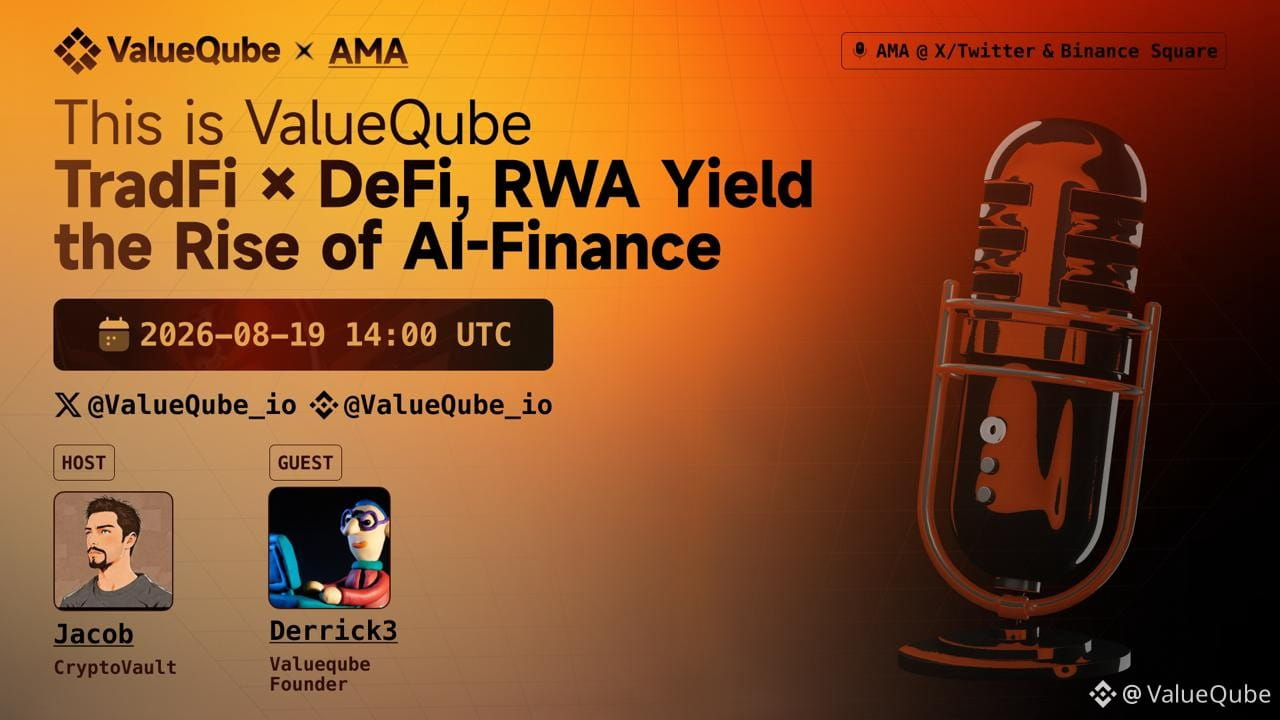
🎙️ KHO VÀNG CRYPTO × VALUEQUBE AMA
⠀
Số dư cho thấy bạn đang nắm giữ gì. Tài khoản dễ đọc giải thích ý nghĩa của điều đó.
⠀
Hãy tham gia cùng Founder ValueQube Derrick để thảo luận về cách Chứng chỉ qAsset mang đến cho người dùng và AI bối cảnh rõ ràng hơn về giá trị, rủi ro và các hành động sẵn có—trong khi vẫn đặt quyền kiểm soát trong tay người dùng. 🧊
⠀
🗓️ Ngày 19 tháng 8 năm 2026
⏰ 14:00 UTC
⠀
Đặt lời nhắc 👇
⠀
🔗 https://twitter.com/i/spaces/1aJbdEMdaBBKX
⠀
#ValueQube #AMA #RWA #DEFİ #Aİ
🎙️ KHO VÀNG CRYPTO × VALUEQUBE AMA
⠀
Số dư cho thấy bạn đang nắm giữ gì. Tài khoản dễ đọc giải thích ý nghĩa của điều đó.
⠀
Hãy tham gia cùng Founder ValueQube Derrick để thảo luận về cách Chứng chỉ qAsset mang đến cho người dùng và AI bối cảnh rõ ràng hơn về giá trị, rủi ro và các hành động sẵn có—trong khi vẫn đặt quyền kiểm soát trong tay người dùng. 🧊
⠀
🗓️ Ngày 19 tháng 8 năm 2026
⏰ 14:00 UTC
⠀
Đặt lời nhắc 👇
⠀
🔗 https://twitter.com/i/spaces/1aJbdEMdaBBKX
⠀
#ValueQube #AMA #RWA #DEFİ #Aİ
⠀
Số dư cho thấy bạn đang nắm giữ gì. Tài khoản dễ đọc giải thích ý nghĩa của điều đó.
⠀
Hãy tham gia cùng Founder ValueQube Derrick để thảo luận về cách Chứng chỉ qAsset mang đến cho người dùng và AI bối cảnh rõ ràng hơn về giá trị, rủi ro và các hành động sẵn có—trong khi vẫn đặt quyền kiểm soát trong tay người dùng. 🧊
⠀
🗓️ Ngày 19 tháng 8 năm 2026
⏰ 14:00 UTC
⠀
Đặt lời nhắc 👇
⠀
🔗 https://twitter.com/i/spaces/1aJbdEMdaBBKX
⠀
#ValueQube #AMA #RWA #DEFİ #Aİ
3
93
·
--
🤝 Thông báo hợp tác
⠀
ValueQube hợp tác với @AstroXFinance, một nền tảng nền tảng token dành cho creator đa chuỗi được phát trực tiếp, nơi creator ra mắt token trực tiếp và người dùng giao dịch ngay trong luồng. 🎥
⠀
AstroX đưa việc tạo token và tham gia thị trường vào thời gian thực. ValueQube giúp bối cảnh tài chính trở nên dễ đọc—tổ chức mức độ phơi nhiễm, bằng chứng, rủi ro, quy tắc sản phẩm và trạng thái vị thế thông qua các Chứng chỉ qAsset có thể đọc bởi AI một cách minh bạch.
⠀
Cùng nhau, chúng tôi sẽ khám phá cách hoạt động ra mắt token qua livestream và các sự kiện thị trường đa chuỗi có thể được chuyển thành các bản ghi tài khoản được cấu trúc mà người dùng, ví, giao thức và AI có thể diễn giải. 🧊
⠀
Khi tài sản ngày càng dễ ra mắt và giao dịch, chúng cũng nên dễ hiểu hơn.
⠀
#ValueQube #AstroX #CreatorEconomy #DeFi #Web3
🤝 Thông báo hợp tác
⠀
ValueQube hợp tác với @AstroXFinance, một nền tảng nền tảng token dành cho creator đa chuỗi được phát trực tiếp, nơi creator ra mắt token trực tiếp và người dùng giao dịch ngay trong luồng. 🎥
⠀
AstroX đưa việc tạo token và tham gia thị trường vào thời gian thực. ValueQube giúp bối cảnh tài chính trở nên dễ đọc—tổ chức mức độ phơi nhiễm, bằng chứng, rủi ro, quy tắc sản phẩm và trạng thái vị thế thông qua các Chứng chỉ qAsset có thể đọc bởi AI một cách minh bạch.
⠀
Cùng nhau, chúng tôi sẽ khám phá cách hoạt động ra mắt token qua livestream và các sự kiện thị trường đa chuỗi có thể được chuyển thành các bản ghi tài khoản được cấu trúc mà người dùng, ví, giao thức và AI có thể diễn giải. 🧊
⠀
Khi tài sản ngày càng dễ ra mắt và giao dịch, chúng cũng nên dễ hiểu hơn.
⠀
#ValueQube #AstroX #CreatorEconomy #DeFi #Web3
⠀
ValueQube hợp tác với @AstroXFinance, một nền tảng nền tảng token dành cho creator đa chuỗi được phát trực tiếp, nơi creator ra mắt token trực tiếp và người dùng giao dịch ngay trong luồng. 🎥
⠀
AstroX đưa việc tạo token và tham gia thị trường vào thời gian thực. ValueQube giúp bối cảnh tài chính trở nên dễ đọc—tổ chức mức độ phơi nhiễm, bằng chứng, rủi ro, quy tắc sản phẩm và trạng thái vị thế thông qua các Chứng chỉ qAsset có thể đọc bởi AI một cách minh bạch.
⠀
Cùng nhau, chúng tôi sẽ khám phá cách hoạt động ra mắt token qua livestream và các sự kiện thị trường đa chuỗi có thể được chuyển thành các bản ghi tài khoản được cấu trúc mà người dùng, ví, giao thức và AI có thể diễn giải. 🧊
⠀
Khi tài sản ngày càng dễ ra mắt và giao dịch, chúng cũng nên dễ hiểu hơn.
⠀
#ValueQube #AstroX #CreatorEconomy #DeFi #Web3
3
94
·
--
🎙️ ValueQube Odyssey S01 AMA
TradFi có các sản phẩm. DeFi có các ví. AI có các câu trả lời.
Vậy tại sao người dùng vẫn mở tài khoản tài chính và hỏi:
“Chính xác thì tôi sở hữu gì?”
Tham gia cuộc thảo luận cùng người sáng lập ValueQube Derrick về cách qAssets và các Chứng chỉ có thể được AI đọc có thể tạo ra một ngôn ngữ tài chính chung giữa TradFi, DeFi, ví và AI—đồng thời vẫn giữ quyền kiểm soát cho người dùng. 🧊
🗓 14 tháng 8, 2026
⏰ 14:00 UTC
Đặt lời nhắc cho AMA 👇
🔗 https://twitter.com/i/spaces/1nxnRBReWYkxO
#ValueQube #OdysseyS01 #AMA #RWA #DeFi
🎙️ ValueQube Odyssey S01 AMA
TradFi có các sản phẩm. DeFi có các ví. AI có các câu trả lời.
Vậy tại sao người dùng vẫn mở tài khoản tài chính và hỏi:
“Chính xác thì tôi sở hữu gì?”
Tham gia cuộc thảo luận cùng người sáng lập ValueQube Derrick về cách qAssets và các Chứng chỉ có thể được AI đọc có thể tạo ra một ngôn ngữ tài chính chung giữa TradFi, DeFi, ví và AI—đồng thời vẫn giữ quyền kiểm soát cho người dùng. 🧊
🗓 14 tháng 8, 2026
⏰ 14:00 UTC
Đặt lời nhắc cho AMA 👇
🔗 https://twitter.com/i/spaces/1nxnRBReWYkxO
#ValueQube #OdysseyS01 #AMA #RWA #DeFi
TradFi có các sản phẩm. DeFi có các ví. AI có các câu trả lời.
Vậy tại sao người dùng vẫn mở tài khoản tài chính và hỏi:
“Chính xác thì tôi sở hữu gì?”
Tham gia cuộc thảo luận cùng người sáng lập ValueQube Derrick về cách qAssets và các Chứng chỉ có thể được AI đọc có thể tạo ra một ngôn ngữ tài chính chung giữa TradFi, DeFi, ví và AI—đồng thời vẫn giữ quyền kiểm soát cho người dùng. 🧊
🗓 14 tháng 8, 2026
⏰ 14:00 UTC
Đặt lời nhắc cho AMA 👇
🔗 https://twitter.com/i/spaces/1nxnRBReWYkxO
#ValueQube #OdysseyS01 #AMA #RWA #DeFi
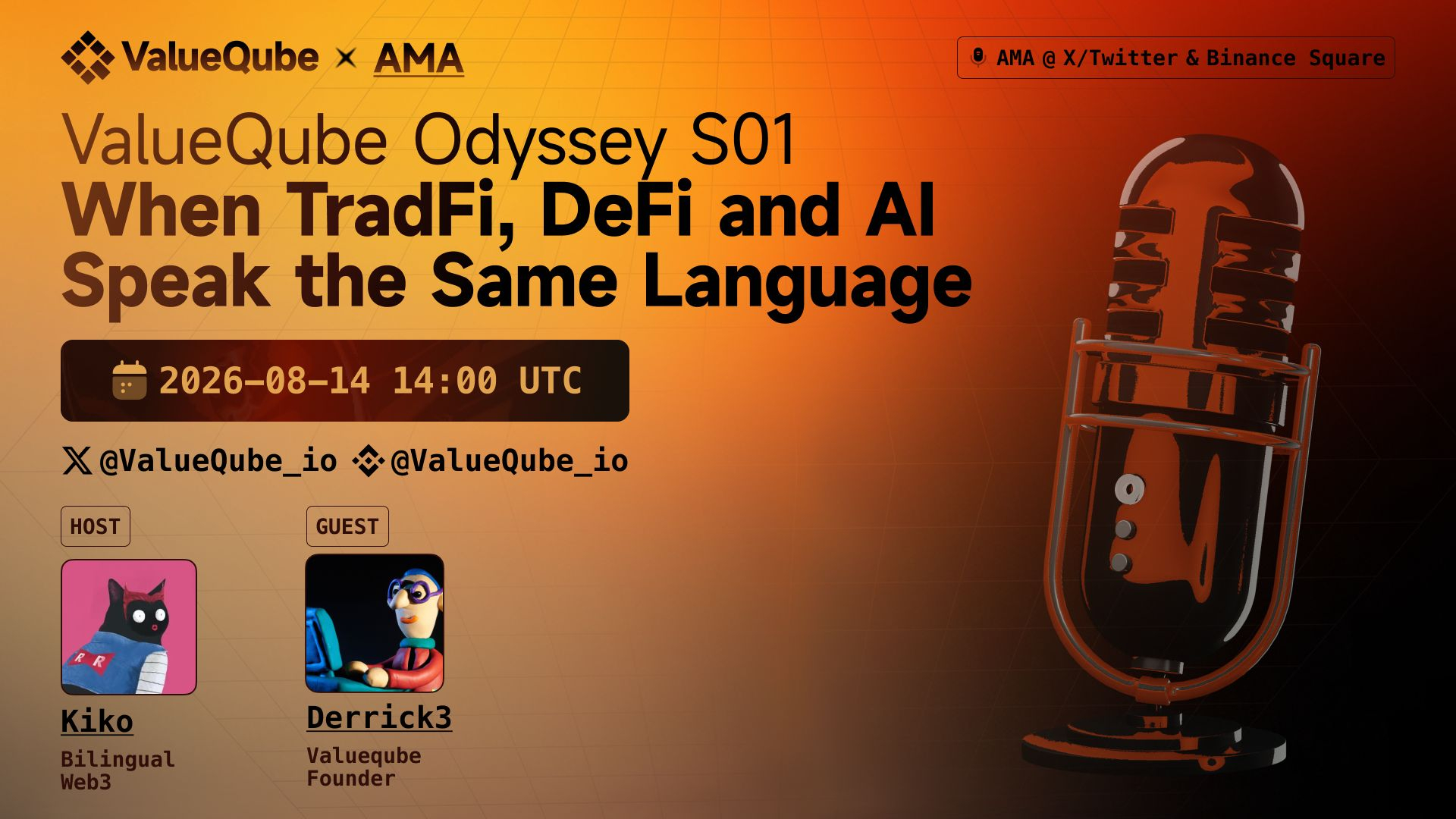
6
84
·
--
Đã xác minh
🤝 Thông báo Hợp tác
⠀
ValueQube hợp tác với @kuvilabs, đội ngũ đứng sau một Agentic Finance OS (Hệ điều hành tài chính tác nhân) chuyển đổi ý định của người dùng thành các quy trình tài chính có thể lập trình, được người dùng phê duyệt. 🦉
⠀
Kuvi tập trung vào cách các chiến lược được cấu thành, giám sát và thực thi. ValueQube cung cấp cho tài sản và chiến lược bối cảnh tài chính có cấu trúc thông qua các Chứng chỉ qAsset minh bạch, có thể đọc được bởi AI.
⠀
Sự hợp tác này sẽ khám phá cách thực thi có thể lập trình và bối cảnh tài chính có thể đọc theo máy có thể phối hợp với nhau—để tài chính thông minh có thể làm nhiều hơn những tín hiệu, đồng thời hiểu giá trị, rủi ro và các quy tắc đằng sau từng vị thế. 🧊
⠀
#ValueQube #Kuvi #AgenticFinance #RWA #Web3
🤝 Thông báo Hợp tác
⠀
ValueQube hợp tác với @kuvilabs, đội ngũ đứng sau một Agentic Finance OS (Hệ điều hành tài chính tác nhân) chuyển đổi ý định của người dùng thành các quy trình tài chính có thể lập trình, được người dùng phê duyệt. 🦉
⠀
Kuvi tập trung vào cách các chiến lược được cấu thành, giám sát và thực thi. ValueQube cung cấp cho tài sản và chiến lược bối cảnh tài chính có cấu trúc thông qua các Chứng chỉ qAsset minh bạch, có thể đọc được bởi AI.
⠀
Sự hợp tác này sẽ khám phá cách thực thi có thể lập trình và bối cảnh tài chính có thể đọc theo máy có thể phối hợp với nhau—để tài chính thông minh có thể làm nhiều hơn những tín hiệu, đồng thời hiểu giá trị, rủi ro và các quy tắc đằng sau từng vị thế. 🧊
⠀
#ValueQube #Kuvi #AgenticFinance #RWA #Web3
⠀
ValueQube hợp tác với @kuvilabs, đội ngũ đứng sau một Agentic Finance OS (Hệ điều hành tài chính tác nhân) chuyển đổi ý định của người dùng thành các quy trình tài chính có thể lập trình, được người dùng phê duyệt. 🦉
⠀
Kuvi tập trung vào cách các chiến lược được cấu thành, giám sát và thực thi. ValueQube cung cấp cho tài sản và chiến lược bối cảnh tài chính có cấu trúc thông qua các Chứng chỉ qAsset minh bạch, có thể đọc được bởi AI.
⠀
Sự hợp tác này sẽ khám phá cách thực thi có thể lập trình và bối cảnh tài chính có thể đọc theo máy có thể phối hợp với nhau—để tài chính thông minh có thể làm nhiều hơn những tín hiệu, đồng thời hiểu giá trị, rủi ro và các quy tắc đằng sau từng vị thế. 🧊
⠀
#ValueQube #Kuvi #AgenticFinance #RWA #Web3
1
4
70
·
--
ValueQube Testnet hiện đã ra mắt.
Odyssey S01 đã bắt đầu.
Truy cập: https://dapp.valueqube.io
08 Tháng 8, 2026 · 08:08 UTC
ValueQube Testnet hiện đã ra mắt.
Odyssey S01 đã bắt đầu.
Truy cập: https://dapp.valueqube.io
08 Tháng 8, 2026 · 08:08 UTC
Odyssey S01 đã bắt đầu.
Truy cập: https://dapp.valueqube.io
08 Tháng 8, 2026 · 08:08 UTC
5
99
·
--
🚀 ValueQube Testnet hiện đã SẴN SÀNG.
Vào lúc 08:08 UTC ngày 8/8/2026, Odyssey S01 sẽ ra mắt đồng bộ.
Hãy sử dụng ví EVM của bạn, vào BNB Smart Chain Testnet, hoàn tất Hướng dẫn + tuyến đường chính 5 bước, và nhận bản ghi qAsset có thể xác minh đầu tiên của bạn.
Đây là khung mùa đầu tiên. Nếu bạn tham gia, tuyến đường bắt đầu ngay bây giờ: https://dapp.valueqube.io
#ValueQube #OdysseyS01
🚀 ValueQube Testnet hiện đã SẴN SÀNG.
Vào lúc 08:08 UTC ngày 8/8/2026, Odyssey S01 sẽ ra mắt đồng bộ.
Hãy sử dụng ví EVM của bạn, vào BNB Smart Chain Testnet, hoàn tất Hướng dẫn + tuyến đường chính 5 bước, và nhận bản ghi qAsset có thể xác minh đầu tiên của bạn.
Đây là khung mùa đầu tiên. Nếu bạn tham gia, tuyến đường bắt đầu ngay bây giờ: https://dapp.valueqube.io
#ValueQube #OdysseyS01
Vào lúc 08:08 UTC ngày 8/8/2026, Odyssey S01 sẽ ra mắt đồng bộ.
Hãy sử dụng ví EVM của bạn, vào BNB Smart Chain Testnet, hoàn tất Hướng dẫn + tuyến đường chính 5 bước, và nhận bản ghi qAsset có thể xác minh đầu tiên của bạn.
Đây là khung mùa đầu tiên. Nếu bạn tham gia, tuyến đường bắt đầu ngay bây giờ: https://dapp.valueqube.io
#ValueQube #OdysseyS01
5
108
Đăng nhập để khám phá thêm nội dung
Tham gia cùng người dùng tiền mã hóa toàn cầu trên Binance Square
⚡️ Nhận thông tin mới nhất và hữu ích về tiền mã hóa.
💬 Được tin cậy bởi sàn giao dịch tiền mã hóa lớn nhất thế giới.
👍 Khám phá những thông tin chuyên sâu thực tế từ những nhà sáng tạo đã xác minh.
Email / Số điện thoại
Chủ đề thịnh hành
AIStocksWhatNext
752,533 lượt xem
5,802 đang thảo luận
Chia sẻ & Nhận thưởng Lưu lượng trong chiến dịch Hashtag Xu hướng của chúng tôi
✨Chủ đề: Những cơ hội đầu tư nào khác vẫn còn khi các cổ phiếu AI tiếp tục tăng?
👉Cách tham gia:
Đăng một bài viết ngắn hoặc bài viết kèm hashtag #AIStocksWhatNext
Chia sẻ bạn đang lạc quan hay bi quan, và đăng danh mục nắm giữ hoặc giao dịch cổ phiếu AI của bạn — việc sử dụng widget giao dịch có thể giúp bạn đủ điều kiện tốt hơn.
Bạn cũng có thể tăng sức thuyết phục cho bài đăng bằng cách chia sẻ dữ liệu hoặc biểu đồ và tránh sử dụng hình ảnh do AI tạo.
✍️Tạo nội dung dựa trên các góc dưới đây:
- Nvidia cho biết doanh số chip sẽ tăng gấp đôi vào năm tới, và các công ty AI hàng đầu tiếp tục đạt doanh thu kỷ lục, khoản chi cho năng lực tính toán phía sau điều đó còn đáng kinh ngạc hơn. Nhu cầu AI thực sự đang bùng nổ sao? Và có thể kéo dài trong bao lâu? Các cổ phiếu AI đang tăng trên toàn bảng. Đây có phải là một đợt bứt phá thật sự hay chỉ là một nhịp hồi ngắn hạn?
- Các nhà lãnh đạo ngành kêu gọi chậm lại việc phát triển AI, trong khi Trump dự định xây dựng “AI Force”, cho rằng AI có thể đóng góp 25% GDP của Mỹ trong tương lai. Bạn đứng về phía nào? Việc được hậu thuẫn ở cấp bang liệu có phải là một thắng lợi dài hạn cho các cổ phiếu AI không?
- Bạn có đang mua cổ phiếu AI không? Chia sẻ hoạt động giao dịch/nắm giữ liên quan đến AI của bạn với widget chia sẻ giao dịch của chúng tôi.
⏰Thời gian chiến dịch:
- 2026-09-22 7:00 - 2026-09-24 4:00 UTC
🎁Phần thưởng:
- Các bài đăng đủ điều kiện tuân thủ hướng dẫn trên và có hơn 100 từ sẽ được xem xét và có thể nhận một lượt tăng lưu lượng ngẫu nhiên từ 500 đến 3.000 lượt xem. Bạn sẽ nhận được thông báo từ thư ký feed nếu bài đăng của bạn được chọn.
- Nhận cơ hội để bài viết của bạn được đăng trên Binance Square Official
Cần ý tưởng cho bài đăng của bạn? Hãy truy cập trang chủ đề #AIStocksWhatNext hoặc Square Guide on How to Post for Better Reach.
Binance Square Official
·552 lượt thích
·1.5M lượt xem
TheoDõiFOMC
91,591 lượt xem
581 đang thảo luận
TinFed
81,357 lượt xem
386 đang thảo luận