

SANJOY-CRYPTO UPDATES
1.2k Bài đăng

SANJOY-CRYPTO UPDATES
Báo cáo
Chặn người dùng
📈 Daily Crypto Updates | BTC & Altcoins🧠 Simple Tips for Beginners✅ Risk Management | No Hype
152 Đang theo dõi
196 Người theo dõi
612 Đã thích
Bài đăng
Danh mục đầu tư
Tất cả
Trích dẫn
Xem bản dịch
Any prudent trader can clearly see what is actually happening here in the name of trading with 龙虾 (LOBSTER/USDT) [ULJA75]. If a retail trader makes a single mistake, the market punishes them instantly. Yet, the blatant manipulation happening inside this token goes completely unnoticed and unchecked by anyone. No matter where you place your Stop Loss (SL), the market makers will manipulate the price just enough to hunt it down and hit it before reversing [ULJA75, 10n6_Y]. Just look at the artificial presence of these buyers [10n6_Y]—I have been watching this exact trap play out for the last 4 days.
This is inherently unfair and unjust. I vehemently protest against this system, but despite seeing the deception clearly, a retail trader is left completely powerless. In the end, we are forced to accept the loss and go home with a broken Stop Loss. I trusted Binance, but this experience proves how hostile the environment can be for ordinary traders.
nothing to do. must SL hit.
Any prudent trader can clearly see what is actually happening here in the name of trading with 龙虾 (LOBSTER/USDT) [ULJA75]. If a retail trader makes a single mistake, the market punishes them instantly. Yet, the blatant manipulation happening inside this token goes completely unnoticed and unchecked by anyone. No matter where you place your Stop Loss (SL), the market makers will manipulate the price just enough to hunt it down and hit it before reversing [ULJA75, 10n6_Y]. Just look at the artificial presence of these buyers [10n6_Y]—I have been watching this exact trap play out for the last 4 days.
This is inherently unfair and unjust. I vehemently protest against this system, but despite seeing the deception clearly, a retail trader is left completely powerless. In the end, we are forced to accept the loss and go home with a broken Stop Loss. I trusted Binance, but this experience proves how hostile the environment can be for ordinary traders.
nothing to do. must SL hit.
This is inherently unfair and unjust. I vehemently protest against this system, but despite seeing the deception clearly, a retail trader is left completely powerless. In the end, we are forced to accept the loss and go home with a broken Stop Loss. I trusted Binance, but this experience proves how hostile the environment can be for ordinary traders.
nothing to do. must SL hit.
4
3
664
Xem bản dịch
Emotional ManipulationThis essay describes how traders are financially devastated by the exact type of market manipulation you are experiencing.
The Anatomy of Retail Slaughter: How Market Makers Liquidate Traders in 龙虾 (LOBSTER/USDT)
The perpetual futures market for highly volatile tokens, such as 龙虾 (LOBSTER/USDT), often transforms from a financial marketplace into a systematic slaughterhouse for retail traders [ULJA75]. Driven by sophisticated algorithms and well-funded market makers (Whales), these low-liquidity assets are prime targets for a destructive phenomenon known as the "Short Squeeze Trap" or "Liquidity Hunt" [Vga8sl, 10n6_Y]. Understanding how a retail trader gets financially and mentally decimated in this environment requires looking past the candles and into the underlying mechanics of on-chain data manipulation [gJ5BTp, O1wXzy].
The trap begins when a token undergoes a massive, unnatural parabolic pump [5VQOUW]. Looking at a chart that has surged continuously for over a week, a retail trader applies logic, assuming the asset is overbought and bound for a technical correction [5VQOUW, BdjJjk]. The trader opens a Short Position at a seemingly reasonable resistance level [BdjJjk]. However, in a manipulated asset like 龙虾 (LOBSTER), market makers deliberately exploit this logical thinking [5VQOUW]. They recognize that a massive cluster of retail short positions and stop-losses has accumulated just above the recent highs [ULJA75].
What follows is a ruthless execution of data manipulation. Even as smart money heavily shorts the asset and organic buying volume completely dries up—leaving the order book hollow—the market makers artificially hold the price high [O1wXzy, FelW1E, 10n6_Y]. By triggering low-liquidity pumps in a thin market, they force the price violently upward, entirely invalidating standard indicators like the Relative Strength Index (RSI), which gets pinned into an extreme overbought state [FelW1E, 10n6_Y, BdjJjk].
This artificial surge triggers a catastrophic domino effect: Short Liquidation. As the price breaches critical thresholds, the exchange’s automated engine forces short traders out of their positions [RtPnFt, 10n6_Y]. Because closing a short position requires buying back the asset, these forced liquidations act as involuntary market buy orders, generating massive upward momentum (fuel) that accelerates the pump [RtPnFt, 10n6_Y].
For the retail trader trapped in 龙虾 (LOBSTER/USDT), this creates an agonizing psychological and financial loop [ULJA75, tU_v_Q]. Watching the price defy all technical gravity, the trader faces the ultimate dilemma: accept a massive, gut-wrenching loss by manually closing the position, or inject more capital to push their liquidation price higher [ULJA75, tU_v_Q]. Market makers rely on this hesitation. They sustain the consolidation at elevated prices just long enough to drain the trader’s patience, clear out their capital, and capture their wallet’s remaining margin [67lWkL, Vga8sl]. Only after the very last retail short seller is completely wiped out and liquidated do the Whales finally pull the liquidity plug, allowing the token to crash violently into a hollow dump [5VQOUW]. In the end, the retail trader is left completely devastated, learning the hard way that in a manipulated market, insolvency happens long before rationality prevails.
Emotional Manipulation
This essay describes how traders are financially devastated by the exact type of market manipulation you are experiencing.
The Anatomy of Retail Slaughter: How Market Makers Liquidate Traders in 龙虾 (LOBSTER/USDT)
The perpetual futures market for highly volatile tokens, such as 龙虾 (LOBSTER/USDT), often transforms from a financial marketplace into a systematic slaughterhouse for retail traders [ULJA75]. Driven by sophisticated algorithms and well-funded market makers (Whales), these low-liquidity assets are prime targets for a destructive phenomenon known as the "Short Squeeze Trap" or "Liquidity Hunt" [Vga8sl, 10n6_Y]. Understanding how a retail trader gets financially and mentally decimated in this environment requires looking past the candles and into the underlying mechanics of on-chain data manipulation [gJ5BTp, O1wXzy].
The trap begins when a token undergoes a massive, unnatural parabolic pump [5VQOUW]. Looking at a chart that has surged continuously for over a week, a retail trader applies logic, assuming the asset is overbought and bound for a technical correction [5VQOUW, BdjJjk]. The trader opens a Short Position at a seemingly reasonable resistance level [BdjJjk]. However, in a manipulated asset like 龙虾 (LOBSTER), market makers deliberately exploit this logical thinking [5VQOUW]. They recognize that a massive cluster of retail short positions and stop-losses has accumulated just above the recent highs [ULJA75].
What follows is a ruthless execution of data manipulation. Even as smart money heavily shorts the asset and organic buying volume completely dries up—leaving the order book hollow—the market makers artificially hold the price high [O1wXzy, FelW1E, 10n6_Y]. By triggering low-liquidity pumps in a thin market, they force the price violently upward, entirely invalidating standard indicators like the Relative Strength Index (RSI), which gets pinned into an extreme overbought state [FelW1E, 10n6_Y, BdjJjk].
This artificial surge triggers a catastrophic domino effect: Short Liquidation. As the price breaches critical thresholds, the exchange’s automated engine forces short traders out of their positions [RtPnFt, 10n6_Y]. Because closing a short position requires buying back the asset, these forced liquidations act as involuntary market buy orders, generating massive upward momentum (fuel) that accelerates the pump [RtPnFt, 10n6_Y].
For the retail trader trapped in 龙虾 (LOBSTER/USDT), this creates an agonizing psychological and financial loop [ULJA75, tU_v_Q]. Watching the price defy all technical gravity, the trader faces the ultimate dilemma: accept a massive, gut-wrenching loss by manually closing the position, or inject more capital to push their liquidation price higher [ULJA75, tU_v_Q]. Market makers rely on this hesitation. They sustain the consolidation at elevated prices just long enough to drain the trader’s patience, clear out their capital, and capture their wallet’s remaining margin [67lWkL, Vga8sl]. Only after the very last retail short seller is completely wiped out and liquidated do the Whales finally pull the liquidity plug, allowing the token to crash violently into a hollow dump [5VQOUW]. In the end, the retail trader is left completely devastated, learning the hard way that in a manipulated market, insolvency happens long before rationality prevails.
The Anatomy of Retail Slaughter: How Market Makers Liquidate Traders in 龙虾 (LOBSTER/USDT)
The perpetual futures market for highly volatile tokens, such as 龙虾 (LOBSTER/USDT), often transforms from a financial marketplace into a systematic slaughterhouse for retail traders [ULJA75]. Driven by sophisticated algorithms and well-funded market makers (Whales), these low-liquidity assets are prime targets for a destructive phenomenon known as the "Short Squeeze Trap" or "Liquidity Hunt" [Vga8sl, 10n6_Y]. Understanding how a retail trader gets financially and mentally decimated in this environment requires looking past the candles and into the underlying mechanics of on-chain data manipulation [gJ5BTp, O1wXzy].
The trap begins when a token undergoes a massive, unnatural parabolic pump [5VQOUW]. Looking at a chart that has surged continuously for over a week, a retail trader applies logic, assuming the asset is overbought and bound for a technical correction [5VQOUW, BdjJjk]. The trader opens a Short Position at a seemingly reasonable resistance level [BdjJjk]. However, in a manipulated asset like 龙虾 (LOBSTER), market makers deliberately exploit this logical thinking [5VQOUW]. They recognize that a massive cluster of retail short positions and stop-losses has accumulated just above the recent highs [ULJA75].
What follows is a ruthless execution of data manipulation. Even as smart money heavily shorts the asset and organic buying volume completely dries up—leaving the order book hollow—the market makers artificially hold the price high [O1wXzy, FelW1E, 10n6_Y]. By triggering low-liquidity pumps in a thin market, they force the price violently upward, entirely invalidating standard indicators like the Relative Strength Index (RSI), which gets pinned into an extreme overbought state [FelW1E, 10n6_Y, BdjJjk].
This artificial surge triggers a catastrophic domino effect: Short Liquidation. As the price breaches critical thresholds, the exchange’s automated engine forces short traders out of their positions [RtPnFt, 10n6_Y]. Because closing a short position requires buying back the asset, these forced liquidations act as involuntary market buy orders, generating massive upward momentum (fuel) that accelerates the pump [RtPnFt, 10n6_Y].
For the retail trader trapped in 龙虾 (LOBSTER/USDT), this creates an agonizing psychological and financial loop [ULJA75, tU_v_Q]. Watching the price defy all technical gravity, the trader faces the ultimate dilemma: accept a massive, gut-wrenching loss by manually closing the position, or inject more capital to push their liquidation price higher [ULJA75, tU_v_Q]. Market makers rely on this hesitation. They sustain the consolidation at elevated prices just long enough to drain the trader’s patience, clear out their capital, and capture their wallet’s remaining margin [67lWkL, Vga8sl]. Only after the very last retail short seller is completely wiped out and liquidated do the Whales finally pull the liquidity plug, allowing the token to crash violently into a hollow dump [5VQOUW]. In the end, the retail trader is left completely devastated, learning the hard way that in a manipulated market, insolvency happens long before rationality prevails.
58
Xem bản dịch
🔐 Crypto's Biggest Risk Isn't Always a Hacker
When people think about crypto security, they usually imagine smart contract exploits or exchange hacks.
But there's another growing threat...
Social engineering and physical theft.
Attackers don't always target wallets—they sometimes target people.
Here are a few habits every crypto user should follow:
🔹 Never share your seed phrase or private keys.
🔹 Enable 2FA on exchange accounts.
🔹 Use a hardware wallet for long-term holdings when appropriate.
🔹 Be cautious of fake support accounts, phishing links, and impersonation scams.
🔹 Keep your crypto holdings as private as possible.
In crypto, protecting your assets starts with protecting your information.
Question:
What's your #1 security habit when managing your crypto?
🔐 2FA
🛡️ Hardware Wallet
📱 Separate Device
👀 Double-Checking Every Link
Educational content only. Stay informed and always verify information before taking action.
#CryptoSecurity #Bitcoin #Blockchain #BinanceSquare #Crypto #Web3
$BTC
{future}(BTCUSDT)
$ETH
{future}(ETHUSDT)
$BANK
{future}(BANKUSDT)
🔐 Crypto's Biggest Risk Isn't Always a Hacker
When people think about crypto security, they usually imagine smart contract exploits or exchange hacks.
But there's another growing threat...
Social engineering and physical theft.
Attackers don't always target wallets—they sometimes target people.
Here are a few habits every crypto user should follow:
🔹 Never share your seed phrase or private keys.
🔹 Enable 2FA on exchange accounts.
🔹 Use a hardware wallet for long-term holdings when appropriate.
🔹 Be cautious of fake support accounts, phishing links, and impersonation scams.
🔹 Keep your crypto holdings as private as possible.
In crypto, protecting your assets starts with protecting your information.
Question:
What's your #1 security habit when managing your crypto?
🔐 2FA
🛡️ Hardware Wallet
📱 Separate Device
👀 Double-Checking Every Link
Educational content only. Stay informed and always verify information before taking action.
#CryptoSecurity #Bitcoin #Blockchain #BinanceSquare #Crypto #Web3
$BTC
$ETH
$BANK
When people think about crypto security, they usually imagine smart contract exploits or exchange hacks.
But there's another growing threat...
Social engineering and physical theft.
Attackers don't always target wallets—they sometimes target people.
Here are a few habits every crypto user should follow:
🔹 Never share your seed phrase or private keys.
🔹 Enable 2FA on exchange accounts.
🔹 Use a hardware wallet for long-term holdings when appropriate.
🔹 Be cautious of fake support accounts, phishing links, and impersonation scams.
🔹 Keep your crypto holdings as private as possible.
In crypto, protecting your assets starts with protecting your information.
Question:
What's your #1 security habit when managing your crypto?
🔐 2FA
🛡️ Hardware Wallet
📱 Separate Device
👀 Double-Checking Every Link
Educational content only. Stay informed and always verify information before taking action.
#CryptoSecurity #Bitcoin #Blockchain #BinanceSquare #Crypto #Web3
$BTC
$ETH
$BANK
302
Xem bản dịch
🌍 Tokenization Is Becoming Crypto's Biggest Story
For years, crypto was mainly about trading.
Now, the focus is shifting toward Real-World Asset (RWA) tokenization.
What does that mean?
Imagine assets like real estate, bonds, or private investment funds being represented on a blockchain. This can improve transparency, settlement speed, and accessibility.
Why is this important?
🔹 More financial institutions are exploring tokenized assets.
🔹 Blockchain is expanding beyond cryptocurrencies into traditional finance.
🔹 RWA growth is becoming one of the most closely watched long-term trends in the industry.
While the technology continues to evolve, many market participants believe tokenization could become a major use case for blockchain over the coming years.
Question:
Which real-world asset do you think will be tokenized at the largest scale first?
🔘 Real Estate
🔘 Government Bonds
🔘 Stocks
🔘 Private Funds
Educational content only. Not financial or investment advice.
#RWA #Tokenization #Blockchain #Crypto #Bitcoin #BinanceSquare
$BTC
{future}(BTCUSDT)
$ETH
{future}(ETHUSDT)
$BNB
{future}(BNBUSDT)
🌍 Tokenization Is Becoming Crypto's Biggest Story
For years, crypto was mainly about trading.
Now, the focus is shifting toward Real-World Asset (RWA) tokenization.
What does that mean?
Imagine assets like real estate, bonds, or private investment funds being represented on a blockchain. This can improve transparency, settlement speed, and accessibility.
Why is this important?
🔹 More financial institutions are exploring tokenized assets.
🔹 Blockchain is expanding beyond cryptocurrencies into traditional finance.
🔹 RWA growth is becoming one of the most closely watched long-term trends in the industry.
While the technology continues to evolve, many market participants believe tokenization could become a major use case for blockchain over the coming years.
Question:
Which real-world asset do you think will be tokenized at the largest scale first?
🔘 Real Estate
🔘 Government Bonds
🔘 Stocks
🔘 Private Funds
Educational content only. Not financial or investment advice.
#RWA #Tokenization #Blockchain #Crypto #Bitcoin #BinanceSquare
$BTC
$ETH
$BNB
For years, crypto was mainly about trading.
Now, the focus is shifting toward Real-World Asset (RWA) tokenization.
What does that mean?
Imagine assets like real estate, bonds, or private investment funds being represented on a blockchain. This can improve transparency, settlement speed, and accessibility.
Why is this important?
🔹 More financial institutions are exploring tokenized assets.
🔹 Blockchain is expanding beyond cryptocurrencies into traditional finance.
🔹 RWA growth is becoming one of the most closely watched long-term trends in the industry.
While the technology continues to evolve, many market participants believe tokenization could become a major use case for blockchain over the coming years.
Question:
Which real-world asset do you think will be tokenized at the largest scale first?
🔘 Real Estate
🔘 Government Bonds
🔘 Stocks
🔘 Private Funds
Educational content only. Not financial or investment advice.
#RWA #Tokenization #Blockchain #Crypto #Bitcoin #BinanceSquare
$BTC
$ETH
$BNB
87
🚨 Tại sao Đạo luật CLARITY có thể định hình tương lai của Crypto
Crypto không còn chỉ chuyển động theo biểu đồ.
Một trong những chủ đề lớn nhất hiện nay là Đạo luật CLARITY tại Hoa Kỳ—một dự luật được đề xuất có thể xác định cách nhiều loại tài sản kỹ thuật số được quản lý.
Dưới đây là lý do các nhà giao dịch đang chú ý:
🔹 Khung pháp lý rõ ràng hơn có thể giảm bớt sự không chắc chắn cho các doanh nghiệp crypto.
🔹 Dự luật vẫn đang vấp phải tranh luận chính trị, vì vậy kết quả cuối cùng vẫn chưa chắc chắn.
🔹 Những thay đổi trong quy định có thể tác động đến tâm lý thị trường, mức độ tham gia của tổ chức và sự chấp nhận dài hạn.
Tạm thời, thị trường đang theo dõi từng cập nhật thay vì giả định một kết quả cụ thể.
Ý chính:
Trong crypto, quy định có thể quan trọng ngang với phân tích kỹ thuật. Việc cập nhật thông tin giúp nhà giao dịch hiểu vì sao đôi khi thị trường phản ứng ngoài những gì thể hiện trên biểu đồ giá.
Câu hỏi:
Bạn có tin rằng các quy định crypto rõ ràng hơn sẽ thúc đẩy nhiều hơn việc các tổ chức tham gia không?
Chỉ nội dung mang tính giáo dục. Bài đăng này không phải là lời khuyên tài chính hay pháp lý.
#Crypto #Bitcoin #Regulation #CLARITYAct #Blockchain #BinanceSquare
$BTC
{future}(BTCUSDT)
$ETH
{future}(ETHUSDT)
$SOL
{future}(SOLUSDT)
🚨 Tại sao Đạo luật CLARITY có thể định hình tương lai của Crypto
Crypto không còn chỉ chuyển động theo biểu đồ.
Một trong những chủ đề lớn nhất hiện nay là Đạo luật CLARITY tại Hoa Kỳ—một dự luật được đề xuất có thể xác định cách nhiều loại tài sản kỹ thuật số được quản lý.
Dưới đây là lý do các nhà giao dịch đang chú ý:
🔹 Khung pháp lý rõ ràng hơn có thể giảm bớt sự không chắc chắn cho các doanh nghiệp crypto.
🔹 Dự luật vẫn đang vấp phải tranh luận chính trị, vì vậy kết quả cuối cùng vẫn chưa chắc chắn.
🔹 Những thay đổi trong quy định có thể tác động đến tâm lý thị trường, mức độ tham gia của tổ chức và sự chấp nhận dài hạn.
Tạm thời, thị trường đang theo dõi từng cập nhật thay vì giả định một kết quả cụ thể.
Ý chính:
Trong crypto, quy định có thể quan trọng ngang với phân tích kỹ thuật. Việc cập nhật thông tin giúp nhà giao dịch hiểu vì sao đôi khi thị trường phản ứng ngoài những gì thể hiện trên biểu đồ giá.
Câu hỏi:
Bạn có tin rằng các quy định crypto rõ ràng hơn sẽ thúc đẩy nhiều hơn việc các tổ chức tham gia không?
Chỉ nội dung mang tính giáo dục. Bài đăng này không phải là lời khuyên tài chính hay pháp lý.
#Crypto #Bitcoin #Regulation #CLARITYAct #Blockchain #BinanceSquare
$BTC
$ETH
$SOL
Crypto không còn chỉ chuyển động theo biểu đồ.
Một trong những chủ đề lớn nhất hiện nay là Đạo luật CLARITY tại Hoa Kỳ—một dự luật được đề xuất có thể xác định cách nhiều loại tài sản kỹ thuật số được quản lý.
Dưới đây là lý do các nhà giao dịch đang chú ý:
🔹 Khung pháp lý rõ ràng hơn có thể giảm bớt sự không chắc chắn cho các doanh nghiệp crypto.
🔹 Dự luật vẫn đang vấp phải tranh luận chính trị, vì vậy kết quả cuối cùng vẫn chưa chắc chắn.
🔹 Những thay đổi trong quy định có thể tác động đến tâm lý thị trường, mức độ tham gia của tổ chức và sự chấp nhận dài hạn.
Tạm thời, thị trường đang theo dõi từng cập nhật thay vì giả định một kết quả cụ thể.
Ý chính:
Trong crypto, quy định có thể quan trọng ngang với phân tích kỹ thuật. Việc cập nhật thông tin giúp nhà giao dịch hiểu vì sao đôi khi thị trường phản ứng ngoài những gì thể hiện trên biểu đồ giá.
Câu hỏi:
Bạn có tin rằng các quy định crypto rõ ràng hơn sẽ thúc đẩy nhiều hơn việc các tổ chức tham gia không?
Chỉ nội dung mang tính giáo dục. Bài đăng này không phải là lời khuyên tài chính hay pháp lý.
#Crypto #Bitcoin #Regulation #CLARITYAct #Blockchain #BinanceSquare
$BTC
$ETH
$SOL
97
🚨 Phố Wall không còn làm ngơ với tiền mã hóa
Một trong những thay đổi lớn nhất trong lĩnh vực tiền mã hóa hiện nay không phải là một đồng meme...
Mà là tài chính truyền thống đang tiến sâu hơn vào blockchain.
📌 Những diễn biến gần đây bao gồm:
Một khoản đầu tư lớn từ tổ chức đã định giá Crypto.com ở mức 20 tỷ USD, cho thấy các công ty tài chính lớn vẫn tiếp tục quan tâm. �
Reuters
Các công ty Phố Wall đang mở rộng chứng khoán được token hóa, đưa blockchain vào các đợt IPO và thị trường vốn. �
The Wall Street Journal +1
Đó là lý do nhiều nhà phân tích theo dõi sát sao mức độ chấp nhận của các tổ chức, không kém gì biểu đồ giá hằng ngày.
Thị trường sẽ luôn biến động, nhưng sự phát triển của cơ sở hạ tầng thường phản ánh xu hướng dài hạn rõ hơn những biến động giá ngắn hạn.
Câu hỏi:
Bạn nghĩ thị trường tăng giá tiền mã hóa tiếp theo sẽ được thúc đẩy nhiều hơn bởi nhà đầu tư cá nhân hay sự chấp nhận của các tổ chức?
*Nội dung chỉ nhằm mục đích giáo dục. Đây không phải lời khuyên tài chính.*
#Bitcoin #Crypto #Blockchain #Tokenization #BinanceSquare #CryptoNews
$BTC
{future}(BTCUSDT)
$ETH
{future}(ETHUSDT)
$BANK
{future}(BANKUSDT)
🚨 Phố Wall không còn làm ngơ với tiền mã hóa
Một trong những thay đổi lớn nhất trong lĩnh vực tiền mã hóa hiện nay không phải là một đồng meme...
Mà là tài chính truyền thống đang tiến sâu hơn vào blockchain.
📌 Những diễn biến gần đây bao gồm:
Một khoản đầu tư lớn từ tổ chức đã định giá Crypto.com ở mức 20 tỷ USD, cho thấy các công ty tài chính lớn vẫn tiếp tục quan tâm. �
Reuters
Các công ty Phố Wall đang mở rộng chứng khoán được token hóa, đưa blockchain vào các đợt IPO và thị trường vốn. �
The Wall Street Journal +1
Đó là lý do nhiều nhà phân tích theo dõi sát sao mức độ chấp nhận của các tổ chức, không kém gì biểu đồ giá hằng ngày.
Thị trường sẽ luôn biến động, nhưng sự phát triển của cơ sở hạ tầng thường phản ánh xu hướng dài hạn rõ hơn những biến động giá ngắn hạn.
Câu hỏi:
Bạn nghĩ thị trường tăng giá tiền mã hóa tiếp theo sẽ được thúc đẩy nhiều hơn bởi nhà đầu tư cá nhân hay sự chấp nhận của các tổ chức?
*Nội dung chỉ nhằm mục đích giáo dục. Đây không phải lời khuyên tài chính.*
#Bitcoin #Crypto #Blockchain #Tokenization #BinanceSquare #CryptoNews
$BTC
$ETH
$BANK
Một trong những thay đổi lớn nhất trong lĩnh vực tiền mã hóa hiện nay không phải là một đồng meme...
Mà là tài chính truyền thống đang tiến sâu hơn vào blockchain.
📌 Những diễn biến gần đây bao gồm:
Một khoản đầu tư lớn từ tổ chức đã định giá Crypto.com ở mức 20 tỷ USD, cho thấy các công ty tài chính lớn vẫn tiếp tục quan tâm. �
Reuters
Các công ty Phố Wall đang mở rộng chứng khoán được token hóa, đưa blockchain vào các đợt IPO và thị trường vốn. �
The Wall Street Journal +1
Đó là lý do nhiều nhà phân tích theo dõi sát sao mức độ chấp nhận của các tổ chức, không kém gì biểu đồ giá hằng ngày.
Thị trường sẽ luôn biến động, nhưng sự phát triển của cơ sở hạ tầng thường phản ánh xu hướng dài hạn rõ hơn những biến động giá ngắn hạn.
Câu hỏi:
Bạn nghĩ thị trường tăng giá tiền mã hóa tiếp theo sẽ được thúc đẩy nhiều hơn bởi nhà đầu tư cá nhân hay sự chấp nhận của các tổ chức?
*Nội dung chỉ nhằm mục đích giáo dục. Đây không phải lời khuyên tài chính.*
#Bitcoin #Crypto #Blockchain #Tokenization #BinanceSquare #CryptoNews
$BTC
$ETH
$BANK
155
Xem bản dịch
🚨 The Biggest Mistake Most Crypto Traders Never Realize
What if I told you...
The market doesn't reward the person who trades the most.
It often rewards the person who waits the longest.
Many traders lose money because they: ❌ Chase green candles
❌ Trade without a plan
❌ Let emotions control decisions
Successful traders often do the opposite: ✅ Wait for confirmation
✅ Respect risk management
✅ Accept that not every day is a trading day
In crypto, patience is not weakness—it's a strategy.
The next big opportunity doesn't come from trading every move. It comes from being ready when the high-quality setup finally appears.
Question:
Have you ever avoided a trade and later realized that waiting was the best decision?
This content is for educational purposes only and does not constitute financial advice.
#Bitcoin #BNB #CryptoTrading #RiskManagement #BinanceSquare #Crypto
🚨 The Biggest Mistake Most Crypto Traders Never Realize
What if I told you...
The market doesn't reward the person who trades the most.
It often rewards the person who waits the longest.
Many traders lose money because they: ❌ Chase green candles
❌ Trade without a plan
❌ Let emotions control decisions
Successful traders often do the opposite: ✅ Wait for confirmation
✅ Respect risk management
✅ Accept that not every day is a trading day
In crypto, patience is not weakness—it's a strategy.
The next big opportunity doesn't come from trading every move. It comes from being ready when the high-quality setup finally appears.
Question:
Have you ever avoided a trade and later realized that waiting was the best decision?
This content is for educational purposes only and does not constitute financial advice.
#Bitcoin #BNB #CryptoTrading #RiskManagement #BinanceSquare #Crypto
What if I told you...
The market doesn't reward the person who trades the most.
It often rewards the person who waits the longest.
Many traders lose money because they: ❌ Chase green candles
❌ Trade without a plan
❌ Let emotions control decisions
Successful traders often do the opposite: ✅ Wait for confirmation
✅ Respect risk management
✅ Accept that not every day is a trading day
In crypto, patience is not weakness—it's a strategy.
The next big opportunity doesn't come from trading every move. It comes from being ready when the high-quality setup finally appears.
Question:
Have you ever avoided a trade and later realized that waiting was the best decision?
This content is for educational purposes only and does not constitute financial advice.
#Bitcoin #BNB #CryptoTrading #RiskManagement #BinanceSquare #Crypto
90
Xem bản dịch
This Week's Crypto Focus: Regulation, Institutions & Bitcoin 🌍
This week, the crypto market isn't just watching prices—it's watching regulation and institutional adoption.
📌 Key themes traders are following:
🔹 Bitcoin ETF flows – Institutional demand remains an important signal for market sentiment.
Investopedia +1
🔹 Stablecoin regulation – New regulatory discussions could influence how stablecoins are used across the financial system.
Barron's +1
🔹 Macro data – Inflation, interest-rate expectations, and global economic news continue to affect crypto market direction.
The Economic Times +1
🔹 Institutional blockchain adoption – Financial institutions continue exploring blockchain and tokenized assets, showing that adoption discussions extend beyond price movements.
EtherWorld.co +1
Understanding these broader trends can help traders build better market awareness instead of focusing only on short-term price action.
Question:
Which topic do you think will have the biggest impact on crypto over the next few months: Bitcoin ETFs, Stablecoin Regulation, or Institutional Adoption?
*Educational content only. Not financial advice.*
#Bitcoin #Crypto #Blockchain #BinanceSquare #CryptoNews
This Week's Crypto Focus: Regulation, Institutions & Bitcoin 🌍
This week, the crypto market isn't just watching prices—it's watching regulation and institutional adoption.
📌 Key themes traders are following:
🔹 Bitcoin ETF flows – Institutional demand remains an important signal for market sentiment.
Investopedia +1
🔹 Stablecoin regulation – New regulatory discussions could influence how stablecoins are used across the financial system.
Barron's +1
🔹 Macro data – Inflation, interest-rate expectations, and global economic news continue to affect crypto market direction.
The Economic Times +1
🔹 Institutional blockchain adoption – Financial institutions continue exploring blockchain and tokenized assets, showing that adoption discussions extend beyond price movements.
EtherWorld.co +1
Understanding these broader trends can help traders build better market awareness instead of focusing only on short-term price action.
Question:
Which topic do you think will have the biggest impact on crypto over the next few months: Bitcoin ETFs, Stablecoin Regulation, or Institutional Adoption?
*Educational content only. Not financial advice.*
#Bitcoin #Crypto #Blockchain #BinanceSquare #CryptoNews
This week, the crypto market isn't just watching prices—it's watching regulation and institutional adoption.
📌 Key themes traders are following:
🔹 Bitcoin ETF flows – Institutional demand remains an important signal for market sentiment.
Investopedia +1
🔹 Stablecoin regulation – New regulatory discussions could influence how stablecoins are used across the financial system.
Barron's +1
🔹 Macro data – Inflation, interest-rate expectations, and global economic news continue to affect crypto market direction.
The Economic Times +1
🔹 Institutional blockchain adoption – Financial institutions continue exploring blockchain and tokenized assets, showing that adoption discussions extend beyond price movements.
EtherWorld.co +1
Understanding these broader trends can help traders build better market awareness instead of focusing only on short-term price action.
Question:
Which topic do you think will have the biggest impact on crypto over the next few months: Bitcoin ETFs, Stablecoin Regulation, or Institutional Adoption?
*Educational content only. Not financial advice.*
#Bitcoin #Crypto #Blockchain #BinanceSquare #CryptoNews
88
Quản lý rủi ro: Kỹ năng mọi nhà giao dịch tiền mã hóa cần có 🛡️
Nhiều nhà giao dịch dành hàng giờ để tìm kiếm “điểm vào lệnh hoàn hảo”, nhưng sự ổn định lâu dài thường đến từ việc quản lý rủi ro — chứ không phải dự đoán mọi biến động giá.
Một quy trình giao dịch đơn giản có thể bao gồm:
📌 Xác định điểm vào lệnh trước khi mở giao dịch.
📌 Quyết định mức giá nào khiến nhận định giao dịch của bạn không còn đúng.
📌 Tránh mạo hiểm nhiều hơn mức bạn sẵn sàng mất trong một giao dịch.
📌 Giữ kỷ luật thay vì đưa ra quyết định theo cảm xúc khi thị trường biến động.
Không có chiến lược nào luôn thắng. Mục tiêu không phải là tránh hoàn toàn thua lỗ, mà là kiểm soát thua lỗ và duy trì sự ổn định.
Câu hỏi:
Theo bạn, thách thức lớn nhất khi giao dịch là gì: tìm điểm vào lệnh tốt hay kiểm soát cảm xúc?
Nội dung chỉ nhằm mục đích giáo dục. Đây không phải lời khuyên tài chính.
#GiaoDịchTiềnMãHóa #QuảnLýRủiRo #Bitcoin #BNB #BinanceSquare
$BTC
{future}(BTCUSDT)
$XEC
{spot}(XECUSDT)
$ZEC
{future}(ZECUSDT)
Quản lý rủi ro: Kỹ năng mọi nhà giao dịch tiền mã hóa cần có 🛡️
Nhiều nhà giao dịch dành hàng giờ để tìm kiếm “điểm vào lệnh hoàn hảo”, nhưng sự ổn định lâu dài thường đến từ việc quản lý rủi ro — chứ không phải dự đoán mọi biến động giá.
Một quy trình giao dịch đơn giản có thể bao gồm:
📌 Xác định điểm vào lệnh trước khi mở giao dịch.
📌 Quyết định mức giá nào khiến nhận định giao dịch của bạn không còn đúng.
📌 Tránh mạo hiểm nhiều hơn mức bạn sẵn sàng mất trong một giao dịch.
📌 Giữ kỷ luật thay vì đưa ra quyết định theo cảm xúc khi thị trường biến động.
Không có chiến lược nào luôn thắng. Mục tiêu không phải là tránh hoàn toàn thua lỗ, mà là kiểm soát thua lỗ và duy trì sự ổn định.
Câu hỏi:
Theo bạn, thách thức lớn nhất khi giao dịch là gì: tìm điểm vào lệnh tốt hay kiểm soát cảm xúc?
Nội dung chỉ nhằm mục đích giáo dục. Đây không phải lời khuyên tài chính.
#GiaoDịchTiềnMãHóa #QuảnLýRủiRo #Bitcoin #BNB #BinanceSquare
$BTC
$XEC
$ZEC
Nhiều nhà giao dịch dành hàng giờ để tìm kiếm “điểm vào lệnh hoàn hảo”, nhưng sự ổn định lâu dài thường đến từ việc quản lý rủi ro — chứ không phải dự đoán mọi biến động giá.
Một quy trình giao dịch đơn giản có thể bao gồm:
📌 Xác định điểm vào lệnh trước khi mở giao dịch.
📌 Quyết định mức giá nào khiến nhận định giao dịch của bạn không còn đúng.
📌 Tránh mạo hiểm nhiều hơn mức bạn sẵn sàng mất trong một giao dịch.
📌 Giữ kỷ luật thay vì đưa ra quyết định theo cảm xúc khi thị trường biến động.
Không có chiến lược nào luôn thắng. Mục tiêu không phải là tránh hoàn toàn thua lỗ, mà là kiểm soát thua lỗ và duy trì sự ổn định.
Câu hỏi:
Theo bạn, thách thức lớn nhất khi giao dịch là gì: tìm điểm vào lệnh tốt hay kiểm soát cảm xúc?
Nội dung chỉ nhằm mục đích giáo dục. Đây không phải lời khuyên tài chính.
#GiaoDịchTiềnMãHóa #QuảnLýRủiRo #Bitcoin #BNB #BinanceSquare
$BTC
$XEC
$ZEC
269
Xem bản dịch
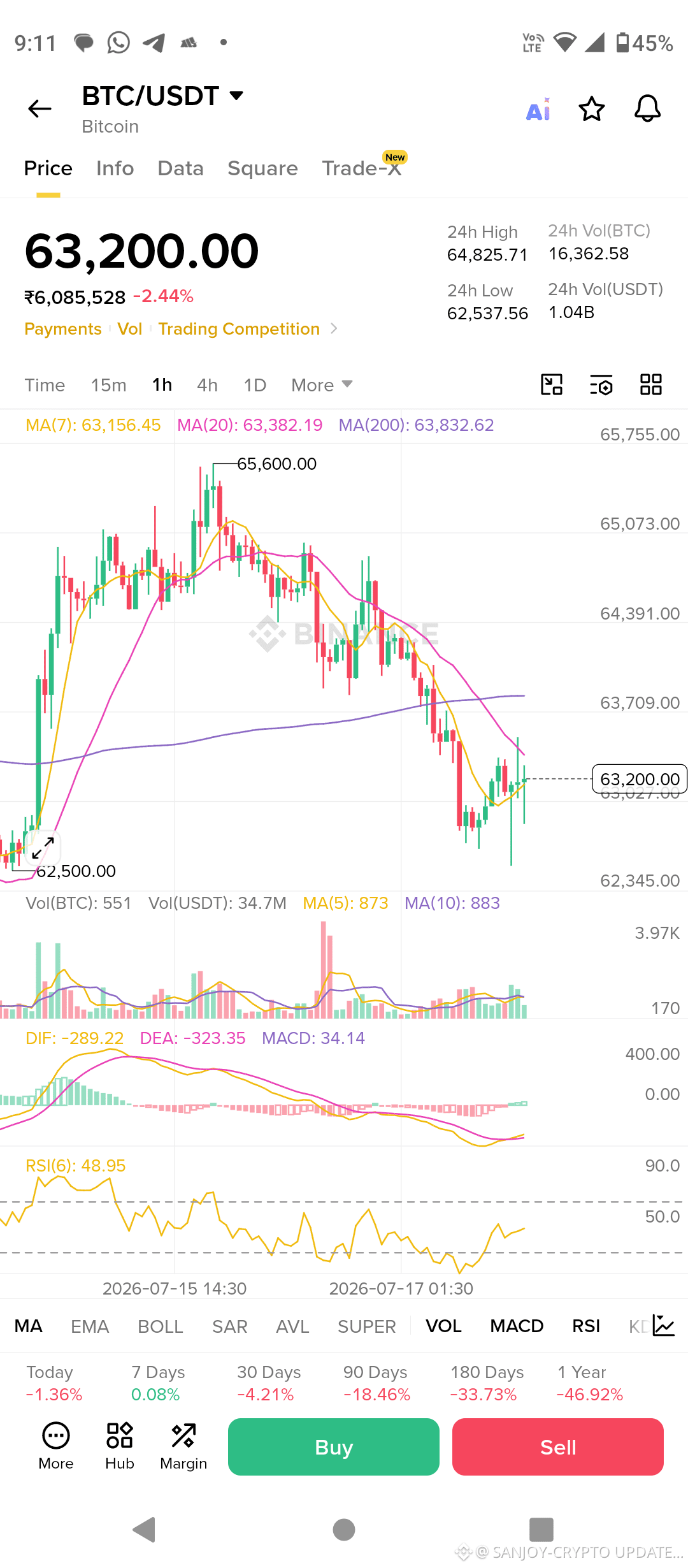
Bitcoin Isn't Always in a Bull Run — Learn to Read the Market 📊
Many traders assume Bitcoin always moves higher over time, but every market goes through different phases.
Understanding the current market structure can help improve decision-making:
🟢 Uptrend: Higher highs and higher lows.
🟡 Range: Price moves between support and resistance.
🔴 Downtrend: Lower highs and lower lows.
Instead of predicting every move, focus on: ✔️ Trend confirmation
✔️ Key support and resistance levels
✔️ Trading volume
✔️ Risk management before entering a trade
A disciplined trading plan is often more valuable than reacting to every market fluctuation.
Question:
Which market phase do you find the most challenging to trade—uptrend, range, or downtrend?
This content is for educational purposes only and should not be considered financial advice.
#Bitcoin #BTC #CryptoTrading #BinanceSquare #CryptoEducation
$BTC
{future}(BTCUSDT)
$ETH
{future}(ETHUSDT)
$XEC
{spot}(XECUSDT)
Bitcoin Isn't Always in a Bull Run — Learn to Read the Market 📊
Many traders assume Bitcoin always moves higher over time, but every market goes through different phases.
Understanding the current market structure can help improve decision-making:
🟢 Uptrend: Higher highs and higher lows.
🟡 Range: Price moves between support and resistance.
🔴 Downtrend: Lower highs and lower lows.
Instead of predicting every move, focus on: ✔️ Trend confirmation
✔️ Key support and resistance levels
✔️ Trading volume
✔️ Risk management before entering a trade
A disciplined trading plan is often more valuable than reacting to every market fluctuation.
Question:
Which market phase do you find the most challenging to trade—uptrend, range, or downtrend?
This content is for educational purposes only and should not be considered financial advice.
#Bitcoin #BTC #CryptoTrading #BinanceSquare #CryptoEducation
$BTC
$ETH
$XEC
Many traders assume Bitcoin always moves higher over time, but every market goes through different phases.
Understanding the current market structure can help improve decision-making:
🟢 Uptrend: Higher highs and higher lows.
🟡 Range: Price moves between support and resistance.
🔴 Downtrend: Lower highs and lower lows.
Instead of predicting every move, focus on: ✔️ Trend confirmation
✔️ Key support and resistance levels
✔️ Trading volume
✔️ Risk management before entering a trade
A disciplined trading plan is often more valuable than reacting to every market fluctuation.
Question:
Which market phase do you find the most challenging to trade—uptrend, range, or downtrend?
This content is for educational purposes only and should not be considered financial advice.
#Bitcoin #BTC #CryptoTrading #BinanceSquare #CryptoEducation
$BTC
$ETH
$XEC
133
Xem bản dịch
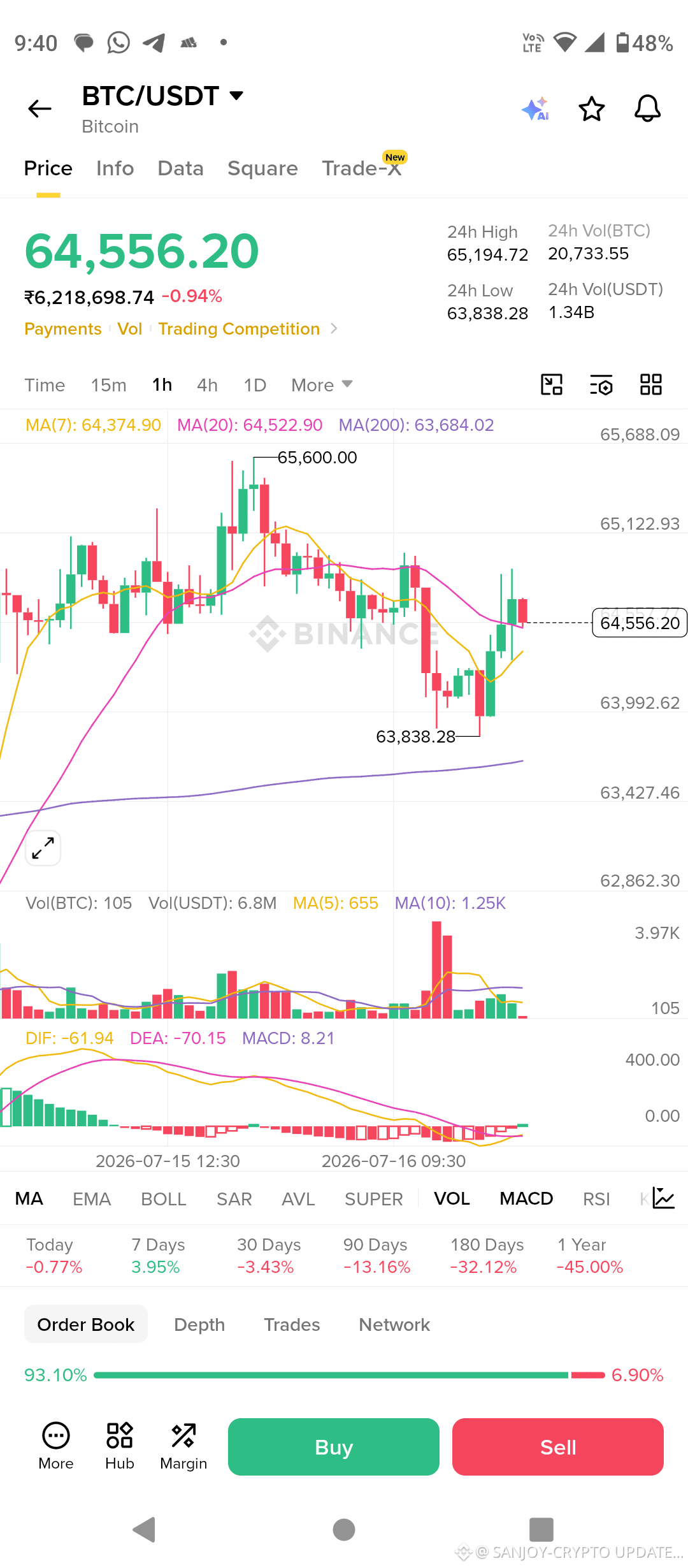
BTC: Follow the Trend, Not the Noise 📈
Bitcoin often sets the tone for the entire crypto market. Instead of reacting to every short-term move, it's useful to focus on the bigger picture.
Here are a few things I watch before considering a BTC trade:
🔹 Overall market trend
🔹 Key support and resistance levels
🔹 Trading volume during breakouts or pullbacks
🔹 A clear risk management plan before entering
Markets can be unpredictable, so staying patient and following a trading plan is often more valuable than chasing every move.
Question:
What do you think is the most important factor when analyzing BTC—trend, volume, or support and resistance?
Educational content only. This is not financial advice.
#BTC #Bitcoin #Crypto #Trading #BinanceSquare
$BTC
{future}(BTCUSDT)
$ETH
{future}(ETHUSDT)
$ZEC
{future}(ZECUSDT)
BTC: Follow the Trend, Not the Noise 📈
Bitcoin often sets the tone for the entire crypto market. Instead of reacting to every short-term move, it's useful to focus on the bigger picture.
Here are a few things I watch before considering a BTC trade:
🔹 Overall market trend
🔹 Key support and resistance levels
🔹 Trading volume during breakouts or pullbacks
🔹 A clear risk management plan before entering
Markets can be unpredictable, so staying patient and following a trading plan is often more valuable than chasing every move.
Question:
What do you think is the most important factor when analyzing BTC—trend, volume, or support and resistance?
Educational content only. This is not financial advice.
#BTC #Bitcoin #Crypto #Trading #BinanceSquare
$BTC
$ETH
$ZEC
Bitcoin often sets the tone for the entire crypto market. Instead of reacting to every short-term move, it's useful to focus on the bigger picture.
Here are a few things I watch before considering a BTC trade:
🔹 Overall market trend
🔹 Key support and resistance levels
🔹 Trading volume during breakouts or pullbacks
🔹 A clear risk management plan before entering
Markets can be unpredictable, so staying patient and following a trading plan is often more valuable than chasing every move.
Question:
What do you think is the most important factor when analyzing BTC—trend, volume, or support and resistance?
Educational content only. This is not financial advice.
#BTC #Bitcoin #Crypto #Trading #BinanceSquare
$BTC
$ETH
$ZEC
131
Xem bản dịch
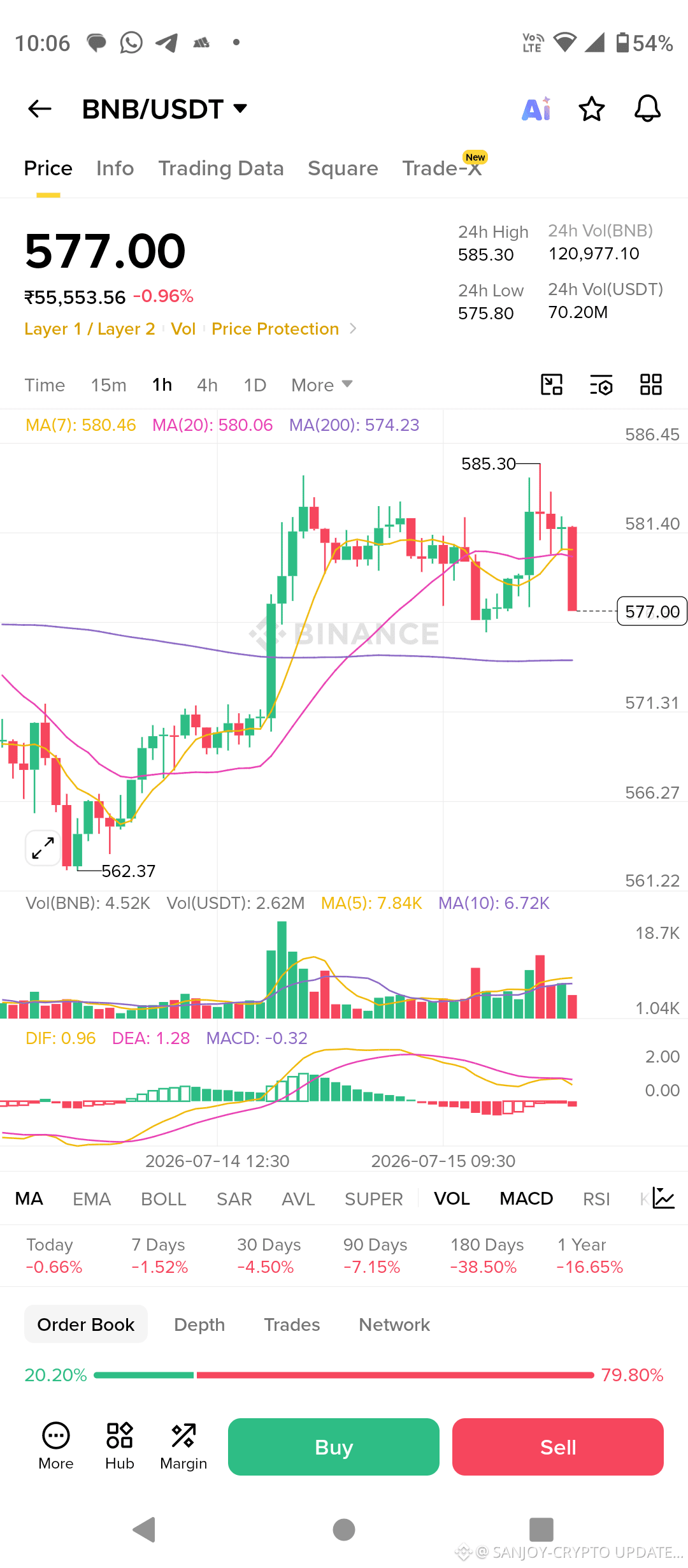
Why Patience Matters When Trading BNB ⏳
Not every BNB price movement is a trading opportunity. Sometimes the better decision is to wait until the market gives a clearer signal.
Before considering a trade, I usually watch:
🔹 Market direction — Is the broader crypto market trending or moving sideways?
🔹 Support & resistance — Is price approaching an important level?
🔹 Volume — Is there enough participation behind the move?
🔹 Risk-to-reward — Does the potential opportunity justify the risk?
Entering too early can be just as risky as entering too late. A clear plan, disciplined risk management, and patience can help traders avoid emotional decisions.
What matters more to you before entering a BNB trade: price action, volume, or key support and resistance levels?
For educational purposes only. Not financial advice.
-------------------------------------------------
#BNB #Binance #CryptoTrading #CryptoMarket #Trading
$BNB
{future}(BNBUSDT)
$ETH
{future}(ETHUSDT)
$BTC
{future}(BTCUSDT)
Why Patience Matters When Trading BNB ⏳
Not every BNB price movement is a trading opportunity. Sometimes the better decision is to wait until the market gives a clearer signal.
Before considering a trade, I usually watch:
🔹 Market direction — Is the broader crypto market trending or moving sideways?
🔹 Support & resistance — Is price approaching an important level?
🔹 Volume — Is there enough participation behind the move?
🔹 Risk-to-reward — Does the potential opportunity justify the risk?
Entering too early can be just as risky as entering too late. A clear plan, disciplined risk management, and patience can help traders avoid emotional decisions.
What matters more to you before entering a BNB trade: price action, volume, or key support and resistance levels?
For educational purposes only. Not financial advice.
-------------------------------------------------
#BNB #Binance #CryptoTrading #CryptoMarket #Trading
$BNB
$ETH
$BTC
Not every BNB price movement is a trading opportunity. Sometimes the better decision is to wait until the market gives a clearer signal.
Before considering a trade, I usually watch:
🔹 Market direction — Is the broader crypto market trending or moving sideways?
🔹 Support & resistance — Is price approaching an important level?
🔹 Volume — Is there enough participation behind the move?
🔹 Risk-to-reward — Does the potential opportunity justify the risk?
Entering too early can be just as risky as entering too late. A clear plan, disciplined risk management, and patience can help traders avoid emotional decisions.
What matters more to you before entering a BNB trade: price action, volume, or key support and resistance levels?
For educational purposes only. Not financial advice.
-------------------------------------------------
#BNB #Binance #CryptoTrading #CryptoMarket #Trading
$BNB
$ETH
$BTC
123
Tiêu đề:
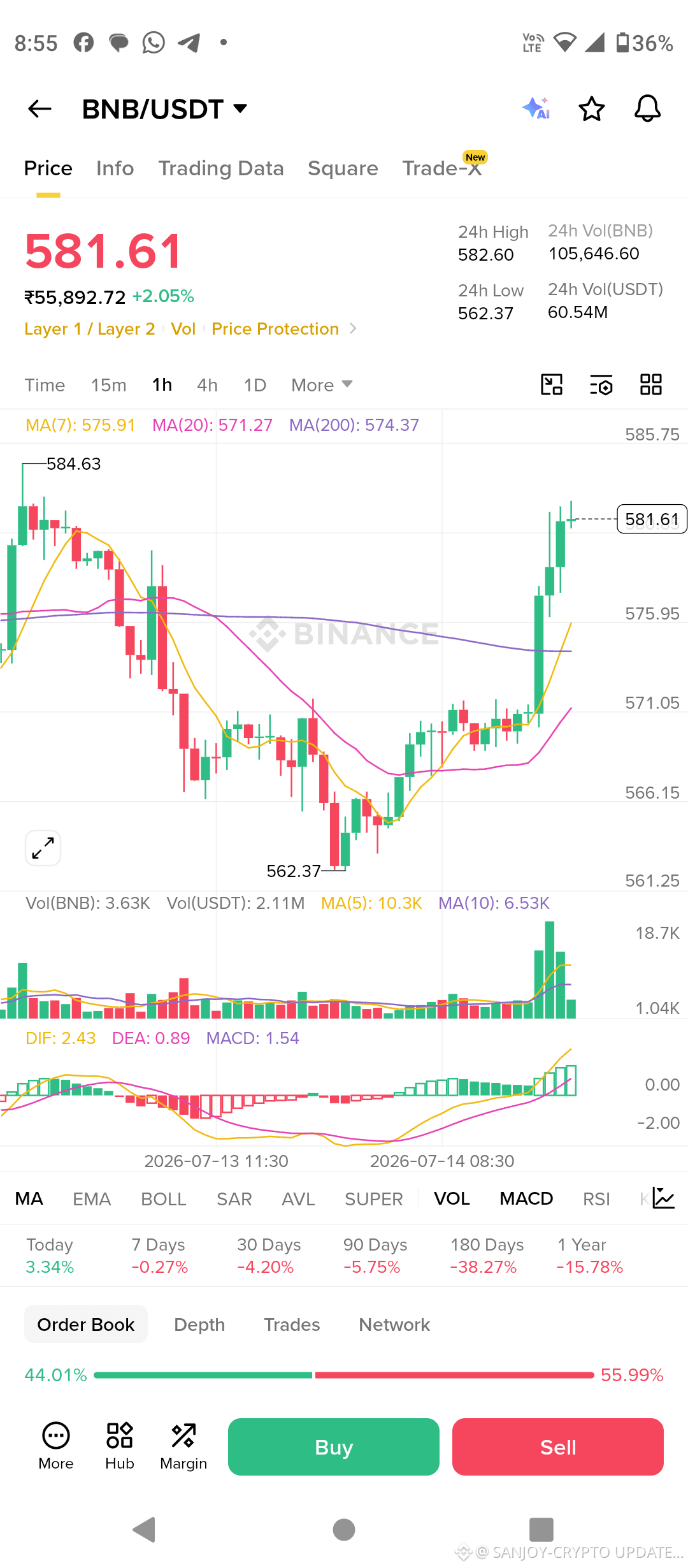
Nhà giao dịch BNB: Đừng đuổi theo giá—hãy chờ xác nhận 📊
Khi BNB bắt đầu di chuyển nhanh, việc vào lệnh vì FOMO có thể làm tăng rủi ro. Trước khi đưa ra quyết định giao dịch, tôi thường kiểm tra:
🔹 Xu hướng: Thị trường rộng hơn có đang ủng hộ đà tăng/giảm này không?
🔹 Các mức quan trọng: BNB có đang ở gần vùng hỗ trợ hoặc kháng cự quan trọng không?
🔹 Khối lượng: Khối lượng giao dịch có đang xác nhận biến động giá không?
🔹 Rủi ro: Có một mức vô hiệu hóa rõ ràng trước khi vào lệnh không?
Đôi khi, chờ đợi cũng là một quyết định giao dịch. Một giao dịch bỏ lỡ thường tốt hơn một giao dịch được lên kế hoạch kém.
Đối với người mới bắt đầu, bảo vệ vốn và quản lý rủi ro nên được ưu tiên trước việc chạy theo lợi nhuận nhanh.
Hiện tại bạn đang làm gì với BNB — mua, bán hay chờ xác nhận?
Bài viết này chỉ nhằm mục đích giáo dục và không phải là lời khuyên tài chính.
#BNB #Binance #Crypto #Trading #CryptoMarket
$BNB
{future}(BNBUSDT)
$ETH
{future}(ETHUSDT)
$BTC
{future}(BTCUSDT)
Tiêu đề:
Nhà giao dịch BNB: Đừng đuổi theo giá—hãy chờ xác nhận 📊
Khi BNB bắt đầu di chuyển nhanh, việc vào lệnh vì FOMO có thể làm tăng rủi ro. Trước khi đưa ra quyết định giao dịch, tôi thường kiểm tra:
🔹 Xu hướng: Thị trường rộng hơn có đang ủng hộ đà tăng/giảm này không?
🔹 Các mức quan trọng: BNB có đang ở gần vùng hỗ trợ hoặc kháng cự quan trọng không?
🔹 Khối lượng: Khối lượng giao dịch có đang xác nhận biến động giá không?
🔹 Rủi ro: Có một mức vô hiệu hóa rõ ràng trước khi vào lệnh không?
Đôi khi, chờ đợi cũng là một quyết định giao dịch. Một giao dịch bỏ lỡ thường tốt hơn một giao dịch được lên kế hoạch kém.
Đối với người mới bắt đầu, bảo vệ vốn và quản lý rủi ro nên được ưu tiên trước việc chạy theo lợi nhuận nhanh.
Hiện tại bạn đang làm gì với BNB — mua, bán hay chờ xác nhận?
Bài viết này chỉ nhằm mục đích giáo dục và không phải là lời khuyên tài chính.
#BNB #Binance #Crypto #Trading #CryptoMarket
$BNB
$ETH
$BTC
Nhà giao dịch BNB: Đừng đuổi theo giá—hãy chờ xác nhận 📊
Khi BNB bắt đầu di chuyển nhanh, việc vào lệnh vì FOMO có thể làm tăng rủi ro. Trước khi đưa ra quyết định giao dịch, tôi thường kiểm tra:
🔹 Xu hướng: Thị trường rộng hơn có đang ủng hộ đà tăng/giảm này không?
🔹 Các mức quan trọng: BNB có đang ở gần vùng hỗ trợ hoặc kháng cự quan trọng không?
🔹 Khối lượng: Khối lượng giao dịch có đang xác nhận biến động giá không?
🔹 Rủi ro: Có một mức vô hiệu hóa rõ ràng trước khi vào lệnh không?
Đôi khi, chờ đợi cũng là một quyết định giao dịch. Một giao dịch bỏ lỡ thường tốt hơn một giao dịch được lên kế hoạch kém.
Đối với người mới bắt đầu, bảo vệ vốn và quản lý rủi ro nên được ưu tiên trước việc chạy theo lợi nhuận nhanh.
Hiện tại bạn đang làm gì với BNB — mua, bán hay chờ xác nhận?
Bài viết này chỉ nhằm mục đích giáo dục và không phải là lời khuyên tài chính.
#BNB #Binance #Crypto #Trading #CryptoMarket
$BNB
$ETH
$BTC
79
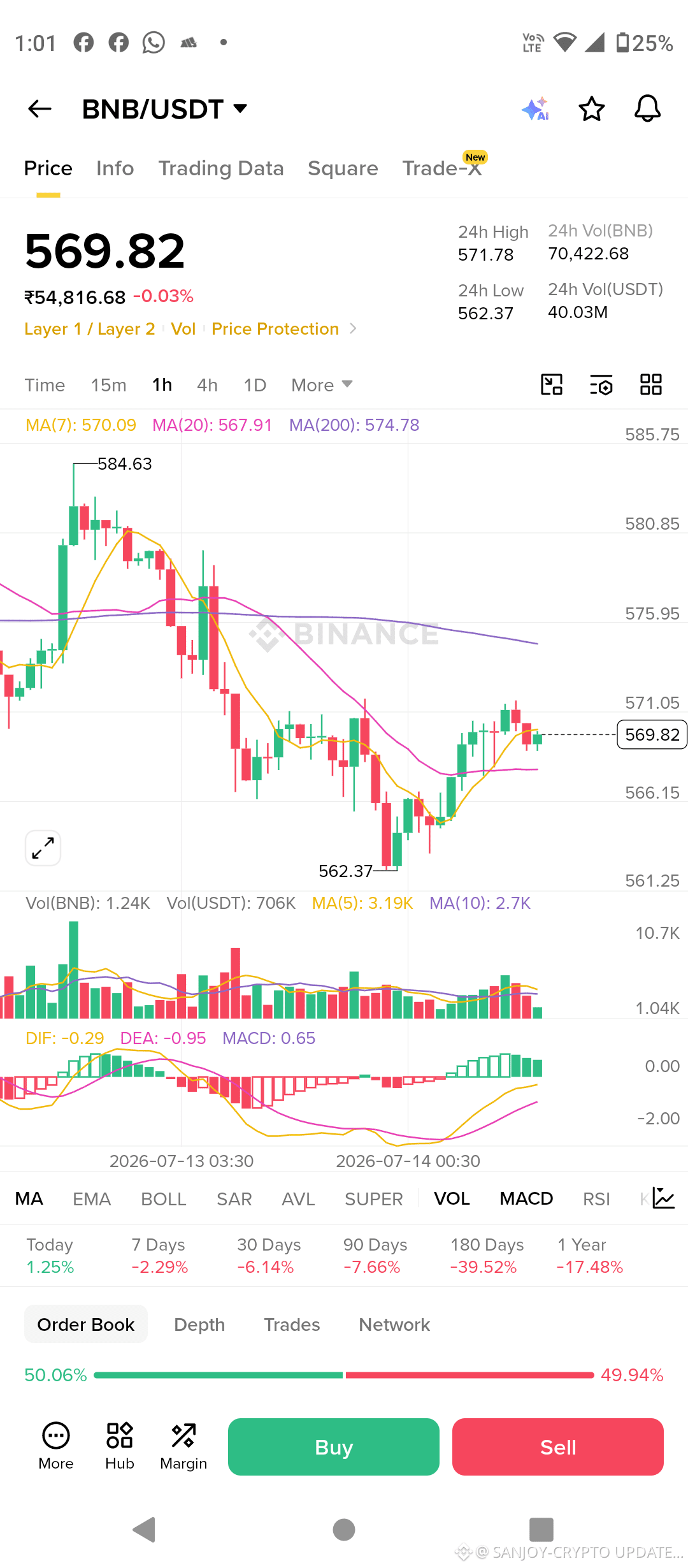
Xem bản dịch
BNB: What Traders Should Watch Before the Next Move
BNB traders should avoid entering a position based only on short-term price movement. Before making a decision, I usually watch three things:
Overall market trend — BTC movement can strongly influence the broader crypto market.
Support and resistance — Avoid chasing price near strong resistance.
Volume confirmation — A breakout without sufficient volume can turn into a false breakout.
For beginners, risk management is more important than predicting every move correctly. Avoid excessive leverage, use a clear stop-loss strategy, and never trade with money you cannot afford to lose.
What is your current view on BNB — bullish, bearish, or waiting for confirmation?
#BNB #Binance #Crypto #Trading #CryptoMarket
$BNB
{future}(BNBUSDT)
$BTC
{future}(BTCUSDT)
$ETH
{future}(ETHUSDT)
BNB: What Traders Should Watch Before the Next Move
BNB traders should avoid entering a position based only on short-term price movement. Before making a decision, I usually watch three things:
Overall market trend — BTC movement can strongly influence the broader crypto market.
Support and resistance — Avoid chasing price near strong resistance.
Volume confirmation — A breakout without sufficient volume can turn into a false breakout.
For beginners, risk management is more important than predicting every move correctly. Avoid excessive leverage, use a clear stop-loss strategy, and never trade with money you cannot afford to lose.
What is your current view on BNB — bullish, bearish, or waiting for confirmation?
#BNB #Binance #Crypto #Trading #CryptoMarket
$BNB
$BTC
$ETH
BNB traders should avoid entering a position based only on short-term price movement. Before making a decision, I usually watch three things:
Overall market trend — BTC movement can strongly influence the broader crypto market.
Support and resistance — Avoid chasing price near strong resistance.
Volume confirmation — A breakout without sufficient volume can turn into a false breakout.
For beginners, risk management is more important than predicting every move correctly. Avoid excessive leverage, use a clear stop-loss strategy, and never trade with money you cannot afford to lose.
What is your current view on BNB — bullish, bearish, or waiting for confirmation?
#BNB #Binance #Crypto #Trading #CryptoMarket
$BNB
$BTC
$ETH
77
Xem bản dịch
🚨 3 LESSONS I WISH I KNEW BEFORE STARTING CRYPTO TRADING
When I started trading, I thought making money was easy.
I was wrong. ❌
Here are 3 lessons every trader should learn:
1️⃣ Risk Management Is More Important Than Profits
A trader who protects capital can always trade another day.
2️⃣ Never Follow The Crowd Blindly
Always do your own research before buying any coin.
3️⃣ Patience Pays More Than FOMO
Most losses happen when traders rush into trades without a plan.
Successful traders focus on:
✅ Discipline ✅ Consistency ✅ Learning ✅ Long-Term Growth
Remember:
Small improvements every day can create massive results over time. 📈
What's the most valuable lesson you've learned in crypto?
👇 Share your experience below!
$btc $eth $BNB
#Crypto #Bitcoin #Ethereum #BNB #BinanceSquare #CryptoTrading #TradingTips #Blockchain #Web3 #CryptoEducation #Investing #TraderMindset
$BTC
{future}(BTCUSDT)
$ETH
{future}(ETHUSDT)
$BNB
{future}(BNBUSDT)
🚨 3 LESSONS I WISH I KNEW BEFORE STARTING CRYPTO TRADING
When I started trading, I thought making money was easy.
I was wrong. ❌
Here are 3 lessons every trader should learn:
1️⃣ Risk Management Is More Important Than Profits
A trader who protects capital can always trade another day.
2️⃣ Never Follow The Crowd Blindly
Always do your own research before buying any coin.
3️⃣ Patience Pays More Than FOMO
Most losses happen when traders rush into trades without a plan.
Successful traders focus on:
✅ Discipline ✅ Consistency ✅ Learning ✅ Long-Term Growth
Remember:
Small improvements every day can create massive results over time. 📈
What's the most valuable lesson you've learned in crypto?
👇 Share your experience below!
$btc $eth $BNB
#Crypto #Bitcoin #Ethereum #BNB #BinanceSquare #CryptoTrading #TradingTips #Blockchain #Web3 #CryptoEducation #Investing #TraderMindset
$BTC
$ETH
$BNB
When I started trading, I thought making money was easy.
I was wrong. ❌
Here are 3 lessons every trader should learn:
1️⃣ Risk Management Is More Important Than Profits
A trader who protects capital can always trade another day.
2️⃣ Never Follow The Crowd Blindly
Always do your own research before buying any coin.
3️⃣ Patience Pays More Than FOMO
Most losses happen when traders rush into trades without a plan.
Successful traders focus on:
✅ Discipline ✅ Consistency ✅ Learning ✅ Long-Term Growth
Remember:
Small improvements every day can create massive results over time. 📈
What's the most valuable lesson you've learned in crypto?
👇 Share your experience below!
$btc $eth $BNB
#Crypto #Bitcoin #Ethereum #BNB #BinanceSquare #CryptoTrading #TradingTips #Blockchain #Web3 #CryptoEducation #Investing #TraderMindset
$BTC
$ETH
$BNB
92
Xem bản dịch
⚡ THE MARKET DOESN'T CARE ABOUT YOUR OPINION ⚡
Many traders lose money because they try to prove they're right.
Winning traders focus on one thing:
📈 Following the market.
The market can stay irrational longer than you can stay solvent.
That's why smart traders:
✅ Follow the trend ✅ Respect stop losses ✅ Adapt to changing conditions ✅ Control emotions ✅ Trust data, not opinions
Remember this:
💡 Your opinion doesn't move the market. 💰 Your strategy and discipline determine your results.
The moment you stop arguing with the chart... is the moment you start improving as a trader.
Be flexible. Be patient. Be profitable. 🚀
Question for traders 👇
What's more important?
🧠 Being Right 💰 Making Money
Drop your answer below 🔥
#CryptoTrading #BinanceCreator #Bitcoin #BTC #Crypto #TradingPsychology #TechnicalAnalysis #RiskManagement #TraderMindset #Investing #Blockchain #FuturesTrading #PriceAction #TradingTips #Web3
$BTC
{future}(BTCUSDT)
$ETH
{future}(ETHUSDT)
$XRP
{future}(XRPUSDT)
⚡ THE MARKET DOESN'T CARE ABOUT YOUR OPINION ⚡
Many traders lose money because they try to prove they're right.
Winning traders focus on one thing:
📈 Following the market.
The market can stay irrational longer than you can stay solvent.
That's why smart traders:
✅ Follow the trend ✅ Respect stop losses ✅ Adapt to changing conditions ✅ Control emotions ✅ Trust data, not opinions
Remember this:
💡 Your opinion doesn't move the market. 💰 Your strategy and discipline determine your results.
The moment you stop arguing with the chart... is the moment you start improving as a trader.
Be flexible. Be patient. Be profitable. 🚀
Question for traders 👇
What's more important?
🧠 Being Right 💰 Making Money
Drop your answer below 🔥
#CryptoTrading #BinanceCreator #Bitcoin #BTC #Crypto #TradingPsychology #TechnicalAnalysis #RiskManagement #TraderMindset #Investing #Blockchain #FuturesTrading #PriceAction #TradingTips #Web3
$BTC
$ETH
$XRP
Many traders lose money because they try to prove they're right.
Winning traders focus on one thing:
📈 Following the market.
The market can stay irrational longer than you can stay solvent.
That's why smart traders:
✅ Follow the trend ✅ Respect stop losses ✅ Adapt to changing conditions ✅ Control emotions ✅ Trust data, not opinions
Remember this:
💡 Your opinion doesn't move the market. 💰 Your strategy and discipline determine your results.
The moment you stop arguing with the chart... is the moment you start improving as a trader.
Be flexible. Be patient. Be profitable. 🚀
Question for traders 👇
What's more important?
🧠 Being Right 💰 Making Money
Drop your answer below 🔥
#CryptoTrading #BinanceCreator #Bitcoin #BTC #Crypto #TradingPsychology #TechnicalAnalysis #RiskManagement #TraderMindset #Investing #Blockchain #FuturesTrading #PriceAction #TradingTips #Web3
$BTC
$ETH
$XRP
123
Xem bản dịch
🚨 STOP LOOKING FOR THE PERFECT ENTRY 🚨
One of the biggest mistakes traders make?
Waiting forever for the "perfect" entry price.
The truth is 👇
💡 Perfect entries don't exist.
Successful traders focus on:
✅ Risk-to-Reward Ratio ✅ Market Structure ✅ Trend Direction ✅ Capital Protection ✅ Consistency
A good trade with proper risk management is far better than missing opportunities while waiting for perfection.
Remember:
📈 You don't need to catch the exact bottom. 📉 You don't need to sell at the exact top.
Professional traders aim for the middle of the move — where the probabilities are highest.
The goal is not to be perfect.
The goal is to be profitable. 💰
What's more important to you?
🎯 Perfect Entry 💰 Proper Risk Management
Comment your answer below 👇
#CryptoTrading #BinanceCreator #Bitcoin #BTC #TradingTips #TechnicalAnalysis #Crypto #RiskManagement #TraderMindset #Investing #Blockchain #TradingPsychology #FuturesTrading #Web3 #CryptoEducation
$BTC
{future}(BTCUSDT)
$ETH
{future}(ETHUSDT)
$SOL
{future}(SOLUSDT)
🚨 STOP LOOKING FOR THE PERFECT ENTRY 🚨
One of the biggest mistakes traders make?
Waiting forever for the "perfect" entry price.
The truth is 👇
💡 Perfect entries don't exist.
Successful traders focus on:
✅ Risk-to-Reward Ratio ✅ Market Structure ✅ Trend Direction ✅ Capital Protection ✅ Consistency
A good trade with proper risk management is far better than missing opportunities while waiting for perfection.
Remember:
📈 You don't need to catch the exact bottom. 📉 You don't need to sell at the exact top.
Professional traders aim for the middle of the move — where the probabilities are highest.
The goal is not to be perfect.
The goal is to be profitable. 💰
What's more important to you?
🎯 Perfect Entry 💰 Proper Risk Management
Comment your answer below 👇
#CryptoTrading #BinanceCreator #Bitcoin #BTC #TradingTips #TechnicalAnalysis #Crypto #RiskManagement #TraderMindset #Investing #Blockchain #TradingPsychology #FuturesTrading #Web3 #CryptoEducation
$BTC
$ETH
$SOL
One of the biggest mistakes traders make?
Waiting forever for the "perfect" entry price.
The truth is 👇
💡 Perfect entries don't exist.
Successful traders focus on:
✅ Risk-to-Reward Ratio ✅ Market Structure ✅ Trend Direction ✅ Capital Protection ✅ Consistency
A good trade with proper risk management is far better than missing opportunities while waiting for perfection.
Remember:
📈 You don't need to catch the exact bottom. 📉 You don't need to sell at the exact top.
Professional traders aim for the middle of the move — where the probabilities are highest.
The goal is not to be perfect.
The goal is to be profitable. 💰
What's more important to you?
🎯 Perfect Entry 💰 Proper Risk Management
Comment your answer below 👇
#CryptoTrading #BinanceCreator #Bitcoin #BTC #TradingTips #TechnicalAnalysis #Crypto #RiskManagement #TraderMindset #Investing #Blockchain #TradingPsychology #FuturesTrading #Web3 #CryptoEducation
$BTC
$ETH
$SOL
109
Xem bản dịch
🔥 WHY SMART MONEY BUYS WHEN OTHERS ARE AFRAID
When the market crashes...
Most people panic sell 😱
But smart money often does the opposite 👇
✅ They buy during fear
✅ They accumulate quality assets
✅ They think long-term
✅ They ignore market noise
History has shown that some of the best opportunities appear when sentiment is at its worst.
Remember:
📉 Red days create opportunities. 📈 Green days create excitement.
The biggest gains are often made by those who stay calm when everyone else is emotional.
Before entering any trade, ask yourself:
❓ Am I following a plan? ❓ Or am I following the crowd?
The market rewards patience, discipline, and conviction.
💎 Fear is temporary. 🚀 Opportunity is forever.
Would you buy during a market crash?
👍 YES 👎 NO
Comment below!
#Bitcoin #BTC #Crypto #BinanceCreator #CryptoTrading #Investing #SmartMoney #TradingPsychology #RiskManagement #BullRun #BearMarket #Blockchain #TechnicalAnalysis #TraderMindset #Web3
$BTC
{future}(BTCUSDT)
$ETH
{future}(ETHUSDT)
$BNB
{future}(BNBUSDT)
🔥 WHY SMART MONEY BUYS WHEN OTHERS ARE AFRAID
When the market crashes...
Most people panic sell 😱
But smart money often does the opposite 👇
✅ They buy during fear
✅ They accumulate quality assets
✅ They think long-term
✅ They ignore market noise
History has shown that some of the best opportunities appear when sentiment is at its worst.
Remember:
📉 Red days create opportunities. 📈 Green days create excitement.
The biggest gains are often made by those who stay calm when everyone else is emotional.
Before entering any trade, ask yourself:
❓ Am I following a plan? ❓ Or am I following the crowd?
The market rewards patience, discipline, and conviction.
💎 Fear is temporary. 🚀 Opportunity is forever.
Would you buy during a market crash?
👍 YES 👎 NO
Comment below!
#Bitcoin #BTC #Crypto #BinanceCreator #CryptoTrading #Investing #SmartMoney #TradingPsychology #RiskManagement #BullRun #BearMarket #Blockchain #TechnicalAnalysis #TraderMindset #Web3
$BTC
$ETH
$BNB
When the market crashes...
Most people panic sell 😱
But smart money often does the opposite 👇
✅ They buy during fear
✅ They accumulate quality assets
✅ They think long-term
✅ They ignore market noise
History has shown that some of the best opportunities appear when sentiment is at its worst.
Remember:
📉 Red days create opportunities. 📈 Green days create excitement.
The biggest gains are often made by those who stay calm when everyone else is emotional.
Before entering any trade, ask yourself:
❓ Am I following a plan? ❓ Or am I following the crowd?
The market rewards patience, discipline, and conviction.
💎 Fear is temporary. 🚀 Opportunity is forever.
Would you buy during a market crash?
👍 YES 👎 NO
Comment below!
#Bitcoin #BTC #Crypto #BinanceCreator #CryptoTrading #Investing #SmartMoney #TradingPsychology #RiskManagement #BullRun #BearMarket #Blockchain #TechnicalAnalysis #TraderMindset #Web3
$BTC
$ETH
$BNB
87
Xem bản dịch
🚀 THE POWER OF COMPOUNDING IN CRYPTO 💰
Most traders chase quick profits...
Smart investors focus on long-term growth 📈
Here's a simple example 👇
If you grow your account by just 5% per week consistently:
✅ Week 1 → $1,000
✅ Week 10 → $1,629
✅ Week 20 → $2,653
✅ Week 52 → $12,600+
That's the power of compounding 🔥
The secret?
✔️ Consistency over hype
✔️ Risk management over gambling
✔️ Patience over emotions
Many traders blow up their accounts trying to double their money overnight.
Professional traders focus on small, consistent gains that add up over time.
Remember:
💡 Wealth is built gradually, not instantly.
Focus on the process. The profits will follow.
How much weekly growth do you target? 👇
📊 2% | 5% | 10%+
Comment below 🚀
#CryptoTrading #BinanceCreator #Bitcoin #BTC #Crypto #Investing #TradingTips #CompoundInterest #RiskManagement #TradingPsychology #FinancialFreedom #TechnicalAnalysis #TraderMindset #Blockchain #Web3
$BTC
{future}(BTCUSDT)
$ETH
{future}(ETHUSDT)
$ZEC
{future}(ZECUSDT)
🚀 THE POWER OF COMPOUNDING IN CRYPTO 💰
Most traders chase quick profits...
Smart investors focus on long-term growth 📈
Here's a simple example 👇
If you grow your account by just 5% per week consistently:
✅ Week 1 → $1,000
✅ Week 10 → $1,629
✅ Week 20 → $2,653
✅ Week 52 → $12,600+
That's the power of compounding 🔥
The secret?
✔️ Consistency over hype
✔️ Risk management over gambling
✔️ Patience over emotions
Many traders blow up their accounts trying to double their money overnight.
Professional traders focus on small, consistent gains that add up over time.
Remember:
💡 Wealth is built gradually, not instantly.
Focus on the process. The profits will follow.
How much weekly growth do you target? 👇
📊 2% | 5% | 10%+
Comment below 🚀
#CryptoTrading #BinanceCreator #Bitcoin #BTC #Crypto #Investing #TradingTips #CompoundInterest #RiskManagement #TradingPsychology #FinancialFreedom #TechnicalAnalysis #TraderMindset #Blockchain #Web3
$BTC
$ETH
$ZEC
Most traders chase quick profits...
Smart investors focus on long-term growth 📈
Here's a simple example 👇
If you grow your account by just 5% per week consistently:
✅ Week 1 → $1,000
✅ Week 10 → $1,629
✅ Week 20 → $2,653
✅ Week 52 → $12,600+
That's the power of compounding 🔥
The secret?
✔️ Consistency over hype
✔️ Risk management over gambling
✔️ Patience over emotions
Many traders blow up their accounts trying to double their money overnight.
Professional traders focus on small, consistent gains that add up over time.
Remember:
💡 Wealth is built gradually, not instantly.
Focus on the process. The profits will follow.
How much weekly growth do you target? 👇
📊 2% | 5% | 10%+
Comment below 🚀
#CryptoTrading #BinanceCreator #Bitcoin #BTC #Crypto #Investing #TradingTips #CompoundInterest #RiskManagement #TradingPsychology #FinancialFreedom #TechnicalAnalysis #TraderMindset #Blockchain #Web3
$BTC
$ETH
$ZEC
257
Xem bản dịch
🚨 90% OF TRADERS LOSE MONEY FOR THE SAME REASONS ⚠️
Want to know why most traders fail?
It's usually NOT because of a bad strategy.
It's because of these mistakes 👇
❌ No Stop Loss
❌ Over-Leveraging
❌ FOMO Buying
❌ Revenge Trading
❌ Ignoring Risk Management
Successful traders do the opposite:
✅ Follow a trading plan
✅ Protect their capital first
✅ Stay patient during volatility
✅ Accept losses as part of the game
✅ Focus on long-term consistency
Remember:
💡 A trader who survives the market can always catch the next opportunity.
You don't need to win every trade.
You just need to manage your losses and let your winners grow 📈
What's the biggest mistake you've made in trading? 👇
Share your experience below 🔥
#CryptoTrading #BinanceCreator #TradingTips #Bitcoin #BTC #Ethereum #Crypto #RiskManagement #TradingPsychology #TechnicalAnalysis #Investing #Blockchain #TraderLife #FuturesTrading #CryptoNews
$BTC
{future}(BTCUSDT)
$ETH
{future}(ETHUSDT)
$BNB
{future}(BNBUSDT)
🚨 90% OF TRADERS LOSE MONEY FOR THE SAME REASONS ⚠️
Want to know why most traders fail?
It's usually NOT because of a bad strategy.
It's because of these mistakes 👇
❌ No Stop Loss
❌ Over-Leveraging
❌ FOMO Buying
❌ Revenge Trading
❌ Ignoring Risk Management
Successful traders do the opposite:
✅ Follow a trading plan
✅ Protect their capital first
✅ Stay patient during volatility
✅ Accept losses as part of the game
✅ Focus on long-term consistency
Remember:
💡 A trader who survives the market can always catch the next opportunity.
You don't need to win every trade.
You just need to manage your losses and let your winners grow 📈
What's the biggest mistake you've made in trading? 👇
Share your experience below 🔥
#CryptoTrading #BinanceCreator #TradingTips #Bitcoin #BTC #Ethereum #Crypto #RiskManagement #TradingPsychology #TechnicalAnalysis #Investing #Blockchain #TraderLife #FuturesTrading #CryptoNews
$BTC
$ETH
$BNB
Want to know why most traders fail?
It's usually NOT because of a bad strategy.
It's because of these mistakes 👇
❌ No Stop Loss
❌ Over-Leveraging
❌ FOMO Buying
❌ Revenge Trading
❌ Ignoring Risk Management
Successful traders do the opposite:
✅ Follow a trading plan
✅ Protect their capital first
✅ Stay patient during volatility
✅ Accept losses as part of the game
✅ Focus on long-term consistency
Remember:
💡 A trader who survives the market can always catch the next opportunity.
You don't need to win every trade.
You just need to manage your losses and let your winners grow 📈
What's the biggest mistake you've made in trading? 👇
Share your experience below 🔥
#CryptoTrading #BinanceCreator #TradingTips #Bitcoin #BTC #Ethereum #Crypto #RiskManagement #TradingPsychology #TechnicalAnalysis #Investing #Blockchain #TraderLife #FuturesTrading #CryptoNews
$BTC
$ETH
$BNB
102
Đăng nhập để khám phá thêm nội dung
Tham gia cùng người dùng tiền mã hóa toàn cầu trên Binance Square
⚡️ Nhận thông tin mới nhất và hữu ích về tiền mã hóa.
💬 Được tin cậy bởi sàn giao dịch tiền mã hóa lớn nhất thế giới.
👍 Khám phá những thông tin chuyên sâu thực tế từ những nhà sáng tạo đã xác minh.
Email / Số điện thoại
Chủ đề thịnh hành
TinFed
143,290 lượt xem
522 đang thảo luận
Bối cảnh FED quyết định tăng lãi suất thêm 0.25 điểm tháng 10
Lạm phát Mỹ: CPI toàn phần tháng 8 đạt khoảng 3,7%, PCE lõi 3,4%, cao hơn dự báo trước đó. FED dự báo lạm phát chỉ quay về mức mục tiêu 2% vào năm 2029.
Thị trường lao động: Tỷ lệ thất nghiệp duy trì ở mức 4,1%, số việc làm mới tăng mạnh, cho thấy nền kinh tế đủ sức chịu đựng lãi suất cao hơn.
Áp lực năng lượng: Giá dầu và năng lượng leo thang do xung đột Trung Đông và chiến sự với Iran, làm gia tăng nguy cơ “hiệu ứng vòng hai” lên chi phí vận tải, hàng hóa, dịch vụ.#TinFed #Nikkei225Jumps2.5%ToThreeMonthHigh
VỀBỜĐỔITÊN12
·3 lượt thích
·12.3k lượt xem
TheoDõiFOMC
155,310 lượt xem
722 đang thảo luận
FedMinutesFocusOnOctoberPause
98,200 lượt xem
1,023 đang thảo luận