
Muhammad BR Crypto
72 Bài đăng

Muhammad BR Crypto
Báo cáo
Chặn người dùng
36 Đang theo dõi
232 Người theo dõi
46 Đã thích
Bài đăng
Tất cả
Trích dẫn
Live
Xem bản dịch
#BinancePick Day by day, I'm climbing the Scores leaderboard on #BinancePick. Completing markets, making smart predictions, and enjoying every step of the campaign! 📈
#BinancePick Day by day, I'm climbing the Scores leaderboard on #BinancePick. Completing markets, making smart predictions, and enjoying every step of the campaign! 📈
1
Xem bản dịch
#BinancePick Just joined Binance Pick and it's a fun way to put my market predictions to the test! Pick your markets, make your calls, and earn Scores along the way. Can't wait to see how many I can unlock this week.
#BinancePick Just joined Binance Pick and it's a fun way to put my market predictions to the test! Pick your markets, make your calls, and earn Scores along the way. Can't wait to see how many I can unlock this week.
9
Xem bản dịch
#BinancePick Just joined Binance Pick and it's a fun way to put my market predictions to the test! Pick your markets, make your calls, and earn Scores along the way. Can't wait to see how many I can unlock this week.
#BinancePick Just joined Binance Pick and it's a fun way to put my market predictions to the test! Pick your markets, make your calls, and earn Scores along the way. Can't wait to see how many I can unlock this week.
11
Xem bản dịch
#BinancePick Prediction markets make crypto even more exciting. Participating in #BinancePick daily to complete tasks and climb the leaderboard.
#BinancePick Prediction markets make crypto even more exciting. Participating in #BinancePick daily to complete tasks and climb the leaderboard.
3


Xem bản dịch
#BinancePick Prediction Market se market samajhna mazedaar hai. Bina FOMO ke, sahi analysis ke saath predict karo!
#BinancePick Prediction Market se market samajhna mazedaar hai. Bina FOMO ke, sahi analysis ke saath predict karo!
Xem bản dịch
#BinancePick Prediction markets make trading feel more interactive. I'm taking my time to research each market on Binance Pick before making a call. Who else is participating?
#BinancePick Prediction markets make trading feel more interactive. I'm taking my time to research each market on Binance Pick before making a call. Who else is participating?
Xem bản dịch
#BinancePick Prediction markets make crypto even more exciting. Participating daily to complete tasks and climb the leaderboard. Who else is in?
#BinancePick Prediction markets make crypto even more exciting. Participating daily to complete tasks and climb the leaderboard. Who else is in?
3
Xem bản dịch
#BinancePick Just completed today's #BinancePick task! Joining prediction markets is a fresh, fun way to understand crypto better. Have you tried Predict yet? ?
#BinancePick Just completed today's #BinancePick task! Joining prediction markets is a fresh, fun way to understand crypto better. Have you tried Predict yet? ?
63
Xem bản dịch
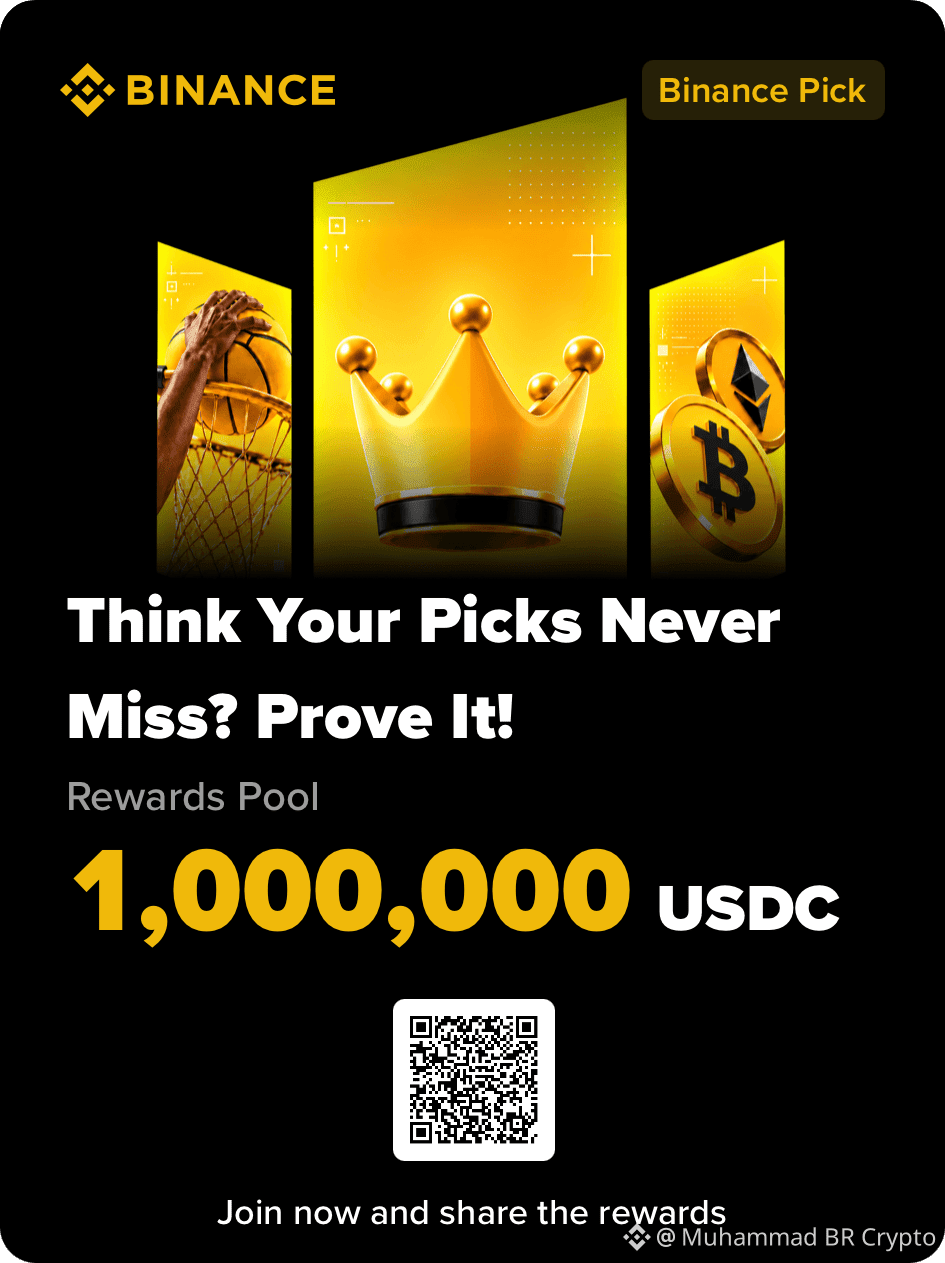
#BinancePick Prediction markets are a whole new way to put your insights to work. 📊 On Binance Pick, you can back your read on different markets and earn rewards along the way. Joined a few markets today. Give it a try!
#BinancePick Prediction markets are a whole new way to put your insights to work. 📊 On Binance Pick, you can back your read on different markets and earn rewards along the way. Joined a few markets today. Give it a try!
53
#BinancePick
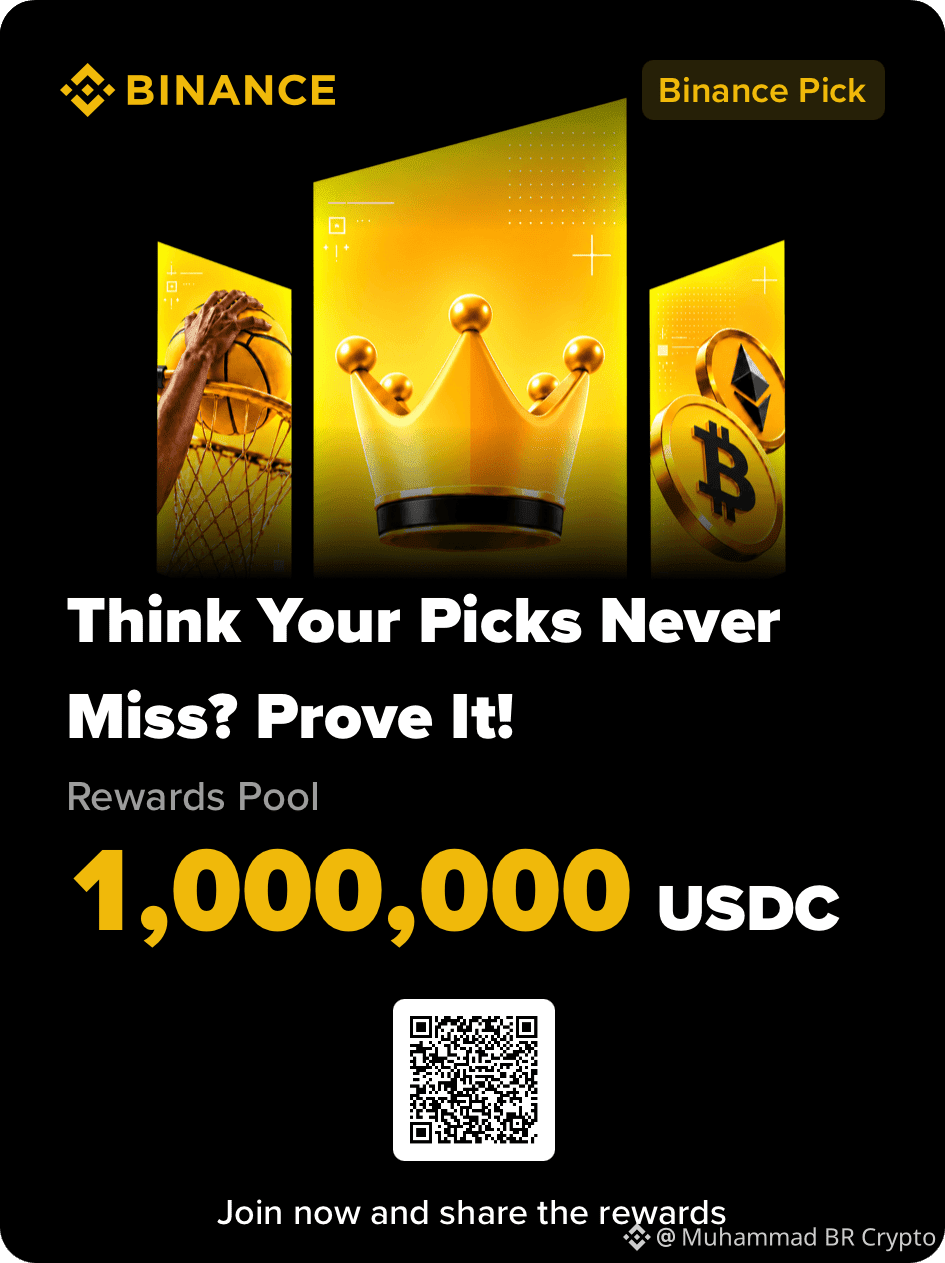
Tham gia vào các thị trường dự đoán là một trải nghiệm mới mẻ và thú vị! Tìm hiểu xu hướng thị trường và đưa ra dự đoán chính xác thực sự rất vui.
#BinancePick
Tham gia vào các thị trường dự đoán là một trải nghiệm mới mẻ và thú vị! Tìm hiểu xu hướng thị trường và đưa ra dự đoán chính xác thực sự rất vui.
Tham gia vào các thị trường dự đoán là một trải nghiệm mới mẻ và thú vị! Tìm hiểu xu hướng thị trường và đưa ra dự đoán chính xác thực sự rất vui.
66
Xem bản dịch
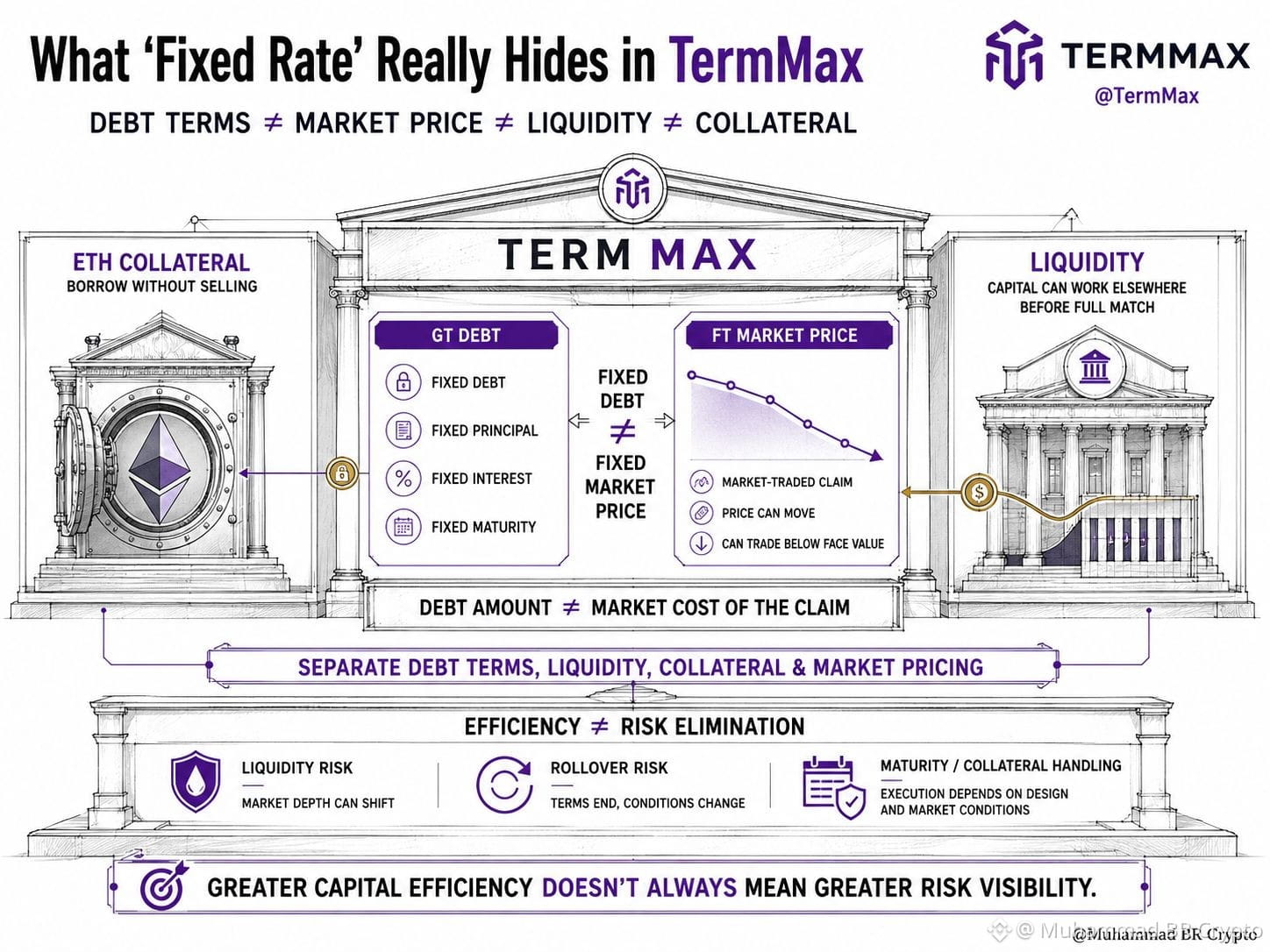
#termmax @termmax I used to think the interesting part of TermMax was simply fixed-rate borrowing. The more I looked at how its products connect, the more I realized that was only the surface.
A borrower can use ETH as collateral without selling it, while lenders can have capital working elsewhere even before an order is fully matched. But large protocol TVL doesn’t necessarily mean deep liquidity or easy execution in every market.
What really changed my view was seeing how differently capital behaves depending on where it sits. A GT debt can remain fixed while the FT linked to that debt trades below face value — so the amount of debt and the market cost of acquiring the claim are not necessarily the same.
That made me see @termmax less as a simple lending market and more as an attempt to separate debt terms, liquidity, collateral and market pricing instead of treating them as one thing.
The trade-off is that this can improve capital efficiency, but it doesn’t automatically remove liquidity or rollover risk — especially as a position approaches maturity or collateral needs to be handled after a default.
The bigger question, then, isn’t simply whether @termmax makes capital more efficient. It’s whether separating debt, liquidity, collateral and market pricing makes capital easier to manage — or simply makes the risks harder to see.
#termmax @TermMax I used to think the interesting part of TermMax was simply fixed-rate borrowing. The more I looked at how its products connect, the more I realized that was only the surface.
A borrower can use ETH as collateral without selling it, while lenders can have capital working elsewhere even before an order is fully matched. But large protocol TVL doesn’t necessarily mean deep liquidity or easy execution in every market.
What really changed my view was seeing how differently capital behaves depending on where it sits. A GT debt can remain fixed while the FT linked to that debt trades below face value — so the amount of debt and the market cost of acquiring the claim are not necessarily the same.
That made me see @TermMax less as a simple lending market and more as an attempt to separate debt terms, liquidity, collateral and market pricing instead of treating them as one thing.
The trade-off is that this can improve capital efficiency, but it doesn’t automatically remove liquidity or rollover risk — especially as a position approaches maturity or collateral needs to be handled after a default.
The bigger question, then, isn’t simply whether @TermMax makes capital more efficient. It’s whether separating debt, liquidity, collateral and market pricing makes capital easier to manage — or simply makes the risks harder to see.
2
82
Xem bản dịch
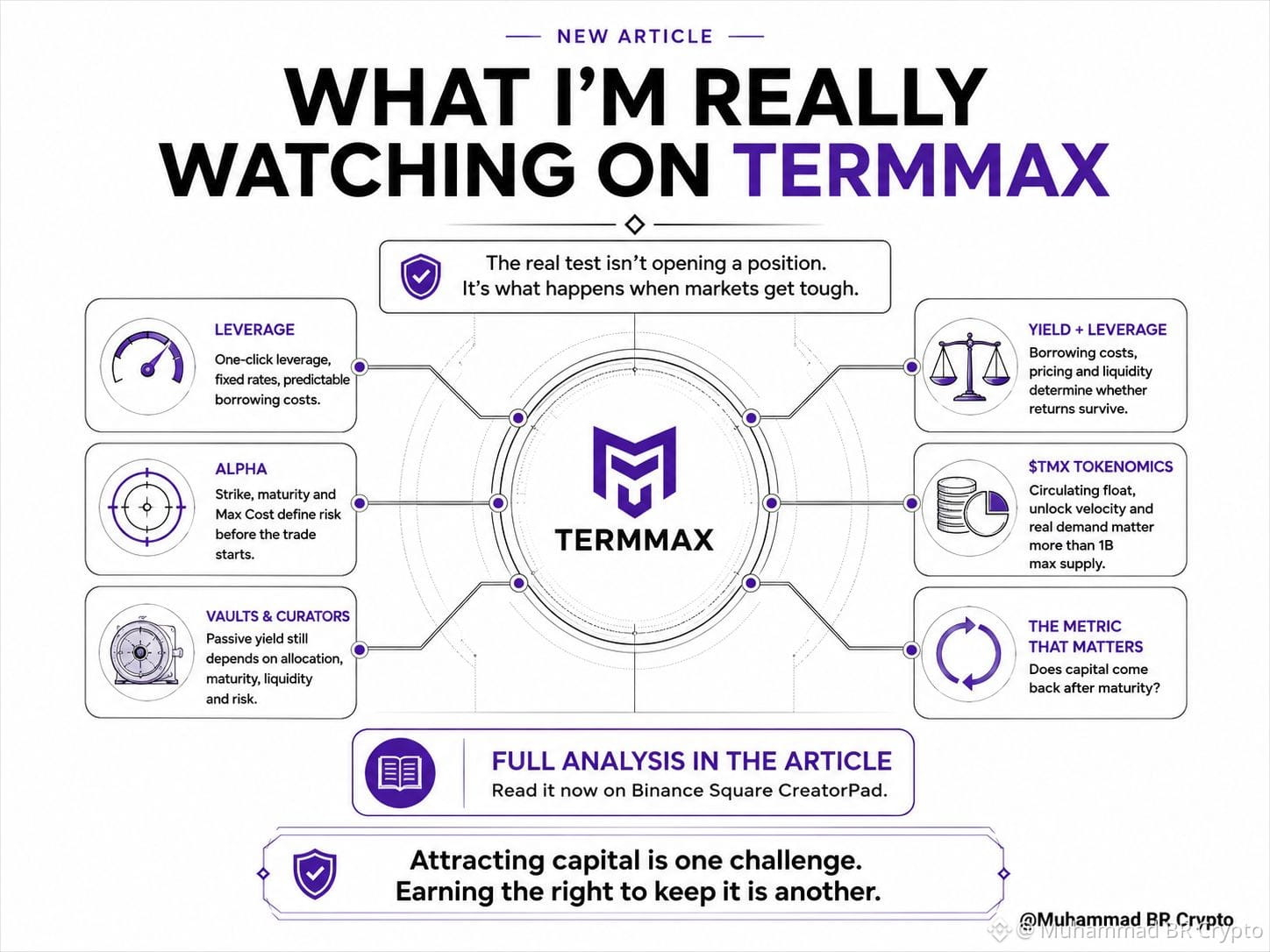
#termmax @termmax I’ve been looking at @TermMax from different angles over the last few days, and I keep coming back to one question:
Is TermMax actually making DeFi simpler, or just making complexity easier to access?
One-click leverage is a good example. It bundles multiple steps into one transaction, while fixed rates make borrowing costs more predictable.
Alpha takes the same idea into risk management. Strike, maturity and Max Cost define the trade before it starts. The market can still move against you, but the downside has a clearer boundary.
Then there’s the Vault and Curator layer.
Passive yield doesn’t remove risk. It shifts the responsibility of choosing markets, maturities, liquidity and risk levels to another layer.
That matters even more with leverage and yield-bearing assets, where borrowing costs, pricing and liquidity can determine whether the expected return actually survives.
Even TMX tokenomics points to the same lesson. The 1B maximum supply matters less than circulating float, unlock velocity and real demand.
And I’m less interested in headline wallet counts or TVL than one simple metric:
Does capital come back after maturity?
Because the real test isn’t opening a position when markets are calm.
It’s what happens when volatility rises, liquidity gets tight and users want to unwind.
Attracting capital is one challenge. Earning the right to keep it is another.
#termmax @TermMax I’ve been looking at @TermMax from different angles over the last few days, and I keep coming back to one question:
Is TermMax actually making DeFi simpler, or just making complexity easier to access?
One-click leverage is a good example. It bundles multiple steps into one transaction, while fixed rates make borrowing costs more predictable.
Alpha takes the same idea into risk management. Strike, maturity and Max Cost define the trade before it starts. The market can still move against you, but the downside has a clearer boundary.
Then there’s the Vault and Curator layer.
Passive yield doesn’t remove risk. It shifts the responsibility of choosing markets, maturities, liquidity and risk levels to another layer.
That matters even more with leverage and yield-bearing assets, where borrowing costs, pricing and liquidity can determine whether the expected return actually survives.
Even TMX tokenomics points to the same lesson. The 1B maximum supply matters less than circulating float, unlock velocity and real demand.
And I’m less interested in headline wallet counts or TVL than one simple metric:
Does capital come back after maturity?
Because the real test isn’t opening a position when markets are calm.
It’s what happens when volatility rises, liquidity gets tight and users want to unwind.
Attracting capital is one challenge. Earning the right to keep it is another.
2
75
Xem bản dịch
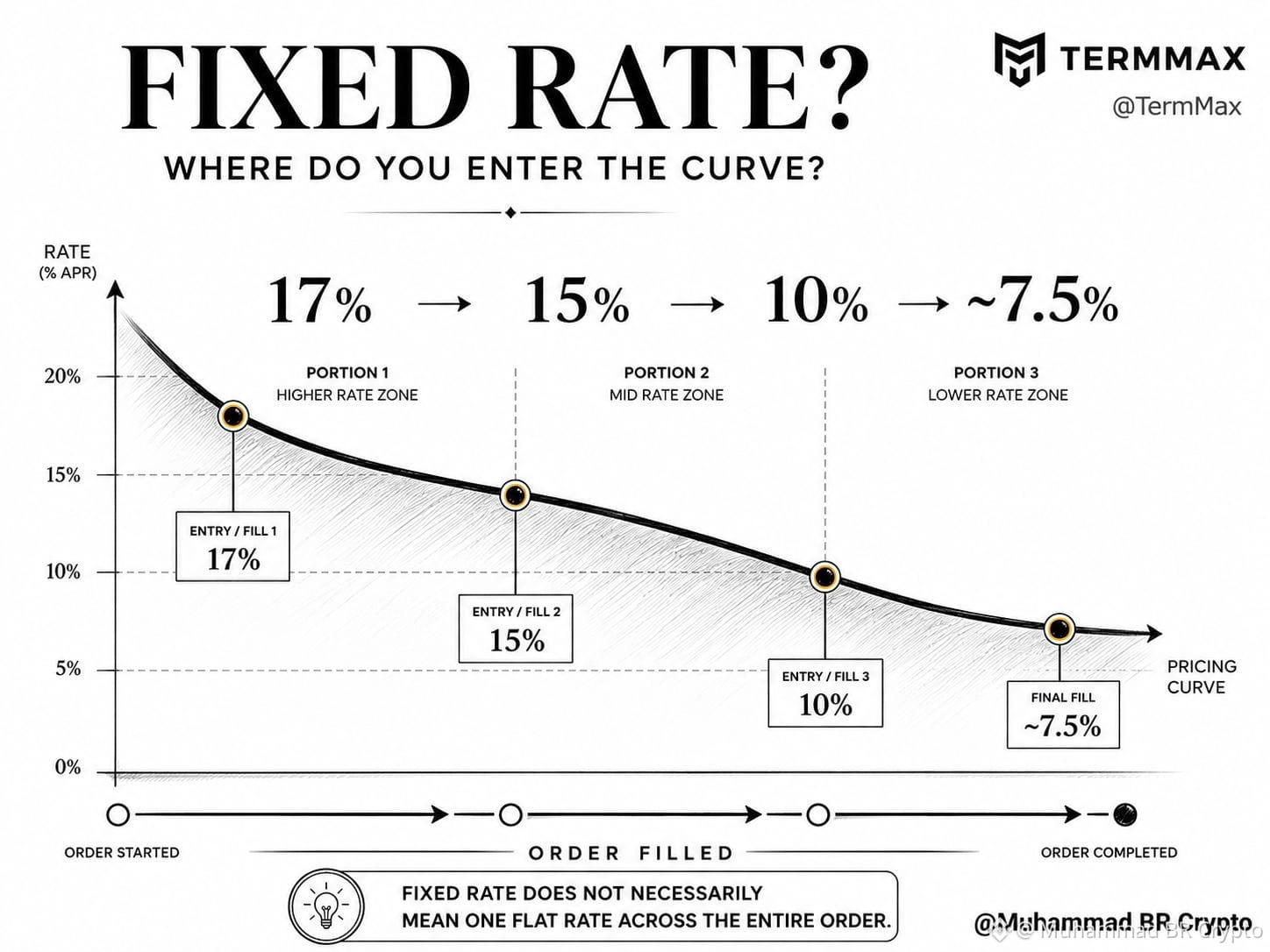
#termmax @termmax I thought “fixed rate” on @termmax meant one rate across an entire order.
Then I looked closer at how Range Orders actually work and realized I was oversimplifying it.
They’re built from pricing curves, not flat rates. In TermMax’s borrowing example, the first 1.5M ranges from 17% toward 15%, the next 0.2M from 15% toward 10%, and the final 0.17M from 10% toward roughly 7.5%.
So once your portion is matched, its rate is fixed — but different portions can lock in different rates depending on where they’re matched on the curve.
That makes the order’s fill position more important than I initially thought.
For a taker, should the first question be “what’s the rate?” — or “where am I entering the curve?”
#termmax @TermMax I thought “fixed rate” on @TermMax meant one rate across an entire order.
Then I looked closer at how Range Orders actually work and realized I was oversimplifying it.
They’re built from pricing curves, not flat rates. In TermMax’s borrowing example, the first 1.5M ranges from 17% toward 15%, the next 0.2M from 15% toward 10%, and the final 0.17M from 10% toward roughly 7.5%.
So once your portion is matched, its rate is fixed — but different portions can lock in different rates depending on where they’re matched on the curve.
That makes the order’s fill position more important than I initially thought.
For a taker, should the first question be “what’s the rate?” — or “where am I entering the curve?”
1
79
Xem bản dịch
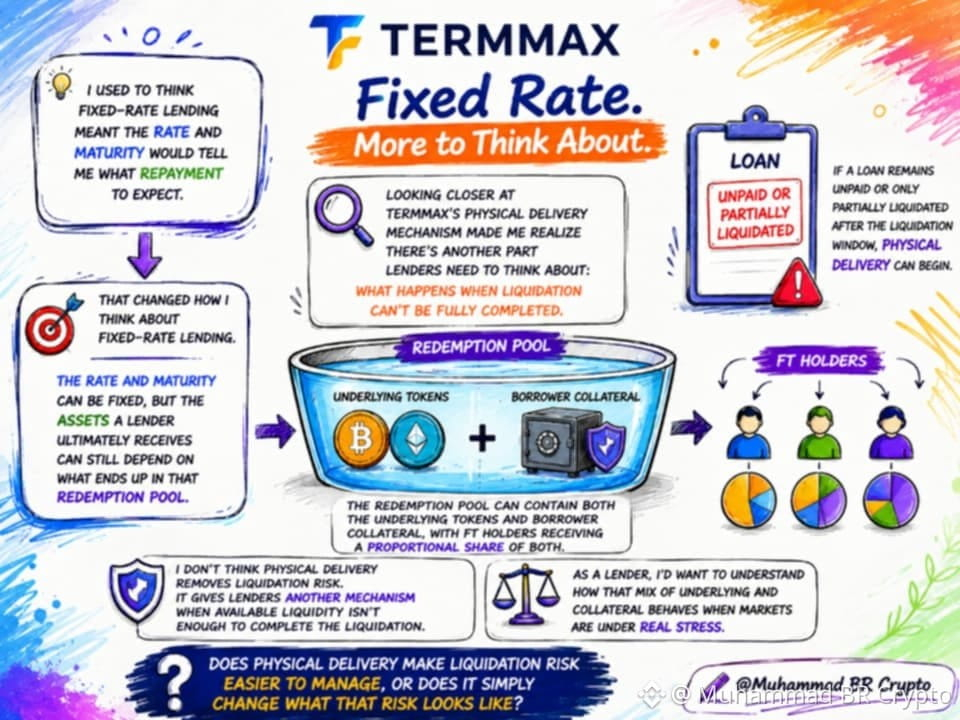
#termmax @termmax I used to think fixed-rate lending was mainly about knowing the rate and maturity upfront.
But looking closer at @termmax physical delivery mechanism made me realize there’s another question: what happens when liquidation can’t be fully completed?
If a loan remains unpaid or only partially liquidated after the liquidation window, physical delivery can begin. The redemption pool can contain both the underlying tokens and borrower collateral, with FT holders receiving a proportional share of both.
That changed how I think about fixed-rate lending.
The rate and maturity can be fixed, but what a lender ultimately receives can still depend on what ends up in that pool.
That’s also where I see the practical value of TermMax: lenders can target fixed returns, borrowers can access defined-rate liquidity, and LPs can provide liquidity to the market.
I don’t think physical delivery removes liquidation risk. It gives lenders another mechanism when available liquidity isn’t enough to complete the liquidation.
Does physical delivery make liquidation risk easier to manage, or simply change what that risk looks like?
#termmax @TermMax I used to think fixed-rate lending was mainly about knowing the rate and maturity upfront.
But looking closer at @TermMax physical delivery mechanism made me realize there’s another question: what happens when liquidation can’t be fully completed?
If a loan remains unpaid or only partially liquidated after the liquidation window, physical delivery can begin. The redemption pool can contain both the underlying tokens and borrower collateral, with FT holders receiving a proportional share of both.
That changed how I think about fixed-rate lending.
The rate and maturity can be fixed, but what a lender ultimately receives can still depend on what ends up in that pool.
That’s also where I see the practical value of TermMax: lenders can target fixed returns, borrowers can access defined-rate liquidity, and LPs can provide liquidity to the market.
I don’t think physical delivery removes liquidation risk. It gives lenders another mechanism when available liquidity isn’t enough to complete the liquidation.
Does physical delivery make liquidation risk easier to manage, or simply change what that risk looks like?
2
57
Xem bản dịch
#dusk $DUSK I used to think more transparency automatically meant more trust in financial blockchains. But the more I look at @Dusk_Foundation , the less convincing that assumption feels.
In regulated finance, institutions need to prove eligibility and compliance without necessarily exposing every underlying detail. Dusk’s programmable privacy approach caught my attention because it aims for privacy where needed, transparency where useful, and selective disclosure when authorized.
That makes me look at Hedger differently too. Its homomorphic encryption and zero-knowledge proofs aren’t simply about hiding information; they enable confidential transaction flows while preserving the ability to verify relevant information when needed.
The real tension is interesting: can regulated markets have strong privacy without giving up verifiability?
Could programmable disclosure be the missing piece?
#dusk $DUSK I used to think more transparency automatically meant more trust in financial blockchains. But the more I look at @Dusk , the less convincing that assumption feels.
In regulated finance, institutions need to prove eligibility and compliance without necessarily exposing every underlying detail. Dusk’s programmable privacy approach caught my attention because it aims for privacy where needed, transparency where useful, and selective disclosure when authorized.
That makes me look at Hedger differently too. Its homomorphic encryption and zero-knowledge proofs aren’t simply about hiding information; they enable confidential transaction flows while preserving the ability to verify relevant information when needed.
The real tension is interesting: can regulated markets have strong privacy without giving up verifiability?
Could programmable disclosure be the missing piece?
66
Xem bản dịch
😍
😍

Ahmad Wêb³
·
--
Tăng giáTôi đã thử luồng Vault Bitcoin phi tín nhiệm của Babylon và phần đọng lại với tôi không phải là việc mượn BTC. Đó là khoảng thời gian chờ đợi sau khi khóa. Trì hoãn nhỏ đó đã cho thấy sự đánh đổi cốt lõi: TBV được xây dựng dựa trên cơ chế xác minh gốc từ Bitcoin và giảm các giả định về niềm tin, chứ không phải sự tiện lợi DeFi tức thì.
Sau đó tôi nhìn vào thị trường.
$BABY đang giao dịch quanh mức 0,0129 USD với vốn hóa khoảng 50,7 triệu USD, trong khi token giảm gần 9% trong 7 ngày qua. Thị trường vẫn đang chờ bằng chứng rằng sự tăng trưởng của hệ sinh thái Babylon có thể chuyển hóa thành nhu cầu token bền vững.
Nhưng hệ sinh thái kể một câu chuyện khác.
TVL của Babylon vào khoảng 3,25 tỷ USD, cho thấy giao thức đã được kết nối với giá trị BTC đáng kể. Câu hỏi then chốt là liệu hoạt động này có tạo ra giá trị thực sự cho $BABY thông qua việc được áp dụng và tăng trưởng mạng hay không.
Mặt cung lại bổ sung thêm một lớp khác.
BABY có khoảng 4,02 tỷ token đang lưu hành trong tổng số 10,89 tỷ token. Lần mở khóa tiếp theo vào ngày 10/8 sẽ phát hành 136,11 triệu token BABY, tương đương khoảng 1,2% tổng cung, cho các cố vấn, nhà đầu tư sớm và phần phân bổ cho đội ngũ.
Vì vậy, thị trường đang cân bằng hai điều:
Babylon có thể biến việc được áp dụng BTC thành nhu cầu token kéo dài hay không, trong khi vẫn quản lý được sự mở rộng cung trong tương lai?
Thách thức thực sự có lẽ không nằm ở việc xây dựng hạ tầng Bitcoin; mà nằm ở việc chứng minh rằng những người nắm giữ Bitcoin sẽ chọn mô hình niềm tin này thay vì các lựa chọn nhanh hơn.
Liệu Babylon có trở thành lớp mang tính thanh khoản BTC nghiêm túc vào DeFi, hay sự tiện lợi sẽ tiếp tục chiến thắng?
@BabylonLabs_io
#baby $BABY
2
Tây Ban Nha vs Argentina có cảm giác như một cuộc đối đầu kinh điển trong môn bóng đá ở sân khấu lớn nhất! ⚽ Cả hai đội đều có những tiền đạo đẳng cấp thế giới, tuyến giữa giàu sáng tạo và hàng thủ vững chắc. Tôi dự đoán một trận đấu có cường độ cao, nhiều cơ hội và những khoảnh khắc kịch tính. Dự đoán của tôi: một trận cầu hấp dẫn, diễn biến căng thẳng cho đến tận tiếng còi mãn cuộc. Tối nay bạn đang ủng hộ đội nào? #BinancePickAndWin
Tây Ban Nha vs Argentina có cảm giác như một cuộc đối đầu kinh điển trong môn bóng đá ở sân khấu lớn nhất! ⚽ Cả hai đội đều có những tiền đạo đẳng cấp thế giới, tuyến giữa giàu sáng tạo và hàng thủ vững chắc. Tôi dự đoán một trận đấu có cường độ cao, nhiều cơ hội và những khoảnh khắc kịch tính. Dự đoán của tôi: một trận cầu hấp dẫn, diễn biến căng thẳng cho đến tận tiếng còi mãn cuộc. Tối nay bạn đang ủng hộ đội nào? #BinancePickAndWin
74
Đăng nhập để khám phá thêm nội dung
Tham gia cùng người dùng tiền mã hóa toàn cầu trên Binance Square
⚡️ Nhận thông tin mới nhất và hữu ích về tiền mã hóa.
💬 Được tin cậy bởi sàn giao dịch tiền mã hóa lớn nhất thế giới.
👍 Khám phá những thông tin chuyên sâu thực tế từ những nhà sáng tạo đã xác minh.
Email / Số điện thoại
Chủ đề thịnh hành
TinFed
425,694 lượt xem
1,317 đang thảo luận
🚨 BREAKING: 🇺🇸 Cục Dự trữ Liên bang Mỹ (FED) sẽ công bố biên bản cuộc họp FOMC vào lúc 2:00 chiều (giờ ET).
• Giọng điệu diều hâu hơn (Hawkish): Tín hiệu tiêu cực, có thể gây áp lực giảm giá lên thị trường.
• Không có bất ngờ lớn: Tác động trung lập đối với thị trường.
• Giọng điệu ôn hòa hơn (Dovish): Tín hiệu tích cực, có thể thúc đẩy thị trường tăng giá.
⚠️ Đây là sự kiện cực kỳ quan trọng mà các nhà đầu tư cần theo dõi, bởi nội dung biên bản FED có thể tác động mạnh đến tâm lý thị trường và biến động giá của các tài sản tài chính, đặc biệt là tiền điện tử. #TheoDõiFOMC #TinFed
blogtienso
·1 lượt thích
·786 lượt xem
TheoDõiFOMC
361,642 lượt xem
1,545 đang thảo luận
BTCRemainsUnderPressureAfterHawkishFOMCMinutes
27,216 lượt xem
402 đang thảo luận