

SUHANA-加密货币143
319 Bài đăng

SUHANA-加密货币143
Báo cáo
Chặn người dùng
Trader tần suất cao
{thời gian} năm
152 Đang theo dõi
1.8K+ Người theo dõi
790 Đã thích
Bài đăng
Tất cả
Trích dẫn
Xem bản dịch
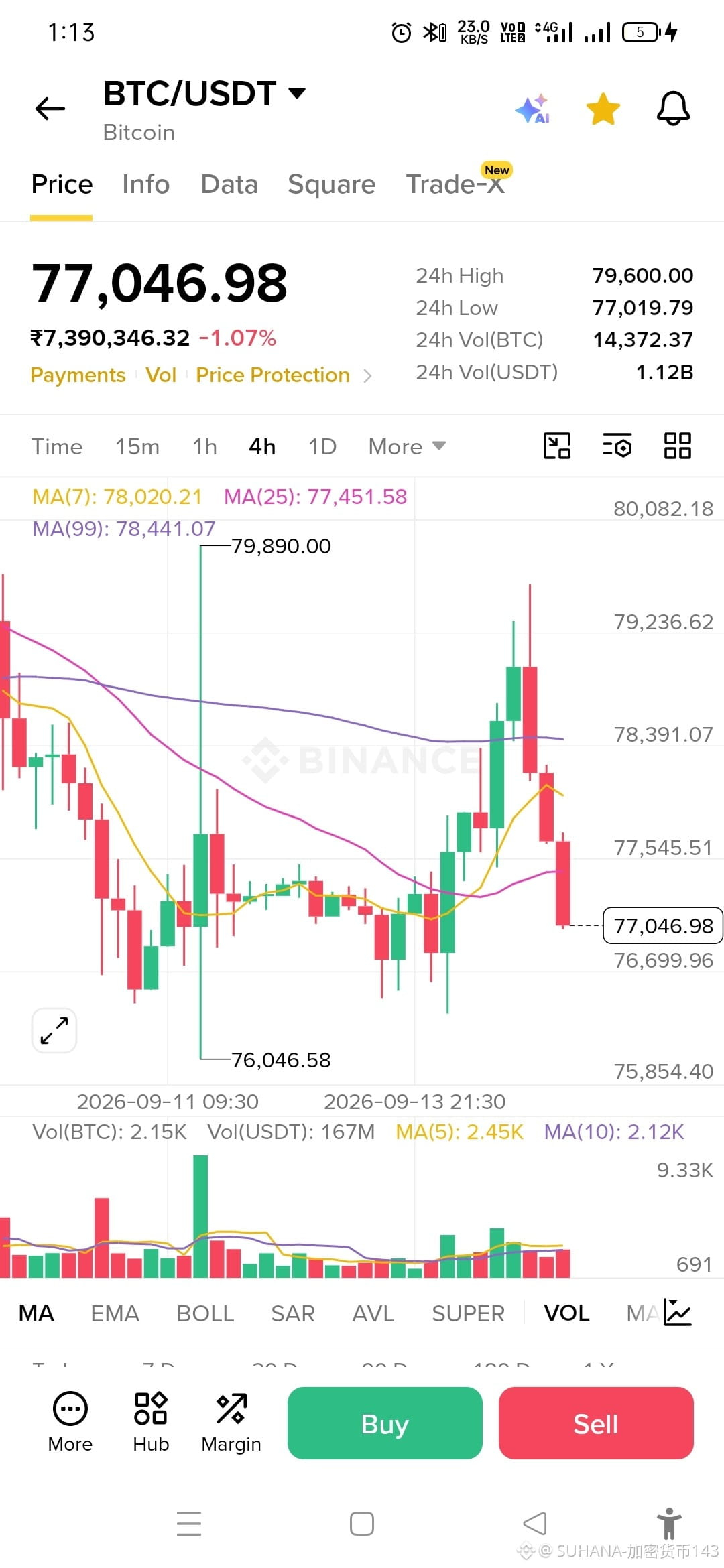
BTC/USDT — 4H Short Analysis
Current: ~$77,047
Trend: 💔 Bearish — strong selling candle.
Resistance: $77,550 → $78,020 → $78,400
Support: $76,700 → $76,050
Possible plan: 📍 Short: if 4H candle closes below $76,700
🤾🏻 Targets: $76,050 → $75,500
🧏🏻 Stop-loss: above $77,550–77,700
🛌🏻 Long only if price reclaims $78,400 with a strong 4H close.$BTC
{future}(BTCUSDT)
My view: For now, bearish; don't chase a long at $77K. Wait for confirmation around $76,700 or a recovery above $78,400.
$BTC
BTC/USDT — 4H Short Analysis
Current: ~$77,047
Trend: 💔 Bearish — strong selling candle.
Resistance: $77,550 → $78,020 → $78,400
Support: $76,700 → $76,050
Possible plan: 📍 Short: if 4H candle closes below $76,700
🤾🏻 Targets: $76,050 → $75,500
🧏🏻 Stop-loss: above $77,550–77,700
🛌🏻 Long only if price reclaims $78,400 with a strong 4H close.$BTC
My view: For now, bearish; don't chase a long at $77K. Wait for confirmation around $76,700 or a recovery above $78,400.
$BTC
Current: ~$77,047
Trend: 💔 Bearish — strong selling candle.
Resistance: $77,550 → $78,020 → $78,400
Support: $76,700 → $76,050
Possible plan: 📍 Short: if 4H candle closes below $76,700
🤾🏻 Targets: $76,050 → $75,500
🧏🏻 Stop-loss: above $77,550–77,700
🛌🏻 Long only if price reclaims $78,400 with a strong 4H close.$BTC
My view: For now, bearish; don't chase a long at $77K. Wait for confirmation around $76,700 or a recovery above $78,400.
$BTC
72
Bài viết
Xem bản dịch
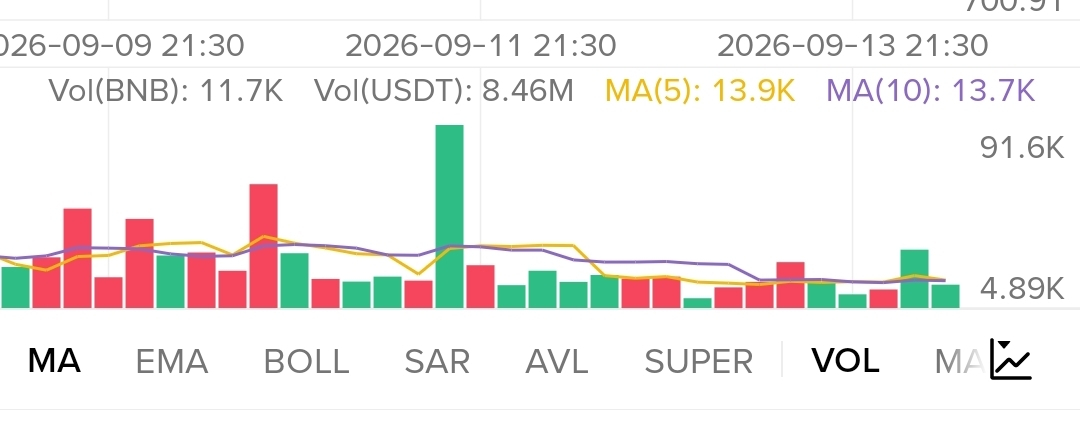
BNB analysis todayBNB/USDT – 4H Analysis
$BNB is currently trading around 725, and the short-term structure looks slightly bullish.
The price is above all three moving averages:
MA 7: 720.35
MA 25: 721.94
MA 99: 719.25
This is a positive sign, but BNB is now sitting near an important resistance area.
Resistance:
726–728 — immediate resistance
736–737 — next major resistance
748–750 — stronger resistance
Support:
720–721 — immediate support
713–714 — strong support
703–705 — major support
What I'm watching
If BNB gives a strong 4H close above 728 with good volume, we could see a move toward 736–737.
If it gets rejected around 726–728 and falls below 720, the price could come back toward 713–714.
Overall, the bias is slightly bullish above 720, but I would want to see a clean breakout above 728 before calling it a stronger bullish move.#btc #bnb $BNB
{future}(BNBUSDT)
BNB analysis today
BNB/USDT – 4H Analysis
$BNB is currently trading around 725, and the short-term structure looks slightly bullish.
The price is above all three moving averages:
MA 7: 720.35
MA 25: 721.94
MA 99: 719.25
This is a positive sign, but BNB is now sitting near an important resistance area.
Resistance:
726–728 — immediate resistance
736–737 — next major resistance
748–750 — stronger resistance
Support:
720–721 — immediate support
713–714 — strong support
703–705 — major support
What I'm watching
If BNB gives a strong 4H close above 728 with good volume, we could see a move toward 736–737.
If it gets rejected around 726–728 and falls below 720, the price could come back toward 713–714.
Overall, the bias is slightly bullish above 720, but I would want to see a clean breakout above 728 before calling it a stronger bullish move.#btc #bnb $BNB
$BNB is currently trading around 725, and the short-term structure looks slightly bullish.
The price is above all three moving averages:
MA 7: 720.35
MA 25: 721.94
MA 99: 719.25
This is a positive sign, but BNB is now sitting near an important resistance area.
Resistance:
726–728 — immediate resistance
736–737 — next major resistance
748–750 — stronger resistance
Support:
720–721 — immediate support
713–714 — strong support
703–705 — major support
What I'm watching
If BNB gives a strong 4H close above 728 with good volume, we could see a move toward 736–737.
If it gets rejected around 726–728 and falls below 720, the price could come back toward 713–714.
Overall, the bias is slightly bullish above 720, but I would want to see a clean breakout above 728 before calling it a stronger bullish move.#btc #bnb $BNB
1
70
#opg $OPG
Tôi vẫn luôn tự hỏi, một ngăn xếp AI hoàn toàn phi tập trung có thể trông như thế nào sau năm năm nữa.
Ngày nay, hầu hết các ứng dụng AI vẫn phụ thuộc vào hạ tầng tập trung ở đâu đó trong toàn bộ chuỗi xử lý. Bạn có thể sử dụng một mô hình mã nguồn mở, nhưng việc suy luận lại chạy trên một nhà cung cấp duy nhất. Hoặc mô hình được phân phối, nhưng các khoản thanh toán, cơ chế xác minh hoặc lưu trữ vẫn tập trung.
Một ngăn xếp thực sự phi tập trung sẽ kết nối tất cả các lớp đó.
Các nhà phát triển mô hình có thể công bố mô hình lên một mạng mở. Các nhà điều hành nút độc lập có thể cung cấp năng lực tính toán cho suy luận. Hệ thống xác minh có thể chứng minh rằng mô hình đúng đã tạo ra đầu ra. Các khoản thanh toán có thể diễn ra tự động giữa người dùng và nhà cung cấp, trong khi quản trị và cơ chế khuyến khích được quản lý trên chuỗi.
Đó là một phần khiến OpenGradient trở nên thú vị đối với tôi. Nó đang khám phá các mảnh ghép của viễn cảnh này bằng cách kết hợp suy luận phi tập trung, xác minh và cơ sở hạ tầng blockchain. Liệu đây có trở thành cách tiếp cận chủ đạo hay không vẫn là một câu hỏi mở, nhưng đây là một hướng đáng để theo dõi.
Vẫn còn rất nhiều thách thức. Hiệu năng phải cạnh tranh được với các dịch vụ tập trung. Xác minh cần phải hiệu quả. Các cơ chế khuyến khích phải thưởng cho các nhà điều hành nút hoạt động đáng tin cậy mà không khiến việc sử dụng mạng quá tốn kém.
Nếu những vấn đề đó có thể được giải quyết, hạ tầng AI trong năm năm tới có thể sẽ giống internet hơn nhiều—phân tán, không cần cấp phép, và được xây dựng bởi nhiều người tham gia thay vì chỉ một vài nhà cung cấp.
Chúng tôi vẫn còn ở giai đoạn đầu, nhưng thật hấp dẫn khi thấy các dự án đang thử nghiệm để hình dung tương lai đó có thể trông như thế nào.
#OpenGradient #OPGS #Web3
#opg $OPG
Tôi vẫn luôn tự hỏi, một ngăn xếp AI hoàn toàn phi tập trung có thể trông như thế nào sau năm năm nữa.
Ngày nay, hầu hết các ứng dụng AI vẫn phụ thuộc vào hạ tầng tập trung ở đâu đó trong toàn bộ chuỗi xử lý. Bạn có thể sử dụng một mô hình mã nguồn mở, nhưng việc suy luận lại chạy trên một nhà cung cấp duy nhất. Hoặc mô hình được phân phối, nhưng các khoản thanh toán, cơ chế xác minh hoặc lưu trữ vẫn tập trung.
Một ngăn xếp thực sự phi tập trung sẽ kết nối tất cả các lớp đó.
Các nhà phát triển mô hình có thể công bố mô hình lên một mạng mở. Các nhà điều hành nút độc lập có thể cung cấp năng lực tính toán cho suy luận. Hệ thống xác minh có thể chứng minh rằng mô hình đúng đã tạo ra đầu ra. Các khoản thanh toán có thể diễn ra tự động giữa người dùng và nhà cung cấp, trong khi quản trị và cơ chế khuyến khích được quản lý trên chuỗi.
Đó là một phần khiến OpenGradient trở nên thú vị đối với tôi. Nó đang khám phá các mảnh ghép của viễn cảnh này bằng cách kết hợp suy luận phi tập trung, xác minh và cơ sở hạ tầng blockchain. Liệu đây có trở thành cách tiếp cận chủ đạo hay không vẫn là một câu hỏi mở, nhưng đây là một hướng đáng để theo dõi.
Vẫn còn rất nhiều thách thức. Hiệu năng phải cạnh tranh được với các dịch vụ tập trung. Xác minh cần phải hiệu quả. Các cơ chế khuyến khích phải thưởng cho các nhà điều hành nút hoạt động đáng tin cậy mà không khiến việc sử dụng mạng quá tốn kém.
Nếu những vấn đề đó có thể được giải quyết, hạ tầng AI trong năm năm tới có thể sẽ giống internet hơn nhiều—phân tán, không cần cấp phép, và được xây dựng bởi nhiều người tham gia thay vì chỉ một vài nhà cung cấp.
Chúng tôi vẫn còn ở giai đoạn đầu, nhưng thật hấp dẫn khi thấy các dự án đang thử nghiệm để hình dung tương lai đó có thể trông như thế nào.
#OpenGradient #OPGS #Web3
Tôi vẫn luôn tự hỏi, một ngăn xếp AI hoàn toàn phi tập trung có thể trông như thế nào sau năm năm nữa.
Ngày nay, hầu hết các ứng dụng AI vẫn phụ thuộc vào hạ tầng tập trung ở đâu đó trong toàn bộ chuỗi xử lý. Bạn có thể sử dụng một mô hình mã nguồn mở, nhưng việc suy luận lại chạy trên một nhà cung cấp duy nhất. Hoặc mô hình được phân phối, nhưng các khoản thanh toán, cơ chế xác minh hoặc lưu trữ vẫn tập trung.
Một ngăn xếp thực sự phi tập trung sẽ kết nối tất cả các lớp đó.
Các nhà phát triển mô hình có thể công bố mô hình lên một mạng mở. Các nhà điều hành nút độc lập có thể cung cấp năng lực tính toán cho suy luận. Hệ thống xác minh có thể chứng minh rằng mô hình đúng đã tạo ra đầu ra. Các khoản thanh toán có thể diễn ra tự động giữa người dùng và nhà cung cấp, trong khi quản trị và cơ chế khuyến khích được quản lý trên chuỗi.
Đó là một phần khiến OpenGradient trở nên thú vị đối với tôi. Nó đang khám phá các mảnh ghép của viễn cảnh này bằng cách kết hợp suy luận phi tập trung, xác minh và cơ sở hạ tầng blockchain. Liệu đây có trở thành cách tiếp cận chủ đạo hay không vẫn là một câu hỏi mở, nhưng đây là một hướng đáng để theo dõi.
Vẫn còn rất nhiều thách thức. Hiệu năng phải cạnh tranh được với các dịch vụ tập trung. Xác minh cần phải hiệu quả. Các cơ chế khuyến khích phải thưởng cho các nhà điều hành nút hoạt động đáng tin cậy mà không khiến việc sử dụng mạng quá tốn kém.
Nếu những vấn đề đó có thể được giải quyết, hạ tầng AI trong năm năm tới có thể sẽ giống internet hơn nhiều—phân tán, không cần cấp phép, và được xây dựng bởi nhiều người tham gia thay vì chỉ một vài nhà cung cấp.
Chúng tôi vẫn còn ở giai đoạn đầu, nhưng thật hấp dẫn khi thấy các dự án đang thử nghiệm để hình dung tương lai đó có thể trông như thế nào.
#OpenGradient #OPGS #Web3
4
1
123
#opg $OPG
Một câu hỏi mà tôi luôn suy nghĩ là liệu AI đa phương thức có thể, cuối cùng, giúp xác minh chính các đầu ra của nó thay vì phải dựa vào chỉ một nguồn thông tin hay không.
Hãy tưởng tượng một hệ thống AI xử lý đồng thời văn bản, hình ảnh, âm thanh và dữ liệu từ cảm biến. Nếu các đầu vào khác nhau đó đều hướng đến cùng một kết luận, thì mức độ tin cậy vào kết quả sẽ tự nhiên tăng lên. Nhưng điều gì sẽ xảy ra khi chúng không nhất quán?
Một chú thích có thể mô tả một đối tượng không thực sự nhìn thấy trong hình ảnh. Âm thanh có thể mâu thuẫn với những gì đang diễn ra trong video. Số liệu từ cảm biến có thể không khớp với bất kỳ bên nào. Trong những trường hợp như vậy, việc chỉ đưa ra một câu trả lời là chưa đủ—hệ thống cần có cách nhận ra bằng chứng mâu thuẫn trước khi trình bày nó như một sự thật.
Đó là một lý do khiến trọng tâm của OpenGradient vào AI có thể xác minh đặc biệt thu hút tôi. Nếu các phương thức khác nhau có thể được đối chiếu với nhau, và quá trình suy luận bản thân cũng có thể được xác minh, thì các hệ thống AI có thể trở nên minh bạch hơn thay vì chỉ ngày càng “mạnh” hơn.
Tất nhiên, xác minh chéo giữa các phương thức không phải là một giải pháp hoàn chỉnh. Các đầu vào khác nhau có thể cùng chia sẻ một thiên kiến hoặc cùng thiếu thông tin. Nhưng việc sử dụng nhiều tín hiệu độc lập để đánh giá một đầu ra dường như là nền tảng vững chắc hơn so với việc chỉ tin vào một phương thức đơn lẻ.
Khi AI ngày càng được tích hợp sâu hơn vào các quyết định thường ngày, tôi nghĩ thách thức lớn nhất sẽ không phải là làm cho các mô hình thông minh hơn—mà là làm cho các kết luận của chúng đáng tin cậy hơn.
#OpenGradien #OPG #Web3 @OpenGradient
#opg $OPG
Một câu hỏi mà tôi luôn suy nghĩ là liệu AI đa phương thức có thể, cuối cùng, giúp xác minh chính các đầu ra của nó thay vì phải dựa vào chỉ một nguồn thông tin hay không.
Hãy tưởng tượng một hệ thống AI xử lý đồng thời văn bản, hình ảnh, âm thanh và dữ liệu từ cảm biến. Nếu các đầu vào khác nhau đó đều hướng đến cùng một kết luận, thì mức độ tin cậy vào kết quả sẽ tự nhiên tăng lên. Nhưng điều gì sẽ xảy ra khi chúng không nhất quán?
Một chú thích có thể mô tả một đối tượng không thực sự nhìn thấy trong hình ảnh. Âm thanh có thể mâu thuẫn với những gì đang diễn ra trong video. Số liệu từ cảm biến có thể không khớp với bất kỳ bên nào. Trong những trường hợp như vậy, việc chỉ đưa ra một câu trả lời là chưa đủ—hệ thống cần có cách nhận ra bằng chứng mâu thuẫn trước khi trình bày nó như một sự thật.
Đó là một lý do khiến trọng tâm của OpenGradient vào AI có thể xác minh đặc biệt thu hút tôi. Nếu các phương thức khác nhau có thể được đối chiếu với nhau, và quá trình suy luận bản thân cũng có thể được xác minh, thì các hệ thống AI có thể trở nên minh bạch hơn thay vì chỉ ngày càng “mạnh” hơn.
Tất nhiên, xác minh chéo giữa các phương thức không phải là một giải pháp hoàn chỉnh. Các đầu vào khác nhau có thể cùng chia sẻ một thiên kiến hoặc cùng thiếu thông tin. Nhưng việc sử dụng nhiều tín hiệu độc lập để đánh giá một đầu ra dường như là nền tảng vững chắc hơn so với việc chỉ tin vào một phương thức đơn lẻ.
Khi AI ngày càng được tích hợp sâu hơn vào các quyết định thường ngày, tôi nghĩ thách thức lớn nhất sẽ không phải là làm cho các mô hình thông minh hơn—mà là làm cho các kết luận của chúng đáng tin cậy hơn.
#OpenGradien #OPG #Web3 @OpenGradient
Một câu hỏi mà tôi luôn suy nghĩ là liệu AI đa phương thức có thể, cuối cùng, giúp xác minh chính các đầu ra của nó thay vì phải dựa vào chỉ một nguồn thông tin hay không.
Hãy tưởng tượng một hệ thống AI xử lý đồng thời văn bản, hình ảnh, âm thanh và dữ liệu từ cảm biến. Nếu các đầu vào khác nhau đó đều hướng đến cùng một kết luận, thì mức độ tin cậy vào kết quả sẽ tự nhiên tăng lên. Nhưng điều gì sẽ xảy ra khi chúng không nhất quán?
Một chú thích có thể mô tả một đối tượng không thực sự nhìn thấy trong hình ảnh. Âm thanh có thể mâu thuẫn với những gì đang diễn ra trong video. Số liệu từ cảm biến có thể không khớp với bất kỳ bên nào. Trong những trường hợp như vậy, việc chỉ đưa ra một câu trả lời là chưa đủ—hệ thống cần có cách nhận ra bằng chứng mâu thuẫn trước khi trình bày nó như một sự thật.
Đó là một lý do khiến trọng tâm của OpenGradient vào AI có thể xác minh đặc biệt thu hút tôi. Nếu các phương thức khác nhau có thể được đối chiếu với nhau, và quá trình suy luận bản thân cũng có thể được xác minh, thì các hệ thống AI có thể trở nên minh bạch hơn thay vì chỉ ngày càng “mạnh” hơn.
Tất nhiên, xác minh chéo giữa các phương thức không phải là một giải pháp hoàn chỉnh. Các đầu vào khác nhau có thể cùng chia sẻ một thiên kiến hoặc cùng thiếu thông tin. Nhưng việc sử dụng nhiều tín hiệu độc lập để đánh giá một đầu ra dường như là nền tảng vững chắc hơn so với việc chỉ tin vào một phương thức đơn lẻ.
Khi AI ngày càng được tích hợp sâu hơn vào các quyết định thường ngày, tôi nghĩ thách thức lớn nhất sẽ không phải là làm cho các mô hình thông minh hơn—mà là làm cho các kết luận của chúng đáng tin cậy hơn.
#OpenGradien #OPG #Web3 @OpenGradient
8
2
141
#opg $OPG
Một điều gần đây tôi vẫn luôn suy nghĩ là việc triển khai (hosting) các mô hình AI không chỉ đơn thuần là có đủ GPU. Đó còn là vấn đề mô hình đó được cung cấp ở đâu khi một yêu cầu đến.
Phần lớn mọi người tập trung vào sức mạnh tính toán, nhưng hosting mô hình phân tán lại tạo ra một thách thức khác. Nếu mỗi lần nhận yêu cầu, mô hình phải được tải lại, thì ngay cả phần cứng mạnh cũng có thể tiêu tốn thời gian quý giá. Ngược lại, việc giữ mọi mô hình luôn được nạp sẵn trên mọi nút cũng không khả thi vì bộ nhớ là hữu hạn.
Chính vì vậy mà cách tiếp cận của OpenGradient lại khiến tôi thấy hứng thú. Thay vì coi AI như một dịch vụ tập trung duy nhất, họ hướng tới việc phân phối việc hosting mô hình trên một mạng lưới các nút độc lập. Điều này mở ra khả năng tận dụng tài nguyên tốt hơn, nhưng đồng thời cũng đặt ra những câu hỏi về lập lịch (scheduling), lưu trữ đệm (caching) và cách đảm bảo các mô hình được sử dụng thường xuyên luôn sẵn có đúng nơi mà nhu cầu thực sự xuất hiện.
Thách thức kỹ thuật không chỉ là chạy mô hình—mà là phải đảm bảo mô hình phù hợp đã nằm sẵn ở đúng vị trí trước khi yêu cầu đến.
Khi việc ứng dụng AI ngày càng mở rộng, việc phân phối mô hình hiệu quả có thể sẽ quan trọng ngang với sức mạnh tính toán thô. Những mạng lưới giải quyết được cả hai vấn đề có thể sẽ có lợi thế thực sự.
Tôi rất tò mò để xem điều này sẽ phát triển như thế nào khi hạ tầng AI phi tập trung trưởng thành hơn.
#OpenGradien #OPG #AI $OPG @OpenGradient
{future}(OPGUSDT)
#opg $OPG
Một điều gần đây tôi vẫn luôn suy nghĩ là việc triển khai (hosting) các mô hình AI không chỉ đơn thuần là có đủ GPU. Đó còn là vấn đề mô hình đó được cung cấp ở đâu khi một yêu cầu đến.
Phần lớn mọi người tập trung vào sức mạnh tính toán, nhưng hosting mô hình phân tán lại tạo ra một thách thức khác. Nếu mỗi lần nhận yêu cầu, mô hình phải được tải lại, thì ngay cả phần cứng mạnh cũng có thể tiêu tốn thời gian quý giá. Ngược lại, việc giữ mọi mô hình luôn được nạp sẵn trên mọi nút cũng không khả thi vì bộ nhớ là hữu hạn.
Chính vì vậy mà cách tiếp cận của OpenGradient lại khiến tôi thấy hứng thú. Thay vì coi AI như một dịch vụ tập trung duy nhất, họ hướng tới việc phân phối việc hosting mô hình trên một mạng lưới các nút độc lập. Điều này mở ra khả năng tận dụng tài nguyên tốt hơn, nhưng đồng thời cũng đặt ra những câu hỏi về lập lịch (scheduling), lưu trữ đệm (caching) và cách đảm bảo các mô hình được sử dụng thường xuyên luôn sẵn có đúng nơi mà nhu cầu thực sự xuất hiện.
Thách thức kỹ thuật không chỉ là chạy mô hình—mà là phải đảm bảo mô hình phù hợp đã nằm sẵn ở đúng vị trí trước khi yêu cầu đến.
Khi việc ứng dụng AI ngày càng mở rộng, việc phân phối mô hình hiệu quả có thể sẽ quan trọng ngang với sức mạnh tính toán thô. Những mạng lưới giải quyết được cả hai vấn đề có thể sẽ có lợi thế thực sự.
Tôi rất tò mò để xem điều này sẽ phát triển như thế nào khi hạ tầng AI phi tập trung trưởng thành hơn.
#OpenGradien #OPG #AI $OPG @OpenGradient
Một điều gần đây tôi vẫn luôn suy nghĩ là việc triển khai (hosting) các mô hình AI không chỉ đơn thuần là có đủ GPU. Đó còn là vấn đề mô hình đó được cung cấp ở đâu khi một yêu cầu đến.
Phần lớn mọi người tập trung vào sức mạnh tính toán, nhưng hosting mô hình phân tán lại tạo ra một thách thức khác. Nếu mỗi lần nhận yêu cầu, mô hình phải được tải lại, thì ngay cả phần cứng mạnh cũng có thể tiêu tốn thời gian quý giá. Ngược lại, việc giữ mọi mô hình luôn được nạp sẵn trên mọi nút cũng không khả thi vì bộ nhớ là hữu hạn.
Chính vì vậy mà cách tiếp cận của OpenGradient lại khiến tôi thấy hứng thú. Thay vì coi AI như một dịch vụ tập trung duy nhất, họ hướng tới việc phân phối việc hosting mô hình trên một mạng lưới các nút độc lập. Điều này mở ra khả năng tận dụng tài nguyên tốt hơn, nhưng đồng thời cũng đặt ra những câu hỏi về lập lịch (scheduling), lưu trữ đệm (caching) và cách đảm bảo các mô hình được sử dụng thường xuyên luôn sẵn có đúng nơi mà nhu cầu thực sự xuất hiện.
Thách thức kỹ thuật không chỉ là chạy mô hình—mà là phải đảm bảo mô hình phù hợp đã nằm sẵn ở đúng vị trí trước khi yêu cầu đến.
Khi việc ứng dụng AI ngày càng mở rộng, việc phân phối mô hình hiệu quả có thể sẽ quan trọng ngang với sức mạnh tính toán thô. Những mạng lưới giải quyết được cả hai vấn đề có thể sẽ có lợi thế thực sự.
Tôi rất tò mò để xem điều này sẽ phát triển như thế nào khi hạ tầng AI phi tập trung trưởng thành hơn.
#OpenGradien #OPG #AI $OPG @OpenGradient
1
1
148
#opg $OPG Càng tìm hiểu về hạ tầng AI, tôi càng cảm thấy ngành này đang phải đối mặt với hai thách thức khác nhau cùng một lúc: mở rộng năng lực trí tuệ và bảo toàn niềm tin.
Phần “mở rộng” là điều ai cũng nói đến. Mô hình lớn hơn, nhiều GPU hơn, suy luận nhanh hơn, chi phí thấp hơn. Những vấn đề này rất khó, nhưng nhìn chung chúng tương đối dễ đo lường.
Niềm tin thì khó hơn.
Khi một hệ thống AI tạo ra đầu ra, làm sao bạn biết nó đến từ đúng mô hình mà lẽ ra phải chạy? Làm sao bạn biết kết quả không bị sửa đổi ở đâu đó trong suốt quá trình? Và khi AI di chuyển qua các mạng phân tán thay vì chỉ dựa vào một vài nhà cung cấp tập trung, những câu hỏi đó trở nên quan trọng hơn nữa.
Đây là một lý do khiến OpenGradient thu hút sự chú ý của tôi. Dự án này không chỉ tập trung vào việc làm cho điện toán AI trở nên sẵn có trên một mạng phi tập trung. Có vẻ họ còn chú trọng vào lớp xác minh nằm bên dưới.
Điều thú vị là bản thân việc xác minh không có một câu trả lời duy nhất. Một số tác vụ có thể cần các bằng chứng mật mã mạnh. Những tác vụ khác có thể ưu tiên môi trường thực thi đáng tin cậy hoặc các xác nhận đơn giản hơn để chi phí được giữ ở mức hợp lý. Thách thức là tìm ra sự cân bằng để niềm tin tăng lên mà không khiến AI trở nên quá đắt hoặc quá chậm để sử dụng.
Sự cân bằng đó có thể sẽ trở thành một trong những câu hỏi hạ tầng quan trọng nhất trong AI trong vài năm tới.
Việc mở rộng điện toán thì tương đối dễ.
Còn việc tăng mức độ tin cậy vào kết quả có lẽ là bài toán khó hơn.
@OpenGradient #AI #Crypto #AIInfrastructure #Web3
#opg $OPG Càng tìm hiểu về hạ tầng AI, tôi càng cảm thấy ngành này đang phải đối mặt với hai thách thức khác nhau cùng một lúc: mở rộng năng lực trí tuệ và bảo toàn niềm tin.
Phần “mở rộng” là điều ai cũng nói đến. Mô hình lớn hơn, nhiều GPU hơn, suy luận nhanh hơn, chi phí thấp hơn. Những vấn đề này rất khó, nhưng nhìn chung chúng tương đối dễ đo lường.
Niềm tin thì khó hơn.
Khi một hệ thống AI tạo ra đầu ra, làm sao bạn biết nó đến từ đúng mô hình mà lẽ ra phải chạy? Làm sao bạn biết kết quả không bị sửa đổi ở đâu đó trong suốt quá trình? Và khi AI di chuyển qua các mạng phân tán thay vì chỉ dựa vào một vài nhà cung cấp tập trung, những câu hỏi đó trở nên quan trọng hơn nữa.
Đây là một lý do khiến OpenGradient thu hút sự chú ý của tôi. Dự án này không chỉ tập trung vào việc làm cho điện toán AI trở nên sẵn có trên một mạng phi tập trung. Có vẻ họ còn chú trọng vào lớp xác minh nằm bên dưới.
Điều thú vị là bản thân việc xác minh không có một câu trả lời duy nhất. Một số tác vụ có thể cần các bằng chứng mật mã mạnh. Những tác vụ khác có thể ưu tiên môi trường thực thi đáng tin cậy hoặc các xác nhận đơn giản hơn để chi phí được giữ ở mức hợp lý. Thách thức là tìm ra sự cân bằng để niềm tin tăng lên mà không khiến AI trở nên quá đắt hoặc quá chậm để sử dụng.
Sự cân bằng đó có thể sẽ trở thành một trong những câu hỏi hạ tầng quan trọng nhất trong AI trong vài năm tới.
Việc mở rộng điện toán thì tương đối dễ.
Còn việc tăng mức độ tin cậy vào kết quả có lẽ là bài toán khó hơn.
@OpenGradient #AI #Crypto #AIInfrastructure #Web3
Phần “mở rộng” là điều ai cũng nói đến. Mô hình lớn hơn, nhiều GPU hơn, suy luận nhanh hơn, chi phí thấp hơn. Những vấn đề này rất khó, nhưng nhìn chung chúng tương đối dễ đo lường.
Niềm tin thì khó hơn.
Khi một hệ thống AI tạo ra đầu ra, làm sao bạn biết nó đến từ đúng mô hình mà lẽ ra phải chạy? Làm sao bạn biết kết quả không bị sửa đổi ở đâu đó trong suốt quá trình? Và khi AI di chuyển qua các mạng phân tán thay vì chỉ dựa vào một vài nhà cung cấp tập trung, những câu hỏi đó trở nên quan trọng hơn nữa.
Đây là một lý do khiến OpenGradient thu hút sự chú ý của tôi. Dự án này không chỉ tập trung vào việc làm cho điện toán AI trở nên sẵn có trên một mạng phi tập trung. Có vẻ họ còn chú trọng vào lớp xác minh nằm bên dưới.
Điều thú vị là bản thân việc xác minh không có một câu trả lời duy nhất. Một số tác vụ có thể cần các bằng chứng mật mã mạnh. Những tác vụ khác có thể ưu tiên môi trường thực thi đáng tin cậy hoặc các xác nhận đơn giản hơn để chi phí được giữ ở mức hợp lý. Thách thức là tìm ra sự cân bằng để niềm tin tăng lên mà không khiến AI trở nên quá đắt hoặc quá chậm để sử dụng.
Sự cân bằng đó có thể sẽ trở thành một trong những câu hỏi hạ tầng quan trọng nhất trong AI trong vài năm tới.
Việc mở rộng điện toán thì tương đối dễ.
Còn việc tăng mức độ tin cậy vào kết quả có lẽ là bài toán khó hơn.
@OpenGradient #AI #Crypto #AIInfrastructure #Web3
1
157
@OpenGradient
Khi đọc qua kiến trúc của OpenGradient, một ý tưởng liên tục kéo sự chú ý của tôi quay lại: cơ sở hạ tầng AI không chỉ còn là về tính toán nữa. Nó ngày càng trở thành vấn đề phối hợp.
Phần lớn mọi người tập trung vào mô hình, GPU hoặc tốc độ suy luận. Nhưng khi các tác vụ AI được phân tán trên nhiều nút khác nhau, một thách thức khác sẽ xuất hiện. Làm sao bạn biết mô hình đúng đã được sử dụng, kết quả không bị thay đổi, và mạng đã đưa ra quyết định định tuyến tối ưu?
Đó là lý do cách tiếp cận của OpenGradient trở nên thú vị. Thay vì coi việc xác minh là một lớp bổ sung tùy chọn, có vẻ như nó được dệt vào chính hệ thống thông qua các chứng thực (attestations), bằng chứng (proofs) và các lộ trình thực thi minh bạch.
Càng tìm hiểu sâu về $OPG , tôi càng nghĩ rằng ngăn xếp AI trong tương lai có thể không được xác định bởi ai sở hữu các mô hình lớn nhất, mà bởi ai có thể tạo ra các đầu ra AI đáng tin cậy ở quy mô lớn.
AI nhanh thì có giá trị.
AI có thể kiểm chứng có thể là điều thiết yếu.
#OPG
#OpenGradient
@OpenGradient
Khi đọc qua kiến trúc của OpenGradient, một ý tưởng liên tục kéo sự chú ý của tôi quay lại: cơ sở hạ tầng AI không chỉ còn là về tính toán nữa. Nó ngày càng trở thành vấn đề phối hợp.
Phần lớn mọi người tập trung vào mô hình, GPU hoặc tốc độ suy luận. Nhưng khi các tác vụ AI được phân tán trên nhiều nút khác nhau, một thách thức khác sẽ xuất hiện. Làm sao bạn biết mô hình đúng đã được sử dụng, kết quả không bị thay đổi, và mạng đã đưa ra quyết định định tuyến tối ưu?
Đó là lý do cách tiếp cận của OpenGradient trở nên thú vị. Thay vì coi việc xác minh là một lớp bổ sung tùy chọn, có vẻ như nó được dệt vào chính hệ thống thông qua các chứng thực (attestations), bằng chứng (proofs) và các lộ trình thực thi minh bạch.
Càng tìm hiểu sâu về $OPG , tôi càng nghĩ rằng ngăn xếp AI trong tương lai có thể không được xác định bởi ai sở hữu các mô hình lớn nhất, mà bởi ai có thể tạo ra các đầu ra AI đáng tin cậy ở quy mô lớn.
AI nhanh thì có giá trị.
AI có thể kiểm chứng có thể là điều thiết yếu.
#OPG
#OpenGradient
Khi đọc qua kiến trúc của OpenGradient, một ý tưởng liên tục kéo sự chú ý của tôi quay lại: cơ sở hạ tầng AI không chỉ còn là về tính toán nữa. Nó ngày càng trở thành vấn đề phối hợp.
Phần lớn mọi người tập trung vào mô hình, GPU hoặc tốc độ suy luận. Nhưng khi các tác vụ AI được phân tán trên nhiều nút khác nhau, một thách thức khác sẽ xuất hiện. Làm sao bạn biết mô hình đúng đã được sử dụng, kết quả không bị thay đổi, và mạng đã đưa ra quyết định định tuyến tối ưu?
Đó là lý do cách tiếp cận của OpenGradient trở nên thú vị. Thay vì coi việc xác minh là một lớp bổ sung tùy chọn, có vẻ như nó được dệt vào chính hệ thống thông qua các chứng thực (attestations), bằng chứng (proofs) và các lộ trình thực thi minh bạch.
Càng tìm hiểu sâu về $OPG , tôi càng nghĩ rằng ngăn xếp AI trong tương lai có thể không được xác định bởi ai sở hữu các mô hình lớn nhất, mà bởi ai có thể tạo ra các đầu ra AI đáng tin cậy ở quy mô lớn.
AI nhanh thì có giá trị.
AI có thể kiểm chứng có thể là điều thiết yếu.
#OPG
#OpenGradient
2
2
122
#opg $OPG
Một cách ngẫu nhiên;-
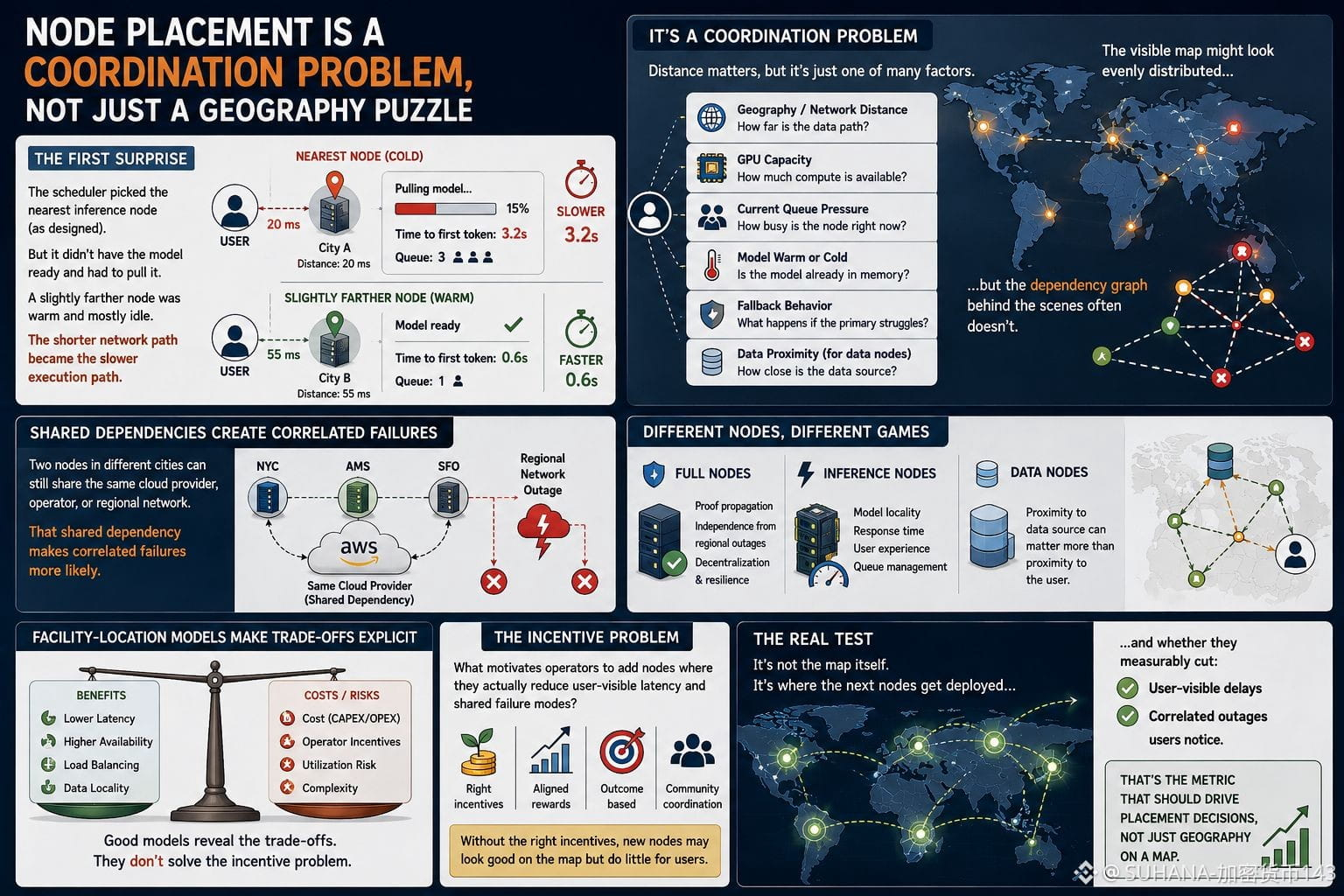
Tôi đang thử một kịch bản định tuyến cho OpenGradient thì có một yêu cầu liên tục bị hụt mục tiêu độ trễ. Bộ lập lịch đã làm đúng điều nó cần làm: chọn nút suy luận gần nhất. Trên giấy tờ, đó là lựa chọn hiển nhiên. Nhưng thực tế, nút đó chưa sẵn sàng model. Nó bắt đầu tải model trong khi một nút ở xa hơn một chút lại đang nóng (sẵn sàng) và phần lớn vẫn nhàn rỗi. Vì vậy, đường mạng ngắn hơn lại biến thành đường thực thi chậm hơn.
Đó là bất ngờ đầu tiên.
Tôi đã từng nghĩ về việc đặt nút như một câu đố địa lý: đặt nút gần người dùng thì độ trễ sẽ tốt hơn. Nhưng thực ra đó là vấn đề phối hợp, trong đó địa lý chỉ là một trong nhiều yếu tố. Khoảng cách tất nhiên quan trọng, nhưng còn có năng lực GPU, mức độ nghẽn hàng hiện tại, việc model có đang “nóng” hay “nguội”, và cơ chế dự phòng hoạt động ra sao khi nút chính gặp khó khăn. Bản đồ nhìn thấy có thể trông như đã phân bổ đều, nhưng phía sau thường không như vậy — bản đồ phụ thuộc (dependency graph) không hề “đều”.
Một điểm khác nữa: hai nút ở các thành phố khác nhau vẫn có thể dùng cùng nhà cung cấp cloud, cùng nhà điều hành, hoặc cùng mạng khu vực, và sự phụ thuộc chung này khiến các lỗi tương quan (correlated failures) dễ xảy ra hơn. Nút đầy đủ (full nodes) và nút suy luận (inference nodes) cũng chơi các “luật” khác nhau. Nút đầy đủ thiên về lan truyền bằng chứng và khả năng độc lập khỏi các sự cố ở cấp khu vực, còn nút suy luận lại quan tâm nhiều hơn đến độ gần của model và thời gian phản hồi. Rồi lại thêm các nút dữ liệu (data nodes) vào — lúc đó, sự gần với nguồn dữ liệu có thể quan trọng hơn cả việc gần người dùng.
Các mô hình đặt vị trí cơ sở (facility-location models) rất hữu ích vì chúng làm rõ những sự đánh đổi này, nhưng chúng không giải quyết được bài toán động lực. Điều gì thúc đẩy các nhà vận hành thêm nút vào đúng nơi giúp giảm độ trễ nhìn thấy được của người dùng và các chế độ lỗi dùng chung?
Thử nghiệm thực sự không phải là bản đồ; mà là việc các nút tiếp theo sẽ được triển khai ở đâu và liệu chúng có cắt giảm trễ cũng như các lỗi tương quan mà người dùng nhận thấy một cách đo được hay không. Đây mới là thước đo nên dẫn dắt quyết định đặt vị trí, chứ không chỉ là “địa lý” trên bản đồ. @OpenGradient
#opg $OPG
Một cách ngẫu nhiên;-
Tôi đang thử một kịch bản định tuyến cho OpenGradient thì có một yêu cầu liên tục bị hụt mục tiêu độ trễ. Bộ lập lịch đã làm đúng điều nó cần làm: chọn nút suy luận gần nhất. Trên giấy tờ, đó là lựa chọn hiển nhiên. Nhưng thực tế, nút đó chưa sẵn sàng model. Nó bắt đầu tải model trong khi một nút ở xa hơn một chút lại đang nóng (sẵn sàng) và phần lớn vẫn nhàn rỗi. Vì vậy, đường mạng ngắn hơn lại biến thành đường thực thi chậm hơn.
Đó là bất ngờ đầu tiên.
Tôi đã từng nghĩ về việc đặt nút như một câu đố địa lý: đặt nút gần người dùng thì độ trễ sẽ tốt hơn. Nhưng thực ra đó là vấn đề phối hợp, trong đó địa lý chỉ là một trong nhiều yếu tố. Khoảng cách tất nhiên quan trọng, nhưng còn có năng lực GPU, mức độ nghẽn hàng hiện tại, việc model có đang “nóng” hay “nguội”, và cơ chế dự phòng hoạt động ra sao khi nút chính gặp khó khăn. Bản đồ nhìn thấy có thể trông như đã phân bổ đều, nhưng phía sau thường không như vậy — bản đồ phụ thuộc (dependency graph) không hề “đều”.
Một điểm khác nữa: hai nút ở các thành phố khác nhau vẫn có thể dùng cùng nhà cung cấp cloud, cùng nhà điều hành, hoặc cùng mạng khu vực, và sự phụ thuộc chung này khiến các lỗi tương quan (correlated failures) dễ xảy ra hơn. Nút đầy đủ (full nodes) và nút suy luận (inference nodes) cũng chơi các “luật” khác nhau. Nút đầy đủ thiên về lan truyền bằng chứng và khả năng độc lập khỏi các sự cố ở cấp khu vực, còn nút suy luận lại quan tâm nhiều hơn đến độ gần của model và thời gian phản hồi. Rồi lại thêm các nút dữ liệu (data nodes) vào — lúc đó, sự gần với nguồn dữ liệu có thể quan trọng hơn cả việc gần người dùng.
Các mô hình đặt vị trí cơ sở (facility-location models) rất hữu ích vì chúng làm rõ những sự đánh đổi này, nhưng chúng không giải quyết được bài toán động lực. Điều gì thúc đẩy các nhà vận hành thêm nút vào đúng nơi giúp giảm độ trễ nhìn thấy được của người dùng và các chế độ lỗi dùng chung?
Thử nghiệm thực sự không phải là bản đồ; mà là việc các nút tiếp theo sẽ được triển khai ở đâu và liệu chúng có cắt giảm trễ cũng như các lỗi tương quan mà người dùng nhận thấy một cách đo được hay không. Đây mới là thước đo nên dẫn dắt quyết định đặt vị trí, chứ không chỉ là “địa lý” trên bản đồ. @OpenGradient
Một cách ngẫu nhiên;-
Tôi đang thử một kịch bản định tuyến cho OpenGradient thì có một yêu cầu liên tục bị hụt mục tiêu độ trễ. Bộ lập lịch đã làm đúng điều nó cần làm: chọn nút suy luận gần nhất. Trên giấy tờ, đó là lựa chọn hiển nhiên. Nhưng thực tế, nút đó chưa sẵn sàng model. Nó bắt đầu tải model trong khi một nút ở xa hơn một chút lại đang nóng (sẵn sàng) và phần lớn vẫn nhàn rỗi. Vì vậy, đường mạng ngắn hơn lại biến thành đường thực thi chậm hơn.
Đó là bất ngờ đầu tiên.
Tôi đã từng nghĩ về việc đặt nút như một câu đố địa lý: đặt nút gần người dùng thì độ trễ sẽ tốt hơn. Nhưng thực ra đó là vấn đề phối hợp, trong đó địa lý chỉ là một trong nhiều yếu tố. Khoảng cách tất nhiên quan trọng, nhưng còn có năng lực GPU, mức độ nghẽn hàng hiện tại, việc model có đang “nóng” hay “nguội”, và cơ chế dự phòng hoạt động ra sao khi nút chính gặp khó khăn. Bản đồ nhìn thấy có thể trông như đã phân bổ đều, nhưng phía sau thường không như vậy — bản đồ phụ thuộc (dependency graph) không hề “đều”.
Một điểm khác nữa: hai nút ở các thành phố khác nhau vẫn có thể dùng cùng nhà cung cấp cloud, cùng nhà điều hành, hoặc cùng mạng khu vực, và sự phụ thuộc chung này khiến các lỗi tương quan (correlated failures) dễ xảy ra hơn. Nút đầy đủ (full nodes) và nút suy luận (inference nodes) cũng chơi các “luật” khác nhau. Nút đầy đủ thiên về lan truyền bằng chứng và khả năng độc lập khỏi các sự cố ở cấp khu vực, còn nút suy luận lại quan tâm nhiều hơn đến độ gần của model và thời gian phản hồi. Rồi lại thêm các nút dữ liệu (data nodes) vào — lúc đó, sự gần với nguồn dữ liệu có thể quan trọng hơn cả việc gần người dùng.
Các mô hình đặt vị trí cơ sở (facility-location models) rất hữu ích vì chúng làm rõ những sự đánh đổi này, nhưng chúng không giải quyết được bài toán động lực. Điều gì thúc đẩy các nhà vận hành thêm nút vào đúng nơi giúp giảm độ trễ nhìn thấy được của người dùng và các chế độ lỗi dùng chung?
Thử nghiệm thực sự không phải là bản đồ; mà là việc các nút tiếp theo sẽ được triển khai ở đâu và liệu chúng có cắt giảm trễ cũng như các lỗi tương quan mà người dùng nhận thấy một cách đo được hay không. Đây mới là thước đo nên dẫn dắt quyết định đặt vị trí, chứ không chỉ là “địa lý” trên bản đồ. @OpenGradient
4
1
98
·
--
Tăng giá
Đã xác minh
#opg $OPG
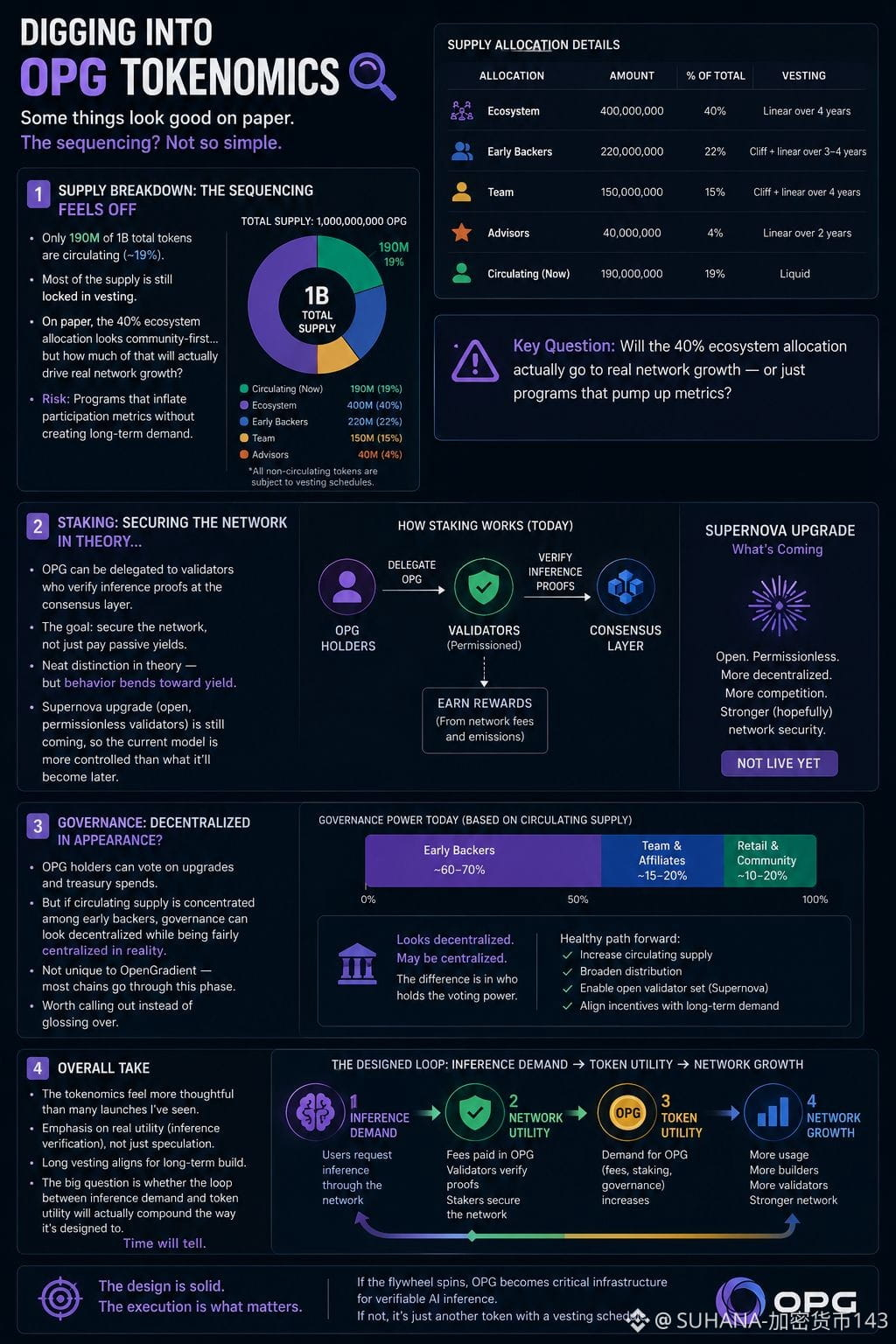
Tôi đang đào sâu vào sự phân bổ nguồn cung của OPG và có điều gì đó về chuỗi cung ứng cảm thấy không ổn. Chỉ có 190 triệu trong tổng số 1 tỷ token đang lưu hành, trong khi hầu hết nguồn cung vẫn bị khóa trong giai đoạn vesting. Trên giấy tờ, việc phân bổ 40% cho hệ sinh thái trông có vẻ ưu tiên cộng đồng, nhưng tôi vẫn tự hỏi có bao nhiêu trong số đó thực sự đi vào việc phát triển mạng lưới thực sự thay vì các chương trình chỉ nhằm tăng các chỉ số tham gia mà không tạo ra nhu cầu lâu dài.
Staking thêm một khía cạnh khác. Những người nắm giữ có thể ủy quyền OPG cho các validator xác minh chứng minh suy diễn ở lớp đồng thuận, vì vậy staking được cho là để bảo vệ mạng lưới chứ không chỉ trả lợi nhuận thụ động. Đó là một sự phân biệt hay trong lý thuyết — nhưng trong thực tế, khi lợi nhuận được đưa ra, hầu hết mọi người không quan tâm liệu staking có 'sản xuất' hay chỉ đơn giản là kiếm lợi. Và với việc nâng cấp Supernova (các validator mở không cần xin phép) vẫn đang đến, mô hình hiện tại kiểm soát hơn so với những gì nó sẽ trở thành sau này.
Điều đó đặt ra câu hỏi về quản trị. Ngày nay, những người nắm giữ OPG có thể bỏ phiếu về các nâng cấp và chi tiêu ngân quỹ, nhưng nếu nguồn cung lưu hành tập trung vào những người ủng hộ ban đầu, quản trị có thể trông phi tập trung trong khi thực tế lại khá tập trung. Đó không phải là vấn đề duy nhất của OpenGradient — hầu hết các chuỗi đều trải qua giai đoạn tương tự — nhưng đáng để nhắc đến thay vì bỏ qua.
Tổng thể, tokenomics cảm thấy suy nghĩ cẩn thận hơn so với nhiều đợt phát hành mà tôi đã thấy. Câu hỏi lớn là liệu vòng lặp giữa nhu cầu suy diễn và tiện ích token có thực sự cộng dồn theo cách mà nó được thiết kế hay không. Thời gian sẽ trả lời.@OpenGradient $OPG
{future}(OPGUSDT)
#opg $OPG
Tôi đang đào sâu vào sự phân bổ nguồn cung của OPG và có điều gì đó về chuỗi cung ứng cảm thấy không ổn. Chỉ có 190 triệu trong tổng số 1 tỷ token đang lưu hành, trong khi hầu hết nguồn cung vẫn bị khóa trong giai đoạn vesting. Trên giấy tờ, việc phân bổ 40% cho hệ sinh thái trông có vẻ ưu tiên cộng đồng, nhưng tôi vẫn tự hỏi có bao nhiêu trong số đó thực sự đi vào việc phát triển mạng lưới thực sự thay vì các chương trình chỉ nhằm tăng các chỉ số tham gia mà không tạo ra nhu cầu lâu dài.
Staking thêm một khía cạnh khác. Những người nắm giữ có thể ủy quyền OPG cho các validator xác minh chứng minh suy diễn ở lớp đồng thuận, vì vậy staking được cho là để bảo vệ mạng lưới chứ không chỉ trả lợi nhuận thụ động. Đó là một sự phân biệt hay trong lý thuyết — nhưng trong thực tế, khi lợi nhuận được đưa ra, hầu hết mọi người không quan tâm liệu staking có 'sản xuất' hay chỉ đơn giản là kiếm lợi. Và với việc nâng cấp Supernova (các validator mở không cần xin phép) vẫn đang đến, mô hình hiện tại kiểm soát hơn so với những gì nó sẽ trở thành sau này.
Điều đó đặt ra câu hỏi về quản trị. Ngày nay, những người nắm giữ OPG có thể bỏ phiếu về các nâng cấp và chi tiêu ngân quỹ, nhưng nếu nguồn cung lưu hành tập trung vào những người ủng hộ ban đầu, quản trị có thể trông phi tập trung trong khi thực tế lại khá tập trung. Đó không phải là vấn đề duy nhất của OpenGradient — hầu hết các chuỗi đều trải qua giai đoạn tương tự — nhưng đáng để nhắc đến thay vì bỏ qua.
Tổng thể, tokenomics cảm thấy suy nghĩ cẩn thận hơn so với nhiều đợt phát hành mà tôi đã thấy. Câu hỏi lớn là liệu vòng lặp giữa nhu cầu suy diễn và tiện ích token có thực sự cộng dồn theo cách mà nó được thiết kế hay không. Thời gian sẽ trả lời.@OpenGradient $OPG
Tôi đang đào sâu vào sự phân bổ nguồn cung của OPG và có điều gì đó về chuỗi cung ứng cảm thấy không ổn. Chỉ có 190 triệu trong tổng số 1 tỷ token đang lưu hành, trong khi hầu hết nguồn cung vẫn bị khóa trong giai đoạn vesting. Trên giấy tờ, việc phân bổ 40% cho hệ sinh thái trông có vẻ ưu tiên cộng đồng, nhưng tôi vẫn tự hỏi có bao nhiêu trong số đó thực sự đi vào việc phát triển mạng lưới thực sự thay vì các chương trình chỉ nhằm tăng các chỉ số tham gia mà không tạo ra nhu cầu lâu dài.
Staking thêm một khía cạnh khác. Những người nắm giữ có thể ủy quyền OPG cho các validator xác minh chứng minh suy diễn ở lớp đồng thuận, vì vậy staking được cho là để bảo vệ mạng lưới chứ không chỉ trả lợi nhuận thụ động. Đó là một sự phân biệt hay trong lý thuyết — nhưng trong thực tế, khi lợi nhuận được đưa ra, hầu hết mọi người không quan tâm liệu staking có 'sản xuất' hay chỉ đơn giản là kiếm lợi. Và với việc nâng cấp Supernova (các validator mở không cần xin phép) vẫn đang đến, mô hình hiện tại kiểm soát hơn so với những gì nó sẽ trở thành sau này.
Điều đó đặt ra câu hỏi về quản trị. Ngày nay, những người nắm giữ OPG có thể bỏ phiếu về các nâng cấp và chi tiêu ngân quỹ, nhưng nếu nguồn cung lưu hành tập trung vào những người ủng hộ ban đầu, quản trị có thể trông phi tập trung trong khi thực tế lại khá tập trung. Đó không phải là vấn đề duy nhất của OpenGradient — hầu hết các chuỗi đều trải qua giai đoạn tương tự — nhưng đáng để nhắc đến thay vì bỏ qua.
Tổng thể, tokenomics cảm thấy suy nghĩ cẩn thận hơn so với nhiều đợt phát hành mà tôi đã thấy. Câu hỏi lớn là liệu vòng lặp giữa nhu cầu suy diễn và tiện ích token có thực sự cộng dồn theo cách mà nó được thiết kế hay không. Thời gian sẽ trả lời.@OpenGradient $OPG
14
14
186
#opg $OPG
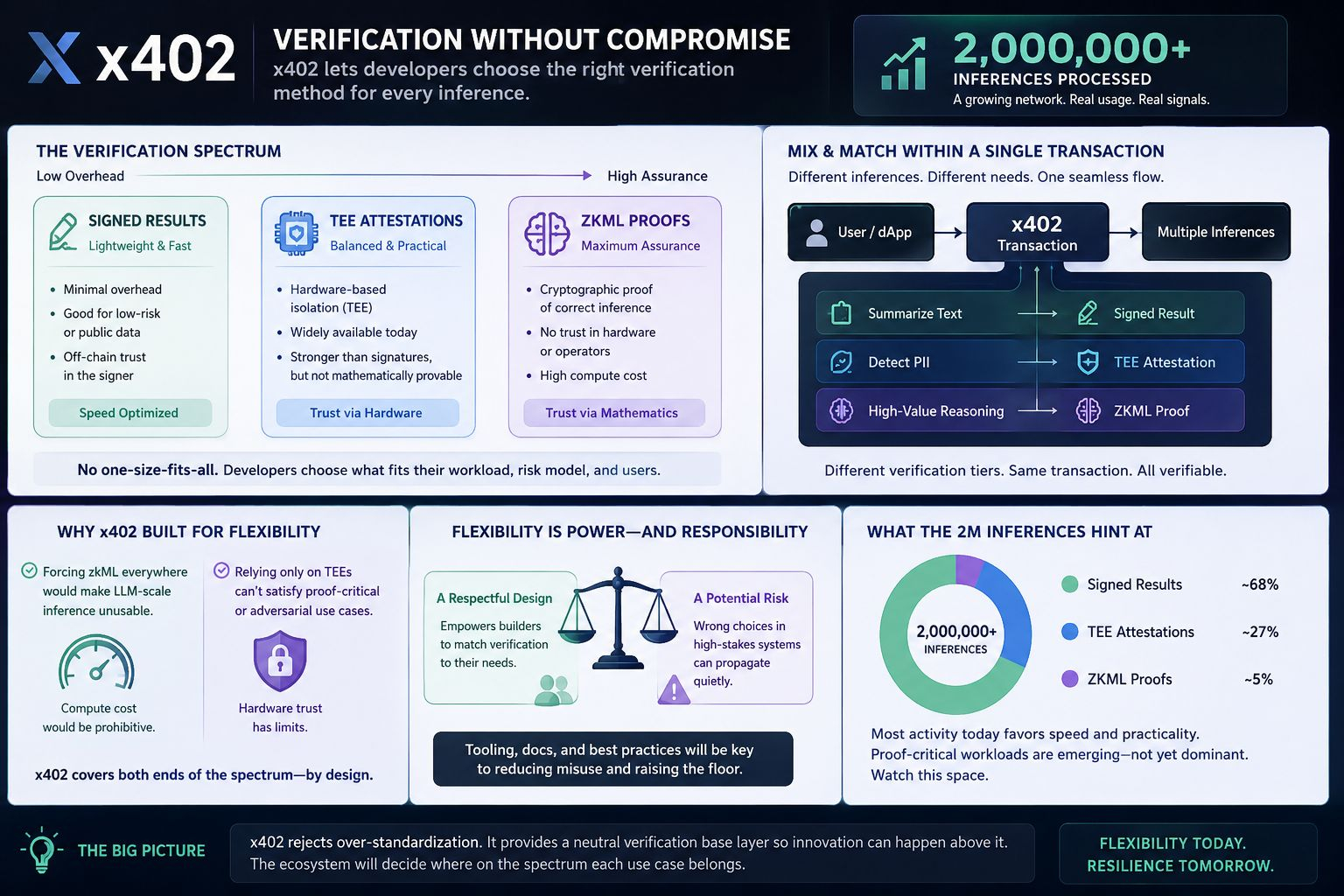
Tôi đang đọc ghi chú kiến trúc x402 của OpenGradient và một chi tiết về phổ xác minh khiến tôi bất ngờ. Hầu hết các dự án chọn một phương pháp xác minh và bám chặt theo đó, nhưng x402 cho phép nhà phát triển lựa chọn giữa các bằng chứng zkML, xác thực TEE, hoặc thậm chí chỉ là kết quả được ký đơn giản tùy theo nhu cầu. Tôi không nhớ đã từng thấy kiểu linh hoạt chủ ý như vậy được tích hợp ngay vào lớp nền thay vì gắn thêm sau.
Điều thú vị là họ làm vậy vì lý do gì. Bắt buộc zkML cho mọi lần suy luận sẽ khiến mạng không thể sử dụng được cho các mô hình ngôn ngữ lớn do chi phí tính toán, trong khi chỉ dựa vào TEEs thì không thể đáp ứng các trường hợp cần bằng chứng toán học thay vì niềm tin vào phần cứng. Vì vậy, x402 cố gắng bao phủ cả hai đầu của dải đó, và bạn thậm chí có thể trộn các phương pháp xác minh trong cùng một giao dịch. Nó giống như một sự điều chỉnh trước xu hướng của các dự án hạ tầng là quá chuẩn hóa sớm, rồi sau đó mới phát hiện các lỗ hổng khi triển khai trong tải sản xuất thực tế.
Tuy nhiên, sự linh hoạt này chuyển trách nhiệm sang cho nhà phát triển. Nếu ai đó chọn sai “tầng” xác minh cho một tác vụ nhạy cảm, sai lầm có thể lan truyền một cách lặng lẽ. Điều đó khiến tôi thấy hai khả năng: hoặc đây là một lựa chọn thiết kế đáng tôn trọng, đặt niềm tin vào những người xây dựng, hoặc là một nguồn rủi ro mang tính hệ thống tinh vi khi việc lạm dụng tích lũy dần. Tôi cũng tò mò liệu mốc 2 triệu lần suy luận có cho thấy điều gì về cách mọi người thực sự sử dụng các tùy chọn không. Các tác vụ nặng về zkML và cần bằng chứng có đang tăng lên, hay phần lớn hoạt động vẫn nằm ở các tầng xác minh nhẹ hơn? Kiến trúc trông có vẻ chủ ý — nhưng thời gian sẽ trả lời. 👍 @OpenGradient $OPG
{spot}(OPGUSDT)
#opg $OPG
Tôi đang đọc ghi chú kiến trúc x402 của OpenGradient và một chi tiết về phổ xác minh khiến tôi bất ngờ. Hầu hết các dự án chọn một phương pháp xác minh và bám chặt theo đó, nhưng x402 cho phép nhà phát triển lựa chọn giữa các bằng chứng zkML, xác thực TEE, hoặc thậm chí chỉ là kết quả được ký đơn giản tùy theo nhu cầu. Tôi không nhớ đã từng thấy kiểu linh hoạt chủ ý như vậy được tích hợp ngay vào lớp nền thay vì gắn thêm sau.
Điều thú vị là họ làm vậy vì lý do gì. Bắt buộc zkML cho mọi lần suy luận sẽ khiến mạng không thể sử dụng được cho các mô hình ngôn ngữ lớn do chi phí tính toán, trong khi chỉ dựa vào TEEs thì không thể đáp ứng các trường hợp cần bằng chứng toán học thay vì niềm tin vào phần cứng. Vì vậy, x402 cố gắng bao phủ cả hai đầu của dải đó, và bạn thậm chí có thể trộn các phương pháp xác minh trong cùng một giao dịch. Nó giống như một sự điều chỉnh trước xu hướng của các dự án hạ tầng là quá chuẩn hóa sớm, rồi sau đó mới phát hiện các lỗ hổng khi triển khai trong tải sản xuất thực tế.
Tuy nhiên, sự linh hoạt này chuyển trách nhiệm sang cho nhà phát triển. Nếu ai đó chọn sai “tầng” xác minh cho một tác vụ nhạy cảm, sai lầm có thể lan truyền một cách lặng lẽ. Điều đó khiến tôi thấy hai khả năng: hoặc đây là một lựa chọn thiết kế đáng tôn trọng, đặt niềm tin vào những người xây dựng, hoặc là một nguồn rủi ro mang tính hệ thống tinh vi khi việc lạm dụng tích lũy dần. Tôi cũng tò mò liệu mốc 2 triệu lần suy luận có cho thấy điều gì về cách mọi người thực sự sử dụng các tùy chọn không. Các tác vụ nặng về zkML và cần bằng chứng có đang tăng lên, hay phần lớn hoạt động vẫn nằm ở các tầng xác minh nhẹ hơn? Kiến trúc trông có vẻ chủ ý — nhưng thời gian sẽ trả lời. 👍 @OpenGradient $OPG
Tôi đang đọc ghi chú kiến trúc x402 của OpenGradient và một chi tiết về phổ xác minh khiến tôi bất ngờ. Hầu hết các dự án chọn một phương pháp xác minh và bám chặt theo đó, nhưng x402 cho phép nhà phát triển lựa chọn giữa các bằng chứng zkML, xác thực TEE, hoặc thậm chí chỉ là kết quả được ký đơn giản tùy theo nhu cầu. Tôi không nhớ đã từng thấy kiểu linh hoạt chủ ý như vậy được tích hợp ngay vào lớp nền thay vì gắn thêm sau.
Điều thú vị là họ làm vậy vì lý do gì. Bắt buộc zkML cho mọi lần suy luận sẽ khiến mạng không thể sử dụng được cho các mô hình ngôn ngữ lớn do chi phí tính toán, trong khi chỉ dựa vào TEEs thì không thể đáp ứng các trường hợp cần bằng chứng toán học thay vì niềm tin vào phần cứng. Vì vậy, x402 cố gắng bao phủ cả hai đầu của dải đó, và bạn thậm chí có thể trộn các phương pháp xác minh trong cùng một giao dịch. Nó giống như một sự điều chỉnh trước xu hướng của các dự án hạ tầng là quá chuẩn hóa sớm, rồi sau đó mới phát hiện các lỗ hổng khi triển khai trong tải sản xuất thực tế.
Tuy nhiên, sự linh hoạt này chuyển trách nhiệm sang cho nhà phát triển. Nếu ai đó chọn sai “tầng” xác minh cho một tác vụ nhạy cảm, sai lầm có thể lan truyền một cách lặng lẽ. Điều đó khiến tôi thấy hai khả năng: hoặc đây là một lựa chọn thiết kế đáng tôn trọng, đặt niềm tin vào những người xây dựng, hoặc là một nguồn rủi ro mang tính hệ thống tinh vi khi việc lạm dụng tích lũy dần. Tôi cũng tò mò liệu mốc 2 triệu lần suy luận có cho thấy điều gì về cách mọi người thực sự sử dụng các tùy chọn không. Các tác vụ nặng về zkML và cần bằng chứng có đang tăng lên, hay phần lớn hoạt động vẫn nằm ở các tầng xác minh nhẹ hơn? Kiến trúc trông có vẻ chủ ý — nhưng thời gian sẽ trả lời. 👍 @OpenGradient $OPG
1
5
82
#opg $OPG
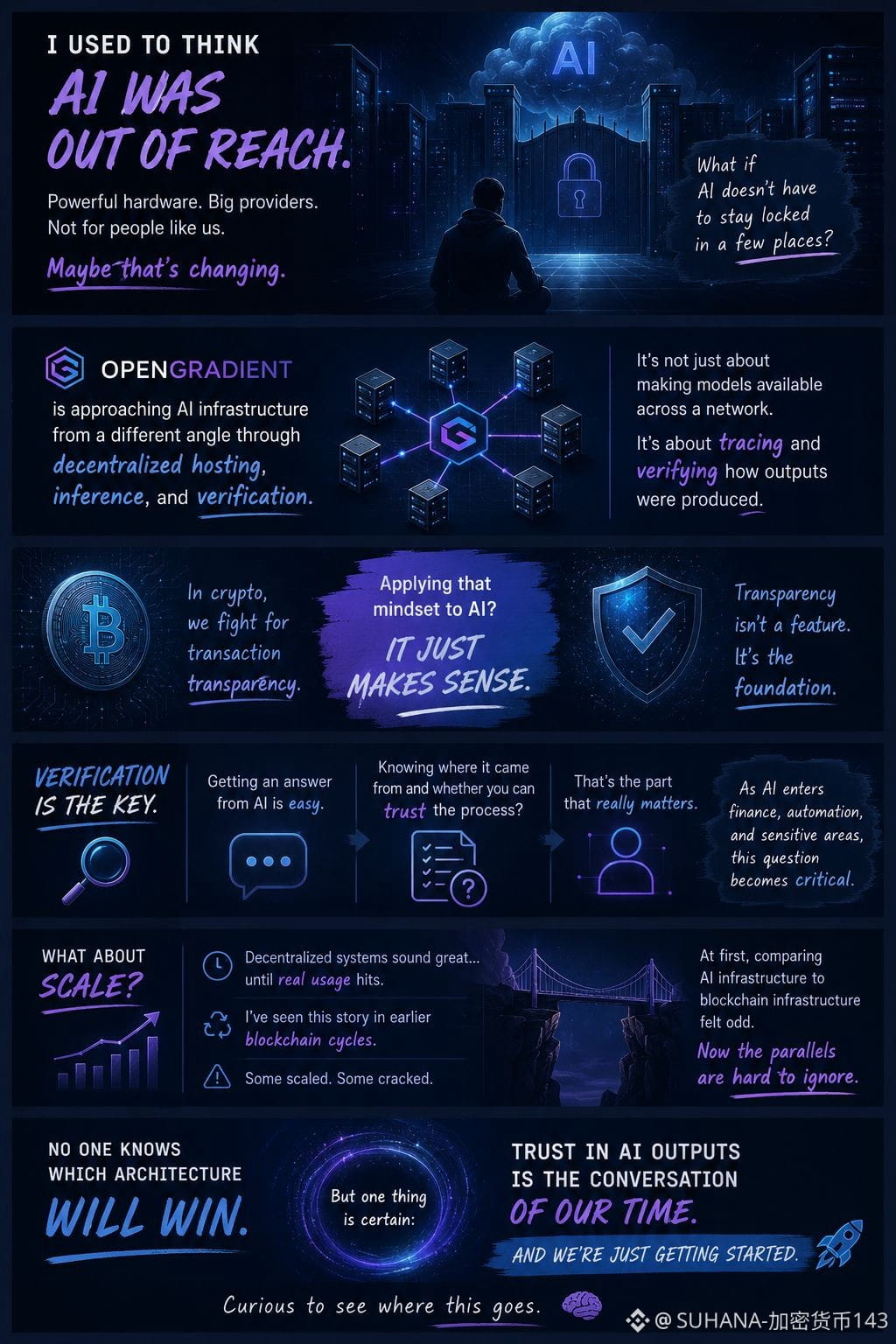
Trước đây, tôi từng nghĩ rằng việc chạy các mô hình AI gần như không thể, trừ khi bạn có phần cứng cực lớn hoặc được tiếp cận với cơ sở hạ tầng của một công ty rất lớn. Tất cả chúng tôi đều chấp nhận rằng AI sẽ bị “khóa” ở một vài nơi, nằm ngoài tầm với của người dùng phổ thông. Nhưng gần đây, tôi tự hỏi liệu điều đó còn đúng hay không.
OpenGradient đang làm một việc khác với cơ sở hạ tầng AI—họ sử dụng lưu trữ phi tập trung, suy luận (inference) và xác minh (verification). Đây không chỉ là chuyện làm cho các mô hình có thể được truy cập trên khắp một mạng lưới. Mục tiêu là có thể lần theo và xác minh chính xác cách mà một kết quả đầu ra được tạo ra. Trong crypto, chúng ta đã quá quen với việc ám ảnh về tính minh bạch của giao dịch trong nhiều năm. Mang tư duy đó sang AI thấy có vẻ hoàn toàn hợp lý.
Điều thực sự khiến tôi hứng thú là phần xác minh. Việc nhận được một câu trả lời từ AI thì rất đơn giản. Nhưng biết nó đến từ đâu và liệu bạn có thực sự tin tưởng được vào quy trình hay không—đó mới là thử thách thật sự. Có thể tôi đang suy nghĩ quá nhiều, nhưng khi AI bắt đầu vận hành tài chính, tự động hóa và những lĩnh vực có mức độ rủi ro cao khác, thì câu hỏi này không thể né tránh thêm nữa.
Tôi cũng đang băn khoăn về khả năng mở rộng (scale). Hệ thống phi tập trung nghe thì tuyệt vời trên giấy, cho đến khi sử dụng thực tế tăng lên. Tôi đã từng thấy cuộc tranh luận này trong các chu kỳ blockchain. Có những mạng lưới chịu được áp lực, nhưng cũng có những mạng lưới hoàn toàn sụp đổ. Lúc đầu, việc so sánh cơ sở hạ tầng AI với blockchain có vẻ hơi lạ, nhưng giờ thì những điểm tương đồng cứ liên tục xuất hiện.
Tôi không biết cách tiếp cận nào sẽ thắng trong dài hạn. Nhưng tôi biết một điều: niềm tin vào các đầu ra của AI đang trở thành một chủ đề cực lớn, và tôi nghĩ chúng ta mới chỉ ở giai đoạn bắt đầu.
@OpenGradient #AI
#opg $OPG
Trước đây, tôi từng nghĩ rằng việc chạy các mô hình AI gần như không thể, trừ khi bạn có phần cứng cực lớn hoặc được tiếp cận với cơ sở hạ tầng của một công ty rất lớn. Tất cả chúng tôi đều chấp nhận rằng AI sẽ bị “khóa” ở một vài nơi, nằm ngoài tầm với của người dùng phổ thông. Nhưng gần đây, tôi tự hỏi liệu điều đó còn đúng hay không.
OpenGradient đang làm một việc khác với cơ sở hạ tầng AI—họ sử dụng lưu trữ phi tập trung, suy luận (inference) và xác minh (verification). Đây không chỉ là chuyện làm cho các mô hình có thể được truy cập trên khắp một mạng lưới. Mục tiêu là có thể lần theo và xác minh chính xác cách mà một kết quả đầu ra được tạo ra. Trong crypto, chúng ta đã quá quen với việc ám ảnh về tính minh bạch của giao dịch trong nhiều năm. Mang tư duy đó sang AI thấy có vẻ hoàn toàn hợp lý.
Điều thực sự khiến tôi hứng thú là phần xác minh. Việc nhận được một câu trả lời từ AI thì rất đơn giản. Nhưng biết nó đến từ đâu và liệu bạn có thực sự tin tưởng được vào quy trình hay không—đó mới là thử thách thật sự. Có thể tôi đang suy nghĩ quá nhiều, nhưng khi AI bắt đầu vận hành tài chính, tự động hóa và những lĩnh vực có mức độ rủi ro cao khác, thì câu hỏi này không thể né tránh thêm nữa.
Tôi cũng đang băn khoăn về khả năng mở rộng (scale). Hệ thống phi tập trung nghe thì tuyệt vời trên giấy, cho đến khi sử dụng thực tế tăng lên. Tôi đã từng thấy cuộc tranh luận này trong các chu kỳ blockchain. Có những mạng lưới chịu được áp lực, nhưng cũng có những mạng lưới hoàn toàn sụp đổ. Lúc đầu, việc so sánh cơ sở hạ tầng AI với blockchain có vẻ hơi lạ, nhưng giờ thì những điểm tương đồng cứ liên tục xuất hiện.
Tôi không biết cách tiếp cận nào sẽ thắng trong dài hạn. Nhưng tôi biết một điều: niềm tin vào các đầu ra của AI đang trở thành một chủ đề cực lớn, và tôi nghĩ chúng ta mới chỉ ở giai đoạn bắt đầu.
@OpenGradient #AI
Trước đây, tôi từng nghĩ rằng việc chạy các mô hình AI gần như không thể, trừ khi bạn có phần cứng cực lớn hoặc được tiếp cận với cơ sở hạ tầng của một công ty rất lớn. Tất cả chúng tôi đều chấp nhận rằng AI sẽ bị “khóa” ở một vài nơi, nằm ngoài tầm với của người dùng phổ thông. Nhưng gần đây, tôi tự hỏi liệu điều đó còn đúng hay không.
OpenGradient đang làm một việc khác với cơ sở hạ tầng AI—họ sử dụng lưu trữ phi tập trung, suy luận (inference) và xác minh (verification). Đây không chỉ là chuyện làm cho các mô hình có thể được truy cập trên khắp một mạng lưới. Mục tiêu là có thể lần theo và xác minh chính xác cách mà một kết quả đầu ra được tạo ra. Trong crypto, chúng ta đã quá quen với việc ám ảnh về tính minh bạch của giao dịch trong nhiều năm. Mang tư duy đó sang AI thấy có vẻ hoàn toàn hợp lý.
Điều thực sự khiến tôi hứng thú là phần xác minh. Việc nhận được một câu trả lời từ AI thì rất đơn giản. Nhưng biết nó đến từ đâu và liệu bạn có thực sự tin tưởng được vào quy trình hay không—đó mới là thử thách thật sự. Có thể tôi đang suy nghĩ quá nhiều, nhưng khi AI bắt đầu vận hành tài chính, tự động hóa và những lĩnh vực có mức độ rủi ro cao khác, thì câu hỏi này không thể né tránh thêm nữa.
Tôi cũng đang băn khoăn về khả năng mở rộng (scale). Hệ thống phi tập trung nghe thì tuyệt vời trên giấy, cho đến khi sử dụng thực tế tăng lên. Tôi đã từng thấy cuộc tranh luận này trong các chu kỳ blockchain. Có những mạng lưới chịu được áp lực, nhưng cũng có những mạng lưới hoàn toàn sụp đổ. Lúc đầu, việc so sánh cơ sở hạ tầng AI với blockchain có vẻ hơi lạ, nhưng giờ thì những điểm tương đồng cứ liên tục xuất hiện.
Tôi không biết cách tiếp cận nào sẽ thắng trong dài hạn. Nhưng tôi biết một điều: niềm tin vào các đầu ra của AI đang trở thành một chủ đề cực lớn, và tôi nghĩ chúng ta mới chỉ ở giai đoạn bắt đầu.
@OpenGradient #AI
2
80
#opg $OPG
Tôi đã nhận thấy một điều thú vị khi theo dõi cả AI và crypto trong năm qua.
Trong crypto, lòng tin luôn là một trong những thách thức lớn nhất. Nó không chỉ đơn thuần là di chuyển giá trị—mà còn là việc chứng minh rằng thông tin, giao dịch và hệ thống có thể được xác minh độc lập.
Giờ đây, AI dường như cũng đang phải đối mặt với vấn đề tương tự.
Trong một thời gian dài, trọng tâm là xây dựng các mô hình tốt hơn. Các mô hình lớn hơn, nhanh hơn, có khả năng hơn. Nhưng khi AI ngày càng được tích hợp vào các ứng dụng thực tế, một câu hỏi khác đang trở nên khó bỏ qua: làm thế nào để chúng ta xác minh được đầu ra?
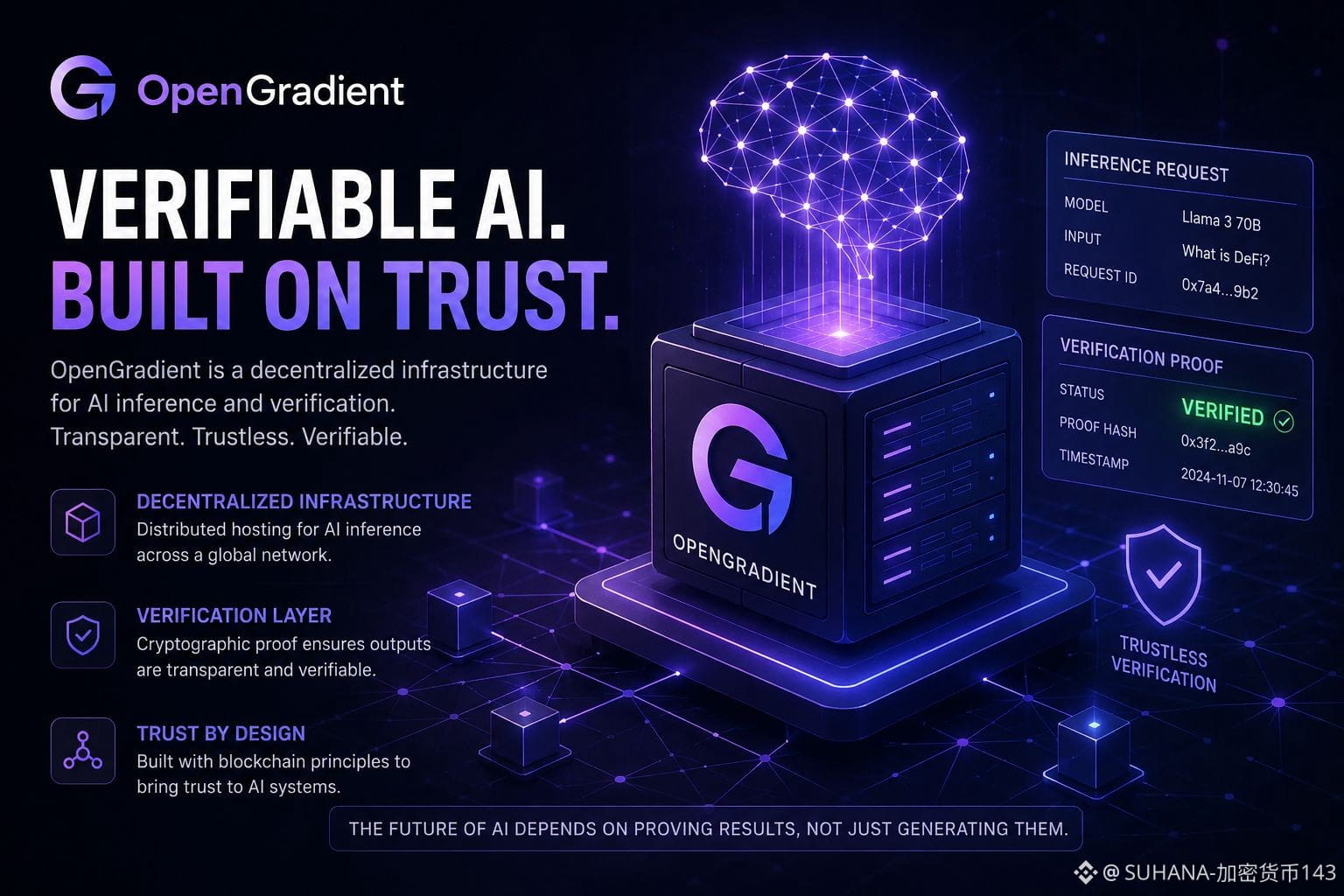
Đó là lý do mà @OpenGradient đã thu hút sự chú ý của tôi. Ý tưởng không chỉ là vận hành các mô hình AI; mà còn là xây dựng cơ sở hạ tầng giúp làm cho các hệ thống AI trở nên minh bạch và có thể xác minh.
Liệu việc xác minh phi tập trung có trở thành một phần quan trọng trong tương lai của AI hay không vẫn còn phải xem. Những ý tưởng tham vọng là phổ biến trong ngành này, nhưng việc thực hiện mới là điều quan trọng nhất.
Dù sao, tôi nghĩ chúng ta đang tiến tới một thế giới mà việc tạo ra trí tuệ không còn là đủ. Khả năng chứng minh và tin tưởng vào kết quả có thể sẽ trở nên quan trọng không kém.
#opg $OPG
Tôi đã nhận thấy một điều thú vị khi theo dõi cả AI và crypto trong năm qua.
Trong crypto, lòng tin luôn là một trong những thách thức lớn nhất. Nó không chỉ đơn thuần là di chuyển giá trị—mà còn là việc chứng minh rằng thông tin, giao dịch và hệ thống có thể được xác minh độc lập.
Giờ đây, AI dường như cũng đang phải đối mặt với vấn đề tương tự.
Trong một thời gian dài, trọng tâm là xây dựng các mô hình tốt hơn. Các mô hình lớn hơn, nhanh hơn, có khả năng hơn. Nhưng khi AI ngày càng được tích hợp vào các ứng dụng thực tế, một câu hỏi khác đang trở nên khó bỏ qua: làm thế nào để chúng ta xác minh được đầu ra?
Đó là lý do mà @OpenGradient đã thu hút sự chú ý của tôi. Ý tưởng không chỉ là vận hành các mô hình AI; mà còn là xây dựng cơ sở hạ tầng giúp làm cho các hệ thống AI trở nên minh bạch và có thể xác minh.
Liệu việc xác minh phi tập trung có trở thành một phần quan trọng trong tương lai của AI hay không vẫn còn phải xem. Những ý tưởng tham vọng là phổ biến trong ngành này, nhưng việc thực hiện mới là điều quan trọng nhất.
Dù sao, tôi nghĩ chúng ta đang tiến tới một thế giới mà việc tạo ra trí tuệ không còn là đủ. Khả năng chứng minh và tin tưởng vào kết quả có thể sẽ trở nên quan trọng không kém.
Tôi đã nhận thấy một điều thú vị khi theo dõi cả AI và crypto trong năm qua.
Trong crypto, lòng tin luôn là một trong những thách thức lớn nhất. Nó không chỉ đơn thuần là di chuyển giá trị—mà còn là việc chứng minh rằng thông tin, giao dịch và hệ thống có thể được xác minh độc lập.
Giờ đây, AI dường như cũng đang phải đối mặt với vấn đề tương tự.
Trong một thời gian dài, trọng tâm là xây dựng các mô hình tốt hơn. Các mô hình lớn hơn, nhanh hơn, có khả năng hơn. Nhưng khi AI ngày càng được tích hợp vào các ứng dụng thực tế, một câu hỏi khác đang trở nên khó bỏ qua: làm thế nào để chúng ta xác minh được đầu ra?
Đó là lý do mà @OpenGradient đã thu hút sự chú ý của tôi. Ý tưởng không chỉ là vận hành các mô hình AI; mà còn là xây dựng cơ sở hạ tầng giúp làm cho các hệ thống AI trở nên minh bạch và có thể xác minh.
Liệu việc xác minh phi tập trung có trở thành một phần quan trọng trong tương lai của AI hay không vẫn còn phải xem. Những ý tưởng tham vọng là phổ biến trong ngành này, nhưng việc thực hiện mới là điều quan trọng nhất.
Dù sao, tôi nghĩ chúng ta đang tiến tới một thế giới mà việc tạo ra trí tuệ không còn là đủ. Khả năng chứng minh và tin tưởng vào kết quả có thể sẽ trở nên quan trọng không kém.
4
5
155
#opg $OPG Điều này thực sự khiến tôi đồng cảm. Mỗi lần tôi mở X lại có một mô hình AI khác tuyên bố là “tiếp theo sẽ là điều lớn lao”, và thành thật mà nói thì ngày càng khó để biết cái gì xứng đáng được chú ý.
Ý tưởng tạo ra các tín hiệu tin cậy rõ ràng hơn và danh tiếng mô hình hiện đang bị đánh giá thấp. Tốc độ và sự đổi mới là rất quan trọng, nhưng mọi người cũng cần niềm tin vào những gì họ đang sử dụng. Thật tò mò xem OpenGradient và $OPG sẽ phát triển điều này theo thời gian như thế nào.
{future}(OPGUSDT)
#opg $OPG Điều này thực sự khiến tôi đồng cảm. Mỗi lần tôi mở X lại có một mô hình AI khác tuyên bố là “tiếp theo sẽ là điều lớn lao”, và thành thật mà nói thì ngày càng khó để biết cái gì xứng đáng được chú ý.
Ý tưởng tạo ra các tín hiệu tin cậy rõ ràng hơn và danh tiếng mô hình hiện đang bị đánh giá thấp. Tốc độ và sự đổi mới là rất quan trọng, nhưng mọi người cũng cần niềm tin vào những gì họ đang sử dụng. Thật tò mò xem OpenGradient và $OPG sẽ phát triển điều này theo thời gian như thế nào.
Ý tưởng tạo ra các tín hiệu tin cậy rõ ràng hơn và danh tiếng mô hình hiện đang bị đánh giá thấp. Tốc độ và sự đổi mới là rất quan trọng, nhưng mọi người cũng cần niềm tin vào những gì họ đang sử dụng. Thật tò mò xem OpenGradient và $OPG sẽ phát triển điều này theo thời gian như thế nào.
2
112
#opg $OPG
Ugh. Hộp đen AI.
Kiểu như, tôi hỏi cái gì đó. Nó trả lời. Tôi không có manh mối gì liệu nó đúng hay chỉ là... ảo tưởng. Cảm giác như tin tưởng một người lạ ngẫu nhiên trên mạng.
Rồi OpenGradient xuất hiện. Nói rằng mọi đầu ra đều có hóa đơn. Một bằng chứng. Trên chuỗi.
Chờ đã, thật không?
Vậy tôi có thể thực sự kiểm tra? Không chỉ tin tưởng? Thật là... to lớn.
Vẫn còn sớm. Có lẽ sẽ rối rắm. Nhưng ý tưởng thì sao? Không còn niềm tin mù quáng. Chỉ là toán học mà bạn có thể tự xác minh.
Cuối cùng. AI mà tôi không phải cầu nguyện cho. 🤞 @OpenGradient
#opg $OPG
Ugh. Hộp đen AI.
Kiểu như, tôi hỏi cái gì đó. Nó trả lời. Tôi không có manh mối gì liệu nó đúng hay chỉ là... ảo tưởng. Cảm giác như tin tưởng một người lạ ngẫu nhiên trên mạng.
Rồi OpenGradient xuất hiện. Nói rằng mọi đầu ra đều có hóa đơn. Một bằng chứng. Trên chuỗi.
Chờ đã, thật không?
Vậy tôi có thể thực sự kiểm tra? Không chỉ tin tưởng? Thật là... to lớn.
Vẫn còn sớm. Có lẽ sẽ rối rắm. Nhưng ý tưởng thì sao? Không còn niềm tin mù quáng. Chỉ là toán học mà bạn có thể tự xác minh.
Cuối cùng. AI mà tôi không phải cầu nguyện cho. 🤞 @OpenGradient
Ugh. Hộp đen AI.
Kiểu như, tôi hỏi cái gì đó. Nó trả lời. Tôi không có manh mối gì liệu nó đúng hay chỉ là... ảo tưởng. Cảm giác như tin tưởng một người lạ ngẫu nhiên trên mạng.
Rồi OpenGradient xuất hiện. Nói rằng mọi đầu ra đều có hóa đơn. Một bằng chứng. Trên chuỗi.
Chờ đã, thật không?
Vậy tôi có thể thực sự kiểm tra? Không chỉ tin tưởng? Thật là... to lớn.
Vẫn còn sớm. Có lẽ sẽ rối rắm. Nhưng ý tưởng thì sao? Không còn niềm tin mù quáng. Chỉ là toán học mà bạn có thể tự xác minh.
Cuối cùng. AI mà tôi không phải cầu nguyện cho. 🤞 @OpenGradient
6
9
185


KIM_加密 143
·
--
[Đã kết thúc] 🎙️ Hãy cùng thảo luận về tình hình Thị Trường || Thành viên GIA ĐÌNH KIM CRYPTO 143.
1.5k người nghe
1
18
#genius $GENIUS
{future}(GENIUSUSDT)
Vậy là mình đang nhìn chằm chằm vào Genius Terminal, đúng không?
Và mình nhận ra một điều.
Vaults trước đây giống như một cái hộp đen. Bạn đổ tiền vào, cầu nguyện, hy vọng chiến lược không nổ tung. Không kiểm soát. Chỉ... tin tưởng.
Nhưng bây giờ thì sao? Vaults chỉ là các tùy chọn cấu hình. Giống như điều chỉnh cài đặt trên một chiếc xe.
Khả năng chịu rủi ro? Kéo nó. Mục tiêu lợi suất? Gõ vào. Điều kiện thị trường? Chọn một.
Không còn là "gửi tiền và cầu nguyện" nữa. Mà là "cài đặt và quên nhưng thực sự bạn mới là người lái xe."
Đó là sự thay đổi mà không ai nói đến.
Cảm giác ít giống như đánh bạc hơn. Cảm giác như... cuối cùng.
@GeniusOfficial $HYPE
{future}(HYPEUSDT)
$BLUE
{alpha}(CT_7840xe1b45a0e641b9955a20aa0ad1c1f4ad86aad8afb07296d4085e349a50e90bdca::blue::BLUE)
#genius $GENIUS
Vậy là mình đang nhìn chằm chằm vào Genius Terminal, đúng không?
Và mình nhận ra một điều.
Vaults trước đây giống như một cái hộp đen. Bạn đổ tiền vào, cầu nguyện, hy vọng chiến lược không nổ tung. Không kiểm soát. Chỉ... tin tưởng.
Nhưng bây giờ thì sao? Vaults chỉ là các tùy chọn cấu hình. Giống như điều chỉnh cài đặt trên một chiếc xe.
Khả năng chịu rủi ro? Kéo nó. Mục tiêu lợi suất? Gõ vào. Điều kiện thị trường? Chọn một.
Không còn là "gửi tiền và cầu nguyện" nữa. Mà là "cài đặt và quên nhưng thực sự bạn mới là người lái xe."
Đó là sự thay đổi mà không ai nói đến.
Cảm giác ít giống như đánh bạc hơn. Cảm giác như... cuối cùng.
@GeniusOfficial $HYPE
$BLUE
Vậy là mình đang nhìn chằm chằm vào Genius Terminal, đúng không?
Và mình nhận ra một điều.
Vaults trước đây giống như một cái hộp đen. Bạn đổ tiền vào, cầu nguyện, hy vọng chiến lược không nổ tung. Không kiểm soát. Chỉ... tin tưởng.
Nhưng bây giờ thì sao? Vaults chỉ là các tùy chọn cấu hình. Giống như điều chỉnh cài đặt trên một chiếc xe.
Khả năng chịu rủi ro? Kéo nó. Mục tiêu lợi suất? Gõ vào. Điều kiện thị trường? Chọn một.
Không còn là "gửi tiền và cầu nguyện" nữa. Mà là "cài đặt và quên nhưng thực sự bạn mới là người lái xe."
Đó là sự thay đổi mà không ai nói đến.
Cảm giác ít giống như đánh bạc hơn. Cảm giác như... cuối cùng.
@GeniusOfficial $HYPE
$BLUE
4
4
237
#genius $GENIUS
### ✨ Điều gì khiến Market Insights của Genius Terminal trở nên thực sự hữu ích?
Sự khác biệt không chỉ nằm ở việc có dữ liệu. Mà là ở việc có **đúng dữ liệu, đúng chỗ, đúng thời điểm**.
#### Token Discovery Không Ra Giấy
Hầu hết các nền tảng chỉ cho bạn thấy các token đang hot mà không có ngữ cảnh. Genius đi kèm một bảng điều khiển đầy đủ để khám phá các token mới và đang nổi bật trên tất cả các mạng được hỗ trợ, cho phép bạn lọc theo các chỉ số thực sự quan trọng—giá trị vốn hóa thị trường, thanh khoản, khối lượng giao dịch, tuổi token và số lượng giao dịch. Và bạn có thể đi xa hơn nữa với phân tích chuyên sâu, bao gồm biểu đồ giá thời gian thực do TradingView cung cấp, cùng với các chi tiết về bảo mật mà thường bạn phải tự đào sâu mới tìm được—như thuế mua/bán và trạng thái quyền đúc (minting authority).
#### 🔥 Market Insights thời gian thực ngay trong tầm tay
Ngay trong giao diện, bạn sẽ thấy **bản đồ nhiệt (heatmaps), biểu đồ radar và công cụ quét memecoin**—tất cả đều cập nhật theo thời gian thực. Bạn có thể theo dõi các tỷ lệ tài trợ (funding rates) trên nhiều sàn mà không cần mở thêm bất kỳ tab nào. Mọi thứ đều được tích hợp sẵn trong một bảng điều khiển gọn gàng, thống nhất.
# market activity and acting on it.
#### 🕵️ Quyền riêng tư mà không đánh đổi dữ liệu
Đây là phần mà tôi thực sự đánh giá cao. Họ không chỉ cung cấp cho bạn các thông tin; họ còn bảo vệ các bước đi của bạn. Gh0st Privacy Stack của họ có thể chia lệnh ra tối đa 500 ví tạm thời, giúp hoạt động giao dịch của bạn không bị lộ trong khi bạn đang phân tích hoạt động của người khác. Đây là một lớp “trí tuệ” mà tôi chưa từng thấy ở bất kỳ nơi nào khác.
@GeniusOfficial $GENIUS
#genius $GENIUS
### ✨ Điều gì khiến Market Insights của Genius Terminal trở nên thực sự hữu ích?
Sự khác biệt không chỉ nằm ở việc có dữ liệu. Mà là ở việc có **đúng dữ liệu, đúng chỗ, đúng thời điểm**.
#### Token Discovery Không Ra Giấy
Hầu hết các nền tảng chỉ cho bạn thấy các token đang hot mà không có ngữ cảnh. Genius đi kèm một bảng điều khiển đầy đủ để khám phá các token mới và đang nổi bật trên tất cả các mạng được hỗ trợ, cho phép bạn lọc theo các chỉ số thực sự quan trọng—giá trị vốn hóa thị trường, thanh khoản, khối lượng giao dịch, tuổi token và số lượng giao dịch. Và bạn có thể đi xa hơn nữa với phân tích chuyên sâu, bao gồm biểu đồ giá thời gian thực do TradingView cung cấp, cùng với các chi tiết về bảo mật mà thường bạn phải tự đào sâu mới tìm được—như thuế mua/bán và trạng thái quyền đúc (minting authority).
#### 🔥 Market Insights thời gian thực ngay trong tầm tay
Ngay trong giao diện, bạn sẽ thấy **bản đồ nhiệt (heatmaps), biểu đồ radar và công cụ quét memecoin**—tất cả đều cập nhật theo thời gian thực. Bạn có thể theo dõi các tỷ lệ tài trợ (funding rates) trên nhiều sàn mà không cần mở thêm bất kỳ tab nào. Mọi thứ đều được tích hợp sẵn trong một bảng điều khiển gọn gàng, thống nhất.
# market activity and acting on it.
#### 🕵️ Quyền riêng tư mà không đánh đổi dữ liệu
Đây là phần mà tôi thực sự đánh giá cao. Họ không chỉ cung cấp cho bạn các thông tin; họ còn bảo vệ các bước đi của bạn. Gh0st Privacy Stack của họ có thể chia lệnh ra tối đa 500 ví tạm thời, giúp hoạt động giao dịch của bạn không bị lộ trong khi bạn đang phân tích hoạt động của người khác. Đây là một lớp “trí tuệ” mà tôi chưa từng thấy ở bất kỳ nơi nào khác.
@GeniusOfficial $GENIUS
### ✨ Điều gì khiến Market Insights của Genius Terminal trở nên thực sự hữu ích?
Sự khác biệt không chỉ nằm ở việc có dữ liệu. Mà là ở việc có **đúng dữ liệu, đúng chỗ, đúng thời điểm**.
#### Token Discovery Không Ra Giấy
Hầu hết các nền tảng chỉ cho bạn thấy các token đang hot mà không có ngữ cảnh. Genius đi kèm một bảng điều khiển đầy đủ để khám phá các token mới và đang nổi bật trên tất cả các mạng được hỗ trợ, cho phép bạn lọc theo các chỉ số thực sự quan trọng—giá trị vốn hóa thị trường, thanh khoản, khối lượng giao dịch, tuổi token và số lượng giao dịch. Và bạn có thể đi xa hơn nữa với phân tích chuyên sâu, bao gồm biểu đồ giá thời gian thực do TradingView cung cấp, cùng với các chi tiết về bảo mật mà thường bạn phải tự đào sâu mới tìm được—như thuế mua/bán và trạng thái quyền đúc (minting authority).
#### 🔥 Market Insights thời gian thực ngay trong tầm tay
Ngay trong giao diện, bạn sẽ thấy **bản đồ nhiệt (heatmaps), biểu đồ radar và công cụ quét memecoin**—tất cả đều cập nhật theo thời gian thực. Bạn có thể theo dõi các tỷ lệ tài trợ (funding rates) trên nhiều sàn mà không cần mở thêm bất kỳ tab nào. Mọi thứ đều được tích hợp sẵn trong một bảng điều khiển gọn gàng, thống nhất.
# market activity and acting on it.
#### 🕵️ Quyền riêng tư mà không đánh đổi dữ liệu
Đây là phần mà tôi thực sự đánh giá cao. Họ không chỉ cung cấp cho bạn các thông tin; họ còn bảo vệ các bước đi của bạn. Gh0st Privacy Stack của họ có thể chia lệnh ra tối đa 500 ví tạm thời, giúp hoạt động giao dịch của bạn không bị lộ trong khi bạn đang phân tích hoạt động của người khác. Đây là một lớp “trí tuệ” mà tôi chưa từng thấy ở bất kỳ nơi nào khác.
@GeniusOfficial $GENIUS
1
3
80
#BTC $BTC Dự Đoán Thị Trường:--
Kịch Bản Tăng Giá-
Nếu BTC giữ trên 60k và phá vỡ 63.5k với khối lượng mạnh:
Mục tiêu 1: 65k
Mục tiêu 2: 68k
Mục tiêu 3: 70k
Kịch Bản Giảm Giá-
Nếu BTC mất 59.5k:
Mục tiêu 58k
Sau đó 56k–55k
Quan Điểm Ngắn Hạn (24–48 Giờ Tới)
Di chuyển hiện tại trông giống như một cú nảy nhẹ sau một đợt bán tháo mạnh chứ không phải là một sự đảo chiều xu hướng đã được xác nhận.
$BTC
{future}(BTCUSDT)
$XRP
{future}(XRPUSDT)
#BTC $BTC Dự Đoán Thị Trường:--
Kịch Bản Tăng Giá-
Nếu BTC giữ trên 60k và phá vỡ 63.5k với khối lượng mạnh:
Mục tiêu 1: 65k
Mục tiêu 2: 68k
Mục tiêu 3: 70k
Kịch Bản Giảm Giá-
Nếu BTC mất 59.5k:
Mục tiêu 58k
Sau đó 56k–55k
Quan Điểm Ngắn Hạn (24–48 Giờ Tới)
Di chuyển hiện tại trông giống như một cú nảy nhẹ sau một đợt bán tháo mạnh chứ không phải là một sự đảo chiều xu hướng đã được xác nhận.
$BTC
$XRP
Kịch Bản Tăng Giá-
Nếu BTC giữ trên 60k và phá vỡ 63.5k với khối lượng mạnh:
Mục tiêu 1: 65k
Mục tiêu 2: 68k
Mục tiêu 3: 70k
Kịch Bản Giảm Giá-
Nếu BTC mất 59.5k:
Mục tiêu 58k
Sau đó 56k–55k
Quan Điểm Ngắn Hạn (24–48 Giờ Tới)
Di chuyển hiện tại trông giống như một cú nảy nhẹ sau một đợt bán tháo mạnh chứ không phải là một sự đảo chiều xu hướng đã được xác nhận.
$BTC
$XRP
2
182
Đã xác minh
#genius $GENIUS
bài viết hype nhưng chân thật về Genius Terminal là tương lai của giao dịch onchain.
Tại sao? Ba điều.
Đầu tiên, Ghost Orders. Cuối cùng thì cũng có sự riêng tư trên một DEX. Không còn mấy con bot front-running ăn hết bữa trưa của bạn nữa. Những giao dịch lớn của bạn sẽ vẫn luôn vô hình.
Thứ hai, omnichain. Một bảng điều khiển. 9 chuỗi. 150+ DEXs. Không còn những cơn ác mộng về cầu nối. Không cần phải đùa giỡn với token gas. Chỉ cần nhấn và giao dịch.
Thứ ba, signatureless. Không có pop-up mỗi hai giây. Cảm giác thực sự giống như một CEX nhưng bạn vẫn giữ được khóa của mình.
Có hoàn hảo không? Vẫn có một chút độ trễ ở đây và đó. Nhưng lần đầu tiên, giao dịch DeFi không còn cảm giác như một bài kiểm tra beta nữa.
Tương lai đã ở đây rồi. Chỉ là còn một chút lỗi thôi. 😅 @GeniusOfficial
{future}(GENIUSUSDT)
$GENIUS
#genius $GENIUS
bài viết hype nhưng chân thật về Genius Terminal là tương lai của giao dịch onchain.
Tại sao? Ba điều.
Đầu tiên, Ghost Orders. Cuối cùng thì cũng có sự riêng tư trên một DEX. Không còn mấy con bot front-running ăn hết bữa trưa của bạn nữa. Những giao dịch lớn của bạn sẽ vẫn luôn vô hình.
Thứ hai, omnichain. Một bảng điều khiển. 9 chuỗi. 150+ DEXs. Không còn những cơn ác mộng về cầu nối. Không cần phải đùa giỡn với token gas. Chỉ cần nhấn và giao dịch.
Thứ ba, signatureless. Không có pop-up mỗi hai giây. Cảm giác thực sự giống như một CEX nhưng bạn vẫn giữ được khóa của mình.
Có hoàn hảo không? Vẫn có một chút độ trễ ở đây và đó. Nhưng lần đầu tiên, giao dịch DeFi không còn cảm giác như một bài kiểm tra beta nữa.
Tương lai đã ở đây rồi. Chỉ là còn một chút lỗi thôi. 😅 @GeniusOfficial
$GENIUS
bài viết hype nhưng chân thật về Genius Terminal là tương lai của giao dịch onchain.
Tại sao? Ba điều.
Đầu tiên, Ghost Orders. Cuối cùng thì cũng có sự riêng tư trên một DEX. Không còn mấy con bot front-running ăn hết bữa trưa của bạn nữa. Những giao dịch lớn của bạn sẽ vẫn luôn vô hình.
Thứ hai, omnichain. Một bảng điều khiển. 9 chuỗi. 150+ DEXs. Không còn những cơn ác mộng về cầu nối. Không cần phải đùa giỡn với token gas. Chỉ cần nhấn và giao dịch.
Thứ ba, signatureless. Không có pop-up mỗi hai giây. Cảm giác thực sự giống như một CEX nhưng bạn vẫn giữ được khóa của mình.
Có hoàn hảo không? Vẫn có một chút độ trễ ở đây và đó. Nhưng lần đầu tiên, giao dịch DeFi không còn cảm giác như một bài kiểm tra beta nữa.
Tương lai đã ở đây rồi. Chỉ là còn một chút lỗi thôi. 😅 @GeniusOfficial
$GENIUS
2
2
100
#bedrock $BR
Mình đang suy nghĩ về những rủi ro của Bedrock? Không nịnh nọt đâu.
Đầu tiên, họ đã bị hack trước đây. 2 triệu đô la bị khai thác trong hợp đồng uniBTC của họ. Có vẻ là một vụ nội gián. Giờ đã sửa chưa? Hy vọng là vậy.
Thứ hai, slashing. BTC của bạn bị stake sẽ bị phạt nếu một validator làm sai. Bạn mất tiền. Đó là sự thật.
Thứ ba, mở khóa token. Đội sáng lập sẽ mở khóa vào ngày 20 tháng 6. Cung sẽ tăng. Giá có thể sẽ giảm.
Thứ tư, restaking vẫn còn mới. Quá nhiều yếu tố liên quan. Một giao thức thất bại, các domino sẽ đổ.@Bedrock $BTC
{spot}(BTCUSDT)
$BR
{future}(BRUSDT)
#bedrock $BR
Mình đang suy nghĩ về những rủi ro của Bedrock? Không nịnh nọt đâu.
Đầu tiên, họ đã bị hack trước đây. 2 triệu đô la bị khai thác trong hợp đồng uniBTC của họ. Có vẻ là một vụ nội gián. Giờ đã sửa chưa? Hy vọng là vậy.
Thứ hai, slashing. BTC của bạn bị stake sẽ bị phạt nếu một validator làm sai. Bạn mất tiền. Đó là sự thật.
Thứ ba, mở khóa token. Đội sáng lập sẽ mở khóa vào ngày 20 tháng 6. Cung sẽ tăng. Giá có thể sẽ giảm.
Thứ tư, restaking vẫn còn mới. Quá nhiều yếu tố liên quan. Một giao thức thất bại, các domino sẽ đổ.@Bedrock $BTC
$BR
Mình đang suy nghĩ về những rủi ro của Bedrock? Không nịnh nọt đâu.
Đầu tiên, họ đã bị hack trước đây. 2 triệu đô la bị khai thác trong hợp đồng uniBTC của họ. Có vẻ là một vụ nội gián. Giờ đã sửa chưa? Hy vọng là vậy.
Thứ hai, slashing. BTC của bạn bị stake sẽ bị phạt nếu một validator làm sai. Bạn mất tiền. Đó là sự thật.
Thứ ba, mở khóa token. Đội sáng lập sẽ mở khóa vào ngày 20 tháng 6. Cung sẽ tăng. Giá có thể sẽ giảm.
Thứ tư, restaking vẫn còn mới. Quá nhiều yếu tố liên quan. Một giao thức thất bại, các domino sẽ đổ.@Bedrock $BTC
$BR
1
61
Đăng nhập để khám phá thêm nội dung
Tham gia cùng người dùng tiền mã hóa toàn cầu trên Binance Square
⚡️ Nhận thông tin mới nhất và hữu ích về tiền mã hóa.
💬 Được tin cậy bởi sàn giao dịch tiền mã hóa lớn nhất thế giới.
👍 Khám phá những thông tin chuyên sâu thực tế từ những nhà sáng tạo đã xác minh.
Email / Số điện thoại