

#thorchain
thorchain
660,462 views
964 Discussing
Hot
Latest

·
--
Bullish
$RUNE Surges +18%! DeFi Gainer Bullish Rebound — Dynamic SAR Support Floor Base at $0.751 Targeting $0.845 Peak Retest?
Demonstrating strong bullish consolidation in the DeFi gainer list on Binance with an impressive 48.60M USDT (63.71M RUNE) trading volume backing, $RUNE (THORChain) has logged a +18.42% daily gain! After rebounding off its 0.671 low to test a 24-hour peak high of 0.845, price action completed a healthy cooling-off phase near local support and is now consolidating near 0.797.
Trade Bias: Bullish Continuation / Scalp Rebound
Entry Zone: 0.775 – 0.795 (Accumulate long positions near trailing SAR support floor)
Targets: 0.820 ➡️ 0.845 ➡️ 0.890
Stop Loss: Below 0.745
Technically, the 15m chart displays a solid higher-low structural recovery following a bounce off the 0.751 local swing bottom. Parabolic SAR trailing dots sit directly beneath price action to lock dynamic floor support at 0.751, while RSI (6) has cleanly reset down to a balanced 45.73. This indicator reset provides buyers with prime breathing room for another upward extension leg. A decisive 15m candle close above 0.820 will clear the runway for a full retest of the 0.845 peak high.
Are you buying this support bounce... or waiting for a breakout confirmation above 0.820?
Trade Now $RUNE
{spot}(RUNEUSDT)
#RUNE #THORChain #cryptotrading
$RUNE Surges +18%! DeFi Gainer Bullish Rebound — Dynamic SAR Support Floor Base at $0.751 Targeting $0.845 Peak Retest?
Demonstrating strong bullish consolidation in the DeFi gainer list on Binance with an impressive 48.60M USDT (63.71M RUNE) trading volume backing, $RUNE (THORChain) has logged a +18.42% daily gain! After rebounding off its 0.671 low to test a 24-hour peak high of 0.845, price action completed a healthy cooling-off phase near local support and is now consolidating near 0.797.
Trade Bias: Bullish Continuation / Scalp Rebound
Entry Zone: 0.775 – 0.795 (Accumulate long positions near trailing SAR support floor)
Targets: 0.820 ➡️ 0.845 ➡️ 0.890
Stop Loss: Below 0.745
Technically, the 15m chart displays a solid higher-low structural recovery following a bounce off the 0.751 local swing bottom. Parabolic SAR trailing dots sit directly beneath price action to lock dynamic floor support at 0.751, while RSI (6) has cleanly reset down to a balanced 45.73. This indicator reset provides buyers with prime breathing room for another upward extension leg. A decisive 15m candle close above 0.820 will clear the runway for a full retest of the 0.845 peak high.
Are you buying this support bounce... or waiting for a breakout confirmation above 0.820?
Trade Now $RUNE
#RUNE #THORChain #cryptotrading
Demonstrating strong bullish consolidation in the DeFi gainer list on Binance with an impressive 48.60M USDT (63.71M RUNE) trading volume backing, $RUNE (THORChain) has logged a +18.42% daily gain! After rebounding off its 0.671 low to test a 24-hour peak high of 0.845, price action completed a healthy cooling-off phase near local support and is now consolidating near 0.797.
Trade Bias: Bullish Continuation / Scalp Rebound
Entry Zone: 0.775 – 0.795 (Accumulate long positions near trailing SAR support floor)
Targets: 0.820 ➡️ 0.845 ➡️ 0.890
Stop Loss: Below 0.745
Technically, the 15m chart displays a solid higher-low structural recovery following a bounce off the 0.751 local swing bottom. Parabolic SAR trailing dots sit directly beneath price action to lock dynamic floor support at 0.751, while RSI (6) has cleanly reset down to a balanced 45.73. This indicator reset provides buyers with prime breathing room for another upward extension leg. A decisive 15m candle close above 0.820 will clear the runway for a full retest of the 0.845 peak high.
Are you buying this support bounce... or waiting for a breakout confirmation above 0.820?
Trade Now $RUNE
#RUNE #THORChain #cryptotrading
124

·
--
Verified
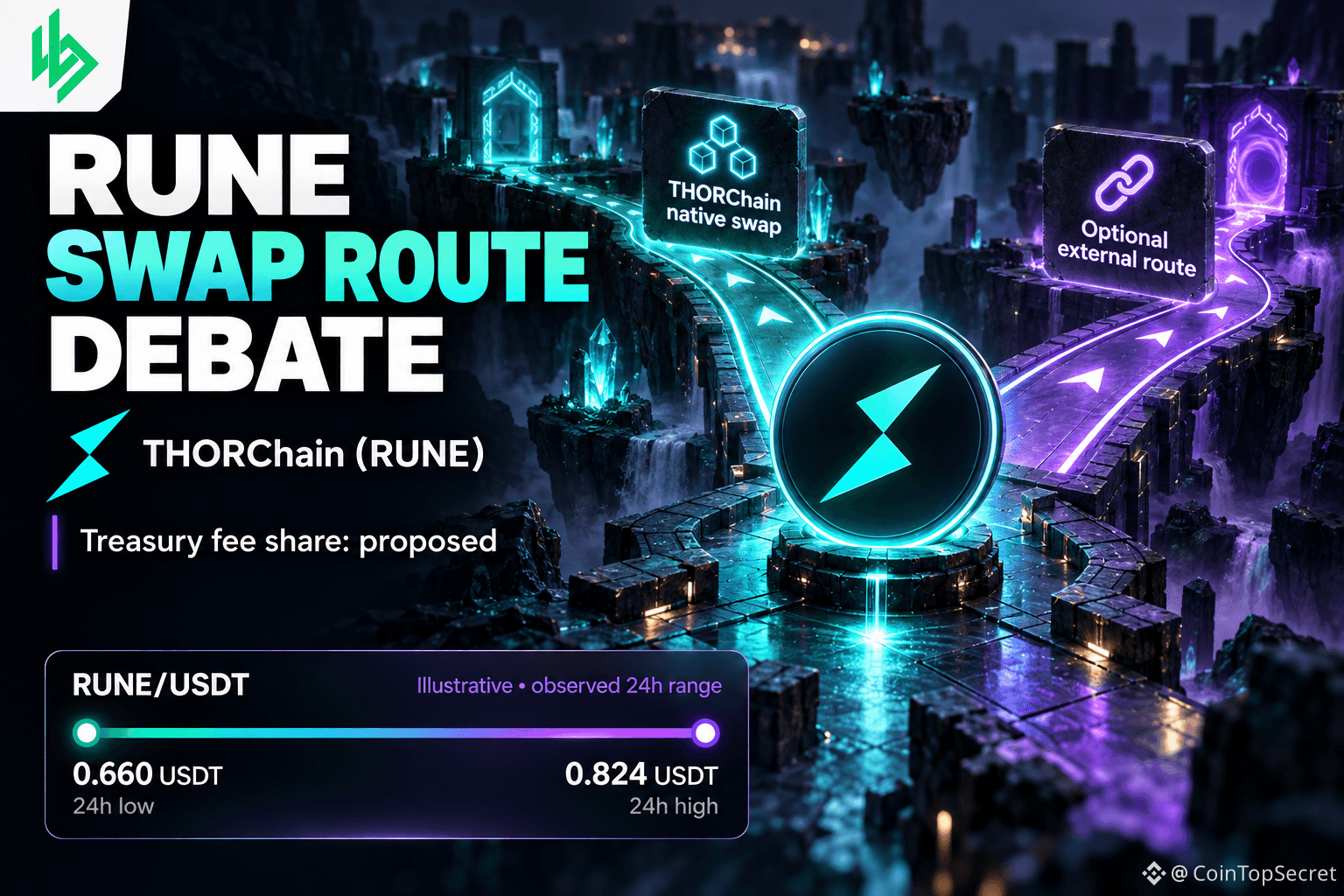
$RUNE Update 🔎 Can price hold after a strong 24h move?
💰 Price: 0.787 USDT | 24h: +19.06%
📊 Market cap: $259.55M | Rank: #164
📈 RUNE/USDT 24h range: 0.660–0.824 USDT
📰 What happened: THORChain’s September 24 recap discussed an optional Houdini route outside its native swap path. RUNE rose over 24 hours, but a link between the two is unverified.
🔥 Key development: A share of external-route fees for the treasury remains a proposal.
👀 Levels to watch:
🔴 If price weakens: The observed 24h low, 0.660 USDT; next support not verified.
🟢 If price strengthens: The observed 24h high, 0.824 USDT; next resistance not verified.
📝 My take: Watch price behavior and whether proposed revenue is actually reported.
Not financial advice. DYOR ⚠️
#RUNE #THORChain #DeFi
$RUNE Update 🔎 Can price hold after a strong 24h move?
💰 Price: 0.787 USDT | 24h: +19.06%
📊 Market cap: $259.55M | Rank: #164
📈 RUNE/USDT 24h range: 0.660–0.824 USDT
📰 What happened: THORChain’s September 24 recap discussed an optional Houdini route outside its native swap path. RUNE rose over 24 hours, but a link between the two is unverified.
🔥 Key development: A share of external-route fees for the treasury remains a proposal.
👀 Levels to watch:
🔴 If price weakens: The observed 24h low, 0.660 USDT; next support not verified.
🟢 If price strengthens: The observed 24h high, 0.824 USDT; next resistance not verified.
📝 My take: Watch price behavior and whether proposed revenue is actually reported.
Not financial advice. DYOR ⚠️
#RUNE #THORChain #DeFi
💰 Price: 0.787 USDT | 24h: +19.06%
📊 Market cap: $259.55M | Rank: #164
📈 RUNE/USDT 24h range: 0.660–0.824 USDT
📰 What happened: THORChain’s September 24 recap discussed an optional Houdini route outside its native swap path. RUNE rose over 24 hours, but a link between the two is unverified.
🔥 Key development: A share of external-route fees for the treasury remains a proposal.
👀 Levels to watch:
🔴 If price weakens: The observed 24h low, 0.660 USDT; next support not verified.
🟢 If price strengthens: The observed 24h high, 0.824 USDT; next resistance not verified.
📝 My take: Watch price behavior and whether proposed revenue is actually reported.
Not financial advice. DYOR ⚠️
#RUNE #THORChain #DeFi
173

·
--
Bearish
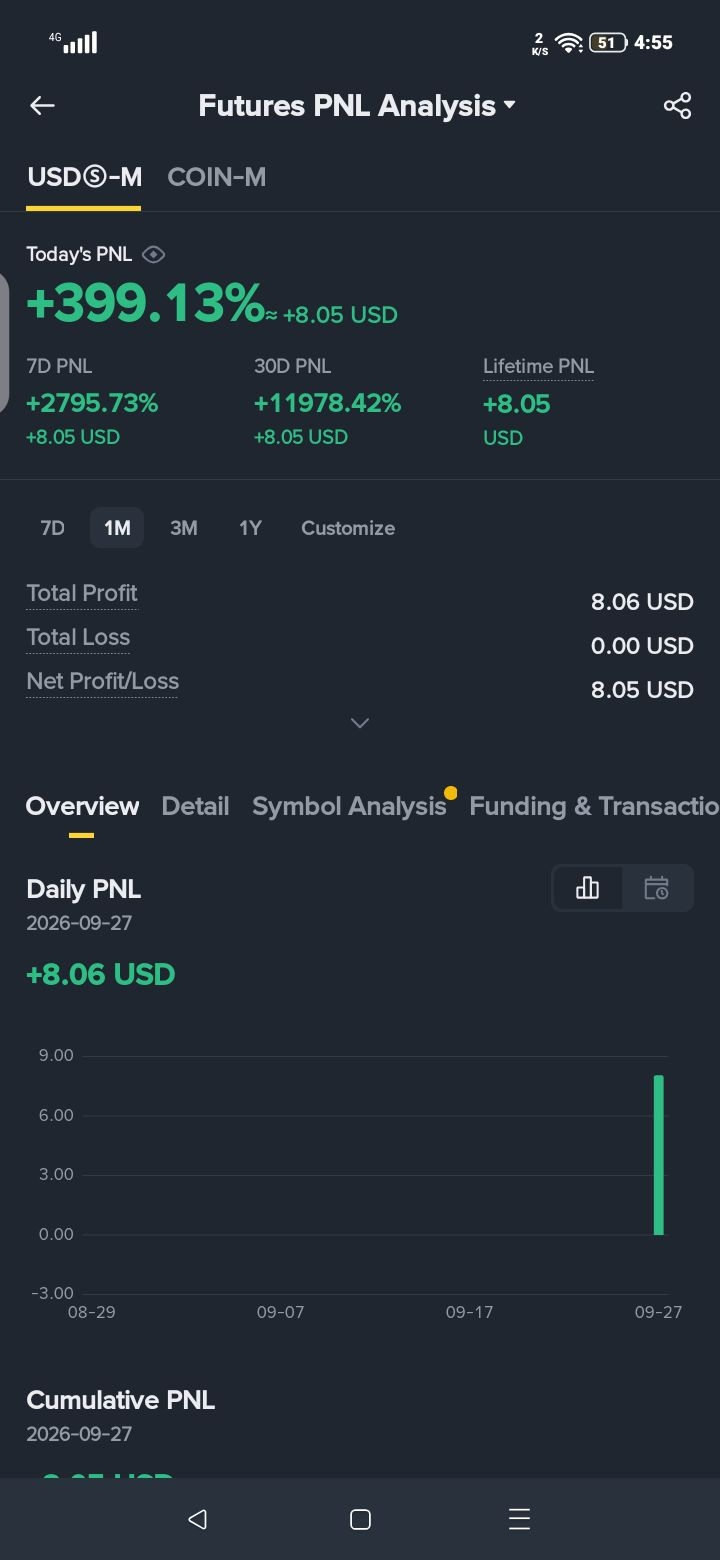
🚨 RUNE HOLDERS, KEEP AN EYE ON THIS!
RUNE is still far below its previous ATH, but the project has a real use case in cross-chain swaps and continues to generate network activity.
If the next major crypto cycle brings strong liquidity back into DeFi, RUNE could become an interesting token to watch 👀
The big question is:
Can RUNE return to its previous highs in the future? 🔥
What’s your target for RUNE? Comment below 👇
#RUNE #THORChain #DeFi #Crypto #Binance
{spot}(RUNEUSDT)
🚨 RUNE HOLDERS, KEEP AN EYE ON THIS!
RUNE is still far below its previous ATH, but the project has a real use case in cross-chain swaps and continues to generate network activity.
If the next major crypto cycle brings strong liquidity back into DeFi, RUNE could become an interesting token to watch 👀
The big question is:
Can RUNE return to its previous highs in the future? 🔥
What’s your target for RUNE? Comment below 👇
#RUNE #THORChain #DeFi #Crypto #Binance
RUNE is still far below its previous ATH, but the project has a real use case in cross-chain swaps and continues to generate network activity.
If the next major crypto cycle brings strong liquidity back into DeFi, RUNE could become an interesting token to watch 👀
The big question is:
Can RUNE return to its previous highs in the future? 🔥
What’s your target for RUNE? Comment below 👇
#RUNE #THORChain #DeFi #Crypto #Binance
1
163

·
--
🔥 $RUNE is heating up!
THORChain revenue hitting multi-month highs.
Cross-chain volume exploding.
Whales are watching this one closely.
Strong move loading.
Don’t sleep on $RUNE .
Trade now 👇
#RUNE #THORChain #CrossChain #crypto
{future}(RUNEUSDT)
🔥 $RUNE is heating up!
THORChain revenue hitting multi-month highs.
Cross-chain volume exploding.
Whales are watching this one closely.
Strong move loading.
Don’t sleep on $RUNE .
Trade now 👇
#RUNE #THORChain #CrossChain #crypto
THORChain revenue hitting multi-month highs.
Cross-chain volume exploding.
Whales are watching this one closely.
Strong move loading.
Don’t sleep on $RUNE .
Trade now 👇
#RUNE #THORChain #CrossChain #crypto
140

·
--
Bullish
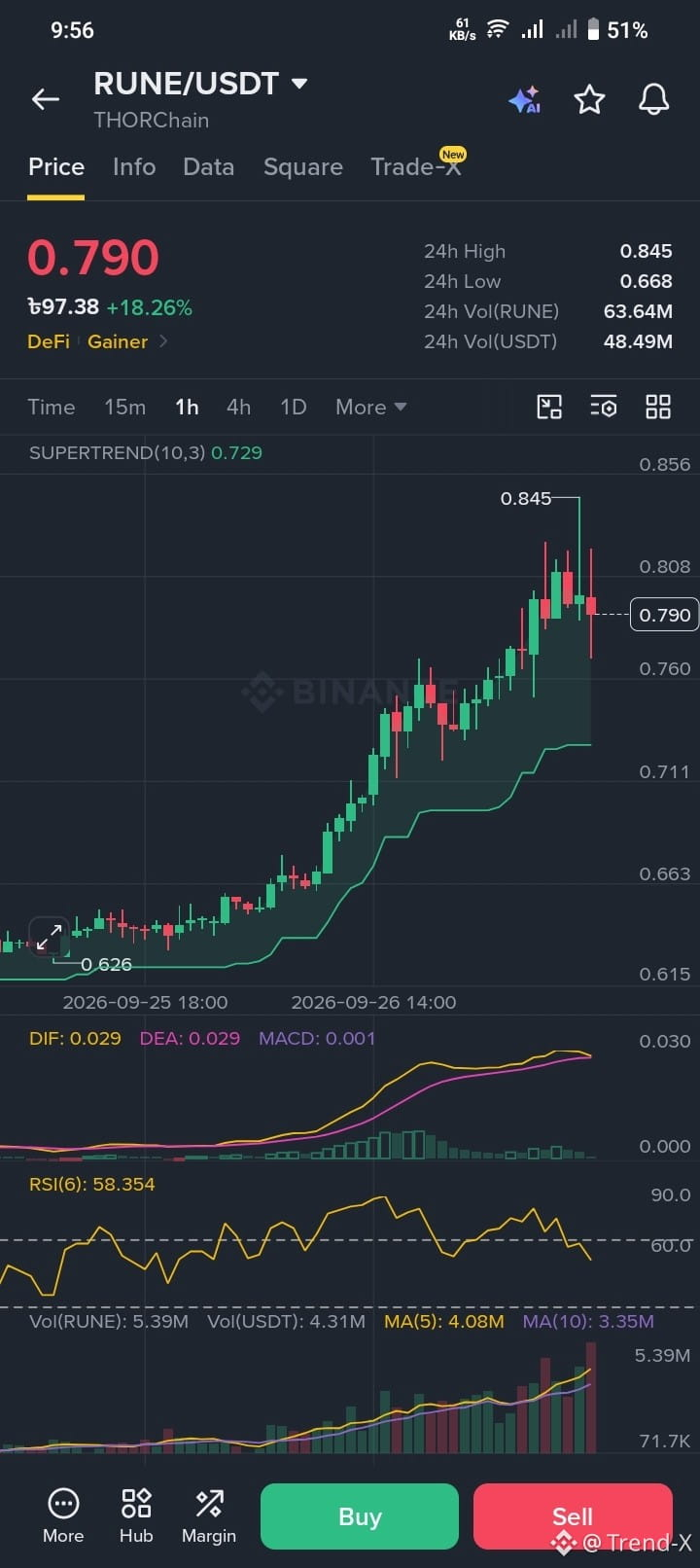
$RUNE 👀 — Is This Just a Pullback?
RUNE is holding around $0.79 after a strong rally.
The chart still looks bullish, but buyers need to defend $0.76.
$RUNE
{spot}(RUNEUSDT)
🔥 Break $0.808 → $0.845 could come back into focus.
⚠️ Lose $0.76 → $0.729 becomes the important zone.
RSI is cooling, so chasing the current candle may be risky.
Would you buy RUNE here or wait for a better entry? 👇
#RUNE #THORChain #Crypto #Trading #BinanceSquare
$RUNE 👀 — Is This Just a Pullback?
RUNE is holding around $0.79 after a strong rally.
The chart still looks bullish, but buyers need to defend $0.76.
$RUNE
🔥 Break $0.808 → $0.845 could come back into focus.
⚠️ Lose $0.76 → $0.729 becomes the important zone.
RSI is cooling, so chasing the current candle may be risky.
Would you buy RUNE here or wait for a better entry? 👇
#RUNE #THORChain #Crypto #Trading #BinanceSquare
RUNE is holding around $0.79 after a strong rally.
The chart still looks bullish, but buyers need to defend $0.76.
$RUNE
🔥 Break $0.808 → $0.845 could come back into focus.
⚠️ Lose $0.76 → $0.729 becomes the important zone.
RSI is cooling, so chasing the current candle may be risky.
Would you buy RUNE here or wait for a better entry? 👇
#RUNE #THORChain #Crypto #Trading #BinanceSquare
94

·
--
Bullish
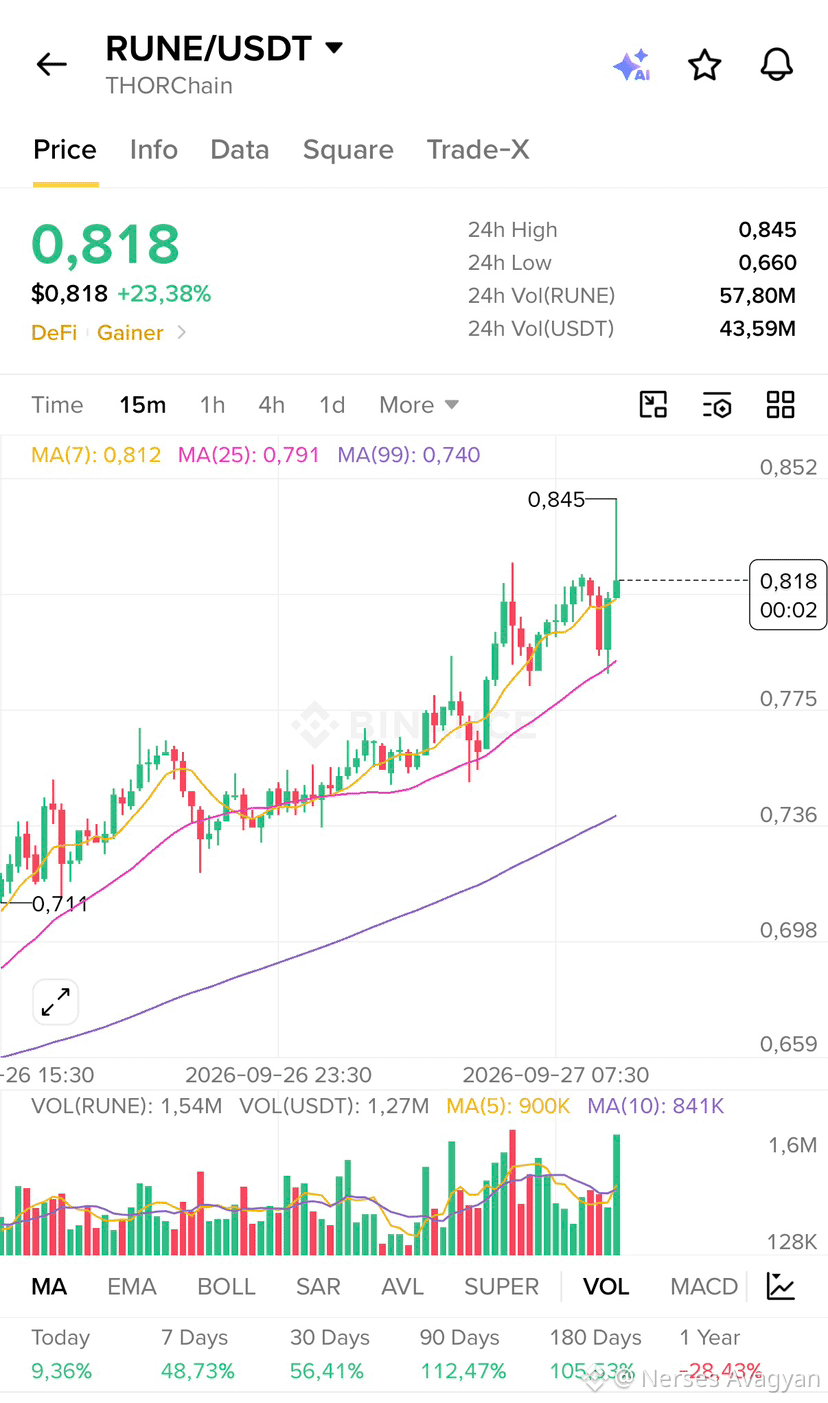
$RUNE — LONG 🟢
Entry: 0.818
TPs 🎯
TP1: 0.835
TP2: 0.855
TP3: 0.880
SL: 0.795
Explanation 📊
$RUNE is holding above the 0.80 area. A move through 0.835 could bring stronger momentum toward the next targets, while a loss of 0.795 would invalidate the setup.
#RUNE #THORChain #Crypto
Click here to trade👇
{spot}(RUNEUSDT)
$RUNE — LONG 🟢
Entry: 0.818
TPs 🎯
TP1: 0.835
TP2: 0.855
TP3: 0.880
SL: 0.795
Explanation 📊
$RUNE is holding above the 0.80 area. A move through 0.835 could bring stronger momentum toward the next targets, while a loss of 0.795 would invalidate the setup.
#RUNE #THORChain #Crypto
Click here to trade👇
Entry: 0.818
TPs 🎯
TP1: 0.835
TP2: 0.855
TP3: 0.880
SL: 0.795
Explanation 📊
$RUNE is holding above the 0.80 area. A move through 0.835 could bring stronger momentum toward the next targets, while a loss of 0.795 would invalidate the setup.
#RUNE #THORChain #Crypto
Click here to trade👇
1
1
32

·
--
Bullish
🚨 $RUNE
{spot}(RUNEUSDT)
BREAKOUT IS GAINING MOMENTUM!
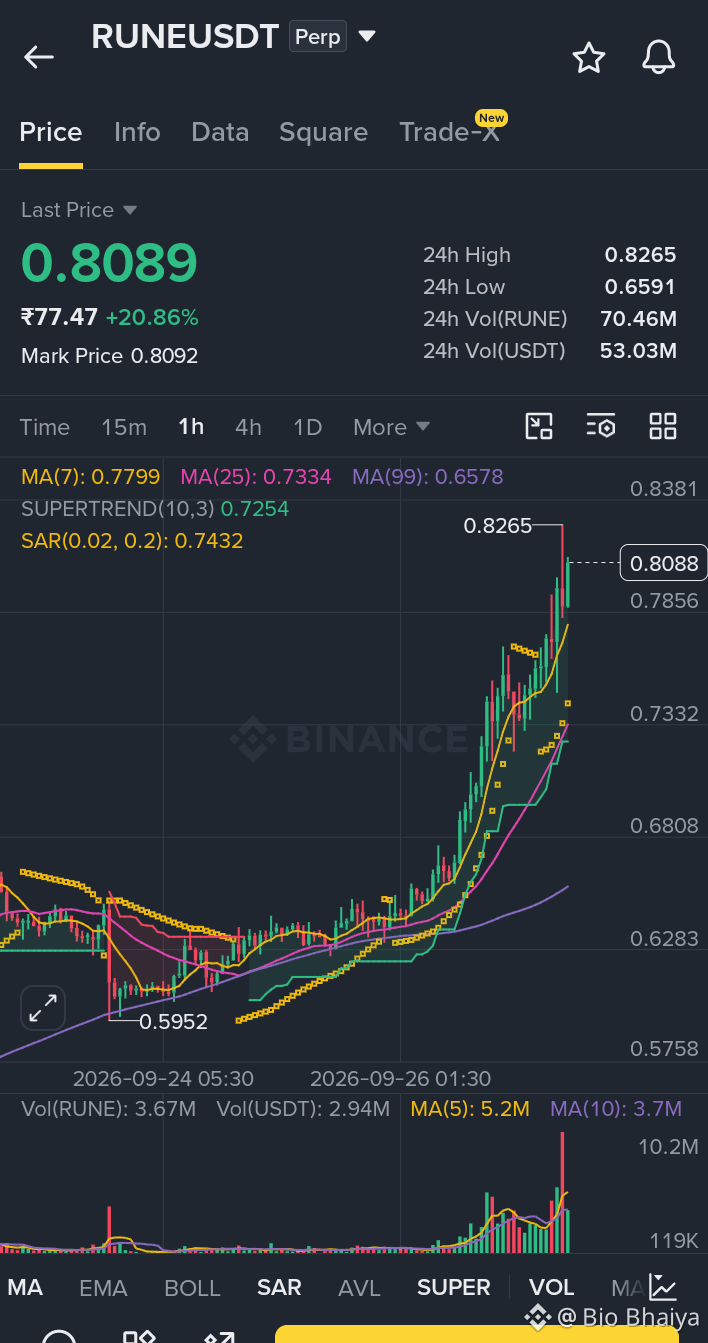
$RUNE has pushed strongly from the $0.65 area and reclaimed $0.80, showing solid bullish momentum. Buyers are still active, with the current structure supporting a possible continuation.
📍 LONG ENTRY: $0.796 – $0.804
🎯 TP1: $0.825
🎯 TP2: $0.850
🎯 TP3: $0.875
🛑 SL: $0.765
Watching the $0.80 zone closely. A sustained move above it could strengthen the setup.
Trade with proper risk management. DYOR.
#RUNE #THORChain #CryptoTrading #Altcoins #BinanceSquare
🚨 $RUNE
BREAKOUT IS GAINING MOMENTUM!
$RUNE has pushed strongly from the $0.65 area and reclaimed $0.80, showing solid bullish momentum. Buyers are still active, with the current structure supporting a possible continuation.
📍 LONG ENTRY: $0.796 – $0.804
🎯 TP1: $0.825
🎯 TP2: $0.850
🎯 TP3: $0.875
🛑 SL: $0.765
Watching the $0.80 zone closely. A sustained move above it could strengthen the setup.
Trade with proper risk management. DYOR.
#RUNE #THORChain #CryptoTrading #Altcoins #BinanceSquare
BREAKOUT IS GAINING MOMENTUM!
$RUNE has pushed strongly from the $0.65 area and reclaimed $0.80, showing solid bullish momentum. Buyers are still active, with the current structure supporting a possible continuation.
📍 LONG ENTRY: $0.796 – $0.804
🎯 TP1: $0.825
🎯 TP2: $0.850
🎯 TP3: $0.875
🛑 SL: $0.765
Watching the $0.80 zone closely. A sustained move above it could strengthen the setup.
Trade with proper risk management. DYOR.
#RUNE #THORChain #CryptoTrading #Altcoins #BinanceSquare
88

·
--
RUNE burn drops from 5% to 1%, yet the discussion on the Binance Square surges to 34 times the usual level. A seemingly bearish change—how did it become a hot topic?
On September 23, THORChain changed how system revenue is allocated: 20% goes to POL (the protocol’s own liquidity), nodes take 59%, TCY gets 10%, the development fund and the marketing each get 5%, and the burn is reduced to just 1%.
The market only focuses on “burning less.” I’m looking at the other side: fees are no longer mainly used to burn; instead, they become deeper liquidity in a pool held by the protocol itself. POL will take RUNE out of circulation and make the pool deeper, but it’s not a buyback and it’s not a permanent reduction of supply. Don’t let the headline mislead you.
The second hotspot is Houdini’s privacy roadmap. It goes through centralized-exchange channels, not native privacy. Zcash goes first, Monero follows. The official message only mentions a soft launch and giving node operators about three days’ advance notice—no mainnet date is provided. The story is there, but real usage isn’t.
Now look at the chart: in the past 24 hours, short liquidations totaled $402,900, while long liquidations were $120,200—about 3.35 times. Open interest is roughly $34.49 million. This leg was pushed by a squeeze; spot isn’t absorbing it. Once the buy pressure stops, this kind of rally disappears.
If it’s bullish, there’s no escape—but what’s rising is the POL narrative. Privacy rumors and the squeeze won’t last long. There’s only one scenario for a reversal: after liquidation buy pressure fades, the pool liquidity injected by POL also fails to sustain trading depth. At that point, this move would just be another short squeeze. Before then, don’t use Zcash rumors as a reason to buy.
$RUNE #THORChain #DeFi
RUNE burn drops from 5% to 1%, yet the discussion on the Binance Square surges to 34 times the usual level. A seemingly bearish change—how did it become a hot topic?
On September 23, THORChain changed how system revenue is allocated: 20% goes to POL (the protocol’s own liquidity), nodes take 59%, TCY gets 10%, the development fund and the marketing each get 5%, and the burn is reduced to just 1%.
The market only focuses on “burning less.” I’m looking at the other side: fees are no longer mainly used to burn; instead, they become deeper liquidity in a pool held by the protocol itself. POL will take RUNE out of circulation and make the pool deeper, but it’s not a buyback and it’s not a permanent reduction of supply. Don’t let the headline mislead you.
The second hotspot is Houdini’s privacy roadmap. It goes through centralized-exchange channels, not native privacy. Zcash goes first, Monero follows. The official message only mentions a soft launch and giving node operators about three days’ advance notice—no mainnet date is provided. The story is there, but real usage isn’t.
Now look at the chart: in the past 24 hours, short liquidations totaled $402,900, while long liquidations were $120,200—about 3.35 times. Open interest is roughly $34.49 million. This leg was pushed by a squeeze; spot isn’t absorbing it. Once the buy pressure stops, this kind of rally disappears.
If it’s bullish, there’s no escape—but what’s rising is the POL narrative. Privacy rumors and the squeeze won’t last long. There’s only one scenario for a reversal: after liquidation buy pressure fades, the pool liquidity injected by POL also fails to sustain trading depth. At that point, this move would just be another short squeeze. Before then, don’t use Zcash rumors as a reason to buy.
$RUNE #THORChain #DeFi
On September 23, THORChain changed how system revenue is allocated: 20% goes to POL (the protocol’s own liquidity), nodes take 59%, TCY gets 10%, the development fund and the marketing each get 5%, and the burn is reduced to just 1%.
The market only focuses on “burning less.” I’m looking at the other side: fees are no longer mainly used to burn; instead, they become deeper liquidity in a pool held by the protocol itself. POL will take RUNE out of circulation and make the pool deeper, but it’s not a buyback and it’s not a permanent reduction of supply. Don’t let the headline mislead you.
The second hotspot is Houdini’s privacy roadmap. It goes through centralized-exchange channels, not native privacy. Zcash goes first, Monero follows. The official message only mentions a soft launch and giving node operators about three days’ advance notice—no mainnet date is provided. The story is there, but real usage isn’t.
Now look at the chart: in the past 24 hours, short liquidations totaled $402,900, while long liquidations were $120,200—about 3.35 times. Open interest is roughly $34.49 million. This leg was pushed by a squeeze; spot isn’t absorbing it. Once the buy pressure stops, this kind of rally disappears.
If it’s bullish, there’s no escape—but what’s rising is the POL narrative. Privacy rumors and the squeeze won’t last long. There’s only one scenario for a reversal: after liquidation buy pressure fades, the pool liquidity injected by POL also fails to sustain trading depth. At that point, this move would just be another short squeeze. Before then, don’t use Zcash rumors as a reason to buy.
$RUNE #THORChain #DeFi
Kato Crypto:
really good catch that this isn't a buyback 🙌 the bit that gets lost in "burn went from 5% to 1%" is that the two do completely different things to the balance sheet 👀 a burn is a one-way accounting event that's finished the second it happens, while protocol-owned liquidity is an inventory position someone has to keep holding and managing. same fees going in, but one retires supply and the other turns the treasury into a market maker with all the exposure that carries 🛡️
1
95
·
--
Midday follow-up verification confirmed the warning about the risk of chasing price from the morning: $RUNE spiked above 0.8265 twice, reaching a high of 0.8461, but neither time managed to hold. In the most recent full hour, although trading volume expanded to about $8.38 million, it ultimately closed only at 0.7979; as of 14:01, the price is around 0.798.
Over the past ~3 hours, open positions increased from 10.85 million to 11.59 million RUNE, up 6.84%. Adding positions, expanding volume, and rallying highs all occurred at the same time, yet they still couldn’t keep the close above 0.8265. This indicates that disagreement at the high end and profit-taking pressure are both intensifying.
Conclusion: The conditions for 0.8265 only briefly held and then failed—no chasing entry. Only if volume increases again and it settles back firmly above 0.8265 can we consider the bullish case restored. If it breaks below 0.78, first look for cooling momentum; if it falls below 0.75, be cautious of any newly added positions facing a concentrated pullback. #RUNE #午间跟踪 #THORChain
Midday follow-up verification confirmed the warning about the risk of chasing price from the morning: $RUNE spiked above 0.8265 twice, reaching a high of 0.8461, but neither time managed to hold. In the most recent full hour, although trading volume expanded to about $8.38 million, it ultimately closed only at 0.7979; as of 14:01, the price is around 0.798.
Over the past ~3 hours, open positions increased from 10.85 million to 11.59 million RUNE, up 6.84%. Adding positions, expanding volume, and rallying highs all occurred at the same time, yet they still couldn’t keep the close above 0.8265. This indicates that disagreement at the high end and profit-taking pressure are both intensifying.
Conclusion: The conditions for 0.8265 only briefly held and then failed—no chasing entry. Only if volume increases again and it settles back firmly above 0.8265 can we consider the bullish case restored. If it breaks below 0.78, first look for cooling momentum; if it falls below 0.75, be cautious of any newly added positions facing a concentrated pullback. #RUNE #午间跟踪 #THORChain
Over the past ~3 hours, open positions increased from 10.85 million to 11.59 million RUNE, up 6.84%. Adding positions, expanding volume, and rallying highs all occurred at the same time, yet they still couldn’t keep the close above 0.8265. This indicates that disagreement at the high end and profit-taking pressure are both intensifying.
Conclusion: The conditions for 0.8265 only briefly held and then failed—no chasing entry. Only if volume increases again and it settles back firmly above 0.8265 can we consider the bullish case restored. If it breaks below 0.78, first look for cooling momentum; if it falls below 0.75, be cautious of any newly added positions facing a concentrated pullback. #RUNE #午间跟踪 #THORChain
136

·
--
Bullish
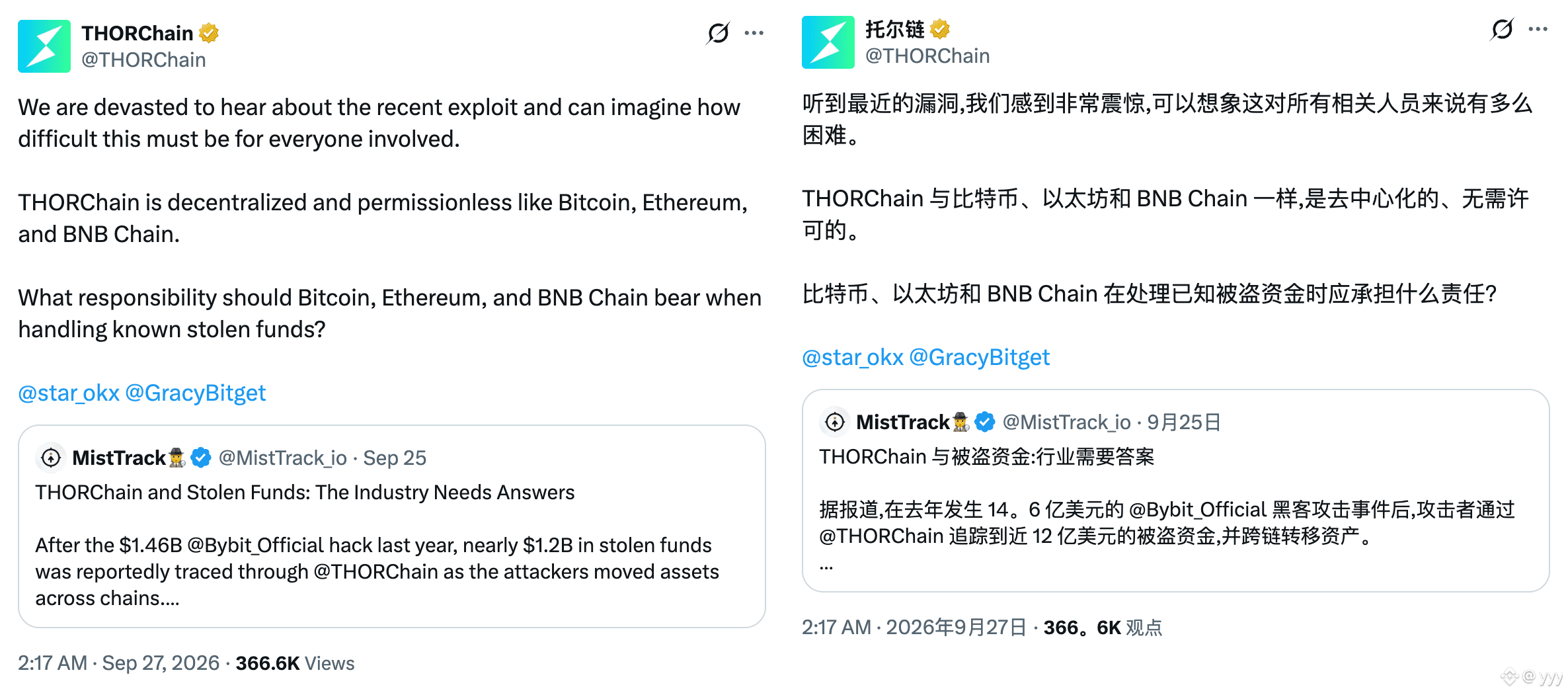
The hackers who stole Bitget’s funds and moved the stolen proceeds also used Thorchain.
From Bybit to KelpDAO to Balancer and most recently Bitget, it seems the hackers have reached a consensus to route the stolen funds transfer via @THORChain, and they all have a particular fondness for Thorchain.
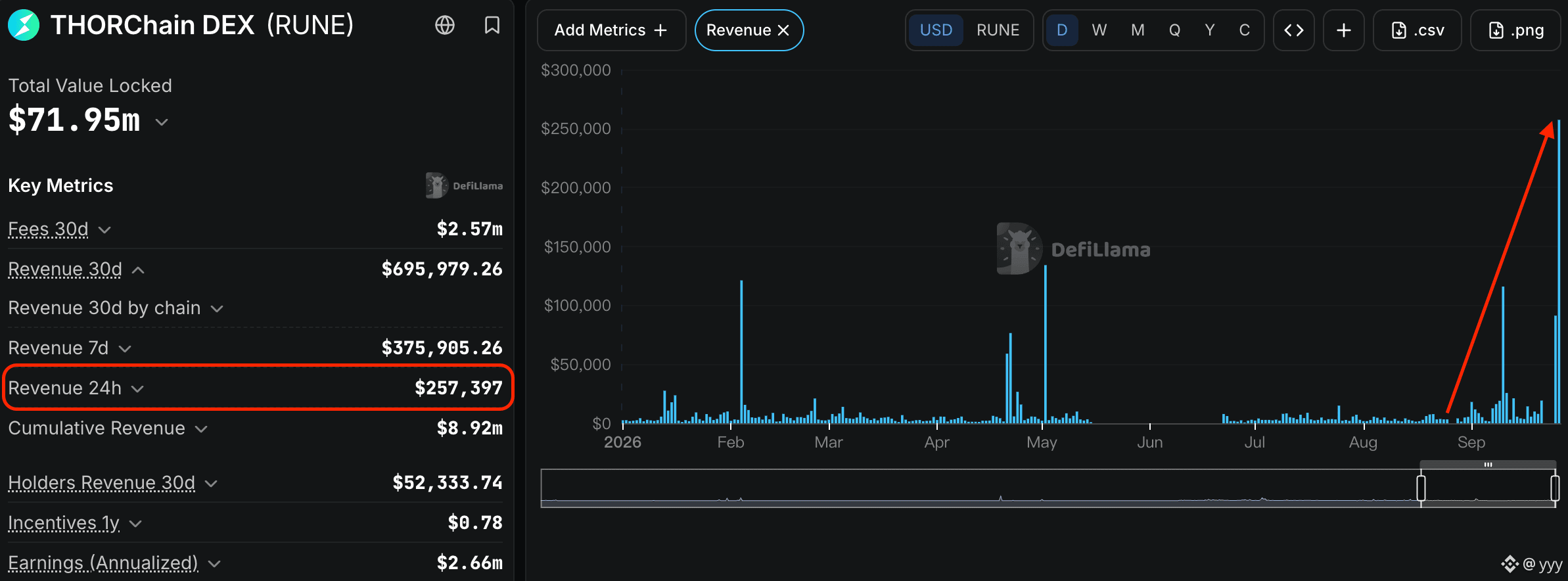
As of now, the stolen funds transferred by hackers via the Thorchain DEX have reached $100 million. Yesterday, the Thorchain DEX generated its largest daily revenue so far this year—only $257,000—which, compared with other protocols, isn’t that much.
What’s interesting is that the attack address in the Bitget hack has already been publicly flagged, yet Thorchain still chose to provide large-scale swap channels. Thorchain’s response is that it is decentralized infrastructure, so it cannot and will not choose a centralized method to freeze funds.
A soul-searching question: Is this kind of decentralization truly worth praising?
#THORChain $RUNE
{future}(RUNEUSDT)
The hackers who stole Bitget’s funds and moved the stolen proceeds also used Thorchain.
From Bybit to KelpDAO to Balancer and most recently Bitget, it seems the hackers have reached a consensus to route the stolen funds transfer via @THORChain, and they all have a particular fondness for Thorchain.
As of now, the stolen funds transferred by hackers via the Thorchain DEX have reached $100 million. Yesterday, the Thorchain DEX generated its largest daily revenue so far this year—only $257,000—which, compared with other protocols, isn’t that much.
What’s interesting is that the attack address in the Bitget hack has already been publicly flagged, yet Thorchain still chose to provide large-scale swap channels. Thorchain’s response is that it is decentralized infrastructure, so it cannot and will not choose a centralized method to freeze funds.
A soul-searching question: Is this kind of decentralization truly worth praising?
#THORChain $RUNE
From Bybit to KelpDAO to Balancer and most recently Bitget, it seems the hackers have reached a consensus to route the stolen funds transfer via @THORChain, and they all have a particular fondness for Thorchain.
As of now, the stolen funds transferred by hackers via the Thorchain DEX have reached $100 million. Yesterday, the Thorchain DEX generated its largest daily revenue so far this year—only $257,000—which, compared with other protocols, isn’t that much.
What’s interesting is that the attack address in the Bitget hack has already been publicly flagged, yet Thorchain still chose to provide large-scale swap channels. Thorchain’s response is that it is decentralized infrastructure, so it cannot and will not choose a centralized method to freeze funds.
A soul-searching question: Is this kind of decentralization truly worth praising?
#THORChain $RUNE
167

·
--
#THORChain Cross-chain fund control has been brought to the spotlight
GoPlus’ core point isn’t technical detail, but a qualitative judgment: validators can jointly manage cross-chain funds, and measures such as pausing signatures and Mimir governance are tools that can be used.
It cites a sample case after the Bybit attack, where about 499,000 ETH were converted mostly into BTC via THORChain within 10 days. Based on this, GoPlus believes that THORChain should restrict addresses of stolen funds that have been clearly flagged. This is an opinion; whether it will be adopted remains to be confirmed, as THORChain has not yet responded.
For holders of $BTC and $ETH , the implication is routing expectations: once “the protocol can block addresses” becomes the norm, the cross-chain cost for flagged funds rises, and normal cross-chain activity may also be affected by the same kind of scrutiny logic. One falsifiable point is that if THORChain subsequently does not give a public response, this claim will most likely remain at the level of public opinion, with signature rules staying unchanged.
$RENDER
#THORChain Cross-chain fund control has been brought to the spotlight
GoPlus’ core point isn’t technical detail, but a qualitative judgment: validators can jointly manage cross-chain funds, and measures such as pausing signatures and Mimir governance are tools that can be used.
It cites a sample case after the Bybit attack, where about 499,000 ETH were converted mostly into BTC via THORChain within 10 days. Based on this, GoPlus believes that THORChain should restrict addresses of stolen funds that have been clearly flagged. This is an opinion; whether it will be adopted remains to be confirmed, as THORChain has not yet responded.
For holders of $BTC and $ETH , the implication is routing expectations: once “the protocol can block addresses” becomes the norm, the cross-chain cost for flagged funds rises, and normal cross-chain activity may also be affected by the same kind of scrutiny logic. One falsifiable point is that if THORChain subsequently does not give a public response, this claim will most likely remain at the level of public opinion, with signature rules staying unchanged.
$RENDER
GoPlus’ core point isn’t technical detail, but a qualitative judgment: validators can jointly manage cross-chain funds, and measures such as pausing signatures and Mimir governance are tools that can be used.
It cites a sample case after the Bybit attack, where about 499,000 ETH were converted mostly into BTC via THORChain within 10 days. Based on this, GoPlus believes that THORChain should restrict addresses of stolen funds that have been clearly flagged. This is an opinion; whether it will be adopted remains to be confirmed, as THORChain has not yet responded.
For holders of $BTC and $ETH , the implication is routing expectations: once “the protocol can block addresses” becomes the norm, the cross-chain cost for flagged funds rises, and normal cross-chain activity may also be affected by the same kind of scrutiny logic. One falsifiable point is that if THORChain subsequently does not give a public response, this claim will most likely remain at the level of public opinion, with signature rules staying unchanged.
$RENDER
99
·
--
17:00 recap gives a clear status: $RUNE did not re-establish above 0.8265 in the afternoon; instead, it fell below the 0.78 momentum line set at midday. In the most recent full hour it closed at 0.7761, with a low of 0.7651. As of 17:02, the price is around 0.774, but the 0.75 risk level has not yet been breached.
Over the last ~3 hours, the open position size dropped from 11.68 million to 11.33 million RUNE, a decrease of 2.99%. Price and position size are declining together, suggesting that the long positions added during the earlier spike are backing off. This looks more like longs are taking profits than shorts are being heavily accumulated.
Conclusion: Momentum has cooled and the strong continuation has failed. No entry. Next, keep watching 0.75. If it holds, it may still consolidate and recover; if it breaks, then focus on 0.69 as the support/absorption level. Only if it breaks out again with volume and closes back above 0.8265 will the strong-bias assessment be restored.#RUNE #交易复盘 #THORChain
17:00 recap gives a clear status: $RUNE did not re-establish above 0.8265 in the afternoon; instead, it fell below the 0.78 momentum line set at midday. In the most recent full hour it closed at 0.7761, with a low of 0.7651. As of 17:02, the price is around 0.774, but the 0.75 risk level has not yet been breached.
Over the last ~3 hours, the open position size dropped from 11.68 million to 11.33 million RUNE, a decrease of 2.99%. Price and position size are declining together, suggesting that the long positions added during the earlier spike are backing off. This looks more like longs are taking profits than shorts are being heavily accumulated.
Conclusion: Momentum has cooled and the strong continuation has failed. No entry. Next, keep watching 0.75. If it holds, it may still consolidate and recover; if it breaks, then focus on 0.69 as the support/absorption level. Only if it breaks out again with volume and closes back above 0.8265 will the strong-bias assessment be restored.#RUNE #交易复盘 #THORChain
Over the last ~3 hours, the open position size dropped from 11.68 million to 11.33 million RUNE, a decrease of 2.99%. Price and position size are declining together, suggesting that the long positions added during the earlier spike are backing off. This looks more like longs are taking profits than shorts are being heavily accumulated.
Conclusion: Momentum has cooled and the strong continuation has failed. No entry. Next, keep watching 0.75. If it holds, it may still consolidate and recover; if it breaks, then focus on 0.69 as the support/absorption level. Only if it breaks out again with volume and closes back above 0.8265 will the strong-bias assessment be restored.#RUNE #交易复盘 #THORChain
164

·
--
Bullish
The price of THORChain rose by 15% following the CEO of the Bitget platform’s request to ban addresses related to a hack. The price of the THORChain coin increased by more than 15% after Bitget’s CEO formally asked the protocol to block services to addresses linked to a hack worth $351.6 million. On-chain data analyses confirm that the stolen funds were routed through THORChain to carry out cross-chain swaps, increasing the clarity of fund flows on the network and sparking debate about the balance between decentralization and controls to combat illicit activity.
#THORChain #Bitget #HackerAlert #Rune
$RUNE
{future}(RUNEUSDT)
The price of THORChain rose by 15% following the CEO of the Bitget platform’s request to ban addresses related to a hack. The price of the THORChain coin increased by more than 15% after Bitget’s CEO formally asked the protocol to block services to addresses linked to a hack worth $351.6 million. On-chain data analyses confirm that the stolen funds were routed through THORChain to carry out cross-chain swaps, increasing the clarity of fund flows on the network and sparking debate about the balance between decentralization and controls to combat illicit activity.
#THORChain #Bitget #HackerAlert #Rune
$RUNE
#THORChain #Bitget #HackerAlert #Rune
$RUNE
1
9

·
--
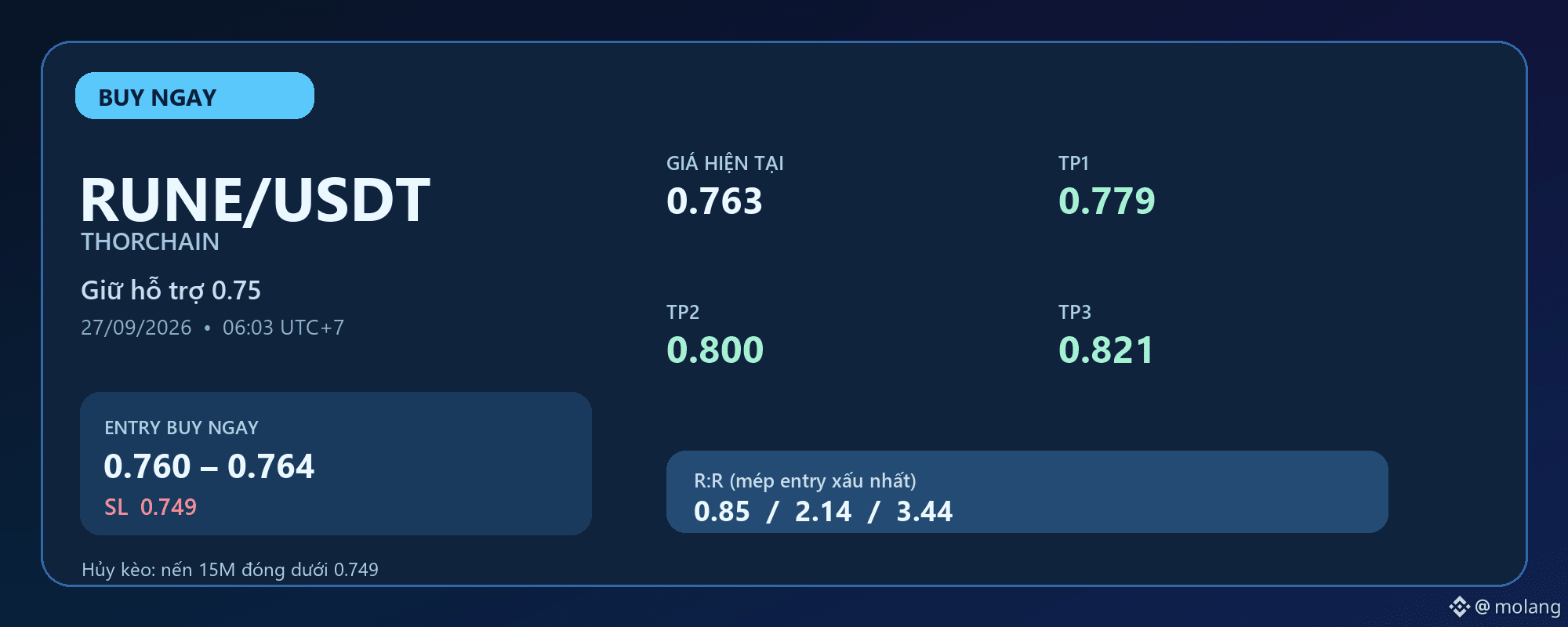
BUY RUNE now: hold 0.75, uptrend pulse not broken yet
RUNE has just pulled back from 0.750–0.755 and closed at 0.761 after a short test. Before that, price formed progressively higher lows from 0.736, while the 20/50 EMA on 15m, 1h, and 4h are all aligned upward. This is a BUY setup based on the structure still holding—do not buy when price has already surged far away from the invalidation point.
CURRENT BUY PRICE: 0.763 USDT
ENTRY BUY NOW: 0.760 – 0.764
SL: 0.749
TP1: 0.779
TP2: 0.800
TP3: 0.821
R:R: 0.85 / 2.14 / 3.44 (calculated at the entry edge 0.764, after leaving room for fees/slippage)
Confirmation: The 15m candle reacted from 0.750–0.755 and held 0.760. Only BUY when price is still above this zone, or reclaims 0.760 immediately after a sweep.
Cancel the setup when: A 15m candle closes below 0.749. At that point, the higher-low structure is broken—stop the trade.
Validity: until 10:00, 27/09/2026 (UTC+7).
0.769 is the nearest peak, but TP1 is set at 0.779 to take profit when price truly expands out of the supply zone. If buying pressure continues, 0.800 and 0.821 are the next targets. The entry sits right in the current price area, with a short, clear stop: if it works, go; if not, stop.
RUNE has high volatility. BUY quickly while conditions remain intact; if it loses 0.749, exit—do not average down.
Source: Binance Spot RUNEUSDT; CoinGecko; CoinMarketCap.
#THORChain #RUNE $RUNE
Content is for informational purposes only and is not financial advice.
BUY RUNE now: hold 0.75, uptrend pulse not broken yet
RUNE has just pulled back from 0.750–0.755 and closed at 0.761 after a short test. Before that, price formed progressively higher lows from 0.736, while the 20/50 EMA on 15m, 1h, and 4h are all aligned upward. This is a BUY setup based on the structure still holding—do not buy when price has already surged far away from the invalidation point.
CURRENT BUY PRICE: 0.763 USDT
ENTRY BUY NOW: 0.760 – 0.764
SL: 0.749
TP1: 0.779
TP2: 0.800
TP3: 0.821
R:R: 0.85 / 2.14 / 3.44 (calculated at the entry edge 0.764, after leaving room for fees/slippage)
Confirmation: The 15m candle reacted from 0.750–0.755 and held 0.760. Only BUY when price is still above this zone, or reclaims 0.760 immediately after a sweep.
Cancel the setup when: A 15m candle closes below 0.749. At that point, the higher-low structure is broken—stop the trade.
Validity: until 10:00, 27/09/2026 (UTC+7).
0.769 is the nearest peak, but TP1 is set at 0.779 to take profit when price truly expands out of the supply zone. If buying pressure continues, 0.800 and 0.821 are the next targets. The entry sits right in the current price area, with a short, clear stop: if it works, go; if not, stop.
RUNE has high volatility. BUY quickly while conditions remain intact; if it loses 0.749, exit—do not average down.
Source: Binance Spot RUNEUSDT; CoinGecko; CoinMarketCap.
#THORChain #RUNE $RUNE
Content is for informational purposes only and is not financial advice.
RUNE has just pulled back from 0.750–0.755 and closed at 0.761 after a short test. Before that, price formed progressively higher lows from 0.736, while the 20/50 EMA on 15m, 1h, and 4h are all aligned upward. This is a BUY setup based on the structure still holding—do not buy when price has already surged far away from the invalidation point.
CURRENT BUY PRICE: 0.763 USDT
ENTRY BUY NOW: 0.760 – 0.764
SL: 0.749
TP1: 0.779
TP2: 0.800
TP3: 0.821
R:R: 0.85 / 2.14 / 3.44 (calculated at the entry edge 0.764, after leaving room for fees/slippage)
Confirmation: The 15m candle reacted from 0.750–0.755 and held 0.760. Only BUY when price is still above this zone, or reclaims 0.760 immediately after a sweep.
Cancel the setup when: A 15m candle closes below 0.749. At that point, the higher-low structure is broken—stop the trade.
Validity: until 10:00, 27/09/2026 (UTC+7).
0.769 is the nearest peak, but TP1 is set at 0.779 to take profit when price truly expands out of the supply zone. If buying pressure continues, 0.800 and 0.821 are the next targets. The entry sits right in the current price area, with a short, clear stop: if it works, go; if not, stop.
RUNE has high volatility. BUY quickly while conditions remain intact; if it loses 0.749, exit—do not average down.
Source: Binance Spot RUNEUSDT; CoinGecko; CoinMarketCap.
#THORChain #RUNE $RUNE
Content is for informational purposes only and is not financial advice.
38
·
--
$RUNE is worth paying attention to today, but the reason is not an unverified “positive catalyst.” As of 11:01, the price is about $0.791, up 19.2% in 24 hours, and open interest has increased by 43.4%. Recently, the total trading volume for the latest complete hour is about 3.6 times the prior average; price, volume, and positions are forming a short-term alignment.
I couldn’t find any official announcement—either a project update or a Binance notice—that directly explains today’s surge, so I won’t package the market as being driven by a piece of news. The risks are also clear: the 4-hour RSI is already at 88.2, the price is near the 24-hour high of 0.8265, the funding rate is 0.01%, and chasing after the move may mean absorbing a quick pullback.
Conclusion: the hype is real, but the short-term market is overheated. Watch for continuation only if it holds steady above 0.8265 on increased volume; if it falls back below 0.75, then be alert for concentrated profit-taking and look for the next support/entry around 0.69.#RUNE #热点解读 #THORChain
$RUNE is worth paying attention to today, but the reason is not an unverified “positive catalyst.” As of 11:01, the price is about $0.791, up 19.2% in 24 hours, and open interest has increased by 43.4%. Recently, the total trading volume for the latest complete hour is about 3.6 times the prior average; price, volume, and positions are forming a short-term alignment.
I couldn’t find any official announcement—either a project update or a Binance notice—that directly explains today’s surge, so I won’t package the market as being driven by a piece of news. The risks are also clear: the 4-hour RSI is already at 88.2, the price is near the 24-hour high of 0.8265, the funding rate is 0.01%, and chasing after the move may mean absorbing a quick pullback.
Conclusion: the hype is real, but the short-term market is overheated. Watch for continuation only if it holds steady above 0.8265 on increased volume; if it falls back below 0.75, then be alert for concentrated profit-taking and look for the next support/entry around 0.69.#RUNE #热点解读 #THORChain
I couldn’t find any official announcement—either a project update or a Binance notice—that directly explains today’s surge, so I won’t package the market as being driven by a piece of news. The risks are also clear: the 4-hour RSI is already at 88.2, the price is near the 24-hour high of 0.8265, the funding rate is 0.01%, and chasing after the move may mean absorbing a quick pullback.
Conclusion: the hype is real, but the short-term market is overheated. Watch for continuation only if it holds steady above 0.8265 on increased volume; if it falls back below 0.75, then be alert for concentrated profit-taking and look for the next support/entry around 0.69.#RUNE #热点解读 #THORChain
156

·
--
Bullish
🔥 $RUNE The market ignites again… has the most dangerous phase begun?
THORChain (RUNE) coin has returned strongly; it rose from around $0.50 in mid-September to $0.668 on September 26, recording a daily high near $0.676. The latest technical reading suggests that the upward momentum remains intact as long as the price stays above the $0.535–$0.56 zone.
📊 Quick analysis:
🟢 Key support: $0.56 then $0.535
🔴 Nearby resistance: $0.67–$0.68
⚡ A breakout above $0.68 with strong trading volume could pave the way to test higher levels.
⚠️ A break below $0.535 may weaken the bullish scenario.
What’s notable is that THORChain has announced the return of its normal operations, with plans to launch trading for Zcash and Monero, which could renew interest in the ecosystem.
🚨 RUNE is now at a critical zone… a breakout could set it on fire, while a rejection could send it back to retest it again!
$RUNE
{future}(RUNEUSDT)
#RUNE #THORChain #Binance
🔥 $RUNE The market ignites again… has the most dangerous phase begun?
THORChain (RUNE) coin has returned strongly; it rose from around $0.50 in mid-September to $0.668 on September 26, recording a daily high near $0.676. The latest technical reading suggests that the upward momentum remains intact as long as the price stays above the $0.535–$0.56 zone.
📊 Quick analysis:
🟢 Key support: $0.56 then $0.535
🔴 Nearby resistance: $0.67–$0.68
⚡ A breakout above $0.68 with strong trading volume could pave the way to test higher levels.
⚠️ A break below $0.535 may weaken the bullish scenario.
What’s notable is that THORChain has announced the return of its normal operations, with plans to launch trading for Zcash and Monero, which could renew interest in the ecosystem.
🚨 RUNE is now at a critical zone… a breakout could set it on fire, while a rejection could send it back to retest it again!
$RUNE
#RUNE #THORChain #Binance
THORChain (RUNE) coin has returned strongly; it rose from around $0.50 in mid-September to $0.668 on September 26, recording a daily high near $0.676. The latest technical reading suggests that the upward momentum remains intact as long as the price stays above the $0.535–$0.56 zone.
📊 Quick analysis:
🟢 Key support: $0.56 then $0.535
🔴 Nearby resistance: $0.67–$0.68
⚡ A breakout above $0.68 with strong trading volume could pave the way to test higher levels.
⚠️ A break below $0.535 may weaken the bullish scenario.
What’s notable is that THORChain has announced the return of its normal operations, with plans to launch trading for Zcash and Monero, which could renew interest in the ecosystem.
🚨 RUNE is now at a critical zone… a breakout could set it on fire, while a rejection could send it back to retest it again!
$RUNE
#RUNE #THORChain #Binance

1
202

·
--
#THORChain #DeFi安全 $RUNE If a protocol can pause service when it comes under attack, does that mean it can also stop stolen funds on behalf of others? The debate between THORChain and OKX Star is a good opportunity to separate three questions: who can move funds, who can pause, and what pausing can actually solve.
My view is this: cross-chain protocols should clearly define both intervention powers and trigger rules. Saying everything is explained by “decentralization” is not enough to define the boundaries of responsibility; but simply pointing to a past shutdown and concluding that stolen funds can now be precisely recovered also goes beyond the evidence.
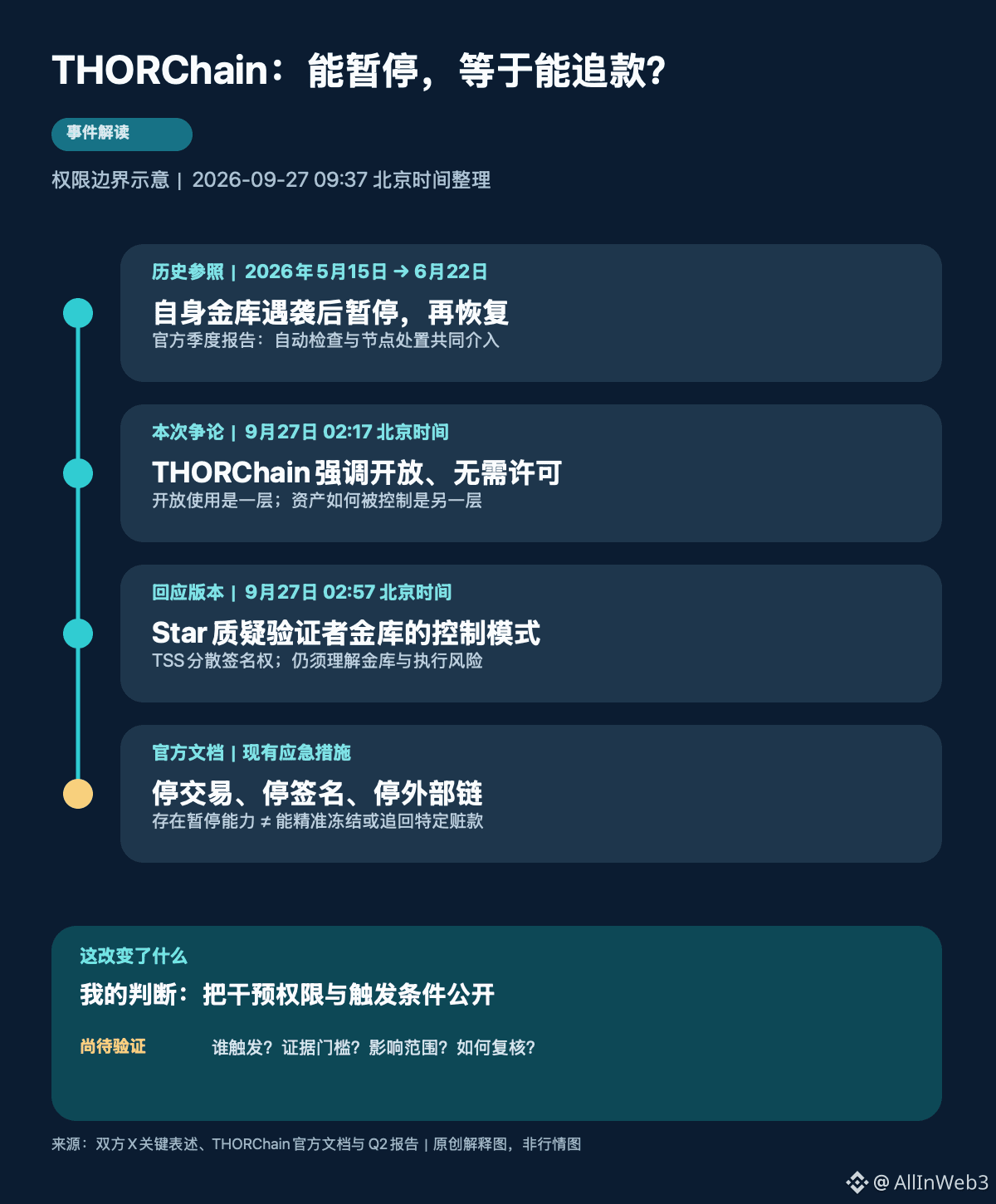
First, let’s get the timeline straight. At 02:17 on September 27 Beijing time, THORChain posted on X about the recent attack, emphasizing that it is decentralized and permissionless, like Bitcoin, Ethereum, and BNB Chain. At 02:57, Star responded with a rebuttal: the validators jointly control the TSS vault, and once the signature threshold is met, the underlying assets can be moved. Odaily followed up this morning. The reporting time differs from the time of the statements made by both sides; this update set does not mean another attack occurred.
The key point is that open access and asset custody answer two different questions. According to THORChain’s official documentation, cross-chain swaps involve vaults on external chains, with multiple nodes jointly handling withdrawals through threshold signatures. No single participant has full control, which is the point of distributed control; but users still need to understand the vault and node mechanism. “No account needed” cannot be directly interpreted as “there is no additional custody or execution risk at all.”
The second easily confused issue is pausing versus recovery. The official developer documentation separately lists controls such as pausing trading, stopping withdrawal signing, and pausing a specific external chain. Stopping signing can cause withdrawals to queue; pausing the service may also affect normal users. These capabilities show that the protocol has emergency measures, but they do not by themselves prove that there is a button that can freeze only specific stolen funds and retrieve assets that have already left the vault.
History provides a reference, but it cannot replace evidence in this case. THORChain’s Q2 report records that after a vault attack on May 15, automatic checks and node actions sequentially triggered a pause, with service resuming on June 22. That case was mainly about stopping the protocol’s own vulnerability from causing further losses. An external theft case also involves address attribution, standards of evidence, the scope of intervention, and timing of execution, so the two scenarios cannot be treated as identical.
So what I’d like to see next is a verifiable incident-handling explanation: which controls are available now, who can trigger them, what evidence is required, how many normal transactions would be affected, and whether the decision can be publicly audited. For swap users and liquidity providers, that information is much more useful than the labels each side attaches to the other. It determines how long your transaction may be delayed in a dispute, and who is deciding that delay.
If future disclosures can demonstrate an effective, auditable intervention mechanism that targets only specific funds without affecting unrelated users, I would revise my view that intervention mainly depends on broad-scope pause measures. Before that, we should not infer “not yet recovered” as “actively assisting,” and even less should we derive RUNE price movements directly from this dispute.
If intercepting suspected stolen funds requires pausing normal swaps as well, would you rather accept pre-announced, uniformly enforced pause conditions, or keep a no-downtime principle and let centralized platforms where funds enter bear the responsibility for interception?
#THORChain #DeFi安全 $RUNE If a protocol can pause service when it comes under attack, does that mean it can also stop stolen funds on behalf of others? The debate between THORChain and OKX Star is a good opportunity to separate three questions: who can move funds, who can pause, and what pausing can actually solve.
My view is this: cross-chain protocols should clearly define both intervention powers and trigger rules. Saying everything is explained by “decentralization” is not enough to define the boundaries of responsibility; but simply pointing to a past shutdown and concluding that stolen funds can now be precisely recovered also goes beyond the evidence.
First, let’s get the timeline straight. At 02:17 on September 27 Beijing time, THORChain posted on X about the recent attack, emphasizing that it is decentralized and permissionless, like Bitcoin, Ethereum, and BNB Chain. At 02:57, Star responded with a rebuttal: the validators jointly control the TSS vault, and once the signature threshold is met, the underlying assets can be moved. Odaily followed up this morning. The reporting time differs from the time of the statements made by both sides; this update set does not mean another attack occurred.
The key point is that open access and asset custody answer two different questions. According to THORChain’s official documentation, cross-chain swaps involve vaults on external chains, with multiple nodes jointly handling withdrawals through threshold signatures. No single participant has full control, which is the point of distributed control; but users still need to understand the vault and node mechanism. “No account needed” cannot be directly interpreted as “there is no additional custody or execution risk at all.”
The second easily confused issue is pausing versus recovery. The official developer documentation separately lists controls such as pausing trading, stopping withdrawal signing, and pausing a specific external chain. Stopping signing can cause withdrawals to queue; pausing the service may also affect normal users. These capabilities show that the protocol has emergency measures, but they do not by themselves prove that there is a button that can freeze only specific stolen funds and retrieve assets that have already left the vault.
History provides a reference, but it cannot replace evidence in this case. THORChain’s Q2 report records that after a vault attack on May 15, automatic checks and node actions sequentially triggered a pause, with service resuming on June 22. That case was mainly about stopping the protocol’s own vulnerability from causing further losses. An external theft case also involves address attribution, standards of evidence, the scope of intervention, and timing of execution, so the two scenarios cannot be treated as identical.
So what I’d like to see next is a verifiable incident-handling explanation: which controls are available now, who can trigger them, what evidence is required, how many normal transactions would be affected, and whether the decision can be publicly audited. For swap users and liquidity providers, that information is much more useful than the labels each side attaches to the other. It determines how long your transaction may be delayed in a dispute, and who is deciding that delay.
If future disclosures can demonstrate an effective, auditable intervention mechanism that targets only specific funds without affecting unrelated users, I would revise my view that intervention mainly depends on broad-scope pause measures. Before that, we should not infer “not yet recovered” as “actively assisting,” and even less should we derive RUNE price movements directly from this dispute.
If intercepting suspected stolen funds requires pausing normal swaps as well, would you rather accept pre-announced, uniformly enforced pause conditions, or keep a no-downtime principle and let centralized platforms where funds enter bear the responsibility for interception?
My view is this: cross-chain protocols should clearly define both intervention powers and trigger rules. Saying everything is explained by “decentralization” is not enough to define the boundaries of responsibility; but simply pointing to a past shutdown and concluding that stolen funds can now be precisely recovered also goes beyond the evidence.
First, let’s get the timeline straight. At 02:17 on September 27 Beijing time, THORChain posted on X about the recent attack, emphasizing that it is decentralized and permissionless, like Bitcoin, Ethereum, and BNB Chain. At 02:57, Star responded with a rebuttal: the validators jointly control the TSS vault, and once the signature threshold is met, the underlying assets can be moved. Odaily followed up this morning. The reporting time differs from the time of the statements made by both sides; this update set does not mean another attack occurred.
The key point is that open access and asset custody answer two different questions. According to THORChain’s official documentation, cross-chain swaps involve vaults on external chains, with multiple nodes jointly handling withdrawals through threshold signatures. No single participant has full control, which is the point of distributed control; but users still need to understand the vault and node mechanism. “No account needed” cannot be directly interpreted as “there is no additional custody or execution risk at all.”
The second easily confused issue is pausing versus recovery. The official developer documentation separately lists controls such as pausing trading, stopping withdrawal signing, and pausing a specific external chain. Stopping signing can cause withdrawals to queue; pausing the service may also affect normal users. These capabilities show that the protocol has emergency measures, but they do not by themselves prove that there is a button that can freeze only specific stolen funds and retrieve assets that have already left the vault.
History provides a reference, but it cannot replace evidence in this case. THORChain’s Q2 report records that after a vault attack on May 15, automatic checks and node actions sequentially triggered a pause, with service resuming on June 22. That case was mainly about stopping the protocol’s own vulnerability from causing further losses. An external theft case also involves address attribution, standards of evidence, the scope of intervention, and timing of execution, so the two scenarios cannot be treated as identical.
So what I’d like to see next is a verifiable incident-handling explanation: which controls are available now, who can trigger them, what evidence is required, how many normal transactions would be affected, and whether the decision can be publicly audited. For swap users and liquidity providers, that information is much more useful than the labels each side attaches to the other. It determines how long your transaction may be delayed in a dispute, and who is deciding that delay.
If future disclosures can demonstrate an effective, auditable intervention mechanism that targets only specific funds without affecting unrelated users, I would revise my view that intervention mainly depends on broad-scope pause measures. Before that, we should not infer “not yet recovered” as “actively assisting,” and even less should we derive RUNE price movements directly from this dispute.
If intercepting suspected stolen funds requires pausing normal swaps as well, would you rather accept pre-announced, uniformly enforced pause conditions, or keep a no-downtime principle and let centralized platforms where funds enter bear the responsibility for interception?
188
·
--
#Bitget #THORChain
Bitget CEO Gracy Chen made it clear: the attacker’s address has already been made public and is still being monitored, and she has officially requested that THORChain not provide services to these addresses. She said that decentralization is a design principle and should not be turned into a shield for helping known stolen funds move along.
The background is that DefiLlama’s statistics for the past 7 days show eight DeFi theft incidents, with total disclosed losses of $405,180,455. The largest single case is Bitget’s roughly $387,000,000.
The affected parties are permissionless protocols such as cross-chain bridges: exchanges are starting to publicly name addresses and demand address-level blocking. Whether they accept it or how they implement it will become a reference for subsequent similar incidents. Assessment: if THORChain still refuses to issue a public response for a long time, it indicates that such pressure is hard to implement on protocols without access controls.
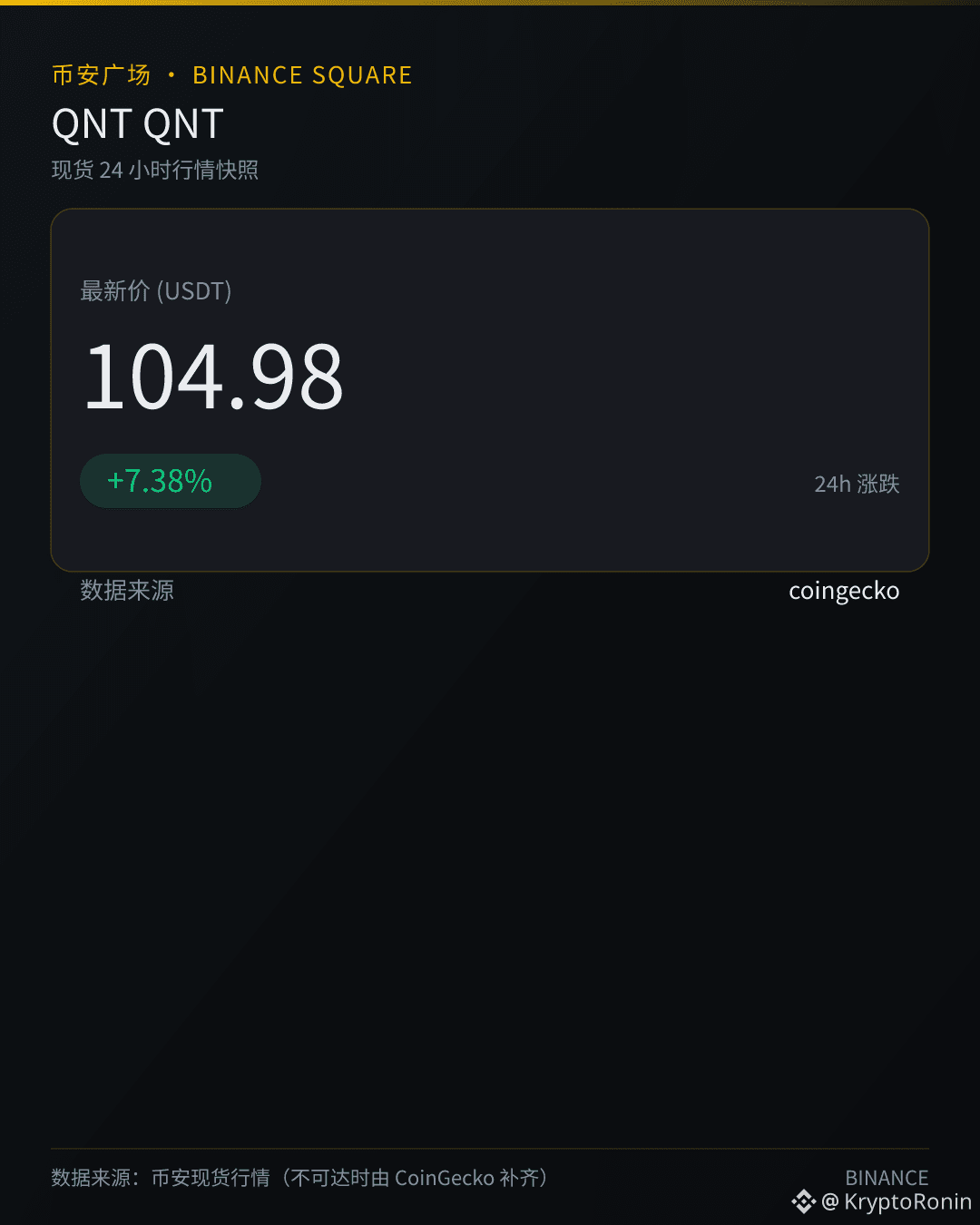
$QNT $SUI $RARE
#Bitget #THORChain
Bitget CEO Gracy Chen made it clear: the attacker’s address has already been made public and is still being monitored, and she has officially requested that THORChain not provide services to these addresses. She said that decentralization is a design principle and should not be turned into a shield for helping known stolen funds move along.
The background is that DefiLlama’s statistics for the past 7 days show eight DeFi theft incidents, with total disclosed losses of $405,180,455. The largest single case is Bitget’s roughly $387,000,000.
The affected parties are permissionless protocols such as cross-chain bridges: exchanges are starting to publicly name addresses and demand address-level blocking. Whether they accept it or how they implement it will become a reference for subsequent similar incidents. Assessment: if THORChain still refuses to issue a public response for a long time, it indicates that such pressure is hard to implement on protocols without access controls.
$QNT $SUI $RARE
Bitget CEO Gracy Chen made it clear: the attacker’s address has already been made public and is still being monitored, and she has officially requested that THORChain not provide services to these addresses. She said that decentralization is a design principle and should not be turned into a shield for helping known stolen funds move along.
The background is that DefiLlama’s statistics for the past 7 days show eight DeFi theft incidents, with total disclosed losses of $405,180,455. The largest single case is Bitget’s roughly $387,000,000.
The affected parties are permissionless protocols such as cross-chain bridges: exchanges are starting to publicly name addresses and demand address-level blocking. Whether they accept it or how they implement it will become a reference for subsequent similar incidents. Assessment: if THORChain still refuses to issue a public response for a long time, it indicates that such pressure is hard to implement on protocols without access controls.
$QNT $SUI $RARE
620

·
--
Caught the rhythm: Bitget CEO Gracy Chen posted a formal request that THORChain refuse to provide services to the attackers’ addresses related to this security incident. The addresses have been published and are continuously being tracked. She wrote, “Decentralization is a design principle and should not become a shield to facilitate the transfer of known stolen funds,” and said the entire crypto industry is watching how THORChain handles the situation.
The step where the stolen funds are switched across chains is now directly called out—whether the protocol takes the cue or not, the industry is watching.
#Bitget #THORChain #Crypto Security
Caught the rhythm: Bitget CEO Gracy Chen posted a formal request that THORChain refuse to provide services to the attackers’ addresses related to this security incident. The addresses have been published and are continuously being tracked. She wrote, “Decentralization is a design principle and should not become a shield to facilitate the transfer of known stolen funds,” and said the entire crypto industry is watching how THORChain handles the situation.
The step where the stolen funds are switched across chains is now directly called out—whether the protocol takes the cue or not, the industry is watching.
#Bitget #THORChain #Crypto Security
The step where the stolen funds are switched across chains is now directly called out—whether the protocol takes the cue or not, the industry is watching.
#Bitget #THORChain #Crypto Security

20

·
--
Bullish
RUNE / USD - THORChain Current Analysis [ENGLISH]
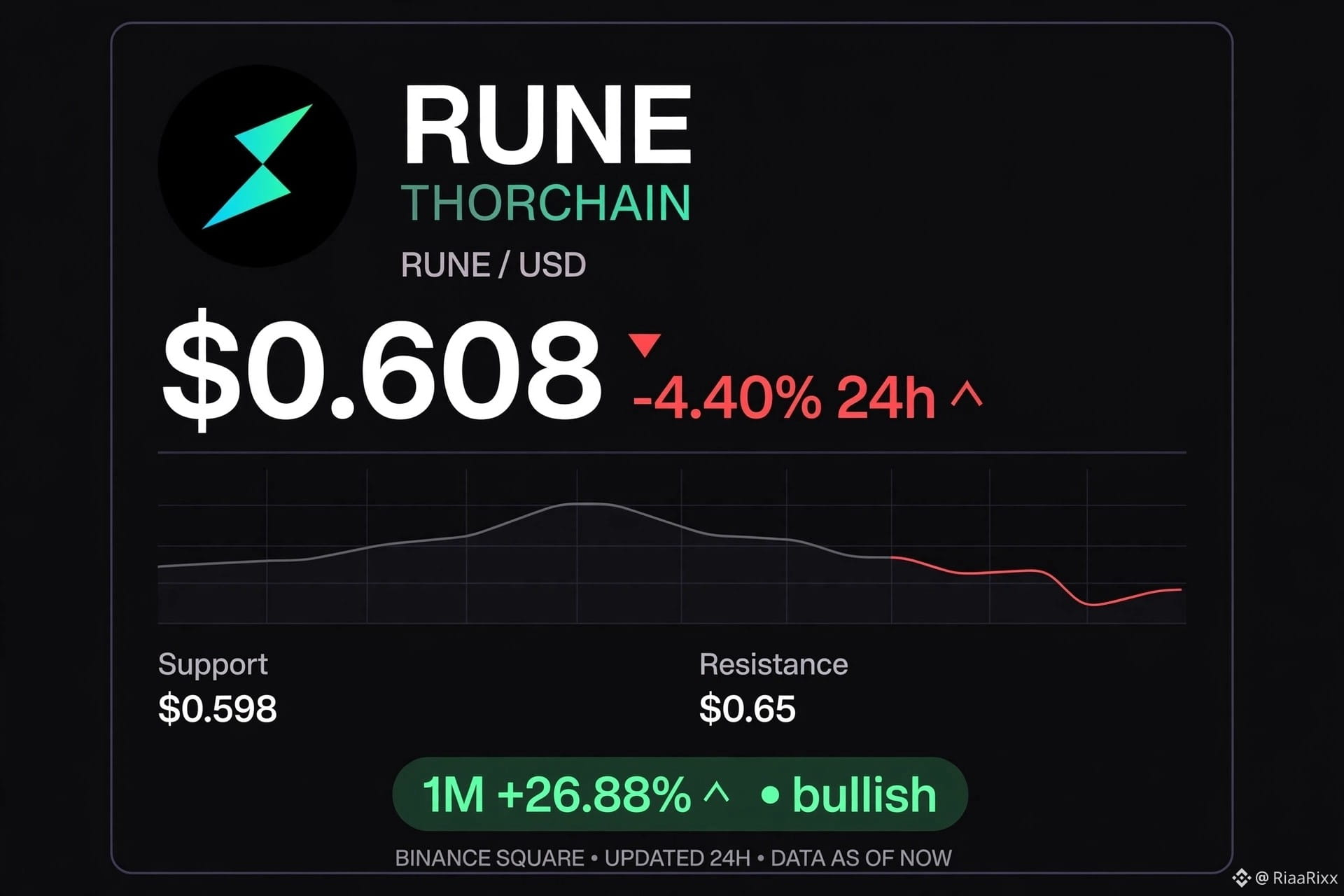
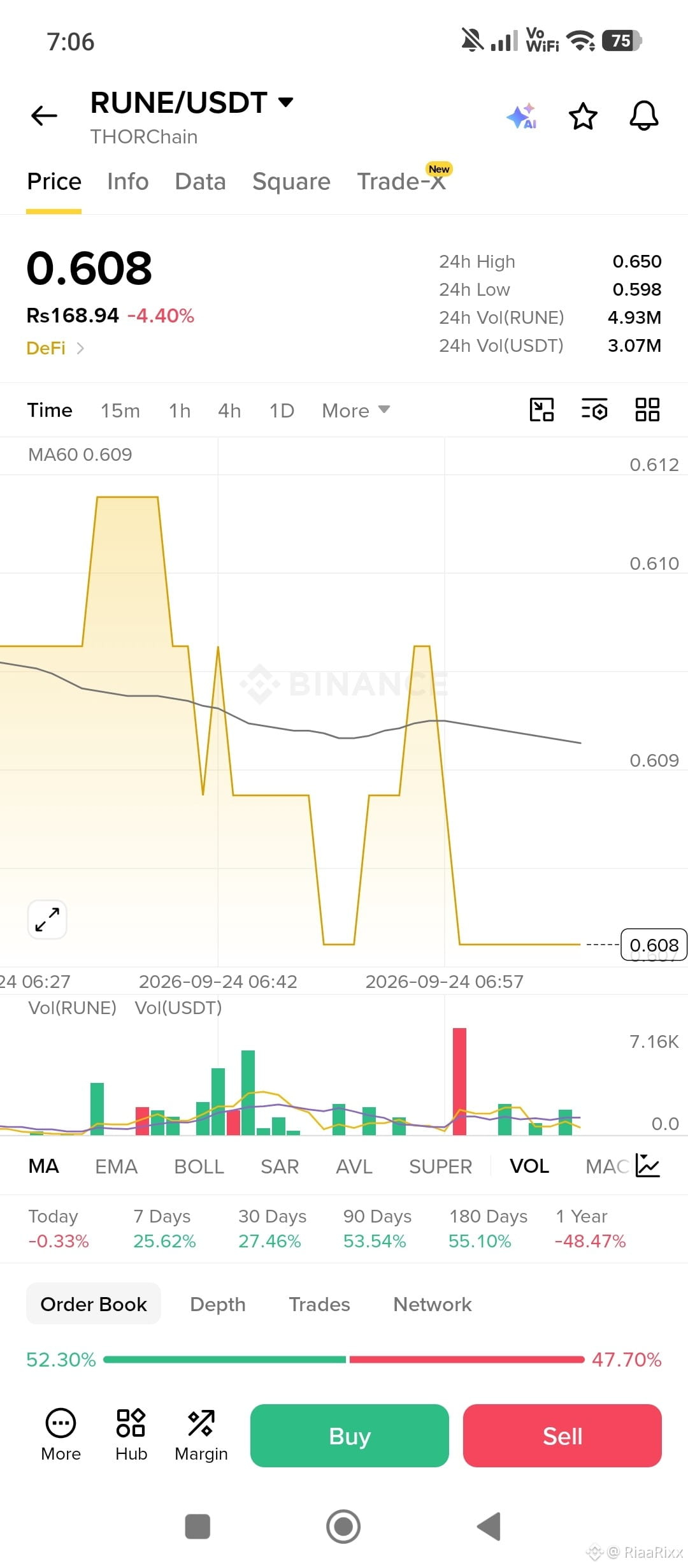
RUNE is down a bit today 👀 $0.608 -4.40% in 24h
But bigger trend still strong:
Support: $0.598 Low
Resistance: $0.65 High
1M: +26.88% bullish 🚀
THORChain cross-chain swap volume is growing. Looks like small profit-taking after pump. If $0.598 holds, bounce to $0.65 again is possible.
You holding $RUNE ?
Trade RUNE now on Binance
DYOR - Not financial advice
#Rune #THORChain
---
RUNE / USD - Análisis Actual [ESPAÑOL]
RUNE está bajando un poco hoy 👀 $0.608 -4.40% en 24h
Pero la tendencia grande sigue fuerte:
Soporte: $0.598 Bajo
Resistencia: $0.65 Alto
1M: +26.88% alcista 🚀
El volumen de swaps cross-chain de THORChain está creciendo. Parece una pequeña toma de ganancias después del bombeo. Si $0.598 se mantiene, es posible un rebote a $0.65.
¿Estás holdeando RUNE?
Opera RUNE ahora en Binance
DYOR - No es asesoramiento financiero
#RUNE #THORChain#THORChain
{future}(RUNEUSDT)
RUNE / USD - THORChain Current Analysis [ENGLISH]
RUNE is down a bit today 👀 $0.608 -4.40% in 24h
But bigger trend still strong:
Support: $0.598 Low
Resistance: $0.65 High
1M: +26.88% bullish 🚀
THORChain cross-chain swap volume is growing. Looks like small profit-taking after pump. If $0.598 holds, bounce to $0.65 again is possible.
You holding $RUNE ?
Trade RUNE now on Binance
DYOR - Not financial advice
#Rune #THORChain
---
RUNE / USD - Análisis Actual [ESPAÑOL]
RUNE está bajando un poco hoy 👀 $0.608 -4.40% en 24h
Pero la tendencia grande sigue fuerte:
Soporte: $0.598 Bajo
Resistencia: $0.65 Alto
1M: +26.88% alcista 🚀
El volumen de swaps cross-chain de THORChain está creciendo. Parece una pequeña toma de ganancias después del bombeo. Si $0.598 se mantiene, es posible un rebote a $0.65.
¿Estás holdeando RUNE?
Opera RUNE ahora en Binance
DYOR - No es asesoramiento financiero
#RUNE #THORChain#THORChain
RUNE is down a bit today 👀 $0.608 -4.40% in 24h
But bigger trend still strong:
Support: $0.598 Low
Resistance: $0.65 High
1M: +26.88% bullish 🚀
THORChain cross-chain swap volume is growing. Looks like small profit-taking after pump. If $0.598 holds, bounce to $0.65 again is possible.
You holding $RUNE ?
Trade RUNE now on Binance
DYOR - Not financial advice
#Rune #THORChain
---
RUNE / USD - Análisis Actual [ESPAÑOL]
RUNE está bajando un poco hoy 👀 $0.608 -4.40% en 24h
Pero la tendencia grande sigue fuerte:
Soporte: $0.598 Bajo
Resistencia: $0.65 Alto
1M: +26.88% alcista 🚀
El volumen de swaps cross-chain de THORChain está creciendo. Parece una pequeña toma de ganancias después del bombeo. Si $0.598 se mantiene, es posible un rebote a $0.65.
¿Estás holdeando RUNE?
Opera RUNE ahora en Binance
DYOR - No es asesoramiento financiero
#RUNE #THORChain#THORChain
3
114
Log in to explore more content
Join global crypto users on Binance Square
⚡️ Get latest and useful information about crypto.
💬 Trusted by the world’s largest crypto exchange.
👍 Discover real insights from verified creators.
Email / Phone number
Trending Topics
1
#BitwiseFilesFinalNEARSpotETFProspectus
10 views
17 Discussing
2
#BitgetHackerMoves$83MStolenXRP
6,640 views
67 Discussing
3
#SOLSpotETFWeeklyInflow$188M
2,904 views
58 Discussing
4
#DogecoinETFsPostBiggestWeekSinceLaunch
2,735 views
160 Discussing
5
#StrategyStriveAdd2305BitcoinThisWeek
51,157 views
1,203 Discussing
6
#TrumpRejectsIranHormuzReopening
50,493 views
961 Discussing
7
#CircleTetherFreezeBitgetHackerWallet
62,737 views
980 Discussing
8
#SECSaysTokenBuybacksNotAutoSecurities
32,791 views
569 Discussing
9
#ChinaUSAgreeOn$30BTariffCut
2,706 views
34 Discussing
10
#CoinMarketCapCompletesCoinglassAcquisition
47,673 views
697 Discussing