

#programmablemoney
programmablemoney
903 views
21 Discussing
Hot
Latest

·
--
CRYPTO QUESTIONS NOBODY ASKS #05
💰⚙️ WHAT HAPPENS WHEN MONEY BECOMES PROGRAMMABLE?
For most of history, money has simply been something we hold, send and receive.
But what if money could also follow instructions?
Imagine receiving a payment with rules attached:
➡️ It can only be spent on a particular service.
➡️ A payment is released automatically when a job is completed.
➡️ Funds are divided between several people the moment a transaction settles.
➡️ A machine automatically pays for the electricity or computing power it consumes.
➡️ An AI agent receives a limited budget and spends it according to predefined rules.
This is where programmable money becomes interesting.
Smart contracts can make digital assets interact with predefined conditions.
For example:
Condition: Service completed ✅
↓
Verification: Confirmed ✅
↓
Payment: Automatically released 💰
No person has to manually press “send” at the final stage.
But programmable money also raises difficult questions.
Who writes the rules?
What happens if the rules contain an error?
Who can change them?
What happens if someone exploits the code?
And perhaps most importantly:
How much control should humans give to automated financial systems?
The interesting future may not simply be about having digital money.
It could be about having money that can interact with software.
That could change payments, commerce, finance, gaming, AI and potentially many other industries.
But there's a catch:
The more programmable money becomes, the more important the code controlling it becomes.
So perhaps the future question isn't:
“Is crypto money?”
Maybe it's:
“What can money do when it becomes software?”
👇 What do you think?
Would you trust money that can automatically make decisions according to code?
#CryptoQuestions #ProgrammableMoney #Crypto
CRYPTO QUESTIONS NOBODY ASKS #05
💰⚙️ WHAT HAPPENS WHEN MONEY BECOMES PROGRAMMABLE?
For most of history, money has simply been something we hold, send and receive.
But what if money could also follow instructions?
Imagine receiving a payment with rules attached:
➡️ It can only be spent on a particular service.
➡️ A payment is released automatically when a job is completed.
➡️ Funds are divided between several people the moment a transaction settles.
➡️ A machine automatically pays for the electricity or computing power it consumes.
➡️ An AI agent receives a limited budget and spends it according to predefined rules.
This is where programmable money becomes interesting.
Smart contracts can make digital assets interact with predefined conditions.
For example:
Condition: Service completed ✅
↓
Verification: Confirmed ✅
↓
Payment: Automatically released 💰
No person has to manually press “send” at the final stage.
But programmable money also raises difficult questions.
Who writes the rules?
What happens if the rules contain an error?
Who can change them?
What happens if someone exploits the code?
And perhaps most importantly:
How much control should humans give to automated financial systems?
The interesting future may not simply be about having digital money.
It could be about having money that can interact with software.
That could change payments, commerce, finance, gaming, AI and potentially many other industries.
But there's a catch:
The more programmable money becomes, the more important the code controlling it becomes.
So perhaps the future question isn't:
“Is crypto money?”
Maybe it's:
“What can money do when it becomes software?”
👇 What do you think?
Would you trust money that can automatically make decisions according to code?
#CryptoQuestions #ProgrammableMoney #Crypto
💰⚙️ WHAT HAPPENS WHEN MONEY BECOMES PROGRAMMABLE?
For most of history, money has simply been something we hold, send and receive.
But what if money could also follow instructions?
Imagine receiving a payment with rules attached:
➡️ It can only be spent on a particular service.
➡️ A payment is released automatically when a job is completed.
➡️ Funds are divided between several people the moment a transaction settles.
➡️ A machine automatically pays for the electricity or computing power it consumes.
➡️ An AI agent receives a limited budget and spends it according to predefined rules.
This is where programmable money becomes interesting.
Smart contracts can make digital assets interact with predefined conditions.
For example:
Condition: Service completed ✅
↓
Verification: Confirmed ✅
↓
Payment: Automatically released 💰
No person has to manually press “send” at the final stage.
But programmable money also raises difficult questions.
Who writes the rules?
What happens if the rules contain an error?
Who can change them?
What happens if someone exploits the code?
And perhaps most importantly:
How much control should humans give to automated financial systems?
The interesting future may not simply be about having digital money.
It could be about having money that can interact with software.
That could change payments, commerce, finance, gaming, AI and potentially many other industries.
But there's a catch:
The more programmable money becomes, the more important the code controlling it becomes.
So perhaps the future question isn't:
“Is crypto money?”
Maybe it's:
“What can money do when it becomes software?”
👇 What do you think?
Would you trust money that can automatically make decisions according to code?
#CryptoQuestions #ProgrammableMoney #Crypto
72

·
--
$QNT 🚀 The future of finance is programmable.
@quant_network is building infrastructure that helps connect and orchestrate money across banks, financial institutions and capital markets.
With programmable payments, tokenised deposits, automated treasury and synchronised settlements, Quant is working toward a more intelligent, interconnected financial system. 🌐💰
#Quant #QNT #Blockchain #FinTech #ProgrammableMoney
$QNT 🚀 The future of finance is programmable.
@quant_network is building infrastructure that helps connect and orchestrate money across banks, financial institutions and capital markets.
With programmable payments, tokenised deposits, automated treasury and synchronised settlements, Quant is working toward a more intelligent, interconnected financial system. 🌐💰
#Quant #QNT #Blockchain #FinTech #ProgrammableMoney
@quant_network is building infrastructure that helps connect and orchestrate money across banks, financial institutions and capital markets.
With programmable payments, tokenised deposits, automated treasury and synchronised settlements, Quant is working toward a more intelligent, interconnected financial system. 🌐💰
#Quant #QNT #Blockchain #FinTech #ProgrammableMoney
49
·
--
$QNT The future of finance is programmable, interconnected, and automated. ⚡
@quant_network is building infrastructure that helps banks, financial institutions, and capital markets connect digital assets, payments, and blockchain networks.
With Overledger and Quant Flow, the vision is clear: make money work smarter across networks. 🌐💰
#Quant #QNT #Overledger #Blockchain #Interoperability #ProgrammableMoney
$QNT The future of finance is programmable, interconnected, and automated. ⚡
@quant_network is building infrastructure that helps banks, financial institutions, and capital markets connect digital assets, payments, and blockchain networks.
With Overledger and Quant Flow, the vision is clear: make money work smarter across networks. 🌐💰
#Quant #QNT #Overledger #Blockchain #Interoperability #ProgrammableMoney
@quant_network is building infrastructure that helps banks, financial institutions, and capital markets connect digital assets, payments, and blockchain networks.
With Overledger and Quant Flow, the vision is clear: make money work smarter across networks. 🌐💰
#Quant #QNT #Overledger #Blockchain #Interoperability #ProgrammableMoney
65
#TokenizationRevolution what Comes Next? Wall Street's Tokenization Meeting on Oct. 27
The coalition's members will meet issuers at the New York Stock Exchange on Oct. 27 to discuss how public companies can approach tokenization, according to the group's announcement.
The market those firms are building for is also growing. Onchain real-world assets total about $40.9 billion, up 4.2% over 30 days, according to RWA.xyz data.
The tokens still trail their year-ago prices. Ondo is down about 39% over 12 months and Chainlink about 33%, according to CoinMarketCap.
Banks, asset managers and regulators all moved on tokenization in a single day. Whether that lifts the tokens once the headlines fade is a separate test.
"Only available to non-US investors for now, but that will quickly change as asset managers work through requirements of SEC's recent innovation exemption," NovaDius Wealth President Nate Geraci wrote on X on Sept. 24, referring to the BlackRock portfolios.
#ProgrammableMoney #tokeniseddeposits
#TokenizationRevolution what Comes Next? Wall Street's Tokenization Meeting on Oct. 27
The coalition's members will meet issuers at the New York Stock Exchange on Oct. 27 to discuss how public companies can approach tokenization, according to the group's announcement.
The market those firms are building for is also growing. Onchain real-world assets total about $40.9 billion, up 4.2% over 30 days, according to RWA.xyz data.
The tokens still trail their year-ago prices. Ondo is down about 39% over 12 months and Chainlink about 33%, according to CoinMarketCap.
Banks, asset managers and regulators all moved on tokenization in a single day. Whether that lifts the tokens once the headlines fade is a separate test.
"Only available to non-US investors for now, but that will quickly change as asset managers work through requirements of SEC's recent innovation exemption," NovaDius Wealth President Nate Geraci wrote on X on Sept. 24, referring to the BlackRock portfolios.
#ProgrammableMoney #tokeniseddeposits
The coalition's members will meet issuers at the New York Stock Exchange on Oct. 27 to discuss how public companies can approach tokenization, according to the group's announcement.
The market those firms are building for is also growing. Onchain real-world assets total about $40.9 billion, up 4.2% over 30 days, according to RWA.xyz data.
The tokens still trail their year-ago prices. Ondo is down about 39% over 12 months and Chainlink about 33%, according to CoinMarketCap.
Banks, asset managers and regulators all moved on tokenization in a single day. Whether that lifts the tokens once the headlines fade is a separate test.
"Only available to non-US investors for now, but that will quickly change as asset managers work through requirements of SEC's recent innovation exemption," NovaDius Wealth President Nate Geraci wrote on X on Sept. 24, referring to the BlackRock portfolios.
#ProgrammableMoney #tokeniseddeposits
224

·
--
Bullish
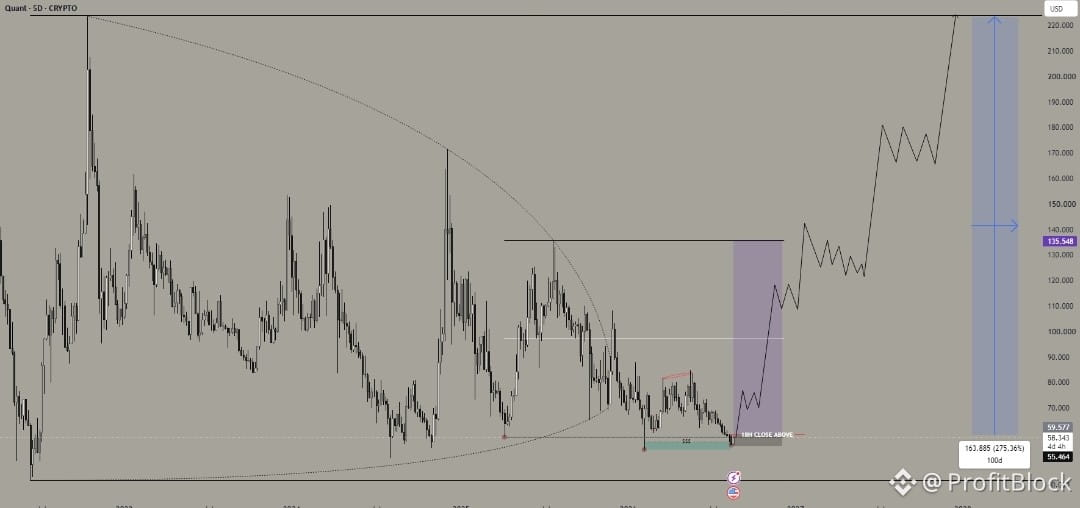
Big news: Quant is partnering with TCHtweets to bring on-chain, #programmablemoney to the US.
We will provide the interoperability layer that lets #TokenisedDeposits move freely within the regulated banking system.
This builds on our work in the UK, Europe and beyond.
$QNT
Big news: Quant is partnering with TCHtweets to bring on-chain, #programmablemoney to the US.
We will provide the interoperability layer that lets #TokenisedDeposits move freely within the regulated banking system.
This builds on our work in the UK, Europe and beyond.
$QNT
We will provide the interoperability layer that lets #TokenisedDeposits move freely within the regulated banking system.
This builds on our work in the UK, Europe and beyond.
$QNT
1
167

·
--
Bullish
Verified
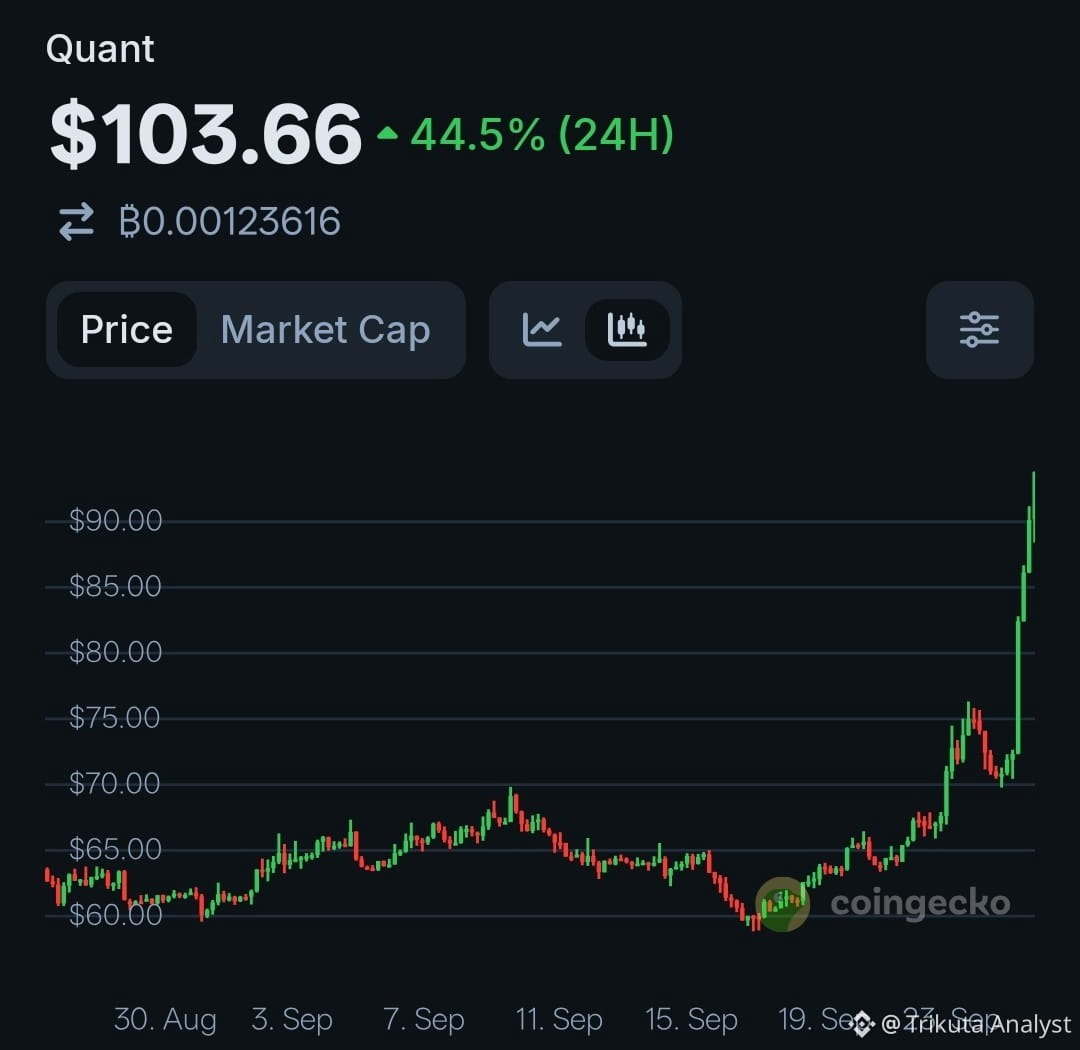
🚀 Quant (QNT) Update – Stats, Big News & What’s Next
Quant Network builds the infrastructure for programmable money. Its Overledger technology connects blockchains and traditional finance so tokenised deposits can move freely and securely across systems.
Current Stats (25 Sep 2026):
-Max supply: ~14.61 million QNT (fixed hard cap)
-Circulating: ~14.54 million
-Market cap: ~$1.3–1.4 billion
-All-time high: ~$427 (2021)
-Utility: Overledger licences, fees and platform access
Major News – 24 September 2026
The Clearing House (owned by 25 of the largest US banks and clearing over $2 trillion daily) selected Quant to power its On-Chain Money Initiative.
Quant will provide the interoperability and orchestration layer for clearing and settling tokenised deposits, with connections to RTP and CHIPS rails. Launch is targeted for the first half of 2027. Quant will also offer Tokenised Deposits-as-a-Service for banks that need it. This builds on Quant’s earlier work in the UK (GBTD project with major banks) and other regulated environments in Europe.
Technology Snapshot
: Overledger interoperability OS
: Fusion Rollup live on mainnet (connecting 74 networks)
: Focus on regulated tokenised deposits, programmable payments and DvP settlement
Looking Ahead
Key catalyst remains the H1 2027 US network rollout, alongside continued institutional adoption of programmable money infrastructure.
#QNT #QuantNetwork #TokenisedDeposits #ProgrammableMoney #OnChainMoney
{spot}(QNTUSDT)
$QNT
🚀 Quant (QNT) Update – Stats, Big News & What’s Next
Quant Network builds the infrastructure for programmable money. Its Overledger technology connects blockchains and traditional finance so tokenised deposits can move freely and securely across systems.
Current Stats (25 Sep 2026):
-Max supply: ~14.61 million QNT (fixed hard cap)
-Circulating: ~14.54 million
-Market cap: ~$1.3–1.4 billion
-All-time high: ~$427 (2021)
-Utility: Overledger licences, fees and platform access
Major News – 24 September 2026
The Clearing House (owned by 25 of the largest US banks and clearing over $2 trillion daily) selected Quant to power its On-Chain Money Initiative.
Quant will provide the interoperability and orchestration layer for clearing and settling tokenised deposits, with connections to RTP and CHIPS rails. Launch is targeted for the first half of 2027. Quant will also offer Tokenised Deposits-as-a-Service for banks that need it. This builds on Quant’s earlier work in the UK (GBTD project with major banks) and other regulated environments in Europe.
Technology Snapshot
: Overledger interoperability OS
: Fusion Rollup live on mainnet (connecting 74 networks)
: Focus on regulated tokenised deposits, programmable payments and DvP settlement
Looking Ahead
Key catalyst remains the H1 2027 US network rollout, alongside continued institutional adoption of programmable money infrastructure.
#QNT #QuantNetwork #TokenisedDeposits #ProgrammableMoney #OnChainMoney
$QNT
Quant Network builds the infrastructure for programmable money. Its Overledger technology connects blockchains and traditional finance so tokenised deposits can move freely and securely across systems.
Current Stats (25 Sep 2026):
-Max supply: ~14.61 million QNT (fixed hard cap)
-Circulating: ~14.54 million
-Market cap: ~$1.3–1.4 billion
-All-time high: ~$427 (2021)
-Utility: Overledger licences, fees and platform access
Major News – 24 September 2026
The Clearing House (owned by 25 of the largest US banks and clearing over $2 trillion daily) selected Quant to power its On-Chain Money Initiative.
Quant will provide the interoperability and orchestration layer for clearing and settling tokenised deposits, with connections to RTP and CHIPS rails. Launch is targeted for the first half of 2027. Quant will also offer Tokenised Deposits-as-a-Service for banks that need it. This builds on Quant’s earlier work in the UK (GBTD project with major banks) and other regulated environments in Europe.
Technology Snapshot
: Overledger interoperability OS
: Fusion Rollup live on mainnet (connecting 74 networks)
: Focus on regulated tokenised deposits, programmable payments and DvP settlement
Looking Ahead
Key catalyst remains the H1 2027 US network rollout, alongside continued institutional adoption of programmable money infrastructure.
#QNT #QuantNetwork #TokenisedDeposits #ProgrammableMoney #OnChainMoney
$QNT

Sam joe:
good future of $QNT specially going with blackRock portfolio ... highlights of today 👍👍
1
2
188
·
--
Article
The Revolution of Programmable Money: How Quant Network is Reshaping the Future of Global FinanceIn a world where the pace of innovation is accelerating and precision $QNT and speed are the benchmarks for success, money as we know it can no longer keep up with the times. Here, a radical solution emerges: "programmable money." At the forefront of this revolution, Quant Network stands out, not as just another blockchain platform, but as an integrated engine aimed at transforming money from a passive tool into a smart, automated, and fully interconnected entity.$QNT $XRP
The Revolution of Programmable Money: How Quant Network is Reshaping the Future of Global Finance
In a world where the pace of innovation is accelerating and precision $QNT and speed are the benchmarks for success, money as we know it can no longer keep up with the times. Here, a radical solution emerges: "programmable money." At the forefront of this revolution, Quant Network stands out, not as just another blockchain platform, but as an integrated engine aimed at transforming money from a passive tool into a smart, automated, and fully interconnected entity.$QNT $XRP
1
1
125

·
--
Programmable money is the stablecoin story nobody is telling loudly enough.
Most conversations about stablecoins stop at faster, cheaper cross-border payments. That is true, but it undersells the actual breakthrough. The real unlock is programmability: money that executes conditions autonomously, without a bank, custodian, or clearing house approving each step.
Think about what this enables. A freelancer in Southeast Asia gets paid the moment a GitHub commit is merged, no invoice, no net-30 wait, no SWIFT delay. A supply chain vendor receives automatic payment when a shipment crosses a GPS checkpoint. A DeFi protocol rebalances collateral and settles margin atomically in a single transaction block.
None of this needs a human intermediary. The contract IS the bank.
$SOL high-throughput, low-latency architecture makes it a natural settlement rail for high-frequency programmable payments. $XRP corridors are already compressing cross-border settlement to seconds. $BTC Lightning Network is quietly enabling micropayment streams that legacy rails simply cannot replicate.
The next decade of fintech will not be about apps built on top of banks. It will be apps built on programmable money rails, and the chains that win will be those that prioritize throughput, finality, and composable settlement.
The infrastructure is here. The adoption curve is just beginning.
#Stablecoins #ProgrammableMoney #DeFi #CryptoPayments #Web3
Programmable money is the stablecoin story nobody is telling loudly enough.
Most conversations about stablecoins stop at faster, cheaper cross-border payments. That is true, but it undersells the actual breakthrough. The real unlock is programmability: money that executes conditions autonomously, without a bank, custodian, or clearing house approving each step.
Think about what this enables. A freelancer in Southeast Asia gets paid the moment a GitHub commit is merged, no invoice, no net-30 wait, no SWIFT delay. A supply chain vendor receives automatic payment when a shipment crosses a GPS checkpoint. A DeFi protocol rebalances collateral and settles margin atomically in a single transaction block.
None of this needs a human intermediary. The contract IS the bank.
$SOL high-throughput, low-latency architecture makes it a natural settlement rail for high-frequency programmable payments. $XRP corridors are already compressing cross-border settlement to seconds. $BTC Lightning Network is quietly enabling micropayment streams that legacy rails simply cannot replicate.
The next decade of fintech will not be about apps built on top of banks. It will be apps built on programmable money rails, and the chains that win will be those that prioritize throughput, finality, and composable settlement.
The infrastructure is here. The adoption curve is just beginning.
#Stablecoins #ProgrammableMoney #DeFi #CryptoPayments #Web3
Most conversations about stablecoins stop at faster, cheaper cross-border payments. That is true, but it undersells the actual breakthrough. The real unlock is programmability: money that executes conditions autonomously, without a bank, custodian, or clearing house approving each step.
Think about what this enables. A freelancer in Southeast Asia gets paid the moment a GitHub commit is merged, no invoice, no net-30 wait, no SWIFT delay. A supply chain vendor receives automatic payment when a shipment crosses a GPS checkpoint. A DeFi protocol rebalances collateral and settles margin atomically in a single transaction block.
None of this needs a human intermediary. The contract IS the bank.
$SOL high-throughput, low-latency architecture makes it a natural settlement rail for high-frequency programmable payments. $XRP corridors are already compressing cross-border settlement to seconds. $BTC Lightning Network is quietly enabling micropayment streams that legacy rails simply cannot replicate.
The next decade of fintech will not be about apps built on top of banks. It will be apps built on programmable money rails, and the chains that win will be those that prioritize throughput, finality, and composable settlement.
The infrastructure is here. The adoption curve is just beginning.
#Stablecoins #ProgrammableMoney #DeFi #CryptoPayments #Web3
109
Log in to explore more content
Join global crypto users on Binance Square
⚡️ Get latest and useful information about crypto.
💬 Trusted by the world’s largest crypto exchange.
👍 Discover real insights from verified creators.
Email / Phone number
Trending Topics
1
#EtherGains70.9%InQ3
154,199 views
1,137 Discussing
2
#TreasuryLetsStatesFileStablecoinCertificationsEarly
8,788 views
82 Discussing
3
#US10YearYieldNears5.3%
150,699 views
1,131 Discussing
4
#DollarIndexHitsHighestSinceMay2025
39,012 views
601 Discussing
5
#USWeeklyJoblessClaimsFallTo197000
34,909 views
501 Discussing
6
#BitcoinETFsTake$6.34BillionInQ3
9,791 views
77 Discussing
7
#KoreaProposesTokenizingStocksAndBonds
71,902 views
824 Discussing
8
#MetaMaskExitsLidoValidatorsAfterSecurityIncident
171,085 views
1,548 Discussing
9
#MicronBeatsEarningsLiftsGuidance
86,744 views
1,117 Discussing
10
#CFTCSubmitsTwoEventContractRulesToWhiteHouse
59,592 views
833 Discussing