
#coinbasepremium
coinbasepremium
15,387 views
60 Discussing
Hot
Latest

·
--
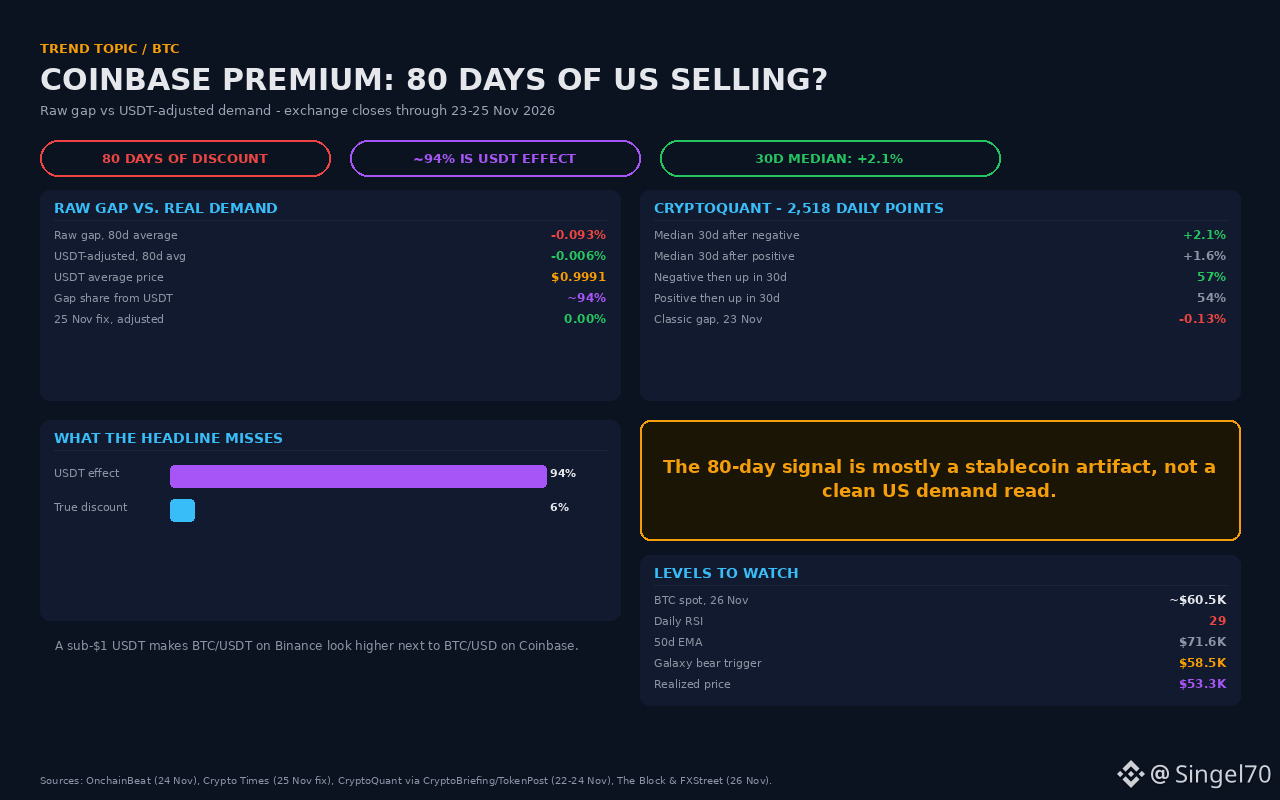
#CoinbasePremium $BTC For 80 days, about 94% of the “US is selling” headline comes from USDT trading below $1.
📌 THE REAL NUMBERS
• Sep 5–Nov 23: Coinbase/Binance raw premium was negative for 80 days, averaging -0.093%; adjusted for USDT, the average was -0.006% (OnchainBeat, Nov 24 daily closes).
• Nov 25, 12:31 ET: classic gap -0.13%, USDT effect -0.12 percentage points, adjusted US premium 0.00% (Crypto Times).
• CryptoQuant: Across 2,518 days from 2020 to Nov 22, 2026, the median BTC return over 30 days after a negative premium was +2.1%, versus +1.6% after a positive premium.
📉 TECHNICAL READ
BTC was at ~$60.5K on Nov 26, with a daily RSI of 29; the 50-day EMA at $71.6K, 100-day at $73.7K, and 200-day at $74.6K are still overhead (FXStreet). Galaxy's bear-market threshold is the June 30 close at $58.5K; 21Shares' realized price is $53.3K. Fear over the raw premium has pushed price about 15% below the 50-day EMA; the adjusted data does not support the same fear.
🐋 FLOW EVIDENCE
For the week of Nov 16, the Coinbase spot volume gap was -$634M, accounting for about 80% of net spot selling (CryptoQuant). Meanwhile, US spot BTC ETFs saw record outflows of $5.39B in November and have been negative for 7 days; IBIT alone saw -$329.7M on Wednesday (SoSoValue / The Block, Nov 26). Selling pressure is real, but most of the premium in the headline is stablecoin-driven.
🎯 BOTTOM LINE
Not an automatic short, but a cautious, phased approach: daily hold above $58.5K → phased entry, stop at $57.3K (Nov 25 low), first target $64K–$65K. A close below $58.5K confirms Galaxy's scenario; reduce risk. Trigger: the raw 7-day average moving out of the -0.161% band and the adjusted premium turning positive. This is not financial advice.
📌 Do you think the 80-day negative premium reflects real US supply, or is it a measurement illusion caused by USDT? Share your thoughts in the comments.
#CoinbasePremium #BTC #Bitcoin #ETF
35

·
--
Bitcoin has traded at a discount on Coinbase for 61 straight days.
Per Coinbase Markets, BTC on Coinbase has sat below its global price for two months. That's the Coinbase premium, a rough gauge of US spot demand.
Add the week's numbers: US spot BTC ETFs lost $1.28B (worst week since late June), and $BTC is near $75.8K, headed for a fifth weekly loss.
My take: US buyers are the missing bid. A premium turning positive would be the first real sign they're back.
Do you watch the Coinbase premium? Does it flip positive before $BTC hits $80K?
Not financial advice.
#Bitcoin #CoinbasePremium #ETF
·
--
US buyers have gone quiet: the Coinbase Bitcoin premium has been negative for 46 straight days.
Latest reading is -0.15% (CoinGlass via BlockBeats).
Same week, US spot BTC ETFs lost $1.28B, the worst week since June.
$BTC is hovering near $75.8K with Fear & Greed at 26.
My take: a negative premium means US spot demand is weak. Until it flips positive, bounces look fragile.
Do you watch the Coinbase premium as a signal? Does it flip positive before $80K, or after?
$ETH $COIN
#Bitcoin #CoinbasePremium #ETFFlows
Not financial advice.
29

·
--
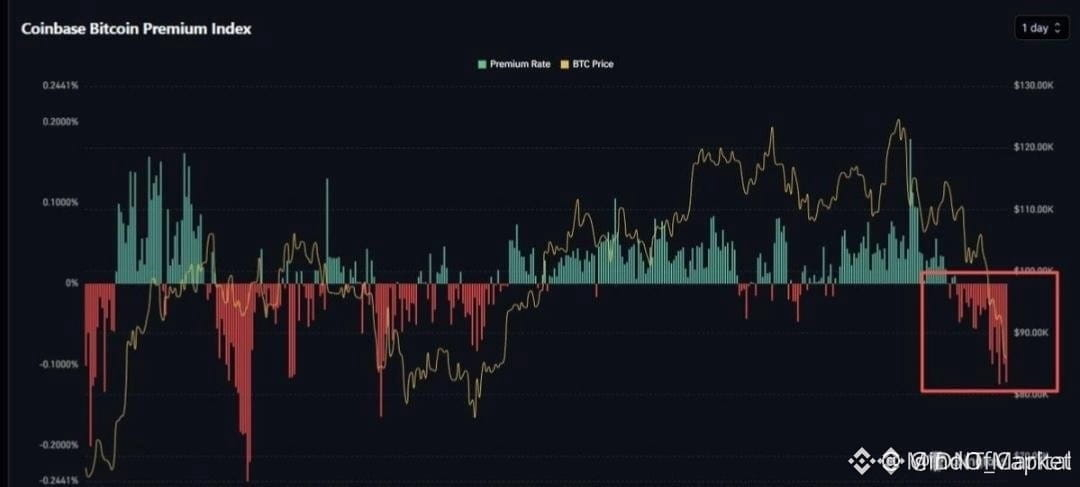
$BTC COINBASE PREMIUM NEGATIVE FOR 60 DAYS – STRUCTURE WATCH 🔍
CoinbasePremium has held negative for 60 consecutive days – the longest streak in recent history. This metric, a proxy for US institutional appetite, indicates weak spot buying relative to international exchanges. In prior cycles, such extended negative premiums preceded significant moves.
Price is consolidating at 63K, but the lack of local demand creates a structural tension. Either this is a slow accumulation phase or momentum is fading. The next 48 hours could clarify direction.
Are you pricing in a sweep lower or a breakout from this range?
Not financial advice. Always manage your risk.
#BTC #Bitcoin #CoinbasePremium #MarketStructure
⚡
14

$BTC COINBASE PREMIUM TURNS BEARISH FOR 60 STRAIGHT DAYS 🚨
The Coinbase Premium Index has been negative for 60 consecutive days — the longest stretch on record. The previous record was 40 days, set earlier this year. For context, even the "1011 Crash" only saw about 30 days of negative premium.
This tells me institutional buying pressure on Coinbase has been absent for two months straight. If this flips back positive quickly, it could signal the bottom is in. But if it drags on, the lack of US demand is a real concern.
What's your read — is this the calm before a squeeze or a sign of deeper weakness?
Not financial advice. Always manage your risk.
#BTC #CoinbasePremium #Bitcoin #InstitutionalFlow
🚨
28

·
--
Bullish
💰 Is Coinbase Premium really back? Or is the market just selling illusions again?
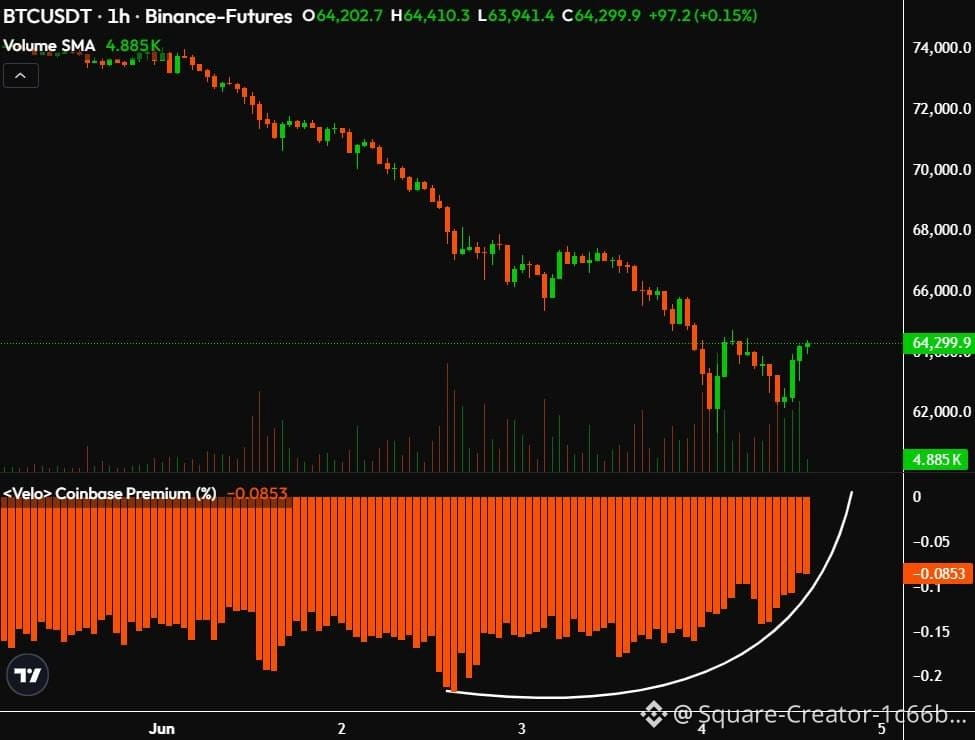
Right now, a lot of accounts on X are heavily pushing the idea that Coinbase Premium is starting to experience a quasi-explosive recovery, as if the market is gearing up for a major reversal.
But upon closer inspection, the picture isn’t that straightforward 👇
Sure, there’s a local recovery in the Premium, but the problem is that this conclusion is based on a very short timeframe, which isn’t enough to judge a true change in trend.
On the contrary, nothing prevents a return of aggressive selling within 2 to 3 days, especially since this scenario has repeated itself multiple times before.
In summary:
Currently, we shouldn’t give this premium more weight than it deserves, because the market is still moving within a capitulation phase, which is characterized by sharp volatility, deceptive bounces, and ongoing liquidations.
Even the liquidation data can’t be treated as a confirmed reversal signal right now, but rather as a natural part of a turbulent environment that hasn’t settled its direction yet.
📌 The most important message:
Not every short-term bounce means the start of a rally, and not every momentary improvement in Coinbase Premium means that institutions are back in heavy buying mode.
In your opinion, is what we're seeing just a temporary bounce within the capitulation phase… or smart accumulation before the launch? 👀
$BTC
{future}(BTCUSDT)
#Bitcoin #BTC #CoinbasePremium #CryptoMarket #BinanceSquare #Trading #Liquidations #MarketSentiment #Binance
💰 Is Coinbase Premium really back? Or is the market just selling illusions again?
Right now, a lot of accounts on X are heavily pushing the idea that Coinbase Premium is starting to experience a quasi-explosive recovery, as if the market is gearing up for a major reversal.
But upon closer inspection, the picture isn’t that straightforward 👇
Sure, there’s a local recovery in the Premium, but the problem is that this conclusion is based on a very short timeframe, which isn’t enough to judge a true change in trend.
On the contrary, nothing prevents a return of aggressive selling within 2 to 3 days, especially since this scenario has repeated itself multiple times before.
In summary:
Currently, we shouldn’t give this premium more weight than it deserves, because the market is still moving within a capitulation phase, which is characterized by sharp volatility, deceptive bounces, and ongoing liquidations.
Even the liquidation data can’t be treated as a confirmed reversal signal right now, but rather as a natural part of a turbulent environment that hasn’t settled its direction yet.
📌 The most important message:
Not every short-term bounce means the start of a rally, and not every momentary improvement in Coinbase Premium means that institutions are back in heavy buying mode.
In your opinion, is what we're seeing just a temporary bounce within the capitulation phase… or smart accumulation before the launch? 👀
$BTC
#Bitcoin #BTC #CoinbasePremium #CryptoMarket #BinanceSquare #Trading #Liquidations #MarketSentiment #Binance
149

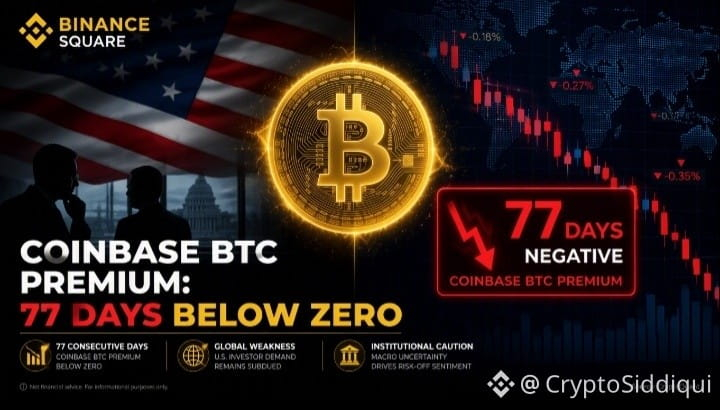
🚨 77 Days Below Zero... Is Smart Money Waiting? 👀
The Coinbase BTC Premium has remained negative for over 77 consecutive days, showing that U.S. buying pressure continues to trail global markets.
What does this suggest? 🤔
🔹 Institutional participation may still be cautious.
🔹 Market sentiment remains defensive despite recent price swings.
🔹 A shift back into positive premium could be an early sign of stronger demand returning.
📌 A negative premium isn't a guaranteed bearish signal—it simply reflects where buying interest is weaker. Keep an eye on ETF inflows, trading volume, and key support zones before making your next move.
Patience often beats chasing the market. 📊
#Bitcoin #CoinbasePremium #EFI #CryptoMarket
1
58

#CoinbaseBTCPremiumNegative77Days
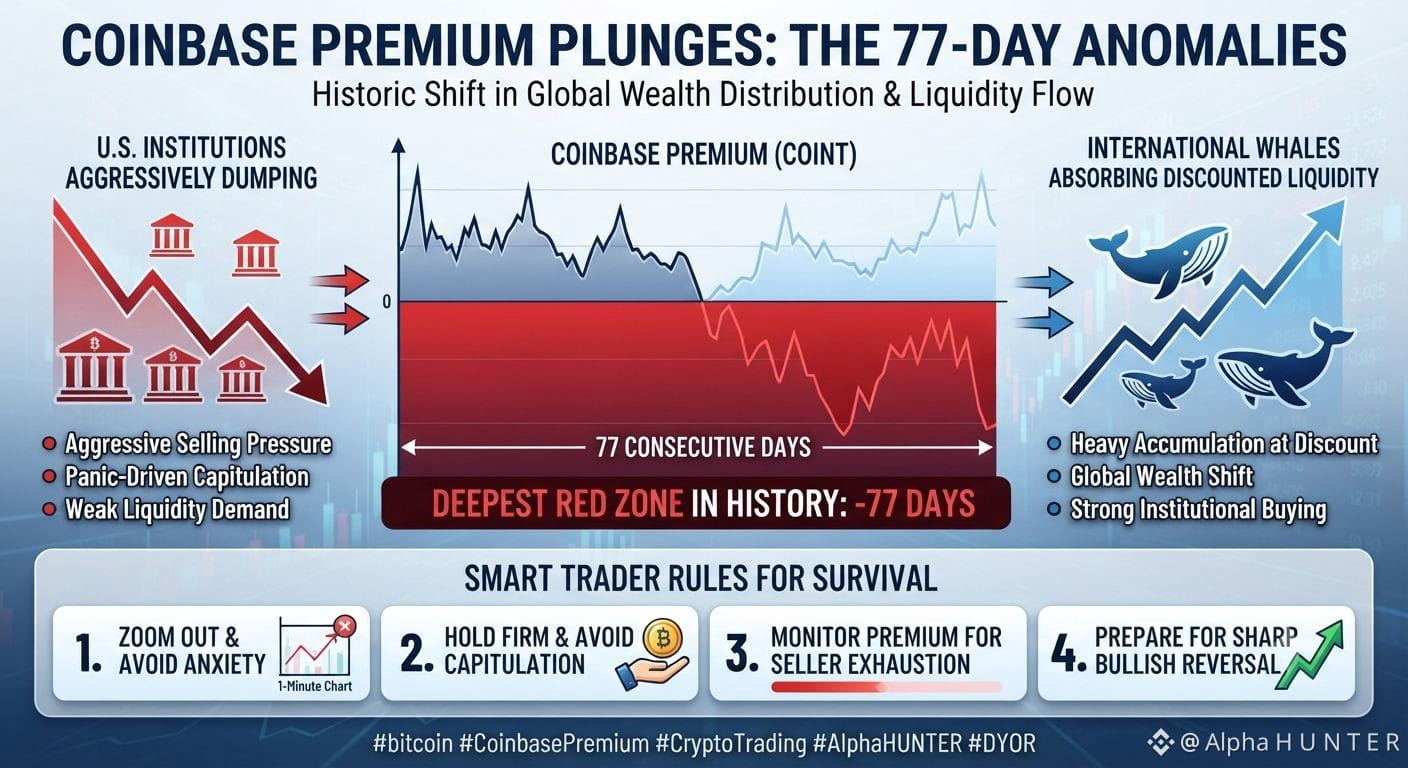
Coinbase Premium Plunges: The 77-Day Anomalies
For an unprecedented 77 consecutive days, the Coinbase premium has remained deep in the red, marking a historic milestone in the market. While U.S.-based institutions aggressively dump their holdings, international whales are happily absorbing the discounted liquidity. This dynamic signals a massive, ongoing shift in global wealth distribution.
Smart traders can navigate this turbulent phase by following a few simple survival rules:
Zoom out from obsessive 1-minute charts to avoid anxiety-driven mistakes.
Hold firm and refuse to capitulate to panic caused by weak U.S. selling pressure.
Monitor the premium closely for signs of seller exhaustion.
Prepare for a sharp and rapid bullish reversal the moment the indicator flips back to green.
Patience remains your ultimate edge right now. Stay sharp and always do your own research (DYOR)!
#bitcoin #CoinbasePremium #CryptoTrading #AlphaHUNTER
$SKYAI
{future}(SKYAIUSDT)
$BTW
{future}(BTWUSDT)
$BTC
{future}(BTCUSDT)
#CoinbaseBTCPremiumNegative77Days
Coinbase Premium Plunges: The 77-Day Anomalies
For an unprecedented 77 consecutive days, the Coinbase premium has remained deep in the red, marking a historic milestone in the market. While U.S.-based institutions aggressively dump their holdings, international whales are happily absorbing the discounted liquidity. This dynamic signals a massive, ongoing shift in global wealth distribution.
Smart traders can navigate this turbulent phase by following a few simple survival rules:
Zoom out from obsessive 1-minute charts to avoid anxiety-driven mistakes.
Hold firm and refuse to capitulate to panic caused by weak U.S. selling pressure.
Monitor the premium closely for signs of seller exhaustion.
Prepare for a sharp and rapid bullish reversal the moment the indicator flips back to green.
Patience remains your ultimate edge right now. Stay sharp and always do your own research (DYOR)!
#bitcoin #CoinbasePremium #CryptoTrading #AlphaHUNTER
$SKYAI
$BTW
$BTC
72

#coinbasebtcpremiumnegative77days
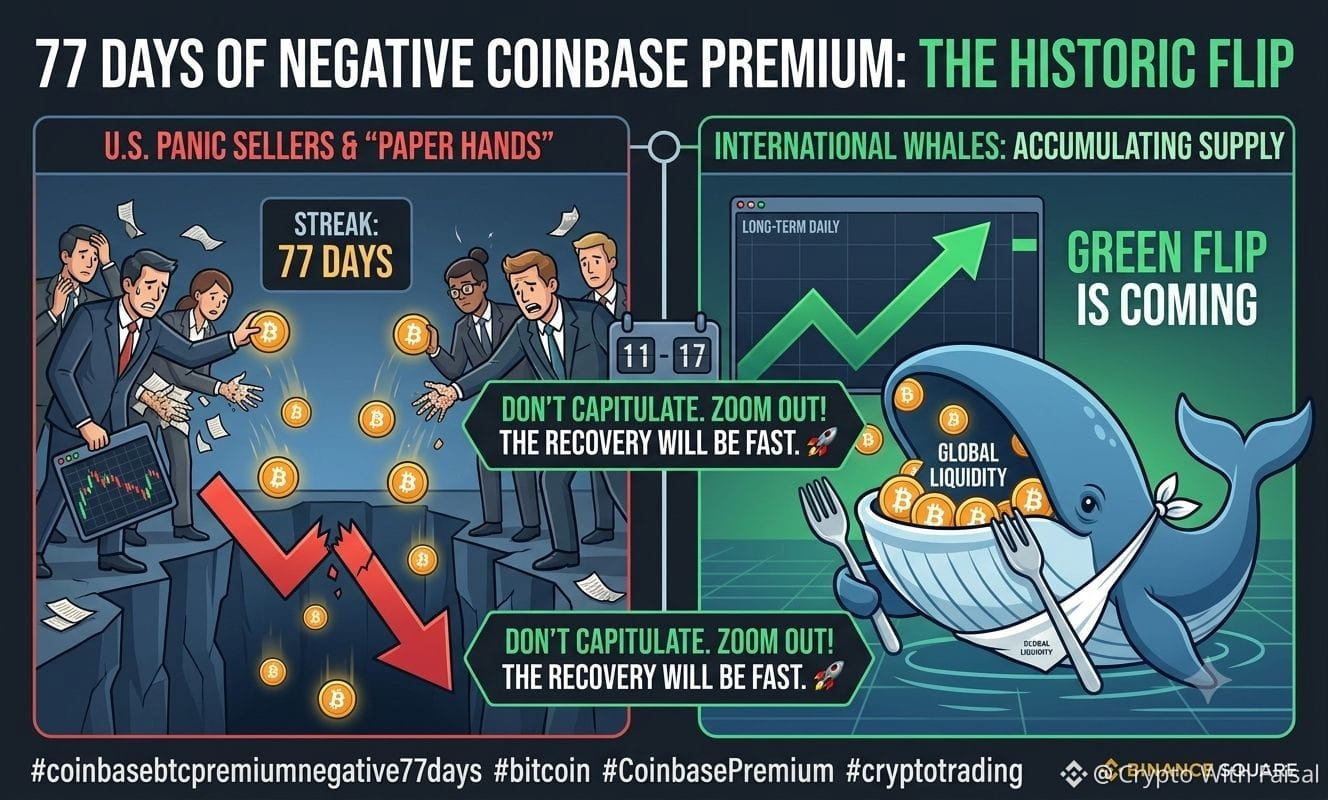
Market Alpha: The 77-Day Anomaly
An unprecedented 77 consecutive days. That is exactly how long the Coinbase premium has remained in the red, officially shattering all historical records. 📉
But look beneath the surface. We are currently witnessing a massive, ongoing wealth transfer. While US-based institutions are aggressively offloading their holdings, international whales are happily sweeping up the discounted liquidity. 🐋🌊
Here is the survival guide for smart traders:
Zoom Out: Stop obsessing over the 1-minute charts; it only breeds anxiety and forces bad decisions.
Hold Firm: Do not capitulate or surrender your positions to the panic created by weak American hands.
Watch the Flip: Keep your eyes on the premium. The moment US seller exhaustion sets in and that indicator finally flips back to green, expect the upward correction to be violent and rapid. 🚀
Patience is your greatest edge right now. Stay sharp.
(Disclaimer: This is not financial advice. Always do your own research before trading.)
#bitcoin #CoinbasePremium #cryptotrading
$BTC
{future}(BTCUSDT)
$SKYAI
{future}(SKYAIUSDT)
$BTW
{future}(BTWUSDT)
#coinbasebtcpremiumnegative77days
Market Alpha: The 77-Day Anomaly
An unprecedented 77 consecutive days. That is exactly how long the Coinbase premium has remained in the red, officially shattering all historical records. 📉
But look beneath the surface. We are currently witnessing a massive, ongoing wealth transfer. While US-based institutions are aggressively offloading their holdings, international whales are happily sweeping up the discounted liquidity. 🐋🌊
Here is the survival guide for smart traders:
Zoom Out: Stop obsessing over the 1-minute charts; it only breeds anxiety and forces bad decisions.
Hold Firm: Do not capitulate or surrender your positions to the panic created by weak American hands.
Watch the Flip: Keep your eyes on the premium. The moment US seller exhaustion sets in and that indicator finally flips back to green, expect the upward correction to be violent and rapid. 🚀
Patience is your greatest edge right now. Stay sharp.
(Disclaimer: This is not financial advice. Always do your own research before trading.)
#bitcoin #CoinbasePremium #cryptotrading
$BTC
$SKYAI
$BTW
2
8.9k

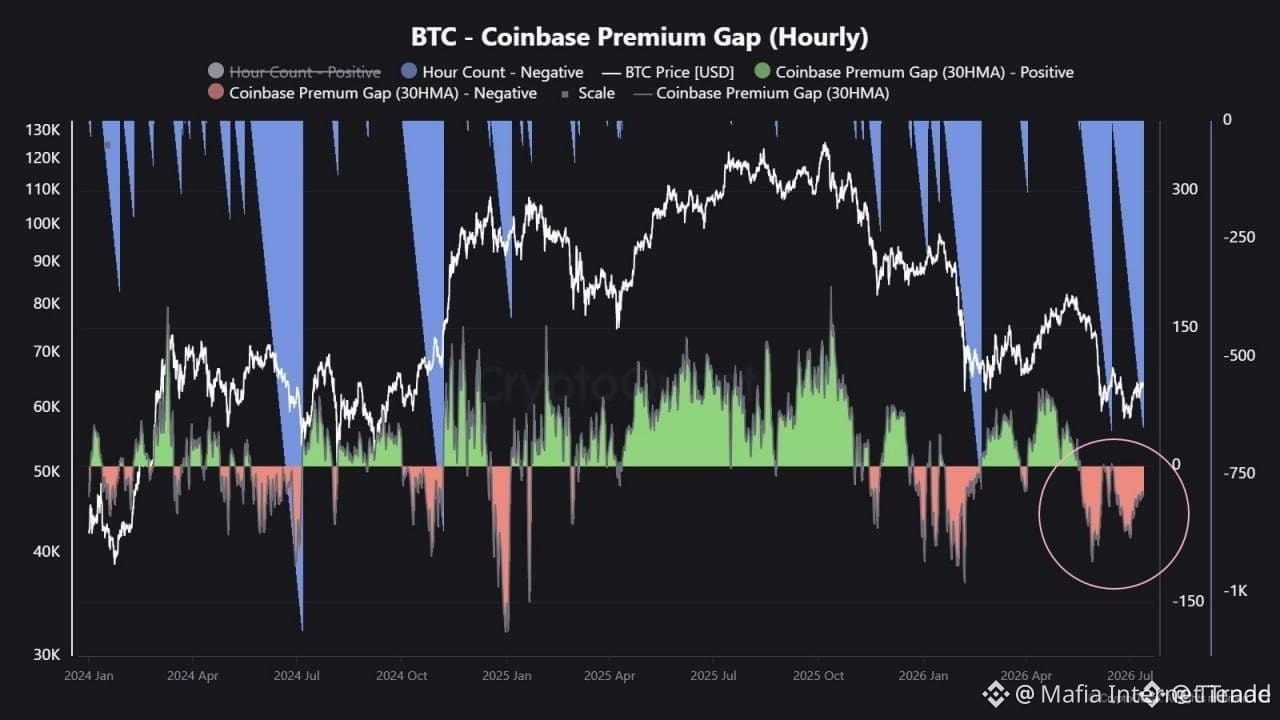
COINBASE PREMIUM INDEX JUST TURNED GREEN FOR $BTC 🔥
The Coinbase Premium Index rebounded, signaling a return of U.S. buyer appetite after a lull. This metric tracks the price gap between Coinbase and Binance — when it flips green, institutional flow is usually coming back.
Volume on the bid side picked up sharply in the last two hours, and this kind of divergence has historically preceded a move above resistance. Some analysts call it a dead cat bounce, but the data says accumulation is happening right here.
Are you buying this dip or waiting for confirmation?
Not financial advice. Always manage your risk.
#BTC #CoinbasePremium #InstitutionalDemand #MarketSentiment
🔥
25

·
--
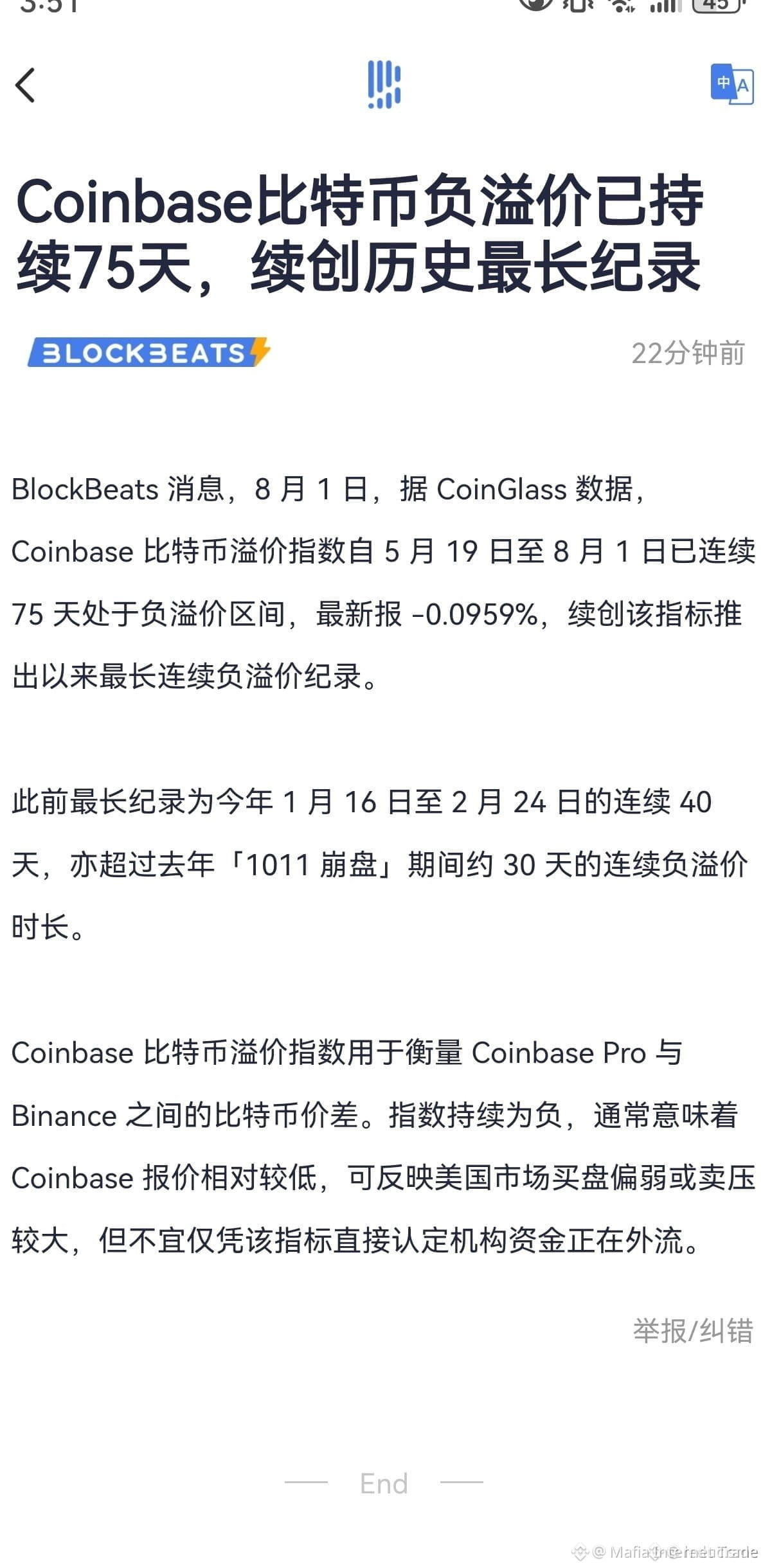
🚨 $BTC COINBASE PREMIUM SUSTAINS RECORD 75-DAY NEGATIVE STREAK — LIQUIDITY SHIFT OR DEEP ACCUMULATION? 🦈
The Coinbase Premium Index just clocked its longest consecutive negative run in history — 75 days and counting, dipping to -0.0959%. 🔍 That means U.S. spot prices are consistently trailing Binance’s quotes, signaling persistent selling pressure or anemic institutional bid-side activity. 🌊 But in Smart Money land, extended negative premiums often mask absorption zones where whales quietly reload beneath retail fear.
📊 The last record was a 40-day streak right before a sharp reversal, and the notorious “October crash” only held 30 days. Structurally, breaking the prior extreme by nearly double hints at a sentiment climax, not a simple trend continuation. 💬 Is this a stealth accumulation phase or genuine institutional outflow? Where do you think $BTC heads next? 👇
⚠️ Not financial advice. Always manage your risk. 🛡️
🏷️ #BTC #CoinbasePremium #SmartMoney #Crypto
🦈 💡
15

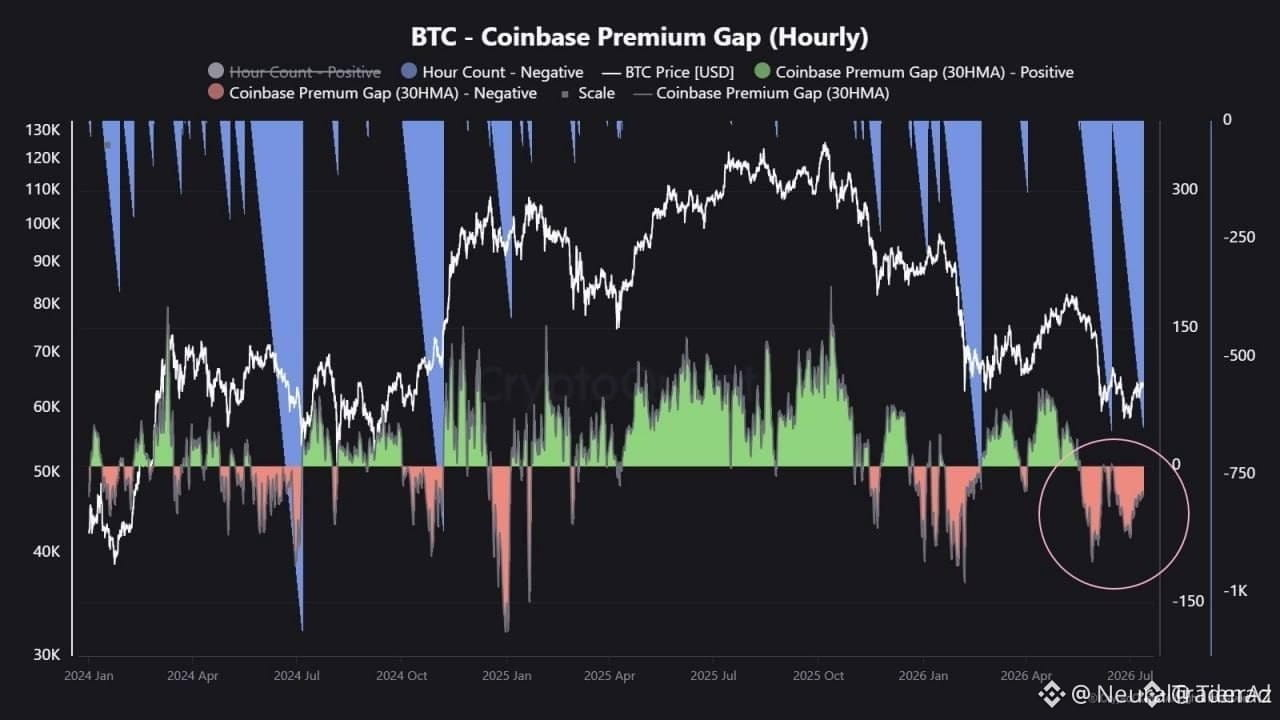
$BTC COINBASE PREMIUM INDEX REBOUNDS — INSTITUTIONAL DEMAND RETURNING? ⚡
The Coinbase Premium Index just bounced off its lows, a metric that has historically preceded short-term rallies when U.S. buyer interest resurfaces. This shift hints at easing selling pressure on American exchanges and could signal a baseline of institutional accumulation.
Still, the move is fresh — and similar rebounds have faded quickly in bearish regimes. The key question is whether this translates into sustained buying or just another fakeout.
Do you see this as a genuine demand shift or a temporary reprieve?
Not financial advice. Always manage your risk.
#BTC #CoinbasePremium #InstitutionalDemand #CryptoAnalysis
⚡
10

📉 Coinbase Bitcoin premium index in negative territory for a record 60 days
The Coinbase Bitcoin premium index has recorded an unprecedented 60-day streak in negative territory, indicating a drop in demand from U.S. institutional investors compared to other markets. This reflects a divergence in global market sentiment and may affect Bitcoin price dynamics.
━━━━━━━━━━━━━━
📊 Impact: 📈 High
🏷️ BITCOIN
#Bitcoin #CoinbasePremium #CryptoMarket #InstitutionalDemand #BTC
🔗 Source: https://cryptobriefing.com/coinbase-bitcoin-premium-index-negative-for-record-60-days/
20

·
--
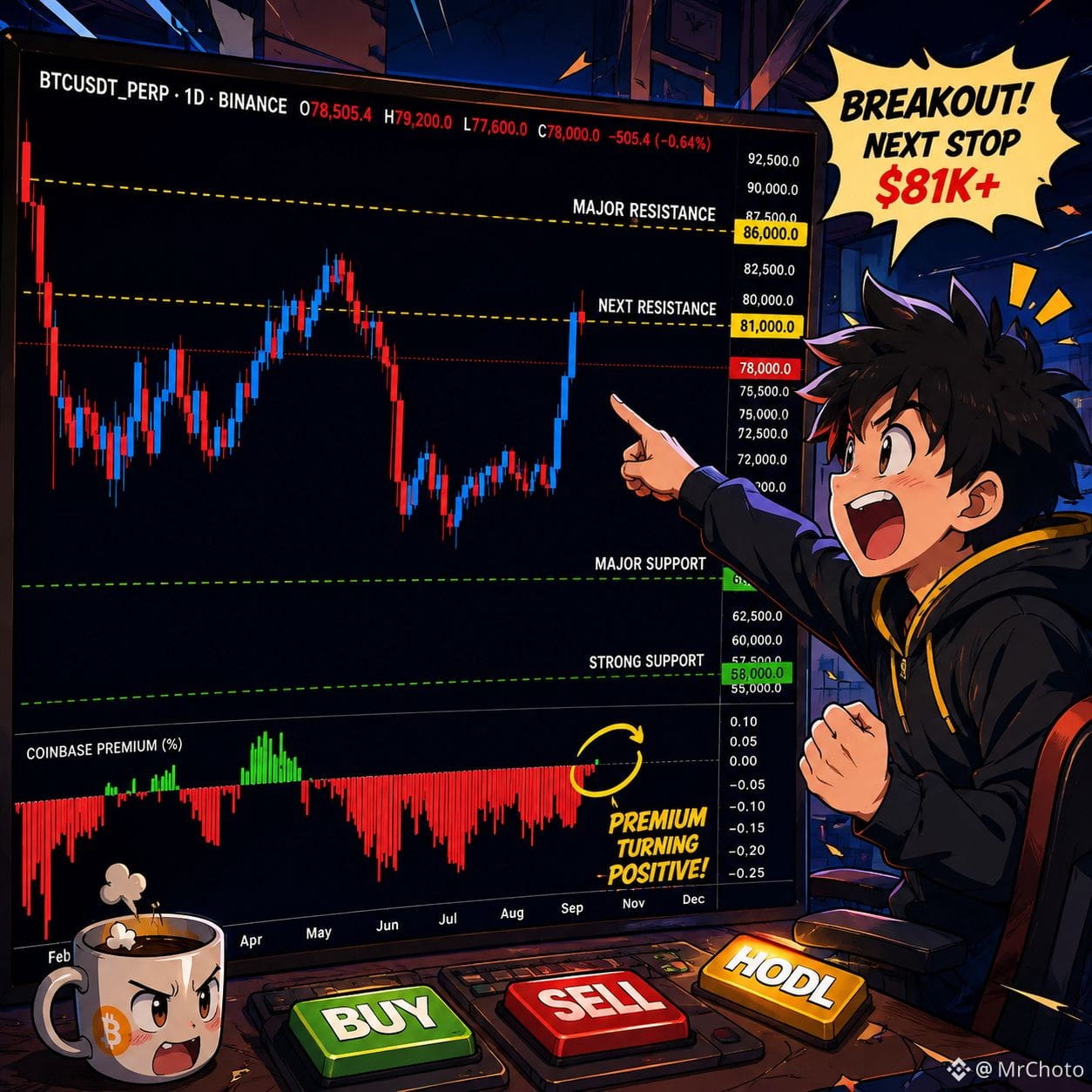
🚀 BOOM! For the first time in over three months, Bitcoin’s Coinbase Premium has flipped GREEN!
After a long stretch of 97 days in the red, it looks like U.S. institutional demand is making a comeback. American spot buyers are now paying a premium compared to the global market, which indicates that Wall Street and spot ETFs are heavily accumulating.
When we see the U.S. bid return like this, history tells us that significant market movements are usually just around the corner. 📈
💥 Are you diving in to buy this dip, or are you holding back on the sidelines? Share your Bitcoin price target in the comments below, and don’t forget to LIKE and SHARE to keep your network in the loop! 👇🔥
#Bitcoin #CryptoNews #CoinbasePremium #CryptoTrading #InstitutionalInvesting $BTC
{future}(BTCUSDT)
🚀 BOOM! For the first time in over three months, Bitcoin’s Coinbase Premium has flipped GREEN!
After a long stretch of 97 days in the red, it looks like U.S. institutional demand is making a comeback. American spot buyers are now paying a premium compared to the global market, which indicates that Wall Street and spot ETFs are heavily accumulating.
When we see the U.S. bid return like this, history tells us that significant market movements are usually just around the corner. 📈
💥 Are you diving in to buy this dip, or are you holding back on the sidelines? Share your Bitcoin price target in the comments below, and don’t forget to LIKE and SHARE to keep your network in the loop! 👇🔥
#Bitcoin #CryptoNews #CoinbasePremium #CryptoTrading #InstitutionalInvesting $BTC
160

·
--
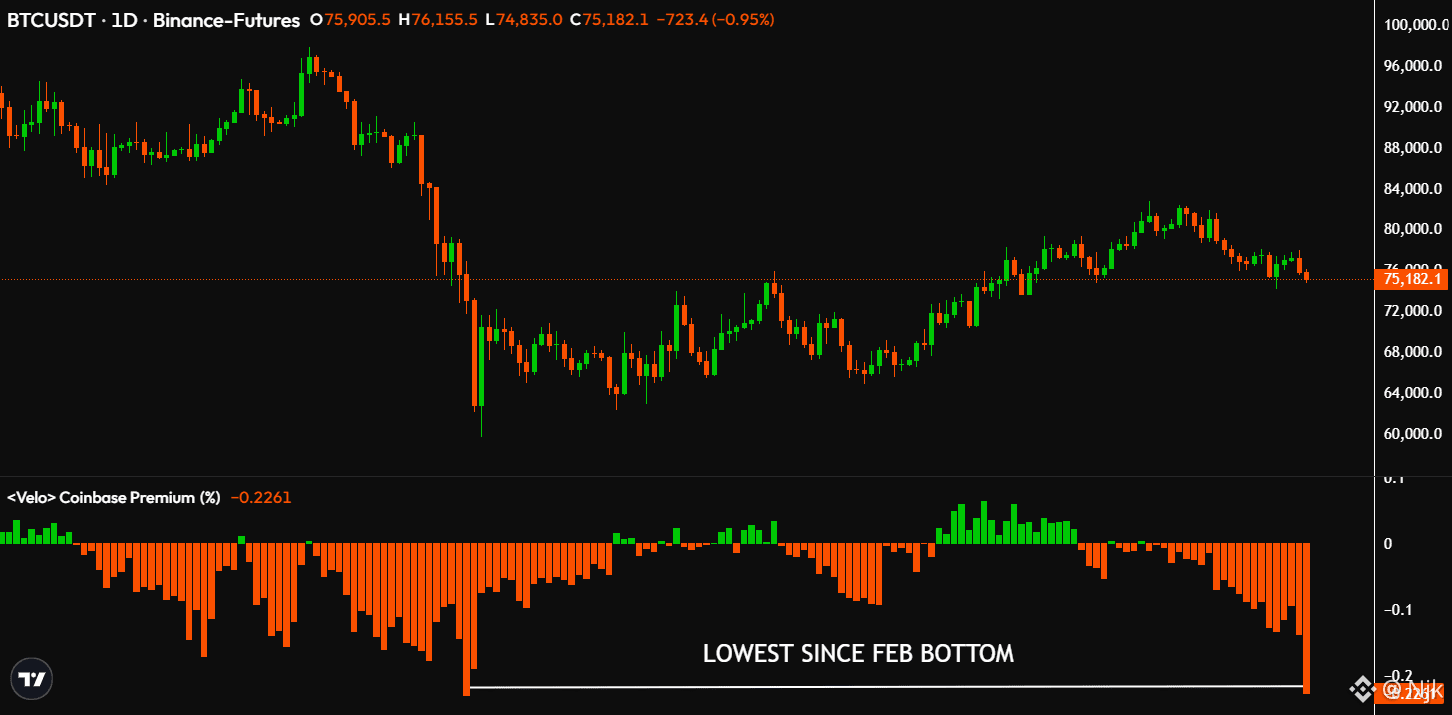
🚨 BIG WARNING: Coinbase Bitcoin Premium Hits Major Low
Institutions are selling $BTC aggressively.
The Coinbase Premium Index just dropped to its lowest level in weeks, signaling heavy U.S. institutional selling pressure.
BTC trading at a discount on Coinbase vs global markets.
Watch closely — this could mean more downside. 👀
#bitcoin #BTC #coinbasepremium #crypto
177

·
--
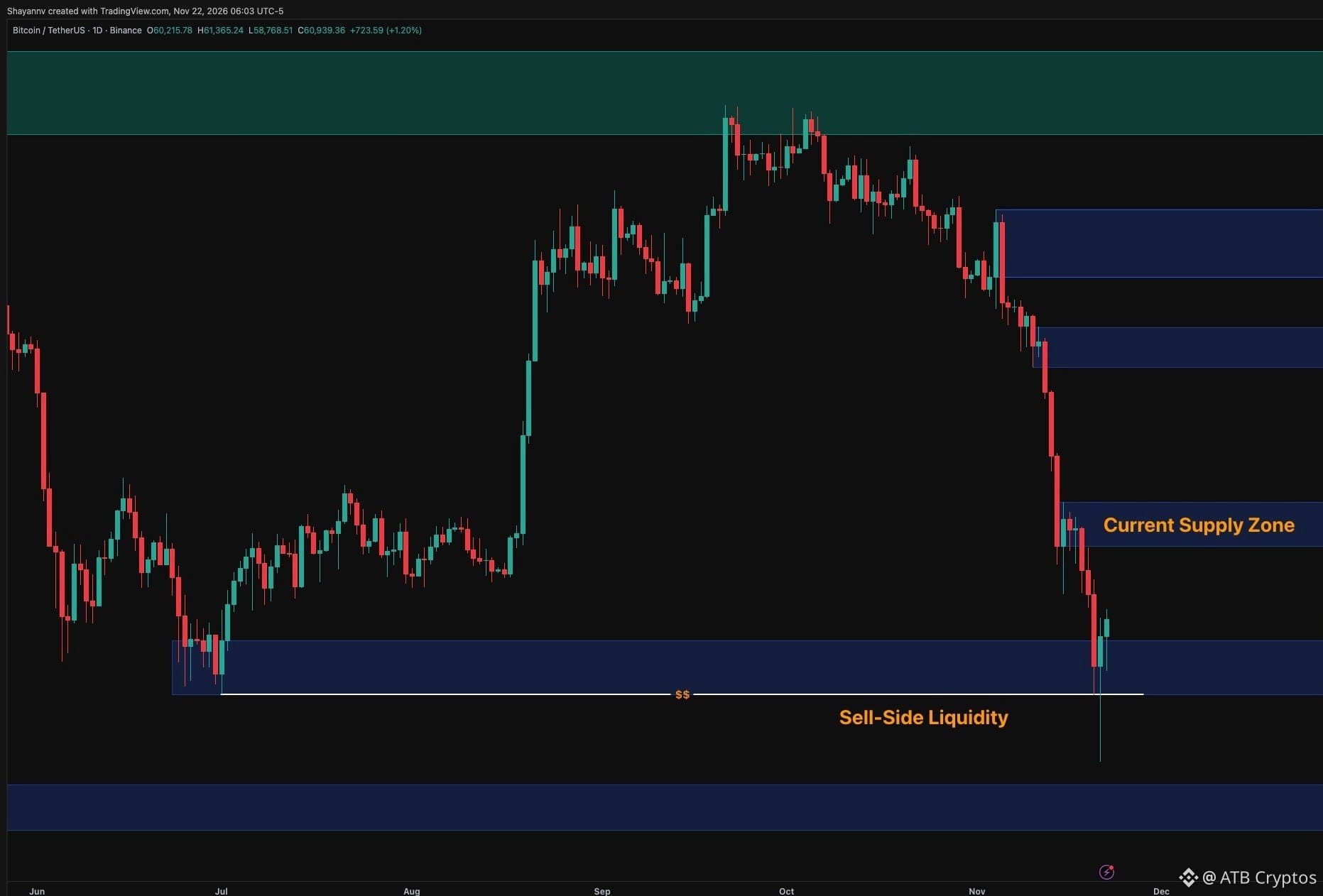
Bitcoin rebounds past $60K, but is the bottom truly in?
The daily chart shows a sharp rejection from below the $57.8K–$60K demand zone, a brief dip to $55.1K, and a recovery above $60K that left a pronounced lower wick.
Buyers responded to the breakdown, yet the reaction alone does not confirm a lasting bottom.
The nearest substantial resistance sits in the $64K–$66.1K supply zone, where price previously consolidated before the latest downward expansion. A rebound into that area would test whether buyers can absorb the supply left by the breakdown.
The broader structure remains bearish, with successive lower highs and lower lows since November’s failed recovery near $81K.
On the four‑hour chart, the rebound peaked near $61.4K and held inside the $57.8K–$60K demand zone, suggesting an initial attempt to establish a short‑term base.
The Coinbase Premium Index remains deeply negative at approximately −0.21, indicating Bitcoin trades at a discount on Coinbase versus Binance and reflecting weaker relative buying demand.
Do you see this rebound as a genuine base or just a temporary lift in a downtrend?
#Bitcoin #Crypto #FinTech #MarketAnalysis #CoinbasePremium

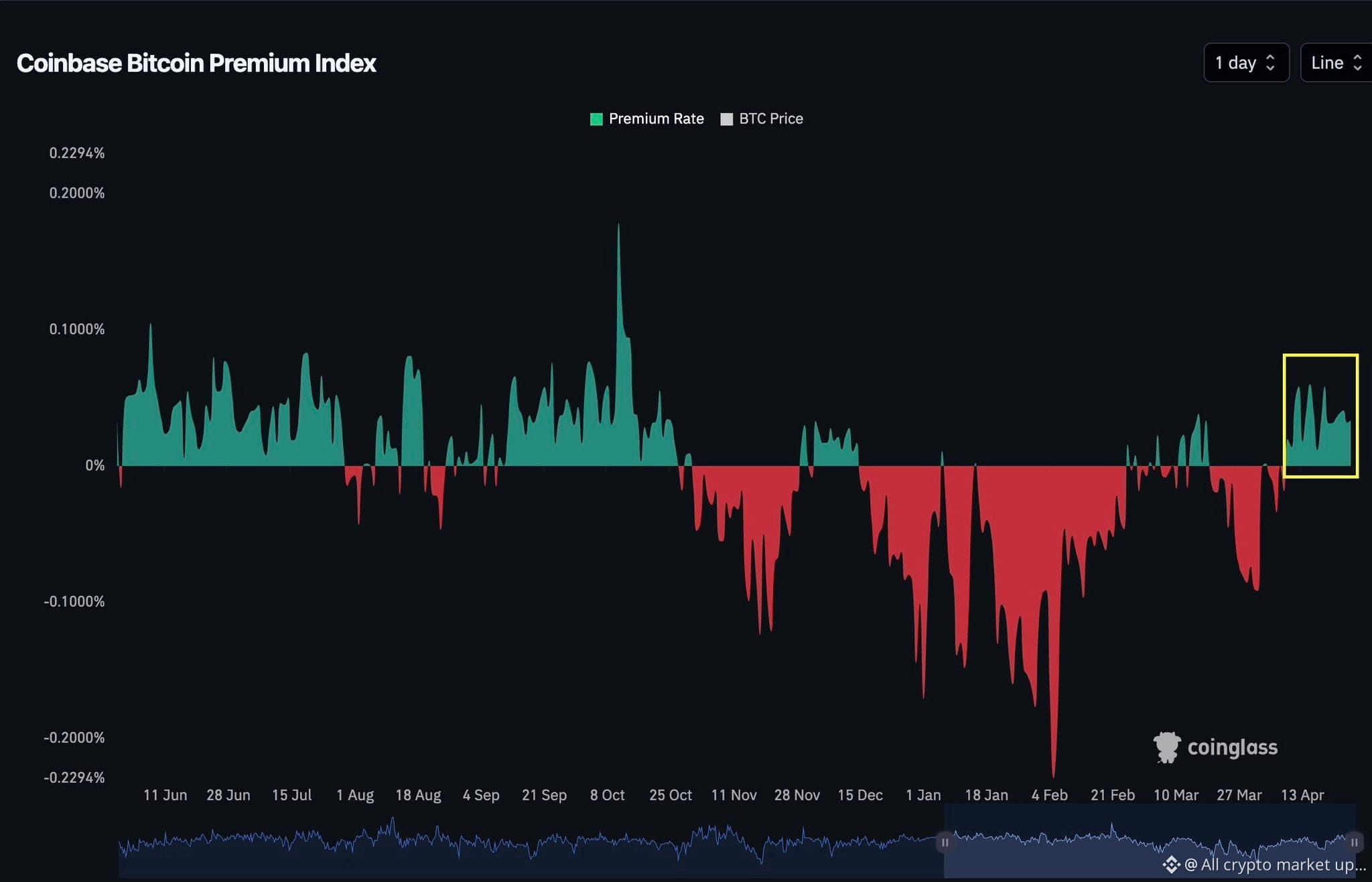
**Coinbase premium green for 17 straight days.** 🎯
Highest US inflow in 6 months. ⚡
Remember when it hit -24? 💣
Everyone was panicking.
Institutions stepping aside.
US demand completely gone.
That was the bottom signal. 🎯
Now —
17 consecutive green days.
US buyers back and aggressive.
Institutional capital returning.
Dollar liquidity flowing in. 🌍
This isn't retail FOMO.
This is serious money
re-entering with conviction. 💣
Coinbase premium doesn't lie.
It never has. 📈
When US institutions buy —
they don't buy small.
They don't buy fast.
They accumulate quietly.
Then price moves violently. 🔢
17 days of quiet accumulation.
What comes next is never quiet. 👇
#Bitcoin #BTC #CoinbasePremium #Institutional #Bullish #Crypto #USMarket #Macro #breakingnews $BTC $ETH $BNB
116
$BTC PREMIUM ON COINBASE HAS BEEN NEGATIVE FOR 40 DAYS STRAIGHT 👀
The Coinbase Bitcoin Premium Index has sat in negative territory for 40 consecutive days — currently at -0.1569%. That means US buyers are consistently paying less than the global average, which historically signals weak domestic demand and persistent selling pressure.
I don't ignore divergences this long. When premium stays negative for weeks, it usually means institutional flow is muted and retail conviction is low. But extreme readings like this can also set the stage for a snap-back when sentiment flips.
Are you reading this as a warning sign or a potential bottom forming?
Not financial advice. Always manage your risk.
#BTC #CoinbasePremium #Bitcoin #MarketAnalysis #CryptoSignals
🔥
23

Whales Push BTC Price Up to $64K: Coinbase Premium Surpasses a Critical Threshold
- According to new analysis from CryptoQuant, Bitcoin’s price has surged to $64,000.
- The main driving force comes from whale investors in the U.S.
- These whales have pushed the Coinbase Premium index past an important trend threshold, signaling strong buying power.
#Bitcoin #BTC #CryptoNews #BinanceSquare #CoinbasePremium CryptoQuant
$btc
vlikevn Titanbot
Source: CoinTelegraph
113
🚨 $BTC BROKE A 75-DAY COINBASE PREMIUM RECORD — THE TWO-SIDED LIQUIDITY SWEEP IS LOADING! 💥
For 75 straight days, Coinbase buyers have been missing — a deeper negative premium than anything printed during the last historic collapse. 🩸 This isn't static noise; it's institutional flow bleeding out in slow motion. 📊
When the premium sinks this deep, the market doesn't simply fall — it sweeps both pools violently. 🔍 Shorts chase the breakdown while longs panic-sell, feeding a cascade that resets the entire order book. Windows like this, where a year of positioning shifts in one move, open once — maybe twice — per cycle.
Keep your execution queue ready — the Long and Short setups are both loaded with fuel. ⚡ The real question is whether you'll be holding orders when the first sweep ignites. 💬 Will you front-run the move, or become the liquidity that feeds it? 👇
⚠️ Not financial advice. Always manage your risk. 🛡️
🏷️ #BTC #LiquiditySweep #CoinbasePremium #Crypto #Volatility
🦈 💥
23
Log in to explore more content
Join global crypto users on Binance Square
⚡️ Get latest and useful information about crypto.
💬 Trusted by the world’s largest crypto exchange.
👍 Discover real insights from verified creators.
Email / Phone number
Trending Topics
1
#CanMarketsReboundAfterThanksgiving?
60,022 views
972 Discussing
2
#CouldSpaceX’sOrbitalDataCentersBoostAIChipDemand?
33,003 views
606 Discussing
3
#EvolveAtBinanceBlockchainWeek
710,851 views
8,333 Discussing
4
#KoreaFSCSeeksPowerToSuspendCryptoListings
0 views
16 Discussing
5
#SouthKoreaPlansToRequireTetherCircleLocalReserves
0 views
11 Discussing
6
#UKFCAReportedlyPlansDeFiAuthorizationRules
0 views
8 Discussing
7
#TetherGoldFaces$2.55BUnrealizedLoss
0 views
4 Discussing
8
#CorePCEBeatLiftsFedHikeOdds
218,735 views
1,605 Discussing
9
#BitcoinAndStocksSlipAgainAmidTrump’sTariffPlans
252,807 views
2,349 Discussing
10
#JensenHuangSaysNvidiaDoesn’tNeedASuccessionPlan
121,618 views
1,403 Discussing