

#strategyauthorizes$2bbuyback
strategyauthorizes$2bbuyback
7,384 views
100 Discussing
Hot
Latest

·
--
Bullish
Verified
#StrategyAuthorizes$2BBuyback #bitcoin
🚨 STRATEGY'S $2B BUYBACK: BULLISH FOR BTC?
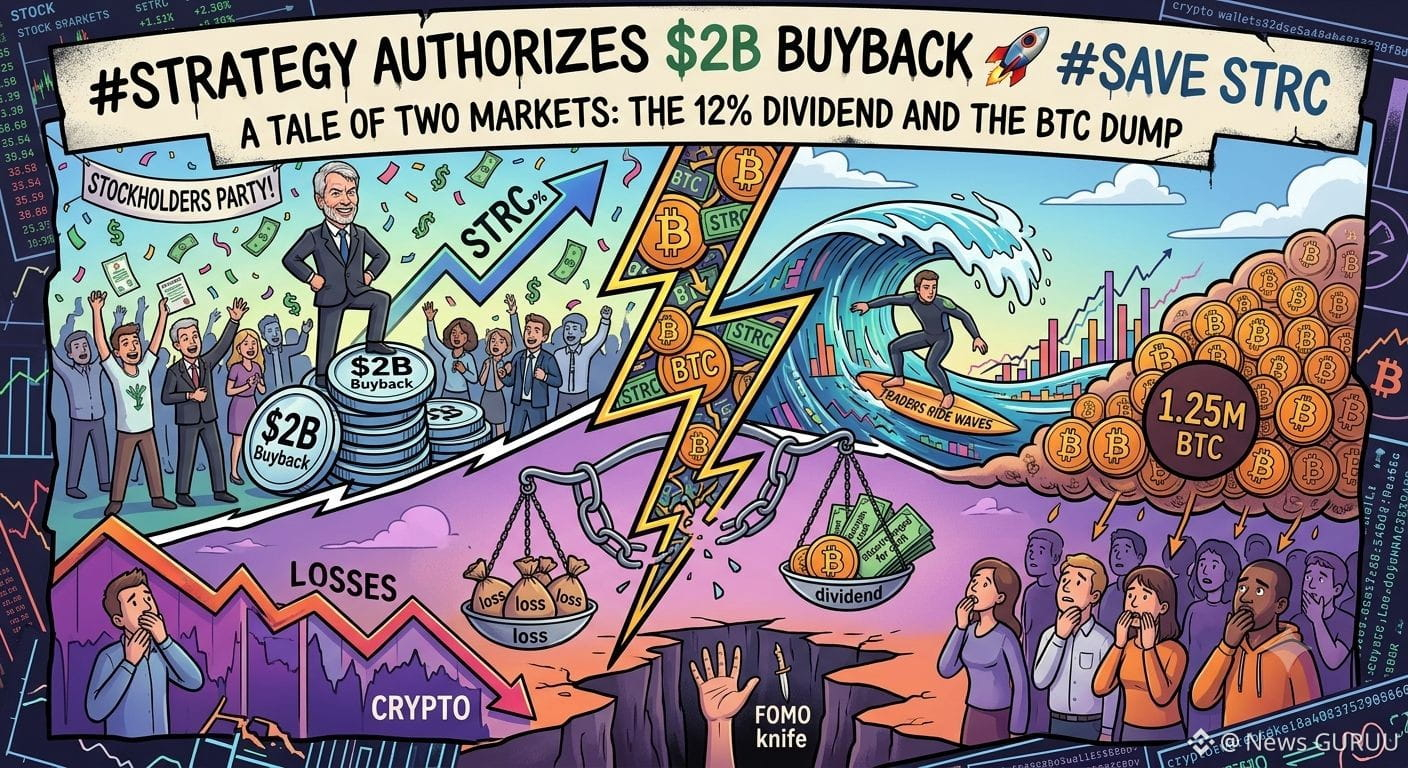
Strategy has approved a $2B share buyback, boosting investor confidence while continuing its Bitcoin-focused strategy.
✅ $2B buyback supports shareholder value
✅ Strong long-term commitment to Bitcoin
✅ Higher volatility expected in both STRC and BTC
📊 Trading View: BUY on dips, but manage risk. The long-term outlook remains bullish, though short-term volatility could create better entry opportunities."CLICK ON THE BELOW YELLOW COIN TAG TO GO TO DESIRED TRADING PAGE TO GET BENEFIT TRADE OK." 👇👇👇👇👇👇👇👇
$BTC $MSTR
{future}(MSTRUSDT)
{spot}(BTCUSDT)
#StrategyAuthorizes$2BBuyback #bitcoin
🚨 STRATEGY'S $2B BUYBACK: BULLISH FOR BTC?
Strategy has approved a $2B share buyback, boosting investor confidence while continuing its Bitcoin-focused strategy.
✅ $2B buyback supports shareholder value
✅ Strong long-term commitment to Bitcoin
✅ Higher volatility expected in both STRC and BTC
📊 Trading View: BUY on dips, but manage risk. The long-term outlook remains bullish, though short-term volatility could create better entry opportunities."CLICK ON THE BELOW YELLOW COIN TAG TO GO TO DESIRED TRADING PAGE TO GET BENEFIT TRADE OK." 👇👇👇👇👇👇👇👇
$BTC $MSTR
🚨 STRATEGY'S $2B BUYBACK: BULLISH FOR BTC?
Strategy has approved a $2B share buyback, boosting investor confidence while continuing its Bitcoin-focused strategy.
✅ $2B buyback supports shareholder value
✅ Strong long-term commitment to Bitcoin
✅ Higher volatility expected in both STRC and BTC
📊 Trading View: BUY on dips, but manage risk. The long-term outlook remains bullish, though short-term volatility could create better entry opportunities."CLICK ON THE BELOW YELLOW COIN TAG TO GO TO DESIRED TRADING PAGE TO GET BENEFIT TRADE OK." 👇👇👇👇👇👇👇👇
$BTC $MSTR
BTC-0.47%
MSTRUS-1.71%
2
144

·
--
Bullish
Verified
$BTC A surprise in the crypto market.. One of the largest Bitcoin whales is paving the way for a massive sell-off
Strategy company, led by Michael Saylor, announced a comprehensive restructuring of the financing model it relied on for years to carry out its Bitcoin-buying strategy, in a move that gives it greater flexibility in managing liquidity, selling part of its cryptocurrency holdings, and repurchasing its shares, amid growing pressure on the model that supported years of intensive Bitcoin accumulation.
The company said it may sell up to $1.25 billion worth of Bitcoin to strengthen its cash reserves. It also approved two share buyback programs—one for common shares and the other for preferred shares—worth up to $1 billion per program.
It added that it will adopt a more disciplined approach to issuing new shares, especially when its stock trades at levels close to the value of its Bitcoin holdings, in an attempt to limit erosion of shareholders’ equity value. The company’s stock jumped about 13% after the announcement, recording its biggest daily gains in roughly 4 months.
{future}(BTCUSDT)
#DowHitsRecordClose #SupremeCourtBlocksTrumpFromRemovingFedCook #StrategyAuthorizes$2BBuyback #YenHitsFourDecadeLowVsDollar #GoldHoldsDecline
$BTC A surprise in the crypto market.. One of the largest Bitcoin whales is paving the way for a massive sell-off
Strategy company, led by Michael Saylor, announced a comprehensive restructuring of the financing model it relied on for years to carry out its Bitcoin-buying strategy, in a move that gives it greater flexibility in managing liquidity, selling part of its cryptocurrency holdings, and repurchasing its shares, amid growing pressure on the model that supported years of intensive Bitcoin accumulation.
The company said it may sell up to $1.25 billion worth of Bitcoin to strengthen its cash reserves. It also approved two share buyback programs—one for common shares and the other for preferred shares—worth up to $1 billion per program.
It added that it will adopt a more disciplined approach to issuing new shares, especially when its stock trades at levels close to the value of its Bitcoin holdings, in an attempt to limit erosion of shareholders’ equity value. The company’s stock jumped about 13% after the announcement, recording its biggest daily gains in roughly 4 months.
#DowHitsRecordClose #SupremeCourtBlocksTrumpFromRemovingFedCook #StrategyAuthorizes$2BBuyback #YenHitsFourDecadeLowVsDollar #GoldHoldsDecline
Strategy company, led by Michael Saylor, announced a comprehensive restructuring of the financing model it relied on for years to carry out its Bitcoin-buying strategy, in a move that gives it greater flexibility in managing liquidity, selling part of its cryptocurrency holdings, and repurchasing its shares, amid growing pressure on the model that supported years of intensive Bitcoin accumulation.
The company said it may sell up to $1.25 billion worth of Bitcoin to strengthen its cash reserves. It also approved two share buyback programs—one for common shares and the other for preferred shares—worth up to $1 billion per program.
It added that it will adopt a more disciplined approach to issuing new shares, especially when its stock trades at levels close to the value of its Bitcoin holdings, in an attempt to limit erosion of shareholders’ equity value. The company’s stock jumped about 13% after the announcement, recording its biggest daily gains in roughly 4 months.
#DowHitsRecordClose #SupremeCourtBlocksTrumpFromRemovingFedCook #StrategyAuthorizes$2BBuyback #YenHitsFourDecadeLowVsDollar #GoldHoldsDecline
BTC-0.47%
MSTRUS-1.71%
156

·
--
Bullish
Verified
#StrategyAuthorizes$2BBuyback
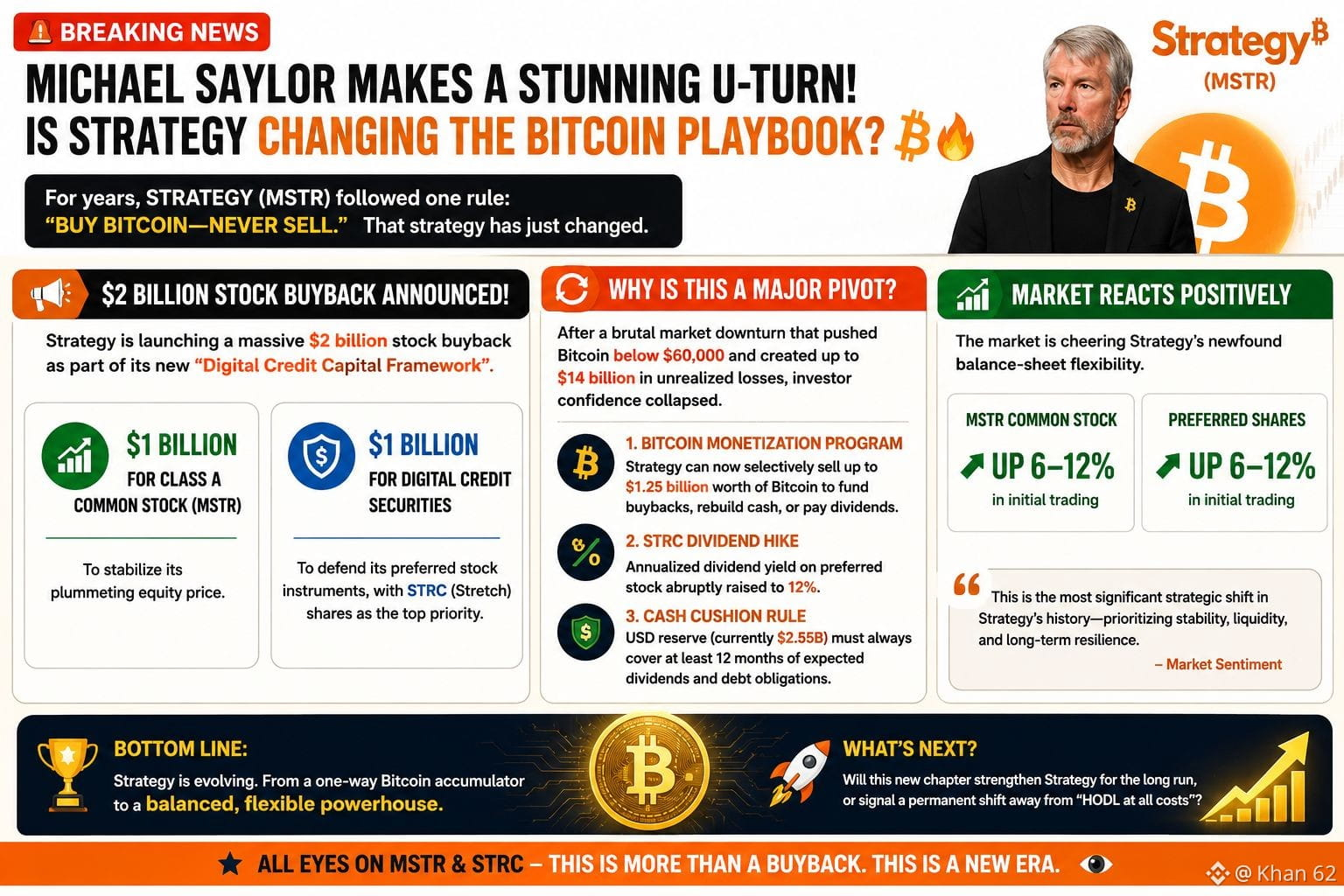
🚨 Michael Saylor Makes an U-Turn! Is Strategy About to Change the Bitcoin Playbook?
For a time *Michael Saylor* and *Strategy* which is also known as **MSTR** had one simple idea, they would buy **Bitcoin** and never sell it.. Now **Strategy** is doing something different.
👀 Strategy has decided to buy 2 billion Dollar of its own stock. This means *Strategy* will spend 1 billion Dollar to buy *MSTR* shares and another 1 billion Dollar to buy some special kinds of shares. At the time Strategy might sell up to 1.25 billion Dollar in Bitcoin.
This will help Strategy have money buy back more shares and pay its debts.
👉 *Strategy* also did two important things. It increased the dividend for some shares to 12% . It made a new rule to keep more cash on hand. This shows that Strategy really wants to be more stable and secure.
📈 When *Strategy* made these changes investors were very happy. The price of *MSTR* shares and some other shares went up quickly.
So is this a way that *Strategy* will manage its *Bitcoin* or is it just a temporary plan to stay safe?
$MSTR $MSTR.US $MSTRB #bitcoin #strategy #BinanceSquare #Khan62
{spot}(MSTRBUSDT)
{stock_us}(MSTR.US)
{future}(MSTRUSDT)
#StrategyAuthorizes$2BBuyback
🚨 Michael Saylor Makes an U-Turn! Is Strategy About to Change the Bitcoin Playbook?
For a time *Michael Saylor* and *Strategy* which is also known as **MSTR** had one simple idea, they would buy **Bitcoin** and never sell it.. Now **Strategy** is doing something different.
👀 Strategy has decided to buy 2 billion Dollar of its own stock. This means *Strategy* will spend 1 billion Dollar to buy *MSTR* shares and another 1 billion Dollar to buy some special kinds of shares. At the time Strategy might sell up to 1.25 billion Dollar in Bitcoin.
This will help Strategy have money buy back more shares and pay its debts.
👉 *Strategy* also did two important things. It increased the dividend for some shares to 12% . It made a new rule to keep more cash on hand. This shows that Strategy really wants to be more stable and secure.
📈 When *Strategy* made these changes investors were very happy. The price of *MSTR* shares and some other shares went up quickly.
So is this a way that *Strategy* will manage its *Bitcoin* or is it just a temporary plan to stay safe?
$MSTR $MSTR.US $MSTRB #bitcoin #strategy #BinanceSquare #Khan62
🚨 Michael Saylor Makes an U-Turn! Is Strategy About to Change the Bitcoin Playbook?
For a time *Michael Saylor* and *Strategy* which is also known as **MSTR** had one simple idea, they would buy **Bitcoin** and never sell it.. Now **Strategy** is doing something different.
👀 Strategy has decided to buy 2 billion Dollar of its own stock. This means *Strategy* will spend 1 billion Dollar to buy *MSTR* shares and another 1 billion Dollar to buy some special kinds of shares. At the time Strategy might sell up to 1.25 billion Dollar in Bitcoin.
This will help Strategy have money buy back more shares and pay its debts.
👉 *Strategy* also did two important things. It increased the dividend for some shares to 12% . It made a new rule to keep more cash on hand. This shows that Strategy really wants to be more stable and secure.
📈 When *Strategy* made these changes investors were very happy. The price of *MSTR* shares and some other shares went up quickly.
So is this a way that *Strategy* will manage its *Bitcoin* or is it just a temporary plan to stay safe?
$MSTR $MSTR.US $MSTRB #bitcoin #strategy #BinanceSquare #Khan62
MSTRB-2.94%
MSTRUS-1.71%
1
369

·
--
Bearish
Verified
#StrategyAuthorizes$2BBuyback
🚀To be honest, I once had a bit of prejudice against Saylor, but seeing the old guy turn around and get leveraged like this—then I’m also glad. Just keep holding heavy losses and then charging in to buy again, and one day it’ll collapse, folks! 💸
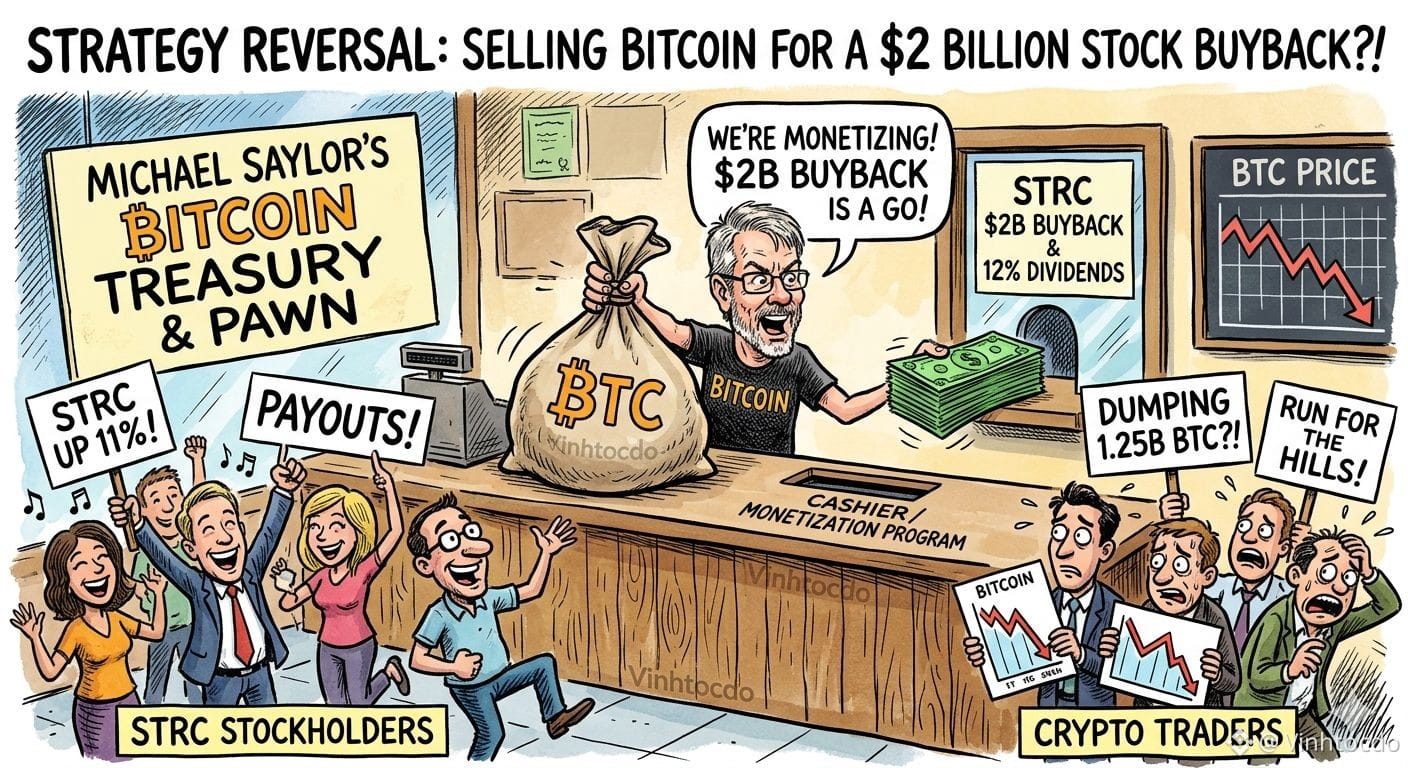
I heard this fund is still holding losses of around 48 billion USD, right, guys? Luckily, they knew how to “turn the ship” by switching to a program that exchanges Bitcoin for cash to fund a $2 billion share buyback package and pay a 12% dividend—saving STRC, which then flew more than 11%. Stockholders are throwing a party here, while crypto folks are holding their breath, afraid of a dump of 1.25 billion BTC into everyone’s face.
What do traders do at a time like this? Double the volatility—in both stocks and coins—so manage capital tightly and ride the waves instead of FOMO grabbing a falling knife! 🏄♂️
👉 Enter the Binance code to hunt the waves together: VINHTOCDO
⚠️ This is not financial advice.
#strategy #MichaelSaylor #bitcoin #VINHTOCDO
$ETH
{future}(ETHUSDT)
$BNB
{future}(BNBUSDT)
$BTC
{future}(BTCUSDT)
#StrategyAuthorizes$2BBuyback
🚀To be honest, I once had a bit of prejudice against Saylor, but seeing the old guy turn around and get leveraged like this—then I’m also glad. Just keep holding heavy losses and then charging in to buy again, and one day it’ll collapse, folks! 💸
I heard this fund is still holding losses of around 48 billion USD, right, guys? Luckily, they knew how to “turn the ship” by switching to a program that exchanges Bitcoin for cash to fund a $2 billion share buyback package and pay a 12% dividend—saving STRC, which then flew more than 11%. Stockholders are throwing a party here, while crypto folks are holding their breath, afraid of a dump of 1.25 billion BTC into everyone’s face.
What do traders do at a time like this? Double the volatility—in both stocks and coins—so manage capital tightly and ride the waves instead of FOMO grabbing a falling knife! 🏄♂️
👉 Enter the Binance code to hunt the waves together: VINHTOCDO
⚠️ This is not financial advice.
#strategy #MichaelSaylor #bitcoin #VINHTOCDO
$ETH
$BNB
$BTC
🚀To be honest, I once had a bit of prejudice against Saylor, but seeing the old guy turn around and get leveraged like this—then I’m also glad. Just keep holding heavy losses and then charging in to buy again, and one day it’ll collapse, folks! 💸
I heard this fund is still holding losses of around 48 billion USD, right, guys? Luckily, they knew how to “turn the ship” by switching to a program that exchanges Bitcoin for cash to fund a $2 billion share buyback package and pay a 12% dividend—saving STRC, which then flew more than 11%. Stockholders are throwing a party here, while crypto folks are holding their breath, afraid of a dump of 1.25 billion BTC into everyone’s face.
What do traders do at a time like this? Double the volatility—in both stocks and coins—so manage capital tightly and ride the waves instead of FOMO grabbing a falling knife! 🏄♂️
👉 Enter the Binance code to hunt the waves together: VINHTOCDO
⚠️ This is not financial advice.
#strategy #MichaelSaylor #bitcoin #VINHTOCDO
$ETH
$BNB
$BTC
BTC-0.47%
MSTRUS-1.71%
2
427

·
--
Survival rules for small-fund players
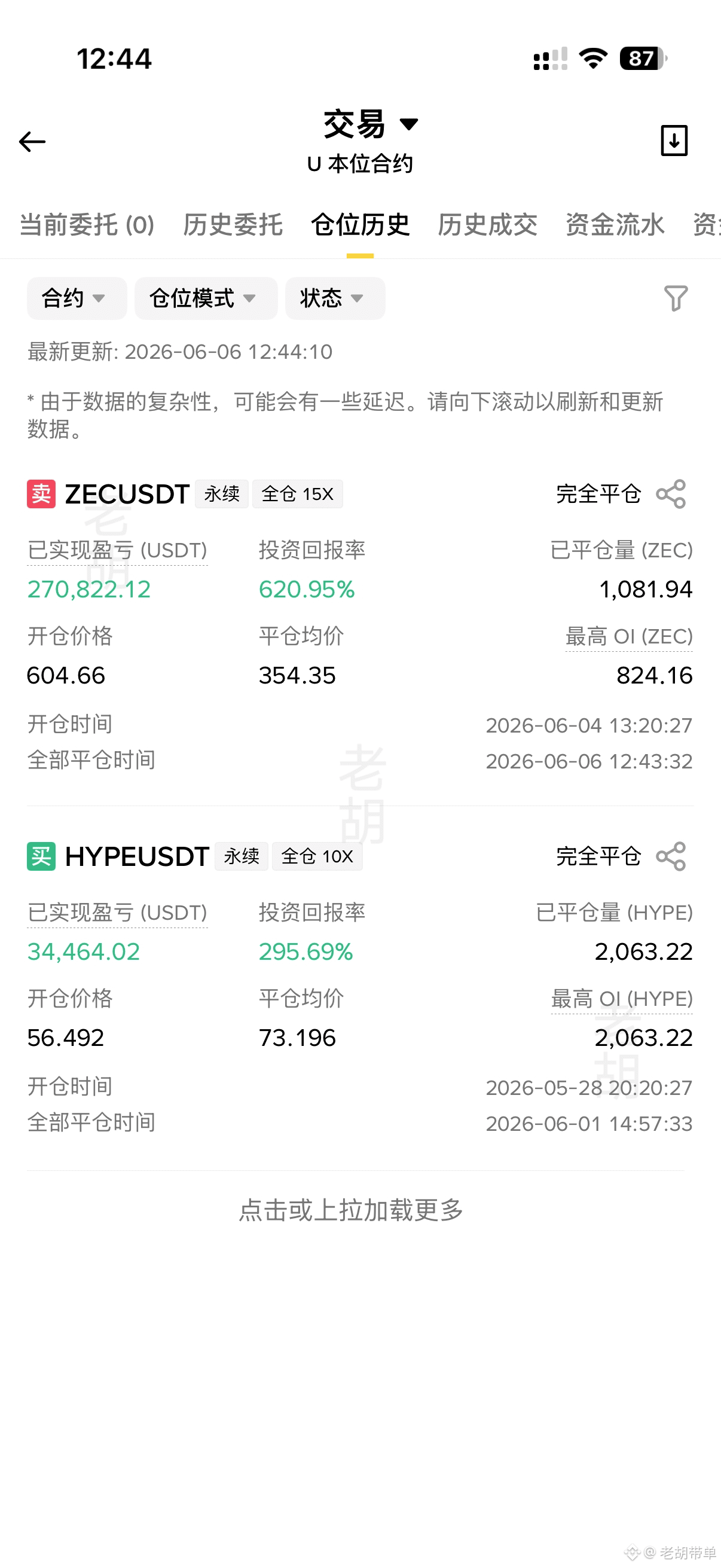
If you enter with only a few thousand, it’s easy to make one mistake: thinking that because the money is small, you must use high leverage to have a chance. But the result is often that you don’t make money, and your principal is wiped out first. People who can make it work with this kind of capital do the exact opposite. They keep risk within a very small range, using time and compounding to accumulate—not using position sizing to gamble.
Each time, they only use a small portion of their funds to test the direction, with leverage kept at an extremely low level. If the direction is right, they keep holding; if it’s wrong, the loss is also limited. No single trade makes much, but losses also don’t get out of hand. With small account volatility, your decision-making won’t get distorted. #StrategyAuthorizes$2BBuyback $ETH
After accumulating profits to a certain point, withdraw the principal and continue operating using only the profits. Once this step is done, your mindset changes noticeably, because the money in your account is all earnings; your capacity to endure drawdowns is stronger than before. You’re not in a rush to “make it back,” and you’re not eager to add positions. Keep the original pace and move forward slowly. $HYPE
Once the structure is confirmed—like choosing the coin—you don’t chase price spikes or try to guess the top. You only act when a clear signal appears. When it’s time to enter, you enter; when it’s time to exit, you exit. This logic doesn’t require being right “a lot”; you just need to execute every time according to the plan. As time passes, you’ll find that account growth doesn’t come from one big trade—it comes from accumulating every time you avoid making a major mistake. The path for small-fund players isn’t about betting big; it’s about making sure you never get knocked out. The fewer times you get “out,” the more opportunities you have. And with more opportunities, the account naturally grows. $ACT
Survival rules for small-fund players
If you enter with only a few thousand, it’s easy to make one mistake: thinking that because the money is small, you must use high leverage to have a chance. But the result is often that you don’t make money, and your principal is wiped out first. People who can make it work with this kind of capital do the exact opposite. They keep risk within a very small range, using time and compounding to accumulate—not using position sizing to gamble.
Each time, they only use a small portion of their funds to test the direction, with leverage kept at an extremely low level. If the direction is right, they keep holding; if it’s wrong, the loss is also limited. No single trade makes much, but losses also don’t get out of hand. With small account volatility, your decision-making won’t get distorted. #StrategyAuthorizes$2BBuyback $ETH
After accumulating profits to a certain point, withdraw the principal and continue operating using only the profits. Once this step is done, your mindset changes noticeably, because the money in your account is all earnings; your capacity to endure drawdowns is stronger than before. You’re not in a rush to “make it back,” and you’re not eager to add positions. Keep the original pace and move forward slowly. $HYPE
Once the structure is confirmed—like choosing the coin—you don’t chase price spikes or try to guess the top. You only act when a clear signal appears. When it’s time to enter, you enter; when it’s time to exit, you exit. This logic doesn’t require being right “a lot”; you just need to execute every time according to the plan. As time passes, you’ll find that account growth doesn’t come from one big trade—it comes from accumulating every time you avoid making a major mistake. The path for small-fund players isn’t about betting big; it’s about making sure you never get knocked out. The fewer times you get “out,” the more opportunities you have. And with more opportunities, the account naturally grows. $ACT
If you enter with only a few thousand, it’s easy to make one mistake: thinking that because the money is small, you must use high leverage to have a chance. But the result is often that you don’t make money, and your principal is wiped out first. People who can make it work with this kind of capital do the exact opposite. They keep risk within a very small range, using time and compounding to accumulate—not using position sizing to gamble.
Each time, they only use a small portion of their funds to test the direction, with leverage kept at an extremely low level. If the direction is right, they keep holding; if it’s wrong, the loss is also limited. No single trade makes much, but losses also don’t get out of hand. With small account volatility, your decision-making won’t get distorted. #StrategyAuthorizes$2BBuyback $ETH
After accumulating profits to a certain point, withdraw the principal and continue operating using only the profits. Once this step is done, your mindset changes noticeably, because the money in your account is all earnings; your capacity to endure drawdowns is stronger than before. You’re not in a rush to “make it back,” and you’re not eager to add positions. Keep the original pace and move forward slowly. $HYPE
Once the structure is confirmed—like choosing the coin—you don’t chase price spikes or try to guess the top. You only act when a clear signal appears. When it’s time to enter, you enter; when it’s time to exit, you exit. This logic doesn’t require being right “a lot”; you just need to execute every time according to the plan. As time passes, you’ll find that account growth doesn’t come from one big trade—it comes from accumulating every time you avoid making a major mistake. The path for small-fund players isn’t about betting big; it’s about making sure you never get knocked out. The fewer times you get “out,” the more opportunities you have. And with more opportunities, the account naturally grows. $ACT

2
282

Bitcoin Market Update: Key Support Levels Under Pressure
Bitcoin ($BTC) is currently trading near t#StrategyAuthorizes$2BBuyback
Bitcoin ($BTC ) is currently trading near the important $57,850 support level, a zone that has attracted significant market attention. Price action suggests that this support is being tested aggressively, increasing the possibility of a breakdown if selling pressure continues.
If Bitcoin fails to hold above this level, the next major support area could emerge around the $51,000–$52,000 range, which may provide a stronger foundation for a potential recovery.
From a strategic perspective, this price zone could present an attractive opportunity for long-term spot investors. Rather than entering the market with a single purchase, a staged accumulation approach may help manage volatility and reduce risk exposure.
Potential Spot Buying Strategy:
First accumulation zone: Around current support levels near $57,850
Second accumulation zone: Between $54,000–$53,000
Third accumulation zone: Near the stronger support region of $51,000–$52,000
As always, risk management remains essential, especially during periods of heightened market uncertainty. While short-term price movements can be unpredictable, disciplined accumulation strategies have historically been effective during major market corrections.
#SamsungSKHynixSharesRiseYTD
#SupremeCourtRulesPresidentsCanFireSECCFTCCommissioners
#BTC #Bitcoin #CryptoMarketMoves
Bitcoin Market Update: Key Support Levels Under Pressure Bitcoin ($BTC) is currently trading near t
#StrategyAuthorizes$2BBuyback
Bitcoin ($BTC ) is currently trading near the important $57,850 support level, a zone that has attracted significant market attention. Price action suggests that this support is being tested aggressively, increasing the possibility of a breakdown if selling pressure continues.
If Bitcoin fails to hold above this level, the next major support area could emerge around the $51,000–$52,000 range, which may provide a stronger foundation for a potential recovery.
From a strategic perspective, this price zone could present an attractive opportunity for long-term spot investors. Rather than entering the market with a single purchase, a staged accumulation approach may help manage volatility and reduce risk exposure.
Potential Spot Buying Strategy:
First accumulation zone: Around current support levels near $57,850
Second accumulation zone: Between $54,000–$53,000
Third accumulation zone: Near the stronger support region of $51,000–$52,000
As always, risk management remains essential, especially during periods of heightened market uncertainty. While short-term price movements can be unpredictable, disciplined accumulation strategies have historically been effective during major market corrections.
#SamsungSKHynixSharesRiseYTD
#SupremeCourtRulesPresidentsCanFireSECCFTCCommissioners
#BTC #Bitcoin #CryptoMarketMoves
Bitcoin ($BTC ) is currently trading near the important $57,850 support level, a zone that has attracted significant market attention. Price action suggests that this support is being tested aggressively, increasing the possibility of a breakdown if selling pressure continues.
If Bitcoin fails to hold above this level, the next major support area could emerge around the $51,000–$52,000 range, which may provide a stronger foundation for a potential recovery.
From a strategic perspective, this price zone could present an attractive opportunity for long-term spot investors. Rather than entering the market with a single purchase, a staged accumulation approach may help manage volatility and reduce risk exposure.
Potential Spot Buying Strategy:
First accumulation zone: Around current support levels near $57,850
Second accumulation zone: Between $54,000–$53,000
Third accumulation zone: Near the stronger support region of $51,000–$52,000
As always, risk management remains essential, especially during periods of heightened market uncertainty. While short-term price movements can be unpredictable, disciplined accumulation strategies have historically been effective during major market corrections.
#SamsungSKHynixSharesRiseYTD
#SupremeCourtRulesPresidentsCanFireSECCFTCCommissioners
#BTC #Bitcoin #CryptoMarketMoves
81

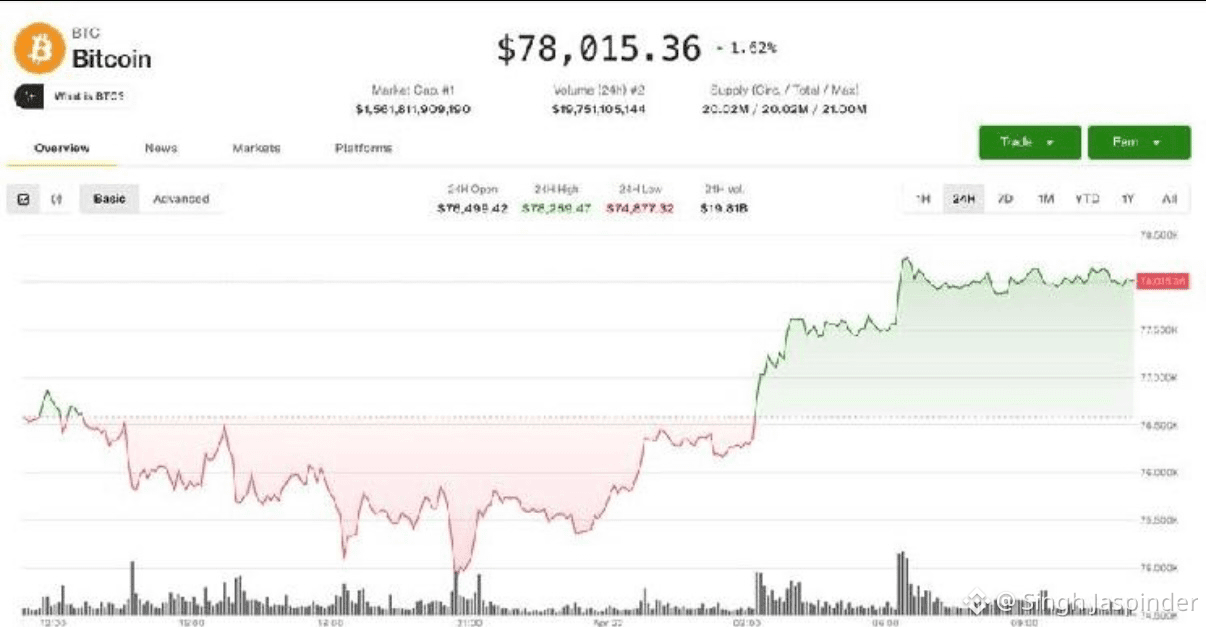
$BTC is trading under pressure after falling below the $60,000 level, as continued ETF outflows, cautious investor sentiment, and broader macroeconomic uncertainty weigh on the market. Despite the recent weakness, institutional interest in Bitcoin remains intact, suggesting that long-term adoption has not disappeared.
Key outlook:
* Short term: Bearish to neutral while BTC remains below key resistance levels.
* Support: Around the $58,000–$60,000 region.
* Bullish catalyst: A return of ETF inflows, improving macroeconomic conditions, or a breakout above resistance could restore positive momentum.
Bottom line: Bitcoin is in a period of consolidation after a significant correction. Traders should expect elevated volatility, while long-term investors continue to watch institutional demand and macroeconomic developments for signs of the next major trend.#AAVERises13.16%To$94.32 #StrategyAuthorizes$2BBuyback #YenHitsFourDecadeLowVsDollar #GoldHoldsDecline #SuperMicroTaiwanRaidedInChipSmugglingProbe
{future}(BTCUSDT)
$BTC is trading under pressure after falling below the $60,000 level, as continued ETF outflows, cautious investor sentiment, and broader macroeconomic uncertainty weigh on the market. Despite the recent weakness, institutional interest in Bitcoin remains intact, suggesting that long-term adoption has not disappeared.
Key outlook:
* Short term: Bearish to neutral while BTC remains below key resistance levels.
* Support: Around the $58,000–$60,000 region.
* Bullish catalyst: A return of ETF inflows, improving macroeconomic conditions, or a breakout above resistance could restore positive momentum.
Bottom line: Bitcoin is in a period of consolidation after a significant correction. Traders should expect elevated volatility, while long-term investors continue to watch institutional demand and macroeconomic developments for signs of the next major trend.#AAVERises13.16%To$94.32 #StrategyAuthorizes$2BBuyback #YenHitsFourDecadeLowVsDollar #GoldHoldsDecline #SuperMicroTaiwanRaidedInChipSmugglingProbe
Key outlook:
* Short term: Bearish to neutral while BTC remains below key resistance levels.
* Support: Around the $58,000–$60,000 region.
* Bullish catalyst: A return of ETF inflows, improving macroeconomic conditions, or a breakout above resistance could restore positive momentum.
Bottom line: Bitcoin is in a period of consolidation after a significant correction. Traders should expect elevated volatility, while long-term investors continue to watch institutional demand and macroeconomic developments for signs of the next major trend.#AAVERises13.16%To$94.32 #StrategyAuthorizes$2BBuyback #YenHitsFourDecadeLowVsDollar #GoldHoldsDecline #SuperMicroTaiwanRaidedInChipSmugglingProbe
97

Bitcoin News Today: BTC Slips Below $60K as Weak Yen Weighs on Markets, Strategy Unveils $1.25B BitcBitcoin News Today: BTC Slips Below $60K as Weak Yen Weighs on Markets, Strategy Unveils $1.25B Bitcoin Monetization Plan
Bitcoin traded below the $60,000 mark on Tuesday, declining more than 1% to around $59,135 as the Japanese yen weakened to its lowest level in nearly 40 years. The sharp drop in the yen strengthened the U.S. dollar, adding pressure to global risk assets, including cryptocurrencies. Bitcoin also remained below its key 200-week simple moving average, a level closely watched by investors.
At the same time, Strategy announced two major financial initiatives. The company approved a share buyback program worth up to $1 billion for its preferred and Class A common stock while also introducing a $1.25 billion Bitcoin monetization program that may involve selling part of its BTC holdings. The move marks a notable shift from founder Michael Saylor's long-standing stance of never selling Bitcoin.
Yen Falls to a 40-Year Low
The Japanese yen weakened to 162.40 per U.S. dollar, its lowest level since October 1986. As the yen declined, the U.S. Dollar Index climbed to around 101.32, reflecting stronger demand for the dollar.
The yen has lost roughly 57% of its value against the dollar since 2021 due to the large interest-rate gap between the U.S. Federal Reserve and the Bank of Japan. While the Fed previously raised rates above 5%, the BOJ kept rates near zero for years and has only recently increased them to around 1%, still well below U.S. levels.
Why the Yen Matters for Bitcoin
A weaker yen has important implications for cryptocurrency markets because it supports the popular yen carry trade. Investors borrow cheaply in yen and invest in higher-yielding assets such as stocks and cryptocurrencies.
With bearish bets against the yen already elevated, any sudden policy change by the Bank of Japan could trigger a rapid unwinding of these positions. Such an event could lead to heavy selling across global financial markets, including Bitcoin, similar to previous periods of sharp volatility.
Japan's Fiscal Challenge
Japan also faces a difficult fiscal situation, with government debt exceeding 220% of GDP. Raising interest rates aggressively could significantly increase debt-servicing costs, while keeping rates low risks further weakening the yen.
For now, Japanese officials continue to rely mainly on verbal warnings rather than direct market intervention. However, analysts believe that if the Bank of Japan eventually adopts stronger tightening measures, it could trigger a large-scale unwinding of yen-funded carry trades, increasing volatility across equities, bond
#SamsungSKHynixSharesRiseYTD #DowHitsRecordClose #AzerbaijanDraftsVirtualAssetBillRequiringCentralBankLicense #StrategyAuthorizes$2BBuyback s, and digital assets.
$BTC
{spot}(BTCUSDT)
$MSTRon
{alpha}(560x7313ea16493b2f55054df0131a3a14b043ec8992)
Bitcoin News Today: BTC Slips Below $60K as Weak Yen Weighs on Markets, Strategy Unveils $1.25B Bitc
Bitcoin News Today: BTC Slips Below $60K as Weak Yen Weighs on Markets, Strategy Unveils $1.25B Bitcoin Monetization Plan
Bitcoin traded below the $60,000 mark on Tuesday, declining more than 1% to around $59,135 as the Japanese yen weakened to its lowest level in nearly 40 years. The sharp drop in the yen strengthened the U.S. dollar, adding pressure to global risk assets, including cryptocurrencies. Bitcoin also remained below its key 200-week simple moving average, a level closely watched by investors.
At the same time, Strategy announced two major financial initiatives. The company approved a share buyback program worth up to $1 billion for its preferred and Class A common stock while also introducing a $1.25 billion Bitcoin monetization program that may involve selling part of its BTC holdings. The move marks a notable shift from founder Michael Saylor's long-standing stance of never selling Bitcoin.
Yen Falls to a 40-Year Low
The Japanese yen weakened to 162.40 per U.S. dollar, its lowest level since October 1986. As the yen declined, the U.S. Dollar Index climbed to around 101.32, reflecting stronger demand for the dollar.
The yen has lost roughly 57% of its value against the dollar since 2021 due to the large interest-rate gap between the U.S. Federal Reserve and the Bank of Japan. While the Fed previously raised rates above 5%, the BOJ kept rates near zero for years and has only recently increased them to around 1%, still well below U.S. levels.
Why the Yen Matters for Bitcoin
A weaker yen has important implications for cryptocurrency markets because it supports the popular yen carry trade. Investors borrow cheaply in yen and invest in higher-yielding assets such as stocks and cryptocurrencies.
With bearish bets against the yen already elevated, any sudden policy change by the Bank of Japan could trigger a rapid unwinding of these positions. Such an event could lead to heavy selling across global financial markets, including Bitcoin, similar to previous periods of sharp volatility.
Japan's Fiscal Challenge
Japan also faces a difficult fiscal situation, with government debt exceeding 220% of GDP. Raising interest rates aggressively could significantly increase debt-servicing costs, while keeping rates low risks further weakening the yen.
For now, Japanese officials continue to rely mainly on verbal warnings rather than direct market intervention. However, analysts believe that if the Bank of Japan eventually adopts stronger tightening measures, it could trigger a large-scale unwinding of yen-funded carry trades, increasing volatility across equities, bond
#SamsungSKHynixSharesRiseYTD #DowHitsRecordClose #AzerbaijanDraftsVirtualAssetBillRequiringCentralBankLicense #StrategyAuthorizes$2BBuyback s, and digital assets.
$BTC
$MSTRon
Bitcoin traded below the $60,000 mark on Tuesday, declining more than 1% to around $59,135 as the Japanese yen weakened to its lowest level in nearly 40 years. The sharp drop in the yen strengthened the U.S. dollar, adding pressure to global risk assets, including cryptocurrencies. Bitcoin also remained below its key 200-week simple moving average, a level closely watched by investors.
At the same time, Strategy announced two major financial initiatives. The company approved a share buyback program worth up to $1 billion for its preferred and Class A common stock while also introducing a $1.25 billion Bitcoin monetization program that may involve selling part of its BTC holdings. The move marks a notable shift from founder Michael Saylor's long-standing stance of never selling Bitcoin.
Yen Falls to a 40-Year Low
The Japanese yen weakened to 162.40 per U.S. dollar, its lowest level since October 1986. As the yen declined, the U.S. Dollar Index climbed to around 101.32, reflecting stronger demand for the dollar.
The yen has lost roughly 57% of its value against the dollar since 2021 due to the large interest-rate gap between the U.S. Federal Reserve and the Bank of Japan. While the Fed previously raised rates above 5%, the BOJ kept rates near zero for years and has only recently increased them to around 1%, still well below U.S. levels.
Why the Yen Matters for Bitcoin
A weaker yen has important implications for cryptocurrency markets because it supports the popular yen carry trade. Investors borrow cheaply in yen and invest in higher-yielding assets such as stocks and cryptocurrencies.
With bearish bets against the yen already elevated, any sudden policy change by the Bank of Japan could trigger a rapid unwinding of these positions. Such an event could lead to heavy selling across global financial markets, including Bitcoin, similar to previous periods of sharp volatility.
Japan's Fiscal Challenge
Japan also faces a difficult fiscal situation, with government debt exceeding 220% of GDP. Raising interest rates aggressively could significantly increase debt-servicing costs, while keeping rates low risks further weakening the yen.
For now, Japanese officials continue to rely mainly on verbal warnings rather than direct market intervention. However, analysts believe that if the Bank of Japan eventually adopts stronger tightening measures, it could trigger a large-scale unwinding of yen-funded carry trades, increasing volatility across equities, bond
#SamsungSKHynixSharesRiseYTD #DowHitsRecordClose #AzerbaijanDraftsVirtualAssetBillRequiringCentralBankLicense #StrategyAuthorizes$2BBuyback s, and digital assets.
$BTC
$MSTRon
104

·
--
Optimal strategy with small capital—wait.
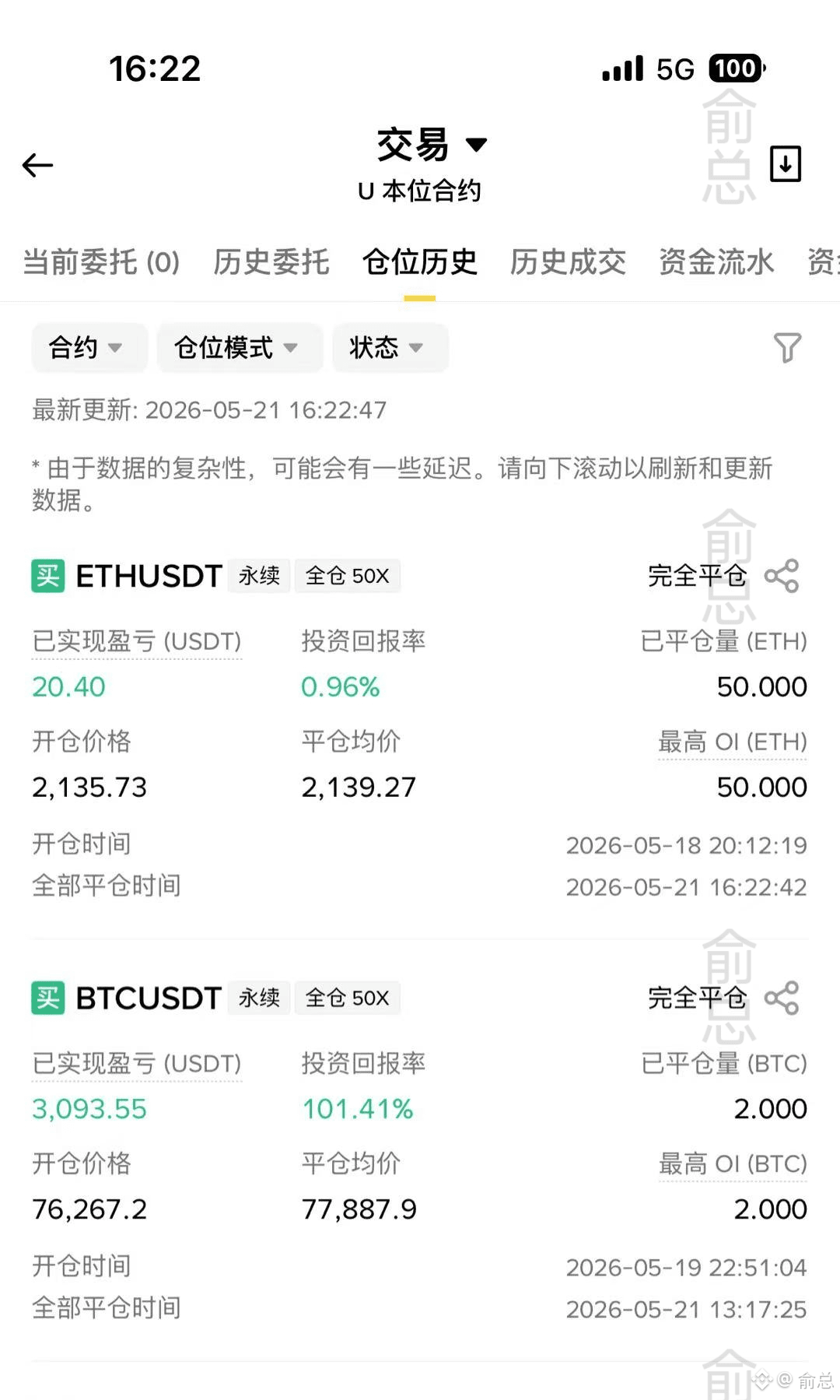
Holding a few hundred USDT to enter: what is the most effective strategy? It’s not frequent entries and exits, and it’s not chasing hot spots. It’s waiting.
Waiting for what? Waiting for opportunities with a clear structure to appear. Most of the time, the market is ranging and choppy, and the portion of trends worth getting involved in is very small. People who can wait until these windows show up have a much higher win rate than those who trade every day.
$ACT
When you open a single trade with a few hundred USDT, even if your direction is correct, if your position size is too large and your stop-loss is too wide, a normal pullback can take you out. But if you operate with a small position size, losses won’t do much harm to your principal. Wait until the confirmed trend shows up before entering, and the account can actually climb step by step.
#StrategyAuthorizes$2BBuyback $SPCX
That trading partner who starts with 800 USDT mostly keeps cash on hand most of the time. When others ask why he doesn’t trade, he says he hasn’t seen a signal. When a signal finally appears, he enters. Once he’s made his profit, he exits and continues waiting. Looking at the long run, his account has been growing consistently, while many of those who trade every day have already blown through their principal.
With a few hundred USDT, your advantage isn’t the amount of capital—it’s that you can be more patient and wait for high-probability opportunities. Frequent trading only makes you expose yourself to risk faster, while waiting helps you avoid most meaningless waste.
$HYPE
Optimal strategy with small capital—wait.
Holding a few hundred USDT to enter: what is the most effective strategy? It’s not frequent entries and exits, and it’s not chasing hot spots. It’s waiting.
Waiting for what? Waiting for opportunities with a clear structure to appear. Most of the time, the market is ranging and choppy, and the portion of trends worth getting involved in is very small. People who can wait until these windows show up have a much higher win rate than those who trade every day.
$ACT
When you open a single trade with a few hundred USDT, even if your direction is correct, if your position size is too large and your stop-loss is too wide, a normal pullback can take you out. But if you operate with a small position size, losses won’t do much harm to your principal. Wait until the confirmed trend shows up before entering, and the account can actually climb step by step.
#StrategyAuthorizes$2BBuyback $SPCX
That trading partner who starts with 800 USDT mostly keeps cash on hand most of the time. When others ask why he doesn’t trade, he says he hasn’t seen a signal. When a signal finally appears, he enters. Once he’s made his profit, he exits and continues waiting. Looking at the long run, his account has been growing consistently, while many of those who trade every day have already blown through their principal.
With a few hundred USDT, your advantage isn’t the amount of capital—it’s that you can be more patient and wait for high-probability opportunities. Frequent trading only makes you expose yourself to risk faster, while waiting helps you avoid most meaningless waste.
$HYPE
Holding a few hundred USDT to enter: what is the most effective strategy? It’s not frequent entries and exits, and it’s not chasing hot spots. It’s waiting.
Waiting for what? Waiting for opportunities with a clear structure to appear. Most of the time, the market is ranging and choppy, and the portion of trends worth getting involved in is very small. People who can wait until these windows show up have a much higher win rate than those who trade every day.
$ACT
When you open a single trade with a few hundred USDT, even if your direction is correct, if your position size is too large and your stop-loss is too wide, a normal pullback can take you out. But if you operate with a small position size, losses won’t do much harm to your principal. Wait until the confirmed trend shows up before entering, and the account can actually climb step by step.
#StrategyAuthorizes$2BBuyback $SPCX
That trading partner who starts with 800 USDT mostly keeps cash on hand most of the time. When others ask why he doesn’t trade, he says he hasn’t seen a signal. When a signal finally appears, he enters. Once he’s made his profit, he exits and continues waiting. Looking at the long run, his account has been growing consistently, while many of those who trade every day have already blown through their principal.
With a few hundred USDT, your advantage isn’t the amount of capital—it’s that you can be more patient and wait for high-probability opportunities. Frequent trading only makes you expose yourself to risk faster, while waiting helps you avoid most meaningless waste.
$HYPE

2
127

$BTC
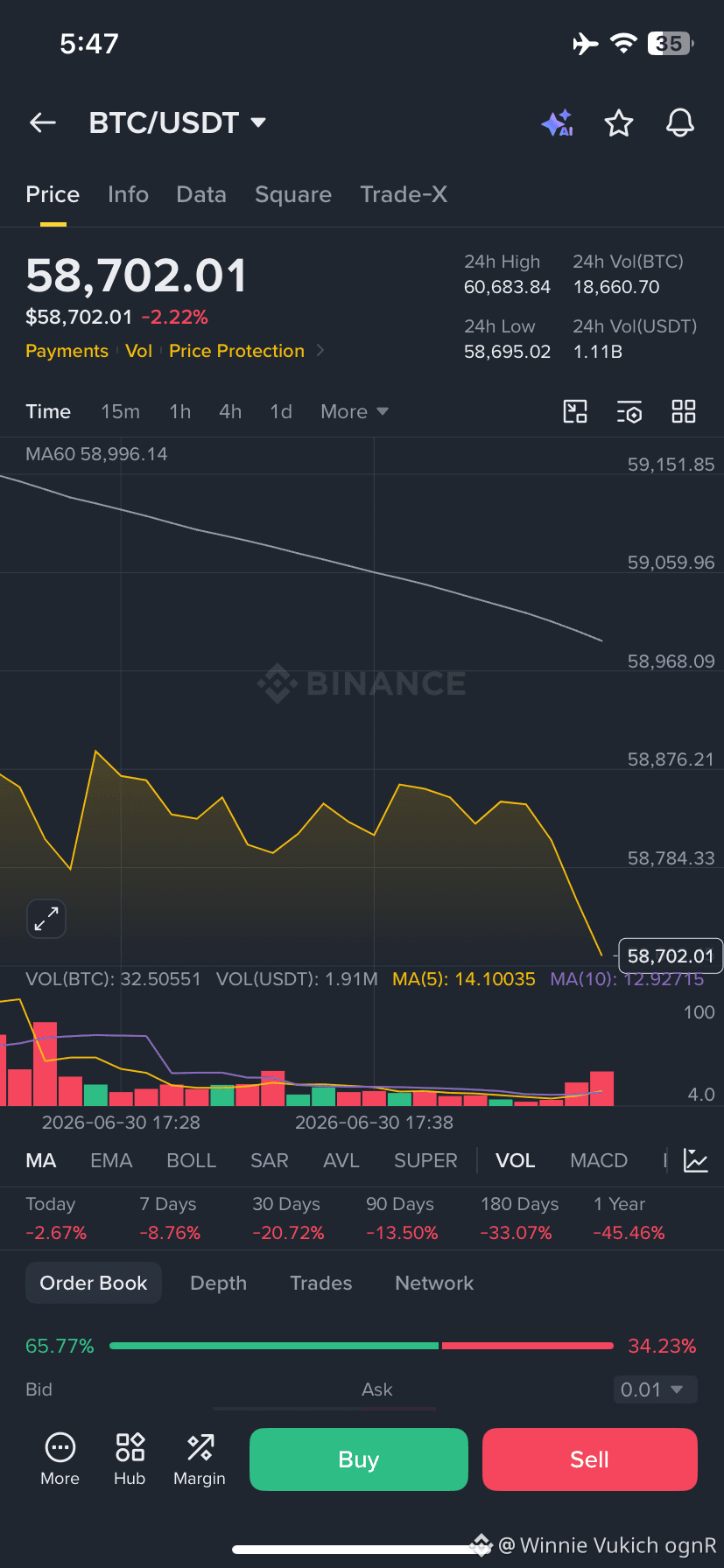
*$BTC Short Setup — Bears Are Driving* 🐻
*Entry Zone*: 59,650 – 59,800
*Stop Loss*: 60,200 — cut it if bulls break in
*Take Profit*: 59,200 — first bear target locked
*Thesis*: Price rejected near 60K. Bears holding the line. If it fails to reclaim 60,200, expect a push down to 59,200.
Trade smart, manage risk, and don’t marry the position 😉
{spot}(BTCUSDT)
$BTC #BTC走势分析
#SamsungSKHynixSharesRiseYTD
#StrategyAuthorizes$2BBuyback
$BTC
*$BTC Short Setup — Bears Are Driving* 🐻
*Entry Zone*: 59,650 – 59,800
*Stop Loss*: 60,200 — cut it if bulls break in
*Take Profit*: 59,200 — first bear target locked
*Thesis*: Price rejected near 60K. Bears holding the line. If it fails to reclaim 60,200, expect a push down to 59,200.
Trade smart, manage risk, and don’t marry the position 😉
$BTC #BTC走势分析
#SamsungSKHynixSharesRiseYTD
#StrategyAuthorizes$2BBuyback
*$BTC Short Setup — Bears Are Driving* 🐻
*Entry Zone*: 59,650 – 59,800
*Stop Loss*: 60,200 — cut it if bulls break in
*Take Profit*: 59,200 — first bear target locked
*Thesis*: Price rejected near 60K. Bears holding the line. If it fails to reclaim 60,200, expect a push down to 59,200.
Trade smart, manage risk, and don’t marry the position 😉
$BTC #BTC走势分析
#SamsungSKHynixSharesRiseYTD
#StrategyAuthorizes$2BBuyback
1
119
$Aksa $Aksa urgent: Gold falls below $4,000 again and records its worst performance since the crisis
Global financial
Gold prices fell by more than 1% during Tuesday’s trading, on track to post its biggest monthly loss since the global financial crisis in October 2008, as geopolitical fears in the Middle East eased and investors shifted their focus to expectations of raising U.S. interest rates to tackle high inflation.
The pressure is not limited to monthly performance either, as gold is also set to record its first quarterly loss since 2024, and its biggest quarterly decline since the quarter ended in June 2013. This came after the Iranian war led to a sharp rise in energy prices, which fueled inflationary pressures and boosted expectations for tighter U.S. monetary policy.$XAU
{future}(XAUUSDT)
#DowHitsRecordClose #SupremeCourtBlocksTrumpFromRemovingFedCook #StrategyAuthorizes$2BBuyback #YenHitsFourDecadeLowVsDollar #GoldHoldsDecline
$Aksa $Aksa urgent: Gold falls below $4,000 again and records its worst performance since the crisis
Global financial
Gold prices fell by more than 1% during Tuesday’s trading, on track to post its biggest monthly loss since the global financial crisis in October 2008, as geopolitical fears in the Middle East eased and investors shifted their focus to expectations of raising U.S. interest rates to tackle high inflation.
The pressure is not limited to monthly performance either, as gold is also set to record its first quarterly loss since 2024, and its biggest quarterly decline since the quarter ended in June 2013. This came after the Iranian war led to a sharp rise in energy prices, which fueled inflationary pressures and boosted expectations for tighter U.S. monetary policy.$XAU
#DowHitsRecordClose #SupremeCourtBlocksTrumpFromRemovingFedCook #StrategyAuthorizes$2BBuyback #YenHitsFourDecadeLowVsDollar #GoldHoldsDecline
Global financial
Gold prices fell by more than 1% during Tuesday’s trading, on track to post its biggest monthly loss since the global financial crisis in October 2008, as geopolitical fears in the Middle East eased and investors shifted their focus to expectations of raising U.S. interest rates to tackle high inflation.
The pressure is not limited to monthly performance either, as gold is also set to record its first quarterly loss since 2024, and its biggest quarterly decline since the quarter ended in June 2013. This came after the Iranian war led to a sharp rise in energy prices, which fueled inflationary pressures and boosted expectations for tighter U.S. monetary policy.$XAU
#DowHitsRecordClose #SupremeCourtBlocksTrumpFromRemovingFedCook #StrategyAuthorizes$2BBuyback #YenHitsFourDecadeLowVsDollar #GoldHoldsDecline

205

# Azerbaijan Finalizes Draft Crypto Law Requiring Central Bank License
**BAKU** — The Central Bank of Azerbaijan (CBA) has finalized and submitted a landmark draft law to regulate the country's virtual asset and cryptocurrency markets. Aimed at establishing a formal legal framework by the end of 2026, the legislation will introduce strict licensing requirements for all crypto businesses operating within the country.
### Key Requirements of the Bill
* **Mandatory Licensing:** All crypto-asset companies must obtain an official operating license from the CBA. Unlicensed platforms will be prohibited from servicing Azerbaijani citizens.
* **Strict Compliance:** To get licensed, platforms must implement robust mechanisms for Anti-Money Laundering (AML), Counter-Terrorist Financing (CTF), and Know-Your-Customer (KYC) identity protocols.
* **Regulatory Oversight:** The CBA will continuously supervise licensed entities to ensure consumer protection and financial stability.
### Strategic Context
Previously, Azerbaijan’s digital asset ecosystem operated completely without regulation. According to Fidan Tofidi, Director of the Financial Technologies and Innovations Department at the CBA, this new framework will serve as a pillar for Azerbaijan's financial market development strategy through 2027–2030, alongside other tech initiatives like Open Banking.
> "This is a significant achievement for us, as the sector has not been regulated until now and remains relatively new both globally and in Azerbaijan," Tofidi stated.
>
### What's Next?
The draft law is currently undergoing formal review by state institutions. If approved by the end of 2026, global and local crypto exchanges, wallet providers, and digital brokerages will face a strict timeline to comply with the CBA's new standards.
$TSLAB
{spot}(TSLABUSDT)
$BTC
{future}(BTCUSDT)
$ETH
{future}(ETHUSDT)
#DowHitsRecordClose
#AzerbaijanDraftsVirtualAssetBillRequiringCentralBankLicense
#SupremeCourtBlocksTrumpFromRemovingFedCook
#AAVERises13.16%To$94.32
#StrategyAuthorizes$2BBuyback
# Azerbaijan Finalizes Draft Crypto Law Requiring Central Bank License
**BAKU** — The Central Bank of Azerbaijan (CBA) has finalized and submitted a landmark draft law to regulate the country's virtual asset and cryptocurrency markets. Aimed at establishing a formal legal framework by the end of 2026, the legislation will introduce strict licensing requirements for all crypto businesses operating within the country.
### Key Requirements of the Bill
* **Mandatory Licensing:** All crypto-asset companies must obtain an official operating license from the CBA. Unlicensed platforms will be prohibited from servicing Azerbaijani citizens.
* **Strict Compliance:** To get licensed, platforms must implement robust mechanisms for Anti-Money Laundering (AML), Counter-Terrorist Financing (CTF), and Know-Your-Customer (KYC) identity protocols.
* **Regulatory Oversight:** The CBA will continuously supervise licensed entities to ensure consumer protection and financial stability.
### Strategic Context
Previously, Azerbaijan’s digital asset ecosystem operated completely without regulation. According to Fidan Tofidi, Director of the Financial Technologies and Innovations Department at the CBA, this new framework will serve as a pillar for Azerbaijan's financial market development strategy through 2027–2030, alongside other tech initiatives like Open Banking.
> "This is a significant achievement for us, as the sector has not been regulated until now and remains relatively new both globally and in Azerbaijan," Tofidi stated.
>
### What's Next?
The draft law is currently undergoing formal review by state institutions. If approved by the end of 2026, global and local crypto exchanges, wallet providers, and digital brokerages will face a strict timeline to comply with the CBA's new standards.
$TSLAB
$BTC
$ETH
#DowHitsRecordClose
#AzerbaijanDraftsVirtualAssetBillRequiringCentralBankLicense
#SupremeCourtBlocksTrumpFromRemovingFedCook
#AAVERises13.16%To$94.32
#StrategyAuthorizes$2BBuyback
**BAKU** — The Central Bank of Azerbaijan (CBA) has finalized and submitted a landmark draft law to regulate the country's virtual asset and cryptocurrency markets. Aimed at establishing a formal legal framework by the end of 2026, the legislation will introduce strict licensing requirements for all crypto businesses operating within the country.
### Key Requirements of the Bill
* **Mandatory Licensing:** All crypto-asset companies must obtain an official operating license from the CBA. Unlicensed platforms will be prohibited from servicing Azerbaijani citizens.
* **Strict Compliance:** To get licensed, platforms must implement robust mechanisms for Anti-Money Laundering (AML), Counter-Terrorist Financing (CTF), and Know-Your-Customer (KYC) identity protocols.
* **Regulatory Oversight:** The CBA will continuously supervise licensed entities to ensure consumer protection and financial stability.
### Strategic Context
Previously, Azerbaijan’s digital asset ecosystem operated completely without regulation. According to Fidan Tofidi, Director of the Financial Technologies and Innovations Department at the CBA, this new framework will serve as a pillar for Azerbaijan's financial market development strategy through 2027–2030, alongside other tech initiatives like Open Banking.
> "This is a significant achievement for us, as the sector has not been regulated until now and remains relatively new both globally and in Azerbaijan," Tofidi stated.
>
### What's Next?
The draft law is currently undergoing formal review by state institutions. If approved by the end of 2026, global and local crypto exchanges, wallet providers, and digital brokerages will face a strict timeline to comply with the CBA's new standards.
$TSLAB
$BTC
$ETH
#DowHitsRecordClose
#AzerbaijanDraftsVirtualAssetBillRequiringCentralBankLicense
#SupremeCourtBlocksTrumpFromRemovingFedCook
#AAVERises13.16%To$94.32
#StrategyAuthorizes$2BBuyback

1
172
·
--
Bullish
A slowdown in inflation puts a July rate hike by the European Central Bank at risk
Market expectations for a European Central Bank interest rate hike in July have fallen after a recent slowdown in inflation and a drop in oil prices, which pointed to delaying the move to September—signaling easing pressure on monetary policymakers to keep tightening at a rapid pace.
According to informed sources, European Central Bank officials were surprised by the rapid decline in oil prices over the past two weeks, reinforcing the view that energy pressures have begun to ease faster than previously estimated, reducing the need for an urgent step during the summer.
Markets are currently pricing in only about a 34% chance of a rate hike at the July meeting, compared with a clear increase in the odds of taking this step in September. Markets also price in a full 25 basis point hike by October, with expectations of further limited tightening before the end of the year.#SamsungSKHynixSharesRiseYTD #DowHitsRecordClose #AzerbaijanDraftsVirtualAssetBillRequiringCentralBankLicense #AAVERises13.16%To$94.32 #StrategyAuthorizes$2BBuyback $BTC
{future}(BTCUSDT)
A slowdown in inflation puts a July rate hike by the European Central Bank at risk
Market expectations for a European Central Bank interest rate hike in July have fallen after a recent slowdown in inflation and a drop in oil prices, which pointed to delaying the move to September—signaling easing pressure on monetary policymakers to keep tightening at a rapid pace.
According to informed sources, European Central Bank officials were surprised by the rapid decline in oil prices over the past two weeks, reinforcing the view that energy pressures have begun to ease faster than previously estimated, reducing the need for an urgent step during the summer.
Markets are currently pricing in only about a 34% chance of a rate hike at the July meeting, compared with a clear increase in the odds of taking this step in September. Markets also price in a full 25 basis point hike by October, with expectations of further limited tightening before the end of the year.#SamsungSKHynixSharesRiseYTD #DowHitsRecordClose #AzerbaijanDraftsVirtualAssetBillRequiringCentralBankLicense #AAVERises13.16%To$94.32 #StrategyAuthorizes$2BBuyback $BTC
Market expectations for a European Central Bank interest rate hike in July have fallen after a recent slowdown in inflation and a drop in oil prices, which pointed to delaying the move to September—signaling easing pressure on monetary policymakers to keep tightening at a rapid pace.
According to informed sources, European Central Bank officials were surprised by the rapid decline in oil prices over the past two weeks, reinforcing the view that energy pressures have begun to ease faster than previously estimated, reducing the need for an urgent step during the summer.
Markets are currently pricing in only about a 34% chance of a rate hike at the July meeting, compared with a clear increase in the odds of taking this step in September. Markets also price in a full 25 basis point hike by October, with expectations of further limited tightening before the end of the year.#SamsungSKHynixSharesRiseYTD #DowHitsRecordClose #AzerbaijanDraftsVirtualAssetBillRequiringCentralBankLicense #AAVERises13.16%To$94.32 #StrategyAuthorizes$2BBuyback $BTC

67

🚀 $SOL /USDT Long Setup
📍 Entry: 73.90 – 74.20
🎯 TP1: 75.00
🎯 TP2: 76.00
🎯 TP3: 77.00
🛑 SL: Below 73.20
SOL remains in a bullish structure after a strong rally and is now consolidating near support. A breakout above 75.00 could trigger the next bullish leg. Trade with proper risk management.
{future}(SOLUSDT)
#SOL #Crypto #BinanceSquare #StrategyAuthorizes$2BBuyback #AzerbaijanDraftsVirtualAssetBillRequiringCentralBankLicense
🚀 $SOL /USDT Long Setup
📍 Entry: 73.90 – 74.20
🎯 TP1: 75.00
🎯 TP2: 76.00
🎯 TP3: 77.00
🛑 SL: Below 73.20
SOL remains in a bullish structure after a strong rally and is now consolidating near support. A breakout above 75.00 could trigger the next bullish leg. Trade with proper risk management.
#SOL #Crypto #BinanceSquare #StrategyAuthorizes$2BBuyback #AzerbaijanDraftsVirtualAssetBillRequiringCentralBankLicense
📍 Entry: 73.90 – 74.20
🎯 TP1: 75.00
🎯 TP2: 76.00
🎯 TP3: 77.00
🛑 SL: Below 73.20
SOL remains in a bullish structure after a strong rally and is now consolidating near support. A breakout above 75.00 could trigger the next bullish leg. Trade with proper risk management.
#SOL #Crypto #BinanceSquare #StrategyAuthorizes$2BBuyback #AzerbaijanDraftsVirtualAssetBillRequiringCentralBankLicense

1
95

Mistiy box💹$NVDAB
{spot}(NVDABUSDT)
#SamsungSKHynixSharesRiseYTD $NVDAB #DowHitsRecordClose #StrategyAuthorizes$2BBuyback $NVDAB #AAVERises13.16%To$94.32 #GoldHoldsDecline
Mistiy box💹
$NVDAB
#SamsungSKHynixSharesRiseYTD $NVDAB #DowHitsRecordClose #StrategyAuthorizes$2BBuyback $NVDAB #AAVERises13.16%To$94.32 #GoldHoldsDecline
#SamsungSKHynixSharesRiseYTD $NVDAB #DowHitsRecordClose #StrategyAuthorizes$2BBuyback $NVDAB #AAVERises13.16%To$94.32 #GoldHoldsDecline
33
·
--
Bullish
The number of job openings in the United States rises to 7.594 million in May
Job openings in the United States rose more than expected in May, according to a closely watched survey released by the U.S. Department of Labor.
The number of available jobs, which is an indicator of demand in the labor market, reached 7.594 million during the month, compared with a downwardly revised total of 7.585 million in April, and analysts’ estimates of 7.280 million. This is the highest level in two years.
The Bureau of Labor Statistics, in its Job Openings and Labor Turnover Survey (JOLTS), said the number of hires and the hiring rate remained unchanged from last year, at 5.2 million and 3.3%, respectively.
#SamsungSKHynixSharesRiseYTD #AzerbaijanDraftsVirtualAssetBillRequiringCentralBankLicense #SupremeCourtBlocksTrumpFromRemovingFedCook #StrategyAuthorizes$2BBuyback #StrategyAuthorizes$2BBuyback $XAU
{future}(XAUUSDT)
The number of job openings in the United States rises to 7.594 million in May
Job openings in the United States rose more than expected in May, according to a closely watched survey released by the U.S. Department of Labor.
The number of available jobs, which is an indicator of demand in the labor market, reached 7.594 million during the month, compared with a downwardly revised total of 7.585 million in April, and analysts’ estimates of 7.280 million. This is the highest level in two years.
The Bureau of Labor Statistics, in its Job Openings and Labor Turnover Survey (JOLTS), said the number of hires and the hiring rate remained unchanged from last year, at 5.2 million and 3.3%, respectively.
#SamsungSKHynixSharesRiseYTD #AzerbaijanDraftsVirtualAssetBillRequiringCentralBankLicense #SupremeCourtBlocksTrumpFromRemovingFedCook #StrategyAuthorizes$2BBuyback #StrategyAuthorizes$2BBuyback $XAU
Job openings in the United States rose more than expected in May, according to a closely watched survey released by the U.S. Department of Labor.
The number of available jobs, which is an indicator of demand in the labor market, reached 7.594 million during the month, compared with a downwardly revised total of 7.585 million in April, and analysts’ estimates of 7.280 million. This is the highest level in two years.
The Bureau of Labor Statistics, in its Job Openings and Labor Turnover Survey (JOLTS), said the number of hires and the hiring rate remained unchanged from last year, at 5.2 million and 3.3%, respectively.
#SamsungSKHynixSharesRiseYTD #AzerbaijanDraftsVirtualAssetBillRequiringCentralBankLicense #SupremeCourtBlocksTrumpFromRemovingFedCook #StrategyAuthorizes$2BBuyback #StrategyAuthorizes$2BBuyback $XAU

43
·
--
Bullish
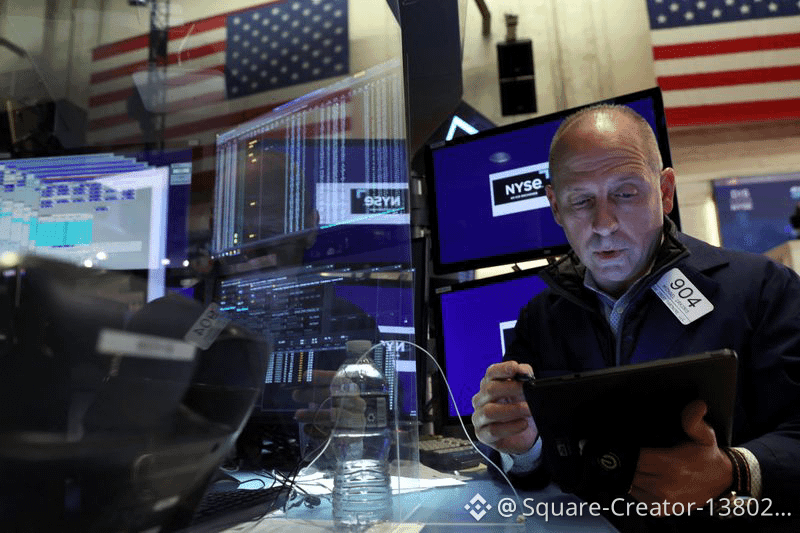
The tech stocks sell-off wave hasn’t ended yet..
Did the AI bubble burst?
Strategists at Citi Group warned that US technology shares remain exposed to further declines in the coming period, noting that investors’ exposure to the sector is still high despite the recent sell-off wave—something that increases the likelihood of continued pressure on stocks.
Analyst team led by David Chio explained that the drop seen by the Nasdaq 100 during June was not accompanied by a similar decline in investors’ positions, meaning many of them are still holding large bets on the continued rise of technology stocks.
The team added that this situation increases investors’ risk of suffering greater losses if the current downward wave continues.#SamsungSKHynixSharesRiseYTD #DowHitsRecordClose #SupremeCourtBlocksTrumpFromRemovingFedCook #AAVERises13.16%To$94.32 #StrategyAuthorizes$2BBuyback $SPCXB
{spot}(SPCXBUSDT)
The tech stocks sell-off wave hasn’t ended yet..
Did the AI bubble burst?
Strategists at Citi Group warned that US technology shares remain exposed to further declines in the coming period, noting that investors’ exposure to the sector is still high despite the recent sell-off wave—something that increases the likelihood of continued pressure on stocks.
Analyst team led by David Chio explained that the drop seen by the Nasdaq 100 during June was not accompanied by a similar decline in investors’ positions, meaning many of them are still holding large bets on the continued rise of technology stocks.
The team added that this situation increases investors’ risk of suffering greater losses if the current downward wave continues.#SamsungSKHynixSharesRiseYTD #DowHitsRecordClose #SupremeCourtBlocksTrumpFromRemovingFedCook #AAVERises13.16%To$94.32 #StrategyAuthorizes$2BBuyback $SPCXB
Did the AI bubble burst?
Strategists at Citi Group warned that US technology shares remain exposed to further declines in the coming period, noting that investors’ exposure to the sector is still high despite the recent sell-off wave—something that increases the likelihood of continued pressure on stocks.
Analyst team led by David Chio explained that the drop seen by the Nasdaq 100 during June was not accompanied by a similar decline in investors’ positions, meaning many of them are still holding large bets on the continued rise of technology stocks.
The team added that this situation increases investors’ risk of suffering greater losses if the current downward wave continues.#SamsungSKHynixSharesRiseYTD #DowHitsRecordClose #SupremeCourtBlocksTrumpFromRemovingFedCook #AAVERises13.16%To$94.32 #StrategyAuthorizes$2BBuyback $SPCXB
176

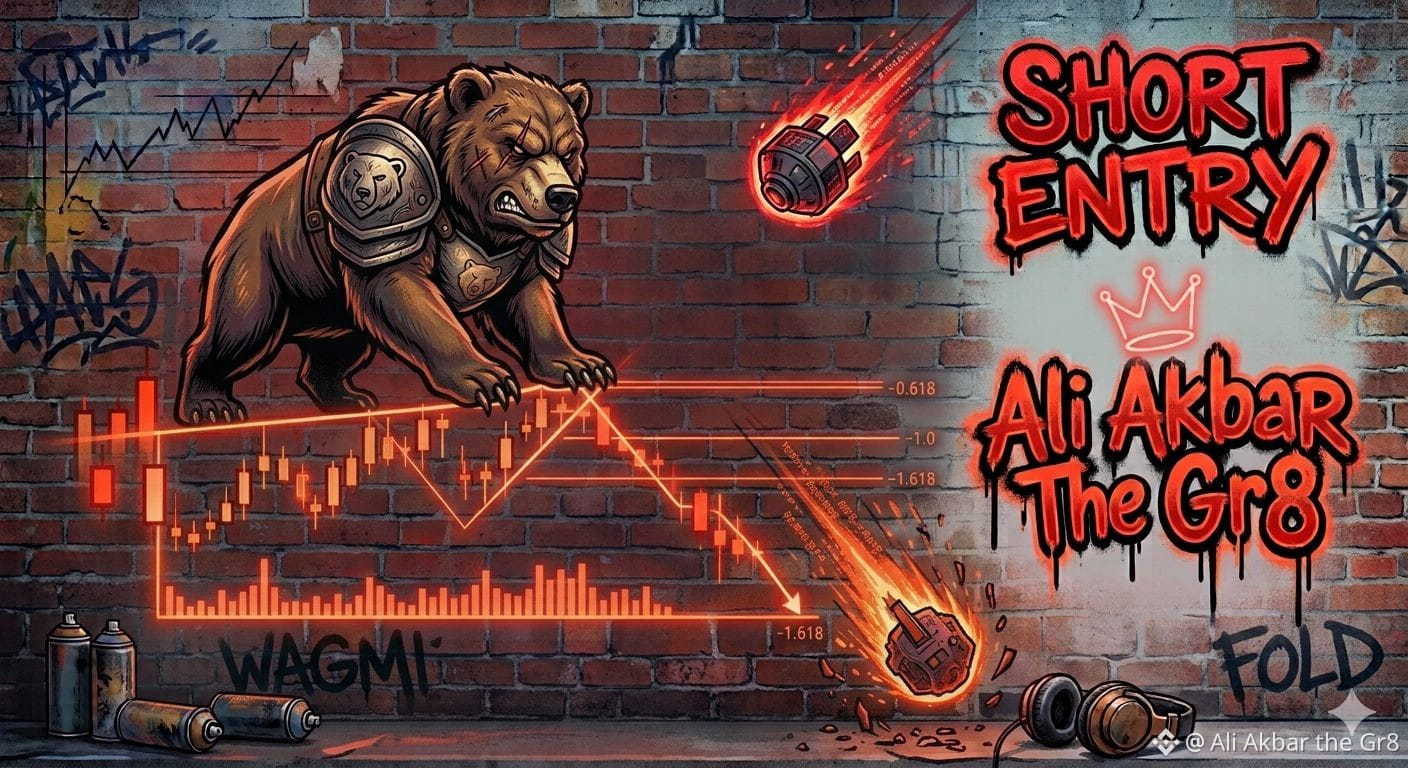
Low Risk Trade for Loss Recovery
Short $AAVE
Short
Entry : 85.6 📊
Target : 83 🎯
Lev : 12x
Low risk trade
{future}(AAVEUSDT)
$BTC
#StrategyAuthorizes$2BBuyback
#GoldHoldsDecline
#AAVERises13.16%To$94.32
{spot}(BTCUSDT)
Low Risk Trade for Loss Recovery
Short $AAVE
Short
Entry : 85.6 📊
Target : 83 🎯
Lev : 12x
Low risk trade
$BTC
#StrategyAuthorizes$2BBuyback
#GoldHoldsDecline
#AAVERises13.16%To$94.32
Short $AAVE
Short
Entry : 85.6 📊
Target : 83 🎯
Lev : 12x
Low risk trade
$BTC
#StrategyAuthorizes$2BBuyback
#GoldHoldsDecline
#AAVERises13.16%To$94.32
191

binance bestEverytime best Exchange would best Exchange #DowHitsRecordClose $SPCXB #StrategyAuthorizes$2BBuyback #StrategyAuthorizes$2BBuyback #AAVERises13.16%To$94.32 #SupremeCourtBlocksTrumpFromRemovingFedCook #SupremeCourtBlocksTrumpFromRemovingFedCook #GoldHoldsDecline $METAB $NVDAB
binance best
Everytime best Exchange would best Exchange #DowHitsRecordClose $SPCXB #StrategyAuthorizes$2BBuyback #StrategyAuthorizes$2BBuyback #AAVERises13.16%To$94.32 #SupremeCourtBlocksTrumpFromRemovingFedCook #SupremeCourtBlocksTrumpFromRemovingFedCook #GoldHoldsDecline $METAB $NVDAB
37
Log in to explore more content
Join global crypto users on Binance Square
⚡️ Get latest and useful information about crypto.
💬 Trusted by the world’s largest crypto exchange.
👍 Discover real insights from verified creators.
Email / Phone number
Trending Topics
1
#CircleMints500MUSDCOnSolana
30,312 views
843 Discussing
2
#PolymarketBankFailureBetsDrawFDICConcern
44,292 views
1,001 Discussing
3
#BlackRockBuildsTokenizedPortfoliosForOndo
37,400 views
672 Discussing
4
#BitwiseFilesToListNEARETFOnNYSEArca
35,731 views
603 Discussing
5
#SECCommissionerPeirceToLeaveOct2
34,273 views
491 Discussing
6
#SECSaysBuybacksUpgradesDontMakeTokenSecurity
31,334 views
411 Discussing
7
#StrategyProposesDailyDividendsForPreferreds
5,017 views
128 Discussing
8
#CircleTetherFreezeBitgetHackerWallet
4,620 views
74 Discussing
9
#CoinMarketCapCompletesCoinglassAcquisition
7,564 views
107 Discussing
10
#QNTRises39%
92,308 views
1,493 Discussing