
#robinhoodadds
robinhoodadds
475 views
19 Discussing
Hot
Latest

·
--
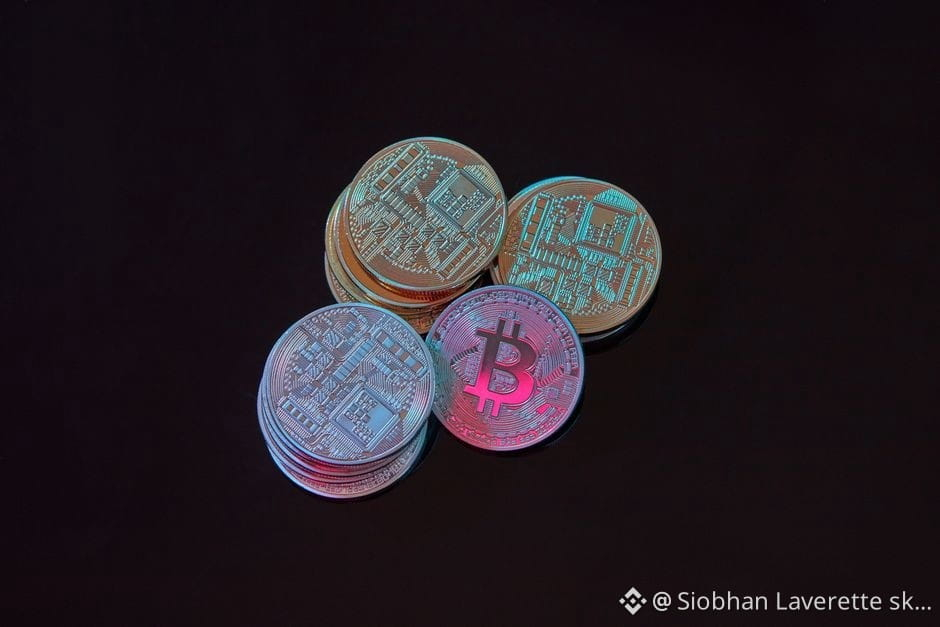
Robinhood has significantly boosted its Bitcoin holdings, adding $25 million worth to its balance sheet. This move signals increased confidence from the trading platform in digital assets and potentially hints at future developments within their crypto services. Such a substantial allocation by a major financial player like Robinhood could be interpreted as a bullish signal for Bitcoin and the broader crypto market, possibly attracting more institutional interest. It underscores the growing integration of cryptocurrencies into traditional financial structures, reflecting a maturing asset class.
This development is being closely watched by investors for its potential impact on market sentiment and Robinhood's own strategic direction regarding digital currencies. The company's commitment to holding Bitcoin on its balance sheet is a notable step in its ongoing engagement with the crypto space.
Disclaimer: This content is for informational purposes only and does not constitute investment advice.
#RobinhoodAdds$25MInBitcoinToBalanceSheet $BTC

96

·
--
If you're still treating every new listing as an automatic green light to buy, stop now.
The same cycle keeps wrecking people. They pile into a token the moment it gets added to a big platform then watch it bleed out while they sit on losses.
Robinhood expanding its lineup has the usual split. Some say it just dumps extra retail sell pressure onto names like $SUI. Others argue it actually grows the pie by bringing new users to $NEAR and $ZEC.
I land on the second view. Wider access still builds real liquidity over time even when the first days get messy. Neutral Fear and Greed at 59 does not look like a blow-off top.
Short-term chop is just the cost of that extra volume.
Where do you think this goes from here for the tokens involved?
#RobinhoodAdds #EthereumSpotETFRecords #XRPSpotETFsHold
If you're still treating every new listing as an automatic green light to buy, stop now.
The same cycle keeps wrecking people. They pile into a token the moment it gets added to a big platform then watch it bleed out while they sit on losses.
Robinhood expanding its lineup has the usual split. Some say it just dumps extra retail sell pressure onto names like $SUI . Others argue it actually grows the pie by bringing new users to $NEAR and $ZEC .
I land on the second view. Wider access still builds real liquidity over time even when the first days get messy. Neutral Fear and Greed at 59 does not look like a blow-off top.
Short-term chop is just the cost of that extra volume.
Where do you think this goes from here for the tokens involved?
#RobinhoodAdds #EthereumSpotETFRecords #XRPSpotETFsHold

136
·
--
Have you noticed nobody is questioning whether Robinhood listings actually benefit existing holders?
The pain is real when you FOMO into a newly added token only to see it dump as the hype cycle completes.
Look at this as a repeating case study. Robinhood brings in a wave of new retail buyers for tokens like $MINA, $DOT and $FIL. That creates a brief pump but it rarely holds because the listing often comes after the token has already moved.
Bigger players sell into that fresh demand leaving the app users underwater. With the market in greed territory this just adds more fuel to the late-stage buying we always see at tops.
Accessibility is nice but timing matters more than most admit. These additions tend to coincide with local highs rather than the start of a real run.
Where do you think the next batch of listings takes us from here?
#RobinhoodAdds #SP500AndNasdaqHitRecordHighs #SECApproves3XBitcoinETF
Have you noticed nobody is questioning whether Robinhood listings actually benefit existing holders?
The pain is real when you FOMO into a newly added token only to see it dump as the hype cycle completes.
Look at this as a repeating case study. Robinhood brings in a wave of new retail buyers for tokens like $MINA , $DOT and $FIL . That creates a brief pump but it rarely holds because the listing often comes after the token has already moved.
Bigger players sell into that fresh demand leaving the app users underwater. With the market in greed territory this just adds more fuel to the late-stage buying we always see at tops.
Accessibility is nice but timing matters more than most admit. These additions tend to coincide with local highs rather than the start of a real run.
Where do you think the next batch of listings takes us from here?
#RobinhoodAdds #SP500AndNasdaqHitRecordHighs #SECApproves3XBitcoinETF

224
·
--
Picture this: a mid-cap token announces a fresh listing on a major retail app, and retail traders rush the order books within seconds of the headline hitting feeds.
Most participants treat retail exchange listings as guaranteed exit liquidity for their spot holdings, only to end up holding the bag when market makers aggressively distribute into the opening surge. Chasing these headline pumps usually results in buying the absolute local top while liquidity providers quietly wind down exposure.
Look at how order book dynamics play out during these listing spikes. When assets like $DOT or $FIL get added to retail platforms, the immediate impulse candle creates an illusion of sustained buying pressure. In reality, retail volume rarely absorbs the structural distribution from early holders who have been waiting for deeper spot books to offload size without slipping the market.
The danger isn't the asset itself, but the timing. Liquidity is asymmetric during these events, and once the initial retail burst fades, order book depth on $USDT pairs thins out quickly, leaving late buyers trapped in long bleed-outs.
How do you usually position when a major retail listing headline drops?
#RobinhoodAdds #BinanceLaunchesBinanceIntelligence

19

Have you noticed how retail investors keep treating new exchange listings as guaranteed exit liquidity for early holders instead of real adoption?
Most traders still rush to buy the second a listing announcement drops, only to watch their portfolio bleed when the initial momentum evaporates twenty minutes later. We keep repeating the same cycle because we confuse accessibility with fresh demand.
Take a look at what happens every time we see a headline around #RobinhoodAdds. The mainstream narrative assumes millions of casual users will immediately ape in and send tokens like $SUI or $NEAR into price discovery. But when you look at actual order books, these retail onboarding events rarely trigger sustained spot accumulation on day one. Instead, they usually serve as a clean distribution window for smart money that positioned weeks prior, leaving late buyers trapped near local tops.
Retail platforms expand distribution pipes, but pipes do not create buying pressure out of thin air. Real momentum only follows when liquidity is backed by on-chain utility and macro catalysts, not just a shiny new button on a trading app.
Are exchange listings still an effective catalyst for your strategy, or just an exit signal?
#RobinhoodAdds #BinanceLaunchesBinanceIntelligence

28

📰 Why Doesn’t the Miner Set a Target? Is Sarli’s Strategy of 84,800 BTC a Signal or a Signal?
BMC miner Sarli recently disclosed that its digital asset strategy now holds approximately 84,800 BTC, and that the company has no fixed target for its Bitcoin holdings. According to data from NS3.AI, Sarli said it would continue accumulating Bitcoin as the strategy raises funds. He also expects Bitcoin to approach 99% of its total supply by 2035, and noted that capital is flowing back into crypto from AI and private equity.
Why does this news matter?
This information is significant because it touches on a core tension in the Bitcoin investment thesis: the tension between quantitative strategies and unlimited potential. Traditional value investing aims to “buy the right amount of an asset at the right time,” but Sarli’s model breaks that framework, likening Bitcoin to perpetual “gold”—a fixed supply with unlimited value. The goal is no longer “at what price should we sell?” but “how large a share should we hold?” This means the strategy is elevating Bitcoin from a “priceable asset” to an “asset that can be accumulated without limit”—a powerful example for other investors.
Its impact on the market landscape can be seen on two fronts. First, it puts those trying to predict Bitcoin’s price using technical analysis or macro cycles at a disadvantage: if miners don’t care about the price, then volatility is just noise. Second, the trend of capital flowing back into crypto reinforces Sarli’s argument, and the crypto market may be entering a new phase dominated by the “fixed-supply thesis.”
Market impact
For BTC, 84,800 BTC is the strategy’s current holding, but the more important point is its statement that it will “continue accumulating.” This means the strategy will no longer take BTC’s price range into consideration; as long as capital keeps flowing in, it will continue buying BTC. At the current price of $82,540, the average cost basis of the strategy’s holdings will keep falling. A historical reference point is how institutions behaved when Bitcoin ETFs were first approved in early 2017, but this time the approach is more aggressive—not allocating a set amount quarterly or annually, but accumulating without limit based on cash flow.
The impact on ETH and BNB is indirect. If U.S. capital flows from venture capital and AI into crypto without a set limit, these major tokens could come under pressure. After all, under the fixed-supply thesis, all crypto assets are “gold,” but the scale of capital behind Sarli’s strategy is large enough to prioritize Bitcoin as “super gold.” This means that even if capital flows back into crypto, ETH and BNB may still face pressure unless there is a major regulatory breakthrough.
Trading outlook
💡 I believe Bitcoin will maintain its current uptrend at least through the end of the year, mainly because the strategy is establishing a “fixed-supply thesis” as an anchor. However, this view would be invalidated if the Federal Reserve signals rate hikes or escalating geopolitical conflicts trigger a flight of capital back to U.S. stocks.
$BTC $ETH #BTC #ETH
This article is not sponsored by any project, and the author does not hold any of the assets mentioned.
⚠️ This is not investment advice. Forecasts are for reference only.
#RobinhoodAdds$25MInBitcoinToBalanceSheet



207

#sp500andnasdaqhitrecordhighs
🚨 S&P 500 and Nasdaq Hit All-Time Highs: What Does This Mean for Crypto Liquidity? 📈🔥
Risk appetite across the macroeconomy is back in full force, as Wall Street reaches unprecedented heights! 🚨
The S&P 500 surpassed 7,800 for the first time in history, while the Nasdaq Composite closed at a record high for the second consecutive time, thanks to a strong rally in tech stocks and AI chipmakers.
$DOGE
{future}(DOGEUSDT)
Why are crypto traders watching this closely?
📌 Spillover from macro risk appetite: When traditional stock indexes hit record highs, institutional capital allocated to risk typically flows into high-beta assets like $BTC and $ETH.
📌 Falling Treasury yields: A pause in the bond-market selloff lowers borrowing costs, boosting global liquidity through spot crypto ETFs and derivatives desks.
$XRP
{future}(XRPUSDT)
💡 Liquidity takeaway:
Historically, extended waves of record-setting stock gains amplify the wealth effect. When equity investors reap record profits, surplus capital tends to flow into crypto in search of asymmetric upside opportunities.
Please follow
#SP500 #RobinhoodAdds #BinanceLaunchesBinanceIntelligence #USMortgageRatesRiseTo7.49%
#sp500andnasdaqhitrecordhighs
🚨 S&P 500 and Nasdaq Hit All-Time Highs: What Does This Mean for Crypto Liquidity? 📈🔥
Risk appetite across the macroeconomy is back in full force, as Wall Street reaches unprecedented heights! 🚨
The S&P 500 surpassed 7,800 for the first time in history, while the Nasdaq Composite closed at a record high for the second consecutive time, thanks to a strong rally in tech stocks and AI chipmakers.
$DOGE
Why are crypto traders watching this closely?
📌 Spillover from macro risk appetite: When traditional stock indexes hit record highs, institutional capital allocated to risk typically flows into high-beta assets like $BTC and $ETH.
📌 Falling Treasury yields: A pause in the bond-market selloff lowers borrowing costs, boosting global liquidity through spot crypto ETFs and derivatives desks.
$XRP
💡 Liquidity takeaway:
Historically, extended waves of record-setting stock gains amplify the wealth effect. When equity investors reap record profits, surplus capital tends to flow into crypto in search of asymmetric upside opportunities.
Please follow
#SP500 #RobinhoodAdds #BinanceLaunchesBinanceIntelligence #USMortgageRatesRiseTo7.49%

1
78
Log in to explore more content
Join global crypto users on Binance Square
⚡️ Get latest and useful information about crypto.
💬 Trusted by the world’s largest crypto exchange.
👍 Discover real insights from verified creators.
Email / Phone number
Trending Topics
1
#NVIDIAReinstatesJensenHuangasCEO
10,495 views
396 Discussing
2
#WillMarketsStageAThanksgivingReliefRally?
111,553 views
1,579 Discussing
3
#WillOctCorePCEShiftFedHikeExpectations?
41,441 views
635 Discussing
4
#BitcoinEndsRecord17DayStreakOfLowerHighs
1,585 views
125 Discussing
5
#TradersPriceOut50bpDecemberFedHike
1,962 views
97 Discussing
6
#EvolveAtBinanceBlockchainWeek
95,086 views
922 Discussing
7
#TrumpBackedAmericanBitcoinRaisesHoldingsToOver8500BTC
660 views
28 Discussing
8
#MuskWarnsOfAICashCrunch
53,318 views
663 Discussing
9
#TradFiForBeginners
1.1M views
5,938 Discussing
10
#SkyPSMUSDCLiquidityReboundsTo$1.77B
406 views
9 Discussing