
#rwacoinlist
rwacoinlist
115,045 views
126 Discussing
Hot
Latest

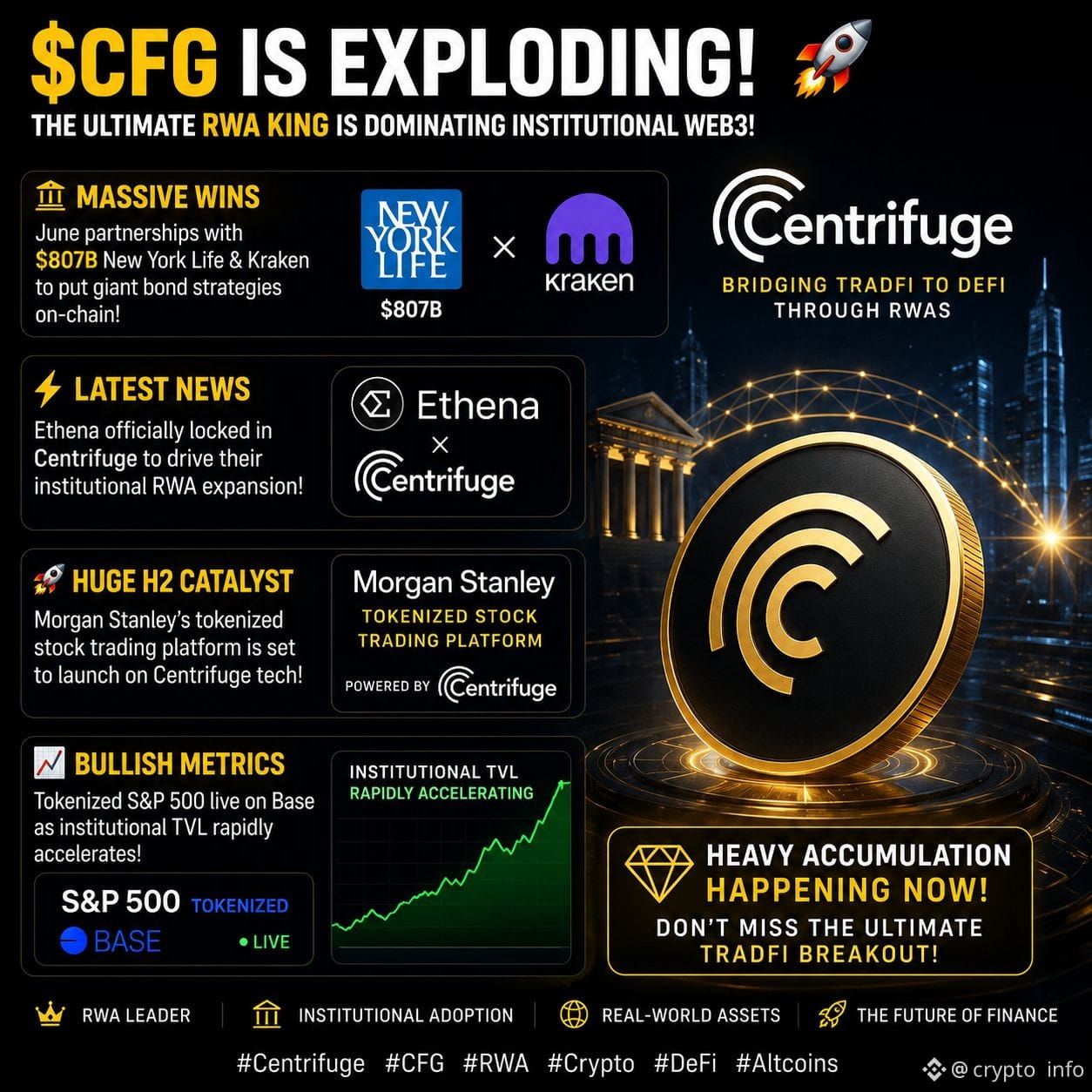
Centrifuge ($CFG) is getting a lot of attention as it continues to expand its role in the real-world asset ($RWA) space.
Here are some of the biggest recent developments:• Centrifuge announced partnerships with New York Life and Kraken to help bring traditional financial products on-chain.• $Ethena has integrated Centrifuge as part of its institutional RWA strategy.• There is growing market interest around tokenized assets, with expectations that institutional adoption could continue to increase.• Tokenized investment products, including S&P 500 exposure on Base, highlight the broader trend toward bringing traditional finance onto blockchain networks.
Many investors see these developments as positive for Centrifuge's long-term potential. However, as with any crypto investment, it's important to do your own research and remember that markets remain highly volatile.
#RWAcoinList #CryptoTrending2026 #USStrikesIranAfterHormuzShipAttack
Centrifuge ($CFG) is getting a lot of attention as it continues to expand its role in the real-world asset ($RWA) space.
Here are some of the biggest recent developments:• Centrifuge announced partnerships with New York Life and Kraken to help bring traditional financial products on-chain.• $Ethena has integrated Centrifuge as part of its institutional RWA strategy.• There is growing market interest around tokenized assets, with expectations that institutional adoption could continue to increase.• Tokenized investment products, including S&P 500 exposure on Base, highlight the broader trend toward bringing traditional finance onto blockchain networks.
Many investors see these developments as positive for Centrifuge's long-term potential. However, as with any crypto investment, it's important to do your own research and remember that markets remain highly volatile.
#RWAcoinList #CryptoTrending2026 #USStrikesIranAfterHormuzShipAttack
Here are some of the biggest recent developments:• Centrifuge announced partnerships with New York Life and Kraken to help bring traditional financial products on-chain.• $Ethena has integrated Centrifuge as part of its institutional RWA strategy.• There is growing market interest around tokenized assets, with expectations that institutional adoption could continue to increase.• Tokenized investment products, including S&P 500 exposure on Base, highlight the broader trend toward bringing traditional finance onto blockchain networks.
Many investors see these developments as positive for Centrifuge's long-term potential. However, as with any crypto investment, it's important to do your own research and remember that markets remain highly volatile.
#RWAcoinList #CryptoTrending2026 #USStrikesIranAfterHormuzShipAttack
1
348
#dusk $DUSK @Dusk_Foundation
📊 The RWA Narrative: Why Privacy is the Missing Link
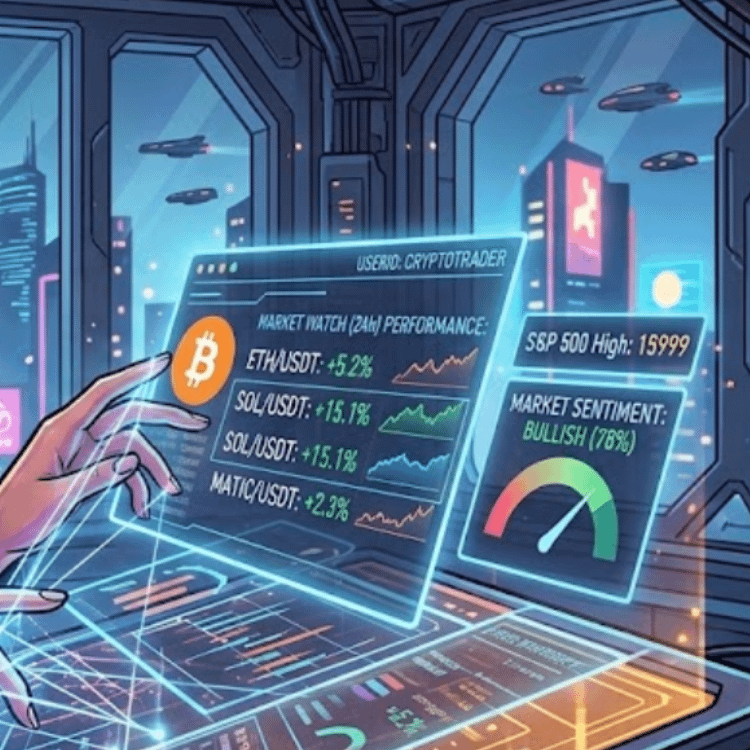
The narrative around Real World Assets (RWA) and institutional DeFi is rapidly heating up, but there is a glaring issue most traders are ignoring: institutional capital requires absolute privacy. Public ledgers that expose every corporate trade and strategy simply won't work for traditional finance.
This is exactly where @Dusk steps in. By leveraging Zero-Knowledge (ZK) proofs, the network delivers a RegDeFi (Regulated DeFi) Layer-1 that ensures transaction privacy while maintaining strict regulatory compliance. It perfectly bridges the gap between traditional securities and decentralized finance.
If you are trading the RWA sector and looking beyond standard meme narratives, $DUSK is a critical infrastructure play to keep on your charts. The tech is built specifically to handle tokenized securities and compliant smart contracts at scale.
Are you currently positioning for the RWA market rotation? Let me know your thoughts in the comments! 👇
#dusk #RWAcoinList #CryptoAnalysis
#dusk $DUSK @Dusk
📊 The RWA Narrative: Why Privacy is the Missing Link
The narrative around Real World Assets (RWA) and institutional DeFi is rapidly heating up, but there is a glaring issue most traders are ignoring: institutional capital requires absolute privacy. Public ledgers that expose every corporate trade and strategy simply won't work for traditional finance.
This is exactly where @Dusk steps in. By leveraging Zero-Knowledge (ZK) proofs, the network delivers a RegDeFi (Regulated DeFi) Layer-1 that ensures transaction privacy while maintaining strict regulatory compliance. It perfectly bridges the gap between traditional securities and decentralized finance.
If you are trading the RWA sector and looking beyond standard meme narratives, $DUSK is a critical infrastructure play to keep on your charts. The tech is built specifically to handle tokenized securities and compliant smart contracts at scale.
Are you currently positioning for the RWA market rotation? Let me know your thoughts in the comments! 👇
#dusk #RWAcoinList #CryptoAnalysis
📊 The RWA Narrative: Why Privacy is the Missing Link
The narrative around Real World Assets (RWA) and institutional DeFi is rapidly heating up, but there is a glaring issue most traders are ignoring: institutional capital requires absolute privacy. Public ledgers that expose every corporate trade and strategy simply won't work for traditional finance.
This is exactly where @Dusk steps in. By leveraging Zero-Knowledge (ZK) proofs, the network delivers a RegDeFi (Regulated DeFi) Layer-1 that ensures transaction privacy while maintaining strict regulatory compliance. It perfectly bridges the gap between traditional securities and decentralized finance.
If you are trading the RWA sector and looking beyond standard meme narratives, $DUSK is a critical infrastructure play to keep on your charts. The tech is built specifically to handle tokenized securities and compliant smart contracts at scale.
Are you currently positioning for the RWA market rotation? Let me know your thoughts in the comments! 👇
#dusk #RWAcoinList #CryptoAnalysis
17


Article
RWA Vaults Explained - How Real World Yield Comes OnchainIf you’ve spent any time in DeFi, you’ve seen the word “vault” everywhere - yield vaults, lending vaults, strategy vaults. But let’s talk about the type of vault that matters most here: RWA vaults - vaults backed by real world assets.
First, what even is a vault in DeFi? Think of it like a smart savings jar. You put money in, and the jar automatically invests it based on rules written into a smart contract. You earn yield, and you can withdraw when you want.
In traditional DeFi, vaults might lend your crypto on protocols, provide liquidity, or run complex strategies. The vault handles everything - you just deposit and earn. Most modern vaults are built on a standard called ERC-4626, which acts like a universal plug socket. Vaults built on this standard behave similarly, making them easier to trust and easier to build on top of.
So what makes an rwa vault different?
Simple.
A regular DeFi vault earns yield from crypto-native activity - lending, trading fees, liquidity mining. The returns come from other crypto users. An rwa vault earns yield from the real world - assets like government bonds, corporate loans, trade finance, real estate debt, or private credit.
Here’s how it works.
You deposit stablecoins like usdc or DAI into the vault. In return, you receive vault tokens that represent your share - like a receipt. The vault manager then takes those funds and allocates them into real world assets. Those assets generate yield through interest payments, bond coupons, or loan repayments. That yield flows back into the vault, increasing the value of your tokens. When you withdraw, you redeem your tokens for your initial deposit plus the yield earned.
An easy way to picture it: a group of people pool money into a jar. Someone trustworthy uses that money to buy a government bond. When the bond pays interest, it goes back into the jar, and everyone’s share grows. The jar is the vault, the bond is the rwa, and the person managing it is the vault manager (or a mix of humans and smart contracts).
So why not just buy the asset yourself?
Access is a big reason. Most people can’t easily buy instruments like U.S. Treasury bills depending on where they live. Rwa vaults open that up globally to anyone with a crypto wallet. Then there are minimums - some opportunities require large capital, often 100k+. Vaults lower that barrier dramatically. There’s also automation - the vault handles everything from execution to accounting. And finally, composability - your vault tokens can be used across DeFi, whether that’s as collateral or in other strategies.
Now the important part: who manages the real world side?
Unlike purely onchain vaults, rwa vaults operate in two worlds. Someone has to actually purchase the asset, hold it in custody (often via a regulated custodian or an SPV), report on its value, and handle situations like defaults. This is where trust becomes critical.
The smart contract handles the onchain logic - deposits, withdrawals, accounting. But the offchain side relies on legal structures, institutions, and oracles that feed real world data back onchain.
A quick breakdown:
An SPV (Special Purpose Vehicle) is a separate legal entity created to hold the underlying assets. If the platform fails, the SPV is designed to protect those assets. An oracle is a system that brings real world data - like pricing or proof of reserves - onto the blockchain, allowing the smart contract to function correctly.
Not all rwa vaults are the same. The underlying assets can vary significantly.#RWAcoinList
Treasury vaults typically hold government bonds and offer lower risk, lower yield (around 4-5%). Private credit vaults lend to businesses or finance trade, offering higher yields (8-15%) but with more risk. Real estate debt vaults sit somewhere in between, backed by property-related lending. Multi-asset vaults diversify across several of these categories.
Higher yield almost always means higher risk. A vault offering 15% is fundamentally different from one offering 4.5%. Always ask where the yield is coming from - and what happens if things go wrong.#RWAProjects
Before depositing into any rwa vault, there are a few key questions to ask. Who is managing the vault, and are they credible or regulated? What is the underlying asset, and can it be verified? How is custody handled - is there an SPV or a trusted custodian? What does liquidity look like - can you exit freely or is there a lock-up? And most importantly, where does the yield actually come from?$ONDO $MANTRA $EDEN
Rwa vaults are where DeFi meets the real world.
Instead of earning yield from other crypto users, you’re earning from government bonds, business loans, and real world financial activity - all wrapped in the efficiency of smart contracts.
They’re not perfect. The offchain side still requires trust, and regulation is still evolving. Not every vault is built the same. But if you’re asking how crypto connects to the real world, this is one of the best examples.#RWA
RWA Vaults Explained - How Real World Yield Comes Onchain
If you’ve spent any time in DeFi, you’ve seen the word “vault” everywhere - yield vaults, lending vaults, strategy vaults. But let’s talk about the type of vault that matters most here: RWA vaults - vaults backed by real world assets.
First, what even is a vault in DeFi? Think of it like a smart savings jar. You put money in, and the jar automatically invests it based on rules written into a smart contract. You earn yield, and you can withdraw when you want.
In traditional DeFi, vaults might lend your crypto on protocols, provide liquidity, or run complex strategies. The vault handles everything - you just deposit and earn. Most modern vaults are built on a standard called ERC-4626, which acts like a universal plug socket. Vaults built on this standard behave similarly, making them easier to trust and easier to build on top of.
So what makes an rwa vault different?
Simple.
A regular DeFi vault earns yield from crypto-native activity - lending, trading fees, liquidity mining. The returns come from other crypto users. An rwa vault earns yield from the real world - assets like government bonds, corporate loans, trade finance, real estate debt, or private credit.
Here’s how it works.
You deposit stablecoins like usdc or DAI into the vault. In return, you receive vault tokens that represent your share - like a receipt. The vault manager then takes those funds and allocates them into real world assets. Those assets generate yield through interest payments, bond coupons, or loan repayments. That yield flows back into the vault, increasing the value of your tokens. When you withdraw, you redeem your tokens for your initial deposit plus the yield earned.
An easy way to picture it: a group of people pool money into a jar. Someone trustworthy uses that money to buy a government bond. When the bond pays interest, it goes back into the jar, and everyone’s share grows. The jar is the vault, the bond is the rwa, and the person managing it is the vault manager (or a mix of humans and smart contracts).
So why not just buy the asset yourself?
Access is a big reason. Most people can’t easily buy instruments like U.S. Treasury bills depending on where they live. Rwa vaults open that up globally to anyone with a crypto wallet. Then there are minimums - some opportunities require large capital, often 100k+. Vaults lower that barrier dramatically. There’s also automation - the vault handles everything from execution to accounting. And finally, composability - your vault tokens can be used across DeFi, whether that’s as collateral or in other strategies.
Now the important part: who manages the real world side?
Unlike purely onchain vaults, rwa vaults operate in two worlds. Someone has to actually purchase the asset, hold it in custody (often via a regulated custodian or an SPV), report on its value, and handle situations like defaults. This is where trust becomes critical.
The smart contract handles the onchain logic - deposits, withdrawals, accounting. But the offchain side relies on legal structures, institutions, and oracles that feed real world data back onchain.
A quick breakdown:
An SPV (Special Purpose Vehicle) is a separate legal entity created to hold the underlying assets. If the platform fails, the SPV is designed to protect those assets. An oracle is a system that brings real world data - like pricing or proof of reserves - onto the blockchain, allowing the smart contract to function correctly.
Not all rwa vaults are the same. The underlying assets can vary significantly.#RWAcoinList
Treasury vaults typically hold government bonds and offer lower risk, lower yield (around 4-5%). Private credit vaults lend to businesses or finance trade, offering higher yields (8-15%) but with more risk. Real estate debt vaults sit somewhere in between, backed by property-related lending. Multi-asset vaults diversify across several of these categories.
Higher yield almost always means higher risk. A vault offering 15% is fundamentally different from one offering 4.5%. Always ask where the yield is coming from - and what happens if things go wrong.#RWAProjects
Before depositing into any rwa vault, there are a few key questions to ask. Who is managing the vault, and are they credible or regulated? What is the underlying asset, and can it be verified? How is custody handled - is there an SPV or a trusted custodian? What does liquidity look like - can you exit freely or is there a lock-up? And most importantly, where does the yield actually come from?$ONDO $MANTRA $EDEN
Rwa vaults are where DeFi meets the real world.
Instead of earning yield from other crypto users, you’re earning from government bonds, business loans, and real world financial activity - all wrapped in the efficiency of smart contracts.
They’re not perfect. The offchain side still requires trust, and regulation is still evolving. Not every vault is built the same. But if you’re asking how crypto connects to the real world, this is one of the best examples.#RWA
First, what even is a vault in DeFi? Think of it like a smart savings jar. You put money in, and the jar automatically invests it based on rules written into a smart contract. You earn yield, and you can withdraw when you want.
In traditional DeFi, vaults might lend your crypto on protocols, provide liquidity, or run complex strategies. The vault handles everything - you just deposit and earn. Most modern vaults are built on a standard called ERC-4626, which acts like a universal plug socket. Vaults built on this standard behave similarly, making them easier to trust and easier to build on top of.
So what makes an rwa vault different?
Simple.
A regular DeFi vault earns yield from crypto-native activity - lending, trading fees, liquidity mining. The returns come from other crypto users. An rwa vault earns yield from the real world - assets like government bonds, corporate loans, trade finance, real estate debt, or private credit.
Here’s how it works.
You deposit stablecoins like usdc or DAI into the vault. In return, you receive vault tokens that represent your share - like a receipt. The vault manager then takes those funds and allocates them into real world assets. Those assets generate yield through interest payments, bond coupons, or loan repayments. That yield flows back into the vault, increasing the value of your tokens. When you withdraw, you redeem your tokens for your initial deposit plus the yield earned.
An easy way to picture it: a group of people pool money into a jar. Someone trustworthy uses that money to buy a government bond. When the bond pays interest, it goes back into the jar, and everyone’s share grows. The jar is the vault, the bond is the rwa, and the person managing it is the vault manager (or a mix of humans and smart contracts).
So why not just buy the asset yourself?
Access is a big reason. Most people can’t easily buy instruments like U.S. Treasury bills depending on where they live. Rwa vaults open that up globally to anyone with a crypto wallet. Then there are minimums - some opportunities require large capital, often 100k+. Vaults lower that barrier dramatically. There’s also automation - the vault handles everything from execution to accounting. And finally, composability - your vault tokens can be used across DeFi, whether that’s as collateral or in other strategies.
Now the important part: who manages the real world side?
Unlike purely onchain vaults, rwa vaults operate in two worlds. Someone has to actually purchase the asset, hold it in custody (often via a regulated custodian or an SPV), report on its value, and handle situations like defaults. This is where trust becomes critical.
The smart contract handles the onchain logic - deposits, withdrawals, accounting. But the offchain side relies on legal structures, institutions, and oracles that feed real world data back onchain.
A quick breakdown:
An SPV (Special Purpose Vehicle) is a separate legal entity created to hold the underlying assets. If the platform fails, the SPV is designed to protect those assets. An oracle is a system that brings real world data - like pricing or proof of reserves - onto the blockchain, allowing the smart contract to function correctly.
Not all rwa vaults are the same. The underlying assets can vary significantly.#RWAcoinList
Treasury vaults typically hold government bonds and offer lower risk, lower yield (around 4-5%). Private credit vaults lend to businesses or finance trade, offering higher yields (8-15%) but with more risk. Real estate debt vaults sit somewhere in between, backed by property-related lending. Multi-asset vaults diversify across several of these categories.
Higher yield almost always means higher risk. A vault offering 15% is fundamentally different from one offering 4.5%. Always ask where the yield is coming from - and what happens if things go wrong.#RWAProjects
Before depositing into any rwa vault, there are a few key questions to ask. Who is managing the vault, and are they credible or regulated? What is the underlying asset, and can it be verified? How is custody handled - is there an SPV or a trusted custodian? What does liquidity look like - can you exit freely or is there a lock-up? And most importantly, where does the yield actually come from?$ONDO $MANTRA $EDEN
Rwa vaults are where DeFi meets the real world.
Instead of earning yield from other crypto users, you’re earning from government bonds, business loans, and real world financial activity - all wrapped in the efficiency of smart contracts.
They’re not perfect. The offchain side still requires trust, and regulation is still evolving. Not every vault is built the same. But if you’re asking how crypto connects to the real world, this is one of the best examples.#RWA
1
334

$ONDO Breakout or Pullback?
ONDO/USDT is around $0.3745 on Binance Spot, up roughly +3.1% in 24H, with today’s range at $0.3552–$0.3809.
On USDⓈ-M futures, $ONDO is near $0.3741, almost flat since 00:00 UTC. The bigger picture is mixed: +7.78% in 7 days, but -5.05% over 30 days.
My take: momentum is improving, but I’d stay cautious. Futures are moderately long-leaning, while positive funding suggests bullish positioning is getting crowded. For me, the key is whether ONDO can hold the $0.355–$0.381 range and whether RWA demand picks up again.
What’s your view on this? Bullish or bearish? 📊
If you find this analysis useful, follow for more market views and updates.
#ONDO #OndoFinance #RWAcoinList #Crypto_Jobs🎯 #BİNANCE
$ONDO Breakout or Pullback?
ONDO/USDT is around $0.3745 on Binance Spot, up roughly +3.1% in 24H, with today’s range at $0.3552–$0.3809.
On USDⓈ-M futures, $ONDO is near $0.3741, almost flat since 00:00 UTC. The bigger picture is mixed: +7.78% in 7 days, but -5.05% over 30 days.
My take: momentum is improving, but I’d stay cautious. Futures are moderately long-leaning, while positive funding suggests bullish positioning is getting crowded. For me, the key is whether ONDO can hold the $0.355–$0.381 range and whether RWA demand picks up again.
What’s your view on this? Bullish or bearish? 📊
If you find this analysis useful, follow for more market views and updates.
#ONDO #OndoFinance #RWAcoinList #Crypto_Jobs🎯 #BİNANCE
ONDO/USDT is around $0.3745 on Binance Spot, up roughly +3.1% in 24H, with today’s range at $0.3552–$0.3809.
On USDⓈ-M futures, $ONDO is near $0.3741, almost flat since 00:00 UTC. The bigger picture is mixed: +7.78% in 7 days, but -5.05% over 30 days.
My take: momentum is improving, but I’d stay cautious. Futures are moderately long-leaning, while positive funding suggests bullish positioning is getting crowded. For me, the key is whether ONDO can hold the $0.355–$0.381 range and whether RWA demand picks up again.
What’s your view on this? Bullish or bearish? 📊
If you find this analysis useful, follow for more market views and updates.
#ONDO #OndoFinance #RWAcoinList #Crypto_Jobs🎯 #BİNANCE
141

$RWA (Real-World Assets Sector) — The Hidden Narrative
{alpha}(560x9c8b5ca345247396bdfac0395638ca9045c6586e)
#RWA / #Tokenization
While everyone chases short-term noise, smart capital is quietly rotating back into the $RWA sector. 🌐 Institutional interest in tokenized treasuries and assets is hitting structural milestones. Charts across top RWA-tagged tokens are forming classic accumulation bases. Position early before the mainstream narrative catches up. 💼
Which RWA project are you keeping on your radar?
#VIXFallsTo2026Low #RWAProjects #RWAcoinList
$RWA (Real-World Assets Sector) — The Hidden Narrative
#RWA / #Tokenization
While everyone chases short-term noise, smart capital is quietly rotating back into the $RWA sector. 🌐 Institutional interest in tokenized treasuries and assets is hitting structural milestones. Charts across top RWA-tagged tokens are forming classic accumulation bases. Position early before the mainstream narrative catches up. 💼
Which RWA project are you keeping on your radar?
#VIXFallsTo2026Low #RWAProjects #RWAcoinList
#RWA / #Tokenization
While everyone chases short-term noise, smart capital is quietly rotating back into the $RWA sector. 🌐 Institutional interest in tokenized treasuries and assets is hitting structural milestones. Charts across top RWA-tagged tokens are forming classic accumulation bases. Position early before the mainstream narrative catches up. 💼
Which RWA project are you keeping on your radar?
#VIXFallsTo2026Low #RWAProjects #RWAcoinList
122

·
--
While the market is ranging, institutions keep injecting capital into RWA (Real World Assets). $SOL is consolidating at a key support zone and its tokenization ecosystem just keeps growing. Do you think the capital rotation towards Solana will give us the next bullish momentum or will it break down? #RWAcoinList
{spot}(SOLUSDT)
While the market is ranging, institutions keep injecting capital into RWA (Real World Assets). $SOL is consolidating at a key support zone and its tokenization ecosystem just keeps growing. Do you think the capital rotation towards Solana will give us the next bullish momentum or will it break down? #RWAcoinList
97

·
--

Article
🚀 Strategic Guide: How to Maximize the B2 Airdrop and BabyShark Rebranding 📈In the crypto ecosystem, information is power, but quick action is profitability. Today, May 14, 2026, Binance Alpha has rolled out critical updates that every serious trader needs to know to optimize their capital. Embracing our philosophy of 'Quality over Quantity', we analyze the three most important routes of the day.
"True financial sovereignty isn't speculation; it's investing with data."
🚀 Strategic Guide: How to Maximize the B2 Airdrop and BabyShark Rebranding 📈
In the crypto ecosystem, information is power, but quick action is profitability. Today, May 14, 2026, Binance Alpha has rolled out critical updates that every serious trader needs to know to optimize their capital. Embracing our philosophy of 'Quality over Quantity', we analyze the three most important routes of the day.
"True financial sovereignty isn't speculation; it's investing with data."
"True financial sovereignty isn't speculation; it's investing with data."
2
384

·
--

Article
Plume Token and Tokenomics$PLUME is the network's native utility token, Its functions include:
Gas feesGovernanceStakingEcosystem incentives
It is used for DeFi/RWAfi activities on the network.
The total supply listed in the documentation is 10 billion PLUME, with an initial circulating supply of 20% at TGE. The published allocation is: 59% Community/Ecosystem/Foundation, 21% Early Backers, and 20% Core Contributors.
There is also pUSD:
Plume features Plume USD (pUSD), a stablecoin designed for use as a means of payment, for trading, and as collateral within the RWAfi ecosystem.
Official documentation states that pUSD is backed by stablecoins such as USDC and USDT via a bridge/mint mechanism.
Why is Plume compelling?
In my view, the investment thesis is quite clear:
RWA → tokenization → liquidity → DeFi → institutional capital
If real-world asset tokenization truly becomes a major blockchain use case, a network like Plume—which provides infrastructure, compliance, liquidity, and DeFi capabilities—could be strategically positioned.
However, there are a few things to consider as well:
Real-world adoption versus ecosystem figures—many blockchain projects have a large number of partners, but this does not necessarily translate into significant economic activity.
#plume #PlumeNetwork #RWA #RWAcoinList #RWA板块涨势强劲
Plume Token and Tokenomics
$PLUME is the network's native utility token, Its functions include:
Gas feesGovernanceStakingEcosystem incentives
It is used for DeFi/RWAfi activities on the network.
The total supply listed in the documentation is 10 billion PLUME, with an initial circulating supply of 20% at TGE. The published allocation is: 59% Community/Ecosystem/Foundation, 21% Early Backers, and 20% Core Contributors.
There is also pUSD:
Plume features Plume USD (pUSD), a stablecoin designed for use as a means of payment, for trading, and as collateral within the RWAfi ecosystem.
Official documentation states that pUSD is backed by stablecoins such as USDC and USDT via a bridge/mint mechanism.
Why is Plume compelling?
In my view, the investment thesis is quite clear:
RWA → tokenization → liquidity → DeFi → institutional capital
If real-world asset tokenization truly becomes a major blockchain use case, a network like Plume—which provides infrastructure, compliance, liquidity, and DeFi capabilities—could be strategically positioned.
However, there are a few things to consider as well:
Real-world adoption versus ecosystem figures—many blockchain projects have a large number of partners, but this does not necessarily translate into significant economic activity.
#plume #PlumeNetwork #RWA #RWAcoinList #RWA板块涨势强劲
Gas feesGovernanceStakingEcosystem incentives
It is used for DeFi/RWAfi activities on the network.
The total supply listed in the documentation is 10 billion PLUME, with an initial circulating supply of 20% at TGE. The published allocation is: 59% Community/Ecosystem/Foundation, 21% Early Backers, and 20% Core Contributors.
There is also pUSD:
Plume features Plume USD (pUSD), a stablecoin designed for use as a means of payment, for trading, and as collateral within the RWAfi ecosystem.
Official documentation states that pUSD is backed by stablecoins such as USDC and USDT via a bridge/mint mechanism.
Why is Plume compelling?
In my view, the investment thesis is quite clear:
RWA → tokenization → liquidity → DeFi → institutional capital
If real-world asset tokenization truly becomes a major blockchain use case, a network like Plume—which provides infrastructure, compliance, liquidity, and DeFi capabilities—could be strategically positioned.
However, there are a few things to consider as well:
Real-world adoption versus ecosystem figures—many blockchain projects have a large number of partners, but this does not necessarily translate into significant economic activity.
#plume #PlumeNetwork #RWA #RWAcoinList #RWA板块涨势强劲
167

·
--
Article
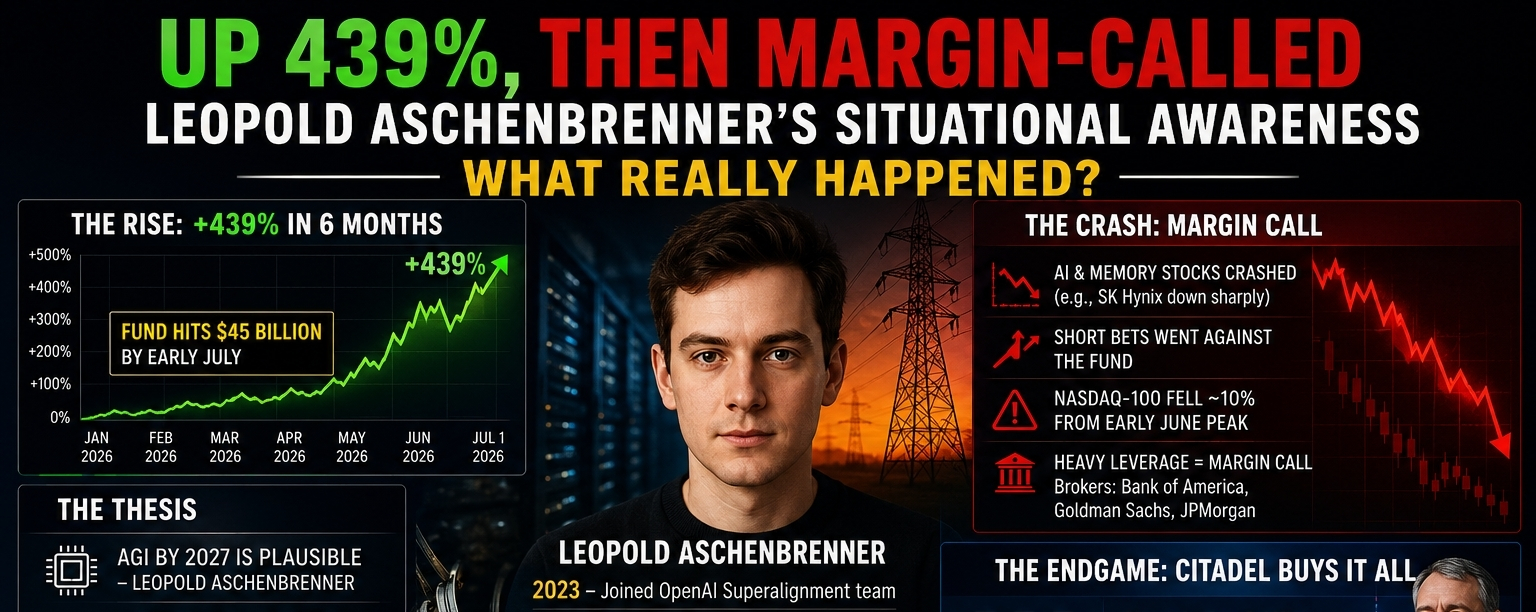
Up 439%, Then Margin-Called — Did Leopold Aschenbrenner’s Situational Awareness Just Reveal the BiggSometimes an investment story is not simply about profits and losses. It becomes a warning for the entire market.
The recent events surrounding Leopold Aschenbrenner’s Situational Awareness fund are exactly that kind of story.
Within just a few months, an ambitious investment strategy built around artificial intelligence generated extraordinary returns. But when the market suddenly turned against AI and semiconductor stocks, the same leverage that had amplified gains also magnified the risk.
The result was a brutal chain reaction: falling stocks, rising margin pressure, forced selling and the liquidation of a major public-equity portfolio.
According to recent reports, Ken Griffin’s Citadel purchased a large portion of Situational Awareness’s stock portfolio after the fund was forced to unwind positions under margin pressure.
For investors, there is a much bigger lesson hidden inside this story.
Who Is Leopold Aschenbrenner?
Leopold Aschenbrenner is not a traditional Wall Street veteran.
He is a young AI-focused researcher who joined OpenAI’s Superalignment team in 2023 before leaving the company in 2024.
Later that year, he published his influential essay series “Situational Awareness.”
Its central thesis was extremely bullish:
AGI could plausibly arrive as early as 2027.
But the most interesting part of his argument was not simply about AI models or chips.
Aschenbrenner argued that one of the biggest constraints on the AI revolution could eventually become physical infrastructure—electricity, power generation, transformers, data centers and energy availability.
In other words, the future of AI would not depend only on semiconductor technology.
It would also depend on the massive physical infrastructure required to power that technology.
And that became the foundation of his investment thesis.
Was the Thesis Wrong—or Was the Risk Management Wrong?
This is perhaps the most important question.
Was Aschenbrenner’s AI thesis actually wrong?
In my view, it would be too simplistic to describe the entire episode as an “AI bet gone wrong.”
A long-term investment thesis can be correct while the use of excessive leverage makes the investment strategy fragile.
Situational Awareness reportedly expanded rapidly into AI-related stocks, semiconductor companies, infrastructure plays and energy-related businesses.
The broader idea was simple:
If AI grows dramatically, the companies supplying the chips, power and infrastructure could become enormous beneficiaries.
The problem was not necessarily the vision.
The problem was the combination of timing, leverage and liquidity.
As long as the market moves in your direction, leverage can produce spectacular returns.
But when the trend reverses, the same leverage can force you to sell at exactly the moment when you would rather wait.
That is the brutal reality of a margin call.
How Did the AI Selloff Change Everything?
During July, pressure intensified across parts of the AI trade.
Semiconductor and memory-chip stocks suffered significant declines. At the same time, some short positions reportedly moved against the fund as certain software stocks rose instead of falling.
That created a difficult setup.
The long book was under pressure.
The short book was not delivering the expected protection.
And the broader market was becoming increasingly volatile.
For a highly leveraged fund, this can become dangerous very quickly.
When borrowed capital is involved, a falling stock price does more than reduce portfolio value.
It can also trigger additional collateral requirements from lenders and brokers.
That is where a normal market loss can turn into forced liquidation.
The message from the lender becomes simple:
“Post more collateral—or reduce the position.”
At that point, the manager is no longer completely in control of the timing.
And Then There Is the $BTC Miner Connection
This is arguably the most fascinating part of the story for crypto investors.
Situational Awareness built significant exposure to Bitcoin mining companies.
That exposure makes more sense when viewed through Aschenbrenner’s broader thesis.
The common denominator is electricity.
For Bitcoin miners, cheap and reliable power is one of the most important elements of the business model.
For AI data centers, electricity is equally critical.
Modern AI infrastructure requires enormous amounts of computing power, which in turn requires enormous amounts of energy.
That creates a fascinating intersection between:
AI + Energy + Data Centers + Bitcoin Mining
So the fund’s Bitcoin-mining exposure should not necessarily be viewed as an isolated crypto bet.
It can also be interpreted as part of a much broader “compute + power” investment thesis.
Why Did Citadel Buy the Portfolio?
This is where the market delivers another powerful lesson.
The same portfolio that became a problem for one investor because of leverage can become an opportunity for another investor with stronger liquidity.
Reports indicate that Citadel acquired a large portion of Situational Awareness’s public-stock holdings as the fund unwound positions under margin pressure.
And that creates one of the oldest lessons in financial markets:
One investor’s forced selling can become another investor’s buying opportunity.
Aschenbrenner may have wanted to hold some of these companies for their long-term exposure to the AI infrastructure boom.
But leverage prevented him from simply waiting for the thesis to play out.
A large institutional player such as Citadel can have a completely different risk profile and time horizon.
The exact same assets can therefore look dramatically different depending on who owns them.
Does This Mean the AI Thesis Is Dead?
Absolutely not—not based on this event alone.
It is important to separate the collapse of a trading book from the collapse of a long-term technological thesis.
The growth of AI adoption, data-center infrastructure, power demand and semiconductor investment is a much larger question than the performance of one hedge fund.
The Situational Awareness episode does not automatically prove that the AI infrastructure thesis was wrong.
Instead, it demonstrates something much more important:
You can correctly identify the future and still lose your position before that future arrives if you use too much leverage.
That may be the biggest lesson of this entire episode.
What Should Bitcoin Investors Learn From This?
For me, there are three major takeaways.
1. A Narrative Is Never a Substitute for Risk Management
AI, Bitcoin, $DEFI , $RWA or any other major investment narrative can be extremely powerful.
But the market does not owe you a particular outcome simply because the long-term story sounds convincing.
A strong thesis still needs disciplined position sizing.
2. Leverage Multiplies Profits—and Risk
A 439% return looks spectacular.
But headline returns mean very little if the strategy is so leveraged that a relatively sharp market move can trigger forced liquidation.
In highly leveraged markets, survival matters more than maximizing returns.
3. Forced Selling Can Create Opportunity
A stock being sold because of a margin call does not necessarily mean the underlying business is fundamentally broken.
Sometimes the seller simply has a liquidity problem.
That can create temporary discounts in assets that larger, better-capitalized investors may be willing to buy.
And that is exactly where institutional capital often starts looking for opportunity.
My Takeaway
I do not see the Situational Awareness story simply as a failure of Leopold Aschenbrenner.
I see it as a fascinating intersection of four major market themes:
AI, Bitcoin mining, electricity infrastructure and financial leverage.
The AI industry requires enormous amounts of power.
Bitcoin mining also depends heavily on access to competitive electricity.
As these industries grow, competition for energy and infrastructure could become increasingly important.
But when investors become extremely bullish on a long-term narrative and add excessive leverage, even a temporary market reversal can turn optimism into vulnerability.
That is why one of the most important lessons from this story is this:
The biggest investment mistake is not always buying the wrong asset.
Sometimes it is using the wrong amount of leverage on the right asset.
For AI investors, Bitcoin investors and infrastructure-focused investors, this story deserves attention.
Because the next great investment question may not simply be:
“How fast will AI grow?”
The bigger question could be:
“Where will AI get all of its electricity, who will control that infrastructure, and which companies will own the assets required to power the next generation of compute?”
The answer to that question could shape some of the biggest investment opportunities of the next decade.
Disclaimer: This article is for informational and market-analysis purposes only. It is not financial advice. Investors should carefully consider risk tolerance, position sizing and leverage before making investment decisions.
{spot}(BTCUSDT)
{alpha}(560x9c8b5ca345247396bdfac0395638ca9045c6586e)
#BTC #RWAcoinList #RWA #defi #DEFİ
Up 439%, Then Margin-Called — Did Leopold Aschenbrenner’s Situational Awareness Just Reveal the Bigg
Sometimes an investment story is not simply about profits and losses. It becomes a warning for the entire market.
The recent events surrounding Leopold Aschenbrenner’s Situational Awareness fund are exactly that kind of story.
Within just a few months, an ambitious investment strategy built around artificial intelligence generated extraordinary returns. But when the market suddenly turned against AI and semiconductor stocks, the same leverage that had amplified gains also magnified the risk.
The result was a brutal chain reaction: falling stocks, rising margin pressure, forced selling and the liquidation of a major public-equity portfolio.
According to recent reports, Ken Griffin’s Citadel purchased a large portion of Situational Awareness’s stock portfolio after the fund was forced to unwind positions under margin pressure.
For investors, there is a much bigger lesson hidden inside this story.
Who Is Leopold Aschenbrenner?
Leopold Aschenbrenner is not a traditional Wall Street veteran.
He is a young AI-focused researcher who joined OpenAI’s Superalignment team in 2023 before leaving the company in 2024.
Later that year, he published his influential essay series “Situational Awareness.”
Its central thesis was extremely bullish:
AGI could plausibly arrive as early as 2027.
But the most interesting part of his argument was not simply about AI models or chips.
Aschenbrenner argued that one of the biggest constraints on the AI revolution could eventually become physical infrastructure—electricity, power generation, transformers, data centers and energy availability.
In other words, the future of AI would not depend only on semiconductor technology.
It would also depend on the massive physical infrastructure required to power that technology.
And that became the foundation of his investment thesis.
Was the Thesis Wrong—or Was the Risk Management Wrong?
This is perhaps the most important question.
Was Aschenbrenner’s AI thesis actually wrong?
In my view, it would be too simplistic to describe the entire episode as an “AI bet gone wrong.”
A long-term investment thesis can be correct while the use of excessive leverage makes the investment strategy fragile.
Situational Awareness reportedly expanded rapidly into AI-related stocks, semiconductor companies, infrastructure plays and energy-related businesses.
The broader idea was simple:
If AI grows dramatically, the companies supplying the chips, power and infrastructure could become enormous beneficiaries.
The problem was not necessarily the vision.
The problem was the combination of timing, leverage and liquidity.
As long as the market moves in your direction, leverage can produce spectacular returns.
But when the trend reverses, the same leverage can force you to sell at exactly the moment when you would rather wait.
That is the brutal reality of a margin call.
How Did the AI Selloff Change Everything?
During July, pressure intensified across parts of the AI trade.
Semiconductor and memory-chip stocks suffered significant declines. At the same time, some short positions reportedly moved against the fund as certain software stocks rose instead of falling.
That created a difficult setup.
The long book was under pressure.
The short book was not delivering the expected protection.
And the broader market was becoming increasingly volatile.
For a highly leveraged fund, this can become dangerous very quickly.
When borrowed capital is involved, a falling stock price does more than reduce portfolio value.
It can also trigger additional collateral requirements from lenders and brokers.
That is where a normal market loss can turn into forced liquidation.
The message from the lender becomes simple:
“Post more collateral—or reduce the position.”
At that point, the manager is no longer completely in control of the timing.
And Then There Is the $BTC Miner Connection
This is arguably the most fascinating part of the story for crypto investors.
Situational Awareness built significant exposure to Bitcoin mining companies.
That exposure makes more sense when viewed through Aschenbrenner’s broader thesis.
The common denominator is electricity.
For Bitcoin miners, cheap and reliable power is one of the most important elements of the business model.
For AI data centers, electricity is equally critical.
Modern AI infrastructure requires enormous amounts of computing power, which in turn requires enormous amounts of energy.
That creates a fascinating intersection between:
AI + Energy + Data Centers + Bitcoin Mining
So the fund’s Bitcoin-mining exposure should not necessarily be viewed as an isolated crypto bet.
It can also be interpreted as part of a much broader “compute + power” investment thesis.
Why Did Citadel Buy the Portfolio?
This is where the market delivers another powerful lesson.
The same portfolio that became a problem for one investor because of leverage can become an opportunity for another investor with stronger liquidity.
Reports indicate that Citadel acquired a large portion of Situational Awareness’s public-stock holdings as the fund unwound positions under margin pressure.
And that creates one of the oldest lessons in financial markets:
One investor’s forced selling can become another investor’s buying opportunity.
Aschenbrenner may have wanted to hold some of these companies for their long-term exposure to the AI infrastructure boom.
But leverage prevented him from simply waiting for the thesis to play out.
A large institutional player such as Citadel can have a completely different risk profile and time horizon.
The exact same assets can therefore look dramatically different depending on who owns them.
Does This Mean the AI Thesis Is Dead?
Absolutely not—not based on this event alone.
It is important to separate the collapse of a trading book from the collapse of a long-term technological thesis.
The growth of AI adoption, data-center infrastructure, power demand and semiconductor investment is a much larger question than the performance of one hedge fund.
The Situational Awareness episode does not automatically prove that the AI infrastructure thesis was wrong.
Instead, it demonstrates something much more important:
You can correctly identify the future and still lose your position before that future arrives if you use too much leverage.
That may be the biggest lesson of this entire episode.
What Should Bitcoin Investors Learn From This?
For me, there are three major takeaways.
1. A Narrative Is Never a Substitute for Risk Management
AI, Bitcoin, $DEFI , $RWA or any other major investment narrative can be extremely powerful.
But the market does not owe you a particular outcome simply because the long-term story sounds convincing.
A strong thesis still needs disciplined position sizing.
2. Leverage Multiplies Profits—and Risk
A 439% return looks spectacular.
But headline returns mean very little if the strategy is so leveraged that a relatively sharp market move can trigger forced liquidation.
In highly leveraged markets, survival matters more than maximizing returns.
3. Forced Selling Can Create Opportunity
A stock being sold because of a margin call does not necessarily mean the underlying business is fundamentally broken.
Sometimes the seller simply has a liquidity problem.
That can create temporary discounts in assets that larger, better-capitalized investors may be willing to buy.
And that is exactly where institutional capital often starts looking for opportunity.
My Takeaway
I do not see the Situational Awareness story simply as a failure of Leopold Aschenbrenner.
I see it as a fascinating intersection of four major market themes:
AI, Bitcoin mining, electricity infrastructure and financial leverage.
The AI industry requires enormous amounts of power.
Bitcoin mining also depends heavily on access to competitive electricity.
As these industries grow, competition for energy and infrastructure could become increasingly important.
But when investors become extremely bullish on a long-term narrative and add excessive leverage, even a temporary market reversal can turn optimism into vulnerability.
That is why one of the most important lessons from this story is this:
The biggest investment mistake is not always buying the wrong asset.
Sometimes it is using the wrong amount of leverage on the right asset.
For AI investors, Bitcoin investors and infrastructure-focused investors, this story deserves attention.
Because the next great investment question may not simply be:
“How fast will AI grow?”
The bigger question could be:
“Where will AI get all of its electricity, who will control that infrastructure, and which companies will own the assets required to power the next generation of compute?”
The answer to that question could shape some of the biggest investment opportunities of the next decade.
Disclaimer: This article is for informational and market-analysis purposes only. It is not financial advice. Investors should carefully consider risk tolerance, position sizing and leverage before making investment decisions.
#BTC #RWAcoinList #RWA #defi #DEFİ
The recent events surrounding Leopold Aschenbrenner’s Situational Awareness fund are exactly that kind of story.
Within just a few months, an ambitious investment strategy built around artificial intelligence generated extraordinary returns. But when the market suddenly turned against AI and semiconductor stocks, the same leverage that had amplified gains also magnified the risk.
The result was a brutal chain reaction: falling stocks, rising margin pressure, forced selling and the liquidation of a major public-equity portfolio.
According to recent reports, Ken Griffin’s Citadel purchased a large portion of Situational Awareness’s stock portfolio after the fund was forced to unwind positions under margin pressure.
For investors, there is a much bigger lesson hidden inside this story.
Who Is Leopold Aschenbrenner?
Leopold Aschenbrenner is not a traditional Wall Street veteran.
He is a young AI-focused researcher who joined OpenAI’s Superalignment team in 2023 before leaving the company in 2024.
Later that year, he published his influential essay series “Situational Awareness.”
Its central thesis was extremely bullish:
AGI could plausibly arrive as early as 2027.
But the most interesting part of his argument was not simply about AI models or chips.
Aschenbrenner argued that one of the biggest constraints on the AI revolution could eventually become physical infrastructure—electricity, power generation, transformers, data centers and energy availability.
In other words, the future of AI would not depend only on semiconductor technology.
It would also depend on the massive physical infrastructure required to power that technology.
And that became the foundation of his investment thesis.
Was the Thesis Wrong—or Was the Risk Management Wrong?
This is perhaps the most important question.
Was Aschenbrenner’s AI thesis actually wrong?
In my view, it would be too simplistic to describe the entire episode as an “AI bet gone wrong.”
A long-term investment thesis can be correct while the use of excessive leverage makes the investment strategy fragile.
Situational Awareness reportedly expanded rapidly into AI-related stocks, semiconductor companies, infrastructure plays and energy-related businesses.
The broader idea was simple:
If AI grows dramatically, the companies supplying the chips, power and infrastructure could become enormous beneficiaries.
The problem was not necessarily the vision.
The problem was the combination of timing, leverage and liquidity.
As long as the market moves in your direction, leverage can produce spectacular returns.
But when the trend reverses, the same leverage can force you to sell at exactly the moment when you would rather wait.
That is the brutal reality of a margin call.
How Did the AI Selloff Change Everything?
During July, pressure intensified across parts of the AI trade.
Semiconductor and memory-chip stocks suffered significant declines. At the same time, some short positions reportedly moved against the fund as certain software stocks rose instead of falling.
That created a difficult setup.
The long book was under pressure.
The short book was not delivering the expected protection.
And the broader market was becoming increasingly volatile.
For a highly leveraged fund, this can become dangerous very quickly.
When borrowed capital is involved, a falling stock price does more than reduce portfolio value.
It can also trigger additional collateral requirements from lenders and brokers.
That is where a normal market loss can turn into forced liquidation.
The message from the lender becomes simple:
“Post more collateral—or reduce the position.”
At that point, the manager is no longer completely in control of the timing.
And Then There Is the $BTC Miner Connection
This is arguably the most fascinating part of the story for crypto investors.
Situational Awareness built significant exposure to Bitcoin mining companies.
That exposure makes more sense when viewed through Aschenbrenner’s broader thesis.
The common denominator is electricity.
For Bitcoin miners, cheap and reliable power is one of the most important elements of the business model.
For AI data centers, electricity is equally critical.
Modern AI infrastructure requires enormous amounts of computing power, which in turn requires enormous amounts of energy.
That creates a fascinating intersection between:
AI + Energy + Data Centers + Bitcoin Mining
So the fund’s Bitcoin-mining exposure should not necessarily be viewed as an isolated crypto bet.
It can also be interpreted as part of a much broader “compute + power” investment thesis.
Why Did Citadel Buy the Portfolio?
This is where the market delivers another powerful lesson.
The same portfolio that became a problem for one investor because of leverage can become an opportunity for another investor with stronger liquidity.
Reports indicate that Citadel acquired a large portion of Situational Awareness’s public-stock holdings as the fund unwound positions under margin pressure.
And that creates one of the oldest lessons in financial markets:
One investor’s forced selling can become another investor’s buying opportunity.
Aschenbrenner may have wanted to hold some of these companies for their long-term exposure to the AI infrastructure boom.
But leverage prevented him from simply waiting for the thesis to play out.
A large institutional player such as Citadel can have a completely different risk profile and time horizon.
The exact same assets can therefore look dramatically different depending on who owns them.
Does This Mean the AI Thesis Is Dead?
Absolutely not—not based on this event alone.
It is important to separate the collapse of a trading book from the collapse of a long-term technological thesis.
The growth of AI adoption, data-center infrastructure, power demand and semiconductor investment is a much larger question than the performance of one hedge fund.
The Situational Awareness episode does not automatically prove that the AI infrastructure thesis was wrong.
Instead, it demonstrates something much more important:
You can correctly identify the future and still lose your position before that future arrives if you use too much leverage.
That may be the biggest lesson of this entire episode.
What Should Bitcoin Investors Learn From This?
For me, there are three major takeaways.
1. A Narrative Is Never a Substitute for Risk Management
AI, Bitcoin, $DEFI , $RWA or any other major investment narrative can be extremely powerful.
But the market does not owe you a particular outcome simply because the long-term story sounds convincing.
A strong thesis still needs disciplined position sizing.
2. Leverage Multiplies Profits—and Risk
A 439% return looks spectacular.
But headline returns mean very little if the strategy is so leveraged that a relatively sharp market move can trigger forced liquidation.
In highly leveraged markets, survival matters more than maximizing returns.
3. Forced Selling Can Create Opportunity
A stock being sold because of a margin call does not necessarily mean the underlying business is fundamentally broken.
Sometimes the seller simply has a liquidity problem.
That can create temporary discounts in assets that larger, better-capitalized investors may be willing to buy.
And that is exactly where institutional capital often starts looking for opportunity.
My Takeaway
I do not see the Situational Awareness story simply as a failure of Leopold Aschenbrenner.
I see it as a fascinating intersection of four major market themes:
AI, Bitcoin mining, electricity infrastructure and financial leverage.
The AI industry requires enormous amounts of power.
Bitcoin mining also depends heavily on access to competitive electricity.
As these industries grow, competition for energy and infrastructure could become increasingly important.
But when investors become extremely bullish on a long-term narrative and add excessive leverage, even a temporary market reversal can turn optimism into vulnerability.
That is why one of the most important lessons from this story is this:
The biggest investment mistake is not always buying the wrong asset.
Sometimes it is using the wrong amount of leverage on the right asset.
For AI investors, Bitcoin investors and infrastructure-focused investors, this story deserves attention.
Because the next great investment question may not simply be:
“How fast will AI grow?”
The bigger question could be:
“Where will AI get all of its electricity, who will control that infrastructure, and which companies will own the assets required to power the next generation of compute?”
The answer to that question could shape some of the biggest investment opportunities of the next decade.
Disclaimer: This article is for informational and market-analysis purposes only. It is not financial advice. Investors should carefully consider risk tolerance, position sizing and leverage before making investment decisions.
#BTC #RWAcoinList #RWA #defi #DEFİ
1
127
Log in to explore more content
Join global crypto users on Binance Square
⚡️ Get latest and useful information about crypto.
💬 Trusted by the world’s largest crypto exchange.
👍 Discover real insights from verified creators.
Email / Phone number
Trending Topics
1
#FedRateWatch
1.1M views
5,062 Discussing
2
#ZcashHoldersBackNU7Upgrade
4,301 views
153 Discussing
3
#MSTRTradingVolumeSurpassesMorganStanley
9,992 views
349 Discussing
4
#BitcoinFalls4%
23,613 views
607 Discussing
5
#SKHynixInTalksToMakeMemoryChipsInUS
11,122 views
264 Discussing
6
#OpenAIDiscussesNewFundingAt$1.2TValuation
2,559 views
45 Discussing
7
#ArgentinaCommitsToOECDCryptoReportingBy2029
19,690 views
418 Discussing
8
#EthereumFallsBelow$2400
7,790 views
94 Discussing
9
#USDTLaunchesOnZamaPrivacyProtocol
8,373 views
244 Discussing
10
#USSenateBlocksClarityAct
67,575 views
555 Discussing