

#liquiditymanagement
liquiditymanagement
1,949 views
20 Discussing
Hot
Latest

🚀 $USDT LIQUIDITY PLAYBOOK: MASTERING CASH ALLOCATION IN CRYPTO 🟢
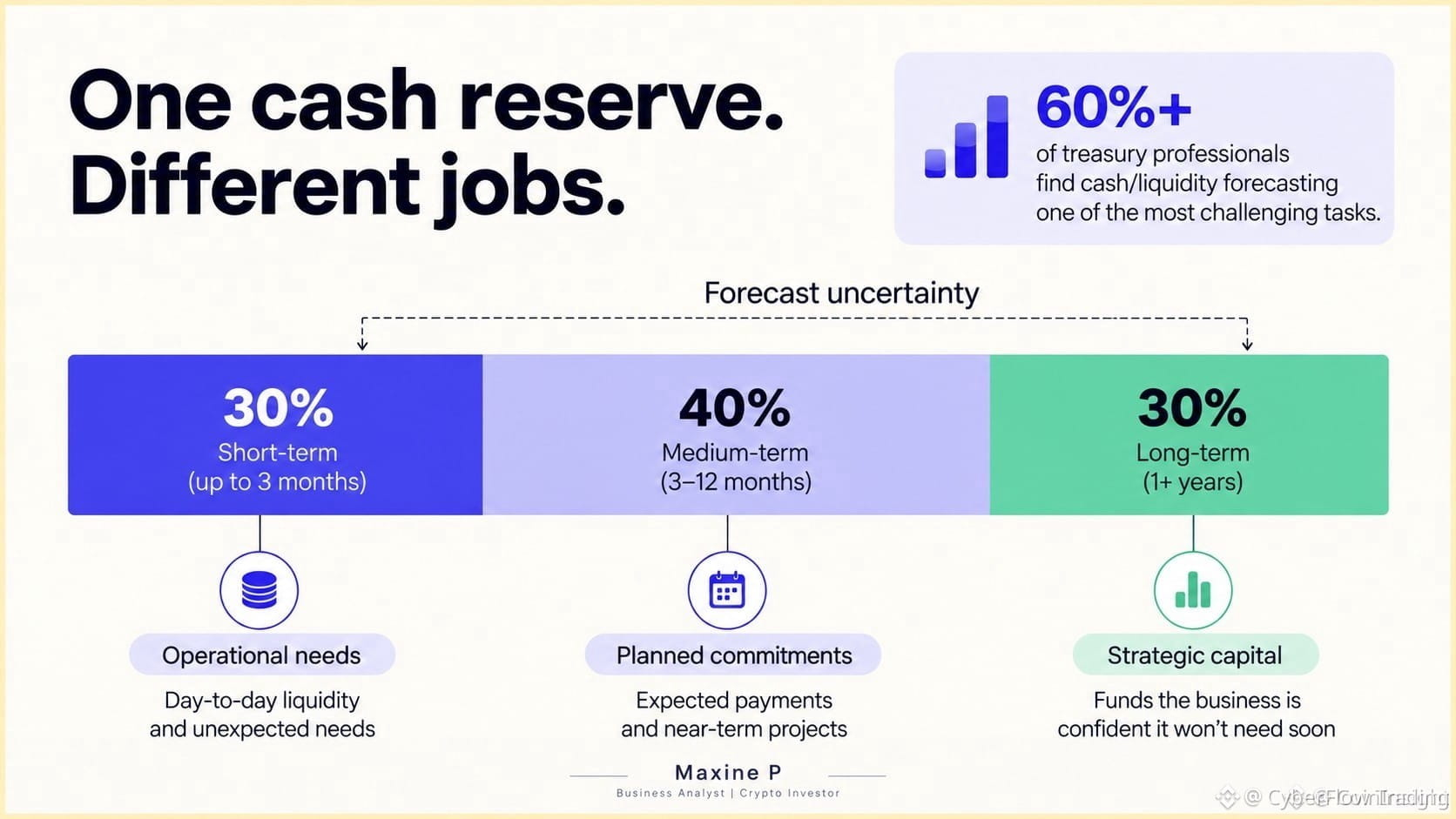
📊 Nearly half of finance pros admit cash‑flow forecasting is the toughest grind. Splitting the treasury into operational, reserve, and long‑term strategic buckets lets you assign distinct liquidity cushions – think J.P. Morgan’s 6‑month reserve vs. 1‑year strategic stash. 📌
🦈 Pairing tenors with each bucket adds agility; platforms on a top‑tier exchange now serve crypto‑lending plans from 10 days to years, starting at 600k USDT. Set hard caps now so you’re never caught flat‑footed when the market shifts. 💡
💬 How do you balance immediate cash needs against long‑term crypto exposure? 👇
⚠️ Not financial advice. Always manage your risk. 🛡️
🏷️ #USDT #LiquidityManagement #Crypto #FundAllocation
🔥 💎
8

·
--
STRATEGY'S LARGEST BTC SALE COULDN'T BREAK $63K SUPPORT 🧐
Strategy sold 3,588 BTC worth $216M — the biggest in the company's history — yet price held near $63k. This was purely liquidity management: only 0.4% of holdings, no shift in long-term conviction.
The derivatives composite index collapsed from 80 to 32.6, briefly touching 20. Leveraged flows are retreating fast. Price is stable, but the structural support of open interest has thinned. If the index stays below 45, downside pressure on the fair value level increases. Does this sale signal a top or just noise in a sideways market?
Not financial advice. Always manage your risk.
#BTC #Bitcoin #LiquidityManagement #Derivatives #MarketStructure
🎯
15

·
--
DeFi Liquidity Fragmentation Is a Bigger Problem Than Most Traders Realize
Across the DeFi ecosystem today, billions in TVL sit idle — not because there is a lack of capital, but because that capital is distributed inefficiently across dozens of chains, pools, and protocols that do not communicate with each other.
Concentrated liquidity mechanisms changed the math significantly. Instead of spreading capital uniformly across infinite price ranges, LPs can now deploy within tight bands around the current market price — capturing far more fee revenue per dollar deployed. On active $ETH pairs, a well-placed concentrated position can earn 5-10x the fees of a passive full-range deposit.
But concentrated liquidity is only half the story. The deeper unlock is active liquidity management: protocols and vaults that automatically rebalance positions as prices drift, compounding fees and maintaining range coverage without LPs manually reacting to volatility.
$BNB has built this into its own DEX ecosystem with BNB Chain-native liquidity managers. $SOL takes a different route — Orca and Meteora push composable position management as a native primitive, letting retail LPs operate with near market-maker efficiency.
The protocols that win the next DeFi cycle will not be those with the most TVL. They will be the ones with the most capital-efficient TVL — where every dollar actively earns, not just sits.
Capital efficiency is the new moat.
#DeFi #LiquidityManagement #CryptoAlpha #Web3 #BinanceSquare
47
·
--
Liquidity Fragmentation Is DeFi's Biggest Hidden Tax
Most DeFi users don't realize they're paying a "fragmentation tax" on every swap. As protocols multiplied across chains, liquidity scattered across hundreds of isolated pools. The result? Wider spreads, deeper slippage, and worse execution — even on large, established trading pairs.
Concentrated liquidity was supposed to fix this by letting LPs focus capital in the price ranges that actually trade. Capital efficiency goes up dramatically in theory. In practice, LP management complexity spiked — and passive LPs often ended up worse off against active market makers who can rebalance continuously.
The next evolution is automated liquidity management: protocols that dynamically rebalance LP positions, routing strategies that stitch fragmented pools together, and eventually cross-chain aggregation that treats the entire DeFi landscape as one unified order book.
We're not there yet. But the protocols that solve liquidity fragmentation — not just within a chain but across chains — will capture enormous value. The winners won't just be DEXes. They'll be liquidity infrastructure layers that every other protocol routes through.
DeFi's end state isn't a thousand isolated pools. It's one deep, efficient market accessible from anywhere.
$ETH $BNB $SOL
#DeFi #LiquidityManagement #CryptoInfrastructure #DEX #Web3
66
Log in to explore more content
Join global crypto users on Binance Square
⚡️ Get latest and useful information about crypto.
💬 Trusted by the world’s largest crypto exchange.
👍 Discover real insights from verified creators.
Email / Phone number
Trending Topics
1
#BinancePick
2.8M views
147,427 Discussing
2
#EarningsSeason
5.1M views
25,174 Discussing
3
#AnthropicTTMRevenueGrewAbout1200%
1,272 views
101 Discussing
4
#AnthropicS1ExpectedToday
3,870 views
117 Discussing
5
#SouthKoreaReportedlyWeighsFourthCryptoTaxDelay
12,235 views
278 Discussing
6
#FranklinTempletonFilesForTwoDividendToBitcoinETFs
19,486 views
397 Discussing
7
#StrategyMSTRSurpassesNasdaqInMarketCap
15,613 views
307 Discussing
8
#CanadaProposesStablecoinRedemptionWithin3BusinessDays
717 views
30 Discussing
9
#ElectrumWalletBugLetRogueServersStealFunds
19,942 views
401 Discussing
10
#ArgentineCourtDismissesLIBRACaseAgainstMilei
30,835 views
489 Discussing