

#lagarde
lagarde
29,770 views
25 Discussing
Hot
Latest

·
--
Lagarde confirms she will step down as ECB president on February 7, 2027; eurozone liquidity turning point draws near
The handover at the world’s second-largest monetary-policy authority is now on the table. According to the European Central Bank and CNBC, ECB President Christine Lagarde will step down on February 7, 2027. The personnel change is worth examining from a funding perspective because it directly affects liquidity expectations across the eurozone—and liquidity expectations are one of the fundamental variables underpinning crypto-asset valuations.
The key issue is not a routine change of personnel, but that the successor’s identity and policy stance remain unknown. Lagarde’s approach during her tenure has generally been dovish, and her policy cadence has shaped stable market expectations for the path of monetary easing. Once she is replaced, markets will need to reprice “the cost of money”—one of the areas to which macro investors are most sensitive.
Why does this matter for crypto? Liquidity narratives in crypto markets depend heavily on the balance sheets and interest-rate paths of major central banks. As the world’s second-largest monetary-policy authority, the ECB can influence crypto funding conditions indirectly through three channels: euro liquidity, US dollar funding costs, and risk appetite. If her successor takes a hawkish stance, expectations for eurozone liquidity could tighten, potentially forcing a reassessment of valuation anchors for risk assets.
The date of Lagarde’s departure is now confirmed as February 7, 2027, leaving a relatively long time horizon. This means the short-term market reaction may be limited. What really warrants attention is the successor’s policy preferences and personnel arrangements within the ECB, rather than the announcement itself.
How might markets react? Until a successor is named, the more likely scenario is a battle over expectations rather than actual outflows. The signals to watch for are any confirmation of a hawkish successor and potential changes to the ECB’s communications framework.
There are also clear counterarguments: neither the successor’s identity nor their policy stance has been determined, so the immediate impact on crypto funding conditions is likely to be limited. Lagarde has been dovish during her tenure, and even if her successor is hawkish, it will take time for policy to be implemented; markets may already have priced in some of the expectations.
What should we watch next? For macro funding conditions, the key things to monitor are signals about the succession within the ECB and statements on policy direction—not a single personnel announcement. If you are watching for a liquidity turning point, the more important move at the trading level is to wait for confirmation of the successor’s identity and policy direction rather than making an early bet.
#ECB #Lagarde #Macro
The above is a compilation of information and personal analysis, and does not constitute investment advice.
Follow me for ongoing coverage of key market developments and data.
30

·
--
Bullish
Verified
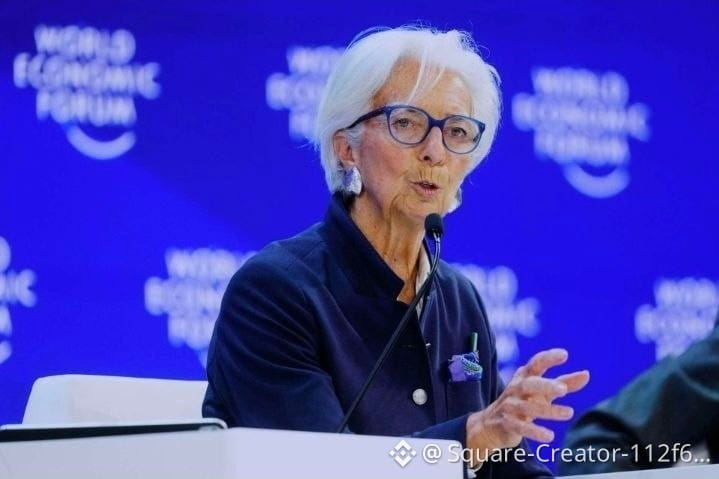
Christine Lagarde to lead the World Economic Forum?
According to Swiss reports relayed by Reuters, ECB Chair Christine Lagarde is considered a potential candidate to chair the World Economic Forum in 2027, and she has shown willingness to take on the role.
📌 A possible transition could place one of the most prominent monetary figures globally at the heart of international economic debate.
$EUR
#Lagarde #WEF #ECB #Davos
1
2
1.1k

European Central Bank President Christine Lagarde is scheduled to deliver the latest public remarks within the next 10 minutes. At this critical juncture in the euro area’s economic growth versus inflation dynamics, every statement from the central bank’s leader directly shapes the direction of subsequent monetary policy.
Markets are currently highly focused on the specific pace of the ECB’s rate-cutting path. If Lagarde’s remarks confirm a downward trend in inflation and convey clearer easing signals, it would further reinforce expectations that major global central banks are entering a rate-cut cycle in tandem, providing strong fundamental support for valuation repair in risk assets.
From both the technical market setup and the macro-asset linkages, the ECB’s dovish expectations typically weigh on the euro exchange rate and lead to a decline in euro government bond yields, thereby boosting expectations for global liquidity. After the U.S. dollar index faces short-term pressure or oscillates, it often triggers a shift in global capital toward allocating to risk assets and gold.
For the crypto market, marginally looser global liquidity has always been the strongest catalyst for a bull run. As long as the broader trend of falling macro interest rates remains unchanged, pullbacks toward key moving-average support will be viewed as opportunities to accumulate positions, which could help $BTC and mainstream tokens launch a new round of upside momentum.🚀
#ECB #Lagarde #CryptoMarket
40

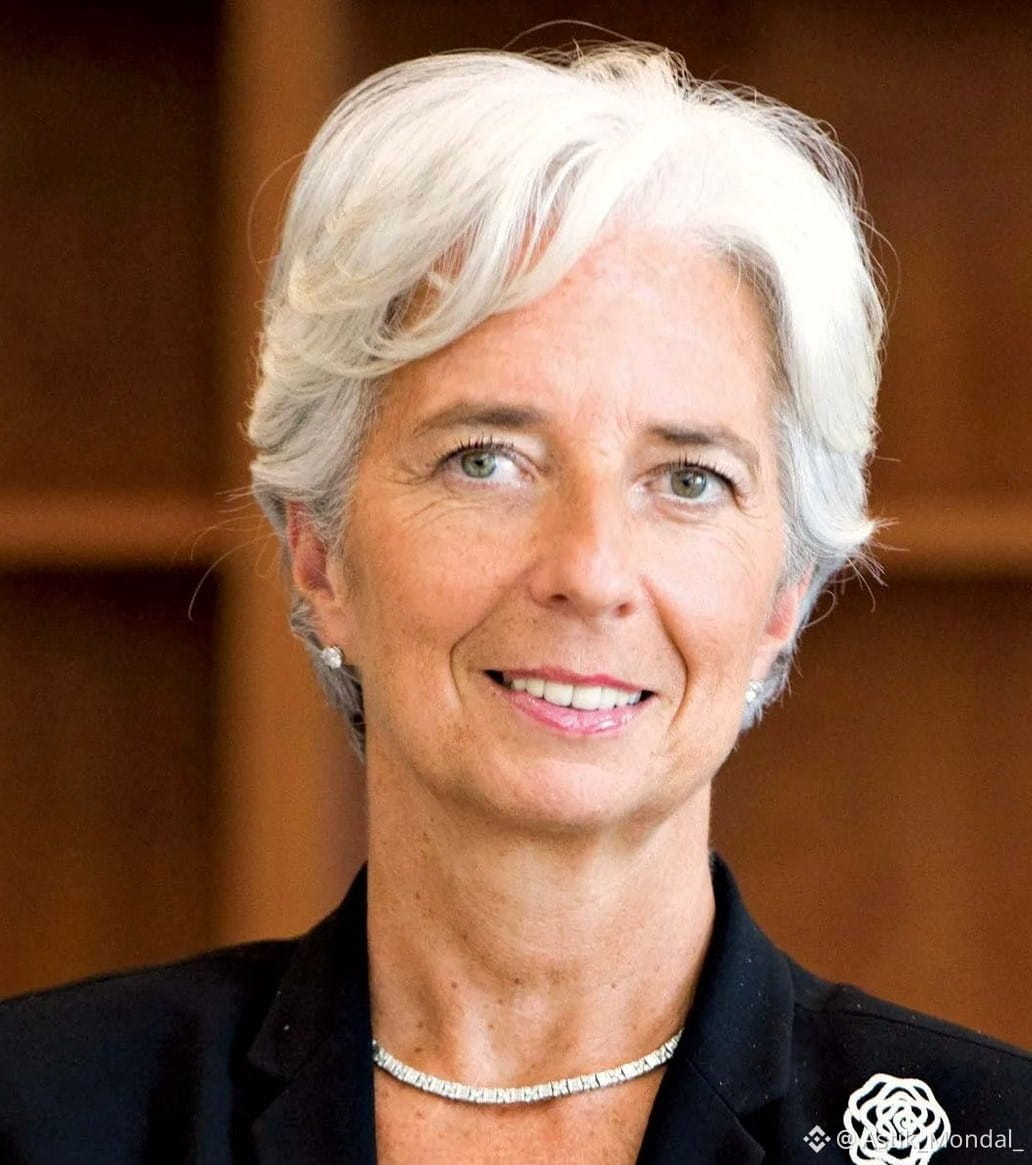
🇪🇺 JUST IN: ECB President Christine Lagarde will step down on February 7, 2027, the ECB has announced.
Lagarde informed the Governing Council and European Council President António Costa on Thursday, the same day as the ECB's latest monetary policy meeting. The Governing Council gave her a long standing ovation. The ECB statement gave no reason for the decision.
Her non-renewable eight-year term was set to run until October 31, 2027, so she is leaving about nine months early. Back in February, the Financial Times reported she planned to exit before France's April 2027 presidential election, which would let outgoing President Emmanuel Macron and German Chancellor Friedrich Merz help pick her successor. At the time, the ECB said no decision had been made.
Her successor will be appointed by the European Council under Article 283 of the EU treaty. Eurozone leaders decide, and past practice suggests any successful candidate needs both German and French backing. Names floated in earlier reporting included former Bank of Spain governor Pablo Hernández de Cos and Dutch central bank chief Klaas Knot, though no formal candidates have been announced.
Lagarde took office in 2019 and steered the ECB through the pandemic, the energy shock and the sharpest rate-hiking cycle in its history. Whoever follows her inherits an economy still wrestling with an energy price shock tied to the Middle East conflict.
#ECB #Lagarde #Euro #CentralBanks #Europe

1
34


·
--
🔹 ECB SHAKE-UP: LAGARDE TO STEP DOWN IN FEBRUARY
Christine Lagarde just announced she will step down as European Central Bank President on February 7, 2027, nearly nine months before her term was due to end in October 2027. The ECB confirmed it today, and the succession process starts immediately.
This is not a minor personnel story. It is a leadership transition at the world's second most important central bank, landing on the very day the ECB delivers its rate decision, with eurozone inflation back at 3.8%, its highest in three years, French 10-year yields above 5% for the first time in two decades, and the euro sliding toward a fifth straight weekly loss against the dollar.
🔑 WHY IT MATTERS FOR CRYPTO
Crypto trades global liquidity, and the ECB is one of its biggest taps. The successor decides the tilt: a hawk like Klaas Knot would keep policy tight and euro liquidity scarce, a dove-leaning pick would open the door to easier money. Markets will price every name floated in the coming weeks, and that repricing flows straight into risk assets, including $BTC.
⚠️ HONEST RISK
The exit itself changes nothing today. Lagarde stays until February, today's decision is widely expected to be a hold, and the succession fight could drag on for months. Anyone trading this headline as an instant policy pivot is early. Watch the nominee, not the noise.
🐂 or 🐻: does a dovish successor help $BTC more, or does euro turmoil hurt everything? Drop your take below 👇
📌 Sharing personal opinions only, not financial advice or a recommendation to buy/sell. Crypto is highly risky; DYOR and you are solely responsible. No coin promotion.
#ECB #Lagarde #Macro #Crypto #Binance
🔹 ECB SHAKE-UP: LAGARDE TO STEP DOWN IN FEBRUARY
Christine Lagarde just announced she will step down as European Central Bank President on February 7, 2027, nearly nine months before her term was due to end in October 2027. The ECB confirmed it today, and the succession process starts immediately.
This is not a minor personnel story. It is a leadership transition at the world's second most important central bank, landing on the very day the ECB delivers its rate decision, with eurozone inflation back at 3.8%, its highest in three years, French 10-year yields above 5% for the first time in two decades, and the euro sliding toward a fifth straight weekly loss against the dollar.
🔑 WHY IT MATTERS FOR CRYPTO
Crypto trades global liquidity, and the ECB is one of its biggest taps. The successor decides the tilt: a hawk like Klaas Knot would keep policy tight and euro liquidity scarce, a dove-leaning pick would open the door to easier money. Markets will price every name floated in the coming weeks, and that repricing flows straight into risk assets, including $BTC .
⚠️ HONEST RISK
The exit itself changes nothing today. Lagarde stays until February, today's decision is widely expected to be a hold, and the succession fight could drag on for months. Anyone trading this headline as an instant policy pivot is early. Watch the nominee, not the noise.
🐂 or 🐻: does a dovish successor help $BTC more, or does euro turmoil hurt everything? Drop your take below 👇
📌 Sharing personal opinions only, not financial advice or a recommendation to buy/sell. Crypto is highly risky; DYOR and you are solely responsible. No coin promotion.
#ECB #Lagarde #Macro #Crypto #Binance
1
596

Lagarde to leave the ECB in 2027
- Lagarde announces she will leave the ECB.
- She has served for over 7 years.
- Departure: February 2027.
#BinanceSquare #CryptoNews #ECB #Lagarde
$btc $eth
#vlikevn Titanbot
Source: CoinTelegraph
Lagarde to leave the ECB in 2027
- Lagarde announces she will leave the ECB.
- She has served for over 7 years.
- Departure: February 2027.
#BinanceSquare #CryptoNews #ECB #Lagarde
$btc $eth
#vlikevn Titanbot
Source: CoinTelegraph
- Lagarde announces she will leave the ECB.
- She has served for over 7 years.
- Departure: February 2027.
#BinanceSquare #CryptoNews #ECB #Lagarde
$btc $eth
#vlikevn Titanbot
Source: CoinTelegraph
171
Log in to explore more content
Join global crypto users on Binance Square
⚡️ Get latest and useful information about crypto.
💬 Trusted by the world’s largest crypto exchange.
👍 Discover real insights from verified creators.
Email / Phone number
Trending Topics
1
#FedWatch
16.2M views
38,208 Discussing
2
#EarningsSeason
6.2M views
30,937 Discussing
3
#USMidtermElections
296 views
44 Discussing
4
#BitcoinDropsBelow$80K
515 views
30 Discussing
5
#BrazilCryptoExchangesMustApplyForLicensesByFriday
105 views
41 Discussing
6
#ICEPartnersWithTradeXYZToBringPerpetualContractsToUS
44 views
3 Discussing
7
#SolidusLabsReportsSuspected$170MSpoofingOnHyperliquidOilContracts
219 views
13 Discussing
8
#StanDruckenmillerBecomesInvestorInTradeXYZ
1,438 views
71 Discussing
9
#RussiaProposedNonCustodialWalletLimitsExcludeIntlSettlements
895 views
33 Discussing
10
#AlphabetSharesSlide10%InLateTrading
8,028 views
152 Discussing