
#kospiworstmonthlydropsince2008
kospiworstmonthlydropsince2008
73,300 views
556 Discussing
Hot
Latest

#KOSPIWorstMonthlyDropSince2008
📉 — Markets Under Pressure
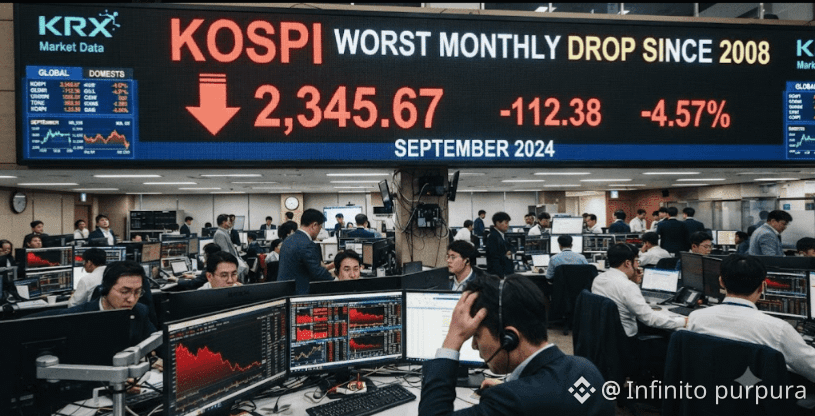
South Korea's KOSPI has recorded its worst monthly decline since 2008, highlighting growing concerns over global economic uncertainty and investor sentiment.
Sharp moves in major stock indices can influence risk appetite across global markets, including cryptocurrencies.
#Stocks #Markets #Crypto $BTC $ETH
#KOSPIWorstMonthlyDropSince2008
📉 — Markets Under Pressure
South Korea's KOSPI has recorded its worst monthly decline since 2008, highlighting growing concerns over global economic uncertainty and investor sentiment.
Sharp moves in major stock indices can influence risk appetite across global markets, including cryptocurrencies.
#Stocks #Markets #Crypto $BTC $ETH
📉 — Markets Under Pressure
South Korea's KOSPI has recorded its worst monthly decline since 2008, highlighting growing concerns over global economic uncertainty and investor sentiment.
Sharp moves in major stock indices can influence risk appetite across global markets, including cryptocurrencies.
#Stocks #Markets #Crypto $BTC $ETH
55
#kospiworstmonthlydropsince2008
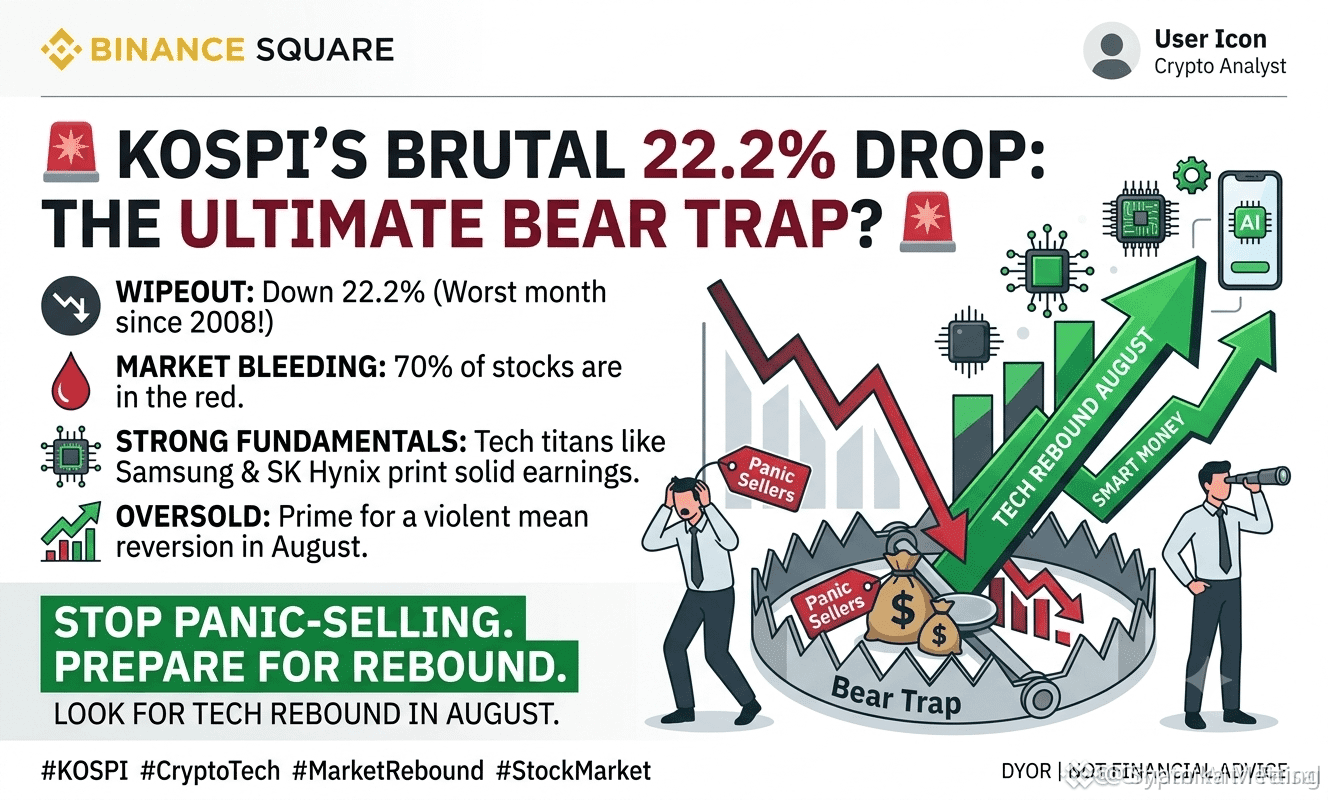
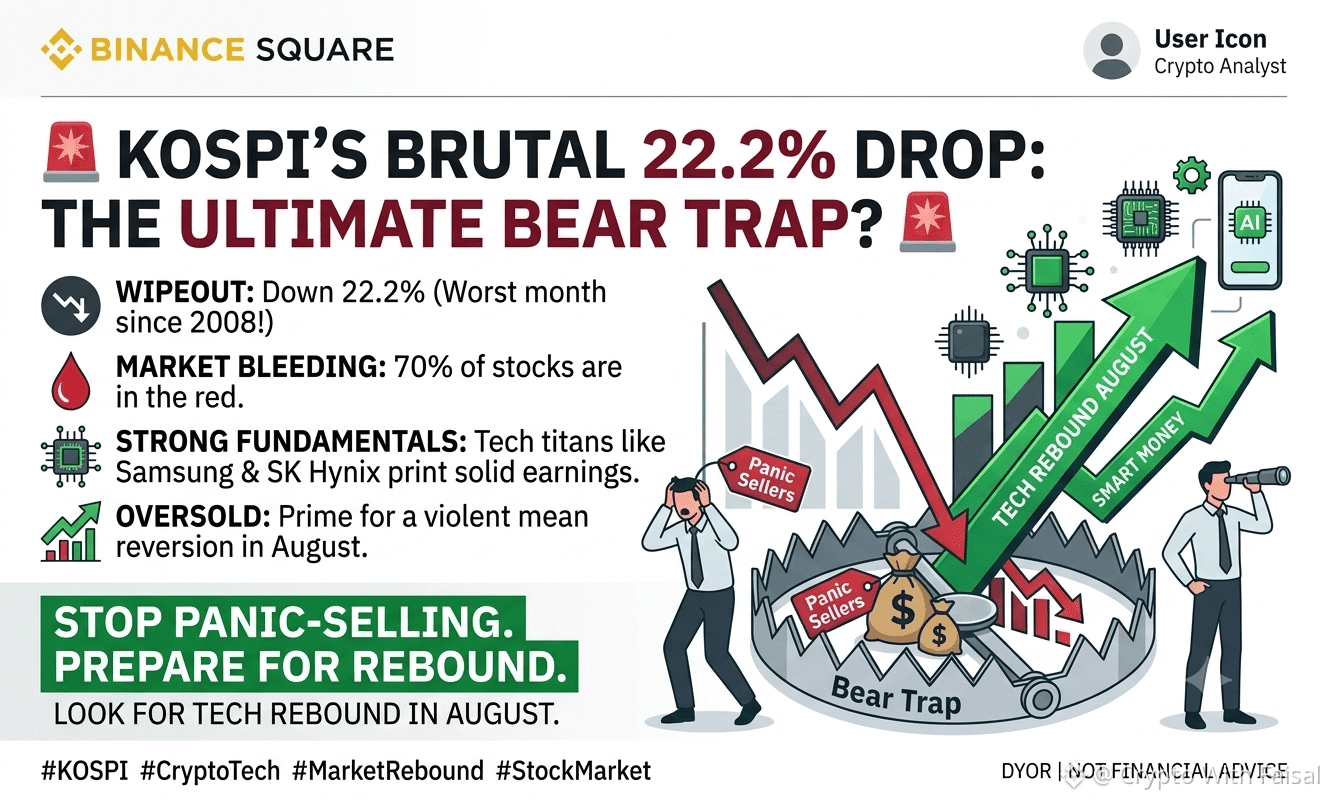
🚨 Historic surrender: Is the Kospi preparing the final bear trap? 🚨
A stunning collapse of 22.2%. 70% of the stocks are in the red zone. The Kospi index logged its worst monthly drop since 2008.
But smart money is buying blood. While the public sells in panic at the bottom, the underlying data tells a different story. Tech giants in South Korea—heaviest players in AI and chips like SK Hynix and Samsung—are posting strong earnings despite the broad sell-off in the market. Technical indicators are extremely oversold and are set for a violent rebound toward the average in August.
💡 Actionable insights:
This isn’t a moment of panic; it’s a moment of readiness. Keep your focus on the technology sector as it leads the rebound. This could be the launchpad toward new ATH highs from here.
⚠️ Not financial advice. Do your own research!
Please follow up
#KOSPIPump #CryptoTech #MarketRebound
$SKHYNIX
{future}(SKHYNIXUSDT)
#kospiworstmonthlydropsince2008
🚨 Historic surrender: Is the Kospi preparing the final bear trap? 🚨
A stunning collapse of 22.2%. 70% of the stocks are in the red zone. The Kospi index logged its worst monthly drop since 2008.
But smart money is buying blood. While the public sells in panic at the bottom, the underlying data tells a different story. Tech giants in South Korea—heaviest players in AI and chips like SK Hynix and Samsung—are posting strong earnings despite the broad sell-off in the market. Technical indicators are extremely oversold and are set for a violent rebound toward the average in August.
💡 Actionable insights:
This isn’t a moment of panic; it’s a moment of readiness. Keep your focus on the technology sector as it leads the rebound. This could be the launchpad toward new ATH highs from here.
⚠️ Not financial advice. Do your own research!
Please follow up
#KOSPIPump #CryptoTech #MarketRebound
$SKHYNIX
🚨 Historic surrender: Is the Kospi preparing the final bear trap? 🚨
A stunning collapse of 22.2%. 70% of the stocks are in the red zone. The Kospi index logged its worst monthly drop since 2008.
But smart money is buying blood. While the public sells in panic at the bottom, the underlying data tells a different story. Tech giants in South Korea—heaviest players in AI and chips like SK Hynix and Samsung—are posting strong earnings despite the broad sell-off in the market. Technical indicators are extremely oversold and are set for a violent rebound toward the average in August.
💡 Actionable insights:
This isn’t a moment of panic; it’s a moment of readiness. Keep your focus on the technology sector as it leads the rebound. This could be the launchpad toward new ATH highs from here.
⚠️ Not financial advice. Do your own research!
Please follow up
#KOSPIPump #CryptoTech #MarketRebound
$SKHYNIX
1
82

·
--
Bullish
Verified
#kospiworstmonthlydropsince2008
📉 KOSPI CRASH: AUGUST REBOUND SETUP?
🇰🇷 KOSPI closed July down 22.2%, its worst monthly drop since 2008, with ~70% of stocks falling.
✅ Market heavily oversold
✅ Samsung & SK Hynix remain AI/chip leaders
✅ Strong earnings could support a rebound
📊 Trading View: BUY THE DIP — this extreme sell-off could offer a high-risk/high-reward rebound opportunity. Wait for support confirmation and manage risk.
❓ Do you think KOSPI has finally found its bottom for an August rebound?
"CLICK ON THE BELOW YELLOW COIN TAG TO GO TO DESIRED TRADING PAGE TO GET BENEFIT TRADE"👇👇👇👇
$SAMSUNG $SKHYB $SKHY
{future}(SKHYUSDT)
{spot}(SKHYBUSDT)
{future}(SAMSUNGUSDT)
#KOSPI #CryptoTech #MarketRebound
#kospiworstmonthlydropsince2008
📉 KOSPI CRASH: AUGUST REBOUND SETUP?
🇰🇷 KOSPI closed July down 22.2%, its worst monthly drop since 2008, with ~70% of stocks falling.
✅ Market heavily oversold
✅ Samsung & SK Hynix remain AI/chip leaders
✅ Strong earnings could support a rebound
📊 Trading View: BUY THE DIP — this extreme sell-off could offer a high-risk/high-reward rebound opportunity. Wait for support confirmation and manage risk.
❓ Do you think KOSPI has finally found its bottom for an August rebound?
"CLICK ON THE BELOW YELLOW COIN TAG TO GO TO DESIRED TRADING PAGE TO GET BENEFIT TRADE"👇👇👇👇
$SAMSUNG $SKHYB $SKHY
#KOSPI #CryptoTech #MarketRebound
📉 KOSPI CRASH: AUGUST REBOUND SETUP?
🇰🇷 KOSPI closed July down 22.2%, its worst monthly drop since 2008, with ~70% of stocks falling.
✅ Market heavily oversold
✅ Samsung & SK Hynix remain AI/chip leaders
✅ Strong earnings could support a rebound
📊 Trading View: BUY THE DIP — this extreme sell-off could offer a high-risk/high-reward rebound opportunity. Wait for support confirmation and manage risk.
❓ Do you think KOSPI has finally found its bottom for an August rebound?
"CLICK ON THE BELOW YELLOW COIN TAG TO GO TO DESIRED TRADING PAGE TO GET BENEFIT TRADE"👇👇👇👇
$SAMSUNG $SKHYB $SKHY
#KOSPI #CryptoTech #MarketRebound
1
995

Verified
#kospiworstmonthlydropsince2008 What a wild ride for the stock market! South Korea’s KOSPI has just logged its biggest monthly drop since the global financial crisis of 2008, with more than seven out of every ten stocks plunging. Heavy selling pressure hit major technology and biotech companies hard, catching investors everywhere off guard. Even with a record-breaking sudden rebound, driven by chip giants, this historic crash has everyone wondering what happens next. Stay alert out there!
CLICK BELOW TO TRADE : $SKYH.US $SAMSUNG $XRP
#kospiworstmonthlydropsince2008 What a wild ride for the stock market! South Korea’s KOSPI has just logged its biggest monthly drop since the global financial crisis of 2008, with more than seven out of every ten stocks plunging. Heavy selling pressure hit major technology and biotech companies hard, catching investors everywhere off guard. Even with a record-breaking sudden rebound, driven by chip giants, this historic crash has everyone wondering what happens next. Stay alert out there!
CLICK BELOW TO TRADE : $SKYH.US $SAMSUNG $XRP
CLICK BELOW TO TRADE : $SKYH.US $SAMSUNG $XRP
1
3
4.4k

Verified
#kospiworstmonthlydropsince2008
🚨 HISTORIC CAPITULATION: Is the KOSPI setting up the ultimate bear trap? 🚨
A staggering 22.2% wipeout. 70% of stocks in the red. The KOSPI just registered its worst monthly drop since 2008.
But smart money buys the blood. While the masses panic-sell the bottom, the underlying data tells a different story. South Korea’s tech titans—heavyweights in AI and chips like SK Hynix and Samsung—are printing strong earnings despite the broader market sell-off. The technicals are deeply oversold and primed for a violent mean reversion in August.
💡 Actionable Insight:
This isn't the time to panic; it's the time to prepare. Keep your eyes locked on the tech sector to lead the bounce. A launchpad to new ATHs could start right here.
⚠️ Not financial advice. DYOR!
#KOSPI #CryptoTech #MarketRebound
$SKHYNIX
{future}(SKHYNIXUSDT)
$SKHY
{future}(SKHYUSDT)
$SAMSUNG
{future}(SAMSUNGUSDT)
#kospiworstmonthlydropsince2008
🚨 HISTORIC CAPITULATION: Is the KOSPI setting up the ultimate bear trap? 🚨
A staggering 22.2% wipeout. 70% of stocks in the red. The KOSPI just registered its worst monthly drop since 2008.
But smart money buys the blood. While the masses panic-sell the bottom, the underlying data tells a different story. South Korea’s tech titans—heavyweights in AI and chips like SK Hynix and Samsung—are printing strong earnings despite the broader market sell-off. The technicals are deeply oversold and primed for a violent mean reversion in August.
💡 Actionable Insight:
This isn't the time to panic; it's the time to prepare. Keep your eyes locked on the tech sector to lead the bounce. A launchpad to new ATHs could start right here.
⚠️ Not financial advice. DYOR!
#KOSPI #CryptoTech #MarketRebound
$SKHYNIX
$SKHY
$SAMSUNG
🚨 HISTORIC CAPITULATION: Is the KOSPI setting up the ultimate bear trap? 🚨
A staggering 22.2% wipeout. 70% of stocks in the red. The KOSPI just registered its worst monthly drop since 2008.
But smart money buys the blood. While the masses panic-sell the bottom, the underlying data tells a different story. South Korea’s tech titans—heavyweights in AI and chips like SK Hynix and Samsung—are printing strong earnings despite the broader market sell-off. The technicals are deeply oversold and primed for a violent mean reversion in August.
💡 Actionable Insight:
This isn't the time to panic; it's the time to prepare. Keep your eyes locked on the tech sector to lead the bounce. A launchpad to new ATHs could start right here.
⚠️ Not financial advice. DYOR!
#KOSPI #CryptoTech #MarketRebound
$SKHYNIX
$SKHY
$SAMSUNG
1
728
Partly True
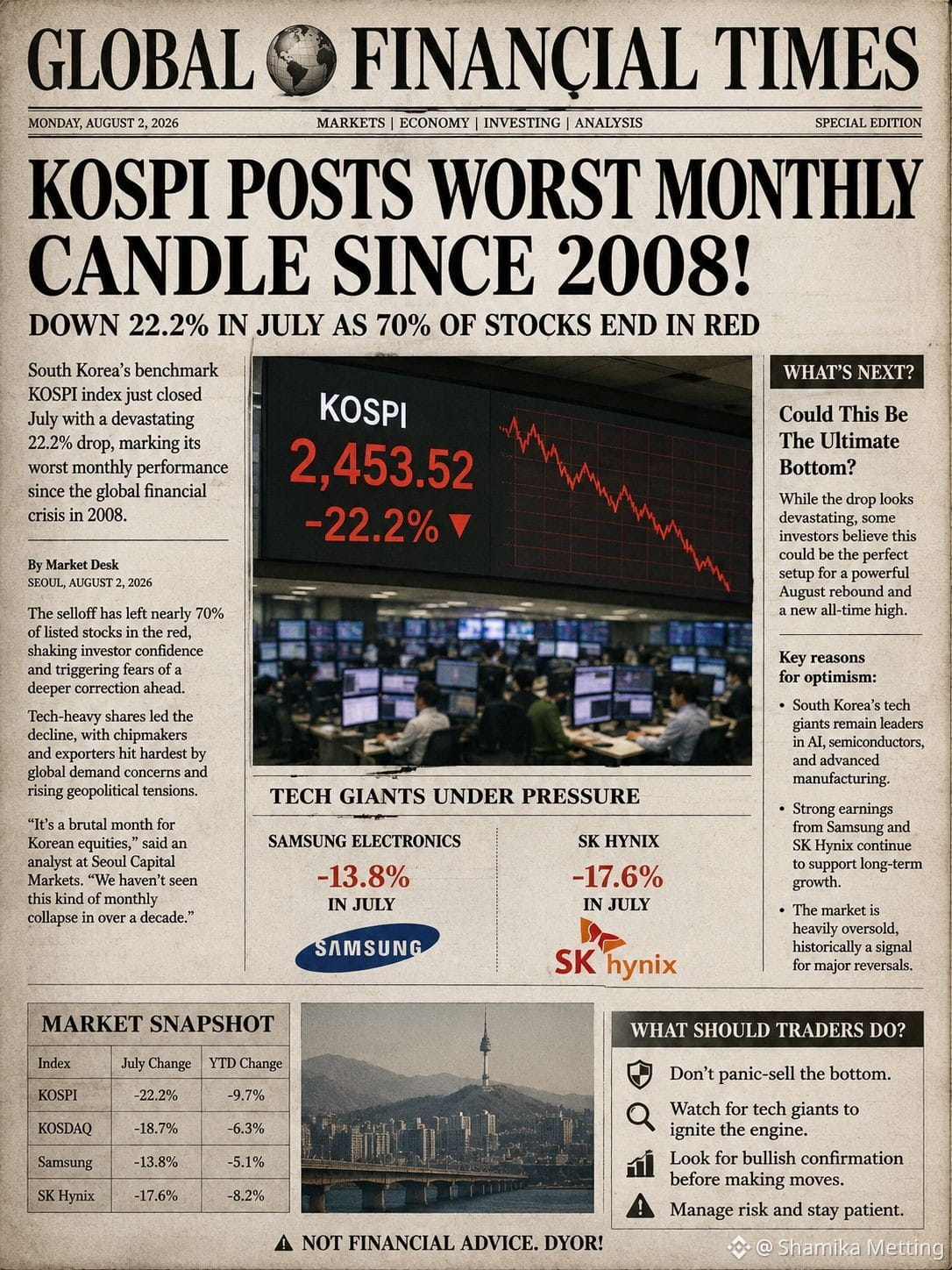
#kospiworstmonthlydropsince2008 🚨 Printing the Kospi indicator, the worst monthly candle since 2008! 🇰🇷📉
The Kospi index closed in July down 22.2%, with about 70% of listed stocks finishing trading in the red zone. Fear is everywhere—yet history reminds us that the biggest opportunities often appear when sentiment is at its worst.
So, is this the start of a deeper drop... or the foundation for a strong August rebound? 🤔
South Korea is still a global force in artificial intelligence, semiconductors, and advanced manufacturing. Giant companies like Samsung and SK Hynix continue to play a crucial role in the global chip industry, and investors will closely watch for any signs of renewed institutional buying.
🎯 What should traders do?
✅ Avoid panic selling driven by emotion after the sharp drop.
✅ Watch key support levels and wait for bullish confirmation.
✅ Monitor the leaders in the semiconductor sector—they may drive the next move.
✅ Manage risk and don’t chase volatility.
Often the darkest market looks bleak before momentum turns—but confirmation is always more important than hope.
⚠️ Not financial advice. Always remember DYOR.
Please follow up
#KOSPI #Stocks #SouthKorea #Samsung
Click to go to the following👇
$SAMSUNG $SKHYB $SKHYNIX
#kospiworstmonthlydropsince2008 🚨 Printing the Kospi indicator, the worst monthly candle since 2008! 🇰🇷📉
The Kospi index closed in July down 22.2%, with about 70% of listed stocks finishing trading in the red zone. Fear is everywhere—yet history reminds us that the biggest opportunities often appear when sentiment is at its worst.
So, is this the start of a deeper drop... or the foundation for a strong August rebound? 🤔
South Korea is still a global force in artificial intelligence, semiconductors, and advanced manufacturing. Giant companies like Samsung and SK Hynix continue to play a crucial role in the global chip industry, and investors will closely watch for any signs of renewed institutional buying.
🎯 What should traders do?
✅ Avoid panic selling driven by emotion after the sharp drop.
✅ Watch key support levels and wait for bullish confirmation.
✅ Monitor the leaders in the semiconductor sector—they may drive the next move.
✅ Manage risk and don’t chase volatility.
Often the darkest market looks bleak before momentum turns—but confirmation is always more important than hope.
⚠️ Not financial advice. Always remember DYOR.
Please follow up
#KOSPI #Stocks #SouthKorea #Samsung
Click to go to the following👇
$SAMSUNG $SKHYB $SKHYNIX
The Kospi index closed in July down 22.2%, with about 70% of listed stocks finishing trading in the red zone. Fear is everywhere—yet history reminds us that the biggest opportunities often appear when sentiment is at its worst.
So, is this the start of a deeper drop... or the foundation for a strong August rebound? 🤔
South Korea is still a global force in artificial intelligence, semiconductors, and advanced manufacturing. Giant companies like Samsung and SK Hynix continue to play a crucial role in the global chip industry, and investors will closely watch for any signs of renewed institutional buying.
🎯 What should traders do?
✅ Avoid panic selling driven by emotion after the sharp drop.
✅ Watch key support levels and wait for bullish confirmation.
✅ Monitor the leaders in the semiconductor sector—they may drive the next move.
✅ Manage risk and don’t chase volatility.
Often the darkest market looks bleak before momentum turns—but confirmation is always more important than hope.
⚠️ Not financial advice. Always remember DYOR.
Please follow up
#KOSPI #Stocks #SouthKorea #Samsung
Click to go to the following👇
$SAMSUNG $SKHYB $SKHYNIX
1
912

·
--
Bullish
Verified
#kospiworstmonthlydropsince2008 📉
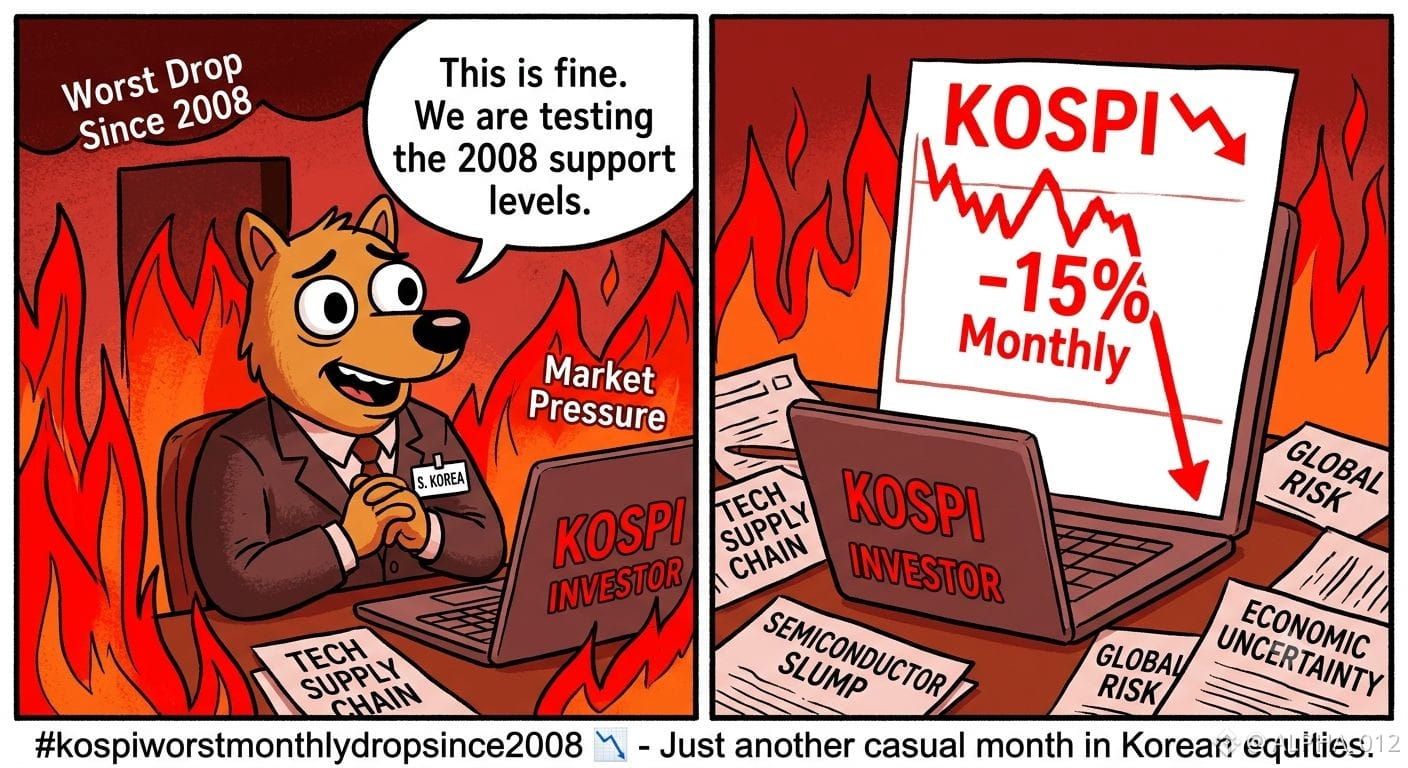
South Korea's KOSPI recorded its worst monthly decline since 2008, underscoring the intense pressure on one of Asia's most important equity markets.
The sell-off was driven by a combination of investor risk aversion, weakness in semiconductor stocks, global economic uncertainty, and concerns surrounding the technology supply chain. As South Korea is home to many of the world's leading chipmakers, sharp declines in the sector can have an outsized impact on the broader index.
A drop of this magnitude often signals heightened market stress, but history shows that periods of extreme volatility can also reshape valuations and create opportunities for long-term investors. Market participants will now watch corporate earnings, government policy, global demand for semiconductors, and macroeconomic data for signs of stabilization.
The performance of the KOSPI remains a key indicator for Asian markets and the global technology sector.
$BANK
{future}(BANKUSDT)
$LAB
{future}(LABUSDT)
$BEAT
{future}(BEATUSDT)
#kospiworstmonthlydropsince2008 📉
South Korea's KOSPI recorded its worst monthly decline since 2008, underscoring the intense pressure on one of Asia's most important equity markets.
The sell-off was driven by a combination of investor risk aversion, weakness in semiconductor stocks, global economic uncertainty, and concerns surrounding the technology supply chain. As South Korea is home to many of the world's leading chipmakers, sharp declines in the sector can have an outsized impact on the broader index.
A drop of this magnitude often signals heightened market stress, but history shows that periods of extreme volatility can also reshape valuations and create opportunities for long-term investors. Market participants will now watch corporate earnings, government policy, global demand for semiconductors, and macroeconomic data for signs of stabilization.
The performance of the KOSPI remains a key indicator for Asian markets and the global technology sector.
$BANK
$LAB
$BEAT
South Korea's KOSPI recorded its worst monthly decline since 2008, underscoring the intense pressure on one of Asia's most important equity markets.
The sell-off was driven by a combination of investor risk aversion, weakness in semiconductor stocks, global economic uncertainty, and concerns surrounding the technology supply chain. As South Korea is home to many of the world's leading chipmakers, sharp declines in the sector can have an outsized impact on the broader index.
A drop of this magnitude often signals heightened market stress, but history shows that periods of extreme volatility can also reshape valuations and create opportunities for long-term investors. Market participants will now watch corporate earnings, government policy, global demand for semiconductors, and macroeconomic data for signs of stabilization.
The performance of the KOSPI remains a key indicator for Asian markets and the global technology sector.
$BANK
$LAB
$BEAT
3
1.5k

#kospiworstmonthlydropsince2008
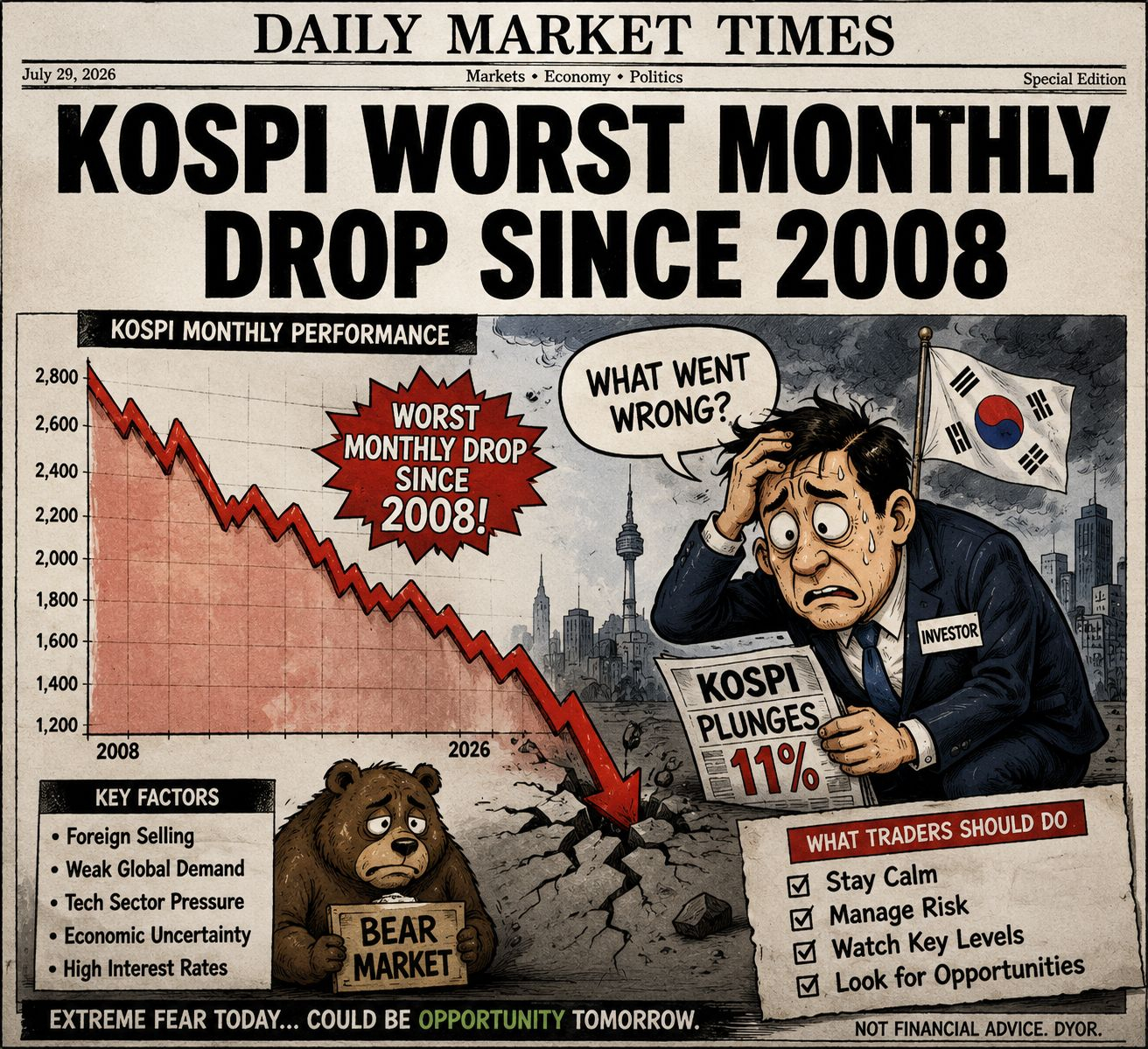
🚨 KOSPI just suffered its worst monthly drop since 2008! 📉🇰🇷
Investors are asking the same question:
Is this panic... or a once-in-a-cycle buying opportunity? 🤔
Rising uncertainty, heavy foreign selling, and pressure on major tech stocks have shaken confidence across the Korean market.
💡 What should traders do?
✅ Don't chase panic selling.
✅ Watch key support and resistance levels.
✅ Manage risk with proper position sizing.
✅ Keep an eye on macro news and market sentiment.
History shows that extreme fear often creates opportunity—but only for disciplined traders. 📊
⚠️ Not Financial Advice. Always DYOR.
#KOSPI #SouthKorea #StockMarket #Trading
$BTC
$ETH
$SOL
{spot}(BTCUSDT)
{spot}(SOLUSDT)
{spot}(ETHUSDT)
#kospiworstmonthlydropsince2008
🚨 KOSPI just suffered its worst monthly drop since 2008! 📉🇰🇷
Investors are asking the same question:
Is this panic... or a once-in-a-cycle buying opportunity? 🤔
Rising uncertainty, heavy foreign selling, and pressure on major tech stocks have shaken confidence across the Korean market.
💡 What should traders do?
✅ Don't chase panic selling.
✅ Watch key support and resistance levels.
✅ Manage risk with proper position sizing.
✅ Keep an eye on macro news and market sentiment.
History shows that extreme fear often creates opportunity—but only for disciplined traders. 📊
⚠️ Not Financial Advice. Always DYOR.
#KOSPI #SouthKorea #StockMarket #Trading
$BTC
$ETH
$SOL
🚨 KOSPI just suffered its worst monthly drop since 2008! 📉🇰🇷
Investors are asking the same question:
Is this panic... or a once-in-a-cycle buying opportunity? 🤔
Rising uncertainty, heavy foreign selling, and pressure on major tech stocks have shaken confidence across the Korean market.
💡 What should traders do?
✅ Don't chase panic selling.
✅ Watch key support and resistance levels.
✅ Manage risk with proper position sizing.
✅ Keep an eye on macro news and market sentiment.
History shows that extreme fear often creates opportunity—but only for disciplined traders. 📊
⚠️ Not Financial Advice. Always DYOR.
#KOSPI #SouthKorea #StockMarket #Trading
$BTC
$ETH
$SOL
1
7
3.3k

·
--
Bullish
Verified
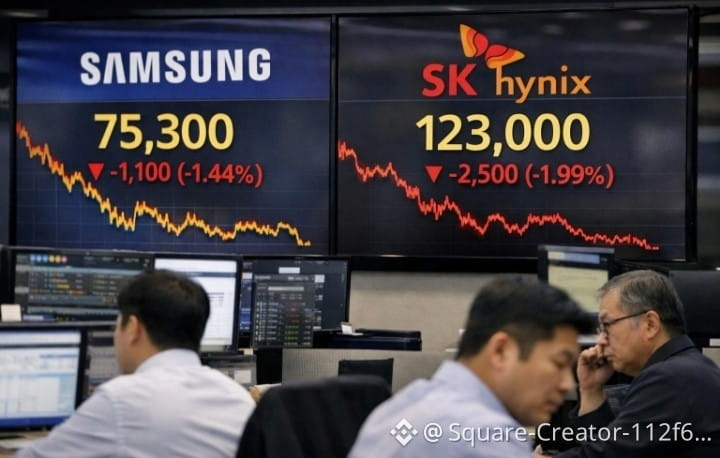
KOSPI records its worst monthly performance since the 2008 global financial crisis
The South Korean KOSPI index ended July with its biggest monthly loss since 2008, amid a sharp selloff that hit technology and semiconductor stocks, led by Samsung Electronics and SK Hynix.
The decline came as a mix of profit-taking after strong gains, growing concerns about competition from China in the chip sector, and continued pressure on artificial intelligence stocks, which led to sharp fluctuations in the Korean market.
Despite the strong rebound in the final sessions of the month, markets are still watching to see whether this drop is only a temporary correction or the start of a new phase of volatility in the global technology sector.
When one of the world’s most important chip markets slides, the impact may extend to risk appetite in global markets, including digital currency markets.
{future}(SAMSUNGUSDT)
{future}(SKHYNIXUSDT)
{future}(EWYUSDT)
#KOSPIWorstMonthlyDropSince2008
KOSPI records its worst monthly performance since the 2008 global financial crisis
The South Korean KOSPI index ended July with its biggest monthly loss since 2008, amid a sharp selloff that hit technology and semiconductor stocks, led by Samsung Electronics and SK Hynix.
The decline came as a mix of profit-taking after strong gains, growing concerns about competition from China in the chip sector, and continued pressure on artificial intelligence stocks, which led to sharp fluctuations in the Korean market.
Despite the strong rebound in the final sessions of the month, markets are still watching to see whether this drop is only a temporary correction or the start of a new phase of volatility in the global technology sector.
When one of the world’s most important chip markets slides, the impact may extend to risk appetite in global markets, including digital currency markets.
#KOSPIWorstMonthlyDropSince2008
The South Korean KOSPI index ended July with its biggest monthly loss since 2008, amid a sharp selloff that hit technology and semiconductor stocks, led by Samsung Electronics and SK Hynix.
The decline came as a mix of profit-taking after strong gains, growing concerns about competition from China in the chip sector, and continued pressure on artificial intelligence stocks, which led to sharp fluctuations in the Korean market.
Despite the strong rebound in the final sessions of the month, markets are still watching to see whether this drop is only a temporary correction or the start of a new phase of volatility in the global technology sector.
When one of the world’s most important chip markets slides, the impact may extend to risk appetite in global markets, including digital currency markets.
#KOSPIWorstMonthlyDropSince2008
2
8
9.6k

📈🔍 Market Volatility Hits South Korea
A sharp monthly decline has pushed the KOSPI to its weakest monthly performance since 2008, underscoring the impact of changing investor sentiment and broader market pressures.
$BTC $BNB $XRP
#kospiworstmonthlydropsince2008
📈🔍 Market Volatility Hits South Korea
A sharp monthly decline has pushed the KOSPI to its weakest monthly performance since 2008, underscoring the impact of changing investor sentiment and broader market pressures.
$BTC $BNB $XRP
#kospiworstmonthlydropsince2008
A sharp monthly decline has pushed the KOSPI to its weakest monthly performance since 2008, underscoring the impact of changing investor sentiment and broader market pressures.
$BTC $BNB $XRP
#kospiworstmonthlydropsince2008
29

·
--
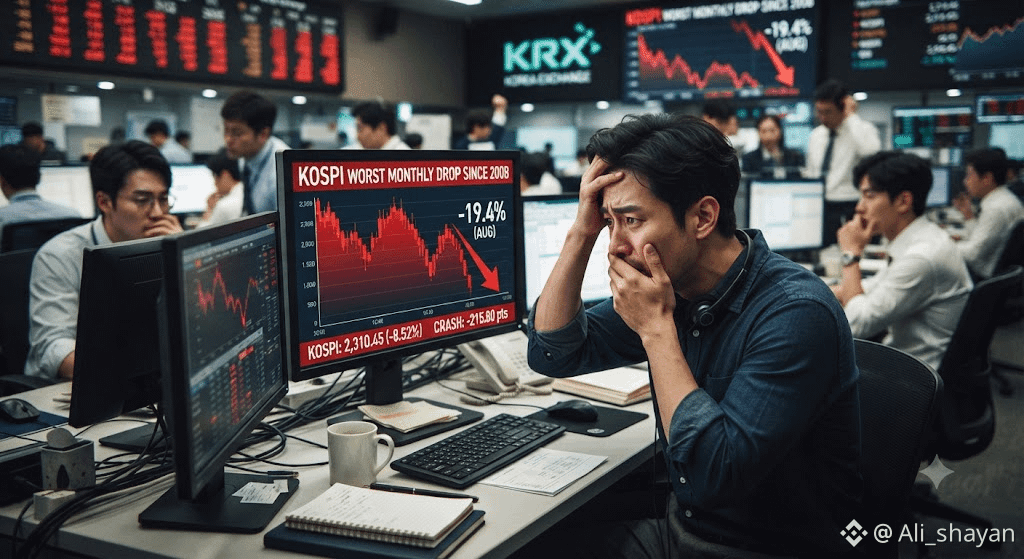
#KOSPIWorstMonthlyDropSince2008 Huge shock wave in the market! South Korea's KOSPI just suffered its worst monthly drop since the 2008 global financial crisis. Seven out of ten stocks crashed hard, wiping out gains and leaving traders in total disbelief. Heavy selling pressure hit major tech and biotech shares, creating a massive wild ride. Will the market bounce back soon, or is more pain coming? Stay tuned for updates!
CLICK BELOW TO TRADE : $SKYH.US $SAMSUNG $BTC
{future}(BTCUSDT)
{future}(SAMSUNGUSDT)
{stock_us}(SKYH.US)
#KOSPIWorstMonthlyDropSince2008 Huge shock wave in the market! South Korea's KOSPI just suffered its worst monthly drop since the 2008 global financial crisis. Seven out of ten stocks crashed hard, wiping out gains and leaving traders in total disbelief. Heavy selling pressure hit major tech and biotech shares, creating a massive wild ride. Will the market bounce back soon, or is more pain coming? Stay tuned for updates!
CLICK BELOW TO TRADE : $SKYH.US $SAMSUNG $BTC
CLICK BELOW TO TRADE : $SKYH.US $SAMSUNG $BTC
74
📉🇰🇷 KOSPI Posts Worst Monthly Decline Since 2008
South Korea's KOSPI recorded its sharpest monthly drop since 2008, reflecting heightened market volatility as investors reacted to economic and global market developments.
$BTC $BNB $ETH
#kospiworstmonthlydropsince2008
📉🇰🇷 KOSPI Posts Worst Monthly Decline Since 2008
South Korea's KOSPI recorded its sharpest monthly drop since 2008, reflecting heightened market volatility as investors reacted to economic and global market developments.
$BTC $BNB $ETH
#kospiworstmonthlydropsince2008
South Korea's KOSPI recorded its sharpest monthly drop since 2008, reflecting heightened market volatility as investors reacted to economic and global market developments.
$BTC $BNB $ETH
#kospiworstmonthlydropsince2008
42

#KOSPIWorstMonthlyDropSince2008
South Korea’s stock market is going through a difficult period, with the KOSPI recording its biggest monthly drop since 2008. For many investors, this is a reminder of how quickly market sentiment can change when uncertainty grows.
Rising economic concerns, global market pressure, and investor fears have all played a role in the recent decline. Many people are now wondering whether this is just a temporary setback or a sign of bigger challenges ahead.
While market drops can be worrying, they are also part of how financial markets work. The coming weeks will be important as investors look for signs of stability and hope for stronger economic conditions.
For now, all eyes remain on the KOSPI as South Korea faces one of its toughest market months in years.
#SouthKorea #stockmarket $BTC $ETH
#KOSPIWorstMonthlyDropSince2008
South Korea’s stock market is going through a difficult period, with the KOSPI recording its biggest monthly drop since 2008. For many investors, this is a reminder of how quickly market sentiment can change when uncertainty grows.
Rising economic concerns, global market pressure, and investor fears have all played a role in the recent decline. Many people are now wondering whether this is just a temporary setback or a sign of bigger challenges ahead.
While market drops can be worrying, they are also part of how financial markets work. The coming weeks will be important as investors look for signs of stability and hope for stronger economic conditions.
For now, all eyes remain on the KOSPI as South Korea faces one of its toughest market months in years.
#SouthKorea #stockmarket $BTC $ETH
South Korea’s stock market is going through a difficult period, with the KOSPI recording its biggest monthly drop since 2008. For many investors, this is a reminder of how quickly market sentiment can change when uncertainty grows.
Rising economic concerns, global market pressure, and investor fears have all played a role in the recent decline. Many people are now wondering whether this is just a temporary setback or a sign of bigger challenges ahead.
While market drops can be worrying, they are also part of how financial markets work. The coming weeks will be important as investors look for signs of stability and hope for stronger economic conditions.
For now, all eyes remain on the KOSPI as South Korea faces one of its toughest market months in years.
#SouthKorea #stockmarket $BTC $ETH
1
23
163
Verified
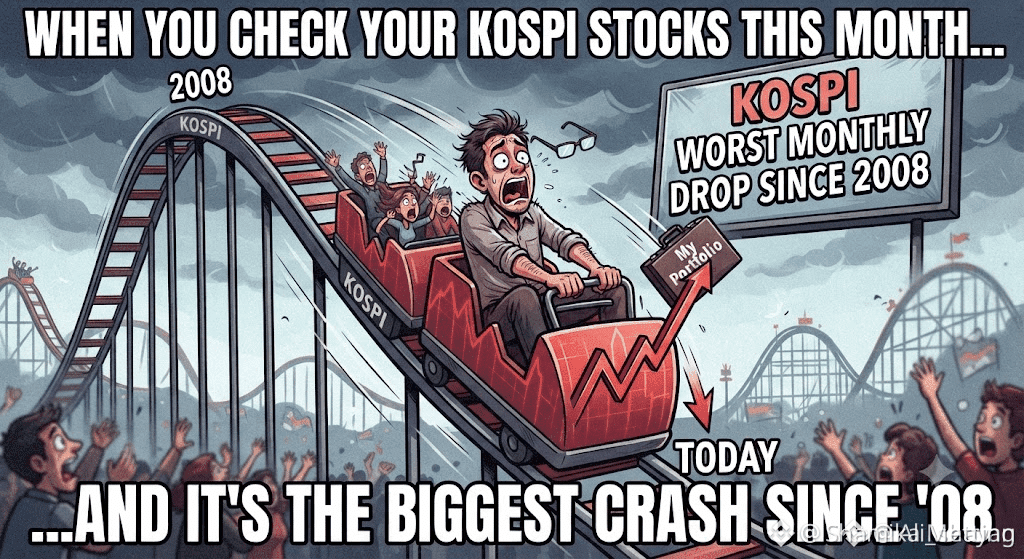
#kospiworstmonthlydropsince2008 Hold on to your seats! The stock market has just taken a severe hit. South Korea’s KOSPI index fell by more than twenty percent in July, marking its sharpest monthly decline since the global financial crisis in 2008! Seven out of every ten stocks were dealt a harsh blow amid panicked selling, fierce competition in the technology sector, and wild market swings that shook investors around the world. The storm is still raging, but epic recoveries always seem to be just one step away!
Please follow up
Click below to trade: $SKYH.US $SAMSUNG $ETH
{future}(ETHUSDT)
#kospiworstmonthlydropsince2008 Hold on to your seats! The stock market has just taken a severe hit. South Korea’s KOSPI index fell by more than twenty percent in July, marking its sharpest monthly decline since the global financial crisis in 2008! Seven out of every ten stocks were dealt a harsh blow amid panicked selling, fierce competition in the technology sector, and wild market swings that shook investors around the world. The storm is still raging, but epic recoveries always seem to be just one step away!
Please follow up
Click below to trade: $SKYH.US $SAMSUNG $ETH
Please follow up
Click below to trade: $SKYH.US $SAMSUNG $ETH
3
9
4k

·
--
Bearish
#kospiworstmonthlydropsince2008
🚨 South Korea's stock market is feeling serious pressure.
The KOSPI has posted its worst monthly decline since the 2008 global financial crisis, highlighting growing concerns over global trade tensions, slowing economic growth, and weakening investor confidence. 📉
Markets hate uncertainty, and when traditional equities struggle, crypto often experiences increased volatility as well. While fear dominates headlines, experienced investors know these periods can also create long-term opportunities.
👀 Keep an eye on:
🔹 Global risk sentiment
🔹 Asian market reactions
🔹 Bitcoin's ability to hold key support
🔹 Capital flows between stocks and crypto
History shows that panic doesn't last forever—but risk management always matters.
Are you buying the dip or waiting for more confirmation? 👇
DYOR. Stay patient and trade with a plan.
#KOSPIWorstMonthlyDropSince2008 #BTC #ETH
#kospiworstmonthlydropsince2008
🚨 South Korea's stock market is feeling serious pressure.
The KOSPI has posted its worst monthly decline since the 2008 global financial crisis, highlighting growing concerns over global trade tensions, slowing economic growth, and weakening investor confidence. 📉
Markets hate uncertainty, and when traditional equities struggle, crypto often experiences increased volatility as well. While fear dominates headlines, experienced investors know these periods can also create long-term opportunities.
👀 Keep an eye on:
🔹 Global risk sentiment
🔹 Asian market reactions
🔹 Bitcoin's ability to hold key support
🔹 Capital flows between stocks and crypto
History shows that panic doesn't last forever—but risk management always matters.
Are you buying the dip or waiting for more confirmation? 👇
DYOR. Stay patient and trade with a plan.
#KOSPIWorstMonthlyDropSince2008 #BTC #ETH
🚨 South Korea's stock market is feeling serious pressure.
The KOSPI has posted its worst monthly decline since the 2008 global financial crisis, highlighting growing concerns over global trade tensions, slowing economic growth, and weakening investor confidence. 📉
Markets hate uncertainty, and when traditional equities struggle, crypto often experiences increased volatility as well. While fear dominates headlines, experienced investors know these periods can also create long-term opportunities.
👀 Keep an eye on:
🔹 Global risk sentiment
🔹 Asian market reactions
🔹 Bitcoin's ability to hold key support
🔹 Capital flows between stocks and crypto
History shows that panic doesn't last forever—but risk management always matters.
Are you buying the dip or waiting for more confirmation? 👇
DYOR. Stay patient and trade with a plan.
#KOSPIWorstMonthlyDropSince2008 #BTC #ETH
1
366

·
--
Bullish
Partly True
#kospiworstmonthlydropsince2008
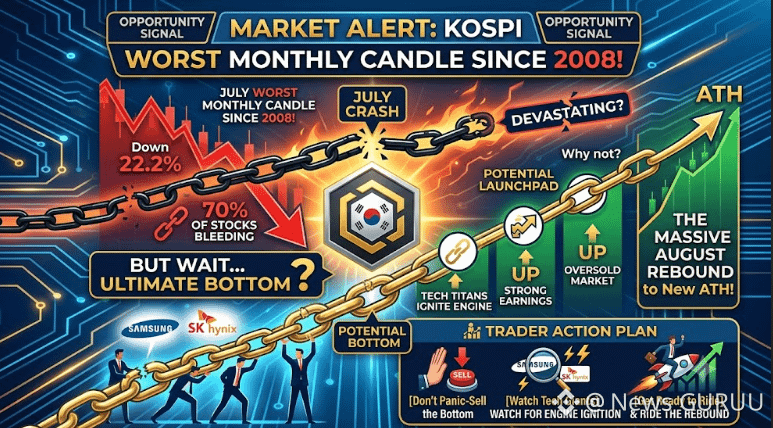
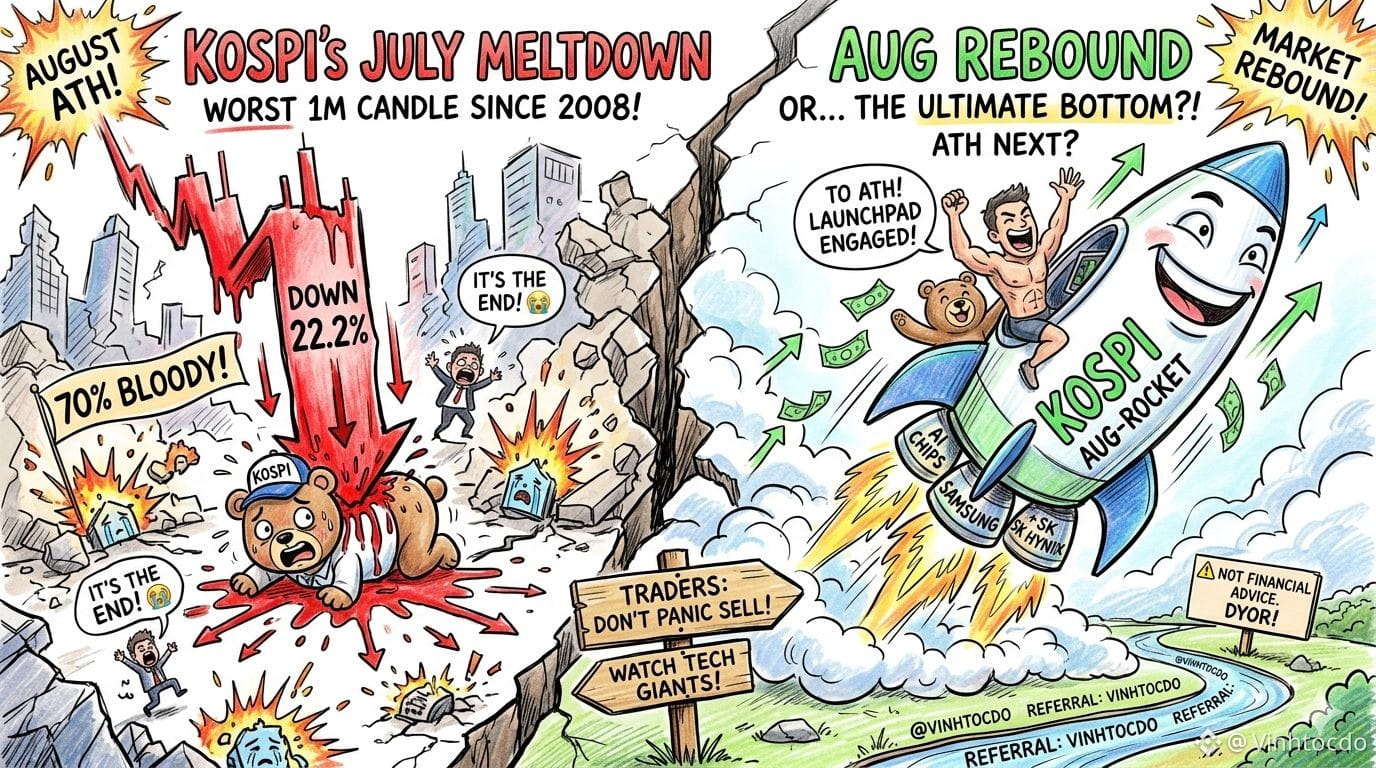
KOSPI just closed July with its worst monthly candle since 2008! 📉 Down 22.2%, leaving 70% of stocks bleeding. Devastating? Yes. But wait... what if this brutal drop is actually the ultimate bottom?
Think about it, lads! This could be the launchpad for a massive August rebound to a new ATH! Why not? South Korea's tech titans like Samsung and SK Hynix are still heavyweights in AI and chips. Earnings are strong, and the market is heavily oversold.
🧗 What should traders do?
Don't panic-sell the bottom. Watch for the tech giants to ignite the engine and get ready to ride the rebound.
⚠️ NOT FINANCIAL ADVICE. DYOR!
🚀 Use referral code VINHTOCDO for new setups.
#KOSPI #CryptoTech #MarketRebound #VINHTOCDO
$SKHYB
{spot}(SKHYBUSDT)
$SKHY
{future}(SKHYUSDT)
$SAMSUNG
{future}(SAMSUNGUSDT)
#kospiworstmonthlydropsince2008
KOSPI just closed July with its worst monthly candle since 2008! 📉 Down 22.2%, leaving 70% of stocks bleeding. Devastating? Yes. But wait... what if this brutal drop is actually the ultimate bottom?
Think about it, lads! This could be the launchpad for a massive August rebound to a new ATH! Why not? South Korea's tech titans like Samsung and SK Hynix are still heavyweights in AI and chips. Earnings are strong, and the market is heavily oversold.
🧗 What should traders do?
Don't panic-sell the bottom. Watch for the tech giants to ignite the engine and get ready to ride the rebound.
⚠️ NOT FINANCIAL ADVICE. DYOR!
🚀 Use referral code VINHTOCDO for new setups.
#KOSPI #CryptoTech #MarketRebound #VINHTOCDO
$SKHYB
$SKHY
$SAMSUNG
KOSPI just closed July with its worst monthly candle since 2008! 📉 Down 22.2%, leaving 70% of stocks bleeding. Devastating? Yes. But wait... what if this brutal drop is actually the ultimate bottom?
Think about it, lads! This could be the launchpad for a massive August rebound to a new ATH! Why not? South Korea's tech titans like Samsung and SK Hynix are still heavyweights in AI and chips. Earnings are strong, and the market is heavily oversold.
🧗 What should traders do?
Don't panic-sell the bottom. Watch for the tech giants to ignite the engine and get ready to ride the rebound.
⚠️ NOT FINANCIAL ADVICE. DYOR!
🚀 Use referral code VINHTOCDO for new setups.
#KOSPI #CryptoTech #MarketRebound #VINHTOCDO
$SKHYB
$SKHY
$SAMSUNG
4
2.5k
·
--
Partly True
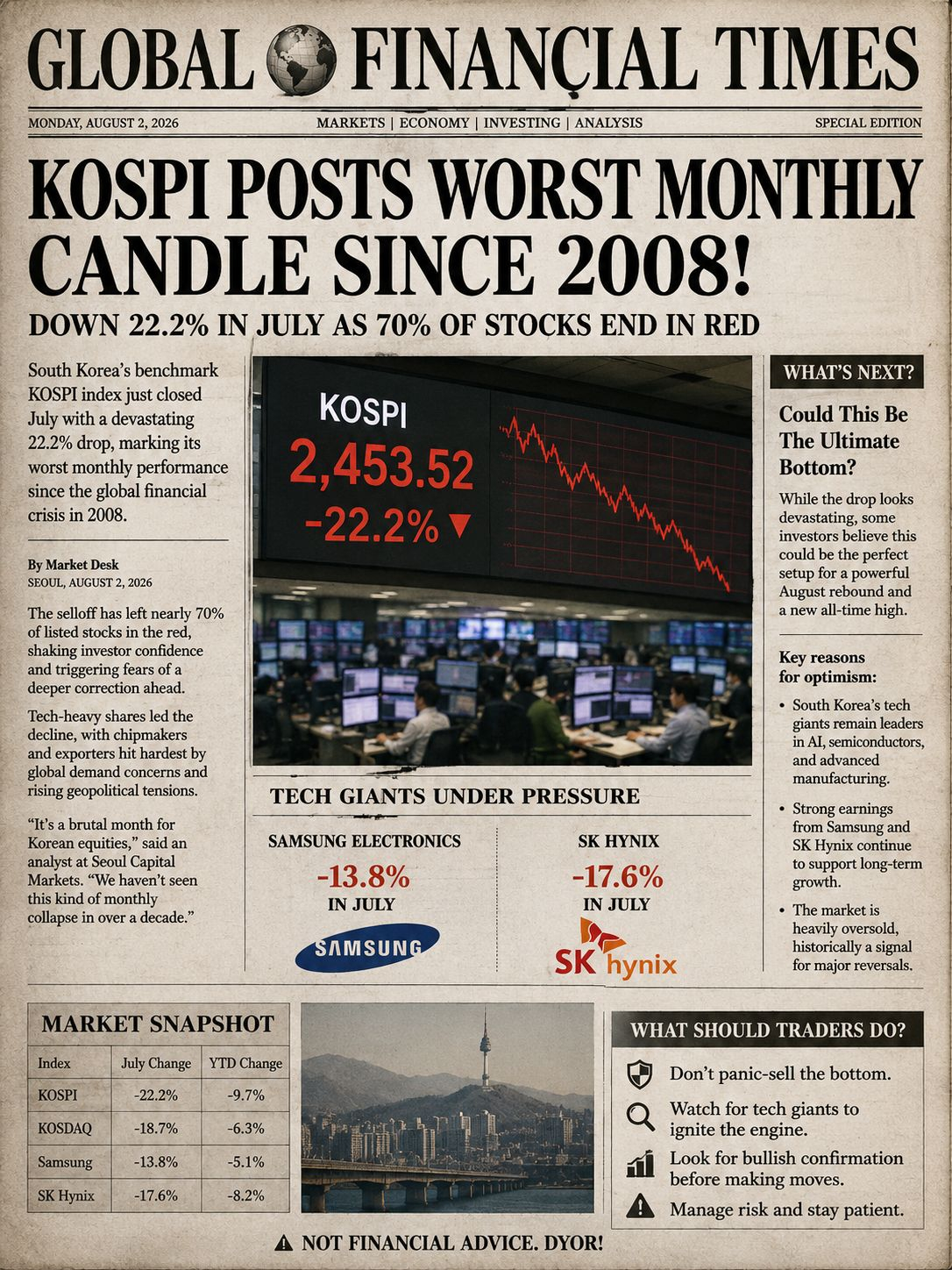
#kospiworstmonthlydropsince2008 🚨 KOSPI Just Printed Its Worst Monthly Candle Since 2008! 🇰🇷📉
The KOSPI closed July down 22.2%, with roughly 70% of listed stocks finishing in the red. Fear is everywhere—but history reminds us that the biggest opportunities often emerge when sentiment is at its worst.
So, is this the start of a deeper crash... or the foundation for a powerful August recovery? 🤔
South Korea remains a global powerhouse in AI, semiconductors, and advanced manufacturing. Giants like Samsung and SK Hynix continue to play a critical role in the global chip industry, and investors will be watching closely for signs that institutional buying returns.
🎯 What should traders do?
✅ Avoid emotional panic-selling after a sharp decline.
✅ Watch key support levels and wait for bullish confirmation.
✅ Keep an eye on semiconductor leaders—they could drive the next move.
✅ Manage risk and don't chase volatility.
Markets often look the darkest before momentum shifts—but confirmation always matters more than hope.
⚠️ Not Financial Advice. Always DYOR.
#KOSPI #Stocks #SouthKorea #Samsung
click to below trade👇
$SAMSUNG $SKHYB $SKHYNIX
{spot}(SKHYBUSDT)
{future}(SAMSUNGUSDT)
{future}(SKHYNIXUSDT)
#kospiworstmonthlydropsince2008 🚨 KOSPI Just Printed Its Worst Monthly Candle Since 2008! 🇰🇷📉
The KOSPI closed July down 22.2%, with roughly 70% of listed stocks finishing in the red. Fear is everywhere—but history reminds us that the biggest opportunities often emerge when sentiment is at its worst.
So, is this the start of a deeper crash... or the foundation for a powerful August recovery? 🤔
South Korea remains a global powerhouse in AI, semiconductors, and advanced manufacturing. Giants like Samsung and SK Hynix continue to play a critical role in the global chip industry, and investors will be watching closely for signs that institutional buying returns.
🎯 What should traders do?
✅ Avoid emotional panic-selling after a sharp decline.
✅ Watch key support levels and wait for bullish confirmation.
✅ Keep an eye on semiconductor leaders—they could drive the next move.
✅ Manage risk and don't chase volatility.
Markets often look the darkest before momentum shifts—but confirmation always matters more than hope.
⚠️ Not Financial Advice. Always DYOR.
#KOSPI #Stocks #SouthKorea #Samsung
click to below trade👇
$SAMSUNG $SKHYB $SKHYNIX
The KOSPI closed July down 22.2%, with roughly 70% of listed stocks finishing in the red. Fear is everywhere—but history reminds us that the biggest opportunities often emerge when sentiment is at its worst.
So, is this the start of a deeper crash... or the foundation for a powerful August recovery? 🤔
South Korea remains a global powerhouse in AI, semiconductors, and advanced manufacturing. Giants like Samsung and SK Hynix continue to play a critical role in the global chip industry, and investors will be watching closely for signs that institutional buying returns.
🎯 What should traders do?
✅ Avoid emotional panic-selling after a sharp decline.
✅ Watch key support levels and wait for bullish confirmation.
✅ Keep an eye on semiconductor leaders—they could drive the next move.
✅ Manage risk and don't chase volatility.
Markets often look the darkest before momentum shifts—but confirmation always matters more than hope.
⚠️ Not Financial Advice. Always DYOR.
#KOSPI #Stocks #SouthKorea #Samsung
click to below trade👇
$SAMSUNG $SKHYB $SKHYNIX
1
12
6.8k
·
--
Verified
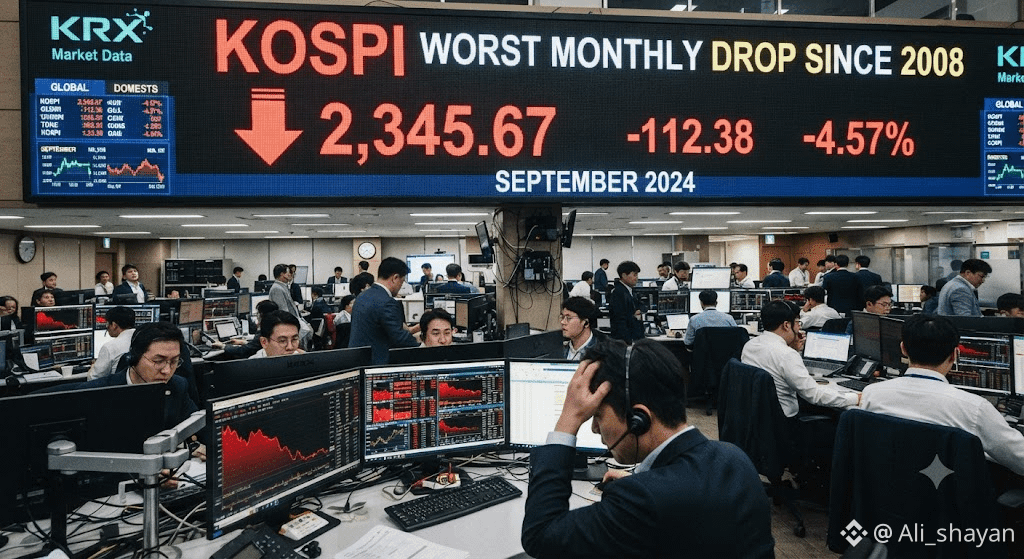
#kospiworstmonthlydropsince2008 What a wild ride for the stock market! South Korea's KOSPI just suffered its steepest monthly drop since the 2008 global financial crisis, with over seven in ten stocks tumbling. Heavy selling pressure hit major tech and biotech shares hard, shocking investors everywhere. Even with a sudden record-breaking rebound led by massive chip giants, this historic crash leaves everyone wondering what happens next. Stay sharp out there!
CLICK BELOW TO TRADE : $SKYH.US $SAMSUNG $XRP
{future}(XRPUSDT)
{future}(SAMSUNGUSDT)
{stock_us}(SKYH.US)
#kospiworstmonthlydropsince2008 What a wild ride for the stock market! South Korea's KOSPI just suffered its steepest monthly drop since the 2008 global financial crisis, with over seven in ten stocks tumbling. Heavy selling pressure hit major tech and biotech shares hard, shocking investors everywhere. Even with a sudden record-breaking rebound led by massive chip giants, this historic crash leaves everyone wondering what happens next. Stay sharp out there!
CLICK BELOW TO TRADE : $SKYH.US $SAMSUNG $XRP
CLICK BELOW TO TRADE : $SKYH.US $SAMSUNG $XRP
4
4
9.3k

#KOSPIWorstMonthlyDropSince2008 Worst monthly drop since 2008! KOSPI index collapses hard 📉🚨
A strong shock is being witnessed in Asian markets—specifically the South Korean market—as the KOSPI index records its worst monthly decline since the global financial crisis in 2008. Markets are going through an extremely critical phase!
📍 From the heart of the event: With you, my brother Mohammed from Gaza of steadfastness. I’ll be following with you the details and analyses of global markets first by first, so we’re always together in the picture of the moment.
Share your opinions and analyses, and don’t forget to follow the account to get every new update and support the ongoing content! 📈🤝
#KOSPIWorstMonthlyDropSince2008 #Markets #Economy #Trading #أسواق_المال
#KOSPIWorstMonthlyDropSince2008 Worst monthly drop since 2008! KOSPI index collapses hard 📉🚨
A strong shock is being witnessed in Asian markets—specifically the South Korean market—as the KOSPI index records its worst monthly decline since the global financial crisis in 2008. Markets are going through an extremely critical phase!
📍 From the heart of the event: With you, my brother Mohammed from Gaza of steadfastness. I’ll be following with you the details and analyses of global markets first by first, so we’re always together in the picture of the moment.
Share your opinions and analyses, and don’t forget to follow the account to get every new update and support the ongoing content! 📈🤝
#KOSPIWorstMonthlyDropSince2008 #Markets #Economy #Trading #أسواق_المال
A strong shock is being witnessed in Asian markets—specifically the South Korean market—as the KOSPI index records its worst monthly decline since the global financial crisis in 2008. Markets are going through an extremely critical phase!
📍 From the heart of the event: With you, my brother Mohammed from Gaza of steadfastness. I’ll be following with you the details and analyses of global markets first by first, so we’re always together in the picture of the moment.
Share your opinions and analyses, and don’t forget to follow the account to get every new update and support the ongoing content! 📈🤝
#KOSPIWorstMonthlyDropSince2008 #Markets #Economy #Trading #أسواق_المال
30
#kospiworstmonthlydropsince2008
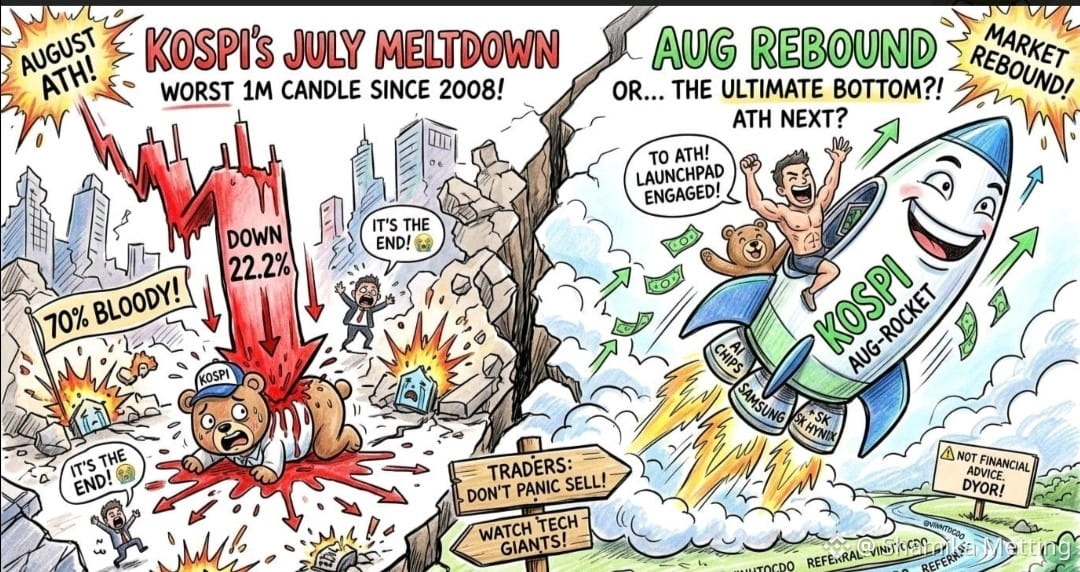
KOSPI index just closed out July with its worst monthly candle since 2008! 📉 Down 22.2%, leaving 70% of stocks bleeding. Catastrophic? Yes. But wait... what if this brutal drop is actually the final bottom?
Think about it, guys! This could be the launchpad for a massive August rebound all the way to a new ATH. Why not? Korea’s tech giants like Samsung and SK Hynix are major forces in AI and chips. Earnings are strong, and the market is heavily oversold.
🧗 What should traders do?
Don’t sell in a panic at the bottom. Watch the tech giants as they fire up the engine and get ready to ride the rebound wave.
⚠️ Not financial advice. Do your own research (DYOR)!
Follow-up from you, please
#KOSPI #CryptoTech #MarketRebound
$SKHYB
$SKHYB
{spot}(SKHYBUSDT)
$SAMSUNG
{future}(SAMSUNGUSDT)
#kospiworstmonthlydropsince2008
KOSPI index just closed out July with its worst monthly candle since 2008! 📉 Down 22.2%, leaving 70% of stocks bleeding. Catastrophic? Yes. But wait... what if this brutal drop is actually the final bottom?
Think about it, guys! This could be the launchpad for a massive August rebound all the way to a new ATH. Why not? Korea’s tech giants like Samsung and SK Hynix are major forces in AI and chips. Earnings are strong, and the market is heavily oversold.
🧗 What should traders do?
Don’t sell in a panic at the bottom. Watch the tech giants as they fire up the engine and get ready to ride the rebound wave.
⚠️ Not financial advice. Do your own research (DYOR)!
Follow-up from you, please
#KOSPI #CryptoTech #MarketRebound
$SKHYB
$SKHYB
$SAMSUNG
KOSPI index just closed out July with its worst monthly candle since 2008! 📉 Down 22.2%, leaving 70% of stocks bleeding. Catastrophic? Yes. But wait... what if this brutal drop is actually the final bottom?
Think about it, guys! This could be the launchpad for a massive August rebound all the way to a new ATH. Why not? Korea’s tech giants like Samsung and SK Hynix are major forces in AI and chips. Earnings are strong, and the market is heavily oversold.
🧗 What should traders do?
Don’t sell in a panic at the bottom. Watch the tech giants as they fire up the engine and get ready to ride the rebound wave.
⚠️ Not financial advice. Do your own research (DYOR)!
Follow-up from you, please
#KOSPI #CryptoTech #MarketRebound
$SKHYB
$SKHYB
$SAMSUNG
1
167
Log in to explore more content
Join global crypto users on Binance Square
⚡️ Get latest and useful information about crypto.
💬 Trusted by the world’s largest crypto exchange.
👍 Discover real insights from verified creators.
Email / Phone number
Trending Topics
1
#FedRateWatch
703,992 views
3,340 Discussing
2
#ArgentinaCommitsToOECDCryptoReportingBy2029
0 views
7 Discussing
3
#EthereumFallsBelow$2400
1,091 views
37 Discussing
4
#USSenateBlocksClarityAct
7,298 views
211 Discussing
5
#BitcoinSlidesTo$76000
30,656 views
142 Discussing
6
#BitcoinReboundsTo$79K
65,161 views
417 Discussing
7
#StrategyMarketCapPassesFord
52,366 views
816 Discussing
8
#ClarityActOddsHalveOnPolymarket
86,580 views
718 Discussing
9
#US30YTreasuryYieldTops5.40%
44,906 views
463 Discussing
10
#BessentEndorsesFinalClarityActDraft
67,980 views
843 Discussing