

#hedgingstrategies
hedgingstrategies
17,067 views
23 Discussing
Hot
Latest

·
--
Bullish
What is Hedging in Trading 🤔
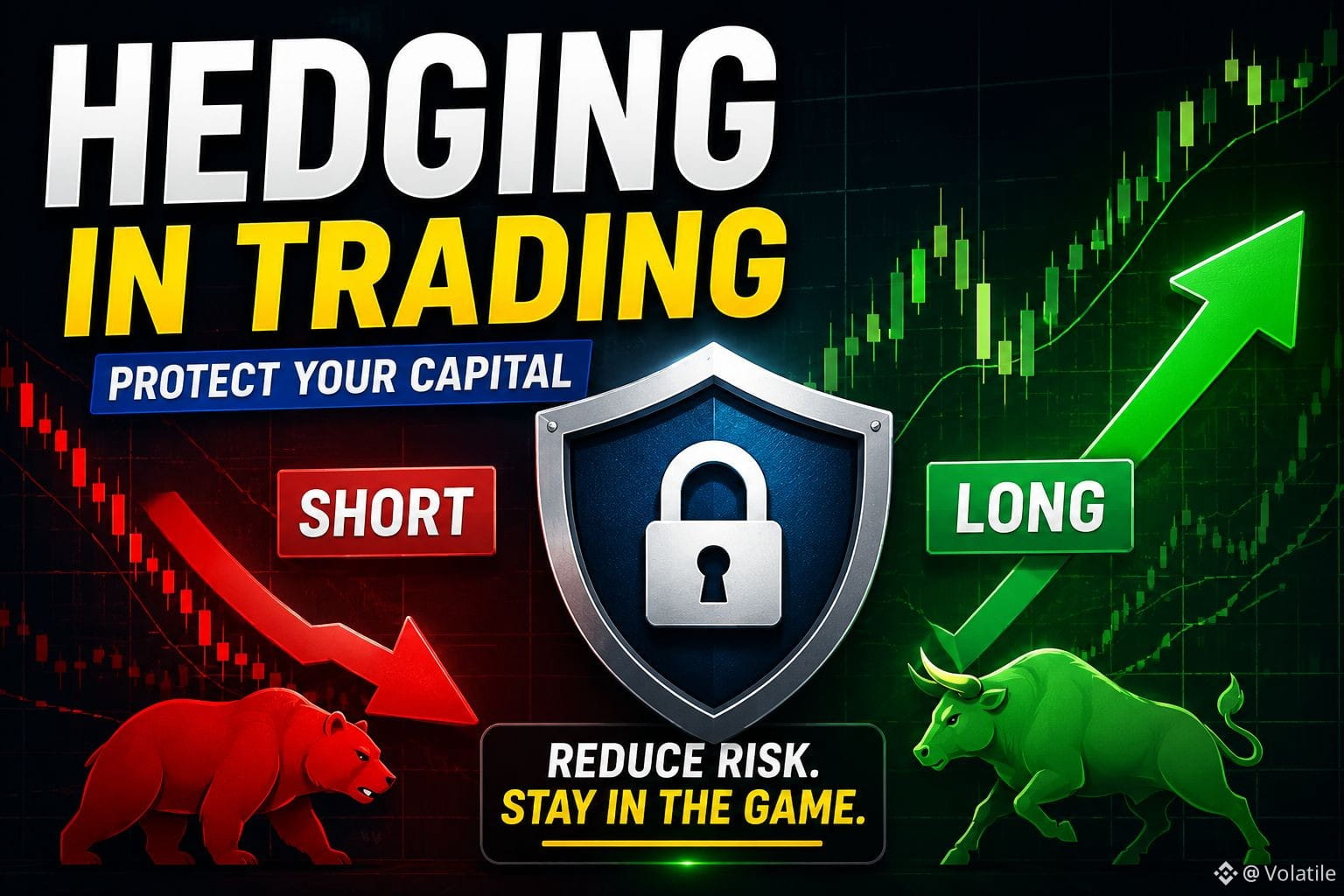
Hedging in trading is a Risk management strategy where a trader opens a second position to offset potential losses in an existing position.
Think of it like insurance , you give up some potential profit in exchange for reducing risk.
$TSLAB
{spot}(TSLABUSDT)
Simple Example
Suppose you own 100 shares of a stock at $50 per share.
If the stock rises to $60, you profit.
If the stock falls to $40, you lose money.
To hedge, you might buy a put option that gives you the right to sell the stock at $48.
If the stock crashes to $40, the put option gains value and helps offset your loss.
If the stock rises, the put option may expire worthless, but your stock gains value.
Common Hedging Methods
1. Options
Buy puts to protect long positions.
Buy calls to protect short positions.
$HMSTR
{future}(HMSTRUSDT)
2. Futures Contracts
Farmers, airlines, and commodity traders often hedge future price changes.
3. Short Selling
If you own a stock portfolio, you might short a market index to reduce market risk.
4. Diversification
Holding different assets (stocks, bonds, gold, etc.) can act as a form of hedge.
Forex Example
If a trader is long EUR/USD and worries about short-term downside:
They might open a smaller short EUR/USD position.
Losses on the long trade can be partially offset by gains on the short trade.
Advantages
Reduces risk and volatility.
Protects capital during uncertain markets.
Helps lock in profits.
Disadvantages
Reduces potential gains.
Hedging costs money (option premiums, spreads, fees).
Can make trading more complex.
Key Point
A hedge does not eliminate risk completely. Its purpose is to reduce the impact of adverse price movements, not guarantee profits.
A common saying is "Hedging limits losses, but it also limits some gains."
$BOME
{future}(BOMEUSDT)
#BinanceSquareFamily #BinanceSquareTalks #HedgingStrategies
What is Hedging in Trading 🤔
Hedging in trading is a Risk management strategy where a trader opens a second position to offset potential losses in an existing position.
Think of it like insurance , you give up some potential profit in exchange for reducing risk.
$TSLAB
Simple Example
Suppose you own 100 shares of a stock at $50 per share.
If the stock rises to $60, you profit.
If the stock falls to $40, you lose money.
To hedge, you might buy a put option that gives you the right to sell the stock at $48.
If the stock crashes to $40, the put option gains value and helps offset your loss.
If the stock rises, the put option may expire worthless, but your stock gains value.
Common Hedging Methods
1. Options
Buy puts to protect long positions.
Buy calls to protect short positions.
$HMSTR
2. Futures Contracts
Farmers, airlines, and commodity traders often hedge future price changes.
3. Short Selling
If you own a stock portfolio, you might short a market index to reduce market risk.
4. Diversification
Holding different assets (stocks, bonds, gold, etc.) can act as a form of hedge.
Forex Example
If a trader is long EUR/USD and worries about short-term downside:
They might open a smaller short EUR/USD position.
Losses on the long trade can be partially offset by gains on the short trade.
Advantages
Reduces risk and volatility.
Protects capital during uncertain markets.
Helps lock in profits.
Disadvantages
Reduces potential gains.
Hedging costs money (option premiums, spreads, fees).
Can make trading more complex.
Key Point
A hedge does not eliminate risk completely. Its purpose is to reduce the impact of adverse price movements, not guarantee profits.
A common saying is "Hedging limits losses, but it also limits some gains."
$BOME
#BinanceSquareFamily #BinanceSquareTalks #HedgingStrategies
Hedging in trading is a Risk management strategy where a trader opens a second position to offset potential losses in an existing position.
Think of it like insurance , you give up some potential profit in exchange for reducing risk.
$TSLAB
Simple Example
Suppose you own 100 shares of a stock at $50 per share.
If the stock rises to $60, you profit.
If the stock falls to $40, you lose money.
To hedge, you might buy a put option that gives you the right to sell the stock at $48.
If the stock crashes to $40, the put option gains value and helps offset your loss.
If the stock rises, the put option may expire worthless, but your stock gains value.
Common Hedging Methods
1. Options
Buy puts to protect long positions.
Buy calls to protect short positions.
$HMSTR
2. Futures Contracts
Farmers, airlines, and commodity traders often hedge future price changes.
3. Short Selling
If you own a stock portfolio, you might short a market index to reduce market risk.
4. Diversification
Holding different assets (stocks, bonds, gold, etc.) can act as a form of hedge.
Forex Example
If a trader is long EUR/USD and worries about short-term downside:
They might open a smaller short EUR/USD position.
Losses on the long trade can be partially offset by gains on the short trade.
Advantages
Reduces risk and volatility.
Protects capital during uncertain markets.
Helps lock in profits.
Disadvantages
Reduces potential gains.
Hedging costs money (option premiums, spreads, fees).
Can make trading more complex.
Key Point
A hedge does not eliminate risk completely. Its purpose is to reduce the impact of adverse price movements, not guarantee profits.
A common saying is "Hedging limits losses, but it also limits some gains."
$BOME
#BinanceSquareFamily #BinanceSquareTalks #HedgingStrategies
3
206

·
--
Article
An ojol's web3 journal - Part 10: Why Tropical Storms Taught Me How to Hedge Crypto?Yesterday's off-duty day at the motorcycle dealership gave me a lot of clarity. Today, I was back on my motorcycle seat, navigating the roads of Kendal Regency. But the sky wasn't friendly. Dark cloud formations over the hills of Sukorejo predicted a massive tropical storm.
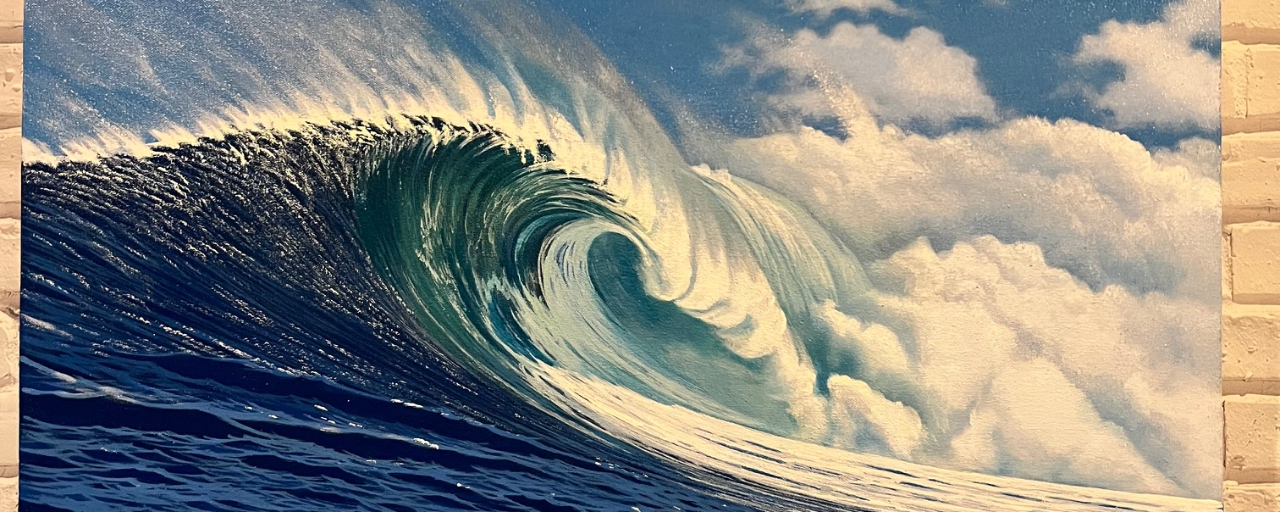
(My uncle's oil-on-canvas painting of a massive barrel wave. To me, it is the perfect representation of market volatility. We cannot stop the storm, but we can learn how to ride the waves through strategic financial hedging.).
As an online motorcycle taxi driver (ojol), severe weather is the ultimate market volatility. A sudden storm can completely wipe out my expected daily income. Roads become flooded, my engine risks breaking down, and customers cancel their outdoor trips. In times like these, you don’t think about making a huge profit; you think about survival and protecting your baseline capital.
While parked under a roadside shelter checking the radar, I opened my BitDegree dashboard to study Hedging with Crypto Derivatives. It struck me how Wall Street traders and DeFi investors use the exact same logic to survive market crashes as we use to survive a stormy day on the asphalt. Let's break down how it works.
What is Hedging?
In cryptocurrency markets, Hedging is a risk management strategy used to offset potential losses in an underlying asset. Instead of blindly hoping the market will always go up, smart traders use derivative contracts—like Options and Short Positions—as a form of insurance to safeguard their portfolios from adverse price movements.
The Street Logic: Explaining Hedging on the Asphalt
1. Hedging with Put Options (The Emergency Wholesale Contract)
A Put Option gives you the right, but not the obligation, to sell an asset at a locked predetermined price (strike price) before an expiration date. You pay a small fee (premium) upfront to secure this right.
· The Street Analogy: Knowing a big storm is coming tomorrow, I approach a local grocery store owner today. I pay him a small upfront "coffee money" of Rp20,000 (The Premium). In exchange, we agree on a contract: "Tomorrow, if I deliver your wholesale packages, you must pay me a fixed rate of Rp150,000, regardless of the weather."
· Tomorrow arrives, and Kendal is hit by a massive flood. The ride-hailing app goes dead quiet, and standard fares drop to zero. However, my capital is safe. I execute my Put Option, deliver his groceries, and collect my locked Rp150,000. My only loss was the initial Rp20,000 coffee money, but my family's dinner for the night is completely secured.
2. Hedging with Call Options (Locking the Spare Parts Price)
A Call Option gives you the right to buy an asset at a fixed price within a certain period. This protects you from sudden price spikes.
· The Street Analogy: My motorcycle’s rear tire is wearing thin, and I need to replace it next month. Currently, a new tire at the Kendal workshop costs Rp180,000. However, I hear rumors that global rubber prices are rising and tire shortages are coming.
· I pay the mechanic a small non-refundable booking fee of Rp10,000 today to lock the price: "Keep one tire for me. Next month, I will buy it for exactly Rp180,000."
· Next month, the rumors turn out to be true; tire prices skyrocket to Rp250,000. I simply hand over my Rp180,000 and claim my tire. My Call Option successfully hedged me against the sudden price inflation!
3. Managing Risks via Short Positions (The "Borrowed Asset" Hustle)
A Short Position involves borrowing an asset you don't own, selling it at today's high market price, and planning to buy it back later at a lower price to return it to the lender—pocketing the difference.
· The Street Analogy: I notice that the local market for used CRF motorcycles in Kendal is becoming oversaturated, and their value is predicted to plummet from Rp25 Million to Rp20 Million next month.
· I borrow a clean CRF from a fellow driver today. I immediately list and sell it to an outside buyer for Rp25 Million cash. I hold onto that cash.
· Next month, my prediction hits perfectly. The market crashes, and used CRFs drop to Rp20 Million. I take Rp20 Million from my pocket, buy an identical CRF from the market, and return the bike to my friend. My friend gets his asset back, and I pocket a clean Rp5 Million profit without ever owning a CRF in the first place!
· The Extreme Risk: But beware—if the market unexpectedly pumps and CRF prices shoot up to Rp30 Million instead, I am still legally forced to buy that bike back to return it to my friend. I would have to out-of-pocket an extra Rp5 Million. This is why short selling carries unlimited risk if the market moves against you.
Structural Breakdown: Street Insurance vs. Derivatives Hedging
Hedging Tool
The Roadside Hustle (Ojol)
Crypto Derivatives Market
Put Option
Pre-arranging a guaranteed delivery rate before a storm hits.
Buying a contract to sell crypto at a locked high price during a market crash.
Call Option
Paying a small deposit to freeze a spare part's price before inflation.
Buying a contract to lock a purchase price before an asset pumps.
Short Position
Borrowing and selling an overvalued bike to buy it back cheaper later.
Borrowing an asset to sell high and repurchase low; highly risky.
Conclusion: Act Like a Professional Risk Manager
Whether you are steering a 110cc automatic scooter through a slippery tropical thunderstorm in Kendal Regency, or steering a multi-thousand-dollar digital portfolio through a brutal crypto bear market, the rule remains the same: never leave your survival to luck. Professional traders don't just chase profits; they master the art of the hedge.
My 95-day learning streak on BitDegree has changed the way I look at my daily job. I am no longer just a driver reacting to the road; I am a risk manager navigating real-world volatility.
"A storm is only a disaster if you forgot to build your shelter. Don't look at financial education as a luxury for the rich; look at it as an umbrella for those who are tired of getting wet."
📌 Author’s Note:
Thank you for reading my journey from the asphalt! Just a quick milestone: my Web3 Journal Part 2 was officially cited on MEXC News, and from Part 6 onwards, this grassroots series has been curated and published by Block Magnates and Coinmonks on Medium. If these roadside analogies helped your crypto literacy, please consider leaving a thumbs up or a nice tip below to keep this driver's engine running! 🏍️⛽ Every bit of appreciation counts!
#HedgingStrategies #Web3 #riskmanager #Derivatives $BTC @richardteng @Binance_Academy @Binance_Academy_ID
An ojol's web3 journal - Part 10: Why Tropical Storms Taught Me How to Hedge Crypto?
Yesterday's off-duty day at the motorcycle dealership gave me a lot of clarity. Today, I was back on my motorcycle seat, navigating the roads of Kendal Regency. But the sky wasn't friendly. Dark cloud formations over the hills of Sukorejo predicted a massive tropical storm.
(My uncle's oil-on-canvas painting of a massive barrel wave. To me, it is the perfect representation of market volatility. We cannot stop the storm, but we can learn how to ride the waves through strategic financial hedging.).
As an online motorcycle taxi driver (ojol), severe weather is the ultimate market volatility. A sudden storm can completely wipe out my expected daily income. Roads become flooded, my engine risks breaking down, and customers cancel their outdoor trips. In times like these, you don’t think about making a huge profit; you think about survival and protecting your baseline capital.
While parked under a roadside shelter checking the radar, I opened my BitDegree dashboard to study Hedging with Crypto Derivatives. It struck me how Wall Street traders and DeFi investors use the exact same logic to survive market crashes as we use to survive a stormy day on the asphalt. Let's break down how it works.
What is Hedging?
In cryptocurrency markets, Hedging is a risk management strategy used to offset potential losses in an underlying asset. Instead of blindly hoping the market will always go up, smart traders use derivative contracts—like Options and Short Positions—as a form of insurance to safeguard their portfolios from adverse price movements.
The Street Logic: Explaining Hedging on the Asphalt
1. Hedging with Put Options (The Emergency Wholesale Contract)
A Put Option gives you the right, but not the obligation, to sell an asset at a locked predetermined price (strike price) before an expiration date. You pay a small fee (premium) upfront to secure this right.
· The Street Analogy: Knowing a big storm is coming tomorrow, I approach a local grocery store owner today. I pay him a small upfront "coffee money" of Rp20,000 (The Premium). In exchange, we agree on a contract: "Tomorrow, if I deliver your wholesale packages, you must pay me a fixed rate of Rp150,000, regardless of the weather."
· Tomorrow arrives, and Kendal is hit by a massive flood. The ride-hailing app goes dead quiet, and standard fares drop to zero. However, my capital is safe. I execute my Put Option, deliver his groceries, and collect my locked Rp150,000. My only loss was the initial Rp20,000 coffee money, but my family's dinner for the night is completely secured.
2. Hedging with Call Options (Locking the Spare Parts Price)
A Call Option gives you the right to buy an asset at a fixed price within a certain period. This protects you from sudden price spikes.
· The Street Analogy: My motorcycle’s rear tire is wearing thin, and I need to replace it next month. Currently, a new tire at the Kendal workshop costs Rp180,000. However, I hear rumors that global rubber prices are rising and tire shortages are coming.
· I pay the mechanic a small non-refundable booking fee of Rp10,000 today to lock the price: "Keep one tire for me. Next month, I will buy it for exactly Rp180,000."
· Next month, the rumors turn out to be true; tire prices skyrocket to Rp250,000. I simply hand over my Rp180,000 and claim my tire. My Call Option successfully hedged me against the sudden price inflation!
3. Managing Risks via Short Positions (The "Borrowed Asset" Hustle)
A Short Position involves borrowing an asset you don't own, selling it at today's high market price, and planning to buy it back later at a lower price to return it to the lender—pocketing the difference.
· The Street Analogy: I notice that the local market for used CRF motorcycles in Kendal is becoming oversaturated, and their value is predicted to plummet from Rp25 Million to Rp20 Million next month.
· I borrow a clean CRF from a fellow driver today. I immediately list and sell it to an outside buyer for Rp25 Million cash. I hold onto that cash.
· Next month, my prediction hits perfectly. The market crashes, and used CRFs drop to Rp20 Million. I take Rp20 Million from my pocket, buy an identical CRF from the market, and return the bike to my friend. My friend gets his asset back, and I pocket a clean Rp5 Million profit without ever owning a CRF in the first place!
· The Extreme Risk: But beware—if the market unexpectedly pumps and CRF prices shoot up to Rp30 Million instead, I am still legally forced to buy that bike back to return it to my friend. I would have to out-of-pocket an extra Rp5 Million. This is why short selling carries unlimited risk if the market moves against you.
Structural Breakdown: Street Insurance vs. Derivatives Hedging
Hedging Tool
The Roadside Hustle (Ojol)
Crypto Derivatives Market
Put Option
Pre-arranging a guaranteed delivery rate before a storm hits.
Buying a contract to sell crypto at a locked high price during a market crash.
Call Option
Paying a small deposit to freeze a spare part's price before inflation.
Buying a contract to lock a purchase price before an asset pumps.
Short Position
Borrowing and selling an overvalued bike to buy it back cheaper later.
Borrowing an asset to sell high and repurchase low; highly risky.
Conclusion: Act Like a Professional Risk Manager
Whether you are steering a 110cc automatic scooter through a slippery tropical thunderstorm in Kendal Regency, or steering a multi-thousand-dollar digital portfolio through a brutal crypto bear market, the rule remains the same: never leave your survival to luck. Professional traders don't just chase profits; they master the art of the hedge.
My 95-day learning streak on BitDegree has changed the way I look at my daily job. I am no longer just a driver reacting to the road; I am a risk manager navigating real-world volatility.
"A storm is only a disaster if you forgot to build your shelter. Don't look at financial education as a luxury for the rich; look at it as an umbrella for those who are tired of getting wet."
📌 Author’s Note:
Thank you for reading my journey from the asphalt! Just a quick milestone: my Web3 Journal Part 2 was officially cited on MEXC News, and from Part 6 onwards, this grassroots series has been curated and published by Block Magnates and Coinmonks on Medium. If these roadside analogies helped your crypto literacy, please consider leaving a thumbs up or a nice tip below to keep this driver's engine running! 🏍️⛽ Every bit of appreciation counts!
#HedgingStrategies #Web3 #riskmanager #Derivatives $BTC @Richard Teng @Binance Academy @Binance Academy Indonesian
(My uncle's oil-on-canvas painting of a massive barrel wave. To me, it is the perfect representation of market volatility. We cannot stop the storm, but we can learn how to ride the waves through strategic financial hedging.).
As an online motorcycle taxi driver (ojol), severe weather is the ultimate market volatility. A sudden storm can completely wipe out my expected daily income. Roads become flooded, my engine risks breaking down, and customers cancel their outdoor trips. In times like these, you don’t think about making a huge profit; you think about survival and protecting your baseline capital.
While parked under a roadside shelter checking the radar, I opened my BitDegree dashboard to study Hedging with Crypto Derivatives. It struck me how Wall Street traders and DeFi investors use the exact same logic to survive market crashes as we use to survive a stormy day on the asphalt. Let's break down how it works.
What is Hedging?
In cryptocurrency markets, Hedging is a risk management strategy used to offset potential losses in an underlying asset. Instead of blindly hoping the market will always go up, smart traders use derivative contracts—like Options and Short Positions—as a form of insurance to safeguard their portfolios from adverse price movements.
The Street Logic: Explaining Hedging on the Asphalt
1. Hedging with Put Options (The Emergency Wholesale Contract)
A Put Option gives you the right, but not the obligation, to sell an asset at a locked predetermined price (strike price) before an expiration date. You pay a small fee (premium) upfront to secure this right.
· The Street Analogy: Knowing a big storm is coming tomorrow, I approach a local grocery store owner today. I pay him a small upfront "coffee money" of Rp20,000 (The Premium). In exchange, we agree on a contract: "Tomorrow, if I deliver your wholesale packages, you must pay me a fixed rate of Rp150,000, regardless of the weather."
· Tomorrow arrives, and Kendal is hit by a massive flood. The ride-hailing app goes dead quiet, and standard fares drop to zero. However, my capital is safe. I execute my Put Option, deliver his groceries, and collect my locked Rp150,000. My only loss was the initial Rp20,000 coffee money, but my family's dinner for the night is completely secured.
2. Hedging with Call Options (Locking the Spare Parts Price)
A Call Option gives you the right to buy an asset at a fixed price within a certain period. This protects you from sudden price spikes.
· The Street Analogy: My motorcycle’s rear tire is wearing thin, and I need to replace it next month. Currently, a new tire at the Kendal workshop costs Rp180,000. However, I hear rumors that global rubber prices are rising and tire shortages are coming.
· I pay the mechanic a small non-refundable booking fee of Rp10,000 today to lock the price: "Keep one tire for me. Next month, I will buy it for exactly Rp180,000."
· Next month, the rumors turn out to be true; tire prices skyrocket to Rp250,000. I simply hand over my Rp180,000 and claim my tire. My Call Option successfully hedged me against the sudden price inflation!
3. Managing Risks via Short Positions (The "Borrowed Asset" Hustle)
A Short Position involves borrowing an asset you don't own, selling it at today's high market price, and planning to buy it back later at a lower price to return it to the lender—pocketing the difference.
· The Street Analogy: I notice that the local market for used CRF motorcycles in Kendal is becoming oversaturated, and their value is predicted to plummet from Rp25 Million to Rp20 Million next month.
· I borrow a clean CRF from a fellow driver today. I immediately list and sell it to an outside buyer for Rp25 Million cash. I hold onto that cash.
· Next month, my prediction hits perfectly. The market crashes, and used CRFs drop to Rp20 Million. I take Rp20 Million from my pocket, buy an identical CRF from the market, and return the bike to my friend. My friend gets his asset back, and I pocket a clean Rp5 Million profit without ever owning a CRF in the first place!
· The Extreme Risk: But beware—if the market unexpectedly pumps and CRF prices shoot up to Rp30 Million instead, I am still legally forced to buy that bike back to return it to my friend. I would have to out-of-pocket an extra Rp5 Million. This is why short selling carries unlimited risk if the market moves against you.
Structural Breakdown: Street Insurance vs. Derivatives Hedging
Hedging Tool
The Roadside Hustle (Ojol)
Crypto Derivatives Market
Put Option
Pre-arranging a guaranteed delivery rate before a storm hits.
Buying a contract to sell crypto at a locked high price during a market crash.
Call Option
Paying a small deposit to freeze a spare part's price before inflation.
Buying a contract to lock a purchase price before an asset pumps.
Short Position
Borrowing and selling an overvalued bike to buy it back cheaper later.
Borrowing an asset to sell high and repurchase low; highly risky.
Conclusion: Act Like a Professional Risk Manager
Whether you are steering a 110cc automatic scooter through a slippery tropical thunderstorm in Kendal Regency, or steering a multi-thousand-dollar digital portfolio through a brutal crypto bear market, the rule remains the same: never leave your survival to luck. Professional traders don't just chase profits; they master the art of the hedge.
My 95-day learning streak on BitDegree has changed the way I look at my daily job. I am no longer just a driver reacting to the road; I am a risk manager navigating real-world volatility.
"A storm is only a disaster if you forgot to build your shelter. Don't look at financial education as a luxury for the rich; look at it as an umbrella for those who are tired of getting wet."
📌 Author’s Note:
Thank you for reading my journey from the asphalt! Just a quick milestone: my Web3 Journal Part 2 was officially cited on MEXC News, and from Part 6 onwards, this grassroots series has been curated and published by Block Magnates and Coinmonks on Medium. If these roadside analogies helped your crypto literacy, please consider leaving a thumbs up or a nice tip below to keep this driver's engine running! 🏍️⛽ Every bit of appreciation counts!
#HedgingStrategies #Web3 #riskmanager #Derivatives $BTC @Richard Teng @Binance Academy @Binance Academy Indonesian
126
Log in to explore more content
Join global crypto users on Binance Square
⚡️ Get latest and useful information about crypto.
💬 Trusted by the world’s largest crypto exchange.
👍 Discover real insights from verified creators.
Email / Phone number
Trending Topics
1
#UKFCAWinsCourtOrderToRecover851400Pounds
27,261 views
728 Discussing
2
#ChainlinkLaunchesCCIP2WithEnterpriseVerification
41,562 views
910 Discussing
3
#GoldFallsTo$4144
14,713 views
156 Discussing
4
#QNTFallsOver40%FromMorningHigh
86,377 views
1,326 Discussing
5
#USDTAdds845900HoldersInPast7Days
16,580 views
401 Discussing
6
#KospiFalls2.7%SamsungSKHynixDropOver5%
28,276 views
577 Discussing
7
#BitgetCEOConfirms$388MStolenInHack
5,271 views
42 Discussing
8
#BTCFallsBelow$83000
31,575 views
167 Discussing
9
#BitgetDetailsSecurityIncidentTimeline
48,457 views
729 Discussing
10
#BitcoinSpotETFs$2.39BWeeklyNetInflow
14,751 views
49 Discussing