

#fedoctoberratehikeoddsriseto69
fedoctoberratehikeoddsriseto69
2,284 views
42 Discussing
Hot
Latest

·
--
Article
👁️WHAT IS THE OCTOBER FED AND WHY DOES IT FALL TO 17%, EXPLAINED IN 30 SEC "BEGINNERS" JOHAN REY25What’s that about the October Fed falling to 17%? Let me explain it in 30 seconds
I was seeing a lot of comments saying the Fed would raise rates in October, and many beginners get scared, so here’s a simple explanation:
THE FACT: The U.S. only created 29 thousand jobs and unemployment rose to 4.2%. Weak employment.
WHAT HAPPENED: 3 days ago, 70% thought it would rise. Now it’s only 17%. The bet collapsed.
SIMPLE CHAIN: Weak employment → Less chance of a rate hike → Less pressure → Better for risk
$BTC — It benefits when Fed pressure is eased. More liquidity = fuel.
👁️WHAT IS THE OCTOBER FED AND WHY DOES IT FALL TO 17%, EXPLAINED IN 30 SEC "BEGINNERS" JOHAN REY25
What’s that about the October Fed falling to 17%? Let me explain it in 30 seconds
I was seeing a lot of comments saying the Fed would raise rates in October, and many beginners get scared, so here’s a simple explanation:
THE FACT: The U.S. only created 29 thousand jobs and unemployment rose to 4.2%. Weak employment.
WHAT HAPPENED: 3 days ago, 70% thought it would rise. Now it’s only 17%. The bet collapsed.
SIMPLE CHAIN: Weak employment → Less chance of a rate hike → Less pressure → Better for risk
$BTC — It benefits when Fed pressure is eased. More liquidity = fuel.
I was seeing a lot of comments saying the Fed would raise rates in October, and many beginners get scared, so here’s a simple explanation:
THE FACT: The U.S. only created 29 thousand jobs and unemployment rose to 4.2%. Weak employment.
WHAT HAPPENED: 3 days ago, 70% thought it would rise. Now it’s only 17%. The bet collapsed.
SIMPLE CHAIN: Weak employment → Less chance of a rate hike → Less pressure → Better for risk
$BTC — It benefits when Fed pressure is eased. More liquidity = fuel.
577

The last time hike odds jumped this fast while greed sat above 70, $BTC spent the next nine months giving back every gain of the prior year.
That familiar tightness in your chest is not excitement. It is the same FOMO that made you average in at the top last cycle, then sit through months of red while you waited for a bounce that never arrived.
Rate hikes are a tax on risk appetite. When the 10-year yield rises, capital that was hunting returns in names like $FIL starts rotating into $USDT and Treasuries because 4 percent with no overnight gap is suddenly competitive. I watched this exact sequence in 2018 and again in 2022. The market rarely dumps on the announcement itself. It just stops buying the rips. Liquidity thins. Then one weak print and the bids you were counting on are gone.
Greed at 73 with October odds already at 69 percent means the crowd has not priced the tightening yet. They will.
Where do you think this goes from here if the Fed actually follows through?
#FedOctoberRateHikeOddsRiseTo69 #US10YTreasuryYieldHits19YearHigh #US30YearYieldHighestSince2004
The last time hike odds jumped this fast while greed sat above 70, $BTC spent the next nine months giving back every gain of the prior year.
That familiar tightness in your chest is not excitement. It is the same FOMO that made you average in at the top last cycle, then sit through months of red while you waited for a bounce that never arrived.
Rate hikes are a tax on risk appetite. When the 10-year yield rises, capital that was hunting returns in names like $FIL starts rotating into $USDT and Treasuries because 4 percent with no overnight gap is suddenly competitive. I watched this exact sequence in 2018 and again in 2022. The market rarely dumps on the announcement itself. It just stops buying the rips. Liquidity thins. Then one weak print and the bids you were counting on are gone.
Greed at 73 with October odds already at 69 percent means the crowd has not priced the tightening yet. They will.
Where do you think this goes from here if the Fed actually follows through?
#FedOctoberRateHikeOddsRiseTo69 #US10YTreasuryYieldHits19YearHigh #US30YearYieldHighestSince2004
That familiar tightness in your chest is not excitement. It is the same FOMO that made you average in at the top last cycle, then sit through months of red while you waited for a bounce that never arrived.
Rate hikes are a tax on risk appetite. When the 10-year yield rises, capital that was hunting returns in names like $FIL starts rotating into $USDT and Treasuries because 4 percent with no overnight gap is suddenly competitive. I watched this exact sequence in 2018 and again in 2022. The market rarely dumps on the announcement itself. It just stops buying the rips. Liquidity thins. Then one weak print and the bids you were counting on are gone.
Greed at 73 with October odds already at 69 percent means the crowd has not priced the tightening yet. They will.
Where do you think this goes from here if the Fed actually follows through?
#FedOctoberRateHikeOddsRiseTo69 #US10YTreasuryYieldHits19YearHigh #US30YearYieldHighestSince2004

376

·
--
everyone thinks the fed is pivoting hard to rate cuts but actually october hike odds just jumped to 69%.
ngl ser this is how bags get wrecked. people keep fomo buying every $btc dip thinking the bottom is in while the liquidity tap is about to get shut off.
look at 2022 as the case study here. hike probabilities spiked and $eth dumped from 4k all the way down while alts got absolutely demolished. anyone who didn't rotate into $usdt got left holding the bag for months.
the 10 year yield already hitting 19 year highs is the real tell. this isn't some distant macro event it's happening now and risk assets always feel it first.
where do you think this goes from here?
#FedOctoberRateHikeOddsRiseTo69 #US10YTreasuryYieldHits19YearHigh #BitcoinFallsBelow
everyone thinks the fed is pivoting hard to rate cuts but actually october hike odds just jumped to 69%.
ngl ser this is how bags get wrecked. people keep fomo buying every $btc dip thinking the bottom is in while the liquidity tap is about to get shut off.
look at 2022 as the case study here. hike probabilities spiked and $eth dumped from 4k all the way down while alts got absolutely demolished. anyone who didn't rotate into $usdt got left holding the bag for months.
the 10 year yield already hitting 19 year highs is the real tell. this isn't some distant macro event it's happening now and risk assets always feel it first.
where do you think this goes from here?
#FedOctoberRateHikeOddsRiseTo69 #US10YTreasuryYieldHits19YearHigh #BitcoinFallsBelow
ngl ser this is how bags get wrecked. people keep fomo buying every $btc dip thinking the bottom is in while the liquidity tap is about to get shut off.
look at 2022 as the case study here. hike probabilities spiked and $eth dumped from 4k all the way down while alts got absolutely demolished. anyone who didn't rotate into $usdt got left holding the bag for months.
the 10 year yield already hitting 19 year highs is the real tell. this isn't some distant macro event it's happening now and risk assets always feel it first.
where do you think this goes from here?
#FedOctoberRateHikeOddsRiseTo69 #US10YTreasuryYieldHits19YearHigh #BitcoinFallsBelow

176

·
--
69.7% odds mean the market is already priced in.
Not a signal to bet against the Fed.
It’s a signal to watch for the surprise.
Traders who chase this number get squeezed when it flips.
I’m not adding exposure.
I’m watching for the first sign of a dovish pivot.
If the Fed holds rates and the dollar drops 2% in two days,
I was wrong.
What’s your move?
#FedOctoberRateHikeOddsRiseTo69.7% #CryptoNews
69.7% odds mean the market is already priced in.
Not a signal to bet against the Fed.
It’s a signal to watch for the surprise.
Traders who chase this number get squeezed when it flips.
I’m not adding exposure.
I’m watching for the first sign of a dovish pivot.
If the Fed holds rates and the dollar drops 2% in two days,
I was wrong.
What’s your move?
#FedOctoberRateHikeOddsRiseTo69.7% #CryptoNews
Not a signal to bet against the Fed.
It’s a signal to watch for the surprise.
Traders who chase this number get squeezed when it flips.
I’m not adding exposure.
I’m watching for the first sign of a dovish pivot.
If the Fed holds rates and the dollar drops 2% in two days,
I was wrong.
What’s your move?
#FedOctoberRateHikeOddsRiseTo69.7% #CryptoNews
1
·
--
69.7% odds mean the market is already pricing in the hike.
Not a signal to rush. It’s a reflection of what’s expected.
Traders who panic buy or sell on this number are chasing noise.
The real move happens if the Fed says something they didn’t expect.
I’m watching the language in the statement, not the odds.
If they hint at more hikes ahead, that’s the real trigger.
If the Fed holds and says “data-dependent” with no forward guidance, I’m wrong.
You think it’s a buy?
#FedOctoberRateHikeOddsRiseTo69.7% #CryptoNews
69.7% odds mean the market is already pricing in the hike.
Not a signal to rush. It’s a reflection of what’s expected.
Traders who panic buy or sell on this number are chasing noise.
The real move happens if the Fed says something they didn’t expect.
I’m watching the language in the statement, not the odds.
If they hint at more hikes ahead, that’s the real trigger.
If the Fed holds and says “data-dependent” with no forward guidance, I’m wrong.
You think it’s a buy?
#FedOctoberRateHikeOddsRiseTo69.7% #CryptoNews
Not a signal to rush. It’s a reflection of what’s expected.
Traders who panic buy or sell on this number are chasing noise.
The real move happens if the Fed says something they didn’t expect.
I’m watching the language in the statement, not the odds.
If they hint at more hikes ahead, that’s the real trigger.
If the Fed holds and says “data-dependent” with no forward guidance, I’m wrong.
You think it’s a buy?
#FedOctoberRateHikeOddsRiseTo69.7% #CryptoNews
2


Odds of a Federal Reserve interest rate hike in October have climbed significantly, now standing at 69.7%. This sharp increase suggests a growing expectation within the market that the Fed may opt for further tightening to combat inflation. Such a move could have considerable implications for the broader financial landscape, potentially increasing borrowing costs and impacting asset valuations across various sectors, including cryptocurrencies. Investors are closely watching economic indicators for further clues on the Fed's next steps.
This content is for informational purposes only and does not constitute investment advice.
#FedOctoberRateHikeOddsRiseTo69.7%
Odds of a Federal Reserve interest rate hike in October have climbed significantly, now standing at 69.7%. This sharp increase suggests a growing expectation within the market that the Fed may opt for further tightening to combat inflation. Such a move could have considerable implications for the broader financial landscape, potentially increasing borrowing costs and impacting asset valuations across various sectors, including cryptocurrencies. Investors are closely watching economic indicators for further clues on the Fed's next steps.
This content is for informational purposes only and does not constitute investment advice.
#FedOctoberRateHikeOddsRiseTo69.7%
This content is for informational purposes only and does not constitute investment advice.
#FedOctoberRateHikeOddsRiseTo69.7%
1
151
U.S. Treasury yields surge to a two-decade high, putting pressure on the crypto market, but institutional funds flow in against the trend
I. A macro storm is on the way
U.S. financial markets are going through a sharp bout of turbulence. The yield on the 10-year U.S. Treasury note jumped to 5.15%, the highest level since 2007. Behind this move are multiple factors working together: robust PMI economic data, weak demand in Treasury auctions, and hawkish signals from the Federal Reserve. Market expectations for a 25-basis-point rate hike in October have risen to 70%.
This macro backdrop puts immense pressure on the entire risk-asset market. Bitcoin has pulled back from a high of $87,000 to below $84,000, and crypto-related stocks have generally declined as well. Risk-off sentiment in traditional financial markets is spreading into crypto.
II. Institutional funds positioning counter to the trend
However, beneath the surface of price pullbacks, institutional investors’ behavior tells a very different story. U.S. spot Bitcoin ETFs recorded net inflows for five straight trading days, with a cumulative amount of $2.3 billion. BlackRock’s IBIT and Fidelity’s FBTC lead the inflows. Even more noteworthy, year-to-date net ETF inflows turned positive again for the first time since April, indicating that even under macro headwinds, institutional demand for long-term Bitcoin allocation remains strong.
The coexistence of falling prices and inflowing capital reflects that the market is undergoing a healthy reshuffling of holdings. Short-term speculative funds are stepping aside as yields rise and pressure increases, while long-term allocation funds are buying the dip.
III. Tokenized assets accelerate
Against the larger trend of convergence between traditional finance and crypto, tokenized real-world assets are developing at an accelerating pace. ONDO Finance, in partnership with BlackRock, launched three tokenized investment portfolios based on BlackRock strategies, open to eligible non-U.S. investors. These portfolios are presented in the form of a single transferable token, significantly lowering the barrier for institutions to participate in on-chain finance.
Meanwhile, tokenized U.S. stocks on Binance’s Web3 platform are also expanding continuously. To date, multiple tokenized stocks—including EEM, MRNA, LIN, and others—are already trading on-chain. These tokenized assets allow global investors to participate in the U.S. stock market 24/7, breaking the limitations of traditional trading hours.
IV. Regulatory framework gradually becomes clearer
Mike Selig, Chair of the U.S. Commodity Futures Trading Commission (CFTC), announced that after the Senate failed to pass the CLARITY Act, the agency will use existing statutory authority to set rules for crypto market structure. This statement marks a new phase in U.S. crypto regulation: no longer relying on congressional legislation, but building the rule framework through proactive actions by administrative agencies.
The proposed rules would cover around-the-clock algorithmic on-chain markets and leveraged crypto trading venues, providing the industry with clearer compliance guidance. While the specific details of regulation remain to be seen, this proactive stance in itself is a positive signal that helps reduce market uncertainty.
V. Stablecoin strategy upgrade
Another development worth noting is that the U.S. government is considering promoting the global application of dollar stablecoins. The plan involves the Treasury Department and the State Department and aims to reinforce the position of the dollar as a global reserve currency by promoting USD-backed stablecoins.
If implemented, the adoption rates of dollar stablecoins such as USDC and USDT in emerging markets and cross-border payments would rise significantly. This would not only bring a large liquidity increment to the crypto market, but also further strengthen the dominance of the dollar in the global financial system.
VI. Market outlook
The current market is at a critical turning point. In the short term, rising Treasury yields and stronger rate-hike expectations will continue to weigh on risk assets, and Bitcoin and other crypto assets may face further volatility. But in the long run, sustained institutional fund inflows, rapid growth of tokenized assets, and gradually clearer regulatory frameworks are laying the groundwork for the maturation of the crypto market.
For investors, the current environment is both a challenge and an opportunity. In periods of high macro uncertainty, maintaining prudent risk management is essential, but it is also important to look for structural growth opportunities that emerge in adversity.
#FedOctoberRateHikeOddsRiseTo69.7% #BinanceWillListHyperliquid(HYPE) #TokenizedStocks
U.S. Treasury yields surge to a two-decade high, putting pressure on the crypto market, but institutional funds flow in against the trend
I. A macro storm is on the way
U.S. financial markets are going through a sharp bout of turbulence. The yield on the 10-year U.S. Treasury note jumped to 5.15%, the highest level since 2007. Behind this move are multiple factors working together: robust PMI economic data, weak demand in Treasury auctions, and hawkish signals from the Federal Reserve. Market expectations for a 25-basis-point rate hike in October have risen to 70%.
This macro backdrop puts immense pressure on the entire risk-asset market. Bitcoin has pulled back from a high of $87,000 to below $84,000, and crypto-related stocks have generally declined as well. Risk-off sentiment in traditional financial markets is spreading into crypto.
II. Institutional funds positioning counter to the trend
However, beneath the surface of price pullbacks, institutional investors’ behavior tells a very different story. U.S. spot Bitcoin ETFs recorded net inflows for five straight trading days, with a cumulative amount of $2.3 billion. BlackRock’s IBIT and Fidelity’s FBTC lead the inflows. Even more noteworthy, year-to-date net ETF inflows turned positive again for the first time since April, indicating that even under macro headwinds, institutional demand for long-term Bitcoin allocation remains strong.
The coexistence of falling prices and inflowing capital reflects that the market is undergoing a healthy reshuffling of holdings. Short-term speculative funds are stepping aside as yields rise and pressure increases, while long-term allocation funds are buying the dip.
III. Tokenized assets accelerate
Against the larger trend of convergence between traditional finance and crypto, tokenized real-world assets are developing at an accelerating pace. ONDO Finance, in partnership with BlackRock, launched three tokenized investment portfolios based on BlackRock strategies, open to eligible non-U.S. investors. These portfolios are presented in the form of a single transferable token, significantly lowering the barrier for institutions to participate in on-chain finance.
Meanwhile, tokenized U.S. stocks on Binance’s Web3 platform are also expanding continuously. To date, multiple tokenized stocks—including EEM, MRNA, LIN, and others—are already trading on-chain. These tokenized assets allow global investors to participate in the U.S. stock market 24/7, breaking the limitations of traditional trading hours.
IV. Regulatory framework gradually becomes clearer
Mike Selig, Chair of the U.S. Commodity Futures Trading Commission (CFTC), announced that after the Senate failed to pass the CLARITY Act, the agency will use existing statutory authority to set rules for crypto market structure. This statement marks a new phase in U.S. crypto regulation: no longer relying on congressional legislation, but building the rule framework through proactive actions by administrative agencies.
The proposed rules would cover around-the-clock algorithmic on-chain markets and leveraged crypto trading venues, providing the industry with clearer compliance guidance. While the specific details of regulation remain to be seen, this proactive stance in itself is a positive signal that helps reduce market uncertainty.
V. Stablecoin strategy upgrade
Another development worth noting is that the U.S. government is considering promoting the global application of dollar stablecoins. The plan involves the Treasury Department and the State Department and aims to reinforce the position of the dollar as a global reserve currency by promoting USD-backed stablecoins.
If implemented, the adoption rates of dollar stablecoins such as USDC and USDT in emerging markets and cross-border payments would rise significantly. This would not only bring a large liquidity increment to the crypto market, but also further strengthen the dominance of the dollar in the global financial system.
VI. Market outlook
The current market is at a critical turning point. In the short term, rising Treasury yields and stronger rate-hike expectations will continue to weigh on risk assets, and Bitcoin and other crypto assets may face further volatility. But in the long run, sustained institutional fund inflows, rapid growth of tokenized assets, and gradually clearer regulatory frameworks are laying the groundwork for the maturation of the crypto market.
For investors, the current environment is both a challenge and an opportunity. In periods of high macro uncertainty, maintaining prudent risk management is essential, but it is also important to look for structural growth opportunities that emerge in adversity.
#FedOctoberRateHikeOddsRiseTo69.7% #BinanceWillListHyperliquid(HYPE) #TokenizedStocks
I. A macro storm is on the way
U.S. financial markets are going through a sharp bout of turbulence. The yield on the 10-year U.S. Treasury note jumped to 5.15%, the highest level since 2007. Behind this move are multiple factors working together: robust PMI economic data, weak demand in Treasury auctions, and hawkish signals from the Federal Reserve. Market expectations for a 25-basis-point rate hike in October have risen to 70%.
This macro backdrop puts immense pressure on the entire risk-asset market. Bitcoin has pulled back from a high of $87,000 to below $84,000, and crypto-related stocks have generally declined as well. Risk-off sentiment in traditional financial markets is spreading into crypto.
II. Institutional funds positioning counter to the trend
However, beneath the surface of price pullbacks, institutional investors’ behavior tells a very different story. U.S. spot Bitcoin ETFs recorded net inflows for five straight trading days, with a cumulative amount of $2.3 billion. BlackRock’s IBIT and Fidelity’s FBTC lead the inflows. Even more noteworthy, year-to-date net ETF inflows turned positive again for the first time since April, indicating that even under macro headwinds, institutional demand for long-term Bitcoin allocation remains strong.
The coexistence of falling prices and inflowing capital reflects that the market is undergoing a healthy reshuffling of holdings. Short-term speculative funds are stepping aside as yields rise and pressure increases, while long-term allocation funds are buying the dip.
III. Tokenized assets accelerate
Against the larger trend of convergence between traditional finance and crypto, tokenized real-world assets are developing at an accelerating pace. ONDO Finance, in partnership with BlackRock, launched three tokenized investment portfolios based on BlackRock strategies, open to eligible non-U.S. investors. These portfolios are presented in the form of a single transferable token, significantly lowering the barrier for institutions to participate in on-chain finance.
Meanwhile, tokenized U.S. stocks on Binance’s Web3 platform are also expanding continuously. To date, multiple tokenized stocks—including EEM, MRNA, LIN, and others—are already trading on-chain. These tokenized assets allow global investors to participate in the U.S. stock market 24/7, breaking the limitations of traditional trading hours.
IV. Regulatory framework gradually becomes clearer
Mike Selig, Chair of the U.S. Commodity Futures Trading Commission (CFTC), announced that after the Senate failed to pass the CLARITY Act, the agency will use existing statutory authority to set rules for crypto market structure. This statement marks a new phase in U.S. crypto regulation: no longer relying on congressional legislation, but building the rule framework through proactive actions by administrative agencies.
The proposed rules would cover around-the-clock algorithmic on-chain markets and leveraged crypto trading venues, providing the industry with clearer compliance guidance. While the specific details of regulation remain to be seen, this proactive stance in itself is a positive signal that helps reduce market uncertainty.
V. Stablecoin strategy upgrade
Another development worth noting is that the U.S. government is considering promoting the global application of dollar stablecoins. The plan involves the Treasury Department and the State Department and aims to reinforce the position of the dollar as a global reserve currency by promoting USD-backed stablecoins.
If implemented, the adoption rates of dollar stablecoins such as USDC and USDT in emerging markets and cross-border payments would rise significantly. This would not only bring a large liquidity increment to the crypto market, but also further strengthen the dominance of the dollar in the global financial system.
VI. Market outlook
The current market is at a critical turning point. In the short term, rising Treasury yields and stronger rate-hike expectations will continue to weigh on risk assets, and Bitcoin and other crypto assets may face further volatility. But in the long run, sustained institutional fund inflows, rapid growth of tokenized assets, and gradually clearer regulatory frameworks are laying the groundwork for the maturation of the crypto market.
For investors, the current environment is both a challenge and an opportunity. In periods of high macro uncertainty, maintaining prudent risk management is essential, but it is also important to look for structural growth opportunities that emerge in adversity.
#FedOctoberRateHikeOddsRiseTo69.7% #BinanceWillListHyperliquid(HYPE) #TokenizedStocks
6
U.S. Treasury yields surge to a new two-decade high, opening a historic window for tokenized U.S. stocks
1. Macro storm: the 10-year U.S. Treasury yield breaks above 5.15%
This week, global financial markets underwent a sharp bout of volatility. The yield on the U.S. 10-year government bond jumped to 5.15%, the highest level since June 2007. This key benchmark did not rise by coincidence—it is the result of multiple factors converging: first, U.S. PMI data came in strong, showing economic resilience beyond market expectations; second, several Federal Reserve officials released hawkish signals, implying that the likelihood of further rate hikes during the year remains rising; third, recent auction results for Treasuries were weak, reflecting that concerns about the sustainability of U.S. finances are intensifying.
As a result, risk assets were under broad pressure. Bitcoin quickly fell from above $87,000 to below $84,000, and the total market capitalization of the crypto market shrank by more than 3% in a single day. Traditional U.S. stock markets were not spared either. Tech stocks led the decline, and the Nasdaq Composite fell for the third straight trading session. Interest-rate futures indicate that traders have raised the probability of a 50-basis-point Fed hike within the year to nearly 70%, and this expectation has climbed sharply within just one week.
2. Institutional funds pile in against the trend; BTC ETF attracts over $2 billion in three days
Even as the macro environment deteriorates, institutional capital is adding positions against the trend. Data shows that over the past three trading sessions, U.S. spot Bitcoin ETFs recorded cumulative net inflows of more than $2 billion, with single-day net inflows reaching a record-high $93.9 million. This suggests that large institutional investors’ long-term allocation logic for Bitcoin has not changed due to short-term interest-rate fluctuations.
However, analysts also point to potential risks. This Friday, crypto options worth about $15 billion will expire. Combined with persistent pressure from rising U.S. Treasury yields, markets may face greater volatility in the near term. When the risk-free rate exceeds 5%, the opportunity cost of holding zero-coupon assets increases significantly, creating sustained pressure on liquidity in the crypto market.
3. SEC innovation exemptions usher in a new era of tokenized U.S. stocks
Amid macro market turbulence, the U.S. Securities and Exchange Commission introduced a landmark policy: a five-year innovation exemption mechanism that allows eligible trading venues to trade tokenized U.S. stocks via a licensed automated market maker (AMM) mechanism. This decision effectively breaks down the traditional barriers between securities and blockchain.
After the announcement, multiple institutions moved quickly. BlackRock and Ondo Finance teamed up to launch a tokenized investment portfolio product aimed at non-U.S. investors. XRPL, Avalanche, and Blockchain.com—backed by the New York Stock Exchange—are also accelerating their setups to capture first-mover advantages in this emerging market. Even the chair of the U.S. Commodity Futures Trading Commission publicly stated that the time is ripe to advance on-chain market-structure rules.
At present, Binance has already launched several tokenized U.S. stock products, including Moderna (MRNA) and emerging markets ETFs (EEM). Investors can achieve near real-time transaction settlement on-chain, greatly improving the accessibility and efficiency of traditional U.S. stock investing.
4. Acceleration of the global strategy for dollar-stablecoins
Meanwhile, the U.S. government is preparing a more ambitious plan: promoting dollar-pegged stablecoins worldwide through a public-private partnership model, to strengthen the dollar’s status as a reserve currency and boost demand for Treasuries. Data shows that although the crypto market is in an adjustment cycle, cross-border stablecoin transfer volumes still grew against the trend, up 78%, reflecting genuine global demand for digital dollar settlement. Visa’s latest research also indicates that if stablecoins can receive banking-level security assurances, large-scale adoption is only a matter of time.
5. Outlook and risk warnings
Overall, the market is at a critical crossroads. On one hand, elevated U.S. Treasury yields and the Fed’s hawkish stance will continue to suppress the valuation of risk assets in the short term. On the other hand, institutional inflows and the regulatory breakthrough enabling tokenized U.S. stocks are laying the groundwork for deeper integration between crypto and traditional finance. Investors should closely monitor the outcomes of the Fed’s October policy meeting, as well as the actual trading volume and liquidity performance of tokenized U.S. stock products. In an environment of heightened volatility, managing position sizing reasonably and diversifying allocations remain the best strategies for dealing with uncertainty.
#BinanceWillListHyperliquid(HYPE) #FedOctoberRateHikeOddsRiseTo69.7% #TokenizedUSStocks
U.S. Treasury yields surge to a new two-decade high, opening a historic window for tokenized U.S. stocks
1. Macro storm: the 10-year U.S. Treasury yield breaks above 5.15%
This week, global financial markets underwent a sharp bout of volatility. The yield on the U.S. 10-year government bond jumped to 5.15%, the highest level since June 2007. This key benchmark did not rise by coincidence—it is the result of multiple factors converging: first, U.S. PMI data came in strong, showing economic resilience beyond market expectations; second, several Federal Reserve officials released hawkish signals, implying that the likelihood of further rate hikes during the year remains rising; third, recent auction results for Treasuries were weak, reflecting that concerns about the sustainability of U.S. finances are intensifying.
As a result, risk assets were under broad pressure. Bitcoin quickly fell from above $87,000 to below $84,000, and the total market capitalization of the crypto market shrank by more than 3% in a single day. Traditional U.S. stock markets were not spared either. Tech stocks led the decline, and the Nasdaq Composite fell for the third straight trading session. Interest-rate futures indicate that traders have raised the probability of a 50-basis-point Fed hike within the year to nearly 70%, and this expectation has climbed sharply within just one week.
2. Institutional funds pile in against the trend; BTC ETF attracts over $2 billion in three days
Even as the macro environment deteriorates, institutional capital is adding positions against the trend. Data shows that over the past three trading sessions, U.S. spot Bitcoin ETFs recorded cumulative net inflows of more than $2 billion, with single-day net inflows reaching a record-high $93.9 million. This suggests that large institutional investors’ long-term allocation logic for Bitcoin has not changed due to short-term interest-rate fluctuations.
However, analysts also point to potential risks. This Friday, crypto options worth about $15 billion will expire. Combined with persistent pressure from rising U.S. Treasury yields, markets may face greater volatility in the near term. When the risk-free rate exceeds 5%, the opportunity cost of holding zero-coupon assets increases significantly, creating sustained pressure on liquidity in the crypto market.
3. SEC innovation exemptions usher in a new era of tokenized U.S. stocks
Amid macro market turbulence, the U.S. Securities and Exchange Commission introduced a landmark policy: a five-year innovation exemption mechanism that allows eligible trading venues to trade tokenized U.S. stocks via a licensed automated market maker (AMM) mechanism. This decision effectively breaks down the traditional barriers between securities and blockchain.
After the announcement, multiple institutions moved quickly. BlackRock and Ondo Finance teamed up to launch a tokenized investment portfolio product aimed at non-U.S. investors. XRPL, Avalanche, and Blockchain.com—backed by the New York Stock Exchange—are also accelerating their setups to capture first-mover advantages in this emerging market. Even the chair of the U.S. Commodity Futures Trading Commission publicly stated that the time is ripe to advance on-chain market-structure rules.
At present, Binance has already launched several tokenized U.S. stock products, including Moderna (MRNA) and emerging markets ETFs (EEM). Investors can achieve near real-time transaction settlement on-chain, greatly improving the accessibility and efficiency of traditional U.S. stock investing.
4. Acceleration of the global strategy for dollar-stablecoins
Meanwhile, the U.S. government is preparing a more ambitious plan: promoting dollar-pegged stablecoins worldwide through a public-private partnership model, to strengthen the dollar’s status as a reserve currency and boost demand for Treasuries. Data shows that although the crypto market is in an adjustment cycle, cross-border stablecoin transfer volumes still grew against the trend, up 78%, reflecting genuine global demand for digital dollar settlement. Visa’s latest research also indicates that if stablecoins can receive banking-level security assurances, large-scale adoption is only a matter of time.
5. Outlook and risk warnings
Overall, the market is at a critical crossroads. On one hand, elevated U.S. Treasury yields and the Fed’s hawkish stance will continue to suppress the valuation of risk assets in the short term. On the other hand, institutional inflows and the regulatory breakthrough enabling tokenized U.S. stocks are laying the groundwork for deeper integration between crypto and traditional finance. Investors should closely monitor the outcomes of the Fed’s October policy meeting, as well as the actual trading volume and liquidity performance of tokenized U.S. stock products. In an environment of heightened volatility, managing position sizing reasonably and diversifying allocations remain the best strategies for dealing with uncertainty.
#BinanceWillListHyperliquid(HYPE) #FedOctoberRateHikeOddsRiseTo69.7% #TokenizedUSStocks
1. Macro storm: the 10-year U.S. Treasury yield breaks above 5.15%
This week, global financial markets underwent a sharp bout of volatility. The yield on the U.S. 10-year government bond jumped to 5.15%, the highest level since June 2007. This key benchmark did not rise by coincidence—it is the result of multiple factors converging: first, U.S. PMI data came in strong, showing economic resilience beyond market expectations; second, several Federal Reserve officials released hawkish signals, implying that the likelihood of further rate hikes during the year remains rising; third, recent auction results for Treasuries were weak, reflecting that concerns about the sustainability of U.S. finances are intensifying.
As a result, risk assets were under broad pressure. Bitcoin quickly fell from above $87,000 to below $84,000, and the total market capitalization of the crypto market shrank by more than 3% in a single day. Traditional U.S. stock markets were not spared either. Tech stocks led the decline, and the Nasdaq Composite fell for the third straight trading session. Interest-rate futures indicate that traders have raised the probability of a 50-basis-point Fed hike within the year to nearly 70%, and this expectation has climbed sharply within just one week.
2. Institutional funds pile in against the trend; BTC ETF attracts over $2 billion in three days
Even as the macro environment deteriorates, institutional capital is adding positions against the trend. Data shows that over the past three trading sessions, U.S. spot Bitcoin ETFs recorded cumulative net inflows of more than $2 billion, with single-day net inflows reaching a record-high $93.9 million. This suggests that large institutional investors’ long-term allocation logic for Bitcoin has not changed due to short-term interest-rate fluctuations.
However, analysts also point to potential risks. This Friday, crypto options worth about $15 billion will expire. Combined with persistent pressure from rising U.S. Treasury yields, markets may face greater volatility in the near term. When the risk-free rate exceeds 5%, the opportunity cost of holding zero-coupon assets increases significantly, creating sustained pressure on liquidity in the crypto market.
3. SEC innovation exemptions usher in a new era of tokenized U.S. stocks
Amid macro market turbulence, the U.S. Securities and Exchange Commission introduced a landmark policy: a five-year innovation exemption mechanism that allows eligible trading venues to trade tokenized U.S. stocks via a licensed automated market maker (AMM) mechanism. This decision effectively breaks down the traditional barriers between securities and blockchain.
After the announcement, multiple institutions moved quickly. BlackRock and Ondo Finance teamed up to launch a tokenized investment portfolio product aimed at non-U.S. investors. XRPL, Avalanche, and Blockchain.com—backed by the New York Stock Exchange—are also accelerating their setups to capture first-mover advantages in this emerging market. Even the chair of the U.S. Commodity Futures Trading Commission publicly stated that the time is ripe to advance on-chain market-structure rules.
At present, Binance has already launched several tokenized U.S. stock products, including Moderna (MRNA) and emerging markets ETFs (EEM). Investors can achieve near real-time transaction settlement on-chain, greatly improving the accessibility and efficiency of traditional U.S. stock investing.
4. Acceleration of the global strategy for dollar-stablecoins
Meanwhile, the U.S. government is preparing a more ambitious plan: promoting dollar-pegged stablecoins worldwide through a public-private partnership model, to strengthen the dollar’s status as a reserve currency and boost demand for Treasuries. Data shows that although the crypto market is in an adjustment cycle, cross-border stablecoin transfer volumes still grew against the trend, up 78%, reflecting genuine global demand for digital dollar settlement. Visa’s latest research also indicates that if stablecoins can receive banking-level security assurances, large-scale adoption is only a matter of time.
5. Outlook and risk warnings
Overall, the market is at a critical crossroads. On one hand, elevated U.S. Treasury yields and the Fed’s hawkish stance will continue to suppress the valuation of risk assets in the short term. On the other hand, institutional inflows and the regulatory breakthrough enabling tokenized U.S. stocks are laying the groundwork for deeper integration between crypto and traditional finance. Investors should closely monitor the outcomes of the Fed’s October policy meeting, as well as the actual trading volume and liquidity performance of tokenized U.S. stock products. In an environment of heightened volatility, managing position sizing reasonably and diversifying allocations remain the best strategies for dealing with uncertainty.
#BinanceWillListHyperliquid(HYPE) #FedOctoberRateHikeOddsRiseTo69.7% #TokenizedUSStocks
15

·
--
The probability of a Fed rate hike in October rises to 69.7%, indicating that inflation pressure persists. The market is closely watching developments in Fed policy. What do you think the next rate hike will do to the crypto market? #FedOctoberRateHikeOddsRiseTo69.7% $BTC
The probability of a Fed rate hike in October rises to 69.7%, indicating that inflation pressure persists. The market is closely watching developments in Fed policy. What do you think the next rate hike will do to the crypto market? #FedOctoberRateHikeOddsRiseTo69.7% $BTC
83
·
--
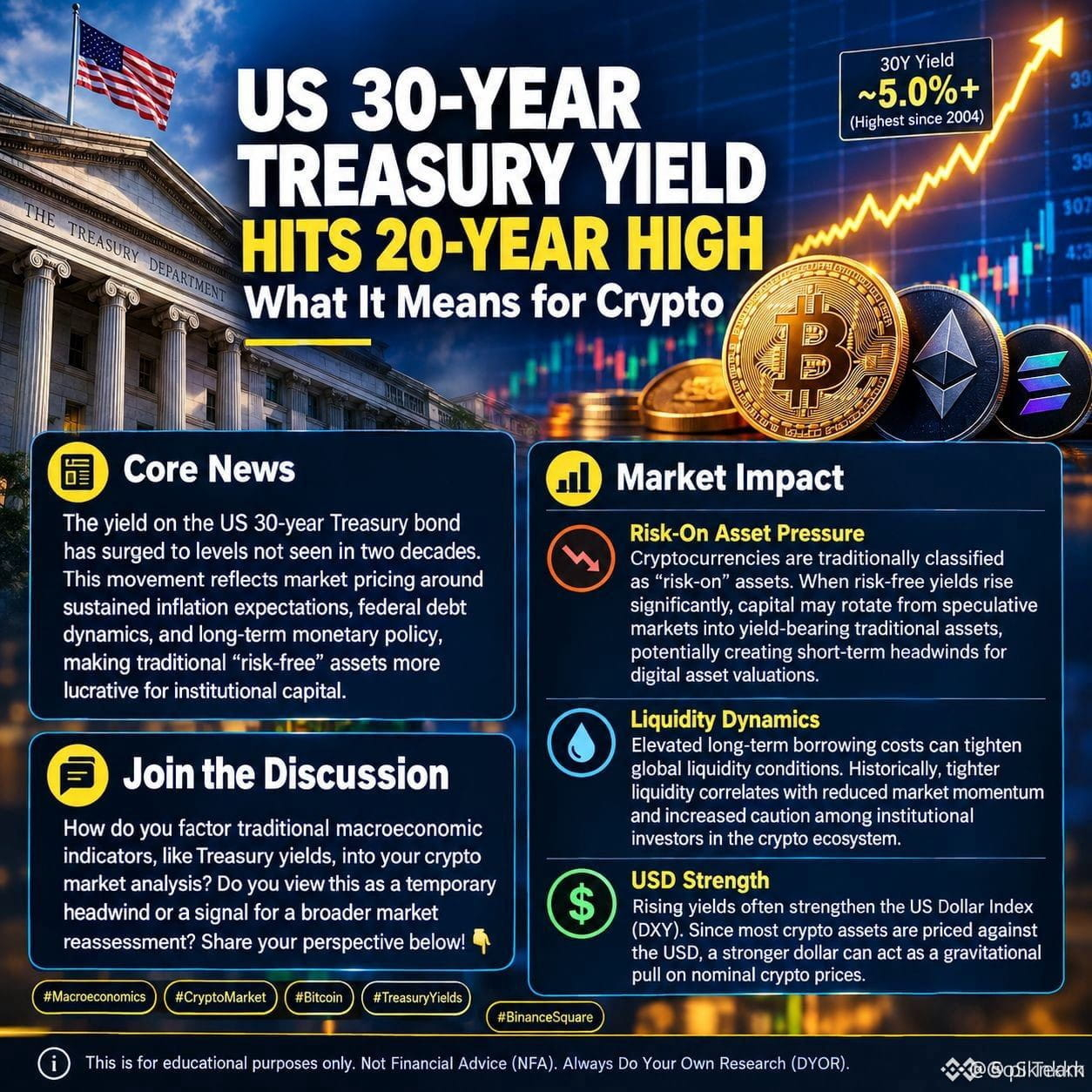
The 30-year US Treasury yield just spiked to its highest since 2004, something most crypto folks are treating like background noise.
You ever FOMO into a $BTC pump only to realize later the macro was screaming sell? That's the pain a lot of traders are setting themselves up for right now with this yield action.
High long-term yields change the whole game. Capital doesn't have to sit in crypto anymore when it can earn real returns in bonds.
Last cycle this exact setup triggered a brutal rotation out of risk assets. $ETH dumped hard, even $USDT saw flows shift as people looked for better places to park cash.
Greed sitting at 73 just makes it worse because nobody wants to hear the warning until it's too late. The Fed looking at more hikes in October only adds fuel.
Anyone else seeing this as a potential liquidity trap or are we still full send?
#US30YearYieldHighestSince2004 #US10YTreasuryYieldHits19YearHigh #FedOctoberRateHikeOddsRiseTo69
The 30-year US Treasury yield just spiked to its highest since 2004, something most crypto folks are treating like background noise.
You ever FOMO into a $BTC pump only to realize later the macro was screaming sell? That's the pain a lot of traders are setting themselves up for right now with this yield action.
High long-term yields change the whole game. Capital doesn't have to sit in crypto anymore when it can earn real returns in bonds.
Last cycle this exact setup triggered a brutal rotation out of risk assets. $ETH dumped hard, even $USDT saw flows shift as people looked for better places to park cash.
Greed sitting at 73 just makes it worse because nobody wants to hear the warning until it's too late. The Fed looking at more hikes in October only adds fuel.
Anyone else seeing this as a potential liquidity trap or are we still full send?
#US30YearYieldHighestSince2004 #US10YTreasuryYieldHits19YearHigh #FedOctoberRateHikeOddsRiseTo69
You ever FOMO into a $BTC pump only to realize later the macro was screaming sell? That's the pain a lot of traders are setting themselves up for right now with this yield action.
High long-term yields change the whole game. Capital doesn't have to sit in crypto anymore when it can earn real returns in bonds.
Last cycle this exact setup triggered a brutal rotation out of risk assets. $ETH dumped hard, even $USDT saw flows shift as people looked for better places to park cash.
Greed sitting at 73 just makes it worse because nobody wants to hear the warning until it's too late. The Fed looking at more hikes in October only adds fuel.
Anyone else seeing this as a potential liquidity trap or are we still full send?
#US30YearYieldHighestSince2004 #US10YTreasuryYieldHits19YearHigh #FedOctoberRateHikeOddsRiseTo69
1
2.6k
·
--
Why is nobody talking about the US weighing promotion of dollar stablecoins abroad while the market sits in greed and everyone piles into $BTC?
Traders keep getting caught off guard by these macro shifts. You FOMO buy at the top only to realize later that dollar strength via stables like $USDT is quietly draining liquidity from alts.
This isn't the bullish crypto adoption story most people are spinning. The US is looking to lock in dollar hegemony through stablecoins, especially with yields at multi-year highs and Fed hike odds climbing. That means more $USDT circulating globally, which could actually pressure $BTC in the short term as capital parks in yield-bearing dollar assets instead of risk.
The smart move is to stop chasing the next pump. Start monitoring $USDT market cap growth against $BTC dominance and if inflows accelerate, trim positions in overheated names then rotate some into $BTC or just hold stables until the dust settles.
Where do you think this goes from here?
#USWeighsPromotingDollarStablecoinsAbroad #FedOctoberRateHikeOddsRiseTo69 #US10YTreasuryYieldHits19YearHigh
Why is nobody talking about the US weighing promotion of dollar stablecoins abroad while the market sits in greed and everyone piles into $BTC ?
Traders keep getting caught off guard by these macro shifts. You FOMO buy at the top only to realize later that dollar strength via stables like $USDT is quietly draining liquidity from alts.
This isn't the bullish crypto adoption story most people are spinning. The US is looking to lock in dollar hegemony through stablecoins, especially with yields at multi-year highs and Fed hike odds climbing. That means more $USDT circulating globally, which could actually pressure $BTC in the short term as capital parks in yield-bearing dollar assets instead of risk.
The smart move is to stop chasing the next pump. Start monitoring $USDT market cap growth against $BTC dominance and if inflows accelerate, trim positions in overheated names then rotate some into $BTC or just hold stables until the dust settles.
Where do you think this goes from here?
#USWeighsPromotingDollarStablecoinsAbroad #FedOctoberRateHikeOddsRiseTo69 #US10YTreasuryYieldHits19YearHigh
Traders keep getting caught off guard by these macro shifts. You FOMO buy at the top only to realize later that dollar strength via stables like $USDT is quietly draining liquidity from alts.
This isn't the bullish crypto adoption story most people are spinning. The US is looking to lock in dollar hegemony through stablecoins, especially with yields at multi-year highs and Fed hike odds climbing. That means more $USDT circulating globally, which could actually pressure $BTC in the short term as capital parks in yield-bearing dollar assets instead of risk.
The smart move is to stop chasing the next pump. Start monitoring $USDT market cap growth against $BTC dominance and if inflows accelerate, trim positions in overheated names then rotate some into $BTC or just hold stables until the dust settles.
Where do you think this goes from here?
#USWeighsPromotingDollarStablecoinsAbroad #FedOctoberRateHikeOddsRiseTo69 #US10YTreasuryYieldHits19YearHigh

125
Fed hawkish signals roil global markets, tokenized U.S. stocks usher in new opportunities
1. U.S. Treasury yields surge to a 19-year high
In late September, U.S. financial markets saw intense volatility. The yield on the 10-year U.S. Treasury note broke above 5.20%, reaching the highest level since 2006, jumping 50 basis points in just 30 days. Strong economic data, hawkish remarks from the Fed, and weak Treasury auctions jointly sparked this bond-market storm. As the anchor for global asset pricing, the rapid rise in U.S. Treasury yields has put immense pressure on risk assets. Bitcoin briefly fell below $83,000, then rebounded to around $84,000. For investors, higher risk-free yields mean a much greater opportunity cost of holding assets that do not generate returns, and the market is reassessing the allocation value of various asset classes.
2. Expectations of Fed rate hikes intensify; the rate-cut timetable is pushed back significantly
Recent Fed comments caught the market off guard. New York Fed President Williams said publicly that another rate hike before year-end is a reasonable choice. At the same time, Citigroup has pushed back its expected timing for the first rate cut from its prior forecast to June 2027. August saw the addition of 160,000 new nonfarm jobs—three times the market’s expectation—reinforcing the rationale for the Fed to keep rates high. According to the latest data, the market’s odds of a rate hike in October have surged to 69.7%, and related topics have generated nearly 1,000 discussions. This sharp shift in expectations suggests that the high-rate environment will be more persistent than previously imagined, putting ongoing pressure on technology stock valuations and cryptocurrency market liquidity.
3. Institutional capital moves in against the tide; Bitcoin ETFs see net inflows for five straight days
Despite an environment full of uncertainty, institutional investors’ behavior has shown a markedly different picture. U.S. spot Bitcoin ETFs recorded cumulative net inflows of about $2.34 billion over the past five trading days, with BlackRock’s IBIT and Fidelity’s FBTC leading the way. Even more noteworthy is that medium-sized wallets holding 100 to 1,000 BTC have increased their holdings by a cumulative 110,390.5 BTC since July 15, indicating that institutional and whale funds are using price pullbacks for strategic positioning. This divergence between retail panic and institutional greed often signals that a market bottom may be forming. “The Block” community heat data shows that BTC was mentioned more than 20,000 times in the past 24 hours; SOL followed with more than 17,000 mentions, and BNB also surpassed 10,000, with community activity staying high.
4. Tokenized U.S. stocks accelerate rollout, deep integration between traditional finance and blockchain
At the intersection of traditional finance and the crypto world, tokenized assets are entering a milestone phase. Ondo Finance announced the launch of three tokenized investment portfolios based on BlackRock’s investment strategies, packaging diversified asset allocation into a single transferable token and offering it to eligible non-U.S. investors. This move marks the transition of real-world asset tokenization from concept validation to scalable applications. After the news, the ONDO token surged sharply, leading the altcoin market. Meanwhile, Binance’s Web3 platform has launched multiple tokenized U.S. stocks, covering sectors such as emerging markets and biotech, allowing investors to trade tokenized versions of traditional U.S. stock assets around the clock. This convergence is breaking traditional constraints of trading hours and geography, giving global investors more flexible tools.
5. Stablecoin strategy upgrade; dollar hegemony extends on-chain
At the policy level, the U.S. government is actively pushing for the globalization of dollar stablecoins. The Trump administration is considering a plan involving the U.S. Treasury, the State Department, and development finance institutions, using a public-private partnership model to promote U.S.-supported stablecoins overseas. The core goal of this strategy is to reinforce the dollar’s position as a global reserve currency while increasing demand for U.S. Treasuries. On the same day, Binance announced investing $100 million into Circle, and the two sides signed a five-year cooperation agreement to jointly promote USDC. Data shows that USDC’s average daily spot trading volume on Binance already reaches billions of dollars, far exceeding other major exchanges. As a bridge connecting traditional finance and the crypto world, the strategic value of stablecoins is increasingly being recognized by more institutions and governments.
6. Market outlook and risk warnings
The market is currently caught in a tug-of-war between macro tightening and institutional inflows. In the short term, the Fed’s hawkish stance and elevated U.S. Treasury yields will continue to suppress valuations of risk assets, and the crypto market may remain in a choppy range. But over the medium to long term, sustained net inflows into Bitcoin ETFs, the accelerating rollout of tokenized assets, and improvements to stablecoin infrastructure are all building momentum for the next leg of the market. Key variables investors need to watch include the outcome of the Fed’s October policy meeting, the trend in U.S. employment data, and the progress of tokenization regulatory frameworks. In a more volatile environment, managing position sizes appropriately and diversifying asset allocation remain core strategies for getting through the cycle.
#FedOctoberRateHikeOddsRiseTo69.7% #BinanceWillListHyperliquid(HYPE) #TokenizedUSStocks
Fed hawkish signals roil global markets, tokenized U.S. stocks usher in new opportunities
1. U.S. Treasury yields surge to a 19-year high
In late September, U.S. financial markets saw intense volatility. The yield on the 10-year U.S. Treasury note broke above 5.20%, reaching the highest level since 2006, jumping 50 basis points in just 30 days. Strong economic data, hawkish remarks from the Fed, and weak Treasury auctions jointly sparked this bond-market storm. As the anchor for global asset pricing, the rapid rise in U.S. Treasury yields has put immense pressure on risk assets. Bitcoin briefly fell below $83,000, then rebounded to around $84,000. For investors, higher risk-free yields mean a much greater opportunity cost of holding assets that do not generate returns, and the market is reassessing the allocation value of various asset classes.
2. Expectations of Fed rate hikes intensify; the rate-cut timetable is pushed back significantly
Recent Fed comments caught the market off guard. New York Fed President Williams said publicly that another rate hike before year-end is a reasonable choice. At the same time, Citigroup has pushed back its expected timing for the first rate cut from its prior forecast to June 2027. August saw the addition of 160,000 new nonfarm jobs—three times the market’s expectation—reinforcing the rationale for the Fed to keep rates high. According to the latest data, the market’s odds of a rate hike in October have surged to 69.7%, and related topics have generated nearly 1,000 discussions. This sharp shift in expectations suggests that the high-rate environment will be more persistent than previously imagined, putting ongoing pressure on technology stock valuations and cryptocurrency market liquidity.
3. Institutional capital moves in against the tide; Bitcoin ETFs see net inflows for five straight days
Despite an environment full of uncertainty, institutional investors’ behavior has shown a markedly different picture. U.S. spot Bitcoin ETFs recorded cumulative net inflows of about $2.34 billion over the past five trading days, with BlackRock’s IBIT and Fidelity’s FBTC leading the way. Even more noteworthy is that medium-sized wallets holding 100 to 1,000 BTC have increased their holdings by a cumulative 110,390.5 BTC since July 15, indicating that institutional and whale funds are using price pullbacks for strategic positioning. This divergence between retail panic and institutional greed often signals that a market bottom may be forming. “The Block” community heat data shows that BTC was mentioned more than 20,000 times in the past 24 hours; SOL followed with more than 17,000 mentions, and BNB also surpassed 10,000, with community activity staying high.
4. Tokenized U.S. stocks accelerate rollout, deep integration between traditional finance and blockchain
At the intersection of traditional finance and the crypto world, tokenized assets are entering a milestone phase. Ondo Finance announced the launch of three tokenized investment portfolios based on BlackRock’s investment strategies, packaging diversified asset allocation into a single transferable token and offering it to eligible non-U.S. investors. This move marks the transition of real-world asset tokenization from concept validation to scalable applications. After the news, the ONDO token surged sharply, leading the altcoin market. Meanwhile, Binance’s Web3 platform has launched multiple tokenized U.S. stocks, covering sectors such as emerging markets and biotech, allowing investors to trade tokenized versions of traditional U.S. stock assets around the clock. This convergence is breaking traditional constraints of trading hours and geography, giving global investors more flexible tools.
5. Stablecoin strategy upgrade; dollar hegemony extends on-chain
At the policy level, the U.S. government is actively pushing for the globalization of dollar stablecoins. The Trump administration is considering a plan involving the U.S. Treasury, the State Department, and development finance institutions, using a public-private partnership model to promote U.S.-supported stablecoins overseas. The core goal of this strategy is to reinforce the dollar’s position as a global reserve currency while increasing demand for U.S. Treasuries. On the same day, Binance announced investing $100 million into Circle, and the two sides signed a five-year cooperation agreement to jointly promote USDC. Data shows that USDC’s average daily spot trading volume on Binance already reaches billions of dollars, far exceeding other major exchanges. As a bridge connecting traditional finance and the crypto world, the strategic value of stablecoins is increasingly being recognized by more institutions and governments.
6. Market outlook and risk warnings
The market is currently caught in a tug-of-war between macro tightening and institutional inflows. In the short term, the Fed’s hawkish stance and elevated U.S. Treasury yields will continue to suppress valuations of risk assets, and the crypto market may remain in a choppy range. But over the medium to long term, sustained net inflows into Bitcoin ETFs, the accelerating rollout of tokenized assets, and improvements to stablecoin infrastructure are all building momentum for the next leg of the market. Key variables investors need to watch include the outcome of the Fed’s October policy meeting, the trend in U.S. employment data, and the progress of tokenization regulatory frameworks. In a more volatile environment, managing position sizes appropriately and diversifying asset allocation remain core strategies for getting through the cycle.
#FedOctoberRateHikeOddsRiseTo69.7% #BinanceWillListHyperliquid(HYPE) #TokenizedUSStocks
1. U.S. Treasury yields surge to a 19-year high
In late September, U.S. financial markets saw intense volatility. The yield on the 10-year U.S. Treasury note broke above 5.20%, reaching the highest level since 2006, jumping 50 basis points in just 30 days. Strong economic data, hawkish remarks from the Fed, and weak Treasury auctions jointly sparked this bond-market storm. As the anchor for global asset pricing, the rapid rise in U.S. Treasury yields has put immense pressure on risk assets. Bitcoin briefly fell below $83,000, then rebounded to around $84,000. For investors, higher risk-free yields mean a much greater opportunity cost of holding assets that do not generate returns, and the market is reassessing the allocation value of various asset classes.
2. Expectations of Fed rate hikes intensify; the rate-cut timetable is pushed back significantly
Recent Fed comments caught the market off guard. New York Fed President Williams said publicly that another rate hike before year-end is a reasonable choice. At the same time, Citigroup has pushed back its expected timing for the first rate cut from its prior forecast to June 2027. August saw the addition of 160,000 new nonfarm jobs—three times the market’s expectation—reinforcing the rationale for the Fed to keep rates high. According to the latest data, the market’s odds of a rate hike in October have surged to 69.7%, and related topics have generated nearly 1,000 discussions. This sharp shift in expectations suggests that the high-rate environment will be more persistent than previously imagined, putting ongoing pressure on technology stock valuations and cryptocurrency market liquidity.
3. Institutional capital moves in against the tide; Bitcoin ETFs see net inflows for five straight days
Despite an environment full of uncertainty, institutional investors’ behavior has shown a markedly different picture. U.S. spot Bitcoin ETFs recorded cumulative net inflows of about $2.34 billion over the past five trading days, with BlackRock’s IBIT and Fidelity’s FBTC leading the way. Even more noteworthy is that medium-sized wallets holding 100 to 1,000 BTC have increased their holdings by a cumulative 110,390.5 BTC since July 15, indicating that institutional and whale funds are using price pullbacks for strategic positioning. This divergence between retail panic and institutional greed often signals that a market bottom may be forming. “The Block” community heat data shows that BTC was mentioned more than 20,000 times in the past 24 hours; SOL followed with more than 17,000 mentions, and BNB also surpassed 10,000, with community activity staying high.
4. Tokenized U.S. stocks accelerate rollout, deep integration between traditional finance and blockchain
At the intersection of traditional finance and the crypto world, tokenized assets are entering a milestone phase. Ondo Finance announced the launch of three tokenized investment portfolios based on BlackRock’s investment strategies, packaging diversified asset allocation into a single transferable token and offering it to eligible non-U.S. investors. This move marks the transition of real-world asset tokenization from concept validation to scalable applications. After the news, the ONDO token surged sharply, leading the altcoin market. Meanwhile, Binance’s Web3 platform has launched multiple tokenized U.S. stocks, covering sectors such as emerging markets and biotech, allowing investors to trade tokenized versions of traditional U.S. stock assets around the clock. This convergence is breaking traditional constraints of trading hours and geography, giving global investors more flexible tools.
5. Stablecoin strategy upgrade; dollar hegemony extends on-chain
At the policy level, the U.S. government is actively pushing for the globalization of dollar stablecoins. The Trump administration is considering a plan involving the U.S. Treasury, the State Department, and development finance institutions, using a public-private partnership model to promote U.S.-supported stablecoins overseas. The core goal of this strategy is to reinforce the dollar’s position as a global reserve currency while increasing demand for U.S. Treasuries. On the same day, Binance announced investing $100 million into Circle, and the two sides signed a five-year cooperation agreement to jointly promote USDC. Data shows that USDC’s average daily spot trading volume on Binance already reaches billions of dollars, far exceeding other major exchanges. As a bridge connecting traditional finance and the crypto world, the strategic value of stablecoins is increasingly being recognized by more institutions and governments.
6. Market outlook and risk warnings
The market is currently caught in a tug-of-war between macro tightening and institutional inflows. In the short term, the Fed’s hawkish stance and elevated U.S. Treasury yields will continue to suppress valuations of risk assets, and the crypto market may remain in a choppy range. But over the medium to long term, sustained net inflows into Bitcoin ETFs, the accelerating rollout of tokenized assets, and improvements to stablecoin infrastructure are all building momentum for the next leg of the market. Key variables investors need to watch include the outcome of the Fed’s October policy meeting, the trend in U.S. employment data, and the progress of tokenization regulatory frameworks. In a more volatile environment, managing position sizes appropriately and diversifying asset allocation remain core strategies for getting through the cycle.
#FedOctoberRateHikeOddsRiseTo69.7% #BinanceWillListHyperliquid(HYPE) #TokenizedUSStocks
19

·
--
October rate hike probability rises on the hot list|The Fed hasn’t decided the next rate|ZEC first takes positions around 1551
My stance is to be defensive first, and not treat the probability numbers in a popular topic as a Fed commitment. The accurate topic tag on Binance Square today is #FedOctoberRateHikeOddsRiseTo69.7%, discussing how traders are pricing the October meeting. The verifiable official facts are: the Fed raised the federal funds target range by 25 bps to 3.75%–4.00% on September 16; as of now, it has not released a decision to hike again in October. 69.7% is a market-implied expectation at a specific point in time; it will change with data and futures prices. It is neither the outcome of a vote nor a guaranteed future yield you can lock in. I don’t have an independent futures probability snapshot at the exact same moment, so I’m only treating it as a “probability number being discussed on the Square,” not as the current real-time probability.
Why does this matter for ZEC? This round of ZEC’s rally is accompanied by discussions around the privacy-asset narrative and capital rotation, and the price has shown clear elasticity—but it doesn’t have an immune “moat” against U.S. dollar interest rates. When expectations for rate hikes move higher, the cost of holding risk assets, the cost of leveraged financing, and tolerance for positions in high-volatility coins may all change; especially when the market first lifts prices using a hot narrative and then suddenly tightens risk budgets, the pullback could be faster than BTC. Conversely, if macro expectations ease and there is verifiable new demand on the ZEC on-chain side and in the fund side, rate pressure may not necessarily keep prices down. Here, it’s important to separate “possible transmission” from “sell pressure that has already appeared”—you can’t conclude the main force is withdrawing based only on the hot list.
The actual order book is more worth watching. At the time of writing, KuCoin spot ZEC/USDT is about $1,550.73. Over the past 24 hours, the high was $1,574.39 and the low was $1,457.46, about a 2.59% increase versus 24 hours ago. This indicates the market isn’t unilaterally dumping based on the rate-hike talk, but the amplitude from the low to the high also reminds me: if your position size is too large, even a normal pullback could force you into wrong decisions. The $1,574 area is an immediate validation level above; around $1,520 is where I’m watching to see whether any retracement can be absorbed. If it breaks back down through $1,457, the basic premise of a short-term bullish scenario would fail. What would truly overturn my current cautious stance isn’t that fewer people are discussing it on the hot list, but instead ZEC continuing to close above $1,574, and U.S. dollar rate expectations not worsening further.
If I were trading it myself: I wouldn’t participate now, wouldn’t chase, and wouldn’t open high-leverage short positions. I’d only consider conditional spot longs: enter with 0.25% of total capital only if two full 15-minute candlesticks close above $1,575, and then, on the subsequent pullback, hold $1,560–$1,575. At $1,600, I’d cut the position in half; around $1,630, I’d fully close the remaining position. After entry, if 15-minute candles move back below $1,540, I’d cut the position in half first; if it touches $1,520, I’d close everything. If before triggering anything it drops through $1,457, the original plan would be immediately canceled. If macro probability updates conflict with price signals, I’d rather stay flat and wait for the next round than bet on a probability that keeps changing.
#FedOctoberRateHikeOddsRiseTo69.7% #ZEC
The above is only my personal market observation and does not constitute investment advice.
October rate hike probability rises on the hot list|The Fed hasn’t decided the next rate|ZEC first takes positions around 1551
My stance is to be defensive first, and not treat the probability numbers in a popular topic as a Fed commitment. The accurate topic tag on Binance Square today is #FedOctoberRateHikeOddsRiseTo69.7%, discussing how traders are pricing the October meeting. The verifiable official facts are: the Fed raised the federal funds target range by 25 bps to 3.75%–4.00% on September 16; as of now, it has not released a decision to hike again in October. 69.7% is a market-implied expectation at a specific point in time; it will change with data and futures prices. It is neither the outcome of a vote nor a guaranteed future yield you can lock in. I don’t have an independent futures probability snapshot at the exact same moment, so I’m only treating it as a “probability number being discussed on the Square,” not as the current real-time probability.
Why does this matter for ZEC? This round of ZEC’s rally is accompanied by discussions around the privacy-asset narrative and capital rotation, and the price has shown clear elasticity—but it doesn’t have an immune “moat” against U.S. dollar interest rates. When expectations for rate hikes move higher, the cost of holding risk assets, the cost of leveraged financing, and tolerance for positions in high-volatility coins may all change; especially when the market first lifts prices using a hot narrative and then suddenly tightens risk budgets, the pullback could be faster than BTC. Conversely, if macro expectations ease and there is verifiable new demand on the ZEC on-chain side and in the fund side, rate pressure may not necessarily keep prices down. Here, it’s important to separate “possible transmission” from “sell pressure that has already appeared”—you can’t conclude the main force is withdrawing based only on the hot list.
The actual order book is more worth watching. At the time of writing, KuCoin spot ZEC/USDT is about $1,550.73. Over the past 24 hours, the high was $1,574.39 and the low was $1,457.46, about a 2.59% increase versus 24 hours ago. This indicates the market isn’t unilaterally dumping based on the rate-hike talk, but the amplitude from the low to the high also reminds me: if your position size is too large, even a normal pullback could force you into wrong decisions. The $1,574 area is an immediate validation level above; around $1,520 is where I’m watching to see whether any retracement can be absorbed. If it breaks back down through $1,457, the basic premise of a short-term bullish scenario would fail. What would truly overturn my current cautious stance isn’t that fewer people are discussing it on the hot list, but instead ZEC continuing to close above $1,574, and U.S. dollar rate expectations not worsening further.
If I were trading it myself: I wouldn’t participate now, wouldn’t chase, and wouldn’t open high-leverage short positions. I’d only consider conditional spot longs: enter with 0.25% of total capital only if two full 15-minute candlesticks close above $1,575, and then, on the subsequent pullback, hold $1,560–$1,575. At $1,600, I’d cut the position in half; around $1,630, I’d fully close the remaining position. After entry, if 15-minute candles move back below $1,540, I’d cut the position in half first; if it touches $1,520, I’d close everything. If before triggering anything it drops through $1,457, the original plan would be immediately canceled. If macro probability updates conflict with price signals, I’d rather stay flat and wait for the next round than bet on a probability that keeps changing.
#FedOctoberRateHikeOddsRiseTo69.7% #ZEC
The above is only my personal market observation and does not constitute investment advice.
My stance is to be defensive first, and not treat the probability numbers in a popular topic as a Fed commitment. The accurate topic tag on Binance Square today is #FedOctoberRateHikeOddsRiseTo69.7%, discussing how traders are pricing the October meeting. The verifiable official facts are: the Fed raised the federal funds target range by 25 bps to 3.75%–4.00% on September 16; as of now, it has not released a decision to hike again in October. 69.7% is a market-implied expectation at a specific point in time; it will change with data and futures prices. It is neither the outcome of a vote nor a guaranteed future yield you can lock in. I don’t have an independent futures probability snapshot at the exact same moment, so I’m only treating it as a “probability number being discussed on the Square,” not as the current real-time probability.
Why does this matter for ZEC? This round of ZEC’s rally is accompanied by discussions around the privacy-asset narrative and capital rotation, and the price has shown clear elasticity—but it doesn’t have an immune “moat” against U.S. dollar interest rates. When expectations for rate hikes move higher, the cost of holding risk assets, the cost of leveraged financing, and tolerance for positions in high-volatility coins may all change; especially when the market first lifts prices using a hot narrative and then suddenly tightens risk budgets, the pullback could be faster than BTC. Conversely, if macro expectations ease and there is verifiable new demand on the ZEC on-chain side and in the fund side, rate pressure may not necessarily keep prices down. Here, it’s important to separate “possible transmission” from “sell pressure that has already appeared”—you can’t conclude the main force is withdrawing based only on the hot list.
The actual order book is more worth watching. At the time of writing, KuCoin spot ZEC/USDT is about $1,550.73. Over the past 24 hours, the high was $1,574.39 and the low was $1,457.46, about a 2.59% increase versus 24 hours ago. This indicates the market isn’t unilaterally dumping based on the rate-hike talk, but the amplitude from the low to the high also reminds me: if your position size is too large, even a normal pullback could force you into wrong decisions. The $1,574 area is an immediate validation level above; around $1,520 is where I’m watching to see whether any retracement can be absorbed. If it breaks back down through $1,457, the basic premise of a short-term bullish scenario would fail. What would truly overturn my current cautious stance isn’t that fewer people are discussing it on the hot list, but instead ZEC continuing to close above $1,574, and U.S. dollar rate expectations not worsening further.
If I were trading it myself: I wouldn’t participate now, wouldn’t chase, and wouldn’t open high-leverage short positions. I’d only consider conditional spot longs: enter with 0.25% of total capital only if two full 15-minute candlesticks close above $1,575, and then, on the subsequent pullback, hold $1,560–$1,575. At $1,600, I’d cut the position in half; around $1,630, I’d fully close the remaining position. After entry, if 15-minute candles move back below $1,540, I’d cut the position in half first; if it touches $1,520, I’d close everything. If before triggering anything it drops through $1,457, the original plan would be immediately canceled. If macro probability updates conflict with price signals, I’d rather stay flat and wait for the next round than bet on a probability that keeps changing.
#FedOctoberRateHikeOddsRiseTo69.7% #ZEC
The above is only my personal market observation and does not constitute investment advice.

59
Fed rate-hike clouds loom over Wall Street as tokenized U.S. stocks see a historic turning point
1. U.S. Treasury yields surge to a 19-year high, and panic spreads across the market
U.S. financial markets are going through a major bout of turbulence. The yield on the 10-year U.S. Treasury jumped to 5.13%, the highest level since 2007. Behind this figure, the latest PMI index unexpectedly surged to 58.4, far above market expectations, while Federal Reserve officials issued strong hawkish signals. Fed Governor Bahl said clearly that further rate hikes may be needed to curb inflationary pressures.
As a result, risk assets are under pressure across the board. Bitcoin briefly fell below $84,000, and the total market capitalization in the crypto market saw a noticeable pullback. CME’s Fed funds futures tool shows that the probability of a 25-basis-point Fed rate hike in October has risen to 69.7%, up sharply from a week ago, indicating that the market is re-pricing the monetary policy path.
According to data from The Blockworks Community, in the past 24 hours, discussions related to BTC totaled more than 18,800 times, SOL reached more than 16,000 discussions, and BNB and ETH recorded nearly 10,000 and about 8,000 discussions respectively. Investor sentiment is split—bullish and bearish views are clashing fiercely—but neutral, wait-and-see sentiment remains dominant.
2. The NYSE joins forces with blockchain companies, and tokenized U.S. stocks enter the mainstream era
Just as traditional financial markets are roiled by expectations of rate hikes, a landmark development quietly emerged. The New York Stock Exchange Group and a blockchain company have signed a memorandum of cooperation. They plan to provide tokenized U.S.-listed stocks and ETFs trading to crypto-native users through the digital alternative trading system currently being built by the NYSE, and to enable around-the-clock on-chain settlement.
The significance of this partnership is extraordinary. It comes right after the innovative exemption framework introduced by the U.S. Securities and Exchange Commission, marking that major traditional financial players have formally embraced blockchain technology for securities applications. Grayscale noted that blockchain infrastructure can now serve the U.S. market in a fully compliant manner, removing institutional barriers to the large-scale rollout of tokenized securities.
At present, on-chain tokenized U.S. stock products cover multiple areas, including emerging-market ETFs, biotech stocks such as Moderna, and industrial names such as Lincoln Electric. Tokenized U.S. stocks allow global investors to bypass the trading-time limitations of traditional brokers and execute peer-to-peer stock asset trading on-chain—especially appealing to investors in Asia and Europe.
3. Regulation accelerates, and rules for crypto market structure are coming into view
Meanwhile, the chair of the U.S. Commodity Futures Trading Commission, Mike Selig, publicly declared, “The time for action has come,” and announced that the agency will use existing statutory authority to draft crypto market structure rules—including derivative categories such as perpetual contracts—without waiting for Congress to legislate. At least two pre-rule proposals on crypto-asset trading have already been submitted to the White House for review.
This statement suggests the U.S. crypto regulatory framework is shifting from “watchful waiting” to “actively building.” For the industry, clearer rules may increase compliance costs. But more importantly, they provide legal certainty for institutional investors, which is expected to attract more traditional capital into the market.
Binance has taken frequent recent actions: it listed the Hyperliquid-native token HYPE and added a Seed Tag, while also opening a capital-matching platform to VIP institutional users. Binance.US has likewise embedded a self-custody wallet feature in the app. These moves indicate that leading trading platforms are boosting efforts simultaneously across three dimensions—products, institutions, and infrastructure—preparing for the next round of market expansion.
4. Outlook and risk warnings for the next phase
The market is currently at a complex juncture with multiple factors intertwined. On one hand, elevated U.S. Treasury yields and rate-hike expectations continue to weigh on risk assets, and short-term volatility may be amplified further. On the other hand, the institutional push for tokenized securities and the gradual clarification of the regulatory framework are building a long-term, favorable fundamental backdrop for the crypto market.
Hot-topic hashtags on The Blockworks show that Binance’s listing of HYPE and the rising probability of a Fed October rate hike are the two main focuses of current community discussion, receiving more than 1,300 and about 380 content discussions respectively. While investors should pay attention to short-term macro risks, they should also closely track the medium- to long-term evolution of tokenized U.S. stocks and regulatory policies.
Investors are advised to stay cautiously optimistic in the current environment, manage position sizes reasonably, watch the trajectory of U.S. Treasury yields and the marginal market impact of Fed officials’ remarks, and seize structural opportunities in this emerging track of tokenized securities.
#BinanceWillListHyperliquid(HYPE) #FedOctoberRateHikeOddsRiseTo69.7% #TokenizedStocks
Fed rate-hike clouds loom over Wall Street as tokenized U.S. stocks see a historic turning point
1. U.S. Treasury yields surge to a 19-year high, and panic spreads across the market
U.S. financial markets are going through a major bout of turbulence. The yield on the 10-year U.S. Treasury jumped to 5.13%, the highest level since 2007. Behind this figure, the latest PMI index unexpectedly surged to 58.4, far above market expectations, while Federal Reserve officials issued strong hawkish signals. Fed Governor Bahl said clearly that further rate hikes may be needed to curb inflationary pressures.
As a result, risk assets are under pressure across the board. Bitcoin briefly fell below $84,000, and the total market capitalization in the crypto market saw a noticeable pullback. CME’s Fed funds futures tool shows that the probability of a 25-basis-point Fed rate hike in October has risen to 69.7%, up sharply from a week ago, indicating that the market is re-pricing the monetary policy path.
According to data from The Blockworks Community, in the past 24 hours, discussions related to BTC totaled more than 18,800 times, SOL reached more than 16,000 discussions, and BNB and ETH recorded nearly 10,000 and about 8,000 discussions respectively. Investor sentiment is split—bullish and bearish views are clashing fiercely—but neutral, wait-and-see sentiment remains dominant.
2. The NYSE joins forces with blockchain companies, and tokenized U.S. stocks enter the mainstream era
Just as traditional financial markets are roiled by expectations of rate hikes, a landmark development quietly emerged. The New York Stock Exchange Group and a blockchain company have signed a memorandum of cooperation. They plan to provide tokenized U.S.-listed stocks and ETFs trading to crypto-native users through the digital alternative trading system currently being built by the NYSE, and to enable around-the-clock on-chain settlement.
The significance of this partnership is extraordinary. It comes right after the innovative exemption framework introduced by the U.S. Securities and Exchange Commission, marking that major traditional financial players have formally embraced blockchain technology for securities applications. Grayscale noted that blockchain infrastructure can now serve the U.S. market in a fully compliant manner, removing institutional barriers to the large-scale rollout of tokenized securities.
At present, on-chain tokenized U.S. stock products cover multiple areas, including emerging-market ETFs, biotech stocks such as Moderna, and industrial names such as Lincoln Electric. Tokenized U.S. stocks allow global investors to bypass the trading-time limitations of traditional brokers and execute peer-to-peer stock asset trading on-chain—especially appealing to investors in Asia and Europe.
3. Regulation accelerates, and rules for crypto market structure are coming into view
Meanwhile, the chair of the U.S. Commodity Futures Trading Commission, Mike Selig, publicly declared, “The time for action has come,” and announced that the agency will use existing statutory authority to draft crypto market structure rules—including derivative categories such as perpetual contracts—without waiting for Congress to legislate. At least two pre-rule proposals on crypto-asset trading have already been submitted to the White House for review.
This statement suggests the U.S. crypto regulatory framework is shifting from “watchful waiting” to “actively building.” For the industry, clearer rules may increase compliance costs. But more importantly, they provide legal certainty for institutional investors, which is expected to attract more traditional capital into the market.
Binance has taken frequent recent actions: it listed the Hyperliquid-native token HYPE and added a Seed Tag, while also opening a capital-matching platform to VIP institutional users. Binance.US has likewise embedded a self-custody wallet feature in the app. These moves indicate that leading trading platforms are boosting efforts simultaneously across three dimensions—products, institutions, and infrastructure—preparing for the next round of market expansion.
4. Outlook and risk warnings for the next phase
The market is currently at a complex juncture with multiple factors intertwined. On one hand, elevated U.S. Treasury yields and rate-hike expectations continue to weigh on risk assets, and short-term volatility may be amplified further. On the other hand, the institutional push for tokenized securities and the gradual clarification of the regulatory framework are building a long-term, favorable fundamental backdrop for the crypto market.
Hot-topic hashtags on The Blockworks show that Binance’s listing of HYPE and the rising probability of a Fed October rate hike are the two main focuses of current community discussion, receiving more than 1,300 and about 380 content discussions respectively. While investors should pay attention to short-term macro risks, they should also closely track the medium- to long-term evolution of tokenized U.S. stocks and regulatory policies.
Investors are advised to stay cautiously optimistic in the current environment, manage position sizes reasonably, watch the trajectory of U.S. Treasury yields and the marginal market impact of Fed officials’ remarks, and seize structural opportunities in this emerging track of tokenized securities.
#BinanceWillListHyperliquid(HYPE) #FedOctoberRateHikeOddsRiseTo69.7% #TokenizedStocks
1. U.S. Treasury yields surge to a 19-year high, and panic spreads across the market
U.S. financial markets are going through a major bout of turbulence. The yield on the 10-year U.S. Treasury jumped to 5.13%, the highest level since 2007. Behind this figure, the latest PMI index unexpectedly surged to 58.4, far above market expectations, while Federal Reserve officials issued strong hawkish signals. Fed Governor Bahl said clearly that further rate hikes may be needed to curb inflationary pressures.
As a result, risk assets are under pressure across the board. Bitcoin briefly fell below $84,000, and the total market capitalization in the crypto market saw a noticeable pullback. CME’s Fed funds futures tool shows that the probability of a 25-basis-point Fed rate hike in October has risen to 69.7%, up sharply from a week ago, indicating that the market is re-pricing the monetary policy path.
According to data from The Blockworks Community, in the past 24 hours, discussions related to BTC totaled more than 18,800 times, SOL reached more than 16,000 discussions, and BNB and ETH recorded nearly 10,000 and about 8,000 discussions respectively. Investor sentiment is split—bullish and bearish views are clashing fiercely—but neutral, wait-and-see sentiment remains dominant.
2. The NYSE joins forces with blockchain companies, and tokenized U.S. stocks enter the mainstream era
Just as traditional financial markets are roiled by expectations of rate hikes, a landmark development quietly emerged. The New York Stock Exchange Group and a blockchain company have signed a memorandum of cooperation. They plan to provide tokenized U.S.-listed stocks and ETFs trading to crypto-native users through the digital alternative trading system currently being built by the NYSE, and to enable around-the-clock on-chain settlement.
The significance of this partnership is extraordinary. It comes right after the innovative exemption framework introduced by the U.S. Securities and Exchange Commission, marking that major traditional financial players have formally embraced blockchain technology for securities applications. Grayscale noted that blockchain infrastructure can now serve the U.S. market in a fully compliant manner, removing institutional barriers to the large-scale rollout of tokenized securities.
At present, on-chain tokenized U.S. stock products cover multiple areas, including emerging-market ETFs, biotech stocks such as Moderna, and industrial names such as Lincoln Electric. Tokenized U.S. stocks allow global investors to bypass the trading-time limitations of traditional brokers and execute peer-to-peer stock asset trading on-chain—especially appealing to investors in Asia and Europe.
3. Regulation accelerates, and rules for crypto market structure are coming into view
Meanwhile, the chair of the U.S. Commodity Futures Trading Commission, Mike Selig, publicly declared, “The time for action has come,” and announced that the agency will use existing statutory authority to draft crypto market structure rules—including derivative categories such as perpetual contracts—without waiting for Congress to legislate. At least two pre-rule proposals on crypto-asset trading have already been submitted to the White House for review.
This statement suggests the U.S. crypto regulatory framework is shifting from “watchful waiting” to “actively building.” For the industry, clearer rules may increase compliance costs. But more importantly, they provide legal certainty for institutional investors, which is expected to attract more traditional capital into the market.
Binance has taken frequent recent actions: it listed the Hyperliquid-native token HYPE and added a Seed Tag, while also opening a capital-matching platform to VIP institutional users. Binance.US has likewise embedded a self-custody wallet feature in the app. These moves indicate that leading trading platforms are boosting efforts simultaneously across three dimensions—products, institutions, and infrastructure—preparing for the next round of market expansion.
4. Outlook and risk warnings for the next phase
The market is currently at a complex juncture with multiple factors intertwined. On one hand, elevated U.S. Treasury yields and rate-hike expectations continue to weigh on risk assets, and short-term volatility may be amplified further. On the other hand, the institutional push for tokenized securities and the gradual clarification of the regulatory framework are building a long-term, favorable fundamental backdrop for the crypto market.
Hot-topic hashtags on The Blockworks show that Binance’s listing of HYPE and the rising probability of a Fed October rate hike are the two main focuses of current community discussion, receiving more than 1,300 and about 380 content discussions respectively. While investors should pay attention to short-term macro risks, they should also closely track the medium- to long-term evolution of tokenized U.S. stocks and regulatory policies.
Investors are advised to stay cautiously optimistic in the current environment, manage position sizes reasonably, watch the trajectory of U.S. Treasury yields and the marginal market impact of Fed officials’ remarks, and seize structural opportunities in this emerging track of tokenized securities.
#BinanceWillListHyperliquid(HYPE) #FedOctoberRateHikeOddsRiseTo69.7% #TokenizedStocks
13
·
--
October Rate Hike Odds Topic Heats Up|BNB Near $778|Odds Don’t Equal an FOMC Decision
My stance is fairly cautious: first look at how rate expectations may curb risk appetite, and don’t chase short BNB just because of a single probability figure. Binance Square currently has a topic saying “October rate hike odds rise to 69.7%.” Binance News cites a reading from CME’s FedWatch based on a translation/relay from Jintou. CME explains that the FedWatch probability is derived from 30-day federal funds futures prices; it changes with trading and is not the result of an FOMC vote or a guarantee regarding the next meeting. The Fed’s official statement on September 16 already raised the target range for the federal funds rate to 3.75%–4.00%—that’s the policy fact that has already occurred. What will happen next is something the market can’t be turned into a公告 based on what it’s pricing in today.
Why does this matter for BNB? Upward revisions to rate expectations usually increase the relative attractiveness of U.S. dollar cash and short-term Treasuries, requiring higher risk compensation for high-volatility assets. Leverage costs and valuation discounting may also become less friendly. BNB is both an on-chain utility asset and a trading-platform ecosystem risk exposure; in the short term, it’s more easily pulled by overall market liquidity than by only on-chain headlines. But correlation isn’t confirmation of causation. We still need to observe whether the USD, Treasury yields, BTC, and BNB’s own volume and price move in the same direction. You can’t blame every red candle on FedWatch.
Market feedback doesn’t support an extreme narrative yet. When I checked KuCoin spot, BNB/USDT was around $777.57. In the past 24 hours, the high was $783.50 and the low was $757.05. Price has rebounded from the low, but it hasn’t yet convincingly broken above the intraday high. If macro pressure continues to build, $770 and around $757 are the defense zones I’m watching first. If it can break above $783.5 and hold, then it would suggest buyers have the capacity to absorb rate-hike “noise.” If later the FedWatch probability falls again, yields weaken, and BNB increases in volume while holding above $783.5, I would overturn my current cautious view; conversely, if it breaks below $757, the rebound thesis would be invalid.
If this were my own trade: I wouldn’t participate right now. I would only consider a small spot long position after confirmation—no leverage. The condition is that two complete 15-minute candlesticks close above $784, and then a pullback into the $780–$784 zone does not break. If all criteria are met, I’d enter with up to 0.5% of total funds. First target: $792, take half off. Second target: $800, close the remaining position. If, after entry, the 15-minute candle closes back below $777 first, I would cut the position in half immediately; a hard stop loss is at $769—if touched, I exit fully at once. If, before entry, price breaks below $757, the entire long setup is canceled. Even if the stop isn’t reached, if official policy or market rate data clearly changes, or if BNB’s volume/price diverges, I’d proactively close and reassess. If nothing triggers, I stay in cash and don’t write the plan into an execution order.
Source: Binance News’ relay/quotation of the Jintou/CME FedWatch readings; CME FedWatch official methodology explanation; the Fed’s September 16 FOMC statement; KuCoin BNB/USDT real-time quotes. #FedOctoberRateHikeOddsRiseTo69.7% #BNB
The above is only my personal market observation and does not constitute investment advice.
October Rate Hike Odds Topic Heats Up|BNB Near $778|Odds Don’t Equal an FOMC Decision
My stance is fairly cautious: first look at how rate expectations may curb risk appetite, and don’t chase short BNB just because of a single probability figure. Binance Square currently has a topic saying “October rate hike odds rise to 69.7%.” Binance News cites a reading from CME’s FedWatch based on a translation/relay from Jintou. CME explains that the FedWatch probability is derived from 30-day federal funds futures prices; it changes with trading and is not the result of an FOMC vote or a guarantee regarding the next meeting. The Fed’s official statement on September 16 already raised the target range for the federal funds rate to 3.75%–4.00%—that’s the policy fact that has already occurred. What will happen next is something the market can’t be turned into a公告 based on what it’s pricing in today.
Why does this matter for BNB? Upward revisions to rate expectations usually increase the relative attractiveness of U.S. dollar cash and short-term Treasuries, requiring higher risk compensation for high-volatility assets. Leverage costs and valuation discounting may also become less friendly. BNB is both an on-chain utility asset and a trading-platform ecosystem risk exposure; in the short term, it’s more easily pulled by overall market liquidity than by only on-chain headlines. But correlation isn’t confirmation of causation. We still need to observe whether the USD, Treasury yields, BTC, and BNB’s own volume and price move in the same direction. You can’t blame every red candle on FedWatch.
Market feedback doesn’t support an extreme narrative yet. When I checked KuCoin spot, BNB/USDT was around $777.57. In the past 24 hours, the high was $783.50 and the low was $757.05. Price has rebounded from the low, but it hasn’t yet convincingly broken above the intraday high. If macro pressure continues to build, $770 and around $757 are the defense zones I’m watching first. If it can break above $783.5 and hold, then it would suggest buyers have the capacity to absorb rate-hike “noise.” If later the FedWatch probability falls again, yields weaken, and BNB increases in volume while holding above $783.5, I would overturn my current cautious view; conversely, if it breaks below $757, the rebound thesis would be invalid.
If this were my own trade: I wouldn’t participate right now. I would only consider a small spot long position after confirmation—no leverage. The condition is that two complete 15-minute candlesticks close above $784, and then a pullback into the $780–$784 zone does not break. If all criteria are met, I’d enter with up to 0.5% of total funds. First target: $792, take half off. Second target: $800, close the remaining position. If, after entry, the 15-minute candle closes back below $777 first, I would cut the position in half immediately; a hard stop loss is at $769—if touched, I exit fully at once. If, before entry, price breaks below $757, the entire long setup is canceled. Even if the stop isn’t reached, if official policy or market rate data clearly changes, or if BNB’s volume/price diverges, I’d proactively close and reassess. If nothing triggers, I stay in cash and don’t write the plan into an execution order.
Source: Binance News’ relay/quotation of the Jintou/CME FedWatch readings; CME FedWatch official methodology explanation; the Fed’s September 16 FOMC statement; KuCoin BNB/USDT real-time quotes. #FedOctoberRateHikeOddsRiseTo69.7% #BNB
The above is only my personal market observation and does not constitute investment advice.
My stance is fairly cautious: first look at how rate expectations may curb risk appetite, and don’t chase short BNB just because of a single probability figure. Binance Square currently has a topic saying “October rate hike odds rise to 69.7%.” Binance News cites a reading from CME’s FedWatch based on a translation/relay from Jintou. CME explains that the FedWatch probability is derived from 30-day federal funds futures prices; it changes with trading and is not the result of an FOMC vote or a guarantee regarding the next meeting. The Fed’s official statement on September 16 already raised the target range for the federal funds rate to 3.75%–4.00%—that’s the policy fact that has already occurred. What will happen next is something the market can’t be turned into a公告 based on what it’s pricing in today.
Why does this matter for BNB? Upward revisions to rate expectations usually increase the relative attractiveness of U.S. dollar cash and short-term Treasuries, requiring higher risk compensation for high-volatility assets. Leverage costs and valuation discounting may also become less friendly. BNB is both an on-chain utility asset and a trading-platform ecosystem risk exposure; in the short term, it’s more easily pulled by overall market liquidity than by only on-chain headlines. But correlation isn’t confirmation of causation. We still need to observe whether the USD, Treasury yields, BTC, and BNB’s own volume and price move in the same direction. You can’t blame every red candle on FedWatch.
Market feedback doesn’t support an extreme narrative yet. When I checked KuCoin spot, BNB/USDT was around $777.57. In the past 24 hours, the high was $783.50 and the low was $757.05. Price has rebounded from the low, but it hasn’t yet convincingly broken above the intraday high. If macro pressure continues to build, $770 and around $757 are the defense zones I’m watching first. If it can break above $783.5 and hold, then it would suggest buyers have the capacity to absorb rate-hike “noise.” If later the FedWatch probability falls again, yields weaken, and BNB increases in volume while holding above $783.5, I would overturn my current cautious view; conversely, if it breaks below $757, the rebound thesis would be invalid.
If this were my own trade: I wouldn’t participate right now. I would only consider a small spot long position after confirmation—no leverage. The condition is that two complete 15-minute candlesticks close above $784, and then a pullback into the $780–$784 zone does not break. If all criteria are met, I’d enter with up to 0.5% of total funds. First target: $792, take half off. Second target: $800, close the remaining position. If, after entry, the 15-minute candle closes back below $777 first, I would cut the position in half immediately; a hard stop loss is at $769—if touched, I exit fully at once. If, before entry, price breaks below $757, the entire long setup is canceled. Even if the stop isn’t reached, if official policy or market rate data clearly changes, or if BNB’s volume/price diverges, I’d proactively close and reassess. If nothing triggers, I stay in cash and don’t write the plan into an execution order.
Source: Binance News’ relay/quotation of the Jintou/CME FedWatch readings; CME FedWatch official methodology explanation; the Fed’s September 16 FOMC statement; KuCoin BNB/USDT real-time quotes. #FedOctoberRateHikeOddsRiseTo69.7% #BNB
The above is only my personal market observation and does not constitute investment advice.

41
Fed rate hike expectations surge, tokenized US stocks rise against the trend, and Wall Street is experiencing a quiet revolution
1. U.S. Treasury yields hit a 19-year high, putting pressure on the crypto market
In late September, global financial markets were hit by a major shock. The yield on the U.S. 10-year Treasury note broke above 5.13%, reaching the highest level in nearly 19 years. Behind this data are the overlapping forces of stubborn inflation pressure and hawkish signals from the Federal Reserve. Fed Governor Barr publicly warned that further rate hikes may still be needed to bring inflation back to the target range.
Markets responded quickly. Data from the Chicago Mercantile Exchange shows that the probability of a 25-basis-point Fed rate hike in October has climbed to 69.7%. A week ago, it was still below 50%. As a result, Bitcoin fell below the $84,000 mark, and across the entire crypto market, liquidation totaled more than $500 million within 24 hours.
For investors, the sustained rise in U.S. Treasury yields means an increase in risk-free returns, naturally putting pressure on risk assets as capital flows out. However, amid this macro storm, an unexpected area is rising against the tide.
2. The NYSE teams up with blockchain firms, and tokenized U.S. stocks enter the fast lane
At the height of market panic, the New York Stock Exchange Group signed a landmark cooperation memorandum with a blockchain company. The two sides plan to provide around-the-clock trading services for tokenized U.S. listed stocks and exchange-traded funds (ETFs) for crypto-native investors through the digital alternative trading system being built by the NYSE.
The significance of this collaboration is not to be underestimated. As one of the most traditional and authoritative securities exchanges in the world, the NYSE’s proactive embrace of blockchain technology signals that tokenized securities are moving from the periphery to the mainstream. Previously, the U.S. Securities and Exchange Commission had already introduced an innovative exemptive framework for tokenized securities, and the tokenized stock trading volume on the decentralized exchange Uniswap on the Base network has also surpassed $300 million.
Meanwhile, tokenized U.S. stock products on Binance’s Web3 platform continue to expand, covering multiple sectors from technology stocks to healthcare stocks. Investors can hold and trade traditional U.S. stock assets on-chain, enjoying 24/7 liquidity and lower barriers to entry. This deep integration of traditional finance and decentralized finance is redefining the future form of stock trading.
3. BlackRock attracts $1 billion in four days, and institutional confidence remains unchanged
Although the macro environment is full of uncertainty, BlackRock, the world’s largest asset manager, saw its Bitcoin spot ETF record more than $1 billion in net inflows in just four days. The figure clearly shows that institutional investors’ confidence in allocating to crypto assets long-term has not wavered due to short-term volatility.
More notably, a recent research report from BlackRock suggests that demand from AI agents for always-on, programmable payment channels will make digital assets a growth driver that the market has been undervaluing. By deeply linking the AI and crypto narratives, this view paints an imaginative blueprint for market prospects in 2027.
From the perspective of capital flows, Bitcoin remains the most talked-about asset, with mentions in the past 24 hours exceeding 18,000 times. Following it are SOL and BNB, recording nearly 16,000 and over 9,000 discussion counts, respectively. Overall community sentiment is roughly neutral, but bullish voices still slightly outweigh bearish ones.
4. Outlook: Short-term pain and long-term opportunities coexist
The market is currently at a critical crossroads. In the short term, the Fed’s hawkish stance and the continued rise in U.S. Treasury yields will keep putting pressure on risk assets. If October’s rate hike happens as scheduled, the market may still undergo another round of adjustment.
But from a long-term perspective, the accelerating rollout of tokenized securities, the continued inflow of institutional capital, and the deep integration of AI and blockchain technology are all helping the industry build a more solid fundamental base. The NYSE’s entry is especially signaling—it shows that traditional financial giants are no longer waiting on the sidelines, but are beginning to proactively lay out blockchain infrastructure.
For ordinary investors, staying calm amid volatility and focusing on structural opportunities may be more important than chasing short-term swings. The rise of tokenized U.S. stocks is opening a new window to global capital markets for more people.
#FedOctoberRateHikeOddsRiseTo69.7% #BinanceWillListHyperliquid(HYPE) #TokenizedStocks
Fed rate hike expectations surge, tokenized US stocks rise against the trend, and Wall Street is experiencing a quiet revolution
1. U.S. Treasury yields hit a 19-year high, putting pressure on the crypto market
In late September, global financial markets were hit by a major shock. The yield on the U.S. 10-year Treasury note broke above 5.13%, reaching the highest level in nearly 19 years. Behind this data are the overlapping forces of stubborn inflation pressure and hawkish signals from the Federal Reserve. Fed Governor Barr publicly warned that further rate hikes may still be needed to bring inflation back to the target range.
Markets responded quickly. Data from the Chicago Mercantile Exchange shows that the probability of a 25-basis-point Fed rate hike in October has climbed to 69.7%. A week ago, it was still below 50%. As a result, Bitcoin fell below the $84,000 mark, and across the entire crypto market, liquidation totaled more than $500 million within 24 hours.
For investors, the sustained rise in U.S. Treasury yields means an increase in risk-free returns, naturally putting pressure on risk assets as capital flows out. However, amid this macro storm, an unexpected area is rising against the tide.
2. The NYSE teams up with blockchain firms, and tokenized U.S. stocks enter the fast lane
At the height of market panic, the New York Stock Exchange Group signed a landmark cooperation memorandum with a blockchain company. The two sides plan to provide around-the-clock trading services for tokenized U.S. listed stocks and exchange-traded funds (ETFs) for crypto-native investors through the digital alternative trading system being built by the NYSE.
The significance of this collaboration is not to be underestimated. As one of the most traditional and authoritative securities exchanges in the world, the NYSE’s proactive embrace of blockchain technology signals that tokenized securities are moving from the periphery to the mainstream. Previously, the U.S. Securities and Exchange Commission had already introduced an innovative exemptive framework for tokenized securities, and the tokenized stock trading volume on the decentralized exchange Uniswap on the Base network has also surpassed $300 million.
Meanwhile, tokenized U.S. stock products on Binance’s Web3 platform continue to expand, covering multiple sectors from technology stocks to healthcare stocks. Investors can hold and trade traditional U.S. stock assets on-chain, enjoying 24/7 liquidity and lower barriers to entry. This deep integration of traditional finance and decentralized finance is redefining the future form of stock trading.
3. BlackRock attracts $1 billion in four days, and institutional confidence remains unchanged
Although the macro environment is full of uncertainty, BlackRock, the world’s largest asset manager, saw its Bitcoin spot ETF record more than $1 billion in net inflows in just four days. The figure clearly shows that institutional investors’ confidence in allocating to crypto assets long-term has not wavered due to short-term volatility.
More notably, a recent research report from BlackRock suggests that demand from AI agents for always-on, programmable payment channels will make digital assets a growth driver that the market has been undervaluing. By deeply linking the AI and crypto narratives, this view paints an imaginative blueprint for market prospects in 2027.
From the perspective of capital flows, Bitcoin remains the most talked-about asset, with mentions in the past 24 hours exceeding 18,000 times. Following it are SOL and BNB, recording nearly 16,000 and over 9,000 discussion counts, respectively. Overall community sentiment is roughly neutral, but bullish voices still slightly outweigh bearish ones.
4. Outlook: Short-term pain and long-term opportunities coexist
The market is currently at a critical crossroads. In the short term, the Fed’s hawkish stance and the continued rise in U.S. Treasury yields will keep putting pressure on risk assets. If October’s rate hike happens as scheduled, the market may still undergo another round of adjustment.
But from a long-term perspective, the accelerating rollout of tokenized securities, the continued inflow of institutional capital, and the deep integration of AI and blockchain technology are all helping the industry build a more solid fundamental base. The NYSE’s entry is especially signaling—it shows that traditional financial giants are no longer waiting on the sidelines, but are beginning to proactively lay out blockchain infrastructure.
For ordinary investors, staying calm amid volatility and focusing on structural opportunities may be more important than chasing short-term swings. The rise of tokenized U.S. stocks is opening a new window to global capital markets for more people.
#FedOctoberRateHikeOddsRiseTo69.7% #BinanceWillListHyperliquid(HYPE) #TokenizedStocks
1. U.S. Treasury yields hit a 19-year high, putting pressure on the crypto market
In late September, global financial markets were hit by a major shock. The yield on the U.S. 10-year Treasury note broke above 5.13%, reaching the highest level in nearly 19 years. Behind this data are the overlapping forces of stubborn inflation pressure and hawkish signals from the Federal Reserve. Fed Governor Barr publicly warned that further rate hikes may still be needed to bring inflation back to the target range.
Markets responded quickly. Data from the Chicago Mercantile Exchange shows that the probability of a 25-basis-point Fed rate hike in October has climbed to 69.7%. A week ago, it was still below 50%. As a result, Bitcoin fell below the $84,000 mark, and across the entire crypto market, liquidation totaled more than $500 million within 24 hours.
For investors, the sustained rise in U.S. Treasury yields means an increase in risk-free returns, naturally putting pressure on risk assets as capital flows out. However, amid this macro storm, an unexpected area is rising against the tide.
2. The NYSE teams up with blockchain firms, and tokenized U.S. stocks enter the fast lane
At the height of market panic, the New York Stock Exchange Group signed a landmark cooperation memorandum with a blockchain company. The two sides plan to provide around-the-clock trading services for tokenized U.S. listed stocks and exchange-traded funds (ETFs) for crypto-native investors through the digital alternative trading system being built by the NYSE.
The significance of this collaboration is not to be underestimated. As one of the most traditional and authoritative securities exchanges in the world, the NYSE’s proactive embrace of blockchain technology signals that tokenized securities are moving from the periphery to the mainstream. Previously, the U.S. Securities and Exchange Commission had already introduced an innovative exemptive framework for tokenized securities, and the tokenized stock trading volume on the decentralized exchange Uniswap on the Base network has also surpassed $300 million.
Meanwhile, tokenized U.S. stock products on Binance’s Web3 platform continue to expand, covering multiple sectors from technology stocks to healthcare stocks. Investors can hold and trade traditional U.S. stock assets on-chain, enjoying 24/7 liquidity and lower barriers to entry. This deep integration of traditional finance and decentralized finance is redefining the future form of stock trading.
3. BlackRock attracts $1 billion in four days, and institutional confidence remains unchanged
Although the macro environment is full of uncertainty, BlackRock, the world’s largest asset manager, saw its Bitcoin spot ETF record more than $1 billion in net inflows in just four days. The figure clearly shows that institutional investors’ confidence in allocating to crypto assets long-term has not wavered due to short-term volatility.
More notably, a recent research report from BlackRock suggests that demand from AI agents for always-on, programmable payment channels will make digital assets a growth driver that the market has been undervaluing. By deeply linking the AI and crypto narratives, this view paints an imaginative blueprint for market prospects in 2027.
From the perspective of capital flows, Bitcoin remains the most talked-about asset, with mentions in the past 24 hours exceeding 18,000 times. Following it are SOL and BNB, recording nearly 16,000 and over 9,000 discussion counts, respectively. Overall community sentiment is roughly neutral, but bullish voices still slightly outweigh bearish ones.
4. Outlook: Short-term pain and long-term opportunities coexist
The market is currently at a critical crossroads. In the short term, the Fed’s hawkish stance and the continued rise in U.S. Treasury yields will keep putting pressure on risk assets. If October’s rate hike happens as scheduled, the market may still undergo another round of adjustment.
But from a long-term perspective, the accelerating rollout of tokenized securities, the continued inflow of institutional capital, and the deep integration of AI and blockchain technology are all helping the industry build a more solid fundamental base. The NYSE’s entry is especially signaling—it shows that traditional financial giants are no longer waiting on the sidelines, but are beginning to proactively lay out blockchain infrastructure.
For ordinary investors, staying calm amid volatility and focusing on structural opportunities may be more important than chasing short-term swings. The rise of tokenized U.S. stocks is opening a new window to global capital markets for more people.
#FedOctoberRateHikeOddsRiseTo69.7% #BinanceWillListHyperliquid(HYPE) #TokenizedStocks
3
Have you noticed that $ETH breaking above resistance always gets framed as the start of a new leg higher, even when nothing else in the market is confirming it?
The real pain is buying that breakout and then freezing on the exit as it fails. Too many people either miss the move waiting for extra confirmation or chase it and get trapped with no plan.
This is a case study more than a celebration. The last few times Ethereum cleared a major level in a greed tape, the follow through lasted days, not weeks. Fear and Greed sitting at 73 already tells you the easy money is positioned. $BTC looking heavy underneath is the part most people are skipping. When Bitcoin cannot hold, these ETH pumps often rotate straight back into $USDT instead of turning into a real alt move. Rate hike odds climbing on top of that does not help the risk-on story. A breakout without breadth is just a headline.
Where do you think this goes from here?
#ETHBreaksAbove #BitcoinFallsBelow #FedOctoberRateHikeOddsRiseTo69
Have you noticed that $ETH breaking above resistance always gets framed as the start of a new leg higher, even when nothing else in the market is confirming it?
The real pain is buying that breakout and then freezing on the exit as it fails. Too many people either miss the move waiting for extra confirmation or chase it and get trapped with no plan.
This is a case study more than a celebration. The last few times Ethereum cleared a major level in a greed tape, the follow through lasted days, not weeks. Fear and Greed sitting at 73 already tells you the easy money is positioned. $BTC looking heavy underneath is the part most people are skipping. When Bitcoin cannot hold, these ETH pumps often rotate straight back into $USDT instead of turning into a real alt move. Rate hike odds climbing on top of that does not help the risk-on story. A breakout without breadth is just a headline.
Where do you think this goes from here?
#ETHBreaksAbove #BitcoinFallsBelow #FedOctoberRateHikeOddsRiseTo69
The real pain is buying that breakout and then freezing on the exit as it fails. Too many people either miss the move waiting for extra confirmation or chase it and get trapped with no plan.
This is a case study more than a celebration. The last few times Ethereum cleared a major level in a greed tape, the follow through lasted days, not weeks. Fear and Greed sitting at 73 already tells you the easy money is positioned. $BTC looking heavy underneath is the part most people are skipping. When Bitcoin cannot hold, these ETH pumps often rotate straight back into $USDT instead of turning into a real alt move. Rate hike odds climbing on top of that does not help the risk-on story. A breakout without breadth is just a headline.
Where do you think this goes from here?
#ETHBreaksAbove #BitcoinFallsBelow #FedOctoberRateHikeOddsRiseTo69
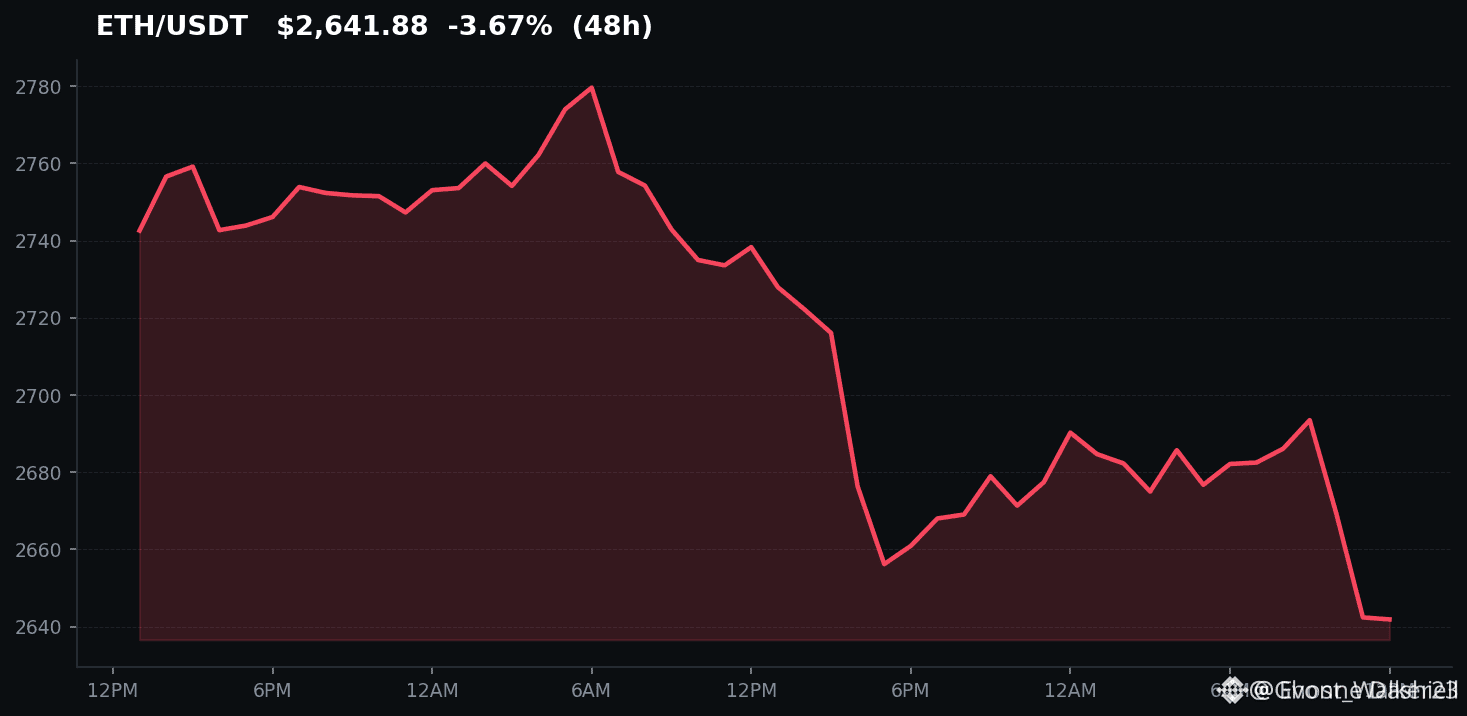
25
·
--
Everyone thinks crypto is completely decoupled from traditional markets, but actually the US 10-year Treasury yield hitting a 19-year high is quietly draining risk appetite.
You load up on $BTC during a greed reading of 73 only to see it stall as money chases those higher guaranteed returns instead. That is how portfolios get stuck underwater waiting for a bounce that macro conditions keep delaying.
Think of it like a bank suddenly offering a much better savings rate. Why keep funds in volatile $BTC or idle $USDT when Treasuries pay more with far less drama. Big players rotate out and the whole market feels thinner, especially names like $FIL that thrive on speculation.
Most people treat the yield spike as background noise and keep buying the dip. History suggests these levels can keep pressure on for a while, particularly with Fed hike odds on the rise.
Where do you think this leaves crypto in the coming weeks?
#US10YTreasuryYieldHits19YearHigh #FedOctoberRateHikeOddsRiseTo69 #US30YearYieldHighestSince2004
Everyone thinks crypto is completely decoupled from traditional markets, but actually the US 10-year Treasury yield hitting a 19-year high is quietly draining risk appetite.
You load up on $BTC during a greed reading of 73 only to see it stall as money chases those higher guaranteed returns instead. That is how portfolios get stuck underwater waiting for a bounce that macro conditions keep delaying.
Think of it like a bank suddenly offering a much better savings rate. Why keep funds in volatile $BTC or idle $USDT when Treasuries pay more with far less drama. Big players rotate out and the whole market feels thinner, especially names like $FIL that thrive on speculation.
Most people treat the yield spike as background noise and keep buying the dip. History suggests these levels can keep pressure on for a while, particularly with Fed hike odds on the rise.
Where do you think this leaves crypto in the coming weeks?
#US10YTreasuryYieldHits19YearHigh #FedOctoberRateHikeOddsRiseTo69 #US30YearYieldHighestSince2004
You load up on $BTC during a greed reading of 73 only to see it stall as money chases those higher guaranteed returns instead. That is how portfolios get stuck underwater waiting for a bounce that macro conditions keep delaying.
Think of it like a bank suddenly offering a much better savings rate. Why keep funds in volatile $BTC or idle $USDT when Treasuries pay more with far less drama. Big players rotate out and the whole market feels thinner, especially names like $FIL that thrive on speculation.
Most people treat the yield spike as background noise and keep buying the dip. History suggests these levels can keep pressure on for a while, particularly with Fed hike odds on the rise.
Where do you think this leaves crypto in the coming weeks?
#US10YTreasuryYieldHits19YearHigh #FedOctoberRateHikeOddsRiseTo69 #US30YearYieldHighestSince2004

79
·
--
If you are still chasing green candles every time Ethereum tests local highs, stop now before you turn into exit liquidity.
Most traders end up round-tripping their gains or panic-selling at the bottom simply because they cannot tell the difference between genuine structural demand and a high-timeframe bull trap.
The market sentiment is currently sitting in heavy greed, and the usual crowd is already calling for an effortless run toward all-time highs. The bullish case looks clean on paper, especially with momentum spilling over into ecosystem plays like $ENA and $ZK. Volume is picking up and spot order books are showing real absorption on minor pullbacks.
However, the aggressive leverage build-up tells a much riskier story. Chasing $ETH directly into heavy overhead resistance without waiting for a retest usually ends in a sharp liquidity flush that wipes out overconfident longs. While the broader trend is shifting constructive, buying the initial breakout here offers terrible risk-to-reward compared to waiting for a confirmed support flip.
Are you taking profits into this strength, or are you holding out for a clean continuation?
#ETHBreaksAbove #FedOctoberRateHikeOddsRiseTo69
If you are still chasing green candles every time Ethereum tests local highs, stop now before you turn into exit liquidity.
Most traders end up round-tripping their gains or panic-selling at the bottom simply because they cannot tell the difference between genuine structural demand and a high-timeframe bull trap.
The market sentiment is currently sitting in heavy greed, and the usual crowd is already calling for an effortless run toward all-time highs. The bullish case looks clean on paper, especially with momentum spilling over into ecosystem plays like $ENA and $ZK . Volume is picking up and spot order books are showing real absorption on minor pullbacks.
However, the aggressive leverage build-up tells a much riskier story. Chasing $ETH directly into heavy overhead resistance without waiting for a retest usually ends in a sharp liquidity flush that wipes out overconfident longs. While the broader trend is shifting constructive, buying the initial breakout here offers terrible risk-to-reward compared to waiting for a confirmed support flip.
Are you taking profits into this strength, or are you holding out for a clean continuation?
#ETHBreaksAbove #FedOctoberRateHikeOddsRiseTo69
Most traders end up round-tripping their gains or panic-selling at the bottom simply because they cannot tell the difference between genuine structural demand and a high-timeframe bull trap.
The market sentiment is currently sitting in heavy greed, and the usual crowd is already calling for an effortless run toward all-time highs. The bullish case looks clean on paper, especially with momentum spilling over into ecosystem plays like $ENA and $ZK . Volume is picking up and spot order books are showing real absorption on minor pullbacks.
However, the aggressive leverage build-up tells a much riskier story. Chasing $ETH directly into heavy overhead resistance without waiting for a retest usually ends in a sharp liquidity flush that wipes out overconfident longs. While the broader trend is shifting constructive, buying the initial breakout here offers terrible risk-to-reward compared to waiting for a confirmed support flip.
Are you taking profits into this strength, or are you holding out for a clean continuation?
#ETHBreaksAbove #FedOctoberRateHikeOddsRiseTo69

55
·
--
Have you noticed how everyone treats bank-regulated stablecoins as the ultimate validation for crypto, while completely ignoring who actually loses in that scenario?
Most retail investors park their capital in liquidity pools and yield protocols without realizing how fast institutional rails can drain that volume once compliance walls go up. Getting caught holding unapproved assets during a sudden regulatory reshuffle is a fast track to getting your yield crushed.
Look at what is unfolding with the latest Fed framework for bank-issued stablecoins. The mainstream assumption is that Wall Street entering the settlement layer lifts the entire ecosystem equally. In reality, traditional banks issuing their own pegged tokens will not integrate with permissionless DeFi; they will build walled gardens that directly siphon market share from crypto-native staples like $USDT and synthetic yield designs like $ENA.
When regulated depository institutions capture stablecoin reserve yield backed directly by short-term Treasuries, the risk-reward equation changes overnight. Capital always migrates toward the path of least legal friction, especially when institutional desks demand ring-fenced collateral over decentralized alternatives.
Where do you think liquidity flows once tier-one banks launch their own pegged assets?
#FedProposesRulesForBankIssuedStablecoins #FedOctoberRateHikeOddsRiseTo69
Have you noticed how everyone treats bank-regulated stablecoins as the ultimate validation for crypto, while completely ignoring who actually loses in that scenario?
Most retail investors park their capital in liquidity pools and yield protocols without realizing how fast institutional rails can drain that volume once compliance walls go up. Getting caught holding unapproved assets during a sudden regulatory reshuffle is a fast track to getting your yield crushed.
Look at what is unfolding with the latest Fed framework for bank-issued stablecoins. The mainstream assumption is that Wall Street entering the settlement layer lifts the entire ecosystem equally. In reality, traditional banks issuing their own pegged tokens will not integrate with permissionless DeFi; they will build walled gardens that directly siphon market share from crypto-native staples like $USDT and synthetic yield designs like $ENA .
When regulated depository institutions capture stablecoin reserve yield backed directly by short-term Treasuries, the risk-reward equation changes overnight. Capital always migrates toward the path of least legal friction, especially when institutional desks demand ring-fenced collateral over decentralized alternatives.
Where do you think liquidity flows once tier-one banks launch their own pegged assets?
#FedProposesRulesForBankIssuedStablecoins #FedOctoberRateHikeOddsRiseTo69
Most retail investors park their capital in liquidity pools and yield protocols without realizing how fast institutional rails can drain that volume once compliance walls go up. Getting caught holding unapproved assets during a sudden regulatory reshuffle is a fast track to getting your yield crushed.
Look at what is unfolding with the latest Fed framework for bank-issued stablecoins. The mainstream assumption is that Wall Street entering the settlement layer lifts the entire ecosystem equally. In reality, traditional banks issuing their own pegged tokens will not integrate with permissionless DeFi; they will build walled gardens that directly siphon market share from crypto-native staples like $USDT and synthetic yield designs like $ENA .
When regulated depository institutions capture stablecoin reserve yield backed directly by short-term Treasuries, the risk-reward equation changes overnight. Capital always migrates toward the path of least legal friction, especially when institutional desks demand ring-fenced collateral over decentralized alternatives.
Where do you think liquidity flows once tier-one banks launch their own pegged assets?
#FedProposesRulesForBankIssuedStablecoins #FedOctoberRateHikeOddsRiseTo69

151
Log in to explore more content
Join global crypto users on Binance Square
⚡️ Get latest and useful information about crypto.
💬 Trusted by the world’s largest crypto exchange.
👍 Discover real insights from verified creators.
Email / Phone number
Trending Topics
1
#BitcoinSpotETFsDraw$6.34BInflowsInQ3
186 views
12 Discussing
2
#EthereumValidatorExitQueueJumps392%
8,496 views
141 Discussing
3
#IMFApprovesElSalvador$138MWithBitcoinWaiver
718 views
12 Discussing
4
#SECHaltsCryptoETFReviewsAmidFundingLapse
140,719 views
1,095 Discussing
5
#ZcashETFPostsFirstWeeklyOutflow$93.6M
73,743 views
230 Discussing
6
#GreekPoliceBustCryptoScamRingArrest17
273,213 views
1,824 Discussing
7
#BitcoinRejectedAt$87K
182,515 views
288 Discussing
8
#FedOctoberRateHikeOddsFallTo17%
278,835 views
1,964 Discussing
9
#NvidiaHitsRecordHighUp2.4%
187,708 views
1,348 Discussing
10
#CanaryFilesAmendedS1ForPEPEETF
61,244 views
884 Discussing